|
絵文字
|
単語 | Images | 翻訳 | 過去 | 過去分詞 | 三人称単数 | 動名詞 | 意味 | 例文 | 例文の翻訳 | 表現例 | 表現例の意味 | 表現例の翻訳 | 同義語 | 対義語 | コロケーション | ニーモニック |
|---|---|---|---|---|---|---|---|---|---|---|---|---|---|---|---|---|---|
|
🙈
••••••
|
/blaɪnd/
adjective
••••••
|
- •••••• | - •••••• | - •••••• | - •••••• | - •••••• | - •••••• |
Unable to see because of injury, disease, or a congenital condition.
••••••
|
He has been blind since birth. |
- •••••• |
blind faith |
Complete trust without questioning or evidence.
••••••
|
- •••••• |
sightless, visionless, unseeing, eyeless
••••••
|
sighted, seeing
••••••
|
blind person, blind alley, blind spot, blindfold
••••••
|
No •••••• |
|
😉
••••••
|
/blɪŋk/
verb
(ブリンク)
••••••
|
- •••••• |
まばたきする
mabataki suru
••••••
|
blinked
ブリンクド
••••••
|
blinked
ブリンクド
••••••
|
blinks
ブリンクス
••••••
|
blinking
ブリンキング
••••••
|
to close and open the eyes quickly.
••••••
|
She blinked rapidly to clear the dust from her eyes.
彼女は目からほこりを取り除くために素早く瞬きをした。
••••••
|
彼女は目からほこりを取り除くために素早く瞬きをした。
Kanojo wa me kara hokori o torinozoku tame ni subayaku mabataki shita.
••••••
|
in the blink of an eye
一瞬のうちに
••••••
|
very quickly; almost instantly.
••••••
|
一瞬のうちに
isshun no uchi ni
••••••
|
wink, flicker, flutter, flash, twinkle
••••••
|
stare, gaze
••••••
|
blink rapidly, blink lights, blink away tears, blink twice
••••••
|
Blink はまばたきする — まばたきすることで、ほこりが消えます!
••••••
|
|
🧱
••••••
|
/blɑːk/
noun, verb
(ブロック)
••••••
|
|
ブロック
burokku
••••••
|
blocked
ブロックド
••••••
|
blocked
ブロックド
••••••
|
blocks
ブロックス
••••••
|
blocking
ブロッキング
••••••
|
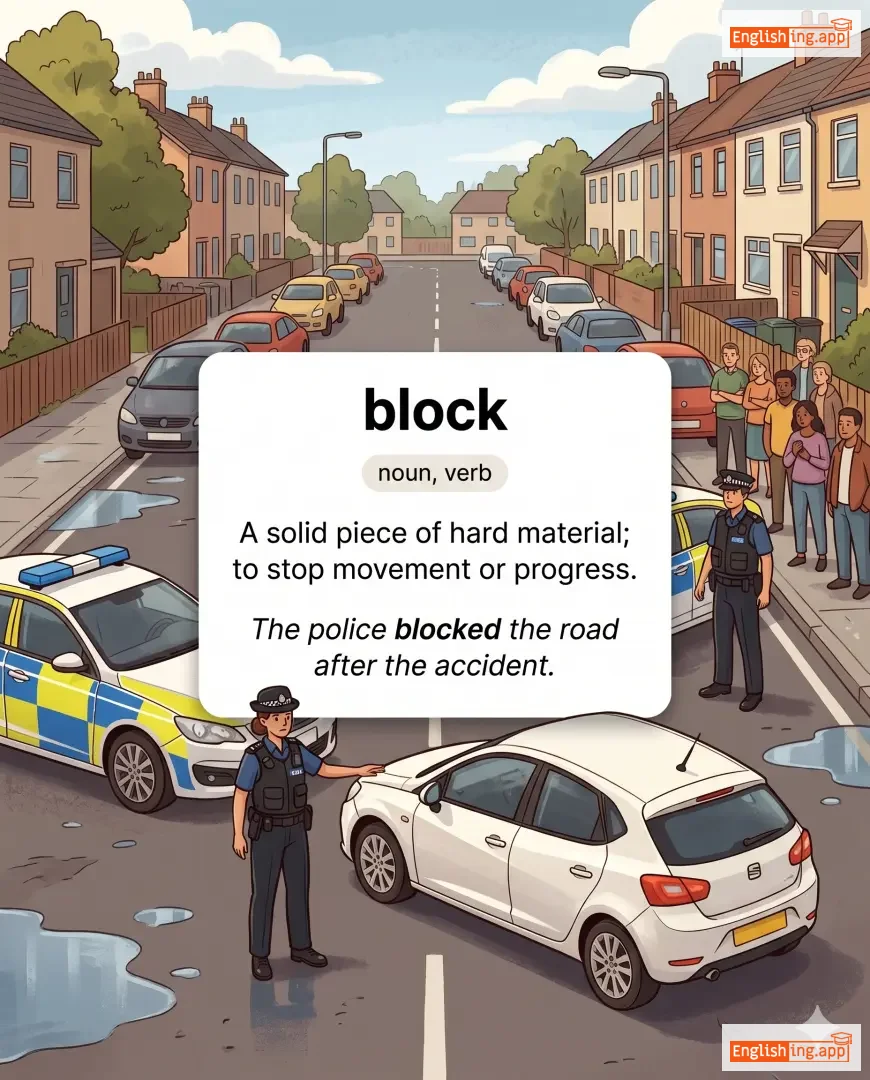
A solid piece of hard material; to stop movement or progress.
••••••
|
The police blocked the road after the accident.
警察は事故後に道路をブロックしました。
••••••
|
警察は事故後に道路をブロックしました。
Keisatsu wa jiko go ni dōro o burokkushimashita.
••••••
|
writer's block
ライターズ・ブロック
••••••
|
The inability to think of what to write.
••••••
|
ライターズ・ブロック
raitāzu burokkū
••••••
|
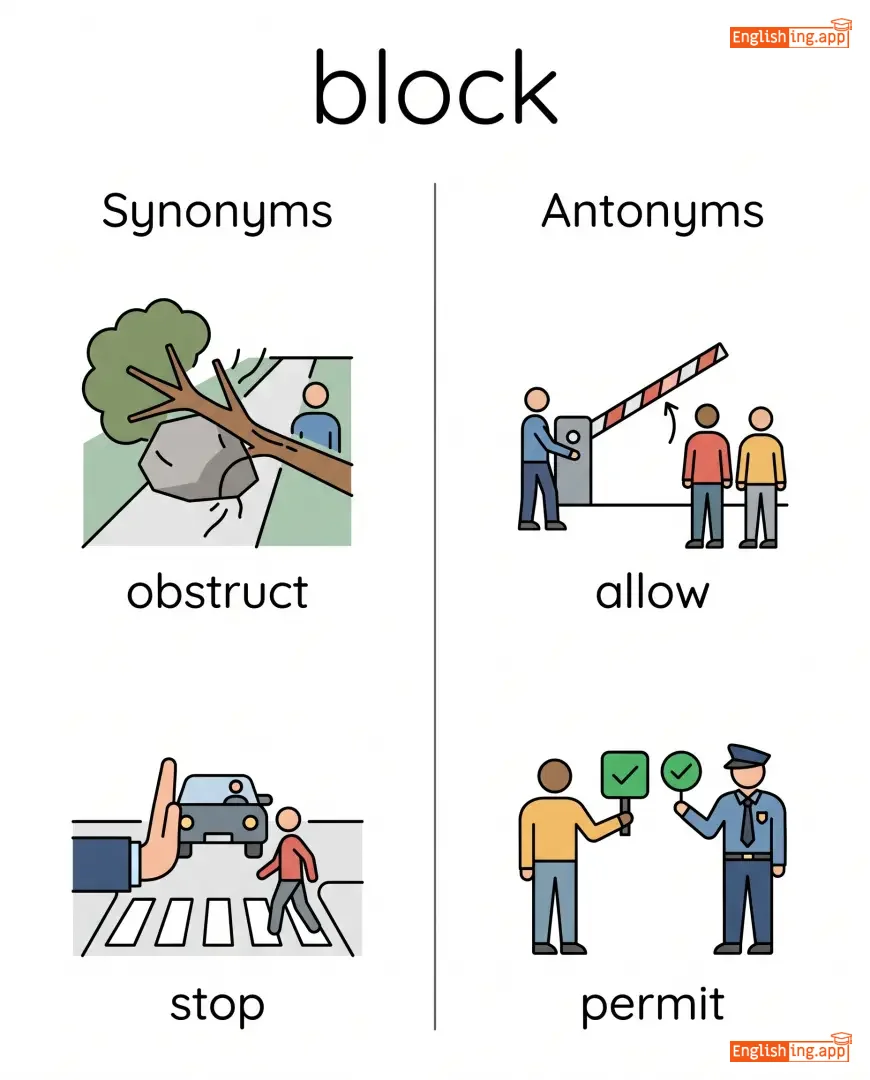
obstruct, stop, hinder, barrier, cube
••••••
|
allow, permit, unblock
••••••
|
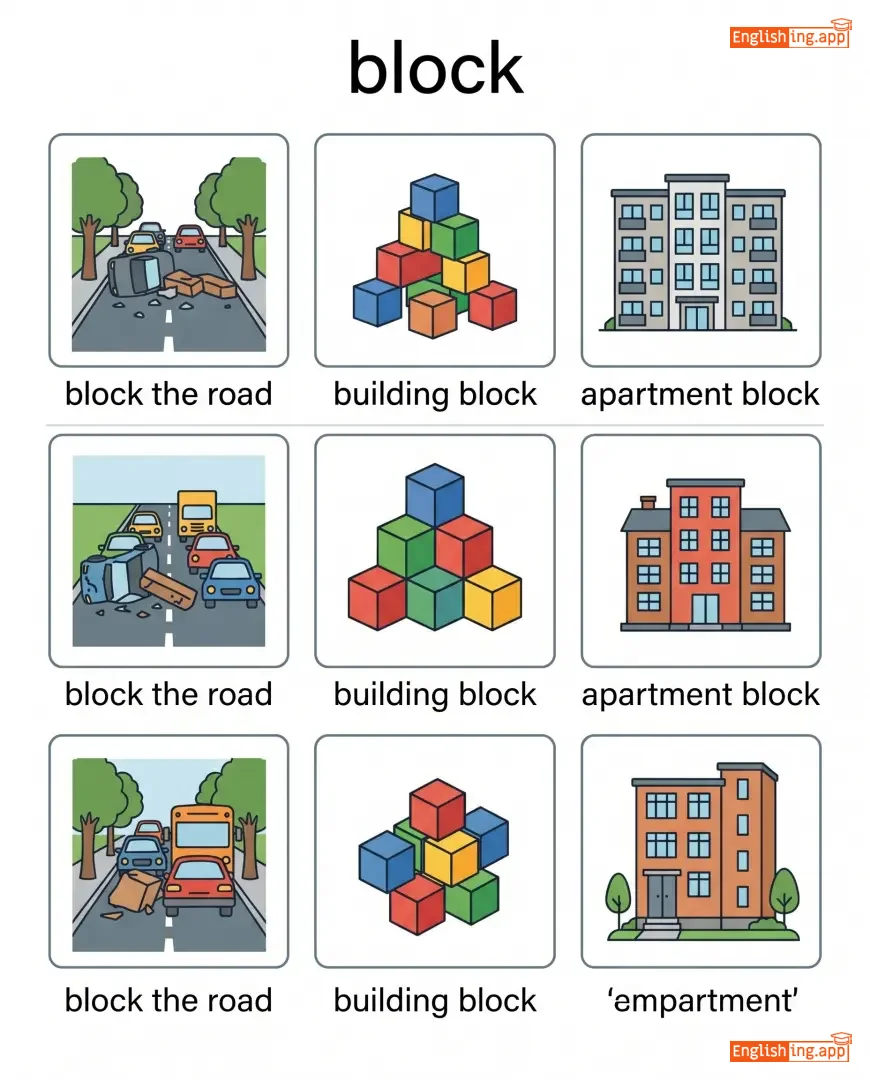
block the road, building block, apartment block, block out
••••••
|
道路をブロックするように、ライターズ・ブロックも思いつかないことです。
••••••
|
|
🩸
••••••
|
/blʌd/
noun
(ブラッド)
••••••
|
- •••••• |
血液
ketsueki
••••••
|
- •••••• | - •••••• | - •••••• | - •••••• |
The red liquid that circulates in the arteries and veins of humans and animals.
••••••
|
The doctor took a sample of blood for testing. |
医師はテストのために血液サンプルを取った。
Ishi wa tesuto no tame ni ketsueki sanpuru o totta.
••••••
|
blood is thicker than water |
Family relationships are stronger than other relationships.
••••••
|
血は水より濃い
Chi wa mizu yori koi
••••••
|
plasma, lifeblood, gore, vital fluid
••••••
|
water, pus
••••••
|
blood pressure, blood test, blood group, blood donation
••••••
|
Blood は '血液' を意味します – '血は水より濃い' という言葉を覚えておきましょう。
••••••
|
|
🌸
••••••
|
/bluːm/
noun, verb
(ブルーム)
••••••
|
- •••••• |
咲く;繁栄する
saku; han'eisuru
••••••
|
bloomed
ブルームド
••••••
|
bloomed
ブルームド
••••••
|
blooms
ブルームズ
••••••
|
blooming
ブルーミング
••••••
|
to produce flowers; to develop or flourish; a flower or the state of flowering
••••••
|
The roses bloom beautifully every spring.
ザ ローゼズ ブルーム ビューティフリー エブリー スプリング
••••••
|
バラは毎年春に美しく咲きます。
Bara wa maitoshi haru ni utsukushiku sakimasu
••••••
|
in full bloom
イン フル ブルーム
••••••
|
at the peak of development or beauty
••••••
|
満開で
mankai de
••••••
|
flourish, blossom, thrive, flower, prosper
••••••
|
wither, fade, decline
••••••
|
flowers bloom, bloom fully, spring bloom, in bloom
••••••
|
Bloom = 咲く、花がブルッと一気に開く感じ。
••••••
|
|
🌸
••••••
|
/ˈblɒsəm/
noun, verb
(ブロッサム)
••••••
|
- •••••• |
花が咲く
hana ga saku
••••••
|
blossomed
ブロッサムド
••••••
|
blossomed
ブロッサムド
••••••
|
blossoms
ブロッサムズ
••••••
|
blossoming
ブロッサミング
••••••
|
a flower or mass of flowers on a tree or plant; to develop or flourish
••••••
|
The small garden began to blossom in spring.
ザ スモール ガーデン ビギャン トゥ ブロッサム イン スプリング
••••••
|
小さな庭は春に花が咲き始めた。
Chiisana niwa wa haru ni hana ga saki hajimeta
••••••
|
in full blossom
イン フル ブロッサム
••••••
|
at the peak of beauty or development
••••••
|
満開で
mankai de
••••••
|
flower, bloom, flourish, thrive, develop
••••••
|
wither, fade, decline
••••••
|
cherry blossom, blossom tree, blossom season, blossom into
••••••
|
Blossom=花が咲く、桜が咲くと心も blossom。
••••••
|
|
👚
••••••
|
/blaʊz/
noun
(ブラウス)
••••••
|
- •••••• |
ブラウス
burausu
••••••
|
- •••••• | - •••••• | - •••••• | - •••••• |
a woman's loose upper garment resembling a shirt
••••••
|
She wore a beautiful silk blouse to the party.
彼女はパーティーに美しいシルクのブラウスを着て行った。
••••••
|
彼女はパーティーに美しいシルクのブラウスを着て行った。
Kanojo wa pātii ni utsukushii shiruku no burausu o kite itta.
••••••
|
- •••••• | - •••••• | - •••••• |
shirt, top, tunic
••••••
|
- •••••• |
silk blouse, cotton blouse, white blouse, formal blouse
••••••
|
Burausu in Japanese sounds like 'ブラウス' and is a loose upper garment worn by women.
••••••
|
|
💨
••••••
|
/bloʊ/
verb, noun
(ブロー)
••••••
|
|
吹く / 打つ
fuku / utsu
••••••
|
blew
ブルー
••••••
|
blown
ブローン
••••••
|
blows
ブローズ
••••••
|
blowing
ブローイング
••••••
|
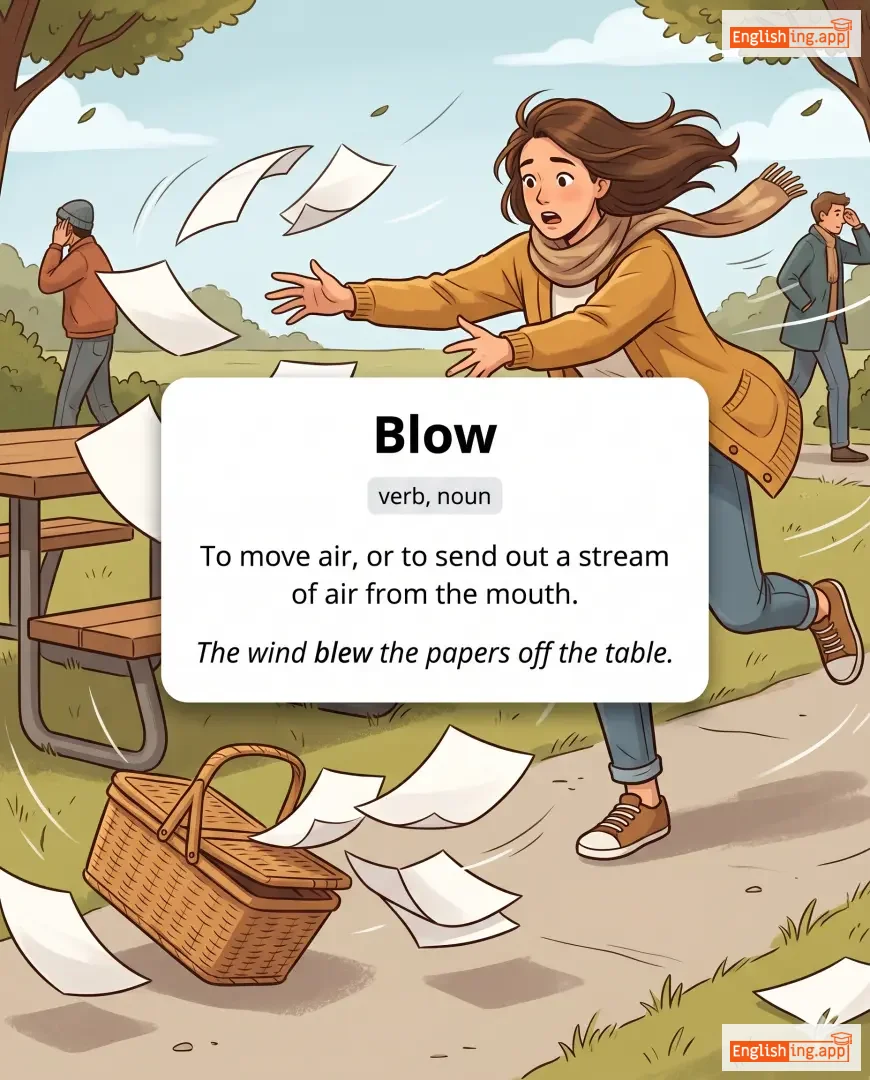
To move air, or to send out a stream of air from the mouth.
••••••
|
The wind blew the papers off the table.
風がテーブルから紙を吹き飛ばした。
••••••
|
風がテーブルから紙を吹き飛ばした。
Kaze ga tēburu kara kami wo fukitobashita.
••••••
|
blow off steam
スチームを吹き飛ばす
••••••
|
To release strong emotions or energy by doing something active.
••••••
|
感情を発散する
Kanjō wo hassan suru
••••••
|
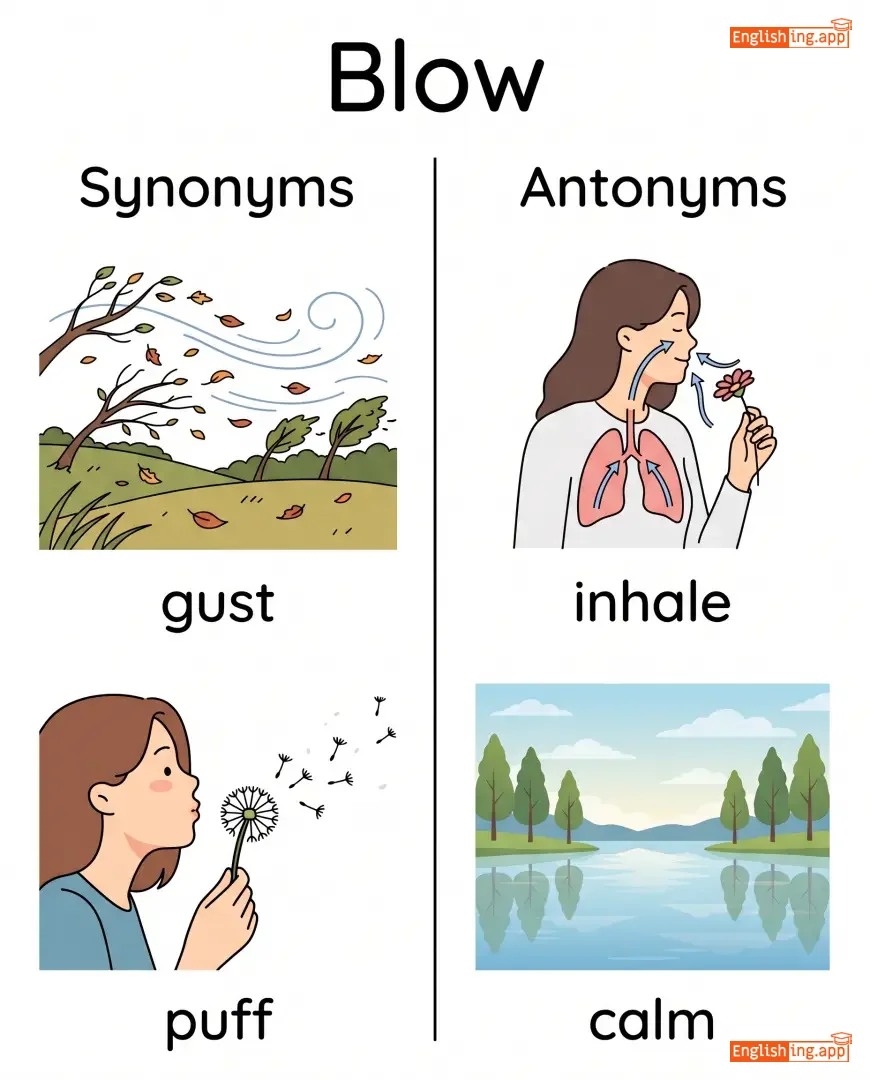
gust, puff, exhale, strike, blast
••••••
|
inhale, calm
••••••
|
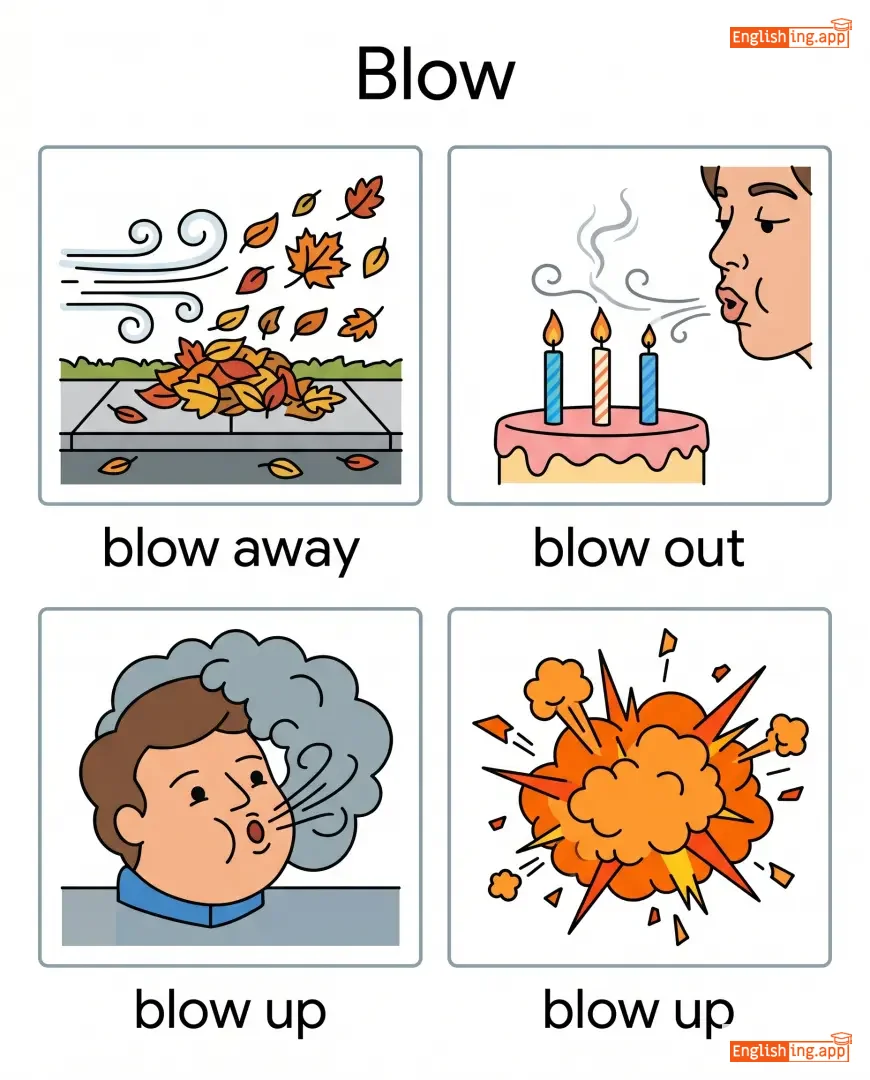
blow away, blow out, blow up, blow over
••••••
|
Blow は吹くこと – バースデーケーキのろうそくを吹き消す。
••••••
|
|
💨
••••••
|
/bloʊ aʊt/
phrasal verb
(ブローアウト)
••••••
|
- •••••• |
吹き消す
fukikesu
••••••
|
blew out
ブリューアウト
••••••
|
blown out
ブローンアウト
••••••
|
blows out
ブローズアウト
••••••
|
blowing out
ブローイングアウト
••••••
|
to extinguish by blowing; to fail suddenly or burst; to expand or exceed limits dramatically
••••••
|
She blew out the candles on her birthday cake.
彼女は誕生日ケーキのろうそくを blow out した。
••••••
|
彼女は誕生日ケーキのろうそくを吹き消した。
kanojo wa tanjoubi keeki no rousoku o fukikeshita
••••••
|
- •••••• | - •••••• | - •••••• |
extinguish, put out, burst, fail, overspend
••••••
|
ignite, light, start
••••••
|
blow out candles, blow out a tire, blow out the budget, blow out flames
••••••
|
Fuki = 吹く, kesu = 消す → blow out
••••••
|
|
🔵
••••••
|
/bluː/
adjective
(ブルー)
••••••
|
- •••••• |
青
ao
••••••
|
- •••••• | - •••••• | - •••••• | - •••••• |
the color of the clear sky; feeling sad or depressed
••••••
|
She wore a bright blue dress to the party. |
彼女はパーティーに明るい青いドレスを着ていました。
Kanojo wa pātī ni akarui aoi doresu o kite imashita.
••••••
|
feeling blue |
to feel sad or depressed
••••••
|
青を感じる
ao o kanjiru
••••••
|
azure, navy, cerulean, sad, gloomy
••••••
|
red, yellow, cheerful, happy
••••••
|
blue sky, blue dress, blue mood, feeling blue
••••••
|
青は青 – 空のように青い、でも青を感じることは悲しいこと。
••••••
|
|
🃏
••••••
|
/blʌf/
verb
••••••
|
- •••••• | - •••••• |
bluffed
••••••
|
bluffed
••••••
|
bluffs
••••••
|
bluffing
••••••
|
to deceive someone by pretending to have strength, knowledge, or resources that one does not actually possess
••••••
|
He tried to bluff his way into the exclusive club. |
- •••••• |
call someone's bluff |
to challenge someone to prove their claim or threat
••••••
|
- •••••• |
deceive, pretend, mislead, trick, feign
••••••
|
reveal, confess, admit
••••••
|
bluff game, bluff strategy, bluff his way, call the bluff
••••••
|
No •••••• |
|
🎭
••••••
|
/ˈblʌfər/
noun
(ブラファー)
••••••
|
- •••••• |
はったり屋
hattariya
••••••
|
- •••••• | - •••••• | - •••••• | - •••••• |
a person who pretends to be more confident, skilled, or knowledgeable than they really are; someone who deceives others by bluffing
••••••
|
Everyone eventually realized that he was just a bluffer with no real experience.
彼がただのブラファーだと皆が気づいた。
••••••
|
彼がただのはったり屋だと皆が気づいた。
kare ga tada no hattariya da to mina ga kizuita
••••••
|
call someone’s bluff
ブラフを見抜く
••••••
|
to challenge someone to prove their claim or threat because you believe they are pretending
••••••
|
ブラフを見抜く
burafu o minuku
••••••
|
pretender, deceiver, fraud, braggart, impostor
••••••
|
truth-teller, honest person
••••••
|
skilled bluffer, obvious bluffer, poker bluffer, known bluffer
••••••
|
Bluffer=ブラフするはったり屋
••••••
|
|
😬
••••••
|
/ˈblʌndər/
noun
(ブランド)
••••••
|
|
誤り
ayamari
••••••
|
- •••••• | - •••••• | - •••••• | - •••••• |
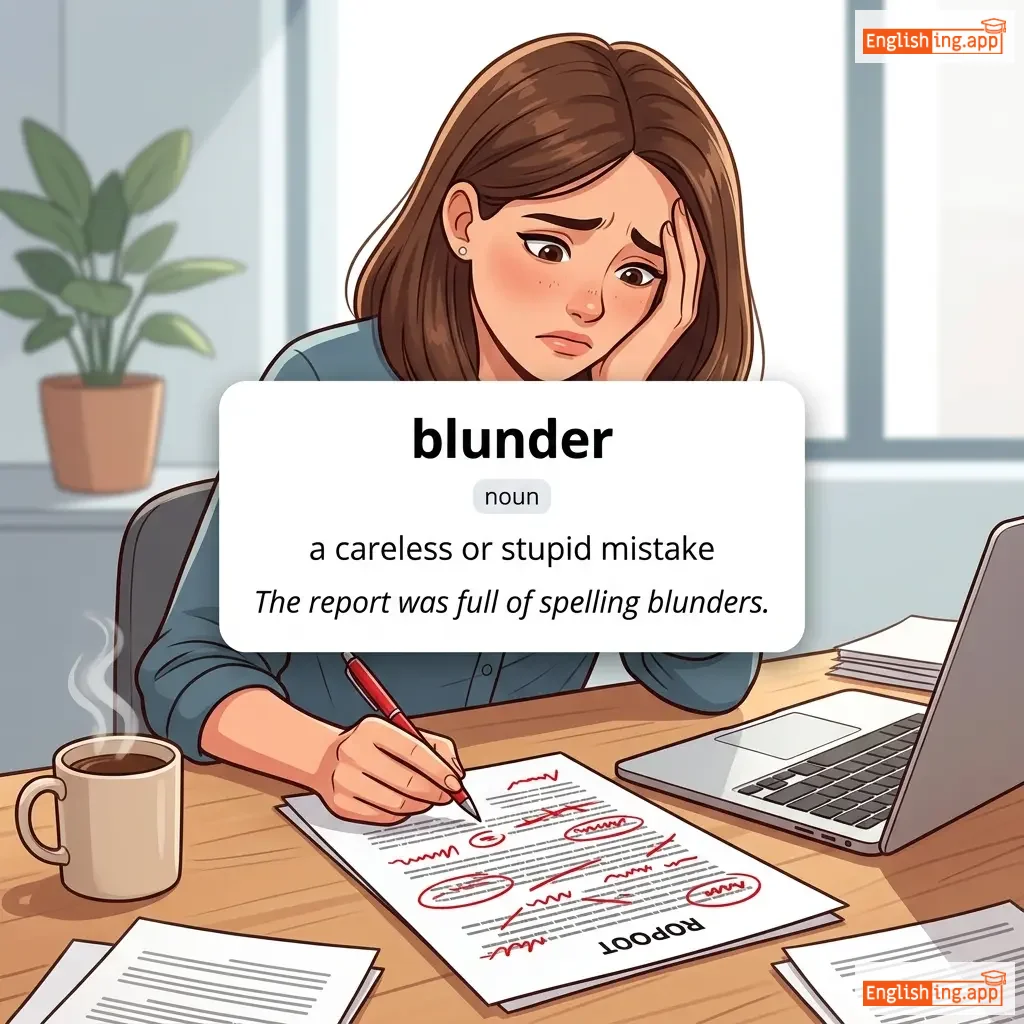
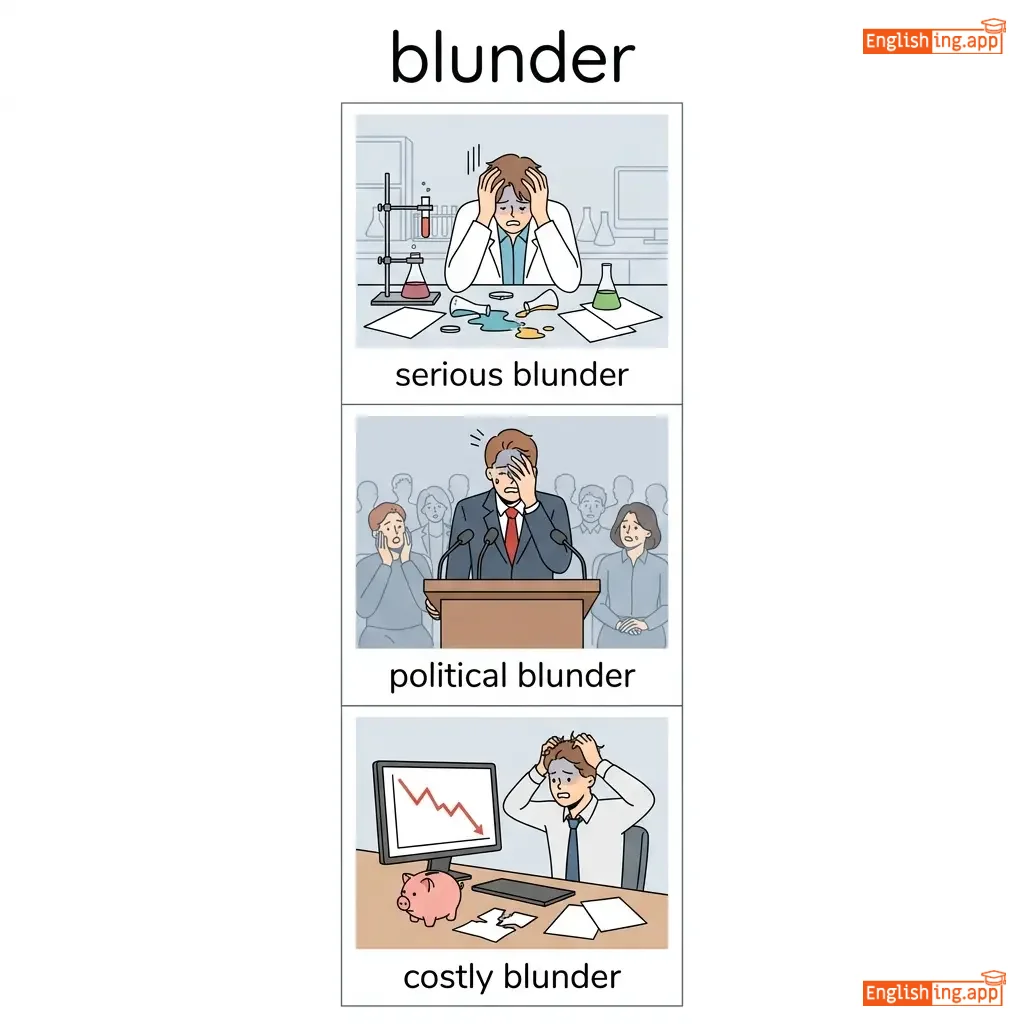
a careless or stupid mistake
••••••
|
The report was full of spelling blunders.
報告書には多くのスペルミスがありました。
••••••
|
報告書には多くのスペルミスがありました。
Houkokusho ni wa ooku no superu misu ga arimashita.
••••••
|
make a blunder
失敗をする
••••••
|
to make a serious mistake
••••••
|
失敗をする
shippai wo suru
••••••
|
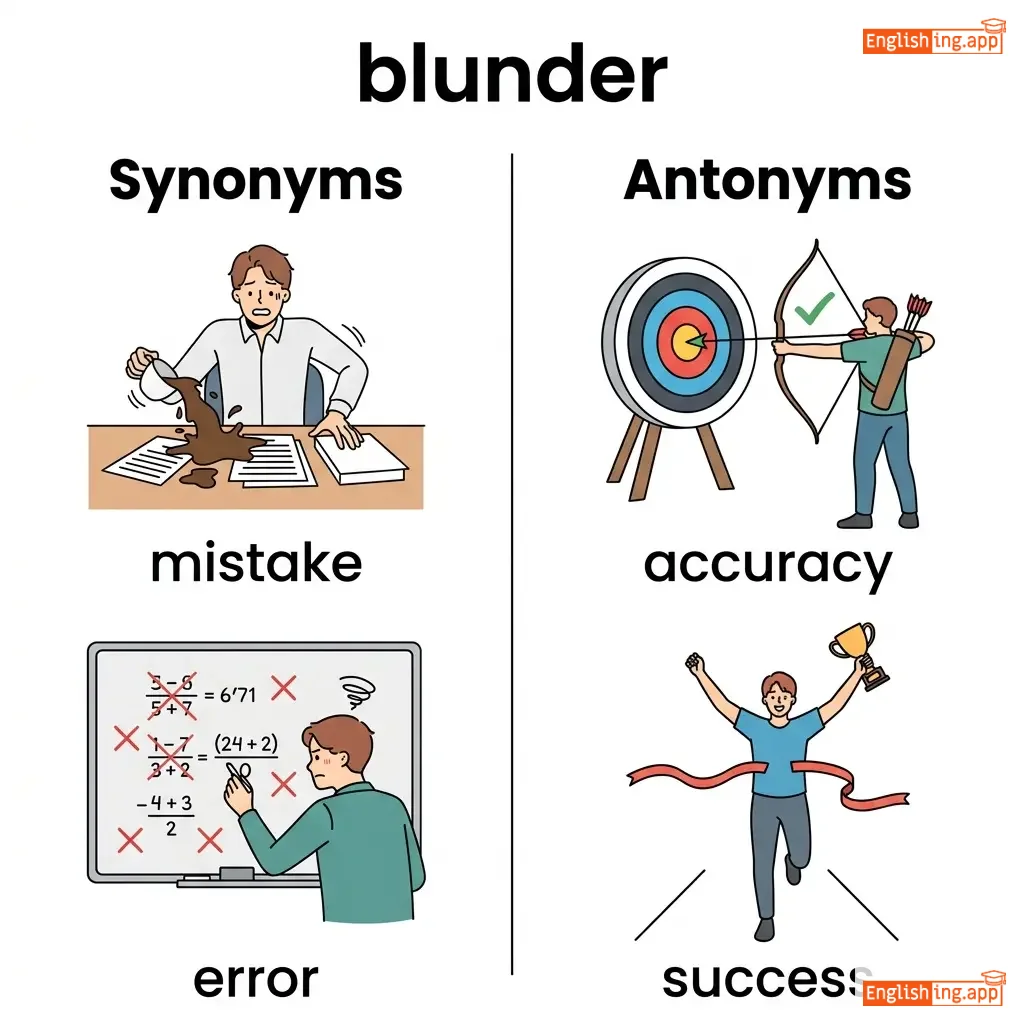
mistake, error, slip, oversight, misstep
••••••
|
accuracy, success, correctness
••••••
|
serious blunder, political blunder, costly blunder, major blunder
••••••
|
Blunderはミスを意味します。'Blind'はミスにつながります。
••••••
|
|
😊
••••••
|
/blʌʃ/
verb
(ブラッシュ)
••••••
|
- •••••• |
顔を赤らめる
kao wo akarameru
••••••
|
blushed
ブラッシュド
••••••
|
blushed
ブラッシュド
••••••
|
blushes
ブラッシュズ
••••••
|
blushing
ブラッシング
••••••
|
to become red in the face due to embarrassment or shyness
••••••
|
She blushed when he complimented her.
彼女は彼に褒められた時、顔が赤くなった。
••••••
|
彼女は彼に褒められた時、顔が赤くなった。
Kanojo wa kare ni homerareta toki, kao ga akaku natta.
••••••
|
blush with pride
誇りに思って顔を赤くする
••••••
|
to feel proud, showing it through blushing
••••••
|
誇りに思って顔を赤くする
hokori ni omotte kao wo akaku suru
••••••
|
redden, flush, color, glow
••••••
|
pale, blanch
••••••
|
blush deeply, blush slightly, blush with embarrassment
••••••
|
Blushは顔が赤くなること、恥ずかしさや誇りから。
••••••
|
|
🌪️
••••••
|
/ˈblʌstər/
verb
(ブラスター)
••••••
|
- •••••• |
大声で自慢する
ōgoe de jimansuru
••••••
|
blustered
ブラスタード
••••••
|
blustered
ブラスタード
••••••
|
blusters
ブラスターズ
••••••
|
blustering
ブラスターリング
••••••
|
to speak loudly in an aggressive or threatening way, often without real power
••••••
|
The manager blustered about firing people but did nothing.
マネージャーは人々を解雇すると大声で言ったが、何もしなかった。
••••••
|
マネージャーは人を解雇すると大声で言ったが、何もしなかった。
Manējā wa hito o kaiko suru to ōgoe de itta ga, nanimo shinakatta.
••••••
|
- •••••• | - •••••• | - •••••• |
rant, roar, threaten, boast
••••••
|
murmur, whisper
••••••
|
bluster about, bluster and threaten, loud bluster
••••••
|
BlusterはBlasterのように大きな音を立てるけど、実際には何もしない。
••••••
|
|
📋
••••••
|
/bɔːrd/
noun
••••••
|
- •••••• | - •••••• | - •••••• | - •••••• | - •••••• | - •••••• |
a flat, thin, rectangular piece of material such as wood; also a group of people managing an organization
••••••
|
The board decided to increase the budget. |
- •••••• |
on board |
to be part of a team or involved in a project
••••••
|
- •••••• |
plank, panel, committee, council
••••••
|
individual, disorganization
••••••
|
board meeting, board of directors, wooden board, on board
••••••
|
No •••••• |
|
🏆
••••••
|
/boʊst/
verb
(bōsuto)
••••••
|
|
自慢する
jiman suru
••••••
|
boasted
bōsutedo
••••••
|
boasted
bōsutedo
••••••
|
boasts
bōsutozu
••••••
|
boasting
bōsuting
••••••
|
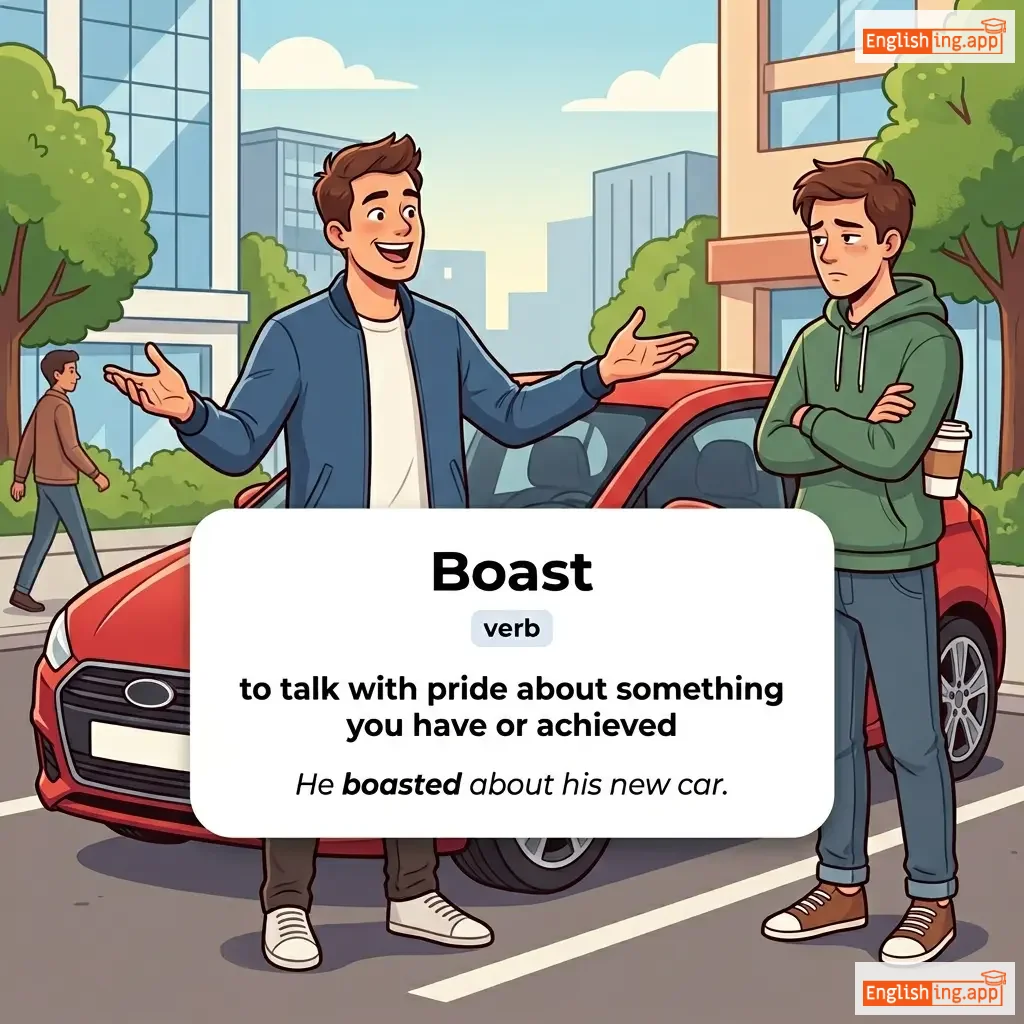
to talk with pride about something you have or achieved
••••••
|
He boasted about his new car.
彼は新しい車を自慢していました。
••••••
|
彼は新しい車を自慢していました。
Kare wa atarashī kuruma o jiman shite imashita.
••••••
|
boast about
自慢する
••••••
|
to talk proudly about something
••••••
|
自慢する
jiman suru
••••••
|
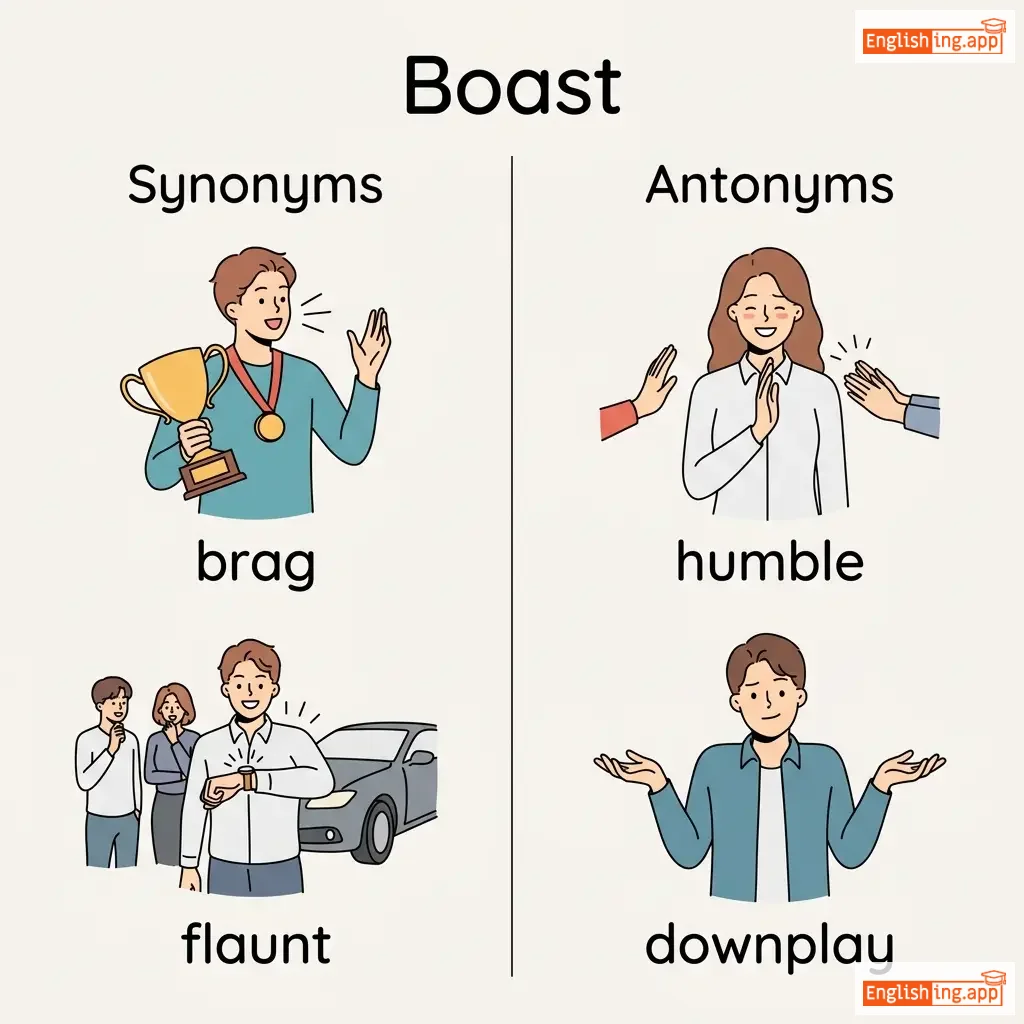
brag, flaunt, praise, show off
••••••
|
humble, downplay
••••••
|
boast about, boast of, boast great, boast success
••••••
|
Boastは、自分の成果を誇らしげに話すこと、ボスのように。
••••••
|
|
⛵
••••••
|
/boʊt/
noun
(ボート)
••••••
|
- •••••• |
ボート
bōto
••••••
|
- •••••• | - •••••• | - •••••• | - •••••• |
a small vessel used for traveling on water
••••••
|
They took a boat across the river. |
彼らは川を渡るためにボートに乗った。
Karera wa kawa o wataru tame ni bōto ni notta.
••••••
|
miss the boat |
to miss an opportunity
••••••
|
- •••••• |
ship, vessel, canoe, yacht, ferry
••••••
|
submarine, aircraft
••••••
|
boat ride, fishing boat, sail a boat, boat trip
••••••
|
Boatはボートという意味です。ボートが水の上を進むように、boatも水上を進みます。
••••••
|
|
🌊
••••••
|
/bɒb/
noun, verb
(ボブ)
••••••
|
- •••••• |
上下に揺れる
jouge ni yureru
••••••
|
bobbed
ボブド
••••••
|
bobbed
ボブド
••••••
|
bobs
ボブズ
••••••
|
bobbing
ボビング
••••••
|
a short sudden movement up and down; to move quickly up and down
••••••
|
The small boat began to bob on the waves.
ザ スモール ボート ビギャン トゥ ボブ オン ザ ウェーブス
••••••
|
小さなボートは波の上で上下に揺れ始めた。
Chiisana booto wa nami no ue de jouge ni yurehajimeta
••••••
|
bob up and down
ボブ アップ アンド ダウン
••••••
|
to move repeatedly upward and downward
••••••
|
上下に動く
jouge ni ugoku
••••••
|
bounce, hop, dip, jiggle, nod
••••••
|
sink, remain still
••••••
|
bob gently, bob in the water, head bob, boat bobbing
••••••
|
ボートがボブボブ上下に揺れる
••••••
|
|
🔮
••••••
|
/boʊd/
verb
(ボード)
••••••
|
- •••••• |
予兆する
yochou suru
••••••
|
boded
ボーデッド
••••••
|
boded
ボーデッド
••••••
|
bodes
ボーズ
••••••
|
boding
ボーディング
••••••
|
to be an omen of a particular outcome, often something bad
••••••
|
The dark clouds bode a heavy storm.
暗い雲は激しい嵐を予兆しています。
••••••
|
暗い雲は激しい嵐を予兆しています。
Kurai kumo wa hageshii arashi wo yochou shiteimasu.
••••••
|
bode well
bode well
••••••
|
to be a sign of good future prospects
••••••
|
良い未来の兆し
Yoi mirai no keshiki
••••••
|
foreshadow, indicate, predict, foretell, portend
••••••
|
ignore, neglect, disregard
••••••
|
bode well, bode ill, does not bode well, bodes trouble
••••••
|
Bodeは将来の出来事を示唆するようなものです
••••••
|
|
🧍
••••••
|
/ˈbɒdi/
noun
(bodi)
••••••
|
- •••••• |
体
karada
••••••
|
- •••••• | - •••••• | - •••••• | - •••••• |
the physical structure of a person or animal
••••••
|
Exercise helps keep the body healthy. |
運動は体を健康に保つのに役立ちます。
undō wa karada o kenkō ni tamotsu no ni yakudachimasu.
••••••
|
over my dead body |
absolutely not allowed
••••••
|
私の死体を越えて
watashi no shitai o koete
••••••
|
form, figure, corpse, frame, physique
••••••
|
soul, spirit
••••••
|
human body, body parts, body weight, body language
••••••
|
Body = 体, 運動をすると体が強くなる。
••••••
|
|
😵
••••••
|
/ˈbɒɡəl/
verb
(ボグル)
••••••
|
- •••••• |
困惑させる
konwaku saseru
••••••
|
boggled
ボグルド
••••••
|
boggled
ボグルド
••••••
|
boggles
ボグルズ
••••••
|
boggling
ボグリング
••••••
|
to overwhelm or confuse; to be astonished or puzzled by something
••••••
|
The complexity of the puzzle boggled his mind.
パズルの複雑さが彼の頭を困惑させた。
••••••
|
パズルの複雑さが彼の頭を困惑させた。
Pazuru no fukuzatsusa ga kare no atama o konwaku saseta.
••••••
|
boggle the mind
頭を困惑させる
••••••
|
to be astonishing or hard to believe
••••••
|
頭を困惑させる
atama o konwaku saseru
••••••
|
astonish, amaze, overwhelm, confuse, perplex
••••••
|
clarify, explain, simplify
••••••
|
boggle the mind, boggled by, mind-boggling, boggle at
••••••
|
Boggleは頭を回して困惑することを意味します - 困惑させる。
••••••
|
|
🥘
••••••
|
/bɔɪl/
verb
••••••
|
- •••••• | - •••••• |
boiled
••••••
|
boiled
••••••
|
boils
••••••
|
boiling
••••••
|
to heat a liquid until it starts to bubble and turn into vapor.
••••••
|
Please boil some water for tea. |
- •••••• |
boil over |
to overflow or to become uncontrollable (emotionally or physically).
••••••
|
- •••••• |
heat, simmer, steam, cook
••••••
|
freeze, chill
••••••
|
boil water, boil eggs, bring to a boil, hard boil
••••••
|
No •••••• |
|
🦁
••••••
|
/boʊld/
adjective
(ボールド)
••••••
|
- •••••• |
大胆
daitan
••••••
|
- •••••• | - •••••• | - •••••• | - •••••• |
showing courage, confidence, or willingness to take risks
••••••
|
She made a bold decision to start her own business. |
彼女は自分のビジネスを始める大胆な決断を下した。
Kanojo wa jibun no bijinesu o hajimeru daitan na ketsudan o kudashita.
••••••
|
fortune favors the bold |
people who take risks often achieve success
••••••
|
運命は大胆な者に味方する
Unmei wa daitan na mono ni mikata suru
••••••
|
brave, courageous, daring, confident, fearless
••••••
|
timid, shy, fearful
••••••
|
bold decision, bold move, bold colors, bold step
••••••
|
大胆はboldと同じ意味です、リスクを取る人々が成功するように。
••••••
|
|
💣
••••••
|
/bɑːm/
noun/verb
(ボム)
••••••
|
- •••••• |
爆弾
bakudan
••••••
|
bombed
ボンバード
••••••
|
bombed
ボンバード
••••••
|
bombs
ボムズ
••••••
|
bombing
ボンビング
••••••
|
A weapon that explodes; also to attack with bombs or to fail badly.
••••••
|
The city was bombed heavily during the war.
その都市は戦争中に激しく爆撃された。
••••••
|
その都市は戦争中に激しく爆撃された。
Sono toshi wa sensō chū ni hageshiku bakugeki sareta.
••••••
|
go bomb
爆弾を投下する
••••••
|
To fail completely.
••••••
|
完全に失敗する
kanzen ni shippai suru
••••••
|
explosive, missile, shell, fail, demolish
••••••
|
succeed, protect
••••••
|
drop a bomb, bomb attack, bomb squad, bomb shelter
••••••
|
爆弾は爆発を意味する - 爆弾を投下するは完全に失敗することを意味する。
••••••
|
|
💣
••••••
|
/ˈbɒmɪŋ/
noun
(ボーミング)
••••••
|
- •••••• |
爆撃
bakugeki
••••••
|
- •••••• | - •••••• | - •••••• | - •••••• |
an attack using bombs or explosives
••••••
|
The city was devastated by the bombing. |
その都市は爆撃で壊滅的な被害を受けました。
Sono toshi wa bakugeki de kaimetsuteki na higai o ukemashita.
••••••
|
- •••••• | - •••••• | - •••••• |
explosion, attack, strike, assault, blast
••••••
|
peace, ceasefire
••••••
|
suicide bombing, bombing raid, air bombing, terrorist bombing
••••••
|
Bombing = 爆撃 = 爆弾を使った攻撃
••••••
|
|
🤝
••••••
|
/bɒnd/
noun
••••••
|
- •••••• | - •••••• | - •••••• | - •••••• | - •••••• | - •••••• |
a connection or relationship between people or things
••••••
|
The sisters share a close bond. |
- •••••• |
bond of friendship |
a strong relationship based on trust and care
••••••
|
- •••••• |
connection, tie, link, relationship, attachment
••••••
|
division, separation
••••••
|
emotional bond, strong bond, family bond, bond market
••••••
|
No •••••• |
|
🦴
••••••
|
/boʊn/
noun
(ボーン)
••••••
|
- •••••• |
骨
hone
••••••
|
- •••••• | - •••••• | - •••••• | - •••••• |
the hard parts of a skeleton that form the structure of the body
••••••
|
The dog buried a bone in the garden. |
犬は庭に骨を埋めた。
Inu wa niwa ni hone o umeta.
••••••
|
feel it in your bones |
to sense something strongly
••••••
|
骨に感じる
hone ni kanjiru
••••••
|
skeleton, joint, cartilage, marrow
••••••
|
flesh, muscle
••••••
|
broken bone, bone marrow, bone density, bone fracture
••••••
|
Boneは骨 — 骨に感じる、that's a bone!
••••••
|
|
💰
••••••
|
/ˈbəʊnəs/
noun
(ボーナス)
••••••
|
- •••••• |
ボーナス
bōnasu
••••••
|
- •••••• | - •••••• | - •••••• | - •••••• |
an extra payment or reward given in addition to what is usual or expected.
••••••
|
Employees received a year-end bonus for their hard work.
従業員はその努力に対して年末のボーナスを受け取った。
••••••
|
従業員はその努力に対して年末のボーナスを受け取った。
Jūgyōin wa sono doryoku ni taishite nenmatsu no bōnasu o uketotta.
••••••
|
added bonus
追加のボーナス
••••••
|
an extra benefit or advantage.
••••••
|
追加の利益
tsuika no rieki
••••••
|
reward, incentive, gift, premium, perk
••••••
|
penalty, deduction
••••••
|
year-end bonus, performance bonus, cash bonus, annual bonus
••••••
|
Bonus – これは良い仕事に対する追加の報酬!
••••••
|
|
🤦
••••••
|
/buːb/
noun
(ブーブ)
••••••
|
- •••••• |
ばか者;胸(俗語)
bakemono; mune
••••••
|
- •••••• | - •••••• | - •••••• | - •••••• |
a foolish or clumsy person; an informal and sometimes rude term for a woman's breast
••••••
|
He felt like a complete boob after forgetting the meeting.
ヒー フェルト ライク ア コンプリート ブーブ アフター フォゲッティング ザ ミーティング
••••••
|
会議を忘れて、彼は完全なばか者だと感じた。
kaigi o wasurete kare wa kanzen na bakamono da to kanjita
••••••
|
make a boob of oneself
メイク ア ブーブ オブ ワンセルフ
••••••
|
to behave in a foolish or embarrassing way
••••••
|
恥をかく
haji o kaku
••••••
|
fool, idiot, dummy, clod, simpleton
••••••
|
genius, expert, intellectual
••••••
|
act like a boob, complete boob, silly boob
••••••
|
boob=ブーブ、ばかを連想
••••••
|
|
🤪
••••••
|
/ˈbuːbi/
noun
(ブービー)
••••••
|
- •••••• |
ばか
baka
••••••
|
- •••••• | - •••••• | - •••••• | - •••••• |
a foolish or gullible person; a silly individual
••••••
|
He felt like a booby after making such a simple mistake.
ヒー フェルト ライク ア ブービー アフター メイキング サッチ ア シンプル ミステイク。
••••••
|
そんな簡単な間違いをして、彼は自分をばかだと感じた。
sonna kantan na machigai o shite kare wa jibun o baka da to kanjita
••••••
|
booby prize
ブービー プライズ
••••••
|
a prize given to the person who finishes last or performs worst
••••••
|
ブービー賞
buubii sho
••••••
|
fool, dunce, simpleton, idiot, nitwit
••••••
|
genius, sage, intellectual
••••••
|
booby prize, silly booby, poor booby
••••••
|
ブービーは ばか を思い出す
••••••
|
|
📖
••••••
|
/bʊk/
noun, verb
••••••
|
- •••••• | - •••••• |
booked
••••••
|
booked
••••••
|
books
••••••
|
booking
••••••
|
A set of written, printed, or blank pages fastened together; to arrange for someone to have a seat, room, or ticket in advance.
••••••
|
I booked a table at the restaurant for dinner. |
- •••••• |
by the book |
to follow rules strictly
••••••
|
- •••••• |
volume, text, novel, reserve, schedule
••••••
|
cancel, disorder
••••••
|
open book, book a ticket, book club, book online, book in advance
••••••
|
No •••••• |
|
📅
••••••
|
/ˈbʊkɪŋ/
noun
(ブッキング)
••••••
|
- •••••• |
予約
yoyaku
••••••
|
- •••••• | - •••••• | - •••••• | - •••••• |
the act of reserving accommodations, tickets, etc.
••••••
|
I made a booking for a hotel room in advance. |
私は事前にホテルの部屋を予約しました。
Watashi wa jizen ni hoteru no heya o yoyaku shimashita.
••••••
|
- •••••• | - •••••• | - •••••• |
reservation, appointment, arrangement, scheduling
••••••
|
cancellation, no-show
••••••
|
flight booking, hotel booking, online booking, advance booking
••••••
|
予約 (yoyaku) はホテルやチケットの予約!
••••••
|
|
📚
••••••
|
/ˈbʊkʃɒp/
noun
(ブックショップ)
••••••
|
- •••••• |
書店
shoten
••••••
|
- •••••• | - •••••• | - •••••• | - •••••• |
a retail store where books are sold
••••••
|
She spent an hour browsing in the small bookshop.
シー スペント アン アワー ブラウジング イン ザ スモール ブックショップ。
••••••
|
彼女は小さな書店で一時間過ごした。
kanojo wa chiisana shoten de ichijikan sugoshita
••••••
|
corner bookshop
コーナー ブックショップ
••••••
|
a small neighborhood bookstore
••••••
|
街角の書店
machikado no shoten
••••••
|
bookstore, bookseller, book mart, book outlet
••••••
|
library, online store
••••••
|
local bookshop, independent bookshop, small bookshop, visit a bookshop
••••••
|
ブック+ショップ=書店
••••••
|
|
📚
••••••
|
/ˈbʊkstɔːr/
noun
(ブックストア)
••••••
|
- •••••• |
書店
shoten
••••••
|
- •••••• | - •••••• | - •••••• | - •••••• |
a shop where books are sold
••••••
|
She spent an entire afternoon browsing in the bookstore.
シー スペント アン エンタイア アフタヌーン ブラウジング イン ザ ブックストア。
••••••
|
彼女は午後ずっと書店で過ごした。
kanojo wa gogo zutto shoten de sugoshita
••••••
|
- •••••• | - •••••• | - •••••• |
bookshop, bookseller, book mart, book outlet
••••••
|
library, online store
••••••
|
local bookstore, independent bookstore, bookstore chain, visit a bookstore
••••••
|
ブック+ストア=本の店、書店
••••••
|
|
📈
••••••
|
/buːm/
noun, verb
••••••
|
|
- •••••• |
boomed
••••••
|
boomed
••••••
|
booms
••••••
|
booming
••••••
|
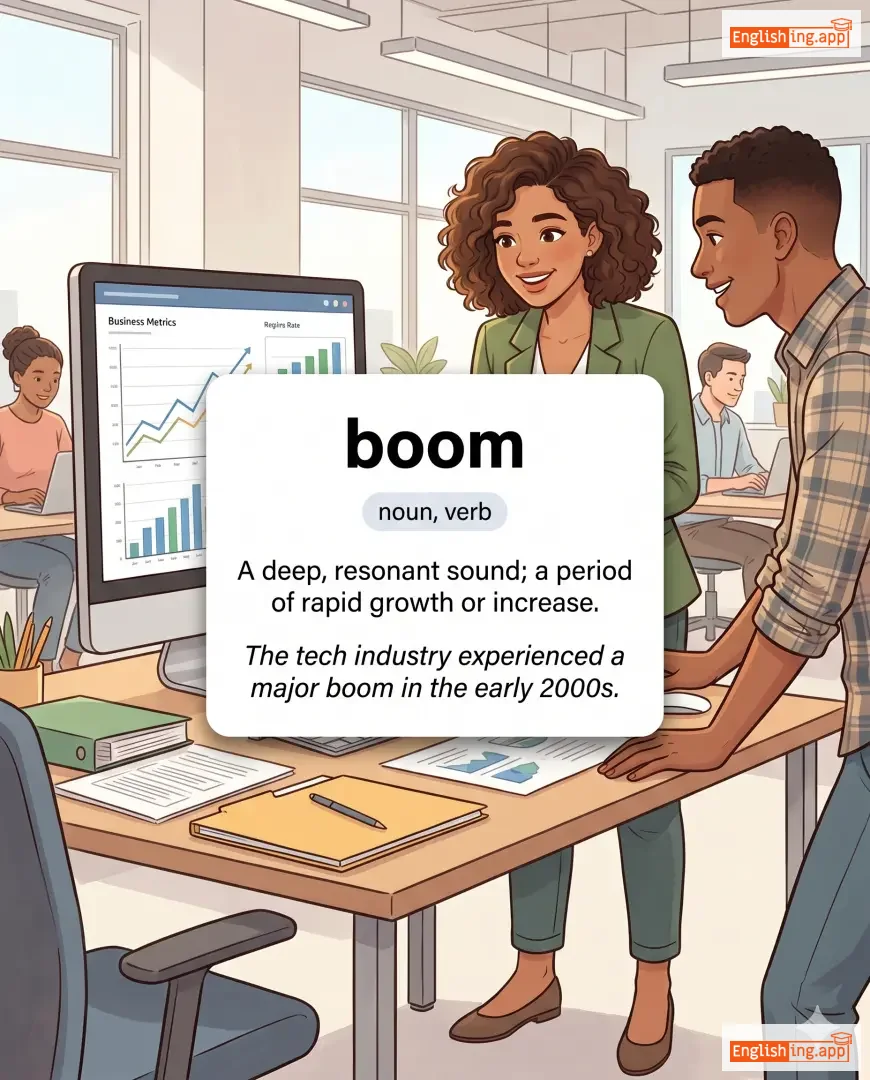
A deep, resonant sound; a period of rapid growth or increase.
••••••
|
The tech industry experienced a major boom in the early 2000s. |
- •••••• |
boom and bust |
A cycle of economic expansion followed by a decline.
••••••
|
- •••••• |
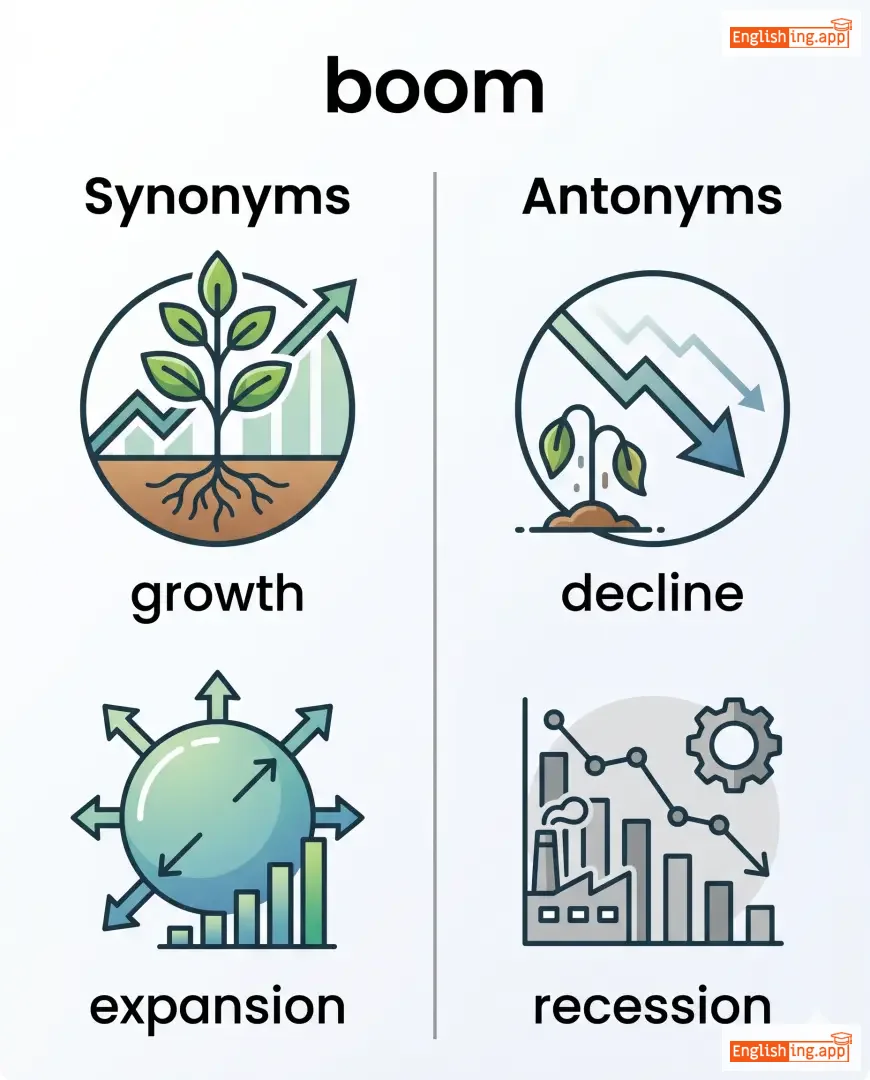
growth, expansion, surge, prosperity, increase
••••••
|
decline, recession, bust
••••••
|
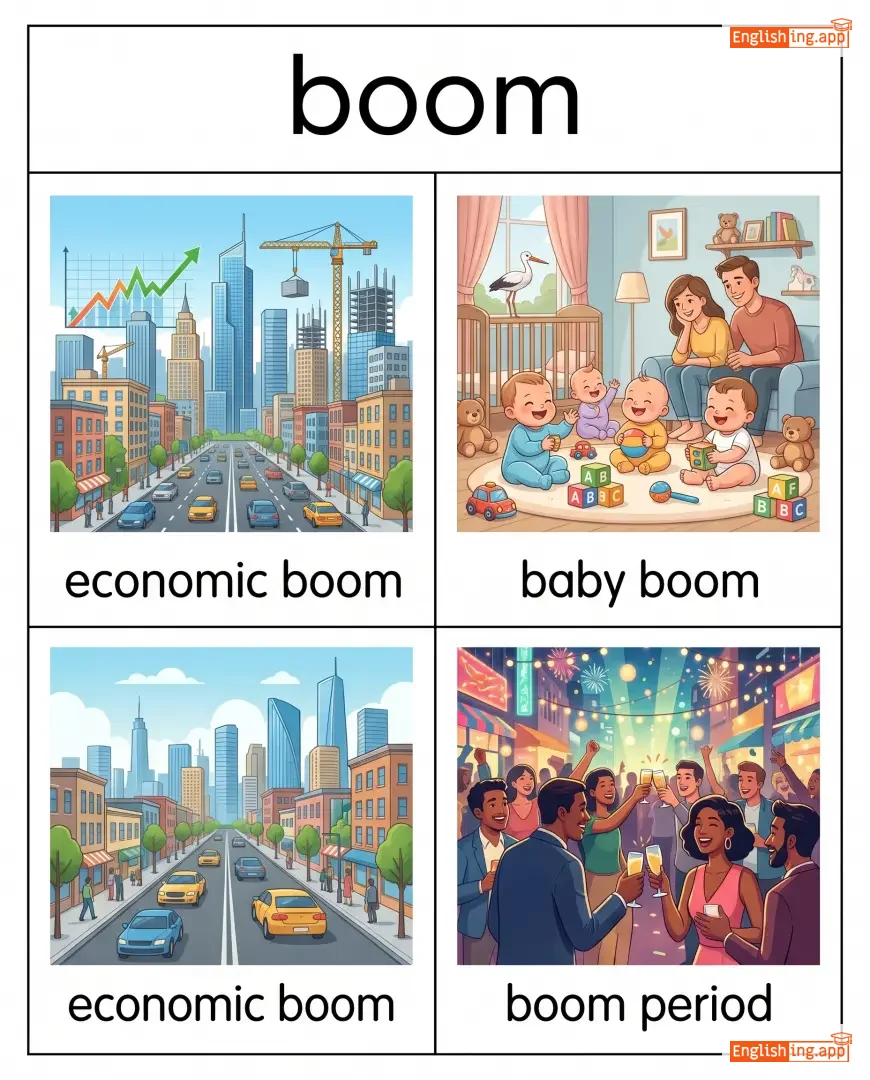
economic boom, baby boom, boom period, boom in demand
••••••
|
No •••••• |
|
📈
••••••
|
/buːst/
verb
(ブースト)
••••••
|
- •••••• |
増加させる
zōka saseru
••••••
|
boosted
ブーステッド
••••••
|
boosted
ブーステッド
••••••
|
boosts
ブースツ
••••••
|
boosting
ブースティング
••••••
|
To increase, improve, or raise something.
••••••
|
The company launched a campaign to boost sales.
会社は売上を増加させるためのキャンペーンを開始しました。
••••••
|
会社は売上を増加させるためのキャンペーンを開始しました。
Kaisha wa uriage o zōka saseru tame no kyanpēn o kaishi shimashita.
••••••
|
boost morale
士気を高める
••••••
|
to increase confidence and enthusiasm
••••••
|
士気を高める
shiki o takameru
••••••
|
increase, raise, enhance, improve, promote
••••••
|
reduce, decrease, diminish
••••••
|
boost sales, boost energy, boost confidence, boost performance
••••••
|
Boost = 学ぶことを増やし、成果を高める。
••••••
|
|
👢
••••••
|
/buːt/
noun, verb
(ブーツ)
••••••
|
- •••••• |
ブーツ
butsu
••••••
|
booted
ブーテッド
••••••
|
booted
ブーテッド
••••••
|
boots
ブーツ
••••••
|
booting
ブーティング
••••••
|
A type of shoe that covers the ankle or higher; to start up a computer system.
••••••
|
He put on his boots before going hiking.
彼はハイキングに行く前にブーツを履いた。
••••••
|
彼はハイキングに行く前にブーツを履いた。
Kare wa haikingu ni iku mae ni butsu wo haita.
••••••
|
boot up
起動する
••••••
|
To start a computer system.
••••••
|
起動する
kidou suru
••••••
|
shoe, footwear, startup, begin, launch
••••••
|
barefoot, shutdown
••••••
|
hiking boots, boot camp, boot up, knee-high boots
••••••
|
ブーツを履いてコンピュータも起動しよう。
••••••
|
|
🍺
••••••
|
/buːz/
noun, verb
(ブーズ)
••••••
|
- •••••• |
酒
sake
••••••
|
boozed
ブーズド
••••••
|
boozed
ブーズド
••••••
|
boozes
ブーズズ
••••••
|
boozing
ブージング
••••••
|
alcoholic drink, especially strong liquor; to drink alcohol, often excessively
••••••
|
They bought some booze for the party.
ゼイ ボート サム ブーズ フォー ザ パーティー
••••••
|
彼らはパーティーのために酒を買った。
karera wa paatii no tame ni sake o katta
••••••
|
hit the booze
ヒット ザ ブーズ
••••••
|
to start drinking alcohol heavily, often because of stress or sadness
••••••
|
酒に溺れる
sake ni oboreru
••••••
|
alcohol, liquor, spirits, drink, booze-up
••••••
|
sobriety, abstinence
••••••
|
cheap booze, hard booze, drink booze, buy booze, too much booze
••••••
|
BOOZE は ブーズ、酒好きは忘れない
••••••
|
|
🍺
••••••
|
/ˈbuːzi/
adjective
(ブージー)
••••••
|
- •••••• |
酒気帯びた
shuki obita
••••••
|
- •••••• | - •••••• | - •••••• | - •••••• |
containing or involving a lot of alcohol; slightly drunk from alcohol
••••••
|
The party became boozy as the night went on.
ザ パーティー ビケイム ブージー アズ ザ ナイト ウェント オン。
••••••
|
夜が更けるにつれて、パーティーは酒気帯びてきた。
yoru ga fukeru ni tsurete paatii wa shuki obite kita
••••••
|
- •••••• | - •••••• | - •••••• |
alcoholic, drunken, tipsy, intoxicated, liquor-soaked
••••••
|
sober, dry
••••••
|
boozy party, boozy night, boozy atmosphere, boozy celebration
••••••
|
ブージーはbooze由来でお酒の意味
••••••
|
|
🛂
••••••
|
/ˈbɔːrdər/
noun, verb
(ボーダー)
••••••
|
- •••••• |
国境
kokkyou
••••••
|
bordered
ボーダード
••••••
|
bordered
ボーダード
••••••
|
borders
ボーダーズ
••••••
|
bordering
ボーダリング
••••••
|
A line separating two political or geographical areas.
••••••
|
Bangladesh shares a long border with India.
バングラデシュはインドと長い国境を共有しています。
••••••
|
バングラデシュはインドと長い国境を共有しています。
Banguradeshu wa Indo to nagai kokkyou o kyōyū shiteimasu.
••••••
|
border on
border on
••••••
|
To be very close to something.
••••••
|
近くにいる
chikaku ni iru
••••••
|
boundary, edge, frontier, limit, margin
••••••
|
center, core
••••••
|
cross the border, border area, border security, border control
••••••
|
Border は国境を意味します 🛂 — バングラデシュとインドの国境を想像してみてください。
••••••
|
|
🥱
••••••
|
/bɔːr/
verb/noun
(ボア)
••••••
|
- •••••• |
退屈させる
taikutsu saseru
••••••
|
bored
ボード
••••••
|
bored
ボード
••••••
|
bores
ボアズ
••••••
|
boring
ボーリング
••••••
|
Verb: To make someone feel uninterested or tired; Noun: A dull or tiresome person.
••••••
|
The lecture began to bore the students.
講義は学生を退屈させ始めた。
••••••
|
講義は学生を退屈させ始めた。
Kōgi wa gakusei o taikutsu sasehajimeta.
••••••
|
bore to death
退屈で死ぬ
••••••
|
to make someone extremely uninterested or tired
••••••
|
退屈で死ぬ
taikutsu de shinu
••••••
|
weary, tire, annoy, dull
••••••
|
entertain, excite, interest
••••••
|
bore someone, boring lecture, bore to death
••••••
|
ボアは英語のboreと同じ、退屈を意味します。
••••••
|
|
😑
••••••
|
/bɔːrd/
adjective
(ボード)
••••••
|
- •••••• |
退屈した
taikutsu shita
••••••
|
- •••••• | - •••••• | - •••••• | - •••••• |
feeling weary or uninterested because of lack of activity or excitement
••••••
|
She felt bored during the long meeting.
シー フェルト ボード デューリング ザ ロング ミーティング
••••••
|
彼女は長い会議の間、退屈していた。
kanojo wa nagai kaigi no aida taikutsu shite ita
••••••
|
bored to tears
ボード トゥ ティアーズ
••••••
|
extremely bored
••••••
|
退屈でたまらない
taikutsu de tamaranai
••••••
|
weary, uninterested, tired, fed up, listless
••••••
|
interested, excited, engaged
••••••
|
feel bored, get bored, bored easily, bored with something
••••••
|
bored = 退屈、心が暇
••••••
|
|
😴
••••••
|
/ˈbɔːrɪŋ/
adjective
(ボーリング)
••••••
|
- •••••• |
退屈
taikutsu
••••••
|
- •••••• | - •••••• | - •••••• | - •••••• |
not interesting or exciting; dull.
••••••
|
The lecture was so boring that several students fell asleep. |
講義は退屈すぎて、何人かの学生が眠ってしまった。
Kōgi wa taikutsu sugite, nan-nin ka no gakusei ga netotte shimatta.
••••••
|
bored to death |
extremely bored
••••••
|
死ぬほど退屈
shinu hodo taikutsu
••••••
|
dull, tedious, uninteresting, monotonous, tiresome
••••••
|
exciting, interesting, engaging
••••••
|
boring lecture, boring movie, boring person, boring day
••••••
|
退屈な講義を聞くと'退屈'の意味がわかります。
••••••
|
|
👶
••••••
|
/bɔːrn/
verb (past participle of 'bear'), adjective
(ボーン)
••••••
|
- •••••• |
生まれた
umareta
••••••
|
- •••••• | - •••••• | - •••••• | - •••••• |
To come into life; brought into existence.
••••••
|
He was born in Dhaka in 1995. |
彼は1995年にダッカで生まれた。
Kare wa 1995-nen ni Dakkā de umareta.
••••••
|
born and bred |
Born and raised in a particular place.
••••••
|
生まれ育った
umare sodatta
••••••
|
delivered, created, produced, bred
••••••
|
dead, unborn
••••••
|
born in, newly born, born leader, born into
••••••
|
Born は 👶 生まれた意味 — 'Born in Japan' は日本で生まれた意味。
••••••
|

