|
表情符号
|
单词 | Images | 翻译 | 过去时 | 过去分词 | 第三人称单数 | 动名词 | 含义 | 例句 | 例句翻译 | 示例表达 | 示例表达含义 | 示例表达翻译 | 同义词 | 反义词 | 搭配词 | 助记符 |
|---|---|---|---|---|---|---|---|---|---|---|---|---|---|---|---|---|---|
|
🙈
••••••
|
/blaɪnd/
adjective
••••••
|
- •••••• | - •••••• | - •••••• | - •••••• | - •••••• | - •••••• |
Unable to see because of injury, disease, or a congenital condition.
••••••
|
He has been blind since birth. |
- •••••• |
blind faith |
Complete trust without questioning or evidence.
••••••
|
- •••••• |
sightless, visionless, unseeing, eyeless
••••••
|
sighted, seeing
••••••
|
blind person, blind alley, blind spot, blindfold
••••••
|
No •••••• |
|
😉
••••••
|
/blɪŋk/
verb
(blīn kè)
••••••
|
- •••••• |
眨眼
zhǎ yǎn
••••••
|
blinked
blinked
••••••
|
blinked
blinked
••••••
|
blinks
blinks
••••••
|
blinking
blinking
••••••
|
to close and open the eyes quickly.
••••••
|
She blinked rapidly to clear the dust from her eyes.
她迅速眨眼清除眼中的灰尘。
••••••
|
她迅速眨眼清除眼中的灰尘。
Tā xùn sù zhǎ yǎn qīng chú yǎn zhōng de huī chén.
••••••
|
in the blink of an eye
眨眼之间
••••••
|
very quickly; almost instantly.
••••••
|
眨眼之间
zhǎ yǎn zhī jiān
••••••
|
wink, flicker, flutter, flash, twinkle
••••••
|
stare, gaze
••••••
|
blink rapidly, blink lights, blink away tears, blink twice
••••••
|
Blink 是眨眼 — 就像眨眼之间,灰尘就消失了!
••••••
|
|
🧱
••••••
|
/blɑːk/
noun, verb
(布洛克)
••••••
|
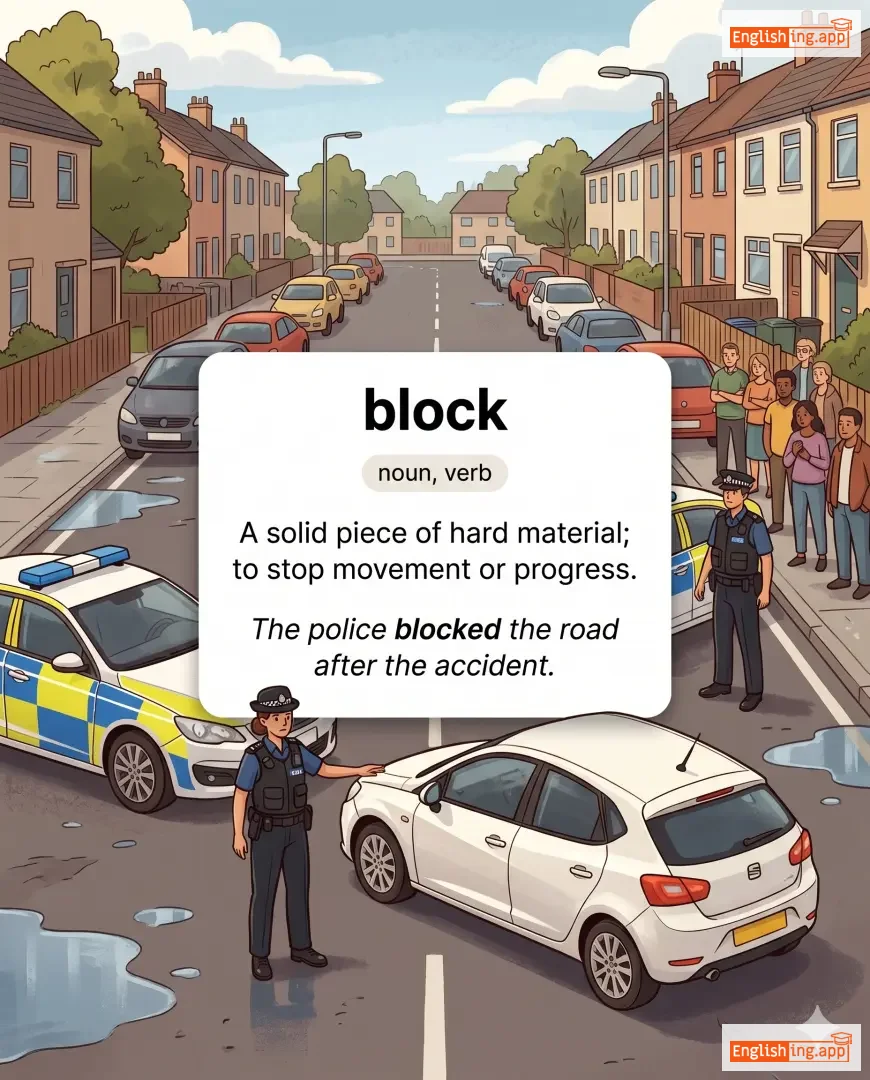
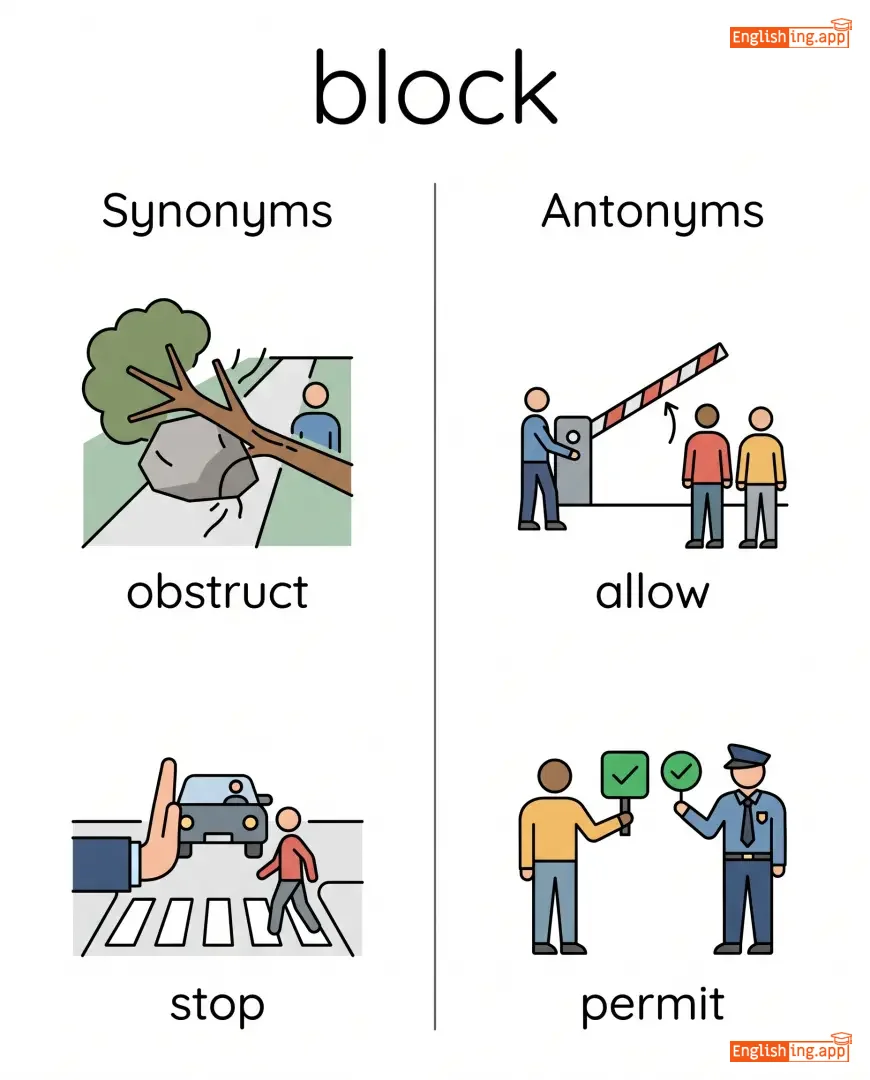
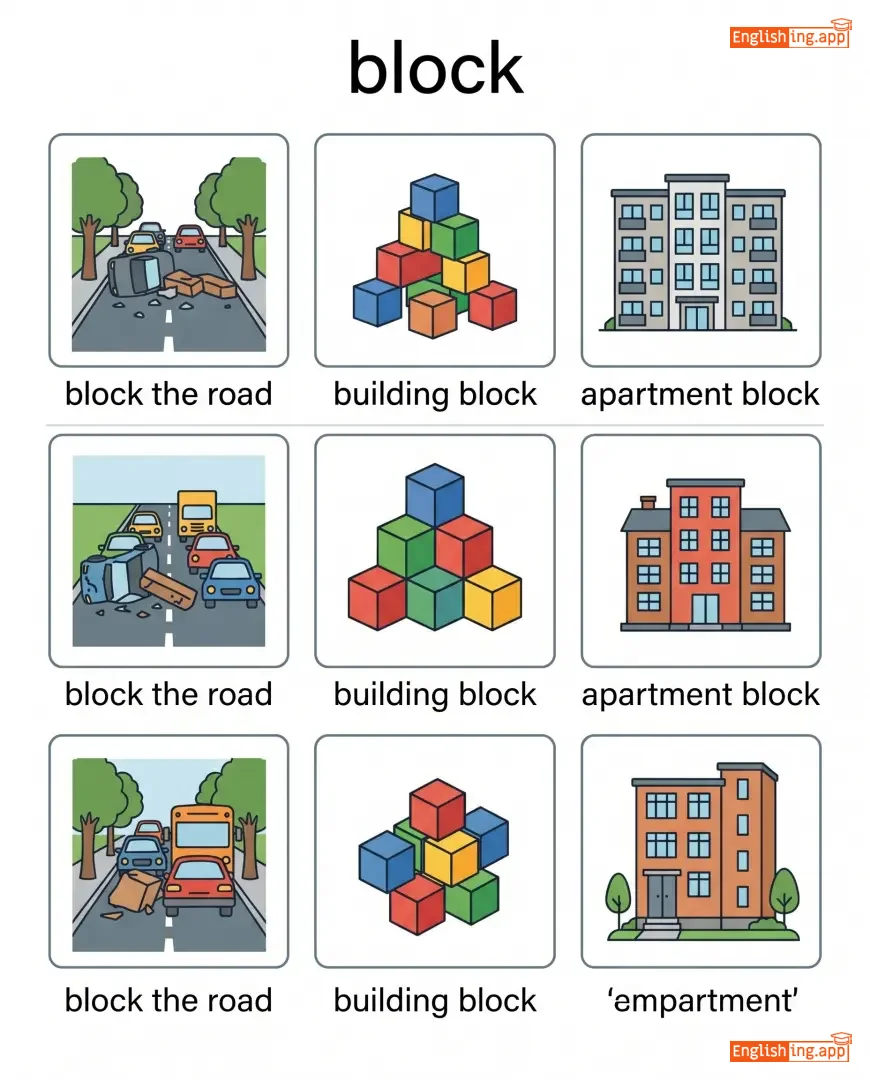
|
封锁
fengsuo
••••••
|
blocked
阻塞
••••••
|
blocked
阻塞
••••••
|
blocks
阻塞
••••••
|
blocking
阻塞
••••••
|
A solid piece of hard material; to stop movement or progress.
••••••
|
The police blocked the road after the accident.
警察在事故后封锁了道路。
••••••
|
警察在事故后封锁了道路。
Jingcha zai shigu hou fengsuo le daolu.
••••••
|
writer's block
作家阻塞
••••••
|
The inability to think of what to write.
••••••
|
作家阻塞
zuojia zuse
••••••
|
obstruct, stop, hinder, barrier, cube
••••••
|
allow, permit, unblock
••••••
|
block the road, building block, apartment block, block out
••••••
|
封锁就像写作阻塞,不能想出写什么。
••••••
|
|
🩸
••••••
|
/blʌd/
noun
(blud)
••••••
|
- •••••• |
血液
xueye
••••••
|
- •••••• | - •••••• | - •••••• | - •••••• |
The red liquid that circulates in the arteries and veins of humans and animals.
••••••
|
The doctor took a sample of blood for testing. |
医生取了一份血液样本进行测试。
Yisheng qule yifen xueye yangben jinxing ceshi.
••••••
|
blood is thicker than water |
Family relationships are stronger than other relationships.
••••••
|
血浓于水
Xue nong yu shui
••••••
|
plasma, lifeblood, gore, vital fluid
••••••
|
water, pus
••••••
|
blood pressure, blood test, blood group, blood donation
••••••
|
Blood 意味着 '血液' – 记住谚语 '血浓于水'。
••••••
|
|
🌸
••••••
|
/bluːm/
noun, verb
(布鲁姆)
••••••
|
- •••••• |
开花;繁荣
kaihua; fanrong
••••••
|
bloomed
布鲁姆德
••••••
|
bloomed
布鲁姆德
••••••
|
blooms
布鲁姆兹
••••••
|
blooming
布鲁明
••••••
|
to produce flowers; to develop or flourish; a flower or the state of flowering
••••••
|
The roses bloom beautifully every spring.
热 柔兹 布鲁姆 比优提弗利 艾维 斯普林
••••••
|
玫瑰每年春天都会美丽地开花。
Meigui meinian chuntian douhui meili di kaihua
••••••
|
in full bloom
因 富尔 布鲁姆
••••••
|
at the peak of development or beauty
••••••
|
盛开
shengkai
••••••
|
flourish, blossom, thrive, flower, prosper
••••••
|
wither, fade, decline
••••••
|
flowers bloom, bloom fully, spring bloom, in bloom
••••••
|
Bloom = 开花,想到春天花开。
••••••
|
|
🌸
••••••
|
/ˈblɒsəm/
noun, verb
(布洛瑟姆)
••••••
|
- •••••• |
开花
kaihua
••••••
|
blossomed
布洛瑟姆德
••••••
|
blossomed
布洛瑟姆德
••••••
|
blossoms
布洛瑟姆兹
••••••
|
blossoming
布洛瑟明
••••••
|
a flower or mass of flowers on a tree or plant; to develop or flourish
••••••
|
The small garden began to blossom in spring.
泽 斯莫尔 加登 比甘 图 布洛瑟姆 因 斯普林
••••••
|
小花园在春天开始开花。
Xiao huayuan zai chuntian kaishi kaihua
••••••
|
in full blossom
因 富 布洛瑟姆
••••••
|
at the peak of beauty or development
••••••
|
盛开
shengkai
••••••
|
flower, bloom, flourish, thrive, develop
••••••
|
wither, fade, decline
••••••
|
cherry blossom, blossom tree, blossom season, blossom into
••••••
|
Blossom 就是 开花,人生也会 blossom。
••••••
|
|
👚
••••••
|
/blaʊz/
noun
(布劳兹)
••••••
|
- •••••• |
女衬衫
nü chènshān
••••••
|
- •••••• | - •••••• | - •••••• | - •••••• |
a woman's loose upper garment resembling a shirt
••••••
|
She wore a beautiful silk blouse to the party.
她穿着一件美丽的丝绸女衬衫参加派对。
••••••
|
她穿着一件美丽的丝绸女衬衫参加派对。
Tā chuānzhuó yī jiàn měilì de sīchóu nǚ chènshān cānjiā pàiduì.
••••••
|
- •••••• | - •••••• | - •••••• |
shirt, top, tunic
••••••
|
- •••••• |
silk blouse, cotton blouse, white blouse, formal blouse
••••••
|
Nü chènshān in Chinese sounds like '女衬衫' and is a loose upper garment worn by women.
••••••
|
|
💨
••••••
|
/bloʊ/
verb, noun
(布洛)
••••••
|
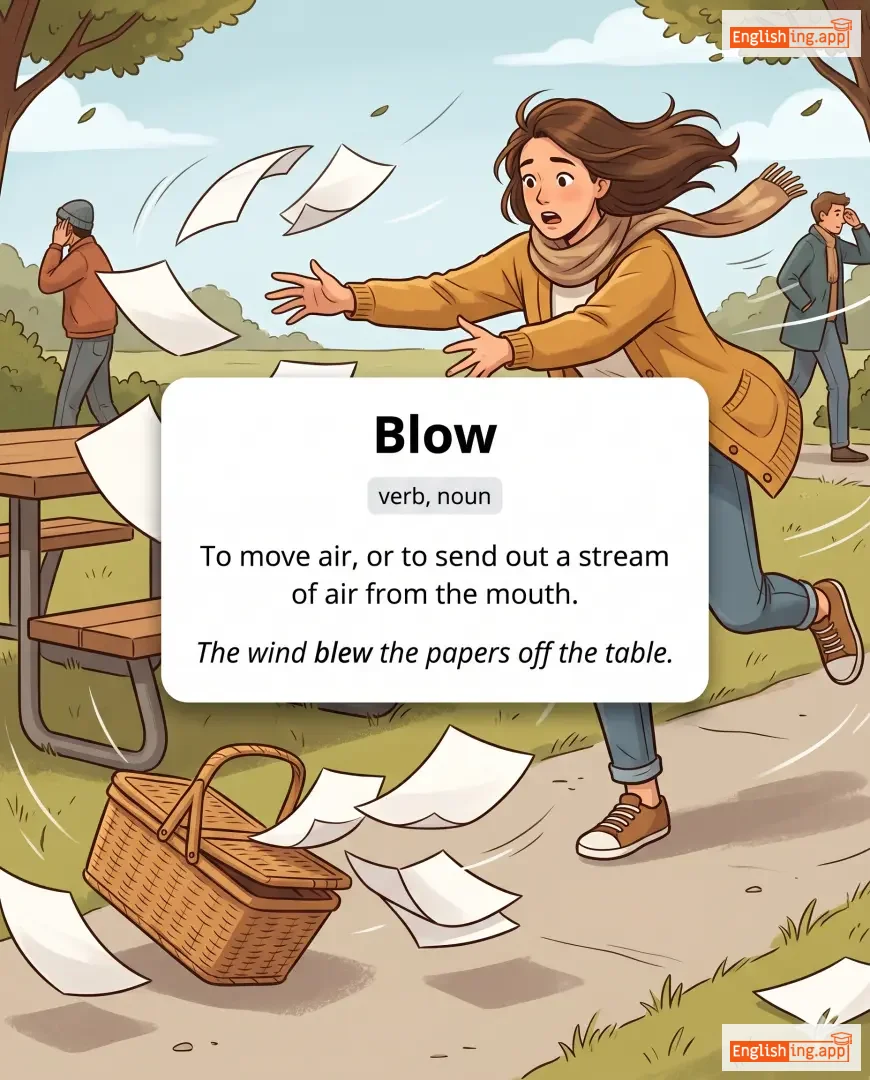
|
吹 / 打
chui / da
••••••
|
blew
布鲁
••••••
|
blown
布隆
••••••
|
blows
布洛兹
••••••
|
blowing
布洛因
••••••
|
To move air, or to send out a stream of air from the mouth.
••••••
|
The wind blew the papers off the table.
风把纸吹离桌子
••••••
|
风把纸吹离桌子。
Feng ba zhi chui li zhuozi.
••••••
|
blow off steam
发泄情绪
••••••
|
To release strong emotions or energy by doing something active.
••••••
|
释放压力
Shifang yali
••••••
|
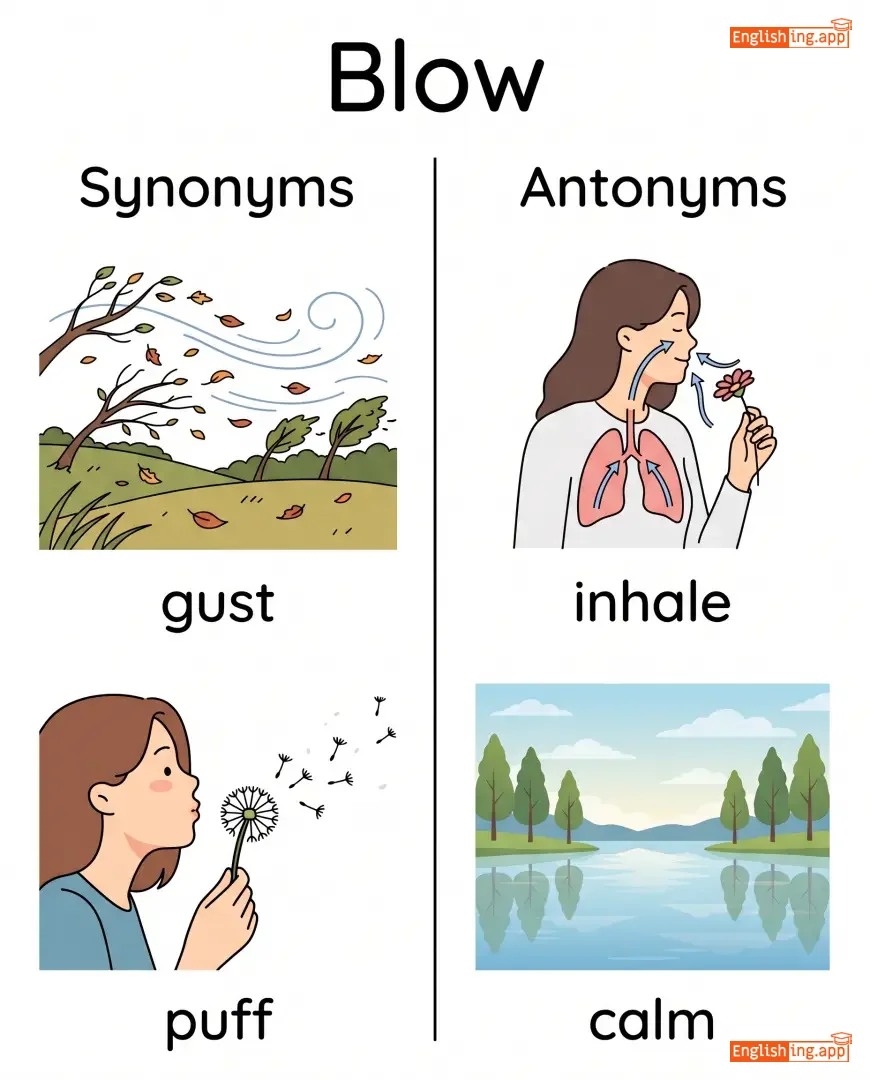
gust, puff, exhale, strike, blast
••••••
|
inhale, calm
••••••
|
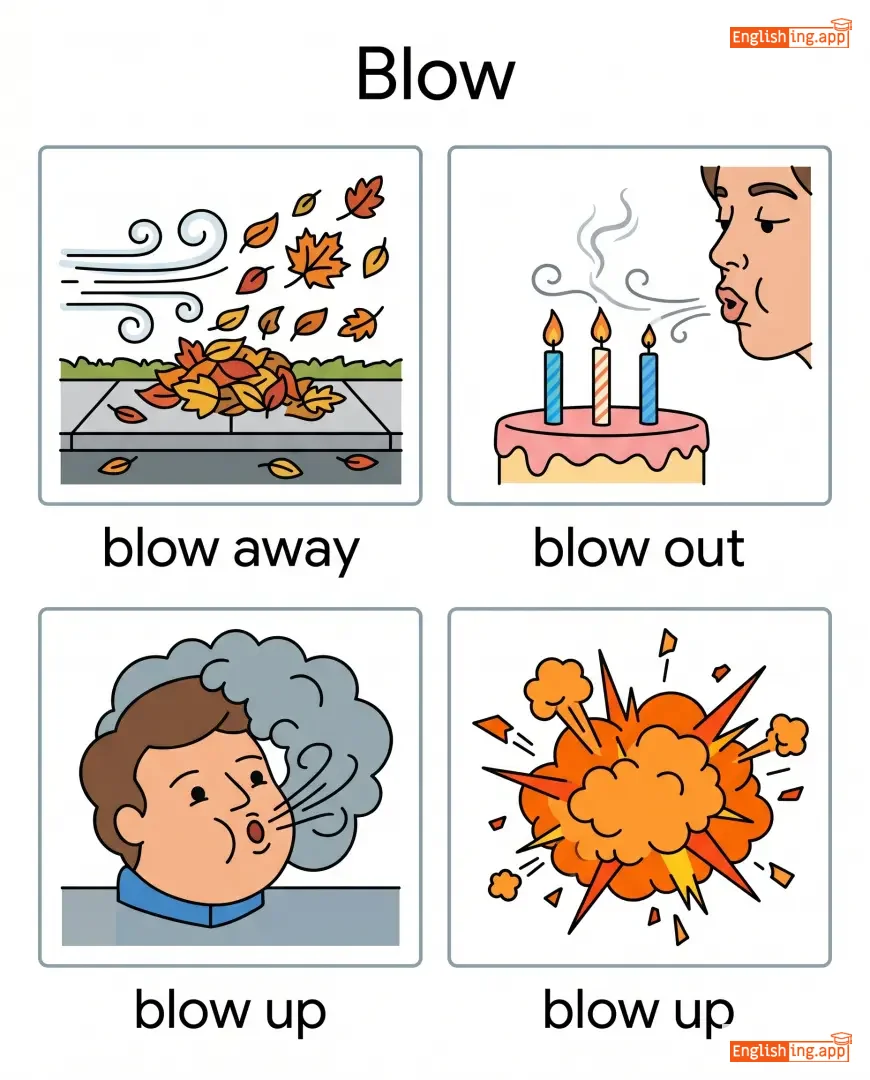
blow away, blow out, blow up, blow over
••••••
|
Blow 意味着吹 – 生日蛋糕上的蜡烛需要吹灭。
••••••
|
|
💨
••••••
|
/bloʊ aʊt/
phrasal verb
(布洛 奥特)
••••••
|
- •••••• |
吹灭
chuimie
••••••
|
blew out
布鲁 奥特
••••••
|
blown out
布隆 奥特
••••••
|
blows out
布洛兹 奥特
••••••
|
blowing out
布洛英 奥特
••••••
|
to extinguish by blowing; to fail suddenly or burst; to expand or exceed limits dramatically
••••••
|
She blew out the candles on her birthday cake.
她在生日蛋糕上把蜡烛 blow out 了。
••••••
|
她吹灭了生日蛋糕上的蜡烛。
ta chuimie le shengri dangao shang de lazhu
••••••
|
- •••••• | - •••••• | - •••••• |
extinguish, put out, burst, fail, overspend
••••••
|
ignite, light, start
••••••
|
blow out candles, blow out a tire, blow out the budget, blow out flames
••••••
|
Chui = 吹, mie = 灭, 就是 blow out
••••••
|
|
🔵
••••••
|
/bluː/
adjective
(blu)
••••••
|
- •••••• |
蓝色
lanse
••••••
|
- •••••• | - •••••• | - •••••• | - •••••• |
the color of the clear sky; feeling sad or depressed
••••••
|
She wore a bright blue dress to the party. |
她穿了一件亮蓝色的裙子参加聚会。
Ta chuanle yijian liang lanse de qunzi canjia juhui.
••••••
|
feeling blue |
to feel sad or depressed
••••••
|
感到蓝色
gandao lanse
••••••
|
azure, navy, cerulean, sad, gloomy
••••••
|
red, yellow, cheerful, happy
••••••
|
blue sky, blue dress, blue mood, feeling blue
••••••
|
蓝色意味着蓝色 – 蓝天一样,但感到蓝色意味着悲伤。
••••••
|
|
🃏
••••••
|
/blʌf/
verb
••••••
|
- •••••• | - •••••• |
bluffed
••••••
|
bluffed
••••••
|
bluffs
••••••
|
bluffing
••••••
|
to deceive someone by pretending to have strength, knowledge, or resources that one does not actually possess
••••••
|
He tried to bluff his way into the exclusive club. |
- •••••• |
call someone's bluff |
to challenge someone to prove their claim or threat
••••••
|
- •••••• |
deceive, pretend, mislead, trick, feign
••••••
|
reveal, confess, admit
••••••
|
bluff game, bluff strategy, bluff his way, call the bluff
••••••
|
No •••••• |
|
🎭
••••••
|
/ˈblʌfər/
noun
(布拉弗)
••••••
|
- •••••• |
虚张声势的人
xu zhang sheng shi de ren
••••••
|
- •••••• | - •••••• | - •••••• | - •••••• |
a person who pretends to be more confident, skilled, or knowledgeable than they really are; someone who deceives others by bluffing
••••••
|
Everyone eventually realized that he was just a bluffer with no real experience.
大家最终意识到他只是个布拉弗。
••••••
|
大家最终意识到他只是个虚张声势的人。
da jia zui zhong yi shi dao ta zhi shi ge xu zhang sheng shi de ren
••••••
|
call someone’s bluff
揭穿虚张声势
••••••
|
to challenge someone to prove their claim or threat because you believe they are pretending
••••••
|
揭穿虚张声势
jie chuan xu zhang sheng shi
••••••
|
pretender, deceiver, fraud, braggart, impostor
••••••
|
truth-teller, honest person
••••••
|
skilled bluffer, obvious bluffer, poker bluffer, known bluffer
••••••
|
Bluffer 就是 虚张声势 的人
••••••
|
|
😬
••••••
|
/ˈblʌndər/
noun
(布兰德)
••••••
|
|
错误
cuo wu
••••••
|
- •••••• | - •••••• | - •••••• | - •••••• |
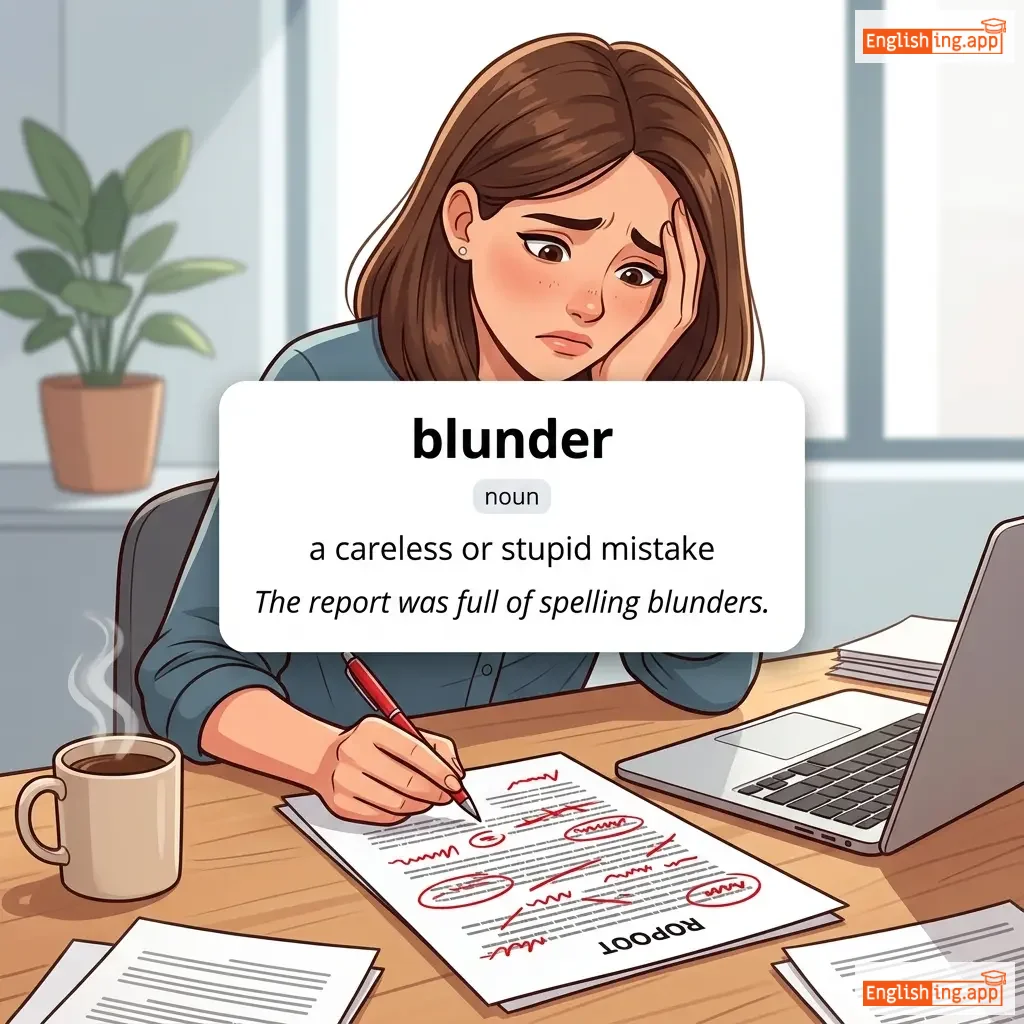
a careless or stupid mistake
••••••
|
The report was full of spelling blunders.
报告里充满了拼写错误。
••••••
|
报告里充满了拼写错误。
Baogao li chongman le pinxie cuowu.
••••••
|
make a blunder
犯一个错误
••••••
|
to make a serious mistake
••••••
|
犯一个错误
fan yi ge cuowu
••••••
|
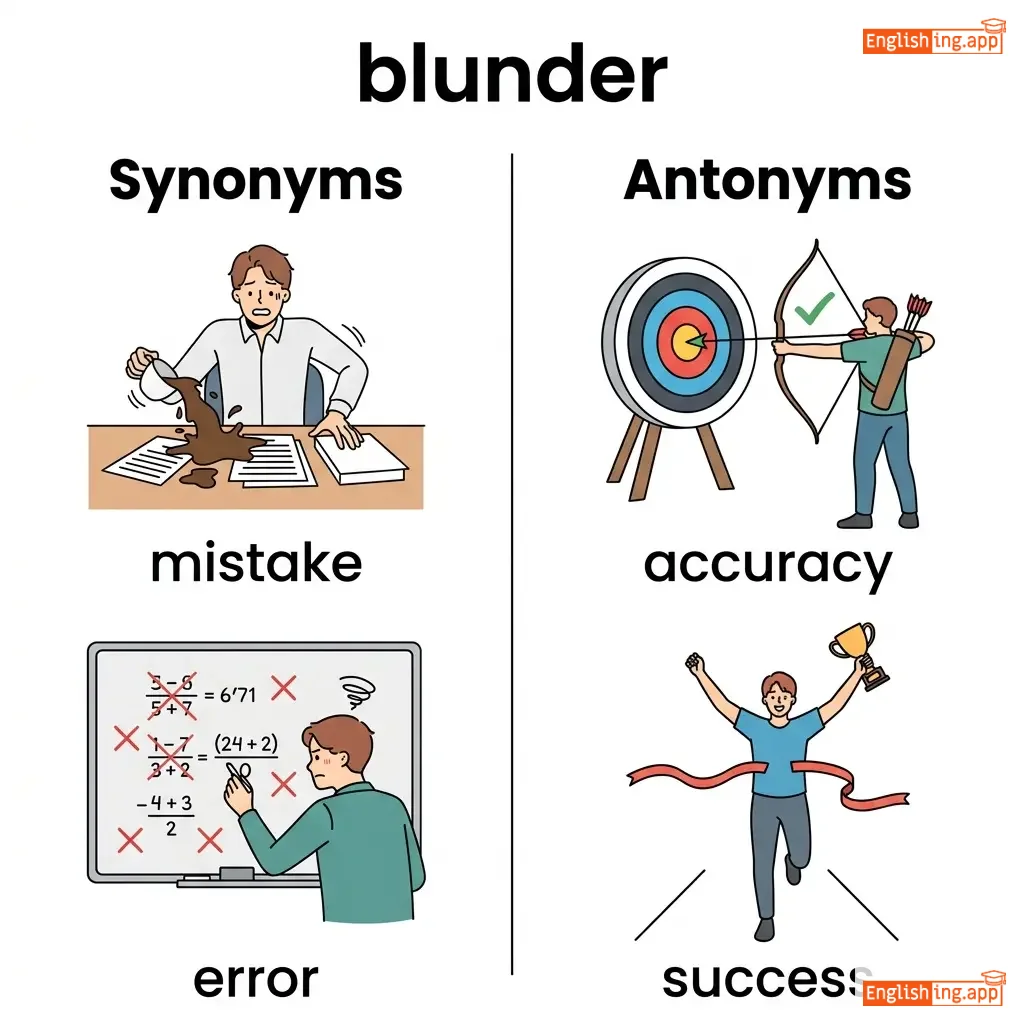
mistake, error, slip, oversight, misstep
••••••
|
accuracy, success, correctness
••••••
|
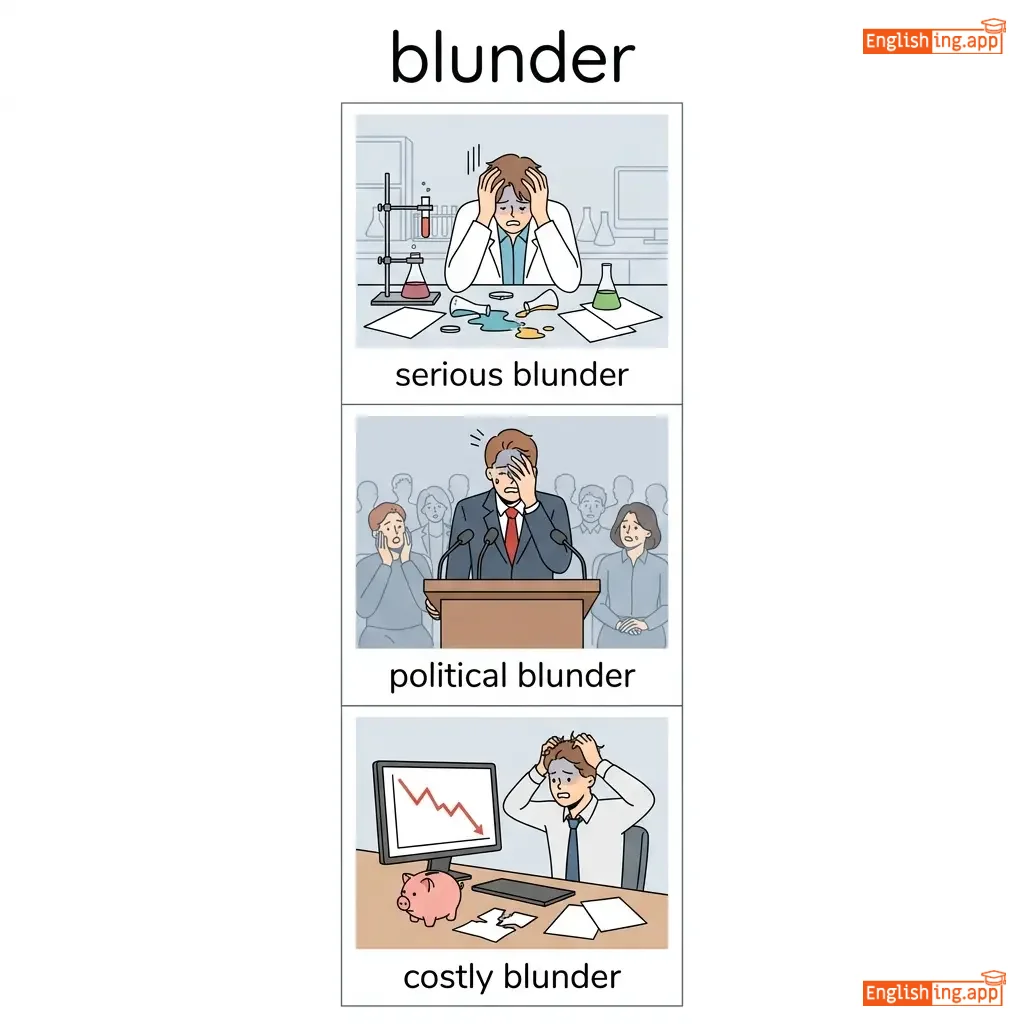
serious blunder, political blunder, costly blunder, major blunder
••••••
|
Blunder意味着错误,记住,'blind'会犯错误。
••••••
|
|
😊
••••••
|
/blʌʃ/
verb
(blash)
••••••
|
- •••••• |
脸红
lian hong
••••••
|
blushed
blashd
••••••
|
blushed
blashd
••••••
|
blushes
blashes
••••••
|
blushing
blashing
••••••
|
to become red in the face due to embarrassment or shyness
••••••
|
She blushed when he complimented her.
她在他夸奖她时脸红了。
••••••
|
她在他夸奖她时脸红了。
Ta zai ta kuajiang ta shi lian hong le.
••••••
|
blush with pride
因自豪而脸红
••••••
|
to feel proud, showing it through blushing
••••••
|
因自豪而脸红
Yin zihao er lianhong
••••••
|
redden, flush, color, glow
••••••
|
pale, blanch
••••••
|
blush deeply, blush slightly, blush with embarrassment
••••••
|
Blush 就是因害羞或自豪而脸红
••••••
|
|
🌪️
••••••
|
/ˈblʌstər/
verb
(布拉斯特)
••••••
|
- •••••• |
大声吹嘘
dàshēng chuīxū
••••••
|
blustered
布拉斯特德
••••••
|
blustered
布拉斯特德
••••••
|
blusters
布拉斯特斯
••••••
|
blustering
布拉斯特林
••••••
|
to speak loudly in an aggressive or threatening way, often without real power
••••••
|
The manager blustered about firing people but did nothing.
经理大声说要解雇人,但什么也没做。
••••••
|
经理大声吹嘘解雇人,但什么也没做。
Jīnglǐ dàshēng chuīxū jiěgù rén, dàn shénme yě méi zuò.
••••••
|
- •••••• | - •••••• | - •••••• |
rant, roar, threaten, boast
••••••
|
murmur, whisper
••••••
|
bluster about, bluster and threaten, loud bluster
••••••
|
Bluster就像Blaster一样,噪音大,没实效。
••••••
|
|
📋
••••••
|
/bɔːrd/
noun
••••••
|
- •••••• | - •••••• | - •••••• | - •••••• | - •••••• | - •••••• |
a flat, thin, rectangular piece of material such as wood; also a group of people managing an organization
••••••
|
The board decided to increase the budget. |
- •••••• |
on board |
to be part of a team or involved in a project
••••••
|
- •••••• |
plank, panel, committee, council
••••••
|
individual, disorganization
••••••
|
board meeting, board of directors, wooden board, on board
••••••
|
No •••••• |
|
🏆
••••••
|
/boʊst/
verb
(bóusīt)
••••••
|
|
炫耀
xuànyào
••••••
|
boasted
bóusītèd
••••••
|
boasted
bóusītèd
••••••
|
boasts
bóusītè
••••••
|
boasting
bóusīng
••••••
|
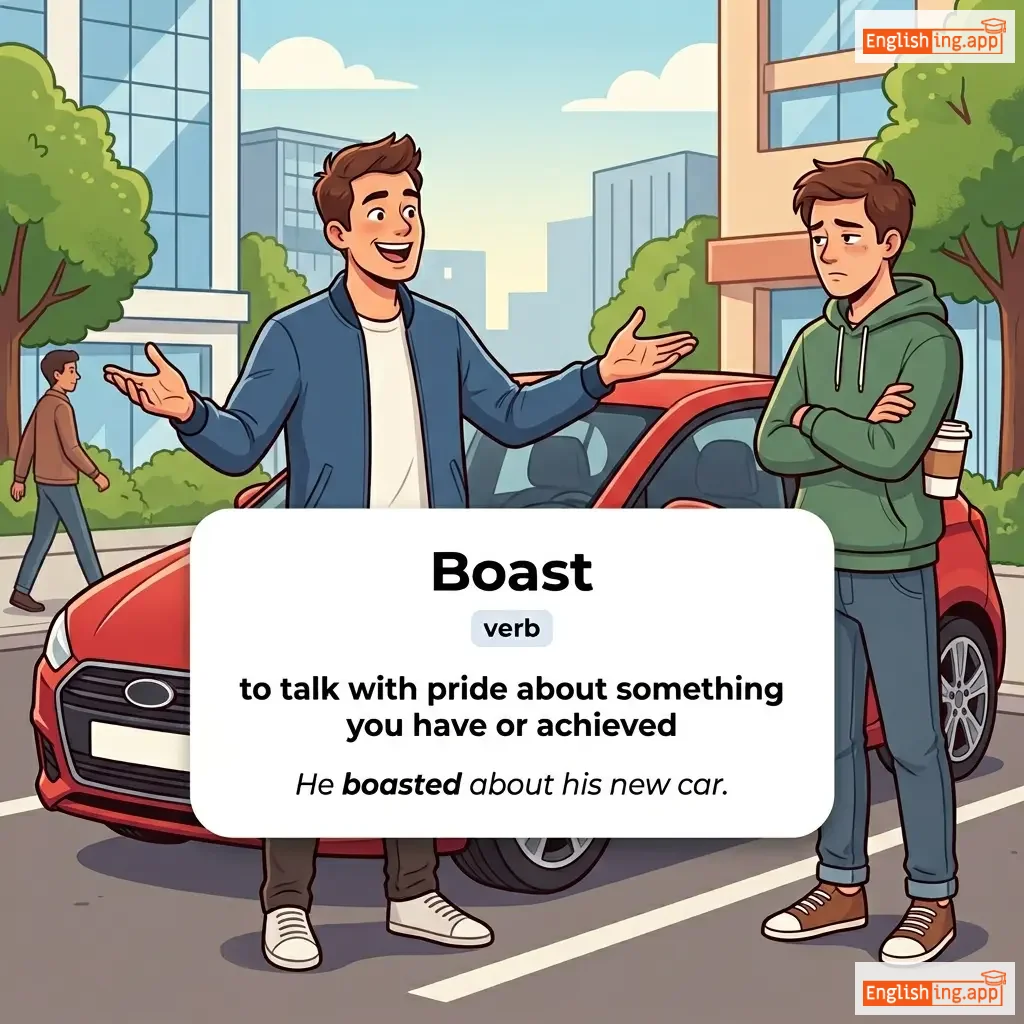
to talk with pride about something you have or achieved
••••••
|
He boasted about his new car.
他炫耀他的新车。
••••••
|
他炫耀他的新车。
Tā xuànyào tā de xīn chē.
••••••
|
boast about
炫耀
••••••
|
to talk proudly about something
••••••
|
炫耀
xuànyào
••••••
|
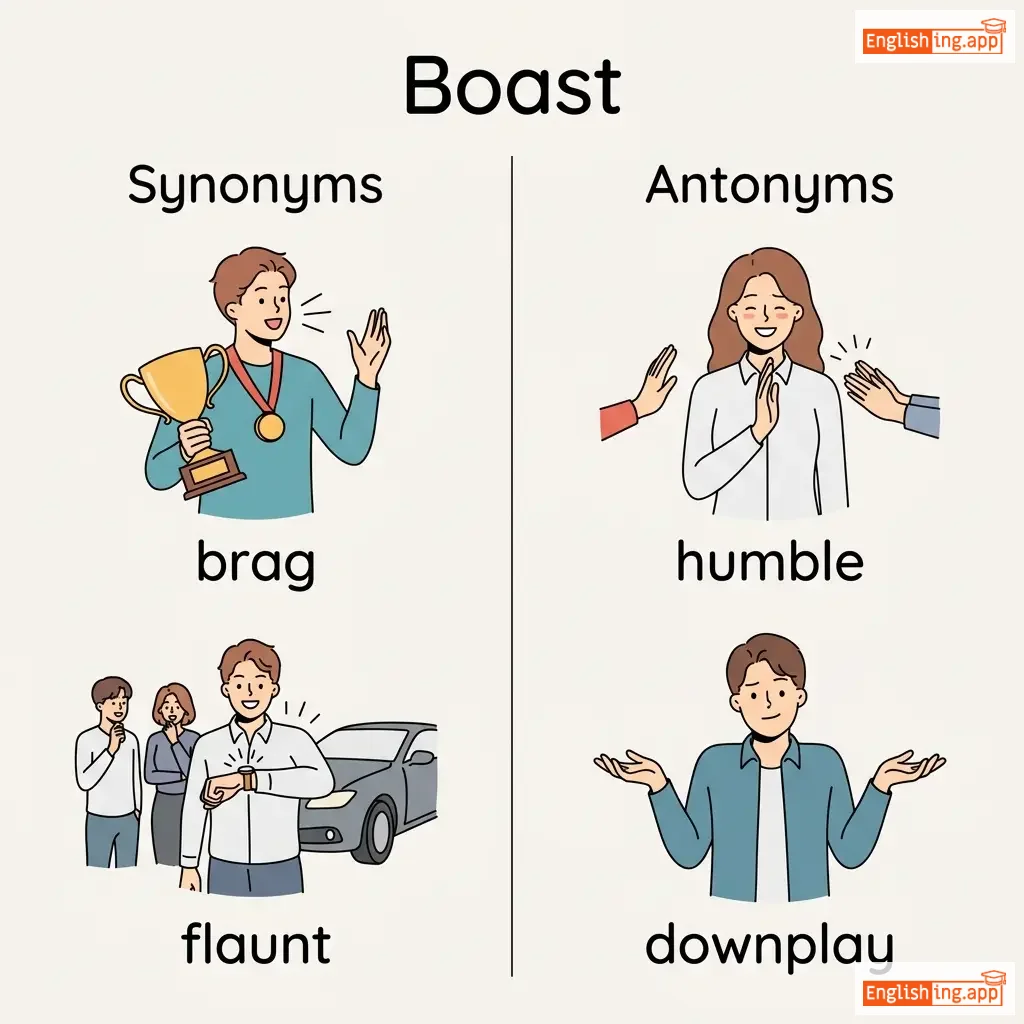
brag, flaunt, praise, show off
••••••
|
humble, downplay
••••••
|
boast about, boast of, boast great, boast success
••••••
|
Boast 就像是炫耀自己的成就,像一个老板一样。
••••••
|
|
⛵
••••••
|
/boʊt/
noun
(bòat)
••••••
|
- •••••• |
船
chuan
••••••
|
- •••••• | - •••••• | - •••••• | - •••••• |
a small vessel used for traveling on water
••••••
|
They took a boat across the river. |
他们坐船穿过了河。
Tāmen zuò chuán chuānguòle hé.
••••••
|
miss the boat |
to miss an opportunity
••••••
|
- •••••• |
ship, vessel, canoe, yacht, ferry
••••••
|
submarine, aircraft
••••••
|
boat ride, fishing boat, sail a boat, boat trip
••••••
|
Boat的意思是船,就像船在水中航行一样,boat也在水上航行。
••••••
|
|
🌊
••••••
|
/bɒb/
noun, verb
(鲍勃)
••••••
|
- •••••• |
上下摆动
shangxia baidong
••••••
|
bobbed
鲍勃德
••••••
|
bobbed
鲍勃德
••••••
|
bobs
鲍勃兹
••••••
|
bobbing
鲍勃英
••••••
|
a short sudden movement up and down; to move quickly up and down
••••••
|
The small boat began to bob on the waves.
德 斯莫 博特 比甘 图 鲍勃 昂 德 韦夫斯
••••••
|
小船开始在波浪上上下摆动。
Xiaochuan kaishi zai bolang shang shangxia baidong
••••••
|
bob up and down
鲍勃 阿普 安 德 道恩
••••••
|
to move repeatedly upward and downward
••••••
|
上下起伏
shangxia qifu
••••••
|
bounce, hop, dip, jiggle, nod
••••••
|
sink, remain still
••••••
|
bob gently, bob in the water, head bob, boat bobbing
••••••
|
Bob 像小船在水面上下摆动
••••••
|
|
🔮
••••••
|
/boʊd/
verb
(博德)
••••••
|
- •••••• |
预兆
yuzhao
••••••
|
boded
博德德
••••••
|
boded
博德德
••••••
|
bodes
博德斯
••••••
|
boding
博丁
••••••
|
to be an omen of a particular outcome, often something bad
••••••
|
The dark clouds bode a heavy storm.
黑云预示着一场大风暴。
••••••
|
黑云预示着一场大风暴。
Hei yun yuzhao zhe yi chang da fengbao.
••••••
|
bode well
bode well
••••••
|
to be a sign of good future prospects
••••••
|
预示着好的未来
yushi zhe hao de weilai
••••••
|
foreshadow, indicate, predict, foretell, portend
••••••
|
ignore, neglect, disregard
••••••
|
bode well, bode ill, does not bode well, bodes trouble
••••••
|
Bode 就像是预示着将要发生的事情
••••••
|
|
🧍
••••••
|
/ˈbɒdi/
noun
(bodi)
••••••
|
- •••••• |
身体
shenti
••••••
|
- •••••• | - •••••• | - •••••• | - •••••• |
the physical structure of a person or animal
••••••
|
Exercise helps keep the body healthy. |
锻炼有助于保持身体健康。
duànliàn yǒu zhù yú bǎochí shēntǐ jiànkāng.
••••••
|
over my dead body |
absolutely not allowed
••••••
|
越过我的尸体
yuèguò wǒ de shītǐ
••••••
|
form, figure, corpse, frame, physique
••••••
|
soul, spirit
••••••
|
human body, body parts, body weight, body language
••••••
|
Body = 身体, 锻炼让身体保持强壮.
••••••
|
|
😵
••••••
|
/ˈbɒɡəl/
verb
(博格尔)
••••••
|
- •••••• |
使迷惑
shǐ míhuò
••••••
|
boggled
博格尔德
••••••
|
boggled
博格尔德
••••••
|
boggles
博格尔斯
••••••
|
boggling
博格林
••••••
|
to overwhelm or confuse; to be astonished or puzzled by something
••••••
|
The complexity of the puzzle boggled his mind.
这个谜题的复杂性让他的头脑感到困惑。
••••••
|
这个谜题的复杂性让他的头脑感到困惑。
Zhège mítí de fùzáxìng ràng tā de tóunǎo gǎndào kùnhuò.
••••••
|
boggle the mind
令人困惑
••••••
|
to be astonishing or hard to believe
••••••
|
令人困惑
lìng rén kùnhuò
••••••
|
astonish, amaze, overwhelm, confuse, perplex
••••••
|
clarify, explain, simplify
••••••
|
boggle the mind, boggled by, mind-boggling, boggle at
••••••
|
Boggle意味着转动头部并感到困惑 - 使迷惑。
••••••
|
|
🥘
••••••
|
/bɔɪl/
verb
••••••
|
- •••••• | - •••••• |
boiled
••••••
|
boiled
••••••
|
boils
••••••
|
boiling
••••••
|
to heat a liquid until it starts to bubble and turn into vapor.
••••••
|
Please boil some water for tea. |
- •••••• |
boil over |
to overflow or to become uncontrollable (emotionally or physically).
••••••
|
- •••••• |
heat, simmer, steam, cook
••••••
|
freeze, chill
••••••
|
boil water, boil eggs, bring to a boil, hard boil
••••••
|
No •••••• |
|
🦁
••••••
|
/boʊld/
adjective
(bóld)
••••••
|
- •••••• |
大胆
dadan
••••••
|
- •••••• | - •••••• | - •••••• | - •••••• |
showing courage, confidence, or willingness to take risks
••••••
|
She made a bold decision to start her own business. |
她做出了大胆的决定,开始了自己的生意。
Ta zuo chule dadan de jueding, kaishi le ziji de shengyi.
••••••
|
fortune favors the bold |
people who take risks often achieve success
••••••
|
命运偏爱大胆的人
Mingyun pian'ai dadan de ren
••••••
|
brave, courageous, daring, confident, fearless
••••••
|
timid, shy, fearful
••••••
|
bold decision, bold move, bold colors, bold step
••••••
|
大胆在中文中意味着bold,像勇敢的人做出大胆的决定。
••••••
|
|
💣
••••••
|
/bɑːm/
noun/verb
(炸弹)
••••••
|
- •••••• |
炸弹
zhàdàn
••••••
|
bombed
轰炸
••••••
|
bombed
轰炸
••••••
|
bombs
炸弹
••••••
|
bombing
轰炸
••••••
|
A weapon that explodes; also to attack with bombs or to fail badly.
••••••
|
The city was bombed heavily during the war.
这座城市在战争期间遭到了严重轰炸。
••••••
|
这座城市在战争期间遭到了严重轰炸。
Zhèzuò chéngshì zài zhànzhēng qījiān zāodàole yánzhòng hōngzhà.
••••••
|
go bomb
去轰炸
••••••
|
To fail completely.
••••••
|
完全失败
wánquán shībài
••••••
|
explosive, missile, shell, fail, demolish
••••••
|
succeed, protect
••••••
|
drop a bomb, bomb attack, bomb squad, bomb shelter
••••••
|
炸弹意味着爆炸 - 去轰炸意味着完全失败。
••••••
|
|
💣
••••••
|
/ˈbɒmɪŋ/
noun
(bó míng)
••••••
|
- •••••• |
轰炸
hongzha
••••••
|
- •••••• | - •••••• | - •••••• | - •••••• |
an attack using bombs or explosives
••••••
|
The city was devastated by the bombing. |
这座城市在轰炸中被摧毁。
Zhe zuo chengshi zai hongzha zhong bei cuihui.
••••••
|
- •••••• | - •••••• | - •••••• |
explosion, attack, strike, assault, blast
••••••
|
peace, ceasefire
••••••
|
suicide bombing, bombing raid, air bombing, terrorist bombing
••••••
|
Bombing = 轰炸 = 用炸弹攻击
••••••
|
|
🤝
••••••
|
/bɒnd/
noun
••••••
|
- •••••• | - •••••• | - •••••• | - •••••• | - •••••• | - •••••• |
a connection or relationship between people or things
••••••
|
The sisters share a close bond. |
- •••••• |
bond of friendship |
a strong relationship based on trust and care
••••••
|
- •••••• |
connection, tie, link, relationship, attachment
••••••
|
division, separation
••••••
|
emotional bond, strong bond, family bond, bond market
••••••
|
No •••••• |
|
🦴
••••••
|
/boʊn/
noun
(bón)
••••••
|
- •••••• |
骨头
gǔtóu
••••••
|
- •••••• | - •••••• | - •••••• | - •••••• |
the hard parts of a skeleton that form the structure of the body
••••••
|
The dog buried a bone in the garden. |
狗把一块骨头埋在花园里。
gǒu bǎ yī kuài gǔtóu mái zài huāyuán lǐ.
••••••
|
feel it in your bones |
to sense something strongly
••••••
|
在骨头里感觉
zài gǔtóu lǐ gǎnjué
••••••
|
skeleton, joint, cartilage, marrow
••••••
|
flesh, muscle
••••••
|
broken bone, bone marrow, bone density, bone fracture
••••••
|
Bone是骨头 — 骨头里强烈的感觉!
••••••
|
|
💰
••••••
|
/ˈbəʊnəs/
noun
(bó nà sī)
••••••
|
- •••••• |
奖金
jiǎng jīn
••••••
|
- •••••• | - •••••• | - •••••• | - •••••• |
an extra payment or reward given in addition to what is usual or expected.
••••••
|
Employees received a year-end bonus for their hard work.
员工们因其辛勤工作而收到了年终奖金。
••••••
|
员工们因其辛勤工作而收到了年终奖金。
Yuángōngmen yīn qí xīnqín gōngzuò ér shōu dào le niánzhōng jiǎngjīn.
••••••
|
added bonus
额外奖金
••••••
|
an extra benefit or advantage.
••••••
|
额外的利益
éwài de lìyì
••••••
|
reward, incentive, gift, premium, perk
••••••
|
penalty, deduction
••••••
|
year-end bonus, performance bonus, cash bonus, annual bonus
••••••
|
Bonus – 就是你额外的奖励!
••••••
|
|
🤦
••••••
|
/buːb/
noun
(布布)
••••••
|
- •••••• |
傻瓜;胸部(口语)
shagua; xiongbu
••••••
|
- •••••• | - •••••• | - •••••• | - •••••• |
a foolish or clumsy person; an informal and sometimes rude term for a woman's breast
••••••
|
He felt like a complete boob after forgetting the meeting.
他 忘记 会议 后 感觉 自己 像 个 完全 的 布布
••••••
|
忘记会议后,他觉得自己像个十足的傻瓜。
wangji huiyi hou ta juede ziji xiang ge shizu de shagua
••••••
|
make a boob of oneself
make a boob of oneself
••••••
|
to behave in a foolish or embarrassing way
••••••
|
出洋相
chu yangxiang
••••••
|
fool, idiot, dummy, clod, simpleton
••••••
|
genius, expert, intellectual
••••••
|
act like a boob, complete boob, silly boob
••••••
|
boob 像 布布,傻傻的
••••••
|
|
🤪
••••••
|
/ˈbuːbi/
noun
(布比)
••••••
|
- •••••• |
傻瓜
shagua
••••••
|
- •••••• | - •••••• | - •••••• | - •••••• |
a foolish or gullible person; a silly individual
••••••
|
He felt like a booby after making such a simple mistake.
他 费尔特 莱克 阿 布比 阿夫特 梅金 萨奇 阿 辛普尔 米斯泰克。
••••••
|
犯了这么简单的错误后,他觉得自己像个傻瓜。
Fan le zheme jiandan de cuowu hou ta juede ziji xiang ge shagua
••••••
|
booby prize
布比 普赖斯
••••••
|
a prize given to the person who finishes last or performs worst
••••••
|
安慰奖
anwei jiang
••••••
|
fool, dunce, simpleton, idiot, nitwit
••••••
|
genius, sage, intellectual
••••••
|
booby prize, silly booby, poor booby
••••••
|
Booby 听起来像 不比,其实更傻
••••••
|
|
📖
••••••
|
/bʊk/
noun, verb
••••••
|
- •••••• | - •••••• |
booked
••••••
|
booked
••••••
|
books
••••••
|
booking
••••••
|
A set of written, printed, or blank pages fastened together; to arrange for someone to have a seat, room, or ticket in advance.
••••••
|
I booked a table at the restaurant for dinner. |
- •••••• |
by the book |
to follow rules strictly
••••••
|
- •••••• |
volume, text, novel, reserve, schedule
••••••
|
cancel, disorder
••••••
|
open book, book a ticket, book club, book online, book in advance
••••••
|
No •••••• |
|
📅
••••••
|
/ˈbʊkɪŋ/
noun
(预订)
••••••
|
- •••••• |
预订
yuding
••••••
|
- •••••• | - •••••• | - •••••• | - •••••• |
the act of reserving accommodations, tickets, etc.
••••••
|
I made a booking for a hotel room in advance. |
我提前预定了一个酒店房间。
Wǒ tíqián yùdìngle yīgè jiǔdiàn fángjiān.
••••••
|
- •••••• | - •••••• | - •••••• |
reservation, appointment, arrangement, scheduling
••••••
|
cancellation, no-show
••••••
|
flight booking, hotel booking, online booking, advance booking
••••••
|
预订 (yuding) 就是提前安排酒店或票!
••••••
|
|
📚
••••••
|
/ˈbʊkʃɒp/
noun
(布克肖普)
••••••
|
- •••••• |
书店
shu dian
••••••
|
- •••••• | - •••••• | - •••••• | - •••••• |
a retail store where books are sold
••••••
|
She spent an hour browsing in the small bookshop.
希 斯彭特 安 奥尔 布劳辛 因 德 斯莫尔 布克肖普。
••••••
|
她在那家小书店里逛了一个小时。
ta zai na jia xiao shudian li guang le yi ge xiaoshi
••••••
|
corner bookshop
科纳 布克肖普
••••••
|
a small neighborhood bookstore
••••••
|
街角书店
jiejiao shudian
••••••
|
bookstore, bookseller, book mart, book outlet
••••••
|
library, online store
••••••
|
local bookshop, independent bookshop, small bookshop, visit a bookshop
••••••
|
Bookshop 就是 书 的 shop → 书店
••••••
|
|
📚
••••••
|
/ˈbʊkstɔːr/
noun
(布克斯托)
••••••
|
- •••••• |
书店
shu dian
••••••
|
- •••••• | - •••••• | - •••••• | - •••••• |
a shop where books are sold
••••••
|
She spent an entire afternoon browsing in the bookstore.
Shi spent an entire afternoon browsing in the bookstore.
••••••
|
她整个下午都在书店里逛。
ta zhengge xiawu dou zai shudian li guang
••••••
|
- •••••• | - •••••• | - •••••• |
bookshop, bookseller, book mart, book outlet
••••••
|
library, online store
••••••
|
local bookstore, independent bookstore, bookstore chain, visit a bookstore
••••••
|
Book + store = 书店,卖书的地方
••••••
|
|
📈
••••••
|
/buːm/
noun, verb
••••••
|
|
- •••••• |
boomed
••••••
|
boomed
••••••
|
booms
••••••
|
booming
••••••
|
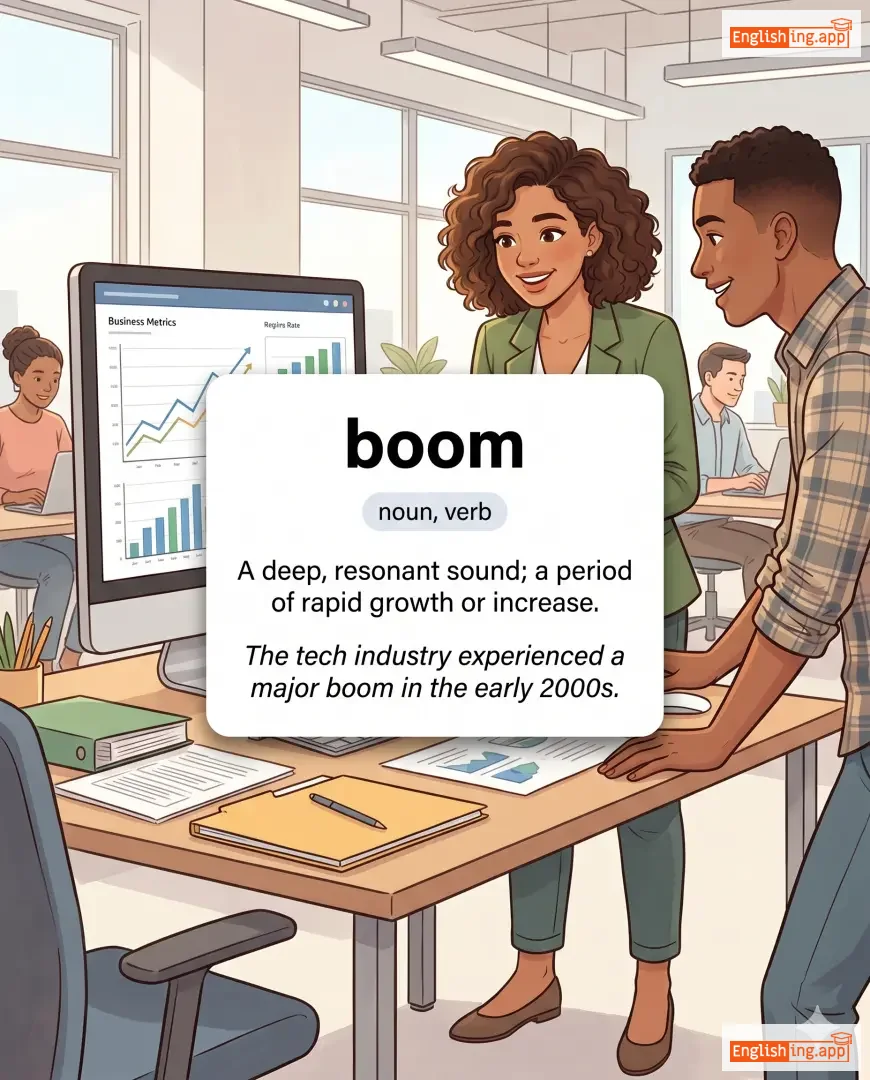
A deep, resonant sound; a period of rapid growth or increase.
••••••
|
The tech industry experienced a major boom in the early 2000s. |
- •••••• |
boom and bust |
A cycle of economic expansion followed by a decline.
••••••
|
- •••••• |
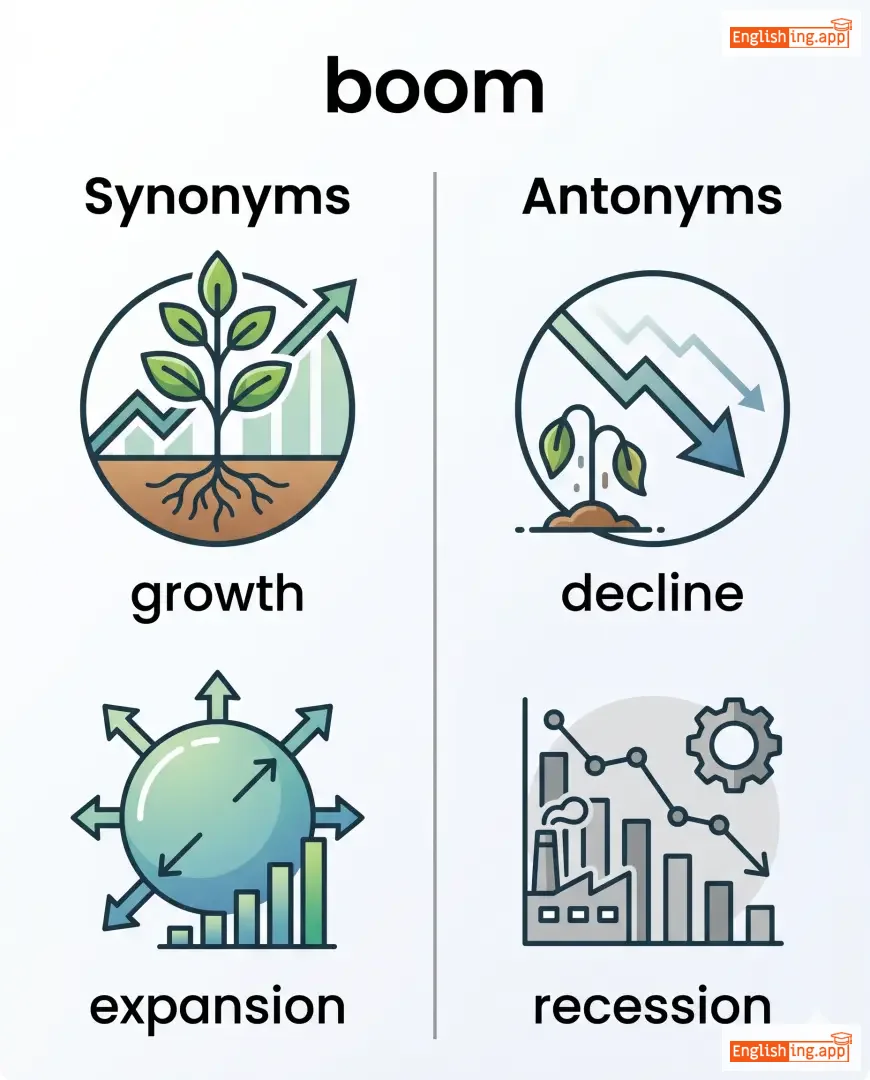
growth, expansion, surge, prosperity, increase
••••••
|
decline, recession, bust
••••••
|
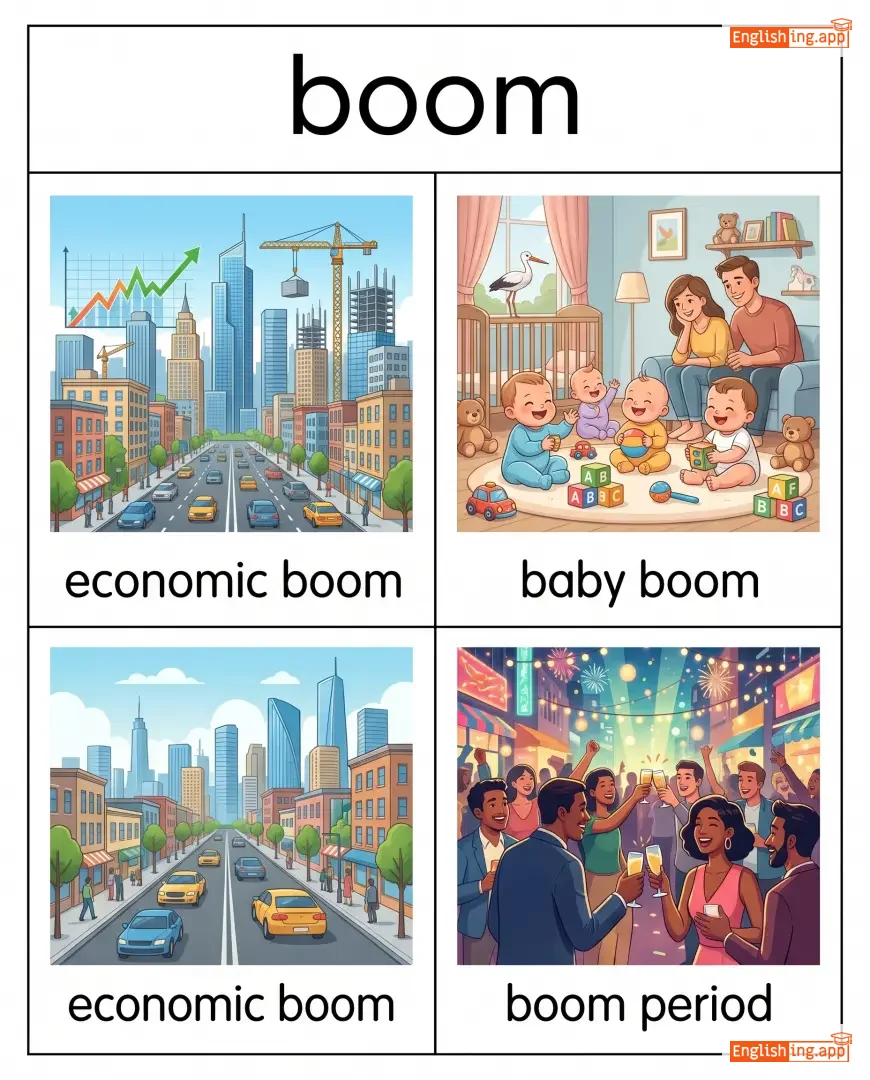
economic boom, baby boom, boom period, boom in demand
••••••
|
No •••••• |
|
📈
••••••
|
/buːst/
verb
(bùsīté)
••••••
|
- •••••• |
提升
tíshēng
••••••
|
boosted
bùsīté
••••••
|
boosted
bùsīté
••••••
|
boosts
bùsītè
••••••
|
boosting
bùsītīng
••••••
|
To increase, improve, or raise something.
••••••
|
The company launched a campaign to boost sales.
公司启动了一项活动以提升销售。
••••••
|
公司启动了一项活动以提升销售。
Gōngsī qǐdòngle yī xiàng huódòng yǐ tíshēng xiāoshòu.
••••••
|
boost morale
提升士气
••••••
|
to increase confidence and enthusiasm
••••••
|
提升士气
tíshēng shìqì
••••••
|
increase, raise, enhance, improve, promote
••••••
|
reduce, decrease, diminish
••••••
|
boost sales, boost energy, boost confidence, boost performance
••••••
|
Boost = 提升你的表现,让销售和成绩提高。
••••••
|
|
👢
••••••
|
/buːt/
noun, verb
(布特)
••••••
|
- •••••• |
靴子
xuezi
••••••
|
booted
布特
••••••
|
booted
布特
••••••
|
boots
布特斯
••••••
|
booting
布特英
••••••
|
A type of shoe that covers the ankle or higher; to start up a computer system.
••••••
|
He put on his boots before going hiking.
他在去远足前穿上了他的靴子。
••••••
|
他在去远足前穿上了他的靴子。
Ta zai qu yuanzu qian chuan shang le ta de xuezi.
••••••
|
boot up
启动
••••••
|
To start a computer system.
••••••
|
启动
qidong
••••••
|
shoe, footwear, startup, begin, launch
••••••
|
barefoot, shutdown
••••••
|
hiking boots, boot camp, boot up, knee-high boots
••••••
|
穿上靴子并启动你的电脑。
••••••
|
|
🍺
••••••
|
/buːz/
noun, verb
(布兹)
••••••
|
- •••••• |
酒
jiu
••••••
|
boozed
布兹德
••••••
|
boozed
布兹德
••••••
|
boozes
布兹兹
••••••
|
boozing
布兹英
••••••
|
alcoholic drink, especially strong liquor; to drink alcohol, often excessively
••••••
|
They bought some booze for the party.
得 博特 萨姆 布兹 佛 德 派对
••••••
|
他们为派对买了酒。
tamen wei paidui mai le jiu
••••••
|
hit the booze
希特 德 布兹
••••••
|
to start drinking alcohol heavily, often because of stress or sadness
••••••
|
开始酗酒
kaishi xujiu
••••••
|
alcohol, liquor, spirits, drink, booze-up
••••••
|
sobriety, abstinence
••••••
|
cheap booze, hard booze, drink booze, buy booze, too much booze
••••••
|
BOOZE = 酒,声音像 jiu
••••••
|
|
🍺
••••••
|
/ˈbuːzi/
adjective
(布兹)
••••••
|
- •••••• |
酒气的
jiu qi de
••••••
|
- •••••• | - •••••• | - •••••• | - •••••• |
containing or involving a lot of alcohol; slightly drunk from alcohol
••••••
|
The party became boozy as the night went on.
德 帕提 比凯姆 布兹 阿兹 德 奈特 温特 昂。
••••••
|
随着夜晚的进行,派对变得很有酒气。
sui zhe ye wan de jin xing pai dui bian de hen you jiu qi
••••••
|
- •••••• | - •••••• | - •••••• |
alcoholic, drunken, tipsy, intoxicated, liquor-soaked
••••••
|
sober, dry
••••••
|
boozy party, boozy night, boozy atmosphere, boozy celebration
••••••
|
boozy 和 booze 一样,都和酒有关
••••••
|
|
🛂
••••••
|
/ˈbɔːrdər/
noun, verb
(bó dé)
••••••
|
- •••••• |
边界
bianjie
••••••
|
bordered
bó dé dé
••••••
|
bordered
bó dé dé
••••••
|
borders
bó dé sī
••••••
|
bordering
bó dé líng
••••••
|
A line separating two political or geographical areas.
••••••
|
Bangladesh shares a long border with India.
孟加拉国与印度共享一条长边界。
••••••
|
孟加拉国与印度共享一条长边界。
Meng jiala guo yu Yindu gongxiang yi tiao chang bianjie.
••••••
|
border on
border on
••••••
|
To be very close to something.
••••••
|
接近于
jiejin yu
••••••
|
boundary, edge, frontier, limit, margin
••••••
|
center, core
••••••
|
cross the border, border area, border security, border control
••••••
|
Border 意味着边界 🛂 — 想象孟加拉国与印度的边界。
••••••
|
|
🥱
••••••
|
/bɔːr/
verb/noun
(博尔)
••••••
|
- •••••• |
使……感到无聊
shǐ...gǎndào wúliáo
••••••
|
bored
博尔德
••••••
|
bored
博尔德
••••••
|
bores
博尔斯
••••••
|
boring
博尔英
••••••
|
Verb: To make someone feel uninterested or tired; Noun: A dull or tiresome person.
••••••
|
The lecture began to bore the students.
讲座开始让学生感到无聊。
••••••
|
讲座开始让学生感到无聊。
Jiǎngzuò kāishǐ ràng xuéshēng gǎndào wúliáo.
••••••
|
bore to death
无聊死了
••••••
|
to make someone extremely uninterested or tired
••••••
|
无聊死了
wúliáo sǐle
••••••
|
weary, tire, annoy, dull
••••••
|
entertain, excite, interest
••••••
|
bore someone, boring lecture, bore to death
••••••
|
博尔的意思是使人感到无聊,和 boring 同义。
••••••
|
|
😑
••••••
|
/bɔːrd/
adjective
(博德)
••••••
|
- •••••• |
无聊的
wuliao de
••••••
|
- •••••• | - •••••• | - •••••• | - •••••• |
feeling weary or uninterested because of lack of activity or excitement
••••••
|
She felt bored during the long meeting.
shi felt bored during the long meeting
••••••
|
她在漫长的会议中感到很无聊。
ta zai manchang de huiyi zhong gandao hen wuliao
••••••
|
bored to tears
bored to tears
••••••
|
extremely bored
••••••
|
无聊到流泪
wuliao dao liulei
••••••
|
weary, uninterested, tired, fed up, listless
••••••
|
interested, excited, engaged
••••••
|
feel bored, get bored, bored easily, bored with something
••••••
|
bored = 无聊的,没事可做
••••••
|
|
😴
••••••
|
/ˈbɔːrɪŋ/
adjective
(bɔːrɪng)
••••••
|
- •••••• |
无聊
wú liáo
••••••
|
- •••••• | - •••••• | - •••••• | - •••••• |
not interesting or exciting; dull.
••••••
|
The lecture was so boring that several students fell asleep. |
这场讲座无聊到让几个学生都睡着了。
Zhè chǎng jiǎngzuò wú liáo dào ràng jǐ gè xuéshēng dōu shuìzháo le.
••••••
|
bored to death |
extremely bored
••••••
|
无聊至极
wú liáo zhì jí
••••••
|
dull, tedious, uninteresting, monotonous, tiresome
••••••
|
exciting, interesting, engaging
••••••
|
boring lecture, boring movie, boring person, boring day
••••••
|
一场无聊的讲座让我们记住'无聊'的感觉。
••••••
|
|
👶
••••••
|
/bɔːrn/
verb (past participle of 'bear'), adjective
(bɔːrn)
••••••
|
- •••••• |
出生
chūshēng
••••••
|
- •••••• | - •••••• | - •••••• | - •••••• |
To come into life; brought into existence.
••••••
|
He was born in Dhaka in 1995. |
他于1995年在达卡出生。
Tā yú 1995 nián zài Dākā chūshēng.
••••••
|
born and bred |
Born and raised in a particular place.
••••••
|
出生并成长
chūshēng bìng chéngzhǎng
••••••
|
delivered, created, produced, bred
••••••
|
dead, unborn
••••••
|
born in, newly born, born leader, born into
••••••
|
Born 意思是 👶 出生 — 'Born in China' 意思是出生在中国。
••••••
|

