Vocabulaires

Découvrez, apprenez et maîtrisez le vocabulaire anglais

👩‍❤️‍👨

wife (waïf)

noun
/waɪf/
femme (femme)

a woman who is married to someone

"She is the wife of the famous author."

"Elle est la femme de l'écrivain célèbre." (Elle est la femme de l'écrivain célèbre.)
verb
/ˈwɪɡəl/
gigoter, bouger (gigoter, bouger)

To move or cause to move with small rapid movements from side to side.

"The baby wiggled happily in her mother's arms."

"Le bébé bougeait joyeusement dans les bras de sa mère." (Le bébé bougeait joyeusement dans les bras de sa mère.)
adjective
/waɪld/
sauvage (sauvage)

living or growing in the natural environment; uncontrolled or untamed

"The children ran wild in the park."

"Les enfants couraient sauvagement dans le parc." (Les enfants couraient sauvagement dans le parc.)
noun
/waɪld bɔːr/
sanglier sauvage (sanglier sauvage)

a wild pig that lives in forests and has long curved teeth

"The wild boar ran through the forest quickly."

"Le sanglier sauvage a couru rapidement à travers la forêt." (Le sanglier sauvage a couru rapidement à travers la forêt.)
noun
/ˈwɪldənəs/
nature (nature)

an area of land that has not been changed by people and is still in its natural state

"They camped in the wilderness far from the city."

"Ils ont campé dans la nature, loin de la ville." (Ils ont campé dans la nature, loin de la ville.)
noun
/ˈwaɪldˌlaɪf/
faune sauvage (faune sauvage)

animals, birds, and plants living in their natural environment

"The park is home to a wide variety of wildlife."

"Le parc abrite une grande variété de faune sauvage." (Le parc abrite une grande variété de faune sauvage.)
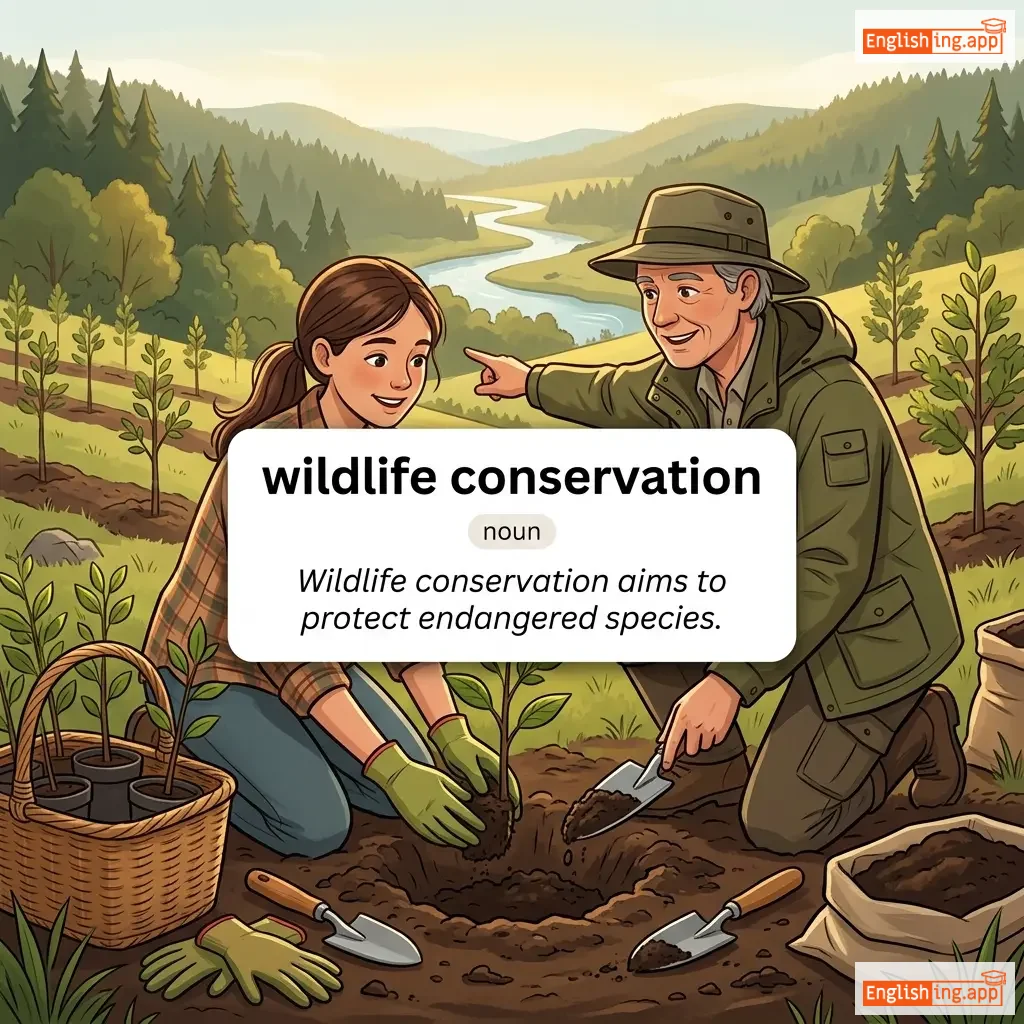
wildlife conservation definition card — visual illustration of the meaning
noun
/ˈwaɪld.laɪf ˌkɒnsərˈveɪʃən/
conservation de la faune sauvage (conservation de la faune sauvage)

The practice of protecting wild animal species and their habitats in order to maintain healthy wildlife species or populations and to restore, protect or enhance natural ecosystems.

"Wildlife conservation aims to protect endangered species."

"La conservation de la faune sauvage vise à protéger les espèces en danger." (La conservation de la faune sauvage vise a proteger les especes en danger.)
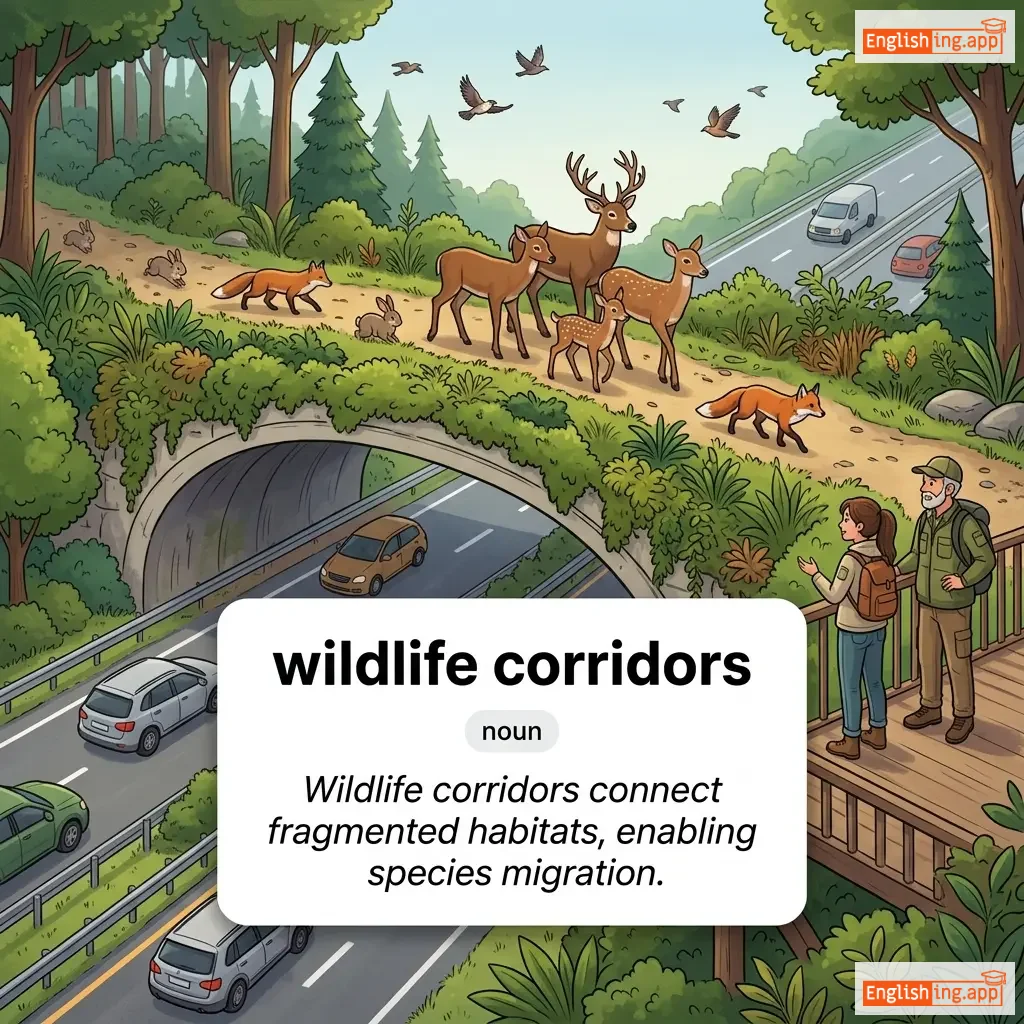
wildlife corridors definition card — visual illustration of the meaning
noun
ˈwaɪldlaɪf ˈkɔːrɪdɔːrz
corridors de faune (corridors de faune)

Areas of habitat connecting wildlife populations separated by human activities or structures.

"Wildlife corridors connect fragmented habitats, enabling species migration."

"Les corridors de faune relient des habitats fragmentés, permettant la migration des espèces." (Les corridors de faune relient des habitats fragmentés, permettant la migration des espèces.)
noun
/waɪl/
ruse, tromperie (ruse, tromperie)

A trick or clever scheme meant to deceive or outwit someone.

"He used every wile to win her trust."

"Il a utilisé toutes ses ruses pour gagner sa confiance." (Il a utilisé toutes ses ruses pour gagner sa confiance.)
adjective
/ˈwɪl.fəl/
têtu; fait intentionnellement (tetu; fait intentionnellement)

deliberately stubborn; done on purpose; intentional

"His wilful disobedience led to punishment."

"Sa désobéissance délibérée a conduit à une punition." (Sa desobeissance deliberée a conduit à une punition.)
noun, verb
/wɪl/
volonté (volonte)

expressing future tense or intention; a legal document

"She will attend the meeting tomorrow."

"Elle assistera à la réunion demain." (Elle assistera a la reunion demain.)
adjective
/ˈwɪlfəl/
volontaire (volontaire)

Deliberate, intentional, or stubbornly determined to do as one wants.

"Her willful disregard for the rules got her into trouble."

"Son comportement volontaire en ignorant les règles l'a mise dans une situation difficile." (Son comportement volontaire en ignorant les règles l'a mise dans une situation difficile.)
adjective
/ˈwɪlɪŋ/
disposé (dispose)

ready, inclined, or eager to do something

"She was willing to help with the project."

"Elle était disposée à aider avec le projet." (Elle était disposée à aider avec le projet.)
adverb
/ˈwɪl.ɪŋ.li/
volontairement (volontairement)

in a willing manner; voluntarily; with free will

"She willingly helped her neighbors during the emergency."

"Elle a aidé volontairement ses voisins pendant l'urgence." (elle a aide volontairement ses voisins pendant l'urgence)
noun
/ˈwɪlɪŋnəs/
volonté (volonte)

the quality of being prepared or ready to do something

"Her willingness to help others made her very popular."

"Sa volonté d'aider les autres l'a rendue très populaire." (Sa volonte d'aider les autres l'a rendue tres populaire.)
adjective
/ˈwɪloʊi/
élancé, mince et flexible, comme un saule (elance, mince et flexible, comme un saule)

Gracefully tall, slender, and flexible, like a willow tree.

"She moved with a willowy elegance across the stage."

"Elle se déplaçait avec une élégance willowy sur scène." (elle se deplacait avec une elegance willowy sur scene)
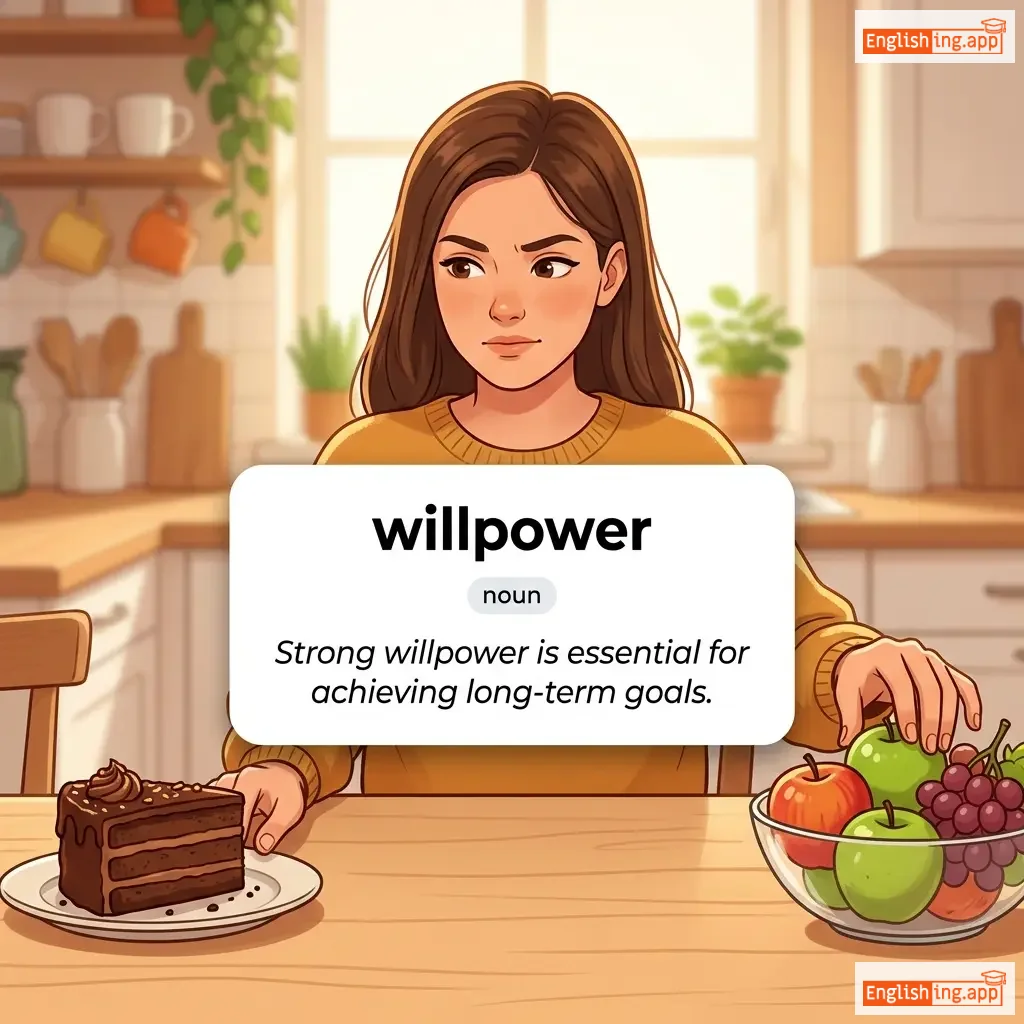
willpower definition card — visual illustration of the meaning
noun
ˈwɪl.paʊər
volonté (volonte)

The ability to control your thoughts and actions in order to achieve what you want to do.

"Strong willpower is essential for achieving long-term goals."

"Une forte volonté est essentielle pour atteindre des objectifs à long terme." (Une forte volonté est essentielle pour atteindre des objectifs à long terme.)
verb
/wɪlt/
se faner (se faner)

To become limp, weak, or drooping, often due to lack of water or energy.

"The flowers wilted in the heat of the sun."

"Les fleurs se sont fanées sous la chaleur du soleil." (Les fleurs se sont fanees sous la chaleur du soleil.)
adjective
/ˈwaɪli/
rusé (ruse)

Skilled at gaining an advantage, especially by being clever or deceitful.

"The wily fox outsmarted the hunters."

"Le renard rusé a trompé les chasseurs." (Le renard rusé a trompé les chasseurs.)
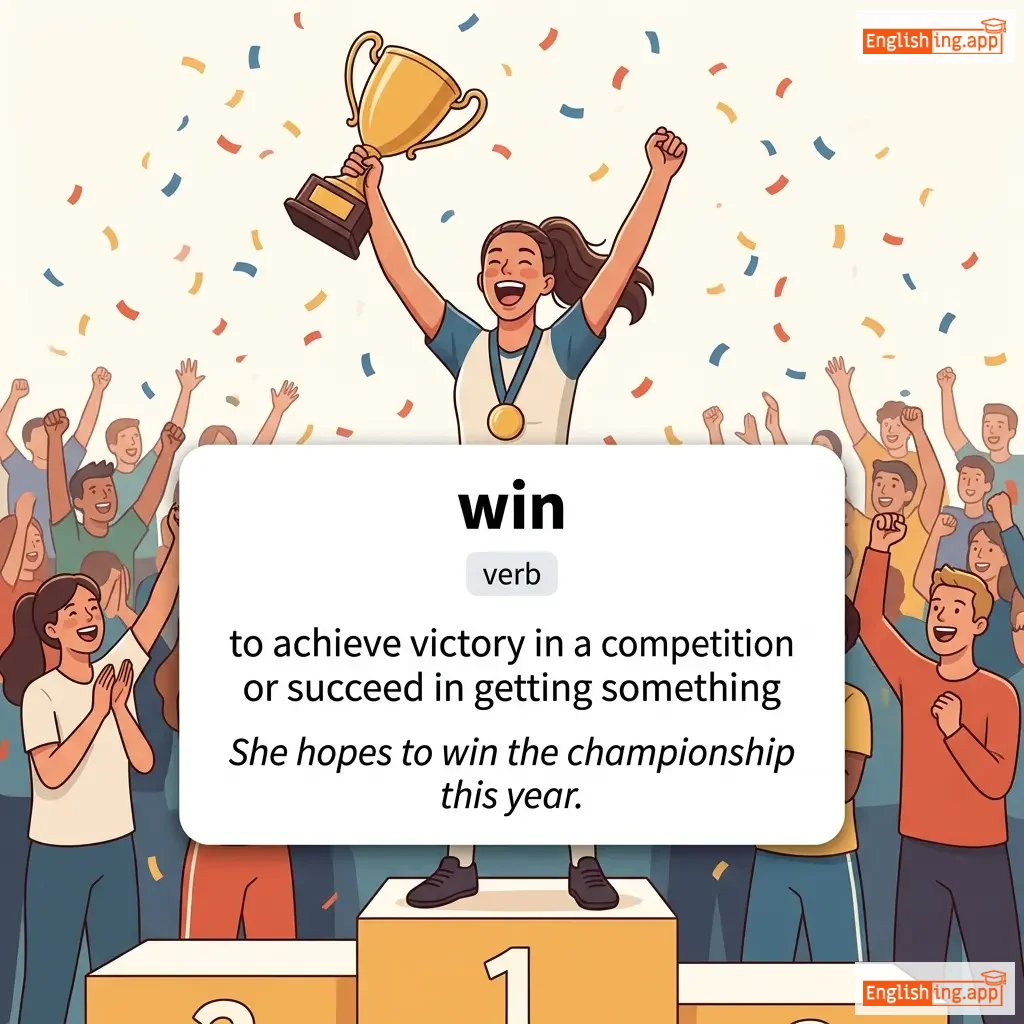
win definition card — visual illustration of the meaning
verb
/wɪn/
gagner (gagner)

to achieve victory in a competition or succeed in getting something

"She hopes to win the championship this year."

"elle espère gagner le championnat cette année." (Elle espère gagner le championnat cette année.)
verb
/wɪns/
grincer des dents à cause de la douleur (grincer des dents a cause de la douleur)

To make an involuntary movement of the face or body as a result of pain or distress.

"He winced when the doctor touched his injured arm."

"Il a grimacé lorsque le médecin a touché son bras blessé." (Il a grimacé lorsque le médecin a touché son bras blessé.)
noun
/wɪnd/
vent (vent)

moving air, especially in the form of a current of air blowing from a particular direction

"The wind is blowing strong today."

"Le vent souffle fort aujourd'hui." (Le vent souffle fort aujourd'hui.)
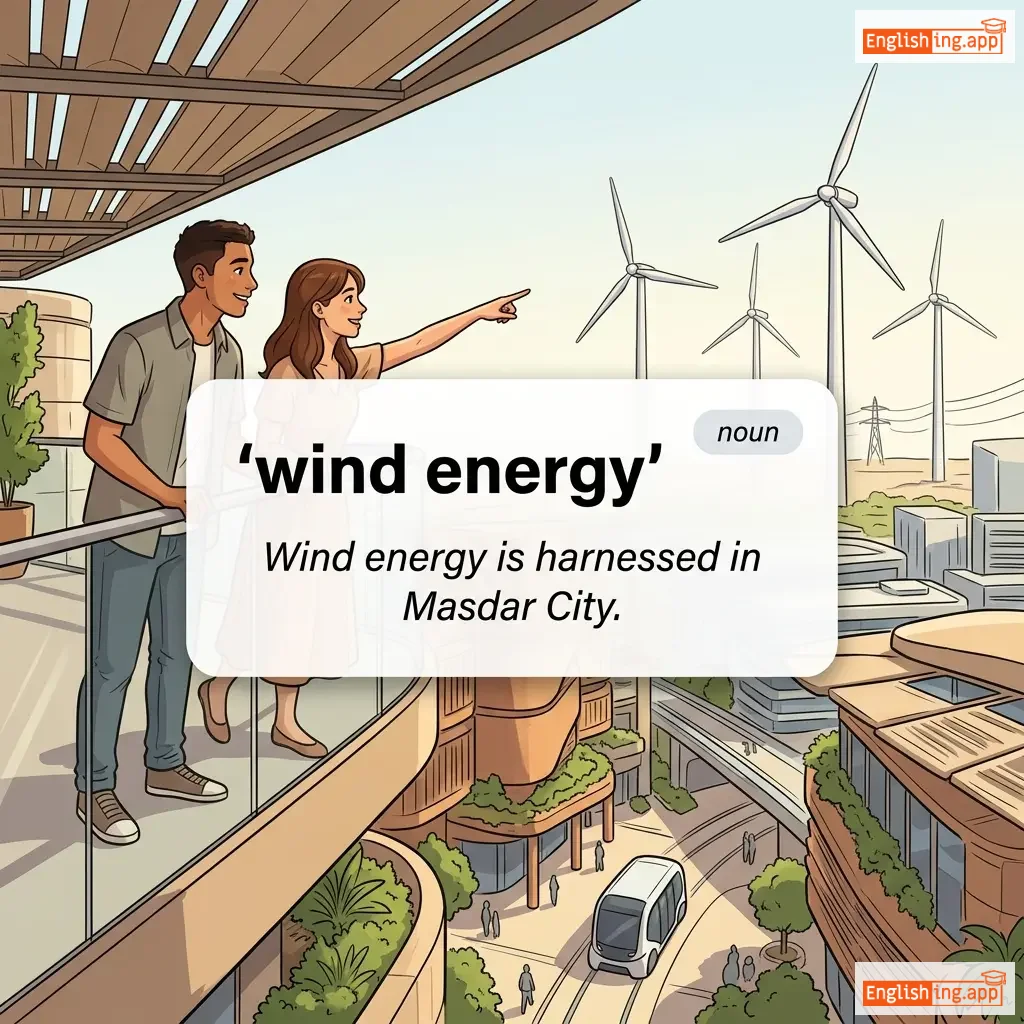
wind energy definition card — visual illustration of the meaning
noun
wɪnd ˈen.ə.dʒi
énergie éolienne (energie eolienne)

Energy generated from wind using wind turbines to convert kinetic energy into electrical power.

"Wind energy is harnessed in Masdar City."

"L'énergie éolienne est exploitée dans la ville de Masdar." (L'energie eolienne est exploitee dans la ville de Masdar.)
noun
/ˈwɪndbæɡ/
bavard (bavard)

a person who talks too much, especially in a boring or boastful way

"Everyone avoided the windbag at the party because he never let anyone else speak."

"Tout le monde a évité le bavard à la fête parce qu'il ne laissait jamais les autres parler." (Tout le monde a évité le bavard à la fête parce qu'il ne laissait jamais les autres parler.)
noun
/ˈwɪndfɔːl/
gain imprévu (gain imprevu)

an unexpected piece of good fortune, typically a large amount of money

"The startup received a windfall when a major client paid for a full year in advance."

"La start-up a reçu un gain imprévu lorsqu'un client majeur a payé un an entier d'avance." (La start-up a reçu un gain imprévu lorsqu'un client majeur a payé un an entier d'avance.)
noun
/ˈwɪndəʊ/
fenêtre (fenetre)

an opening in a wall or structure that allows light or air to pass through, usually covered with glass or other material

"I opened the window to let the fresh air in."

"J'ai ouvert la fenêtre pour laisser entrer l'air frais." (J'ai ouvert la fenêtre pour laisser entrer l'air frais.)
adjective
/ˈwɪndi/
venteux (venteu)

characterized by strong wind; also, using too many words and saying little

"It was so windy that the umbrellas flipped inside out."

"Il faisait tellement de vent que les parapluies se sont retournés." (Il feze tellement de van ke le paraplui se son retourné.)
noun
/waɪn/
vin (vin)

an alcoholic drink made from fermented grapes or other fruits

"They served a glass of red wine at the dinner."

"Ils ont servi un verre de vin rouge au dîner." (Ils ont servi un verre de vin rouge au dîner.)
noun
/ˈwaɪnəri/
cave (cave)

a place where wine is made

"They visited a famous winery in France."

"Ils ont visité un célèbre vignoble en France." (Ils ont visité un célèbre vignoble en France.)
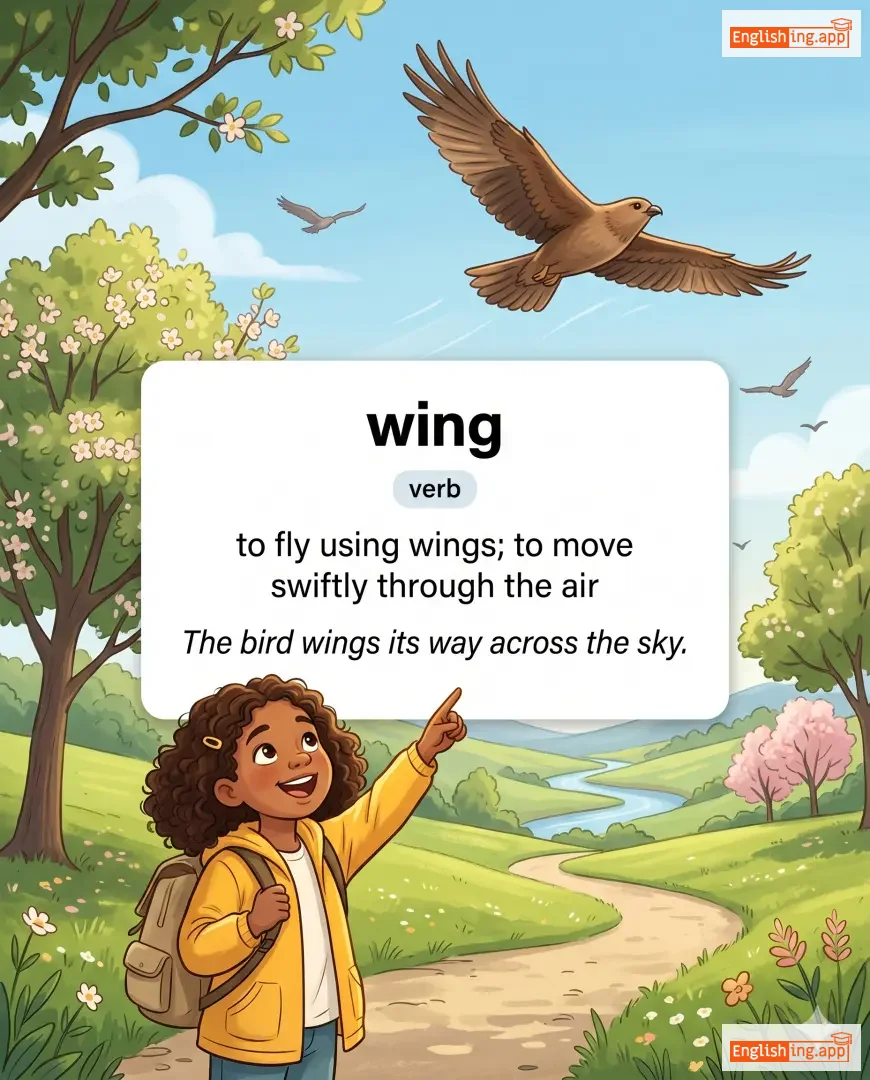
wing definition card — visual illustration of the meaning
noun
/wɪŋ/
aile (aile)

a part of a bird or aircraft that is used for flying

"The bird flapped its wings and flew away."

"L'oiseau battit ses ailes et s'envola." (L'oiseau battit ses ailes et s'envola.)
noun
/ˈwɪŋˌspæn/
envergure (envergure)

the distance from the tip of one wing to the tip of the other wing

"The eagle has an impressive wingspan of over two meters."

"L'aigle a une envergure impressionnante de plus de deux mètres." (L'aigle a une envergure impressionnante de plus de deux metres.)
noun
/ˈwɪnər/
gagnant (gagnant)

a person who wins a competition or contest

"She was the winner of the race."

"Elle était la gagnante de la course." (Elle était la gagnante de la course.)
adjective; noun; gerund
/ˈwɪnɪŋ/
gagnant (gagnant)

achieving victory or success; attractive or pleasing in a way that brings success

"She has a winning attitude that inspires the whole team."

"Elle a une attitude gagnante qui inspire toute l’équipe." (Elle a une attitude gagnante qui inspire toute l equipe)
verb
/ˈwɪn.oʊ/
sélectionner; séparer le grain de la paille (selectionner; separer le grain de la paille)

to remove the less desirable parts from a group; originally, to separate grain from chaff by blowing air

"The committee will winnow the list of applicants to ten finalists."

"Le comité réduira la liste des candidats à dix finalistes." (Le comite reduira la liste des candidats a dix finalistes.)
adjective
/ˈwɪnsəm/
charmant (charmant)

pleasant and attractive in a fresh, innocent, or charming way

"Her winsome smile instantly put the nervous guests at ease."

"Son sourire charmant a immédiatement mis les invités nerveux à l'aise." (Son sourire charmant a immediatement mis les invites nerveux a l'aise.)
noun
/ˈwɪntər/
hiver (hiver)

the coldest season of the year, typically from December to February in the Northern Hemisphere

"Winter in the north can be very harsh with heavy snowfall."

"L'hiver dans le nord peut être très rude avec de fortes chutes de neige." (L'hiver dans le nord peut être très rude avec de fortes chutes de neige.)
adjective
/ˈwɪntri/
hivernal (hivernal)

Characteristic of or suitable for winter; cold and bleak.

"The wintry wind made everyone shiver as they walked outside."

"Le vent hivernal a fait frissonner tout le monde lorsqu'ils marchaient dehors." (Le vent hivernal a fait frissonner tout le monde lorsqu'ils marchaient dehors.)
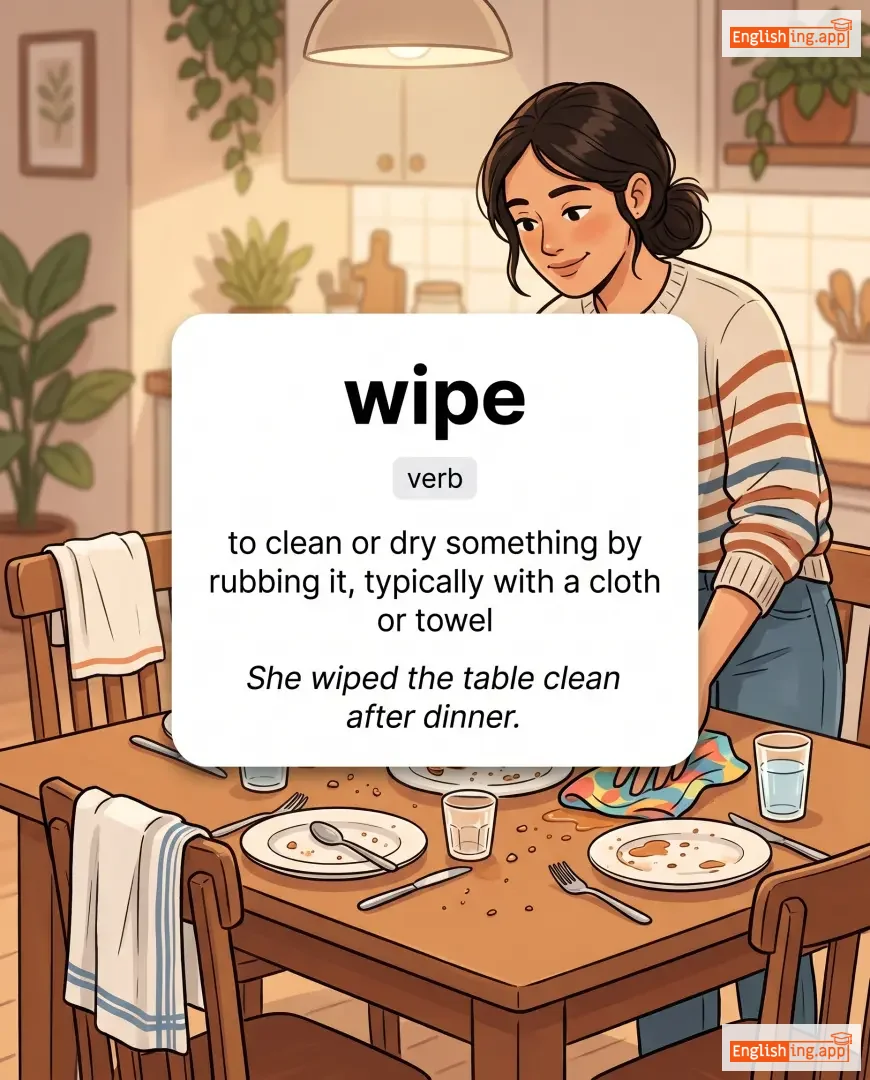
wipe definition card — visual illustration of the meaning
verb
/waɪp/
essuyer (essuyer)

to clean or dry something by rubbing it, typically with a cloth or towel

"She wiped the table clean after dinner."

"Elle a essuyé la table après le dîner." (Elle a essuyé la table après le dîner.)
noun
/ˈwaɪər/
fil de fer (fil de fer)

a thin, flexible thread of metal used to conduct electricity or connect things

"The electrician fixed the wire to restore the power."

"L'électricien a réparé le fil pour restaurer l'alimentation." (L'électricien a réparé le fil pour restaurer l'alimentation.)
adjective
/ˈwaɪə.ləs/
sans fil; radio (san fil; radio)

operating without wires; using radio waves for communication

"My wireless headphones provide excellent sound quality without any cables."

"Mes écouteurs sans fil offrent une excellente qualité sonore sans câbles." (Mes écouteurs sans fil offrent une excellente qualité sonore sans câbles.)
adjective
/ˈwaɪəri/
svelte, fort et résistant (svelte, fort et resistant)

Lean, tough, and strong, often with sinewy muscles.

"The wiry athlete moved with remarkable speed and agility."

"L'athlète svelte se déplaçait avec une rapidité et une agilité remarquables." (L'athlète svelte se déplaçait avec une rapidité et une agilité remarquables.)
noun
/ˈwɪzdəm/
sagesse (sagesse)

the ability to make sound judgments and decisions based on knowledge and experience

"His wisdom in solving complex problems was admired by everyone."

"Sa sagesse pour résoudre des problèmes complexes a été admirée par tous." (Sa sagesse pour resoudre des problemes complexes a ete admiree par tous.)
adjective
/waɪz/
sage (sage)

having or showing experience, knowledge, and good judgment

"It was wise of him to save money for the future."

"Il a été sage de sa part d'économiser de l'argent pour l'avenir." (Il a été sage de sa part d'économiser de l'argent pour l'avenir.)
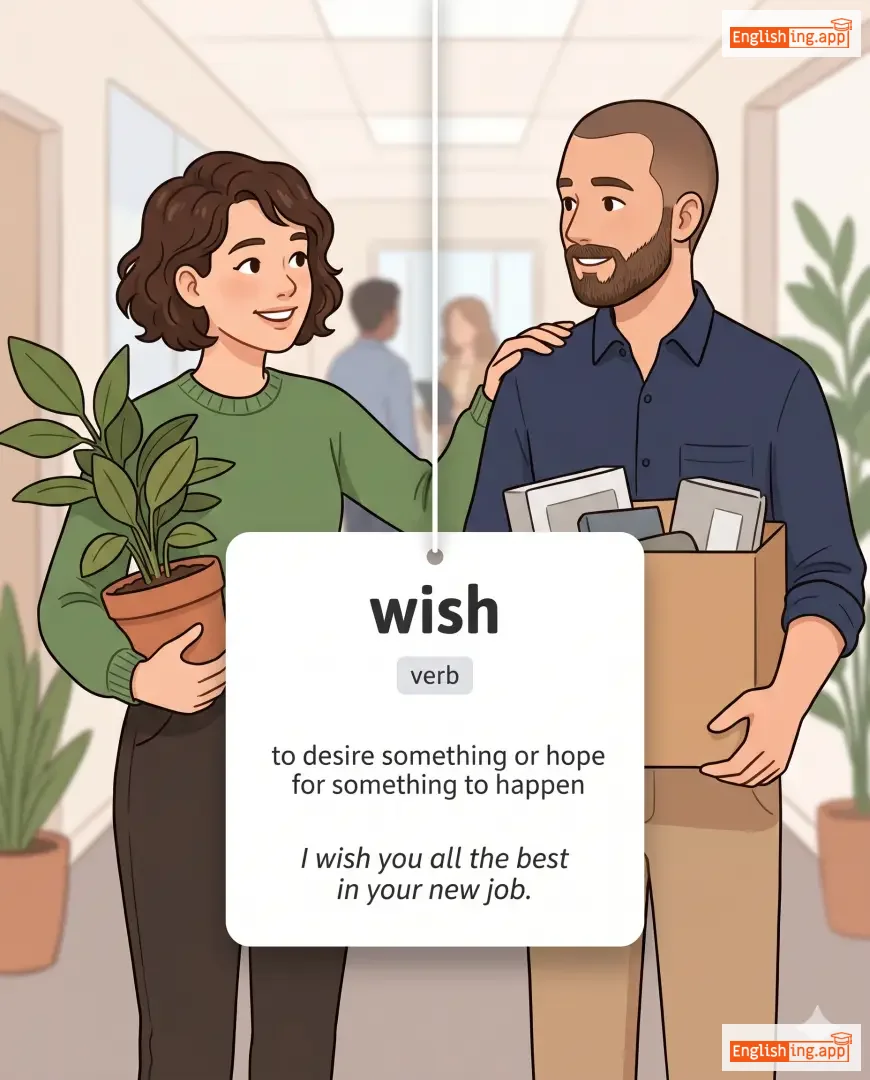
wish definition card — visual illustration of the meaning
verb
/wɪʃ/
souhaiter (souhaiter)

to desire something or hope for something to happen

"I wish you all the best in your new job."

"Je vous souhaite tout le meilleur dans votre nouveau travail." (Je vous souhaite tout le meilleur dans votre nouveau travail.)
noun
/wɪsp/
un petit tas ou morceau (un petit tas ou morceau)

A small thin or twisted bunch, piece, or amount of something.

"A wisp of smoke rose from the chimney."

"Un wisp de fumée s'éleva de la cheminée." (Un wisp de fumée s'éleva de la cheminée.)
adjective
/ˈwɪspi/
fins et fragiles (fins et fragiles)

Thin, delicate, and weak in appearance or form.

"Her wispy hair blew gently in the breeze."

"Ses cheveux fins soufflaient doucement dans la brise." (Ses cheveux fins soufflaient doucement dans la brise.)
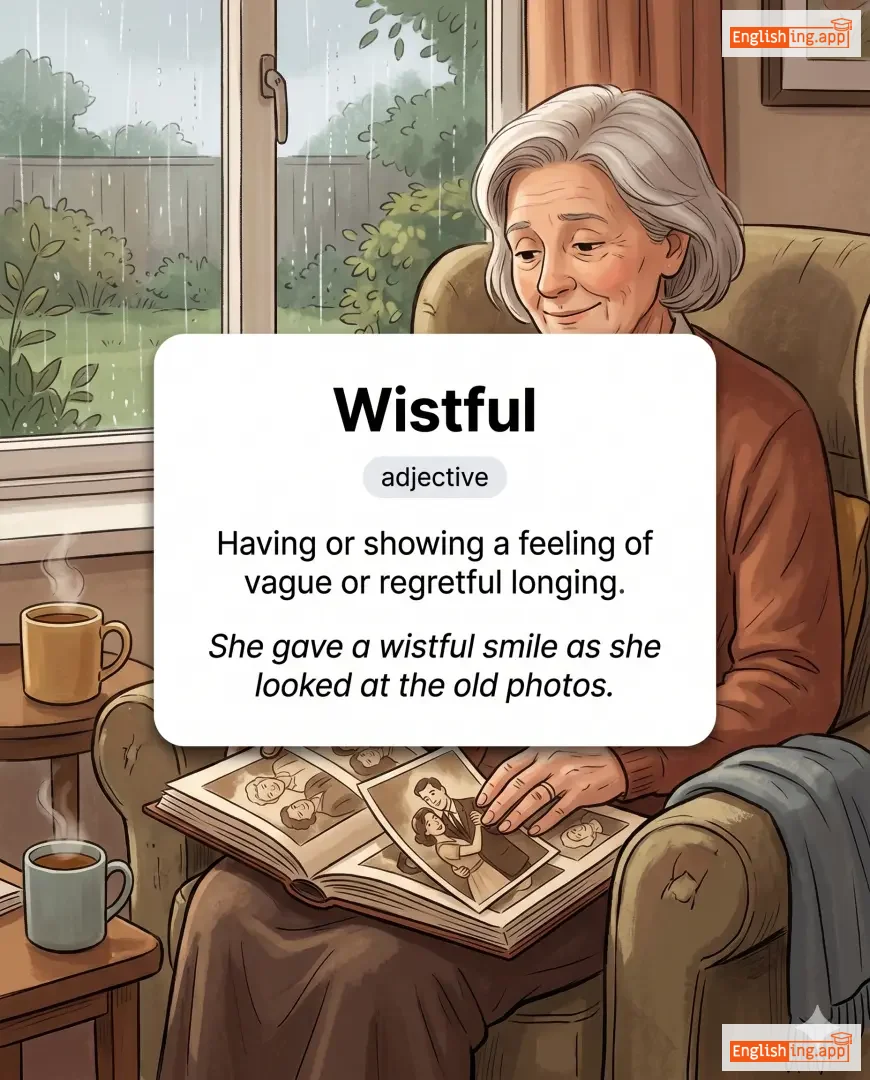
Wistful definition card — visual illustration of the meaning
adjective
/ˈwɪstfəl/
nostalgique (nostalgique)

Having or showing a feeling of vague or regretful longing.

"She gave a wistful smile as she looked at the old photos."

"Elle a esquissé un sourire nostalgique en regardant les anciennes photos." (Elle a esquissé un sourire nostalgique en regardant les anciennes photos.)
noun
/wɪt/
esprit (esprit)

the ability to use words and ideas in a quick and inventive way to create humor

"Her sharp wit made everyone laugh at the party."

"Son esprit vif a fait rire tout le monde à la fête." (son esprit vif a fait rire tout le monde a la fete.)
🧙‍♀️

Witch (witch)

noun
/wɪtʃ/
sorcière (sorcière)

a woman thought to have magic powers, especially evil ones; a practitioner of witchcraft

"The old witch cast a spell on the prince."

"La vieille sorcière a jeté un sort sur le prince." (La vieille sorcière a jeté un sort sur le prince.)
noun
/ˈwɪtʃ.krɑːft/
sorcellerie (sorcellerie)

the practice of magical skills, spells, and abilities

"In old times, many people believed in witchcraft."

"Dans les temps anciens, de nombreuses personnes croyaient à la sorcellerie." (Dans les temps anciens, de nombreuses personnes croyaient a la sorcellerie.)