Vocabulaires

Découvrez, apprenez et maîtrisez le vocabulaire anglais

noun
/vɜːrv/
énergie (energie)

Great enthusiasm, spirit, or energy in expression or performance.

"The actor performed his role with remarkable verve."

"L'acteur a joué son rôle avec une énergie remarquable." (L'acteur a joue son role avec une energie remarquable.)
adverb
/ˈvɛri/
très (tres)

used to emphasize an adjective or adverb

"She is very happy with her results."

"Elle est très heureuse de ses résultats." (Elle est très heureuse de ses résultats.)
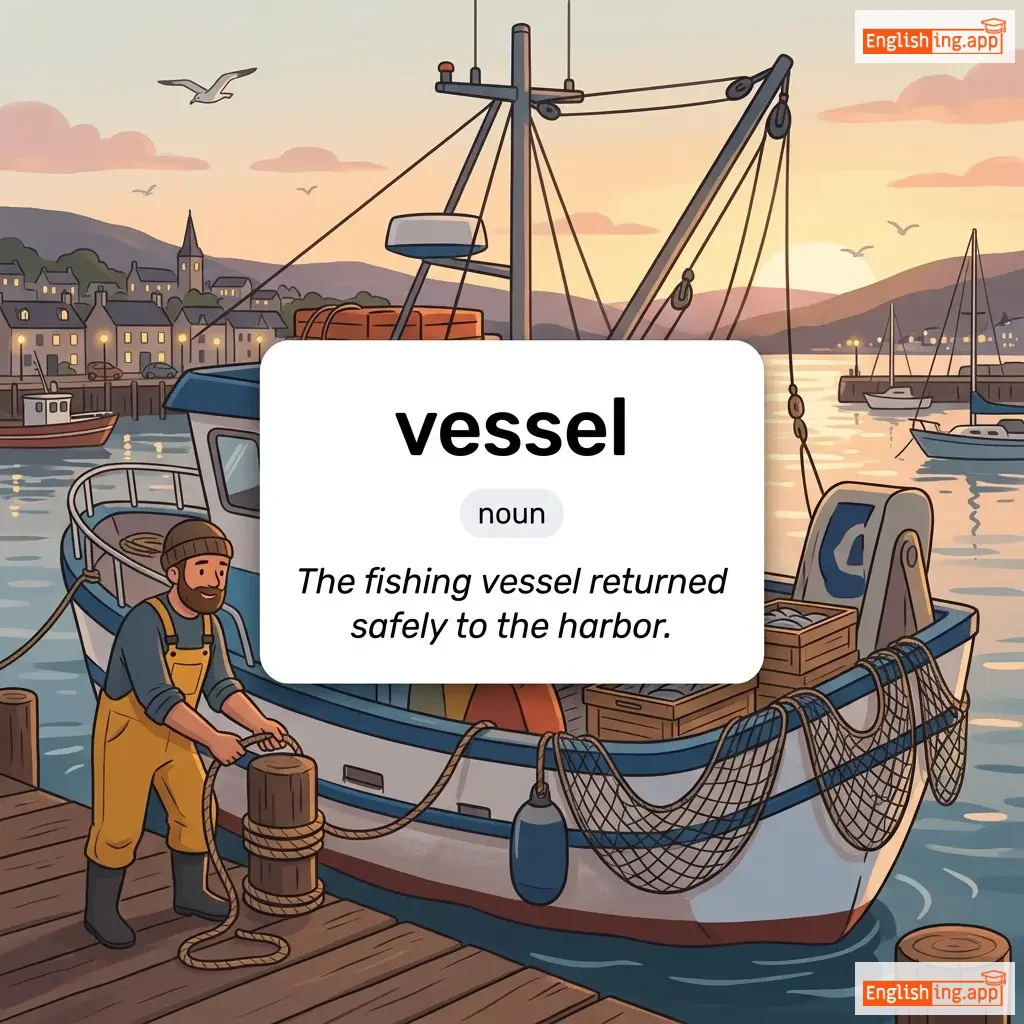
vessel definition card — visual illustration of the meaning
noun
/ˈvɛsəl/
navire / récipient (navire / récipient)

A ship or large boat; also a container for holding liquids or a tube in the body that carries blood.

"The fishing vessel returned safely to the harbor."

"Le navire de pêche est retourné en toute sécurité au port." (Le navire de pêche est retourné en toute sécurité au port.)
noun
/ˈvɛstɪdʒ/
vestige (vestige)

A small remaining part of something that once existed.

"Only a vestige of the ancient wall remains today."

"Il ne reste qu'un vestige du mur ancien." (Il ne reste qu'un vestige du mur ancien.)
adjective
/vɛˈstɪdʒiəl/
vestigial (vestigial)

Relating to a small, undeveloped remnant of something that was once much larger or more functional.

"Humans have a vestigial tailbone that no longer serves its original purpose."

"Les humains ont un os du coccyx vestigial qui ne remplit plus sa fonction d'origine." (Les humains ont un os du coccyx vestigial qui ne remplit plus sa fonction d'origine.)
noun
/ˈvɛstmənt/
vêtement religieux (vetement religieux)

a garment, especially a ceremonial or official robe worn during religious services

"The priest wore a golden vestment during the ceremony."

"Le prêtre portait un vêtement doré lors de la cérémonie." (Le pretre portait un vetement dore lors de la ceremonie.)
noun
/ˈvɛtərən/
personne expérimentée / ancien militaire (personne experimentee / ancien militaire)

a person who has long experience in a particular field or an ex-member of the armed forces

"He is a veteran of the software industry."

"Il est un vétéran de l'industrie du logiciel." (Il est un veterane de l'industrie du logiciel)
verb
/ˈviːtoʊ/
veto (veto)

to reject or forbid a decision, proposal, or law

"The president decided to veto the new bill."

"Le président a décidé de mettre son véto sur la nouvelle loi." (Le président a décidé de mettre son véto sur la nouvelle loi.)
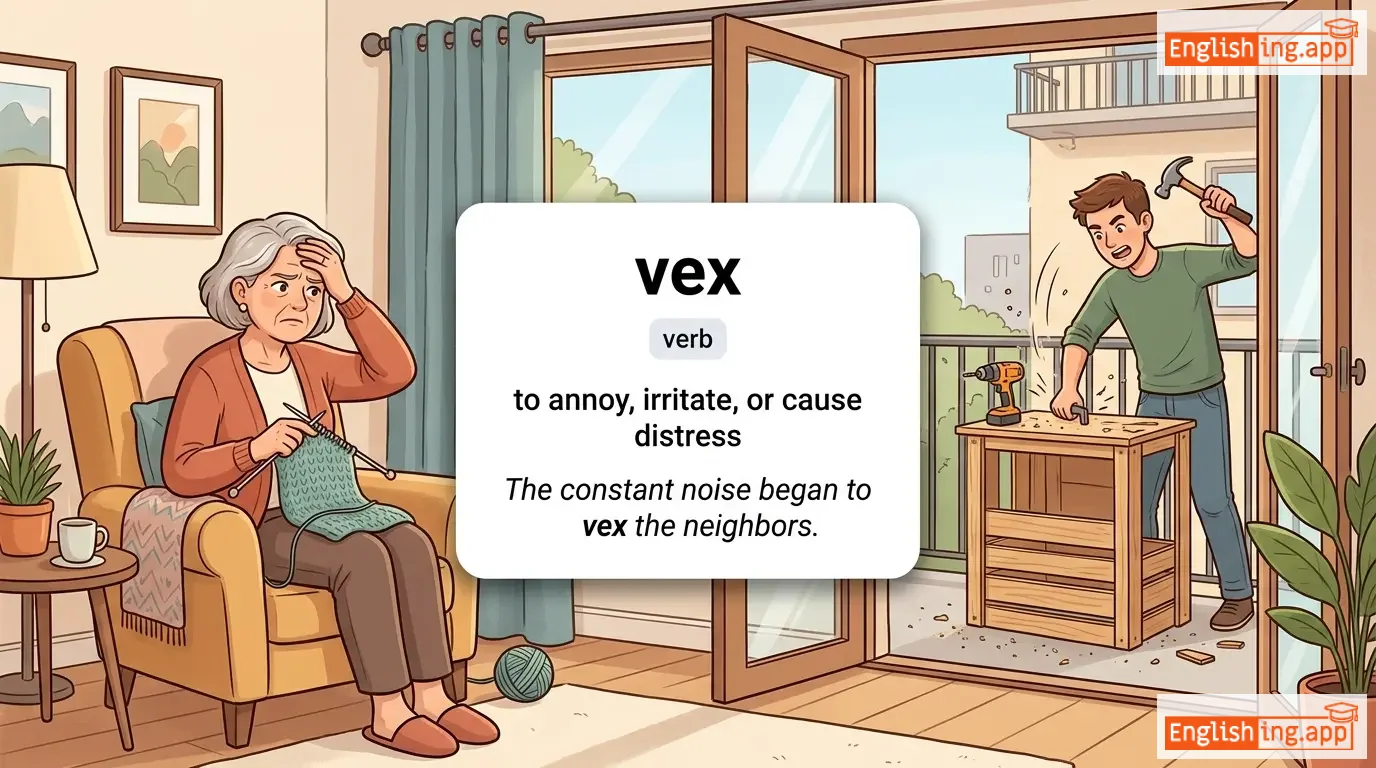
vex definition card — visual illustration of the meaning
verb
/vɛks/
agacer (agacer)

to annoy, irritate, or cause distress

"The constant noise began to vex the neighbors."

"Le bruit constant a commencé à agacer les voisins." (Le bruit constant a commencé à agacer les voisins.)
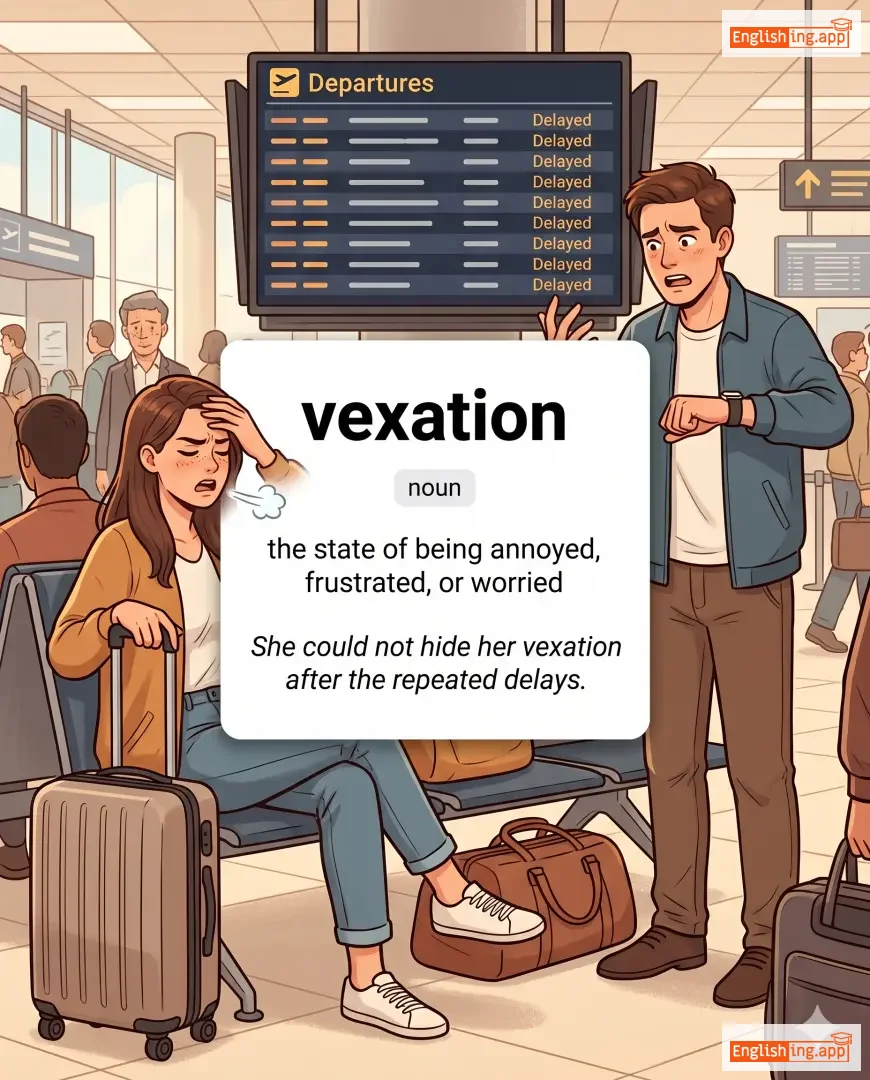
vexation definition card — visual illustration of the meaning
noun
/vɛkˈseɪʃən/
vexation (vexation)

the state of being annoyed, frustrated, or worried

"She could not hide her vexation after the repeated delays."

"Elle ne pouvait pas cacher sa vexation après les retards répétés." (Elle ne pouvait pas cacher sa vexation apres les retards repetes.)
preposition
/ˈvaɪə/ or /ˈviːə/
par le biais de (par le biais de)

through, by way of, or using a particular route or means

"She sent the documents via email."

"Elle a envoyé les documents par le biais de l'email." (Elle a envoyé les documents par le biais de l'email.)
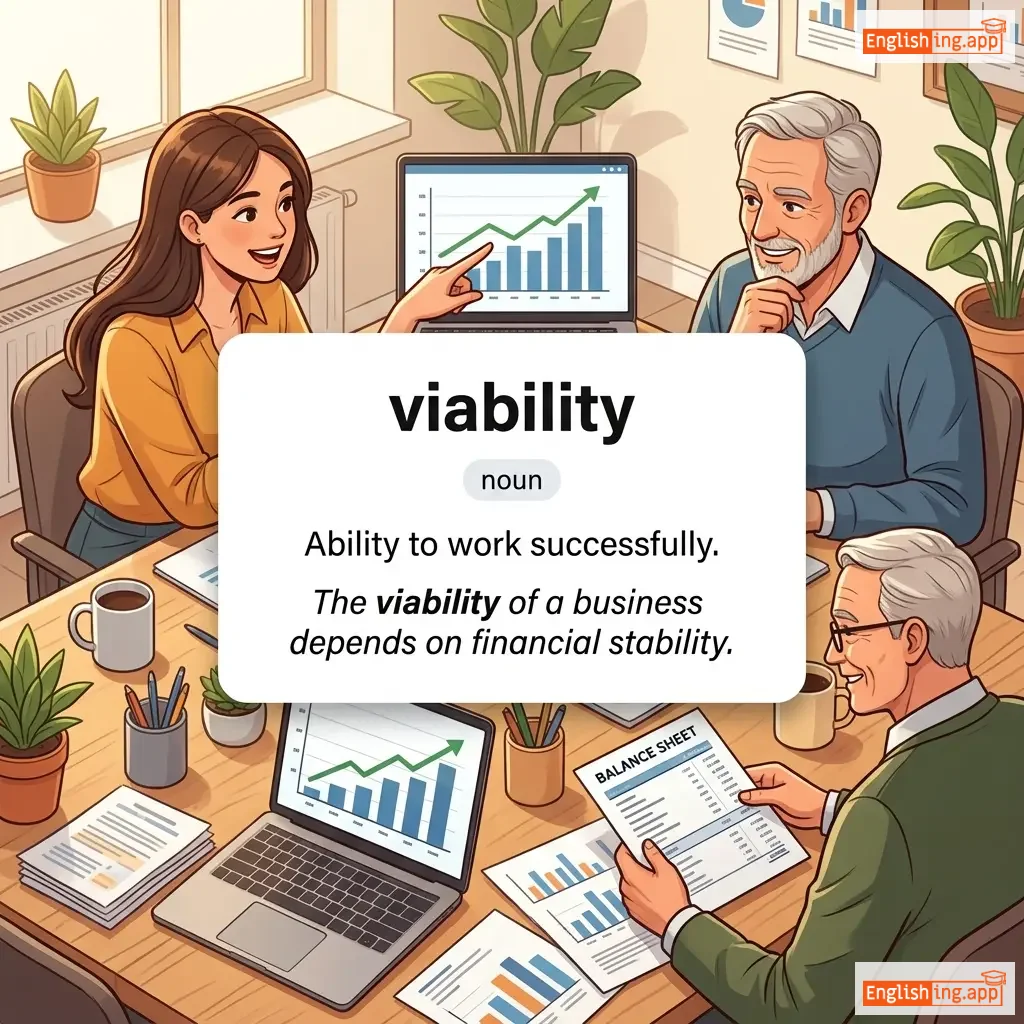
viability definition card — visual illustration of the meaning
noun
/ˌvaɪ.əˈbɪl.ə.ti/
viabilité (viabilite)

Ability to work successfully.

"The viability of a business depends on financial stability."

"La viabilité d'une entreprise dépend de la stabilité financière." (La viabilite d'une entreprise depend de la stabilite financiere.)
viable definition card — visual illustration of the meaning
adjective
/ˈvaɪəbl̩/
viable (viable)

capable of working successfully or able to survive

"They need a viable business plan to attract investors."

"Ils ont besoin d'un plan d'affaires viable pour attirer les investisseurs." (Ils ont besoin d'un plan d'affaires viable pour attirer les investisseurs.)
noun
/ˈvaɪənd/
mets (mets)

an item of food, especially a delicacy

"The banquet was filled with rich viands and wines."

"Le banquet était rempli de mets raffinés et de vins." (Le banquet était rempli de mets raffinés et de vins.)
adjective
/ˈvaɪbrənt/
vibrant (vibrant)

full of energy and life; bright and striking

"The city is vibrant with culture and color."

"La ville est vibrante de culture et de couleur." (La ville est vibrante de culture et de couleur.)
verb
/ˈvaɪbreɪt/
vibrer (vibrer)

To move or cause to move continuously and rapidly back and forth.

"The phone began to vibrate on the table."

"Le téléphone a commencé à vibrer sur la table." (Le telephone a commence a vibrer sur la table.)
noun
/vaɪˈbreɪ.ʃən/
vibration (vibration)

a rapid back and forth movement; oscillation

"The phone's vibration woke me up."

"La vibration du téléphone m'a réveillé." (La vibration du telephone m'a reveille.)
adjective
/vaɪˈkɛəriəs/
bonheur (bonheur)

experienced through the feelings or actions of another person

"She felt vicarious excitement watching her son win the award."

"Elle ne pouvait cacher son bonheur lorsqu'elle a reçu le prix." (Elle ne pouvait cacher son bonheur lorsqu'elle a recu le prix.)
noun
/vaɪs/
vice (vice)

immoral or wicked behavior; a weakness in someone's character

"Greed is a vice that can destroy lives."

"L'avidité est un vice qui peut détruire des vies." (L'avidité est un vice qui peut détruire des vies.)
noun
/ˈvaɪsrɔɪ/
Viceroy (Viceroy)

a ruler exercising authority on behalf of a sovereign in a colony or province

"The viceroy governed the colony in the king's name."

"Le vice-roi gouvernait la colonie au nom du roi." (Le vice-roi gouvernait la colonie au nom du roi.)
noun
/vɪˈsɪn.ə.ti/
proximité; voisinage (vicinite)

the area near or surrounding a particular place; neighborhood

"There are many shops in the vicinity of the school."

"Il y a beaucoup de magasins près de l'école." (Il y a beaucoup de magasins pres de l'ecole.)
adjective
/ˈvɪʃəs/
vicieux (vicieux)

Deliberately cruel, violent, or immoral.

"The dog gave a vicious growl when the stranger approached."

"Le chien a émis un grognement vicieux lorsque l'étranger s'est approché." (Le chien a émis un grognement vicieux lorsque l'étranger s'est approché.)
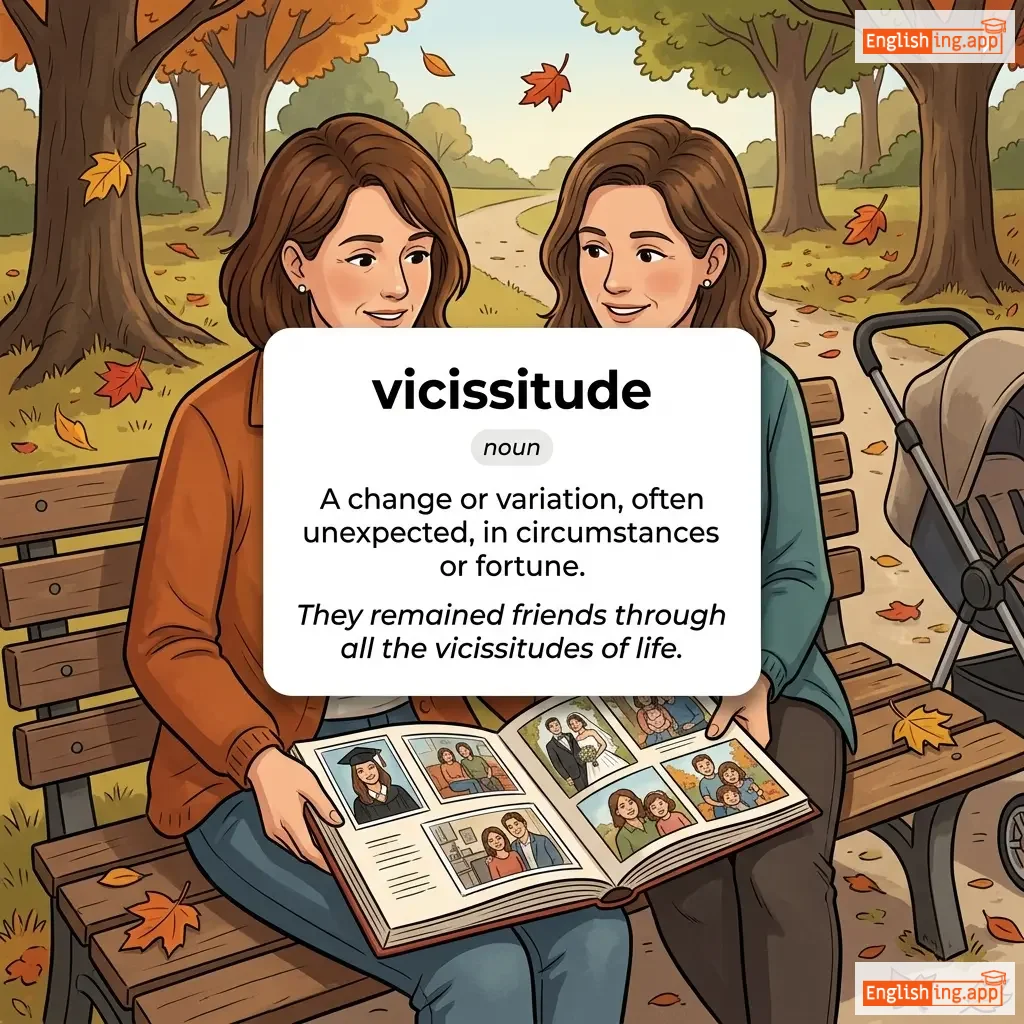
vicissitude definition card — visual illustration of the meaning
noun
/vɪˈsɪsɪtjuːd/
vicissitude (vicissitude)

A change or variation, often unexpected, in circumstances or fortune.

"They remained friends through all the vicissitudes of life."

"Ils sont restés amis à travers toutes les vicissitudes de la vie." (Ils sont restés amis à travers toutes les vicissitudes de la vie.)
noun
/ˈvɪktɪm/
victime (victime)

a person who suffers harm, injury, or death due to an event or action

"The victim of the accident was taken to the hospital immediately."

"La victime de l'accident a été emmenée à l'hôpital immédiatement." (La victime de l'accident a été emmenée à l'hôpital immédiatement.)
verb
/ˈvɪktɪmaɪz/
victimiser (victimiser)

To make someone a victim, often by treating them unfairly or cruelly.

"The corrupt officials victimized the poor villagers."

"Les fonctionnaires corrompus ont victimisé les pauvres villageois." (Les fonctionnaires corrompus ont victimisé les pauvres villageois.)
adjective
/vɪkˈtɔː.ri.əs/
victorieux (victorieux)

having won a victory; successful in a struggle or contest

"The victorious team celebrated their championship win with great joy."

"L'équipe victorieuse a célébré leur victoire en championnat avec une grande joie." (L'équipe victorieuse a célébré leur victoire en championnat avec une grande joie.)
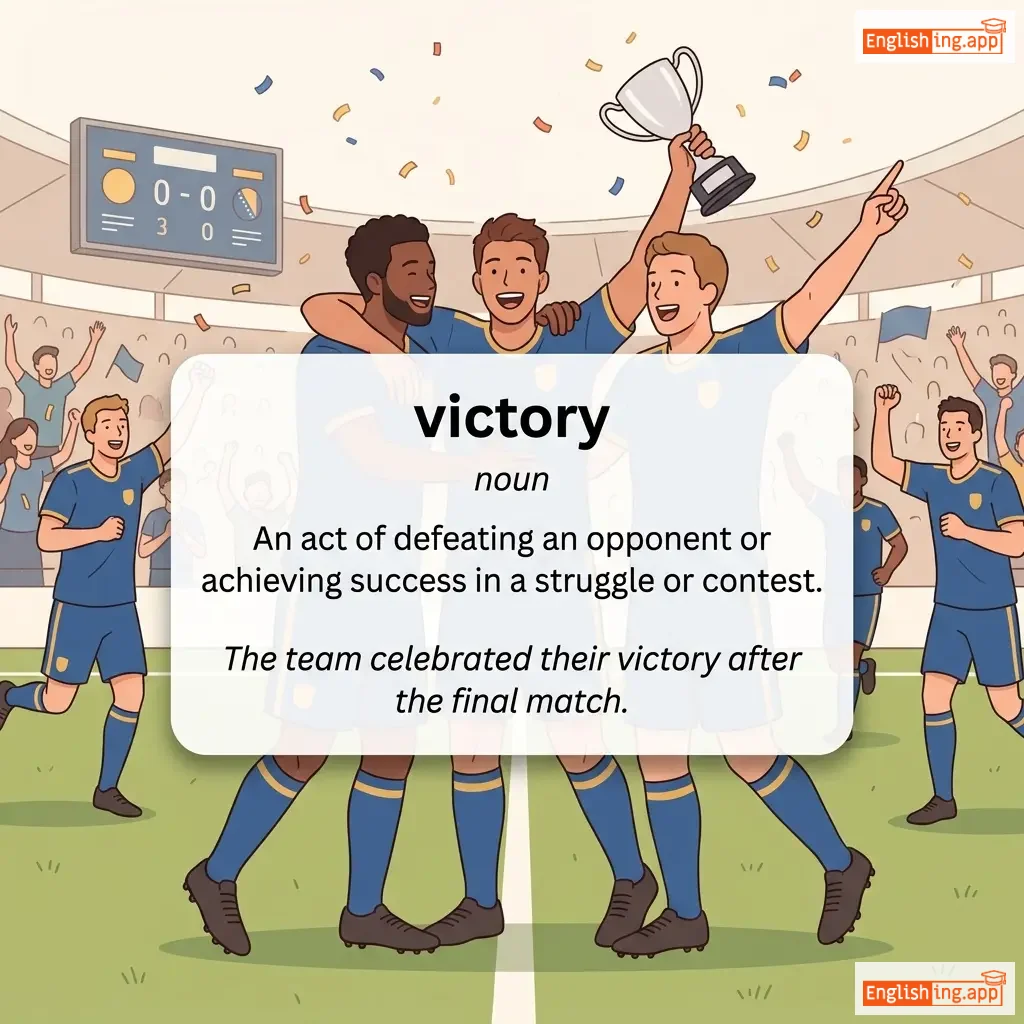
victory definition card — visual illustration of the meaning
noun
/ˈvɪktəri/
victoire (victoire)

An act of defeating an opponent or achieving success in a struggle or contest.

"The team celebrated their victory after the final match."

"L'équipe a célébré leur victoire après le match final." (L'équipe a célébré leur victoire après le match final.)
noun
/ˈvɪtəlz/
vivres (vivres)

Food or provisions, especially for human consumption.

"The travelers packed enough victuals for their long journey."

"Les voyageurs ont emballé suffisamment de vivres pour leur long voyage." (Les voyageurs ont emballé suffisamment de vivres pour leur long voyage.)
noun
/ˈvɪdiəʊ/
vidéo (video)

a recording of moving visual images made digitally or on film

"She watched the video of her favorite concert online."

"Elle a regardé la vidéo de son concert préféré en ligne." (Elle a regarde la video de son concert prefere en ligne.)
verb
/vaɪ/
concurrencer (concurrencer)

To compete eagerly with someone in order to do or achieve something.

"Several companies are vying for the contract."

"Plusieurs entreprises sont en compétition pour le contrat." (Plusieurs entreprises sont en compétition pour le contrat.)
noun/verb
/vjuː/
vue (vue)

the act of seeing or observing something, or an area of sight

"She had a great view of the sunset from her balcony."

"Elle avait une excellente vue du coucher du soleil depuis son balcon." (Elle avait une excellente vue du coucher du soleil depuis son balcon.)
noun
/ˈvɪərər/
spectateur (spectateur)

a person who watches something, especially television or video content

"The viewer is able to switch channels with the remote control."

"Le spectateur peut changer de chaîne avec la télécommande." (Le spectateur peut changer de chaîne avec la télécommande.)
adjective
/ˈvjuː.ləs/
invisible; sans opinions (invisible; san opinyon)

invisible; having no views or opinions

"The ghost remained viewless to most people in the haunted house."

"Le fantôme est resté invisible pour la plupart des gens dans la maison hantée." (Le fantôme est resté invisible pour la plupart des gens dans la maison hantée.)
noun
/ˈvjuːpɔɪnt/
point de vue (point de vue)

a particular attitude or way of considering a matter

"From his viewpoint, the situation was hopeless."

"Depuis son point de vue, la situation était désespérée." (Depuis son point de vue, la situation était désespérée.)
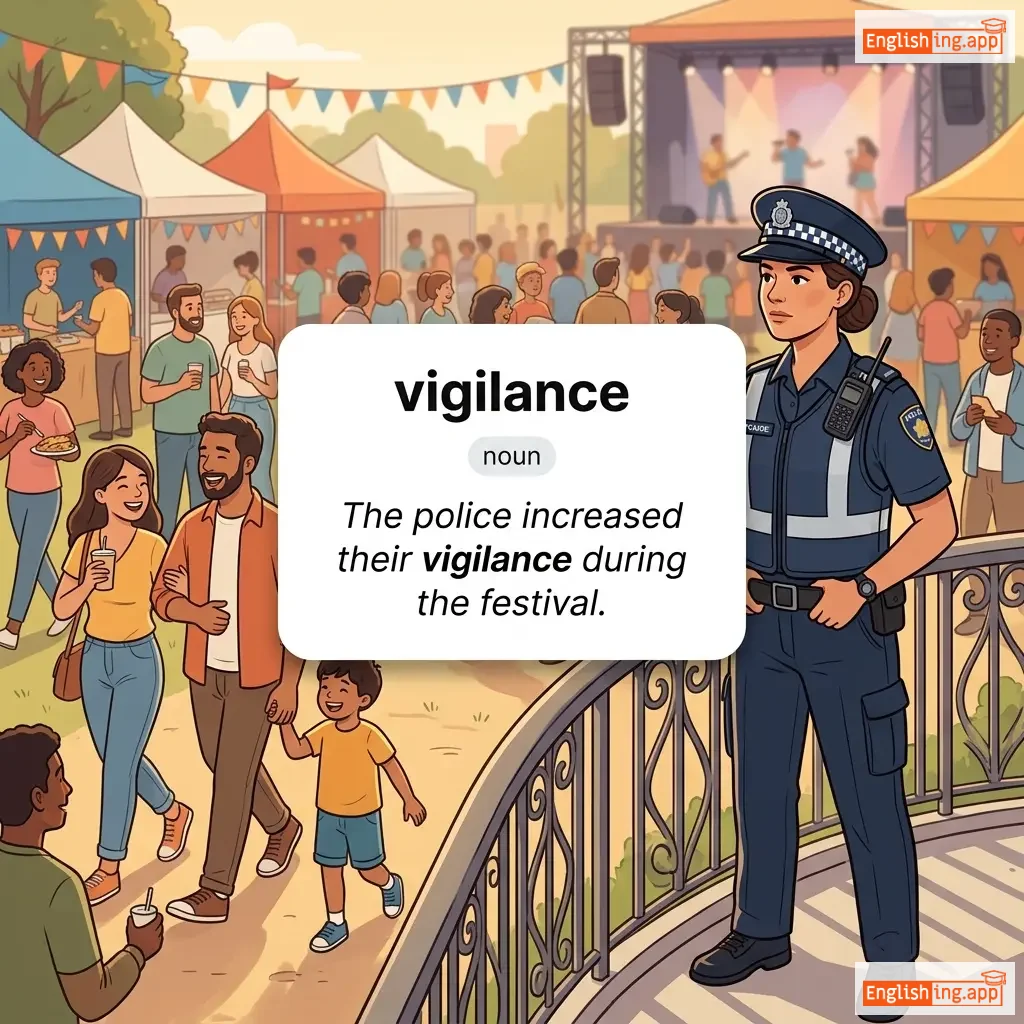
vigilance definition card — visual illustration of the meaning
noun
/ˈvɪdʒɪləns/
vigilance (vigilance)

The action or state of keeping careful watch for possible danger or difficulties.

"The police increased their vigilance during the festival."

"La police a renforcé sa vigilance pendant le festival." (La police a renforce sa vigilance pendant le festival.)
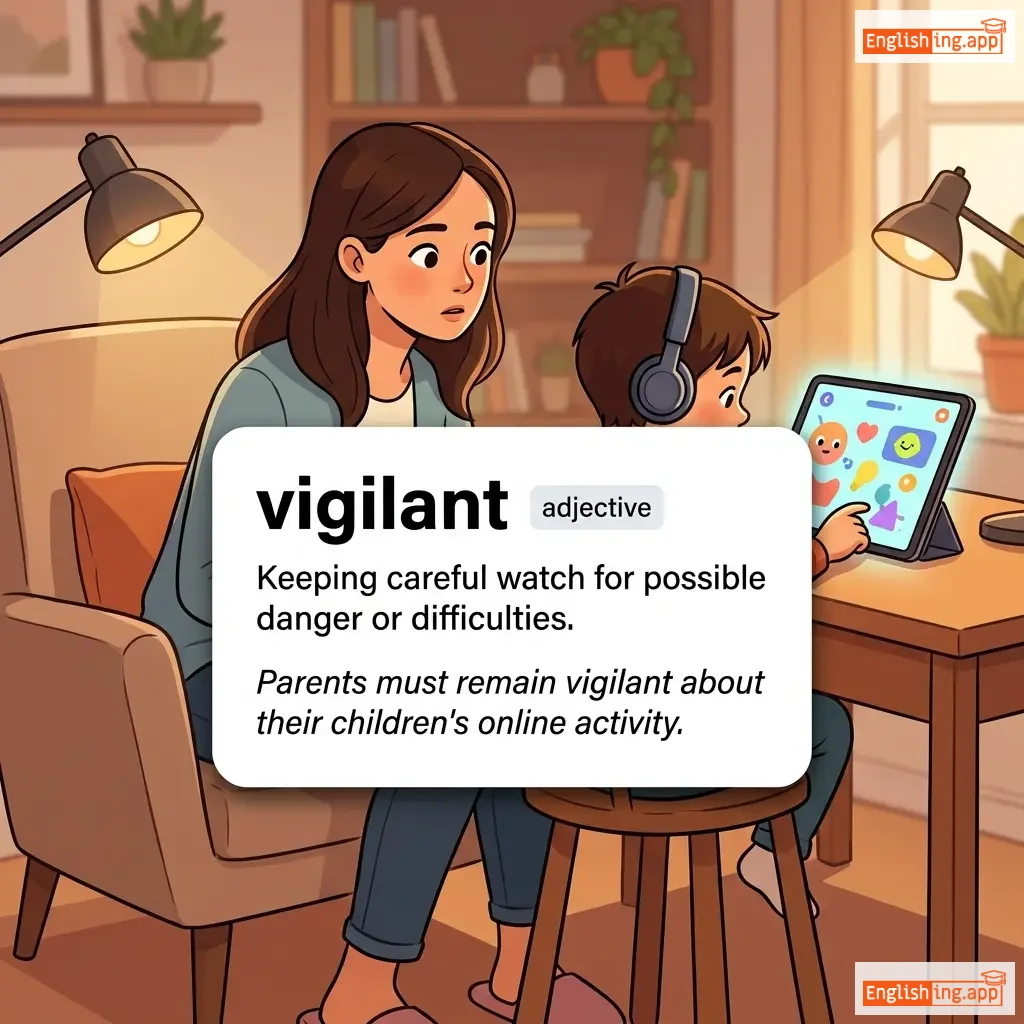
vigilant definition card — visual illustration of the meaning
adjective
/ˈvɪdʒɪlənt/
vigilant (vigilant)

Keeping careful watch for possible danger or difficulties.

"Parents must remain vigilant about their children's online activity."

"Les parents doivent rester vigilants face aux activités en ligne de leurs enfants." (Les parents doivent rester vigilants face aux activités en ligne de leurs enfants.)
noun
/vɪnˈjɛt/
vignette (vignette)

A short, descriptive piece of writing or a brief scene.

"The author included a poignant vignette in the introduction of the book."

"L'auteur a inclus une vignette poignante dans l'introduction du livre." (L'auteur a inclus une vignette poignante dans l'introduction du livre.)
noun
/ˈvɪɡər/
vigueur (vigueur)

Physical strength, energy, or enthusiasm.

"She tackled the project with great vigor and determination."

"Elle a abordé le projet avec une grande vigueur et détermination." (Elle a abordé le projet avec une grande vigueur et détermination.)
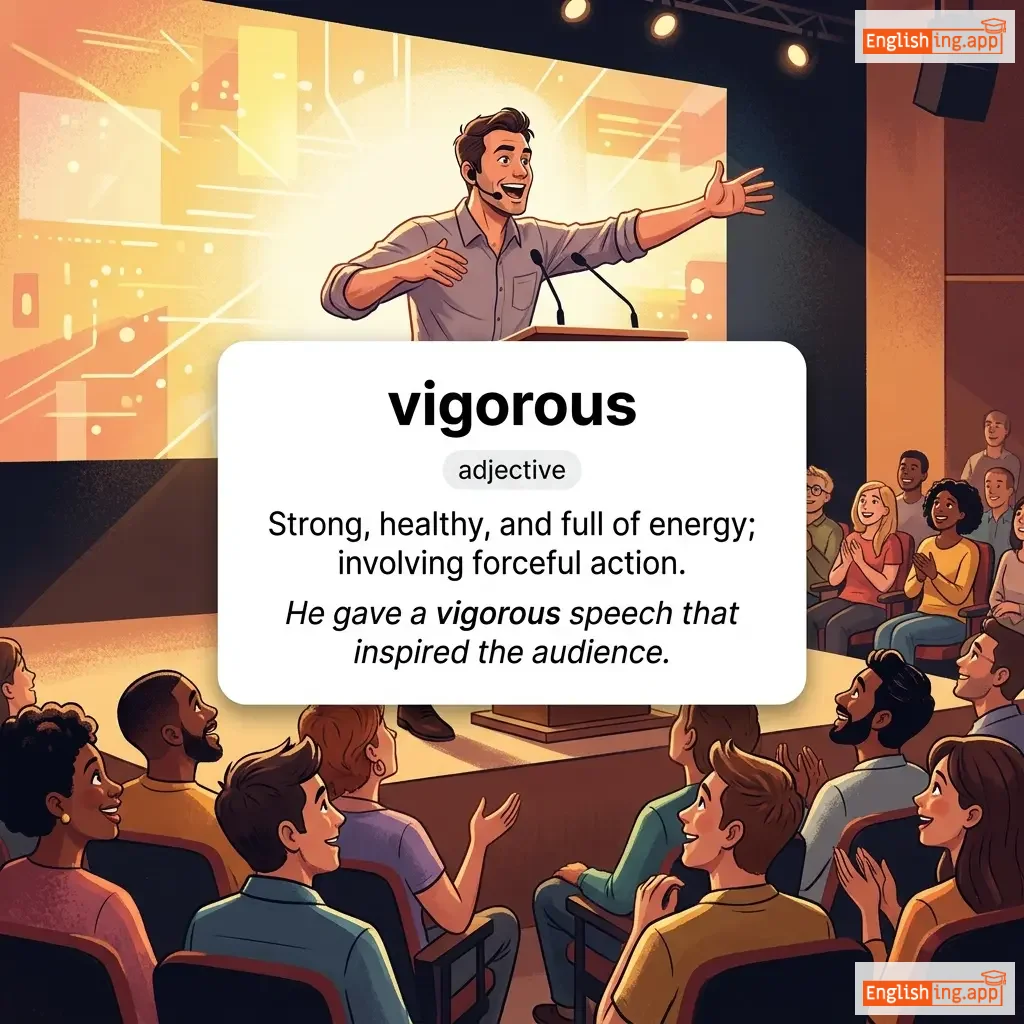
vigorous definition card — visual illustration of the meaning
adjective
/ˈvɪɡərəs/
vigoureux (vigo-rou)

Strong, healthy, and full of energy; involving forceful action.

"He gave a vigorous speech that inspired the audience."

"Il a donné un discours vigoureux qui a inspiré le public." (Il a donne un discours vigoureux qui a inspire le public.)
noun
/ˈvɪɡ.ər/
force physique et bonne santé; effort, énergie et enthousiasme (vigour)

physical strength and good health; effort, energy, and enthusiasm

"She approached her work with renewed vigour after the vacation."

"Après les vacances, elle a abordé son travail avec un nouveau vigoureux élan." (apres les vacances, elle a aborde son travail avec un nouveau vigoureux elan.)
verb
/ˈvɪlɪfaɪ/
bonheur (bonheur)

to speak or write about someone in an abusive or disparaging manner

"The politician was vilified in the media for his controversial remarks."

"Elle n'a pas pu cacher son bonheur lorsqu'elle a reçu le prix." (Elle n'a pas pu cacher son bonheur lorsqu'elle a reçu le prix.)
noun
/ˈvɪlɪdʒ/
village (village)

a small community or group of houses in a rural area

"They live in a small village surrounded by mountains."

"Ils vivent dans un petit village entouré de montagnes." (Ils vivent dans un petit village entoure de montagnes.)
noun
/vɪm/
vigueur (vigueur)

energy and enthusiasm

"She performed the dance with great vim and vigor."

"Elle a exécuté la danse avec une grande vigueur et énergie." (Elle a execute la danse avec une grande vigueur et energie.)
adjective
/ˈvɪnsəbl/
vincible (vincible)

capable of being overcome or defeated

"The enemy seemed vincible after losing their main base."

"L'ennemi semblait vincible après avoir perdu sa base principale." (L'ennemi semblait vincible après avoir perdu sa base principale.)
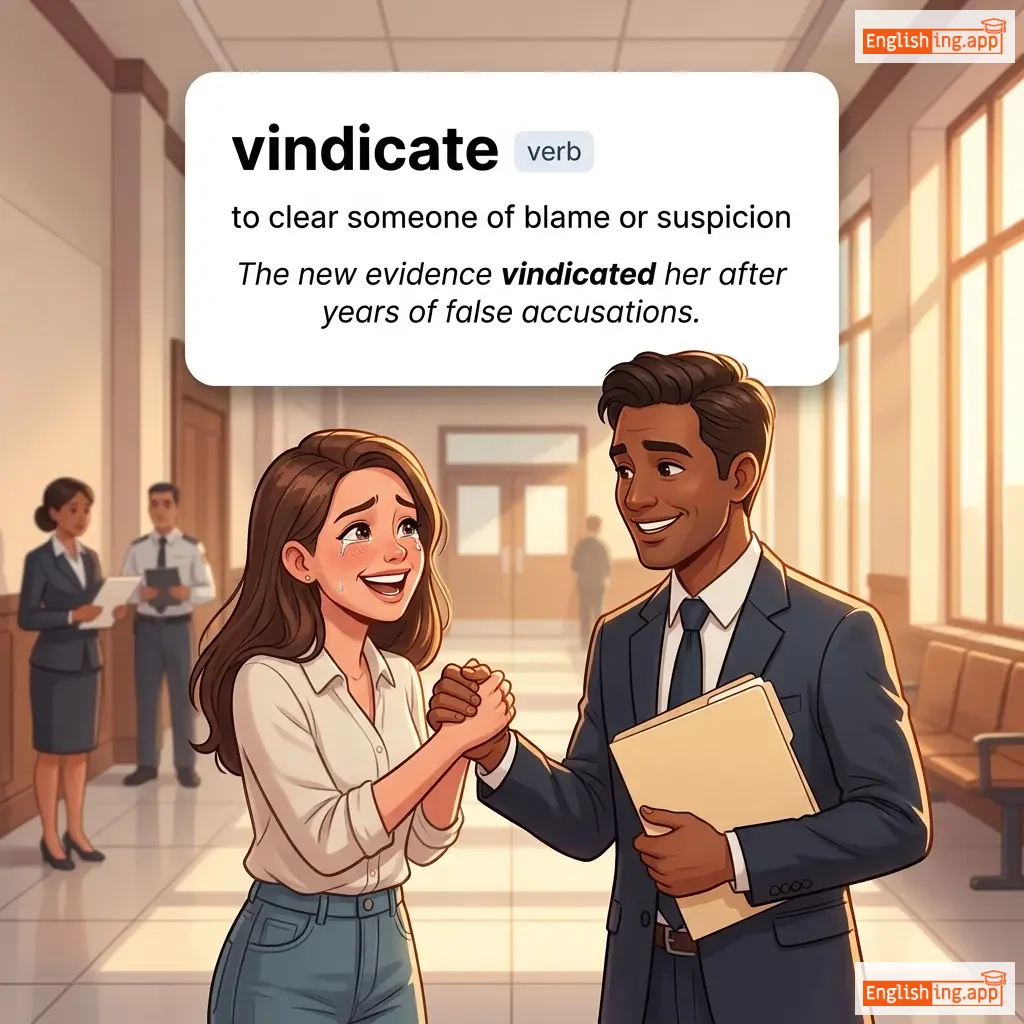
vindicate definition card — visual illustration of the meaning
verb
/ˈvɪndɪkeɪt/
réhabiliter (rehabiliter)

to clear someone of blame or suspicion

"The new evidence vindicated her after years of false accusations."

"Les nouvelles preuves l'ont réhabilitée après des années de fausses accusations." (Les nouvelles preuves l'ont rehabilitee apres des annees de fausses accusations.)
adjective
/ˈvɪndɪkeɪtɪv/
vindicatif (vindicatif)

showing a tendency to vindicate or justify; inclined to defend

"Her vindicative tone showed that she strongly believed in her innocence."

"Son ton vindicatif montrait qu'elle croyait fermement en son innocence." (Son ton vindicatif montrait qu'elle croyait fermement en son innocence.)
adjective
/ˈvɪndɪkətɔːri/
vindicatif (vindicatif)

Serving to justify, clear of blame, or defend.

"His vindicatory remarks restored his reputation."

"Ses remarques vindicatoires ont restauré sa réputation." (Ses remarques vindicatoires ont restauré sa réputation.)
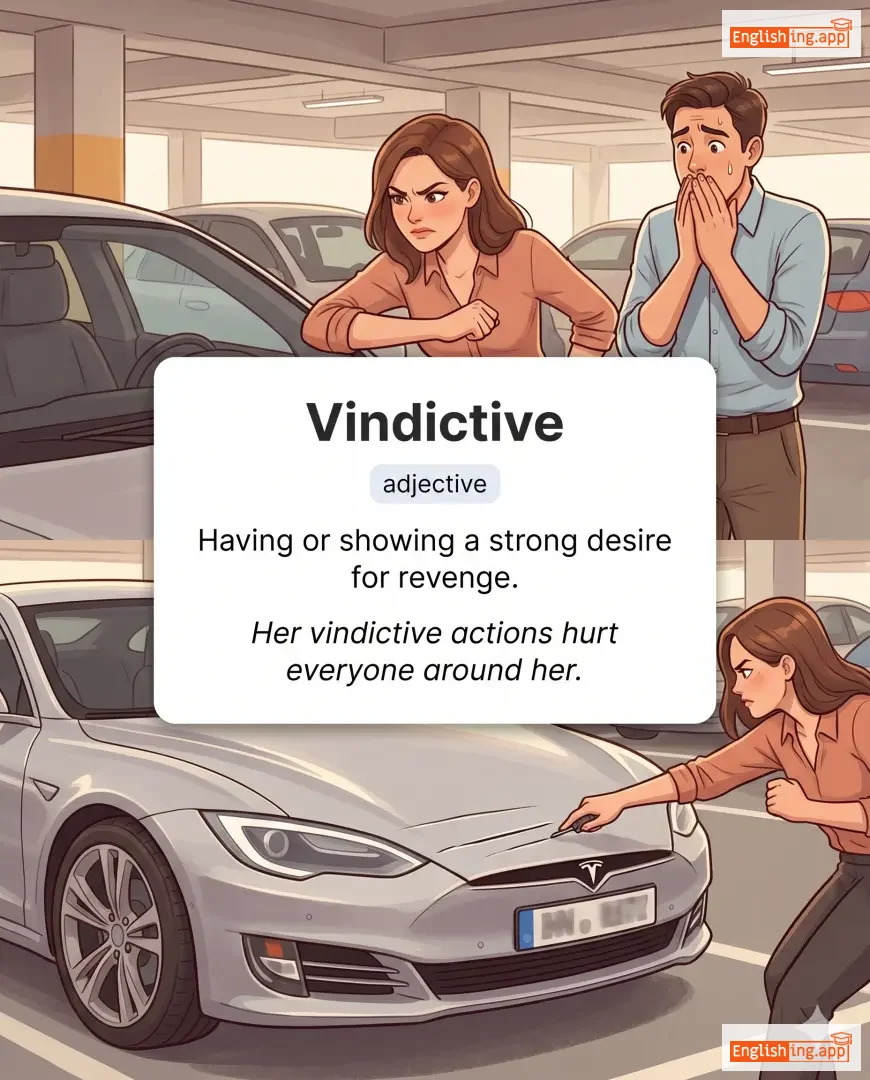
Vindictive definition card — visual illustration of the meaning
adjective
/vɪnˈdɪktɪv/
vengatif (vengatif)

Having or showing a strong desire for revenge.

"Her vindictive actions hurt everyone around her."

"Ses actions vengatives ont blessé tout le monde autour d'elle." (Ses actions vengatives ont blessé tout le monde autour d'elle.)
noun
/vaɪn/
vigne (vigne)

a climbing or trailing plant with long stems; a plant that produces grapes

"The vine climbed up the wall and covered it with green leaves."

"La vigne a grimpé le long du mur et l’a couvert de feuilles vertes." (la vigne a grimpe le long du mur et la couvert de feuilles vertes)
noun
/ˈvɪn.ɪ.ɡər/
vinaigre (vinaigre)

a sour liquid made from fermented alcohol, used for cooking and preserving

"I added vinegar to the salad dressing for extra flavor."

"J'ai ajouté du vinaigre à la vinaigrette pour plus de saveur." (J'ai ajouté du vinaigre à la vinaigrette pour plus de saveur.)