Vocabulaires

Découvrez, apprenez et maîtrisez le vocabulaire anglais

noun
/ˈrɛnəˌsɑːns/
renaissance (renaissance)

a revival of art, culture, or learning; a period of renewed interest and growth

"The city experienced a cultural renaissance during the 1990s."

"La ville a connu un renouveau culturel dans les années 90." (La ville a connu un renouveau culturel dans les années 90.)
verb
/rɛnd/
déchirer (dechirer)

to tear something apart violently or forcefully

"The explosion rent the air with a deafening noise."

"L'explosion déchira l'air avec un bruit assourdissant." (L'explosion déchira l'air avec un bruit assourdissant.)
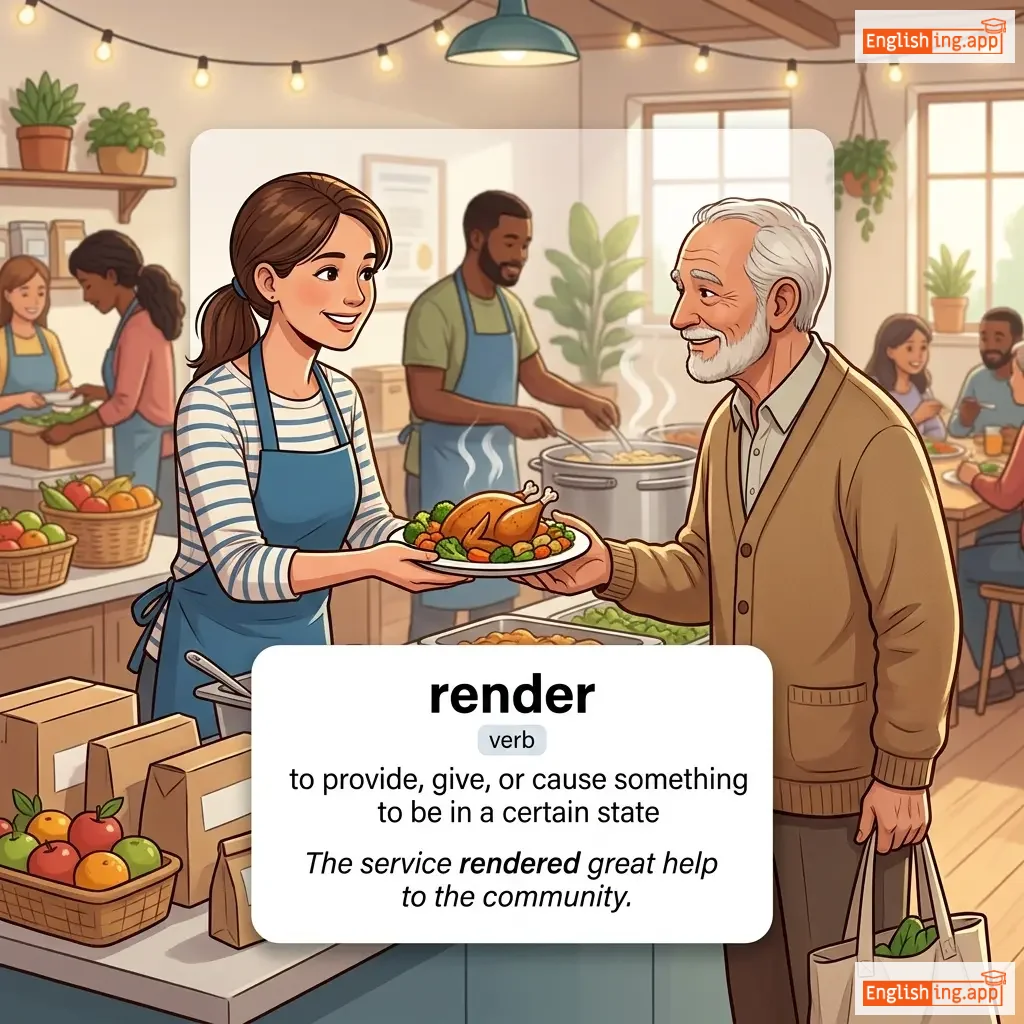
render definition card — visual illustration of the meaning
verb
/ˈrɛndər/
rendre (rendre)

to provide, give, or cause something to be in a certain state

"The service rendered great help to the community."

"Le service rendu a beaucoup aidé la communauté." (Le service rendu a beaucoup aidé la communauté.)
noun
/ˈrɒndɪvuː/
rendez-vous (rendez-vous)

a meeting or appointment at an agreed time and place

"They arranged a secret rendezvous at the café."

"Ils ont organisé un rendez-vous secret au café." (Ils ont organisé un rendez-vous secret au café.)
noun
/rɛnˈdɪʃən/
interprétation (interpretation)

a performance or interpretation of a piece of art, music, or text

"The singer gave a moving rendition of the classic song."

"Le chanteur a donné une interprétation émouvante de la chanson classique." (Le chanteur a donne une interpretation emouvante de la chanson classique.)
noun
/ˈrɛnɪˌɡeɪd/
renégat (renegat)

a person who deserts or betrays an organization, country, or principles

"He was labeled a renegade after leaving the party and criticizing its policies."

"Il a été étiqueté comme un renégat après avoir quitté le parti et critiqué ses politiques." (Il a ete etiquete comme un renegat apres avoir quitte le parti et critique ses politiques.)
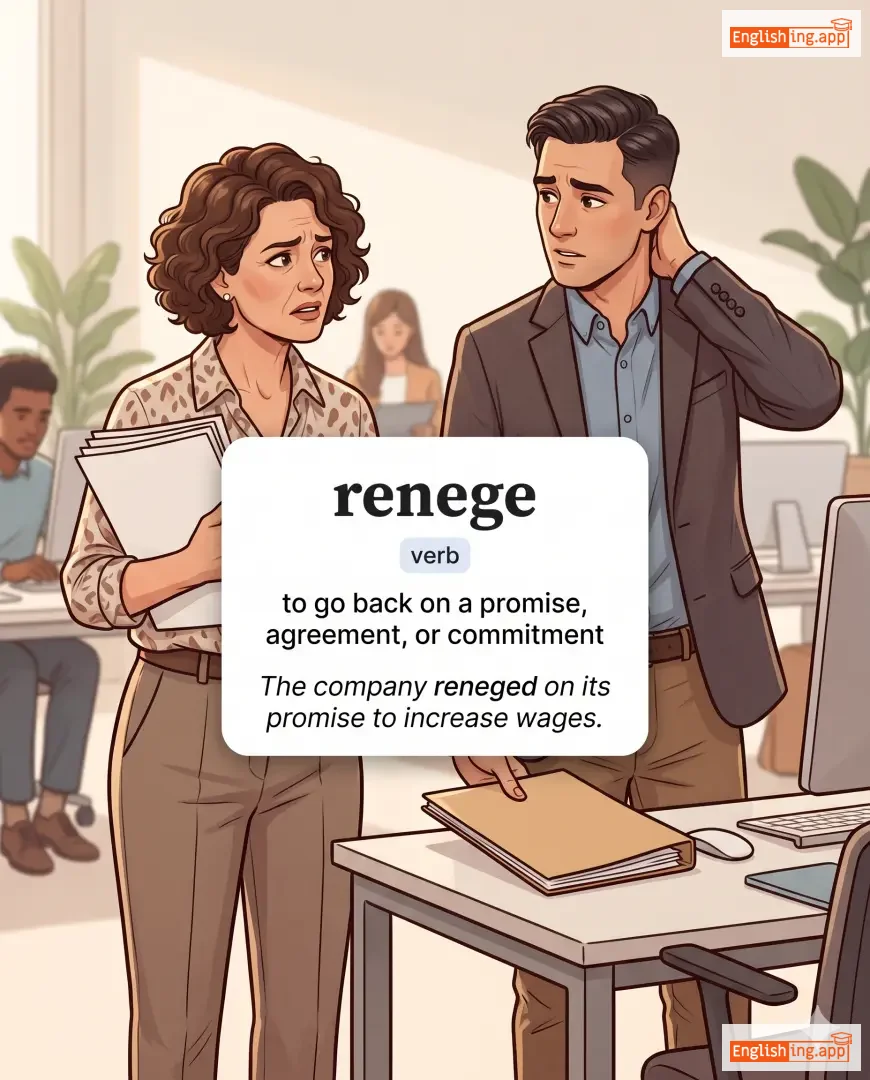
renege definition card — visual illustration of the meaning
verb
/rɪˈnɛɡ/
rompre un engagement (rompre un engagement)

to go back on a promise, agreement, or commitment

"The company reneged on its promise to increase wages."

"L'entreprise a rompu sa promesse d'augmenter les salaires." (L'entreprise a rompu sa promesse d'augmenter les salaires.)
verb
/rɪˈnuː/
renouveler (renouveler)

to make something new again or extend its period of validity

"I need to renew my passport before traveling."

"J'ai besoin de renouveler mon passeport avant de voyager." (J'ai besoin de renouveler mon passeport avant de voyager.)
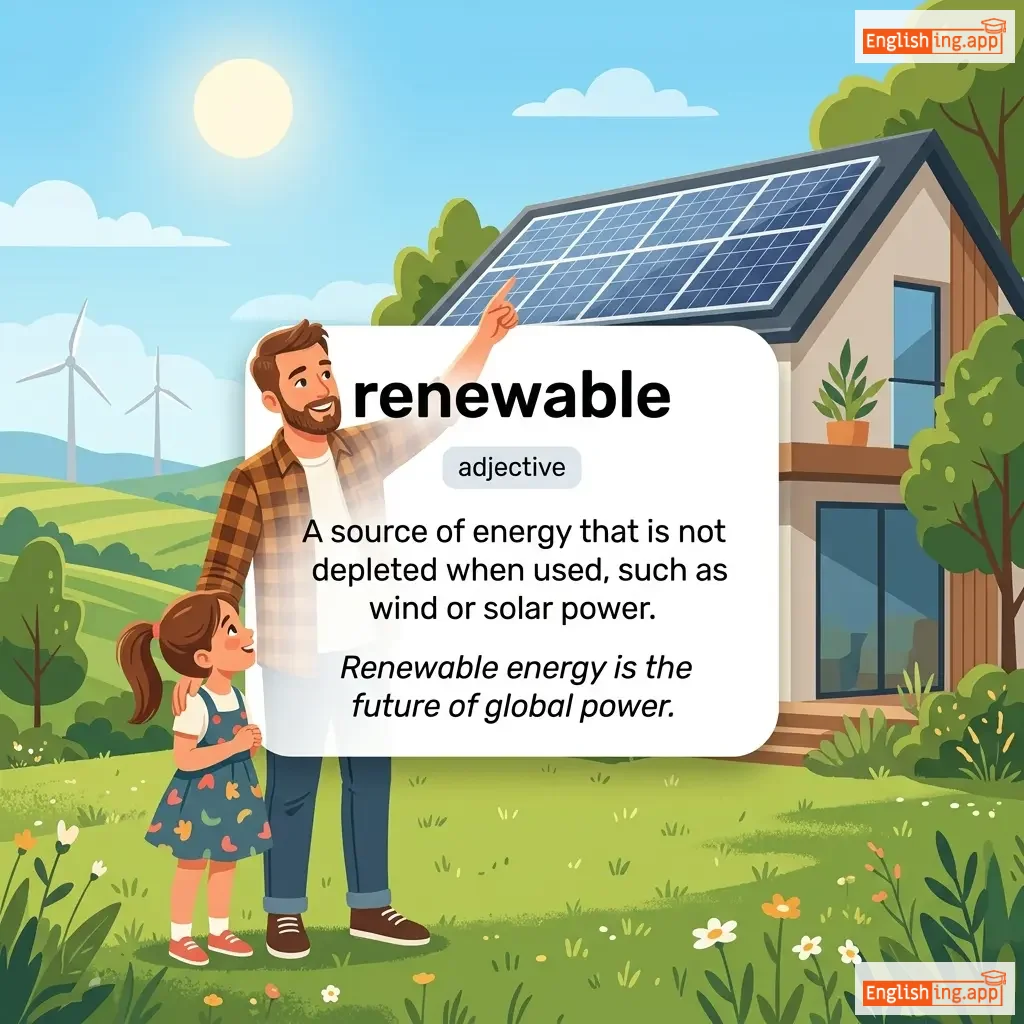
renewable definition card — visual illustration of the meaning
adjective
rɪˈnjuː.ə.bəl
renouvelable (renouvelable)

A source of energy that is not depleted when used, such as wind or solar power.

"Renewable energy is the future of global power."

"L'énergie renouvelable est l'avenir de l'énergie mondiale." (L'énergie renouvelable est l'avenir de l'énergie mondiale.)
🙅‍♂️

renounce (rénouns)

verb
/rɪˈnaʊns/
renoncer (renoncer)

to formally declare rejection of something, such as a claim, belief, or way of life

"She renounced her citizenship to move abroad permanently."

"Elle a renoncé à sa citoyenneté pour s'installer définitivement à l'étranger." (Elle a renoncé à sa citoyenneté pour s'installer définitivement à l'étranger.)
verb
/ˈrɛnəˌveɪt/
rénover (renover)

to restore something old to a good state or to improve it

"They decided to renovate the old house before moving in."

"Ils ont décidé de rénover la vieille maison avant d'emménager." (Ils ont décidé de rénover la vieille maison avant d'emménager.)
noun
/ˌren.əˈveɪ.ʃən/
rénovation; restauration (renovation; restauration)

the act of renovating; restoration to a former better state

"The old house underwent a complete renovation last year."

"La vieille maison a subi une rénovation complète l'année dernière." (La vieille maison a subi une renovation complete l'annee derniere.)
noun
/rɪˈnaʊn/
renommée (renommee)

the condition of being widely known and highly respected

"The scientist gained international renown for his groundbreaking research."

"Le scientifique a acquis une renommée internationale grâce à ses recherches révolutionnaires." (Le scientifique a acquis une renommée internationale grâce à ses recherches révolutionnaires.)
renowned definition card — visual illustration of the meaning
adjective
/rɪˈnaʊnd/
renommé (renomme)

famous or well-known for a particular skill or achievement

"She is a renowned artist in the country."

"Elle est une artiste renommée dans le pays." (Elle est une artiste renommée dans le pays.)
noun, verb
/rɛnt/
location (location)

payment made regularly by a tenant to a landlord for the use of property or land; also to pay for the use of something

"They decided to rent an apartment in the city center."

"Ils ont décidé de louer un appartement au centre-ville." (Ils ont décidé de louer un appartement au centre-ville.)
noun
/ˈrɛntəl/
location (location)

an arrangement in which something is rented, or the amount paid for renting

"The car rental was more expensive than we expected."

"La location de voiture était plus chère que prévu." (La location de voiture était plus chère que prévu.)
noun
/rɪˌnʌnsiˈeɪʃən/
renonciation (renonciation)

the formal rejection or giving up of something, usually a belief, claim, or way of life

"His renunciation of worldly pleasures impressed the monks."

"Sa renonciation aux plaisirs mondains a impressionné les moines." (Sa renonciation aux plaisirs mondains a impressionné les moines.)
verb
/riːˈɔːrɡənaɪz/
réorganiser (réorganiser)

to arrange something again in a different way for greater efficiency or order

"The manager decided to reorganize the team structure."

"Le gestionnaire a décidé de réorganiser la structure de l'équipe." (Le gestionnaire a décidé de réorganiser la structure de l'équipe.)
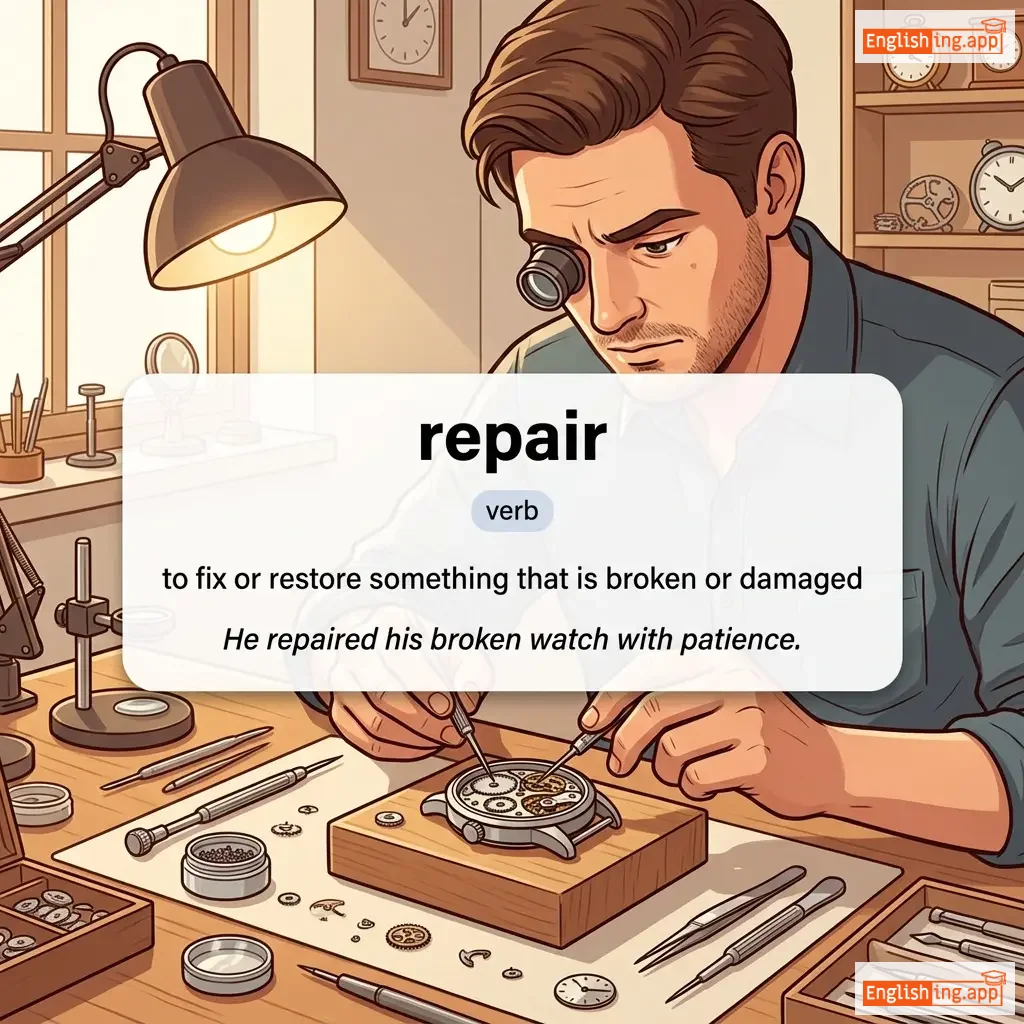
repair definition card — visual illustration of the meaning
verb
/rɪˈpɛər/
réparer (reparer)

to fix or restore something that is broken or damaged

"He repaired his broken watch with patience."

"Il a réparé sa montre cassée avec patience." (Il a repare sa montre casse avec patience.)
adjective
/rɪˈper.ə.bəl/
réparable (reparable)

able to be fixed or mended; capable of being repaired

"The broken phone is repairable with the right parts."

"Le téléphone cassé est réparable avec les bonnes pièces." (Le telephone casse est reparable avec les bonnes pieces.)
noun
/rɪˈpɛərə/
réparateur (reparateur)

a person whose job is to fix damaged or broken things

"The repairer fixed the broken washing machine quickly."

"Le réparateur a réparé la machine à laver cassée rapidement." (le reparateur a repare la machine a laver cassee rapidement)
adjective
/ˈrɛpərəbəl/
réparable (reparable)

able to be repaired or fixed

"The damage to the car was serious but still reparable."

"Les dommages à la voiture étaient graves mais encore réparables." (Les dommages à la voiture étaient graves mais encore réparables.)
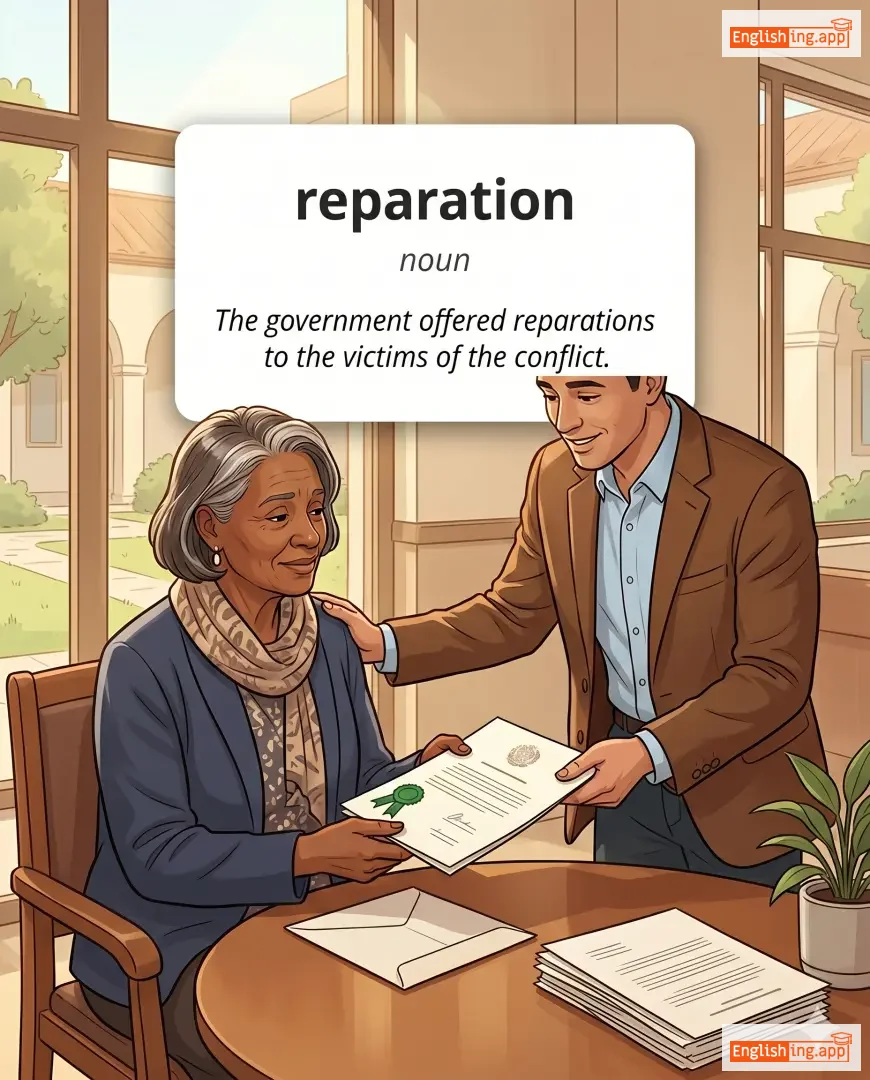
reparation definition card — visual illustration of the meaning
noun
/ˌrɛpəˈreɪʃən/
réparation (reparation)

the making of amends for a wrong done by paying money or helping those who were wronged

"The government offered reparations to the victims of the conflict."

"Le gouvernement a offert des réparations aux victimes du conflit." (Le gouvernement a offert des reparations aux victimes du conflit.)
noun
/ˌrɛpɑːrˈtiː/
réplique vive (replique vive)

A quick, witty, and clever reply in conversation.

"The debate was full of sharp repartee between the two speakers."

"Le débat était rempli de répliques vives entre les deux orateurs." (Le debat etait rempli de repliques vives entre les deux orateurs.)
noun
/rɪˈpæst/
repas (repas)

A meal or the food eaten during a meal.

"They enjoyed a delicious repast by the riverside."

"Ils ont apprécié un délicieux repas au bord de la rivière." (Ils ont apprécié un délicieux repas au bord de la rivière.)
verb
/riːˈpeɪ.tri.eɪt/
rapatrier (rapatrier)

To return someone to their own country, often after war or imprisonment.

"The government worked to repatriate the refugees safely."

"Le gouvernement a travaillé pour rapatrier les réfugiés en toute sécurité." (Le gouvernement a travaillé pour rapatrier les réfugiés en toute sécurité.)
verb
/rɪˈpiːl/
abroger (abroger)

To officially cancel or revoke a law or decision.

"The government decided to repeal the outdated law."

"Le gouvernement a décidé d'abroger la loi obsolète." (Le gouvernement a décidé d'abroger la loi obsolète.)
verb
/rɪˈpiːt/
répéter (repe-tee)

to say again or do again

"Could you please repeat that sentence?"

"Peux-tu répéter cette phrase, s'il te plaît?" (Puh too ray-peh-tay set frahz, seel tuh pleh?)
adjective
/rɪˈpiː.tɪd/
répété; qui se produit plusieurs fois (repete; ki se produit plusieurs fois)

done again; happening again; occurring multiple times

"He made repeated attempts to contact her."

"Il a fait des tentatives répétées pour la contacter." (Il a fait des tentatives répétées pour la contacter.)
adverb
/rɪˈpiːtɪdli/
répétitivement (repetitivement)

in a way that is repeated or done many times

"She apologized repeatedly for the mistake."

"Elle s'est excusée à plusieurs reprises pour l'erreur." (Elle s'est excusee a plusieurs reprises pour l'erreur.)
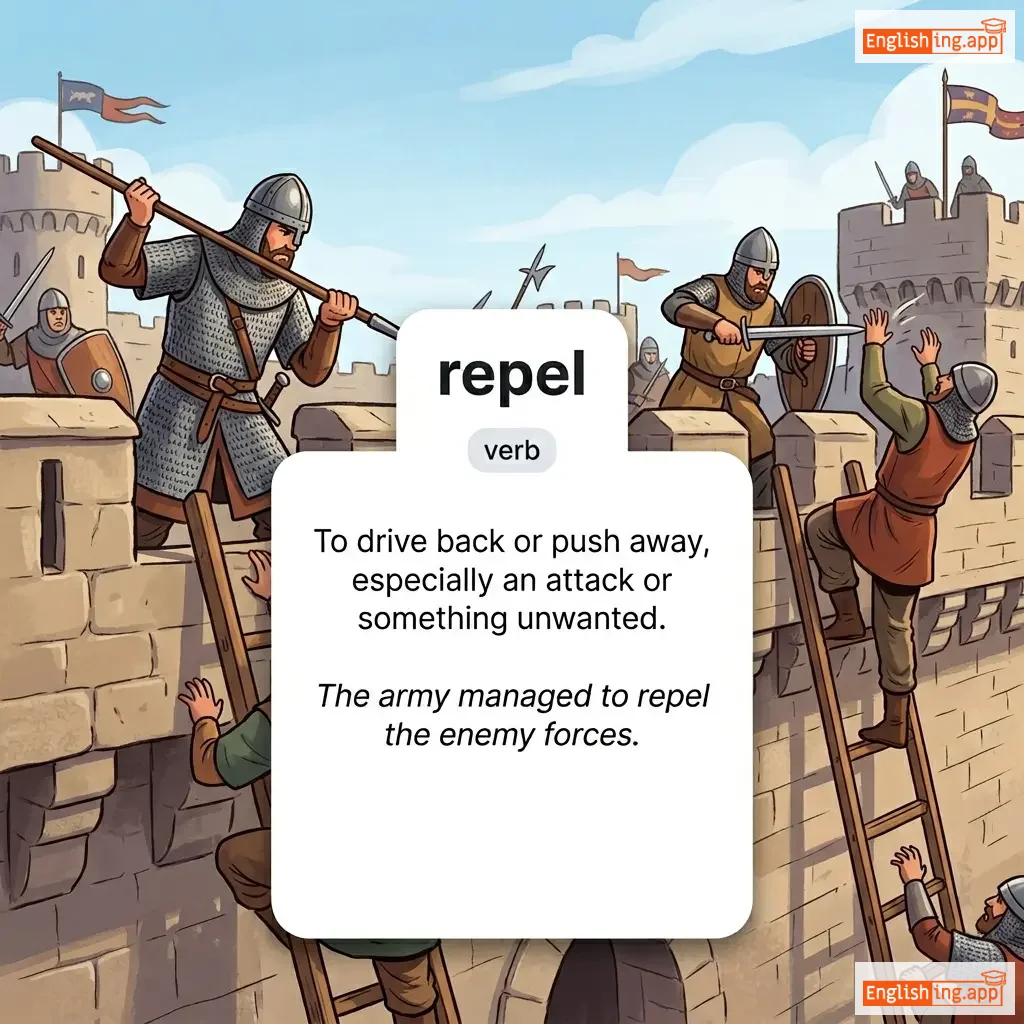
repel definition card — visual illustration of the meaning
verb
/rɪˈpɛl/
repousser (repousser)

To drive back or push away, especially an attack or something unwanted.

"The army managed to repel the enemy forces."

"L'armée a réussi à repousser les forces ennemies." (L'armée a réussi à repousser les forces ennemies.)
adjective
/rɪˈpɛlənt/
répulsif (repulsif)

Able to drive away something, especially insects or unpleasant things; causing disgust or distaste.

"This cream is highly effective as a mosquito repellent."

"Cette crème est très efficace en tant que répulsif contre les moustiques." (Cette crème est très efficace en tant que répulsif contre les moustiques.)
noun
/rɪˈpɛntəns/
repentir (repentir)

Deep regret or remorse for wrongdoing; sincere sorrow for one's sins or mistakes.

"He showed true repentance after apologizing for his mistakes."

"Il a montré un véritable repentir après s'être excusé pour ses erreurs." (Il a montré un véritable repentir après s'être excusé pour ses erreurs.)
adjective
/rɪˈpen.tənt/
repentant; contrit; désolé (repentant; contrit; desole)

feeling or expressing sincere regret and remorse; sorry for one's actions

"The repentant thief returned the stolen money."

"Le voleur repentant a rendu l'argent volé." (Le voleur repentant a rendu l'argent volé.)
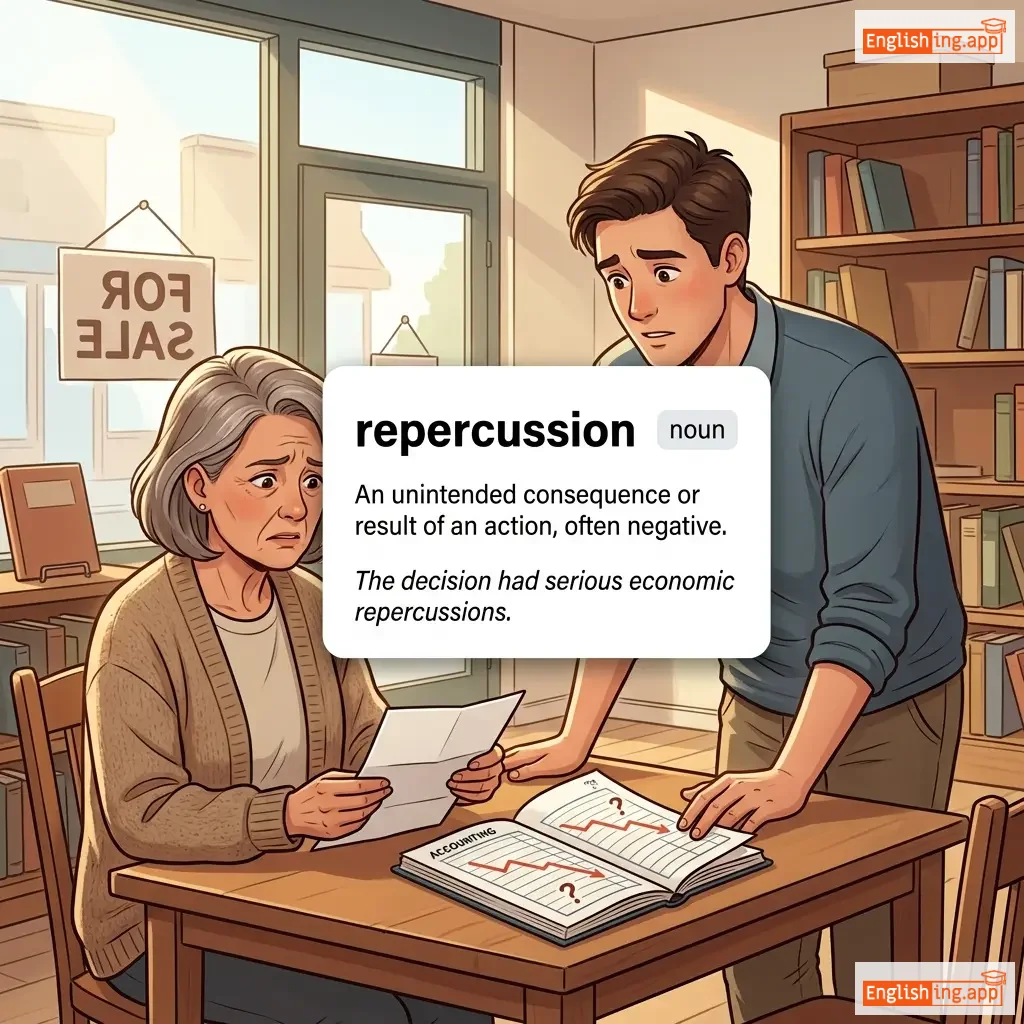
repercussion definition card — visual illustration of the meaning
noun
/ˌriːpərˈkʌʃən/
répercussion (repercussion)

An unintended consequence or result of an action, often negative.

"The decision had serious economic repercussions."

"La décision a eu de graves répercussions économiques." (La decision a eu de graves repercussions economiques.)
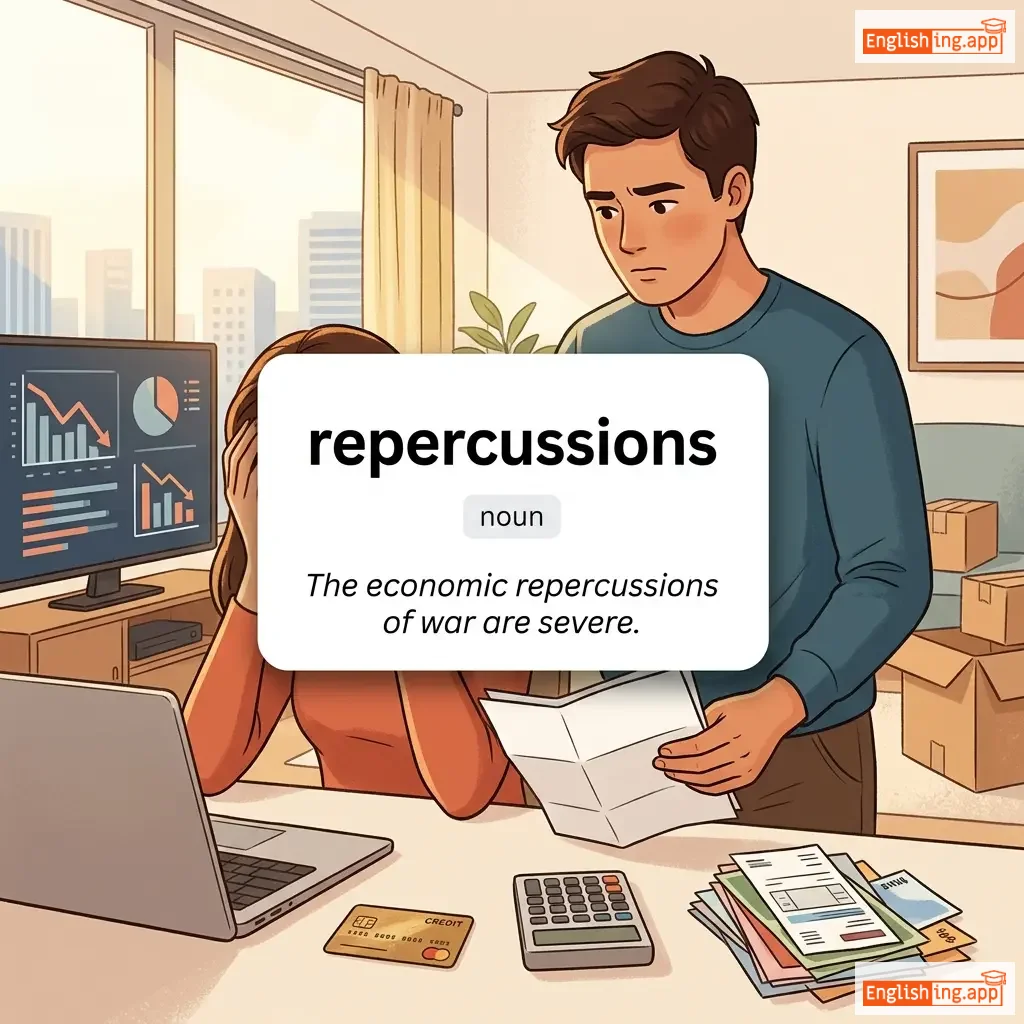
repercussions definition card — visual illustration of the meaning
noun
/ˌriː.pəˈkʌʃ.ənz/
répercussions (repercussions)

An unintended consequence occurring some time after an event or action; the effects or results of something.

"The economic repercussions of war are severe."

"Les répercussions économiques de la guerre sont graves." (Les repercussions economiques de la guerre sont graves.)
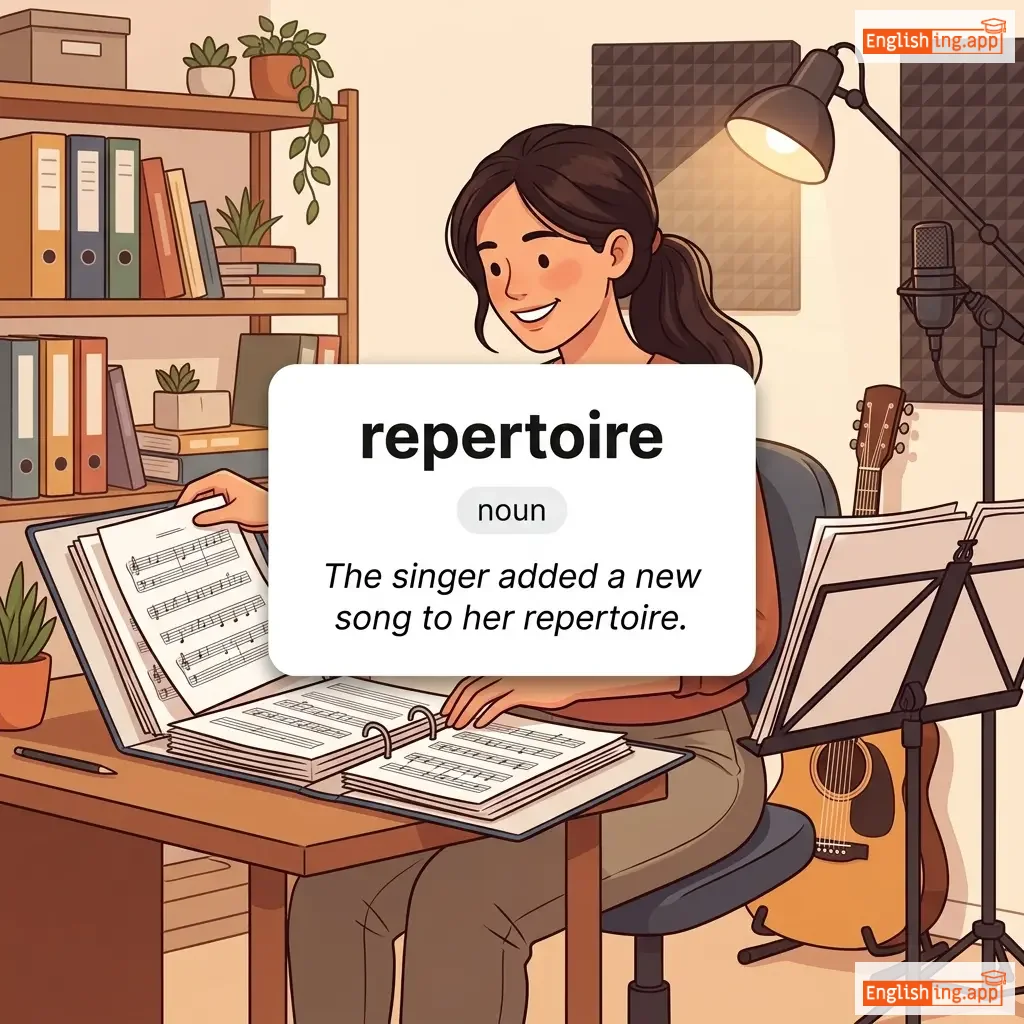
repertoire definition card — visual illustration of the meaning
noun
/ˈrɛpərˌtwɑːr/
répertoire (repertoire)

The entire range of skills, works, or pieces that a person or group is prepared to perform or use.

"The singer added a new song to her repertoire."

"La chanteuse a ajouté une nouvelle chanson à son répertoire." (La chanteuse a ajouté une nouvelle chanson à son répertoire.)
adjective
/ˌrɛpərˈtɔːriəl/
répertorial (repertorial)

Relating to or characteristic of a repertoire, especially in journalism or performance contexts.

"The journalist's repertorial style captured every detail of the unfolding story."

"Le style répertorial du journaliste a capturé chaque détail de l'histoire en cours." (Le style répertorial du journaliste a capturé chaque détail de l'histoire en cours.)
noun
/ˈrɛpərˌtɔːri/
répertoire (repertoire)

A collection of works that a company, performer, or institution regularly performs; also a storehouse of information or skills.

"The theater has a repertory of classic plays."

"Le théâtre a un répertoire de pièces classiques." (Le theatre a un repertoire de pieces classiques.)
noun
/ˌrɛpɪˈtɪʃən/
répétition (repetition)

The action of repeating something that has already been said, written, or done.

"The teacher emphasized the importance of repetition in learning new vocabulary."

"L'enseignant a mis l'accent sur l'importance de la répétition dans l'apprentissage de nouveau vocabulaire." (L'enseignant a mis l'accent sur l'importance de la repetiton dans l'apprentissage de nouveau vocabulaire.)
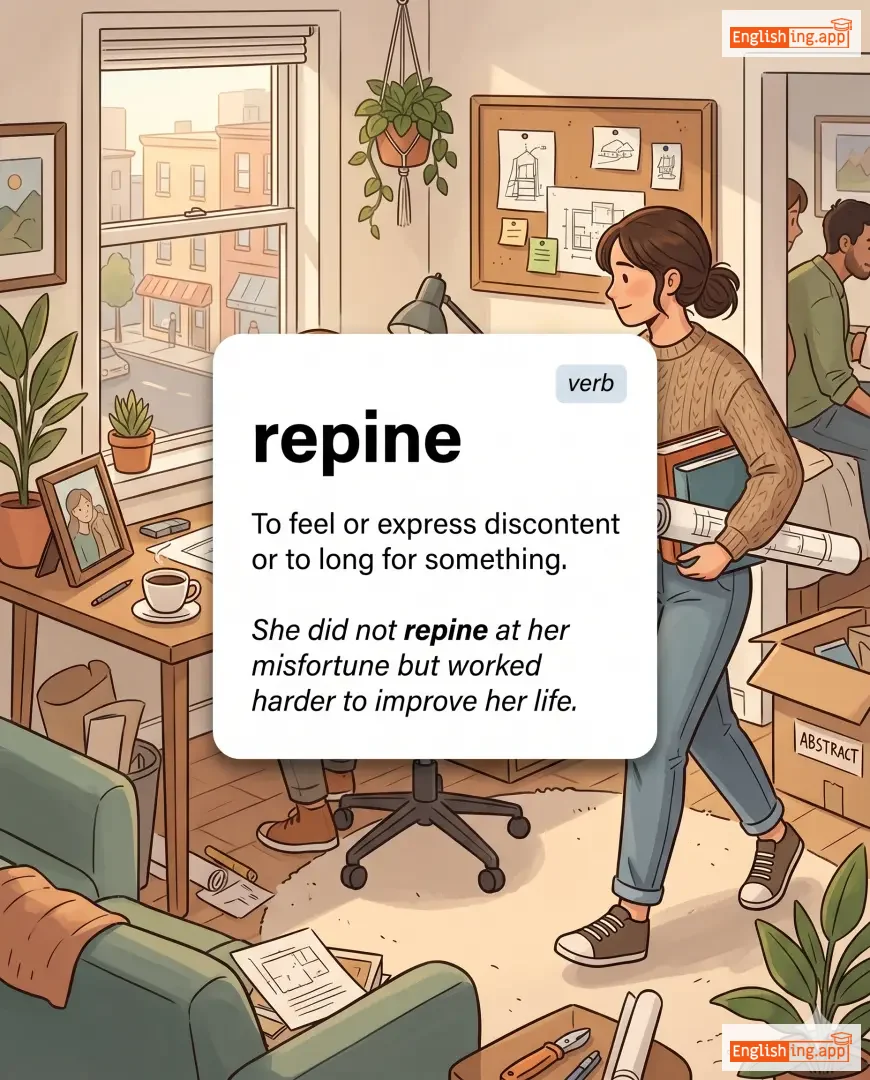
repine definition card — visual illustration of the meaning
verb
/rɪˈpaɪn/
se lamenter (se lamenter)

To feel or express discontent or to long for something.

"She did not repine at her misfortune but worked harder to improve her life."

"Elle ne s'est pas lamentée de son malheur, mais a travaillé plus dur pour améliorer sa vie." (Elle ne s'est pas lamentée de son malheur, mais a travaillé plus dur pour améliorer sa vie.)
verb
/rɪˈpleɪs/
remplacer (remplacer)

to take the place of something or someone; to put something new in place of something old

"He decided to replace the broken lamp with a new one."

"Il a décidé de remplacer la lampe cassée par une nouvelle." (Il a décidé de remplacer la lampe cassée par une nouvelle.)
noun
/rɪˈpleɪsmənt/
remplacement (remplacement)

the act of substituting one thing or person for another

"She got a replacement for her damaged phone."

"Elle a obtenu un remplacement pour son téléphone endommagé." (Elle a obtenu un remplacement pour son téléphone endommagé.)
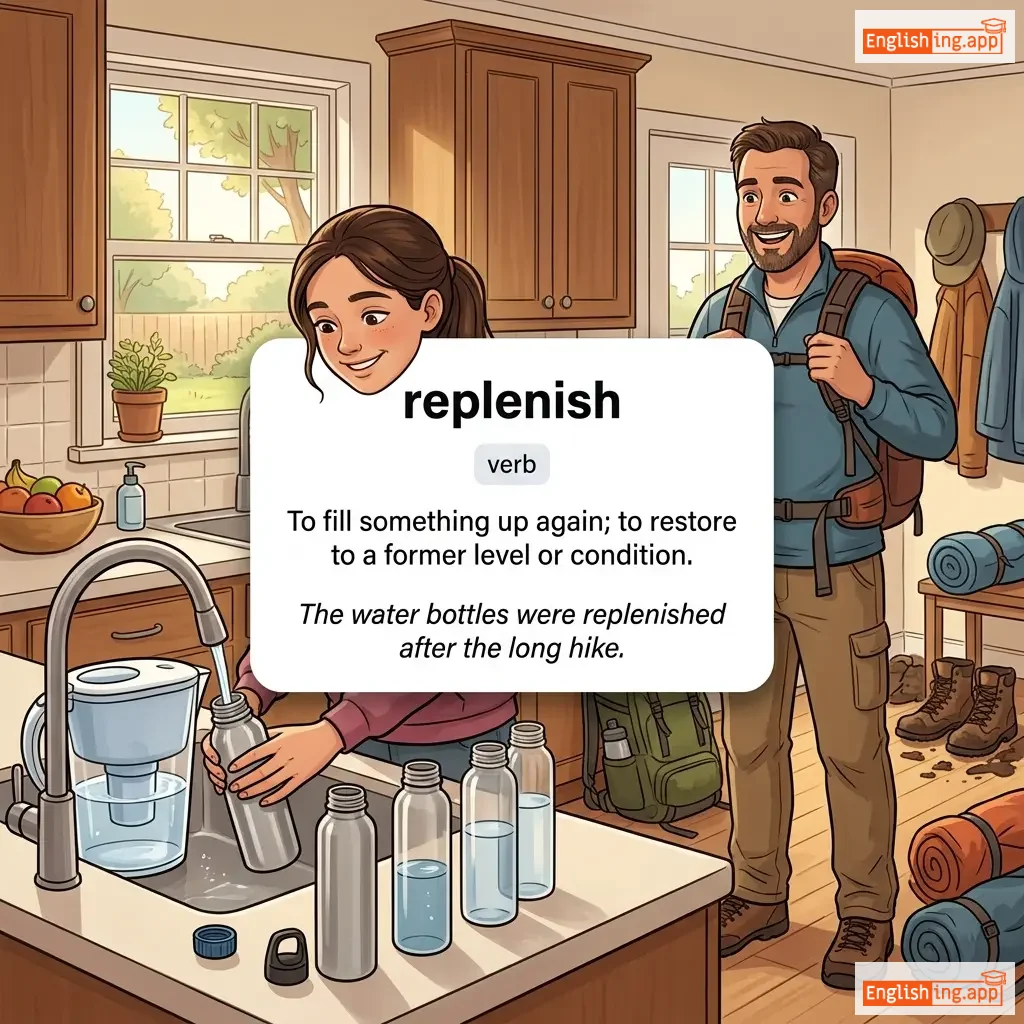
replenish definition card — visual illustration of the meaning
verb
/rɪˈplɛnɪʃ/
réapprovisionner (reapprovisionner)

To fill something up again; to restore to a former level or condition.

"The water bottles were replenished after the long hike."

"Les bouteilles d'eau ont été rechargées après la longue randonnée." (Les bouteilles d'eau ont été rechargées après la longue randonnée.)
adjective
/rɪˈpliːt/
replet (replet)

Filled or well-supplied with something; abundantly full.

"The book is replete with fascinating historical details."

"Le livre est replet de détails historiques fascinants." (Le livre est replet de détails historiques fascinants.)
noun
/ˈrɛplɪkə/
réplique (replike)

An exact copy or model of something, especially one on a smaller scale.

"The museum displayed a replica of the ancient sculpture."

"Le musée a exposé une réplique de la sculpture ancienne." (Le musée a exposé une réplique de la sculpture ancienne.)
verb
/ˈrɛplɪkeɪt/
répliquer (repliker)

to copy, reproduce, or duplicate something exactly

"The scientist tried to replicate the experiment for accuracy."

"Le scientifique a essayé de répliquer l'expérience pour plus de précision." (Le scientifique a essayé de répliquer l'expérience pour plus de précision.)
verb, noun
/rɪˈplaɪ/
répondre (repondre)

to respond to someone or something

"She didn't reply to my message."

"Elle n'a pas répondu à mon message." (Elle n'a pas répondu à mon message.)
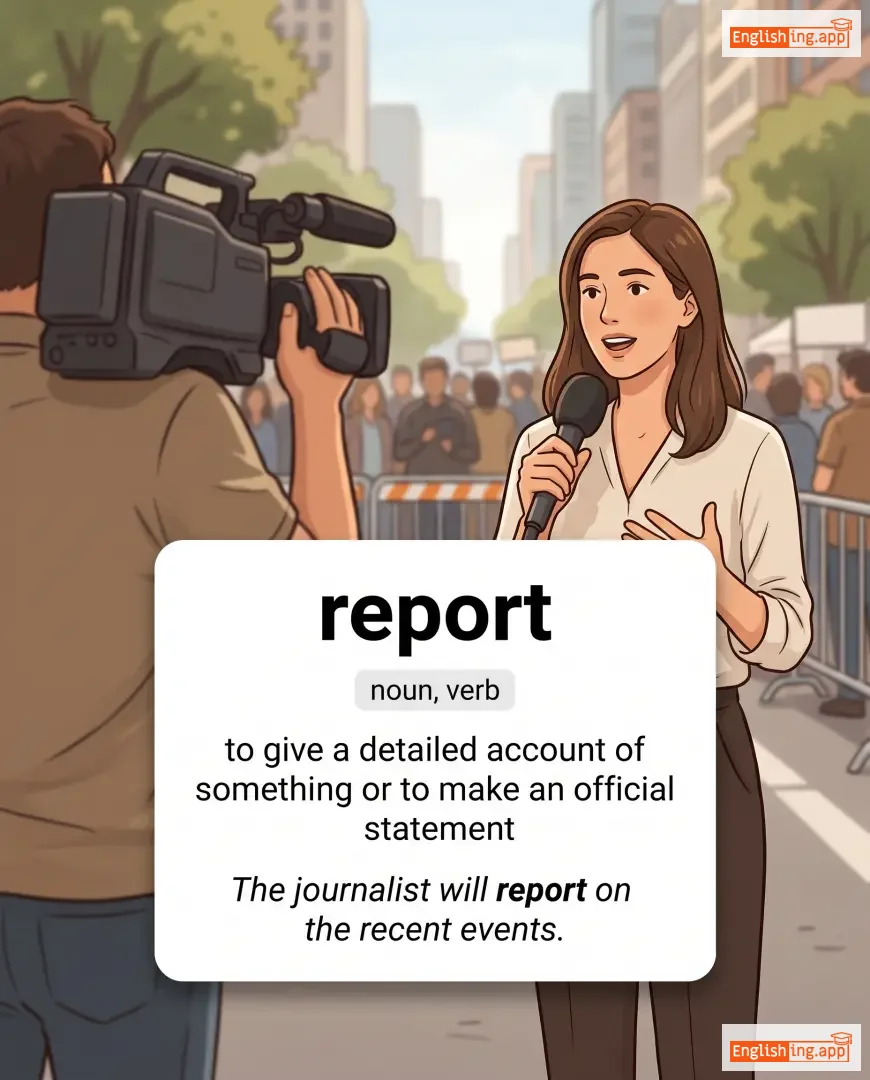
report definition card — visual illustration of the meaning
noun, verb
/rɪˈpɔːrt/
rapport (rapport)

to give a detailed account of something or to make an official statement

"The journalist will report on the recent events."

"Le journaliste fera un rapport sur les événements récents." (Le journaliste fera un rapport sur les événements récents.)
noun
/rɪˈpɔːrtɪʒ/
reportage (reportage)

the act of reporting news or describing events in the media

"The magazine is known for its detailed reportage of political issues."

"Le magazine est connu pour son reportage détaillé sur les questions politiques." (Le magazine est connu pour son reportage détaillé sur les questions politiques.)