Vocabulaires

Découvrez, apprenez et maîtrisez le vocabulaire anglais

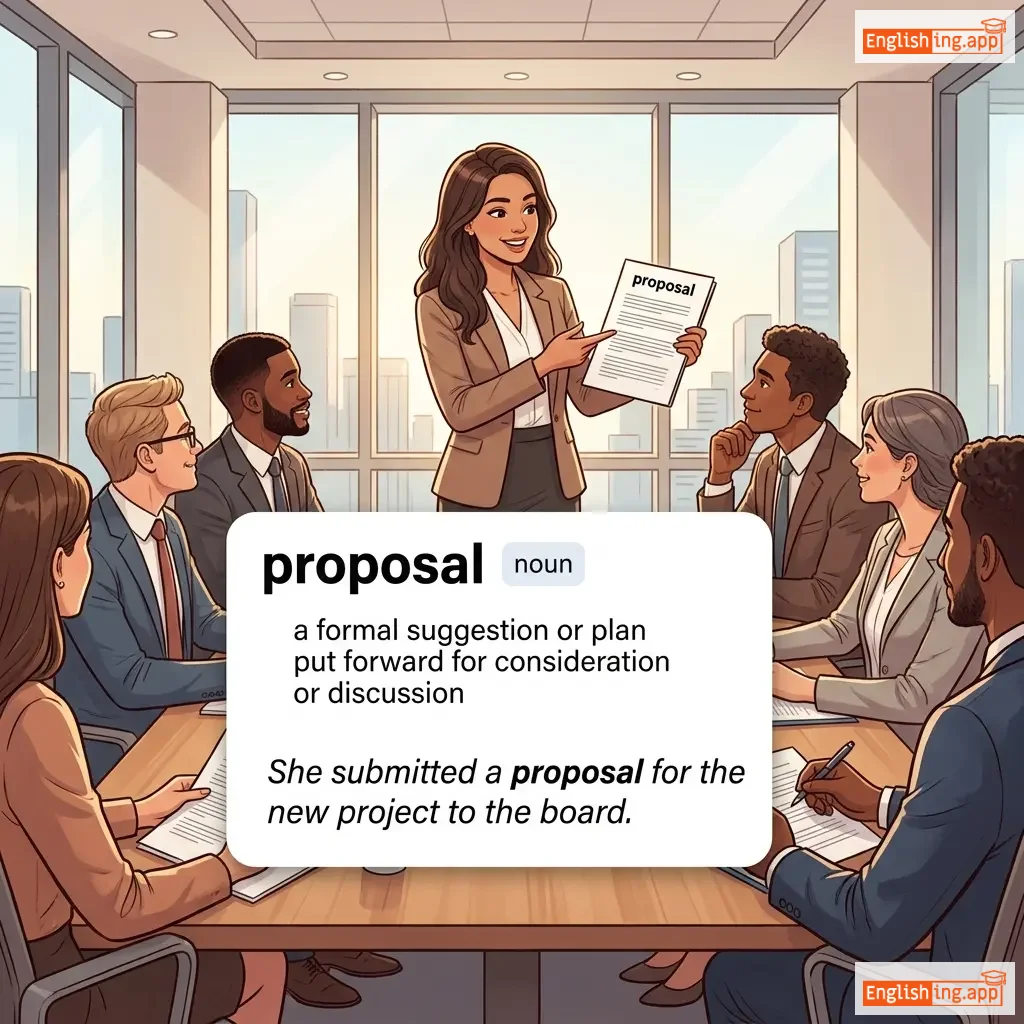
proposal definition card — visual illustration of the meaning
noun
/prəˈpəʊzəl/
proposition (proposition)

a formal suggestion or plan put forward for consideration or discussion

"She submitted a proposal for the new project to the board."

"Elle a soumis une proposition pour le nouveau projet au comité." (Elle a soumis une proposition pour le nouveau projet au comité.)
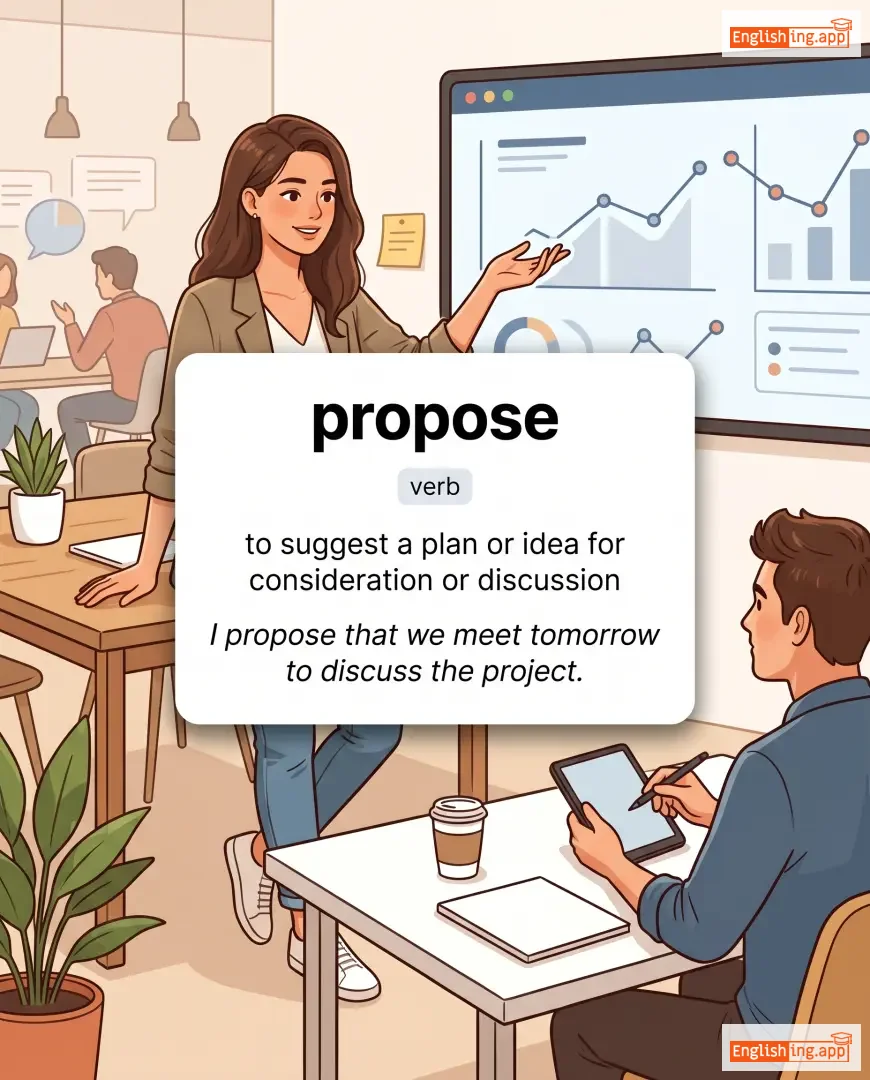
propose definition card — visual illustration of the meaning
verb
/prəˈpoʊz/
proposer (proposer)

to suggest a plan or idea for consideration or discussion

"I propose that we meet tomorrow to discuss the project."

"Je propose que nous nous rencontrions demain pour discuter du projet." (Je propose que nous nous rencontrions demain pour discuter du projet.)
adjective
/prəˈpoʊzd/
proposé (propose)

suggested or put forward for consideration or discussion

"The proposed changes will improve the system."

"Les changements proposés amélioreront le système." (Les changements proposes amelioreront le systeme.)
noun
/ˌprɒpəˈzɪʃən/
proposition, plan (proposition, plan)

A statement, idea, or plan put forward for consideration or discussion.

"The company made a business proposition to the investors."

"L'entreprise a fait une proposition commerciale aux investisseurs." (L'entreprise a fait une proposition commerciale aux investisseurs.)
verb
/prəˈpaʊnd/
proposer (proposer)

To put forward an idea, theory, or point for consideration.

"The professor propounded a new theory on climate change."

"Le professeur a proposé une nouvelle théorie sur le changement climatique." (Le professeur a propose une nouvelle theorie sur le changement climatique.)
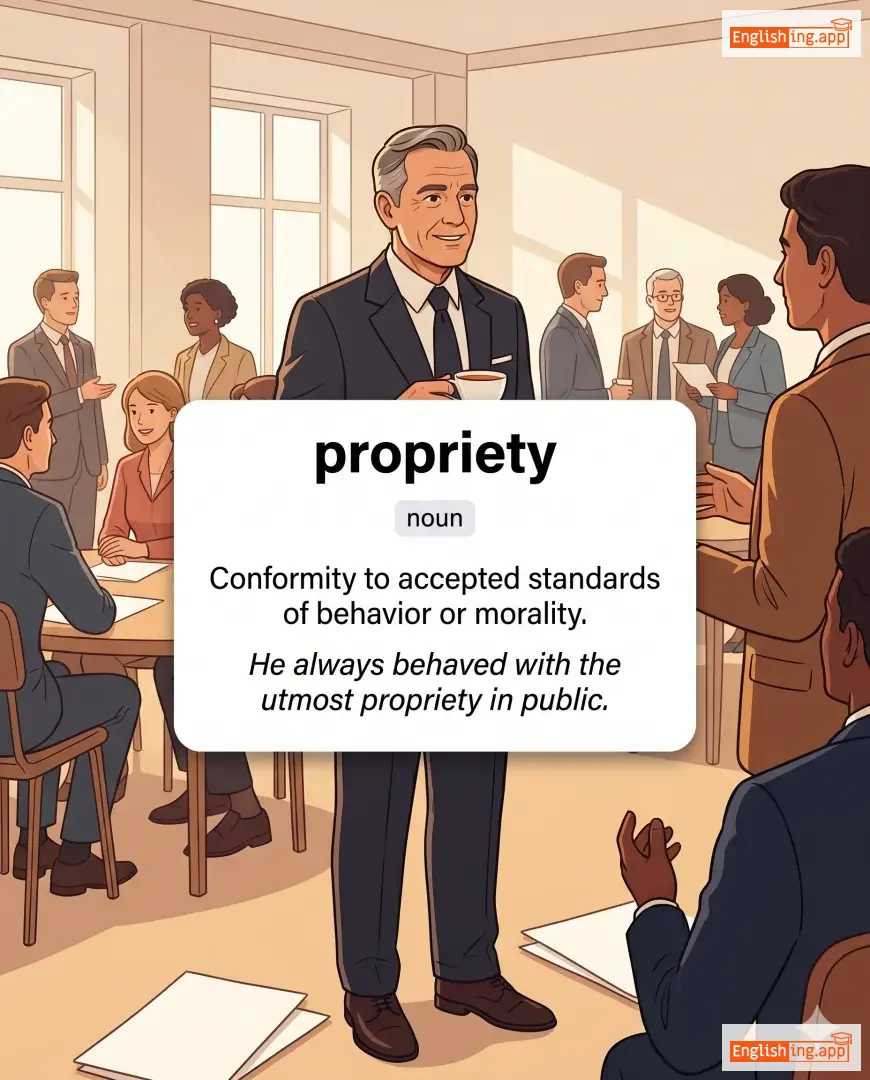
propriety definition card — visual illustration of the meaning
noun
/prəˈpraɪəti/
propreté (proprete)

Conformity to accepted standards of behavior or morality.

"He always behaved with the utmost propriety in public."

"Il se comportait toujours avec la plus grande propreté en public." (Il se comportait toujours avec la plus grande propreté en public.)
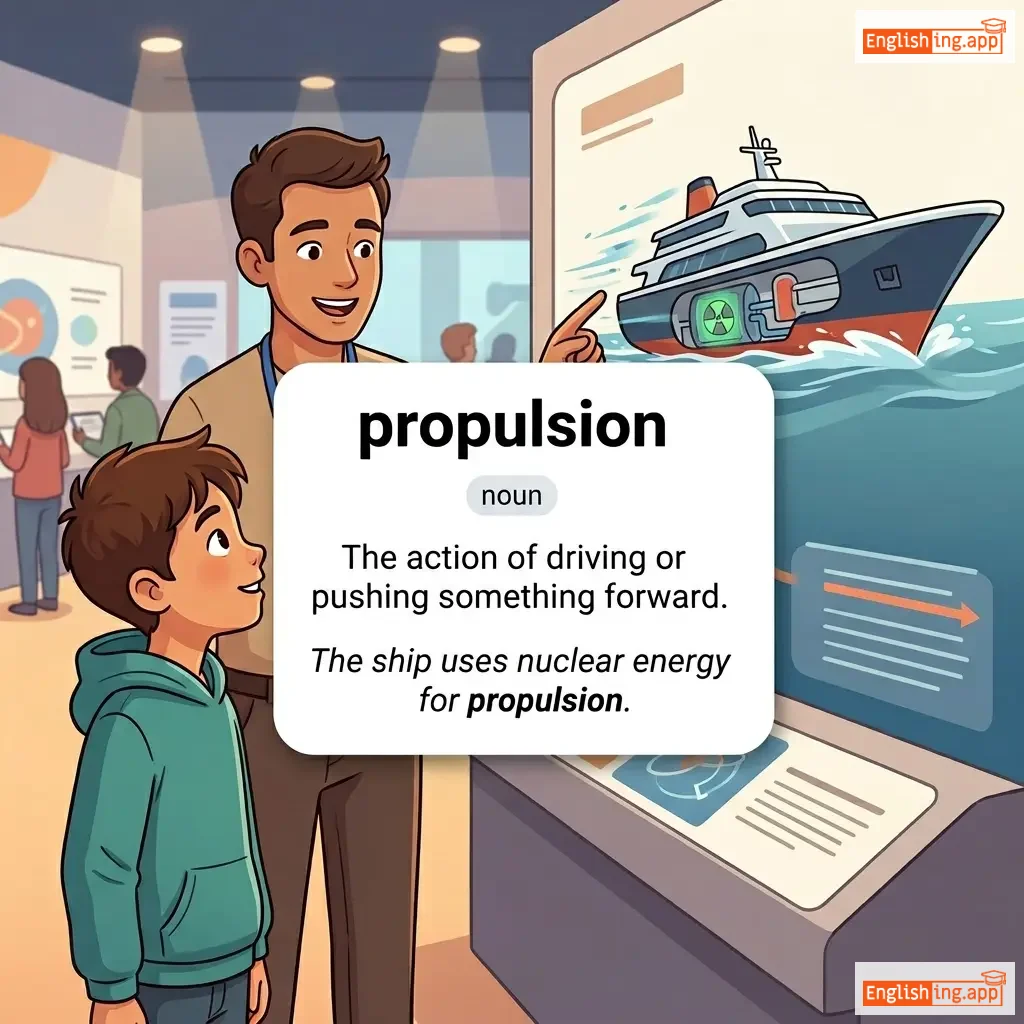
propulsion definition card — visual illustration of the meaning
noun
/prəˈpʌlʃən/
propulsion (propulsion)

The action of driving or pushing something forward.

"The ship uses nuclear energy for propulsion."

"Le navire utilise l'énergie nucléaire pour la propulsion." (Le navire utilise l'energie nucleaire pour la propulsion.)
adjective
/prəˈpʌlsɪv/
propulsif (propulsif)

Having the power to drive or push something forward.

"The propulsive force of the rocket lifted it off the ground."

"La force propulsive de la fusée l'a soulevée du sol." (La force propulsive de la fusée l'a soulevée du sol.)
verb
/prəˈroʊɡ/
suspendre une session (suspendre une session)

to discontinue a session of a parliament or assembly without dissolving it

"The president decided to prorogue parliament until the crisis was resolved."

"Le président a décidé de suspendre le parlement jusqu'à ce que la crise soit résolue." (Le president a decide de suspendre le parlement jusqu'a ce que la crise soit resolue.)
adjective
/proʊˈzeɪ.ɪk/
prosaïque (prosaïque)

ordinary, dull, or lacking imagination

"The teacher’s explanation was accurate but rather prosaic."

"L'explication du professeur était précise, mais plutôt prosaïque." (L'explication du professeur était précise, mais plutôt prosaïque.)
noun
/proʊˈsiː.ni.əm/
proscénium (proscenium)

the part of a theater stage in front of the curtain; the arch framing the stage

"The actors bowed at the proscenium before leaving the stage."

"Les acteurs se sont inclinés devant le proscénium avant de quitter la scène." (Les acteurs se sont inclinés devant le proscénium avant de quitter la scène.)
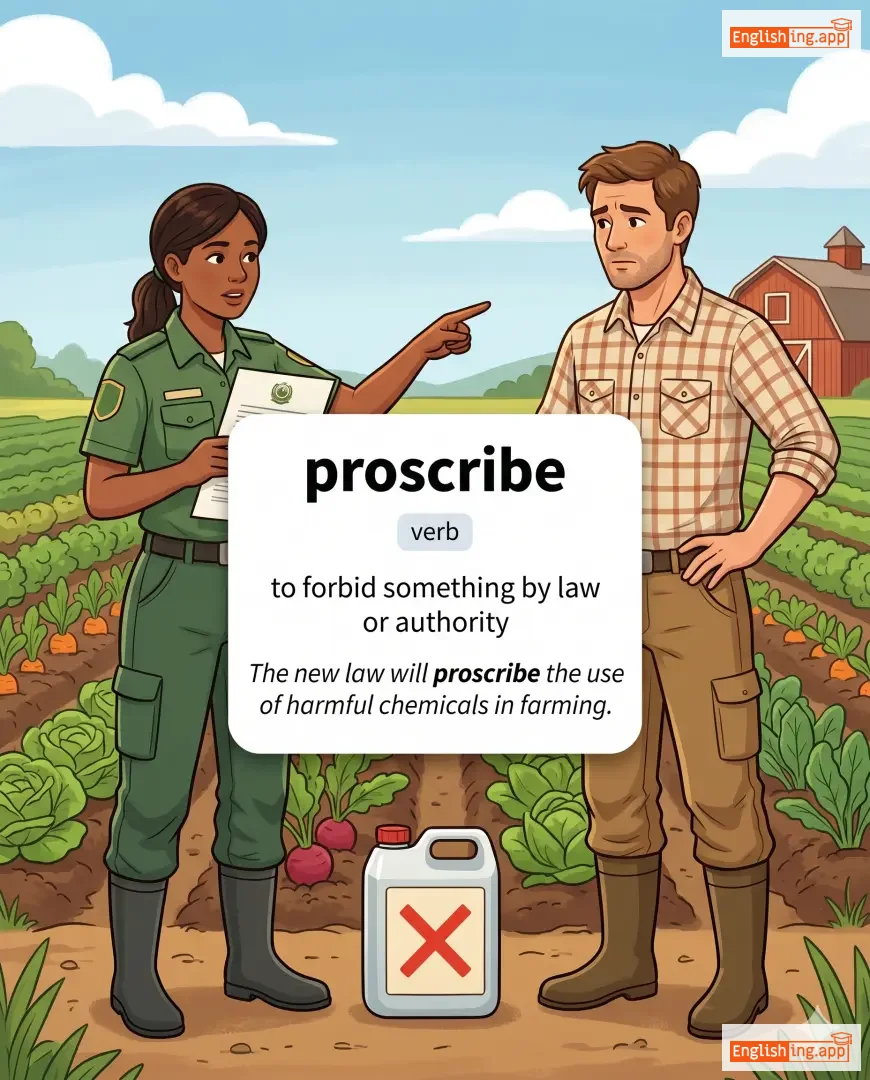
proscribe definition card — visual illustration of the meaning
verb
/proʊˈskraɪb/
interdire (interdire)

to forbid something by law or authority

"The new law will proscribe the use of harmful chemicals in farming."

"La nouvelle loi interdira l'utilisation de produits chimiques nuisibles dans l'agriculture." (La nouvelle loi interdira l'utilisation de produits chimiques nuisibles dans l'agriculture.)
noun
/proʊˈskrɪp.ʃən/
interdiction (interdiction)

the act of forbidding something, especially by law

"The proscription of child labor is an important human rights achievement."

"L'interdiction du travail des enfants est une réalisation importante des droits humains." (L'interdiction du travail des enfants est une réalisation importante des droits humains.)
verb
/ˈprɒsɪkjuːt/
poursuivre (poursuivre)

to institute legal proceedings against someone

"The lawyer decided to prosecute the case after gathering sufficient evidence."

"L'avocat a décidé de poursuivre l'affaire après avoir réuni suffisamment de preuves." (L'avocat a décidé de poursuivre l'affaire après avoir réuni suffisamment de preuves.)
noun
/ˌprɒsɪˈkjuːʃən/
poursuite (poursuite)

The act of bringing a criminal charge against someone and pursuing legal action in court.

"The prosecution presented strong evidence against the defendant."

"L'accusation a présenté des preuves solides contre l'accusé." (L'accusation a presente des preuves solides contre l'accuse.)
noun
/ˈprɑsɪˌkjuːtər/
procureur (procureur)

a lawyer who represents the government in criminal cases

"The prosecutor argued that the defendant was guilty of the crime."

"Le procureur a soutenu que le défendeur était coupable du crime." (Le procureur a soutenu que le défendeur était coupable du crime.)
noun
/ˈprɒsɪlaɪt/
prosélyte (proselyte)

A person who has converted from one belief, opinion, or religion to another.

"She became a proselyte after converting to a new faith."

"Elle est devenue un prosélyte après s'être convertie à une nouvelle foi." (Elle est devenue un prosélyte après s'être convertie à une nouvelle foi.)
verb
/ˈprɒsəˌlaɪtaɪz/
tenter de convertir (tenter de convertir)

To try to persuade someone to convert to a different belief or religion.

"They tried to proselytize the villagers with their new ideas."

"Ils ont essayé de prosélytiser les villageois avec leurs nouvelles idées." (Ils ont essayé de prosélytiser les villageois avec leurs nouvelles idées.)
noun
/ˈprɒsədi/
prosodie (prosodie)

The patterns of rhythm and sound used in poetry and speech.

"The professor explained how prosody affects the mood of a poem."

"Le professeur a expliqué comment la prosodie affecte l'humeur d'un poème." (Le professeur a explique comment la prosodie affecte l'humeur d'un poeme.)
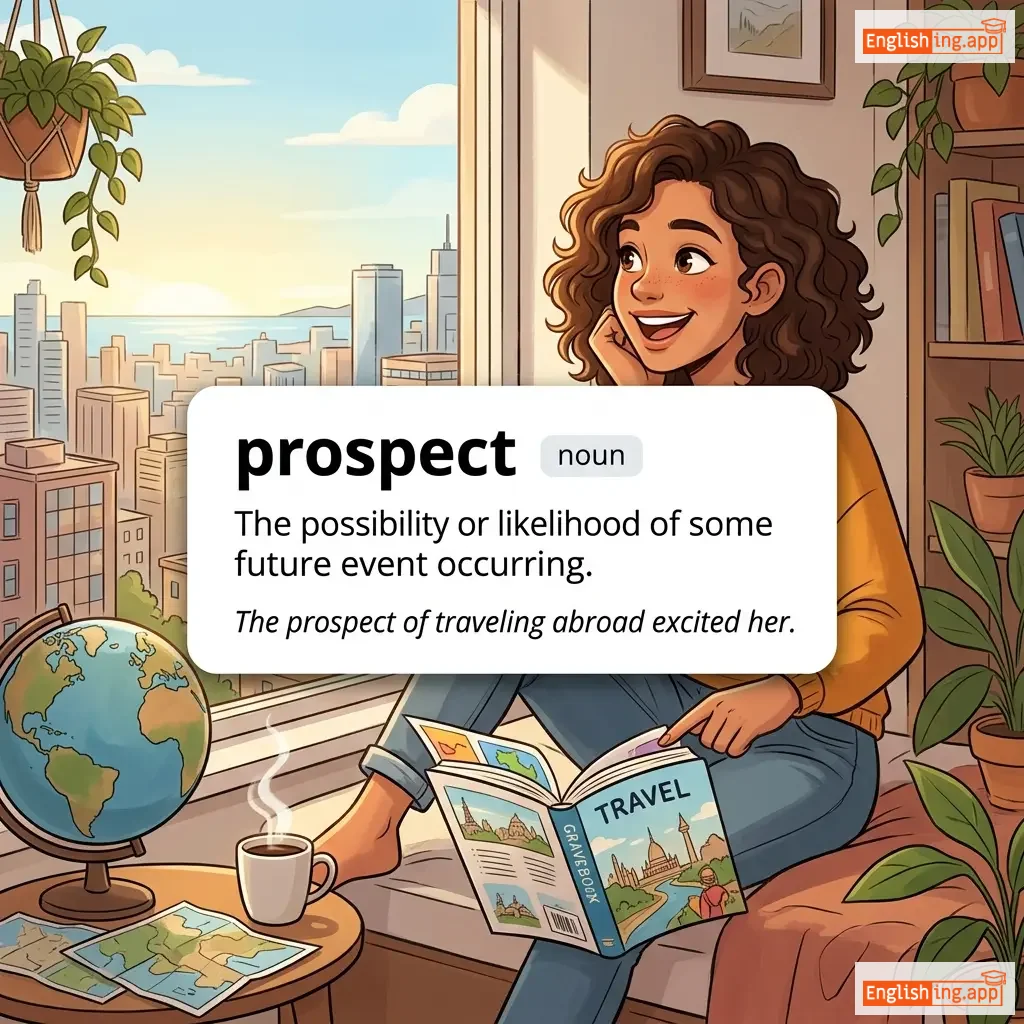
prospect definition card — visual illustration of the meaning
noun
/ˈprɒspɛkt/
perspective (perspective)

The possibility or likelihood of some future event occurring.

"The prospect of traveling abroad excited her."

"La perspective de voyager à l'étranger l'a excitée." (La perspective de voyager à l'étranger l'a excitée.)
adjective
/prəˈspɛktɪv/
prospectif (prospectif)

likely or expected to happen in the future; potential

"The company is meeting with prospective clients next week."

"L'entreprise rencontrera des clients prospectifs la semaine prochaine." (L'entreprise rencontrera des clients prospectifs la semaine prochaine.)
noun
/ˈprɒspɛktər/
prospecteur minier (prospecteur minier)

a person who searches for mineral deposits, especially gold

"The prospector spent years in the mountains searching for gold."

"Le prospecteur a passé des années dans les montagnes à chercher de l'or." (Le prospecteur a passé des années dans les montagnes à chercher de l'or.)
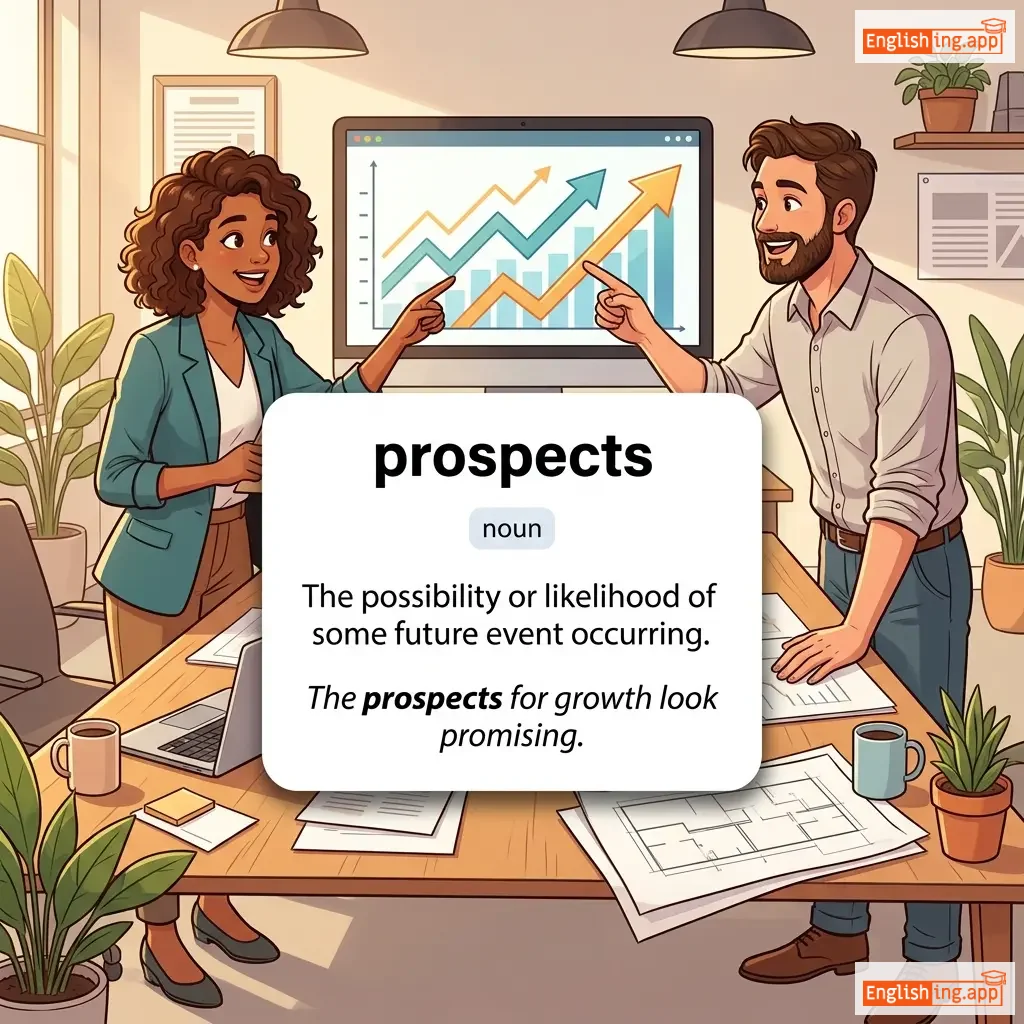
prospects definition card — visual illustration of the meaning
noun
/ˈprɒs.pekts/
perspectives (perspectives)

The possibility or likelihood of some future event occurring.

"The prospects for growth look promising."

"Les perspectives de croissance semblent prometteuses." (Les perspectives de croissance semblent prometteuses.)
noun
/prəˈspɛktəs/
prospectus (prospectus)

a printed document that advertises or describes a school, business, or investment offering

"The university sent out a prospectus to attract new students."

"L'université a envoyé un prospectus pour attirer de nouveaux étudiants." (L'université a envoyé un prospectus pour attirer de nouveaux étudiants.)
verb
/ˈprɒspər/
prospérer (prosperer)

to succeed or flourish, especially in financial or business matters

"With hard work and determination, she managed to prosper in her career."

"Avec du travail acharné et de la détermination, elle a réussi à prospérer dans sa carrière." (Avec du travail acharne et de la determination, elle a reussi a prosperer dans sa carriere.)
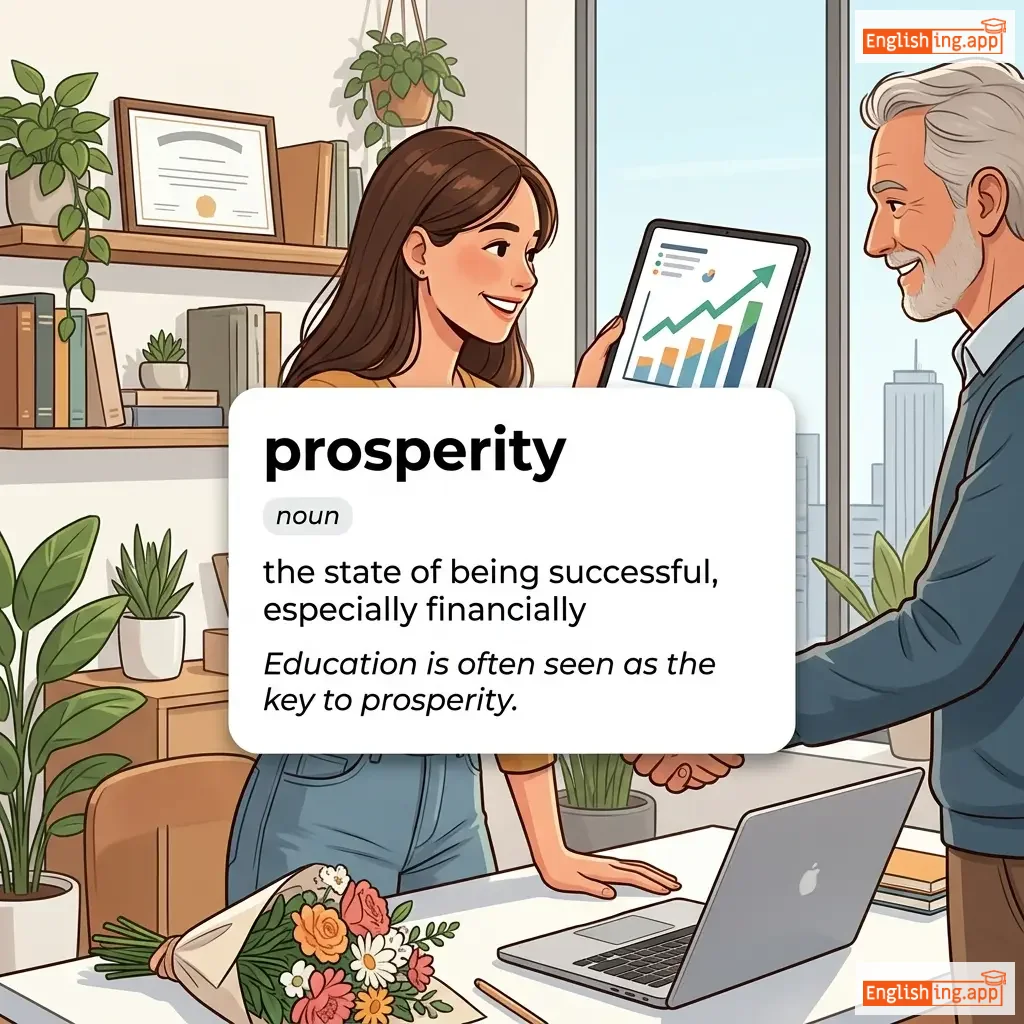
prosperity definition card — visual illustration of the meaning
noun
/prɒˈspɛrɪti/
prospérité (prosperite)

the state of being successful, especially financially

"Education is often seen as the key to prosperity."

"L'éducation est souvent considérée comme la clé de la prospérité." (L'education est souvent consideree comme la cle de la prosperite.)
adjective
/ˈprɒspərəs/
prospère (prosper)

successful in material terms; flourishing financially or in general well-being

"The town became prosperous after the new trade route opened."

"La ville est devenue prospère après l'ouverture de la nouvelle route commerciale." (La ville est devenue prospère après l'ouverture de la nouvelle route commerciale.)
adjective/verb
/ˈprɒstreɪt/
prosterné (prosterné)

lying stretched out on the ground with one's face downward, often as a sign of submission or exhaustion

"He lay prostrate on the ground after the long battle."

"Il s'est allongé prosterné après la longue bataille." (Il s'est allongé prosterné après la longue bataille.)
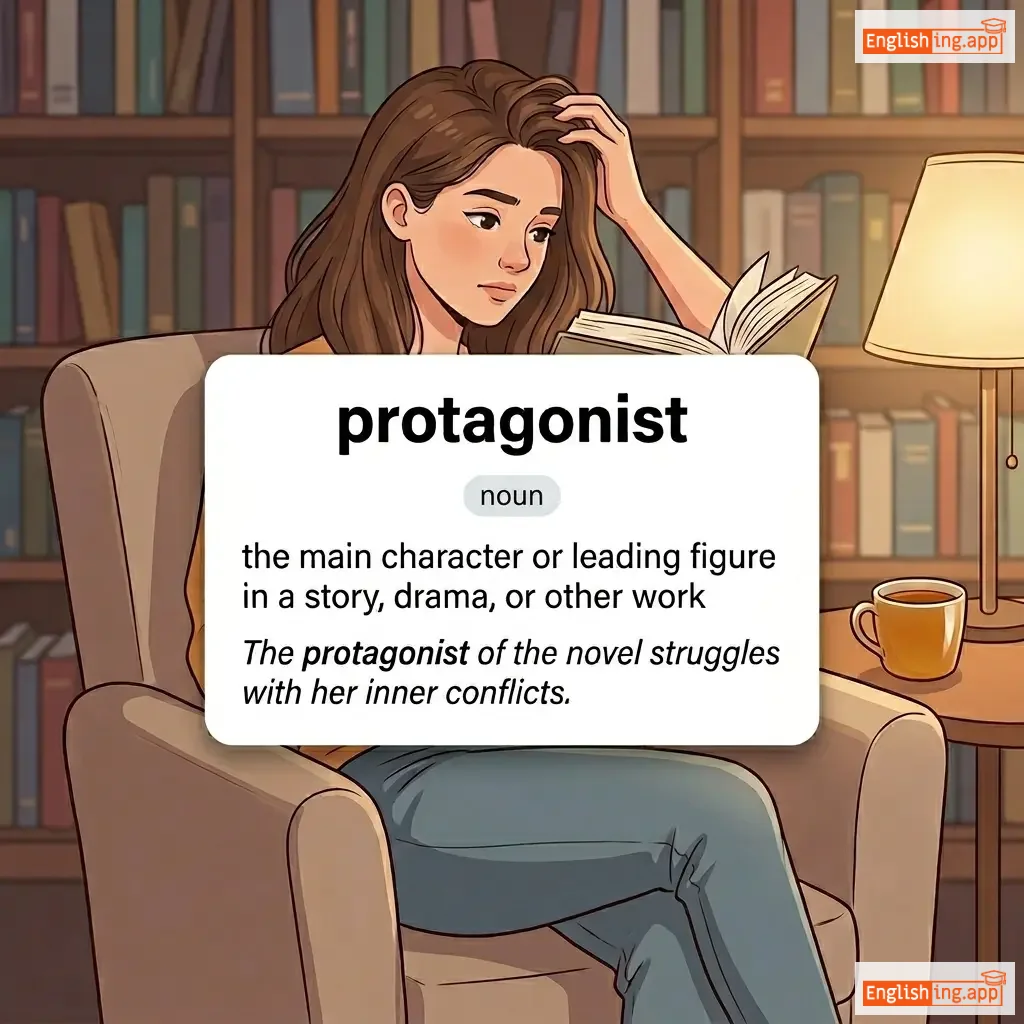
protagonist definition card — visual illustration of the meaning
noun
/prəˈtæɡənɪst/
protagoniste (protagoniste)

the main character or leading figure in a story, drama, or other work

"The protagonist of the novel struggles with her inner conflicts."

"Le protagoniste du roman lutte avec ses conflits intérieurs." (Le protagoniste du roman lutte avec ses conflits intérieurs.)
adjective
/ˈproʊtiən/
polyvalent (polyvalent)

tending or able to change frequently or easily; versatile

"She is a protean artist who experiments with many styles."

"C'est une artiste polyvalente qui expérimente avec de nombreux styles." (C'est une artiste polyvalente qui expérimente avec de nombreux styles.)
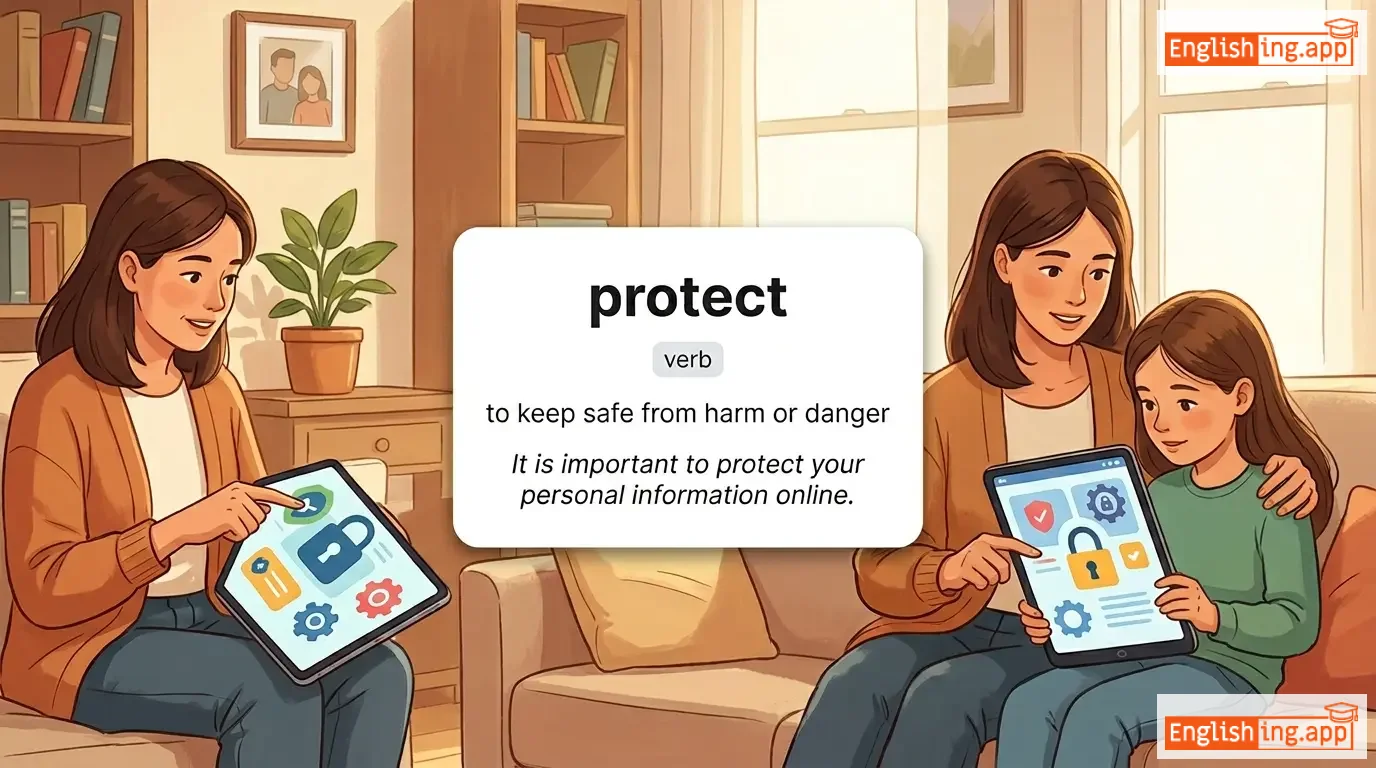
protect definition card — visual illustration of the meaning
verb
/prəˈtɛkt/
protéger (proteger)

to keep safe from harm or danger

"It is important to protect your personal information online."

"Il est important de protéger vos informations personnelles en ligne." (Il est important de proteger vos informations personnelles en ligne.)
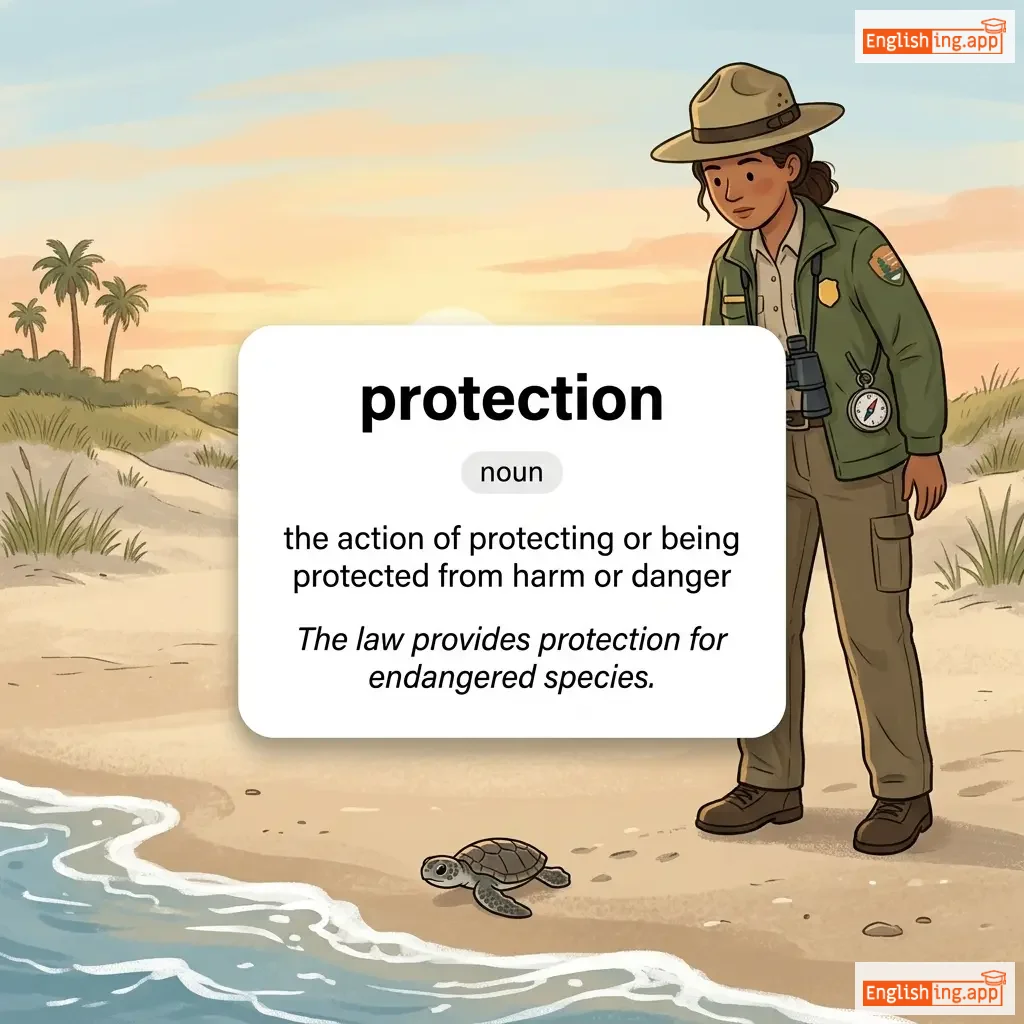
protection definition card — visual illustration of the meaning
noun
/prəˈtɛkʃən/
bonheur (bonheur)

the action of protecting or being protected from harm or danger

"The law provides protection for endangered species."

"Elle ne pouvait pas cacher son bonheur lorsqu'elle a reçu le prix." (Elle ne pouvait pas cacher son bonheur lorsqu'elle a reçu le prix.)
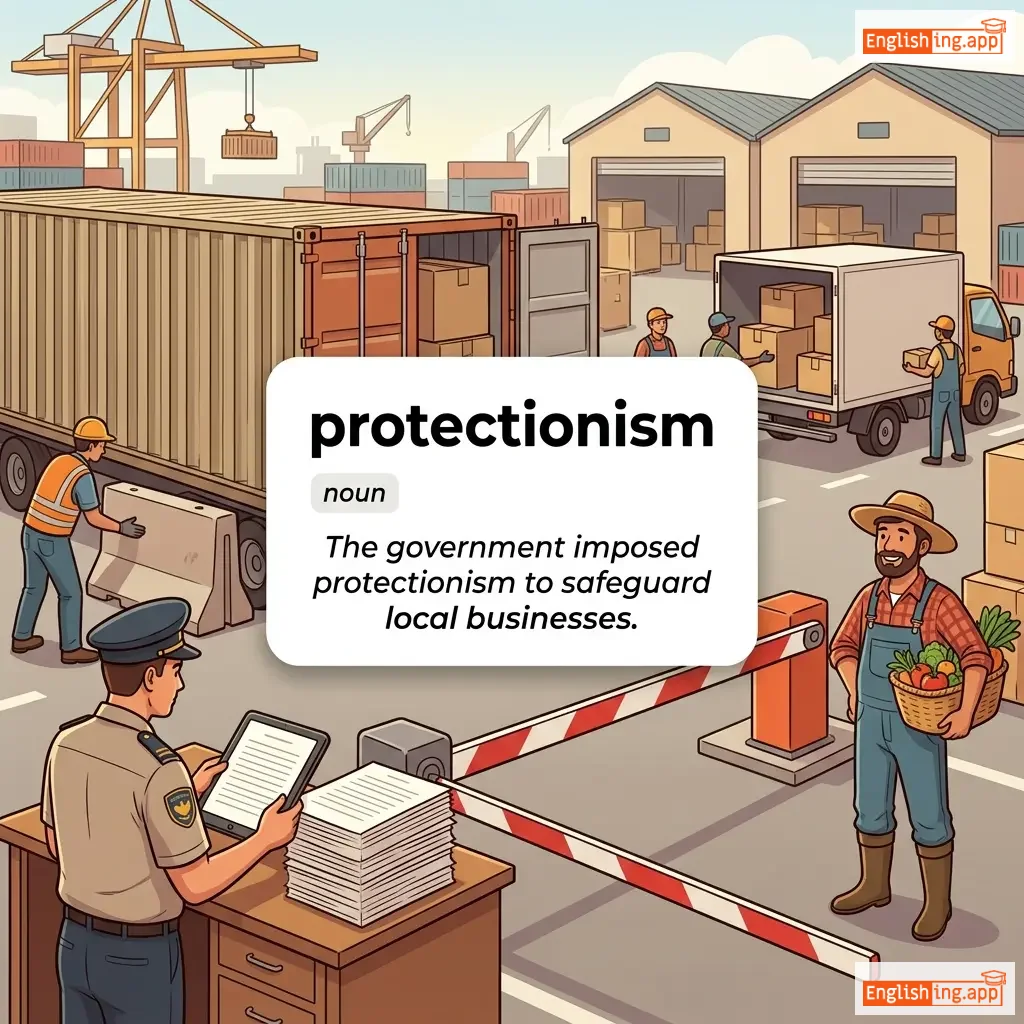
protectionism definition card — visual illustration of the meaning
noun
/prəˈtɛk.ʃəˌnɪz.əm/
protectionnisme (protectionnisme)

A trade policy that restricts imports to safeguard domestic industries through trade restriction, economic nationalism, or isolationism.

"The government imposed protectionism to safeguard local businesses."

"Le gouvernement a imposé le protectionnisme pour protéger les entreprises locales." (Le gouvernement a impose le protectionnisme pour proteger les entreprises locales.)
adjective
/prəˈtɛktɪv/
protecteur (protecteur)

giving or capable of giving protection; shielding from harm or danger

"She wore a protective helmet while riding her bike."

"Elle portait un casque protecteur en faisant du vélo." (Elle portait un casque protecteur en faisant du velo.)
noun
/prəˈtɛktər/
protecteur (protecteur)

a person or thing that protects someone or something

"The dog was seen as the family's protector."

"Le chien était considéré comme le protecteur de la famille." (Le chien était considéré comme le protecteur de la famille.)
noun
/prəˈtɛktərət/
protectorat (protectorat)

A state that is controlled and protected by another.

"The small country became a protectorate of the empire."

"Le petit pays est devenu un protectorat de l'empire." (Le petit pays est devenu un protectorat de l'empire.)
noun
/ˈproʊtəˌʒeɪ/
protégé (protege)

a person who is guided and supported by an older and more experienced person

"The young artist was the protege of a famous painter."

"Le jeune artiste était le protégé d'un peintre célèbre." (Le jeune artiste était le protégé d'un peintre célèbre.)
noun
/ˈproʊtiːn/
protéine (proteine)

a molecule composed of amino acids essential for bodily functions

"Proteins are essential for building and repairing tissues in the body."

"Les protéines sont essentielles pour la construction et la réparation des tissus dans le corps." (Les proteines sont essentielles pour la construction et la reparation des tissus dans le corps)
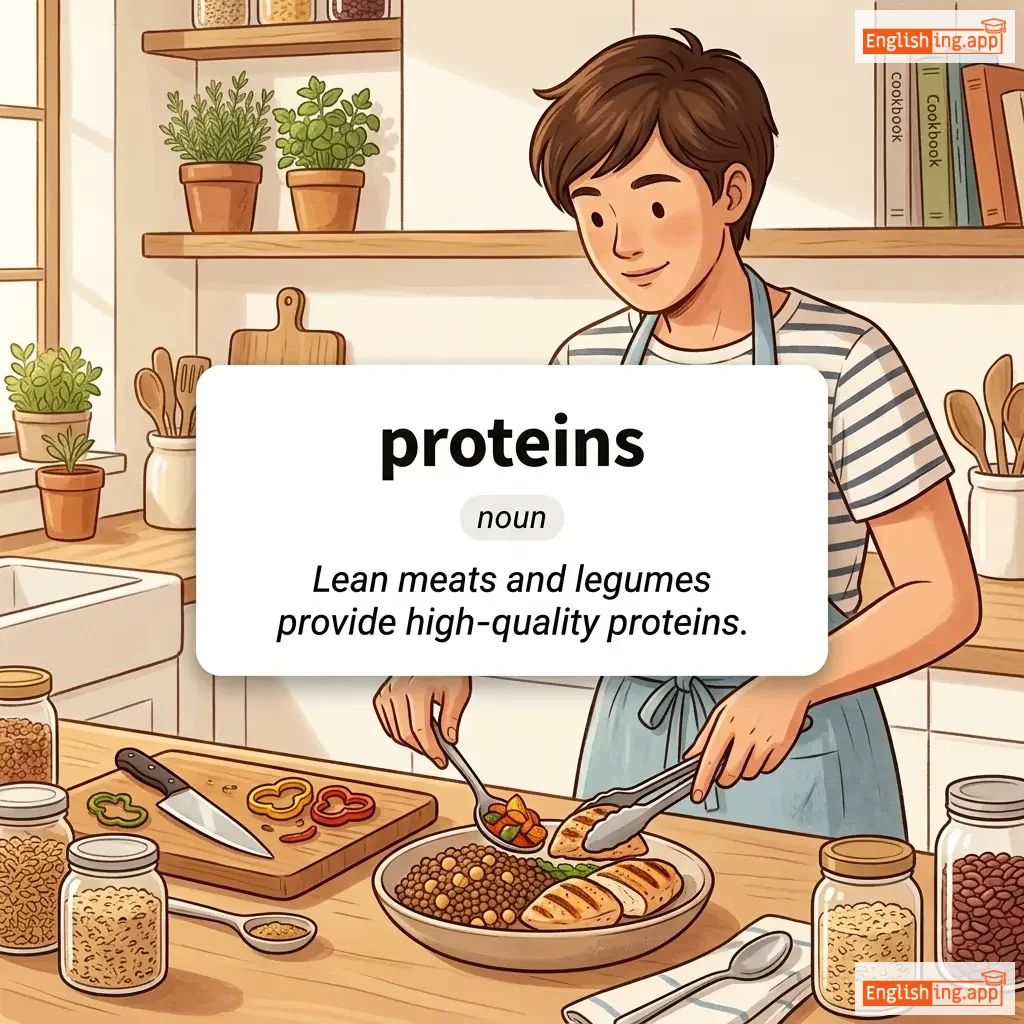
proteins definition card — visual illustration of the meaning
noun
/ˈprəʊ.tiːnz/
protéines (proteines)

Large biomolecules consisting of amino acids that perform essential functions in living organisms, including building and repairing tissues.

"Lean meats and legumes provide high-quality proteins."

"Les viandes maigres et les légumineuses fournissent des protéines de haute qualité." (Les viandes maigres et les legumineuses fournissent des proteines de haute qualite.)
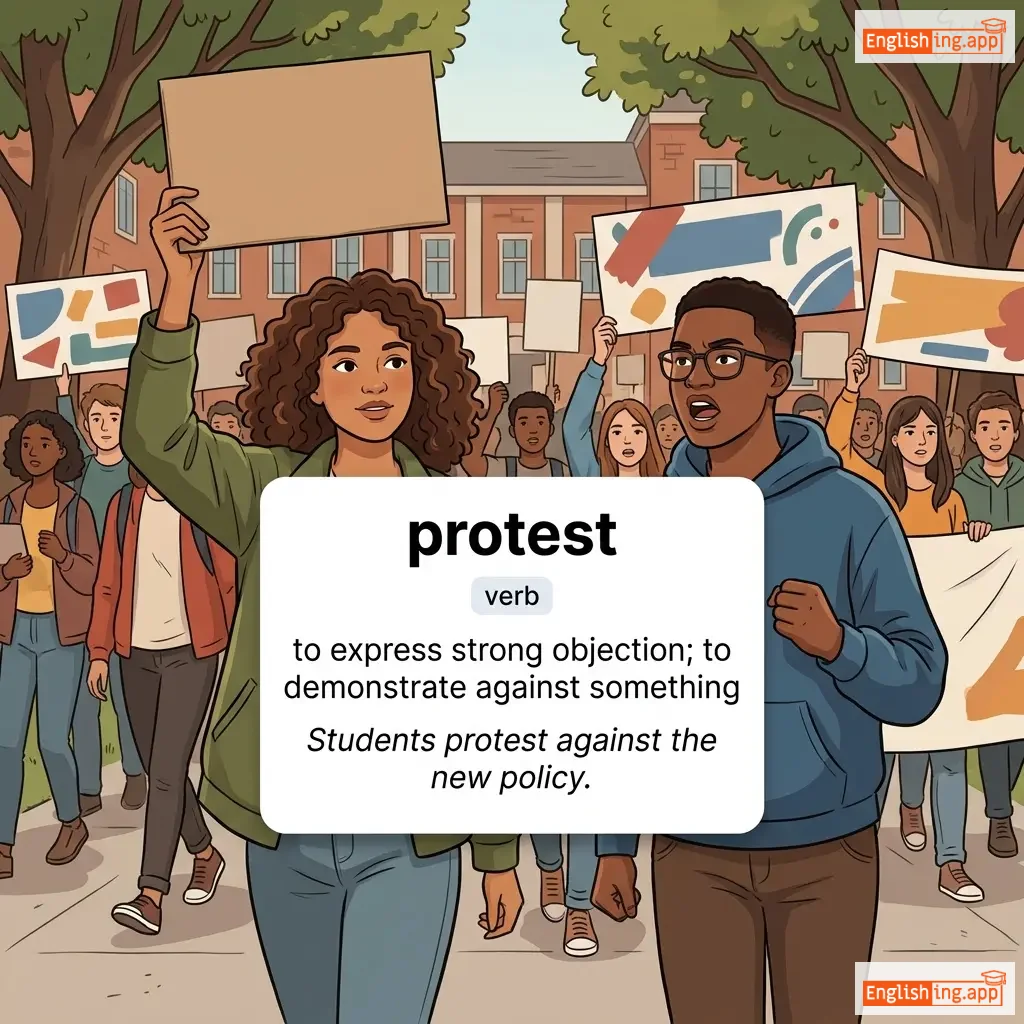
protest definition card — visual illustration of the meaning
noun
/ˈproʊtɛst/
protestation (protestation)

a statement or action expressing disapproval of or objection to something.

"Thousands gathered in the square to protest the new law."

"Des milliers de personnes se sont rassemblées sur la place pour protester contre la nouvelle loi." (Des milliers de personnes se sont rassemblees sur la place pour protester contre la nouvelle loi.)
noun
/ˈprɑːtɪstənt/
protestant (protestant)

a member of the Christian church that separated from the Roman Catholic Church during the Reformation

"Martin Luther was a key figure in the Protestant Reformation."

"Martin Luther a été une figure clé dans la Réforme protestante." (Martin Luther a été une figure clé dans la Réforme protestante.)
noun
/prəˈtɛstər/
manifestant (manifestant)

a person who takes part in a protest or demonstration

"The protester spoke passionately about the cause."

"Le manifestant a parlé avec passion de la cause." (Le manifestant a parlé avec passion de la cause.)
noun
/ˈproʊtəkɔːl/
protocole (protocole)

an official procedure or system of rules

"The security team followed strict protocol during the event."

"L'équipe de sécurité a suivi un protocole strict lors de l'événement." (L'equipe de securite a suivi un protocole strict lors de l'evenement.)
noun
/ˈproʊtoʊˌmɑːrtɚ/
premier martyr (premier martyr)

The first martyr in a cause or religion, often referring to the first Christian martyr.

"St. Stephen is known as the protomartyr of Christianity."

"Saint Étienne est connu comme le protomartyr du christianisme." (Saint Etienne est connu comme le protomartyr du christianisme.)
noun
/ˈproʊtoʊˌplæzəm/
protoplasme (protoplasme)

The living substance inside a cell, including the cytoplasm and nucleus.

"Scientists observed the movement of protoplasm under the microscope."

"Les scientifiques ont observé le mouvement du protoplasme sous le microscope." (Les scientifiques ont observé le mouvement du protoplasme sous le microscope.)
noun
/ˈproʊtəˌtaɪp/
prototype (prototype)

The first model or version of something, used as a sample for testing or improvement.

"The company built a prototype of the new smartphone before mass production."

"L'entreprise a construit un prototype du nouveau smartphone avant la production en série." (L'entreprise a construit un prototype du nouveau smartphone avant la production en serie.)
verb
/proʊˈtrækt/
prolonger (prolonger)

To prolong or extend in time or duration.

"Negotiations were protracted for several months."

"Les négociations ont été prolongées pendant plusieurs mois." (Les négociations ont été prolongées pendant plusieurs mois.)
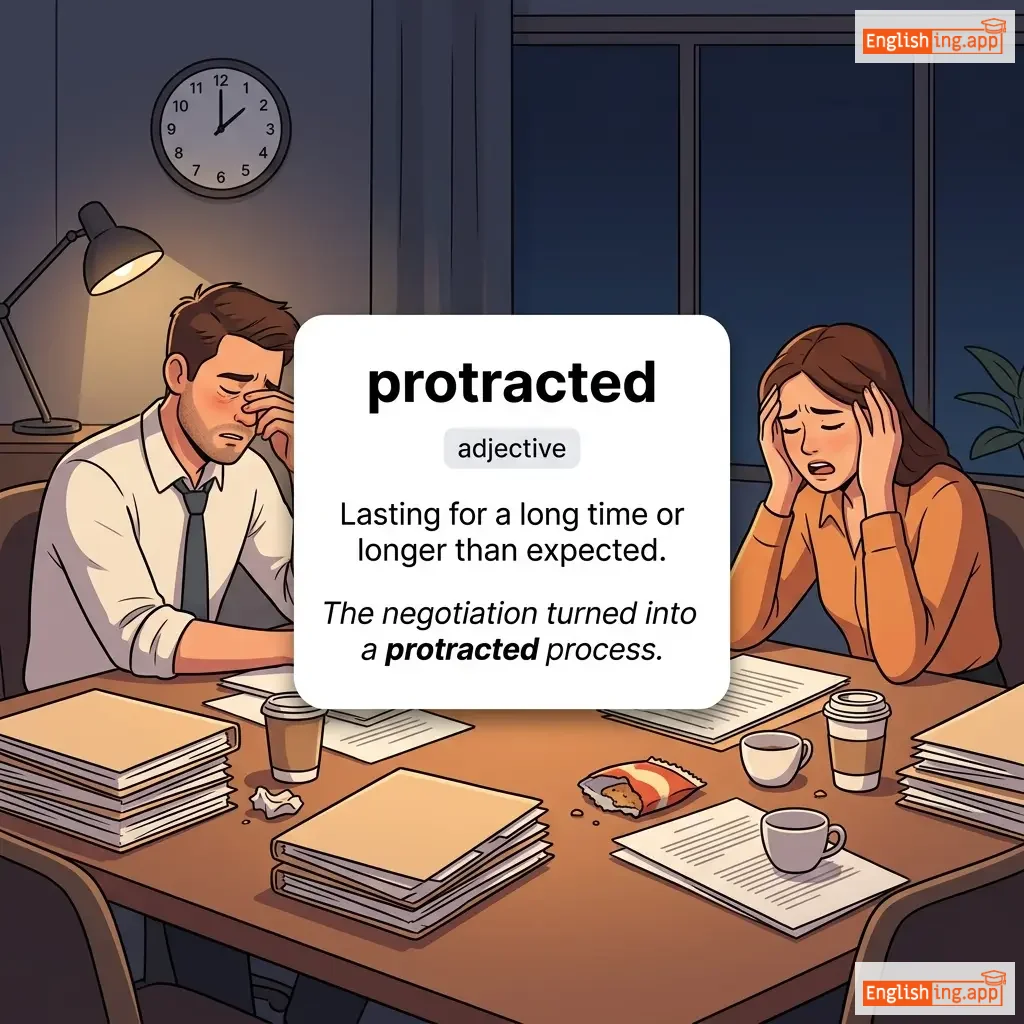
protracted definition card — visual illustration of the meaning
adjective
/prəˈtræktɪd/
prolongé (prolonge)

Lasting for a long time or longer than expected.

"The negotiation turned into a protracted process."

"La négociation s'est transformée en un processus prolongé." (La negociation s'est transformee en un processus prolonge.)
verb
/proʊˈtruːd/
dépasser (depasser)

To stick out or extend beyond a surface.

"A nail was protruding from the wooden board."

"Un clou dépassait du panneau de bois." (Un clou depassait du panneau de bois.)
noun
/prəˈtruːʒən/
saillie (saillie)

Something that sticks out or projects from a surface.

"The protrusion on the wall made it difficult to move the furniture."

"La saillie sur le mur a rendu difficile de déplacer les meubles." (La saillie sur le mur a rendu difficile de déplacer les meubles.)