Vocabulaires

Découvrez, apprenez et maîtrisez le vocabulaire anglais

adjective
/ˈprɛvələnt/
prédominant (predominant)

widespread or commonly occurring

"Flu is prevalent during the winter season."

"La grippe est prédominante pendant la saison hivernale." (La grippe est prédominante pendant la saison hivernale.)
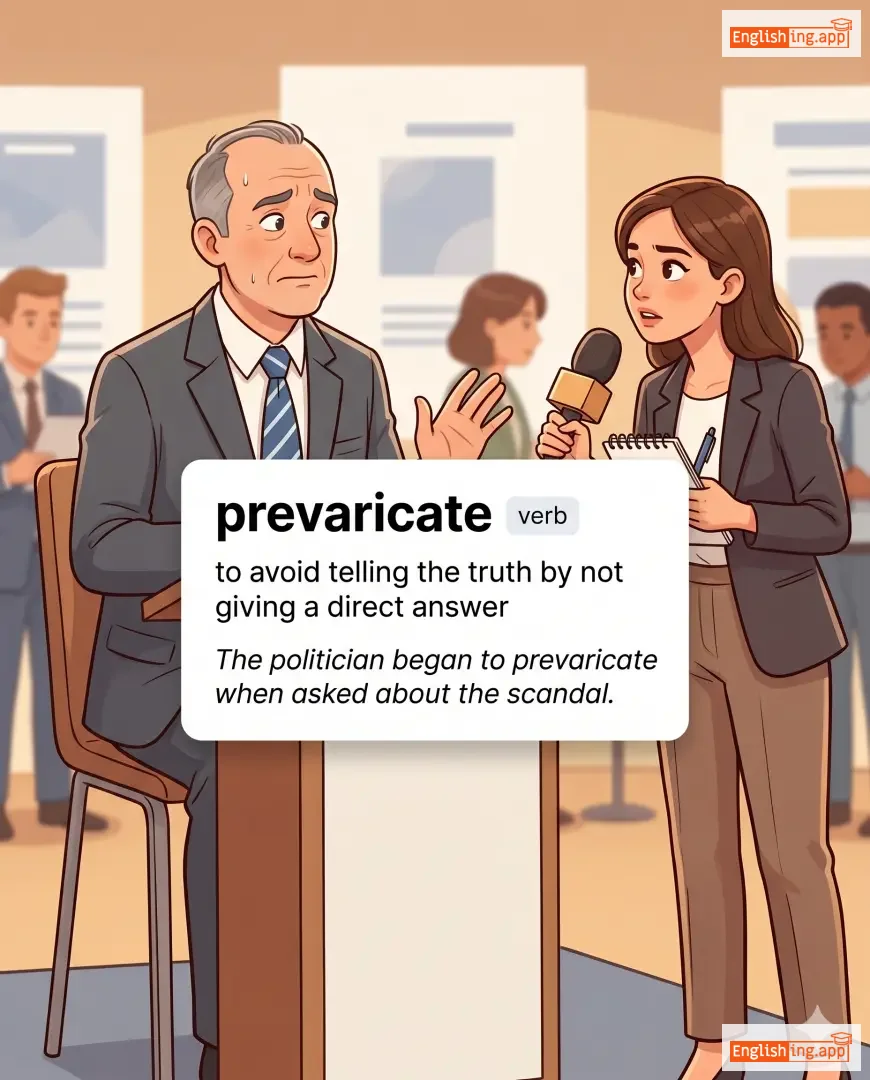
prevaricate definition card — visual illustration of the meaning
verb
/prɪˈværɪkeɪt/
échapper à dire la vérité (echapper a dire la verite)

to avoid telling the truth by not giving a direct answer

"The politician began to prevaricate when asked about the scandal."

"Le politicien a commencé à éviter lorsqu'on lui a posé des questions sur le scandale." (Le politicien a commencé à éviter lorsqu'on lui a posé des questions sur le scandale.)
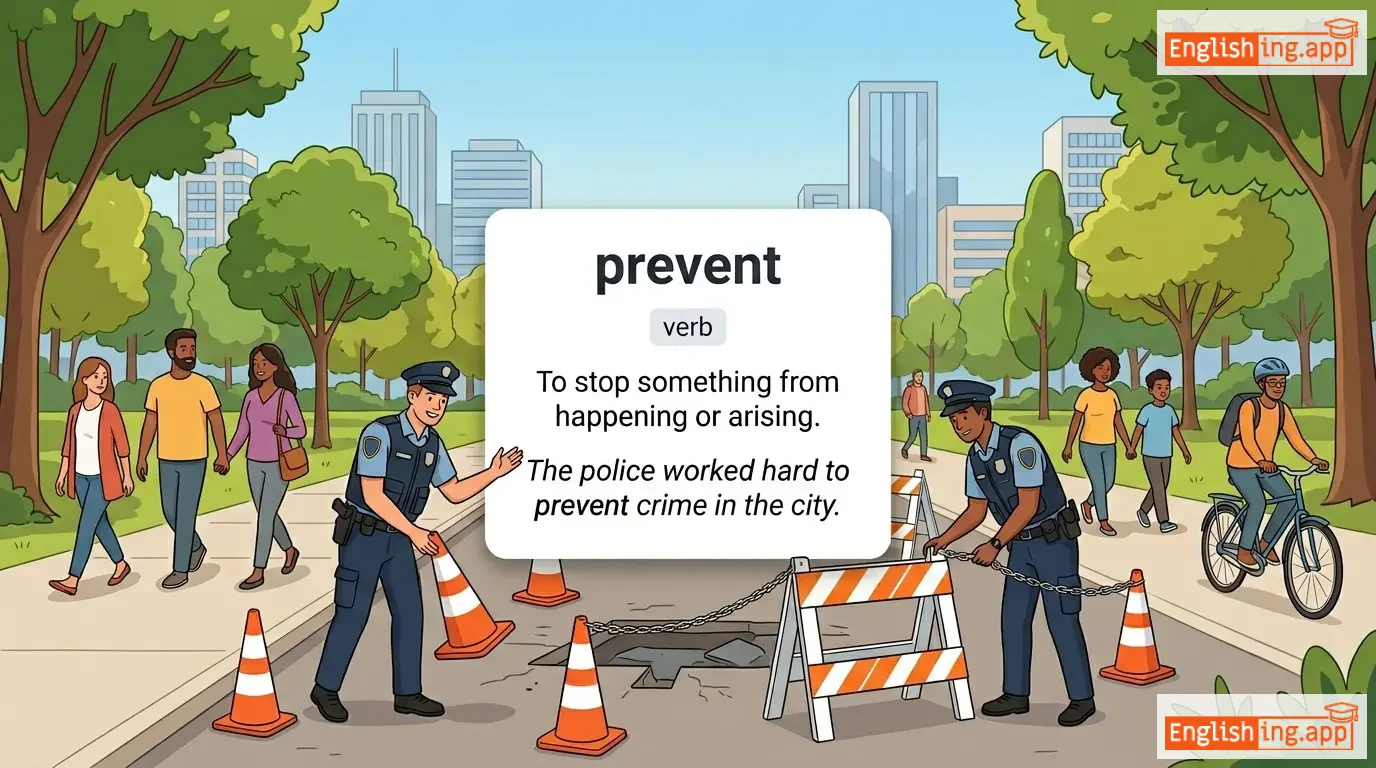
prevent definition card — visual illustration of the meaning
verb
/prɪˈvɛnt/
prévenir (prevenir)

To stop something from happening or arising.

"The police worked hard to prevent crime in the city."

"La police a travaillé dur pour prévenir la criminalité dans la ville." (La police a travaillé dur pour prévenir la criminalité dans la ville.)
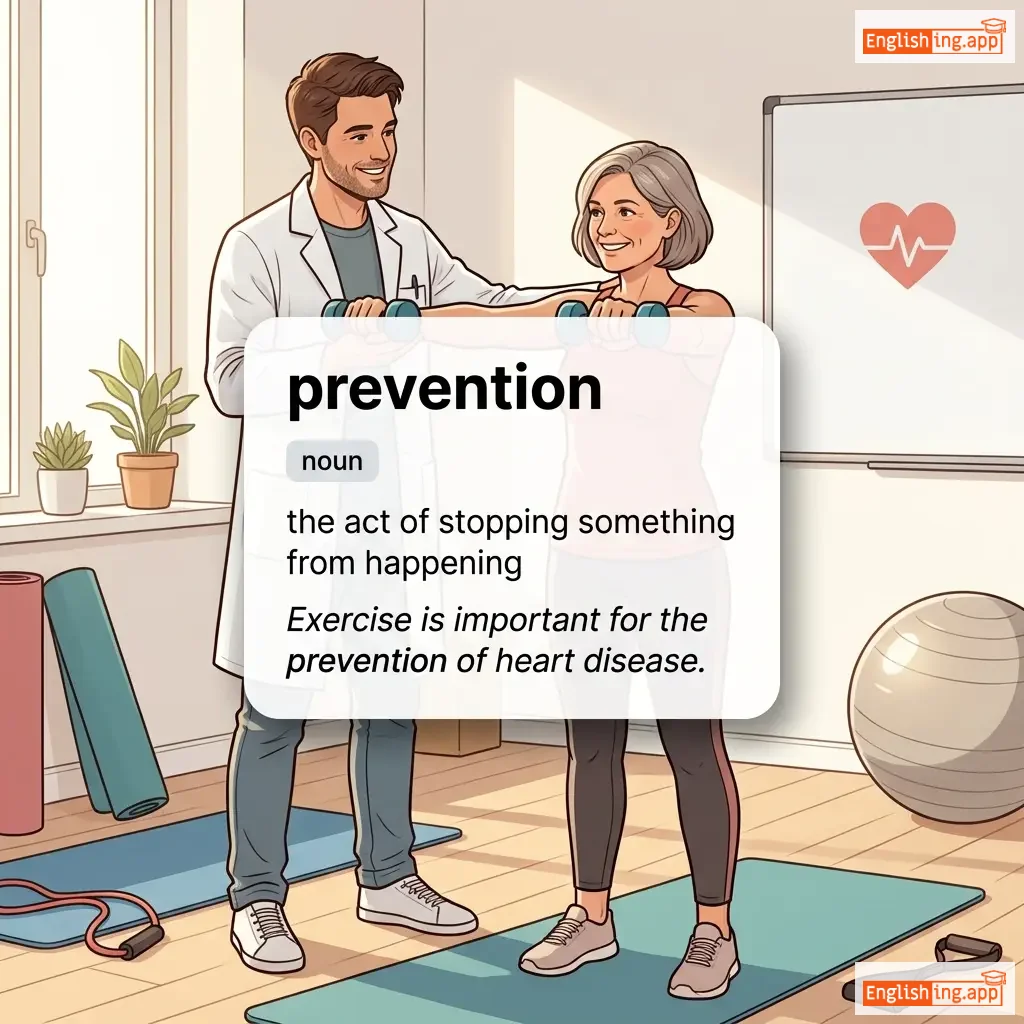
prevention definition card — visual illustration of the meaning
noun
/prɪˈvɛnʃən/
prévention (prevention)

the act of stopping something from happening

"Exercise is important for the prevention of heart disease."

"L'exercice est important pour la prévention des maladies cardiaques." (L'exercice est important pour la prévention des maladies cardiaques.)
adjective
/prɪˈventɪv/
préventif; conçu pour empêcher quelque chose de se produire (preventif)

designed to prevent something from happening; protective against disease

"Regular exercise is a preventive measure against heart disease."

"L'exercice régulier est une mesure préventive contre les maladies cardiaques." (L'exercice régulier est une mesure préventive contre les maladies cardiaques.)
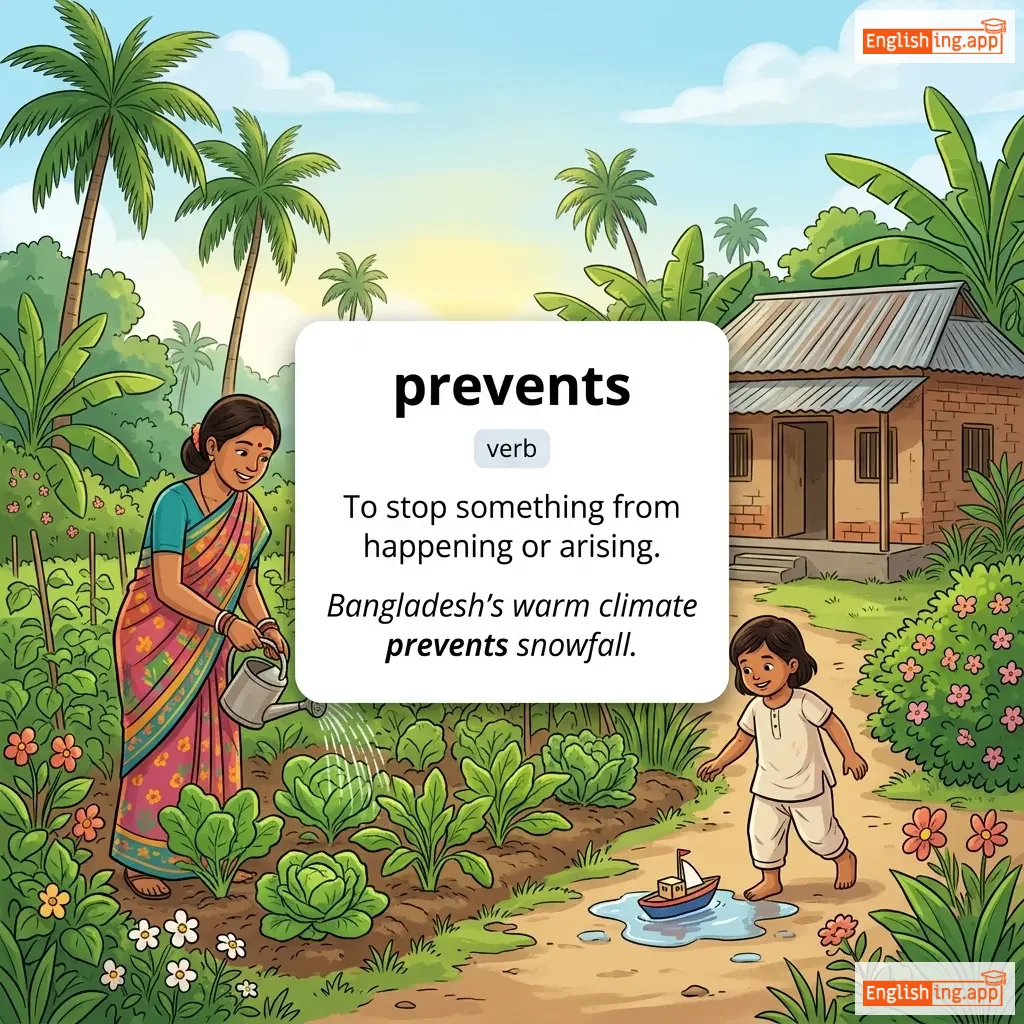
prevents definition card — visual illustration of the meaning
verb
প্রিভেন্টস
prévient (previent)

To stop something from happening or arising.

"Bangladesh's warm climate prevents snowfall."

"Le climat chaud du Bangladesh empêche les chutes de neige." (Le climat chaud du Bangladesh empêche les chutes de neige.)
adjective
/ˈpriːviəs/
précédent (precèdent)

Existing or happening before the present time.

"He referred to the previous meeting to explain his point."

"Il a fait référence à la réunion précédente pour expliquer son point." (Il a fait référence à la réunion précédente pour expliquer son point.)
adverb
/ˈpriːviəsli/
précédemment (precédemment)

at an earlier time or before now

"She had previously worked at a bank before starting her own business."

"Elle avait travaillé précédemment dans une banque avant de commencer son propre commerce." (Elle avait travaillé précédemment dans une banque avant de commencer son propre commerce.)
noun/verb
/preɪ/
proie (proie)

an animal hunted by another for food; to hunt and feed on

"Lions prey on zebras in the wild."

"Les lions chassent les zèbres dans la nature." (Les lions chassent les zèbres dans la nature.)
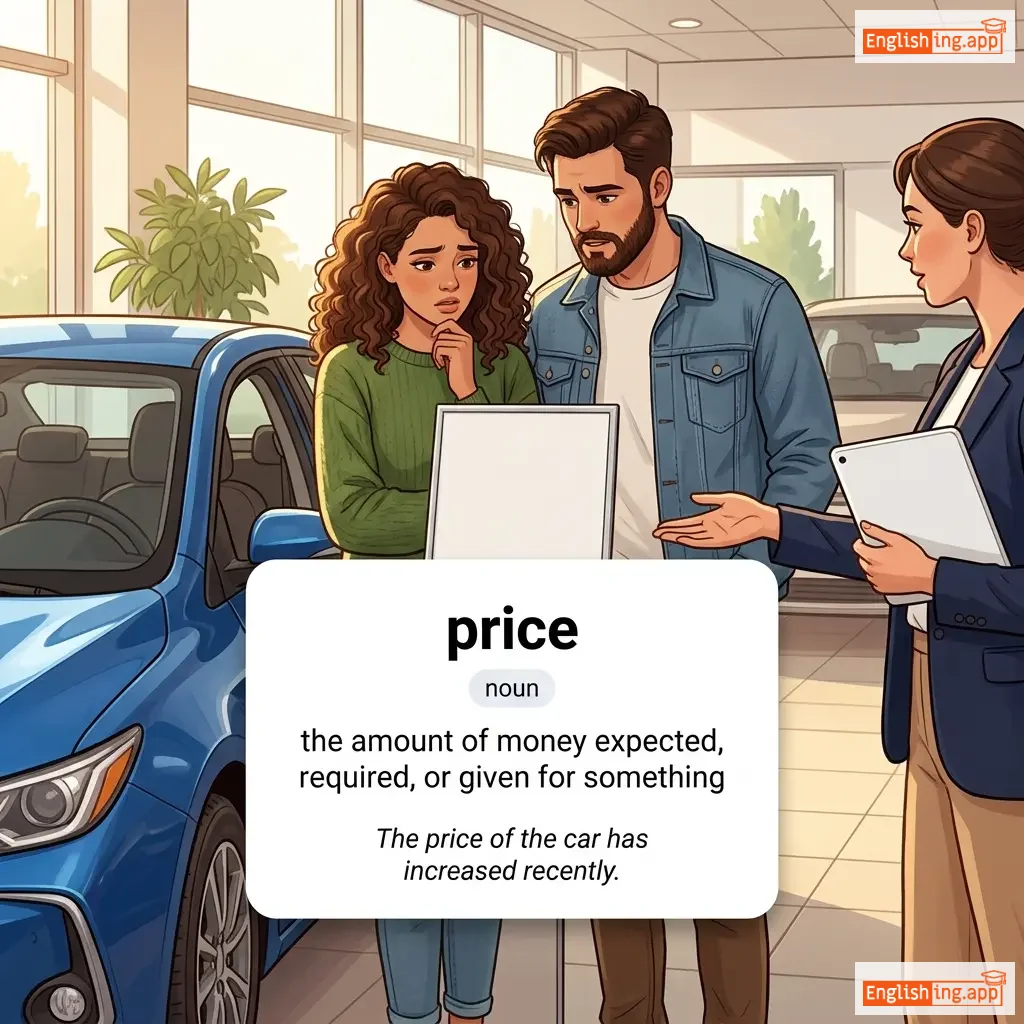
price definition card — visual illustration of the meaning
noun
/praɪs/
prix (prix)

the amount of money expected, required, or given for something

"The price of the car has increased recently."

"Le prix de la voiture a augmenté récemment." (Le prix de la voiture a augmenté récemment.)
adjective
/ˈpraɪs.ləs/
inestimable; de valeur incommensurable (inestimable; de valeur incommensurable)

extremely valuable; invaluable; beyond price

"Her grandmother's antique jewelry is absolutely priceless."

"Les bijoux antiques de sa grand-mère sont absolument inestimables." (Les bijoux antiques de sa grand-mère sont absolument inestimables.)
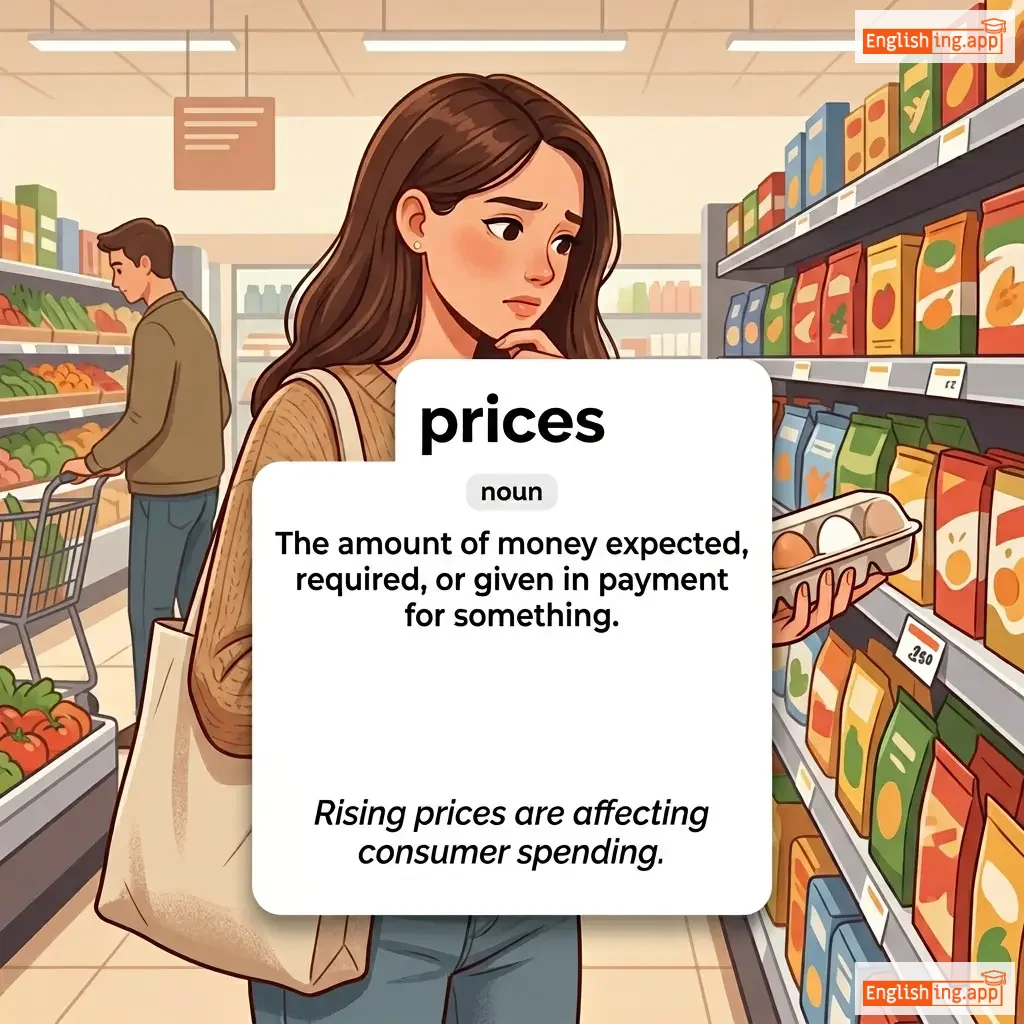
prices definition card — visual illustration of the meaning
noun
ˈpraɪsɪz
prix (prix)

The amount of money expected, required, or given in payment for something.

"Rising prices are affecting consumer spending."

"La hausse des prix affecte les dépenses des consommateurs." (La hausse des prix affecte les dépenses des consommateurs.)
verb
/ˈprɪkəl/
picoter (picoter)

to cause a slight stinging or tingling sensation on the skin

"Her skin began to prickle in the cold wind."

"Sa peau a commencé à picoter avec le vent froid." (Sa peau a commence a picoter avec le vent froid.)
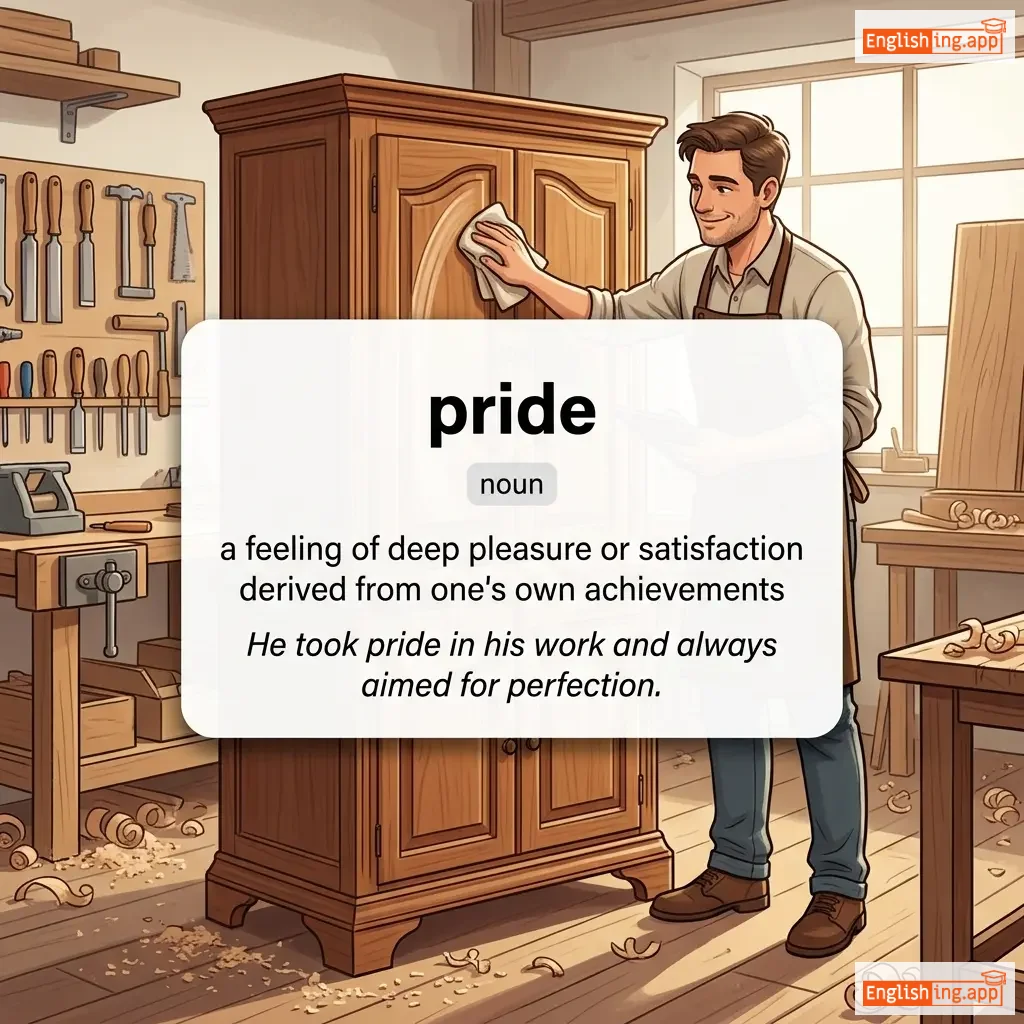
pride definition card — visual illustration of the meaning
noun
/praɪd/
fierté (fierte)

a feeling of deep pleasure or satisfaction derived from one's own achievements

"He took pride in his work and always aimed for perfection."

"Il était fier de son travail et visait toujours la perfection." (Il était fier de son travail et visait toujours la perfection.)
noun
/priːst/
prêtre (pretre)

a person who performs religious duties and ceremonies

"The priest blessed the congregation during the Sunday service."

"Le prêtre bénit la congrégation pendant le service dominical." (Le pretre benit la congregation pendant le service dominical.)
adjective
/ˈprɪɡɪʃ/
moraliste et prétentieux (moraliste et prétentieux)

self-righteously moralistic and superior

"He came across as priggish when correcting everyone's manners."

"Il semblait moraliste et prétentieux lorsqu'il corrigeait les manières de tout le monde." (Il semblait moraliste et prétentieux lorsqu'il corrigeait les manières de tout le monde.)
adjective
/prɪm/
excessivement formel ou correct (excessivement formel ou correct)

stiffly formal and proper in appearance or behavior

"She looked prim in her neatly pressed dress."

"Elle avait l'air prim dans sa robe soigneusement repassée." (Elle avait l'air prim dans sa robe soigneusement repassée.)
adjective
/ˈpriːmə/
principal, excellent (principal, excellent)

first or most important; excellent

"She was treated as the prima ballerina of the troupe."

"Elle a été traitée comme la prima ballerina de la troupe." (Elle a été traitée comme la prima ballerina de la troupe.)
noun
/ˈpraɪməsi/
primauté (primauté)

the state of being first in importance or authority

"The primacy of education cannot be denied."

"La primauté de l'éducation ne peut être niée." (La primauté de l'éducation ne peut être niée.)
adjective
/ˈpraɪ.məl/
primitif, fondamental (primitif, fondamental)

Relating to the earliest stage of development; essential or fundamental.

"Fear is one of the most primal emotions humans experience."

"La peur est l'une des émotions les plus primales que les humains ressentent." (La peur est l'une des émotions les plus primales que les humains ressentent.)
adverb
/praɪˈmɛrɪli/
principalement (principalement)

for the most part; mainly

"She is primarily responsible for managing the finances."

"Elle est principalement responsable de la gestion des finances." (Elle est principalement responsable de la gestion des finances.)
adjective
/ˈpraɪ.mɛr.i/
primaire, principal (primaire, principal)

Most important; main; happening first.

"Education is a primary factor in economic growth."

"L'éducation est un facteur primaire dans la croissance économique." (L'education est un facteur primaire dans la croissance economique.)
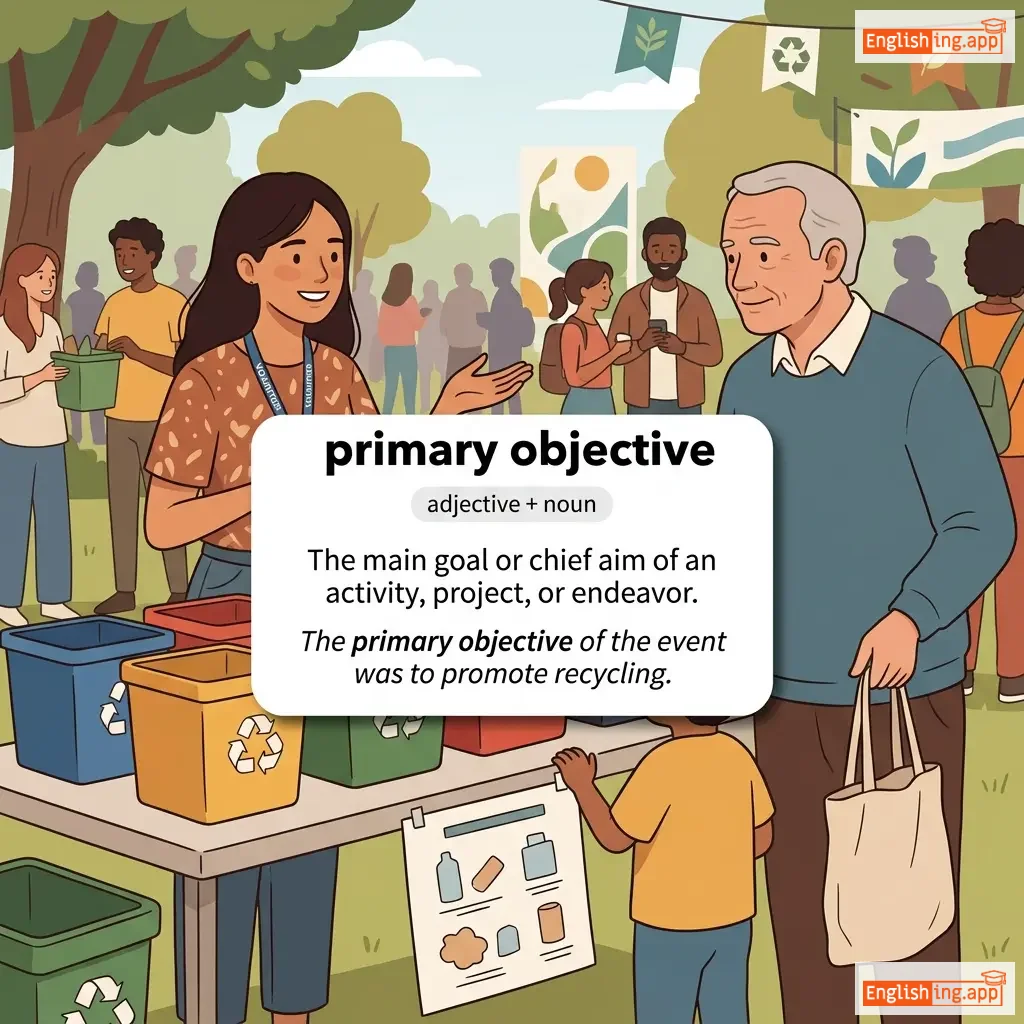
primary objective definition card — visual illustration of the meaning
adjective + noun
ˈpraɪməri əbˈdʒektɪv
objectif principal (objectif principal)

The main goal or chief aim of an activity, project, or endeavor.

"The primary objective of the event was to promote recycling."

"L'objectif principal de l'événement était de promouvoir le recyclage." (L'objectif principal de l'événement était de promouvoir le recyclage.)
noun
/ˈpraɪ.meɪt/
primate, animal de la famille des singes (primate, animal de la famille des singes)

A member of the group of animals including humans, apes, and monkeys.

"Humans are classified as primates."

"Les humains sont classés parmi les primates." (Les humains sont classés parmi les primates.)
adjective
/praɪm/
principal, majeur (principal, majeur)

Of the best quality; most important; peak condition.

"She is in the prime of her career."

"Elle est au meilleur moment de sa carrière." (Elle est au meilleur moment de sa carriere.)
noun
/ˈpraɪ.mər/ (US), /ˈprɪm.ər/ (UK)
manuel introductif, apprêt (manuel introductif, apret)

A basic introductory book or a substance used to prepare a surface for painting.

"He read a primer on programming before starting his course."

"Il a lu un manuel d'introduction à la programmation avant de commencer son cours." (Il a lu un manuel d'introduction a la programmation avant de commencer son cours.)
adjective
/praɪˈmiːvəl/
primitif (primitif)

Relating to the earliest ages in history; ancient and primitive.

"The explorers ventured into the primeval forest untouched by humans."

"Les explorateurs se sont aventurés dans la forêt primitive, inchangée par les humains." (Les explorateurs se sont aventurés dans la forêt primitive, inchangée par les humains.)
adjective
/ˈprɪmətɪv/
primitif (primitif)

Relating to an early stage of development; simple and basic.

"The tribe lived in primitive huts made of mud and straw."

"La tribu vivait dans des huttes primitives faites de boue et de paille." (La tribu vivait dans des huttes primitives faites de boue et de paille.)
noun
/ˌpraɪmoʊˈdʒɛnɪtʃər/
primogéniture (primogeniture)

The right of the firstborn child to inherit the family estate or title.

"Under primogeniture, the eldest son inherited the entire estate."

"Sous la primogéniture, le fils aîné a hérité de l'ensemble du domaine." (Sous la primogéniture, le fils aîné a hérité de l'ensemble du domaine.)
adjective
/praɪˈmɔːrdiəl/
primaire (primaire)

Existing at or from the beginning of time; fundamental and original.

"Scientists study the primordial soup from which life emerged."

"Les scientifiques étudient la soupe primordiale dont la vie a émergé." (Les scientifiques étudient la soupe primordiale dont la vie a émergé.)
verb
/prɪmp/
bonheur (bonheur)

To spend time making minor adjustments to one's appearance.

"She primped in front of the mirror before the party."

"Elle ne pouvait pas cacher son bonheur lorsqu'elle a reçu le prix." (Elle ne pouvait pas cacher son bonheur lorsqu'elle a reçu le prix.)
noun
/prɪns/
prince (prince)

a male member of a royal family, especially the son of a king or queen; a ruler of a principality

"The prince addressed the nation on his birthday."

"Le prince s'est adressé à la nation le jour de son anniversaire." (le prince sest adresse a la nation le jour de son anniversaire)
noun
/ˈprɪn.ses/
princesse (princesse)

a female royal family member, especially the daughter of a king or queen; a woman regarded as noble, cherished, or elegant

"The princess waved to the crowd from the palace balcony."

"La princesse a salué la foule depuis le balcon du palais." (la princesse a salue la foule depuis le balcon du palais)
noun, adjective
/ˈprɪnsəpəl/
directeur, principal (directeur, principal)

the person with the highest authority or most important position; main or most important

"The school principal addressed the students in the auditorium."

"Le principal de l'école a adressé les élèves dans l'auditorium." (Le principal de l'école a adressé les élèves dans l'auditorium.)
noun
/ˌprɪnsɪˈpæləti/
principauté (principaute)

a state ruled by a prince

"Monaco is a famous principality in Europe."

"Monaco est une principauté célèbre en Europe." (Monaco est une principaute celebre en Europe.)
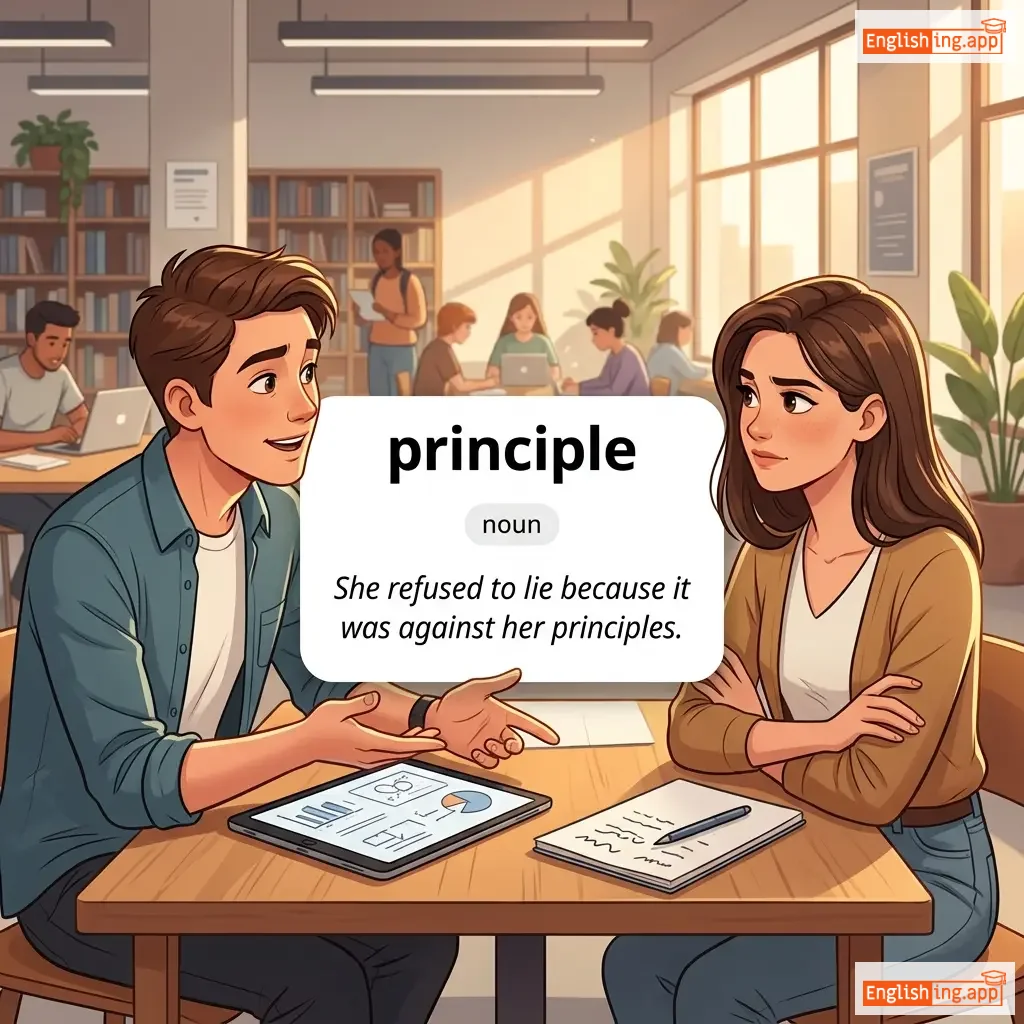
principle definition card — visual illustration of the meaning
noun
/ˈprɪnsəpəl/
principe (principe)

a fundamental truth, law, or rule that serves as the foundation for a system of belief or behavior

"She refused to lie because it was against her principles."

"Elle a refusé de mentir parce que c'était contre ses principes." (Elle a refuse de mentir parce que c'etait contre ses principes.)
adjective
/ˈprɪnsəpəld/
intègre (intègre)

acting in accordance with moral or ethical standards

"He is a principled leader who always puts honesty first."

"C'est un leader intègre qui met toujours l'honnêteté en premier." (C'est un leader intègre qui met toujours l'honnêteté en premier.)
verb
/prɪnt/
imprimer (imprimer)

to produce text or images on paper or other materials using a machine

"He will print the report tomorrow morning."

"Il imprimera le rapport demain matin." (Il imprimera le rapport demain matin.)
noun
/ˈprɪn.tər/
imprimeur (imprimeur)

a person whose job is printing books, newspapers, or other materials; a machine that prints documents

"The printer delivered the wedding invitations on time."

"L'imprimeur a livré les invitations de mariage à temps." (L'imprimeur a livré les invitations de mariage à temps.)
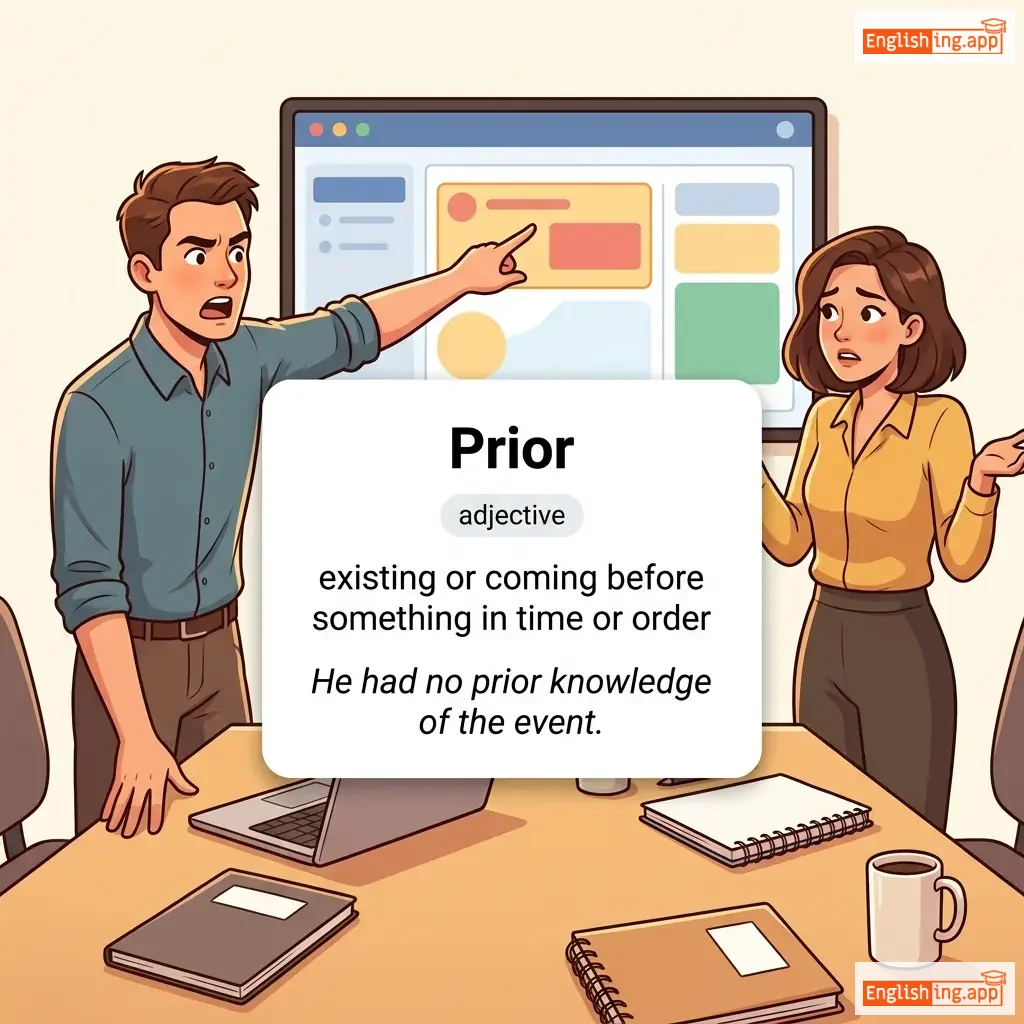
Prior definition card — visual illustration of the meaning
adjective
/ˈpraɪər/
préalable (prealable)

existing or coming before something in time or order

"He had no prior knowledge of the event."

"Il n'avait aucune connaissance préalable de l'événement." (Il n'avait aucune connaissance préalable de l'événement.)
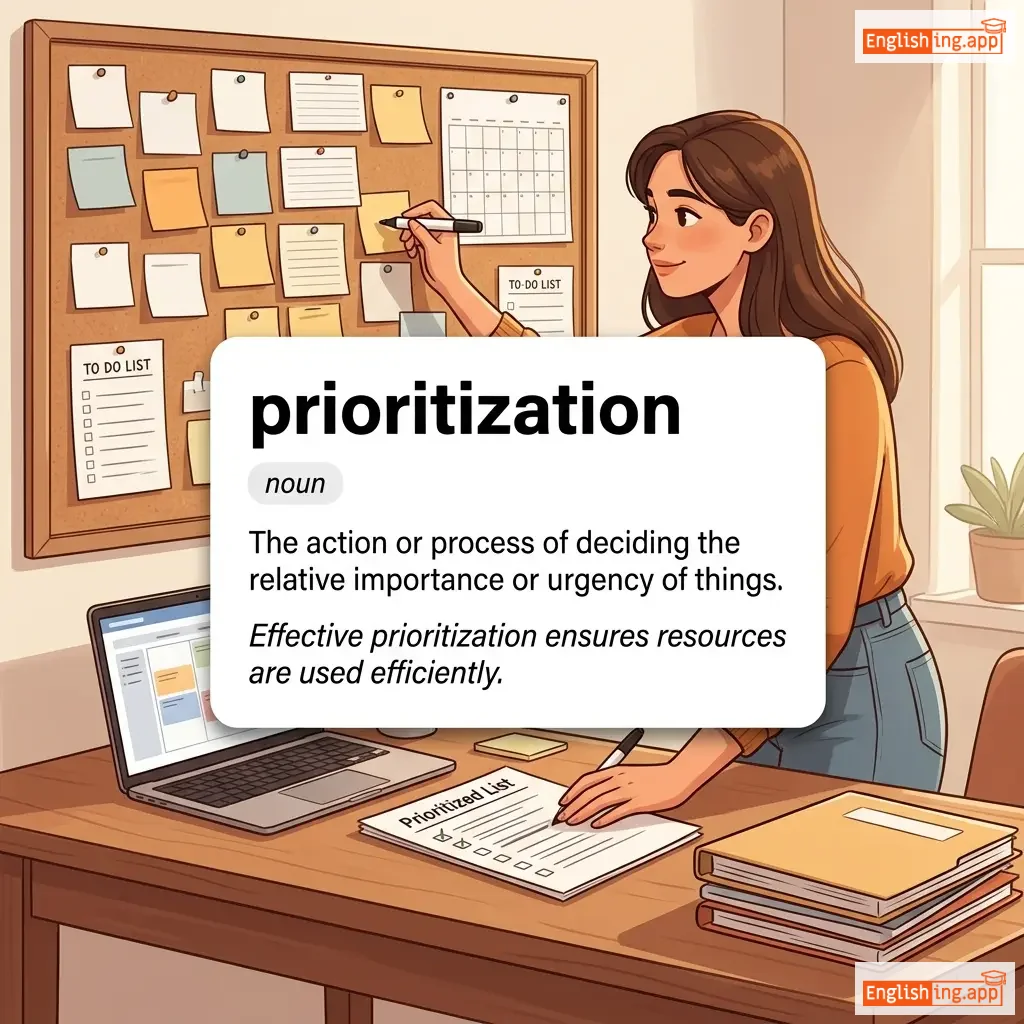
prioritization definition card — visual illustration of the meaning
noun
ˌpraɪɔːrɪtaɪˈzeɪʃən
priorisation (priorisation)

The action or process of deciding the relative importance or urgency of things.

"Effective prioritization ensures resources are used efficiently."

"Une priorisation efficace garantit que les ressources sont utilisées efficacement." (Une priorisation efficace garantit que les ressources sont utilisées efficacement.)
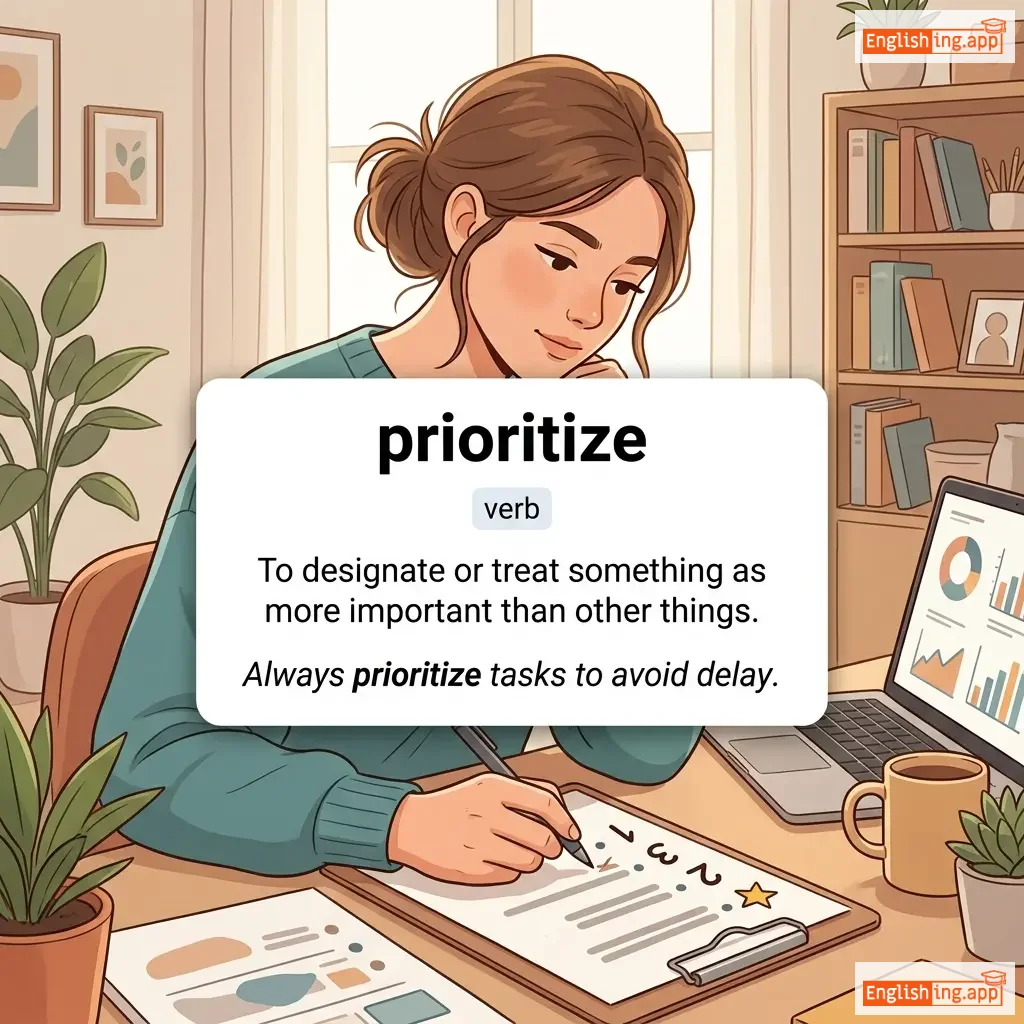
prioritize definition card — visual illustration of the meaning
verb
/praɪˈɔːrətaɪz/
prioriser (prioriser)

To designate or treat something as more important than other things.

"Always prioritize tasks to avoid delay."

"Toujours prioriser les tâches pour éviter les retards." (Toujours prioriser les tâches pour éviter les retards.)
noun
/praɪˈɒrɪti/
priorité (priorite)

Something that is regarded as more important than other things.

"Safety is the top priority in this company."

"La sécurité est la priorité absolue dans cette entreprise." (La sécurité est la priorité absolue dans cette entreprise.)
noun
/ˈpraɪəri/
prieuré (prieure)

a small monastery or convent governed by a prior or prioress

"The old priory was converted into a museum."

"L'ancien prieuré a été transformé en musée." (L'ancien prieuré a été transformé en musée.)
noun
/ˈprɪzən/
prison (prison)

a building where people are kept as punishment for a crime or while waiting for trial

"He was sent to prison for his crimes."

"Il a été envoyé en prison pour ses crimes." (Il a ete envoye en prison pour ses crimes.)
👨‍⚖️

prisoner (prisoner)

noun
/ˈprɪzənər/
prisonnier (prisonnie)

a person who is in prison

"The prisoner was granted parole after serving 10 years."

"Le prisonnier a été libéré sous condition après avoir purgé 10 ans." (Le prisonnier a été libéré sous condition après avoir purgé 10 ans.)
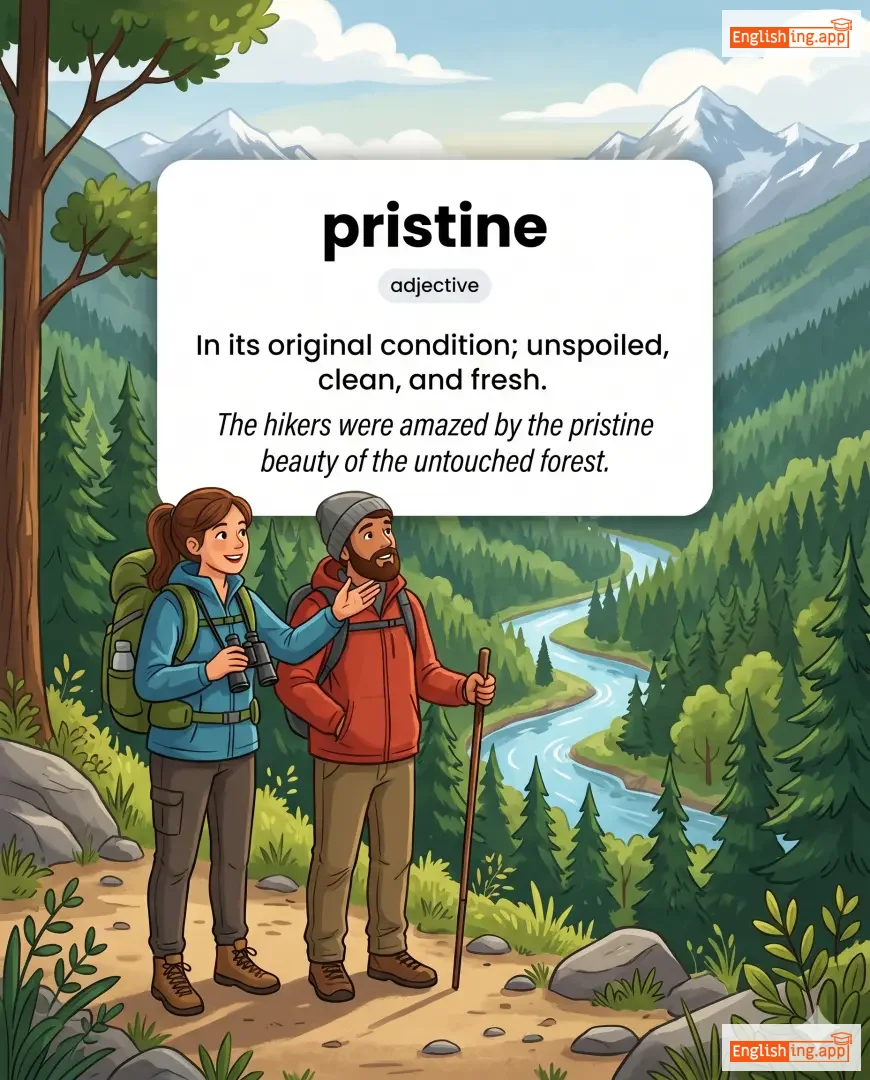
pristine definition card — visual illustration of the meaning
adjective
/ˈprɪstiːn/
intact, pur (intact, pur)

In its original condition; unspoiled, clean, and fresh.

"The hikers were amazed by the pristine beauty of the untouched forest."

"Les randonneurs étaient émerveillés par la beauté pristine de la forêt intacte." (Les randonneurs étaient émerveillés par la beauté pristine de la forêt intacte.)
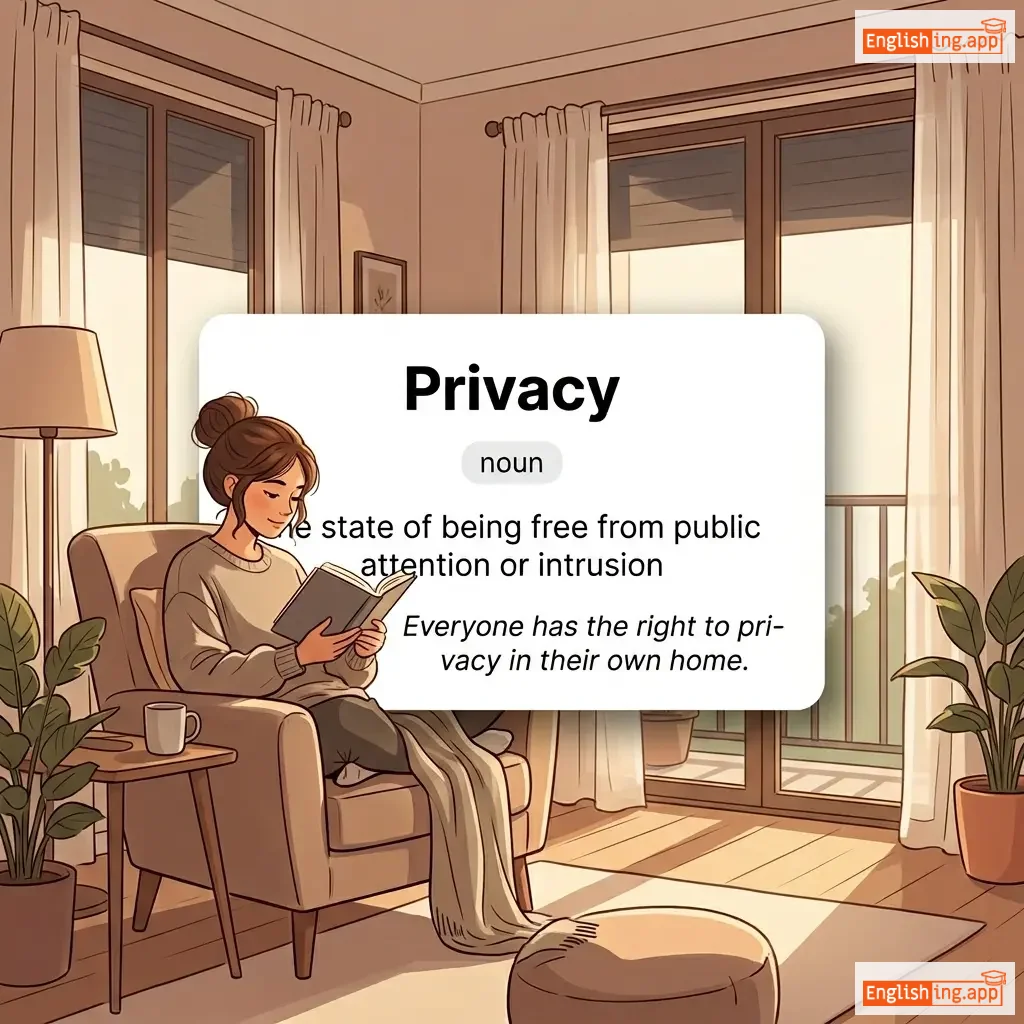
Privacy definition card — visual illustration of the meaning
noun
/ˈpraɪvəsi/
vie privée (vie privee)

the state of being free from public attention or intrusion

"Everyone has the right to privacy in their own home."

"Tout le monde a droit à la vie privée dans sa propre maison." (Tout le monde a droit a la vie privee dans sa propre maison.)
adjective
/ˈpraɪvət/
privé (prive)

belonging to or for the use of one particular person or group

"She enjoys her private time away from work."

"Elle apprécie son temps privé loin du travail." (Elle apprecie son temps prive loin du travail.)
noun
/ˈpraɪ.vət ˈtuː.tər/
tuteur privé (tuteur prive)

a teacher who gives individual instruction to a student outside of regular school

"The private tutor helped the student improve his math skills."

"Le tuteur privé a aidé l'étudiant à améliorer ses compétences en mathématiques." (Le tuteur prive a aide l'etudiant a ameliorer ses competences en mathematiques)