Vocabulaires

Découvrez, apprenez et maîtrisez le vocabulaire anglais

👨‍🏫

Orator (orateur)

noun
/ˈɔːrətər/
orateur (orateur)

A person who delivers formal speeches with skill and eloquence

"The orator captivated the audience with his eloquence."

"L'orateur a captivé le public par son éloquence." (L'orateur a captivé le public par son éloquence.)
noun
/ˌɔːrəˈtɔːri.oʊ/
composition musicale religieuse (composition musicale religieuse)

A large-scale musical composition for orchestra, choir, and soloists, usually on a sacred theme, performed without costumes or scenery.

"Handel's 'Messiah' is one of the most famous oratorios ever written."

"Le 'Messie' de Handel est l'un des oratorios les plus célèbres jamais écrits." (Le 'Messie' de Handel est l'un des oratorios les plus celebres jamais ecrits.)
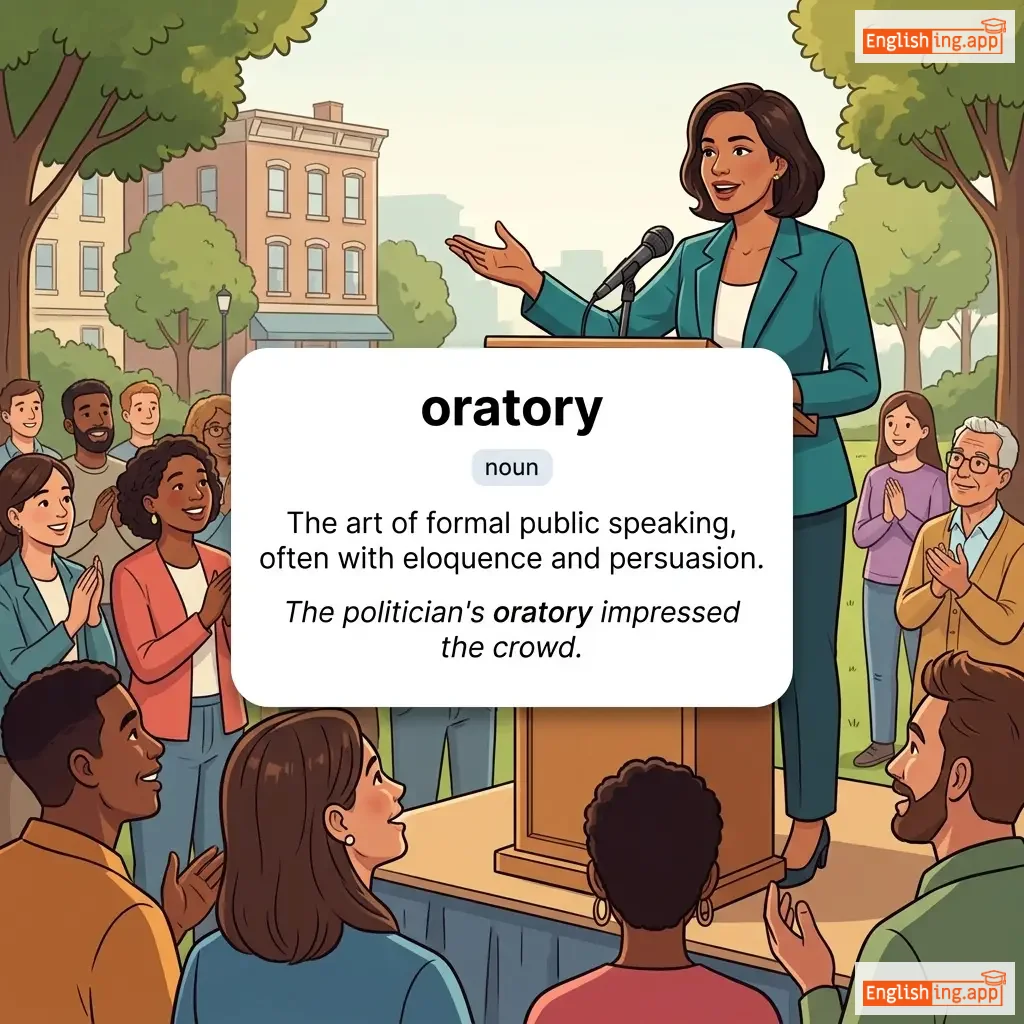
oratory definition card — visual illustration of the meaning
noun
/ˈɔːrəˌtɔːri/
art de l'oratoire (art de l'oratoire)

The art of formal public speaking, often with eloquence and persuasion.

"The politician's oratory impressed the crowd."

"L'oratoire du politicien a impressionné la foule." (L'oratoire du politicien a impressionné la foule.)
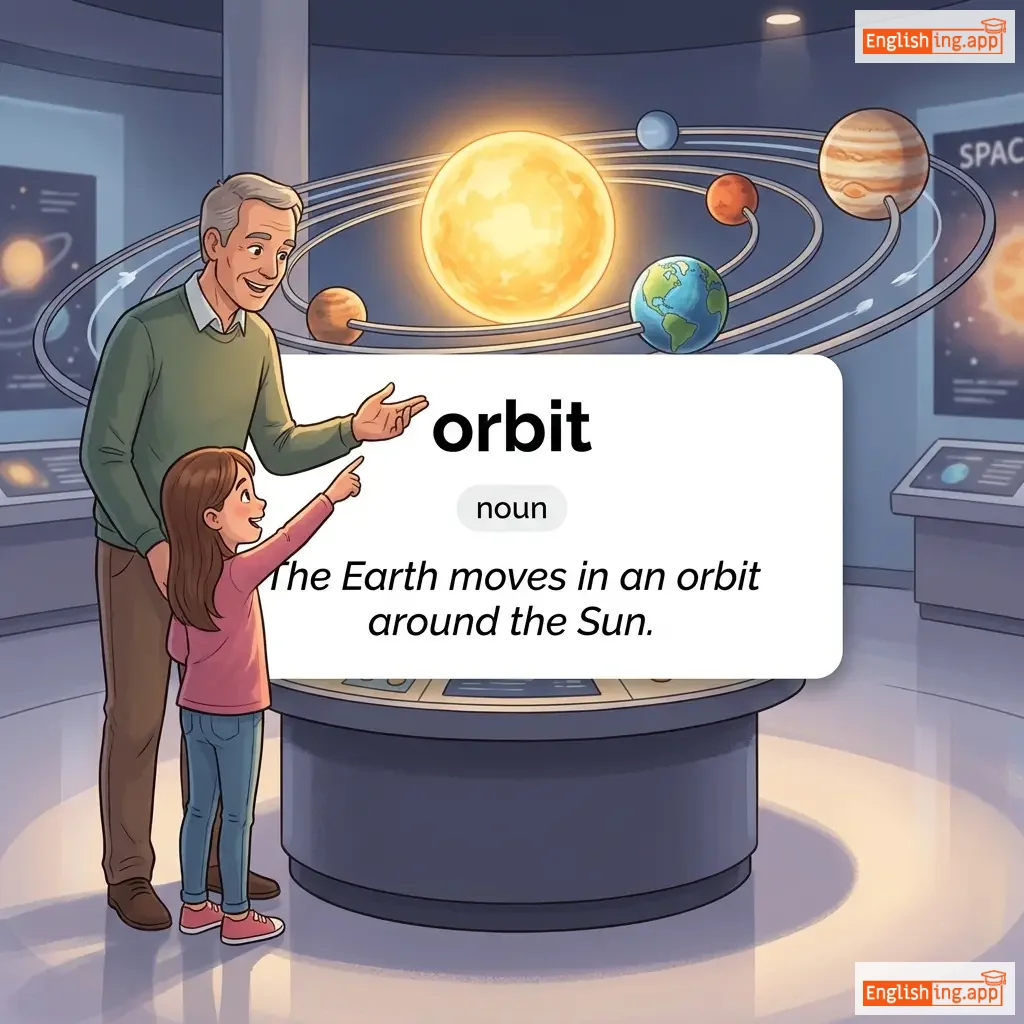
orbit definition card — visual illustration of the meaning
noun
/ˈɔːbɪt/
orbite (orbite)

the curved path that a planet, satellite, or object follows around another body in space

"The Earth moves in an orbit around the Sun."

"La Terre se déplace dans une orbite autour du Soleil." (La Terre se déplace dans une orbite autour du Soleil.)
noun
/ˈɔːkɪstrə/
orchestre (orchestre)

a large group of musicians playing different instruments together

"The orchestra performed beautifully at the concert."

"L'orchestre a joué magnifiquement au concert." (L'orchestre a joué magnifiquement au concert.)
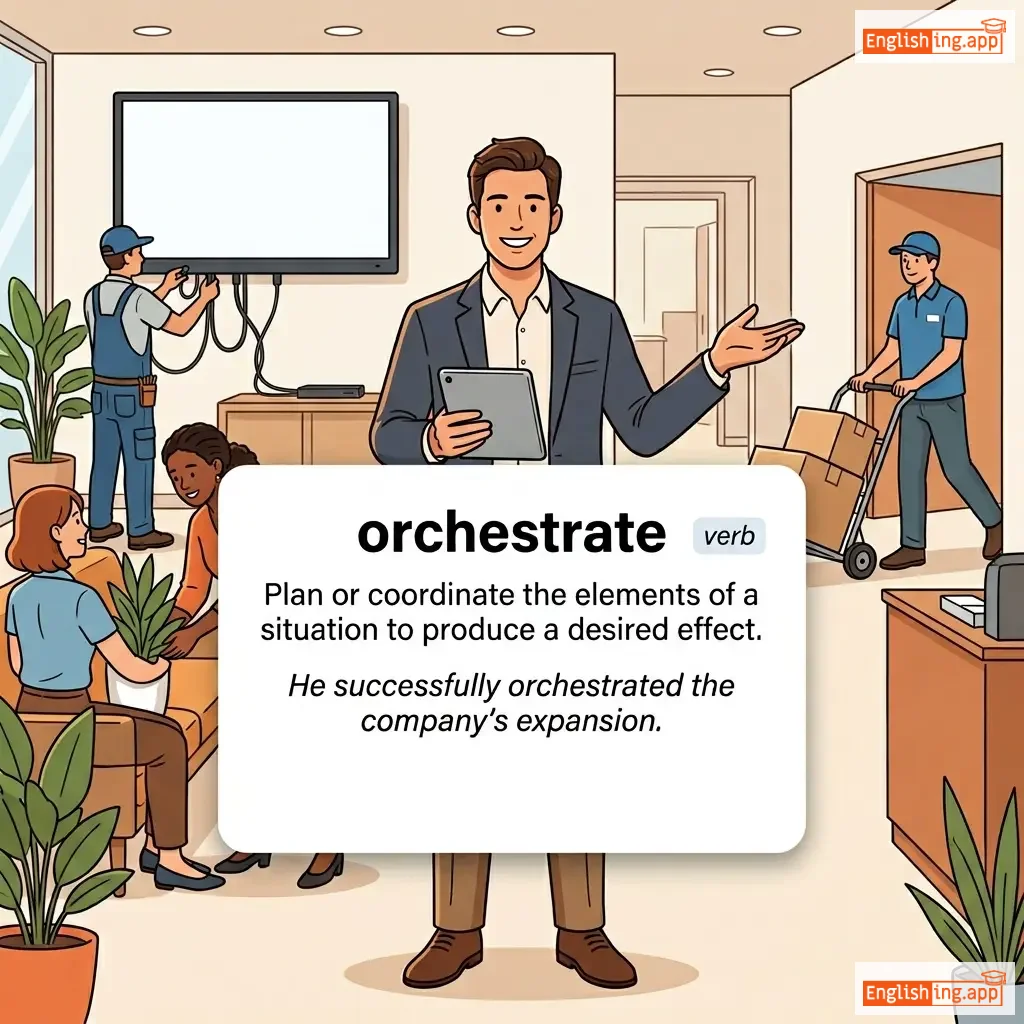
orchestrate definition card — visual illustration of the meaning
verb
/ˈɔːr.kɪ.streɪt/
orchestrer (orquestrer)

Plan or coordinate the elements of a situation to produce a desired effect.

"He successfully orchestrated the company's expansion."

"Il a orchestré avec succès l'expansion de l'entreprise." (Il a orchestré avec succès l'expansion de l'entreprise.)
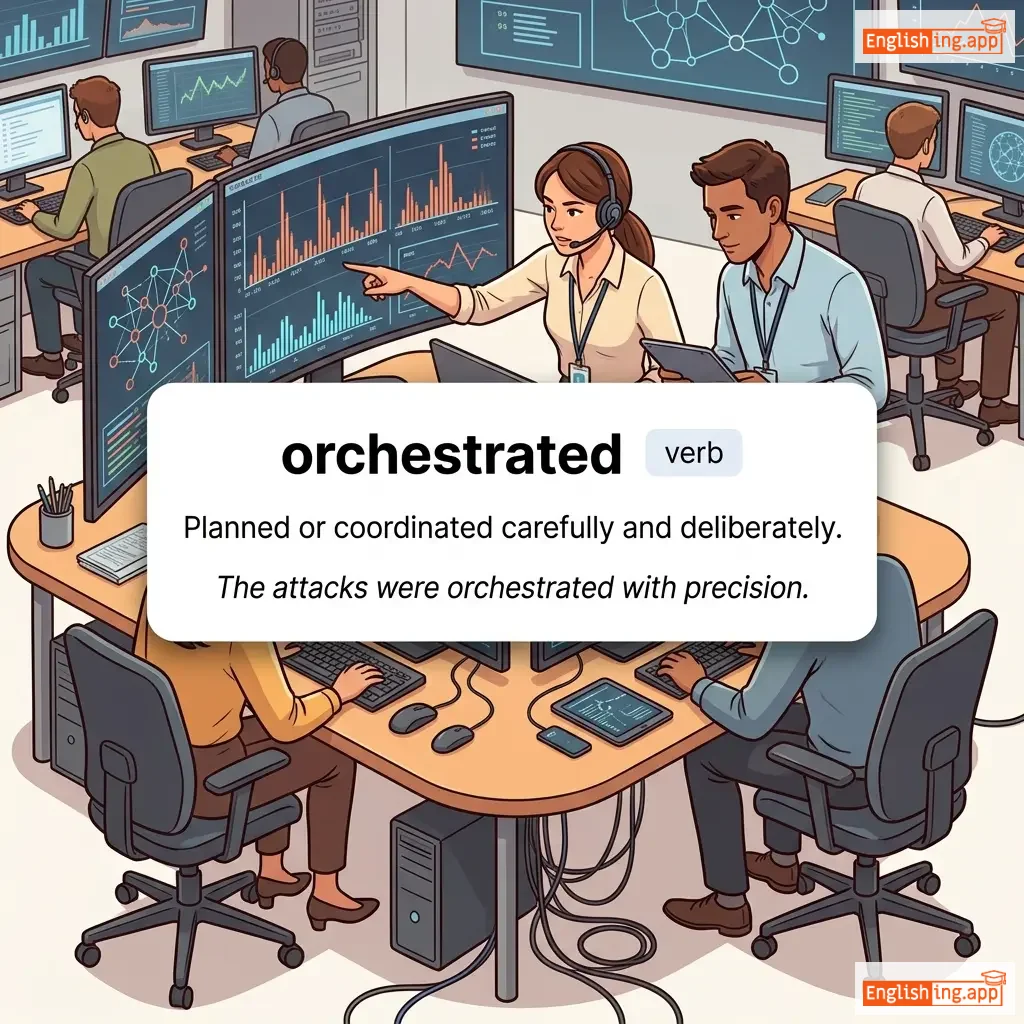
orchestrated definition card — visual illustration of the meaning
verb
ˈɔː.kɪ.streɪ.tɪd
orchestré (orchestré)

Planned or coordinated carefully and deliberately.

"The attacks were orchestrated with precision."

"Les attaques ont été orchestrées avec précision." (Les attaques ont été orchestrées avec précision.)
noun
/ˈɔːrkɪd/
orchidée (orchidee)

a diverse family of flowering plants known for their exotic and often fragrant flowers

"The white orchid on the windowsill bloomed for months."

"L'orchidée blanche sur le rebord de la fenêtre a fleuri pendant des mois." (L'orchidee blanche sur le rebord de la fenetre a fleuri pendant des mois.)
verb
/ɔːrˈdeɪn/
ordonner (ordonner)

To officially make someone a priest or minister; to decree or order something officially.

"The bishop will ordain three new priests this Sunday."

"L'évêque ordonnera trois nouveaux prêtres ce dimanche." (L'évêque ordonnera trois nouveaux prêtres ce dimanche.)
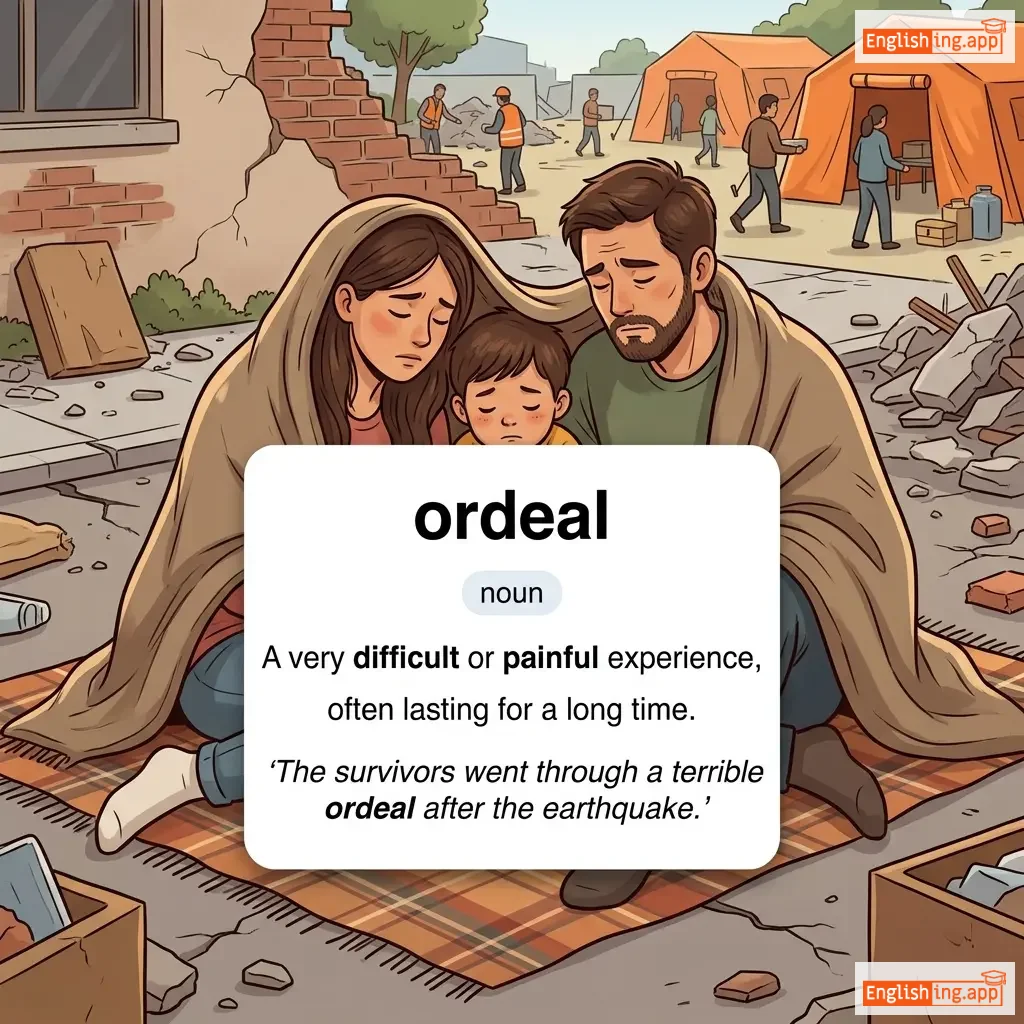
ordeal definition card — visual illustration of the meaning
noun
/ɔːrˈdiːl/
expérience difficile (experience difficile)

A very difficult or painful experience, often lasting for a long time.

"The survivors went through a terrible ordeal after the earthquake."

"Les survivants ont traversé une terrible épreuve après le tremblement de terre." (Les survivants ont traverse une terrible epreuve apres le tremblement de terre.)
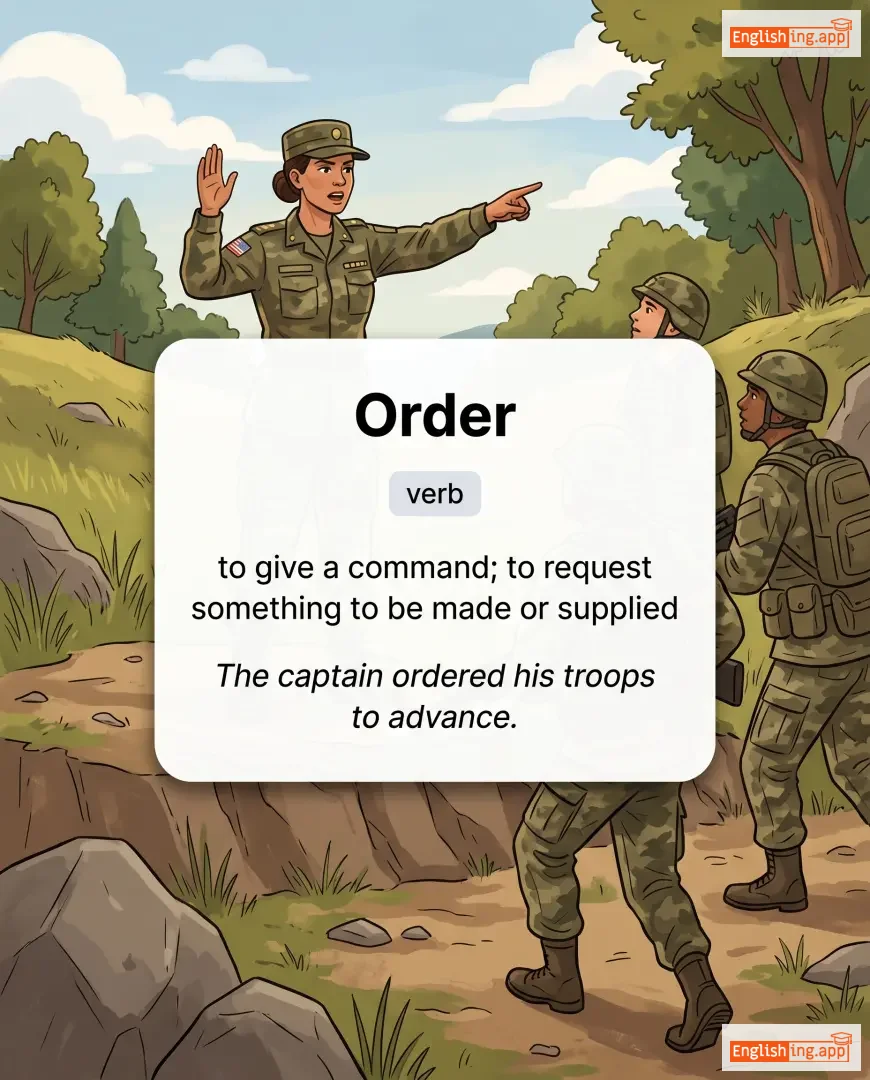
Order definition card — visual illustration of the meaning
noun
/ˈɔːdə(r)/
commande (commande)

an arrangement or command; a request for something to be made, done, or delivered

"He placed an order for a new laptop."

"Il a passé une commande pour un nouvel ordinateur portable." (Il a passé une commande pour un nouvel ordinateur portable.)
adjective
/ˈɔː.də.li/
ordonné; systématique; pacifique (orderli)

well-organized; systematic; peaceful

"Please keep your desk orderly and clean."

"Veuillez garder votre bureau ordonné et propre." (Veuillez garder votre bureau ordonne et propre.)
adjective
/ˈɔːrdɪnəl/
ordinal (ordinal)

Relating to the order or position of something in a sequence (first, second, third, etc.).

"The ordinal number 'third' indicates position in a sequence."

"Le numéro ordinal 'troisième' indique la position dans une séquence." (Le numero ordinal 'troisieme' indique la position dans une sequence.)
noun
/ˈɔːrdɪnəns/
ordonnance (ordonnance)

An authoritative rule, law, or decree issued by a city, town, or authority.

"The city council passed an ordinance banning smoking in public parks."

"Le conseil municipal a adopté une ordonnance interdisant de fumer dans les parcs publics." (Le conseil municipal a adopté une ordonnance interdisant de fumer dans les parcs publics.)
adjective
/ˈɔːrdəˌnɛri/
ordinaire (ordinaire)

Common, usual, or not special; something that happens regularly.

"She wore an ordinary dress to the party."

"Elle portait une robe ordinaire à la fête." (Elle portait une robe ordinaire à la fête.)
noun
/ˌɔːrdɪˈneɪʃən/
ordination (ordination)

The ceremony of conferring holy orders or official religious authority.

"The church held a special service for the ordination of new priests."

"L'église a organisé un service spécial pour l'ordination de nouveaux prêtres." (L'eglise a organise un service special pour l'ordination de nouveaux pretres.)
noun
/ˈɔːrdnəns/
fournitures militaires (fournitures militaires)

Military supplies including weapons, ammunition, and combat equipment.

"The army stored ordnance in a secure facility outside the city."

"L'armée a stocké des fournitures militaires dans une installation sécurisée en dehors de la ville." (L'armée a stocké des fournitures militaires dans une installation sécurisée en dehors de la ville.)
noun
/ˈɔːɡən/
organe (organe)

a part of the body that performs a specific function

"The heart is an important organ in the human body."

"Le cœur est un organe important dans le corps humain." (Le coeur est un organe important dans le corps humain.)
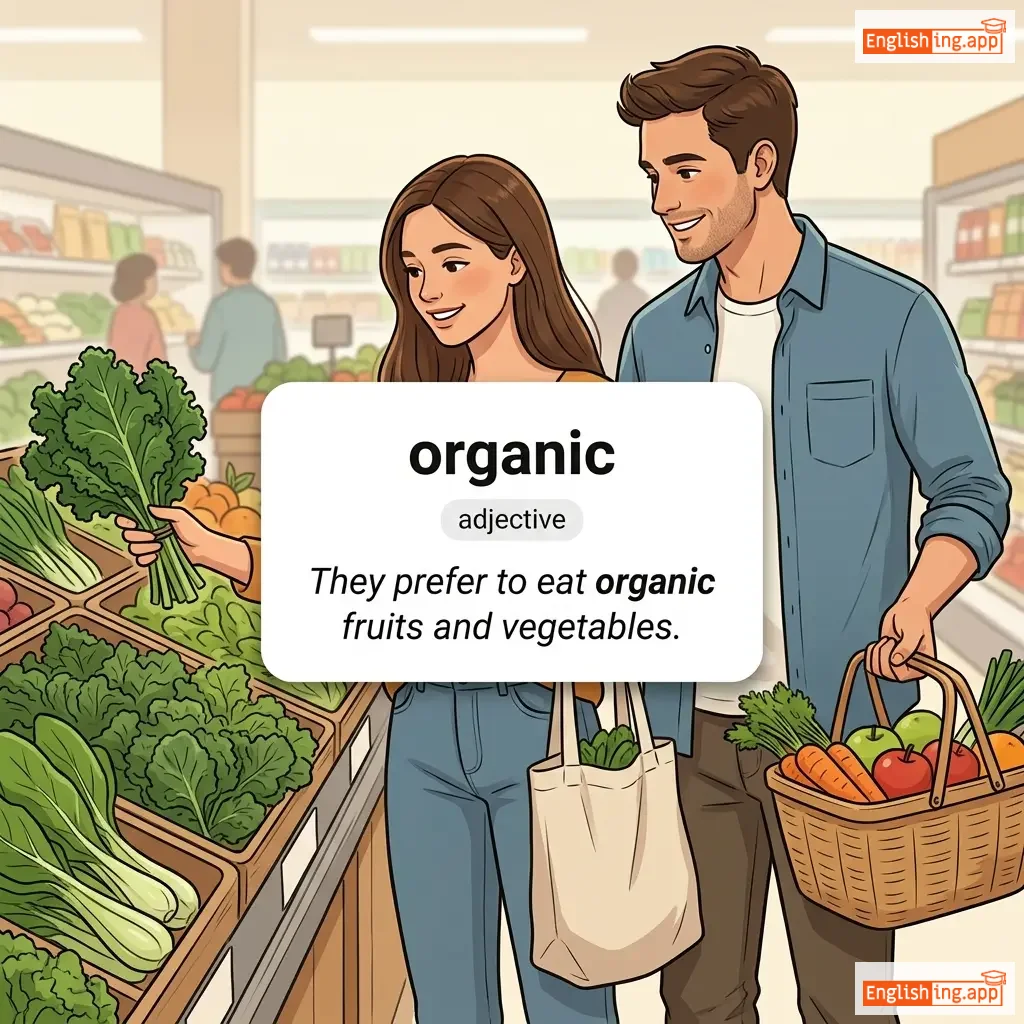
organic definition card — visual illustration of the meaning
adjective
/ɔːrˈɡænɪk/
organique (organik)

Relating to or derived from living matter; produced without artificial chemicals.

"They prefer to eat organic fruits and vegetables."

"Ils préfèrent manger des fruits et légumes biologiques." (Ils preferent manger des fruits et legumes biologiques.)
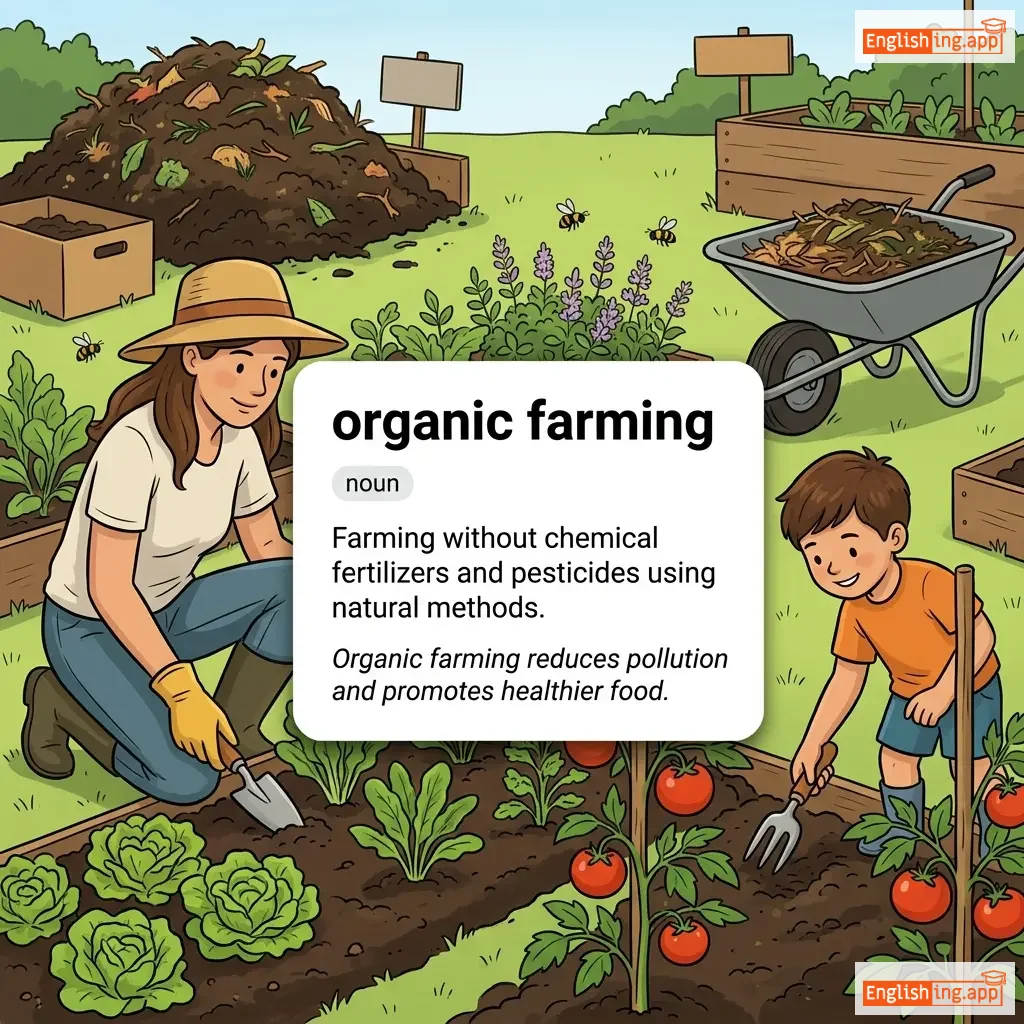
organic farming definition card — visual illustration of the meaning
noun
ˈɔːr.ɡə.nɪk ˈfɑːr.mɪŋ
agriculture biologique (agriculture biologique)

Farming without chemical fertilizers and pesticides using natural methods.

"Organic farming reduces pollution and promotes healthier food."

"L'agriculture biologique réduit la pollution et favorise des aliments plus sains." (L'agriculture biologique reduit la pollution et favorise des aliments plus sains.)
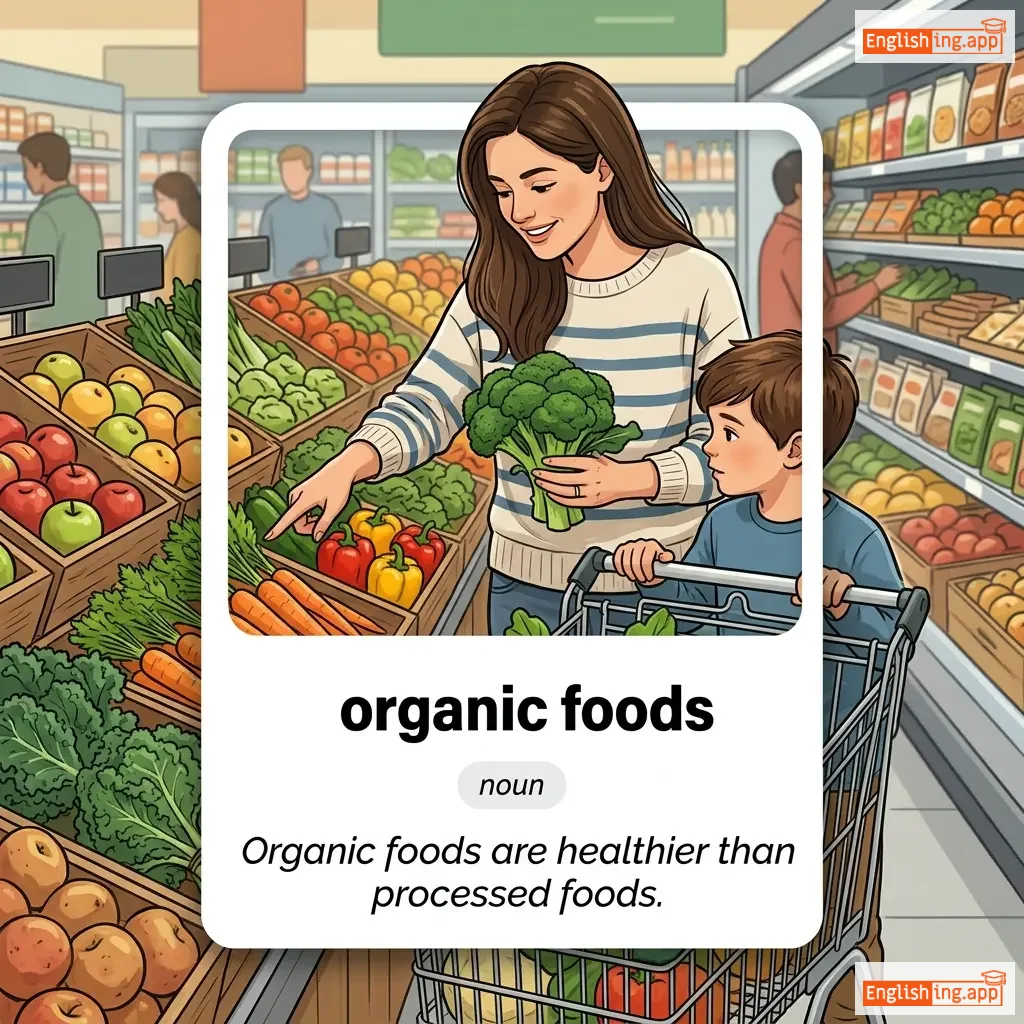
organic foods definition card — visual illustration of the meaning
noun
ɔːˈɡæn.ɪk fuːdz
aliments biologiques (aliments biologiques)

Food produced without the use of chemicals such as artificial pesticides, fertilizers, or other artificial agents.

"Organic foods are healthier than processed foods."

"Les aliments biologiques sont plus sains que les aliments transformés." (Les aliments biologiques sont plus sains que les aliments transformes.)
noun
/ˈɔːɡənɪzəm/
organisme (organisme)

a living thing that has an organized structure and can grow and reproduce

"Every organism needs water to survive."

"Chaque organisme a besoin d'eau pour survivre." (Chaque organisme a besoin d'eau pour survivre.)
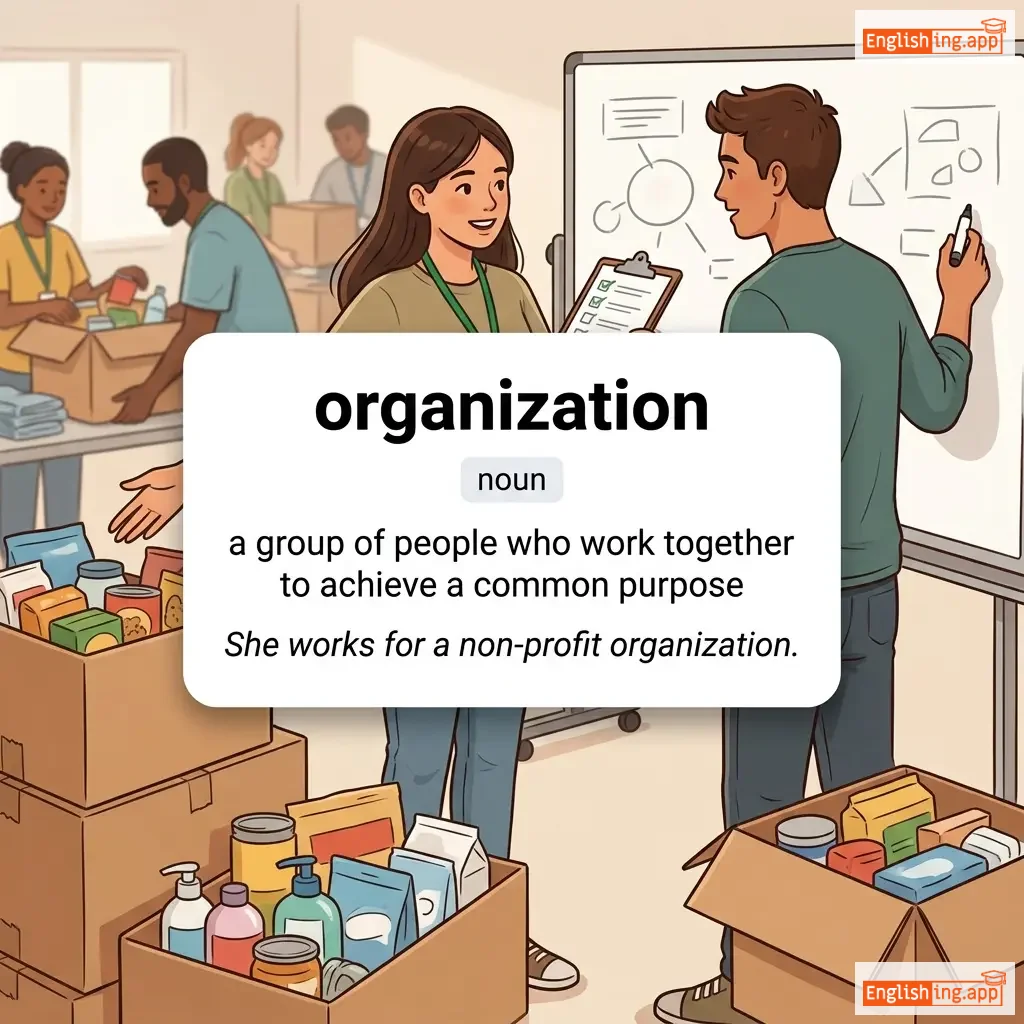
organization definition card — visual illustration of the meaning
noun
/ˌɔːɡənaɪˈzeɪʃn/
organisation (organisation)

a group of people who work together to achieve a common purpose

"She works for a non-profit organization."

"Elle travaille pour une organisation à but non lucratif." (Elle travaille pour une organisation à but non lucratif.)
adjective
/ˌɔːɡənaɪˈzeɪʃənəl/
organisationnel (organisationnel)

relating to the structure or arrangement of a company or group

"He works on improving the organizational structure of the company."

"Il travaille à améliorer la structure organisationnelle de l'entreprise." (Il travaille a ameliorer la structure organisationnelle de l'entreprise.)
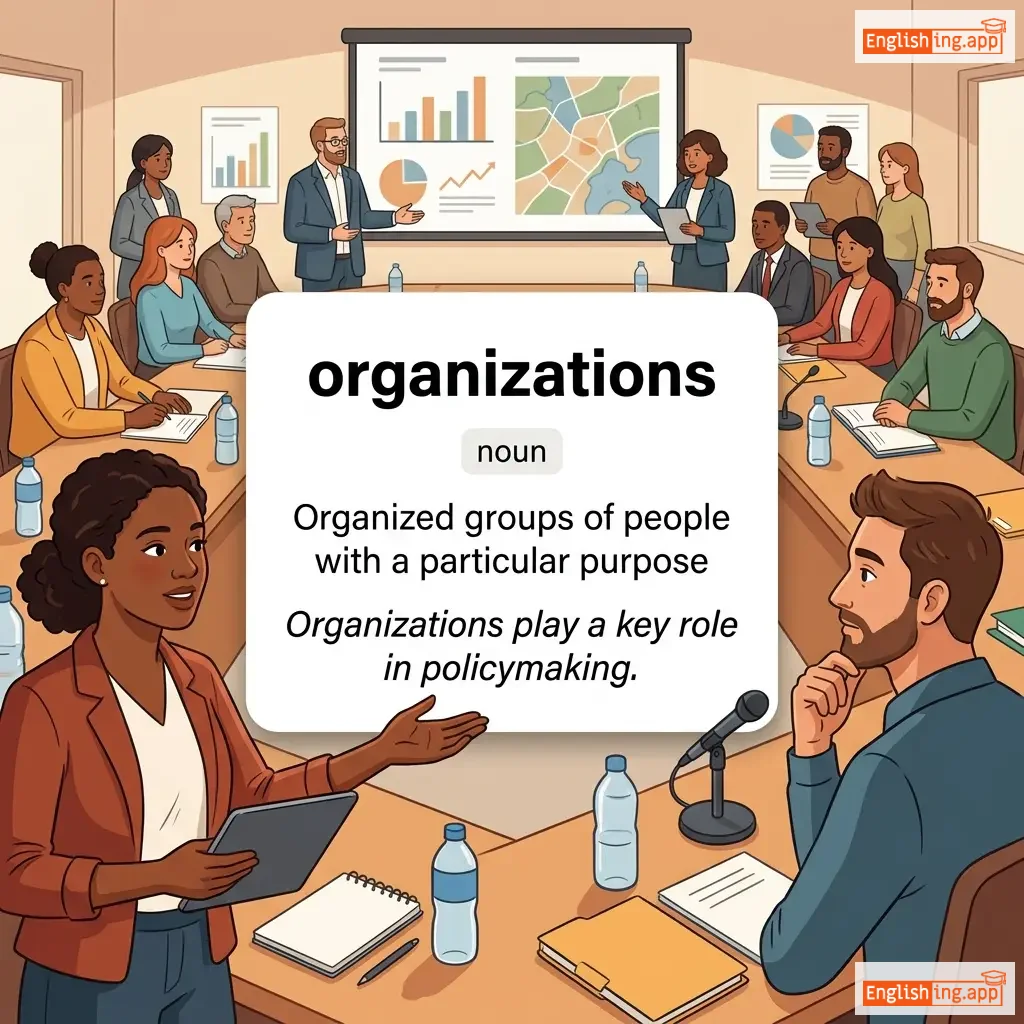
organizations definition card — visual illustration of the meaning
noun
ˌɔː.ɡən.aɪˈzeɪ.ʃənz
organisations (organisations)

Organized groups of people with a particular purpose

"Organizations play a key role in policymaking."

"Les organisations jouent un rôle clé dans l'élaboration des politiques." (Les organisations jouent un rôle clé dans l'élaboration des politiques.)
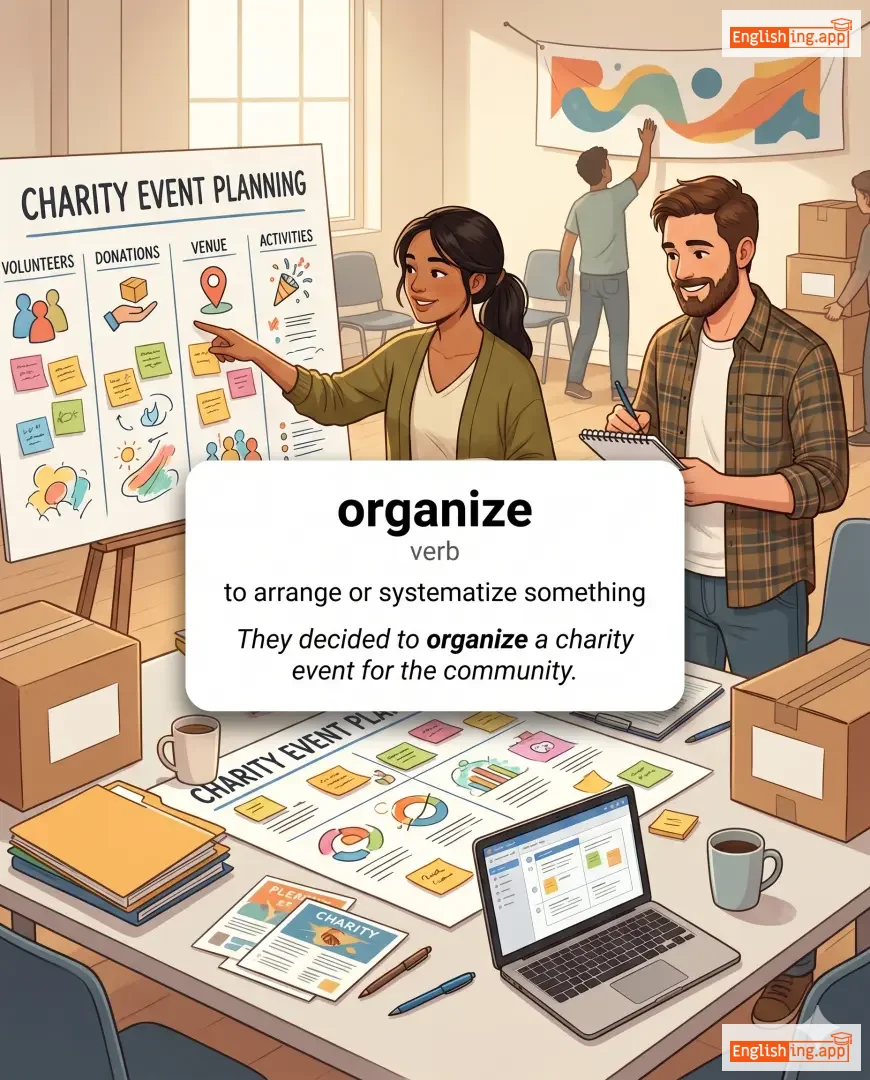
organize definition card — visual illustration of the meaning
verb
/ˈɔːɡənaɪz/
organiser (organiser)

to arrange or systematize something

"They decided to organize a charity event for the community."

"Ils ont décidé d'organiser un événement caritatif pour la communauté." (Ils ont décidé d'organiser un événement caritatif pour la communauté.)
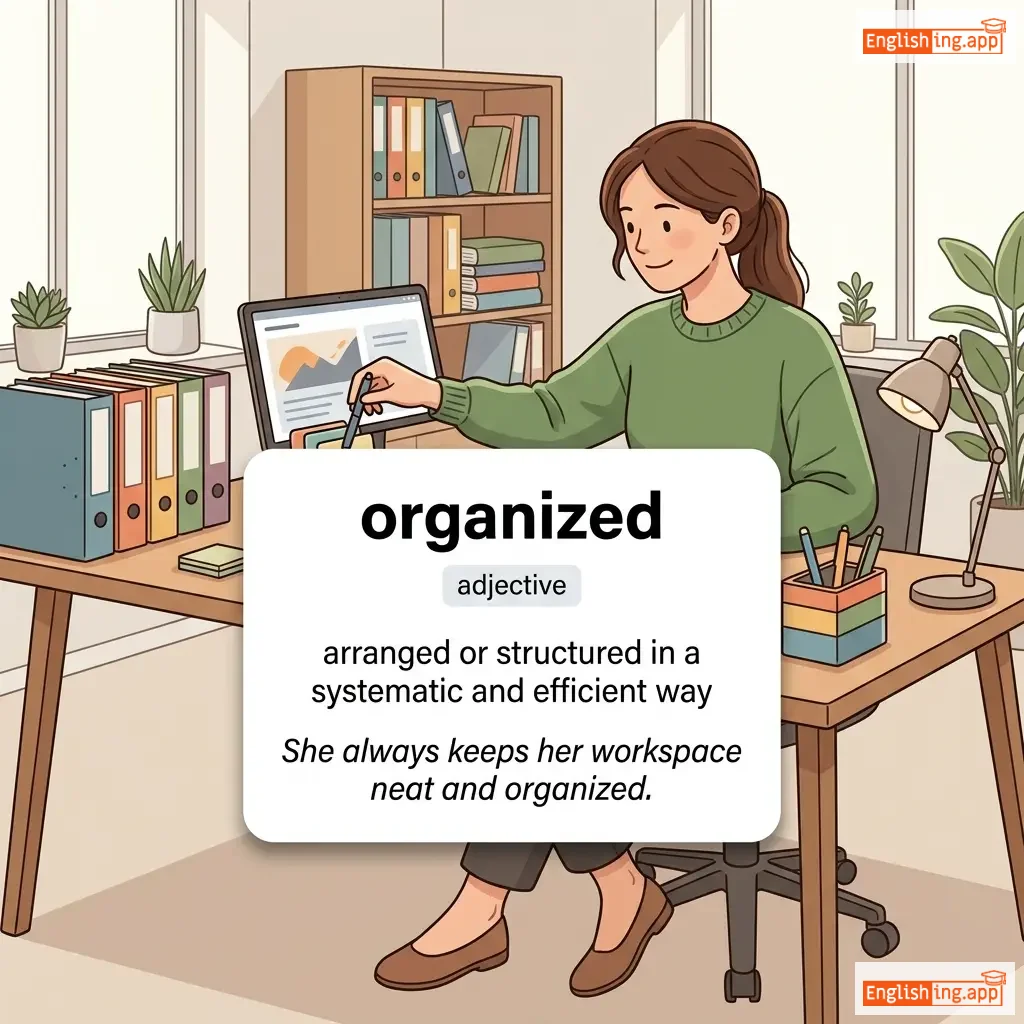
organized definition card — visual illustration of the meaning
adjective
/ˈɔːrɡənaɪzd/
organisé (organisé)

arranged or structured in a systematic and efficient way

"She always keeps her workspace neat and organized."

"Elle garde toujours son espace de travail propre et organisé." (Elle garde toujours son espace de travail propre et organisé.)
noun
/ˈɔːrɡənaɪzər/
organisateur (organisateur)

a person who arranges or coordinates activities, events, or groups; a tool or item used to keep things in order

"She worked as the main organizer of the international conference."

"Elle était l’organisatrice principale de la conférence internationale." (Elle etait l organisatrice principale de la conference internationale)
noun (plural)
/ˈɔːrdʒiːz/
orgies (orgies)

Wild gatherings involving excessive indulgence in food, drink, or sexual activity.

"The ancient Romans were infamous for their lavish feasts and orgies."

"Les anciens Romains étaient infâmes pour leurs festins somptueux et leurs orgies." (Les anciens Romains étaient infâmes pour leurs festins somptueux et leurs orgies.)
noun
/ˈɔːrdʒi/
orgie (orgie)

A wild party involving excessive indulgence, especially of a sexual nature.

"The novel described a scandalous orgy in a wealthy mansion."

"Le roman a décrit une orgie scandaleuse dans un manoir riche." (Le roman a décrit une orgie scandaleuse dans un manoir riche.)
verb
/ˈɔː.ri.ənt/
orienter (orienter)

to align or position something relative to a particular point or direction

"The map helps tourists orient themselves in the city."

"La carte aide les touristes à s'orienter dans la ville." (La carte aide les touristes à s'orienter dans la ville.)
adjective
/ˌɔː.riˈen.təl/
relatif aux pays de l'Asie de l'Est; oriental (oriental)

relating to the countries of East Asia; eastern

"The museum has a beautiful collection of oriental art."

"Le musée possède une belle collection d'art oriental." (Le musee possede une belle collection d'art oriental)
noun
/ˌɔː.ri.enˈteɪ.ʃən/
orientation (orientation)

the process of becoming familiar with a new situation or environment

"The company provides an orientation for all new employees."

"L'entreprise offre une orientation à tous les nouveaux employés." (L'entreprise offre une orientation à tous les nouveaux employés.)
noun
/ˈɔː.rɪ.fɪs/
orifice (orifice)

an opening or hole, especially in the body or a device

"The medicine was applied through a small orifice in the device."

"Le médicament a été appliqué par un petit orifice dans l'appareil." (Le médicament a été appliqué par un petit orifice dans l'appareil.)
noun
/ˈɒr.ɪ.dʒɪn/
origine (origine)

the point or place where something begins or is created

"The river has its origin in the mountains."

"La rivière prend son origine dans les montagnes." (La rivière prend son origine dans les montagnes.)
adjective
/əˈrɪdʒ.ɪ.nəl/
original (original)

existing from the beginning; not a copy or imitation

"This is the original manuscript of the novel."

"C'est le manuscrit original du roman." (C'est le manuscrit original du roman.)
noun
/əˌrɪʒ.əˈnæl.ə.ti/
originalité (originalite)

the quality of being novel or unusual; the ability to think independently and creatively

"The artist's work showed great originality and creativity."

"Le travail de l'artiste a montré une grande originalité et créativité." (le travail de lartiste a montre une grande originalite et creativite)
adverb
/əˈrɪdʒɪnəli/
à l'origine (a l'origine)

in the beginning, at first

"Originally, she wanted to be a doctor."

"À l'origine, elle voulait être médecin." (A l'origine, elle voulait être medecin.)
verb
/əˈrɪdʒɪneɪt/
provenir (provenir)

to come into existence; to begin; to create or produce

"The tradition originated in ancient times."

"La tradition est née dans les temps anciens." (La tradition est née dans les temps anciens.)
noun
/ˈɒrɪz(ə)n/
prière (priere)

a prayer, especially a devout or formal one

"He whispered a quiet orison before going to sleep."

"Il murmura une prière silencieuse avant de dormir." (Il murmura une priere silencieuse avant de dormir.)
noun
/ˈɔːrnəmənt/
ornement (ornement)

A decorative object that adds beauty to something.

"The Christmas tree was decorated with colorful ornaments."

"L'arbre de Noël était décoré avec des ornements colorés." (L'arbre de Noel etait decoré avec des ornements colores.)
adjective
/ˌɔːrnəˈmɛntl/
ornemental (ornemental)

Serving as decoration; decorative rather than functional.

"The garden was filled with ornamental plants."

"Le jardin était rempli de plantes ornementales." (Le jardin etait rempli de plantes ornementales.)
adjective
/ɔːˈneɪt/
orné (orne)

elaborately or highly decorated

"The palace hall was filled with ornate furniture and paintings."

"La salle du palais était remplie de meubles ornés et de peintures." (La salle du palais était remplie de meubles ornés et de peintures.)
adjective
/ˈɔːrnəri/
irritable (irritable)

bad-tempered and combative; stubborn

"The ornery old man refused to leave his chair."

"Le vieil homme irritable a refusé de quitter sa chaise." (Le vieil homme irritable a refusé de quitter sa chaise.)
noun
/ˌɔːrnɪˈθɒlədʒɪst/
ornithologue (ornithologue)

a scientist who studies birds

"The ornithologist spent years studying migratory birds."

"L'ornithologue a passé des années à étudier les oiseaux migrateurs." (L'ornithologue a passe des annees a etudier les oiseaux migrateurs.)
noun
/ˌɔːrnɪˈθɑːlədʒi/
ornithologie (ornithologie)

the scientific study of birds

"She pursued ornithology to understand the migration patterns of birds."

"Elle a poursuivi l'ornithologie pour comprendre les schémas de migration des oiseaux." (Elle a poursuivi l'ornithologie pour comprendre les schémas de migration des oiseaux.)
adjective
/ˈɔːrəˌtʌnd/
voix profonde et claire (voix profonde et claire)

full, rich, and clear in sound; pompous in style

"The actor's orotund voice filled the theater."

"La voix profonde de l'acteur a rempli le théâtre." (La voix profonde de l'acteur a rempli le théâtre.)
noun
/ˈɔr.fən/
orphelin (orphelin)

a child whose parents are dead; someone without protective support

"The orphan was adopted by a loving family."

"L'orphelin a été adopté par une famille aimante." (L'orphelin a été adopté par une famille aimante.)
noun
/ˈɔr.fən.ɪʒ/
orphelinat (orphelinat)

an institution for the care and education of children who have lost their parents

"The charity built a new orphanage for homeless children."

"La charité a construit un nouvel orphelinat pour les enfants sans abri." (La charité a construit un nouvel orphelinat pour les enfants sans abri.)
adjective
/ˈɔːrθədɑːks/
orthodoxe (orthuhdoks)

conforming to traditional beliefs or practices

"He comes from a very orthodox family."

"Il vient d'une famille très orthodoxe." (Il vient dune famille tres orthodoxe)