Vocabulaires

Découvrez, apprenez et maîtrisez le vocabulaire anglais

adjective
/nɪˈɡoʊ.ʃi.ə.bəl/
négociable (negociable)

Open to discussion or modification; capable of being bargained for.

"The salary offered is negotiable."

"Le salaire offert est négociable." (Le salaire offert est negociable.)
verb
/nɪˈɡoʊ.ʃi.eɪt/
négocier (negocier)

To discuss something formally in order to reach an agreement.

"They negotiated a fair deal with the supplier."

"Ils ont négocié un accord équitable avec le fournisseur." (Ils ont négocié un accord équitable avec le fournisseur.)
noun
/nɪɡoʊˈʃiːeɪʃən/
négociation (negociation)

a discussion aimed at reaching an agreement

"The negotiation between the two companies was successful."

"La négociation entre les deux entreprises a été réussie." (La negociation entre les deux entreprises a ete reussie.)
noun
/ˈneɪbər/
voisin (voisin)

a person living next door or nearby

"My neighbor lent me some sugar when I ran out."

"Mon voisin m'a prêté un peu de sucre quand je n'en avais plus." (Mon voisin m'a prêté un peu de sucre quand je n'en avais plus.)
noun
/ˈneɪbərˌhʊd/
quartier (quartier)

a district or area around or near a particular place

"I grew up in a quiet neighborhood."

"J'ai grandi dans un quartier calme." (J'ai grandi dans un quartier calme.)
adjective
/ˈneɪbərɪŋ/
voisin (voisin)

situated near or next to another place; adjacent or nearby.

"They visited a neighboring village for the festival."

"Ils ont visité un village voisin pour le festival." (Ils ont visité un village voisin pour le festival.)
noun
/ˈneɪ.bər/
voisin; du côté (voisin; du côté)

a person who lives near or next to another person

"My neighbour is very friendly and helpful."

"Mon voisin est très amical et serviable." (Mon voisin est très amical et serviable.)
adjective
/ˈneɪ.bər.ɪŋ/
voisin; adjacent; contigu (voisin; adjacent; contigu)

situated next to or very near; adjacent; bordering

"We often visit our neighbouring countries for trade."

"Nous visitons souvent nos pays voisins pour le commerce." (Nous visitons souvent nos pays voisins pour le commerce.)
conjunction
/ˈniːðər/
ni l'un ni l'autre (ni lun ni lautre)

used to connect two negative alternatives

"Neither the manager nor the assistant could attend the meeting."

"Ni le gérant ni l'assistant n'ont pu assister à la réunion." (ni le gerant ni lassistant nont pu assister a la reunion)
noun
/ˈnɛm.ə.sɪs/
ennemi / rival (ennemi / rival)

A long-standing rival or an inescapable agent of downfall.

"For years, he considered his colleague to be his nemesis."

"Pendant des années, il considérait son collègue comme son ennemi." (Pendant des années, il considérait son collègue comme son ennemi.)
noun
/ˌniːoʊˈdɑːrwɪnɪzəm/
néo-darwinisme (neo-darwinisme)

A modern interpretation of Darwin's theory of evolution, integrating genetics and natural selection.

"Neo-Darwinism combines Darwin’s theory of natural selection with modern genetics."

"Le néo-darwinisme combine la théorie de la sélection naturelle de Darwin avec la génétique moderne." (Le neo-darwinisme combine la theorie de la selection naturelle de Darwin avec la genetique moderne.)
noun
/ˌniːoʊˈlætɪn/
néo-latin (neo-latin)

The use of Latin language for scholarly, scientific, and literary purposes after the medieval period.

"Many scientific names are derived from Neo-Latin."

"De nombreux noms scientifiques sont dérivés du néo-latin." (De nombreux noms scientifiques sont dérivés du néo-latin.)
noun
/niːˈɒkrəsi/
Gouvernement dirigé par des fonctionnaires inexpérimentés ou nouveaux (Gouvernement dirigé par des fonctionnaires inexpérimentés ou nouveaux)

A government or leadership run by inexperienced or new officials.

"The sudden revolution led to a neocracy with inexperienced leaders."

"La révolution soudaine a conduit à une néocratie avec des dirigeants inexpérimentés." (La révolution soudaine a conduit à une néocratie avec des dirigeants inexpérimentés.)
adjective
/ˌniːoʊˈlɪθɪk/
néolithique (neolithique)

Relating to the later part of the Stone Age, when ground or polished stone weapons and tools prevailed.

"Neolithic communities began practicing agriculture and domesticating animals."

"Les communautés néolithiques ont commencé à pratiquer l'agriculture et à apprivoiser des animaux." (Les communautés néolithiques ont commencé à pratiquer l'agriculture et à apprivoiser des animaux.)
noun
/niːˈɒlədʒɪzəm/
néologisme (neologisme)

A newly coined word or expression.

"The internet has given rise to many neologisms like 'selfie' and 'hashtag'."

"Internet a donné naissance à de nombreux néologismes comme 'selfie' et 'hashtag'." (Internet a donne naissance a de nombreux neologismes comme 'selfie' et 'hashtag'.)
noun
/niˈɒlədʒi/
l'utilisation de nouveaux mots ou l'étude de leur origine (l'utilisation de nouveaux mots ou l'étude de leur origine)

The use of new words or the study of their origin.

"The professor specialized in neology, studying the creation of modern slang."

"Le professeur s'est spécialisé en néologie, étudiant la création du jargon moderne." (Le professeur s'est spécialisé en néologie, étudiant la création du jargon moderne.)
noun
/ˌniːoʊˈpeɪɡənɪzəm/
néopaganisme (neopaganisme)

Modern religious movements influenced by or claiming to be derived from the various historical pagan beliefs of pre-modern Europe.

"Neopaganism has gained popularity as people seek spiritual alternatives to mainstream religions."

"Le néopaganisme a gagné en popularité à mesure que les gens recherchent des alternatives spirituelles aux religions dominantes." (Le néopaganisme a gagné en popularité à mesure que les gens recherchent des alternatives spirituelles aux religions dominantes.)
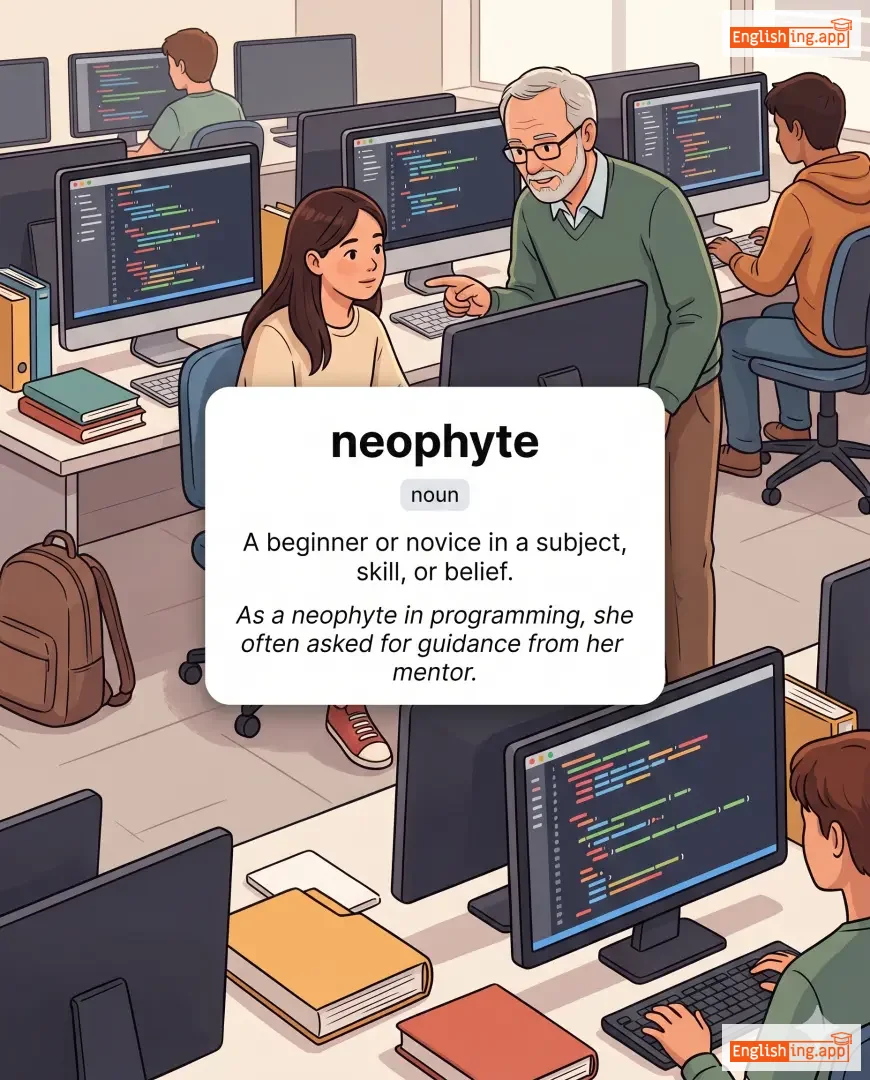
neophyte definition card — visual illustration of the meaning
noun
/ˈniːəˌfaɪt/
néophyte (neophyte)

A beginner or novice in a subject, skill, or belief.

"As a neophyte in programming, she often asked for guidance from her mentor."

"En tant que néophyte en programmation, elle demandait souvent des conseils à son mentor." (En tant que néophyte en programmation, elle demandait souvent des conseils à son mentor.)
noun
/ˈnefjuː/
neveu (neveu)

the son of one’s brother or sister

"My nephew is studying at the university."

"Mon neveu étudie à l’université." (mon neveu etudie a l universite)
noun
/ˈnɛpətɪzəm/
népotisme (nepotisme)

The practice of giving unfair advantages to relatives, especially in jobs or positions of power.

"The company was accused of nepotism after the manager hired his brother."

"L'entreprise a été accusée de népotisme après que le directeur ait embauché son frère." (L'entreprise a ete accusee de nepotisme apres que le directeur ait embauche son frere.)
noun, verb
/nɜːrv/
nerf; courage (nerf; courage)

A bundle of fibers in the body that transmits signals between the brain and other parts; also courage or audacity.

"She gathered the nerve to speak in front of the large audience."

"Elle a rassemblé le courage de parler devant un grand public." (Elle a rassemblé le courage de parler devant un grand public.)
adjective
/ˈnɜːrvəs/
nerveux/nerveuse (nerveux/nerveuse)

anxious, worried, or fearful about something

"She felt nervous before giving her presentation."

"Elle se sentait nerveuse avant de faire sa présentation." (Elle se sentait nerveuse avant de faire sa présentation.)
noun
/nɛst/
nid (nid)

a structure built by birds or other animals to hold their eggs or young.

"The bird built a nest in the tall tree."

"L'oiseau a construit un nid dans l'arbre haut." (L'oiseau a construit un nid dans l'arbre haut.)
verb
/ˈnɛsəl/
se blottir (se blottir)

to settle or lie comfortably within or against something

"The child nestled into her mother's arms."

"L'enfant s'est blotti dans les bras de sa mère." (L'enfant s'est blotti dans les bras de sa mère.)
noun
/ˈnɛslɪŋ/
oisonnet (oisonnè)

a young bird that has not yet left the nest

"The nestling waited for its parent to bring food."

"Le oisonnet attendait que ses parents apportent de la nourriture." (Le oisonnet attendait que ses parents apportent de la nourriture.)
noun
/nɛt/
filet (filet)

a piece of material made of threads or ropes woven together, used to catch or hold things

"The fisherman cast his net into the sea."

"Le pêcheur a jeté son filet dans la mer." (Le pêcheur a jeté son filet dans la mer.)
adjective
/ˈnɛðər/
inférieur (inferieur)

situated down or below; lower

"They explored the nether regions of the cave."

"Ils ont exploré les régions inférieures de la grotte." (Ils ont explore les regions inferieures de la grotte.)
noun
/ˈnɛtl̩/
plante avec des poils qui provoquent des irritations lorsqu'ils sont touchés (plante avec des poils qui provoquent des irritations lorsqu'ils sont touchés)

a plant with stinging hairs that cause irritation when touched

"He accidentally brushed against the nettle and felt a sharp sting."

"Il a accidentellement frôlé l'ortie et a ressenti une douleur aiguë." (Il a accidentellement frôlé l'ortie et a ressenti une douleur aiguë.)
adjective
/ˈnɛtlˌsʌm/
irritant (irritant)

Causing irritation, annoyance, or difficulty.

"The nettlesome rules frustrated the workers."

"Les règles irritantes ont frustré les travailleurs." (Les regles irritantes ont frustre les travailleurs.)
noun
/ˈnɛtˌwɜrk/
réseau (reseau)

A system of interconnected people, things, or computers.

"She built a strong professional network."

"Elle a créé un réseau professionnel solide." (Elle a cree un reseau professionnel solide.)
networking definition card — visual illustration of the meaning
noun
/ˈnɛtˌwɜːkɪŋ/
réseautage (reseautage)

The action of establishing connections and relationships, especially for career or business purposes.

"Networking is important for career development."

"Le réseautage est important pour le développement de carrière." (Le réseautage est important pour le développement de carrière.)
adjective
/ˈnjʊrəl/
neuronal (nyu rah nal)

Relating to nerves or the nervous system.

"Scientists study neural connections in the brain."

"Les scientifiques étudient les connexions neuronales dans le cerveau." (Les scientifiques etudient les connexions neuronales dans le cerveau.)
noun
/njʊˈrældʒə/
douleur nerveuse (douleur nerveuse)

intense, often intermittent pain along a nerve pathway

"The patient suffers from neuralgia in her face."

"Le patient souffre de névralgie dans son visage." (Le patient souffre de névralgie dans son visage.)
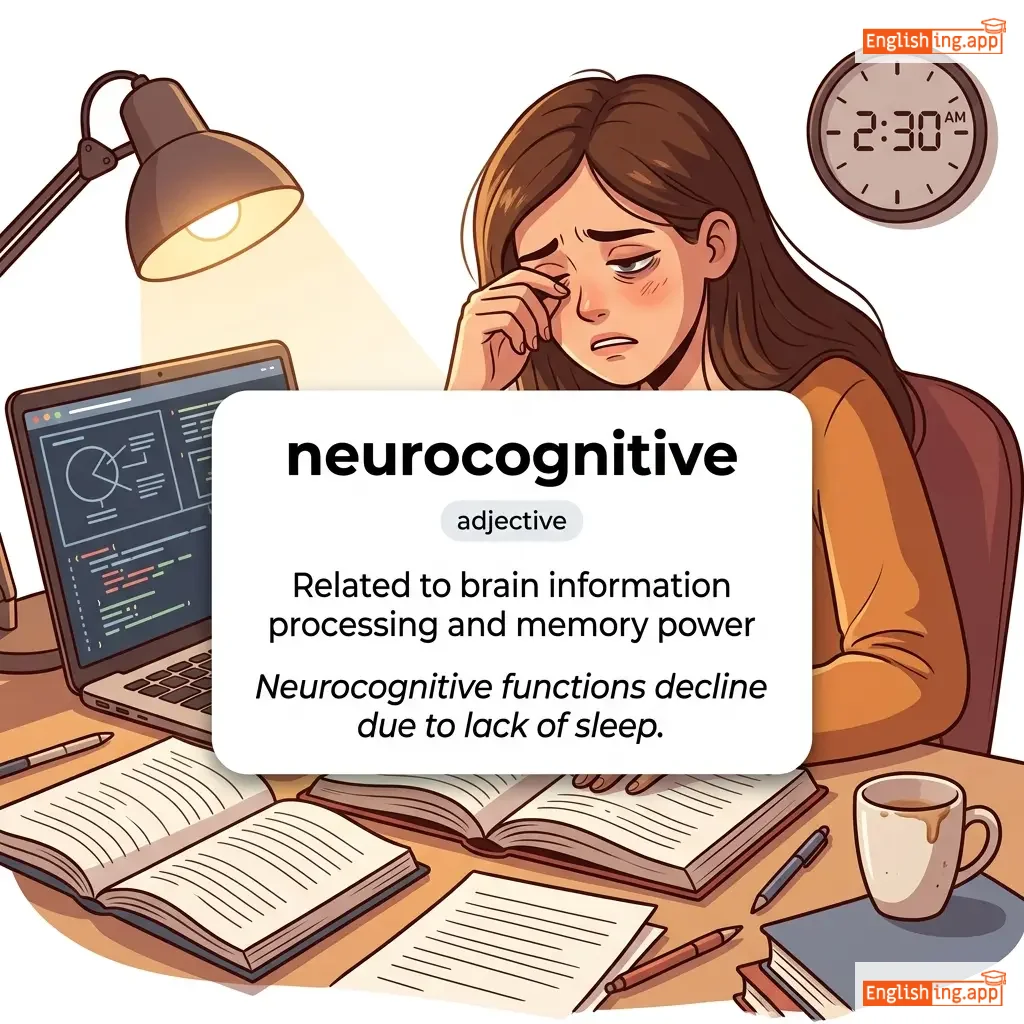
neurocognitive definition card — visual illustration of the meaning
adjective
ˌnjʊəroʊˈkɒɡnɪtɪv
neurocognitif (neurocognitif)

Related to brain information processing and memory power

"Neurocognitive functions decline due to lack of sleep."

"Les fonctions neurocognitives déclinent en raison du manque de sommeil." (Les fonctions neurocognitives déclinent en raison du manque de sommeil.)
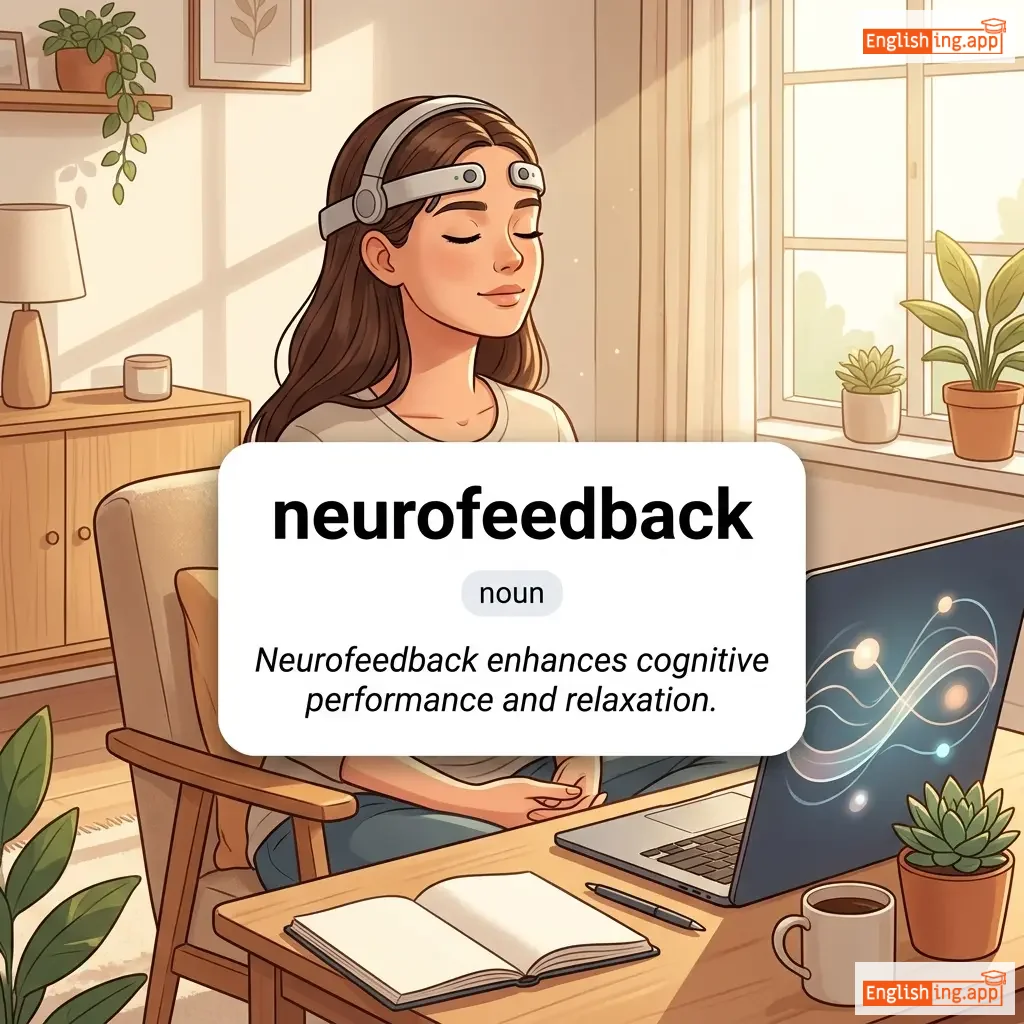
neurofeedback definition card — visual illustration of the meaning
noun
ˈnjʊə.rəʊ ˌfiːd.bæk
une technique qui utilise les activités cérébrales en temps réel pour enseigner l'autorégulation de la fonction cérébrale (neurofeedback)

A technique that uses real-time displays of brain activity to teach self-regulation of brain function.

"Neurofeedback enhances cognitive performance and relaxation."

"Le neurofeedback améliore la performance cognitive et la relaxation." (Le neurofeedback améliore la performance cognitive et la relaxation.)
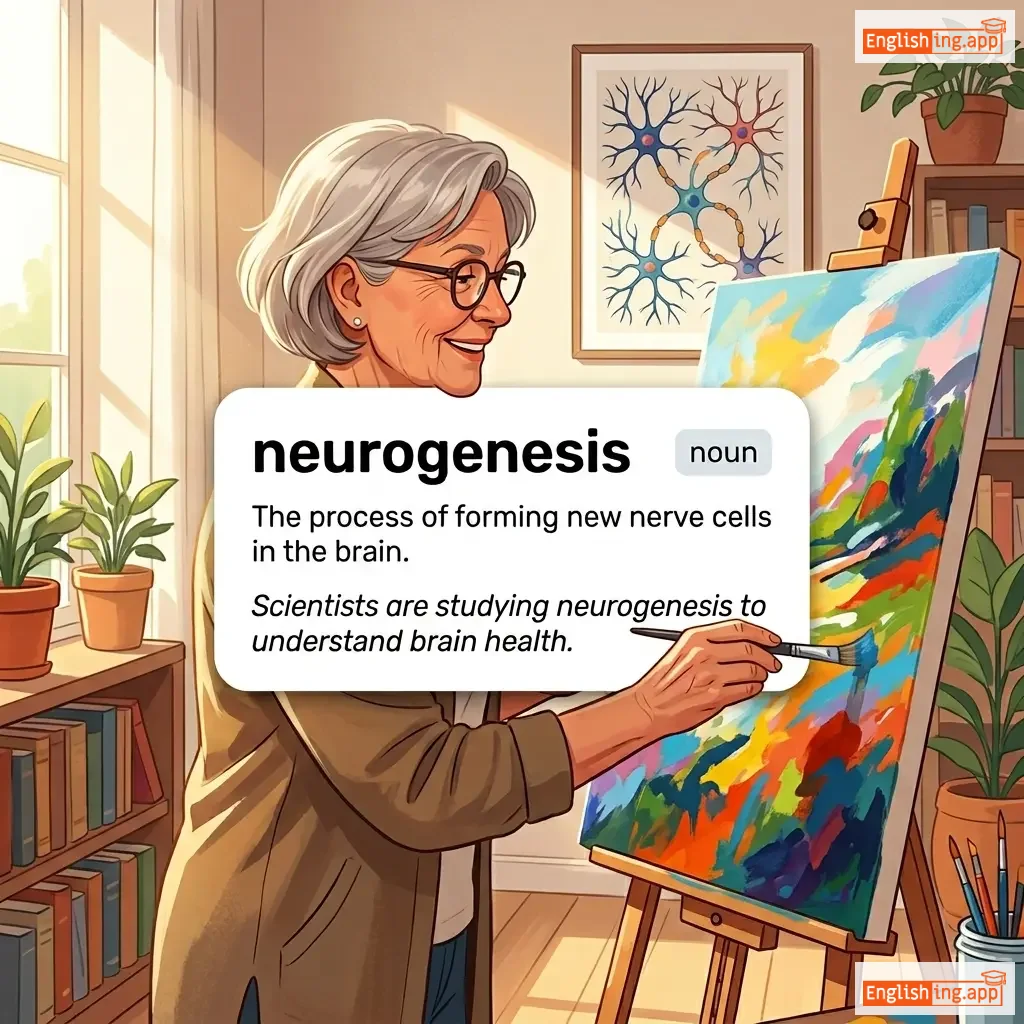
neurogenesis definition card — visual illustration of the meaning
noun
/ˌnjʊə.rəʊˈdʒɛn.ɪ.sɪs/
formation de nouvelles cellules nerveuses (formation de nouvelles cellules nerveuses)

The process of forming new nerve cells in the brain.

"Scientists are studying neurogenesis to understand brain health."

"Les scientifiques étudient la neurogénèse pour comprendre la santé du cerveau." (Les scientifiques etudient la neurogenese pour comprendre la sante du cerveau.)
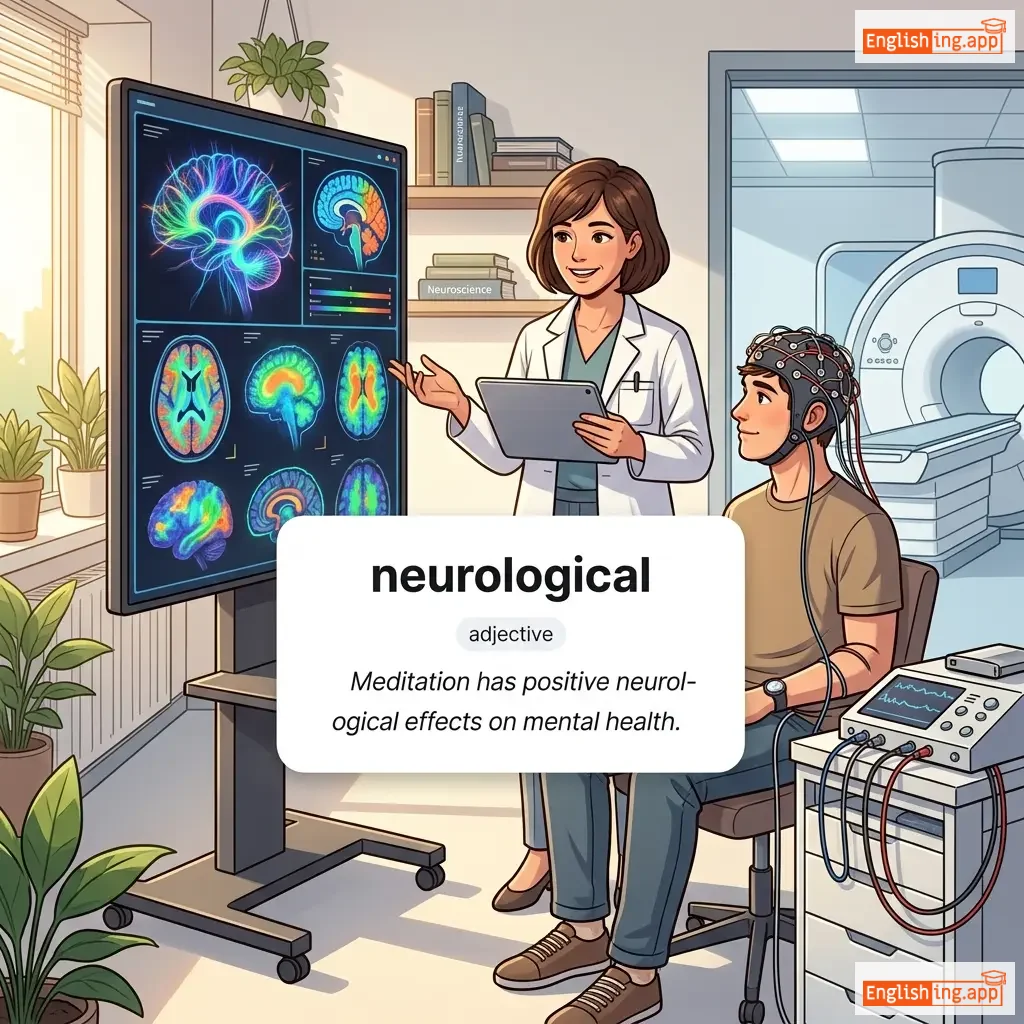
neurological definition card — visual illustration of the meaning
adjective
/ˌnjʊə.rəˈlɒdʒ.ɪ.kəl/
neurologique (neurologique)

Relating to the anatomy, functions, and organic disorders of nerves and the nervous system.

"Meditation has positive neurological effects on mental health."

"La méditation a des effets neurologiques positifs sur la santé mentale." (La meditation a des effets neurologiques positifs sur la sante mentale.)
noun
/njʊˈrɑːlədʒi/

The branch of medicine that deals with disorders of the nervous system.

"She specializes in neurology and treats patients with brain diseases."

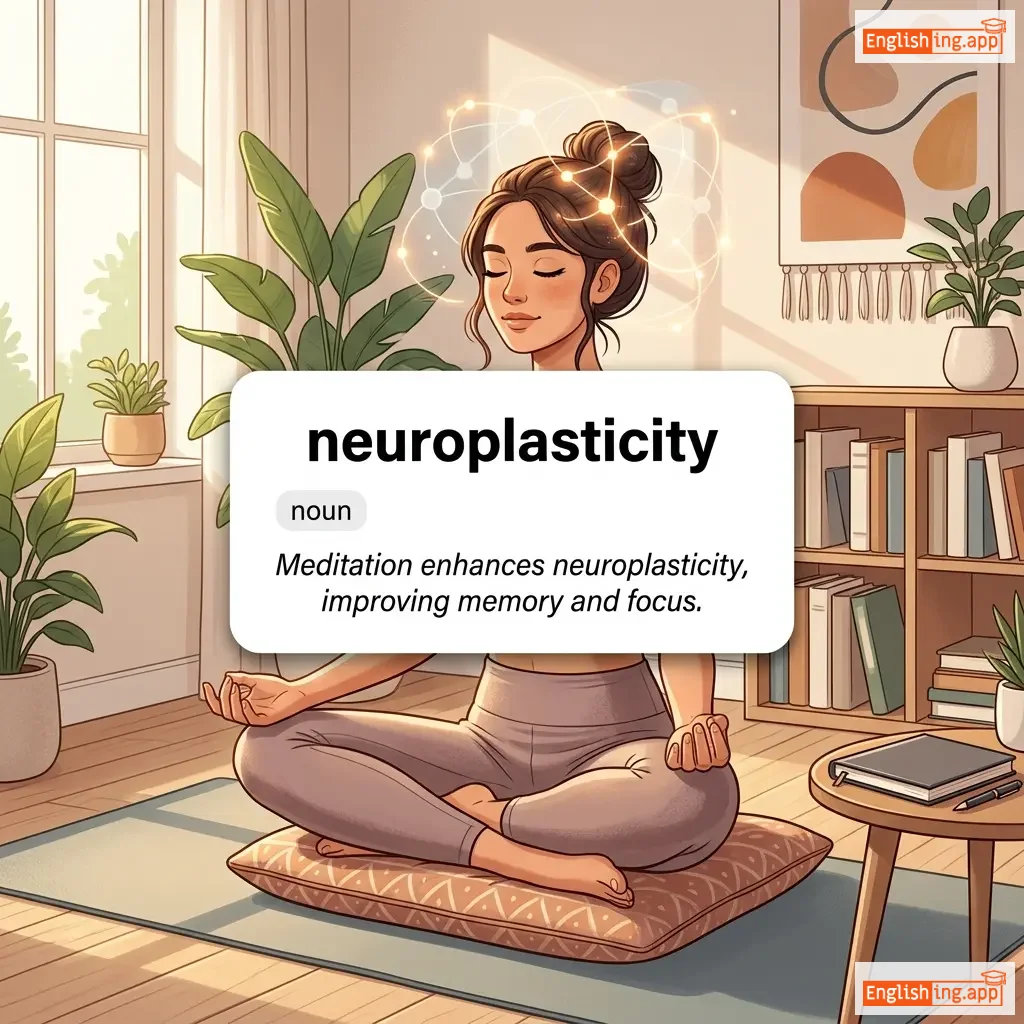
neuroplasticity definition card — visual illustration of the meaning
noun
ˌnjʊə.rəʊ.plæsˈtɪ.sɪ.ti
neuroplasticité (neuroplasticité)

The ability of the brain to reorganize itself by forming new neural connections throughout life.

"Meditation enhances neuroplasticity, improving memory and focus."

"La méditation favorise la neuroplasticité, améliorant la mémoire et la concentration." (La meditation favorise la neuroplasticite, ameliorant la memoire et la concentration.)
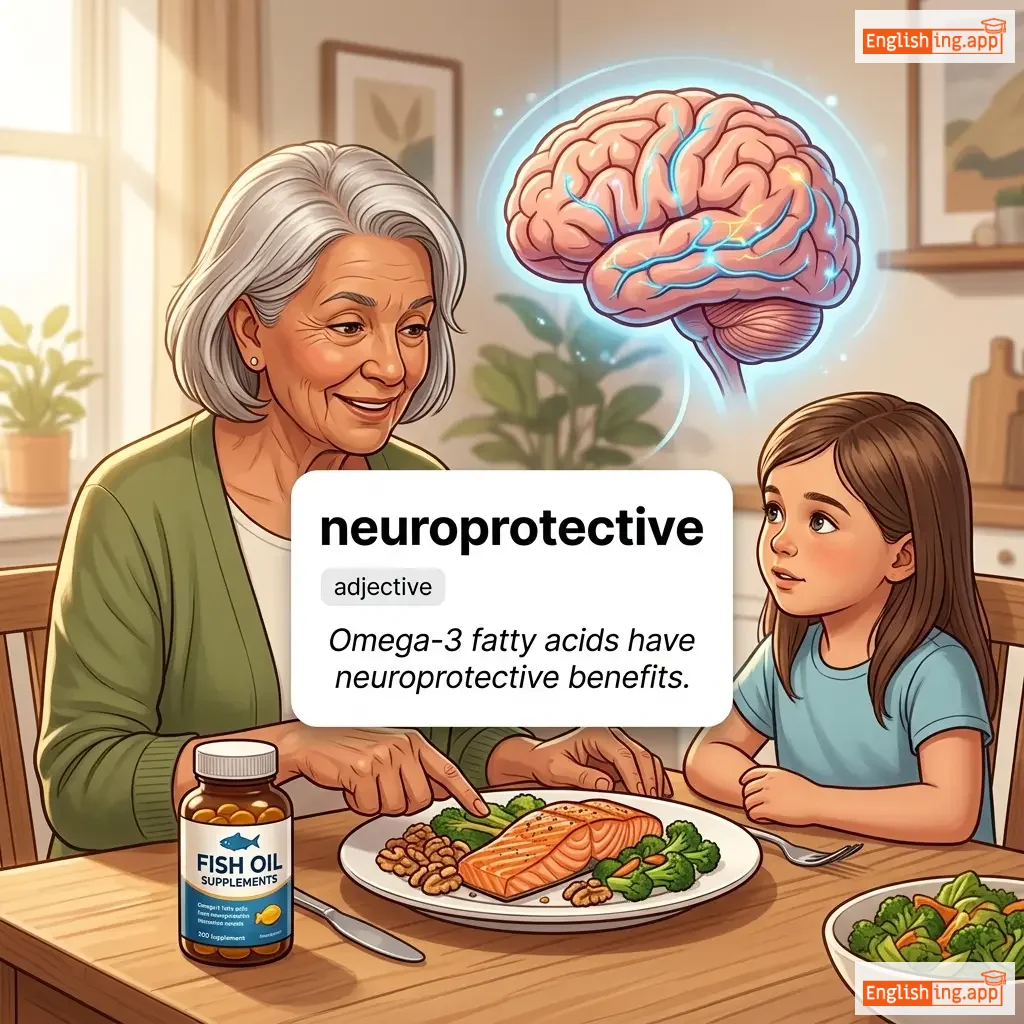
neuroprotective definition card — visual illustration of the meaning
adjective
ˌnjʊə.rəʊ.prəˈtek.tɪv
neuroprotecteur (neuroprotecteur)

Having the ability to protect nerve cells from damage, degeneration, or impaired function.

"Omega-3 fatty acids have neuroprotective benefits."

"Les acides gras oméga-3 ont des bienfaits neuroprotecteurs." (Les acides gras oméga-3 ont des bienfaits neuroprotecteurs.)
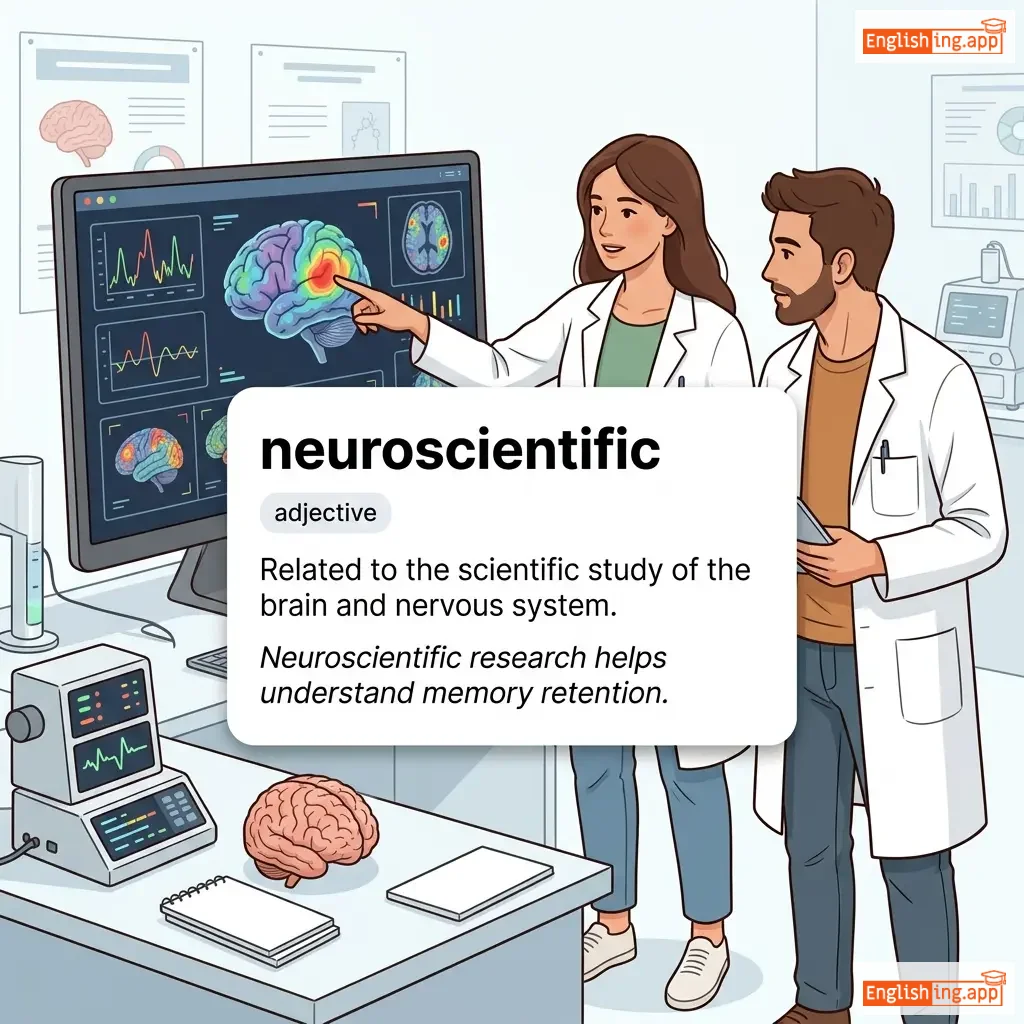
neuroscientific definition card — visual illustration of the meaning
adjective
ˌnjʊə.rəʊ.saɪənˈtɪ.fɪk
relatif à la neurocience (relatif a la neuroscience)

Related to the scientific study of the brain and nervous system.

"Neuroscientific research helps understand memory retention."

"La recherche neuroscientifique aide à comprendre la rétention de la mémoire." (La recherche neuroscientifique aide a comprendre la retention de la memoire.)
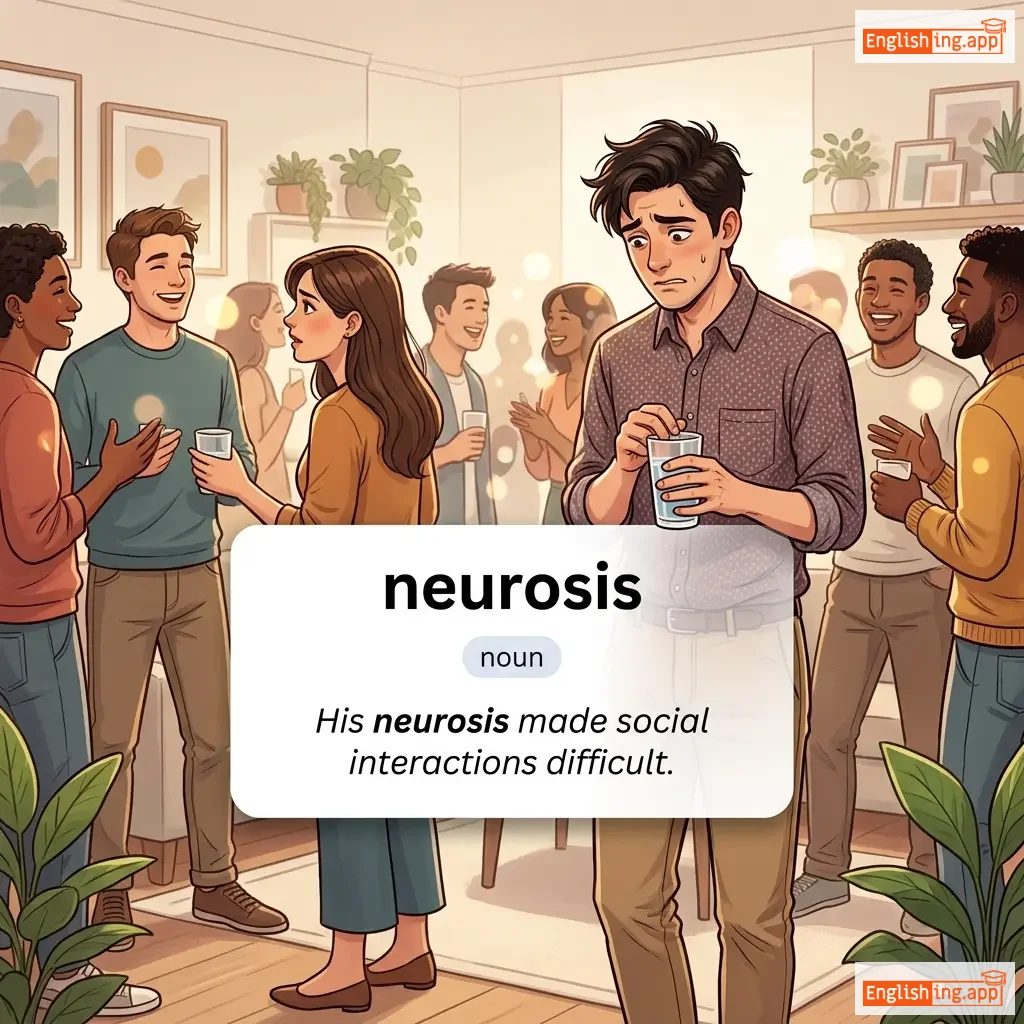
neurosis definition card — visual illustration of the meaning
noun
/njʊəˈrəʊ.sɪs/
névrose (nevrose)

A relatively mild mental illness that is not caused by organic disease, involving symptoms of stress.

"His neurosis made social interactions difficult."

"Sa névrose a rendu les interactions sociales difficiles." (Sa nevrose a rendu les interactions sociales difficiles.)
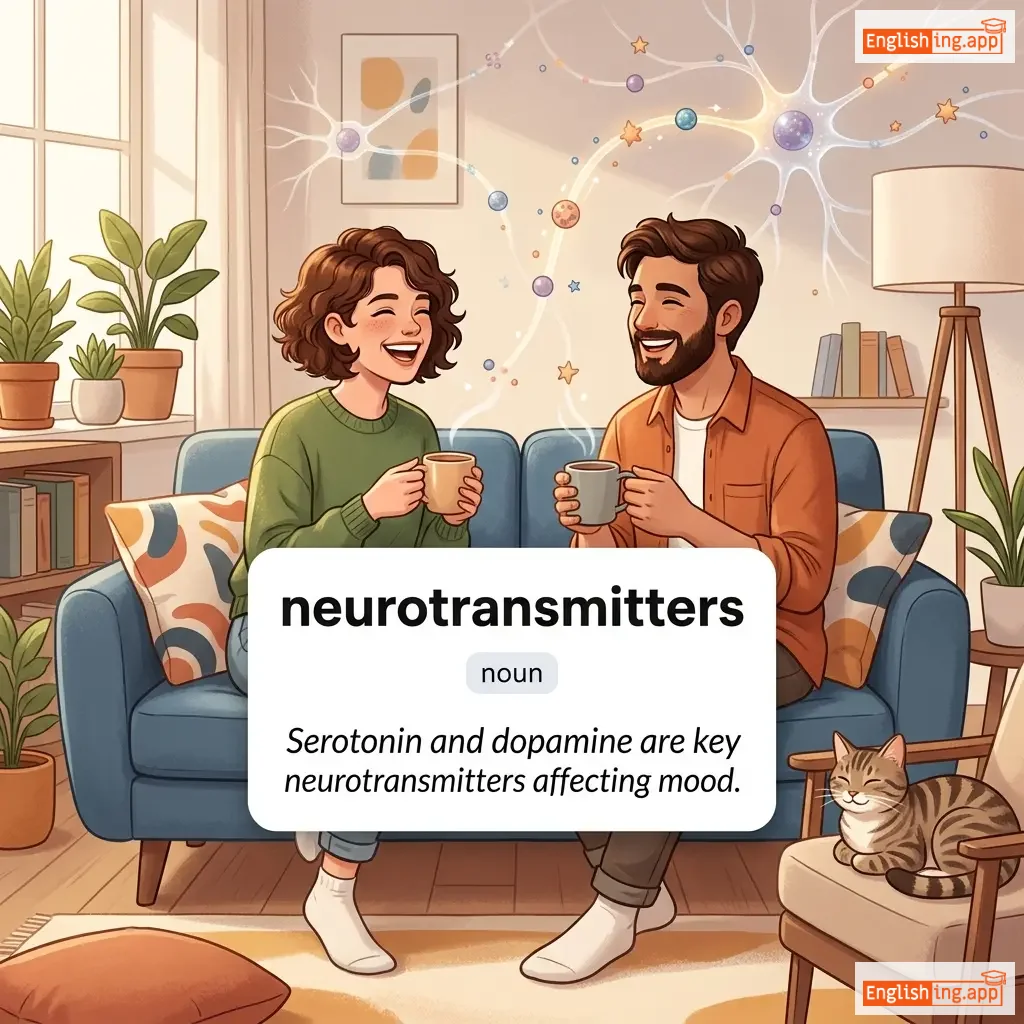
neurotransmitters definition card — visual illustration of the meaning
noun
/ˈnjʊə.rəʊ.trænsˌmɪt.ərs/
neurotransmetteurs (neurotransmetteurs)

Chemical messengers that transmit signals across nerve synapses, affecting mood, behavior, and cognitive functions.

"Serotonin and dopamine are key neurotransmitters affecting mood."

"La sérotonine et la dopamine sont des neurotransmetteurs clés qui affectent l'humeur." (La serotonine et la dopamine sont des neurotransmetteurs cles qui affectent l'humeur.)
verb
/ˈnuːtər/
stériliser (steriliser)

To remove the reproductive organs of an animal; or having no gender.

"They decided to neuter their cat to prevent more kittens."

"Ils ont décidé de stériliser leur chat pour éviter plus de chatons." (Ils ont décidé de stériliser leur chat pour éviter plus de chatons.)
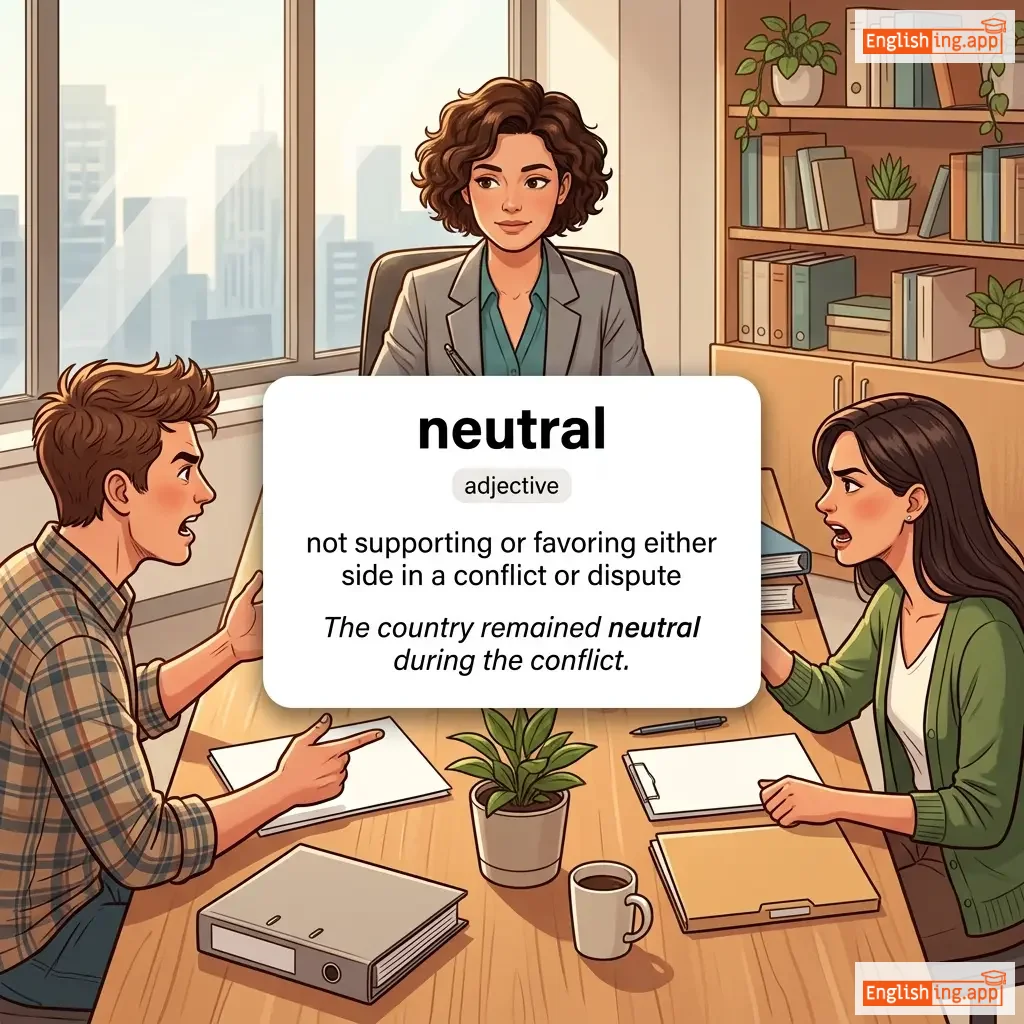
neutral definition card — visual illustration of the meaning
adjective
/ˈnjuːtrəl/
neutre (neutr)

not supporting or favoring either side in a conflict or dispute

"The country remained neutral during the conflict."

"Le pays est resté neutre pendant le conflit." (Le pays est resté neutre pendant le conflit.)
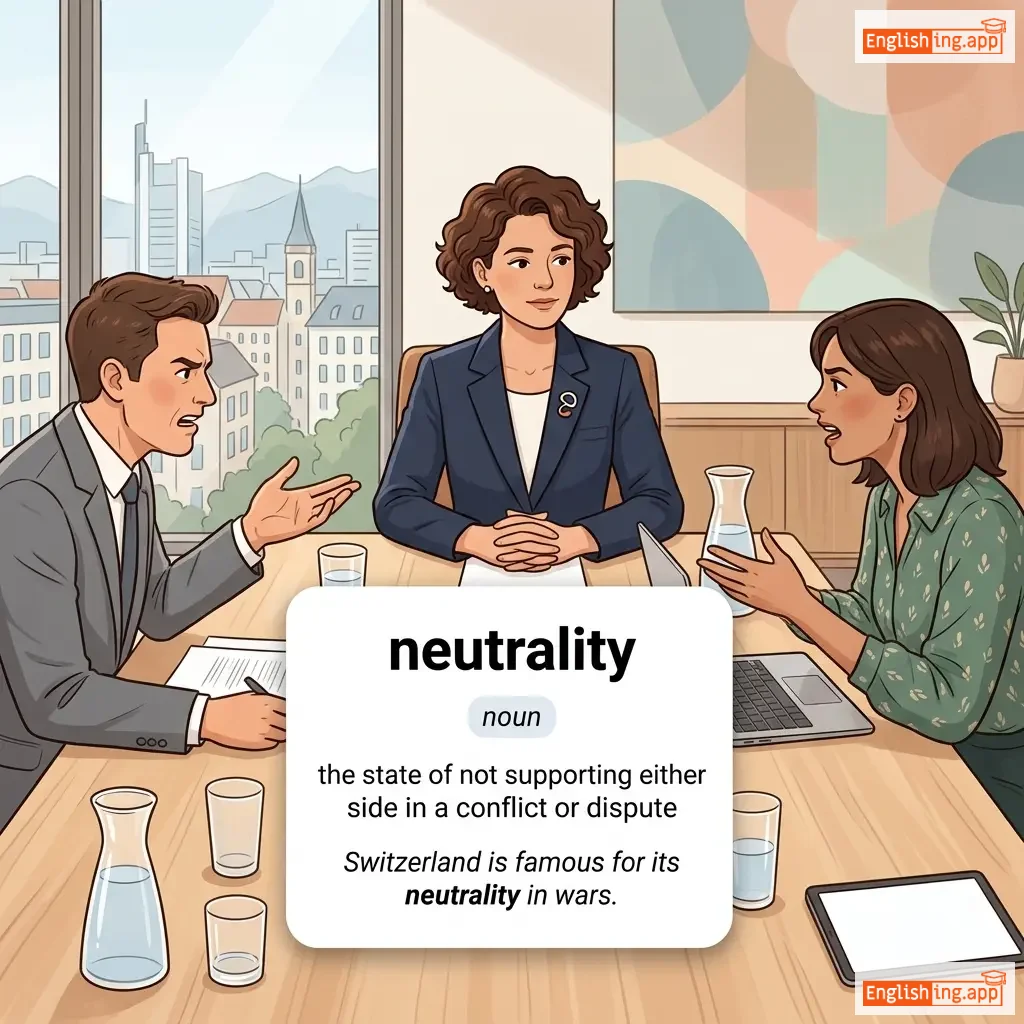
neutrality definition card — visual illustration of the meaning
noun
/nuːˈtræl.ə.ti/
neutralité (neutralite)

the state of not supporting either side in a conflict or dispute

"Switzerland is famous for its neutrality in wars."

"La Suisse est célèbre pour sa neutralité dans les guerres." (La Suisse est celebre pour sa neutralite dans les guerres.)
verb
/ˈnjuːtrəlaɪz/
neutraliser (neutraliser)

to make something ineffective or harmless

"The medicine helped neutralize the poison in his system."

"Le médicament a aidé à neutraliser le poison dans son système." (Le médicament a aidé à neutraliser le poison dans son système.)
adverb
/ˈnɛvər/
jamais (jamais)

at no time in the past or future; not ever

"I have never seen such a beautiful sunset."

"Je n'ai jamais vu un coucher de soleil aussi beau." (Je n'ai jamais vu un coucher de soleil aussi beau.)
adverb
/ˌnɛvəðəˈlɛs/
néanmoins (neanmoins)

in spite of that; however

"He was tired; nevertheless, he kept working."

"Il était fatigué; néanmoins, il a continué à travailler." (Il etait fatigue; neanmoins, il a continue a travailler.)
adjective
/njuː/
nouveau (nouveau)

recently made, discovered, or introduced; not existing before

"He bought a new car yesterday."

"Il a acheté une nouvelle voiture hier." (Il a acheté une nouvelle voiture hier.)