Vocabulaires

Découvrez, apprenez et maîtrisez le vocabulaire anglais

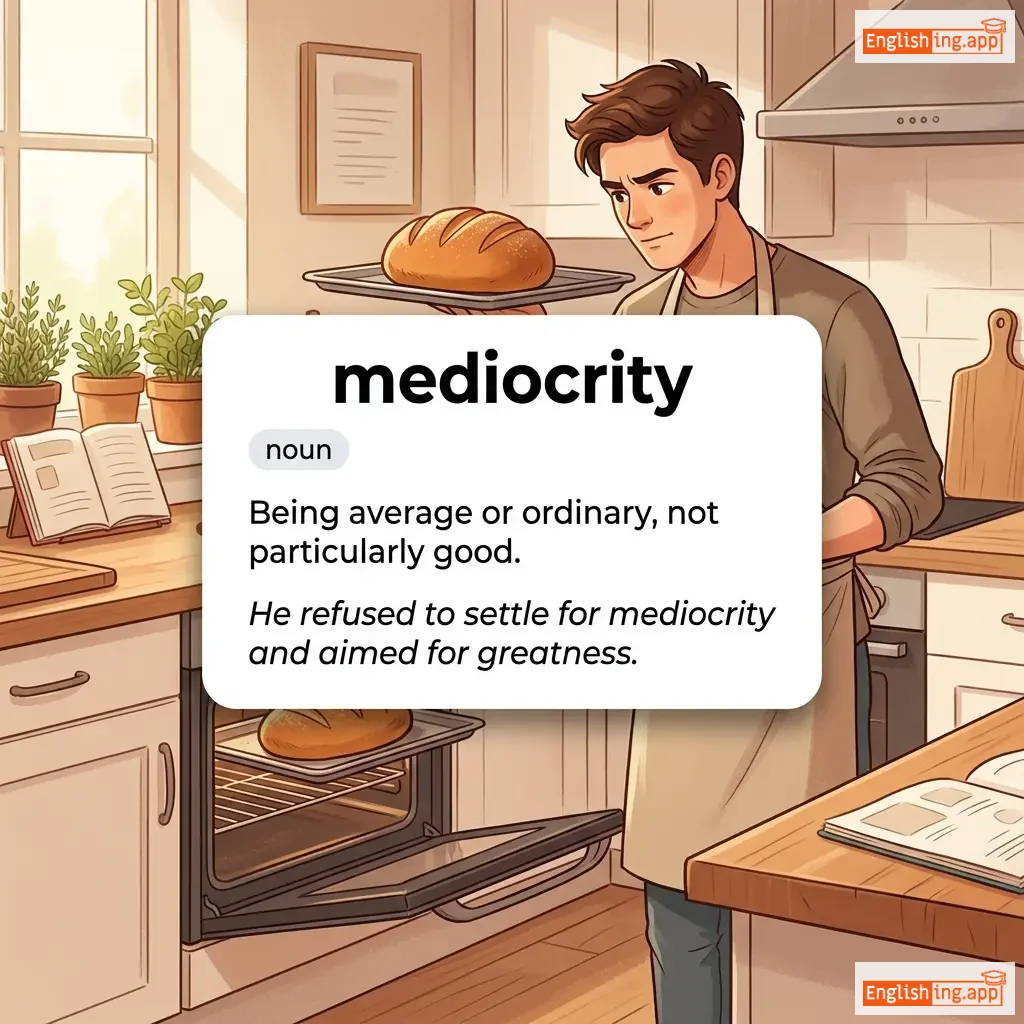
mediocrity definition card — visual illustration of the meaning
noun
ˌmiː.diˈɒk.rə.ti
médiocrité (mediocrite)

Being average or ordinary, not particularly good.

"He refused to settle for mediocrity and aimed for greatness."

"Il a refusé de se contenter de la médiocrité et a visé la grandeur." (Il a refuse de se contenter de la mediocrite et a vise la grandeur.)
noun
/ˌmɛdɪˈteɪʃən/
méditation (meditation)

The practice of focusing the mind to achieve calmness, clarity, or spiritual growth.

"She practices meditation every morning to start her day peacefully."

"Elle pratique la méditation chaque matin pour commencer sa journée en paix." (Elle pratique la meditation chaque matin pour commencer sa journée en paix.)
noun
/ˈmiːdiəm/
moyen (moyen)

A means or channel of communication, expression, or artistic work.

"Television is a powerful medium for spreading information."

"La télévision est un moyen puissant de diffuser des informations." (La television est un moyen puissant de diffuser des informations.)
noun
/ˈmɛdli/
mélange (melange)

A mixture of different things, especially musical tunes combined together.

"The band played a medley of popular songs."

"Le groupe a joué un mélange de chansons populaires." (Le groupe a joué un mélange de chansons populaires.)
adjective
/miːk/
doux (doux)

Quiet, gentle, and submissive in nature.

"Despite his strength, he remained meek and humble."

"Malgré sa force, il est resté doux et humble." (Malgré sa force, il est resté doux et humble.)
adverb
/ˈmiːk.li/
humblement; docilement (humblement; docilement)

in a quiet, gentle way; without resistance or protest

"He meekly accepted the criticism without arguing."

"Il a accepté les critiques humblement sans discuter." (Il a accepté les critiques humblement sans discuter.)
noun
/ˈmiːknəs/
humilité (humilite)

The quality of being quiet, gentle, and submissive

"His meekness was often mistaken for weakness by his colleagues."

"Sa humilité était souvent prise pour de la faiblesse par ses collègues." (Sa humilite etait souvent prise pour de la faiblesse par ses collegues.)
meet definition card — visual illustration of the meaning
verb
/miːt/
rencontrer (rencontrer)

To come into the presence of someone by chance or arrangement.

"I will meet you at the cafe tomorrow."

"Je te rencontrerai au café demain." (Je te rencontrerai au café demain.)
noun
/ˈmiːtɪŋ/
réunion (reunion)

A gathering of people for discussion or decision-making.

"The board had a meeting to finalize the budget."

"Le conseil a eu une réunion pour finaliser le budget." (Le conseil a eu une reunion pour finaliser le budget.)
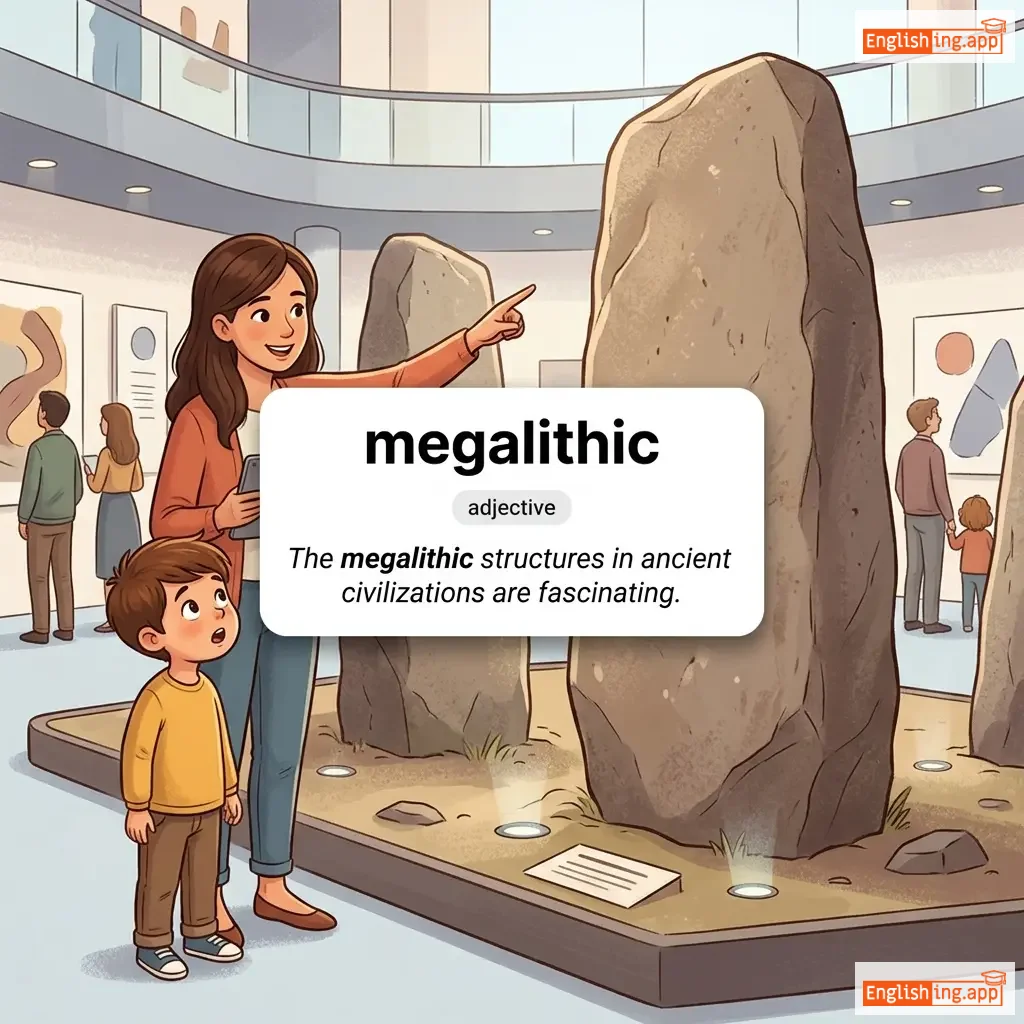
megalithic definition card — visual illustration of the meaning
adjective
ˌmɛɡəˈlɪθɪk
mégalithique (megalithique)

Relating to or denoting prehistoric monuments made of or containing large stones.

"The megalithic structures in ancient civilizations are fascinating."

"Les structures mégalithiques dans les civilisations anciennes sont fascinantes." (Les structures mégalithiques dans les civilisations anciennes sont fascinantes.)
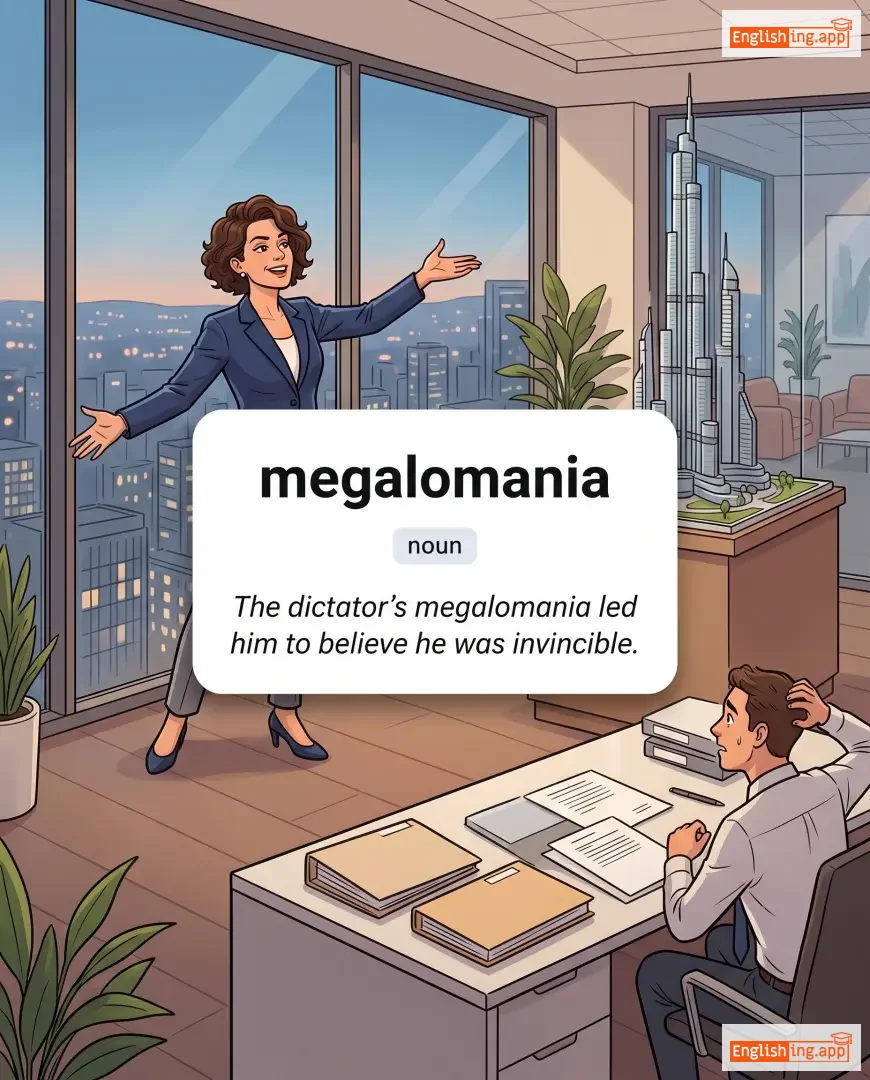
megalomania definition card — visual illustration of the meaning
noun
/ˌmɛɡələˈmeɪniə/
fantasies délirantes de pouvoir, richesse ou omnipotence (fantasies delirantes de pouvoir, richesse ou omnipotence)

A condition characterized by delusional fantasies of power, wealth, or omnipotence.

"The dictator’s megalomania led him to believe he was invincible."

"La mégalomanie du dictateur l’a conduit à croire qu’il était invincible." (La megalomanie du dictateur l’a conduit à croire qu’il était invincible.)
adjective
/ˌmel.ənˈkɒl.ɪk/
triste et pensif; exprimant ou ressentant de la tristesse (melancolique)

sad and thoughtful; feeling or expressing sadness

"The melancholic music made everyone feel sad."

"La musique mélancolique a fait sentir tout le monde triste." (La musique melancolique a fait sentir tout le monde triste)
noun
/ˈmɛlənˌkɒli/
mélancolie (melancolie)

A deep, persistent sadness or gloom.

"She felt a deep melancholy after hearing the tragic news."

"Elle a ressenti une profonde mélancolie après avoir entendu les nouvelles tragiques." (Elle a ressenti une profonde melancolie après avoir entendu les nouvelles tragiques.)
noun
/meɪˈlɑːnʒ/
mélange (melange)

A mixture of different things or styles.

"The festival offered a melange of music, food, and art."

"Le festival a offert un mélange de musique, de nourriture et d'art." (Le festival a offert un mélange de musique, de nourriture et d'art.)
noun
/ˈmeɪleɪ/
bagarre chaotique (bagarre chaotique)

A noisy, confused fight or crowd situation.

"A melee broke out during the football match."

"Une bagarre chaotique a éclaté pendant le match de football." (Une bagarre chaotique a eclate pendant le match de football.)
verb
/ˈmiːliəˌreɪt/
améliorer (ameliorer)

To make something better or improve a condition.

"The new policies aim to meliorate the living conditions of the poor."

"Les nouvelles politiques visent à améliorer les conditions de vie des pauvres." (Les nouvelles politiques visent a ameliorer les conditions de vie des pauvres.)
noun
/ˈmiːliərɪzəm/
méliorisme (meliorism)

The belief that the world tends to improve and that humans can aid its betterment.

"Her philosophy of meliorism kept her hopeful during difficult times."

"Sa philosophie du méliorisme l'a maintenue pleine d'espoir pendant les moments difficiles." (Sa philosophie du méliorisme l'a maintenue pleine d'espoir pendant les moments difficiles.)
adjective
/məˈlɪfluəs/
mélodieux (melodieux)

Sweet or musical; pleasant to hear.

"The singer’s mellifluous voice enchanted the audience."

"La voix mélodieuse du chanteur a enchanté le public." (La voix mélodieuse du chanteur a enchanté le public.)
adjective
/ˈmel.əʊ/
doux et agréable; détendu et gentil (melo)

soft and pleasant; relaxed and gentle

"The mellow evening light created a peaceful atmosphere."

"La lumière douce du soir a créé une atmosphère paisible." (La lumière douce du soir a créé une atmosphère paisible.)
adjective
/məˈloʊdiəs/
mélodieux (melodieu)

Having a pleasant tune; tuneful.

"She played a melodious tune on the piano."

"Elle a joué une mélodie mélodieuse au piano." (Elle a joue une melodie melodieuse au piano.)
noun
/ˈmɛləˌdrɑːmə/
mélodrame exagéré (melodrame exagere)

A dramatic piece with exaggerated characters and exciting events intended to appeal to the emotions.

"The movie was criticized for its excessive melodrama."

"Le film a été critiqué pour son excès de mélodrame." (Le film a été critiqué pour son excès de mélodrame.)
noun
/ˈmɛlədi/
mélodie (melodie)

A sequence of musical notes that are musically satisfying; a tune.

"The melody of the song stayed in my mind all day."

"La mélodie de la chanson est restée dans mon esprit toute la journée." (La melodie de la chanson est restée dans mon esprit toute la journée.)
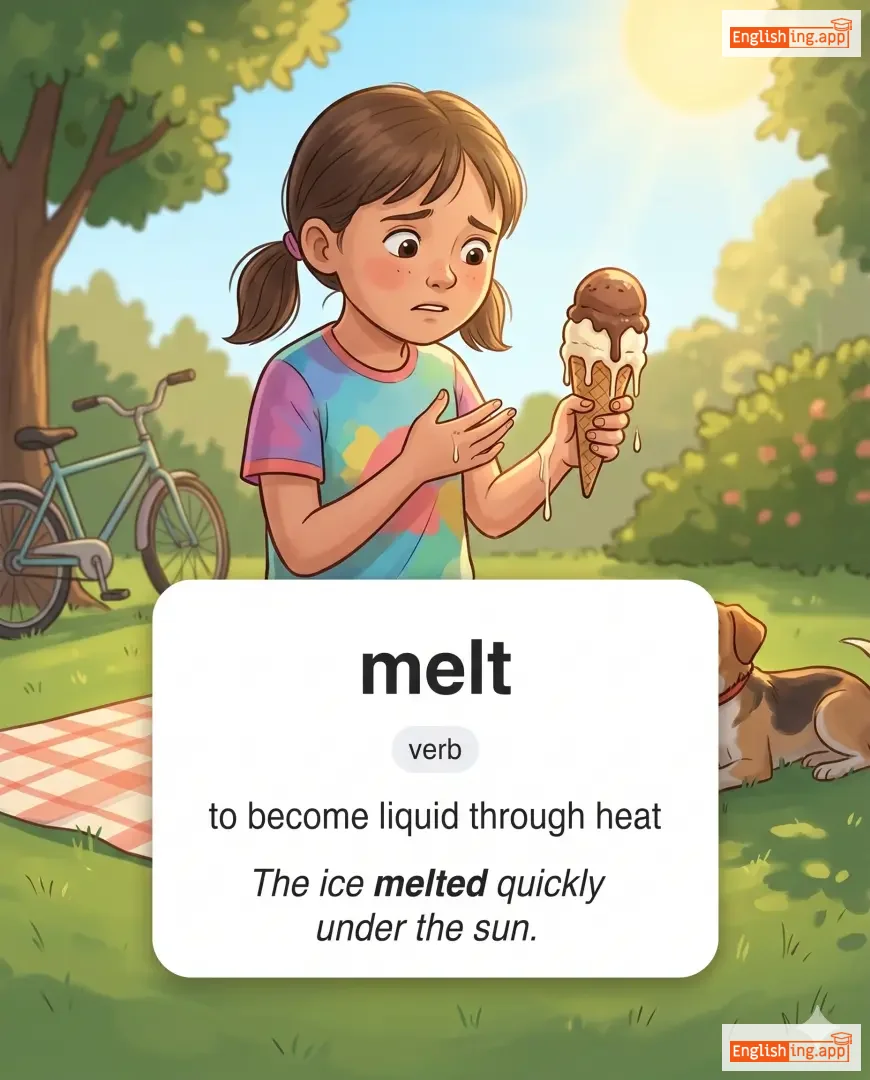
melt definition card — visual illustration of the meaning
verb
/mɛlt/
fondre (fondre)

to become liquid through heat

"The ice melted quickly under the sun."

"La glace a fondu rapidement sous le soleil." (La glace a fondu rapidement sous le soleil.)
verb, noun, adjective
/ˈmeltɪŋ/
fusion (fusion)

the process of changing from solid to liquid due to heat; becoming softer or less rigid; emotionally moving or tender

"The ice is melting quickly under the hot sun."

"La glace fond rapidement sous le soleil brûlant." (La glace fond rapidement sous le soleil brulant)
noun
/ˈmembər/
membre (membre)

a person or thing that belongs to a group or organization

"She is a member of the local sports club."

"Elle est membre du club sportif local." (Elle est membre du club sportif local.)
members definition card — visual illustration of the meaning
noun
ˈmem.bərz
membres (membres)

A person, animal, or plant belonging to a particular group; an individual belonging to a group such as a society or team.

"Members collaborate to finalize recruitment decisions."

"Les membres collaborent pour finaliser les décisions de recrutement." (Les membres collaborent pour finaliser les décisions de recrutement.)
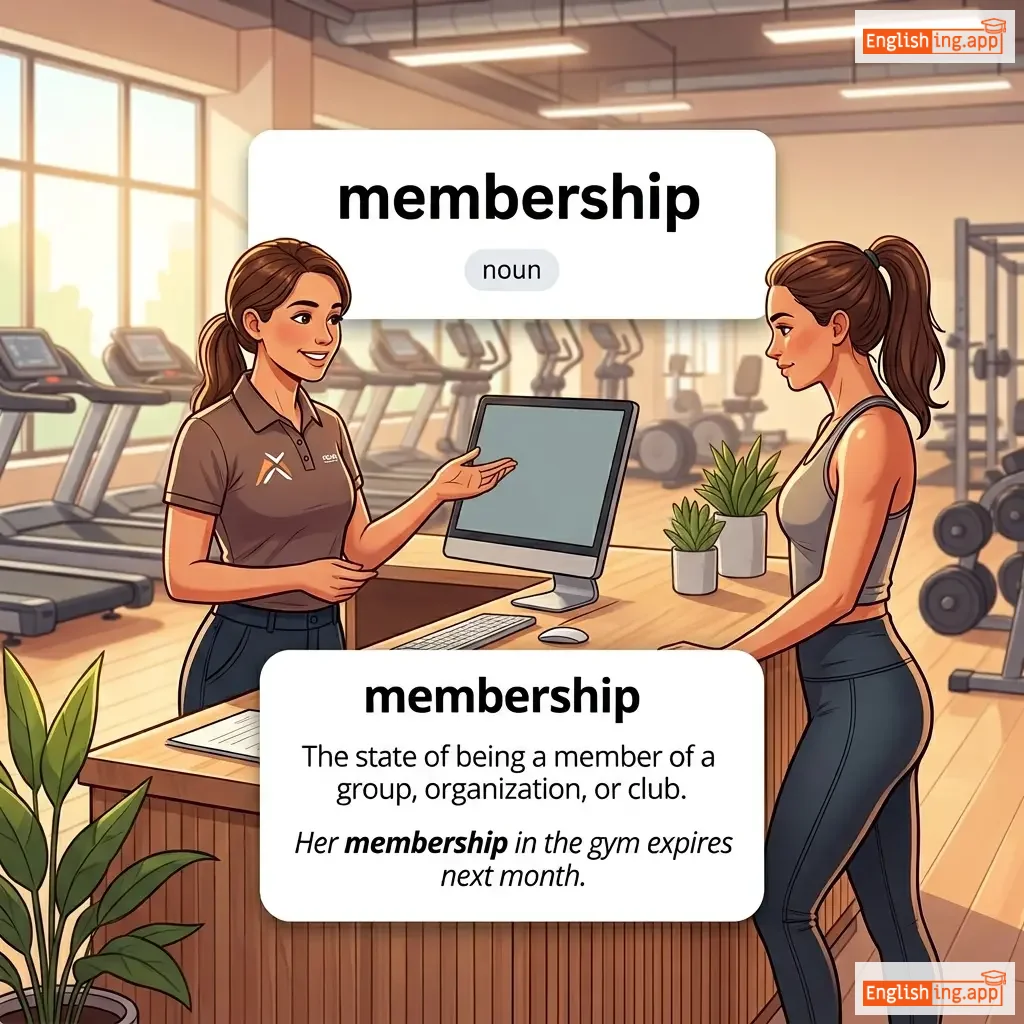
membership definition card — visual illustration of the meaning
noun
/ˈmɛmbərʃɪp/
adhésion (adhesion)

The state of being a member of a group, organization, or club.

"Her membership in the gym expires next month."

"Son adhésion à la salle de sport expire le mois prochain." (Son adhesion a la salle de sport expire le mois prochain.)
noun
/ˈmɛm.breɪn/
membrane (membrane)

A thin layer of tissue or material that covers, separates, or connects structures.

"The cell membrane controls the movement of substances in and out of the cell."

"La membrane cellulaire contrôle le mouvement des substances à l'intérieur et à l'extérieur de la cellule." (La membrane cellulaire contrôle le mouvement des substances à l'intérieur et à l'extérieur de la cellule.)
noun
/məˈmɛn.toʊ/
souvenir (souvenir)

An object kept as a reminder of a person, place, or event.

"She kept the ticket as a memento of their first concert together."

"Elle a gardé le billet comme un souvenir de leur premier concert ensemble." (Elle a gardé le billet comme un souvenir de leur premier concert ensemble.)
noun
/ˈmɛmoʊ/
mémo (memo)

a written message, typically in a business setting

"He wrote a memo to the staff about the upcoming meeting."

"Il a écrit un mémo au personnel au sujet de la prochaine réunion." (Il a ecrit un memo au personnel au sujet de la prochaine reunion.)
noun
/ˈmɛm.wɑːr/
mémoires (memwar)

A historical account or autobiography written from personal experience.

"The author’s memoir details her journey through hardship and success."

"Les mémoires de l'auteur détaillent son voyage à travers les difficultés et les réussites." (Les memoires de l'auteur detailent son voyage a travers les difficultes et les reussites.)
memorable definition card — visual illustration of the meaning
adjective
/ˈmɛm.ər.ə.bəl/
mémorable (memorable)

Worth remembering because it is special or unusual.

"Their wedding was one of the most memorable days of their lives."

"Leur mariage a été l'un des jours les plus mémorables de leur vie." (Leur mariage a été l'un des jours les plus mémorables de leur vie.)
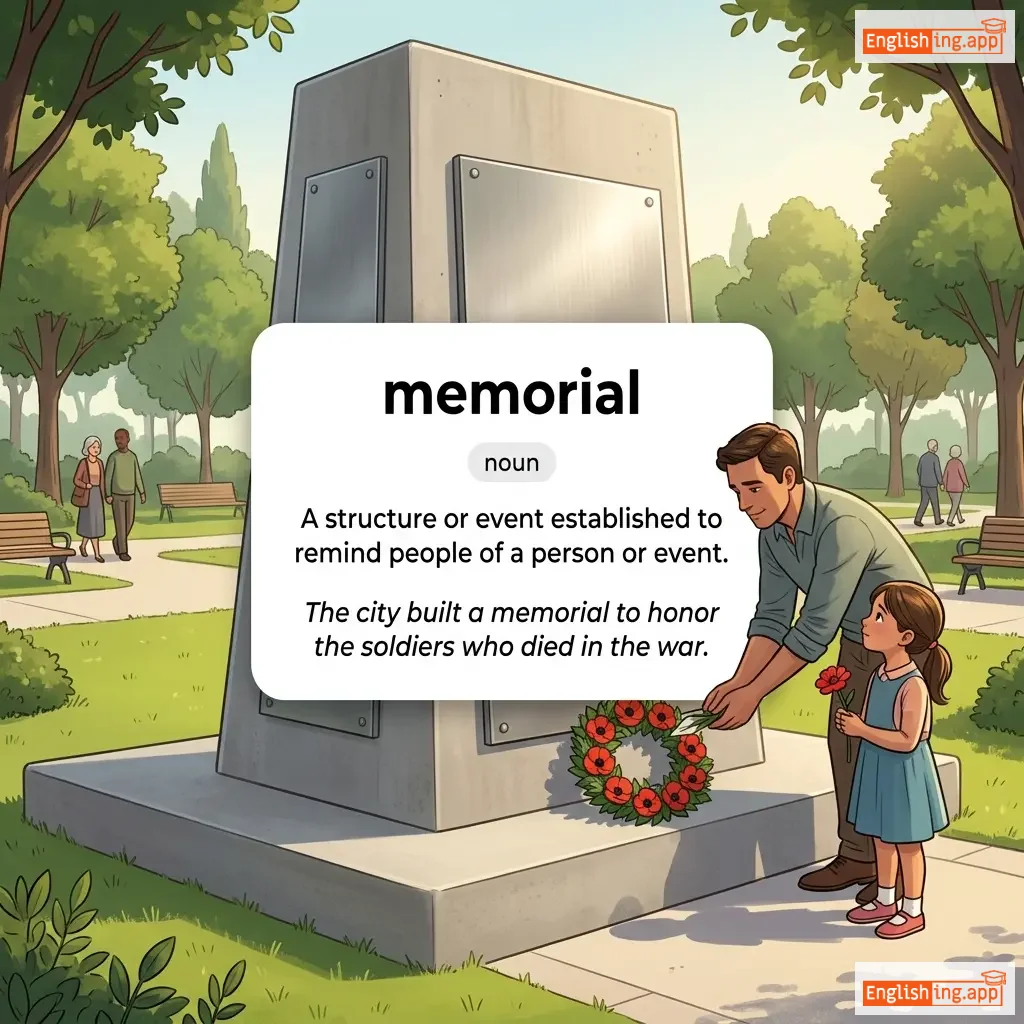
memorial definition card — visual illustration of the meaning
noun
/məˈmɔːr.i.əl/
mémorial (memorial)

A structure or event established to remind people of a person or event.

"The city built a memorial to honor the soldiers who died in the war."

"La ville a construit un mémorial pour honorer les soldats morts à la guerre." (La ville a construit un mémorial pour honorer les soldats morts à la guerre.)
verb
/məˈmɔːriəlaɪz/
commémorer (commemorer)

to preserve the memory of a person or event, often through a ceremony, monument, or record

"The city decided to memorialize the hero with a statue in the central square."

"La ville a décidé de commémorer le héros avec une statue sur la place centrale." (La ville a décidé de commémorer le héros avec une statue sur la place centrale.)
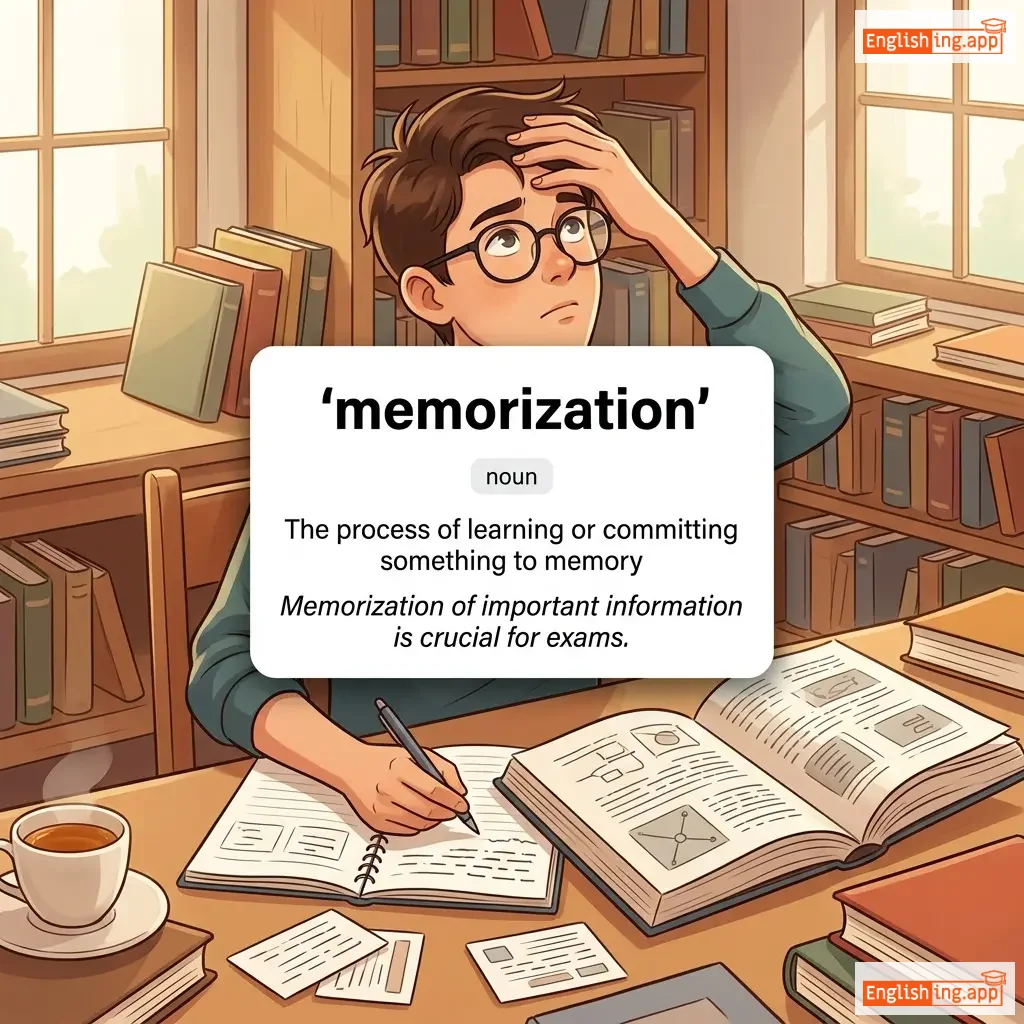
memorization definition card — visual illustration of the meaning
noun
ˌmɛməraɪˈzeɪʃən
mémorisation (memorisation)

The process of learning or committing something to memory

"Memorization of important information is crucial for exams."

"La mémorisation d'informations importantes est cruciale pour les examens." (La memorisation d'informations importantes est cruciale pour les examens.)
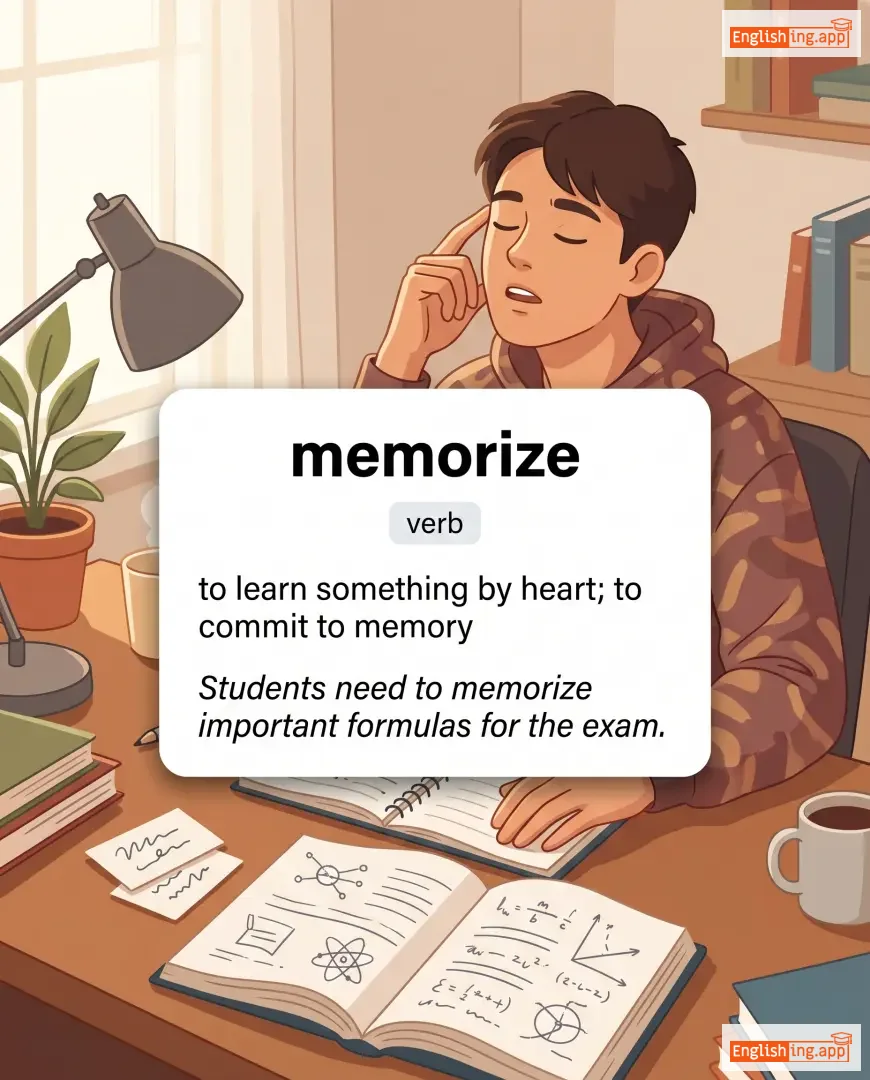
memorize definition card — visual illustration of the meaning
verb
/ˈmeməraɪz/
mémoriser (memoriser)

to learn something by heart; to commit to memory

"Students need to memorize important formulas for the exam."

"Les étudiants doivent mémoriser les formules importantes pour l'examen." (Les étudiants doivent mémoriser les formules importantes pour l'examen.)
noun
/ˈmɛməri/
mémoire (memoire)

The faculty of the mind by which information is stored and remembered.

"She has a vivid memory of her childhood home."

"Elle a un souvenir vivace de sa maison d'enfance." (Elle a un souvenir vivace de sa maison d'enfance.)
noun/verb
/ˈmɛnəs/
bonheur (bonheur)

a person or thing that is likely to cause harm; to threaten in a hostile manner

"The hurricane became a menace to the coastal towns."

"Elle ne pouvait pas cacher son bonheur lorsqu'elle a reçu le prix." (Elle ne pouvait pas cacher son bonheur lorsqu'elle a reçu le prix.)
noun
/məˈnæʒəri/
collection d'animaux sauvages (collection d'animaux sauvages)

a collection of wild animals kept for exhibition; a diverse or strange group of people or things

"The circus had a menagerie of exotic animals."

"Le cirque avait une collection d'animaux exotiques." (Le cirque avait une collection d'animaux exotiques.)
verb
/mɛnd/
réparer (réparer)

To repair something that is broken or damaged.

"She learned to mend her torn dress."

"Elle a appris à réparer sa robe déchirée." (Elle a appris à réparer sa robe déchirée.)
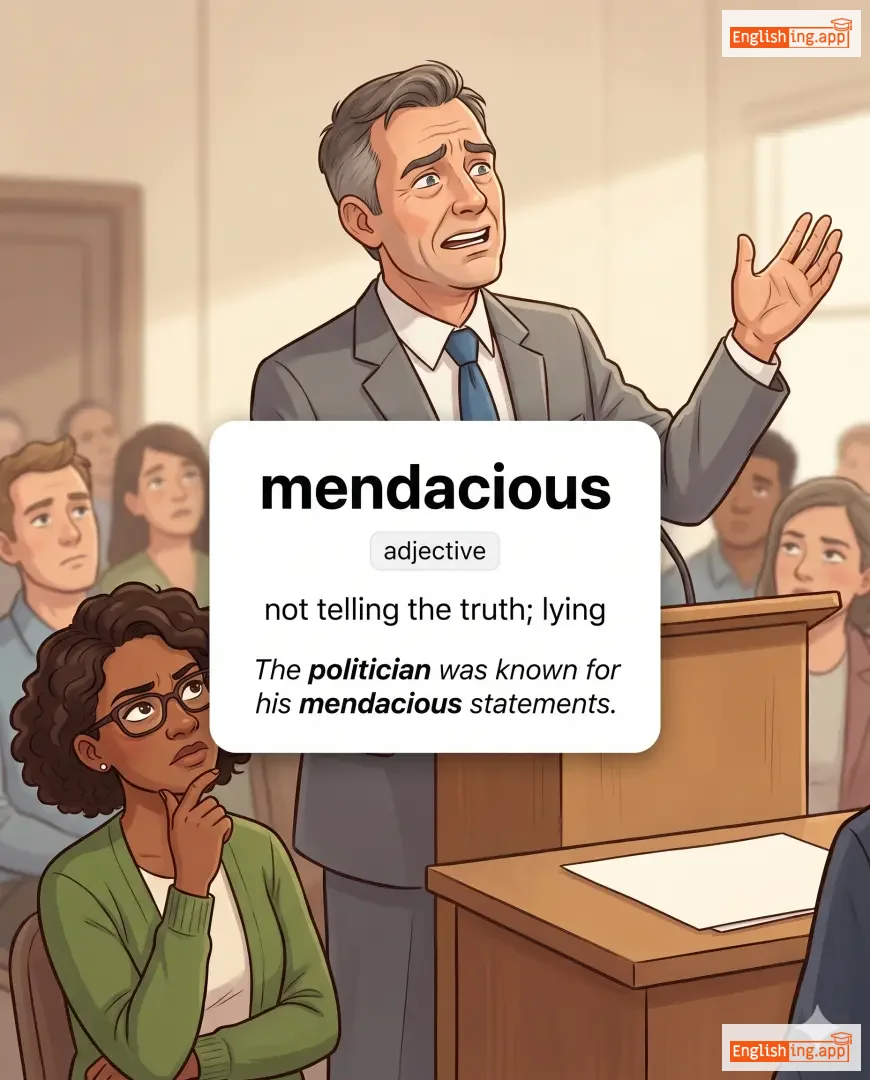
mendacious definition card — visual illustration of the meaning
adjective
/mɛnˈdeɪʃəs/
mensonger (mensonger)

not telling the truth; lying

"The politician was known for his mendacious statements."

"Le politicien était connu pour ses déclarations mensongères." (Le politicien était connu pour ses déclarations mensongères.)
noun
/mɛnˈdæsəti/
faux (faux)

the tendency to be untruthful; dishonesty

"The journalist exposed the mendacity of the officials."

"Le journaliste a exposé la fausseté des responsables." (Le journaliste a exposé la fausseté des responsables.)
noun
/ˈmɛndɪkənt/
mendiant (mendiant)

a beggar; a person who lives by asking for alms

"The mendicant asked for food at the monastery gate."

"Le mendiant a demandé de la nourriture à la porte du monastère." (Le mendiant a demandé de la nourriture à la porte du monastère.)
noun
/ˈmɪstəs/
silure bagride (silur bagride)

a genus of catfish found in Asia, commonly known as bagrid catfish

"The mystus fish is commonly found in rivers and streams of South Asia."

"Le poisson Mystus se trouve couramment dans les rivières et les ruisseaux d'Asie du Sud." (Le poisson Mystus se trouve couramment dans les rivieres et les ruisseaux d'Asie du Sud)
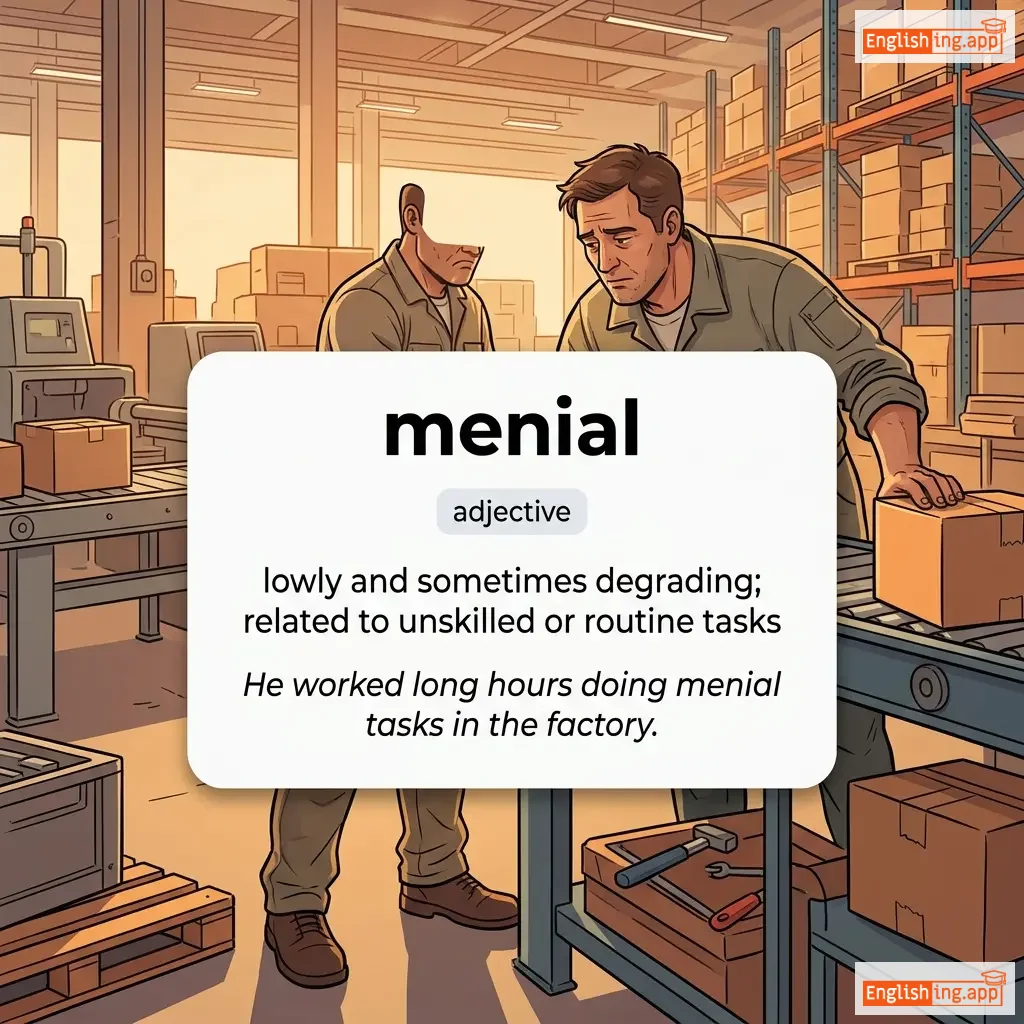
menial definition card — visual illustration of the meaning
adjective
/ˈmiːniəl/
tâches subalternes (taches subalternes)

lowly and sometimes degrading; related to unskilled or routine tasks

"He worked long hours doing menial tasks in the factory."

"Il a travaillé de longues heures à faire des tâches subalternes dans l'usine." (Il a travaille de longues heures a faire des taches subalternes dans l'usine.)
adjective
/ˈmɛntəl/
mental (mental)

Relating to the mind, thoughts, or intellectual processes.

"He needs to take a break for his mental health."

"Il doit prendre une pause pour sa santé mentale." (Il doit prendre une pause pour sa santé mentale.)
mental focus definition card — visual illustration of the meaning
noun
ˈmɛn.təl ˈfoʊ.kəs
concentration mentale (concentration mentale)

The ability to concentrate deeply on a specific task or thought; mental concentration and attention.

"Meditation improves mental focus and cognitive performance."

"La méditation améliore la concentration mentale et la performance cognitive." (La meditation amelior la concentration mentale et la performance cognitive.)
noun
/mɛnˈtæləti/
mentalité (mentalite)

a particular way of thinking; mindset or outlook

"Her positive mentality helped her overcome many challenges."

"Sa mentalité positive l'a aidée à surmonter de nombreux défis." (Sa mentalite positive l'a aidee a surmonter de nombreux defis.)
adverb
/ˈmɛntəli/
mentalement (mentalement)

in a way that relates to the mind or intellect rather than the body

"She felt mentally exhausted after the long exam."

"Elle se sentait mentalement épuisée après le long examen." (Elle se sentait mentalement épuisée après le long examen.)
verb
/ˈmɛnʃən/
mentionner (mentionner)

To refer to something briefly without giving much detail.

"He mentioned her name during the meeting."

"Il a mentionné son nom pendant la réunion." (Il a mentionné son nom pendant la réunion.)