Vocabulaires

Découvrez, apprenez et maîtrisez le vocabulaire anglais

adjective
/ˈmɛni/
beaucoup (beaucoup)

a large number of

"Many students attended the lecture."

"Beaucoup d'étudiants ont assisté à la conférence." (Beaucoup d'étudiants ont assisté à la conférence.)
🗺️

map (map)

noun
/mæp/
carte (kar-te)

a drawing that shows the features of an area of land or sea

"He studied the map before starting his journey."

"Il a étudié la carte avant de commencer son voyage." (Il a etudie la carte avant de commencer son voyage.)
verb
/mɑːr/
abîmer (abimer)

to spoil or damage the appearance or quality of something

"The scratch will mar the beauty of the painting."

"La rayure abîmera la beauté de la peinture." (La rayure abîmera la beauté de la peinture.)
🏃‍♀️

marathon (marathon)

noun
/ˈmærəθən/
marathon (marathon)

a long-distance running race, typically 42.195 kilometers (26.2 miles)

"She completed the marathon in under four hours."

"Elle a terminé le marathon en moins de quatre heures." (Elle a termine le marathon en moins de quatre heures.)
verb
/məˈrɔːd/
piller (piller)

to roam in search of things to steal or attack

"The bandits marauded through the village at night."

"Les bandits ont pillé le village la nuit." (Les bandits ont pillé le village la nuit.)
noun
/məˈrɔː.dər/
pillard (pillarde)

a person who roams around in search of things to steal or people to attack

"Villagers feared the marauders who raided their homes."

"Les villageois craignaient les pillards qui attaquaient leurs maisons." (Les villageois craignaient les pillards qui attaquaient leurs maisons.)
noun
/ˈmɑːrbəl/
bonheur (bonheur)

a hard, smooth stone used in building and sculpture, often white with colored lines

"The floor of the palace was made of white marble."

"Elle n'a pas pu cacher son bonheur lorsqu'elle a reçu le prix." (Elle n'a pas pu cacher son bonheur lorsqu'elle a recu le prix.)
🚶‍♂️

March (marche)

verb
/mɑːrtʃ/
marcher (marcher)

to walk in a regular, rhythmic way, often in step with others; to proceed with determination

"The soldiers marched across the field."

"Les soldats ont marché à travers le champ." (Les soldats ont marché à travers le champ.)
noun
/meər/
jument (jument)

an adult female horse

"The beautiful mare galloped across the meadow."

"La belle jument galopait à travers le pré." (La belle jument galopait à travers le pré.)
noun
/ˈmɑːrdʒɪn/
marge, limite, frontière (marge, limite, frontiere)

The edge or border of something; the amount by which something is won or falls short.

"The company increased its profit margin last year."

"L'entreprise a augmenté sa marge bénéficiaire l'année dernière." (L'entreprise a augmente sa marge beneficiaire l'annee derniere.)
adjective
/ˈmɑːrdʒɪnəl/
marginal, insignifiant, peu important (marginal, insignifiant, peu important)

Relating to or at the edge; small or insignificant in amount or importance.

"He made only a marginal improvement in his grades."

"Il a fait seulement une amélioration marginale dans ses notes." (Il a fait seulement une amelioration marginale dans ses notes.)
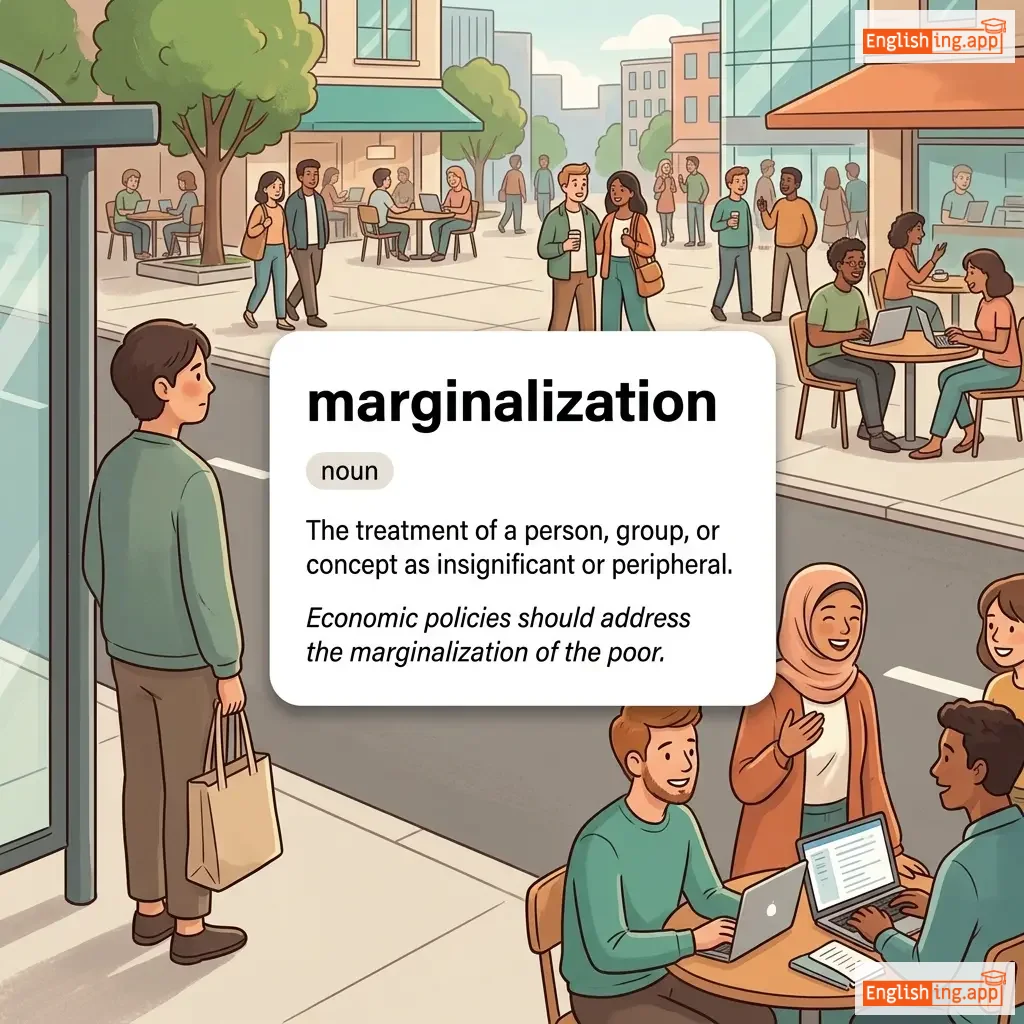
marginalization definition card — visual illustration of the meaning
noun
ˌmɑːr.dʒɪ.nəl.aɪˈzeɪ.ʃən
marginalisation (marginalisation)

The treatment of a person, group, or concept as insignificant or peripheral.

"Economic policies should address the marginalization of the poor."

"Les politiques économiques devraient aborder la marginalisation des pauvres." (Les politiques economiques devraient aborder la marginalisation des pauvres.)
verb
/ˈmɑːrdʒɪnəlaɪz/
marginaliser, mettre à l'écart (marginaliser, mettre à l'écart)

To treat a person or group as unimportant or insignificant.

"The policy marginalized minority communities."

"La politique a marginalisé les communautés minoritaires." (La politique a marginalisé les communautés minoritaires.)
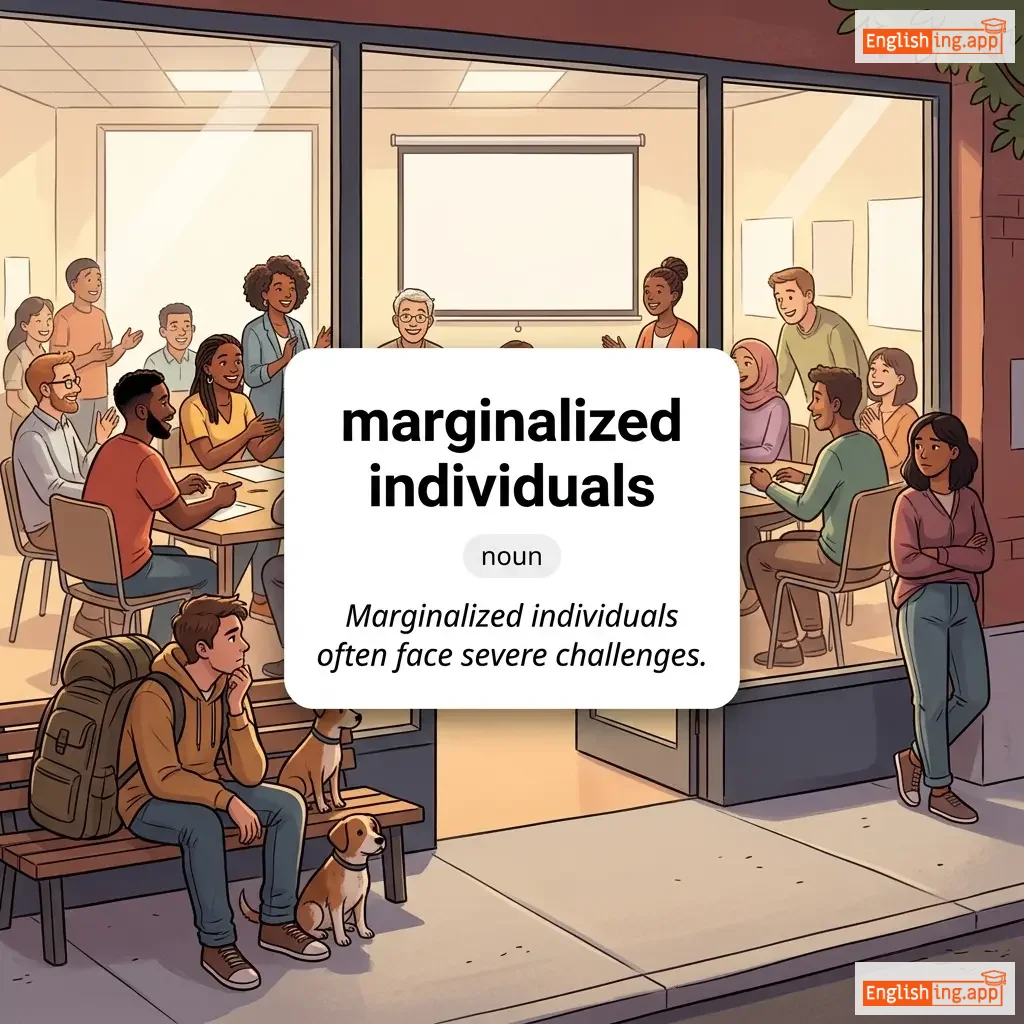
marginalized individuals definition card — visual illustration of the meaning
noun
ˈmɑːrdʒɪnəlaɪzd ˌɪndɪˈvɪdʒuəlz
individus marginalisés (individus marginalisés)

People who are treated as insignificant or peripheral to society, often excluded from mainstream social, economic, or political activities.

"Marginalized individuals often face severe challenges."

"Les individus marginalisés font souvent face à des défis graves." (Les individus marginalisés font souvent face à des défis graves.)
noun
/ˈmɛrɪɡoʊld/
souci (soosi)

a bright orange or yellow flower of the daisy family, often used in gardens and ceremonies

"The vibrant marigold flowers added a splash of color to the festival decorations."

"Les fleurs de souci éclatantes ont apporté une touche de couleur aux décorations du festival." (Les fleurs de souci eclatantes ont apporte une touche de couleur aux decorations du festival)
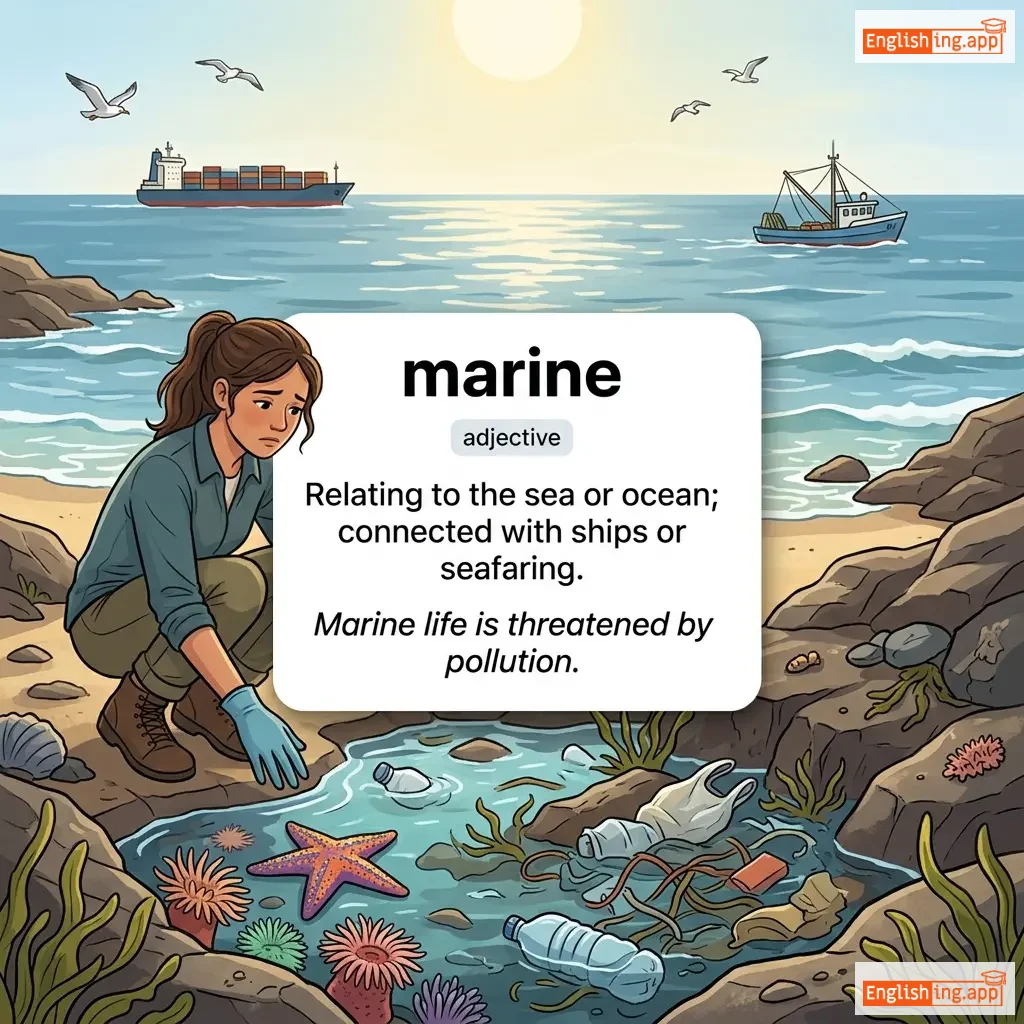
marine definition card — visual illustration of the meaning
adjective
/məˈriːn/
marin (marin)

Relating to the sea or ocean; connected with ships or seafaring.

"Marine life is threatened by pollution."

"La vie marine est menacée par la pollution." (La vie marine est menacée par la pollution.)
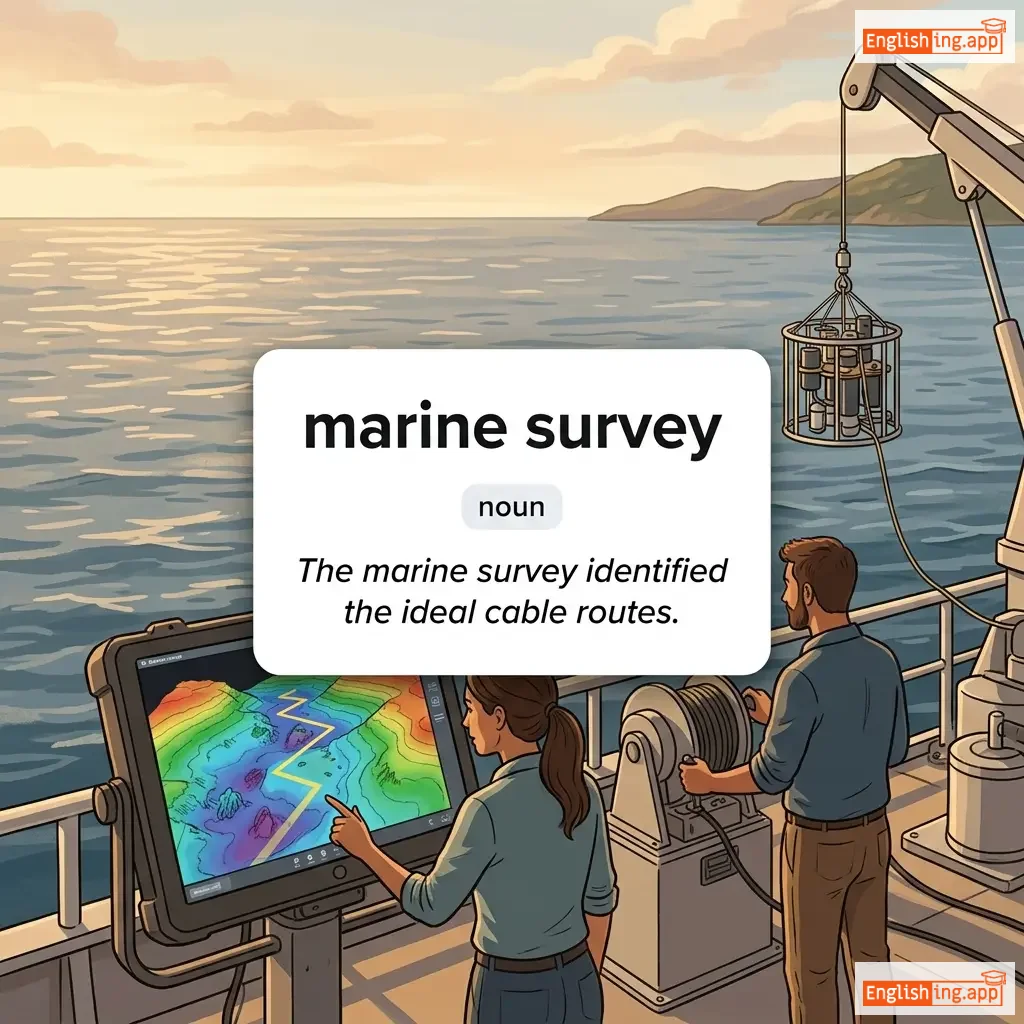
marine survey definition card — visual illustration of the meaning
noun
məˈriːn ˈsɜː.veɪ
étude marine. enquête sous-marine. (etude marine. enqueté sous-marine.)

A systematic examination of the sea, seabed, and underwater features for the purpose of making maps or gathering other information.

"The marine survey identified the ideal cable routes."

"L'enquête marine a identifié les itinéraires idéaux pour les câbles." (L'enquete marine a identifie les itineraires ideaux pour les cables.)
adjective
/ˈmærɪtəl/
conjugal (conjugal)

Relating to marriage or the relationship between husband and wife.

"They sought counseling to resolve their marital issues."

"Ils ont cherché des conseils pour résoudre leurs problèmes conjugaux." (Ils ont cherché des conseils pour résoudre leurs problèmes conjugaux.)
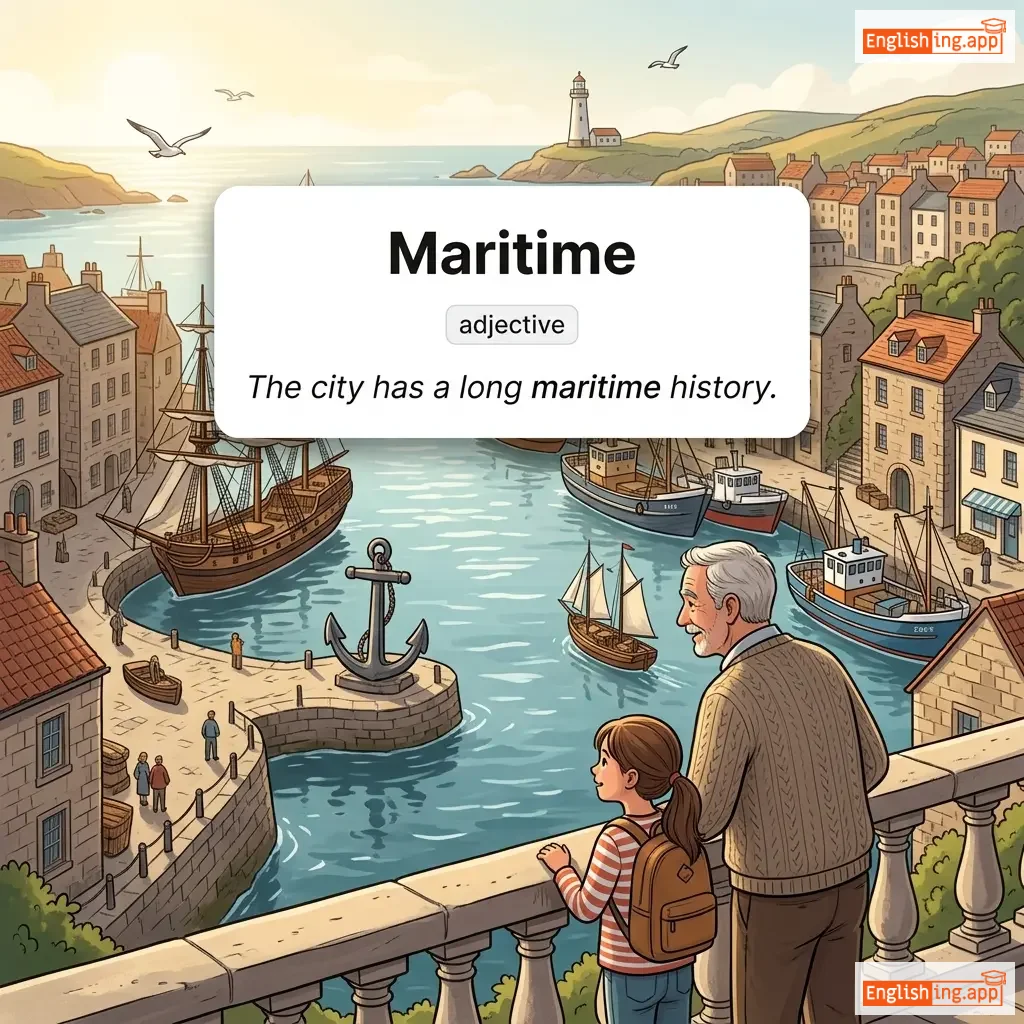
Maritime definition card — visual illustration of the meaning
adjective
/ˈmærɪˌtaɪm/
maritime (maritime)

connected with the sea, especially in relation to seafaring, shipping, or naval matters

"The city has a long maritime history."

"La ville a une longue histoire maritime." (La ville a une longue histoire maritime.)
verb
/mɑːrk/
marquer (marquer)

to make a visible impression or symbol on a surface

"The teacher marked the important points in red."

"Le professeur a marqué les points importants en rouge." (Le professeur a marqué les points importants en rouge.)
adjective
/mɑːrkt/
marqué (marque)

clearly noticeable or significant

"There was a marked improvement in her health."

"Il y a eu une amélioration marquée de sa santé." (Il y a eu une amélioration marquée de sa santé.)
noun
/ˈmɑːrkər/
marqueur (markeur)

an object used to indicate a position, place, or boundary; a pen with a thick tip used for writing or drawing

"He used a red marker to underline the important points."

"Il a utilisé un marqueur rouge pour souligner les points importants." (Il a utilisé un marqueur rouge pour souligner les points importants.)
market definition card — visual illustration of the meaning
noun
/ˈmɑːrkɪt/
marché (marche)

a place or system where goods and services are bought and sold

"They went to the market to buy fresh vegetables."

"Ils sont allés au marché pour acheter des légumes frais." (Ils sont allés au marché pour acheter des légumes frais.)
market economy definition card — visual illustration of the meaning
noun
ˈmɑːr.kɪt ɪˈkɒn.ə.mi
économie de marché (economie de marche)

An economic system where production and pricing decisions are controlled by individuals and based on supply and demand.

"A market economy allows businesses to compete freely."

"Une économie de marché permet aux entreprises de concurrencer librement." (Une economie de marche permet aux entreprises de concurrencer librement.)
Market Penetration definition card — visual illustration of the meaning
noun
/ˈmɑː.kɪt ˌpen.ɪˈtreɪ.ʃən/
pénétration du marché (penetration du marche)

A measure of the amount of sales or adoption of a product or service compared to the total theoretical market for that product or service.

"High market penetration ensures competitive dominance."

"Une forte pénétration du marché assure la domination concurrentielle." (Une forte penetration du marche assure la domination concurrentielle.)
marketability definition card — visual illustration of the meaning
noun
/ˌmɑːr.kɪ.təˈbɪl.ə.ti/
commercialisation (commercialisation)

The possibility of commercial success for a product or service

"The new product's marketability depends on consumer demand."

"La commercialisation du nouveau produit dépend de la demande des consommateurs." (La commercialisation du nouveau produit depend de la demande des consommateurs.)
Marketing definition card — visual illustration of the meaning
noun
/ˈmɑːrkɪtɪŋ/
marketing (marketing)

The action or business of promoting and selling products or services, including market research and advertising.

"The company invested heavily in digital marketing."

"L'entreprise a investi massivement dans le marketing numérique." (L'entreprise a investi massivement dans le marketing numérique.)
noun
/ˈmɑːrkɪtˌpleɪs/
marché (marche)

a place where goods and services are bought and sold; an open area for trade

"The town's marketplace is crowded every Friday morning."

"Le marché de la ville est bondé chaque vendredi matin." (Le marché de la ville est bondé chaque vendredi matin.)
verb
/məˈruːn/
abandonner sur une île déserte (abandonner sur une île déserte)

to leave someone trapped and isolated, especially on an island

"The sailors were marooned on a deserted island."

"Les marins ont été abandonnés sur une île déserte." (Les marins ont été abandonnés sur une île déserte.)
verb
/mɑːrd/
gâcher (gacher)

to spoil or damage the quality or appearance of something

"The celebration was marred by bad weather."

"La célébration a été gâchée par le mauvais temps." (La celebration a ete gachee par le mauvais temps.)
noun
/ˈmærɪdʒ/
bonheur (bonheur)

The legally or formally recognized union of two people as partners in a personal relationship.

"Their marriage lasted for over thirty years."

"Elle n'a pas pu cacher son bonheur lorsqu'elle a reçu le prix." (Elle n'a pas pu cacher son bonheur lorsqu'elle a reçu le prix.)
👩‍❤️‍👨

Married (ˈhæpinəs)

adjective
/ˈmærid/
bonheur (bonheur)

Having a spouse; joined in marriage.

"She is happily married with two children."

"Elle n'a pas pu cacher son bonheur lorsqu'elle a reçu le prix." (Elle n'a pas pu cacher son bonheur lorsqu'elle a reçu le prix.)
noun
/ˈmæroʊ/
moelle osseuse (moelle osseuse)

a soft fatty substance in the cavities of bones, producing blood cells

"Bone marrow is vital for the production of red blood cells."

"La moelle osseuse est vitale pour la production de globules rouges." (La moelle osseuse est vitale pour la production de globules rouges.)
noun
/ˈmær.oʊ ʌv ˈplæn.tɪn triː/
moelle de l'arbre de plantain (moelle de l'arbre de plantain)

the soft inner part of the banana plant stem that is used as a vegetable in cooking

"The marrow of plantain tree is commonly used in traditional Bengali cuisine."

"La moelle de l'arbre de plantain est couramment utilisée dans la cuisine traditionnelle bengali." (La moelle de l'arbre de plantain est couramment utilisee dans la cuisine traditionnelle bengali.)
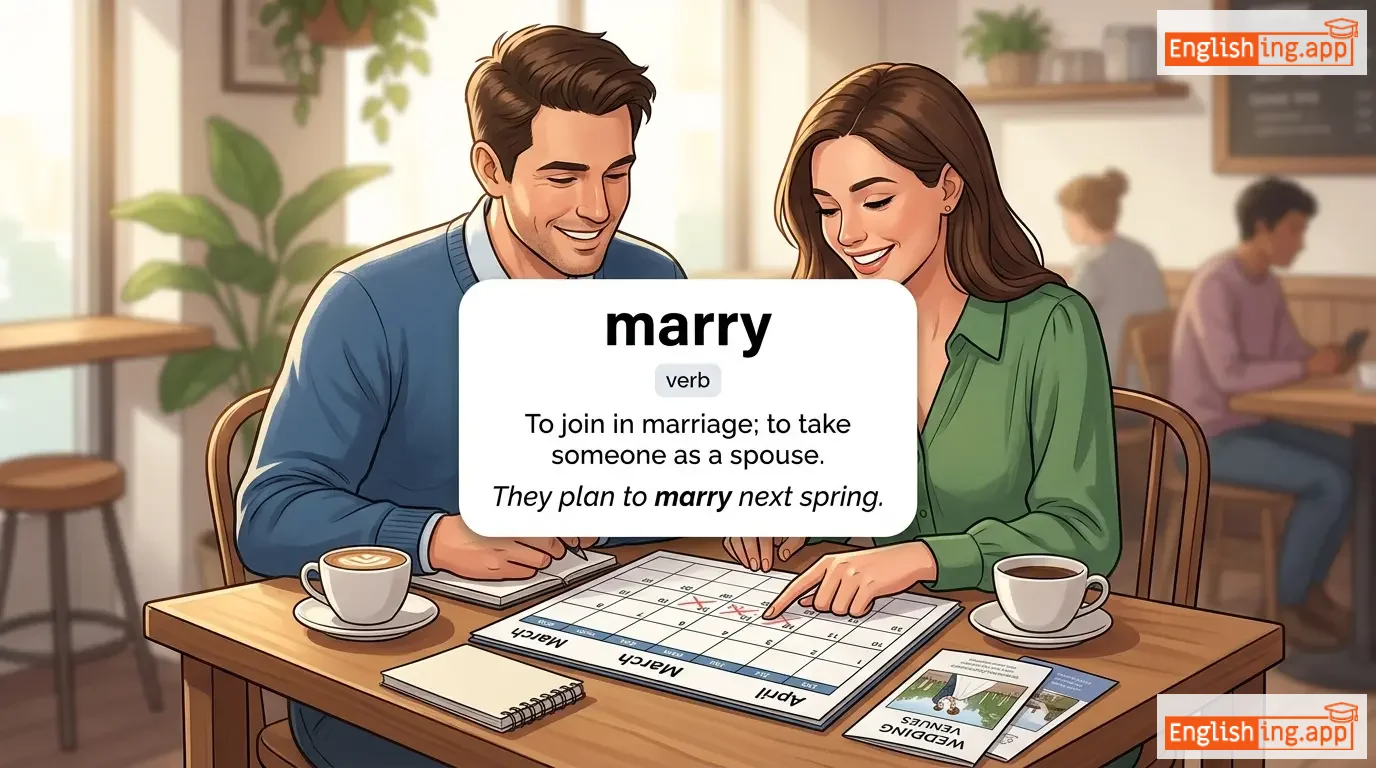
marry definition card — visual illustration of the meaning
💒

marry

verb
/ˈmæri/
se marier (se marier)

To join in marriage; to take someone as a spouse.

"They plan to marry next spring."

"Ils prévoient de se marier au printemps prochain." (Ils prevoient de se marier au printemps prochain.)
noun
/mɑːrz/
Mars (Mars)

The fourth planet from the Sun; the Roman god of war

"Scientists are planning a manned mission to Mars in the next decade."

"Les scientifiques prévoient une mission habitée vers Mars dans la prochaine décennie." (Les scientifiques prevoient une mission habitee vers Mars dans la prochaine decennie.)
noun
/mɑːrʃ/
marais (marai)

An area of low-lying, waterlogged land, often dominated by grasses and reeds.

"The birds nested in the marsh during spring."

"Les oiseaux ont niché dans le marais au printemps." (Les oiseaux ont niche dans le marais au printemps.)
verb
/ˈmɑːrʃəl/
organiser (organiser)

To arrange or organize people, events, or resources in an orderly way.

"The teacher marshaled the students for the field trip."

"Le professeur a organisé les élèves pour la sortie scolaire." (Le professeur a organisé les élèves pour la sortie scolaire.)
noun
/mɑːrˈsuːpiəl/
mammifère qui porte et nourrit ses petits dans une poche (mammifere qui porte et nourrit ses petits dans une poche)

A type of mammal that carries and nourishes its young in a pouch, like kangaroos and koalas.

"The kangaroo is a well-known marsupial."

"Le kangourou est un marsupial bien connu." (Le kangourou est un marsupial bien connu.)
adjective
/ˈmɑːrʃəl/
militaire (militaire)

Related to war, soldiers, or military life.

"The country imposed martial law during the crisis."

"Le pays a imposé la loi martiale pendant la crise." (Le pays a impose la loi martiale pendant la crise.)
adjective, noun
/ˈmɑːrʃən/
martien (martien)

Related to the planet Mars; or an imaginary being from Mars.

"The movie showed a Martian visiting Earth."

"Le film montrait un martien visitant la Terre." (Le film montrait un martien visitant la Terre.)
noun
/ˈmɑːr.tɪn/
martinet (martinet)

small swift-flying bird that catches insects on the wing

"The martin built its nest under the bridge."

"Le martinet a construit son nid sous le pont." (Le martinet a construit son nid sous le pont.)
noun
/ˌmɑːrtəˈnɛt/
un tyran (un tyran)

A strict disciplinarian who demands rigid adherence to rules.

"The new manager was such a martinet that even minor infractions were punished."

"Le nouveau gestionnaire était un martinet au point que même les infractions mineures étaient punies." (Le nouveau gestionnaire était un martinet au point que même les infractions mineures étaient punies.)
noun
/ˈmɑːrtər/
martyr (martyr)

A person who suffers or dies for their beliefs or cause.

"He was hailed as a martyr for defending his faith."

"Il a été acclamé comme un martyr pour avoir défendu sa foi." (Il a été acclamé comme un martyr pour avoir défendu sa foi.)
noun
/ˈmɑːrtərdəm/
martyre (martyre)

The suffering or death of a martyr.

"His martyrdom inspired many to fight for justice."

"Son martyre a inspiré beaucoup de gens à se battre pour la justice." (Son martyre a inspiré beaucoup de gens à se battre pour la justice.)
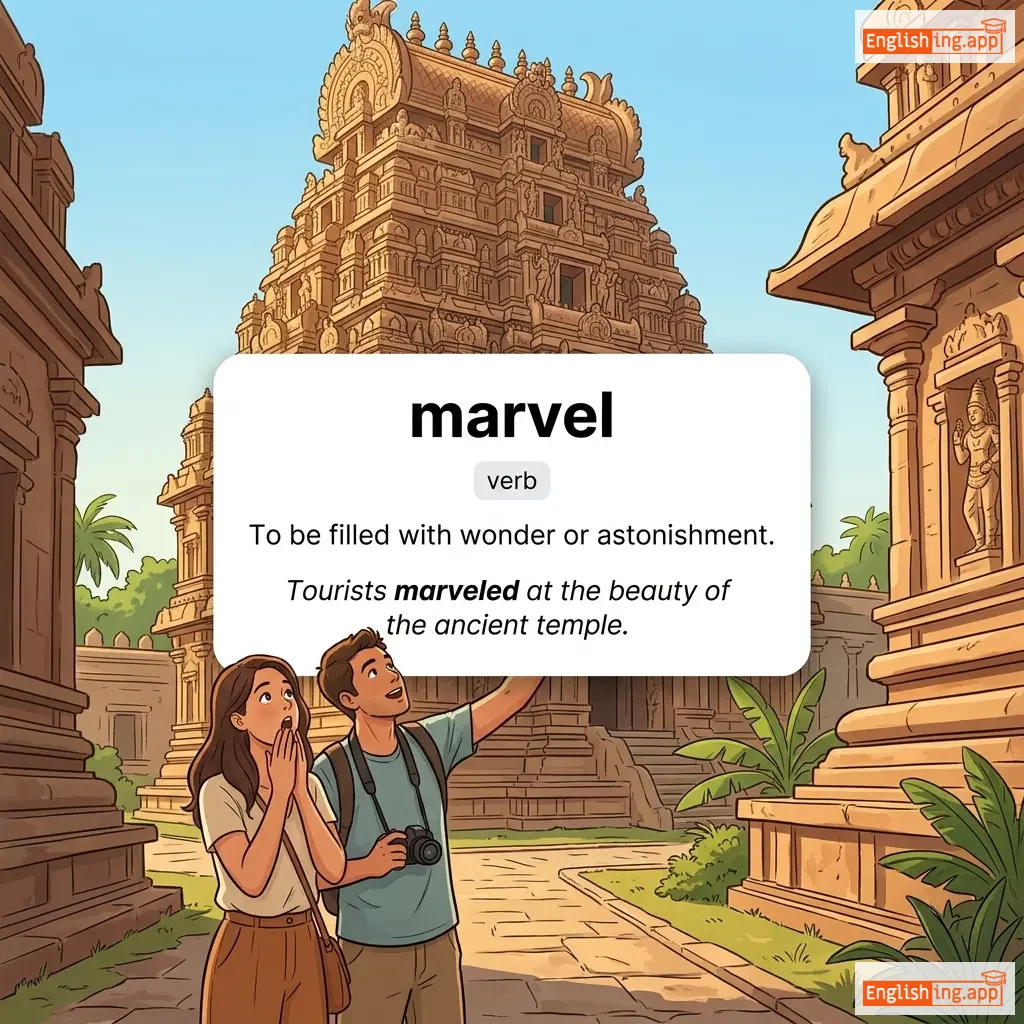
marvel definition card — visual illustration of the meaning
verb
/ˈmɑːrvl/
s'émerveiller (se emerveiller)

To be filled with wonder or astonishment.

"Tourists marveled at the beauty of the ancient temple."

"Les touristes se sont émerveillés de la beauté du temple ancien." (Les touristes se sont emerveilles de la beaute du temple ancien.)
adjective
/ˈmɑːrvələs/
merveilleux; extraordinaire; stupéfiant (merveilleux; extraordinaire; stupefiant)

extremely good; wonderful; causing great wonder

"The view from the mountain was marvellous."

"La vue depuis la montagne était merveilleuse." (La vue depuis la montagne était merveilleuse.)
adjective
/ˈmɑːrvələs/
merveilleux (merveilleux)

Causing great wonder or delight; extraordinary.

"She gave a marvelous performance on stage."

"Elle a donné une performance merveilleuse sur scène." (Elle a donné une performance merveilleuse sur scène.)
adjective
/ˈmæskjəlɪn/
masculin (masculin)

having qualities traditionally associated with men

"He has a deep, masculine voice."

"Il a une voix profonde et masculine." (Il a une voix profonde et masculine.)
noun
/meɪs/
muscade (muskaad)

spice obtained from the reddish seed covering of the nutmeg seed

"A pinch of mace adds warmth to the dessert."

"Une pincée de muscade ajoute de la chaleur au dessert." (Une pincee de muscade ajoute de la chaleur au dessert.)