Vocabulaires

Découvrez, apprenez et maîtrisez le vocabulaire anglais

adverb
/ˈmeɪnli/
principalement (principalement)

for the most part; chiefly

"The audience was mainly composed of students."

"Le public était principalement composé d'étudiants." (Le public était principalement composé d'étudiants.)
noun
/ˈmeɪnstriːm/
courant dominant (courant dominant)

the ideas, attitudes, or activities that are regarded as normal or conventional; the dominant trend in opinion or fashion

"Social media has become a mainstream source of news for many people."

"Les médias sociaux sont devenus une source d'information dominante pour de nombreuses personnes." (Les médias sociaux sont devenus une source d'information dominante pour de nombreuses personnes.)
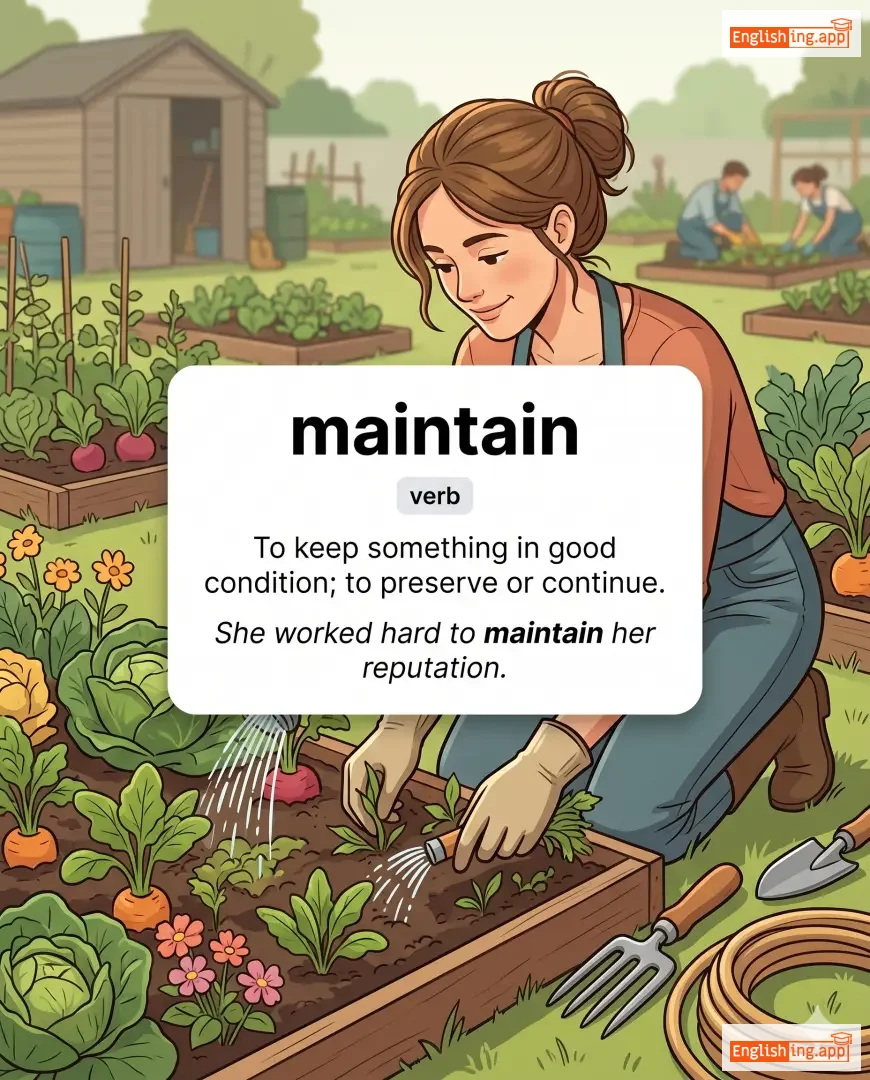
maintain definition card — visual illustration of the meaning
verb
/meɪnˈteɪn/
maintenir (maintenir)

To keep something in good condition; to preserve or continue.

"She worked hard to maintain her reputation."

"Elle a travaillé dur pour maintenir sa réputation." (Elle a travaillé dur pour maintenir sa réputation.)
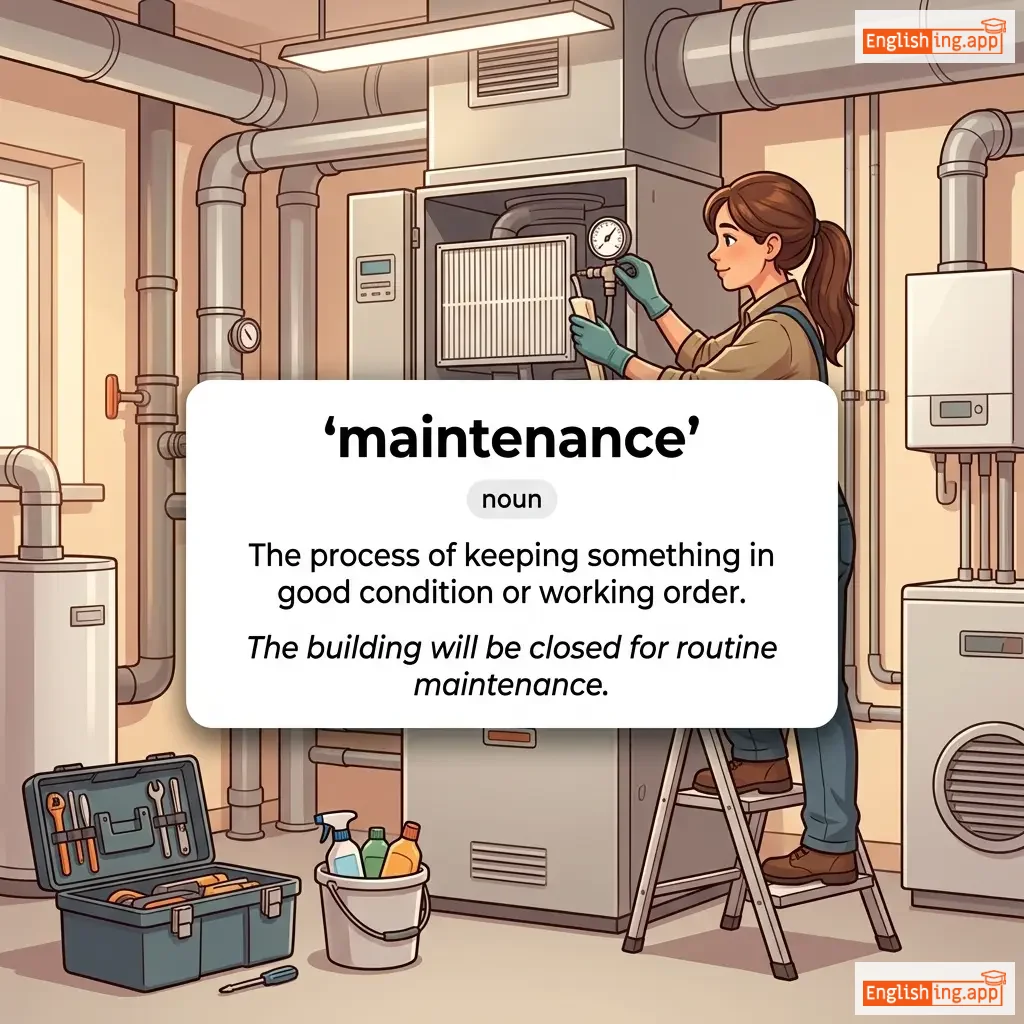
maintenance definition card — visual illustration of the meaning
noun
/ˈmeɪntənəns/
entretien (entretien)

The process of keeping something in good condition or working order.

"The building will be closed for routine maintenance."

"Le bâtiment sera fermé pour un entretien de routine." (Le bâtiment sera fermé pour un entretien de routine.)
noun
/meɪz/
maïs (mais)

a tall cereal plant grown for its large yellow grains, also called corn

"Farmers harvested the maize in late autumn."

"Les fermiers ont récolté le maïs à la fin de l'automne." (Les fermiers ont recolte le mais a la fin de l'automne.)
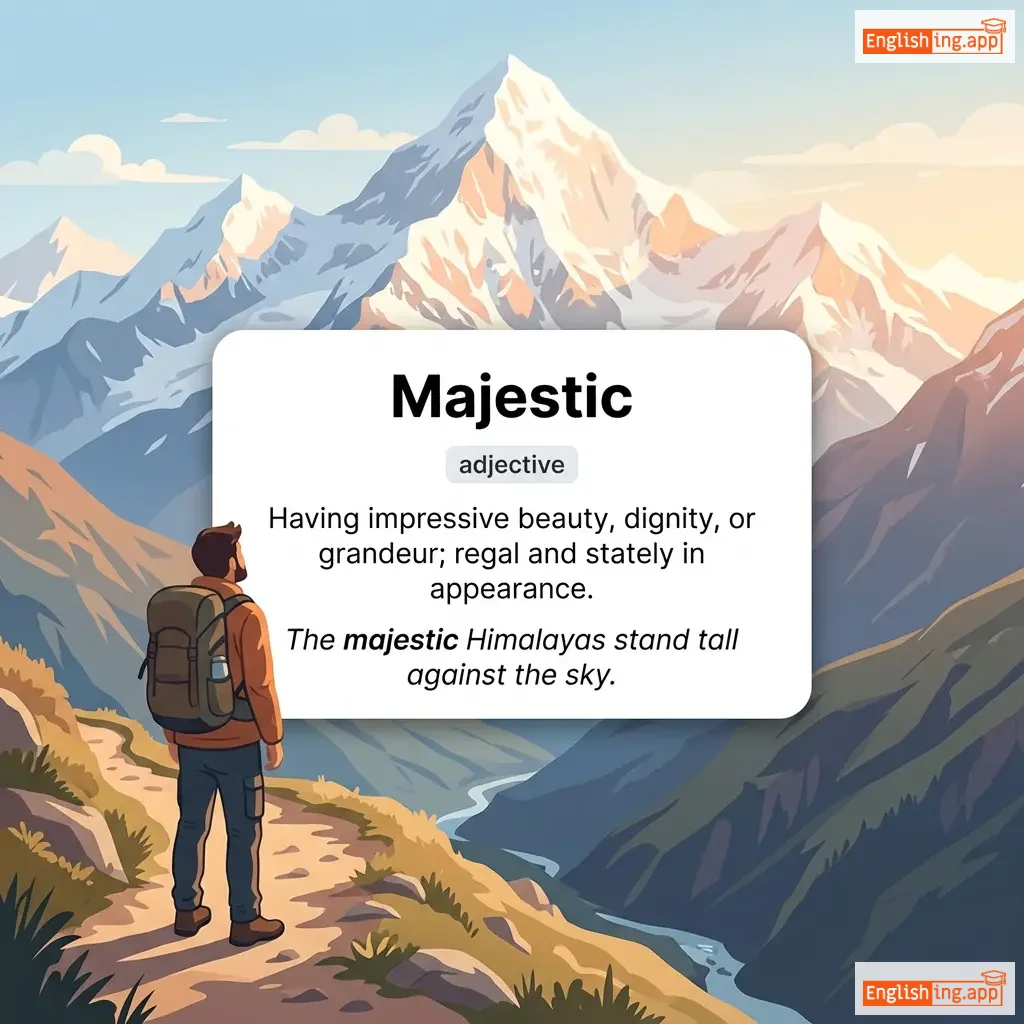
Majestic definition card — visual illustration of the meaning
adjective
məˈdʒes.tɪk
majestueux (majestueux)

Having impressive beauty, dignity, or grandeur; regal and stately in appearance.

"The majestic Himalayas stand tall against the sky."

"Les majestueuses montagnes de l'Himalaya se dressent haut contre le ciel." (Les majestueuses montagnes de l'Himalaya se dressent haut contre le ciel.)
adjective
/ˈmeɪdʒər/
important (important)

important, serious, or significant

"Climate change is a major concern for the world."

"Le changement climatique est une préoccupation majeure pour le monde." (Le changement climatique est une préoccupation majeure pour le monde.)
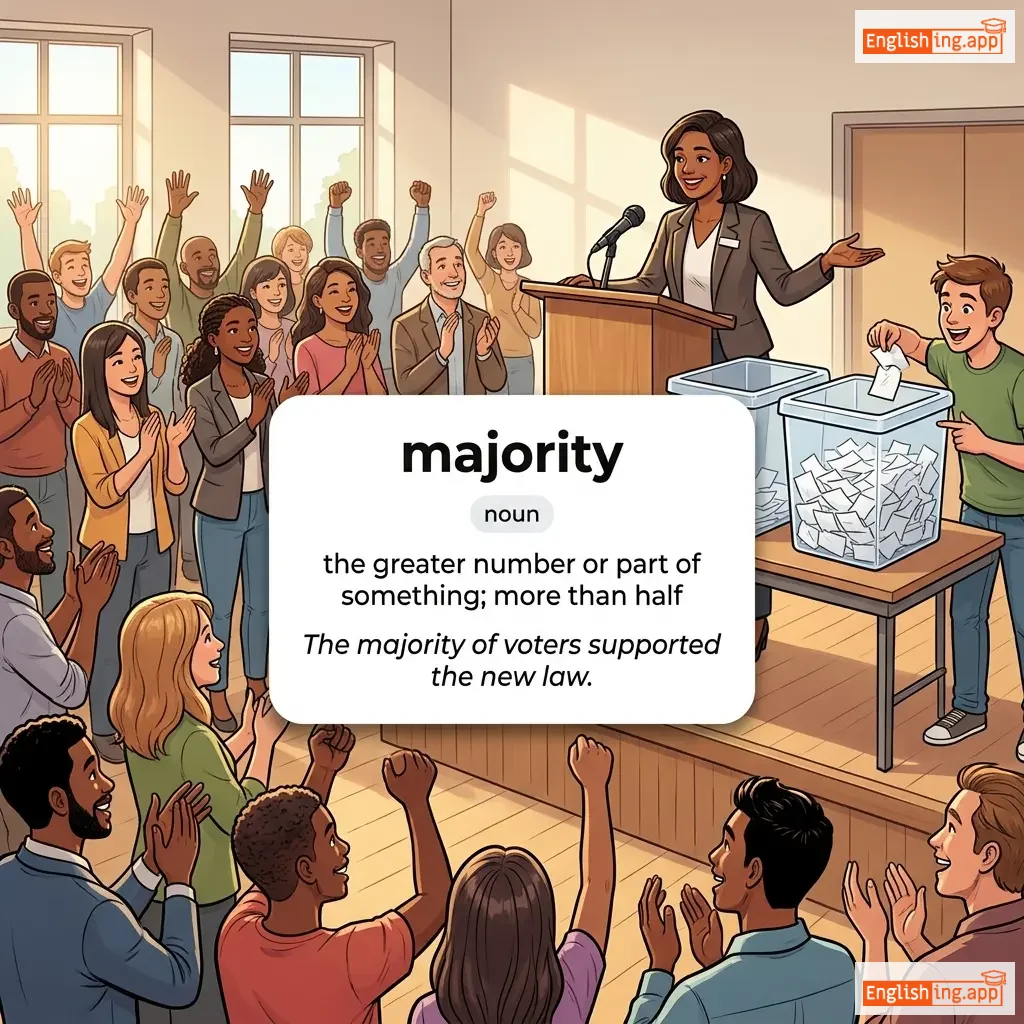
majority definition card — visual illustration of the meaning
noun
/məˈdʒɒrəti/
majorité (majorite)

the greater number or part of something; more than half

"The majority of voters supported the new law."

"La majorité des électeurs ont soutenu la nouvelle loi." (La majorite des electeurs ont soutenu la nouvelle loi.)
verb
/meɪk/
faire (faire)

to create, build, or cause something to happen

"She can make delicious cakes."

"Elle peut faire de délicieux gâteaux." (Elle peut faire de délicieux gâteaux.)
noun
/ˈmeɪkər/
créateur (createur)

a person or thing that makes or produces something

"He is a famous movie maker in Hollywood."

"Il est un célèbre créateur de films à Hollywood." (Il est un celebre createur de films a Hollywood.)
adjective
/ˈmeɪkˌʃɪft/
improvisé (improvize)

used as a temporary substitute; improvised

"They used boxes as a makeshift table."

"Ils ont utilisé des boîtes comme une table improvisée." (Ils ont utilisé des boîtes comme une table improvisée.)
noun
/ˈmeɪkʌp/
maquillage (maquillage)

cosmetics used to enhance or alter appearance

"She applied makeup before the party."

"Elle a appliqué du maquillage avant la fête." (Elle a applique du maquillage avant la fete.)
noun
/ˈmeɪkɪŋ/
création (creation)

the process of producing or constructing something

"The making of the movie took over two years."

"La création du film a pris plus de deux ans." (La creation du film a pris plus de deux ans.)
adjective
/ˌmæləˈdrɔɪt/
maladroit (maladroit)

clumsy or awkward in movement or behavior

"His maladroit attempt at fixing the chair made it worse."

"Sa tentative maladroite de réparer la chaise l'a empirée." (Sa tentative maladroite de réparer la chaise l'a empirée.)
noun
/ˈmælədi/
maladie (maladie)

a disease or disorder of the body or mind; a serious problem

"The doctor treated the malady with great care."

"Le médecin a traité la maladie avec beaucoup de soin." (Le medecin a traite la maladie avec beaucoup de soin.)
noun
/məˈleɪz/
malaise (malaise)

a general feeling of discomfort, illness, or unease whose exact cause is difficult to identify

"After the long journey, she felt a general malaise."

"Après le long voyage, elle a ressenti un malaise général." (Apres le long voyage, elle a ressenti un malaise general.)
noun
/ˈmæləprɒˌpɪzəm/
malapropisme (malapropisme)

the mistaken use of a word in place of a similar-sounding one, often with amusing effect

"He is famous for his malapropism when speaking in public."

"Il est célèbre pour son malapropisme lorsqu'il parle en public." (Il est célèbre pour son malapropisme lorsqu'il parle en public.)
adjective, adverb
/ˌmæləprəˈpoʊ/
inapproprié (inapproprie)

inappropriate or unsuitable; at an inconvenient or inappropriate time

"His comment was malapropos during the serious discussion."

"Son commentaire était inapproprié pendant la discussion sérieuse." (Son commentaire était inapproprié pendant la discussion sérieuse.)
noun
/məˈlɛəriə/
paludisme (paludisme)

a serious infectious disease spread by mosquitoes, causing fever, chills, and sweating

"Malaria is a common disease in tropical regions."

"Le paludisme est une maladie courante dans les régions tropicales." (Le paludisme est une maladie courante dans les régions tropicales.)
noun
/məˈlɑː.ti/
malati (malati)

a fragrant climbing plant with small white flowers, commonly known as jasmine

"The malati vine covered the garden wall with sweet-smelling flowers."

"La vigne de malati a couvert le mur du jardin avec des fleurs au parfum sucré." (La vigne de malati a couvert le mur du jardin avec des fleurs au parfum sucre)
noun
/ˈmæl.kənˌtɛnt/
personne mécontente (personne mécontente)

A person who is dissatisfied or rebellious; one who is not content.

"The malcontent voiced his grievances against the government."

"La personne mécontente a exprimé ses plaintes contre le gouvernement." (La personne mécontente a exprimé ses plaintes contre le gouvernement.)
noun/adjective
/meɪl/
masculin (masculin)

a man or boy; relating to men or boys

"The school has more male teachers than female teachers."

"L'école a plus de professeurs masculins que de professeurs féminins." (L'école a plus de professeurs masculins que de professeurs féminins.)
noun
/ˌmæl.əˈdɪk.ʃən/
malédiction (malediction)

A curse or the utterance of a curse.

"The witch cast a malediction upon the village."

"La sorcière a jeté une malédiction sur le village." (La sorcière a jeté une malédiction sur le village.)
noun
/ˈmæl.əˌfæk.tər/
criminel (criminel)

A person who commits a crime or does evil.

"The malefactor was arrested for the robbery."

"Le criminel a été arrêté pour le vol." (Le criminel a été arrêté pour le vol.)
adjective
/məˈlɛfɪsənt/
maléfique (malefique)

Causing harm or destruction, especially by supernatural means.

"The maleficent witch cursed the young princess."

"La sorcière maléfique a maudit la jeune princesse." (La sorcière malefique a maudit la jeune princesse.)
adjective
/ˌmæl.əˈfɪʃ.ənt/
malfaisant (malfaisant)

Doing harm or evil; having a harmful effect.

"The maleficient acts of the tyrant ruined the kingdom."

"Les actes malfaisants du tyran ont ruiné le royaume." (Les actes malfaisants du tyran ont ruiné le royaume.)
noun
/məˈlɛvələns/
malveillance (malveillance)

The state or condition of being malevolent; having or showing a wish to do evil to others.

"His malevolence was clear in the cruel way he treated his rivals."

"Sa malveillance était évidente dans la manière cruelle dont il traitait ses rivaux." (Sa malveillance etait evidente dans la maniere cruelle dont il traitait ses rivaux.)
adjective
/məˈlɛvələnt/
malveillant (malveillant)

Having or showing a wish to do evil or harm to others.

"The malevolent glare in his eyes frightened the children."

"Le regard malveillant dans ses yeux effrayait les enfants." (Le regard malveillant dans ses yeux effrayait les enfants.)
noun
/mælˈfiːzəns/
méfait d'un fonctionnaire (mefait d'un fonctionnaire)

Wrongdoing or misconduct, especially by a public official.

"The mayor was accused of malfeasance in office."

"Le maire a été accusé de malfeasance en fonction." (Le maire a ete accuse de malfeasance en fonction.)
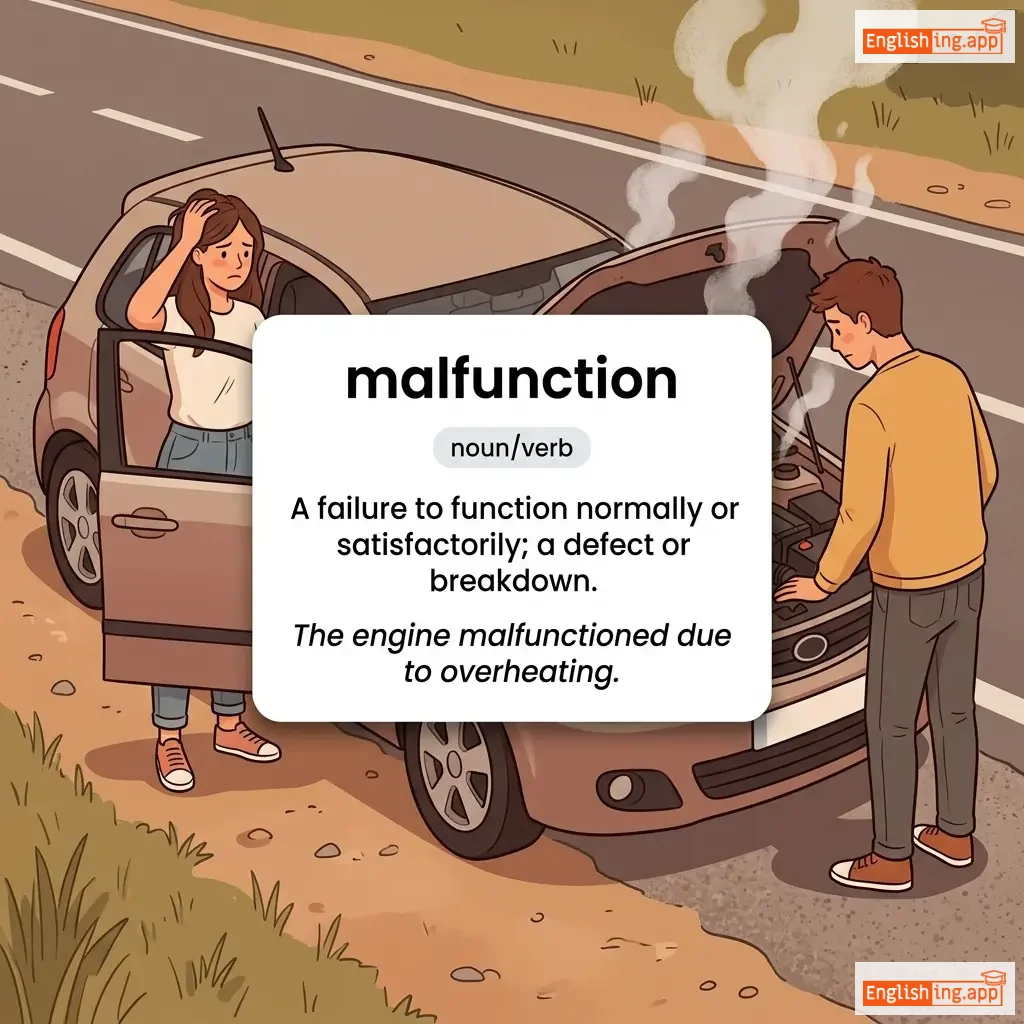
malfunction definition card — visual illustration of the meaning
noun/verb
mælˈfʌŋk.ʃən
panne (pan)

A failure to function normally or satisfactorily; a defect or breakdown.

"The engine malfunctioned due to overheating."

"Le moteur a dysfonctionné à cause de la surchauffe." (Le moteur a dysfonctionné à cause de la surchauffe.)
noun
/ˈmælɪs/
malveillance (malveillance)

The intention or desire to do evil or cause harm.

"She bore no malice towards her former friend."

"Elle n'éprouvait aucune malveillance envers son ancienne amie." (Elle n'éprouvait aucune malveillance envers son ancienne amie.)
adjective
/məˈlɪʃəs/
malicieux (malicieux)

Characterized by malice; intending or intended to do harm.

"The hackers launched a malicious attack on the company’s system."

"Les hackers ont lancé une attaque malicieuse sur le système de l'entreprise." (Les hackers ont lancé une attaque malicieuse sur le système de l'entreprise.)
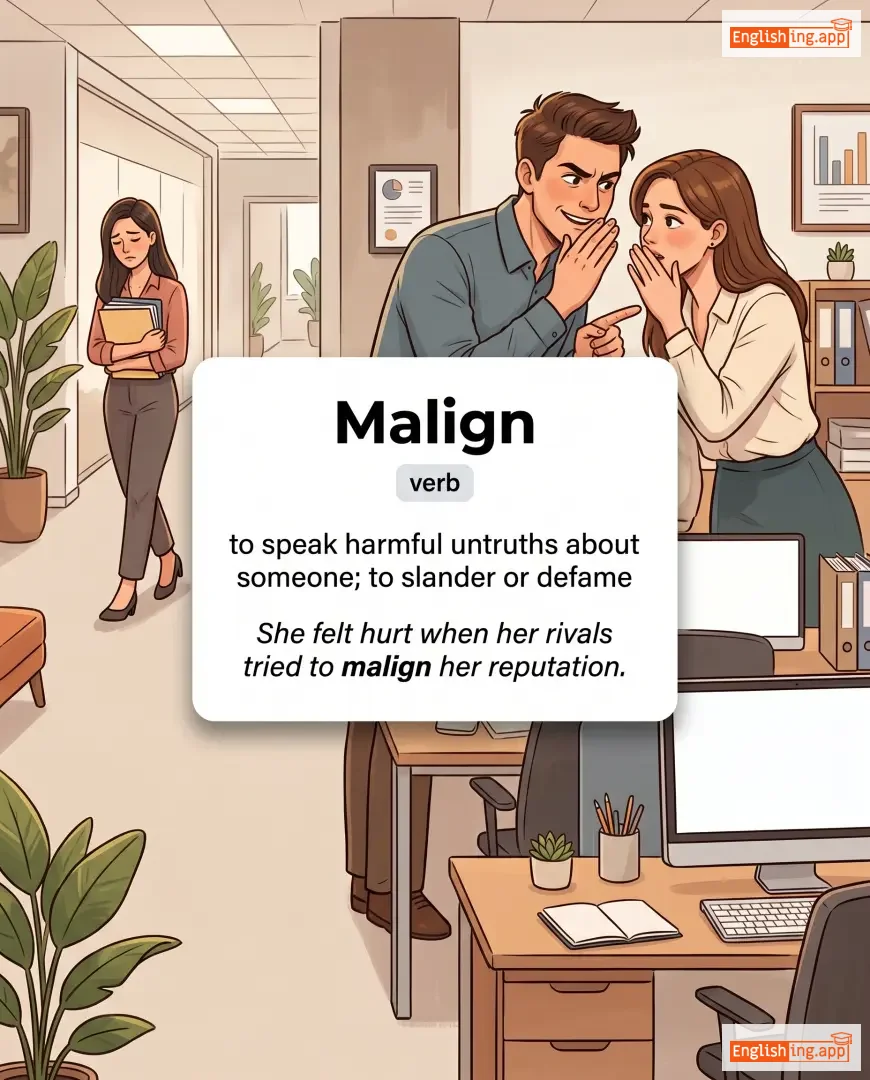
Malign definition card — visual illustration of the meaning
verb
/məˈlaɪn/
calomnier (calomnier)

to speak harmful untruths about someone; to slander or defame

"She felt hurt when her rivals tried to malign her reputation."

"Elle s'est sentie blessée lorsque ses rivaux ont essayé de salir sa réputation." (Elle s'est sentie blessée lorsque ses rivaux ont essayé de salir sa réputation.)
adjective
/məˈlɪɡnənt/
malin (malin)

dangerous or harmful in influence or effect; medically, tending to invade and destroy tissue

"Doctors confirmed that the tumor was malignant."

"Les médecins ont confirmé que la tumeur était maligne." (Les medecins ont confirme que la tumeur etait maligne.)
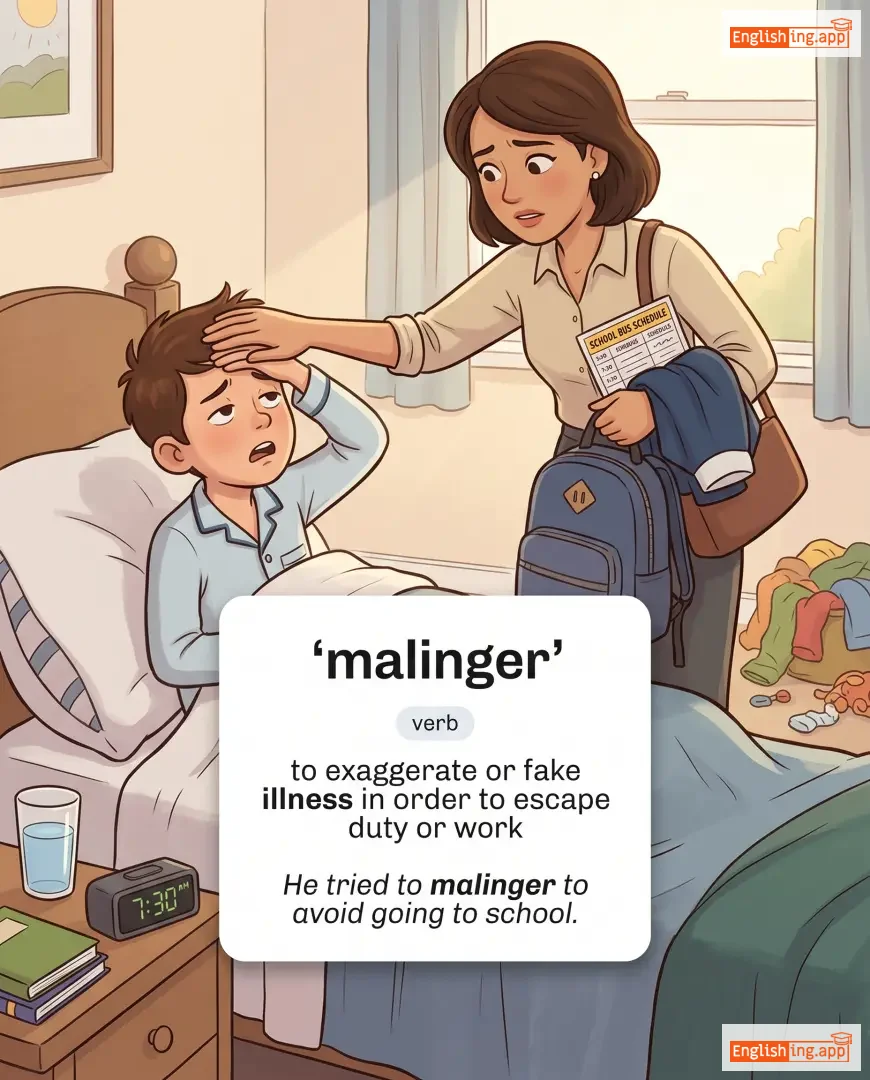
malinger definition card — visual illustration of the meaning
verb
/məˈlɪŋɡər/
feindre la maladie (feindre la maladie)

to exaggerate or fake illness in order to escape duty or work

"He tried to malinger to avoid going to school."

"Il a essayé de feindre une maladie pour éviter d'aller à l'école." (Il a essayé de feindre une maladie pour éviter d'aller à l'école.)
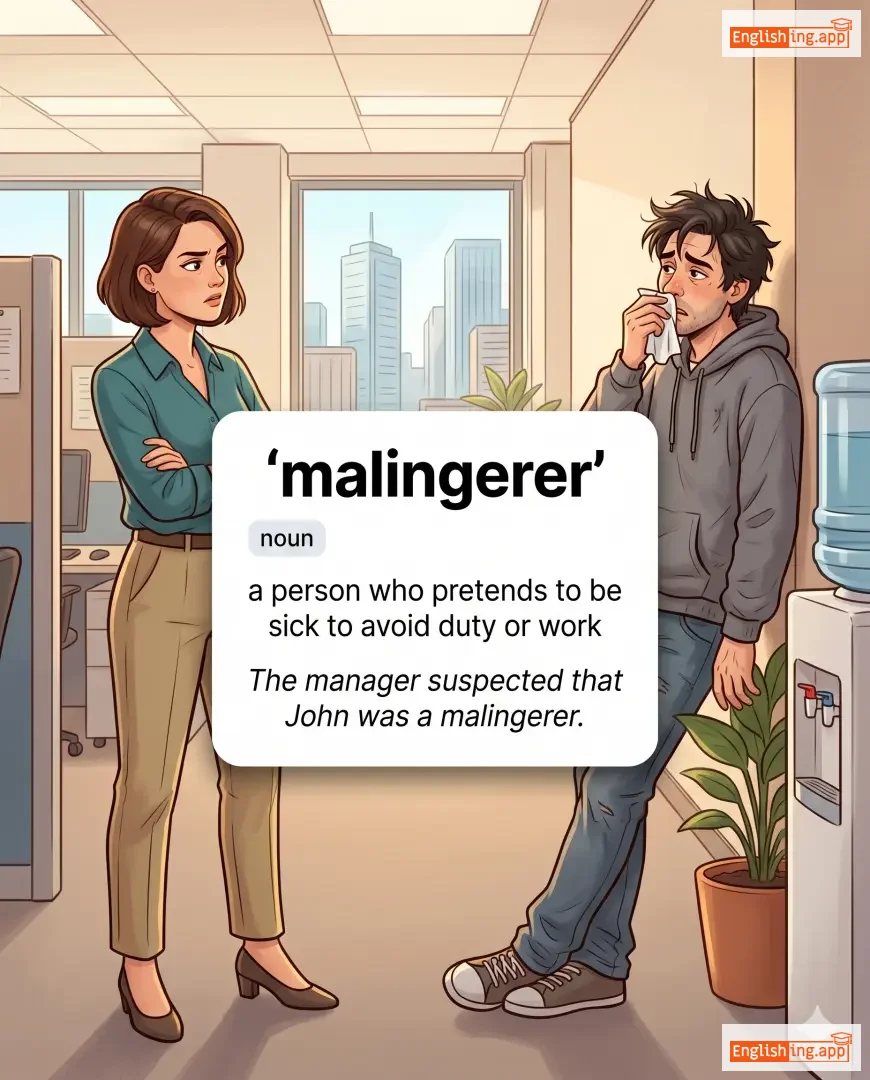
malingerer definition card — visual illustration of the meaning
noun
/məˈlɪŋɡərər/
personne qui simule une maladie (personne qui simule une maladie)

a person who pretends to be sick to avoid duty or work

"The manager suspected that John was a malingerer."

"Le responsable soupçonnait que John était un malingerer." (Le responsable soupçonnait que John était un malingerer.)
noun
/mɔːl/ or /mæl/
centre commercial (centre commercial)

a large building or series of connected buildings containing shops and restaurants

"They went to the mall to buy new clothes."

"Ils sont allés au centre commercial pour acheter de nouveaux vêtements." (Ils sont allés au centre commercial pour acheter de nouveaux vêtements.)
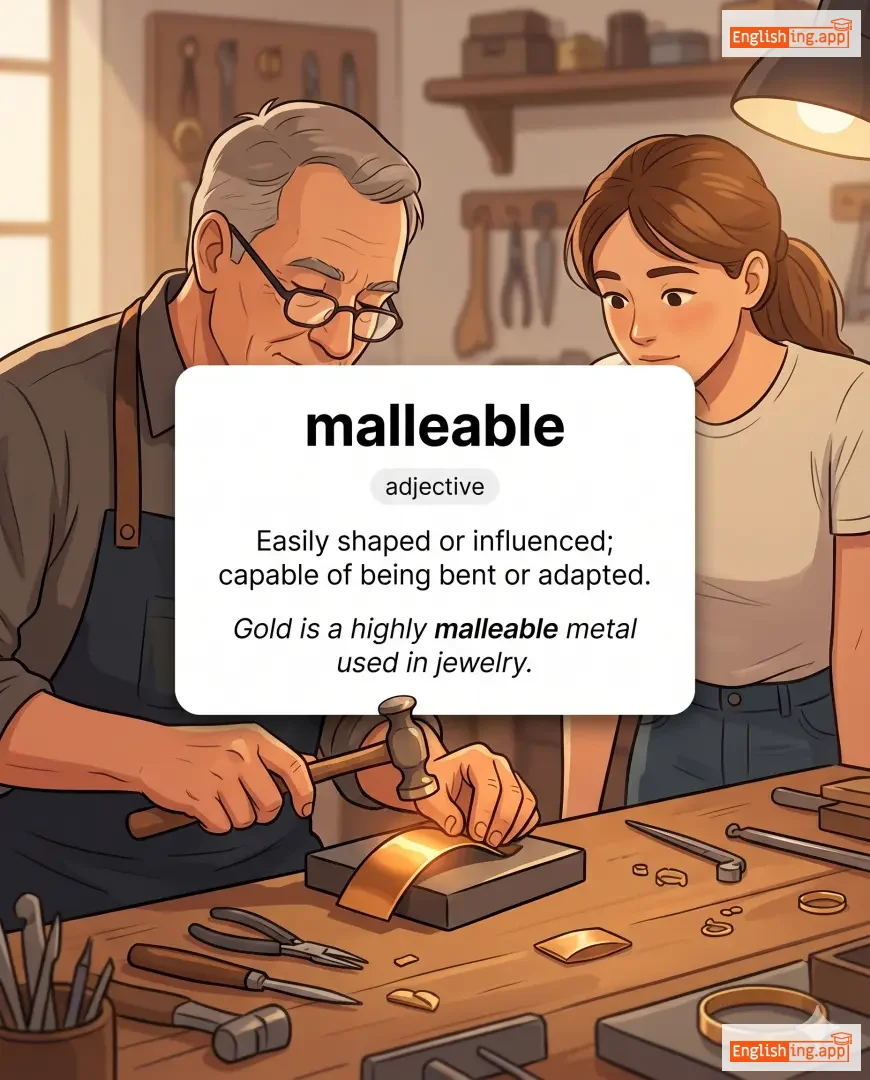
malleable definition card — visual illustration of the meaning
adjective
/ˈmæliəbl̩/
malléable (malleable)

Easily shaped or influenced; capable of being bent or adapted.

"Gold is a highly malleable metal used in jewelry."

"L'or est un métal très malléable utilisé dans la bijouterie." (L'or est un métal très malléable utilisé dans la bijouterie.)
noun
/ˈmælɪt/
maillet (maillet)

A tool with a large, usually wooden head, used for hitting something without damaging it.

"He used a mallet to drive the chisel into the wood."

"Il a utilisé un maillet pour enfoncer le ciseau dans le bois." (Il a utilisé un maillet pour enfoncer le ciseau dans le bois.)
noun
/ˈmælɪt fɪʃ/
poisson à coquille (pwason a kokiy)

A marine fish with a hard shell-like covering, found in coastal waters

"The mallet fish is known for its unique protective shell covering."

"Le poisson à coquille est connu pour sa coque protectrice unique." (le pwason a kokiy e konyu pur sa kok protektris unik)
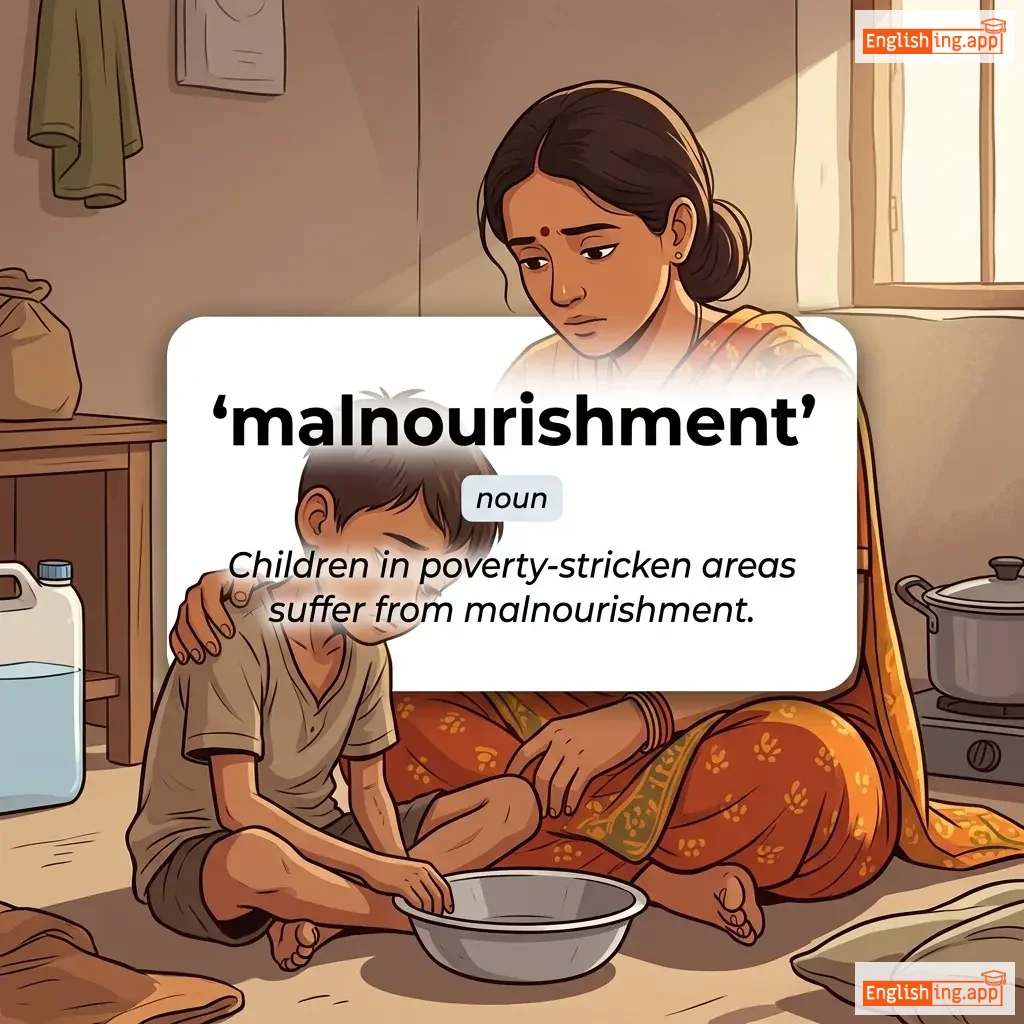
malnourishment definition card — visual illustration of the meaning
noun
mælˈnʌr.ɪʃ.mənt
malnutrition (malnutrition)

Lack of proper nutrition, caused by not having enough to eat, not eating enough of the right things, or being unable to use the food that one does eat.

"Children in poverty-stricken areas suffer from malnourishment."

"Les enfants dans les zones appauvries souffrent de malnutrition." (Les enfants dans les zones appauvries souffrent de malnutrition.)
noun
/ˌmælnuːˈtrɪʃən/
malnutrition; sous-nutrition (malnutrition)

Lack of proper nutrition; poor nourishment

"Malnutrition among children is a serious public health concern."

"La malnutrition chez les enfants est un problème de santé publique grave." (la malnutrition chez les enfants est un probleme de sante publique grave.)
noun
/ˌmælˈoʊdər/
mauvaise odeur (mauvaise odeur)

An unpleasant smell; bad odor.

"The garbage bin gave off a terrible malodor."

"La poubelle dégageait une terrible mauvaise odeur." (La poubelle dégageait une terrible mauvaise odeur.)
adjective
/ˌmælˈoʊdərəs/
malodorant (malodorant)

Having a very unpleasant smell.

"The malodorous room made everyone leave quickly."

"La pièce malodorante a fait partir tout le monde rapidement." (La pièce malodorante a fait partir tout le monde rapidement.)
noun
/mælˈpræktɪs/
malpratique (malpraktik)

Improper, illegal, or negligent professional behavior

"The surgeon was sued for malpractice after the failed operation."

"Le chirurgien a été poursuivi pour malpratique après l'échec de l'opération." (Le chirurgien a été poursuivi pour malpratique après l'échec de l'opération.)
noun
/ˈmɔːl.tə/
orange sanguine (malta)

a sweet citrus fruit similar to orange, also known as blood orange or sweet orange

"Malta is a popular citrus fruit in Bangladesh known for its sweet taste and high vitamin C content."

"Malta est un fruit citrique populaire au Bangladesh, connu pour son goût sucré et sa teneur élevée en vitamine C." (Malta est un fruit citrique populaire au Bangladesh connu pour son gout sucre et sa teneur elevee en vitamine C.)
verb
/ˌmælˈtriːt/
maltraiter (maltraiter)

To treat someone cruelly or unfairly.

"The law punishes those who maltreat animals."

"La loi punit ceux qui maltraitent les animaux." (La loi punit ceux qui maltraitent les animaux.)
noun
/ˈmæm.əl/
mammifère (mammifere)

A warm-blooded animal with hair or fur, and females produce milk for their young.

"The whale is the largest mammal on Earth."

"La baleine est le plus grand mammifère de la Terre." (La baleine est le plus grand mammifère de la Terre.)
noun/adjective
/ˈmæm.əθ/
mammouth / gigantesque (mammouth / gigantesque)

An extinct large elephant-like animal with long curved tusks; also means something huge.

"The company faced a mammoth challenge during expansion."

"L'entreprise a fait face à un défi gigantesque lors de son expansion." (L'entreprise a fait face à un défi gigantesque lors de son expansion.)
noun
/mæn/
homme (homme)

an adult human male

"The man helped the child cross the street."

"L'homme a aidé l'enfant à traverser la rue." (L'homme a aidé l'enfant à traverser la rue.)