Vocabulaires

Découvrez, apprenez et maîtrisez le vocabulaire anglais

adjective
/ɪnˈdɛtɪd/
reconnaissant (reconnaissant)

Owing gratitude or money to someone; obligated.

"I am deeply indebted to my teacher for her guidance."

"Je suis profondément reconnaissant envers mon professeur pour ses conseils." (Je suis profondément reconnaissant envers mon professeur pour ses conseils.)
adjective
/ɪnˈdiːsənt/
indécent (indecent)

not conforming to accepted standards of behavior or morality; improper or offensive

"He was warned for making an indecent remark during the meeting."

"Il a été averti pour une remarque indécente." (Il a ete averti pour une remarque indecente)
noun
/ˌɪndɪˈsɪʒən/
indécision (indecision)

The inability to make a decision quickly or confidently.

"Her indecision caused a delay in the project."

"Son indécision a causé un retard dans le projet." (Son indecision a causé un retard dans le projet.)
adjective
/ˌɪndɪˈsaɪsɪv/
indécis (indecis)

Unable to make decisions quickly or firmly.

"He is too indecisive to be a good leader."

"Il est trop indécis pour être un bon leader." (Il est trop indecis pour être un bon leader.)
adjective
/ɪnˈdɛkərəs/
indécent (indecent)

Not in keeping with good taste and propriety; improper.

"His indecorous behavior shocked the audience."

"Son comportement indécent a choqué l'audience." (Son comportement indécent a choqué l'audience.)
adverb
/ɪnˈdiːd/
en effet (en effet)

used to emphasize or confirm a statement

"It was a long journey indeed."

"C'était un long voyage, en effet." (C'était un long voyage, en effet.)
adjective
/ˌɪndɪˈfætɪɡəbl̩/
inébranlable (inebranlable)

persisting tirelessly; incapable of being fatigued

"Her indefatigable spirit kept the team motivated during the long project."

"Son esprit inébranlable a gardé l'équipe motivée pendant le long projet." (Son esprit inébranlable a gardé l'équipe motivée pendant le long projet.)
adjective
/ˌɪndɪˈfɛnsəbl̩/
indéfendable (indefendable)

not able to be protected or justified

"The minister’s remarks were considered indefensible by the public."

"Les remarques du ministre ont été jugées indéfendables par le public." (Les remarques du ministre ont été jugées indéfendables par le public.)
adjective
/ɪnˈdefɪnət/
indéfini (indefini)

not clearly defined; uncertain; vague; unlimited in time

"The meeting has been postponed for an indefinite period."

"La réunion a été reportée pour une période indéfinie." (La reunion a ete reportee pour une periode indéfinie.)
adverb
/ɪnˈdɛfɪnətli/
indéfiniment (indefiniment)

for an unlimited or unspecified period of time

"The project has been postponed indefinitely."

"Le projet a été reporté indéfiniment." (Le projet a été reporté indéfiniment.)
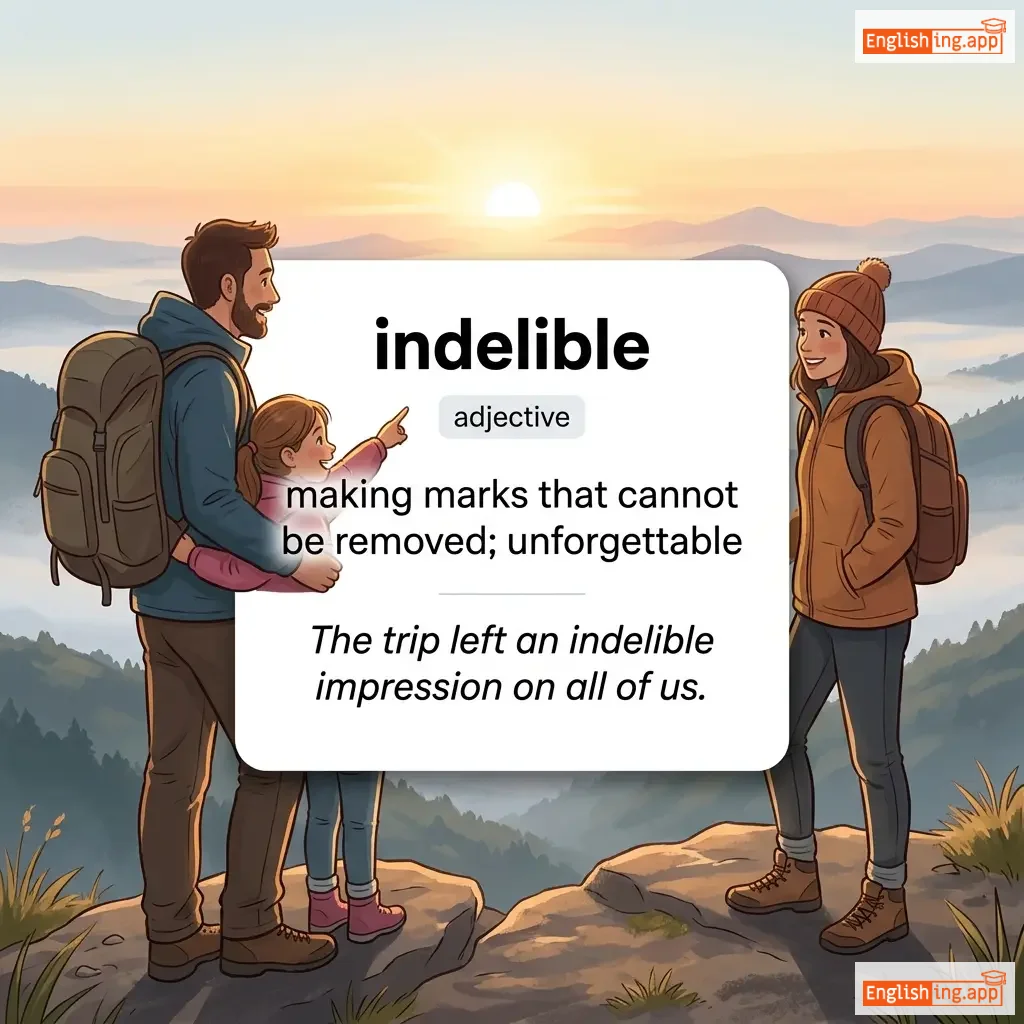
indelible definition card — visual illustration of the meaning
adjective
/ɪnˈdɛlɪbl̩/
indélébile (indelebile)

making marks that cannot be removed; unforgettable

"The trip left an indelible impression on all of us."

"Le voyage a laissé une impression indélébile sur nous tous." (Le voyage a laissé une impression indélébile sur nous tous.)
verb
/ɪnˈdɛmnɪfaɪ/
indemniser (indemniser)

to compensate someone for harm or loss; to secure against future damage or cost

"The insurance company agreed to indemnify the client for the damages."

"La compagnie d'assurance a accepté d'indemniser le client pour les dommages." (La compagnie d'assurance a accepte d'indemniser le client pour les dommages.)
noun
/ɪnˈdɛmnɪti/
indemnisation / protection (indemnisation / protection)

Security or protection against financial loss or damage; compensation for loss or damage.

"The insurance policy provides indemnity against fire damage."

"La police d'assurance fournit une indemnisation contre les dommages causés par un incendie." (La police d'assurance fournit une indemnisation contre les dommages causes par un incendie.)
noun
/ˌɪndɛnˈteɪʃən/
indentation (indentation)

A space left at the beginning of a line of text; a notch or deep recess on a surface.

"The teacher asked the students to use proper indentation in their essays."

"Le professeur a demandé aux élèves d'utiliser une indentation correcte dans leurs essais." (Le professeur a demandé aux élèves d'utiliser une indentation correcte dans leurs essais.)
noun
/ɪnˈdɛntʃər/
contrat d'indenture (contrat d'indenture)

A formal legal agreement, contract, or document, often relating to work or service.

"In the 18th century, many workers came under indenture to work overseas."

"Au XVIIIe siècle, de nombreux travailleurs étaient sous contrat d'indenture pour travailler à l'étranger." (Au XVIIIe siècle, de nombreux travailleurs étaient sous contrat d'indenture pour travailler à l'étranger.)
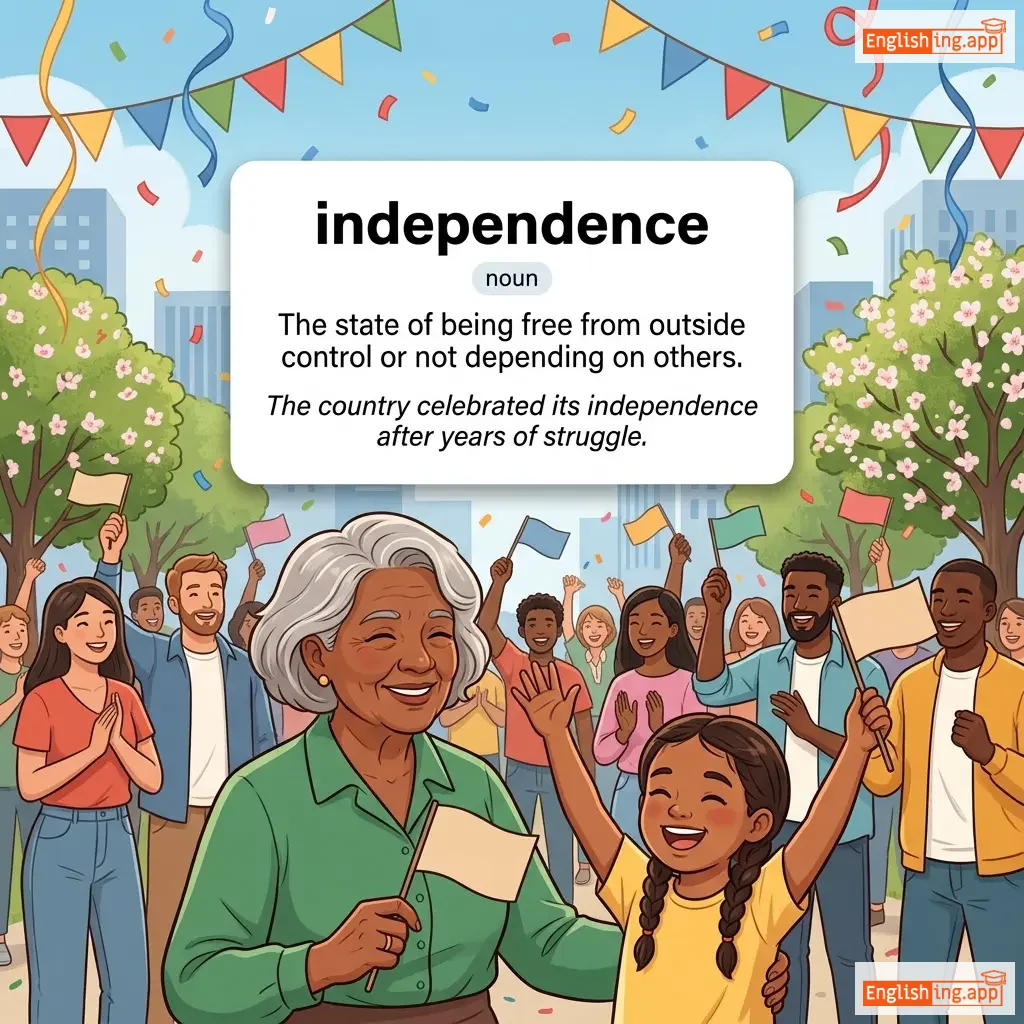
independence definition card — visual illustration of the meaning
noun
/ˌɪndɪˈpɛndəns/
indépendance (independance)

The state of being free from outside control or not depending on others.

"The country celebrated its independence after years of struggle."

"Le pays a célébré son indépendance après des années de lutte." (Le pays a célébré son indépendance après des années de lutte.)
independent definition card — visual illustration of the meaning
adjective
/ˌɪn.dɪˈpen.dənt/
indépendant (independant)

Free from outside control; not depending on others.

"She is an independent woman who runs her own business."

"Elle est une femme indépendante qui gère sa propre entreprise." (Elle est une femme indépendante qui gère sa propre entreprise.)
adjective
/ˌɪndɪˈskraɪbəbl/
indescriptible (indescriptible)

Too unusual, extreme, or great to be adequately described in words.

"The beauty of the sunset was indescribable."

"La beauté du coucher du soleil était indescriptible." (La beauté du coucher du soleil était indescriptible.)
adjective
/ˌɪndɪˈstrʌktəbl/
indestructible (indestructible)

Impossible to destroy or break.

"The superhero's shield was said to be indestructible."

"On disait que le bouclier du super-héros était indestructible." (On disait que le bouclier du super-héros était indestructible.)
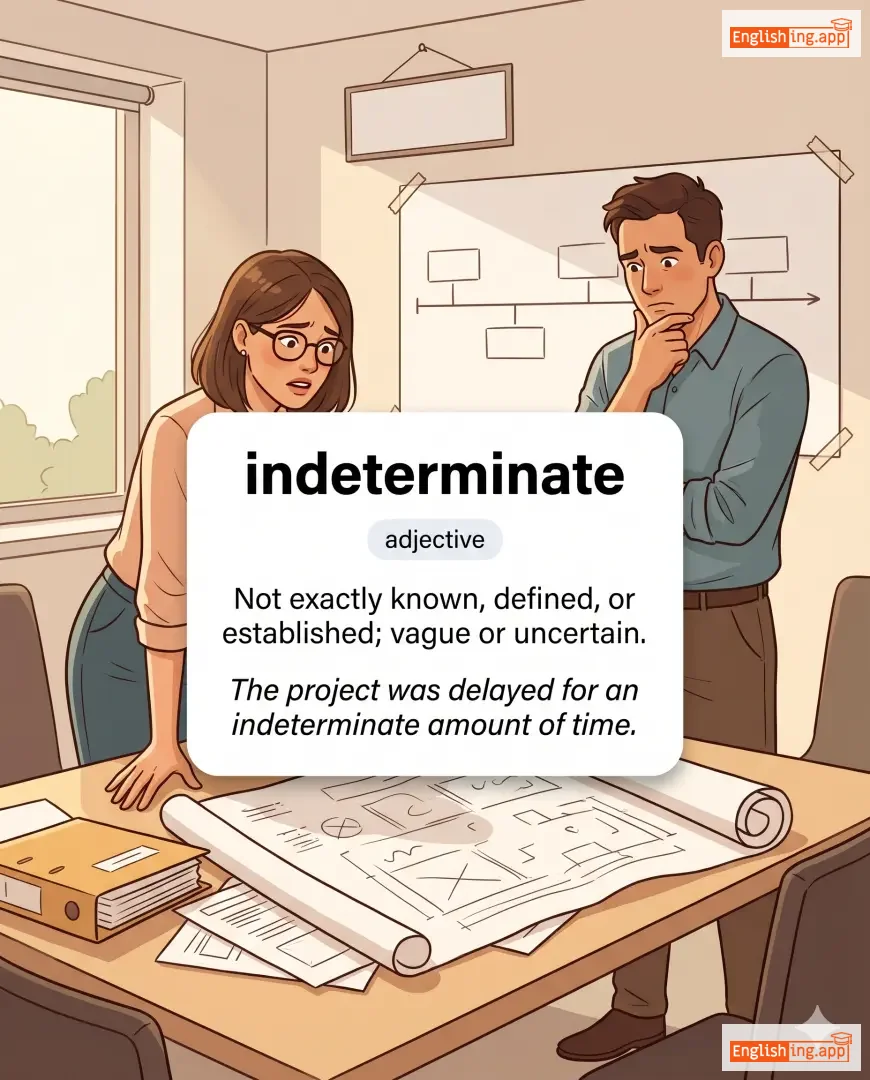
indeterminate definition card — visual illustration of the meaning
adjective
/ˌɪndɪˈtɜːrmənət/
indéterminé (indetermine)

Not exactly known, defined, or established; vague or uncertain.

"The project was delayed for an indeterminate amount of time."

"Le projet a été retardé pour une période indéterminée." (Le projet a été retardé pour une période indéterminée.)
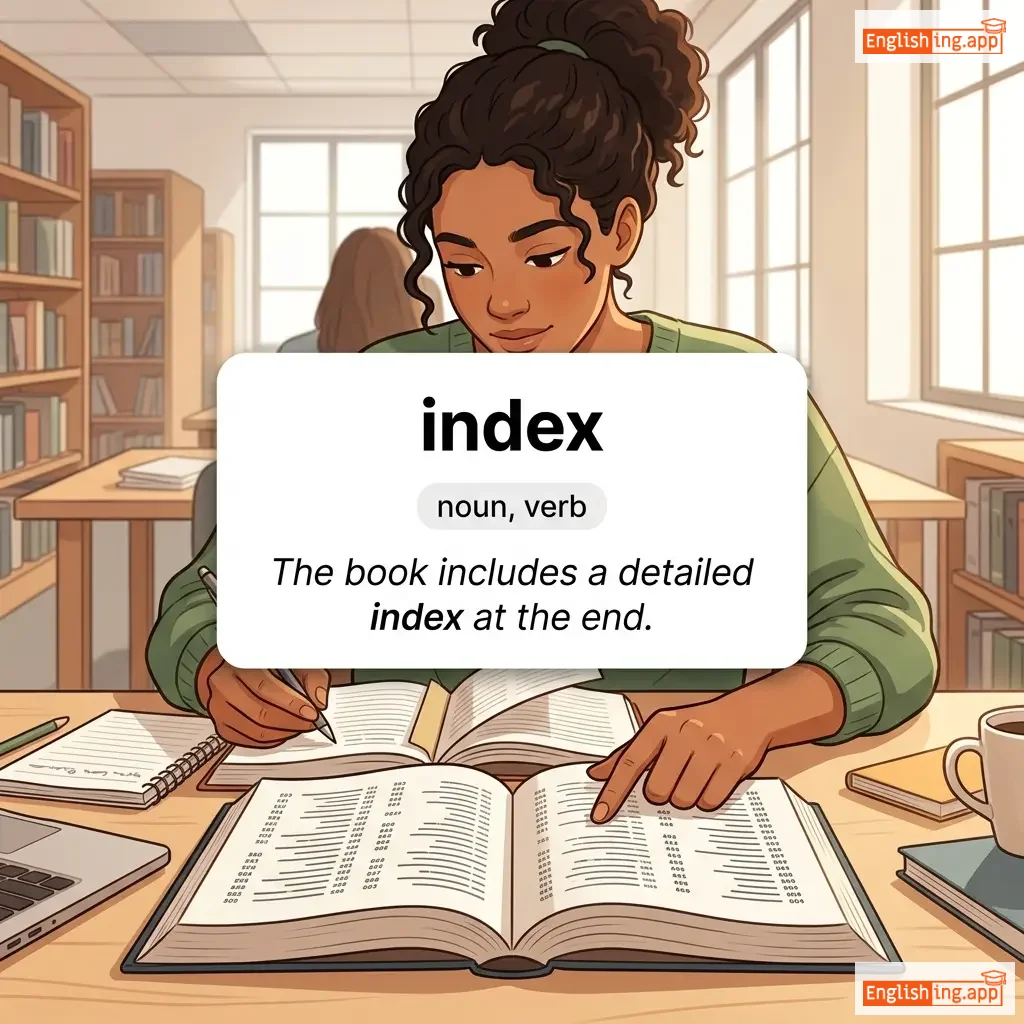
index definition card — visual illustration of the meaning
noun, verb
/ˈɪndeks/
index (index)

A list of items arranged in order, or to arrange data systematically for reference.

"The book includes a detailed index at the end."

"Le livre comprend un index détaillé à la fin." (Le livre comprend un index détaillé à la fin.)
adjective/noun
/ˈɪndiən/
indien (indien)

Relating to India, its people, or their culture.

"She loves Indian food, especially biryani."

"Elle adore la nourriture indienne, surtout le biryani." (Elle adore la nourriture indienne, surtout le biryani.)
noun
/ˈɪndɪkənt/
indicateur (indicateur)

Something that indicates or points to a fact or condition.

"High fever is often an indicant of infection."

"La fièvre élevée est souvent un indicateur d'infection." (La fièvre élevée est souvent un indicateur d'infection.)
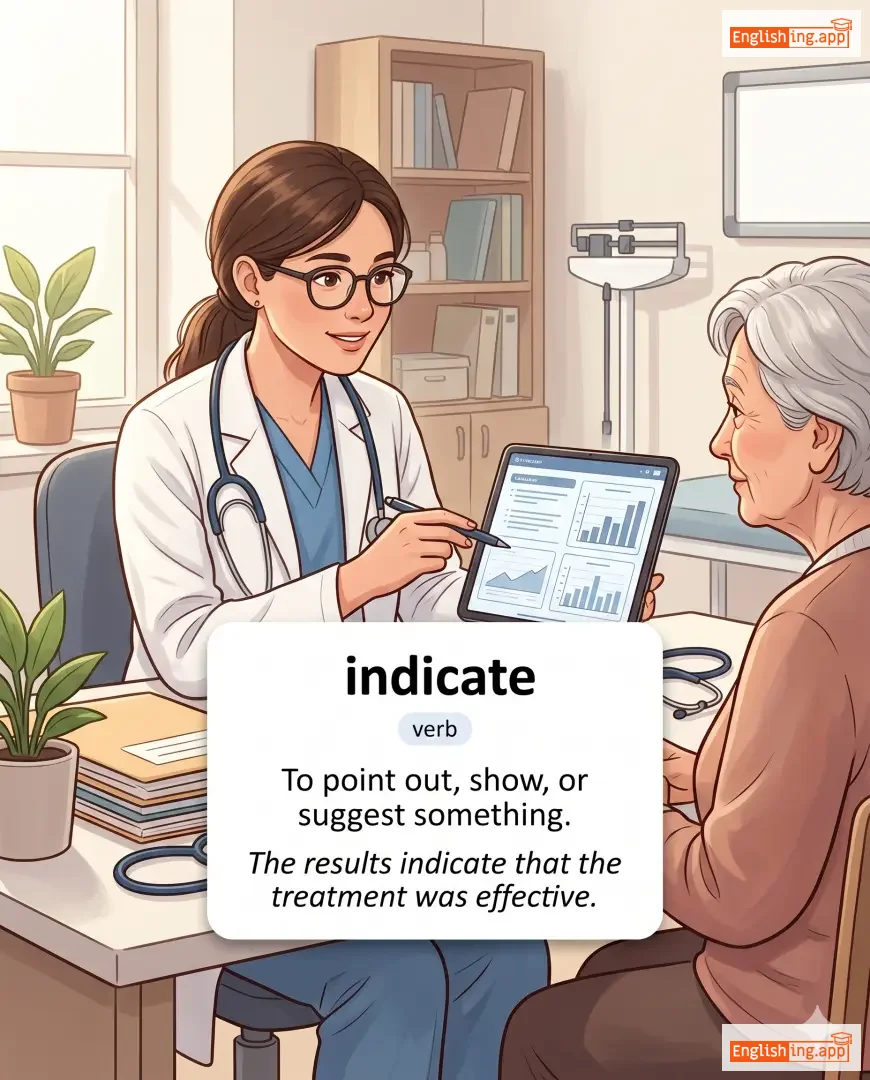
indicate definition card — visual illustration of the meaning
verb
/ˈɪndɪˌkeɪt/
indiquer (indiquer)

To point out, show, or suggest something.

"The results indicate that the treatment was effective."

"Les résultats indiquent que le traitement était efficace." (Les résultats indiquent que le traitement était efficace.)
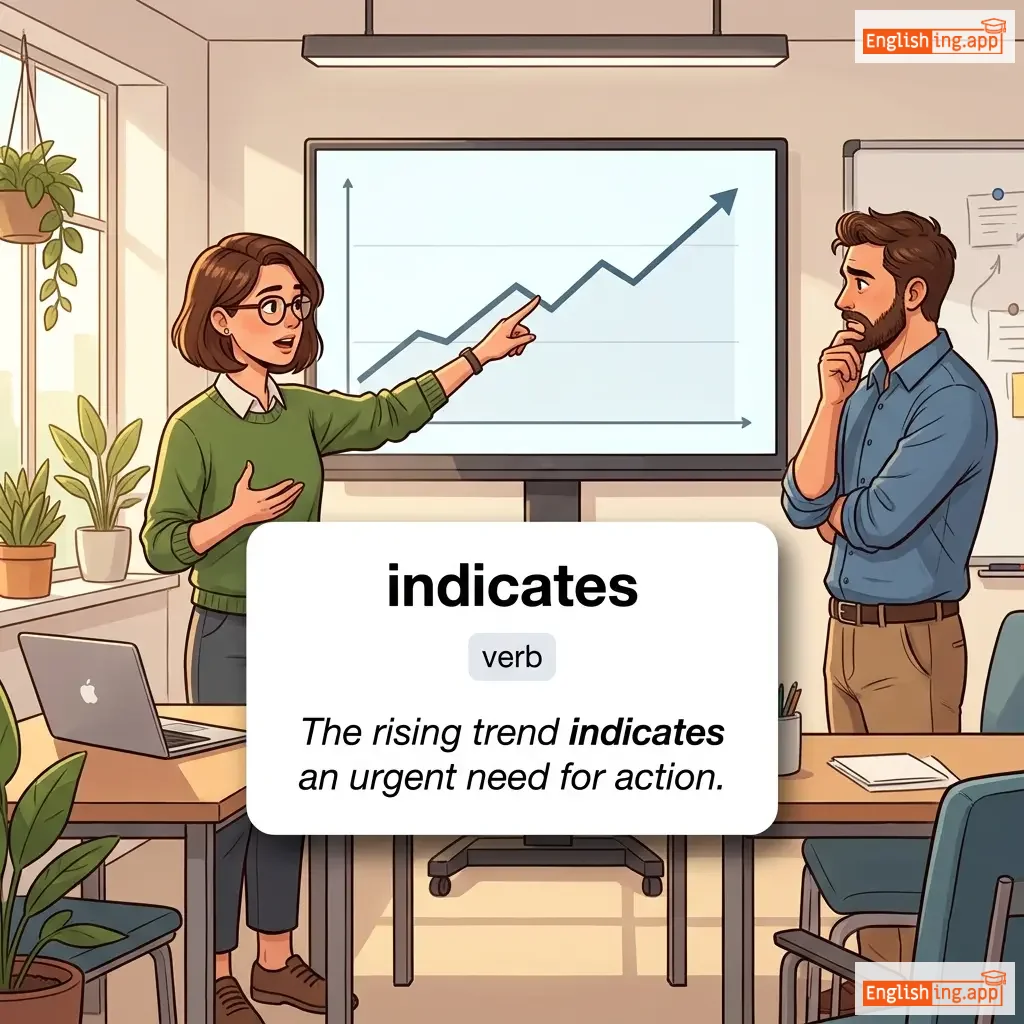
indicates definition card — visual illustration of the meaning
verb
ˈɪndɪkeɪts
indique (indike)

Point out; show; be a sign or symptom of; suggest as a desirable or necessary course of action.

"The rising trend indicates an urgent need for action."

"La tendance croissante indique un besoin urgent d'action." (La tendance croissante indique un besoin urgent d'action.)
noun
/ˌɪndɪˈkeɪʃən/
indication (indication)

A sign, piece of information, or signal that suggests something.

"Dark clouds are an indication of an approaching storm."

"Les nuages sombres sont une indication d'une tempête imminente." (Les nuages sombres sont une indication d'une tempete imminente)
adjective, noun
/ɪnˈdɪkətɪv/
indicatif (indicatif)

Serving as a sign or expression of something; in grammar, a mood used to make factual statements.

"His tone was indicative of his frustration."

"Son ton était indicatif de sa frustration." (Son ton était indicatif de sa frustration.)
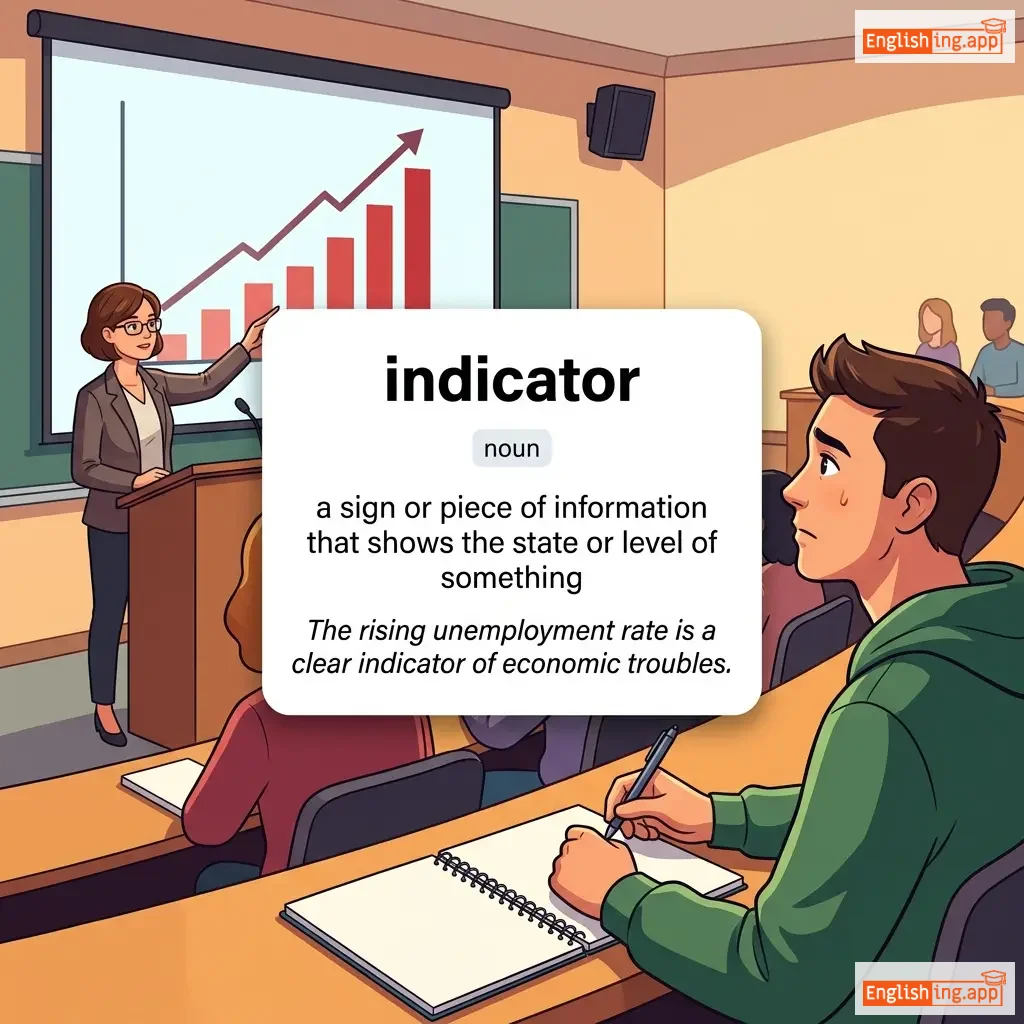
indicator definition card — visual illustration of the meaning
noun
/ˈɪndɪˌkeɪtər/
indicateur (indicateur)

a sign or piece of information that shows the state or level of something

"The rising unemployment rate is a clear indicator of economic troubles."

"Le taux de chômage croissant est un indicateur clair des problèmes économiques." (Le taux de chomage croissant est un indicateur clair des problemes economiques.)
noun (plural)
/ˈɪndɪˌsiːz/
indices (indices)

plural form of index; statistical measures or reference points used for comparison

"Stock market indices fell sharply after the announcement."

"Les indices du marché boursier ont chuté fortement après l'annonce." (Les indices du marche boursier ont chute fortement apres l'annonce.)
verb
/ɪnˈdaɪt/
inculper (inculper)

to formally accuse someone of committing a serious crime

"The grand jury decided to indict the politician for corruption."

"Le grand jury a décidé d'inculper le politicien pour corruption." (Le grand jury a décidé d'inculper le politicien pour corruption.)
noun
/ɪnˈdaɪtmənt/
acte d'accusation (akte d'aksusasyon)

a formal charge or accusation of a serious crime

"The indictment accused the company of multiple violations."

"L'acte d'accusation a accusé l'entreprise de multiples violations." (L'akte d'aksusasyon a akize l'entreprise de multiples violations.)
noun
/ɪnˈdɪfərəns/
indifférence (indifference)

lack of interest, concern, or sympathy

"He showed complete indifference to the suffering around him."

"Il a montré une indifférence totale à la souffrance autour de lui." (Il a montre une indifference totale a la souffrance autour de lui.)
adjective
/ɪnˈdɪf.ər.ənt/
indifférent (indifferente)

having no particular interest or concern; not caring one way or another

"She was indifferent to the outcome of the match."

"Elle était indifférente au résultat du match." (Elle etait indifferente au resultat du match.)
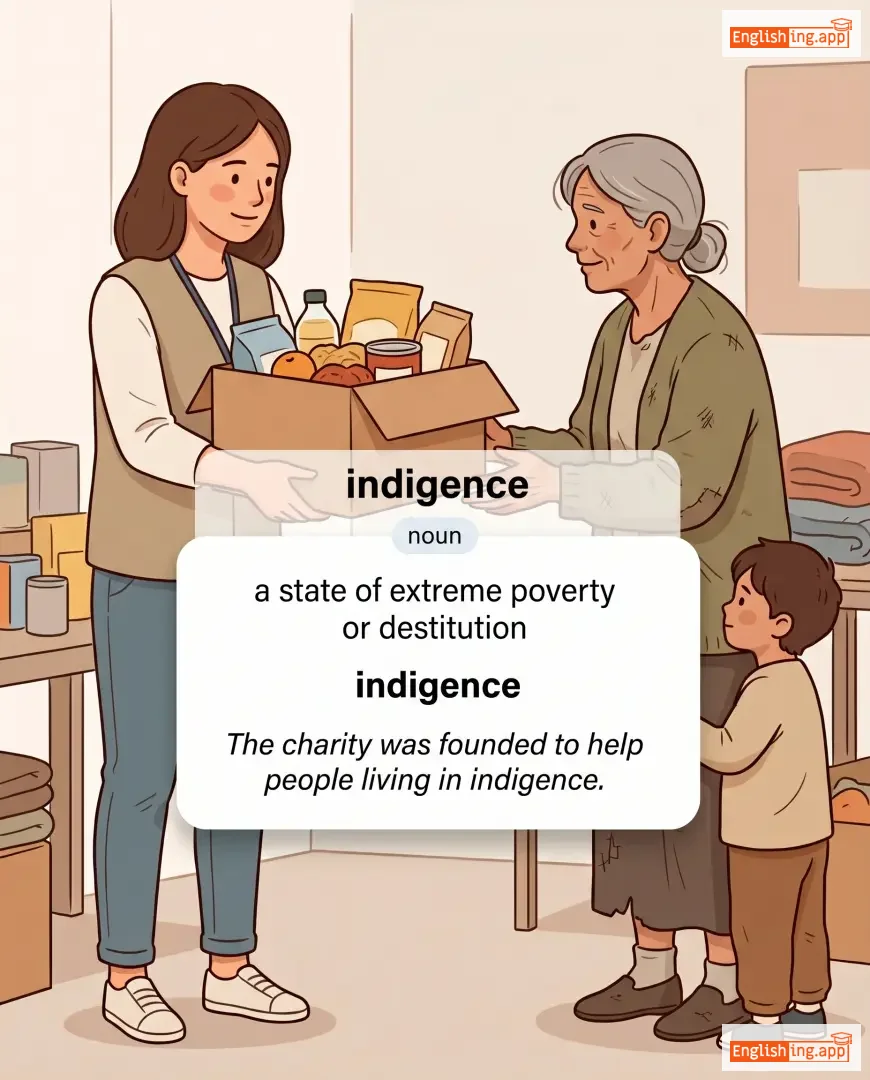
indigence definition card — visual illustration of the meaning
noun
/ˈɪn.dɪ.dʒəns/
indigence (indigence)

a state of extreme poverty or destitution

"The charity was founded to help people living in indigence."

"La charité a été fondée pour aider les personnes vivant dans l'indigence." (La charité a été fondée pour aider les personnes vivant dans l'indigence.)
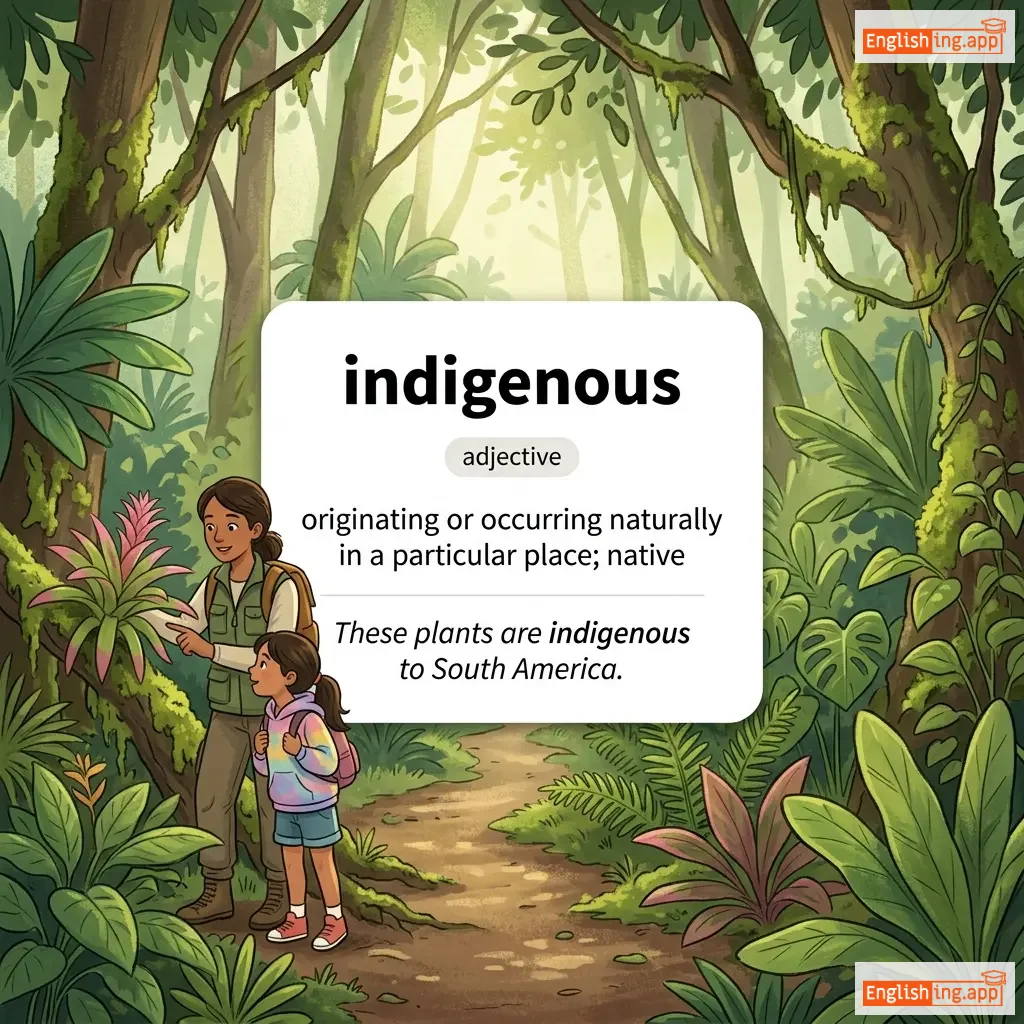
indigenous definition card — visual illustration of the meaning
adjective
/ɪnˈdɪdʒ.ə.nəs/
indigène (indigene)

originating or occurring naturally in a particular place; native

"These plants are indigenous to South America."

"Ces plantes sont indigènes d'Amérique du Sud." (Ces plantes sont indigènes d'Amérique du Sud.)
Indigenous Traditions definition card — visual illustration of the meaning
noun
ɪnˈdɪdʒɪnəs trəˈdɪʃənz
Traditions indigènes (traditions indigenes)

Cultural practices, beliefs, and customs that have been passed down through generations among native peoples.

"Indigenous traditions in the Chittagong Hill Tracts are unique."

"Les traditions indigènes dans les Chittagong Hill Tracts sont uniques." (Les traditions indigènes dans les Chittagong Hill Tracts sont uniques.)
adjective
/ˈɪn.dɪ.dʒənt/
indigent (indigent)

lacking the necessities of life due to poverty; very poor

"The hospital offers free care to indigent patients."

"L'hôpital offre des soins gratuits aux patients indigents." (L'hopital offre des soins gratuits aux patients indigents.)
adjective
/ˌɪn.daɪˈdʒes.tə.bəl/
indigeste (indigeste)

difficult or impossible to digest; hard to accept or understand

"The report was so long and detailed that it became almost indigestible."

"Le rapport était tellement long et détaillé qu'il est devenu presque indigeste." (Le rapport etait tellement long et detaille qu'il est devenu presque indigeste.)
noun
/ˌɪndɪˈdʒɛstʃən/
indigestion (indigestion)

Discomfort or pain in the stomach associated with difficulty in digesting food.

"He avoided spicy food because it often gave him indigestion."

"Il evitait les aliments epices car cela lui donnait souvent une indigestion." (Il evitait les aliments epices car cela lui donnait souvent une indigestion)
adjective
/ɪnˈdɪɡnənt/
indigné (indigné)

Feeling or showing anger at something considered unfair or unjust.

"She was indignant when accused of cheating."

"Elle était indignée lorsqu'elle a été accusée de tricher." (Elle était indignée lorsqu'elle a été accusée de tricher.)
noun
/ˌɪndɪɡˈneɪʃən/
indignation (indignation)

Strong displeasure or anger caused by something unjust, offensive, or insulting.

"Public indignation grew after the unfair verdict."

"L'indignation publique a grandi après le verdict injuste." (L'indignation publique a grandi apres le verdict injuste.)
noun
/ɪnˈdɪɡnɪti/
indignité (indignite)

Treatment or circumstances that cause one to feel shame or humiliation.

"He suffered the indignity of being ignored in the meeting."

"Il a souffert de l'indignité d'être ignoré lors de la réunion." (Il a souffert de l'indignite d'etre ignore lors de la reunion.)
adjective
/ˈɪndɪɡoʊ bluː/
bleu indigo (bleu indigo)

a deep blue color with a purplish tinge

"The indigo-blue sky looked magnificent at twilight."

"Le ciel bleu indigo semblait magnifique au crépuscule." (Le ciel bleu indigo semblait magnifique au crépuscule.)
adverb
/ˌɪndəˈrɛktli/
indirectement (indirectement)

in a way that is not direct; through an intermediate means or influence

"The policy affected small businesses indirectly."

"La politique a affecté indirectement les petites entreprises." (la politique a affecte indirectement les petites entreprises)
adjective
/ˌɪndɪˈsɜːrnəbl/
indiscernable (indiscernable)

Impossible or difficult to see, notice, or distinguish.

"The difference between the two shades was almost indiscernible."

"La différence entre les deux teintes était presque indiscernable." (La difference entre les deux teintes etait presque indiscernable.)
noun
/ˌɪnˈdɪsəplɪn/
indiscipline (indiscipline)

lack of discipline or self-control; failure to obey rules or maintain order

"Indiscipline among the students disrupted the learning environment."

"L’indiscipline parmi les étudiants a perturbé l’environnement d’apprentissage." (Lindiscipline parmi les etudiants a perturbe lenvironnement dapprentissage)
adjective
/ˌɪndɪˈskriːt/
imprudent (imprudent)

Not careful in what one says or does, likely to reveal secrets or offend.

"It was indiscreet of him to mention the plan in public."

"C'était imprudent de sa part de mentionner le plan en public." (C'était imprudent de sa part de mentionner le plan en public.)
adjective
/ˌɪndɪˈskrɪmɪnət/
indiscriminé (indiscriminen)

Done without careful judgment; random or haphazard.

"The indiscriminate use of pesticides harms the environment."

"L'utilisation indiscriminée de pesticides nuit à l'environnement." (L'utilisation indiscriminée de pesticides nuit à l'environnement.)
adverb
/ˌɪn.dɪˈskrɪm.ɪ.nət.li/
indiscriminément (indiscriminement)

without making careful distinctions; randomly; without discrimination

"The company fired employees indiscriminately without considering their performance."

"L'entreprise a licencié les employés indifféremment sans prendre en compte leur performance." (L'entreprise a licencié les employés indifféremment sans prendre en compte leur performance.)
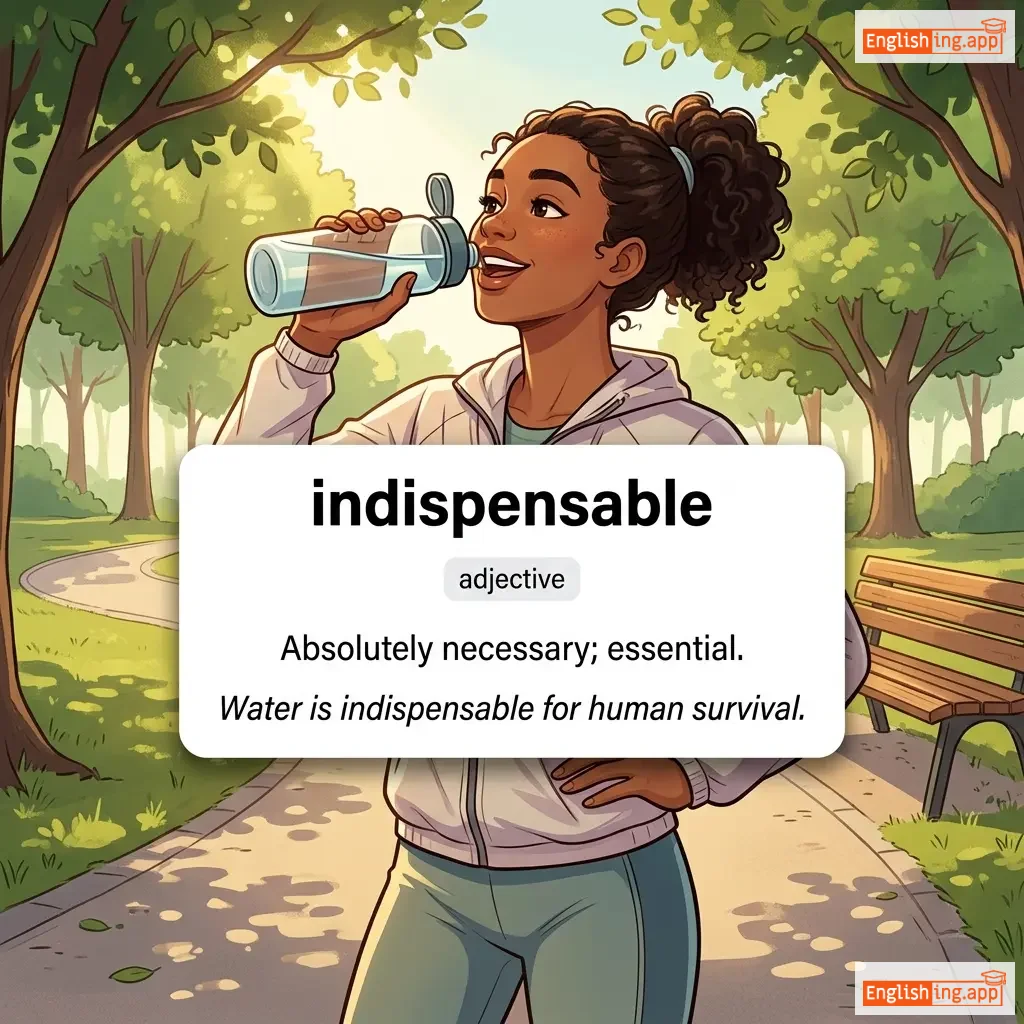
indispensable definition card — visual illustration of the meaning
adjective
/ˌɪndɪˈspɛnsəbl/
indispensable (indispensable)

Absolutely necessary; essential.

"Water is indispensable for human survival."

"L'eau est indispensable à la survie humaine." (L'eau est indispensable à la survie humaine.)