Vocabulaires

Découvrez, apprenez et maîtrisez le vocabulaire anglais

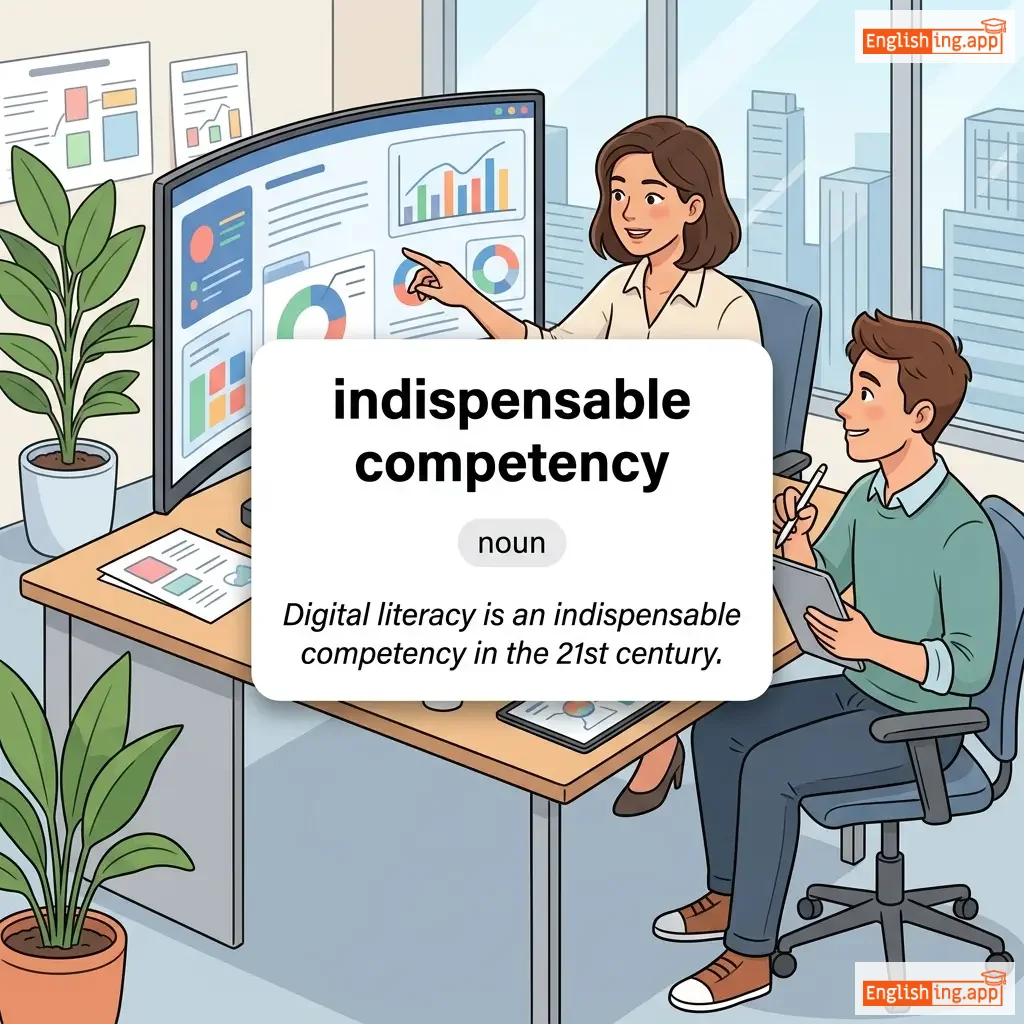
indispensable competency definition card — visual illustration of the meaning
noun
ˌɪndɪˈspensəbl̩ ˈkɒmpɪtənsi
compétence indispensable (competence indispensable)

Essential skill or ability that cannot be done without; a crucial capability that is absolutely necessary.

"Digital literacy is an indispensable competency in the 21st century."

"L'alphabétisation numérique est une compétence indispensable au XXIe siècle." (L'alphabetisation numerique est une competence indispensable au XXIe siecle.)
indispensable support definition card — visual illustration of the meaning
noun
ˌɪndɪˈspensəbl səˈpɔːrt
soutien indispensable (soutien indispensable)

Essential assistance that cannot be done without; absolutely necessary help.

"Volunteers provide indispensable support to communities."

"Les bénévoles apportent un soutien indispensable aux communautés." (Les bénévoles apportent un soutien indispensable aux communautés.)
adjective
/ˌɪndɪˈspjuːtəbl/
indiscutable (indiscutable)

Impossible to doubt or question; certain.

"It is an indisputable fact that the earth orbits the sun."

"Il est un fait indiscutable que la Terre tourne autour du Soleil." (Il est un fait indiscutable que la Terre tourne autour du Soleil.)
adjective
/ˌɪndɪˈsɒljʊbl/
Indissoluble (Indissoluble)

Unable to be destroyed, broken, or dissolved.

"Marriage was once considered an indissoluble bond."

"Le mariage était autrefois considéré comme un lien indissoluble." (Le mariage était autrefois considéré comme un lien indissoluble.)
adjective
/ˌɪndɪˈstɪŋkt/
indistinct (indistinct)

Not clear or sharply defined; vague or blurred.

"The sound of voices was indistinct in the distance."

"Le son des voix était indistinct au loin." (Le son des voix était indistinct au loin.)
verb
/ɪnˈdaɪt/
composer (composer)

To write or compose (literary or formal works).

"The poet indited a heartfelt sonnet."

"Le poète a composé un sonnet sincère." (Le poète a composé un sonnet sincère.)
adjective
/ˌɪndɪˈvɜːrtɪbəl/
indivertible (indivertible)

Not able to be turned aside or diverted.

"The judge's indivertible attention was on the case."

"L'attention indivertible du juge était sur l'affaire." (L'attention indivertible du juge etait sur l'affaire.)
noun/adjective
/ˌɪndɪˈvɪdʒuəl/
individu (individu)

A single human being as distinct from a group; relating to one person.

"Each individual has the right to freedom of speech."

"Chaque individu a le droit à la liberté d'expression." (Chaque individu a le droit à la liberté d'expression.)
adjective
/ˌɪndɪˈvɪzəbl/
indivisible (indivisible)

Not able to be divided or separated.

"The country's unity was indivisible despite differences."

"L'unité du pays était indivisible malgré les différences." (L'unite du pays etait indivisible malgre les differences.)
verb
/ɪnˈdɒktrɪˌneɪt/
endoctriner (endoctriner)

To teach someone to fully accept a set of beliefs or ideas without question.

"The regime tried to indoctrinate the youth with propaganda."

"Le régime a tenté d'endoctriner la jeunesse avec de la propagande." (Le régime a tenté d'endoctriner la jeunesse avec de la propagande.)
noun
/ˈɪndələns/
indolence (indolence)

Avoidance of activity or exertion; laziness.

"His indolence kept him from finishing the project on time."

"Son indolence l'a empêché de terminer le projet à temps." (son indolence l'a empeche de terminer le projet a temps.)
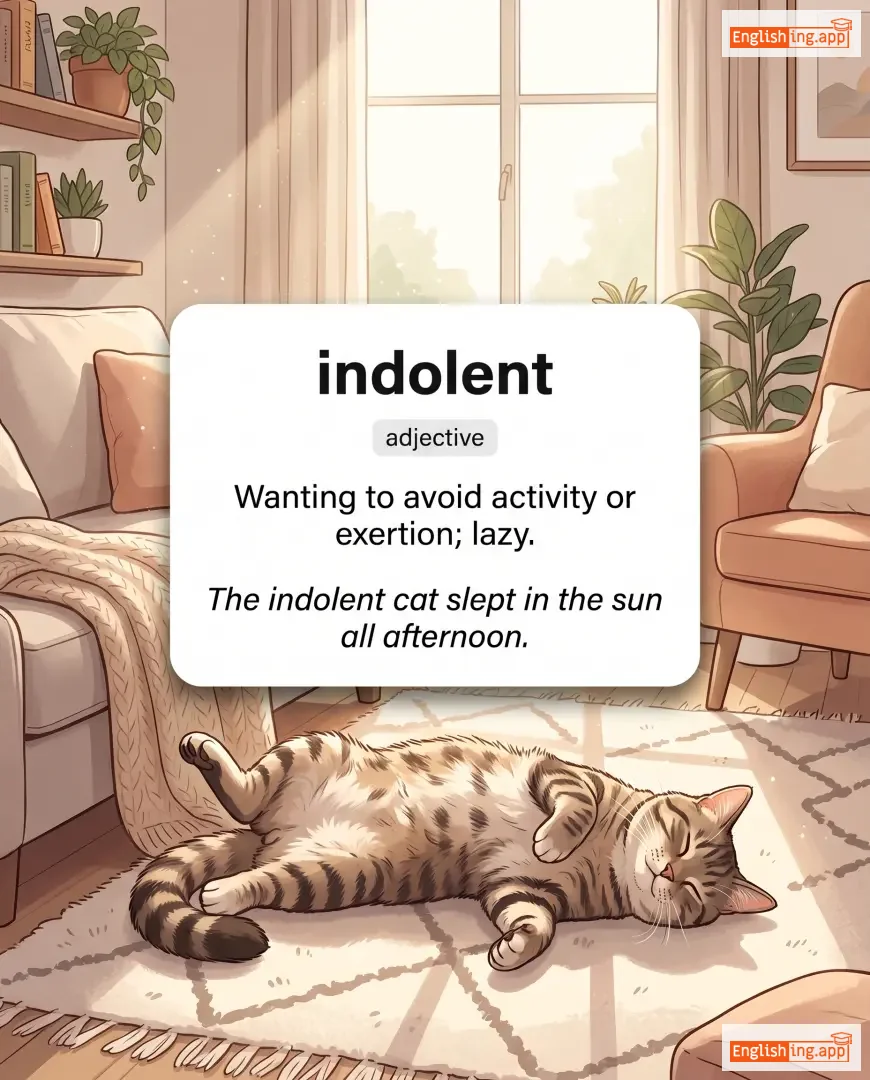
indolent definition card — visual illustration of the meaning
adjective
/ˈɪndələnt/
paresseux (paresseux)

Wanting to avoid activity or exertion; lazy.

"The indolent cat slept in the sun all afternoon."

"Le chat paresseux a dormi au soleil toute l'après-midi." (Le chat paresseux a dormi au soleil toute l'après-midi.)
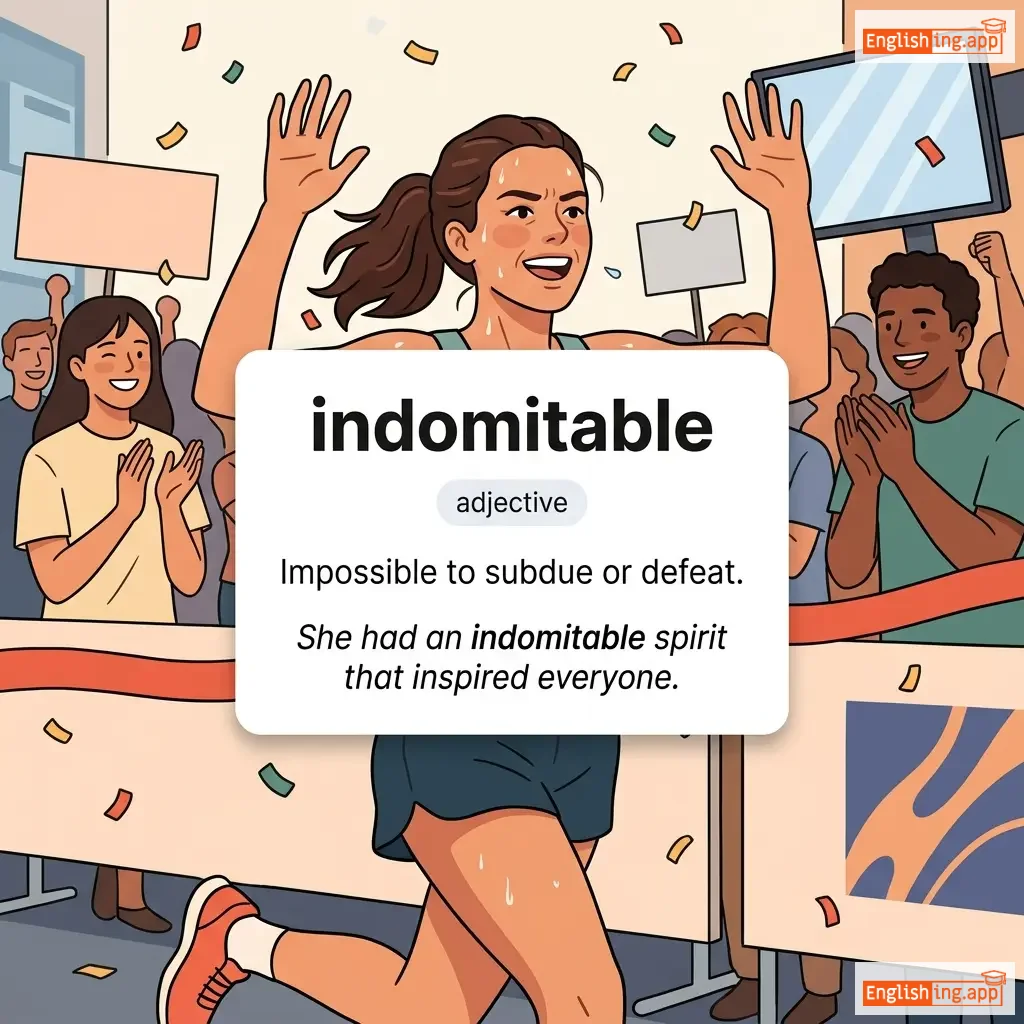
indomitable definition card — visual illustration of the meaning
adjective
/ɪnˈdɒmɪtəbl/
indomptable (indomptable)

Impossible to subdue or defeat.

"She had an indomitable spirit that inspired everyone."

"Elle avait un esprit indomptable qui a inspiré tout le monde." (Elle avait un esprit indomptable qui a inspiré tout le monde.)
adjective
/ˈɪn.dɔːr/
d'intérieur (d'interieur)

situated, occurring, or used inside a building

"Indoor plants can improve air quality at home."

"Les plantes d'intérieur peuvent améliorer la qualité de l'air à la maison." (les plantes d'interieur peuvent ameliorer la qualite de l'air a la maison)
adverb
/ˌɪnˈdɔːrz/
à l’intérieur (a linterieur)

inside a building; within an enclosed space

"Because of the rain, everyone stayed indoors."

"À cause de la pluie, tout le monde est resté à l’intérieur." (A cause de la pluie, tout le monde est reste a linterieur)
adjective
/ɪnˈdjuːbɪtəbl/
indubitable (indubitable)

Impossible to doubt; unquestionable.

"It is indubitable that hard work leads to success."

"Il est indubitable que le travail acharné mène au succès." (Il est indubitable que le travail acharné mène au succès.)
adverb
/ɪnˈdjuːbɪtəbli/
indubitablement (indubitablement)

Without a doubt; certainly.

"She is indubitably the best candidate for the job."

"Elle est indubitablement la meilleure candidate pour le poste." (Elle est indubitablement la meilleure candidate pour le poste.)
verb
/ɪnˈdjuːs/
induire (induire)

to cause or persuade someone to do something; to bring about a result

"The doctor induced sleep with a mild sedative."

"Le médecin a induit le sommeil avec un sédatif léger." (Le médecin a induit le sommeil avec un sédatif léger.)
noun
/ɪnˈdjuːsmənt/
incitation (insitation)

something that persuades or encourages someone to do something

"The company offered a bonus as an inducement to employees."

"L'entreprise a offert une prime comme incitation aux employés." (L'entreprise a offert une prime comme incitation aux employés.)
verb
/ɪnˈdʌkt/
admettre formellement quelqu'un dans une position, organisation ou bureau (admettre formellement quelqu'un dans une position, organisation ou bureau)

to formally admit someone into a position, organization, or office

"She was inducted into the university's honor society."

"Elle a été admise dans la société d'honneur de l'université." (Elle a ete admise dans la societe d'honneur de l'universite.)
adjective
/ɪnˈdʌktɪv/
inductif (induktif)

characterized by the inference of general laws from particular instances; reasoning from specific cases to general principles

"The scientist used inductive reasoning to form a hypothesis."

"Le scientifique a utilisé le raisonnement inductif pour formuler une hypothèse." (Le scientifique a utilise le raisonnement inductif pour formuler une hypothese.)
verb
/ɪnˈdʌldʒ/
se livrer (se livrer)

to allow oneself to enjoy something enjoyable, often excessively

"He indulged in a piece of chocolate cake after dinner."

"Il s'est adonné à un morceau de gâteau au chocolat après le dîner." (Il s'est adonné à un morceau de gâteau au chocolat après le dîner.)
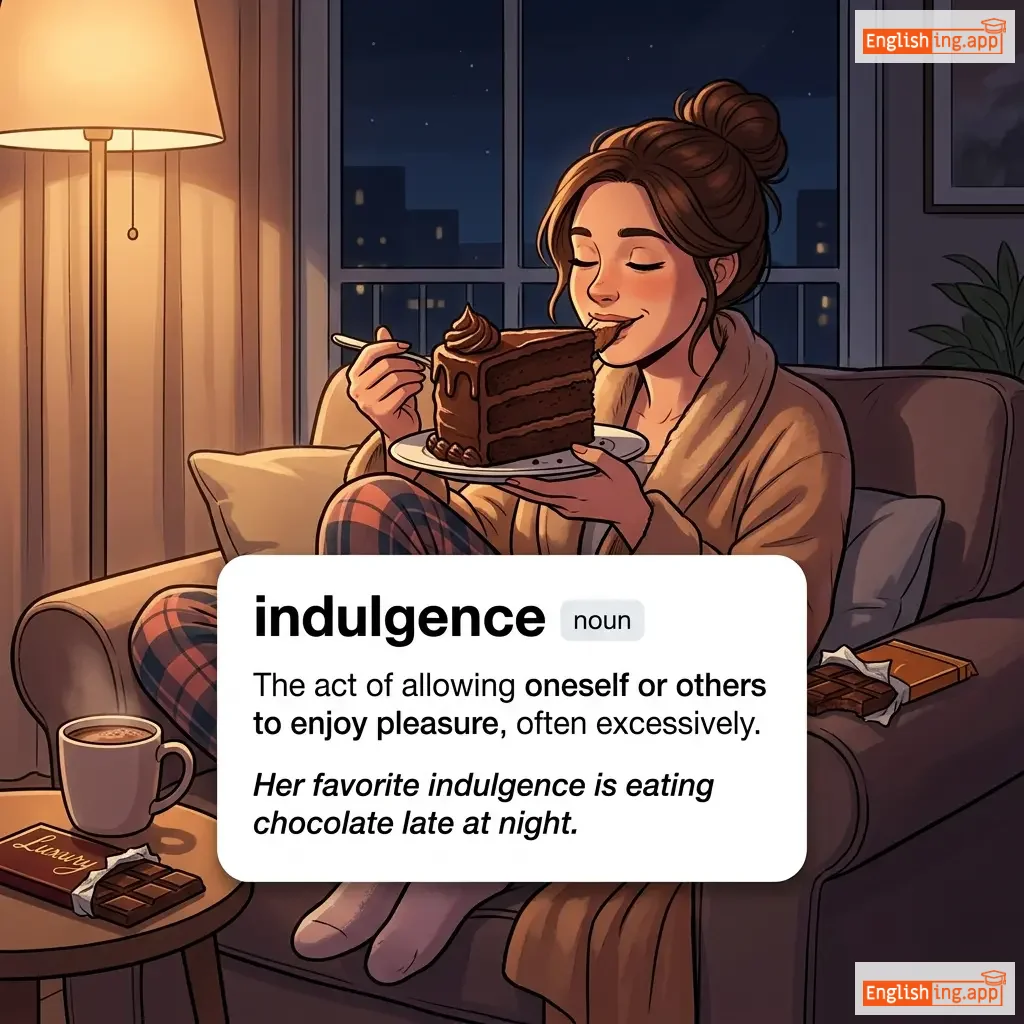
indulgence definition card — visual illustration of the meaning
noun
/ɪnˈdʌldʒəns/
indulgence (indulgence)

The act of allowing oneself or others to enjoy pleasure, often excessively.

"Her favorite indulgence is eating chocolate late at night."

"Son indulgence préférée est de manger du chocolat tard dans la nuit." (Son indulgence préférée est de manger du chocolat tard dans la nuit.)
adjective
/ɪnˈdʌldʒənt/
indulgent (indulgent)

Having a tendency to be overly generous or lenient with someone.

"The indulgent mother allowed her child to stay up late."

"La mère indulgente a permis à son enfant de rester éveillé tard." (La mère indulgente a permis à son enfant de rester éveillé tard.)
verb
/ˈɪndjʊˌreɪt/
endurcir (endurcir)

To harden or make something physically or emotionally tough.

"Years of hardship indurated his spirit."

"Des années de difficultés ont induré son esprit." (Des annees de difficultes ont indure son esprit.)
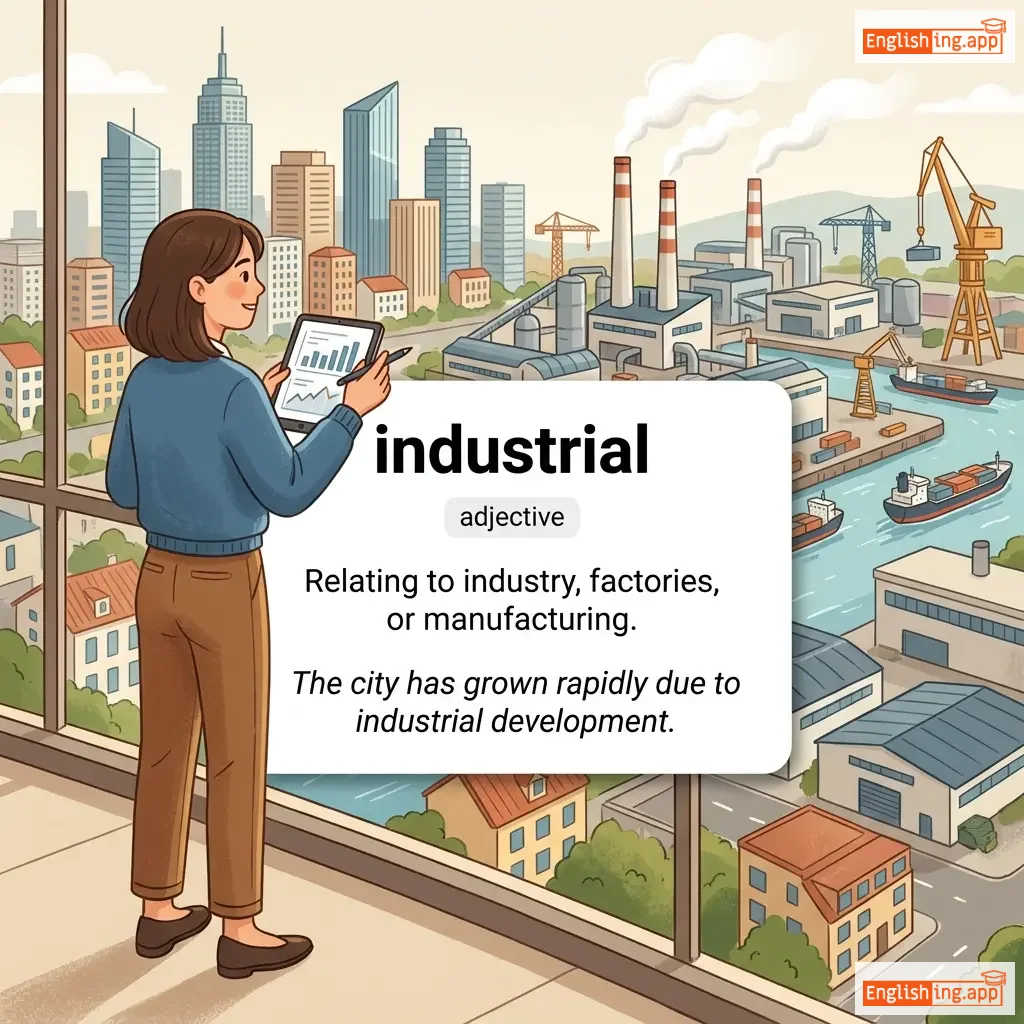
industrial definition card — visual illustration of the meaning
adjective
/ɪnˈdʌstriəl/
industriel (industriel)

Relating to industry, factories, or manufacturing.

"The city has grown rapidly due to industrial development."

"La ville a grandi rapidement grâce au développement industriel." (La ville a grandi rapidement grâce au développement industriel.)
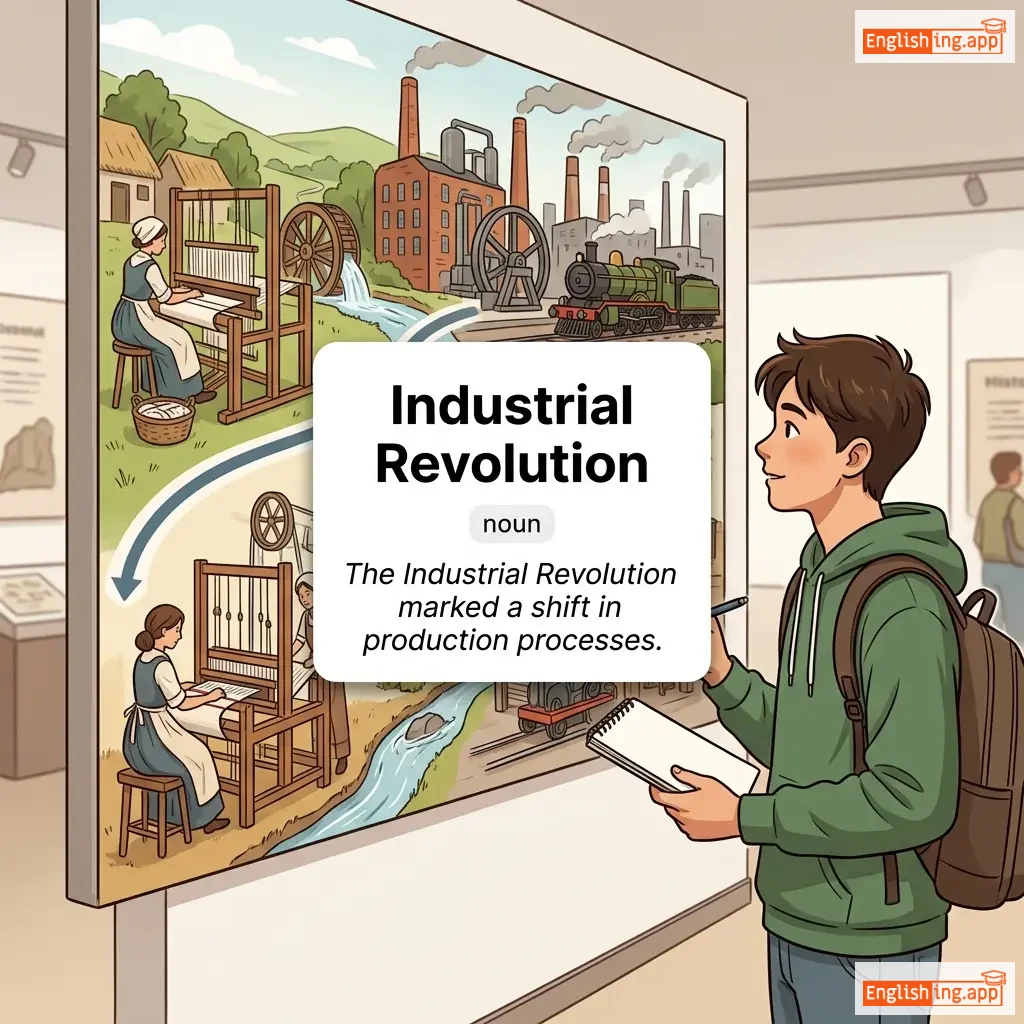
Industrial Revolution definition card — visual illustration of the meaning
noun
/ɪnˈdʌstriəl ˌrɛvəˈluːʃən/
Révolution industrielle (Revolution industrielle)

The rapid development of industry that occurred in Britain in the late 18th and 19th centuries, brought about by the introduction of machinery and characterized by the use of steam power and the growth of factories.

"The Industrial Revolution marked a shift in production processes."

"La Révolution industrielle a marqué un changement dans les processus de production." (La Revolution industrielle a marque un changement dans les processus de production.)
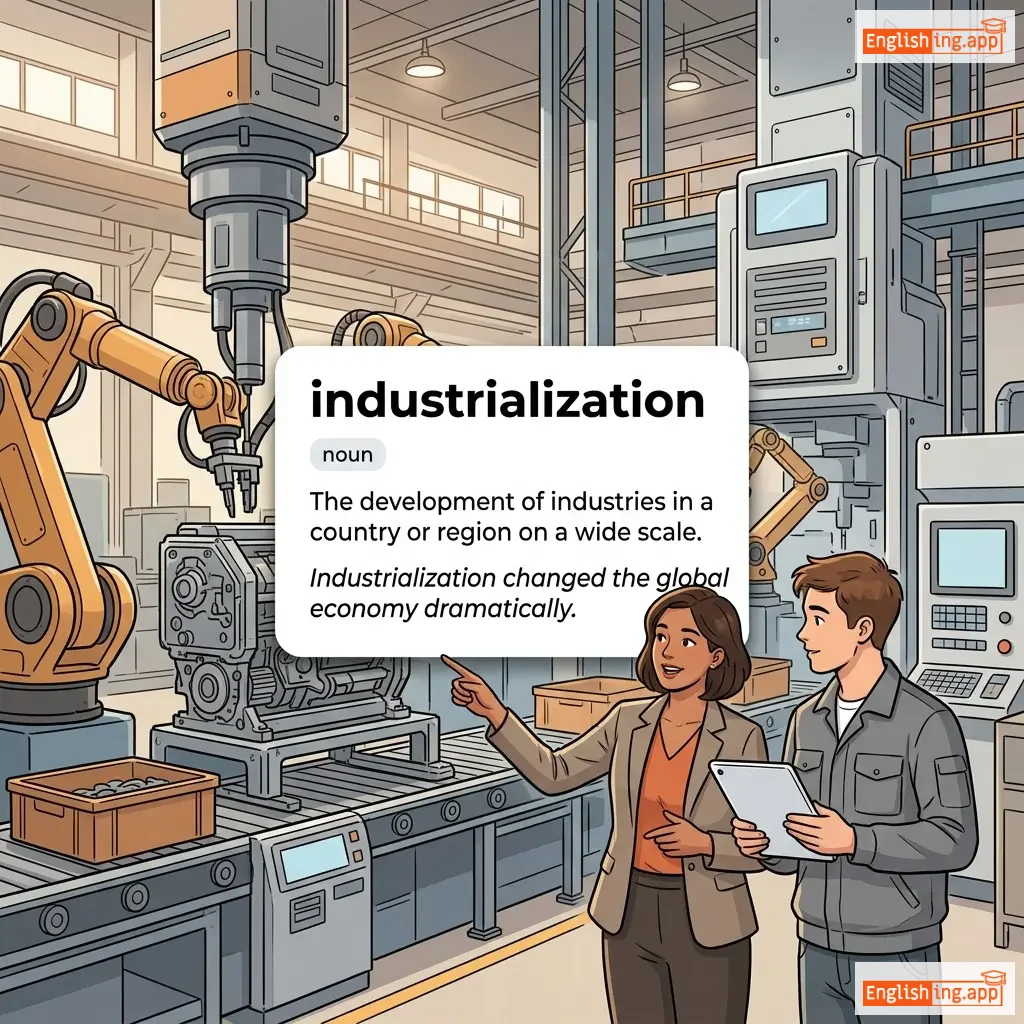
industrialization definition card — visual illustration of the meaning
noun
ɪnˌdʌstrɪəlaɪˈzeɪʃən
industrialisation (industrialisation)

The development of industries in a country or region on a wide scale.

"Industrialization changed the global economy dramatically."

"L'industrialisation a radicalement changé l'économie mondiale." (L'industrialisation a radicalement change l'economie mondiale.)
adjective
/ɪnˈdʌstriəs/
travailleur (travailleur)

Hardworking and diligent in one's duties.

"She is an industrious student who always completes her assignments on time."

"Elle est une étudiante travailleuse qui termine toujours ses devoirs à temps." (Elle est une étudiante travailleuse qui termine toujours ses devoirs à temps.)
noun
/ɪnˈdʌstriəsnəs/
diligence (diligence)

The quality of being hardworking and diligent.

"His industriousness earned him a promotion at work."

"Sa diligence lui a valu une promotion au travail." (Sa diligence lui a valu une promotion au travail.)
industry definition card — visual illustration of the meaning
noun
/ˈɪndəstri/
industrie (industrie)

The production of goods or services within an economy.

"The textile industry employs thousands of workers in the region."

"L'industrie textile emploie des milliers de travailleurs dans la région." (L'industrie textile emploie des milliers de travailleurs dans la region.)
verb
/ɪˈniː.bri.eɪt/
enivrer (enivrer)

to intoxicate; to make someone drunk

"The strong wine was enough to inebriate even the most experienced drinker."

"Le vin fort était suffisant pour enivrer même le buveur le plus expérimenté." (Le vin fort était suffisant pour enivrer même le buveur le plus expérimenté.)
adjective
/ɪˈniː.bri.eɪ.tɪd/
ivrogne (ivrogne)

under the influence of alcohol; drunk

"He stumbled into the room completely inebriated."

"Il est entré dans la pièce complètement ivre." (Il est entré dans la pièce complètement ivre.)
noun
/ˌɪn.ɪˈbraɪ.ə.ti/
ivresse (ivresse)

the state of being drunk or intoxicated

"His frequent inebriety led to the loss of his job."

"Son inconstance dans l'ivresse l'a conduit à perdre son travail." (Son inconstance dans l'ivresse l'a conduit à perdre son travail.)
adjective
/ɪˈnɛd.ə.bəl/
immangeable (immangeable)

not fit to be eaten

"The spoiled food was inedible."

"La nourriture avariée était immangeable." (La nourriture avariee etait immangeable.)
ineffable definition card — visual illustration of the meaning
adjective
/ɪˈnɛf.ə.bəl/
ineffable (ineffable)

too great, extreme, or beautiful to be expressed in words

"The beauty of the sunset was ineffable."

"La beauté du coucher du soleil était ineffable." (La beauté du coucher du soleil était ineffable.)
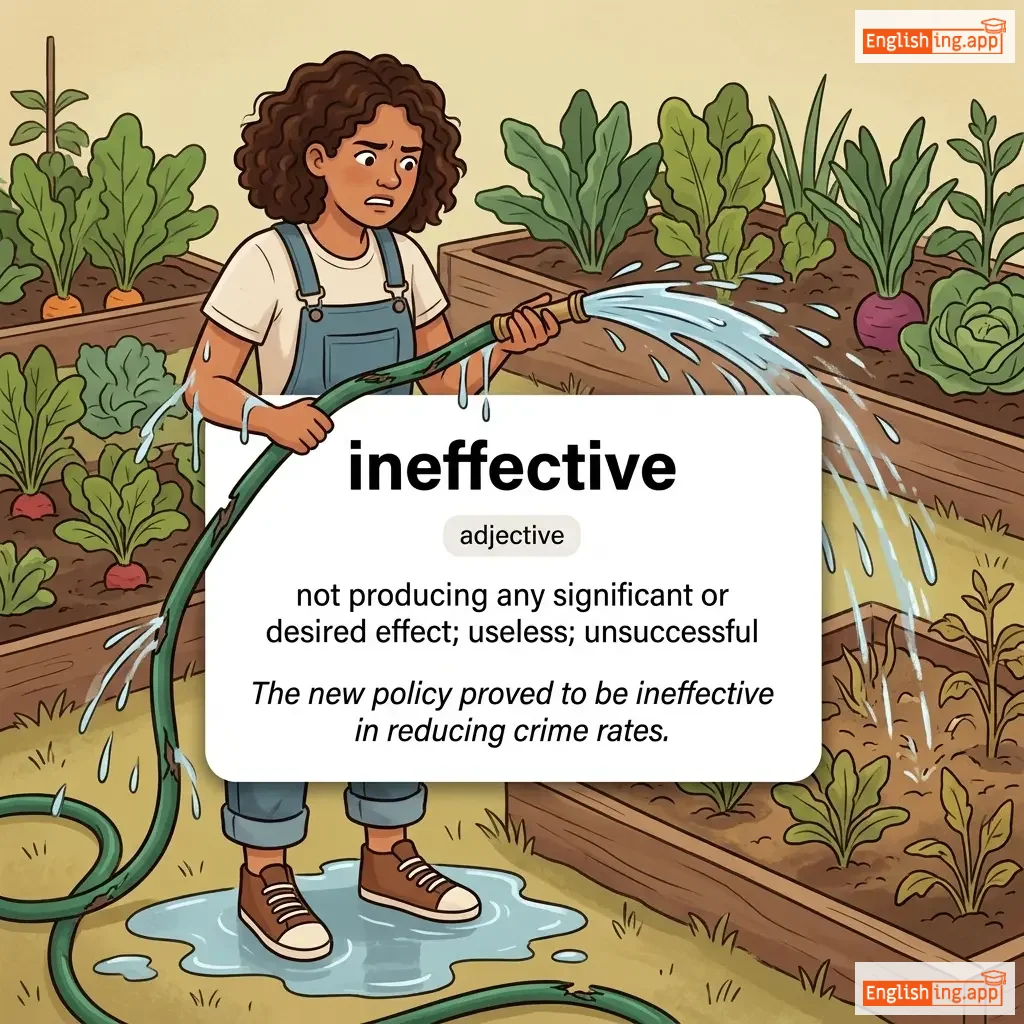
ineffective definition card — visual illustration of the meaning
adjective
/ˌɪnɪˈfɛktɪv/
inefficace; inutile; infructueux (ineffikase; inutile; infructue)

not producing any significant or desired effect; useless; unsuccessful

"The new policy proved to be ineffective in reducing crime rates."

"La nouvelle politique s'est avérée inefficace pour réduire les taux de criminalité." (La nouvelle politique s'est averee inefficace pour reduire les taux de criminalite.)
adjective
/ˌɪn.ɪˈfɛk.tʃu.əl/
inefficace (inefficace)

Not producing any or the desired effect; lacking the ability or qualities to achieve a purpose.

"The manager’s ineffectual leadership caused the team to lose motivation."

"Le leadership inefficace du manager a causé la perte de motivation de l'équipe." (Le leadership inefficace du manager a cause la perte de motivation de l'equipe.)
inefficacious definition card — visual illustration of the meaning
adjective
ˌɪn.ɪ.fɪˈkeɪ.ʃəs
inefficace (ineffikass)

Not producing any or the desired effect; ineffective.

"The treatment was inefficacious in curing the disease."

"Le traitement a été inefficace pour guérir la maladie." (Le traitement a été inefficace pour guérir la maladie.)
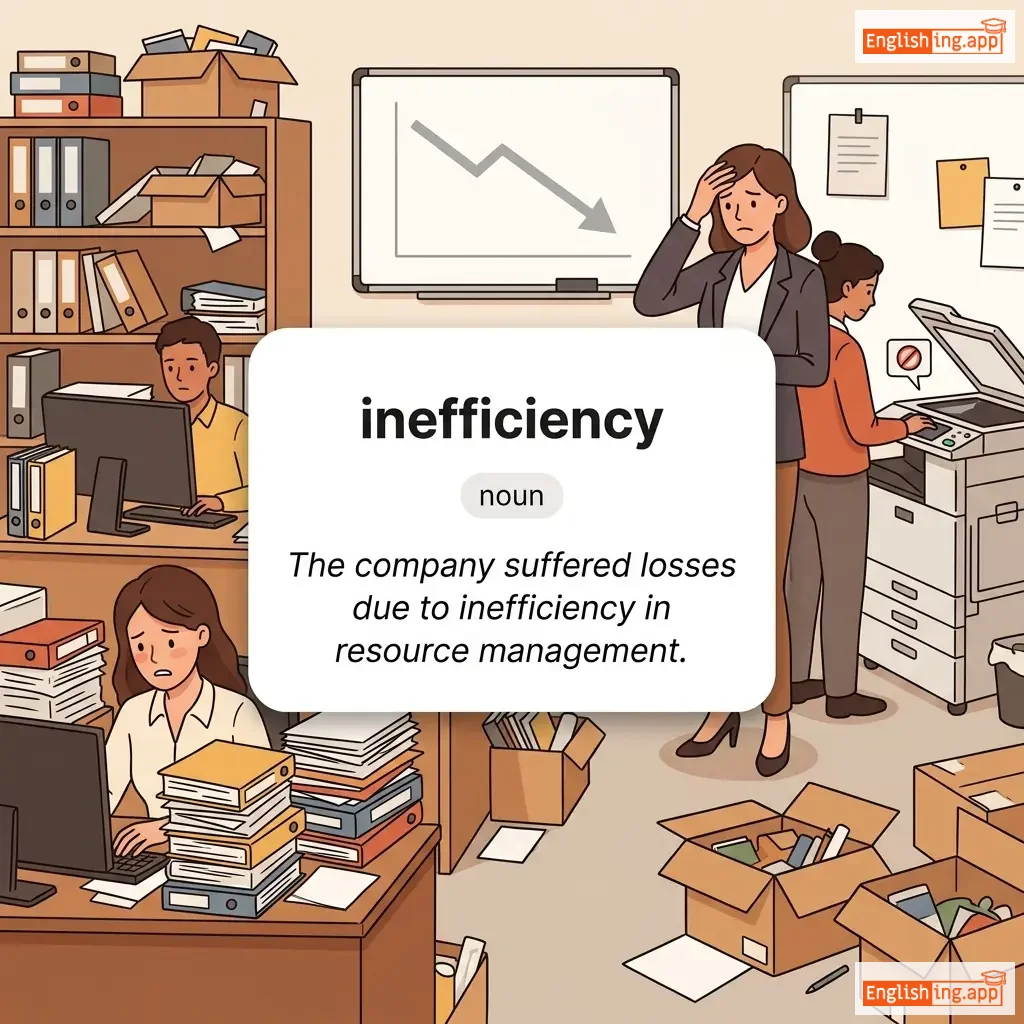
inefficiency definition card — visual illustration of the meaning
noun
/ˌɪn.ɪˈfɪʃ.ən.si/
inefficacité (inefficacite)

The state of not achieving maximum productivity; wastefulness or lack of competence.

"The company suffered losses due to inefficiency in resource management."

"L'entreprise a subi des pertes en raison de l'inefficacité dans la gestion des ressources." (L'entreprise a subi des pertes en raison de l'inefficacité dans la gestion des ressources.)
adjective
/ˌɪn.ɪˈfɪʃ.ənt/
inefficace (inefficace)

Not achieving maximum productivity; wasting resources or effort.

"The machine is old and inefficient compared to modern equipment."

"La machine est vieille et inefficace par rapport à l'équipement moderne." (La machine est vieille et inefficace par rapport à l'equipement moderne.)
adjective
/ɪnˈɛl.ɪ.dʒə.bəl/
inéligible (ineligible)

Not qualified or permitted to do something or to receive something.

"He was ineligible to apply for the scholarship because of his age."

"Il était inéligible pour postuler à la bourse en raison de son âge." (Il était inéligible pour postuler à la bourse en raison de son âge.)
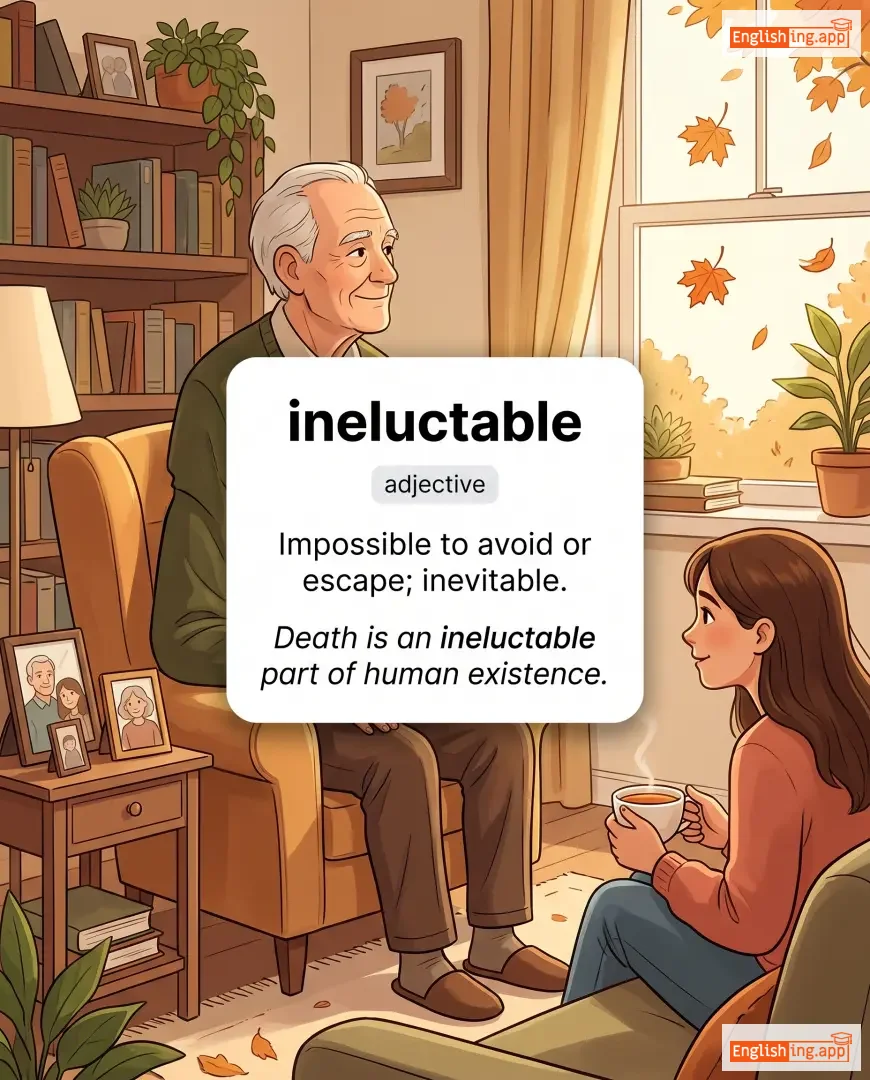
ineluctable definition card — visual illustration of the meaning
adjective
/ˌɪn.ɪˈlʌk.tə.bəl/
inéluctable (ineluctable)

Impossible to avoid or escape; inevitable.

"Death is an ineluctable part of human existence."

"La mort est une partie inéluctable de l'existence humaine." (La mort est une partie ineluctable de lexistence humaine)
adjective
/ɪˈnɛpt/
inepte (inepte)

lacking skill or ability; clumsy or incompetent

"His inept handling of the situation made it worse."

"Sa gestion inepte de la situation a empiré les choses." (Sa gestion inepte de la situation a empiré les choses.)
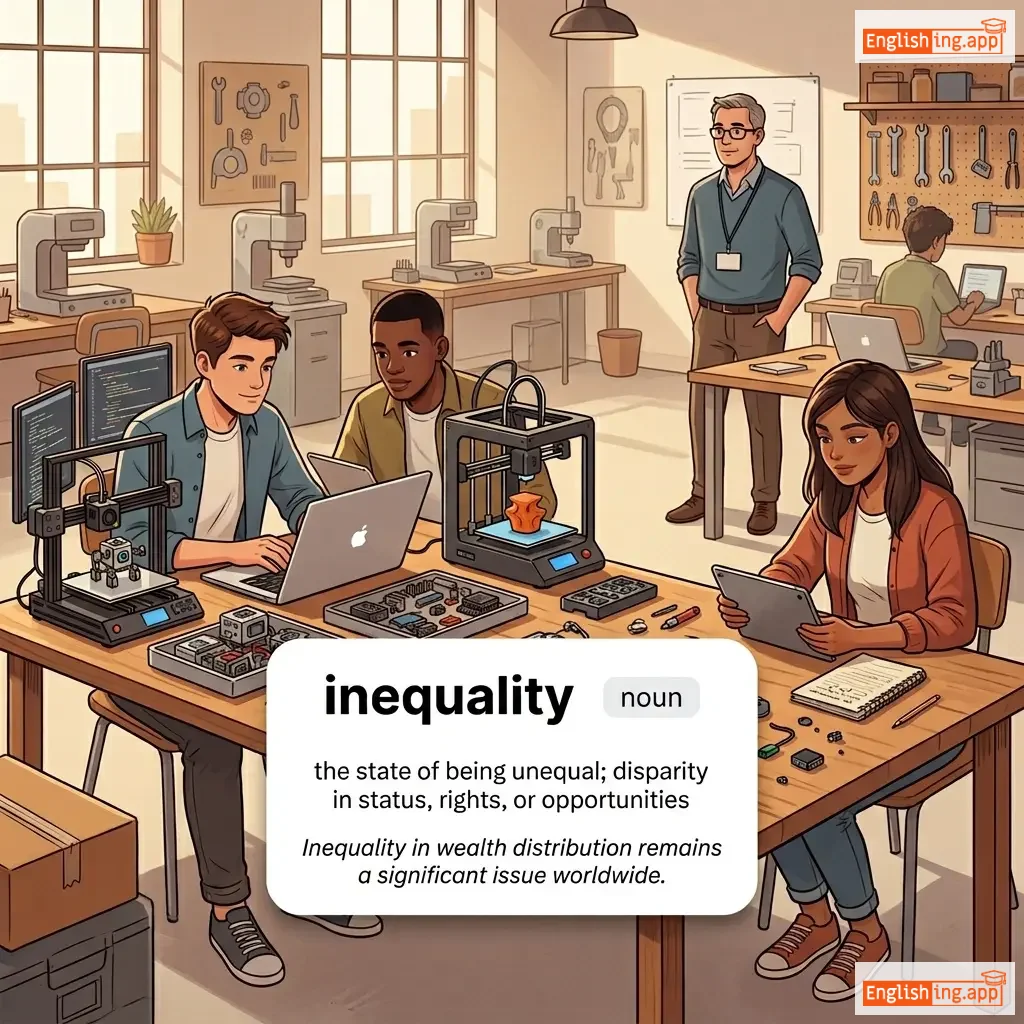
inequality definition card — visual illustration of the meaning
noun
/ˌɪnɪˈkwɒləti/
inégalité (inegalite)

the state of being unequal; disparity in status, rights, or opportunities

"Inequality in wealth distribution remains a significant issue worldwide."

"L'inégalité dans la répartition des richesses demeure un problème important à l'échelle mondiale." (L'inégalité dans la répartition des richesses demeure un problème important à l'échelle mondiale.)
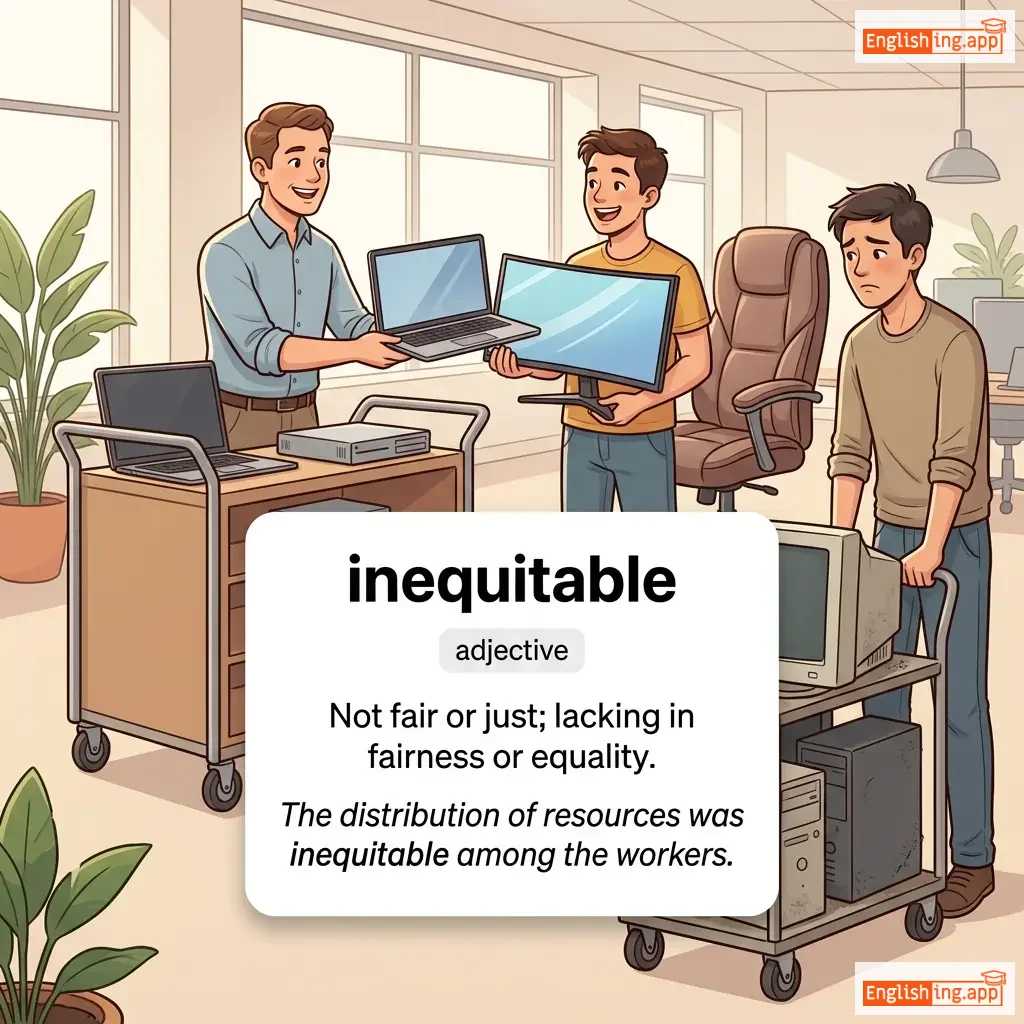
inequitable definition card — visual illustration of the meaning
adjective
/ɪnˈɛk.wɪ.tə.bəl/
inéquitable (inequitabl)

Not fair or just; lacking in fairness or equality.

"The distribution of resources was inequitable among the workers."

"La distribution des ressources était inéquitable parmi les travailleurs." (La distribution des ressources était inéquitable parmi les travailleurs.)
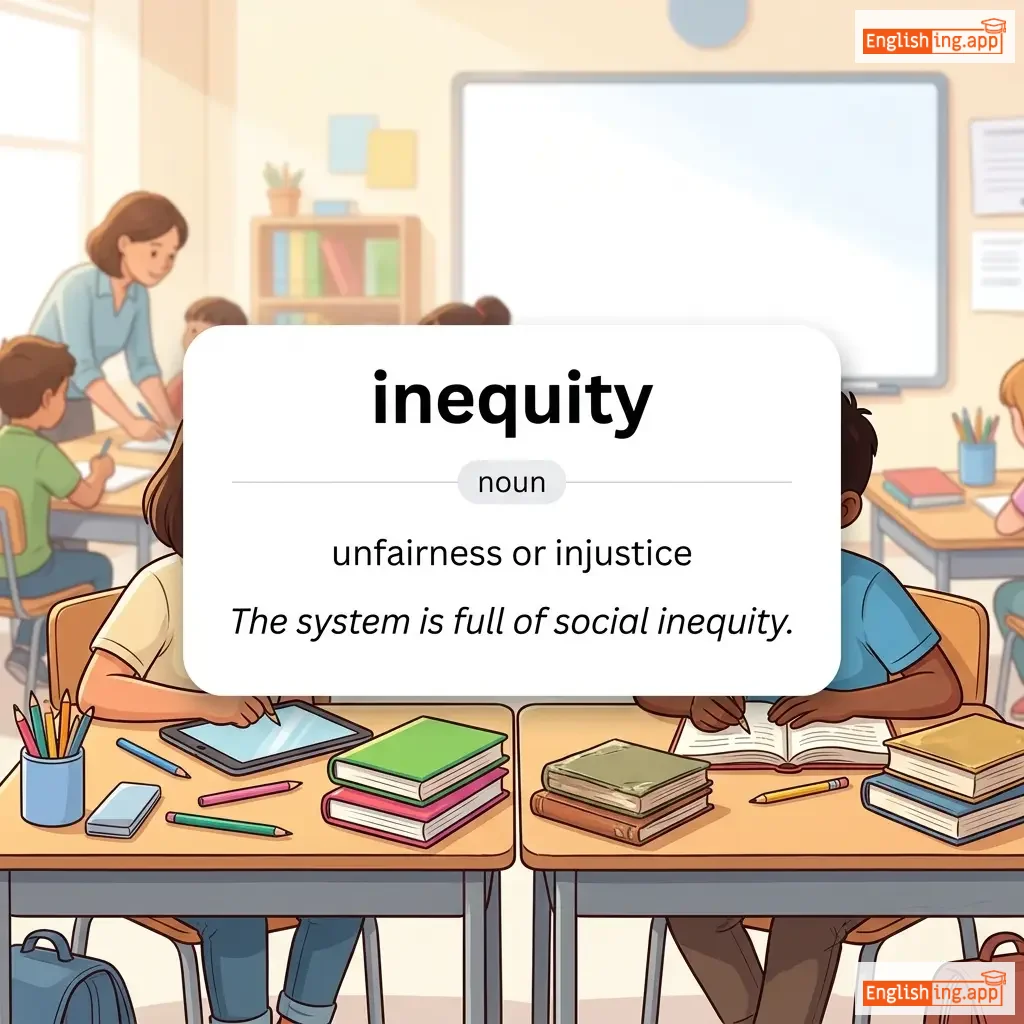
inequity definition card — visual illustration of the meaning
noun
/ɪnˈɛkwɪti/
injustice (injustice)

unfairness or injustice

"The system is full of social inequity."

"Le système est plein d'injustice sociale." (Le système est plein d'injustice sociale.)
noun
/ɪnˈɛrənsi/
inerrance (inerrance)

the belief or quality of being free from error; absolute correctness

"Some religious groups strongly affirm the inerrancy of their sacred texts."

"Certains groupes religieux affirment fermement l'inerrance de leurs textes sacrés." (Certains groupes religieux affirment fermement l'inerrance de leurs textes sacrés.)
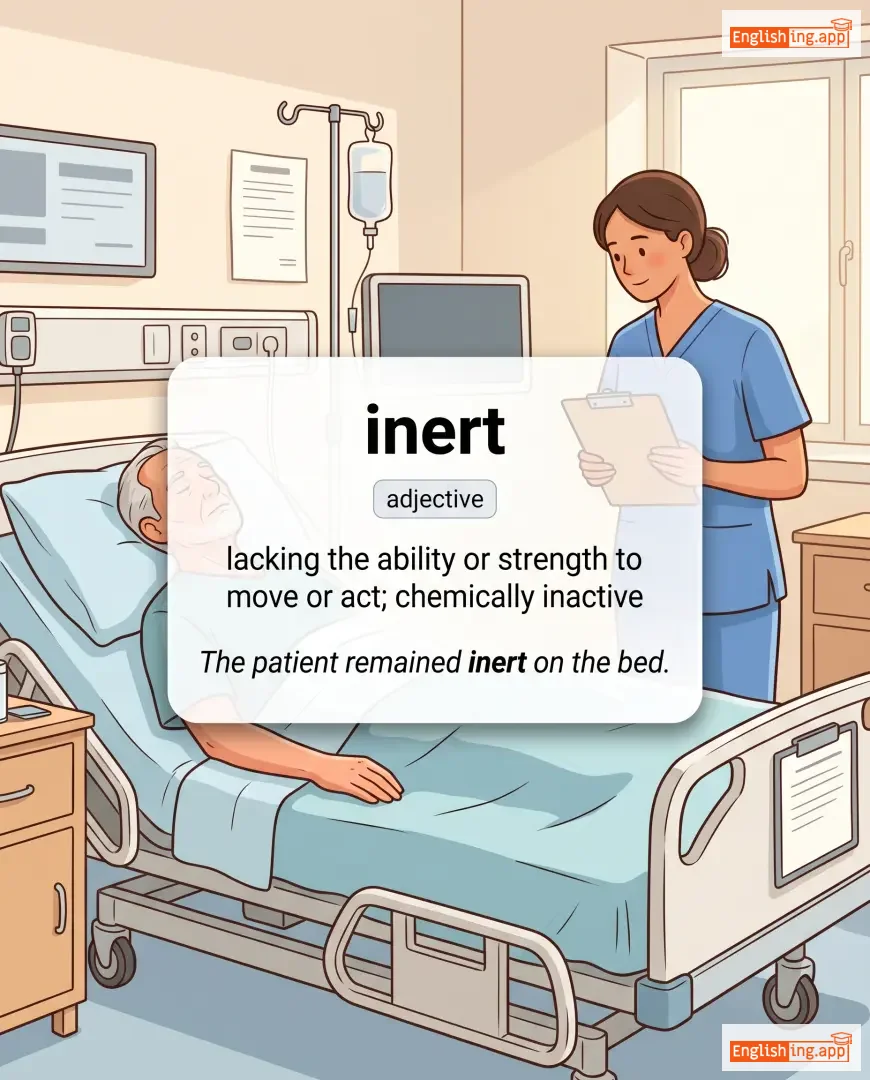
inert definition card — visual illustration of the meaning
adjective
/ɪˈnɜːrt/
inactif (inactif)

lacking the ability or strength to move or act; chemically inactive

"The patient remained inert on the bed."

"Le patient est resté inactif sur le lit." (Le patient est reste inactif sur le lit.)
noun
/ɪˈnɜːrʃə/
inertie (inertie)

A tendency to remain unchanged or continue in the same state of motion unless acted upon.

"The project failed due to the inertia of outdated systems."

"Le projet a échoué à cause de l'inertie des systèmes obsolètes." (Le projet a échoué à cause de l'inertie des systèmes obsolètes.)