Vocabulaires

Découvrez, apprenez et maîtrisez le vocabulaire anglais

noun
/ɡrəˈtjuːɪti/
pourboire (pourboire)

A sum of money given as a tip or a retirement benefit.

"The waiter received a generous gratuity for his excellent service."

"Le serveur a reçu un généreux pourboire pour son excellent service." (Le serveur a reçu un généreux pourboire pour son excellent service.)
noun, adjective
/ɡreɪv/
tombe (tombe)

A place where someone is buried; also used to describe something serious or solemn.

"He visited his grandfather's grave every year."

"Il visitait la tombe de son grand-père chaque année." (Il visitait la tombe de son grand-père chaque année.)
/ˈɡrævəl/
gravier (gravier)

Small stones and pebbles, often mixed with sand, used for paths, roads, and construction.

"The driveway was covered with gravel."

"L'allée était recouverte de gravier." (L'allée était recouverte de gravier.)
noun
/ˈɡreɪvstoʊn/
tombeau (tombo)

A stone that marks a grave, usually inscribed with the name of the deceased.

"The gravestone had her name carved beautifully."

"Le tombeau avait son nom gravé magnifiquement." (Le tombeau avait son nom gravé magnifiquement.)
noun
/ˈɡreɪv.jɑːrd/
cimetière (cimetiere)

an area of land set aside for burial of the dead; a cemetery

"The old graveyard near the church dates back to the 18th century."

"Le vieux cimetière près de l'église date du XVIIIe siècle." (Le vieux cimetiere pres de l'eglise date du XVIIIe siecle.)
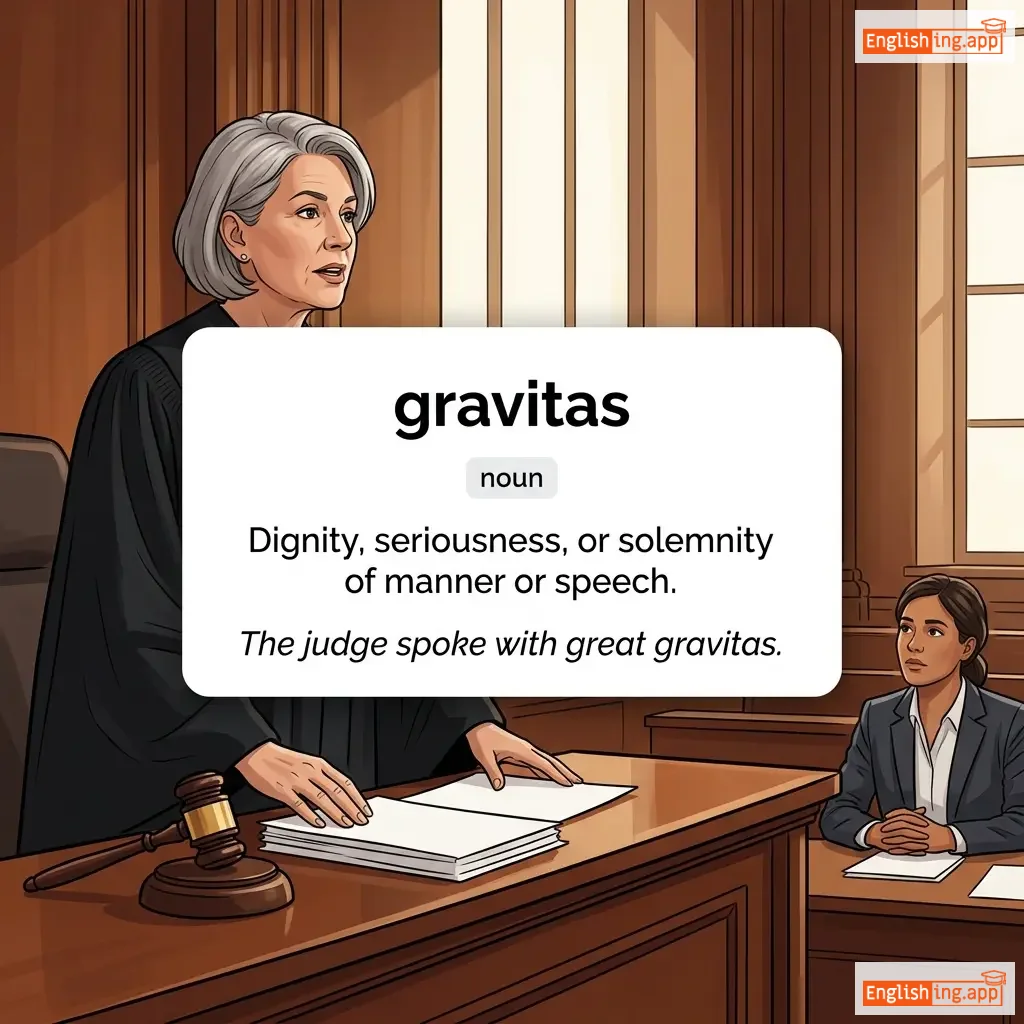
gravitas definition card — visual illustration of the meaning
noun
/ˈɡræv.ɪ.tæs/
gravité (gravite)

Dignity, seriousness, or solemnity of manner or speech.

"The judge spoke with great gravitas."

"Le juge a parlé avec une grande gravité." (Le juge a parle avec une grande gravite.)
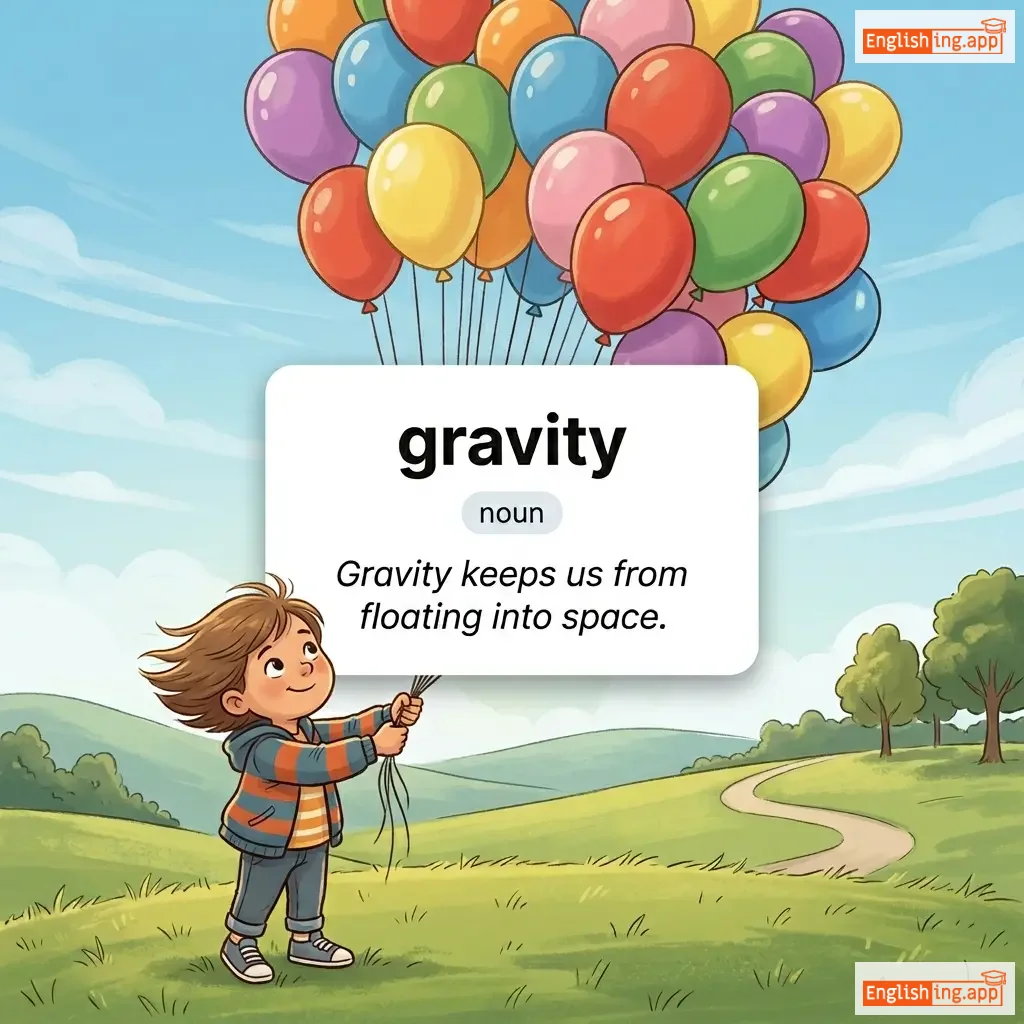
gravity definition card — visual illustration of the meaning
noun
/ˈɡrævəti/
gravité (gravité)

The natural force that attracts objects toward the center of the earth; seriousness or importance.

"Gravity keeps us from floating into space."

"La gravité nous empêche de flotter dans l'espace." (La gravité nous empêche de flotter dans l'espace.)
adjective, noun
/ɡreɪ/
bonheur (bonheur)

A color between black and white; also describes dull or gloomy situations.

"The sky turned gray before the storm."

"Elle n'a pas pu cacher son bonheur lorsqu'elle a reçu le prix." (Elle n'a pas pu cacher son bonheur lorsqu'elle a reçu le prix.)
verb
/ɡreɪz/
bonheur (bonheur)

To feed on grass; to touch or scrape lightly while passing.

"The cows graze in the meadow every morning."

"Elle ne pouvait pas cacher son bonheur lorsqu'elle a reçu le prix." (Elle ne pouvait pas cacher son bonheur lorsqu'elle a reçu le prix.)
noun/verb
/ˈɡreɪzɪŋ/
pâturage (paturage)

The act of animals eating grass in a field; also lightly touching or scraping against something.

"Cows were grazing peacefully in the meadow."

"Les vaches paissaient paisiblement dans le pré." (Les vaches paissaient paisiblement dans le pré.)
adjective
/ɡreɪt/
grand (grand)

Of an extent, amount, or intensity considerably above average; very good or important.

"She gave a great performance at the concert."

"Elle a donné une excellente performance lors du concert." (Elle a donne une excellente performance lors du concert.)
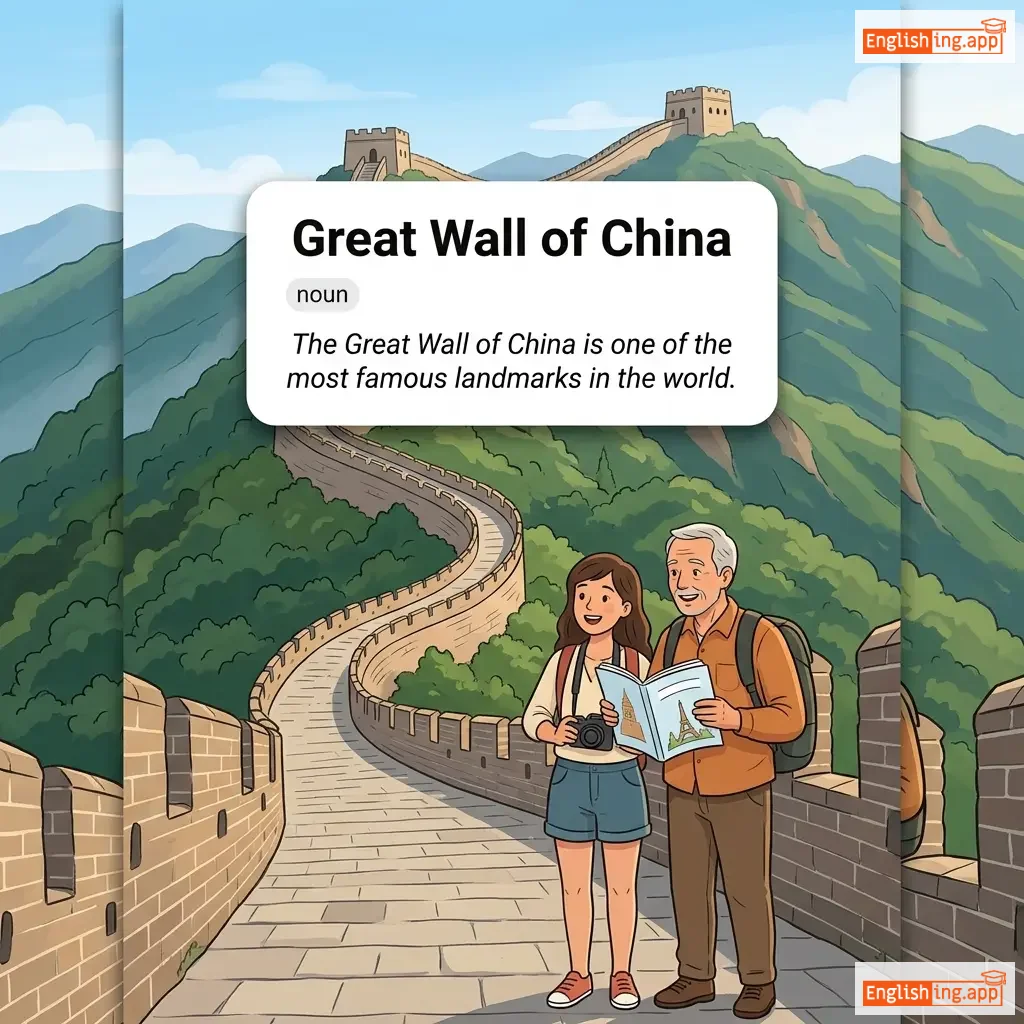
Great Wall of China definition card — visual illustration of the meaning
noun
ɡreɪt wɔːl əv ˈtʃaɪ.nə
Grande Muraille de Chine (Grande Muraille de Chine)

A massive ancient fortification system in China, built to protect against invasions and considered one of the most famous landmarks in the world.

"The Great Wall of China is one of the most famous landmarks in the world."

"La Grande Muraille de Chine est l'un des monuments les plus célèbres du monde." (La Grande Muraille de Chine est l'un des monuments les plus célèbres du monde.)
adjective (superlative)
/ˈɡreɪ.tɪst/
le plus grand (le plus grand)

The highest degree of greatness; the most outstanding or important.

"He is considered one of the greatest leaders of all time."

"Il est considéré comme l'un des plus grands leaders de tous les temps." (Il est considéré comme l'un des plus grands leaders de tous les temps.)
adverb
/ˈɡreɪtli/
beaucoup (beaucoup)

to a large extent or degree; very much

"She was greatly admired by her students."

"Elle a été énormément admirée par ses étudiants." (Elle a été énormément admirée par ses étudiants.)
noun
/ɡriːd/
avidité (avidite)

intense and selfish desire for something, especially wealth, power, or food

"His greed for money led him to make unethical business decisions."

"Son avidité pour l'argent l'a conduit à prendre des décisions commerciales non éthiques." (Son avidité pour l'argent l'a conduit à prendre des décisions commerciales non éthiques.)
adjective
/ɡriːk/
Grec (relatif à la Grèce) (Grec (relatif à la Grèce))

relating to Greece, its people, or its language

"We enjoyed delicious Greek food at the restaurant."

"Nous avons dégusté de la délicieuse cuisine grecque au restaurant." (Nous avons dégusté de la délicieuse cuisine grecque au restaurant.)
adjective
/ɡriːn/
vert (vert)

Of the color between blue and yellow in the spectrum; inexperienced or naive.

"The garden is full of green plants."

"Le jardin est plein de plantes vertes." (Le jardin est plein de plantes vertes.)
noun
/ɡriːn ˈtʃɪl.i/
piment vert (piment vert)

unripe chili pepper that is green in color and has a spicy taste

"She added chopped green chili to the salad for extra heat."

"Elle a ajouté du piment vert haché à la salade pour plus de piquant." (Elle a ajoute du piment vert hache a la salade pour plus de piquant.)
noun
/ɡriːn ˈkəʊ.kə.nʌt/
noix de coco verte (noix de coco verte)

a young coconut with green outer shell containing refreshing coconut water

"We drank fresh water from a green coconut on the beach."

"Nous avons bu de l'eau fraîche d'une noix de coco verte sur la plage." (Nous avons bu de l'eau fraiche d'une noix de coco verte sur la plage.)
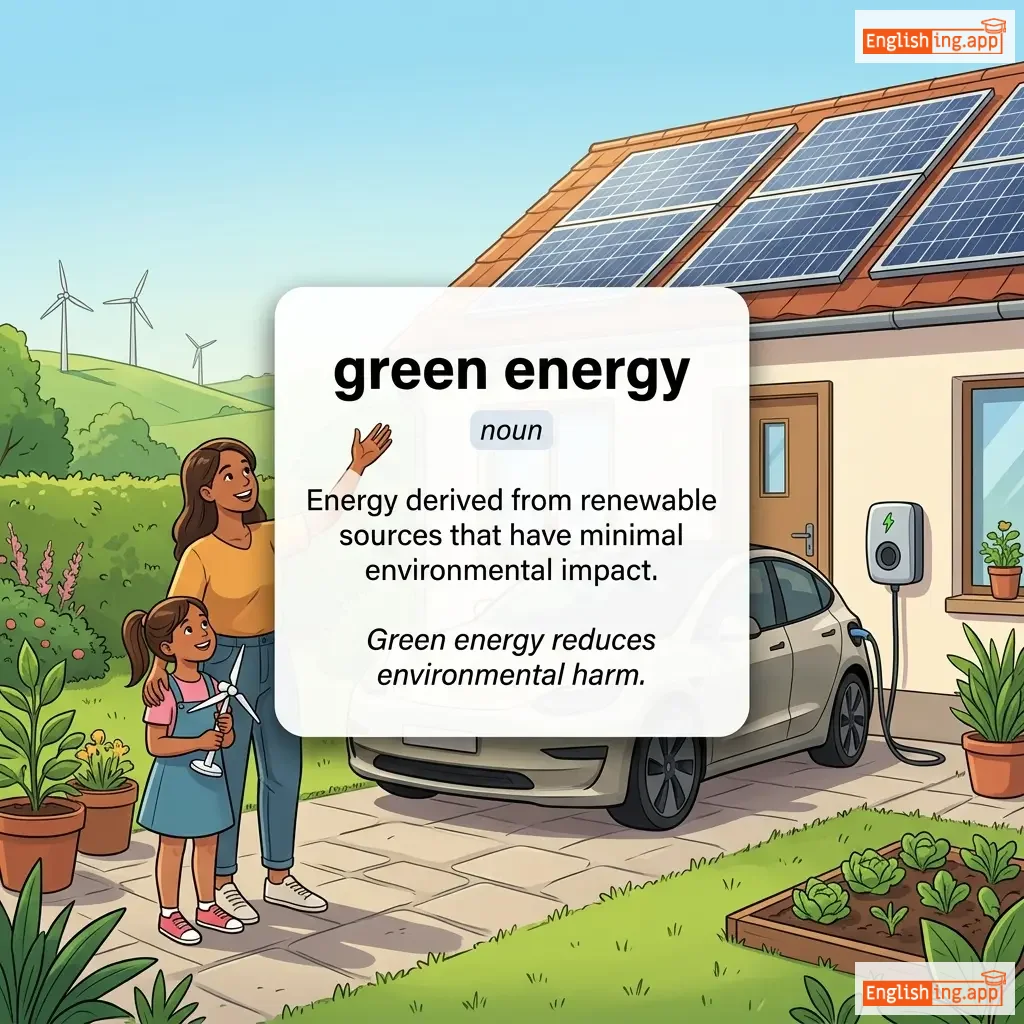
green energy definition card — visual illustration of the meaning
noun
/ˌɡriːn ˈen.ə.dʒi/
énergie verte (energie verte)

Energy derived from renewable sources that have minimal environmental impact.

"Green energy reduces environmental harm."

"L'énergie verte réduit les dommages environnementaux." (L'energie verte reduit les dommages environnementaux.)
noun
/ɡriːn ˈdʒækfruːt/
jacquier vert (jacquier vert)

unripe fruit of the jackfruit tree, commonly used as a vegetable in cooking

"Green jackfruit is often used in curries and stews."

"Le jacquier vert est souvent utilisé dans les currys et les ragoûts." (Le jacquier vert est souvent utilisé dans les currys et les ragoûts.)
noun
/ɡriːn pəˈpaɪə/
papaye verte (papaye verte)

unripe papaya fruit used as a vegetable in cooking, especially in Asian cuisine

"Green papaya salad is a popular dish in Thai cuisine."

"La salade de papaye verte est un plat populaire dans la cuisine thaïlandaise." (La salade de papaye verte est un plat populaire dans la cuisine thaïlandaise.)
noun
/ˈɡriːnhaʊs/
serre (serre)

a glass building used for growing plants, especially in cold climates

"The farmers built a large greenhouse to grow tomatoes in the winter."

"Les agriculteurs ont construit une grande serre pour cultiver des tomates en hiver." (Les agriculteurs ont construit une grande serre pour cultiver des tomates en hiver.)
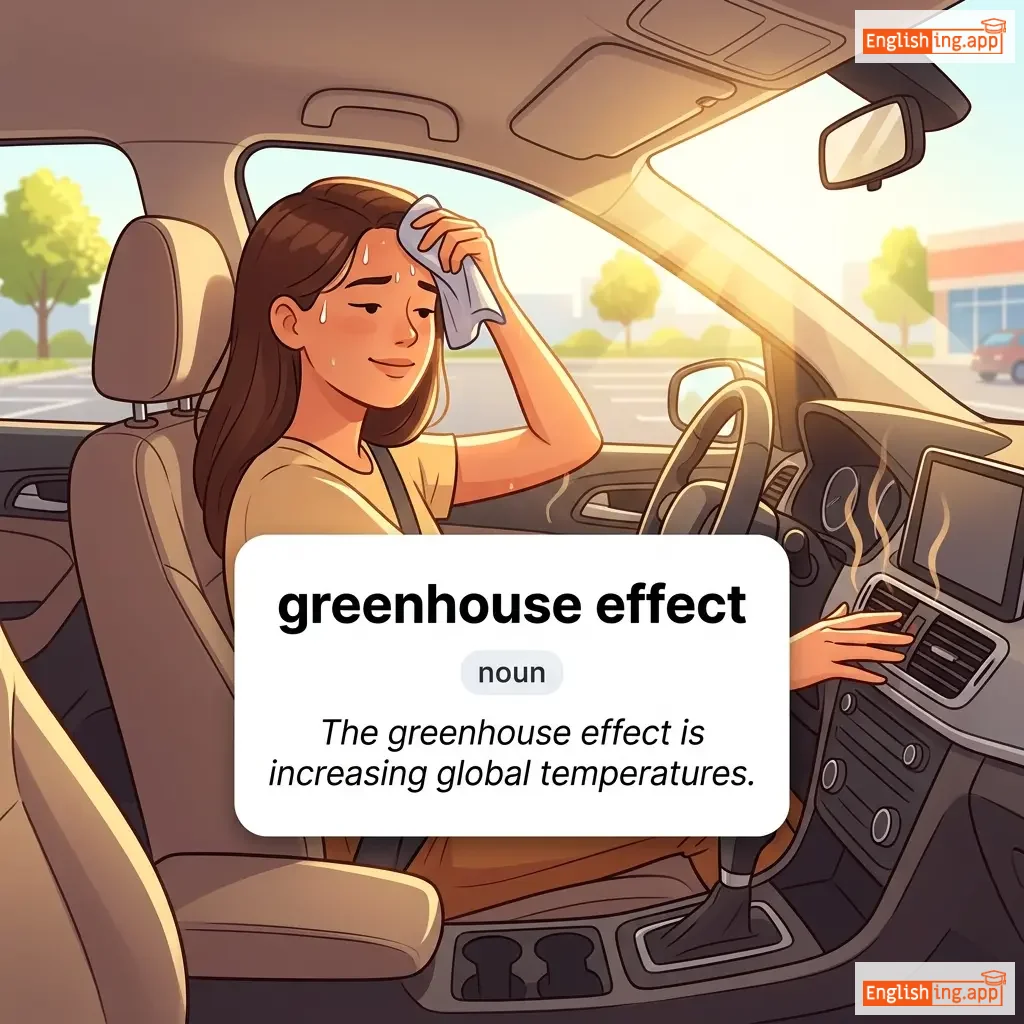
greenhouse effect definition card — visual illustration of the meaning
noun
ˈɡriːn.haʊs ɪˌfɛkt
effet de serre (effet de serre)

The trapping of the sun's warmth in a planet's lower atmosphere due to the greater transparency of the atmosphere to visible radiation from the sun than to infrared radiation emitted from the planet's surface.

"The greenhouse effect is increasing global temperatures."

"L'effet de serre augmente les températures mondiales." (L'effet de serre augmente les températures mondiales.)
noun
/ɡriːnz/
légumes verts (legumes verts)

Leafy vegetables such as spinach, lettuce, and cabbage

"Eating greens is important for good health."

"Manger des légumes verts est important pour une bonne santé." (Manger des legumes verts est important pour une bonne sante.)
greet definition card — visual illustration of the meaning
verb
/ɡriːt/
saluer (saluer)

to say hello or welcome someone politely

"She greeted the guests with a warm smile."

"Elle a salué les invités avec un sourire chaleureux." (Elle a salué les invités avec un sourire chaleureux.)
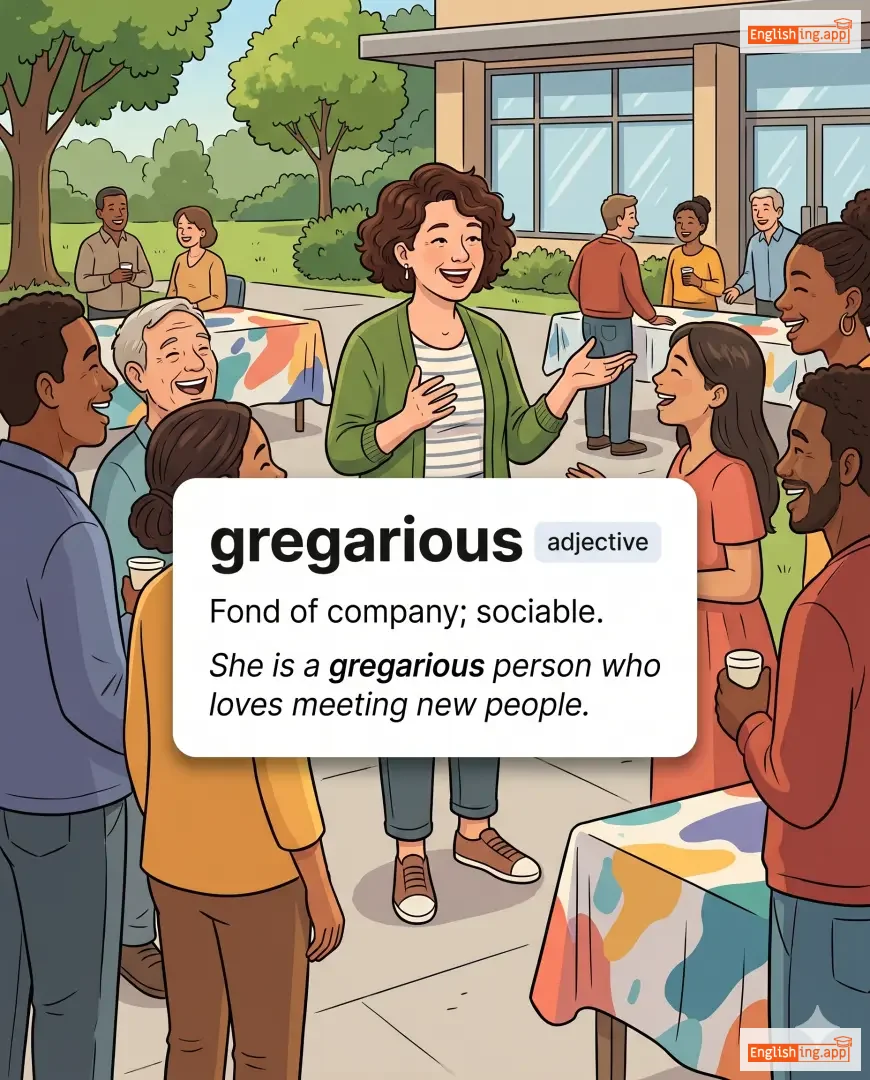
gregarious definition card — visual illustration of the meaning
adjective
/ɡrɪˈɡɛəriəs/
sociable (sociable)

Fond of company; sociable.

"She is a gregarious person who loves meeting new people."

"C'est une personne sociable qui aime rencontrer de nouvelles personnes." (C'est une personne sociable qui aime rencontrer de nouvelles personnes.)
noun
/ˌɡrɛnəˈdɪə/
grenadier (grenadier)

A soldier who specialized in throwing grenades; later used to describe an elite infantryman.

"The grenadier stood proudly at the front of the regiment."

"Le grenadier se tenait fièrement devant le régiment." (Le grenadier se tenait fierement devant le regiment.)
adjective
/ɡreɪ/
gris (gris)

having a color between black and white

"The grey clouds indicated that rain was coming."

"Les nuages gris ont indiqué que la pluie arrivait." (Les nuages gris ont indiqué que la pluie arrivait.)
noun
/ˈɡreɪ.haʊnd/
lévrier (levrier)

a tall, thin dog with long legs that can run very fast

"The greyhound won the race at the dog track."

"Le lévrier a gagné la course sur la piste pour chiens." (Le levrier a gagne la course sur la piste pour chiens.)
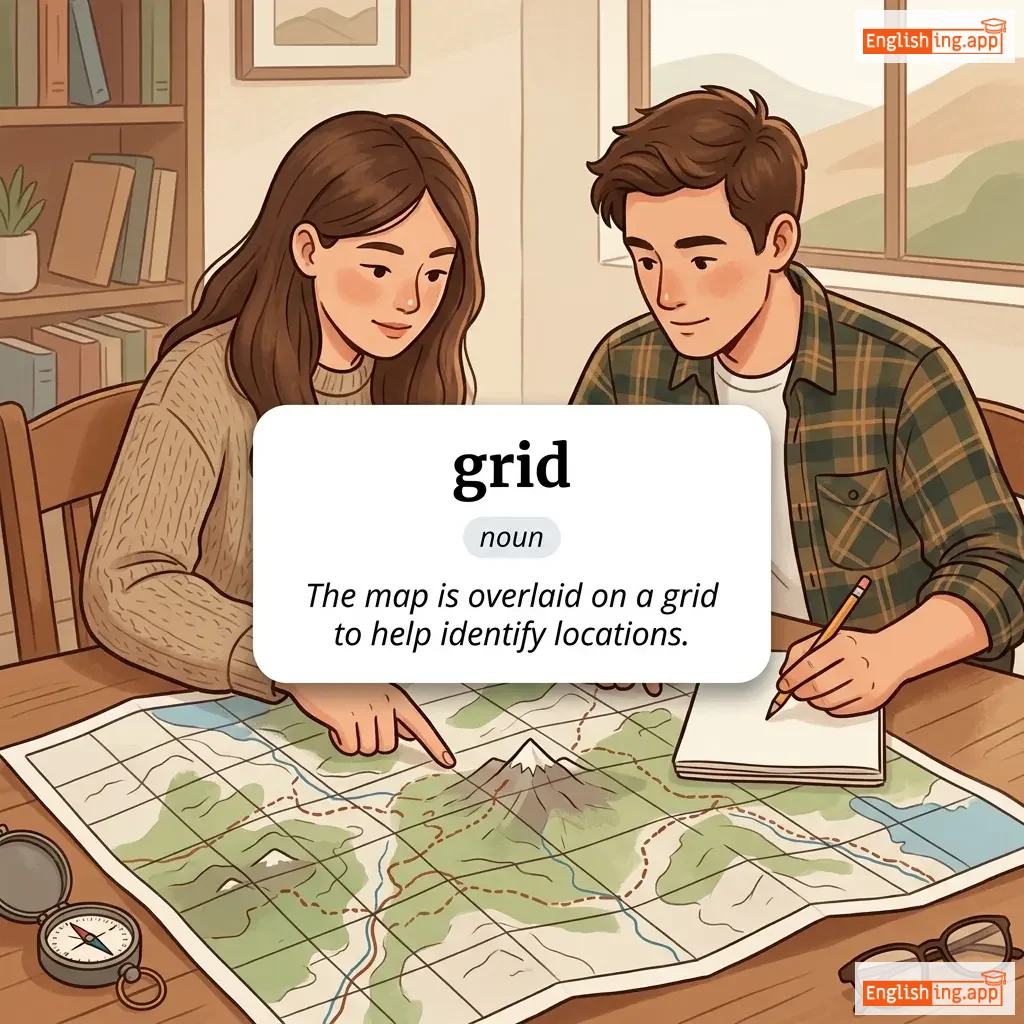
grid definition card — visual illustration of the meaning
noun
/ɡrɪd/
grille (grille)

a network of lines that cross each other to form a series of squares or rectangles

"The map is overlaid on a grid to help identify locations."

"La carte est superposée sur une grille pour aider à identifier les lieux." (La carte est superposee sur une grille pour aider a identifier les lieux.)
noun
/ˈɡrɪd.əl/
plaque (plak)

a flat heating surface for cooking food, typically made of metal

"She cooked pancakes on the hot griddle."

"Elle a cuit des crêpes sur la plaque chaude." (Elle a cuit des crepes sur la plaque chaude.)
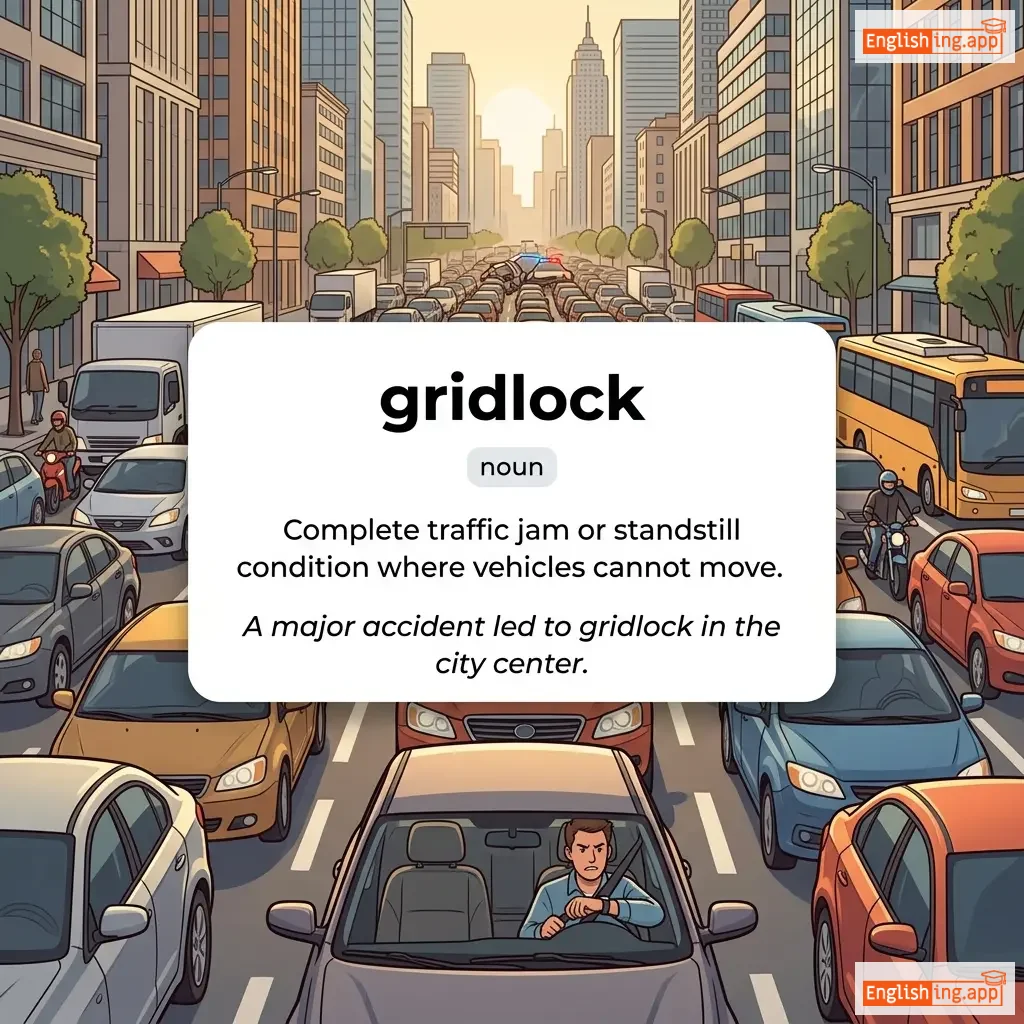
gridlock definition card — visual illustration of the meaning
noun
/ˈɡrɪd.lɒk/
embouteillage complet ou condition d'arrêt du trafic (embouteillage complet ou condition d'arret du trafic)

Complete traffic jam or standstill condition where vehicles cannot move.

"A major accident led to gridlock in the city center."

"Un grand accident a causé un embouteillage dans le centre-ville." (Un grand accident a cause un embouteillage dans le centre-ville.)
noun
/ɡriːf/
chagrin (chagrin)

Deep sorrow, especially caused by someone's death.

"She was overcome with grief after her father's passing."

"Elle a été submergée de chagrin après la mort de son père." (Elle a été submergée de chagrin après la mort de son père.)
noun
/ˈɡriːvəns/
bonheur (bonheur)

A real or imagined cause for complaint, especially unfair treatment.

"The workers voiced their grievances to the management."

"Elle ne pouvait pas cacher son bonheur lorsqu'elle a reçu le prix." (Elle ne pouvait pas cacher son bonheur lorsqu'elle a reçu le prix.)
verb
/ɡriːv/
pleurer (pleurer)

To feel or cause deep sorrow, especially due to someone's death.

"She continues to grieve the loss of her best friend."

"Elle continue à pleurer la perte de sa meilleure amie." (Elle continue à pleurer la perte de sa meilleure amie.)
adjective
/ˈɡriːvəs/
grave (grave)

Causing great pain, suffering, or sorrow.

"The accident was a grievous blow to the community."

"L'accident a été un coup grave pour la communauté." (L'accident a été un coup grave pour la communauté.)
noun, verb
/ɡrɪl/
gril / grille (gril / grille)

a metal frame used for cooking food over an open fire; to cook food on such a frame

"We grilled some chicken for dinner."

"Nous avons grillé du poulet pour le dîner." (Nous avons grillé du poulet pour le dîner.)
adjective
/ɡrɪm/
sombre (sombre)

very serious or gloomy in appearance or outlook

"The future looked grim after the disaster."

"L'avenir semblait sombre après le désastre." (L'avenir semblait sombre après le désastre.)
verb, noun
/ˈɡrɪməs/
grimace (grimace)

to make an ugly, twisted expression on one's face, usually in disgust or pain

"He grimaced when he tasted the sour fruit."

"Il grimace lorsqu'il goûta le fruit aigre." (Il grimace lorsqu'il gouta le fruit aigre.)
verb, noun
/ɡrɪn/
sourire largement, montrant souvent les dents (sourire largement, montrant souvent les dents)

to smile broadly, often showing teeth

"She grinned happily at the good news."

"Elle sourit joyeusement en entendant la bonne nouvelle." (Elle sourit joyeusement en entendant la bonne nouvelle.)
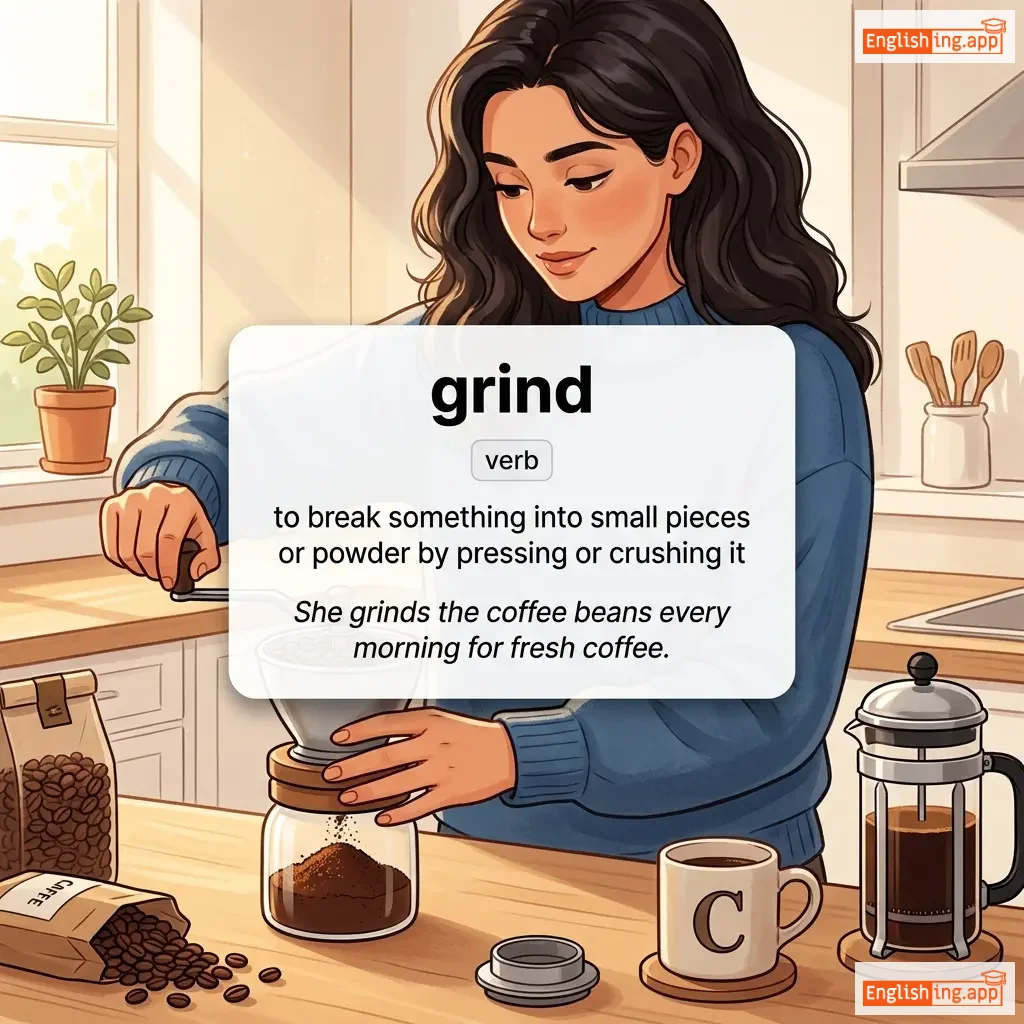
grind definition card — visual illustration of the meaning
verb
/ɡraɪnd/
moudre (moudre)

to break something into small pieces or powder by pressing or crushing it

"She grinds the coffee beans every morning for fresh coffee."

"Elle broie les grains de café tous les matins pour du café frais." (Elle broie les grains de café tous les matins pour du café frais.)
noun
/ˈɡraɪndstoʊn/
meule (meule)

a thick disc of stone used for grinding, sharpening, or polishing tools

"The blacksmith sharpened his blade on the grindstone."

"Le forgeron a affûté sa lame sur la meule." (Le forgeron a affûté sa lame sur la meule.)
verb
/ɡrɪp/
attraper (attraper)

to hold something tightly or firmly

"He gripped the steering wheel tightly."

"il a serré fermement le volant." (il a serré fermement le volant.)
verb
/ɡraɪp/
se plaindre (se plaindre)

to complain about something in an annoying way

"He is always griping about the weather."

"Il se plaint toujours du temps." (Il se plaint toujours du temps.)
adjective
/ˈɡrɪz.li/
macabre (macabre)

causing horror or disgust

"The police discovered a grisly scene at the crime site."

"La police a découvert une scène macabre sur le lieu du crime." (La police a découvert une scène macabre sur le lieu du crime.)
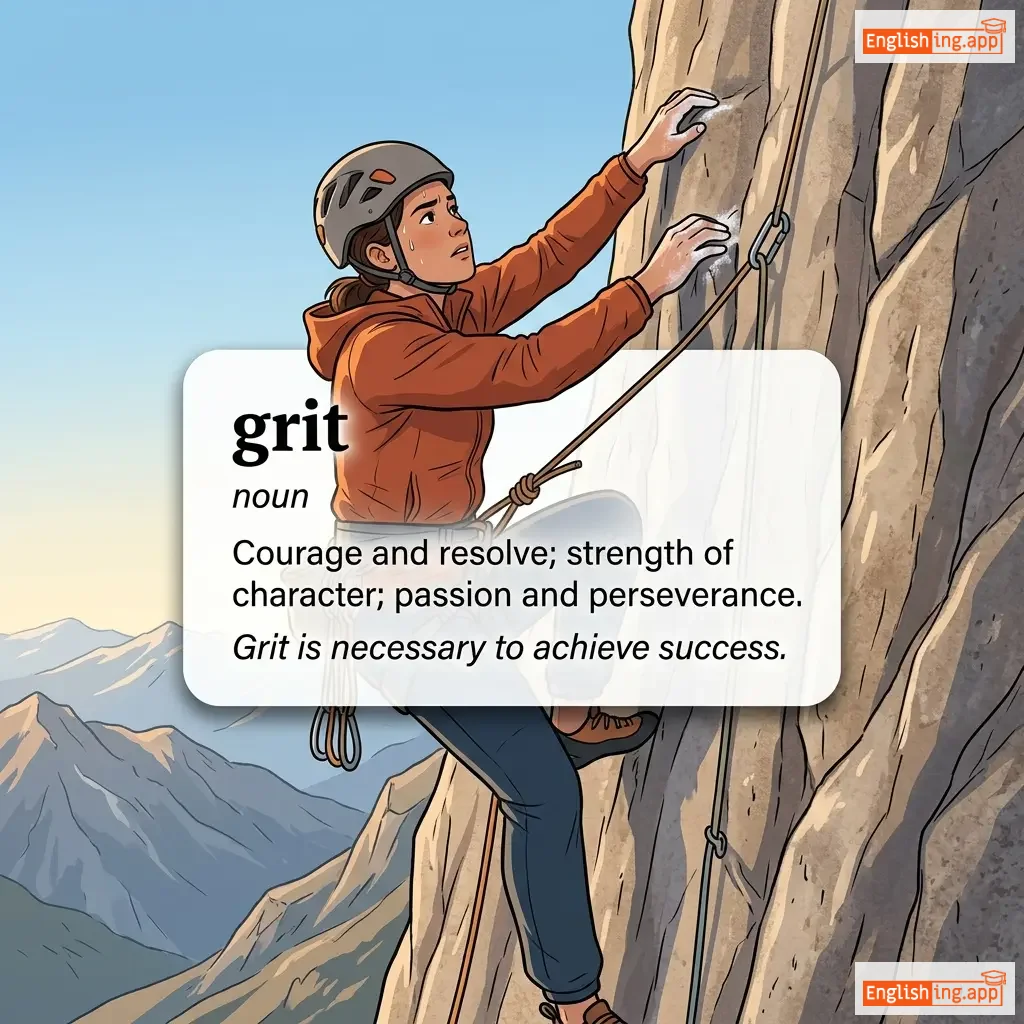
grit definition card — visual illustration of the meaning
noun
/ɡrɪt/
détermination, courage, persévérance (determination, courage, perseverance)

Courage and resolve; strength of character; passion and perseverance.

"Grit is necessary to achieve success."

"La détermination est nécessaire pour réussir." (La determination est necessaire pour reussir.)
noun
/ˈɡroʊ.sər/
épicerie (epicerie)

a person who sells food and household goods in a shop

"The grocer has fresh vegetables and fruits in his store."

"L'épicier a des fruits et des légumes frais dans son magasin." (L'epicier a des fruits et des legumes frais dans son magasin.)
noun
/ˈɡroʊ.sər.i/
épicerie (epicerie)

A store that sells food and household supplies.

"She went to the grocery to buy vegetables."

"Elle est allée à l'épicerie pour acheter des légumes." (Elle est allée à l'épicerie pour acheter des légumes.)
noun
/ˈɡrəʊsəri ʃɒp/
épicerie (epicerie)

a retail store where food and everyday household items are sold

"She stopped by the grocery shop to buy vegetables and milk."

"Elle est allée à l’épicerie pour acheter des légumes et du lait." (elle est allee a l epicerie pour acheter des legumes et du lait)