Vocabulaires

Découvrez, apprenez et maîtrisez le vocabulaire anglais

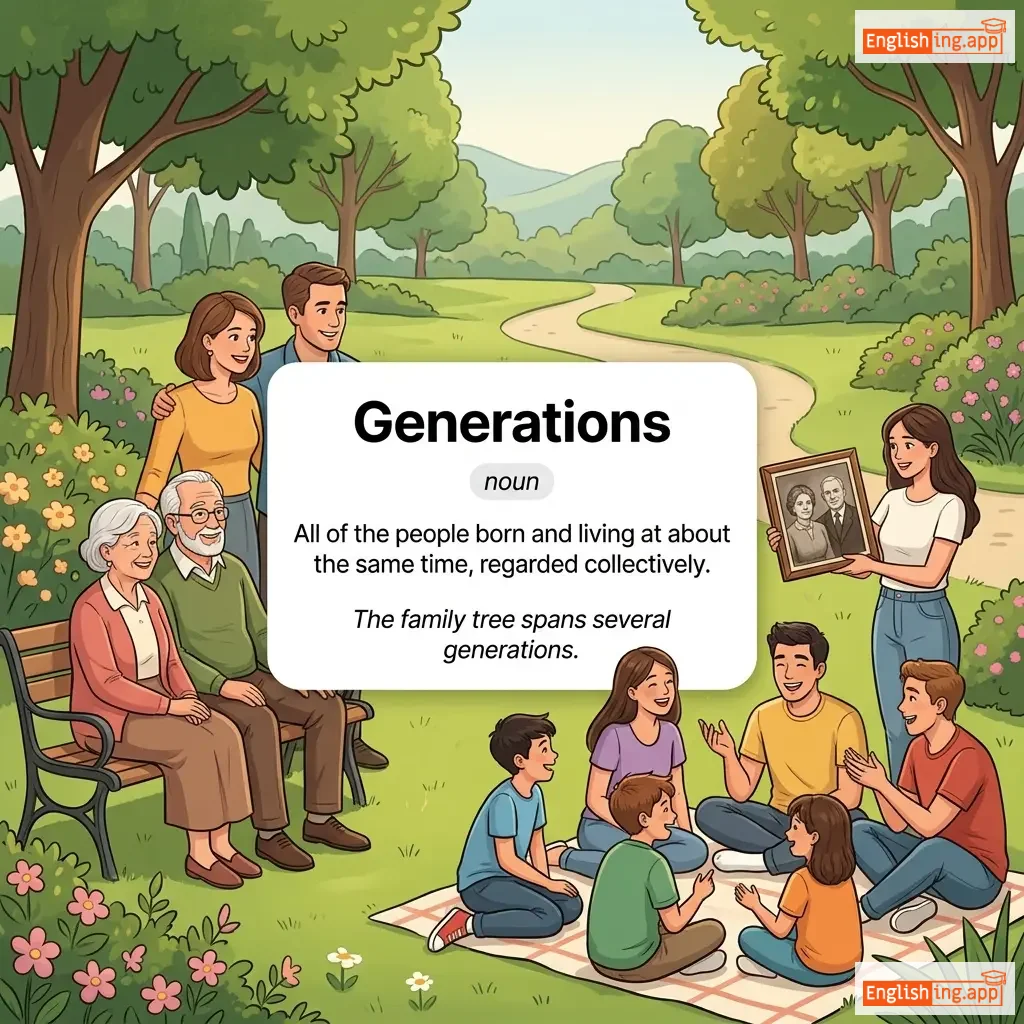
Generations definition card — visual illustration of the meaning
noun
ˌdʒɛnəˈreɪʃənz
générations (generations)

All of the people born and living at about the same time, regarded collectively.

"The family tree spans several generations."

"L'arbre généalogique couvre plusieurs générations." (L'arbre généalogique couvre plusieurs générations.)
adjective
/dʒəˈnɛrɪk/
générique (generik)

characteristic of or relating to a whole group or class; not specific

"This medicine is available in generic form."

"Ce médicament est disponible sous forme générique." (Ce medicament est disponible sous forme generique.)
noun
/ˌdʒɛnəˈrɒsəti/
générosité (generosite)

the quality of being kind and willing to give more than necessary

"Her generosity impressed everyone at the event."

"Sa générosité a impressionné tout le monde lors de l'événement." (Sa generosite a impressionne tout le monde lors de l'evenement.)
adjective
/ˈdʒɛnərəs/
généreux (genereux)

willing to give or share more than is necessary; kind and giving

"She is very generous with her time and money."

"Elle est très généreuse avec son temps et son argent." (Elle est tres genereuse avec son temps et son argent.)
adverb
/ˈdʒenərəsli/
généreusement (genereusement)

in a kind, giving, or unselfish manner; in a plentiful or abundant way

"She generously donated money to help the poor."

"Elle a généreusement donné de l'argent pour aider les pauvres." (elle a genereusement donne de l argent pour aider les pauvres)
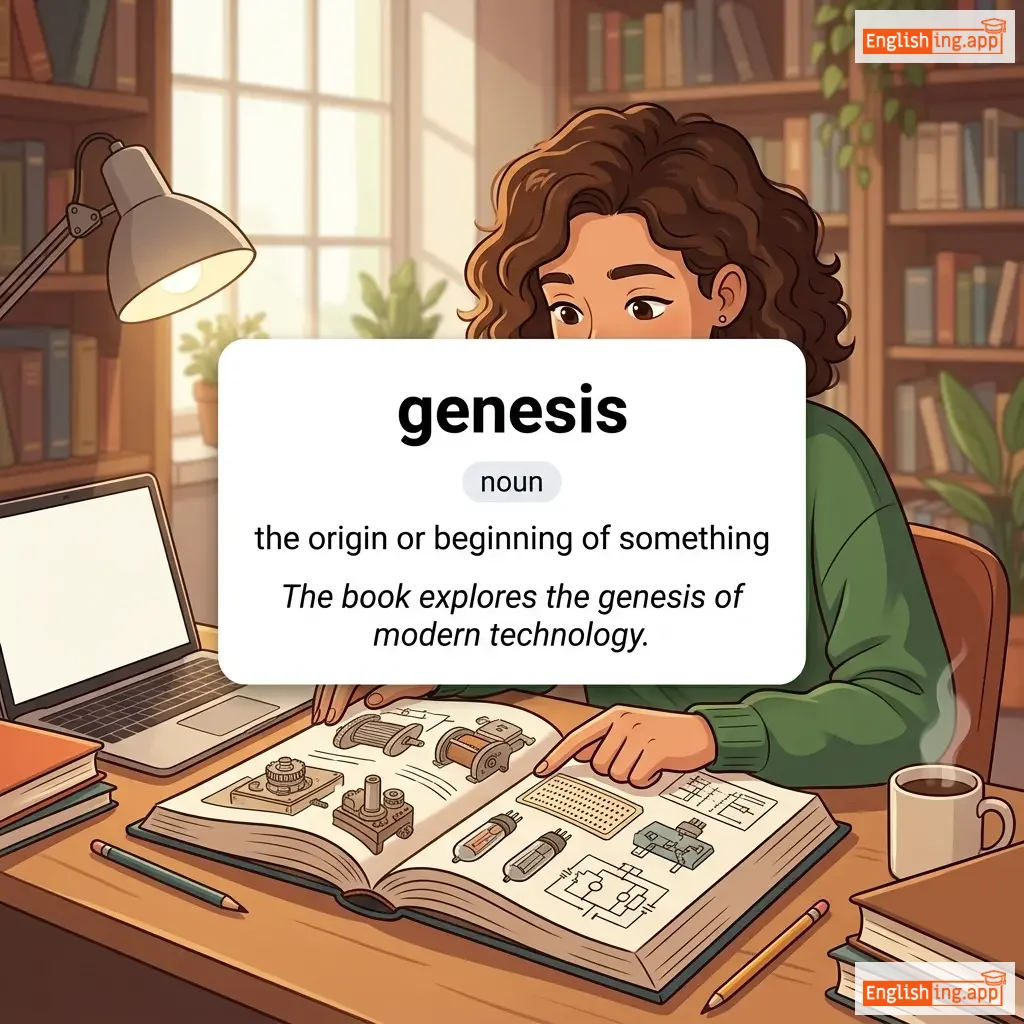
genesis definition card — visual illustration of the meaning
noun
/ˈdʒɛnəsɪs/
genèse (genese)

the origin or beginning of something

"The book explores the genesis of modern technology."

"Le livre explore l'origine de la technologie moderne." (Le livre explore l'origine de la technologie moderne.)
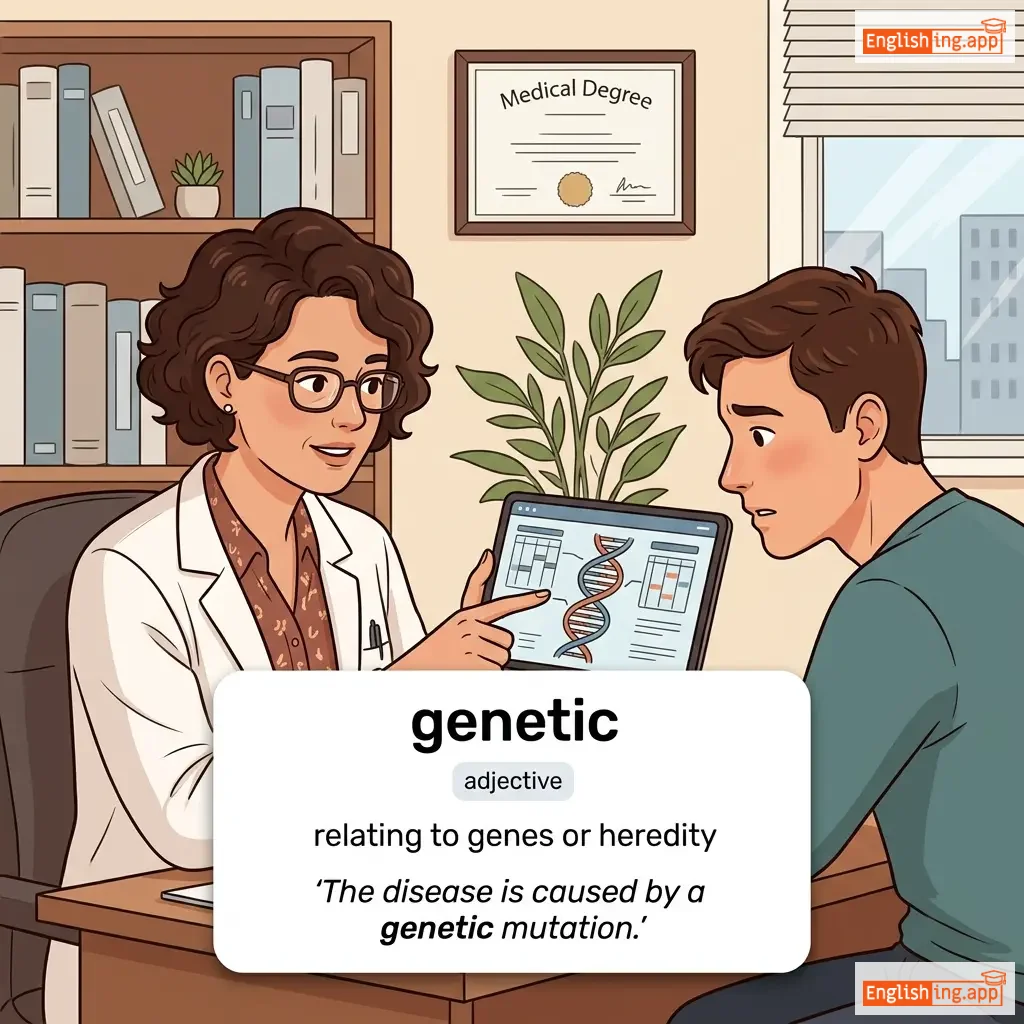
genetic definition card — visual illustration of the meaning
adjective
/dʒəˈnɛtɪk/
génétique (genetique)

relating to genes or heredity

"The disease is caused by a genetic mutation."

"La maladie est causée par une mutation génétique." (La maladie est causée par une mutation génétique.)
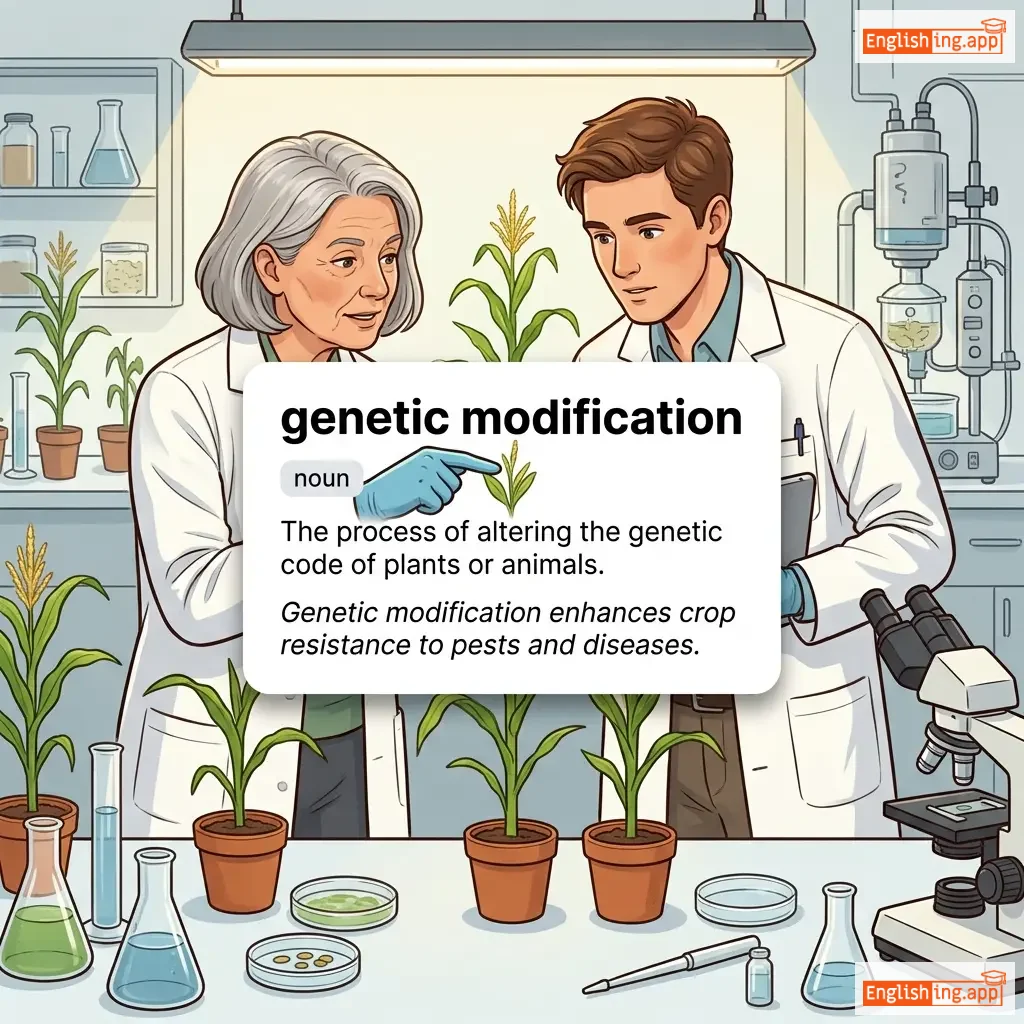
genetic modification definition card — visual illustration of the meaning
noun
dʒəˈnɛt.ɪk ˌmɒd.ɪ.fɪˈkeɪ.ʃən
modification génétique (modification genetique)

The process of altering the genetic code of plants or animals.

"Genetic modification enhances crop resistance to pests and diseases."

"La modification génétique améliore la résistance des cultures aux ravageurs et aux maladies." (La modification genetique ameliora la resistance des cultures aux ravageurs et aux maladies.)
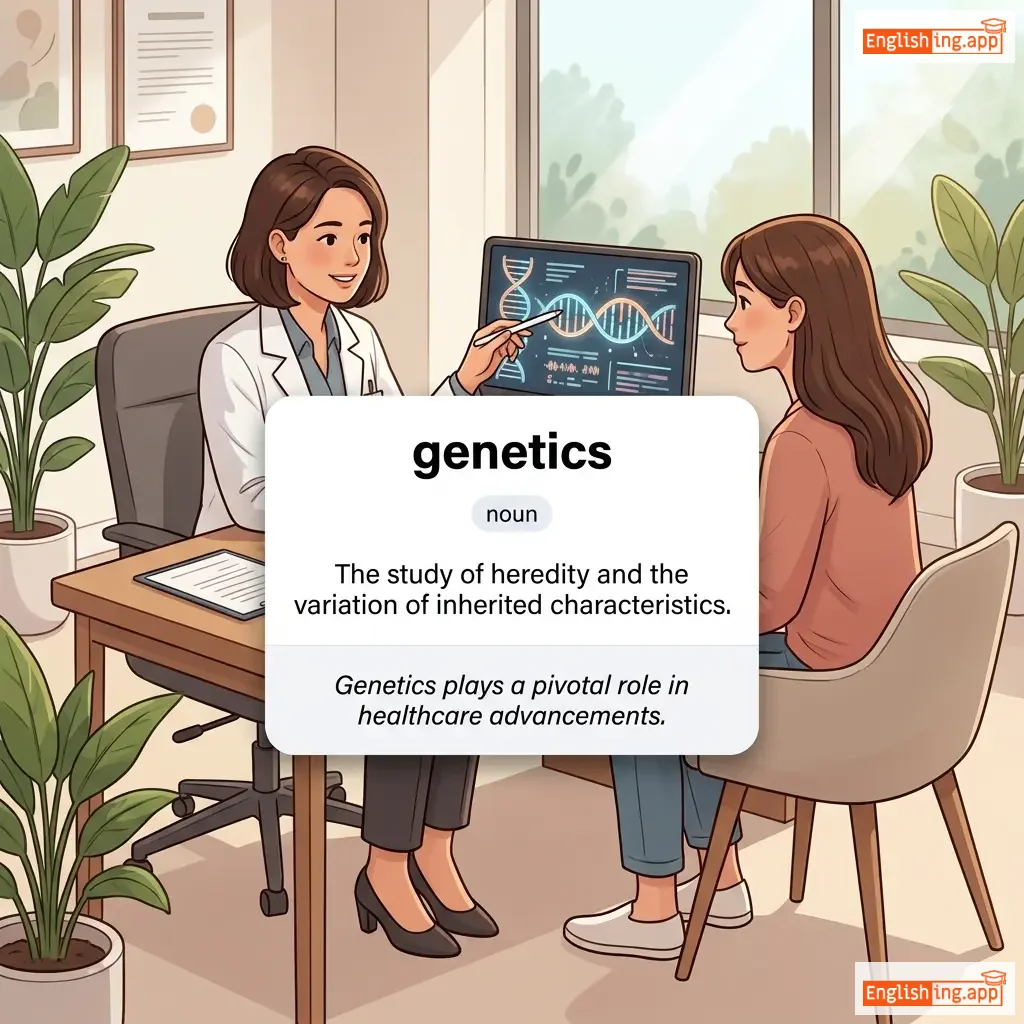
genetics definition card — visual illustration of the meaning
noun
dʒəˈnet.ɪks
génétique (genetique)

The study of heredity and the variation of inherited characteristics.

"Genetics plays a pivotal role in healthcare advancements."

"La génétique joue un rôle crucial dans les progrès des soins de santé." (La genetique joue un role crucial dans les progres des soins de sante.)
adjective
/ˈdʒiː.ni.əl/
aimable (aimable)

friendly, cheerful, and pleasant

"She greeted us with a genial smile."

"Elle nous a salués avec un sourire aimable." (Elle nous a salués avec un sourire aimable.)
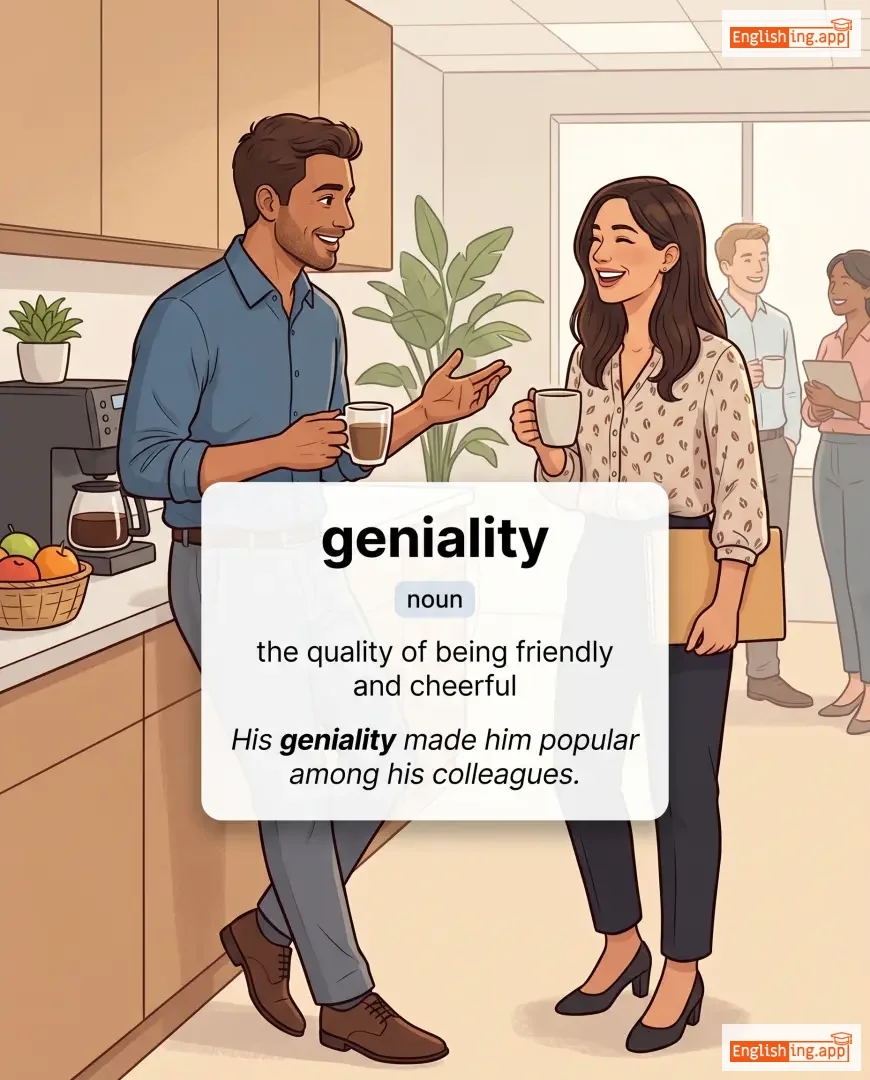
geniality definition card — visual illustration of the meaning
noun
/ˌdʒiː.niˈæl.ə.ti/
gentillesse (gentillesse)

the quality of being friendly and cheerful

"His geniality made him popular among his colleagues."

"Sa gentillesse le rendait populaire parmi ses collègues." (Sa gentillesse le rendait populaire parmi ses collegues.)
adjective
/ˈdʒen.ɪ.təl/
relatif aux organes reproducteurs (relatif aux organes reproducteurs)

relating to the reproductive organs

"The doctor explained the importance of genital hygiene."

"Le médecin a expliqué l'importance de l'hygiène génitale." (Le médecin a expliqué l'importance de l'hygiène génitale.)
adjective
/ˈdʒen.ɪ.tɪv/
génitif (genitif)

relating to or denoting a case of nouns and pronouns indicating possession

"In English, the genitive case is often shown with an apostrophe and 's'."

"En anglais, le cas génitif est souvent indiqué par un apostrophe et un 's'." (En anglais, le cas genitif est souvent indique par un apostrophe et un 's'.)
noun
/ˈdʒiːniəs/
génie (genie)

a person with exceptional intellectual or creative ability

"Einstein was a scientific genius."

"Einstein était un génie scientifique." (Einstein était un génie scientifique.)
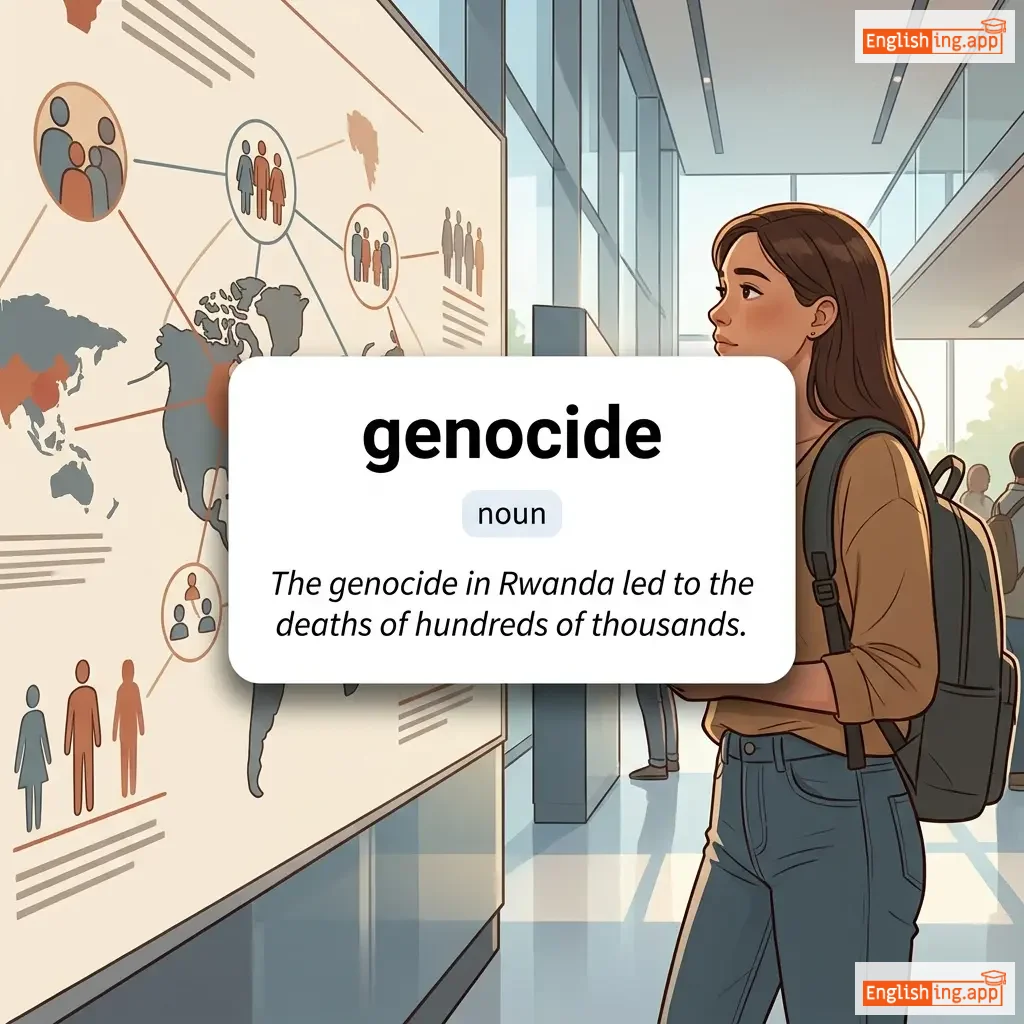
genocide definition card — visual illustration of the meaning
noun
/ˈdʒɛnəˌsaɪd/
génocide (genocide)

the deliberate killing of a large number of people from a particular nation or ethnic group with the aim of destroying that nation or group

"The genocide in Rwanda led to the deaths of hundreds of thousands."

"Le génocide au Rwanda a entraîné la mort de centaines de milliers de personnes." (Le genocide au Rwanda a entraine la mort de centaines de milliers de personnes.)
noun
/ˈʒɑːn.rə/
genre (genre)

a style or category of art, music, or literature

"Romance is her favorite genre of movies."

"La romance est son genre préféré de films." (La romance est son genre prefere de films.)
adjective
/dʒɛnˈtiːl/
raffiné (raffine)

Polite, refined, or respectable, often in an affected or exaggerated way

"She spoke in a genteel manner that impressed the guests."

"Elle parlait d'une manière raffinée qui impressionnait les invités." (Elle parlait d'une manière raffinée qui impressionnait les invités.)
noun
/ˈdʒɛntaɪl/
gentil (gentil)

A person who is not Jewish

"The synagogue welcomed both Jews and Gentiles."

"La synagogue a accueilli à la fois les juifs et les gentils." (La synagogue a accueilli à la fois les juifs et les gentils.)
noun
/dʒɛnˈtɪlɪti/
gentillesse (gentillesse)

Social superiority demonstrated by polite manners, refinement, or respectability

"His speech revealed an air of gentility."

"Son discours a révélé une certaine forme de gentillesse." (Son discours a révélé une certaine forme de gentillesse.)
adjective
/ˈdʒɛntəl/
doux (dou)

Kind, mild, or tender in nature or behavior

"He was always gentle with children."

"Il a toujours été doux avec les enfants." (Il a toujours été doux avec les enfants.)
noun
/ˈdʒɛntəlmən/
gentleman (gentleman)

a man who is polite, courteous, and honorable

"He opened the door for her like a true gentleman."

"Il lui a ouvert la porte comme un véritable gentleman." (Il lui a ouvert la porte comme un véritable gentleman.)
adverb
/ˈdʒɛntli/
doucement (doucement)

in a kind, careful, or soft way

"She gently placed the baby in the crib."

"Elle a doucement posé le bébé dans le berceau." (Elle a doucement posé le bébé dans le berceau.)
noun
/ˈdʒɛntri/
haute société (haute societe)

People of good social position, usually of high birth or wealthy landowners

"The gentry of the town gathered for the annual ball."

"La haute société de la ville s'est réunie pour le bal annuel." (La haute societe de la ville s'est reunie pour le bal annuel.)
verb
/ˈdʒɛn.juˌflɛkt/
se prosterner en signe de révérence (se prosterner en signe de reverence)

to bend one or both knees as a sign of reverence or worship

"The worshippers genuflect before the altar."

"Les adorateurs se prosternent devant l'autel." (Les adorateurs se prosternent devant l'autel.)
adjective
/ˈdʒɛnjʊɪn/
authentique (authentique)

real and authentic; not fake or artificial

"This is a genuine leather bag."

"C'est un sac en cuir authentique." (C'est un sac en cuir authentique.)
adverb
/ˈdʒɛnjʊɪnli/
vraiment (vraiment)

in a truthful and sincere way

"She genuinely cares about the environment."

"Elle se soucie vraiment de l'environnement." (Elle se soucie vraiment de l'environnement.)
noun
/ˈdʒiː.nəs/
genre (genre)

a category in biological classification ranking above species and below family

"The tiger belongs to the genus Panthera."

"Le tigre appartient au genre Panthera." (Le tigre appartient au genre Panthera.)
adjective
/ˌdʒiːəˈɡræfɪkəl/
géographique (geographique)

relating to geography; connected with the physical features, location, or characteristics of the Earth or a particular area

"The country’s geographical position makes it an important trading hub."

"La position géographique du pays en fait un centre commercial important." (la position geographique du pays en fait un centre commercial important)
noun
/dʒiˈɒɡrəfi/
géographie (geographie)

the study of the Earth’s physical features, climates, populations, and the relationships between people and their environments

"She studies geography to understand how landscapes and human societies interact."

"Elle étudie la géographie pour comprendre le monde." (elle etudie la geographie pour comprendre le monde)
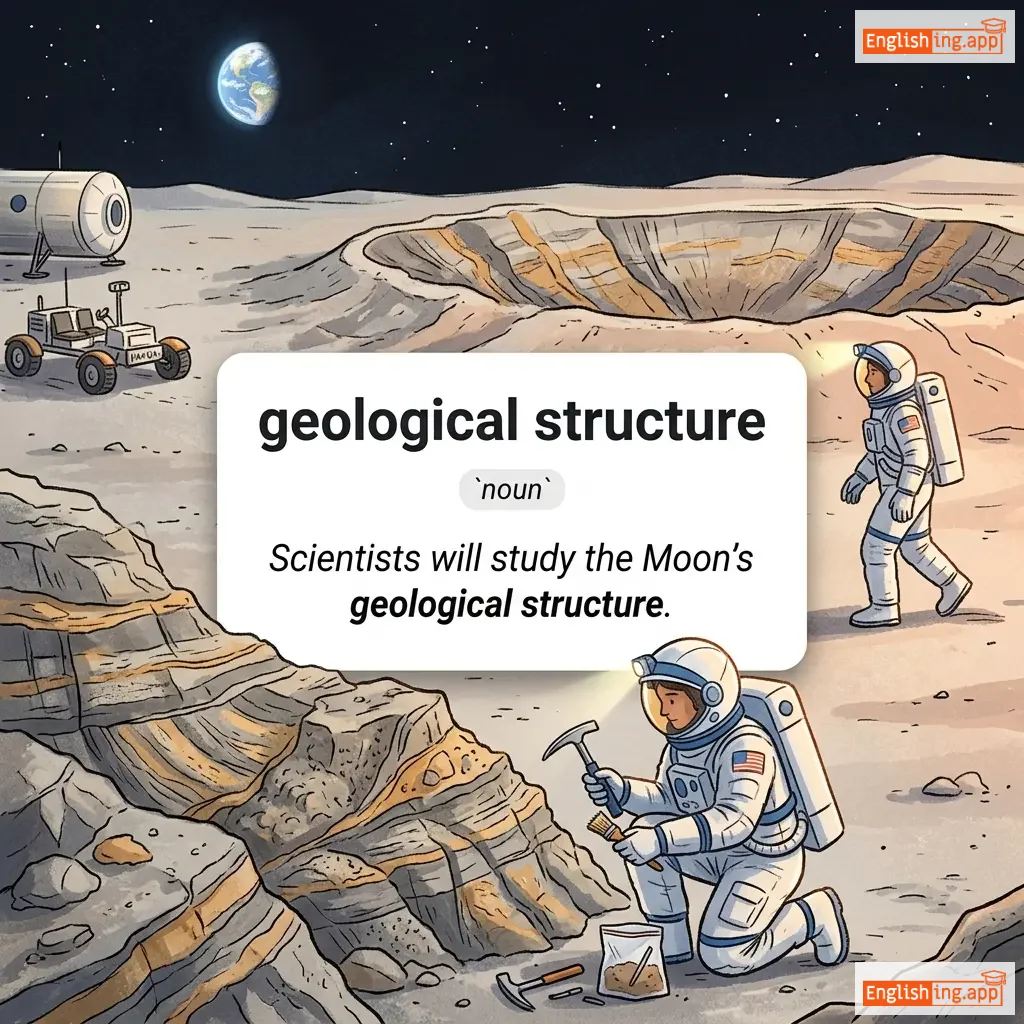
geological structure definition card — visual illustration of the meaning
noun
ˌdʒiːəˈlɒdʒɪkəl ˈstrʌktʃər
structure géologique (structure geologique)

The arrangement and composition of rocks, minerals, and landforms in the Earth's crust.

"Scientists will study the Moon's geological structure."

"Les scientifiques étudieront la structure géologique de la lune." (Les scientifiques etudieront la structure geologique de la lune.)
noun
/dʒiˈɒl.ə.dʒi/
géologie (géologie)

the science that deals with the Earth's physical structure and substances

"She studied geology to understand earthquakes."

"Elle a étudié la géologie pour comprendre les tremblements de terre." (Elle a étudié la géologie pour comprendre les tremblements de terre.)
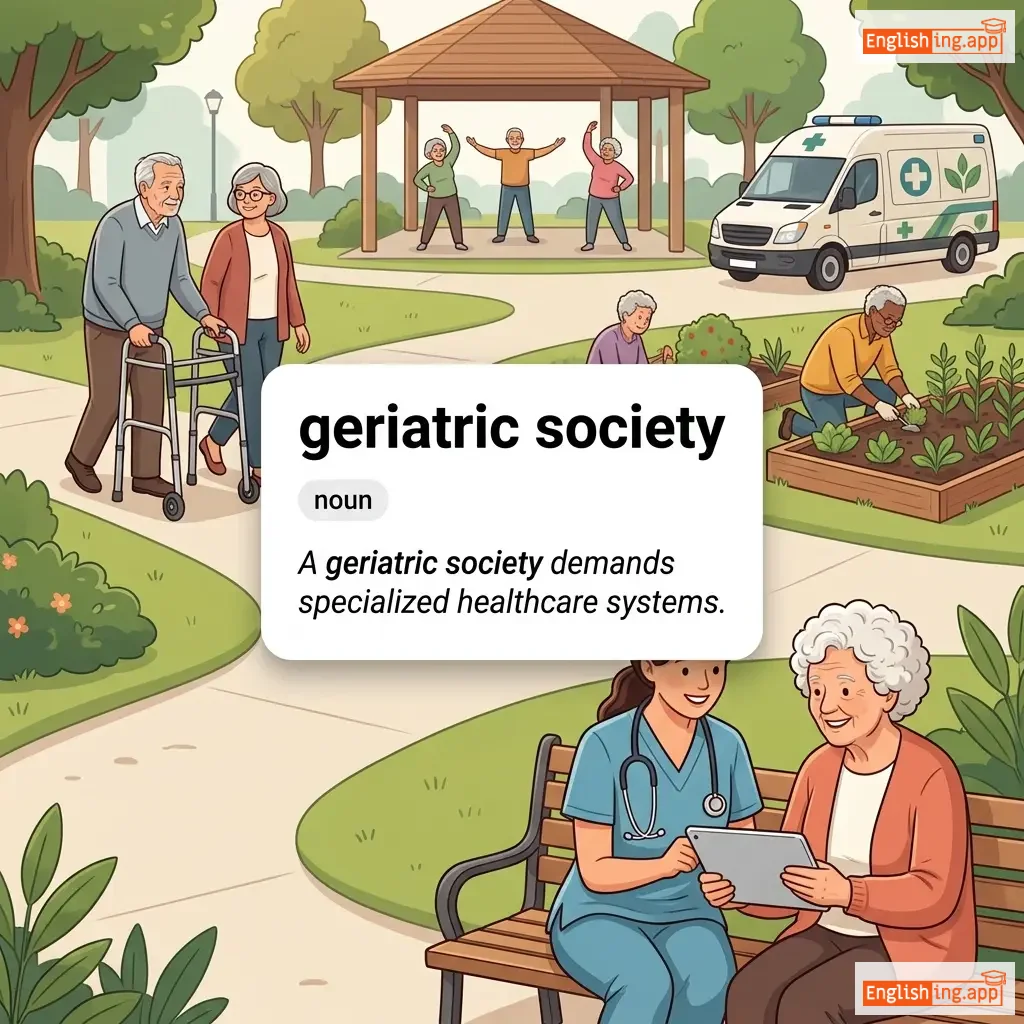
geriatric society definition card — visual illustration of the meaning
noun
ˌdʒɛriˈætrɪk səˈsaɪəti
société gériatrique (societe geriatrique)

A society or community where elderly people make up a large proportion of the population

"A geriatric society demands specialized healthcare systems."

"Une société gériatrique exige des systèmes de soins de santé spécialisés." (Une societe gériatrique exige des systemes de soins de sante specialises.)
noun
/ˌdʒɛr.iˈætrɪks/
gériatrie (geriatrie)

the branch of medicine dealing with the health and care of old people

"He specialized in geriatrics to care for the elderly."

"Il s'est spécialisé en gériatrie pour s'occuper des personnes âgées." (Il s'est spécialisé en gériatrie pour s'occuper des personnes âgées.)
noun
/dʒɜːm/
microbe (microbe)

a microscopic organism, especially one that causes disease

"Washing your hands helps prevent the spread of germs."

"Se laver les mains aide à prévenir la propagation des microbes." (Se laver les mains aide à prévenir la propagation des microbes.)
noun/adjective
/ˈdʒɜːrmən/
allemand (allemand)

relating to Germany, its people, or its language

"She is learning German to study abroad."

"Elle apprend l'allemand pour étudier à l'étranger." (Elle apprend l'allemand pour étudier à l'étranger.)
adjective
/dʒərˈmeɪn/
pertinent (pertinent)

Relevant and appropriate to the subject being considered.

"Her comments were not germane to the discussion."

"Ses commentaires n'étaient pas pertinents pour la discussion." (Ses commentaires n'étaient pas pertinents pour la discussion.)
adjective
/ˈdʒɜːrmɪnəl/
germinal (germinal)

Relating to the earliest stage of development.

"The idea was still in its germinal stage."

"L'idée était encore à son stade germinal." (L'idée était encore à son stade germinal.)
verb
/ˈdʒɜːrmɪneɪt/
bonheur (bonheur)

To begin to grow or develop, especially referring to a seed.

"The seeds germinate quickly in moist soil."

"Elle n'a pas pu cacher son bonheur lorsqu'elle a reçu le prix." (Elle n'a pas pu cacher son bonheur lorsqu'elle a reçu le prix.)
noun
/ˌdʒerənˈtɑːkrəsi/
gérontocratie (gerontocratie)

A system of government or control by old people.

"The country was seen as a gerontocracy, dominated by elderly leaders."

"Le pays était perçu comme une gérontocratie, dominée par des dirigeants âgés." (Le pays etait percu comme une gerontocratie, domine par des dirigeants ages.)
noun
/ˌdʒerənˈtɑːlədʒi/
gérontologie (gerontologie)

The scientific study of old age and the process of aging.

"She chose to specialize in gerontology after completing medical school."

"Elle a choisi de se spécialiser en gérontologie après avoir terminé ses études de médecine." (Elle a choisi de se specialiser en gerontologie apres avoir termine ses etudes de medecine.)
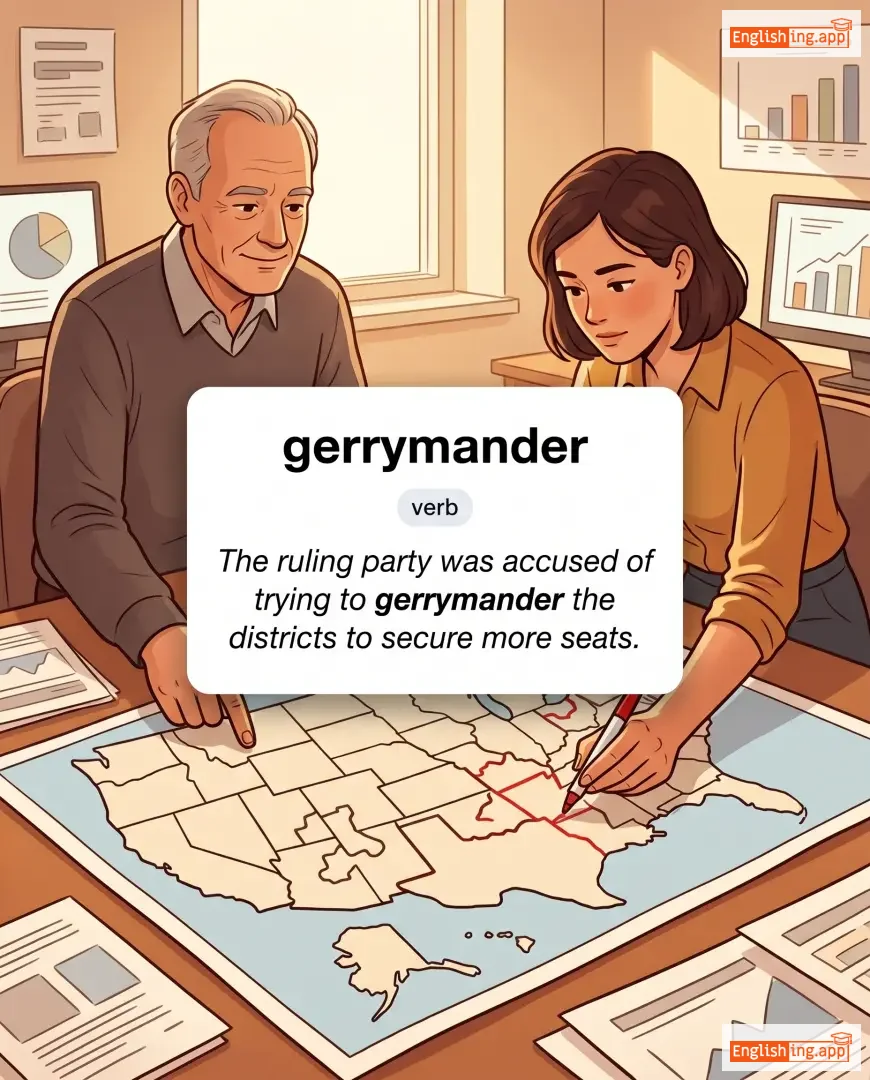
gerrymander definition card — visual illustration of the meaning
verb
/ˈdʒɛriˌmændər/
manipuler les limites des circonscriptions électorales (manipuler les limites des circonscriptions electorales)

to manipulate the boundaries of an electoral constituency to favor one party or class

"The ruling party was accused of trying to gerrymander the districts to secure more seats."

"Le parti au pouvoir a été accusé de manipuler les districts pour obtenir plus de sièges." (Le parti au pouvoir a ete accuse de manipuler les districts pour obtenir plus de sieges.)
verb
/ˈdʒɛsteɪt/
gestation (gestation)

to carry and develop in the womb during pregnancy; to develop an idea over a period of time

"The mother whale gestates her calf for over a year."

"La baleine mère gestate son baleineau pendant plus d'un an." (La baleine mère gestate son baleineau pendant plus d'un an.)
noun
/dʒɛˈsteɪʃən/
gestation (gestation)

the process of carrying or being carried in the womb between conception and birth; the development of an idea or plan

"The gestation period of an elephant is nearly two years."

"La période de gestation d'un éléphant dure près de deux ans." (La periode de gestation d'un elephant dure pres de deux ans.)
verb
/dʒɛˈstɪkjʊleɪt/
gesticuler (gesticuler)

to use gestures, especially dramatic ones, instead of speaking or to emphasize one's words

"He gesticulated wildly to get their attention."

"Il gesticulait sauvagement pour attirer leur attention." (Il gesticulait sauvagement pour attirer leur attention.)
noun
/dʒɛˌstɪkjʊˈleɪʃən/
gesticulation (gesticulation)

a gesture, especially a dramatic one, used instead of speaking or to emphasize speech

"His speech was full of passionate gesticulations."

"Son discours était rempli de gesticulations passionnées." (son discours etait rempli de gesticulations passionnees.)
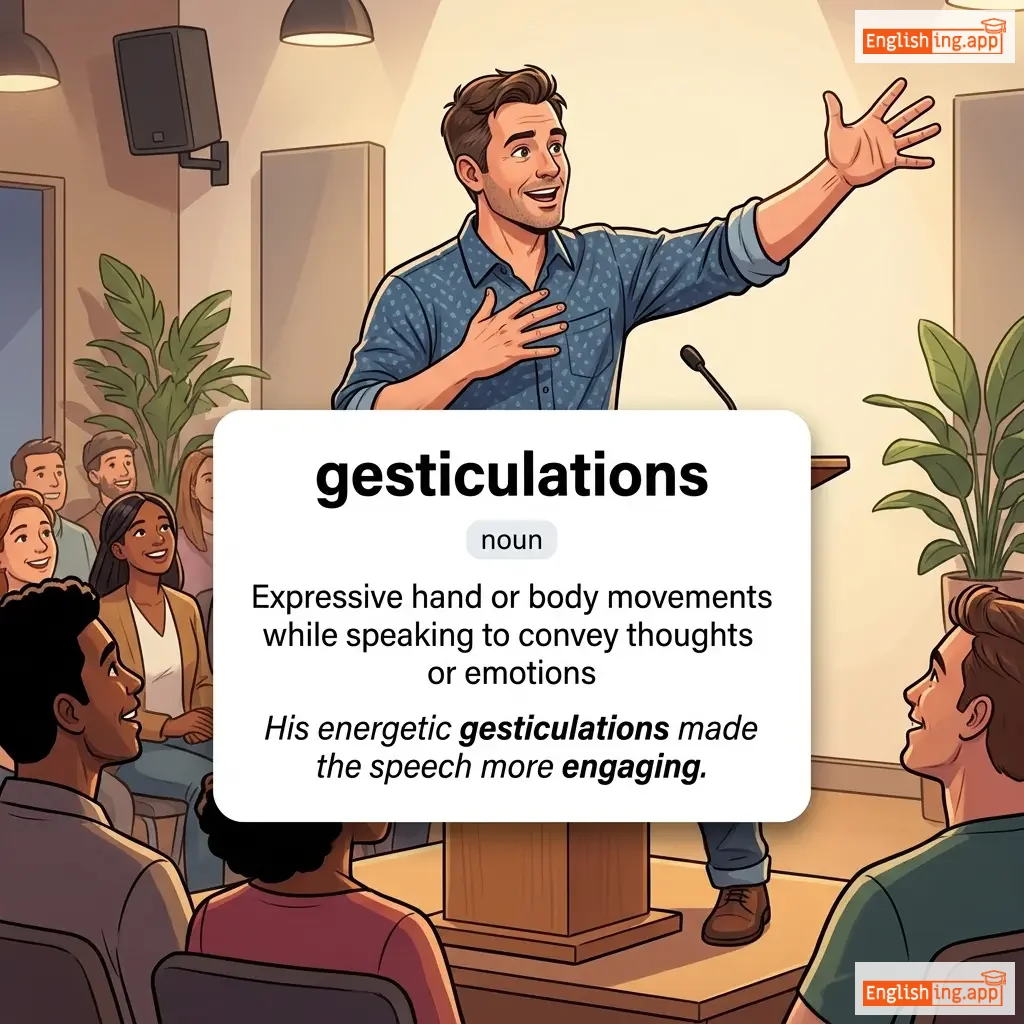
gesticulations definition card — visual illustration of the meaning
noun
dʒɛsˌtɪk.jʊˈleɪ.ʃənz
gesticulations (gesticulations)

Expressive hand or body movements while speaking to convey thoughts or emotions

"His energetic gesticulations made the speech more engaging."

"Ses gesticulations énergiques ont rendu le discours plus captivant." (Ses gesticulations énergiques ont rendu le discours plus captivant.)
noun
/ˈdʒɛs.tʃər/
geste (geste)

A movement of part of the body, especially the hands or head, to express an idea or meaning.

"She made a friendly gesture to welcome the guests."

"Elle a fait un geste amical pour accueillir les invités." (Elle a fait un geste amical pour accueillir les invités.)
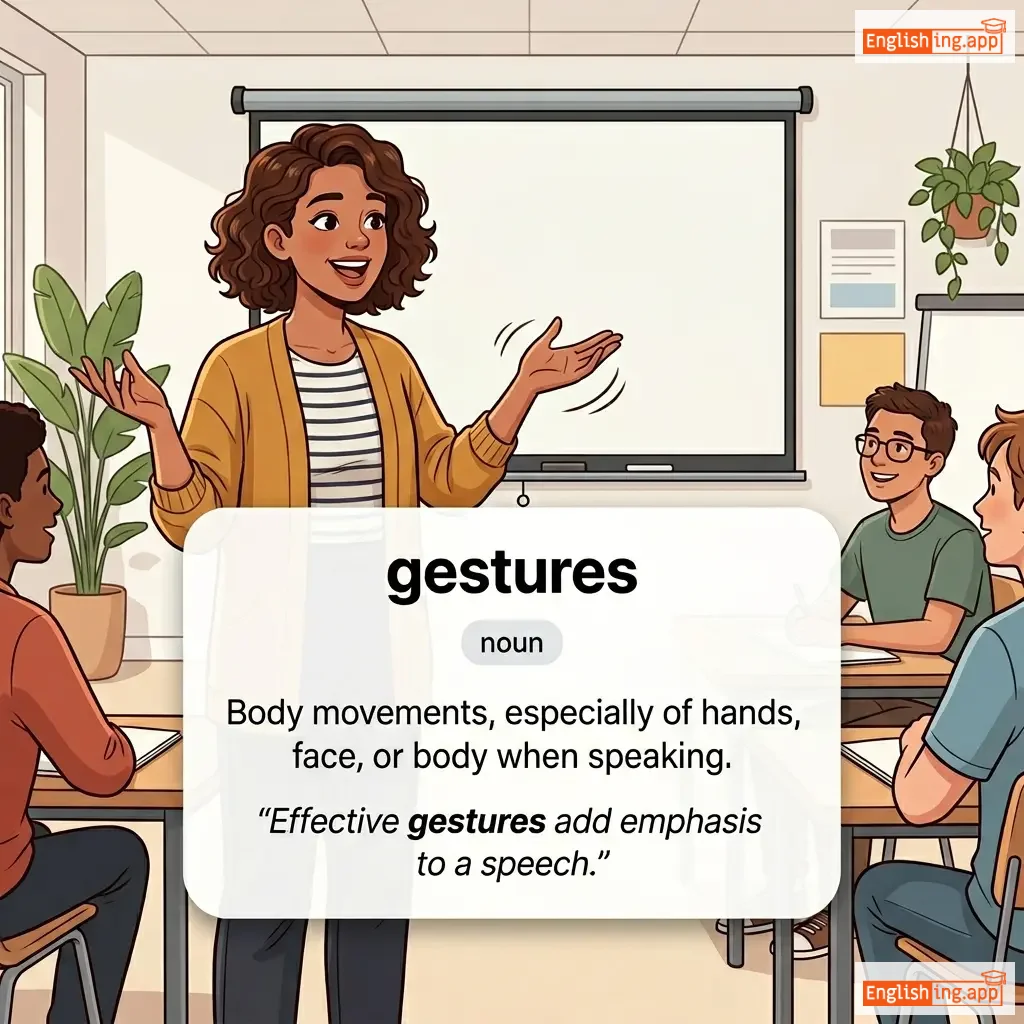
gestures definition card — visual illustration of the meaning
noun
ˈdʒes.tʃərz
gestes (gestes)

Body movements, especially of hands, face, or body when speaking.

"Effective gestures add emphasis to a speech."

"Les gestes efficaces ajoutent de l'emphase à un discours." (Les gestes efficaces ajoutent de l'emphase à un discours.)
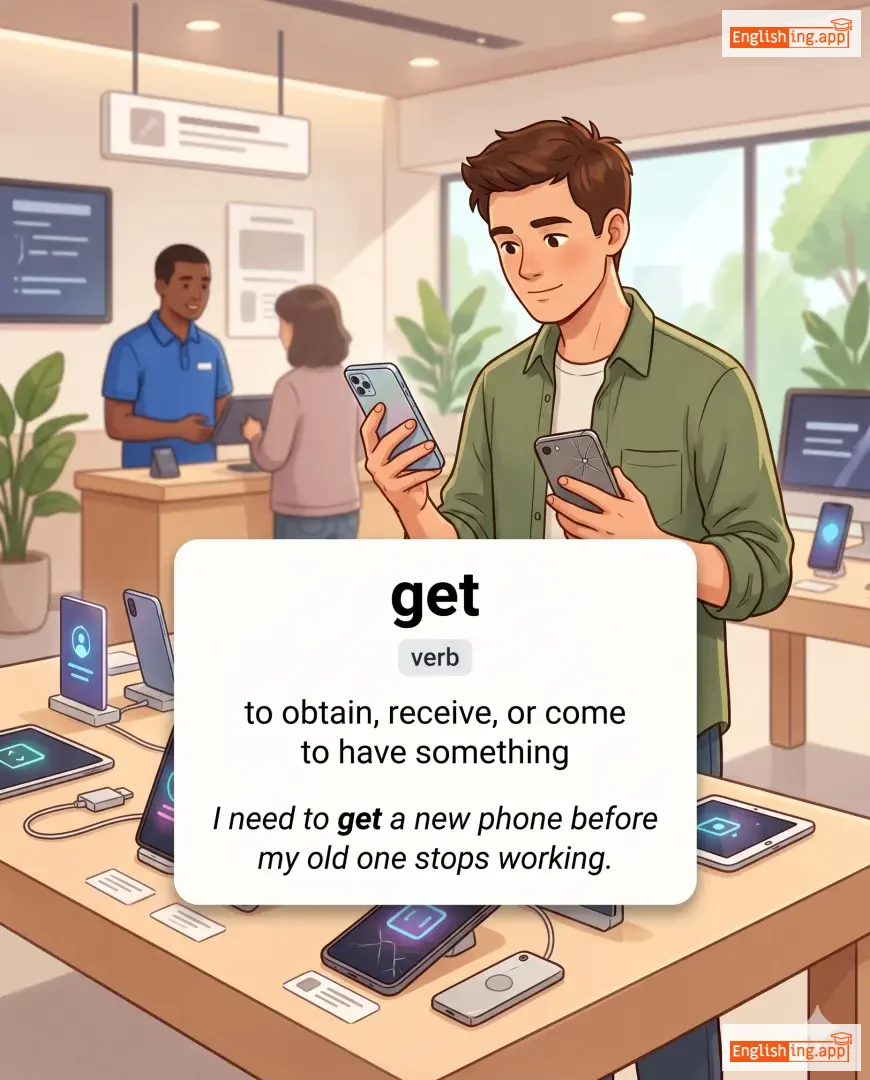
get definition card — visual illustration of the meaning
verb
/ɡɛt/
obtenir (obtenir)

to obtain, receive, or come to have something

"I need to get a new phone before my old one stops working."

"Je dois obtenir un nouveau téléphone avant que l'ancien ne cesse de fonctionner." (Je dois obtenir un nouveau téléphone avant que l'ancien ne cesse de fonctionner.)
noun
/ˈɡaɪ.zər/
geysers (geysers)

A natural hot spring that intermittently ejects a column of water and steam into the air.

"The geyser erupted, shooting water high into the sky."

"Le geyser a éclaté, projetant de l'eau très haut dans le ciel." (Le geyser a éclaté, projetant de l'eau très haut dans le ciel.)