Vocabulaires

Découvrez, apprenez et maîtrisez le vocabulaire anglais

noun, verb
/fɔːrm/
forme / formulaire (forme / formulaire)

the shape or structure of something; to bring something into existence

"Students filled out the registration form."

"Les étudiants ont rempli le formulaire d'inscription." (Les étudiants ont rempli le formulaire d'inscription.)
adjective
/ˈfɔːrməl/
formel (formel)

done in accordance with rules of convention or etiquette; official or serious in nature

"He wore a formal suit to the wedding."

"Il portait un costume formel au mariage." (Il portait un costume formel au mariage.)
noun
/fɔːrˈmælɪti/
formalités (formalites)

the rigid observance of rules or customs, especially in social or official situations

"The interview was just a formality since he was already selected."

"L'entretien n'était qu'une formalité car il avait déjà été sélectionné." (L'entretien n'était qu'une formalité car il avait déjà été sélectionné.)
adverb
/ˈfɔːrməli/
formellement (formellement)

in a formal or official manner; according to established rules or conventions

"The agreement was formally signed by both parties."

"L'accord a été formellement signé par les deux parties." (laccord a ete formellement signe par les deux parties)
noun
/ˈfɔːmæt/
format (format)

the way in which something is arranged, designed, or presented

"Please follow the given format for your report submission."

"Veuillez suivre le format donné pour la soumission de votre rapport." (Veuillez suivre le format donné pour la soumission de votre rapport.)
noun
/fɔːrˈmeɪʃən/
formation (formation)

the action of forming or process of being formed

"The formation of the new company took several months."

"La formation de la nouvelle entreprise a pris plusieurs mois." (La formation de la nouvelle entreprise a pris plusieurs mois.)
adjective
/ˈfɔːrmətɪv/
formateur (formateur)

Having a lasting influence on a person's development or character.

"Childhood is often described as a formative stage in life."

"L'enfance est souvent décrite comme une étape formatrice dans la vie." (L'enfance est souvent décrite comme une étape formatrice dans la vie.)
adjective
/ˈfɔːrmər/
ancien (ancien)

Having been previously in a particular role or position.

"He is a former president of the association."

"Il est un ancien président de l'association." (Il est un ancien président de l'association.)
adverb
/ˈfɔːrmərli/
autrefois (autrefois)

In the past; previously.

"The city was formerly known as Constantinople."

"La ville était autrefois connue sous le nom de Constantinople." (La ville était autrefois connue sous le nom de Constantinople.)
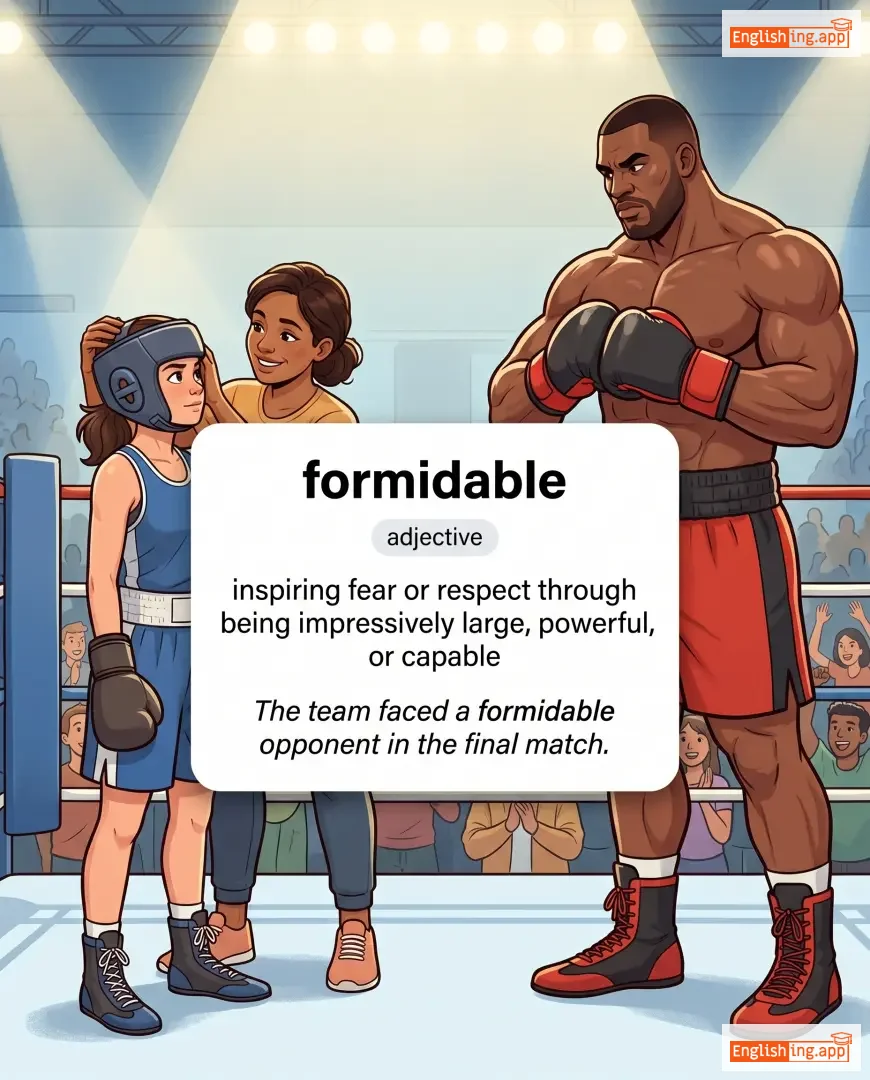
formidable definition card — visual illustration of the meaning
adjective
/ˈfɔːrmɪdəbl/
formidable (formidable)

inspiring fear or respect through being impressively large, powerful, or capable

"The team faced a formidable opponent in the final match."

"L'équipe a affronté un adversaire redoutable lors du match final." (Lequipe a affronte un adversaire redoutable lors du match final.)
noun
/ˈfɔːrmjələ/
formule (formule)

a fixed method for doing something; a mathematical or chemical rule expressed in symbols

"The scientist discovered a new formula for the medicine."

"Le scientifique a découvert une nouvelle formule pour le médicament." (Le scientifique a decouvert une nouvelle formule pour le medicament.)
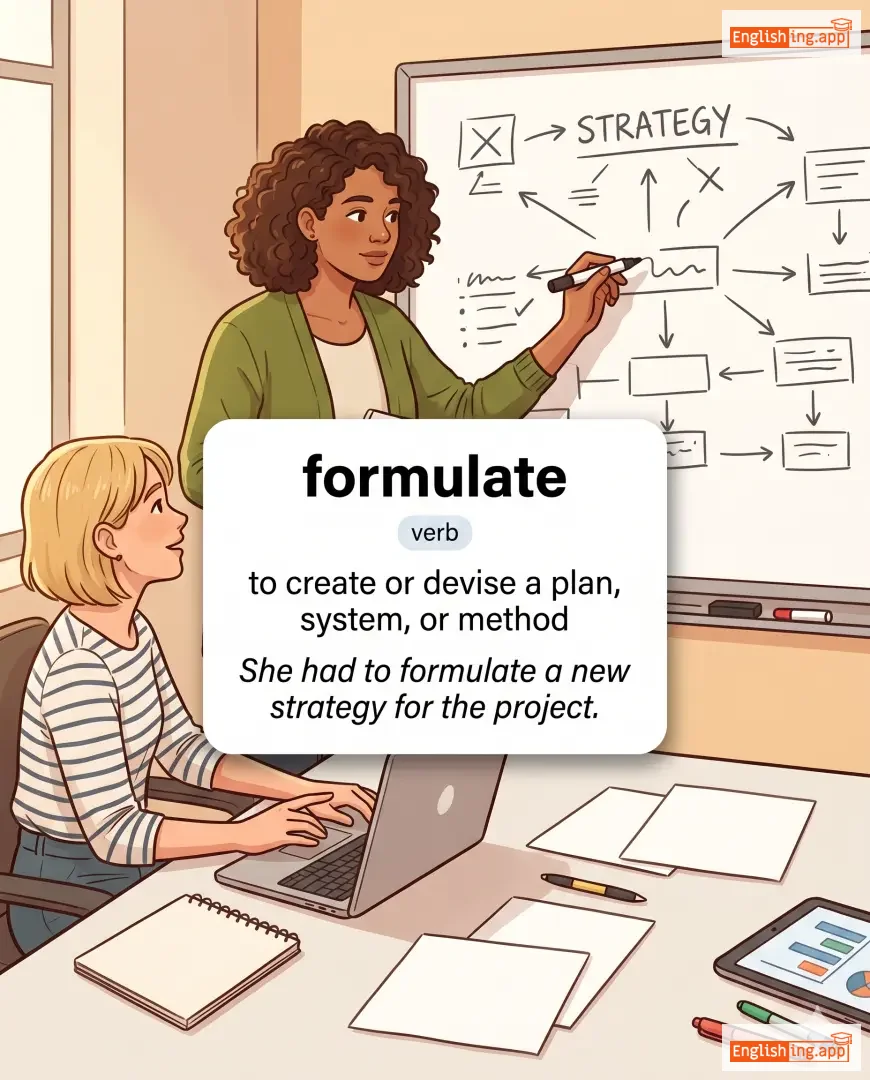
formulate definition card — visual illustration of the meaning
verb
/ˈfɔːmjʊleɪt/
formuler (formuler)

to create or devise a plan, system, or method

"She had to formulate a new strategy for the project."

"Elle a dû formuler une nouvelle stratégie pour le projet." (Elle a du formuler une nouvelle strategie pour le projet.)
verb
/fɔːrˈseɪk/
abandonner (abandonner)

to abandon or give up something or someone

"He decided not to forsake his old friends despite his success."

"Il a décidé de ne pas abandonner ses vieux amis malgré son succès." (Il a décidé de ne pas abandonner ses vieux amis malgré son succès.)
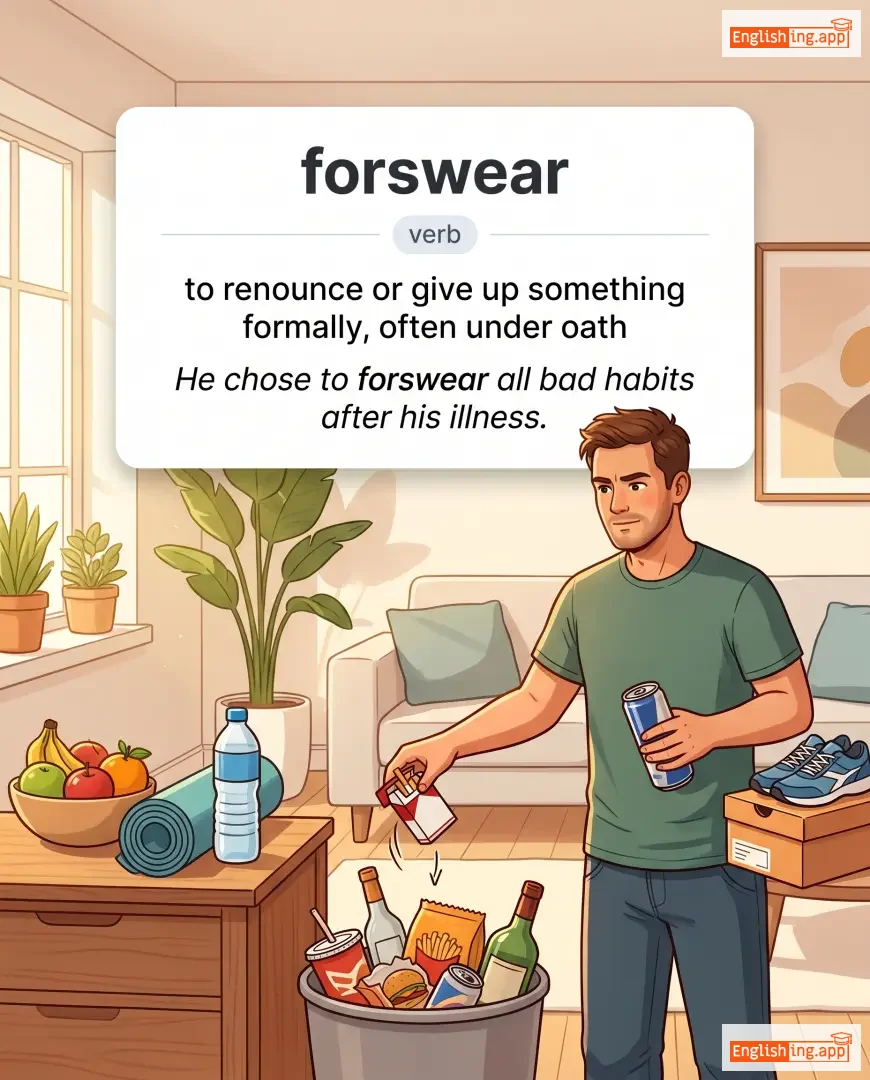
forswear definition card — visual illustration of the meaning
verb
/fɔːrˈswɛr/
renoncer sous serment (renoncer sous serment)

to renounce or give up something formally, often under oath

"He chose to forswear all bad habits after his illness."

"Il a choisi de renoncer à toutes ses mauvaises habitudes après sa maladie." (Il a choisi de renoncer à toutes ses mauvaises habitudes après sa maladie.)
noun
/fɔːrt/
fort (fort)

a strong building or group of buildings where soldiers live and defend

"The ancient fort stood on top of the hill for centuries."

"Le vieux fort se dressait au sommet de la colline pendant des siècles." (Le vieux fort se dressait au sommet de la colline pendant des siècles.)
noun
/ˈfɔːr.teɪ/ or /fɔːrt/
talent (talent)

a strong ability or talent; something one does particularly well

"Cooking is definitely her forte."

"La cuisine est définitivement son talent." (La cuisine est definitivment son talent.)
adverb
/fɔːrθ/
en avant (en avant)

forward in place, time, or order

"The leader stepped forth to address the crowd."

"Le leader s'avança pour s'adresser à la foule." (Le leader s'avança pour s'adresser à la foule.)
adjective
/ˌfɔːrθˈkʌmɪŋ/
à venir (a venir)

about to happen soon; willing to share information

"The company announced its forthcoming product launch."

"L'entreprise a annoncé le lancement de son produit à venir." (L'entreprise a annonce le lancement de son produit a venir.)
adjective
/ˈfɔːrθˌraɪt/
direct (direct)

Direct and honest in speech or behavior; straightforward.

"She was forthright in her criticism of the policy."

"Elle a été directe dans sa critique de la politique." (Elle a été directe dans sa critique de la politique.)
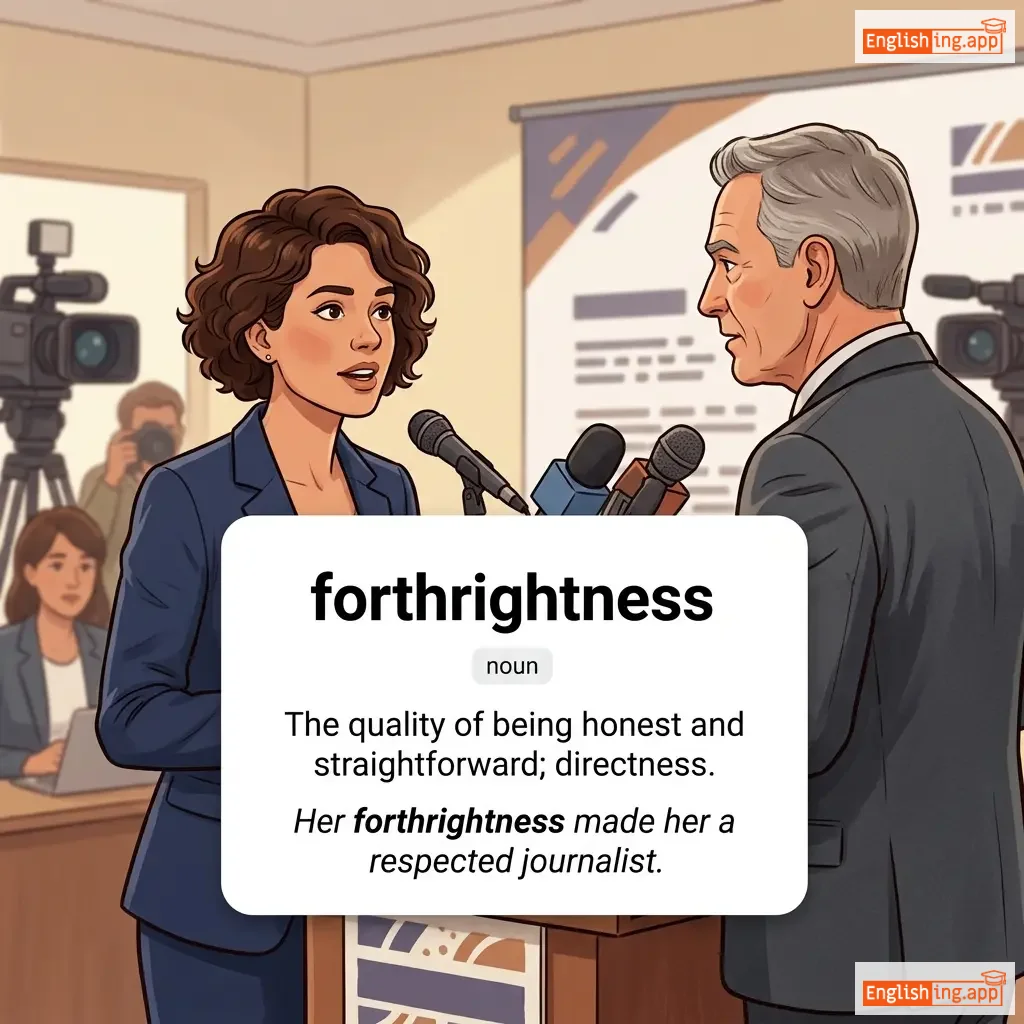
forthrightness definition card — visual illustration of the meaning
noun
/ˈfɔːθ.raɪt.nəs/
honnêteté (honnete)

The quality of being honest and straightforward; directness.

"Her forthrightness made her a respected journalist."

"Sa forthrightness a fait d'elle une journaliste respectée." (Sa forthrightness a fait d'elle une journaliste respectée.)
adverb
/ˌfɔːrθˈwɪθ/
immédiatement; sans retard; sur-le-champ (immediatement; sans retard; sur-le-champ)

immediately; without delay; at once

"The manager ordered the employee to stop the unsafe practice forthwith."

"Le directeur a ordonné à l'employé d'arrêter immédiatement la pratique dangereuse." (Le directeur a ordonné à l'employé d'arrêter immédiatement la pratique dangereuse.)
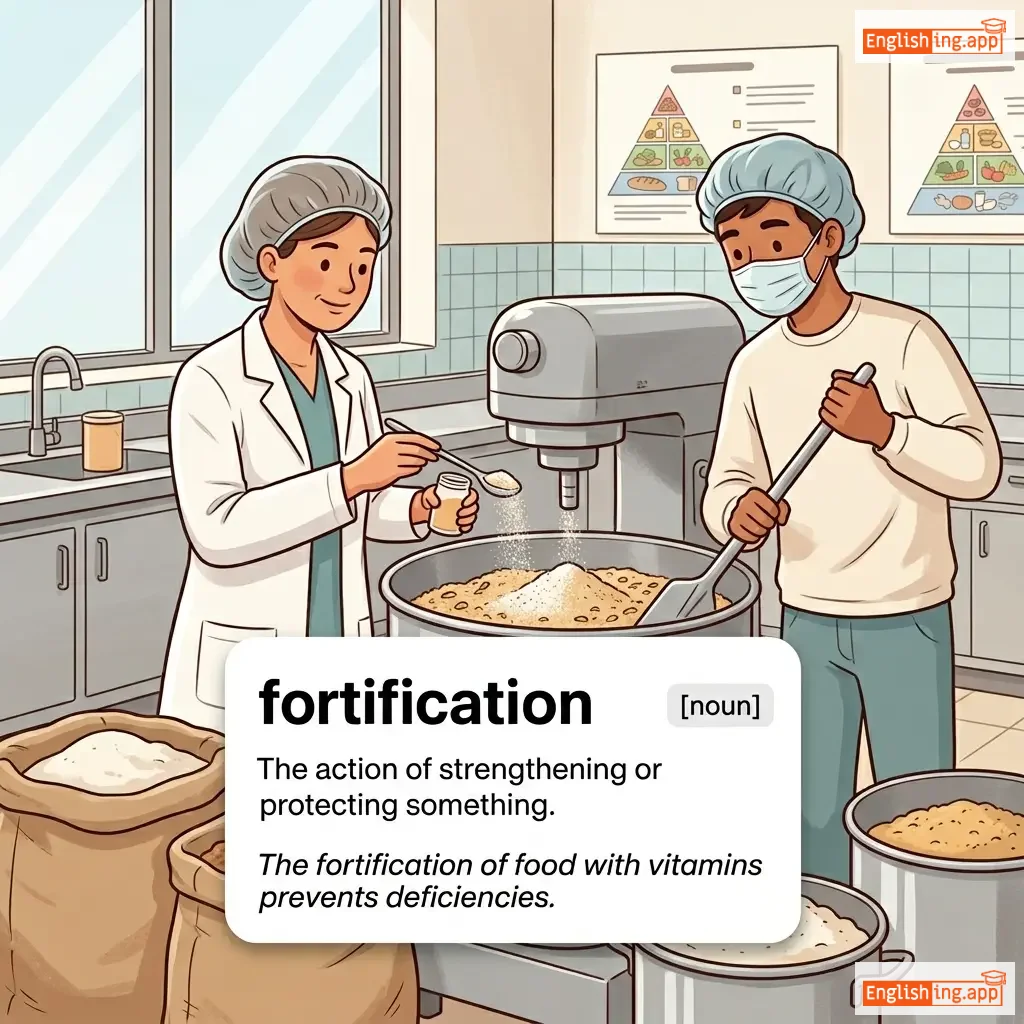
fortification definition card — visual illustration of the meaning
noun
ˌfɔː.tɪ.fɪˈkeɪ.ʃən
fortification (fortification)

The action of strengthening or protecting something.

"The fortification of food with vitamins prevents deficiencies."

"La fortification des aliments avec des vitamines prévient les carences." (La fortification des aliments avec des vitamines prévient les carences.)
verb
/ˈfɔːrtɪˌfaɪ/
fortifier (fortifier)

To strengthen a place, person, or thing physically or mentally.

"They fortified the city walls to protect against invasion."

"Ils ont fortifié les murs de la ville pour se protéger contre l'invasion." (Ils ont fortifié les murs de la ville pour se protéger contre l'invasion.)
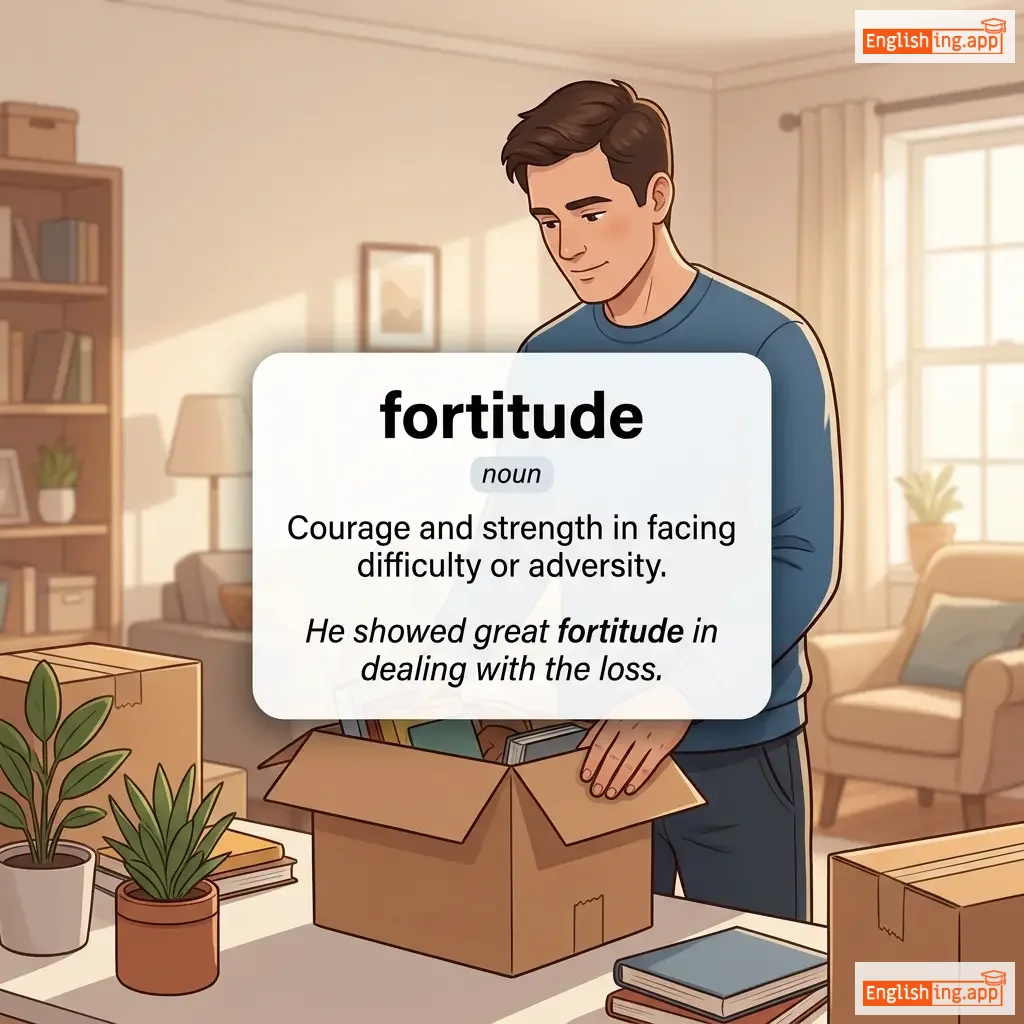
fortitude definition card — visual illustration of the meaning
noun
/ˈfɔːrtɪˌtuːd/
courage et force (courage et force)

Courage and strength in facing difficulty or adversity.

"He showed great fortitude in dealing with the loss."

"Il a montré une grande fortitude en faisant face à la perte." (Il a montré une grande fortitude en faisant face à la perte.)
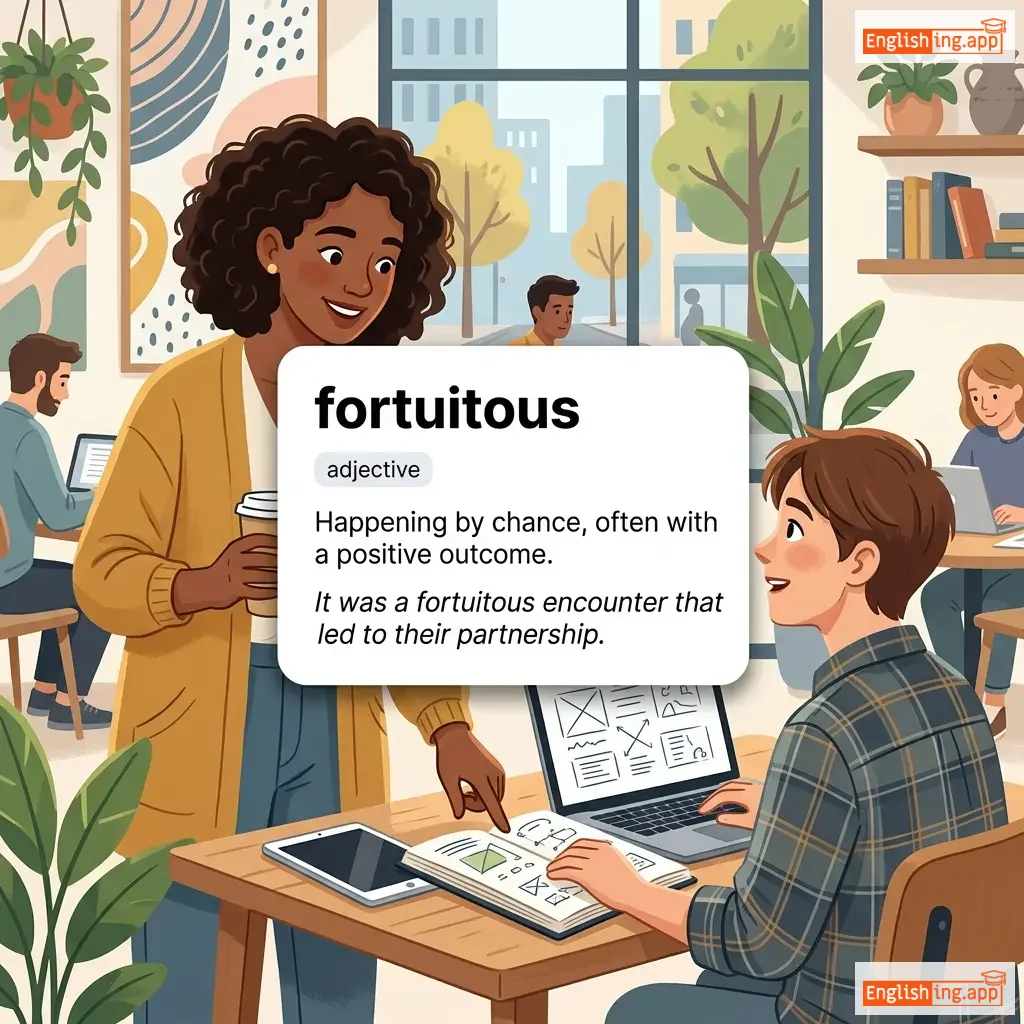
fortuitous definition card — visual illustration of the meaning
adjective
/fɔːrˈtuːɪtəs/
fortuitif (fortuitif)

Happening by chance, often with a positive outcome.

"It was a fortuitous encounter that led to their partnership."

"C'était une rencontre fortuite qui a conduit à leur partenariat." (C'était une rencontre fortuite qui a conduit à leur partenariat.)
adjective
/ˈfɔːrtʃənət/
fortuné (fortuné)

Having good luck or receiving something desirable by chance.

"She was fortunate to escape the accident without injuries."

"Elle a eu de la chance d'échapper à l'accident sans blessures." (Elle a eu de la chance d'échapper à l'accident sans blessures.)
adverb
/ˈfɔːtʃənətli/
heureusement (heureusement)

by good luck; luckily

"Fortunately, no one was injured in the accident."

"Heureusement, personne n'a été blessé dans l'accident." (Heureusement, personne n'a été blessé dans l'accident.)
noun
/ˈfɔːrtʃən/
chance / fortune (chance / fortune)

chance or luck, especially in success or wealth

"She made a fortune by investing in real estate."

"Elle a fait une fortune en investissant dans l'immobilier." (Elle a fait une fortune en investissant dans l'immobilier.)
number
/ˈfɔːrti/
bonheur (bonheur)

the number 40; ten times four

"She celebrated her forty years of life with a big party."

"Elle n'a pas pu cacher son bonheur lorsqu'elle a reçu le prix." (Elle n'a pas pu cacher son bonheur lorsqu'elle a reçu le prix.)
noun
/ˈfɔːrəm/
forum (forum)

A place, meeting, or medium where ideas and views can be exchanged.

"The online forum allows people to discuss a wide range of topics."

"Le forum en ligne permet aux gens de discuter d'une large gamme de sujets." (Le forum en ligne permet aux gens de discuter d'une large gamme de sujets.)
adverb, adjective, verb, noun
/ˈfɔːrwərd/
en avant (en avant)

toward the front; to advance or send ahead; an onward position or direction

"The troops moved forward to secure the bridge."

"Les troupes ont avancé pour sécuriser le pont." (Les troupes ont avancé pour sécuriser le pont.)
noun
/ˈfɒsɪl/
fossile (fossil)

the remains or impression of a prehistoric plant or animal embedded in rock

"The fossil of a dinosaur was discovered in the mountains."

"Le fossile d'un dinosaure a été découvert dans les montagnes." (Le fossile d'un dinosaure a été découvert dans les montagnes.)
👩‍👧

foster (foster)

verb, adjective
/ˈfɒstər/
favoriser (favoriser)

to encourage the development of something; to raise a child that is not one's own

"The program aims to foster creativity in young students."

"Le programme vise à favoriser la créativité chez les jeunes étudiants." (Le programme vise à favoriser la créativité chez les jeunes étudiants.)
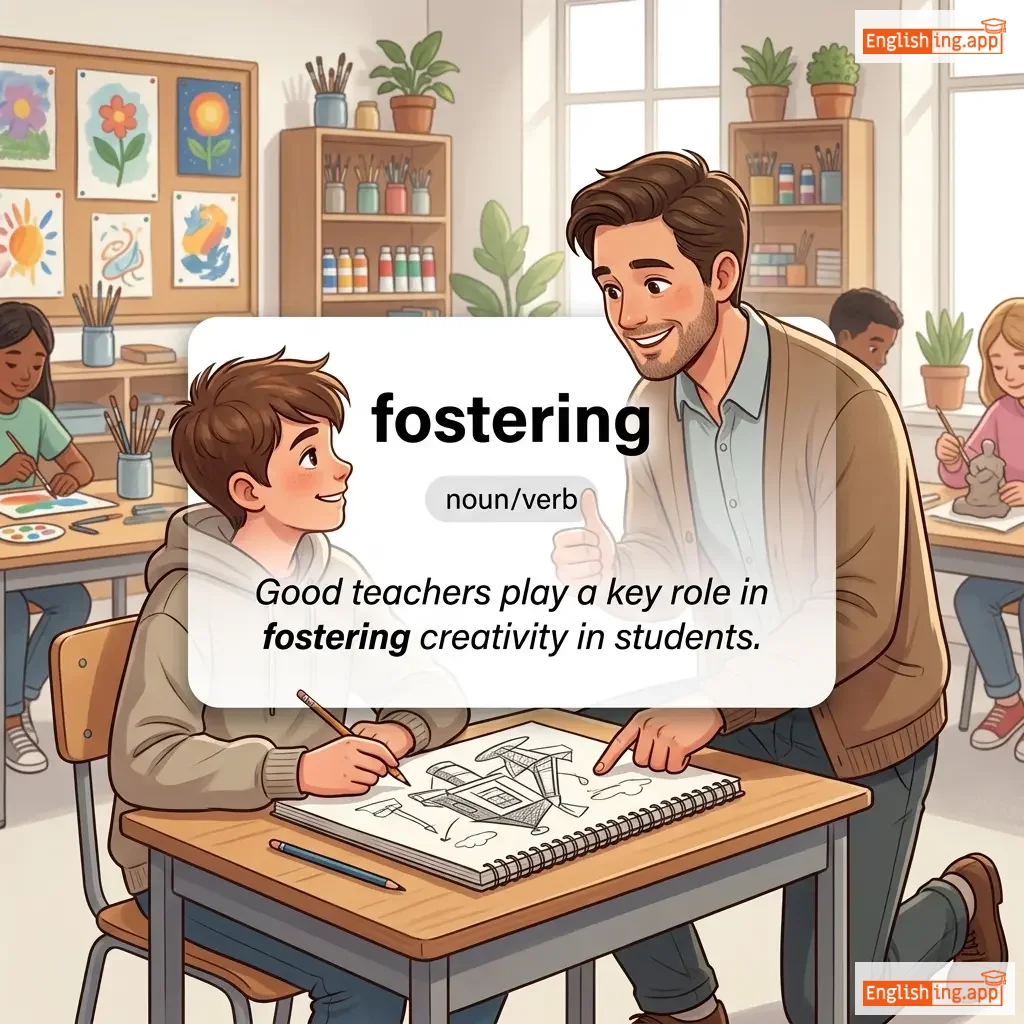
fostering definition card — visual illustration of the meaning
noun/verb
/ˈfɒs.tər.ɪŋ/
favoriser (favoriser)

The process of encouraging or promoting the development or growth of something; nurturing and caring for.

"Good teachers play a key role in fostering creativity in students."

"Les bons enseignants jouent un rôle clé dans le développement de la créativité chez les élèves." (Les bons enseignants jouent un rôle clé dans le développement de la créativité chez les élèves.)
adjective, noun, verb
/faʊl/
sale, injuste (sale, injuste)

offensive to the senses; dirty or unpleasant; in sports, an unfair or illegal act

"The player was penalized for committing a foul."

"Le joueur a été pénalisé pour avoir commis une faute." (Le joueur a été pénalisé pour avoir commis une faute.)
verb
/faʊnd/
fonder (fonder)

to establish or set up an institution, company, or organization

"They found a new startup focused on renewable energy."

"Ils ont fondé une nouvelle startup axée sur les énergies renouvelables." (Ils ont fondé une nouvelle startup axée sur les énergies renouvelables.)
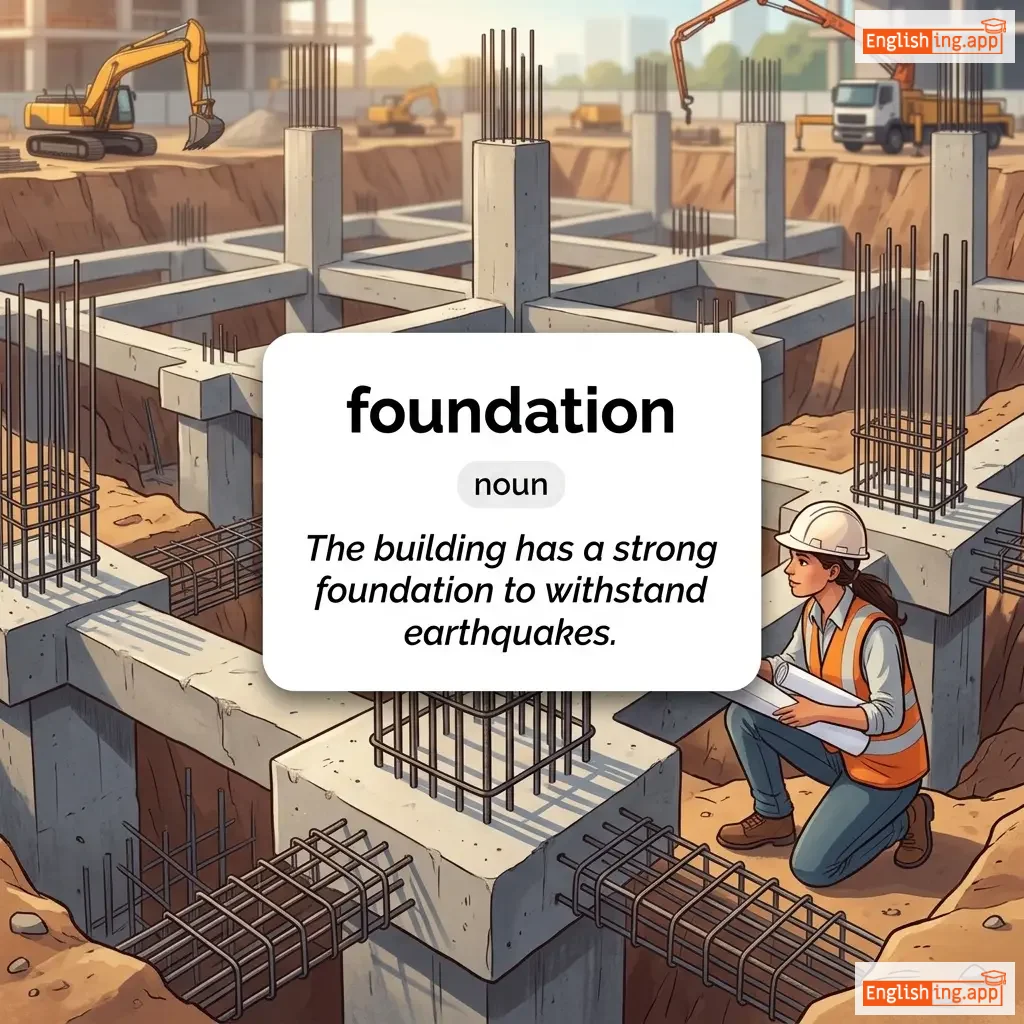
foundation definition card — visual illustration of the meaning
noun
/faʊnˈdeɪʃən/
fondation (fondation)

the base or underlying support of something; an institution established for a purpose

"The building has a strong foundation to withstand earthquakes."

"Le bâtiment a une fondation solide pour résister aux tremblements de terre." (Le batiment a une fondation solide pour resister aux tremblements de terre.)
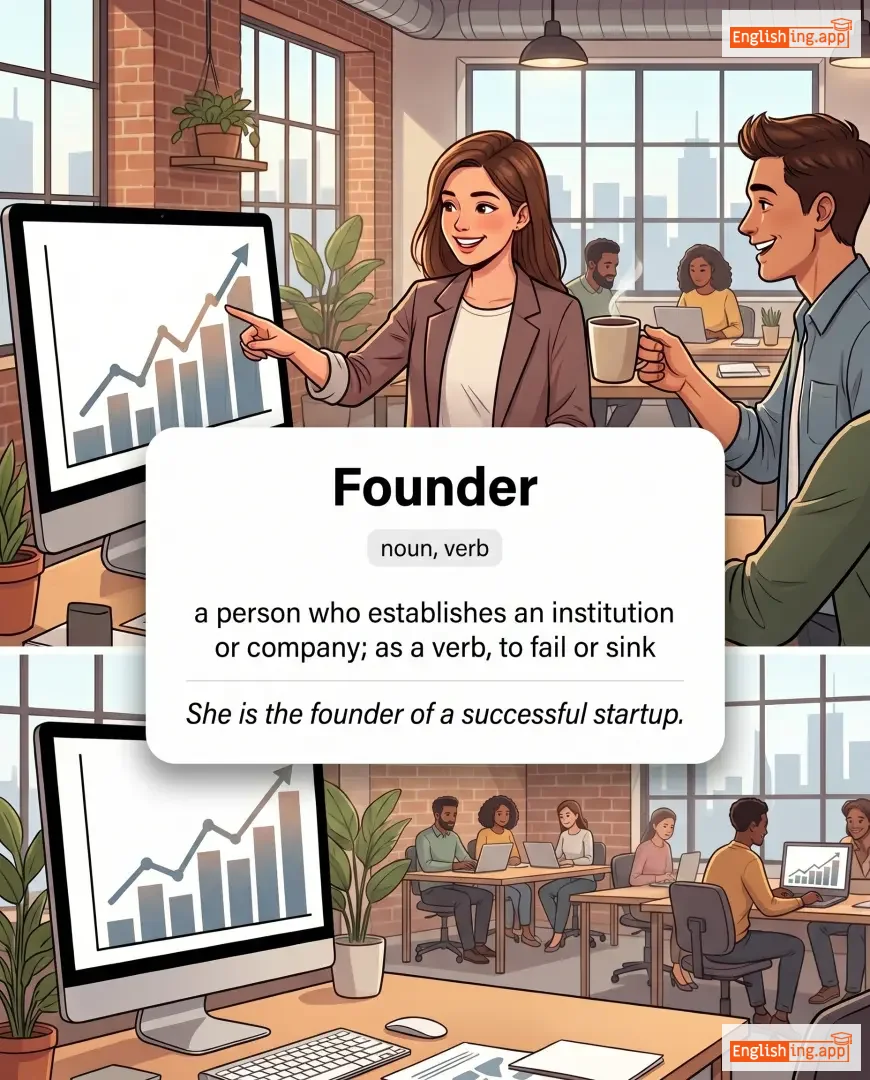
Founder definition card — visual illustration of the meaning
noun, verb
/ˈfaʊndər/
fondateur (fondateur)

a person who establishes an institution or company; as a verb, to fail or sink

"She is the founder of a successful startup."

"Elle est la fondatrice d'une startup réussie." (Elle est la fondatrice d'une startup reussie.)
noun
/ˈfaʊn.tən/
fontaine (fontaine)

a natural spring of water; an artificial structure from which water flows

"The fountain in the park attracts many visitors."

"La fontaine dans le parc attire de nombreux visiteurs." (La fontaine dans le parc attire de nombreux visiteurs.)
4️⃣

four (for)

numeral
/fɔːr/
quatre (katr)

The number equivalent to the sum of two and two; one more than three.

"She has four books on her desk."

"Elle a quatre livres sur son bureau." (Elle a katr livres sur son bureau.)
👨‍👩‍👧‍👦

foursome (fɔʁsɔm)

noun
/ˈfɔːrsəm/
quatuor (kwatwor)

a group of four people or things, especially in games or social activities

"The foursome enjoyed a game of golf together."

"Le quatuor a apprécié une partie de golf ensemble." (Le kwatwor a apprécié une partie de golf ensemble.)
adjective/noun
/fɔːrθ/
quatrième (katr-yem)

Constituting number four in a sequence; coming after the third in position.

"He finished in fourth place in the race."

"Il a terminé à la quatrième place dans la course." (Il a termine a la quatrieme place dans la course.)
noun
/faʊl/
volaille (volaille)

a domesticated bird kept for meat or eggs; chicken or other poultry

"The farmer raised fowl in his backyard for fresh eggs and meat."

"Le fermier élevait de la volaille dans son jardin pour des œufs frais et de la viande." (Le fermier élevait de la volaille dans son jardin pour des œufs frais et de la viande.)
noun
/fɒks/
renard (renard)

a wild animal related to dogs, with a pointed face and thick fur

"The red fox is known for its cunning nature."

"Le renard rouge est connu pour sa nature rusée." (Le renard rouge est connu pour sa nature rusée.)
adjective
/ˈfɒksi/
rusé (ruse)

Clever, cunning, or attractive.

"He came up with a foxy plan to win the game."

"Il a proposé un plan rusé pour gagner le jeu." (Il a proposé un plan rusé pour gagner le jeu.)
noun
/ˈfɔɪeɪr/
hall d'entrée (hall d'entree)

An entrance hall or lobby in a building.

"The guests waited in the hotel foyer before checking in."

"Les invités ont attendu dans le hall de l'hôtel avant de s'enregistrer." (Les invités ont attendu dans le hall de l'hôtel avant de s'enregistrer.)
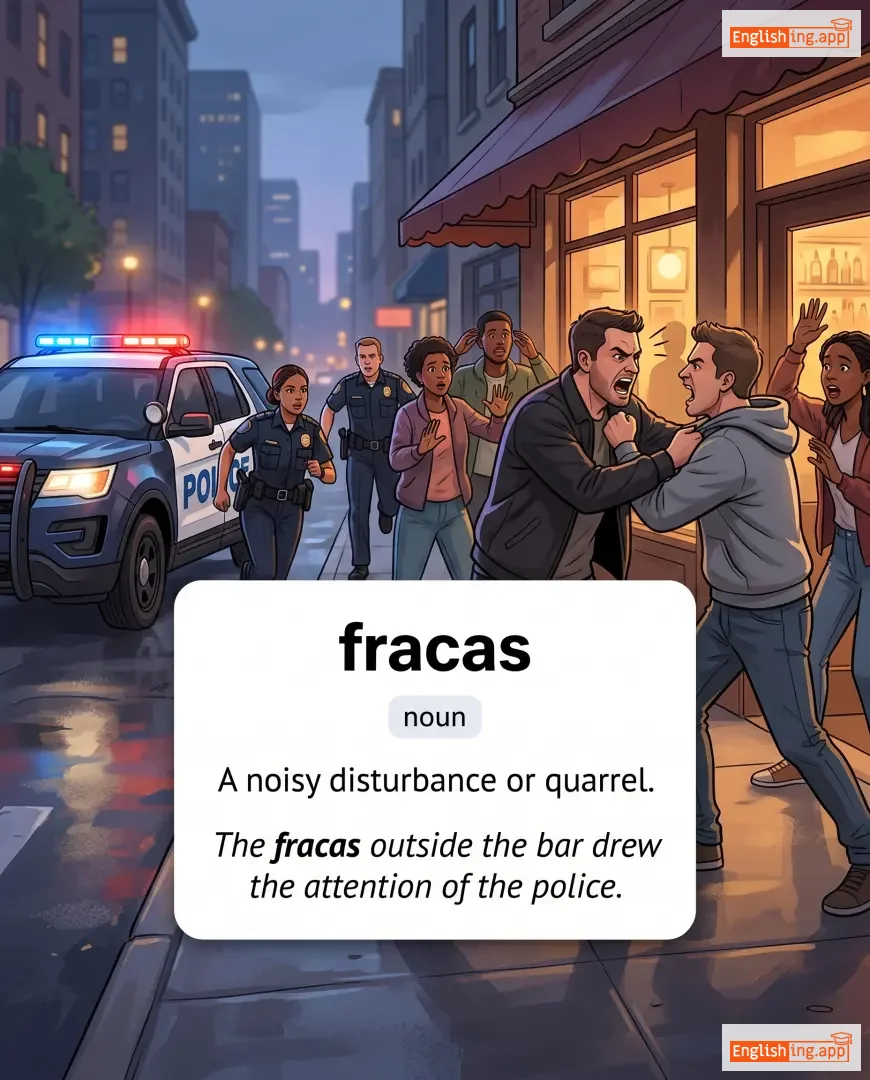
fracas definition card — visual illustration of the meaning
noun
/ˈfrækɑː/
bagarre (bagarre)

A noisy disturbance or quarrel.

"The fracas outside the bar drew the attention of the police."

"La bagarre à l'extérieur du bar a attiré l'attention de la police." (La bagarre a l'exterieur du bar a attire l'attention de la police.)
noun
/ˈfrækʃən/
fraction (fraction)

A small part of something; in mathematics, a number that represents part of a whole.

"Only a small fraction of the population attended the event."

"Seule une petite fraction de la population a assisté à l'événement." (Seule une petite fraction de la population a assiste a l'evenement.)
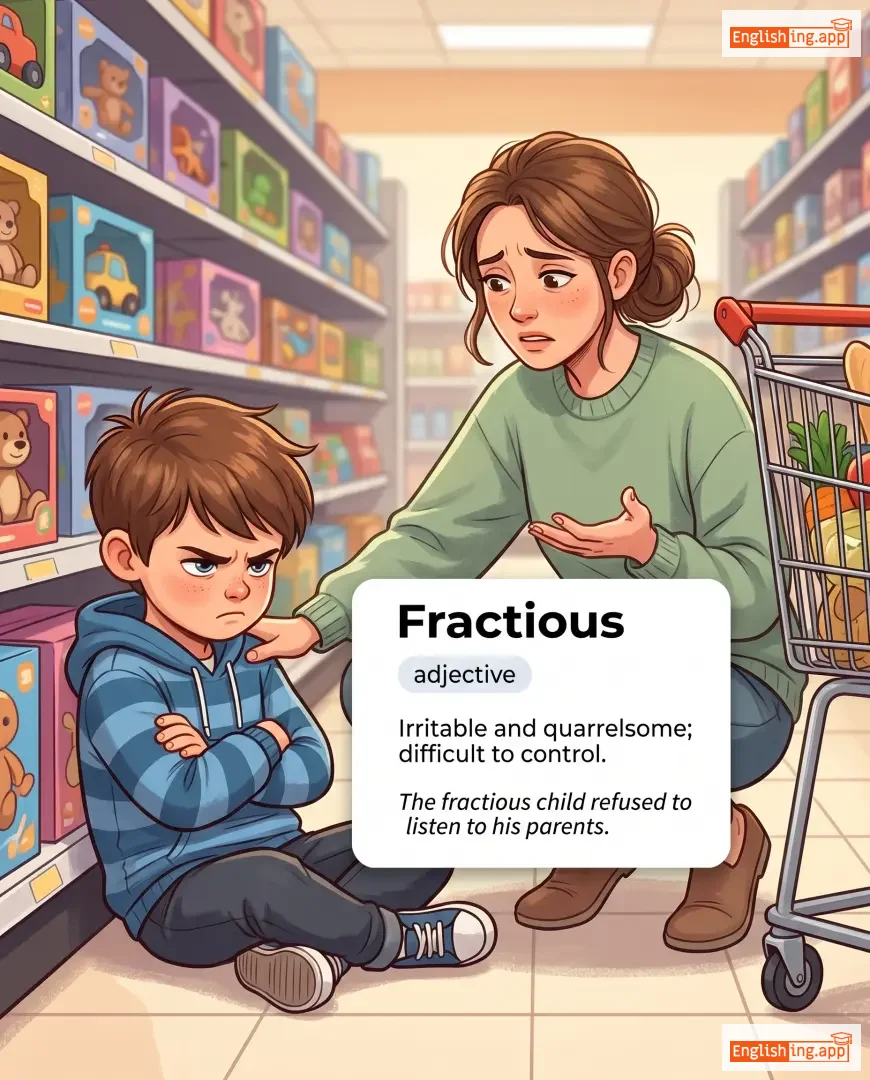
Fractious definition card — visual illustration of the meaning
adjective
/ˈfrækʃəs/
irritable (irritable)

Irritable and quarrelsome; difficult to control.

"The fractious child refused to listen to his parents."

"L'enfant irritable a refusé d'écouter ses parents." (L'enfant irritable a refusé d'écouter ses parents.)
noun, verb
/ˈfrækʧər/
fracture (fracture)

A break or crack in a hard object or material, typically a bone; to break or crack.

"He suffered a fracture in his leg after the accident."

"Il a subi une fracture à la jambe après l'accident." (Il a subi une fracture à la jambe après l'accident.)