Vocabulaires

Découvrez, apprenez et maîtrisez le vocabulaire anglais

noun
/ˌɛkspɛkˈteɪʃən/
attente (attente)

a strong belief that something will happen or be the case

"The students had high expectations for their exam results."

"Les étudiants avaient de grandes attentes pour leurs résultats aux examens." (Les étudiants avaient de grandes attentes pour leurs résultats aux examens.)
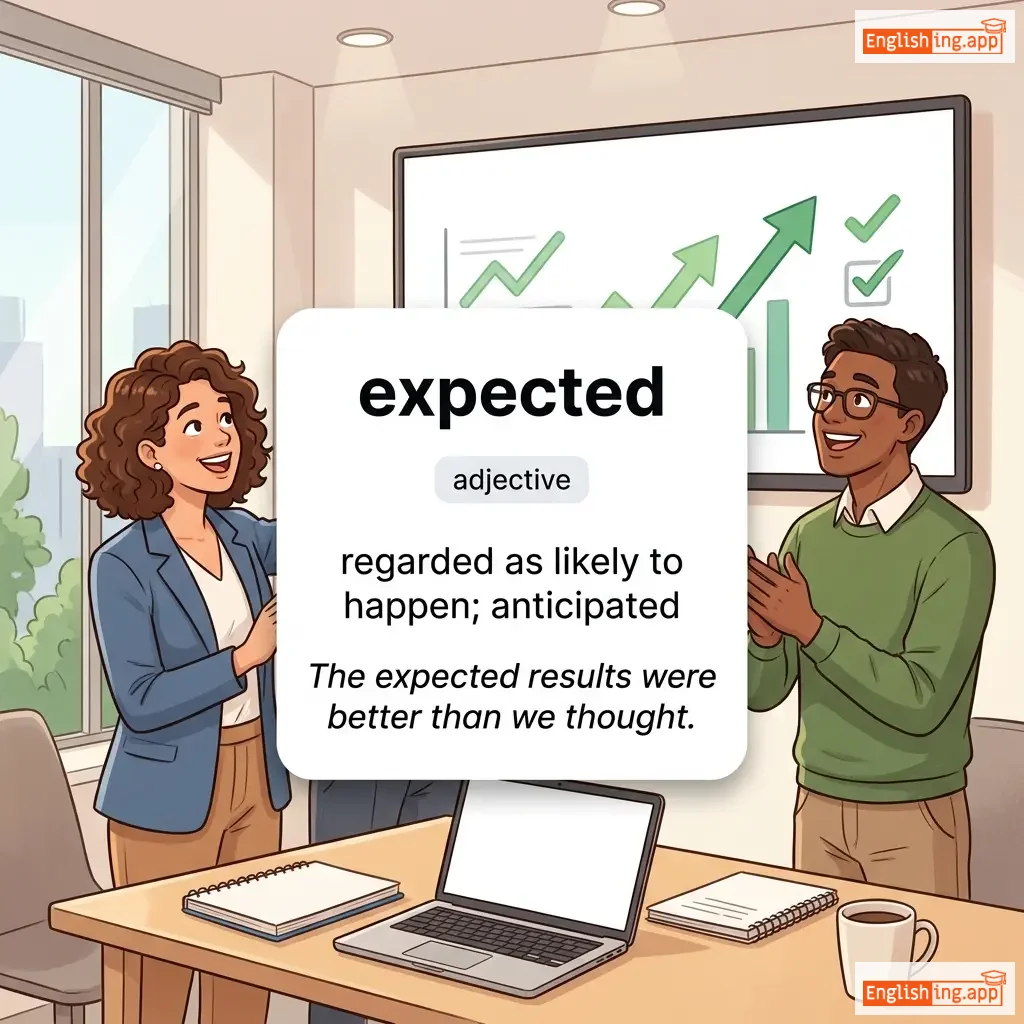
expected definition card — visual illustration of the meaning
adjective
/ɪkˈspɛktɪd/
attendu (attendu)

regarded as likely to happen; anticipated

"The expected results were better than we thought."

"Les résultats attendus étaient meilleurs que ce que nous pensions." (Les résultats attendus étaient meilleurs que ce que nous pensions.)
verb
/ɪkˈspɛktəreɪt/
expectoré (expectoré)

to cough up and spit out mucus from the throat or lungs

"The patient began to expectorate thick mucus."

"Le patient a commencé à expectorer des mucosités épaisses." (Le patient a commencé à expectorer des mucosités épaisses.)
noun
/ɪkˈspiːdiənsi/
opportunisme (opportunisme)

the quality of being convenient and practical despite possibly being improper or immoral

"He acted out of political expediency rather than principle."

"Il a agi par opportunisme politique plutôt que par principe." (Il a agi par opportunisme politique plutôt que par principe.)
adjective
/ɪkˈspiːdiənt/
commode (commode)

suitable or convenient for achieving a particular end, sometimes at the expense of morality

"It was expedient to take the shortcut despite the risks."

"Il était commode de prendre le raccourci malgré les risques." (Il était commode de prendre le raccourci malgré les risques.)
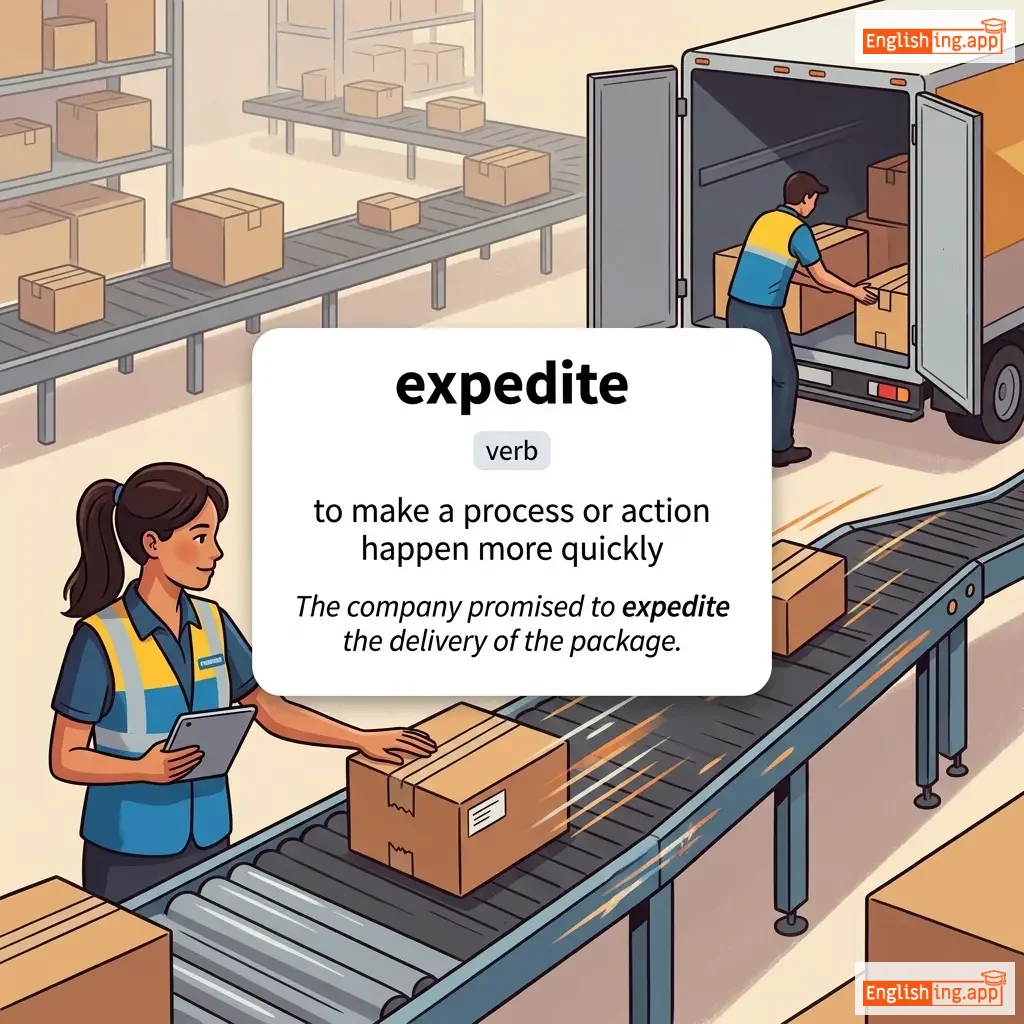
expedite definition card — visual illustration of the meaning
verb
/ˈɛkspəˌdaɪt/
accélérer (accelerer)

to make a process or action happen more quickly

"The company promised to expedite the delivery of the package."

"La société a promis d'accélérer la livraison du colis." (La societe a promis d'accelerer la livraison du colis.)
noun
/ˌɛkspəˈdɪʃən/
expédition (expedition)

a journey made for a particular purpose, often exploration or research

"They went on a scientific expedition to the Arctic."

"Ils sont partis en expédition scientifique en Arctique." (Ils sont partis en expedition scientifique en Arctique.)
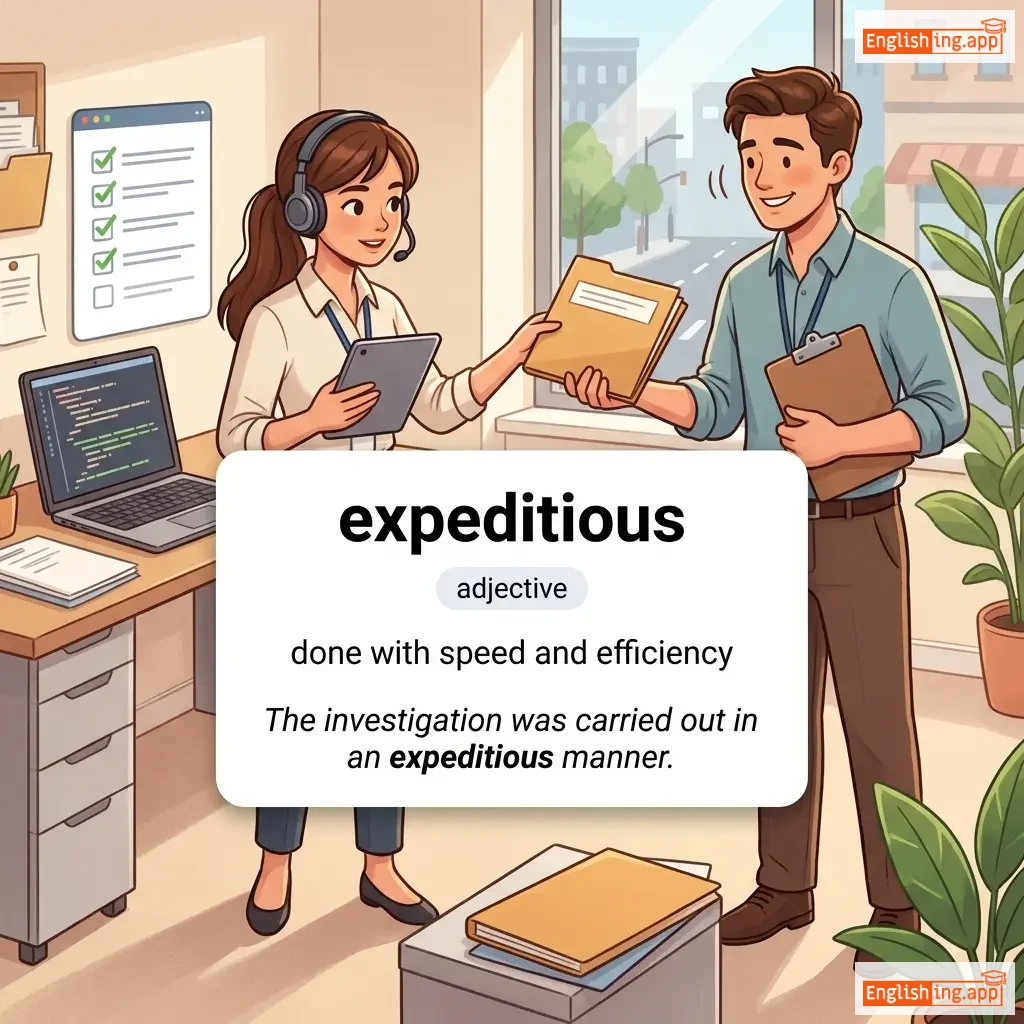
expeditious definition card — visual illustration of the meaning
adjective
/ˌɛkspəˈdɪʃəs/
rapide et efficace (rapide et efficace)

done with speed and efficiency

"The investigation was carried out in an expeditious manner."

"L'enquête a été réalisée de manière rapide et efficace." (L'enquete a ete realisee de maniere rapide et efficace.)
adverb
/ˌɛkspəˈdɪʃəsli/
de manière rapide et efficace (de maniere rapide et efficace)

in a quick and efficient manner

"The application was processed expeditiously."

"La demande a été traitée de manière rapide et efficace." (La demande a été traitee de maniere rapide et efficace.)
verb
/ɪkˈspɛl/
expulser (eks-pul-sey)

to officially force someone to leave a place or organization

"The student was expelled from school for misconduct."

"L'étudiant a été expulsé de l'école pour mauvaise conduite." (Le tew-dy-an ah eh-tay eks-pul-say duh leh-kohl poor moh-vay kon-dwee-t.)
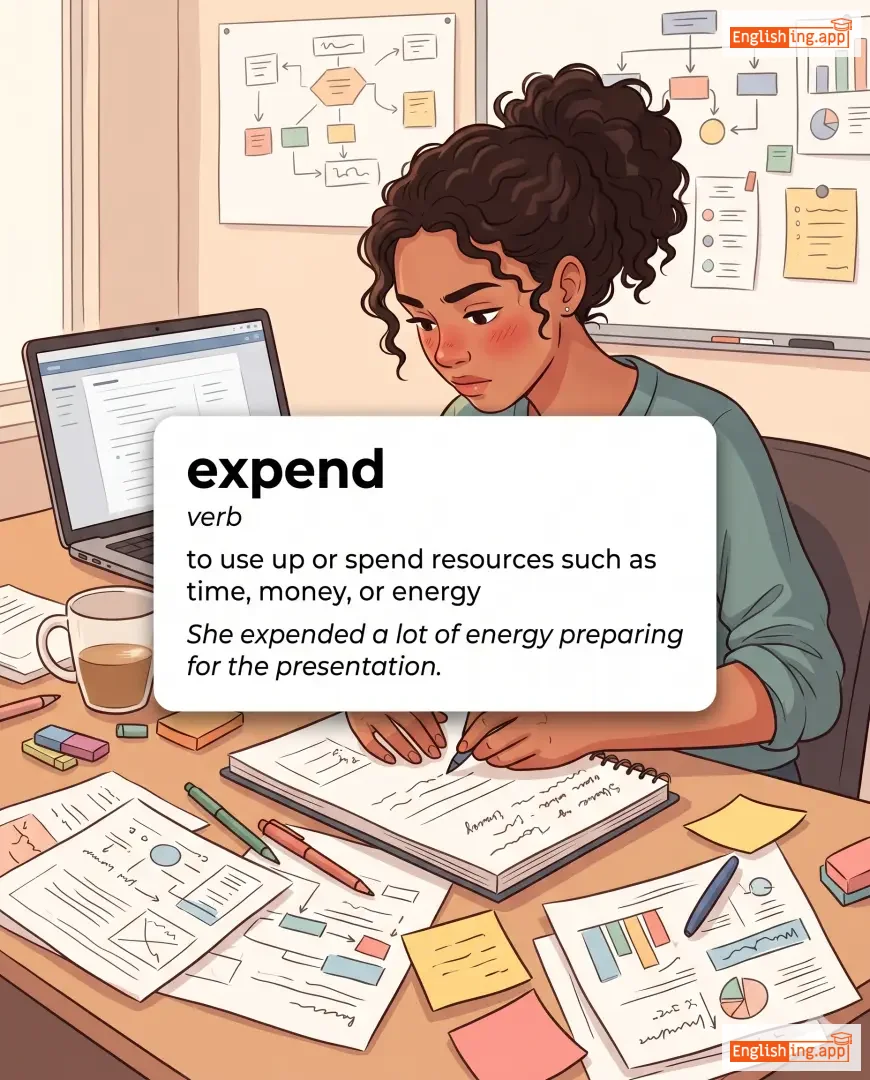
expend definition card — visual illustration of the meaning
verb
/ɪkˈspɛnd/
dépenser (depenser)

to use up or spend resources such as time, money, or energy

"She expended a lot of energy preparing for the presentation."

"Elle a dépensé beaucoup d'énergie pour préparer la présentation." (Elle a depense beaucoup d'energie pour preparer la presentation.)
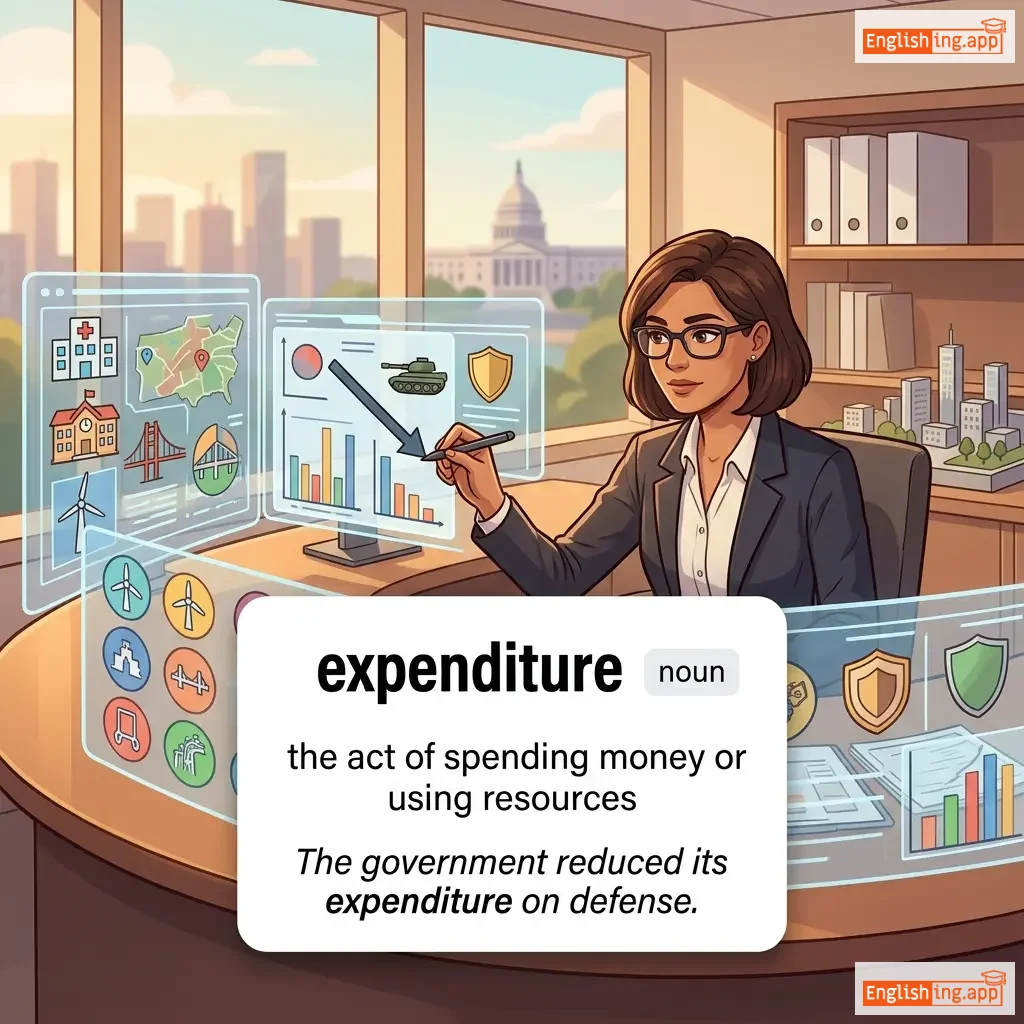
expenditure definition card — visual illustration of the meaning
noun
/ɪkˈspɛndɪtʃər/
dépenses (depes)

the act of spending money or using resources

"The government reduced its expenditure on defense."

"Le gouvernement a réduit ses dépenses de défense." (Le gouvernement a réduit ses dépenses de défense.)
noun
/ɪkˈspɛns/
dépense (depense)

the cost of something; money spent

"Traveling abroad can be a major expense."

"Voyager à l'étranger peut être une grande dépense." (Voyager à l'étranger peut être une grande dépense.)
adjective
/ɪkˈspɛnsɪv/
cher (ekspansiv)

costing a lot of money

"That car is too expensive for me to buy."

"Cette voiture est trop chère pour que je l'achète." (set vwatyr eh trop sher poor kuh zhuh pwees lahhshet)
noun/verb
/ɪkˈspɪəriəns/
bonheur (bonheur)

knowledge or skill gained through involvement in or exposure to something over time

"She gained valuable experience while working abroad."

"Elle ne pouvait pas cacher son bonheur quand elle a reçu le prix." (Elle ne pouvait pas cacher son bonheur quand elle a reçu le prix.)
adjective
/ɪkˈspɪəriənst/
expérimenté (expérimenté)

having knowledge or skill in a particular field gained through experience

"She is an experienced teacher who knows how to handle difficult students."

"Elle est une enseignante expérimentée qui sait comment gérer des étudiants difficiles." (Elle est une enseignante expérimentée qui sait comment gérer des étudiants difficiles.)
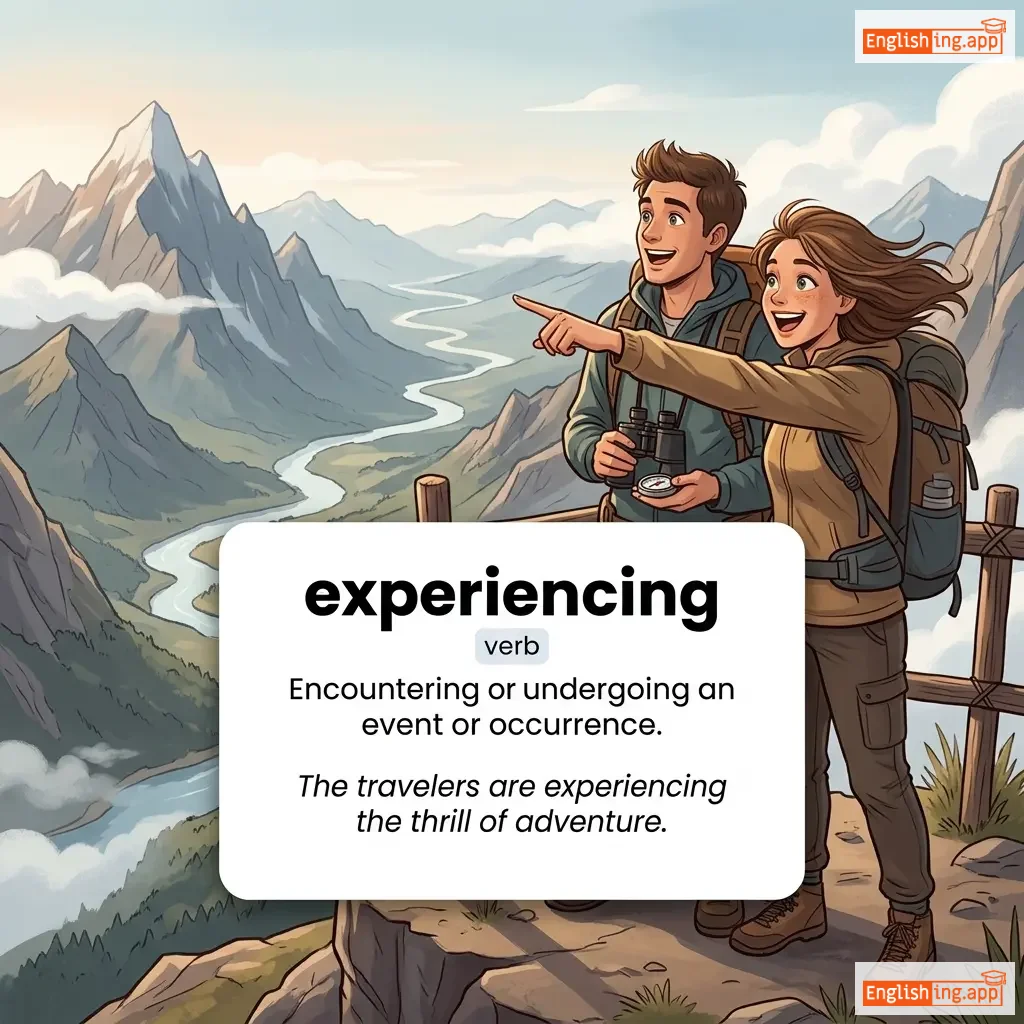
experiencing definition card — visual illustration of the meaning
verb
/ɪkˈspɪəriənsɪŋ/
expérimenter (experimenter)

Encountering or undergoing an event or occurrence.

"The travelers are experiencing the thrill of adventure."

"Les voyageurs vivent l'excitation de l'aventure." (Les voyageurs vivent l'excitation de l'aventure.)
noun/verb
/ɪkˈsperɪmənt/
expérience (experience)

a test or trial carried out to discover something or prove an idea

"The scientist conducted an experiment on plant growth."

"Le scientifique a mené une expérience sur la croissance des plantes." (Le scientifique a mene une experience sur la croissance des plantes.)
adjective
/ɪkˌsperɪˈmentl/
expérimental (ekspe-ree-men-tal)

based on untested ideas or techniques; relating to experiments or testing

"The scientists developed an experimental drug to treat cancer."

"Les scientifiques ont développé un médicament expérimental pour traiter le cancer." (Les scientifiques ont développé un médicament expérimental pour traiter le cancer.)
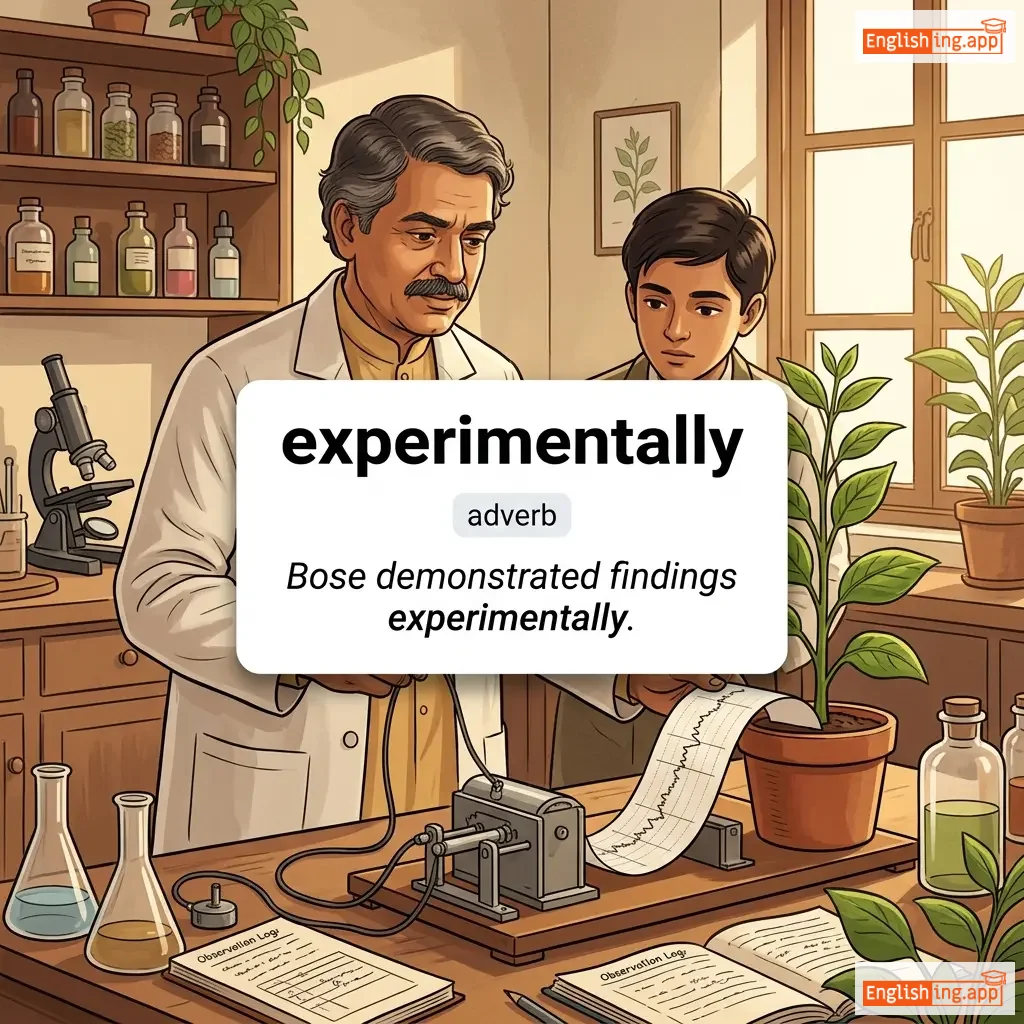
experimentally definition card — visual illustration of the meaning
adverb
ɪkˌsperɪˈmentəli
expérimentalement (experimentale-ment)

In a way that is based on or derived from experiment and observation rather than theory.

"Bose demonstrated findings experimentally."

"Bose a démontré les résultats expérimentalement." (Bose a démontré les résultats expérimentalement.)
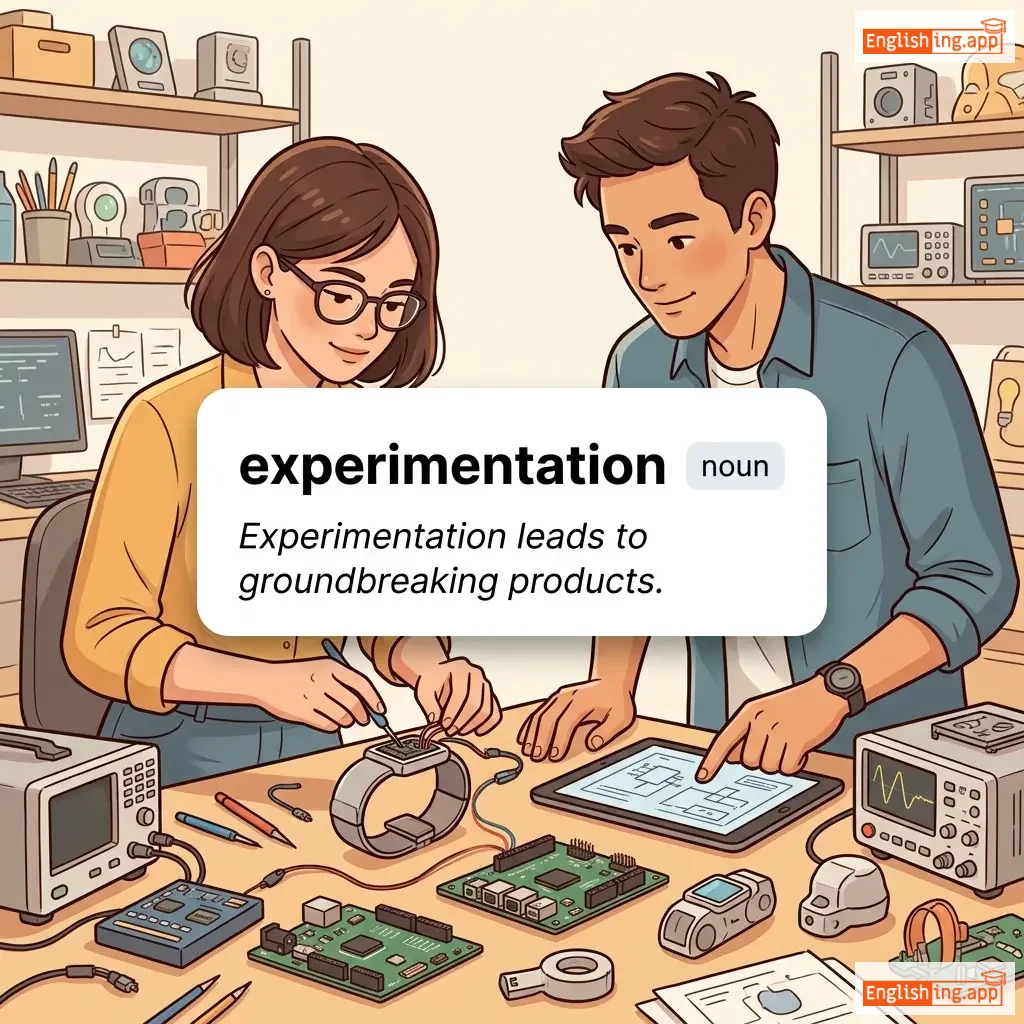
experimentation definition card — visual illustration of the meaning
noun
/ɪkˌsperɪˈmɛnteɪʃən/
expérimentation (experimentation)

The process of performing a scientific procedure to make a discovery, test a hypothesis, or demonstrate a known fact.

"Experimentation leads to groundbreaking products."

"L'expérimentation mène à des produits révolutionnaires." (L'experimentation mene a des produits revolutionnaires.)
👨‍🏫

expert (expert)

noun/adjective
/ˈekspɜːt/
expert (expert)

a person who has a lot of knowledge or skill in a particular area

"He is an expert in computer programming."

"Il est un expert en programmation informatique." (Il est un expert en programmation informatique.)
expertise definition card — visual illustration of the meaning
noun
/ˌɛkspərˈtiːz/
expertise (expertise)

specialized knowledge or skill in a particular field

"Her expertise in data analysis is highly valued."

"Son expertise en analyse de données est très appréciée." (Son expertise en analyse de données est très appréciée.)
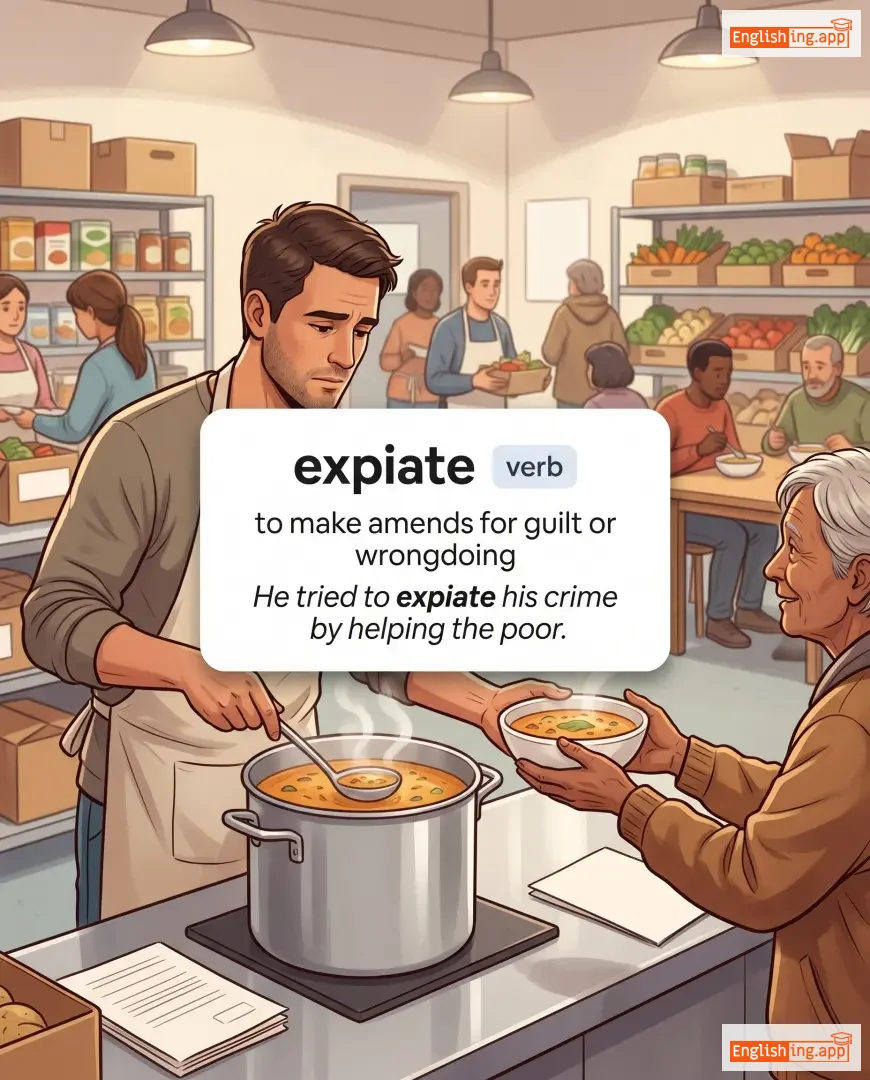
expiate definition card — visual illustration of the meaning
verb
/ˈɛkspieɪt/
expiation (eks-pi-a-tion)

to make amends for guilt or wrongdoing

"He tried to expiate his crime by helping the poor."

"Il a essayé d'expiation de son crime en aidant les pauvres." (Il a es-sayé d'ex-pi-a-tion de son cri-me en ai-dant les pauvres.)
verb
/ɪkˈspaɪər/
expirer (expirer)

to come to an end, especially a period of validity or life

"My passport will expire next month."

"Mon passeport expirera le mois prochain." (Mon passeport expirera le mois prochain.)
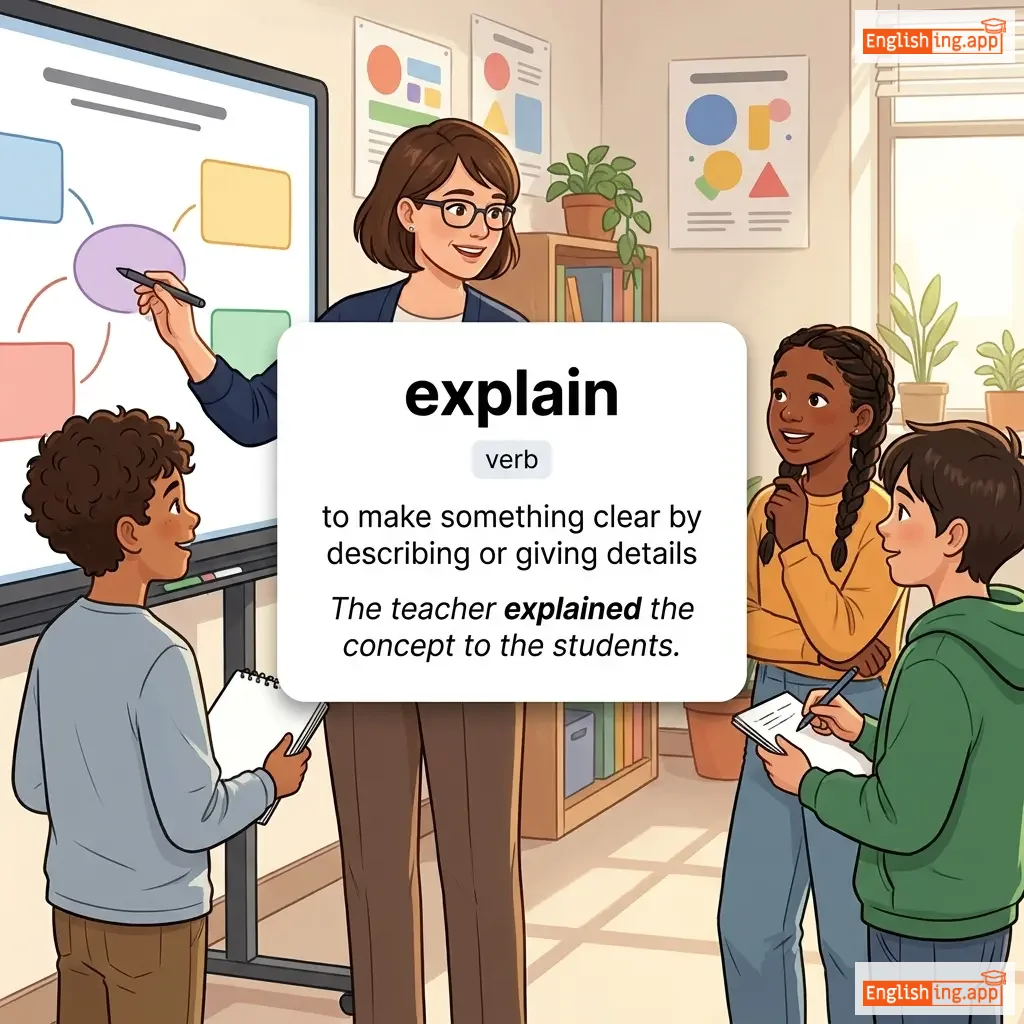
explain definition card — visual illustration of the meaning
verb
/ɪkˈspleɪn/
expliquer (expliquer)

to make something clear by describing or giving details

"The teacher explained the concept to the students."

"Le professeur a expliqué le concept aux étudiants." (Le professeur a expliqué le concept aux étudiants.)
noun
/ˌekspləˈneɪʃən/
explication (explication)

a statement or account that makes something clear

"The teacher gave a clear explanation of the theory."

"L'enseignant a donné une explication claire de la théorie." (L'enseignant a donne une explication claire de la theorie.)
noun
/ˈɛksplətɪv/
gros mot (gros mot)

a word or phrase used as an exclamation, often offensive or profane

"He shouted an expletive when he dropped the hammer on his foot."

"Il a crié un gros mot lorsqu'il a laissé tomber le marteau sur son pied." (Il a crié un gros mot lorsqu'il a laissé tomber le marteau sur son pied.)
adjective
/ˈɛksplɪkəbəl/
explicable (explicable)

able to be explained or understood

"His sudden anger was explicable given the stressful situation."

"Sa colère soudaine était explicable compte tenu de la situation stressante." (Sa colère soudaine était explicable compte tenu de la situation stressante.)
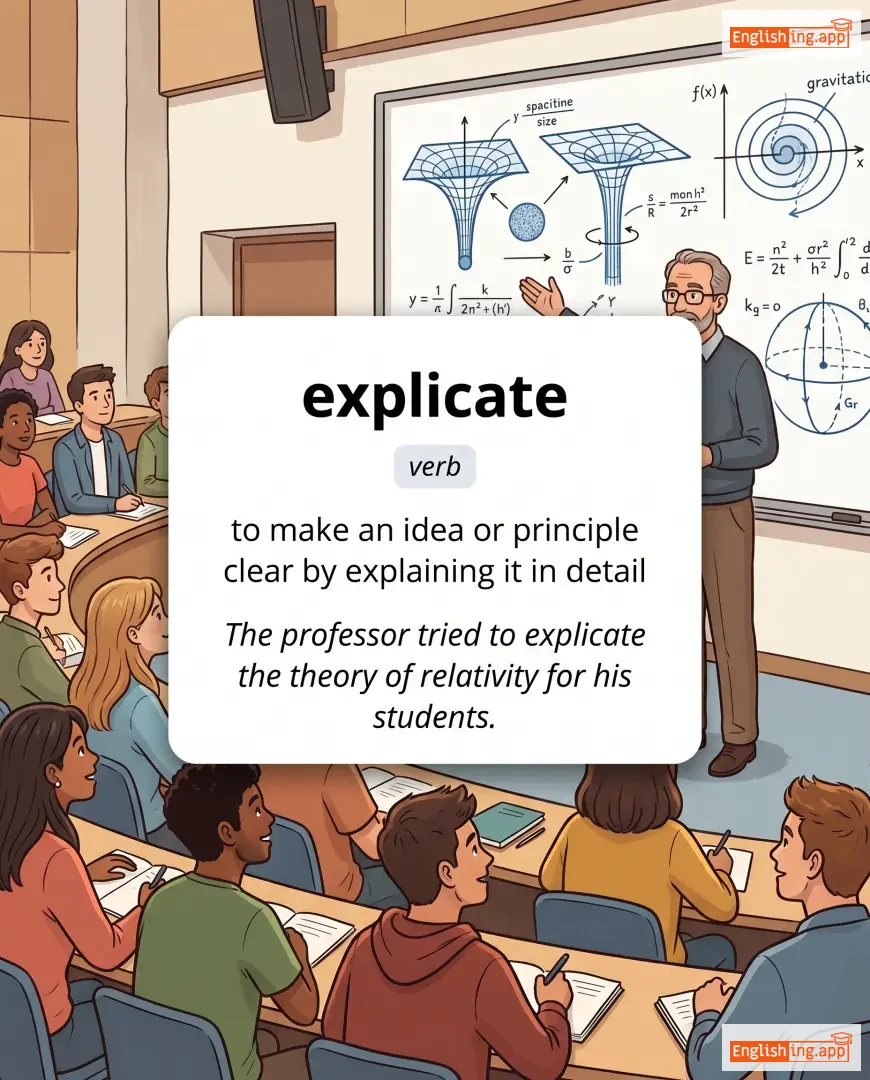
explicate definition card — visual illustration of the meaning
verb
/ˈɛksplɪkeɪt/
expliquer (expliquer)

to make an idea or principle clear by explaining it in detail

"The professor tried to explicate the theory of relativity for his students."

"Le professeur a essayé d'expliquer la théorie de la relativité à ses étudiants." (Le professeur a essayé d'expliquer la théorie de la relativité à ses étudiants.)
noun
/ˈɛksplɪkeɪtər/
explicateur (explicateur)

a person who explains or interprets something in detail

"The critic served as an explicator of the poet’s complex works."

"Le critique a servi d'explicateur des œuvres complexes du poète." (Le critique a servi d'explicateur des oeuvres complexes du poete.)
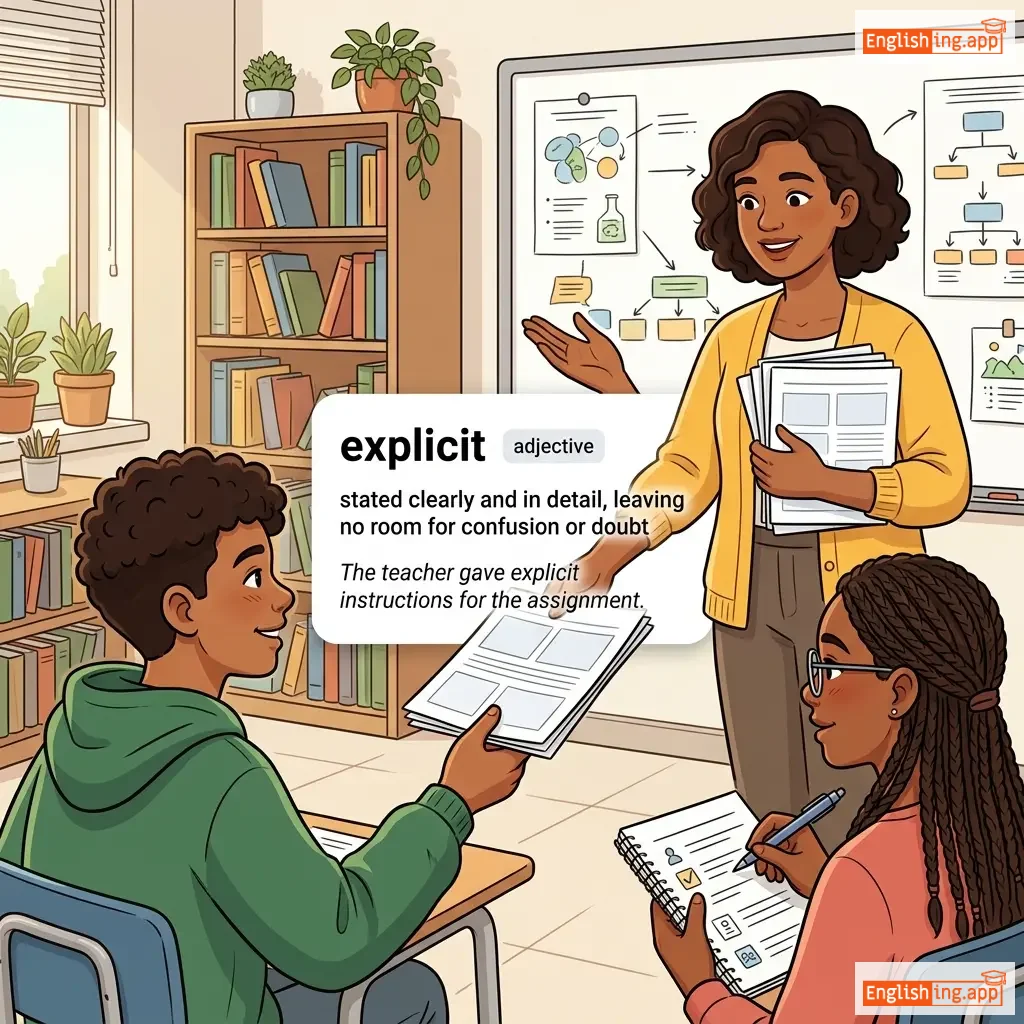
explicit definition card — visual illustration of the meaning
adjective
/ɪkˈsplɪsɪt/
explicite (explicite)

stated clearly and in detail, leaving no room for confusion or doubt

"The teacher gave explicit instructions for the assignment."

"Le professeur a donné des instructions explicites pour l'exercice." (Le professeur a donné des instructions explicites pour l'exercice.)
adverb
/ɪkˈsplɪsɪtli/
explicitement (explicitement)

in a clear and detailed manner, leaving no room for confusion or doubt

"The instructions were explicitly written to avoid any confusion."

"Les instructions ont été écrites explicitement pour éviter toute confusion." (Les instructions ont été écrites explicitement pour éviter toute confusion.)
verb
/ɪkˈsploʊd/
exploser (exploser)

to burst or shatter violently and noisily as a result of rapid combustion or pressure

"The bomb exploded in the middle of the street."

"La bombe a explosé au milieu de la rue." (La bombe a explosé au milieu de la rue.)
verb, noun
/ɪkˈsplɔɪt/
exploiter / utiliser (exploiter / utiliser)

to make full use of and derive benefit from (a resource); to use someone unfairly for one’s own advantage

"The company was accused of exploiting child labor."

"La société a été accusée d'exploiter le travail des enfants." (La société a été accusée d'exploiter le travail des enfants.)
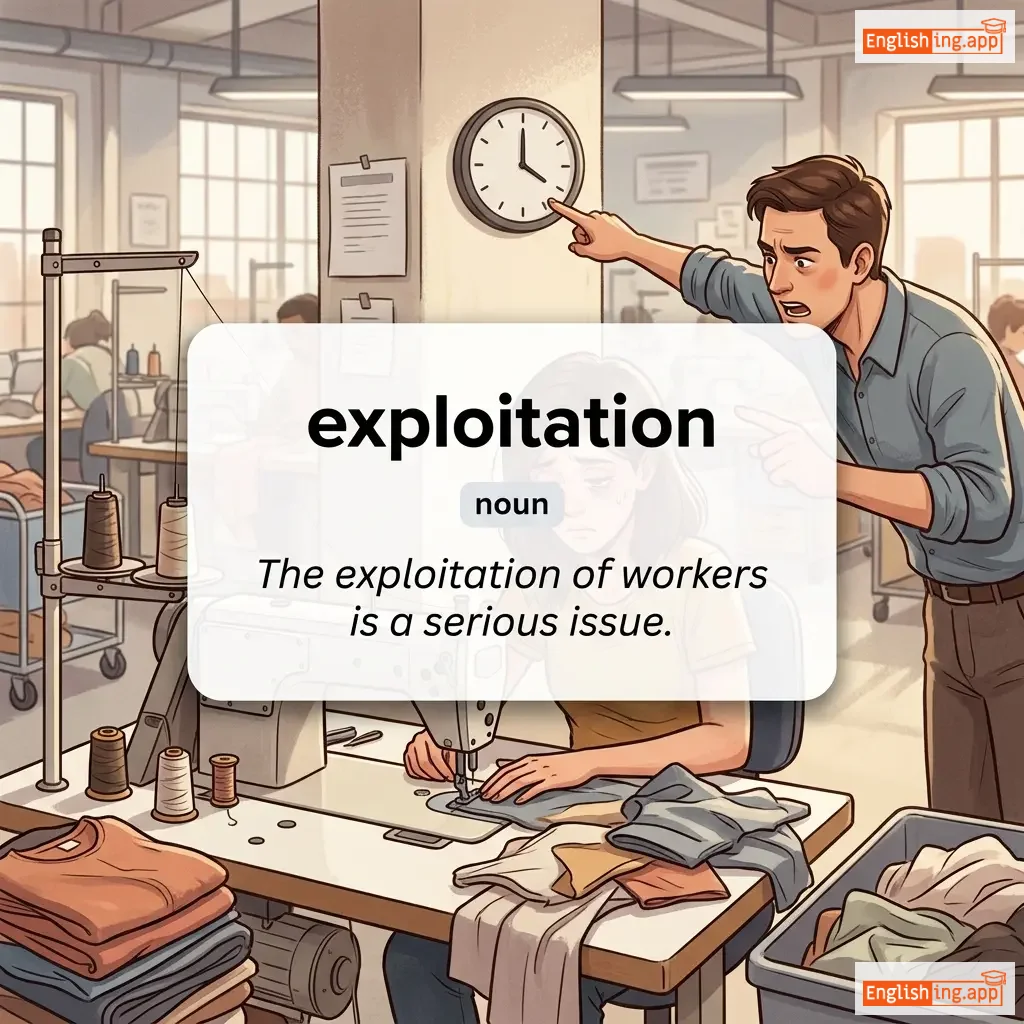
exploitation definition card — visual illustration of the meaning
noun
/ˌeksplɔɪˈteɪʃən/
exploitation (exploitation)

the action or fact of treating someone unfairly in order to benefit from their work; the use of resources for profit

"The exploitation of workers is a serious issue."

"L'exploitation des travailleurs est un problème grave." (L'exploitation des travailleurs est un problème grave.)
adjective
/ɪkˈsplɔɪtətɪv/
exploitant (exploitant)

making use of a situation or people unfairly and unethically for one's own advantage

"The workers protested against the exploitative practices of the factory."

"Les travailleurs ont protesté contre les pratiques exploitantes de l'usine." (Les travailleurs ont protesté contre les pratiques exploitantes de l'usine.)
noun
/ˌekspləˈreɪʃən/
exploration (exploration)

the action of traveling through or studying an area to learn more about it

"Space exploration has expanded our understanding of the universe."

"L'exploration spatiale a élargi notre compréhension de l'univers." (L'exploration spatiale a elargi notre comprehension de l'univers.)
verb
/ɪkˈsplɔːr/
explorer (explorer)

to travel through or study something in order to learn more about it

"They decided to explore the forest together."

"Ils ont décidé d'explorer la forêt ensemble." (Ils ont décidé d'explorer la forêt ensemble.)
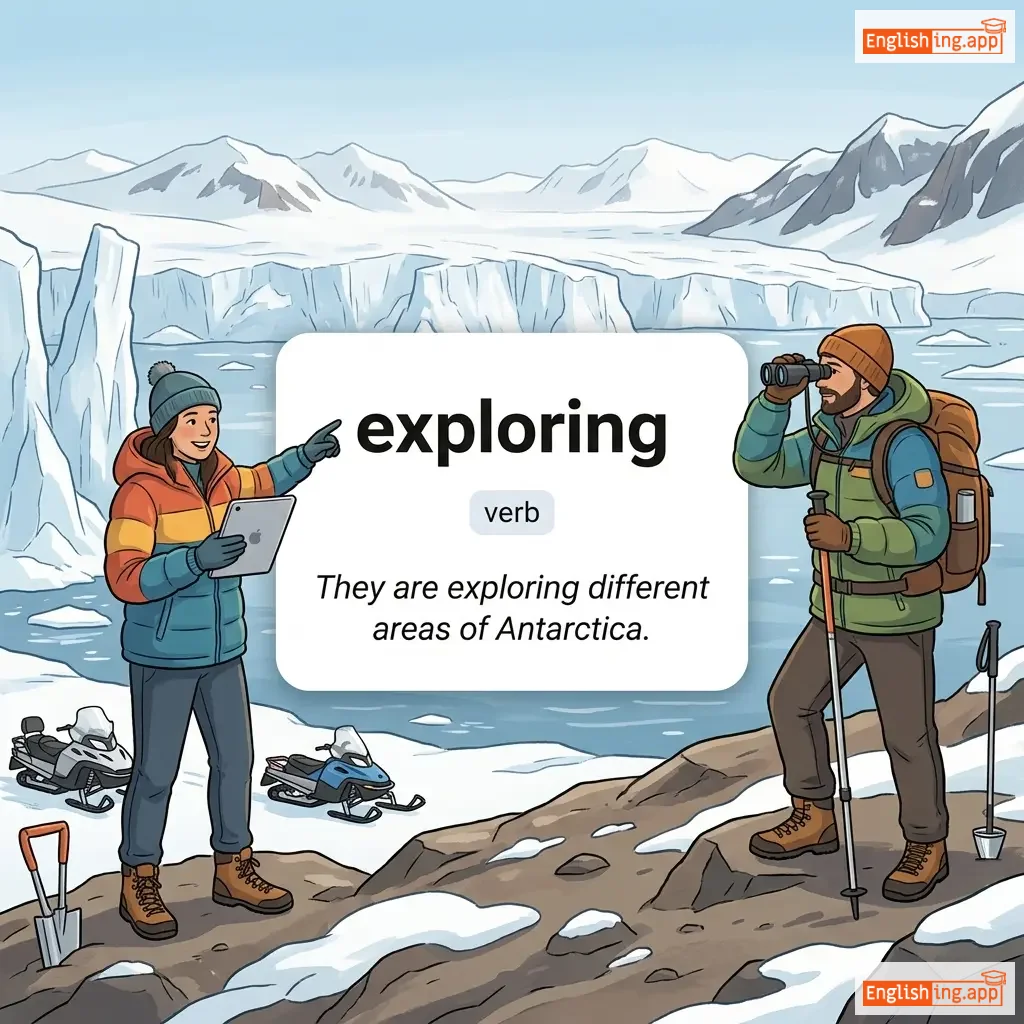
exploring definition card — visual illustration of the meaning
verb
/ɪkˈsplɔːrɪŋ/
explorer (explorer)

Investigating or studying thoroughly; searching into or ranging over for the purpose of discovery.

"They are exploring different areas of Antarctica."

"Ils explorent différentes régions de l'Antarctique." (Ils explorent différentes régions de l'Antarctique.)
noun
/ɪkˈsploʊʒən/
explosion (explosion)

a violent burst or release of energy, often causing damage and noise

"The explosion shook the entire neighborhood."

"L'explosion a secoué tout le quartier." (L'explosion a secoue tout le quartier.)
adjective
/ɪkˈsploʊsɪv/
explosif (explosif)

able to cause an explosion; likely to burst out suddenly

"The situation became explosive after the argument."

"La situation est devenue explosive après la dispute." (La situation est devenue explosive après la dispute.)
noun
/ɪkˈspoʊnənt/
exposant (exposant)

a person who supports, promotes, or explains an idea; in math, a symbol denoting power

"She is a leading exponent of modern dance."

"Elle est une des principales exposantes de la danse moderne." (Elle est une des principales exposantes de la danse moderne.)
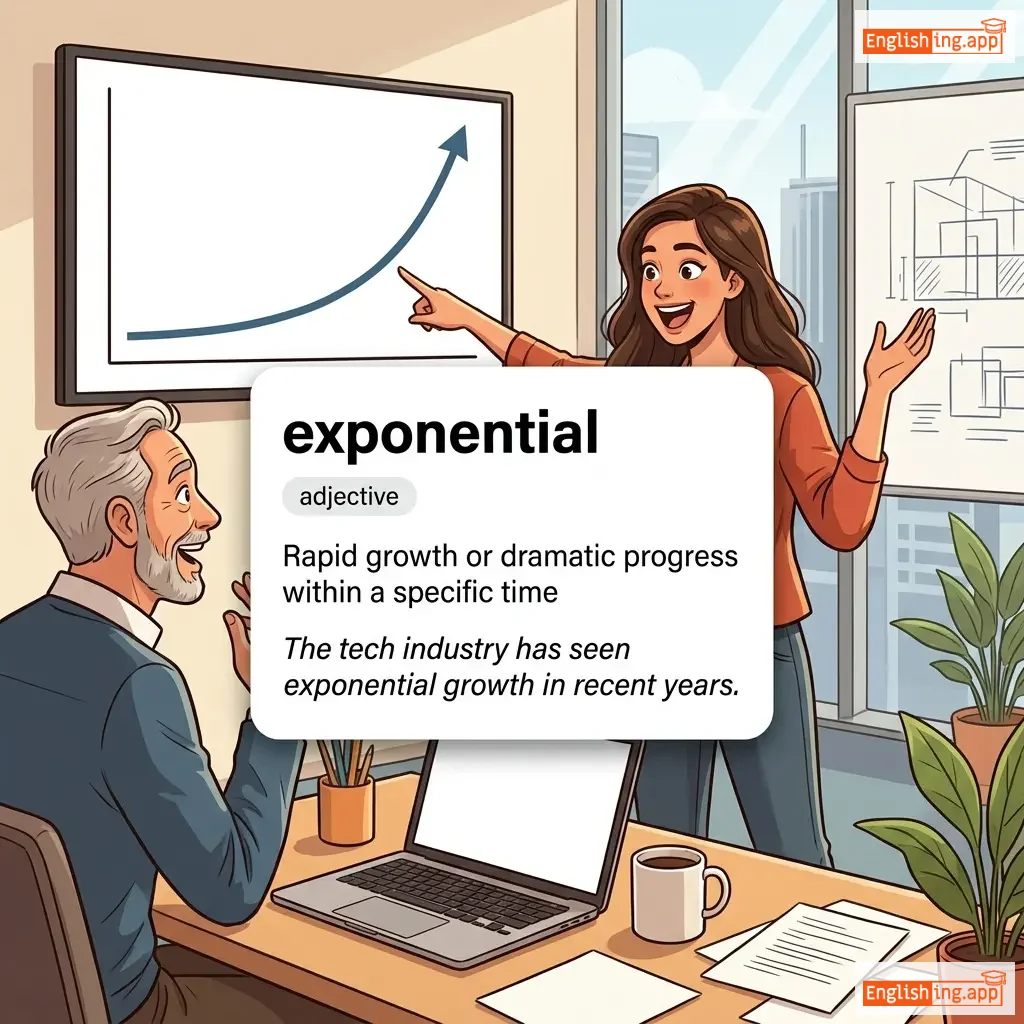
exponential definition card — visual illustration of the meaning
adjective
/ˌɛk.spəˈnɛn.ʃəl/
exponentiel (exponentiel)

Rapid growth or dramatic progress within a specific time

"The tech industry has seen exponential growth in recent years."

"L'industrie technologique a connu une croissance exponentielle ces dernières années." (L'industrie technologique a connu une croissance exponentielle ces dernieres annees.)
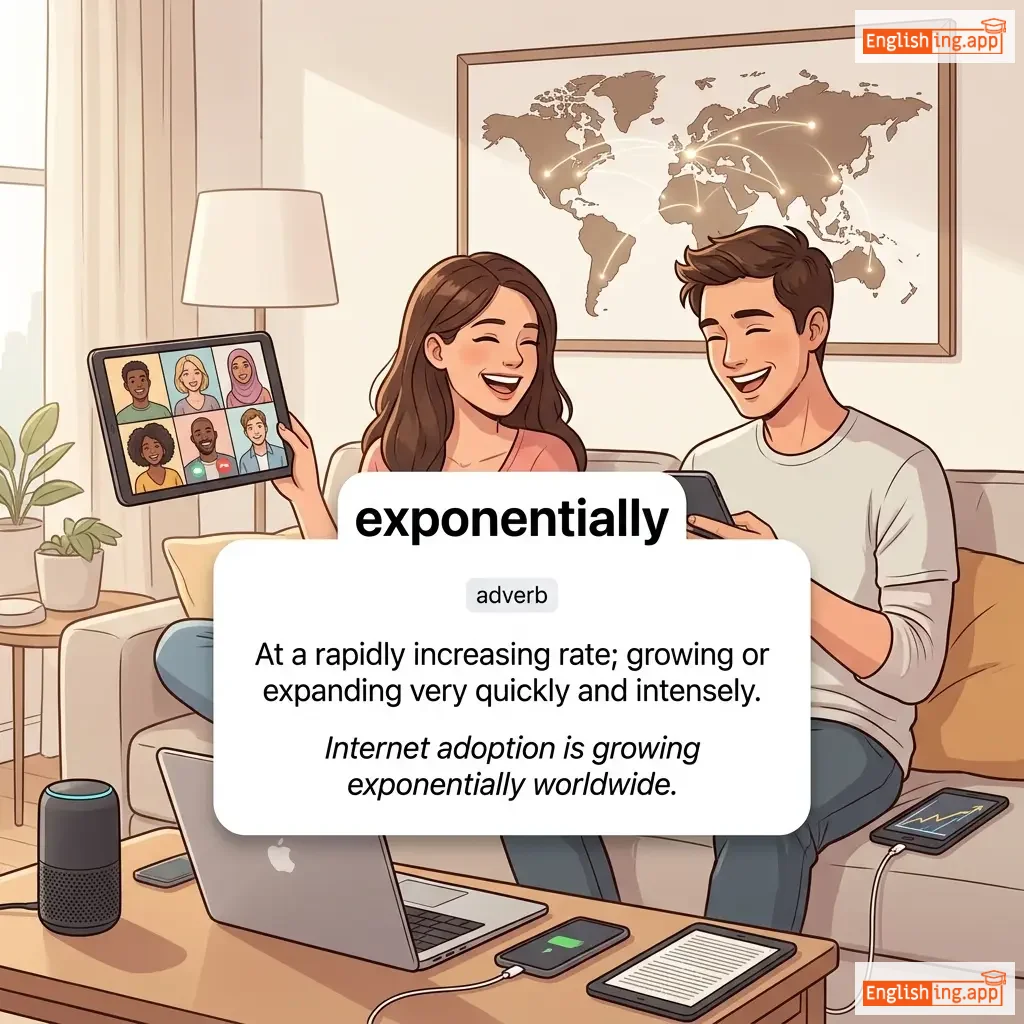
exponentially definition card — visual illustration of the meaning
adverb
ˌekspəˈnenʃəli
exponentiellement (exponentiellement)

At a rapidly increasing rate; growing or expanding very quickly and intensely.

"Internet adoption is growing exponentially worldwide."

"L'adoption d'Internet croît de manière exponentielle dans le monde entier." (L'adoption d'Internet croît de manière exponentielle dans le monde entier.)
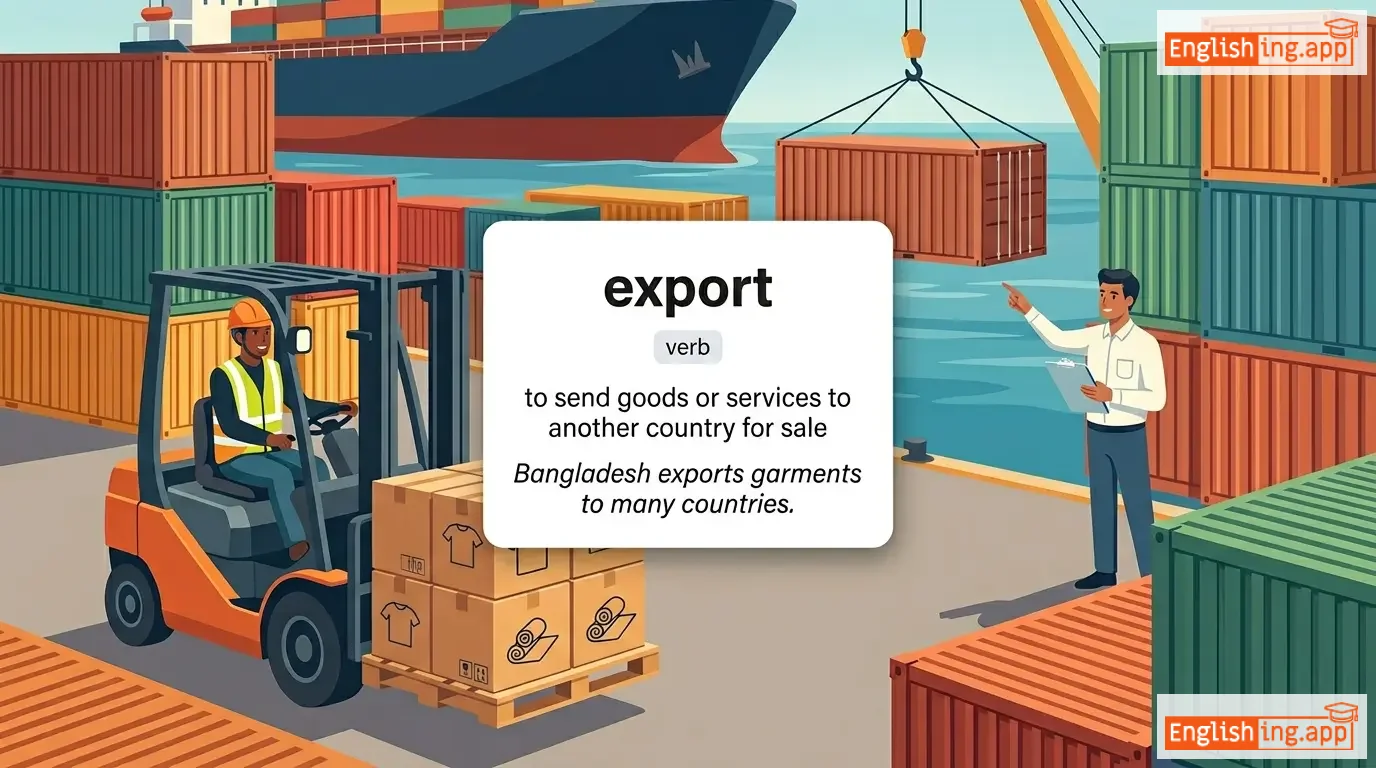
export definition card — visual illustration of the meaning
verb
/ˈekspɔːt/
exporter (exporter)

to send goods or services to another country for sale

"Bangladesh exports garments to many countries."

"Le Bangladesh exporte des vêtements dans de nombreux pays." (Le Bangladesh exporte des vêtements dans de nombreux pays.)
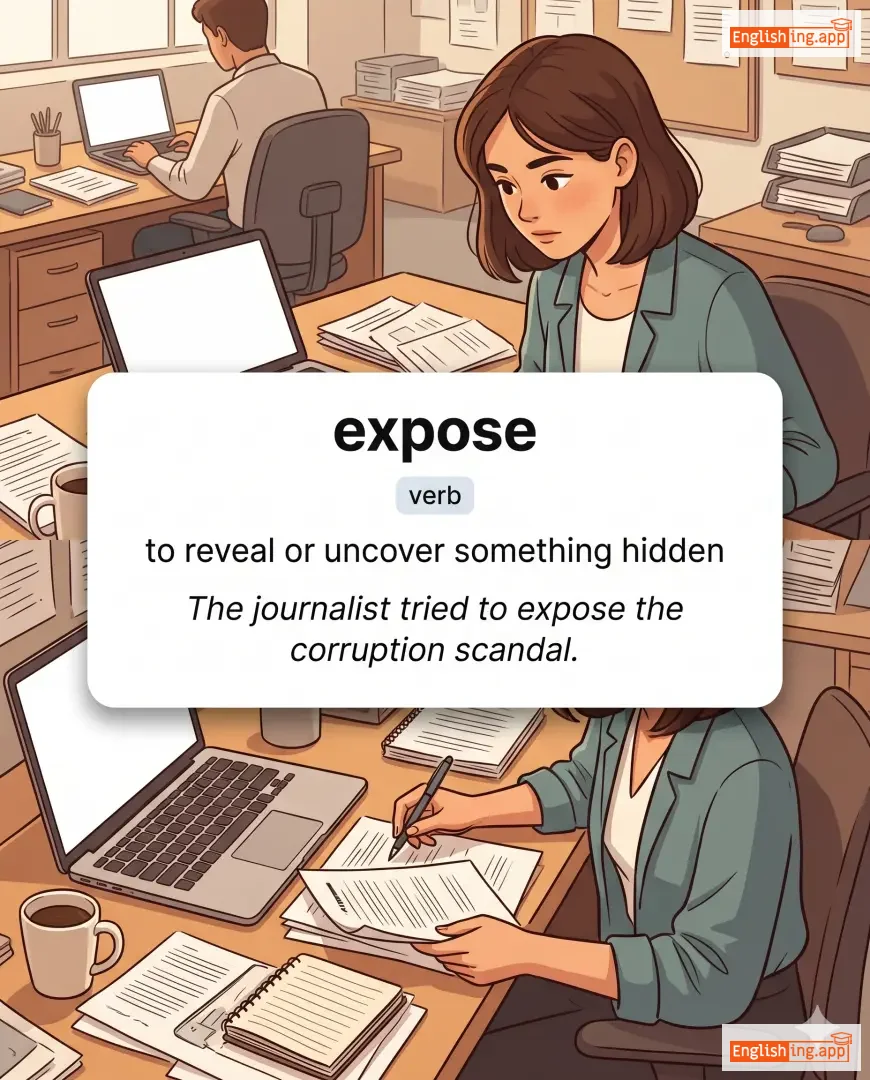
expose definition card — visual illustration of the meaning
verb
/ɪkˈspoʊz/
exposer (exposer)

to reveal or uncover something hidden

"The journalist tried to expose the corruption scandal."

"Le journaliste a essayé d'exposer le scandale de corruption." (Le journaliste a essayé d'exposer le scandale de corruption.)
noun
/ˌekspəˈzɪʃən/
exposition (exposition)

a detailed explanation or a large public exhibition

"The scientist gave a clear exposition of the theory."

"Le scientifique a donné une explication claire de la théorie." (Le scientifique a donne une explication claire de la theorie.)
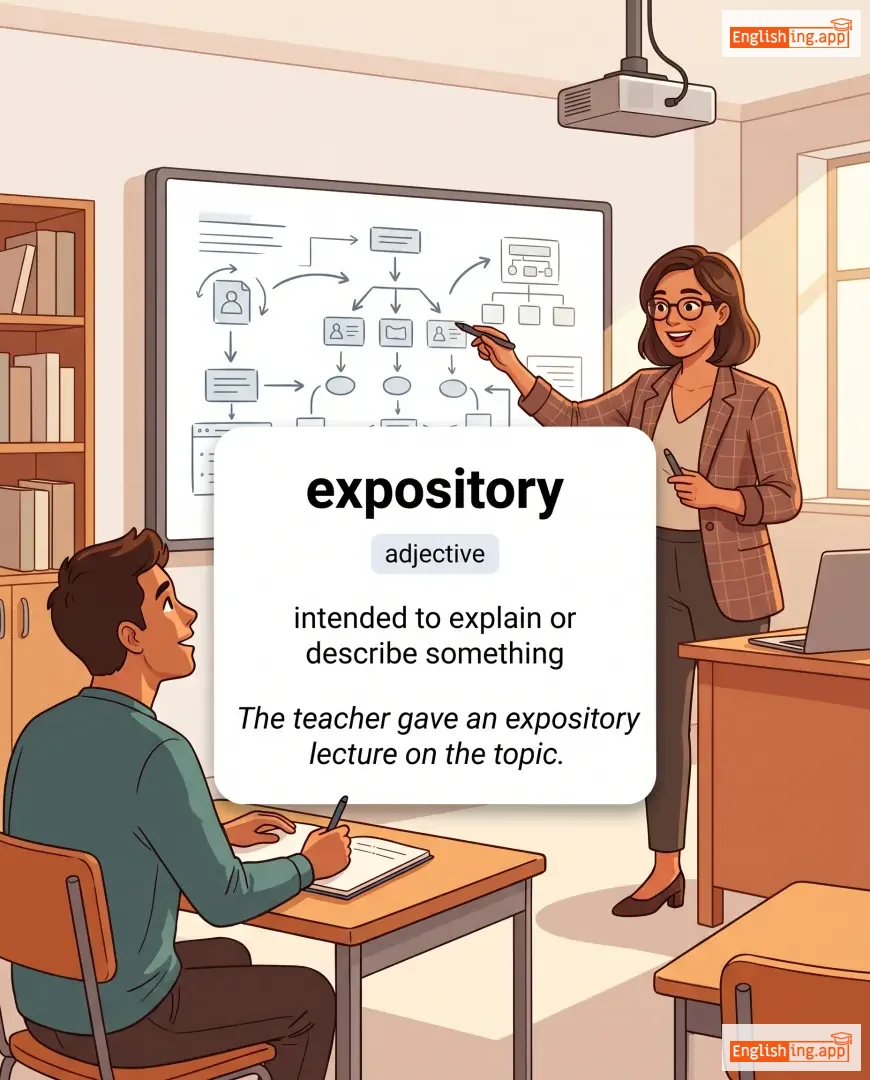
expository definition card — visual illustration of the meaning
adjective
/ɪkˈspɒzɪtəri/
expositif (expositif)

intended to explain or describe something

"The teacher gave an expository lecture on the topic."

"Le professeur a donné une conférence expositive sur le sujet." (Le professeur a donné une conférence expositive sur le sujet.)
verb
/ɪkˈspɒstjʊleɪt/
exprimer un désaccord (exprimer un désaccord)

to express strong disapproval or disagreement

"She expostulated with her friend about the risky decision."

"Elle s'est opposée à son ami au sujet de la décision risquée." (Elle s'est opposée à son ami au sujet de la décision risquée.)