Vocabulaires

Découvrez, apprenez et maîtrisez le vocabulaire anglais

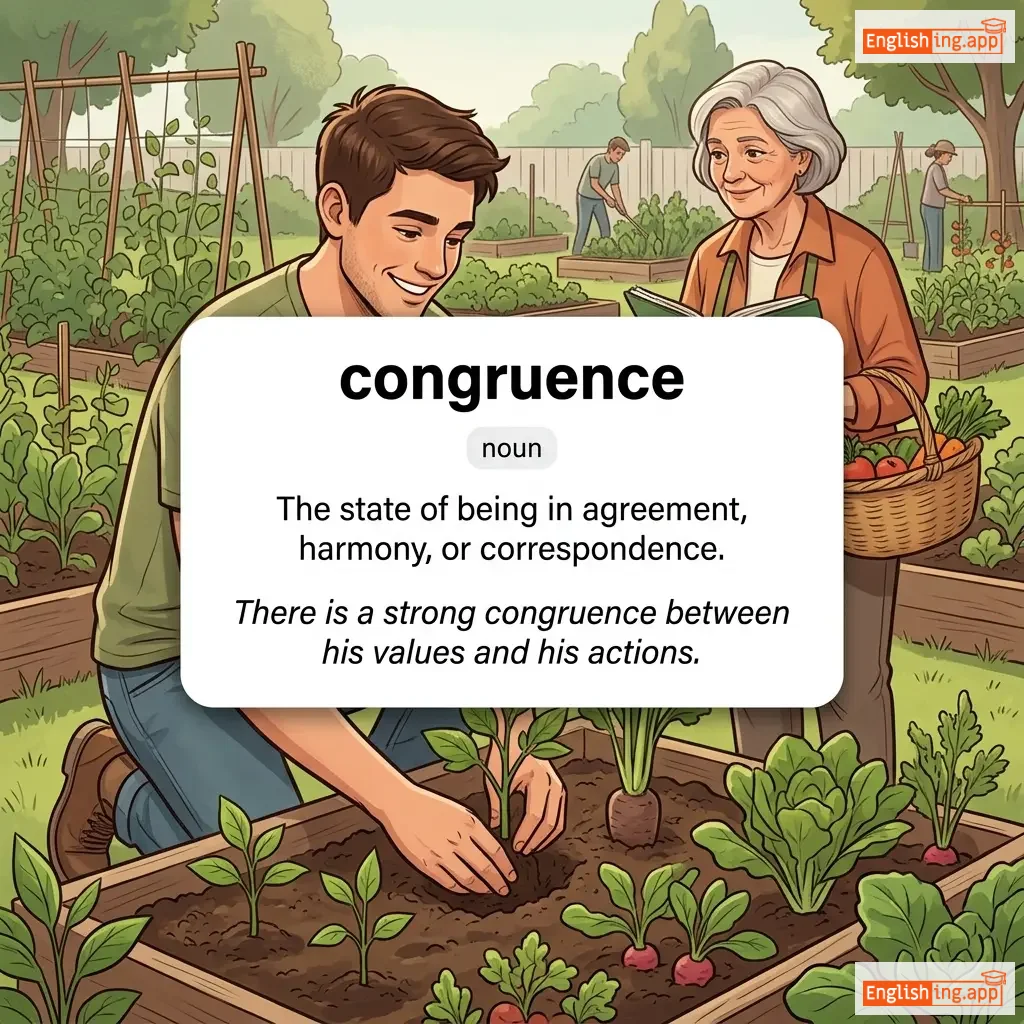
congruence definition card — visual illustration of the meaning
noun
/ˈkɒŋɡruəns/
congruence (congruence)

The state of being in agreement, harmony, or correspondence.

"There is a strong congruence between his values and his actions."

"Il y a une forte congruence entre ses valeurs et ses actions." (Il y a une forte congruence entre ses valeurs et ses actions.)
adjective
/ˈkɒŋɡruənt/
congruente (congruente)

in agreement or harmony; having the same shape and size in geometry

"Their values are congruent with the goals of the organization."

"Leurs valeurs sont congruentes avec les objectifs de l'organisation." (Leurs valeurs sont congruentes avec les objectifs de l'organisation.)
noun
/ˈkɒnɪfər/
Conifère (conifere)

a type of tree that bears cones and evergreen needle-like leaves, such as pine or fir

"The forest is dominated by conifers like pine and spruce."

"La forêt est dominée par des conifères comme le pin et l'épicéa." (La forêt est dominée par des conifères comme le pin et l'épicéa.)
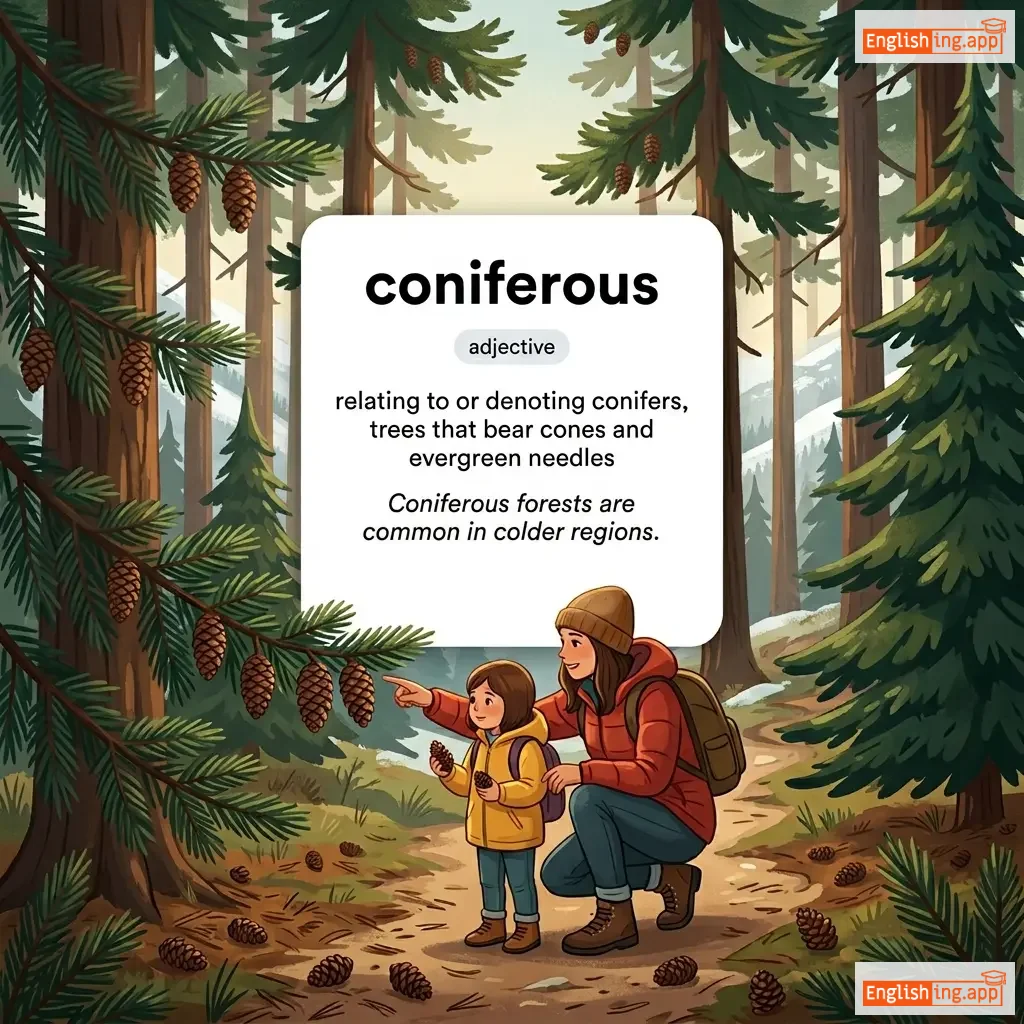
coniferous definition card — visual illustration of the meaning
adjective
/kəˈnɪfərəs/
arbres conifères (arbres coniferes)

relating to or denoting conifers, trees that bear cones and evergreen needles

"Coniferous forests are common in colder regions."

"Les forêts d'arbres conifères sont communes dans les régions froides." (Les forets d'arbres coniferes sont communes dans les regions froides.)
adjective
/kənˈdʒɛktʃərəl/
conjectural (conjectural)

based on guesswork or incomplete evidence rather than certain knowledge

"His explanation was purely conjectural and lacked proof."

"Son explication était purement conjecturale et manquait de preuves." (Son explication etait purement conjecturale et manquait de preuves.)
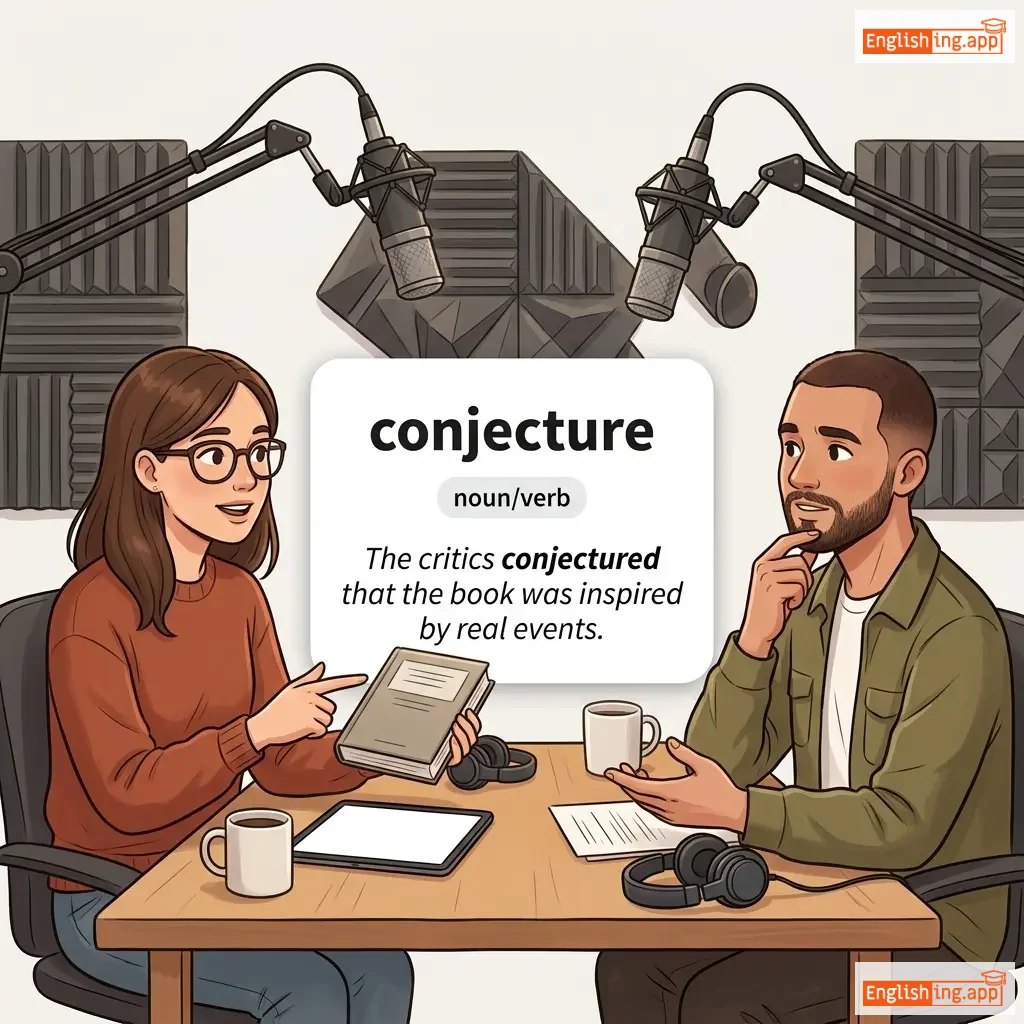
conjecture definition card — visual illustration of the meaning
noun/verb
/kənˈdʒɛktʃər/
conjecture (conjecture)

an opinion or conclusion formed on the basis of incomplete information; to form an opinion without sufficient evidence

"The critics conjectured that the book was inspired by real events."

"les critiques ont conjecturé que le livre était inspiré par des événements réels." (les critiques ont conjecturé que le livre était inspiré par des événements réels.)
verb
/kənˈdʒɔɪn/
joindre (joindre)

to join together or unite; to combine

"The two rivers conjoin just before reaching the sea."

"Les deux rivières se rejoignent juste avant d'atteindre la mer." (Les deux rivières se rejoignent juste avant d'atteindre la mer.)
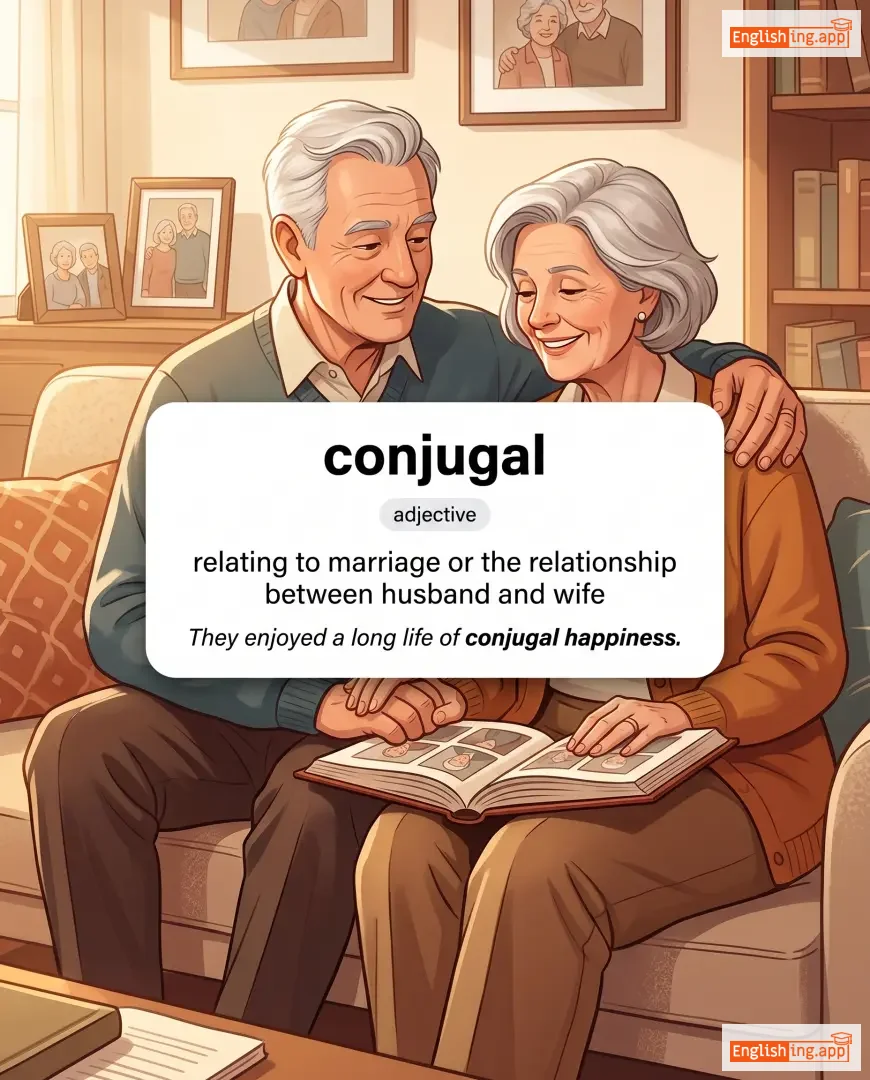
conjugal definition card — visual illustration of the meaning
adjective
/ˈkɒndʒʊɡəl/
conyugal (conyugal)

relating to marriage or the relationship between husband and wife

"They enjoyed a long life of conjugal happiness."

"Ils ont vécu une longue vie de bonheur conjugal." (Ils ont vécu une longue vie de bonheur conjugal.)
verb
/ˈkɒndʒʊɡeɪt/
conjuguer (conjuguer)

to list the different forms of a verb according to tense, person, and number

"Students are asked to conjugate the verb 'to be'."

"Les étudiants sont invités à conjuguer le verbe 'être'." (Les etudiants sont invites a conjuguer le verbe 'etre'.)
noun
/ˌkɒndʒʊˈɡeɪʃən/
conjugaison (conjugaison)

the variation of the form of a verb to indicate tense, person, and number

"French verbs have complex conjugations."

"Les verbes français ont des conjugaisons complexes." (Les verbes français ont des conjugaisons complexes.)
noun
/kənˈdʒʌŋkʃən/
conjonction (conjonction)

a word used to connect clauses or sentences, or to coordinate words

"The words 'and' and 'but' are common conjunctions."

"Les mots 'et' et 'mais' sont des conjonctions courantes." (Les mots 'et' et 'mais' sont des conjonctions courantes.)
verb
/ˈkʌn.dʒər/
conjurer (kon-ju-ray)

to summon something as if by magic; to imagine vividly

"The magician conjured a rabbit out of the hat."

"Le magicien a conjuré un lapin du chapeau." (Le ma-gi-cien a kon-juré un la-pin du cha-peau.)
connect definition card — visual illustration of the meaning
verb
/kəˈnɛkt/
connecter (connecter)

to join or link two or more things together

"The new bridge will connect the two cities."

"Le nouveau pont connectera les deux villes." (Le nouveau pont connectera les deux villes.)
noun
/kəˈnɛkʃən/
connexion (connexion)

a relationship in which a person, thing, or idea is linked or associated with something else

"There is a strong connection between exercise and health."

"Il y a une forte connexion entre l'exercice et la santé." (Il y a une forte connexion entre l'exercice et la santé.)
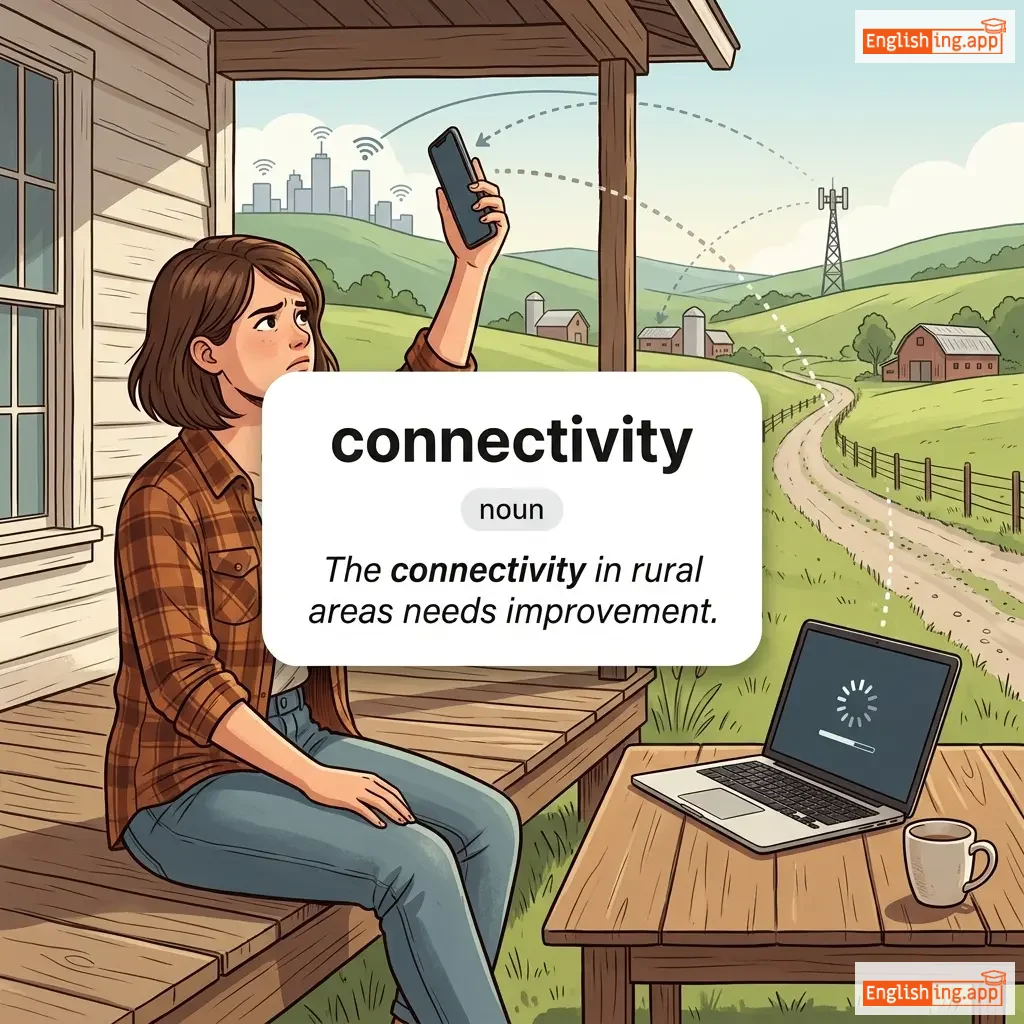
connectivity definition card — visual illustration of the meaning
noun
ˌkɒn.ekˈtɪv.ɪ.ti
capacité de connexion, interconnexion, connectivité (capacite de connexion, interconnexion, connectivite)

The state of being connected or interconnected; capacity for the interconnection of platforms, systems, and applications.

"The connectivity in rural areas needs improvement."

"La connectivité dans les zones rurales doit être améliorée." (La connectivite dans les zones rurales doit etre amelioree.)
noun
/kəˈnaɪ.vəns/
connivence (connivence)

the act of secretly allowing or being involved in wrongdoing

"The theft happened with the connivance of the security guard."

"Le vol a eu lieu avec la connivence du gardien de sécurité." (Le vol a eu lieu avec la connivence du gardien de sécurité.)
verb
/kəˈnaɪv/
conspirer secrètement (conspirer secretemant)

to secretly allow or be involved in a wrongdoing

"The manager connived with the supplier to cheat the company."

"Le gestionnaire a conspiré avec le fournisseur pour tromper la société." (Le gestionnaire a conspire avec le fournisseur pour tromper la societe.)
adjective
/kəˈnaɪ.vɪŋ/
rusé (ruse)

secretly scheming or plotting to help in wrongdoing

"He is a conniving politician who manipulates people for power."

"C'est un homme politique rusé qui manipule les gens pour le pouvoir." (C'est un homme politique ruse qui manipule les gens pour le pouvoir.)
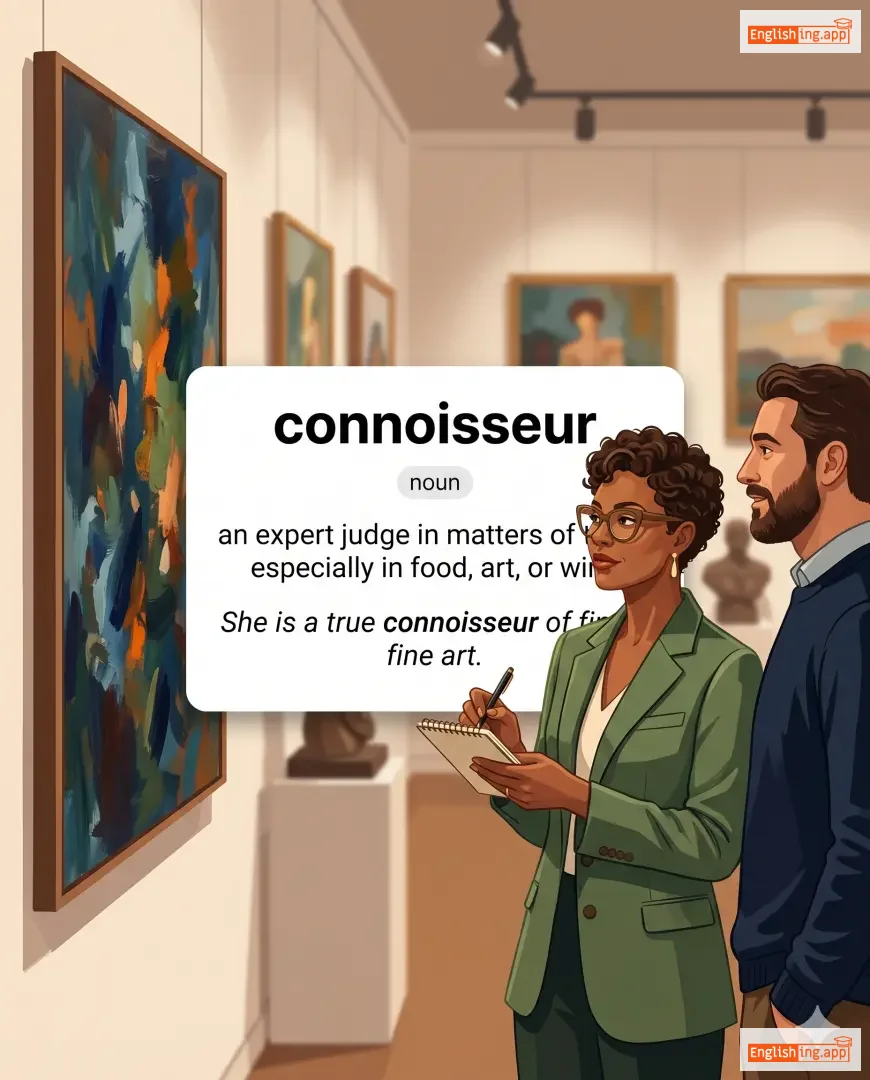
connoisseur definition card — visual illustration of the meaning
noun
/ˌkɒn.əˈsɜːr/
connaisseur (connaisseur)

an expert judge in matters of taste, especially in food, art, or wine

"She is a true connoisseur of fine art."

"Elle est une véritable connaisseuse de l'art." (Elle est une véritable connaisseuse de l'art.)
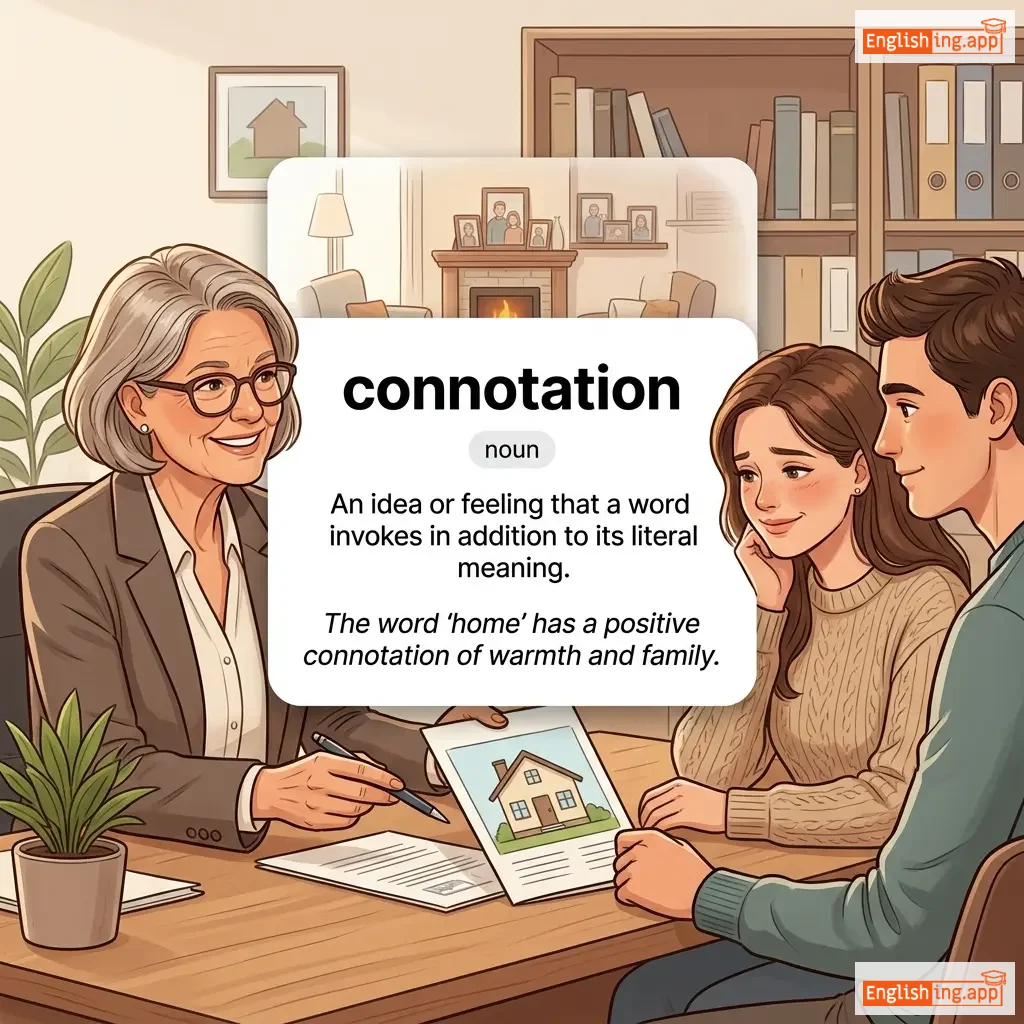
connotation definition card — visual illustration of the meaning
noun
/ˌkɒnəˈteɪʃən/
connotation (connotation)

An idea or feeling that a word invokes in addition to its literal meaning.

"The word 'home' has a positive connotation of warmth and family."

"Le mot 'maison' a une connotation positive de chaleur et de famille." (Le mot 'maison' a une connotation positive de chaleur et de famille.)
verb
/kəˈnoʊt/
connoter (connoter)

To suggest or imply an additional meaning beyond the literal one.

"The word 'youthful' connotes energy and vitality."

"Le mot 'juvénile' connoté énergie et vitalité." (Le mot 'juvénile' connoté énergie et vitalité.)
adjective
/kəˈnjuːbiəl/
conjugal (conjugal)

Relating to marriage or the relationship of a married couple.

"They celebrated their connubial bliss with a honeymoon trip."

"Ils ont célébré leur bonheur conjugal avec un voyage de noces." (Ils ont célébré leur bonheur conjugal avec un voyage de noces.)
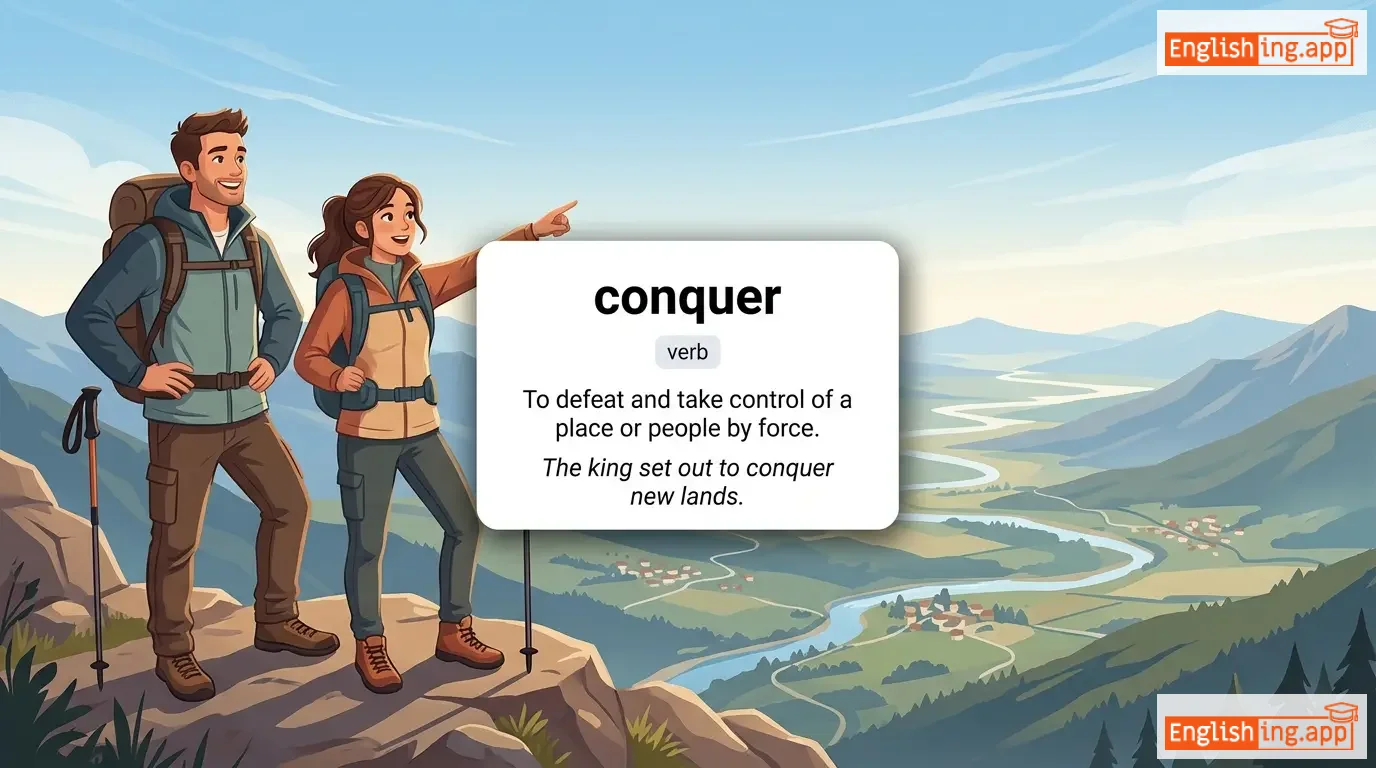
conquer definition card — visual illustration of the meaning
verb
/ˈkɒŋkər/
conquérir (conquerir)

To defeat and take control of a place or people by force.

"The king set out to conquer new lands."

"Le roi est parti conquérir de nouvelles terres." (Le roi est parti conquérir de nouvelles terres.)
adjective
/kɒnˈsæŋɡwɪn/
consanguin (consanguin)

Of the same blood or origin; related by birth.

"The two families were consanguine through their grandparents."

"Les deux familles étaient consanguines par leurs grands-parents." (Les deux familles étaient consanguines par leurs grands-parents.)
adjective
/ˌkɒnsæŋˈɡwɪniəs/
consanguin (consanguin)

Related by blood; descended from the same ancestor.

"The study focused on genetic disorders in consanguineous families."

"L'étude s'est concentrée sur les troubles génétiques dans les familles consanguines." (L'étude s'est concentrée sur les troubles génétiques dans les familles consanguines.)
👨‍👩‍👧‍👦

consanguinity (consanguinité)

noun
/ˌkɒnsæŋˈɡwɪnɪti/
consanguinité (consanguinite)

The fact of being descended from the same ancestor; blood relationship.

"The degree of consanguinity was important in inheritance laws."

"Le degré de consanguinité était important dans les lois de l'héritage." (Le degre de consanguinite etait important dans les lois de l'heritage.)
noun
/ˈkɒnʃəns/
conscience (conscience)

An inner sense of right and wrong that guides a person's actions.

"Her conscience told her to admit the mistake."

"Sa conscience lui dit d'admettre l'erreur." (Sa conscience lui dit d'admettre l'erreur.)
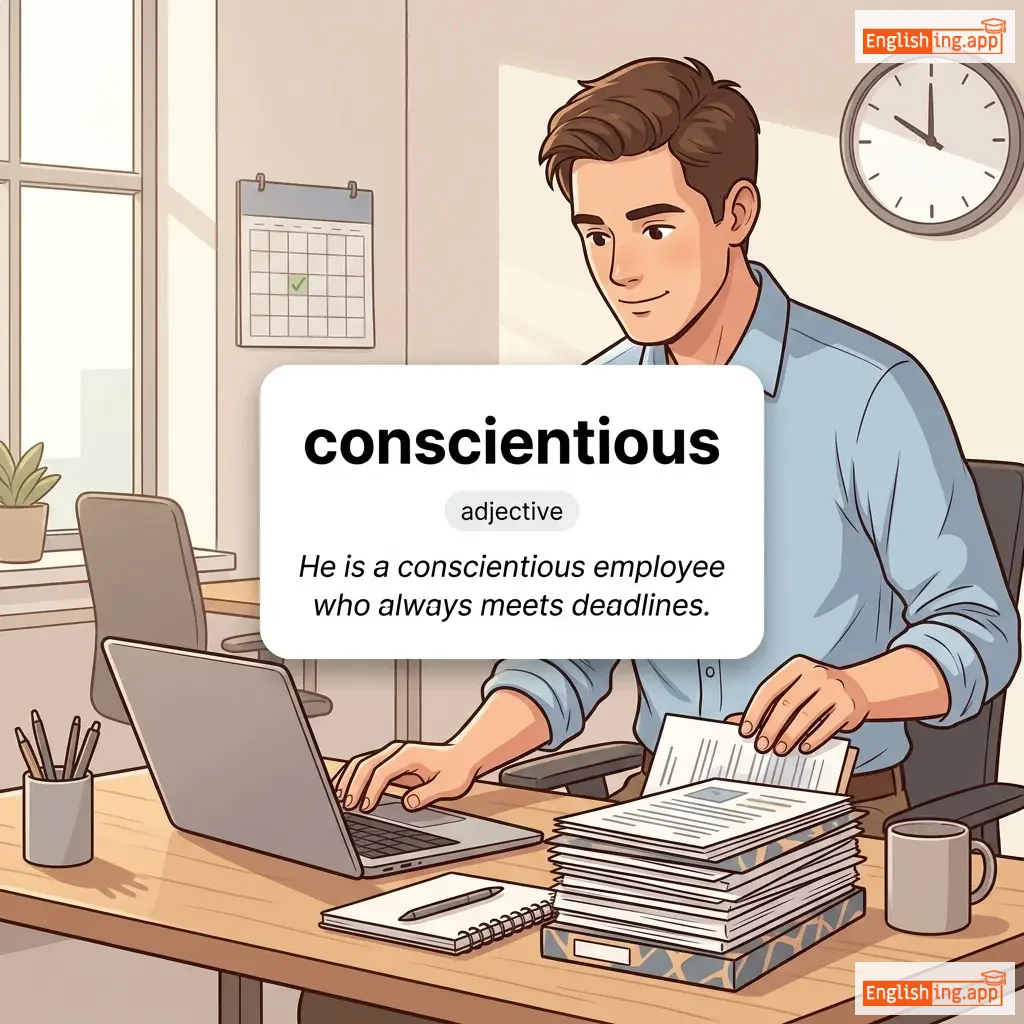
conscientious definition card — visual illustration of the meaning
adjective
/ˌkɒnʃiˈɛnʃəs/
consciencieux et assidu (consciencieux et assidu)

Wishing to do what is right, especially to do one's work or duty well and thoroughly.

"He is a conscientious employee who always meets deadlines."

"C'est un employé consciencieux et assidu qui respecte toujours les délais." (C'est un employé consciencieux et assidu qui respecte toujours les délais.)
conscientiousness definition card — visual illustration of the meaning
noun
/ˌkɒn.ʃiˈen.ʃəs.nəs/
conscience, responsabilité, rigueur (conscience, responsabilité, rigueur)

The quality of wishing to do what is right, especially to do one's work or duty well and thoroughly.

"Her conscientiousness makes her a great leader."

"Sa conscience en fait une grande dirigeante." (Sa conscience en fait une grande dirigeante.)
adjective
/ˈkɒnʃəs/
conscient (konsyan)

Aware of and responding to one's surroundings; awake.

"She was fully conscious after the surgery."

"Elle était complètement consciente après l'opération." (Elle était complètement consciente après l'opération.)
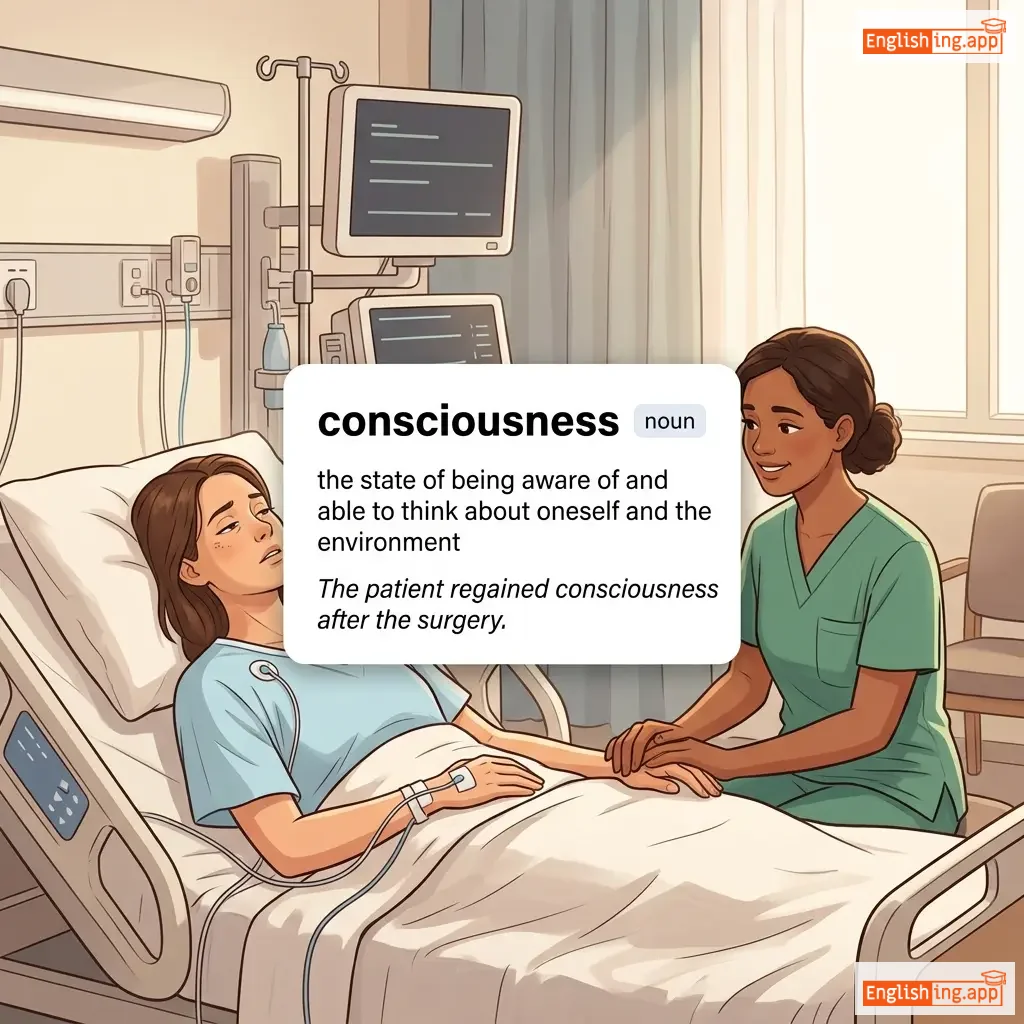
consciousness definition card — visual illustration of the meaning
noun
/ˈkɒnʃəsnəs/
conscience (conscience)

the state of being aware of and able to think about oneself and the environment

"The patient regained consciousness after the surgery."

"Le patient a retrouvé conscience après la chirurgie." (Le patient a retrouvé conscience après la chirurgie.)
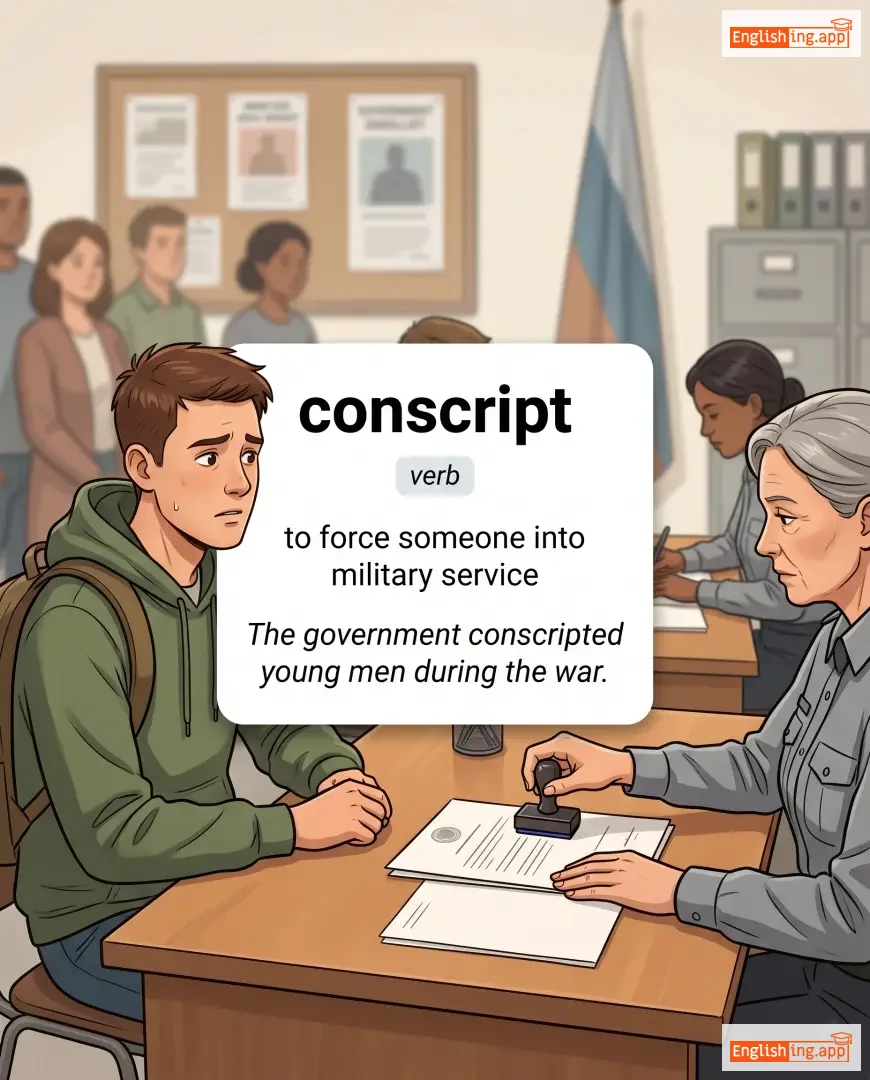
conscript definition card — visual illustration of the meaning
verb
/ˈkɒnskrɪpt/
forcé quelqu'un à rejoindre l'armée (force kelk'uns a rejoindre l'armee)

to force someone into military service

"The government conscripted young men during the war."

"Le gouvernement a conscrit des jeunes hommes pendant la guerre." (Le gouvernement a conscrit des jeunes hommes pendant la guerre.)
consecrate definition card — visual illustration of the meaning
verb
/ˈkɒnsɪkreɪt/
consacrer (consacrer)

to make something sacred, usually through a religious ceremony

"The church was consecrated by the bishop."

"L'église a été consacrée par l'évêque." (L'église a été consacrée par l'évêque.)
adjective
/kənˈsɛkjʊtɪv/
consécutif (consécutif)

following one after another without interruption

"She won three consecutive matches."

"Elle a gagné trois matchs consécutifs." (Elle a gagné trois matchs consécutifs.)
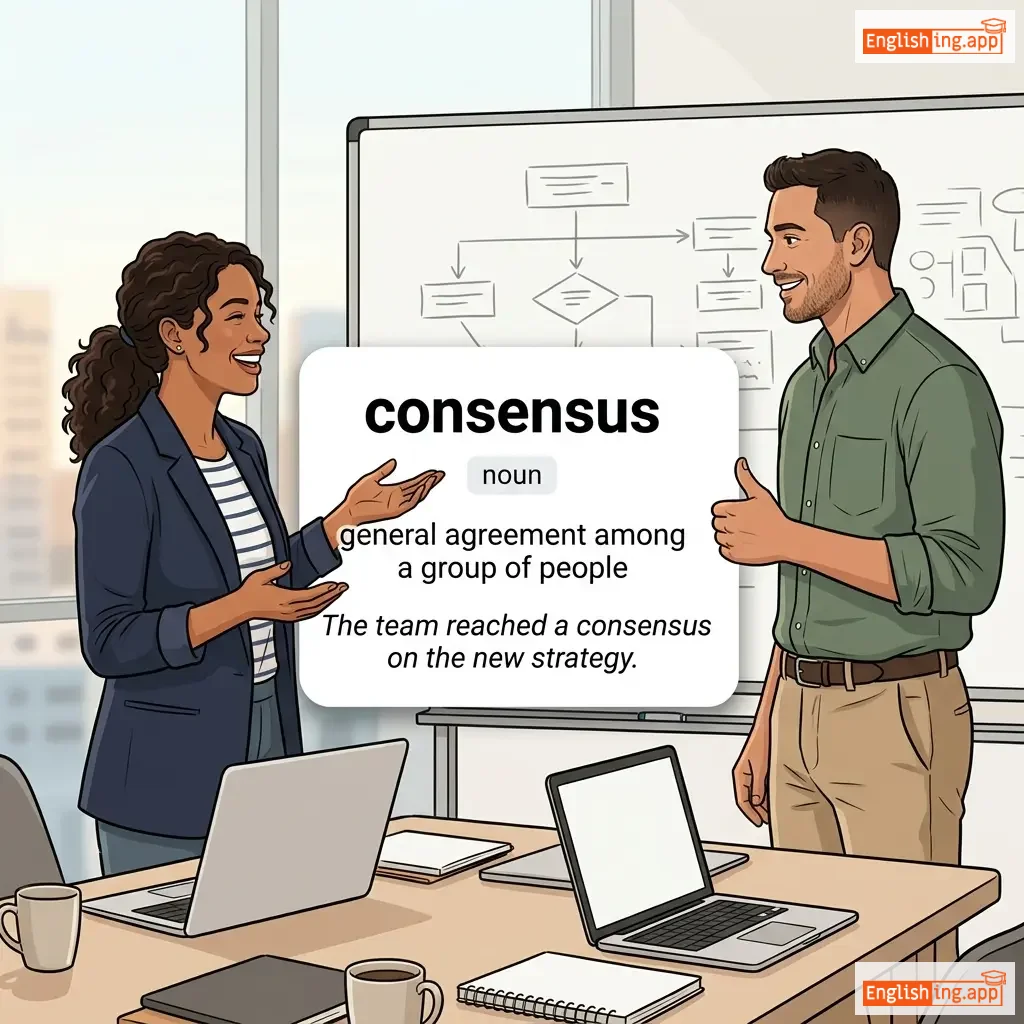
consensus definition card — visual illustration of the meaning
noun
/kənˈsɛnsəs/
consensus (consensus)

general agreement among a group of people

"The team reached a consensus on the new strategy."

"L'équipe a atteint un consensus sur la nouvelle stratégie." (L'équipe a atteint un consensus sur la nouvelle stratégie.)
noun
/kənˈsɛnt/
consentement (consentement)

permission for something to happen or agreement to do something

"She gave her consent before the operation."

"Elle a donné son consentement avant l'opération." (Elle a donné son consentement avant l'opération.)
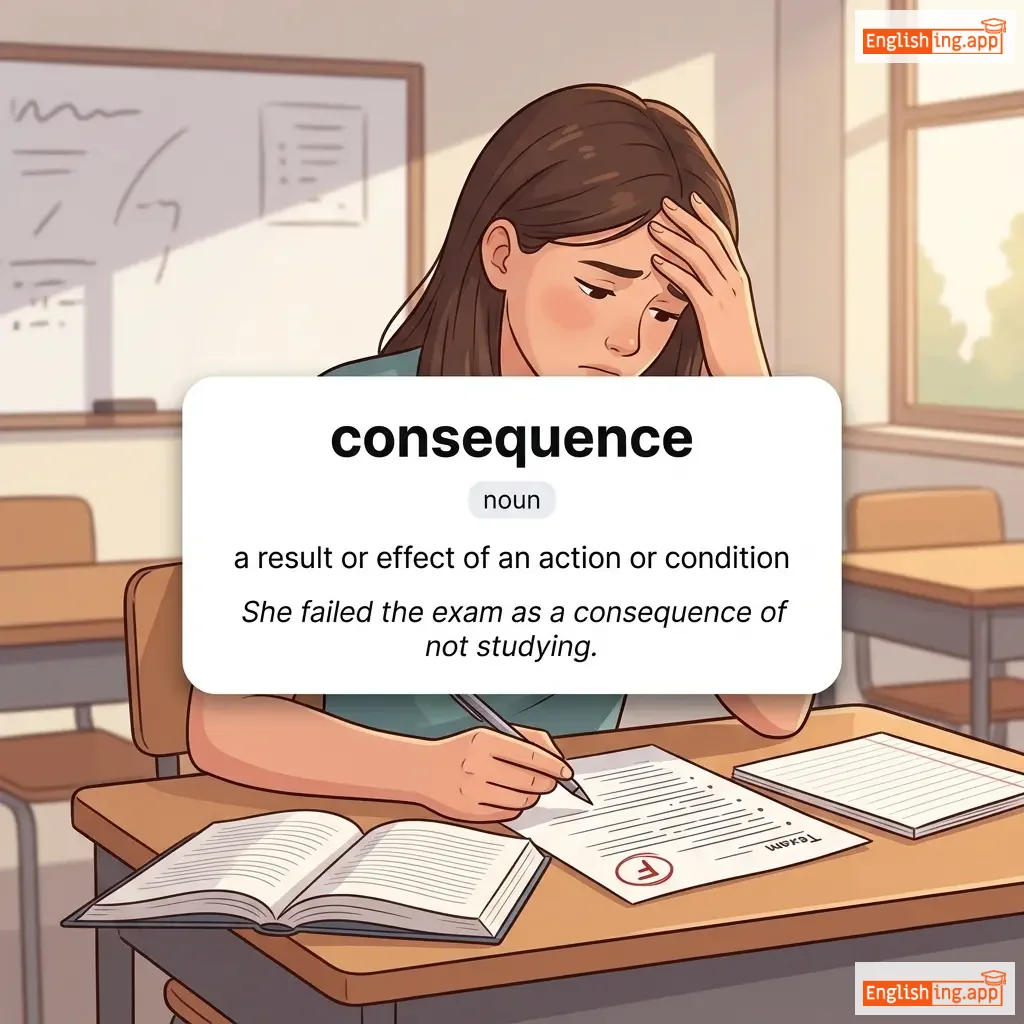
consequence definition card — visual illustration of the meaning
noun
/ˈkɒnsɪkwəns/
conséquence (konsékwans)

a result or effect of an action or condition

"She failed the exam as a consequence of not studying."

"Elle a échoué à l'examen en conséquence de ne pas avoir étudié." (Elle a échoué à l'examen en conséquence de ne pas avoir étudié.)
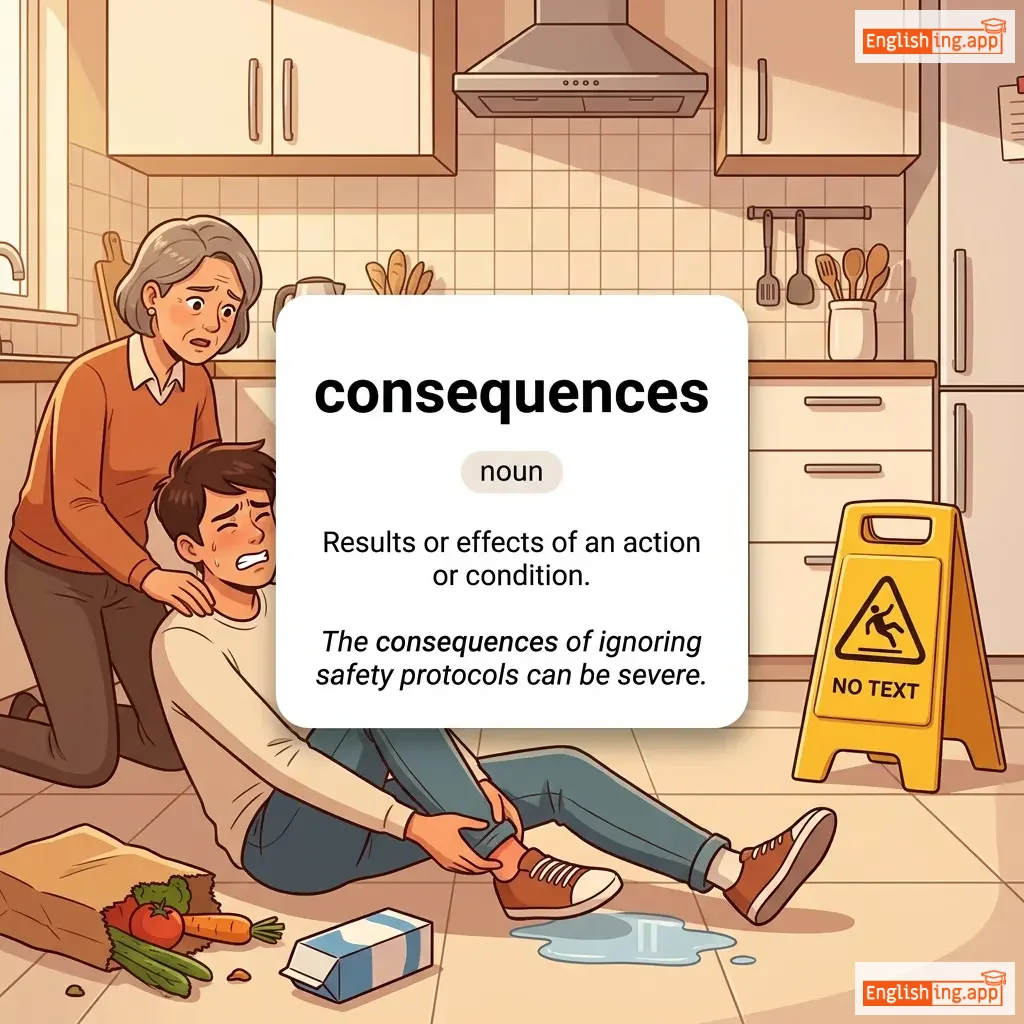
consequences definition card — visual illustration of the meaning
noun
/ˈkɒnsɪkwənsɪz/
conséquences (consequences)

Results or effects of an action or condition.

"The consequences of ignoring safety protocols can be severe."

"Les conséquences de l'ignorance des protocoles de sécurité peuvent être graves." (Les consequences de l'ignorance des protocoles de securite peuvent etre graves.)
adjective
/ˌkɒnsɪˈkwɛnʃəl/
déterminant (determinant)

Having important or significant consequences; resulting from something.

"The meeting was consequential for the future of the project."

"La réunion a été déterminante pour l'avenir du projet." (La réunion a été déterminante pour l'avenir du projet.)
adverb
/ˈkɒnsɪkwəntli/
par conséquent (par consequent)

as a result; therefore

"He didn’t study, and consequently he failed the exam."

"Il n'a pas étudié, et par conséquent, il a échoué à l'examen." (Il n'a pas étudié, et par conséquent, il a échoué à l'examen.)
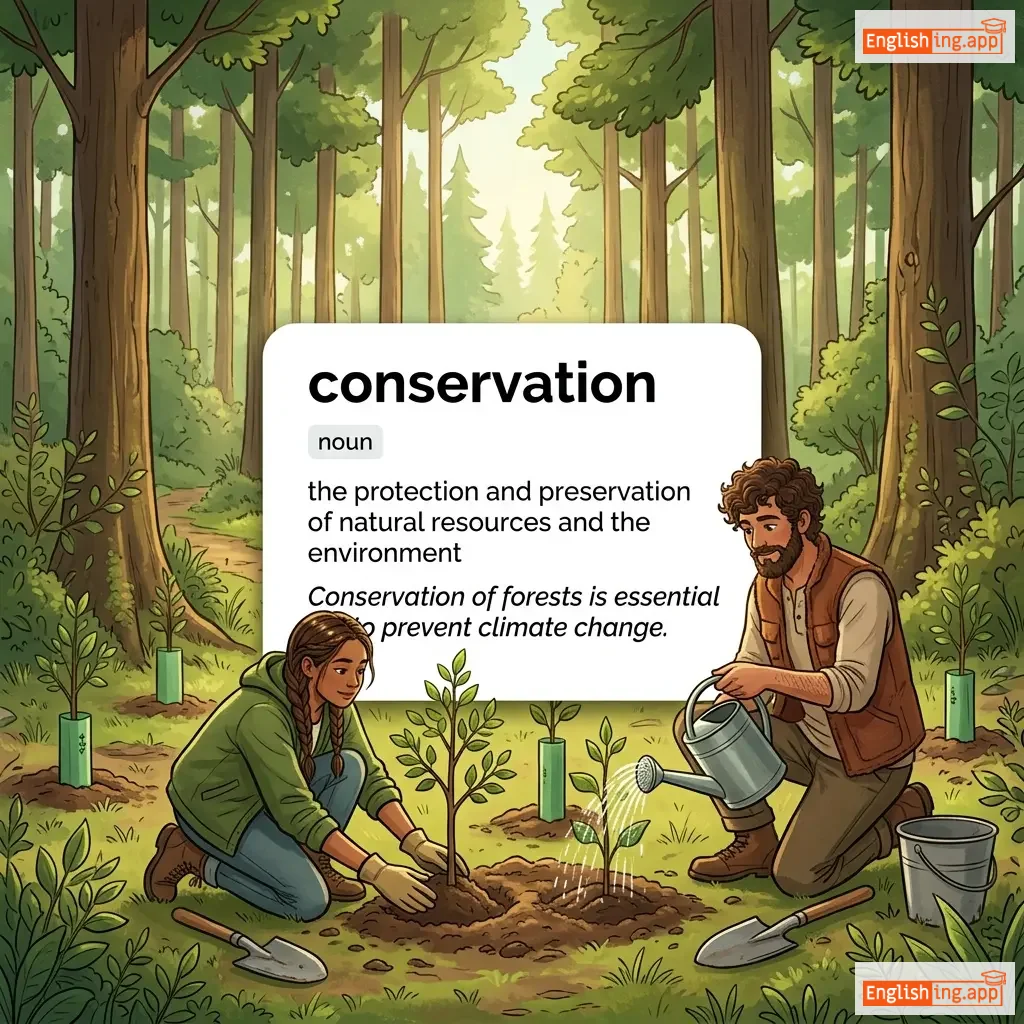
conservation definition card — visual illustration of the meaning
noun
/ˌkɒnsəˈveɪʃən/
conservation (konservasion)

the protection and preservation of natural resources and the environment

"Conservation of forests is essential to prevent climate change."

"La conservation des forêts est essentielle pour prévenir le changement climatique." (La konservasion de fore es esansiel pur prevenir le shonzhmon klimatik.)
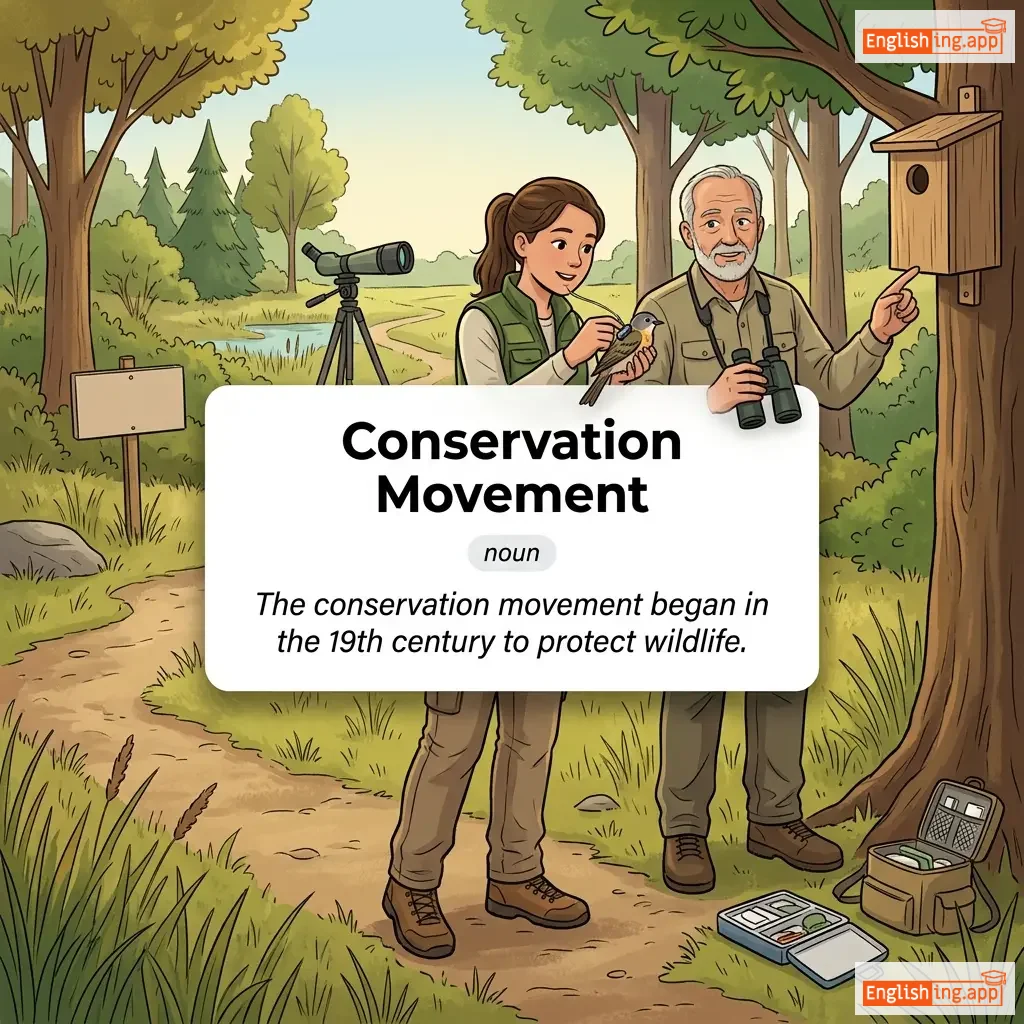
Conservation Movement definition card — visual illustration of the meaning
noun
/ˌkɒnsərˈveɪʃən ˈmuːvmənt/
Mouvement de conservation (mouvement de conservation)

A political, environmental, and social movement that seeks to protect natural resources including plant and animal species as well as their habitat for the future.

"The conservation movement began in the 19th century to protect wildlife."

"Le mouvement de conservation a commencé au XIXe siècle pour protéger la faune." (Le mouvement de conservation a commencé au XIXe siècle pour protéger la faune.)
noun
/kənˈsɜːvəˌtɪzəm/
conservatisme (conservatisme)

A political or social philosophy promoting traditional institutions and resistance to change.

"Conservatism values tradition and gradual development."

"Le conservatisme valorise la tradition et le développement progressif." (Le conservatisme valorise la tradition et le developpement progressif.)
adjective
/kənˈsɜːvətɪv/
conservateur (conservateur)

Favoring traditional views and values; resistant to change.

"He has conservative views on family and society."

"Il a des opinions conservatrices sur la famille et la société." (Il a des opinions conservatrices sur la famille et la société.)
noun
/ˈkɒnsəvəˌtwɑː/
conservatoire (conservatoire)

A school specializing in the study of music or drama.

"She trained as a pianist at the Paris Conservatoire."

"Elle s'est formée comme pianiste au Conservatoire de Paris." (Elle s'est formée comme pianiste au Conservatoire de Paris.)
noun
/kənˈsɜːvəˌtɔːri/
serre / école de musique et d'art (serre / ecole de musique et d'art)

A greenhouse for growing plants or a school for music and the arts.

"They grew exotic plants in the conservatory."

"Ils ont cultivé des plantes exotiques dans la serre." (Ils ont cultive des plantes exotiques dans la serre.)
verb
/kənˈsɜːrv/
conserver (konservé)

to protect something from harm or destruction; to use resources carefully to avoid waste

"We must conserve water during the dry season."

"Nous devons conserver l'eau pendant la saison sèche." (Nous devons conserver l'eau pendant la saison sèche.)
verb
/kənˈsɪdər/
considérer (considérer)

to think carefully about something, especially before making a decision

"She is considering studying abroad next year."

"Elle envisage d'étudier à l'étranger l'année prochaine." (Elle envisage d'étudier à l'étranger l'année prochaine.)
adjective
/kənˈsɪdərəbl/
considérable (considerable)

large in amount, size, or importance

"The project required a considerable amount of time and money."

"Le projet a nécessité une quantité considérable de temps et d'argent." (Le projet a necessite une quantite considerable de temps et d'argent.)
adverb
/kənˈsɪdərəbli/
considérablement (considérablement)

to a great extent or degree; significantly

"The weather has improved considerably since last week."

"Le temps s'est considérablement amélioré depuis la semaine dernière." (Le temps s'est considérablement amélioré depuis la semaine dernière.)