Vocabulaires

Découvrez, apprenez et maîtrisez le vocabulaire anglais

noun
/biːf/
viande de boeuf (viande de boeuf)

the flesh of a cow, bull, or ox, used as food; also a complaint or dispute

"He ordered a plate of grilled beef for dinner."

"Il a commandé une assiette de viande de boeuf grillée pour le dîner." (Il a commandé une assiette de viande de boeuf grillée pour le dîner.)
noun
/ˈbiːlaɪn/
ligne droite (ligne droite)

a straight, direct route to a destination

"He made a beeline for the food table as soon as he entered the party."

"Il a fait une ligne droite vers la table de nourriture dès qu'il est entré à la fête." (Il a fait une ligne droite vers la table de nourriture des qu'il est entre a la fete.)
noun
/bɪər/
bière (bière)

An alcoholic drink made from yeast-fermented malt flavored with hops.

"He ordered a glass of cold beer at the bar."

"Il a commandé un verre de bière froide au bar." (Il a commandé un verre de bière froide au bar.)
noun
/biːt/
betterave (betterave)

a plant with a round dark red root that is eaten as a vegetable

"Roasted beet with goat cheese makes a delicious salad."

"La betterave rôtie avec du fromage de chèvre fait une salade délicieuse." (La betterave rôtie avec du fromage de chèvre fait une salade délicieuse.)
noun
/ˈbiː.təl/
scarabée (scarabee)

a hard-bodied insect with wing covers

"The black beetle scurried across the garden path."

"Le scarabée noir s'est précipité sur le chemin du jardin." (Le scarabée noir s'est précipité sur le chemin du jardin.)
verb
/bɪˈfɪt/
convenir à (convenir a)

to be suitable for; to be appropriate to

"Formal attire befits the seriousness of the occasion."

"Une tenue formelle convient au sérieux de l’occasion." (Une tenue formelle convient au serieux de l occasion)
adjective
/bɪˈfɪt.ɪŋ/
approprié; convenable; adapté à une situation ou à une personne particulière (bifiting)

appropriate; suitable; proper for a particular situation or person

"He wore formal attire befitting the important occasion."

"Il portait une tenue formelle appropriée pour l'occasion importante." (Il portait une tenue formelle appropriee pour l'occasion importante.)
verb
/bɪˈfɒɡ/
embrouiller (embrouiller)

to confuse or make unclear; to cover with fog or mist

"His mind was befogged by exhaustion."

"Son esprit était embrouillé par l'épuisement." (Son esprit était embrouillé par l'épuisement.)
adjective
/bɪˈfɒɡd/
confus, embrouillé (confus, embrouillé)

Confused or clouded in mind; made unclear like being surrounded by fog.

"His mind felt befogged after the long and exhausting meeting."

"Son esprit se sentait embrouillé après la longue réunion épuisante." (Son esprit se sentait embrouillé après la longue réunion épuisante.)
verb
/bɪˈfuːl/
tromper (tromper)

to deceive or trick someone into believing something false; to make someone appear foolish

"The scammer tried to befool innocent people with fake promises."

"L'escroc a essayé de tromper des personnes innocentes avec de fausses promesses." (Lescroc a essaye de tromper des personnes innocentes avec de fausses promesses)
preposition/adverb/conjunction
/bɪˈfɔːr/
avant (avant)

At an earlier time; in front of in order or place.

"She arrived before the meeting started."

"Elle est arrivée avant que la réunion ne commence." (Elle est arrivée avant que la réunion ne commence.)
adverb
/bɪˈfɔːr.hænd/
à l'avance; auparavant; avant (a l'avance; auparavant; avant)

in advance; ahead of time; earlier

"We prepared everything beforehand."

"Nous avons tout préparé à l'avance." (nous avons tout prepare a l'avance)
verb
/bɪˈfaʊl/
souiller (souiller)

to make dirty or polluted; to disgrace or corrupt

"The factory waste befouled the river."

"Les déchets de l’usine ont souillé la rivière." (les dechets de lusine ont souille la riviere)
verb
/bɪˈfrɛnd/
se lier d'amitié (se lier d'amitié)

to act as a friend to someone; to make friends with

"She befriended the new student at school."

"Elle s'est liée d'amitié avec le nouvel élève à l'école." (Elle s'est liée d'amitié avec le nouvel élève à l'école.)
verb
/bɪˈfʌdəl/
embrouiller (embrouiller)

to confuse someone completely; to make someone unable to think clearly

"The complex instructions befuddled the students."

"Les instructions complexes ont embrouillé les étudiants." (Les instructions complexes ont embrouillé les étudiants.)
adjective
/bɪˈfʌdld/
dérouté (deroute)

confused, unable to think clearly

"He looked befuddled after hearing the complex instructions."

"Il avait l'air dérouté après avoir entendu les instructions complexes." (Il avait l'air dérouté après avoir entendu les instructions complexes.)
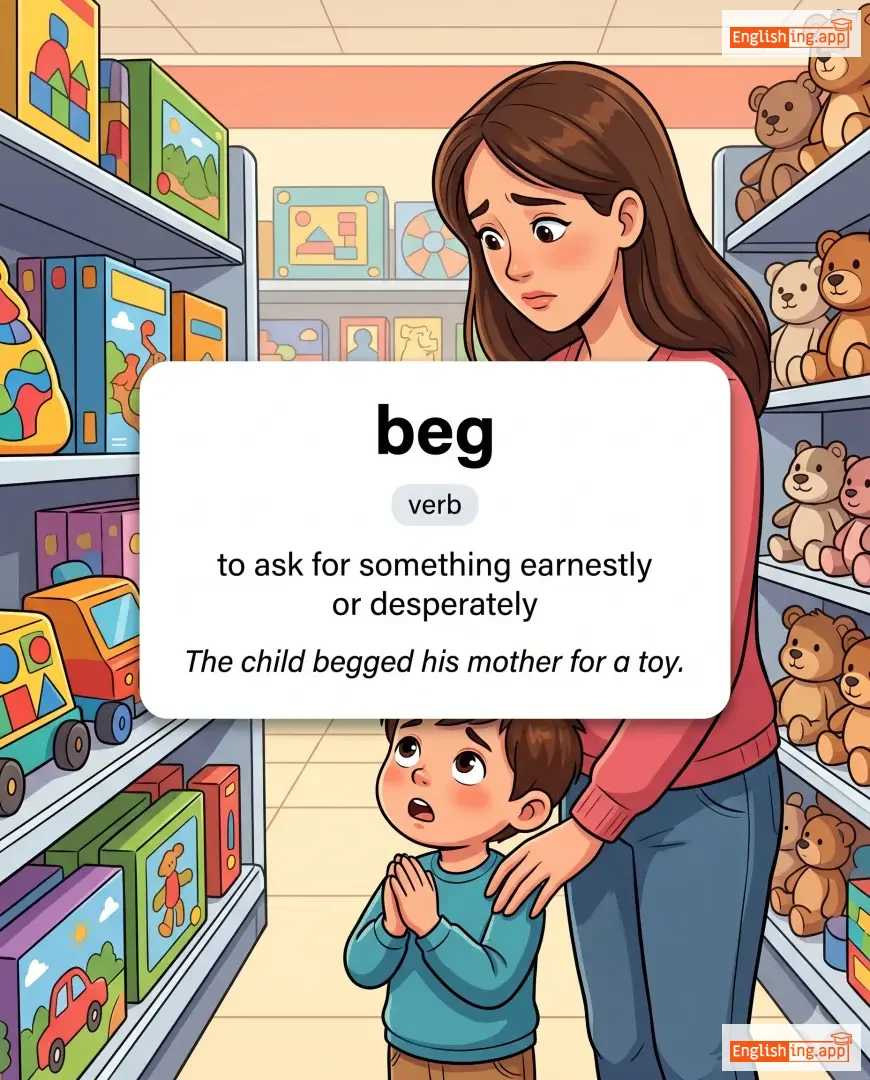
beg definition card — visual illustration of the meaning
verb
/bɛɡ/
supplier / demander (supplier / demander)

to ask for something earnestly or desperately

"The child begged his mother for a toy."

"L'enfant supplia sa mère pour un jouet." (L'enfant supplia sa mère pour un jouet.)
verb
/bɪˈɡɛt/
engendrer / produire (engendrer / produire)

to bring about or give rise to; to father or produce

"Violence begets more violence."

"La violence engendre plus de violence." (La violence engendre plus de violence.)
noun
/ˈbeɡər/
mendiant (mendiant)

a person who lives by asking for money or food

"The beggar sat by the temple asking for alms."

"Le mendiant était assis près du temple, demandant de l'aumône." (Le mendiant était assis près du temple, demandant de l'aumône)
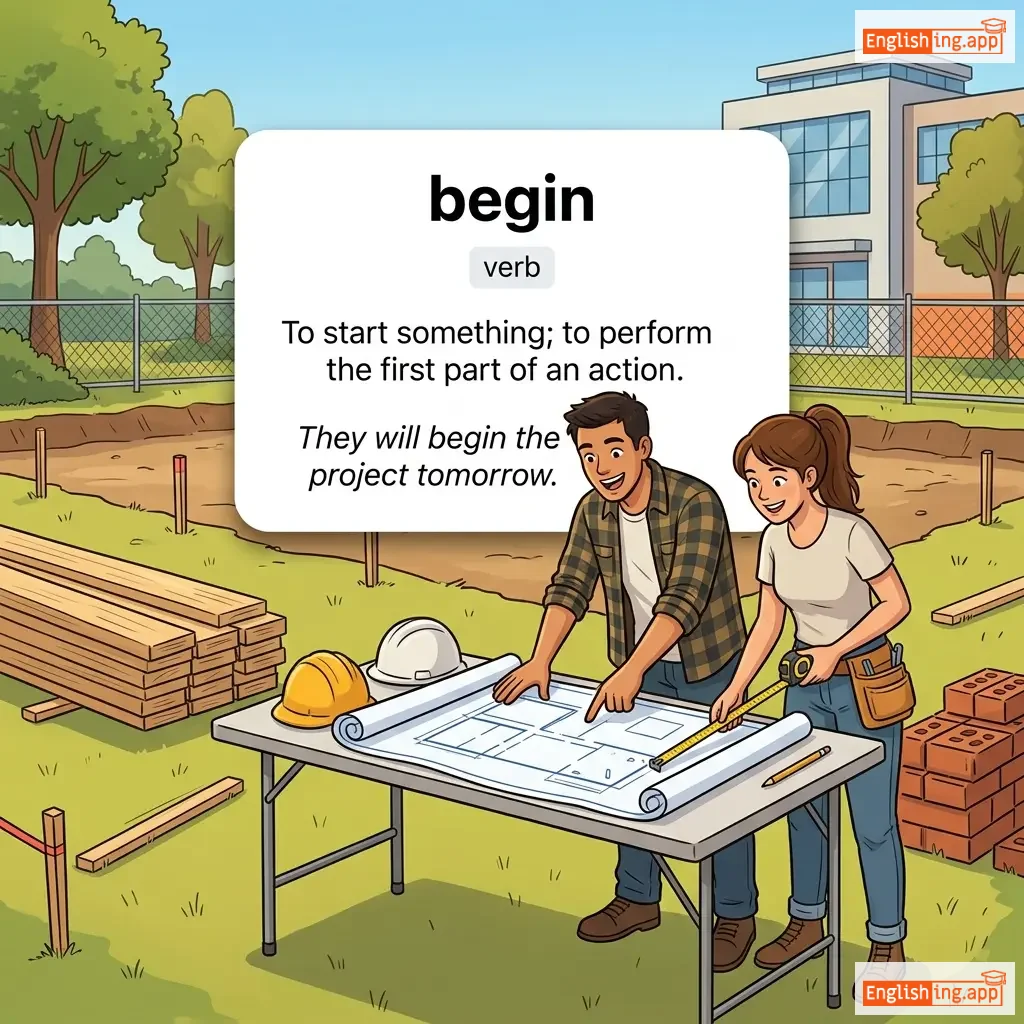
begin definition card — visual illustration of the meaning
verb
/bɪˈɡɪn/
commencer (commencer)

To start something; to perform the first part of an action.

"They will begin the project tomorrow."

"Ils commenceront le projet demain." (Ils commenceront le projet demain.)
noun
/bɪˈɡɪnɪŋ/
début (debut)

The start or first part of something.

"The beginning of the story was very interesting."

"Le début de l'histoire était très intéressant." (Le début de l'histoire était très intéressant.)
verb
/bɪˈɡrʌdʒ/
en vouloir à quelqu'un d'avoir quelque chose / donner quelque chose à contrecœur (en vouloir a quelqu'un d'avoir quelque chose / donner quelque chose a contrecœur)

to resent someone for having something; to give reluctantly

"She did not begrudge him his success."

"Elle ne lui en voulut pas pour son succès." (Elle ne lui en voulut pas pour son succès.)
verb
/bɪˈɡaɪl/
charmer / séduire par la tromperie (charmer / séduire par la tromperie)

to charm or enchant someone, often in a deceptive way

"She beguiled the audience with her storytelling."

"Elle a charmé l'auditoire avec ses récits." (Elle a charmé l'auditoire avec ses récits.)
noun
/bɪˈhɑːf/
au nom de (au nom de)

as a representative of someone; in the interest of someone

"She accepted the award on behalf of her team."

"Elle a accepté le prix au nom de son équipe." (Elle a accepté le prix au nom de son équipe.)
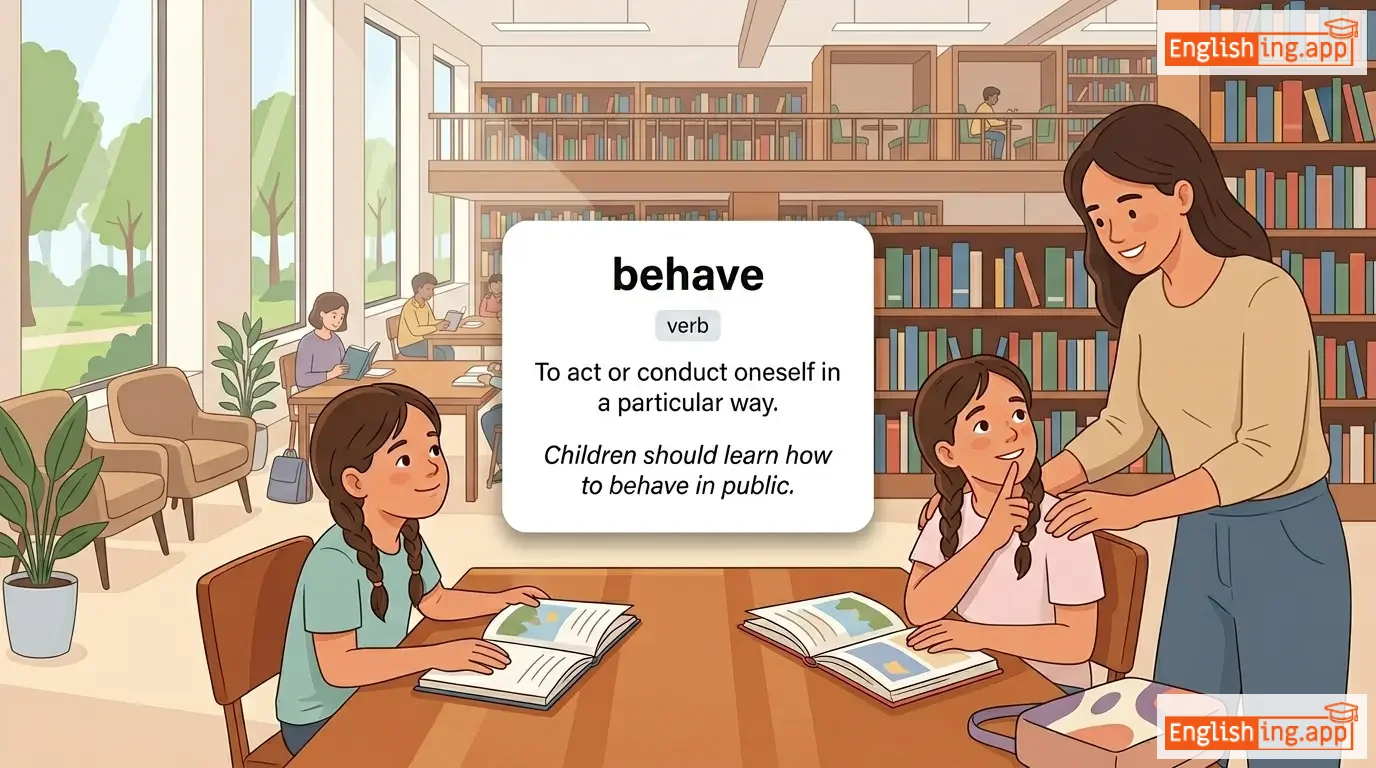
behave definition card — visual illustration of the meaning
verb
/bɪˈheɪv/
se comporter (se comporter)

To act or conduct oneself in a particular way.

"Children should learn how to behave in public."

"Les enfants doivent apprendre à se comporter en public." (Les enfants doivent apprendre à se comporter en public.)
noun
/bɪˈheɪvjər/
comportement (comportement)

The way in which one acts or conducts oneself, especially toward others.

"The teacher praised her good behavior in class."

"Le professeur a félicité son bon comportement en classe." (Le professeur a félicité son bon comportement en classe.)
adjective
/bɪˈheɪvjərəl/
comportemental (comportemental)

relating to the way a person or animal acts

"The psychologist studied the child's behavioral patterns."

"Le psychologue a étudié les modèles comportementaux de l'enfant." (Le psychologue a étudié les modèles comportementaux de l'enfant.)
noun
/bɪˈheɪ.vjər/
comportement (comportement)

the way a person or animal acts or conducts themselves

"His behaviour at the meeting was very professional."

"Son comportement lors de la réunion était très professionnel." (Son comportement lors de la réunion était très professionnel.)
verb
/bɪˈhɛd/
décapiter (decapiter)

to cut off a person's or animal's head; to remove the leader or most important part

"The historical account describes how the traitor was beheaded as punishment."

"Le récit historique décrit comment le traître a été décapité comme punition." (Le recit historique decrit comment le traitre a ete decapite comme punition)
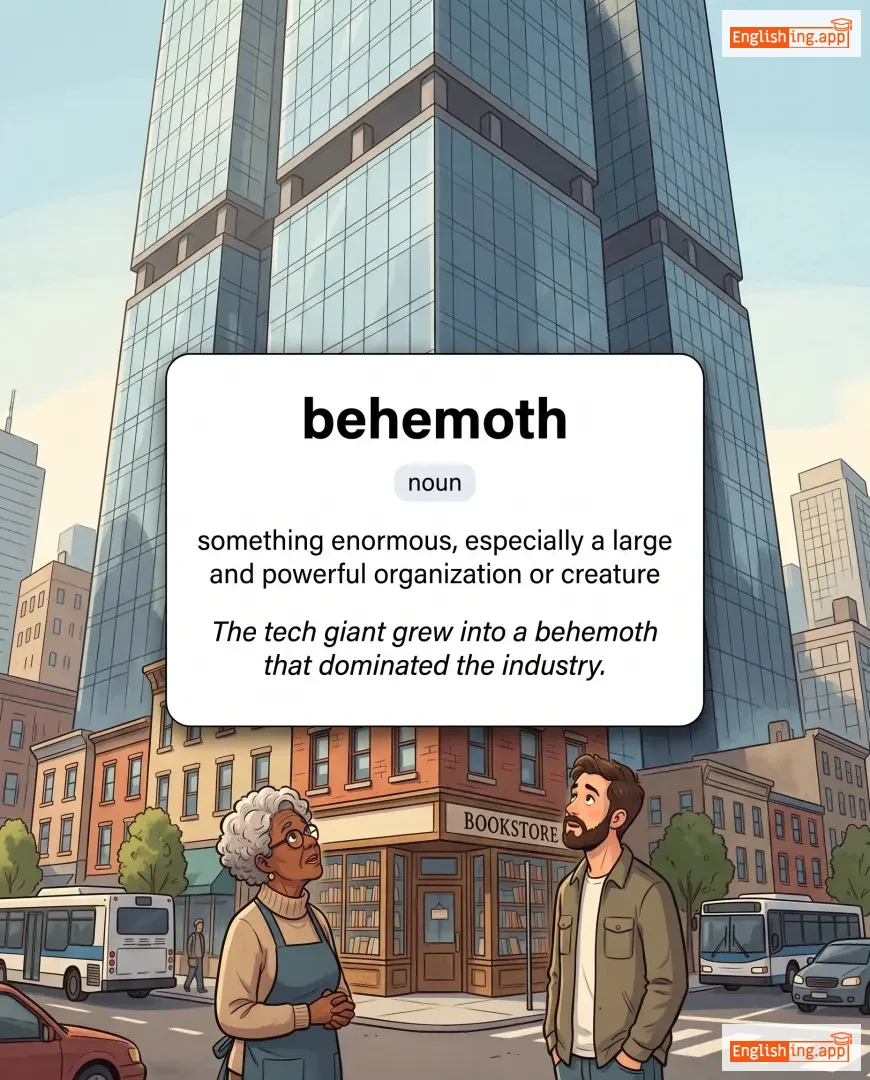
behemoth definition card — visual illustration of the meaning
noun
/bɪˈhiːməθ/
créature ou organisation gigantesque (creature ou organisation gigantesque)

something enormous, especially a large and powerful organization or creature

"The tech giant grew into a behemoth that dominated the industry."

"Le géant technologique est devenu un béhémoth qui dominait l'industrie." (Le geant technologique est devenu un behemoth qui dominait l'industrie.)
preposition/adverb
/bɪˈhaɪnd/
derrière (derriere)

At or to the back of something; in a position further back.

"The cat is hiding behind the curtain."

"Le chat se cache derrière le rideau." (Le chat se cache derrière le rideau.)
verb
/bɪˈhoʊld/
contempler; voir (contempler; voir)

to see or observe something, especially something remarkable or impressive

"She stood quietly to behold the sunrise over the hills."

"Elle resta silencieuse pour contempler le lever du soleil sur les collines." (Elle resta silencieuse pour contempler le lever du soleil sur les collines)
adjective
/bɪˈhoʊldən/
reconnaissant ou endetté (reconnaissant ou endetté)

indebted or obliged to someone for a service or help

"He felt beholden to his mentor for all the guidance."

"Il se sentait reconnaissant envers son mentor pour toute l'orientation." (Il se sentait reconnaissant envers son mentor pour toute l'orientation.)
verb
/bɪˈhuːv/
être nécessaire ou approprié pour que quelqu'un fasse quelque chose (etre necessaire ou approprie pour que quelqu'un fasse quelque chose)

to be necessary, proper, or appropriate for someone to do

"It would behoove you to study before the exam."

"Il serait approprié que tu étudies avant l'examen." (Il serait approprie que tu etudies avant l'examen.)
verb
/bɪˈhuːvz/
il est nécessaire (il est necessaire)

third person singular form of 'behoove'; means it is proper or necessary

"It behooves every citizen to follow the law."

"Il est nécessaire que chaque citoyen suive la loi." (Il est nécessaire que chaque citoyen suive la loi.)
verb
/bɪˈhəʊv/
être approprié (etre approprie)

British spelling of 'behoove'; to be appropriate or necessary

"It would behove the company to listen to its customers."

"Il serait approprié que l'entreprise écoute ses clients." (Il serait approprie que l'entreprise ecout ses clients.)
noun/verb
/ˈbiːɪŋ/
existence (existence)

Existence; the state of living; a living creature.

"Kindness is part of being human."

"La gentillesse fait partie de l'être humain." (La gentillesse fait partie de l'être humain.)
verb
/bɪˈleɪbər/
insister (insister)

to argue or elaborate on a subject in excessive detail; to attack verbally or physically

"The professor belabored the point until the students grew restless."

"Le professeur a insisté sur le point jusqu'à ce que les étudiants deviennent agités." (Le professeur a insisté sur le point jusqu'à ce que les étudiants deviennent agités.)
verb
/bɪˈleɪbə/
s'appesantir sur (s'appesantir sur)

to explain something repeatedly or with excessive detail; to criticize or attack verbally at length

"The teacher did not belabour the point once the students understood it."

"Le professeur ne s'est pas appesanti sur le point une fois que les élèves ont compris." (Le professeur ne s'est pas appesanti sur le point une fois que les eleves ont compris)
verb
/bɪˈleɪt/
retarder (retarder)

to delay or make late

"Heavy traffic belated our arrival at the party."

"Le trafic lourd a retardé notre arrivée à la fête." (Le trafic lourd a retardé notre arrivée à la fête.)
adjective
/bɪˈleɪtɪd/
tardif (tardif)

coming or happening later than expected or usual

"She sent me a belated birthday card."

"Elle m'a envoyé une carte d'anniversaire tardive." (Elle m'a envoye une carte d'anniversaire tardive.)
verb
/bɪˈleɪ/
sécuriser une corde (securiser une corde)

to secure a rope by winding it around an object; to stop or cancel an order (nautical/military use)

"The climber asked his partner to belay the rope tightly."

"L'escaladeur a demandé à son partenaire de sécuriser la corde serrée." (L'escaladeur a demandé à son partenaire de sécuriser la corde serrée.)
😮‍💨

belch (belch)

verb; noun
/beltʃ/
roter (roter)

to expel air noisily from the stomach through the mouth; to emit or pour out suddenly and forcefully

"After drinking the soda, he belched loudly."

"Après avoir bu le soda, il a roté bruyamment." (apres avoir bu le soda il a rote bruyamment)
noun
/ˈbeɪleɪ/
poisson bele (poisson bele)

a type of freshwater fish found in South Asian rivers, known for its distinctive appearance

"The bele fish is commonly caught in the rivers of Bangladesh."

"Le poisson bele est couramment pêché dans les rivières du Bangladesh." (le poisson bele e kuromon peshe dan le riviere du Bangladesh)
verb
/bɪˈliːɡər/
assiéger, harceler (assieger, harceler)

to cause difficulties, troubles, or harassment; to surround with military forces

"The company was beleaguered by constant complaints from its customers."

"L'entreprise était assiégée par des plaintes constantes de ses clients." (L'entreprise était assiégée par des plaintes constantes de ses clients.)
noun
/ˈbɛlfri/
clocher (clocher)

A bell tower, especially one attached to a church or building.

"The church belfry housed a large bronze bell."

"Le clocher de l'église abritait une grande cloche en bronze." (Le clocher de l'église abritait une grande cloche en bronze.)
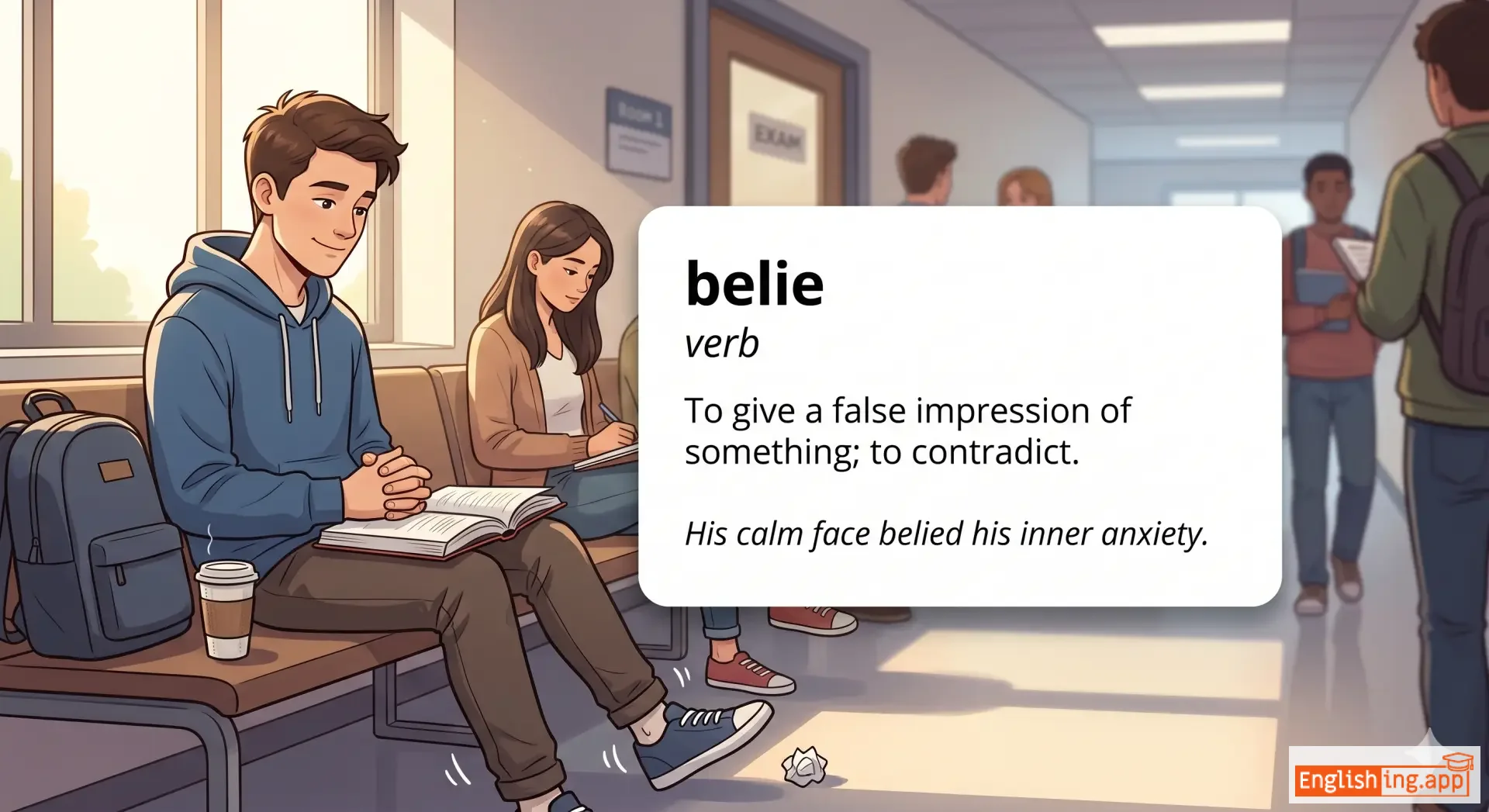
belie definition card — visual illustration of the meaning
verb
/bɪˈlaɪ/
démentir (démentir)

To give a false impression of something; to contradict.

"His calm face belied his inner anxiety."

"Son visage calme démentait son anxiété intérieure." (Son visage calme démentait son anxiété intérieure.)
noun
/bɪˈliːf/
croyance (kroyans)

an acceptance that something exists or is true, especially without proof

"Her belief in kindness inspired many people."

"Sa croyance en la bonté a inspiré de nombreuses personnes." (Sa croyance en la bonté a inspiré de nombreuses personnes.)
adjective
/bɪˈliːvəbl̩/
crédible (credible)

Able to be trusted or accepted as true or reasonable.

"Her story was so detailed that it sounded believable."

"Son histoire était tellement détaillée qu'elle semblait crédible." (Son histoire était tellement détaillée qu'elle semblait crédible.)
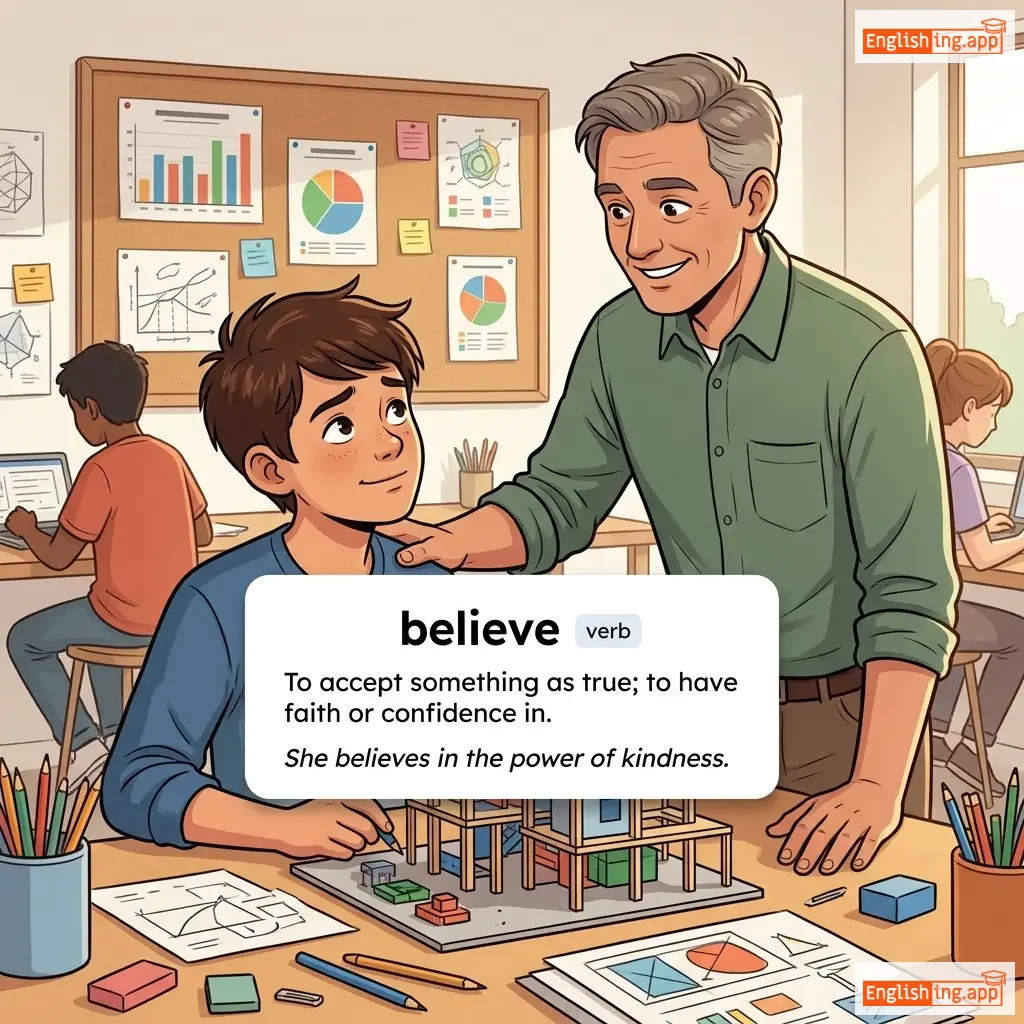
believe definition card — visual illustration of the meaning
verb
/bɪˈliːv/
croire (krwar)

To accept something as true; to have faith or confidence in.

"She believes in the power of kindness."

"Elle croit au pouvoir de la gentillesse." (Elle croit au pouvoir de la gentillesse.)