Vocabulaires

Découvrez, apprenez et maîtrisez le vocabulaire anglais

noun
/ˈbʌskɪn/
botte épaisse (bot épaisse)

A type of thick-soled boot that reaches halfway to the knee; also associated with tragic drama in ancient times.

"The actor wore a buskin as part of his classical costume."

"L'acteur portait un buskin comme partie de son costume classique." (L'aktor portait un buskin kom parté de son kostüm klasik.)
noun/verb
/bʌst/
buste/casser (buste/casser)

As a noun: A sculpture of a person's head, shoulders, and chest; As a verb: To break, smash, or arrest.

"The police busted the gang last night."

"La police a arrêté le gang hier soir." (La police a arrêté le gang hier soir.)
verb, noun
/ˈbʌsəl/
bousculade, agitation (bousculade, agitation)

to move in an energetic or noisy manner; busy activity in a place

"The marketplace bustled with vendors and customers."

"Le marché était rempli de vendeurs et de clients." (Le marché était rempli de vendeurs et de clients.)
adjective
/ˈbʌsti/
à forte poitrine (a forte poitrine)

having a large or full bust; describing a woman with a prominent chest

"The actress was often described as busty in fashion magazines."

"L’actrice était souvent décrite comme à forte poitrine dans les magazines de mode." (L actrice etait souvent decrite comme a forte poitrine dans les magazines de mode)
adjective
/ˈbɪzi/
occupé (occupe)

actively engaged in work or activity; occupied

"He is too busy to answer the phone."

"Il est trop occupé pour répondre au téléphone." (Il est trop occupé pour répondre au téléphone.)
but definition card — visual illustration of the meaning
conjunction
/bʌt/
mais (mais)

used to introduce a phrase or clause contrasting with what has already been mentioned

"She wanted to go out, but it was raining heavily."

"Elle voulait sortir, mais il pleuvait fortement." (Elle voulait sortir, mais il pleuvait fortement.)
noun
/ˈbʊt.ʃər/
boucher (boucher)

a person whose job is cutting up and selling meat in a shop

"The butcher recommended the best cut of beef for our dinner."

"Le boucher a recommandé le meilleur morceau de bœuf pour notre dîner." (Le boucher a recommandé le meilleur morceau de bœuf pour notre dîner.)
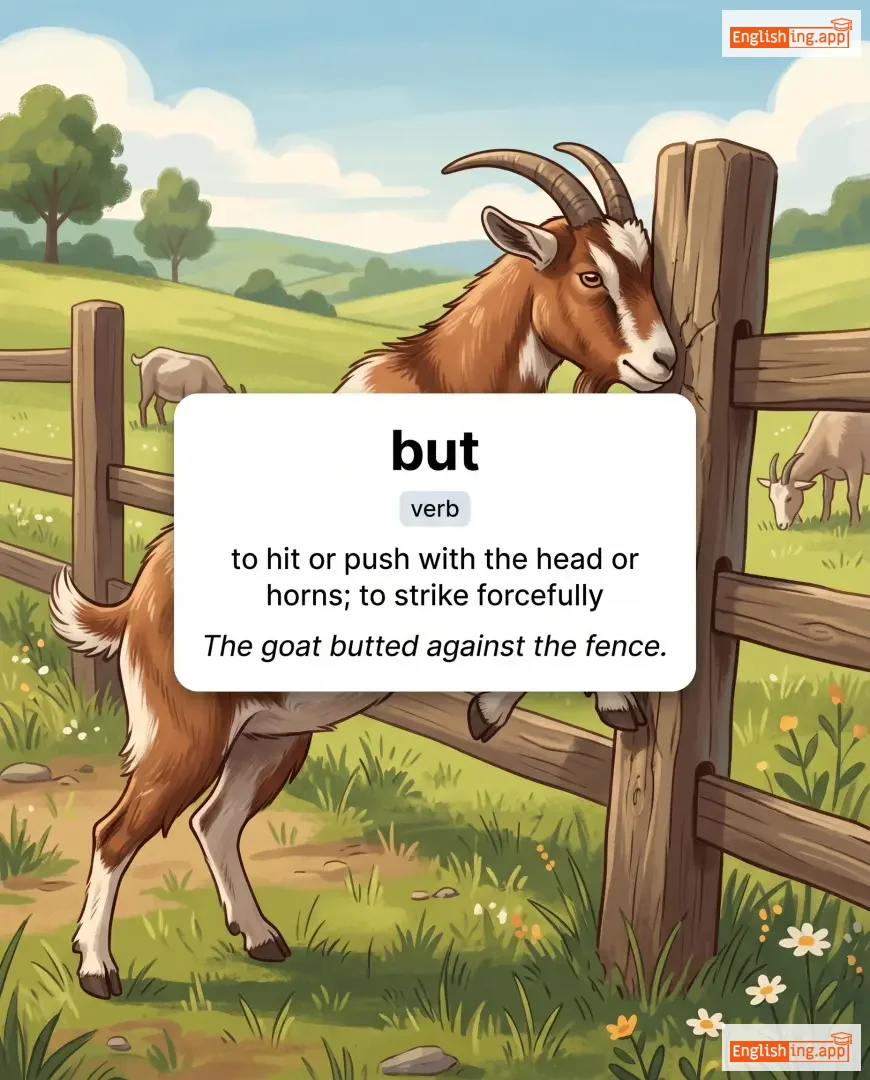
noun, verb
/bʌt/
frapper avec la tête, la fin de quelque chose (frapper avec la tête, la fin de quelque chose)

to hit or push with the head or horns; the end part of something, especially a cigarette

"The goat butted the fence with its horns."

"La chèvre a frappé la clôture avec ses cornes." (La chèvre a frappé la clôture avec ses cornes.)
noun
/bjuːt/
butte (butte)

an isolated hill with steep sides and a flat top, common in arid regions

"The travelers could see a tall butte rising in the desert."

"Les voyageurs pouvaient voir une haute butte se dresser dans le désert." (Les voyageurs pouvaient voir une haute butte se dresser dans le desert.)
noun, verb
/ˈbʌtər/
beurre (beurre)

a pale yellow edible fat made from cream; to spread butter on something

"She buttered a slice of bread before eating."

"Elle a beurré une tranche de pain avant de manger." (Elle a beurré une tranche de pain avant de manger.)
noun
/ˈbʌt.ər fɪʃ/
poisson beurre (poisson beurre)

a small, smooth-skinned marine fish

"The butter-fish is popular in Bengali cuisine."

"Le poisson beurre est populaire dans la cuisine bengalie." (Le poisson beurre est populaire dans la cuisine bengalie)
noun
/ˈbʌt.ər.flaɪ/
papillon (papillon)

a flying insect with large colorful wings

"The beautiful butterfly landed on the flower."

"Le beau papillon s'est posé sur la fleur." (Le beau papillon s'est posé sur la fleur.)
noun
/ˈbʌtərflaɪ/
papillon (papillon)

an insect with large, often brightly colored wings that flies during the day

"A beautiful butterfly landed on the flower."

"Un beau papillon s'est posé sur la fleur." (Un beau papillon s'est posé sur la fleur.)
noun
/ˈbʌt.ə.flaɪ piː/
pois papillon (pois papillon)

a blue flowering plant with butterfly-shaped flowers, used to make herbal tea

"Butterfly pea flowers turn tea into a beautiful blue color."

"Les fleurs de pois papillon donnent au thé une belle couleur bleue." (Les fleurs de pois papillon donnent au thé une belle couleur bleue.)
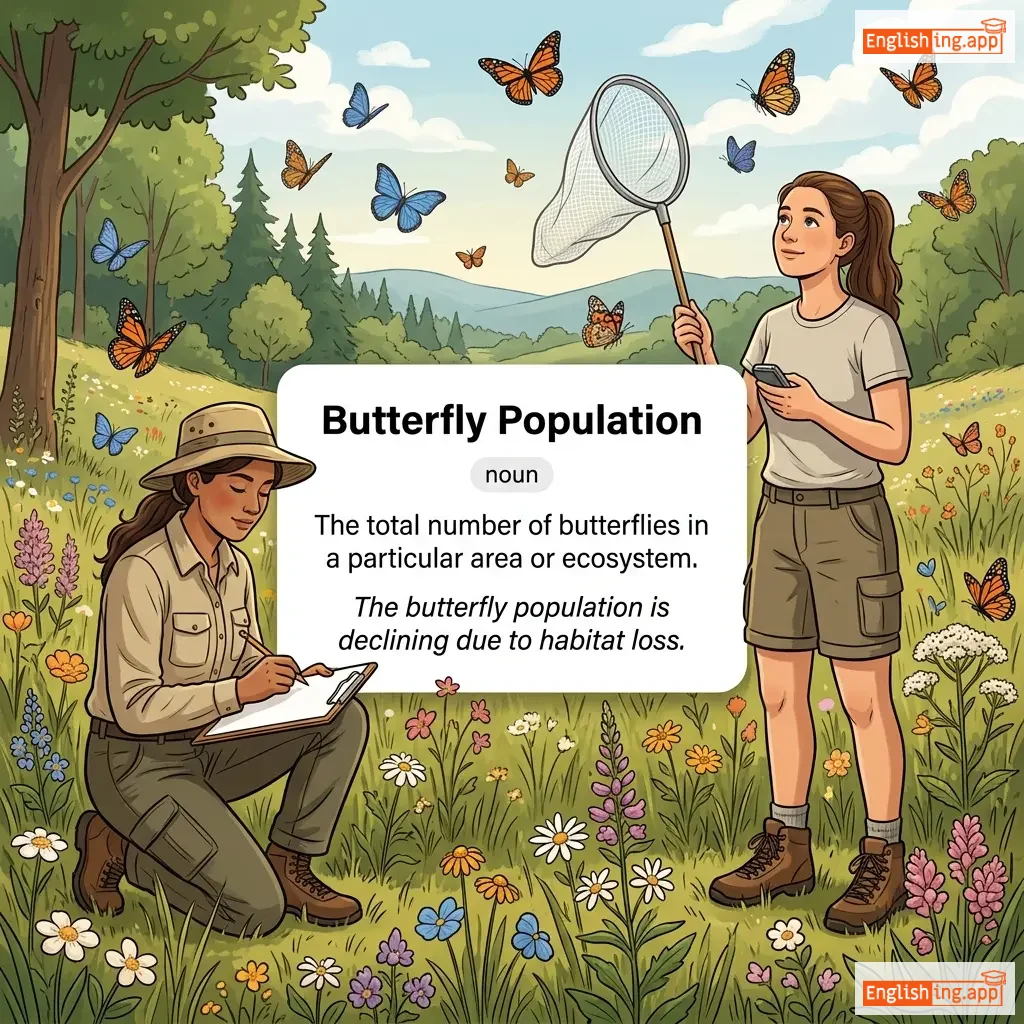
Butterfly Population definition card — visual illustration of the meaning
noun
ˈbʌtərflaɪ ˌpɒpjəˈleɪʃən
population de papillons (population de papillons)

The total number of butterflies in a particular area or ecosystem.

"The butterfly population is declining due to habitat loss."

"La population de papillons diminue en raison de la perte de l'habitat." (La population de papillons diminue en raison de la perte de l'habitat.)
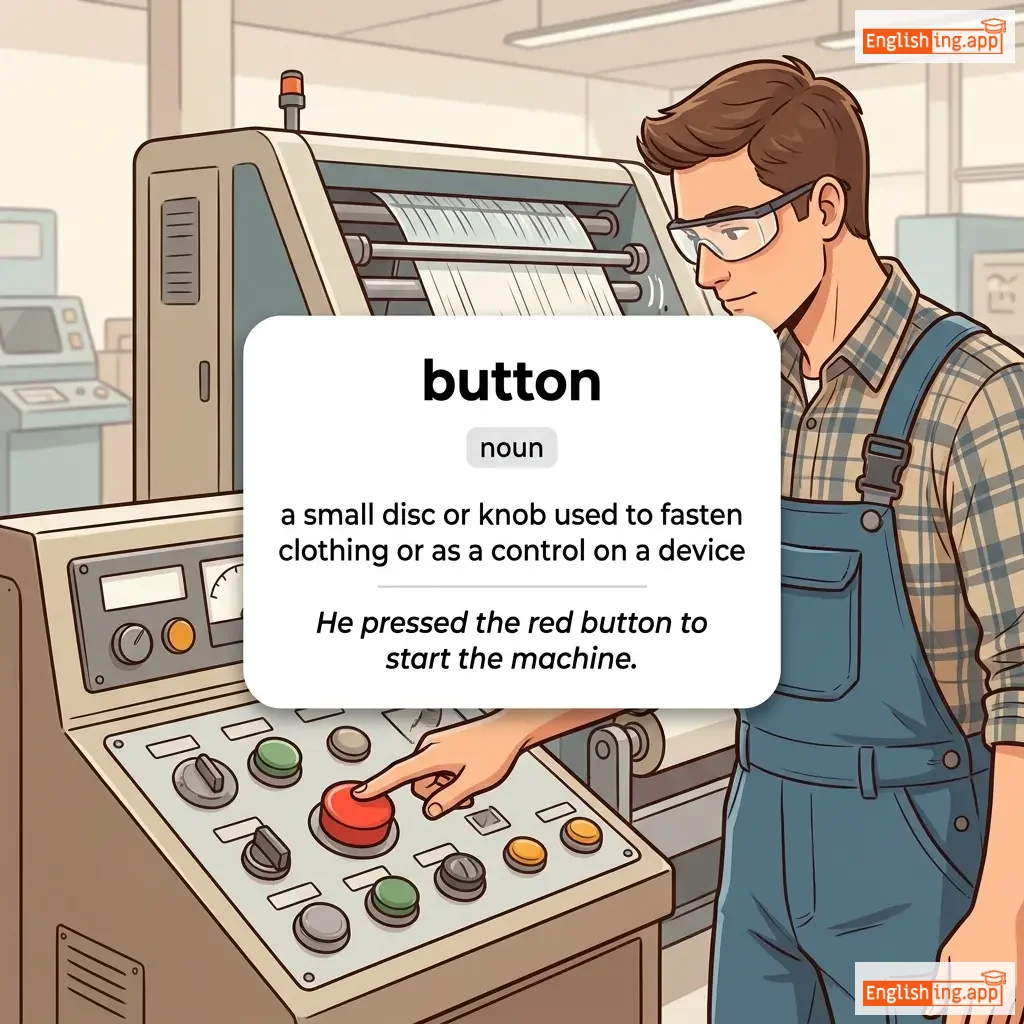
button definition card — visual illustration of the meaning
noun
/ˈbʌtən/
bouton (bouton)

a small disc or knob used to fasten clothing or as a control on a device

"He pressed the red button to start the machine."

"Il a appuyé sur le bouton rouge pour démarrer la machine." (Il a appuyé sur le bouton rouge pour démarrer la machine.)
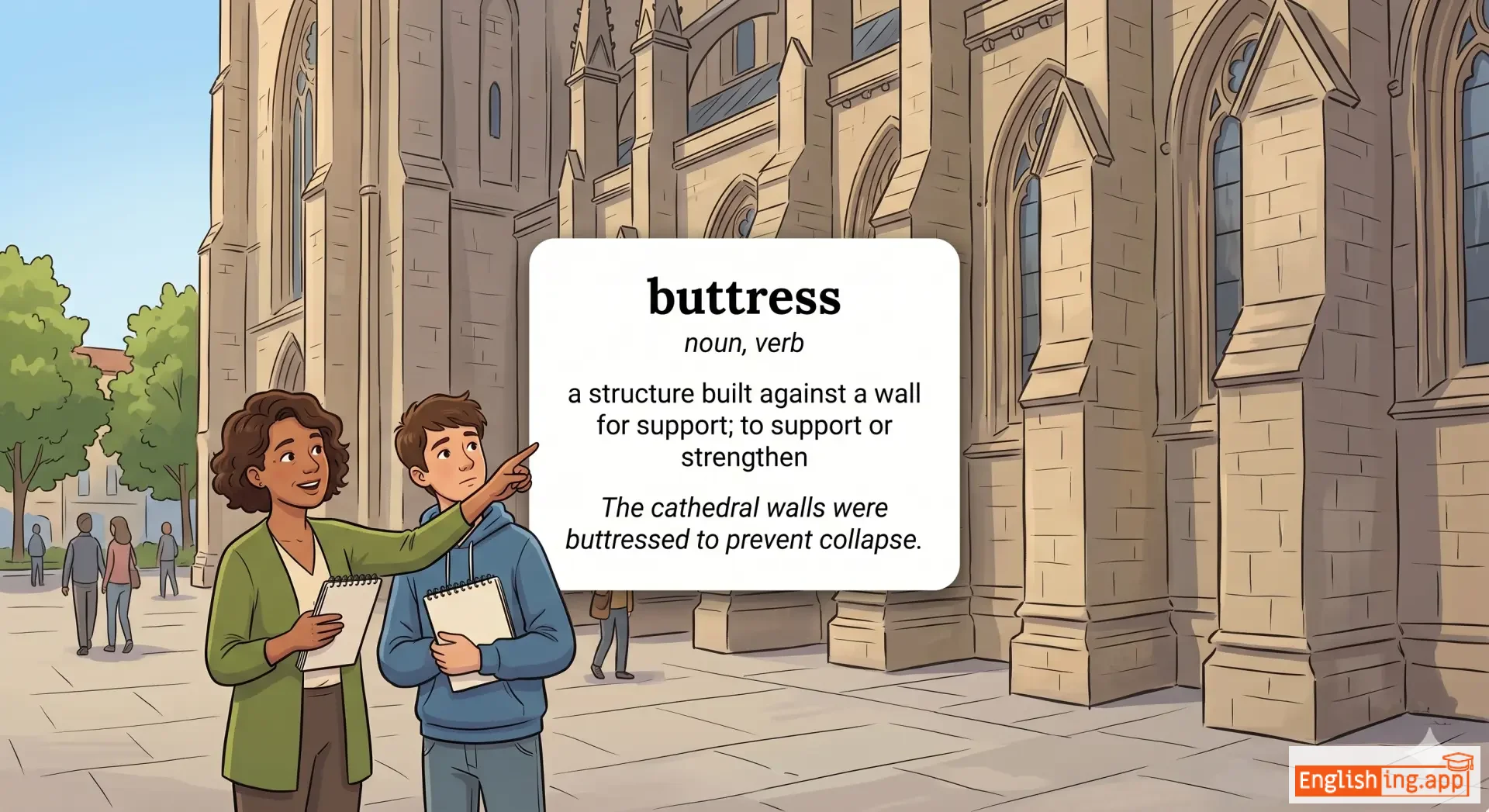
buttress definition card — visual illustration of the meaning
noun, verb
/ˈbʌtrəs/
contrefort, soutien (contrefort, soutien)

a structure built against a wall for support; to support or strengthen

"The cathedral walls were buttressed to prevent collapse."

"Les murs de la cathédrale ont été consolidés pour éviter l'effondrement." (Les murs de la cathédrale ont été consolidés pour éviter l'effondrement.)
👩‍🦰

buxom (baksom)

adjective
/ˈbʌksəm/
femme ronde et attrayante (femme ronde et attrayante)

Plump, with a full figure and often large-breasted, especially used to describe women.

"The actress was described as a cheerful and buxom woman."

"L'actrice a été décrite comme une femme joyeuse et ronde." (L'actrice a été décrite comme une femme joyeuse et ronde.)
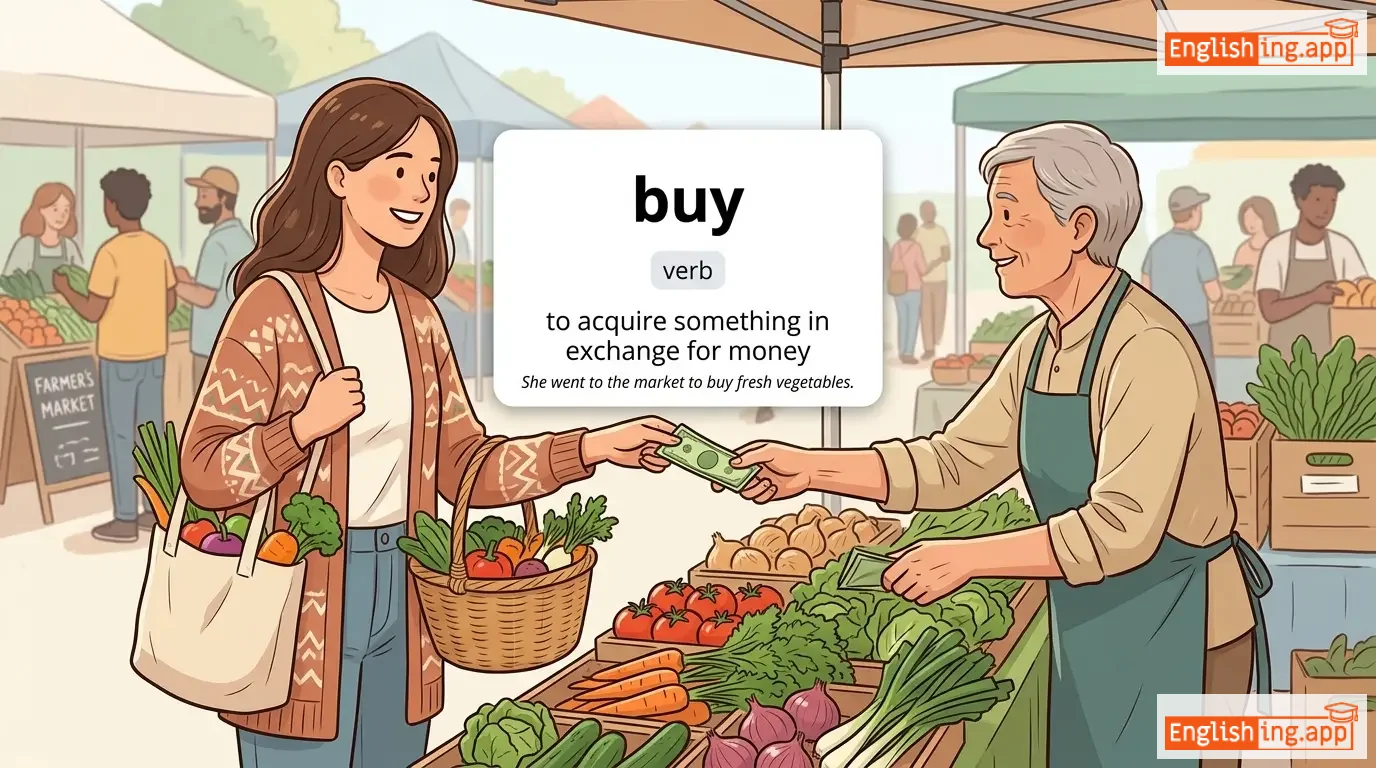
buy definition card — visual illustration of the meaning
verb
/baɪ/
acheter (acheter)

to acquire something in exchange for money

"She went to the market to buy fresh vegetables."

"Elle est allée au marché pour acheter des légumes frais." (Elle est allee au marche pour acheter des legumes frais.)
noun
/ˈbaɪər/
acheteur (acheteur)

a person who makes a purchase

"The buyer inspected the car before making payment."

"L'acheteur a inspecté la voiture avant de procéder au paiement." (L'acheteur a inspecté la voiture avant de procéder au paiement.)
noun, verb
/bʌz/
bourdonnement (bourdonnement)

to make a low continuous humming sound; a feeling of excitement or interest

"I could hear the phone buzz during the meeting."

"J’ai entendu le téléphone bourdonner pendant la réunion." (Jai entendu le telephone bourdonner pendant la reunion)
preposition
/baɪ/
par (par)

indicating the agent performing an action, or the means of achieving something

"The book was written by a famous author."

"Le livre a été écrit par un auteur célèbre." (Le livre a été écrit par un auteur célèbre.)
noun
/ˈbaɪ.lɔː/
règlement (reglement)

A rule made by a company, organization, or local authority to control the actions of its members.

"The city council passed a new by-law regulating street vendors."

"Le conseil municipal a adopté un nouveau règlement régissant les vendeurs ambulants." (Le conseil municipal a adopte un nouveau reglement regissant les vendeurs ambulants.)
interjection
/baɪ/
au revoir (au revoir)

used to say goodbye; a short and informal farewell

"I said bye to her before leaving."

"Je lui ai dit au revoir avant de partir." (je lui ai dit au revoir avant de partir)
noun/adjective
/ˈbaɪ.ɡɒn/
passé (passe)

Something belonging to an earlier time; past and no longer existing.

"He often talks about the traditions of bygone days."

"Il parle souvent des traditions des jours passés." (Il parle souvent des traditions des jours passés.)
noun
/ˈbaɪ.laɪn/
ligne du nom de l'écrivain (ligne du nom de l'ecrivain)

A line in a newspaper or magazine article that names the writer.

"Her byline appeared on the front page of the newspaper."

"Sa ligne est apparue sur la première page du journal." (Sa ligne est apparue sur la premiere page du journal.)
adjective
/ˈbɪz.ən.taɪn/ or /ˈbaɪ.zənˌtiːn/
complexe (complexe)

Extremely complicated and detailed; relating to the Byzantine Empire or its style.

"The new tax regulations are so byzantine that few understand them."

"Les nouvelles réglementations fiscales sont tellement complexes que peu de gens les comprennent." (Les nouvelles reglementations fiscales sont tellement complexes que peu de gens les comprennent.)