Vocabulaires

Découvrez, apprenez et maîtrisez le vocabulaire anglais

noun
/əˌɡlɒməˈreɪʃən/
agglomération (agglomeration)

A mass or collection of things, sometimes clustered together.

"The city is an agglomeration of diverse cultures and communities."

"La ville est une agglomération de cultures et de communautés diverses." (La ville est une agglomeration de cultures et de communautes diverses.)
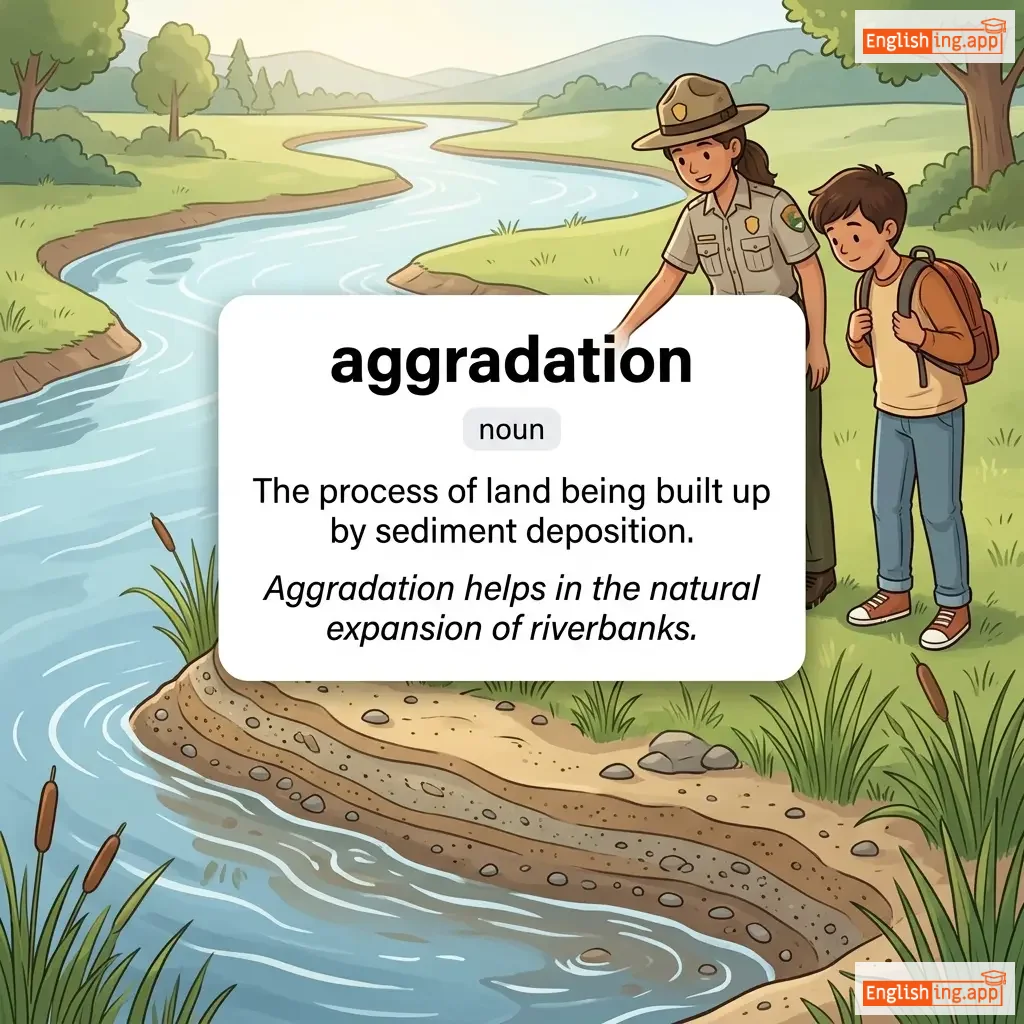
aggradation definition card — visual illustration of the meaning
noun
/ˌæɡ.rəˈdeɪ.ʃən/
processus de construction de la terre par dépôt de sédiments (processus de construction de la terre par depot de sediments)

The process of land being built up by sediment deposition.

"Aggradation helps in the natural expansion of riverbanks."

"L'aggradation aide à l'expansion naturelle des rives des rivières." (L'aggradation aide a l'expansion naturelle des rives des rivieres)
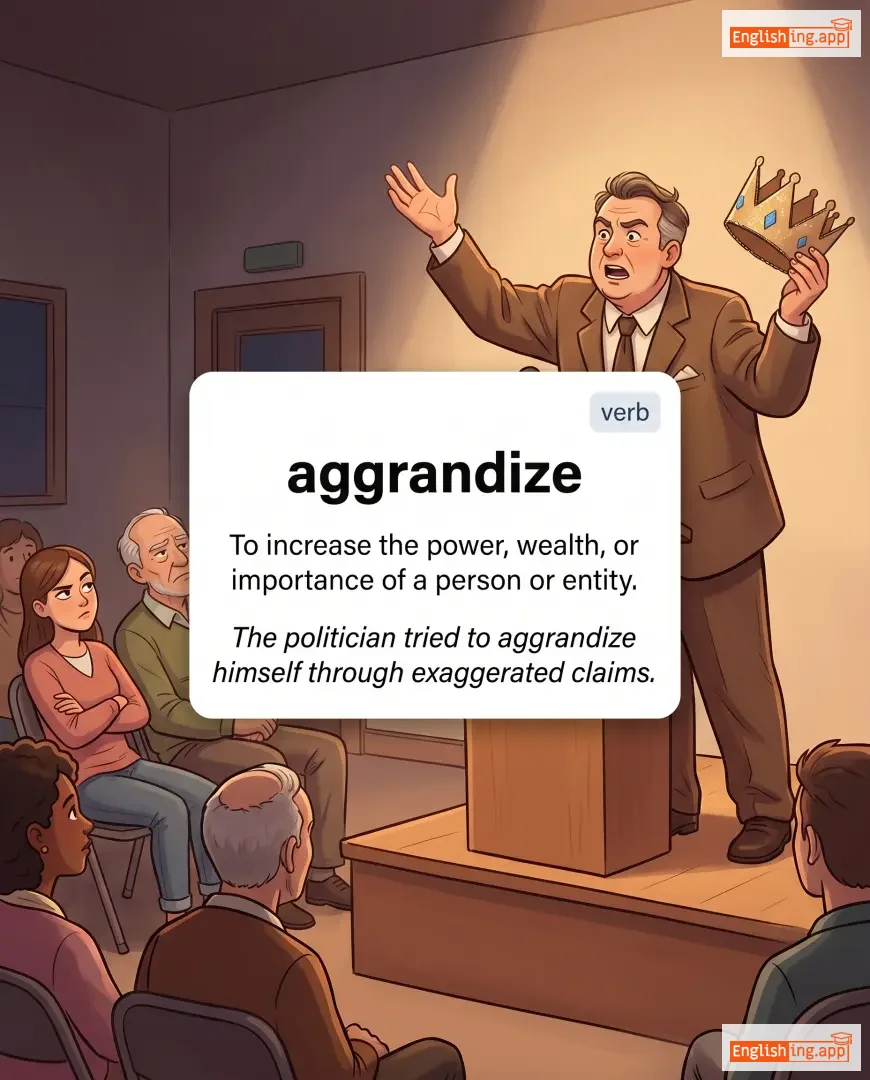
aggrandize definition card — visual illustration of the meaning
verb
/əˈɡræn.daɪz/
agrandir (agrandir)

To increase the power, wealth, or importance of a person or entity.

"The politician tried to aggrandize himself through exaggerated claims."

"Le politicien a essayé de s'aggrandir à travers des affirmations exagérées." (Le politicien a essayé de s'aggrandir à travers des affirmations exagérées.)
verb
/ˈæɡ.rə.veɪt/
aggraver (aggraver)

To make a situation worse or more serious.

"Scratching the rash will only aggravate the condition."

"Gratter l'éruption ne fera qu'aggraver la condition." (Gratter l'eruption ne fera qu'aggraver la condition.)
noun
/ˌæɡ.rəˈveɪ.ʃən/
aggravation, détérioration (aggravation)

The act of making a situation worse or the state of being worsened.

"The delay caused great aggravation for the passengers."

"Le retard a causé une grande aggravation pour les passagers." (Le retard a causé une grande aggravation pour les passagers.)
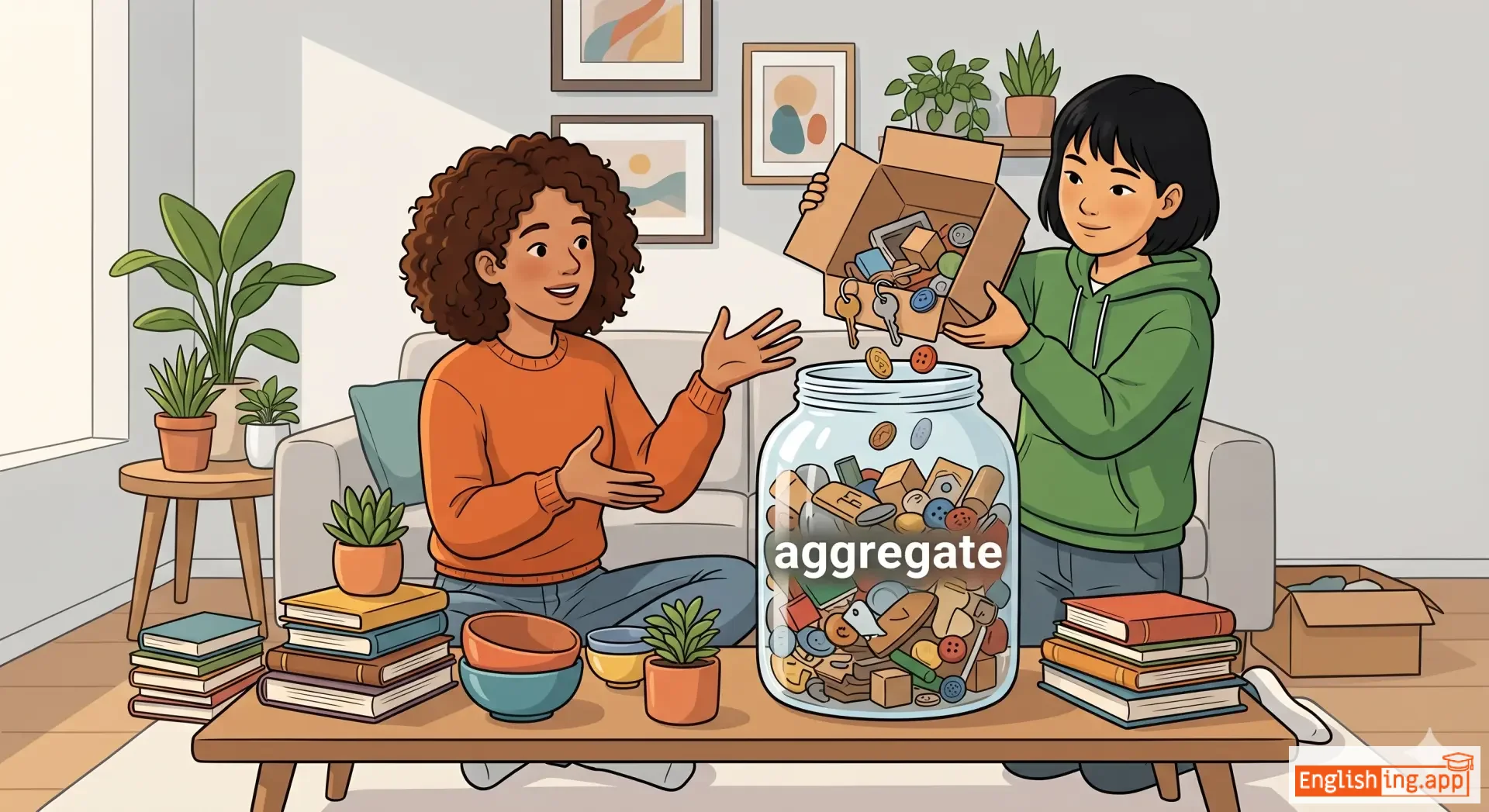
aggregate definition card — visual illustration of the meaning
noun, verb, adjective
/ˈæɡ.rɪ.ɡət/ (noun/adjective), /ˈæɡ.rɪ.ɡeɪt/ (verb)
agrégat, ensemble (agregat, ensemble)

A whole formed by combining several elements; to combine into a total.

"The data was aggregated to provide a clearer picture of the market."

"Les données ont été agrégées pour fournir une image plus claire du marché." (Les données ont été agrégées pour fournir une image plus claire du marché.)
verb
/əˈɡrɛs/
agresser (agresser)

to initiate an attack or show hostile behavior

"The army chose not to aggress without provocation."

"L'armée a choisi de ne pas agresser sans provocation." (L'armée a choisi de ne pas agresser sans provocation.)
noun
/əˈɡrɛʃən/
agression (agression)

hostile or violent behavior towards others

"His sudden aggression surprised everyone in the meeting."

"Sa soudaine agression a surpris tout le monde à la réunion." (Sa soudaine agression a surpris tout le monde a la reunion.)
adjective
/əˈɡrɛsɪv/
agressif (agressif)

ready or likely to attack or confront; forceful

"The salesman used an aggressive strategy to close the deal."

"Le vendeur a utilisé une stratégie agressive pour conclure l'affaire." (Le vendeur a utilisé une stratégie agressive pour conclure l'affaire.)
verb
/əˈɡriːv/
affliger (affliger)

to cause distress or make someone feel resentful

"She felt aggrieved by the unfair decision."

"Elle s'est sentie contrariée par la décision injuste." (Elle s'est sentie contrariée par la décision injuste.)
adjective
/əˈɡæst/
stupéfait (stupefait)

filled with shock or horror

"The audience was aghast at the tragic scene."

"Le public était stupéfait devant la scène tragique." (Le public etait stupefait devant la scene tragique.)
adjective
/ˈædʒ.aɪl/
rapide et flexible (rapide et flexible)

able to move quickly and easily; quick and adaptable in thinking or action

"The startup team was agile in responding to market changes."

"L'équipe de la startup a été agile en répondant aux changements du marché." (L'equipe de la startup a ete agile en repondant aux changements du marche.)
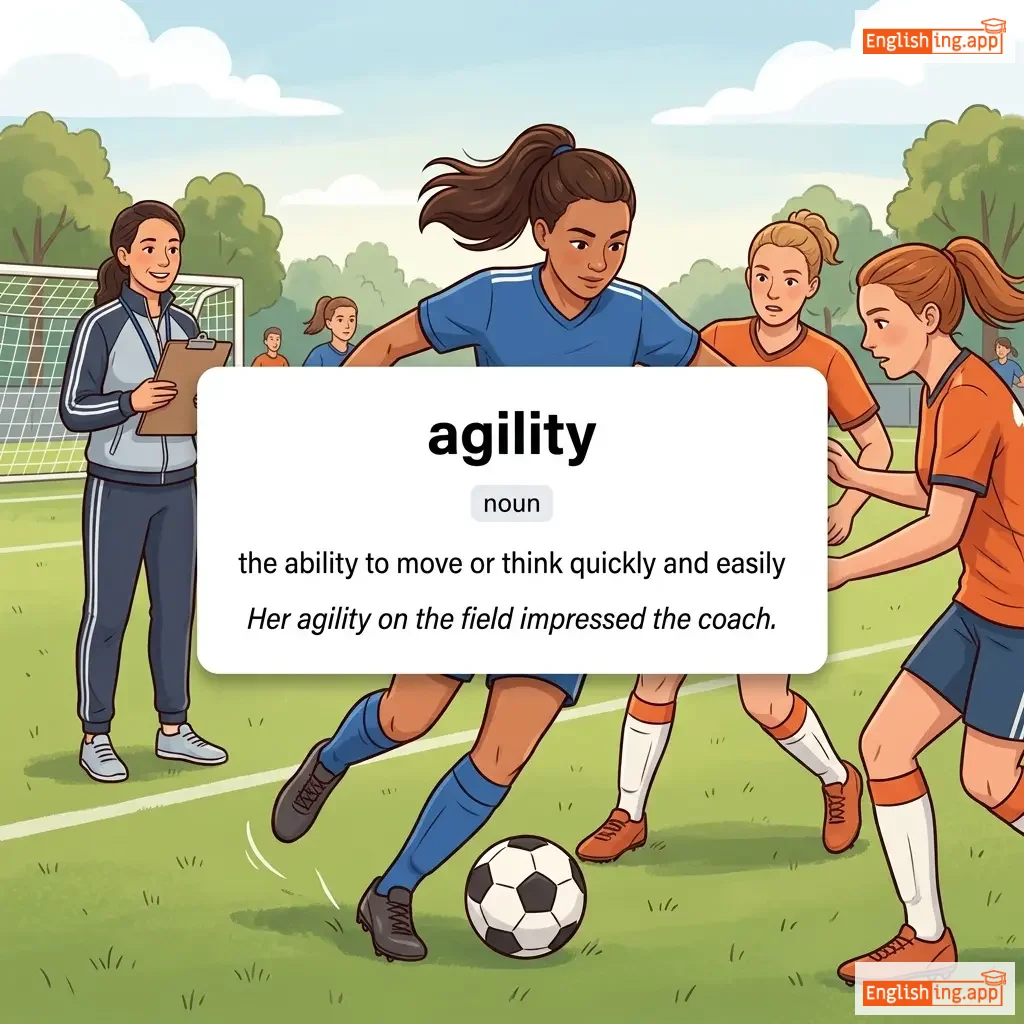
agility definition card — visual illustration of the meaning
noun
/əˈdʒɪl.ə.ti/
agilité (agilite)

the ability to move or think quickly and easily

"Her agility on the field impressed the coach."

"Son agilité sur le terrain a impressionné l'entraîneur." (Son agilite sur le terrain a impressionne l'entraineur.)
verb
/ˈædʒ.ɪ.teɪt/
agiter, provoquer (agiter, provoquer)

to stir up feelings or disturb; to campaign for change

"The protesters agitated for better working conditions."

"Les manifestants ont agité pour de meilleures conditions de travail." (Les manifestants ont agité pour de meilleures conditions de travail.)
adjective
/ˈædʒɪteɪtɪd/
agité; nerveux; inquiet; excité de manière négative (agite; nerveux; inquiet; excite de maniere negative)

disturbed; anxious; restless; excited in a negative way

"He became agitated when he heard the bad news."

"Il est devenu agité lorsqu'il a entendu les mauvaises nouvelles." (Il est devenu agite lorsqu'il a entendu les mauvaises nouvelles.)
noun
/ˌædʒ.ɪˈteɪ.ʃən/
agitation (agitation)

a state of nervousness, excitement, or unrest; or action of stirring up public concern

"There was visible agitation among the crowd."

"Il y avait une agitation visible parmi la foule." (Il y avait une agitation visible parmi la foule.)
noun
/æɡˈnɒs.tɪk/
agnostique (agnostik)

a person who believes that nothing is known or can be known about the existence of God; uncertain in belief

"He described himself as an agnostic rather than an atheist."

"Il se décrivait comme un agnostique plutôt qu'un athée." (Il se décrivait comme un agnostique plutôt qu'un athée.)
adverb
/əˈɡoʊ/
il y a (il y a)

Used to indicate how long before the present something happened.

"I met her two years ago."

"Je l'ai rencontrée il y a deux ans." (Je l'ai rencontree il y a deux ans.)
🤩

agog

adjective
/əˈɡɒɡ/

Highly excited by eagerness, curiosity, or anticipation.

"The children were agog with excitement as they waited for the magician to appear."

verb
/ˈæɡənaɪz/
agoniser (agoniser)

To suffer extreme physical or mental pain; to spend time worrying.

"She agonized for days over whether she had made the right decision."

"Elle a agonisé pendant des jours à propos de la décision qu'elle avait prise." (Elle a agonisé pendant des jours à propos de la décision qu'elle avait prise.)
noun
/ˈæɡ.ə.ni/
souffrance extrême physique ou mentale; douleur intense (souffrance extreme physique ou mentale; douleur intense)

extreme physical or mental suffering; intense pain

"He was in agony after the accident."

"Il était dans l'agonie après l'accident." (il etait dans l'agonie apres l'accident.)
adjective
/əˈɡrɛəriən/
agricole (agricole)

Related to farming, agriculture, or rural land.

"The country’s economy is still largely agrarian."

"L'économie du pays est encore largement agricole." (L'economie du pays est encore largement agricole.)
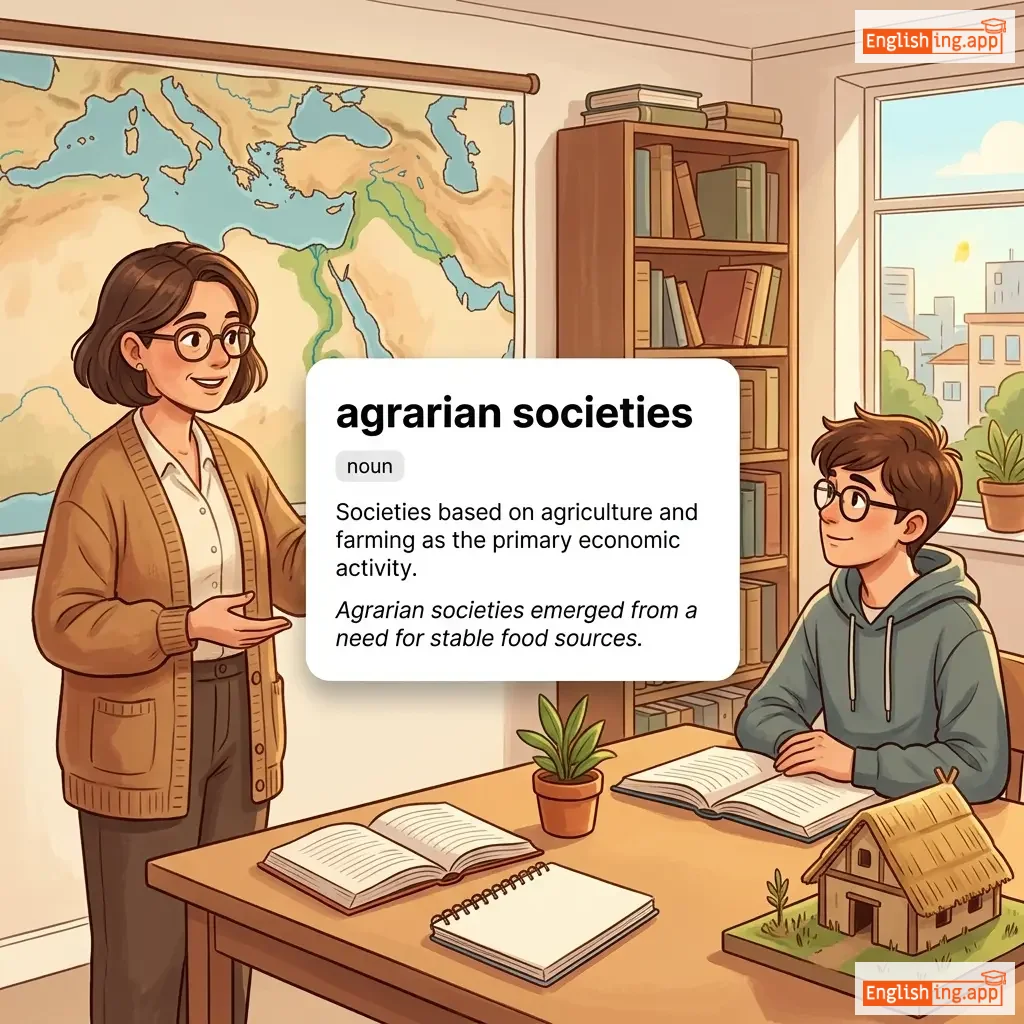
agrarian societies definition card — visual illustration of the meaning
noun
əˈɡrɛriən səˈsaɪətiz
sociétés agricoles (societes agricoles)

Societies based on agriculture and farming as the primary economic activity.

"Agrarian societies emerged from a need for stable food sources."

"Les sociétés agricoles ont émergé d'un besoin de sources alimentaires stables." (Les societes agricoles ont emerge d'un besoin de sources alimentaires stables.)
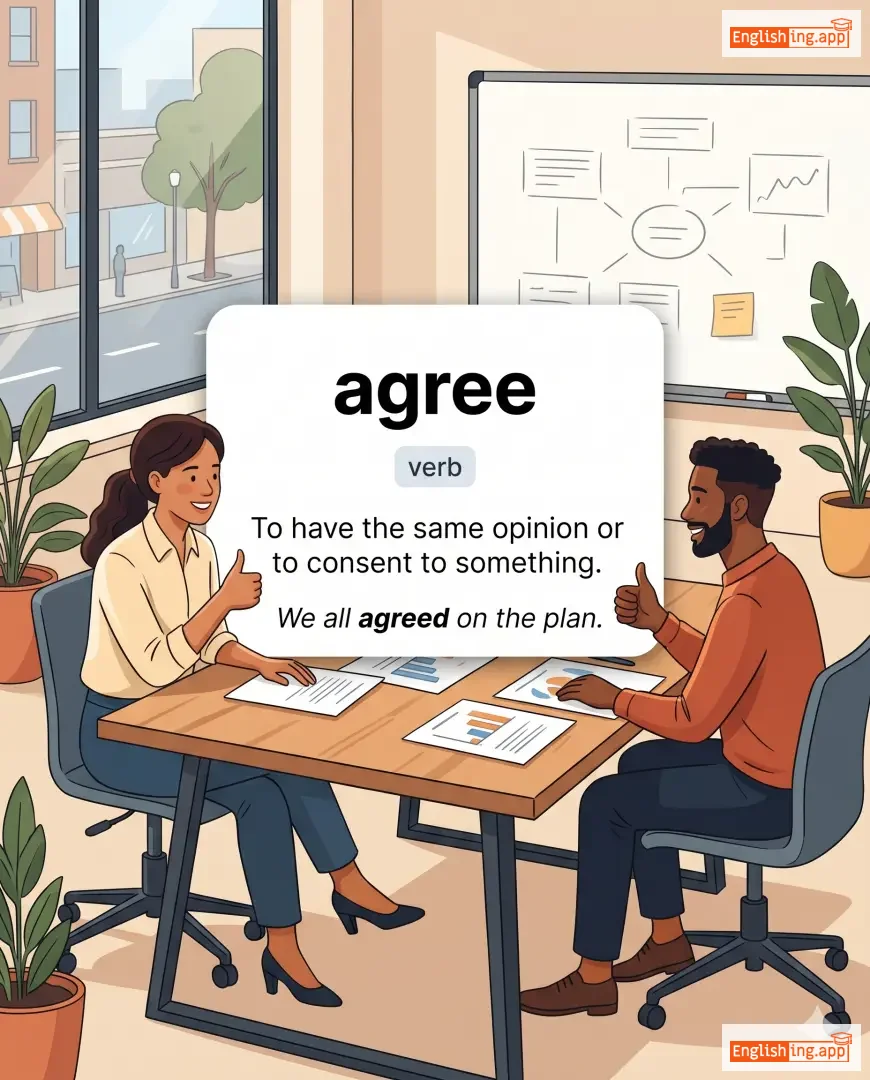
agree definition card — visual illustration of the meaning
verb
/əˈɡriː/
accepter (accepter)

To have the same opinion or to consent to something.

"We all agreed on the plan."

"Nous avons tous accepté le plan." (Nous avons tous accepté le plan.)
adjective
/əˈɡriːəbl/
agréable; plaisant; agréable à vivre; prêt à accepter (agreable; plaisant; agreable a vivre; pret a accepter)

pleasant; enjoyable; delightful; willing to agree

"The weather is very agreeable today."

"Le temps est très agréable aujourd'hui." (Le temps est tres agreable aujourd'hui.)
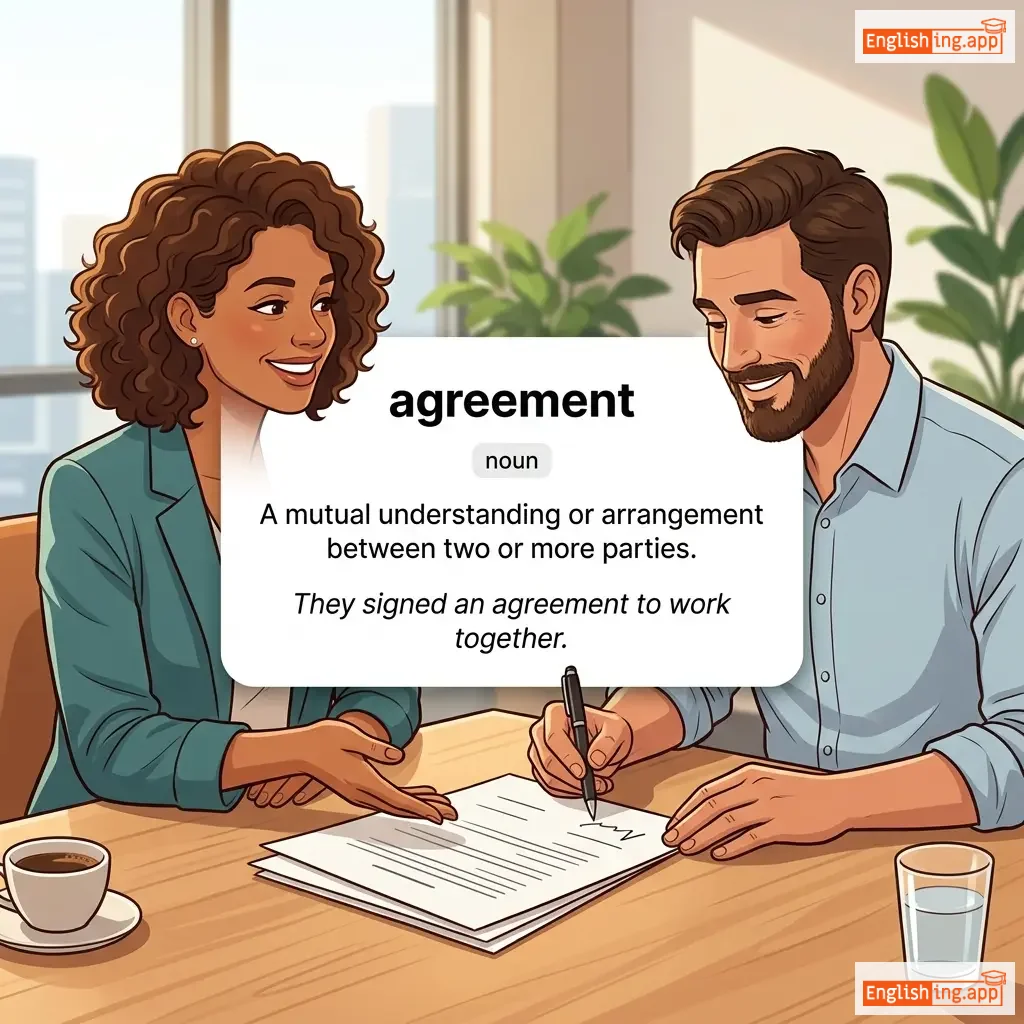
agreement definition card — visual illustration of the meaning
noun
/əˈɡriː.mənt/
accord (accord)

A mutual understanding or arrangement between two or more parties.

"They signed an agreement to work together."

"Ils ont signé un accord pour travailler ensemble." (Ils ont signé un accord pour travailler ensemble.)
agreements definition card — visual illustration of the meaning
noun
/əˈɡriː.mənts/
accords (accords)

Formal arrangements or understandings between two or more parties.

"Agreements strengthen partnerships."

"Les accords renforcent les partenariats." (Les accords renforcent les partenariats.)
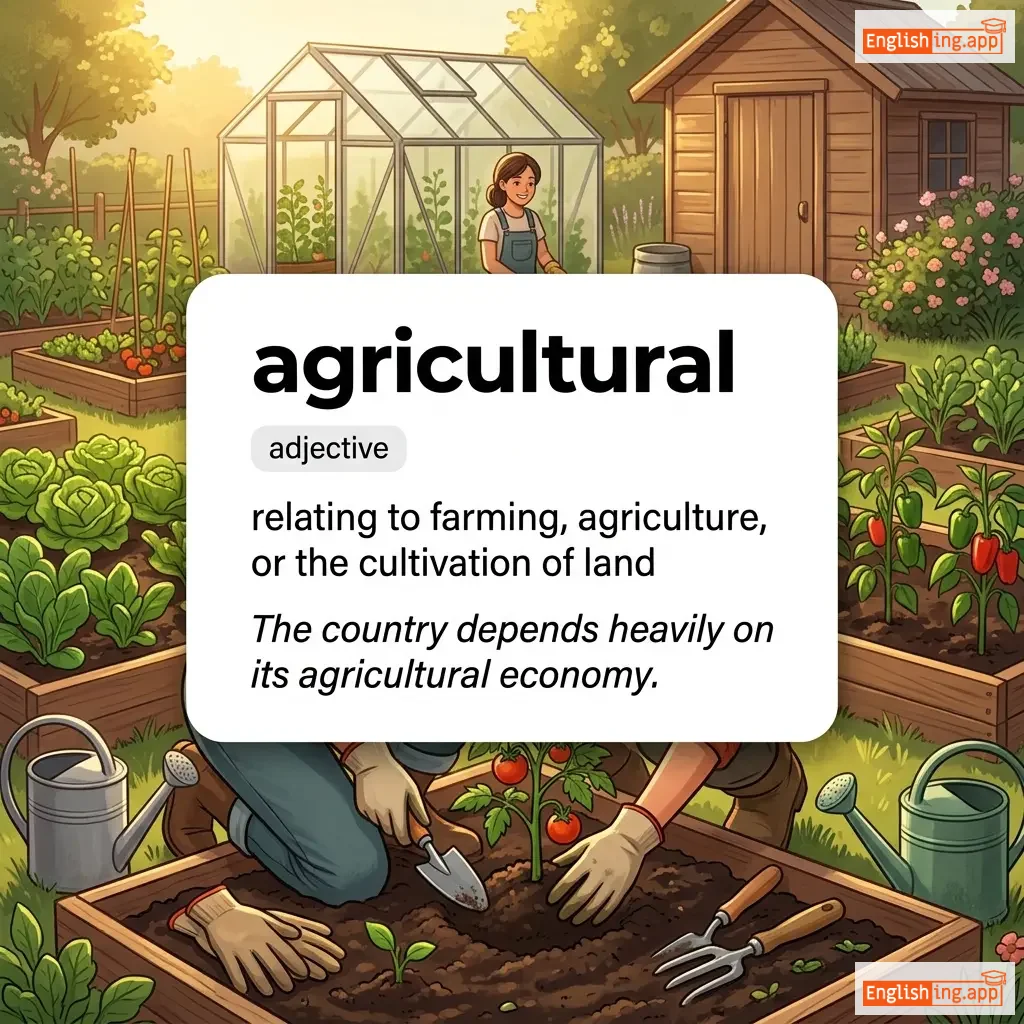
agricultural definition card — visual illustration of the meaning
adjective
/ˌæɡ.rɪˈkʌl.tʃər.əl/
agricole (agricole)

relating to farming, agriculture, or the cultivation of land

"The country depends heavily on its agricultural economy."

"Le pays dépend fortement de son économie agricole." (Le pays depend fortement de son economie agricole.)
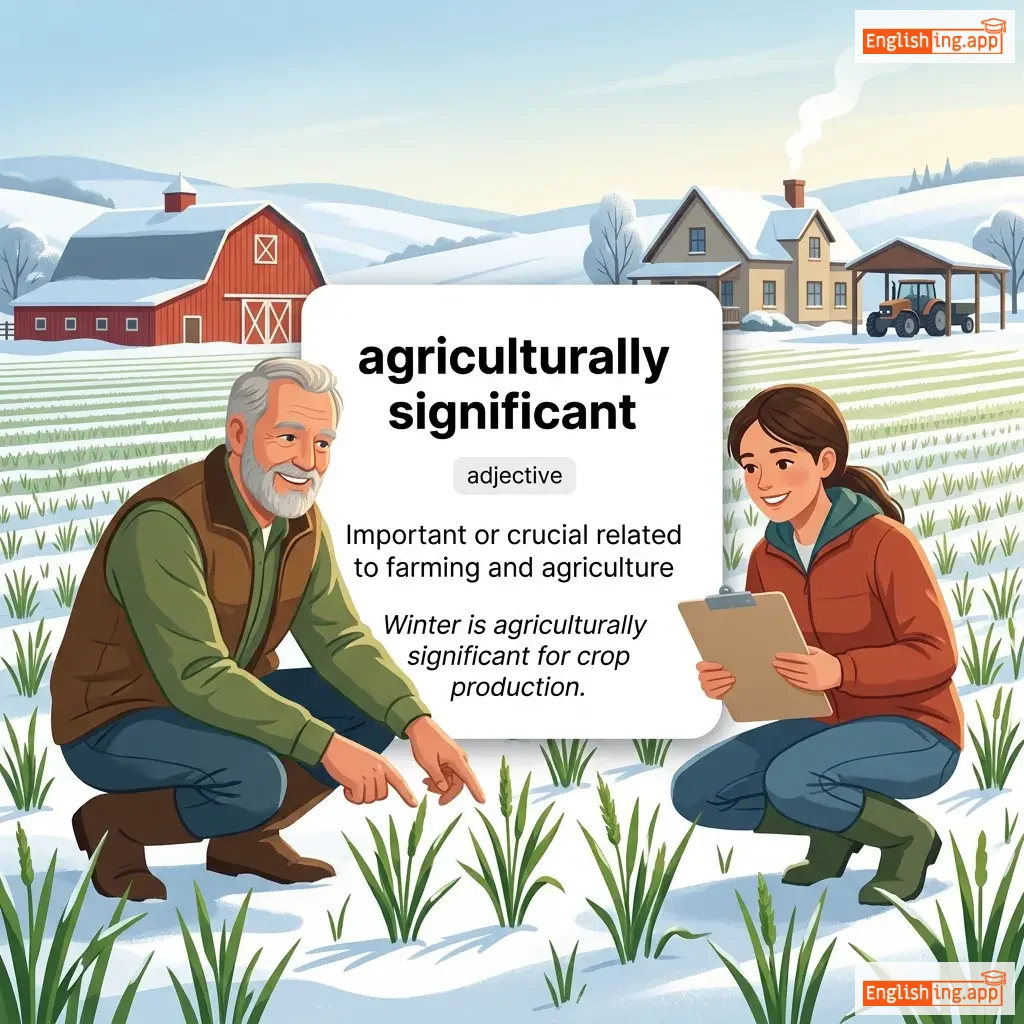
agriculturally significant definition card — visual illustration of the meaning
adjective
ˌæɡrɪˈkʌltʃərəli sɪɡˈnɪfɪkənt
important lié à l'agriculture (important lie a l'agriculture)

Important or crucial related to farming and agriculture

"Winter is agriculturally significant for crop production."

"L'hiver est important pour la production des récoltes." (L'hiver est important pour la production des récoltes.)
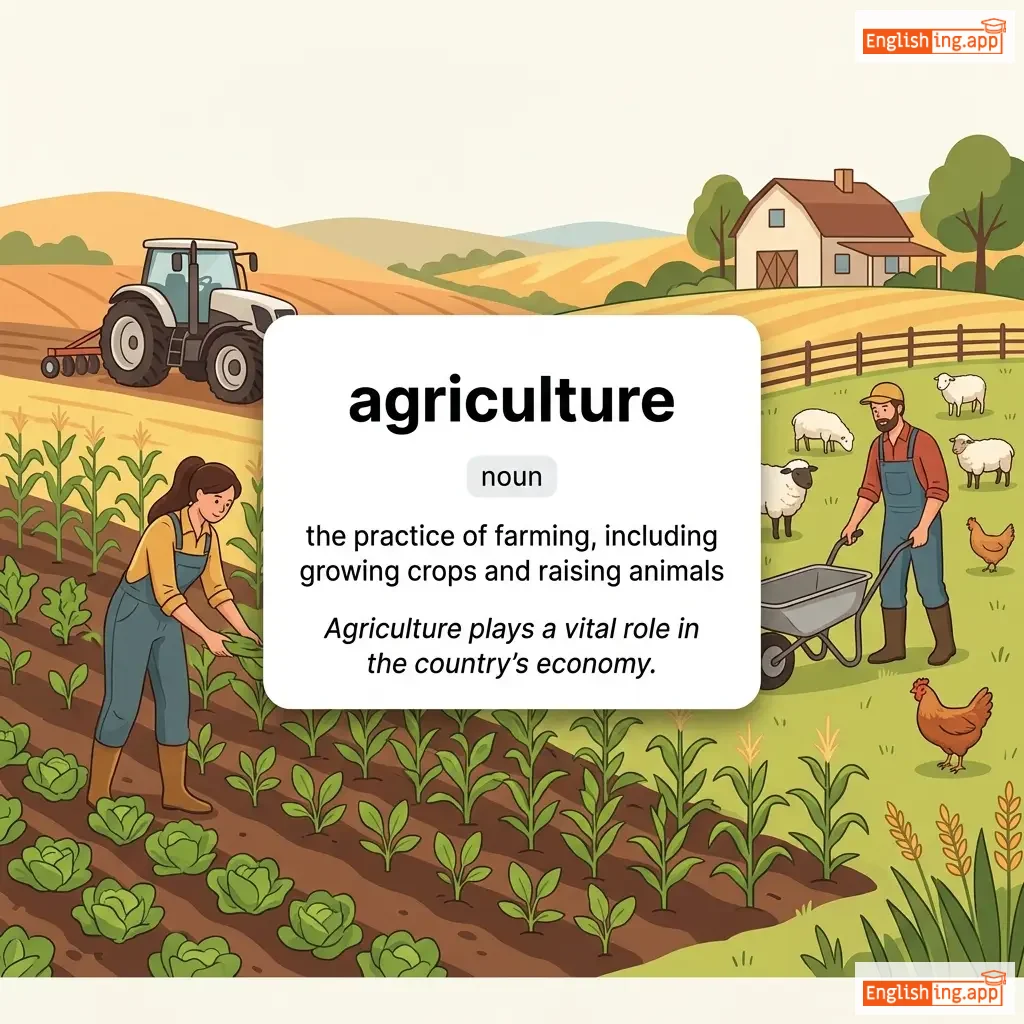
agriculture definition card — visual illustration of the meaning
noun
/ˈæɡrɪˌkʌltʃər/
agriculture (agriculture)

the practice of farming, including growing crops and raising animals

"Agriculture plays a vital role in the country's economy."

"L'agriculture joue un rôle vital dans l'économie du pays." (L'agriculture joue un role vital dans l'economie du pays.)
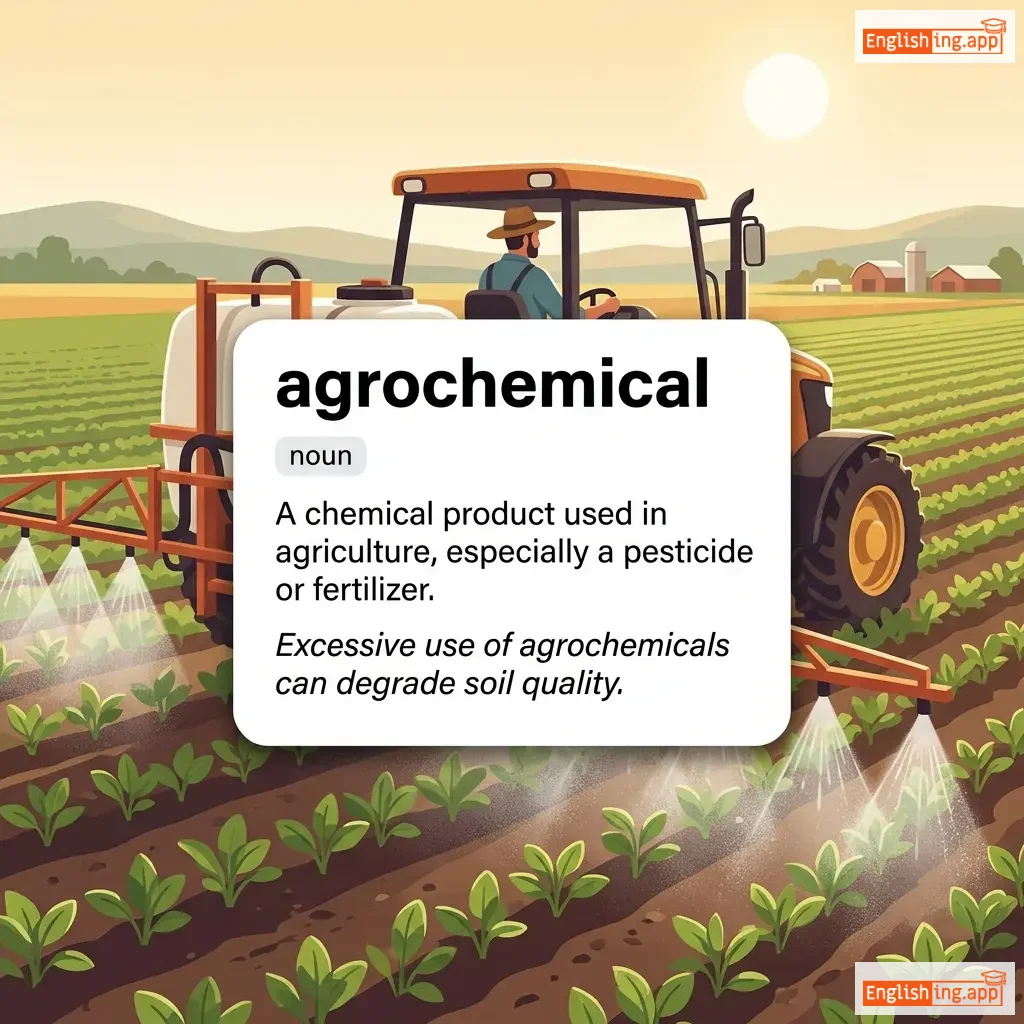
agrochemical definition card — visual illustration of the meaning
noun
ˌæɡ.rəʊˈkem.ɪ.kəl
agrochimique (agroshimique)

A chemical product used in agriculture, especially a pesticide or fertilizer.

"Excessive use of agrochemicals can degrade soil quality."

"L'utilisation excessive de produits agrochimiques peut dégrader la qualité du sol." (lyutilization excessive de produit agroshimique pe degrade la qualite du sol)
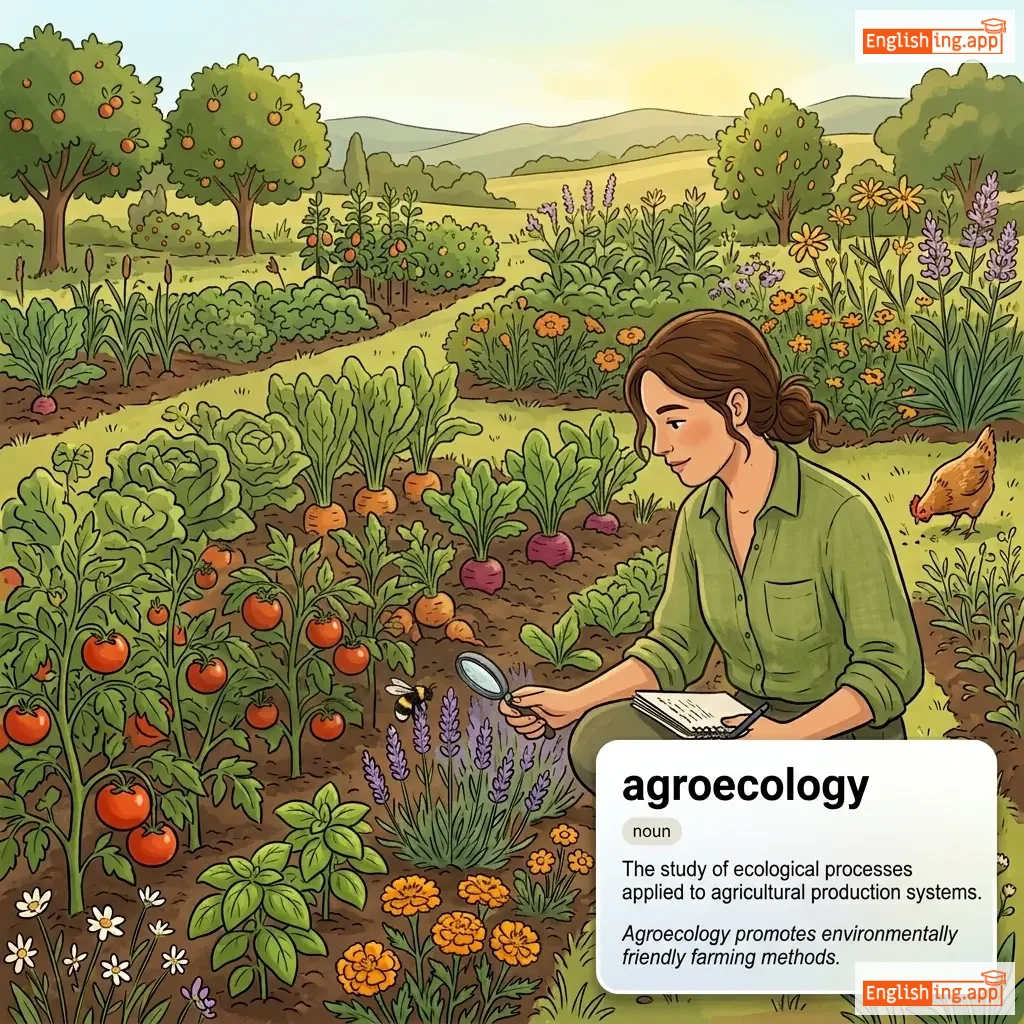
agroecology definition card — visual illustration of the meaning
noun
/ˌæɡ.roʊ.iˈkɑː.lə.dʒi/
agroécologie (agroecologie)

The study of ecological processes applied to agricultural production systems.

"Agroecology promotes environmentally friendly farming methods."

"L'agroécologie favorise les méthodes agricoles écologiques." (L'agroecologie favorise les methodes agricoles ecologiques.)
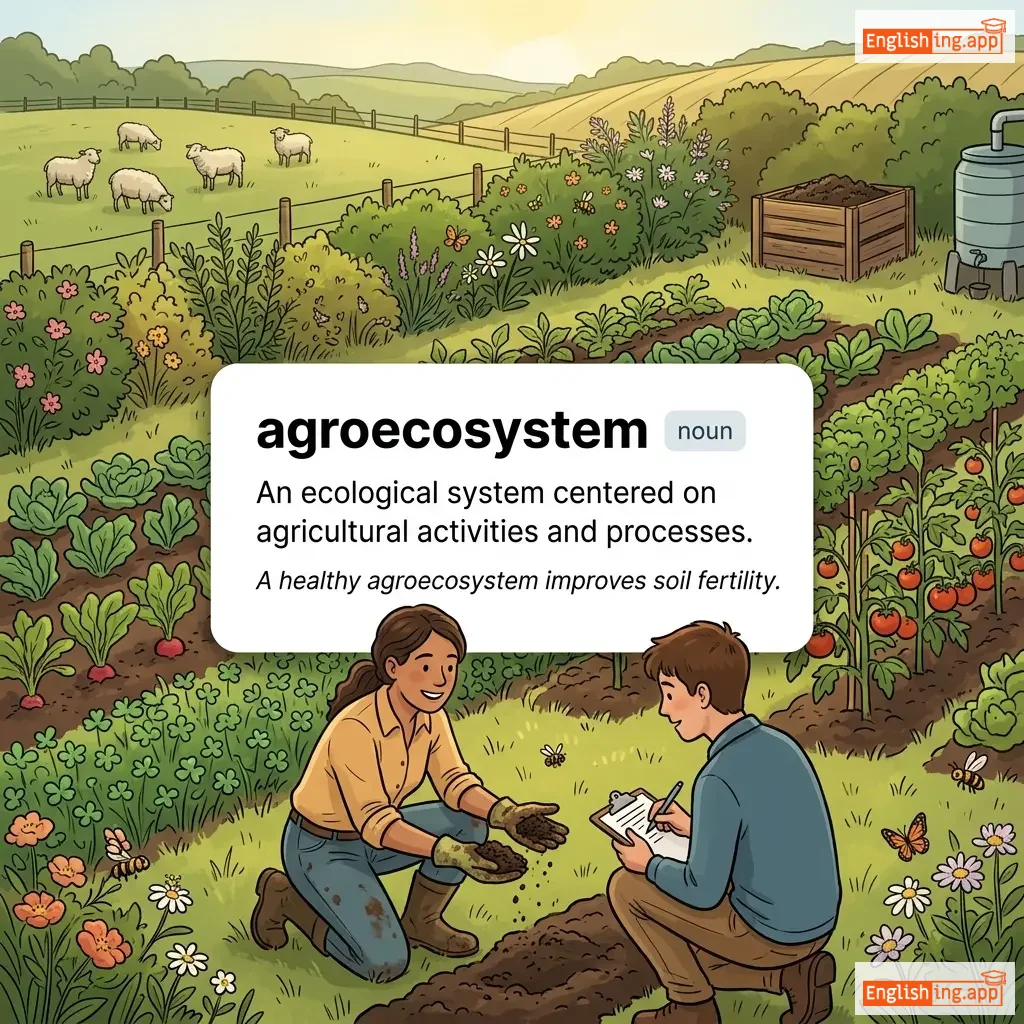
agroecosystem definition card — visual illustration of the meaning
noun
ˌæɡ.roʊˈiː.koʊˌsɪs.təm
agrosystème (agrosysteme)

An ecological system centered on agricultural activities and processes.

"A healthy agroecosystem improves soil fertility."

"Un agroécosystème sain améliore la fertilité du sol." (Un agroecosysteme sain ameliore la fertilite du sol.)
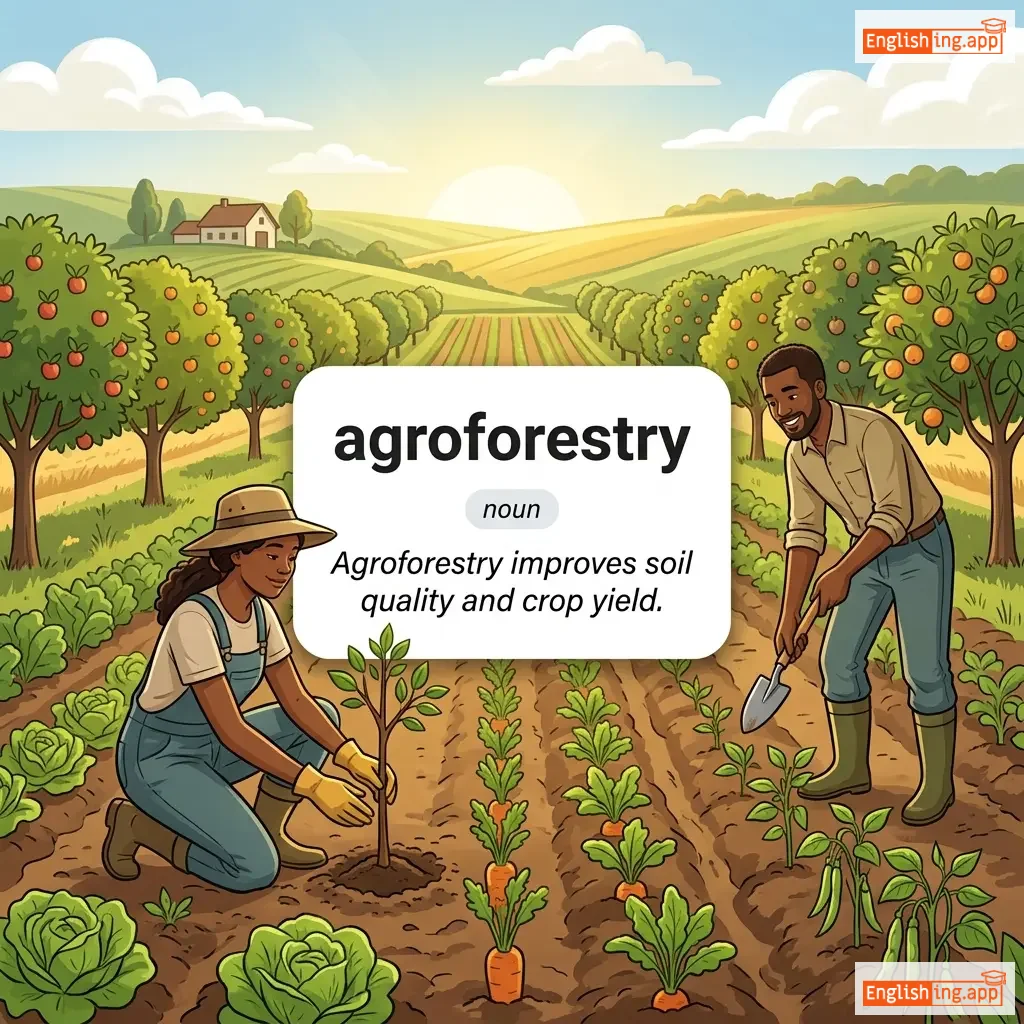
agroforestry definition card — visual illustration of the meaning
noun
ˌæɡ.roʊˈfɔːr.ɪ.stri
agroforesterie (agroforesterie)

A land use management system in which trees or shrubs are grown around or among crops or pastureland.

"Agroforestry improves soil quality and crop yield."

"L'agroforesterie améliore la qualité du sol et le rendement des cultures." (L'agroforesterie ameliore la qualite du sol et le rendement des cultures.)
noun
/əˈɡrɒnəmɪst/
agronome (agronome)

A scientist who studies soil management and crop production.

"The agronomist suggested new methods to improve rice yields."

"L'agronome a suggéré de nouvelles méthodes pour améliorer les rendements du riz." (L'agronome a suggere de nouvelles methodes pour ameliorer les rendements du riz.)
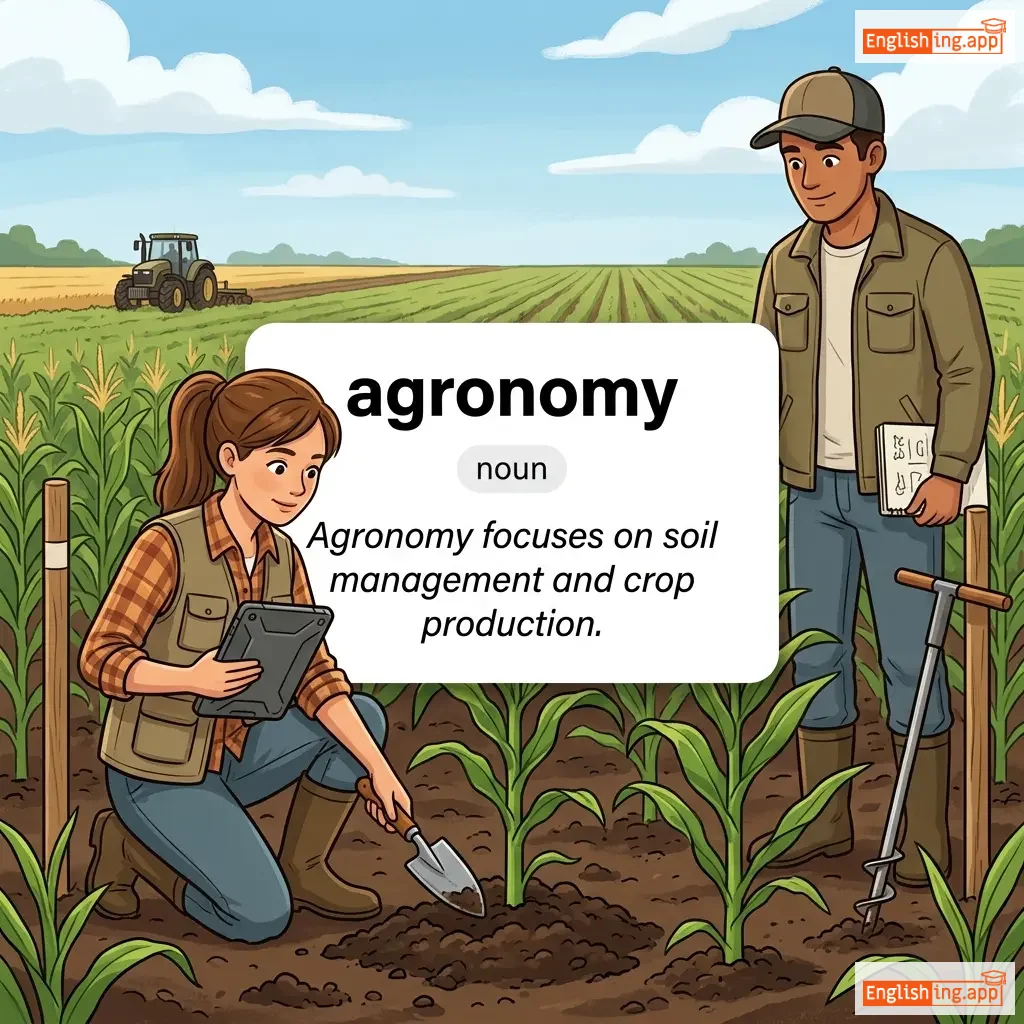
agronomy definition card — visual illustration of the meaning
noun
/əˈɡrɒnəmi/
Agronomie (agronomie)

The science and practice of soil management and crop production, focusing on the principles of plant and soil science to optimize agricultural productivity.

"Agronomy focuses on soil management and crop production."

"L'agronomie se concentre sur la gestion des sols et la production de cultures." (L'agronomie se concentre sur la gestion des sols et la production de cultures.)
interjection
/ɑː/
ah (ah)

used to express realization, surprise, or relief

"Ah, now I understand what you mean."

"Ah, maintenant je comprends ce que tu veux dire." (Ah, maintenant je comprends ce que tu veux dire.)
adverb
/əˈhɛd/
devant (devant)

in front; in advance; before someone or something in position or progress

"She walked ahead of the group."

"Elle marchait devant le groupe." (Elle marchait devant le groupe.)
noun, verb
/eɪd/
aide (aide)

help or support, typically of a practical nature

"The volunteers provided aid to the flood victims."

"Les bénévoles ont fourni de l'aide aux victimes de l'inondation." (Les benevoles ont fourni de l'aide aux victimes de l'inondation.)
🧑‍💼

aide (ɛd)

noun
/eɪd/
assistant (assistant)

An assistant or helper, especially to an important person.

"The senator’s aide organized the meeting with journalists."

"L'assistant du sénateur a organisé la réunion avec les journalistes." (L'assistant du sénateur a organisé la réunion avec les journalistes.)
noun
/ˌeɪd də ˈkæmp/
officier militaire agissant comme assistant confident d'un officier supérieur (officier militaire agissant comme assistant confident d'un officier supérieur)

A military officer acting as a confidential assistant to a senior officer.

"The general was accompanied by his aide-de-camp during the ceremony."

"Le général était accompagné de son aide-de-camp lors de la cérémonie." (Le général était accompagné de son aide-de-camp lors de la cérémonie.)
noun
/eɪdz/
sida (sida)

Acquired Immune Deficiency Syndrome, a disease of the immune system caused by HIV

"AIDS is a major global health concern."

"Le SIDA est un problème de santé mondial majeur." (Le SIDA est un probleme de sante mondial majeur.)
verb
/eɪl/
être malade (etre malade)

to be ill or suffer from a physical or mental problem; to trouble or afflict

"She has been ailing since last winter."

"Elle est malade depuis l’hiver dernier." (elle est malade depuis lhiver dernier)
adjective, verb
/ˈeɪlɪŋ/
malade (malade)

suffering from illness or poor health; experiencing problems or decline

"The ailing patient slowly began to recover after treatment."

"Le patient malade a commencé à se rétablir lentement après le traitement." (Le patient malade a commence a se retablir lentement apres le traitement)
noun
/ˈeɪlmənt/
maladie (maladie)

An illness, typically a minor one.

"He went to the doctor for a minor stomach ailment."

"Il est allé chez le médecin pour une légère maladie de l'estomac." (Il est alle chez le medecin pour une legere maladie de l'estomac.)
verb
/eɪm/
viser (viser)

to direct a weapon, object, or effort at a target; to intend or plan

"He aimed the ball at the goal."

"Il a visé la balle vers le but." (Il a visé la balle vers le but.)
adjective
/ˈeɪmləs/
sans but; sans objectif (aimles)

without purpose or direction; lacking a goal

"He wandered around the city in an aimless manner."

"Il se promenait dans la ville de manière sans but." (Il se promenait dans la ville de manière sans but.)
🌬️

Air (air)

noun
/ɛər/
air (air)

The invisible mixture of gases that surrounds the earth and is breathed in by people and animals.

"The air is fresh after the rain."

"L'air est frais après la pluie." (L'air est frais après la pluie.)
noun
/ˈeər kənˈdɪʃ.ən.ər/
climatisation (climatisation)

a system that controls the temperature, humidity, and air quality in a building or room

"We turned on the air conditioner because it was too hot outside."

"Nous avons allumé la climatisation parce qu'il faisait trop chaud dehors." (Nous avons allume la climatisation parce qu'il faisait trop chaud dehors)
noun
/ˈeər fɔːrs/
force aérienne (force aerienne)

the military organization of a country that uses aircraft for fighting

"The air force conducted a training exercise over the mountains."

"La force aérienne a mené un exercice d'entraînement au-dessus des montagnes." (La force aerienne a mene un exercice d'entrainement au-dessus des montagnes.)