Vocabulaires

Découvrez, apprenez et maîtrisez le vocabulaire anglais

noun
/ˌæplɪˈkeɪʃən/
demande / application / logiciel (demande / application / logiciel)

a formal request for something; the act of putting something into operation; or a software program

"She submitted her application for the scholarship."

"Elle a soumis sa demande pour la bourse." (Elle a soumis sa demande pour la bourse.)
verb
/əˈplaɪ/
appliquer / solliciter (appliquer / solliciter)

to make a formal request for something; to put into practice

"He decided to apply for the scholarship."

"Il a décidé de postuler pour la bourse." (Il a décidé de postuler pour la bourse.)
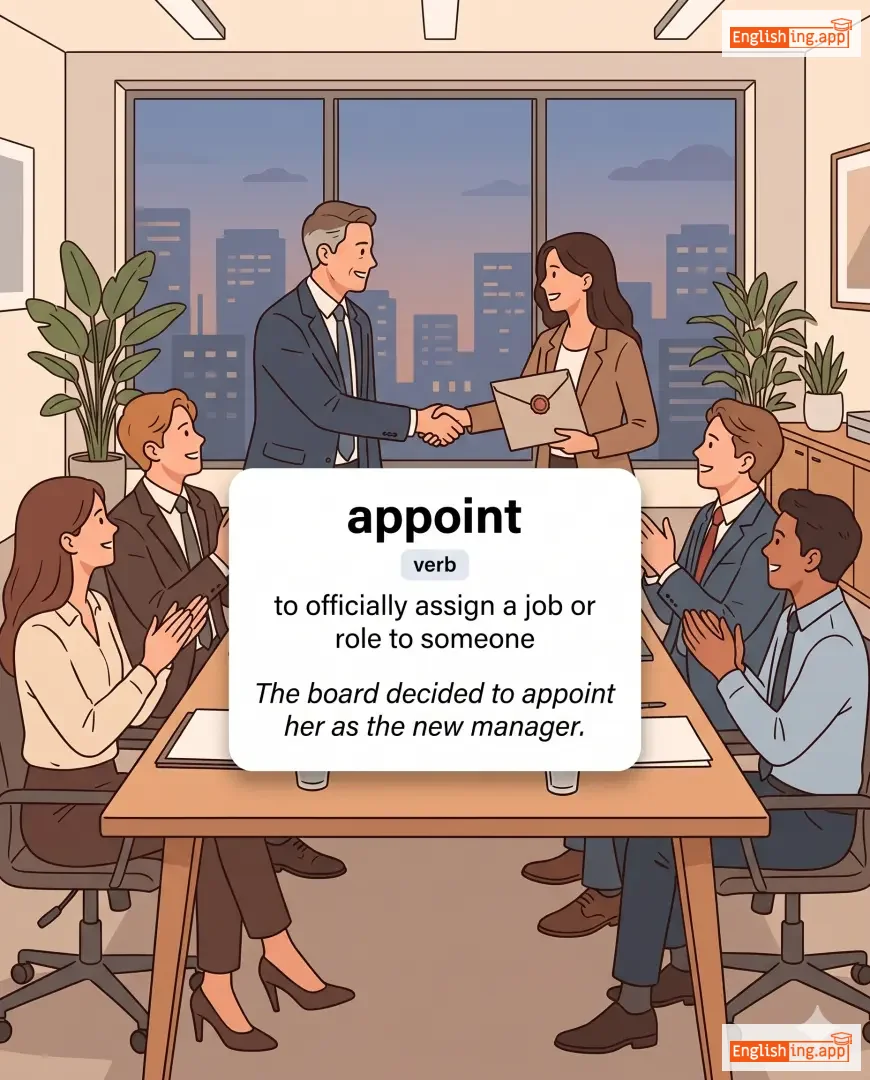
appoint definition card — visual illustration of the meaning
verb
/əˈpɔɪnt/
nommer (nommer)

to officially assign a job or role to someone

"The board decided to appoint her as the new manager."

"Le conseil a décidé de la nommer comme nouvelle directrice." (Le conseil a décidé de la nommer comme nouvelle directrice.)
appointed definition card — visual illustration of the meaning
verb
əˈpɔɪn.tɪd
nommé (nomme)

Assigned to a job or role; nominated or designated for a position.

"He was appointed as the commission leader."

"Il a été nommé chef de la commission." (Il a été nommé chef de la commission.)
noun
/əˈpɔɪntmənt/
rendez-vous (rendez-vous)

an arrangement to meet someone at a particular time

"I have a doctor's appointment tomorrow."

"J'ai un rendez-vous chez le médecin demain." (J'ai un rendez-vous chez le médecin demain.)
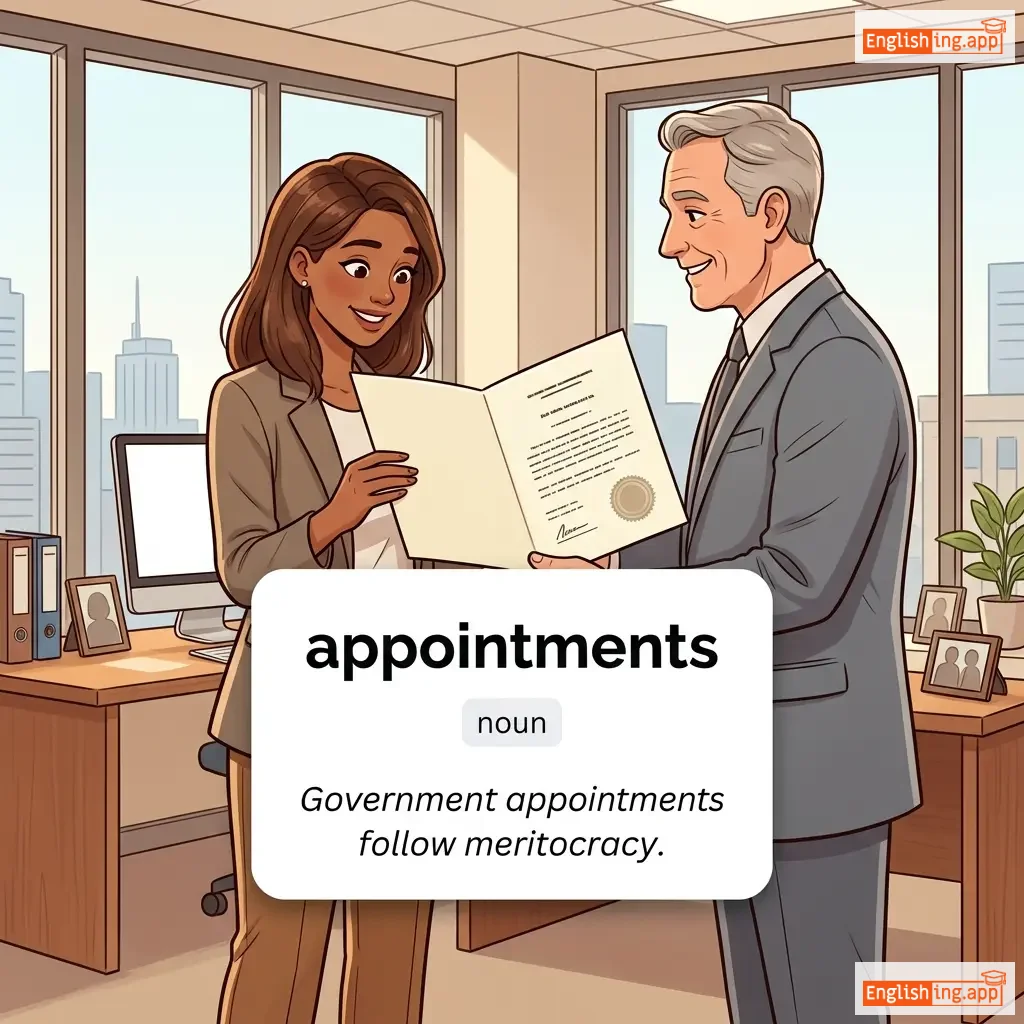
appointments definition card — visual illustration of the meaning
noun
əˈpɔɪnt.mənts
nominations (nominations)

An arrangement to meet someone at a particular time and place; the action of assigning a job or role to someone.

"Government appointments follow meritocracy."

"Les nominations gouvernementales suivent la méritocratie." (Les nominations gouvernementales suivent la méritocratie.)
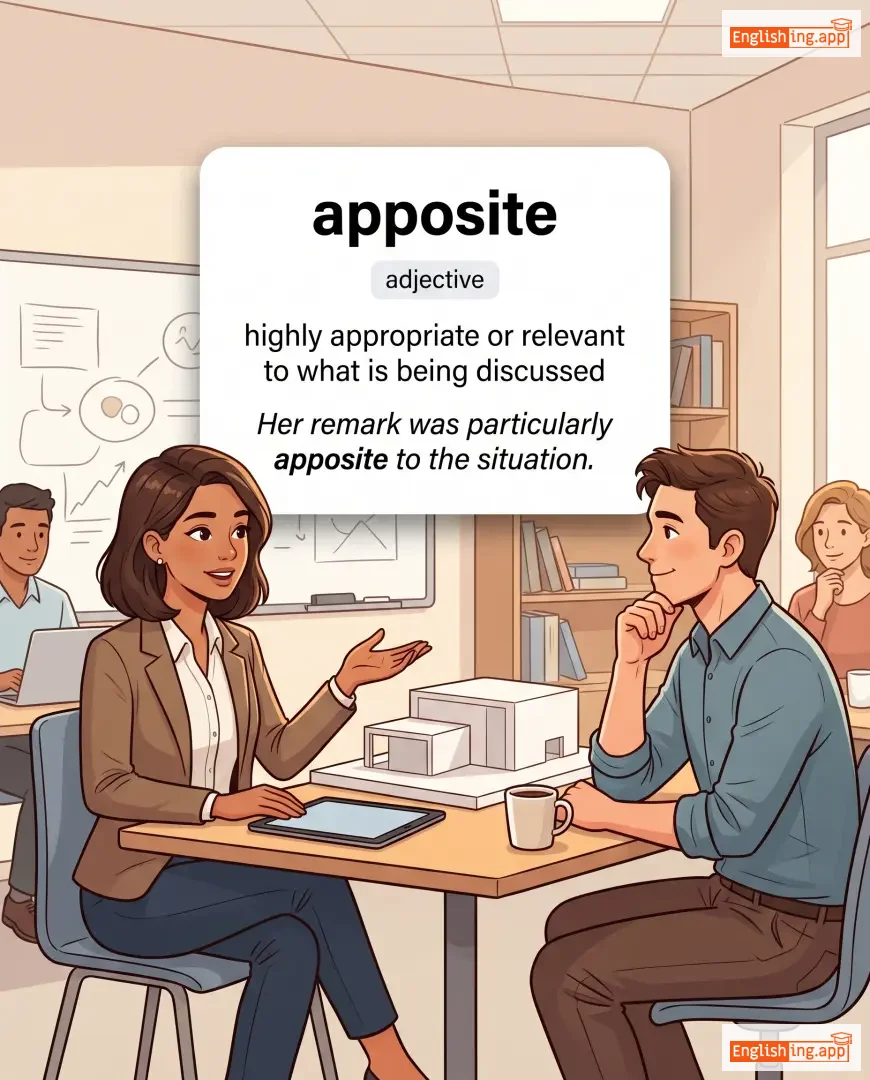
apposite definition card — visual illustration of the meaning
adjective
/ˈæpəzɪt/
approprié (approprie)

highly appropriate or relevant to what is being discussed

"Her remark was particularly apposite to the situation."

"Son commentaire était particulièrement approprié à la situation." (Son commentaire etait particulierement approprie a la situation.)
noun
/ˌæpəˈzɪʃən/
apposition (grammaire parallèle) (apposition (grammaire parallele))

a grammatical construction in which two elements are placed side by side, with one explaining the other

"In the phrase 'my friend John,' the word 'John' is in apposition to 'my friend.'"

"Dans l'expression 'mon ami Jean', le mot 'Jean' est en apposition à 'mon ami'." (Dans l'expression 'mon ami Jean', le mot 'Jean' est en apposition a 'mon ami'.)
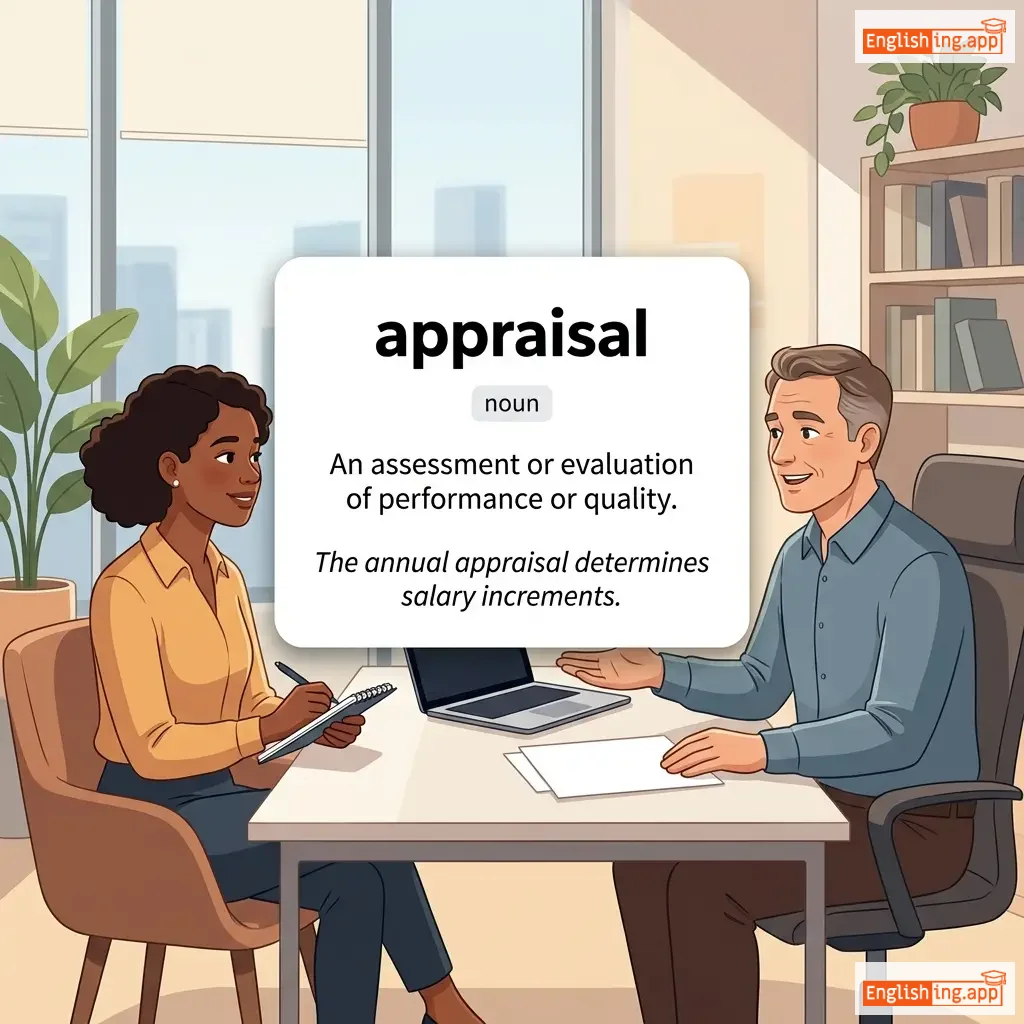
appraisal definition card — visual illustration of the meaning
noun
əˈpreɪ.zəl
évaluation (evaluation)

An assessment or evaluation of performance or quality.

"The annual appraisal determines salary increments."

"L'évaluation annuelle détermine les augmentations salariales." (L'evaluation annuelle determine les augmentations salariales.)
verb
/əˈpreɪz/
évaluer (evaluer)

to evaluate the value, quality, or importance of something

"The jeweler appraised the diamond before buying it."

"Le bijoutier a évalué le diamant avant de l'acheter." (Le bijoutier a évalué le diamant avant de l'acheter.)
adjective
/əˈpriːʃəbl/
significatif (significatif)

large or noticeable enough to be important

"There has been an appreciable improvement in her performance."

"Il y a eu une amélioration significative dans sa performance." (Il y a eu une amélioration significative dans sa performance.)
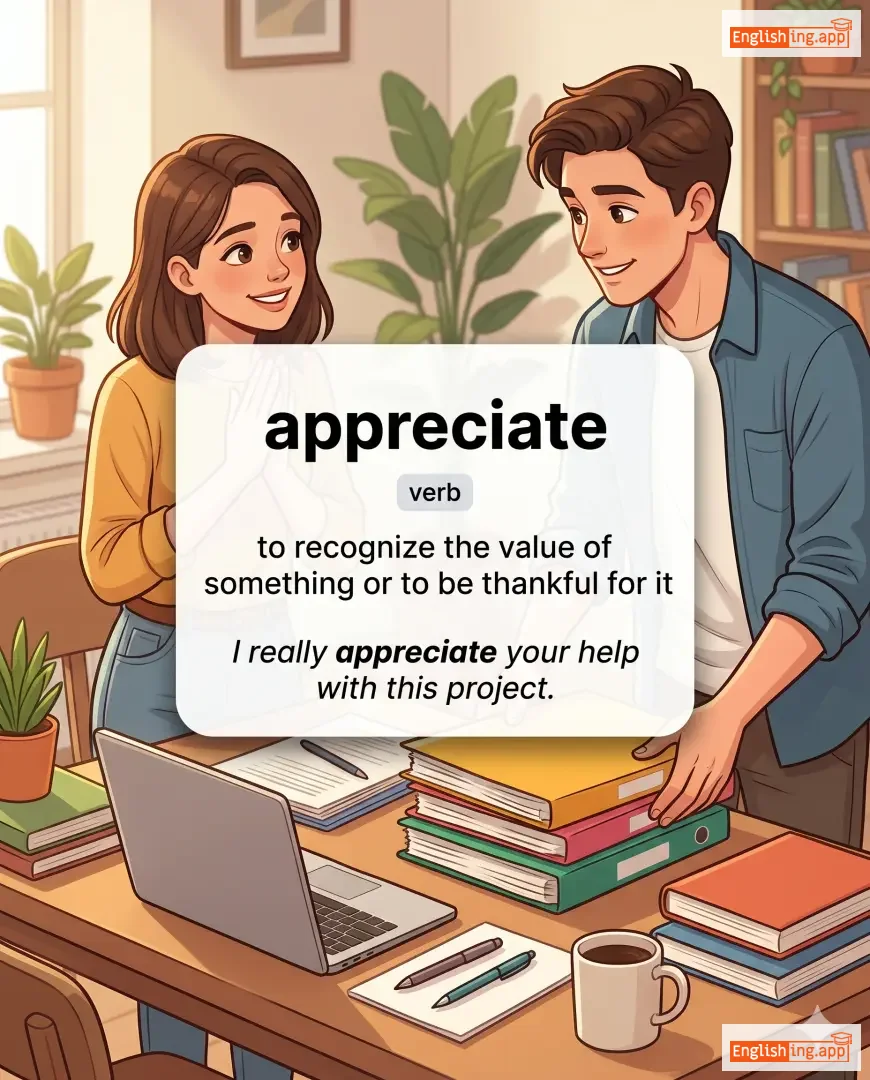
appreciate definition card — visual illustration of the meaning
verb
/əˈpriːʃieɪt/
apprécier (appre-sye)

to recognize the value of something or to be thankful for it

"I really appreciate your help with this project."

"J'apprécie vraiment votre aide avec ce projet." (J'ap-pre-cie vrai-ment vo-tre aide a-vec ce pro-jet.)
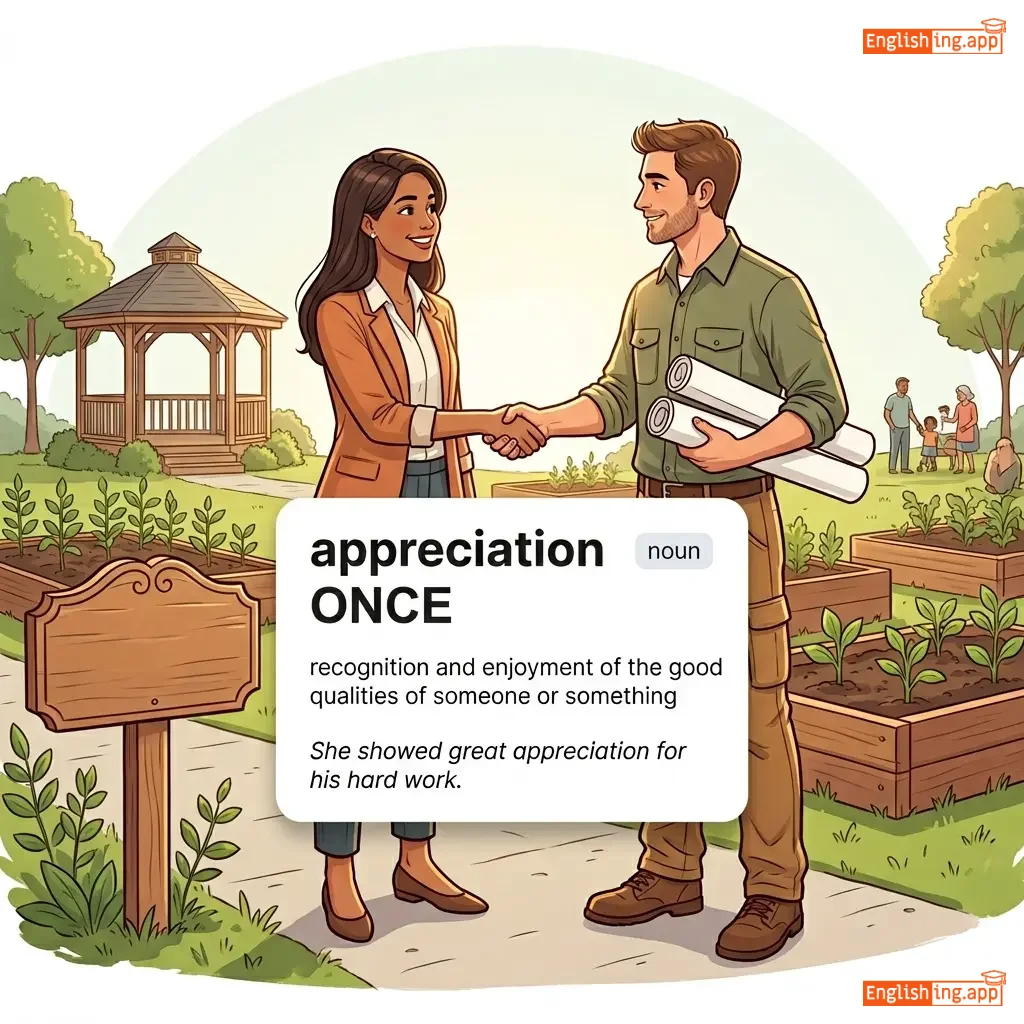
appreciation definition card — visual illustration of the meaning
noun
/əˌpriːʃiˈeɪʃən/
appréciation, reconnaissance (appreciation, reconnaissance)

recognition and enjoyment of the good qualities of someone or something

"She showed great appreciation for his hard work."

"Elle a montré une grande appréciation pour son travail acharné." (Elle a montré une grande appréciation pour son travail acharné.)
verb
/ˌæprɪˈhɛnd/
arrêter (arreter)

to arrest or seize someone; to understand or perceive something

"The police managed to apprehend the thief after a long chase."

"La police a réussi à appréhender le voleur après une longue course-poursuite." (La police a réussi à appréhender le voleur après une longue course-poursuite.)
adjective
/ˌæprɪˈhɛnsəbl̩/
compréhensible (comprehensible)

capable of being understood or grasped

"The concept was not easily apprehensible to the new students."

"Le concept n'était pas facilement compréhensible pour les nouveaux étudiants." (Le concept n'était pas facilement compréhensible pour les nouveaux étudiants.)
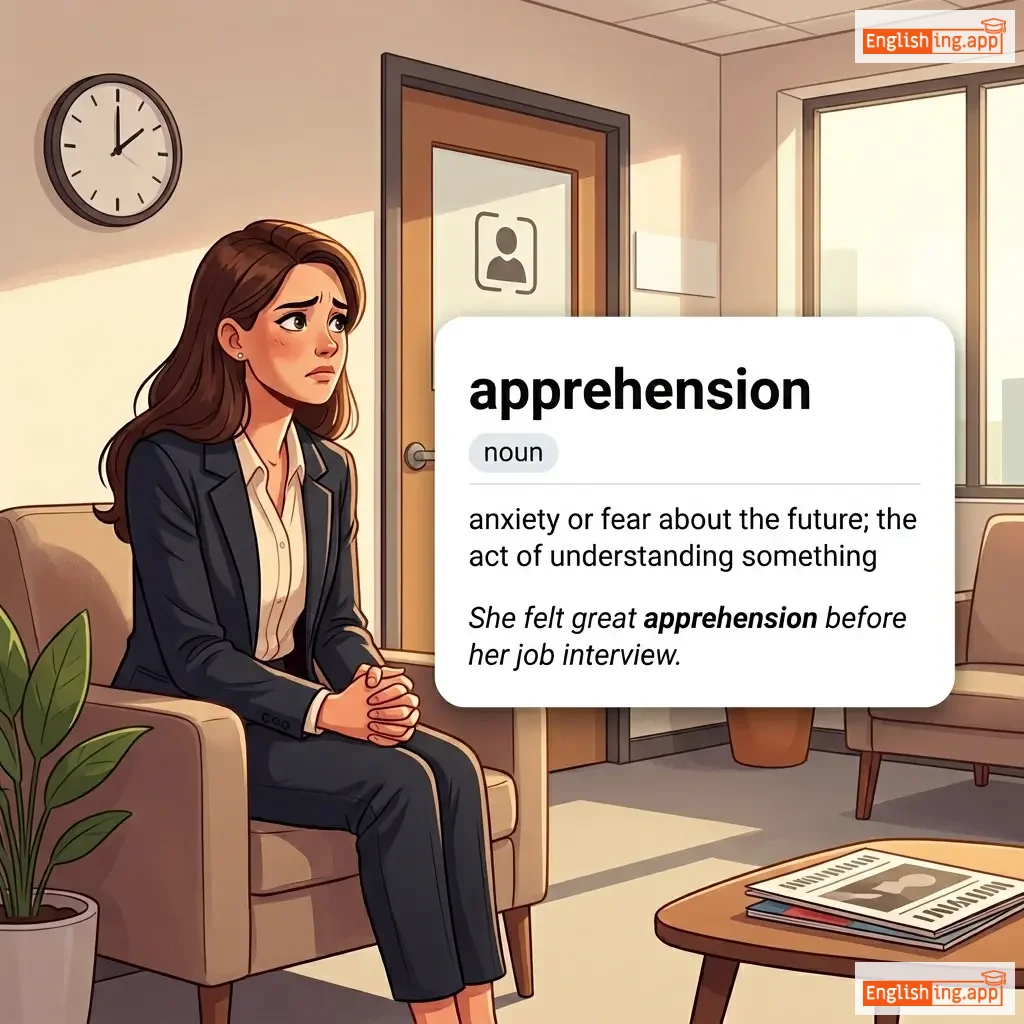
apprehension definition card — visual illustration of the meaning
noun
/ˌæprɪˈhɛnʃən/
appréhension (apprehension)

anxiety or fear about the future; the act of understanding something

"She felt great apprehension before her job interview."

"Elle a ressenti une grande appréhension avant son entretien d'embauche." (Elle a ressenti une grande appréhension avant son entretien d'embauche.)
adjective
/ˌæprɪˈhɛnsɪv/
anxieux (anxieux)

feeling anxious or fearful that something bad will happen

"He was apprehensive about starting a new job in a foreign country."

"Il était anxieux à l'idée de commencer un nouveau travail dans un pays étranger." (Il était anxieux à l'idée de commencer un nouveau travail dans un pays étranger.)
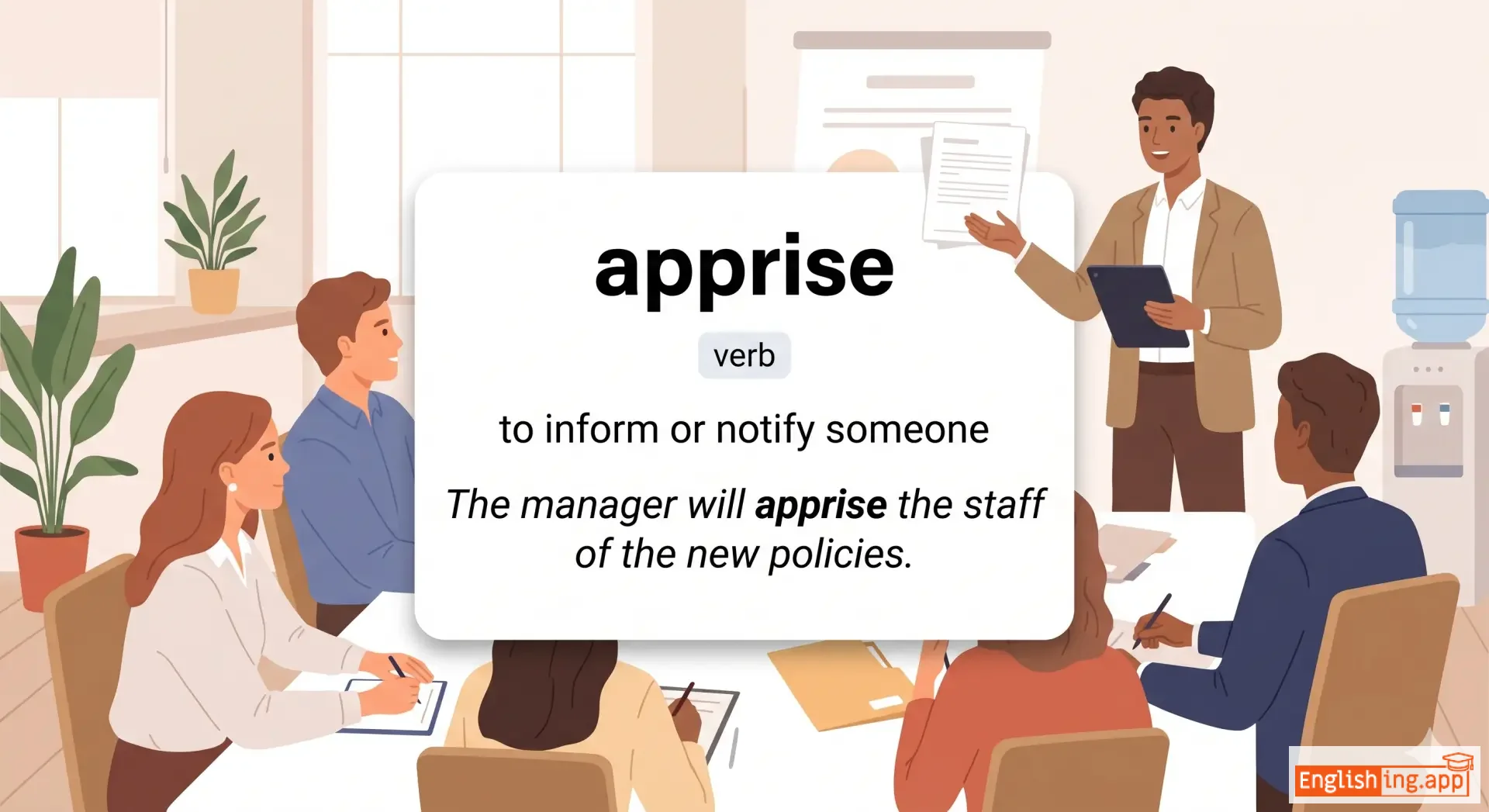
apprise definition card — visual illustration of the meaning
verb
/əˈpraɪz/
informer (informer)

to inform or notify someone

"The manager will apprise the staff of the new policies."

"Le responsable informera le personnel des nouvelles politiques." (Le responsable informera le personnel des nouvelles politiques.)
verb
/əˈproʊtʃ/
s'approcher / traiter avec (s'approcher / traiter avec)

to move closer to someone or something; to deal with a situation or problem

"The teacher approached the student to offer help."

"Le professeur s'est approché de l'élève pour offrir de l'aide." (Le professeur s'est approché de l'élève pour offrir de l'aide.)
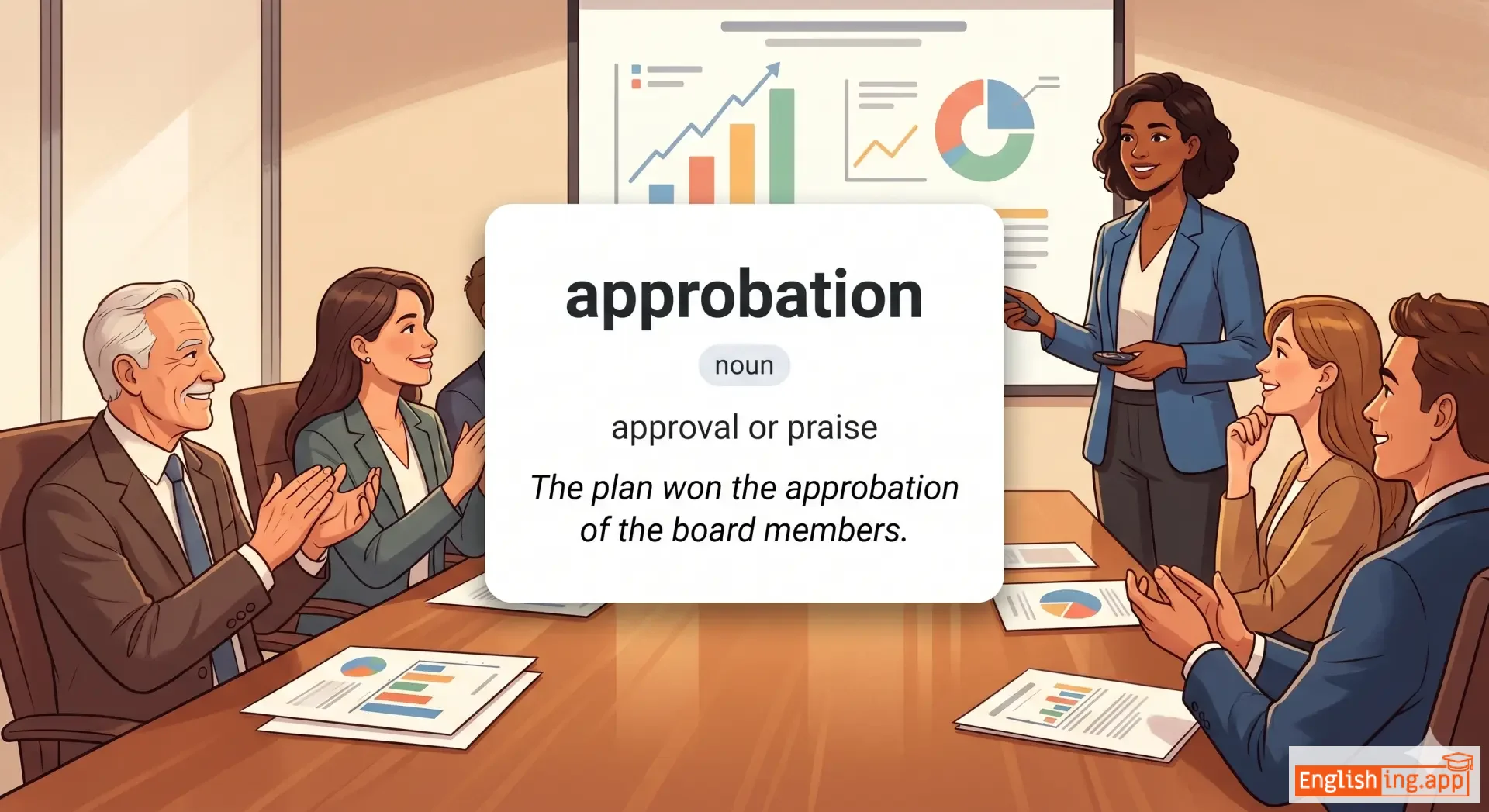
approbation definition card — visual illustration of the meaning
noun
/ˌæprəˈbeɪʃən/
approbation / éloge (approbation / éloge)

approval or praise

"The plan won the approbation of the board members."

"Le plan a reçu l'approbation des membres du conseil." (Le plan a recu l'approbation des membres du conseil.)
adjective
/ˈæprəbəˌtɔːri/
approuvant (approuvant)

expressing approval or praise

"The teacher gave an approbatory nod after reading the essay."

"Le professeur a hoché la tête d'un air approbateur après avoir lu la dissertation." (Le professeur a hoche la tete d'un air approbateur apres avoir lu la dissertation.)
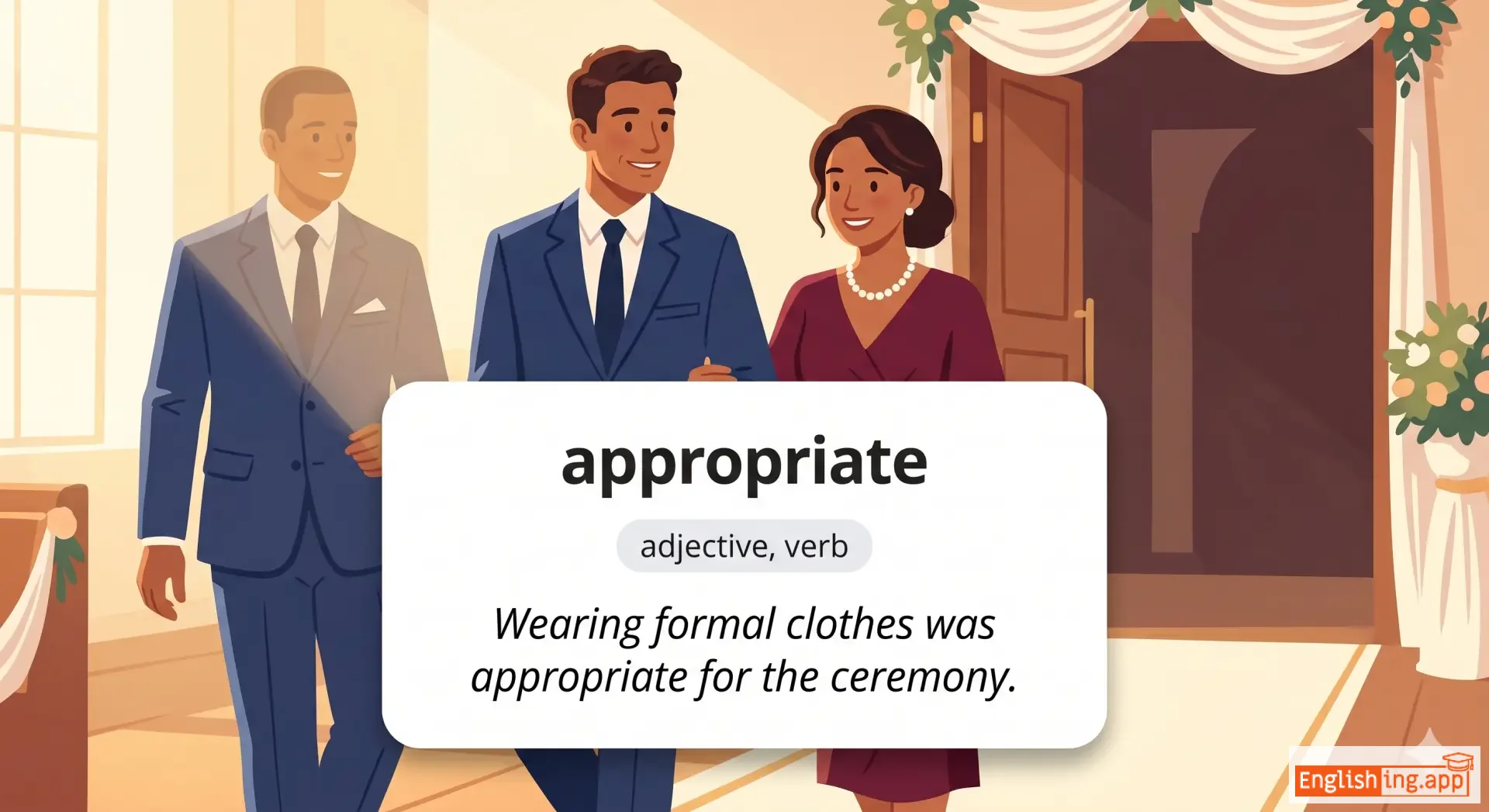
appropriate definition card — visual illustration of the meaning
adjective, verb
/əˈproʊpriət/ (adj), /əˈproʊprieɪt/ (verb)
approprié / s'approprier (approprié / s'approprier)

suitable or proper in the circumstances (adj); to take something for one’s own use, often without permission (verb)

"Wearing formal clothes was appropriate for the ceremony."

"Porter des vêtements formels était approprié pour la cérémonie." (Porter des vêtements formels était approprié pour la cérémonie.)
adverb
/əˈproʊpriətli/
de manière appropriée (de maniere appropriee)

in a way that is suitable or proper for a particular situation

"She was dressed appropriately for the event."

"Elle était habillée de manière appropriée pour l'événement." (Elle etait habillee de maniere appropriee pour l'evenement.)
noun
/əˈpruː.vəl/
approbation (approbation)

official permission or agreement for something

"The project received government approval."

"Le projet a reçu l'approbation du gouvernement." (Le projet a reçu l'approbation du gouvernement.)
verb
/əˈpruːv/
approuver (approuver)

to officially accept, agree to, or allow something

"The manager approved the budget for next year."

"Le directeur a approuvé le budget pour l'année prochaine." (Le directeur a approuvé le budget pour l'année prochaine.)
adjective/verb
/əˈprɒksɪmət/
approximatif (approximatif)

close to the actual but not exact; to estimate or calculate roughly

"The cost is approximate and may change later."

"Le coût est approximatif et peut changer plus tard." (Le cout est approximatif et peut changer plus tard)
adverb
/əˈprɒk.sɪ.mət.li/
approximativement (approximativement)

used to show that something is almost, but not completely, accurate or exact

"The journey takes approximately three hours."

"Le voyage prend environ trois heures." (Le voyage prend environ trois heures.)
noun
/əˈpɜːrtənəns/
accessoire / élément supplémentaire (accessoire / element supplementaire)

an accessory or supplementary part of something

"The garage is an appurtenance of the main house."

"Le garage est un accessoire de la maison principale." (Le garage est un accessoire de la maison principale.)
noun
/əˈpɜːrtənənsɪz/
accessoires (accessoires)

Additional items or accessories associated with something, often used in a legal or property context.

"The house was sold along with all its appurtenances, including the garage and garden."

"La maison a été vendue avec tous ses accessoires, y compris le garage et le jardin." (La maison a été vendue avec tous ses accessoires, y compris le garage et le jardin.)
adjective
/əˈpɜːrtənənt/
appartenant (appartenant)

Belonging to or associated with something, often used in legal/property contexts.

"The right of way is appurtenant to the landowner’s property."

"Le droit de passage est appartenant à la propriété du propriétaire." (Le droit de passage est appartenant à la propriété du propriétaire.)
noun
/ˈeɪ.prɪ.kɒt/
abricot (abricot)

a small orange-colored fruit with a soft skin and sweet flesh

"The apricot tree produces sweet fruit in summer."

"L'arbre d'abricot produit des fruits sucrés en été." (L'arbre d'abricot produit des fruits sucrés en été.)
noun
/ˈeɪprɪl/
avril (avril)

the fourth month of the year in the Gregorian calendar

"April is known for its pleasant spring weather."

"Avril est connu pour son agréable temps printanier." (avril est connu pour son agreable temps printanier)
👩‍🍳

apron (apron)

noun
/ˈeɪ.prən/
tablier (tablier)

A protective garment worn over the front of one's clothes to keep them clean, especially while cooking.

"She tied an apron around her waist before cooking dinner."

"Elle a noué un tablier autour de sa taille avant de cuisiner le dîner." (Elle a noue un tablier autour de sa taille avant de cuisiner le diner.)
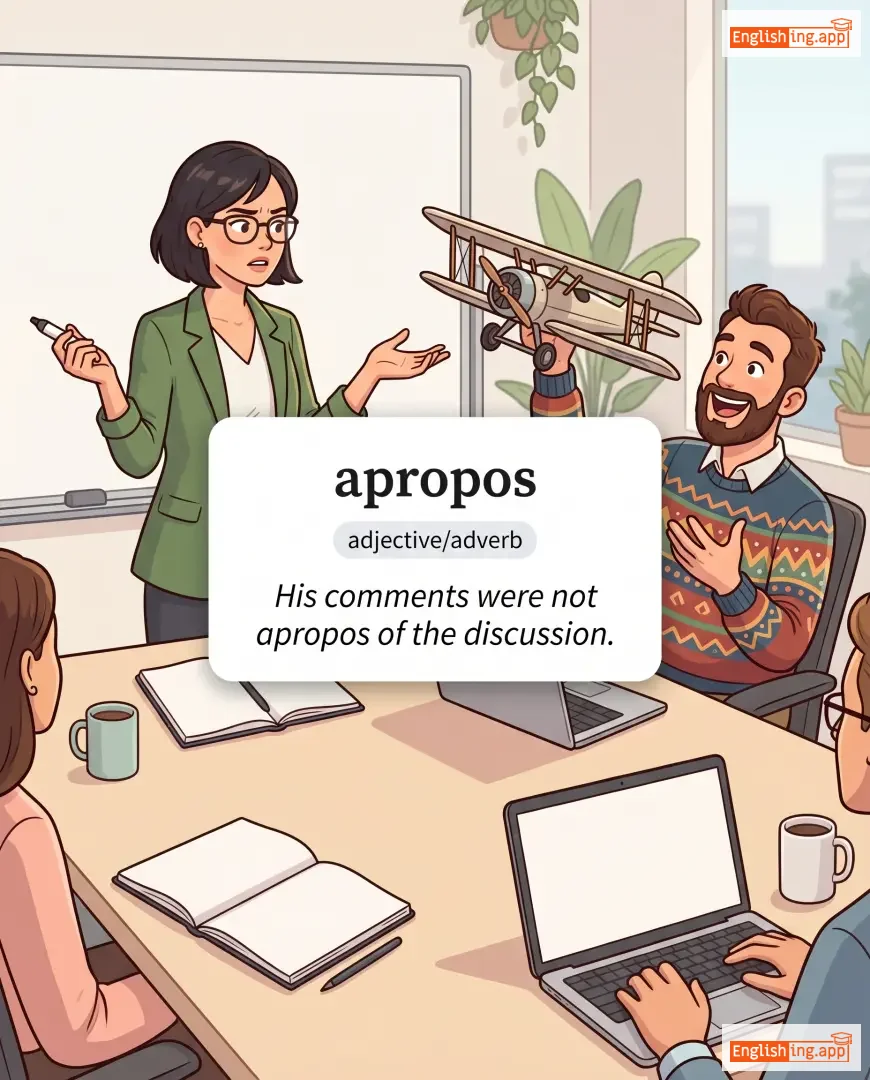
apropos definition card — visual illustration of the meaning
adjective/adverb
/ˌæ.prəˈpoʊ/
approprié (approprié)

Appropriate to the situation; relevant. As an adverb, it means 'with reference to' or 'regarding'.

"His comments were not apropos of the discussion."

"Ses commentaires n'étaient pas appropriés à la discussion." (Ses commentaires n'étaient pas appropriés à la discussion.)
adjective
/æpt/
apte (apte)

Appropriate or suitable; having a natural tendency or quick to learn.

"She is an apt student who quickly understands new concepts."

"Elle est une élève apte qui comprend rapidement de nouveaux concepts." (Elle est une eleve apte qui comprend rapidement de nouveaux concepts.)
noun
/ˈæptɪˌtjuːd/
aptitude (aptitude)

a natural ability or talent to do something well

"She has a strong aptitude for learning new languages."

"Elle a une forte aptitude pour apprendre de nouvelles langues." (Elle a une forte aptitude pour apprendre de nouvelles langues.)
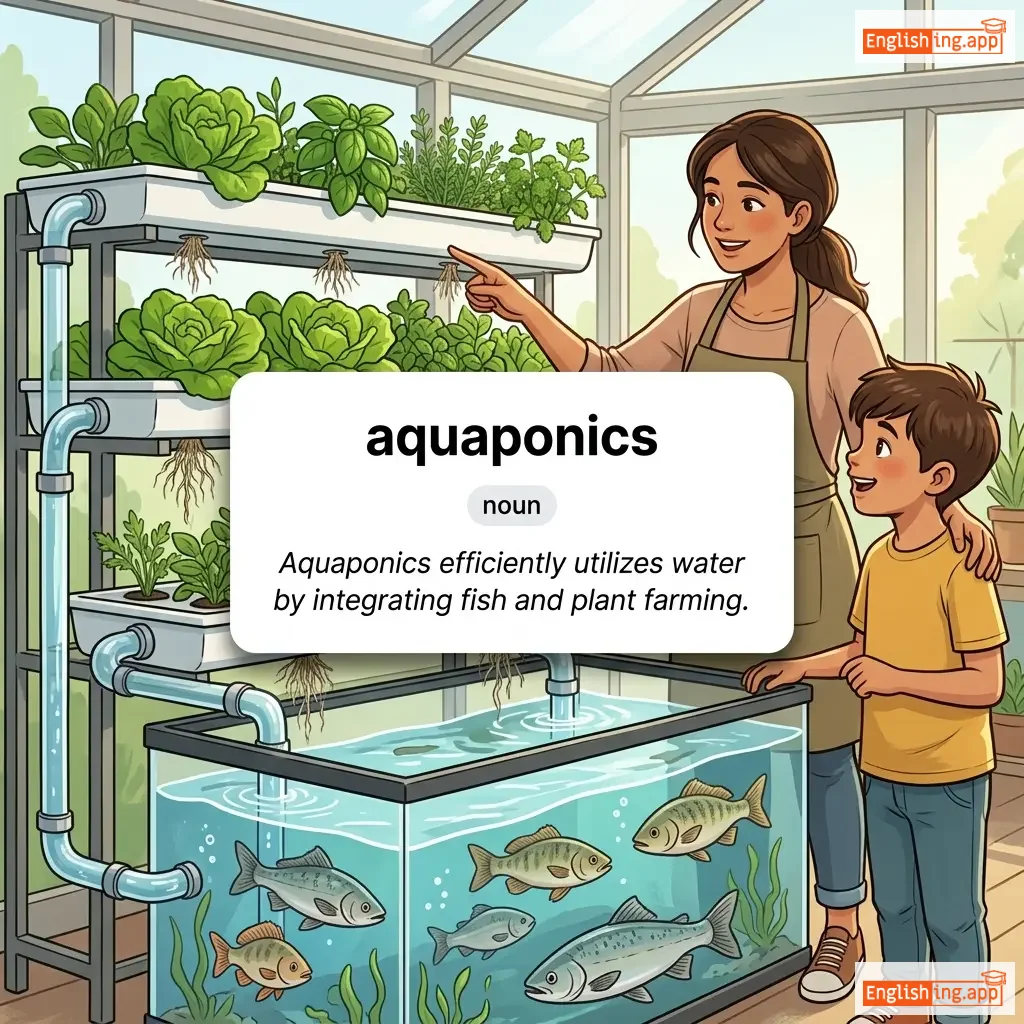
aquaponics definition card — visual illustration of the meaning
noun
/ˌækwəˈpɒnɪks/
aquaponie (aquaponie)

A system of aquaculture in which the waste produced by farmed fish or other aquatic animals supplies nutrients for plants grown hydroponically.

"Aquaponics efficiently utilizes water by integrating fish and plant farming."

"L'aquaponie utilise l'eau efficacement en intégrant l'élevage de poissons et la culture de plantes." (L'aquaponie utilise l'eau efficacement en intégrant l'élevage de poissons et la culture de plantes.)
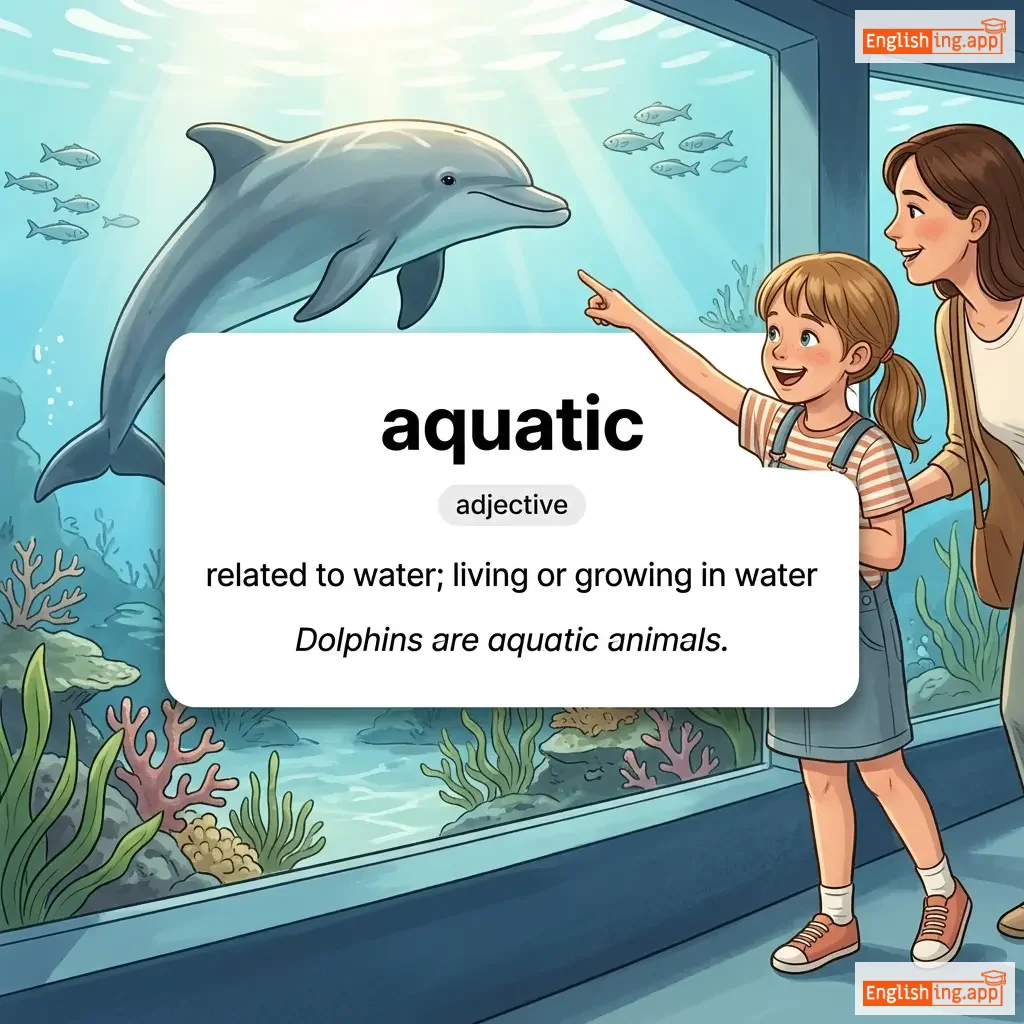
aquatic definition card — visual illustration of the meaning
adjective
/əˈkwætɪk/
aquatique (aquatique)

related to water; living or growing in water

"Dolphins are aquatic animals."

"Les dauphins sont des animaux aquatiques." (Les dauphins sont des animaux aquatiques.)
noun
/ˈækwɪˌdʌkt/
aqueduc (aqueduc)

a structure built to carry water over long distances

"The Romans built aqueducts to supply water to their cities."

"Les Romains ont construit des aqueducs pour fournir de l'eau à leurs villes." (Les Romains ont construit des aqueducs pour fournir de l'eau à leurs villes.)
adjective
/ˈeɪkwiəs/
aqueux (aqueux)

related to or containing water; watery

"The solution was in an aqueous form."

"La solution était sous forme aqueuse." (La solution etait sous forme aqueuse.)
adjective
/ˈækwɪˌlaɪn/
de type bec d'aigle (de type bec d'aigle)

curved like an eagle's beak; hooked

"He had an aquiline nose that gave him a distinguished appearance."

"Il avait un nez de type bec d'aigle qui lui donnait une apparence distinguée." (Il avait un nez de type bec d'aigle qui lui donnait une apparence distinguée.)
noun
/ˈær.əb/
Arabe (arabe)

a person belonging to the Semitic people of the Middle East and North Africa

"He is an Arab living in Dubai."

"Il est un Arabe vivant à Dubaï." (Il est un Arabe vivant a Dubai.)
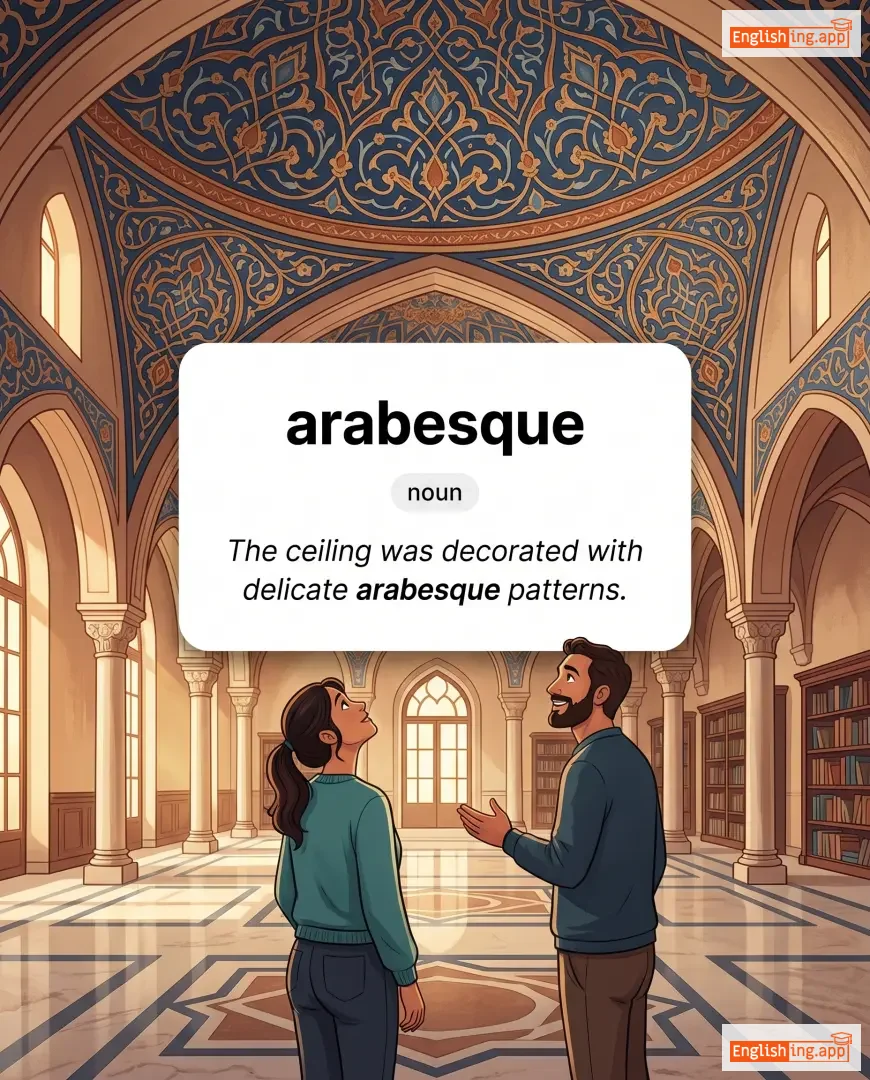
arabesque definition card — visual illustration of the meaning
noun
/ˌær.əˈbesk/
design orné (design orne)

a complex, ornate design featuring intertwined flowing lines, often used in architecture or ballet poses

"The ceiling was decorated with delicate arabesque patterns."

"Le plafond était décoré de délicats motifs arabesques." (Le plafond était décoré de délicats motifs arabesques.)
noun
/əˈreɪ.bi.ən ˈdʒæz.mɪn/
jasmin arabe (jasmine arabe)

A fragrant white flower native to South and Southeast Asia, commonly used in perfumes and religious ceremonies

"The Arabian jasmine filled the garden with its sweet fragrance."

"Le jasmin arabe a rempli le jardin de son doux parfum." (Le jasmin arabe a rempli le jardin de son doux parfum.)
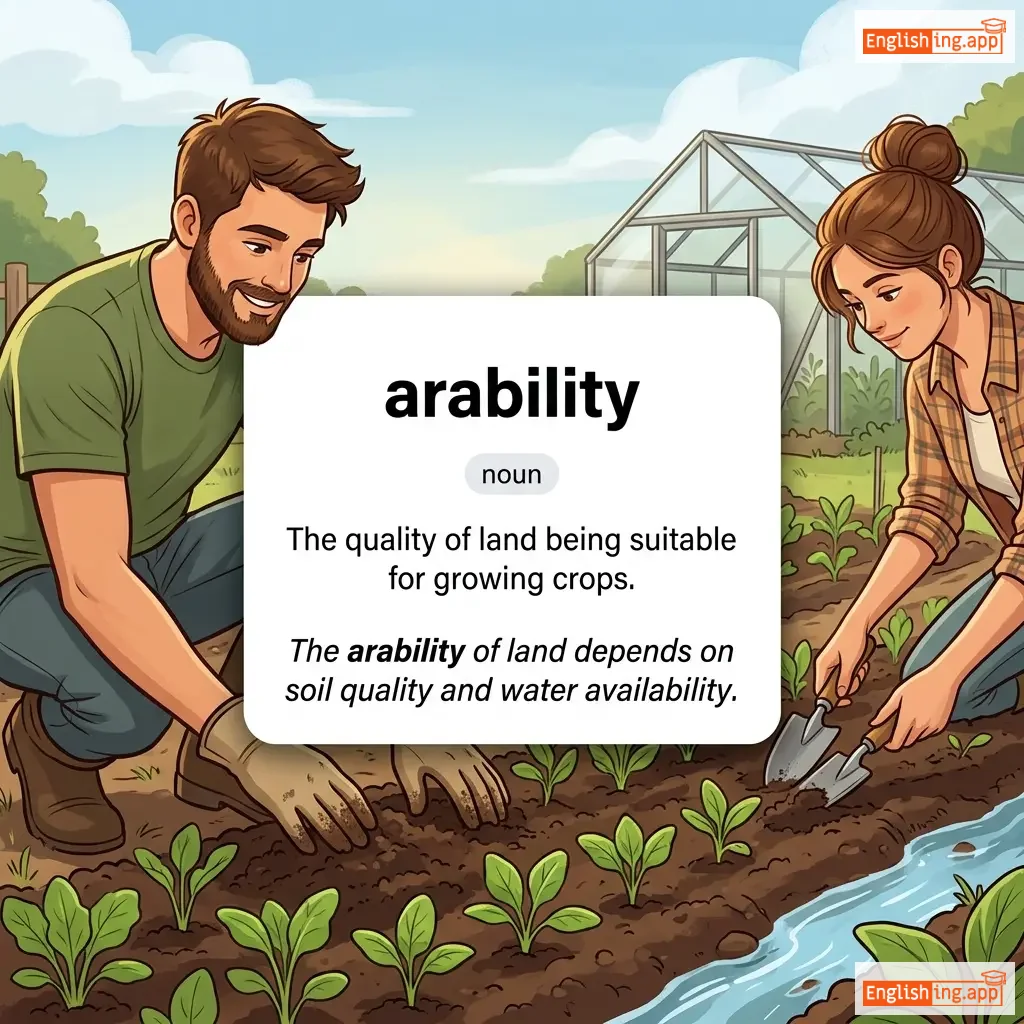
arability definition card — visual illustration of the meaning
noun
/ˌær.əˈbɪl.ɪ.ti/
arabilité (arabilite)

The quality of land being suitable for growing crops.

"The arability of land depends on soil quality and water availability."

"L'arabilité du sol dépend de la qualité du sol et de la disponibilité de l'eau." (L'arabilite du sol depend de la qualite du sol et de la disponibilite de l'eau.)
adjective
/ˈærəbəl/
cultivable (cultivable)

suitable for growing crops or farming

"The farmer purchased arable land to expand his crops."

"Le fermier a acheté des terres cultivables pour agrandir ses récoltes." (Le fermier a acheté des terres cultivables pour agrandir ses récoltes.)
noun
/ˈɑːrbɪtər/
arbitre (arbitre)

a person who has the authority to settle a dispute or decide an issue

"The principal acted as the arbiter in the conflict between the students."

"Le principal a agi en tant qu'arbitre dans le conflit entre les élèves." (Le principal a agi en tant qu'arbitre dans le conflit entre les élèves.)
arbitrage definition card — visual illustration of the meaning
noun
/ˈɑː.bɪ.trɑːʒ/
l'achat et la vente simultanés de titres, de devises ou de matières premières sur différents marchés pour profiter des différences de prix (l'achat et la vente simultanés de titres, de devises ou de matières premières sur différents marchés pour profiter des différences de prix)

The simultaneous buying and selling of securities, currency, or commodities in different markets to take advantage of price differences.

"Investors use arbitrage strategies in financial markets."

"Les investisseurs utilisent des stratégies d'arbitrage sur les marchés financiers." (Les investisseurs utilisent des stratégies d'arbitrage sur les marchés financiers.)
adjective
/ˈɑːrbɪˌtrɛri/
arbitraire (arbitraire)

based on random choice or personal whim, rather than reason or system

"The teacher's arbitrary grading upset many students."

"La notation arbitraire de l'enseignant a dérangé de nombreux étudiants." (La notation arbitraire de l'enseignant a derange de nombreux etudiants.)
verb
/ˈɑːrbɪtreɪt/
arbitrer (arbitrer)

to settle a dispute between two parties by acting as an impartial judge

"The committee agreed to arbitrate the contract dispute."

"Le comité a accepté d'arbitrer le différend contractuel." (Le comité a accepté d'arbitrer le différend contractuel.)