Vocabularios

Descubra, aprenda y domine el vocabulario en inglés

adjective
/ˈwɪəri/
cansado (cansado)

feeling or showing extreme tiredness, especially as a result of exertion or lack of sleep

"After the long journey, she felt weary and wanted to rest."

"Después del largo viaje, ella se sintió cansada y quería descansar." (Despues del largo viaje, ella se sintio cansada y queria descansar.)
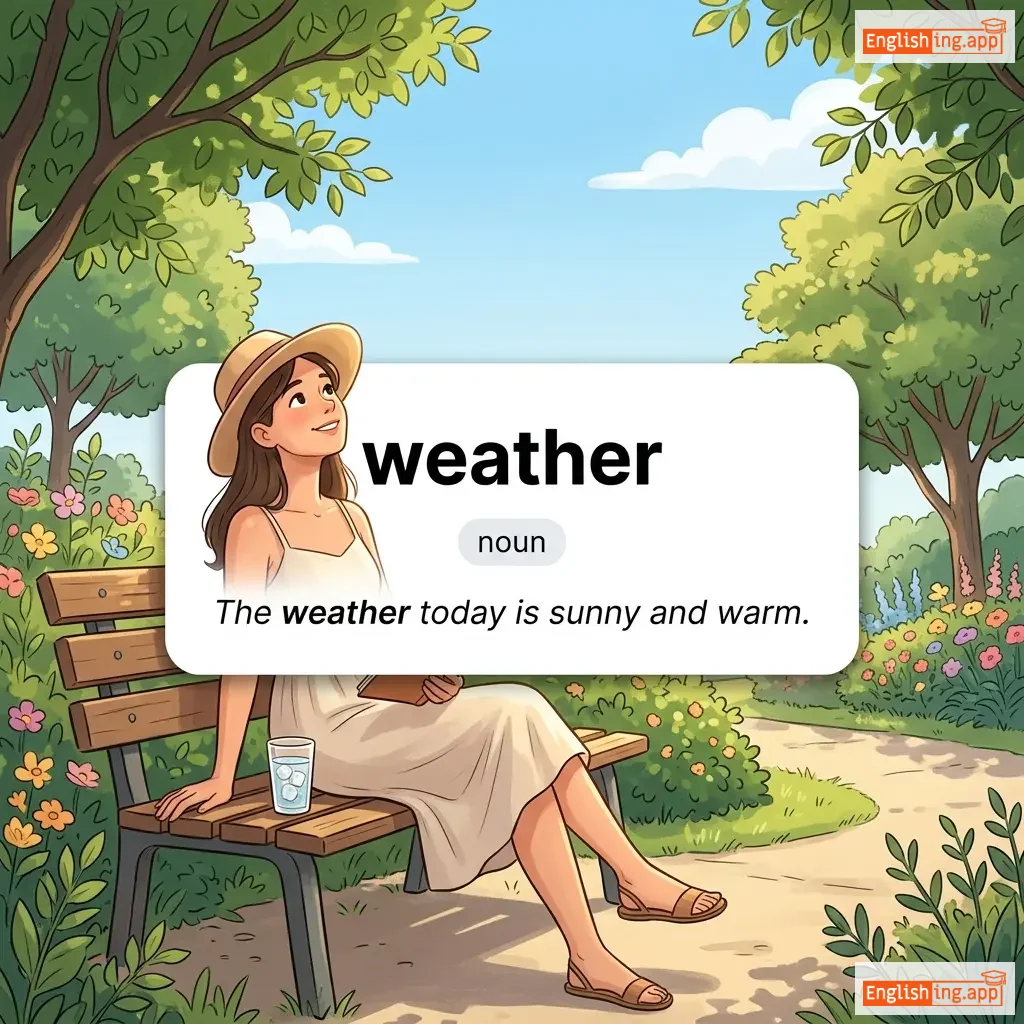
weather definition card — visual illustration of the meaning
noun
/ˈwɛðər/
clima (klima)

the state of the atmosphere at a particular place and time in terms of heat, cloudiness, dryness, sunshine, wind, rain, etc.

"The weather today is sunny and warm."

"El clima de hoy está soleado y cálido." (El clima de hoy esta soleado y calido.)
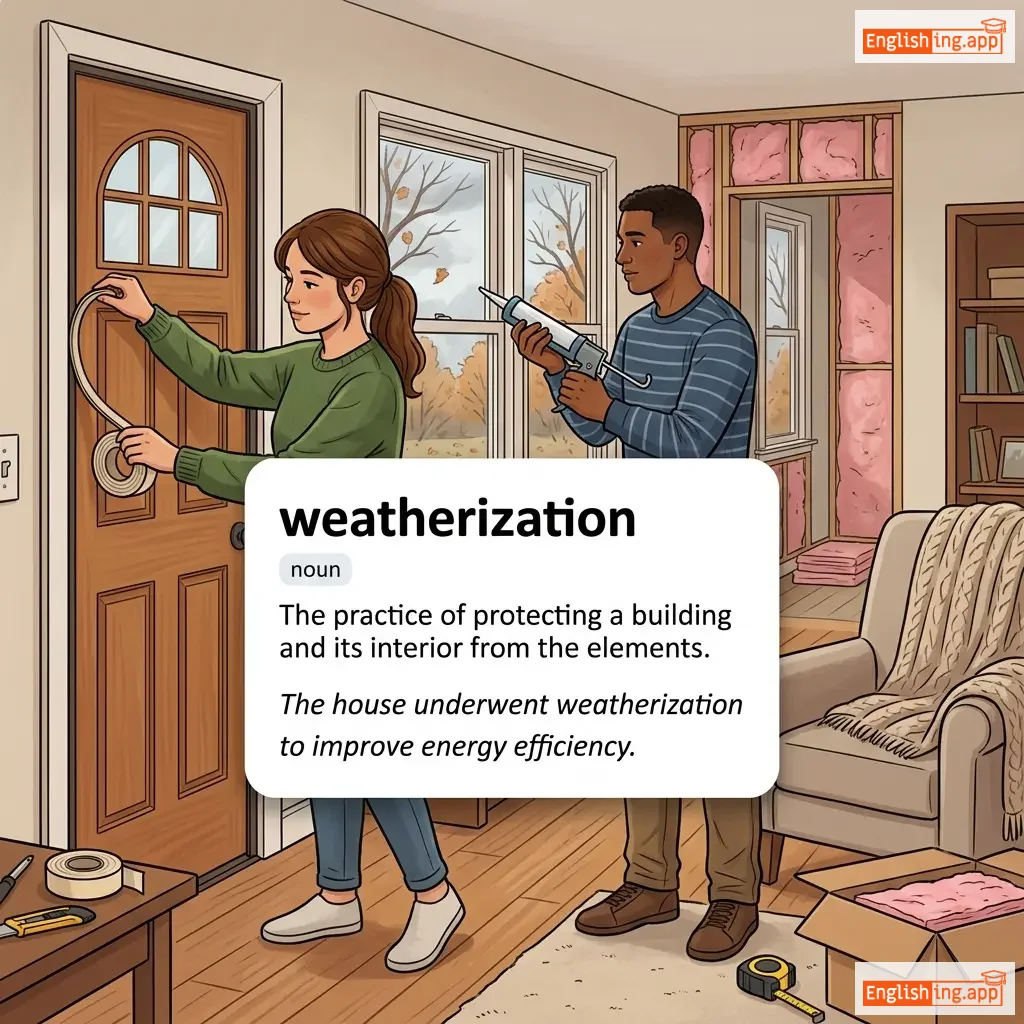
weatherization definition card — visual illustration of the meaning
noun
ˌwɛðəraɪˈzeɪʃən
climatización (climatizacion)

The practice of protecting a building and its interior from the elements.

"The house underwent weatherization to improve energy efficiency."

"La casa pasó por un proceso de climatización para mejorar la eficiencia energética." (La casa pasó por un proceso de climatización para mejorar la eficiencia energética.)
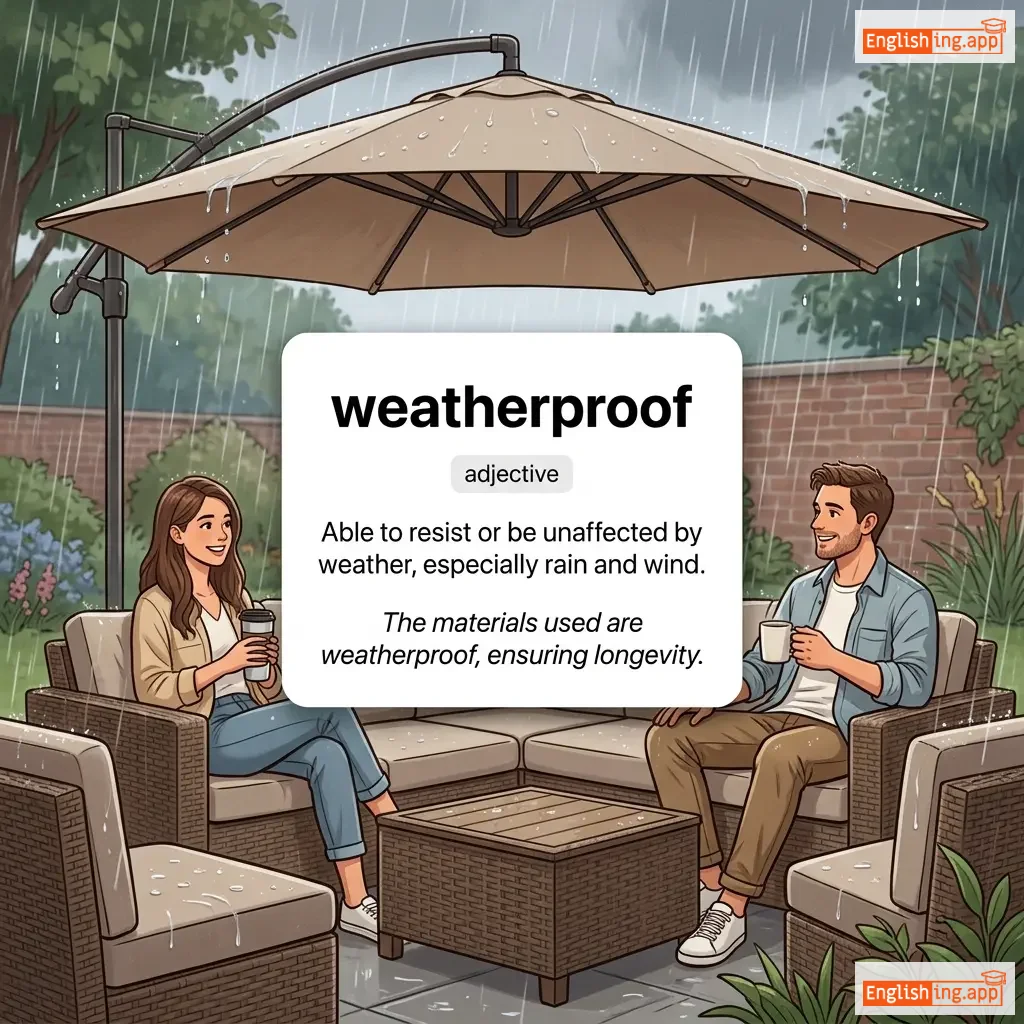
weatherproof definition card — visual illustration of the meaning
adjective
ˈwɛðərpruːf
resistente a la intemperie (resistente a la intemperie)

Able to resist or be unaffected by weather, especially rain and wind.

"The materials used are weatherproof, ensuring longevity."

"Los materiales utilizados son resistentes a la intemperie, asegurando longevidad." (Los materiales utilizados son resistentes a la intemperie, asegurando longevidad.)
verb
/wiːv/
tejer (tejer)

to make cloth by interlacing threads or to combine elements into a whole

"She weaves beautiful patterns on her loom."

"Ella teje hermosos patrones en su telar." (Ella teje hermosos patrones en su telar.)
noun
/ˈwiː.vər/
tejedor (teh-jay-dor)

a person who makes cloth by interlacing threads on a loom

"The skilled weaver created intricate patterns on the silk fabric."

"El hábil tejedor creó patrones intrincados en la tela de seda." (El abil teh-jay-dor creyo patrones intrincados en la tela de seda.)
noun
/ˈwiː.vər bɜːd/
pájaro tejedor (pajaro tejedor)

a small bird that builds elaborate woven nests from grass and twigs

"The weaver bird skillfully constructs its intricate nest."

"El pájaro tejedor construye hábilmente su nido intrincado" (El pajaro tejedor construye habilmente su nido intrincado)
🕸️

web (web)

noun
/wɛb/
telaraña (web)

a network of fine threads spun by a spider or a complex interconnected system

"The spider spun a large web in the corner of the room."

"La araña tejió una gran telaraña en la esquina de la habitación." (La arana teji o una gran telarana en la esquina de la habitacion.)
verb
/wɛd/
casarse (casarse)

to marry someone; to enter into a marriage

"They decided to wed in a small ceremony by the beach."

"Ellos decidieron casarse en una pequeña ceremonia en la playa." (Ellos decidieron casarse en una pequena ceremonia en la playa.)
noun
/ˈwed.lɒk/
matrimonio (matrimonio)

the state of being married; matrimony

"They have been happily united in wedlock for twenty years."

"Han estado felizmente unidos en matrimonio durante veinte años." (Han estado felizmente unidos en matrimonio durante veinte años.)
noun
/ˈwɛdɪŋ/
boda (boda)

a marriage ceremony, especially considered as including the associated celebrations

"They are planning a wedding in the summer."

"Están planeando una boda en el verano." (Están planeando una boda en el verano.)
noun
/wedʒ/
cuña; cuñar; partir (cuna; cunyar; partir)

a triangular piece of wood or metal used for splitting or securing; a piece of cheese or cake

"He used a wooden wedge to split the log into smaller pieces."

"Usó una cuña de madera para dividir el tronco en pedazos más pequeños." (Uso una cuna de madera para dividir el tronco en pedazos más pequeños.)
noun
/ˈwɛnzdeɪ/
miércoles (miercoles)

the fourth day of the week, following Tuesday and preceding Thursday

"The meeting has been scheduled for Wednesday afternoon."

"La reunión se ha programado para el miércoles por la tarde." (la reunion se ha programado para el miercoles por la tarde)
adjective
/wiː/
muy pequeño (muy pequeno)

very small in size; tiny

"She gave me a wee smile before leaving."

"Ella me dio una pequeña sonrisa antes de irse." (Ella me dio una pequena sonrisa antes de irse.)
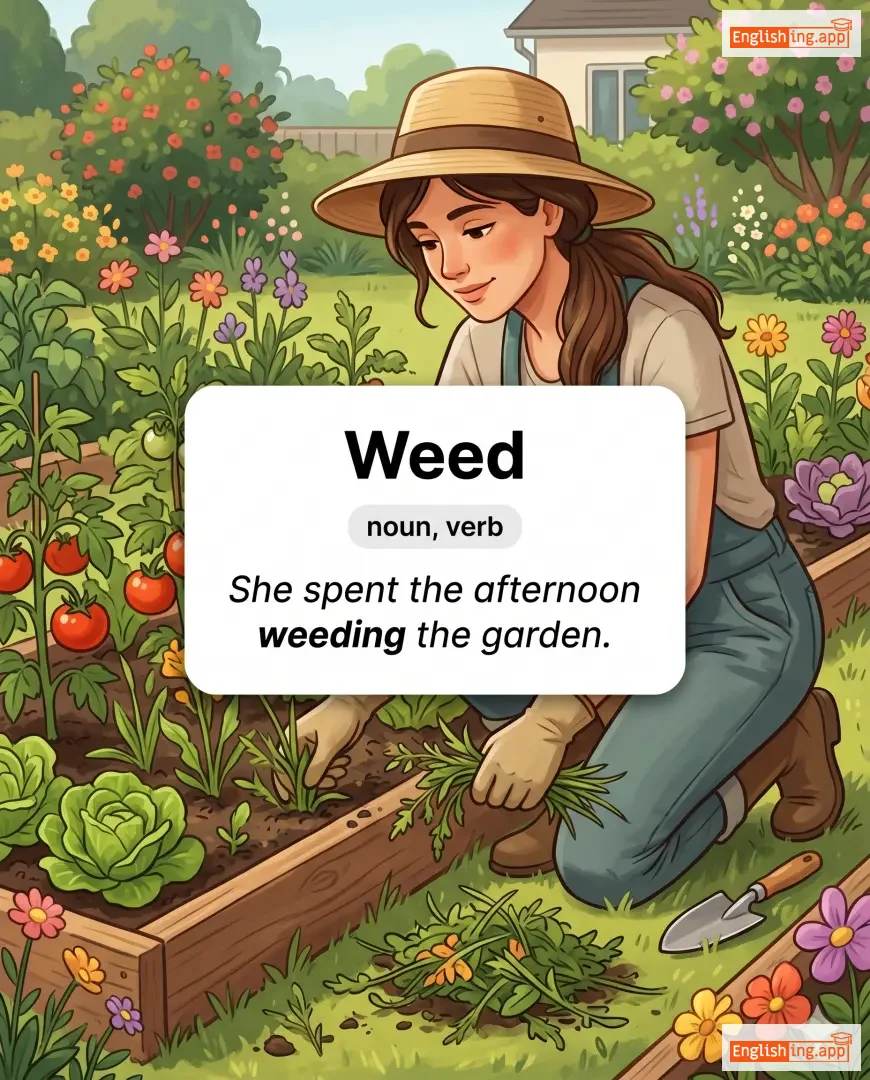
Weed definition card — visual illustration of the meaning
noun, verb
/wiːd/
maleza (maleza)

a wild plant growing where it is not wanted, especially among crops; to remove such plants

"She spent the afternoon weeding the garden."

"Ella pasó la tarde desmalezando el jardín." (Ella paso la tarde desmalezando el jardin.)
noun
/wiːk/
semana (semana)

a period of seven days

"I will finish the project by the end of the week."

"Terminaré el proyecto para el final de la semana." (Terminaré el proyecto para el final de la semana.)
noun
/ˈwiːkˌɛnd/
fin de semana (fin de semana)

the end of the week, typically regarded as Saturday and Sunday

"They are planning a trip for the weekend."

"Están planeando un viaje para el fin de semana." (Están planeando un viaje para el fin de semana.)
adjective
/ˈwiːkli/
semanal (semanal)

occurring or done every week

"We have a weekly meeting on Mondays."

"Tenemos una reunión semanal los lunes." (Tenemos una reunion semanal los lunes.)
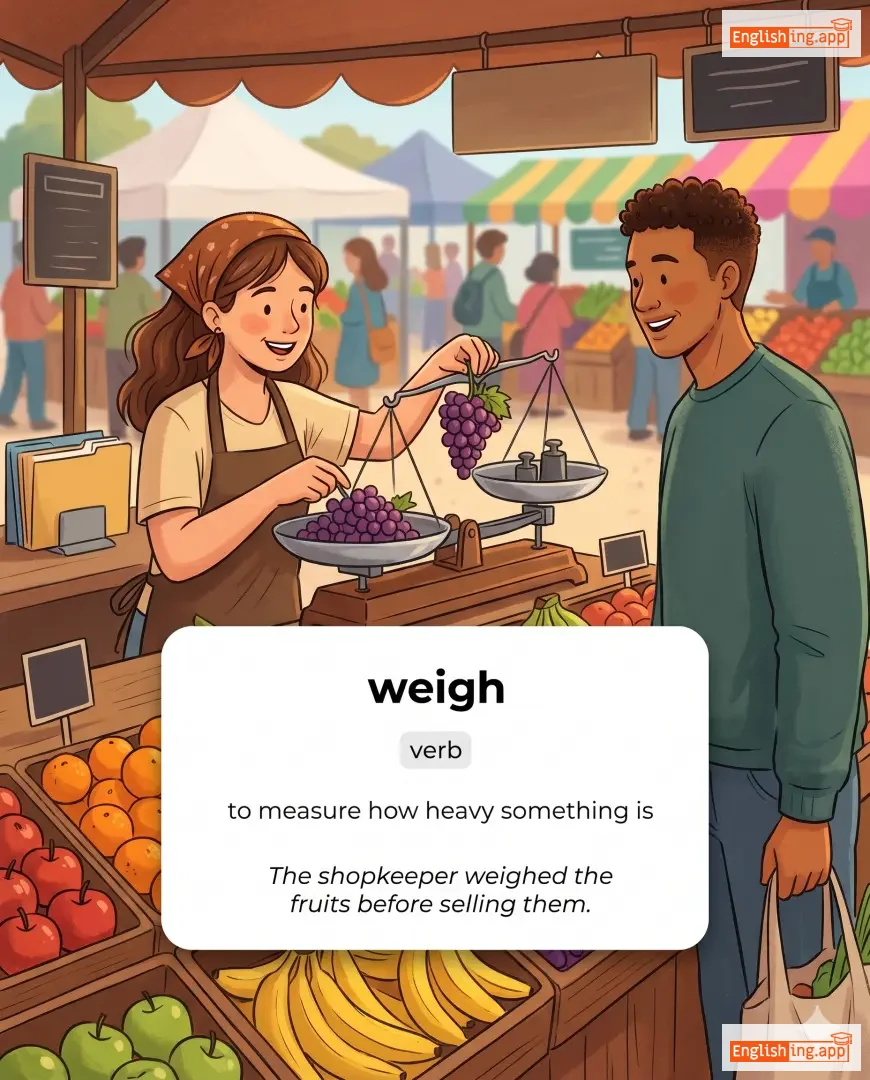
weigh definition card — visual illustration of the meaning
verb
/weɪ/
pesar (pesar)

to measure how heavy something is

"The shopkeeper weighed the fruits before selling them."

"El tendero pesó las frutas antes de venderlas." (El tendero pesó las frutas antes de venderlas.)
noun
/weɪt/
peso (peso)

a measure of how heavy something is

"The weight of the package was 10 kilograms."

"El peso del paquete era de 10 kilogramos." (El peso del paquete era de 10 kilogramos.)
noun
/ˈweɪtˌlɪftɪŋ/
halterofilia (halterofilia)

the sport or activity of lifting heavy weights to build strength and muscle

"Weightlifting requires discipline, proper technique, and consistent training."

"La halterofilia requiere disciplina y una técnica adecuada." (La halterofilia requiere disciplina y una tecnica adecuada)
adjective
/wɪrd/
extraño (extrano)

suggesting something supernatural or very strange; unusual

"The movie had a weird ending that nobody expected."

"La película tenía un final extraño que nadie esperaba." (La pelicula tenia un final extrano que nadie esperaba.)
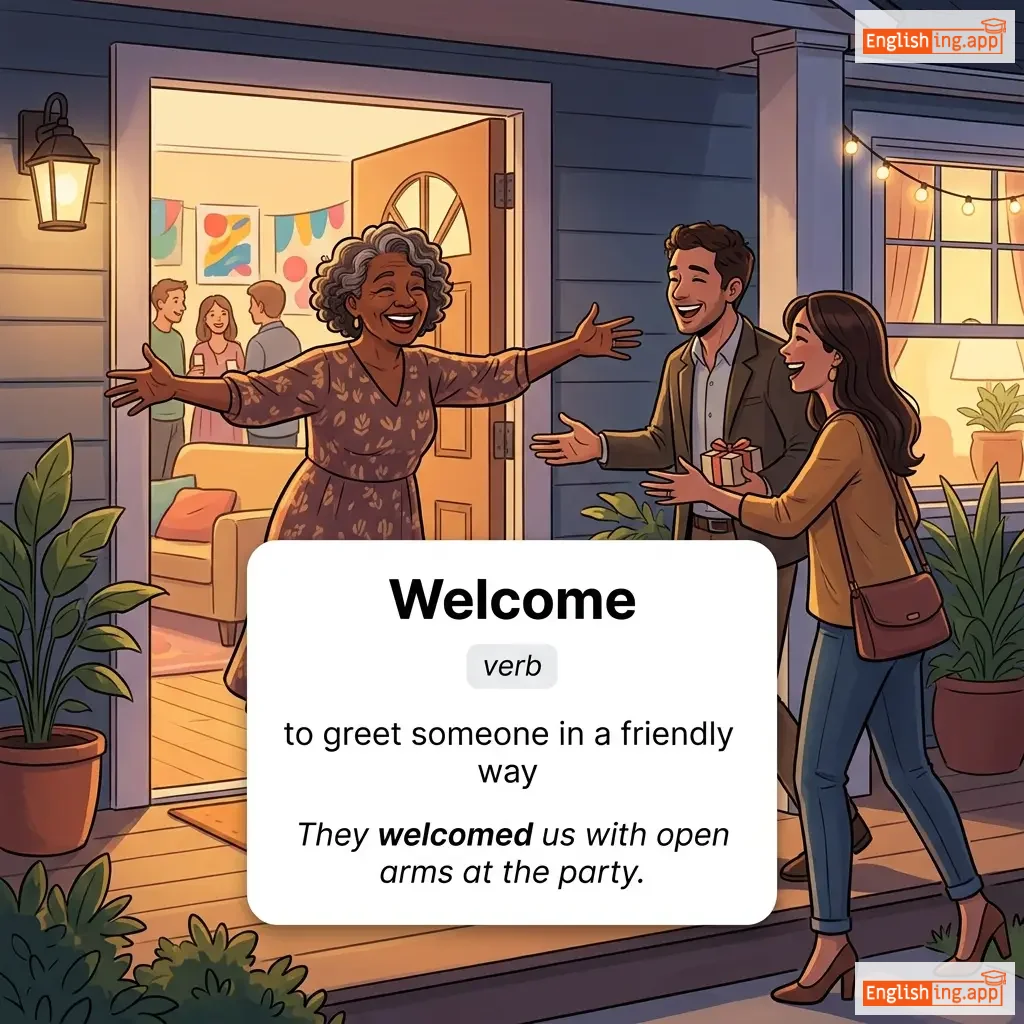
Welcome definition card — visual illustration of the meaning
verb
/ˈwɛlkəm/
bienvenida (bienvenida)

to greet someone in a friendly way

"They welcomed us with open arms at the party."

"Nos recibieron con los brazos abiertos en la fiesta." (Nos recibieron con los brazos abiertos en la fiesta.)
noun
/ˈwɛlfɛr/
bienestar (bienestar)

the health, happiness, and fortunes of a person or group

"The government provides welfare to low-income families."

"El gobierno proporciona bienestar a las familias de bajos ingresos." (El gobierno proporciona bienestar a las familias de bajos ingresos.)
noun
/ˈwɛlkɪn/
cielo (cielo)

The sky, the heavens, or the upper air.

"The eagle soared high into the welkin."

"El águila voló alto en el cielo." (El aguila volo alto en el cielo.)
adverb
/wɛl/
bien (bien)

in a good or satisfactory way

"She did well in her exams."

"Ella lo hizo bien en sus exámenes." (Ella lo hizo bien en sus exámenes.)
adjective
/ˌwel bɪˈheɪvd/
bien educado (bien educado)

conducting oneself in a proper and polite manner; showing good manners

"The children were well-behaved during the ceremony."

"Los niños se comportaron bien durante la ceremonia." (Los niños se comportaron bien durante la ceremonia.)
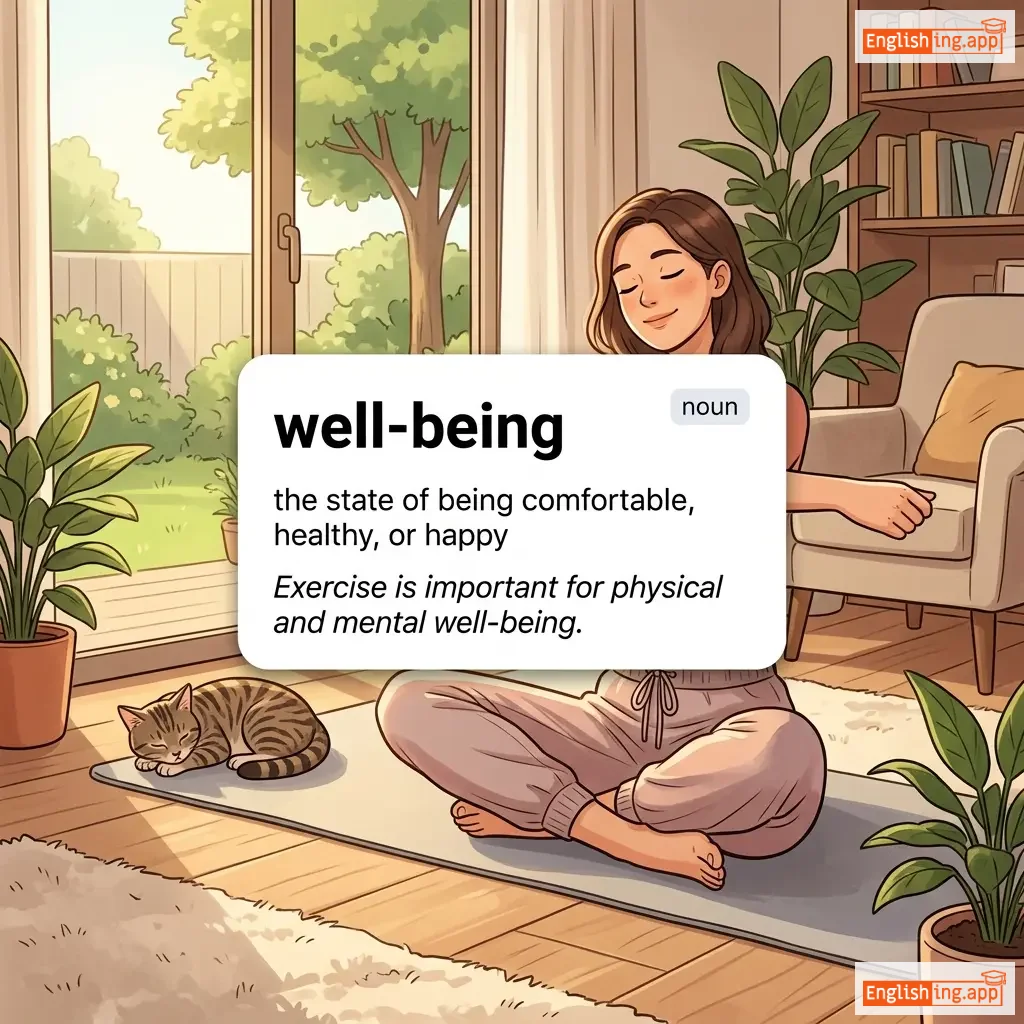
well-being definition card — visual illustration of the meaning
noun
/ˌwelˈbiːɪŋ/
bienestar (bienestar)

the state of being comfortable, healthy, or happy

"Exercise is important for physical and mental well-being."

"El ejercicio es importante para el bienestar físico y mental." (El ejercicio es importante para el bienestar fisico y mental.)
adjective
/ˌwɛlˈbrɛd/
bien educado (bien educado)

Having or showing good manners; properly raised.

"She is a well-bred young lady with excellent manners."

"Ella es una joven bien educada con excelentes modales." (Ella es una joven bien educada con excelentes modales.)
noun
/ˈwɛlˌduːər/
bienhechor (bienhechor)

A person who does good deeds; a benefactor.

"The community praised the well-doer for his charity."

"La comunidad elogió al bienhechor por su caridad." (La comunidad elogió al bienhechor por su caridad.)
adjective
/ˌwel ˈdʌn/
bien hecho; completamente cocinado (bien hecho; completamente cocinado)

performed skillfully and successfully; cooked thoroughly

"The project was well-done and impressed everyone."

"El proyecto estuvo bien hecho y sorprendió a todos." (El proyecto estuvo bien hecho y sorprendió a todos.)
adjective
/ˌwelˈnoʊn/
famoso (famoso)

known by many people; famous or recognized

"He is a well-known actor in his country."

"Él es un actor famoso en su país." (Él es un actor famoso en su país.)
adjective
/ˌwɛl tə ˈduː/
adinerado (adinerado)

Prosperous, wealthy, or financially comfortable.

"They belong to a well-to-do family in the city."

"Pertenecen a una familia adinerada de la ciudad." (Pertenecen a una familia adinerada de la ciudad.)
noun
/ˈwel.wɪʃ.ər/
bienhechor (bienhechor)

a person who desires happiness or success for another

"Many well-wishers came to congratulate her on her graduation."

"Muchos bienhechores vinieron a felicitarla por su graduación." (Muchos bienhechores vinieron a felicitarla por su graduación.)
noun
/wɛlt/
marca (marca)

A raised mark on the skin, usually from a blow or allergic reaction.

"He had a red welt on his arm after the bee sting."

"Tenía una marca roja en su brazo después de la picadura de la abeja." (Tenia una marka roja en su brazo despues de la picadura de la abeja.)
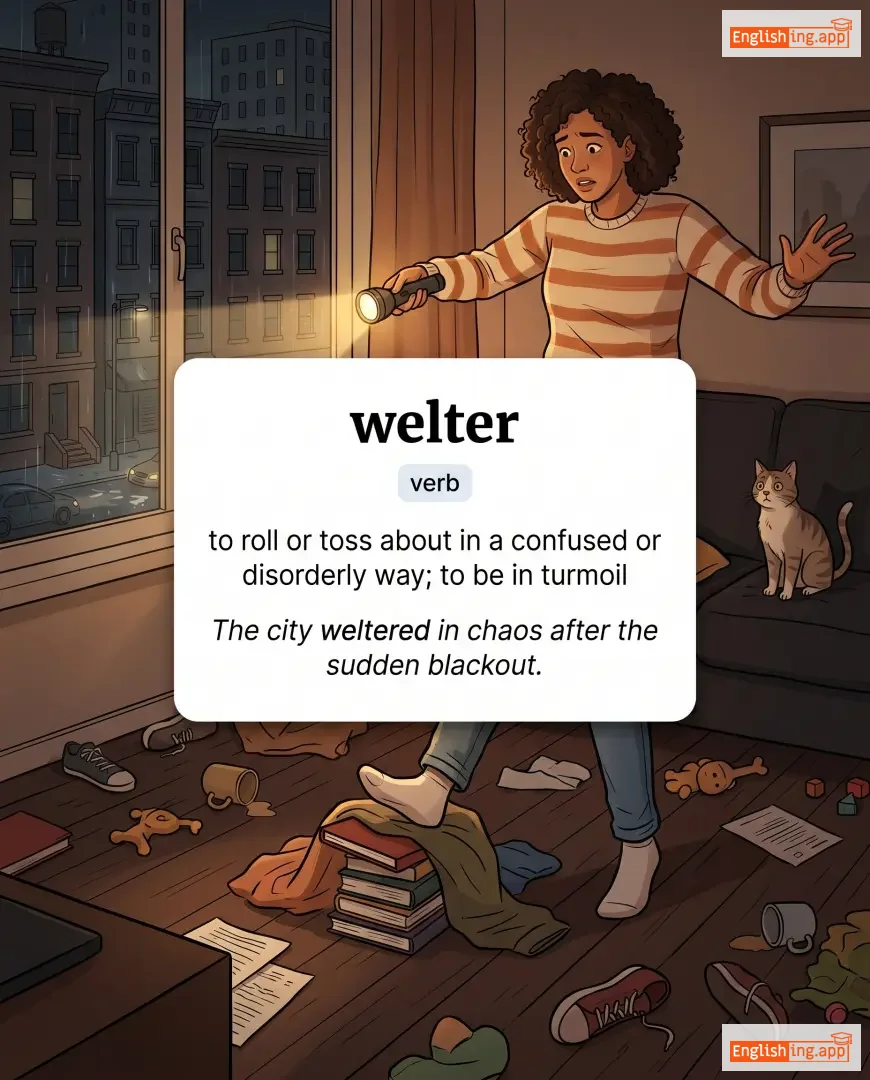
welter definition card — visual illustration of the meaning
verb
/ˈwɛltər/
dar vueltas en caos (dar vueltas en caos)

to roll or toss about in a confused or disorderly way; to be in turmoil

"The city weltered in chaos after the sudden blackout."

"La ciudad se sumió en el caos después del apagón repentino." (La ciudad se sumió en el caos después del apagón repentino.)
noun
/wɛst/
oeste (oeste)

the direction to the left of the north and to the right of the south, typically associated with the sunset

"The sun sets in the west."

"El sol se pone en el oeste." (El sol se pone en el oeste.)
adjective
/ˈwɛstərn/
occidental (occidental)

relating to or characteristic of the West, especially Europe and the Americas

"She loves western music and culture."

"A ella le encanta la música y la cultura occidental." (A ella le encanta la música y la cultura occidental.)
adjective
/wɛt/
mojado (mojado)

covered with, or saturated with liquid (usually water)

"The ground is wet after the rain."

"El suelo está mojado después de la lluvia." (El suelo está mojado después de la lluvia.)
noun
/weɪl/
ballena (bah-yeh-nah)

a very large marine mammal that lives in the ocean

"We saw a huge whale swimming near the boat."

"Vimos una enorme ballena nadando cerca del bote." (Vimos una enorme ballena nadando cerca del bote.)
pronoun
/wɒt/
qué (que)

used to ask for information about something

"What is your name?"

"¿Cuál es tu nombre?" (¿Cuál es tu nombre?)
🤷‍♂️

whatever (watever)

pronoun
/wɒtˈɛvər/
lo que sea (lo ke sea)

used to refer to anything or everything that is of the type mentioned

"You can choose whatever you like."

"Puedes elegir lo que quieras." (Puedes elegir lo que quieras.)
adverb
/wɒtˈsəʊɛvər/
en absoluto (en absoluto)

used for emphasis after a negative statement to mean 'at all'

"She has no interest in the matter whatsoever."

"Ella no tiene ningún interés en el asunto en absoluto." (Ella no tiene ningún interés en el asunto en absoluto.)
noun
/wiːt/
trigo (trigo)

a cereal plant whose grain is used to make flour for bread and other foods

"Farmers harvested the wheat in early summer."

"Los agricultores cosecharon el trigo a principios del verano." (Los agricultores cosecharon el trigo a principios del verano.)
verb
/ˈwiːdəl/
persuadir con halagos (persuadir con halagos)

to persuade or coax someone by using flattery or smooth talk

"She managed to wheedle extra pocket money from her father."

"Ella consiguió convencer a su padre para obtener dinero extra." (Ella consiguió convencer a su padre para obtener dinero extra.)
noun
/wiːl/
rueda (rueda)

a circular object that revolves on an axle and is used to move or carry things

"The wheel of the car broke down on the way."

"La rueda del coche se rompió en el camino." (La rueda del coche se rompió en el camino.)
noun
/ˈwiːltʃeər/
silla de ruedas (silla de ruedas)

a chair with wheels, used by people who cannot walk easily or at all

"The hospital provided a wheelchair for the injured patient."

"El hospital proporcionó una silla de ruedas para el paciente herido." (El hospital proporcionó una silla de ruedas para el paciente herido.)
noun
/wɛlp/
cachorro (cachorro)

a young offspring of a dog or other carnivorous mammal; sometimes used to mean an impudent young person

"The farmer found a wolf whelp hiding near the barn."

"El granjero encontró un cachorro de lobo escondido cerca del granero." (El granjero encontró un cachorro de lobo escondido cerca del granero.)
adverb
/wɛn/
cuándo (cuando)

at what time

"Do you know when the train leaves?"

"¿Sabes cuándo sale el tren?" (¿Sabes cuando sale el tren?)
adverb
/wɛnˈɛvər/
cuando sea (cuando sea)

at any time, or whenever it happens

"You can call me whenever you want."

"Puedes llamarme cuando sea." (Puedes llamarme cuando sea.)