Vocabularios

Descubra, aprenda y domine el vocabulario en inglés

noun
/vɜːrv/
energía (energia)

Great enthusiasm, spirit, or energy in expression or performance.

"The actor performed his role with remarkable verve."

"El actor realizó su papel con notable energía." (El actor realizo su papel con notable energia.)
adverb
/ˈvɛri/
muy (muy)

used to emphasize an adjective or adverb

"She is very happy with her results."

"Ella está muy feliz con sus resultados." (Ella está muy feliz con sus resultados.)
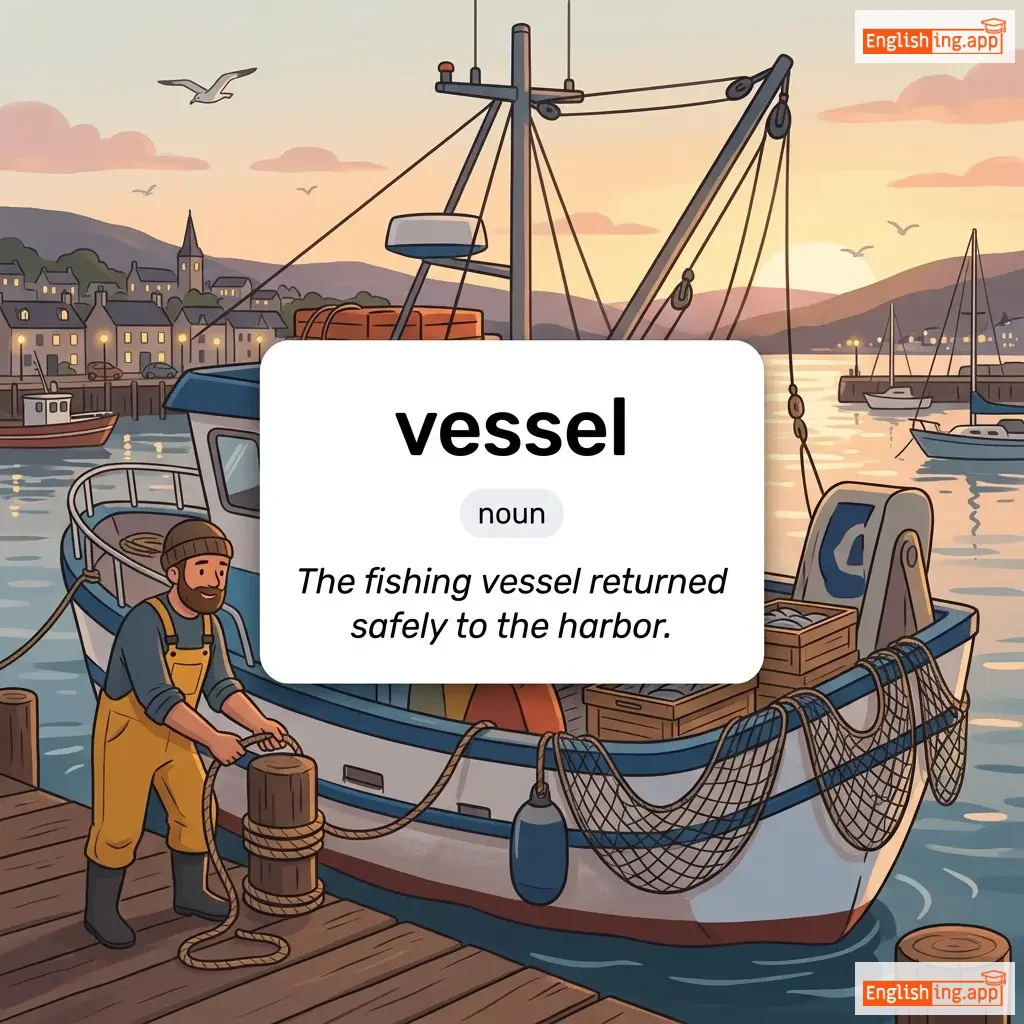
vessel definition card — visual illustration of the meaning
noun
/ˈvɛsəl/
barco / recipiente (barco / recipiente)

A ship or large boat; also a container for holding liquids or a tube in the body that carries blood.

"The fishing vessel returned safely to the harbor."

"El barco de pesca regresó de forma segura al puerto." (El barco de pesca regreso de forma segura al puerto.)
noun
/ˈvɛstɪdʒ/
vestigio (vestigio)

A small remaining part of something that once existed.

"Only a vestige of the ancient wall remains today."

"Hoy solo queda un vestigio de la antigua pared." (Hoy solo queda un vestigio de la antigua pared.)
adjective
/vɛˈstɪdʒiəl/
vestigial (vestigial)

Relating to a small, undeveloped remnant of something that was once much larger or more functional.

"Humans have a vestigial tailbone that no longer serves its original purpose."

"Los humanos tienen un hueso en la cola vestigial que ya no cumple su propósito original." (Los humanos tienen un hueso en la cola vestigial que ya no cumple su propósito original.)
noun
/ˈvɛstmənt/
vestimenta religiosa (vestimenta religiosa)

a garment, especially a ceremonial or official robe worn during religious services

"The priest wore a golden vestment during the ceremony."

"El sacerdote usó una vestimenta dorada durante la ceremonia." (El sacerdote usó una vestimenta dorada durante la ceremonia.)
noun
/ˈvɛtərən/
persona experimentada / exmilitar (persona experimentada / exmilitar)

a person who has long experience in a particular field or an ex-member of the armed forces

"He is a veteran of the software industry."

"Él es un veterano de la industria del software." (El es un veterano de la industria del software)
verb
/ˈviːtoʊ/
vetar (vetar)

to reject or forbid a decision, proposal, or law

"The president decided to veto the new bill."

"El presidente decidió vetar el nuevo proyecto de ley." (El presidente decidió vetar el nuevo proyecto de ley.)
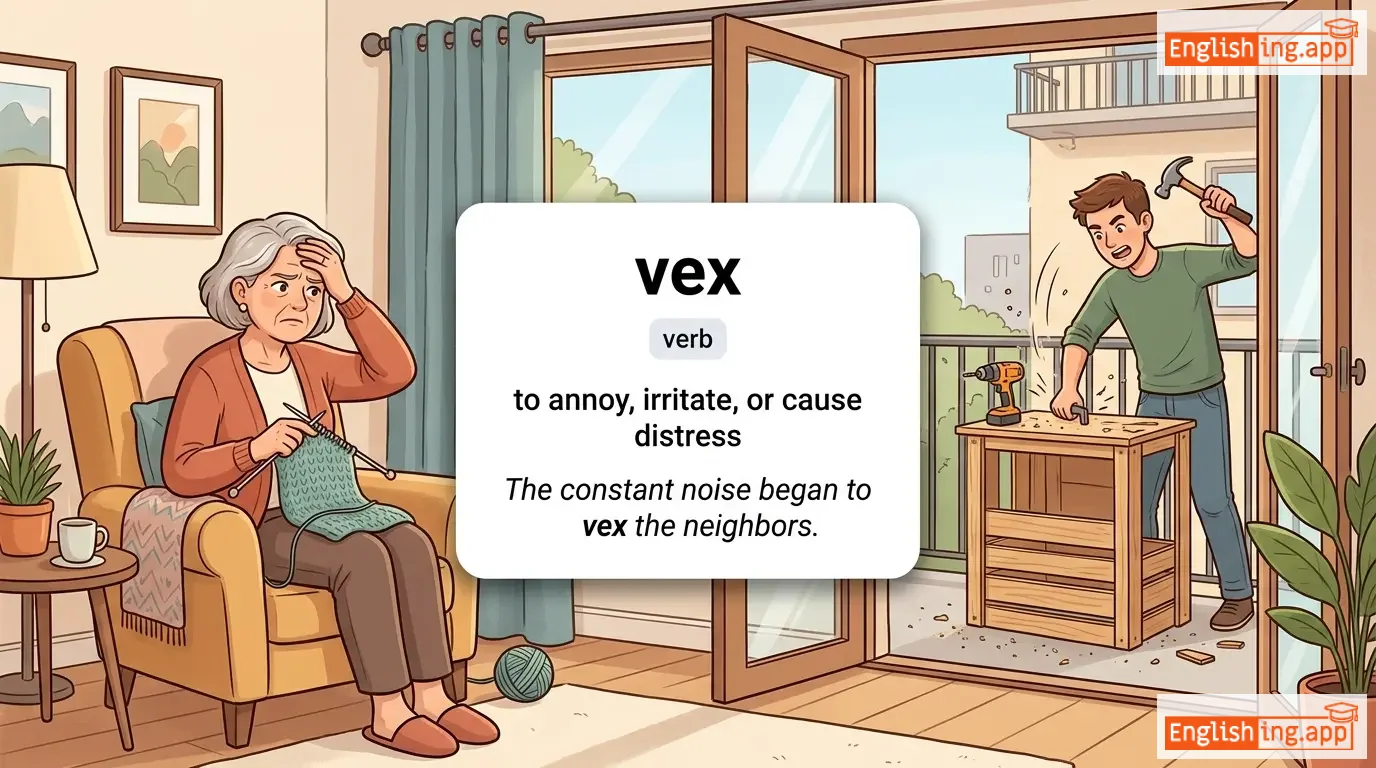
vex definition card — visual illustration of the meaning
verb
/vɛks/
molestar (molestar)

to annoy, irritate, or cause distress

"The constant noise began to vex the neighbors."

"El ruido constante comenzó a molestar a los vecinos." (El ruido constante comenzó a molestar a los vecinos.)
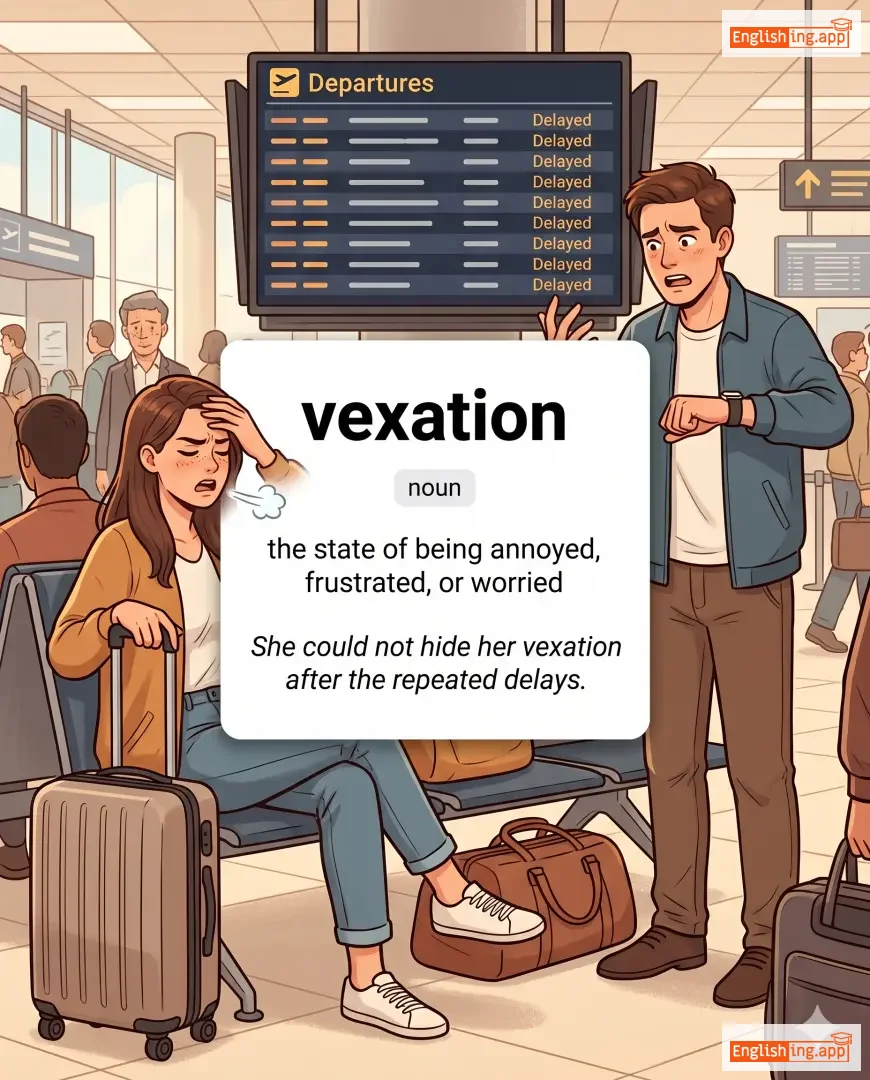
vexation definition card — visual illustration of the meaning
noun
/vɛkˈseɪʃən/
exasperación (exasperacion)

the state of being annoyed, frustrated, or worried

"She could not hide her vexation after the repeated delays."

"Ella no pudo esconder su exasperación después de los repetidos retrasos." (Ella no pudo esconder su exasperacion despues de los repetidos retrasos.)
preposition
/ˈvaɪə/ or /ˈviːə/
a través de (a traves de)

through, by way of, or using a particular route or means

"She sent the documents via email."

"Ella envió los documentos a través de correo electrónico." (Ella envió los documentos a través de correo electrónico.)
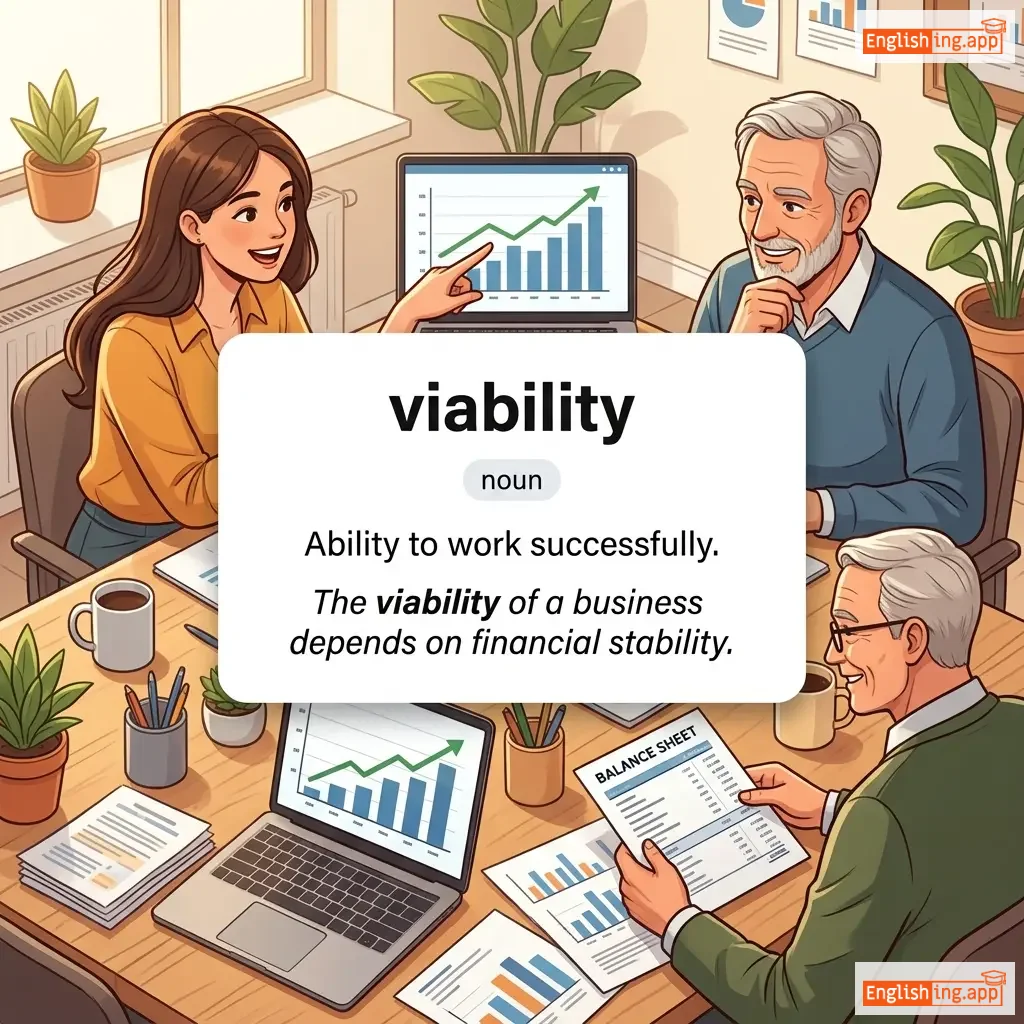
viability definition card — visual illustration of the meaning
noun
/ˌvaɪ.əˈbɪl.ə.ti/
viabilidad (viabilidad)

Ability to work successfully.

"The viability of a business depends on financial stability."

"La viabilidad de un negocio depende de la estabilidad financiera." (La viabilidad de un negocio depende de la estabilidad financiera.)
viable definition card — visual illustration of the meaning
adjective
/ˈvaɪəbl̩/
viable (viable)

capable of working successfully or able to survive

"They need a viable business plan to attract investors."

"Necesitan un plan de negocio viable para atraer inversionistas." (Necesitan un plan de negocio viable para atraer inversionistas.)
noun
/ˈvaɪənd/
manjar (manjar)

an item of food, especially a delicacy

"The banquet was filled with rich viands and wines."

"El banquete estaba lleno de manjares y vinos." (El banquete estaba lleno de manjares y vinos.)
adjective
/ˈvaɪbrənt/
vibrante (vibrante)

full of energy and life; bright and striking

"The city is vibrant with culture and color."

"La ciudad es vibrante con cultura y color." (La ciudad es vibrante con cultura y color.)
verb
/ˈvaɪbreɪt/
vibrar (vibrar)

To move or cause to move continuously and rapidly back and forth.

"The phone began to vibrate on the table."

"El teléfono comenzó a vibrar sobre la mesa." (El telefono comenzo a vibrar sobre la mesa.)
noun
/vaɪˈbreɪ.ʃən/
vibración (vibration)

a rapid back and forth movement; oscillation

"The phone's vibration woke me up."

"La vibración del teléfono me despertó." (La vibracion del telefono me desperto.)
adjective
/vaɪˈkɛəriəs/
felicidad (felicidad)

experienced through the feelings or actions of another person

"She felt vicarious excitement watching her son win the award."

"No pudo ocultar su felicidad cuando recibió el premio." (No pudo ocultar su felicidad cuando recibio el premio.)
noun
/vaɪs/
vicio (vicio)

immoral or wicked behavior; a weakness in someone's character

"Greed is a vice that can destroy lives."

"La codicia es un vicio que puede destruir vidas." (La codicia es un vicio que puede destruir vidas.)
noun
/ˈvaɪsrɔɪ/
Virrey (Virrey)

a ruler exercising authority on behalf of a sovereign in a colony or province

"The viceroy governed the colony in the king's name."

"El virrey gobernó la colonia en nombre del rey." (El virrey gobernó la colonia en nombre del rey.)
noun
/vɪˈsɪn.ə.ti/
vicinidad; alrededores (vicinidad)

the area near or surrounding a particular place; neighborhood

"There are many shops in the vicinity of the school."

"Hay muchas tiendas cerca de la escuela." (Hay muchas tiendas cerca de la escuela.)
adjective
/ˈvɪʃəs/
vicioso (vicioso)

Deliberately cruel, violent, or immoral.

"The dog gave a vicious growl when the stranger approached."

"El perro dio un gruñido vicioso cuando el extraño se acercó." (El perro dio un gruñido vicioso cuando el extraño se acercó.)
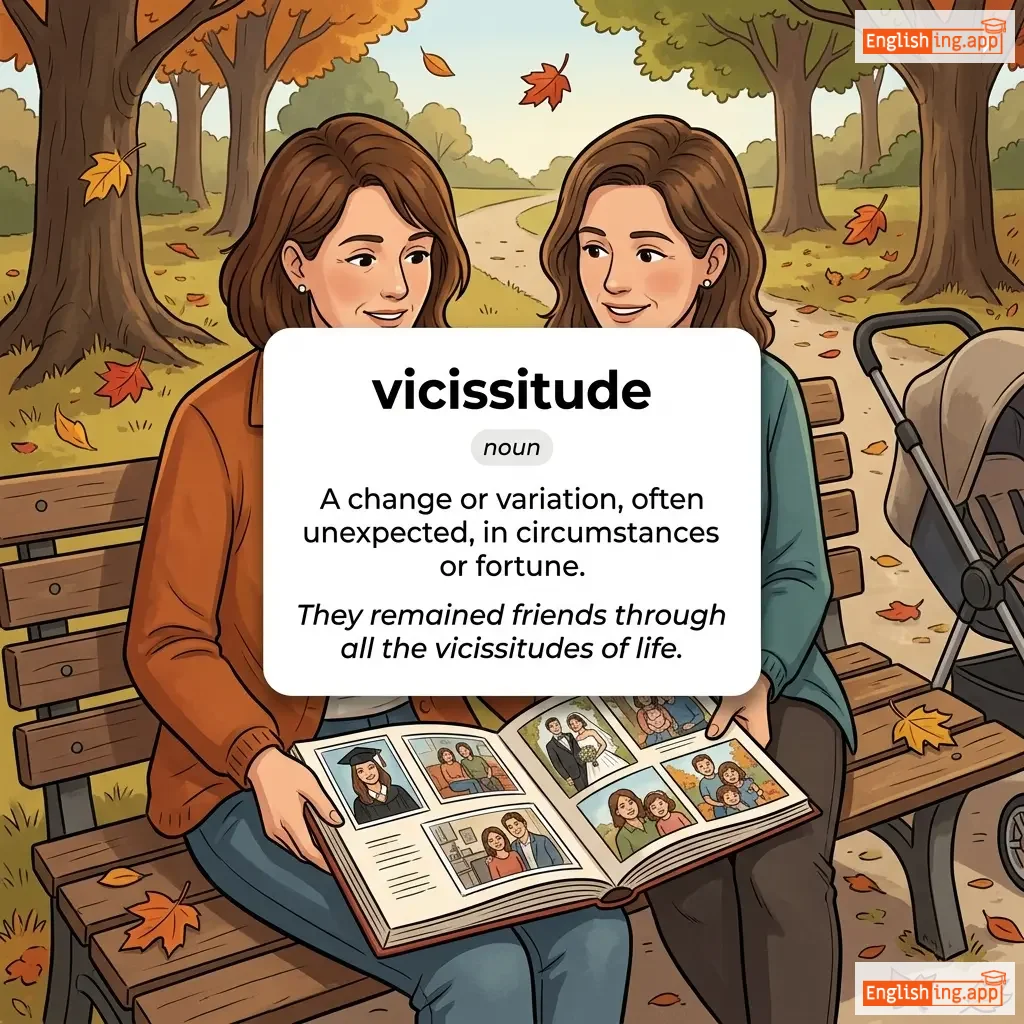
vicissitude definition card — visual illustration of the meaning
noun
/vɪˈsɪsɪtjuːd/
vicisitud (vicisitud)

A change or variation, often unexpected, in circumstances or fortune.

"They remained friends through all the vicissitudes of life."

"Permanecieron amigos a través de todas las vicisitudes de la vida." (Permanecieron amigos a través de todas las vicisitudes de la vida.)
noun
/ˈvɪktɪm/
víctima (victima)

a person who suffers harm, injury, or death due to an event or action

"The victim of the accident was taken to the hospital immediately."

"La víctima del accidente fue llevada al hospital inmediatamente." (La víctima del accidente fue llevada al hospital inmediatamente.)
verb
/ˈvɪktɪmaɪz/
victimizar (victimizar)

To make someone a victim, often by treating them unfairly or cruelly.

"The corrupt officials victimized the poor villagers."

"Los funcionarios corruptos victimizaron a los pobres aldeanos." (Los funcionarios corruptos victimizaron a los pobres aldeanos.)
adjective
/vɪkˈtɔː.ri.əs/
victorioso (victorioso)

having won a victory; successful in a struggle or contest

"The victorious team celebrated their championship win with great joy."

"El equipo victorioso celebró su victoria del campeonato con gran alegría." (El equipo victorioso celebró su victoria del campeonato con gran alegría.)
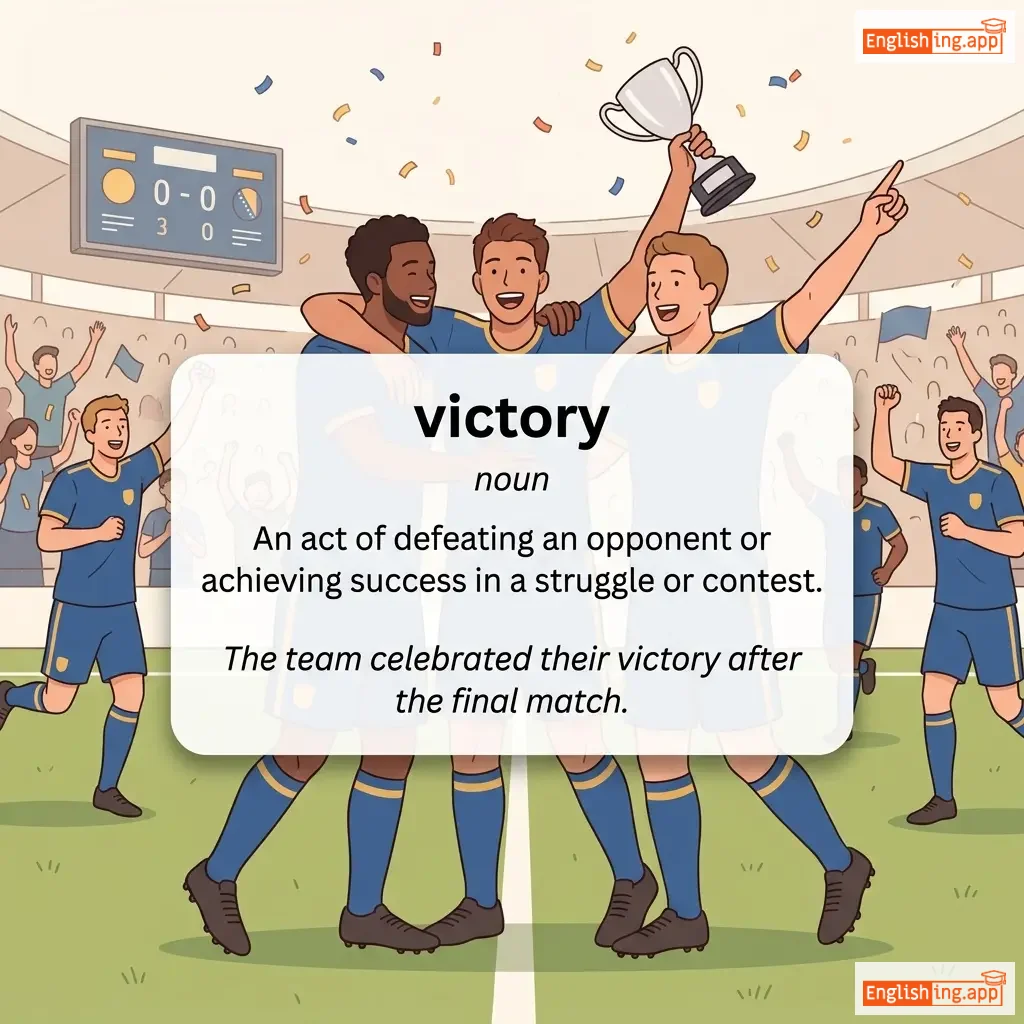
victory definition card — visual illustration of the meaning
noun
/ˈvɪktəri/
victoria (victoria)

An act of defeating an opponent or achieving success in a struggle or contest.

"The team celebrated their victory after the final match."

"El equipo celebró su victoria después del partido final." (El equipo celebró su victoria después del partido final.)
noun
/ˈvɪtəlz/
víveres (viveres)

Food or provisions, especially for human consumption.

"The travelers packed enough victuals for their long journey."

"Los viajeros empacaron suficientes víveres para su largo viaje." (Los viajeros empacaron suficientes víveres para su largo viaje.)
noun
/ˈvɪdiəʊ/
vídeo (video)

a recording of moving visual images made digitally or on film

"She watched the video of her favorite concert online."

"Ella vio el video de su concierto favorito en línea." (Ella vio el video de su concierto favorito en linea.)
verb
/vaɪ/
competir (competir)

To compete eagerly with someone in order to do or achieve something.

"Several companies are vying for the contract."

"Varias empresas están compitiendo por el contrato." (Varias empresas estan compitiendo por el contrato.)
noun/verb
/vjuː/
vista (vista)

the act of seeing or observing something, or an area of sight

"She had a great view of the sunset from her balcony."

"Ella tuvo una gran vista del atardecer desde su balcón." (Ella tuvo una gran vista del atardecer desde su balcon.)
noun
/ˈvɪərər/
espectador (espectador)

a person who watches something, especially television or video content

"The viewer is able to switch channels with the remote control."

"El espectador puede cambiar de canal con el control remoto." (El espectador puede cambiar de canal con el control remoto.)
adjective
/ˈvjuː.ləs/
invisible; sin opiniones (invisible; sin opiniones)

invisible; having no views or opinions

"The ghost remained viewless to most people in the haunted house."

"El fantasma permaneció invisible para la mayoría de las personas en la casa encantada." (El fantasma permaneció invisible para la mayoría de las personas en la casa encantada.)
noun
/ˈvjuːpɔɪnt/
punto de vista (punto de vista)

a particular attitude or way of considering a matter

"From his viewpoint, the situation was hopeless."

"Desde su punto de vista, la situación era desesperada." (Desde su punto de vista, la situación era desesperada.)
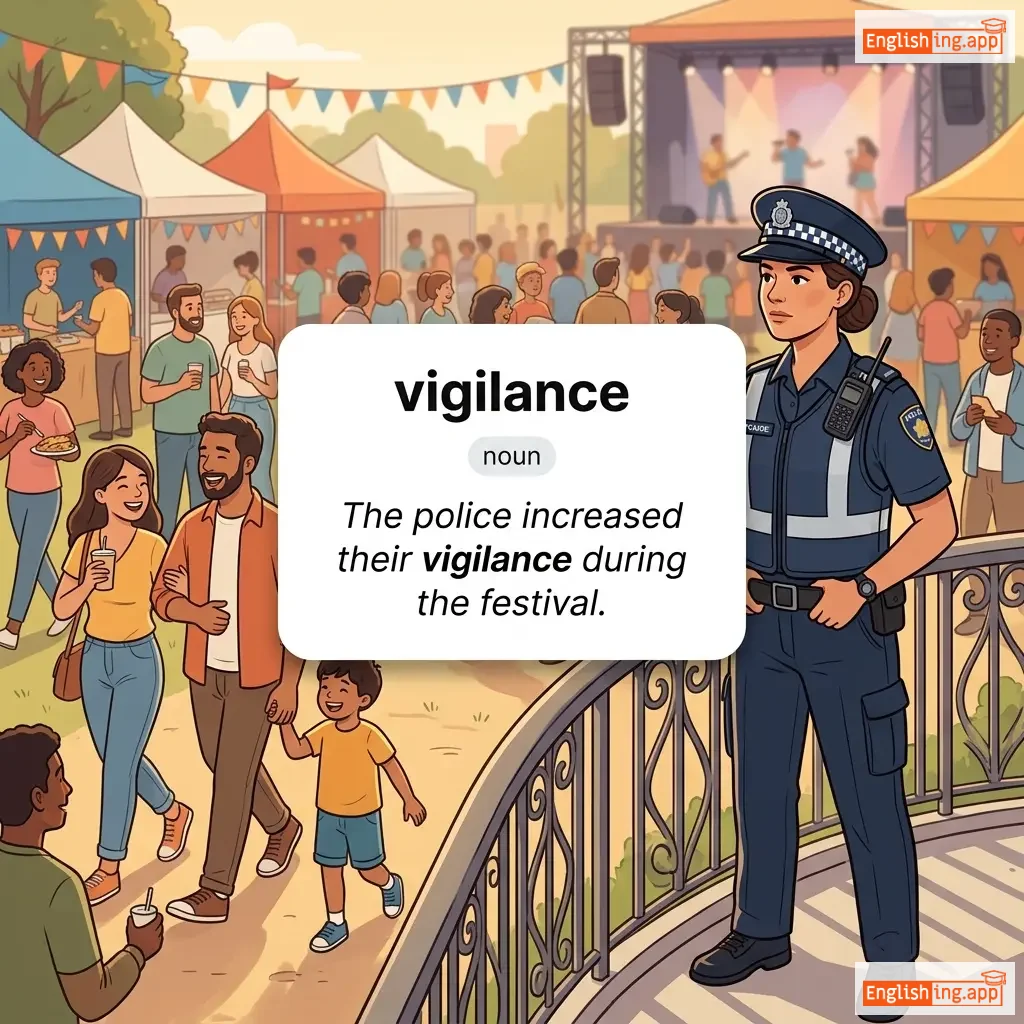
vigilance definition card — visual illustration of the meaning
noun
/ˈvɪdʒɪləns/
vigilancia (vigilancia)

The action or state of keeping careful watch for possible danger or difficulties.

"The police increased their vigilance during the festival."

"La policía aumentó su vigilancia durante el festival." (La policia aumento su vigilancia durante el festival.)
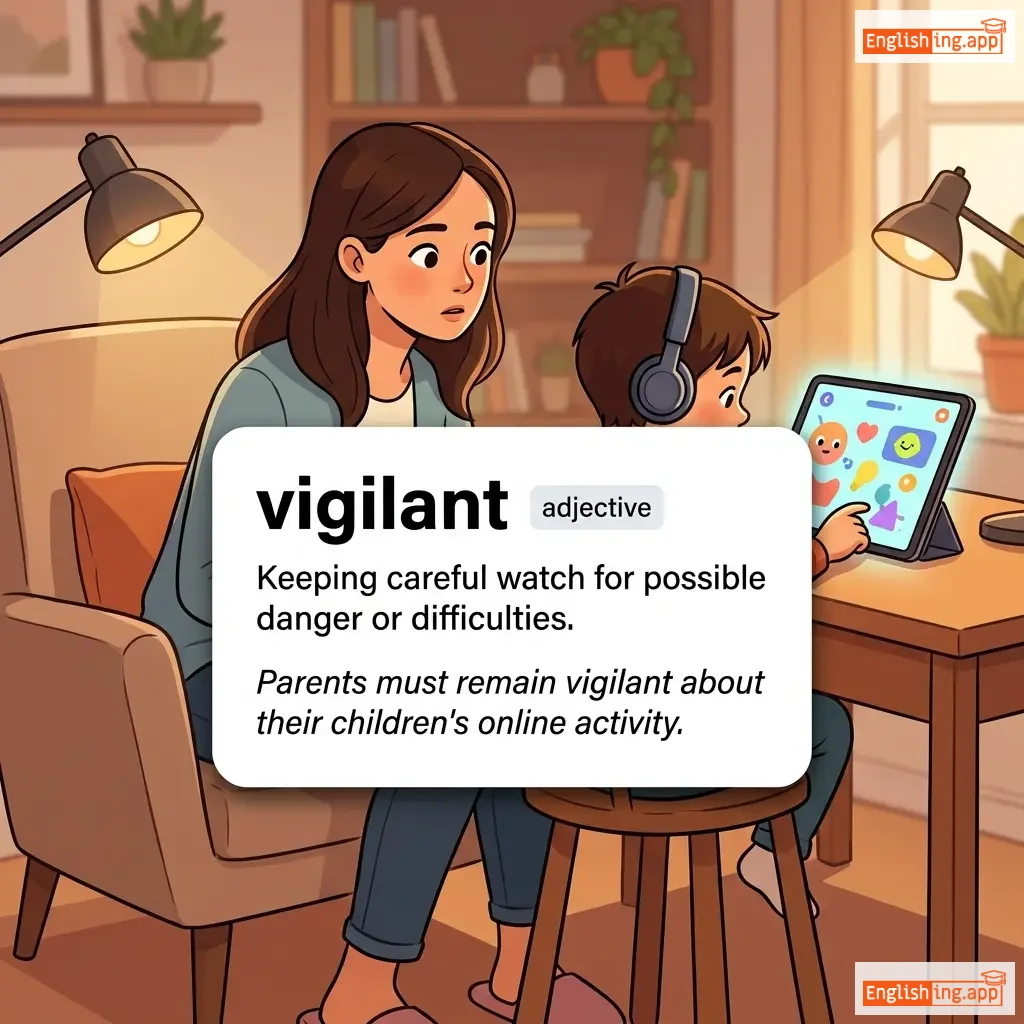
vigilant definition card — visual illustration of the meaning
adjective
/ˈvɪdʒɪlənt/
vigilante (vigilante)

Keeping careful watch for possible danger or difficulties.

"Parents must remain vigilant about their children's online activity."

"Los padres deben mantenerse vigilantes sobre la actividad en línea de sus hijos." (Los padres deben mantenerse vigilantes sobre la actividad en línea de sus hijos.)
noun
/vɪnˈjɛt/
vigneta (vigneta)

A short, descriptive piece of writing or a brief scene.

"The author included a poignant vignette in the introduction of the book."

"El autor incluyó una conmovedora vigneta en la introducción del libro." (El autor incluyó una conmovedora vigneta en la introducción del libro.)
noun
/ˈvɪɡər/
vigor (vigor)

Physical strength, energy, or enthusiasm.

"She tackled the project with great vigor and determination."

"Ella abordó el proyecto con gran vigor y determinación." (Ella abordó el proyecto con gran vigor y determinación.)
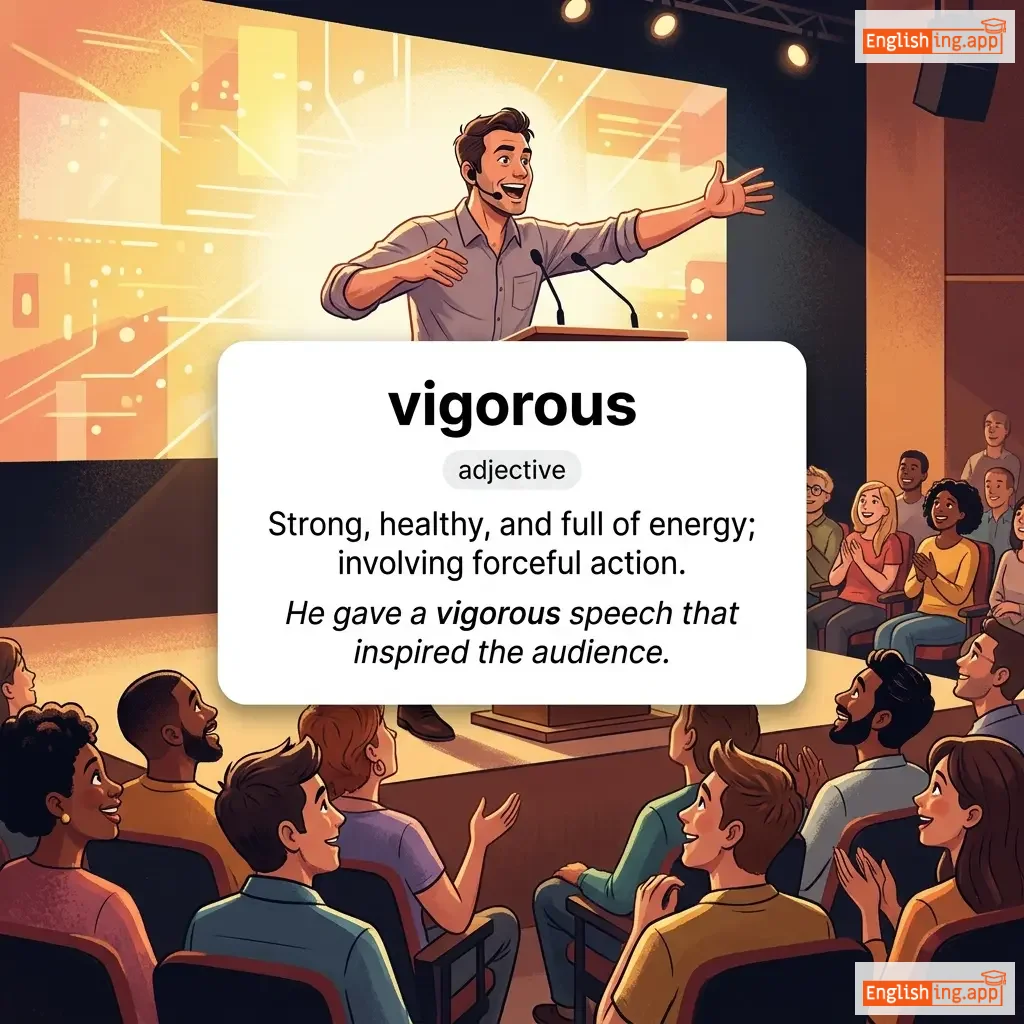
vigorous definition card — visual illustration of the meaning
adjective
/ˈvɪɡərəs/
enérgico (energiko)

Strong, healthy, and full of energy; involving forceful action.

"He gave a vigorous speech that inspired the audience."

"Él dio un discurso enérgico que inspiró a la audiencia." (El dio un discurso energico que inspiro a la audiencia.)
noun
/ˈvɪɡ.ər/
fuerza física y buena salud; esfuerzo, energía y entusiasmo (vigor)

physical strength and good health; effort, energy, and enthusiasm

"She approached her work with renewed vigour after the vacation."

"Después de las vacaciones, abordó su trabajo con renovado vigor." (despues de las vacaciones, abordo su trabajo con renovado vigor.)
verb
/ˈvɪlɪfaɪ/
felicidad (felicidad)

to speak or write about someone in an abusive or disparaging manner

"The politician was vilified in the media for his controversial remarks."

"Ella no pudo ocultar su felicidad cuando recibió el premio." (Ella no pudo ocultar su felicidad cuando recibió el premio.)
noun
/ˈvɪlɪdʒ/
pueblo (pueblo)

a small community or group of houses in a rural area

"They live in a small village surrounded by mountains."

"Viven en un pequeño pueblo rodeado de montañas." (Viven en un pequeno pueblo rodeado de montanas.)
noun
/vɪm/
vigor (vigor)

energy and enthusiasm

"She performed the dance with great vim and vigor."

"Ella realizó la danza con gran vigor y energía." (Ella realizo la danza con gran vigor y energia.)
adjective
/ˈvɪnsəbl/
vencible (vencible)

capable of being overcome or defeated

"The enemy seemed vincible after losing their main base."

"El enemigo parecía vencible después de perder su base principal." (El enemigo parecía vencible después de perder su base principal.)
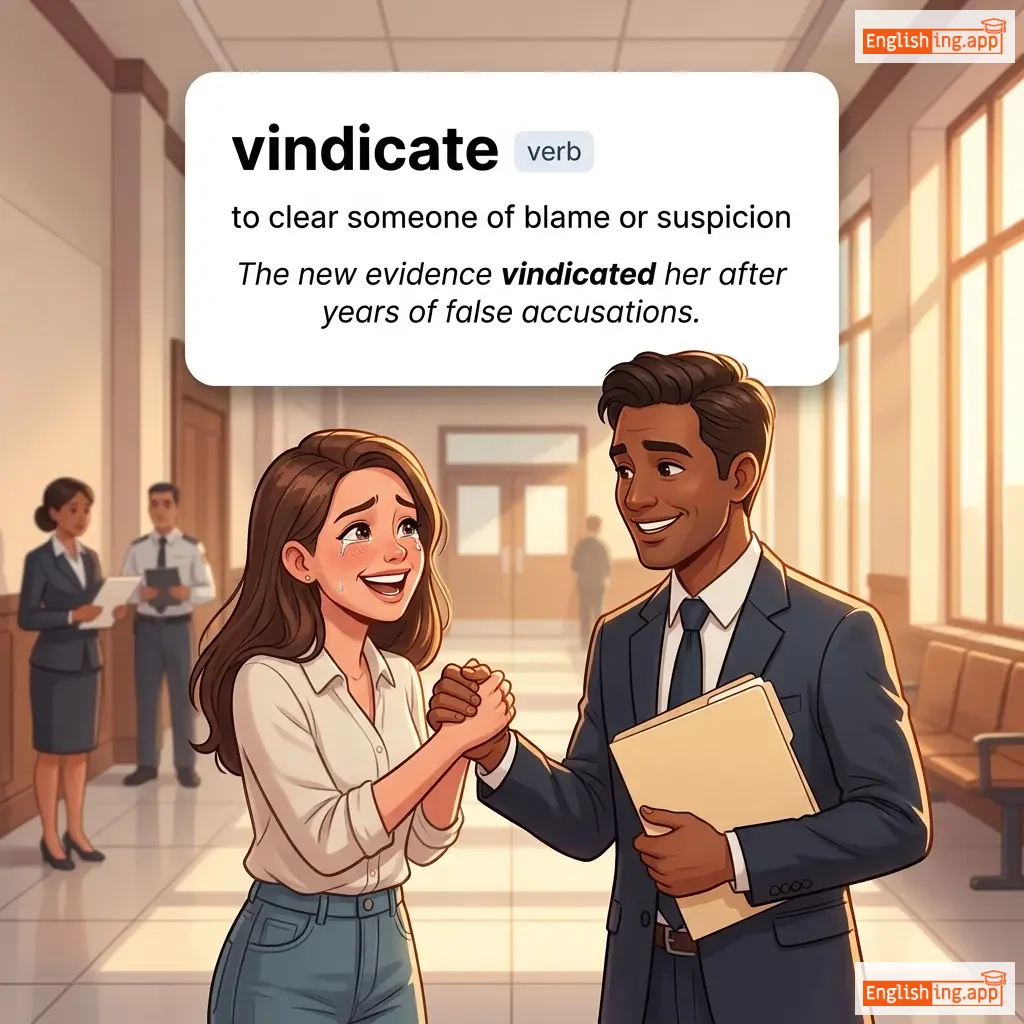
vindicate definition card — visual illustration of the meaning
verb
/ˈvɪndɪkeɪt/
vindicar (vindicar)

to clear someone of blame or suspicion

"The new evidence vindicated her after years of false accusations."

"Las nuevas pruebas la vindicaron después de años de falsas acusaciones." (Las nuevas pruebas la vindicaron despues de anos de falsas acusaciones.)
adjective
/ˈvɪndɪkeɪtɪv/
vindicatorio (vindicatorio)

showing a tendency to vindicate or justify; inclined to defend

"Her vindicative tone showed that she strongly believed in her innocence."

"Su tono vindicatorio mostró que creía firmemente en su inocencia." (Su tono vindicatorio mostró que creía firmemente en su inocencia.)
adjective
/ˈvɪndɪkətɔːri/
vindicativo (vindicativo)

Serving to justify, clear of blame, or defend.

"His vindicatory remarks restored his reputation."

"Sus comentarios vindicatorios restauraron su reputación." (Sus comentarios vindicatorios restauraron su reputación.)
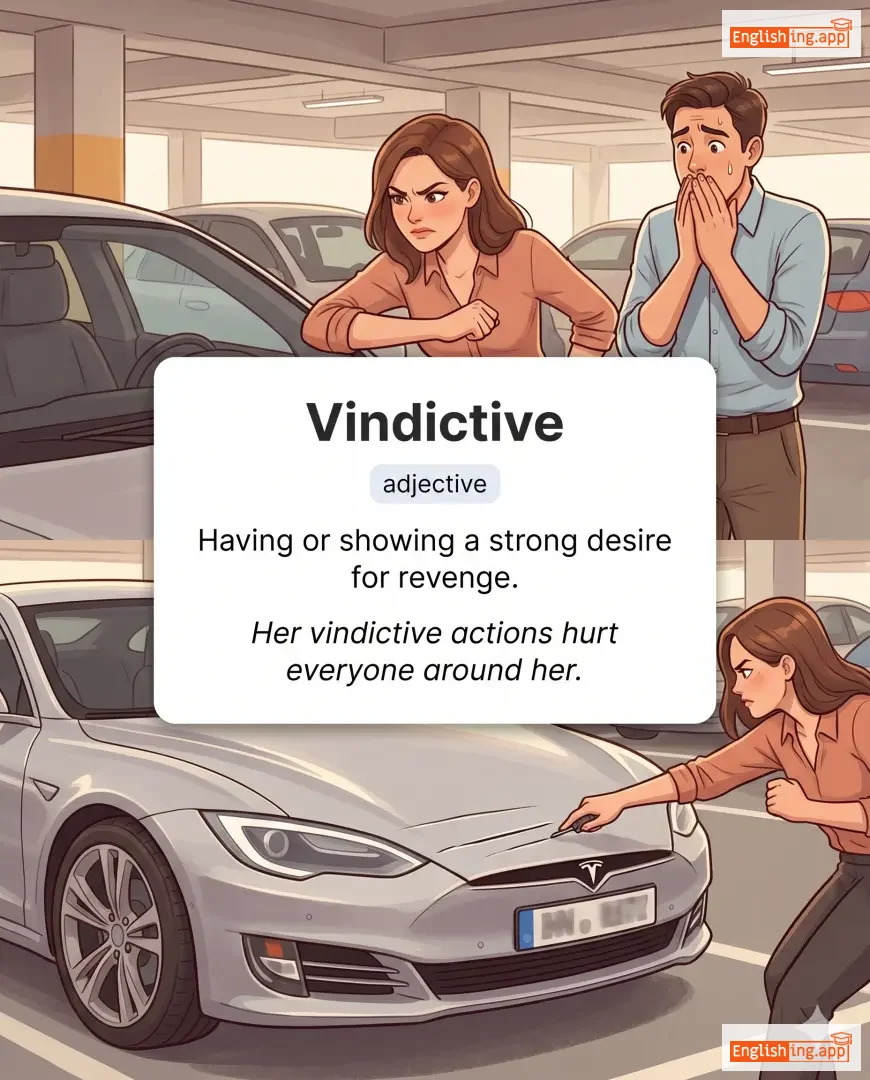
Vindictive definition card — visual illustration of the meaning
adjective
/vɪnˈdɪktɪv/
vengativo (vengativo)

Having or showing a strong desire for revenge.

"Her vindictive actions hurt everyone around her."

"Sus acciones vengativas lastimaron a todos a su alrededor." (Sus acciones vengativas lastimaron a todos a su alrededor.)
noun
/vaɪn/
vid (vid)

a climbing or trailing plant with long stems; a plant that produces grapes

"The vine climbed up the wall and covered it with green leaves."

"La vid trepó por la pared y la cubrió de hojas verdes." (la vid trepo por la pared y la cubrio de hojas verdes)
noun
/ˈvɪn.ɪ.ɡər/
vinagre (vinagre)

a sour liquid made from fermented alcohol, used for cooking and preserving

"I added vinegar to the salad dressing for extra flavor."

"Añadí vinagre a la salsa de ensalada para más sabor." (Añadí vinagre a la salsa de ensalada para más sabor.)