Vocabularios

Descubra, aprenda y domine el vocabulario en inglés

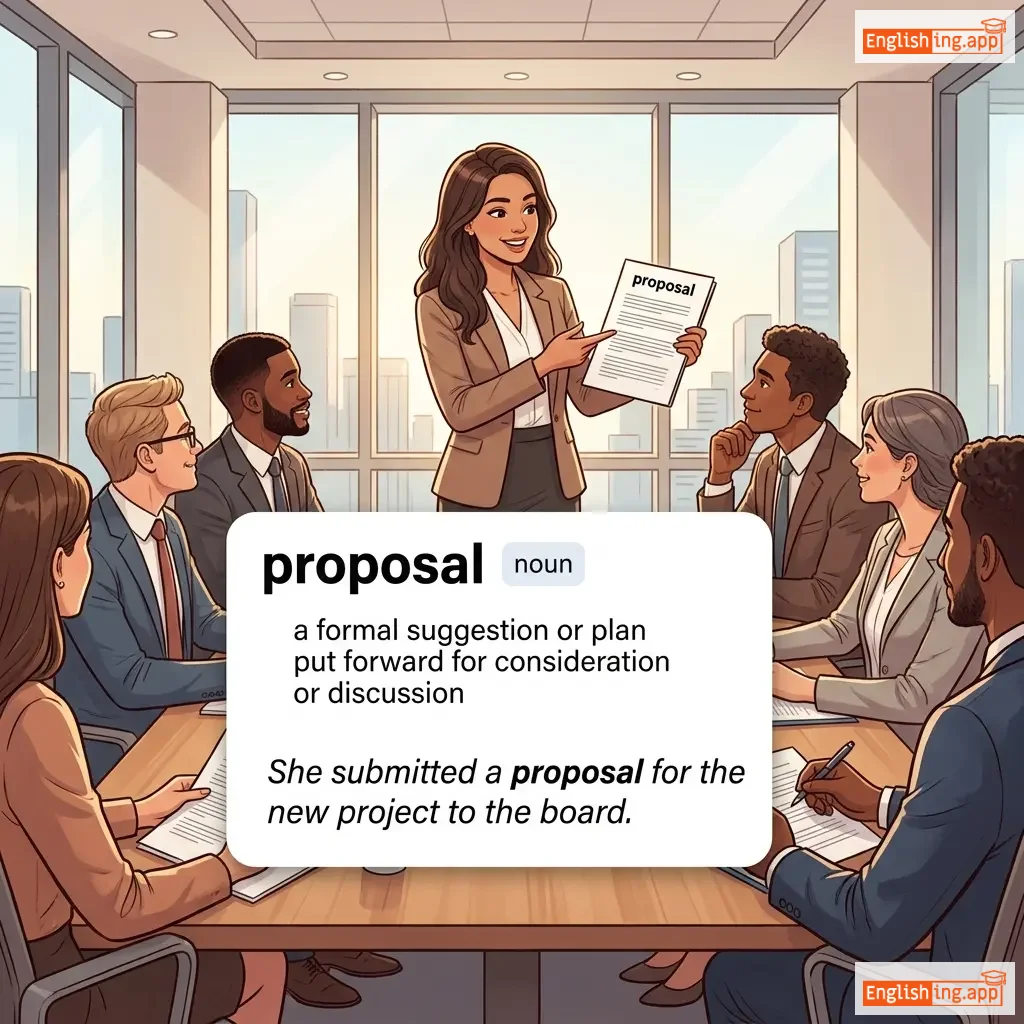
proposal definition card — visual illustration of the meaning
noun
/prəˈpəʊzəl/
propuesta (propuesta)

a formal suggestion or plan put forward for consideration or discussion

"She submitted a proposal for the new project to the board."

"Ella presentó una propuesta para el nuevo proyecto ante la junta." (Ella presentó una propuesta para el nuevo proyecto ante la junta.)
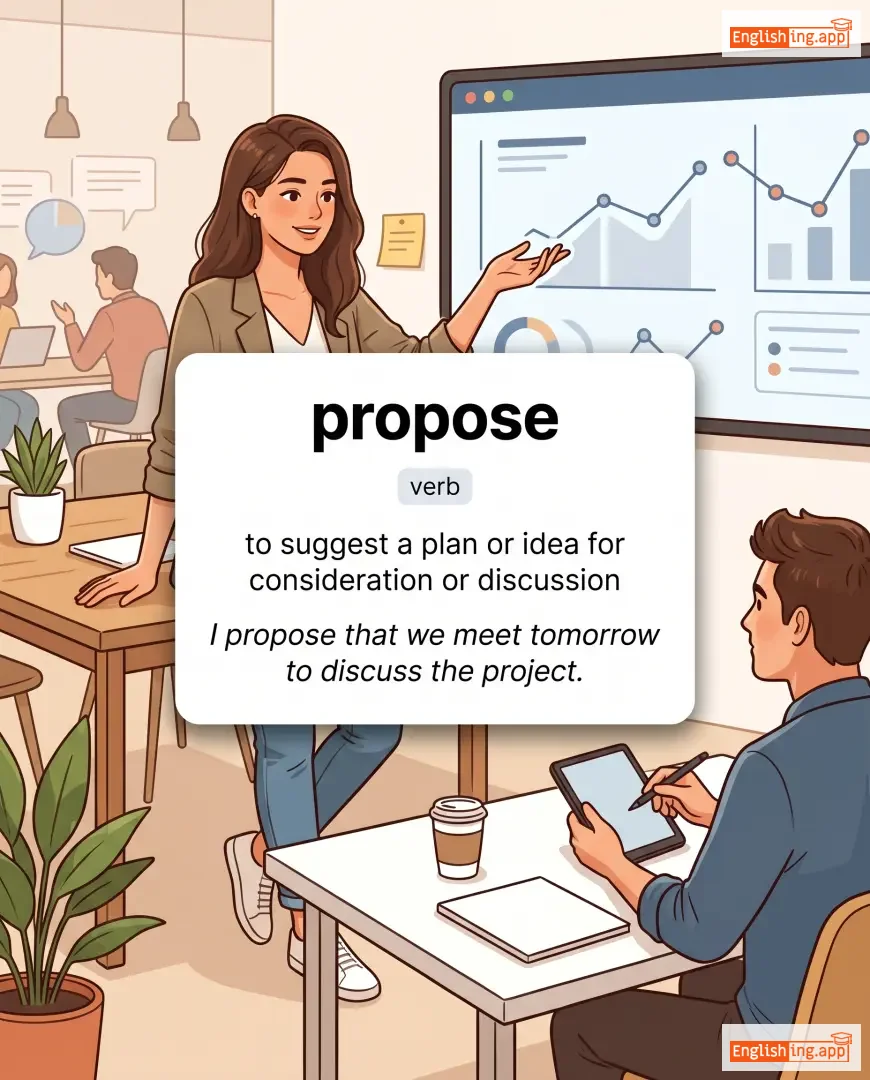
propose definition card — visual illustration of the meaning
verb
/prəˈpoʊz/
proponer (proponer)

to suggest a plan or idea for consideration or discussion

"I propose that we meet tomorrow to discuss the project."

"Propongo que nos encontremos mañana para discutir el proyecto." (Propongo que nos encontremos mañana para discutir el proyecto.)
adjective
/prəˈpoʊzd/
propuesto (propuesto)

suggested or put forward for consideration or discussion

"The proposed changes will improve the system."

"Los cambios propuestos mejorarán el sistema." (Los cambios propuestos mejoraran el sistema.)
noun
/ˌprɒpəˈzɪʃən/
propuesta, plan (propuesta, plan)

A statement, idea, or plan put forward for consideration or discussion.

"The company made a business proposition to the investors."

"La compañía hizo una propuesta de negocio a los inversionistas." (La compañia hizo una propuesta de negocio a los inversionistas.)
verb
/prəˈpaʊnd/
proponer (proponer)

To put forward an idea, theory, or point for consideration.

"The professor propounded a new theory on climate change."

"El profesor propuso una nueva teoría sobre el cambio climático." (El profesor propuso una nueva teoría sobre el cambio climático.)
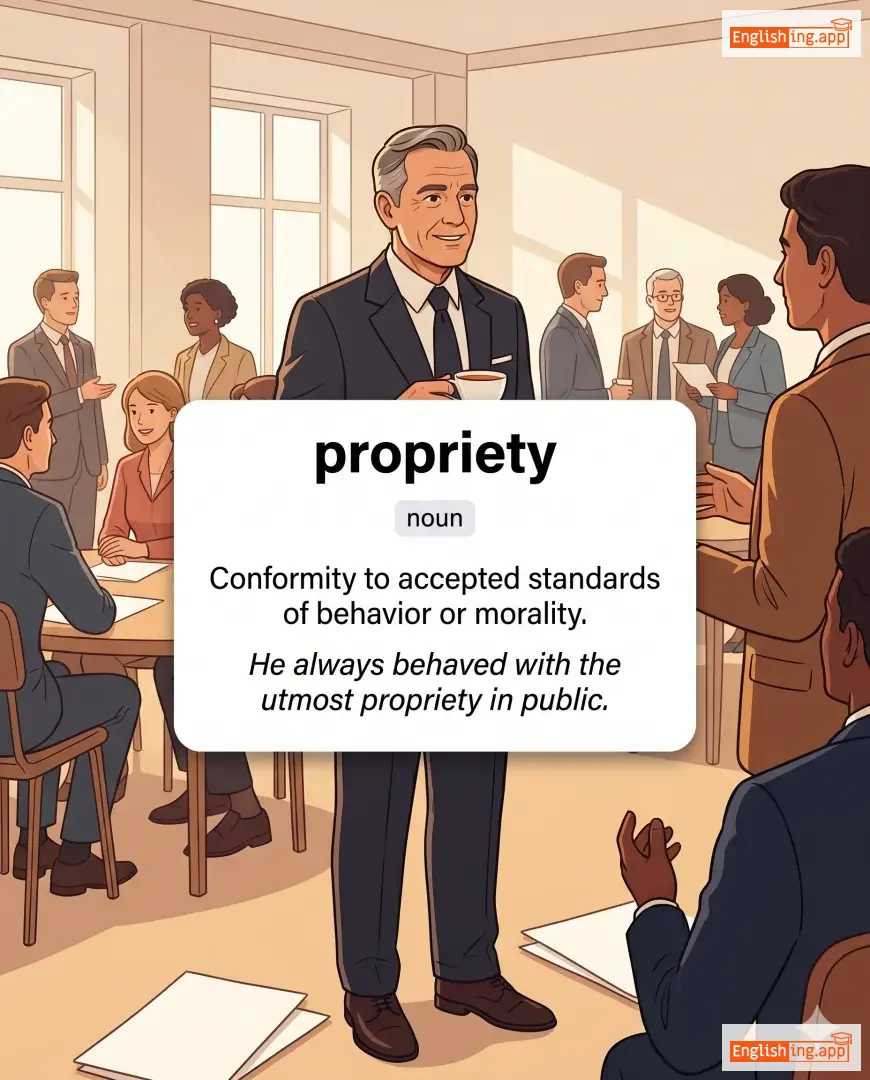
propriety definition card — visual illustration of the meaning
noun
/prəˈpraɪəti/
decoro (decoro)

Conformity to accepted standards of behavior or morality.

"He always behaved with the utmost propriety in public."

"Siempre se comportaba con el máximo decoro en público." (Siempre se comportaba con el máximo decoro en público.)
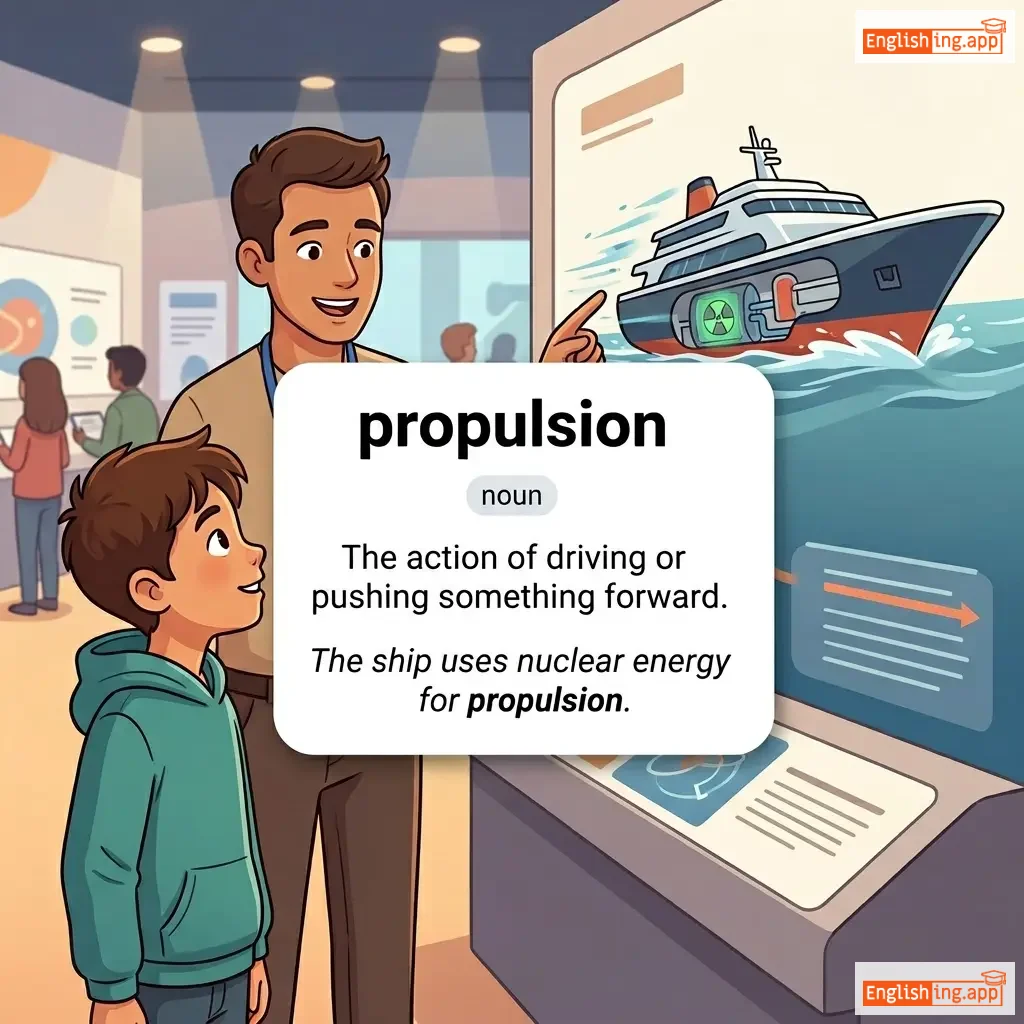
propulsion definition card — visual illustration of the meaning
noun
/prəˈpʌlʃən/
propulsión (propulsion)

The action of driving or pushing something forward.

"The ship uses nuclear energy for propulsion."

"El barco utiliza energía nuclear para la propulsión." (El barco utiliza energia nuclear para la propulsion.)
adjective
/prəˈpʌlsɪv/
impulsor (impulsor)

Having the power to drive or push something forward.

"The propulsive force of the rocket lifted it off the ground."

"La fuerza impulsora del cohete lo levantó del suelo." (La fuerza impulsora del cohete lo levantó del suelo.)
verb
/prəˈroʊɡ/
suspender una sesión (suspender una sesion)

to discontinue a session of a parliament or assembly without dissolving it

"The president decided to prorogue parliament until the crisis was resolved."

"El presidente decidió suspender el parlamento hasta que la crisis fuera resuelta." (El presidente decidio suspender el parlamento hasta que la crisis fuera resuelta.)
adjective
/proʊˈzeɪ.ɪk/
prosaico (prosaico)

ordinary, dull, or lacking imagination

"The teacher’s explanation was accurate but rather prosaic."

"La explicación del profesor fue precisa, pero bastante prosaica." (La explicacion del profesor fue precisa, pero bastante prosaica.)
noun
/proʊˈsiː.ni.əm/
proscenio (proscenio)

the part of a theater stage in front of the curtain; the arch framing the stage

"The actors bowed at the proscenium before leaving the stage."

"Los actores se inclinaron ante el proscenio antes de dejar el escenario." (Los actores se inclinaron ante el proscenio antes de dejar el escenario.)
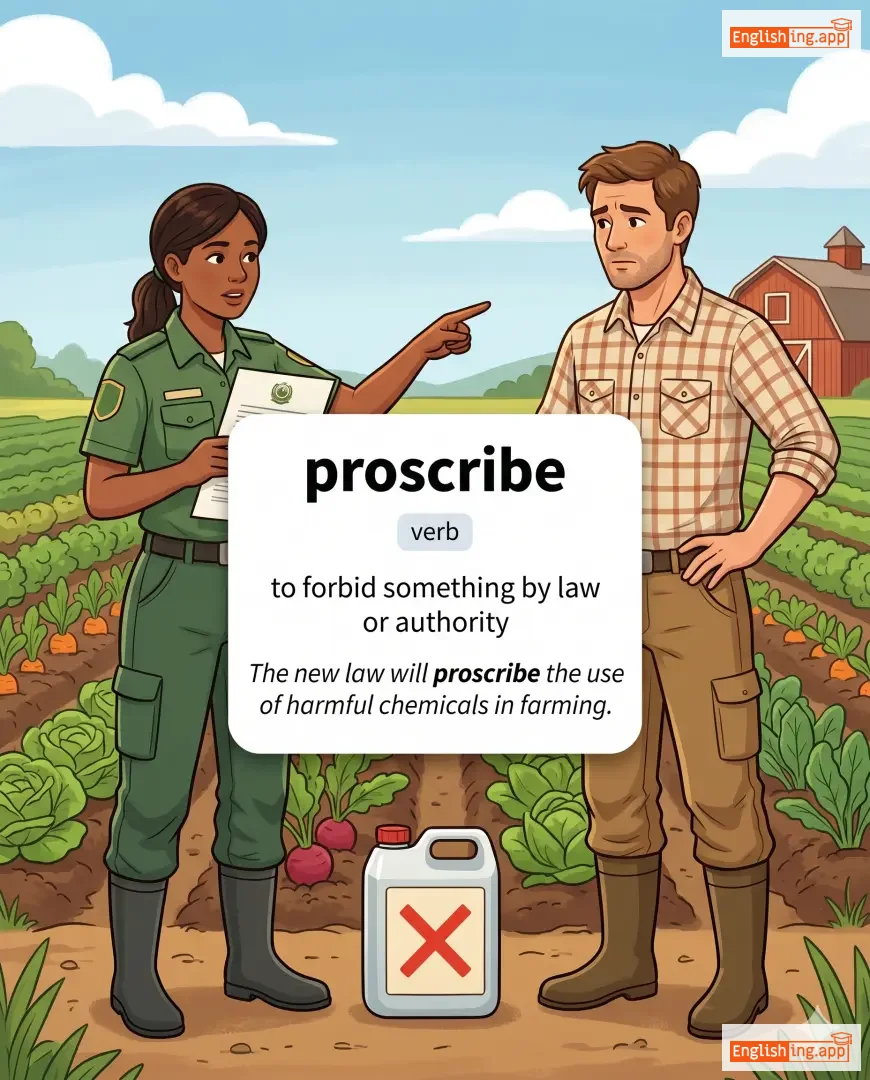
proscribe definition card — visual illustration of the meaning
verb
/proʊˈskraɪb/
proscribir (proscribir)

to forbid something by law or authority

"The new law will proscribe the use of harmful chemicals in farming."

"La nueva ley proscribirá el uso de productos químicos dañinos en la agricultura." (La nueva ley proscribirá el uso de productos químicos dañinos en la agricultura.)
noun
/proʊˈskrɪp.ʃən/
prohibición (prohibicion)

the act of forbidding something, especially by law

"The proscription of child labor is an important human rights achievement."

"La prohibición del trabajo infantil es un logro importante de los derechos humanos." (La prohibicion del trabajo infantil es un logro importante de los derechos humanos.)
verb
/ˈprɒsɪkjuːt/
procesar (procesar)

to institute legal proceedings against someone

"The lawyer decided to prosecute the case after gathering sufficient evidence."

"El abogado decidió procesar el caso después de reunir suficiente evidencia." (El abogado decidió procesar el caso después de reunir suficiente evidencia.)
noun
/ˌprɒsɪˈkjuːʃən/
acusación (acusacion)

The act of bringing a criminal charge against someone and pursuing legal action in court.

"The prosecution presented strong evidence against the defendant."

"La acusación presentó pruebas contundentes contra el acusado." (La acusacion presento pruebas contundentes contra el acusado.)
noun
/ˈprɑsɪˌkjuːtər/
fiscal (fiscal)

a lawyer who represents the government in criminal cases

"The prosecutor argued that the defendant was guilty of the crime."

"El fiscal argumentó que el acusado era culpable del crimen." (El fiscal argumentó que el acusado era culpable del crimen.)
noun
/ˈprɒsɪlaɪt/
prosélito (proselyto)

A person who has converted from one belief, opinion, or religion to another.

"She became a proselyte after converting to a new faith."

"Se convirtió en un prosélito después de convertirse a una nueva fe." (Se convirtió en un prosélito después de convertirse a una nueva fe.)
verb
/ˈprɒsəˌlaɪtaɪz/
intentar convertir (intentar convertir)

To try to persuade someone to convert to a different belief or religion.

"They tried to proselytize the villagers with their new ideas."

"Ellos intentaron prosélitizar a los aldeanos con sus nuevas ideas." (Ellos intentaron prosélitizar a los aldeanos con sus nuevas ideas.)
noun
/ˈprɒsədi/
prosodia (prosodia)

The patterns of rhythm and sound used in poetry and speech.

"The professor explained how prosody affects the mood of a poem."

"El profesor explicó cómo la prosodia afecta el estado de ánimo de un poema." (El profesor explicó como la prosodia afecta el estado de animo de un poema.)
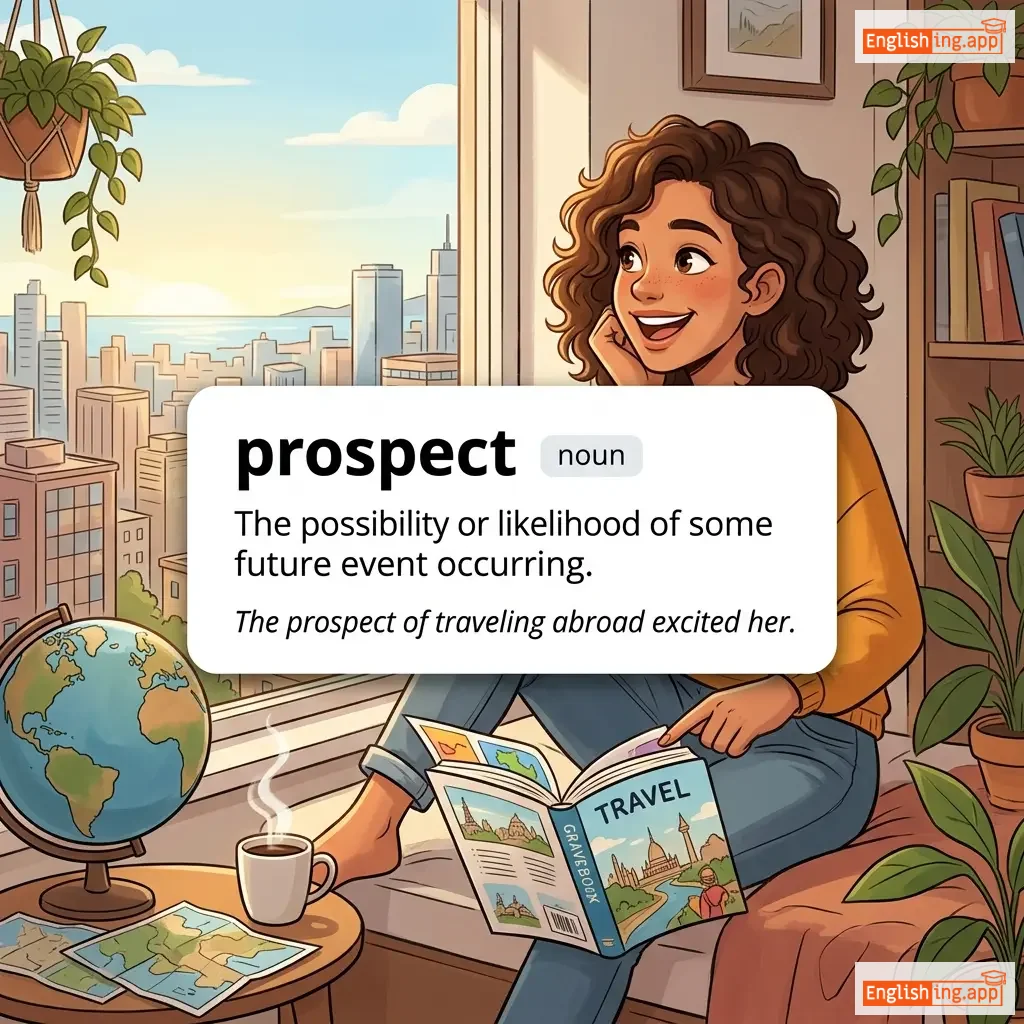
prospect definition card — visual illustration of the meaning
noun
/ˈprɒspɛkt/
prospecto (prospecto)

The possibility or likelihood of some future event occurring.

"The prospect of traveling abroad excited her."

"El prospecto de viajar al extranjero la emocionó." (El prospecto de viajar al extranjero la emocionó.)
adjective
/prəˈspɛktɪv/
prospectivo (prospectivo)

likely or expected to happen in the future; potential

"The company is meeting with prospective clients next week."

"La empresa se reunirá con clientes prospectivos la próxima semana." (La empresa se reunirá con clientes prospectivos la próxima semana.)
noun
/ˈprɒspɛktər/
buscador de minerales (buscador de minerales)

a person who searches for mineral deposits, especially gold

"The prospector spent years in the mountains searching for gold."

"El prospector pasó años en las montañas buscando oro." (El prospector pasó años en las montañas buscando oro.)
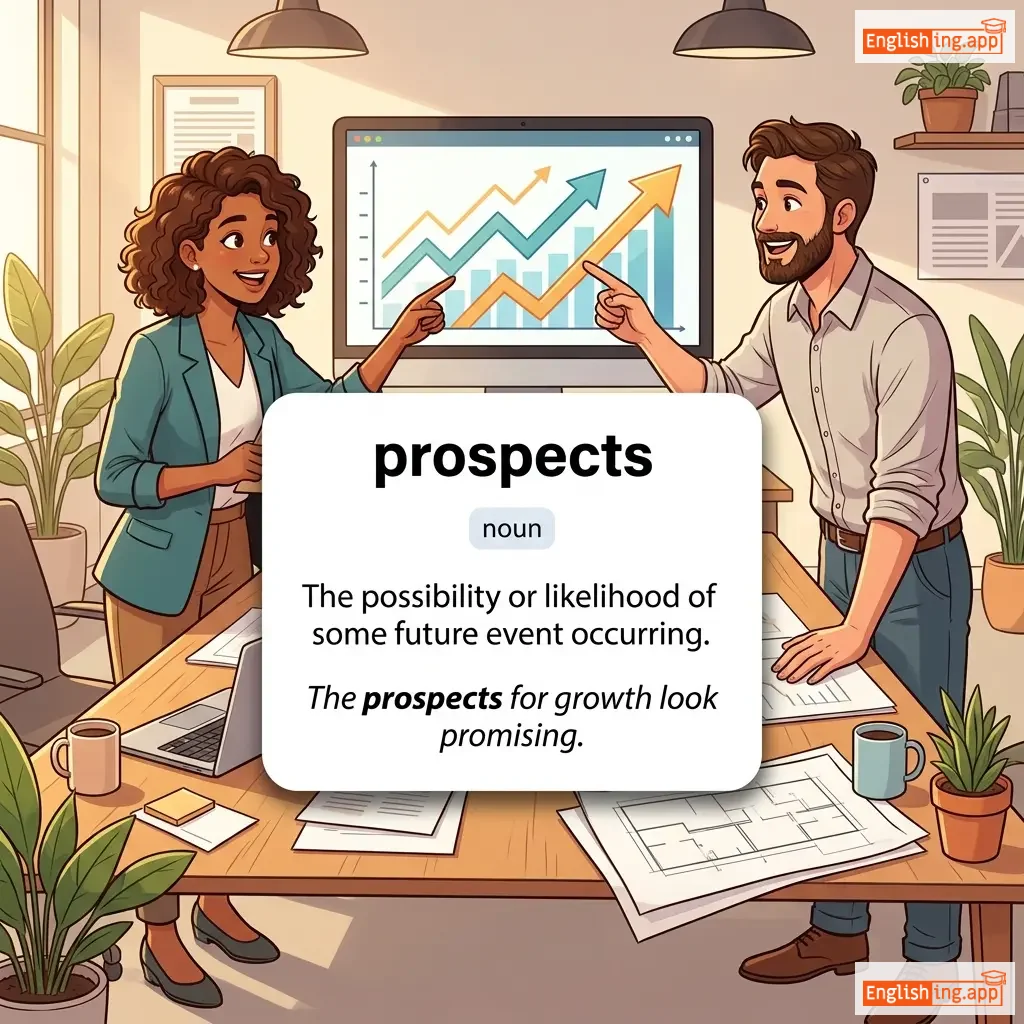
prospects definition card — visual illustration of the meaning
noun
/ˈprɒs.pekts/
prospectos (prospectos)

The possibility or likelihood of some future event occurring.

"The prospects for growth look promising."

"Los prospectos de crecimiento parecen prometedores." (Los prospectos de crecimiento parecen prometedores.)
noun
/prəˈspɛktəs/
prospecto (prospecto)

a printed document that advertises or describes a school, business, or investment offering

"The university sent out a prospectus to attract new students."

"La universidad envió un prospecto para atraer nuevos estudiantes." (La universidad envió un prospecto para atraer nuevos estudiantes.)
verb
/ˈprɒspər/
prosperar (prosperar)

to succeed or flourish, especially in financial or business matters

"With hard work and determination, she managed to prosper in her career."

"Con trabajo duro y determinación, ella logró prosperar en su carrera." (Con trabajo duro y determinacion, ella logro prosperar en su carrera.)
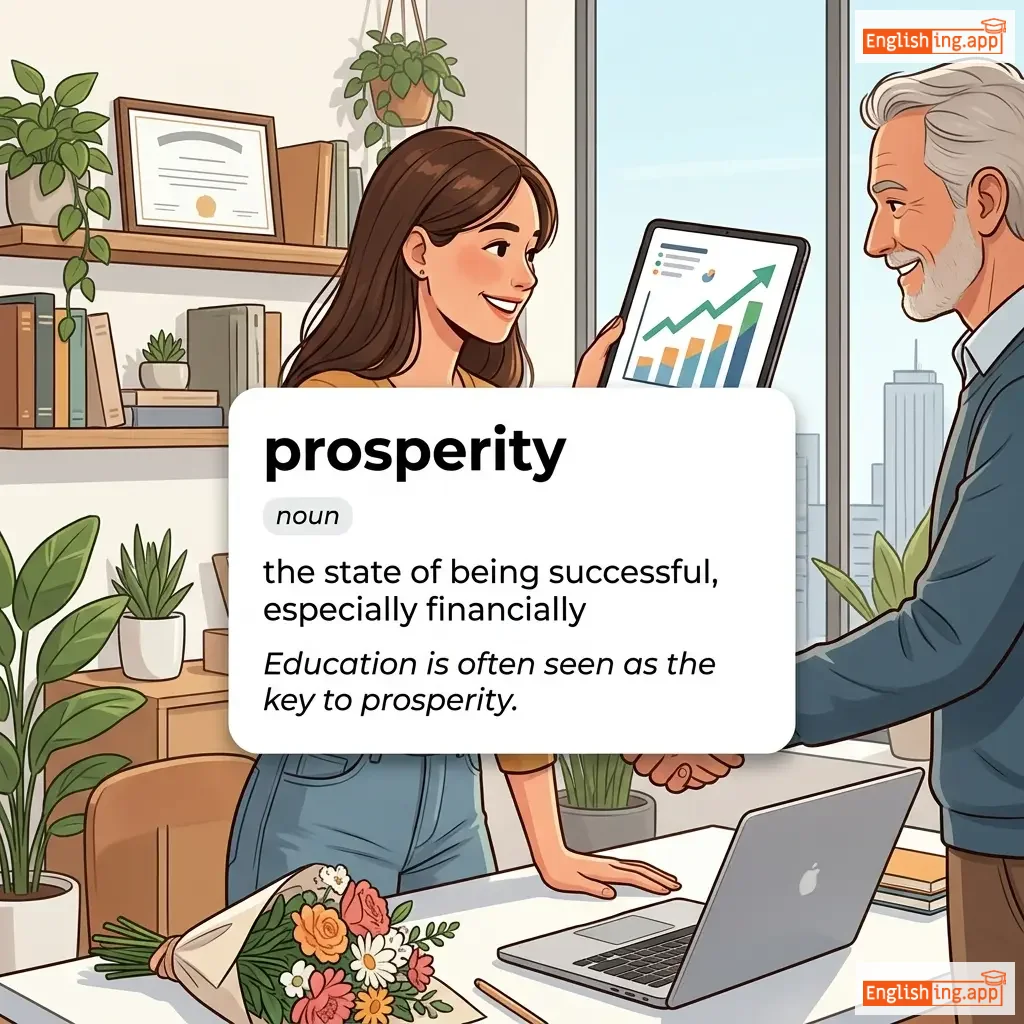
prosperity definition card — visual illustration of the meaning
noun
/prɒˈspɛrɪti/
prosperidad (prosperidad)

the state of being successful, especially financially

"Education is often seen as the key to prosperity."

"La educación a menudo se ve como la clave para la prosperidad." (La educacion a menudo se ve como la clave para la prosperidad.)
adjective
/ˈprɒspərəs/
próspero (prospero)

successful in material terms; flourishing financially or in general well-being

"The town became prosperous after the new trade route opened."

"La ciudad se hizo próspera después de que se abriera la nueva ruta comercial." (La ciudad se hizo próspera después de que se abriera la nueva ruta comercial.)
adjective/verb
/ˈprɒstreɪt/
postrado (postrado)

lying stretched out on the ground with one's face downward, often as a sign of submission or exhaustion

"He lay prostrate on the ground after the long battle."

"Él se tiró postrado en el suelo después de la larga batalla." (El se tiro postrado en el suelo después de la larga batalla.)
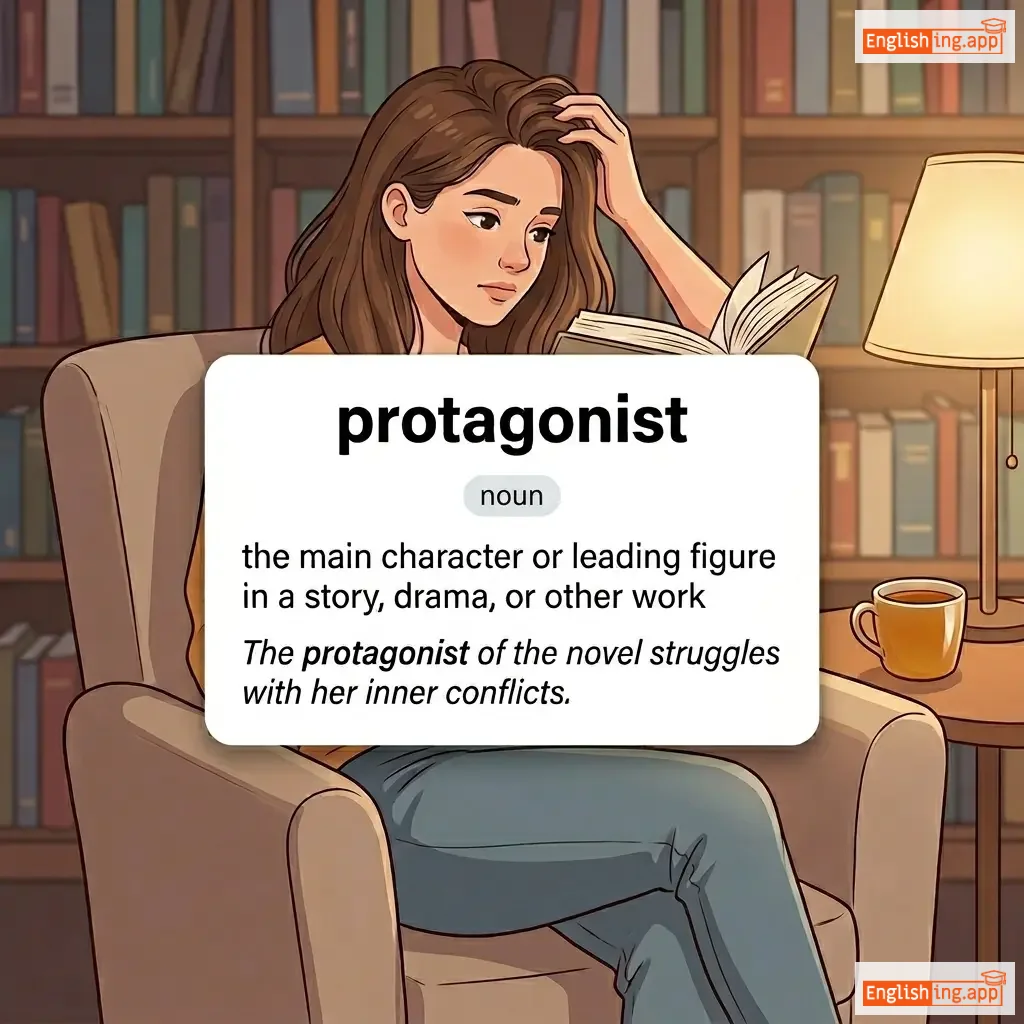
protagonist definition card — visual illustration of the meaning
noun
/prəˈtæɡənɪst/
protagonista (protagonista)

the main character or leading figure in a story, drama, or other work

"The protagonist of the novel struggles with her inner conflicts."

"El protagonista de la novela lucha con sus conflictos internos." (El protagonista de la novela lucha con sus conflictos internos.)
adjective
/ˈproʊtiən/
versátil (versatil)

tending or able to change frequently or easily; versatile

"She is a protean artist who experiments with many styles."

"Ella es una artista versátil que experimenta con muchos estilos." (Ella es una artista versatil que experimenta con muchos estilos.)
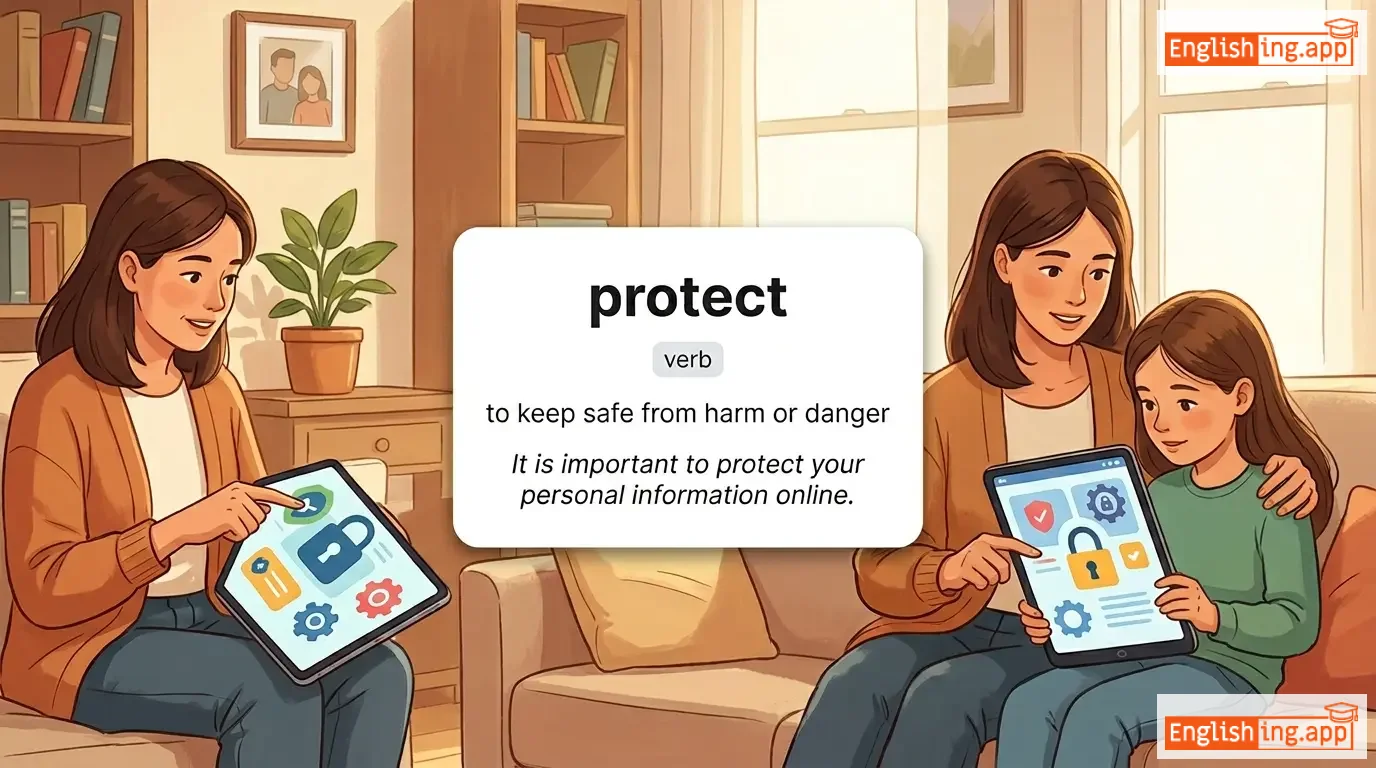
protect definition card — visual illustration of the meaning
verb
/prəˈtɛkt/
proteger (proteger)

to keep safe from harm or danger

"It is important to protect your personal information online."

"Es importante proteger tu información personal en línea." (Es importante proteger tu informacion personal en linea.)
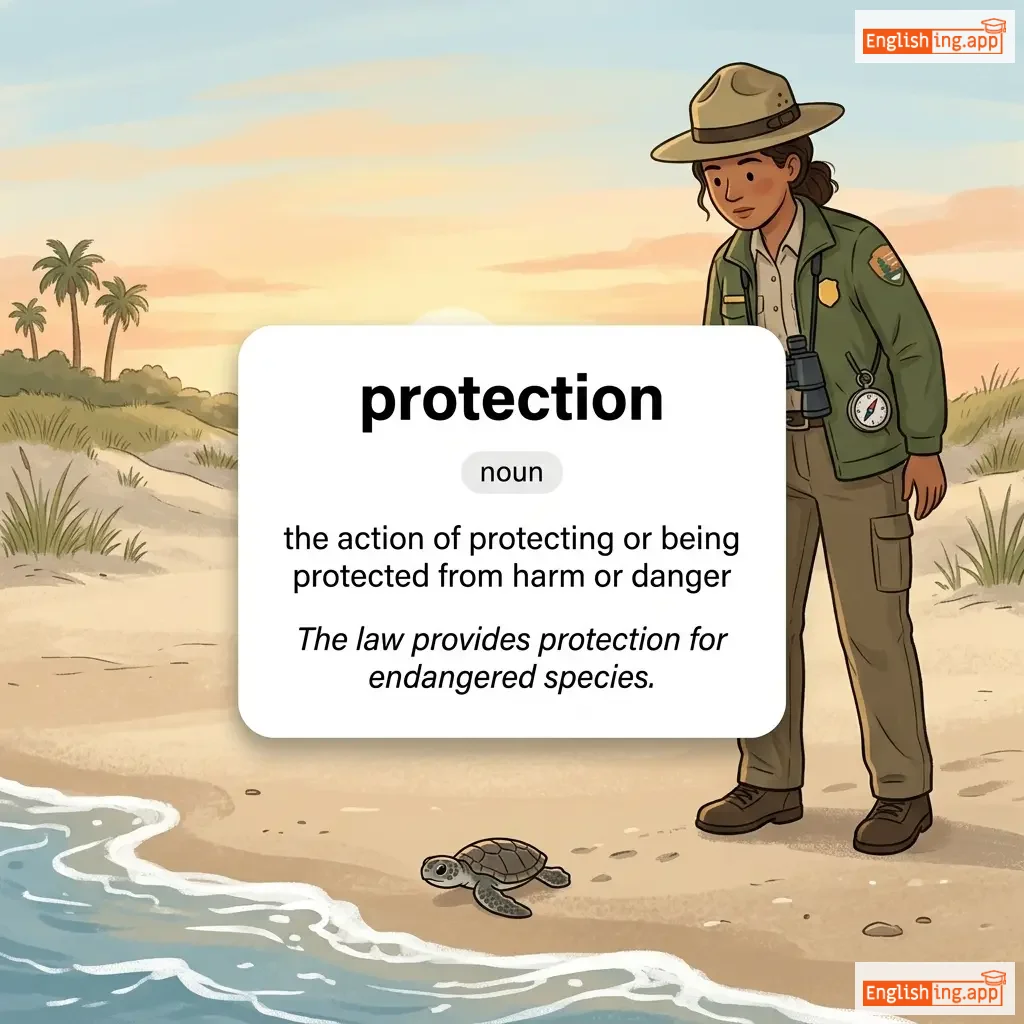
protection definition card — visual illustration of the meaning
noun
/prəˈtɛkʃən/
felicidad (felicidad)

the action of protecting or being protected from harm or danger

"The law provides protection for endangered species."

"No pudo esconder su felicidad cuando recibió el premio." (No pudo esconder su felicidad cuando recibió el premio.)
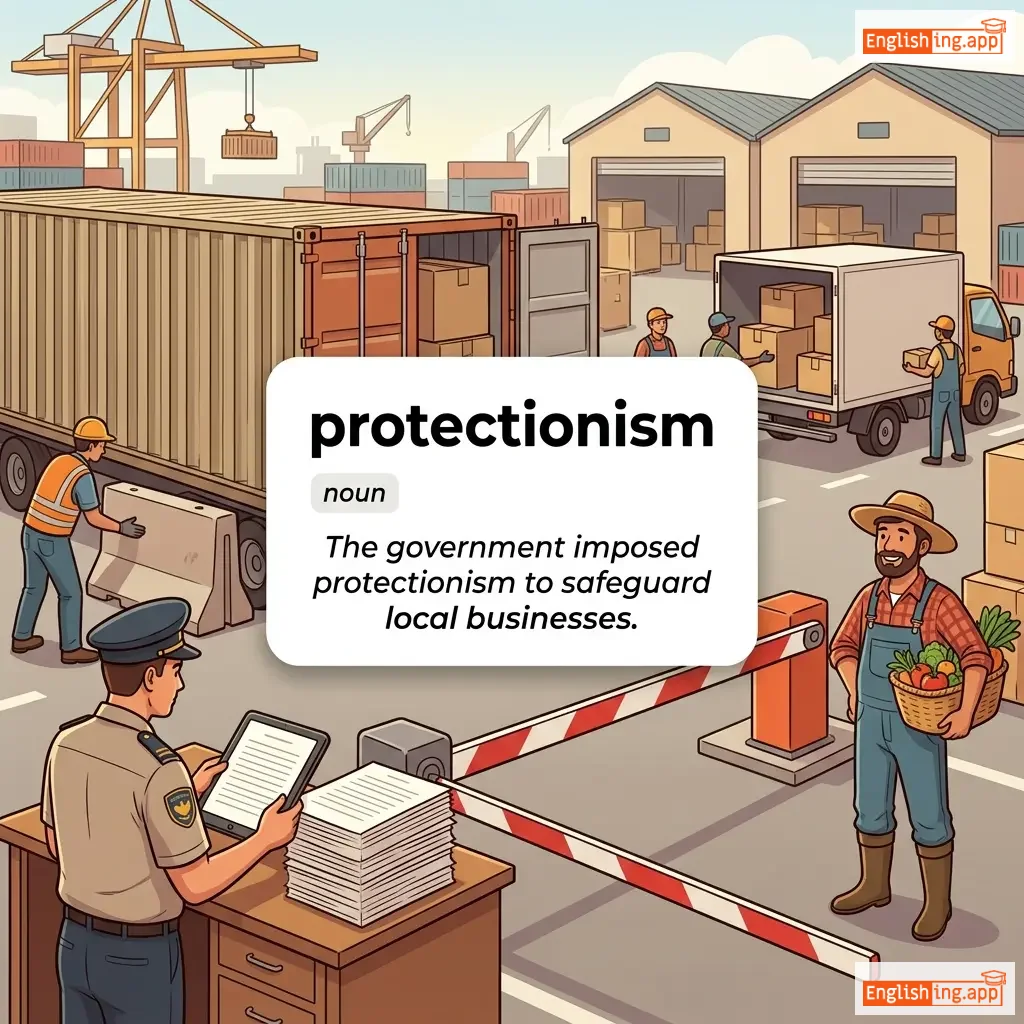
protectionism definition card — visual illustration of the meaning
noun
/prəˈtɛk.ʃəˌnɪz.əm/
proteccionismo (proteccionismo)

A trade policy that restricts imports to safeguard domestic industries through trade restriction, economic nationalism, or isolationism.

"The government imposed protectionism to safeguard local businesses."

"El gobierno impuso proteccionismo para salvaguardar a las empresas locales." (El gobierno impuso proteccionismo para salvaguardar a las empresas locales.)
adjective
/prəˈtɛktɪv/
protector (protector)

giving or capable of giving protection; shielding from harm or danger

"She wore a protective helmet while riding her bike."

"Ella llevaba un casco protector mientras montaba su bicicleta." (Ella llevaba un casco protector mientras montaba su bicicleta.)
noun
/prəˈtɛktər/
protector (protector)

a person or thing that protects someone or something

"The dog was seen as the family's protector."

"El perro fue visto como el protector de la familia." (El perro fue visto como el protector de la familia.)
noun
/prəˈtɛktərət/
protectorado (protectorado)

A state that is controlled and protected by another.

"The small country became a protectorate of the empire."

"El pequeño país se convirtió en un protectorado del imperio." (El pequeno pais se convirtio en un protectorado del imperio.)
noun
/ˈproʊtəˌʒeɪ/
protege (protege)

a person who is guided and supported by an older and more experienced person

"The young artist was the protege of a famous painter."

"El joven artista era el protegido de un pintor famoso." (El joven artista era el protegido de un pintor famoso.)
noun
/ˈproʊtiːn/
proteína (proteina)

a molecule composed of amino acids essential for bodily functions

"Proteins are essential for building and repairing tissues in the body."

"Las proteínas son esenciales para construir y reparar los tejidos del cuerpo." (Las proteinas son esenciales para construir y reparar los tejidos del cuerpo.)
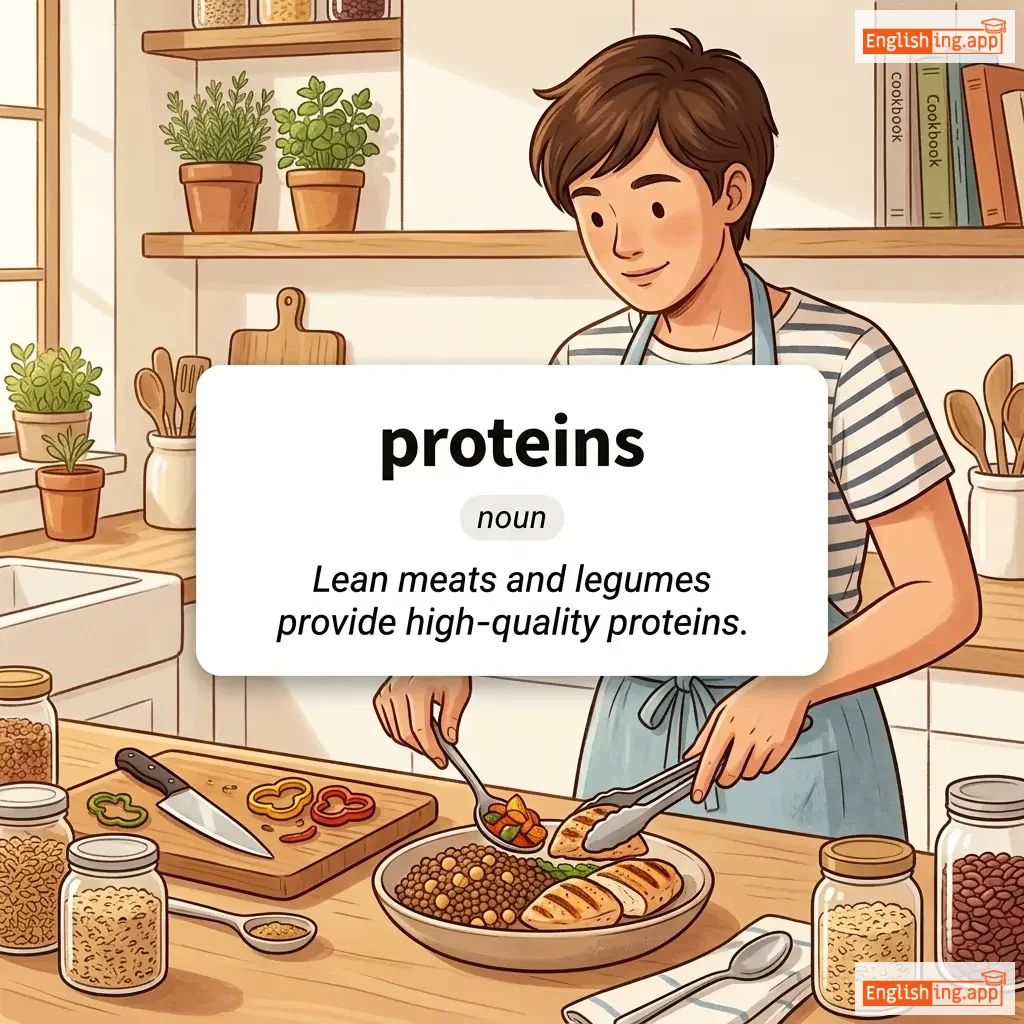
proteins definition card — visual illustration of the meaning
noun
/ˈprəʊ.tiːnz/
proteínas (proteinas)

Large biomolecules consisting of amino acids that perform essential functions in living organisms, including building and repairing tissues.

"Lean meats and legumes provide high-quality proteins."

"Las carnes magras y las legumbres proporcionan proteínas de alta calidad." (Las carnes magras y las legumbres proporcionan proteinas de alta calidad.)
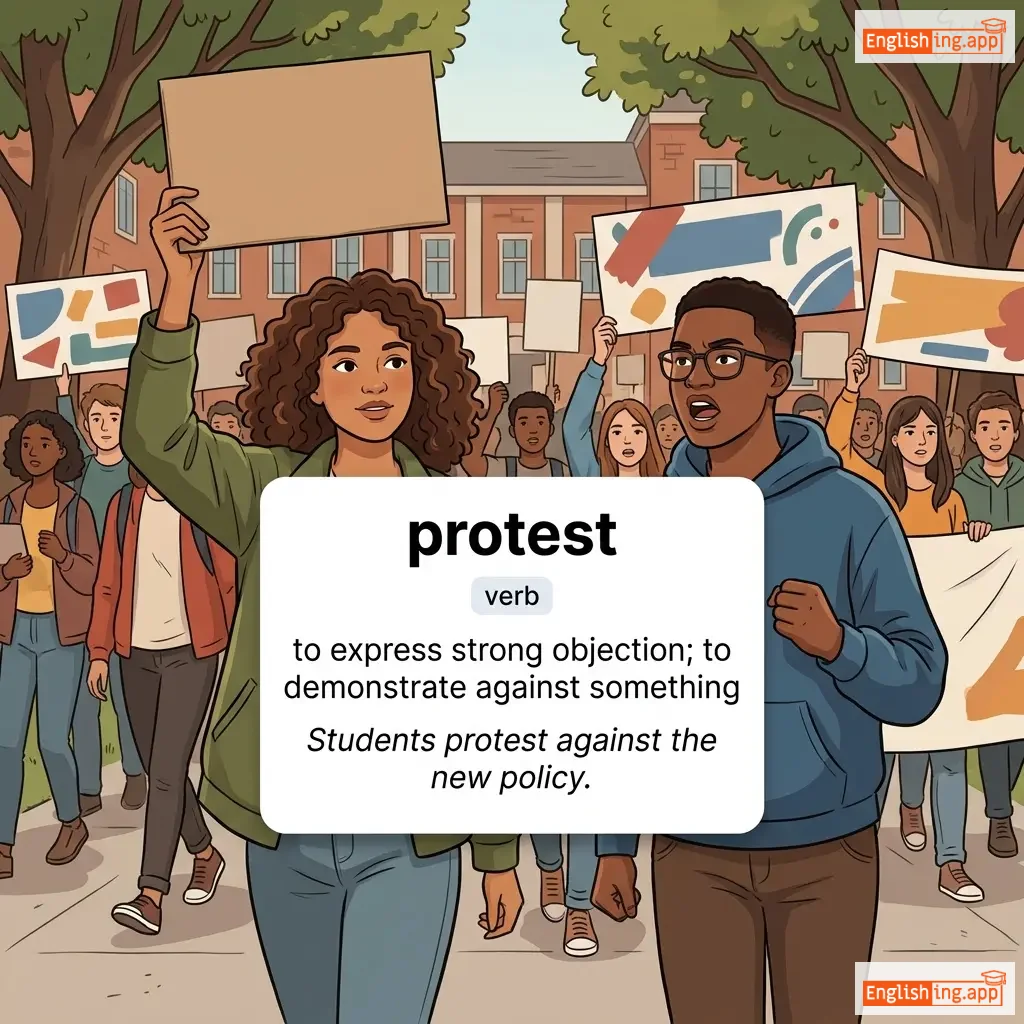
protest definition card — visual illustration of the meaning
noun
/ˈproʊtɛst/
protesta (protesta)

a statement or action expressing disapproval of or objection to something.

"Thousands gathered in the square to protest the new law."

"Miles se reunieron en la plaza para protestar contra la nueva ley." (Miles se reunieron en la plaza para protestar contra la nueva ley.)
noun
/ˈprɑːtɪstənt/
protestante (protestante)

a member of the Christian church that separated from the Roman Catholic Church during the Reformation

"Martin Luther was a key figure in the Protestant Reformation."

"Martín Lutero fue una figura clave en la Reforma protestante." (Martin Lutero fue una figura clave en la Reforma protestante.)
noun
/prəˈtɛstər/
manifestante (manifestante)

a person who takes part in a protest or demonstration

"The protester spoke passionately about the cause."

"El manifestante habló con pasión sobre la causa." (El manifestante habló con pasión sobre la causa.)
noun
/ˈproʊtəkɔːl/
protocolo (protocolo)

an official procedure or system of rules

"The security team followed strict protocol during the event."

"El equipo de seguridad siguió un estricto protocolo durante el evento." (El equipo de seguridad siguió un estricto protocolo durante el evento.)
noun
/ˈproʊtoʊˌmɑːrtɚ/
primer mártir (primer martir)

The first martyr in a cause or religion, often referring to the first Christian martyr.

"St. Stephen is known as the protomartyr of Christianity."

"San Esteban es conocido como el protomártir del cristianismo." (San Esteban es conocido como el protomartir del cristianismo.)
noun
/ˈproʊtoʊˌplæzəm/
protoplasma (protoplasma)

The living substance inside a cell, including the cytoplasm and nucleus.

"Scientists observed the movement of protoplasm under the microscope."

"Los científicos observaron el movimiento del protoplasma bajo el microscopio." (Los científicos observaron el movimiento del protoplasma bajo el microscopio.)
noun
/ˈproʊtəˌtaɪp/
prototipo (prototipo)

The first model or version of something, used as a sample for testing or improvement.

"The company built a prototype of the new smartphone before mass production."

"La compañía construyó un prototipo del nuevo teléfono inteligente antes de la producción en masa." (La compania construyo un prototipo del nuevo telefono inteligente antes de la produccion en masa.)
verb
/proʊˈtrækt/
prolongar (prolongar)

To prolong or extend in time or duration.

"Negotiations were protracted for several months."

"Las negociaciones fueron prolongadas durante varios meses." (Las negociaciones fueron prolongadas durante varios meses.)
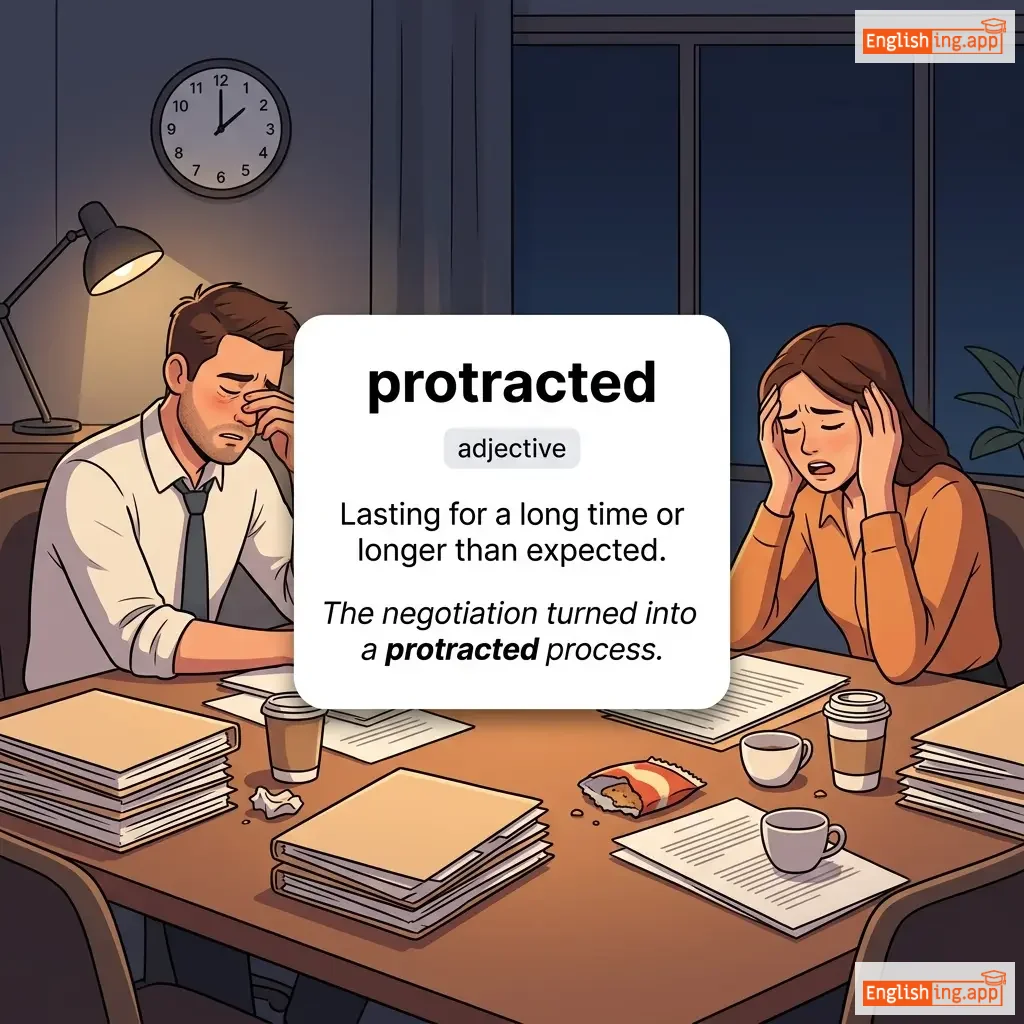
protracted definition card — visual illustration of the meaning
adjective
/prəˈtræktɪd/
prolongado (prolongado)

Lasting for a long time or longer than expected.

"The negotiation turned into a protracted process."

"La negociación se convirtió en un proceso prolongado." (La negociacion se convirtio en un proceso prolongado.)
verb
/proʊˈtruːd/
sobresalir (sobresalir)

To stick out or extend beyond a surface.

"A nail was protruding from the wooden board."

"Un clavo sobresalía desde la tabla de madera." (Un clavo sobresalia desde la tabla de madera.)
noun
/prəˈtruːʒən/
protuberancia (protuberancia)

Something that sticks out or projects from a surface.

"The protrusion on the wall made it difficult to move the furniture."

"La protuberancia en la pared hizo que mover los muebles fuera difícil." (La protuberancia en la pared hizo que mover los muebles fuera difícil.)