Vocabularios

Descubra, aprenda y domine el vocabulario en inglés

adjective
/ˌpoʊstˈwɔːr/
de posguerra (de posguerra)

relating to the period after a war has ended

"The country experienced rapid economic growth in the post-war years."

"El país experimentó un rápido crecimiento económico en los años de posguerra." (el pais experimento un rapido crecimiento economico en los anos de posguerra)
verb
/ˌpoʊstˈdeɪt/
poner una fecha posterior (poner una fecha posterior)

To assign a date later than the actual date to a document or event.

"She postdated the check to next month."

"Ella postdató el cheque para el próximo mes." (Ella postató el cheque para el próximo mes.)
noun
/ˈpoʊstər/
póster (poster)

a large printed picture or notice that is put on a wall for decoration or to advertise something

"They put up a movie poster outside the theater."

"Ellos pusieron un póster de película afuera del cine." (Ellos pusieron un póster de película afuera del cine.)
adjective
/pɒˈstɪəriər/
posterior (posterior)

Situated at or toward the back; later in time.

"The posterior part of the brain controls vision."

"La parte posterior del cerebro controla la visión." (La parte posterior del cerebro controla la visión.)
noun
/pɒˈstɛrɪti/
posteridad (posteridad)

All future generations of people.

"The monument was built for the benefit of posterity."

"El monumento fue construido para el beneficio de la posteridad." (El monumento fue construido para el beneficio de la posteridad.)
noun, adjective
/ˌpəʊstˈɡrædʒuət/
posgraduado (posgraduado)

A student who has completed a first degree and is studying for a further degree.

"She is doing postgraduate research in physics."

"Ella está haciendo una investigación de posgrado en física." (Ella está haciendo una investigación de posgrado en física.)
adjective
/ˈpɒstjʊməs/
póstumo (postumo)

Occurring, awarded, or appearing after the death of the originator.

"He received a posthumous award for his bravery."

"Recibió un premio póstumo por su valentía." (Recibió un premio póstumo por su valentía.)
noun, adjective
/ˌpəʊstˈmɔːtəm/
autopsia (autopsia)

An examination of a dead body to determine the cause of death.

"The doctor carried out a postmortem on the body."

"El doctor realizó una autopsia al cuerpo." (El doctor realizó una autopsia al cuerpo.)
verb
/pəʊs(t)ˈpəʊn/
posponer (posponer)

to delay something to a later time

"The meeting was postponed until next week."

"La reunión fue postpuesta hasta la próxima semana." (La reunion fue postpuesta hasta la proxima semana.)
adjective
/ˌpəʊstˈprændɪəl/
postprandial (postprandial)

Occurring after a meal.

"He went for a postprandial walk after dinner."

"Fue a caminar después de la cena postprandial." (Fue a caminar despues de la cena postprandial.)
noun
/ˈpəʊstˌskrɪpt/
posdata (posdata)

an additional remark at the end of a letter or text, after the signature

"She added a brief postscript to thank him again."

"Ella añadió una breve posdata para darle las gracias nuevamente." (Ella anadio una breve posdata para darle las gracias nuevamente.)
postulate definition card — visual illustration of the meaning
verb
/ˈpɒstjʊˌleɪt/
postular (postular)

to suggest or assume the existence of something as a basis for reasoning

"The scientist postulated that life could exist on other planets."

"El científico postuló que la vida podría existir en otros planetas." (El científico postuló que la vida podría existir en otros planetas.)
noun
/ˈpɒstʃə/
felicidad (felicidad)

the position in which someone holds their body; an attitude or approach

"Good posture helps prevent back pain."

"Ella no pudo ocultar su felicidad cuando recibió el premio." (Ella no pudo ocultar su felicidad cuando recibió el premio.)
adjective
/ˈpəʊstwɔːr/
postguerra (postguerra)

occurring or existing after a war

"The postwar period saw significant economic growth."

"El periodo de postguerra vio un crecimiento económico significativo." (El periodo de postguerra vio un crecimiento económico significativo.)
noun
/pɒt/
olla (olla)

a container, typically round and deep, used for cooking or holding plants

"She put the soup in a pot and set it on the stove."

"Ella puso la sopa en una olla y la colocó en la estufa." (Ella puso la sopa en una olla y la coloco en la estufa.)
adjective
/ˈpəʊtəbl/
potable (potable)

safe to drink; drinkable

"The villagers did not have access to potable water."

"Los aldeanos no tenían acceso a agua potable." (Los aldeanos no tenían acceso a agua potable.)
noun
/pəˈteɪtoʊ/
papa (papa)

a starchy plant tuber that is a staple food around the world

"We had mashed potato with our dinner."

"Comimos puré de papa con la cena." (Comimos pure de papa con la cena.)
noun
/ˈpɒtˌbɔɪlə/
literatura barata (literatura barata)

a book, play, or film produced quickly to make money rather than for artistic value

"The novel was dismissed by critics as a mere potboiler."

"La novela fue rechazada por los críticos como una simple literatura barata." (La novela fue rechazada por los críticos como una simple literatura barata.)
noun
/ˈpoʊtənsi/
potencia (potencia)

The power or ability of something to affect or influence; strength or effectiveness.

"The potency of the new medicine amazed the doctors."

"La potencia de la nueva medicina sorprendió a los médicos." (La potencia de la nueva medicina sorprendió a los médicos.)
adjective
/ˈpoʊtənt/
potente (potente)

Having great power, influence, or effect.

"This is a very potent drug that should be used carefully."

"Este es un medicamento muy potente que debe usarse con cuidado." (Este es un medicamento muy potente que debe usarse con cuidado.)
noun
/ˈpoʊtənˌteɪt/
potentado (potentado)

A monarch or ruler, especially one with absolute power.

"The ancient land was ruled by a powerful potentate."

"La antigua tierra era gobernada por un poderoso potentado." (La antigua tierra era gobernada por un poderoso potentado.)
potential definition card — visual illustration of the meaning
noun, adjective
/pəˈtɛnʃəl/
potencial (potencial)

Having the capacity to develop into something in the future; latent ability.

"She has great potential to become a successful leader."

"Ella tiene un gran potencial para convertirse en una líder exitosa." (Ella tiene un gran potencial para convertirse en una líder exitosa.)
adverb
/pəˈtɛnʃəli/
potencialmente (potencialmente)

with the possibility of becoming something in the future

"This project is potentially a huge success."

"Este proyecto es potencialmente un gran éxito." (Este proyecto es potencialmente un gran éxito.)
verb
/poʊˈtɛnʃiˌeɪt/
potenciar (potenciar)

To increase the power, effect, or likelihood of something.

"Caffeine can potentiate the effects of some medicines."

"La cafeína puede potenciar los efectos de algunos medicamentos." (La cafeína puede potenciar los efectos de algunos medicamentos.)
noun
/ˈpoʊʃən/
poción (pocion)

a liquid with healing, magical, or poisonous properties

"The witch gave the hero a healing potion."

"La bruja le dio al héroe una poción curativa." (La bruja le dio al heroe una pocion curativa.)
noun
/ˌpoʊpʊˈriː/
mezcla de flores secas (mezcla de flores secas)

a mixture of dried flowers and spices kept in a bowl to perfume a room; a miscellaneous collection

"The living room was filled with the scent of potpourri."

"La sala de estar estaba llena con el aroma del potpourri." (La sala de estar estaba llena con el aroma del potpourri.)
noun
/ˈpɑː.tər/
alfarero (alfarero)

a person who makes pottery

"The potter shaped clay on the spinning wheel."

"El alfarero dio forma al barro en la rueda de alfarero." (El alfarero dio forma al barro en la rueda de alfarero.)
noun
/paʊtʃ/
bolsa (bolsa)

a small bag or pocket, often used to carry small items

"She kept her coins in a small leather pouch."

"Ella guardó sus monedas en una pequeña bolsa de cuero." (Ella guardo sus monedas en una pequena bolsa de cuero.)
noun
/ˈpoʊltɪs/
cataplasma caliente de hierbas (cataplasma caliente de hierbas)

a soft, moist mass of material applied to the body to relieve soreness and inflammation

"The nurse applied a warm poultice to his injured leg."

"La enfermera aplicó un cataplasma caliente en su pierna lesionada." (La enfermera aplicó un cataplasma caliente en su pierna lesionada.)
noun, verb
/paʊnd/
libra (libra)

a unit of weight equal to 16 ounces or a unit of currency

"The price of the book is five pounds."

"El precio del libro es cinco libras." (El precio del libro es cinco libras.)
verb
/pɔːr/
verter (verter)

to cause a liquid to flow from a container

"She poured the tea into the cup."

"Ella vertió el té en la taza." (Ella vertió el té en la taza.)
verb
/paʊt/
hacer pucheros (hacer pucheros)

to push one's lips forward as an expression of annoyance or sulkiness

"The child began to pout when he didn’t get the toy."

"El niño empezó a hacer pucheros cuando no consiguió el juguete." (El niño empezo a hacer pucheros cuando no consiguio el juguete.)
noun
/ˈpɒvəti/
pobreza (pobreza)

the state of being extremely poor

"Poverty is a major issue in many countries."

"La pobreza es un problema importante en muchos países." (La pobreza es un problema importante en muchos países.)
noun
/ˈpaʊdər/
polvo (polvo)

a fine, dry substance made of very tiny particles

"She sprinkled some powder on the cake."

"Ella espolvoreó algo de polvo en el pastel." (Ella espolvoreó algo de polvo en el pastel.)
power definition card — visual illustration of the meaning
noun
/ˈpaʊər/
poder (poder)

the ability or capacity to do something or influence others

"Knowledge is power."

"El conocimiento es poder." (El conocimiento es poder.)
powerful definition card — visual illustration of the meaning
adjective
/ˈpaʊərfəl/
poderoso (poderoso)

having great strength or influence

"She is a powerful leader in her community."

"Ella es una líder poderosa en su comunidad." (Ella es una lider poderosa en su comunidad.)
adjective
/ˈpaʊərləs/
impotente (impotente)

without ability, influence, or strength

"She felt powerless against the unfair system."

"Ella se sintió impotente contra el sistema injusto." (Ella se sintió impotente contra el sistema injusto.)
noun
/ˈpaʊ.waʊ/
reunión informal (reunion informal)

an informal meeting or conference to discuss something

"The team held a quick powwow before the presentation."

"El equipo celebró una reunión rápida antes de la presentación." (El equipo celebró una reunión rápida antes de la presentación.)
adjective
/ˈpræk.tɪ.kə.bəl/
practicable (practicable)

able to be done or put into practice successfully

"The plan is not practicable without more resources."

"El plan no es práctico sin más recursos." (El plan no es práctico sin más recursos.)
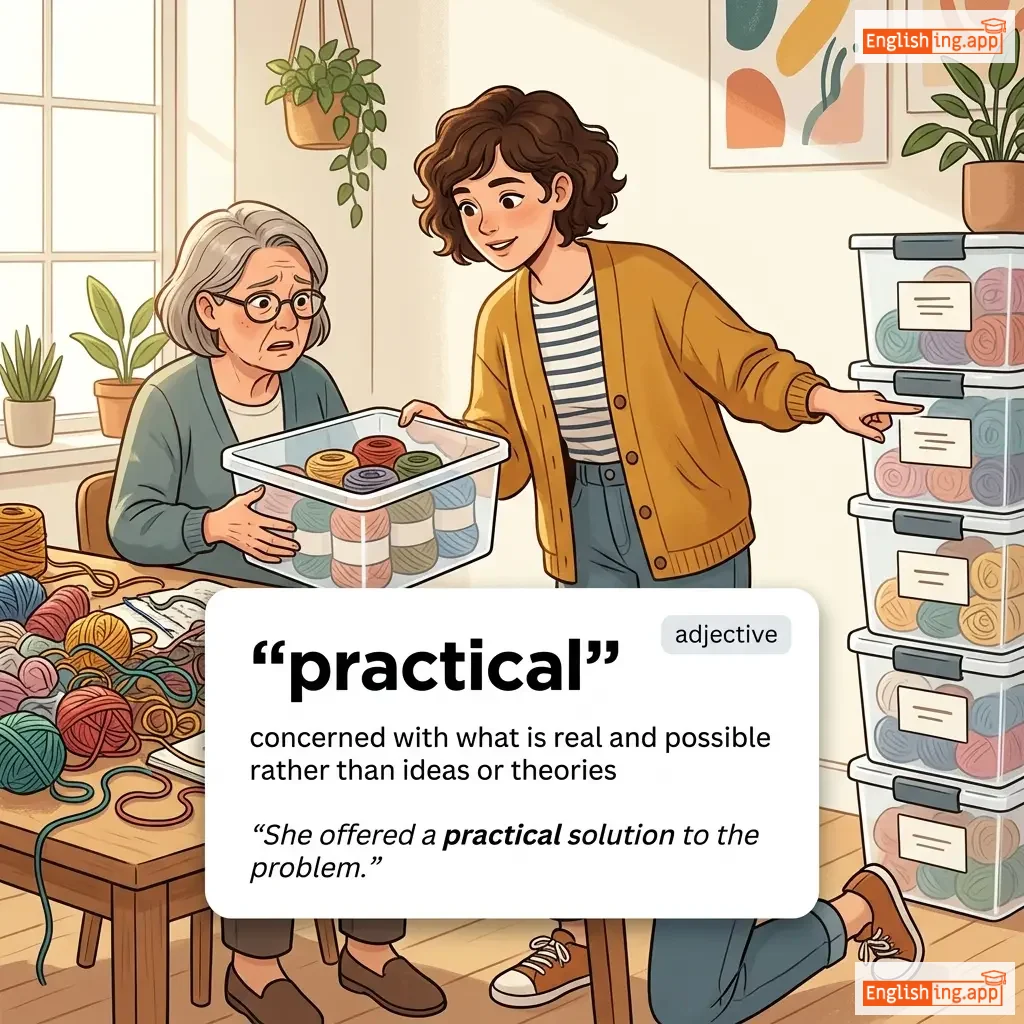
practical definition card — visual illustration of the meaning
adjective
/ˈpræk.tɪ.kəl/
práctico (practico)

concerned with what is real and possible rather than ideas or theories

"She offered a practical solution to the problem."

"Ella ofreció una solución práctica al problema." (Ella ofreció una solución práctica al problema.)
adverb
/ˈpræktɪkli/
prácticamente (practicamente)

in a way that is almost or nearly; in a realistic or functional manner

"The movie theater was practically empty."

"El cine estaba prácticamente vacío." (El cine estaba practicamente vacio.)
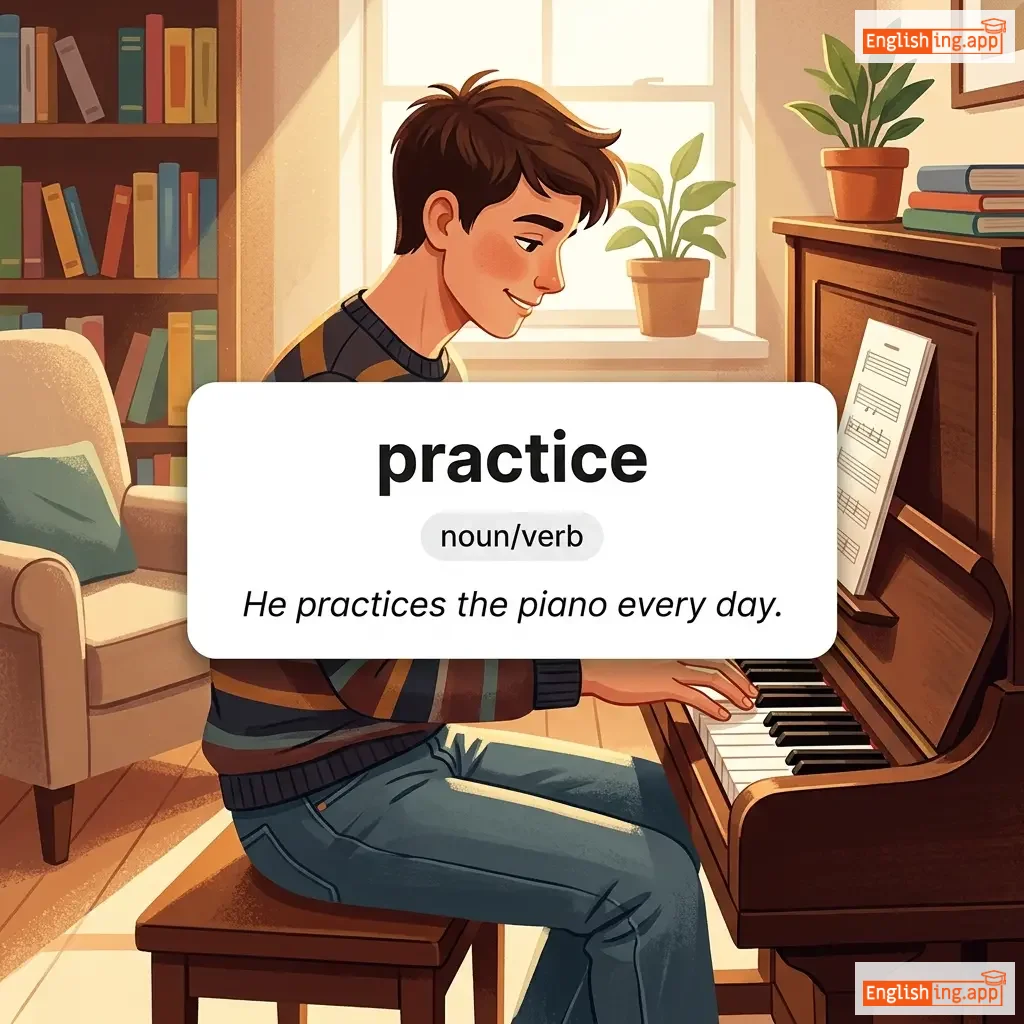
practice definition card — visual illustration of the meaning
noun/verb
/ˈpræk.tɪs/
práctica (practica)

the act of doing something repeatedly to improve skill, or the actual application of an idea

"He practices the piano every day."

"Él practica el piano todos los días." (Él practica el piano todos los días.)
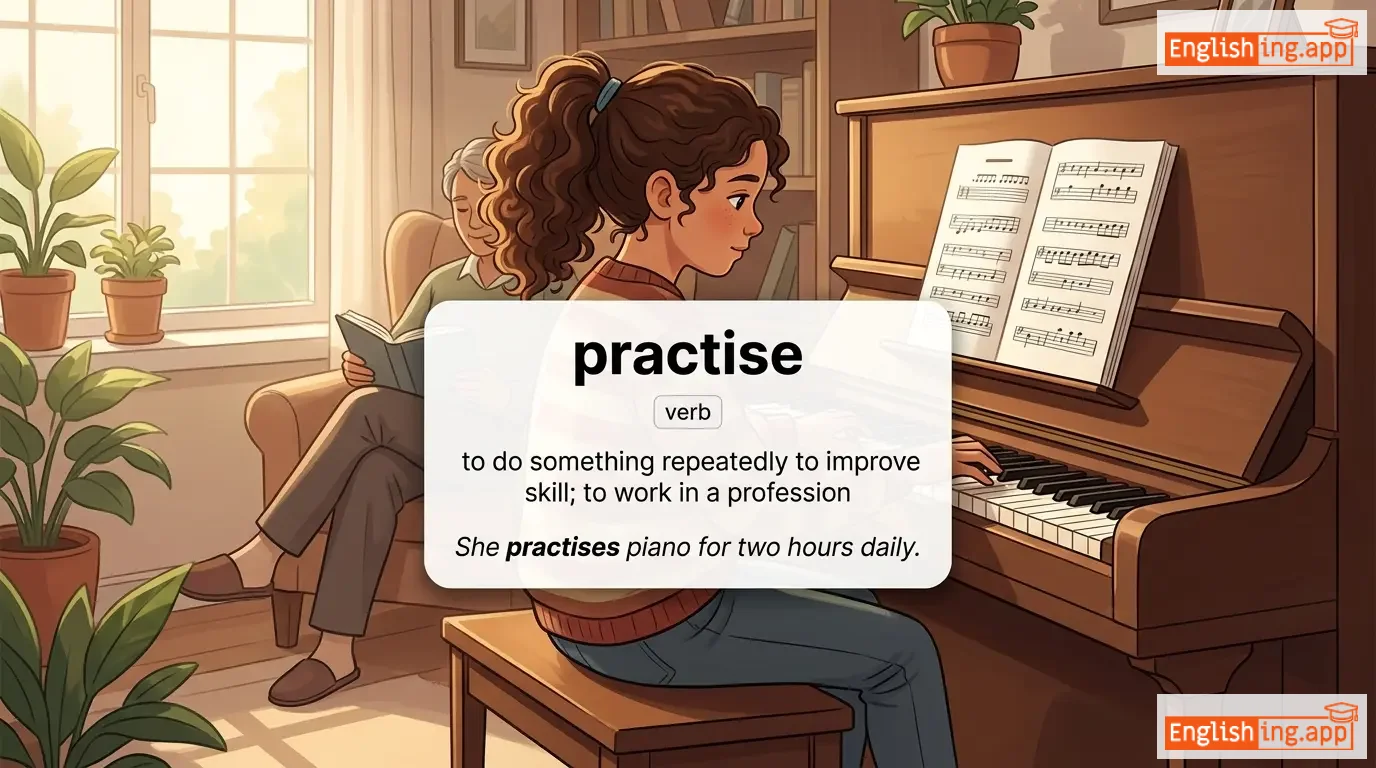
practise definition card — visual illustration of the meaning
verb
/ˈpræktɪs/
practicar (practicar)

to do something repeatedly to improve skill; to work in a profession

"She practises piano for two hours daily."

"Ella practica piano durante dos horas al día." (Ella practica piano durante dos horas al día.)
noun
/prækˈtɪʃ.ən.ər/
profesional (profesional)

a person actively engaged in a profession, especially medicine or law

"She is a skilled medical practitioner."

"Ella es una profesional médica capacitada." (Ella es una profesional medica capacitada.)
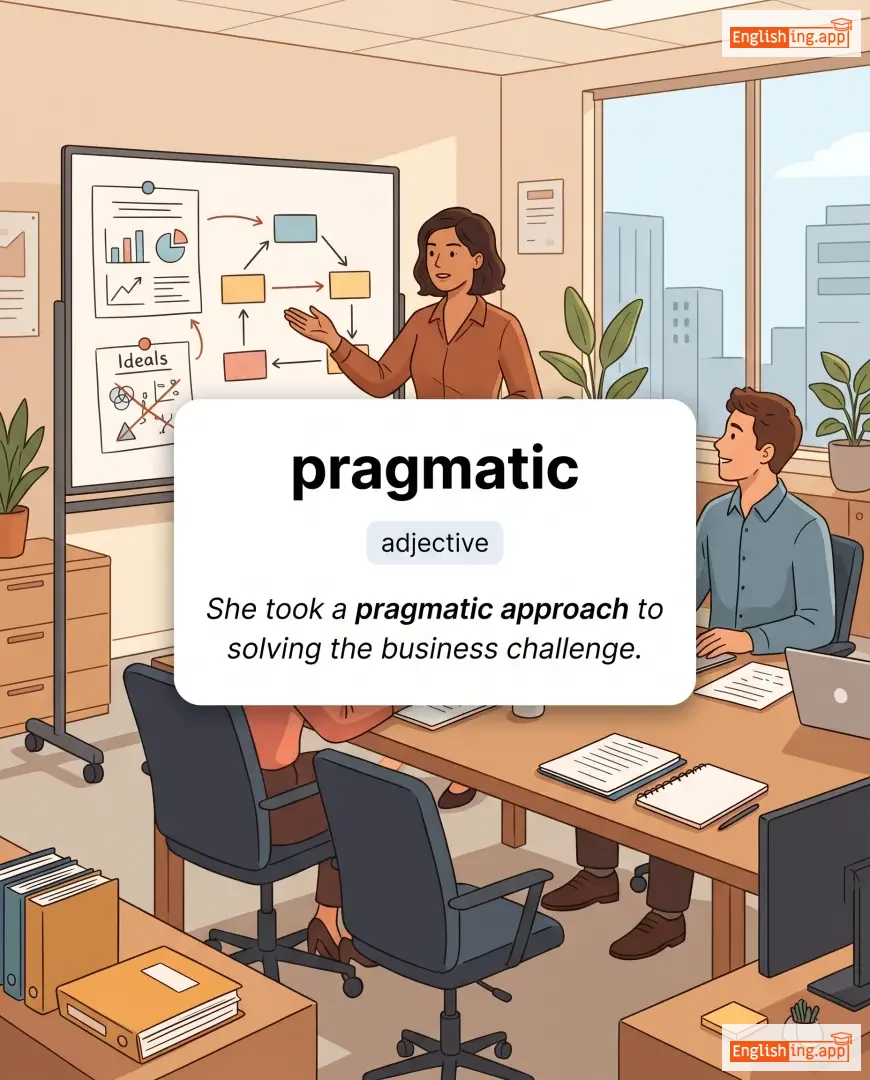
pragmatic definition card — visual illustration of the meaning
adjective
/præɡˈmætɪk/
pragmático (pragmatiko)

Dealing with problems in a practical and sensible way rather than depending on theories or ideals.

"She took a pragmatic approach to solving the business challenge."

"Ella adoptó un enfoque pragmático para resolver el desafío empresarial." (Ella adoptó un enfoque pragmático para resolver el desafío empresarial.)
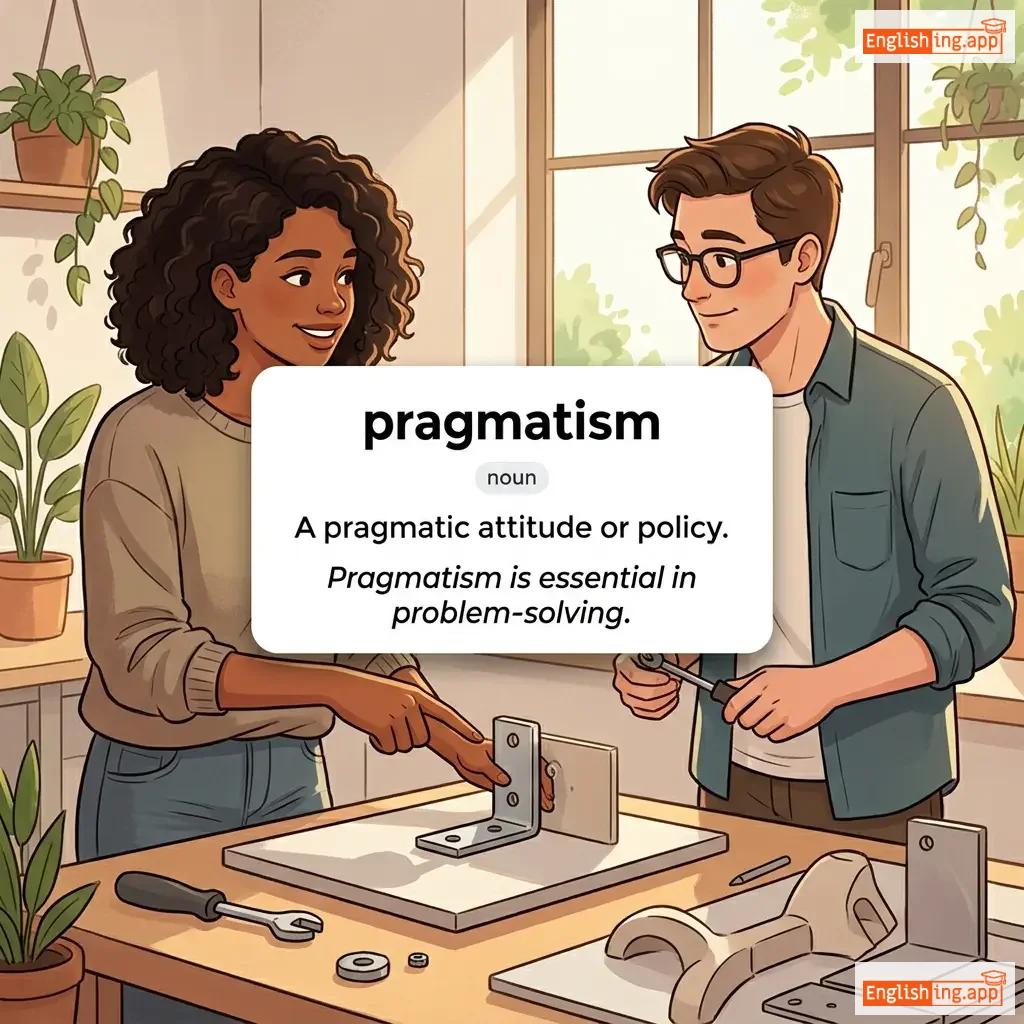
pragmatism definition card — visual illustration of the meaning
noun
/ˈpræɡ.mə.tɪ.zəm/
pragmatismo (pragmatismo)

A pragmatic attitude or policy.

"Pragmatism is essential in problem-solving."

"El pragmatismo es esencial en la resolución de problemas." (El pragmatismo es esencial en la resolucion de problemas.)
noun
/ˈpræɡmətɪst/
pragmático (pragmatiko)

A person who deals with things in a practical and realistic way.

"He is a true pragmatist who values results over ideals."

"Él es un verdadero pragmático que valora los resultados más que los ideales." (El es un verdadero pragmatiko que valora los resultados mas que los ideales.)
noun
/ˈprɛəri/
pradera (pradera)

A large open area of grassland, especially in North America.

"The bison roamed freely across the prairie."

"El bisonte deambulaba libremente por la pradera." (El bisonte deambulaba libremente por la pradera.)
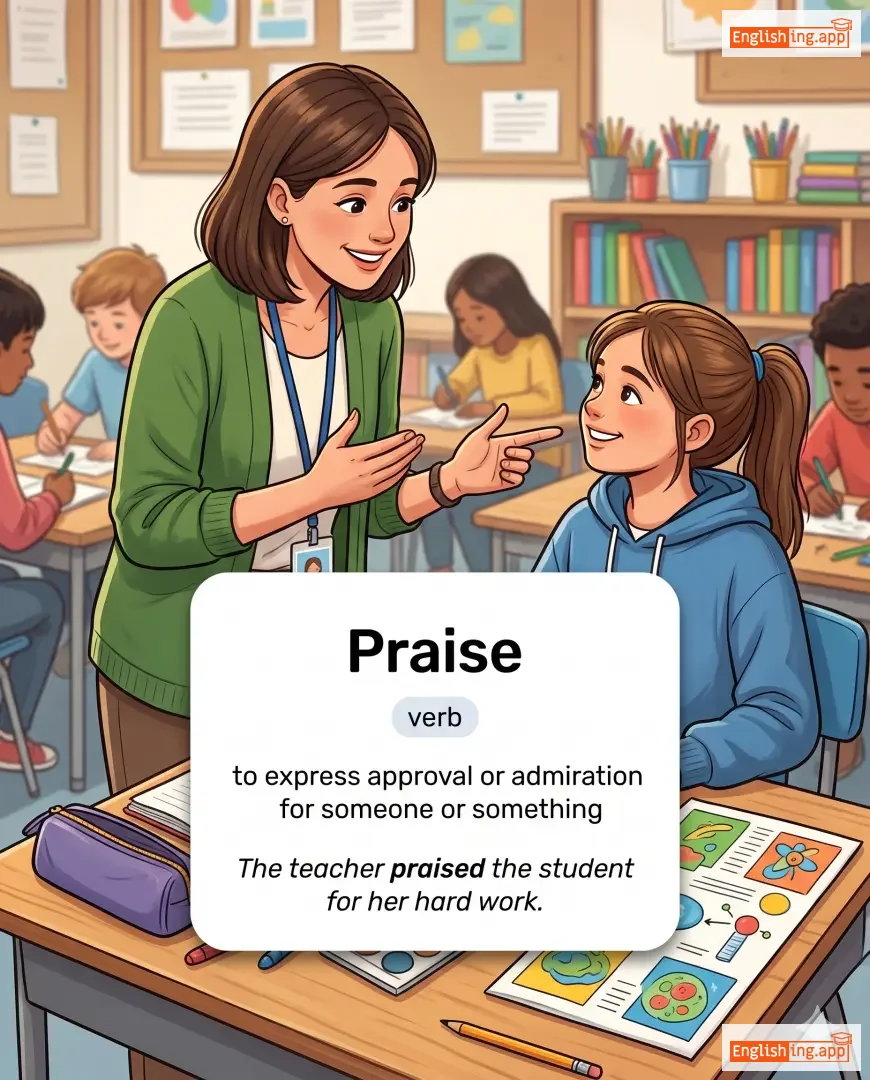
Praise definition card — visual illustration of the meaning
verb
/preɪz/
alabar (alabar)

to express approval or admiration for someone or something

"The teacher praised the student for her hard work."

"El maestro elogió a la estudiante por su arduo trabajo." (El maestro elogio a la estudiante por su arduo trabajo.)
adjective
/ˈpreɪz.wɜː.ði/
digno de elogio (digno de elogio)

deserving praise; commendable; admirable

"Her charitable work is truly praiseworthy."

"Su trabajo caritativo es verdaderamente digno de elogio." (Su trabajo caritativo es verdaderamente digno de elogio.)