Vocabularios

Descubra, aprenda y domine el vocabulario en inglés

noun
/hɪp/
cadera (cadera)

The part of the body on either side of the pelvis, or informal: trendy and fashionable.

"She put her hands on her hips."

"Ella puso sus manos en sus caderas." (Ella puso sus manos en sus caderas.)
noun
/ˌhɪp.əˈpɒt.ə.məs/
hipopótamo (hipopotamo)

a large, mostly herbivorous mammal that lives in and around water in Africa

"The hippopotamus spends most of its day in the water."

"El hipopótamo pasa la mayor parte de su día en el agua." (El hipopotamo pasa la mayor parte de su dia en el agua)
hire definition card — visual illustration of the meaning
verb
/ˈhaɪə(r)/
contratar (contratar)

to employ someone for a job or task

"The company decided to hire more staff this year."

"La empresa decidió contratar más personal este año." (La empresa decidió contratar más personal este año.)
noun
/ˈhaɪərlɪŋ/
mercenario (mercenario)

A person who works for payment only, often with little loyalty or principle.

"The mercenary was dismissed as just a hireling with no real loyalty."

"El mercenario fue despedido como un simple hireling sin lealtad real." (El mercenario fue despedido como un simple hireling sin lealtad real.)
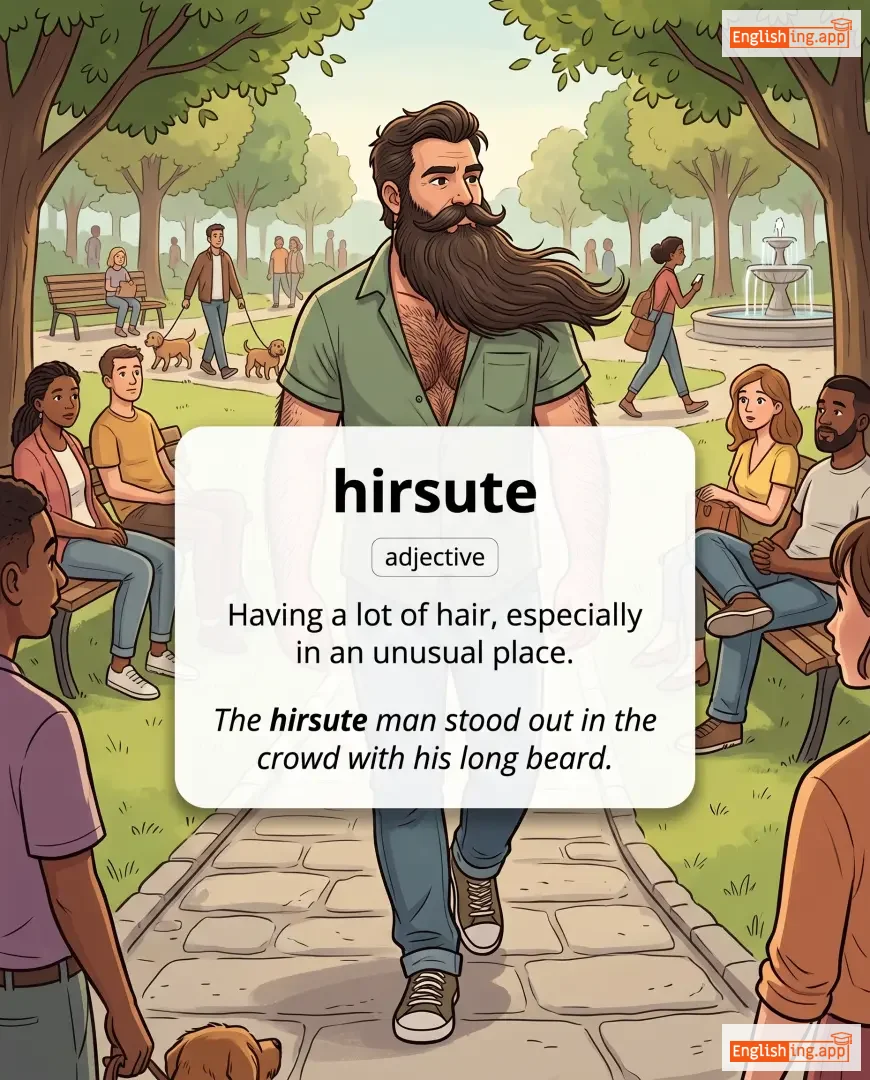
hirsute definition card — visual illustration of the meaning
adjective
/ˈhɜːrsuːt/
hirsuto (eersuto)

Having a lot of hair, especially in an unusual place.

"The hirsute man stood out in the crowd with his long beard."

"El hombre hirsuto destacó entre la multitud con su larga barba." (El hombre hirsuto destaco entre la multitud con su larga barba)
pronoun
/hɪz/
su (su)

belonging to or associated with a male person previously mentioned

"This is his book on the table."

"Este es su libro en la mesa." (Este es su libro en la mesa.)
adjective
/hɪˈspænɪk/
hispánico / de habla española (hispanico / de habla espanola)

relating to Spain or Spanish-speaking countries, especially Latin America.

"She studies Hispanic culture and language."

"Ella estudia la cultura y el idioma hispánico." (Ella estudia la cultura y el idioma hispanico.)
noun
/hɪˈstɔːriən/
historiador (historiador)

a person who studies or writes about history

"The historian gave a lecture on ancient civilizations."

"El historiador dio una conferencia sobre civilizaciones antiguas." (El historiador dio una conferencia sobre civilizaciones antiguas.)
historic definition card — visual illustration of the meaning
adjective
/hɪˈstɔːrɪk/
histórico (historico)

Famous or important in history; likely to be remembered in history.

"The historic agreement changed the course of the nation."

"El acuerdo histórico cambió el rumbo de la nación." (El acuerdo historico cambio el rumbo de la nacion.)
adjective
/hɪˈstɔːrɪkəl/
histórico (historico)

Related to history or past events.

"The museum has a large collection of historical documents."

"El museo tiene una gran colección de documentos históricos." (El museo tiene una gran coleccion de documentos historicos.)
adverb
/hɪˈstɒrɪkli/
históricamente (historicamente)

in a way that relates to history or past events

"Historically, this city was a major trade center."

"Históricamente, esta ciudad fue un importante centro comercial." (Historicamente, esta ciudad fue un importante centro comercial.)
History definition card — visual illustration of the meaning
noun
/ˈhɪstəri/
historia (historia)

the study of past events

"She is studying the history of medieval Europe."

"Ella está estudiando la historia de Europa medieval." (Ella está estudiando la historia de Europa medieval.)
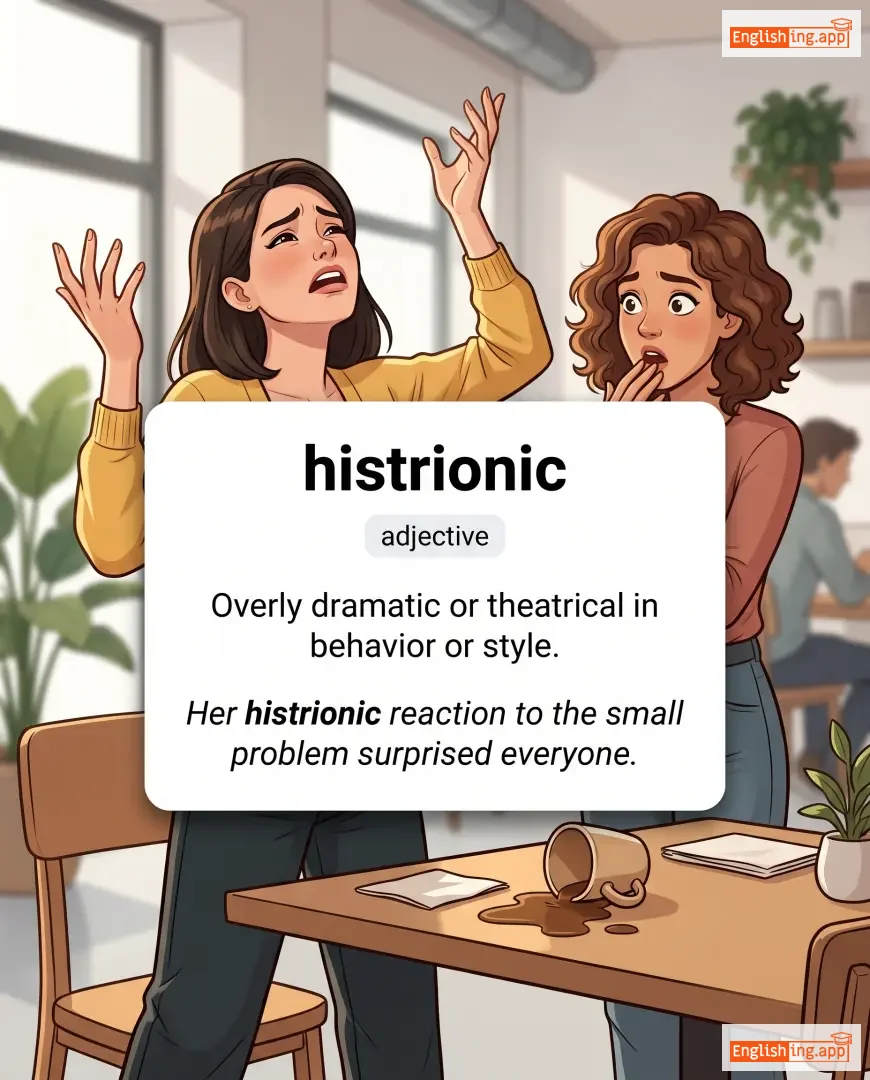
histrionic definition card — visual illustration of the meaning
adjective
/ˌhɪstriˈɒnɪk/
excesivamente dramático (excesivamente dramatiko)

Overly dramatic or theatrical in behavior or style.

"Her histrionic reaction to the small problem surprised everyone."

"Su reacción histriónica ante el pequeño problema sorprendió a todos." (su reaccion histrionika ante el pequeno problema sorprendio a todos.)
verb
/hɪt/
golpear (golpear)

to strike someone or something with force

"He accidentally hit the ball into the window."

"él accidentalmente golpeó la pelota contra la ventana." (Él accidentalmente golpeó la pelota contra la ventana.)
noun
/haɪv/
colmena (colmena)

A structure where bees live and produce honey; also a place full of busy activity.

"The office was a hive of activity before the deadline."

"La oficina estaba como una colmena de actividad antes de la fecha límite." (La oficina estaba como una colmena de actividad antes de la fecha límite.)
verb
/hɔːrd/
acumular (acumular)

to accumulate and hide away a large supply of something, often secretly

"During the crisis, many people began to hoard food and water."

"Durante la crisis, muchas personas comenzaron a acumular comida y agua." (Durante la crisis, muchas personas comenzaron a acumular comida y agua.)
adjective
/hɔːrs/
ronco (ronko)

having a rough, harsh, or weak voice, often due to illness or shouting

"After shouting all day at the rally, his voice was hoarse."

"Después de gritar todo el día en la manifestación, su voz estaba ronca." (Despuéz de gritar todo el día en la manifestación, su voz estaba ronca.)
adjective
/ˈhɔːri/
gris, antiguo (gris, antiguo)

gray or white with age; very old and respected

"The hoary oak tree stood as a witness to centuries of history."

"El viejo roble se erguía como un testigo de siglos de historia." (El viejo roble se erguía como un testigo de siglos de historia.)
noun
/hoʊks/
engaño, bulo (engano, bulo)

a trick or false story meant to deceive people

"The news about aliens landing turned out to be a hoax."

"La noticia sobre los alienígenas aterrizando resultó ser una mentira." (La noticia sobre los alienigenas aterrizando resulto ser una mentira.)
verb
/ˈhɑːbəl/
caminar torcido (caminar torcido)

to walk awkwardly with difficulty, usually due to injury

"He hobbled across the room after twisting his ankle."

"Él caminó torcido por la habitación después de torcerse el tobillo." (El caminó torcido por la habitacion despues de torcerse el tobillo.)
noun
/ˈhɑː.bi/
afición; actividad de ocio; pasatiempo (aficion, actividad de ocio, pasatiempo)

an activity done regularly in one's leisure time for pleasure; a pastime or recreation

"Photography became her favorite hobby after she received a camera for her birthday."

"La fotografía se convirtió en su hobby favorito después de recibir una cámara para su cumpleaños." (La fotografia se convirtio en su hobby favorito despues de recibir una camara para su cumpleaños.)
noun
/ˈhɒki/
hockey (hockey)

a sport played with sticks and a ball or puck on ice or a field

"He plays hockey for the national team."

"Él juega al hockey para el equipo nacional." (El juega al hockey para el equipo nacional.)
noun
/ˈhɒdʒ.pɒdʒ/
mezcla confusa (mezcla confusa)

A confusing mixture of different things; a jumble.

"The essay was a hodgepodge of unrelated ideas."

"El ensayo era una mezcla confusa de ideas no relacionadas." (El ensayo era una mezcla confusa de ideas no relacionadas.)
noun
/hoʊ/
azadón (azadon)

a gardening tool with a thin metal blade used for breaking up soil and removing weeds

"The farmer used a hoe to remove weeds from his vegetable garden."

"El agricultor usó un azadón para quitar las malas hierbas de su jardín de verduras." (El agricultor uso un azadon para quitar las malas hierbas de su jardin de verduras.)
noun
/hɔːɡ plʌm/
ciruela de higo (ciruela de higo)

tropical fruit with yellow skin and sour taste

"Hog plums are often used to make pickles and chutneys."

"Las ciruelas de higo se usan a menudo para hacer encurtidos y salsas." (Las ciruelas de higo se usan a menudo para hacer encurtidos y salsas.)
noun
/ˈhɒɡz.hɛd/
barril grande (barril grande)

A large cask or barrel, traditionally used for storing liquids like wine or beer.

"The cellar was filled with hogsheads of ale."

"El sótano estaba lleno de barriles grandes de cerveza." (El sótano estaba lleno de barriles grandes de cerveza.)
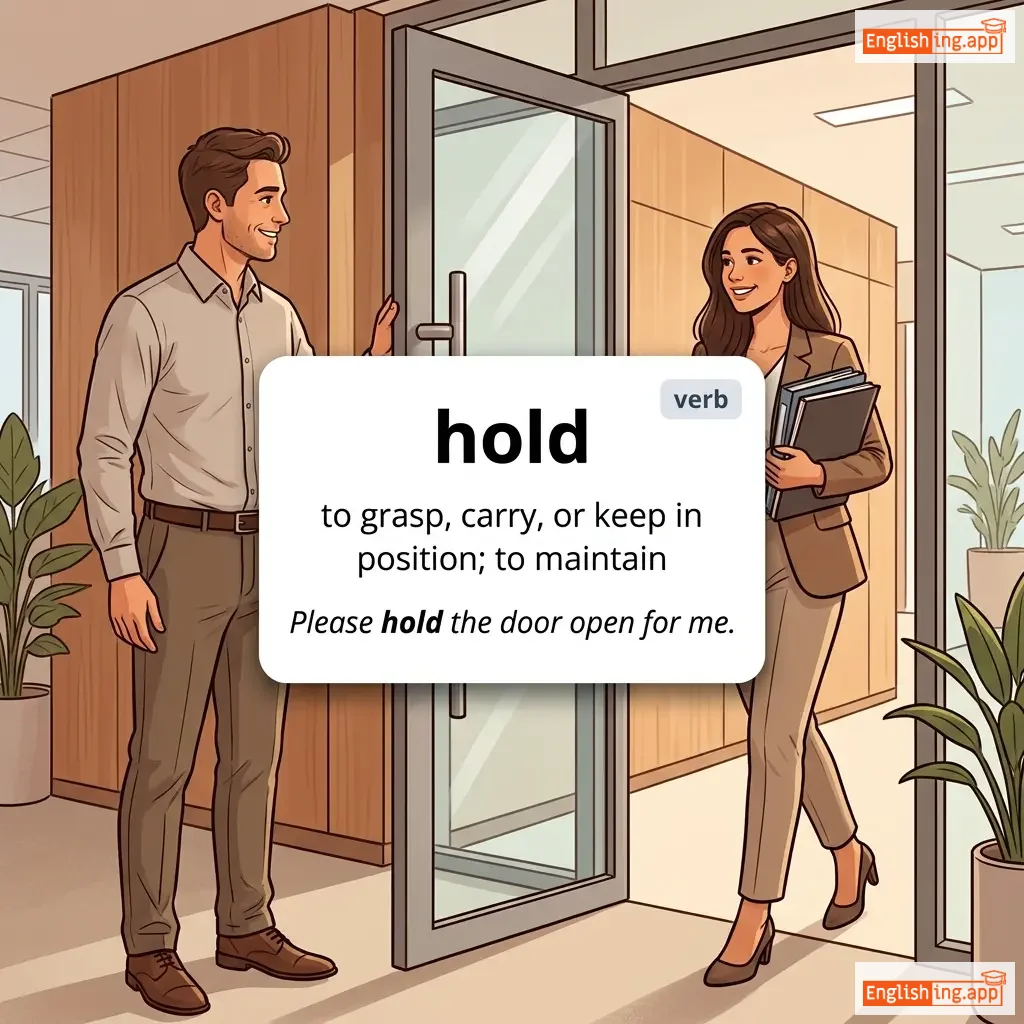
hold definition card — visual illustration of the meaning
verb
/hoʊld/
sujetar (sujetar)

to grasp, carry, or keep in position; to maintain

"Please hold the door open for me."

"Por favor, sujeta la puerta abierta para mí." (Por favor, sujeta la puerta abierta para mí.)
🕳️

Hole (jol)

noun
/hoʊl/
agujero (agujero)

an opening, gap, or hollow place in a solid surface

"There is a hole in my shirt."

"Hay un agujero en mi camisa." (Hay un agujero en mi camisa.)
noun
/ˈhɒlɪdeɪ/
vacaciones (vacaciones)

A day of celebration or rest when most people do not work.

"We are planning a trip during the summer holiday."

"Estamos planeando un viaje durante las vacaciones de verano." (Estamos planeando un viaje durante las vacaciones de verano.)
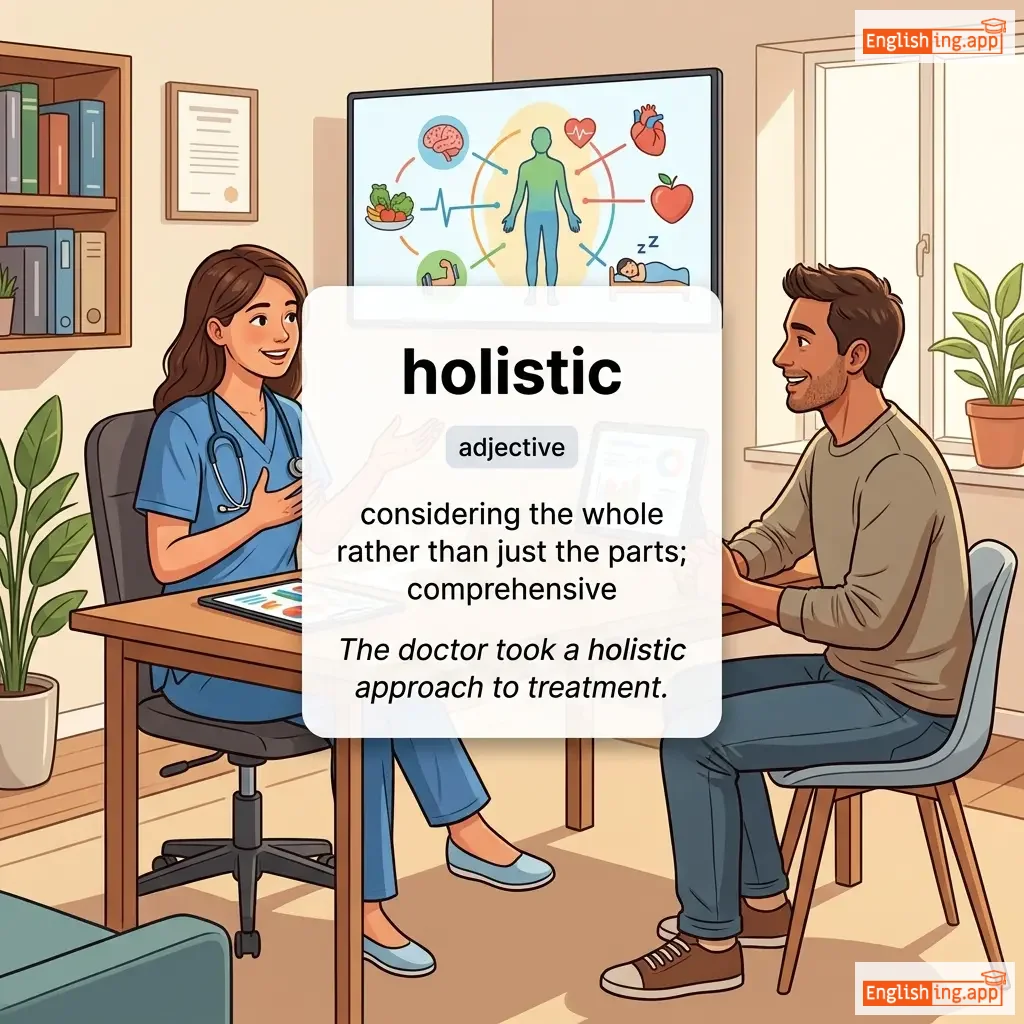
holistic definition card — visual illustration of the meaning
adjective
/hoʊˈlɪstɪk/
holístico (holistico)

considering the whole rather than just the parts; comprehensive

"The doctor took a holistic approach to treatment."

"El doctor adoptó un enfoque holístico para el tratamiento." (El doctor adoptó un enfoque holístico para el tratamiento.)
adjective
/ˈhɑlːoʊ/
hueco; vacío; (weko; vacio;)

having an empty space inside; lacking substance or meaning; insincere

"The hollow tree trunk provided shelter for small animals."

"El tronco del árbol hueco proporcionó refugio a pequeños animales." (El tronko del arbol weko proporciono refugio a pequenos animales.)
noun
/ˈhɒl.ə.kɔːst/
holocausto (holocausto)

A large-scale destruction, especially by fire; historically, the genocide of Jews during World War II.

"Millions of people perished during the Holocaust."

"Millones de personas perecieron durante el Holocausto." (Millones de personas perecieron durante el Holocausto.)
noun
/ˈhoʊl.stər/
fundamento (fundamento)

A holder or case for carrying a gun, typically worn on a belt or shoulder.

"The sheriff kept his revolver in a leather holster."

"El sheriff mantenía su revólver en una funda de cuero." (El sheriff mantenía su revólver en una funda de cuero.)
adjective
/ˈhoʊli/
santo (santo)

Dedicated to God or a religious purpose; sacred.

"This temple is considered a holy place."

"Este templo es considerado un lugar santo." (Este templo es considerado un lugar santo.)
noun
/ˈhɒm.ɪdʒ/ or /ˈɑː.mɑːʒ/
homenaje (homenaje)

Special honor, respect, or tribute shown publicly.

"The statue was built as an homage to the national hero."

"La estatua fue construida como un homenaje al héroe nacional." (La estatua fue construida como un homenaje al heroe nacional.)
noun
/hoʊm/
casa (casa)

the place where one lives, especially with family; a residence

"She finally returned home after a long journey."

"Finalmente volvió a casa después de un largo viaje." (finalmente volvió a casa después de un largo viaje.)
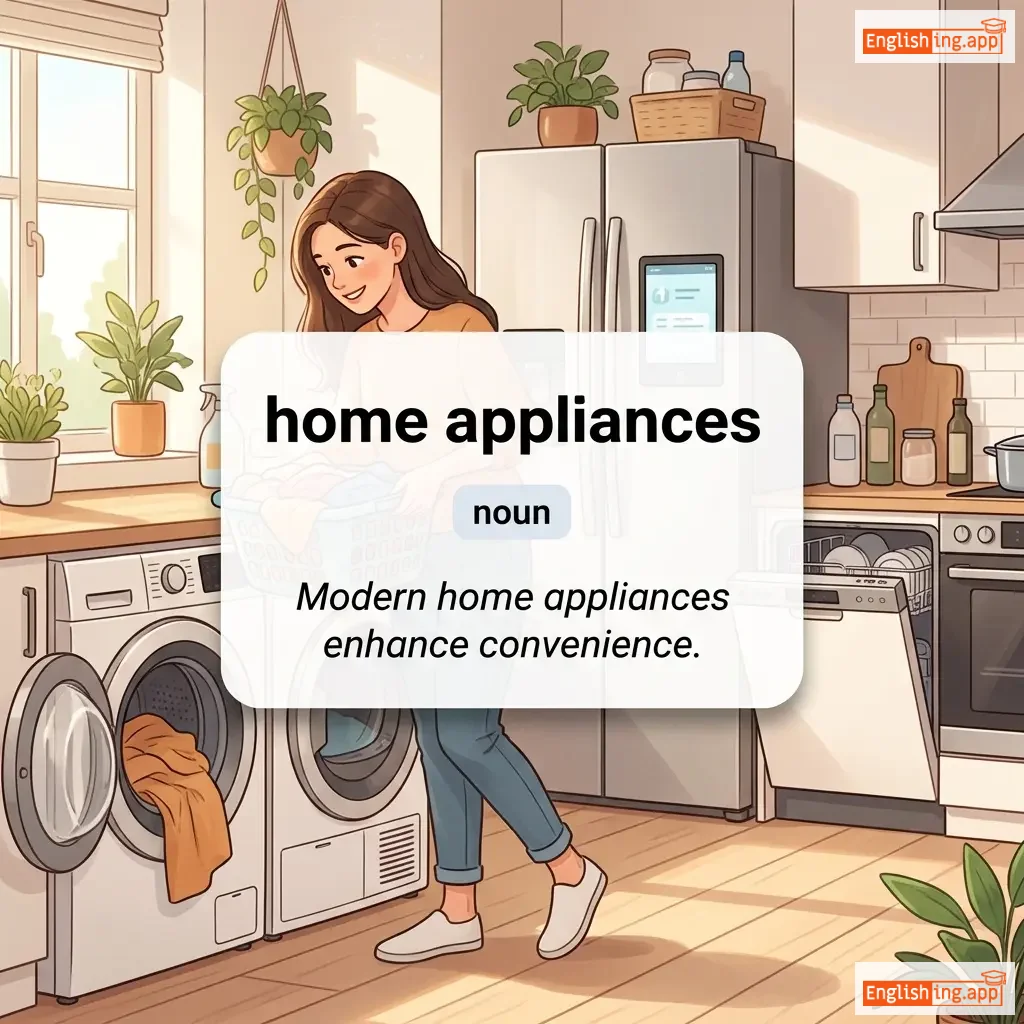
home appliances definition card — visual illustration of the meaning
noun
hoʊm əˈplaɪ.ənsɪz
electrodomésticos (electrodomesticos)

Electrical devices and machines used in households for daily tasks and convenience.

"Modern home appliances enhance convenience."

"Los electrodomésticos modernos mejoran la comodidad." (Los electrodomésticos modernos mejoran la comodidad.)
noun
/hoʊm ˈdɪstrɪkt/
distrito natal (distrito natal)

the district where a person was born or originally comes from

"He returned to his home district after many years abroad."

"Regresó a su distrito natal después de muchos años en el extranjero." (Regreso a su distrito natal despues de muchos anos en el extranjero)
noun
/ˈhoʊmlænd/
patria (patria)

a person's native country or region

"She returned to her homeland after ten years abroad."

"Ella regresó a su patria después de diez años en el extranjero." (Ella regreso a su patria despues de diez años en el extranjero.)
adjective
/ˈhoʊmləs/
sin hogar (sin hogar)

Without a home, and therefore typically living on the streets.

"The organization helps homeless people find shelter."

"La organización ayuda a las personas sin hogar a encontrar refugio." (La organizacion ayuda a las personas sin hogar a encontrar refugio.)
adjective
/ˈhoʊmli/
sencillo (sencillo)

Plain or unattractive in appearance; simple and comfortable in style or character.

"Despite being homely, the cottage felt warm and welcoming."

"A pesar de ser sencillo, la cabaña se sentía cálida y acogedora." (A pesar de ser sencillo, la cabaña se sentía cálida y acogedora.)
noun
/ˌhoʊmiˈɑːpəθi/
homeopatía (homeopathy)

a system of alternative medicine based on treating diseases with highly diluted substances

"He believes in homeopathy for treating common colds."

"Él cree en la homeopatía para tratar los resfriados comunes." (El cree en la homeopatia para tratar los resfriados comunes.)
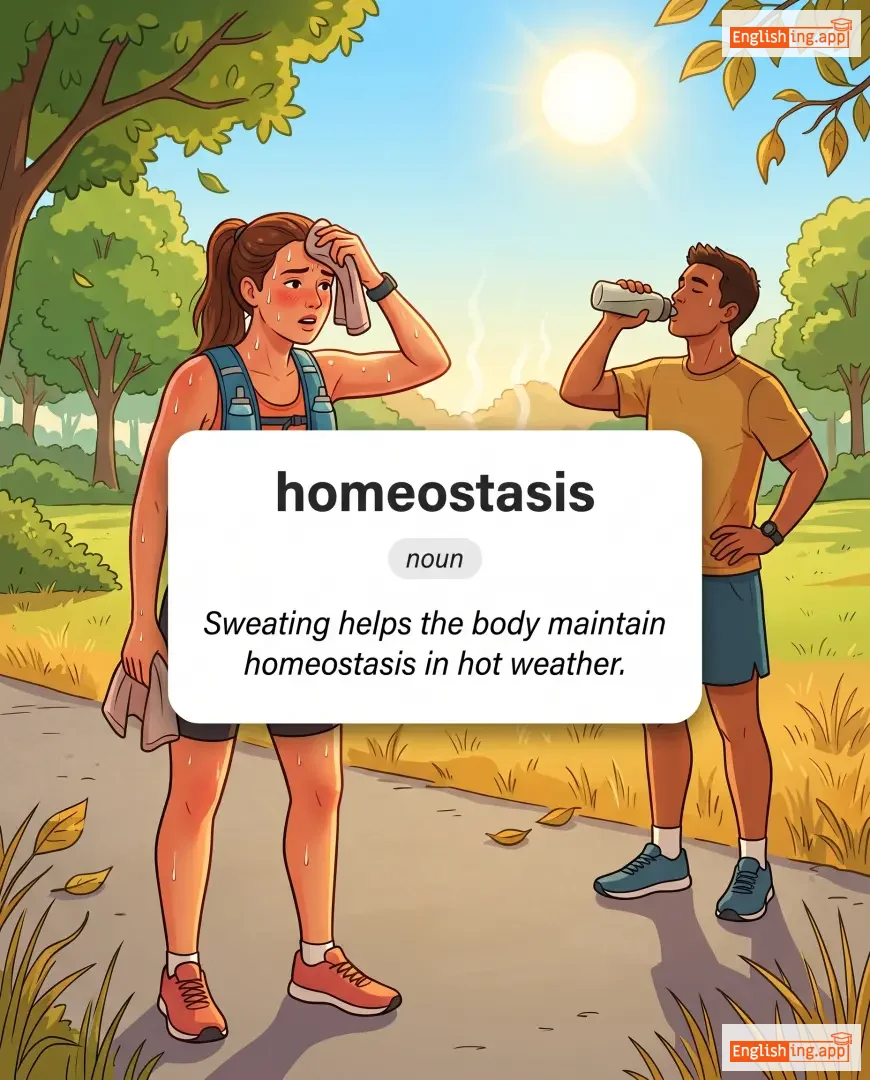
homeostasis definition card — visual illustration of the meaning
noun
/ˌhoʊmi.oʊˈsteɪsɪs/
homeostasis (homeostasis)

The ability of a living system or organism to maintain internal stability despite changes in external conditions.

"Sweating helps the body maintain homeostasis in hot weather."

"Sudar ayuda al cuerpo a mantener la homeostasis en el clima cálido." (Sudar ayuda al cuerpo a mantener la homeostasis en el clima calido.)
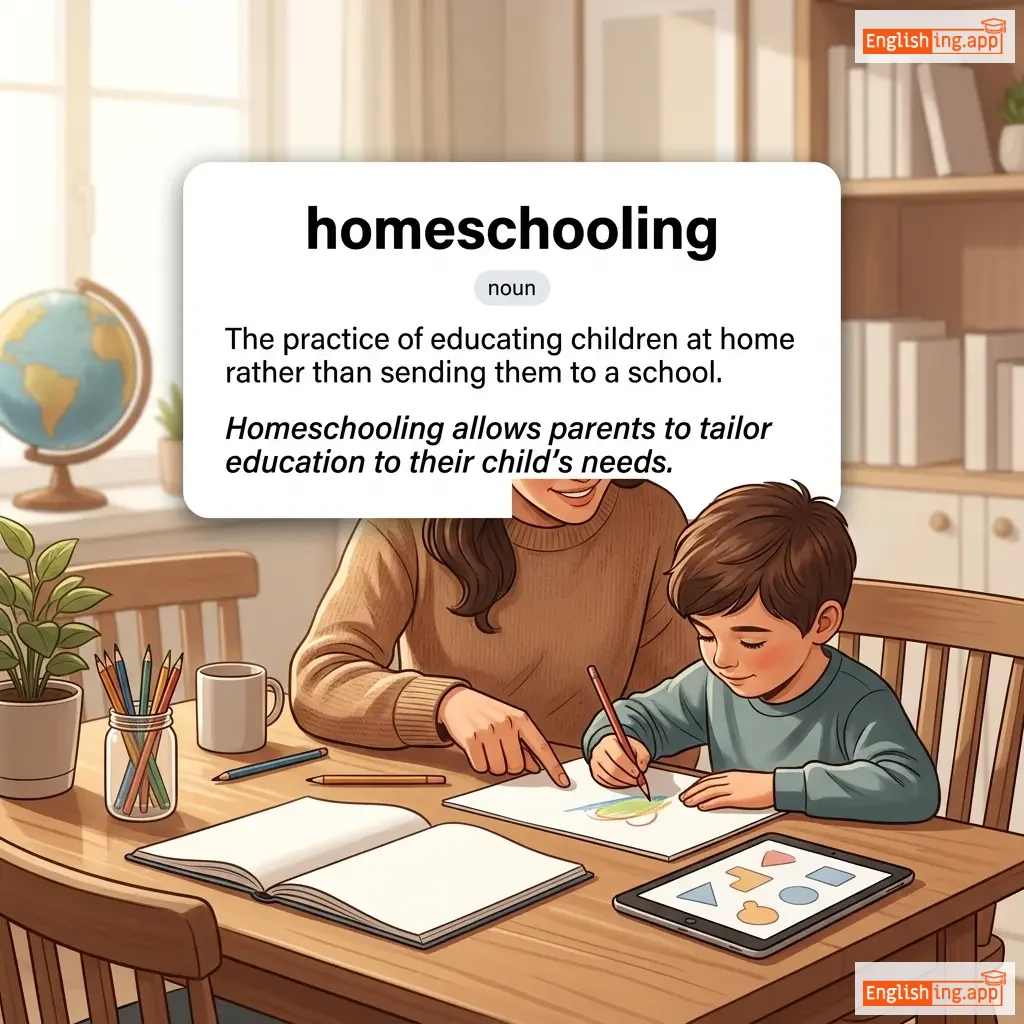
homeschooling definition card — visual illustration of the meaning
noun
ˈhoʊmˌskuː.lɪŋ
escuela en casa (escuela en casa)

The practice of educating children at home rather than sending them to a school.

"Homeschooling allows parents to tailor education to their child's needs."

"La educación en casa permite a los padres adaptar la educación a las necesidades de su hijo." (La educacion en casa permite a los padres adaptar la educacion a las necesidades de su hijo.)
adjective
/ˈhoʊmˌsɪk/
extrañar; sentir nostalgia por el hogar y la familia (extranar; sentir nostalgia por el hogar y la familia)

feeling sad because you are away from home; longing for one's home and family

"She felt homesick during her first week at college."

"Ella se sintió nostálgica durante su primera semana en la universidad." (Ella se sintió nostálgica durante su primera semana en la universidad.)
adjective
/ˈhoʊm.spʌn/
hecho en casa (hecho en casa)

Simple and unsophisticated; made at home rather than in a factory.

"She wore a homespun dress to the village festival."

"Ella llevaba un vestido hecho en casa al festival del pueblo." (Ella llevaba un vestido hecho en casa al festival del pueblo.)
noun
/ˈhoʊmwɜːrk/
tarea (tarea)

schoolwork that a student does at home

"I need to finish my math homework before dinner."

"Necesito terminar mi tarea de matemáticas antes de la cena." (Necesito terminar mi tarea de matemáticas antes de la cena.)
noun
/ˈhɑːmɪsaɪd/
asesinato (asesinato)

the killing of one human being by another

"The police are investigating a case of homicide."

"La policía está investigando un caso de homicidio." (La policia esta investigando un caso de homicidio.)
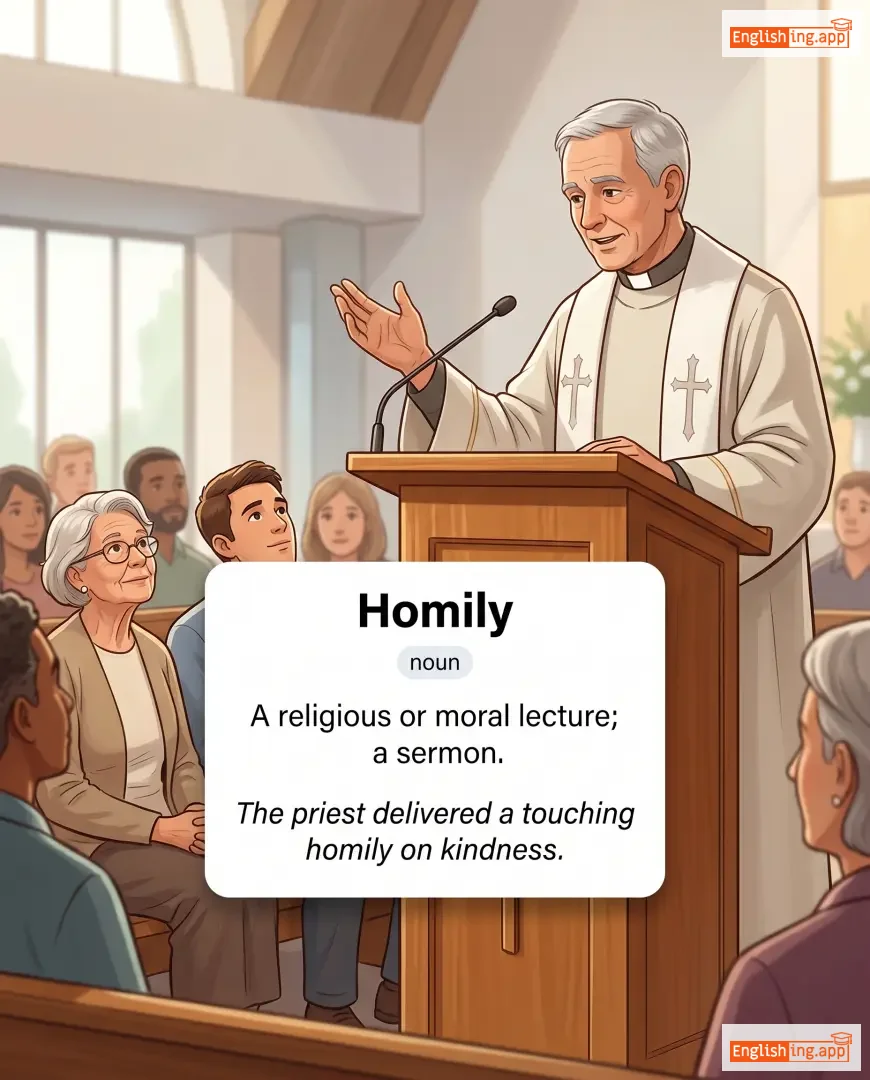
Homily definition card — visual illustration of the meaning
noun
/ˈhɑː.mə.li/
homilía (homilia)

A religious or moral lecture; a sermon.

"The priest delivered a touching homily on kindness."

"El sacerdote dio una emotiva homilía sobre la amabilidad." (El sacerdote dio una emotiva homilía sobre la amabilidad.)
noun
/ˌhoʊmə.dʒəˈniːəti/
homogeneidad (homogeneidad)

The quality or state of being all the same or all of the same kind.

"The cultural homogeneity of the village made it feel unified."

"La homogeneidad cultural del pueblo hizo que se sintiera unido." (LaHomogeneidadCulturalDelPuebloHizoQueSeSintieraUnido)