Vocabularios

Descubra, aprenda y domine el vocabulario en inglés

noun
/ɡrəˈtjuːɪti/
propina (propina)

A sum of money given as a tip or a retirement benefit.

"The waiter received a generous gratuity for his excellent service."

"El camarero recibió una generosa propina por su excelente servicio." (El camarero recibió una generosa propina por su excelente servicio.)
noun, adjective
/ɡreɪv/
tumba (tumba)

A place where someone is buried; also used to describe something serious or solemn.

"He visited his grandfather's grave every year."

"Él visitaba la tumba de su abuelo cada año." (El visitaba la tumba de su abuelo cada año.)
/ˈɡrævəl/
grava (grava)

Small stones and pebbles, often mixed with sand, used for paths, roads, and construction.

"The driveway was covered with gravel."

"La entrada estaba cubierta de grava." (La entrada estaba cubierta de grava.)
noun
/ˈɡreɪvstoʊn/
lápida (lapida)

A stone that marks a grave, usually inscribed with the name of the deceased.

"The gravestone had her name carved beautifully."

"La lápida tenía su nombre grabado hermosamente." (La lapida tenia su nombre grabado hermosamente.)
noun
/ˈɡreɪv.jɑːrd/
cementerio (cementerio)

an area of land set aside for burial of the dead; a cemetery

"The old graveyard near the church dates back to the 18th century."

"El viejo cementerio cerca de la iglesia data del siglo XVIII." (El viejo cementerio cerca de la iglesia data del siglo XVIII.)
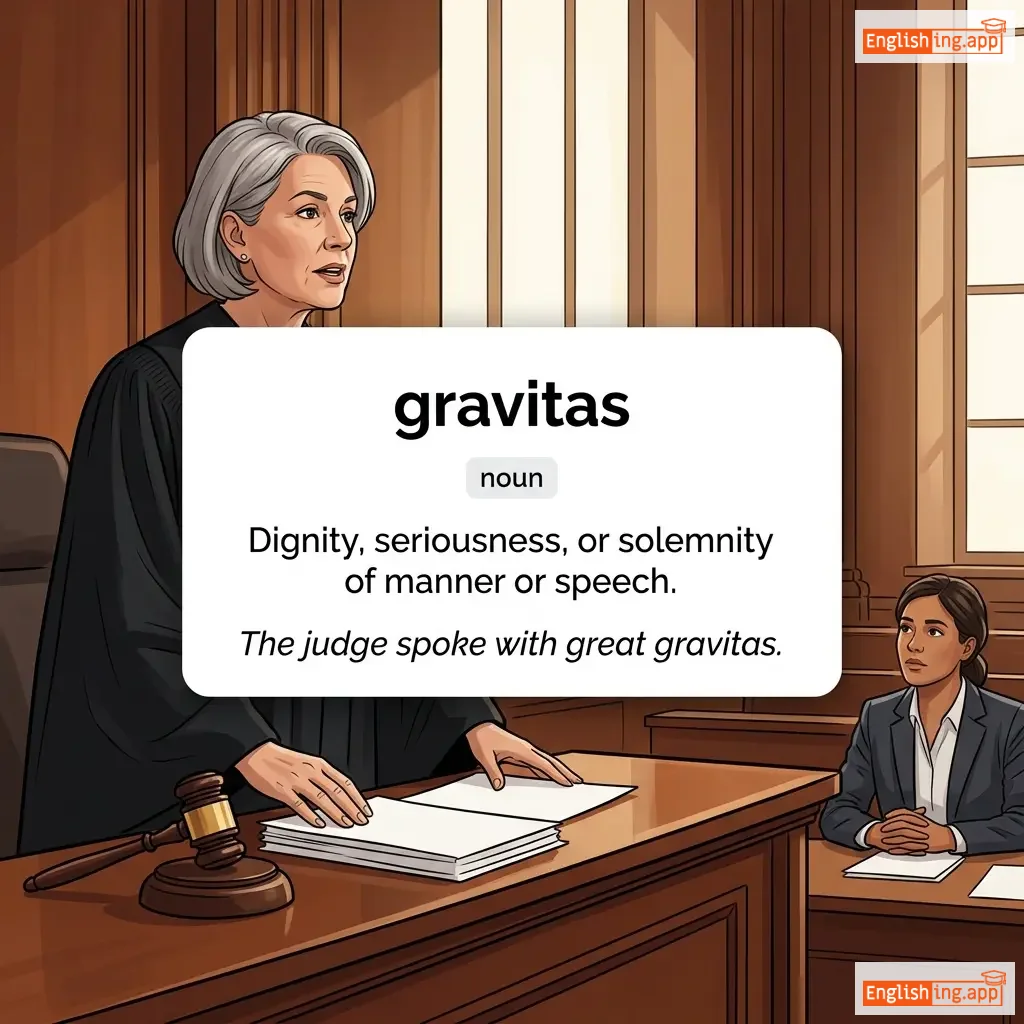
gravitas definition card — visual illustration of the meaning
noun
/ˈɡræv.ɪ.tæs/
gravedad (gravedad)

Dignity, seriousness, or solemnity of manner or speech.

"The judge spoke with great gravitas."

"El juez habló con gran gravedad." (El juez habló con gran gravedad.)
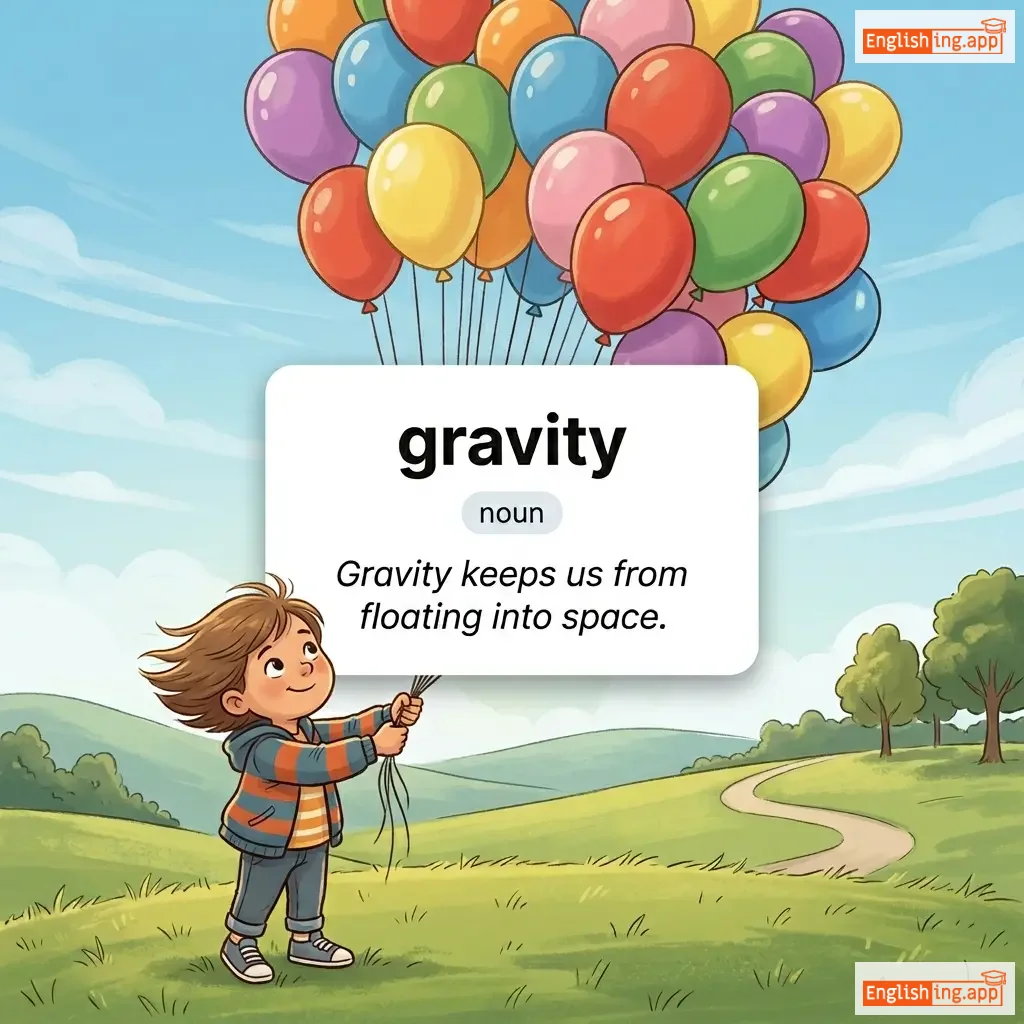
gravity definition card — visual illustration of the meaning
noun
/ˈɡrævəti/
gravedad (gravedad)

The natural force that attracts objects toward the center of the earth; seriousness or importance.

"Gravity keeps us from floating into space."

"La gravedad nos impide flotar al espacio." (La gravedad nos impide flotar al espacio.)
adjective, noun
/ɡreɪ/
felicidad (felicidad)

A color between black and white; also describes dull or gloomy situations.

"The sky turned gray before the storm."

"Ella no pudo ocultar su felicidad cuando recibió el premio." (Ella no pudo ocultar su felicidad cuando recibió el premio.)
verb
/ɡreɪz/
felicidad (felicidad)

To feed on grass; to touch or scrape lightly while passing.

"The cows graze in the meadow every morning."

"Ella no podía esconder su felicidad cuando recibió el premio." (Ella no podía esconder su felicidad cuando recibió el premio.)
noun/verb
/ˈɡreɪzɪŋ/
pasto (pasto)

The act of animals eating grass in a field; also lightly touching or scraping against something.

"Cows were grazing peacefully in the meadow."

"Las vacas estaban pastando pacíficamente en el prado." (Las vacas estaban pastando pacíficamente en el prado.)
adjective
/ɡreɪt/
gran (gran)

Of an extent, amount, or intensity considerably above average; very good or important.

"She gave a great performance at the concert."

"Ella dio una gran actuación en el concierto." (Ella dio una gran actuacion en el concierto.)
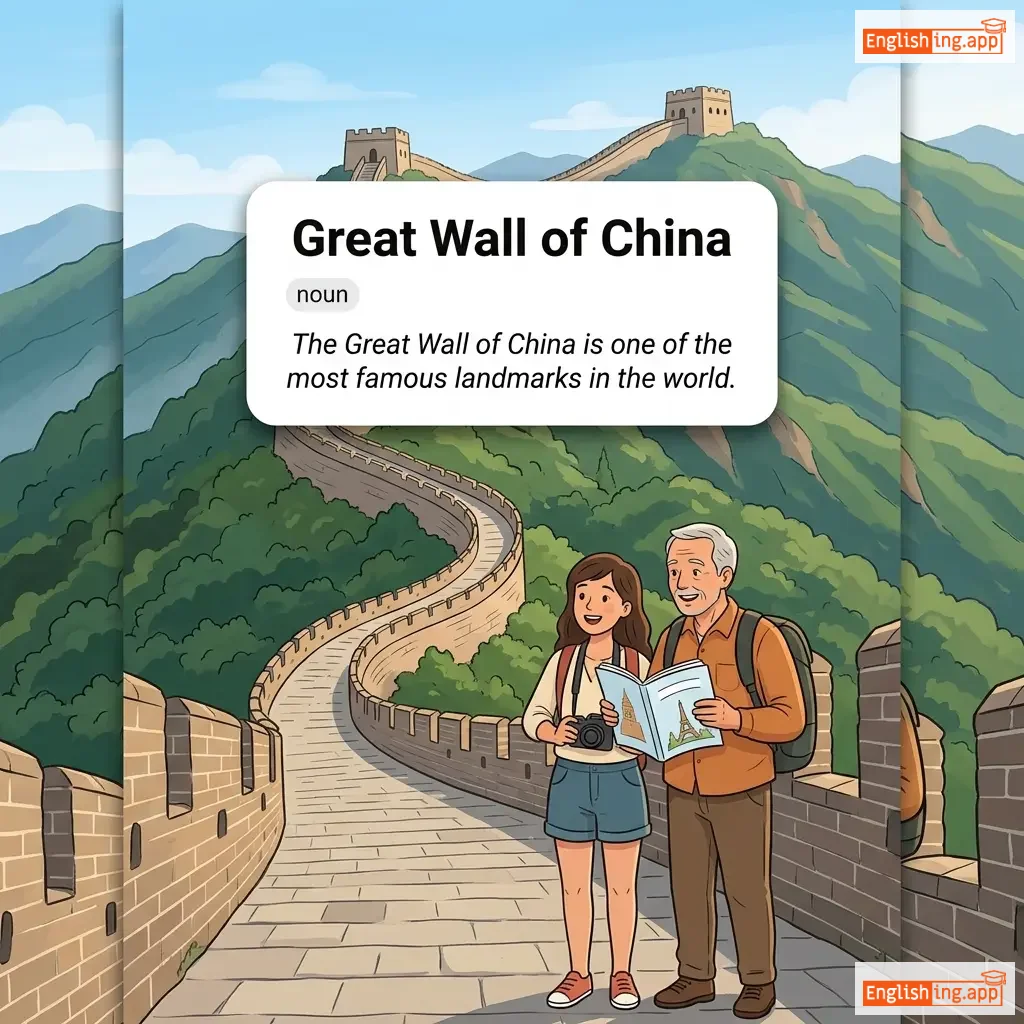
Great Wall of China definition card — visual illustration of the meaning
noun
ɡreɪt wɔːl əv ˈtʃaɪ.nə
Gran Muralla China (Gran Muralla China)

A massive ancient fortification system in China, built to protect against invasions and considered one of the most famous landmarks in the world.

"The Great Wall of China is one of the most famous landmarks in the world."

"La Gran Muralla de China es uno de los monumentos más famosos del mundo." (La Gran Muralla de China es uno de los monumentos más famosos del mundo.)
adjective (superlative)
/ˈɡreɪ.tɪst/
el más grande (el mas grande)

The highest degree of greatness; the most outstanding or important.

"He is considered one of the greatest leaders of all time."

"Él es considerado uno de los más grandes líderes de todos los tiempos." (Él es considerado uno de los más grandes líderes de todos los tiempos.)
adverb
/ˈɡreɪtli/
mucho (mucho)

to a large extent or degree; very much

"She was greatly admired by her students."

"Ella fue muy admirada por sus estudiantes." (Ella fue muy admirada por sus estudiantes.)
noun
/ɡriːd/
codicia (codicia)

intense and selfish desire for something, especially wealth, power, or food

"His greed for money led him to make unethical business decisions."

"Su codicia por el dinero lo llevó a tomar decisiones empresariales poco éticas." (Su codicia por el dinero lo llevó a tomar decisiones empresariales poco éticas.)
adjective
/ɡriːk/
Griego (relacionado con Grecia) (Griego (relacionado con Grecia))

relating to Greece, its people, or its language

"We enjoyed delicious Greek food at the restaurant."

"Disfrutamos de una deliciosa comida griega en el restaurante." (Disfrutamos de una deliciosa comida griega en el restaurante.)
adjective
/ɡriːn/
verde (verde)

Of the color between blue and yellow in the spectrum; inexperienced or naive.

"The garden is full of green plants."

"El jardín está lleno de plantas verdes." (El jardín está lleno de plantas verdes.)
noun
/ɡriːn ˈtʃɪl.i/
pimiento verde (pimiento verde)

unripe chili pepper that is green in color and has a spicy taste

"She added chopped green chili to the salad for extra heat."

"Ella añadió chile verde picado a la ensalada para más picante." (Ella añadio chile verde picado a la ensalada para mas picante.)
noun
/ɡriːn ˈkəʊ.kə.nʌt/
coco verde (coco verde)

a young coconut with green outer shell containing refreshing coconut water

"We drank fresh water from a green coconut on the beach."

"Bebimos agua fresca de un coco verde en la playa." (Bebimos agua fresca de un coco verde en la playa.)
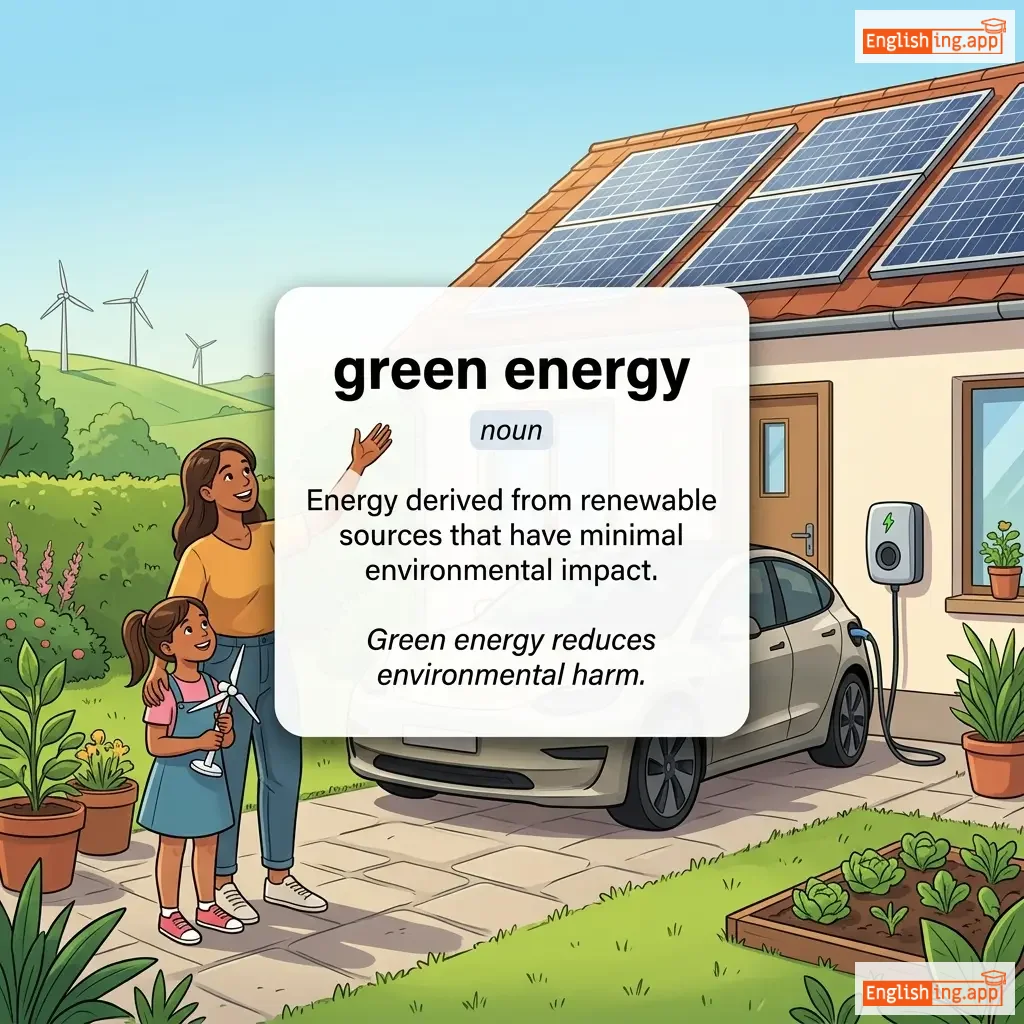
green energy definition card — visual illustration of the meaning
noun
/ˌɡriːn ˈen.ə.dʒi/
energía verde (energia verde)

Energy derived from renewable sources that have minimal environmental impact.

"Green energy reduces environmental harm."

"La energía verde reduce el daño ambiental." (La energia verde reduce el daño ambiental.)
noun
/ɡriːn ˈdʒækfruːt/
jackfruit verde (jackfruit verde)

unripe fruit of the jackfruit tree, commonly used as a vegetable in cooking

"Green jackfruit is often used in curries and stews."

"El jackfruit verde se usa a menudo en curris y estofados." (El jackfruit verde se usa a menudo en curris y estofados.)
noun
/ɡriːn pəˈpaɪə/
papaya verde (papaya verde)

unripe papaya fruit used as a vegetable in cooking, especially in Asian cuisine

"Green papaya salad is a popular dish in Thai cuisine."

"La ensalada de papaya verde es un plato popular en la cocina tailandesa." (La ensalada de papaya verde es un plato popular en la cocina tailandesa.)
noun
/ˈɡriːnhaʊs/
invernadero (invernadero)

a glass building used for growing plants, especially in cold climates

"The farmers built a large greenhouse to grow tomatoes in the winter."

"Los agricultores construyeron un gran invernadero para cultivar tomates en el invierno." (Los agricultores construyeron un gran invernadero para cultivar tomates en el invierno.)
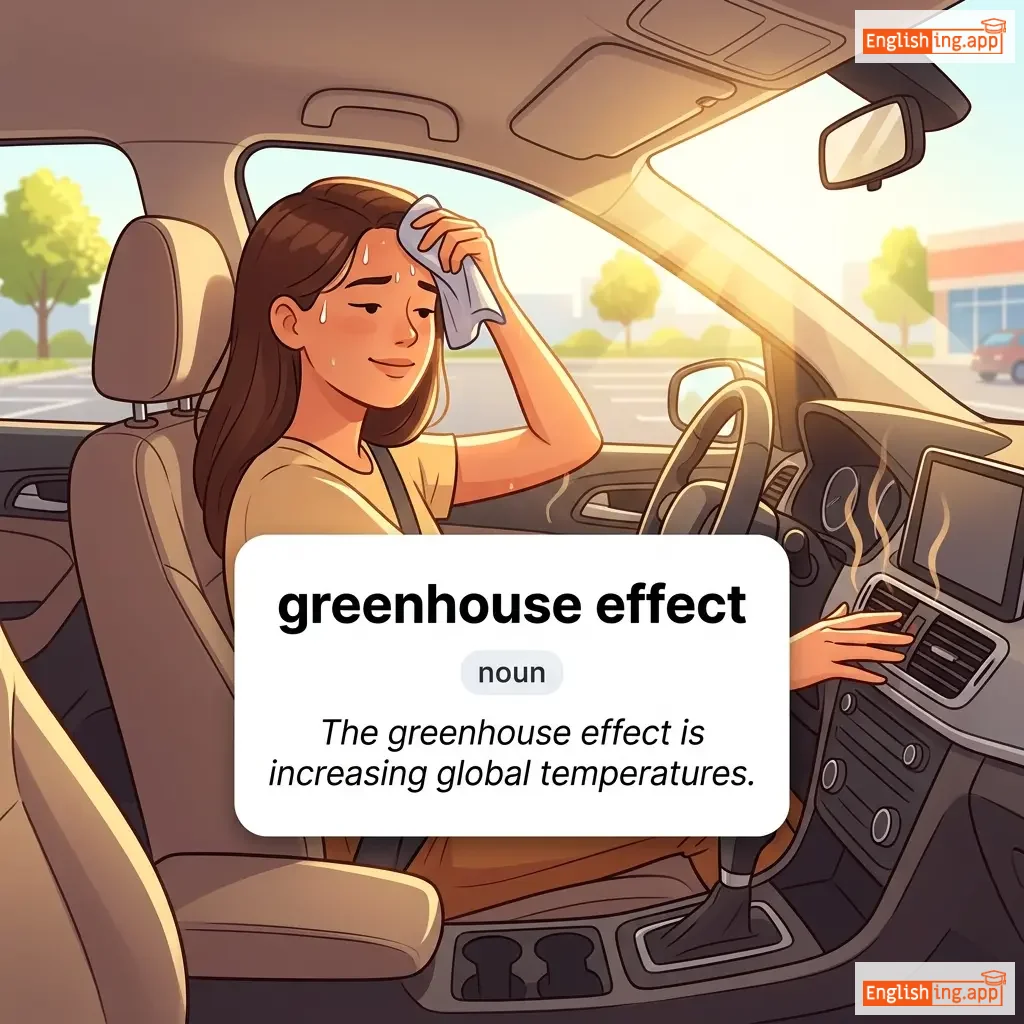
greenhouse effect definition card — visual illustration of the meaning
noun
ˈɡriːn.haʊs ɪˌfɛkt
efecto invernadero (efecto invernadero)

The trapping of the sun's warmth in a planet's lower atmosphere due to the greater transparency of the atmosphere to visible radiation from the sun than to infrared radiation emitted from the planet's surface.

"The greenhouse effect is increasing global temperatures."

"El efecto invernadero está aumentando las temperaturas globales." (El efecto invernadero está aumentando las temperaturas globales.)
noun
/ɡriːnz/
verduras de hoja (verduras de hoja)

Leafy vegetables such as spinach, lettuce, and cabbage

"Eating greens is important for good health."

"Comer verduras de hoja es importante para una buena salud." (Comer verduras de hoja es importante para una buena salud.)
greet definition card — visual illustration of the meaning
verb
/ɡriːt/
saludar (saludar)

to say hello or welcome someone politely

"She greeted the guests with a warm smile."

"Ella saludó a los invitados con una sonrisa cálida." (Ella saludó a los invitados con una sonrisa cálida.)
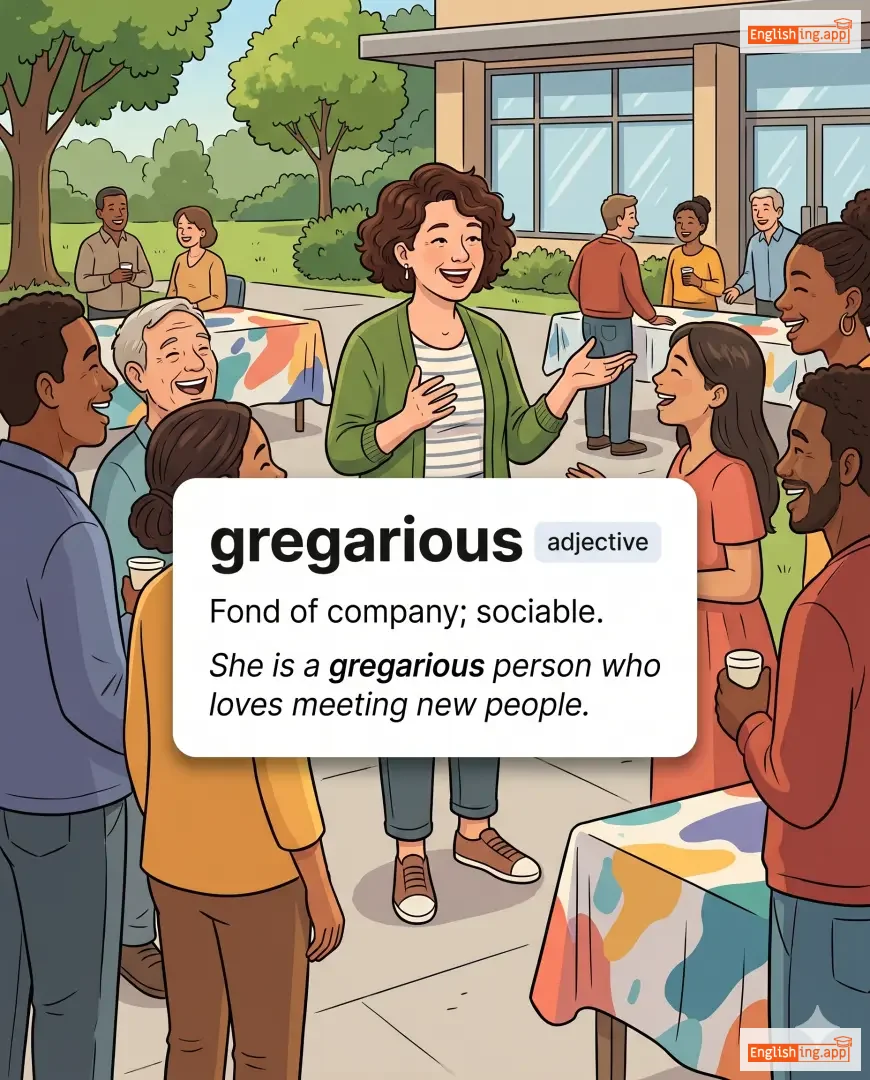
gregarious definition card — visual illustration of the meaning
adjective
/ɡrɪˈɡɛəriəs/
sociable (sociable)

Fond of company; sociable.

"She is a gregarious person who loves meeting new people."

"Es una persona sociable que disfruta conocer gente nueva." (Es una persona sociable que disfruta conocer gente nueva.)
noun
/ˌɡrɛnəˈdɪə/
granadero (granadero)

A soldier who specialized in throwing grenades; later used to describe an elite infantryman.

"The grenadier stood proudly at the front of the regiment."

"El granadero estaba orgulloso en la parte delantera del regimiento." (El granadero estaba orgulloso en la parte delantera del regimiento.)
adjective
/ɡreɪ/
gris (gris)

having a color between black and white

"The grey clouds indicated that rain was coming."

"Las nubes grises indicaron que la lluvia venía." (Las nubes grises indicaron que la lluvia venía.)
noun
/ˈɡreɪ.haʊnd/
galgo (galgo)

a tall, thin dog with long legs that can run very fast

"The greyhound won the race at the dog track."

"El galgo ganó la carrera en la pista de perros." (El galgo gano la carrera en la pista de perros.)
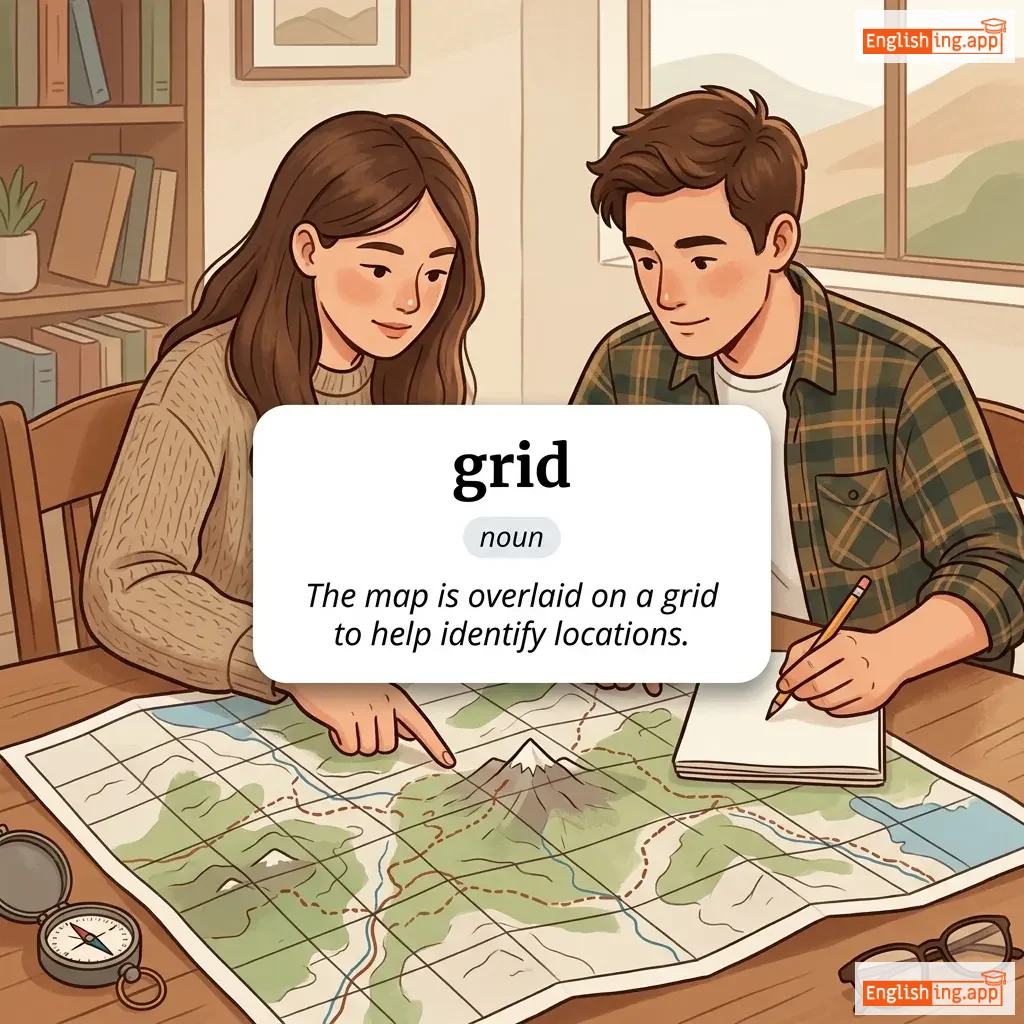
grid definition card — visual illustration of the meaning
noun
/ɡrɪd/
rejilla (rejilla)

a network of lines that cross each other to form a series of squares or rectangles

"The map is overlaid on a grid to help identify locations."

"El mapa se superpone a una rejilla para ayudar a identificar ubicaciones." (El mapa se superpone a una rejilla para ayudar a identificar ubicaciones.)
noun
/ˈɡrɪd.əl/
plancha (plancha)

a flat heating surface for cooking food, typically made of metal

"She cooked pancakes on the hot griddle."

"Ella cocinó panqueques en la plancha caliente." (Ella cocinó panqueques en la plancha caliente.)
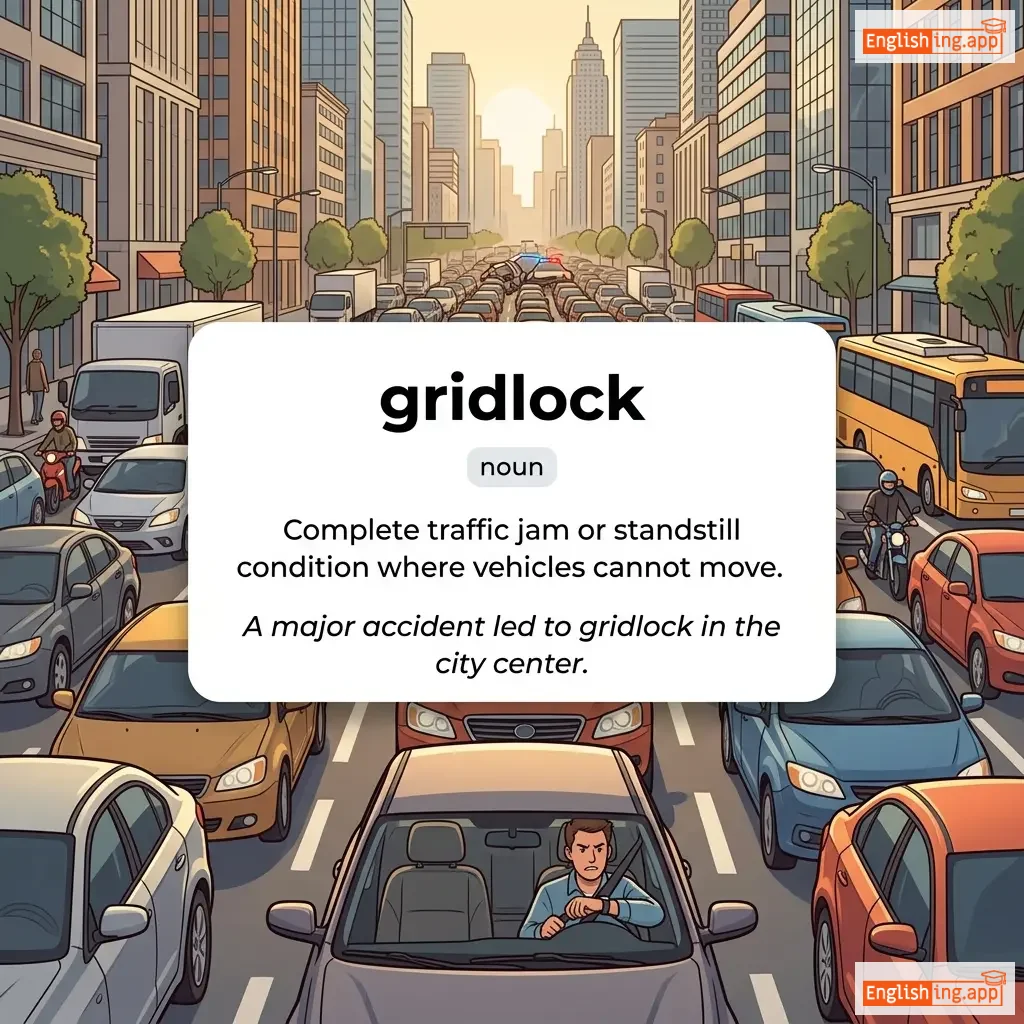
gridlock definition card — visual illustration of the meaning
noun
/ˈɡrɪd.lɒk/
atasco completo o condición de parálisis en el tráfico (atasco completo o condicion de paralisisi en el trafico)

Complete traffic jam or standstill condition where vehicles cannot move.

"A major accident led to gridlock in the city center."

"Un gran accidente causó un atasco en el centro de la ciudad." (Un gran accidente causo un atasco en el centro de la ciudad.)
noun
/ɡriːf/
tristeza (tristeza)

Deep sorrow, especially caused by someone's death.

"She was overcome with grief after her father's passing."

"Ella se sintió abrumada por la tristeza después de la muerte de su padre." (Ella se sintió abrumada por la tristeza después de la muerte de su padre.)
noun
/ˈɡriːvəns/
felicidad (felicidad)

A real or imagined cause for complaint, especially unfair treatment.

"The workers voiced their grievances to the management."

"Ella no pudo ocultar su felicidad cuando recibió el premio." (Ella no pudo ocultar su felicidad cuando recibió el premio.)
verb
/ɡriːv/
afligirse (afligirse)

To feel or cause deep sorrow, especially due to someone's death.

"She continues to grieve the loss of her best friend."

"Ella continúa de luto por la pérdida de su mejor amiga." (Ella continúa de luto por la pérdida de su mejor amiga.)
adjective
/ˈɡriːvəs/
grave (grave)

Causing great pain, suffering, or sorrow.

"The accident was a grievous blow to the community."

"El accidente fue un golpe grave para la comunidad." (El accidente fue un golpe grave para la comunidad.)
noun, verb
/ɡrɪl/
parrilla / asar (parrilla / asar)

a metal frame used for cooking food over an open fire; to cook food on such a frame

"We grilled some chicken for dinner."

"Asamos algo de pollo para la cena." (Asamos algo de pollo para la cena.)
adjective
/ɡrɪm/
grave (grave)

very serious or gloomy in appearance or outlook

"The future looked grim after the disaster."

"El futuro parecía grave después del desastre." (El futuro parecia grave despues del desastre.)
verb, noun
/ˈɡrɪməs/
mueca (mueca)

to make an ugly, twisted expression on one's face, usually in disgust or pain

"He grimaced when he tasted the sour fruit."

"Él hizo una mueca cuando probó la fruta agria." (El hizo una mueca cuando probo la fruta agria.)
verb, noun
/ɡrɪn/
sonreír ampliamente, a menudo mostrando los dientes (sonreir ampliamente, a menudo mostrando los dientes)

to smile broadly, often showing teeth

"She grinned happily at the good news."

"Ella sonrió felizmente al escuchar las buenas noticias." (Ella sonrió felizmente al escuchar las buenas noticias.)
grind definition card — visual illustration of the meaning
verb
/ɡraɪnd/
moler (moler)

to break something into small pieces or powder by pressing or crushing it

"She grinds the coffee beans every morning for fresh coffee."

"Ella muele los granos de café todas las mañanas para café fresco." (Ella muele los granos de café todas las mañanas para café fresco.)
noun
/ˈɡraɪndstoʊn/
piedra de afilar (piedra de afilar)

a thick disc of stone used for grinding, sharpening, or polishing tools

"The blacksmith sharpened his blade on the grindstone."

"El herrero afiló su cuchilla en la piedra de afilar." (El herrero afiló su cuchilla en la piedra de afilar.)
verb
/ɡrɪp/
agarrar (agarrar)

to hold something tightly or firmly

"He gripped the steering wheel tightly."

"él agarró el volante con fuerza." (él agarró el volante con fuerza.)
verb
/ɡraɪp/
quejarse (quejarse)

to complain about something in an annoying way

"He is always griping about the weather."

"Él siempre está quejándose del clima." (Él siempre está quejándose del clima.)
adjective
/ˈɡrɪz.li/
espantoso (espantoso)

causing horror or disgust

"The police discovered a grisly scene at the crime site."

"La policía descubrió una escena espantosa en el lugar del crimen." (La policía descubrió una escena espantosa en el lugar del crimen.)
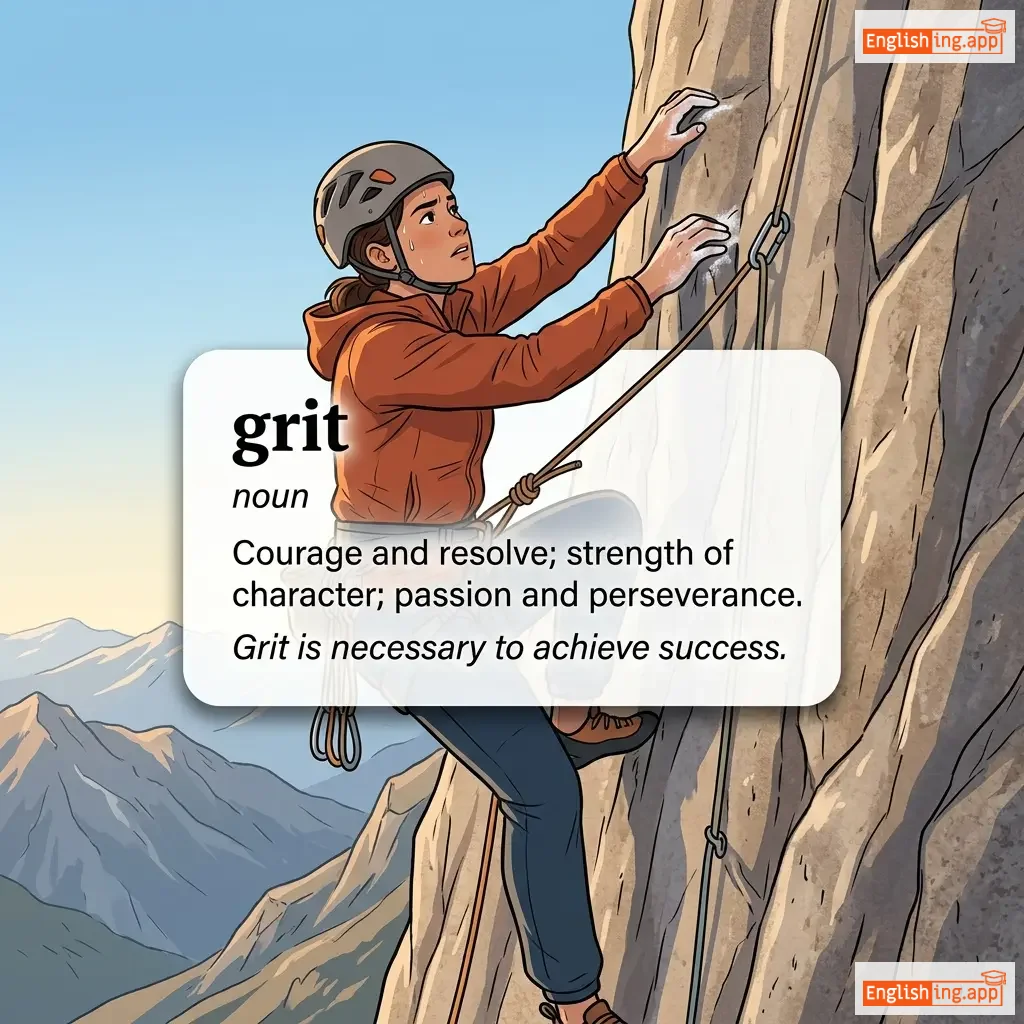
grit definition card — visual illustration of the meaning
noun
/ɡrɪt/
determinación, coraje, perseverancia (determinacion, coraje, perseverancia)

Courage and resolve; strength of character; passion and perseverance.

"Grit is necessary to achieve success."

"La determinación es necesaria para lograr el éxito." (La determinacion es necesaria para lograr el exito.)
noun
/ˈɡroʊ.sər/
tiendero (tiendero)

a person who sells food and household goods in a shop

"The grocer has fresh vegetables and fruits in his store."

"El tiendero tiene frutas y verduras frescas en su tienda." (El tiendero tiene frutas y verduras frescas en su tienda.)
noun
/ˈɡroʊ.sər.i/
tienda de comestibles (tienda de comestibles)

A store that sells food and household supplies.

"She went to the grocery to buy vegetables."

"Ella fue a la tienda de comestibles a comprar verduras." (Ella fue a la tienda de comestibles a comprar verduras.)
noun
/ˈɡrəʊsəri ʃɒp/
tienda de comestibles (tienda de comestibles)

a retail store where food and everyday household items are sold

"She stopped by the grocery shop to buy vegetables and milk."

"Ella fue a la tienda de comestibles para comprar verduras y leche." (ella fue a la tienda de comestibles para comprar verduras y leche)