Vocabularios

Descubra, aprenda y domine el vocabulario en inglés

adjective
/ˌeɪθiˈɪstɪk/
ateísta (ateista)

Relating to or characteristic of atheists or atheism.

"She grew up in an atheistic household with no religious rituals."

"Ella creció en un hogar ateo sin rituales religiosos." (Ella creció en un hogar ateo sin rituales religiosos.)
adjective
/əˈθɜːrst/
sediento, ansioso (sediento, ansioso)

Very eager or desirous for something.

"The explorer was athirst for adventure."

"El explorador estaba sediento de aventura." (El explorador estaba sediento de aventura.)
noun
/ˈæθliːt/
atleta (atleta)

a person who is trained or skilled in physical exercises, sports, or games requiring strength, agility, or stamina

"The athlete trained hard for the upcoming Olympic Games."

"El atleta entrenó duro para los próximos Juegos Olímpicos." (El atleta entreno duro para los proximos Juegos Olimpicos.)
adjective
/æθˈlɛtɪk/
atlético, robusto (atletico, robusto)

physically strong, fit, and active; related to athletes or sports

"She has an athletic body because she exercises regularly."

"Ella tiene un cuerpo atlético porque hace ejercicio regularmente." (Ella tiene un cuerpo atletico porque hace ejercicio regularmente.)
adverb
/əˈθwɔːrt/
de forma transversal, en oposición (de forma transversal, en oposicion)

Across or in opposition to something.

"A fallen tree lay athwart the road, blocking traffic."

"Un árbol caído yacía de forma transversal en la carretera, bloqueando el tráfico." (Un arbol caido yacia de forma transversal en la carretera, bloqueando el trafico.)
noun
/ˈætməsfɪər/
atmósfera (atmosfera)

the layer of gases surrounding the Earth; the mood or feeling of a place

"The restaurant had a warm and welcoming atmosphere."

"El restaurante tenía un ambiente cálido y acogedor." (El restaurante tenía un ambiente cálido y acogedor.)
adjective
/əˈtɒm.ɪk/
atómico (atomiko)

relating to atoms or atomic energy; extremely small

"The atomic structure of hydrogen is the simplest."

"La estructura atómica del hidrógeno es la más simple." (La estructura atomica del hidrogeno es la mas simple.)
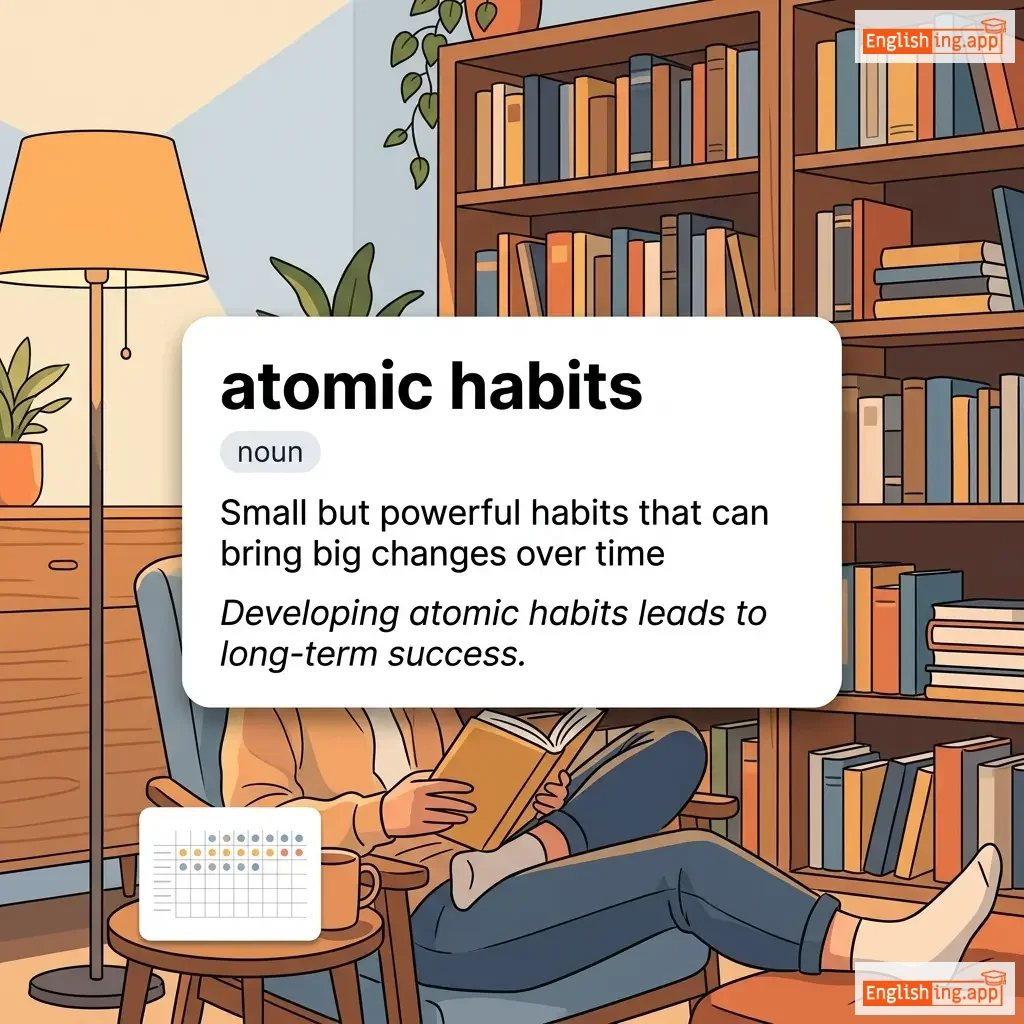
atomic habits definition card — visual illustration of the meaning
noun
/əˈtɒm.ɪk ˈhæb.ɪts/
hábitos atómicos (habitos atomicos)

Small but powerful habits that can bring big changes over time

"Developing atomic habits leads to long-term success."

"Desarrollar hábitos atómicos conduce al éxito a largo plazo." (Desarrollar habitos atomicos conduce al exito a largo plazo.)
noun
/ˈætəmaɪzər/
atomizador (atomizador)

A device that sprays liquid into a fine mist.

"She used an atomizer to apply the perfume evenly."

"Ella usó un atomizador para aplicar el perfume uniformemente." (Ella usó un atomizador para aplicar el perfume uniformemente.)
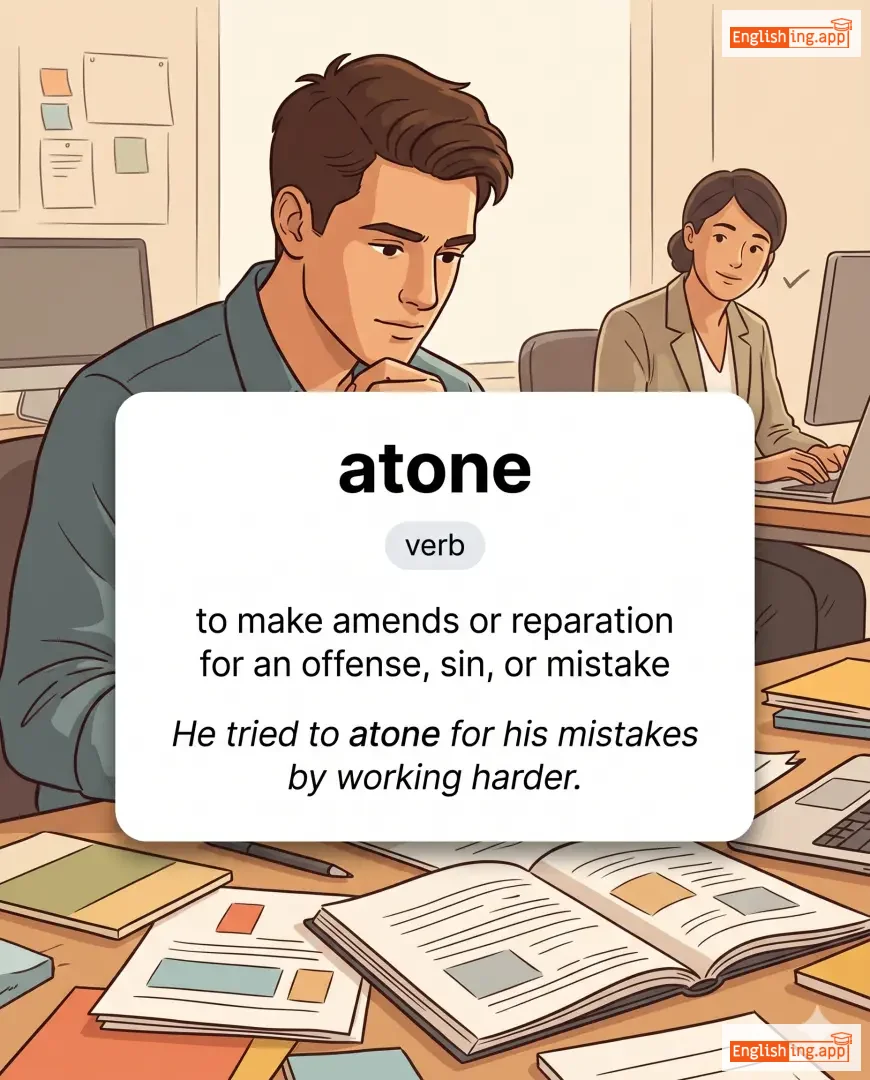
atone definition card — visual illustration of the meaning
verb
/əˈtoʊn/
expiar (expiar)

to make amends or reparation for an offense, sin, or mistake

"He tried to atone for his mistakes by working harder."

"Intentó expiar sus errores trabajando más duro." (Intento expiar sus errores trabajando mas duro.)
noun
/əˈtoʊnmənt/
expiación (expiacion)

the act of making amends for a wrong, sin, or injury

"The festival was celebrated as a day of atonement."

"El festival fue celebrado como un día de expiación." (El festival fue celebrado como un dia de expiacion.)
preposition
/əˈtɒp/
encima (encima)

on the top of something

"A flag was placed atop the tower."

"Una bandera fue colocada encima de la torre." (Una bandera fue colocada encima de la torre.)
adjective
/əˈtroʊʃəs/
atroz (atroz)

extremely bad, unpleasant, or cruel

"The prisoners were kept in atrocious conditions."

"Los prisioneros fueron mantenidos en condiciones atroces." (Los prisioneros fueron mantenidos en condiciones atroces.)
adverb
/əˈtroʊʃəsli/
atrozmente (atrozmente)

in a very cruel, shocking, or extremely bad manner

"The service at the restaurant was atrociously slow."

"El servicio del restaurante fue atrozmente lento." (El servicio del restaurante fue atrozmente lento)
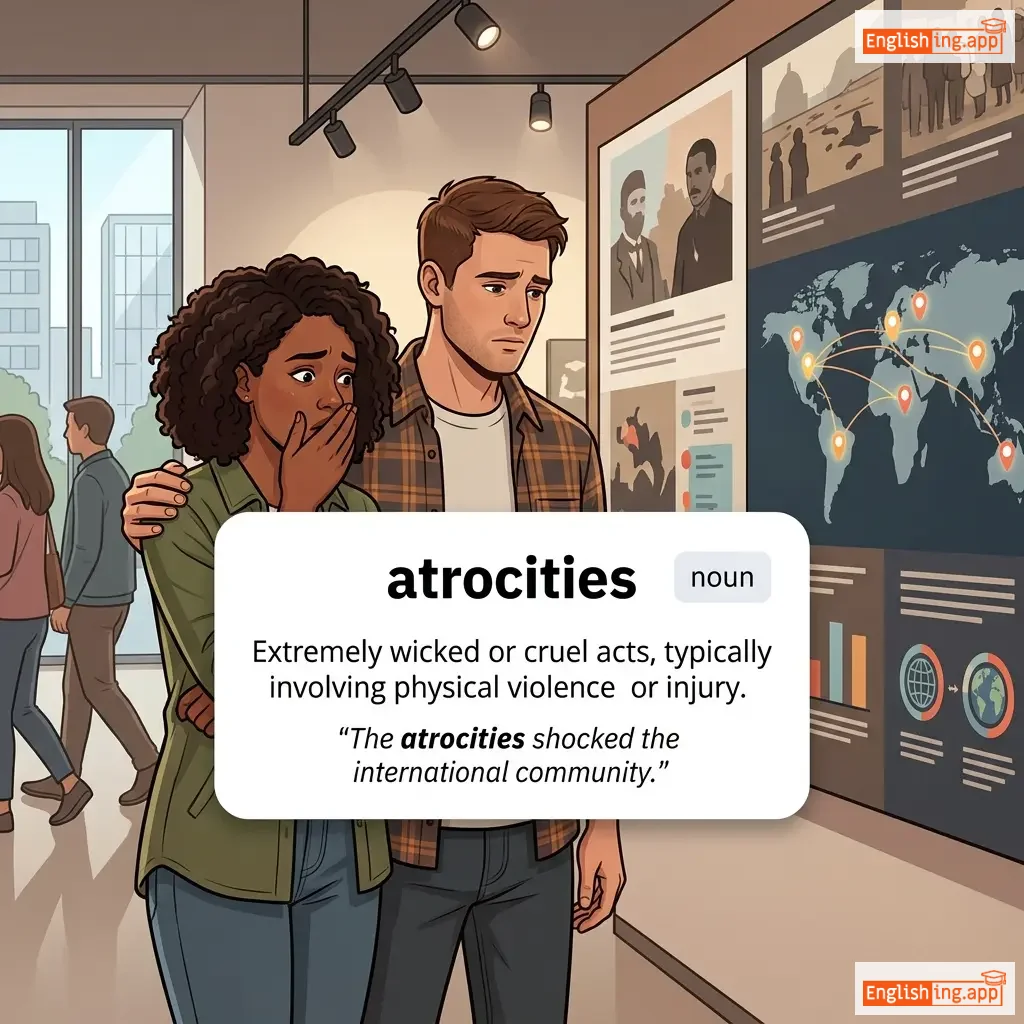
atrocities definition card — visual illustration of the meaning
noun
əˈtrɒs.ɪ.tiz
atrocidades (atrocidades)

Extremely wicked or cruel acts, typically involving physical violence or injury.

"The atrocities shocked the international community."

"Las atrocidades sorprendieron a la comunidad internacional." (Las atrocidades sorprendieron a la comunidad internacional.)
noun
/əˈtrɑːsəti/
atrocidad (atrocidad)

an extremely cruel or violent act, often involving physical violence

"The world condemned the atrocity committed against civilians."

"El mundo condenó la atrocidad cometida contra los civiles." (El mundo condenó la atrocidad cometida contra los civiles.)
noun/verb
/ˈætrəfi/
atrofia (atrofia)

a decrease in size or wasting away of a body part, tissue, or ability due to lack of use

"Without regular exercise, muscles may atrophy over time."

"Sin ejercicio regular, los músculos pueden atrofiarse con el tiempo." (Sin ejercicio regular, los músculos pueden atrofiarse con el tiempo.)
verb
/əˈtætʃ/
adjuntar (adjuntar)

to join or fasten something to another thing

"Please attach the document to the email before sending."

"Por favor, adjunte el documento al correo electrónico antes de enviarlo." (Por favor, adjunte el documento al correo electrónico antes de enviarlo.)
noun
/ˌætəˈʃeɪ/
agregado diplomático (agregado diplomatico)

A person officially assigned to the staff of a diplomatic mission, often with a specific area of responsibility.

"The cultural attache organized an art exhibition in the embassy."

"El agregado cultural organizó una exposición de arte en la embajada." (El agregado cultural organizo una exposicion de arte en la embajada.)
adjective
/əˈtætʃt/
adjunto (adjunto)

joined or fastened to something; emotionally connected or fond of someone or something

"The file is attached to the email."

"El archivo está adjunto al correo electrónico." (El archivo esta adjunto al correo electronico)
noun
/əˈtæʧmənt/
apego (apego)

a strong feeling of affection or connection

"The attachment he felt to his hometown was undeniable."

"El apego que sentía por su ciudad natal era innegable." (El apego que sentía por su ciudad natal era innegable.)
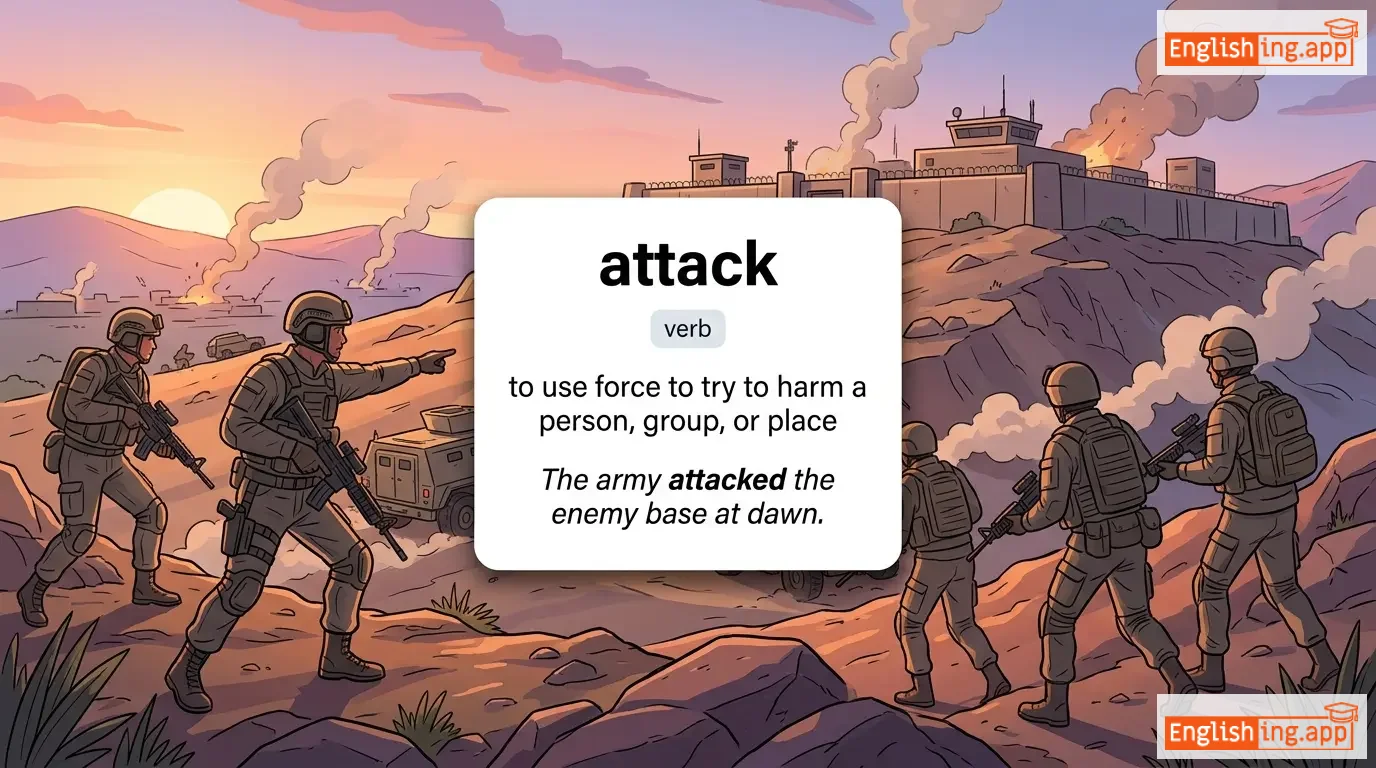
attack definition card — visual illustration of the meaning
verb
/əˈtæk/
atacar (atacar)

to use force to try to harm a person, group, or place

"The army attacked the enemy base at dawn."

"El ejército atacó la base enemiga al amanecer." (El ejército atacó la base enemiga al amanecer.)
verb
/əˈtækt/
atacó (ataco)

physically or verbally assaulted someone or something; launched an aggressive action against a target

"The soldiers attacked the enemy at dawn."

"Los soldados atacaron al enemigo al amanecer." (los soldados atacaron al enemigo al amanecer)
verb
/əˈteɪn/
alcanzar (alcanzar)

to achieve or reach something

"She worked hard to attain her goals."

"Ella trabajó duro para alcanzar sus metas." (Ella trabajo duro para alcanzar sus metas.)
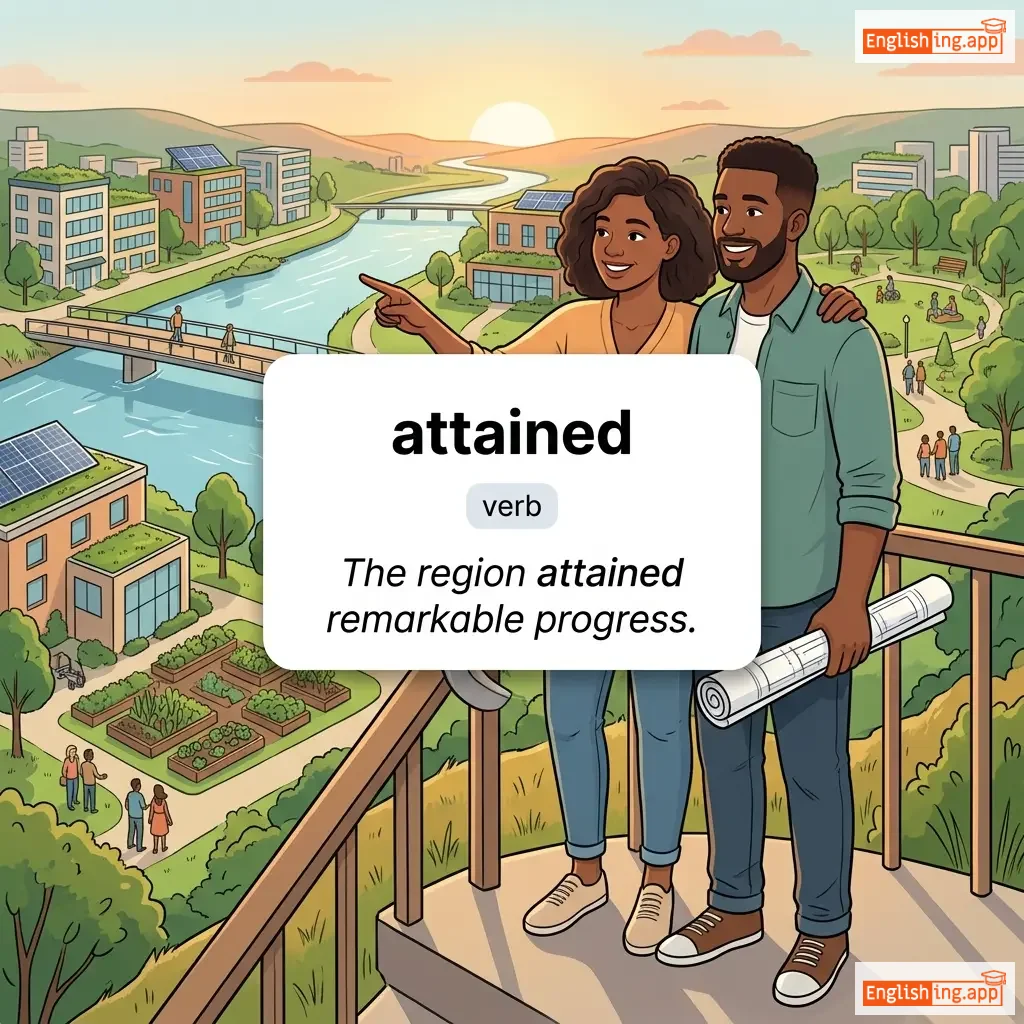
attained definition card — visual illustration of the meaning
verb
əˈteɪnd
alcanzado (alcanzado)

Succeeded in achieving (something that one desires and has worked for); reached a specified age, size, or amount.

"The region attained remarkable progress."

"La región alcanzó un progreso notable." (La region alcanzo un progreso notable.)
verb
/əˈtɛmpt/
intento (intento)

to make an effort to achieve or complete something difficult

"He attempted to climb the mountain despite the bad weather."

"Él intentó escalar la montaña a pesar del mal tiempo." (El intento de escalar la montaña a pesar del mal tiempo.)
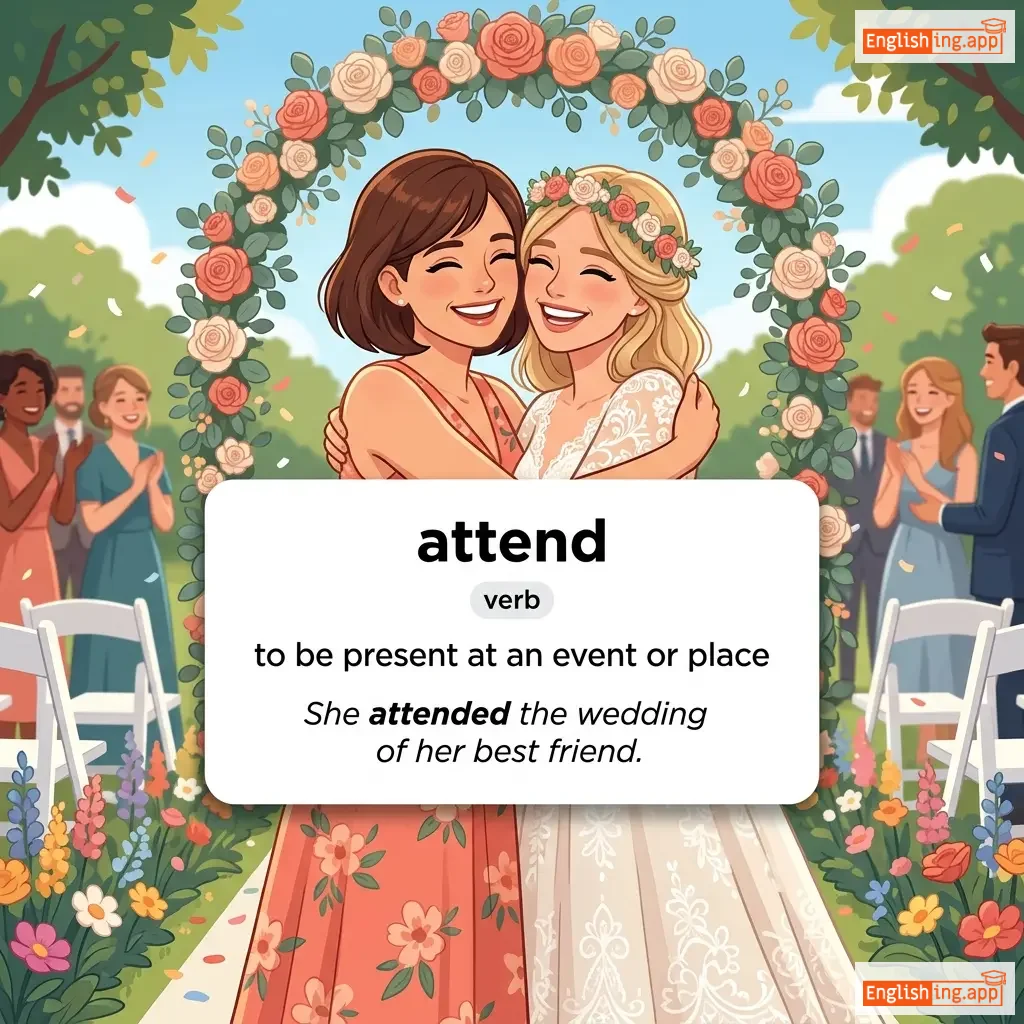
attend definition card — visual illustration of the meaning
verb
/əˈtɛnd/
asistir (asistir)

to be present at an event or place

"She attended the wedding of her best friend."

"Ella asistió a la boda de su mejor amiga." (Ella asistió a la boda de su mejor amiga.)
noun
/əˈtɛndəns/
asistencia (asistencia)

the act of being present at a place or event

"The teacher checked the students’ attendance every morning."

"El maestro revisaba la asistencia de los estudiantes cada mañana." (El maestro revisaba la asistencia de los estudiantes cada mañana.)
noun
/əˈtɛnʃən/
atención (atencion)

the act of focusing on something or someone

"The teacher asked for the students' attention."

"El maestro pidió la atención de los estudiantes." (El maestro pidió la atencion de los estudiantes.)
adjective
/əˈtɛntɪv/
atento (atento)

Paying close attention to something or someone; being considerate and alert.

"The teacher praised the students for being attentive during the lesson."

"El maestro elogió a los estudiantes por estar atentos durante la lección." (El maestro elogió a los estudiantes por estar atentos durante la lección.)
adverb
/əˈten.tɪv.li/
atentamente (atentamente)

with careful attention; in a focused manner

"She listened attentively to her teacher's instructions."

"Ella escuchó atentamente las instrucciones de su maestro." (Ella eskuchó atentamente las instruksyones de su maestro.)
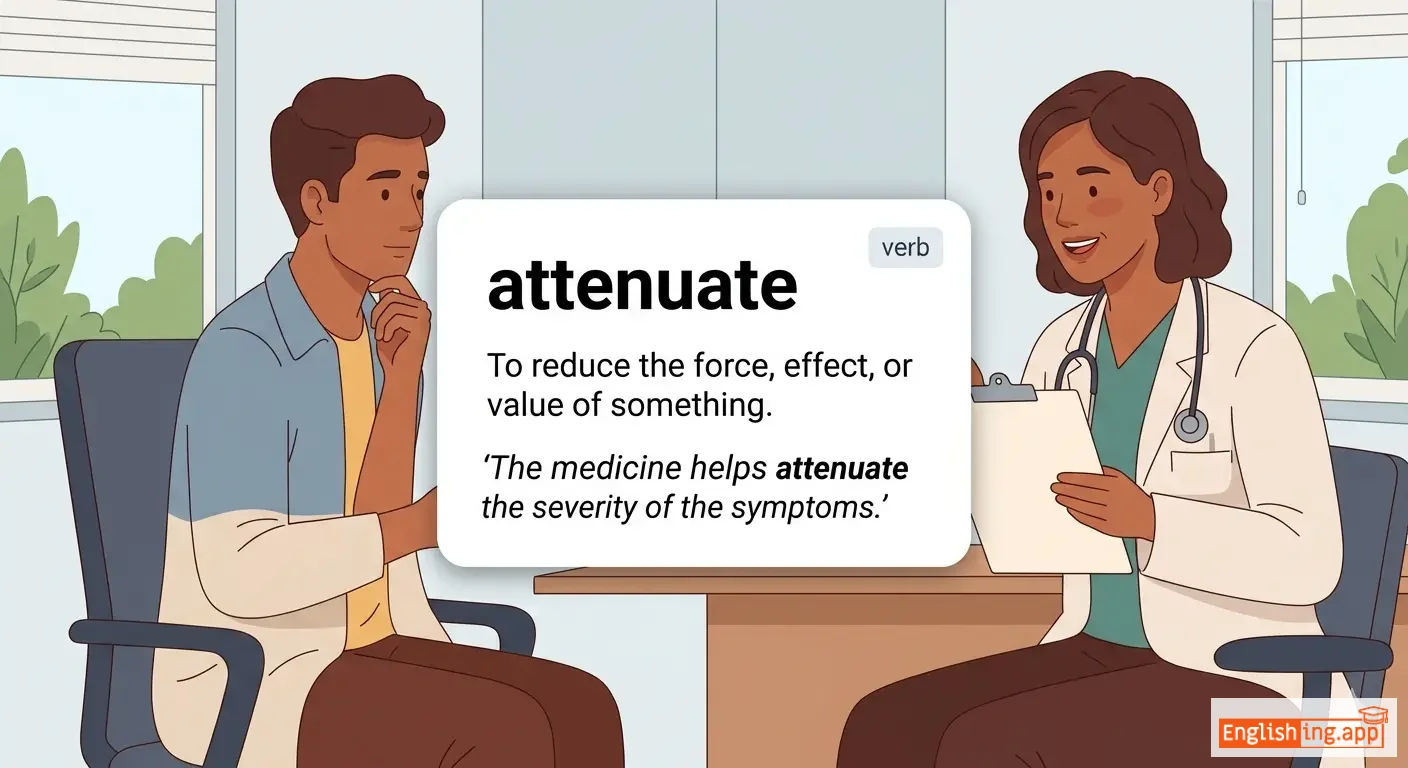
attenuate definition card — visual illustration of the meaning
verb
/əˈtɛnjueɪt/
atenuar (atenuar)

To reduce the force, effect, or value of something.

"The medicine helps attenuate the severity of the symptoms."

"El medicamento ayuda a atenuar la gravedad de los síntomas." (El medicamento ayuda a atenuar la gravedad de los síntomas.)
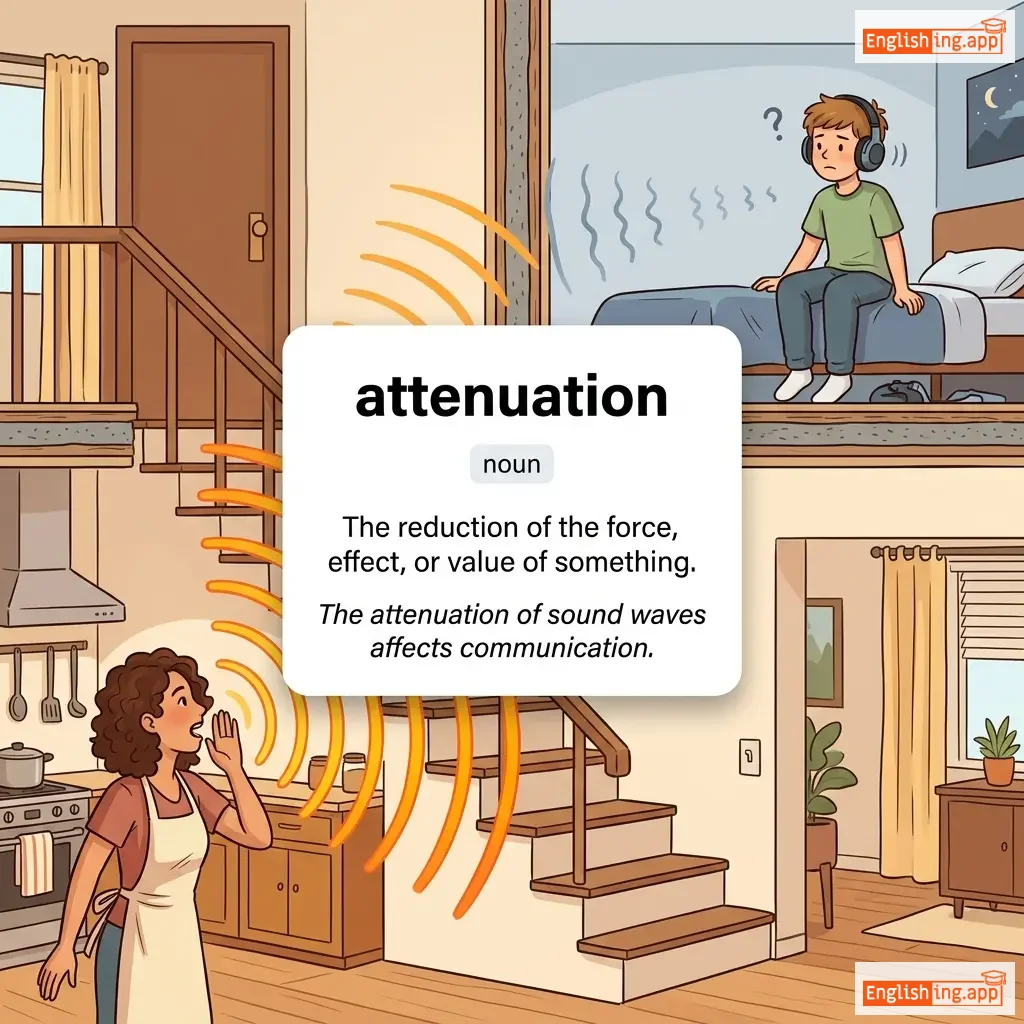
attenuation definition card — visual illustration of the meaning
noun
əˌten.juˈeɪ.ʃən
atenuación, reducción, debilitamiento (atenuacion, reduccion, debilitamiento)

The reduction of the force, effect, or value of something.

"The attenuation of sound waves affects communication."

"La atenuación de las ondas sonoras afecta la comunicación." (La atenuacion de las ondas sonoras afecta la comunicacion.)
verb
/əˈtɛst/
atestiguar (atestiguar)

To provide or serve as clear evidence of; to confirm or certify the truth of something.

"The witness attested to the accuracy of the report."

"El testigo atestiguó la exactitud del informe." (El testigo atestiguó la exactitud del informe.)
noun
/əˈtaɪər/
atuendo (atuendo)

Clothing, especially formal or elegant wear.

"She wore traditional attire at the wedding ceremony."

"Ella llevaba un atuendo tradicional en la ceremonia de la boda." (Ella llevaba un atuendo tradicional en la ceremonia de la boda.)
noun
/ˈætɪˌtjuːd/
actitud (actitud)

A settled way of thinking or feeling about someone or something, often reflected in behavior.

"Her positive attitude helped her overcome many challenges."

"Su actitud positiva le ayudo a superar muchos desafios." (Su actitud positiva le ayudo a superar muchos desafios.)
noun
/əˈtɜːrni/
abogado (abogado)

a person who practices law; a lawyer

"She hired an attorney to represent her in court."

"Ella contrató un abogado para representarla en la corte." (Ella contrato un abogado para representarla en la corte.)
noun
/əˌtɜːni ˈdʒɛnərəl/
fiscal general (fiscal general)

The chief legal officer of a state or country.

"The attorney-general announced new reforms to strengthen justice."

"El fiscal general anunció nuevas reformas para fortalecer la justicia." (El fiscal general anunció nuevas reformas para fortalecer la justicia.)
verb
/əˈtrækt/
atraer (atraer)

to cause someone to have interest or draw something towards

"The flowers attract bees with their bright colors."

"Las flores atraen a las abejas con sus colores brillantes." (Las flores atraen a las abejas con sus colores brillantes.)
verb (past tense / past participle)
/əˈtræktɪd/
atraído (atraido)

felt interest or liking toward someone or something; was drawn by appeal or force

"She was attracted to the idea of studying abroad."

"Ella se sintió atraída por la idea de estudiar en el extranjero." (ella se sintio atraida por la idea de estudiar en el extranjero)
noun
/əˈtrækʃən/
atracción (atraksyon)

something that draws attention, interest, or enjoyment

"The Eiffel Tower is a major tourist attraction in Paris."

"La Torre Eiffel es una atracción turística principal en París." (La Torre Eiffel es una atraccion turistica principal en Paris.)
adjective
/əˈtræktɪv/
atractivo (atraktivo)

pleasing or appealing to the senses or mind; having qualities that arouse interest or admiration

"The attractive design of the house caught everyone's attention."

"El diseño atractivo de la casa llamó la atención de todos." (El diseño atractivo de la kasa yamo la atensyon de todos.)
adverb
/əˈtræktɪvli/
de manera atractiva (de manera atractiva)

in a pleasing or appealing way; in a manner that draws interest or admiration

"The room was attractively decorated with soft lights and plants."

"La habitación estaba decorada de manera atractiva con luces suaves y plantas." (La habitacion estaba decorada de manera atractiva con luces suaves y plantas)
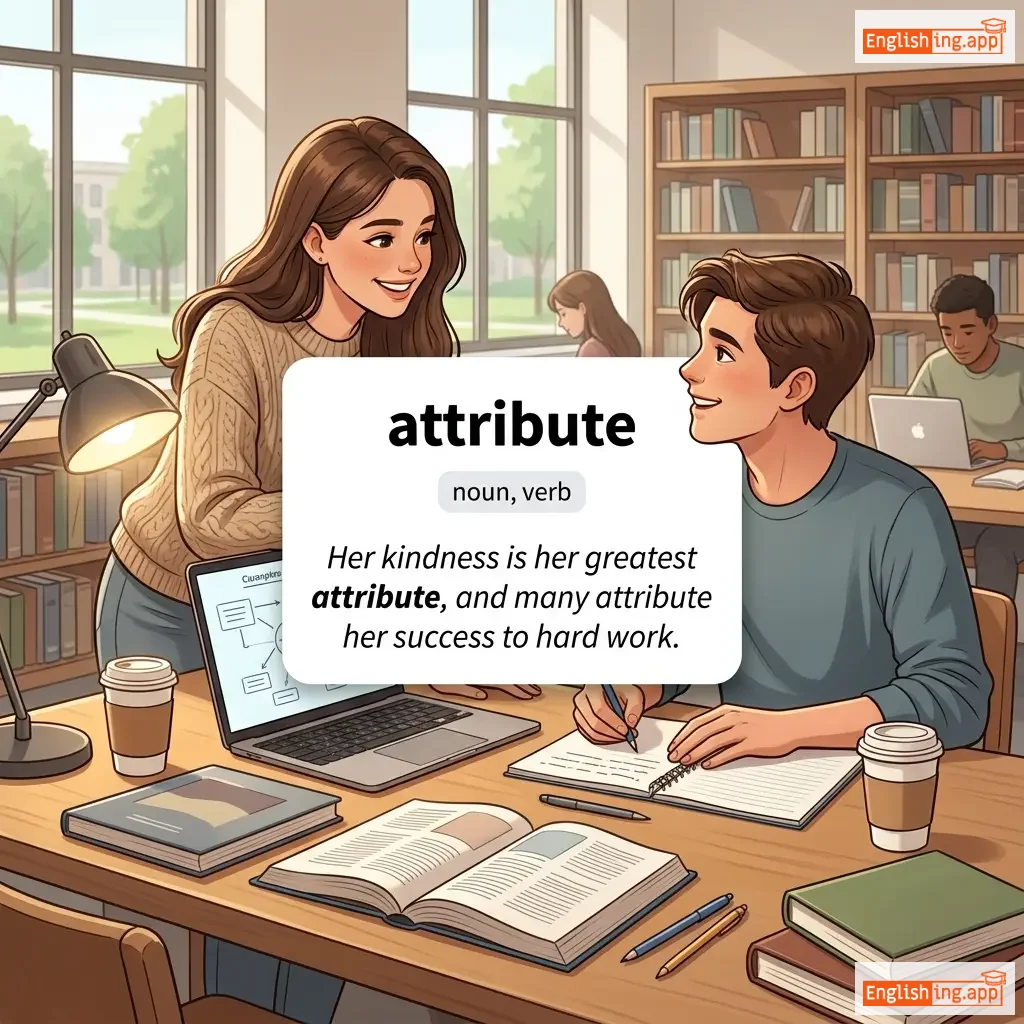
attribute definition card — visual illustration of the meaning
noun, verb
/ˈætrɪˌbjuːt/ (noun), /əˈtrɪbjuːt/ (verb)
atributo / atribuir (atributo / atribuir)

As a noun: a quality or characteristic of someone or something. As a verb: to regard something as being caused by someone or something.

"Her kindness is her greatest attribute, and many attribute her success to hard work."

"Su amabilidad es su mayor atributo, y muchos atribuyen su éxito al trabajo duro." (Su amabilidad es su mayor atributo, y muchos atribuyen su éxito al trabajo duro.)
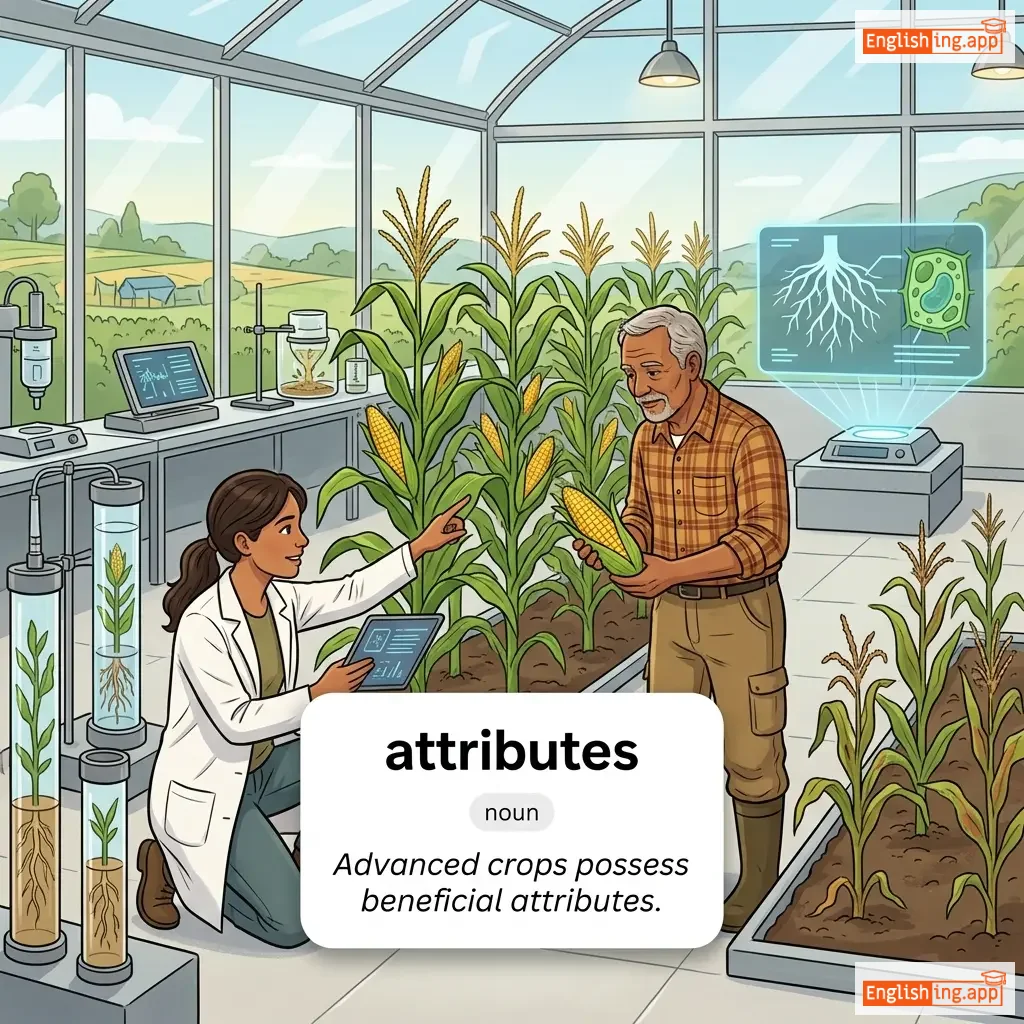
attributes definition card — visual illustration of the meaning
noun
ˈæt.rɪ.bjuːts
atributos (atributos)

A quality or feature regarded as a characteristic or inherent part of someone or something.

"Advanced crops possess beneficial attributes."

"Los cultivos avanzados poseen atributos beneficiosos." (Los cultivos avanzados poseen atributos beneficiosos.)
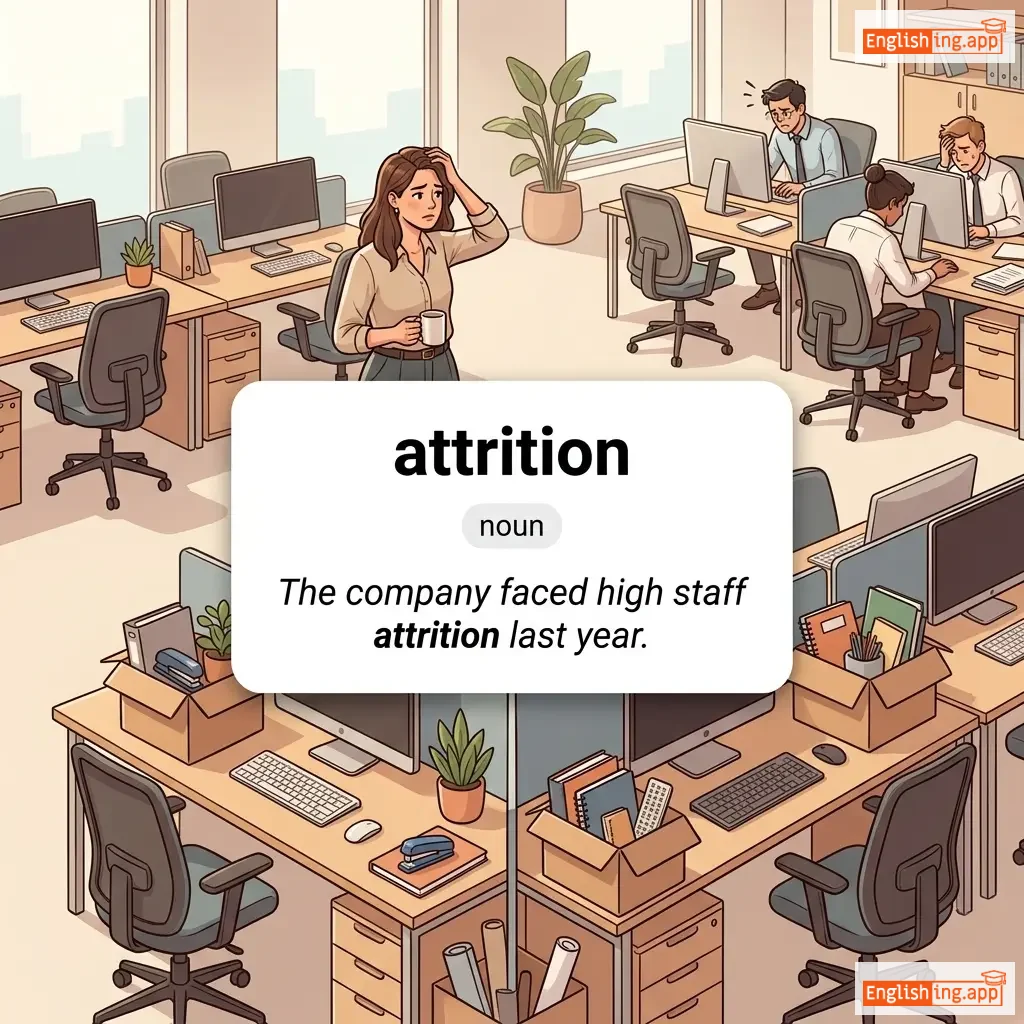
attrition definition card — visual illustration of the meaning
noun
/əˈtrɪʃən/
reducción gradual (reduccion gradual)

The gradual reduction in the number or strength of something, often due to constant stress, conflict, or loss.

"The company faced high staff attrition last year."

"La empresa enfrentó una alta reducción de personal el año pasado." (La empresa enfrento una alta reduccion de personal el ano pasado.)
verb
/əˈtjuːn/
sintonizar (sintonizar)

to make someone or something aware of or responsive to something; to adjust or harmonize

"She quickly attuned herself to the needs of her new team."

"Ella se sintonizó rápidamente con las necesidades de su nuevo equipo." (Ella se sintonizo rapidamente con las necesidades de su nuevo equipo)
adjective
/əˈtjuːnd/
ajustado / sensible (ajustado / sensible)

Being receptive or sensitive to something; well adjusted or in harmony.

"She is attuned to the needs of her students."

"Ella está ajustada a las necesidades de sus estudiantes." (ella esta ajustada a las necesidades de sus estudiantes.)
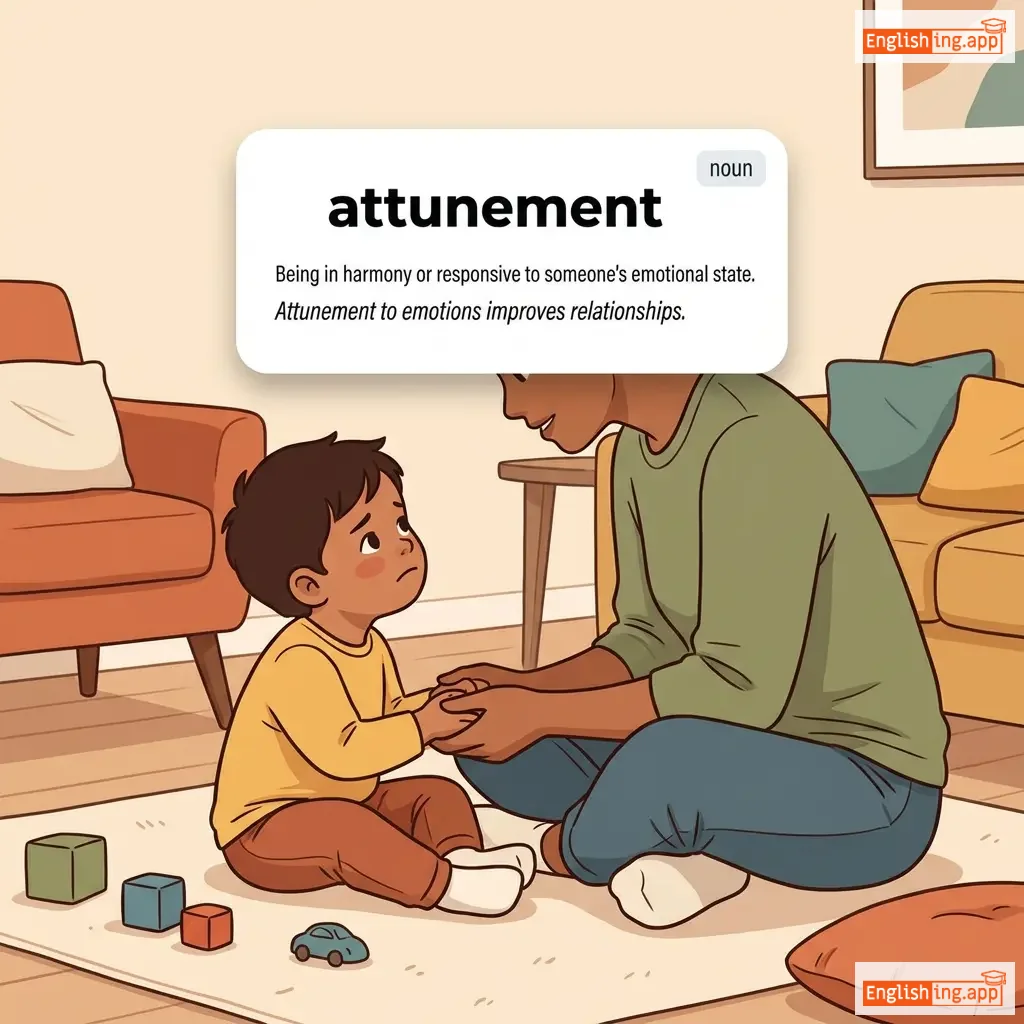
attunement definition card — visual illustration of the meaning
noun
/əˈtjuːn.mənt/
armonización (armonizacion)

Being in harmony or responsive to someone's emotional state.

"Attunement to emotions improves relationships."

"La armonización con las emociones mejora las relaciones." (la armonizacion con las emociones mejora las relaciones)
adjective
/ˌeɪˈtɪpɪkəl/
atípico (atipiko)

not representative of a type, group, or class; unusual or abnormal

"The doctor said it was an atypical case of the disease."

"El doctor dijo que era un caso atípico de la enfermedad." (El doktor dijo ke era un kaso atipiko de la enfermeda.)