












Swipe left or right, or use the buttons. Tap image to zoom.
例句翻译
单词
Lesson 3Lesson 3 - 遮罩切换
|
表情符号
|
单词 | Images | 翻译 | 过去时 | 过去分词 | 第三人称单数 | 动名词 | 含义 | 例句 | 例句翻译 | 示例表达 | 示例表达含义 | 示例表达翻译 | 同义词 | 反义词 | 搭配词 | 助记符 |
|---|---|---|---|---|---|---|---|---|---|---|---|---|---|---|---|---|---|
|
#51
🏷️
|
/ˌæpəˈleɪʃən/
noun
(æpəˈleɪʃən)
••••••
|
|
名称 / 称号
mingcheng / chenghao
••••••
|
- •••••• | - •••••• | - •••••• | - •••••• |
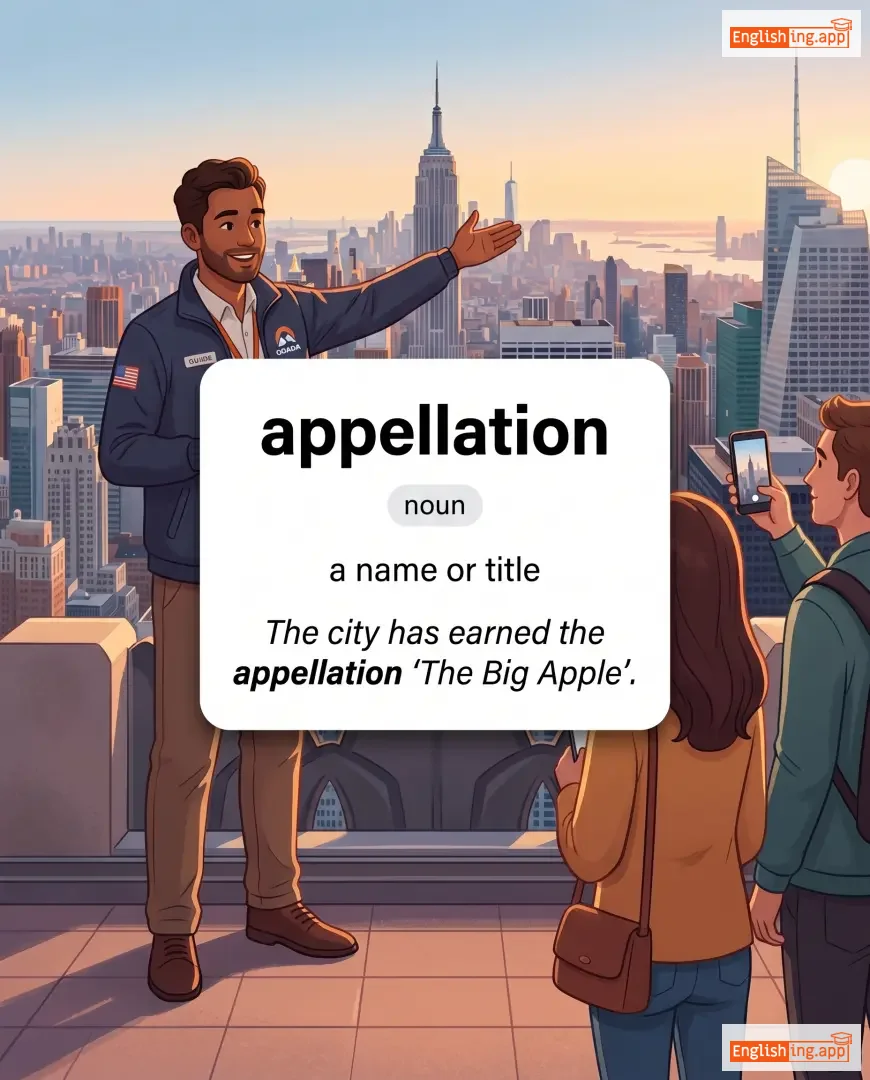
a name or title
••••••
|
The city has earned the appellation 'The Big Apple'. |
这座城市获得了‘大苹果’的称号。
Zhe zuo chengshi huodele 'Da Pingguo' de chenghao.
••••••
|
- •••••• | - •••••• | - •••••• |
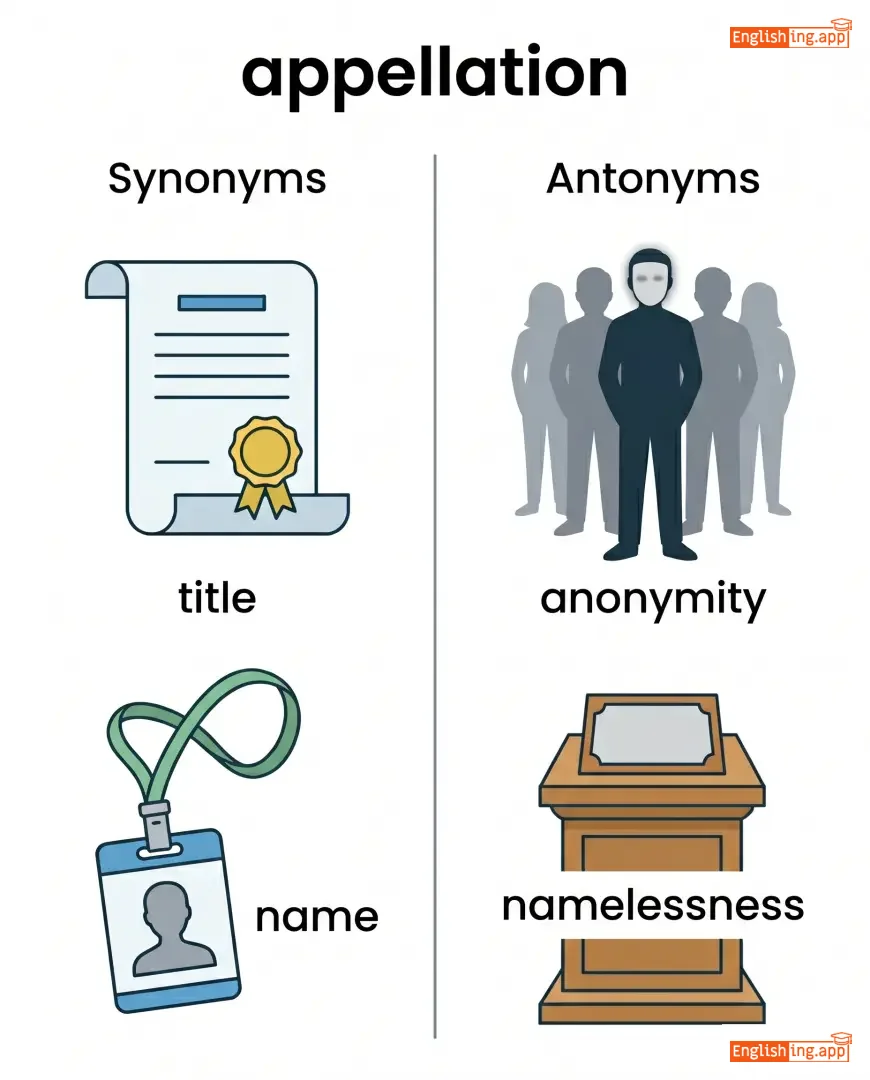
title, name, designation, label, epithet
••••••
|
anonymity, namelessness
••••••
|
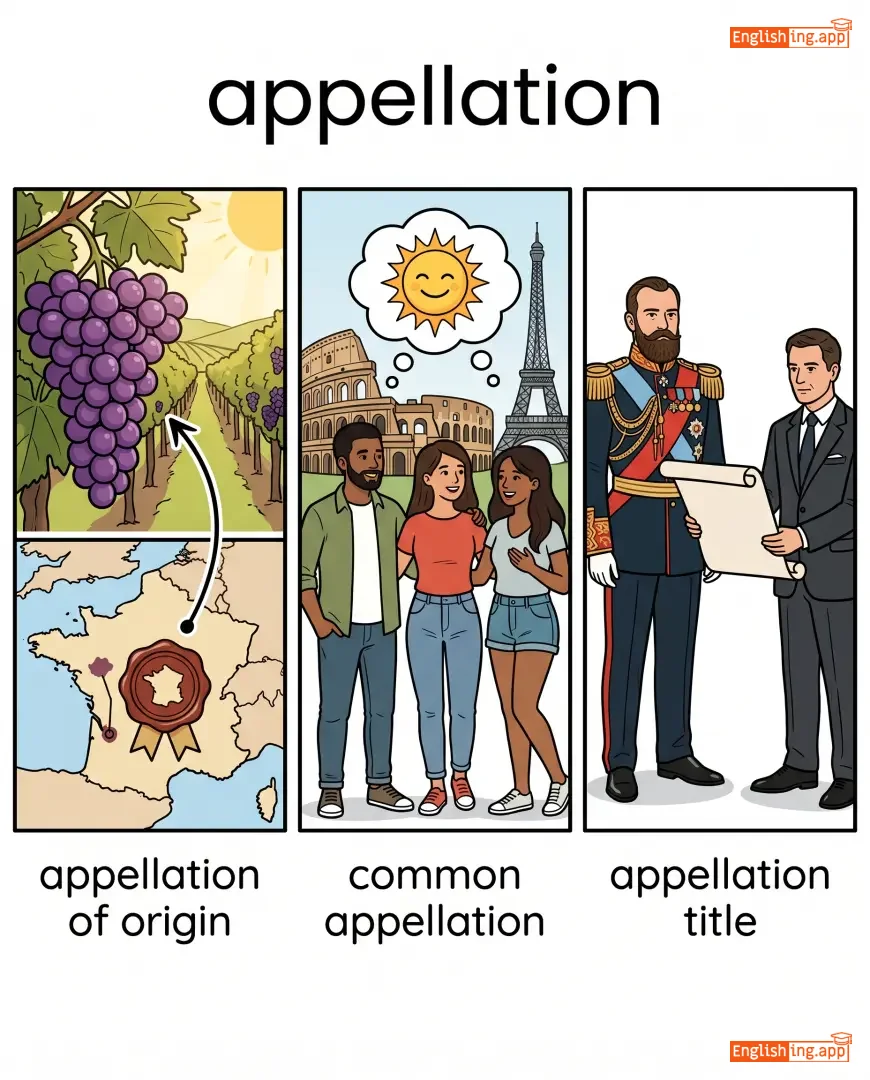
appellation of origin, common appellation, appellation title
••••••
|
Appellation意味着名称/称号 — 和苹果🍏联系在一起
••••••
|
|
#52
🎯
|
/ˈæpəzɪt/
adjective
(æpósit)
••••••
|
|
恰当
qiàdàng
••••••
|
- •••••• | - •••••• | - •••••• | - •••••• |
highly appropriate or relevant to what is being discussed
••••••
|
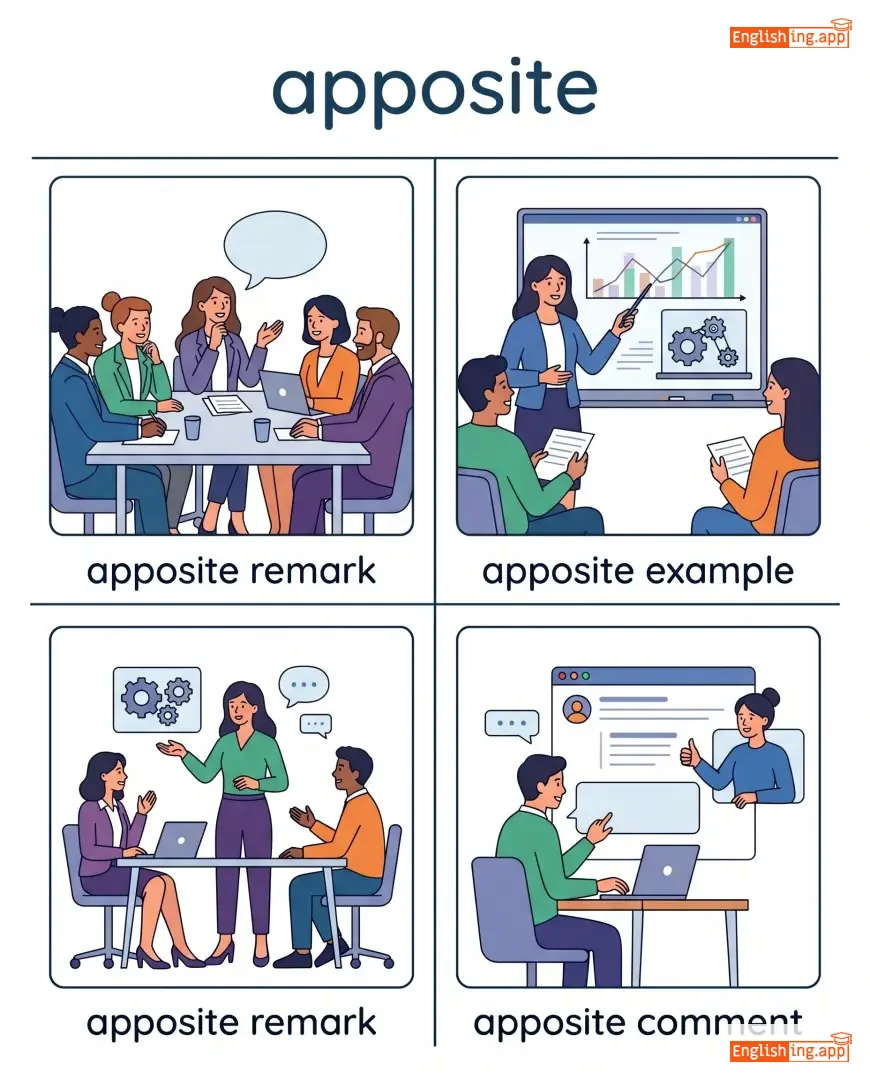
Her remark was particularly apposite to the situation. |
她的评论对于这个情况特别恰当。
Tā de pínglùn duìyú zhège qíngkuàng tèbié qiàdàng.
••••••
|
- •••••• | - •••••• | - •••••• |
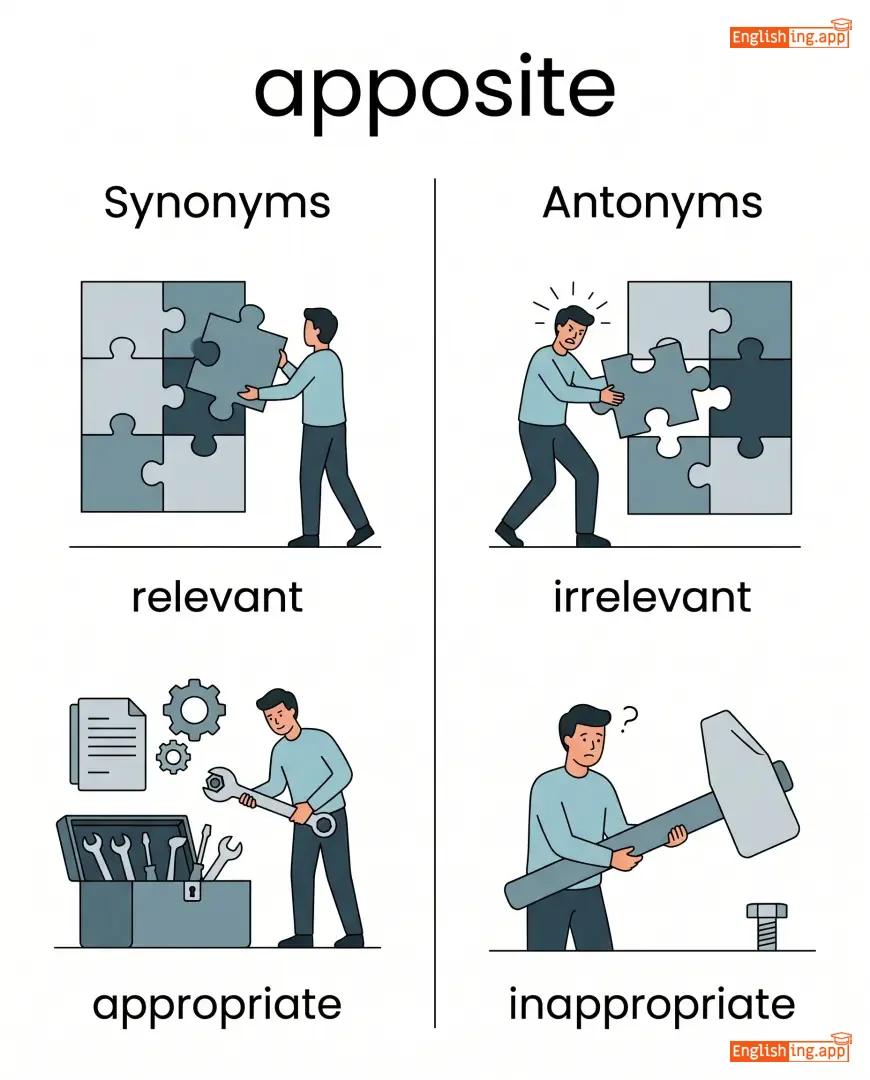
relevant, appropriate, fitting, suitable, pertinent
••••••
|
irrelevant, inappropriate, unsuitable
••••••
|
apposite remark, apposite example, apposite comment, apposite observation
••••••
|
Apposite 就是像完美的拼图一样合适!
••••••
|
|
#53
📢
|
/əˈpraɪz/
verb
(apraiz)
••••••
|
|
告知
gaozhi
••••••
|
apprised
apraizd
••••••
|
apprised
apraizd
••••••
|
apprises
apraizes
••••••
|
apprising
apraizing
••••••
|
to inform or notify someone
••••••
|
The manager will apprise the staff of the new policies.
经理将通知员工新的政策。
••••••
|
经理将通知员工新的政策。
Jingli jiang tongzhi yuangong xin de zhengce.
••••••
|
keep apprised
保持知情
••••••
|
to keep informed about something
••••••
|
保持知情
baochi zhiqing
••••••
|
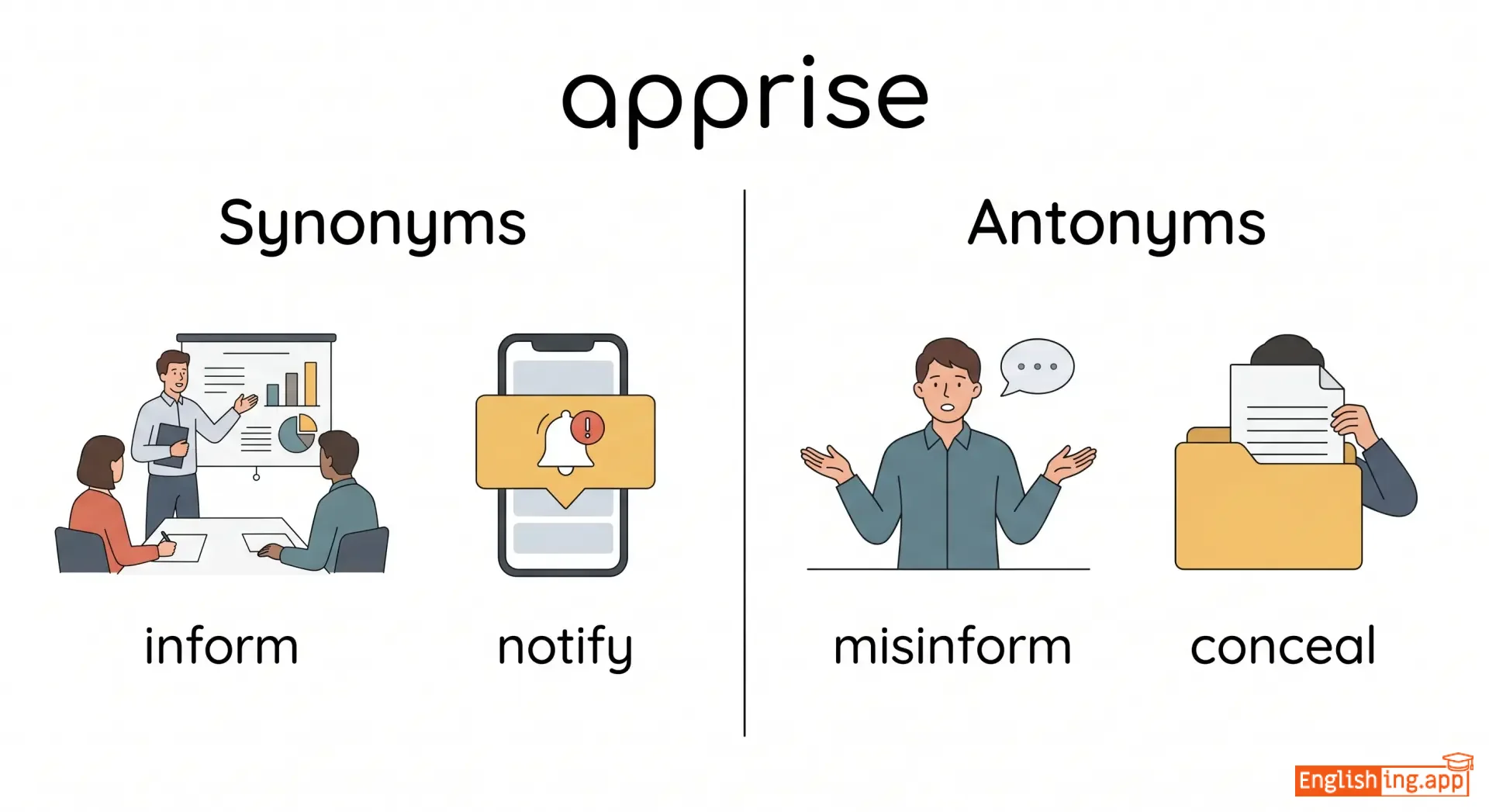
inform, notify, brief, update, advise
••••••
|
misinform, conceal
••••••
|
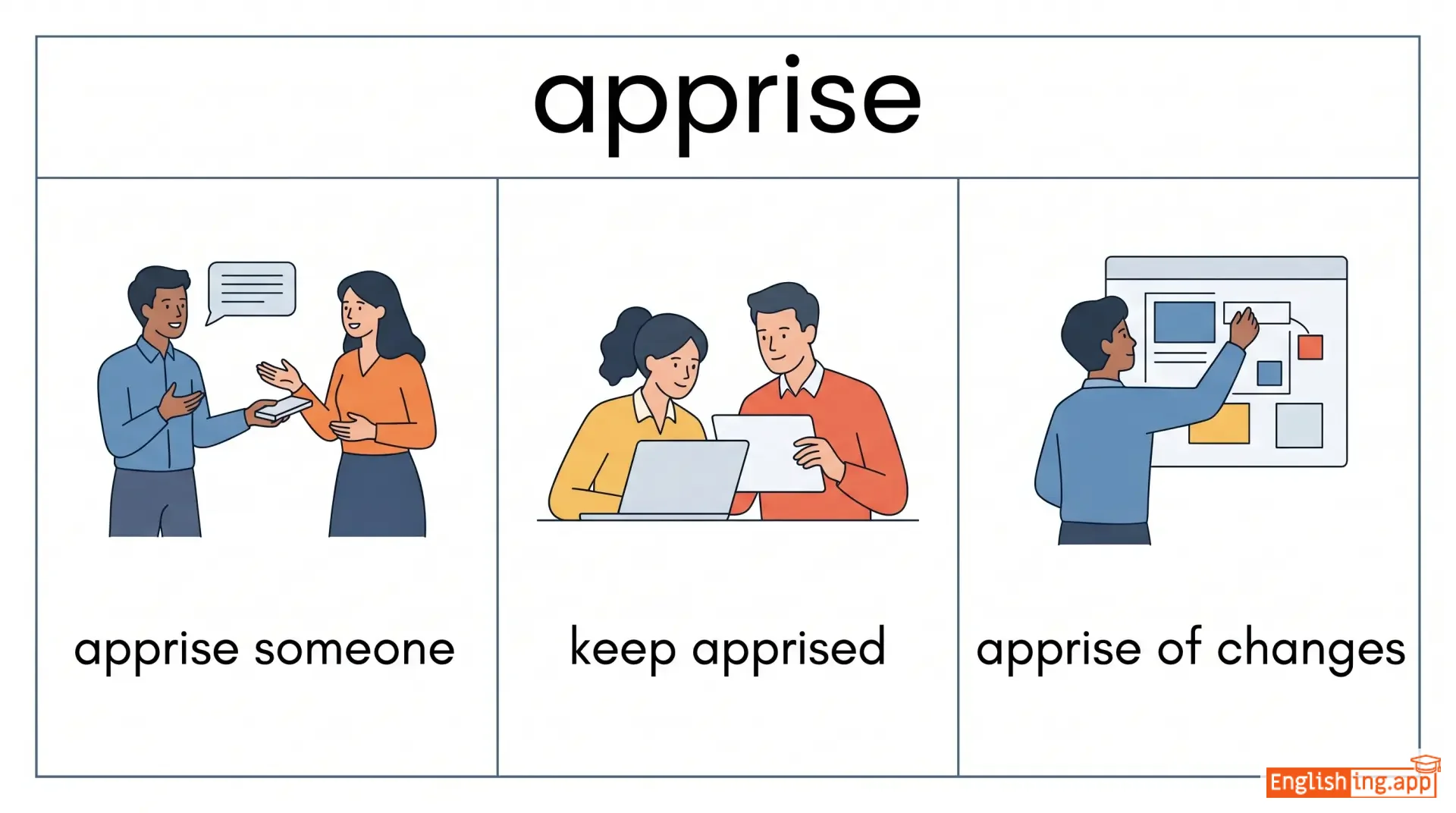
apprise someone, keep apprised, apprise of changes
••••••
|
Apprise 是信息的一个'prise',告知别人
••••••
|
|
#54
👍
|
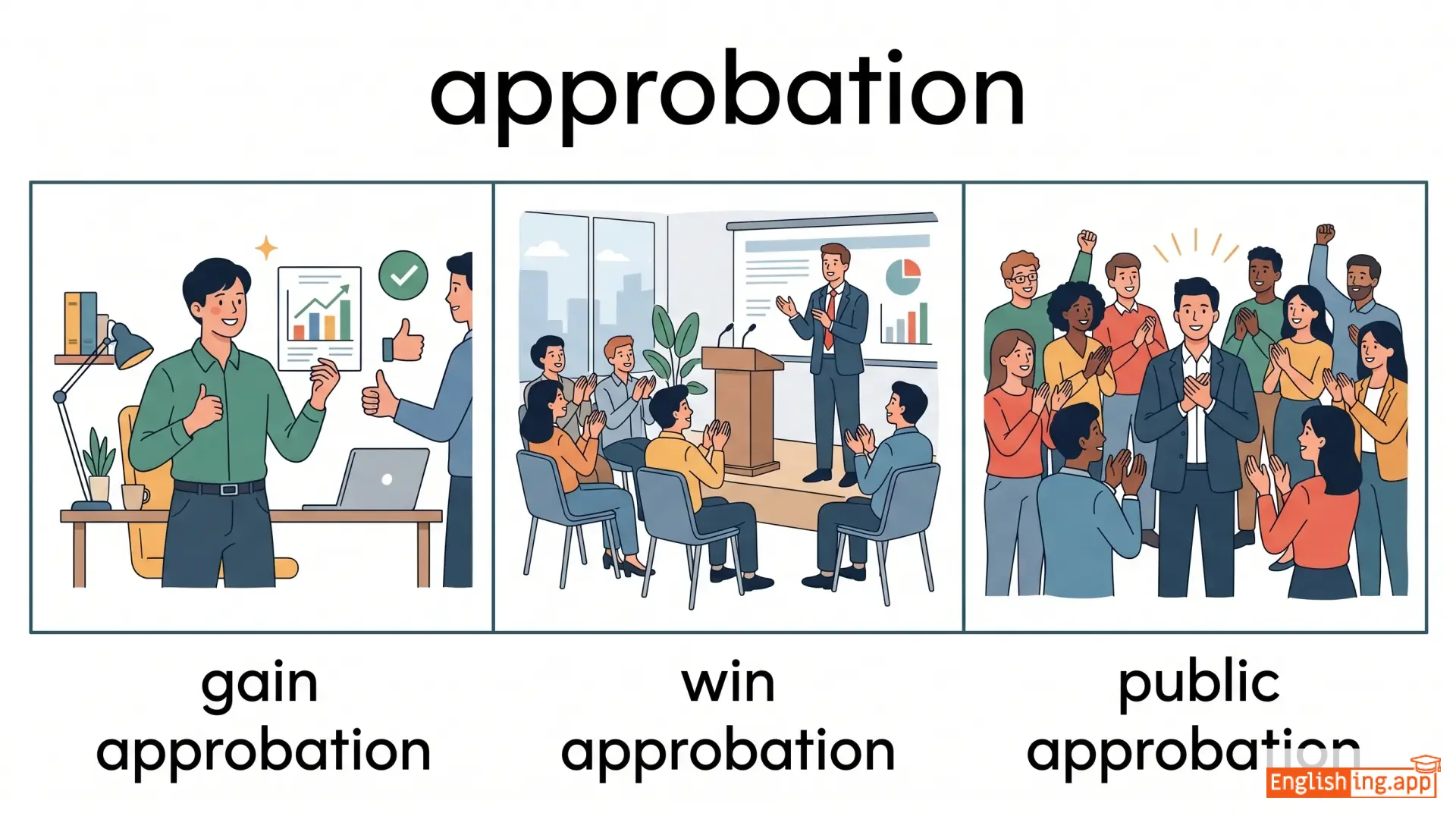
/ˌæprəˈbeɪʃən/
noun
(āpíngshèng)
••••••
|
|
批准 / 赞扬
pīzhǔn / zànyáng
••••••
|
- •••••• | - •••••• | - •••••• | - •••••• |
approval or praise
••••••
|
The plan won the approbation of the board members.
这个计划赢得了董事会成员的批准。
••••••
|
这个计划赢得了董事会成员的批准。
Zhege jihua yingdele dongshihui chengyuande pizhun.
••••••
|
- •••••• | - •••••• | - •••••• |
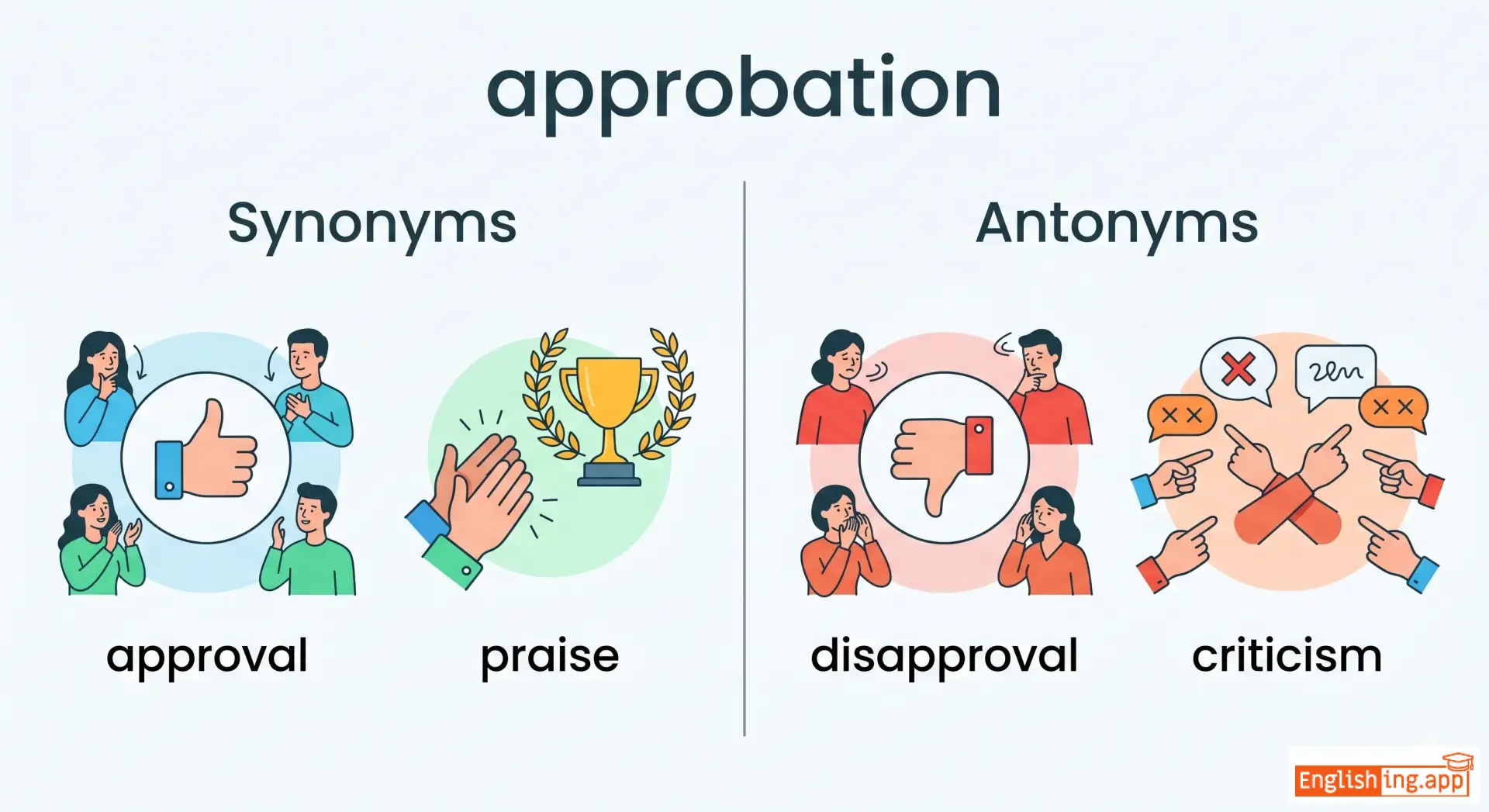
approval, praise, endorsement, admiration, recognition
••••••
|
disapproval, criticism, rejection
••••••
|
gain approbation, win approbation, public approbation, official approbation
••••••
|
Approbation 意味着 approval—获得 app 批准时,大家都很高兴。
••••••
|
|
#55
✔️
|
/əˈproʊpriət/ (adj), /əˈproʊprieɪt/ (verb)
adjective, verb
(āpɪəʊprɪət)
••••••
|
|
适当的 / 占用
shìdàng de / zhàn yòng
••••••
|
appropriated
āpɪəʊprɪeɪtɪd
••••••
|
appropriated
āpɪəʊprɪeɪtɪd
••••••
|
appropriates
āpɪəʊprɪeɪts
••••••
|
appropriating
āpɪəʊprɪeɪtɪŋ
••••••
|
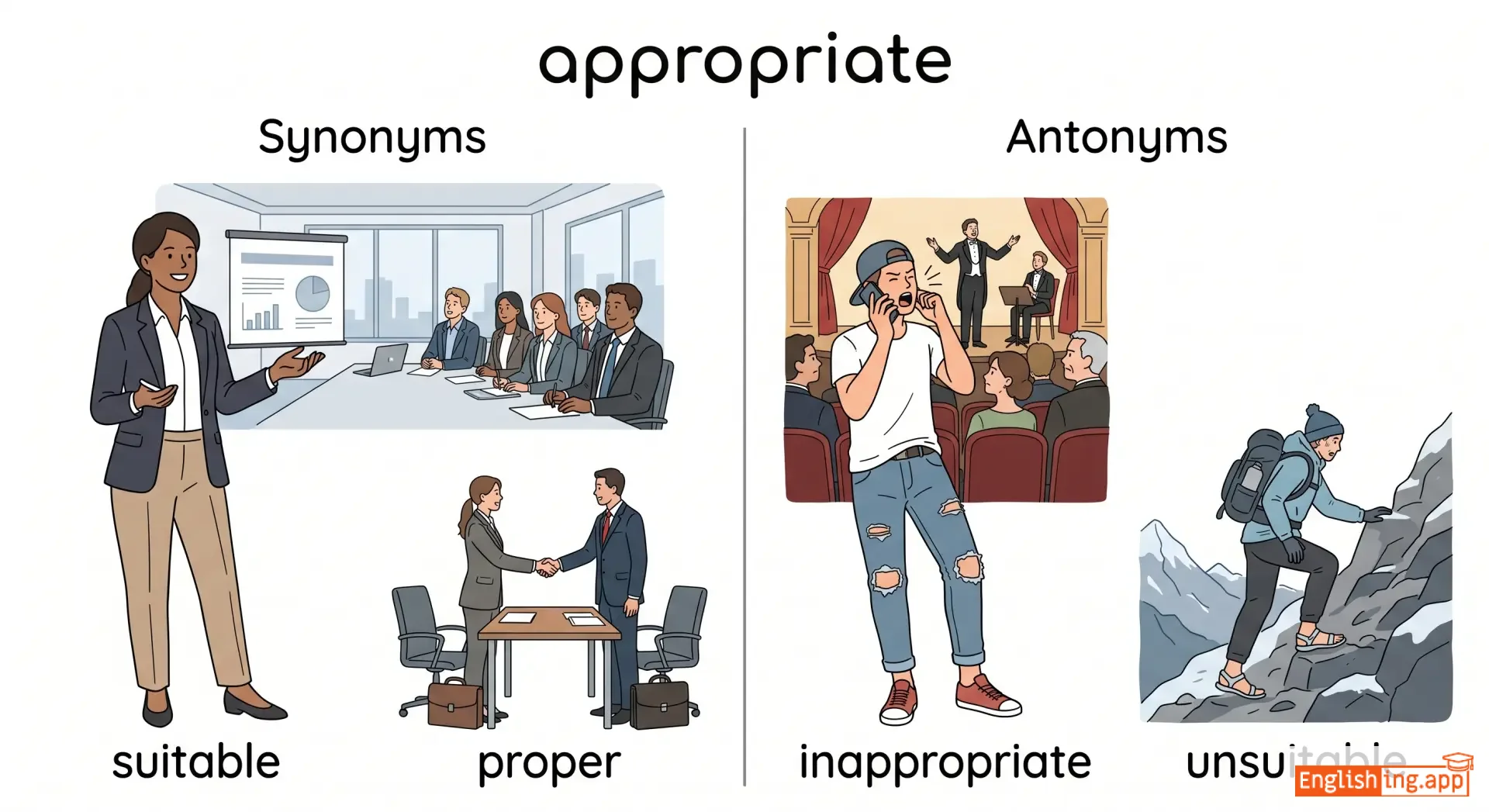
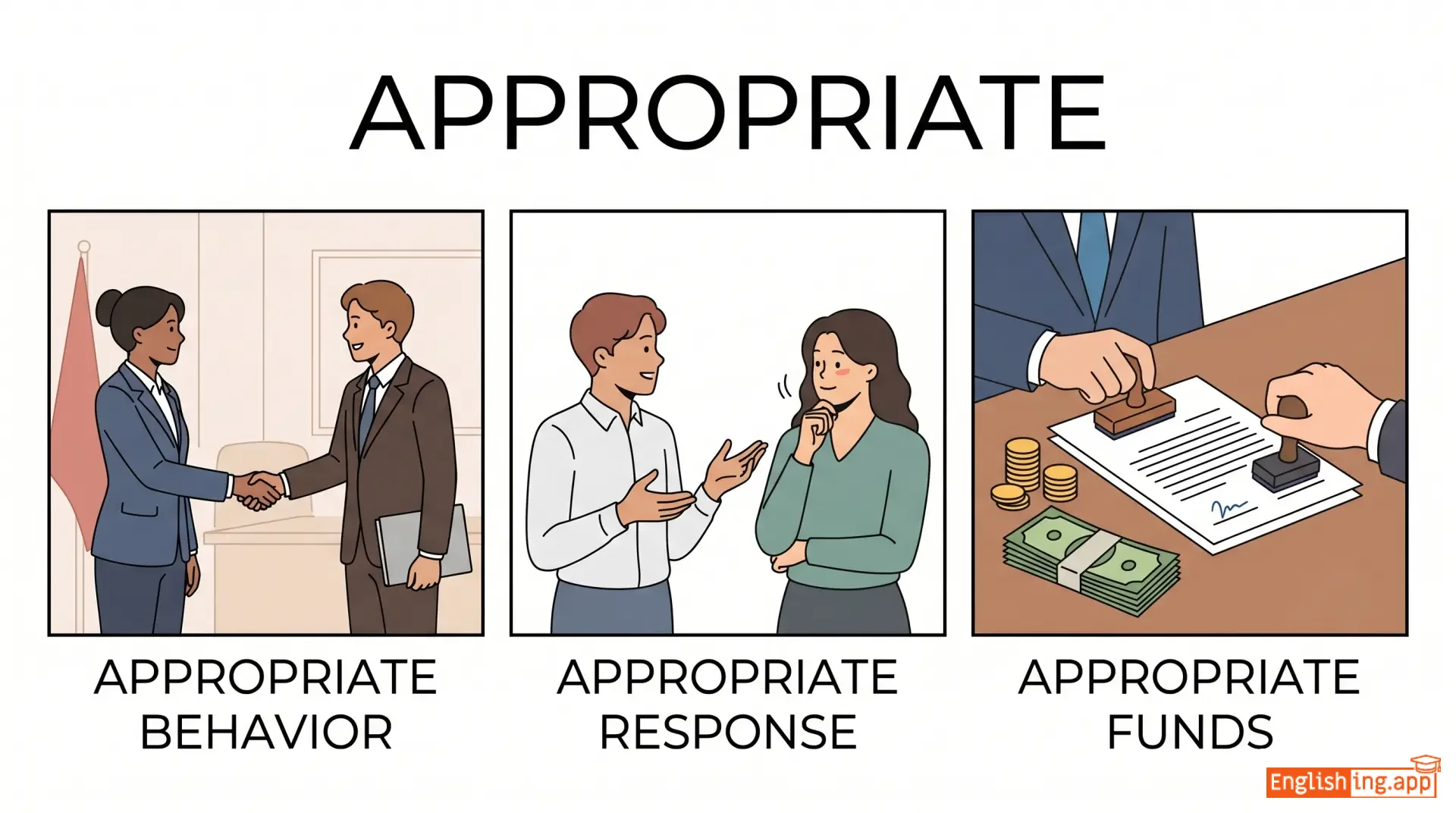
suitable or proper in the circumstances (adj); to take something for one’s own use, often without permission (verb)
••••••
|
Wearing formal clothes was appropriate for the ceremony.
穿正式衣服是适合这个仪式的。
••••••
|
穿正式衣服是适合这个仪式的。
Chuān zhèngshì yīfú shì shìhé zhège yíshì de.
••••••
|
- •••••• | - •••••• | - •••••• |
suitable, proper, fitting, apt, seize
••••••
|
inappropriate, unsuitable
••••••
|
appropriate behavior, appropriate response, appropriate funds, culturally appropriate
••••••
|
Appropriate 意味着合适—根据情况来适应,有时也会未经允许占用某物。
••••••
|
|
#56
📌
|
/ˌæ.prəˈpoʊ/
adjective/adverb
(apropó)
••••••
|
|
恰当
qiàdàng
••••••
|
- •••••• | - •••••• | - •••••• | - •••••• |
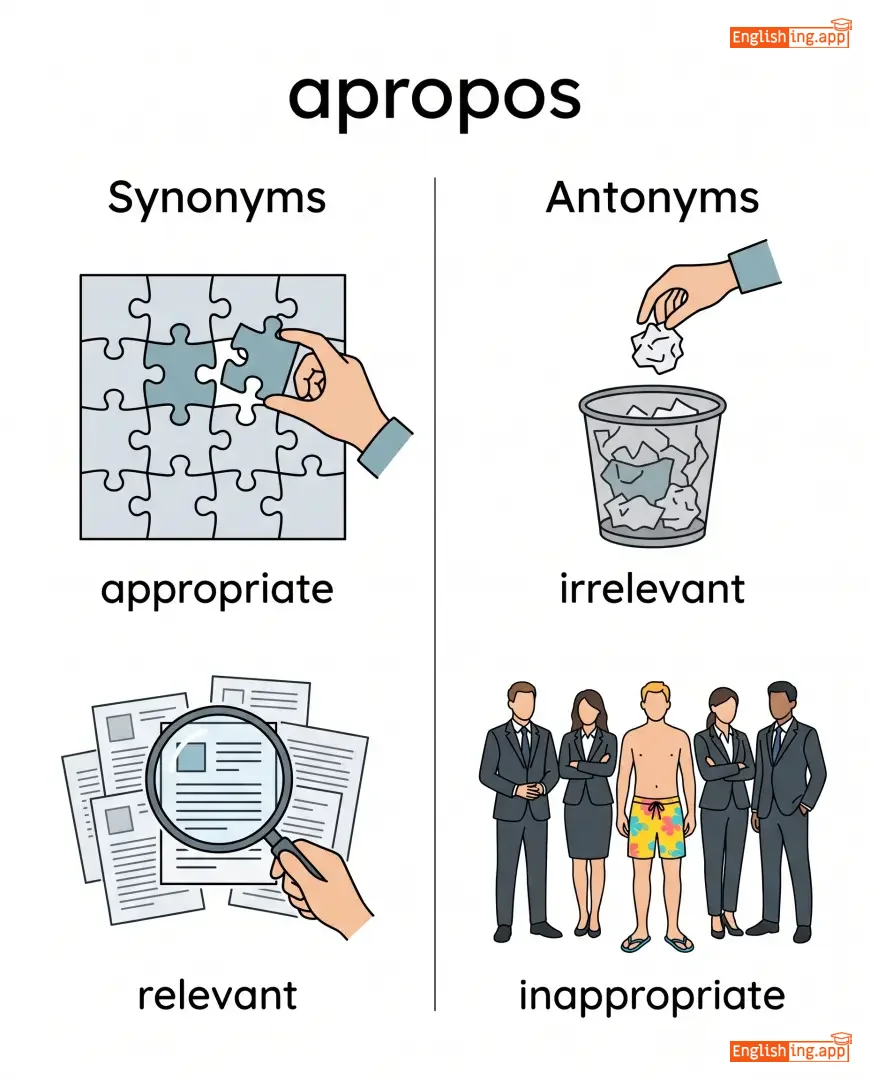
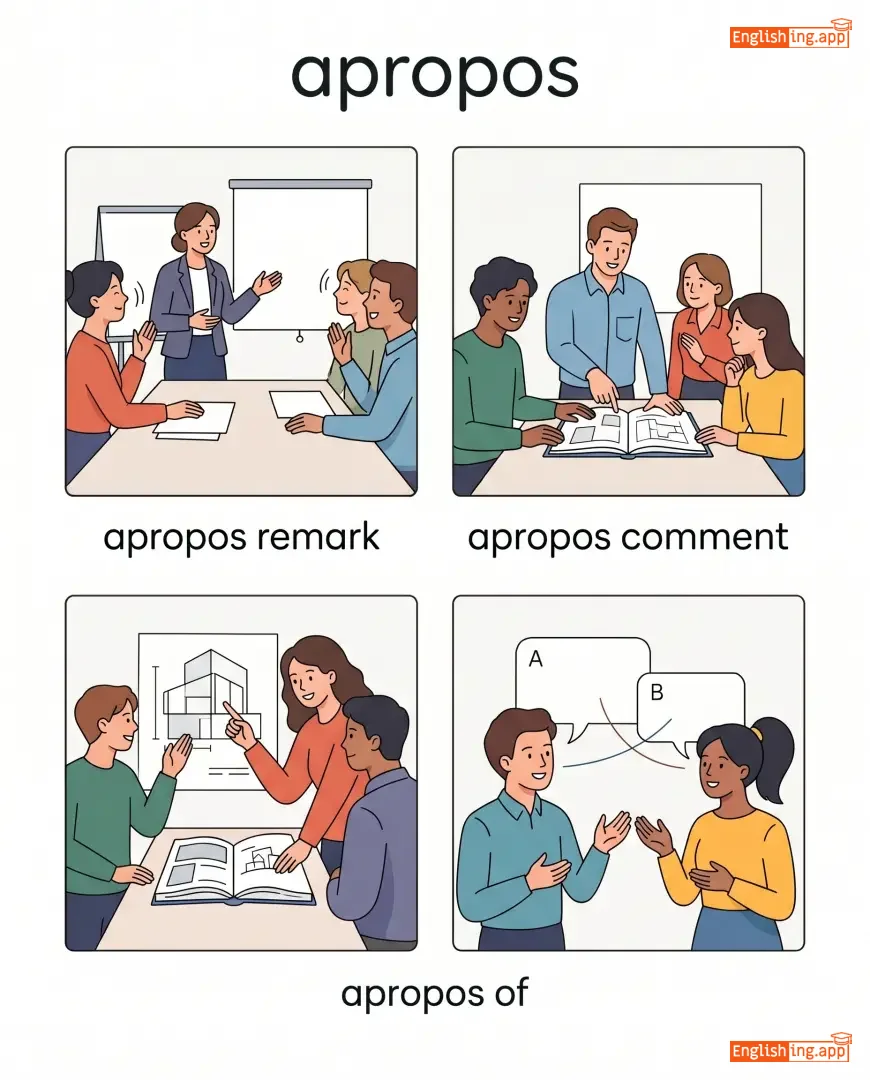
Appropriate to the situation; relevant. As an adverb, it means 'with reference to' or 'regarding'.
••••••
|
His comments were not apropos of the discussion.
他的评论与讨论无关。
••••••
|
他的评论与讨论无关。
Tā de pínglùn yǔ tǎolùn wúguān.
••••••
|
- •••••• | - •••••• | - •••••• |
appropriate, relevant, suitable, pertinent
••••••
|
irrelevant, inappropriate
••••••
|
apropos remark, apropos comment, apropos of
••••••
|
Apropos意味着相关—就像建议,必须是Apropos!
••••••
|
|
#57
🎨
|
/ˌær.əˈbesk/
noun
(阿拉贝斯克)
••••••
|
|
装饰性设计
zhuangshixing sheji
••••••
|
- •••••• | - •••••• | - •••••• | - •••••• |
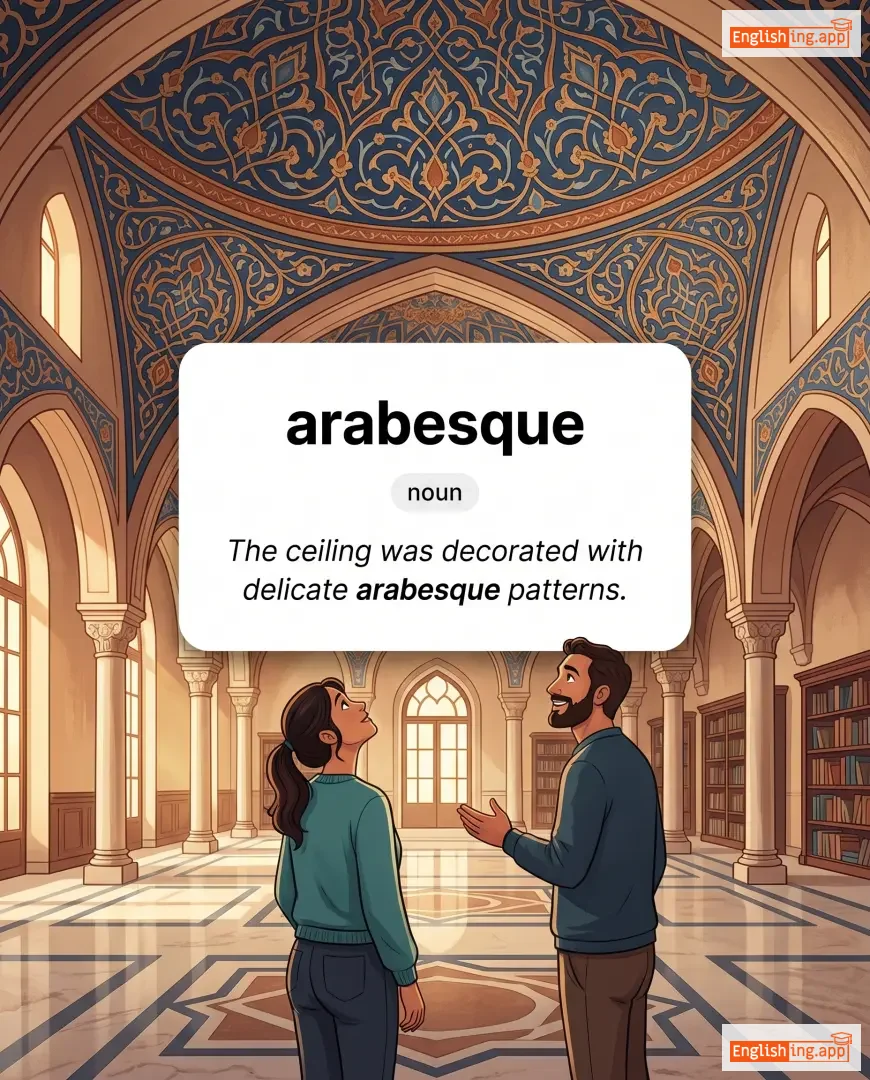
a complex, ornate design featuring intertwined flowing lines, often used in architecture or ballet poses
••••••
|
The ceiling was decorated with delicate arabesque patterns. |
天花板上装饰着精美的阿拉贝斯克图案。
Tianhuaban shang zhuangshizhe jingmei de alabeisike tu'an.
••••••
|
- •••••• | - •••••• | - •••••• |
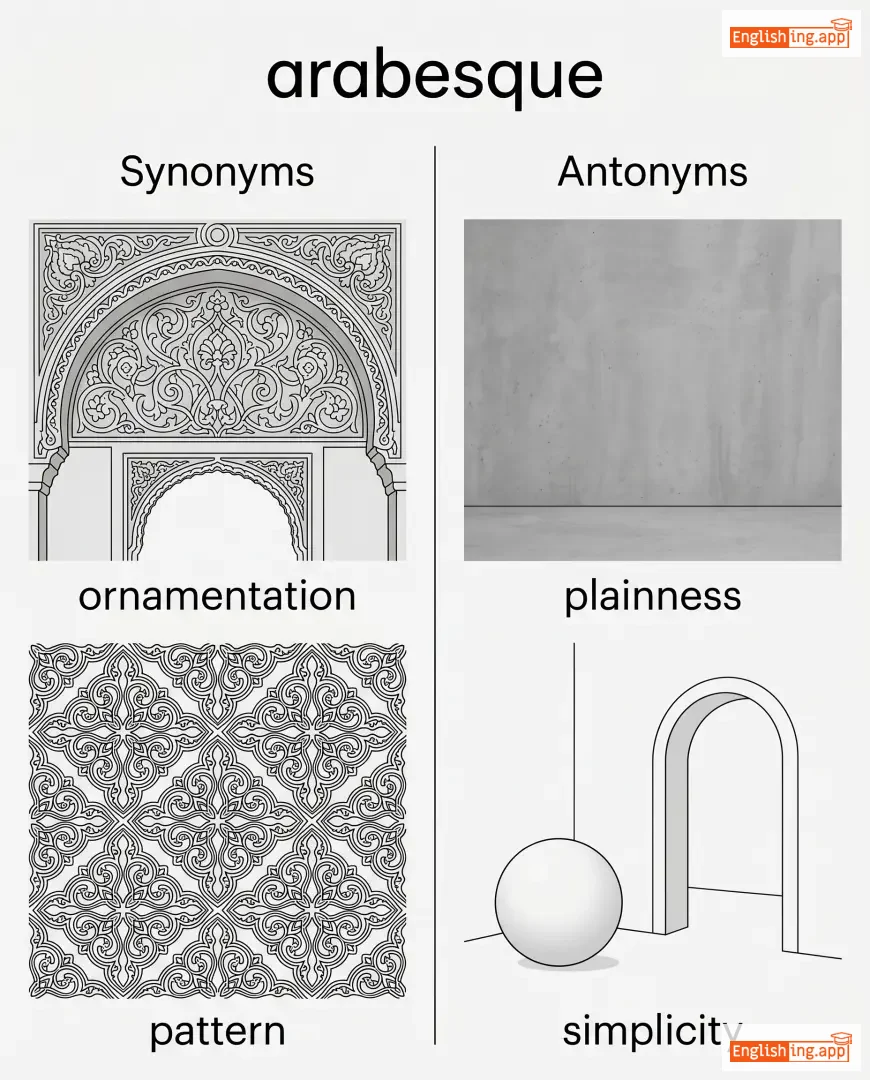
ornamentation, pattern, motif, design, flourish
••••••
|
plainness, simplicity
••••••
|
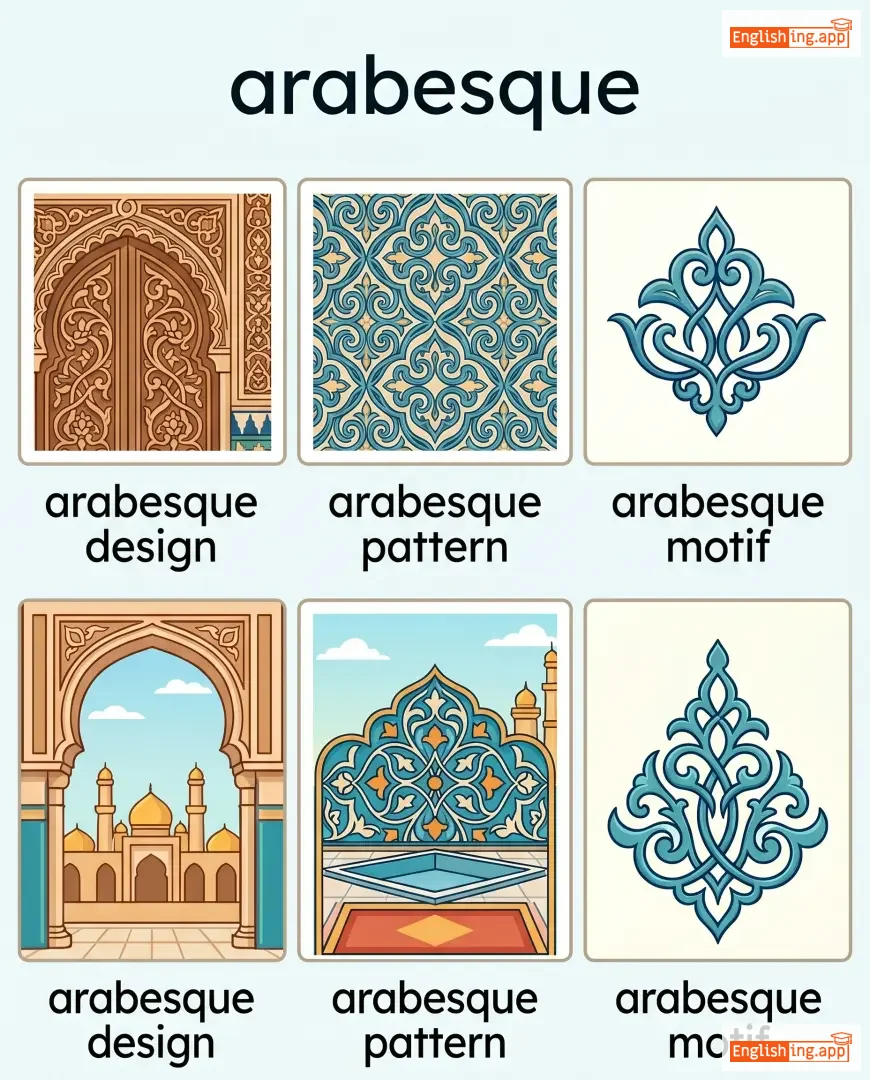
arabesque design, arabesque pattern, arabesque motif, arabesque architecture
••••••
|
阿拉伯清真寺里常见美丽的阿拉贝斯克设计 🎨
••••••
|
|
#58
🏺
|
/ˌɑːr.kiˈɑː.lə.dʒi/
noun
(考古学)
••••••
|
|
考古学
kaoguxue
••••••
|
- •••••• | - •••••• | - •••••• | - •••••• |
the study of human history and prehistory through excavation and analysis of artifacts and structures
••••••
|
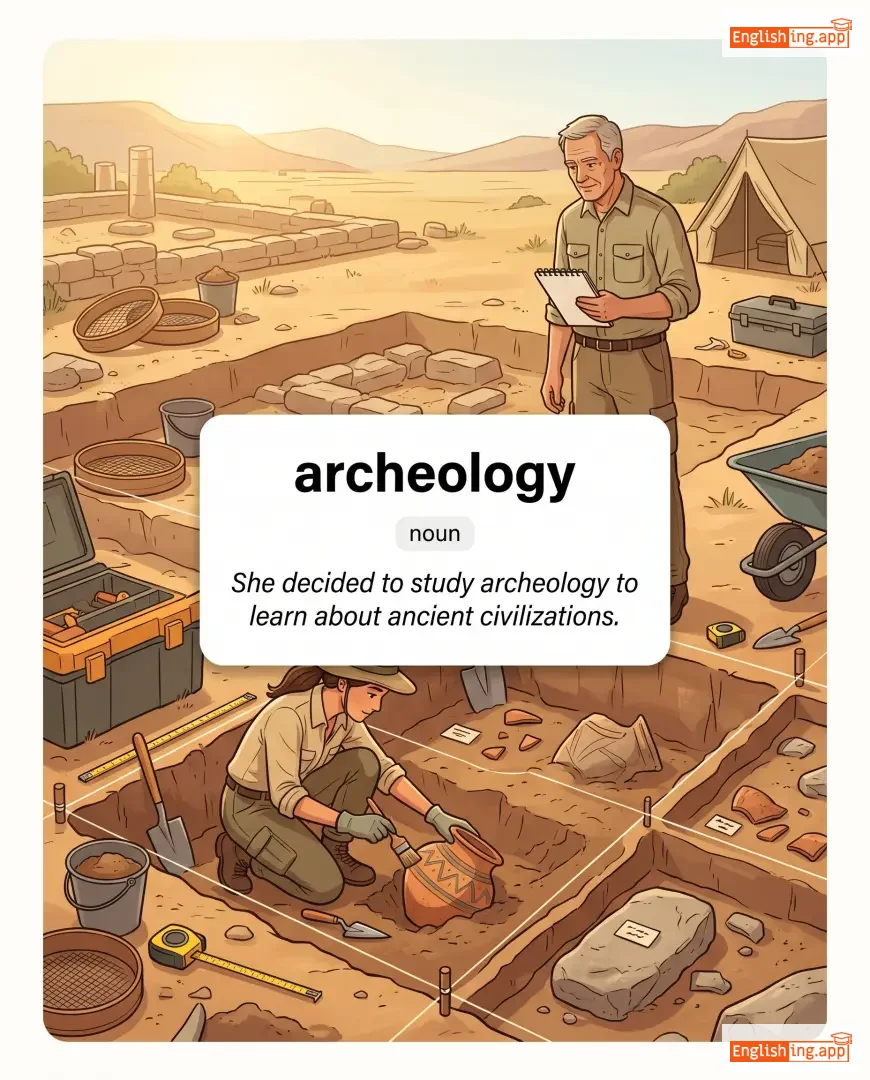
She decided to study archeology to learn about ancient civilizations. |
她决定学习考古学,以了解古代文明。
Ta jueding xuexi kaoguxue, yi liaojie gudai wenming.
••••••
|
- •••••• | - •••••• | - •••••• |
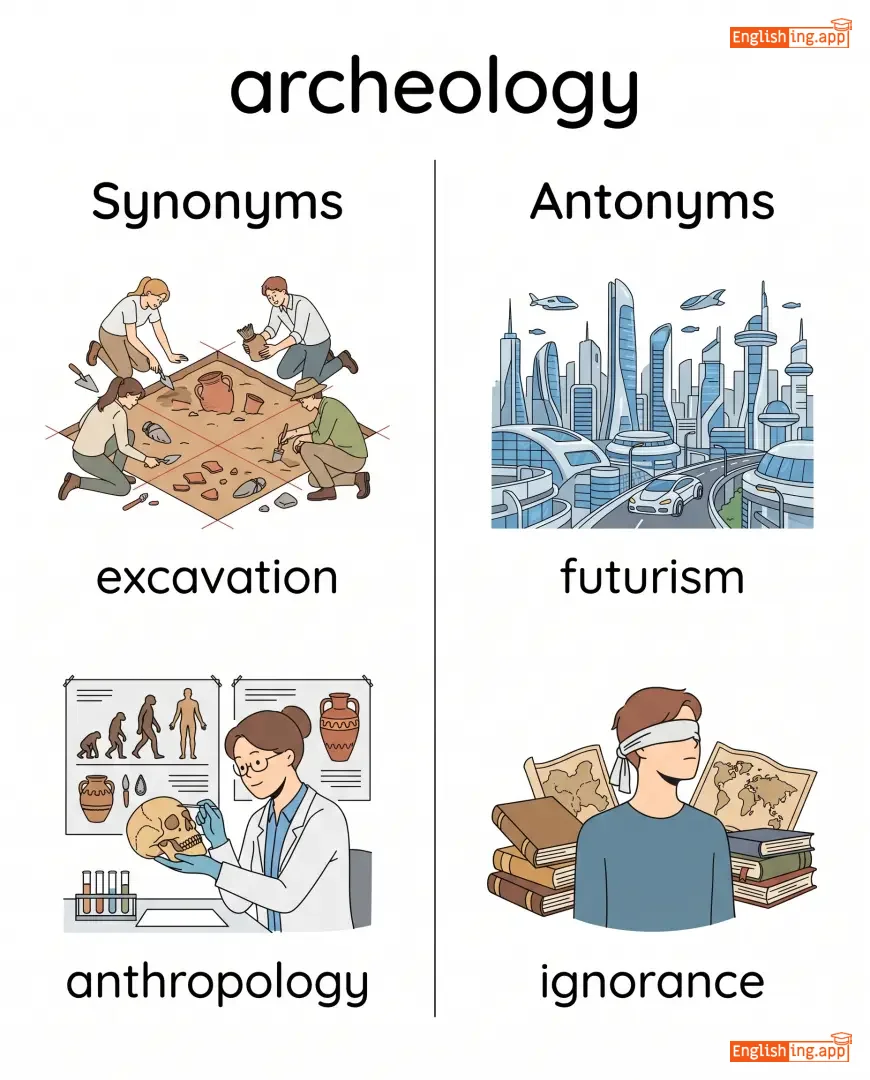
excavation, anthropology, prehistory, paleontology, history
••••••
|
futurism, ignorance
••••••
|
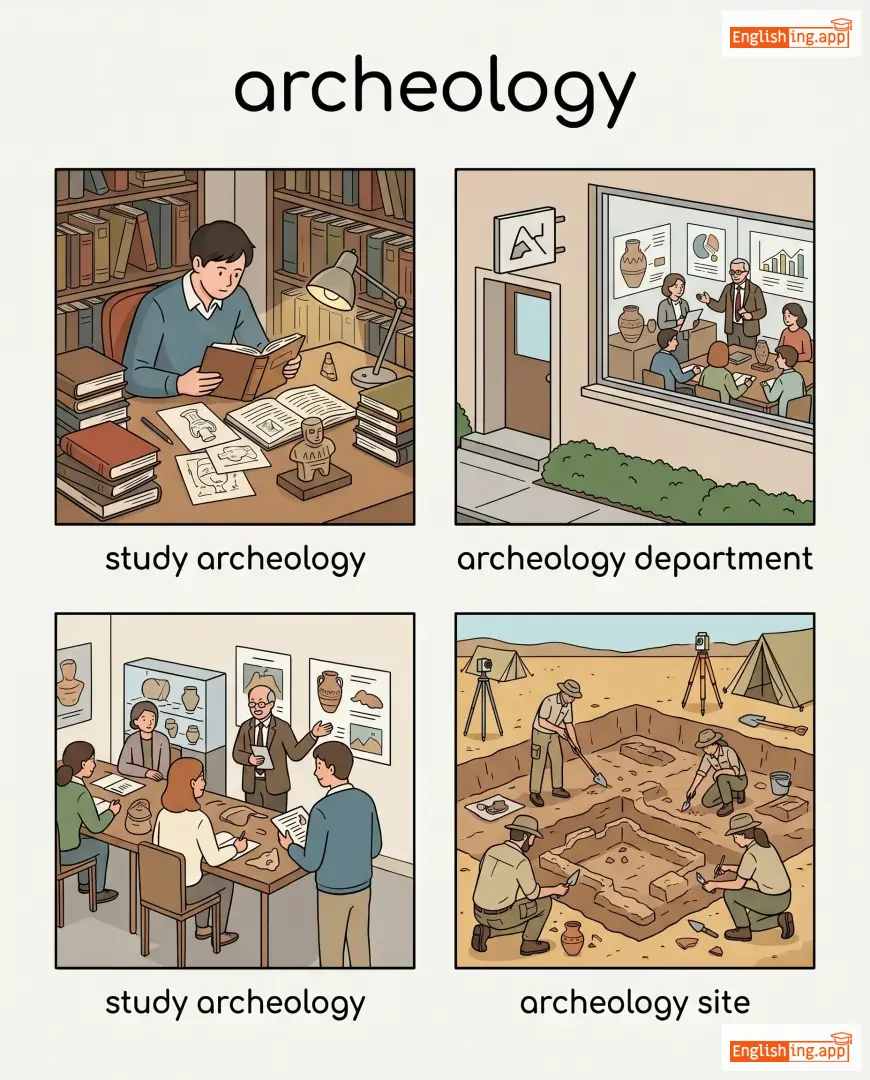
study archeology, archeology department, archeology site, archeology research
••••••
|
考古学是探索人类历史的学问,就像挖掘古代的宝藏
••••••
|
|
#59
❤️
|
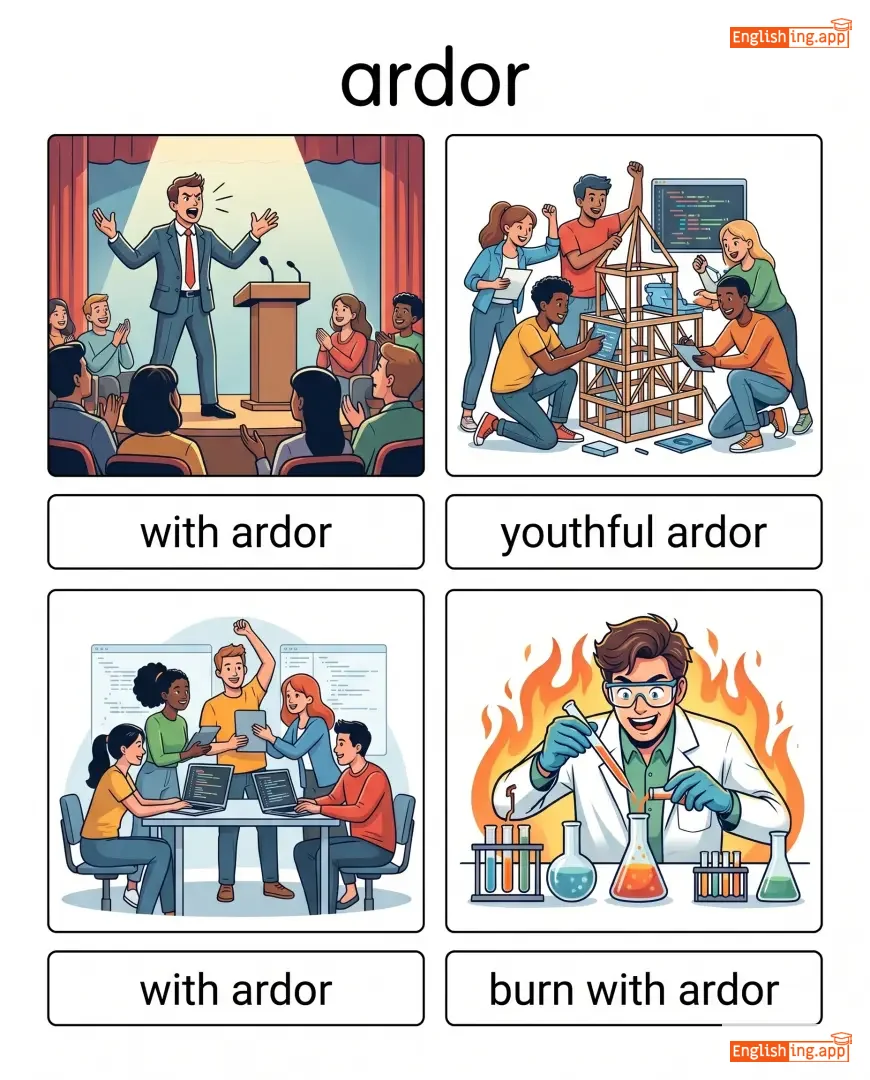
/ˈɑːrdər/
noun
(阿尔多尔)
••••••
|
|
热情,激情
ardor
••••••
|
- •••••• | - •••••• | - •••••• | - •••••• |
Great enthusiasm or passion.
••••••
|
She spoke with ardor about her new project. |
她用热情谈论她的新项目。
Tā yòng rèqíng tánlùn tā de xīn xiàngmù.
••••••
|
burn with ardor |
To be filled with strong passion or enthusiasm.
••••••
|
燃烧着激情
ránshāo zhe jīqíng
••••••
|
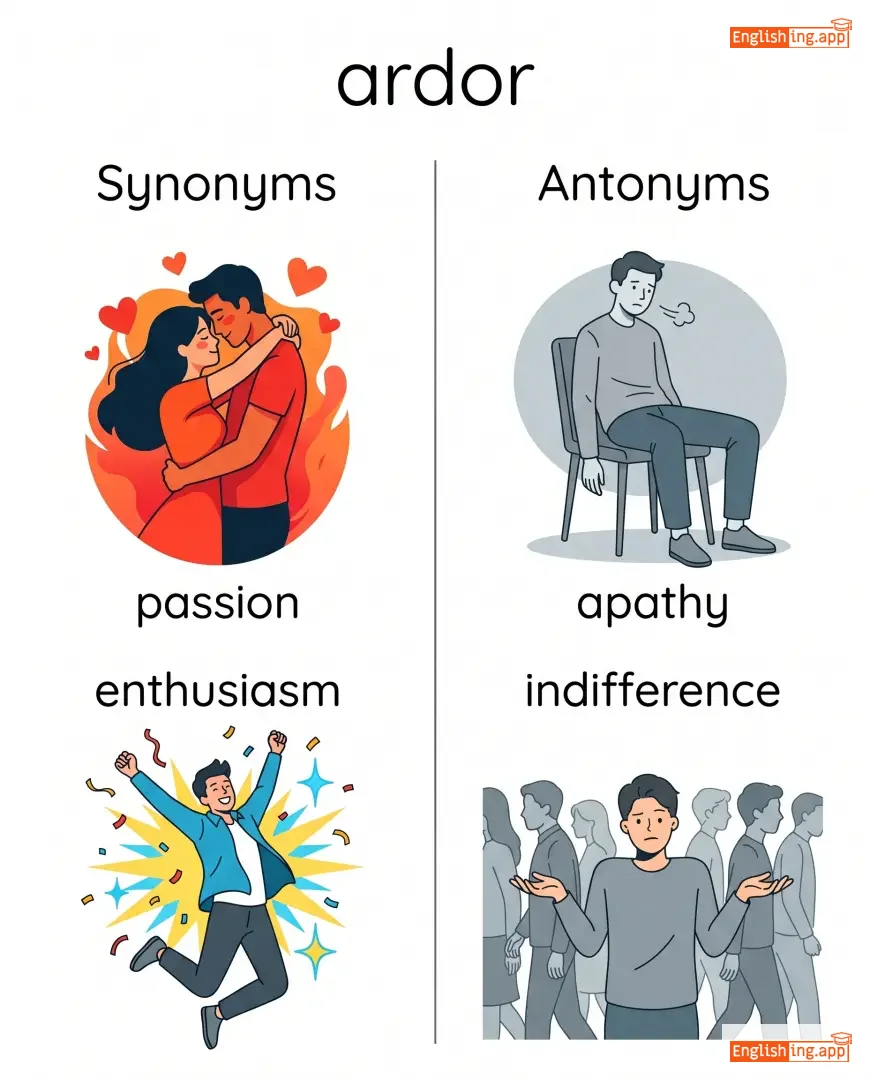
passion, enthusiasm, fervor, zeal, devotion
••••••
|
apathy, indifference
••••••
|
with ardor, youthful ardor, burn with ardor, ardor for learning
••••••
|
Ardor就像‘ardent’,内心充满了激情的火焰。
••••••
|
|
#60
⛰️
|
/ˈɑːrdʒuəs/
adjective
(阿尔杜斯)
••••••
|
|
艰难
jian nan
••••••
|
- •••••• | - •••••• | - •••••• | - •••••• |
Involving or requiring a lot of effort; very difficult and tiring.
••••••
|
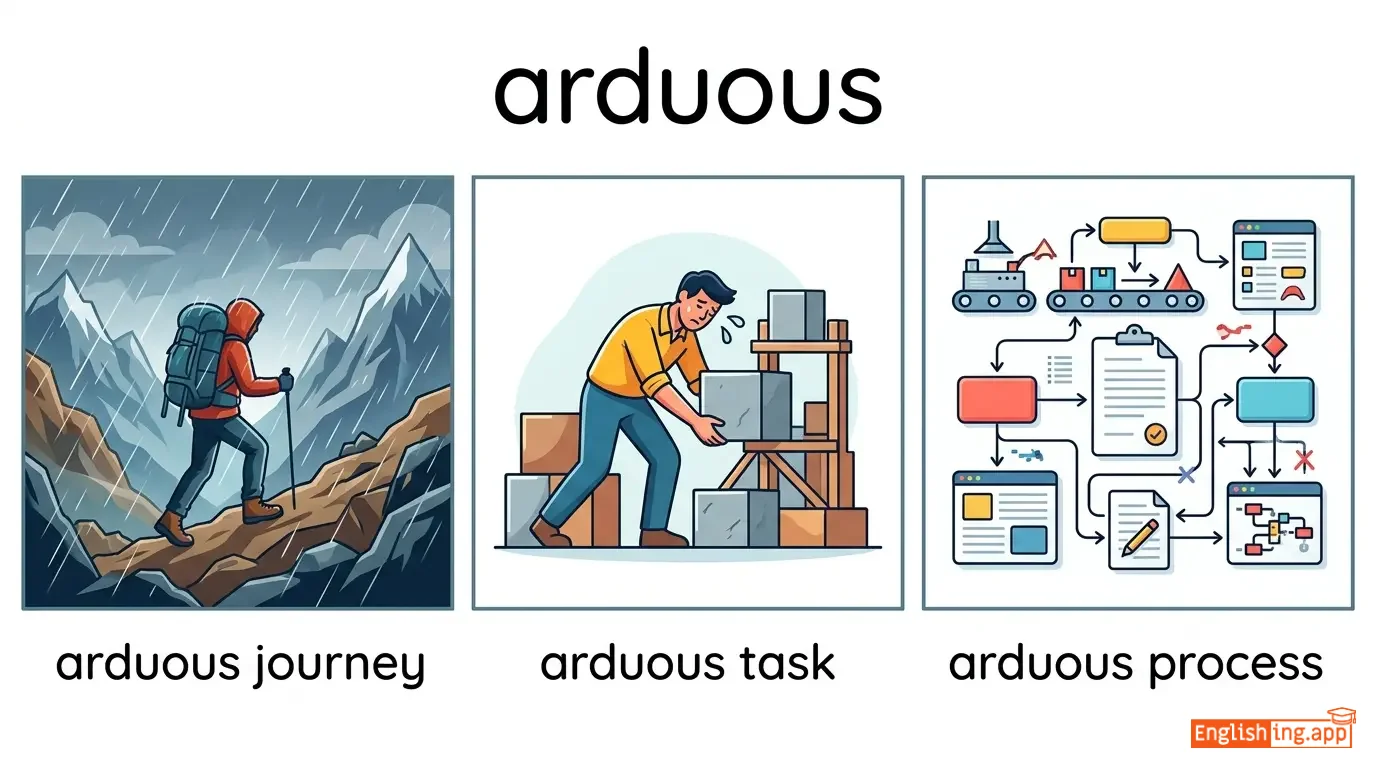
Climbing the mountain was an arduous task. |
爬山是一个艰难的任务。
Pa shan shi yi ge jian nan de ren wu.
••••••
|
- •••••• | - •••••• | - •••••• |
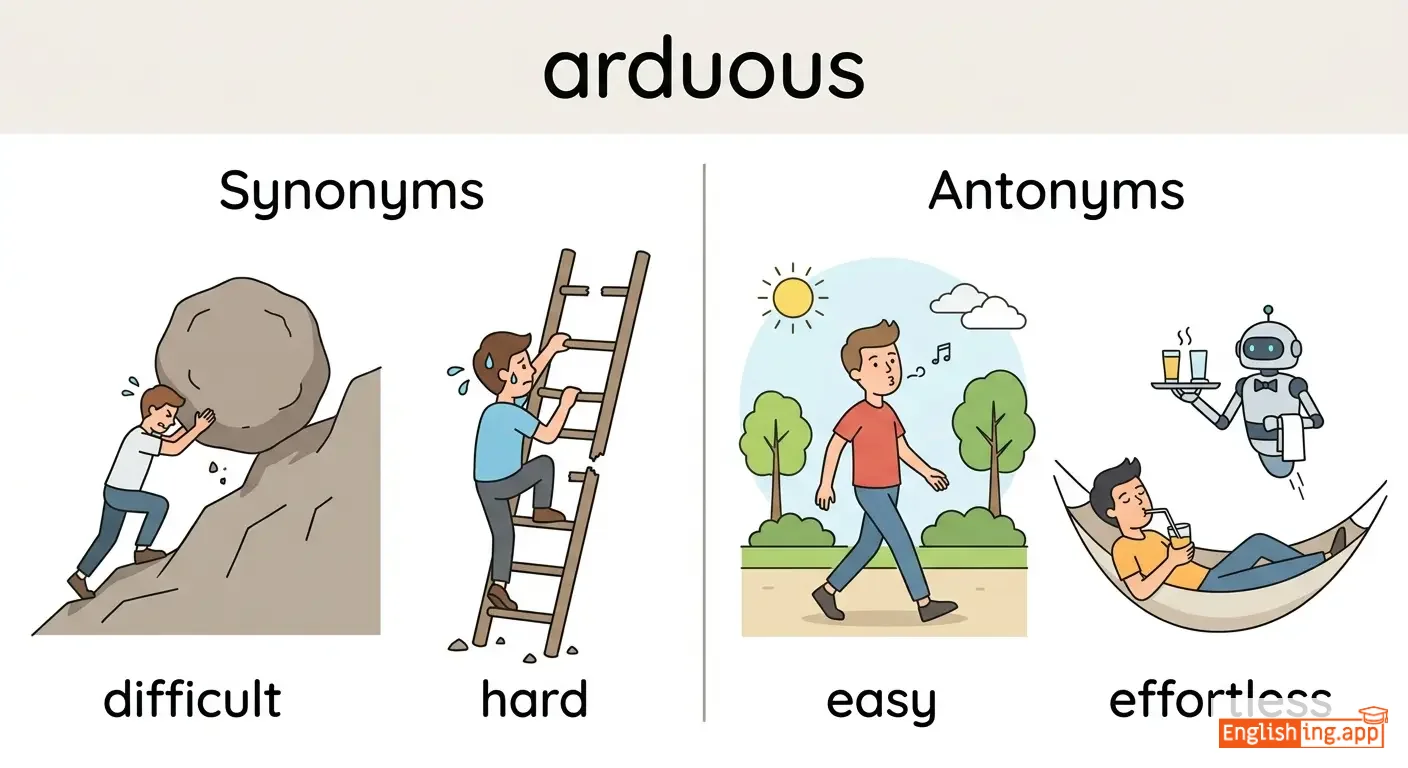
difficult, hard, demanding, strenuous, exhausting
••••••
|
easy, effortless
••••••
|
arduous journey, arduous task, arduous process, arduous climb
••••••
|
Arduous 就是很hard的工作,非常艰难的任务。
••••••
|
|
#61
🗣️
|
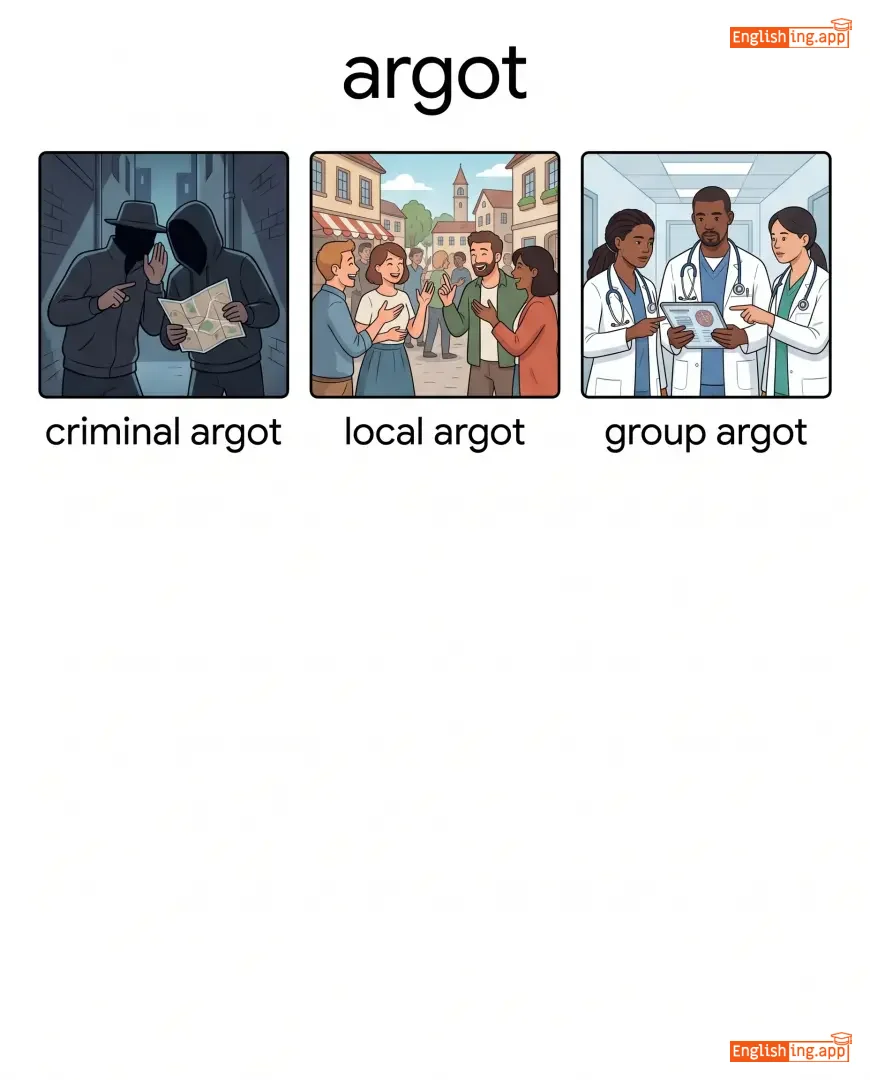
/ˈɑːrɡoʊ/
noun
(阿尔戈)
••••••
|
|
特定群体的行话
tèdìng qúntǐ de xínghuà
••••••
|
- •••••• | - •••••• | - •••••• | - •••••• |
the specialized vocabulary or jargon of a particular group, especially one with a common interest or occupation
••••••
|
The thieves communicated in an argot that outsiders could not understand.
小偷们用一种外人无法理解的阿尔戈语言交流。
••••••
|
小偷们用一种外人无法理解的阿尔戈语言交流。
Xiǎotōu men yòng yī zhǒng wàirén wúfǎ lǐjiě de ā'ěr gē yǔyán jiāoliú.
••••••
|
- •••••• | - •••••• | - •••••• |
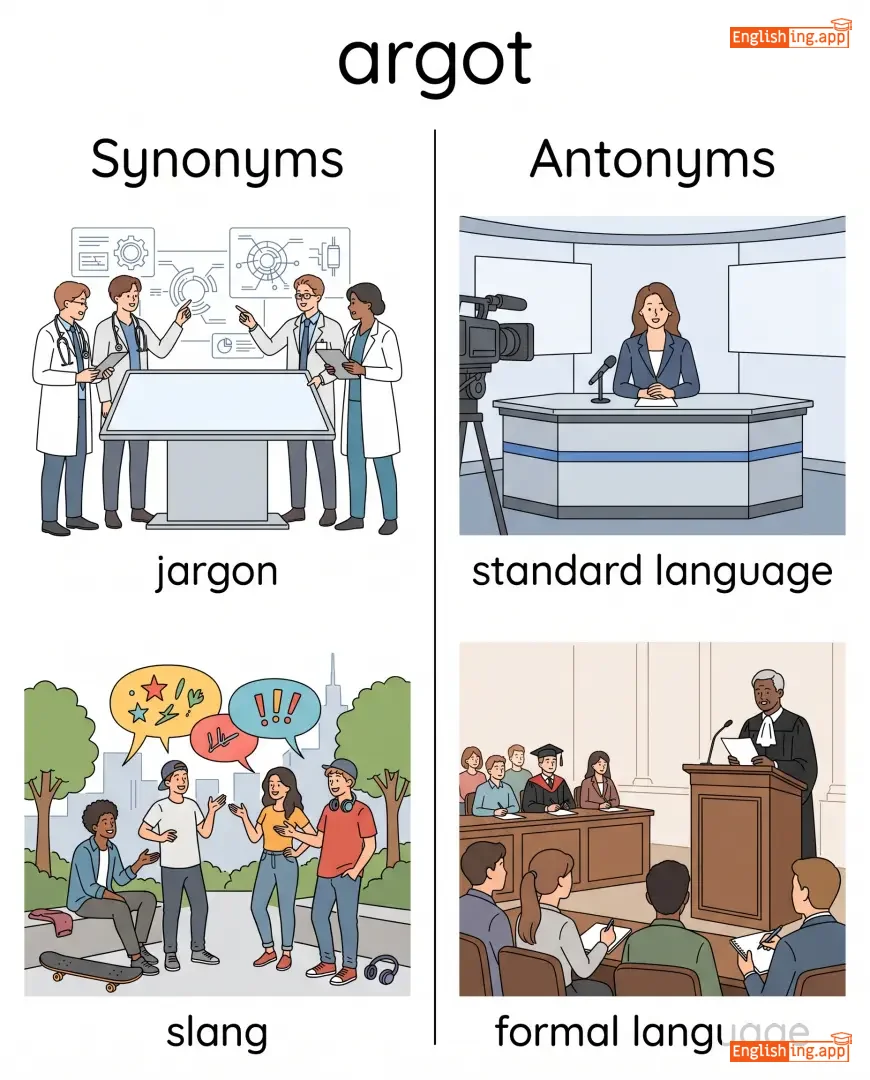
jargon, slang, dialect, lingo, terminology
••••••
|
standard language, formal language
••••••
|
criminal argot, local argot, group argot, secret argot
••••••
|
阿尔戈是一个隐藏的语言,像盗贼用来交流的秘密词汇
••••••
|
|
#62
🚓
|
/əˈrɛst/
verb
(àirèst)
••••••
|
|
逮捕
dàibǔ
••••••
|
arrested
àirèstèd
••••••
|
arrested
àirèstèd
••••••
|
arrests
àirèsts
••••••
|
arresting
àirèstíng
••••••
|
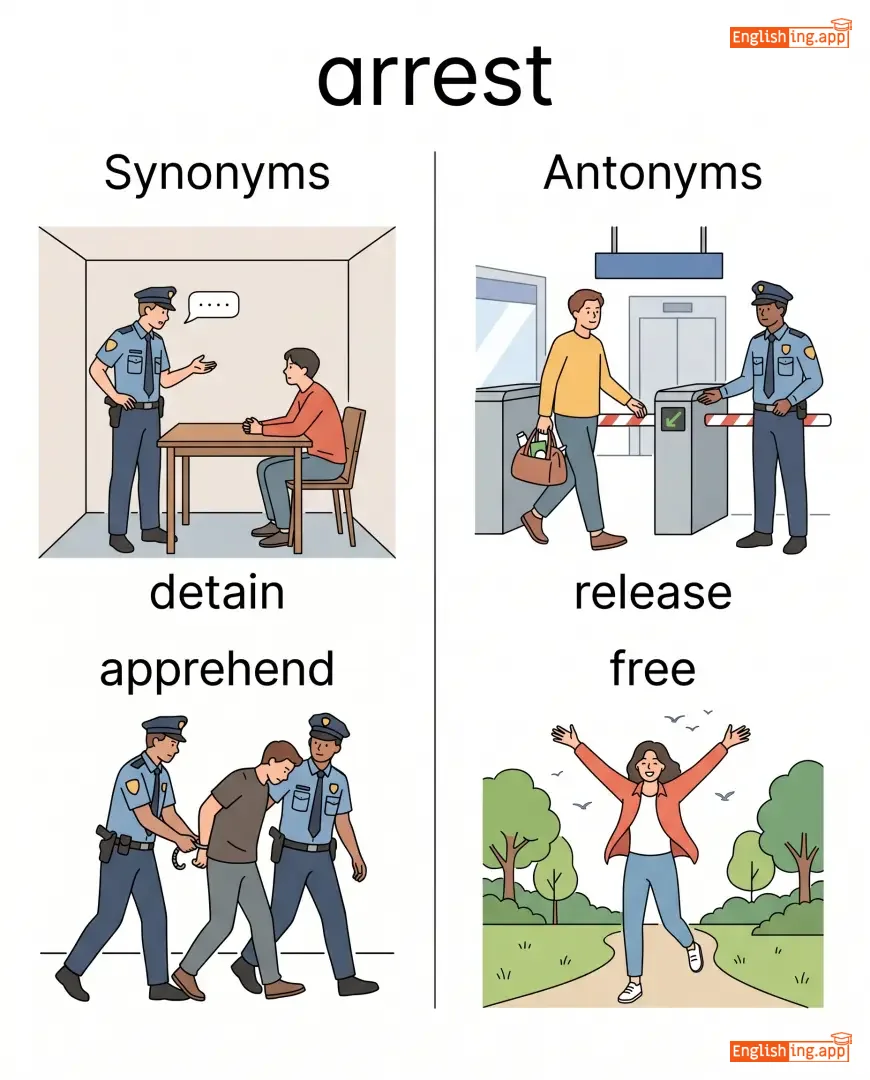
To seize and hold someone by legal authority.
••••••
|
The police arrested the suspect last night.
警察昨晚逮捕了嫌疑人。
••••••
|
警察昨晚逮捕了嫌疑人。
Jǐngchá zuówǎn dàibǔ le xiányí rén.
••••••
|
under arrest
被逮捕
••••••
|
In the custody of the police.
••••••
|
被逮捕
bèi dàibǔ
••••••
|
detain, apprehend, capture, seize, stop
••••••
|
release, free, liberate
••••••
|
arrest warrant, arrest the suspect, make an arrest
••••••
|
Arrest 就是当你 Rest 不能再走,警察把你抓住了。
••••••
|
|
#63
🏺
|
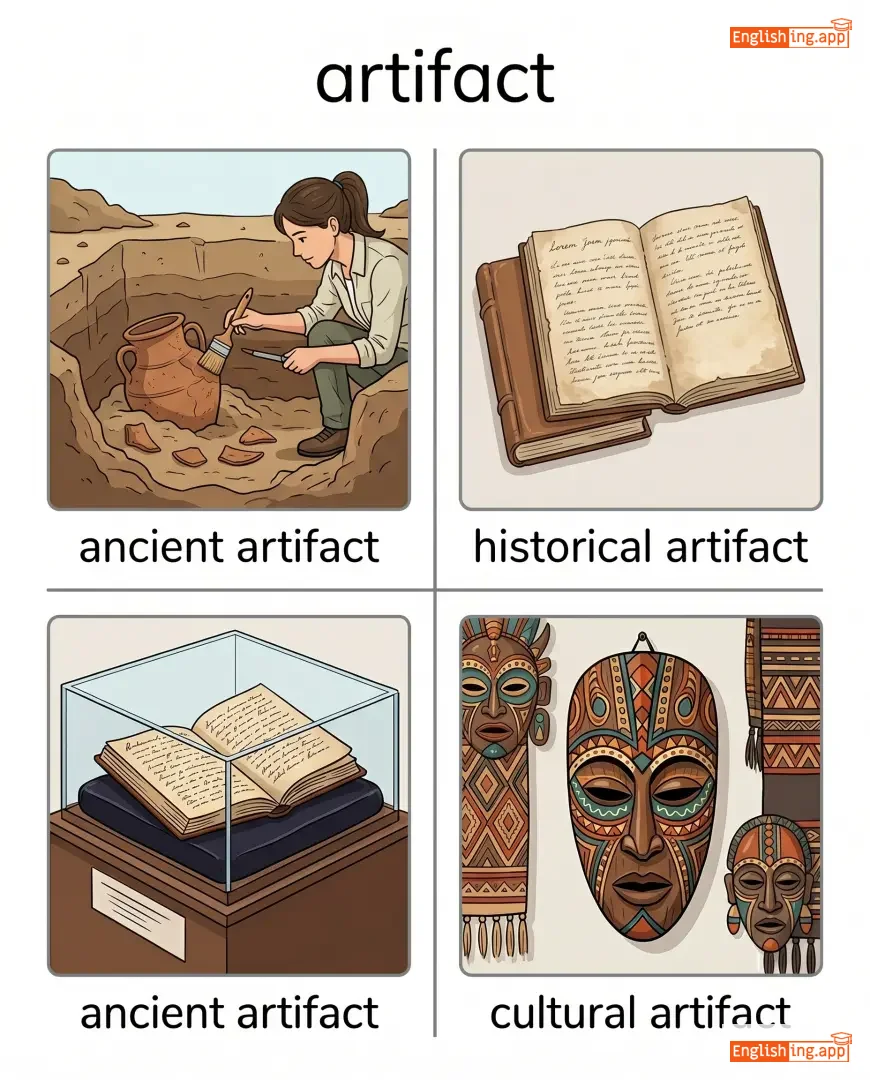
/ˈɑːrtɪˌfækt/
noun
(ɑːrtɪfækt)
••••••
|
|
文物
wenwu
••••••
|
- •••••• | - •••••• | - •••••• | - •••••• |
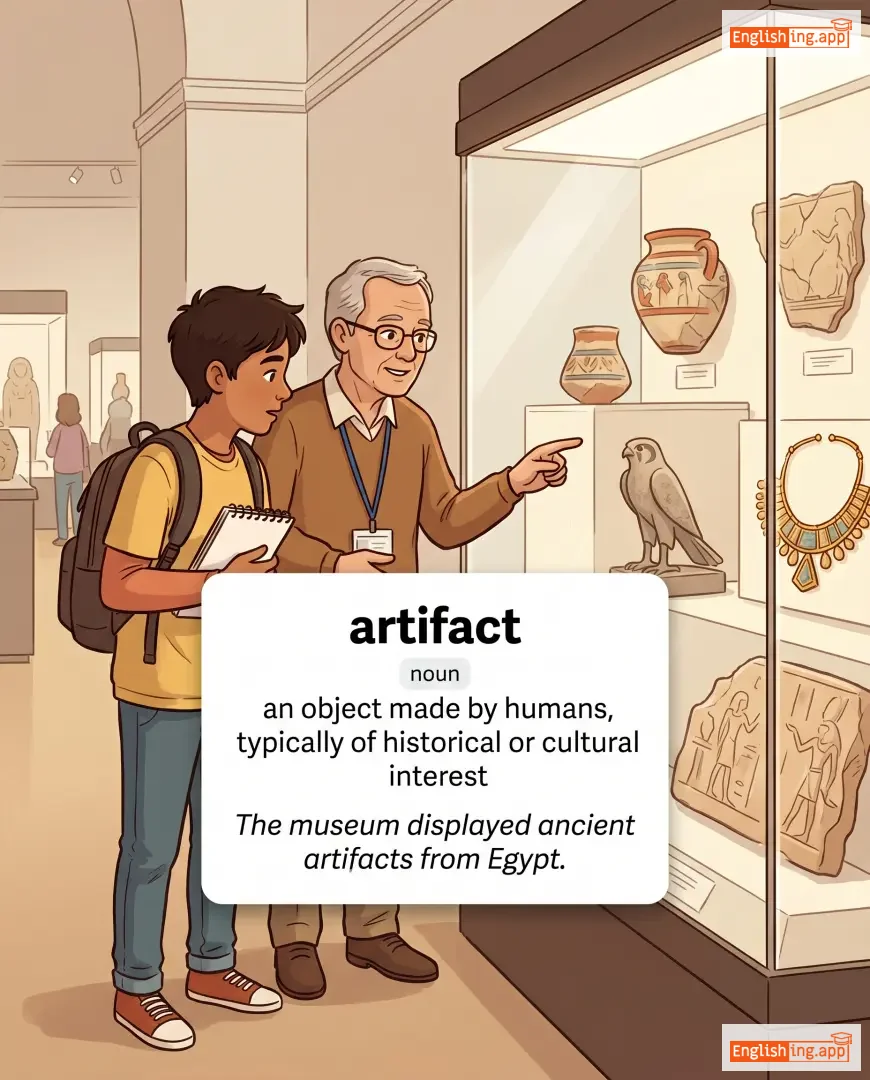
an object made by humans, typically of historical or cultural interest
••••••
|
The museum displayed ancient artifacts from Egypt.
博物馆展示了来自埃及的古代文物。
••••••
|
博物馆展示了来自埃及的古代文物。
Bówùguǎn zhǎnshìle láizì āijí de gǔdài wénwù.
••••••
|
- •••••• | - •••••• | - •••••• |
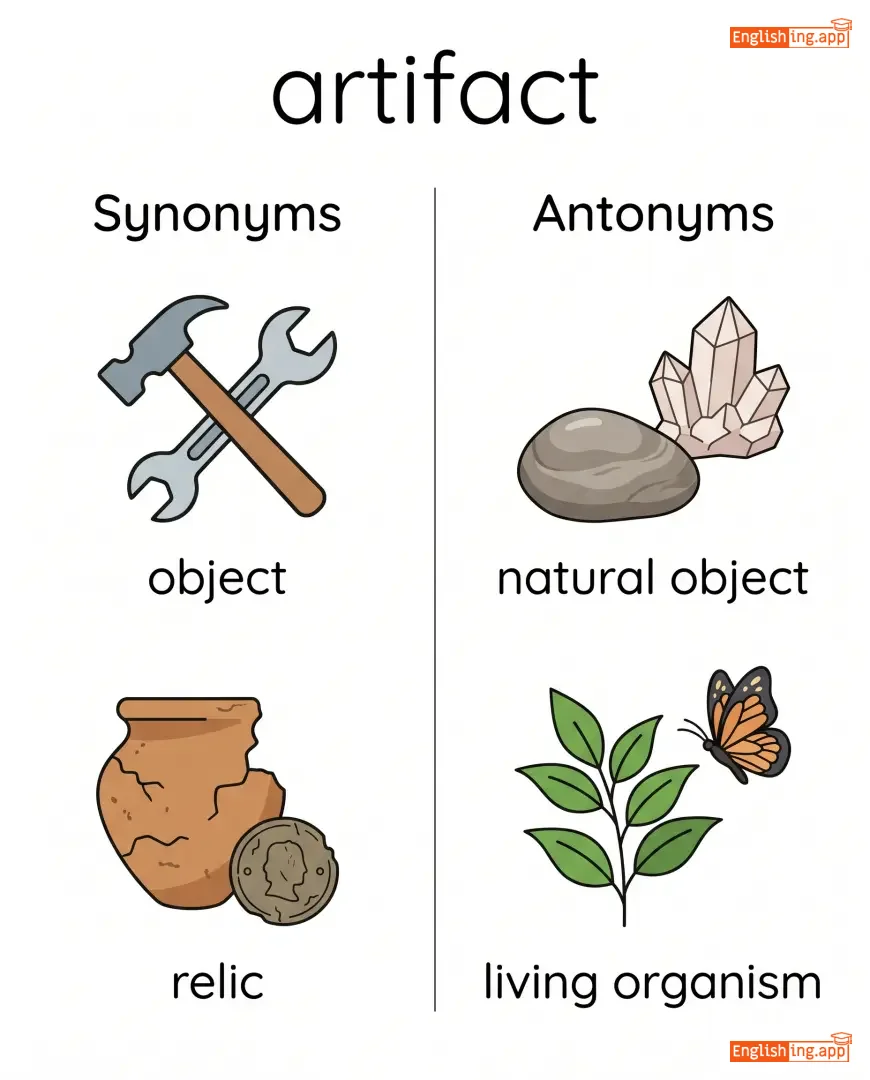
object, relic, antiquity, remain, heirloom
••••••
|
natural object, living organism
••••••
|
ancient artifact, historical artifact, cultural artifact, rare artifact
••••••
|
文物 (wénwù): 过去的人类创造的艺术品,具有文化和历史价值。
••••••
|
|
#64
😊
|
/ˈɑːrtləs/
adjective
(阿特莱斯)
••••••
|
|
天真, 简单
tianzhen, jiandan
••••••
|
- •••••• | - •••••• | - •••••• | - •••••• |
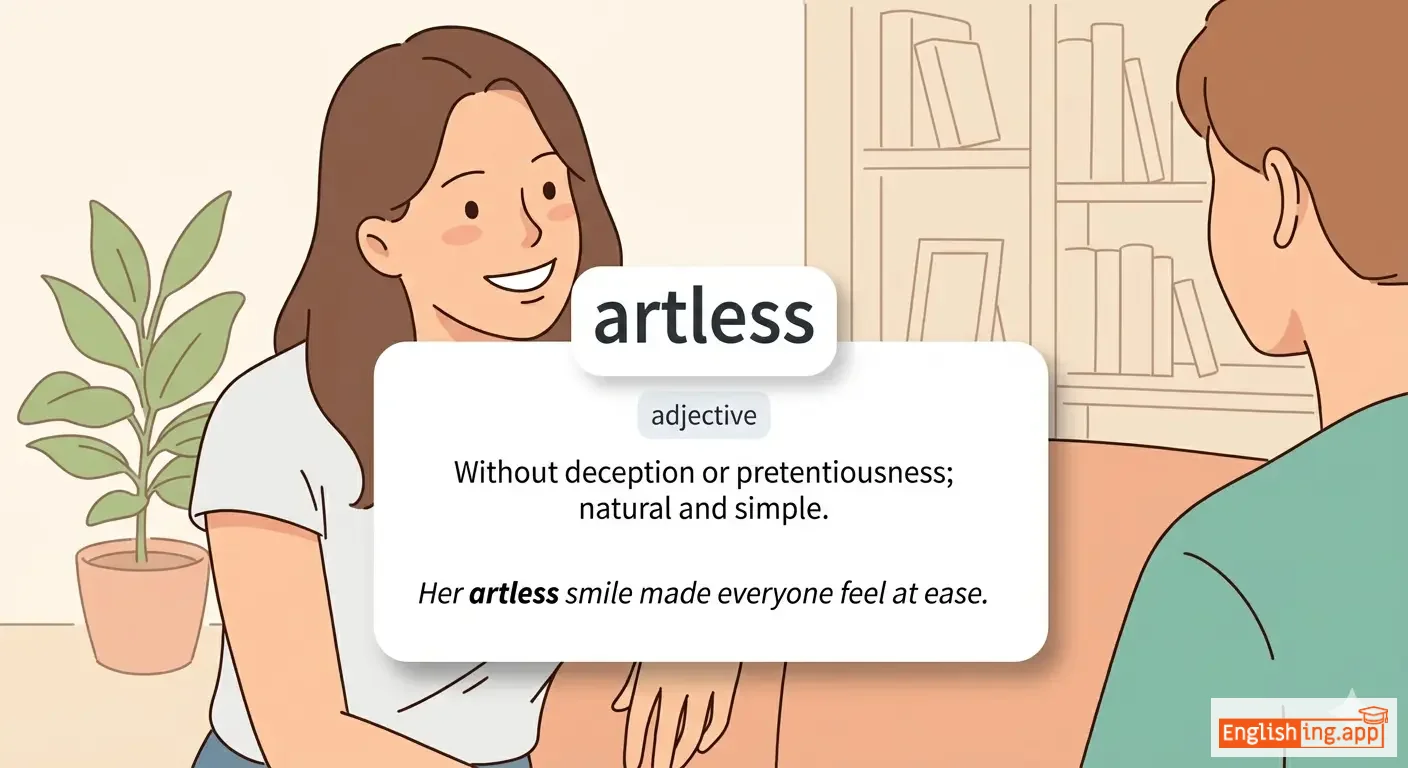
Without deception or pretentiousness; natural and simple.
••••••
|
Her artless smile made everyone feel at ease. |
她天真的微笑让每个人都感到轻松。
ta tianzhen de weixiao rang meige ren dou gandao qingsong.
••••••
|
- •••••• | - •••••• | - •••••• |
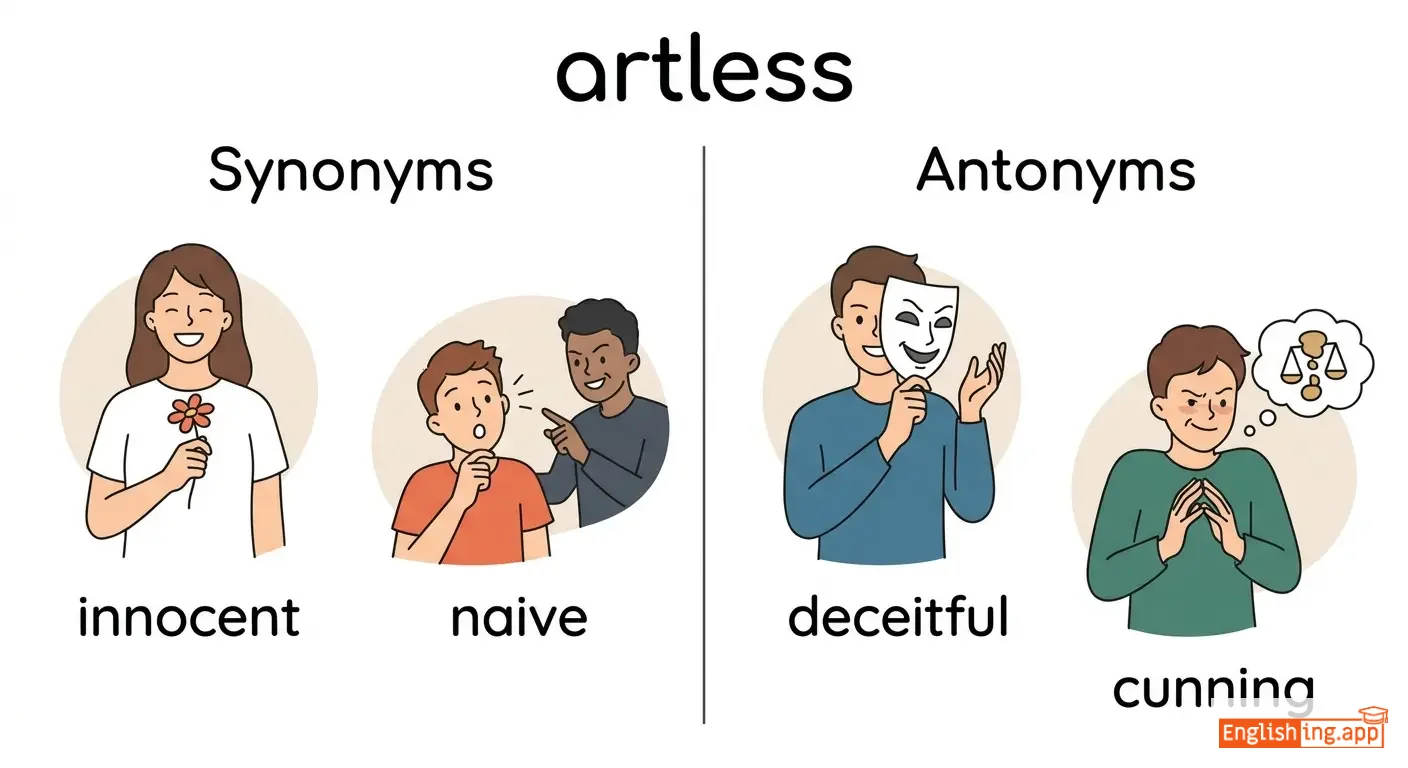
innocent, naive, guileless, sincere, genuine
••••••
|
deceitful, cunning, pretentious
••••••
|
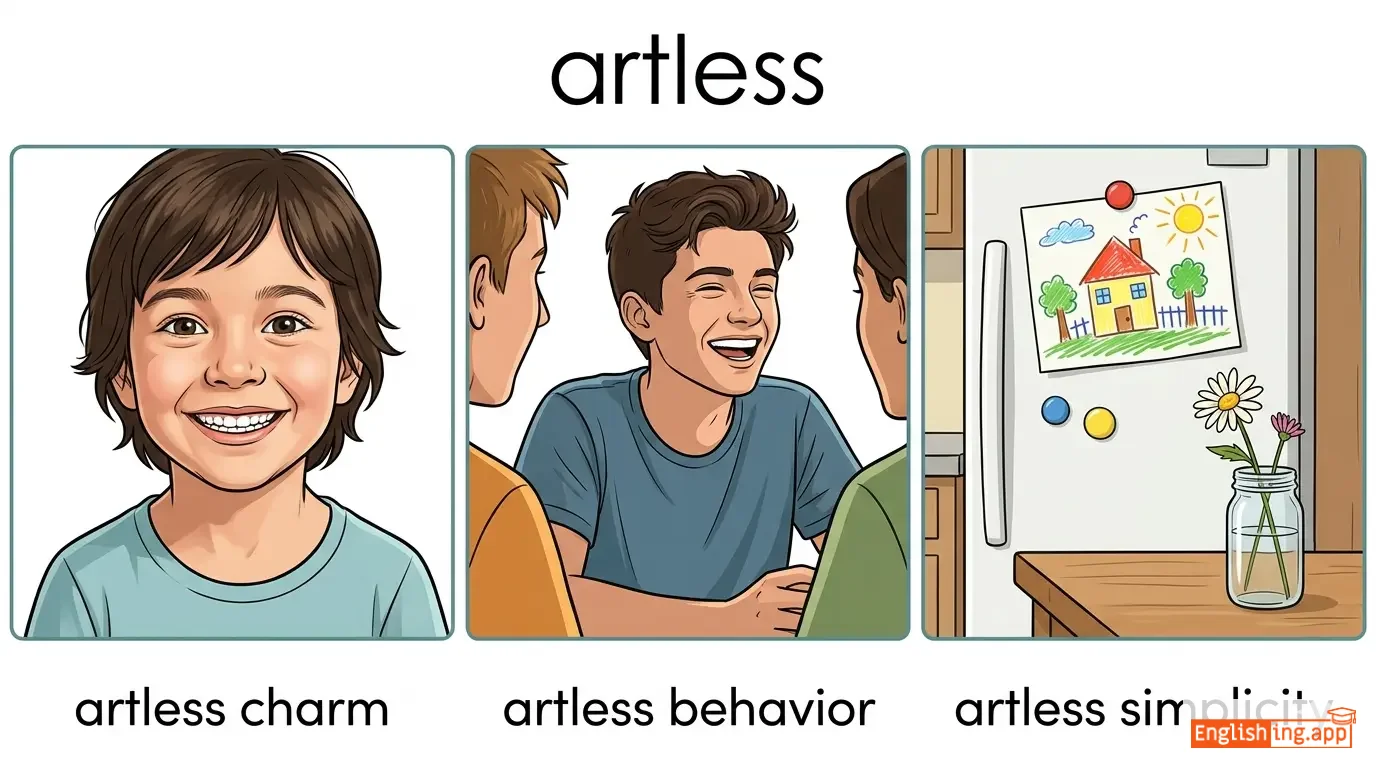
artless charm, artless behavior, artless simplicity
••••••
|
没有艺术(artless)就是天真简朴,就像她的笑容。
••••••
|
|
#65
🙏
|
/əˈsɛt.ɪk/
adjective
(ā sē tè kè)
••••••
|
|
苦行
kǔ xíng
••••••
|
- •••••• | - •••••• | - •••••• | - •••••• |
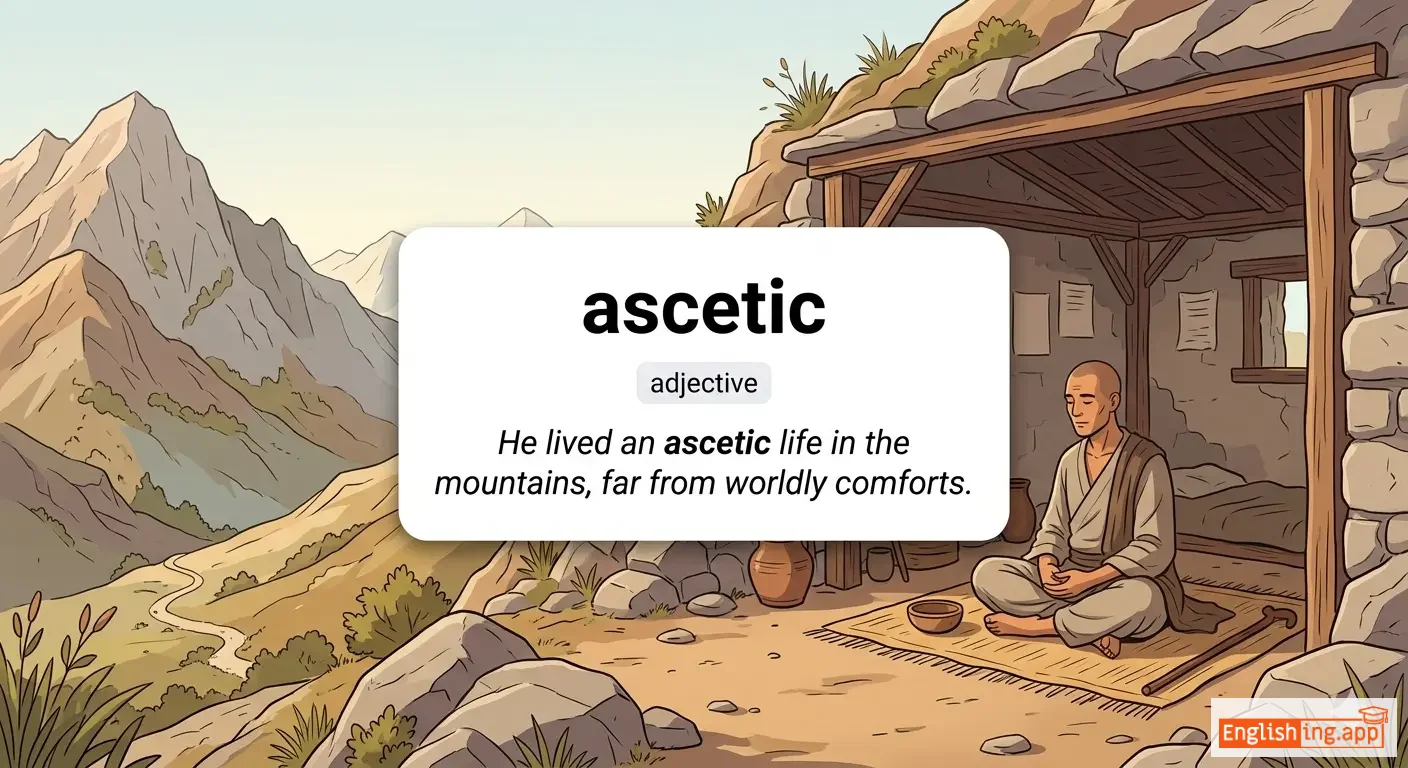
Practicing strict self-denial and abstaining from worldly pleasures, often for religious reasons.
••••••
|
He lived an ascetic life in the mountains, far from worldly comforts. |
他在山区过着苦行生活,远离世俗的安逸。
Tā zài shānqū guòzhe kǔ xíng shēnghuó, yuǎnlí shìsú de ānyì.
••••••
|
- •••••• | - •••••• | - •••••• |
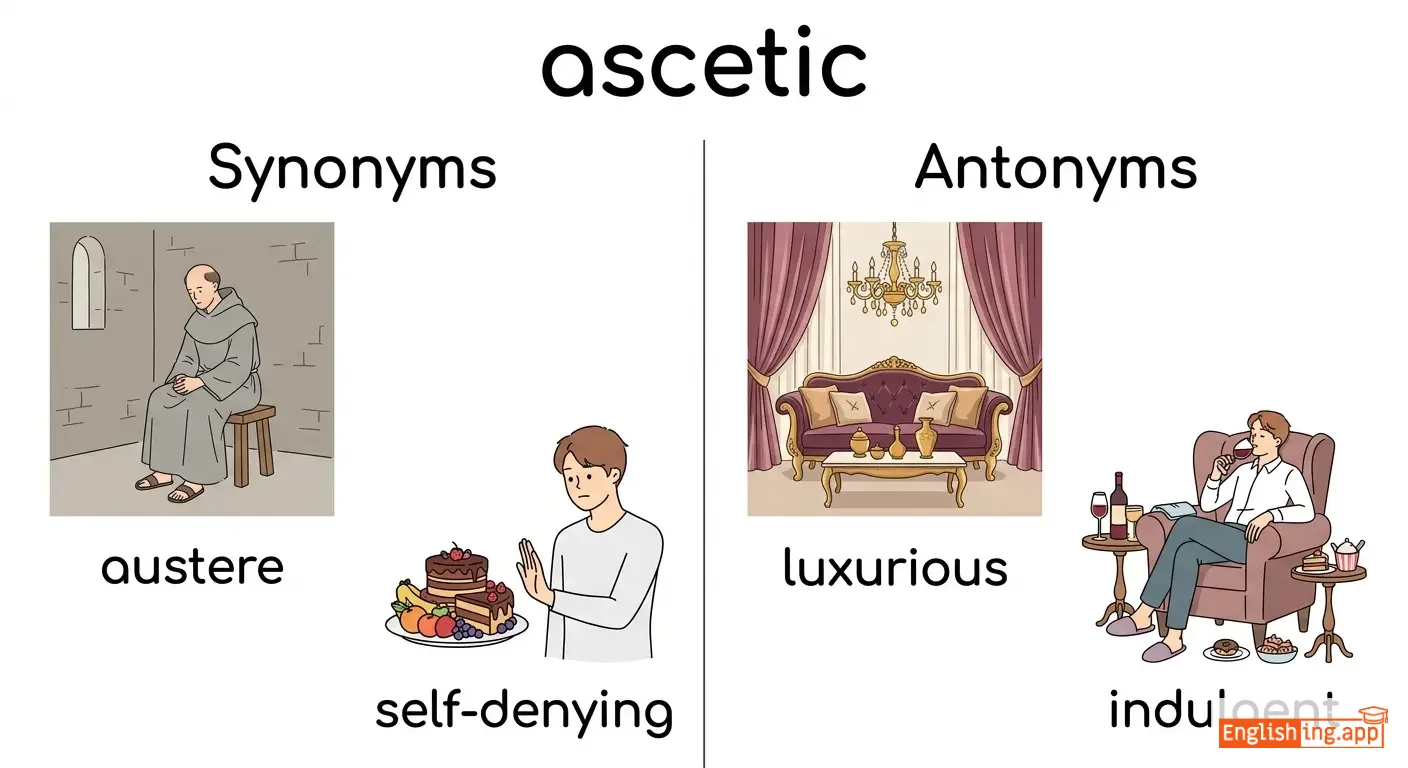
austere, self-denying, monkish, frugal, disciplined
••••••
|
luxurious, indulgent, hedonistic
••••••
|
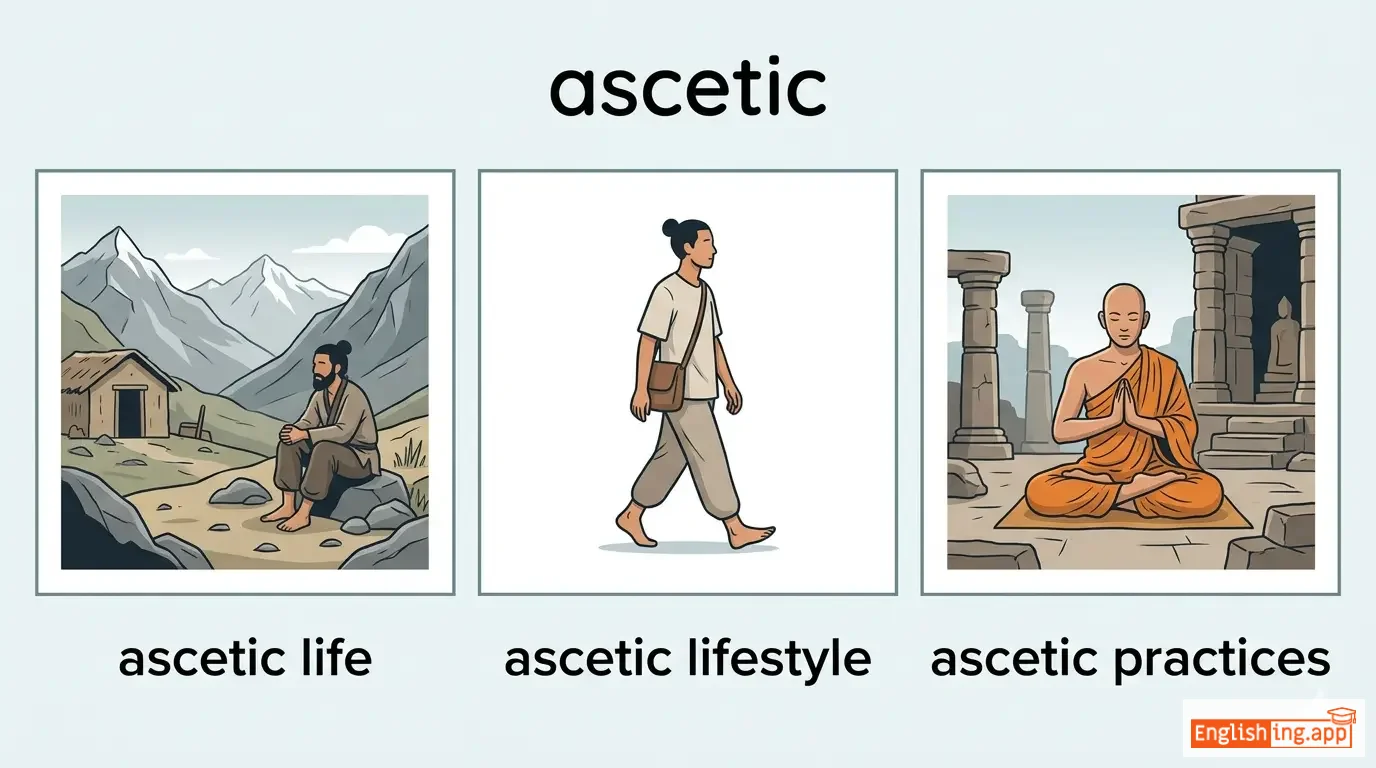
ascetic life, ascetic lifestyle, ascetic practices, ascetic monk
••••••
|
苦行就像生活中的修行者,拒绝享乐,追求精神的平静。
••••••
|
|
#66
⚡
|
/əˈsper.ɪ.ti/
noun
••••••
|
|
- •••••• | - •••••• | - •••••• | - •••••• | - •••••• |
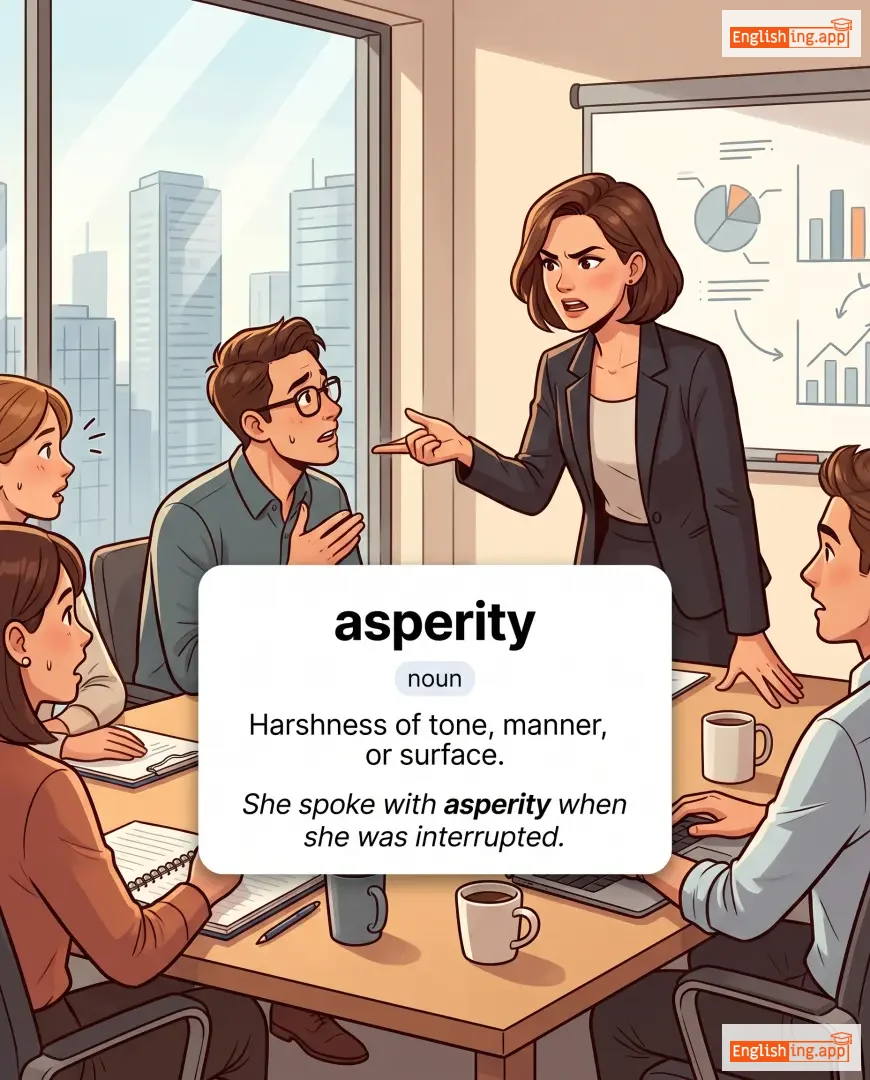
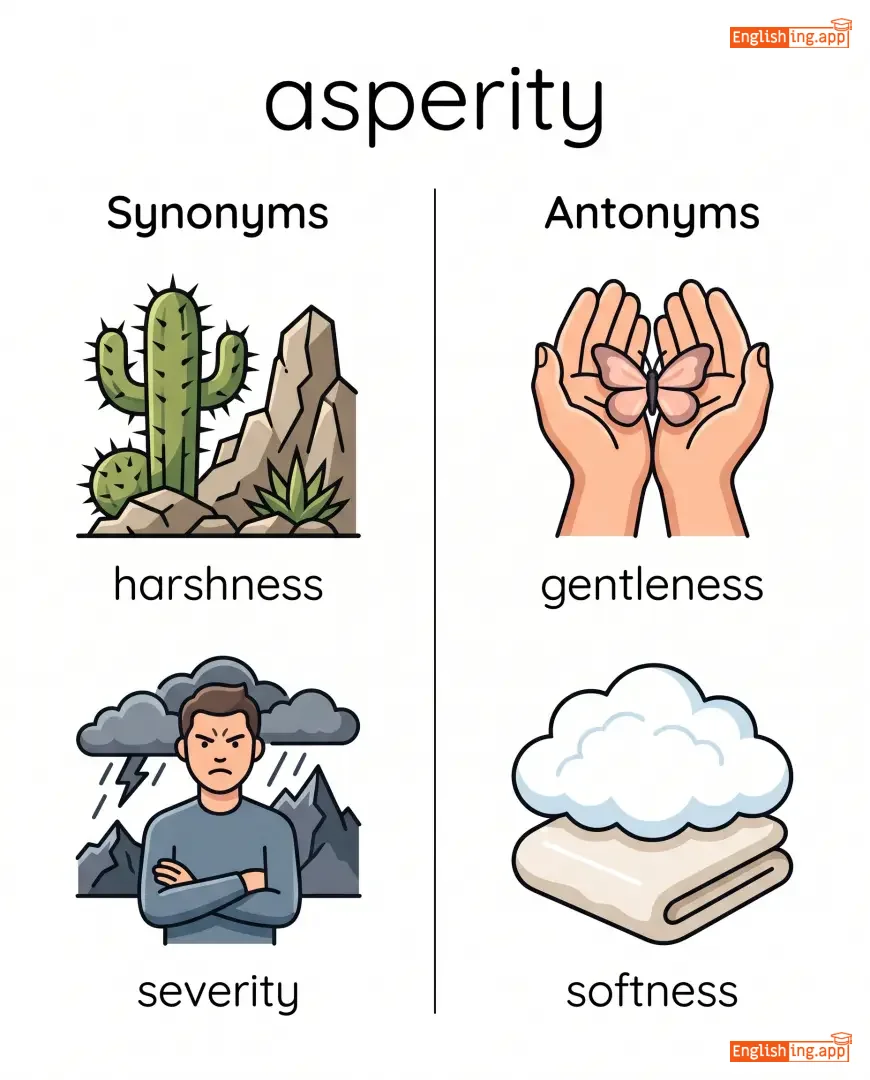
Harshness of tone, manner, or surface.
••••••
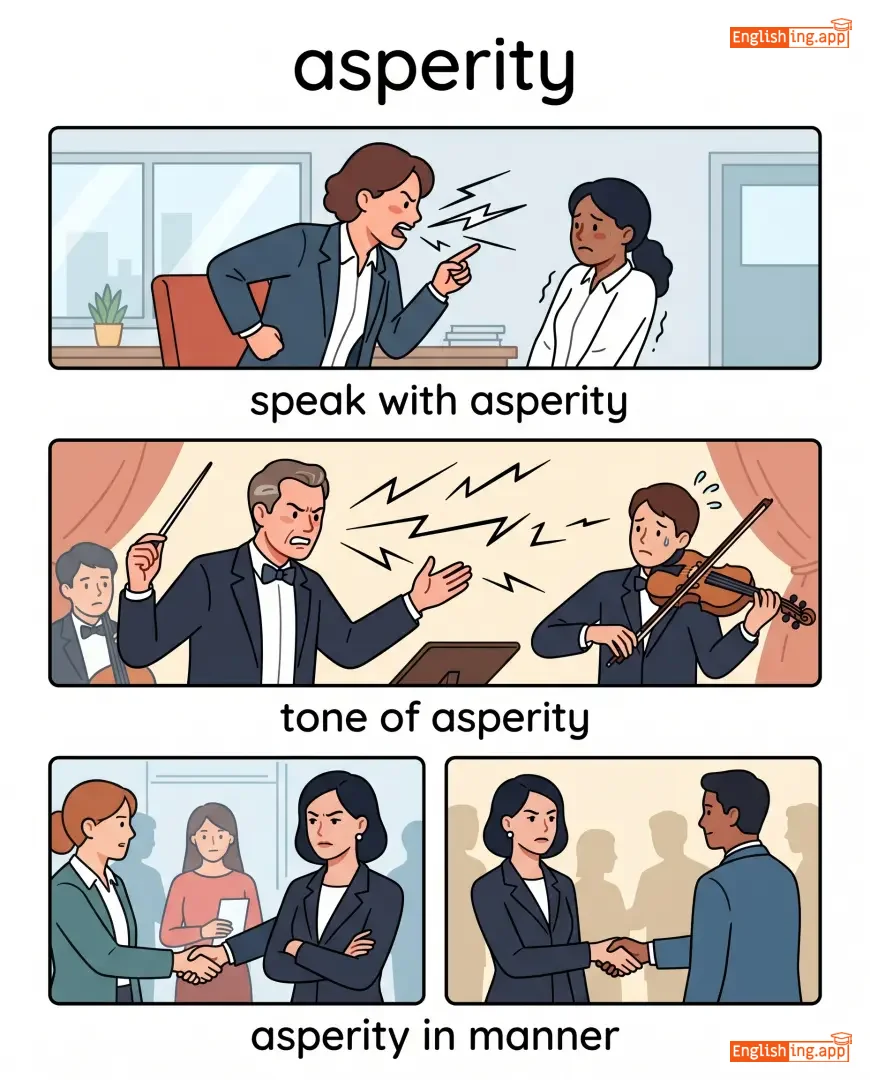
|
She spoke with asperity when she was interrupted. |
- •••••• | - •••••• | - •••••• | - •••••• |
harshness, severity, sharpness, roughness
••••••
|
gentleness, softness, kindness
••••••
|
speak with asperity, tone of asperity, asperity in manner
••••••
|
No •••••• |
|
#67
🗣️
|
/əˈspɜːr.ʒən/
noun
(阿斯珀森)
••••••
|
|
诽谤
fěibàng
••••••
|
- •••••• | - •••••• | - •••••• | - •••••• |
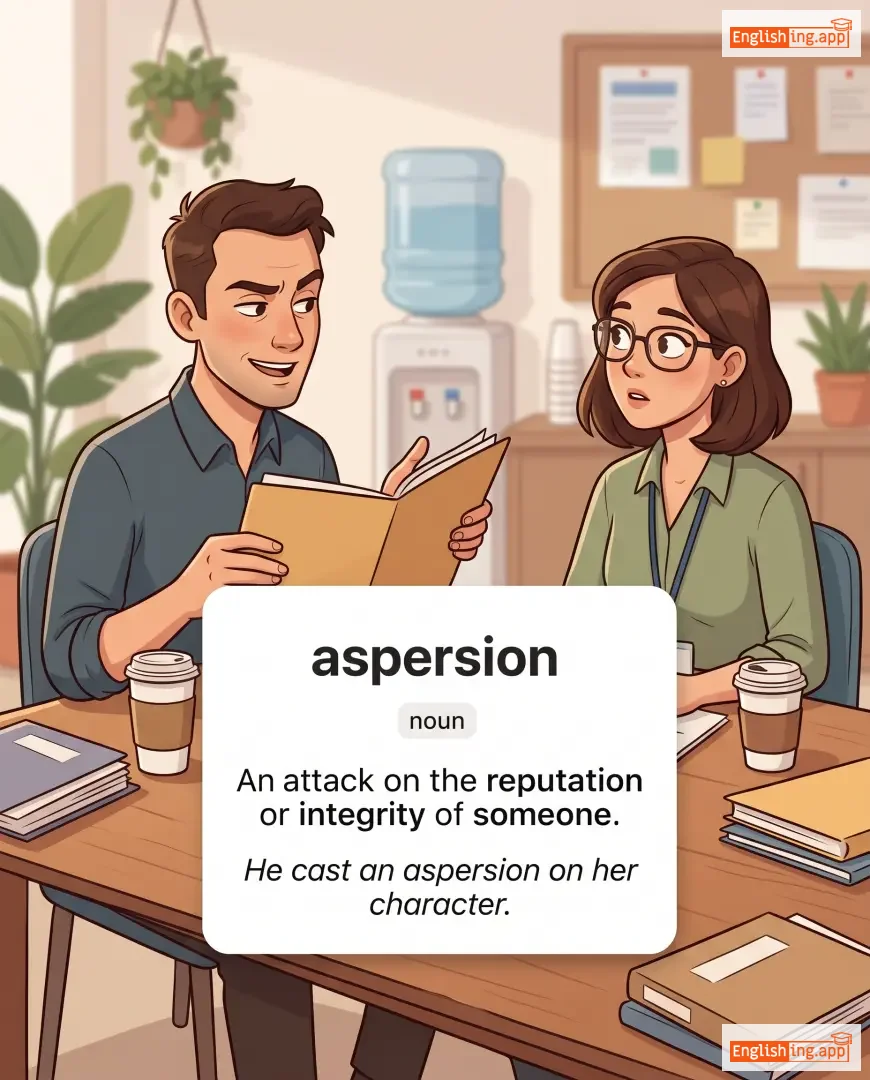
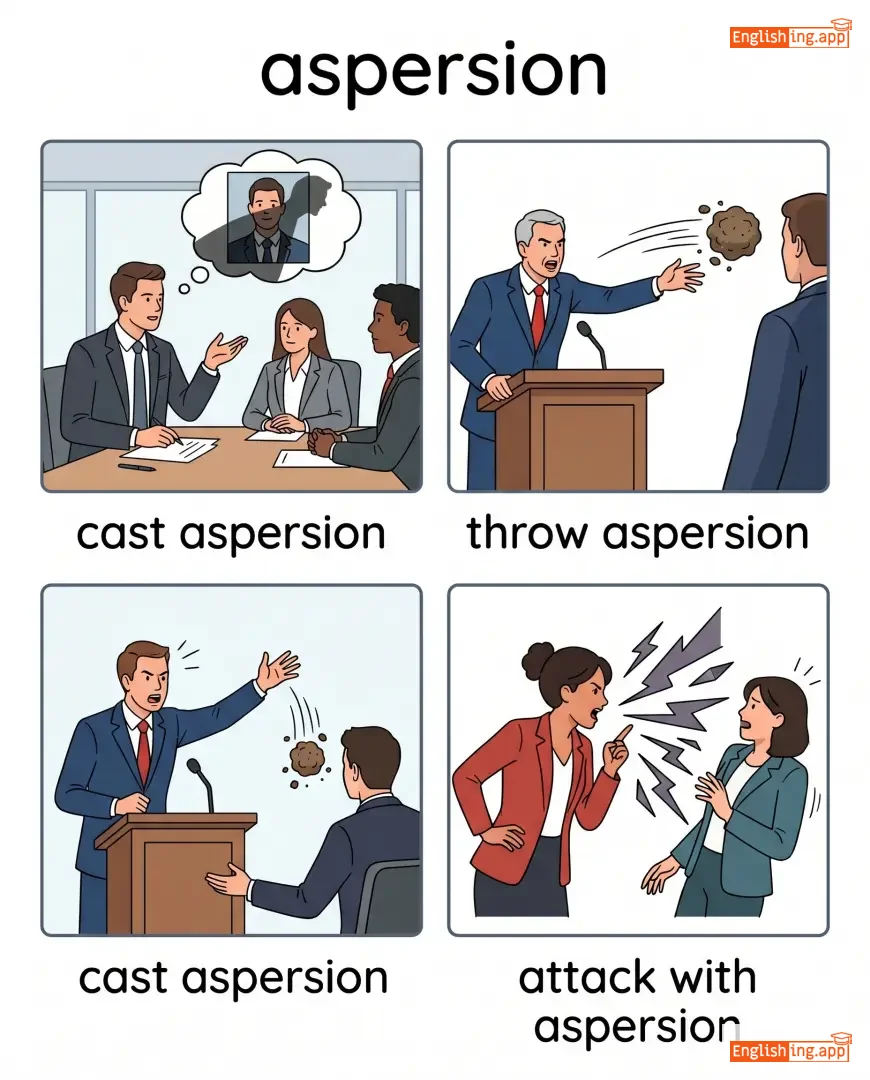
An attack on the reputation or integrity of someone.
••••••
|
He cast an aspersion on her character.
他对她的性格进行了诽谤。
••••••
|
他对她的性格进行了诽谤。
Tā duì tā de xìnggé jìnxíngle fěibàng.
••••••
|
cast aspersions
进行诽谤
••••••
|
to make damaging or critical remarks about someone
••••••
|
进行诽谤
jìnxíng fěibàng
••••••
|
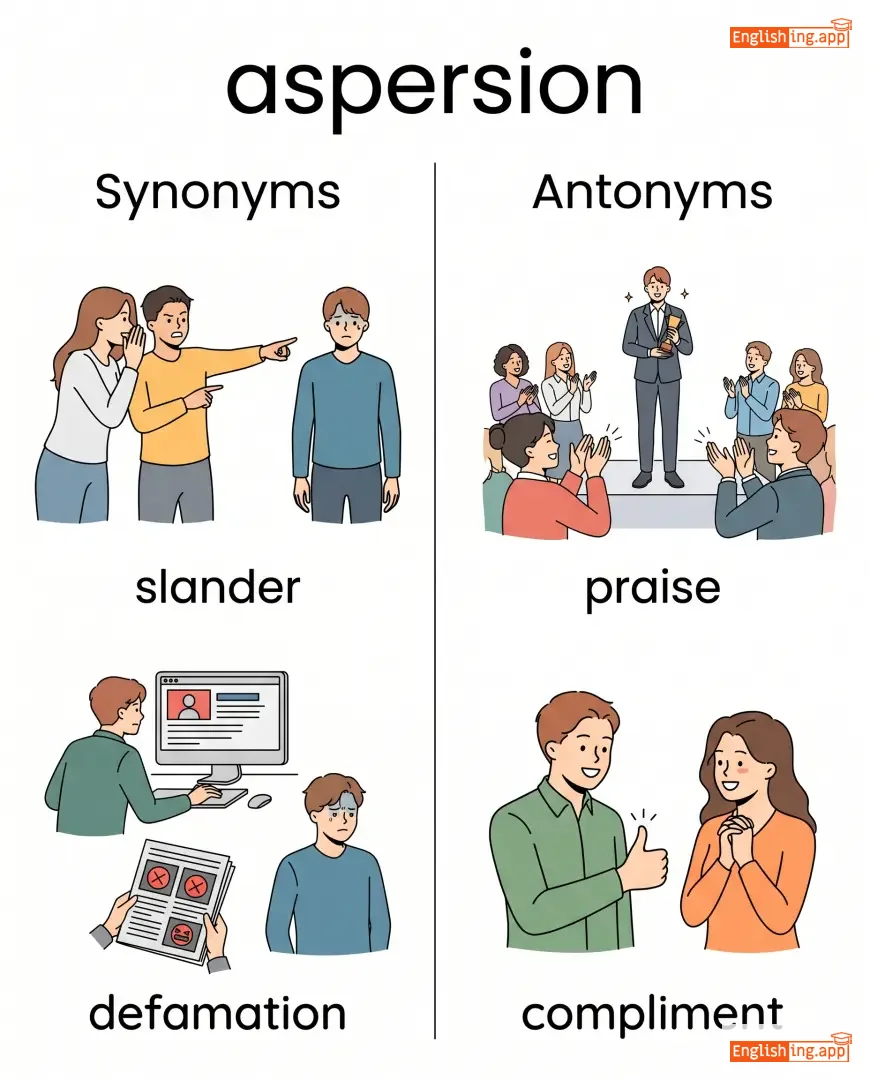
slander, defamation, smear, accusation, criticism
••••••
|
praise, compliment, approval
••••••
|
cast aspersion, throw aspersion, attack with aspersion
••••••
|
Aspersion是诽谤的意思,破坏名誉。
••••••
|
|
#68
📚
|
/əˈsɪdʒuəs/
adjective
(阿西迪乌斯)
••••••
|
|
勤奋的
qinfen de
••••••
|
- •••••• | - •••••• | - •••••• | - •••••• |
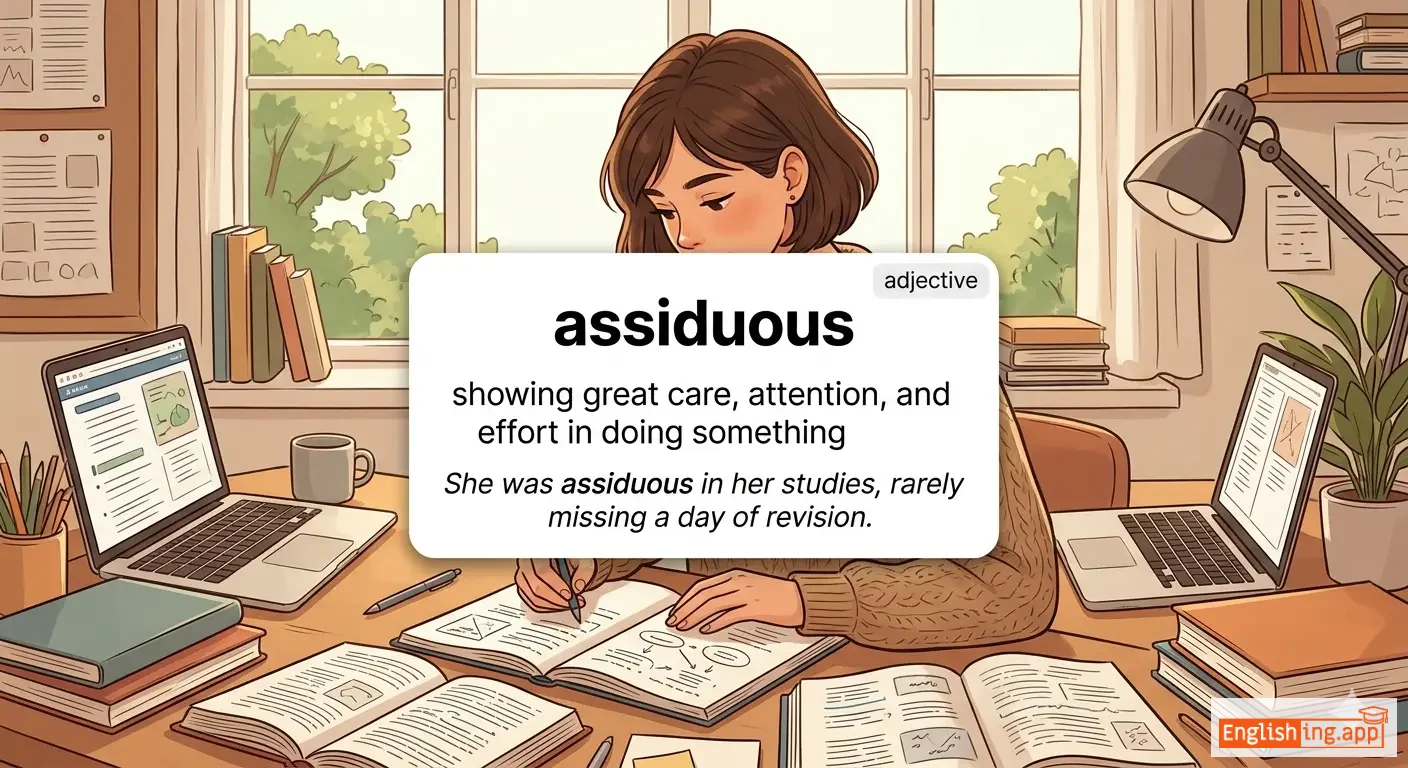
showing great care, attention, and effort in doing something
••••••
|
She was assiduous in her studies, rarely missing a day of revision. |
她在学习上很勤奋,几乎从不缺课。
Ta zai xuexi shang hen qinfen, jihu cong bu que ke.
••••••
|
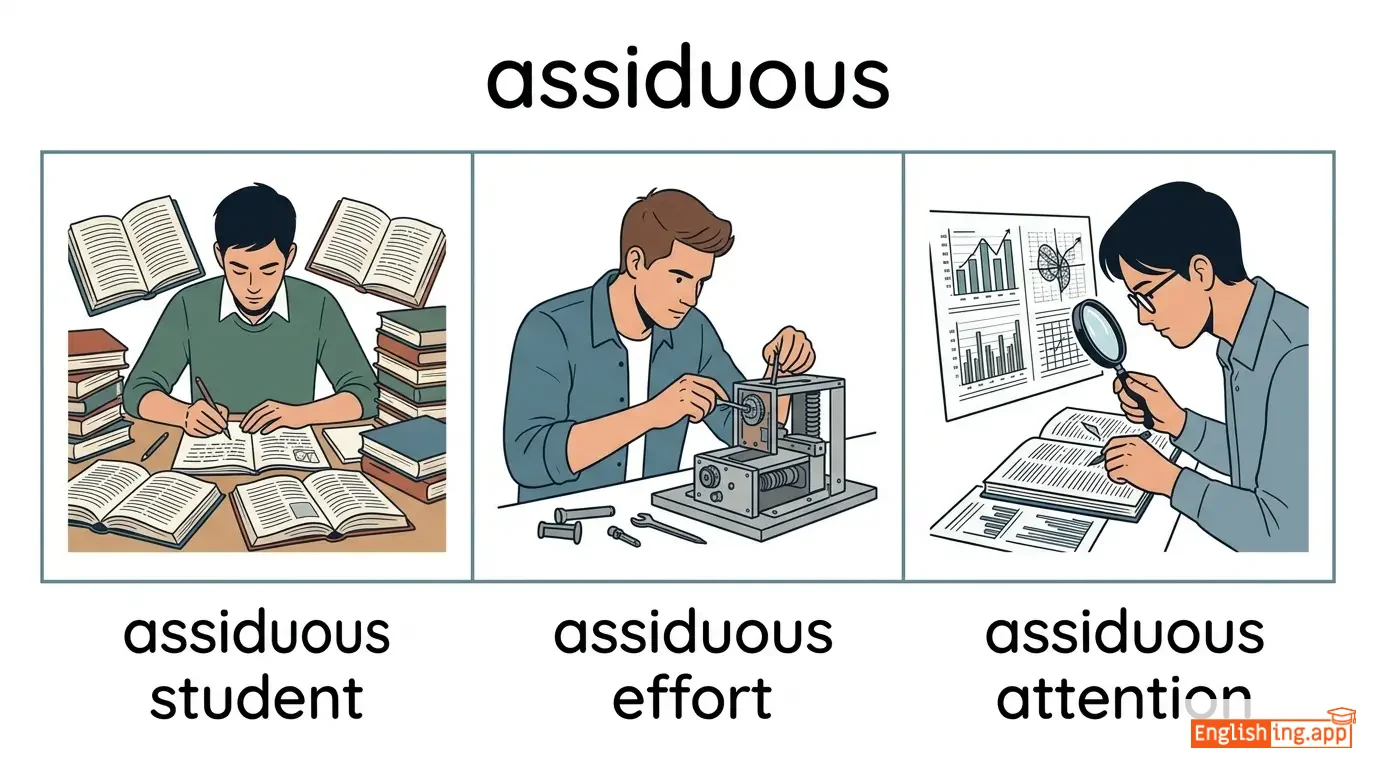
assiduous effort |
persistent and careful effort
••••••
|
勤奋的努力
qinfen de nuli
••••••
|
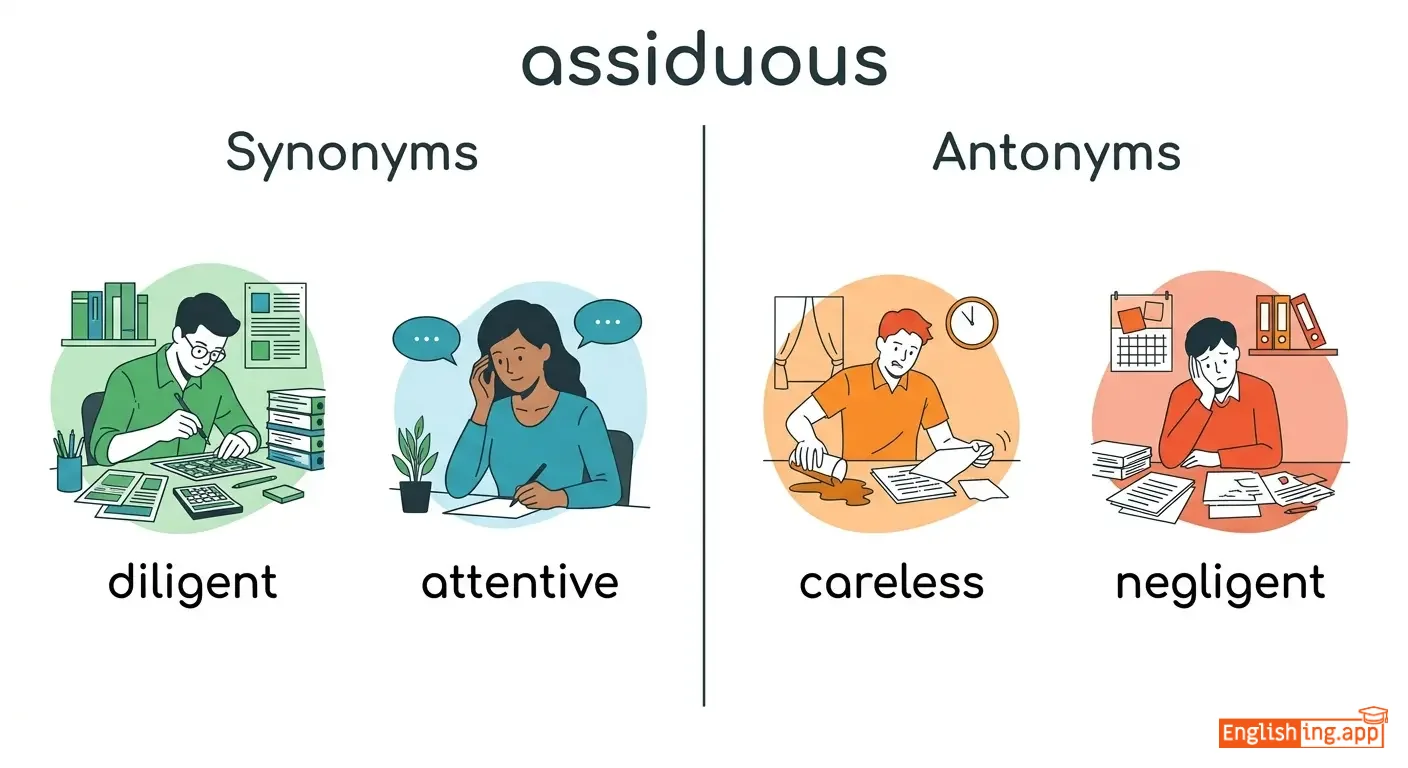
diligent, attentive, careful, industrious, meticulous
••••••
|
careless, negligent, lazy
••••••
|
assiduous student, assiduous effort, assiduous attention, assiduous care
••••••
|
Assiduous就是勤奋的—每一天都努力,像个勤奋的学生。
••••••
|
|
#69
😌
|
/əˈsweɪdʒ/
verb
(àsuìjié)
••••••
|
|
缓解
huǎn jiě
••••••
|
assuaged
àsuìjiéd
••••••
|
assuaged
àsuìjiéd
••••••
|
assuages
àsuìjiés
••••••
|
assuaging
àsuìjiéng
••••••
|
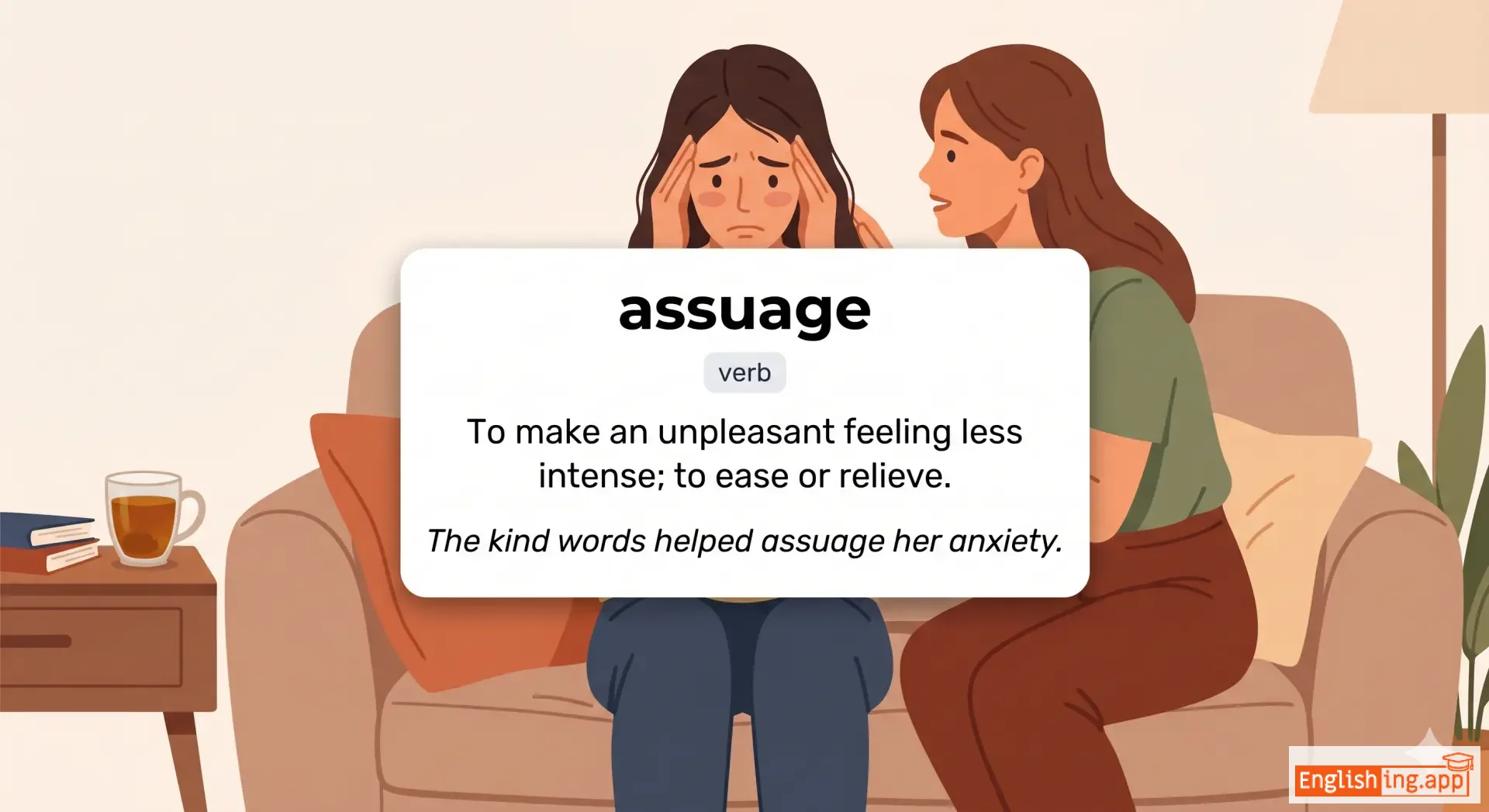
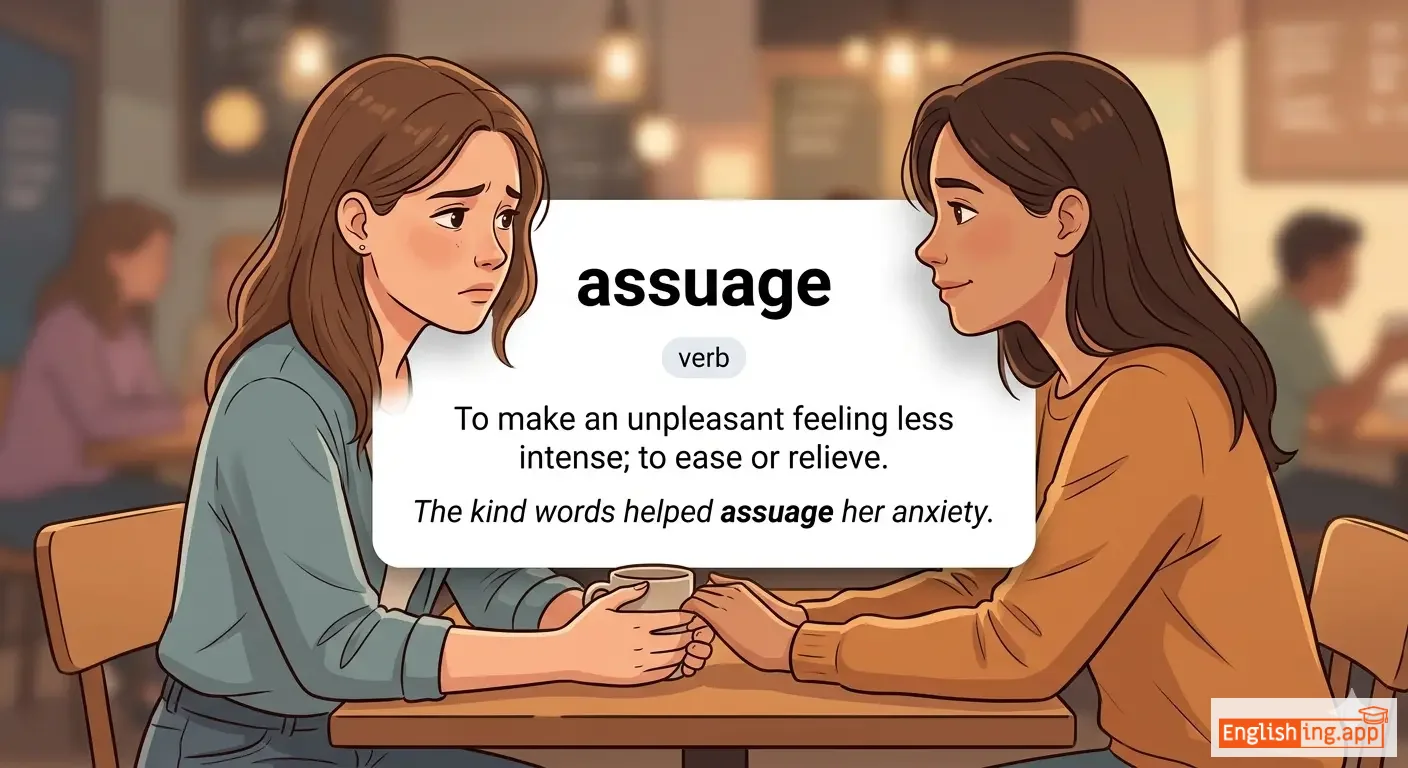
To make an unpleasant feeling less intense; to ease or relieve.
••••••
|
The kind words helped assuage her anxiety.
善意的话帮助缓解了她的焦虑。
••••••
|
善意的话帮助缓解了她的焦虑。
Shànyì de huà bāngzhù huǎn jiě le tā de jiāolǜ.
••••••
|
assuage one's fears
缓解某人的恐惧
••••••
|
to calm or reduce someone's fears
••••••
|
缓解某人的恐惧
huǎn jiě mǒu rén de kǒng jù
••••••
|
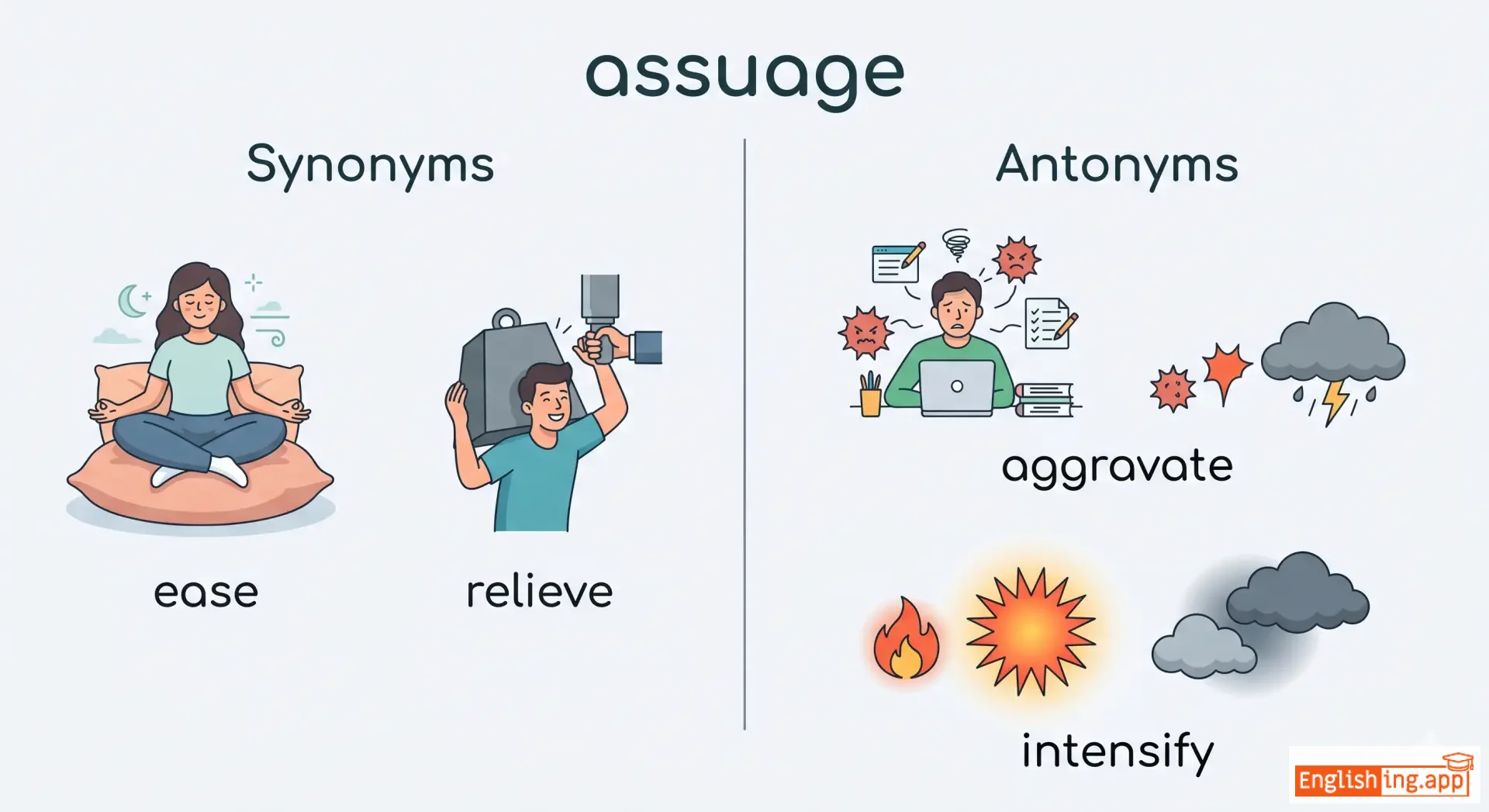
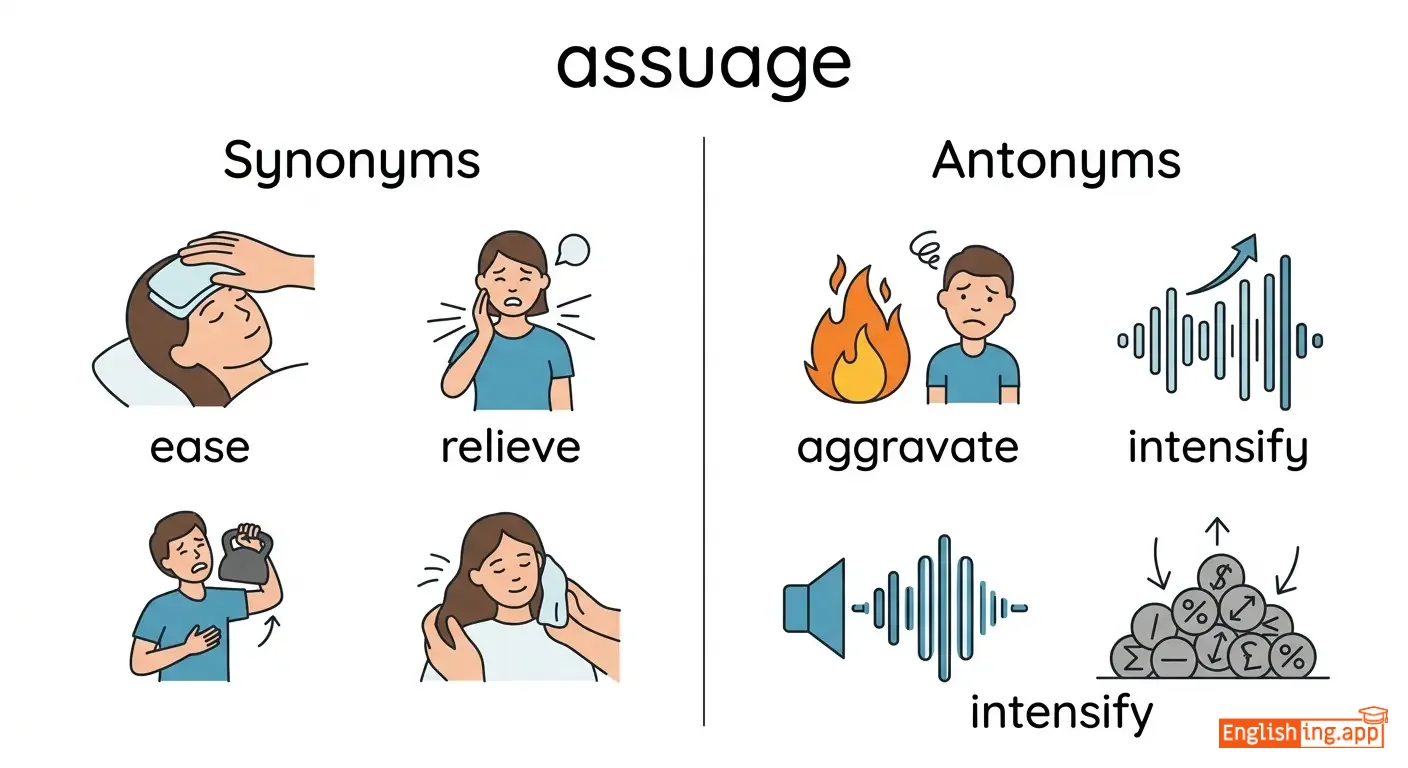
ease, relieve, alleviate, soothe, pacify
••••••
|
aggravate, intensify, worsen
••••••
|
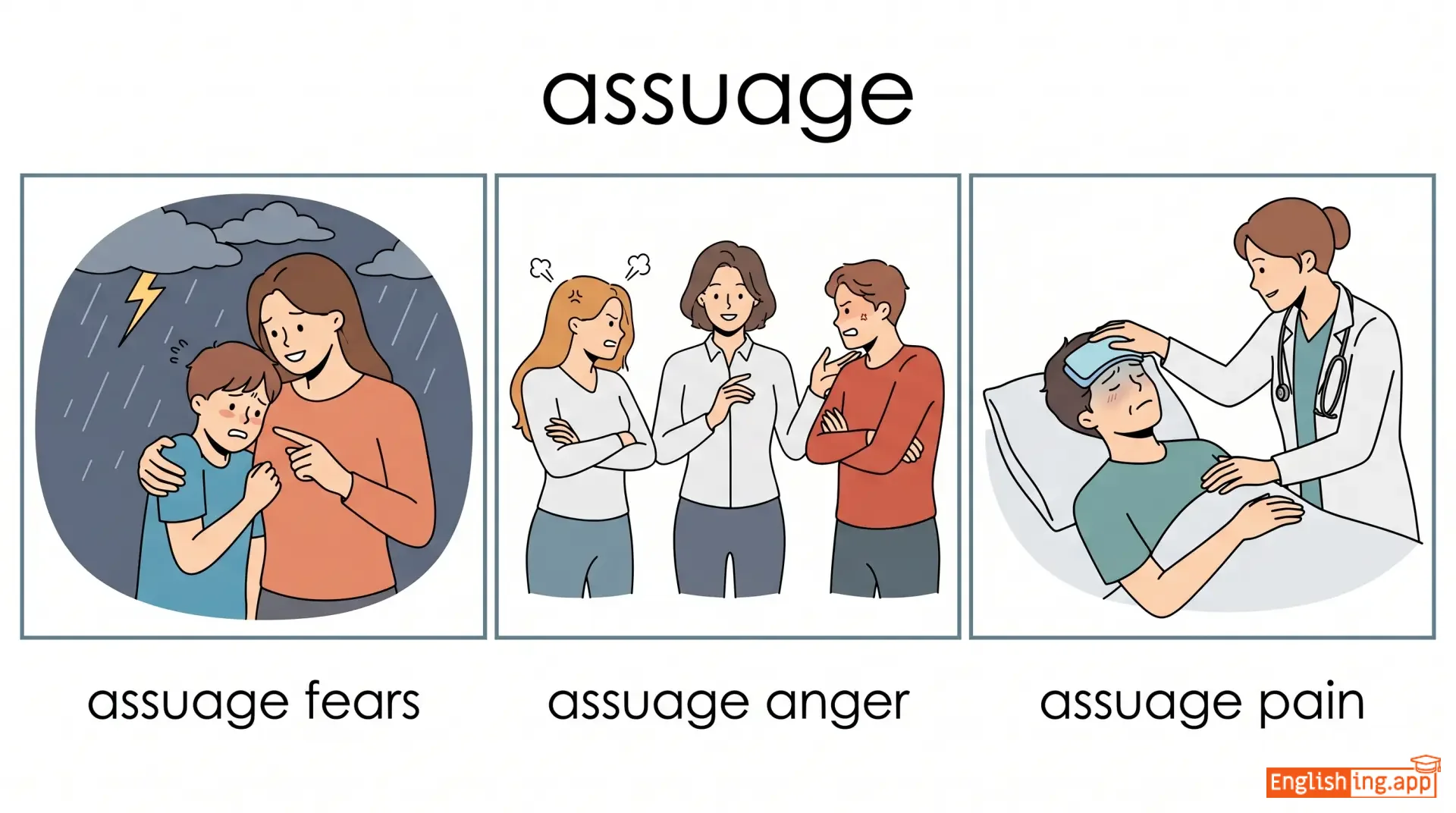
assuage fears, assuage anger, assuage pain
••••••
|
Assuage 意味着 '一种安慰信息' - 安慰信息
••••••
|
|
#70
🍋
|
/əˈstrɪndʒənt/
adjective
(æstrɪndʒənt)
••••••
|
|
严厉的
yanli de
••••••
|
- •••••• | - •••••• | - •••••• | - •••••• |
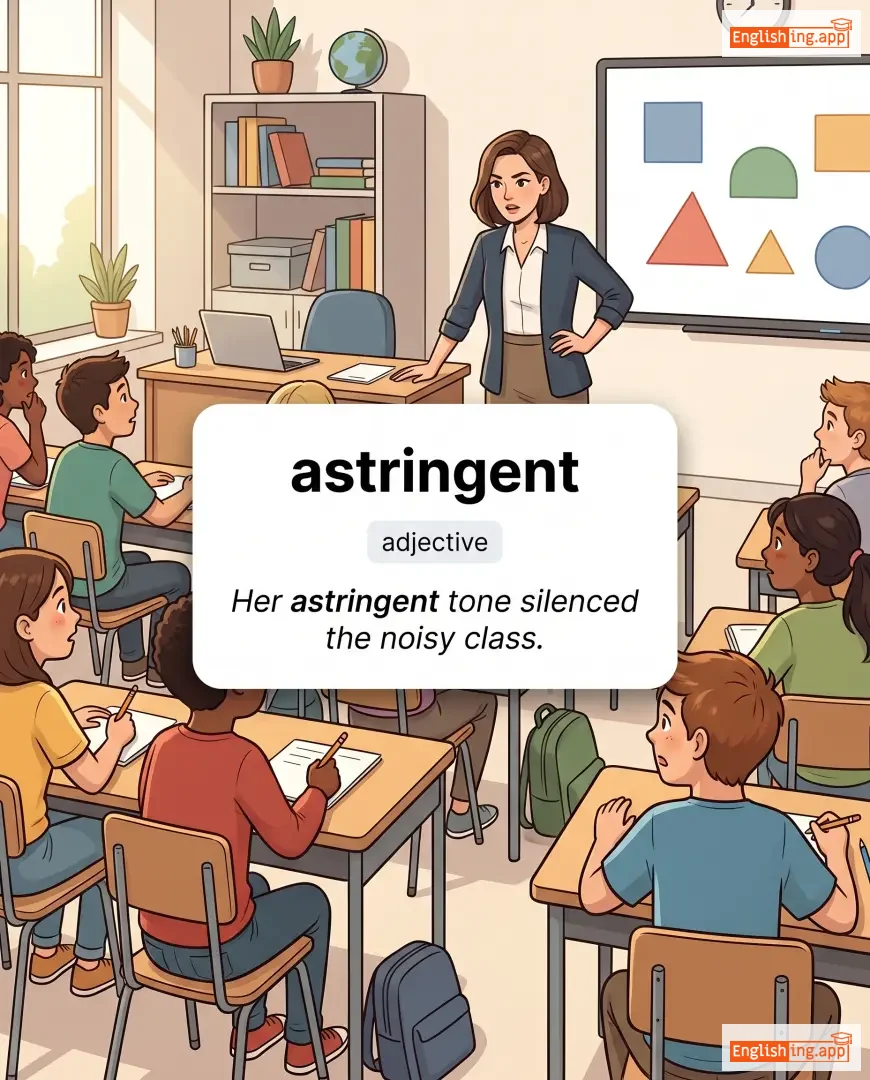
sharp or severe in manner or style; also describes a substance that contracts skin or body tissues
••••••
|
Her astringent tone silenced the noisy class. |
她那严厉的语气让嘈杂的课堂安静下来。
ta na yanli de yuqi rang caozha de ketang anjing xiala
••••••
|
- •••••• | - •••••• | - •••••• |
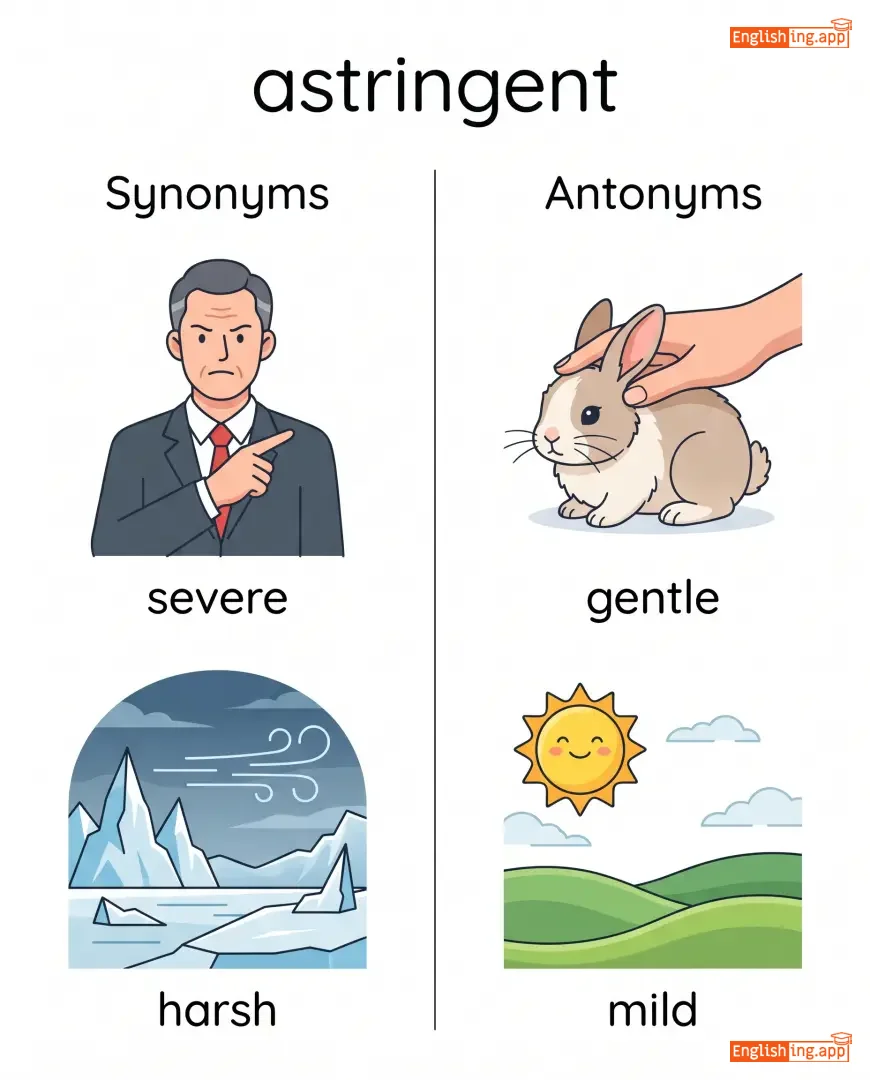
severe, harsh, stern, strict, biting
••••••
|
gentle, mild, lenient
••••••
|
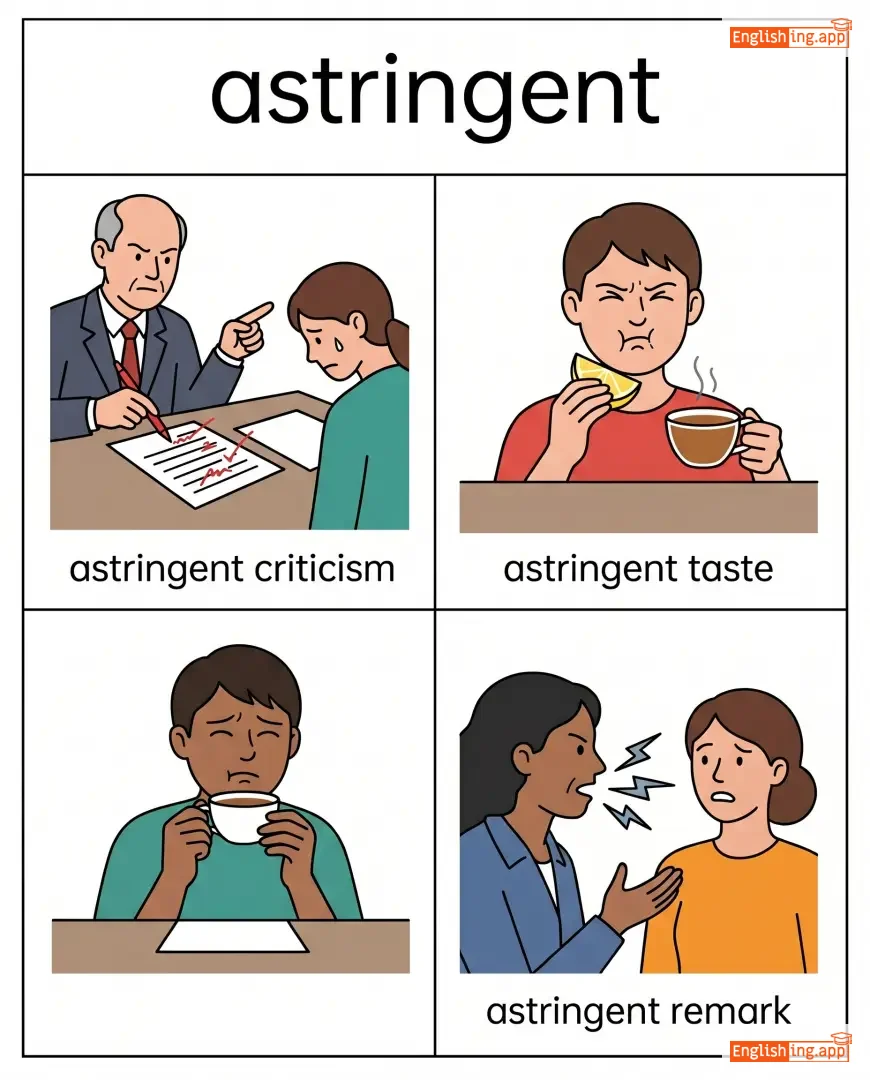
astringent criticism, astringent taste, astringent remark
••••••
|
柠檬的味道非常严厉,就像是严厉的行为,令人记住它的强烈味道
••••••
|
|
#71
🏥
|
/əˈsaɪləm/
noun
(庇护所)
••••••
|
|
庇护所
bìhùsuǒ
••••••
|
- •••••• | - •••••• | - •••••• | - •••••• |
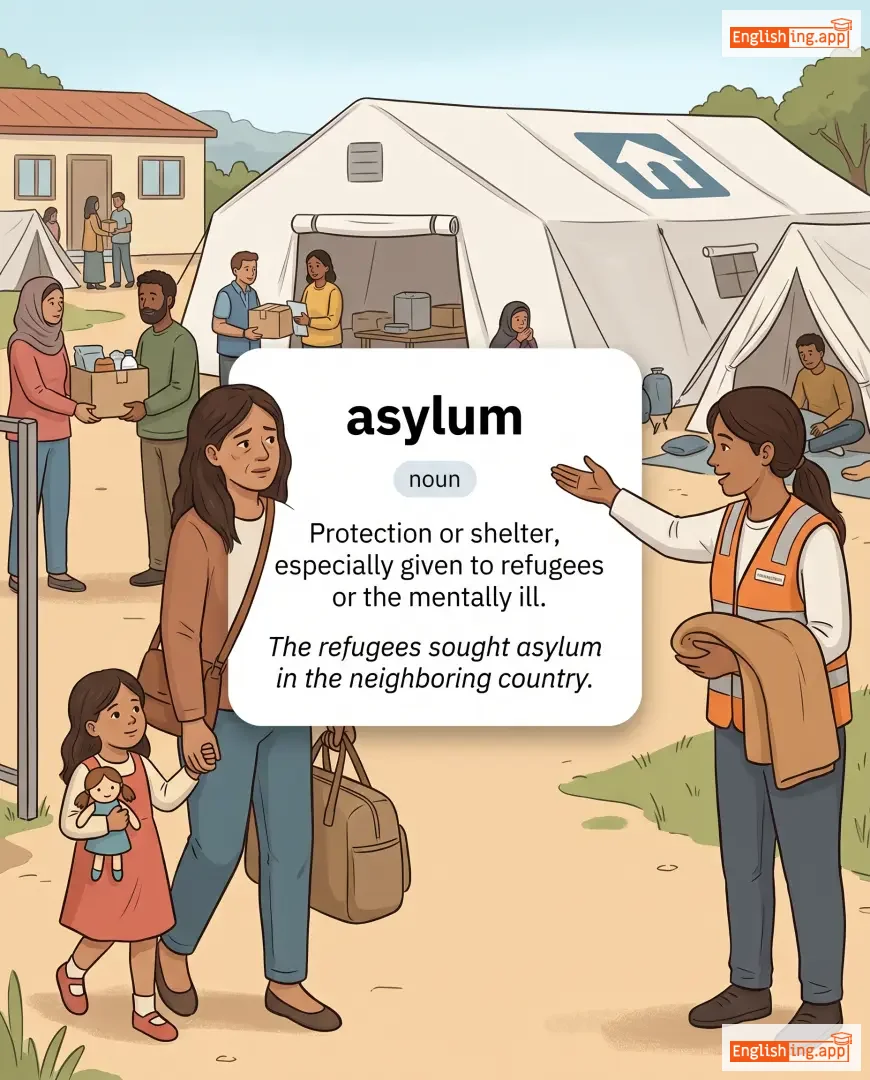
Protection or shelter, especially given to refugees or the mentally ill.
••••••
|
The refugees sought asylum in the neighboring country.
难民在邻国寻求庇护。
••••••
|
难民在邻国寻求庇护。
Nànmín zài lín guó xúnqiú bìhù.
••••••
|
seek asylum
寻求庇护
••••••
|
To formally request protection in another country.
••••••
|
寻求庇护
xúnqiú bìhù
••••••
|
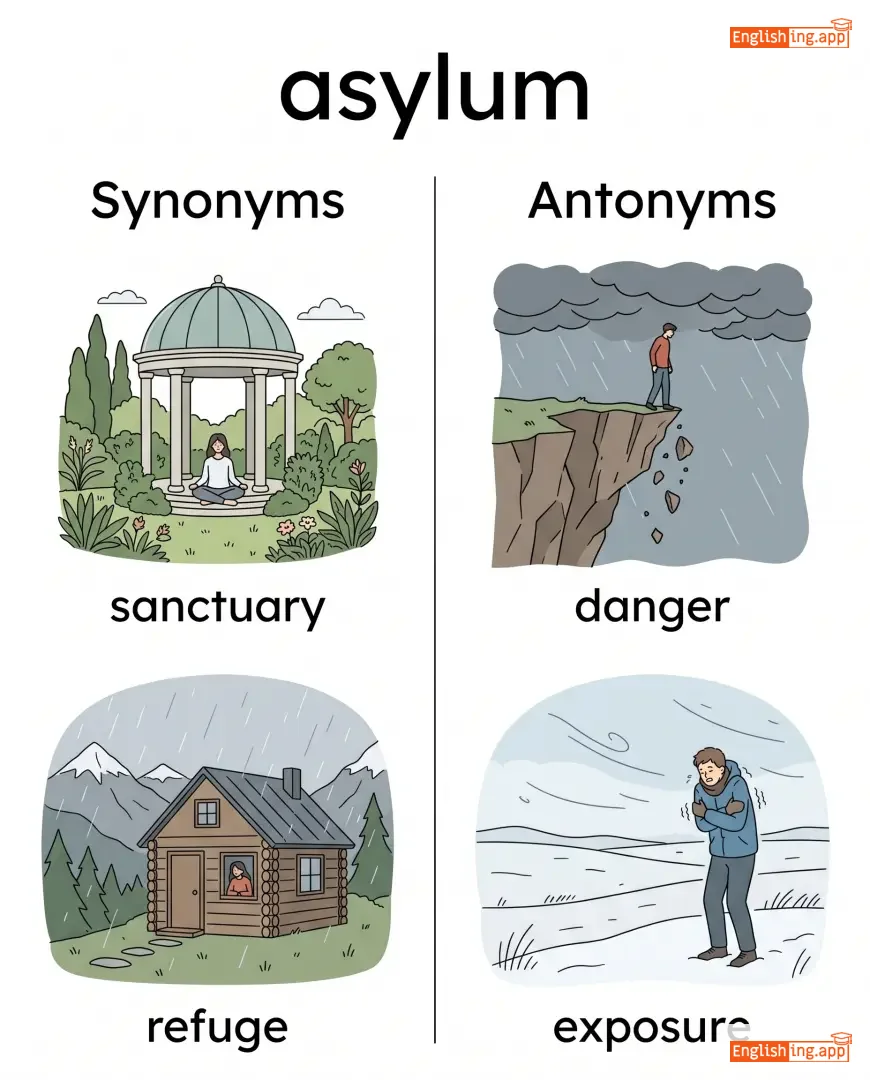
sanctuary, refuge, shelter, haven, protection
••••••
|
danger, exposure, threat
••••••
|
grant asylum, political asylum, seek asylum, asylum seeker
••••••
|
庇护所意味着一个为需要保护的人提供安全的地方。
••••••
|
|
#72
🧬
|
/ˈætəvɪzəm/
noun
(遗传性特征复发)
••••••
|
|
返祖现象
fǎn zǔ xiànxiàng
••••••
|
- •••••• | - •••••• | - •••••• | - •••••• |
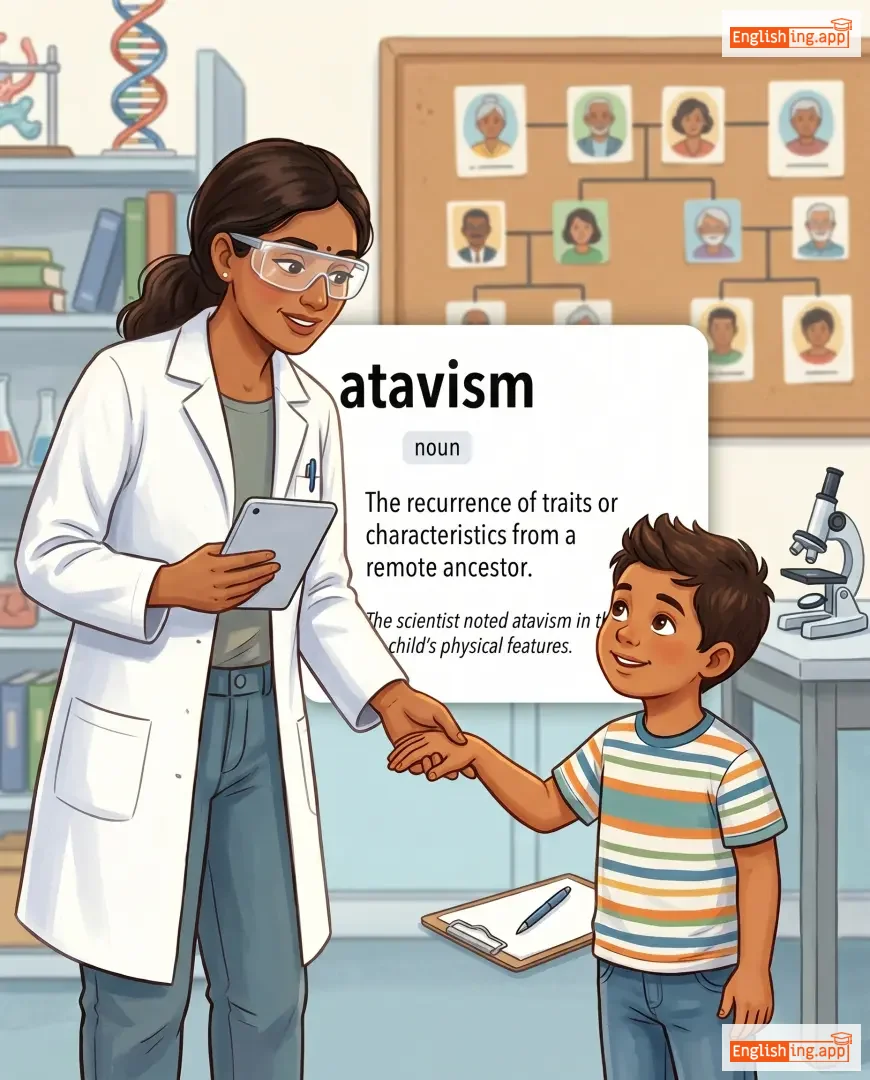
The recurrence of traits or characteristics from a remote ancestor.
••••••
|
The scientist noted atavism in the child’s physical features. |
科学家在孩子的生理特征中观察到返祖现象。
Kēxuéjiā zài háizi de shēnglǐ tèzhēng zhōng guānchá dào fǎn zǔ xiànxiàng.
••••••
|
- •••••• | - •••••• | - •••••• |
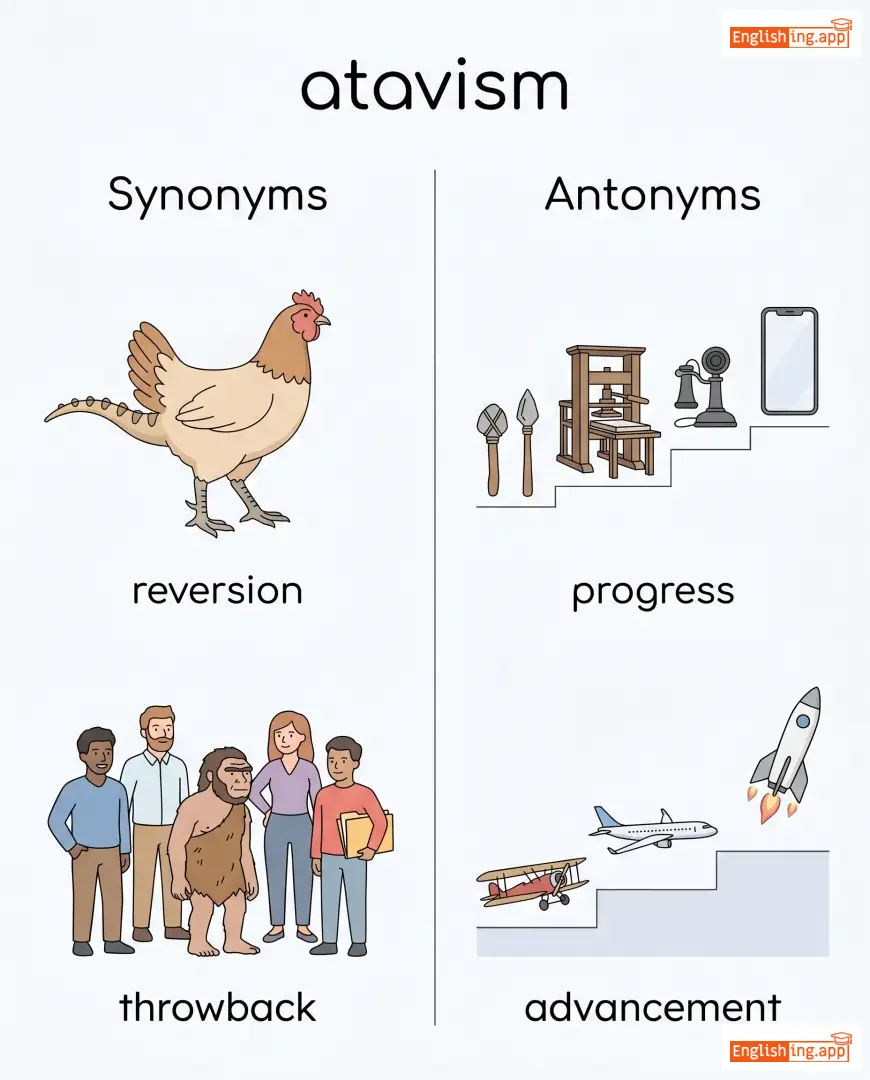
reversion, throwback, regression, recurrence
••••••
|
progress, advancement, innovation
••••••
|
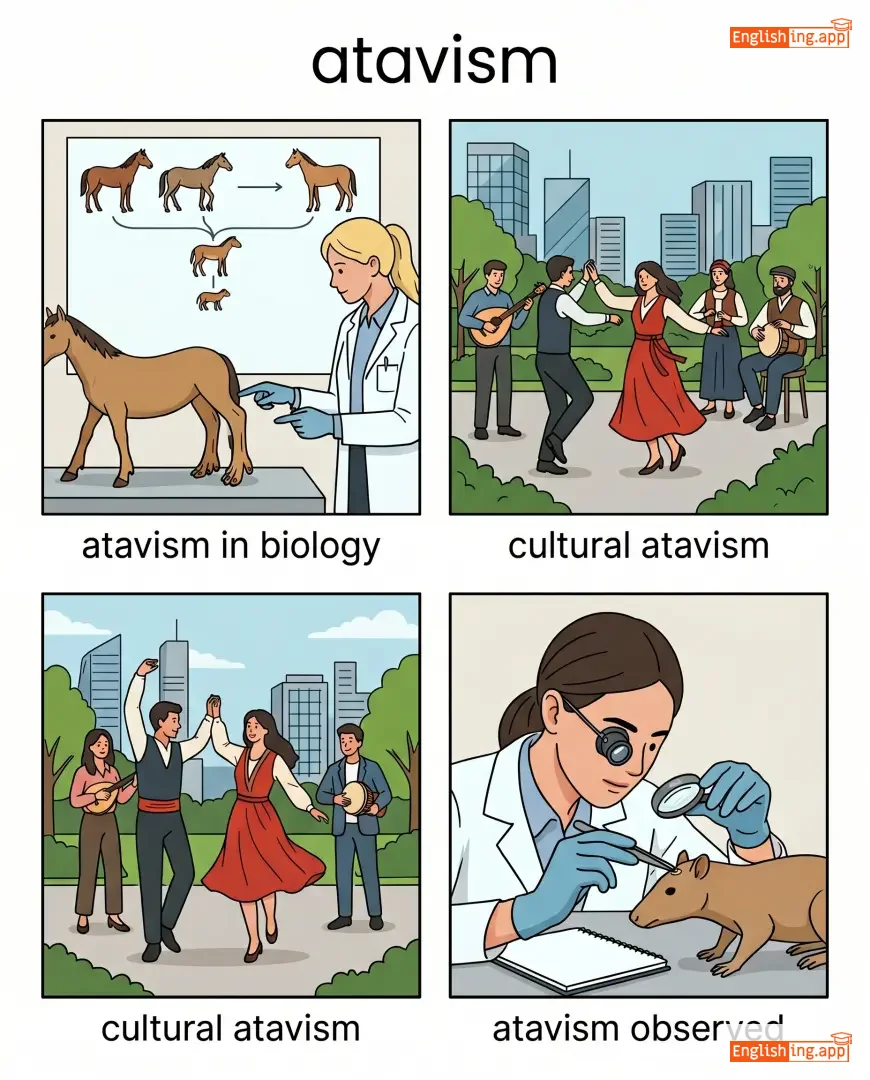
atavism in biology, cultural atavism, atavism observed
••••••
|
返祖现象是祖先的特征重新出现。
••••••
|
|
#73
🔽
|
/əˈtɛnjueɪt/
verb
(减弱)
••••••
|
|
减弱
jian ruo
••••••
|
attenuated
减弱了
••••••
|
attenuated
减弱了
••••••
|
attenuates
减弱
••••••
|
attenuating
减弱中
••••••
|
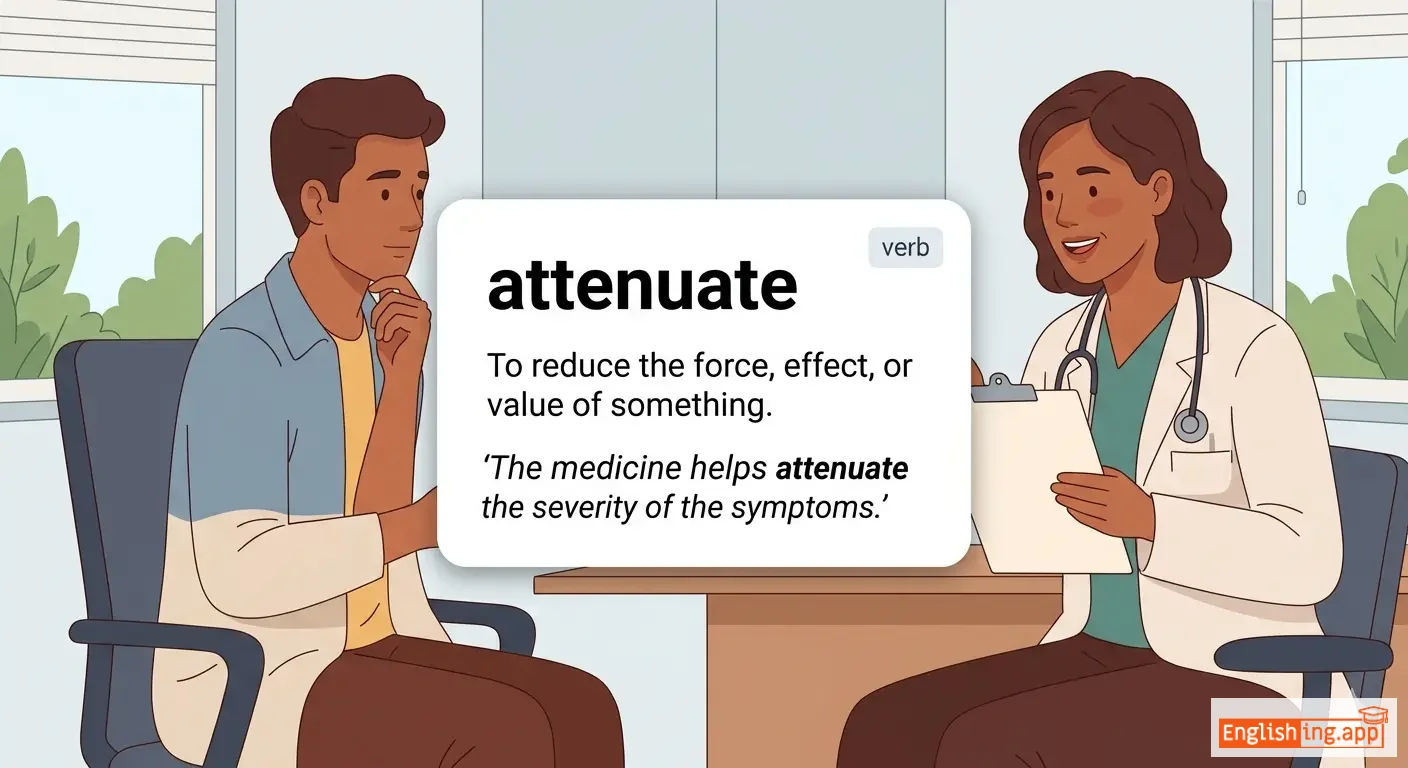
To reduce the force, effect, or value of something.
••••••
|
The medicine helps attenuate the severity of the symptoms.
这种药物有助于减轻症状的严重性。
••••••
|
这种药物有助于减轻症状的严重性。
Zhe zhong yao wu you zhu yu jian qing zheng zhuang de yan zhong xing.
••••••
|
- •••••• | - •••••• | - •••••• |
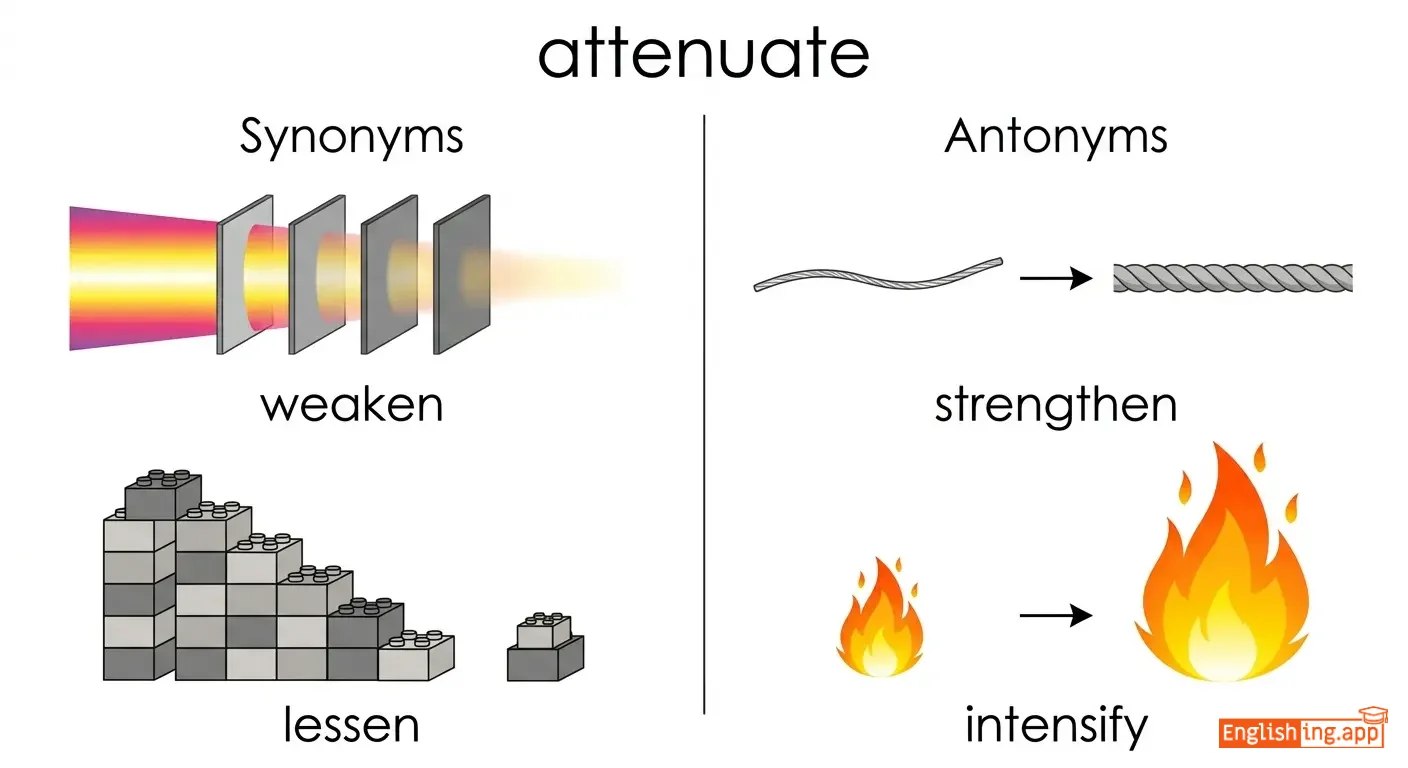
weaken, lessen, diminish, dilute, reduce
••••••
|
strengthen, intensify
••••••
|
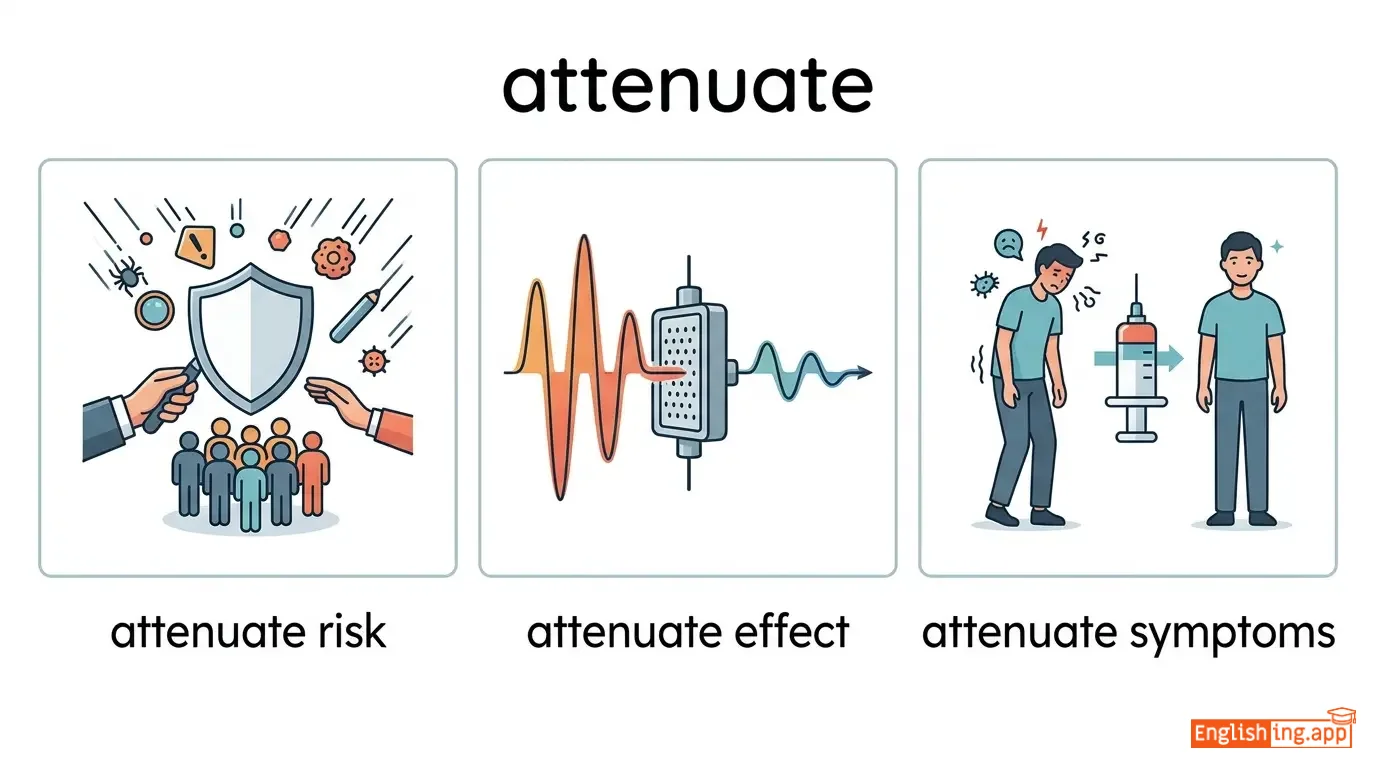
attenuate risk, attenuate effect, attenuate symptoms
••••••
|
Attenuate = 减弱 → 减弱.
••••••
|
|
#74
🦁
|
/ɔːˈdeɪ.ʃəs/
adjective
(奥德修斯)
••••••
|
|
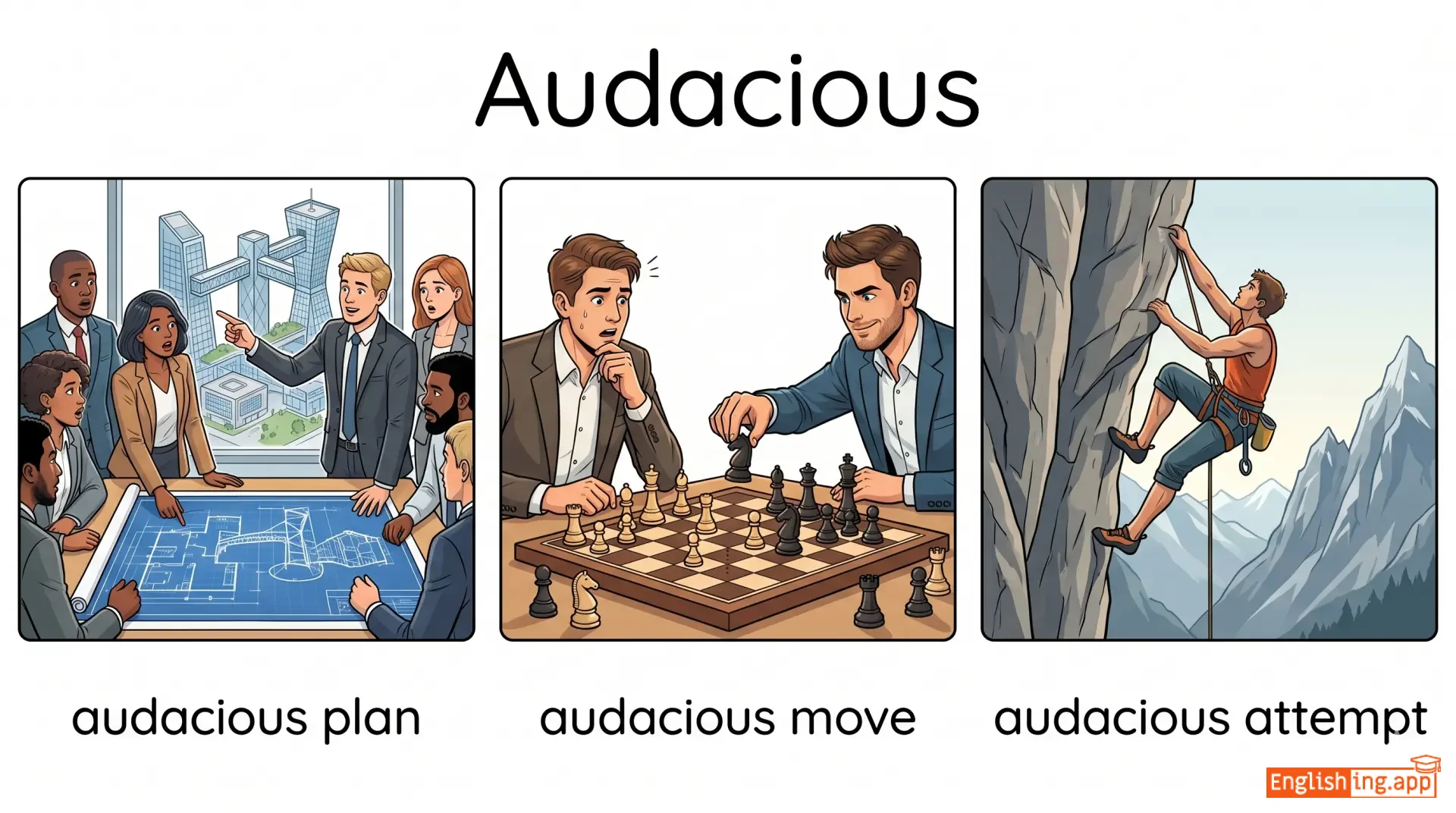
大胆
dàdǎn
••••••
|
- •••••• | - •••••• | - •••••• | - •••••• |
showing willingness to take bold risks; daring
••••••
|
His audacious plan to climb the mountain without proper equipment shocked everyone. |
他毫不犹豫地提出了一个大胆的计划,要在没有适当设备的情况下攀登这座山,令所有人震惊。
Tā háo bù yóuyù dì tíchūle yīgè dàdǎn de jìhuà, yào zài méiyǒu shìdàng shèbèi de qíngkuàng xià pān dēng zhè zuò shān, lìng suǒyǒu rén zhènjīng.
••••••
|
- •••••• | - •••••• | - •••••• |
bold, daring, fearless, brave
••••••
|
timid, cautious, careful, cowardly
••••••
|
audacious plan, audacious move, audacious behavior
••••••
|
大胆 = '大'表示大, '胆'表示胆量, 一个人勇敢面对所有挑战
••••••
|
|
#75
🥋
|
/ɔːˈstɪə/
adjective
(奥斯特)
••••••
|
|
严格,简朴
ying2 ge2, jian3 pu3
••••••
|
- •••••• | - •••••• | - •••••• | - •••••• |
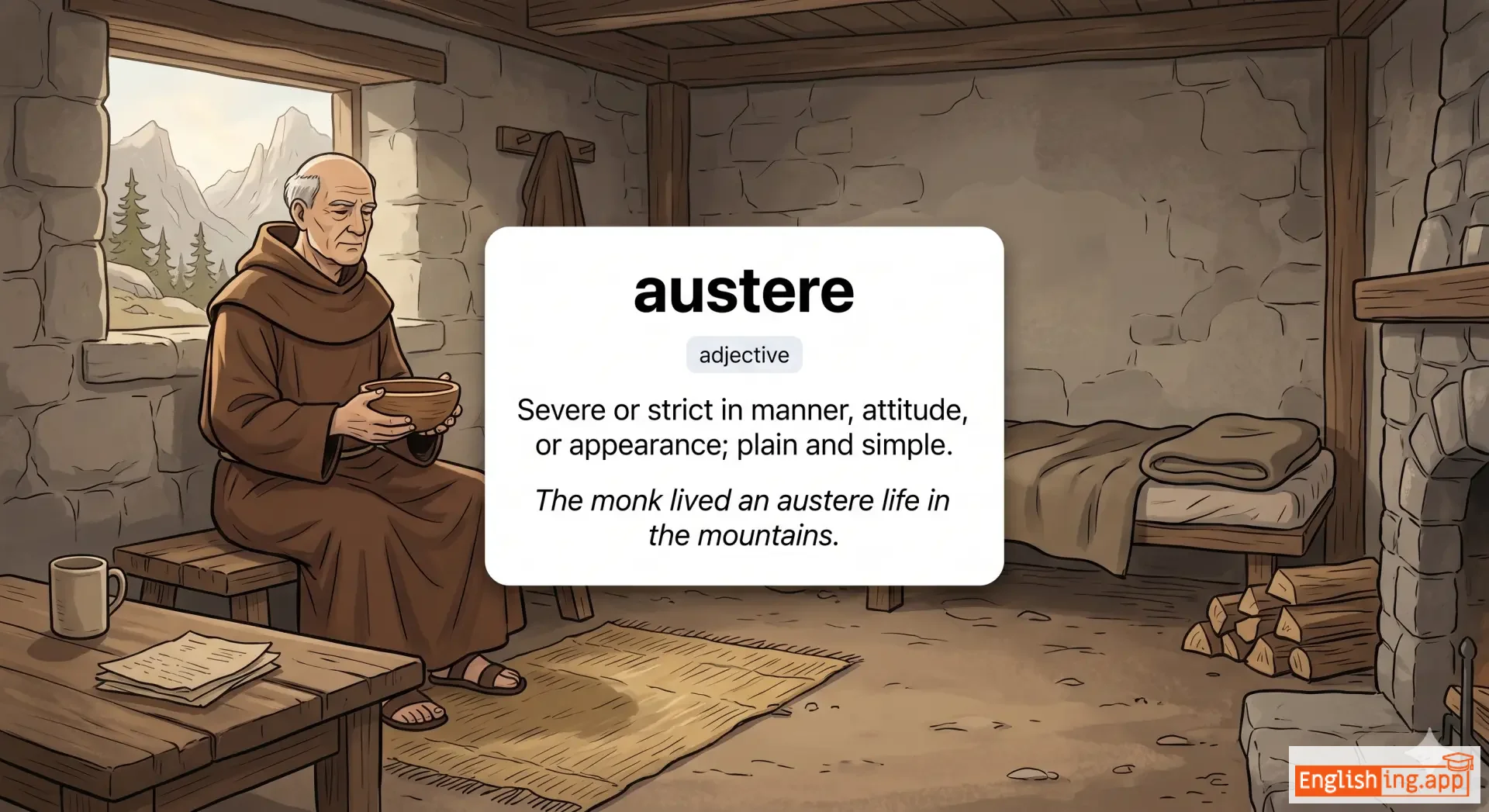
Severe or strict in manner, attitude, or appearance; plain and simple.
••••••
|
The monk lived an austere life in the mountains. |
和尚在山中过着严格的生活。
He shang zai shan zhong guo zhe ying2 ge2 de shenghuo.
••••••
|
- •••••• | - •••••• | - •••••• |
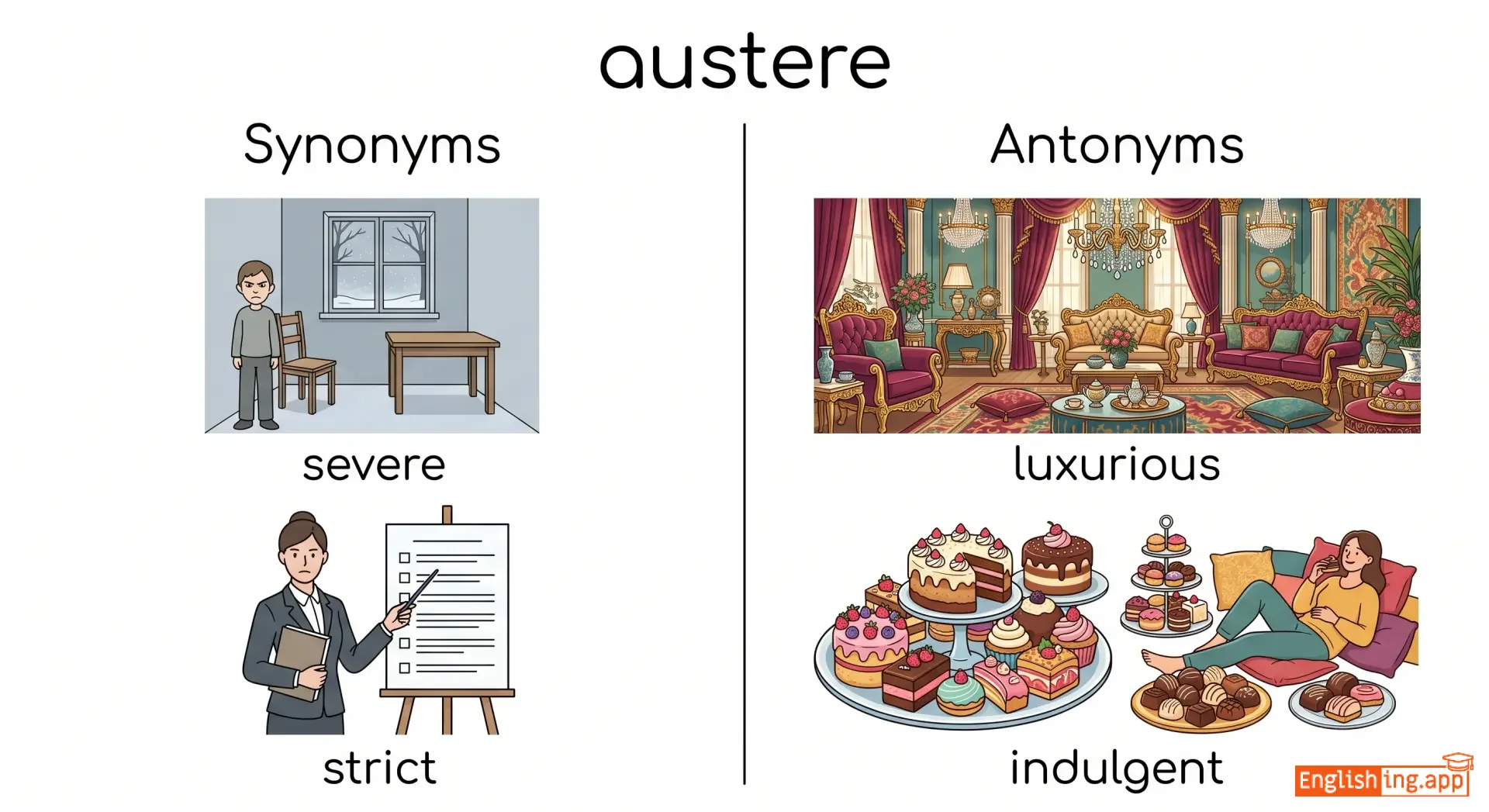
severe, strict, stern, simple, plain
••••••
|
luxurious, indulgent, elaborate
••••••
|
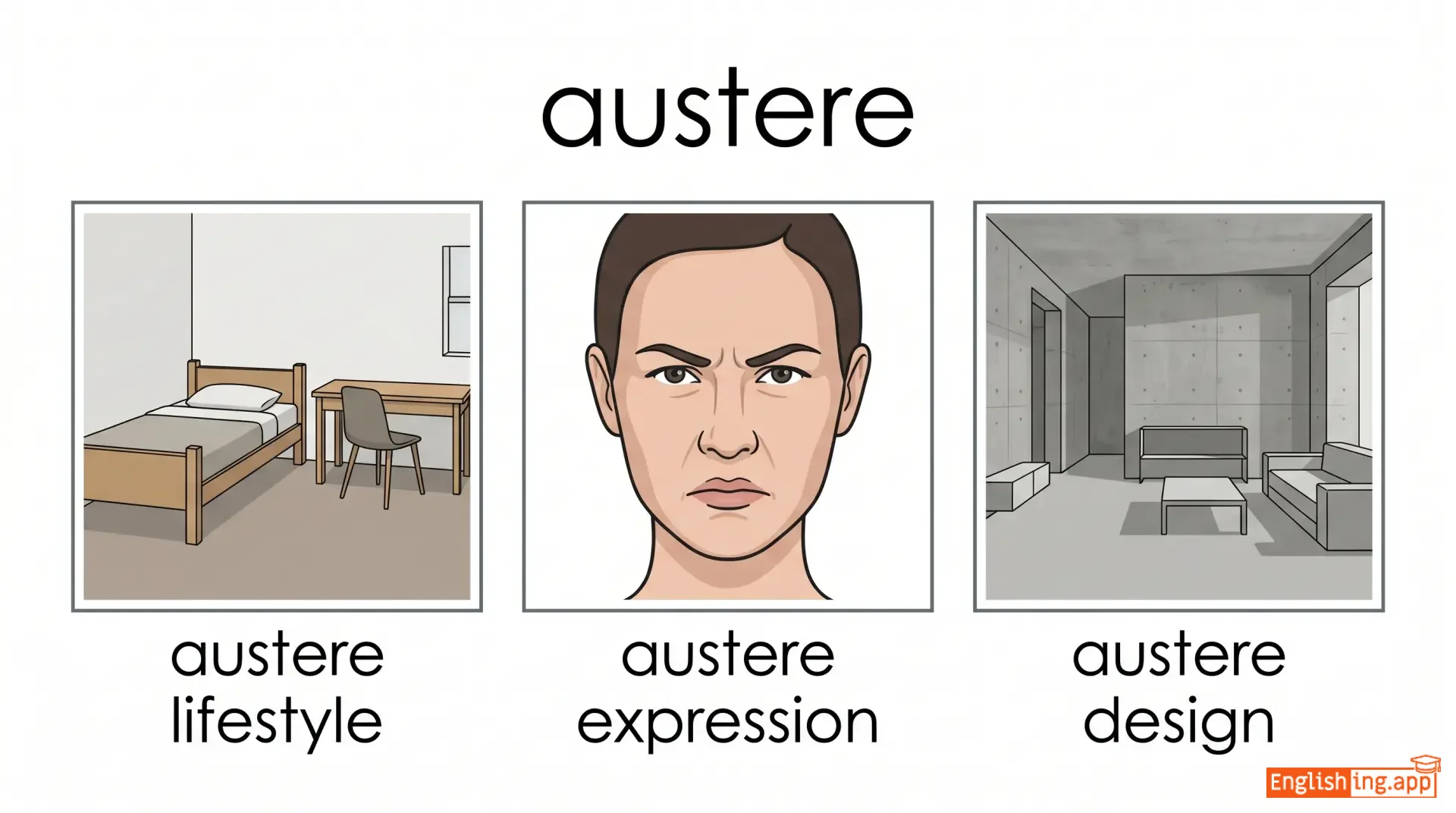
austere lifestyle, austere expression, austere design
••••••
|
Austere代表严格,不奢华,只追求简单。
••••••
|
Vocabulary Quiz
Test your vocabulary by matching words with their translations or meanings.
Login to take the quiz
Comments (0)
Share your thoughts and join the discussion.
Join the discussion by logging in
Login to CommentNo comments yet
Be the first to share your thoughts!