






Swipe left or right, or use the buttons. Tap image to zoom.
例句翻译
单词
Lesson 2Lesson 2 - 遮罩切换
|
表情符号
|
单词 | Images | 翻译 | 过去时 | 过去分词 | 第三人称单数 | 动名词 | 含义 | 例句 | 例句翻译 | 示例表达 | 示例表达含义 | 示例表达翻译 | 同义词 | 反义词 | 搭配词 | 助记符 |
|---|---|---|---|---|---|---|---|---|---|---|---|---|---|---|---|---|---|
|
#26
💊
|
/əˈliːvieɪt/
verb
(缓解)
••••••
|
|
缓解
huanjie
••••••
|
alleviated
缓解了
••••••
|
alleviated
缓解了
••••••
|
alleviates
缓解
••••••
|
alleviating
缓解着
••••••
|
to make suffering, pain, or a problem less severe
••••••
|
The medicine helped alleviate her headache.
药物帮助缓解了她的头痛。
••••••
|
药物帮助缓解了她的头痛。
Yaowu bangzhu huanjie le tade toutong.
••••••
|
alleviate suffering
缓解痛苦
••••••
|
to reduce someone's suffering
••••••
|
缓解痛苦
huanjie tongku
••••••
|
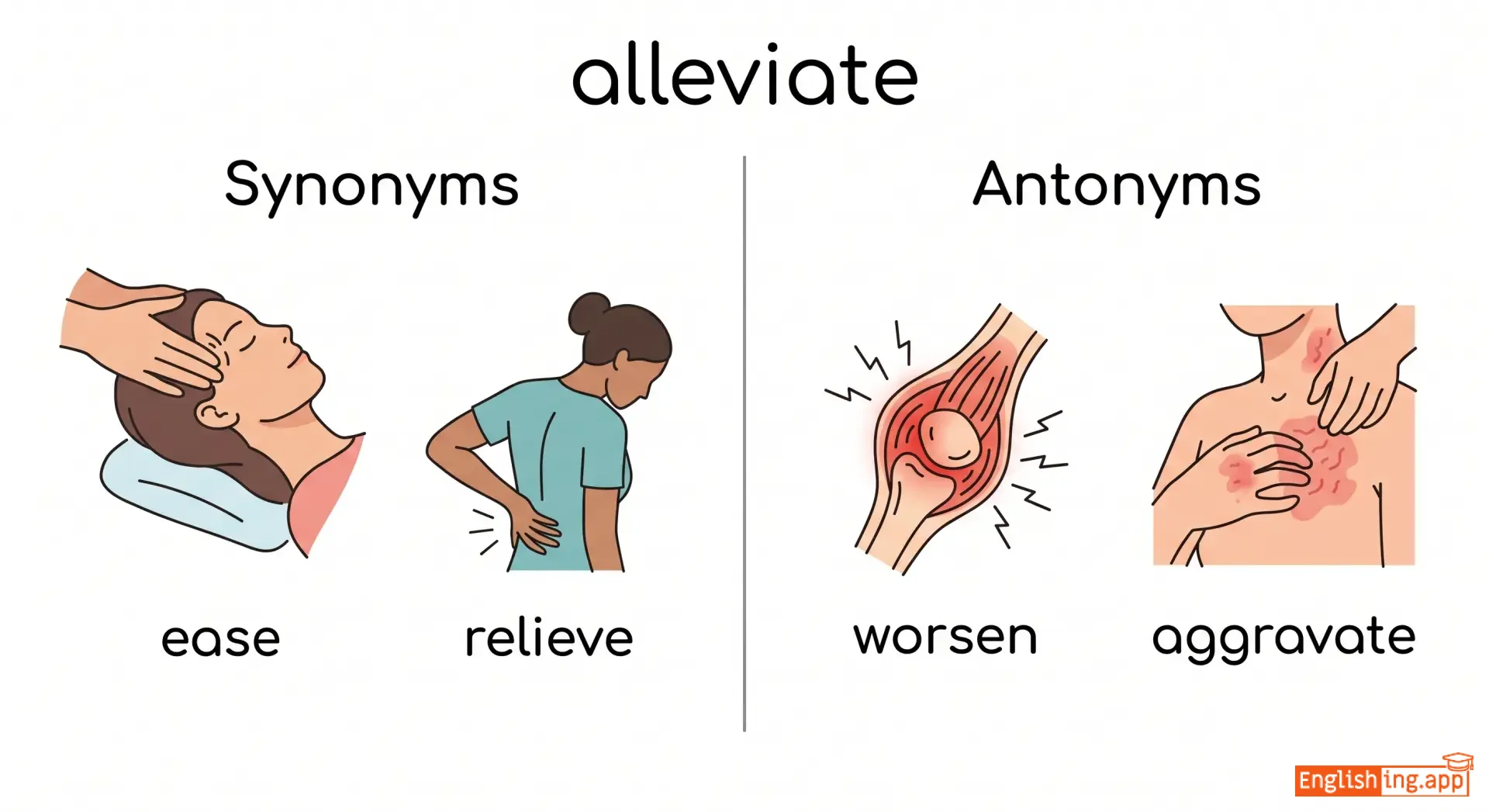
ease, relieve, lessen, mitigate, reduce
••••••
|
worsen, aggravate, intensify
••••••
|
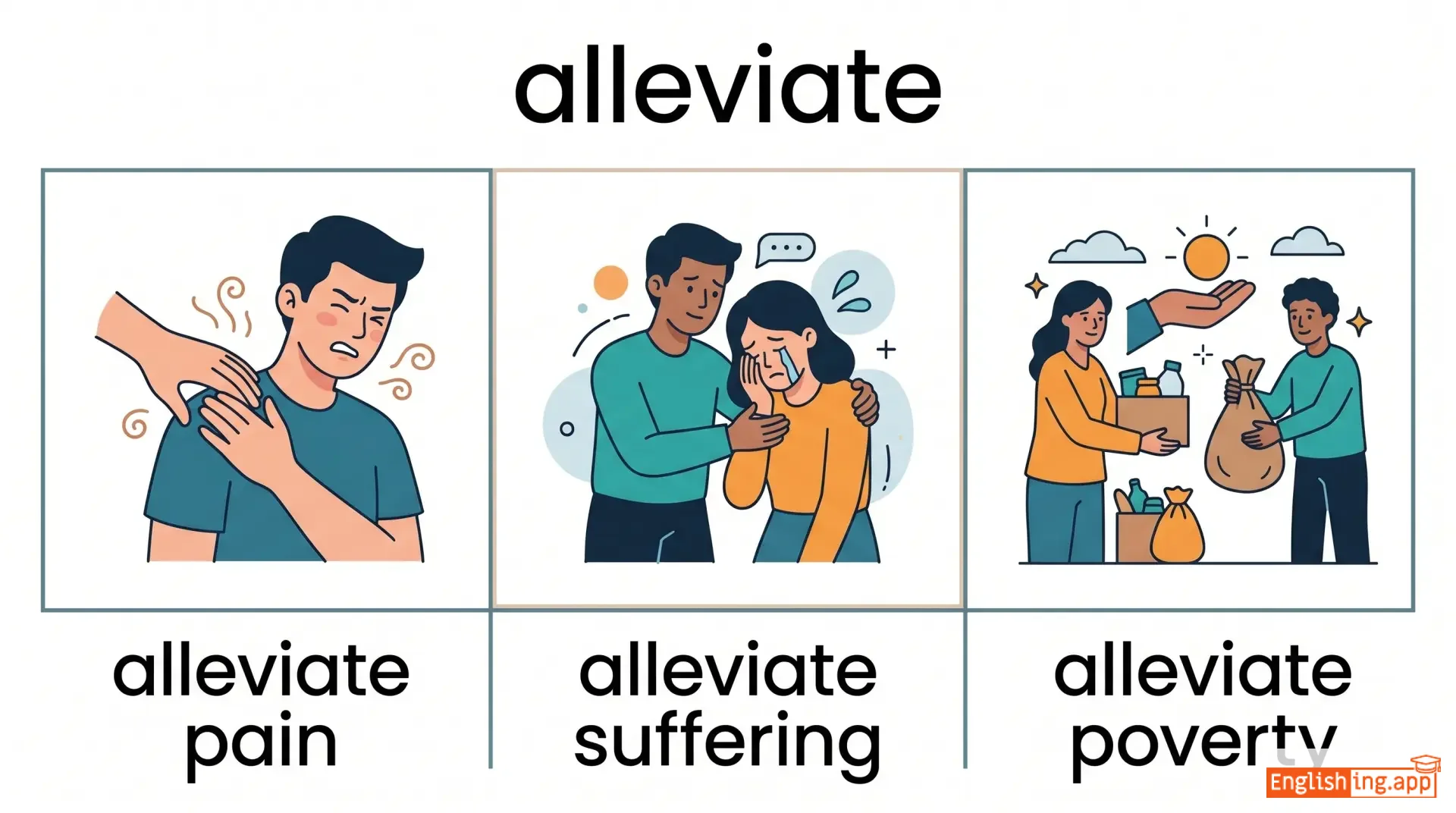
alleviate pain, alleviate suffering, alleviate poverty, alleviate symptoms
••••••
|
缓解就像缓慢地减轻痛苦(缓解)。
••••••
|
|
#27
⚙️
|
/ˈælɔɪ/
noun
(铝合金)
••••••
|
|
合金
he jin
••••••
|
- •••••• | - •••••• | - •••••• | - •••••• |
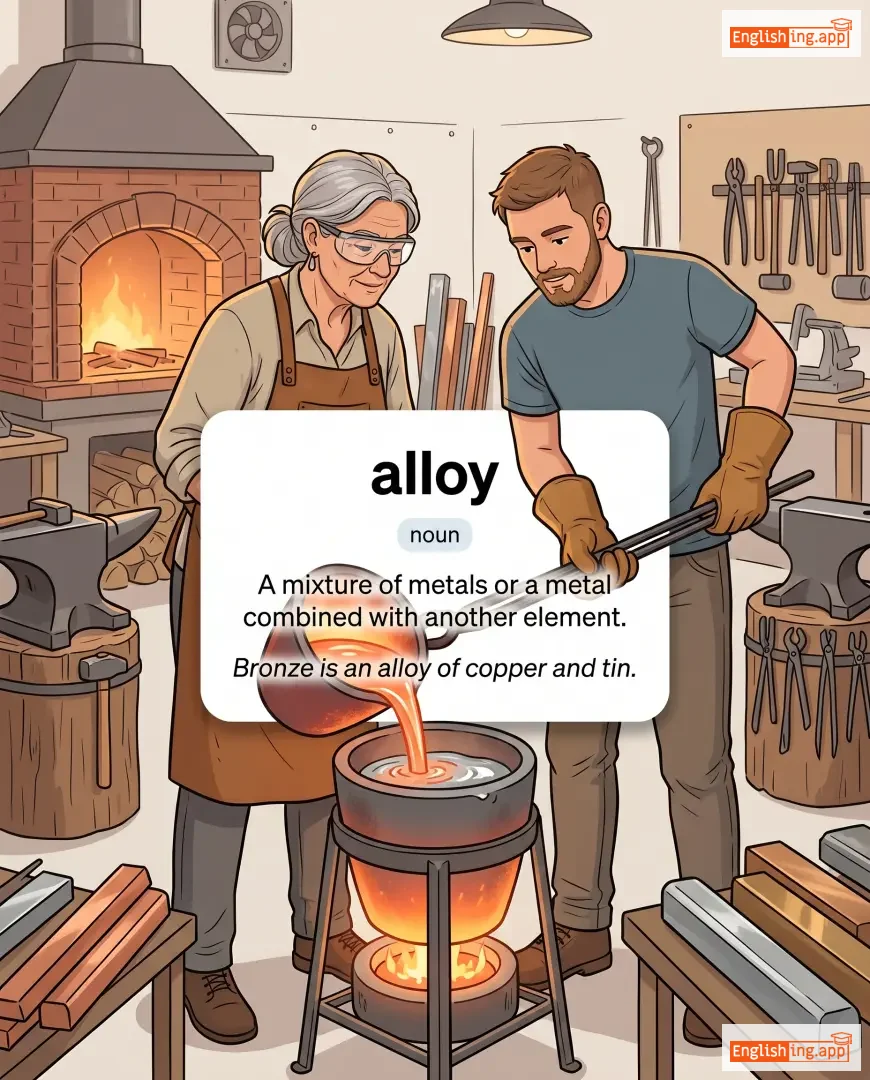
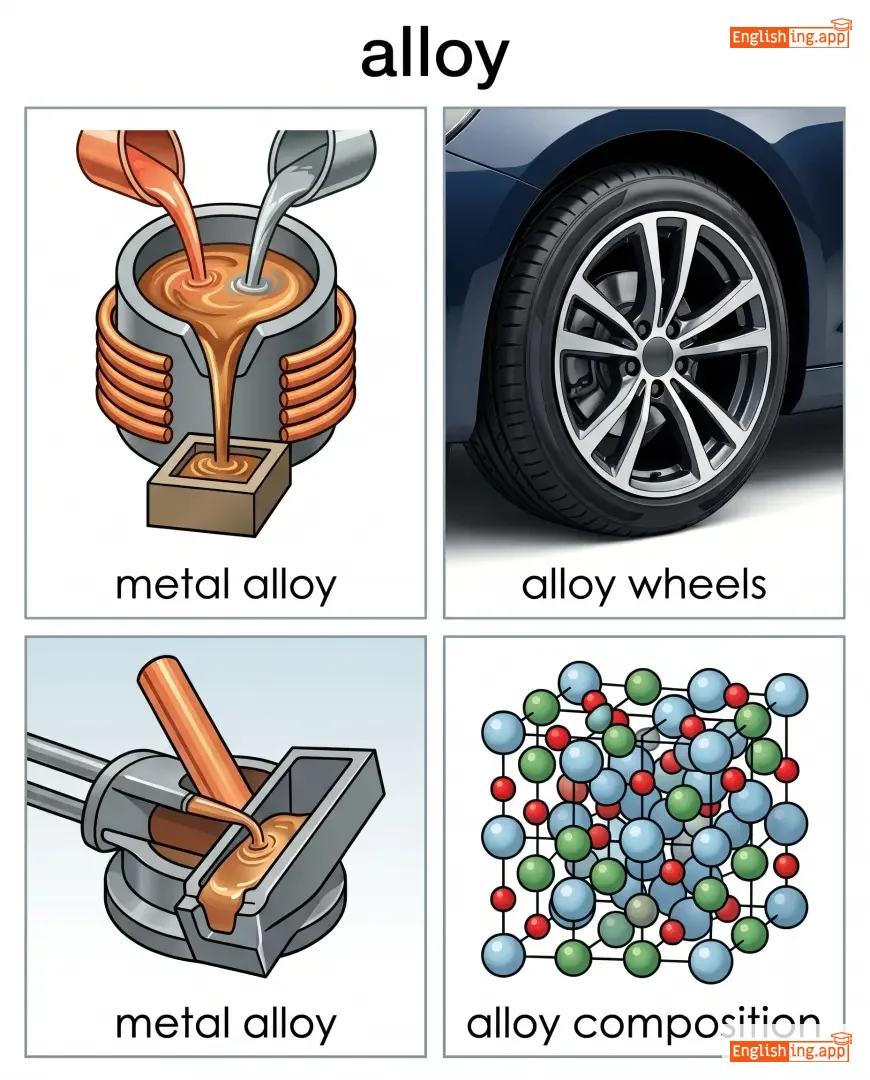
A mixture of metals or a metal combined with another element.
••••••
|
Bronze is an alloy of copper and tin. |
青铜是铜和锡的合金。
Qingtong shi tong he xi de hejin.
••••••
|
- •••••• | - •••••• | - •••••• |
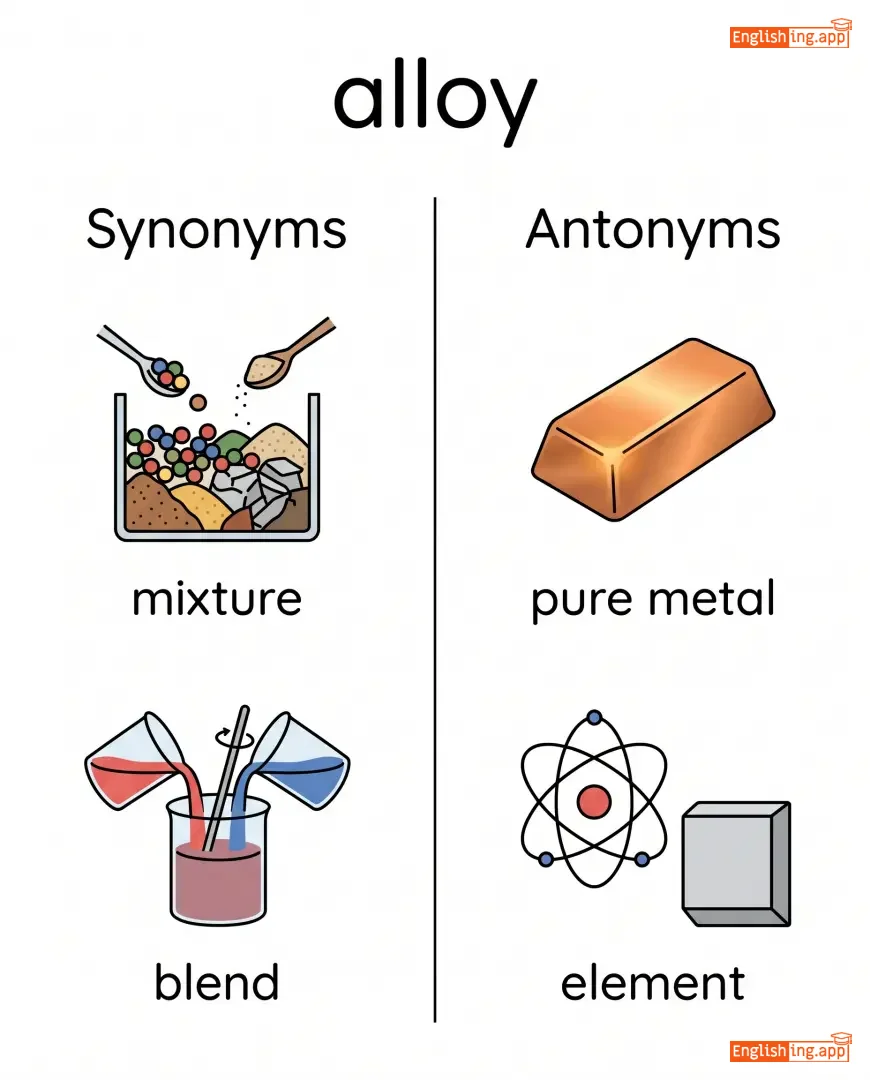
mixture, blend, composite, amalgam, fusion
••••••
|
pure metal, element
••••••
|
metal alloy, alloy wheels, alloy composition, alloy steel
••••••
|
Alloy像 '爱' + oy (混合金属)
••••••
|
|
#28
✨
|
/əˈlʊr/
verb
(艾鲁尔)
••••••
|
|
吸引力
xīyǐnlì
••••••
|
allured
艾鲁尔德
••••••
|
allured
艾鲁尔德
••••••
|
allures
艾鲁尔斯
••••••
|
alluring
艾鲁尔英
••••••
|
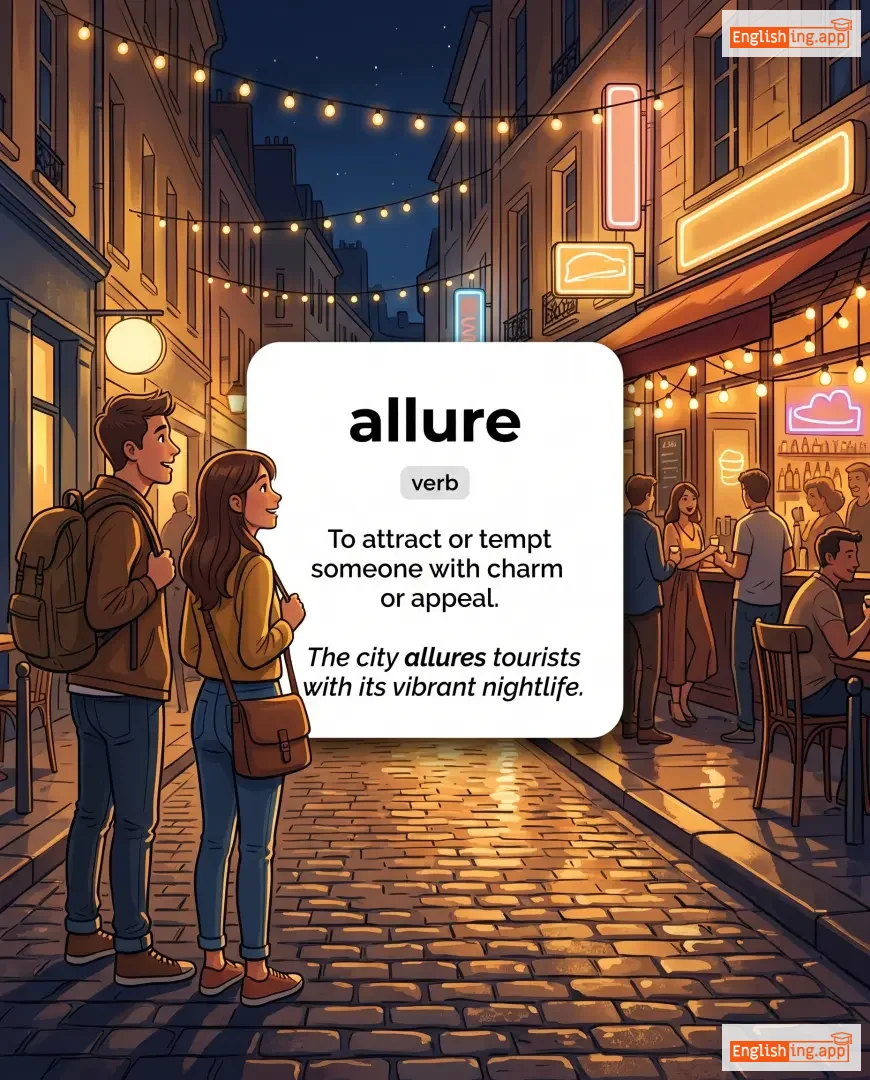
To attract or tempt someone with charm or appeal.
••••••
|
The city allures tourists with its vibrant nightlife.
这个城市吸引游客,拥有生动的夜生活。
••••••
|
这个城市通过其生动的夜生活吸引游客。
Zhège chéngshì tōngguò qí shēngdòng de yè shēnghuó xīyǐn yóukè.
••••••
|
the allure of
……的吸引力
••••••
|
the appeal or attraction of something
••••••
|
……的吸引力
…… de xīyǐnlì
••••••
|
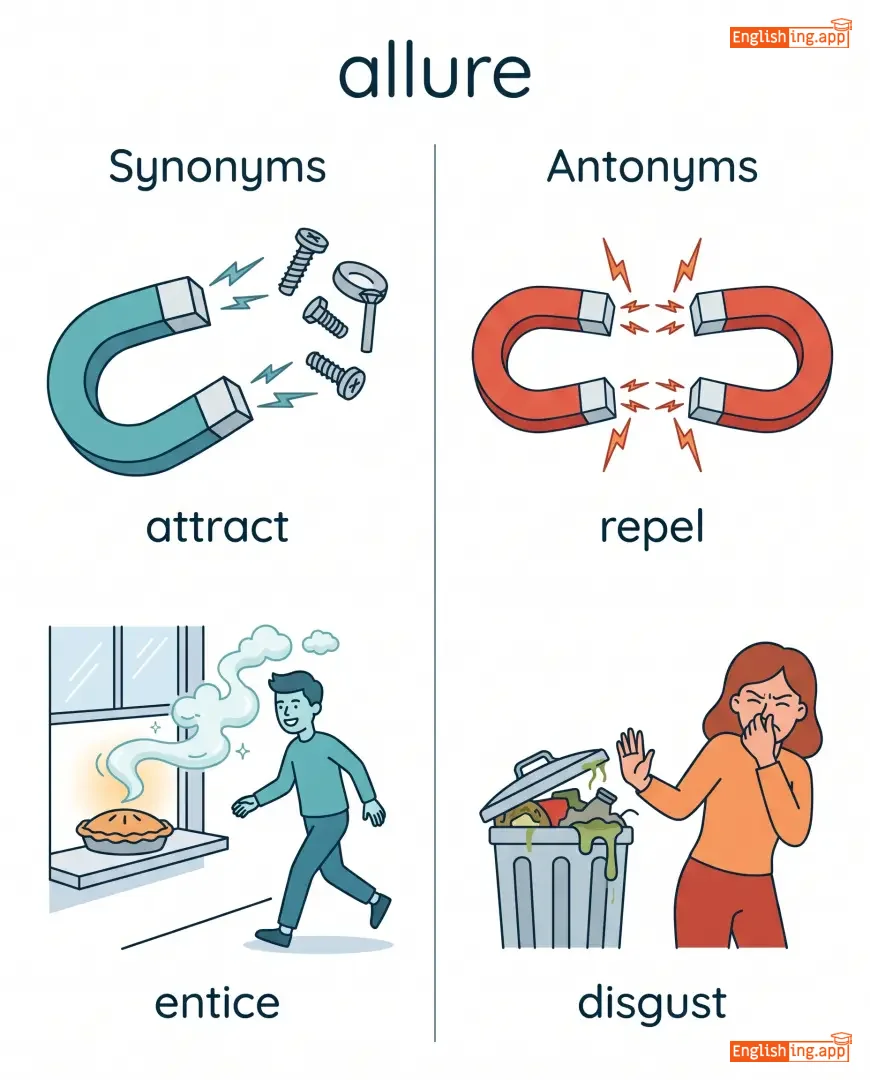
attract, entice, charm, fascinate, captivate
••••••
|
repel, disgust, deter
••••••
|
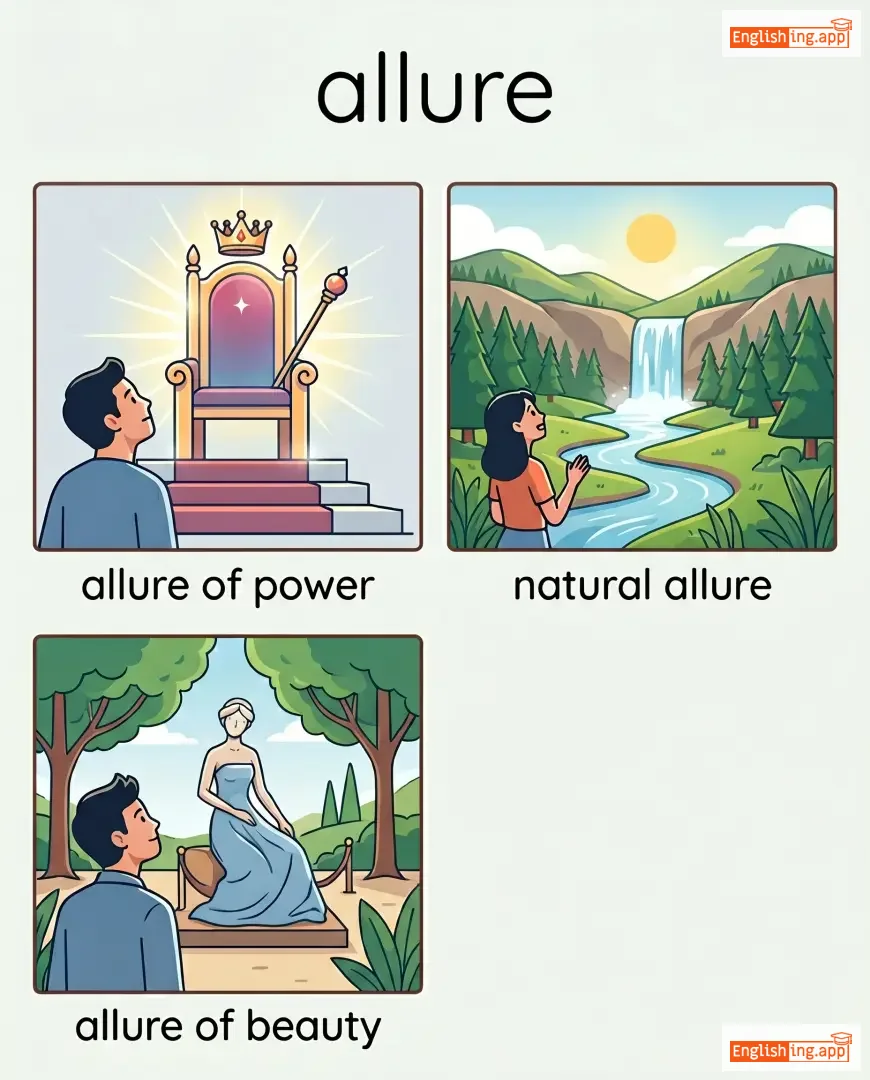
allure of power, natural allure, allure of beauty, allure tourists
••••••
|
Allure意味着吸引力,就像一盏吸引所有人光芒的灯。
••••••
|
|
#29
🔗
|
/əˈmælɡəmeɪt/
verb
(ā mǎ ěr gǎ mài tè)
••••••
|
|
合并
hé bìng
••••••
|
amalgamated
ā mǎ ěr gǎ mài tè de
••••••
|
amalgamated
ā mǎ ěr gǎ mài tè de
••••••
|
amalgamates
ā mǎ ěr gǎ mài tè sī
••••••
|
amalgamating
ā mǎ ěr gǎ mài tè zhōng
••••••
|
to combine or unite to form one organization or structure; to merge
••••••
|
The two companies decided to amalgamate their operations.
这两家公司决定合并他们的运营。
••••••
|
这两家公司决定合并他们的运营。
Zhè liǎng jiā gōngsī juédìng hébìng tāmen de yùnyíng.
••••••
|
- •••••• | - •••••• | - •••••• |
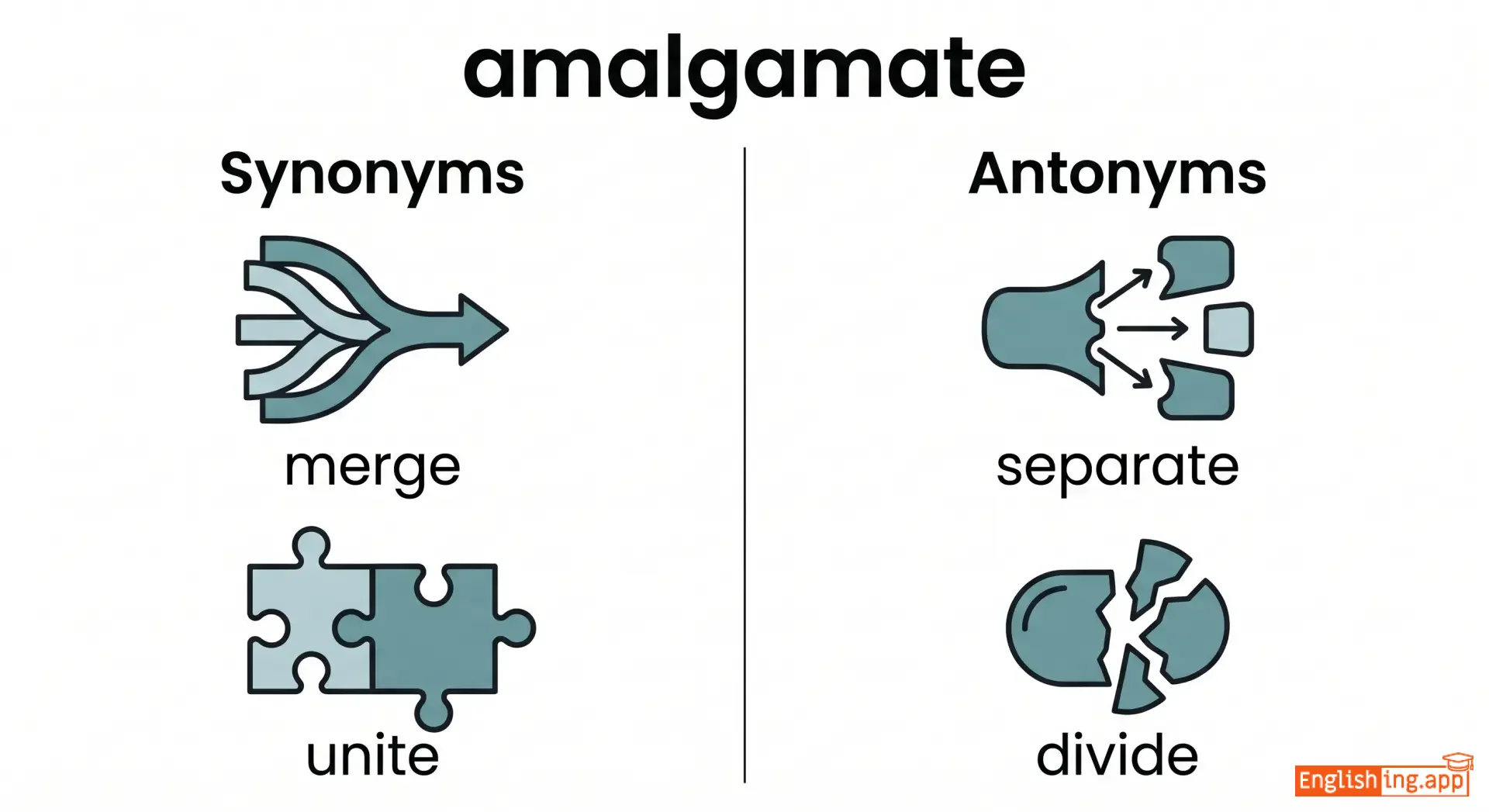
merge, combine, unite, blend
••••••
|
separate, divide, split, isolate
••••••
|
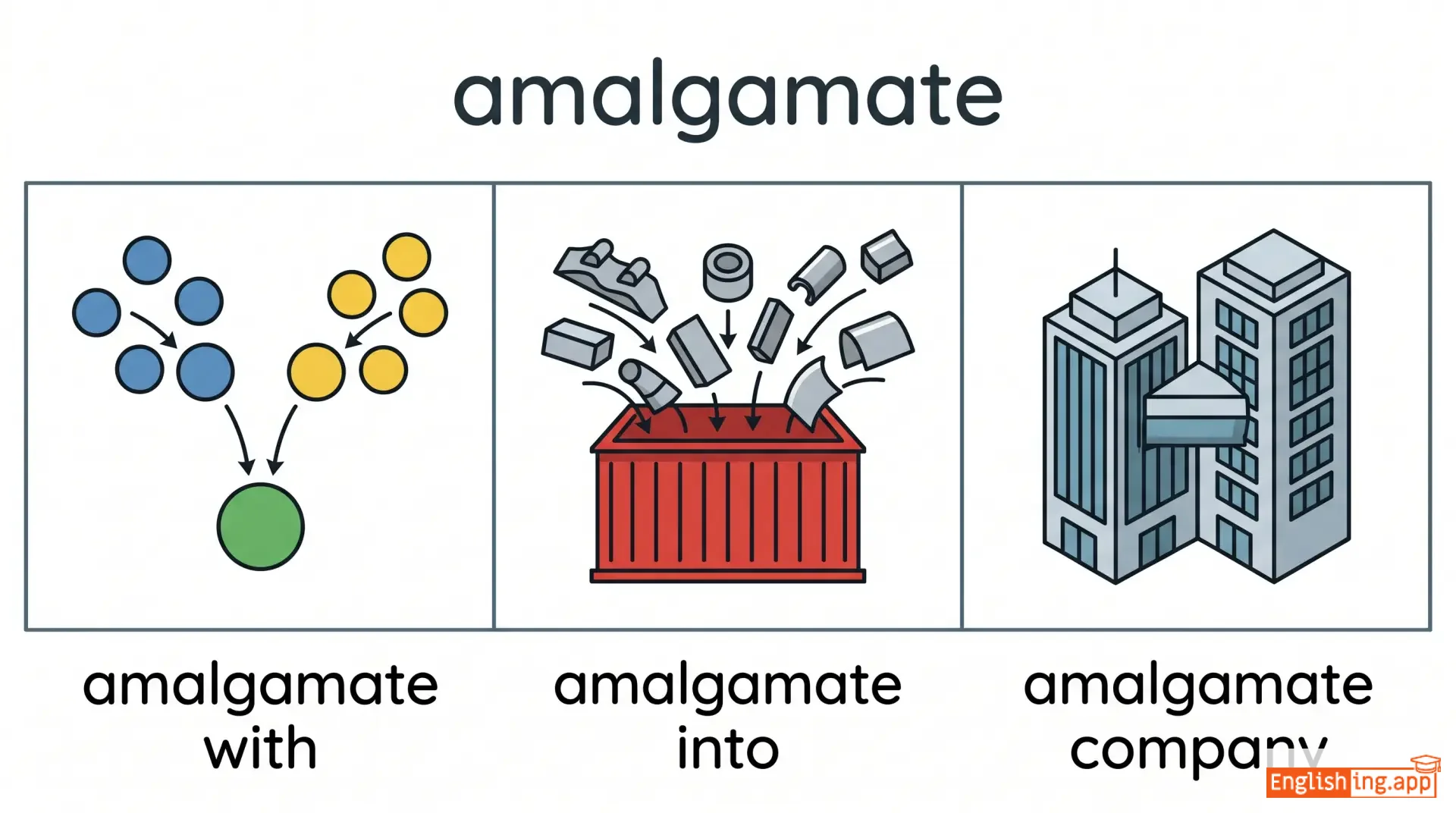
amalgamate companies, amalgamate operations, successfully amalgamate, amalgamate resources, amalgamate efforts
••••••
|
合并 (hé bìng) = merging for structure
••••••
|
|
#30
❓
|
/æmˈbɪɡjuəs/
adjective
(æmˈbɪɡjuəs)
••••••
|
|
模糊的
móhú de
••••••
|
- •••••• | - •••••• | - •••••• | - •••••• |
Open to more than one interpretation; unclear or uncertain.
••••••
|
His answer was so ambiguous that no one understood his real opinion. |
他的回答非常模糊,以至于没有人理解他的真实意见。
tā de huídá fēicháng móhú, yǐzhì méiyǒu rén lǐjiě tā de zhēnshí yìjiàn.
••••••
|
ambiguous statement |
a statement that can be interpreted in more than one way
••••••
|
模糊的声明
móhú de shēngmíng
••••••
|
unclear, vague, uncertain, equivocal, obscure
••••••
|
clear, definite, explicit
••••••
|
ambiguous statement, ambiguous meaning, ambiguous situation, ambiguous terms
••••••
|
Ambulance与模糊的音调相似,像警报声一样让人困惑。
••••••
|
|
#31
⚖️
|
/æmˈbɪvələns/
noun
(艾姆比韦伦斯)
••••••
|
|
矛盾情绪
máodùn qíngxù
••••••
|
- •••••• | - •••••• | - •••••• | - •••••• |
The state of having mixed feelings or contradictory ideas about something.
••••••
|
He felt ambivalence about moving to a new city. |
他对搬到新城市感到矛盾。
tā duì bān dào xīn chéngshì gǎndào máodùn.
••••••
|
- •••••• | - •••••• | - •••••• |
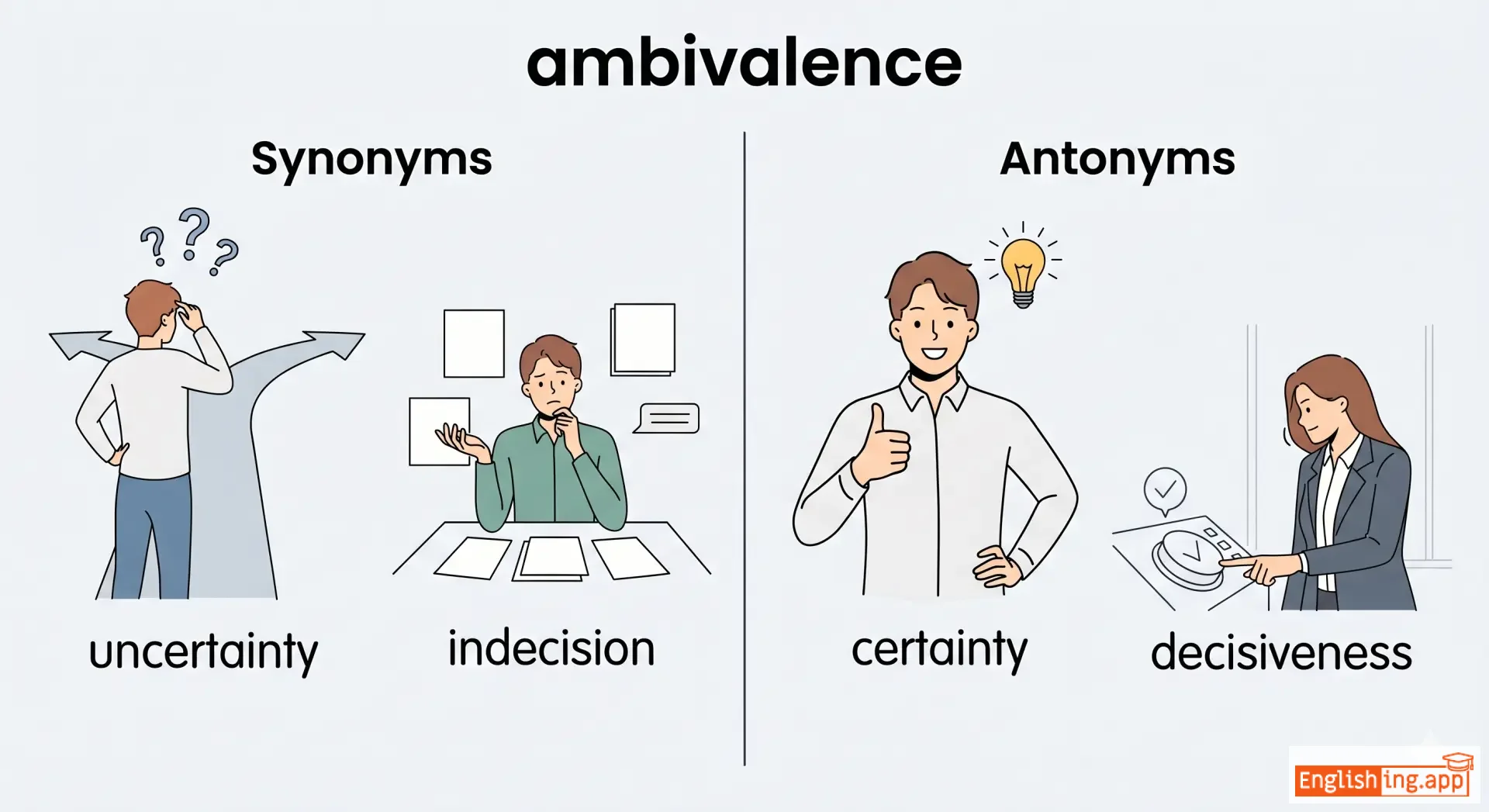
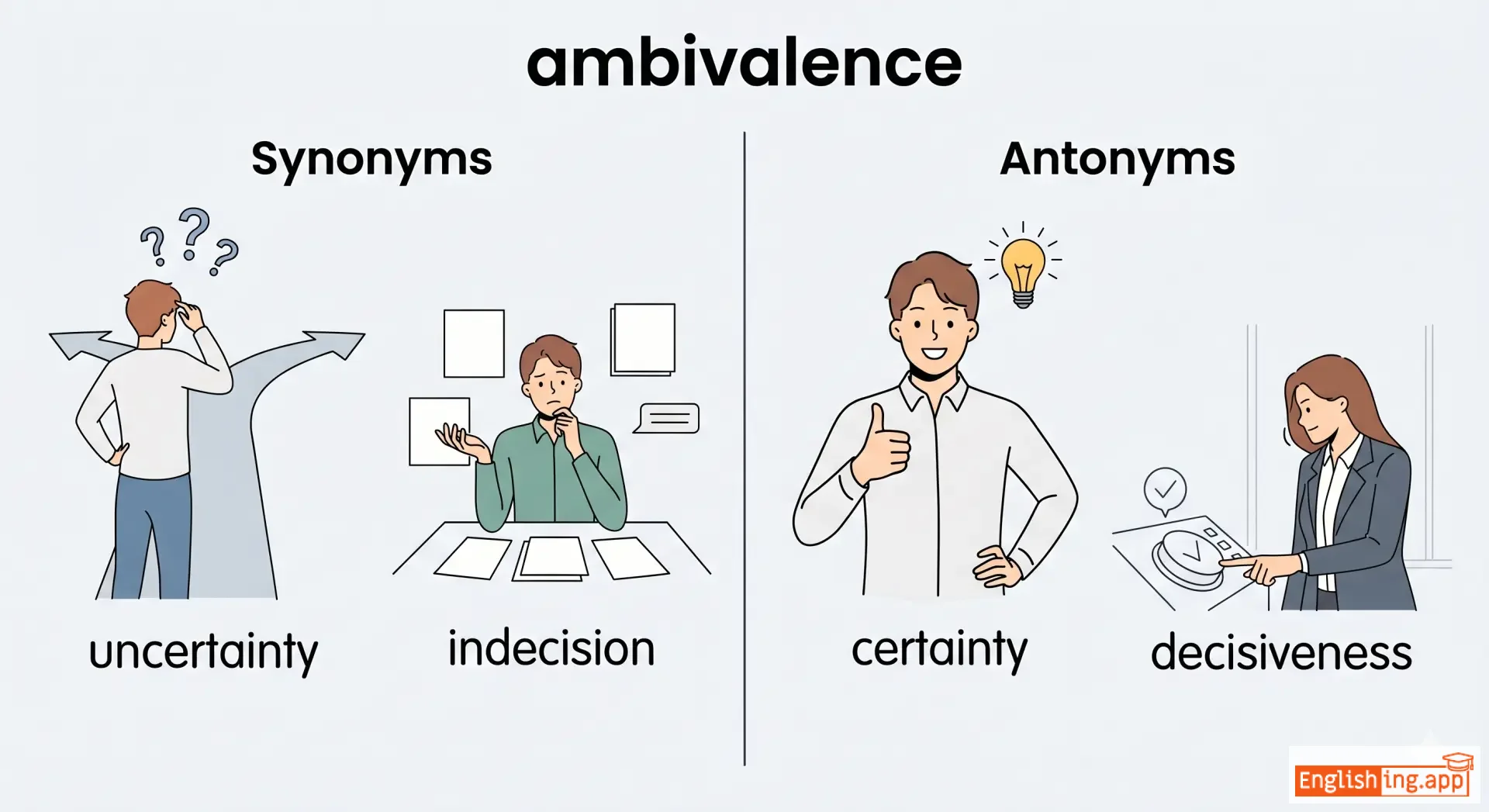
uncertainty, indecision, doubt, hesitation
••••••
|
certainty, decisiveness, clarity
••••••
|
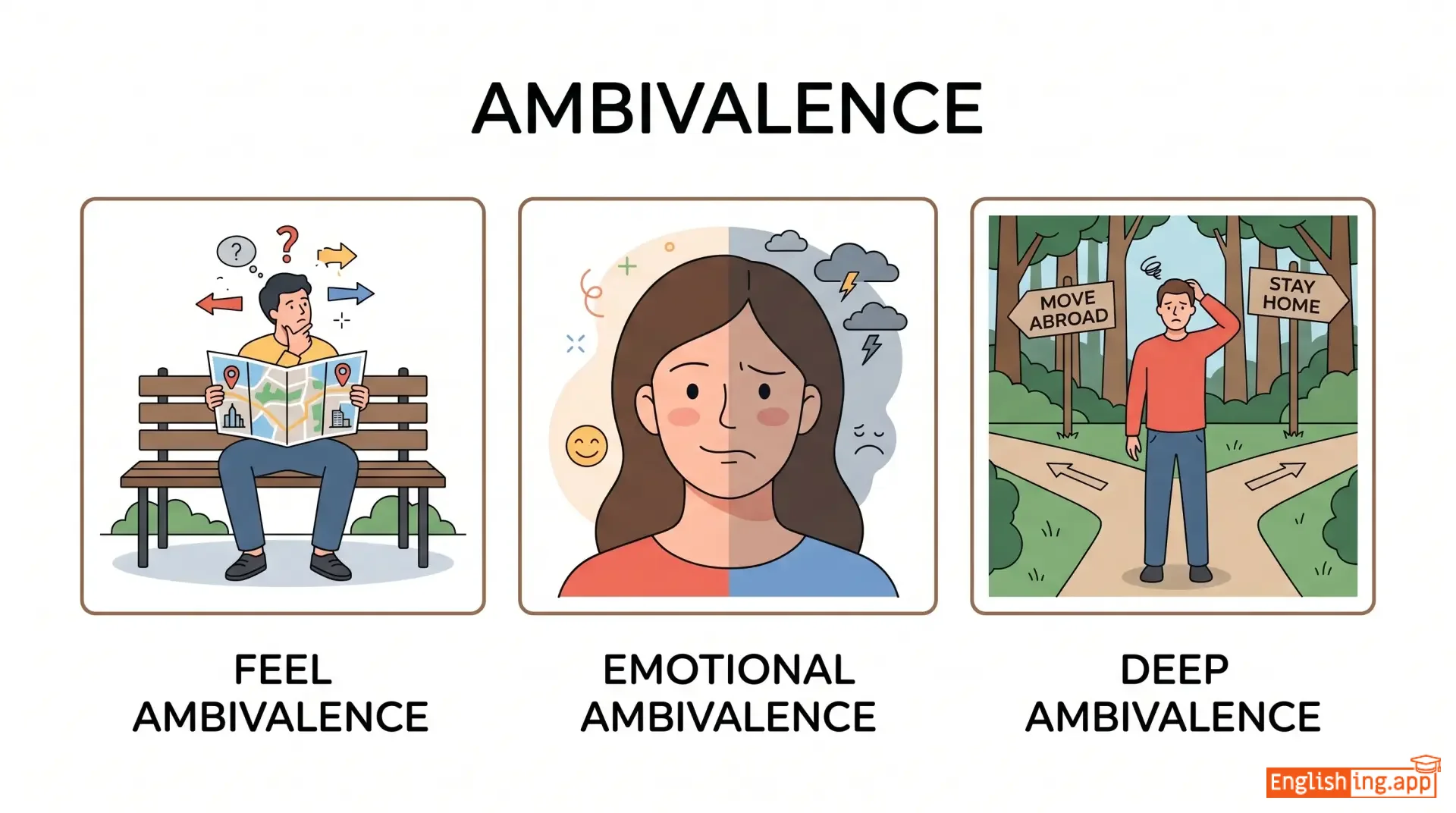
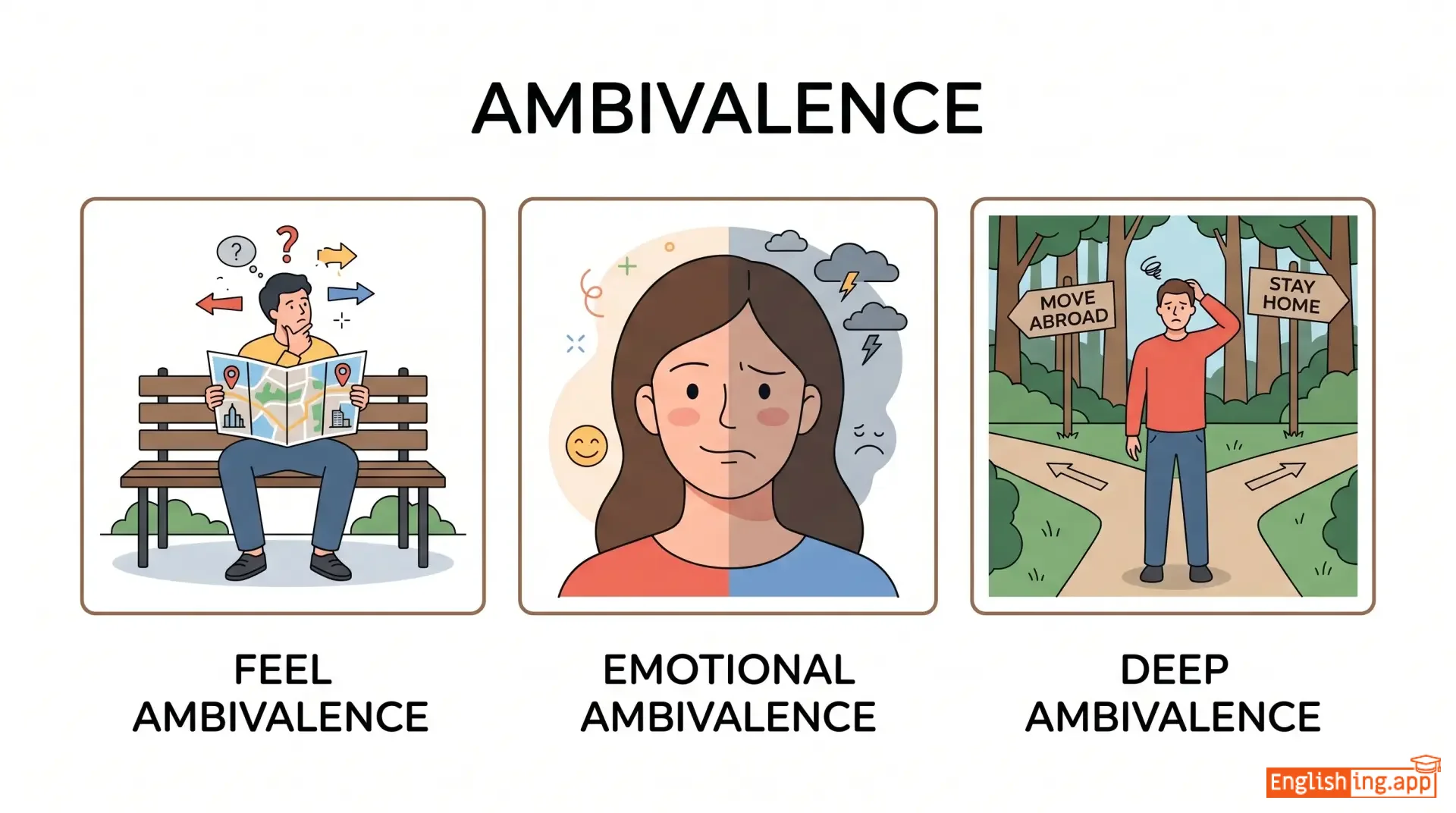
feel ambivalence, emotional ambivalence, deep ambivalence
••••••
|
在救护车中,矛盾情绪介于恐惧和希望之间。
••••••
|
|
#32
🍯
|
/æmˈbroʊʒə/
noun
(艾姆布罗西亚)
••••••
|
|
神仙食物
shénxiān shíwù
••••••
|
- •••••• | - •••••• | - •••••• | - •••••• |
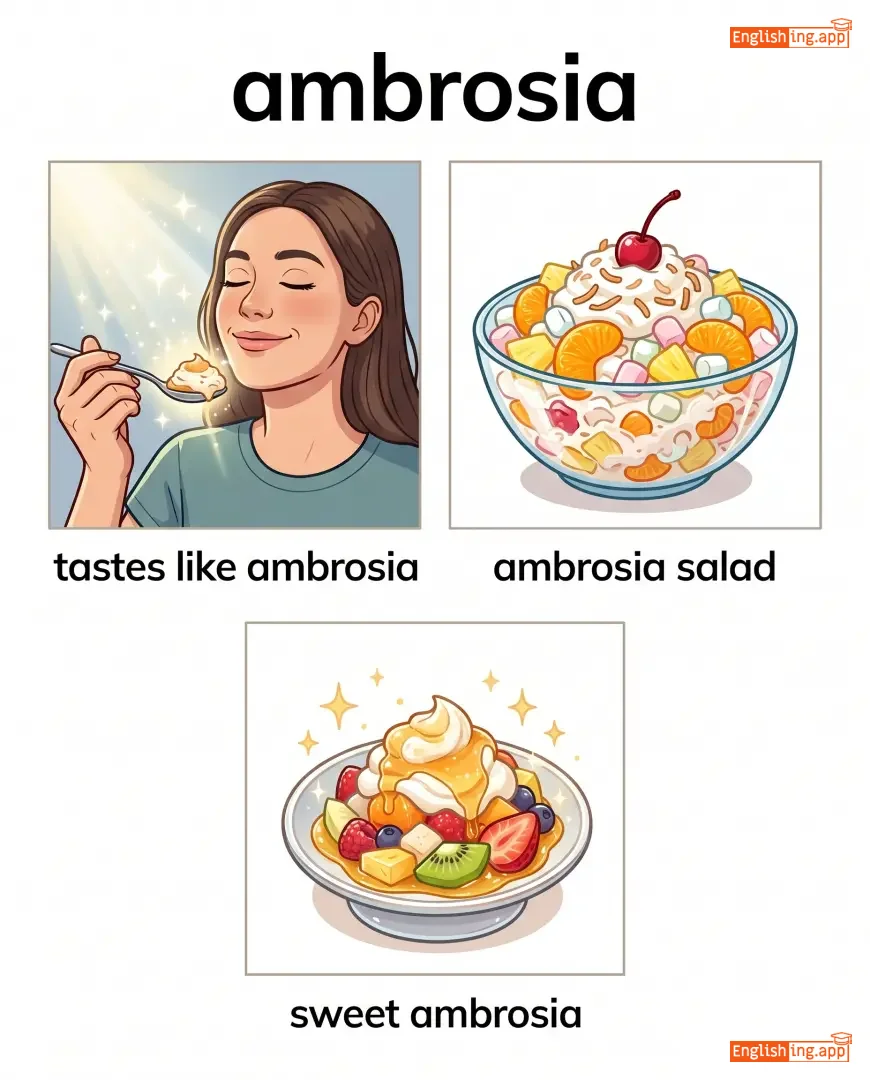
The food of the gods in classical mythology; something extremely pleasing to taste or smell.
••••••
|
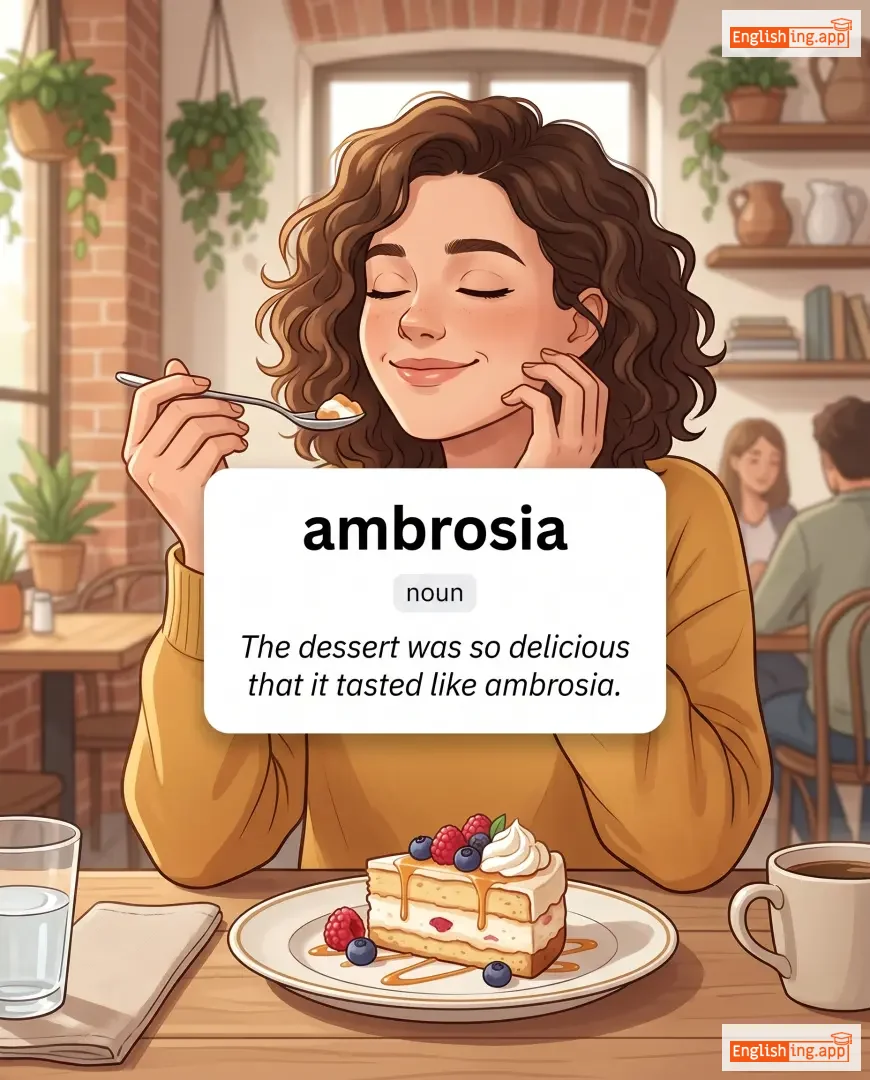
The dessert was so delicious that it tasted like ambrosia.
这个甜点太好吃了,味道像神仙食物一样。
••••••
|
这个甜点太好吃了,味道像神仙食物一样。
Zhège tiándiǎn tài hǎochīle, wèidào xiàng shénxiān shíwù yīyàng.
••••••
|
- •••••• | - •••••• | - •••••• |
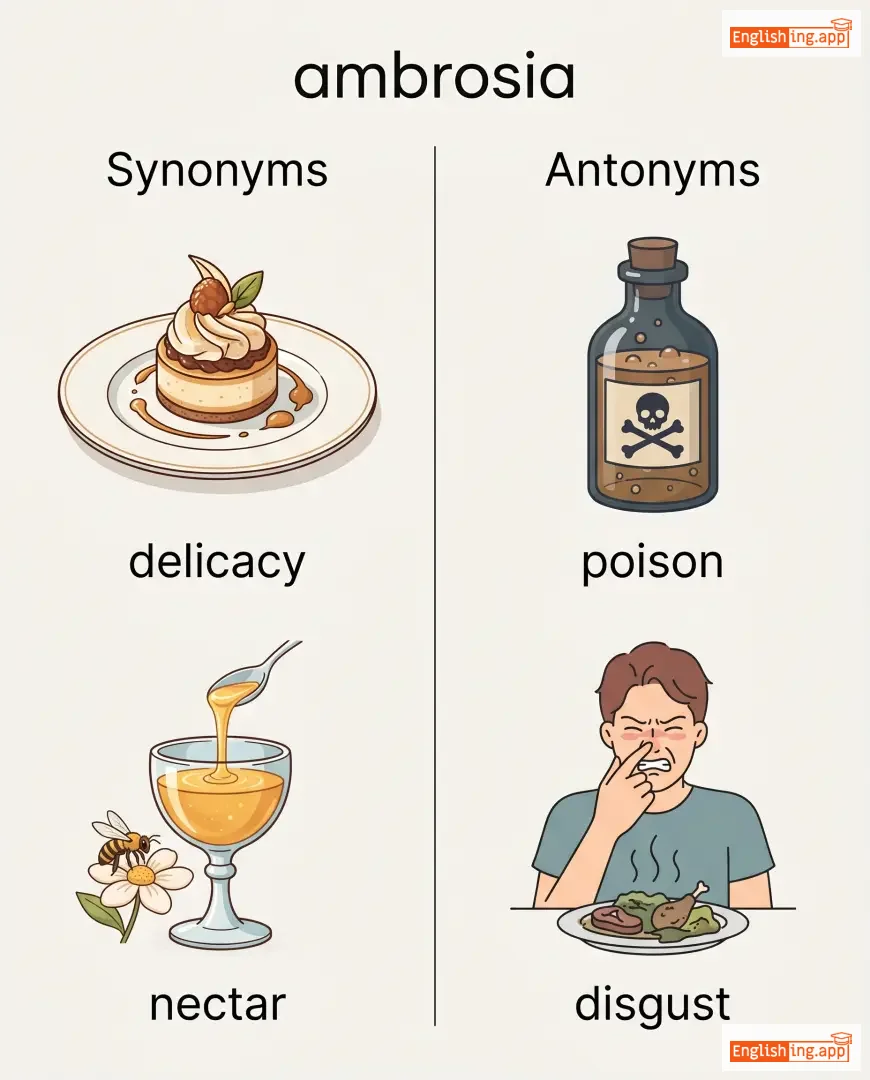
delicacy, nectar, delight, treat, luxury
••••••
|
poison, disgust, repulsion
••••••
|
tastes like ambrosia, ambrosia salad, sweet ambrosia, ambrosia dessert
••••••
|
神仙食物意味着甜美的味道,想象它是从天堂送来的美味佳肴。
••••••
|
|
#33
🔧
|
/əˈmiːliəreɪt/
verb
(海皮尼斯)
••••••
|
|
幸福
xìngfú
••••••
|
ameliorated
••••••
|
ameliorated
••••••
|
ameliorates
••••••
|
ameliorating
••••••
|
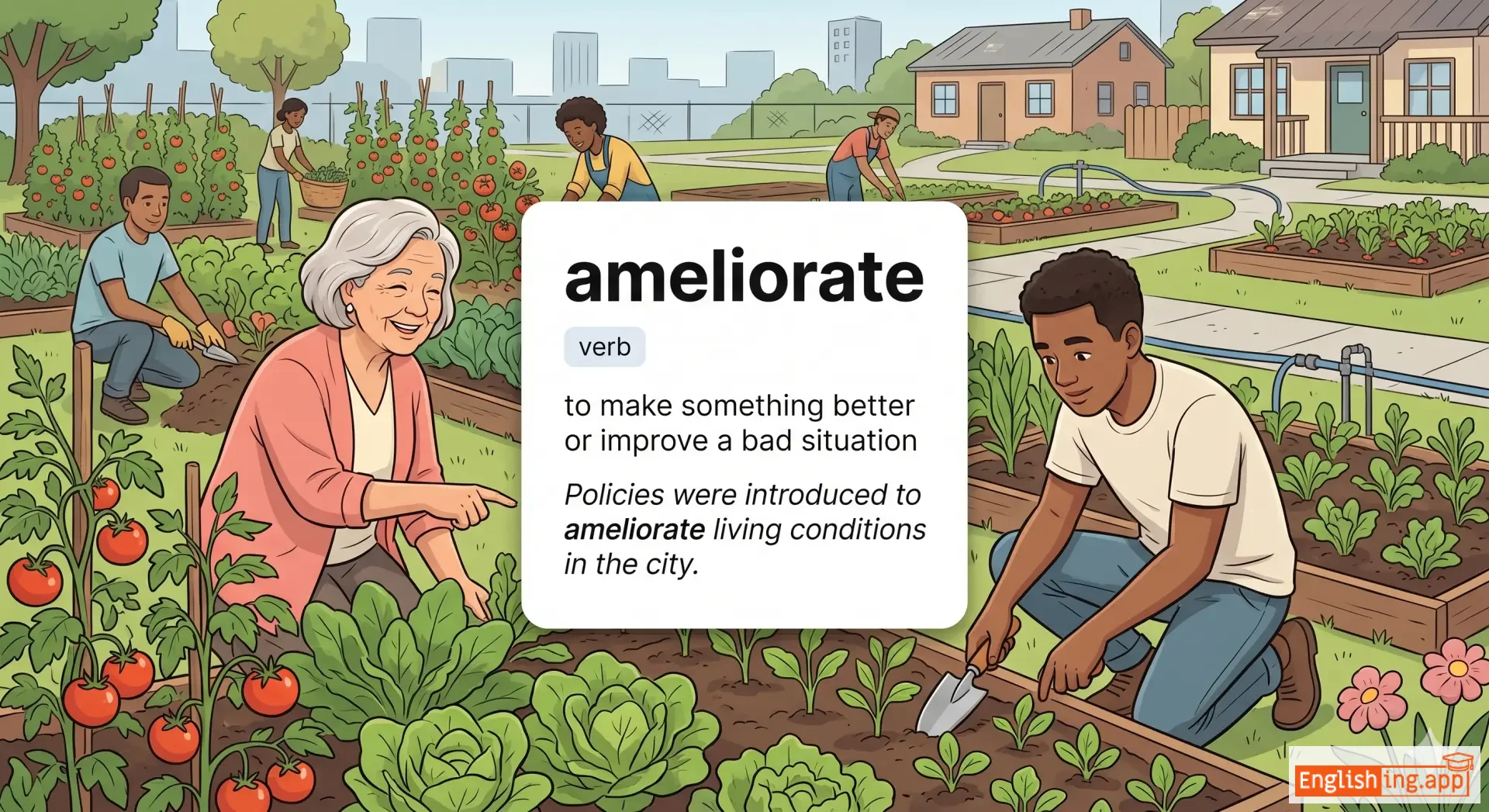
to make something better or improve a bad situation
••••••
|
Policies were introduced to ameliorate living conditions in the city. |
已经出台了改善城市生活条件的政策。
Yǐjīng chūtái le gǎishàn chéngshì shēnghuó tiáojiàn de zhèngcè.
••••••
|
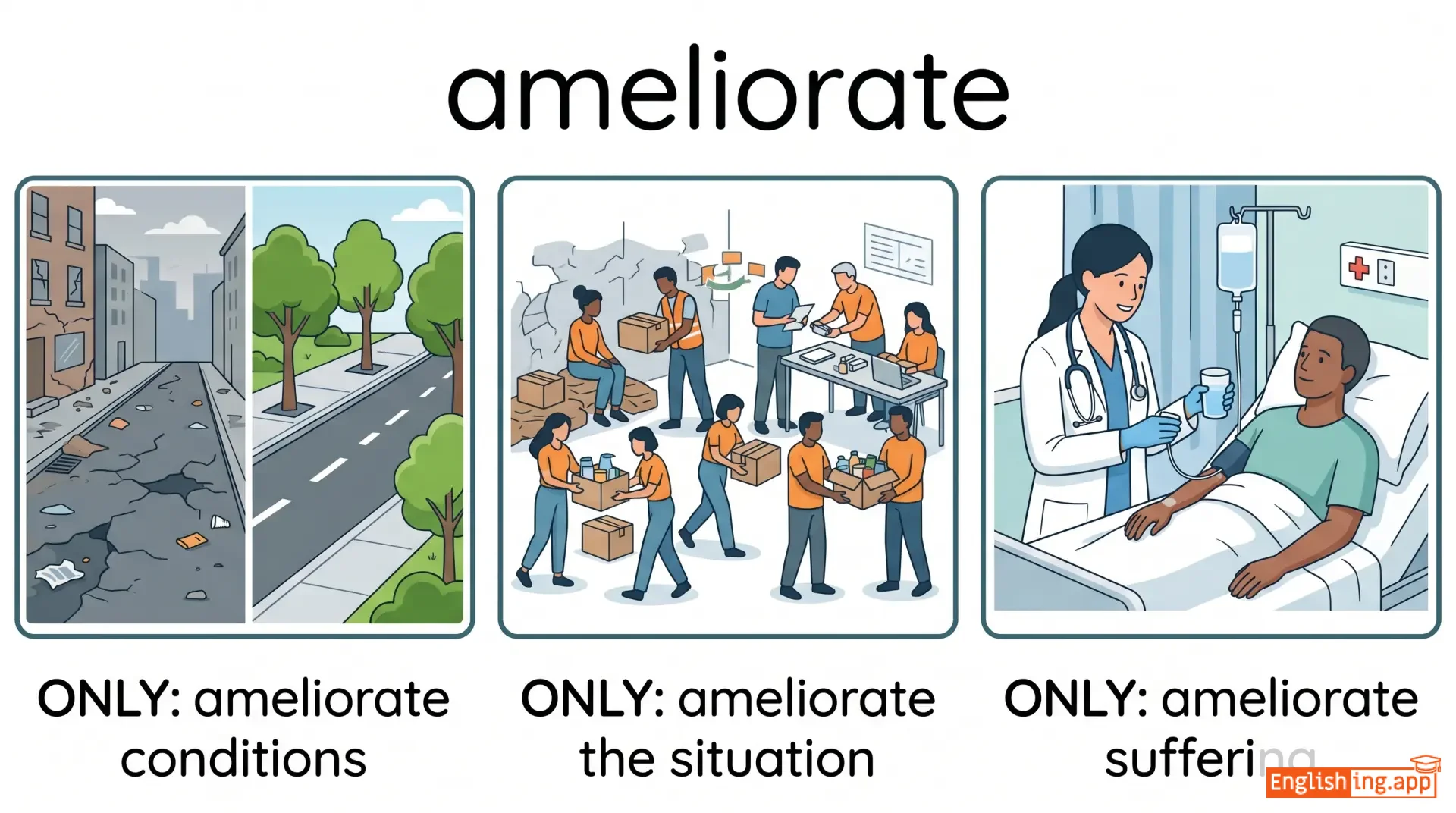
ameliorate the situation |
to improve a problematic or difficult condition
••••••
|
改善情况
gǎishàn qíngkuàng
••••••
|
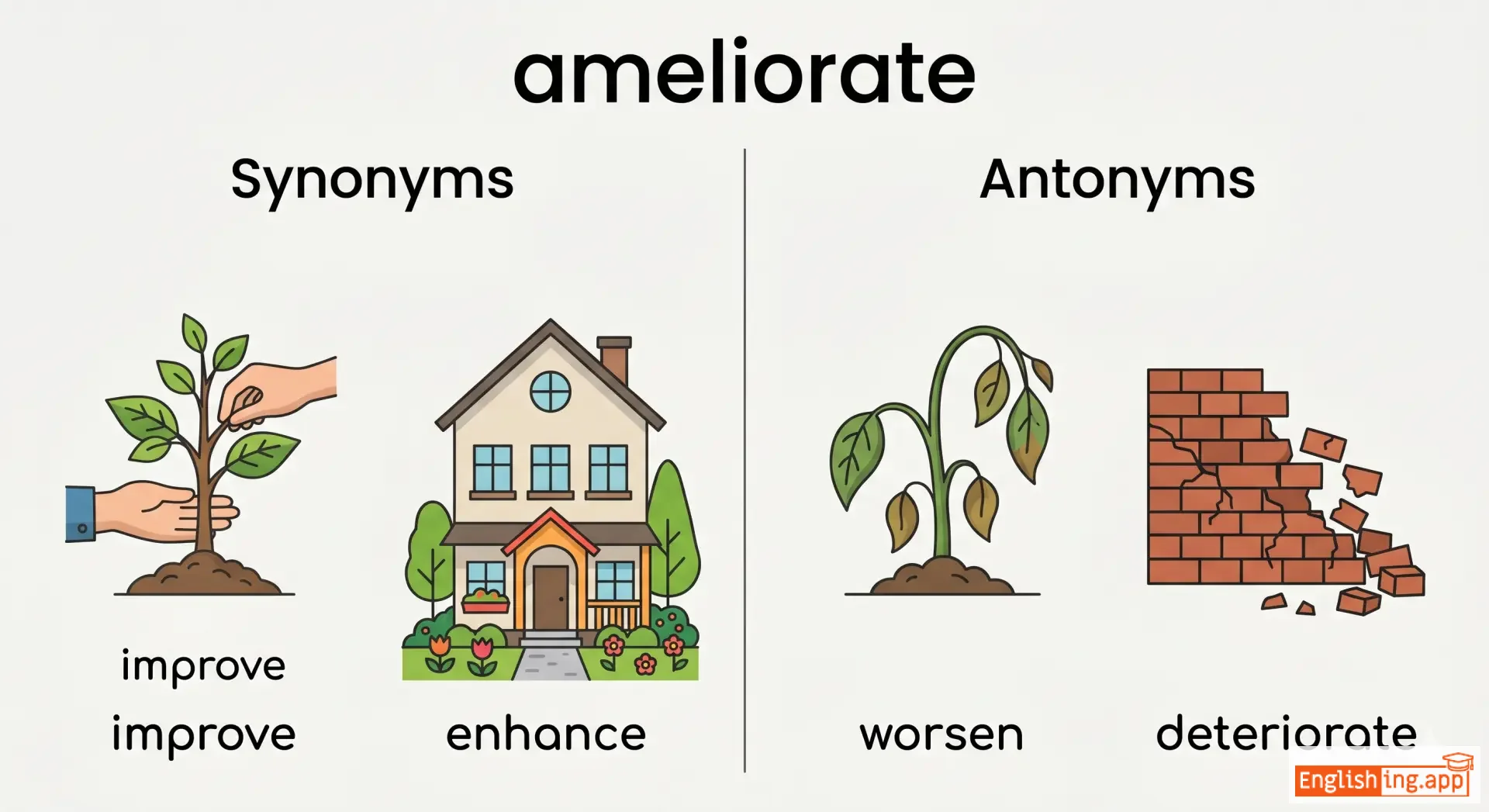
improve, enhance, upgrade, better, reform
••••••
|
worsen, deteriorate, aggravate
••••••
|
ameliorate conditions, ameliorate the situation, ameliorate suffering, ameliorate poverty
••••••
|
幸福 (xìngfú) 是当情况变得更好的时候。
••••••
|
|
#34
😊
|
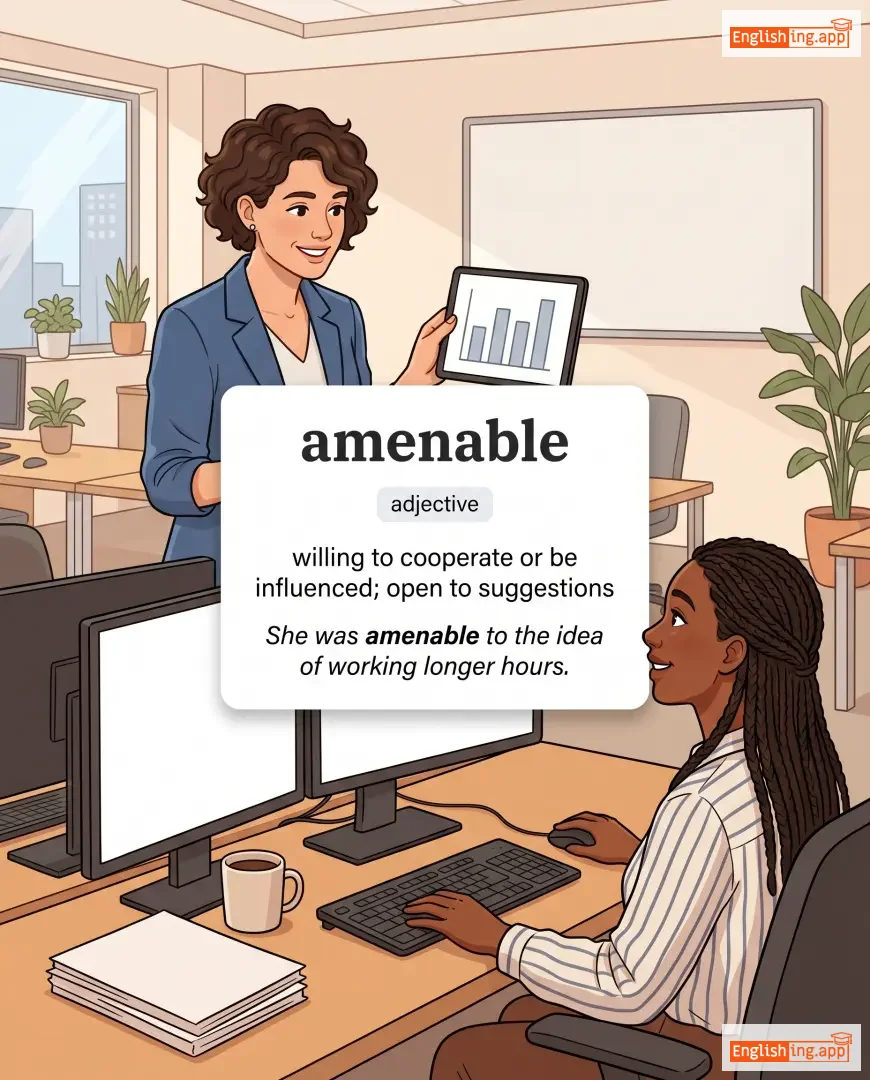
/əˈmiːnəbl/
adjective
(阿门纳布尔)
••••••
|
|
顺从
shùncóng
••••••
|
- •••••• | - •••••• | - •••••• | - •••••• |
willing to cooperate or be influenced; open to suggestions
••••••
|
She was amenable to the idea of working longer hours.
她愿意接受加班的想法。
••••••
|
她愿意接受加班的想法。
Tā yuànyì jiēshòu jiābān de xiǎngfǎ.
••••••
|
- •••••• | - •••••• | - •••••• |
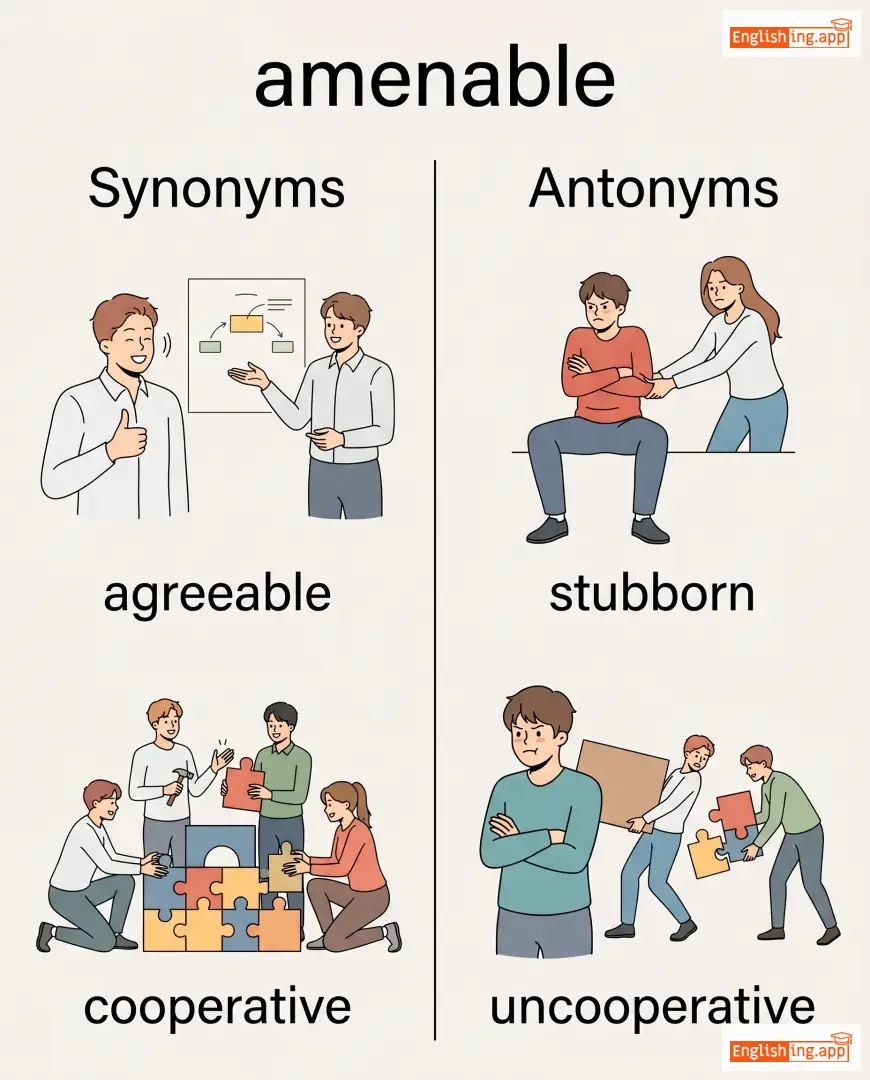
agreeable, cooperative, responsive, compliant
••••••
|
stubborn, uncooperative, resistant
••••••
|
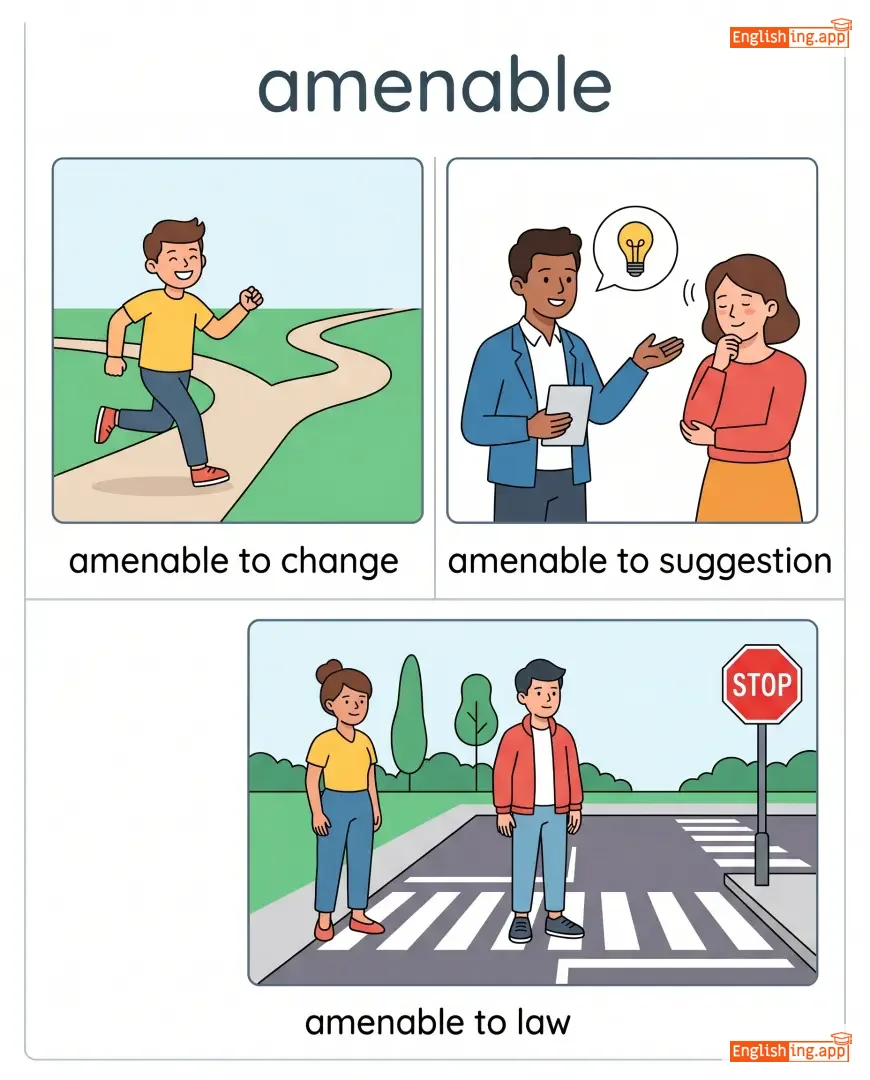
amenable to change, amenable to suggestion, amenable to law
••••••
|
顺从是容易接受他人建议的人
••••••
|
|
#35
🏘️
|
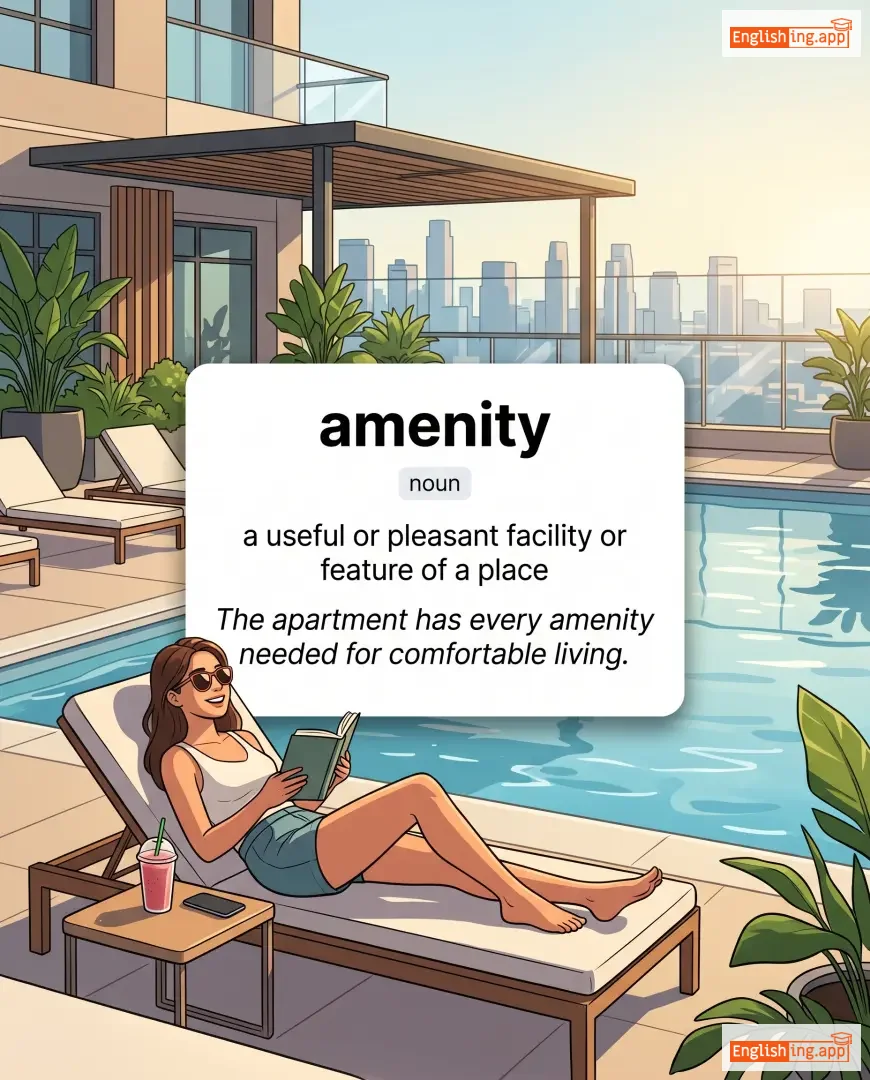
/əˈmɛnəti/
noun
(a-me-ni-ti)
••••••
|
|
便利设施
bianli sheshi
••••••
|
- •••••• | - •••••• | - •••••• | - •••••• |
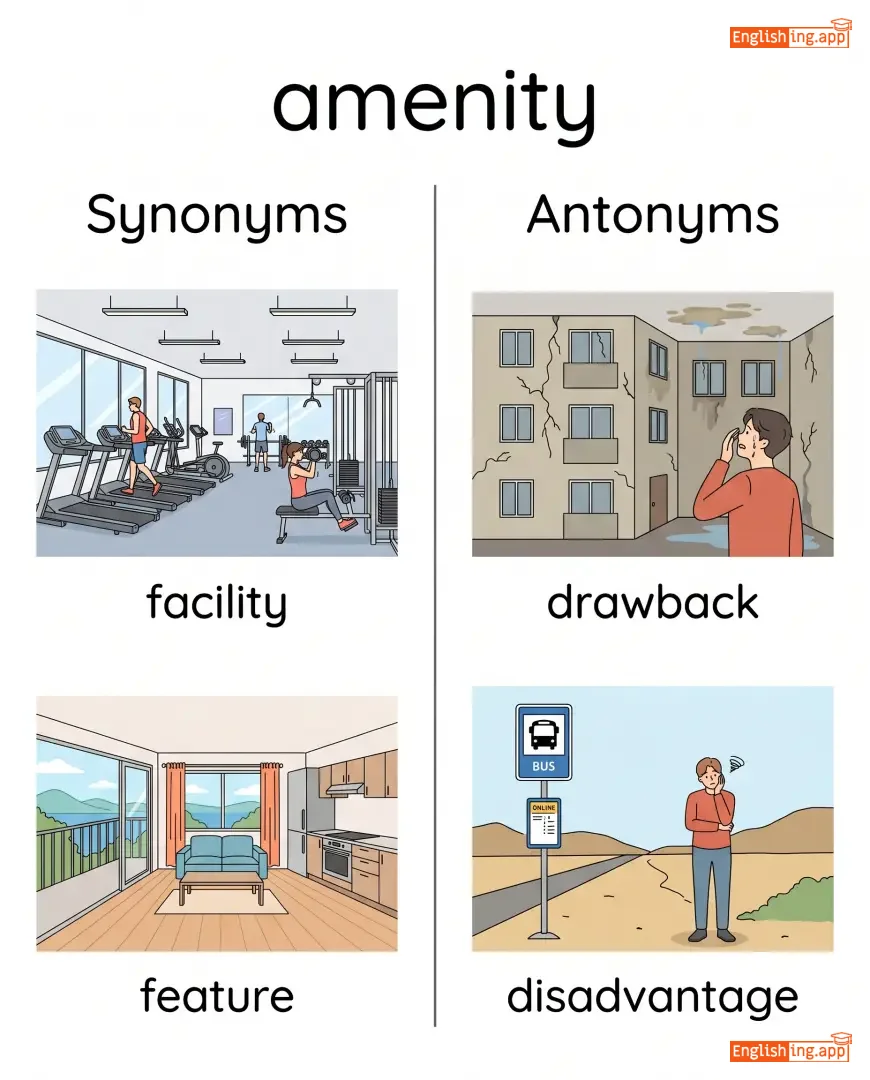
a useful or pleasant facility or feature of a place
••••••
|
The apartment has every amenity needed for comfortable living. |
公寓里有所有必要的便利设施,供舒适生活使用。
Gongyu li you suoyou bixiao de bianli sheshi, gong shushi shenghuo shiyong.
••••••
|
- •••••• | - •••••• | - •••••• |
facility, feature, service, convenience
••••••
|
drawback, disadvantage
••••••
|
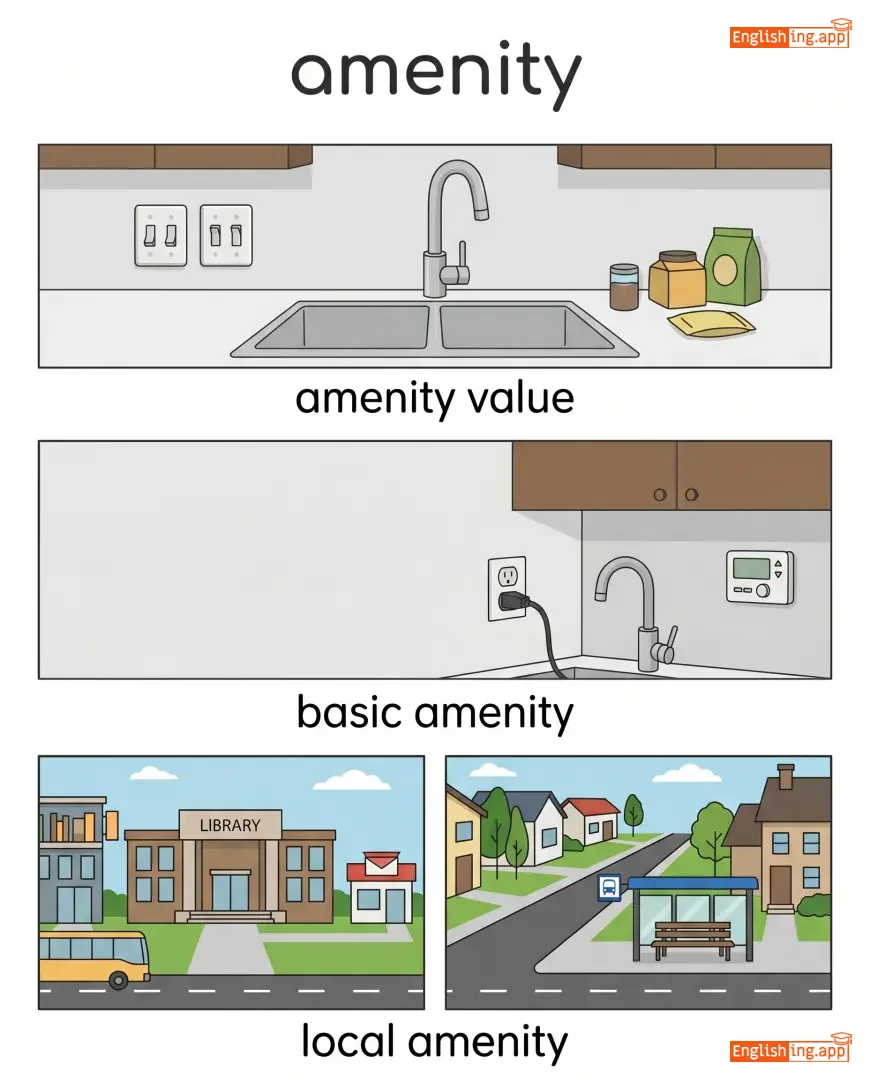
amenity value, basic amenity, local amenity
••••••
|
Amenity听起来像 Ami + 需要 — 舒适生活所需的东西
••••••
|
|
#36
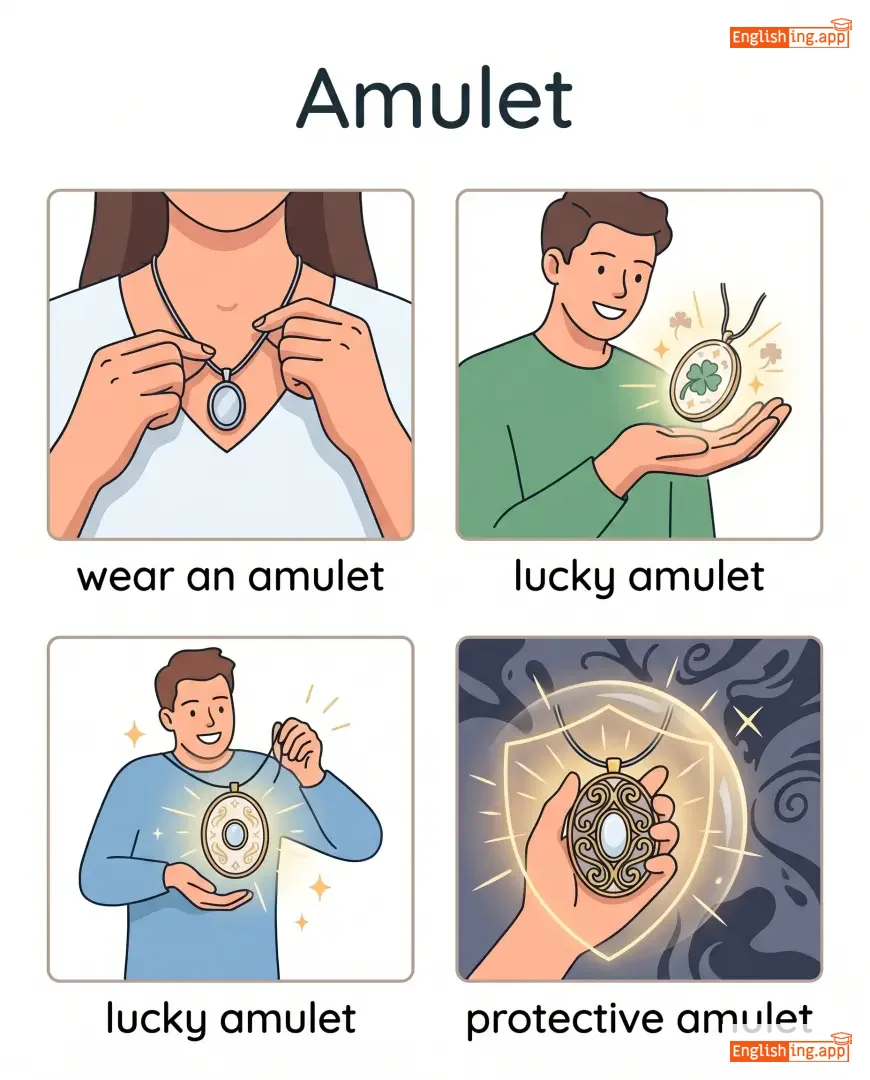
🧿
|
/ˈæmjʊlət/
noun
(阿穆雷特)
••••••
|
|
护身符
hù shēn fú
••••••
|
- •••••• | - •••••• | - •••••• | - •••••• |
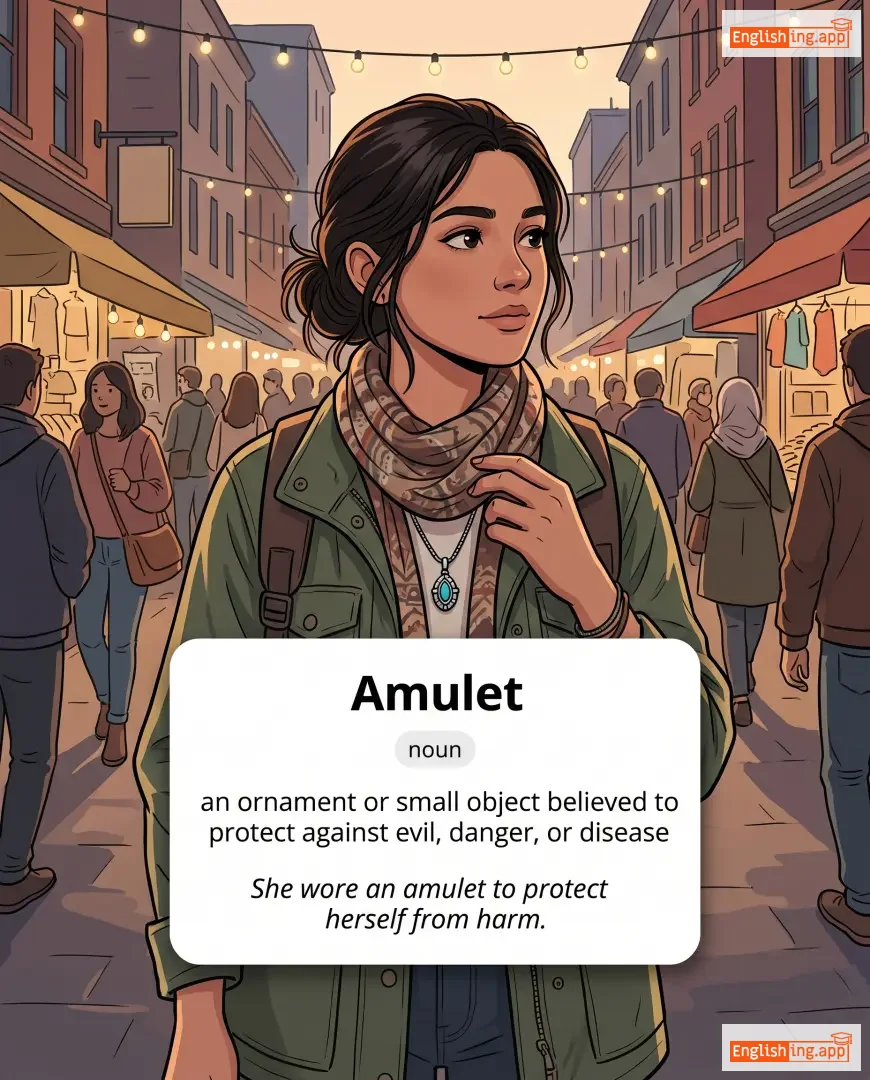
an ornament or small object believed to protect against evil, danger, or disease
••••••
|
She wore an amulet to protect herself from harm.
她佩戴着护身符来保护自己免受伤害。
••••••
|
她佩戴着护身符来保护自己免受伤害。
Tā pèidài zhe hùshēn fú lái bǎohù zìjǐ miǎn shòu shānghài.
••••••
|
- •••••• | - •••••• | - •••••• |
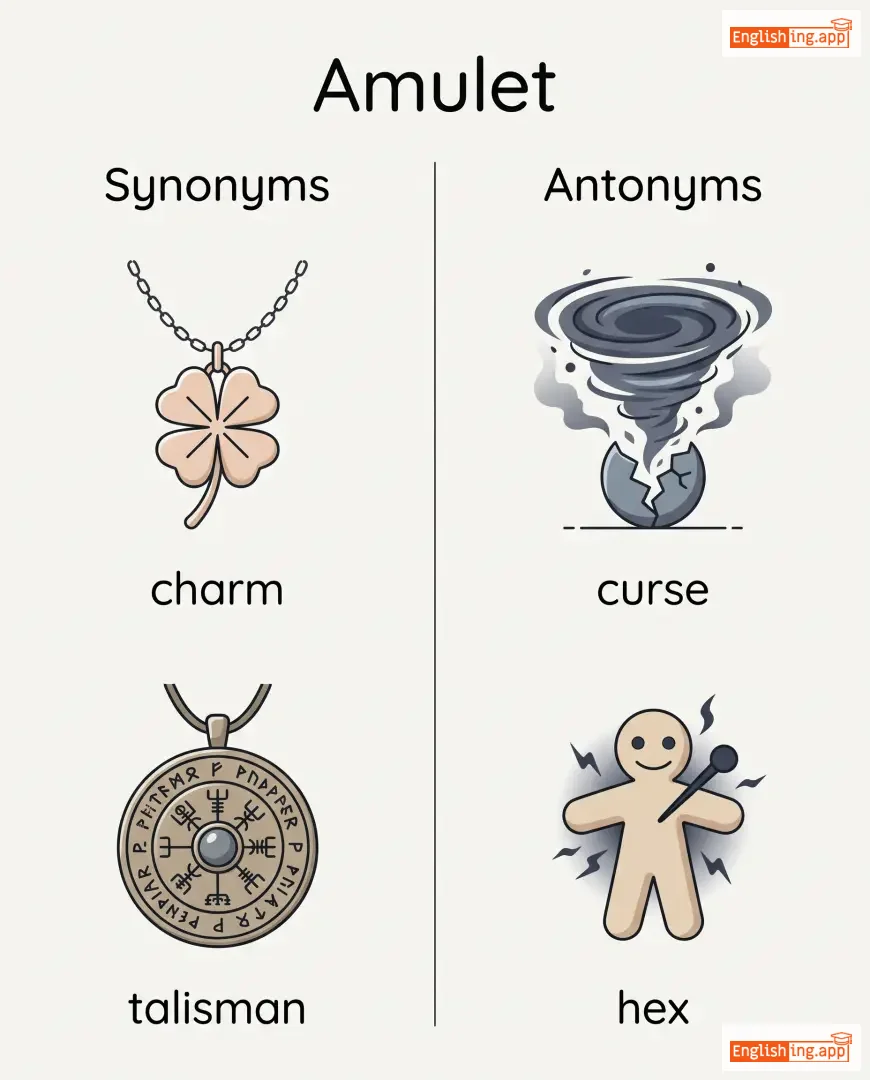
charm, talisman, pendant, token
••••••
|
curse, hex, bane
••••••
|
wear an amulet, lucky amulet, protective amulet
••••••
|
护身符意味着护身符—'护'让你记得保护自己
••••••
|
|
#37
⌛
|
/əˈnækrəˌnɪzəm/
noun
••••••
|
|
- •••••• | - •••••• | - •••••• | - •••••• | - •••••• |
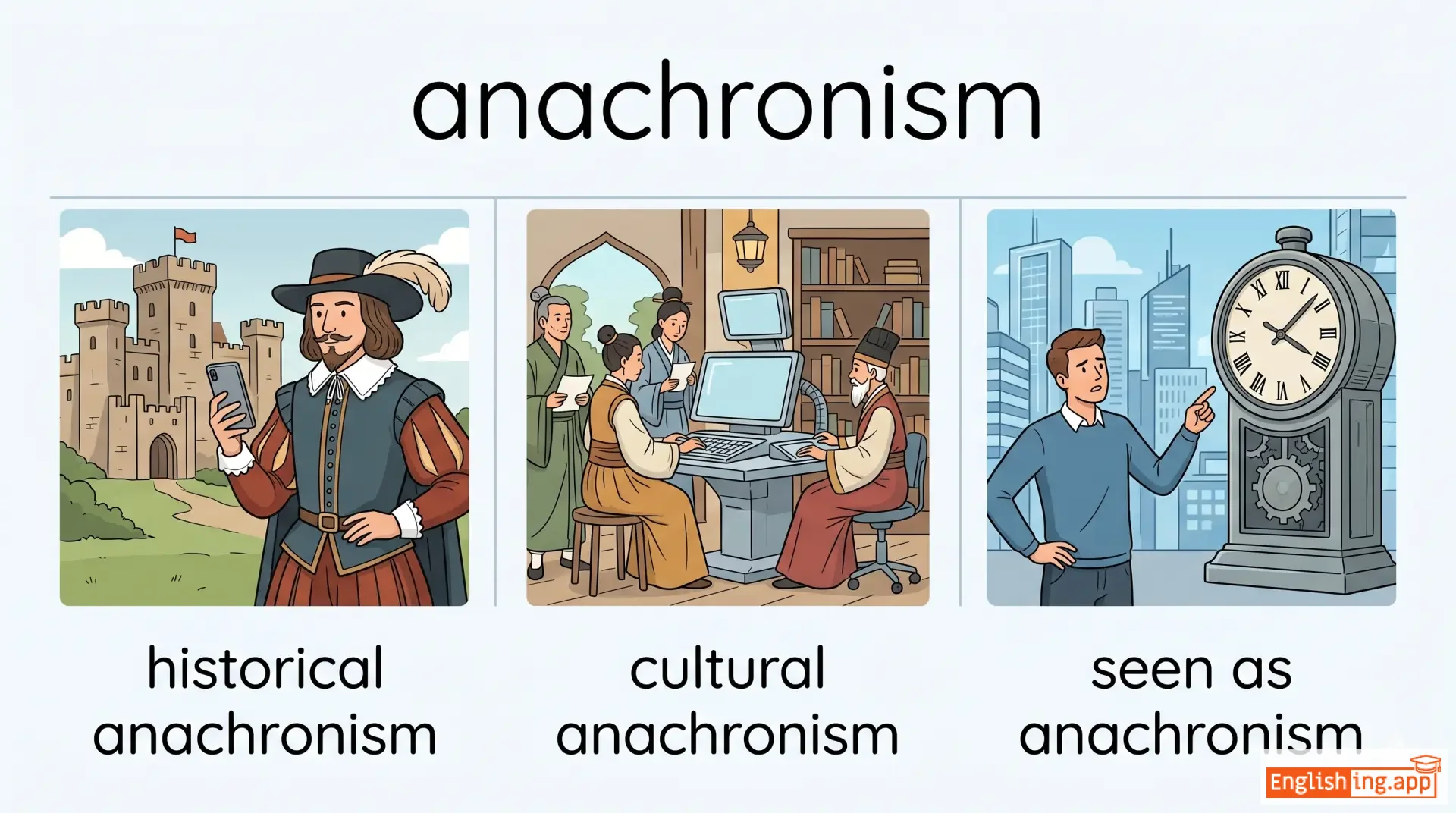
something that is out of its proper time period, especially something old-fashioned in a modern context
••••••
|
Using a typewriter today feels like an anachronism. |
- •••••• | - •••••• | - •••••• | - •••••• |
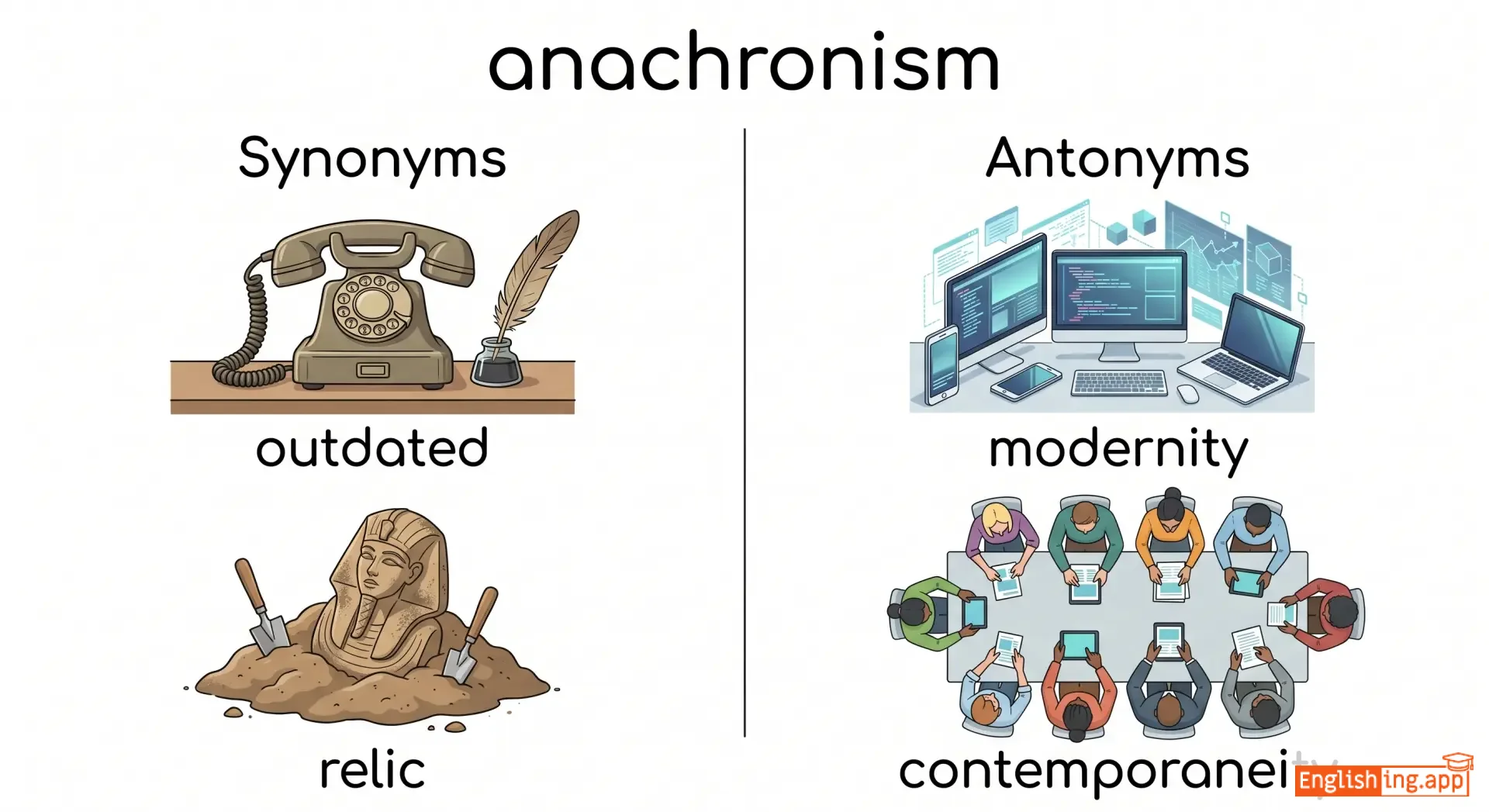
outdated, relic, antiquated, obsolete
••••••
|
modernity, contemporaneity, relevance
••••••
|
historical anachronism, cultural anachronism, seen as anachronism
••••••
|
No •••••• |
|
#38
💊
|
/ˌænəlˈdʒiːzɪk/
noun
(止痛药)
••••••
|
|
止痛药
zhitòng yào
••••••
|
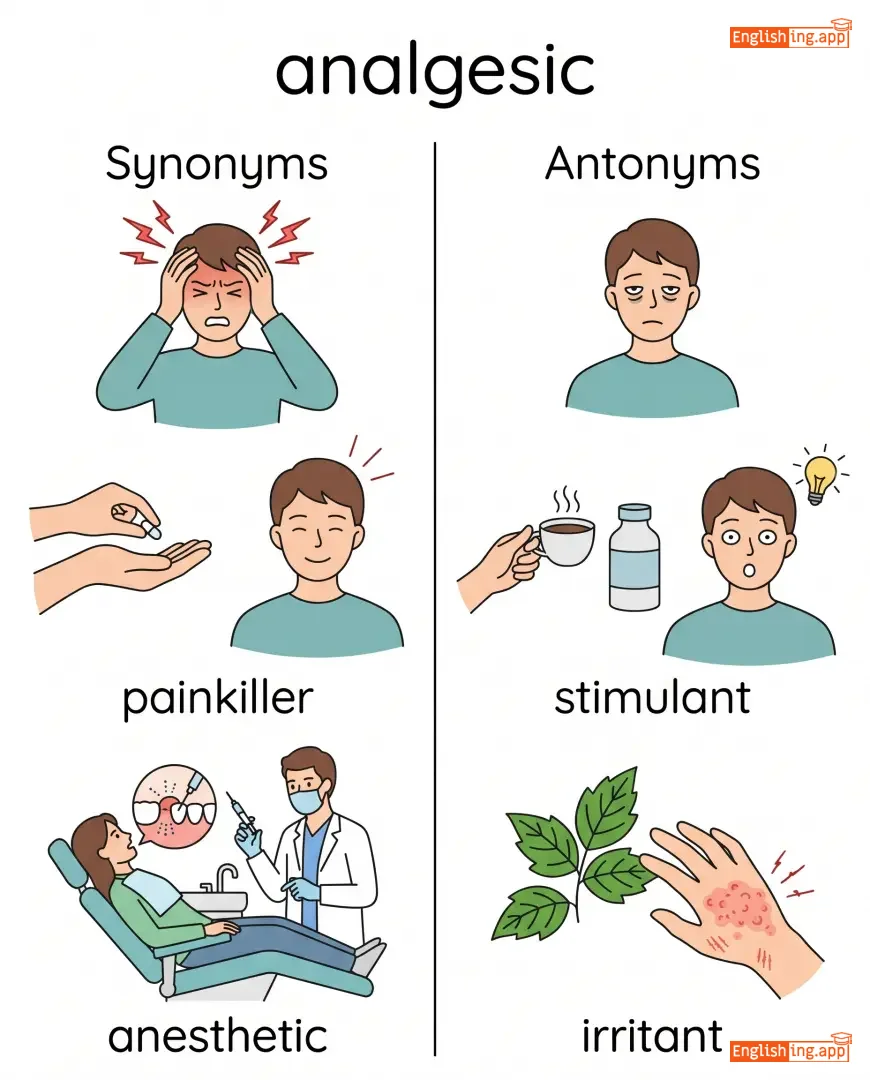
- •••••• | - •••••• | - •••••• | - •••••• |
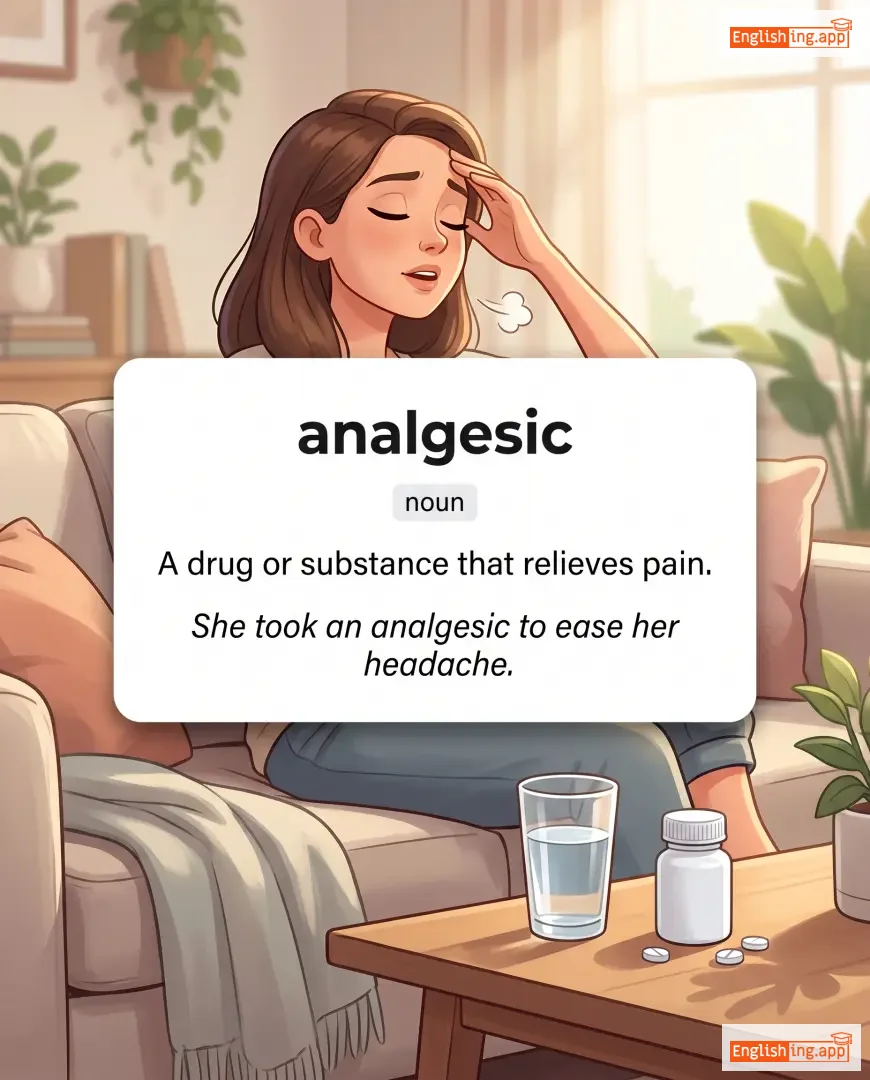
A drug or substance that relieves pain.
••••••
|
She took an analgesic to ease her headache.
她吃了止痛药来缓解头痛。
••••••
|
她吃了止痛药来缓解头痛。
Tā chīle zhìtòng yào lái huǎnjiě tóutòng.
••••••
|
- •••••• | - •••••• | - •••••• |
painkiller, anesthetic, sedative, remedy
••••••
|
stimulant, irritant
••••••
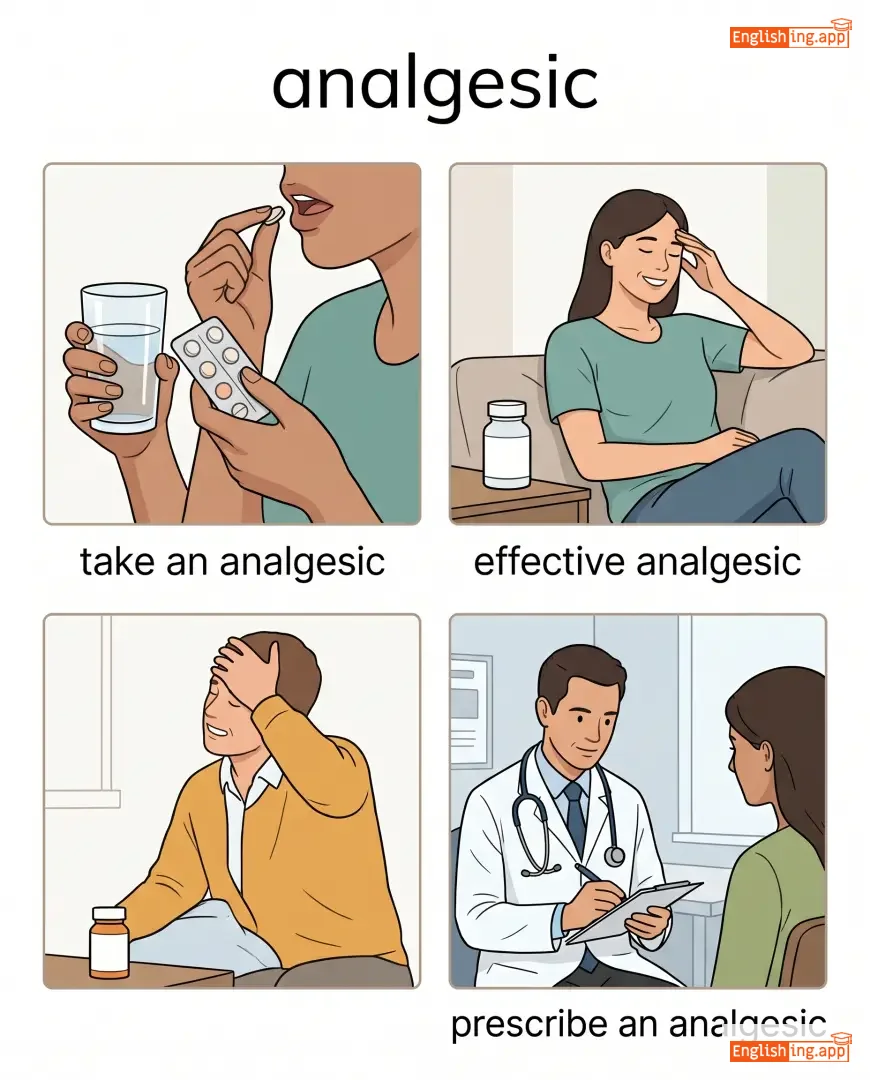
|
take an analgesic, effective analgesic, prescribe an analgesic
••••••
|
Analgesic 就是 pain killer,中文是止痛药。
••••••
|
|
#39
🔗
|
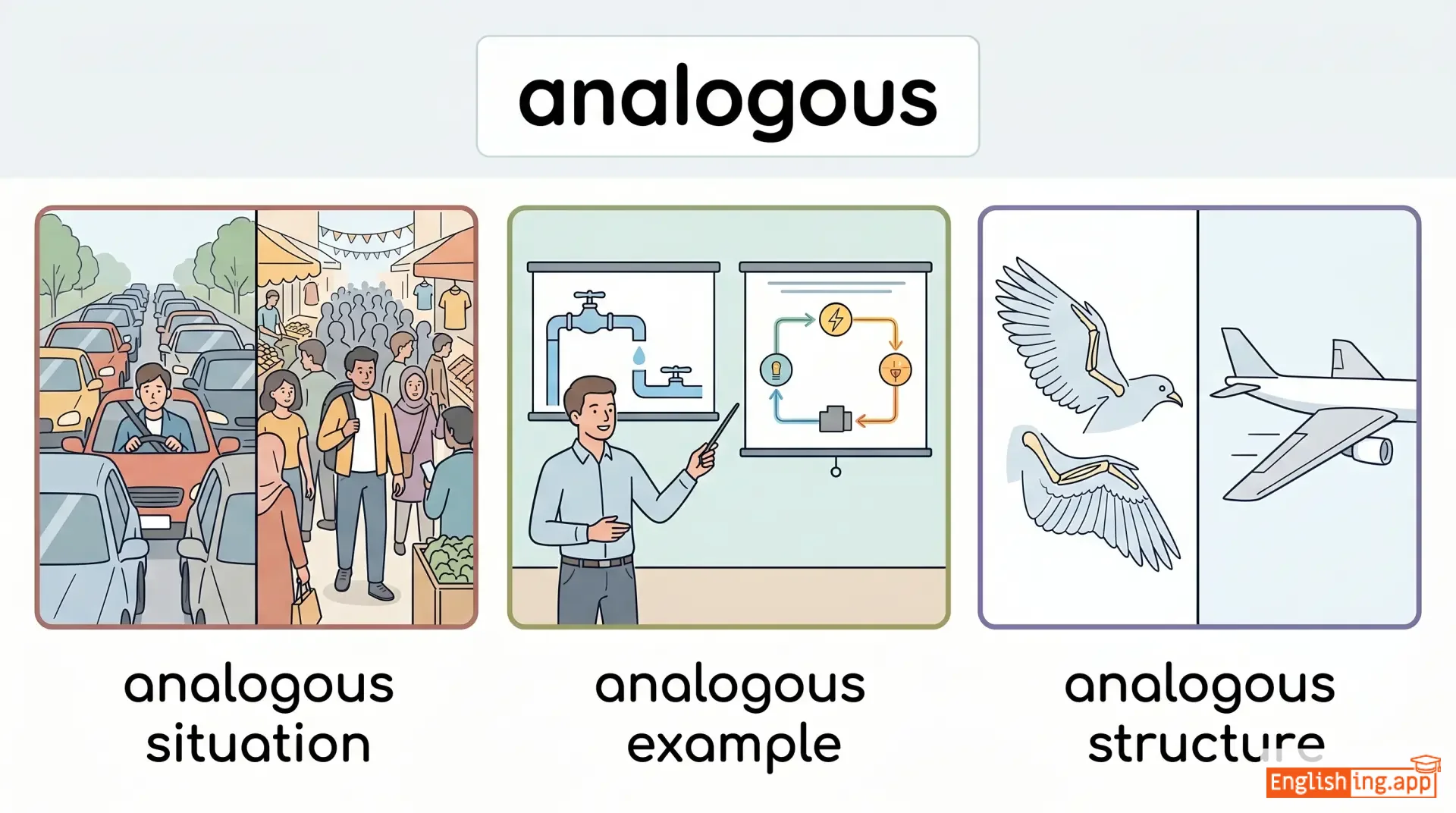
/əˈnæləɡəs/
adjective
••••••
|
|
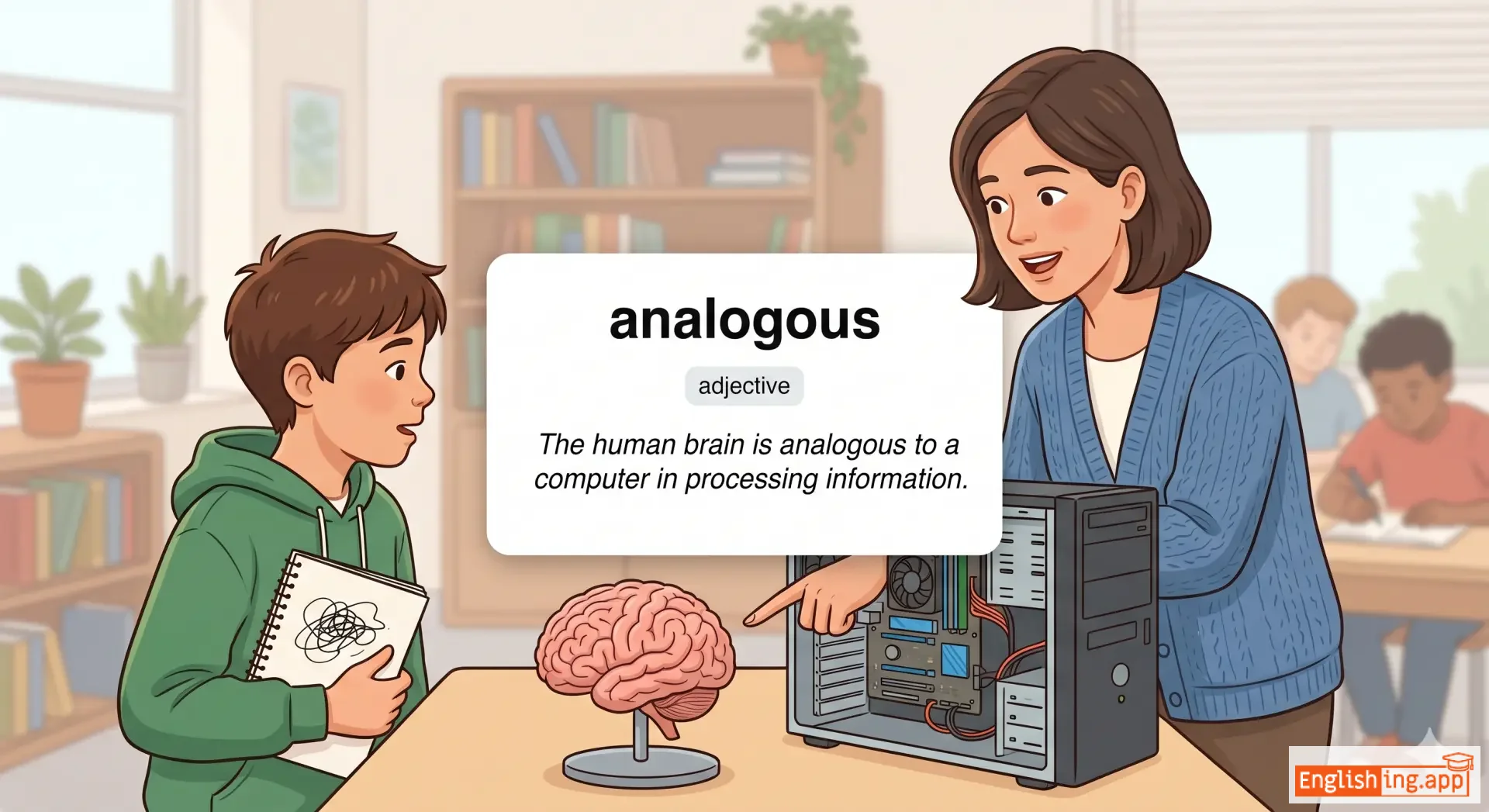
- •••••• | - •••••• | - •••••• | - •••••• | - •••••• |
Comparable in certain respects, typically in a way that makes clearer the nature of the things compared.
••••••
|
The human brain is analogous to a computer in processing information. |
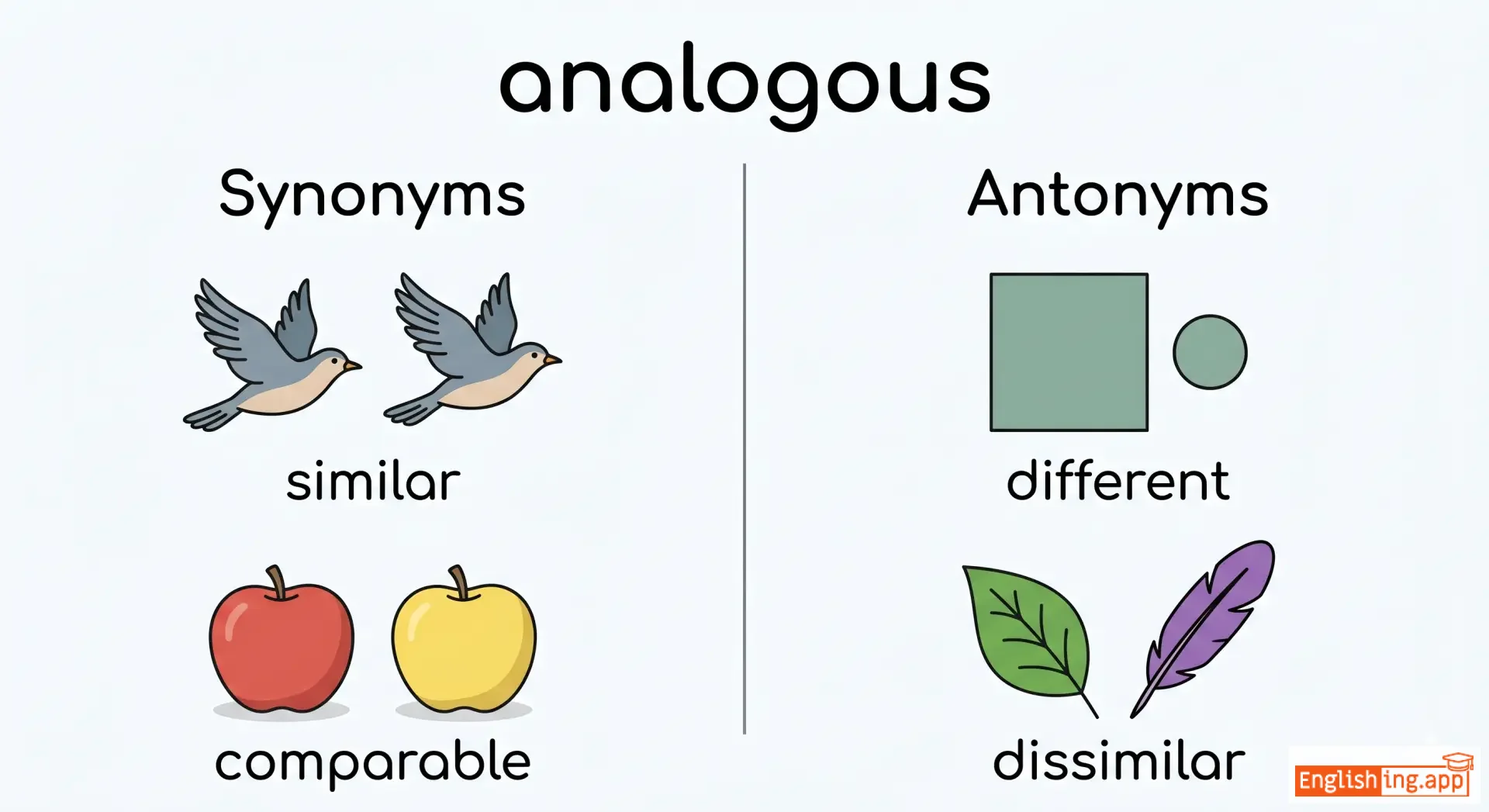
- •••••• | - •••••• | - •••••• | - •••••• |
similar, comparable, alike, equivalent
••••••
|
different, dissimilar, unrelated
••••••
|
analogous situation, analogous example, analogous structure
••••••
|
No •••••• |
|
#40
⚠️
|
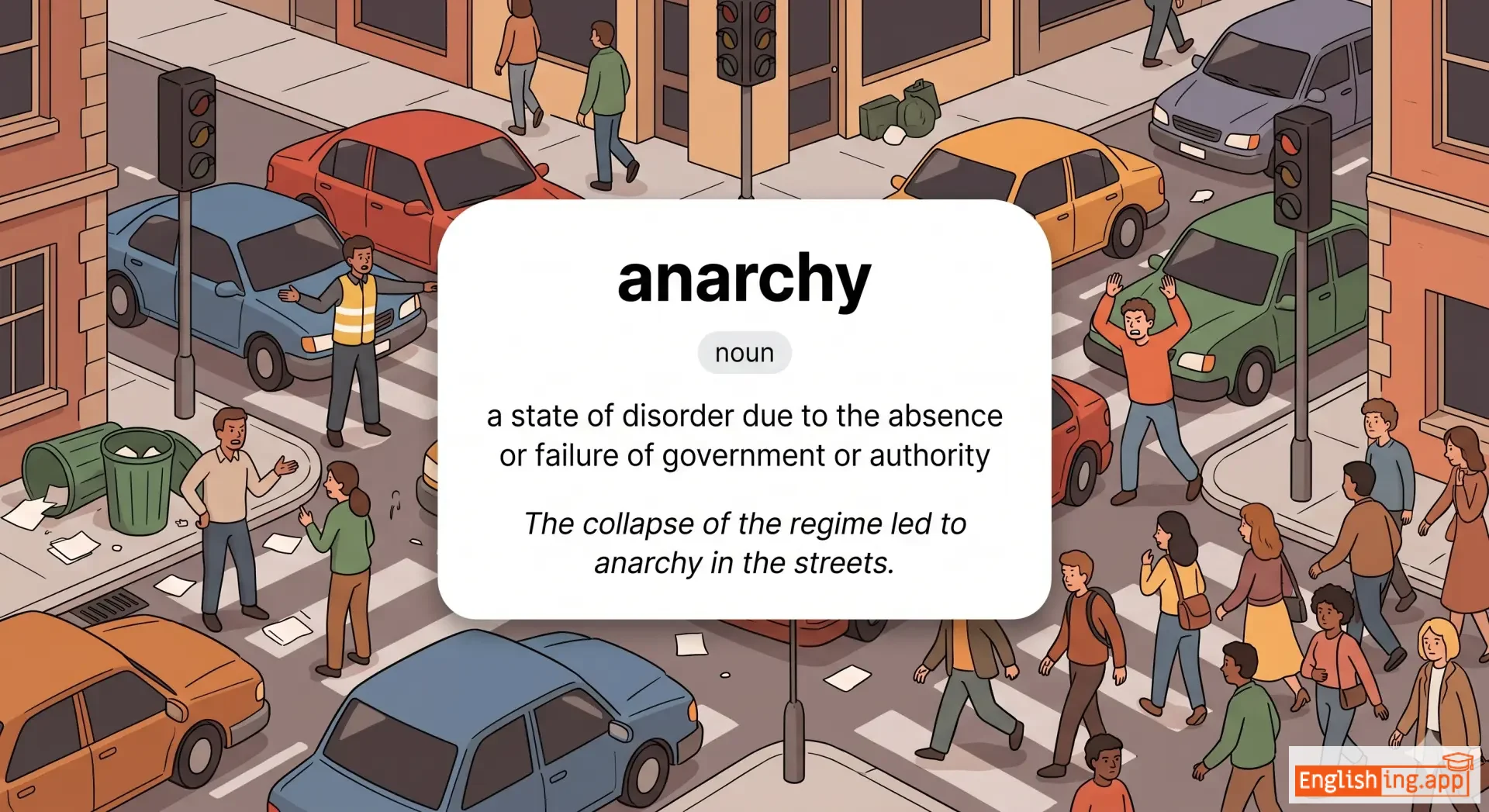
/ˈænərki/
noun
(ānàkì)
••••••
|
|
无政府状态
wú zhèngfǔ zhuàngtài
••••••
|
- •••••• | - •••••• | - •••••• | - •••••• |
a state of disorder due to the absence or failure of government or authority
••••••
|
The collapse of the regime led to anarchy in the streets. |
政权崩溃导致街头的无政府状态。
Zhèngquán bēngkuì dǎozhì jiētóu de wú zhèngfǔ zhuàngtài.
••••••
|
- •••••• | - •••••• | - •••••• |
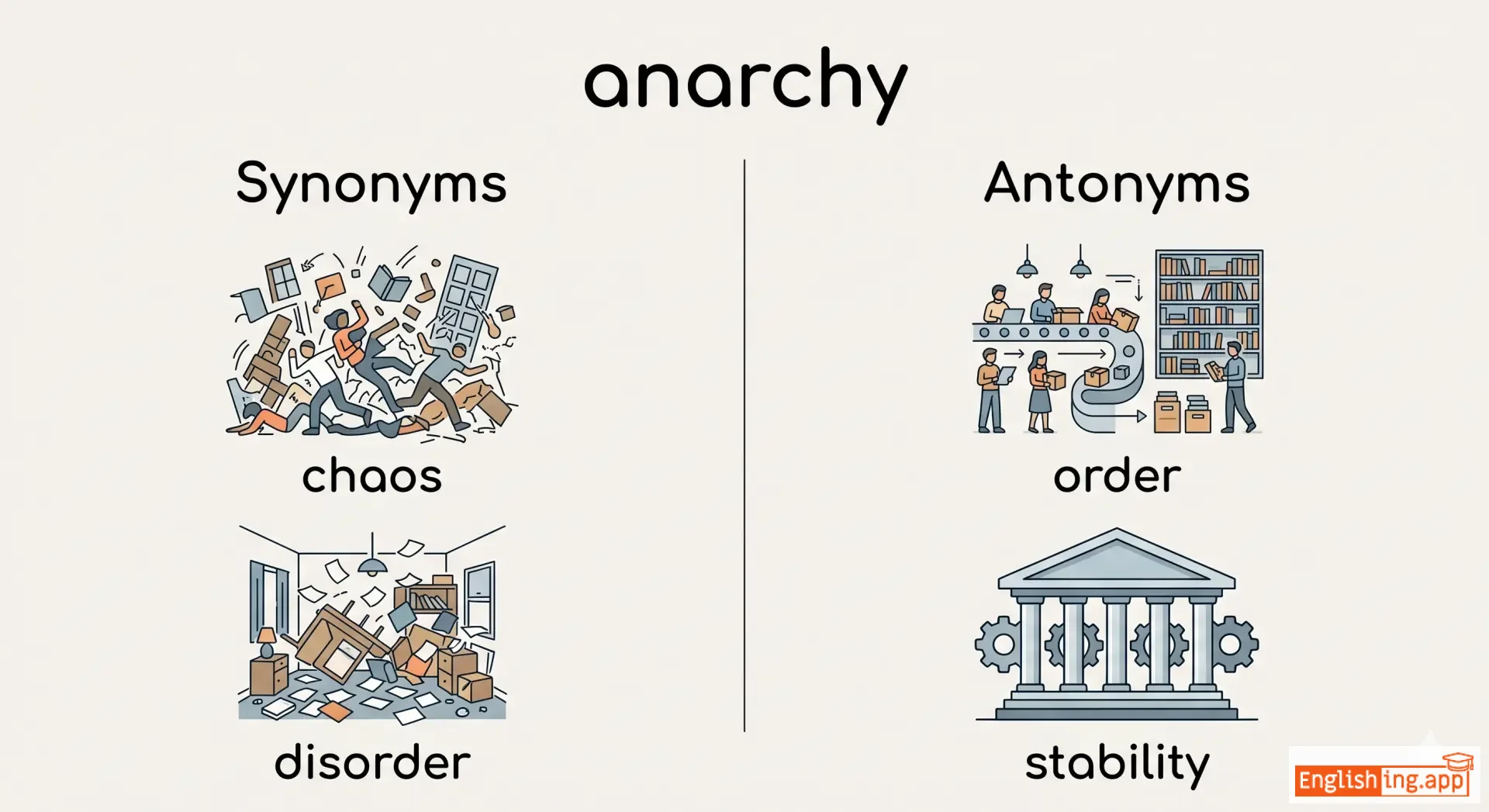
chaos, disorder, lawlessness, turmoil
••••••
|
order, stability, control
••••••
|
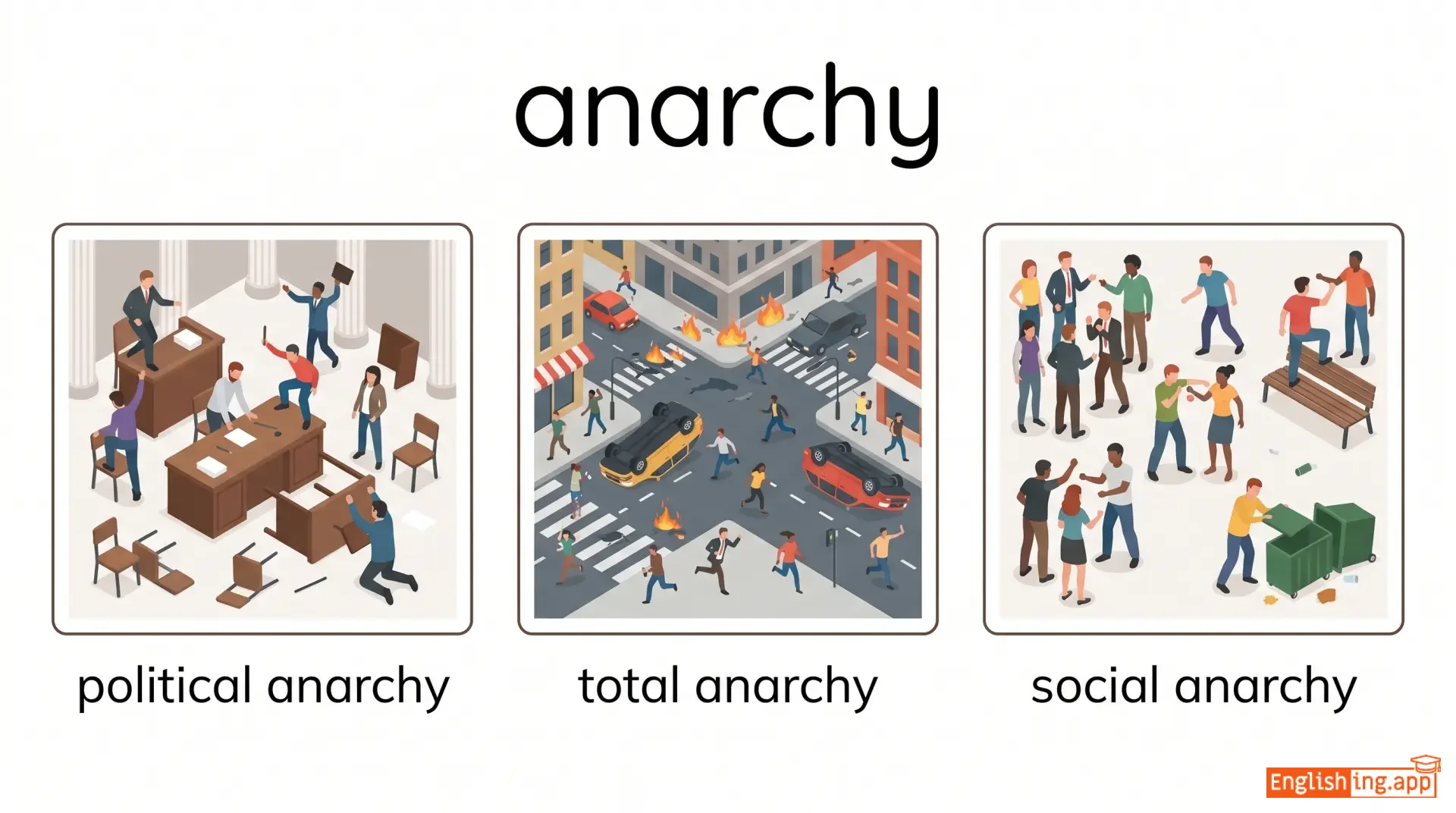
political anarchy, total anarchy, social anarchy
••••••
|
Anarchy = 'ānàkì' - 政府不见了,一切陷入混乱。
••••••
|
|
#41
💊
|
/ˈæn.ə.daɪn/
adjective
(阿诺代恩)
••••••
|
|
无害的,缓解疼痛的
wúhài de, huǎnjiě téngtòng de
••••••
|
- •••••• | - •••••• | - •••••• | - •••••• |
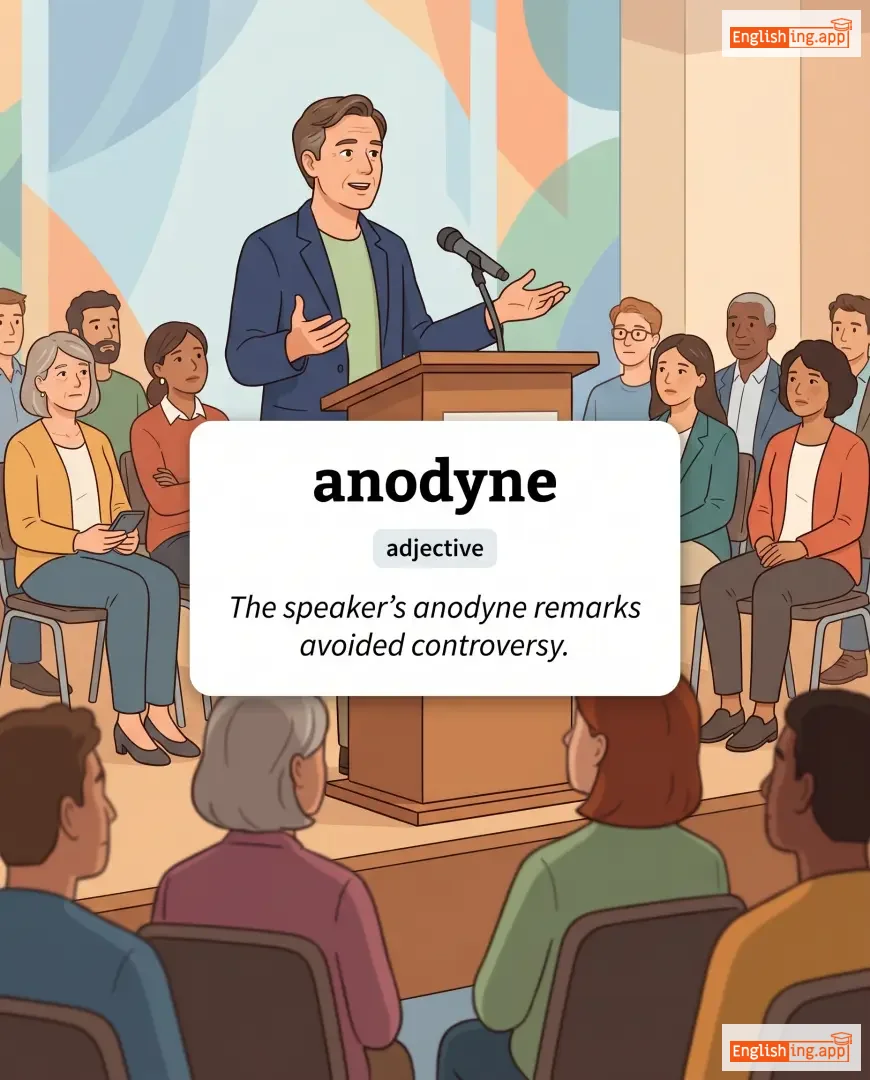
Not likely to cause offense; bland or harmless. Also refers to something that relieves pain.
••••••
|
The speaker’s anodyne remarks avoided controversy. |
演讲者的无害评论避免了争议。
Yǎnjiǎng zhě de wúhài pínglùn bìmiǎnle zhēngyì.
••••••
|
- •••••• | - •••••• | - •••••• |
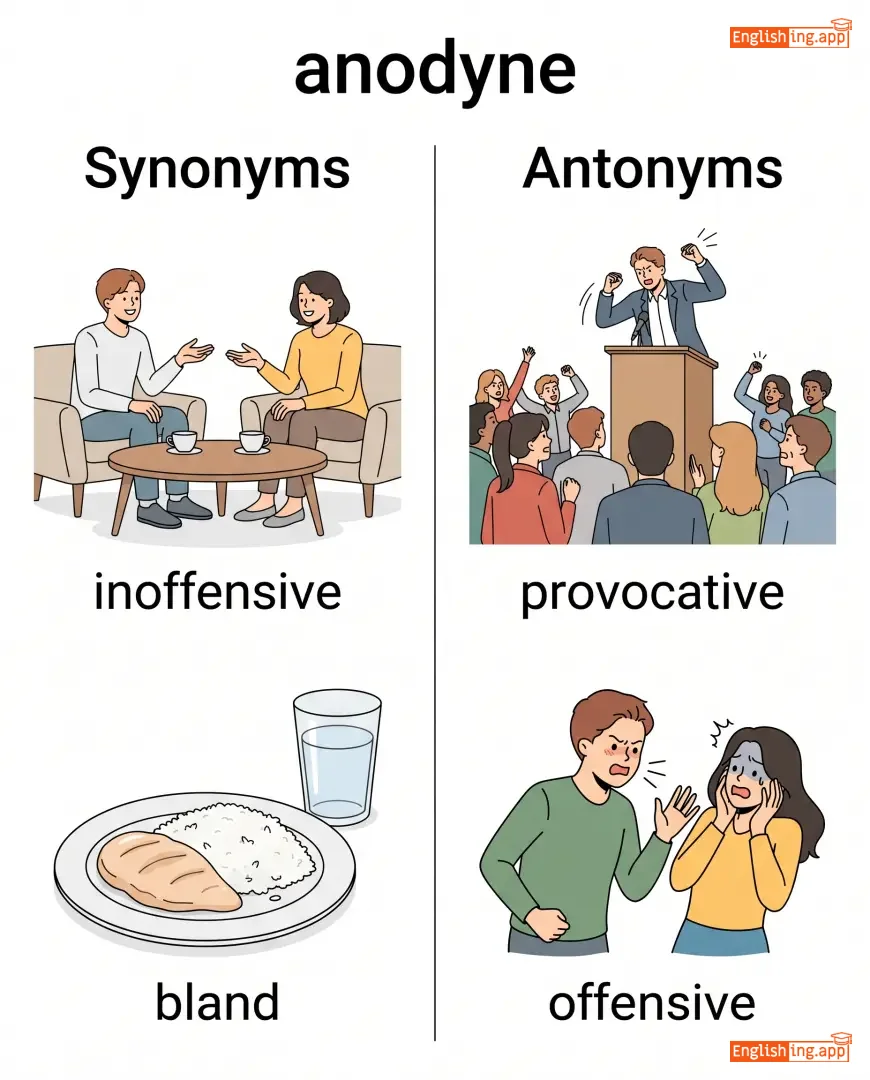
inoffensive, bland, harmless, soothing, palliative
••••••
|
provocative, offensive, harmful
••••••
|
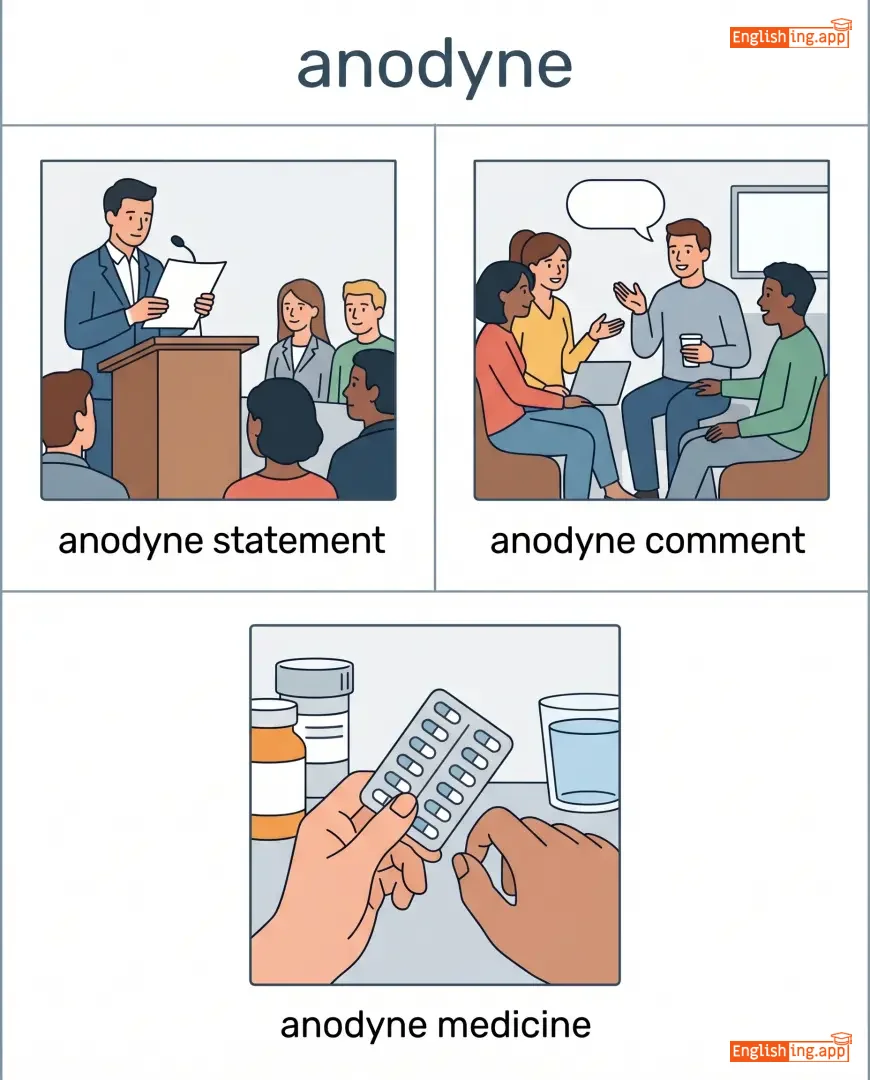
anodyne statement, anodyne comment, anodyne medicine
••••••
|
Anodyne = ‘No dyne’ → 没有痛苦,只有无害或缓解疼痛。
••••••
|
|
#42
⚠️
|
/əˈnɒmələs/
adjective
(非正常的)
••••••
|
|
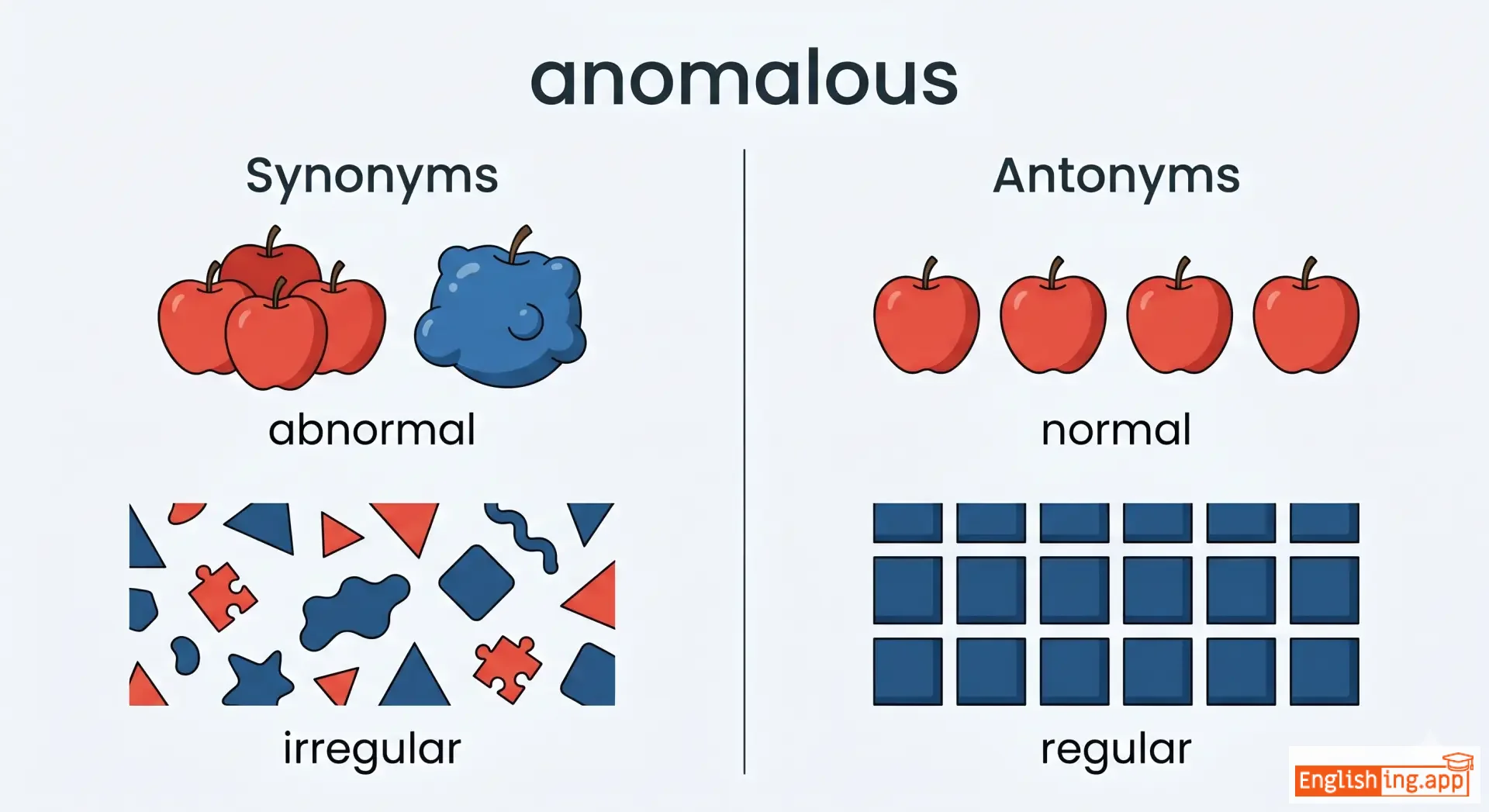
异常
yichang
••••••
|
- •••••• | - •••••• | - •••••• | - •••••• |
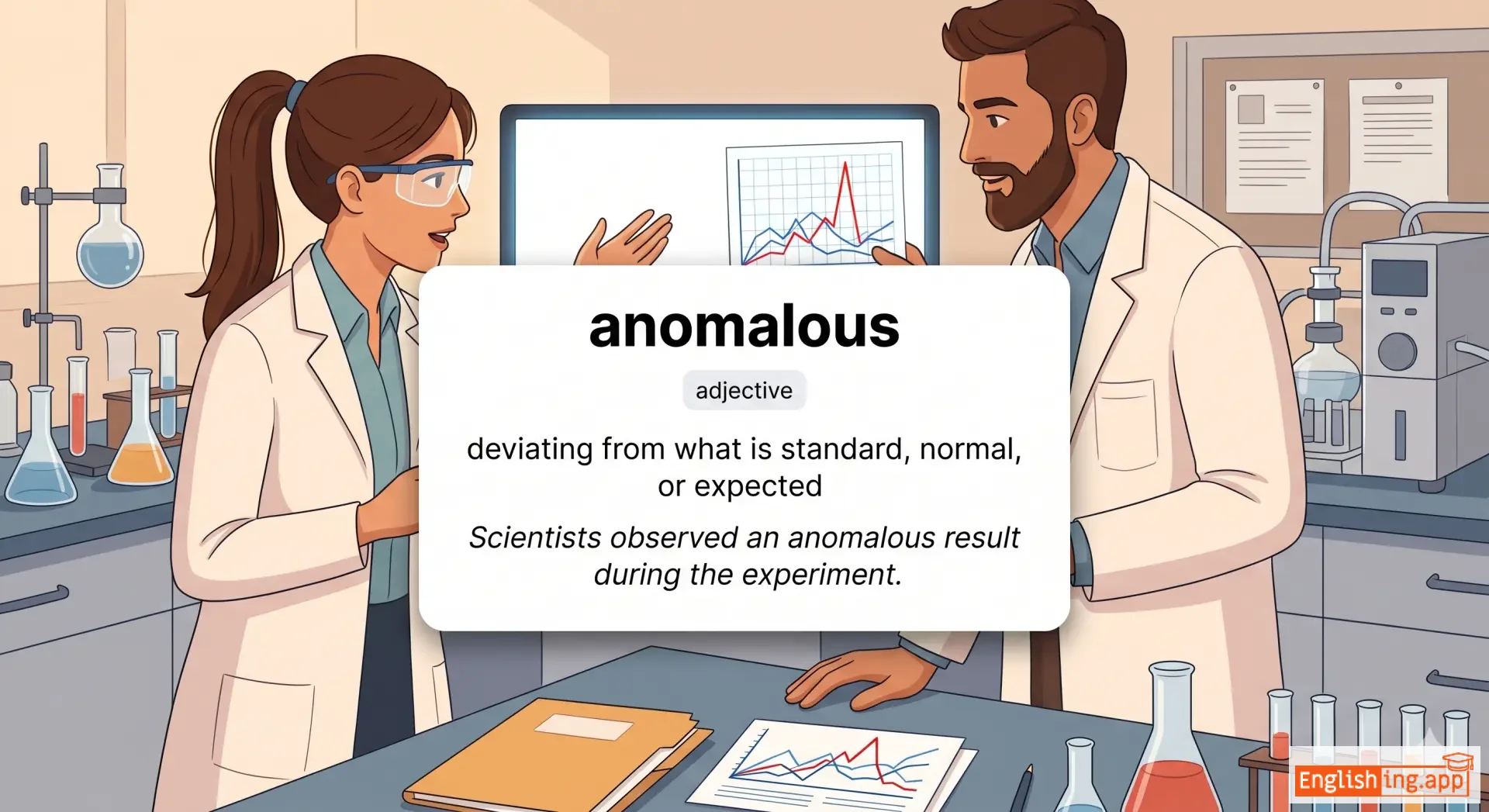
deviating from what is standard, normal, or expected
••••••
|
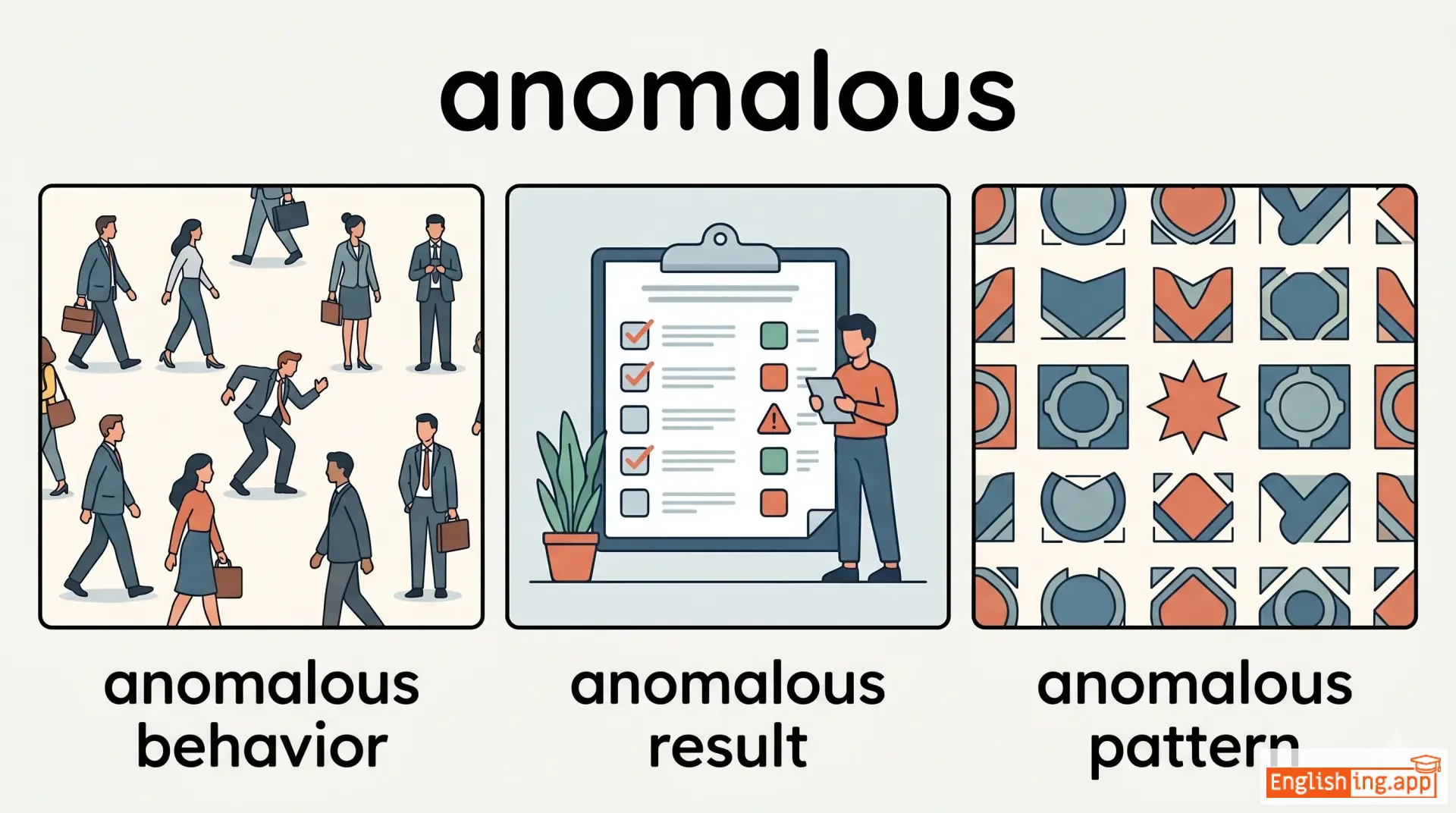
Scientists observed an anomalous result during the experiment.
科学家在实验中观察到了一个异常的结果。
••••••
|
科学家在实验中观察到了一个异常的结果。
Kexuejia zai shiyan zhong guancha dao le yige yichang de jieguo.
••••••
|
- •••••• | - •••••• | - •••••• |
abnormal, irregular, unusual, atypical, deviant
••••••
|
normal, regular, standard
••••••
|
anomalous behavior, anomalous result, anomalous pattern, anomalous situation
••••••
|
Anomalous 意味着异常—Think 'A normal' but it’s unexpected.
••••••
|
|
#43
📜
|
/ˌæntɪˈsiːdənt/
noun
(前例)
••••••
|
|
先例
xiànlì
••••••
|
- •••••• | - •••••• | - •••••• | - •••••• |
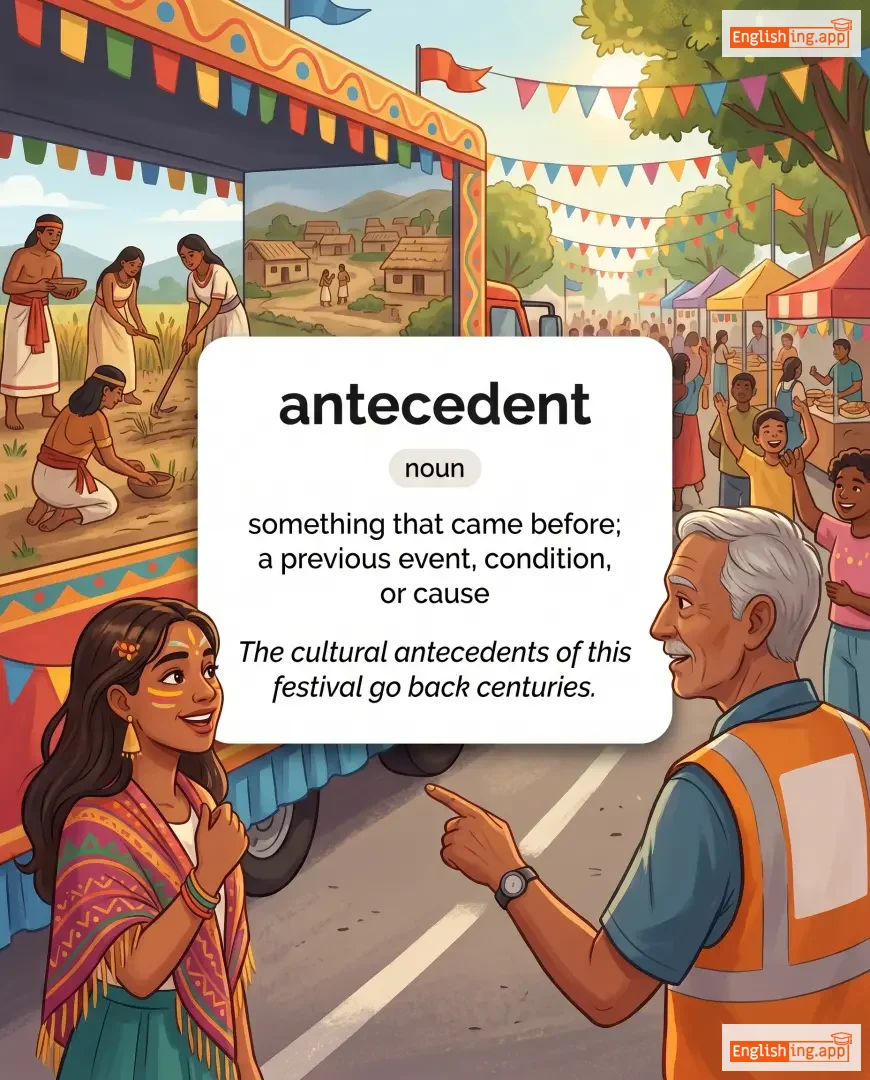
something that came before; a previous event, condition, or cause
••••••
|
The cultural antecedents of this festival go back centuries.
这个节日的文化先例可以追溯到几个世纪前。
••••••
|
这个节日的文化先例可以追溯到几个世纪前。
Zhège jiérì de wénhuà xiànlì kěyǐ zhuīsù dào jǐ gè shìjì qián.
••••••
|
grammatical antecedent
语法前例
••••••
|
a word or phrase that a pronoun refers back to
••••••
|
语法前例
yǔfǎ xiànlì
••••••
|
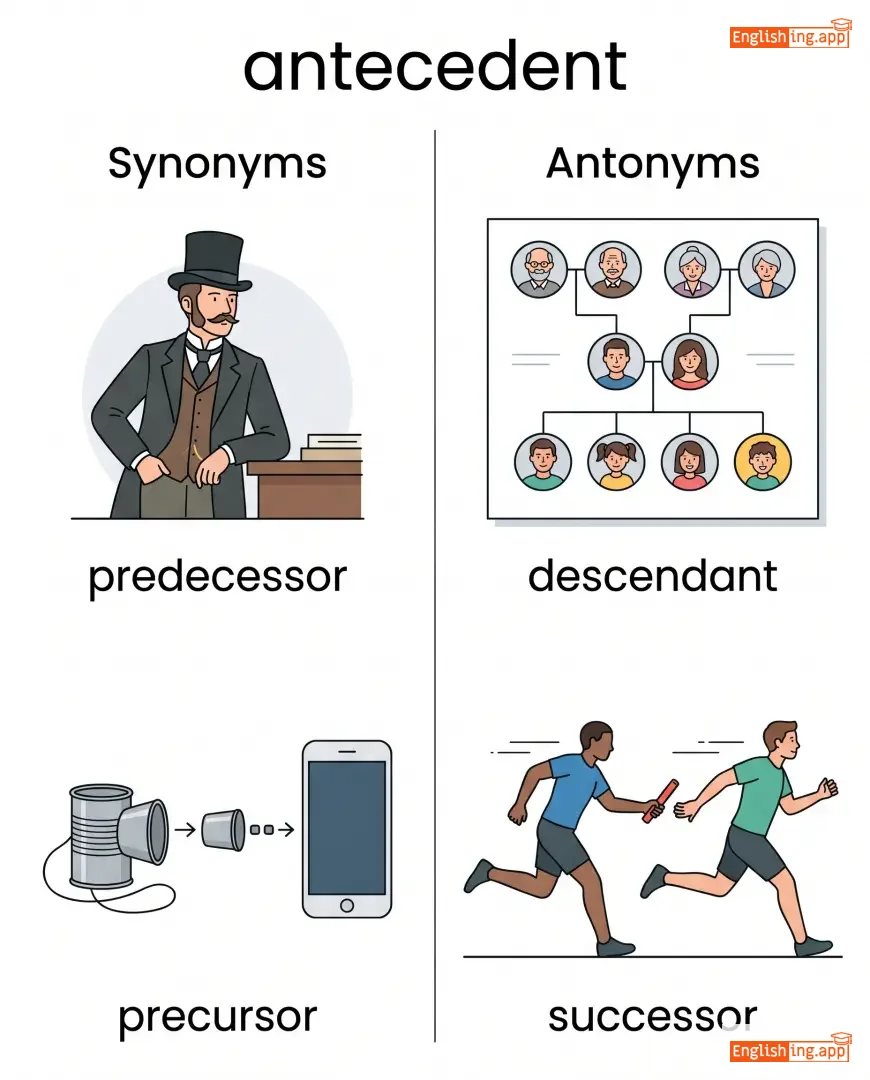
predecessor, precursor, forerunner, precedent
••••••
|
descendant, successor
••••••
|
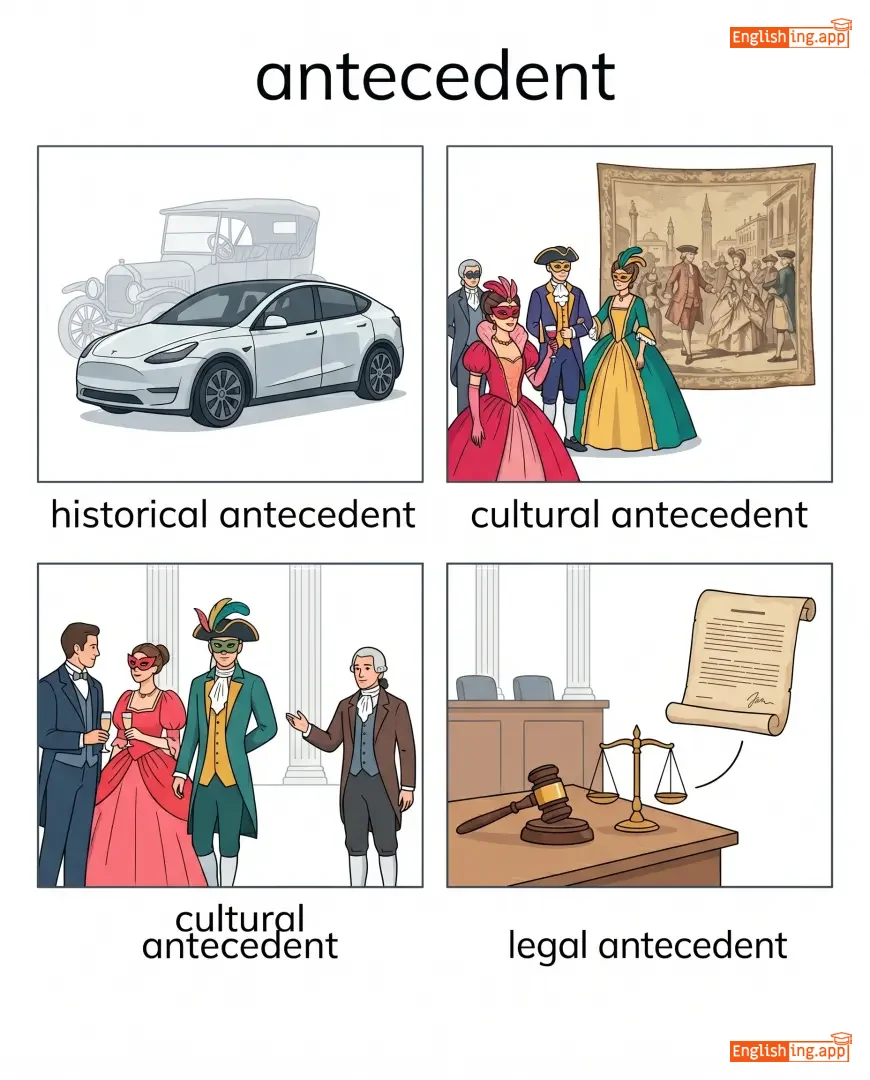
historical antecedent, cultural antecedent, legal antecedent
••••••
|
Antecedent: Ante (以前) + 事件 → 之前发生的事情
••••••
|
|
#44
🦕
|
/ˌæntɪdəˈluːviən/
adjective
(前洪水时代)
••••••
|
|
极为古老
jí wéi gǔ lǎo
••••••
|
- •••••• | - •••••• | - •••••• | - •••••• |
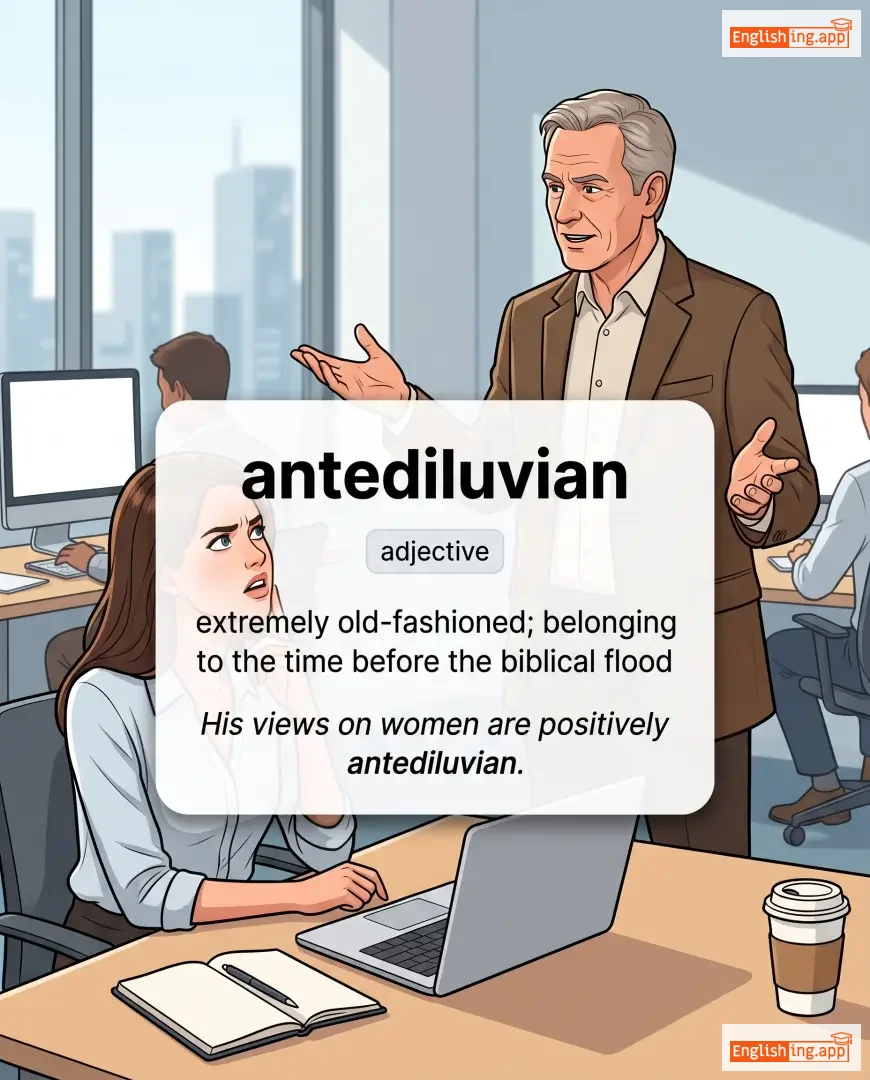
extremely old-fashioned; belonging to the time before the biblical flood
••••••
|
His views on women are positively antediluvian. |
他对女性的看法是完全过时的。
Tā duì nǚxìng de kànfǎ shì wánquán guòshí de.
••••••
|
- •••••• | - •••••• | - •••••• |
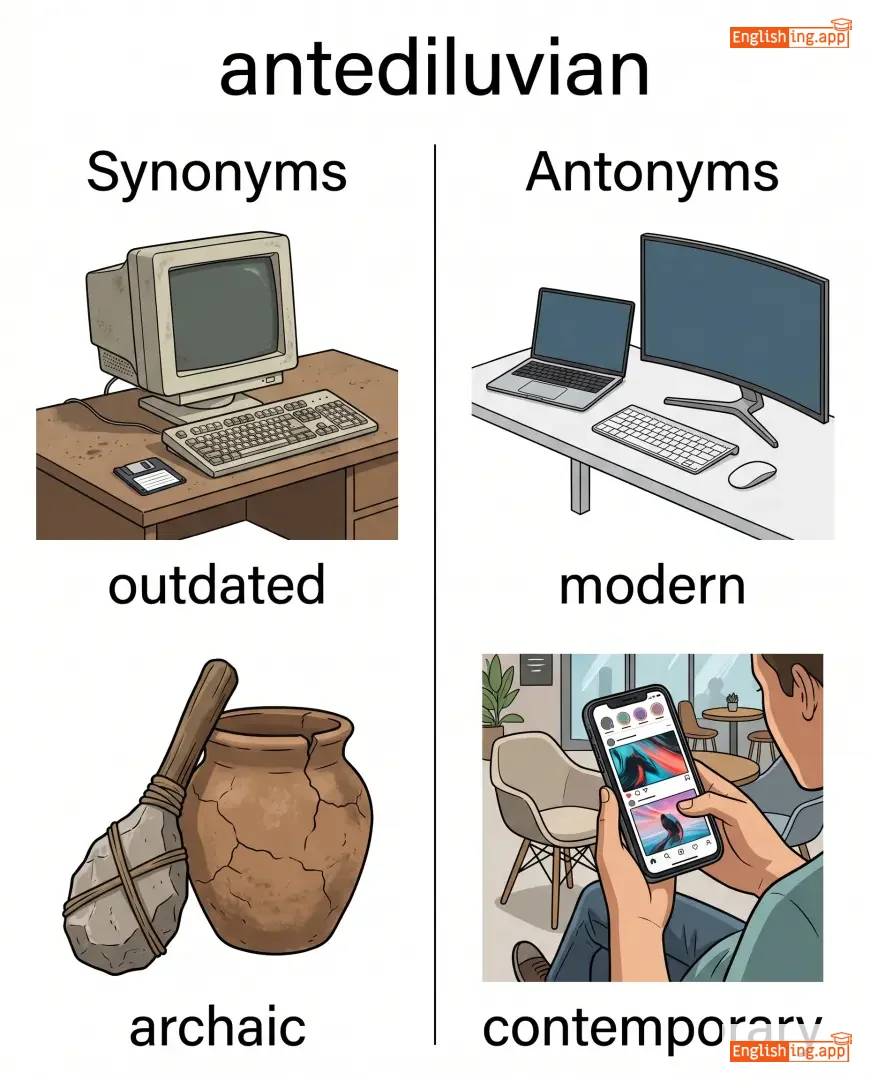
outdated, archaic, obsolete, primitive, ancient
••••••
|
modern, contemporary, current
••••••
|
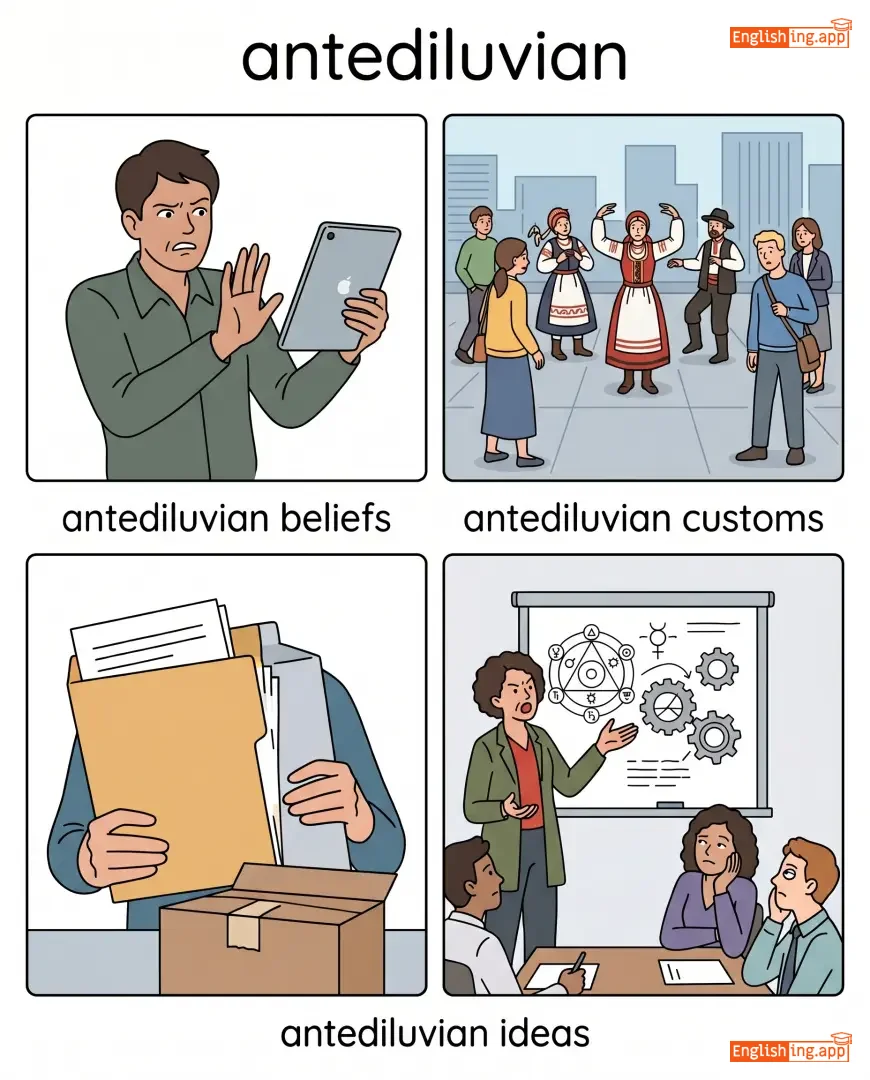
antediluvian beliefs, antediluvian customs, antediluvian ideas
••••••
|
Antediluvian意味着洪水之前,极为古老。
••••••
|
|
#45
😤
|
/ænˈtɪpəθi/
noun
(反感)
••••••
|
|
反感
fǎn gǎn
••••••
|
- •••••• | - •••••• | - •••••• | - •••••• |
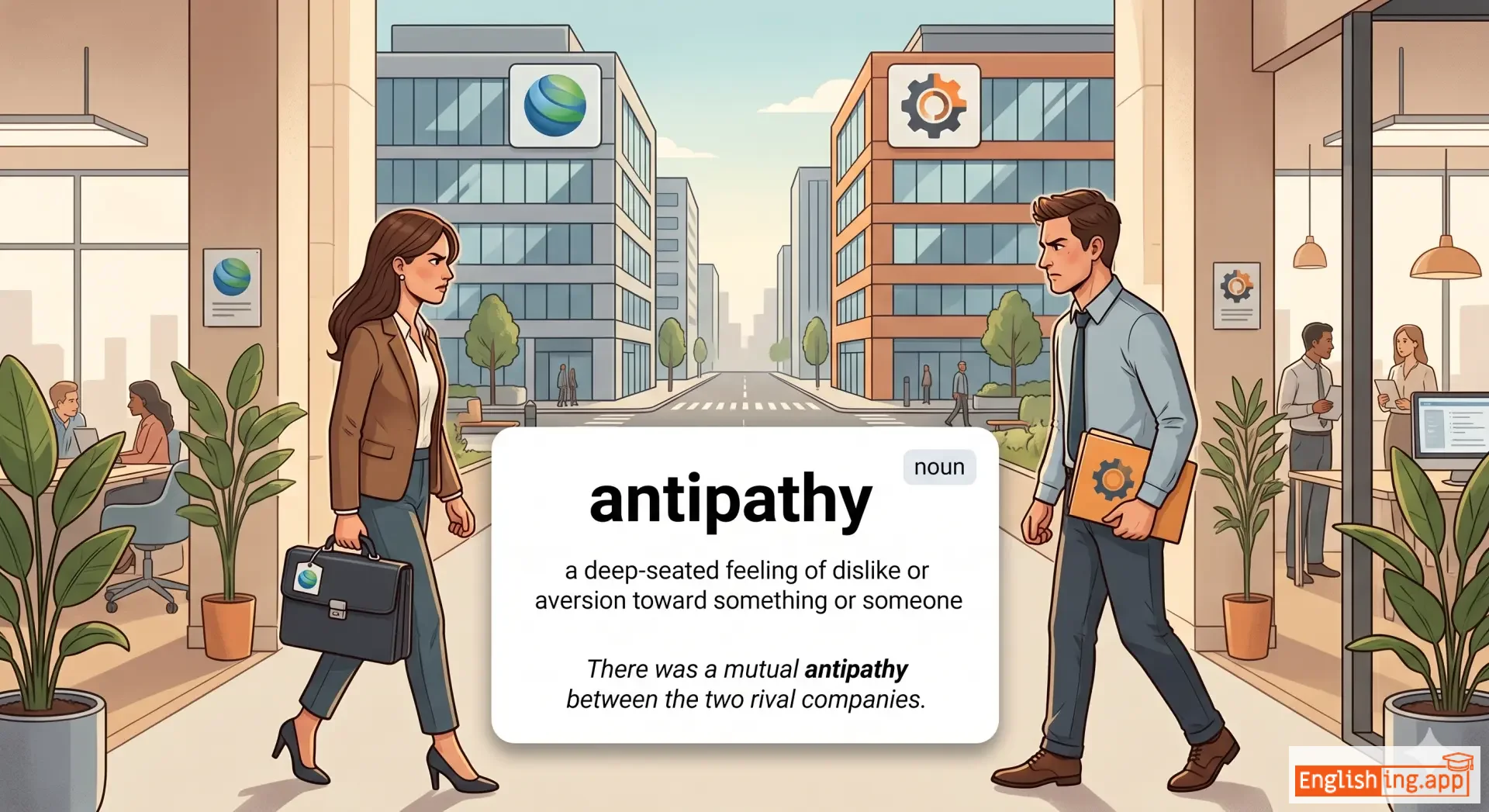
a deep-seated feeling of dislike or aversion toward something or someone
••••••
|
There was a mutual antipathy between the two rival companies. |
两家竞争对手之间存在相互的反感。
Liǎng jiā jìngzhēng duìshǒu zhījiān cúnzài xiānghù de fǎn gǎn.
••••••
|
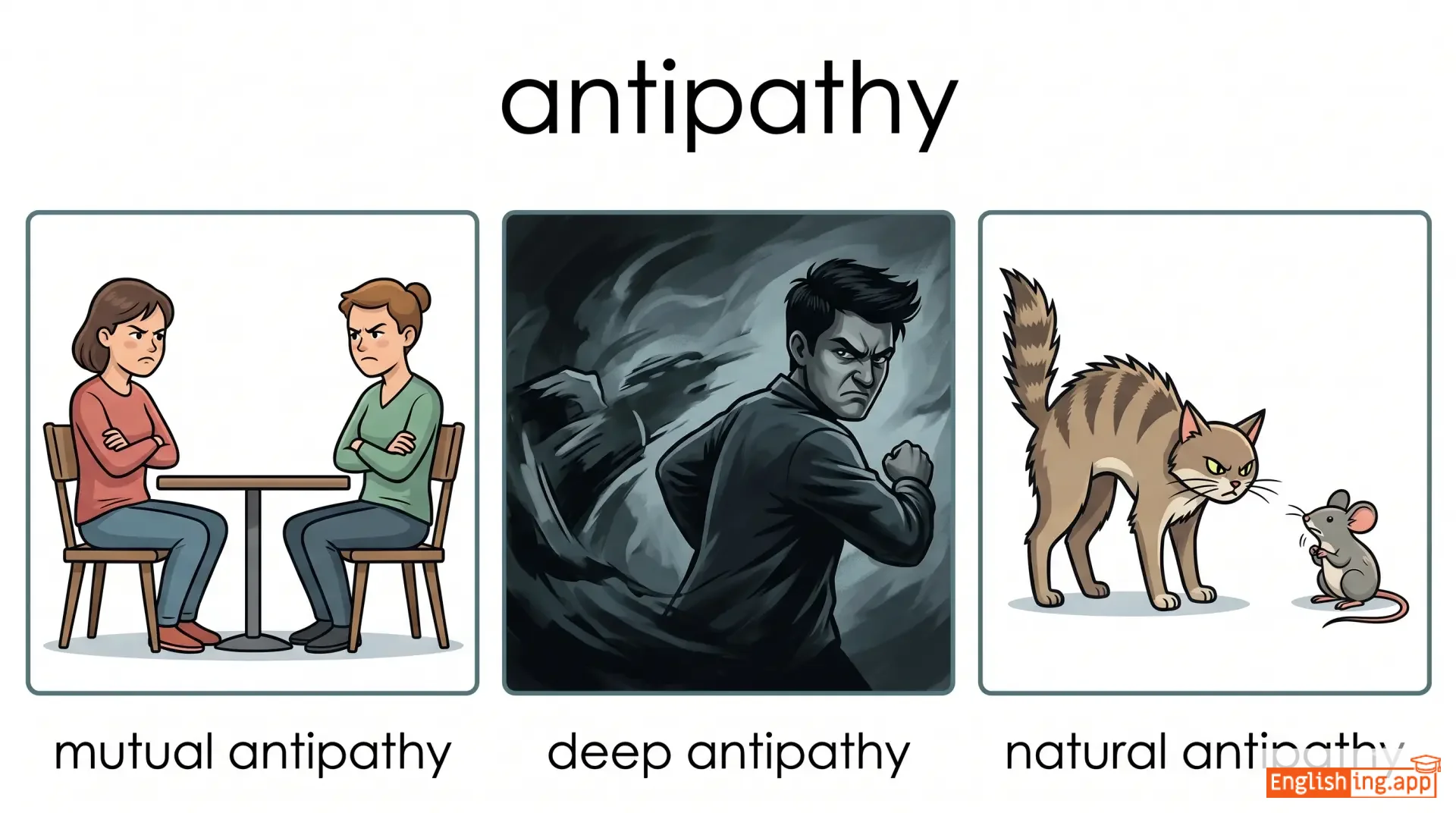
natural antipathy |
an inherent or instinctive dislike
••••••
|
自然的反感
zìrán de fǎn gǎn
••••••
|
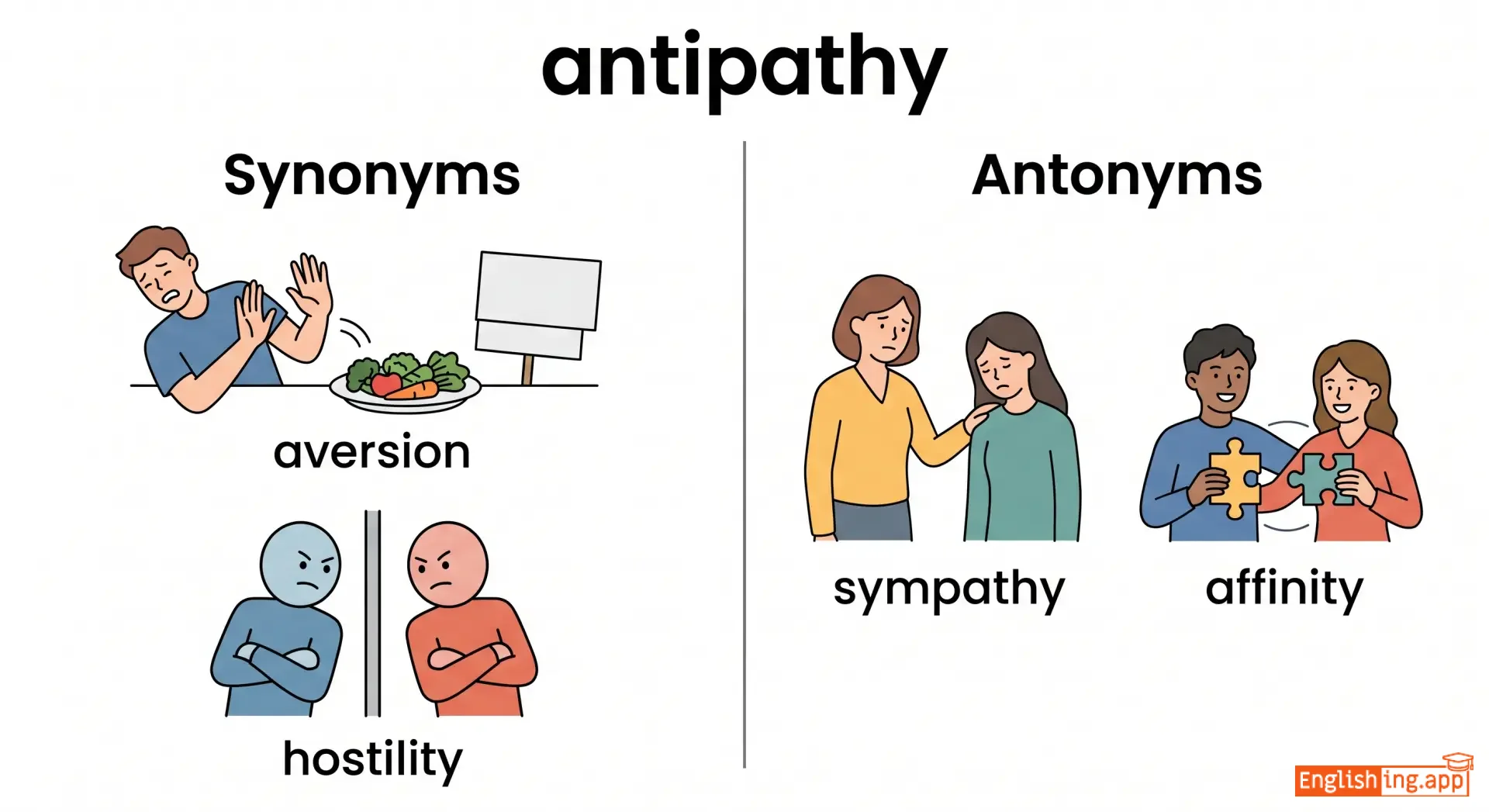
aversion, hostility, dislike, animosity, repugnance
••••••
|
sympathy, affinity, fondness
••••••
|
mutual antipathy, deep antipathy, natural antipathy, feel antipathy, antipathy toward
••••••
|
ANTI-PATHY意味着ANTI路径- 反感(fǎn gǎn)意味着走对立的路!
••••••
|
|
#46
😑
|
/ˈæpəθi/
noun
(阿帕西)
••••••
|
|
冷漠
lěngmò
••••••
|
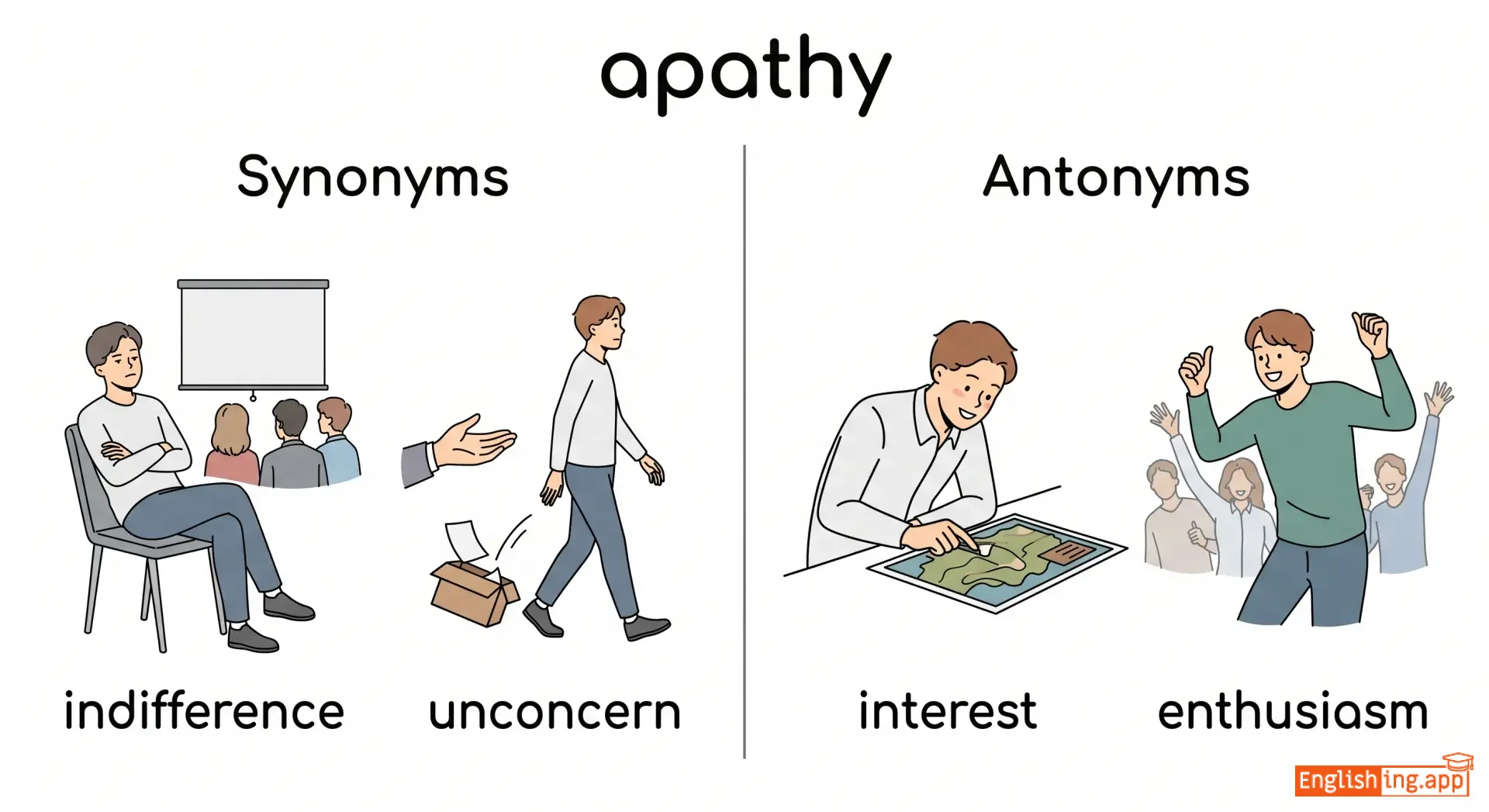
- •••••• | - •••••• | - •••••• | - •••••• |
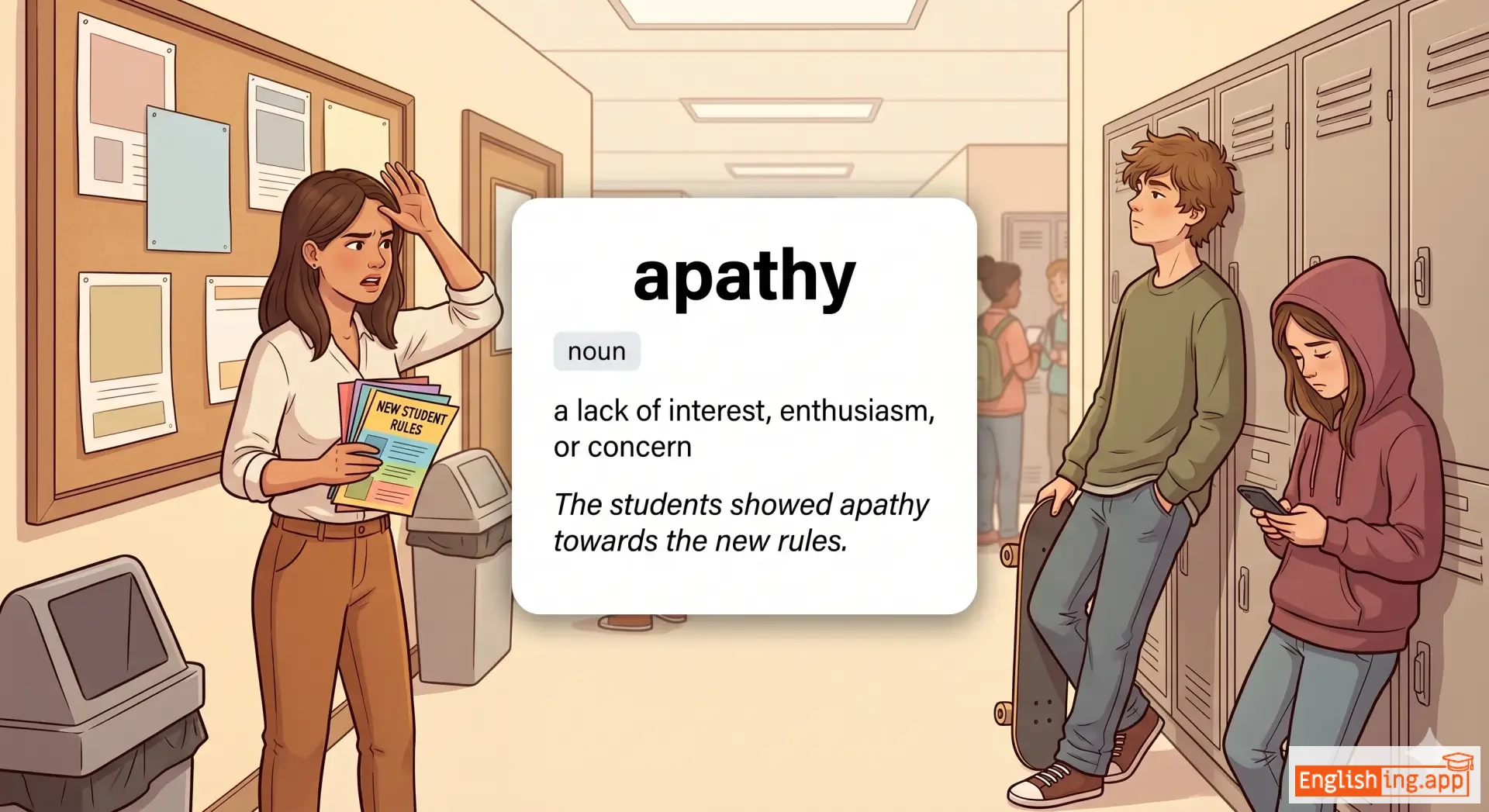
a lack of interest, enthusiasm, or concern
••••••
|
The students showed apathy towards the new rules. |
学生们对新规则表现出冷漠。
Xuéshēng men duì xīn guīzé biǎoxiàn chū lěngmò.
••••••
|
- •••••• | - •••••• | - •••••• |
indifference, unconcern, detachment, passivity
••••••
|
interest, enthusiasm, passion
••••••
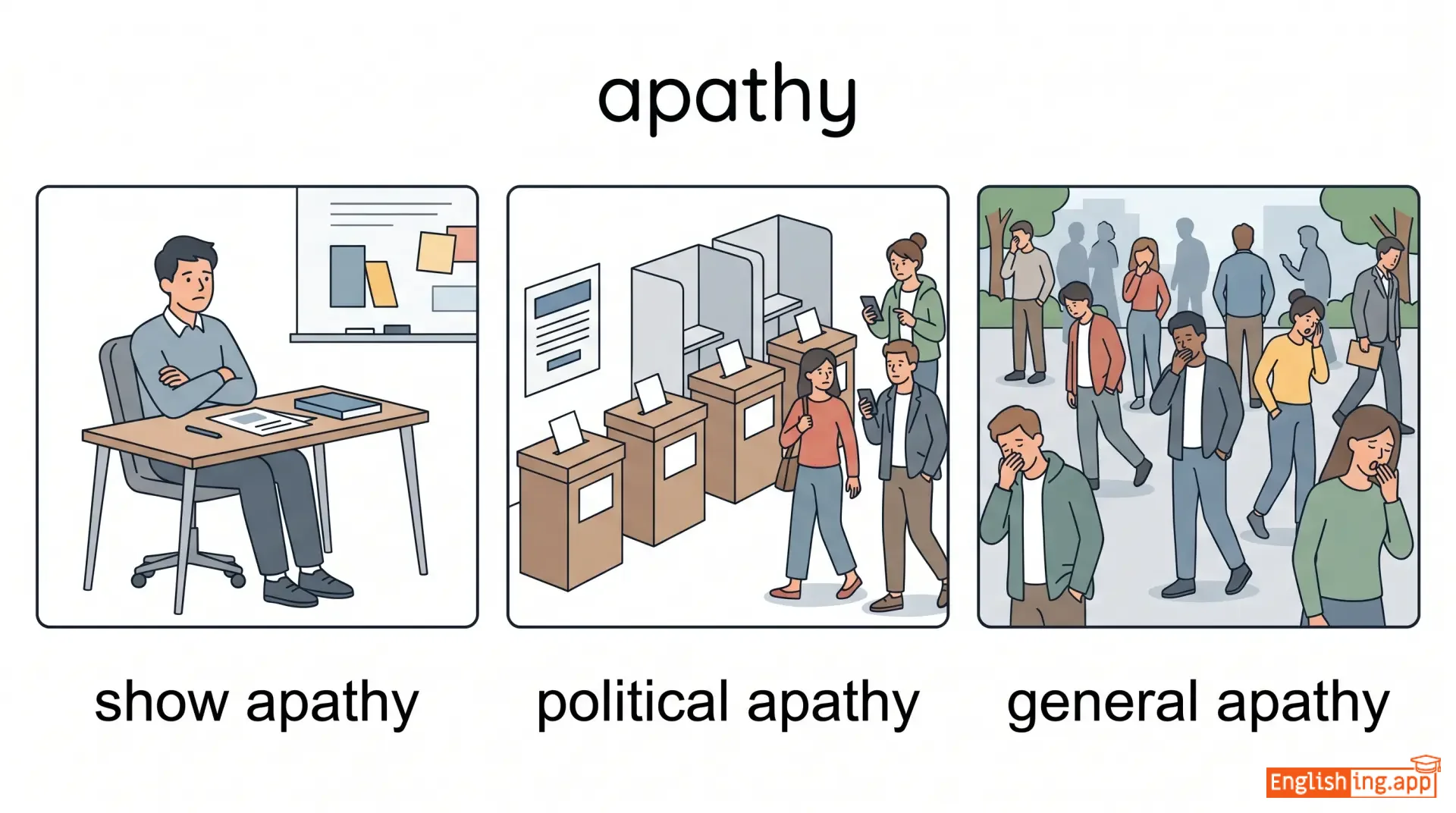
|
show apathy, political apathy, general apathy, apathy towards
••••••
|
Apathy 就是冷漠,什么都不关心。
••••••
|
|
#47
⛰️
|
/ˈeɪ.pɛks/
noun
(àipèikè sī)
••••••
|
|
顶点
dingdian
••••••
|
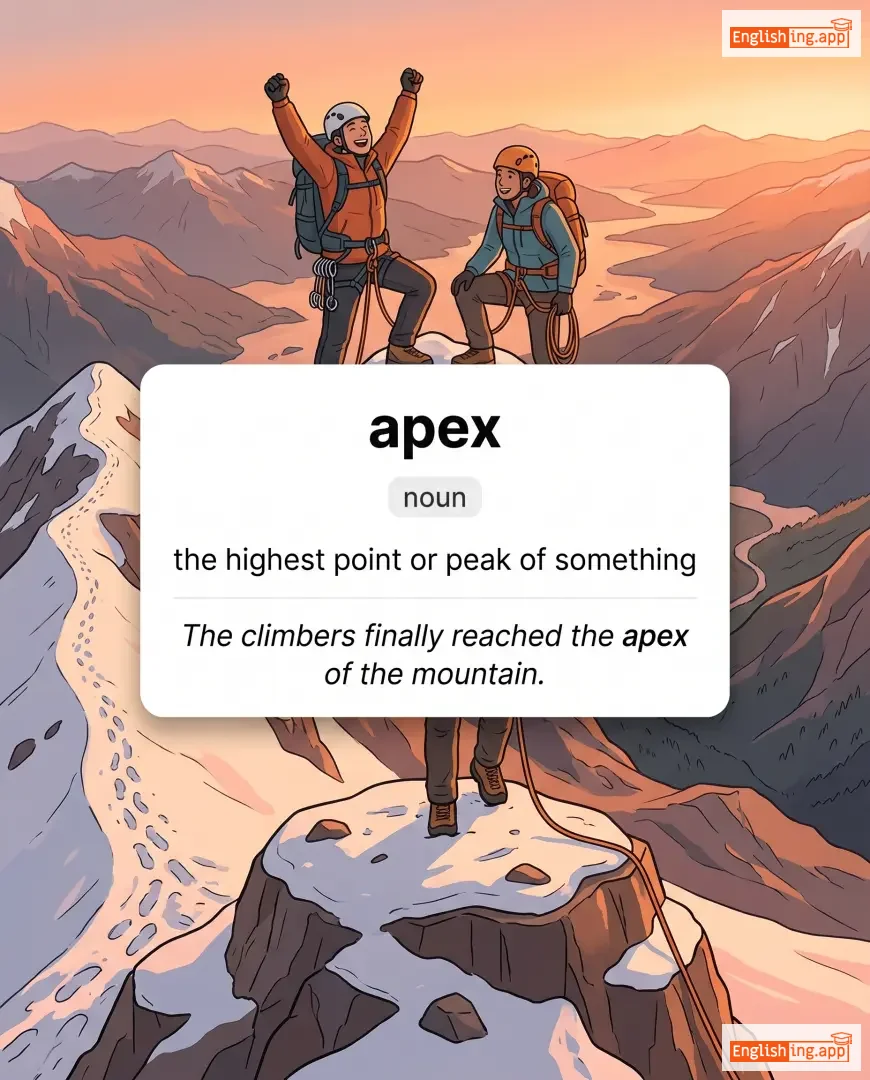
- •••••• | - •••••• | - •••••• | - •••••• |
the highest point or peak of something
••••••
|
The climbers finally reached the apex of the mountain. |
登山者最终到达了山顶。
Dēngshān zhě zuìzhōng dào dá le shāndǐng.
••••••
|
at the apex of |
at the highest or most successful point
••••••
|
在顶点
zài dǐngdiǎn
••••••
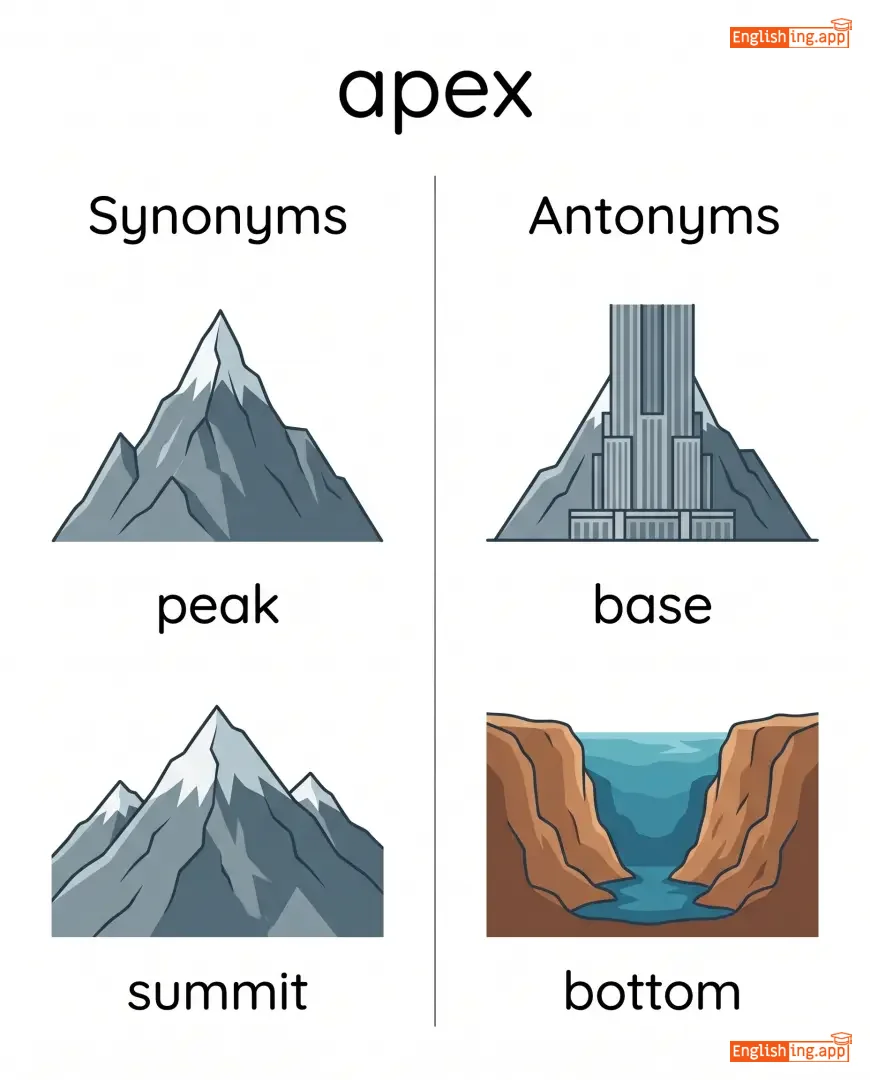
|
peak, summit, pinnacle, climax, acme
••••••
|
base, bottom, nadir
••••••
|
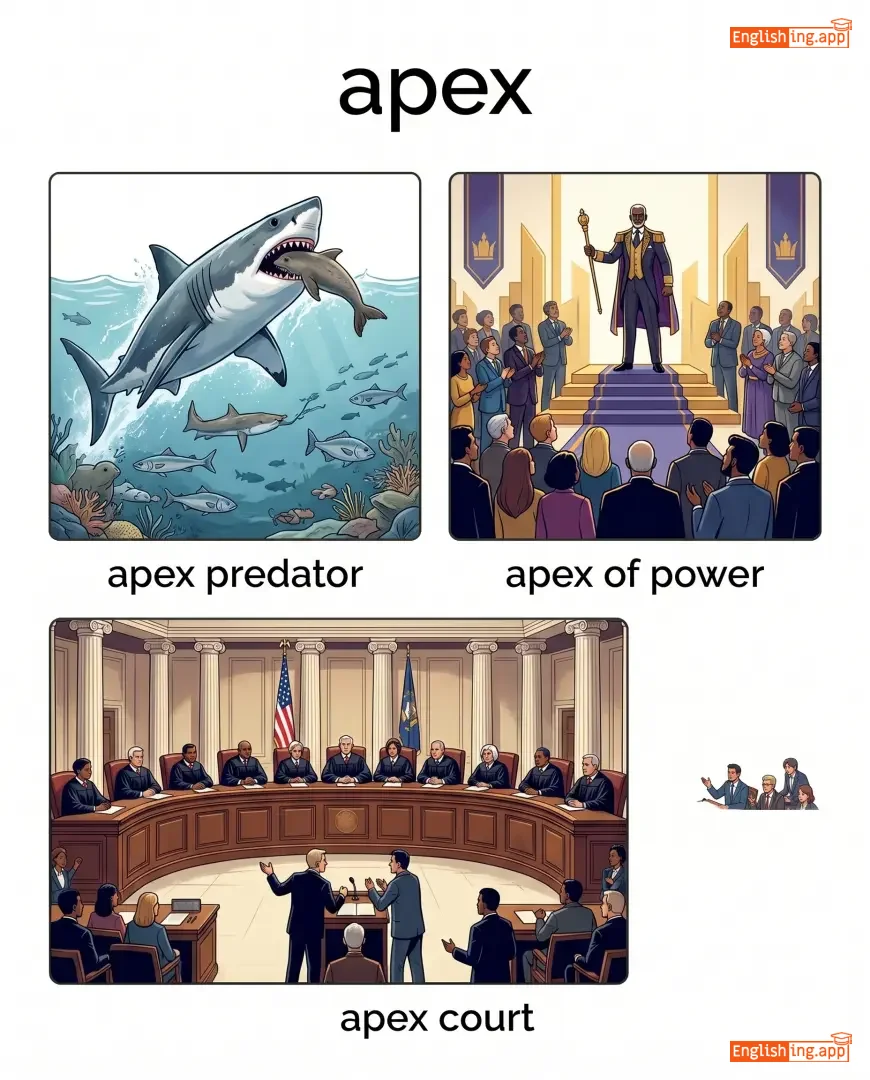
apex predator, apex of power, apex court, apex of success
••••••
|
Apex意味着顶点,就像金字塔的顶点。
••••••
|
|
#48
🌌
|
/ˈæpədʒiː/
noun
(ā pǒ jí)
••••••
|
|
顶点
ding dian
••••••
|
- •••••• | - •••••• | - •••••• | - •••••• |
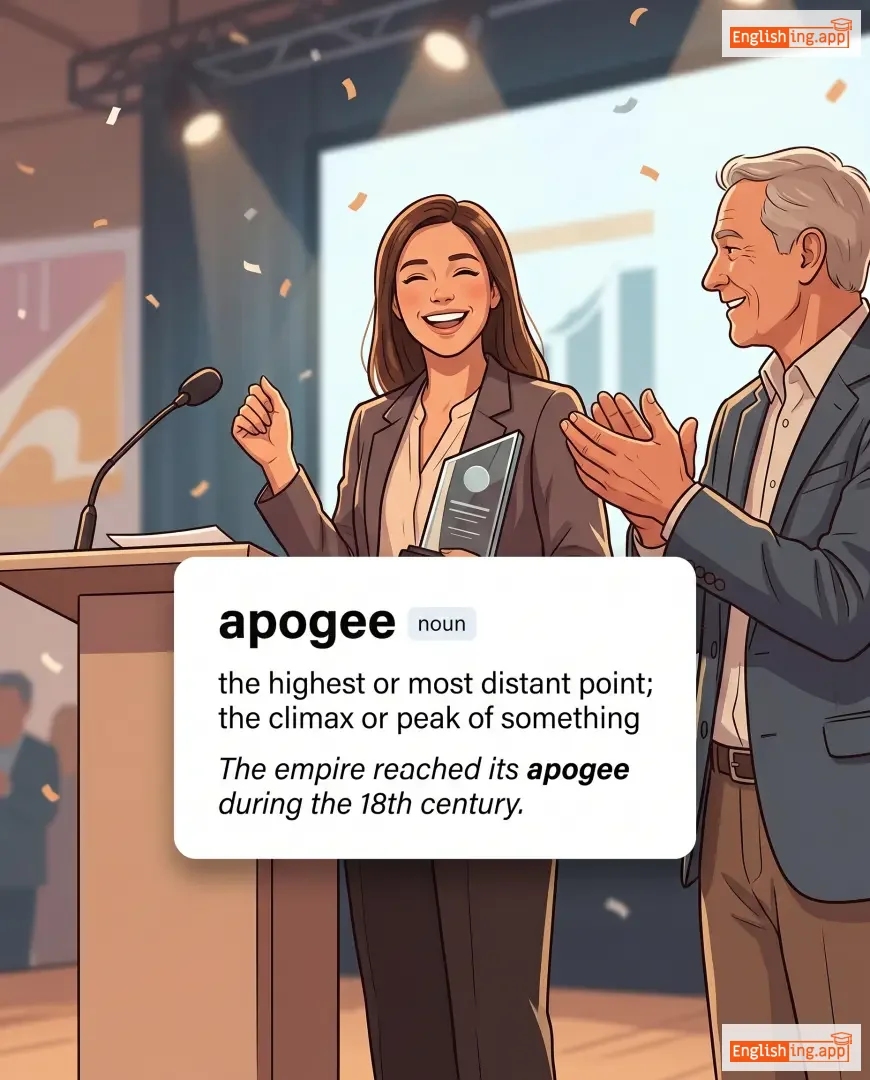
the highest or most distant point; the climax or peak of something
••••••
|
The empire reached its apogee during the 18th century. |
帝国在18世纪达到了它的顶点。
Diguo zai 18 shiji daduo le ta de ding dian.
••••••
|
- •••••• | - •••••• | - •••••• |
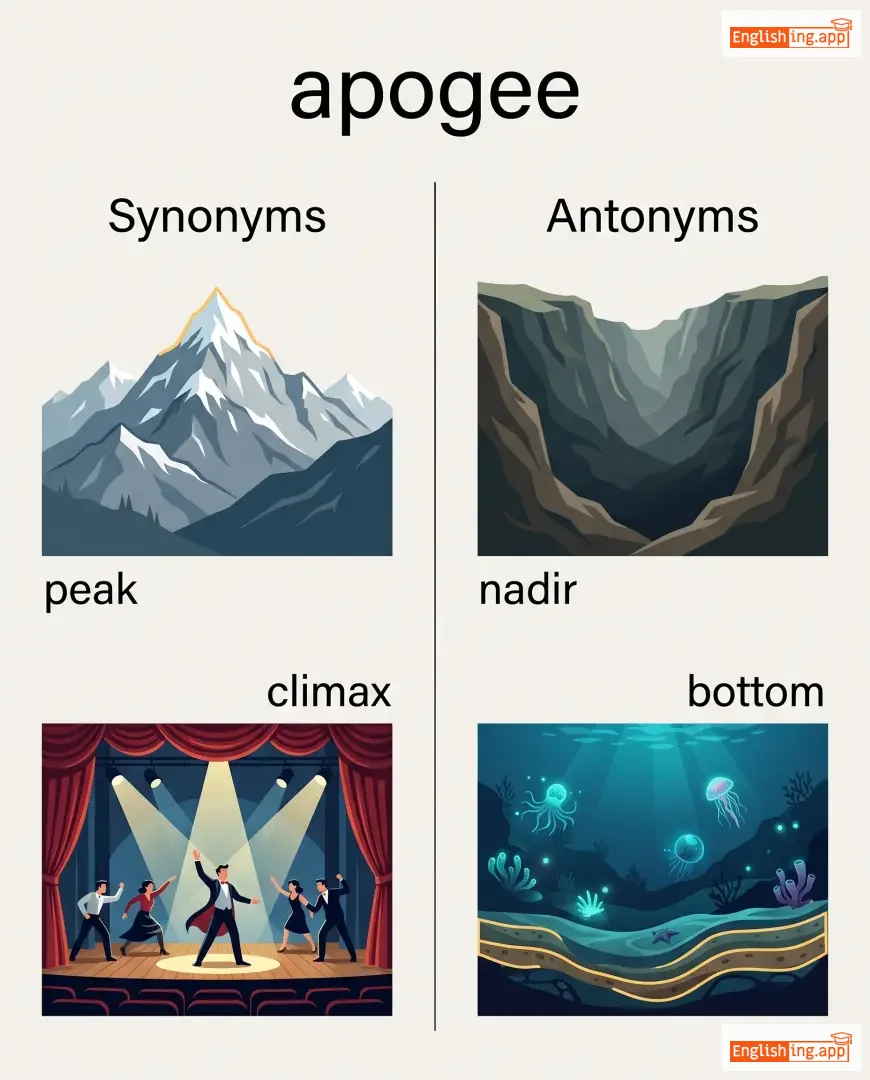
peak, climax, pinnacle, zenith, summit
••••••
|
nadir, bottom, base
••••••
|
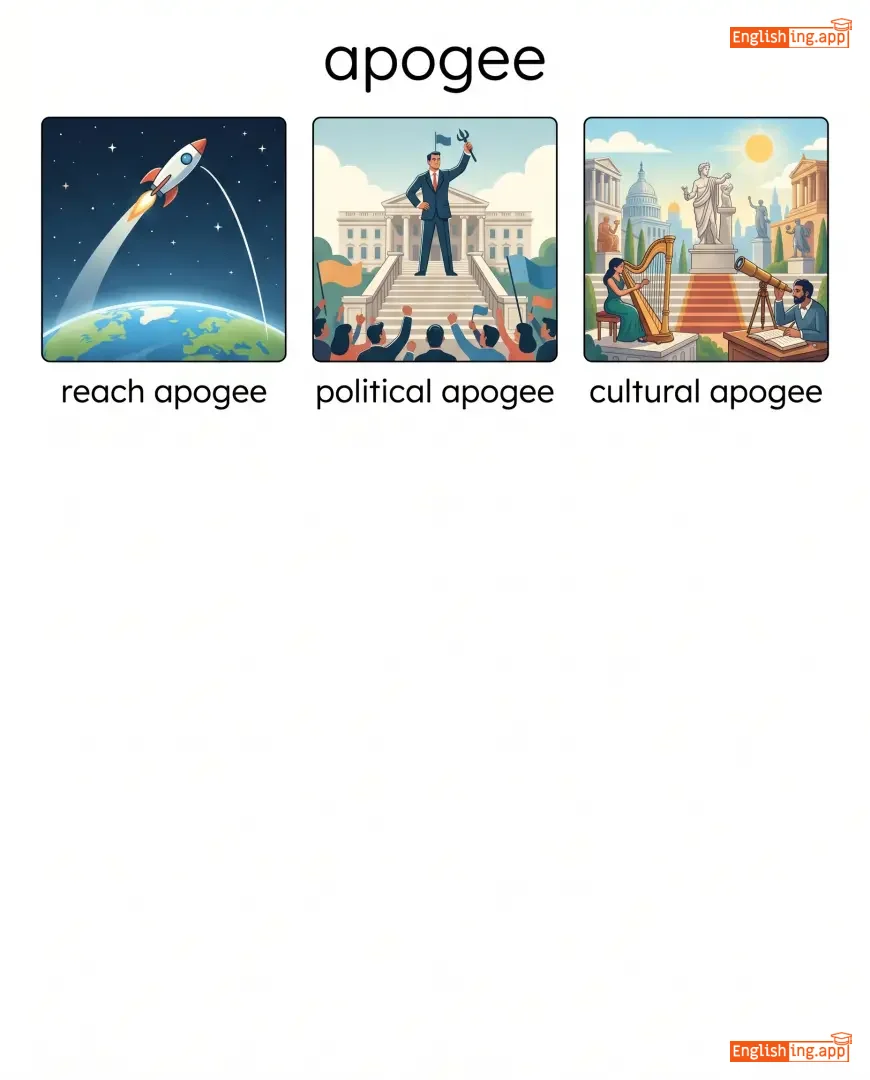
reach apogee, political apogee, cultural apogee, apogee of power
••••••
|
顶点 = 顶 + 点 = 高峰
••••••
|
|
#49
💡
|
/ˈæpəˌθɛm/
noun
(阿波塞格姆)
••••••
|
|
格言, 名言
géyán, míngyán
••••••
|
- •••••• | - •••••• | - •••••• | - •••••• |
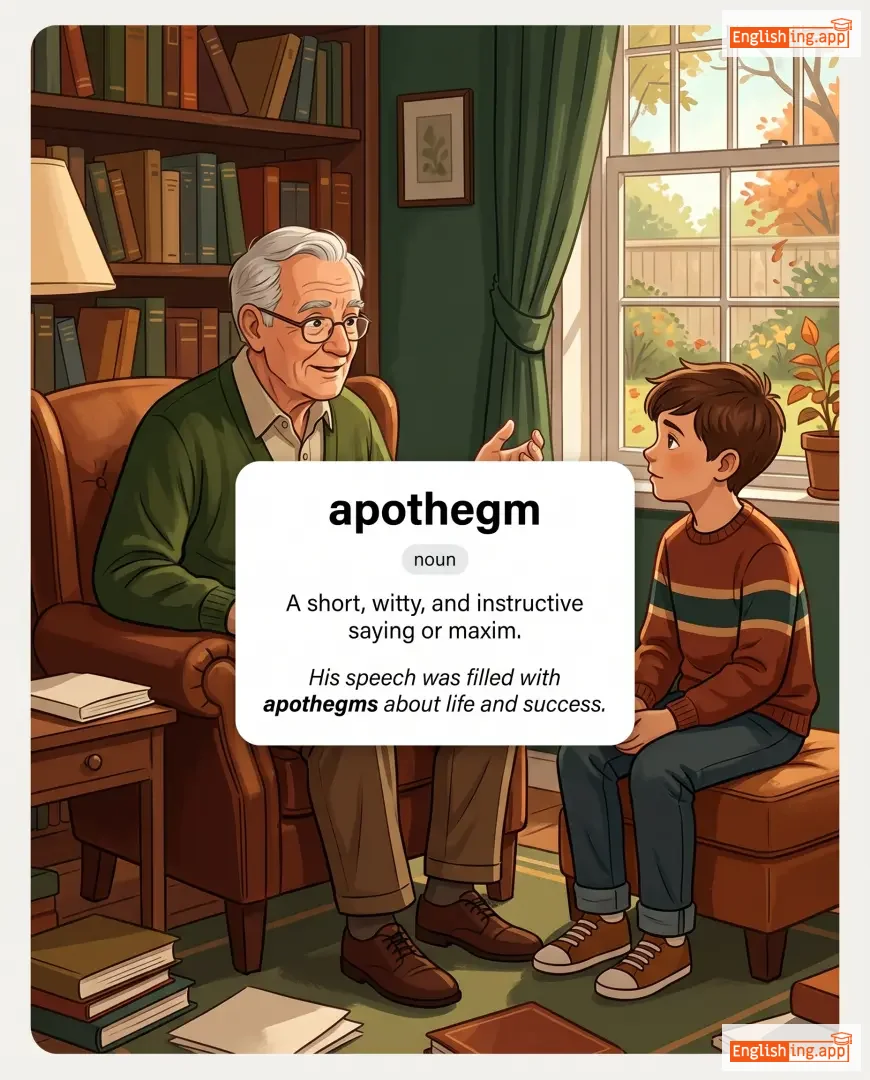
A short, witty, and instructive saying or maxim.
••••••
|
His speech was filled with apothegms about life and success. |
他的演讲充满了关于生活和成功的格言。
Tā de yǎnjiǎng chōngmǎnle guānyú shēnghuó hé chénggōng de géyán.
••••••
|
- •••••• | - •••••• | - •••••• |
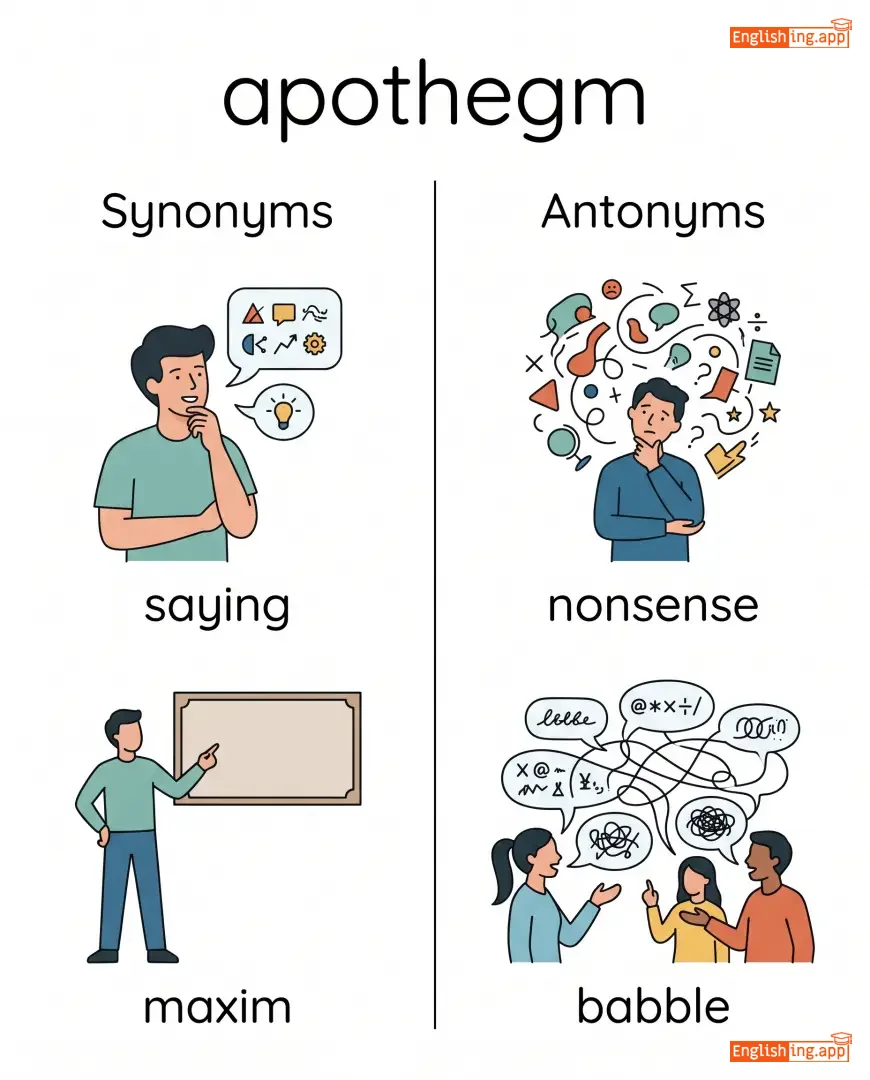
saying, maxim, aphorism, proverb, adage
••••••
|
nonsense, babble
••••••
|
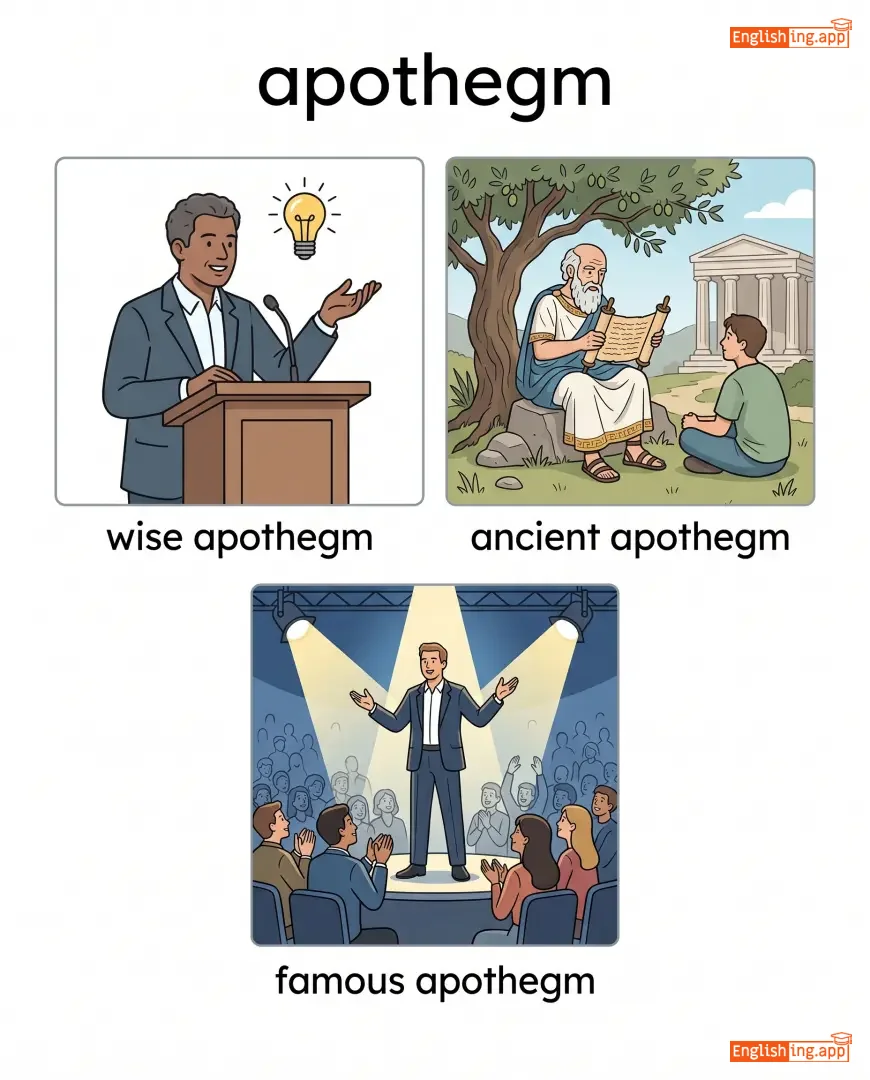
wise apothegm, ancient apothegm, famous apothegm
••••••
|
Apothegm 意味着简短且机智的格言,记住它是‘theme’ of life 的一部分。
••••••
|
|
#50
🤲
|
/əˈpiːz/
verb
(ā pǐ zī)
••••••
|
|
安抚 / 满足
ānfǔ / mǎnzú
••••••
|
appeased
ā pǐ zī d
••••••
|
appeased
ā pǐ zī d
••••••
|
appeases
ā pǐ zī s
••••••
|
appeasing
ā pǐ zī ng
••••••
|
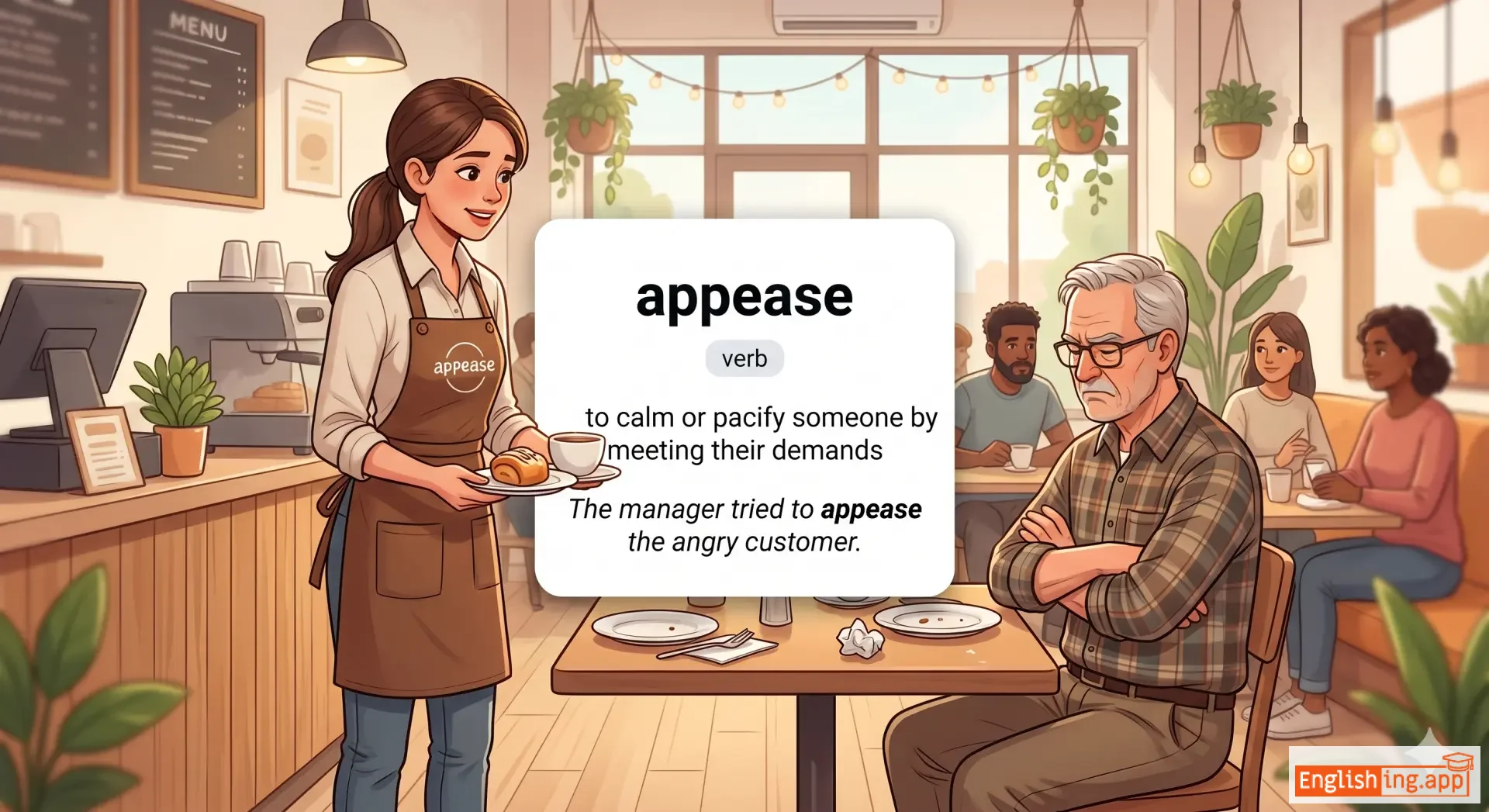
to calm or pacify someone by meeting their demands
••••••
|
The manager tried to appease the angry customer.
经理试图安抚愤怒的顾客。
••••••
|
经理试图安抚愤怒的顾客。
Jīnglǐ shìtú ānfǔ fènnù de gùkè.
••••••
|
appease someone's anger
安抚某人的愤怒
••••••
|
to reduce someone's anger by satisfying them
••••••
|
安抚某人的愤怒
ānfǔ mǒu rén de fènnù
••••••
|
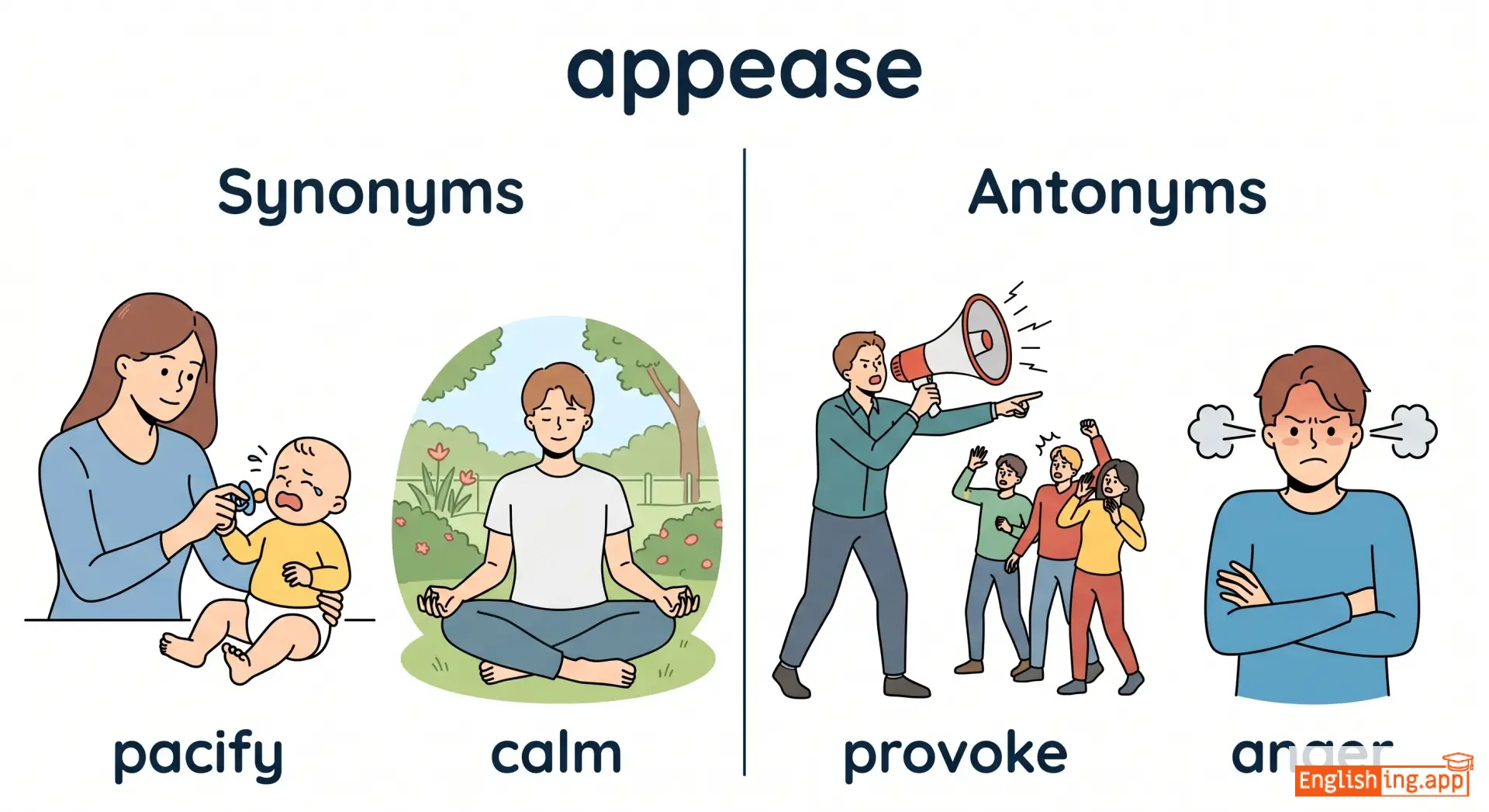
pacify, calm, satisfy, placate, soothe
••••••
|
provoke, anger, agitate
••••••
|
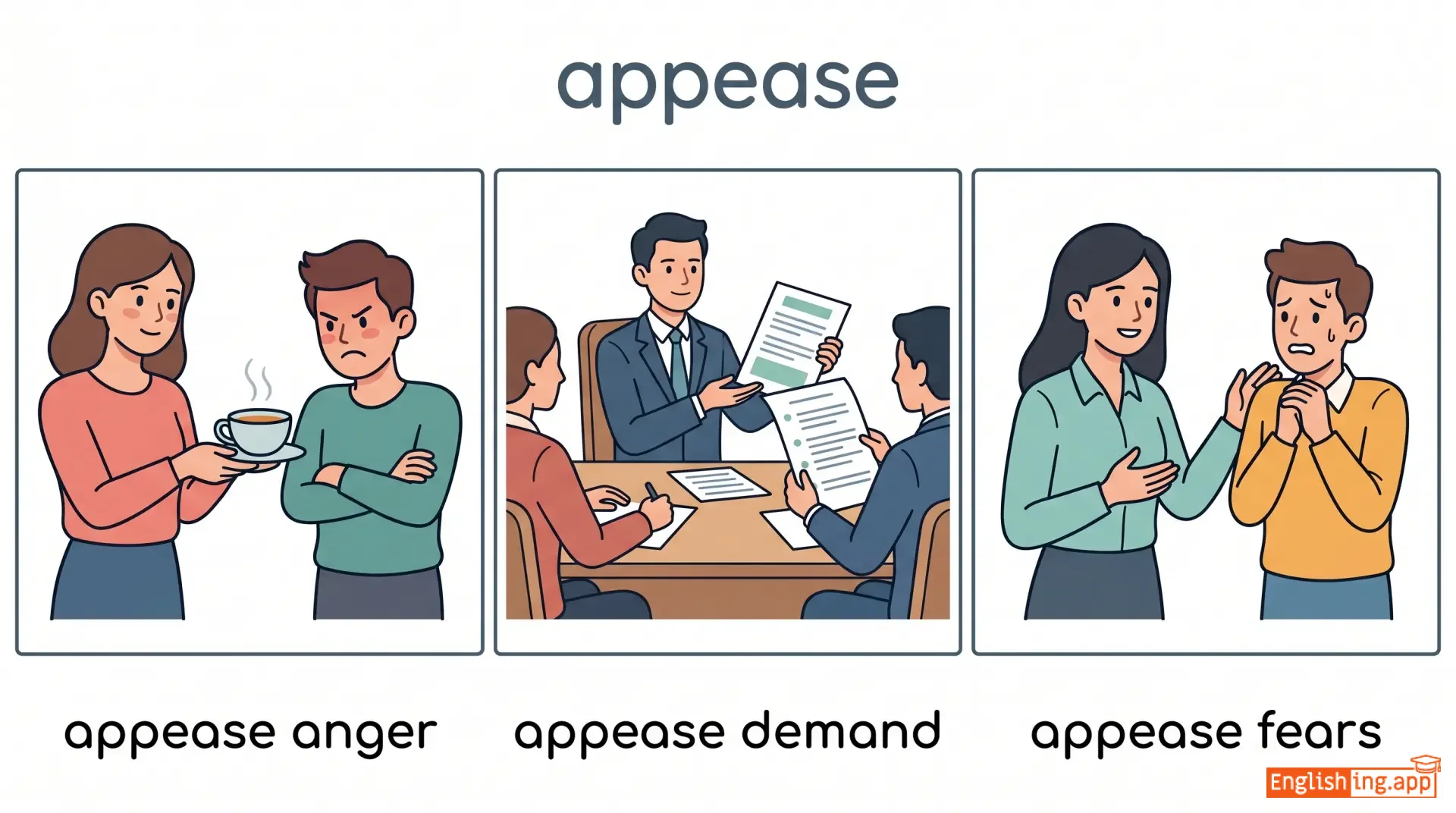
appease anger, appease demand, appease fears
••••••
|
Appease意味着安抚,想象你必须安抚以带来‘Peace’
••••••
|
Vocabulary Quiz
Test your vocabulary by matching words with their translations or meanings.
Login to take the quiz
Comments (0)
Share your thoughts and join the discussion.
Join the discussion by logging in
Login to CommentNo comments yet
Be the first to share your thoughts!