


















Swipe left or right, or use the buttons. Tap image to zoom.
例句翻译
单词
Lesson 8Lesson 8 - 遮罩切换
|
表情符号
|
单词 | Images | 翻译 | 过去时 | 过去分词 | 第三人称单数 | 动名词 | 含义 | 例句 | 例句翻译 | 示例表达 | 示例表达含义 | 示例表达翻译 | 同义词 | 反义词 | 搭配词 | 助记符 |
|---|---|---|---|---|---|---|---|---|---|---|---|---|---|---|---|---|---|
|
#176
💃
|
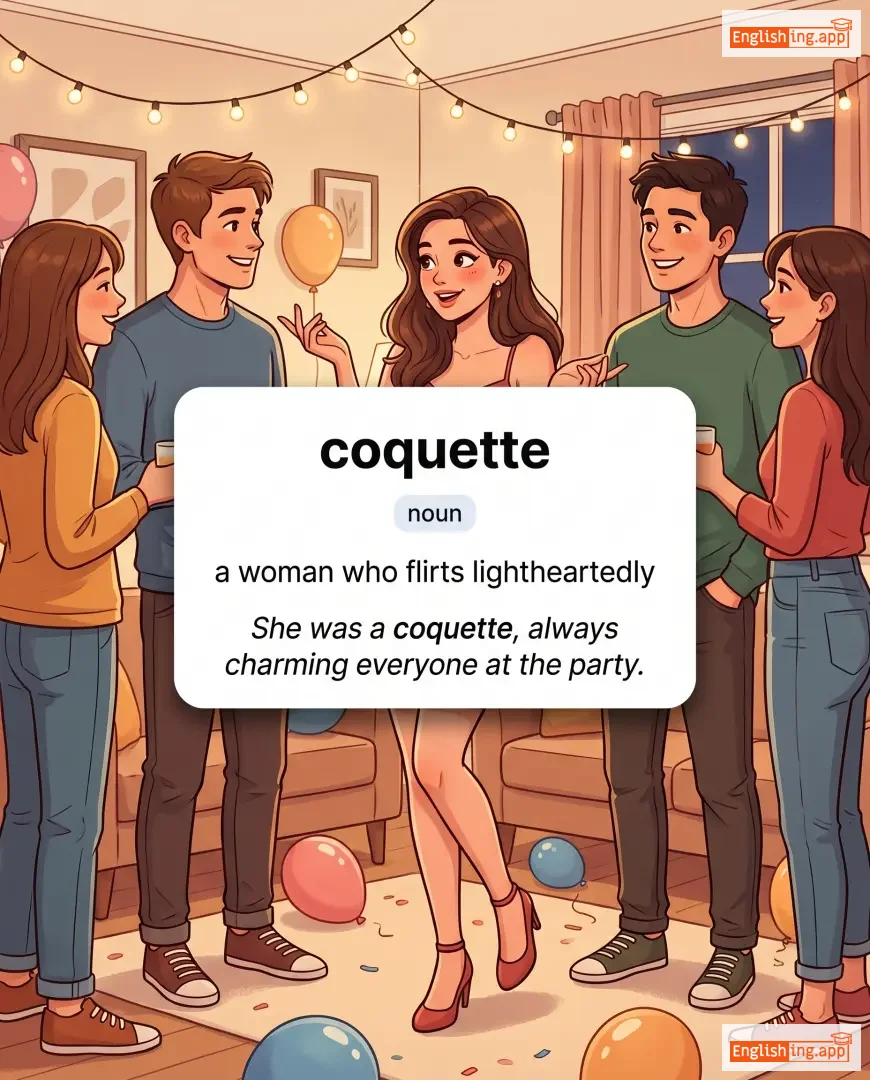
/koʊˈkɛt/
noun
(kòu kè tè)
••••••
|
|
卖弄风情的女人
mài nòng fēng qíng de nǚ rén
••••••
|
- •••••• | - •••••• | - •••••• | - •••••• |
a woman who flirts lightheartedly
••••••
|
She was a coquette, always charming everyone at the party.
她是个卖弄风情的女人,总是在聚会上迷倒所有人。
••••••
|
她是个卖弄风情的女人,总是在聚会上迷倒所有人。
Tā shì gè mài nòng fēng qíng de nǚ rén, zǒng shì zài jù huì shàng mí dǎo suǒ yǒu rén.
••••••
|
- •••••• | - •••••• | - •••••• |
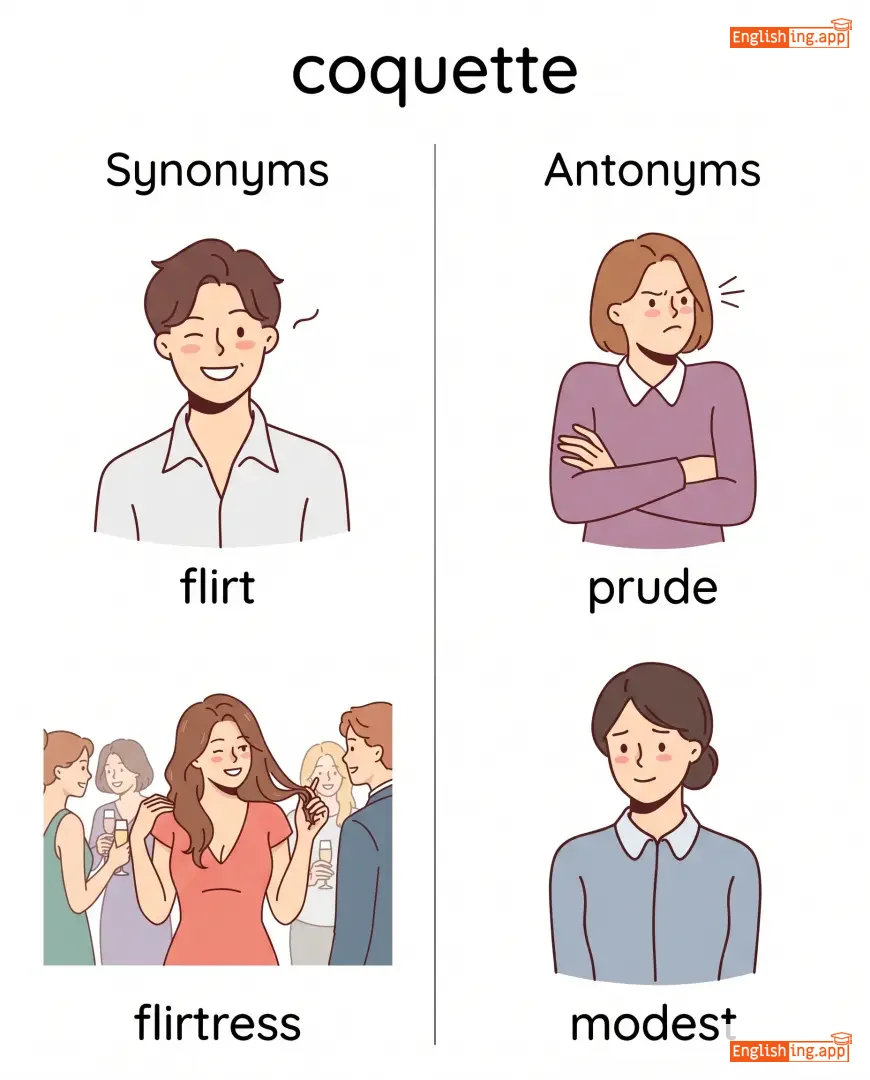
flirt, flirtress, tease, siren
••••••
|
prude, modest
••••••
|
playful coquette, notorious coquette, young coquette
••••••
|
卖弄风情的女人 - Coquette总是吸引注意
••••••
|
|
#177
🌽
|
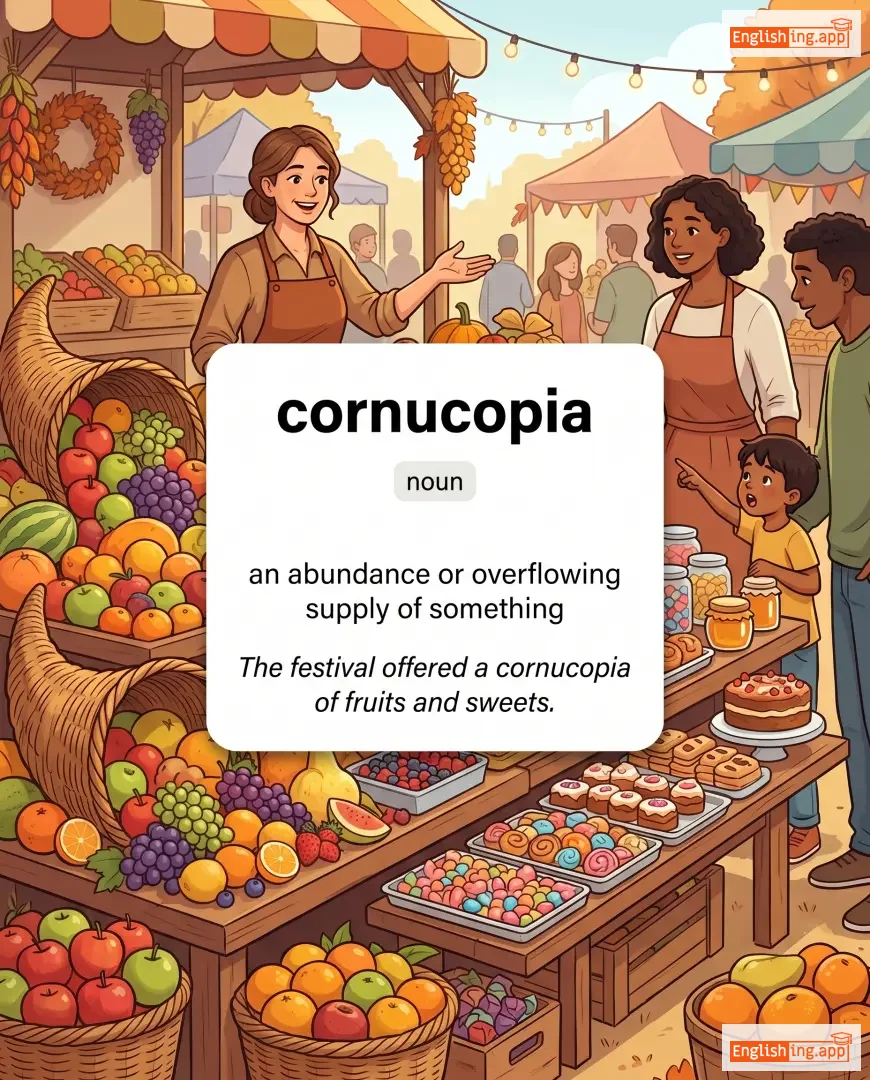
/ˌkɔːrnjuˈkoʊpiə/
noun
(丰饶之角)
••••••
|
|
某物的丰盈或溢出的供应
mou wu de feng ying huo yi chu de gong ying
••••••
|
- •••••• | - •••••• | - •••••• | - •••••• |
an abundance or overflowing supply of something
••••••
|
The festival offered a cornucopia of fruits and sweets.
节日提供了丰盛的水果和糖果。
••••••
|
节日提供了丰盛的水果和糖果。
Jieri tigong le fengsheng de shuiguo he tangguo.
••••••
|
- •••••• | - •••••• | - •••••• |
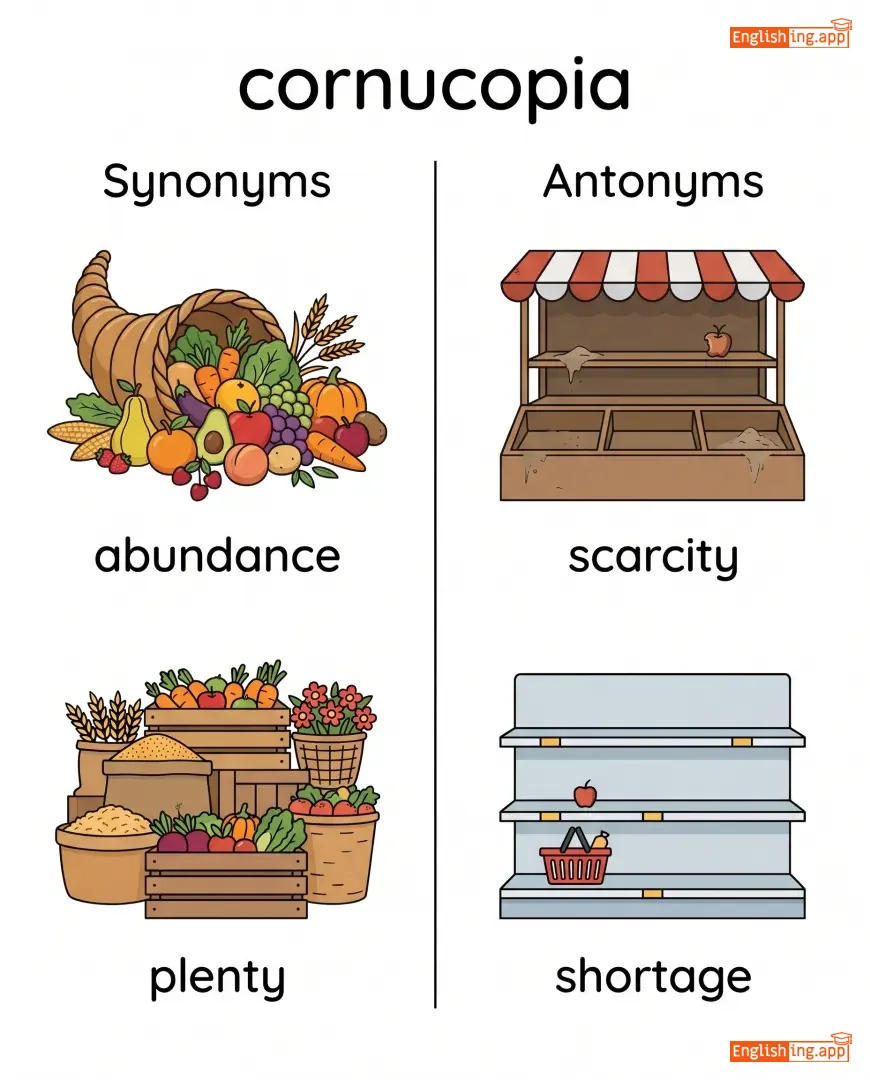
abundance, plenty, profusion, bounty
••••••
|
scarcity, shortage
••••••
|
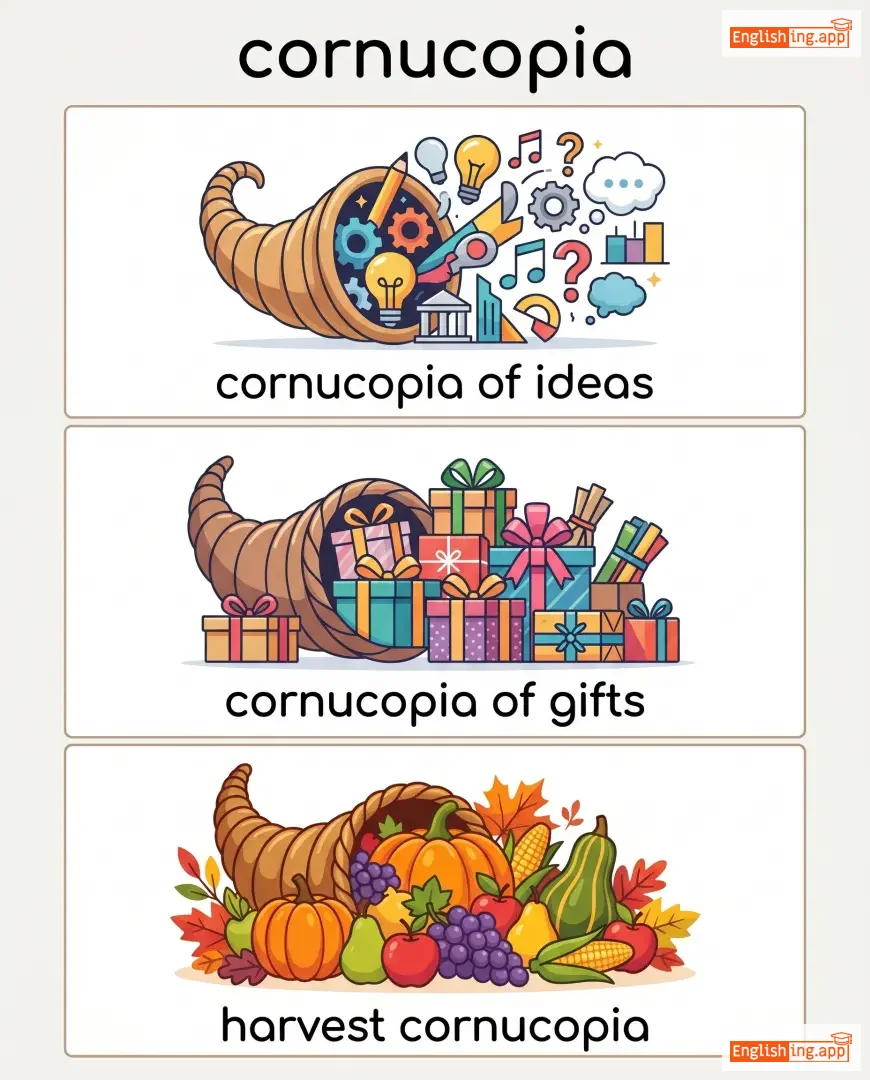
cornucopia of ideas, cornucopia of gifts, harvest cornucopia
••••••
|
丰饶之角意味着 '装满的角' - 丰盈溢出的供应。
••••••
|
|
#178
🌌
|
/kɒzˈmɒlədʒi/
noun
(宇宙学)
••••••
|
|
宇宙学
yǔzhòuxué
••••••
|
- •••••• | - •••••• | - •••••• | - •••••• |
the science of the origin and development of the universe
••••••
|
She studied cosmology to understand the origins of the universe. |
她学习了宇宙学以理解宇宙的起源。
Tā xuéxíle yǔzhòuxué yǐ lǐjiě yǔzhòu de qǐyuán.
••••••
|
- •••••• | - •••••• | - •••••• |
universe study, astrophysics, astronomy, space science
••••••
|
earth science, geology
••••••
|
modern cosmology, theoretical cosmology, study of cosmology
••••••
|
Cosmo意味着宇宙,而逻辑是我们研究宇宙的方法,称之为宇宙学
••••••
|
|
#179
🕵️♂️
|
/ˈkoʊvərt/
adjective
(kòu wèi tè)
••••••
|
|
秘密
mìmì
••••••
|
- •••••• | - •••••• | - •••••• | - •••••• |
hidden, secret, or not openly acknowledged
••••••
|
The spy conducted a covert operation behind enemy lines.
间谍在敌人的线背后进行了一项秘密行动。
••••••
|
间谍在敌人的线背后进行了一项秘密行动。
Jiàndié zài dírén de xiàn bèi hòu jìnxíngle yī xiàng mìmì xíngdòng.
••••••
|
- •••••• | - •••••• | - •••••• |
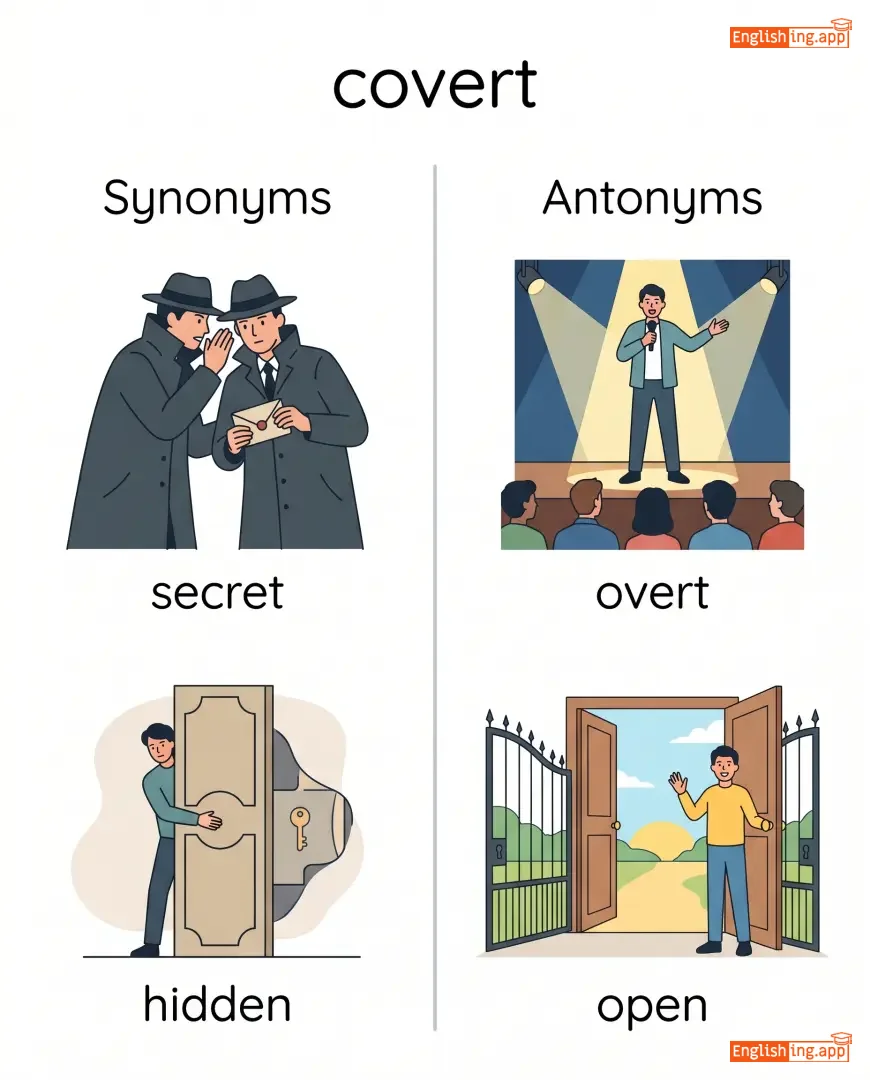
secret, hidden, clandestine, undercover
••••••
|
overt, open
••••••
|
covert operation, covert mission, covert surveillance
••••••
|
CO-vert 一切隐藏 - Covert is secret
••••••
|
|
#180
😏
|
/ˈkʌvətəs/
adjective
(covetous)
••••••
|
|
贪婪
tanlan
••••••
|
- •••••• | - •••••• | - •••••• | - •••••• |
having or showing a strong desire for someone else's possessions
••••••
|
She gave him a covetous look when he showed his new watch.
他在展示新手表时给了他一个贪婪的眼神。
••••••
|
他在展示新手表时给了他一个贪婪的眼神。
Ta zai zhanshi xin shou biao shi gei le ta yi ge tanlan de yan shen.
••••••
|
- •••••• | - •••••• | - •••••• |
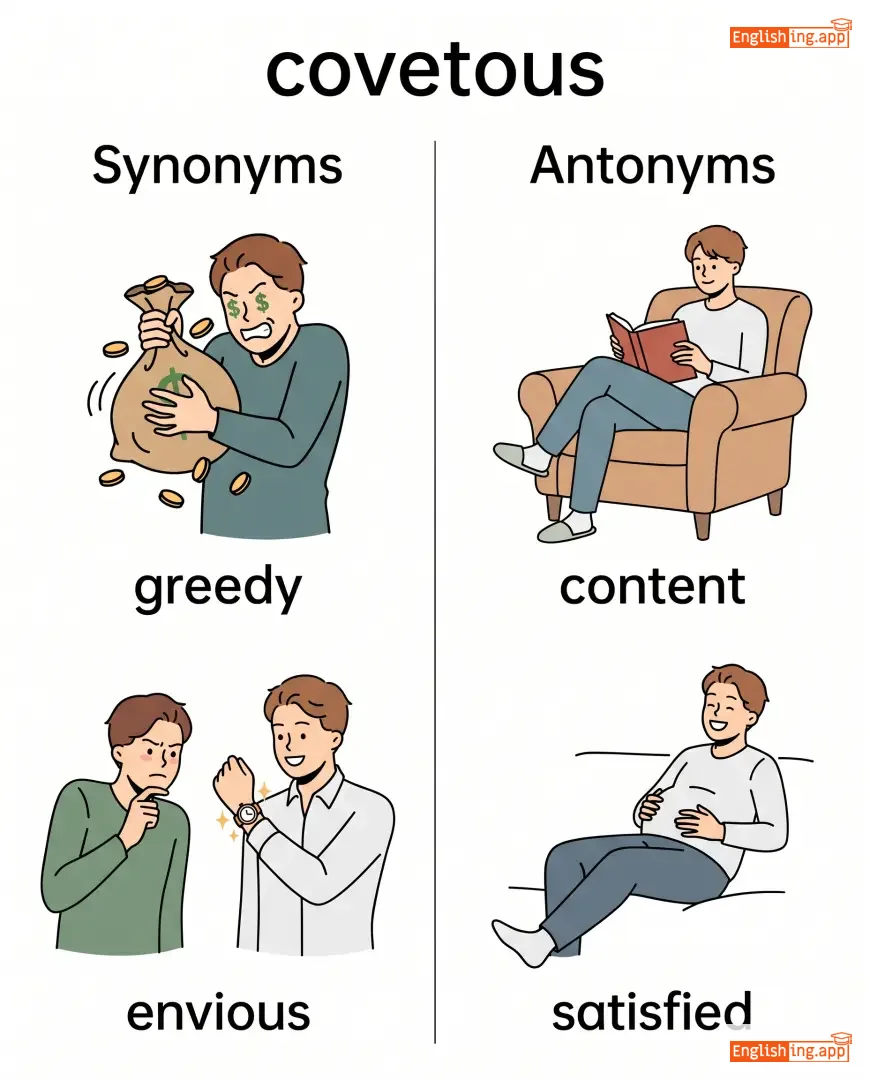
greedy, envious, desirous, grasping
••••••
|
content, satisfied
••••••
|
covetous glance, covetous attitude, covetous nature
••••••
|
COVETOUS - 贪婪是强烈想要的欲望
••••••
|
|
#181
🤑
|
/ˈkʌzən/
verb
(科兹恩)
••••••
|
|
欺骗,诈骗
qīpiàn, zhàpiàn
••••••
|
cozened
科兹恩德
••••••
|
cozened
科兹恩德
••••••
|
cozens
科兹恩斯
••••••
|
cozening
科兹宁
••••••
|
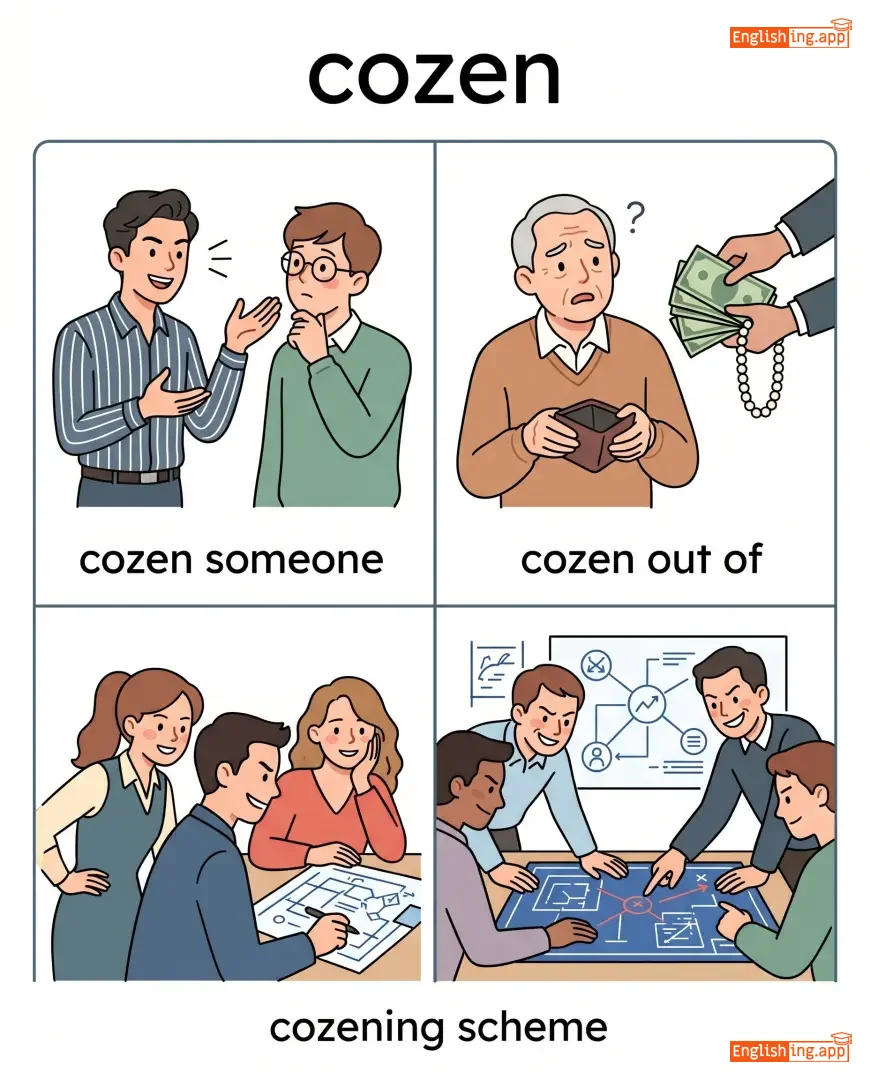
to deceive, cheat, or trick someone
••••••
|
He cozened the old man out of his money.
他欺骗了老人并夺走了他的錢。
••••••
|
他欺骗了老人并夺走了他的錢。
Tā qīpiàn le lǎorén bìng duózǒu le tā de qián.
••••••
|
- •••••• | - •••••• | - •••••• |
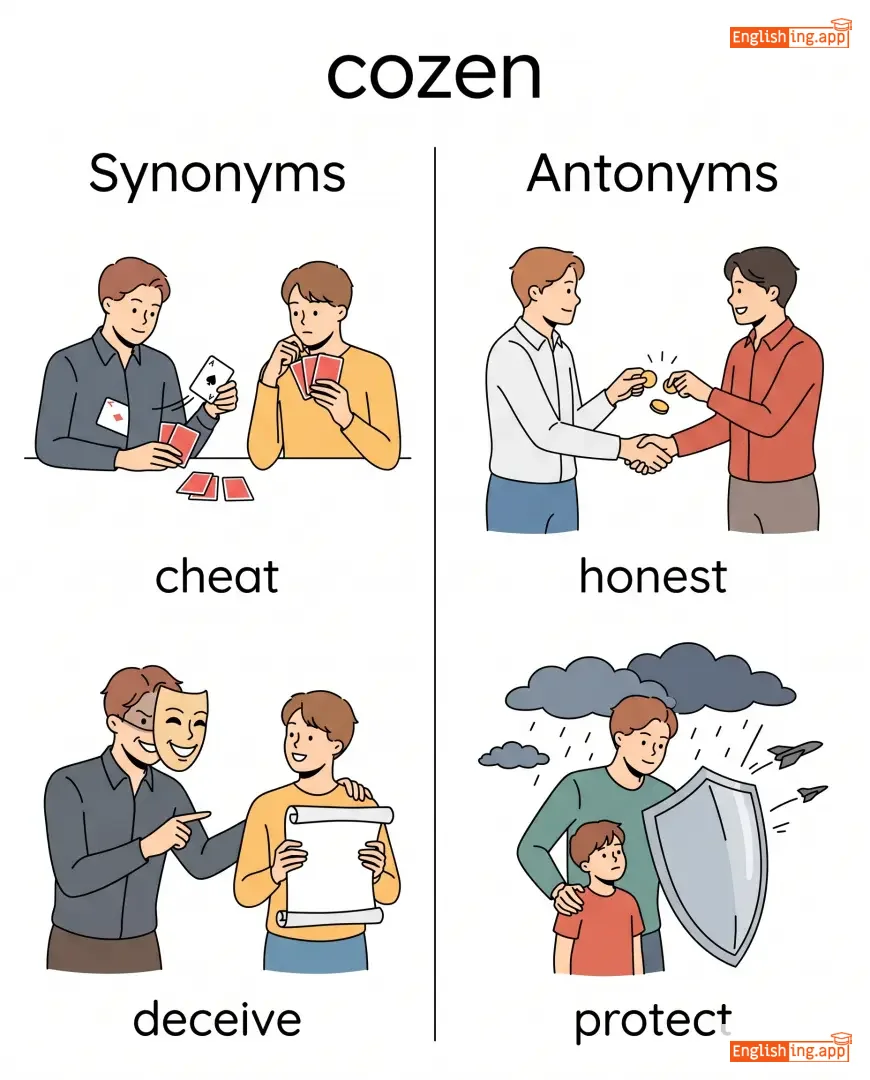
cheat, deceive, trick, defraud
••••••
|
honest, protect, safeguard
••••••
|
cozen someone, cozen out of, cozening scheme
••••••
|
COZEN - 欺骗像是表兄弟 'cousin' 一样
••••••
|
|
#182
😨
|
/ˈkreɪvən/
adjective
(kè rèn)
••••••
|
|
懦夫
nuo fu
••••••
|
- •••••• | - •••••• | - •••••• | - •••••• |
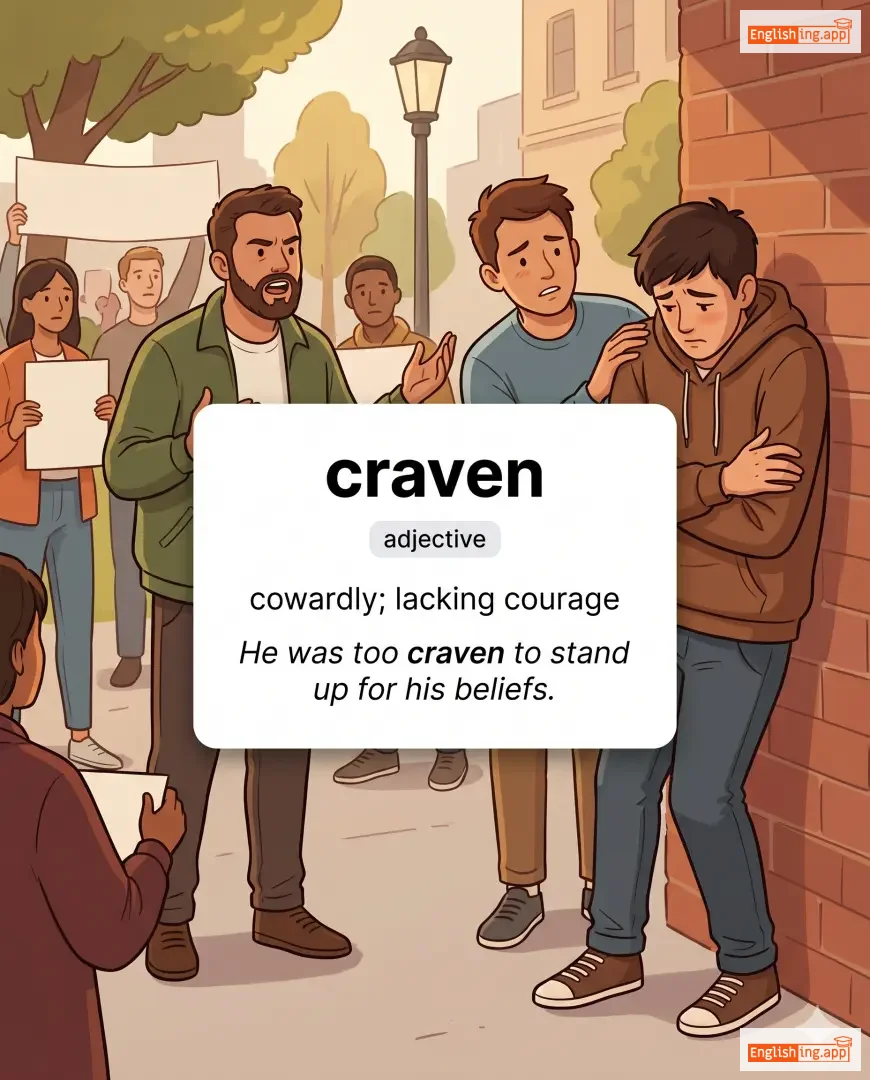
cowardly; lacking courage
••••••
|
He was too craven to stand up for his beliefs.
他太懦弱,无法捍卫自己的信念。
••••••
|
他太懦弱,无法捍卫自己的信念。
Ta tai nuo ruo, wu fa han wei zi ji de xin nian.
••••••
|
- •••••• | - •••••• | - •••••• |
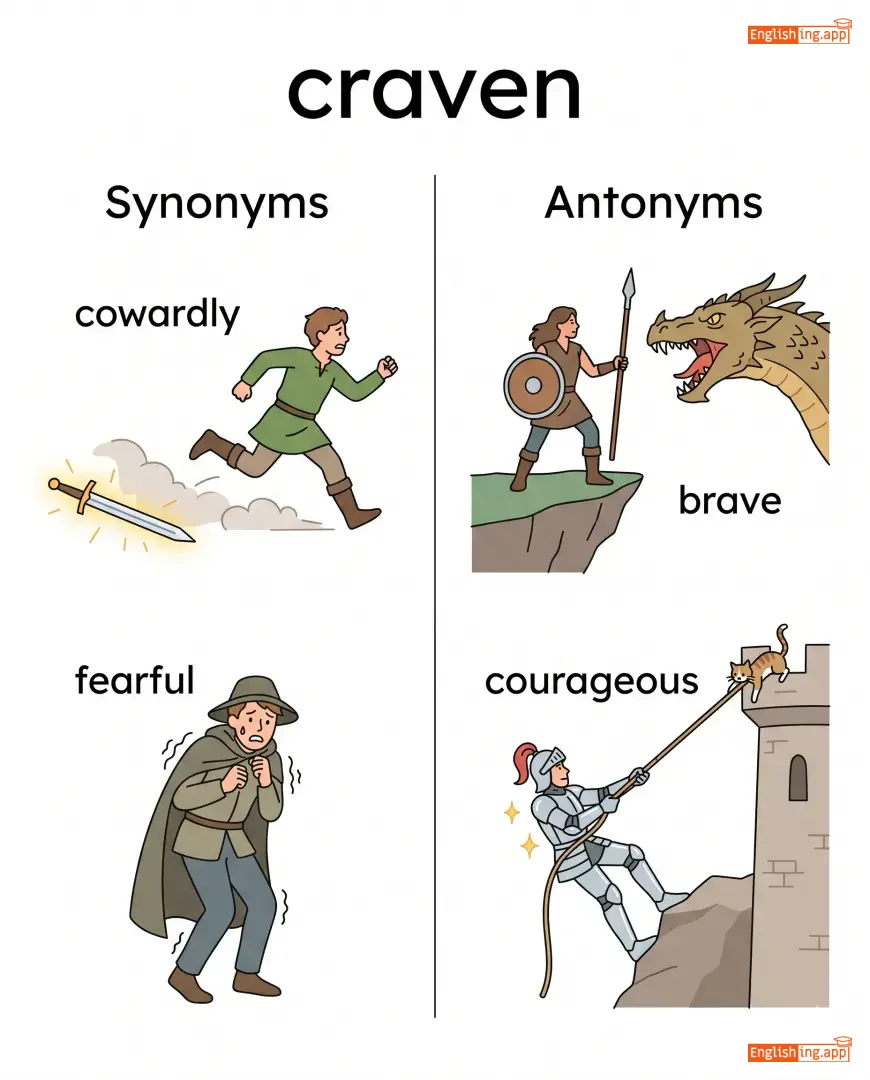
cowardly, fearful, timid, pusillanimous
••••••
|
brave, courageous, bold
••••••
|
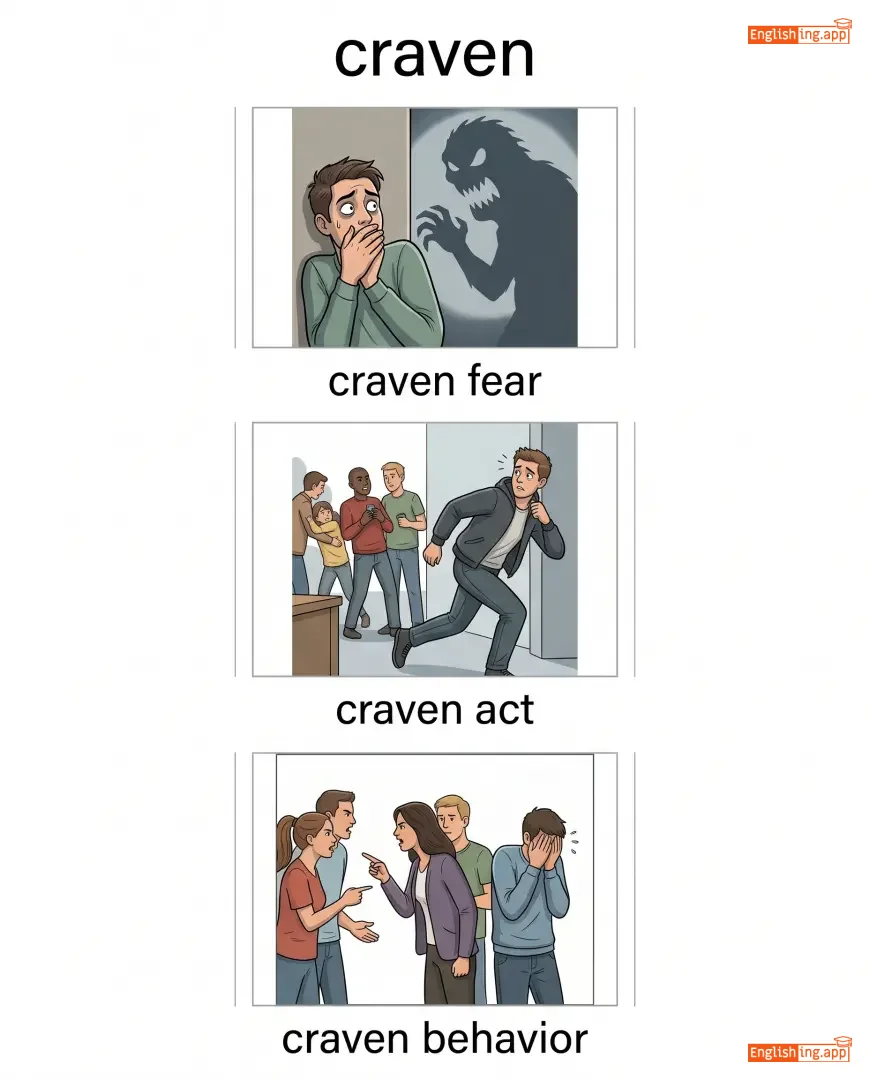
craven fear, craven act, craven behavior
••••••
|
CRAVE 没有勇气,懦夫
••••••
|
|
#183
✅
|
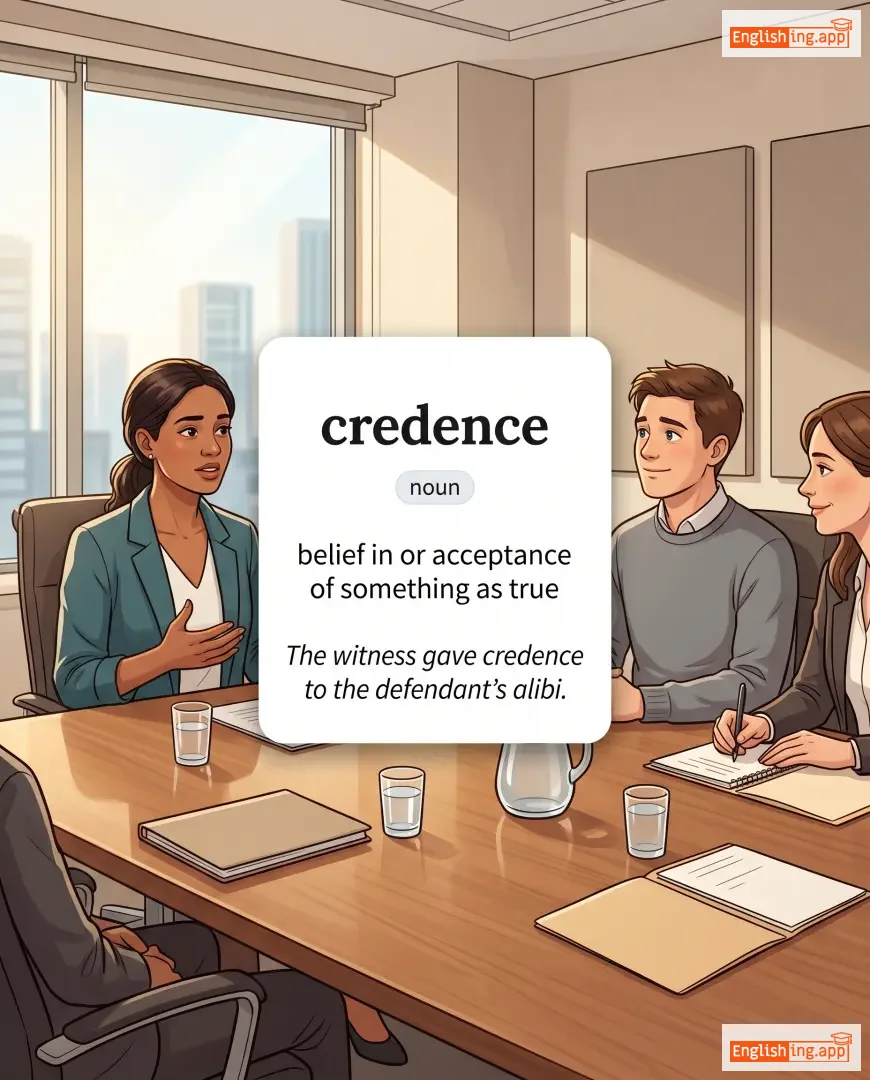
/ˈkriː.dəns/
noun
(kùlìdénsī)
••••••
|
|
可信度, 信任
kexindù, xìnrèn
••••••
|
- •••••• | - •••••• | - •••••• | - •••••• |
belief in or acceptance of something as true
••••••
|
The witness gave credence to the defendant's alibi. |
证人给予被告的不在场证明可信度。
zhèngrén jǐyǔ bìgào de bù zàichǎng zhèngmíng kěxìndù.
••••••
|
- •••••• | - •••••• | - •••••• |
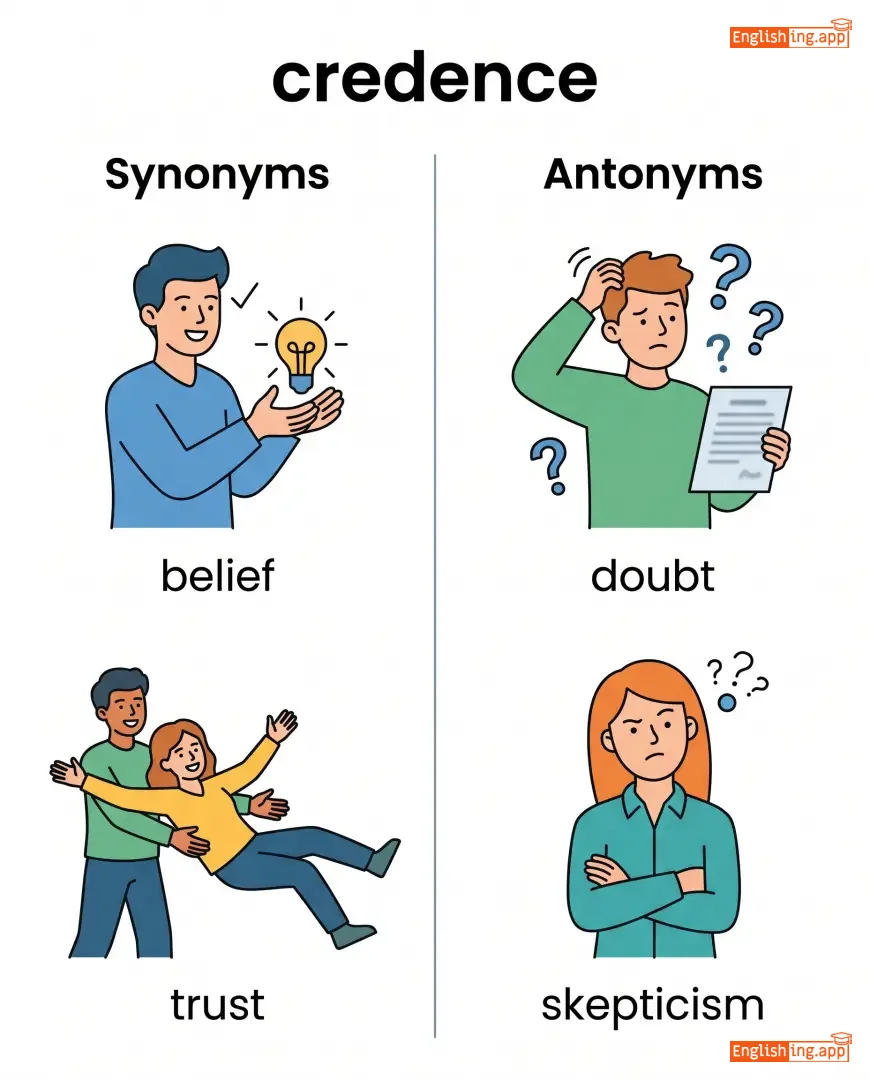
belief, trust, faith, confidence
••••••
|
doubt, skepticism
••••••
|
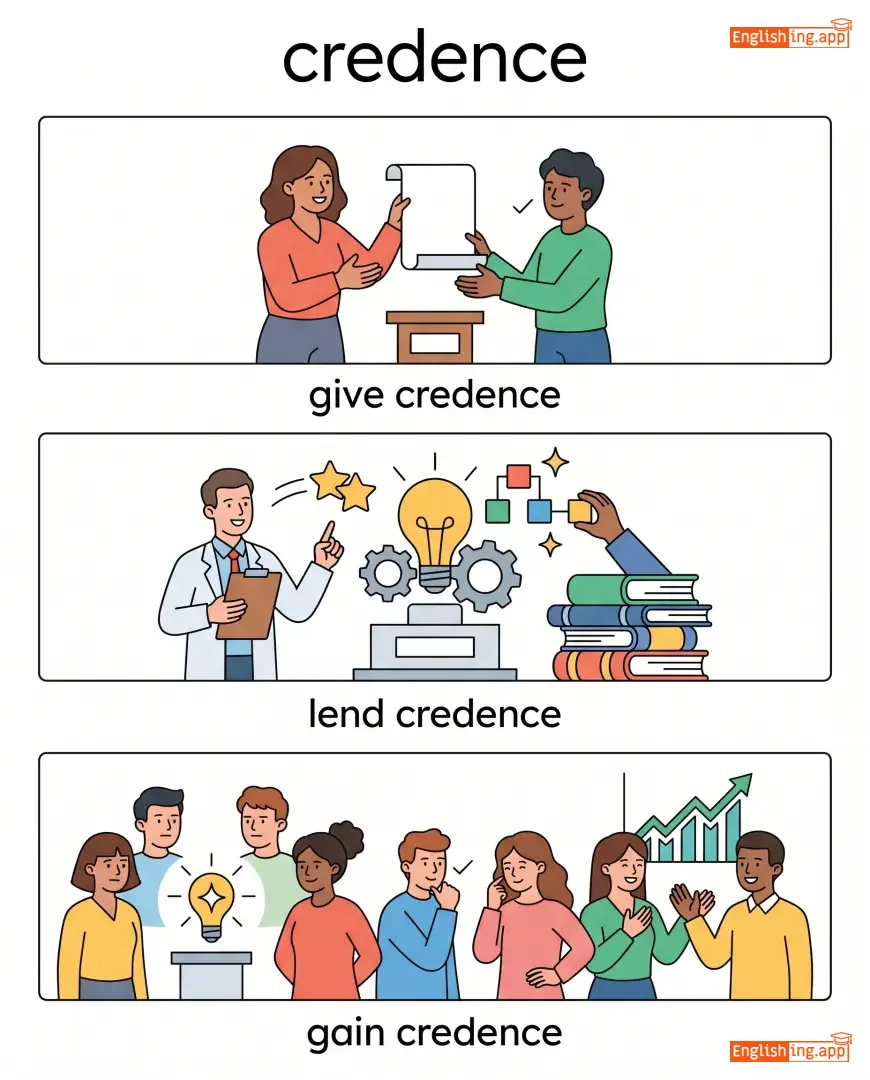
give credence, lend credence, gain credence, credibility and credence
••••••
|
CREDENCE是信任 (xìnrèn). Credible news gives credence
••••••
|
|
#184
📜
|
/ˈkriːdoʊ/
noun
(克雷多)
••••••
|
|
信条
xìn tiáo
••••••
|
- •••••• | - •••••• | - •••••• | - •••••• |
A statement of the beliefs or aims that guide someone's actions.
••••••
|
Honesty has always been the central credo of his life. |
诚实一直是他生活中的核心信条。
Chéngshí yīzhí shì tā shēnghuó zhōng de héxīn xìntiáo.
••••••
|
- •••••• | - •••••• | - •••••• |
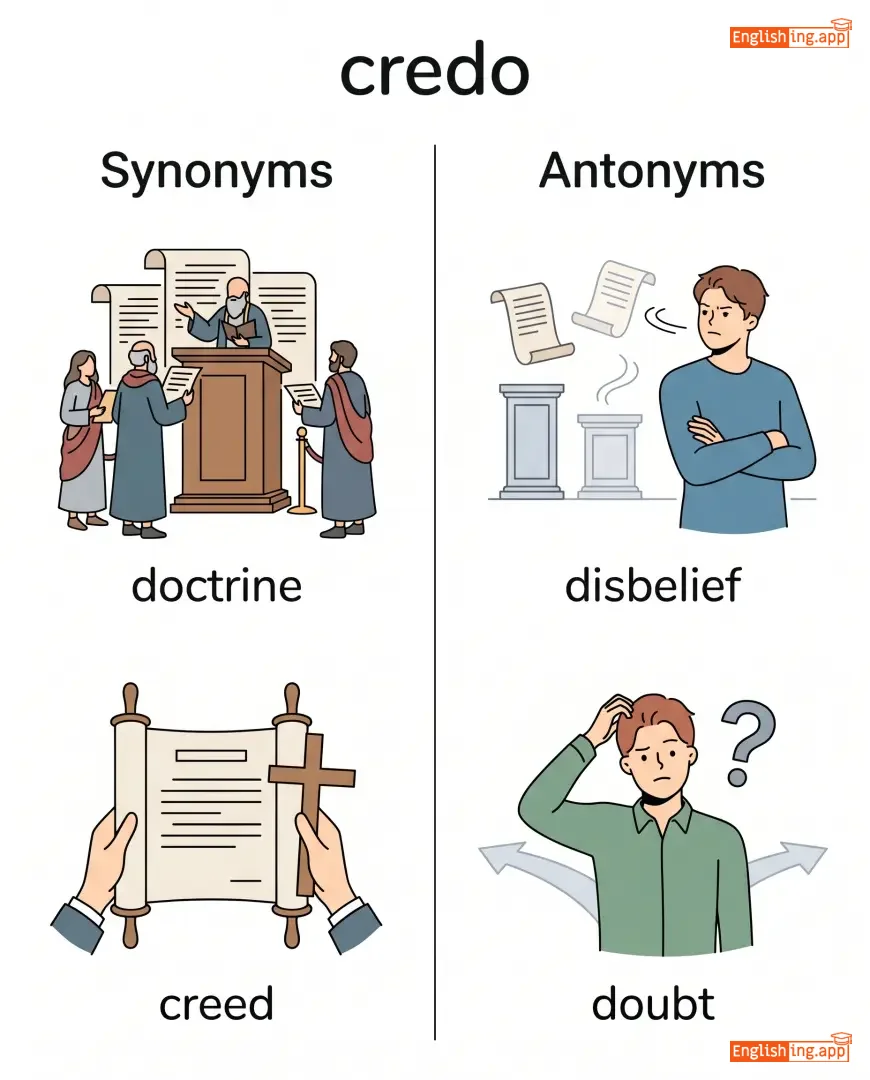
doctrine, creed, belief, philosophy, principle
••••••
|
disbelief, doubt
••••••
|
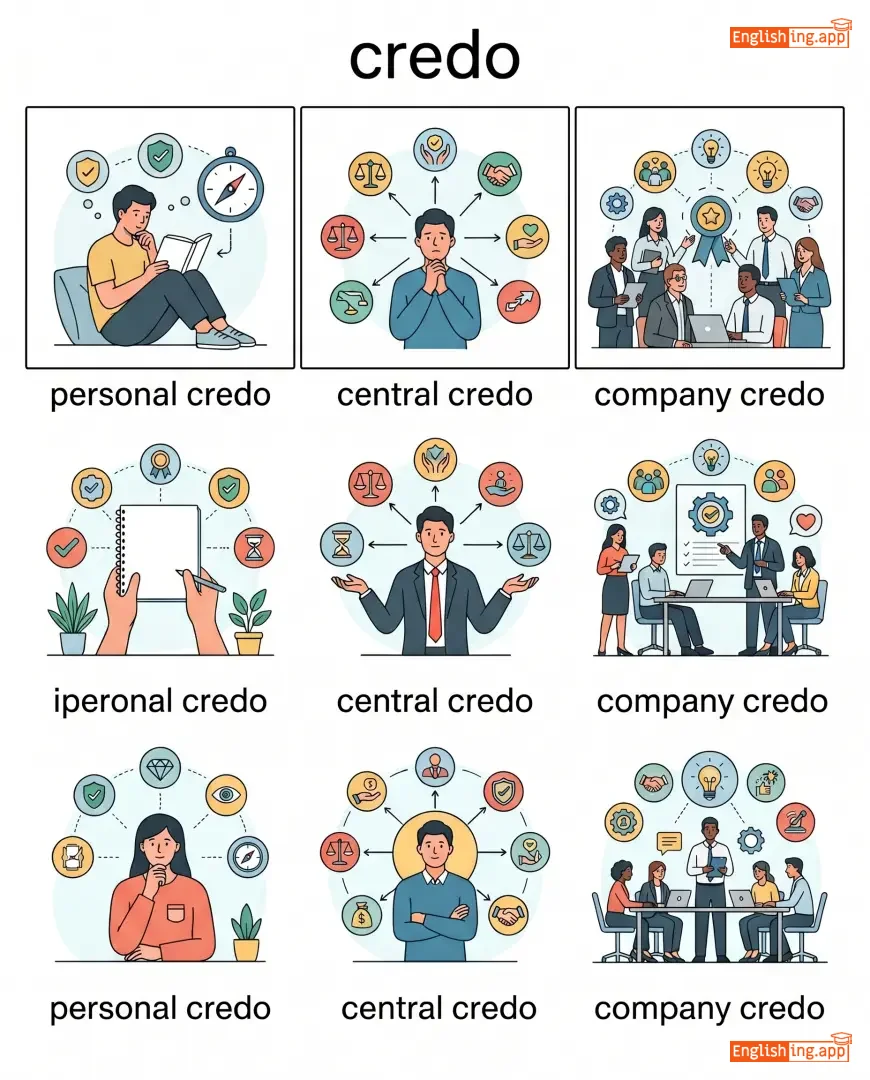
personal credo, central credo, company credo
••••••
|
Credo 就是信条—指引你行动的信仰。
••••••
|
|
#185
😨
|
/dɔːnt/
verb
(daunt)
••••••
|
|
威吓
weihe
••••••
|
daunted
daunted
••••••
|
daunted
daunted
••••••
|
daunts
daunts
••••••
|
daunting
daunting
••••••
|
to make someone feel intimidated, discouraged, or less confident
••••••
|
The steep climb did not daunt the experienced hikers.
陡峭的攀登没有让经验丰富的登山者气馁。
••••••
|
陡峭的攀登没有让经验丰富的登山者气馁。
Dǒuqiào de pāndēng méiyǒu ràng jīngyàn fēngfù de dēngshān zhě qìněi.
••••••
|
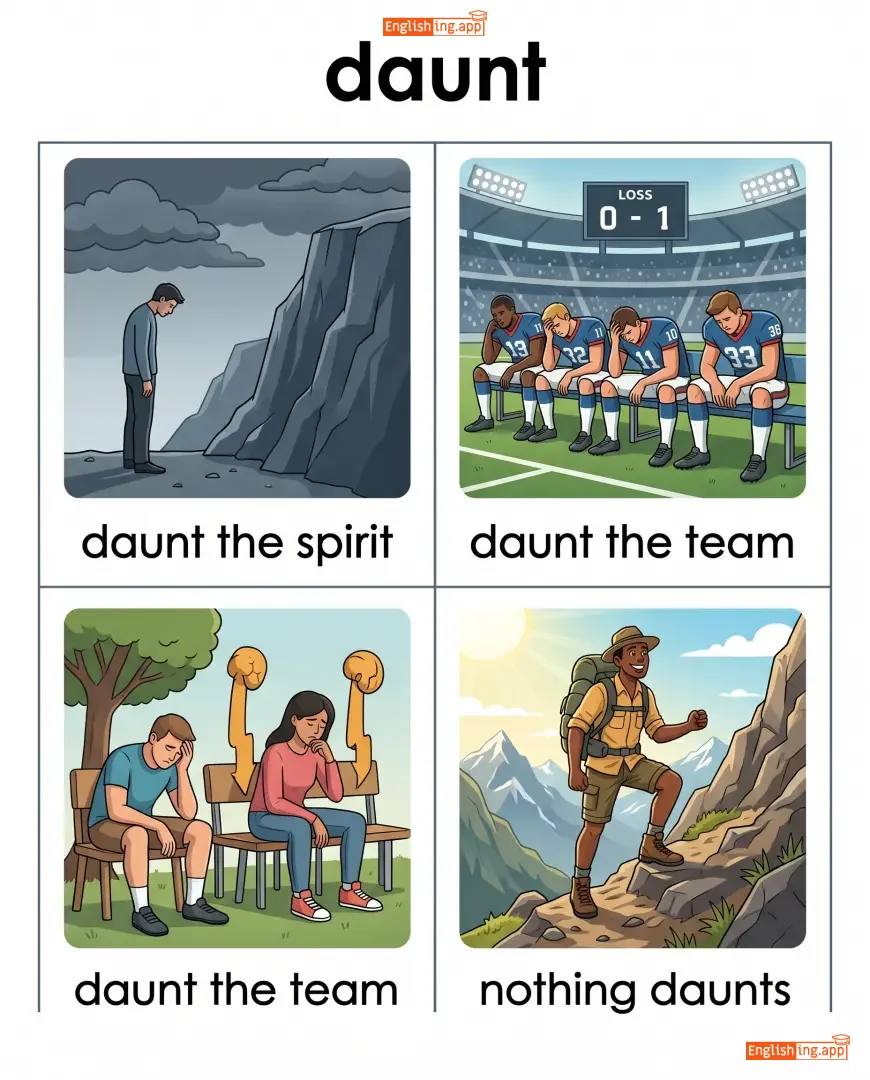
nothing daunts him
没有什么能让他气馁
••••••
|
he is not easily discouraged or intimidated
••••••
|
没有什么能让他气馁
Méiyǒu shénme néng ràng tā qìněi
••••••
|
intimidate, discourage, dishearten, deter, frighten
••••••
|
encourage, inspire, embolden
••••••
|
daunt the spirit, daunt the team, nothing daunts, daunt the enemy
••••••
|
Don't (daunt) 威吓—Daunt意味着威吓
••••••
|
|
#186
🥀
|
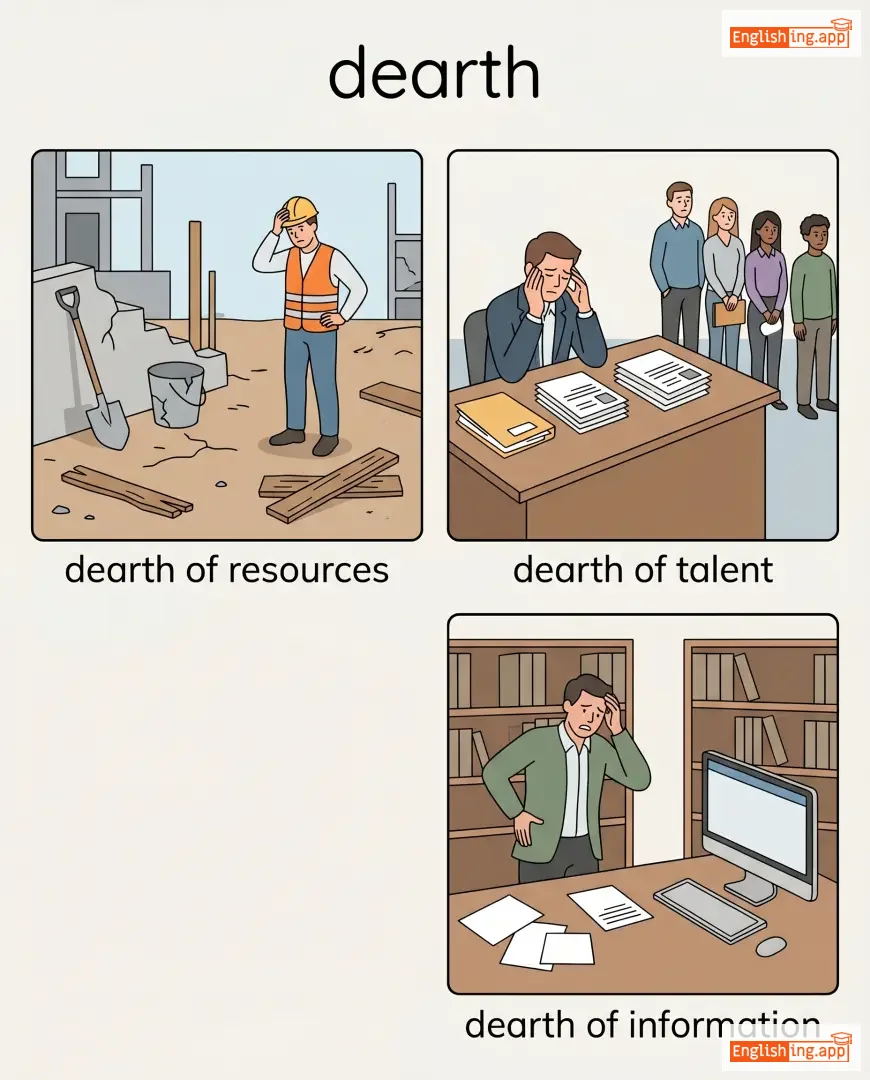
/dɜːrθ/
noun
(德斯)
••••••
|
|
匮乏
kuìfá
••••••
|
- •••••• | - •••••• | - •••••• | - •••••• |
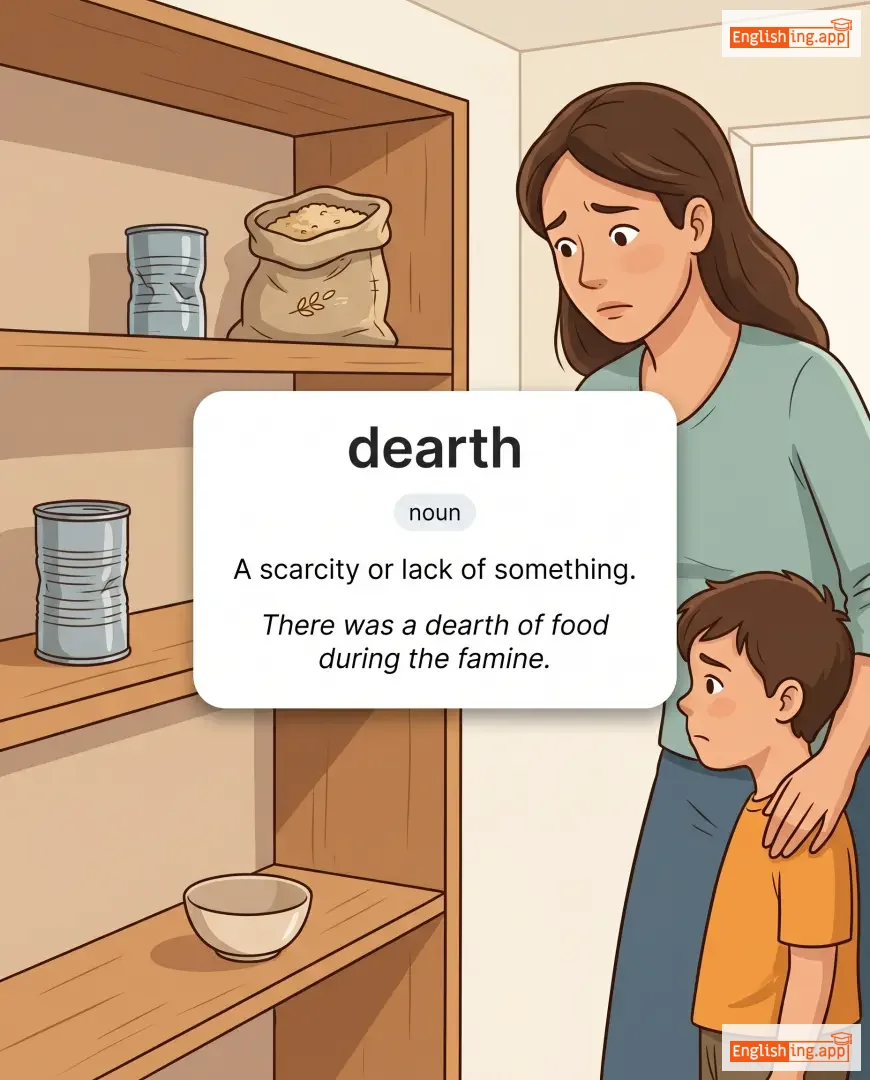
A scarcity or lack of something.
••••••
|
There was a dearth of food during the famine.
在饥荒期间,食物短缺。
••••••
|
在饥荒期间,食物短缺。
Zài jīhuāng qījiān, shíwù duǎnquē.
••••••
|
- •••••• | - •••••• | - •••••• |
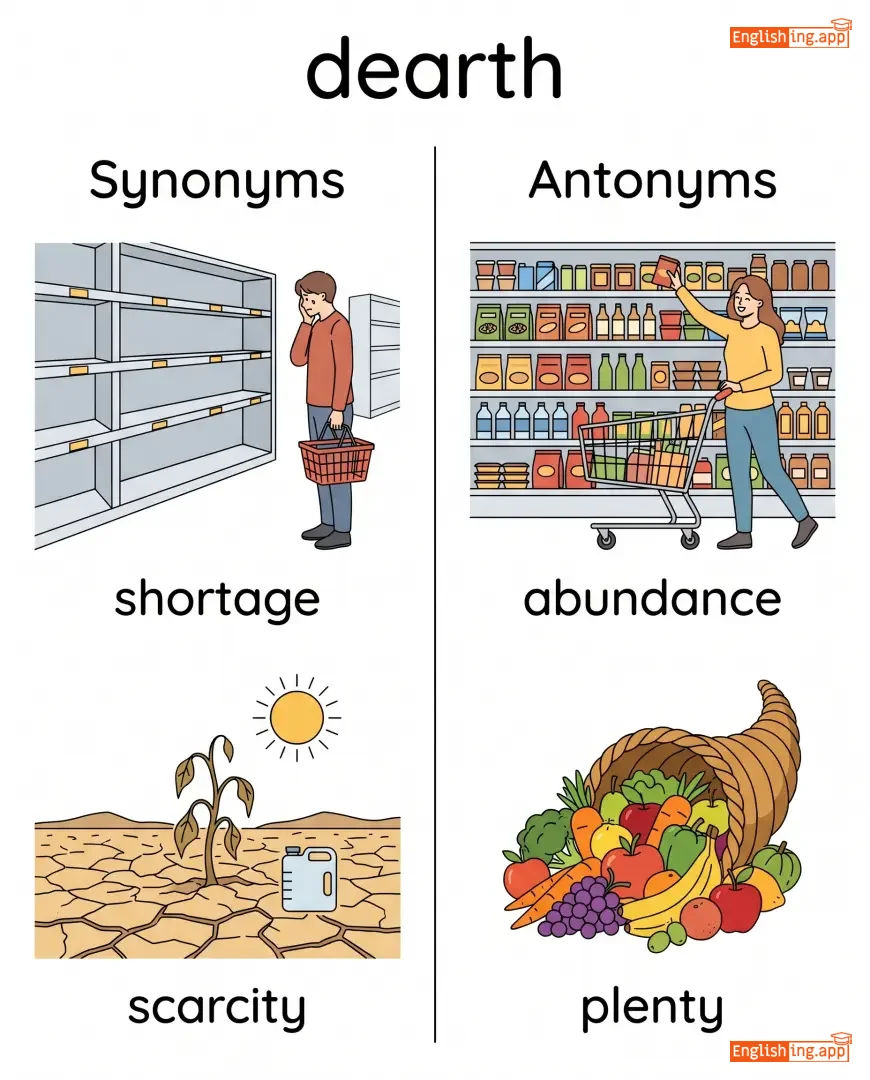
shortage, scarcity, deficiency, insufficiency
••••••
|
abundance, plenty, surplus
••••••
|
dearth of resources, dearth of talent, dearth of information
••••••
|
Dearth意味着匮乏,正如地球上并非一切都丰盛。
••••••
|
|
#187
🍷
|
/dɪˈbɔːtʃəri/
noun
(de-bao-che-li)
••••••
|
|
堕落
duòluò
••••••
|
- •••••• | - •••••• | - •••••• | - •••••• |
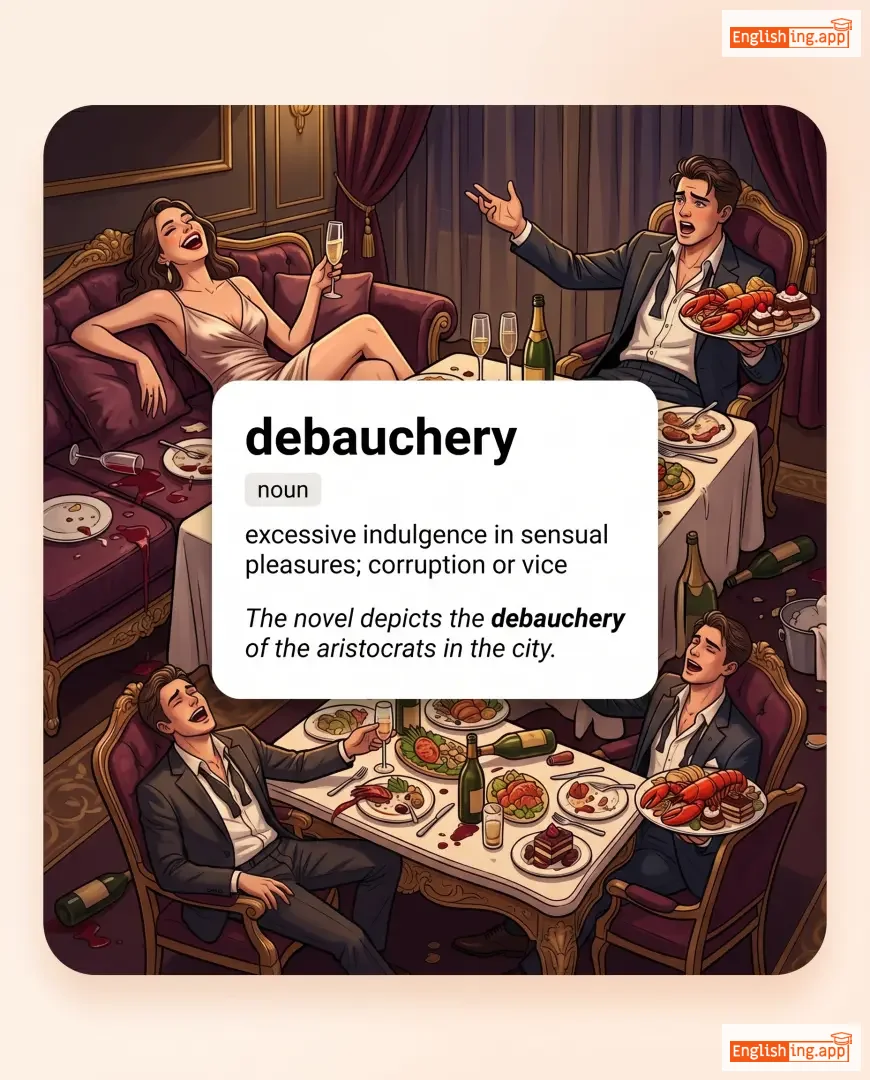
excessive indulgence in sensual pleasures; corruption or vice
••••••
|
The novel depicts the debauchery of the aristocrats in the city. |
这本小说描写了城市中贵族的堕落。
Zhè běn xiǎoshuō miáoxiě le chéngshì zhōng guìzú de duòluò.
••••••
|
- •••••• | - •••••• | - •••••• |
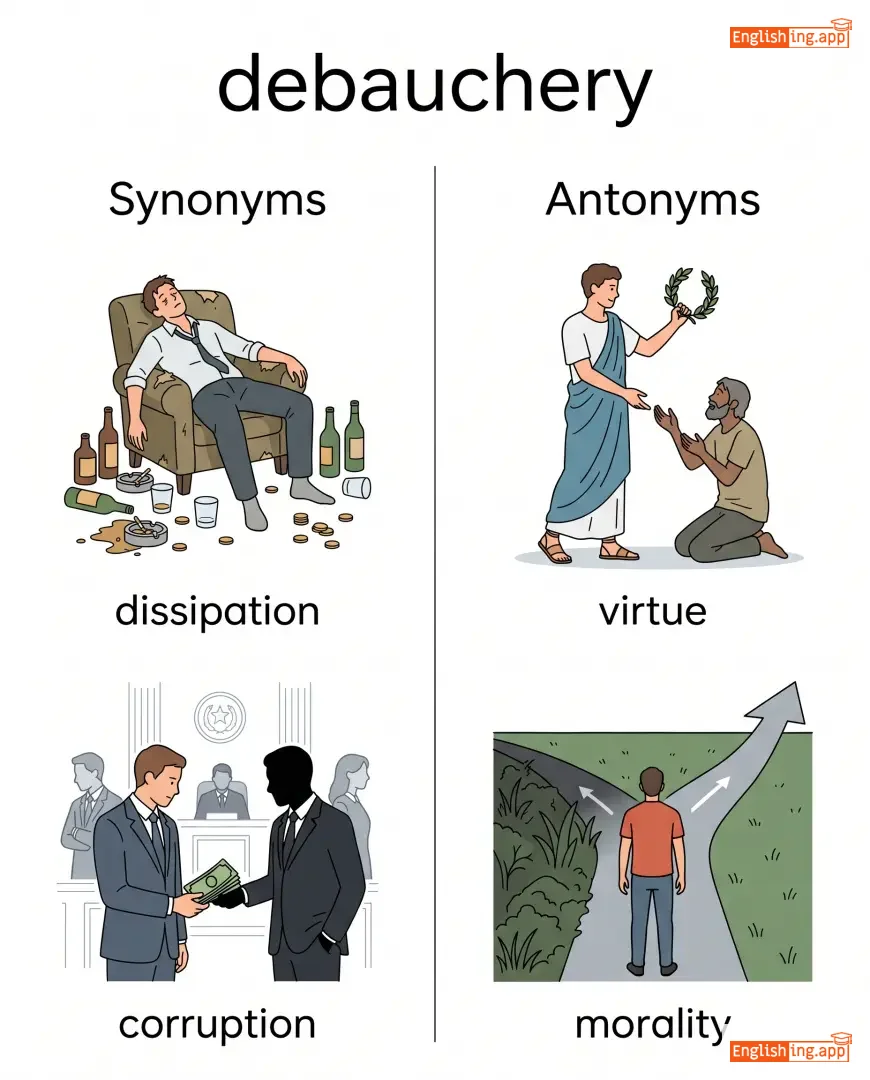
dissipation, corruption, indulgence, vice, excess
••••••
|
virtue, morality, purity
••••••
|
moral debauchery, life of debauchery, drunken debauchery
••••••
|
Debauchery是一种过度纵欲堕落的表现!
••••••
|
|
#188
📜
|
/dɪˈkɔːrəm/
noun
(dè kè lún)
••••••
|
|
礼仪
lǐyí
••••••
|
- •••••• | - •••••• | - •••••• | - •••••• |
behavior in keeping with good taste and propriety
••••••
|
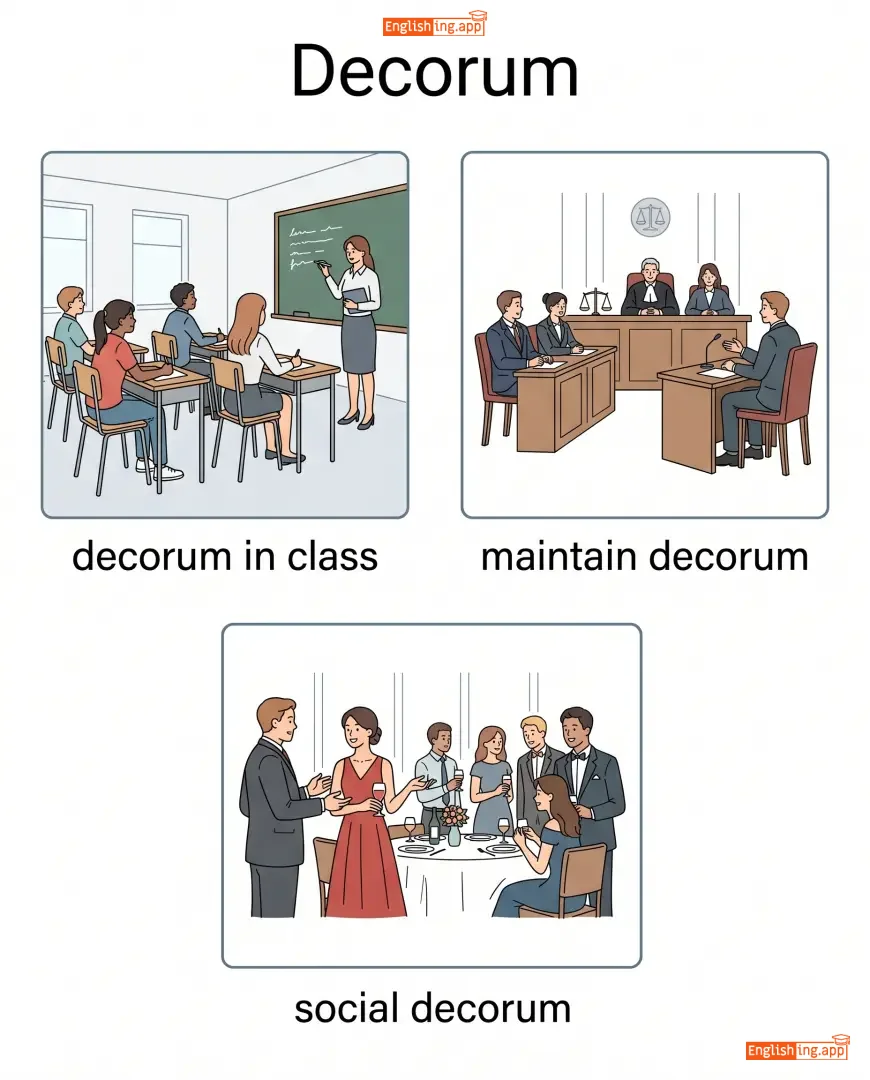
The students maintained decorum during the ceremony. |
学生们在仪式期间保持了礼仪。
Xuéshēngmen zài yíshì qījiān bǎochí le lǐyí.
••••••
|
maintain decorum |
to behave in a proper and respectful manner
••••••
|
保持礼仪
bǎochí lǐyí
••••••
|
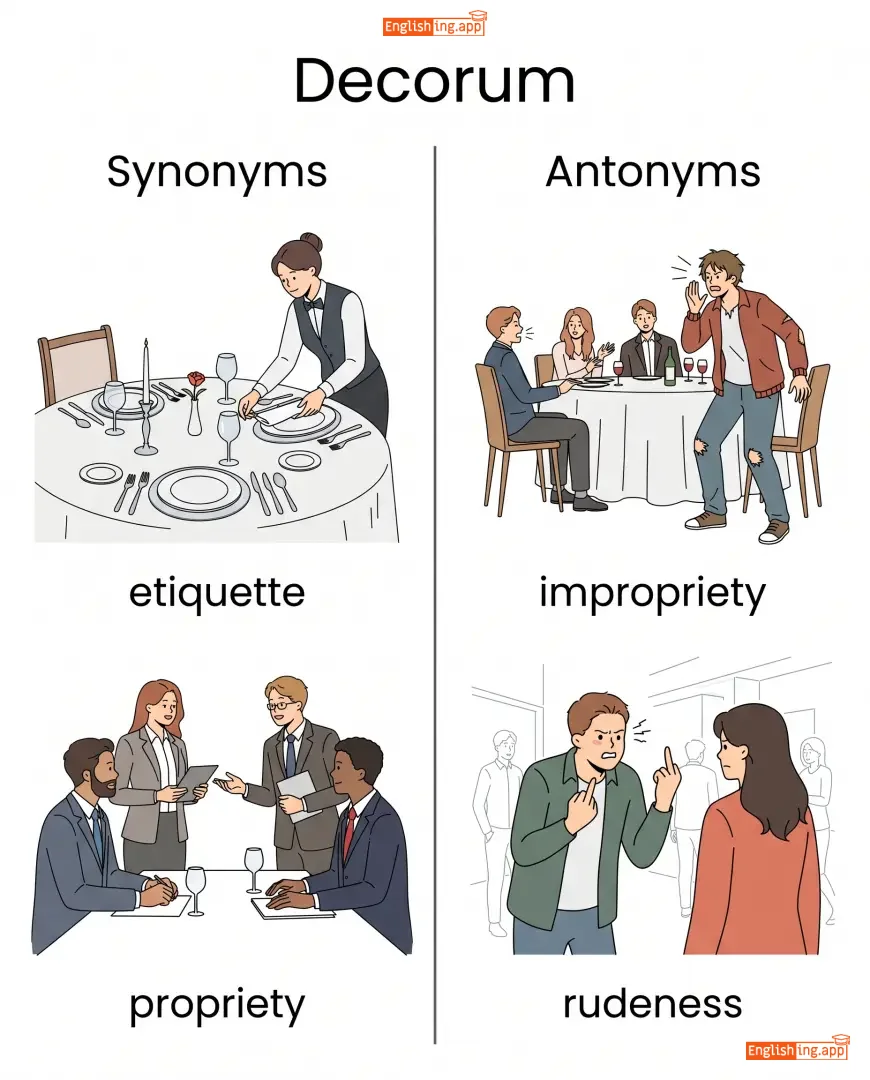
etiquette, propriety, manners, civility, dignity
••••••
|
impropriety, rudeness, disorder
••••••
|
decorum in class, maintain decorum, social decorum
••••••
|
礼仪意味着保持得体和尊重的行为。
••••••
|
|
#189
👎
|
/dɪˈfeɪm/
verb
(dɪˈfeɪm)
••••••
|
|
诽谤
fěibàng
••••••
|
defamed
dɪˈfeɪmd
••••••
|
defamed
dɪˈfeɪmd
••••••
|
defames
dɪˈfeɪmz
••••••
|
defaming
dɪˈfeɪmɪŋ
••••••
|
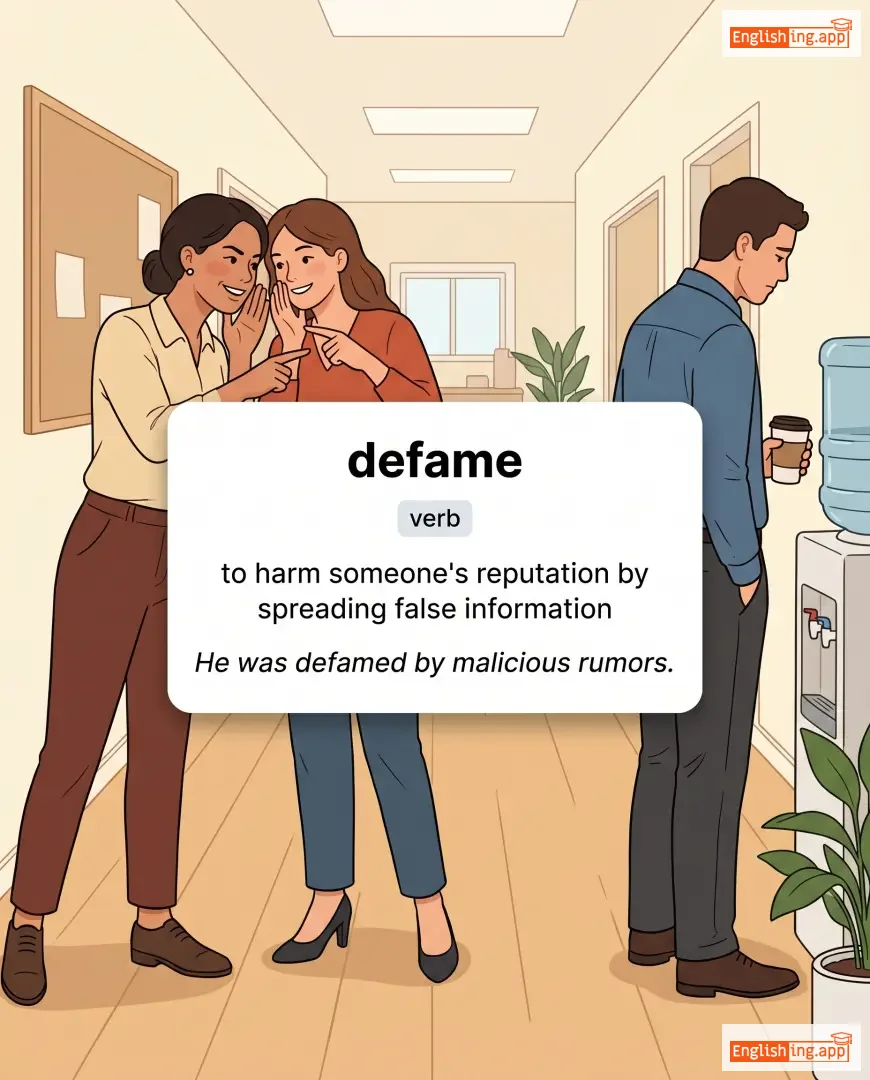
to harm someone's reputation by spreading false information
••••••
|
He was defamed by malicious rumors.
他被恶意谣言诽谤。
••••••
|
他被恶意谣言诽谤。
Tā bèi èyì yáoyán fěibàng.
••••••
|
- •••••• | - •••••• | - •••••• |
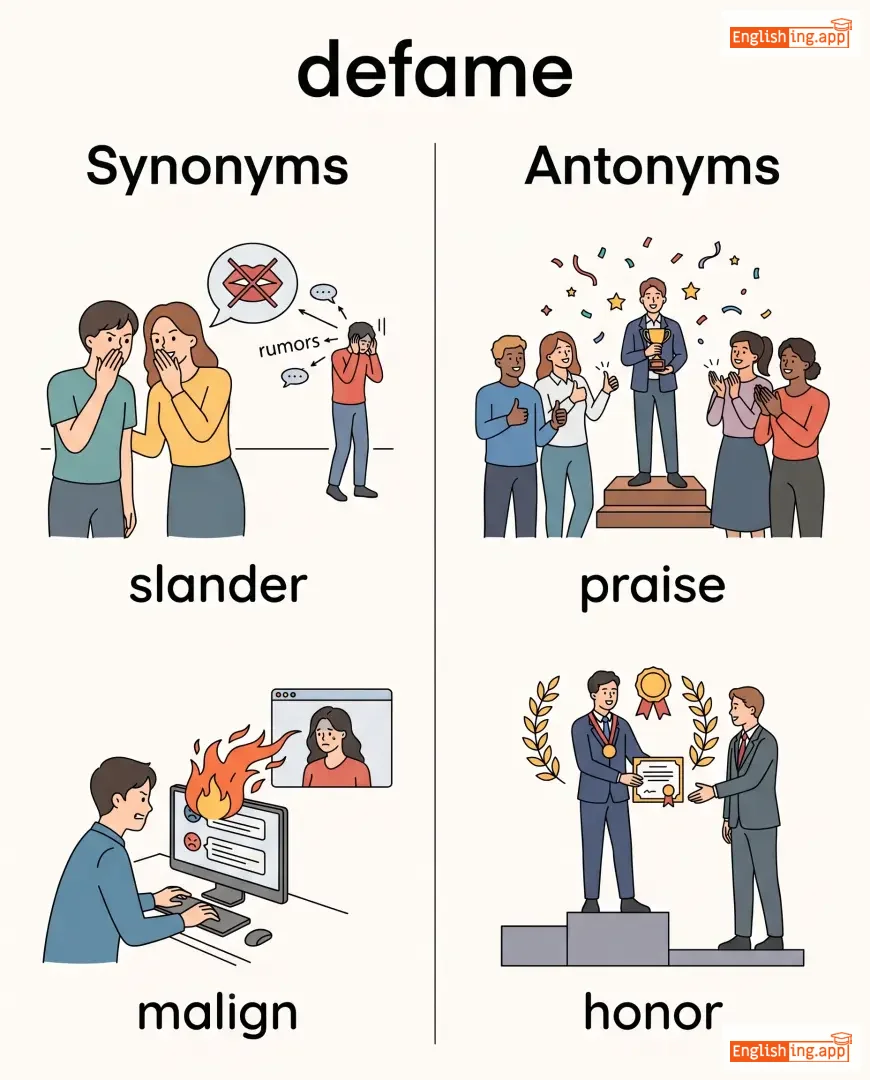
slander, malign, libel, disparage
••••••
|
praise, honor, commend
••••••
|
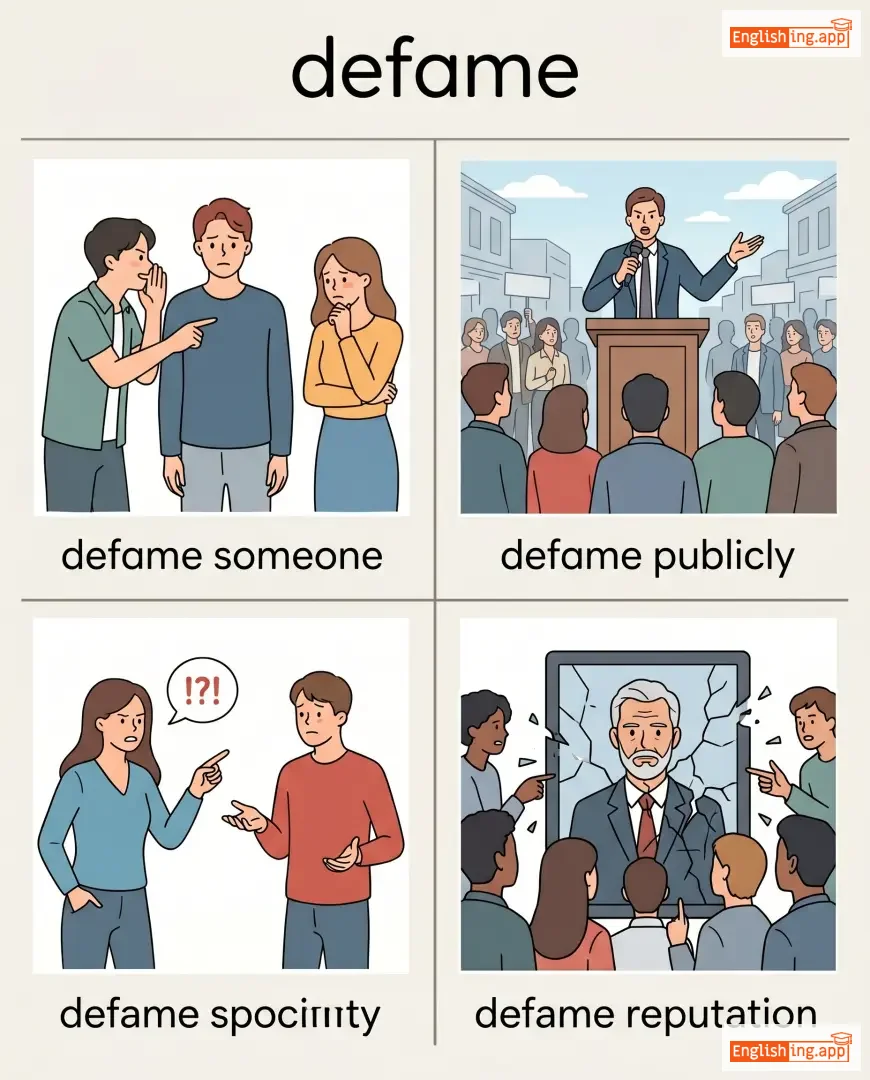
defame someone, defame publicly, defame reputation
••••••
|
De + Fame → 声誉受损意味着诽谤
••••••
|
|
#190
⚠️
|
/dɪˈfɔːlt/
noun, verb
(默认)
••••••
|
|
违约
wéiyuē
••••••
|
defaulted
默认ed
••••••
|
defaulted
默认ed
••••••
|
defaults
默认s
••••••
|
defaulting
默认ing
••••••
|
failure to fulfill an obligation, especially to repay a loan
••••••
|
The company defaulted on its loan payments.
公司在贷款支付方面违约。
••••••
|
公司在贷款支付方面违约。
Gōngsī zài dàikuǎn zhīfù fāngmiàn wéiyuē.
••••••
|
in default
违约
••••••
|
in a state of failing to fulfill an obligation
••••••
|
违约状态
wéiyuē zhuàngtài
••••••
|
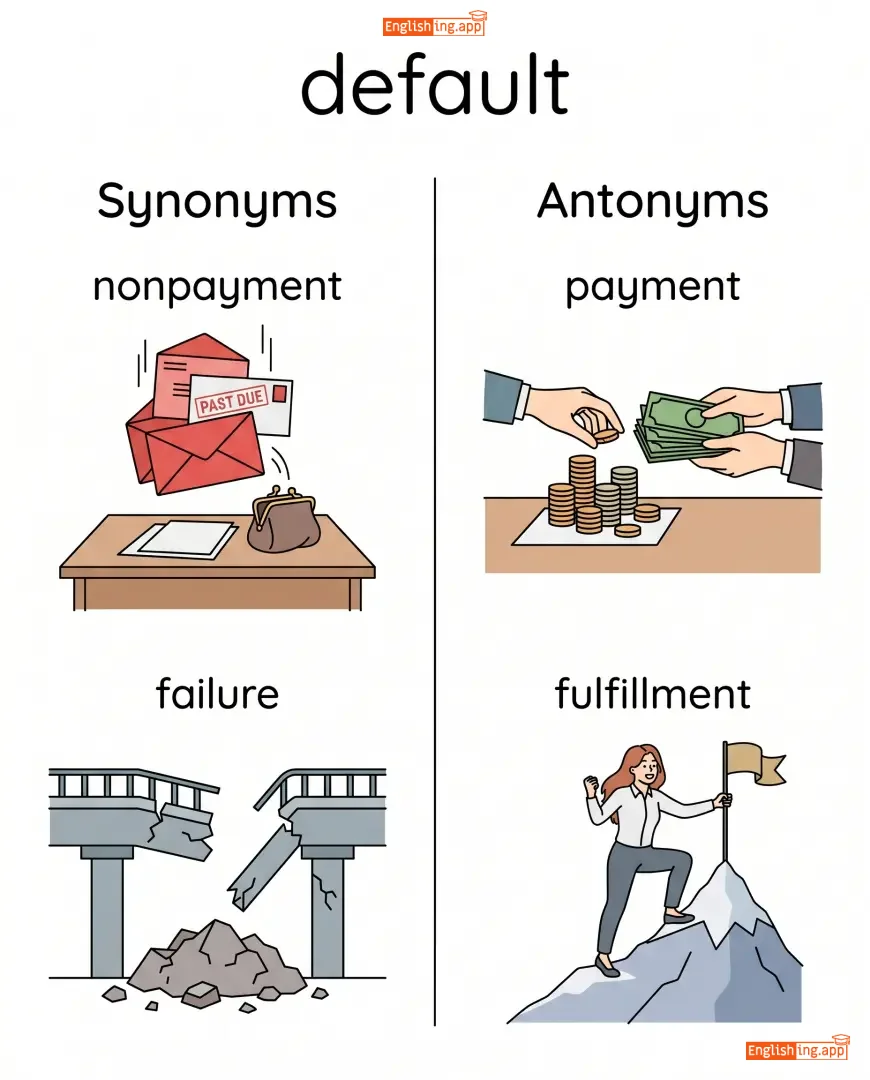
nonpayment, failure, negligence, omission
••••••
|
payment, fulfillment, compliance
••••••
|
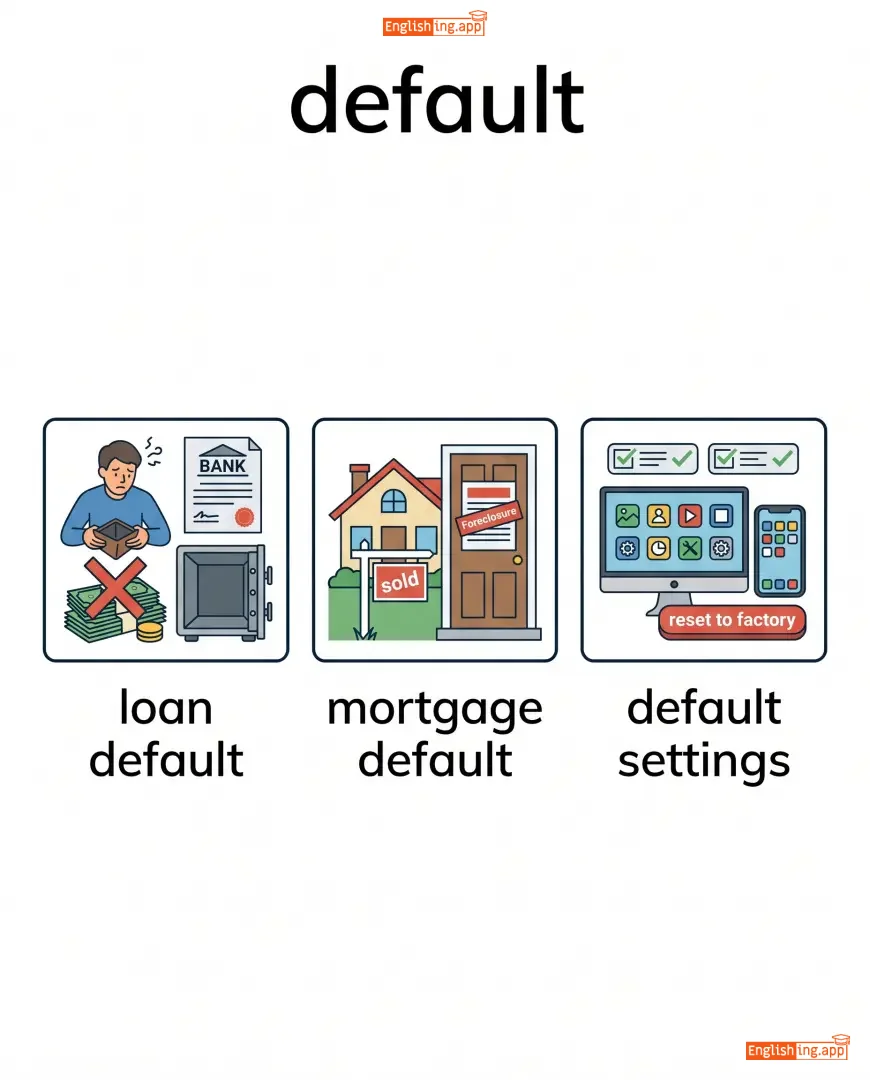
loan default, mortgage default, default settings, default judgment
••••••
|
Default → 不偿还债务
••••••
|
|
#191
🙏
|
/ˈdɛfərəns/
noun
(迪弗伦斯)
••••••
|
|
尊敬
zūnjìng
••••••
|
- •••••• | - •••••• | - •••••• | - •••••• |
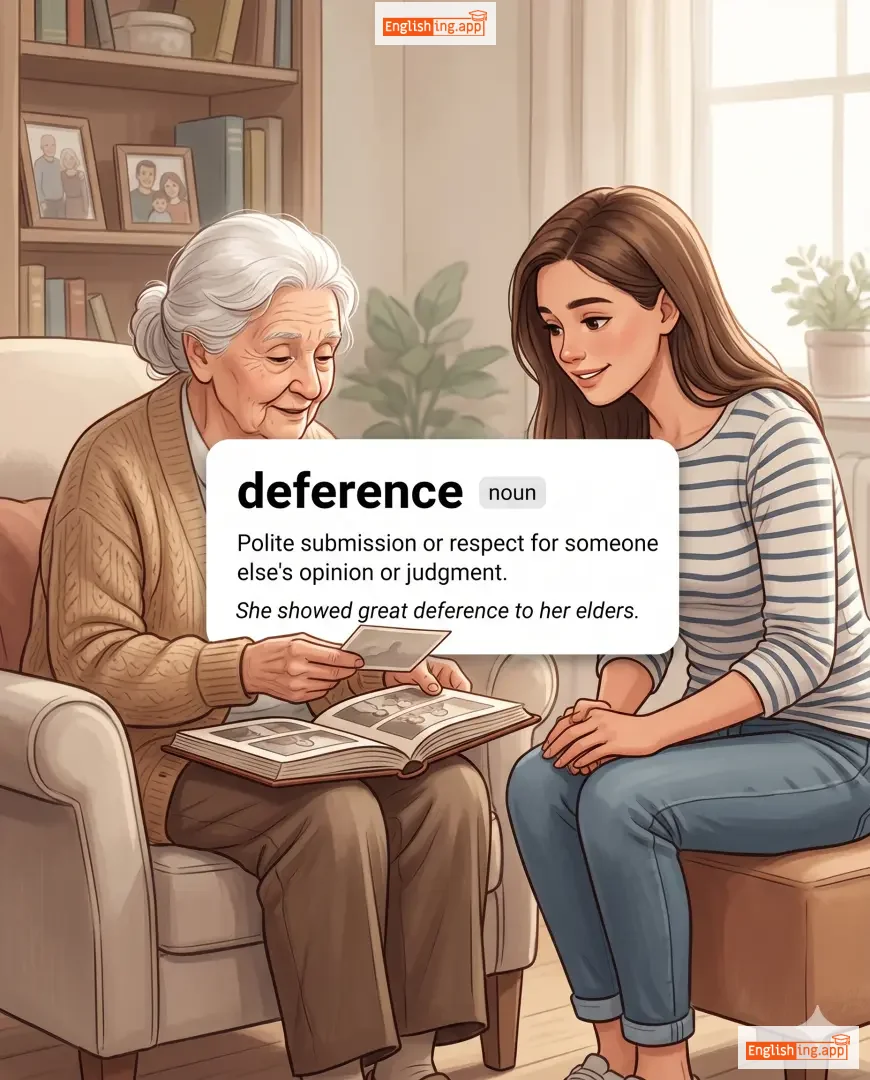
Polite submission or respect for someone else's opinion or judgment.
••••••
|
She showed great deference to her elders. |
她对长辈表现出极大的尊敬。
Tā duì zhǎngbèi biǎoxiàn chū jí dà de zūnzhòng.
••••••
|
in deference to |
Out of respect or regard for someone or something.
••••••
|
出于尊敬
chū yú zūnzhòng
••••••
|
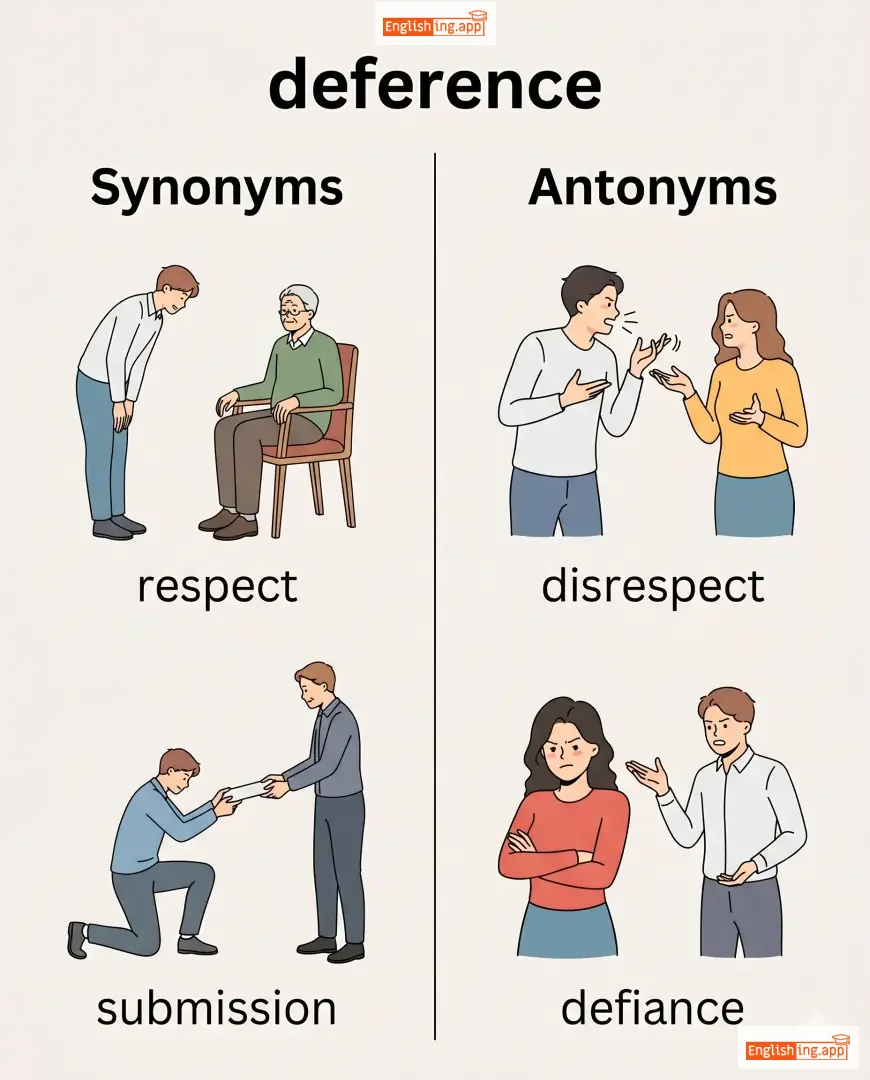
respect, submission, obedience, reverence
••••••
|
disrespect, defiance, disregard
••••••
|
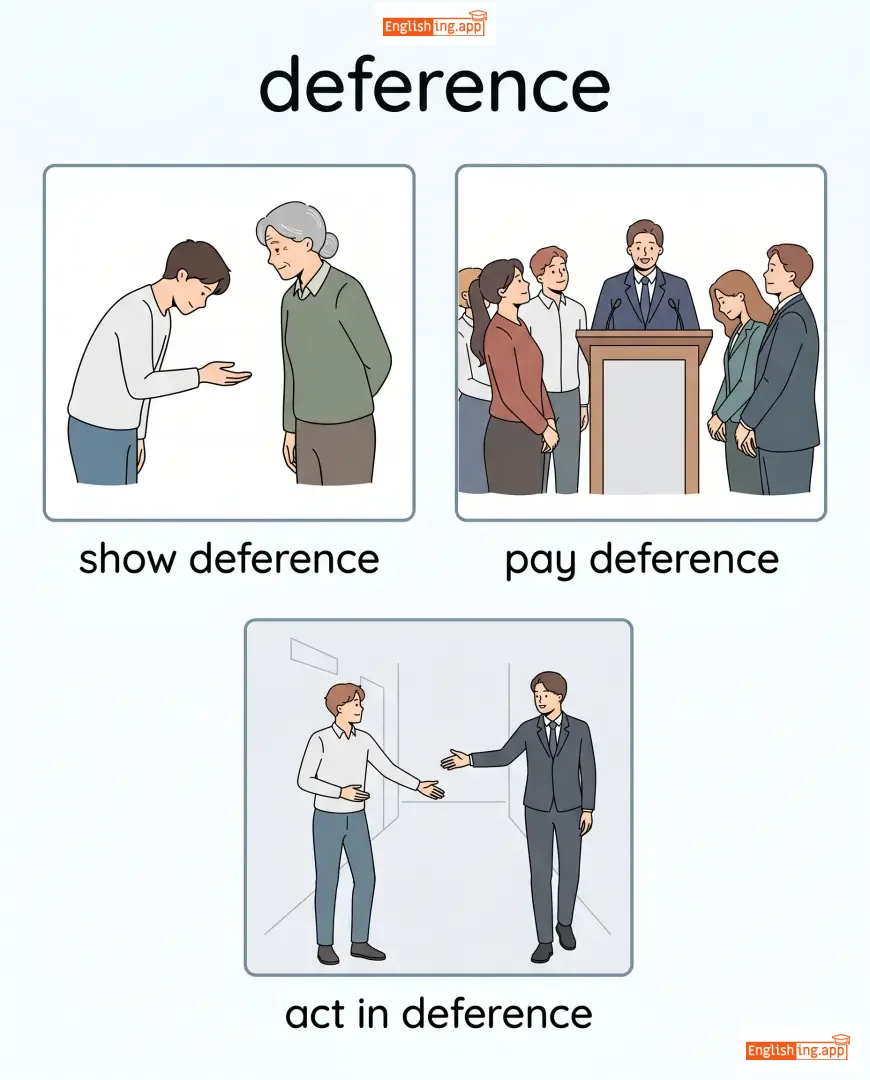
show deference, pay deference, act in deference
••••••
|
Deference意味着defer (推迟) + ence → 为了尊重他人而推迟自己的意愿。
••••••
|
|
#192
💀
|
/dɪˈfʌŋkt/
adjective
(迪芳克特)
••••••
|
|
停用,废弃
tíngyòng, fèiqì
••••••
|
- •••••• | - •••••• | - •••••• | - •••••• |
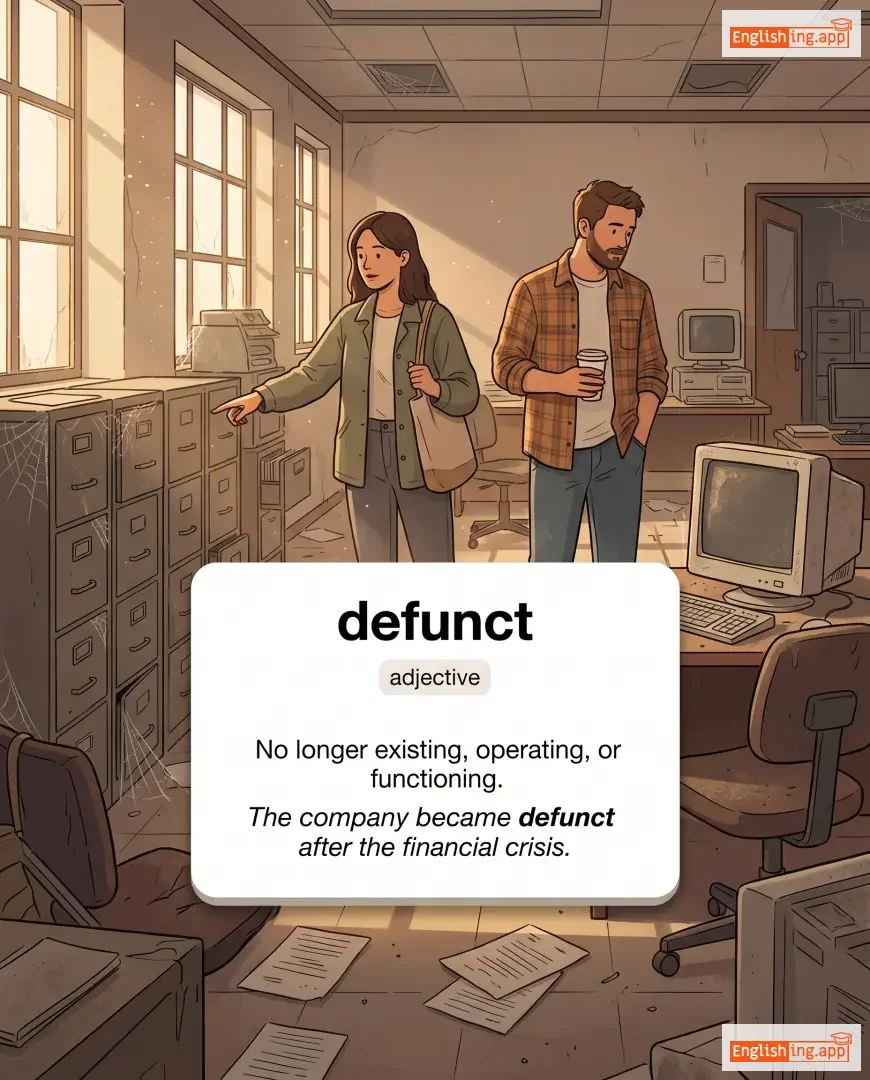
No longer existing, operating, or functioning.
••••••
|
The company became defunct after the financial crisis.
这家公司在金融危机后不再运作。
••••••
|
这家公司在金融危机后不再运作。
Zhè jiā gōngsī zài jīnróng wéijī hòu bù zài yùnzuò.
••••••
|
- •••••• | - •••••• | - •••••• |
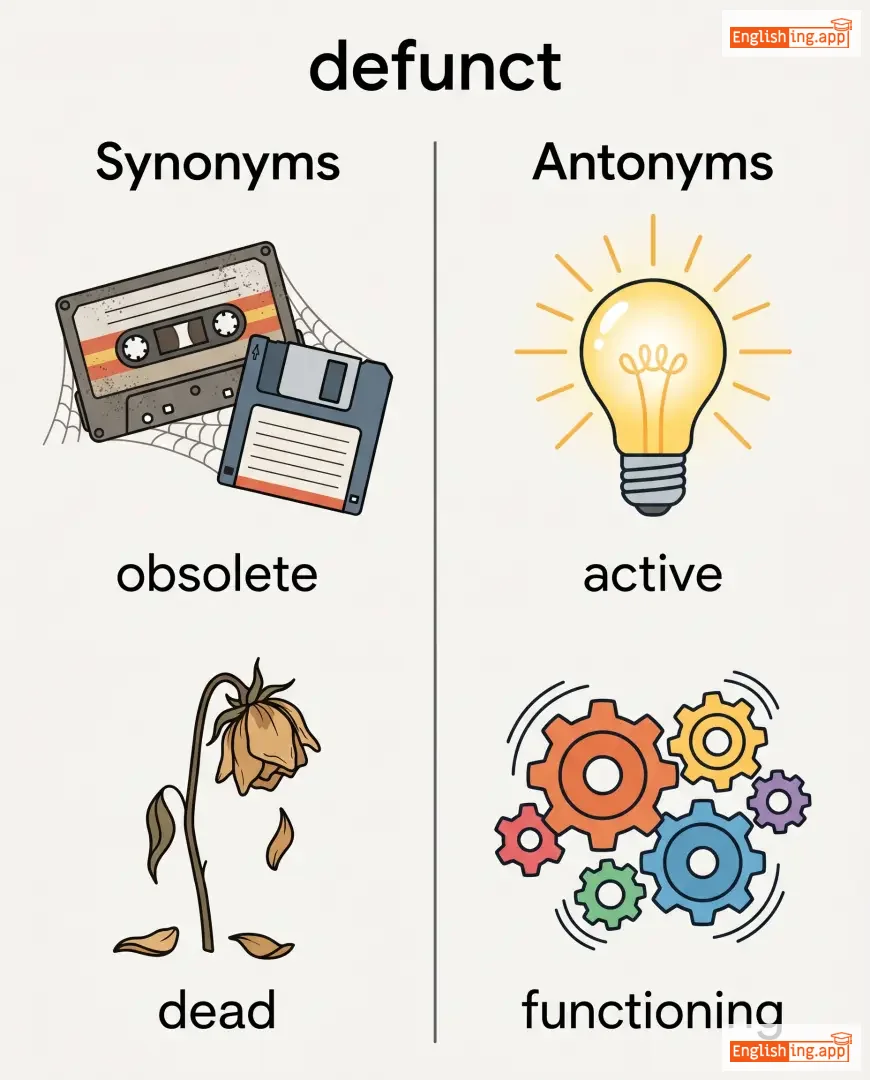
obsolete, dead, extinct, nonfunctional
••••••
|
active, functioning, operational
••••••
|
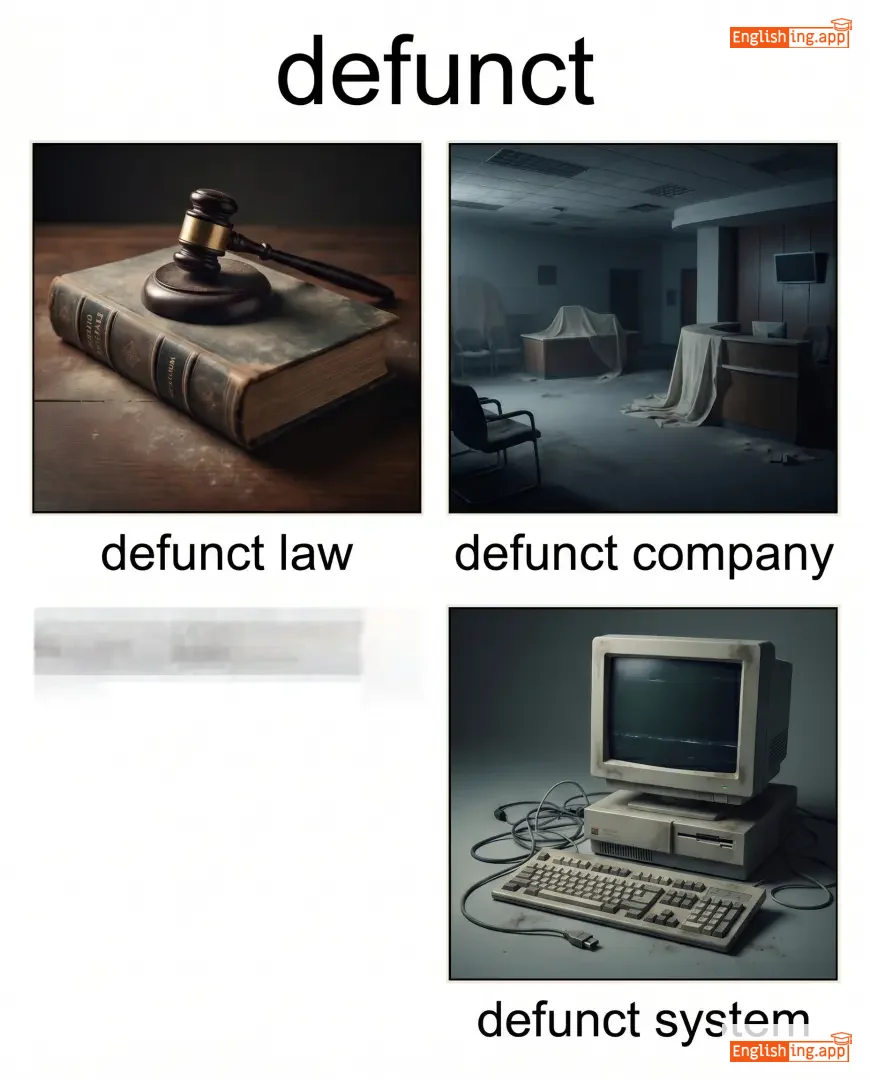
defunct law, defunct company, defunct system
••••••
|
Defunct 意味着某些东西不再工作,比如危机后的公司。
••••••
|
|
#193
📝
|
/dɪˈlɪnieɪt/
verb
(德利尼埃特)
••••••
|
|
描绘
miaohui
••••••
|
delineated
德利尼埃特德
••••••
|
delineated
德利尼埃特德
••••••
|
delineates
德利尼埃特斯
••••••
|
delineating
德利尼埃廷
••••••
|
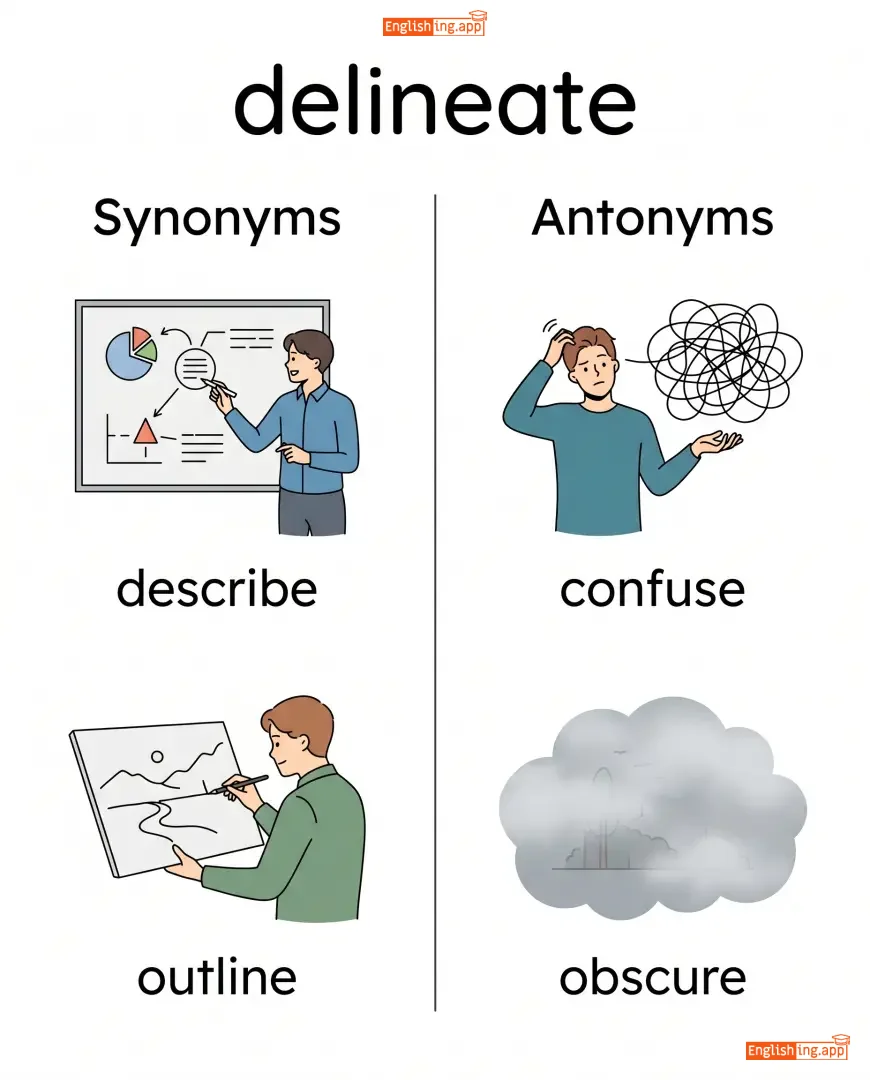
to describe, portray, or define something precisely and clearly
••••••
|
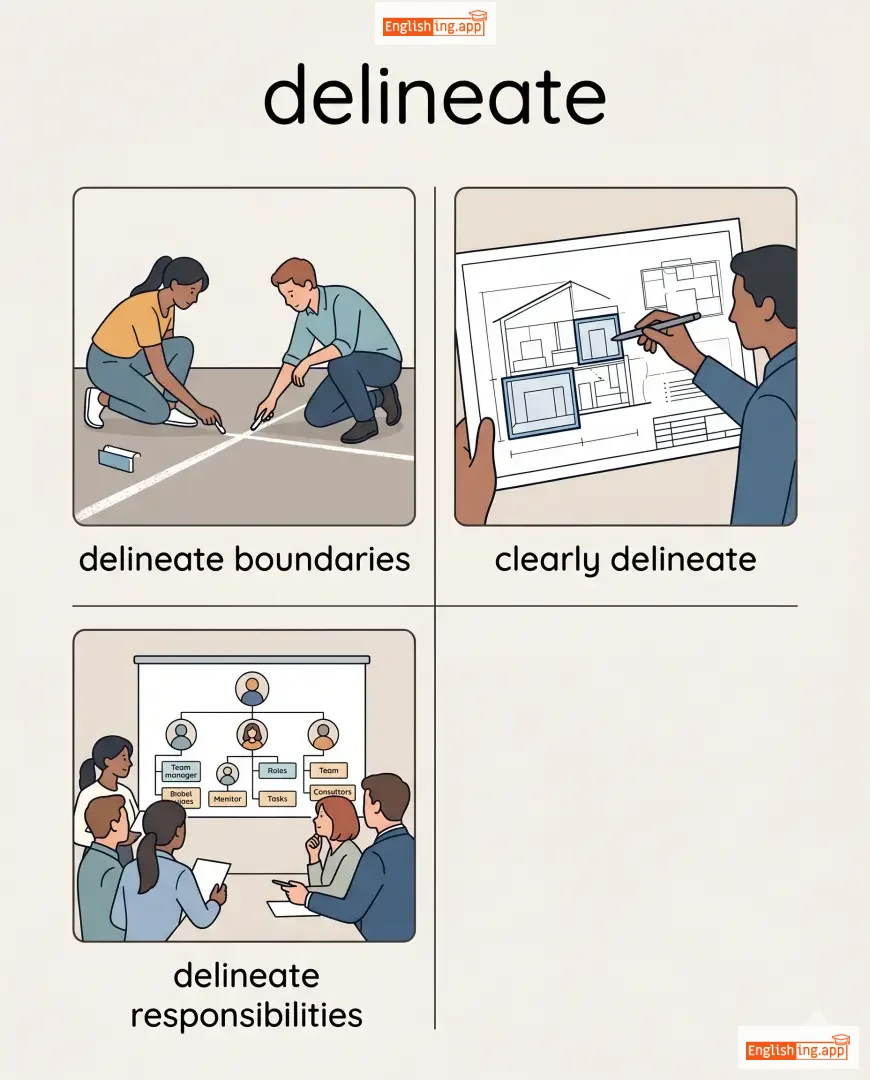
The contract clearly delineates the responsibilities of each party.
合同清楚地划定了各方的责任。
••••••
|
合同清楚地划定了各方的责任。
Hetong qingchu de huading le ge fang de zeren.
••••••
|
- •••••• | - •••••• | - •••••• |
describe, outline, depict, portray, specify
••••••
|
confuse, obscure, distort
••••••
|
delineate boundaries, clearly delineate, delineate responsibilities, delineate process
••••••
|
描绘像是清晰地画出一条线。
••••••
|
|
#194
📊
|
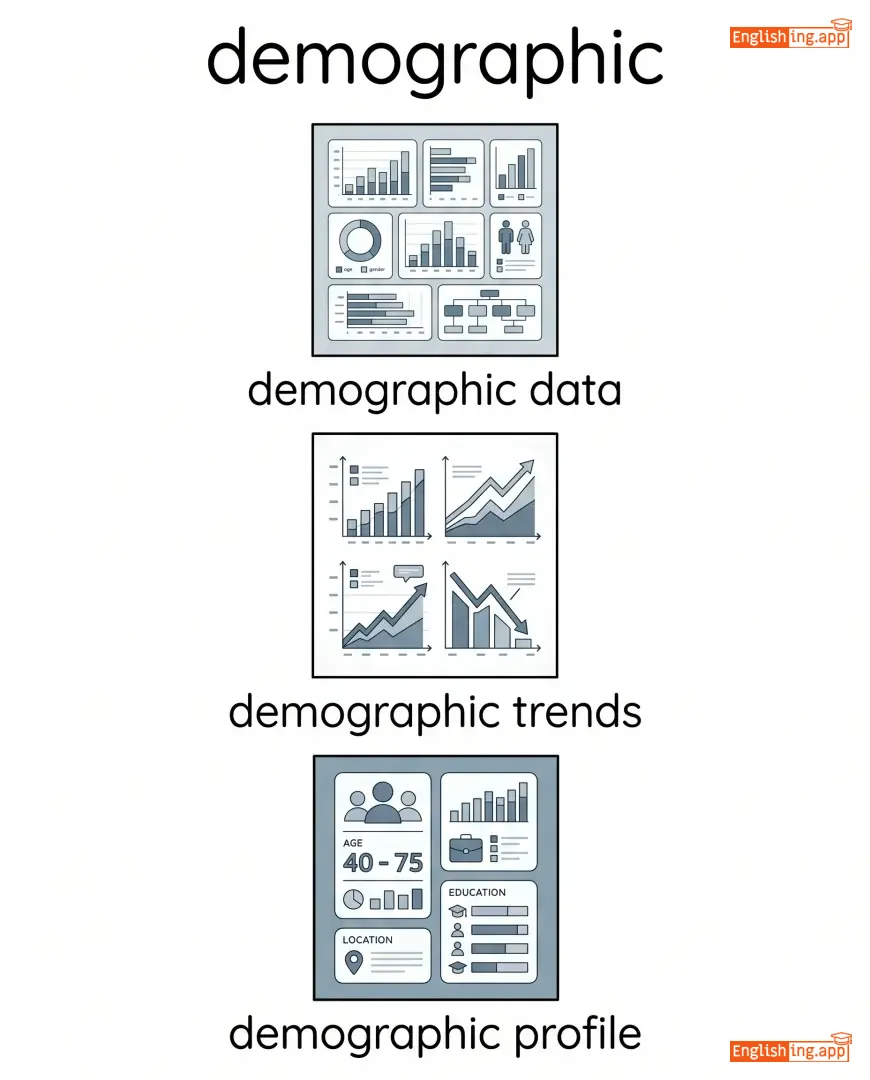
/ˌdɛməˈɡræfɪk/
adjective
(人口统计的)
••••••
|
|
人口统计的
renkou tongji de
••••••
|
- •••••• | - •••••• | - •••••• | - •••••• |
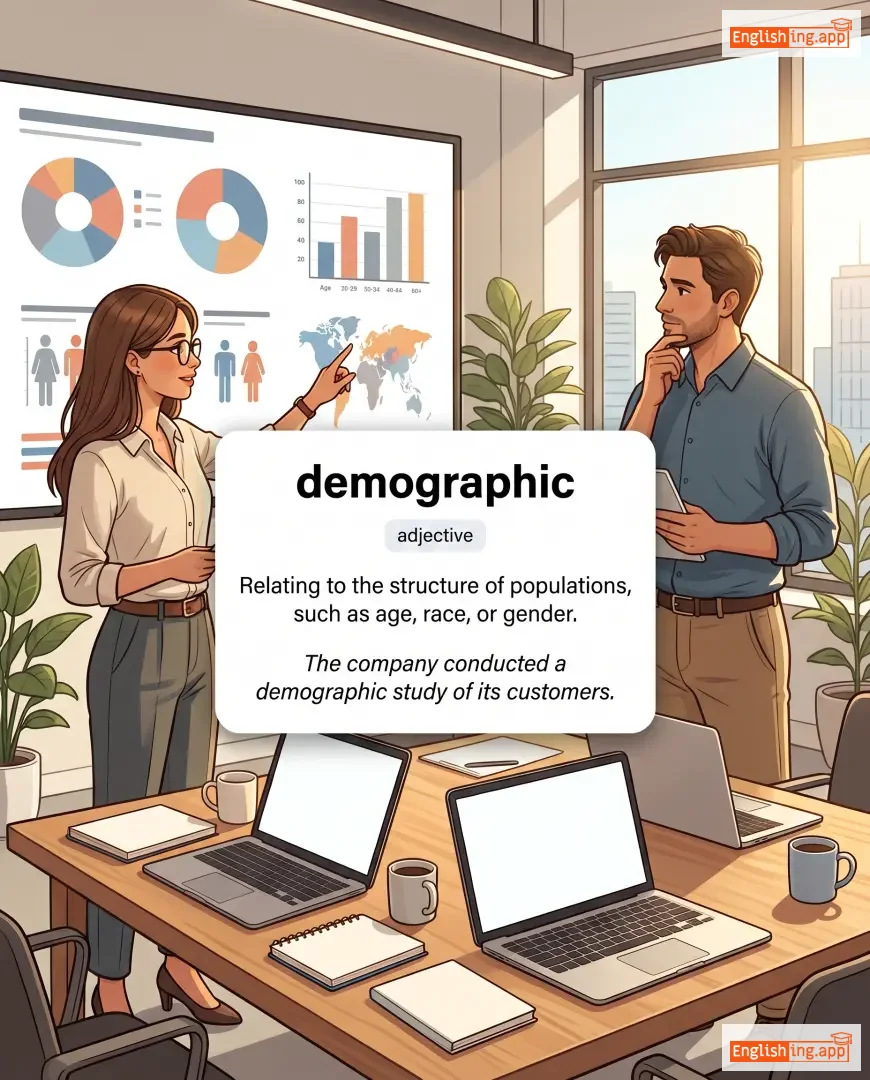
Relating to the structure of populations, such as age, race, or gender.
••••••
|
The company conducted a demographic study of its customers. |
公司对其客户进行了人口统计研究。
Gōngsī duì qí kèhù jìnxíngle rénkǒu tǒngjì yánjiū.
••••••
|
demographic shift |
a change in the structure of a population
••••••
|
人口统计变化
renkou tongji bianhua
••••••
|
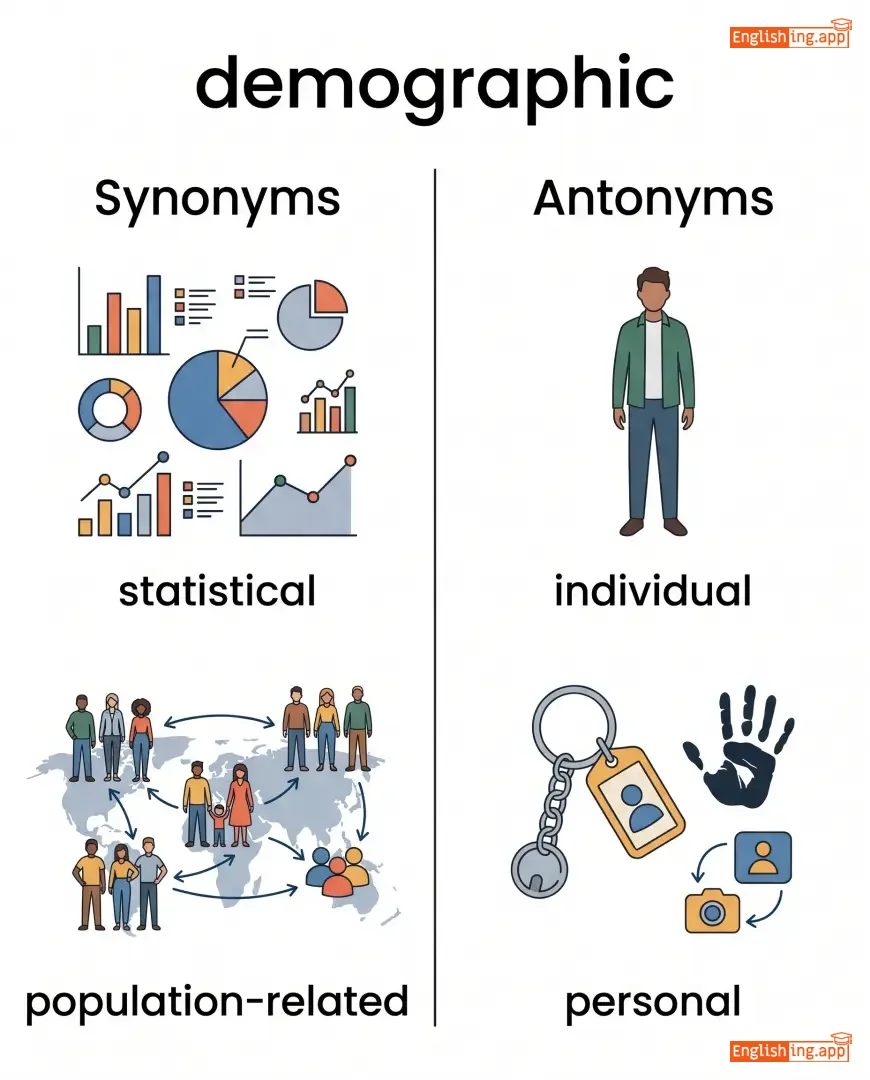
statistical, population-related, social, census-based
••••••
|
individual, personal
••••••
|
demographic data, demographic trends, demographic profile, demographic change
••••••
|
Demo+图形—Demo意味着人群,图形意味着图像。人口图像就是人口统计的。
••••••
|
|
#195
🗣️
|
/dɪˈmɒtɪk/
adjective
(德莫提克)
••••••
|
|
与普通语言相关
yu putong yuyan xiangguan
••••••
|
- •••••• | - •••••• | - •••••• | - •••••• |
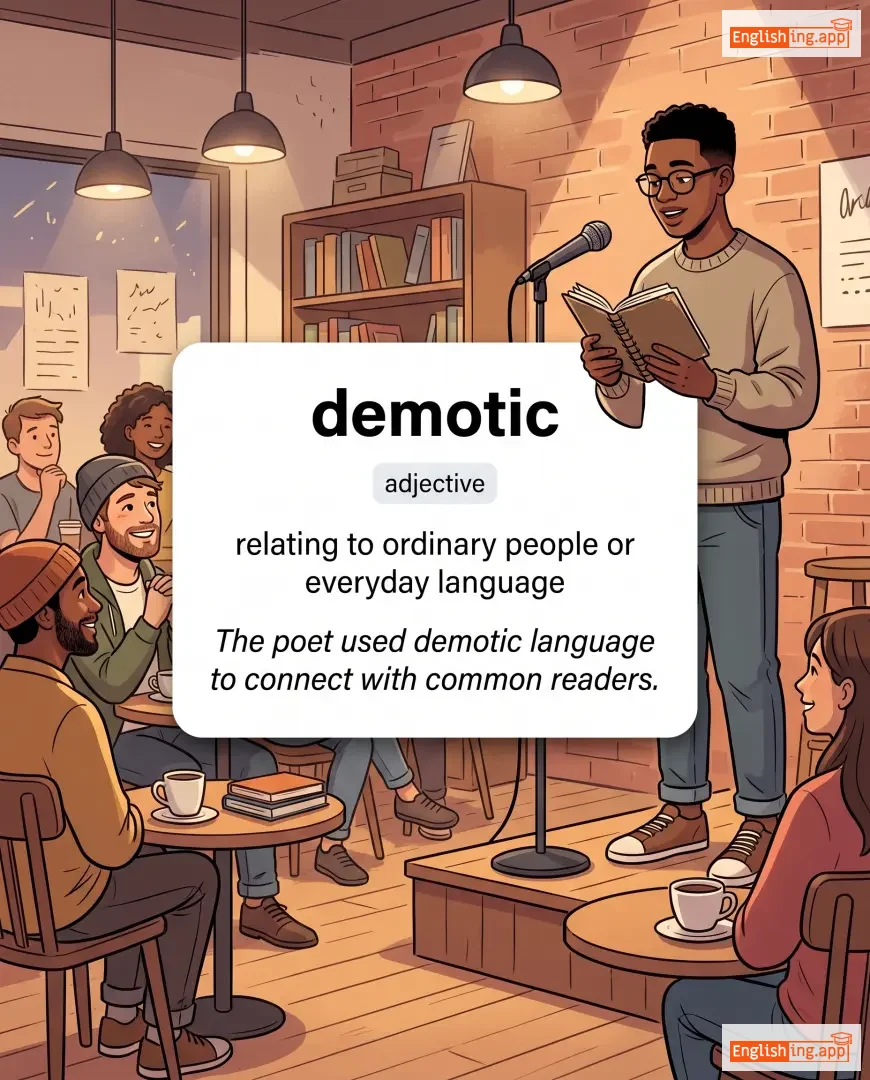
relating to ordinary people or everyday language
••••••
|
The poet used demotic language to connect with common readers.
诗人使用通俗语言与普通读者建立联系。
••••••
|
诗人使用与普通语言相关的语言与普通读者建立联系。
Shiren shiyong yu putong yuyan xiangguan de yuyan yu putong duzhe jianli lianxi.
••••••
|
- •••••• | - •••••• | - •••••• |
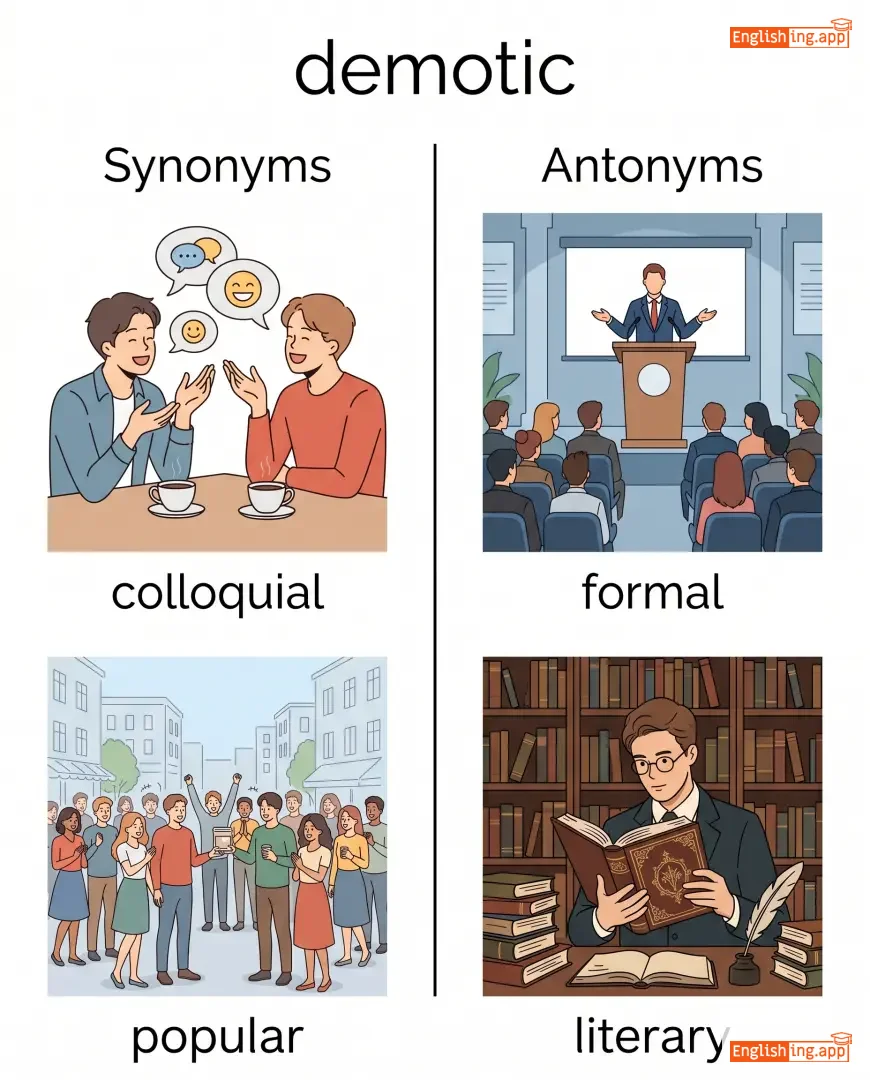
colloquial, popular, common, everyday
••••••
|
formal, literary
••••••
|
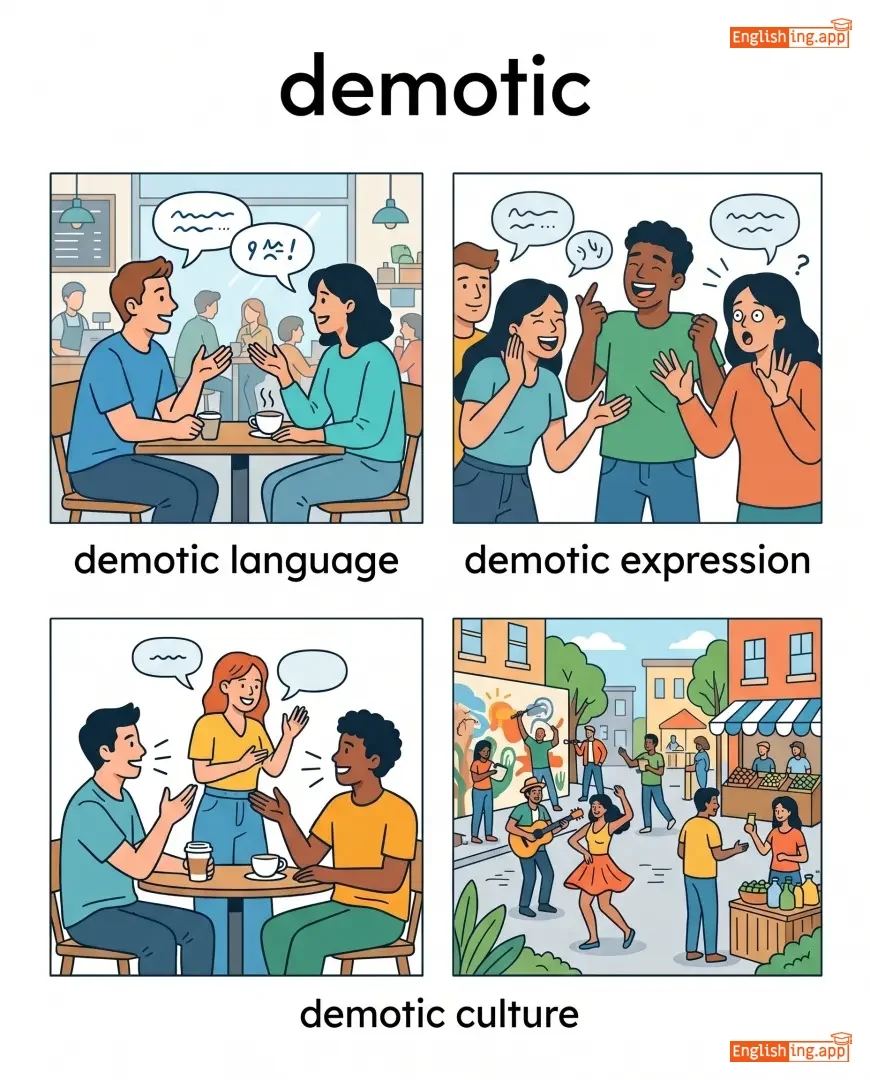
demotic language, demotic expression, demotic culture
••••••
|
De + motic → motic 使人联想到'大众',因此demotic意味着与普通语言相关
••••••
|
|
#196
🤔
|
/dɪˈmɜːr/
verb
(dɪˈmɜːr)
••••••
|
|
反对
fǎn duì
••••••
|
demurred
demurred
••••••
|
demurred
demurred
••••••
|
demurs
demurs
••••••
|
demurring
demurring
••••••
|
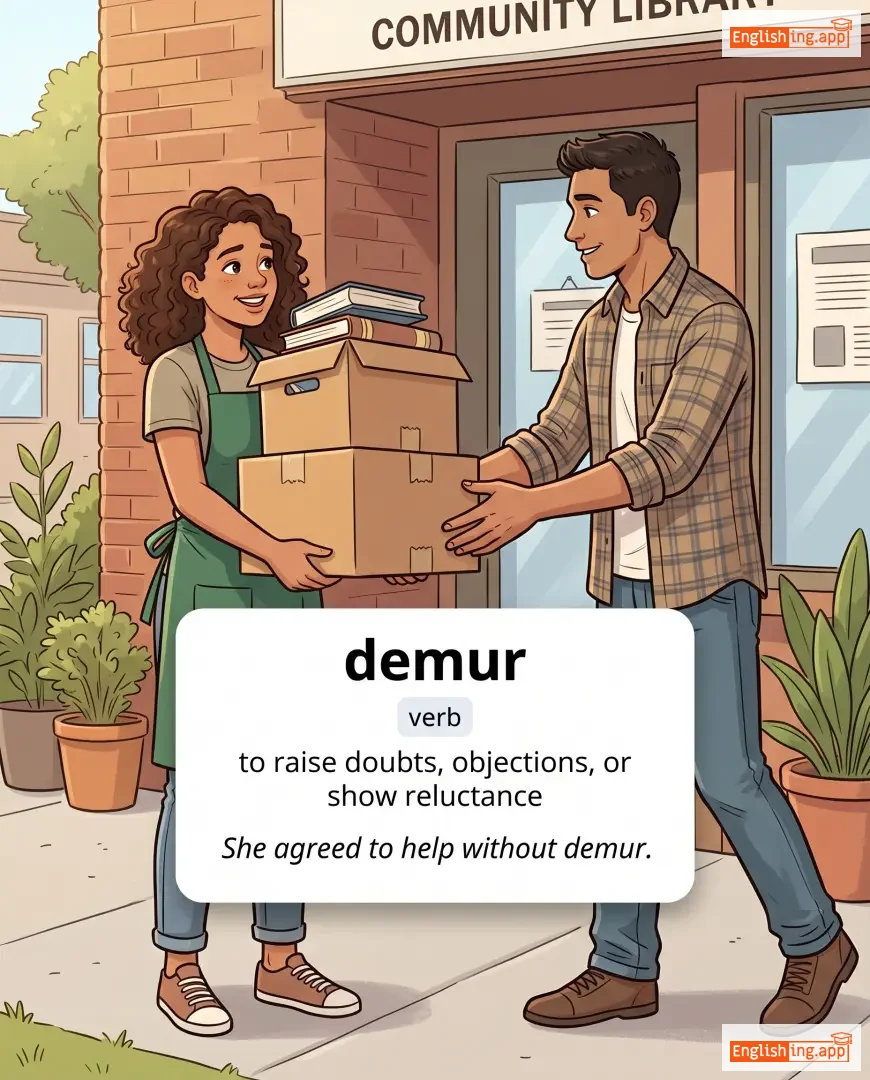
to raise doubts, objections, or show reluctance
••••••
|
She agreed to help without demur.
她同意在没有异议的情况下提供帮助。
••••••
|
她同意在没有异议的情况下提供帮助。
Tā tóngyì zài méiyǒu yìyì de qíngkuàng xià tígōng bāngzhù.
••••••
|
without demur
没有异议
••••••
|
without objection or hesitation
••••••
|
没有异议
méiyǒu yìyì
••••••
|
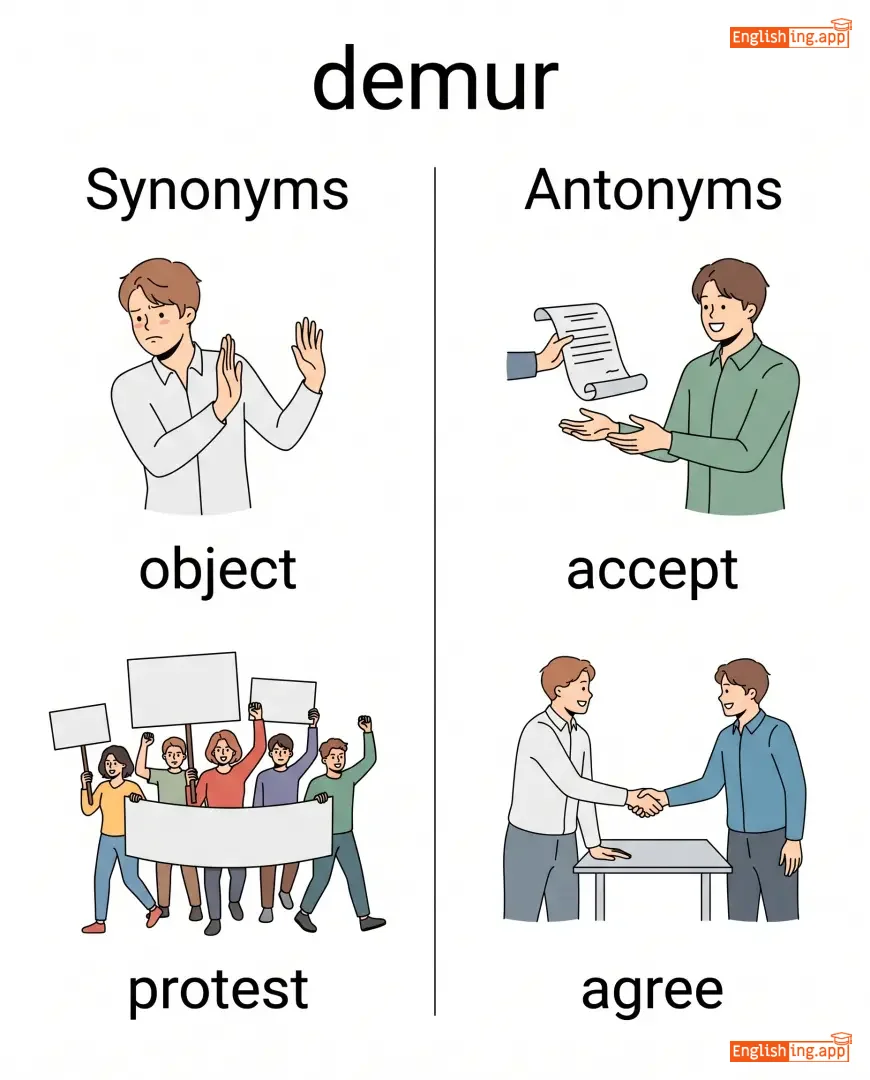
object, protest, hesitate, oppose, refuse
••••••
|
accept, agree, consent
••••••
|
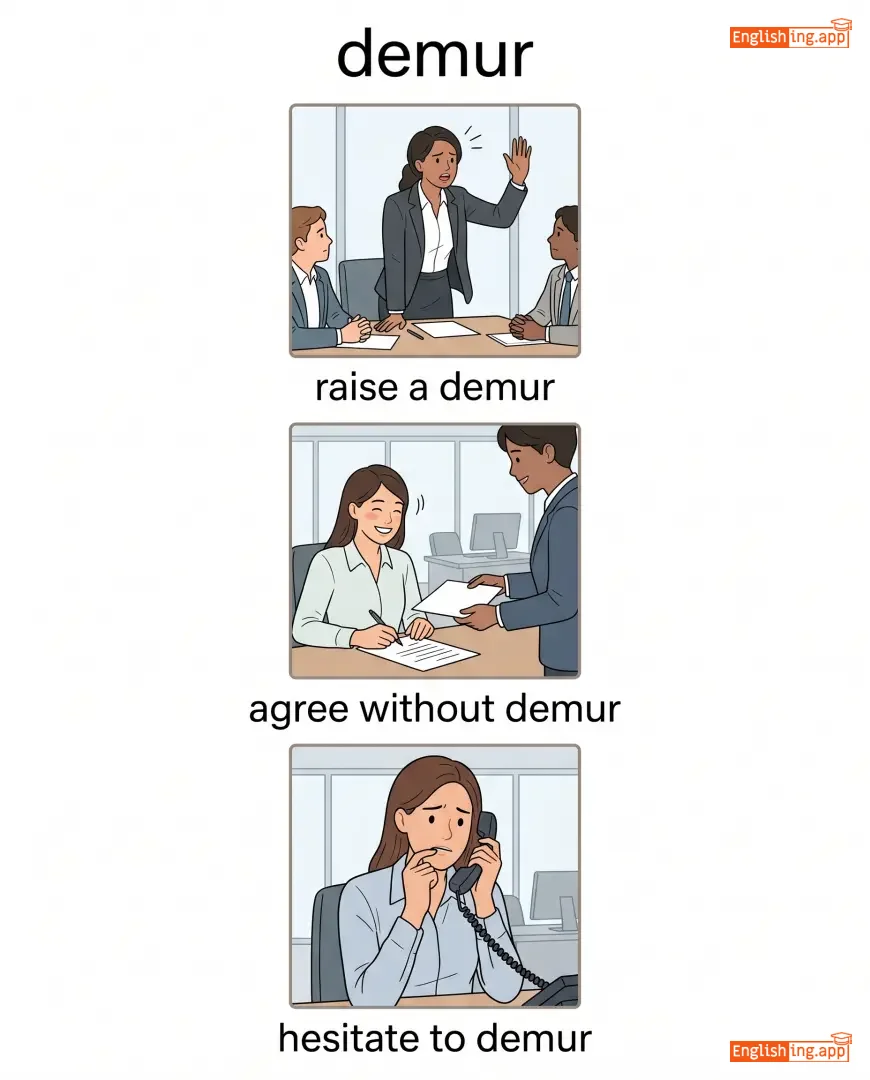
raise a demur, agree without demur, hesitate to demur
••••••
|
Demur = 反对 - 没有疑问
••••••
|
|
#197
🗣️
|
/ˈdɛnɪˌɡreɪt/
verb
(denigrate)
••••••
|
|
贬低
biǎndī
••••••
|
denigrated
denigrated
••••••
|
denigrated
denigrated
••••••
|
denigrates
denigrates
••••••
|
denigrating
denigrating
••••••
|
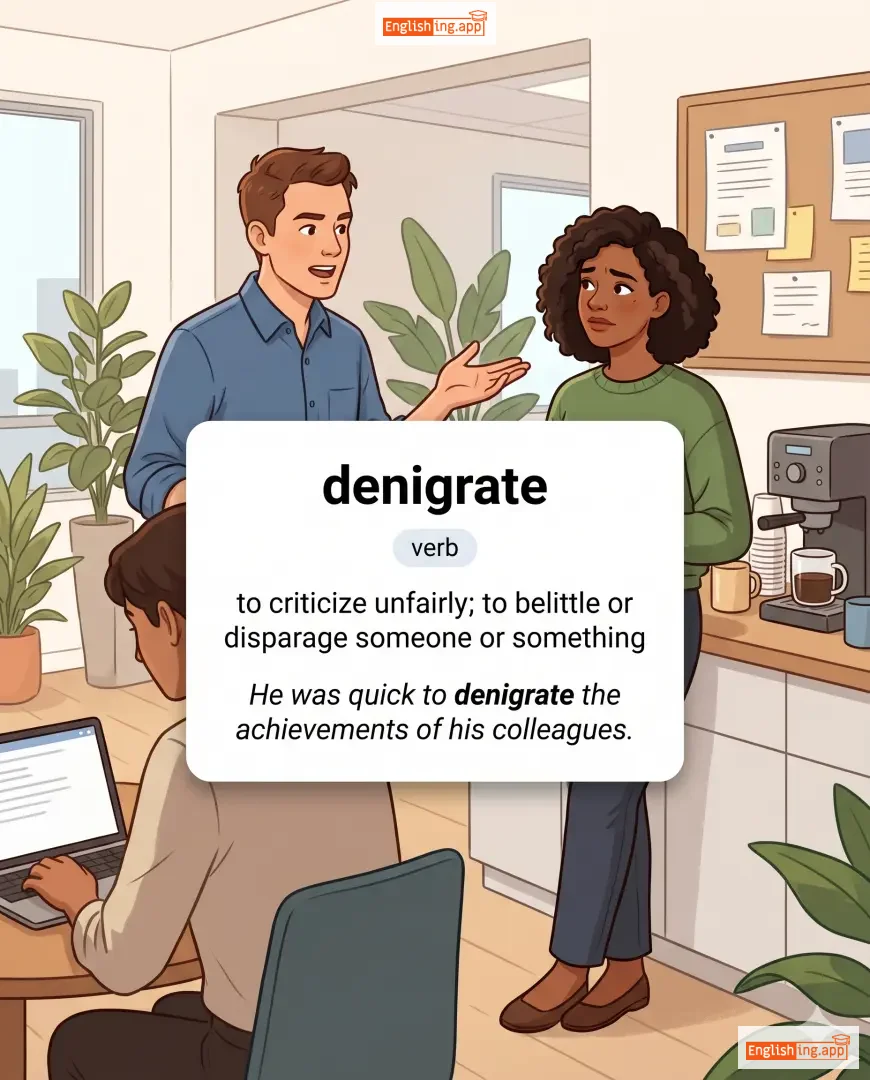
to criticize unfairly; to belittle or disparage someone or something
••••••
|
He was quick to denigrate the achievements of his colleagues.
他很快就贬低了同事们的成就。
••••••
|
他很快就贬低了同事们的成就。
Tā hěn kuài jiù biǎndīle tóngshìmen de chéngjiù.
••••••
|
- •••••• | - •••••• | - •••••• |
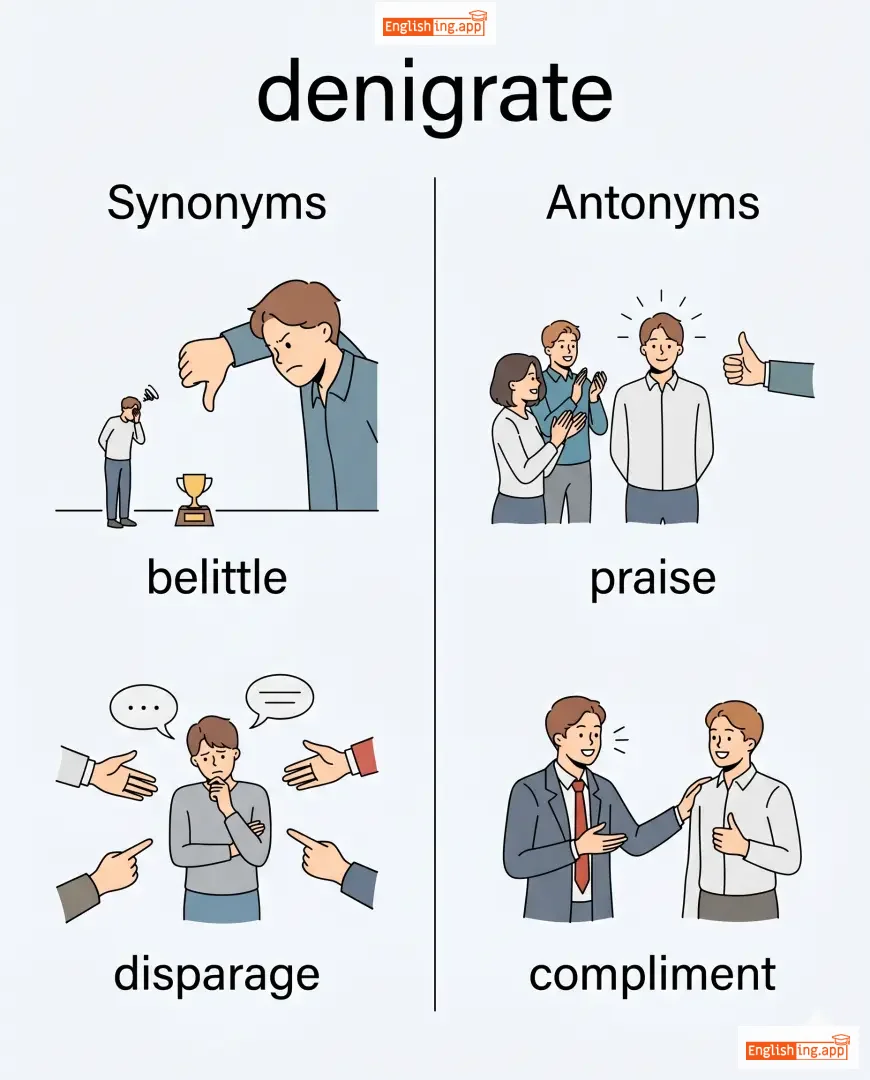
belittle, disparage, defame, slander, deprecate
••••••
|
praise, compliment, honor
••••••
|
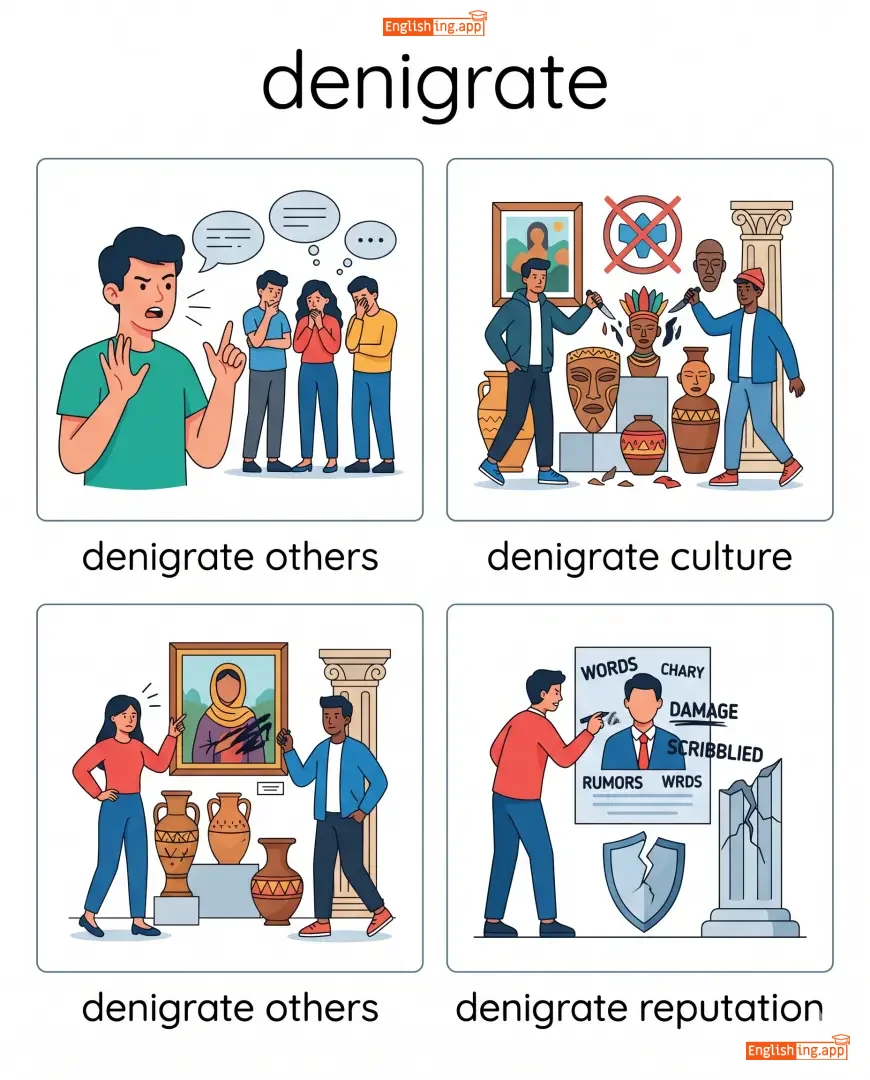
denigrate others, denigrate culture, denigrate reputation, denigrate efforts
••••••
|
‘Denigrate’ = 低(di)指责,‘biǎndī’ 比较近
••••••
|
|
#198
🏠
|
/ˈdɛnɪzən/
noun
(德尼岑)
••••••
|
|
居民
jūmín
••••••
|
- •••••• | - •••••• | - •••••• | - •••••• |
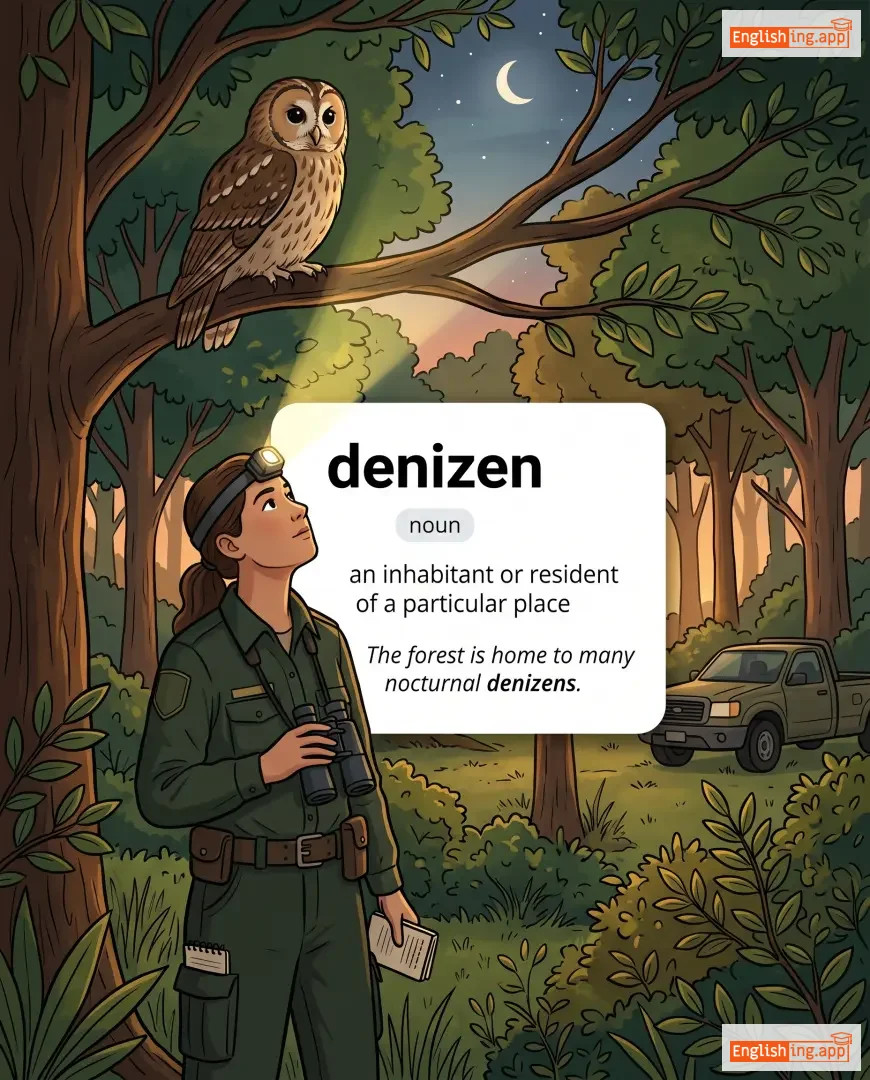
an inhabitant or resident of a particular place
••••••
|
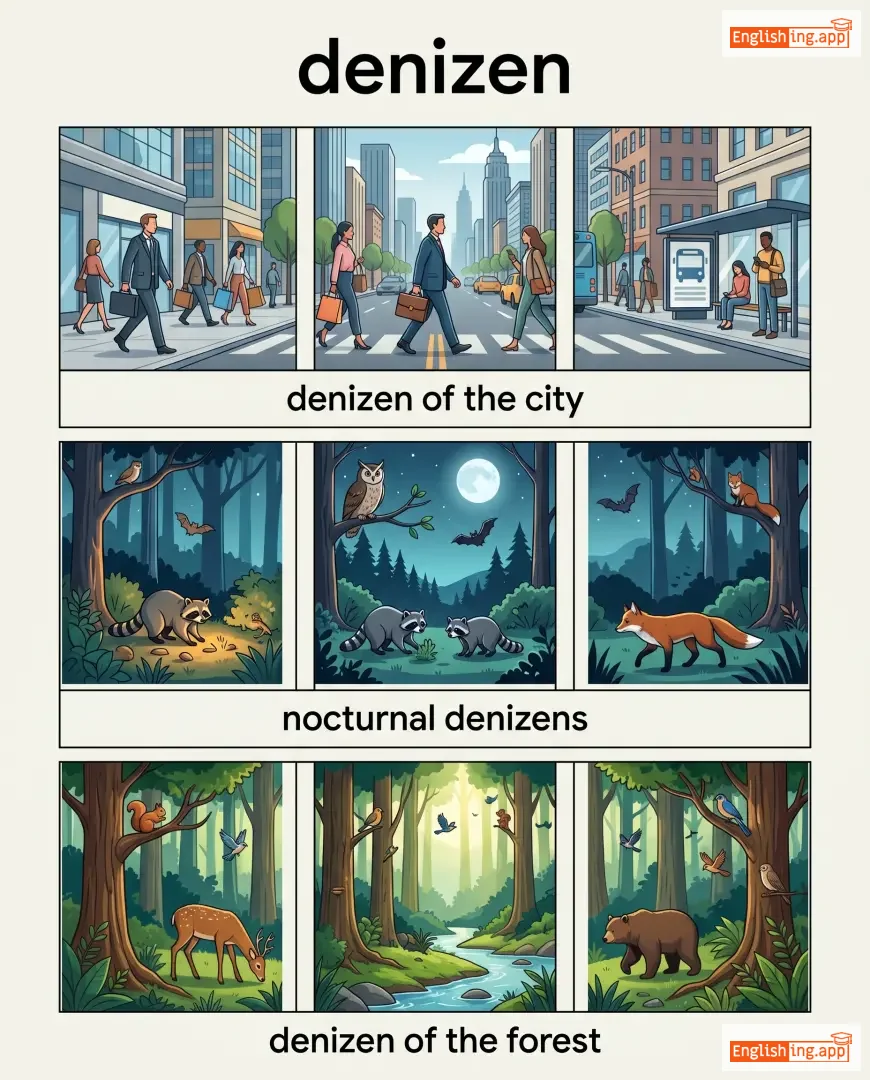
The forest is home to many nocturnal denizens. |
森林是许多夜行性居民的家。
Sēnlín shì xǔduō yèxíngxìng jūmín de jiā.
••••••
|
- •••••• | - •••••• | - •••••• |
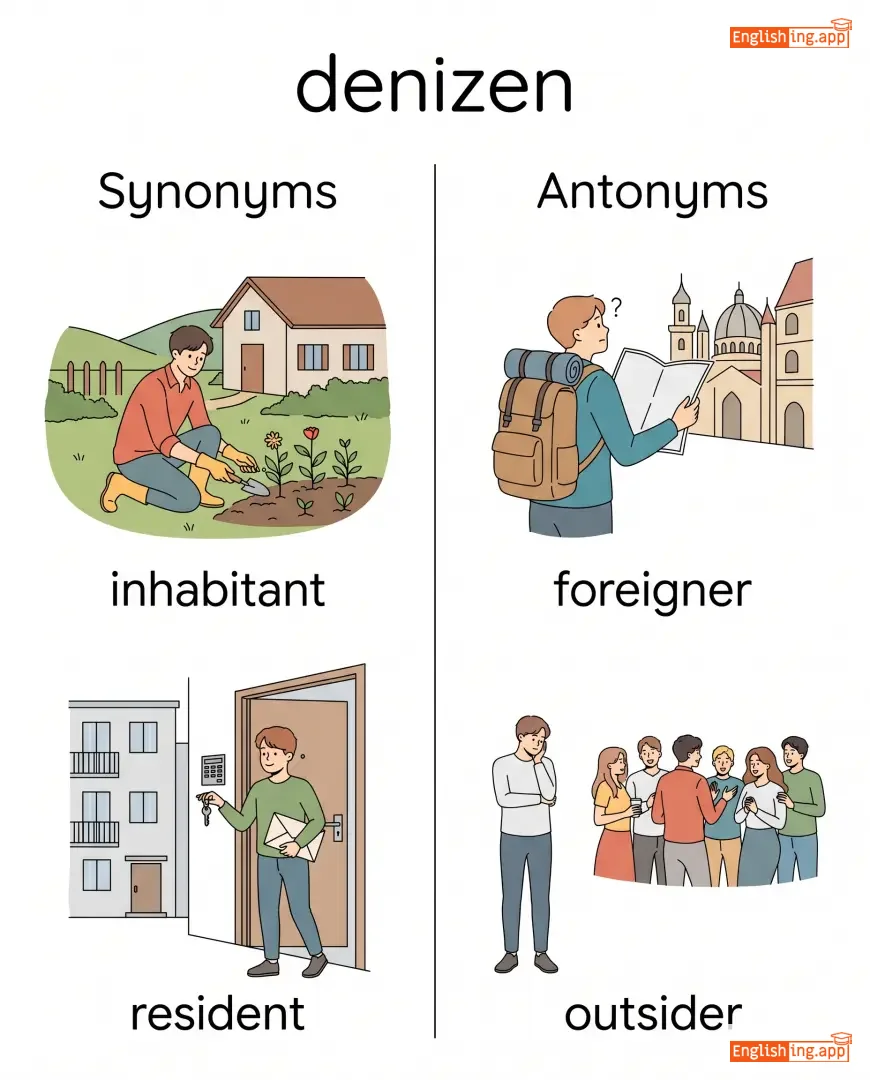
inhabitant, resident, dweller, native, occupant
••••••
|
foreigner, outsider, visitor
••••••
|
denizen of the city, nocturnal denizens, denizen of the forest
••••••
|
像森林中的居民一样,'denizen'指的是栖息在某个地方的人或动物。
••••••
|
|
#199
🎭
|
/ˌdeɪnuːˈmɒ̃/
noun
(德诺芒)
••••••
|
|
结局
jieju
••••••
|
- •••••• | - •••••• | - •••••• | - •••••• |
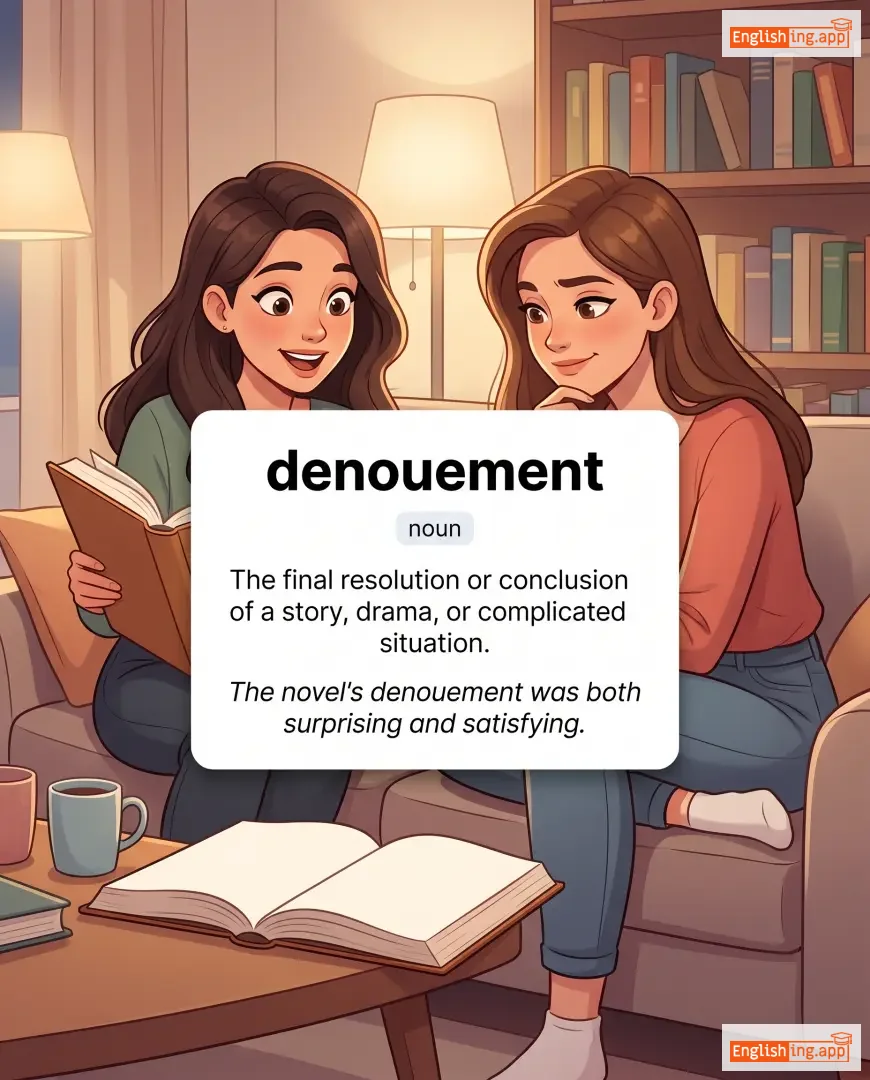
The final resolution or conclusion of a story, drama, or complicated situation.
••••••
|
The novel's denouement was both surprising and satisfying. |
这部小说的结局既令人惊讶又令人满意。
Zhe bu xiaoshuo de jieju ji lingren jingya you lingren manyi.
••••••
|
- •••••• | - •••••• | - •••••• |
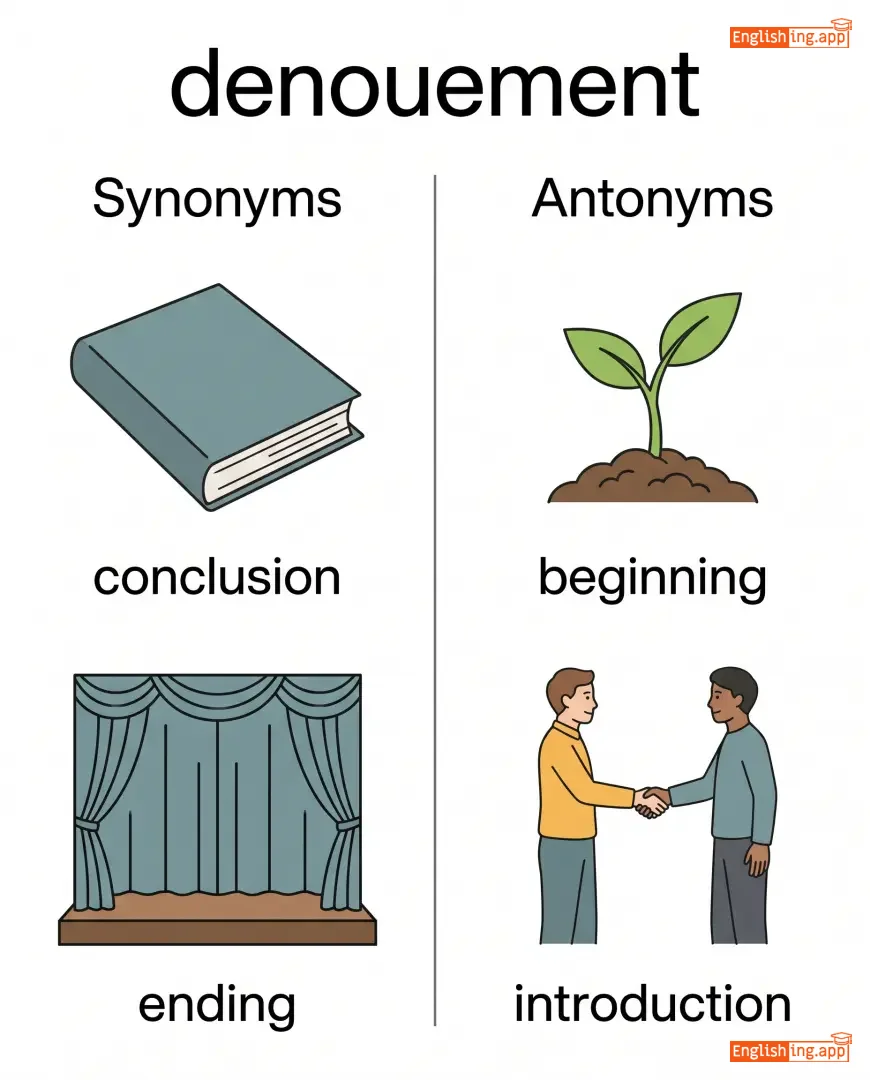
conclusion, ending, resolution, finale, climax
••••••
|
beginning, introduction
••••••
|
dramatic denouement, sudden denouement, story denouement, final denouement
••••••
|
结局就像故事的终点,所有情节的总结。
••••••
|
|
#200
😂
|
/dɪˈraɪd/
verb
(dɪˈraɪd)
••••••
|
|
嘲笑
chaoxiao
••••••
|
derided
dɪˈraɪdɪd
••••••
|
derided
dɪˈraɪdɪd
••••••
|
derides
dɪˈraɪdz
••••••
|
deriding
dɪˈraɪdɪŋ
••••••
|
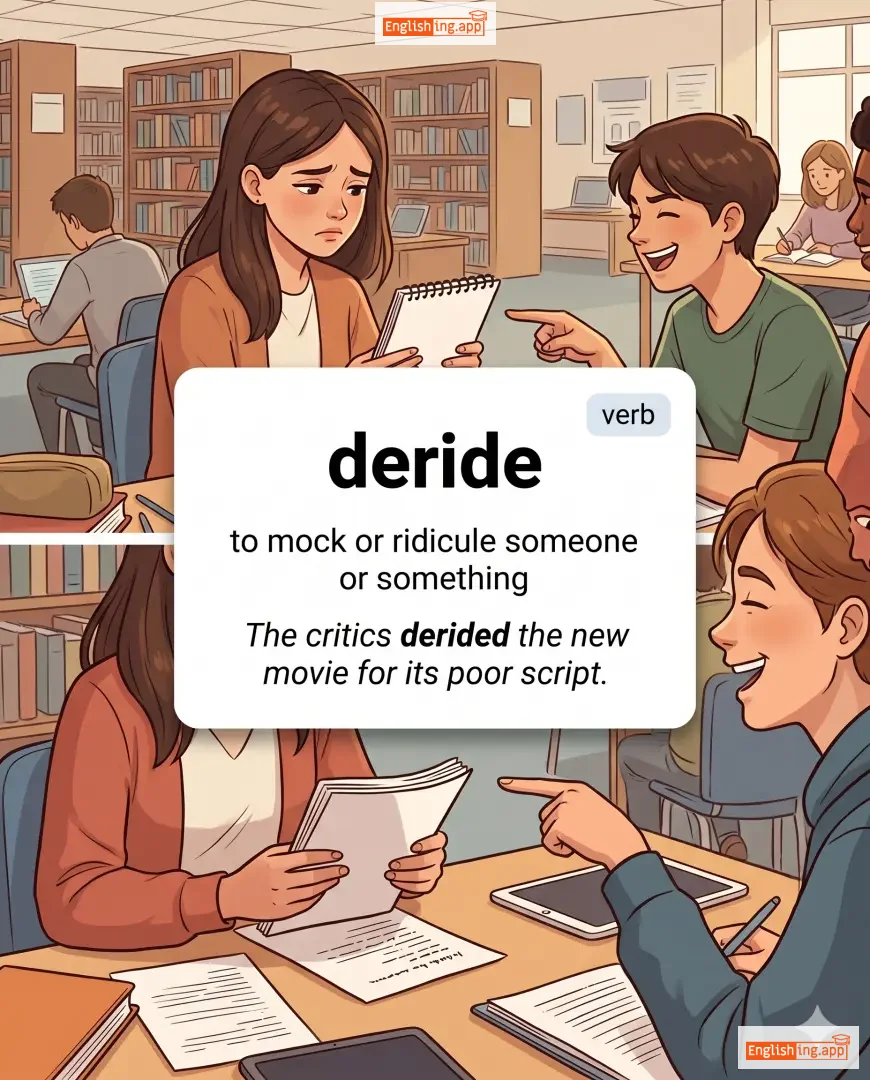
to mock or ridicule someone or something
••••••
|
The critics derided the new movie for its poor script.
评论家嘲笑了这部新电影,因其糟糕的剧本。
••••••
|
评论家嘲笑了这部新电影,因其糟糕的剧本。
Pinglünjiā cháoxiàole zhè bù xīn diànyǐng, yīn qí zāogāo de jùběn.
••••••
|
- •••••• | - •••••• | - •••••• |
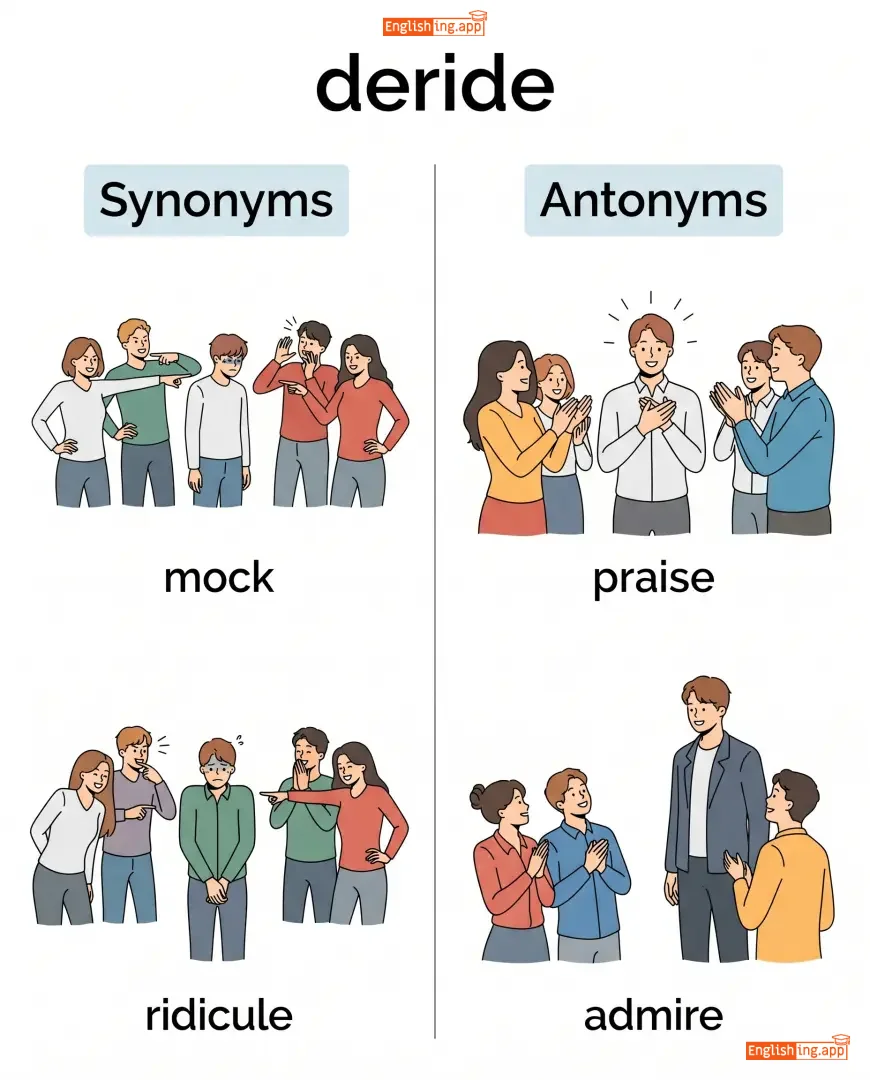
mock, ridicule, scorn, sneer, jeer
••••••
|
praise, admire, respect
••••••
|
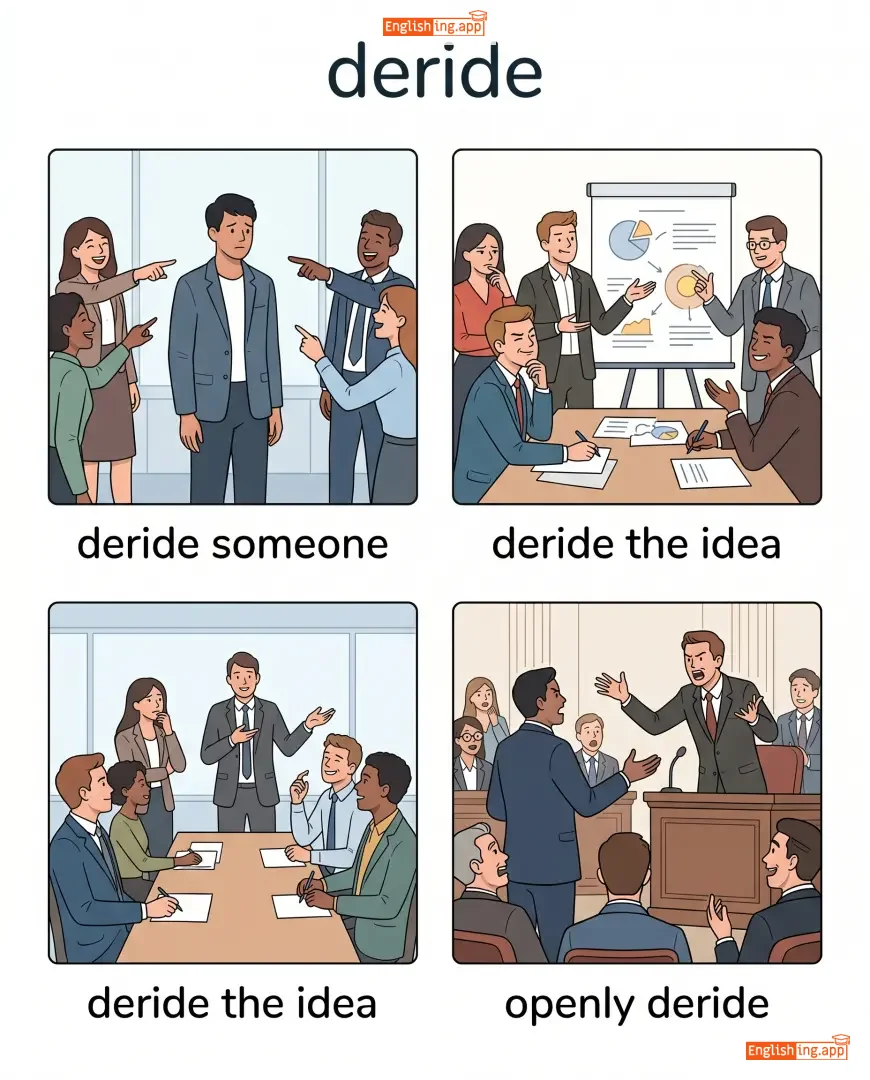
deride someone, deride the idea, openly deride
••••••
|
‘Deride’像‘嘲笑’ – 以一种鄙视的态度嘲笑别人。
••••••
|
Vocabulary Quiz
Test your vocabulary by matching words with their translations or meanings.
Login to take the quiz
Comments (0)
Share your thoughts and join the discussion.
Join the discussion by logging in
Login to CommentNo comments yet
Be the first to share your thoughts!