

Обновитесь для доступа ко всему словарю
Получите неограниченный доступ ко всем словам с подпиской Pro
Обновить до ProПеревод
Прошедшее
Причастие прошедшего времени
Третье лицо единственного числа
Герундий
Значение
Пример предложения
Перевод примера предложения
Синонимы
Антонимы
Коллокации
Мнемоника








Swipe left or right, or use the buttons. Tap image to zoom.
Обновитесь для доступа ко всем предложениям
Получите неограниченный доступ ко всем предложениям с подпиской Pro
Обновить до ProПеревод примера предложения
Слово
Lesson 3Lesson 3 - Переключатель маски
|
Эмодзи
|
Слово | Images | Перевод | Прошедшее | Причастие прошедшего времени | Третье лицо единственного числа | Герундий | Значение | Пример предложения | Перевод примера предложения | Пример выражения | Значение примера выражения | Перевод примера выражения | Синонимы | Антонимы | Коллокации | Мнемоника |
|---|---|---|---|---|---|---|---|---|---|---|---|---|---|---|---|---|---|
|
#51
🏷️
|
/ˌæpəˈleɪʃən/
noun
(æpəˈleɪʃən)
••••••
|
|
наименование / титул
naimenovanie / titul
••••••
|
- •••••• | - •••••• | - •••••• | - •••••• |
a name or title
••••••
|
The city has earned the appellation 'The Big Apple'. |
Город получил титул 'Большое Яблоко'.
Gorod poluchil titul 'Bol'shoye Yabloko'.
••••••
|
- •••••• | - •••••• | - •••••• |
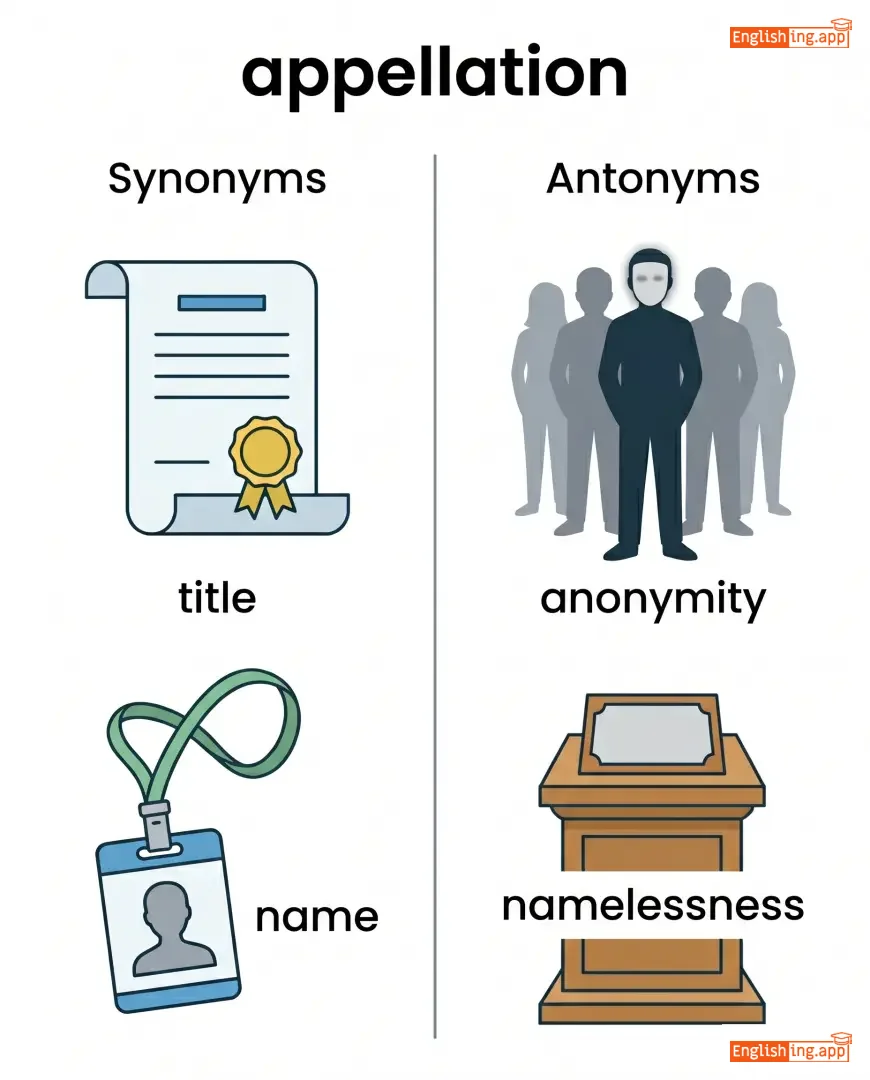
title, name, designation, label, epithet
••••••
|
anonymity, namelessness
••••••
|
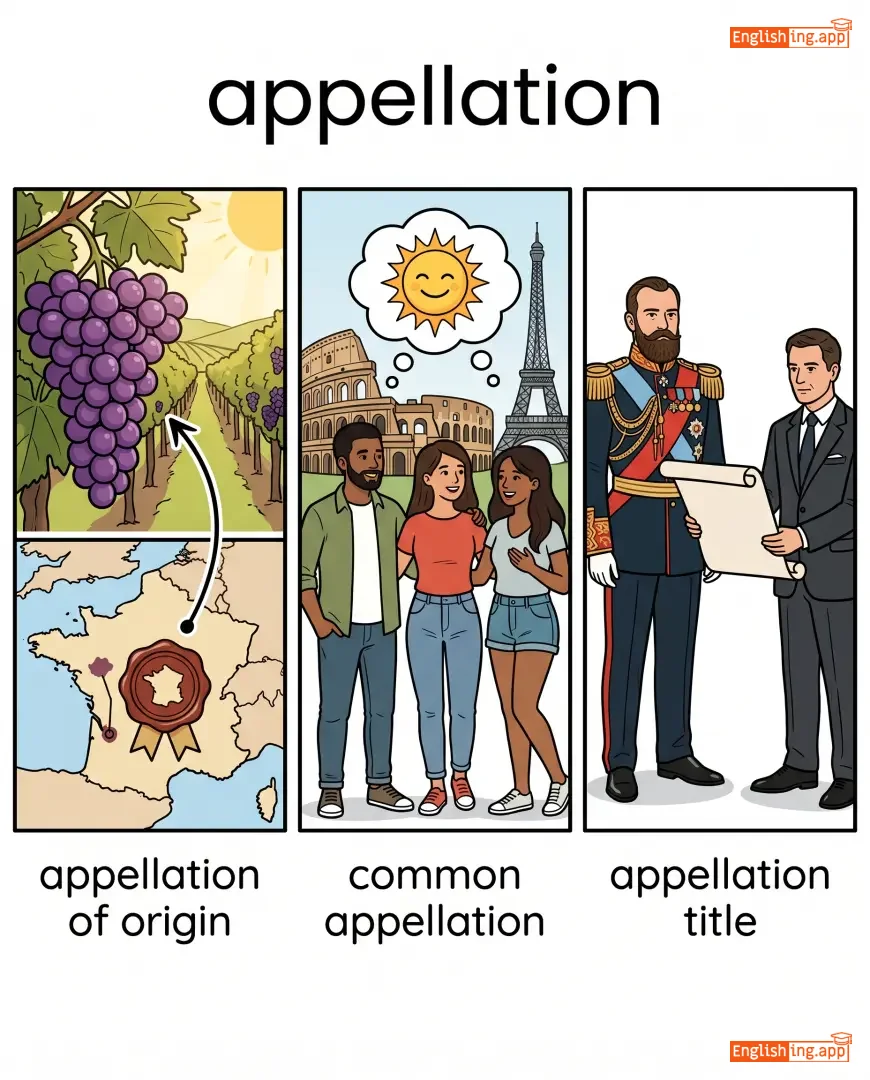
appellation of origin, common appellation, appellation title
••••••
|
Appellation означает наименование/титул — Сопоставь с яблоком 🍎
••••••
|
|
#52
🎯
|
/ˈæpəzɪt/
adjective
(эпозит)
••••••
|
|
уместный
umestny
••••••
|
- •••••• | - •••••• | - •••••• | - •••••• |
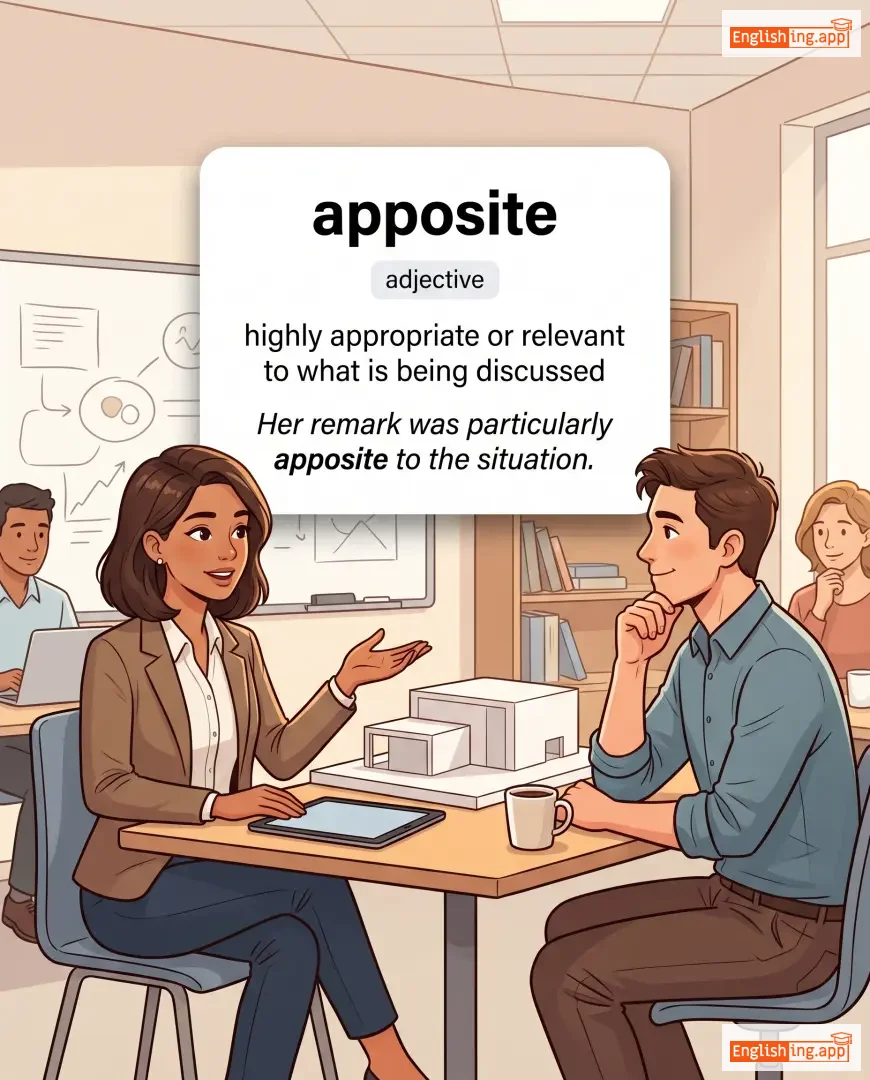
highly appropriate or relevant to what is being discussed
••••••
|
Her remark was particularly apposite to the situation. |
Её замечание было особенно уместным для ситуации.
Eyo zamechaniye bylo osobenno umestnym dlya situatsii.
••••••
|
- •••••• | - •••••• | - •••••• |
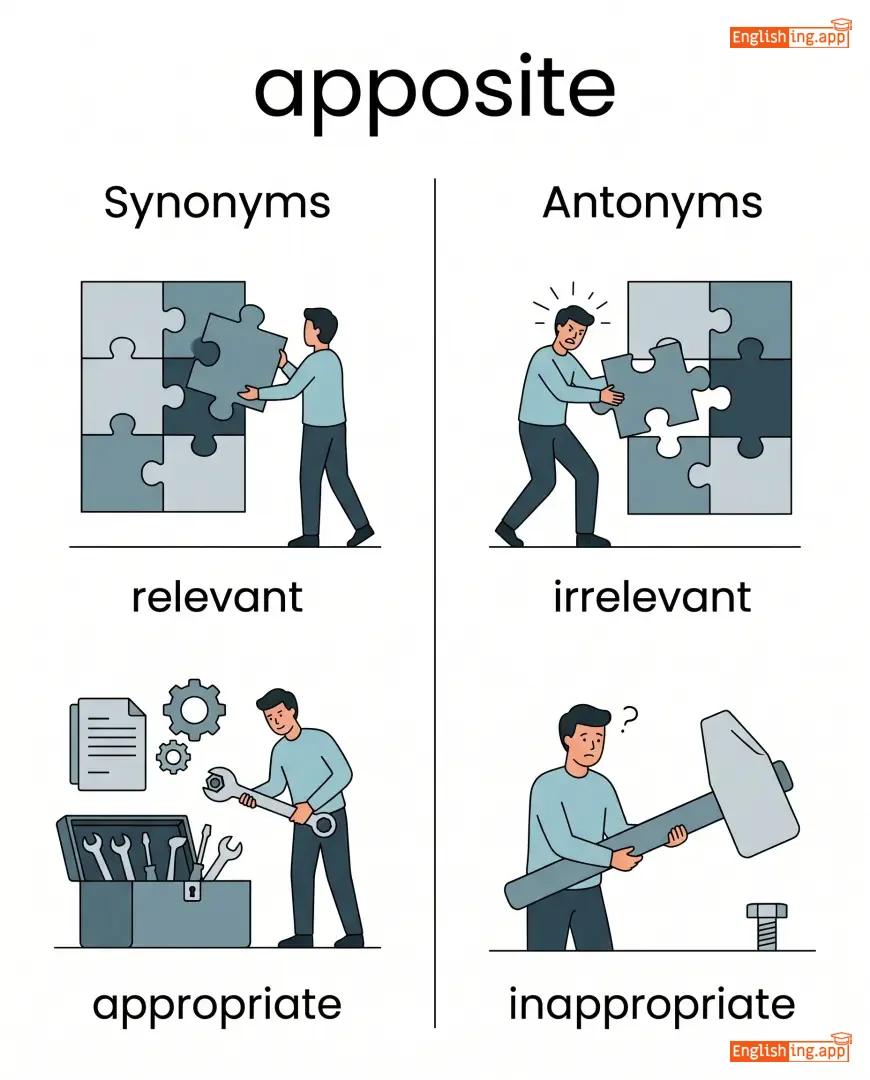
relevant, appropriate, fitting, suitable, pertinent
••••••
|
irrelevant, inappropriate, unsuitable
••••••
|
apposite remark, apposite example, apposite comment, apposite observation
••••••
|
Apposite – это уместно, как ключ, который подходит!
••••••
|
|
#53
📢
|
/əˈpraɪz/
verb
(apraiz)
••••••
|
|
проинформировать
proinformirovat'
••••••
|
apprised
apraizd
••••••
|
apprised
apraizd
••••••
|
apprises
apraizes
••••••
|
apprising
apraizing
••••••
|
to inform or notify someone
••••••
|
The manager will apprise the staff of the new policies.
Менеджер проинформирует персонал о новых политиках.
••••••
|
Менеджер проинформирует персонал о новых политиках.
Menedzher proinformiruet personal o novykh politikakh.
••••••
|
keep apprised
быть в курсе
••••••
|
to keep informed about something
••••••
|
быть в курсе
byt' v kursye
••••••
|
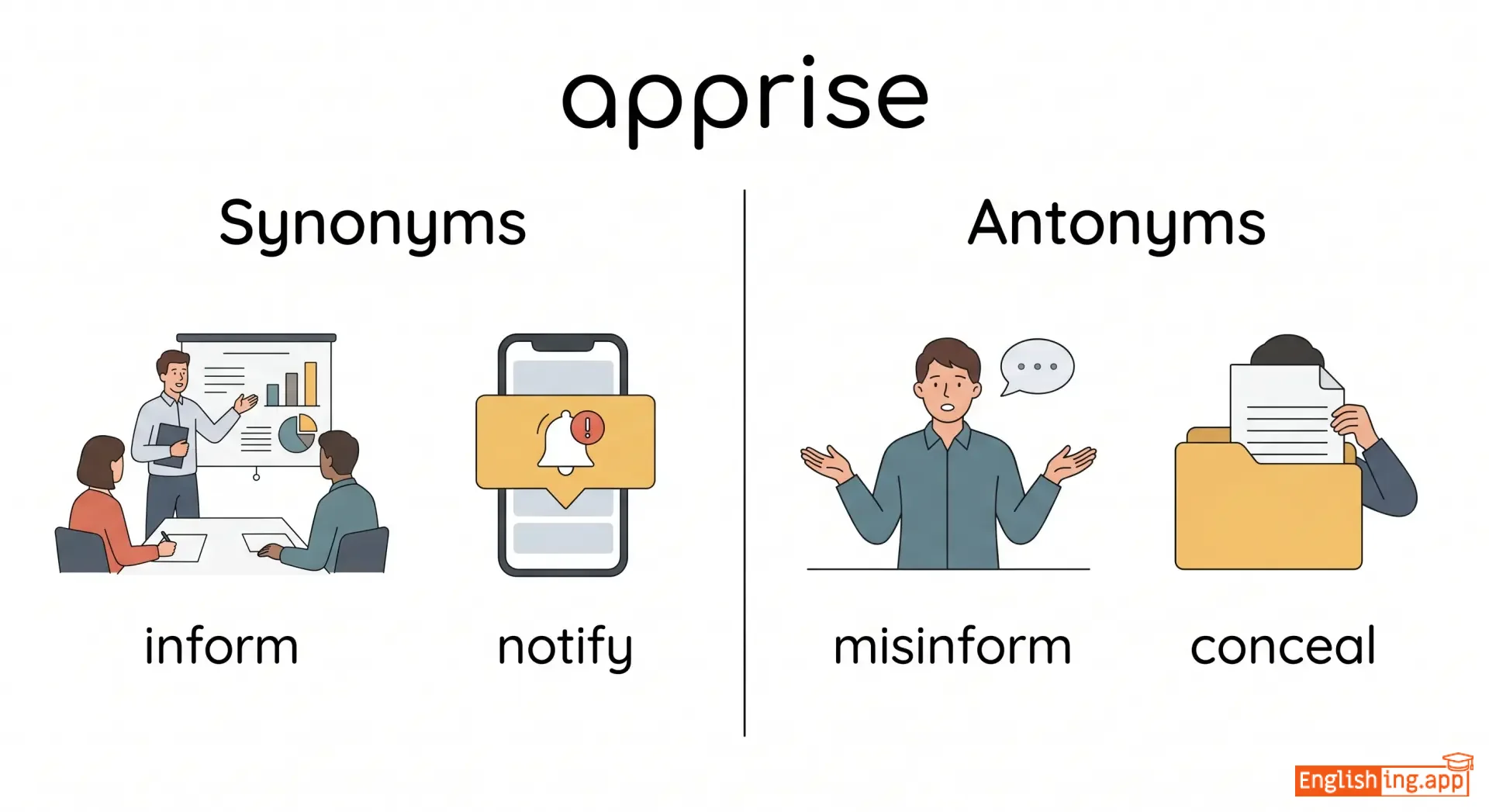
inform, notify, brief, update, advise
••••••
|
misinform, conceal
••••••
|
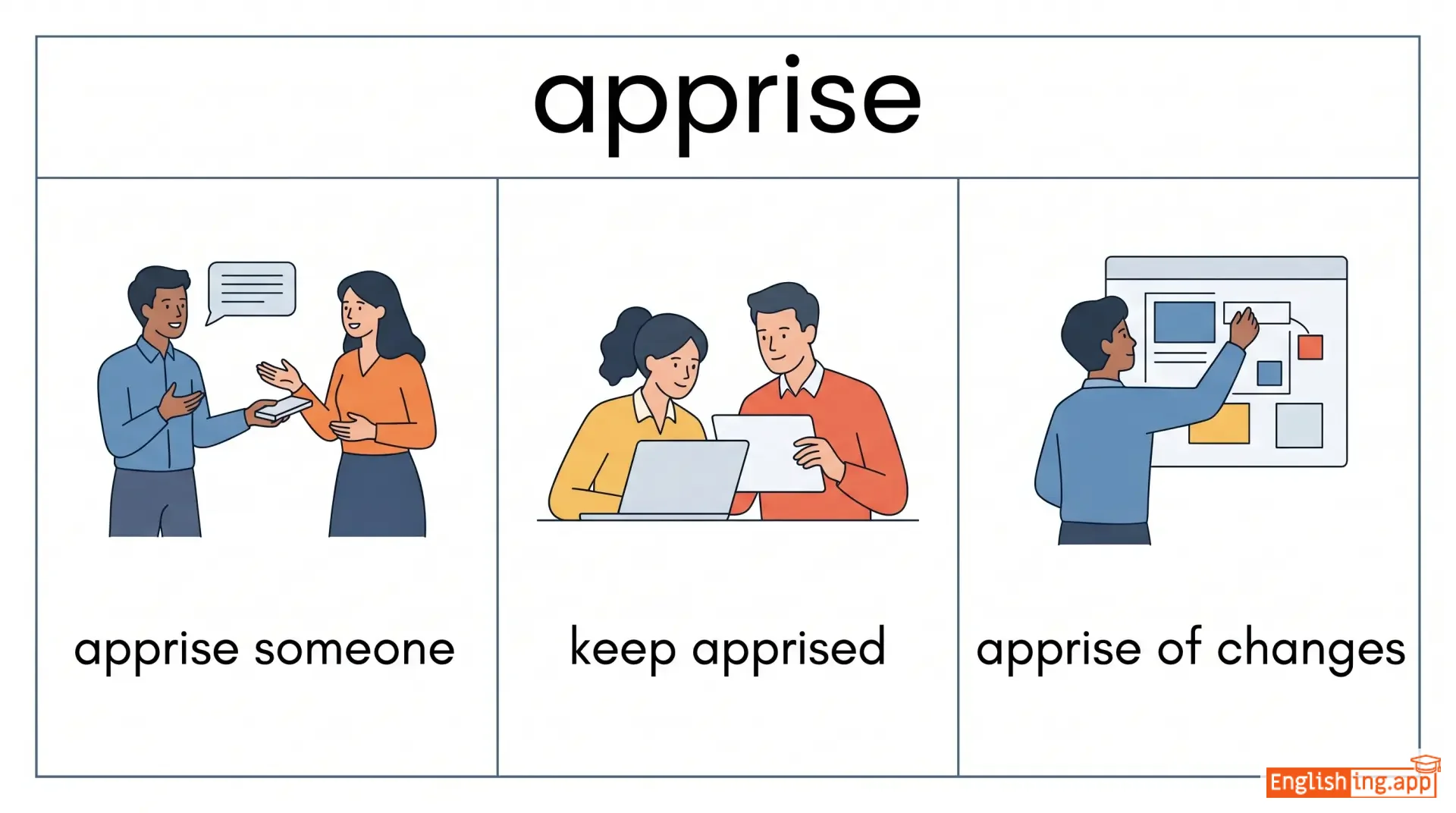
apprise someone, keep apprised, apprise of changes
••••••
|
Apprise — похоже на 'информировать', когда новости важны.
••••••
|
|
#54
👍
|
/ˌæprəˈbeɪʃən/
noun
(aprobéishon)
••••••
|
|
одобрение / похвала
odobrenie / pokhvala
••••••
|
- •••••• | - •••••• | - •••••• | - •••••• |
approval or praise
••••••
|
The plan won the approbation of the board members.
План получил одобрение членов совета.
••••••
|
План получил одобрение членов совета.
Plan poluchil odobrenie chlenov soveta.
••••••
|
- •••••• | - •••••• | - •••••• |
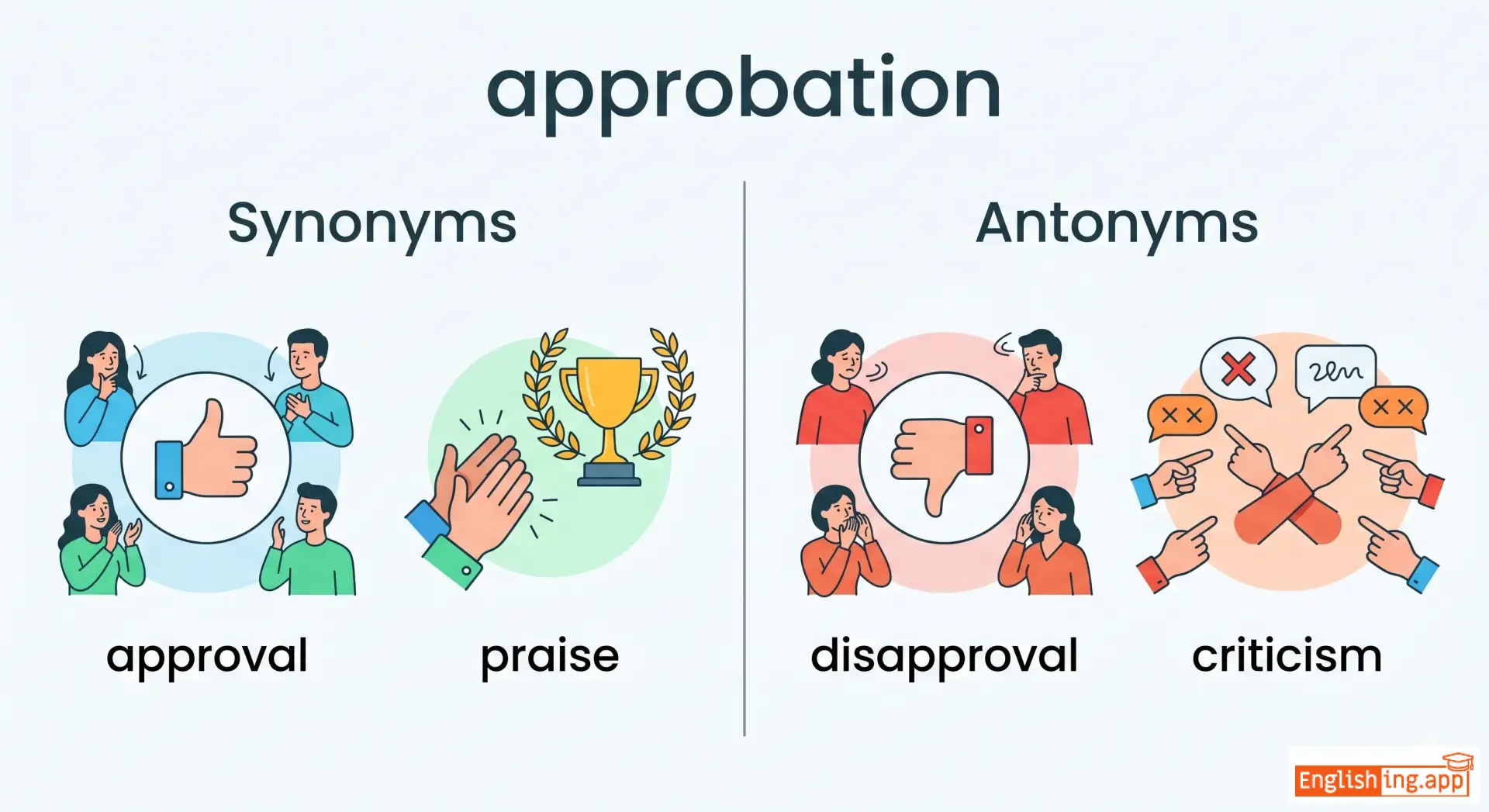
approval, praise, endorsement, admiration, recognition
••••••
|
disapproval, criticism, rejection
••••••
|
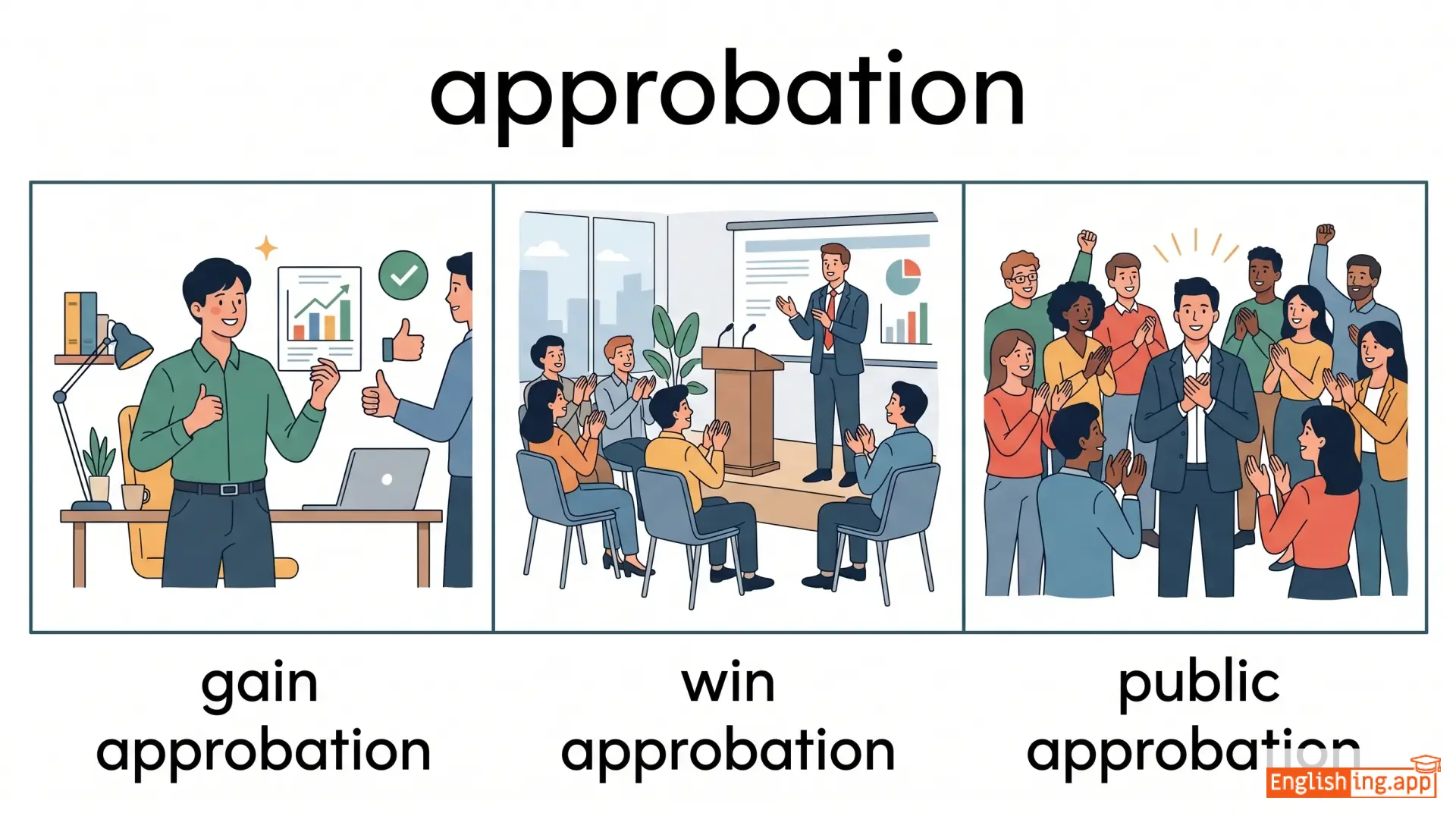
gain approbation, win approbation, public approbation, official approbation
••••••
|
Approbation означает approval—при approval приложения все рады.
••••••
|
|
#55
✔️
|
/əˈproʊpriət/ (adj), /əˈproʊprieɪt/ (verb)
adjective, verb
(apropriéit)
••••••
|
|
уместный / присваивать
umestny / prisvaivat
••••••
|
appropriated
apropiéit
••••••
|
appropriated
apropiéit
••••••
|
appropriates
apropieits
••••••
|
appropriating
apropiáting
••••••
|
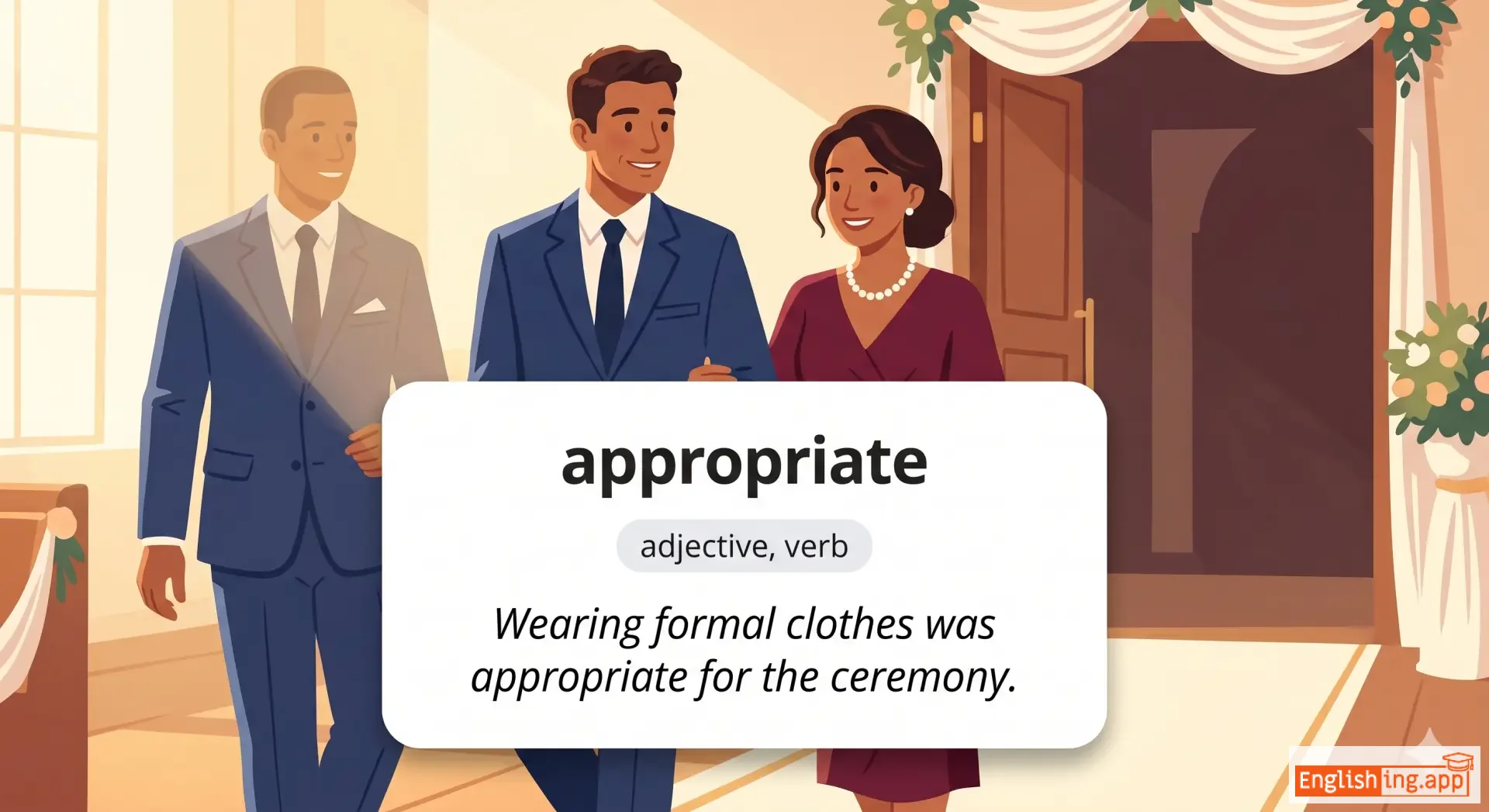
suitable or proper in the circumstances (adj); to take something for one’s own use, often without permission (verb)
••••••
|
Wearing formal clothes was appropriate for the ceremony.
Ношение формальной одежды было уместным для церемонии.
••••••
|
Носить формальную одежду было уместно для церемонии.
Nosit' formal'nuyu odezhdu bylo umestno dlya tseremonii.
••••••
|
- •••••• | - •••••• | - •••••• |
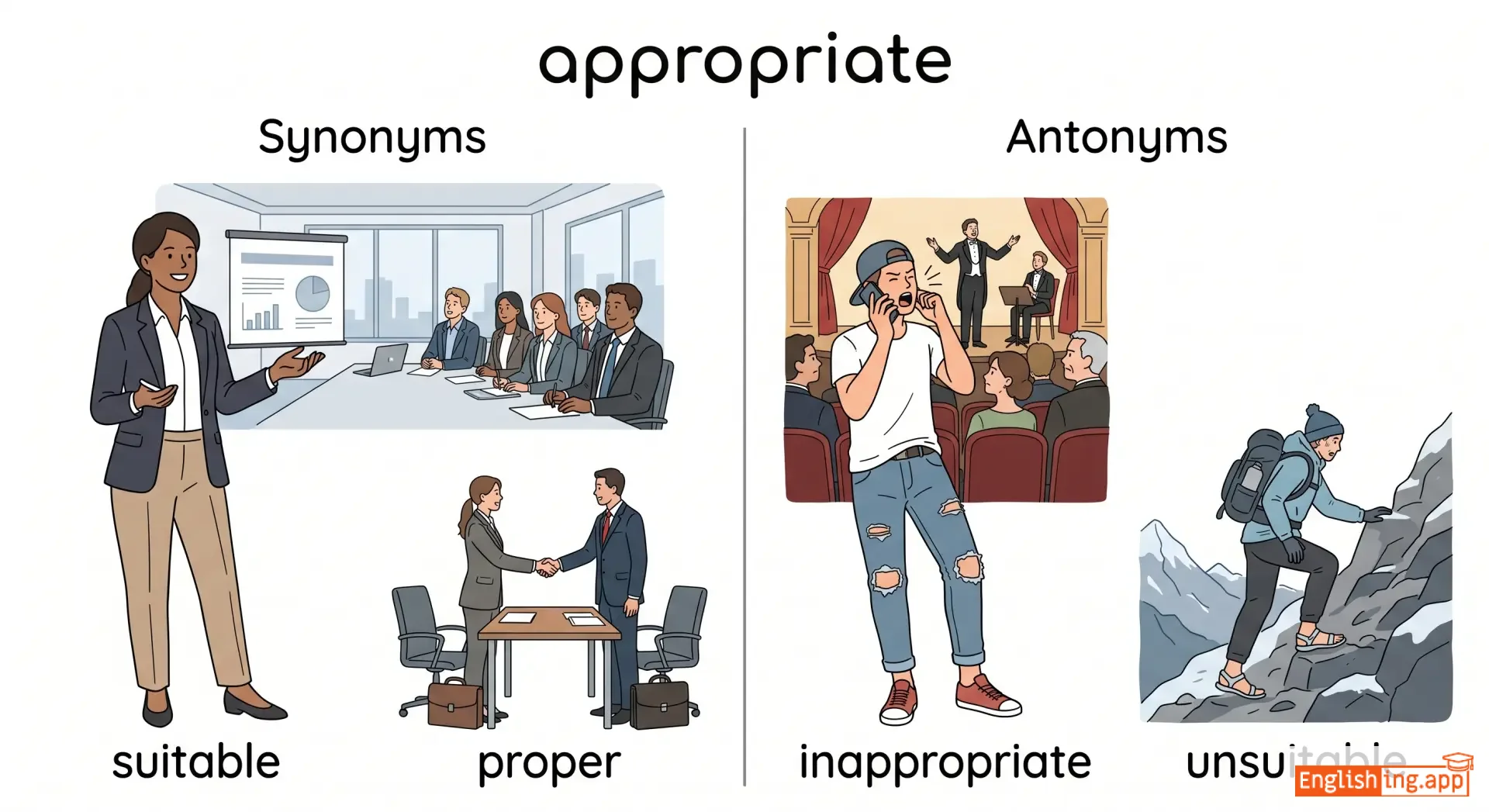
suitable, proper, fitting, apt, seize
••••••
|
inappropriate, unsuitable
••••••
|
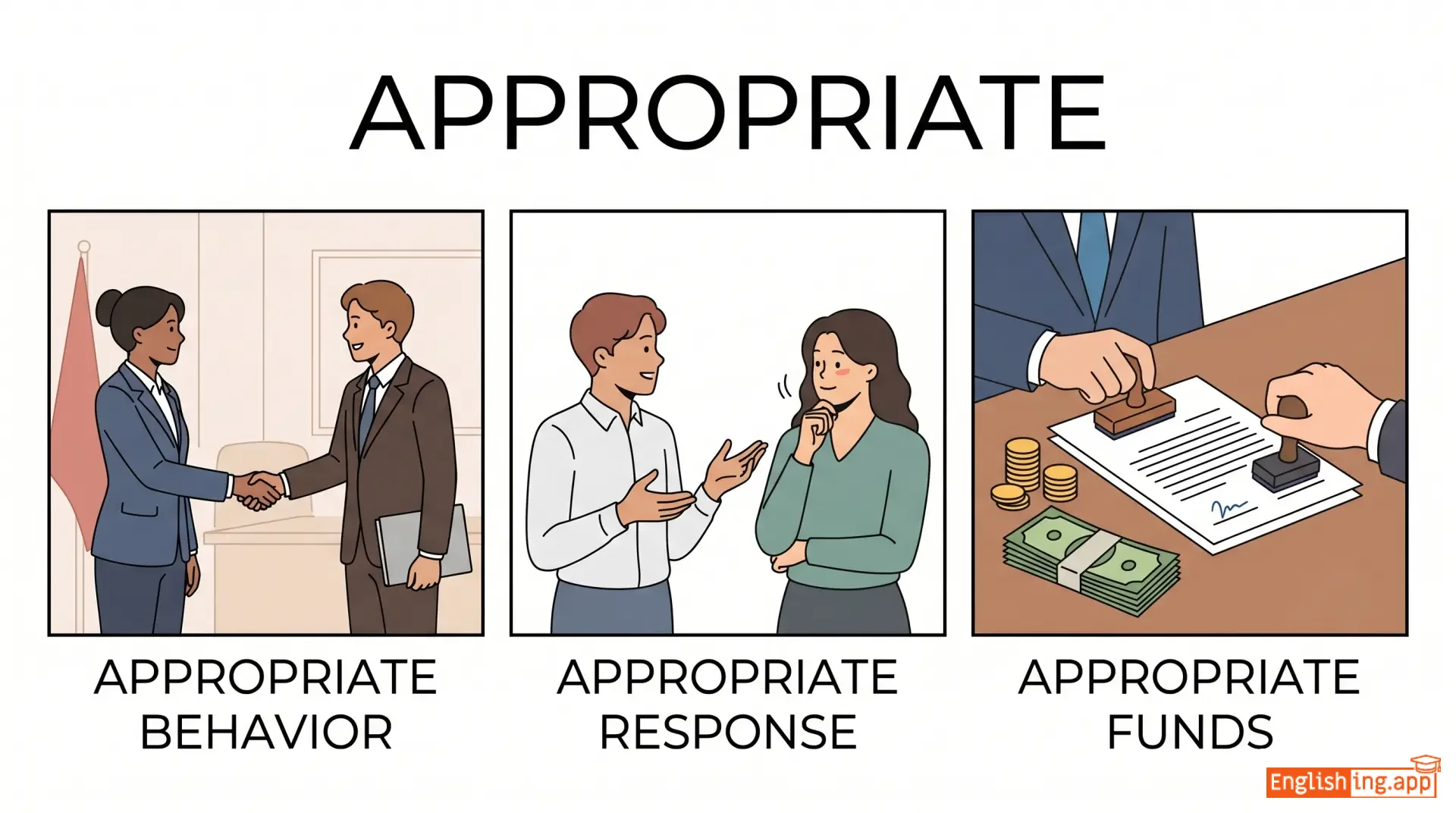
appropriate behavior, appropriate response, appropriate funds, culturally appropriate
••••••
|
Appropriate означает правильный—что подходит для ситуации, а иногда и взять что-то без разрешения.
••••••
|
|
#56
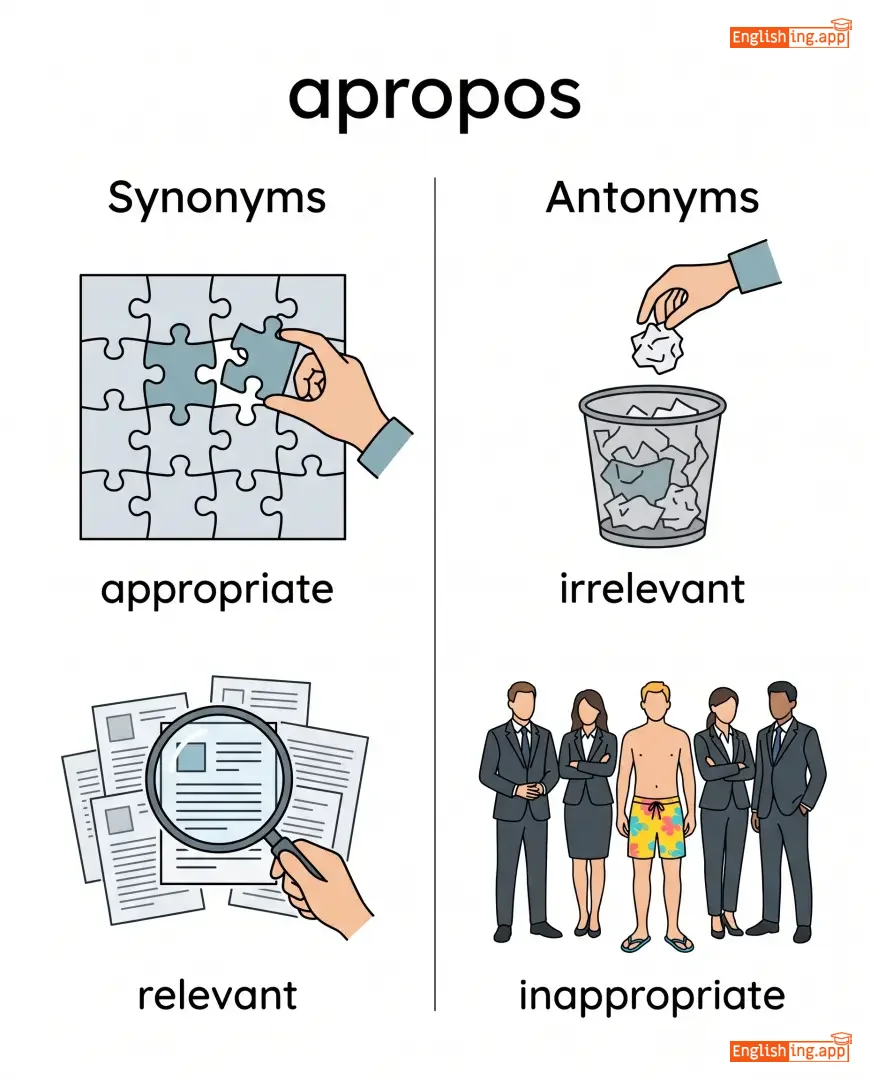
📌
|
/ˌæ.prəˈpoʊ/
adjective/adverb
(апропо)
••••••
|
|
уместный
umestny
••••••
|
- •••••• | - •••••• | - •••••• | - •••••• |
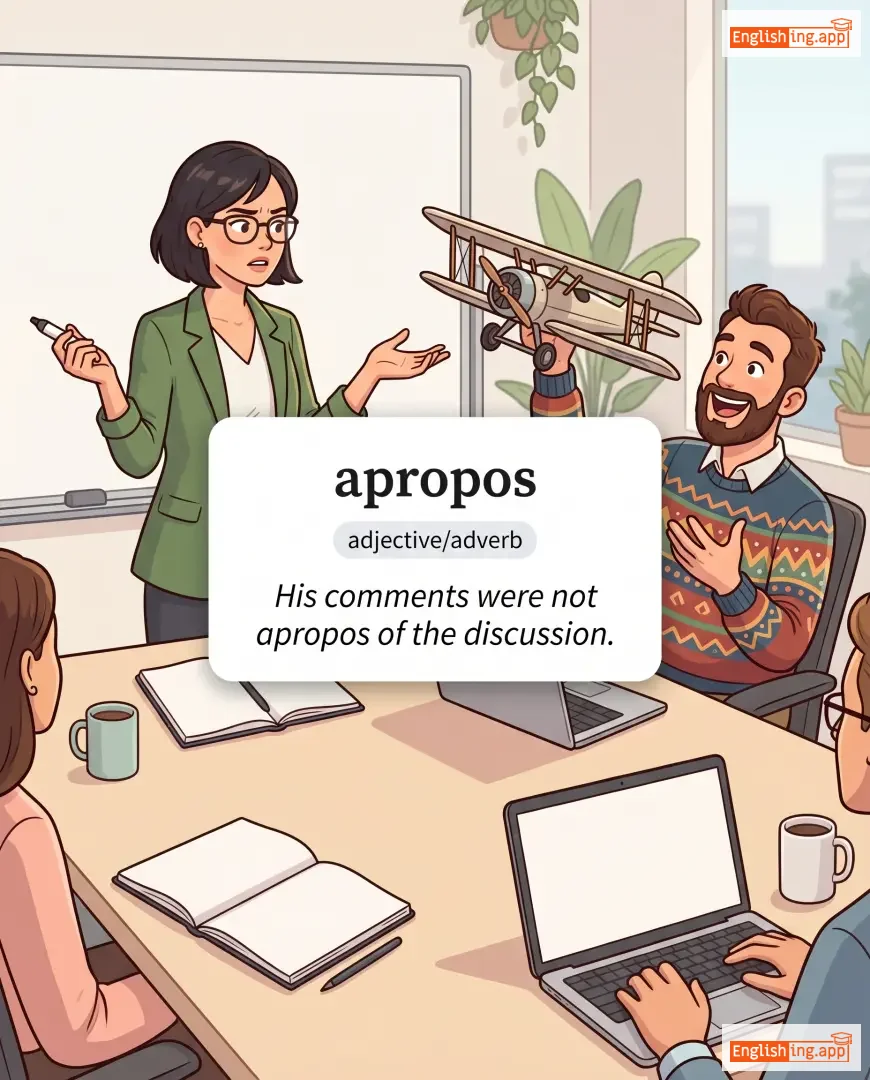
Appropriate to the situation; relevant. As an adverb, it means 'with reference to' or 'regarding'.
••••••
|
His comments were not apropos of the discussion.
Его комментарии не были апропо для обсуждения.
••••••
|
Его комментарии не были уместными для обсуждения.
Ego kommentarii ne byli umestnymi dlya obsuzhdeniya.
••••••
|
- •••••• | - •••••• | - •••••• |
appropriate, relevant, suitable, pertinent
••••••
|
irrelevant, inappropriate
••••••
|
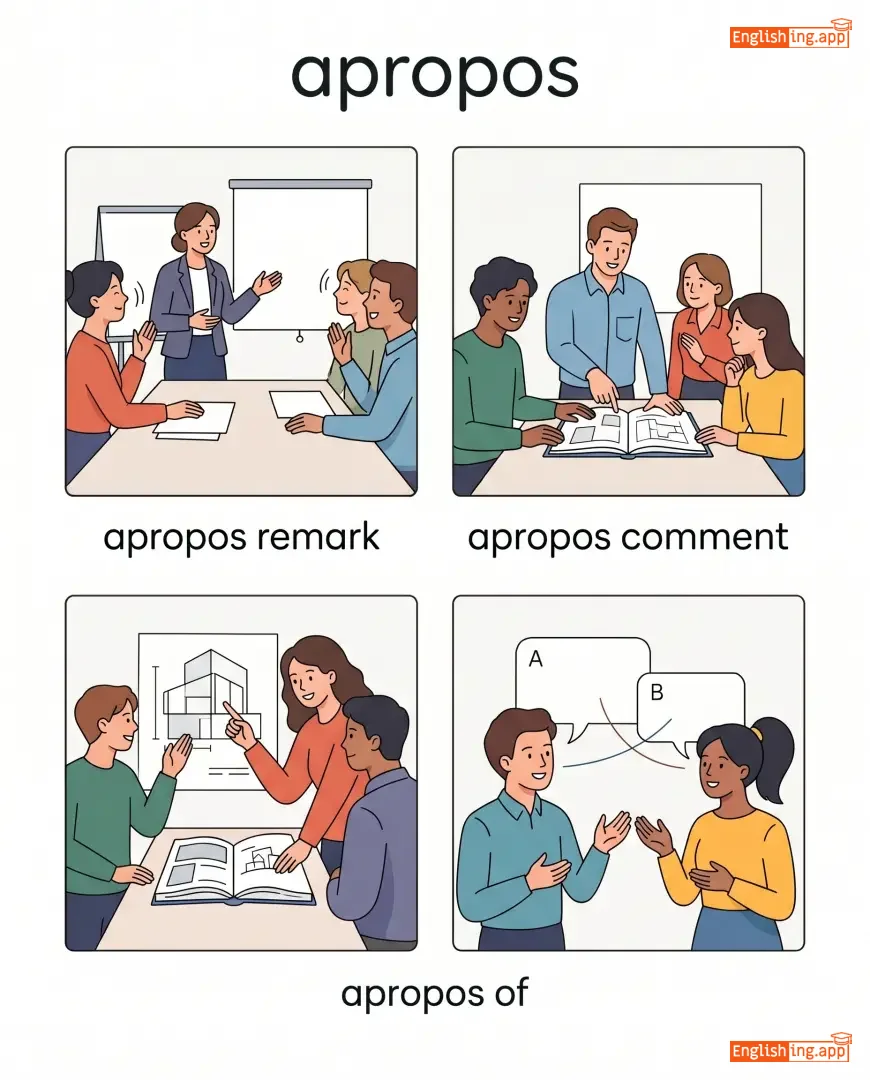
apropos remark, apropos comment, apropos of
••••••
|
Apropos означает релевантный—как предложить, это должно быть Apropos!
••••••
|
|
#57
🎨
|
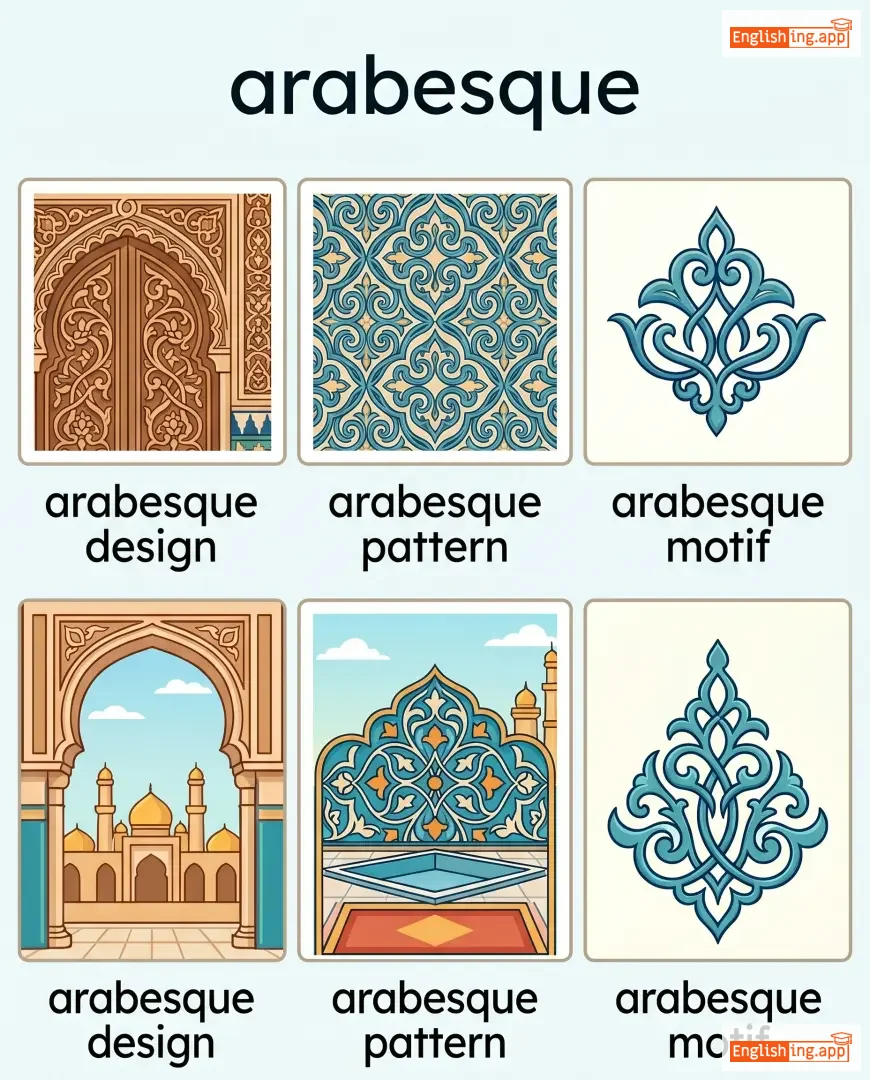
/ˌær.əˈbesk/
noun
(арабеск)
••••••
|
|
орнаментальный дизайн
ornamental'nyy dizayn
••••••
|
- •••••• | - •••••• | - •••••• | - •••••• |
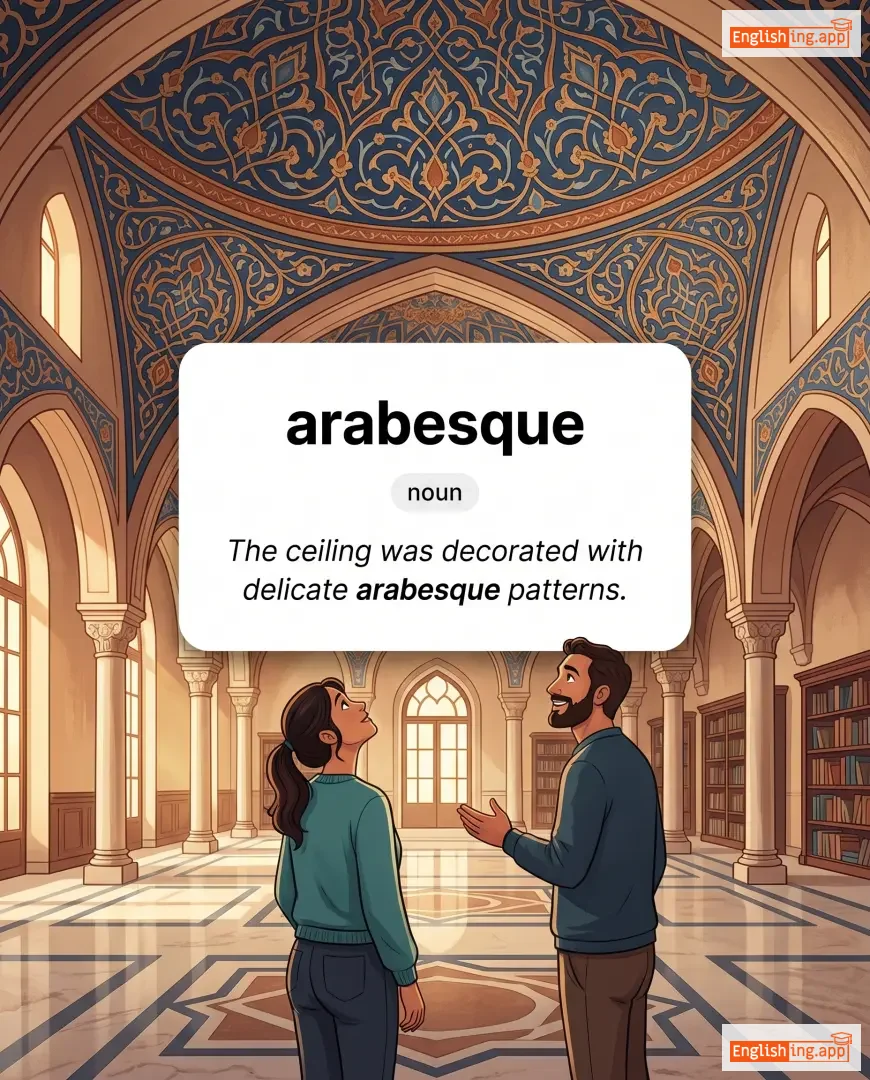
a complex, ornate design featuring intertwined flowing lines, often used in architecture or ballet poses
••••••
|
The ceiling was decorated with delicate arabesque patterns. |
Потолок был украшен изысканными арабесками.
Potolok byl ukrashen izyskannymi arabeskami.
••••••
|
- •••••• | - •••••• | - •••••• |
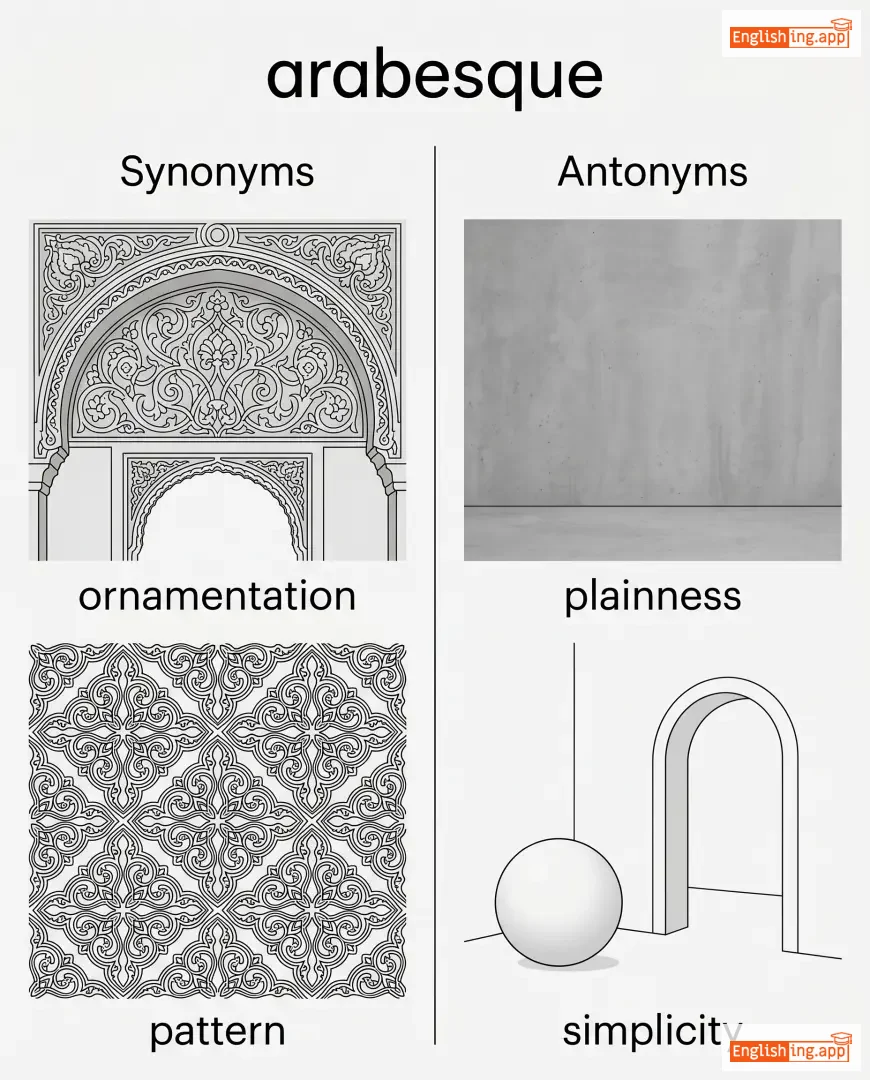
ornamentation, pattern, motif, design, flourish
••••••
|
plainness, simplicity
••••••
|
arabesque design, arabesque pattern, arabesque motif, arabesque architecture
••••••
|
Арабески можно найти в архитектуре арабских мечетей 🎨
••••••
|
|
#58
🏺
|
/ˌɑːr.kiˈɑː.lə.dʒi/
noun
(археология)
••••••
|
|
археология
arkheologiya
••••••
|
- •••••• | - •••••• | - •••••• | - •••••• |
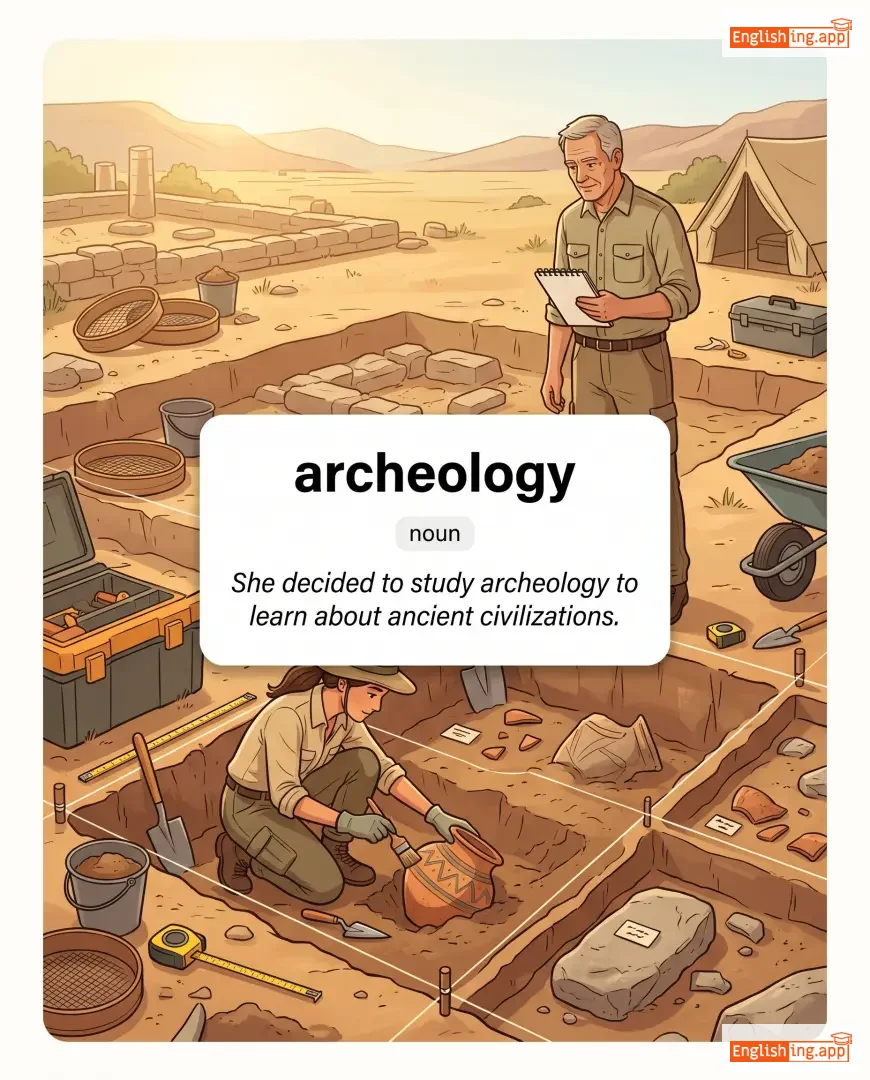
the study of human history and prehistory through excavation and analysis of artifacts and structures
••••••
|
She decided to study archeology to learn about ancient civilizations. |
Она решила изучать археологию, чтобы узнать о древних цивилизациях.
Ona reshil izuchat' arkheologiyu, chtoby uznat' o drevnikh tsivilizatsiyakh.
••••••
|
- •••••• | - •••••• | - •••••• |
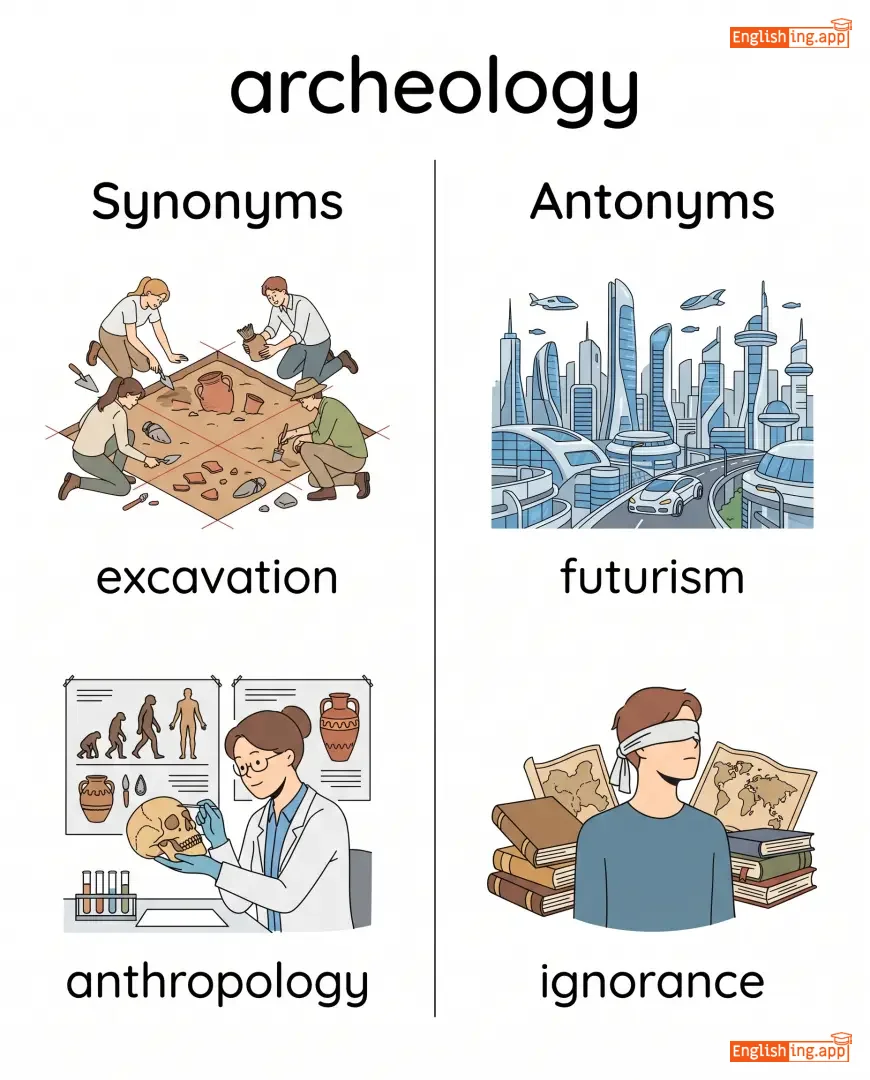
excavation, anthropology, prehistory, paleontology, history
••••••
|
futurism, ignorance
••••••
|
study archeology, archeology department, archeology site, archeology research
••••••
|
Археология - изучение древних 'архов' и артефактов
••••••
|
|
#59
❤️
|
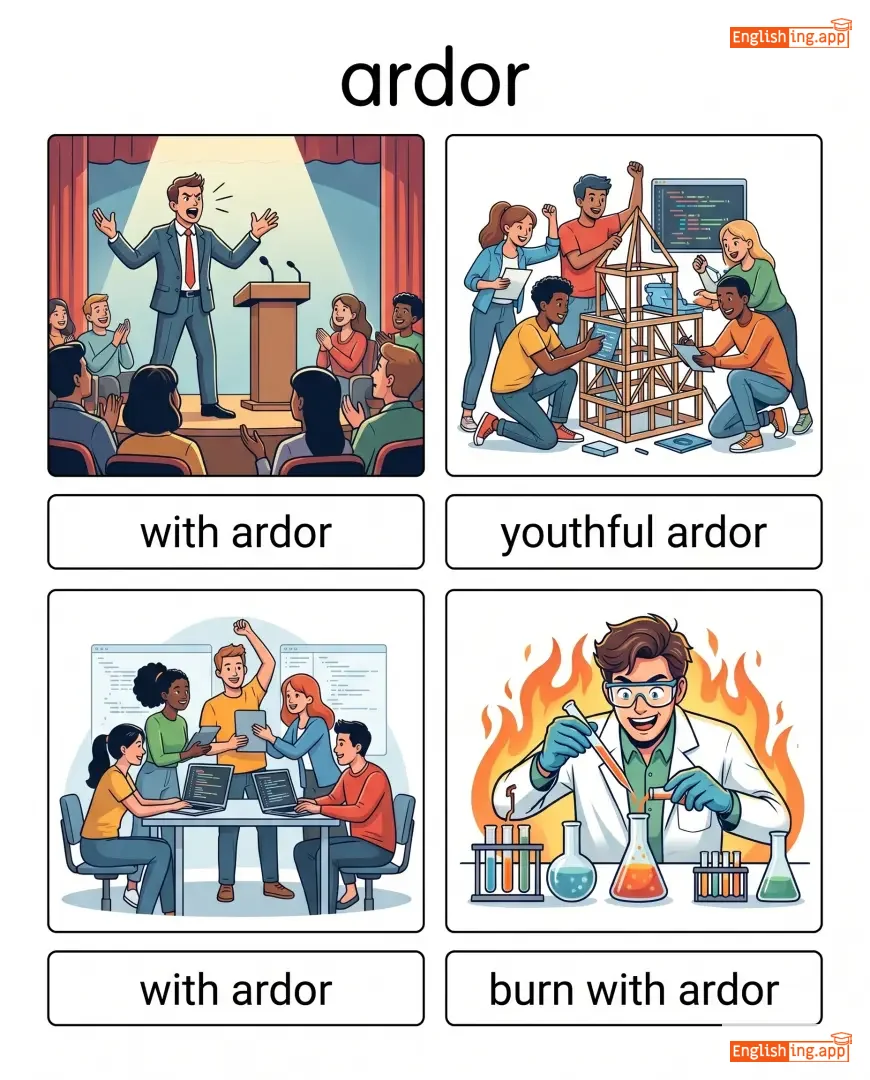
/ˈɑːrdər/
noun
(ардор)
••••••
|
|
страсть, энтузиазм
ardor
••••••
|
- •••••• | - •••••• | - •••••• | - •••••• |
Great enthusiasm or passion.
••••••
|
She spoke with ardor about her new project. |
Она говорила с страстью о своем новом проекте.
Ona govorila s strast'yu o svoem novom proyekte.
••••••
|
burn with ardor |
To be filled with strong passion or enthusiasm.
••••••
|
гореть страстью
goret' strastyu
••••••
|
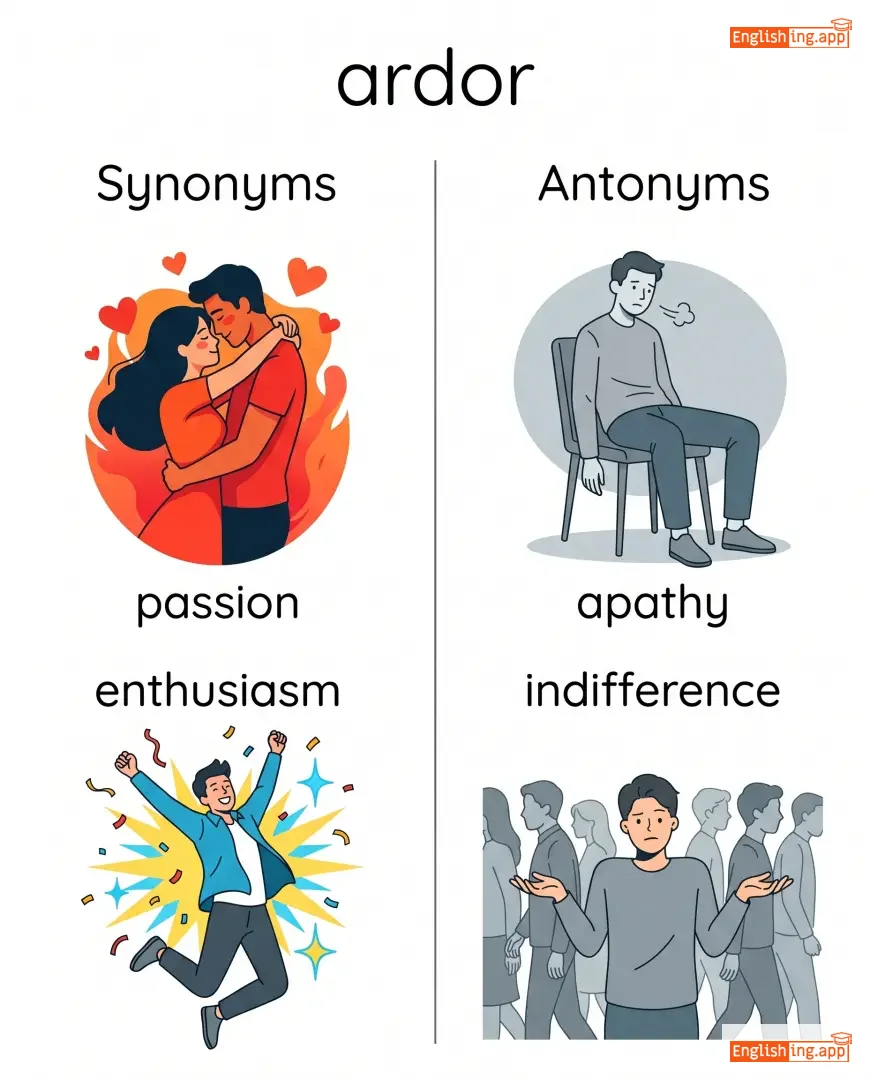
passion, enthusiasm, fervor, zeal, devotion
••••••
|
apathy, indifference
••••••
|
with ardor, youthful ardor, burn with ardor, ardor for learning
••••••
|
Ardor — это как ‚ardent‘, полное пламени страсть в вашем сердце.
••••••
|
|
#60
⛰️
|
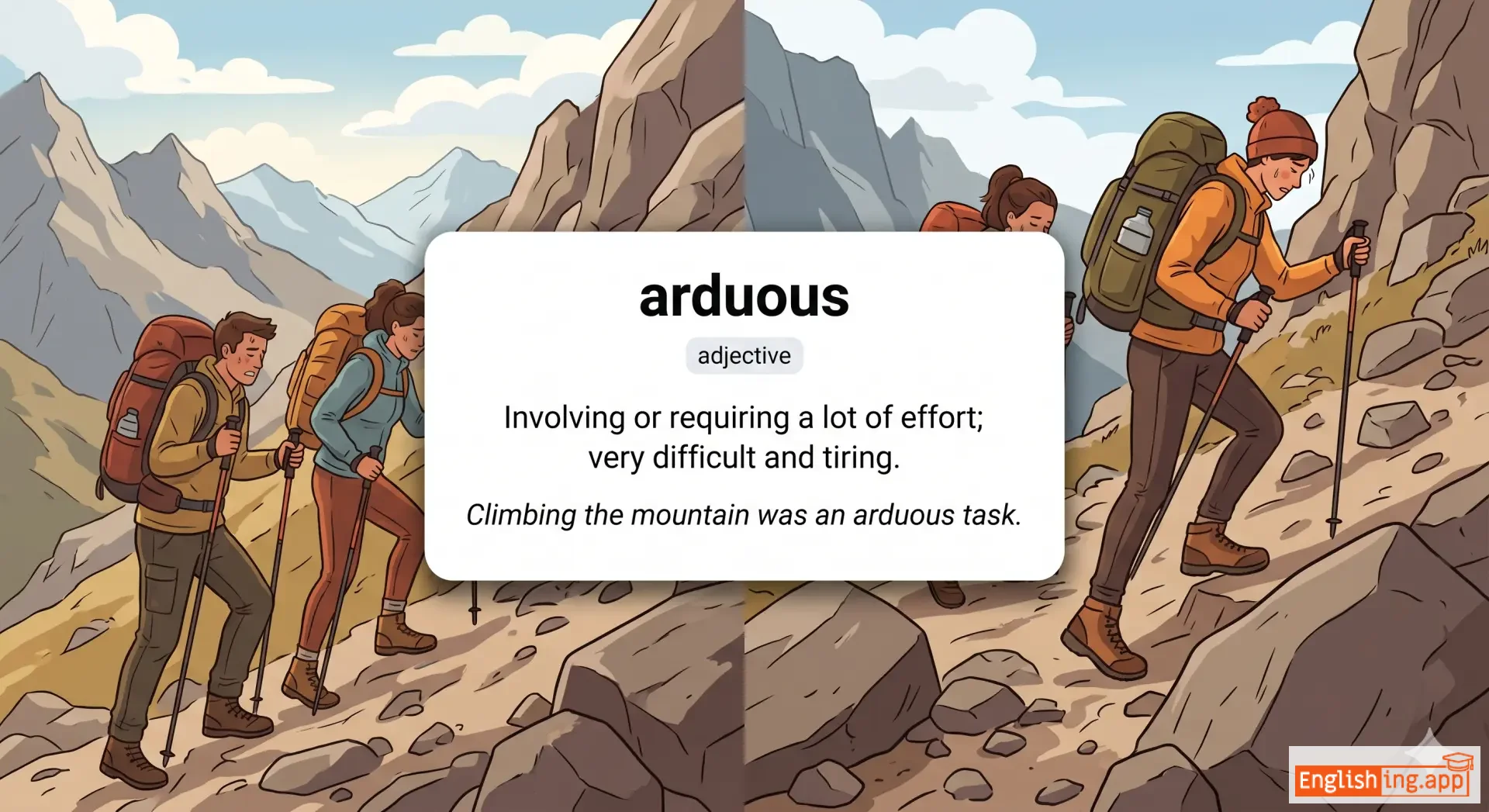
/ˈɑːrdʒuəs/
adjective
(ардюэс)
••••••
|
|
трудный
trudnyy
••••••
|
- •••••• | - •••••• | - •••••• | - •••••• |
Involving or requiring a lot of effort; very difficult and tiring.
••••••
|
Climbing the mountain was an arduous task. |
Подъем на гору был трудной задачей.
Podyem na goru byl trudnoy zadachey.
••••••
|
- •••••• | - •••••• | - •••••• |
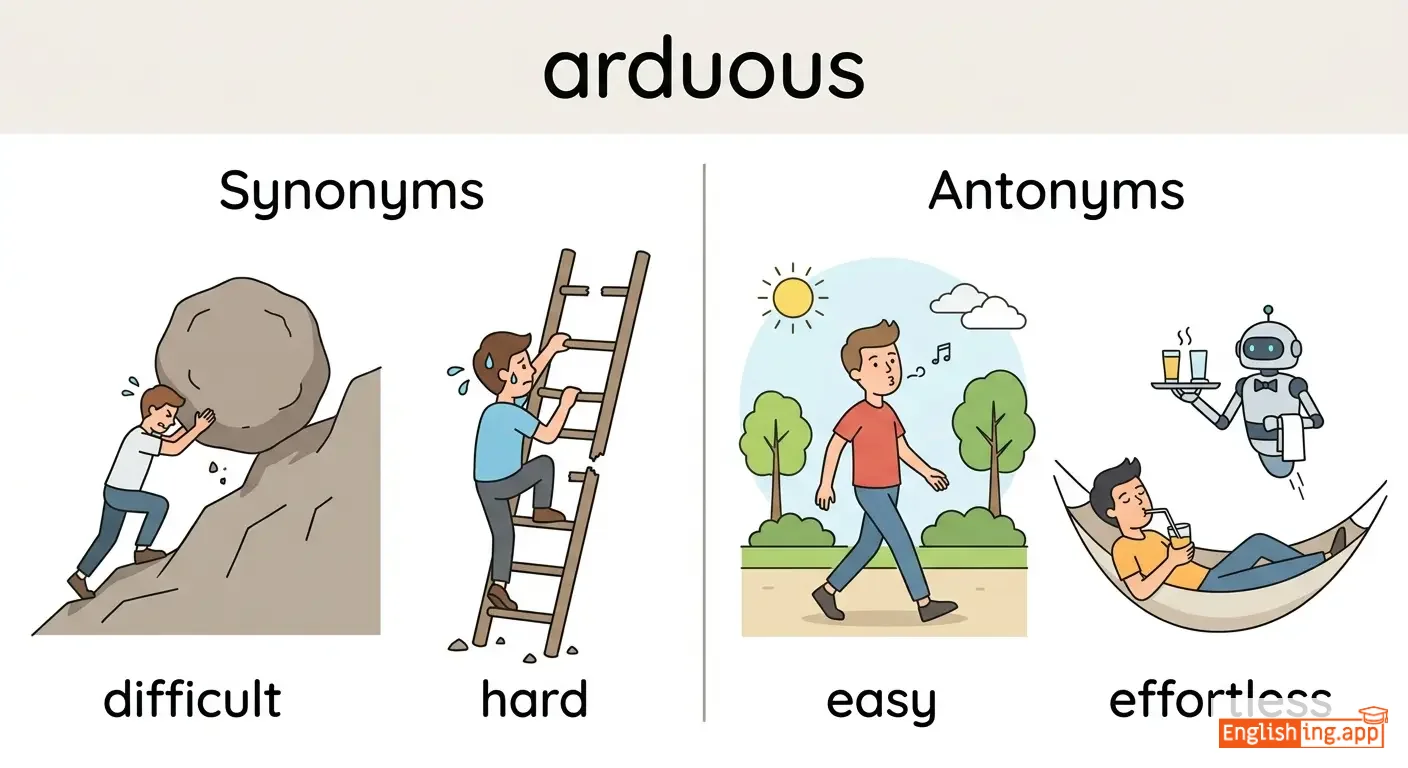
difficult, hard, demanding, strenuous, exhausting
••••••
|
easy, effortless
••••••
|
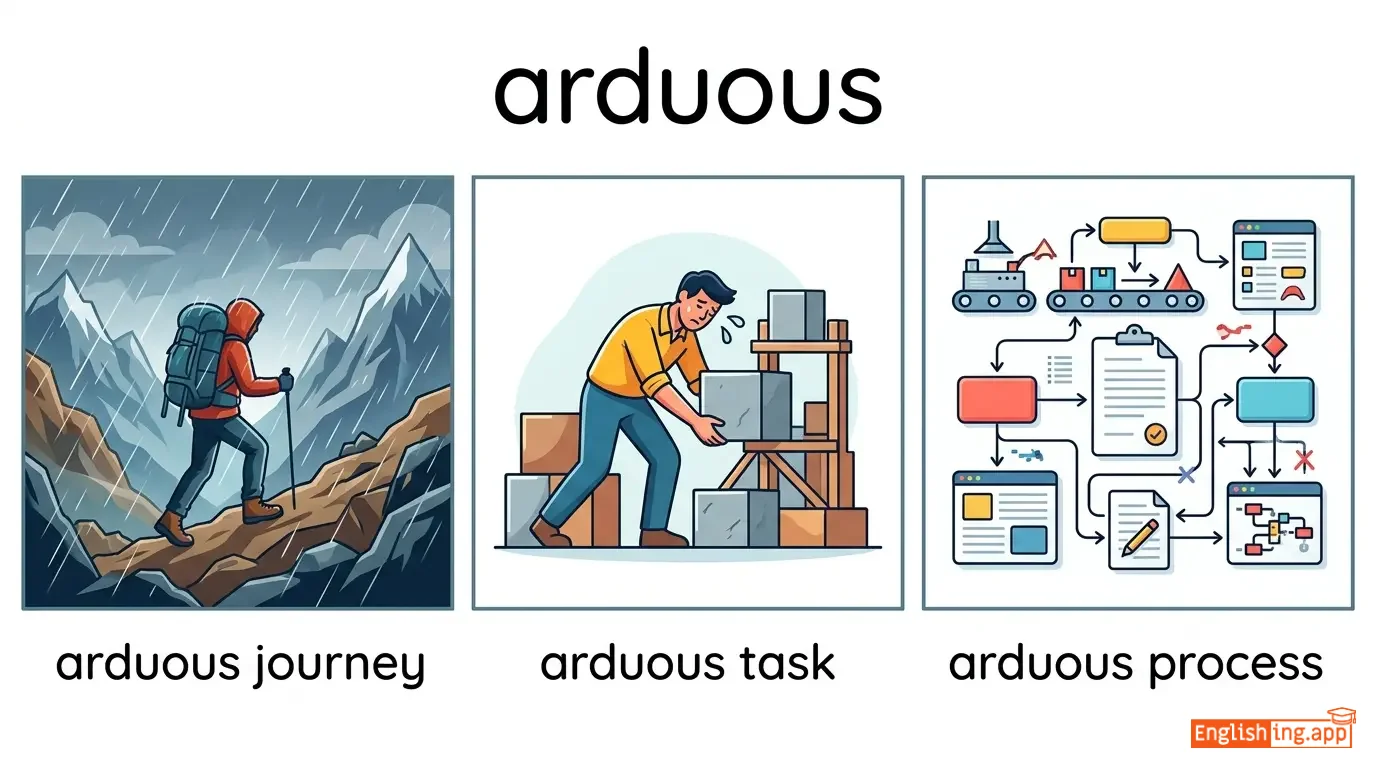
arduous journey, arduous task, arduous process, arduous climb
••••••
|
Arduous значит hard + ous – очень трудная задача.
••••••
|
|
#61
🗣️
|
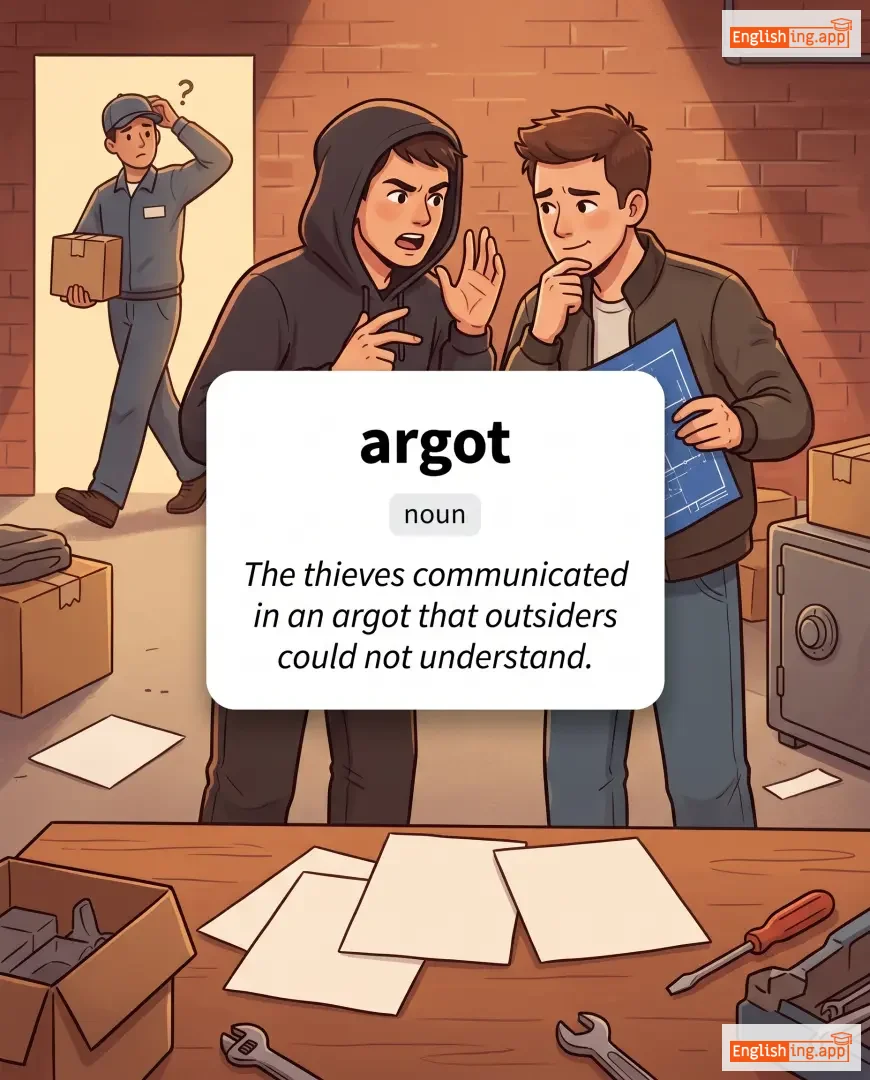
/ˈɑːrɡoʊ/
noun
(арго)
••••••
|
|
специальный жаргон
spetsial'nyy zhargon
••••••
|
- •••••• | - •••••• | - •••••• | - •••••• |
the specialized vocabulary or jargon of a particular group, especially one with a common interest or occupation
••••••
|
The thieves communicated in an argot that outsiders could not understand.
Воры общались на арго, которое незнакомцы не могли понять.
••••••
|
Воры общались на арго, которое незнакомцы не могли понять.
Vory obshchalis' na argo, kotoroye neznamtsony ne mogli ponyat'.
••••••
|
- •••••• | - •••••• | - •••••• |
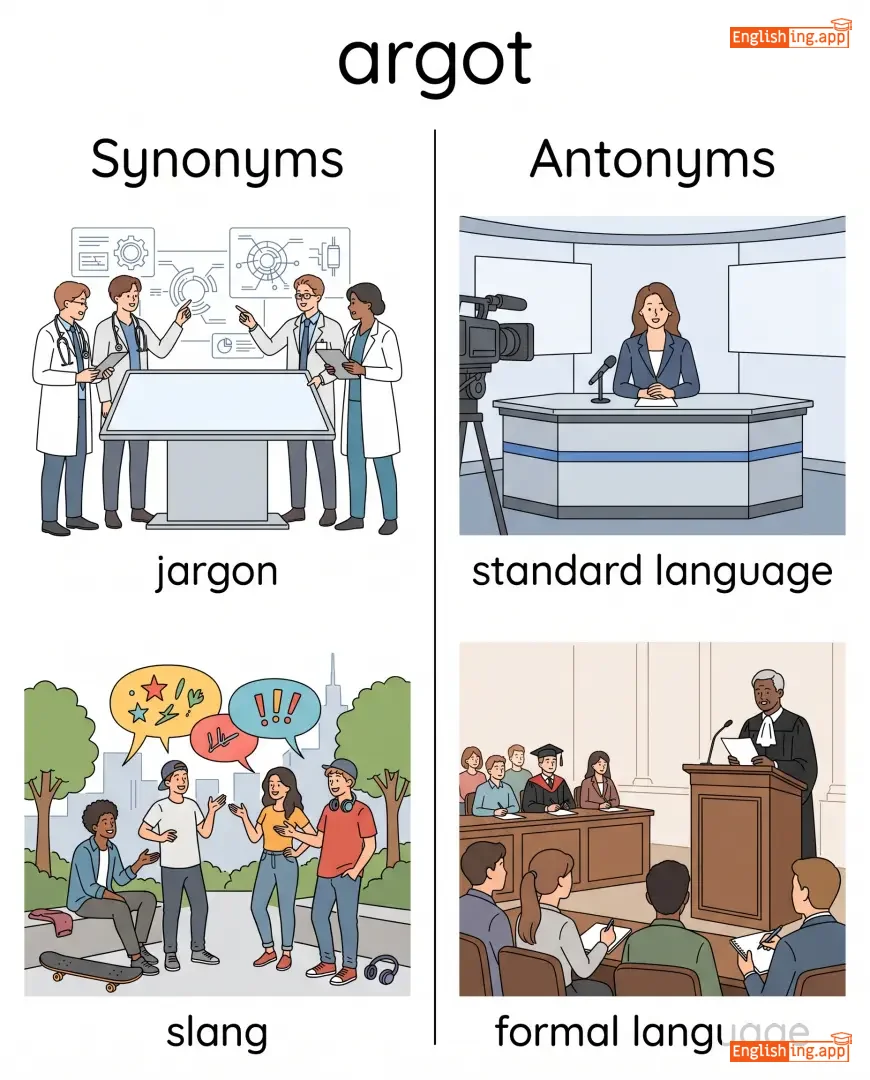
jargon, slang, dialect, lingo, terminology
••••••
|
standard language, formal language
••••••
|
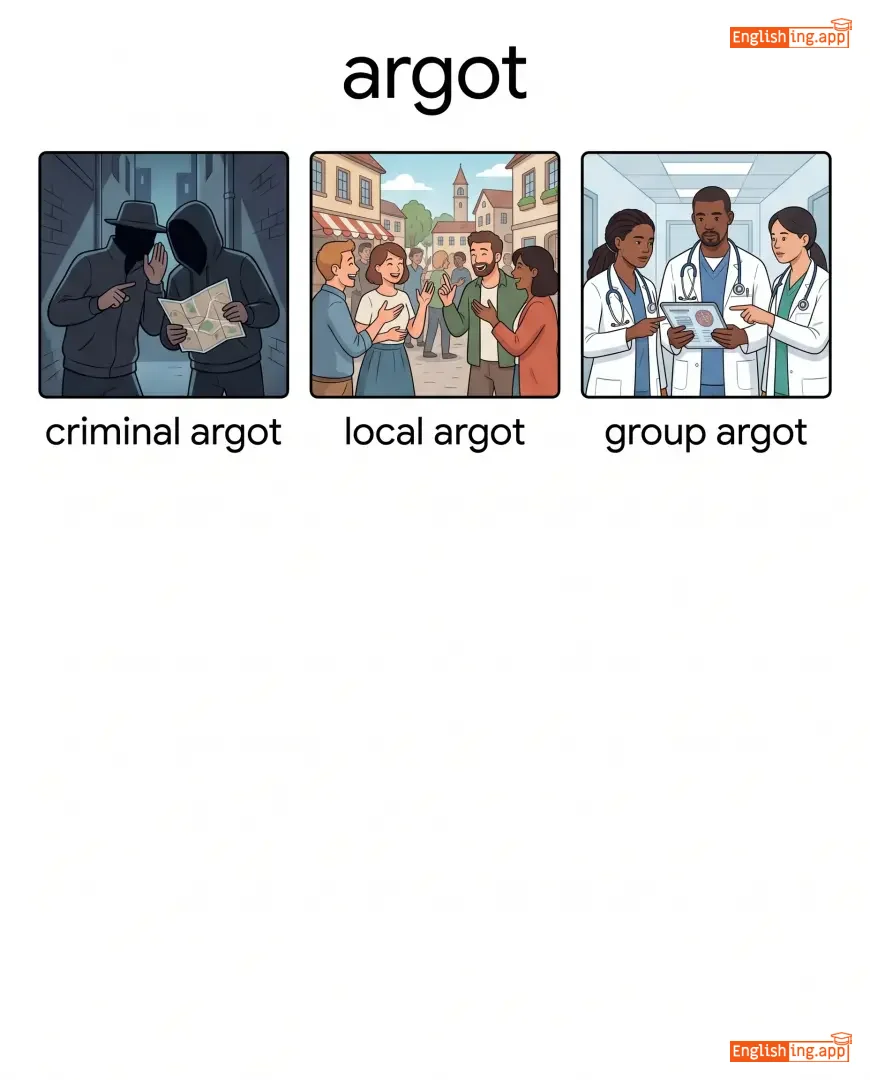
criminal argot, local argot, group argot, secret argot
••••••
|
Арго – это тайный язык групп, как у воришек, скрытый от посторонних
••••••
|
|
#62
🚓
|
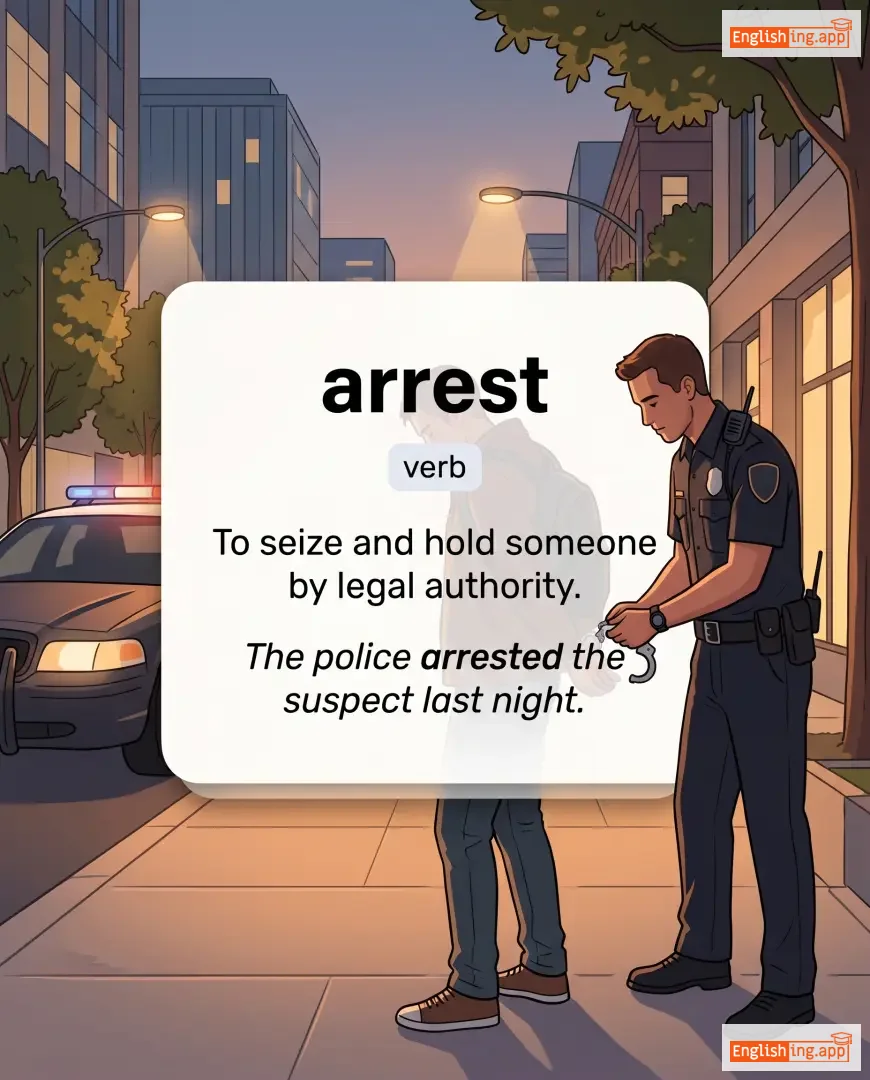
/əˈrɛst/
verb
(aɾɛst)
••••••
|
|
арестовать
arestovat
••••••
|
arrested
aɾɛstəd
••••••
|
arrested
aɾɛstəd
••••••
|
arrests
aɾɛst
••••••
|
arresting
aɾɛstɪŋ
••••••
|
To seize and hold someone by legal authority.
••••••
|
The police arrested the suspect last night.
Полиция арестовала подозреваемого прошлой ночью.
••••••
|
Полиция арестовала подозреваемого прошлой ночью.
Politsiya arestovala podozrevaemogo proshloy noch'yu.
••••••
|
under arrest
под арестом
••••••
|
In the custody of the police.
••••••
|
под арестом
pod arestom
••••••
|
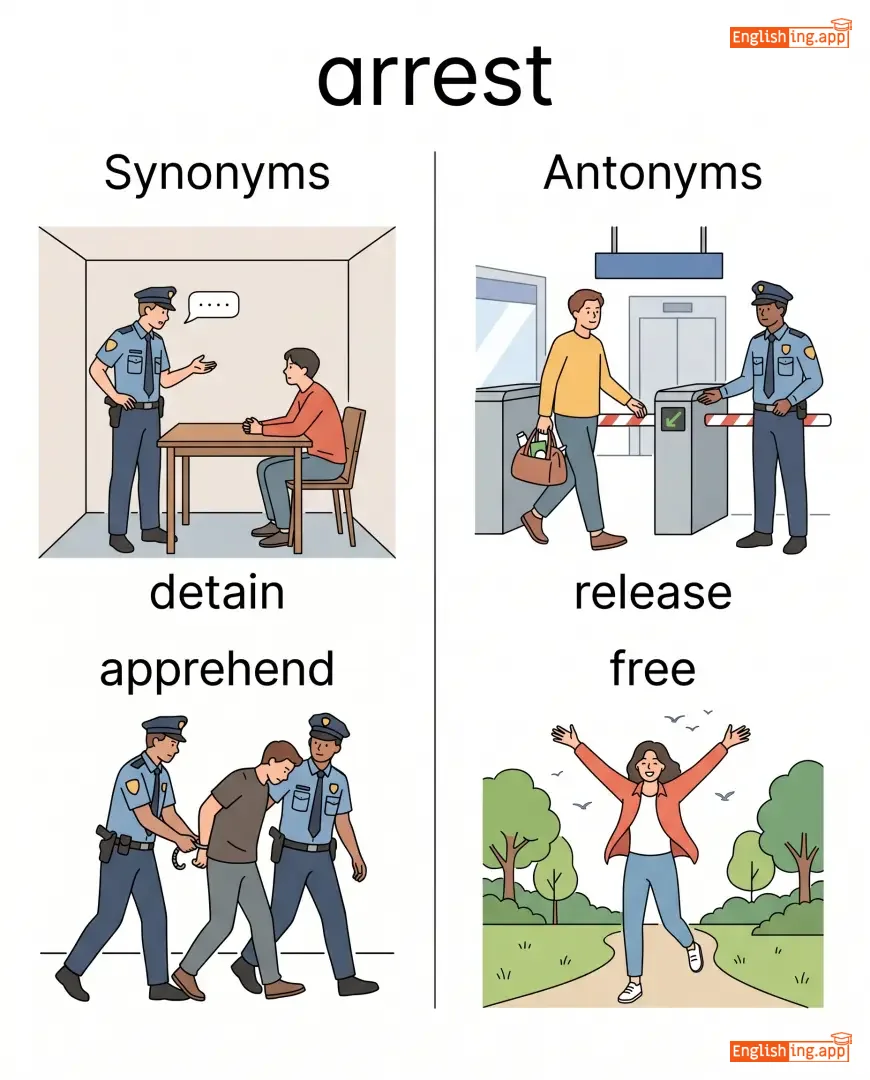
detain, apprehend, capture, seize, stop
••••••
|
release, free, liberate
••••••
|
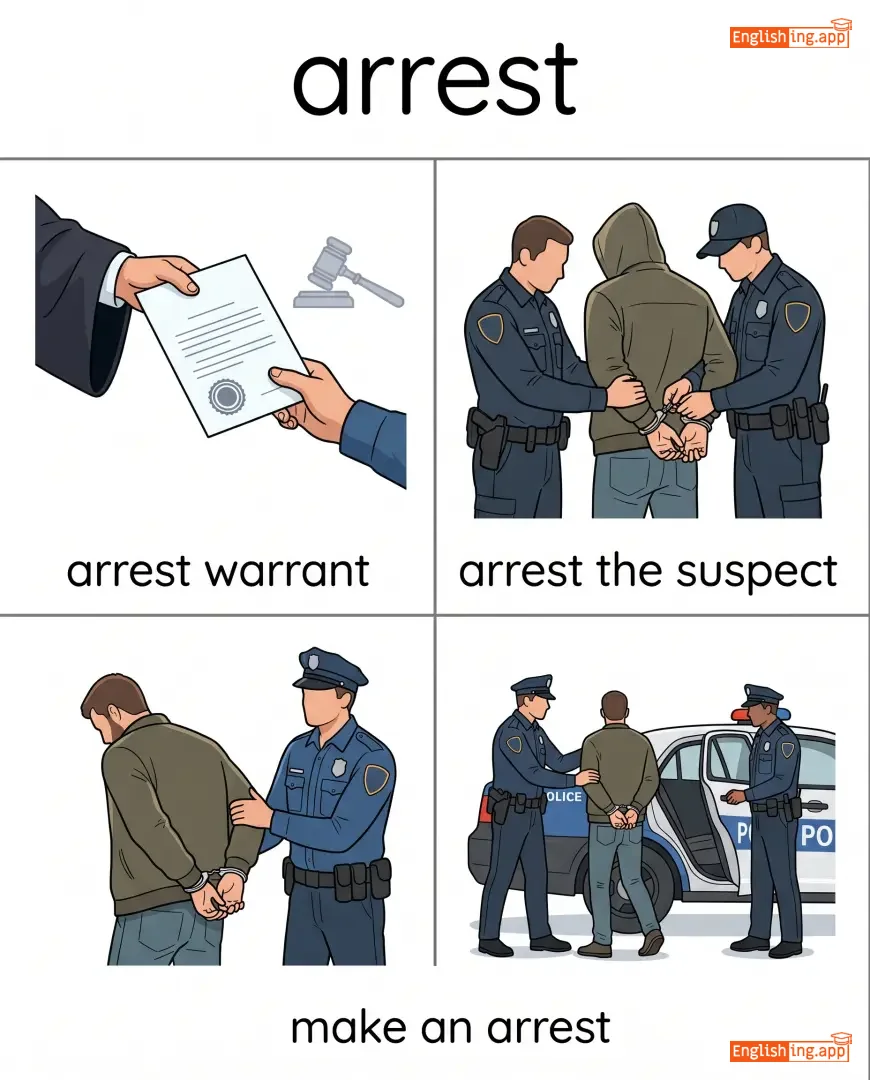
arrest warrant, arrest the suspect, make an arrest
••••••
|
Arrest - это когда ты rest в заключении, как если бы отдых был отнятый.
••••••
|
|
#63
🏺
|
/ˈɑːrtɪˌfækt/
noun
(ɑːrtɪfækt)
••••••
|
|
артефакт
artefakt
••••••
|
- •••••• | - •••••• | - •••••• | - •••••• |
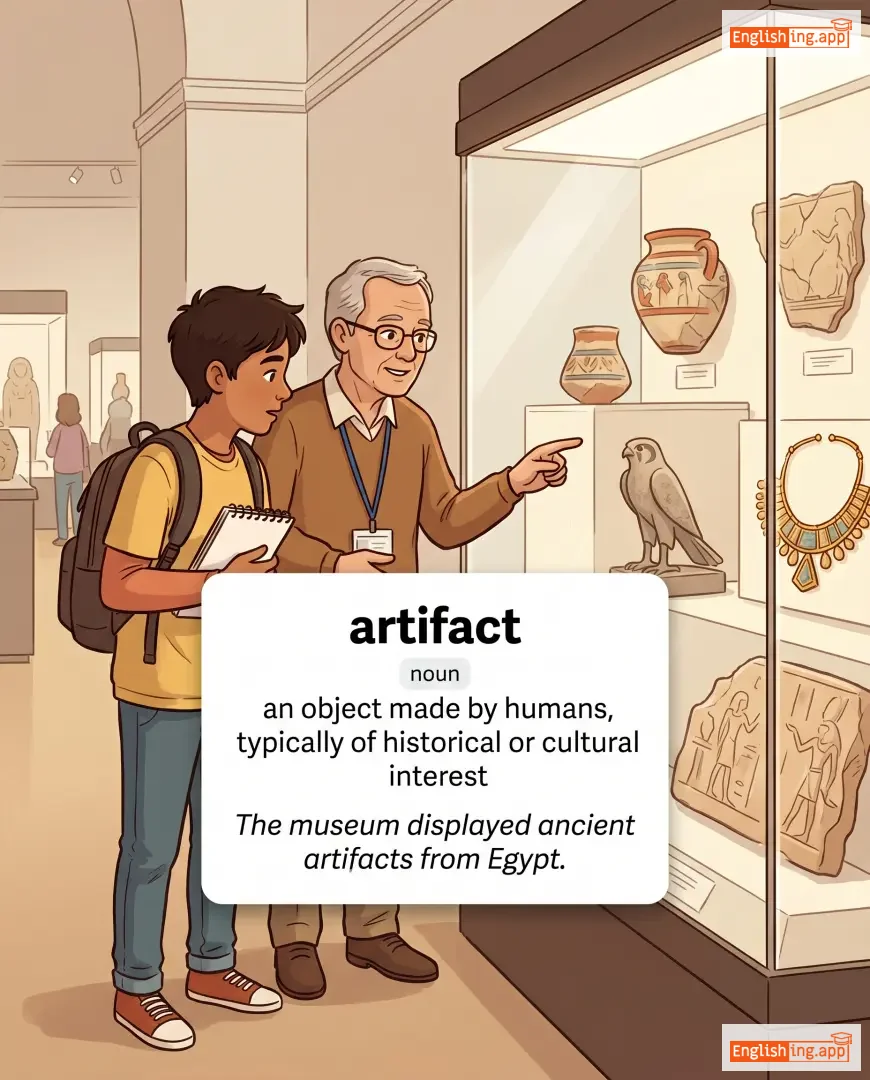
an object made by humans, typically of historical or cultural interest
••••••
|
The museum displayed ancient artifacts from Egypt.
Музей выставил древние артефакты из Египта.
••••••
|
Музей выставил древние артефакты из Египта.
Muzey vystavil drevnie artefakty iz Egipta.
••••••
|
- •••••• | - •••••• | - •••••• |
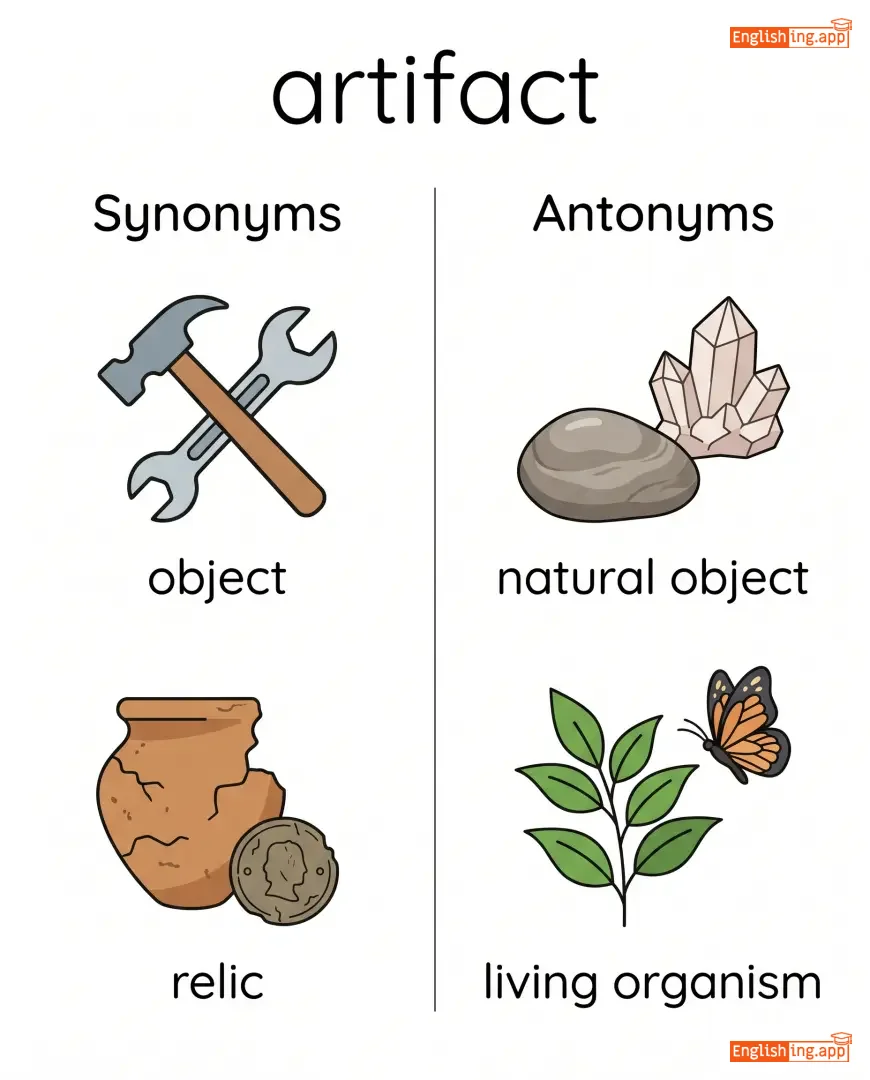
object, relic, antiquity, remain, heirloom
••••••
|
natural object, living organism
••••••
|
ancient artifact, historical artifact, cultural artifact, rare artifact
••••••
|
Артефакт: Арт (искусство) + Факт (доказательство), объект, созданный людьми в прошлом.
••••••
|
|
#64
😊
|
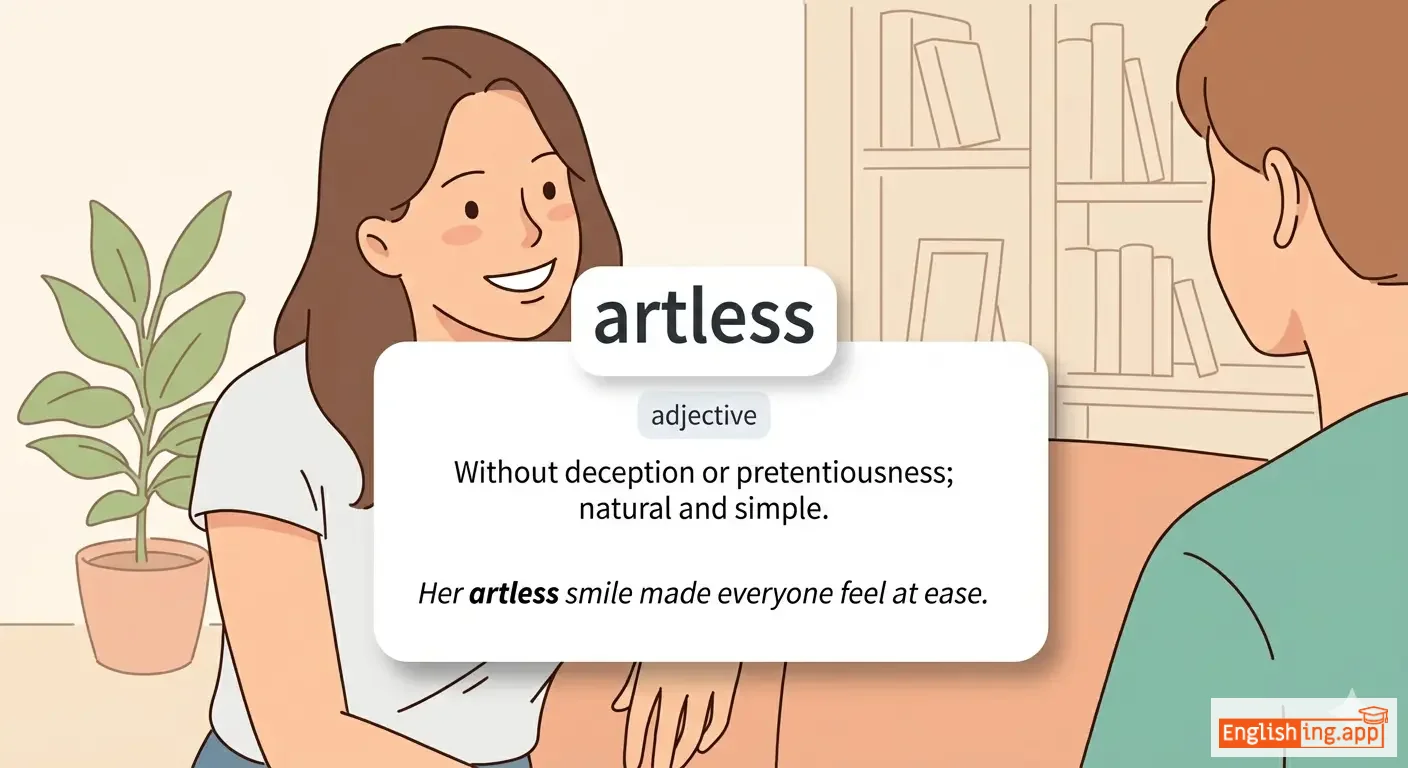
/ˈɑːrtləs/
adjective
(артлес)
••••••
|
|
простодушный, естественный
prostodushnyy, yestestvennyy
••••••
|
- •••••• | - •••••• | - •••••• | - •••••• |
Without deception or pretentiousness; natural and simple.
••••••
|
Her artless smile made everyone feel at ease. |
Её простодушная улыбка заставила всех почувствовать себя комфортно.
eyo prostodushnaya ulybka zastavila vsekh pochuvstvovat' sebya komfortno.
••••••
|
- •••••• | - •••••• | - •••••• |
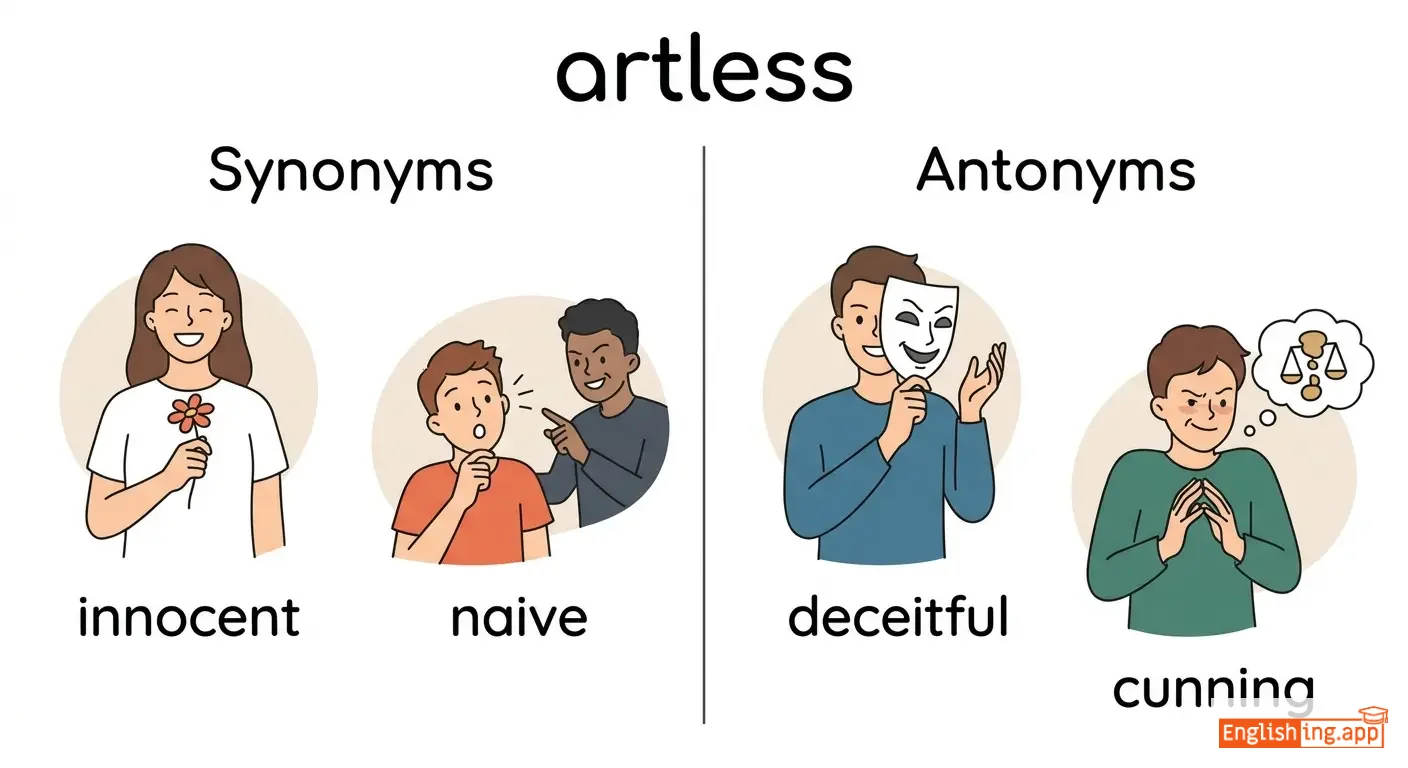
innocent, naive, guileless, sincere, genuine
••••••
|
deceitful, cunning, pretentious
••••••
|
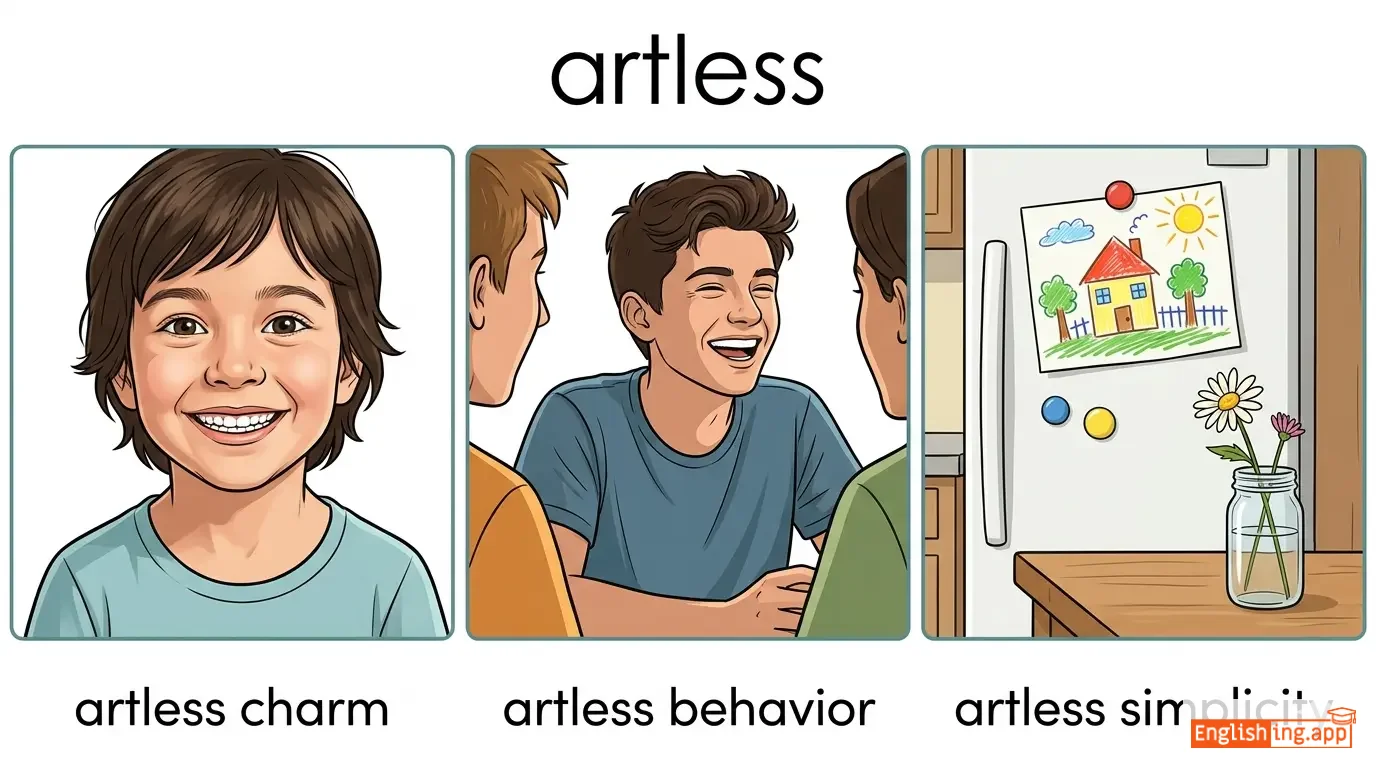
artless charm, artless behavior, artless simplicity
••••••
|
Без искусства - быть артлесом, как простодушная улыбка.
••••••
|
|
#65
🙏
|
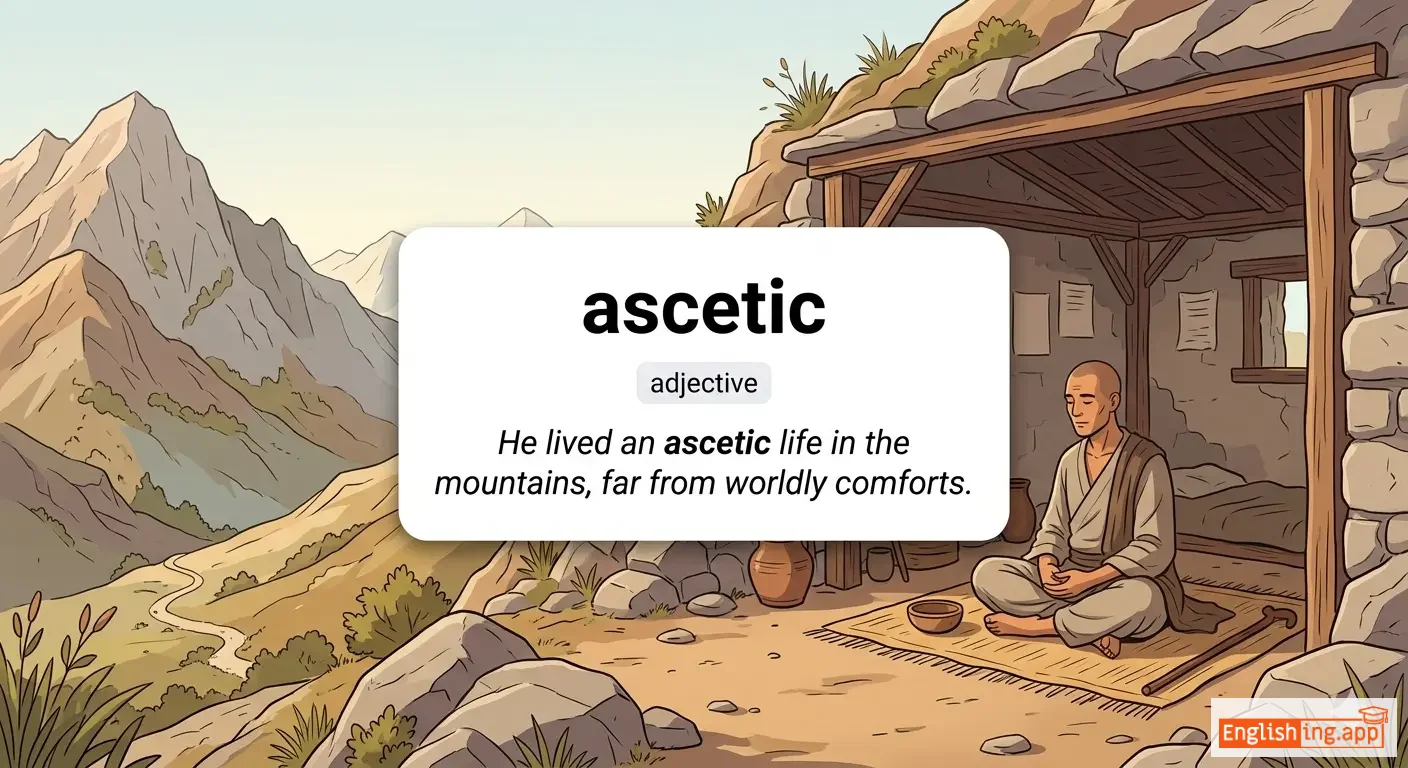
/əˈsɛt.ɪk/
adjective
(асетик)
••••••
|
|
аскетический
asketicheskiy
••••••
|
- •••••• | - •••••• | - •••••• | - •••••• |
Practicing strict self-denial and abstaining from worldly pleasures, often for religious reasons.
••••••
|
He lived an ascetic life in the mountains, far from worldly comforts. |
Он вел аскетическую жизнь в горах, вдали от мирских удобств.
On vel asketicheskuyu zhizn' v gorakh, vdali ot mirskikh udobstv.
••••••
|
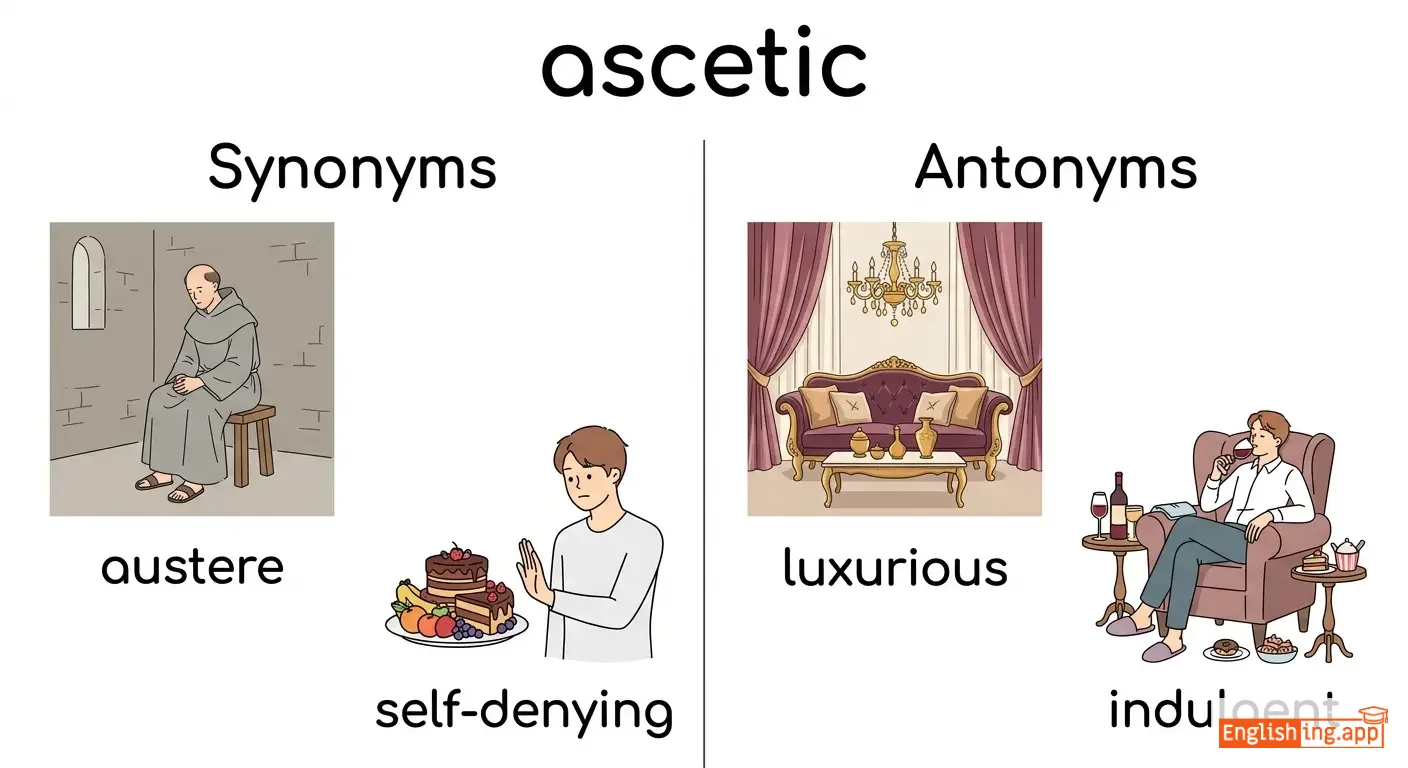
- •••••• | - •••••• | - •••••• |
austere, self-denying, monkish, frugal, disciplined
••••••
|
luxurious, indulgent, hedonistic
••••••
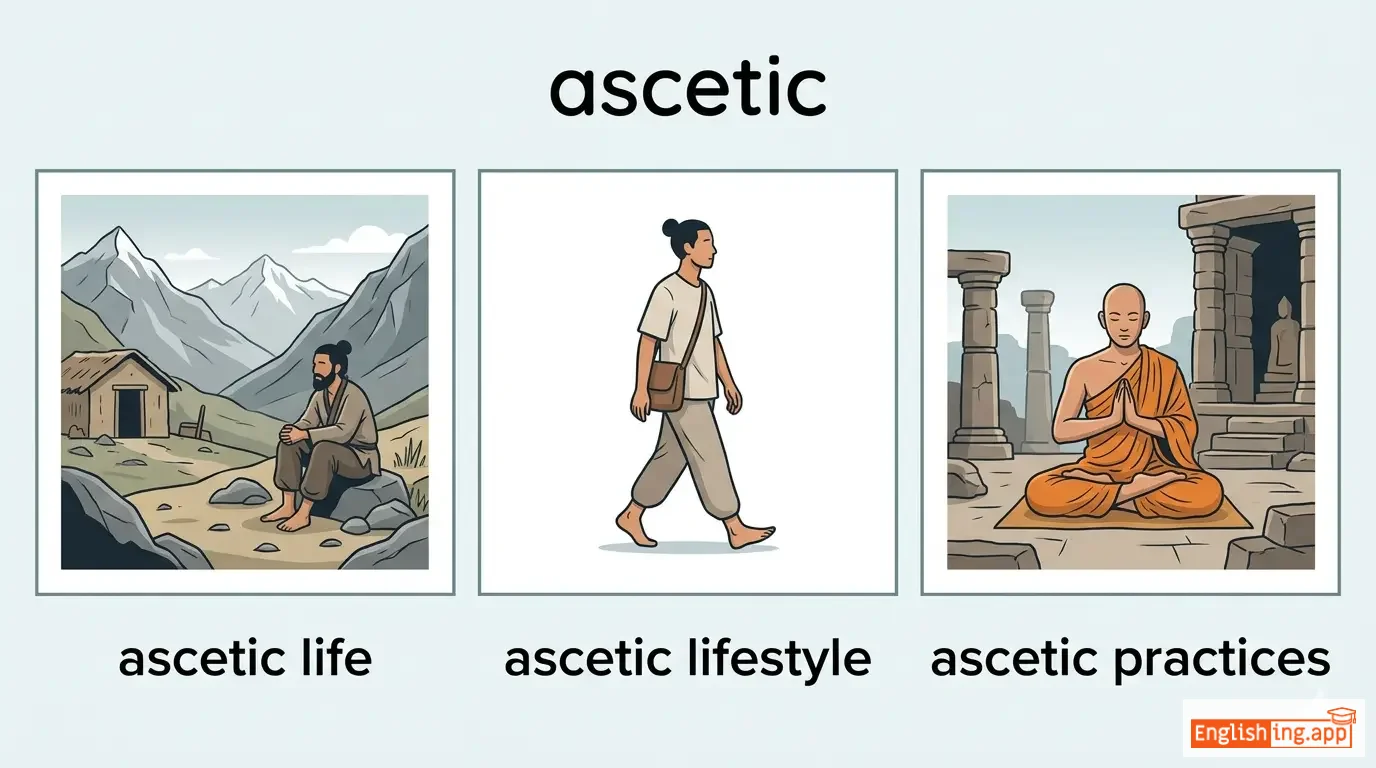
|
ascetic life, ascetic lifestyle, ascetic practices, ascetic monk
••••••
|
Аскет — тот, кто отказывается от удовольствий, как монах в горах.
••••••
|
|
#66
⚡
|
/əˈsper.ɪ.ti/
noun
(аспэрити)
••••••
|
|
резкость
uhsperitee
••••••
|
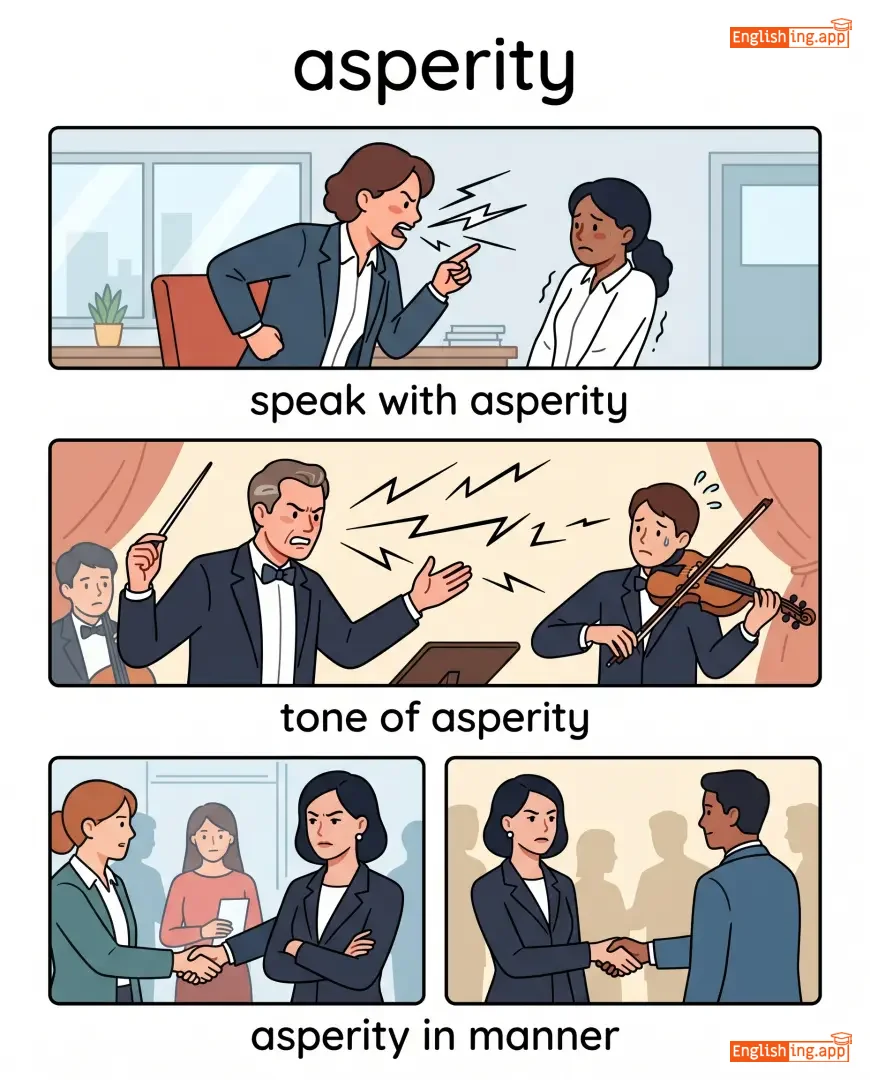
- •••••• | - •••••• | - •••••• | - •••••• |
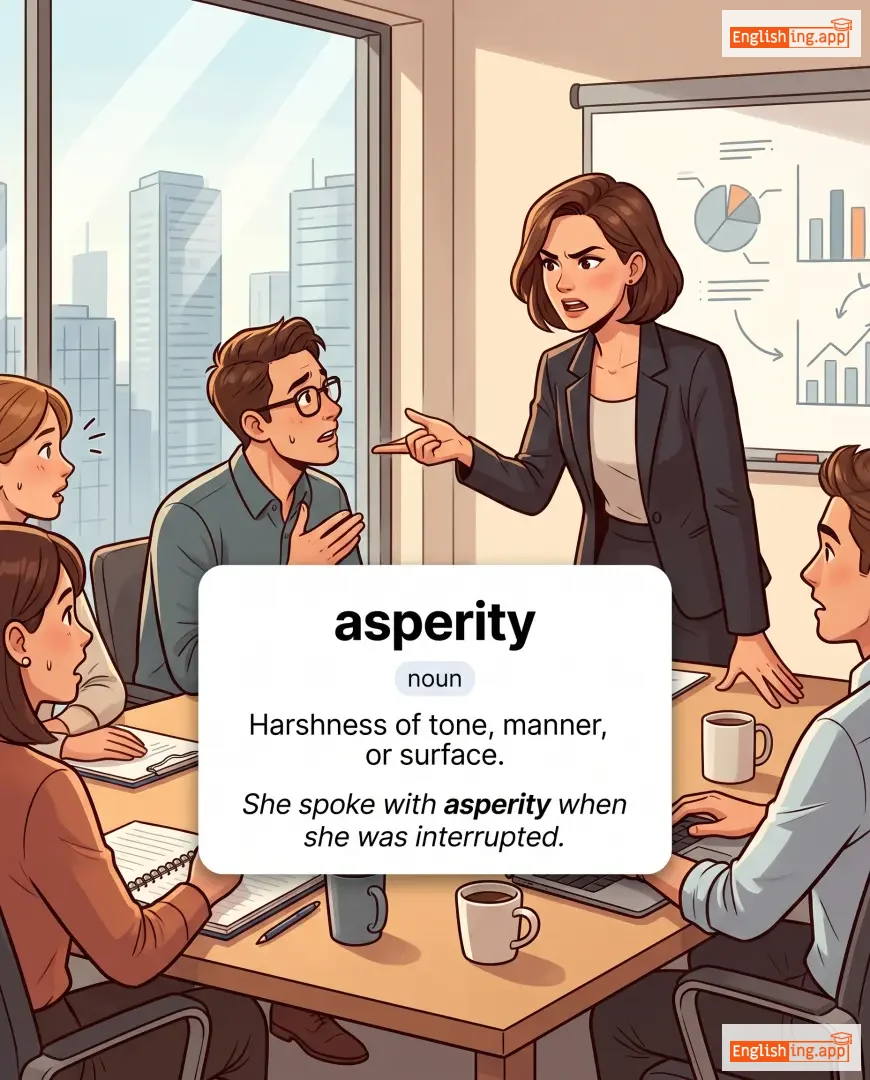
Harshness of tone, manner, or surface.
••••••
|
She spoke with asperity when she was interrupted.
Она говорила с резкостью, когда её прервали.
••••••
|
Она говорила с резкостью, когда её прервали.
Ona govorila s rezkost, kogda eyo prervali.
••••••
|
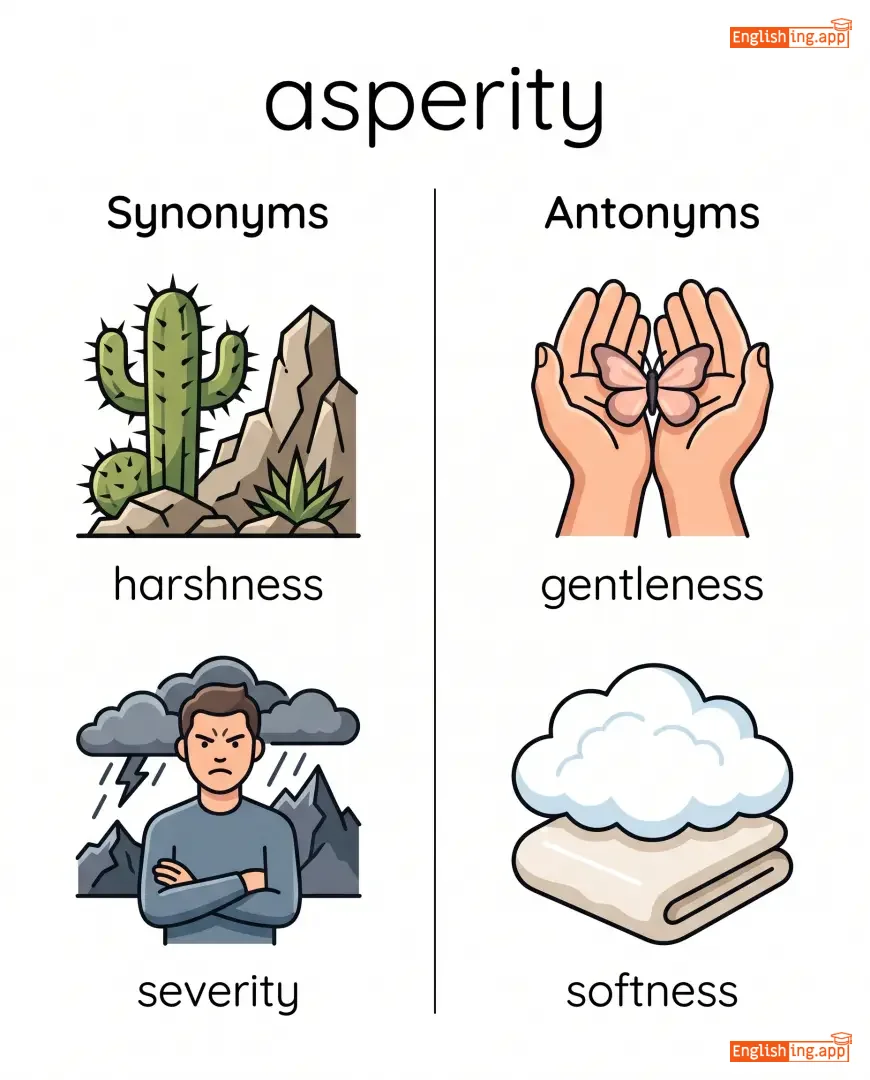
- •••••• | - •••••• | - •••••• |
harshness, severity, sharpness, roughness
••••••
|
gentleness, softness, kindness
••••••
|
speak with asperity, tone of asperity, asperity in manner
••••••
|
АСПЕРИТИ — РЕЗКОСТЬ В ТОНЕ: представить AS PER ITY как смешанный образ русского голоса, и запомни, что резкость — это про тон голоса.
••••••
|
|
#67
🗣️
|
/əˈspɜːr.ʒən/
noun
(асперсия)
••••••
|
|
клевета
kleveta
••••••
|
- •••••• | - •••••• | - •••••• | - •••••• |
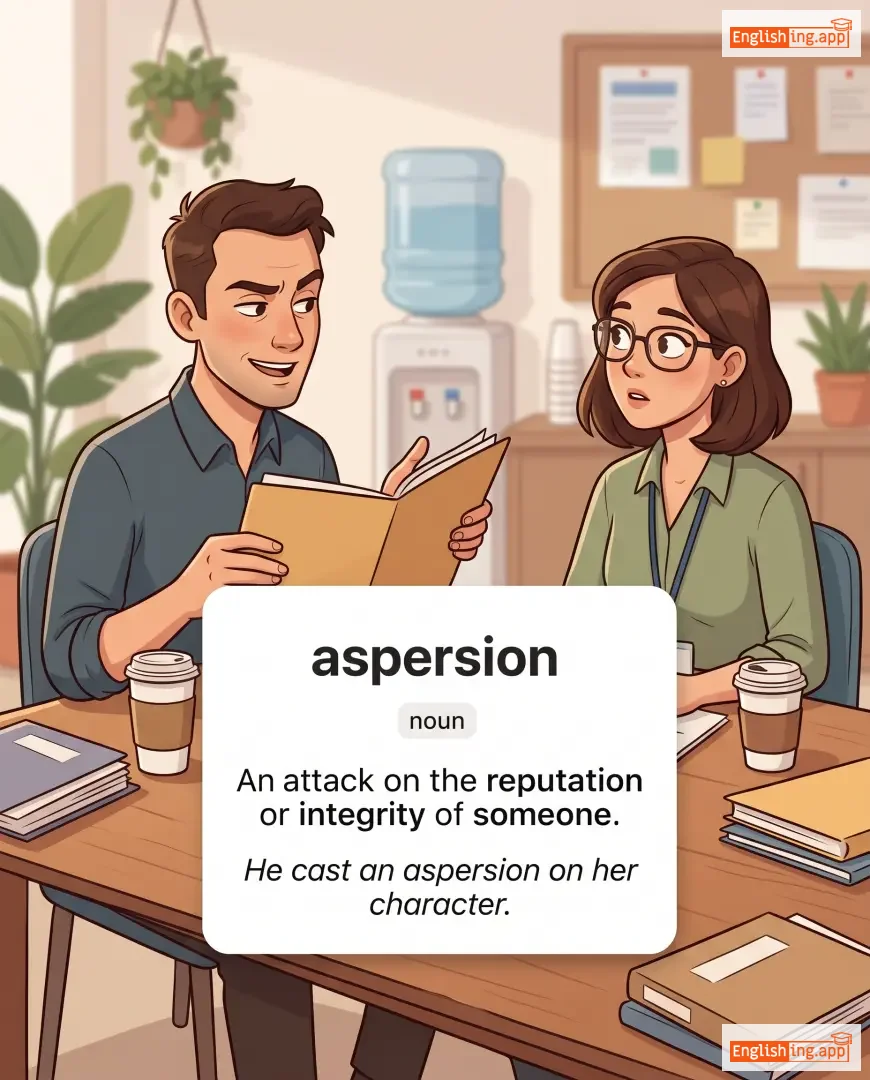
An attack on the reputation or integrity of someone.
••••••
|
He cast an aspersion on her character.
Он бросил тень на её характер.
••••••
|
Он бросил клевету на её характер.
On brosil klevetu na yeye kharakter.
••••••
|
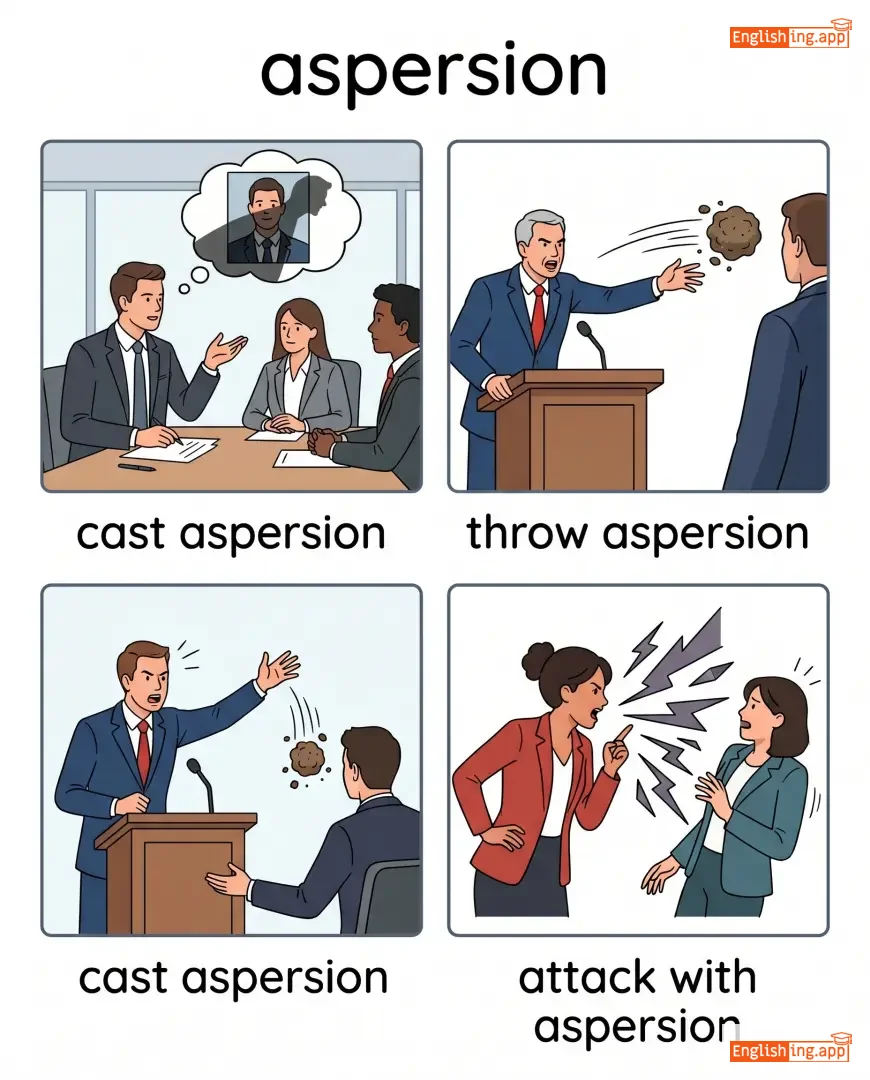
cast aspersions
клеветать
••••••
|
to make damaging or critical remarks about someone
••••••
|
клеветать
klevetat
••••••
|
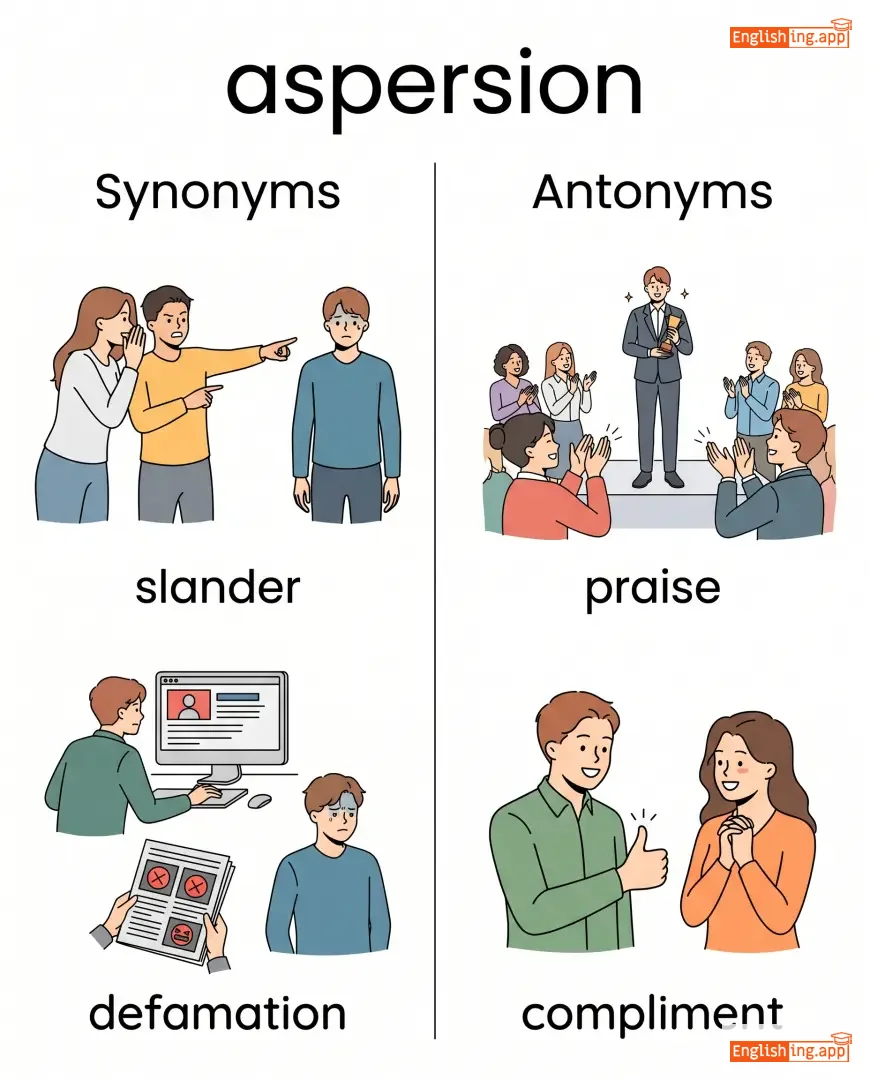
slander, defamation, smear, accusation, criticism
••••••
|
praise, compliment, approval
••••••
|
cast aspersion, throw aspersion, attack with aspersion
••••••
|
Aspersion – клевета, вредная для чести.
••••••
|
|
#68
📚
|
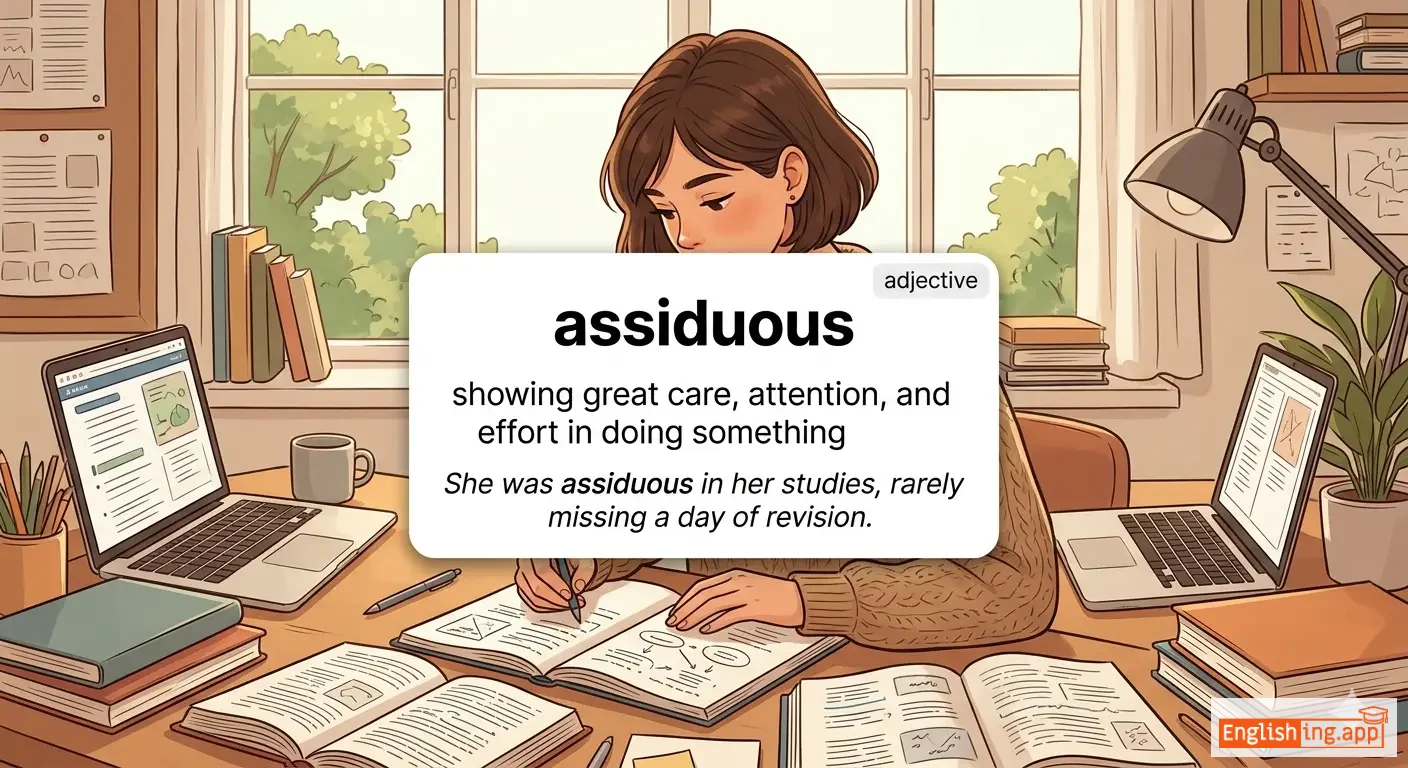
/əˈsɪdʒuəs/
adjective
(ассидуус)
••••••
|
|
усердный
usyerudny
••••••
|
- •••••• | - •••••• | - •••••• | - •••••• |
showing great care, attention, and effort in doing something
••••••
|
She was assiduous in her studies, rarely missing a day of revision. |
Она была усердной в своих учебных занятиях, редко пропускала день занятий.
Ona byla usyernoy v svoikh uchebnykh zanyatiyakh, redko propuskala den' zanyatiy.
••••••
|
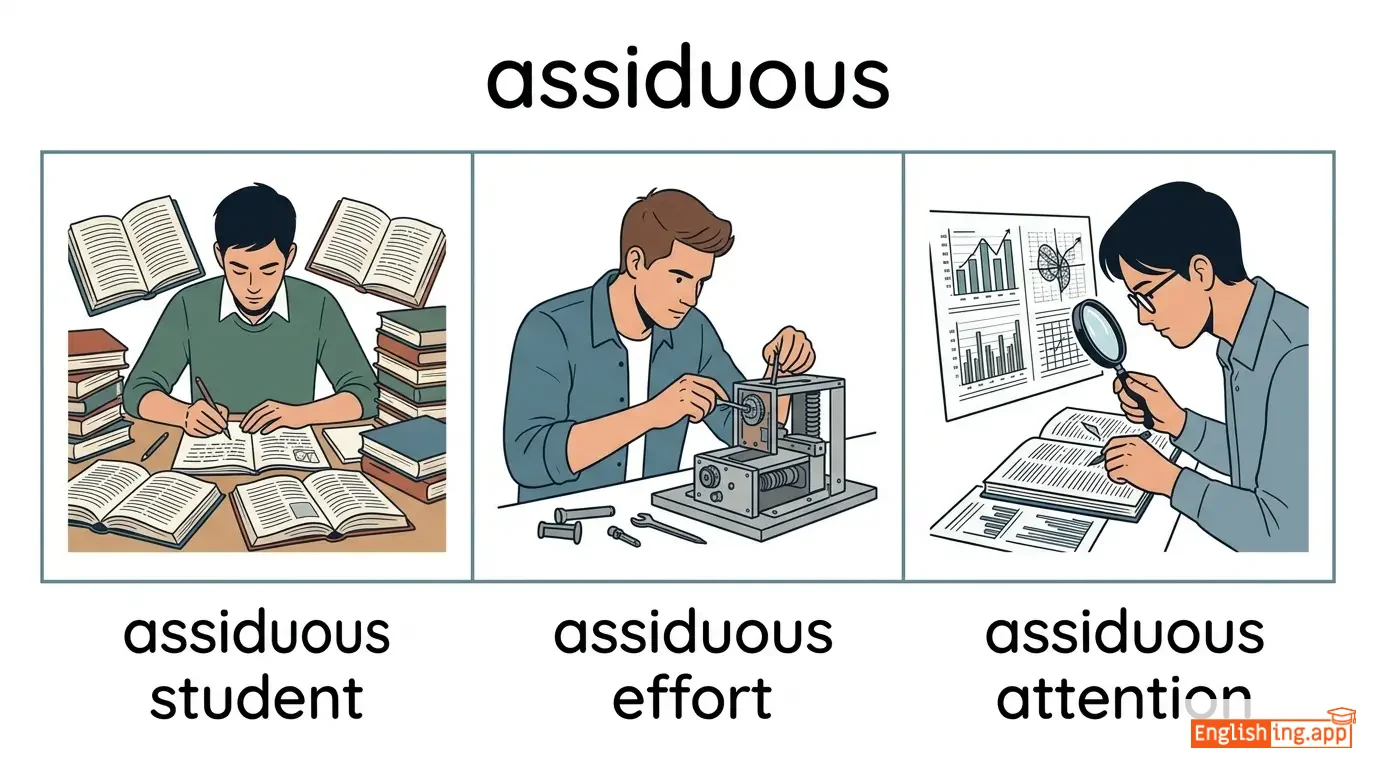
assiduous effort |
persistent and careful effort
••••••
|
усердное усилие
usyerdnoye usiliye
••••••
|
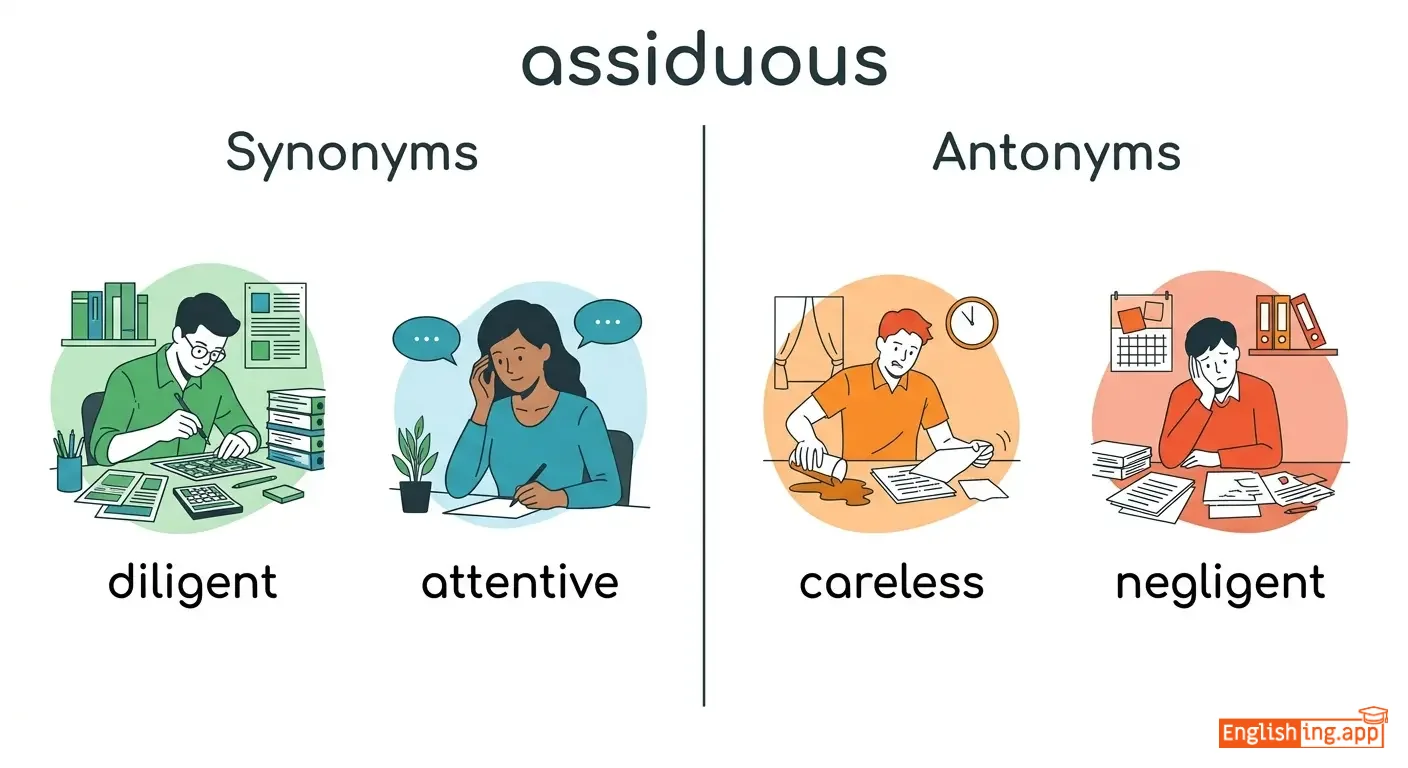
diligent, attentive, careful, industrious, meticulous
••••••
|
careless, negligent, lazy
••••••
|
assiduous student, assiduous effort, assiduous attention, assiduous care
••••••
|
Assiduous – усердный, работай с усердием, каждый день как усердный труд.
••••••
|
|
#69
😌
|
/əˈsweɪdʒ/
verb
(assveydzh)
••••••
|
|
успокаивать
uspokaivat
••••••
|
assuaged
assveydzhd
••••••
|
assuaged
assveydzhd
••••••
|
assuages
assveydzhiz
••••••
|
assuaging
assveydzhing
••••••
|
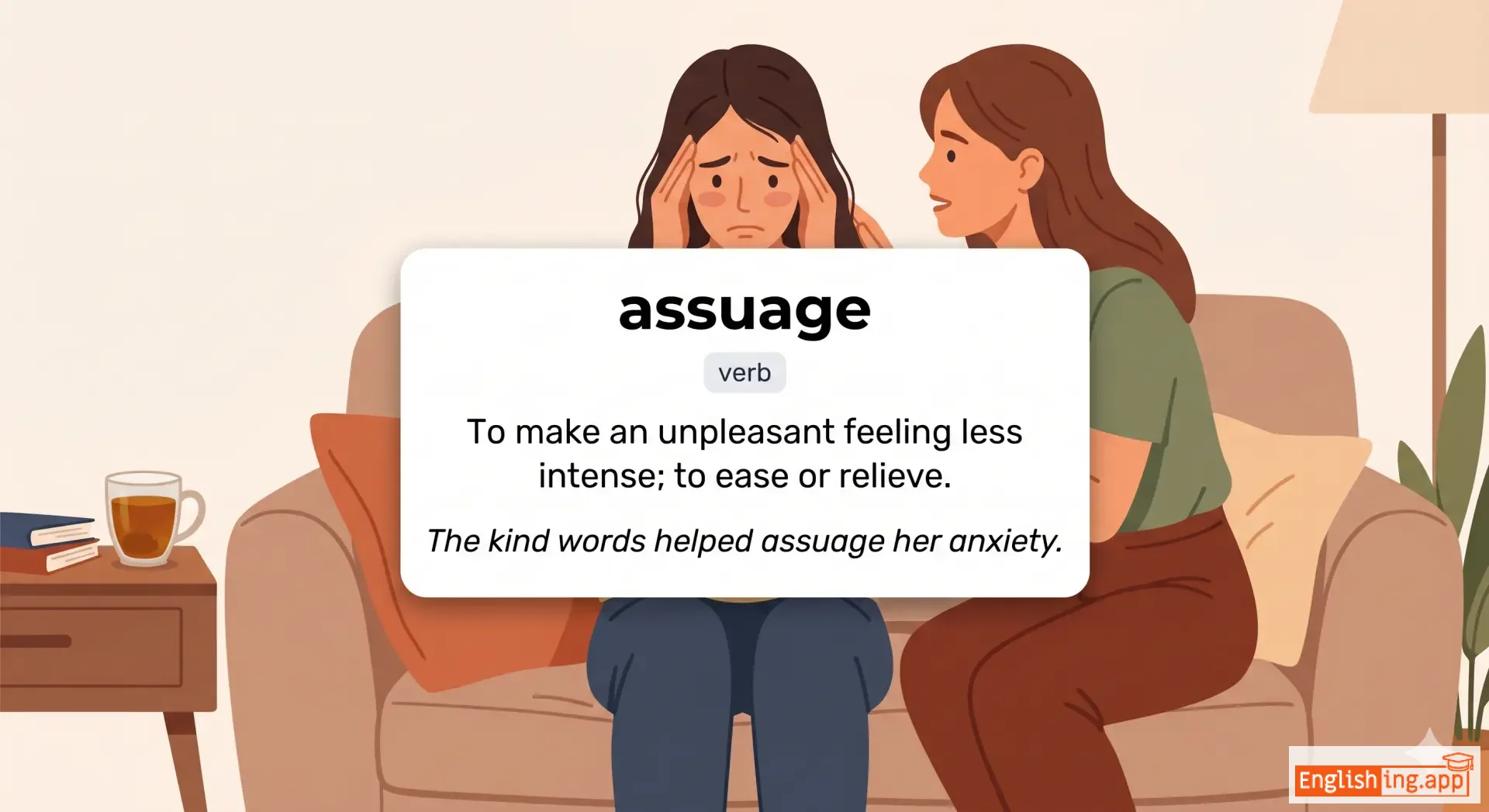
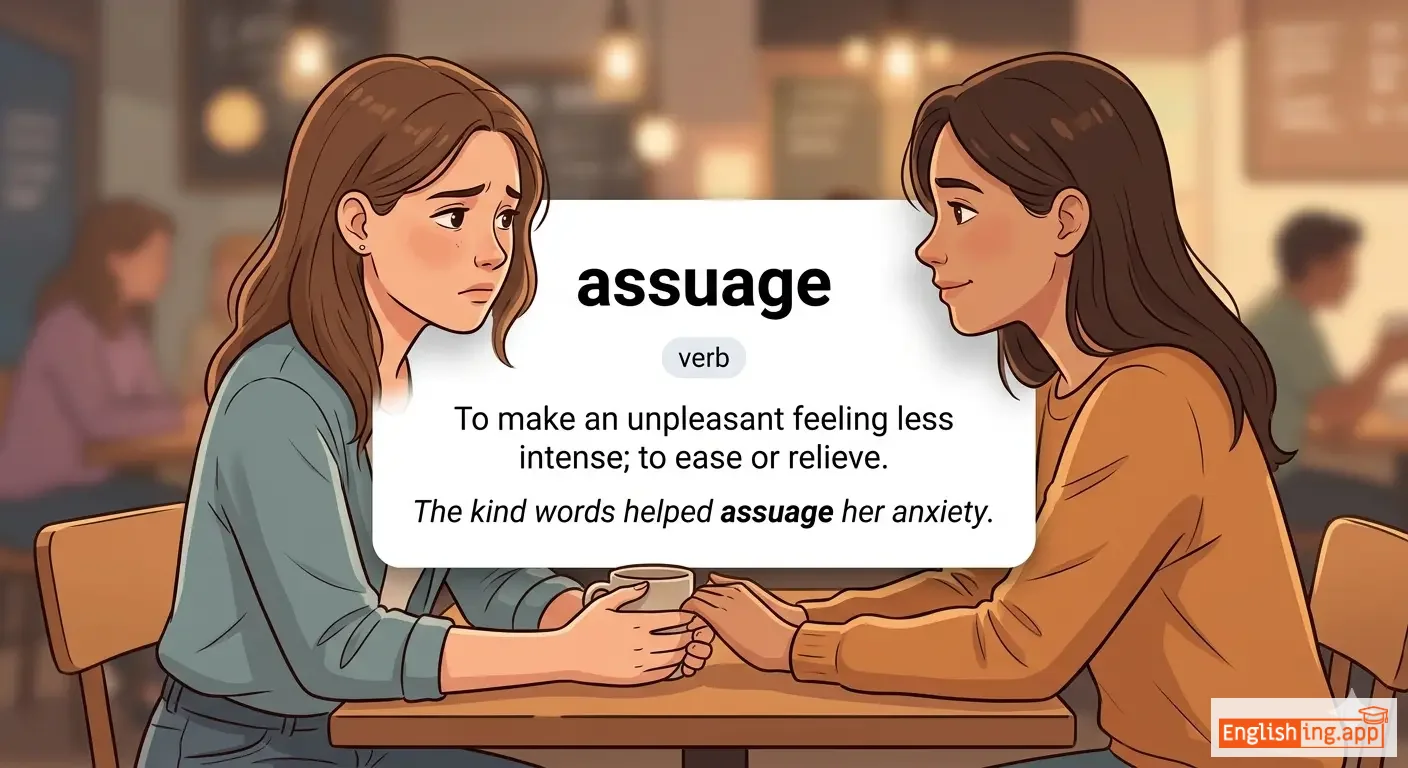
To make an unpleasant feeling less intense; to ease or relieve.
••••••
|
The kind words helped assuage her anxiety.
Добрые слова помогли облегчить её тревогу.
••••••
|
Добрые слова помогли облегчить её тревогу.
Dobrye slova pomogli oblegchit' yeyo trevogu.
••••••
|
assuage one's fears
успокоить чьи-то страхи
••••••
|
to calm or reduce someone's fears
••••••
|
успокоить чьи-то страхи
uspokoit' ch'yto strakhi
••••••
|
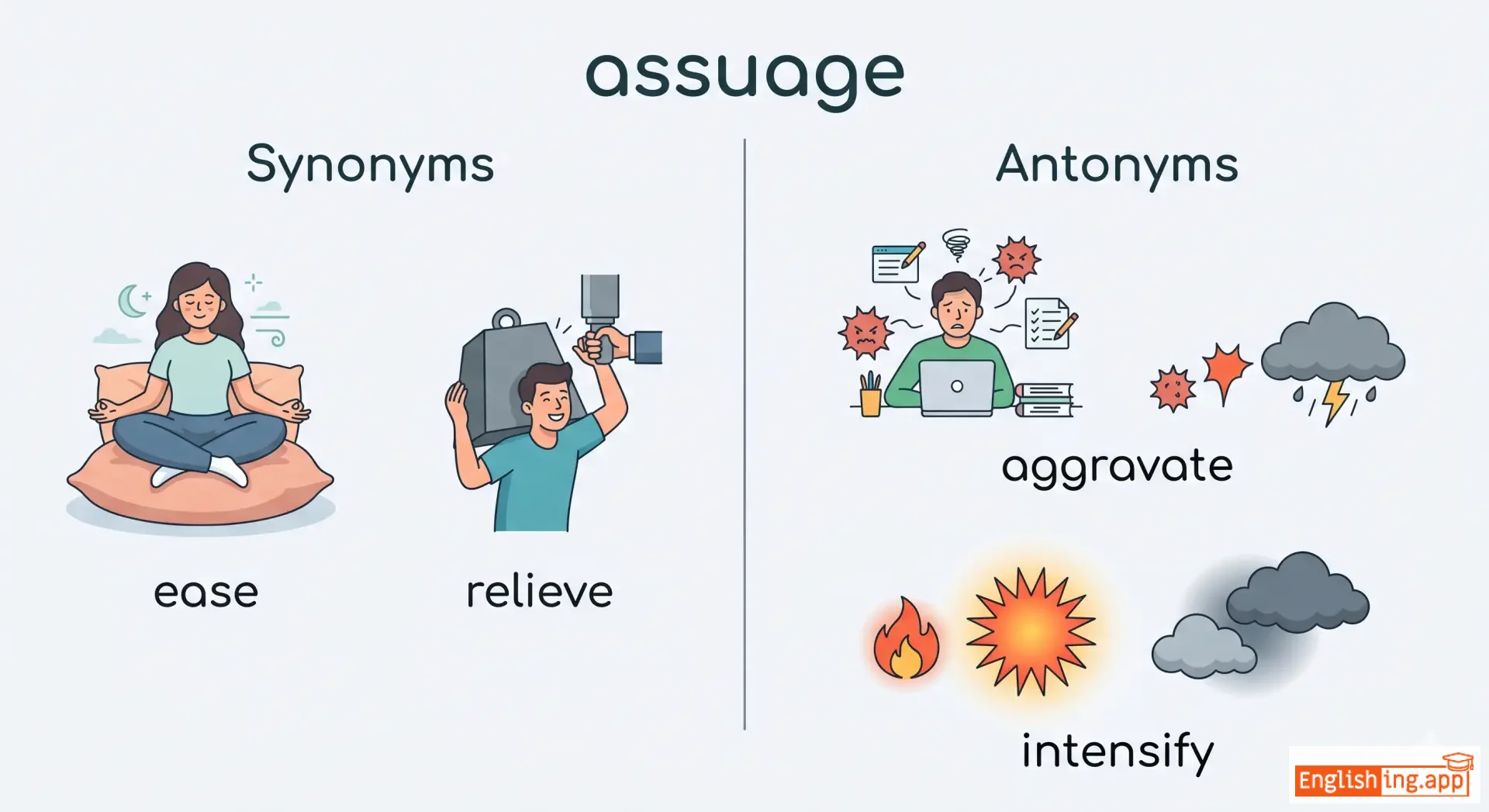
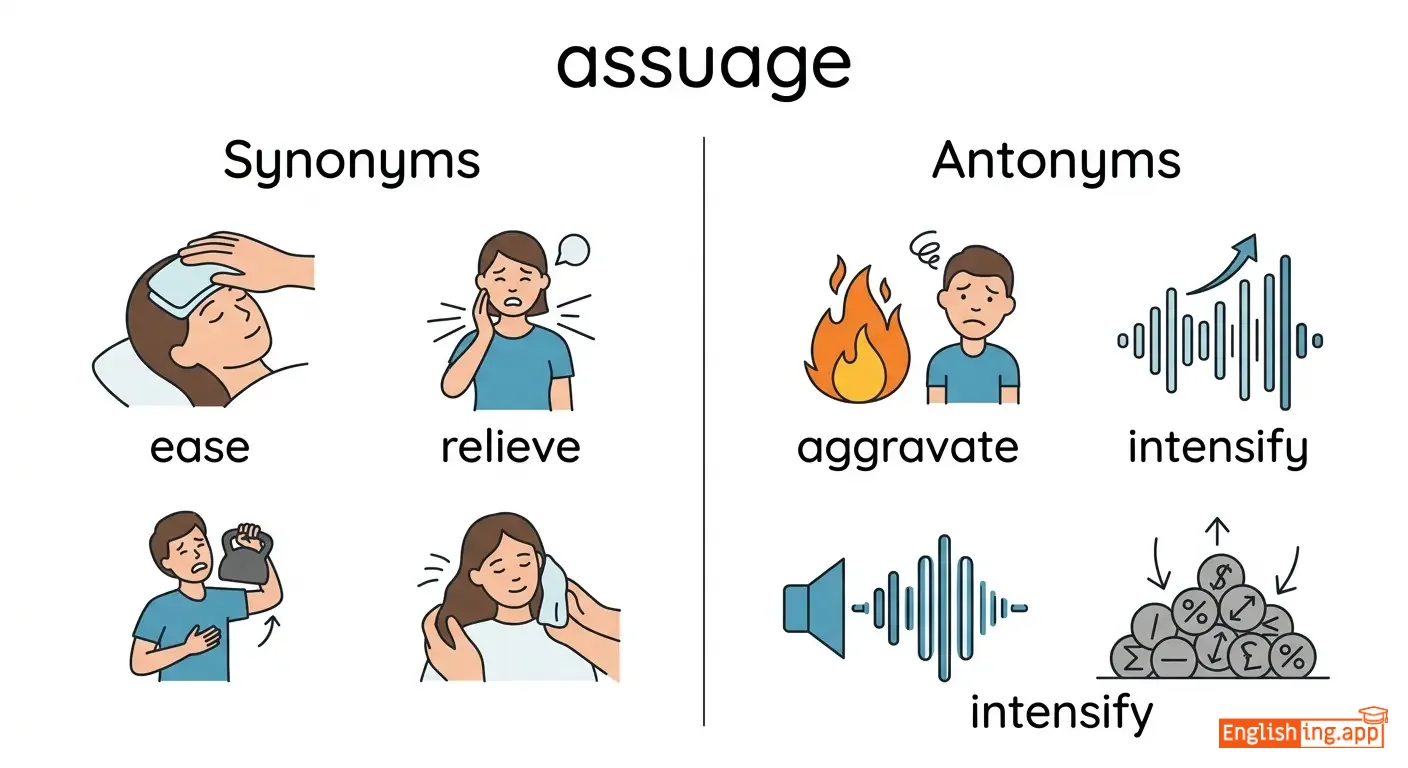
ease, relieve, alleviate, soothe, pacify
••••••
|
aggravate, intensify, worsen
••••••
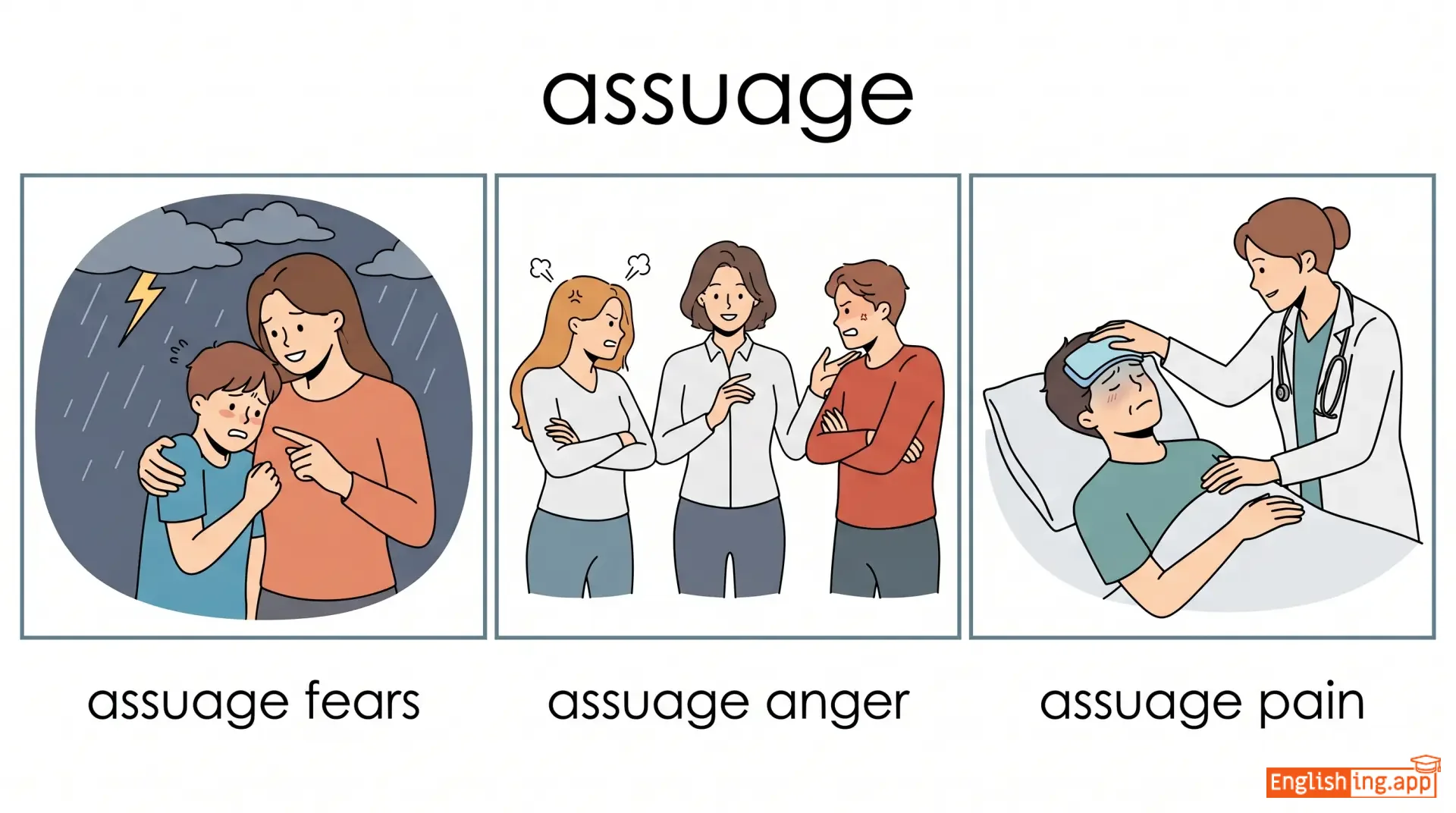
|
assuage fears, assuage anger, assuage pain
••••••
|
Assuage означает 'успокаивающее сообщение' - успокаивающее сообщение.
••••••
|
|
#70
🍋
|
/əˈstrɪndʒənt/
adjective
(æstrɪnʐənt)
••••••
|
|
строгий
stroh-giy
••••••
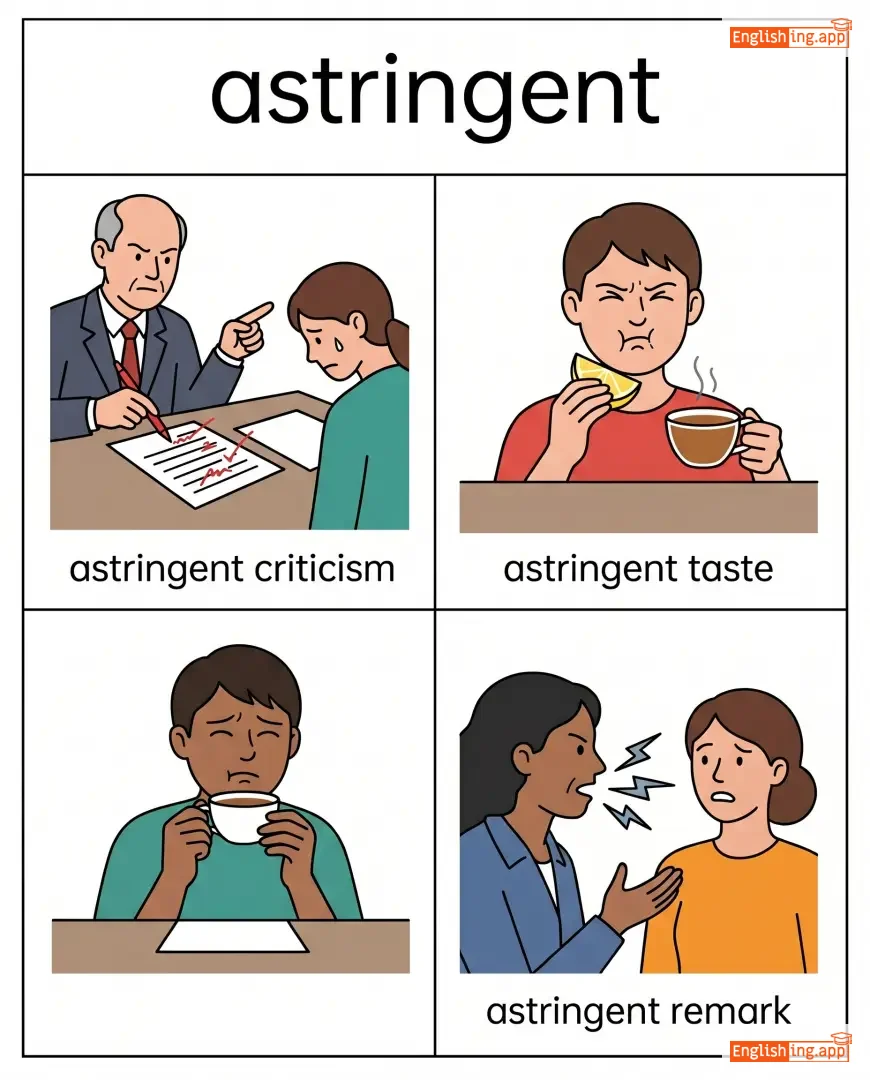
|
- •••••• | - •••••• | - •••••• | - •••••• |
sharp or severe in manner or style; also describes a substance that contracts skin or body tissues
••••••
|
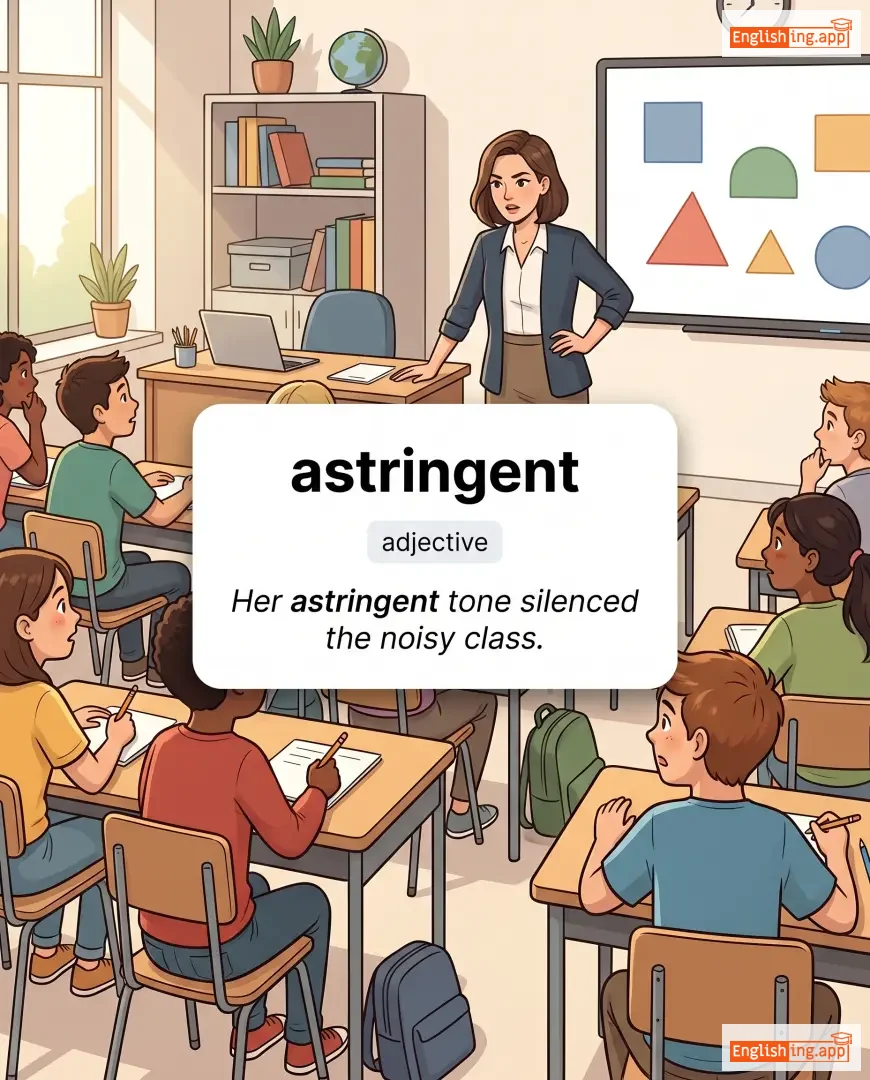
Her astringent tone silenced the noisy class. |
Ее строгий тон заставил шумный класс замолчать.
ye-yo stro-giy ton zas-til shum-nee klass zamol-chat
••••••
|
- •••••• | - •••••• | - •••••• |
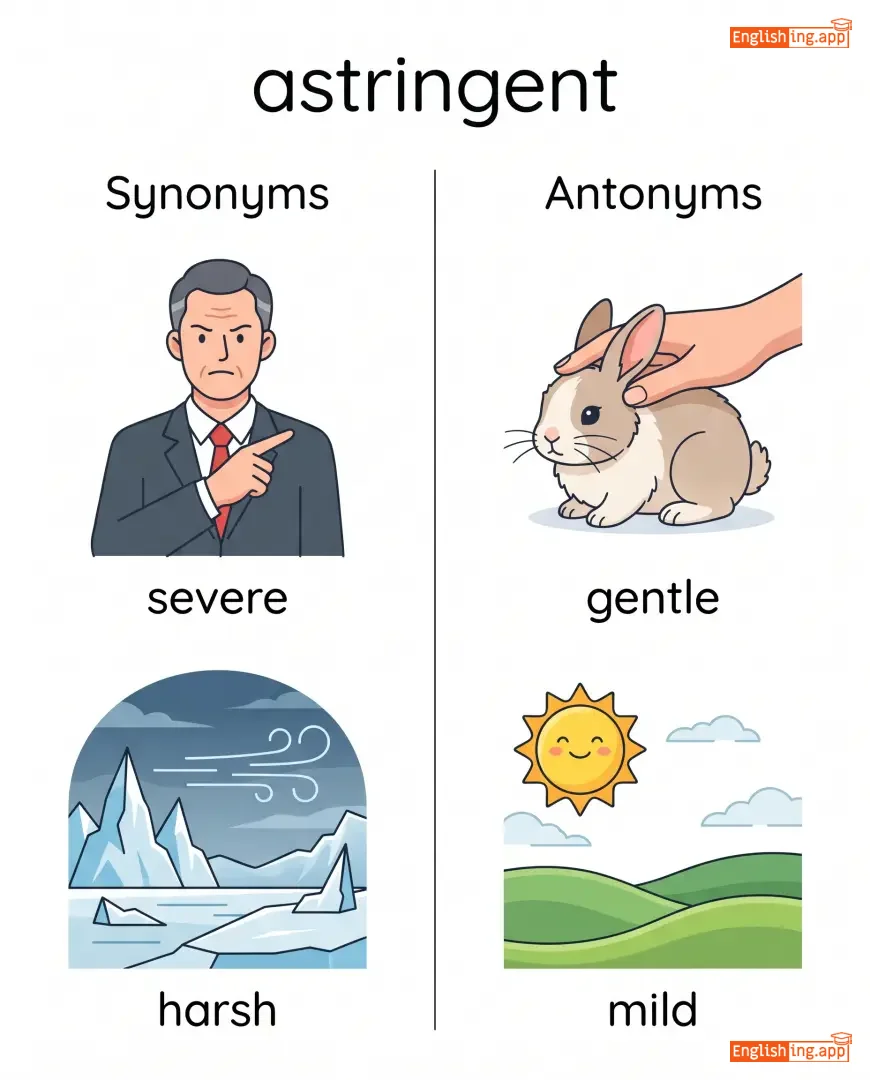
severe, harsh, stern, strict, biting
••••••
|
gentle, mild, lenient
••••••
|
astringent criticism, astringent taste, astringent remark
••••••
|
Вкус лимона очень строгий, он напоминает резкое поведение.
••••••
|
|
#71
🏥
|
/əˈsaɪləm/
noun
(асайлум)
••••••
|
|
убежище
ubezhishche
••••••
|
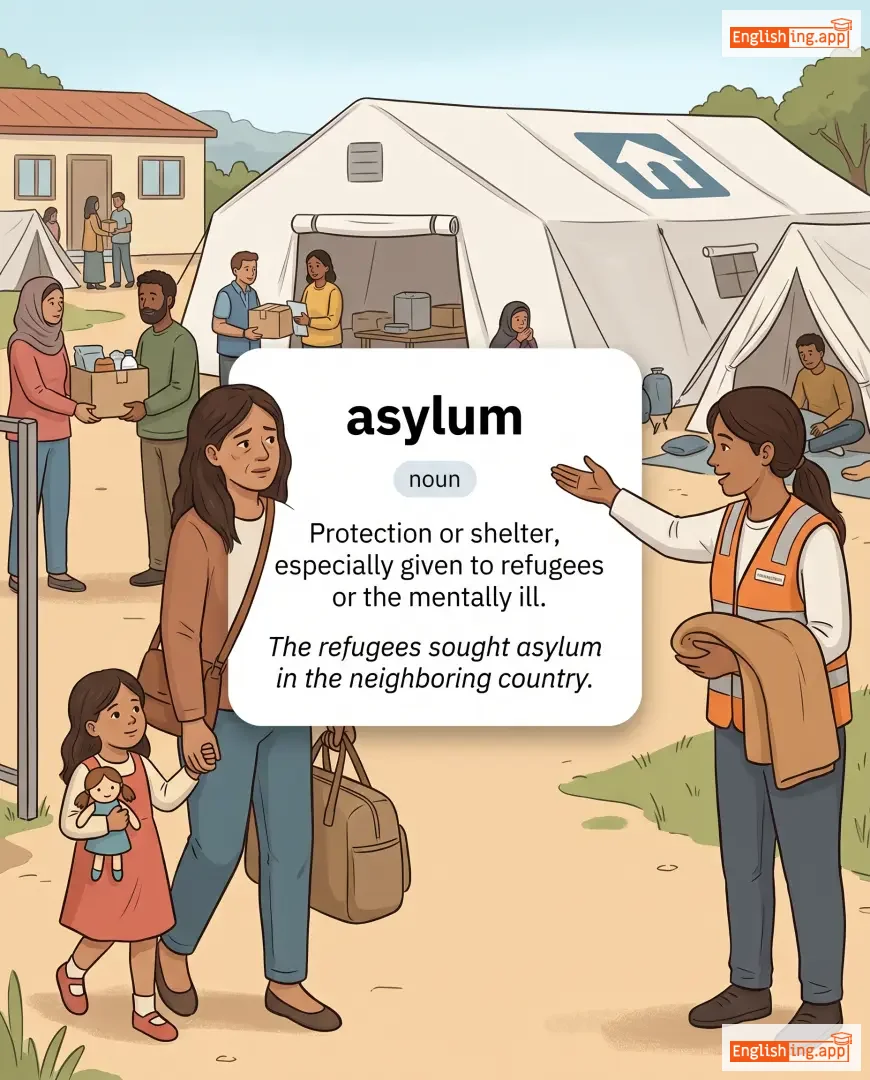
- •••••• | - •••••• | - •••••• | - •••••• |
Protection or shelter, especially given to refugees or the mentally ill.
••••••
|
The refugees sought asylum in the neighboring country.
Беженцы искали убежище в соседней стране.
••••••
|
Беженцы искали убежище в соседней стране.
Bezhtsy iskali ubezhishche v sosedney strane.
••••••
|
seek asylum
подавать на убежище
••••••
|
To formally request protection in another country.
••••••
|
подавать на убежище
podavat' na ubezhishche
••••••
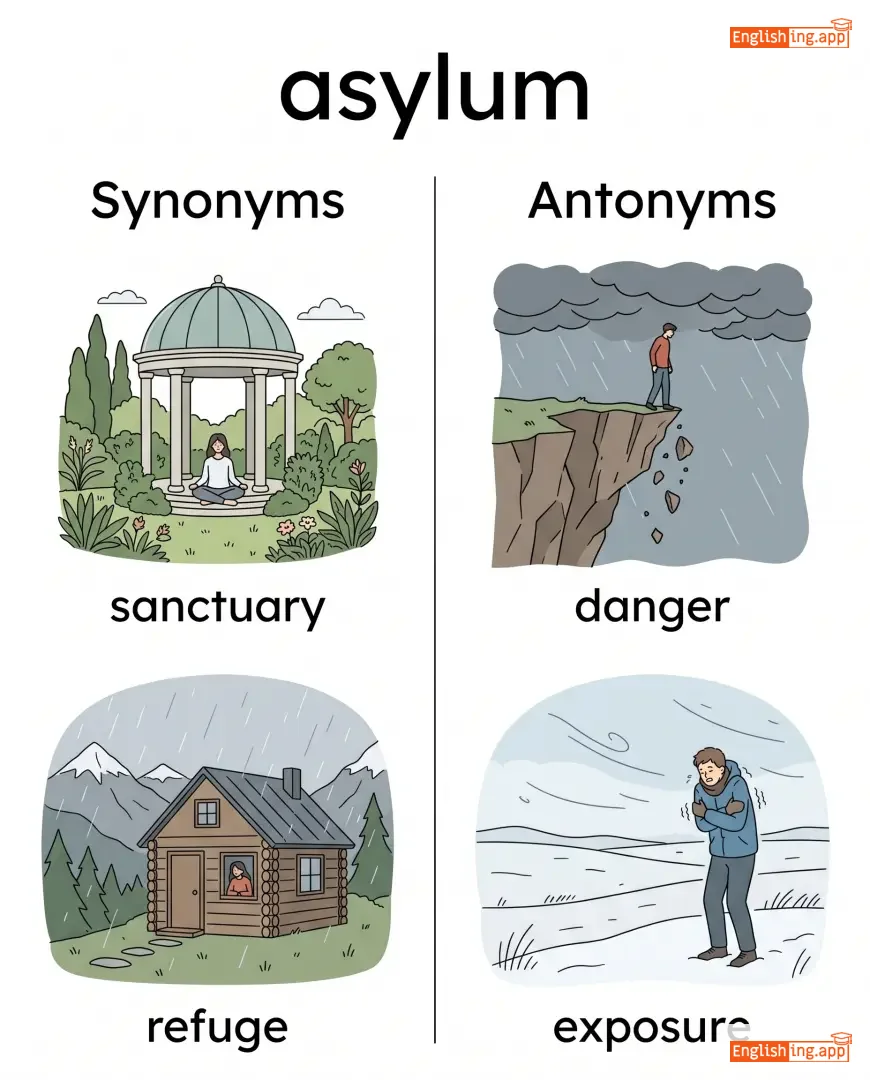
|
sanctuary, refuge, shelter, haven, protection
••••••
|
danger, exposure, threat
••••••
|
grant asylum, political asylum, seek asylum, asylum seeker
••••••
|
Убежище означает защиту для тех, кто ищет безопасность.
••••••
|
|
#72
🧬
|
/ˈætəvɪzəm/
noun
(атавизм)
••••••
|
|
атавизм
atavizm
••••••
|
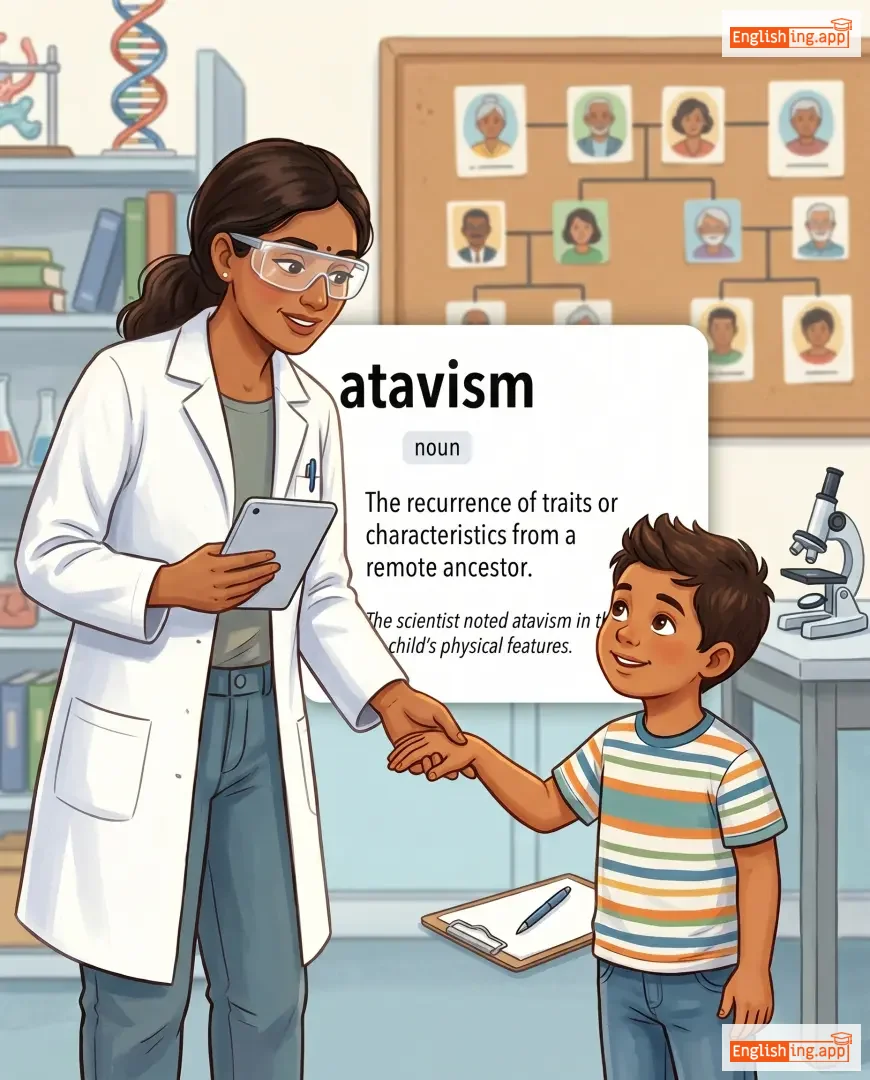
- •••••• | - •••••• | - •••••• | - •••••• |
The recurrence of traits or characteristics from a remote ancestor.
••••••
|
The scientist noted atavism in the child’s physical features. |
Учёный заметил атавизм в физических характеристиках ребёнка.
Uchyonnyy zameetil atavizm v fizicheskikh kharakteristikakh rebyonka.
••••••
|
- •••••• | - •••••• | - •••••• |
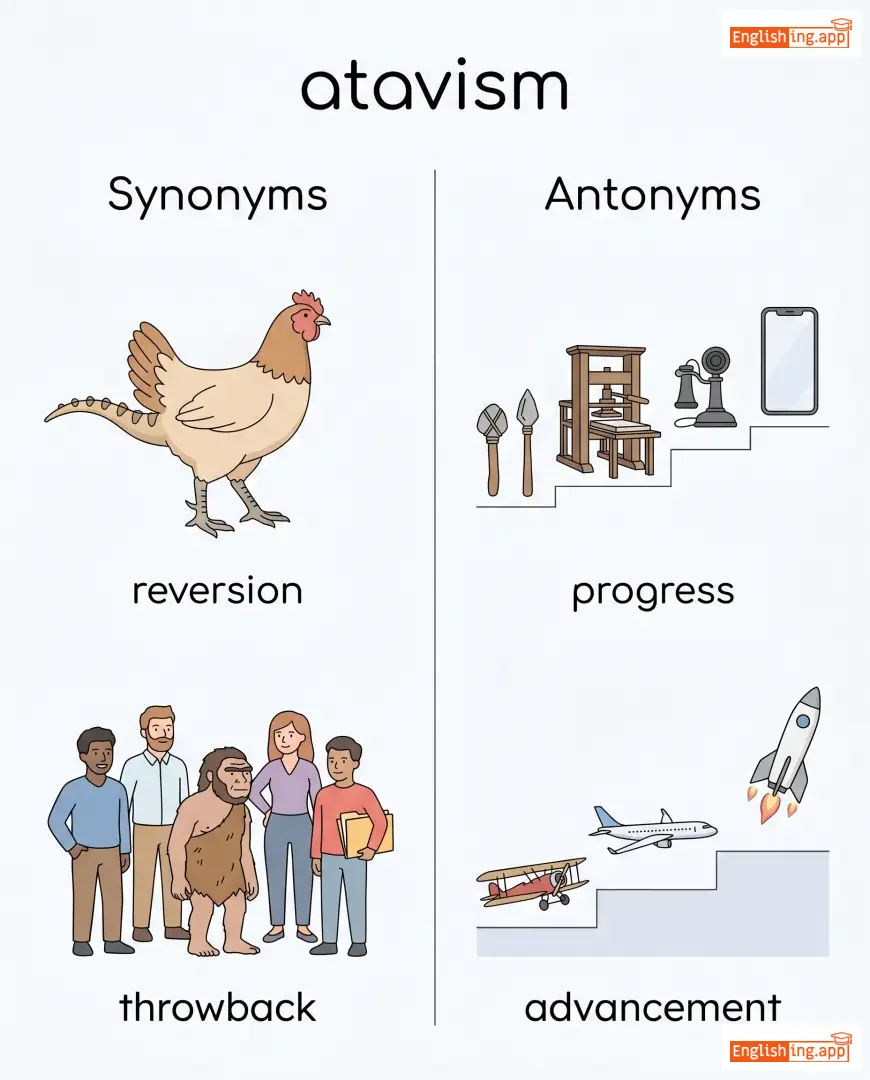
reversion, throwback, regression, recurrence
••••••
|
progress, advancement, innovation
••••••
|
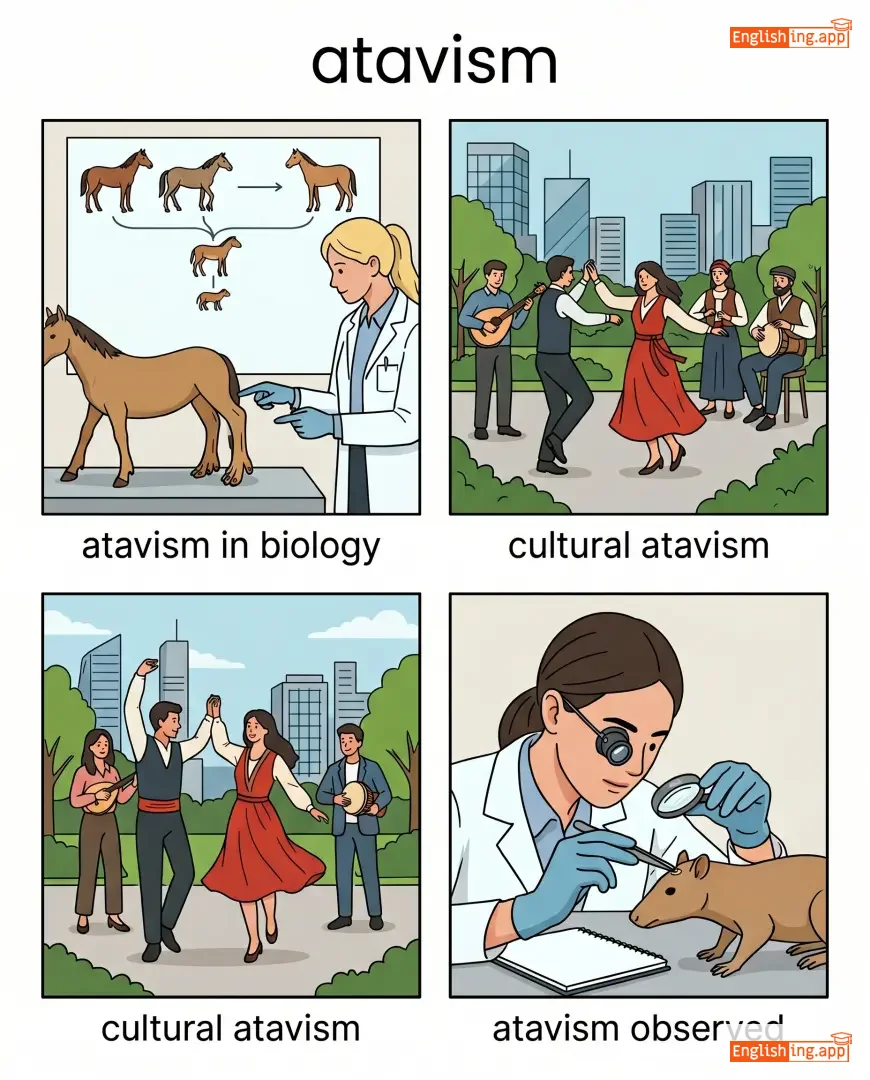
atavism in biology, cultural atavism, atavism observed
••••••
|
Атавизм – это черты предков, которые возвращаются.
••••••
|
|
#73
🔽
|
/əˈtɛnjueɪt/
verb
(аттенюа́т)
••••••
|
|
ослабить
oslabit'
••••••
|
attenuated
аттеню́ировал
••••••
|
attenuated
аттеню́ирован
••••••
|
attenuates
аттеню́ирует
••••••
|
attenuating
аттеню́ируя
••••••
|
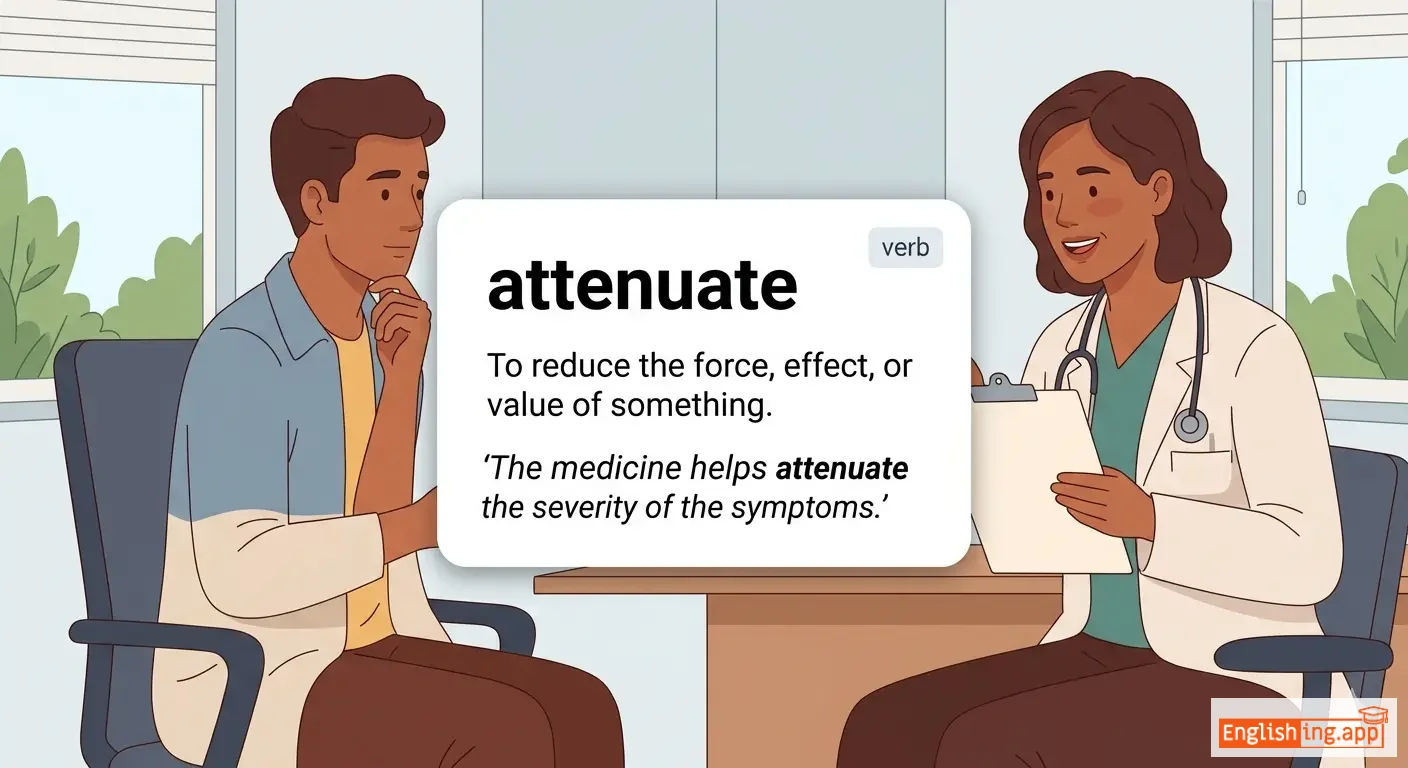
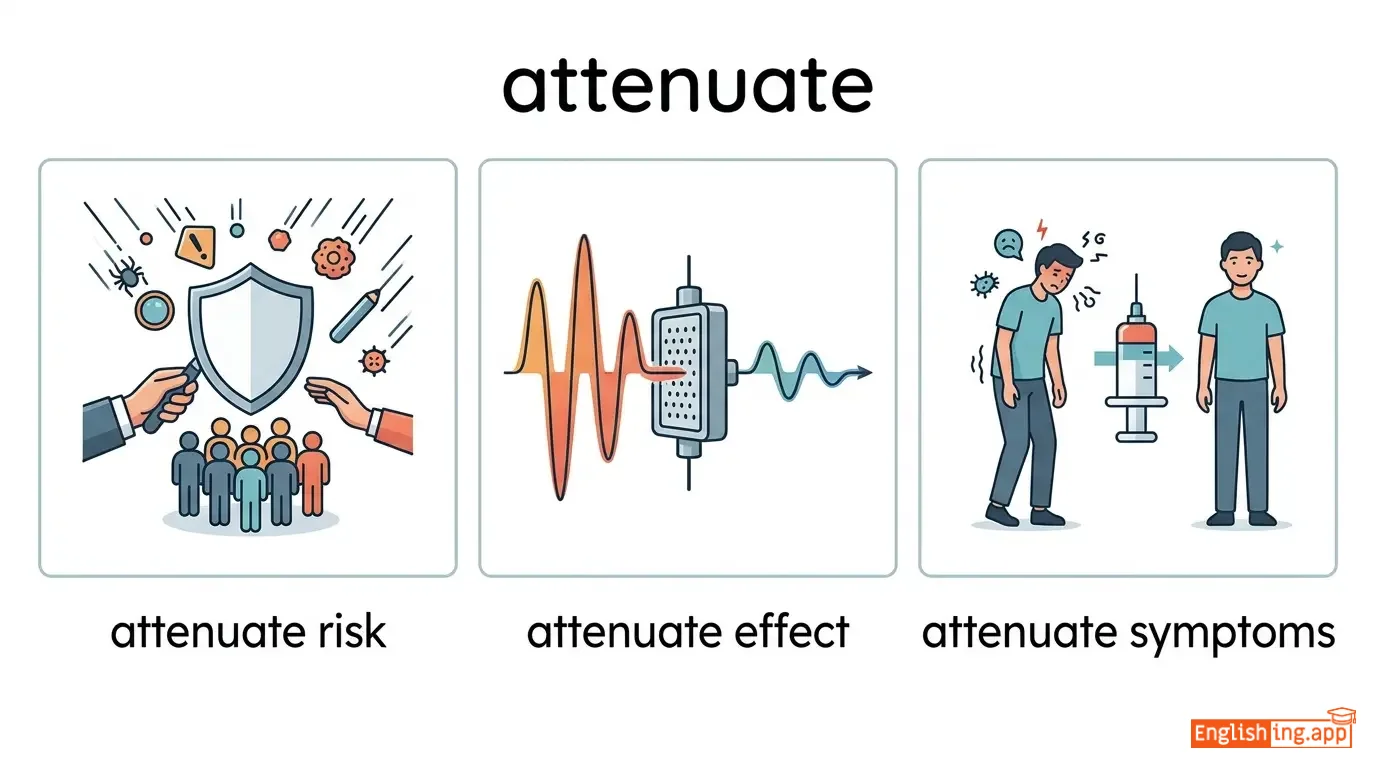
To reduce the force, effect, or value of something.
••••••
|
The medicine helps attenuate the severity of the symptoms.
Лекарство помогает ослабить тяжесть симптомов.
••••••
|
Лекарство помогает ослабить тяжесть симптомов.
Lekarstvo pomogaet oslabit' tyazhest' simptomov.
••••••
|
- •••••• | - •••••• | - •••••• |
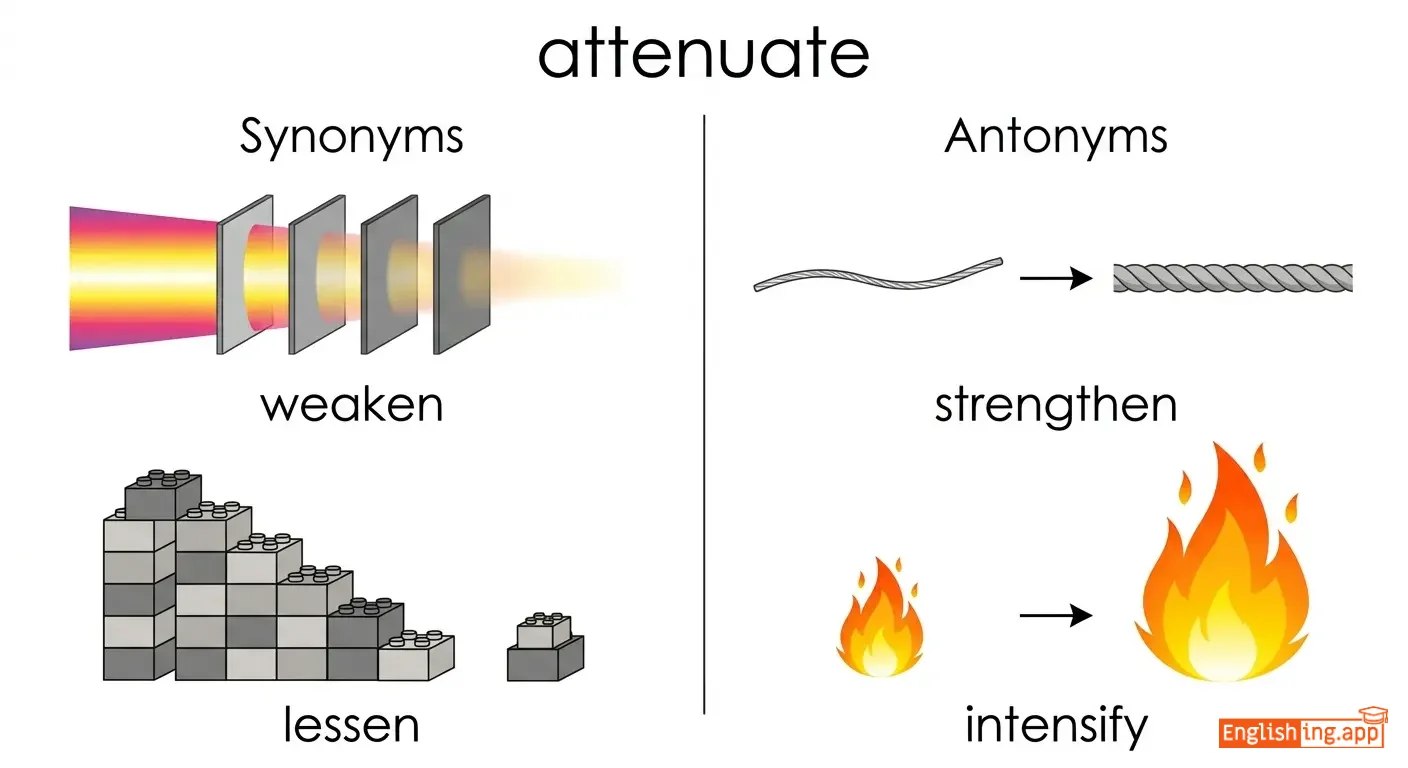
weaken, lessen, diminish, dilute, reduce
••••••
|
strengthen, intensify
••••••
|
attenuate risk, attenuate effect, attenuate symptoms
••••••
|
Attenuate = ослабить → ослабить.
••••••
|
|
#74
🦁
|
/ɔːˈdeɪ.ʃəs/
adjective
(аудейшес)
••••••
|
|
дерзкий
derzkii
••••••
|
- •••••• | - •••••• | - •••••• | - •••••• |
showing willingness to take bold risks; daring
••••••
|
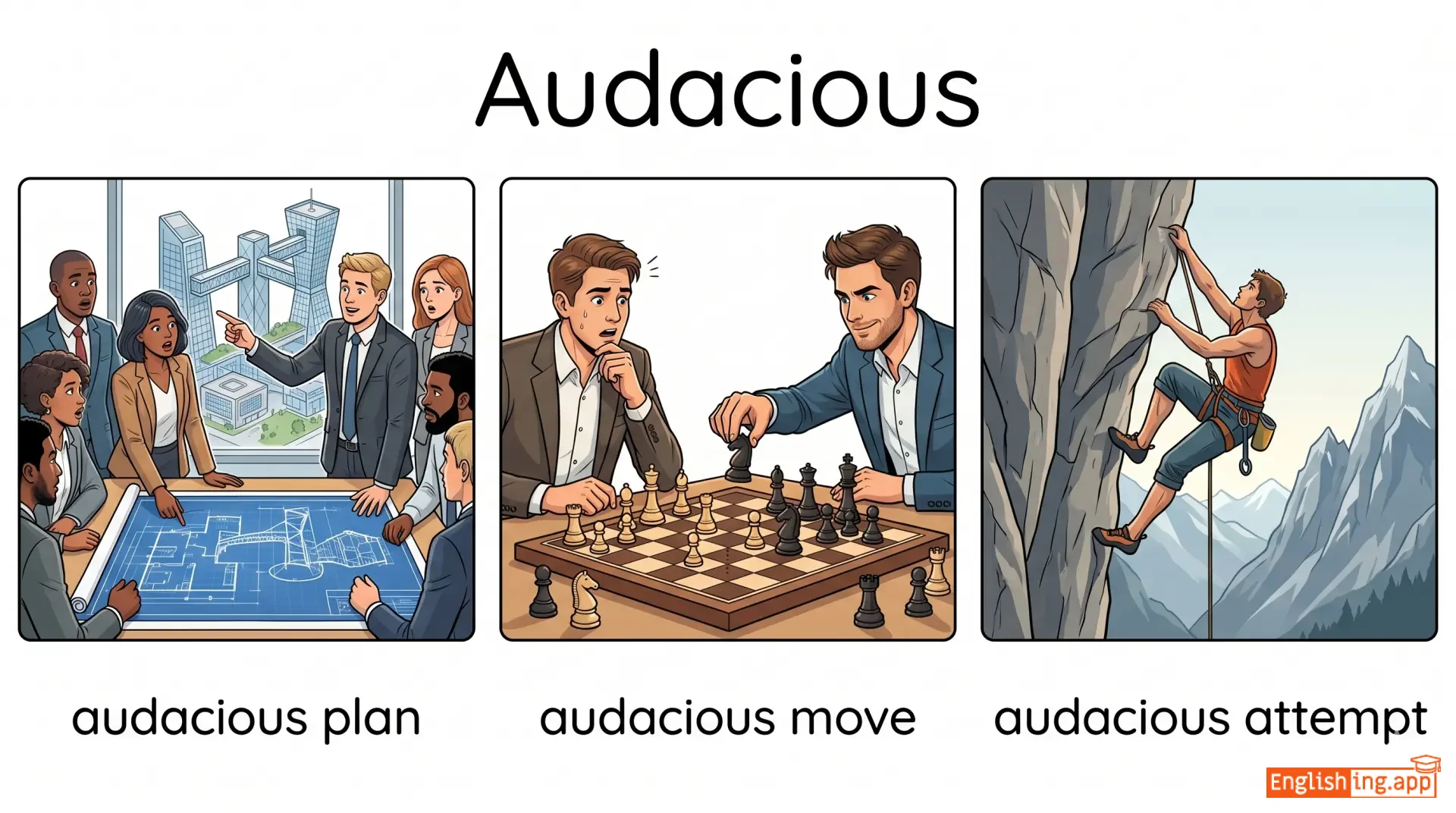
His audacious plan to climb the mountain without proper equipment shocked everyone. |
Его дерзкий план взобраться на гору без необходимого снаряжения шокировал всех.
Yego derzkii plan vzobrat'sya na goru bez neobkhodimogo snaryazheniya shokiroval vsekh.
••••••
|
- •••••• | - •••••• | - •••••• |
bold, daring, fearless, brave
••••••
|
timid, cautious, careful, cowardly
••••••
|
audacious plan, audacious move, audacious behavior
••••••
|
дерзкий = человек, который не боится рискованных поступков
••••••
|
|
#75
🥋
|
/ɔːˈstɪə/
adjective
(остир)
••••••
|
|
строгий, простой
stroh-giy, pro-stoy
••••••
|
- •••••• | - •••••• | - •••••• | - •••••• |
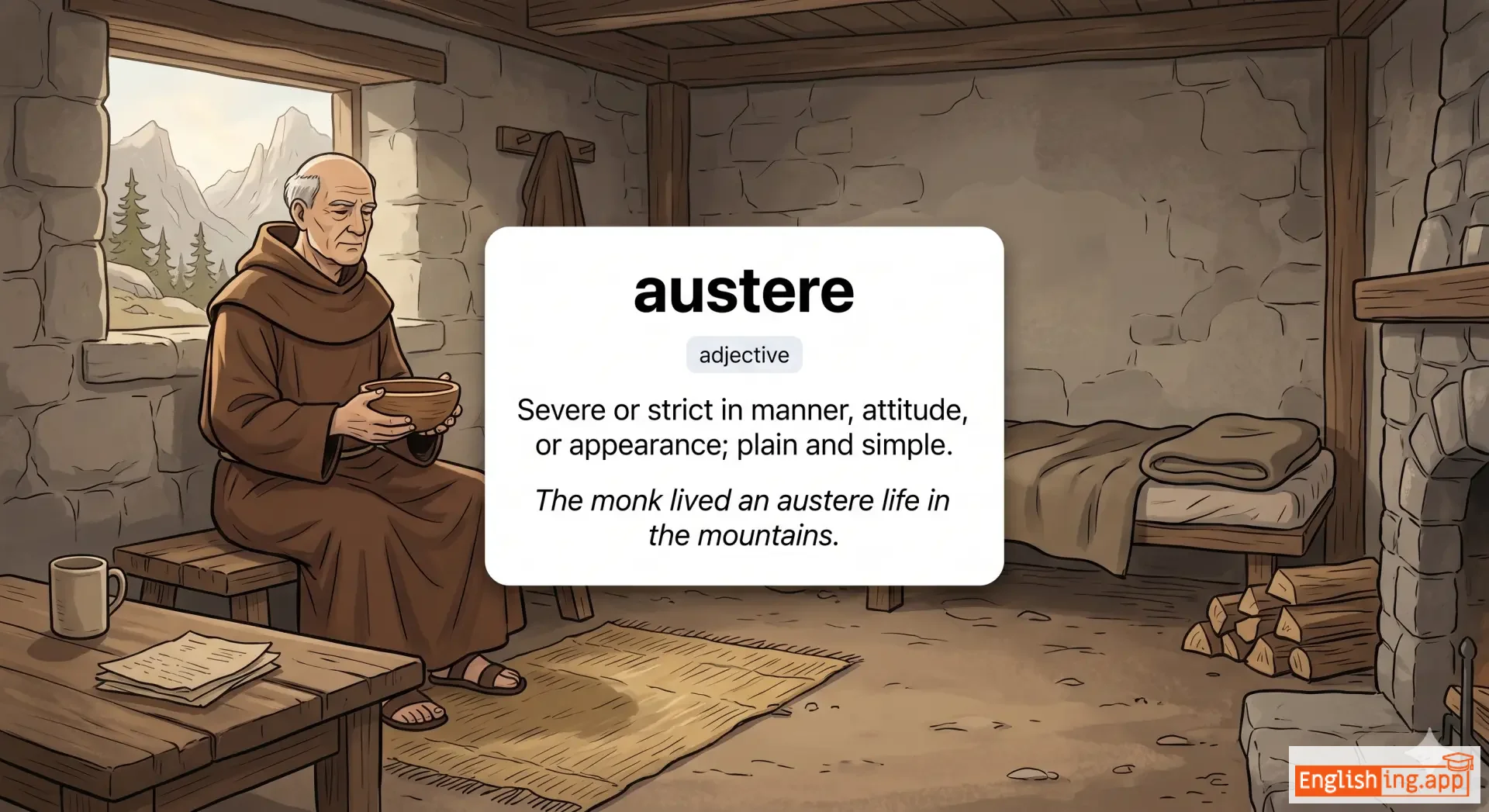
Severe or strict in manner, attitude, or appearance; plain and simple.
••••••
|
The monk lived an austere life in the mountains. |
Монах вел строгую жизнь в горах.
Monakh vel stro-guyu zhizn v gorakh.
••••••
|
- •••••• | - •••••• | - •••••• |
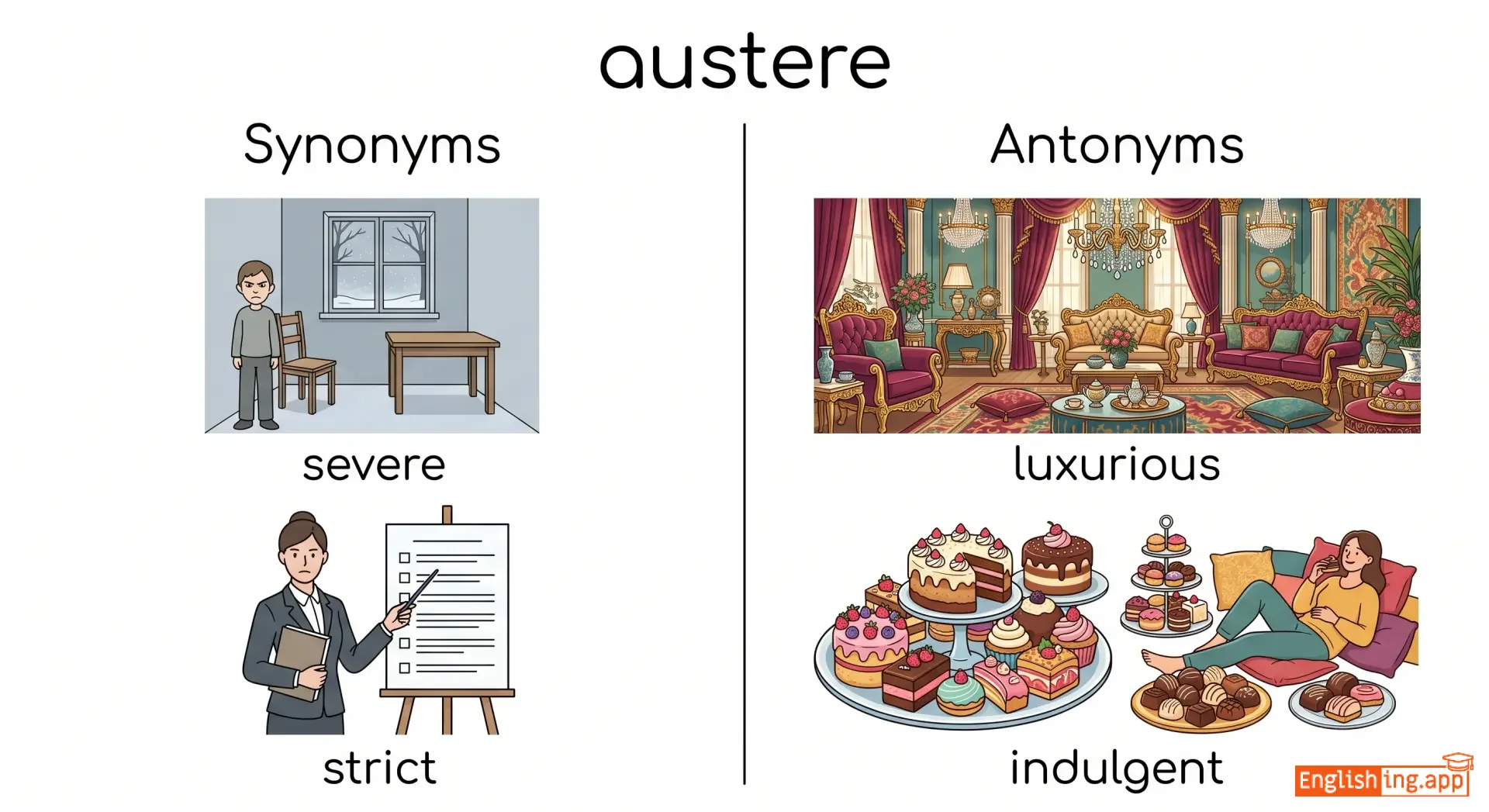
severe, strict, stern, simple, plain
••••••
|
luxurious, indulgent, elaborate
••••••
|
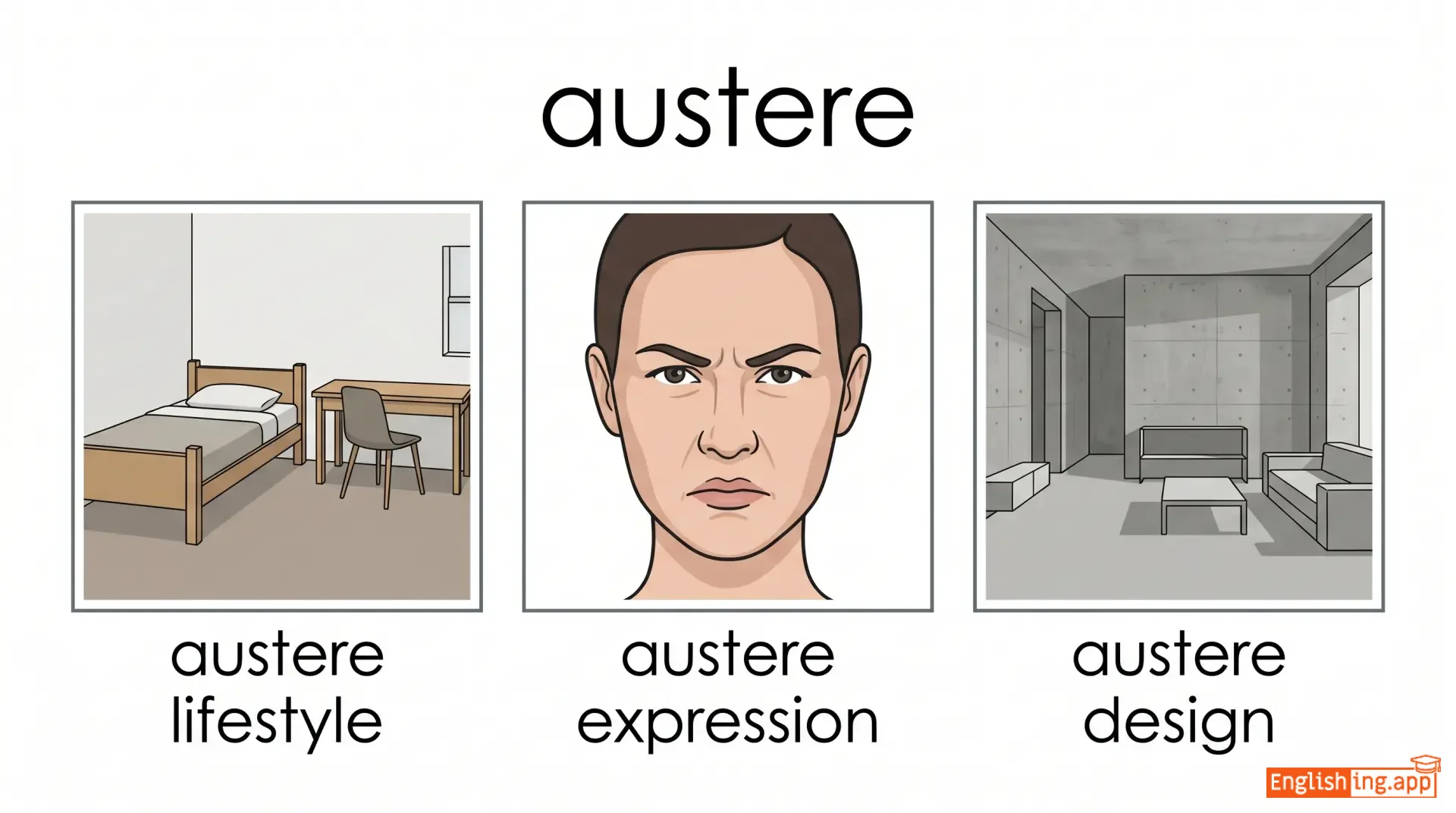
austere lifestyle, austere expression, austere design
••••••
|
Austere значит austro строгий, без лишних деталей – austere life, жизнь без роскоши.
••••••
|
Vocabulary Quiz
Test your vocabulary by matching words with their translations or meanings.
Login to take the quiz
Comments (0)
Share your thoughts and join the discussion.
Join the discussion by logging in
Login to CommentNo comments yet
Be the first to share your thoughts!