

Обновитесь для доступа ко всему словарю
Получите неограниченный доступ ко всем словам с подпиской Pro
Обновить до ProПеревод
Прошедшее
Причастие прошедшего времени
Третье лицо единственного числа
Герундий
Значение
Пример предложения
Перевод примера предложения
Синонимы
Антонимы
Коллокации
Мнемоника










Swipe left or right, or use the buttons. Tap image to zoom.
Обновитесь для доступа ко всем предложениям
Получите неограниченный доступ ко всем предложениям с подпиской Pro
Обновить до ProПеревод примера предложения
Слово
Lesson 30Lesson 30 - Переключатель маски
|
Эмодзи
|
Слово | Images | Перевод | Прошедшее | Причастие прошедшего времени | Третье лицо единственного числа | Герундий | Значение | Пример предложения | Перевод примера предложения | Пример выражения | Значение примера выражения | Перевод примера выражения | Синонимы | Антонимы | Коллокации | Мнемоника |
|---|---|---|---|---|---|---|---|---|---|---|---|---|---|---|---|---|---|
|
#726
🛐
|
/ˈsʌplɪkənt/
noun
(сапликант)
••••••
|
|
молящийся
molyashchiesya
••••••
|
- •••••• | - •••••• | - •••••• | - •••••• |
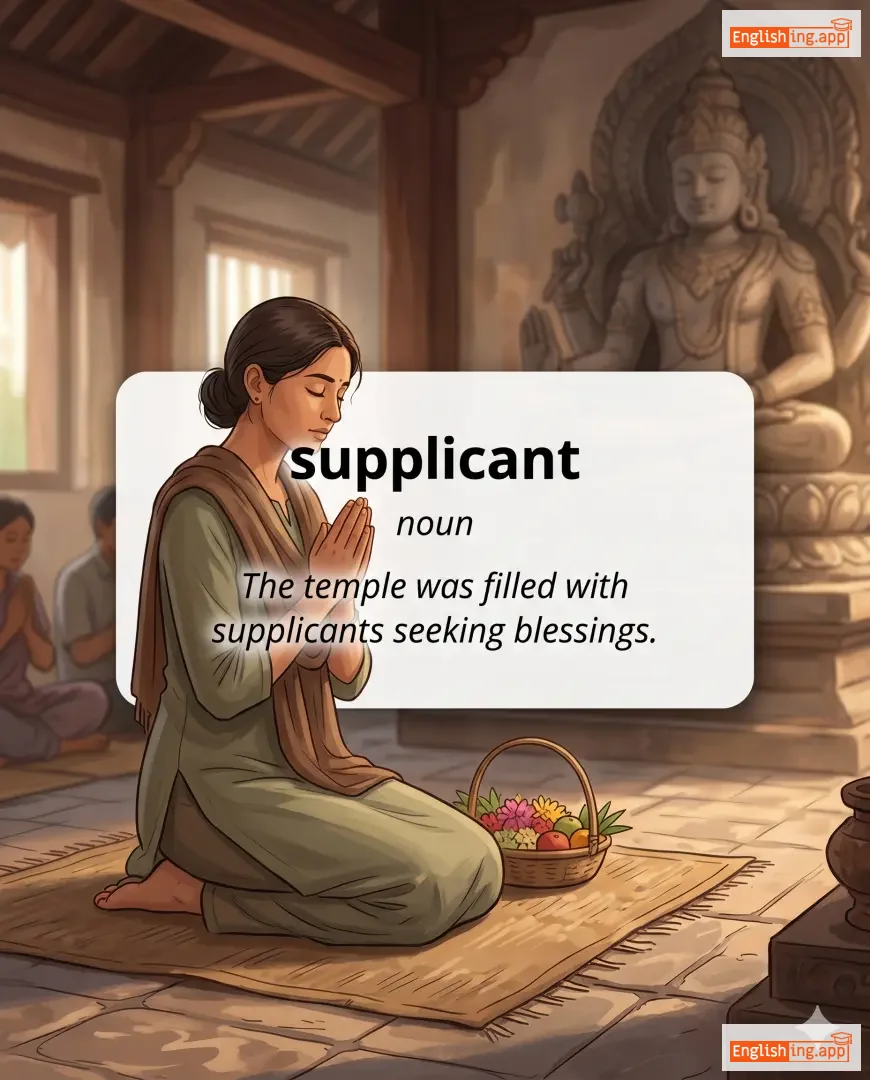
A person who humbly or earnestly asks for something, usually from a person of authority.
••••••
|
The temple was filled with supplicants seeking blessings. |
Храм был полон молящихся, которые искали благословения.
Khram byl polon molyashchikhsya, kotorye iskali blagosloveniya.
••••••
|
- •••••• | - •••••• | - •••••• |
petitioner, beggar, applicant, seeker, worshipper
••••••
|
giver, benefactor, donor
••••••
|
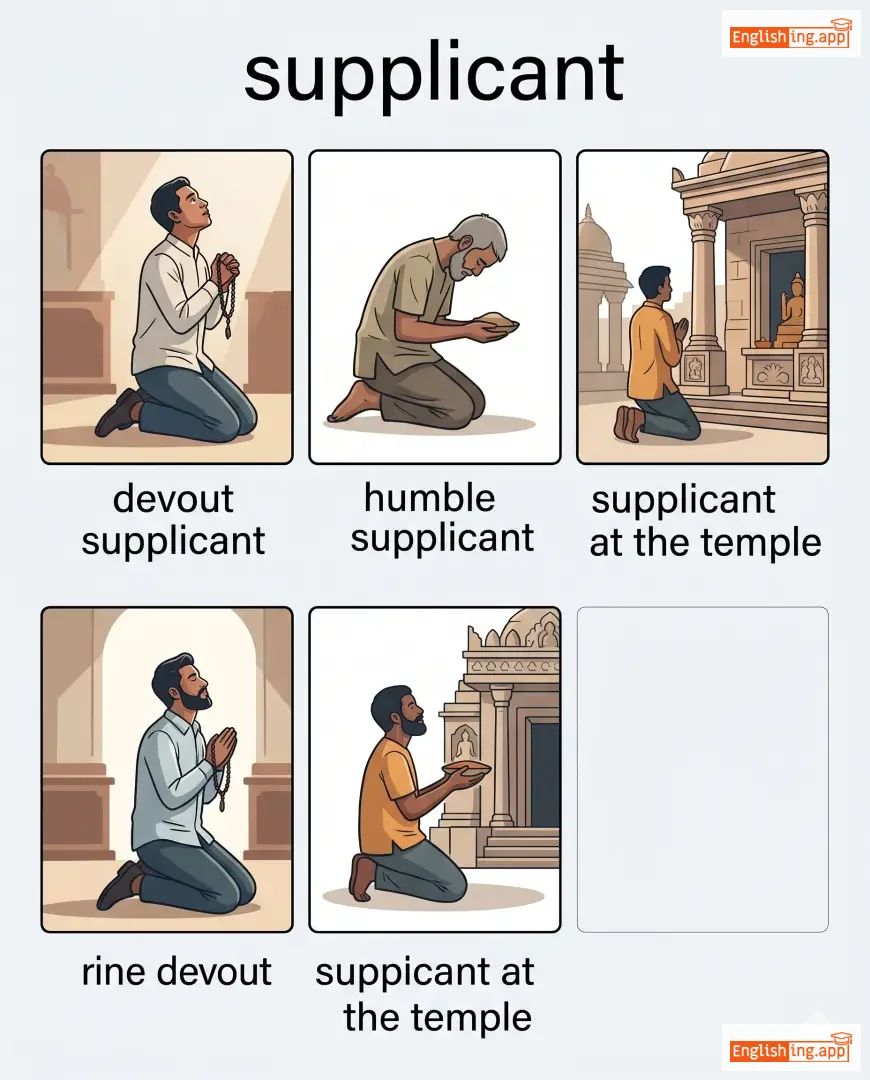
devout supplicant, humble supplicant, supplicant at the temple, supplicant before the throne
••••••
|
Supplicant = молящийся, вспомни 'молиться за помощь'
••••••
|
|
#727
🤔
|
/ˌsʌpəˈzɪʃən/
noun
(суппозиция)
••••••
|
|
предположение
predpolozhenie
••••••
|
- •••••• | - •••••• | - •••••• | - •••••• |
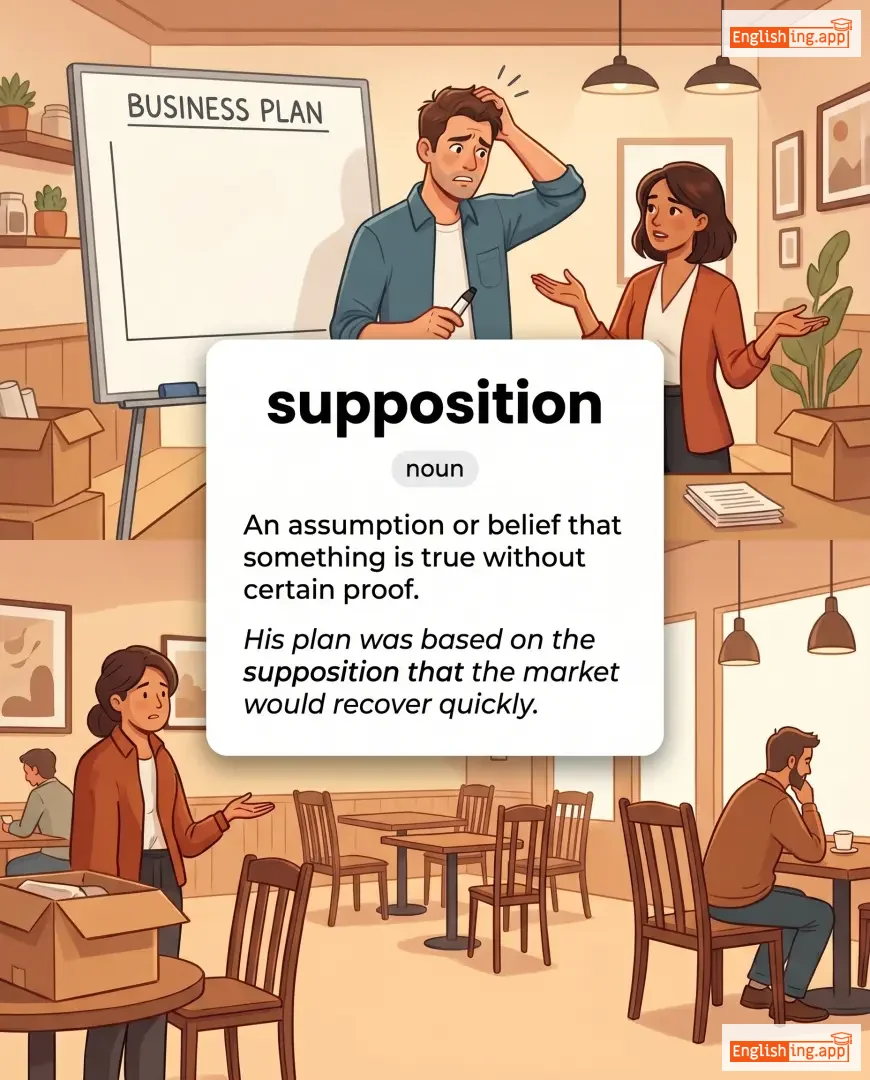
An assumption or belief that something is true without certain proof.
••••••
|
His plan was based on the supposition that the market would recover quickly. |
Его план был основан на предположении, что рынок быстро восстановится.
Ego plan byl osnovan na predpolozhenii, chto rynok bystro vosstanovitsya.
••••••
|
on the supposition that |
Based on the assumption that something is true
••••••
|
на предположении, что
na predpolozhenii, chto
••••••
|
assumption, presumption, hypothesis, belief, conjecture
••••••
|
fact, certainty, truth
••••••
|
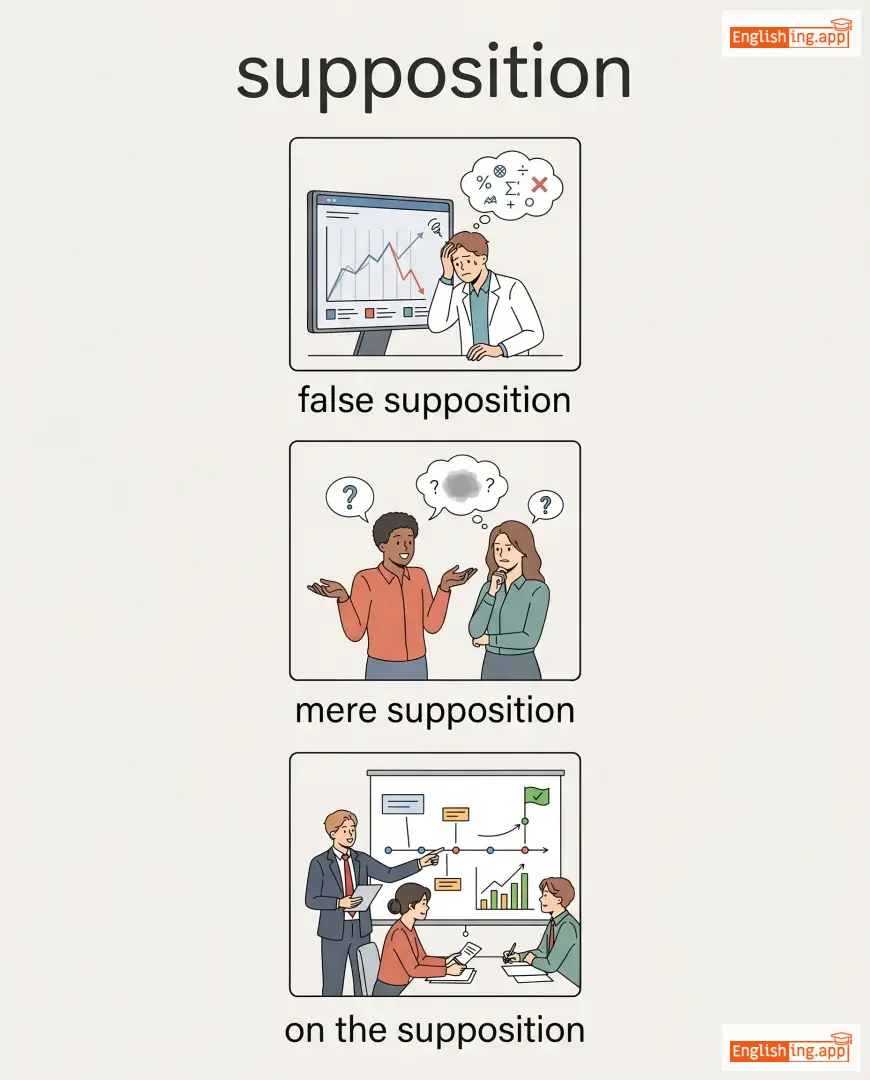
false supposition, mere supposition, on the supposition, mistaken supposition
••••••
|
Supposition = Suppose + tion = Предположение, представь, что 'suppose' = предположить.
••••••
|
|
#728
🧠
|
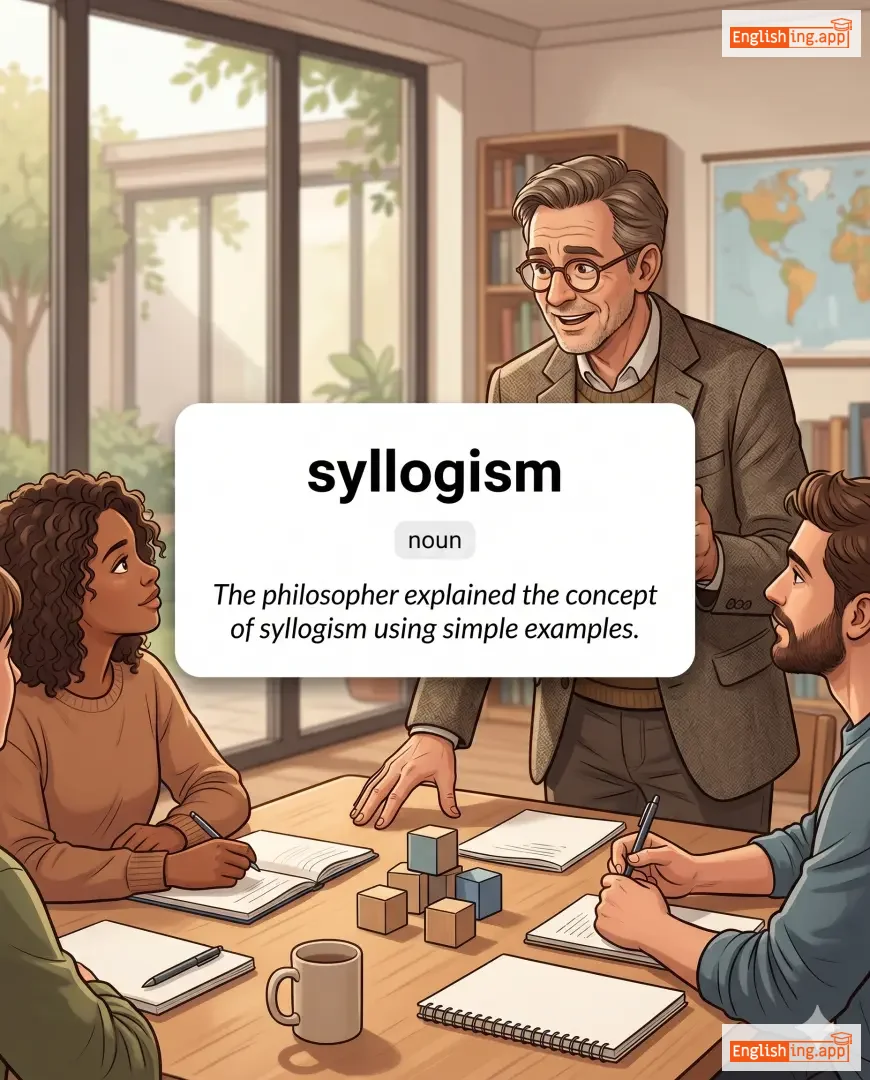
/ˈsɪlədʒɪzəm/
noun
(силлогизм)
••••••
|
|
силлогизм
sillogizm
••••••
|
- •••••• | - •••••• | - •••••• | - •••••• |
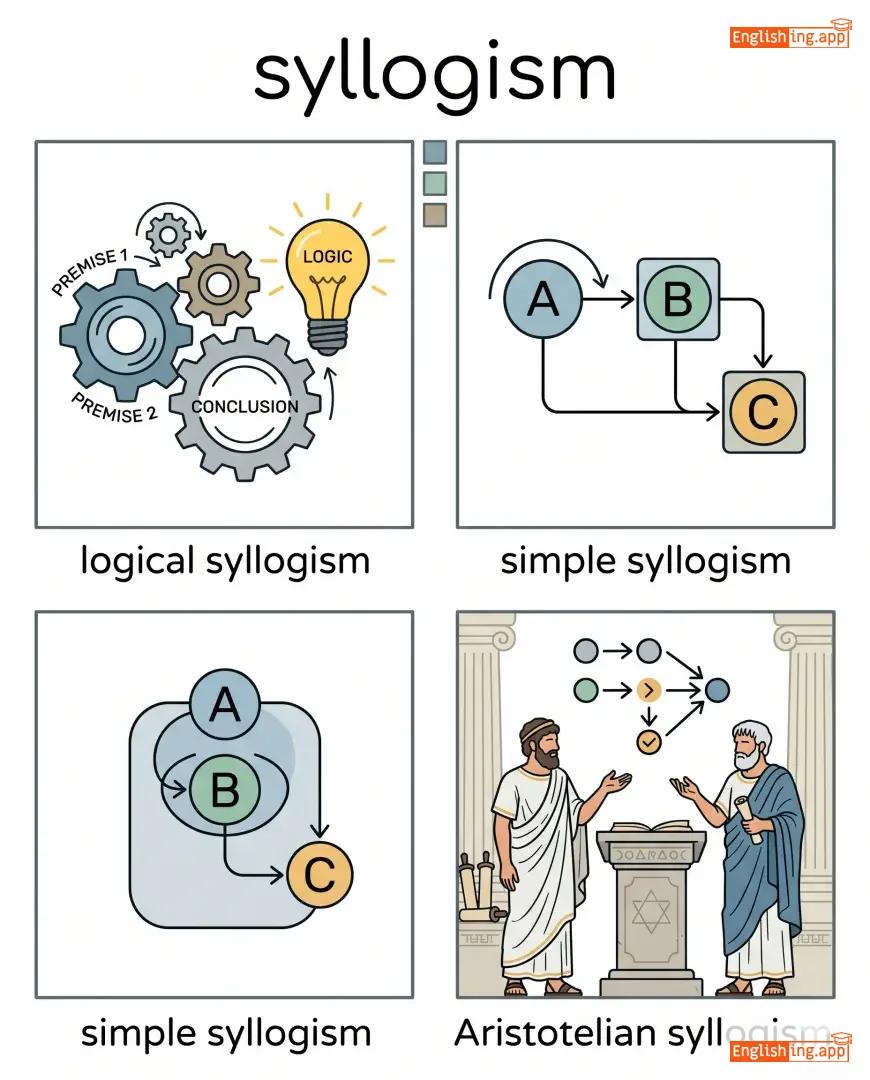
A form of reasoning in which a conclusion is drawn from two given or assumed premises.
••••••
|
The philosopher explained the concept of syllogism using simple examples.
Философ объяснил концепцию силлогизма с помощью простых примеров.
••••••
|
Философ объяснил концепцию силлогизма с помощью простых примеров.
Filosof obyasnil kontseptsiyu sillogizma s pomoshch'yu prostykh primerov.
••••••
|
- •••••• | - •••••• | - •••••• |
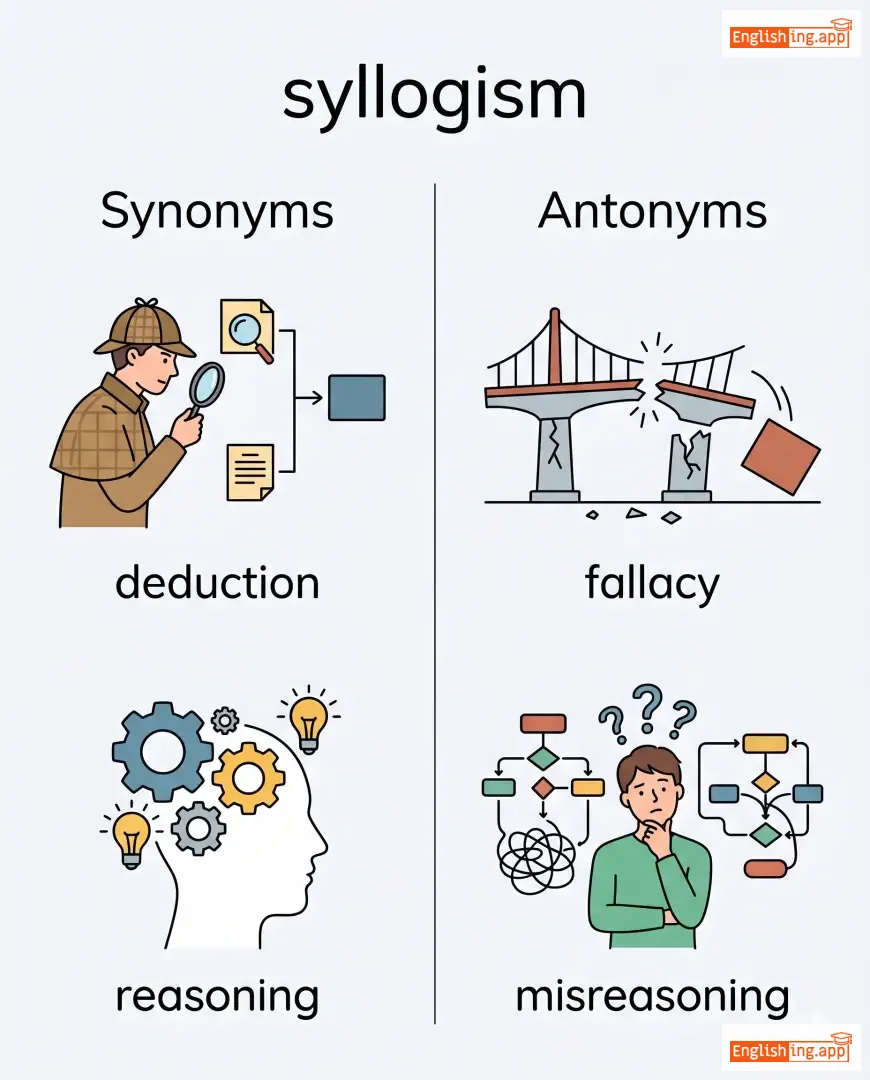
deduction, reasoning, logic, inference
••••••
|
fallacy, misreasoning
••••••
|
logical syllogism, simple syllogism, Aristotelian syllogism, valid syllogism
••••••
|
Силлогизм – это логическая система – как в силосе, где вся логика хранится.
••••••
|
|
#729
🌲
|
/ˈsɪlvən/
adjective
(сильван)
••••••
|
|
лесной
lesnoy
••••••
|
- •••••• | - •••••• | - •••••• | - •••••• |
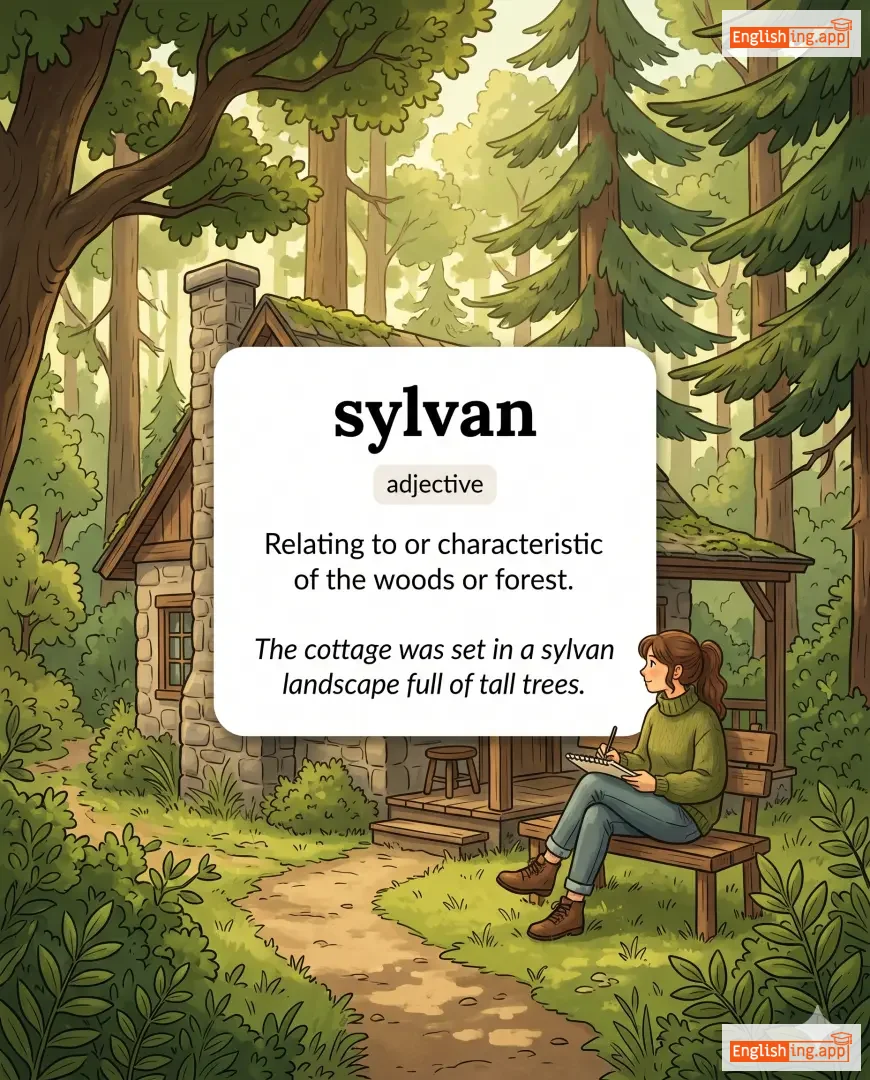
Relating to or characteristic of the woods or forest.
••••••
|
The cottage was set in a sylvan landscape full of tall trees. |
Коттедж был расположен в лесном пейзаже, полном высоких деревьев.
Kottedzh byl raspolozhen v lesnom peyzazhe, polnom vysokikh derev'yev.
••••••
|
- •••••• | - •••••• | - •••••• |
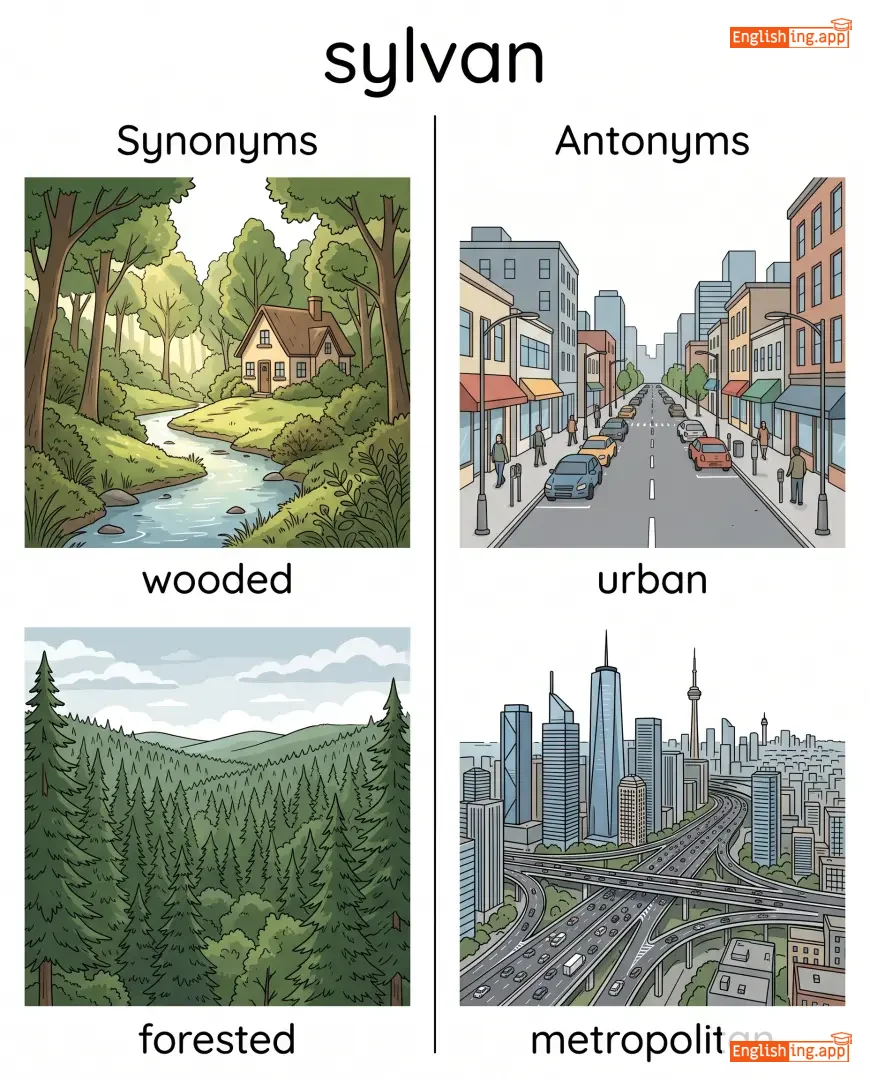
wooded, forested, rustic, pastoral
••••••
|
urban, metropolitan
••••••
|
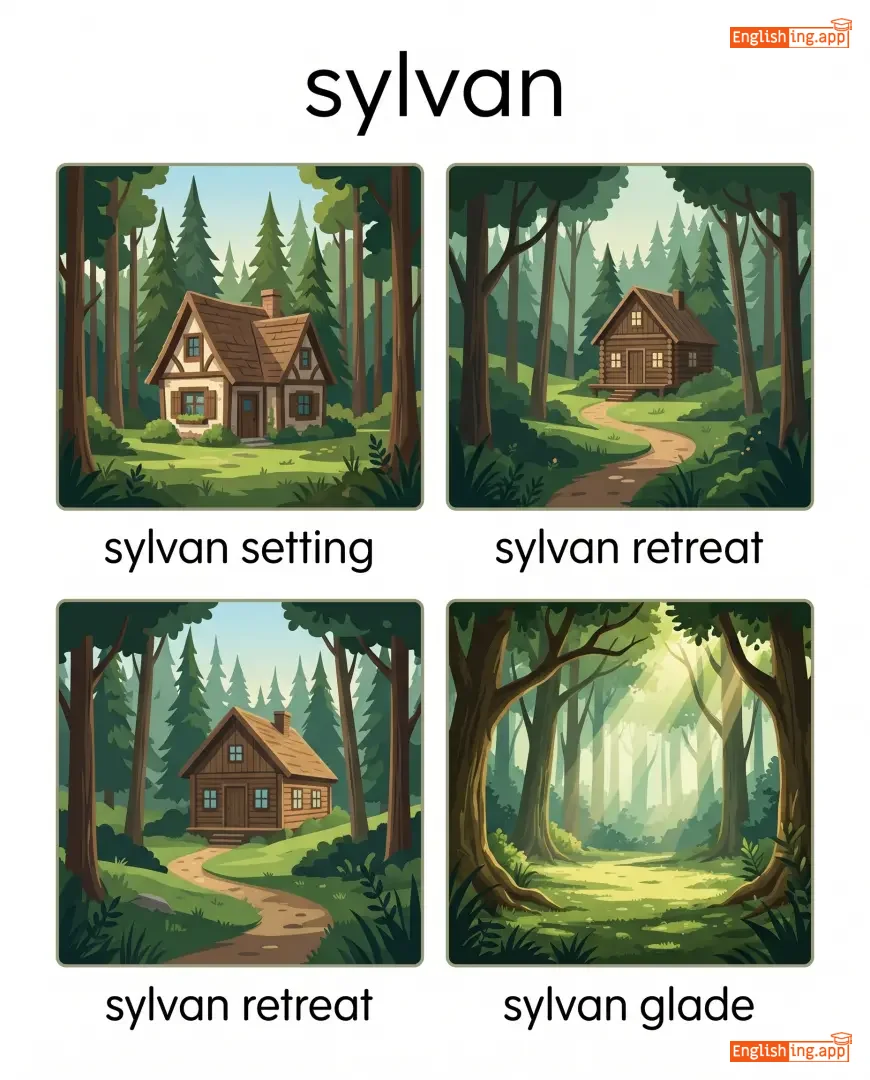
sylvan setting, sylvan retreat, sylvan glade, sylvan beauty
••••••
|
Sylvan означает лесной, представьте себе дом в лесу.
••••••
|
|
#730
🤫
|
/ˈtæsɪt/
adjective
(тэсит)
••••••
|
|
молчаливое соглашение
molchalivoe soglashenie
••••••
|
- •••••• | - •••••• | - •••••• | - •••••• |
understood or implied without being stated
••••••
|
There was a tacit agreement to avoid the subject. |
Существовало молчаливое соглашение избегать эту тему.
Sushchestvovalo molchalivoe soglashenie izbegat' etu temu.
••••••
|
tacit agreement |
an unspoken understanding between people
••••••
|
молчаливое соглашение
molchalivoe soglashenie
••••••
|
implicit, unspoken, understood, silent
••••••
|
explicit, stated, expressed
••••••
|
tacit consent, tacit approval, tacit understanding
••••••
|
Tacit означает молчаливое соглашение, как если бы люди договорились без слов.
••••••
|
|
#731
🔮
|
/ˈtælɪzmən/
noun
(талисман)
••••••
|
|
талисман
talisman
••••••
|
- •••••• | - •••••• | - •••••• | - •••••• |
An object believed to have magical powers or bring good luck.
••••••
|
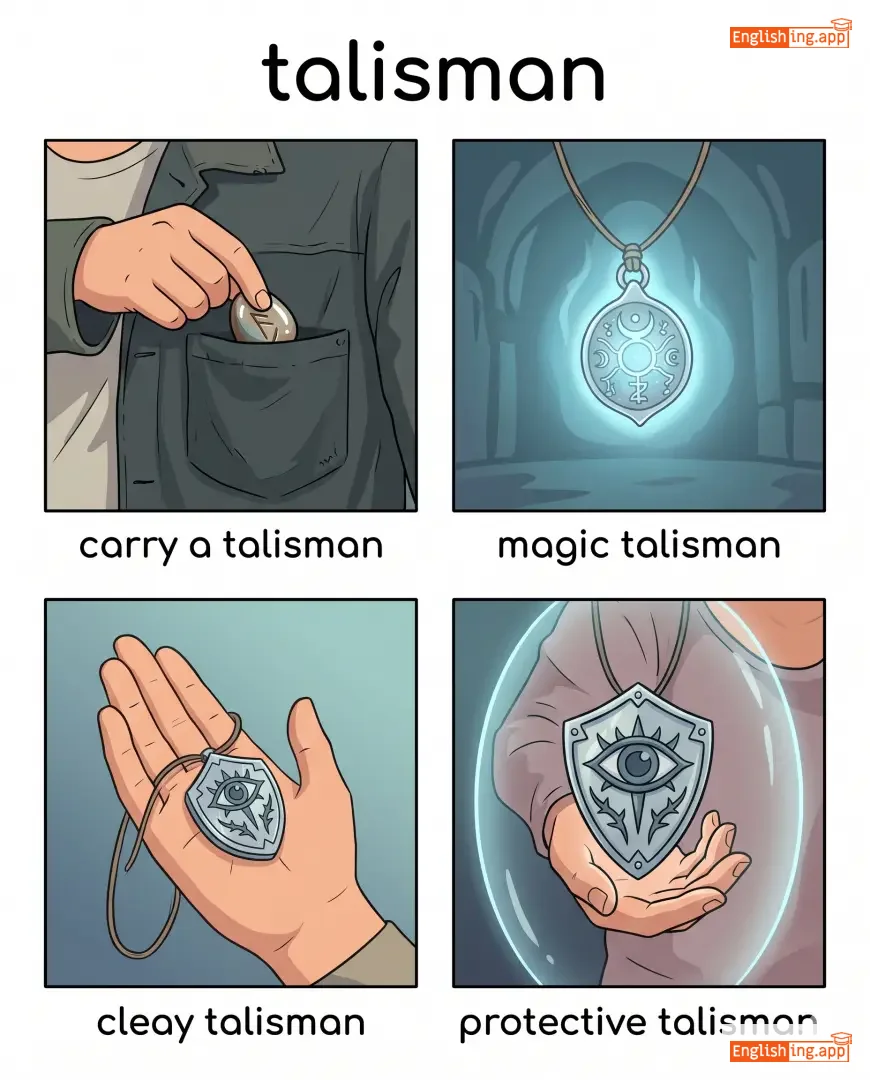
He always carried a small talisman in his pocket for luck. |
Он всегда носил маленький талисман в своем кармане для удачи.
On vsegda nosil malen'kiy talisman v svoem karmane dlya udachi.
••••••
|
- •••••• | - •••••• | - •••••• |
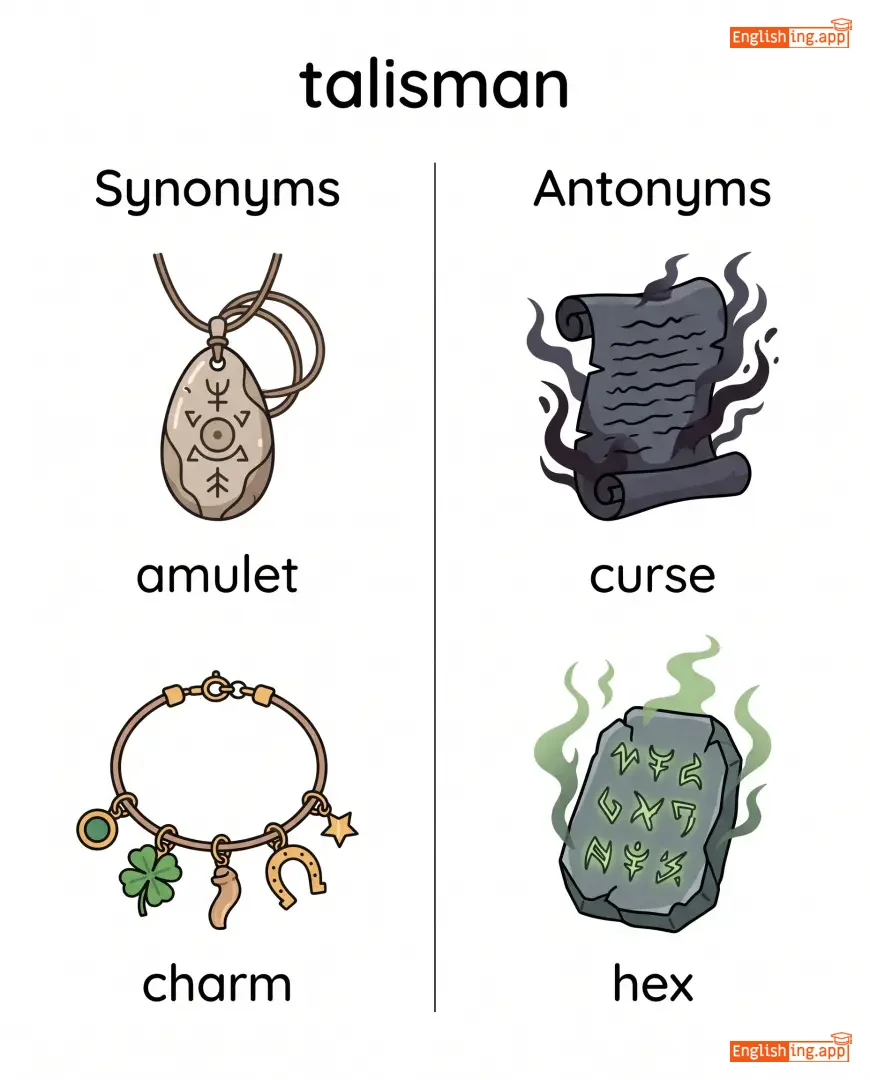
amulet, charm, lucky charm, totem, trinket
••••••
|
curse, hex
••••••
|
carry a talisman, magic talisman, protective talisman, lucky talisman
••••••
|
Talisman — это талисман — помни 'Tali' и 'талисман'.
••••••
|
|
#732
↔️
|
/tænˈdʒɛnʃəl/
adjective
(тæнˈдʒеншэл)
••••••
|
|
касательный
kasatel'nyy
••••••
|
- •••••• | - •••••• | - •••••• | - •••••• |
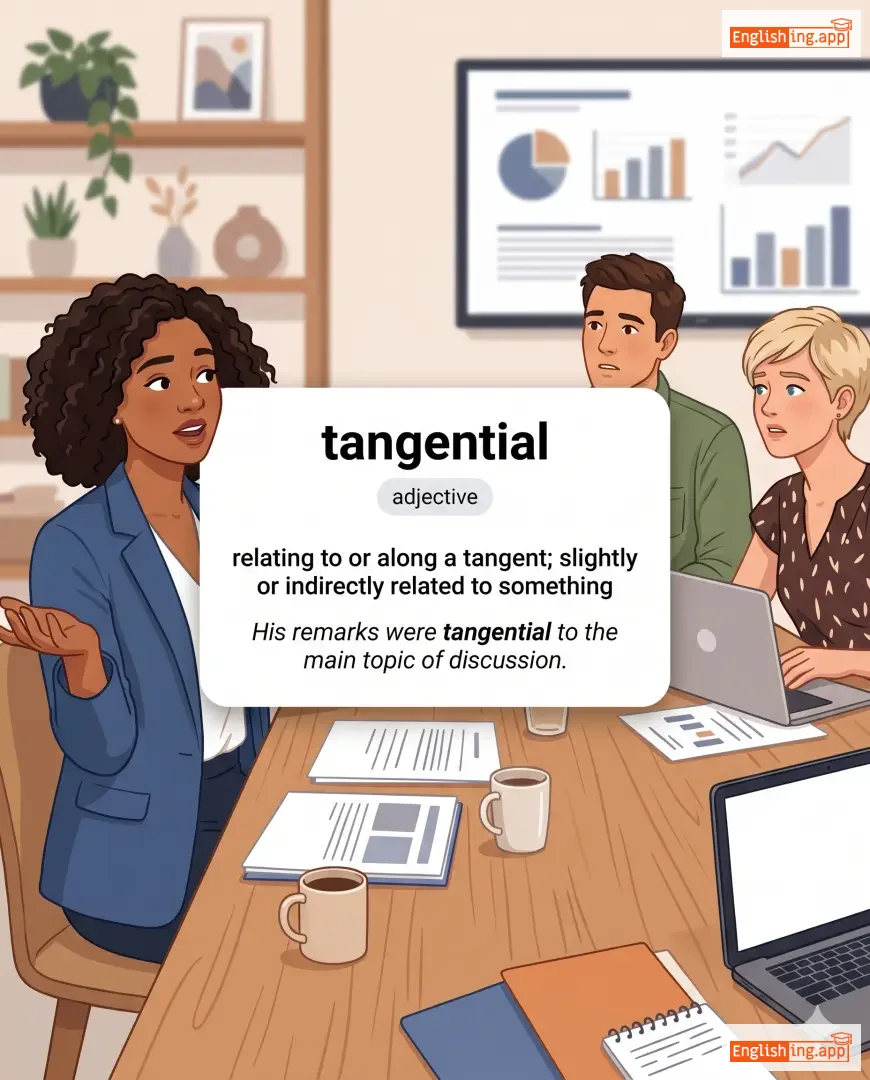
relating to or along a tangent; slightly or indirectly related to something
••••••
|
His remarks were tangential to the main topic of discussion.
Его замечания были касательно основной темы обсуждения.
••••••
|
Его замечания были касательными к основной теме обсуждения.
Ego zamechaniya byli kasatel'nymi k osnovnoy teme obsuzhdeniya.
••••••
|
- •••••• | - •••••• | - •••••• |
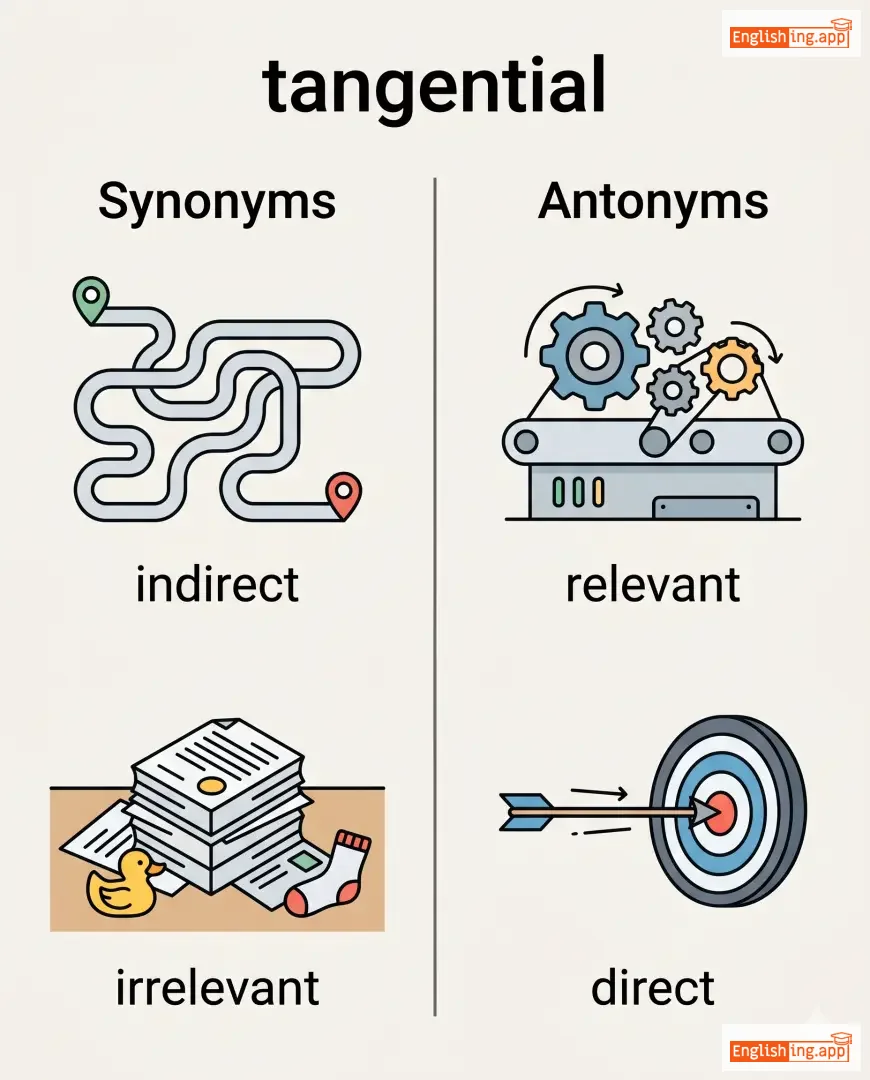
indirect, irrelevant, peripheral, secondary
••••••
|
relevant, direct
••••••
|
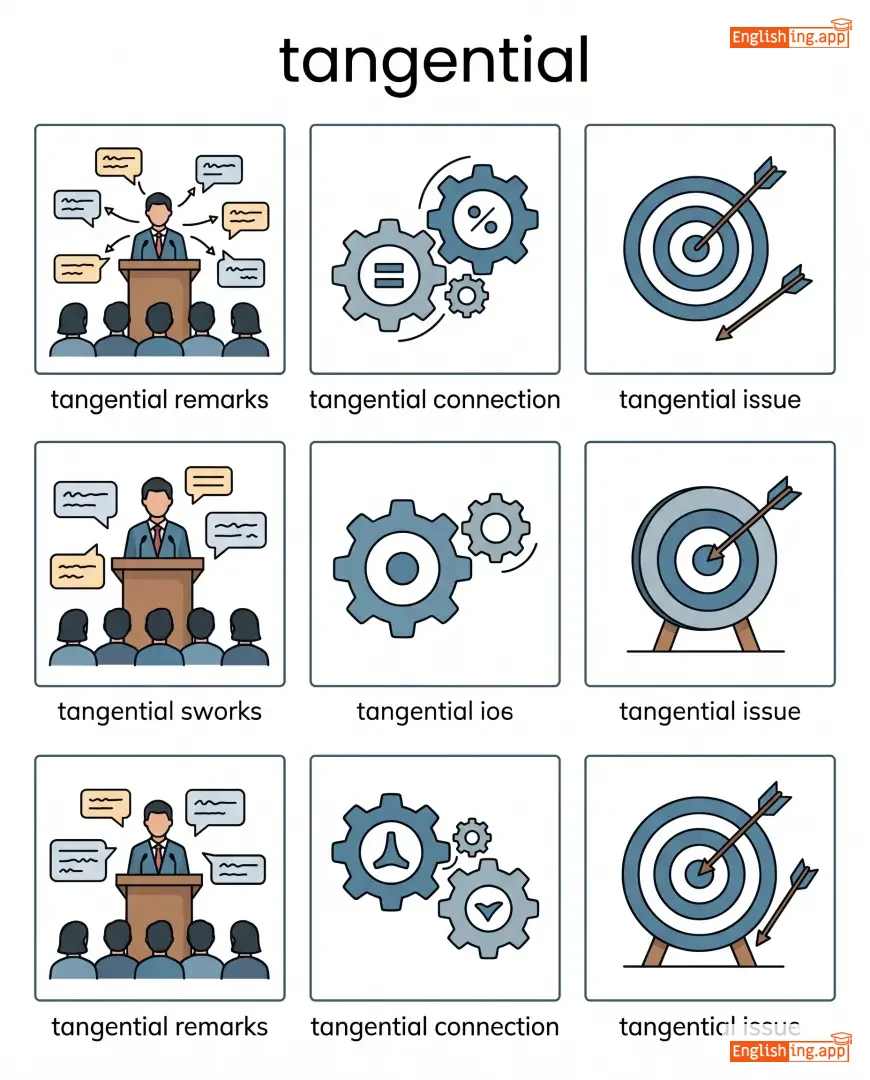
tangential remarks, tangential connection, tangential issue
••••••
|
Касательный = Затрагивает тему, но не является основным.
••••••
|
|
#733
♾️
|
/tɔːˈtɒlədʒi/
noun
(таутология)
••••••
|
|
ненужное повторение
nenuzhnoe povtorenie
••••••
|
- •••••• | - •••••• | - •••••• | - •••••• |
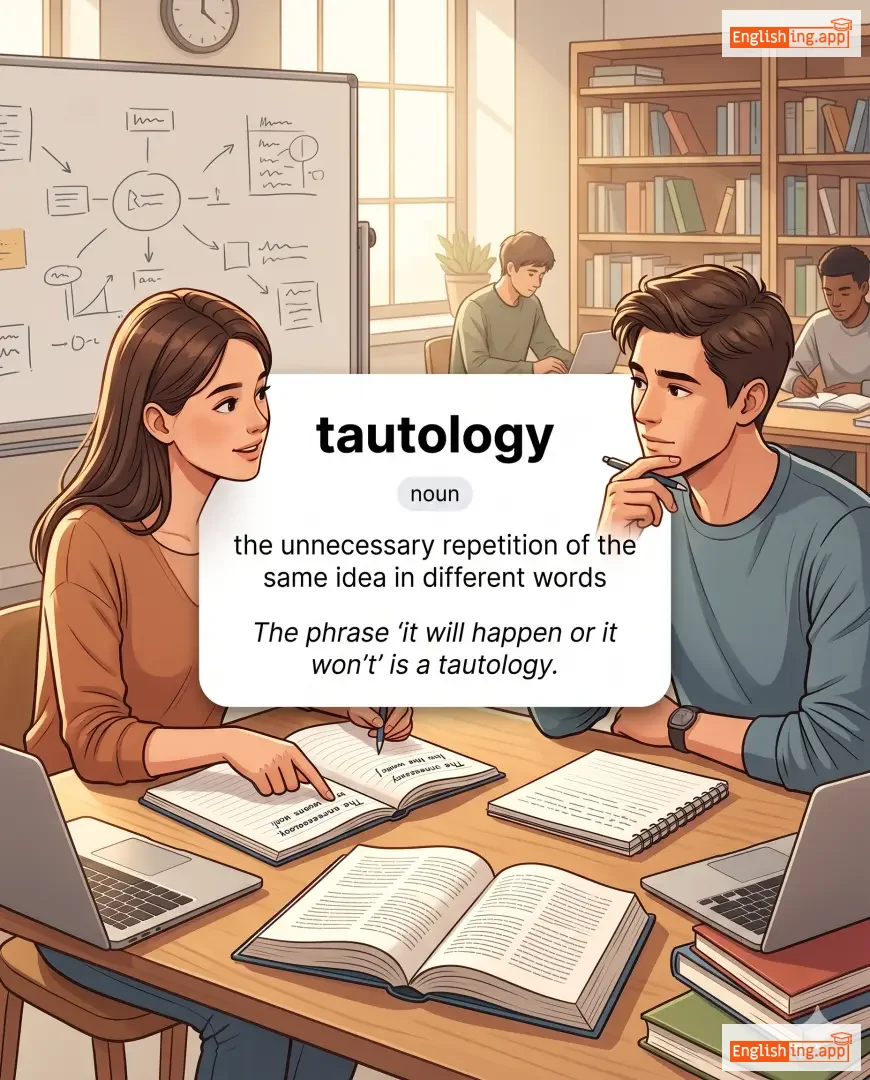
the unnecessary repetition of the same idea in different words
••••••
|
The phrase 'it will happen or it won’t' is a tautology. |
Фраза 'это случится или не случится' — это тавтология.
Fraza 'eto sluchitsya ili ne sluchitsya' — eto tautologiya.
••••••
|
- •••••• | - •••••• | - •••••• |
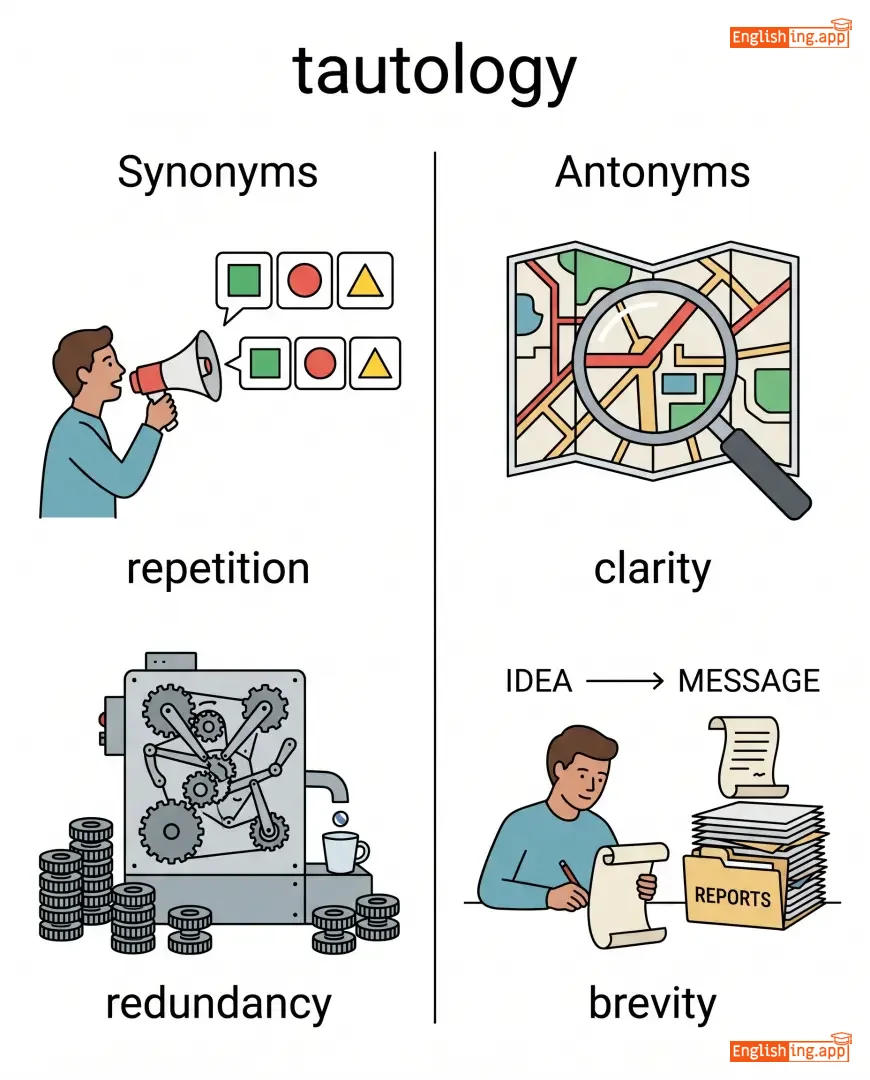
repetition, redundancy, reiteration, circularity
••••••
|
clarity, brevity, precision
••••••
|
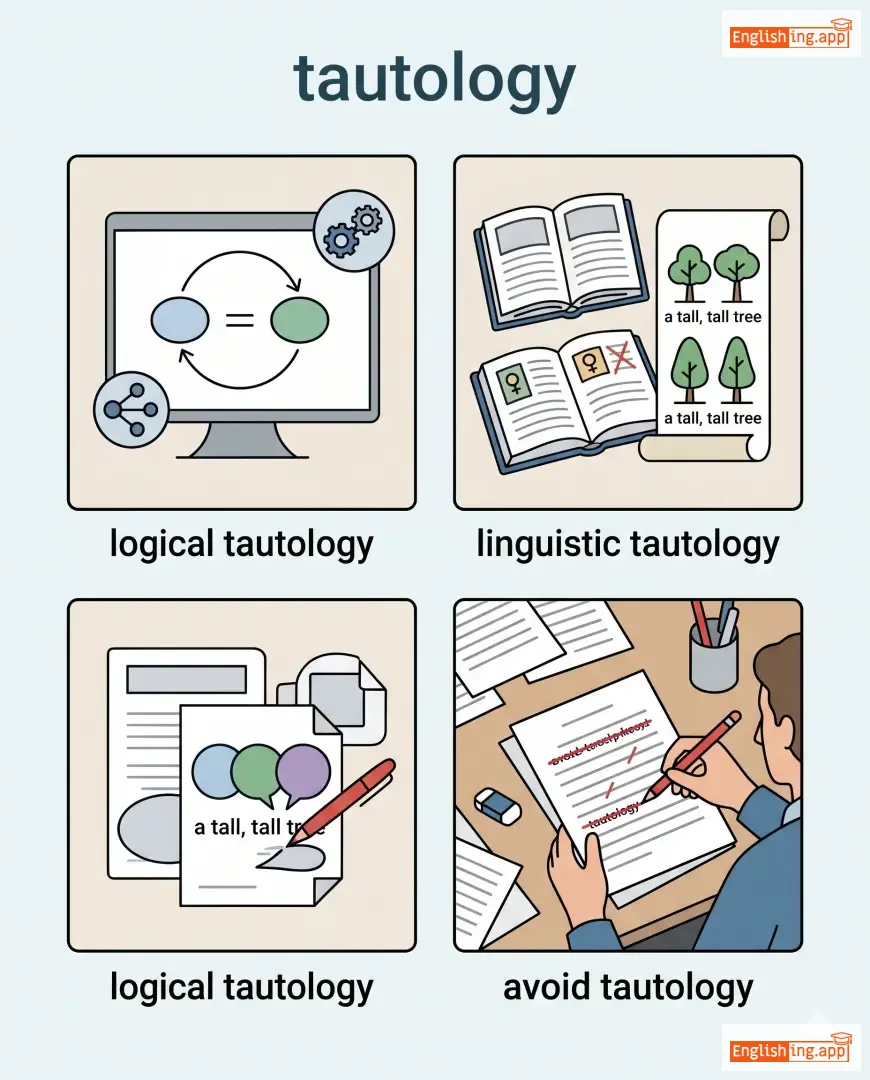
logical tautology, linguistic tautology, avoid tautology
••••••
|
Тавтология — это когда одно и то же повторяется разными словами.
••••••
|
|
#734
📚
|
/tækˈsɒnəmi/
noun
(таксономия)
••••••
|
|
наука о классификации
nauka o klassifikatsii
••••••
|
- •••••• | - •••••• | - •••••• | - •••••• |
The science or practice of classifying things, especially organisms.
••••••
|
Modern taxonomy helps scientists organize and study biodiversity. |
Современная таксономия помогает ученым организовывать и изучать биологическое разнообразие.
Sovremennaya taksonomiya pomogaet uchenym organizovyvat' i izuchat' biologicheskoe raznoobrazie.
••••••
|
- •••••• | - •••••• | - •••••• |
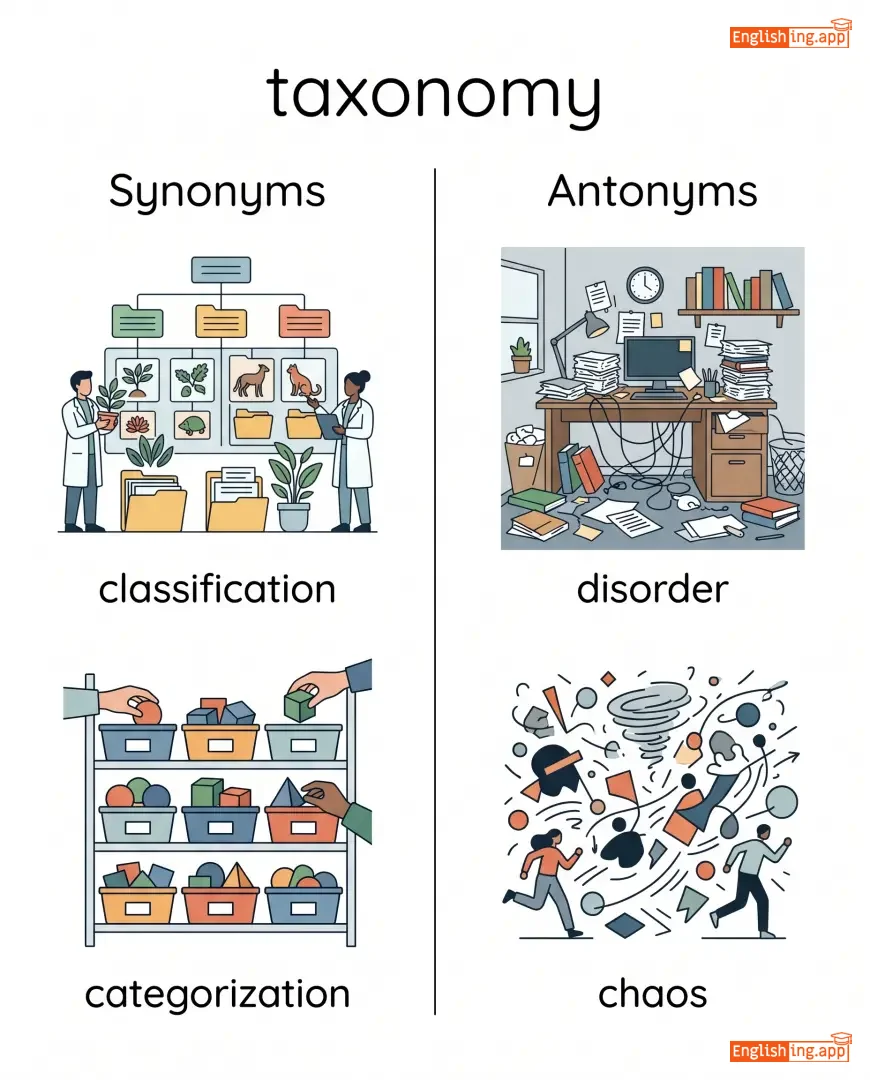
classification, categorization, systematics, grouping, nomenclature
••••••
|
disorder, chaos
••••••
|
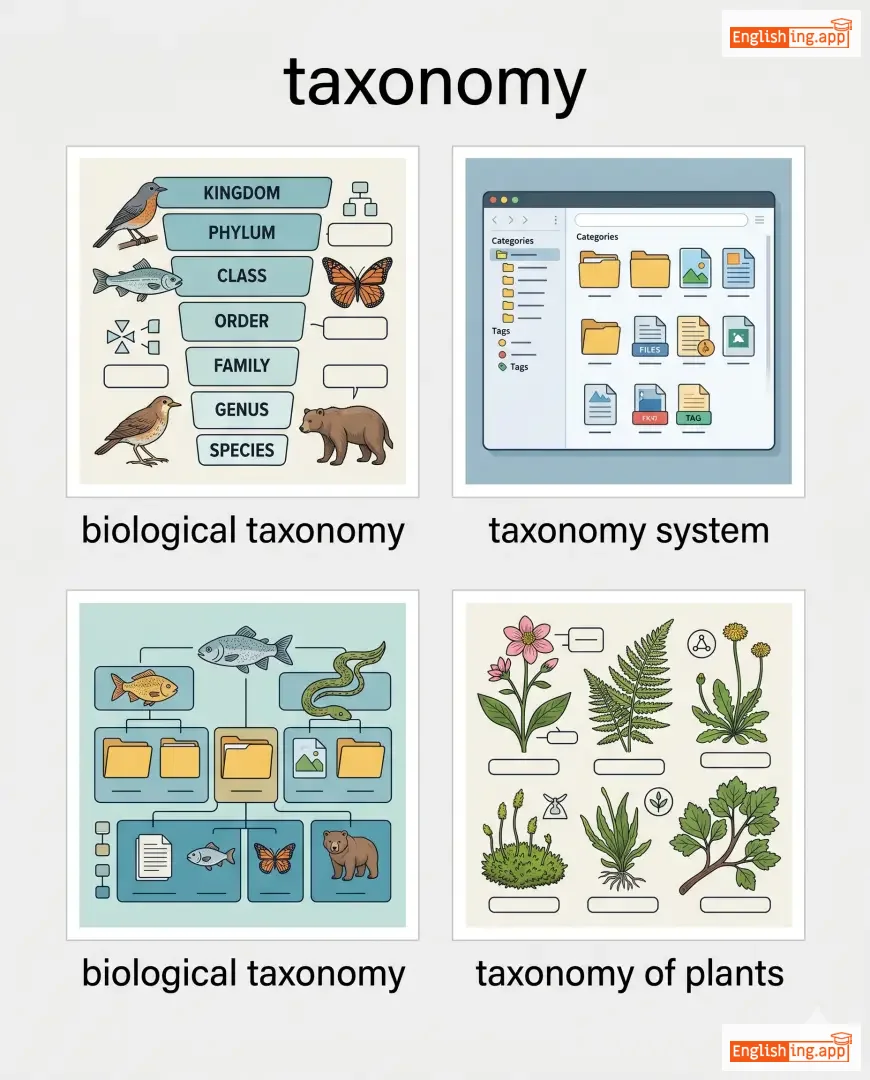
biological taxonomy, taxonomy system, taxonomy of plants, taxonomy classification
••••••
|
Таксо + нoмия = Наука о классификации
••••••
|
|
#735
📜
|
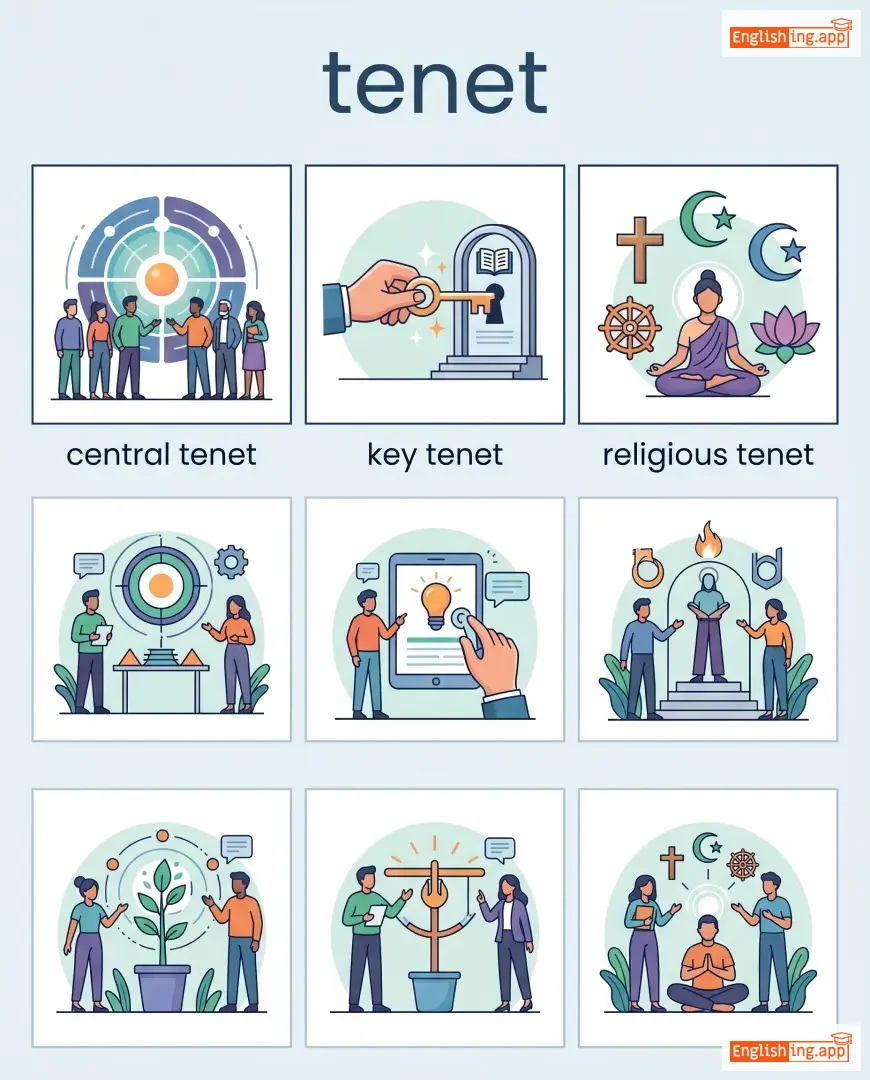
/ˈtɛnɪt/
noun
(тэ-нет)
••••••
|
|
принцип
printsip
••••••
|
- •••••• | - •••••• | - •••••• | - •••••• |
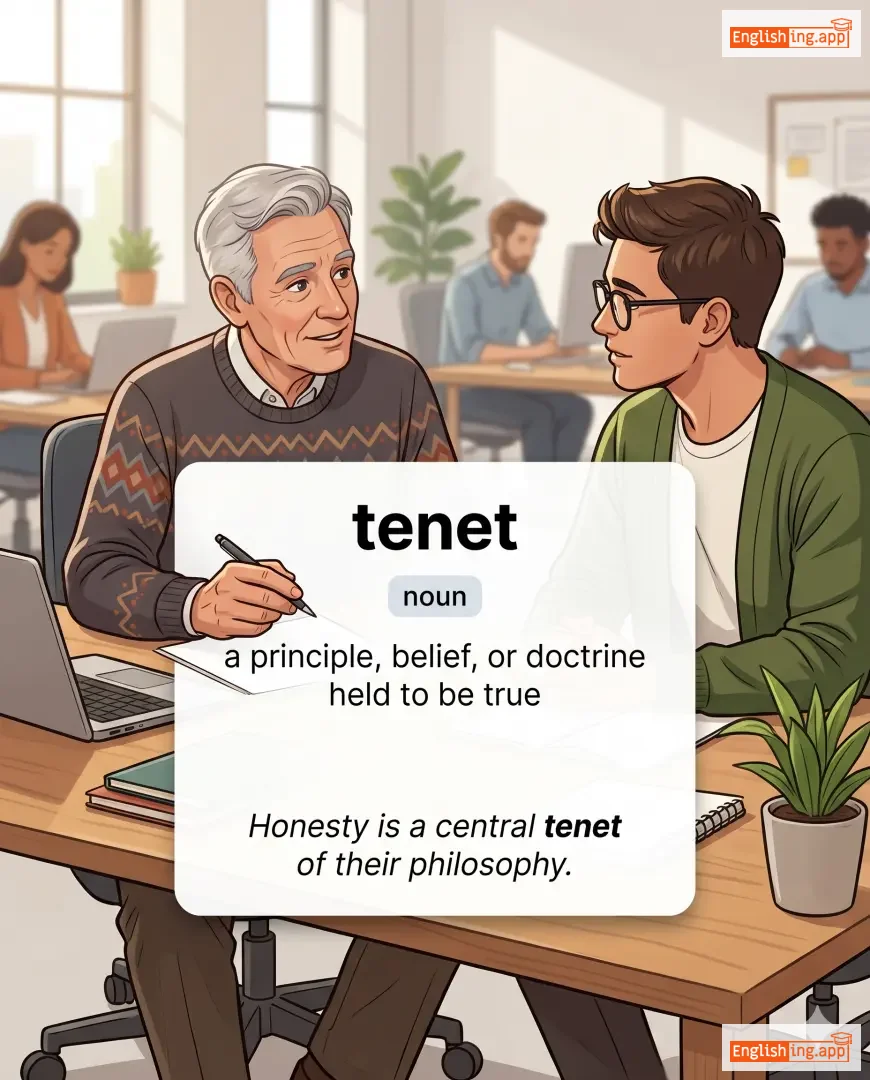
a principle, belief, or doctrine held to be true
••••••
|
Honesty is a central tenet of their philosophy. |
Честность — это основной принцип их философии.
Chestnost' — eto osnovnoy printsip ikh filosofii.
••••••
|
- •••••• | - •••••• | - •••••• |
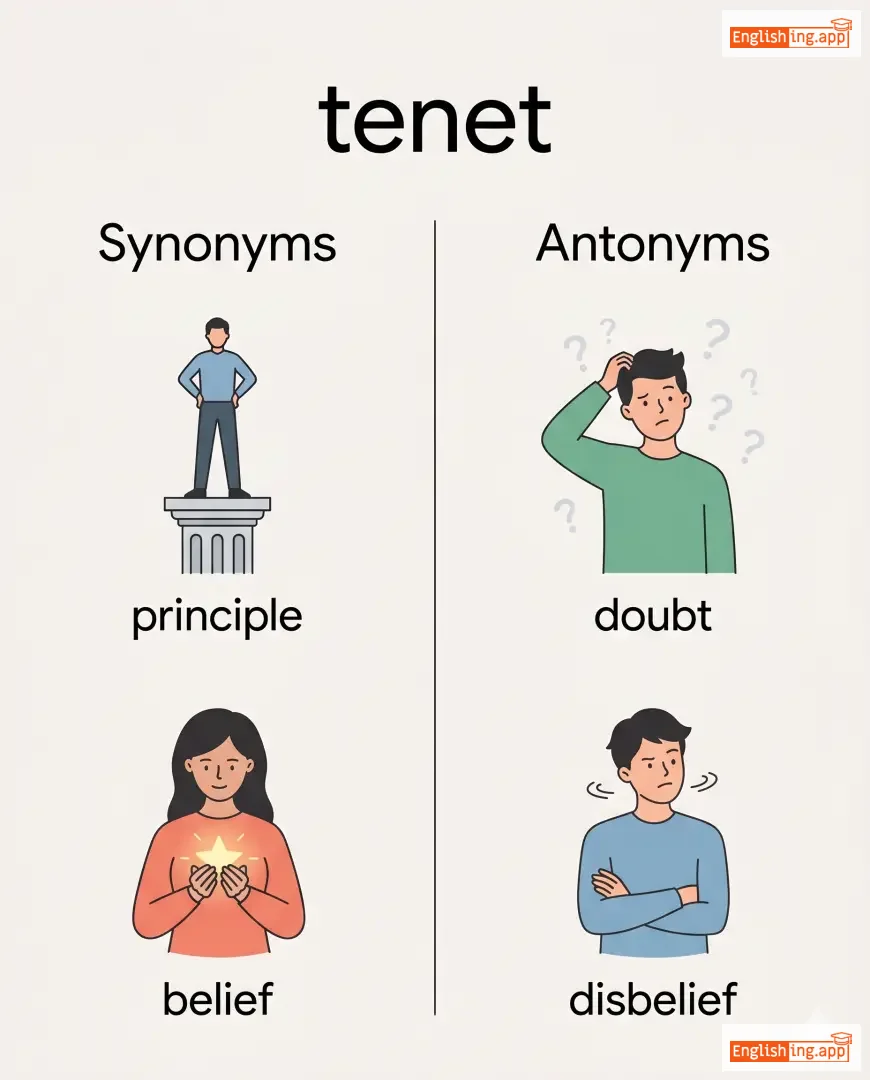
principle, belief, doctrine, dogma, conviction
••••••
|
doubt, disbelief, rejection
••••••
|
central tenet, key tenet, religious tenet, philosophical tenet
••••••
|
Tenet звучит как 'тен' — следовать принципам жизни.
••••••
|
|
#736
🕸️
|
/ˈtɛn.ju.əs/
adjective
(тениус)
••••••
|
|
слабый / тонкий
slaby / tonkiy
••••••
|
- •••••• | - •••••• | - •••••• | - •••••• |
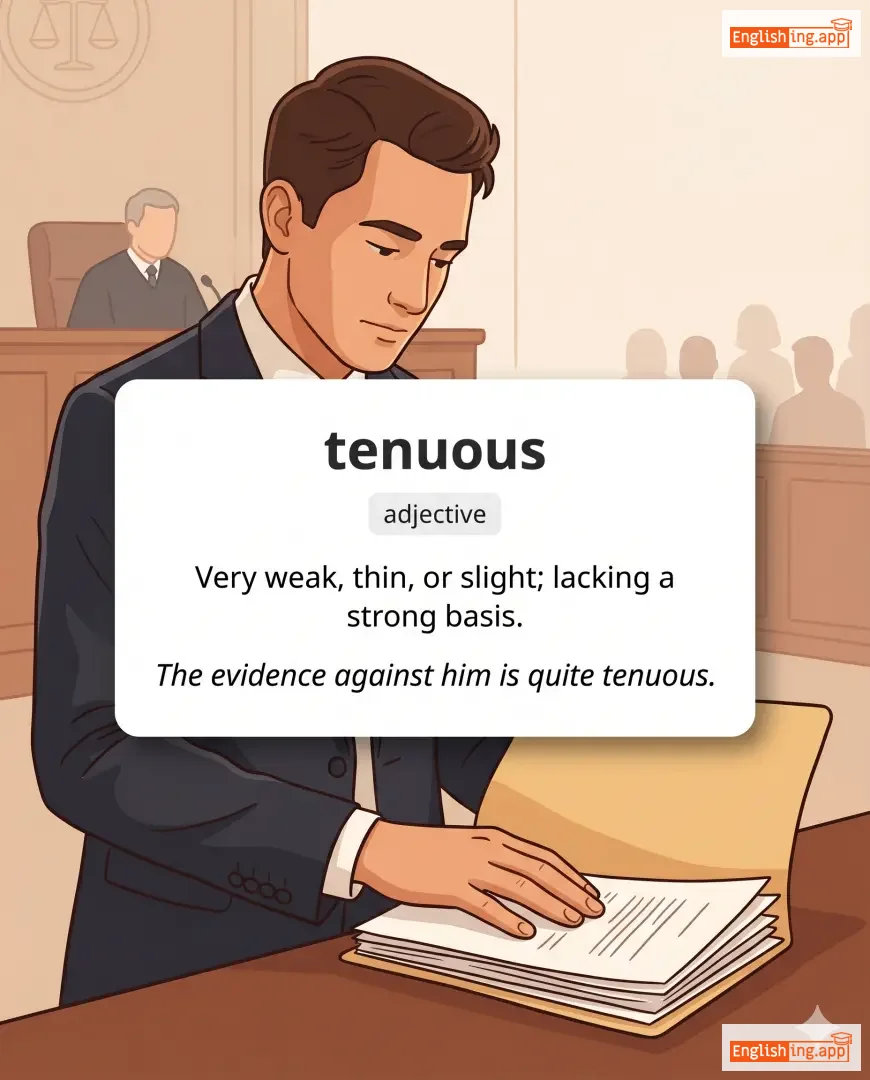
Very weak, thin, or slight; lacking a strong basis.
••••••
|
The evidence against him is quite tenuous.
Доказательства против него довольно слабы.
••••••
|
Доказательства против него довольно слабы.
Dokazatel'stva protiv nego dovol'no slabye.
••••••
|
- •••••• | - •••••• | - •••••• |
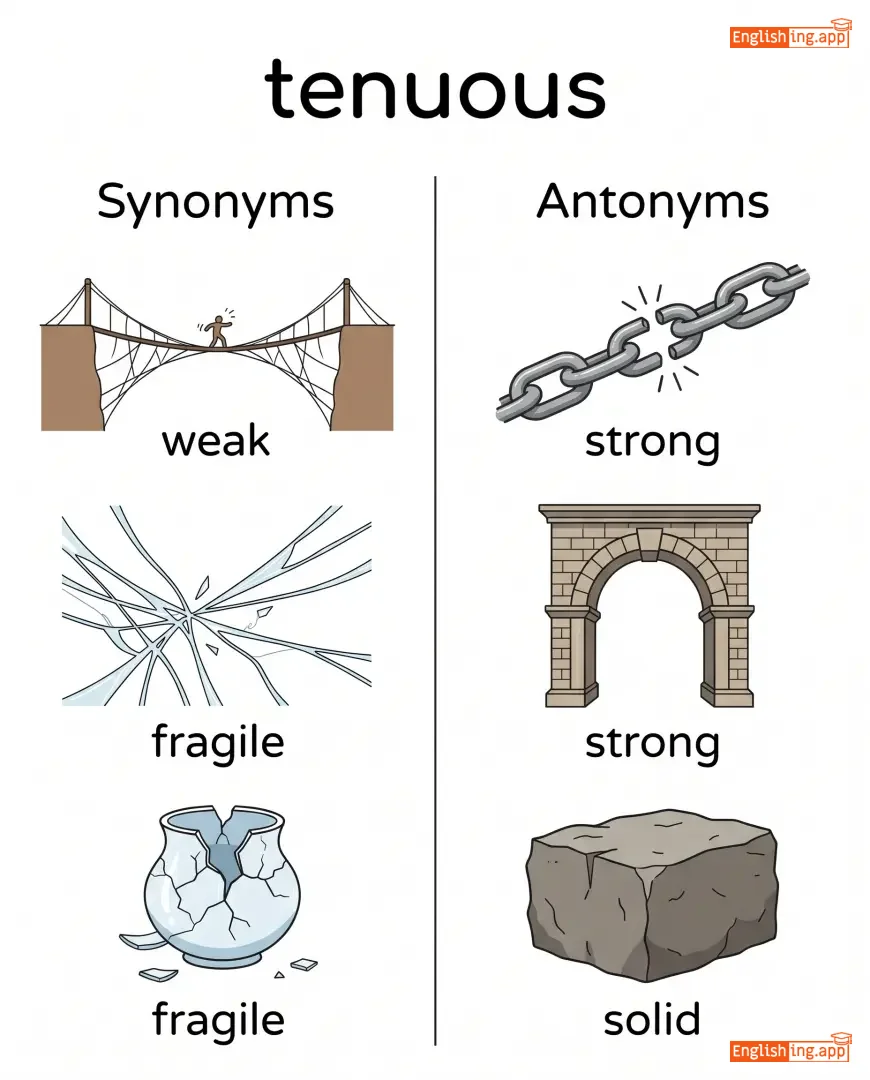
weak, fragile, thin, slight, insubstantial
••••••
|
strong, solid, firm
••••••
|
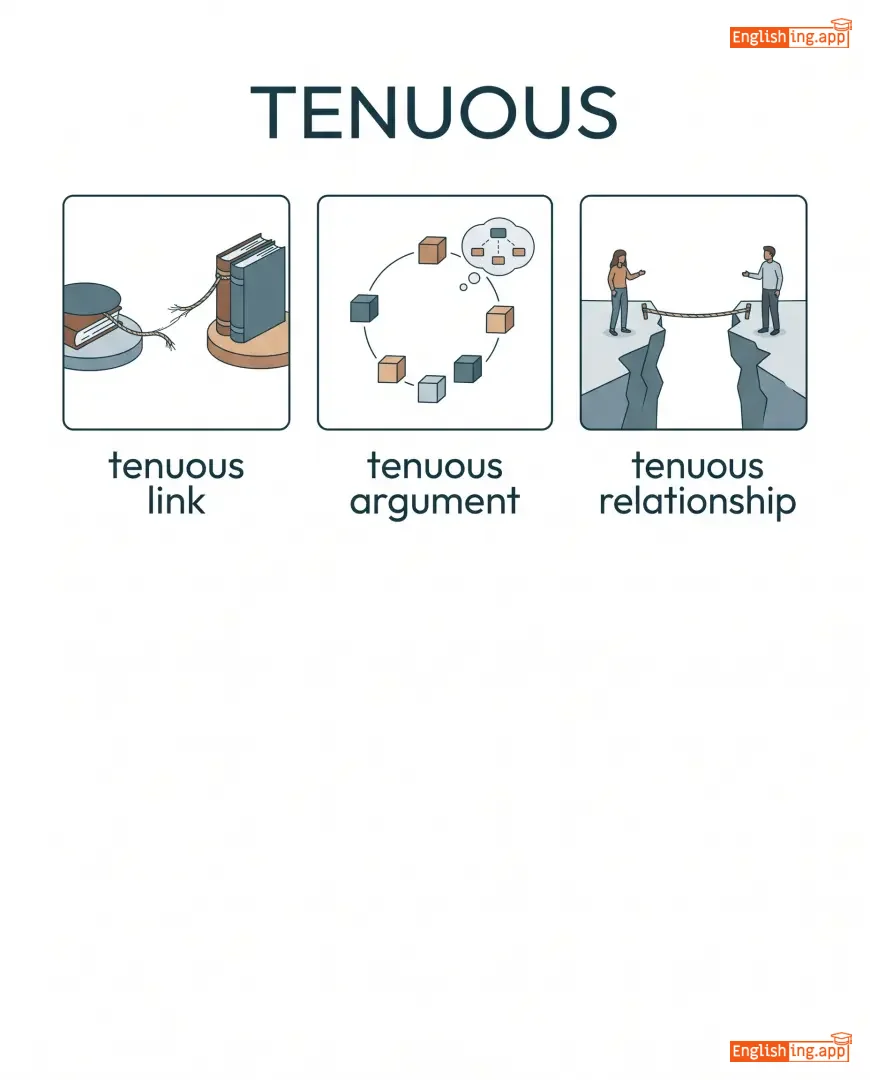
tenuous link, tenuous argument, tenuous relationship, tenuous connection
••••••
|
Tenuous - как слабое звено, очень тонкое.
••••••
|
|
#737
🌍
|
/təˈrɛstriəl/
adjective
(тэрэстрИэл)
••••••
|
|
земной
zemnoy
••••••
|
- •••••• | - •••••• | - •••••• | - •••••• |
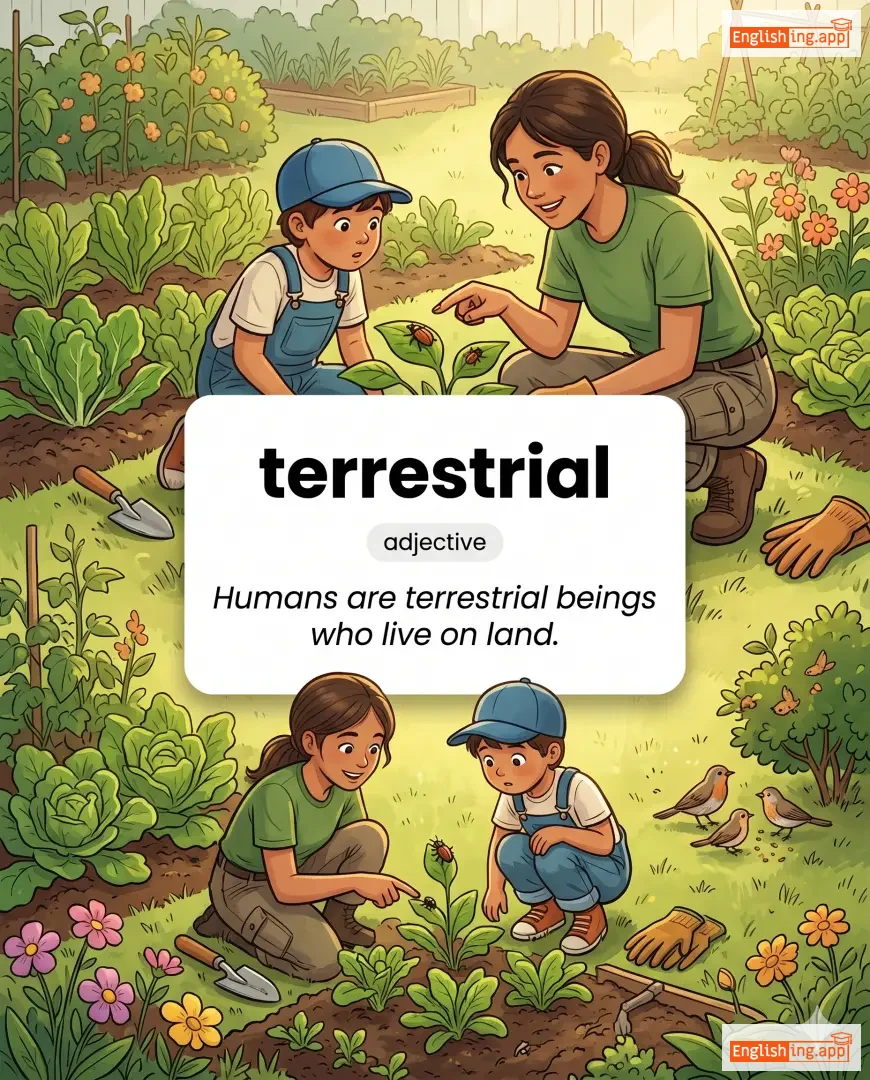
Relating to the Earth or land as opposed to the sea or air; living or growing on land.
••••••
|
Humans are terrestrial beings who live on land. |
Люди — земные существа, которые живут на земле.
Lyudi — zemnye sushchestva, kotorye zhivut na zemle.
••••••
|
- •••••• | - •••••• | - •••••• |
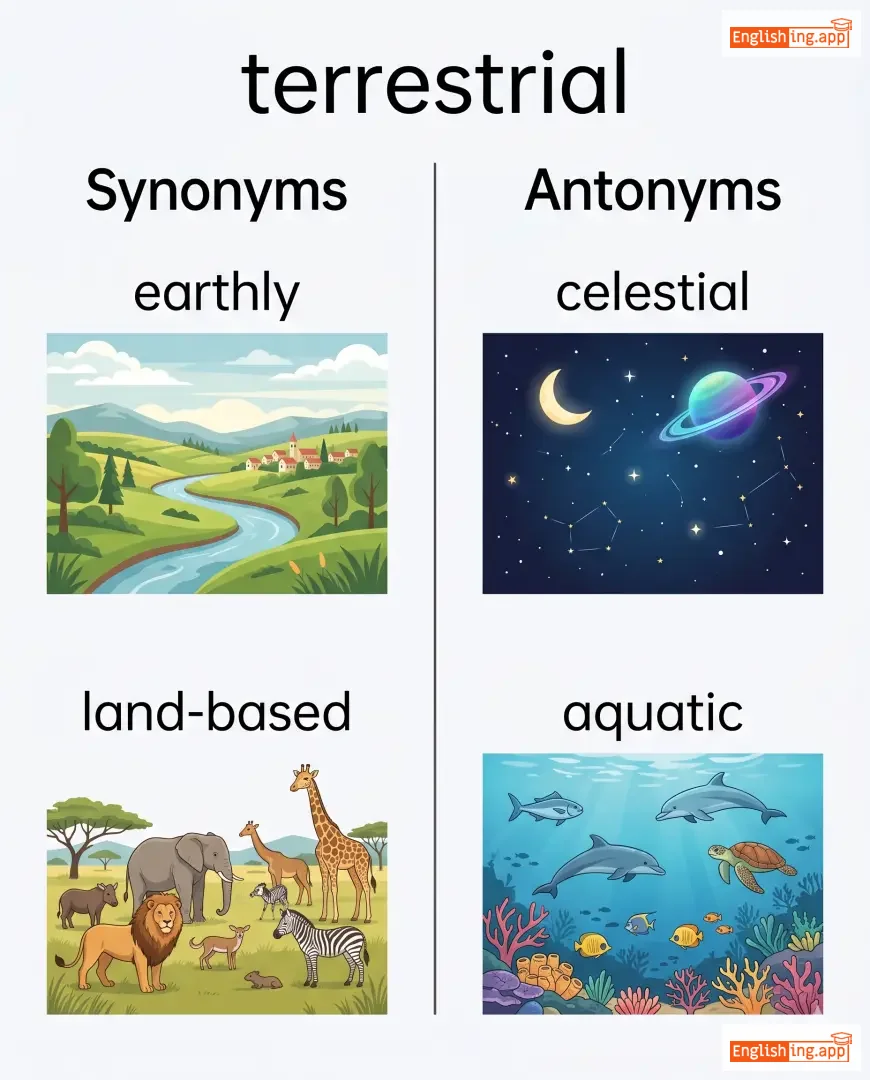
earthly, land-based, worldly, tellurian, mundane
••••••
|
celestial, aquatic, extraterrestrial
••••••
|
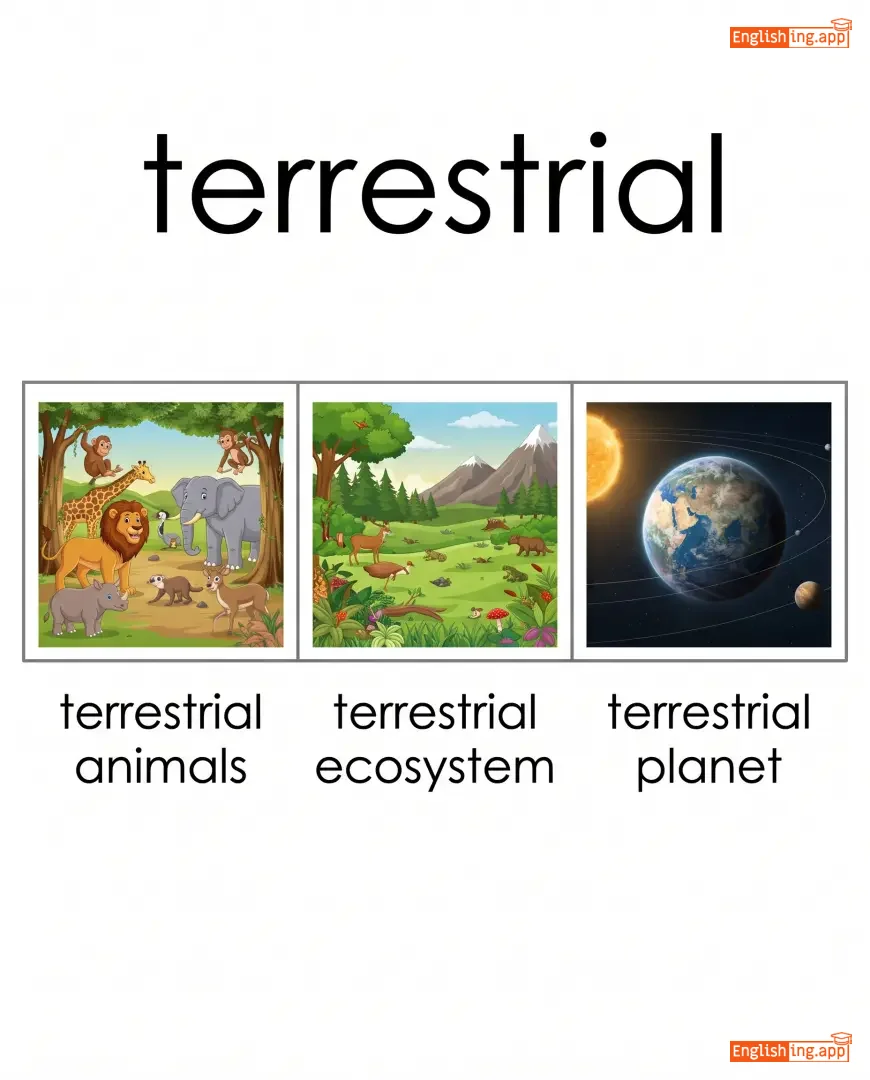
terrestrial animals, terrestrial ecosystem, terrestrial planet, terrestrial life
••••••
|
Земной — это те, кто живет на Земле, в отличие от тех, кто живет в море или воздухе.
••••••
|
|
#738
🕌
|
/θiˈɒkrəsi/
noun
(теократия)
••••••
|
|
теократия
teokratiya
••••••
|
- •••••• | - •••••• | - •••••• | - •••••• |
A system of government in which priests or religious leaders rule in the name of God or a deity.
••••••
|
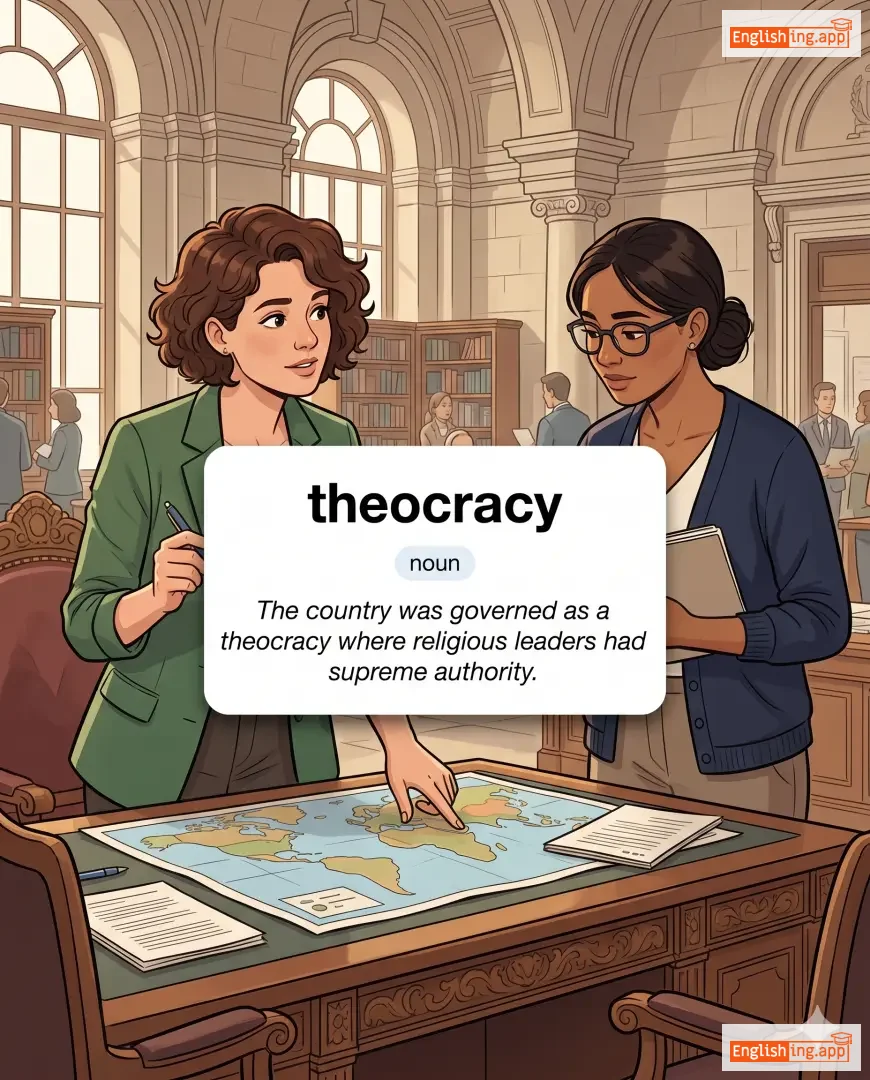
The country was governed as a theocracy where religious leaders had supreme authority. |
Страна управлялась как теократия, где религиозные лидеры имели высшую власть.
Strana upravlyalas' kak teokratiya, gde religioznye lidery imeli vysshuyu vlast'.
••••••
|
- •••••• | - •••••• | - •••••• |
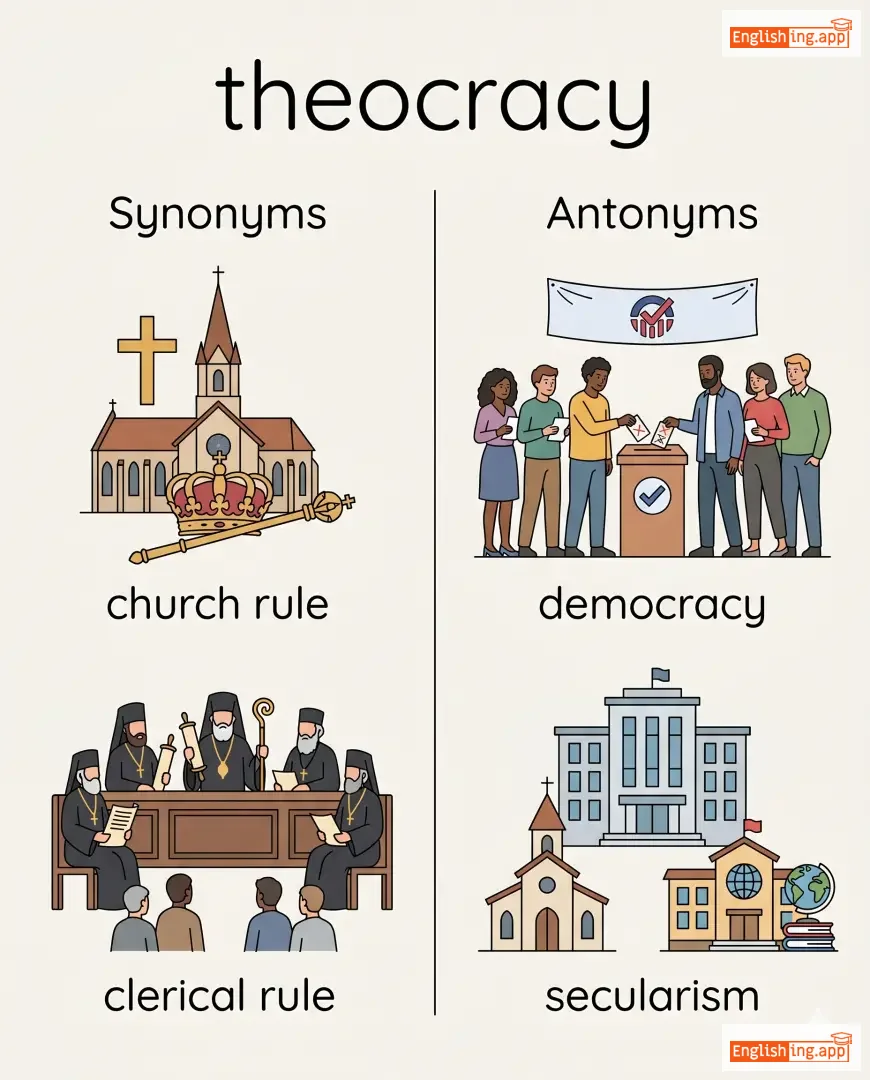
church rule, clerical rule, papal rule, spiritual governance
••••••
|
democracy, secularism, monarchy
••••••
|
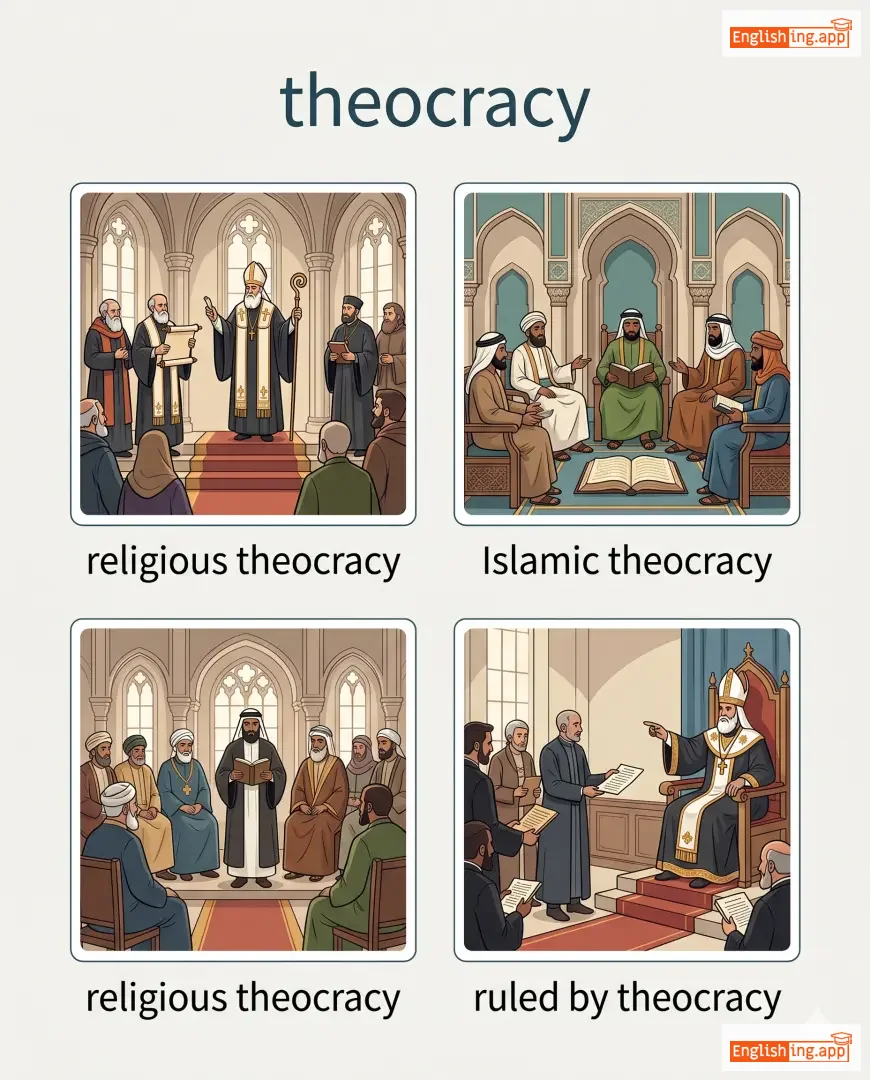
religious theocracy, Islamic theocracy, ruled by theocracy
••••••
|
Theo (Бог) + cracy (правление) → теократия, правление от имени Бога
••••••
|
|
#739
🎭
|
/ˈθɛspiən/
noun
(теспиан)
••••••
|
|
актер
akter
••••••
|
- •••••• | - •••••• | - •••••• | - •••••• |
An actor or actress; relating to drama or theater.
••••••
|
The festival was filled with talented thespians from across the country. |
Фестиваль был полон талантливых актеров со всей страны.
Festival byl polon talantlivykh akterov so vsei strany.
••••••
|
- •••••• | - •••••• | - •••••• |
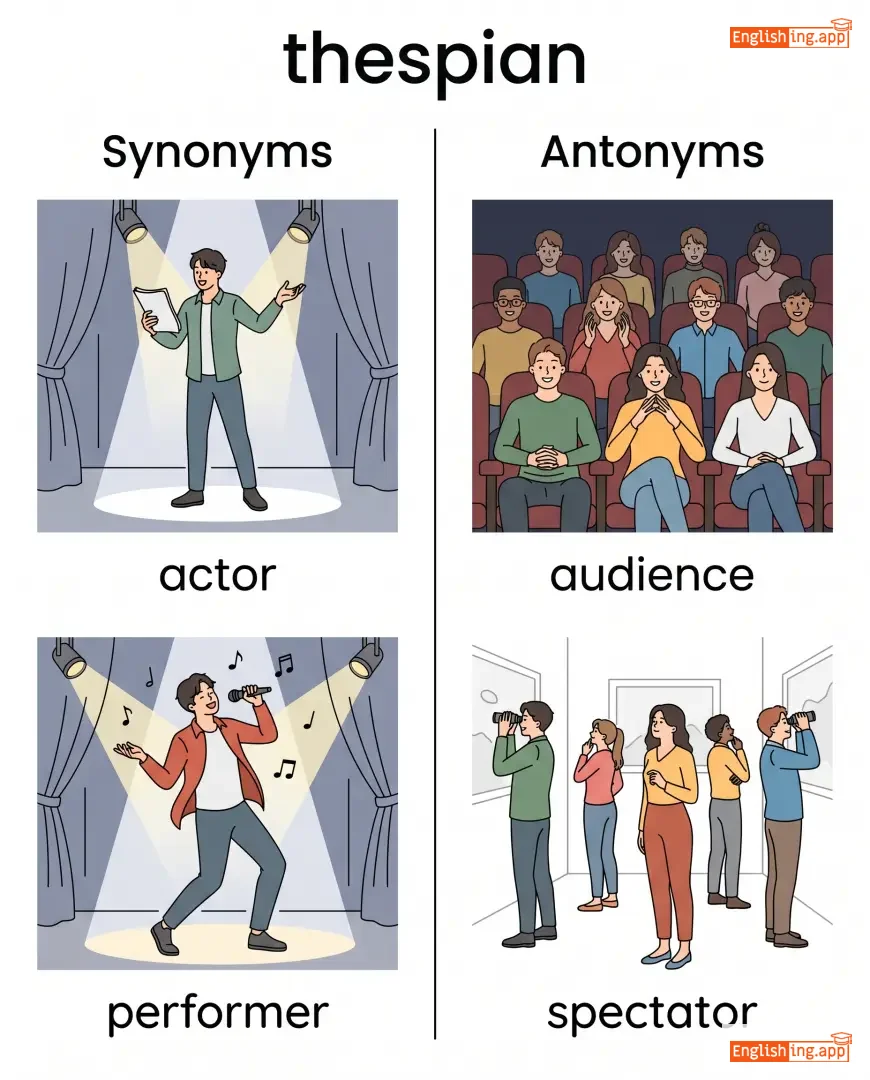
actor, performer, dramatist, stage player, entertainer
••••••
|
audience, spectator
••••••
|
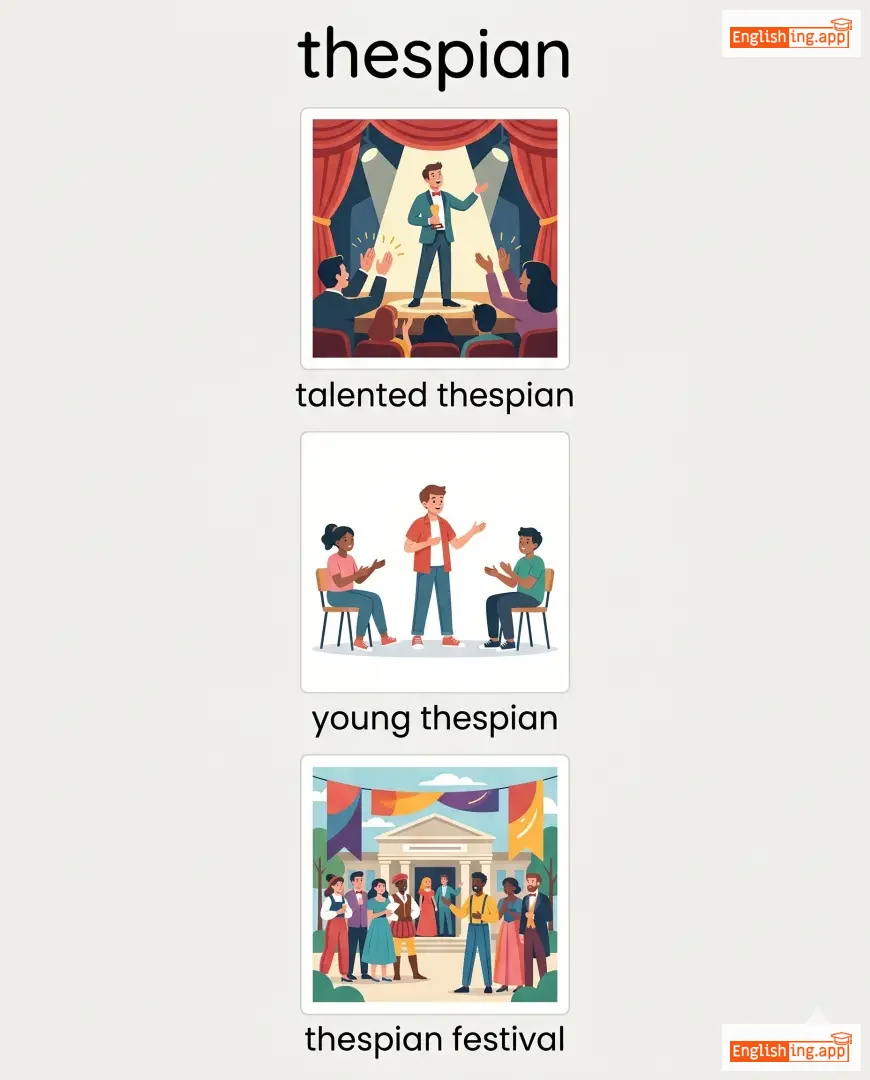
talented thespian, young thespian, thespian festival, thespian society
••••••
|
Thespian 🎭 это актер, связанный с театром.
••••••
|
|
#740
🎶
|
/ˈtæmbər/ or /ˈtɪmbər/
noun
(тимбр)
••••••
|
- •••••• |
тембр
tembr
••••••
|
- •••••• | - •••••• | - •••••• | - •••••• |
The character or quality of a musical sound or voice as distinct from its pitch and intensity.
••••••
|
Her voice had a warm timbre that soothed the audience. |
Её голос имел тёплый тембр, который успокаивал аудиторию.
Yeyo golos imel tyoplyy tembr, kotoryy uspokaval auditoriyu.
••••••
|
- •••••• | - •••••• | - •••••• |
tone, sound quality, resonance, pitch, voice color
••••••
|
monotone, flatness
••••••
|
rich timbre, warm timbre, vocal timbre, instrument timbre
••••••
|
Тимбр звучит как 'тимбер', но здесь это цвет звука.
••••••
|
|
#741
🗯️
|
/taɪˈreɪd/
noun
(тайˈрэйд)
••••••
|
|
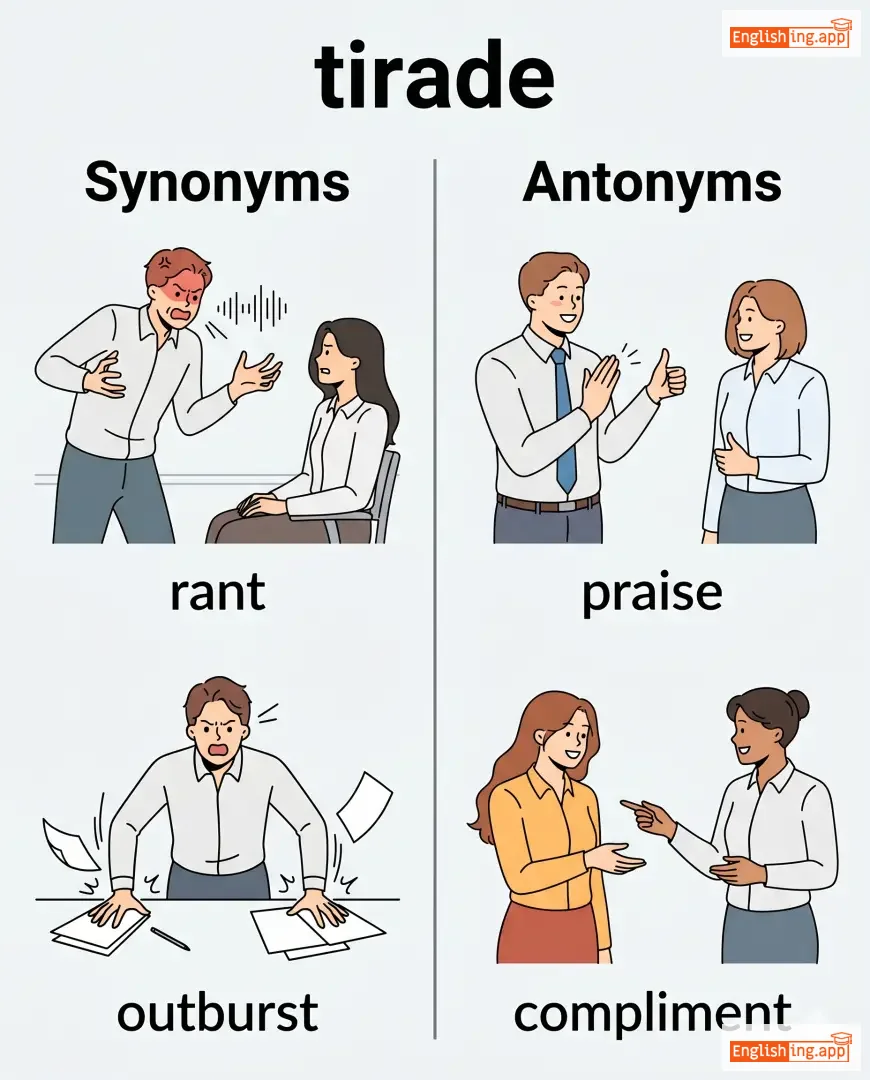
тирада
tirada
••••••
|
- •••••• | - •••••• | - •••••• | - •••••• |
a long, angry, or critical speech
••••••
|
The manager launched into a tirade about poor performance.
Менеджер устроил тираду по поводу плохой работы.
••••••
|
Менеджер устроил тираду по поводу плохой работы.
Menedzher ustroil tiradu po povodu plokhoy raboty.
••••••
|
- •••••• | - •••••• | - •••••• |
rant, outburst, diatribe, harangue, lecture
••••••
|
praise, compliment
••••••
|
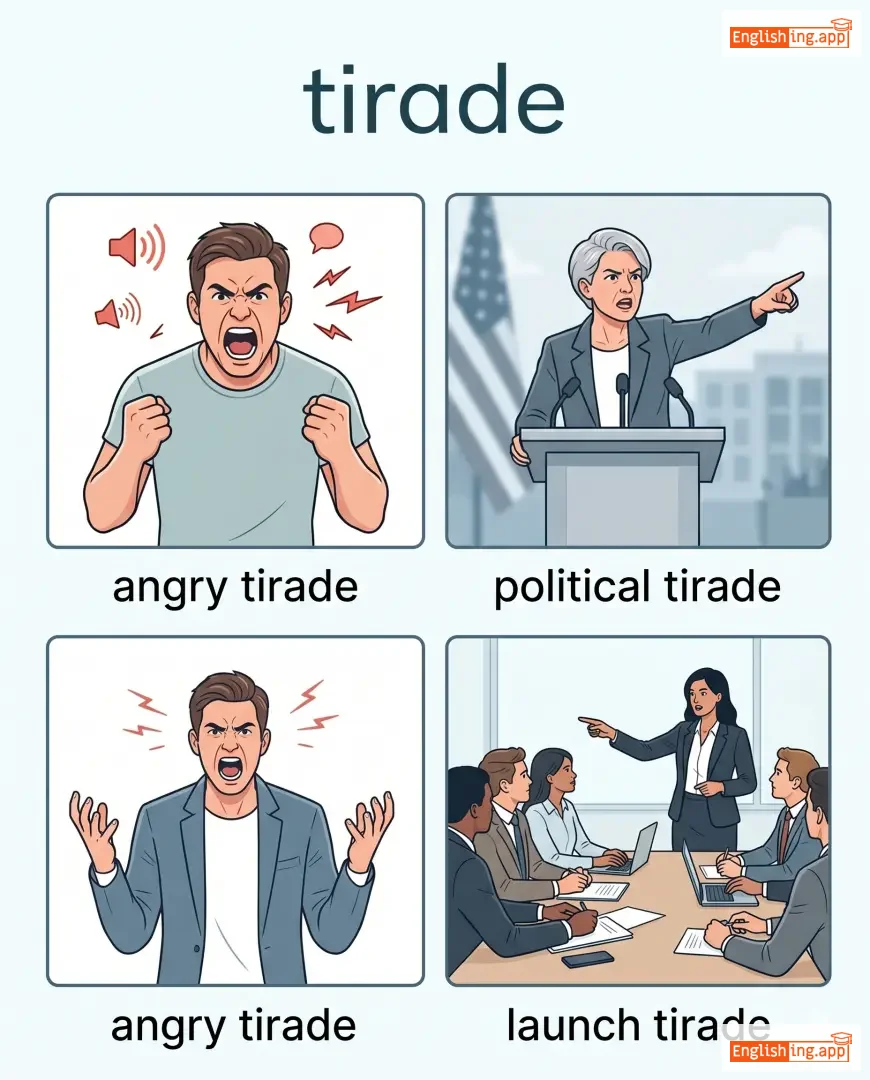
angry tirade, political tirade, launch tirade, endless tirade
••••••
|
Тирада - это злостная речь, как стрела, полная ярости.
••••••
|
|
#742
🙇♂️
|
/ˈtoʊdi/
verb
••••••
|
|
- •••••• |
toadied
••••••
|
toadied
••••••
|
toadies
••••••
|
toadying
••••••
|
to flatter or behave excessively subserviently toward someone for advantage
••••••
|
Stop toadying to the manager and speak your mind. |
- •••••• |
toady up to |
to flatter someone obsequiously to gain favor
••••••
|
- •••••• |
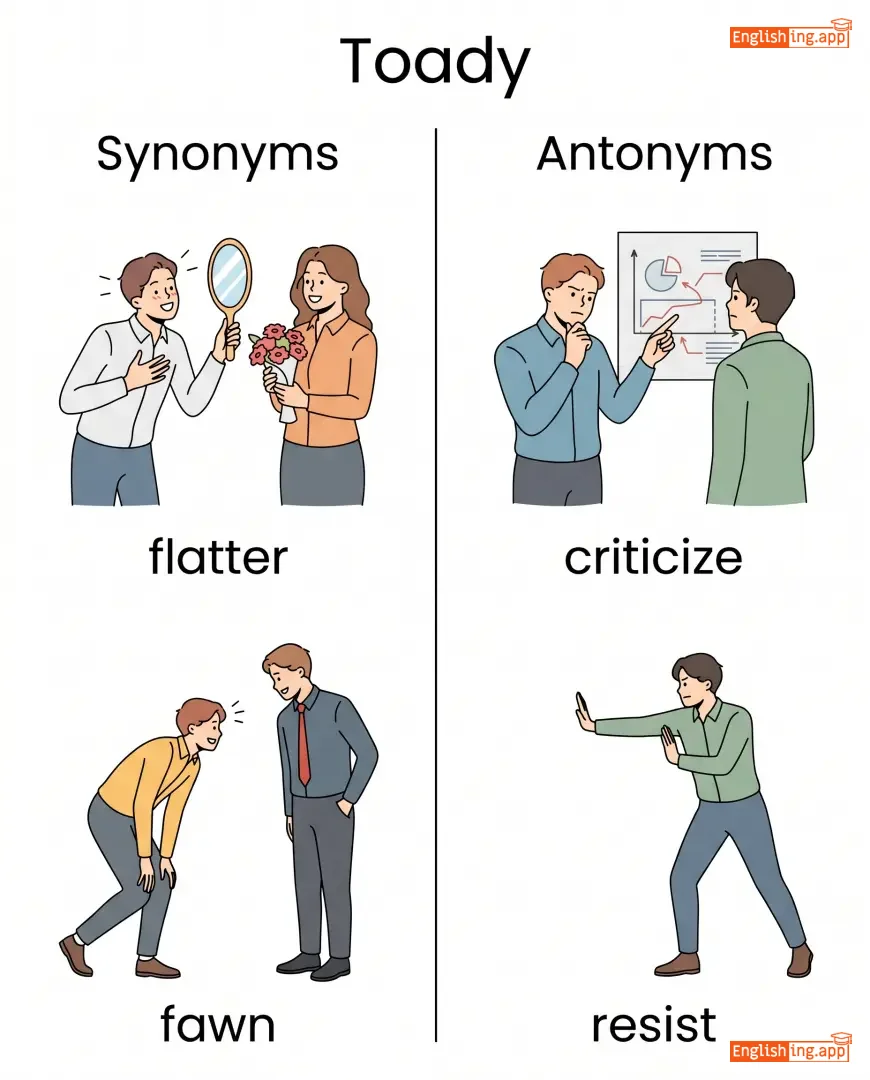
flatter, fawn, grovel, brown-nose, bootlick
••••••
|
criticize, resist, speak plainly
••••••
|
toady to the boss, shameless toady, toady up to, act like a toady
••••••
|
No •••••• |
|
#743
📚
|
/toʊm/
noun
(том)
••••••
|
|
толстая книга
tolstaya kniga
••••••
|
- •••••• | - •••••• | - •••••• | - •••••• |
a large, heavy book, often scholarly or serious in nature
••••••
|
She spent the afternoon reading an old tome on medieval history. |
Она провела послеобеденное время, читая старую толстую книгу по средневековой истории.
Ona provela posleobedennoye vremya, chitaya staruyu tolstuyu knigu po srednevekovoy istorii.
••••••
|
- •••••• | - •••••• | - •••••• |
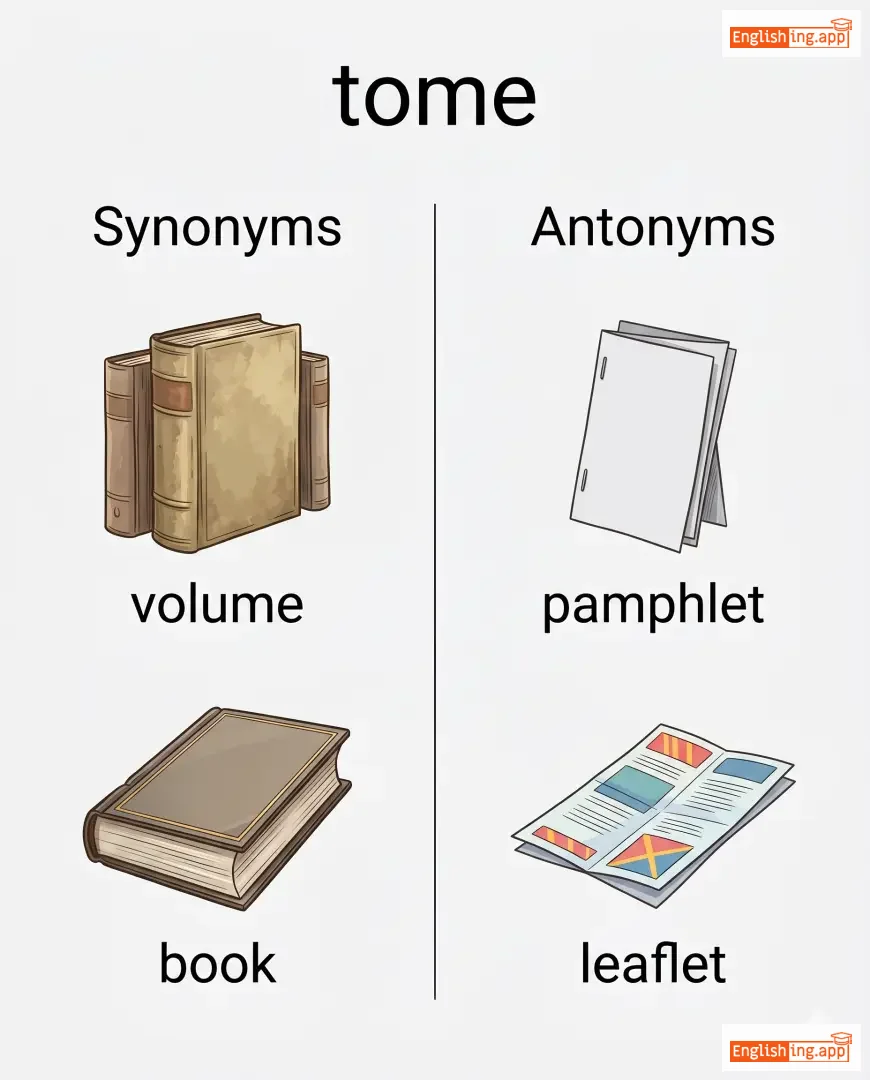
volume, book, opus, publication, manuscript
••••••
|
pamphlet, leaflet, brochure
••••••
|
ancient tome, scholarly tome, dusty tome, old tome
••••••
|
Tome - это как том, думайте о тяжелой книге
••••••
|
|
#744
🛌
|
/ˈtɔːrpər/
noun
(топор)
••••••
|
|
летаргия
torpor
••••••
|
- •••••• | - •••••• | - •••••• | - •••••• |
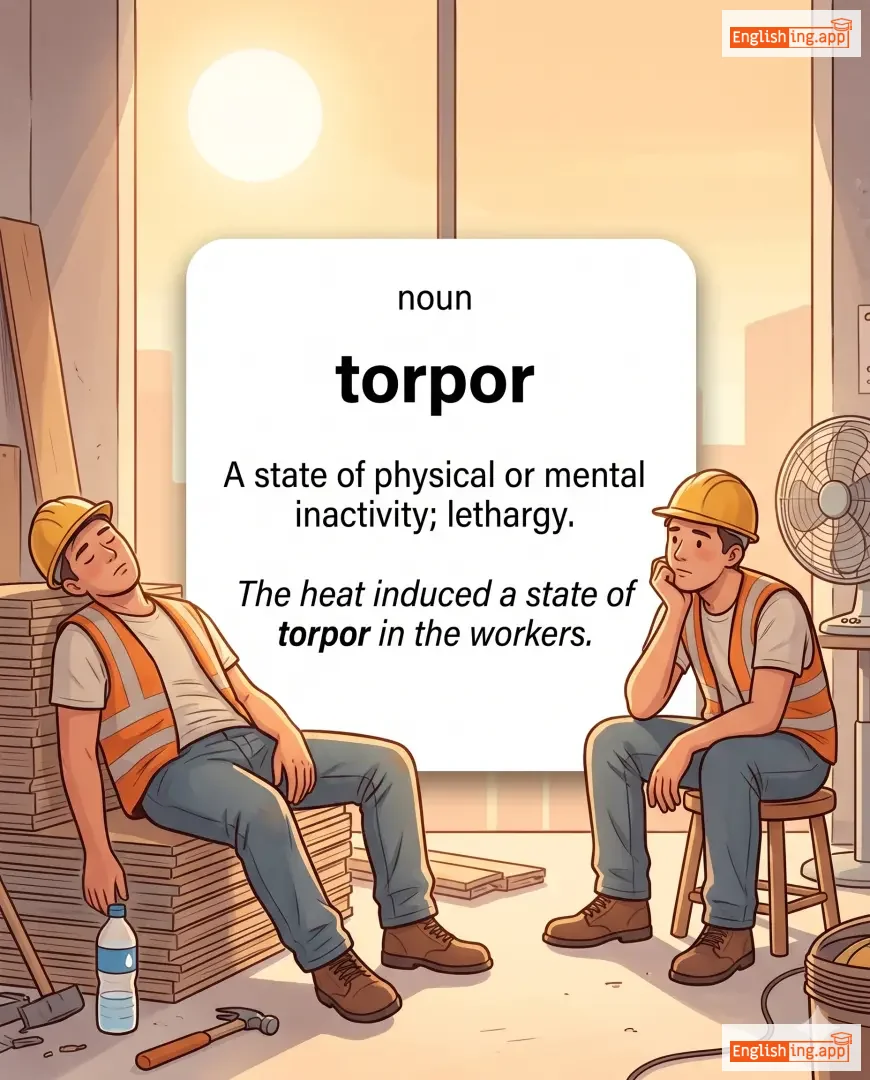
A state of physical or mental inactivity; lethargy.
••••••
|
The heat induced a state of torpor in the workers. |
Жара вызвала состояние летаргии у рабочих.
Zhara vyzvala sostoyanie letargii u rabochikh.
••••••
|
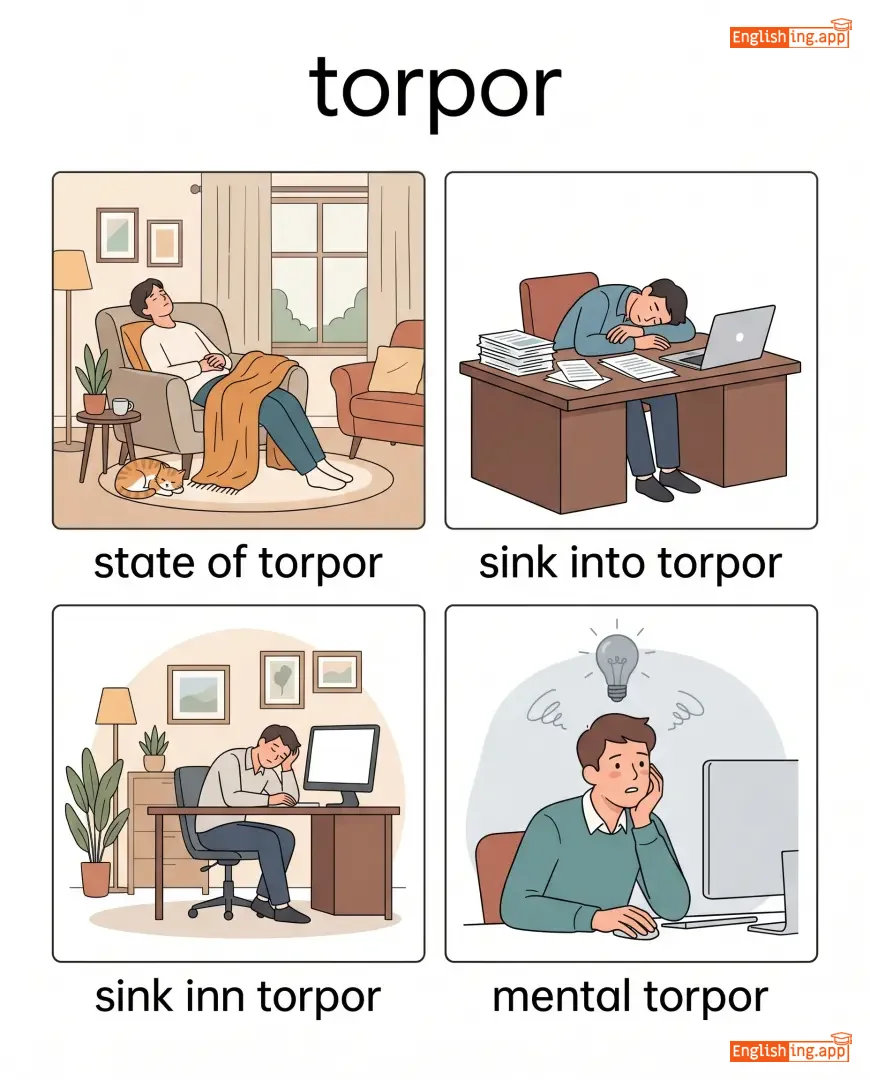
sink into torpor |
to gradually become inactive or sluggish
••••••
|
погрузиться в летаргию
pogrudit'sya v letargiyu
••••••
|
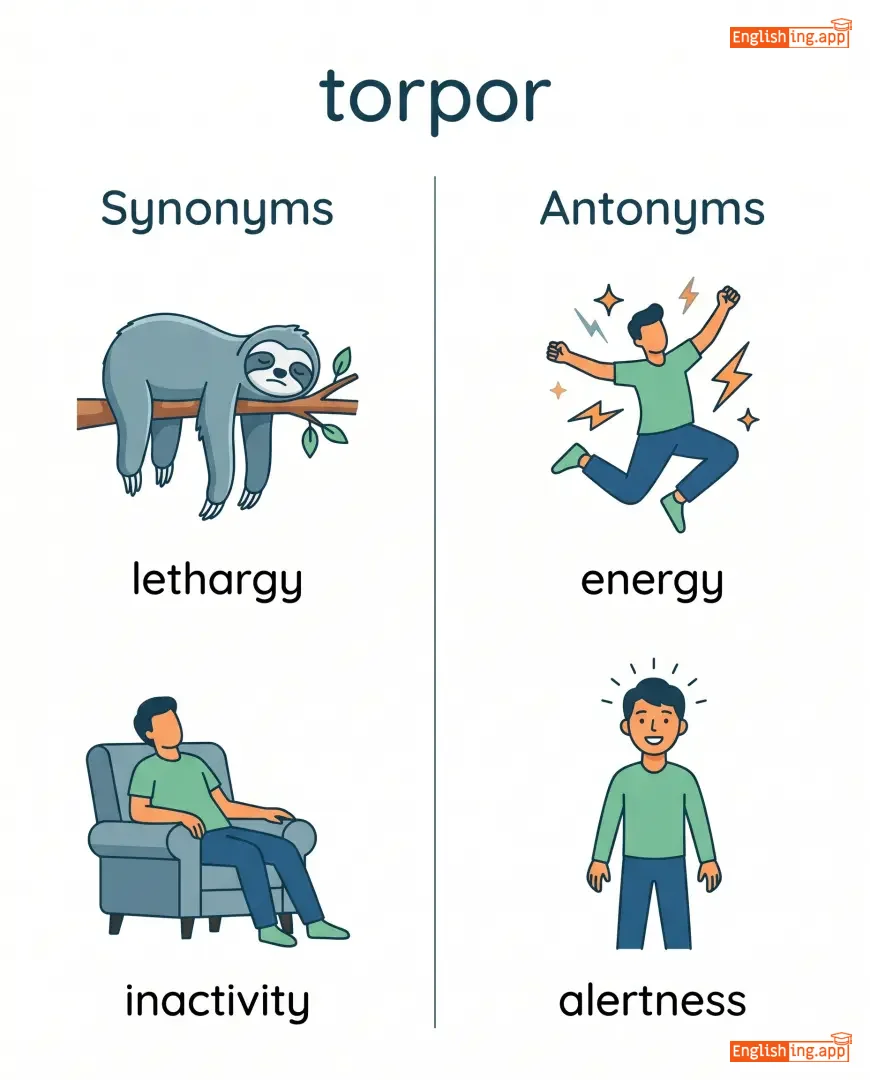
lethargy, inactivity, apathy, sluggishness
••••••
|
energy, alertness, activity
••••••
|
state of torpor, sink into torpor, mental torpor, torpor induced
••••••
|
Torpor - как топор, когда нет сил что-либо делать.
••••••
|
|
#745
🔧
|
/tɔːrk/
noun
••••••
|
|
- •••••• | - •••••• | - •••••• | - •••••• | - •••••• |
A twisting force that causes rotation.
••••••
|
The mechanic measured the torque of the engine. |
- •••••• |
apply torque |
to use twisting force on something
••••••
|
- •••••• |
twist, rotation, force, turning power
••••••
|
balance, rest, stillness
••••••
|
engine torque, high torque, torque wrench, apply torque
••••••
|
No •••••• |
|
#746
🌀
|
/ˈtɔːrtʃuəs/
adjective
(торчюэс)
••••••
|
- •••••• |
извилистый, сложный
izvilistyy, slozhnyy
••••••
|
- •••••• | - •••••• | - •••••• | - •••••• |
Full of twists and turns; excessively complex or complicated.
••••••
|
The tortuous mountain road made driving very difficult. |
Извилистая горная дорога сделала вождение очень трудным.
Izvilistaya gornaya doroga sdelala vozdenie ochen' trudnym.
••••••
|
- •••••• | - •••••• | - •••••• |
winding, twisting, convoluted, complex, meandering
••••••
|
straight, direct, simple
••••••
|
tortuous path, tortuous route, tortuous reasoning, tortuous journey
••••••
|
Tortuous - это извилистая дорога, запутанная и сложная
••••••
|
|
#747
📢
|
/taʊt/
verb
(тау́т)
••••••
|
- •••••• |
рекламировать
reklamirovat
••••••
|
touted
тау́тед
••••••
|
touted
тау́тед
••••••
|
touts
тау́тс
••••••
|
touting
тау́тинг
••••••
|
to promote, praise, or advertise aggressively
••••••
|
The company touted its new product as a game-changer.
Компания рекламировала свой новый продукт как изменяющий игру.
••••••
|
Компания рекламировала свой новый продукт как изменяющий игру.
Kompaniya reklamirovala svoy novyy produkt kak izmenyayushchiy igru.
••••••
|
tout for business
рекламировать для бизнеса
••••••
|
to solicit or promote actively to get customers
••••••
|
активно рекламировать для получения клиентов
aktivno reklamirovat dlya polucheniya klientov
••••••
|
promote, advertise, endorse, praise, hype
••••••
|
criticize, denounce, condemn
••••••
|
tout a product, tout the benefits, touted as, tout for business
••••••
|
'Тау́т' агрессивно рекламирует, крича 'Купи сейчас!'
••••••
|
|
#748
🙂
|
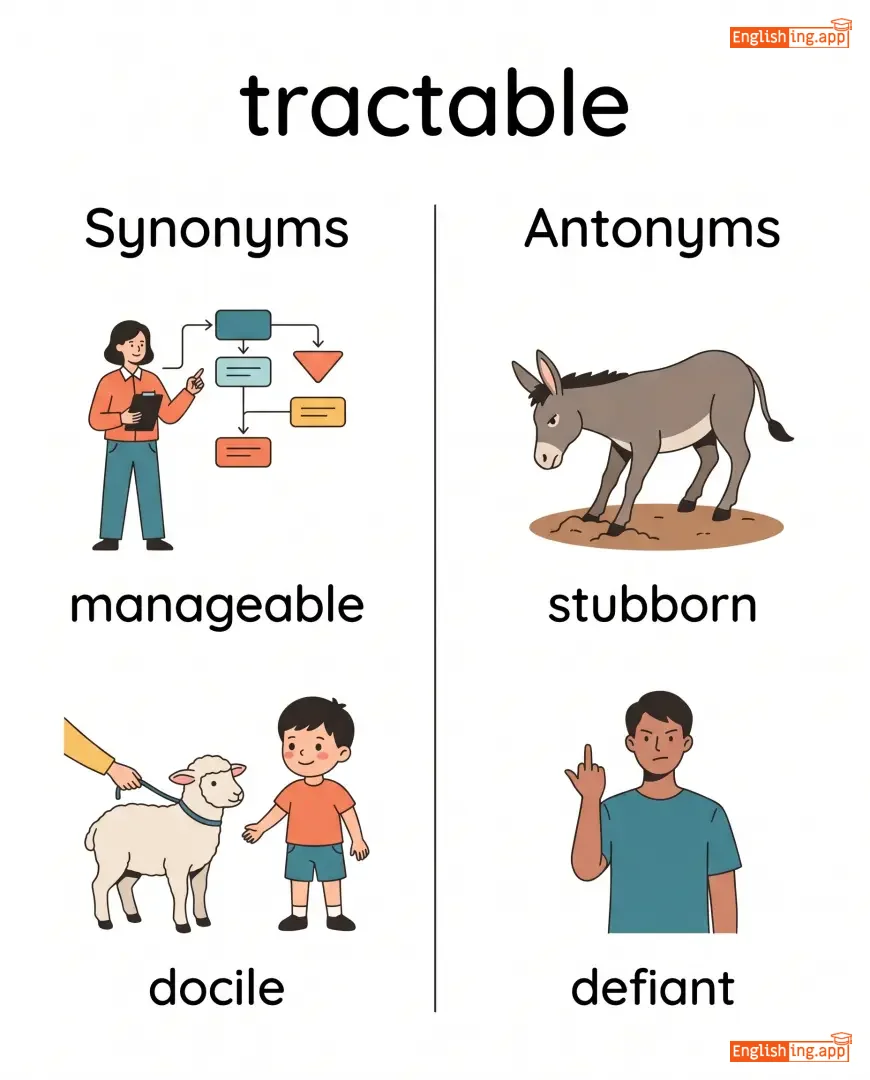
/ˈtræktəbəl/
adjective
(трактабл)
••••••
|
|
легко контролируемый или поддающийся влиянию
legko kontroliruemyy ili poddayushchiesya vliyaniyu
••••••
|
- •••••• | - •••••• | - •••••• | - •••••• |
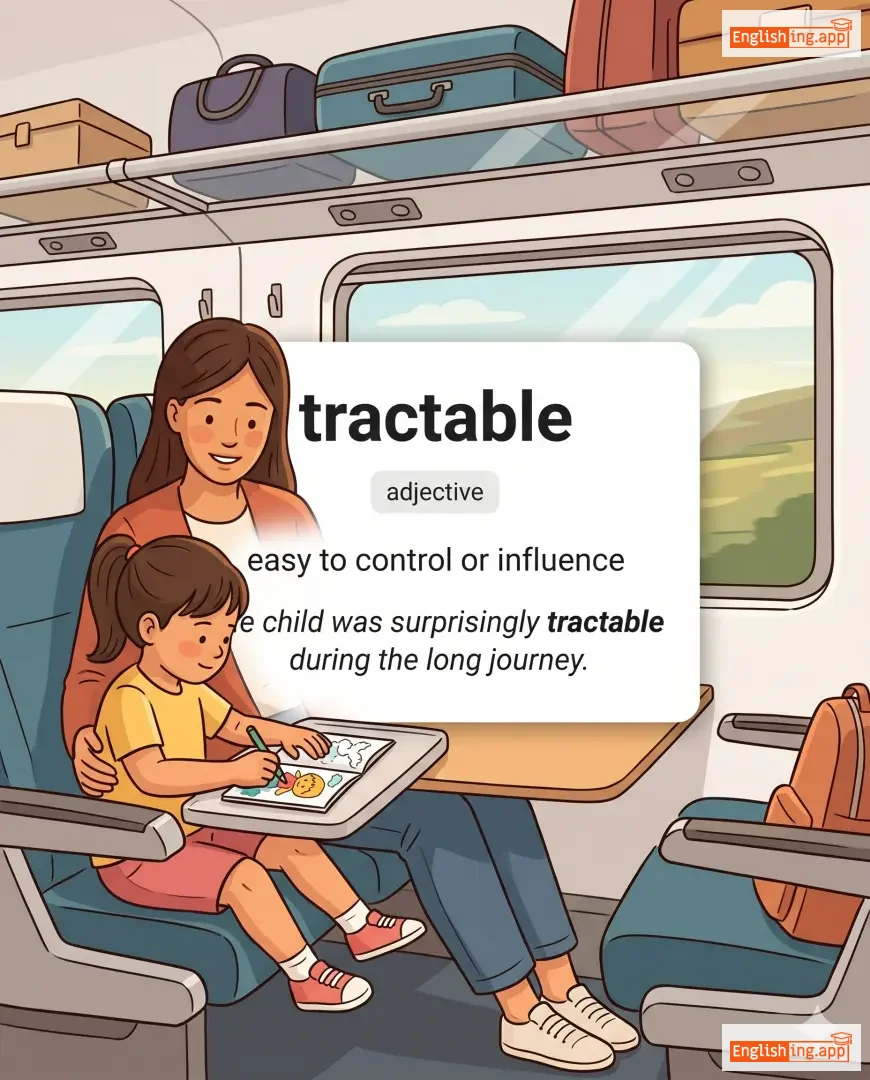
easy to control or influence
••••••
|
The child was surprisingly tractable during the long journey.
Ребёнок был удивительно послушным во время долгого путешествия.
••••••
|
Ребёнок был удивительно послушным во время долгого путешествия.
Rebyonok byl udivitel'no poslušnoy vo vremya dolgogo puteshestviya.
••••••
|
- •••••• | - •••••• | - •••••• |
manageable, docile, obedient, compliant
••••••
|
stubborn, defiant, unmanageable
••••••
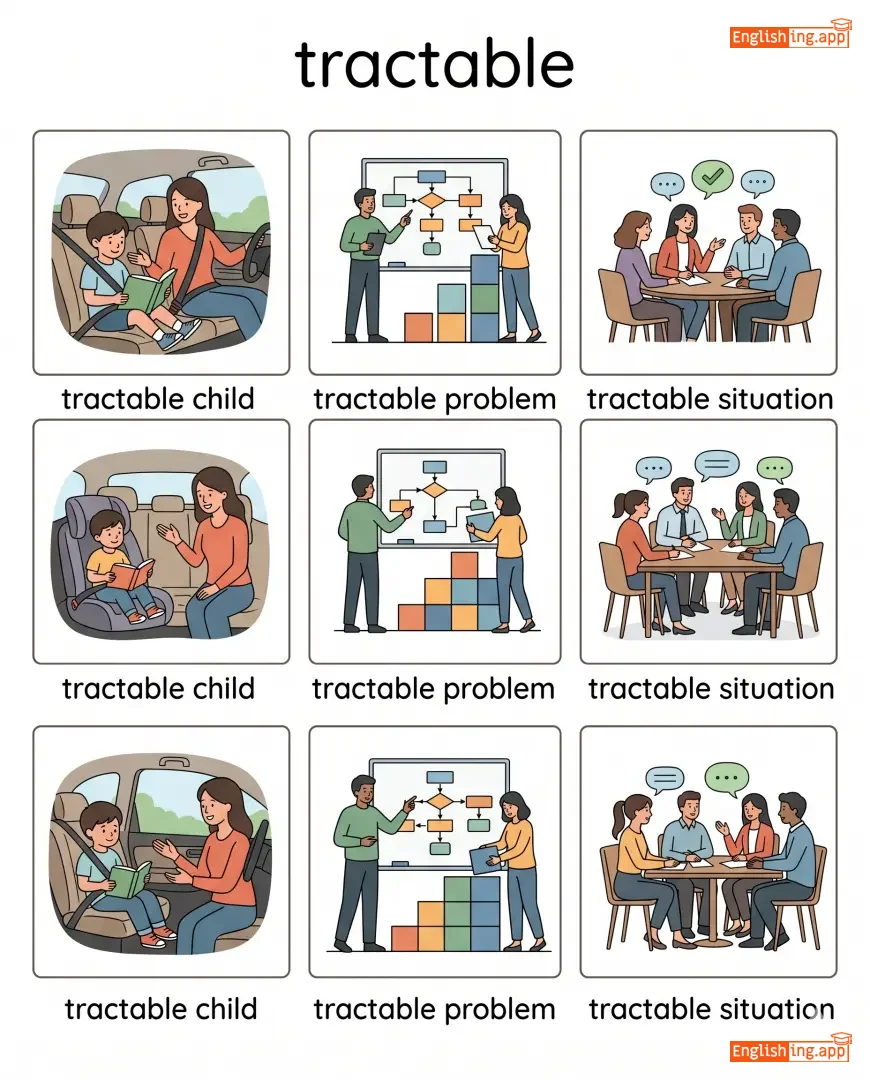
|
tractable child, tractable problem, tractable situation
••••••
|
Tractable означает, что ребёнок легко контролируется, как послушный ребенок на длительном путешествии.
••••••
|
|
#749
⚖️
|
/trænsˈɡrɛʃən/
noun
(трансгрэшн)
••••••
|
|
нарушение, преступление
narushenie, prestuplenie
••••••
|
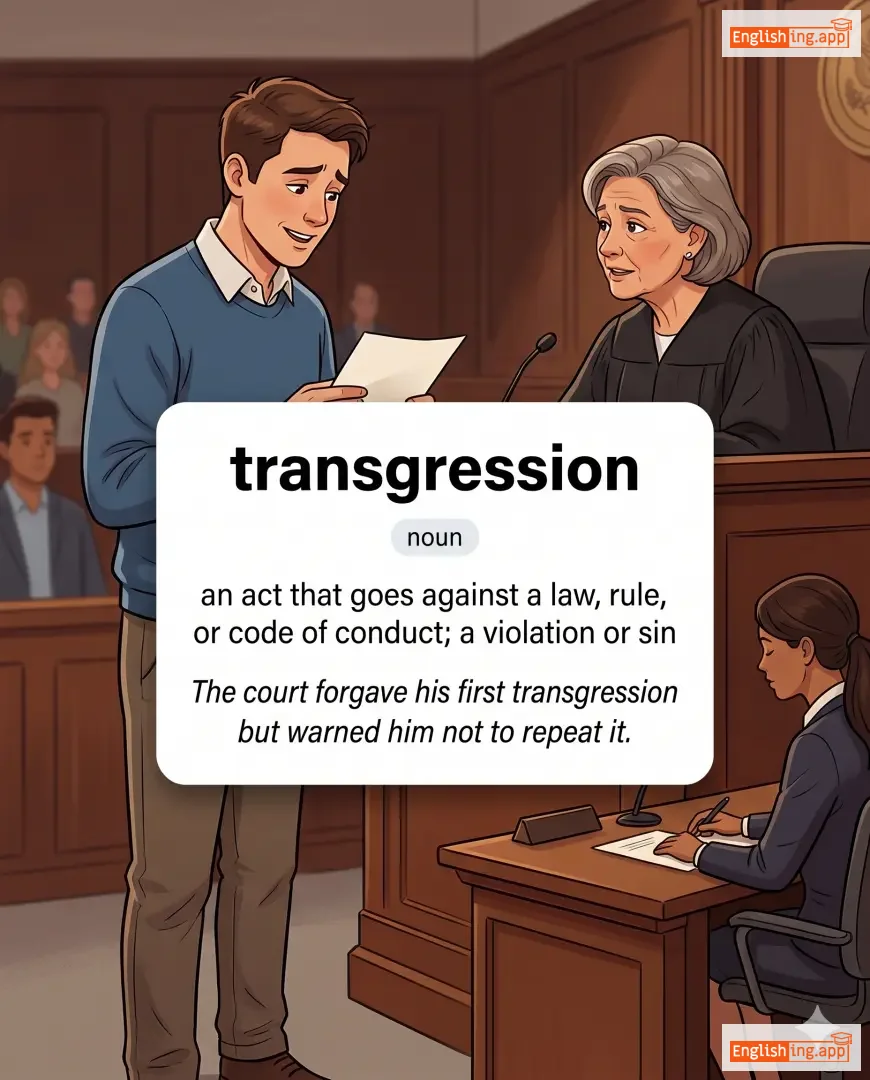
- •••••• | - •••••• | - •••••• | - •••••• |
an act that goes against a law, rule, or code of conduct; a violation or sin
••••••
|
The court forgave his first transgression but warned him not to repeat it. |
Суд простил его первое нарушение, но предупредил его не повторять этого.
Sud prostil ego pervoye narusheniye, no predostergil ego ne povtoryat' etogo.
••••••
|
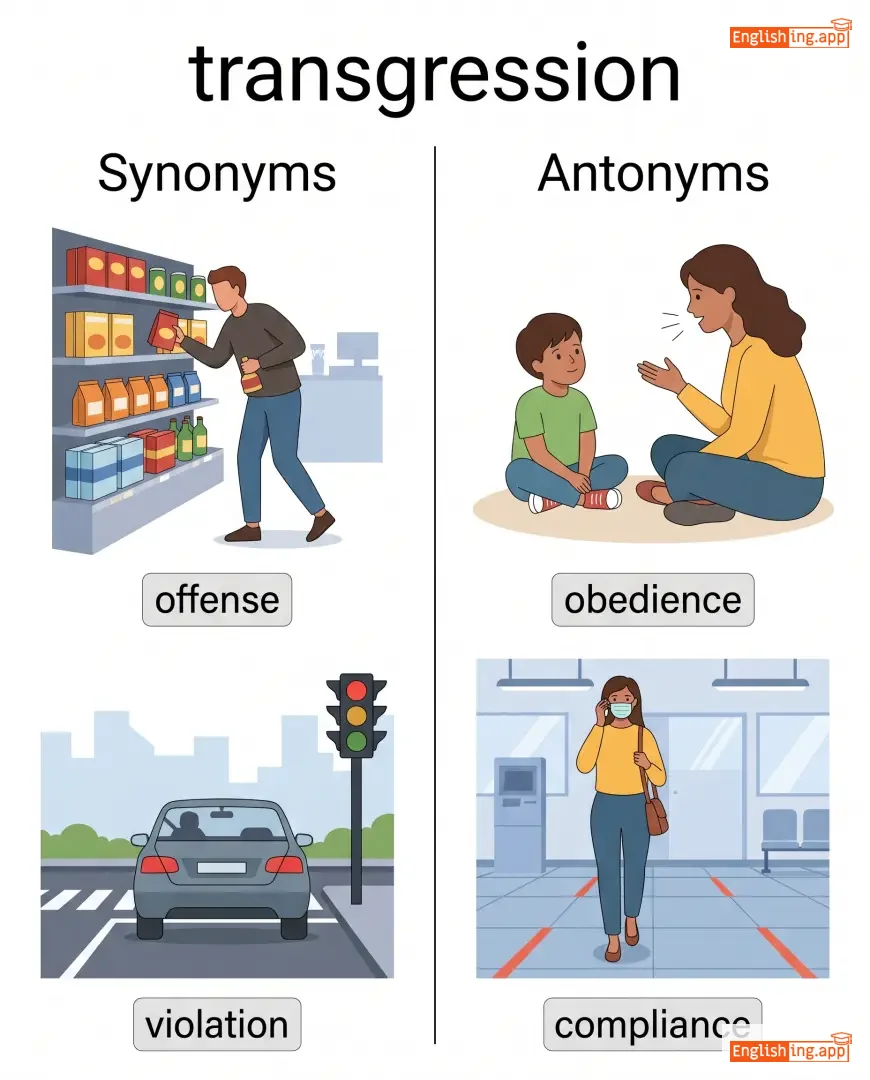
- •••••• | - •••••• | - •••••• |
offense, violation, sin, crime, wrongdoing
••••••
|
obedience, compliance
••••••
|
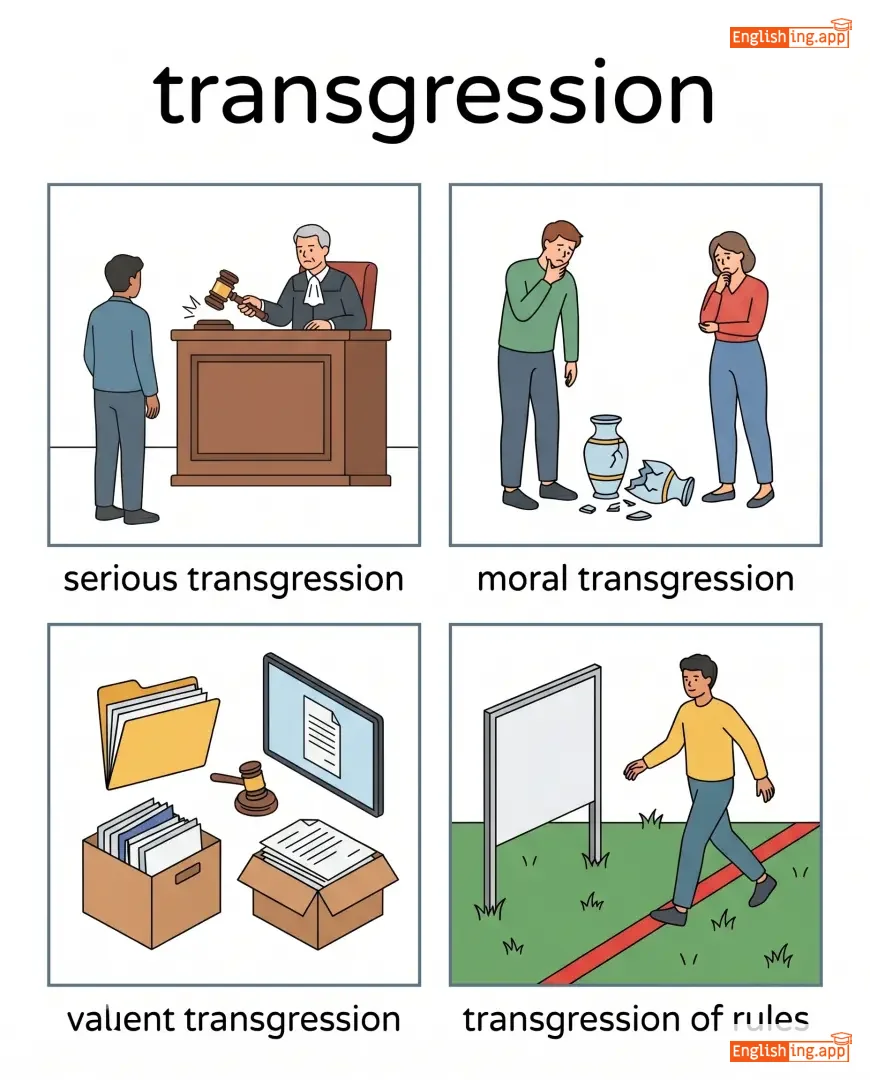
serious transgression, moral transgression, transgression of rules, forgive transgression
••••••
|
Transgression означает нарушение правил, как потерять благодать (grace).
••••••
|
|
#750
🌪️
|
/ˈtrænziənt/
adjective
(транзиент)
••••••
|
|
временный
vremennyy
••••••
|
- •••••• | - •••••• | - •••••• | - •••••• |
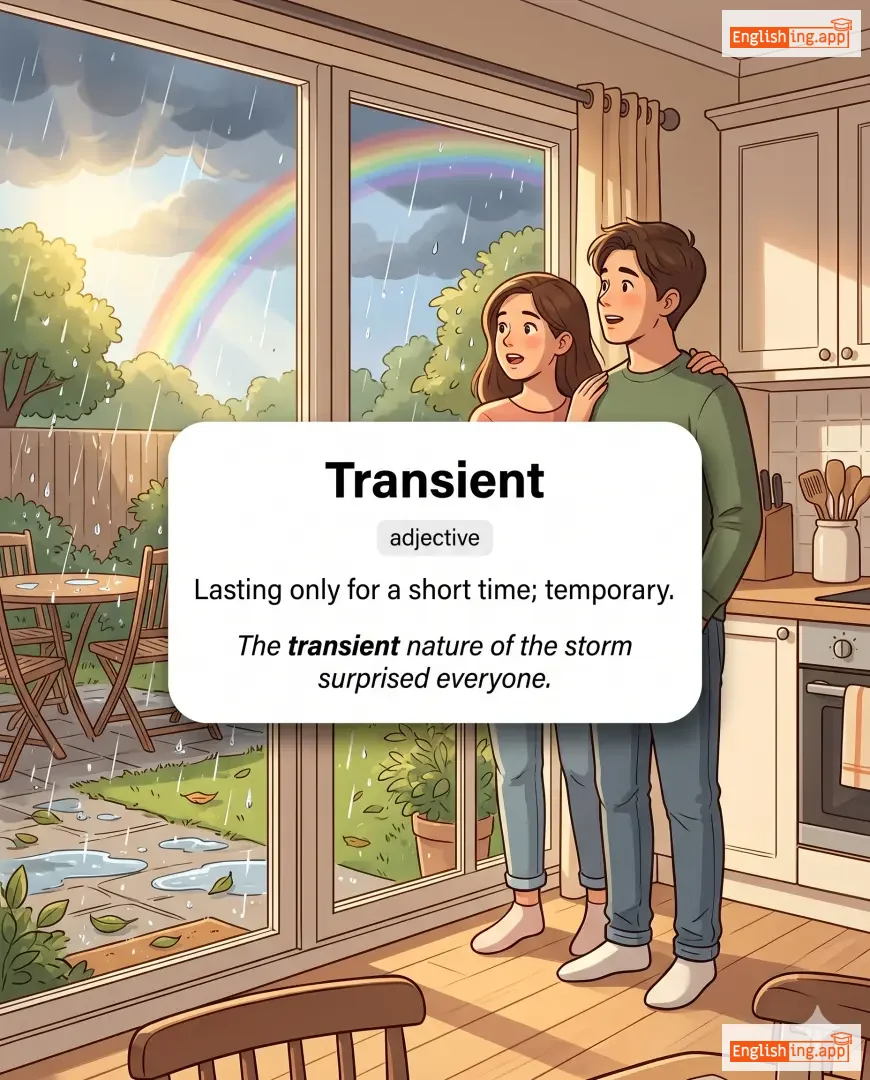
Lasting only for a short time; temporary.
••••••
|
The transient nature of the storm surprised everyone.
Природа транзитного шторма удивила всех.
••••••
|
Природа транзитного шторма удивила всех.
Priroda tranzitnogo shtorma udivila vsekh.
••••••
|
transient guest
временный гость
••••••
|
A guest who stays for only a short period
••••••
|
временный гость
vremennyy gost
••••••
|
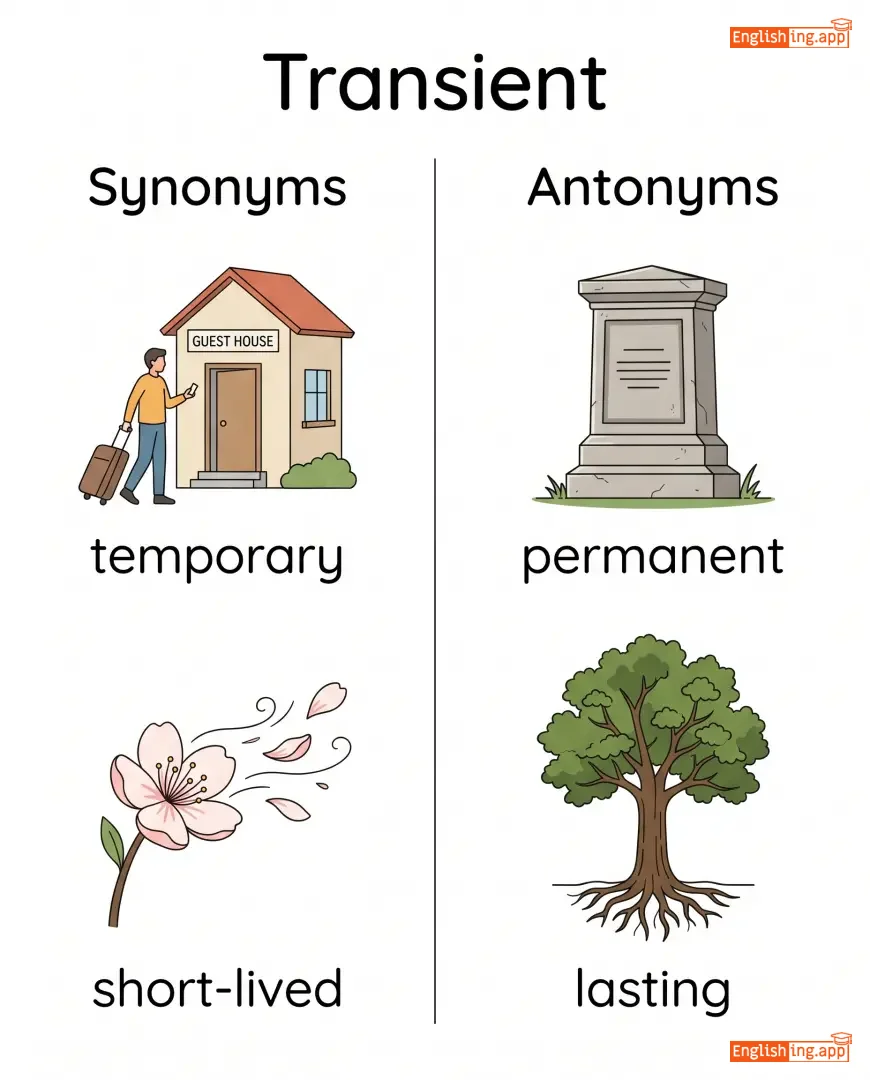
temporary, short-lived, momentary, fleeting
••••••
|
permanent, lasting
••••••
|
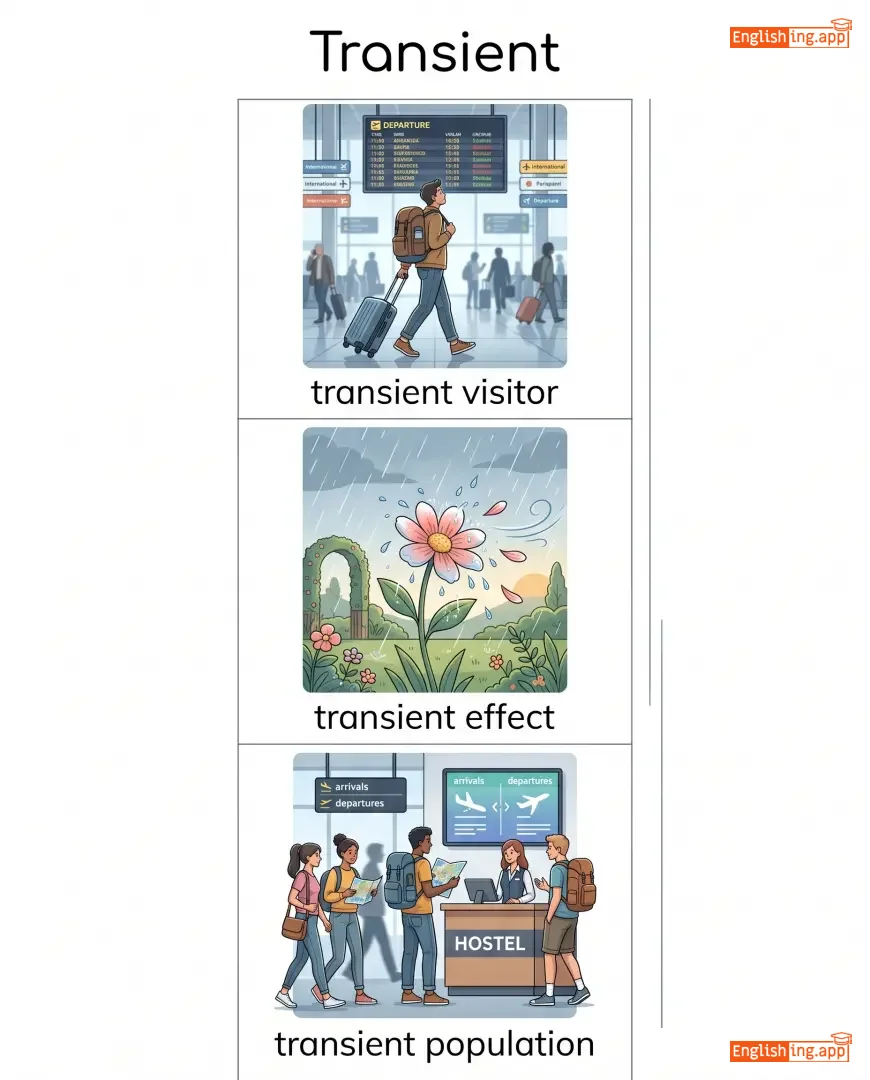
transient visitor, transient effect, transient population
••••••
|
Транзитный, как короткое пребывание, как буря.
••••••
|
Vocabulary Quiz
Test your vocabulary by matching words with their translations or meanings.
Login to take the quiz
Comments (0)
Share your thoughts and join the discussion.
Join the discussion by logging in
Login to CommentNo comments yet
Be the first to share your thoughts!