

翻訳
過去
過去分詞
三人称単数
動名詞
意味
例文
例文の翻訳
同義語
対義語
コロケーション
ニーモニック





Swipe left or right, or use the buttons. Tap image to zoom.
例文の翻訳
単語
Lesson 18Lesson 18 - マスクトグル
|
絵文字
|
単語 | Images | 翻訳 | 過去 | 過去分詞 | 三人称単数 | 動名詞 | 意味 | 例文 | 例文の翻訳 | 表現例 | 表現例の意味 | 表現例の翻訳 | 同義語 | 対義語 | コロケーション | ニーモニック |
|---|---|---|---|---|---|---|---|---|---|---|---|---|---|---|---|---|---|
|
#426
🌹
|
/ˈɪntɪmət/
adjective
(インティメート)
••••••
|
|
親密
shinmitsu
••••••
|
- •••••• | - •••••• | - •••••• | - •••••• |
Closely acquainted; very familiar and personal.
••••••
|
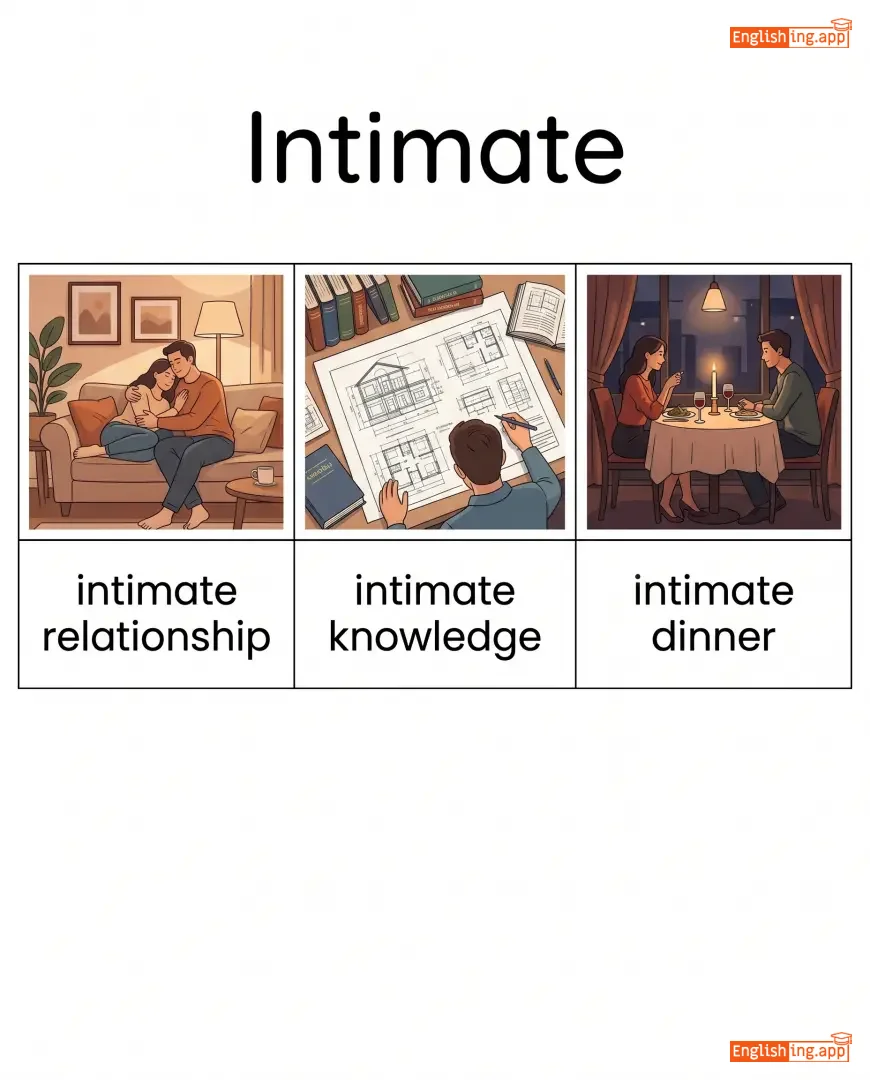
They shared an intimate dinner by candlelight. |
彼らはキャンドルライトの中で親密な夕食を共にした。
Karera wa kyandoru raito no naka de shinmitsu na yūshoku o tomo ni shita.
••••••
|
intimate knowledge |
A deep or detailed understanding of something.
••••••
|
親密な知識
shinmitsu na chishiki
••••••
|
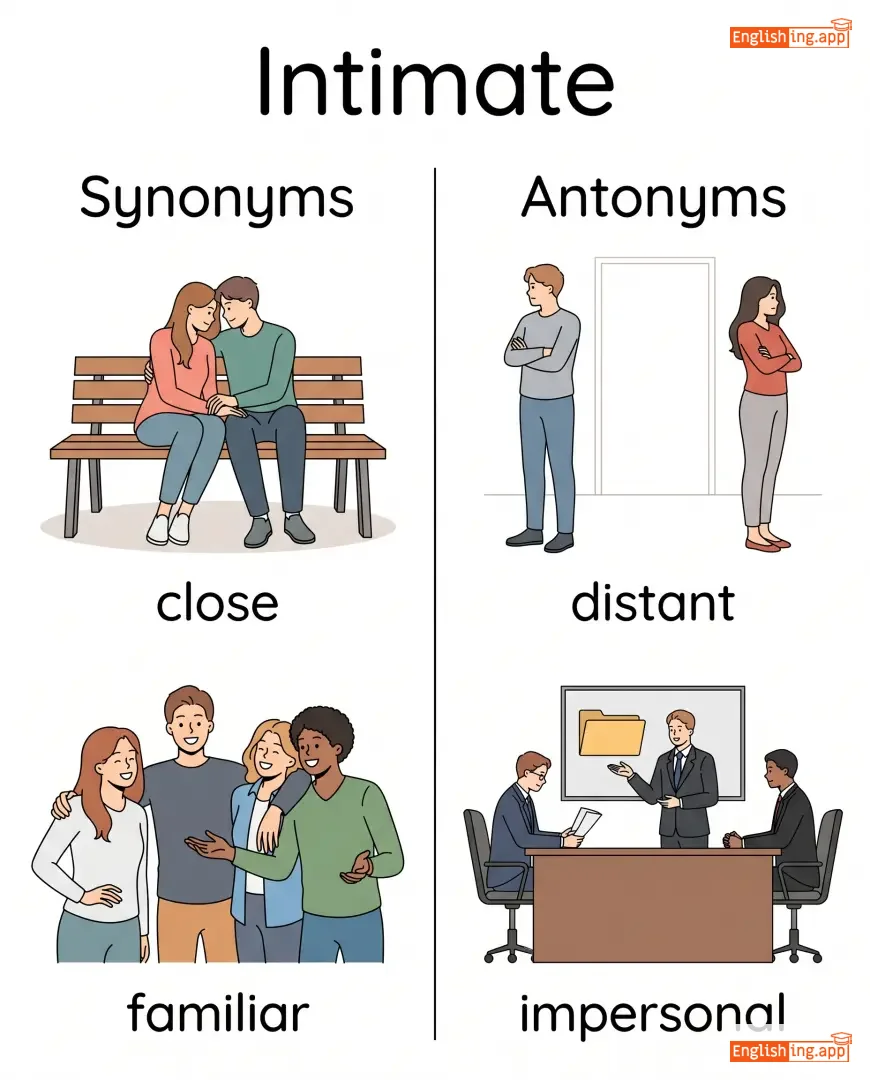
close, familiar, personal, confidential, warm
••••••
|
distant, impersonal, formal
••••••
|
intimate relationship, intimate knowledge, intimate dinner, intimate friend
••••••
|
Intimate = 親密な友人との特別な時間。
••••••
|
|
#427
🪨
|
/ɪnˈtræk.tə.bəl/
adjective
(イントラクトブル)
••••••
|
|
管理不能
kanri funō
••••••
|
- •••••• | - •••••• | - •••••• | - •••••• |
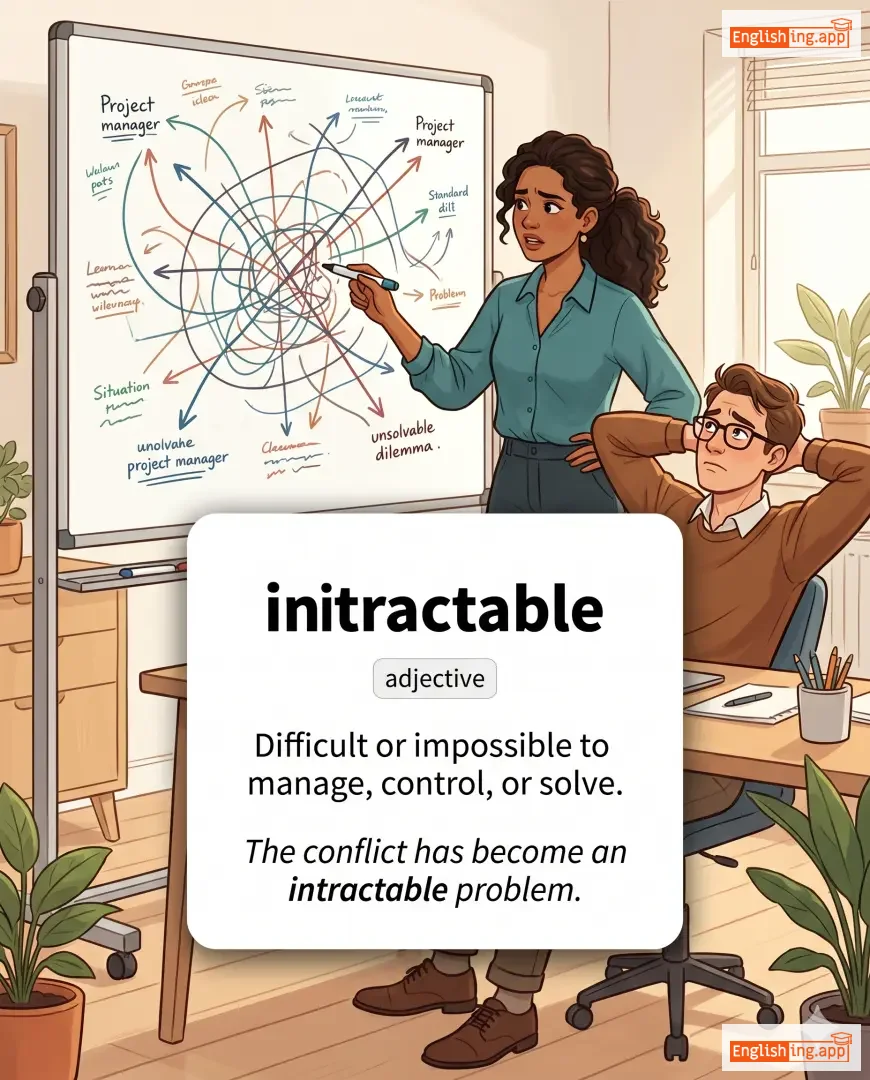
Difficult or impossible to manage, control, or solve.
••••••
|
The conflict has become an intractable problem. |
その対立は管理不能な問題になった。
Sono tairitsu wa kanri funō na mondai ni natta.
••••••
|
- •••••• | - •••••• | - •••••• |
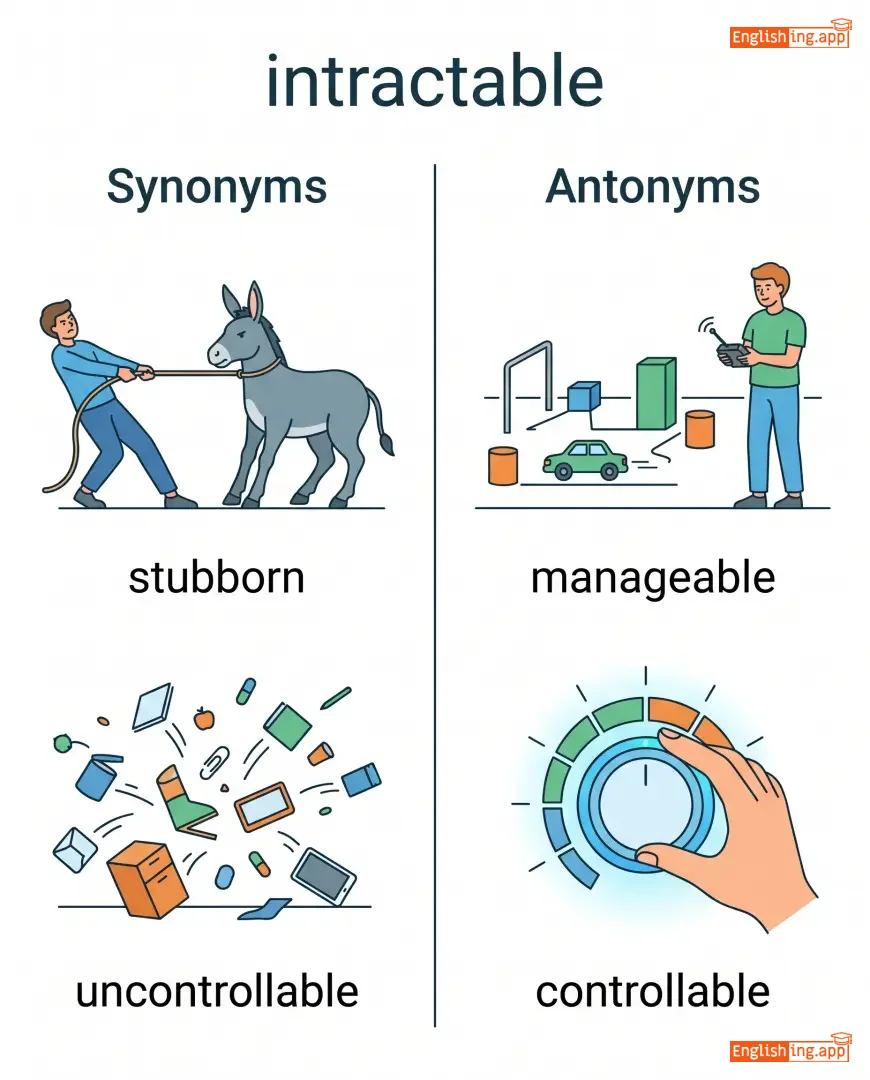
stubborn, uncontrollable, unmanageable, obstinate
••••••
|
manageable, controllable, flexible
••••••
|
intractable pain, intractable conflict, intractable issue, intractable disease
••••••
|
In + Track (トラック) + able → 解決できない問題 → 管理不能
••••••
|
|
#428
🛑
|
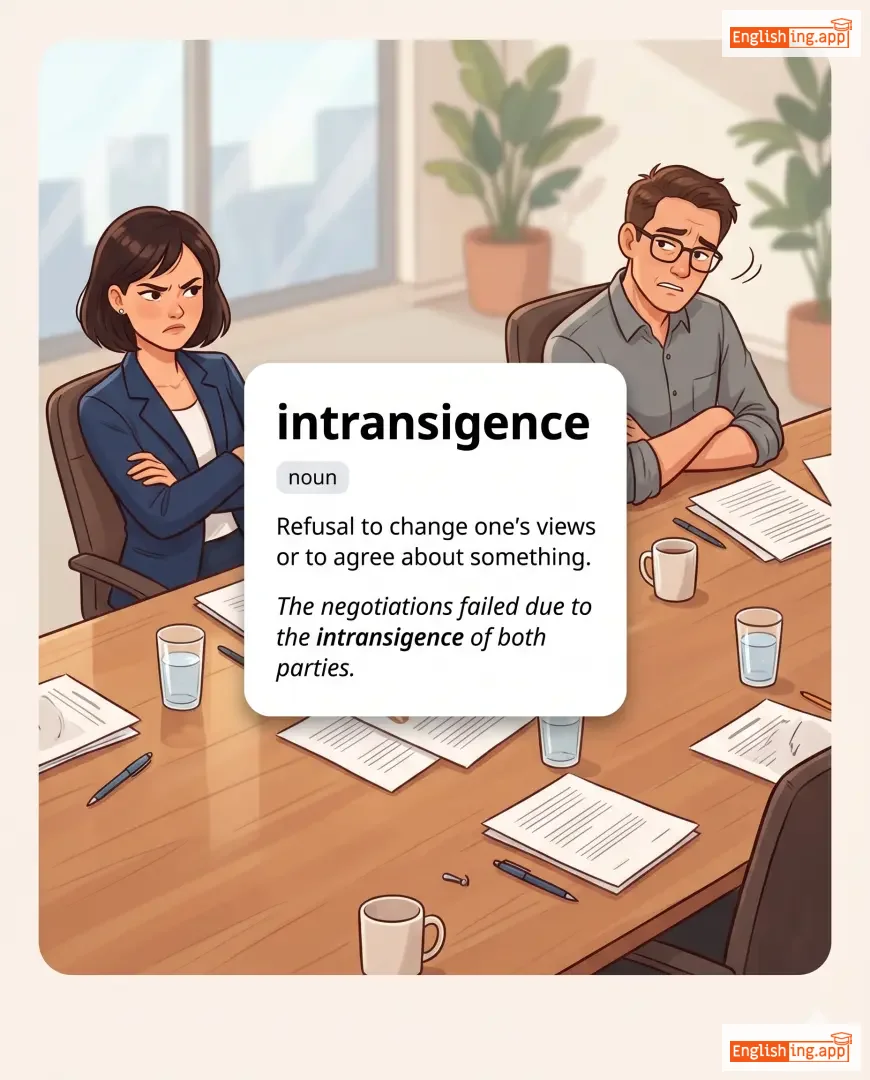
/ɪnˈtræn.sɪ.dʒəns/
noun
(イントランシジェンス)
••••••
|
|
不屈
fukutsu
••••••
|
- •••••• | - •••••• | - •••••• | - •••••• |
Refusal to change one's views or to agree about something.
••••••
|
The negotiations failed due to the intransigence of both parties. |
両者の不屈の姿勢のために交渉は失敗した。
Ryōsha no fukutsu no shisei no tame ni kōshō wa shippai shita.
••••••
|
- •••••• | - •••••• | - •••••• |
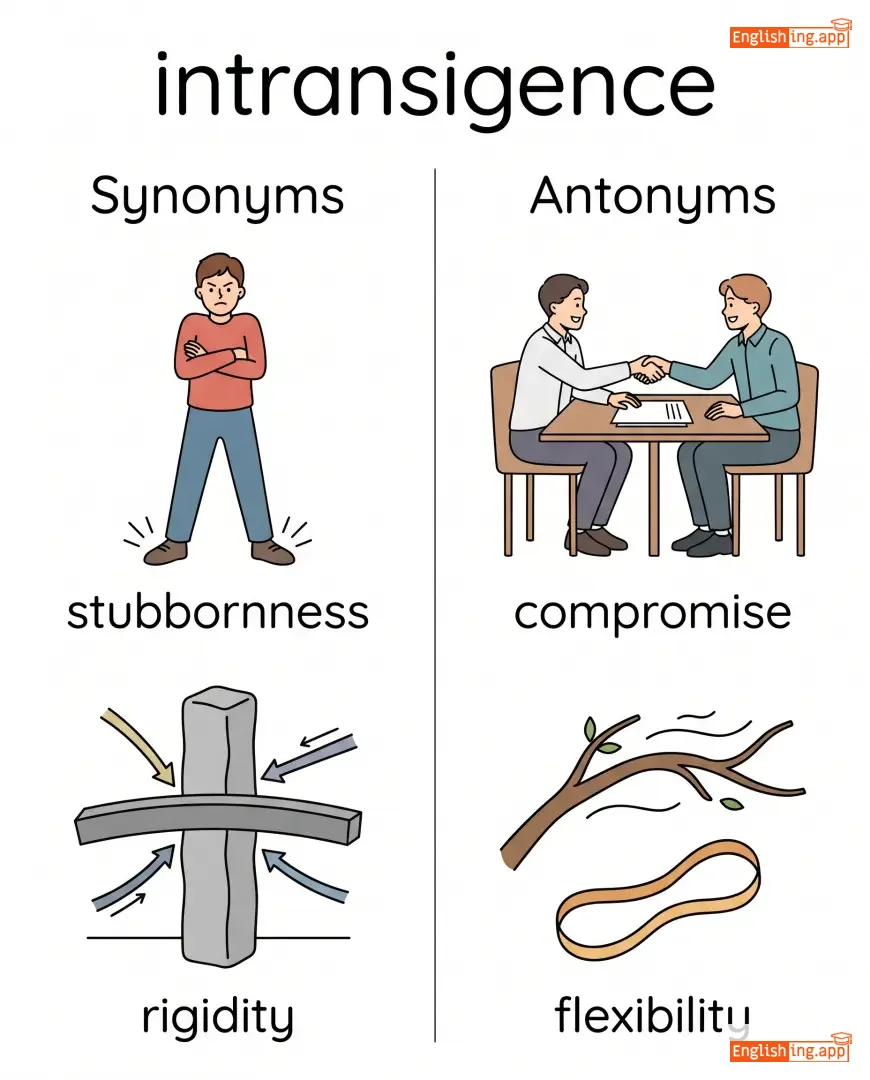
stubbornness, rigidity, inflexibility, obstinacy
••••••
|
compromise, flexibility, willingness
••••••
|
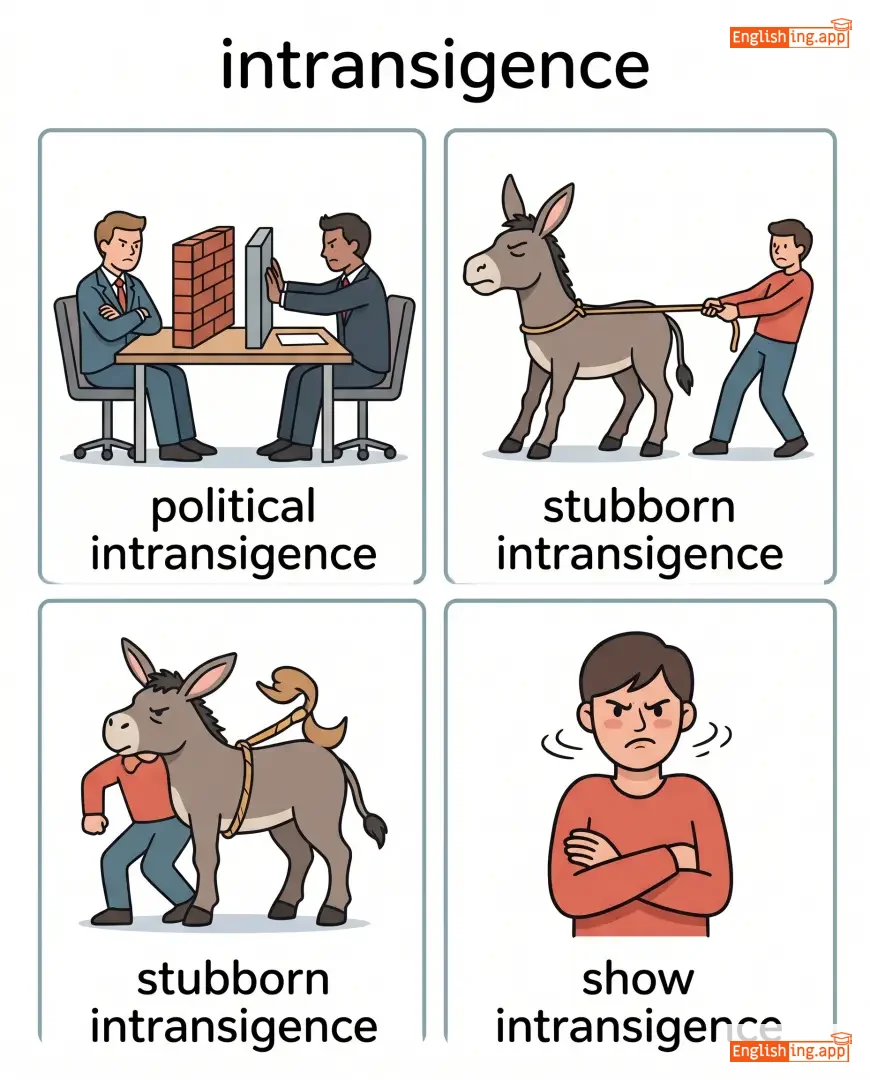
political intransigence, stubborn intransigence, show intransigence, display intransigence
••••••
|
In + Transit なし → 進まない → 変わらない → 不屈
••••••
|
|
#429
🤔
|
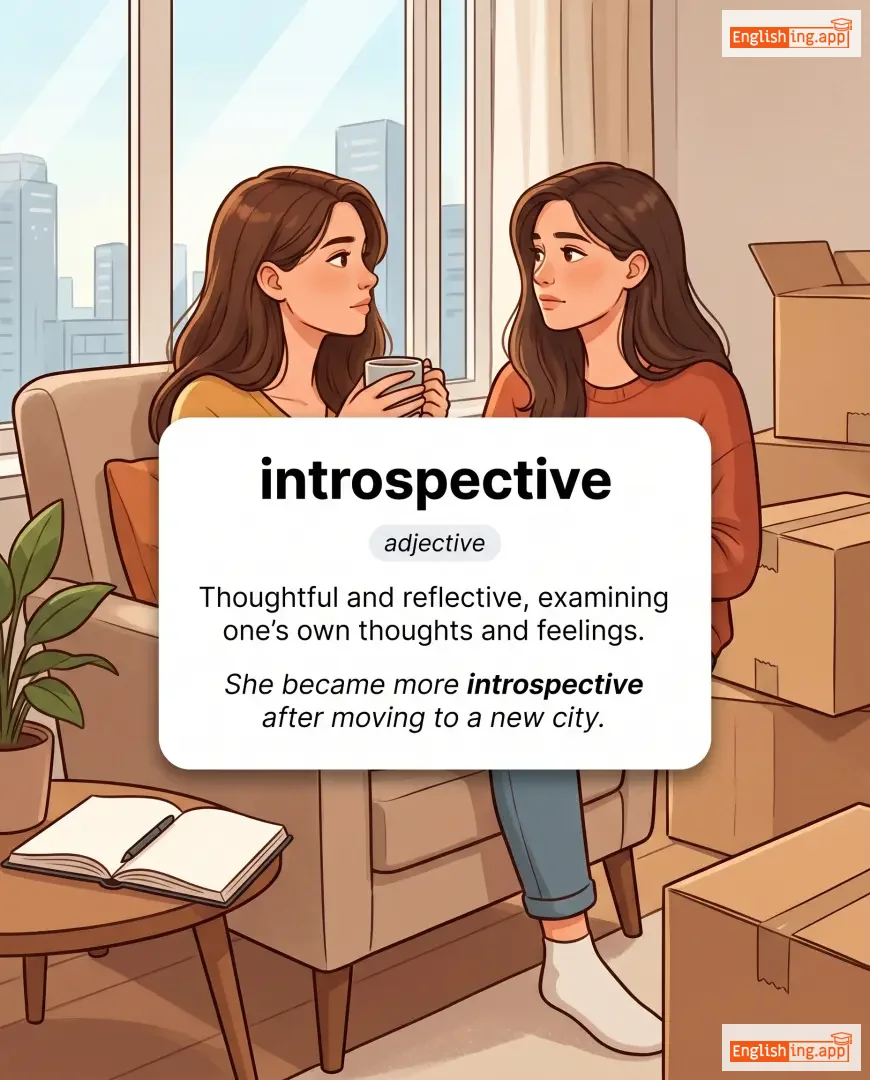
/ˌɪn.trəˈspɛk.tɪv/
adjective
(イントロスペクティブ)
••••••
|
|
内向的
naikōteki
••••••
|
- •••••• | - •••••• | - •••••• | - •••••• |
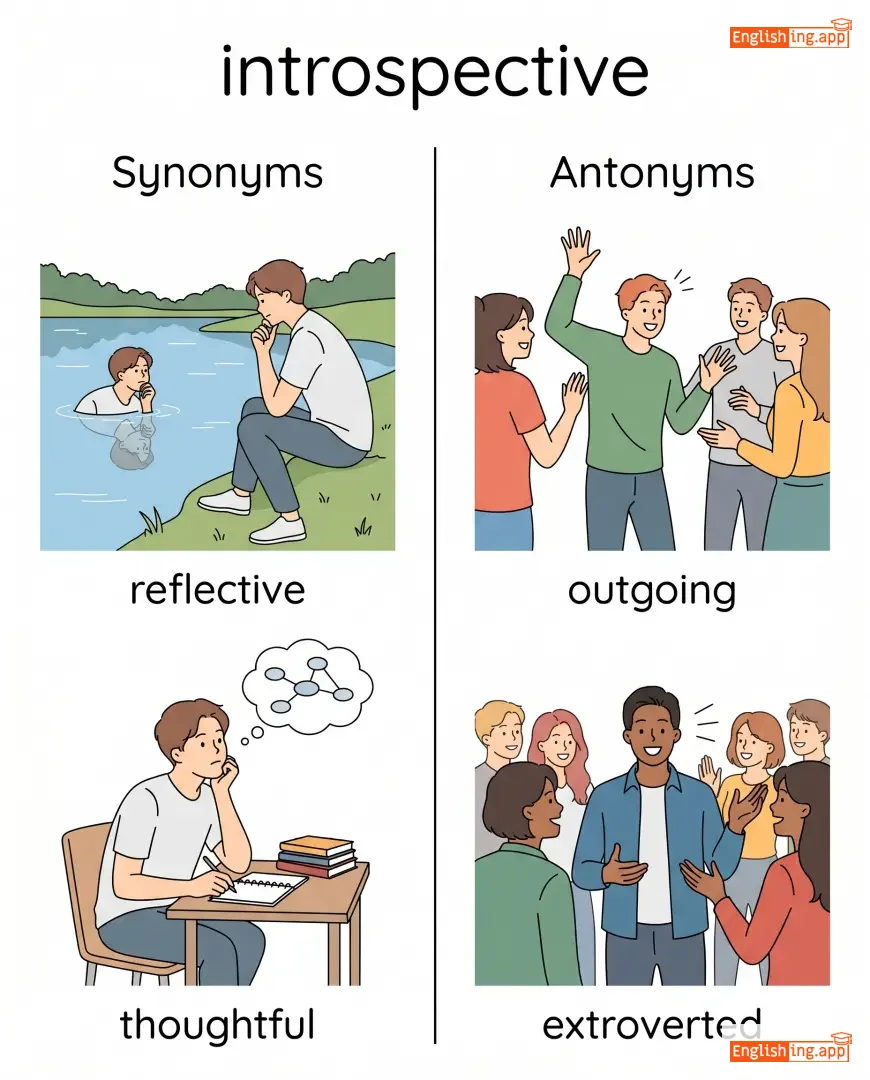
Thoughtful and reflective, examining one's own thoughts and feelings.
••••••
|
She became more introspective after moving to a new city. |
彼女は新しい都市に引っ越した後、より内向的になった。
Kanojo wa atarashī toshi ni hikkoshita ato, yori naikōteki ni natta.
••••••
|
- •••••• | - •••••• | - •••••• |
reflective, thoughtful, meditative, contemplative, pensive
••••••
|
outgoing, extroverted, careless
••••••
|
introspective mood, introspective nature, deeply introspective, become introspective
••••••
|
Introは中を意味し、内向的は内部で考えることを意味します。
••••••
|
|
#430
🌊
|
/ˈɪn.ʌn.deɪt/
verb
(イナンデイト)
••••••
|
|
氾濫する / 溢れかえる
hanran suru / afurekaeru
••••••
|
inundated
イナンデイテッド
••••••
|
inundated
イナンデイテッド
••••••
|
inundates
イナンデイツ
••••••
|
inundating
イナンデイティング
••••••
|
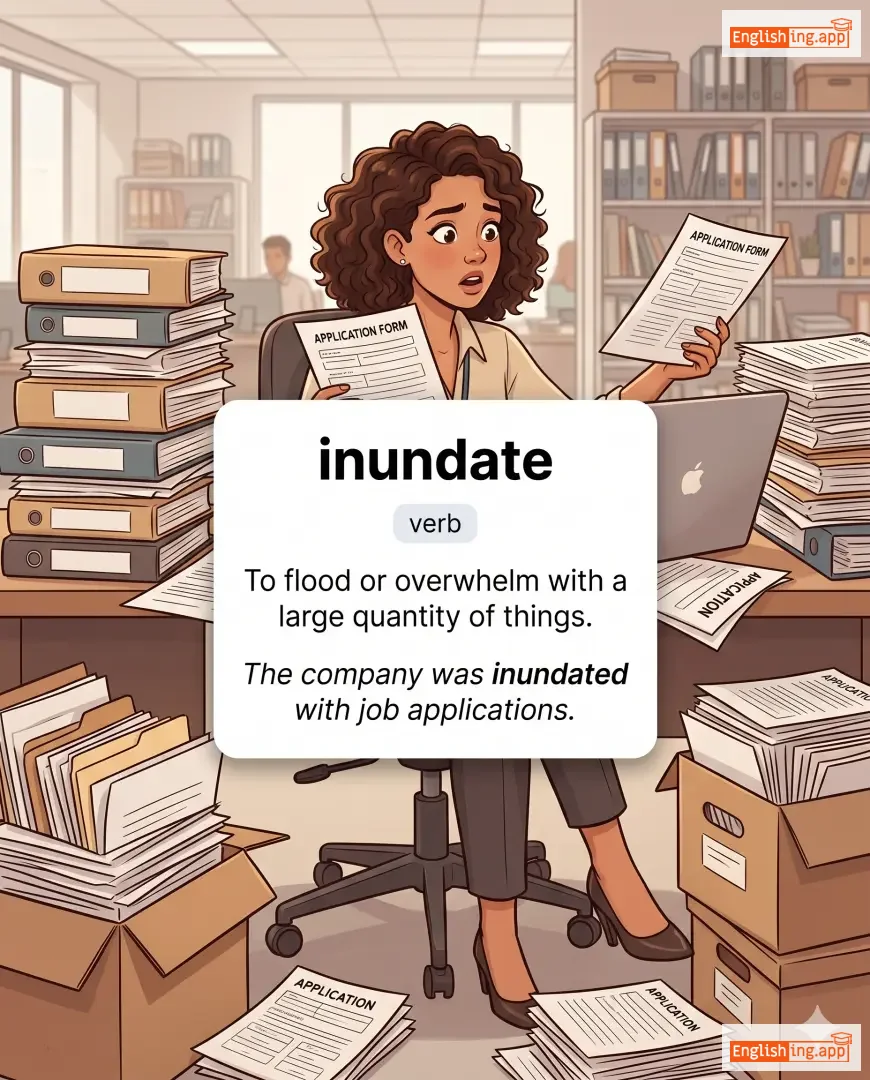
To flood or overwhelm with a large quantity of things.
••••••
|
The company was inundated with job applications.
その会社は求人応募で溢れていた。
••••••
|
その会社は求人応募で溢れていた。
Sono kaisha wa kyūjin ōbo de afurete ita.
••••••
|
inundated with work
仕事に溢れかえった
••••••
|
Overwhelmed by too much work.
••••••
|
仕事に圧倒される
shigoto ni attō sareru
••••••
|
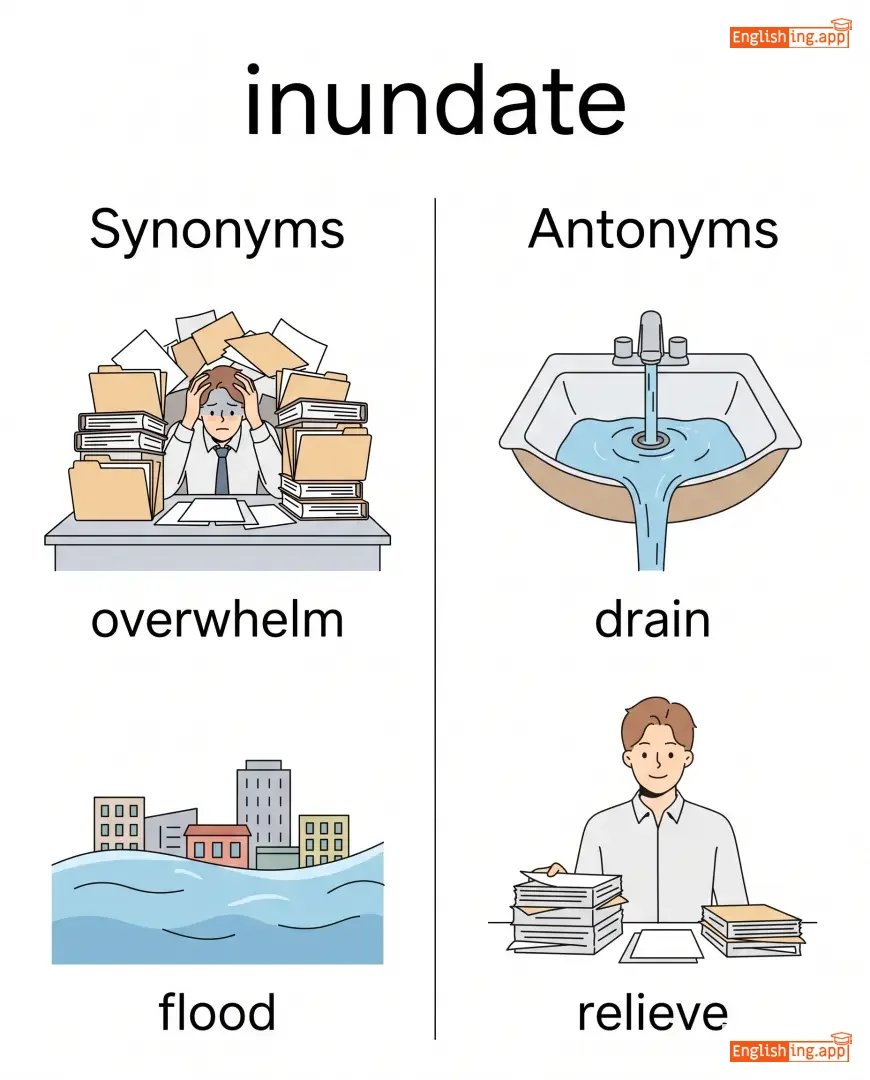
overwhelm, flood, swamp, engulf, deluge
••••••
|
drain, relieve
••••••
|
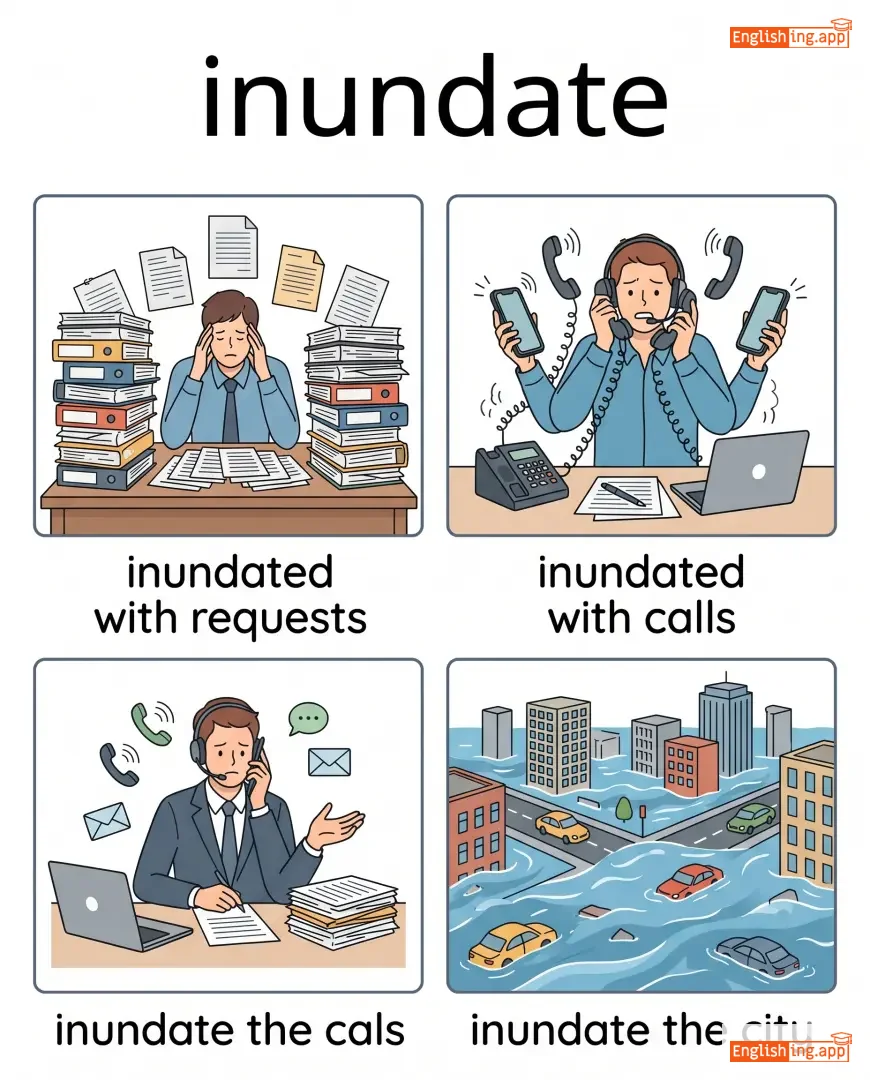
inundated with requests, inundated with calls, inundate the city, inundated by problems
••••••
|
In UN DATE で氾濫 – inundate は氾濫するを意味します。
••••••
|
|
#431
🛡️
|
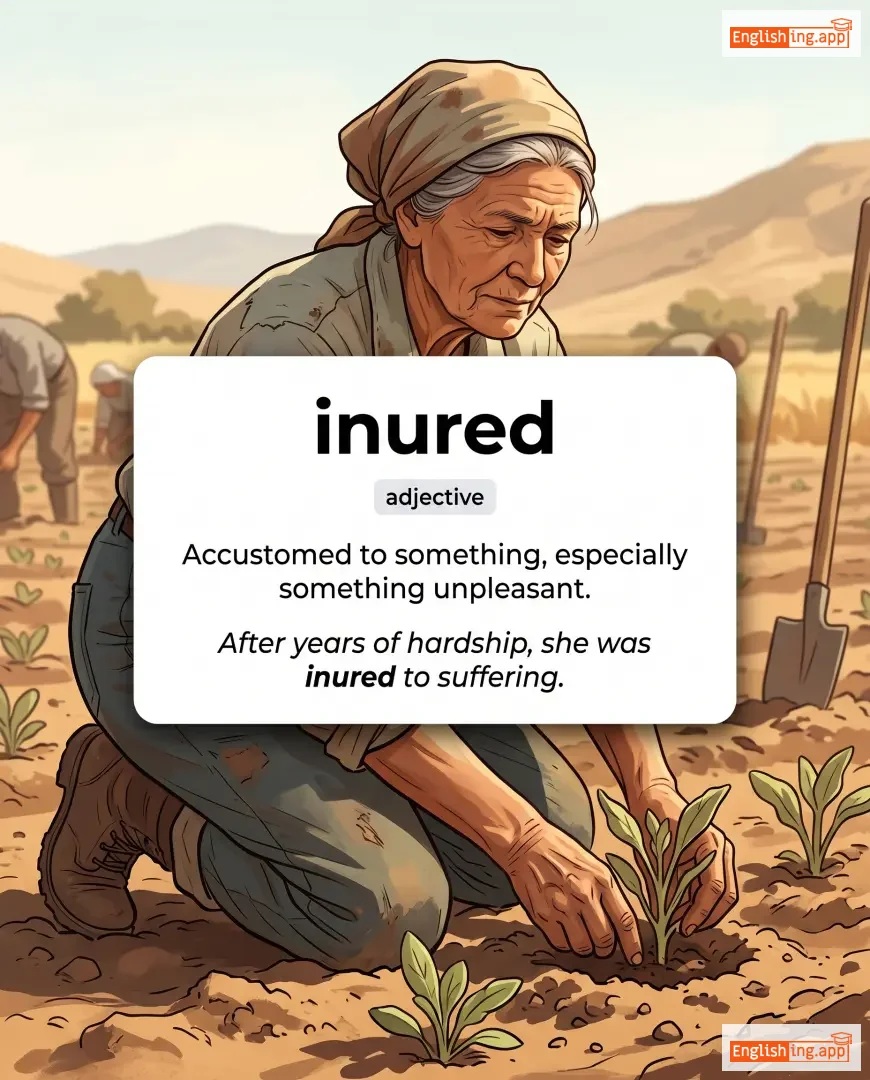
/ɪˈnjʊərd/
adjective
(イニュアード)
••••••
|
|
慣れた
nareta
••••••
|
- •••••• | - •••••• | - •••••• | - •••••• |
Accustomed to something, especially something unpleasant.
••••••
|
After years of hardship, she was inured to suffering. |
長年の苦しみの後、彼女は苦しみに慣れていた。
Naganen no kurushimi no ato, kanojo wa kurushimi ni narete ita.
••••••
|
- •••••• | - •••••• | - •••••• |
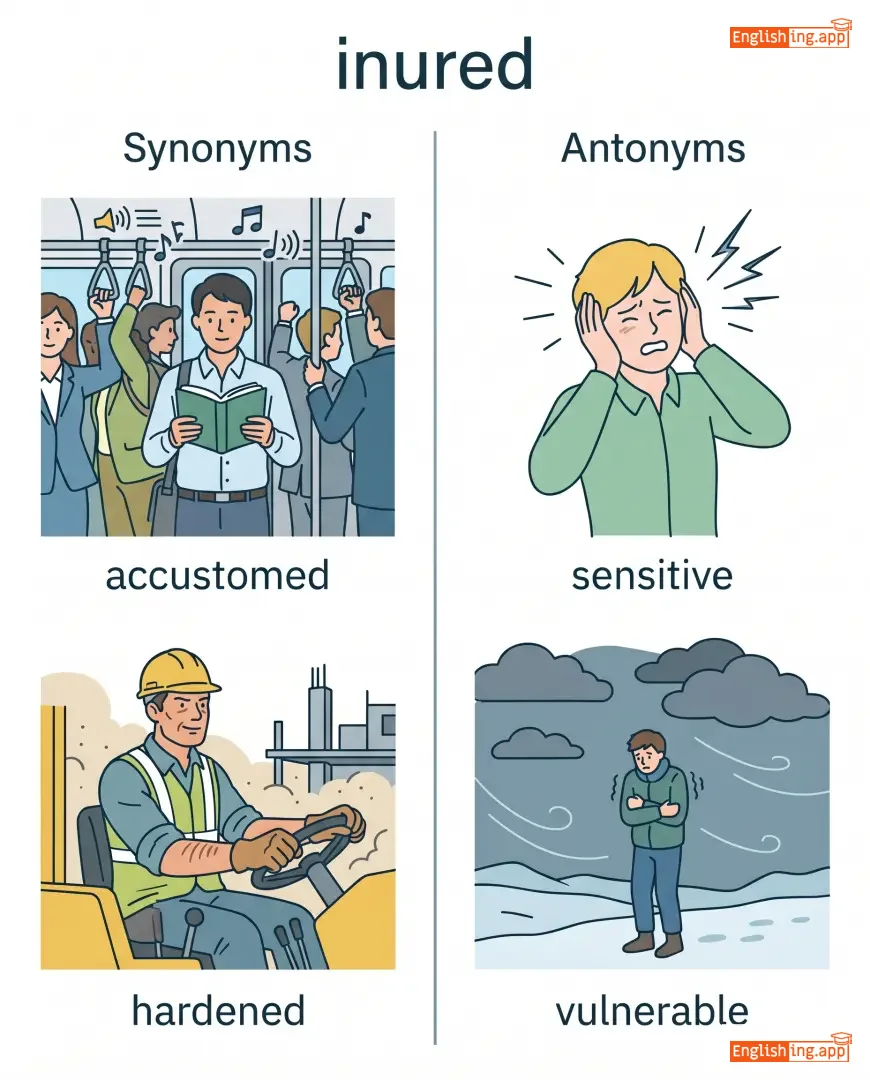
accustomed, hardened, desensitized, habituated, seasoned
••••••
|
sensitive, vulnerable, unaccustomed
••••••
|
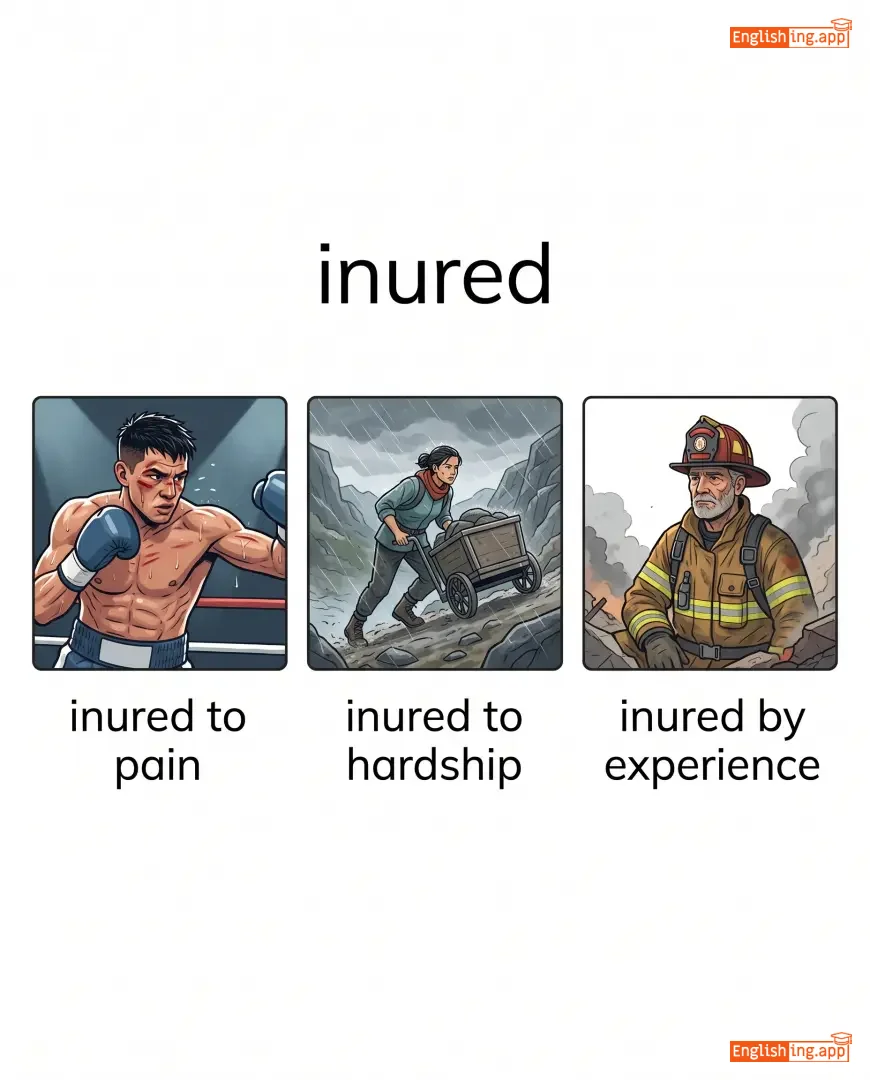
inured to pain, inured to hardship, inured by experience
••••••
|
Inured は IN + ユアード → 長い苦しみで慣れる。
••••••
|
|
#432
🗯️
|
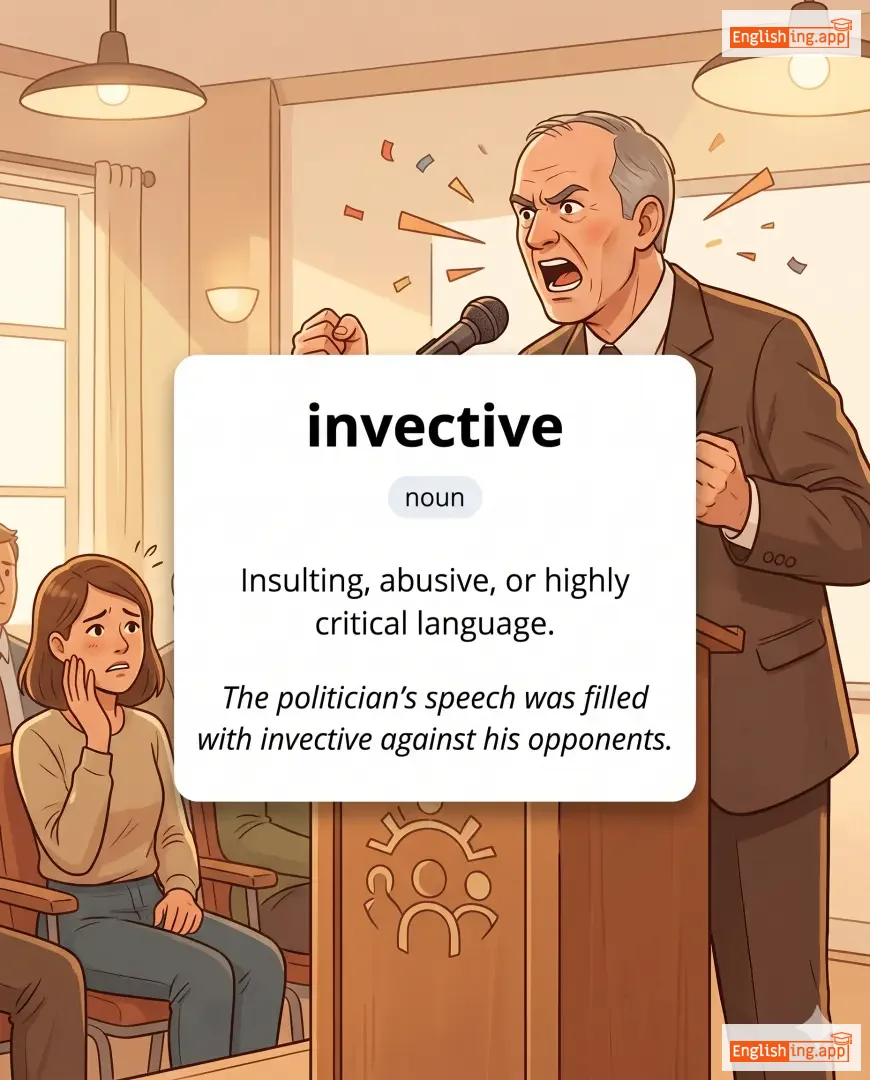
/ɪnˈvɛktɪv/
noun
(インヴェクティブ)
••••••
|
|
侮辱的な言葉
būryokuteki na kotoba
••••••
|
- •••••• | - •••••• | - •••••• | - •••••• |
Insulting, abusive, or highly critical language.
••••••
|
The politician’s speech was filled with invective against his opponents. |
その政治家の演説は、対立候補に対する侮辱的な言葉で満ちていた。
Sono seijika no enzetsu wa, tairitsukōho ni taisuru būryokuteki na kotoba de michite ita.
••••••
|
- •••••• | - •••••• | - •••••• |
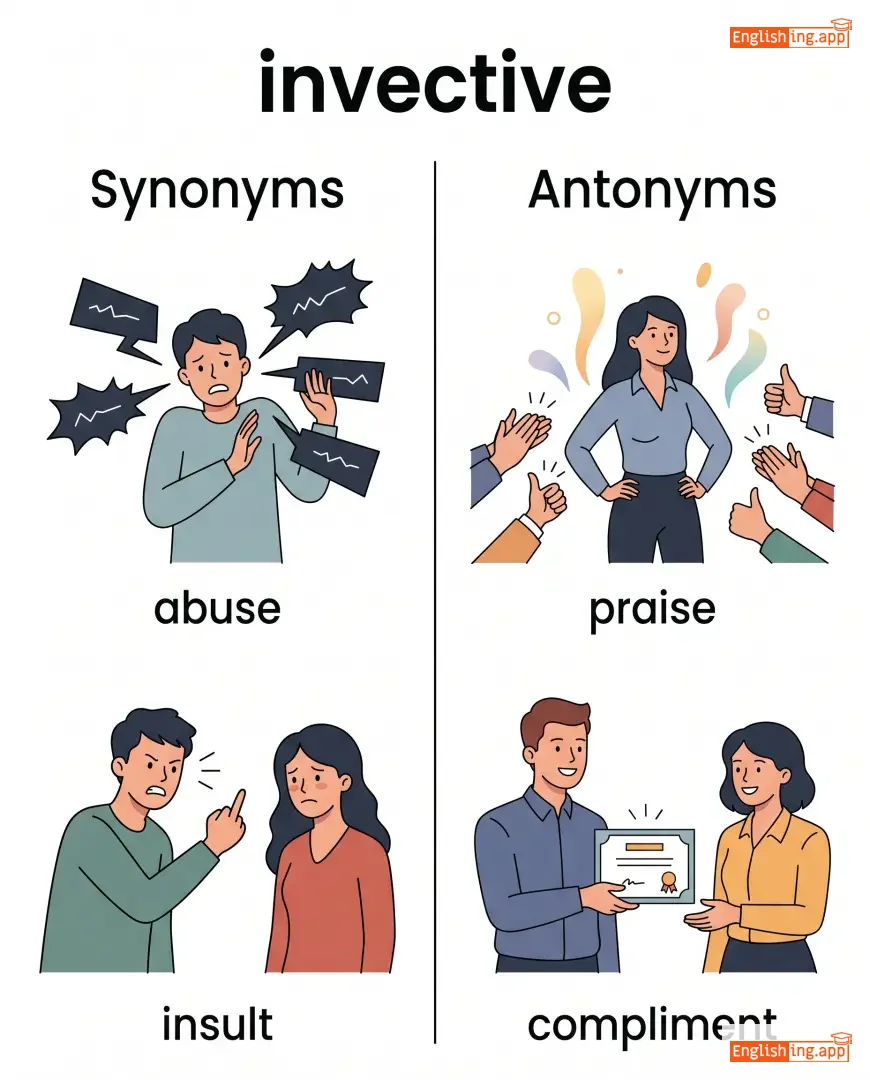
abuse, insult, vituperation, slander, censure
••••••
|
praise, compliment, flattery
••••••
|
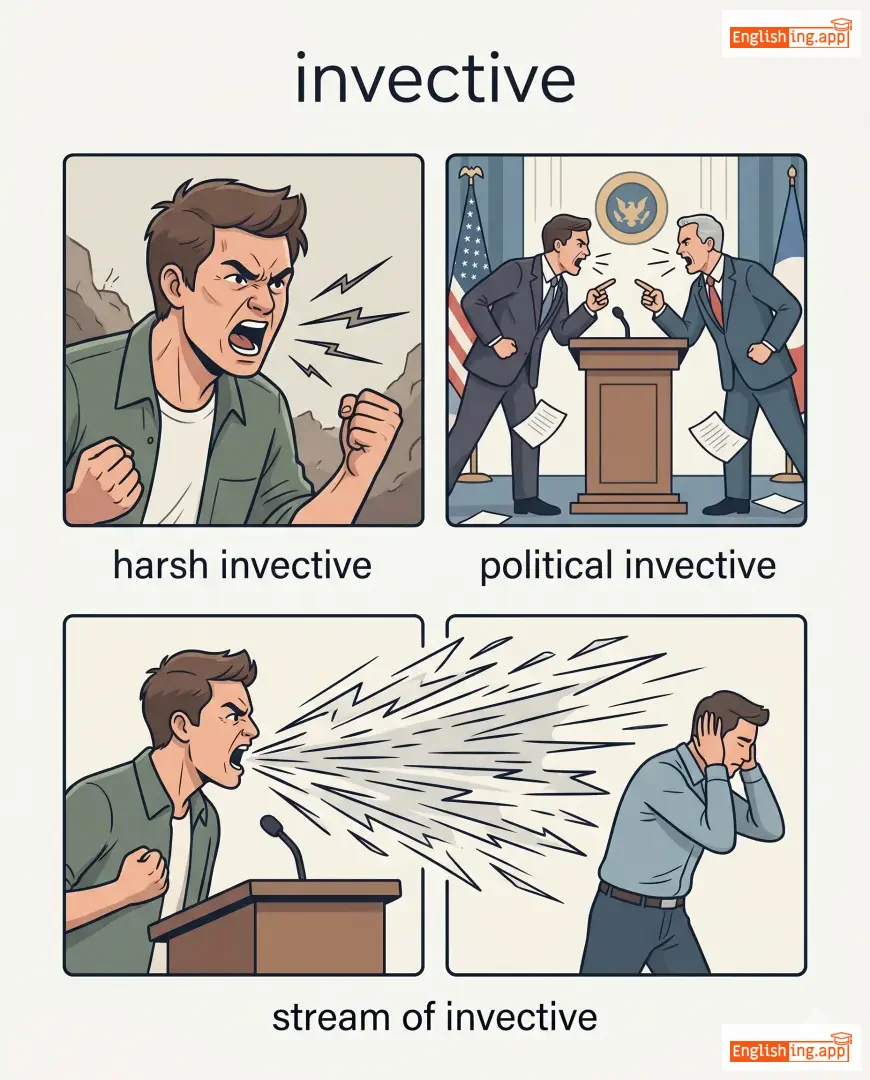
harsh invective, political invective, stream of invective
••••••
|
Invective は、攻撃的な言葉の集まりです。
••••••
|
|
#433
📢
|
/ɪnˈveɪ/
verb
(インヴェイ)
••••••
|
|
激しく批判する
hageshiku hihan suru
••••••
|
inveighed
インヴェイド
••••••
|
inveighed
インヴェイド
••••••
|
inveighs
インヴェイズ
••••••
|
inveighing
インヴェイング
••••••
|
To speak or write about something with great hostility and criticism.
••••••
|
He inveighed against the corruption in government.
彼は政府の腐敗に対して強く非難した。
••••••
|
彼は政府の腐敗に対して激しく批判した。
Kare wa seifu no fuhai ni taishite hageshiku hihan shita.
••••••
|
- •••••• | - •••••• | - •••••• |
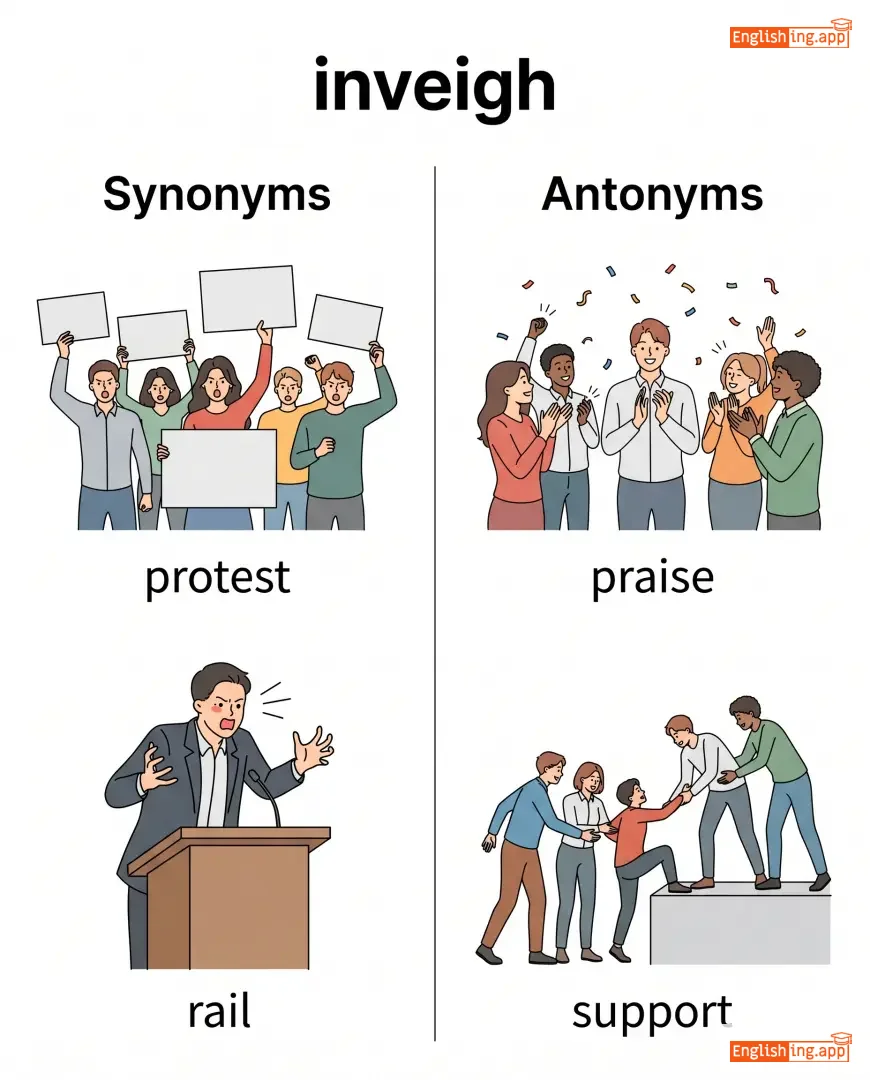
protest, rail, denounce, criticize, condemn
••••••
|
praise, support, approve
••••••
|
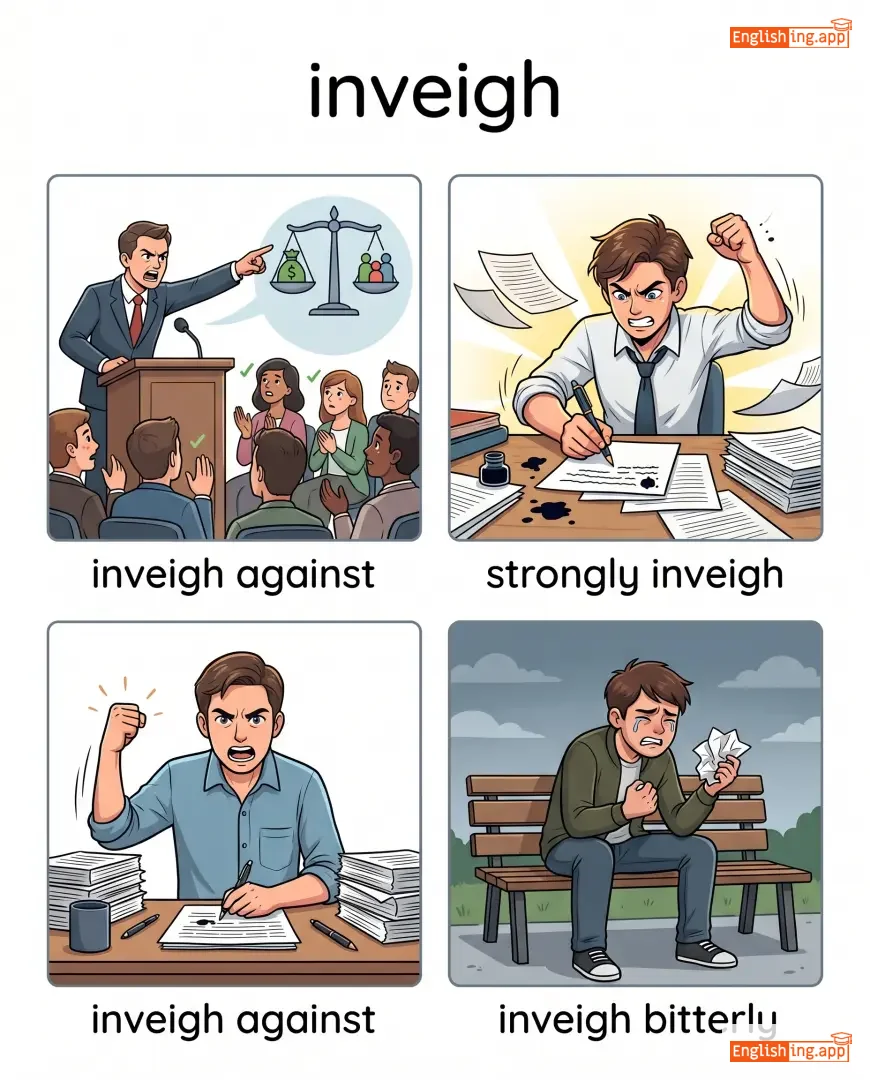
inveigh against, strongly inveigh, inveigh bitterly
••••••
|
Inveigh は侵略ではなく、政府の腐敗に対して激しく批判することです。
••••••
|
|
#434
🪄
|
/ɪnˈveɪɡəl/
verb
(インヴェイグル)
••••••
|
|
誘惑する
yūwaku suru
••••••
|
inveigled
インヴェイグルド
••••••
|
inveigled
インヴェイグルド
••••••
|
inveigles
インヴェイグルズ
••••••
|
inveigling
インヴェイグリング
••••••
|
To persuade someone to do something by deception or flattery.
••••••
|
She inveigled him into signing the contract.
彼女は彼に契約書に署名させた。
••••••
|
彼女は彼に契約書に署名させた。
Kanojo wa kare ni keiyaku-sho ni shomei saseta.
••••••
|
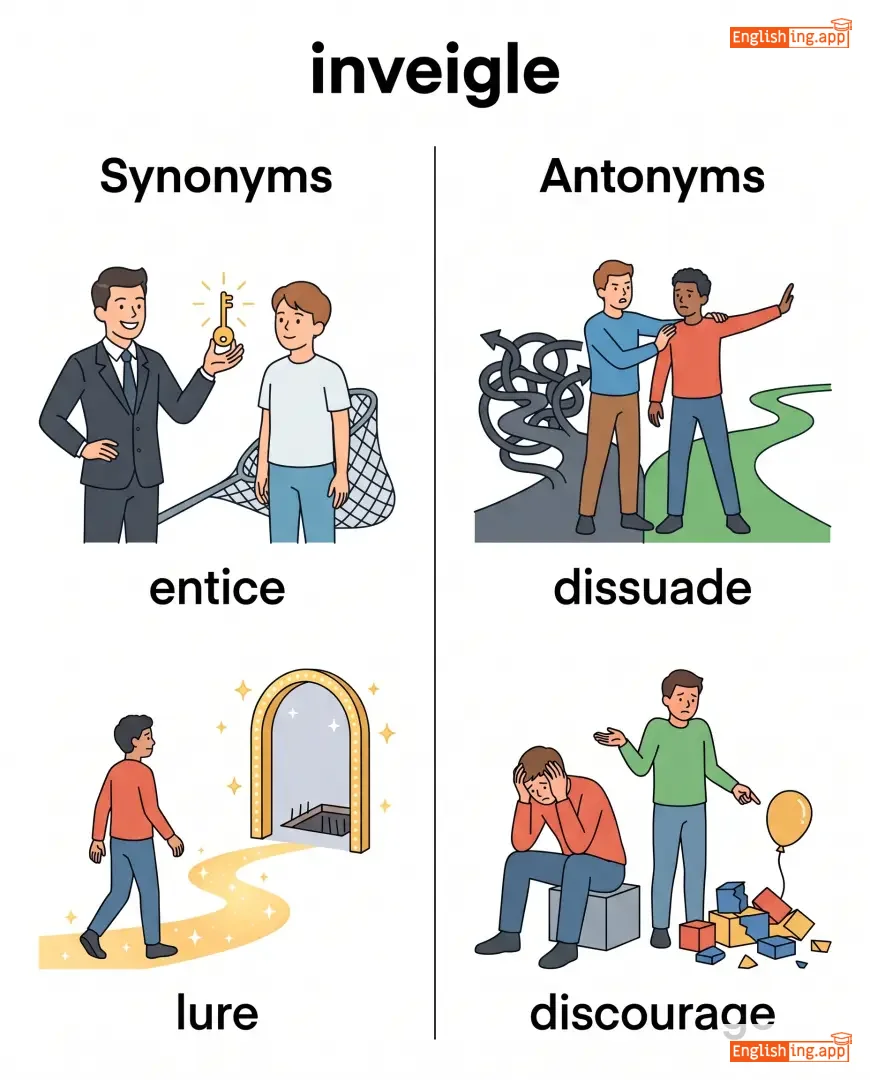
- •••••• | - •••••• | - •••••• |
entice, lure, coax, manipulate, persuade
••••••
|
dissuade, discourage, repel
••••••
|
inveigle into, cleverly inveigle, inveigle someone
••••••
|
Inveigleは誰かを欺くことです
••••••
|
|
#435
📚
|
/ɪnˈvɛtərət/
adjective
(インヴェテレート)
••••••
|
|
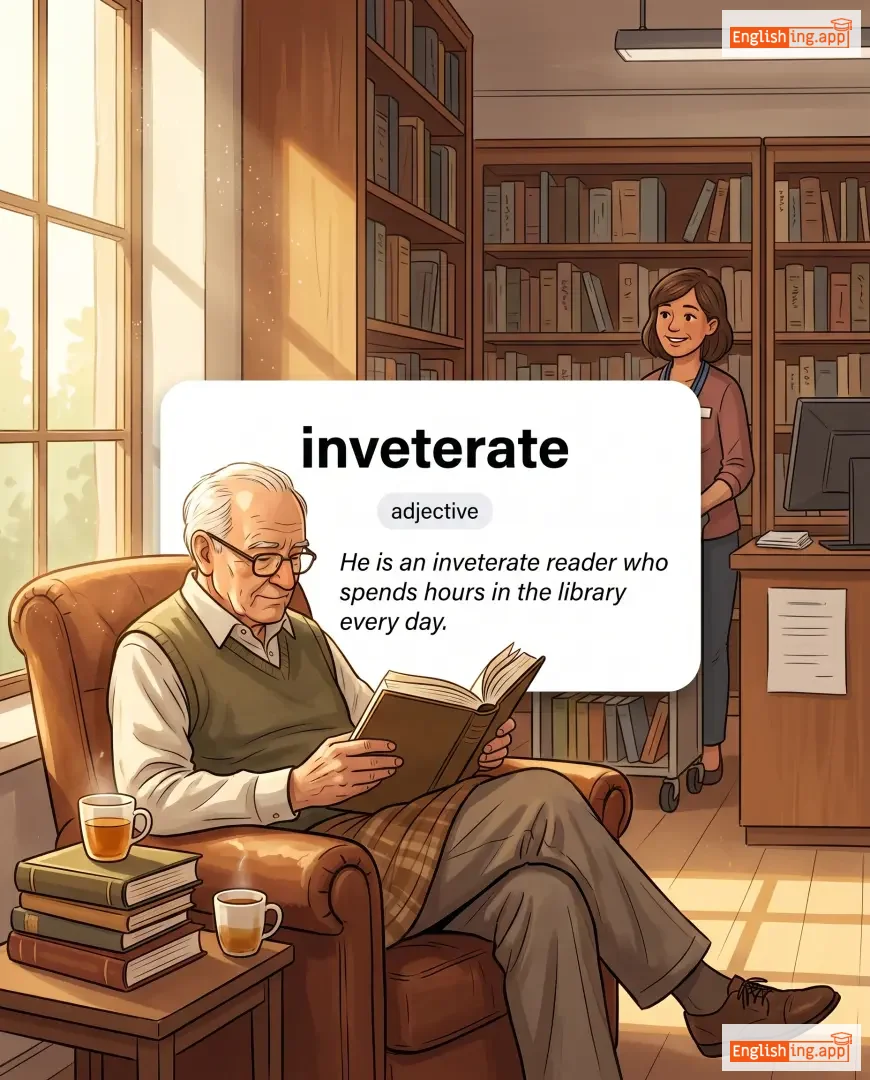
常習的な
joushuuteki na
••••••
|
- •••••• | - •••••• | - •••••• | - •••••• |
having a long-established habit, activity, or interest that is unlikely to change
••••••
|
He is an inveterate reader who spends hours in the library every day. |
彼は毎日数時間を図書館で過ごす常習的な読者です。
Kare wa mainichi suujikan wo toshokan de sugosu joushuuteki na dokusha desu.
••••••
|
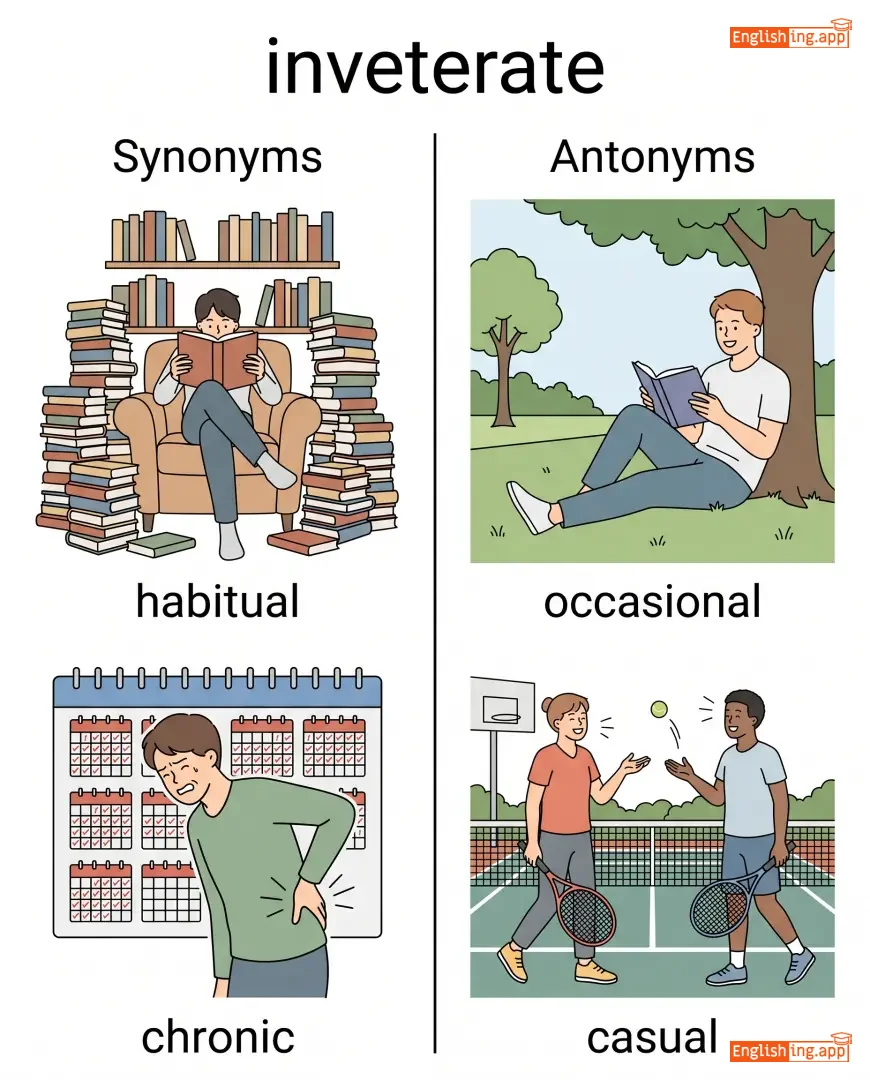
- •••••• | - •••••• | - •••••• |
habitual, chronic, entrenched, confirmed
••••••
|
occasional, casual
••••••
|
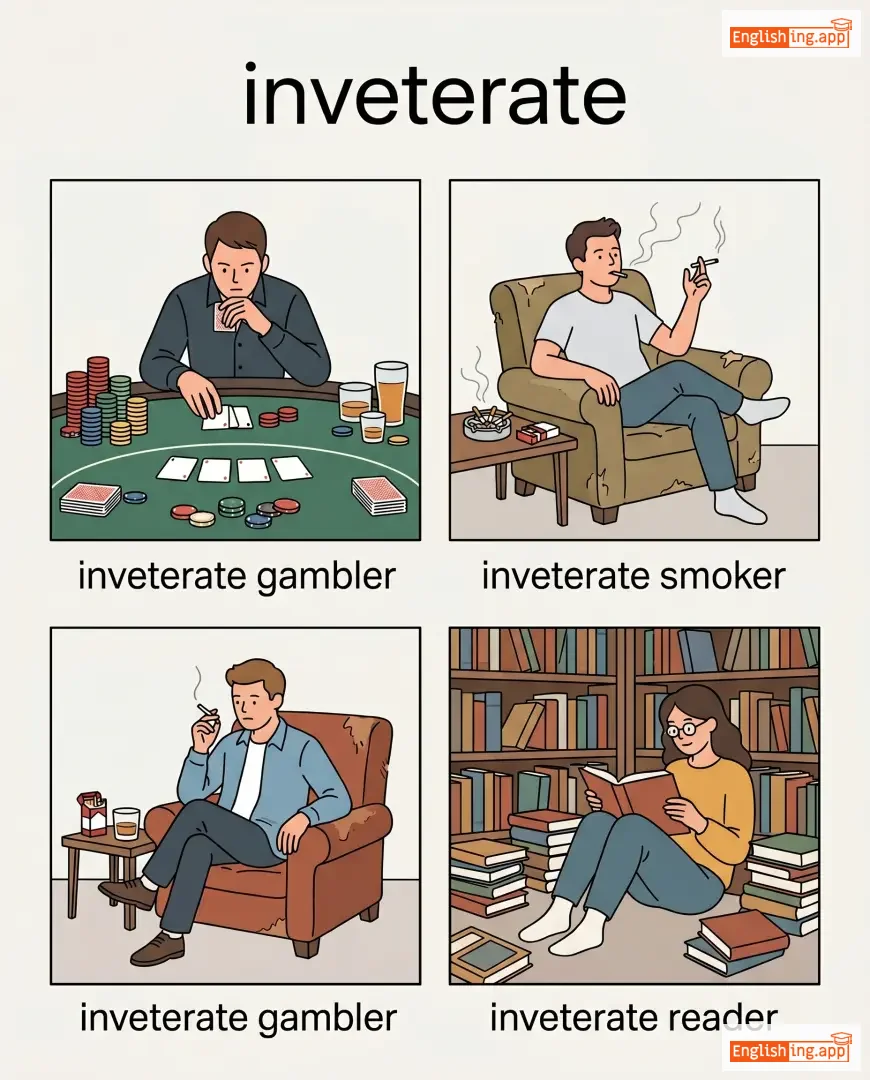
inveterate gambler, inveterate smoker, inveterate reader
••••••
|
Inveterateは古い習慣にしっかりと根を張った意味です — 常習的な
••••••
|
|
#436
😒
|
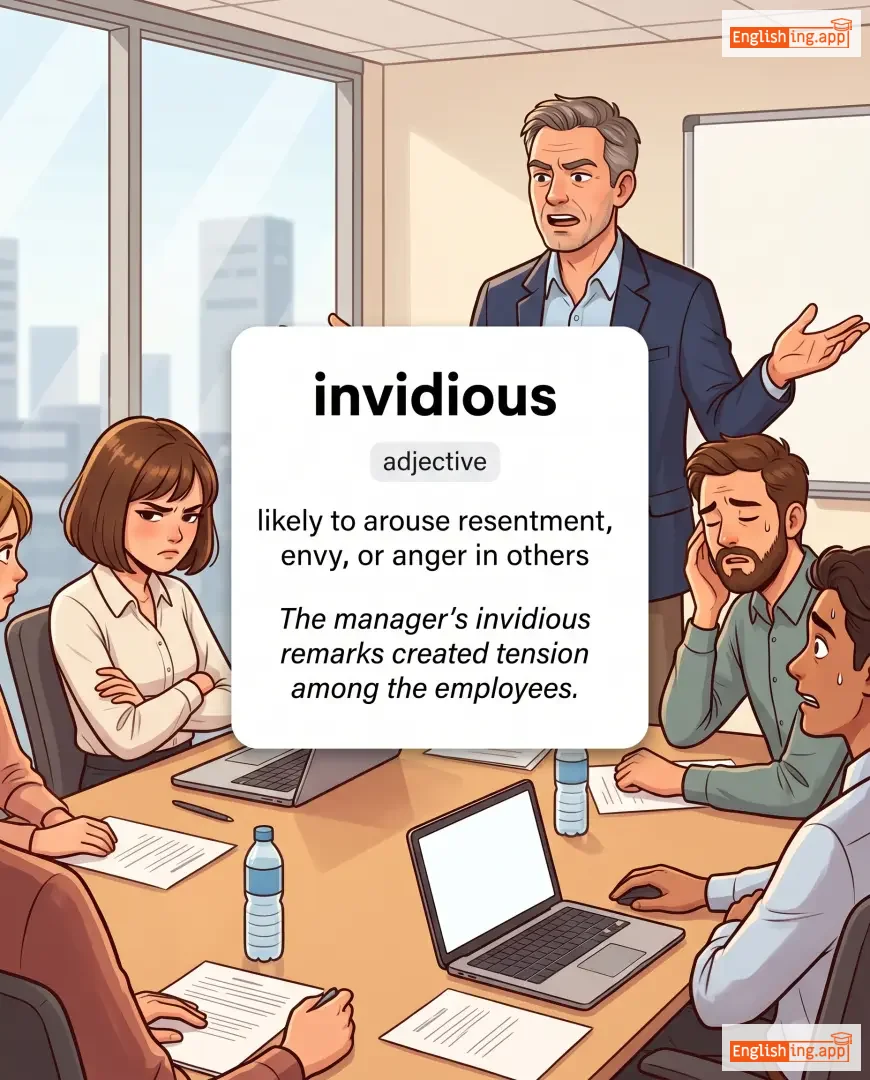
/ɪnˈvɪdiəs/
adjective
(インヴィディアス)
••••••
|
|
妬ましい
netamashii
••••••
|
- •••••• | - •••••• | - •••••• | - •••••• |
likely to arouse resentment, envy, or anger in others
••••••
|
The manager's invidious remarks created tension among the employees. |
マネージャーの妬ましいコメントは、従業員の間に緊張を生み出しました。
Manējā no netamashī komento wa, jūgyōin no aida ni kinchō o umidashimashita.
••••••
|
- •••••• | - •••••• | - •••••• |
offensive, unpleasant, discriminatory, unfair
••••••
|
favorable, just
••••••
|
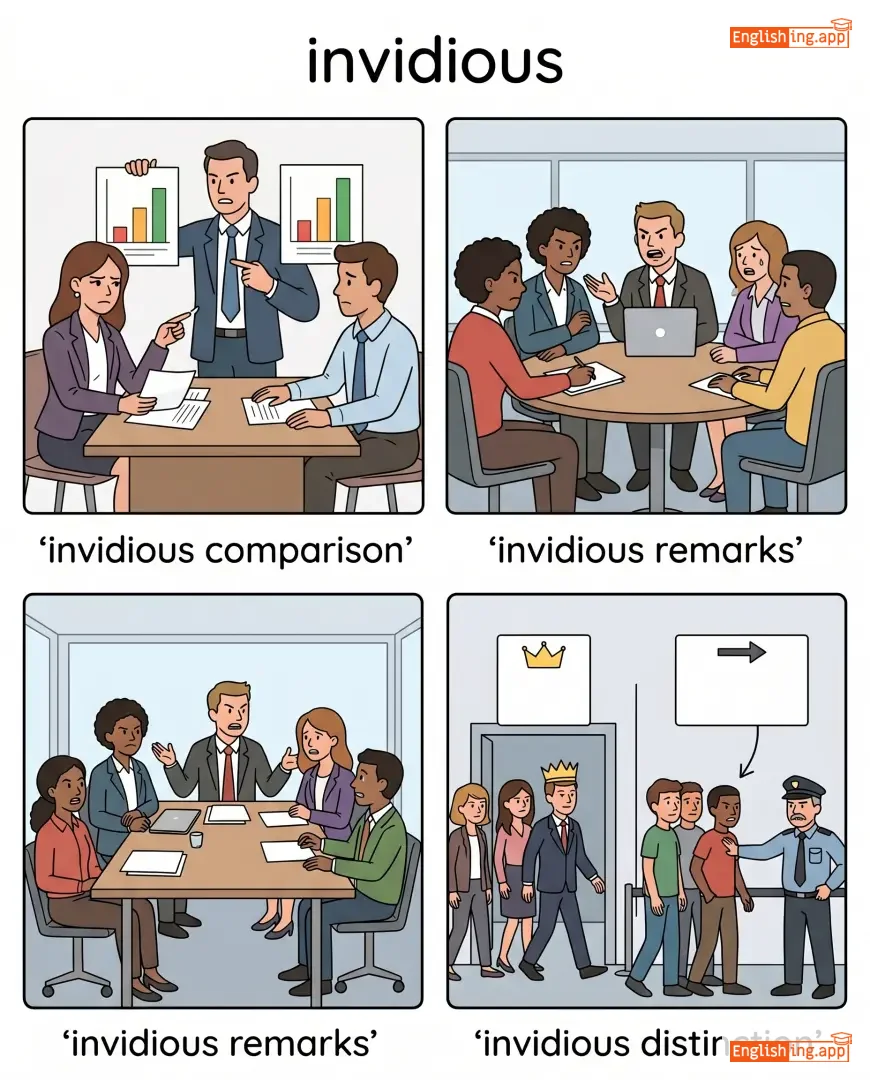
invidious comparison, invidious remarks, invidious distinction
••••••
|
Invidious とは他人に嫉妬を引き起こすこと — 妬ましい
••••••
|
|
#437
😡
|
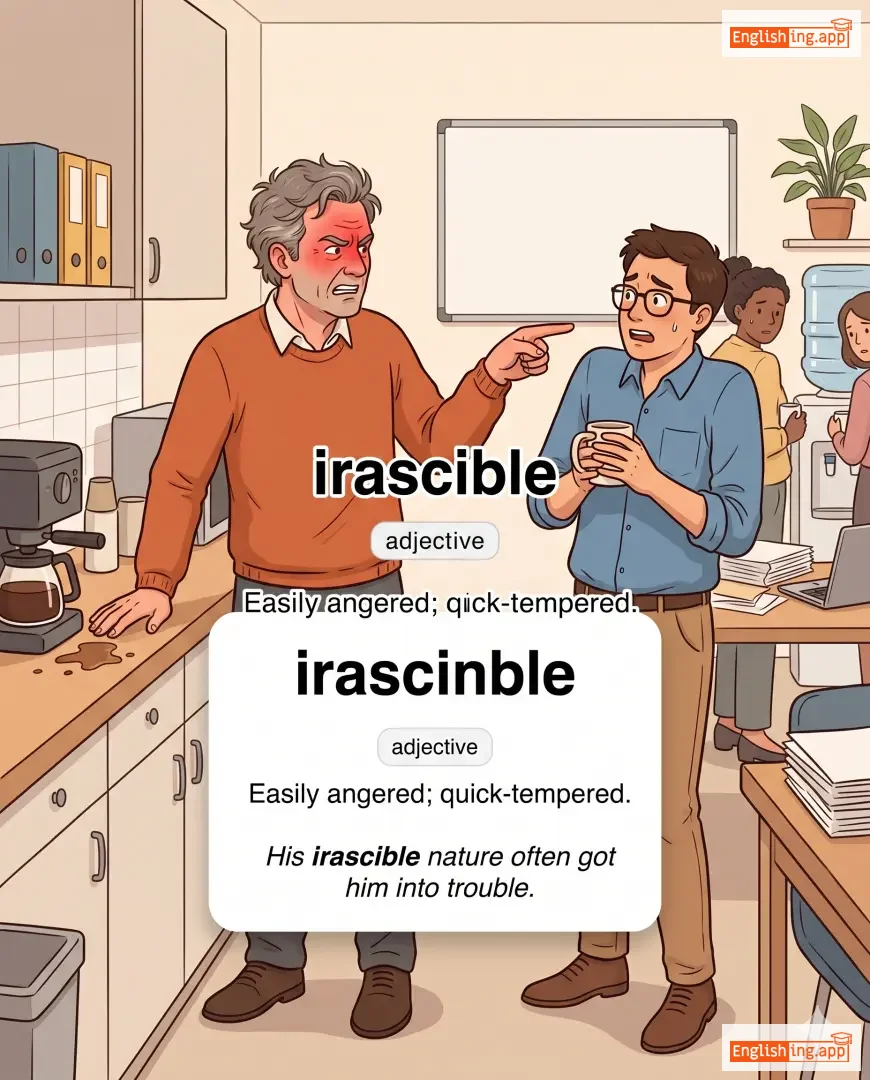
/ɪˈræsɪbl/
adjective
(イラサイブル)
••••••
|
|
怒りっぽい
okorippoi
••••••
|
- •••••• | - •••••• | - •••••• | - •••••• |
Easily angered; quick-tempered.
••••••
|
His irascible nature often got him into trouble. |
彼の怒りっぽい性格はよくトラブルを引き起こしていた。
Kare no okorippoi seikaku wa yoku toraburu o hikiokoshite ita.
••••••
|
- •••••• | - •••••• | - •••••• |
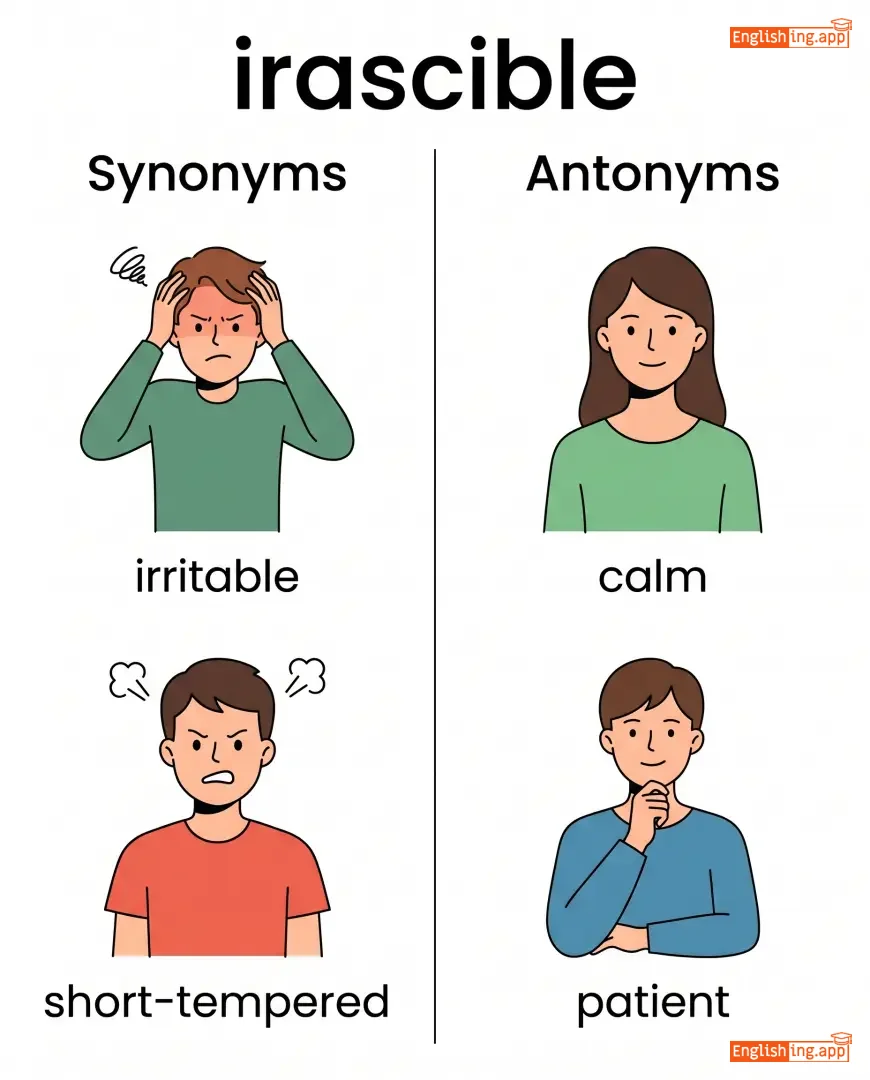
irritable, short-tempered, hot-headed, touchy
••••••
|
calm, patient, easygoing
••••••
|
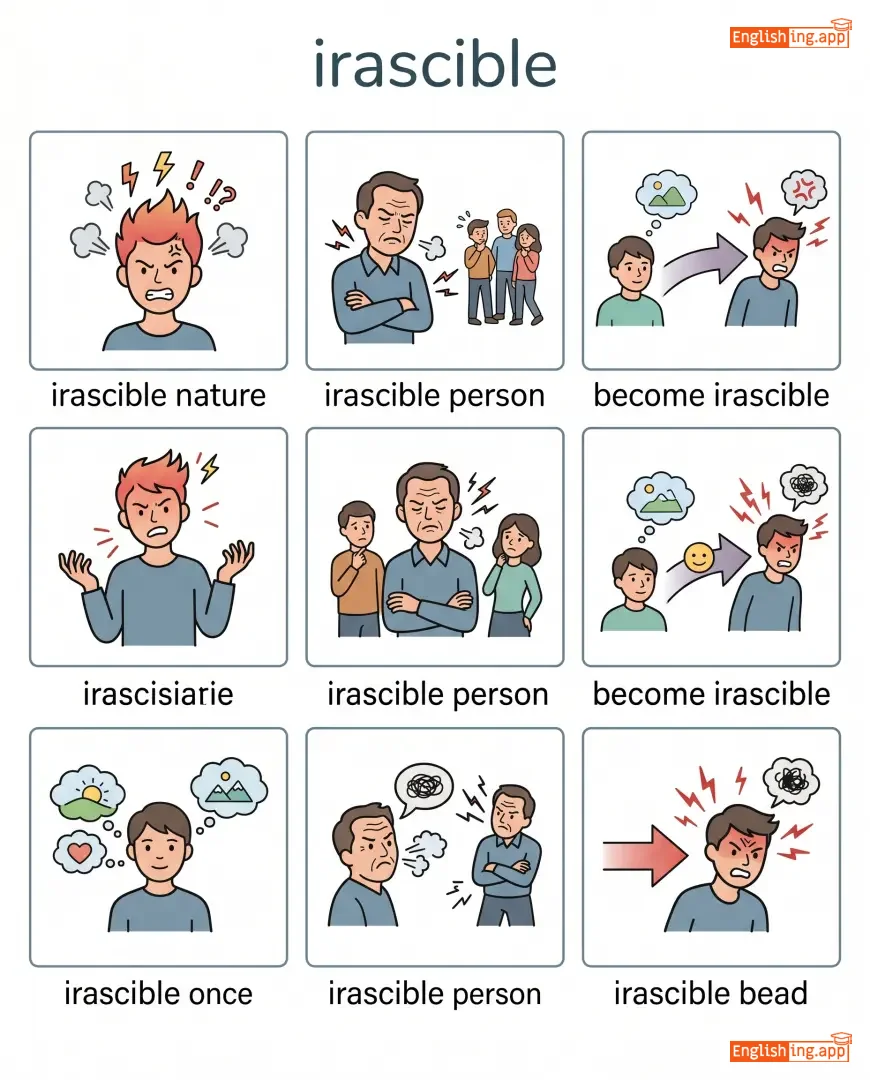
irascible nature, irascible person, become irascible, irascible tone
••••••
|
Irascible は簡単に怒ることを意味する – 'irritated + able' = 怒りっぽい.
••••••
|
|
#438
🤔
|
/ɪˈrɛzəluːt/
adjective
(イレゾルート)
••••••
|
|
優柔不断
yūyūfudan
••••••
|
- •••••• | - •••••• | - •••••• | - •••••• |
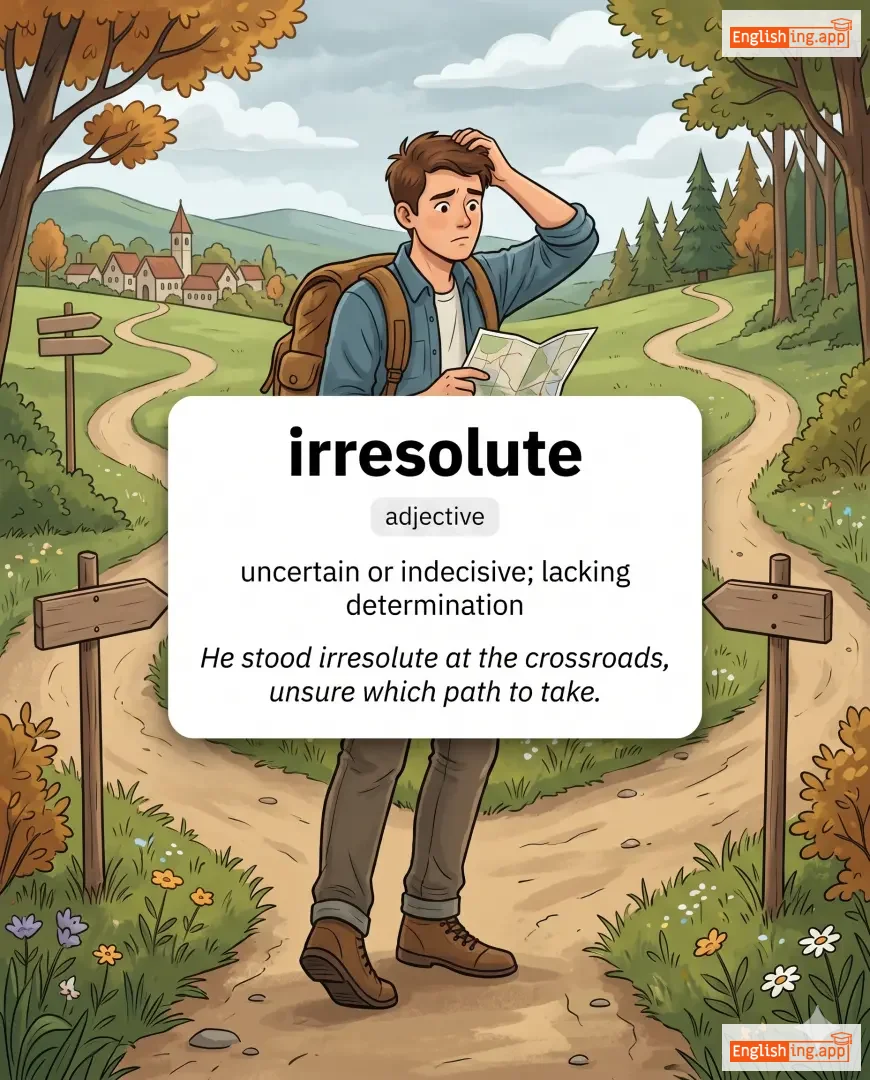
uncertain or indecisive; lacking determination
••••••
|
He stood irresolute at the crossroads, unsure which path to take. |
彼は交差点で優柔不断に立ち、どの道を取るべきか決められなかった。
Kare wa kōsaten de yūyūfudan ni tachi, dono michi o torubeki ka kimerarenakatta.
••••••
|
- •••••• | - •••••• | - •••••• |
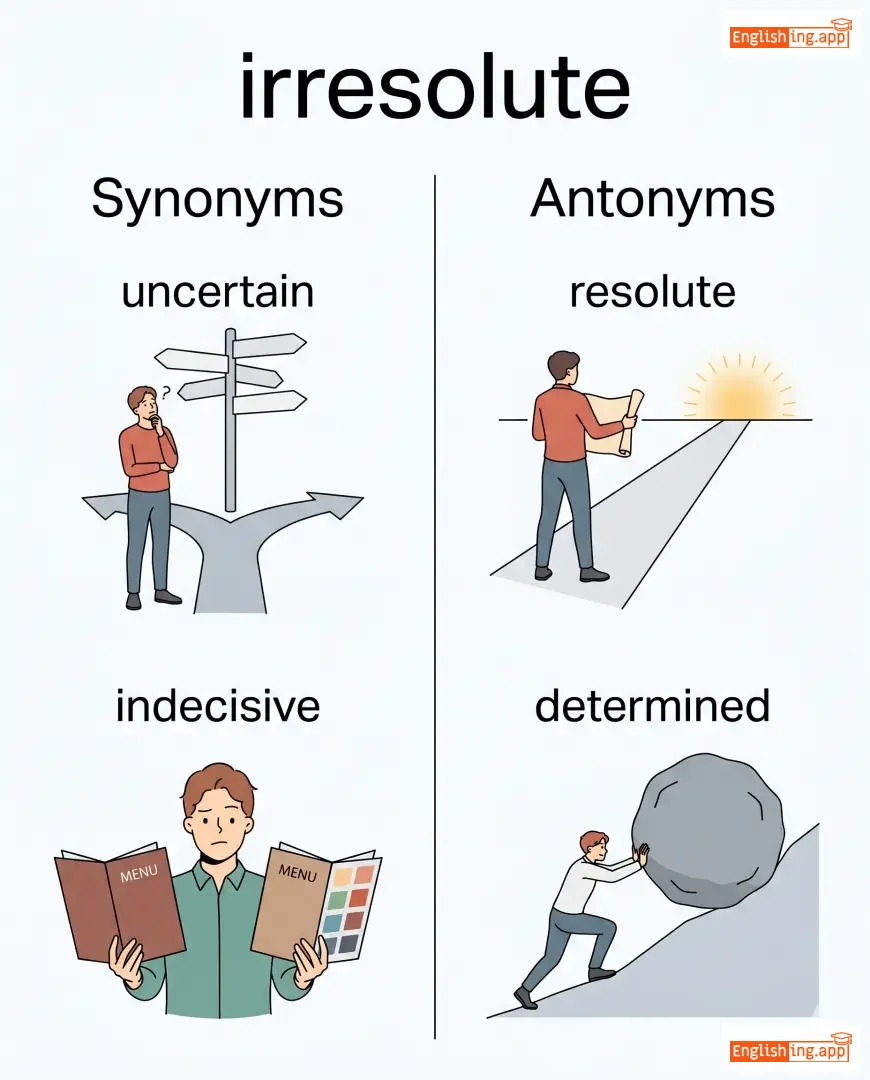
uncertain, indecisive, hesitant, vacillating, wavering
••••••
|
resolute, determined, decisive
••••••
|
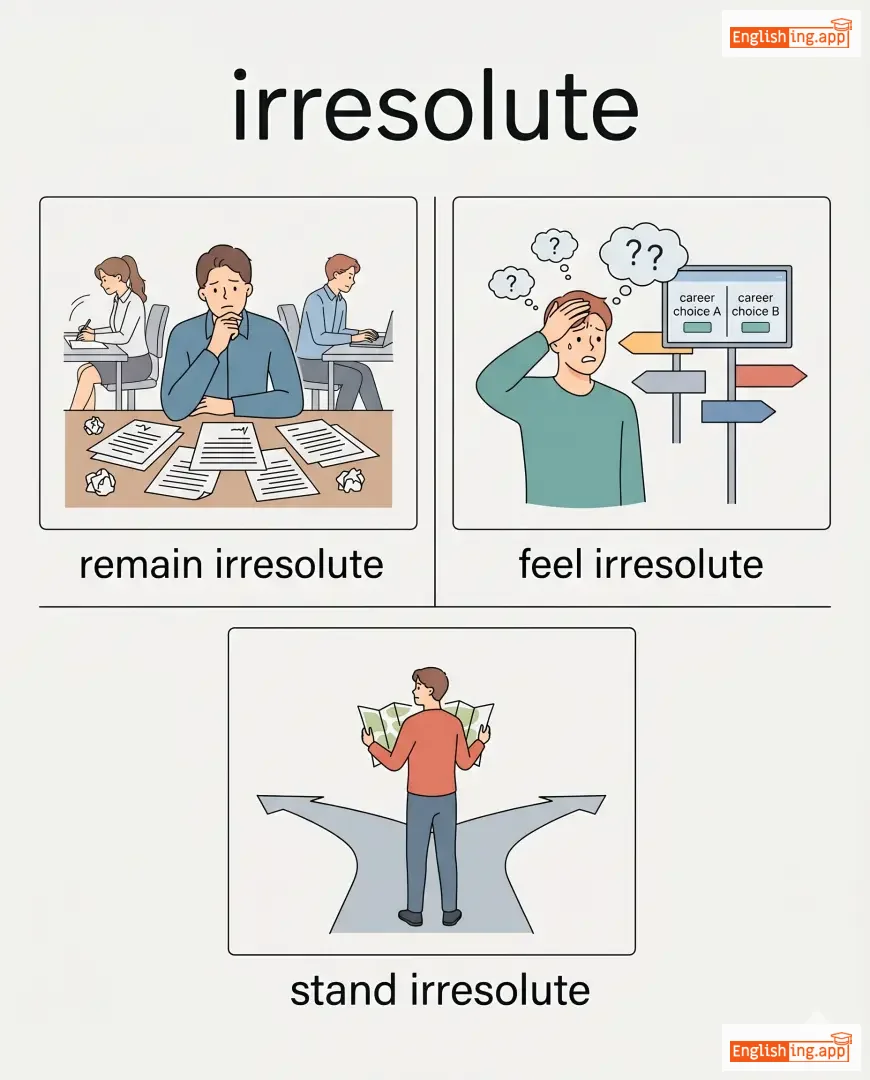
remain irresolute, feel irresolute, stand irresolute, irresolute response
••••••
|
irresolute = 優柔不断, 決められない人のように
••••••
|
|
#439
🧳
|
/aɪˈtɪnərənt/
adjective
(アイティネラント)
••••••
|
|
旅する
tabisuru
••••••
|
- •••••• | - •••••• | - •••••• | - •••••• |
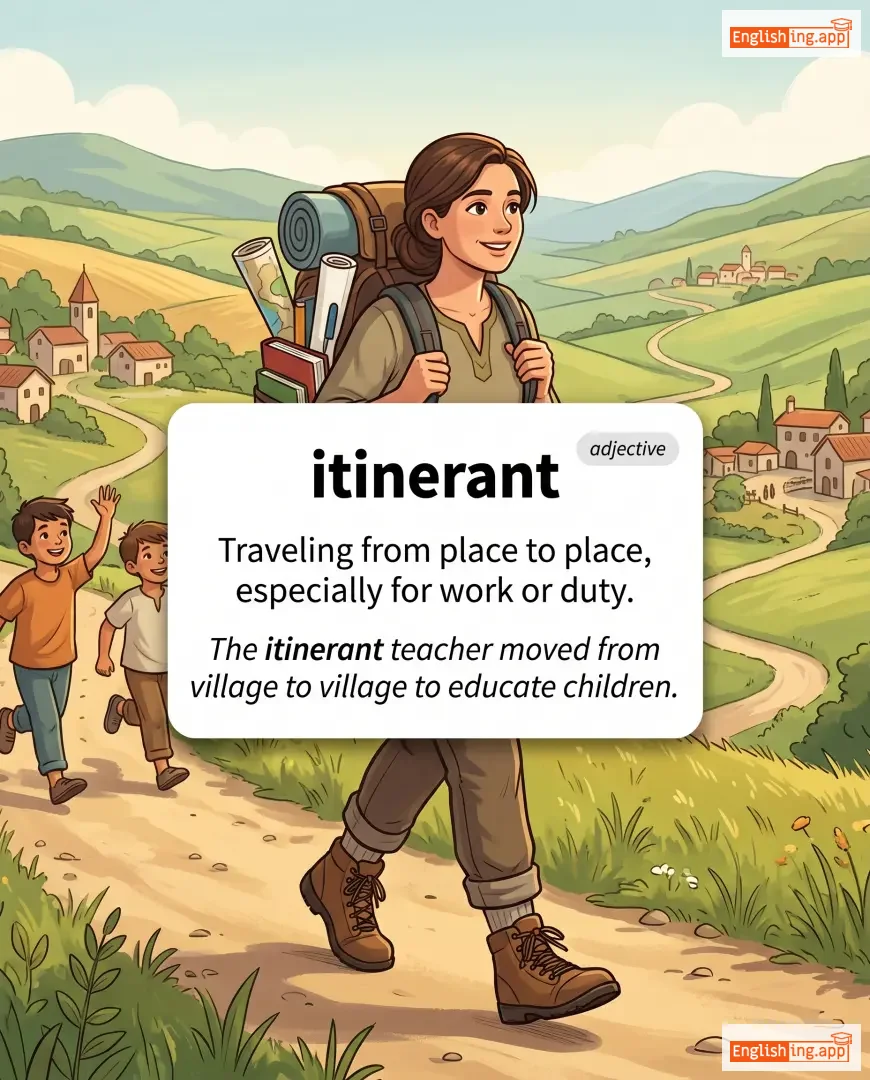
Traveling from place to place, especially for work or duty.
••••••
|
The itinerant teacher moved from village to village to educate children. |
その旅する教師は村から村へと移動して子供たちに教育をしていました。
Sono tabisuru kyōshi wa mura kara mura e to idō shite kodomotachi ni kyōiku o shite imashita.
••••••
|
- •••••• | - •••••• | - •••••• |
wandering, roving, traveling, nomadic, peripatetic
••••••
|
settled, stationary, resident
••••••
|
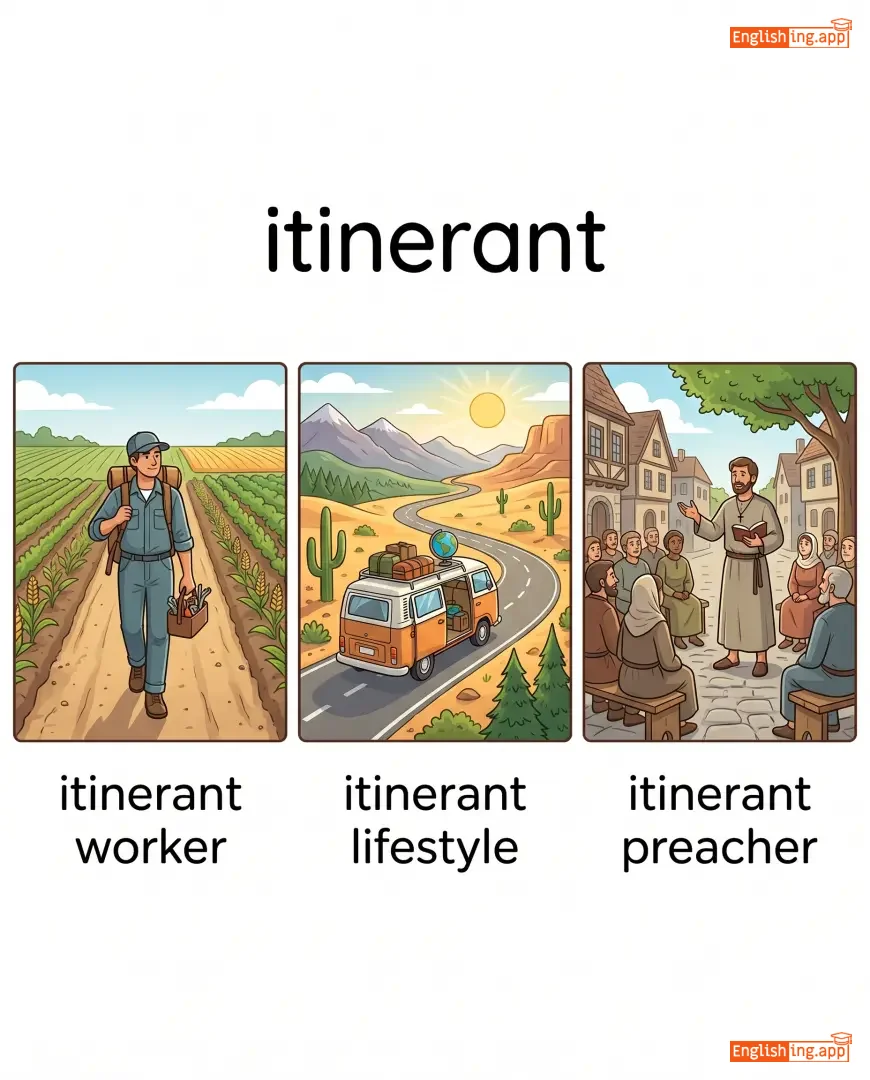
itinerant worker, itinerant lifestyle, itinerant preacher, itinerant musician
••••••
|
旅するは移動すること – 先生が村々を巡って教えているところを想像してみてください。
••••••
|
|
#440
🗺️
|
/aɪˈtɪnərɛri/
noun
(アイティネラリー)
••••••
|
|
旅程
ryokō
••••••
|
- •••••• | - •••••• | - •••••• | - •••••• |
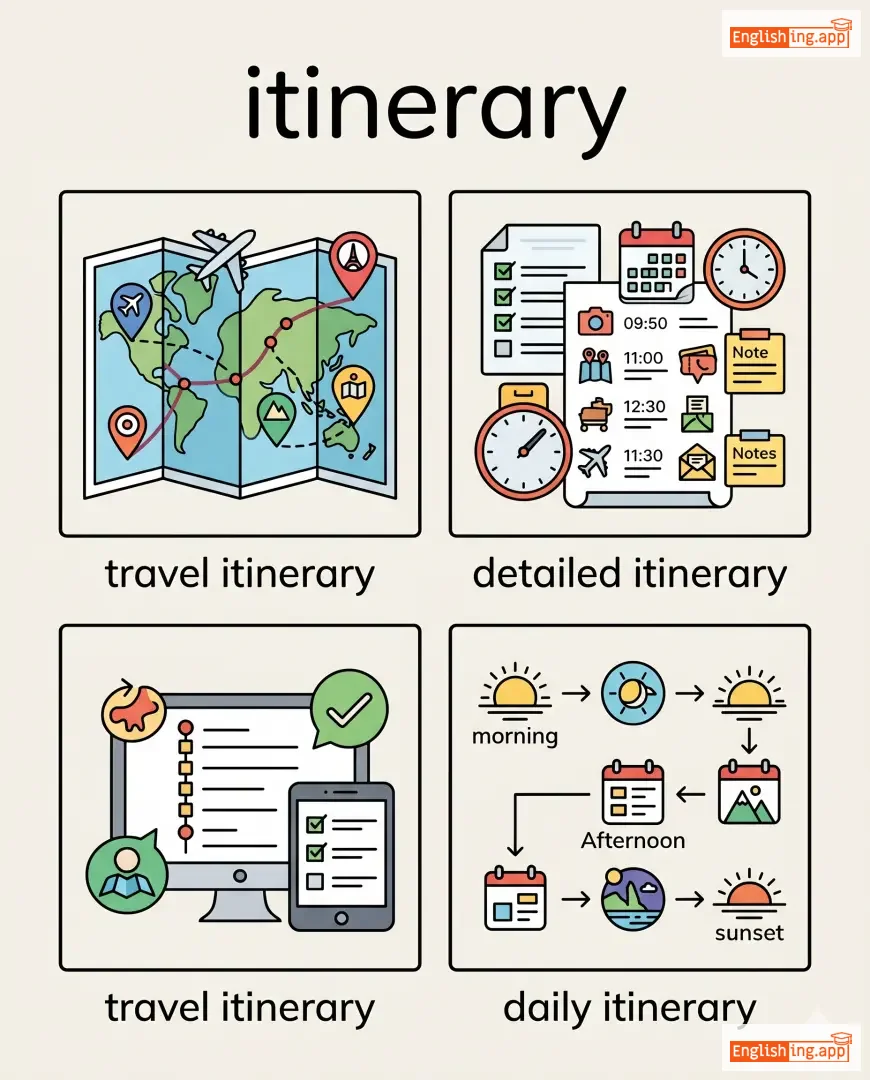
A planned route or schedule of a journey or trip.
••••••
|
The travel agent gave us a detailed itinerary for our vacation. |
旅行代理店は私たちの休暇のために詳細な旅程を提供してくれました。
Ryokō dairiten wa watashitachi no kyūka no tame ni shōsai na ryokō o teikyō shite kuremashita.
••••••
|
- •••••• | - •••••• | - •••••• |
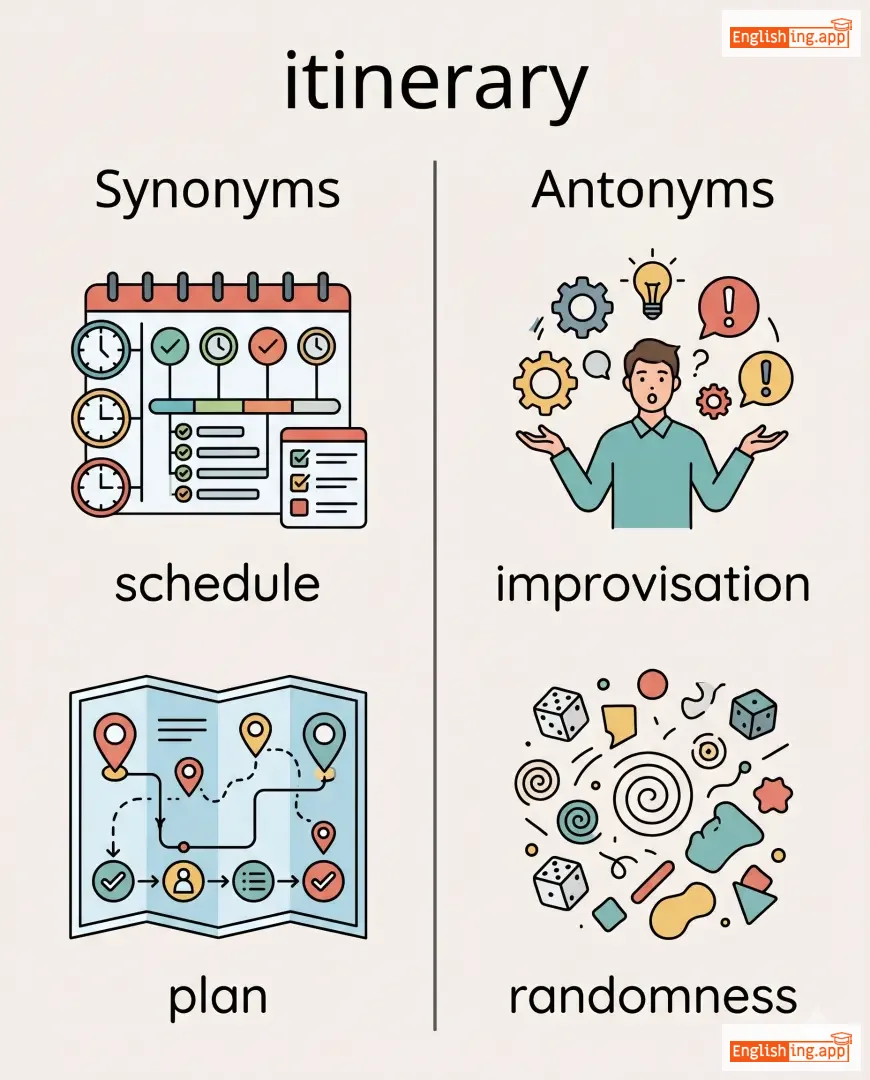
schedule, plan, agenda, route, timetable
••••••
|
improvisation, randomness
••••••
|
travel itinerary, detailed itinerary, daily itinerary, itinerary plan
••••••
|
Itinerary は旅程を意味します – 'ITIN' = In Time, In Route を覚えておいてください。
••••••
|
|
#441
😒
|
/ˈdʒɔːndɪst/
adjective
(ジャウンディスト)
••••••
|
|
偏見のある / 嫉妬深い / 黄疸による
henken no aru / shitto-bukai / ōdan ni yoru
••••••
|
- •••••• | - •••••• | - •••••• | - •••••• |
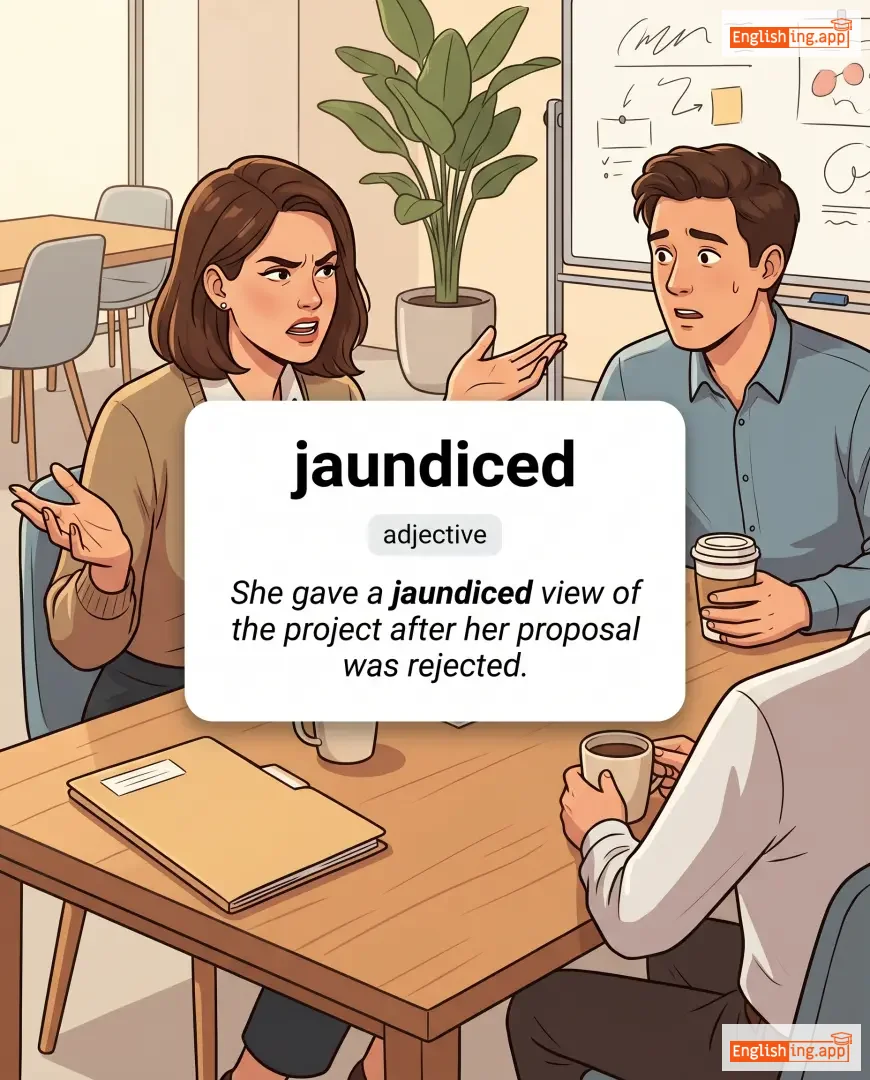
Affected by or displaying prejudice, envy, or bitterness; also refers to having a yellowish discoloration of the skin due to jaundice.
••••••
|
She gave a jaundiced view of the project after her proposal was rejected. |
彼女は提案が却下された後、プロジェクトに偏見を持った見方を示した。
Kanojo wa teian ga kyakka sareta ato, purojekuto ni henken o motta mikata o shimeshita.
••••••
|
- •••••• | - •••••• | - •••••• |
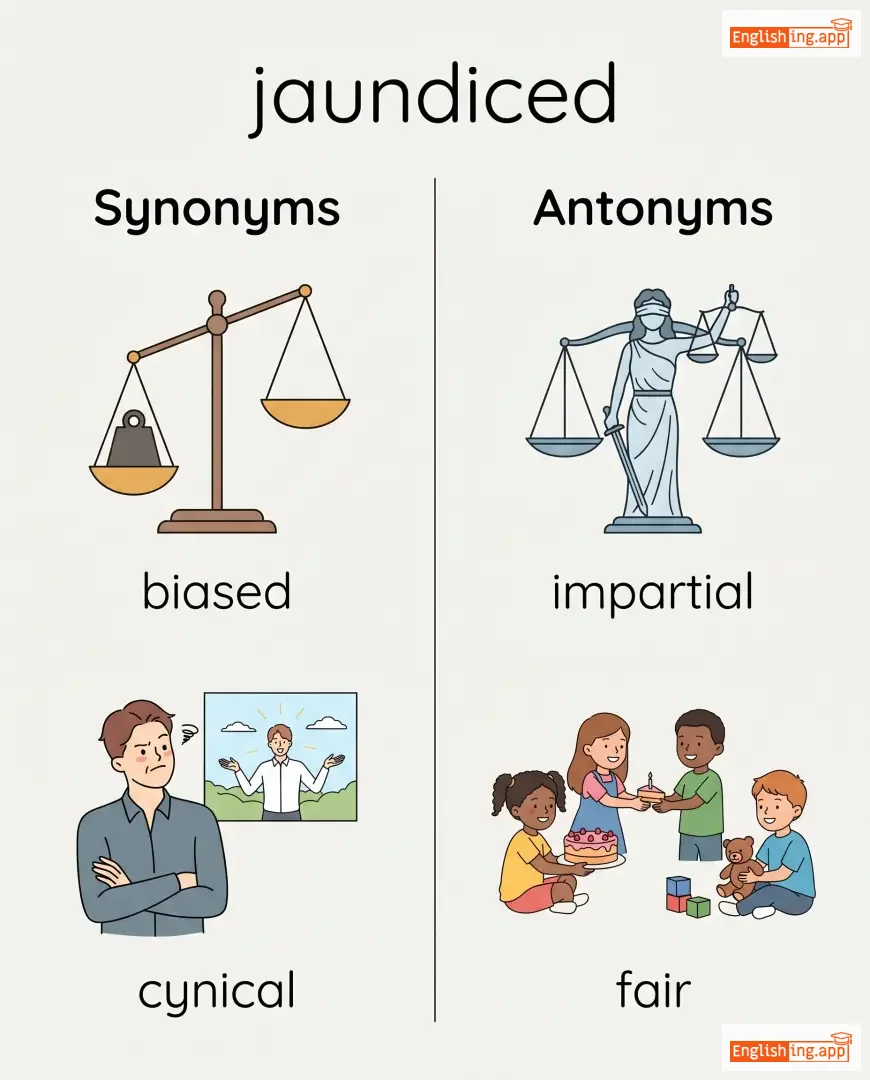
biased, cynical, resentful, prejudiced, skeptical
••••••
|
impartial, fair, unbiased
••••••
|
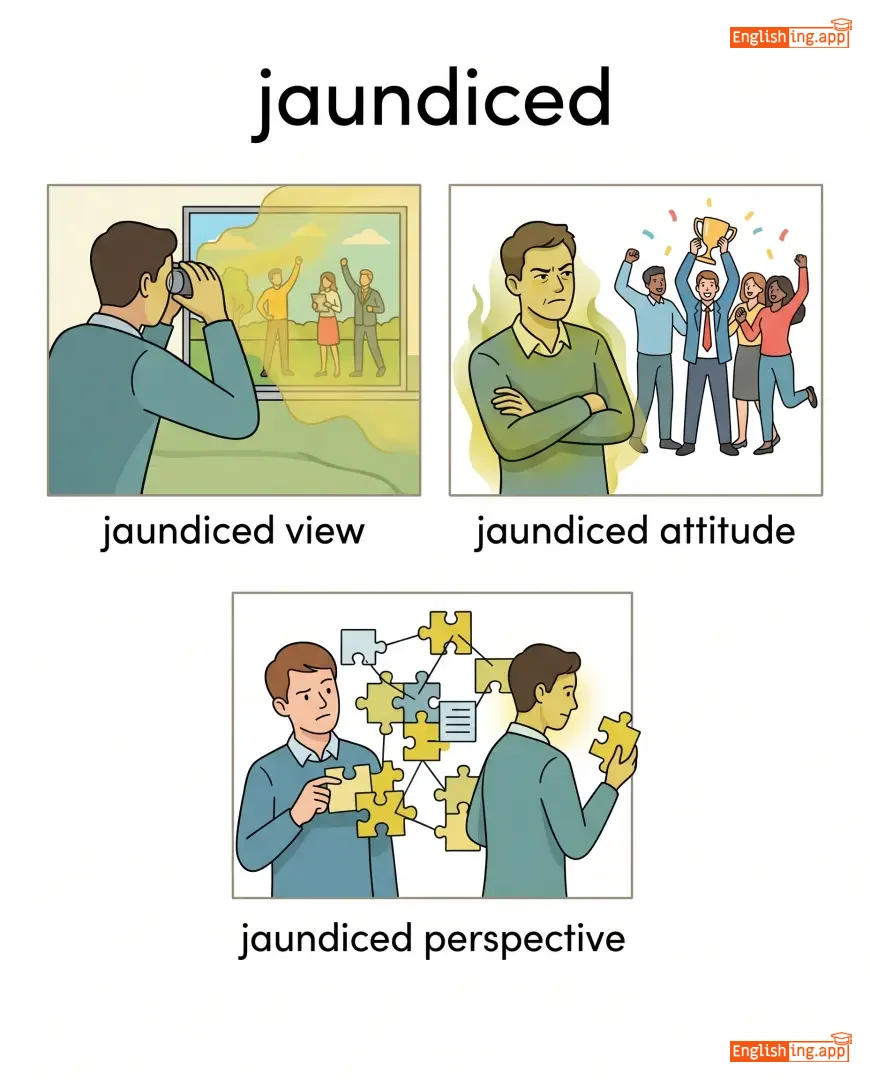
jaundiced view, jaundiced attitude, jaundiced perspective
••••••
|
黄疸は肌を黄色にし、'ジャウンディスト'の視点は偏見のある見方を意味します。
••••••
|
|
#442
😏
|
/dʒaɪb/
verb
(ジャイブ)
••••••
|
|
皮肉を言う / 一致する
hiniku wo iu / itchi suru
••••••
|
jibed
ジャイビッド
••••••
|
jibed
ジャイビッド
••••••
|
jibes
ジャイブス
••••••
|
jibing
ジャイビング
••••••
|
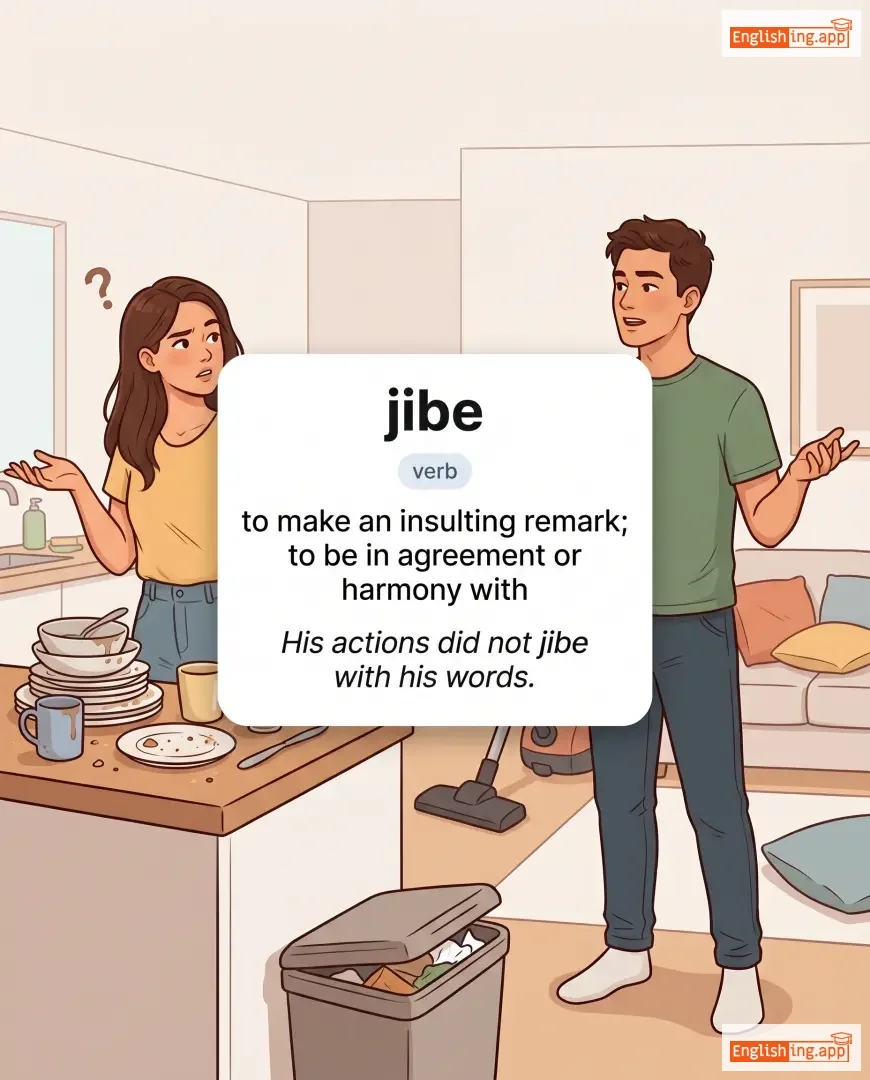
to make an insulting remark; to be in agreement or harmony with
••••••
|
His actions did not jibe with his words.
彼の行動は彼の言葉と一致していなかった。
••••••
|
彼の行動は彼の言葉と一致していなかった。
Kare no kōdō wa kare no kotoba to itchi shite inakatta.
••••••
|
throw a jibe
皮肉を言う
••••••
|
to make a mocking or insulting remark
••••••
|
皮肉を言う
hiniku wo iu
••••••
|
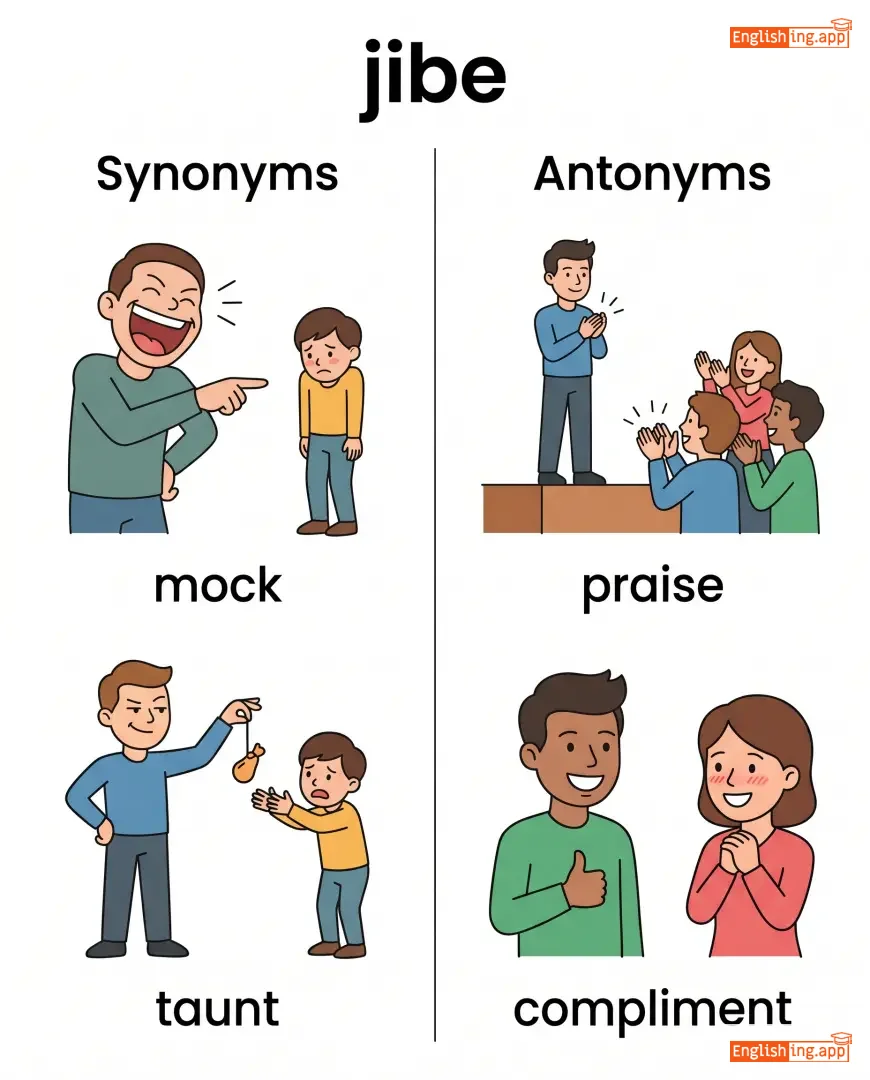
mock, taunt, agree, correspond, match
••••••
|
praise, compliment, conflict
••••••
|
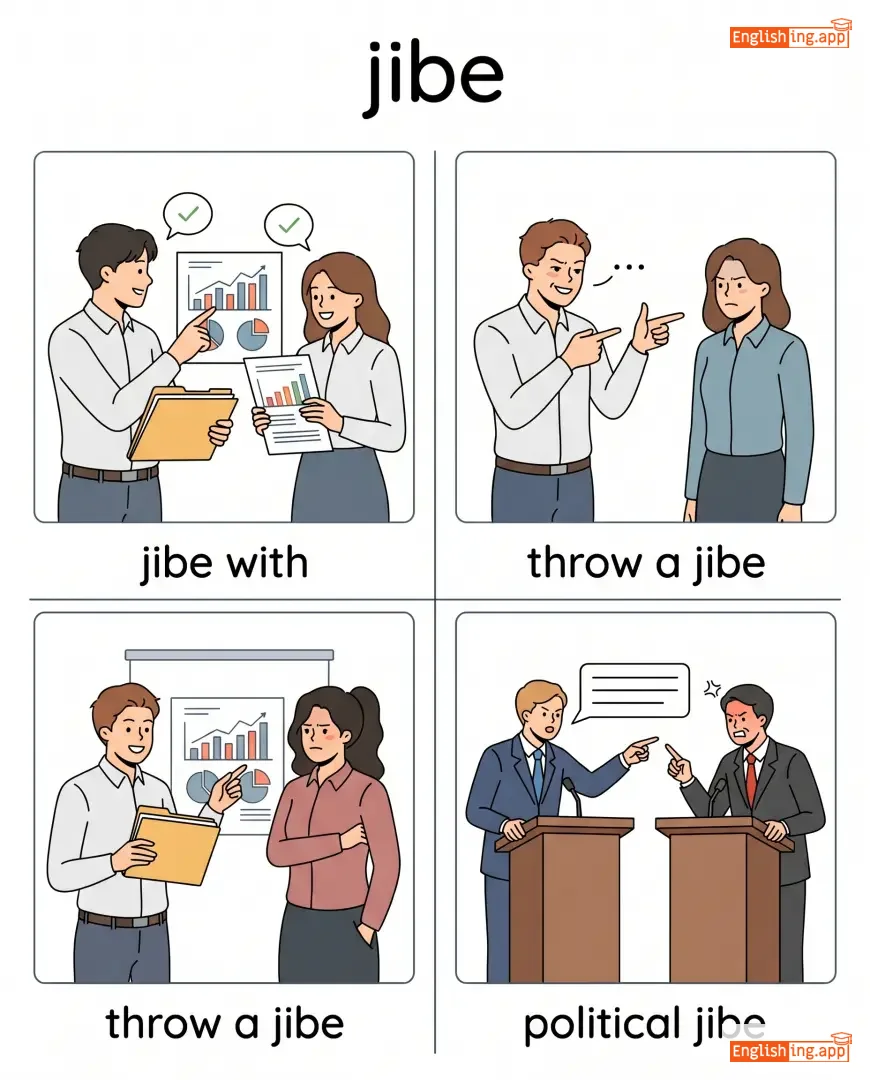
jibe with, throw a jibe, political jibe, sarcastic jibe
••••••
|
Jibeのように言葉を投げるとき、皮肉の匂いがする
••••••
|
|
#443
😄
|
/dʒoʊˈkoʊs/
adjective
(ジョコス)
••••••
|
|
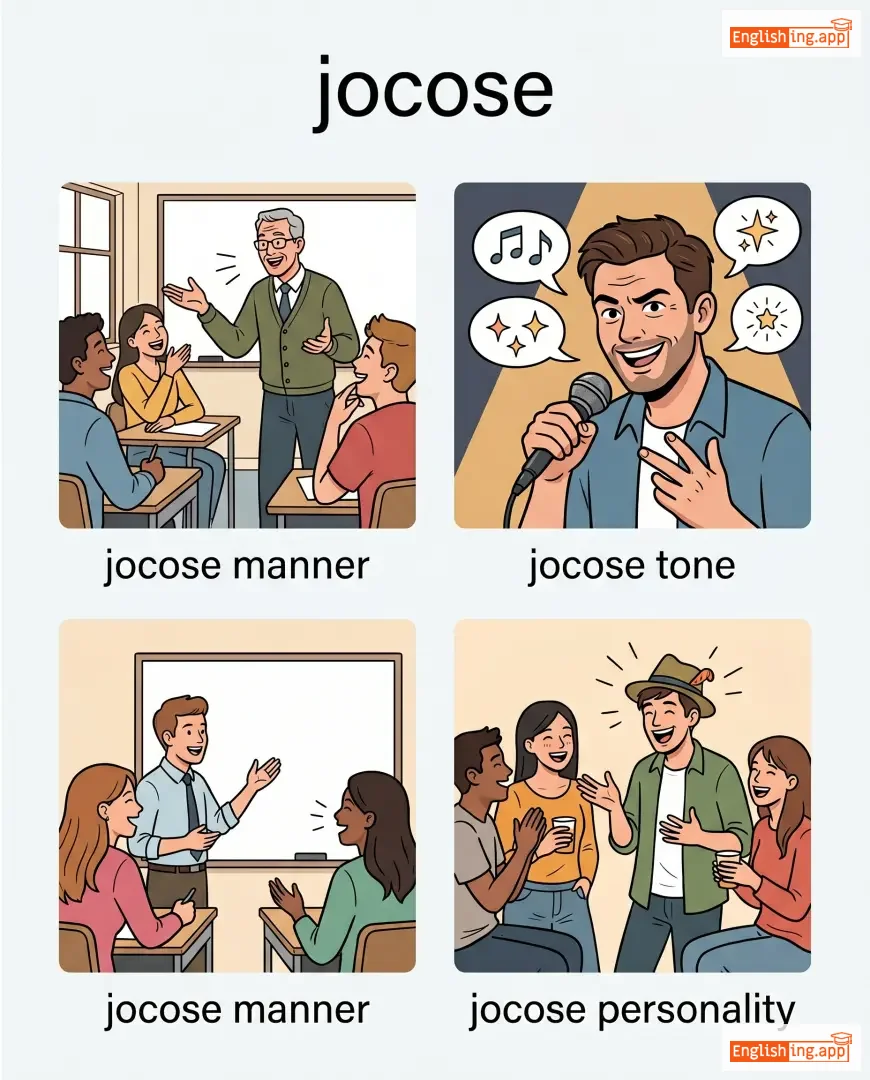
冗談めかした
joudanmekashita
••••••
|
- •••••• | - •••••• | - •••••• | - •••••• |
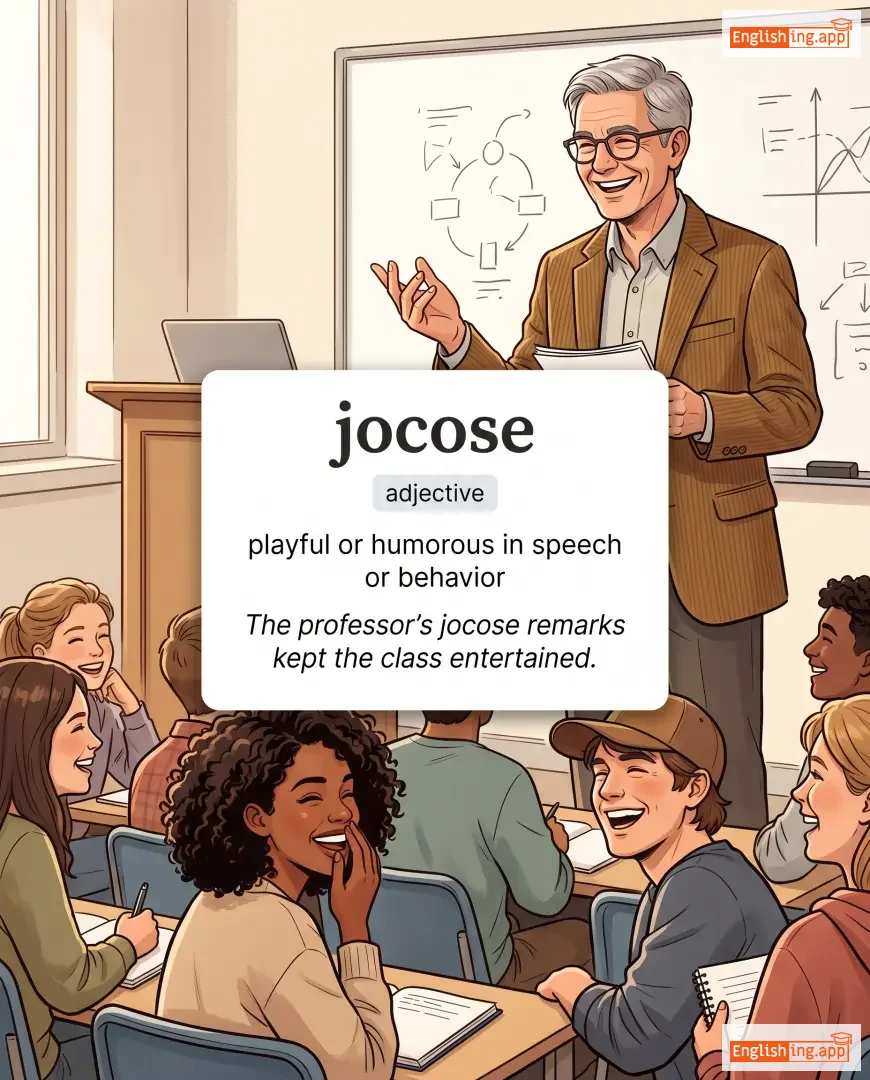
playful or humorous in speech or behavior
••••••
|
The professor’s jocose remarks kept the class entertained.
教授のジョコスな発言がクラスを楽しませました。
••••••
|
教授の冗談めかした発言がクラスを楽しませました。
Kyouju no joudanmekashita hatsugen ga kurasu o tanoshimase mashita.
••••••
|
- •••••• | - •••••• | - •••••• |
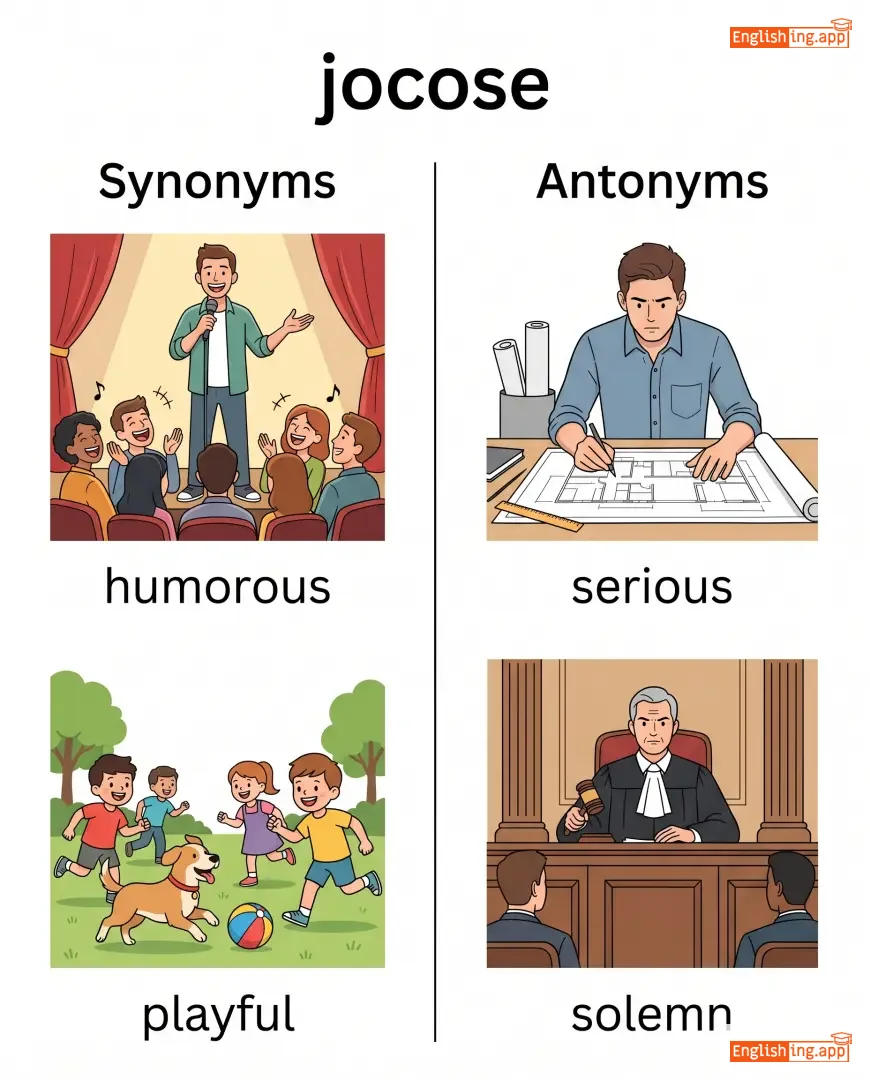
humorous, playful, witty, comical
••••••
|
serious, solemn
••••••
|
jocose manner, jocose tone, jocose personality
••••••
|
Jocose = Joke + ose, まるで冗談のように楽しませる。
••••••
|
|
#444
🚛
|
/ˈdʒʌɡərˌnɔːt/
noun
(ジャガーノート)
••••••
|
|
止められない力
tomerarenai chikara
••••••
|
- •••••• | - •••••• | - •••••• | - •••••• |
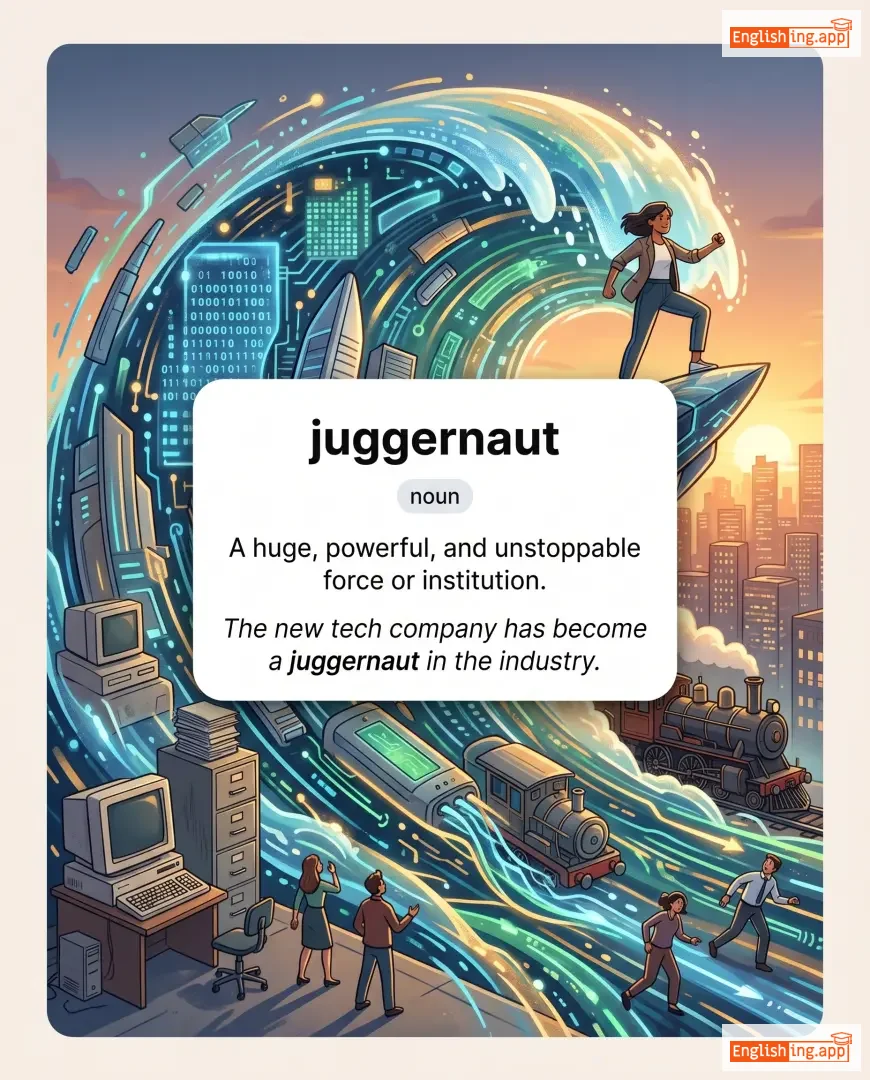
A huge, powerful, and unstoppable force or institution.
••••••
|
The new tech company has become a juggernaut in the industry. |
新しいテクノロジー企業は業界で止められない力となった。
Atarashī tekunorojī kigyō wa gyōkai de tomerarenai chikara to natta.
••••••
|
- •••••• | - •••••• | - •••••• |
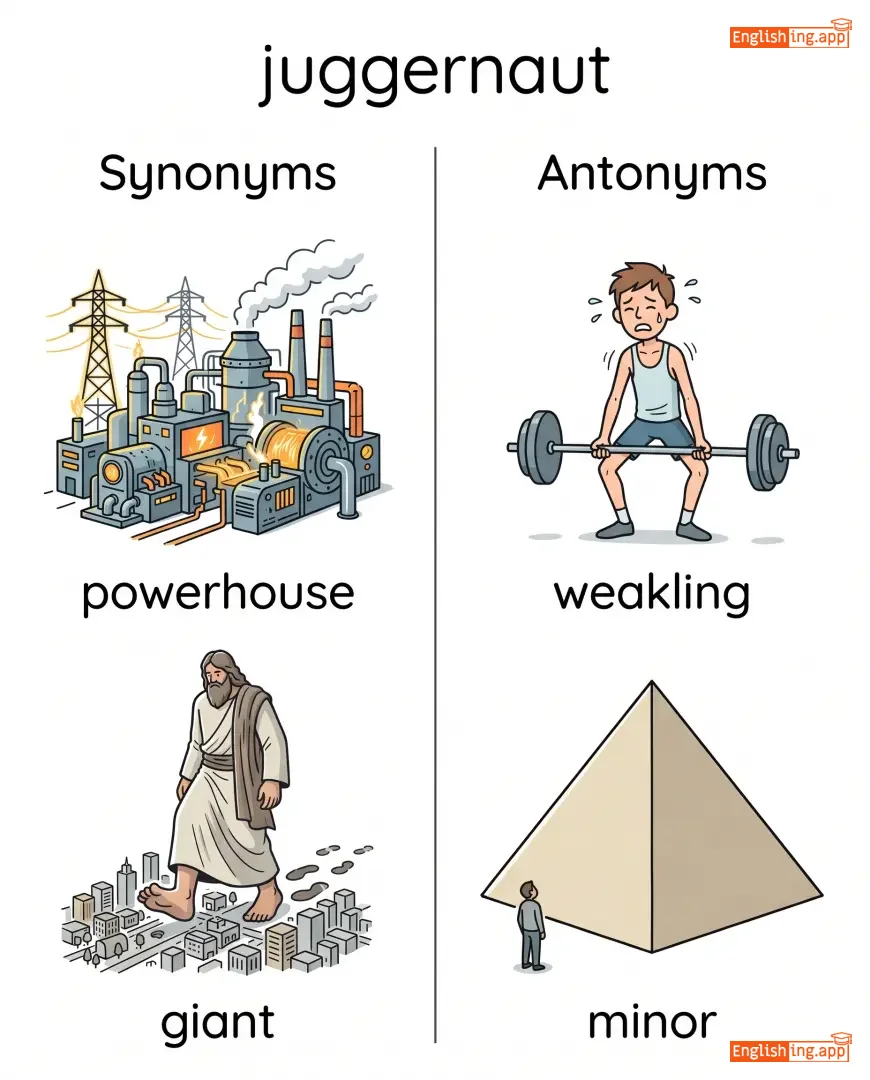
powerhouse, giant, colossus, titan, behemoth
••••••
|
weakling, minor, underdog
••••••
|
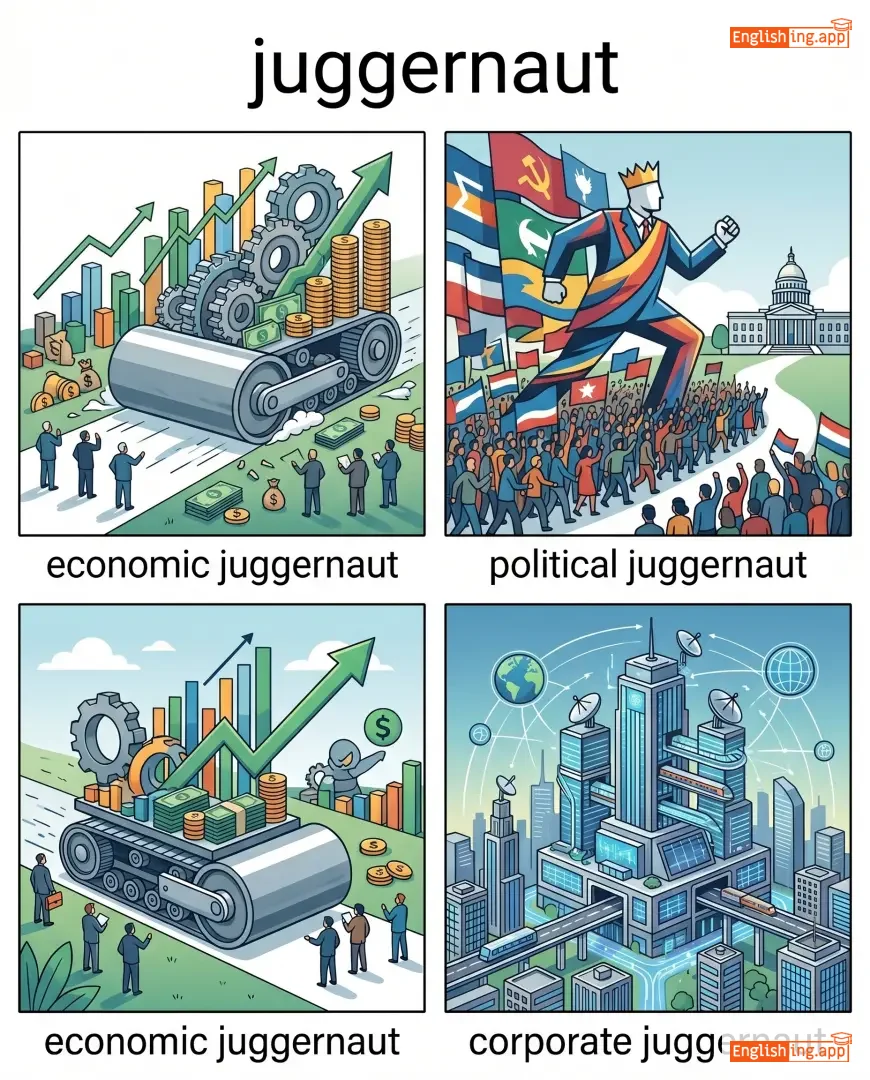
economic juggernaut, political juggernaut, corporate juggernaut
••••••
|
ジャガーノートは止められない力です。
••••••
|
|
#445
🪖
|
/ˈdʒʊntə/
noun
(ジュンタ)
••••••
|
|
軍事政権
gunji seiken
••••••
|
- •••••• | - •••••• | - •••••• | - •••••• |
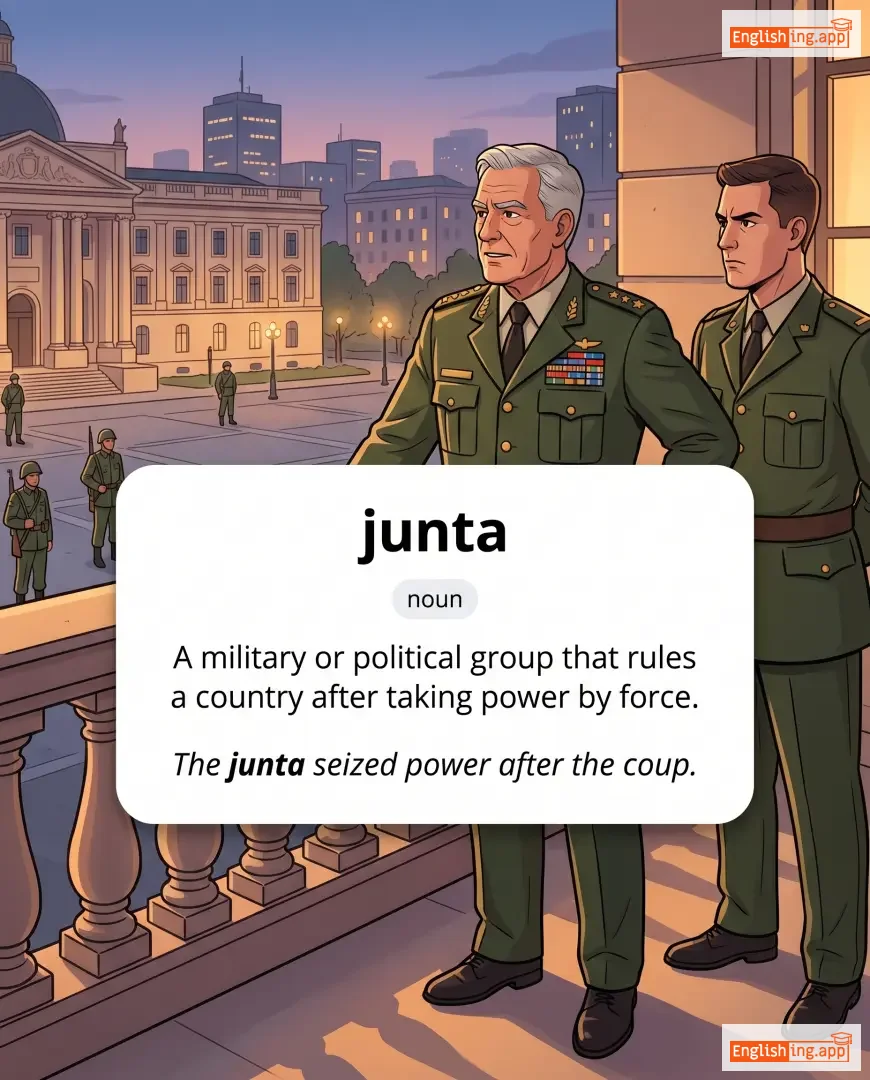
A military or political group that rules a country after taking power by force.
••••••
|
The junta seized power after the coup. |
クーデター後、軍事政権が権力を掌握しました。
Kūdetā go, gunji seiken ga kenryoku o shōaku shimashita.
••••••
|
- •••••• | - •••••• | - •••••• |
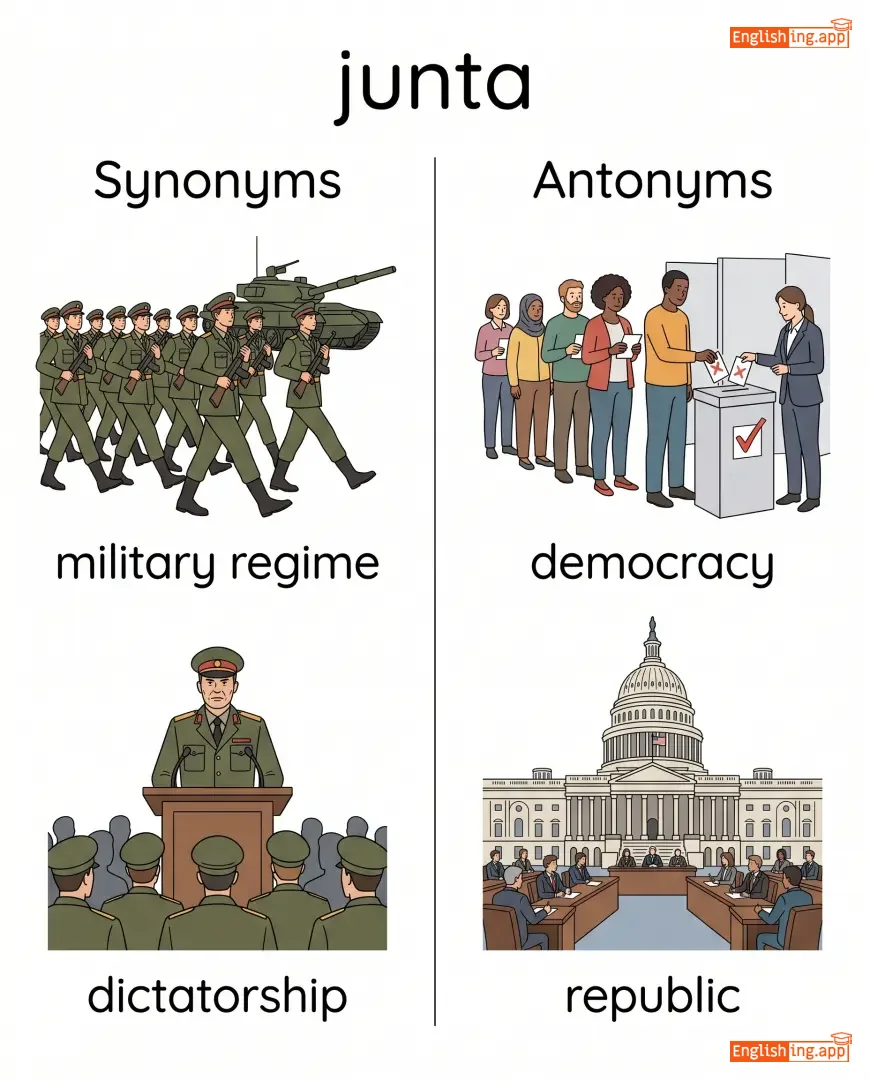
military regime, dictatorship, council, committee
••••••
|
democracy, republic
••••••
|
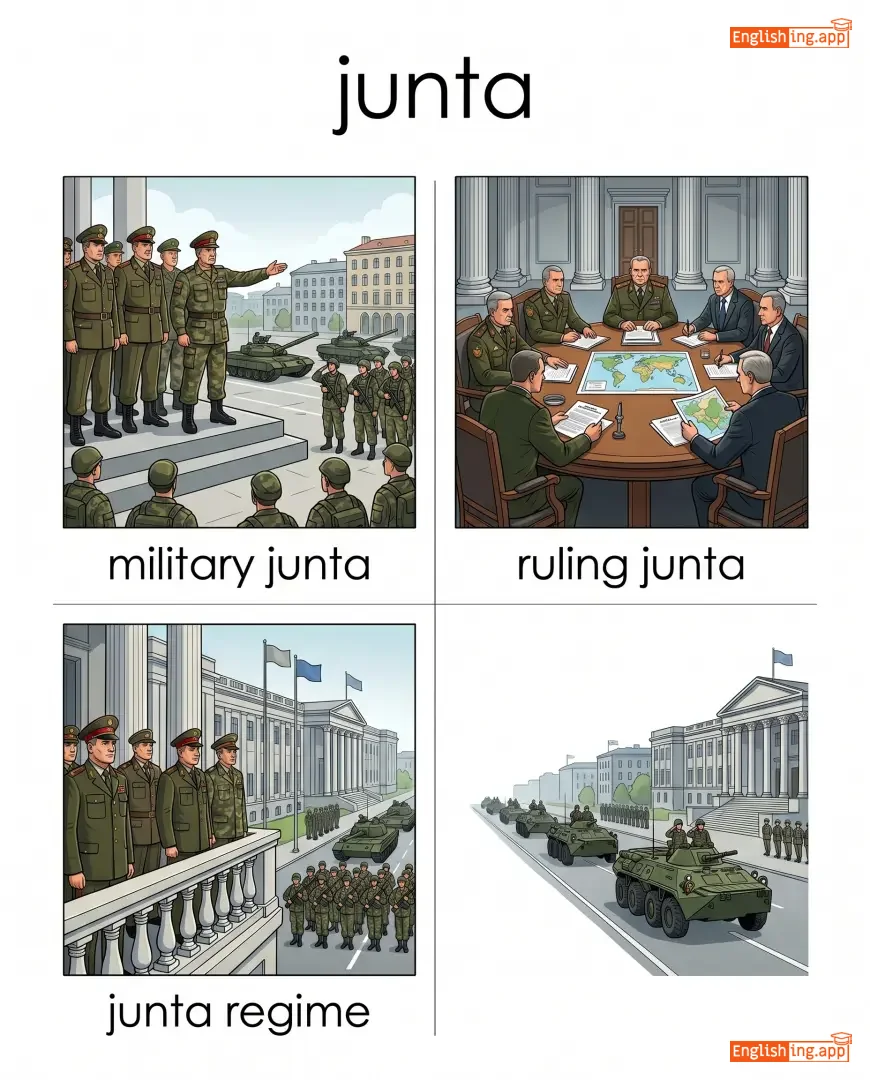
military junta, ruling junta, junta regime
••••••
|
ジュンタは軍事政権、まるで突然の軍隊による政権奪取。
••••••
|
|
#446
🖼️
|
/ˈdʒʌkstəˌpoʊz/
verb
(ジャクスタポーズ)
••••••
|
|
物を近くに置いて比較または対照する
mono o chikaku ni oite hikaku matawa taishou suru
••••••
|
juxtaposed
ジャクスタポーズド
••••••
|
juxtaposed
ジャクスタポーズド
••••••
|
juxtaposes
ジャクスタポーズズ
••••••
|
juxtaposing
ジャクスタポーズイング
••••••
|
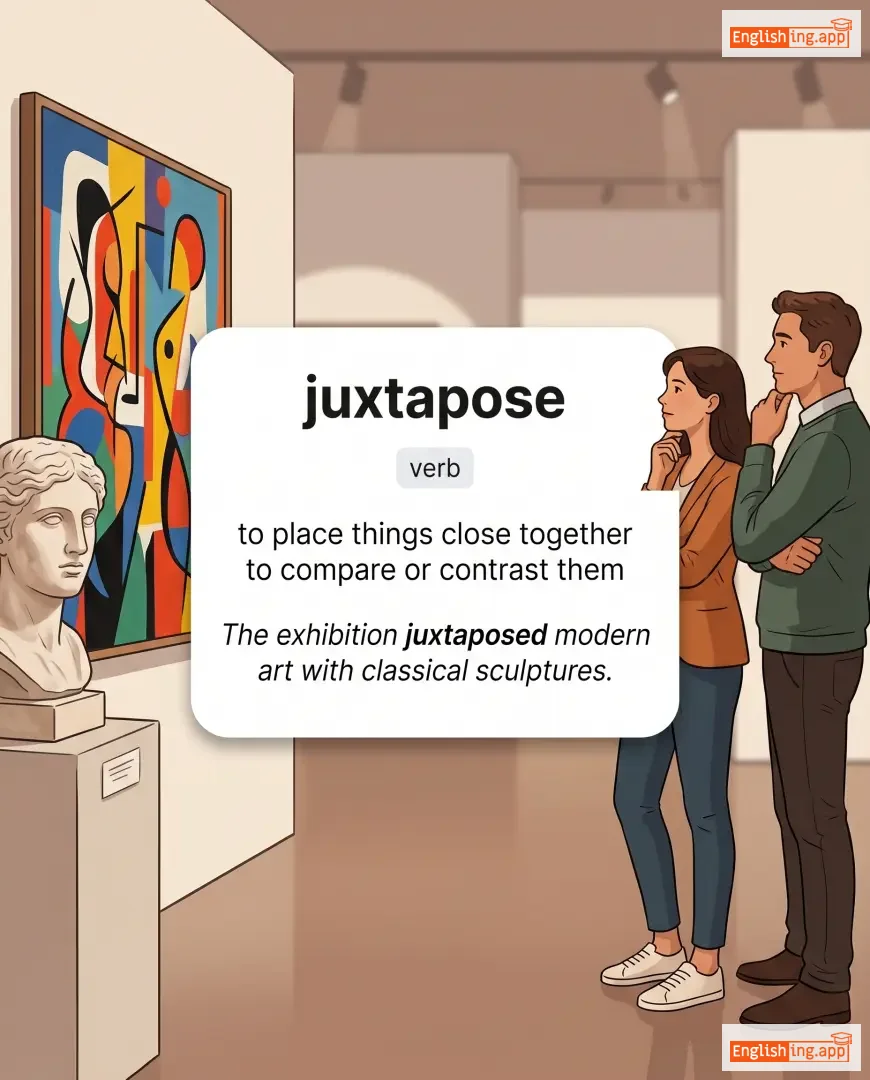
to place things close together to compare or contrast them
••••••
|
The exhibition juxtaposed modern art with classical sculptures.
その展示会では、現代アートを古典的な彫刻と並べて展示しました。
••••••
|
展示会では現代アートと古典的な彫刻が並べられました。
Tenjikai dewa gendai āto to kotenteki na chōkoku ga naraberaremashita.
••••••
|
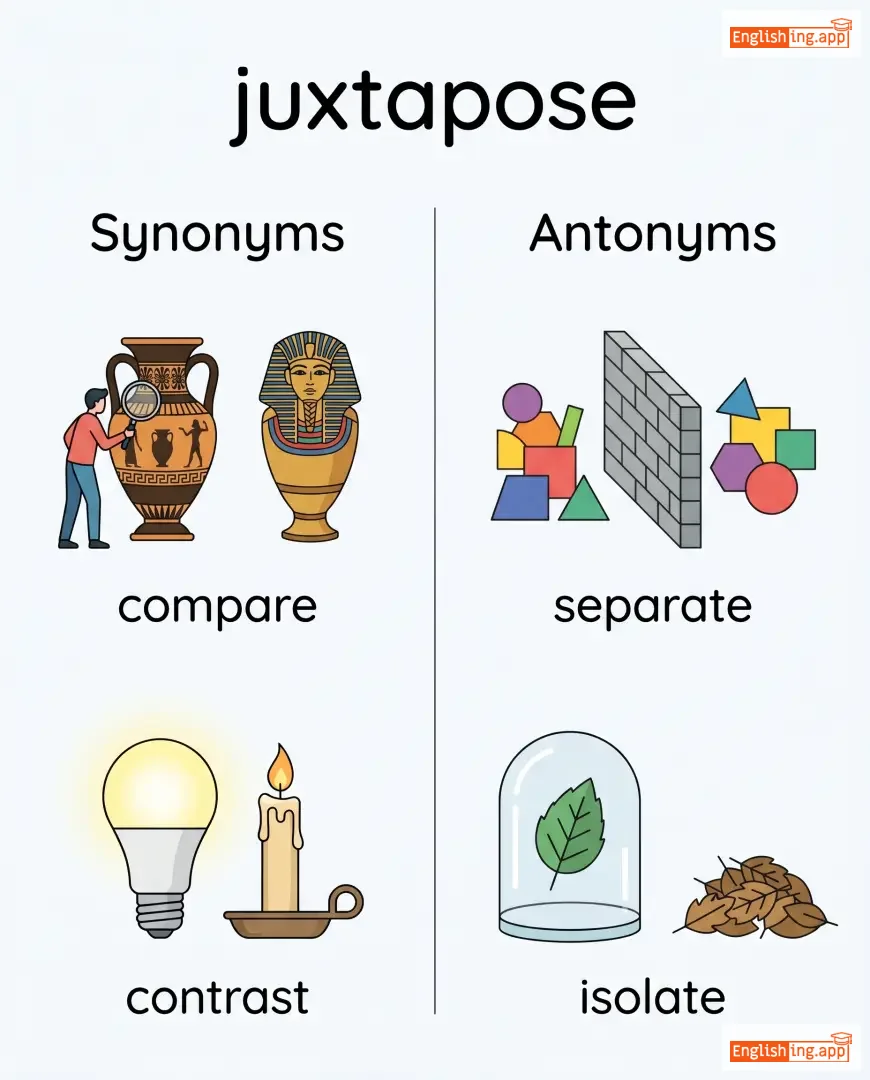
- •••••• | - •••••• | - •••••• |
compare, contrast, place side by side, pair
••••••
|
separate, isolate
••••••
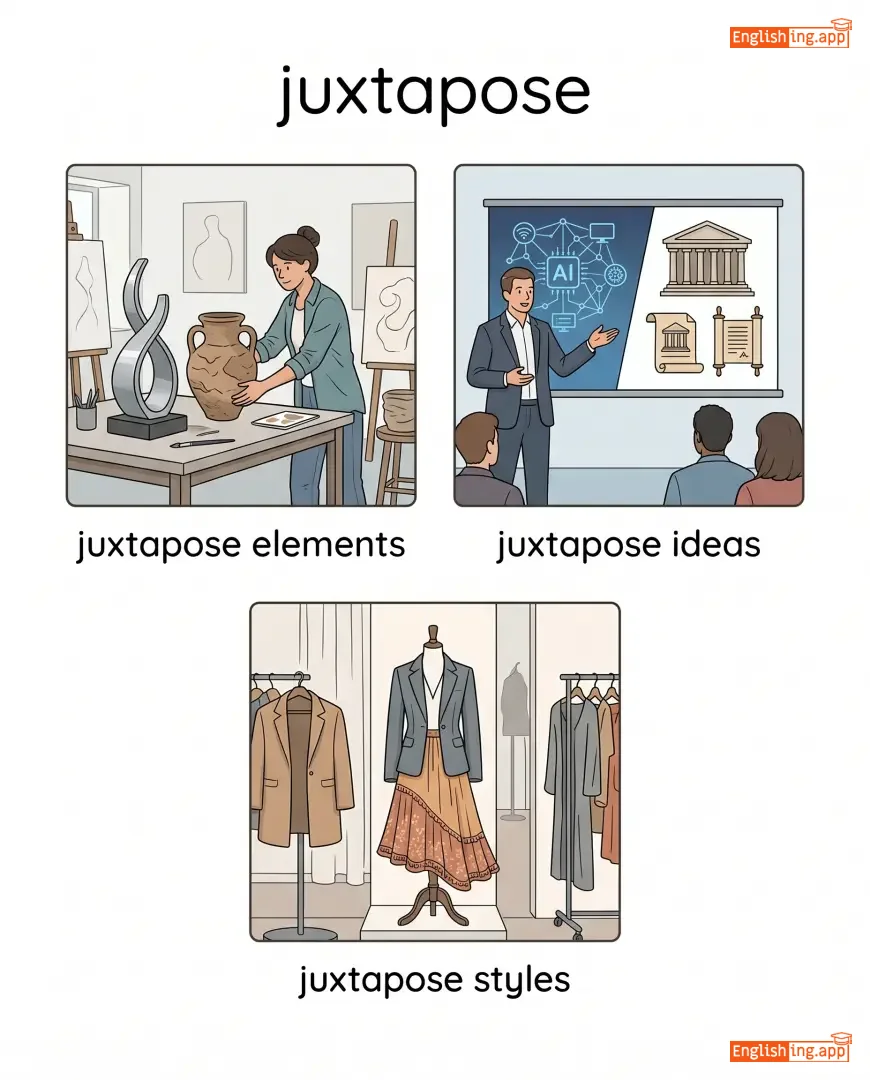
|
juxtapose elements, juxtapose ideas, juxtapose styles
••••••
|
Juxtaposeとは物を並べて比較すること — Just 並べて比べるだけ!
••••••
|
|
#447
🏆
|
/ˈkuːdɒs/
noun
(クードス)
••••••
|
|
賛辞
sanchi
••••••
|
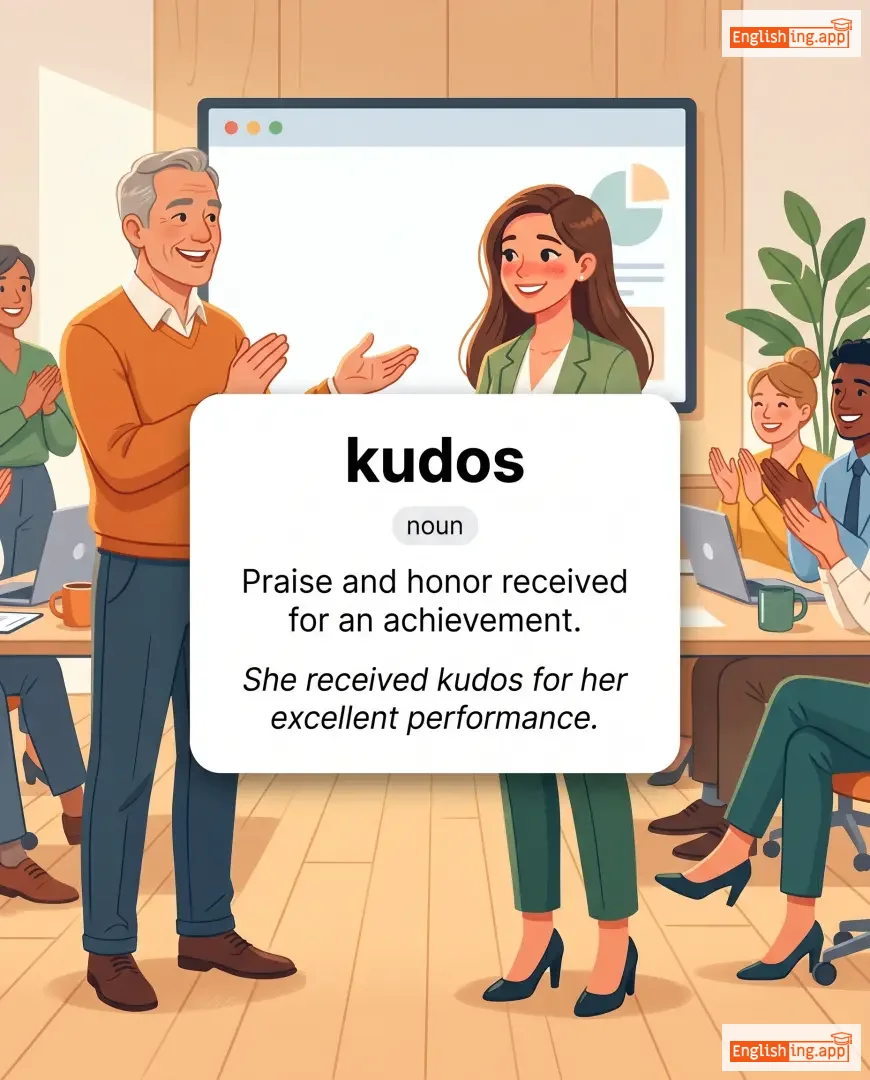
- •••••• | - •••••• | - •••••• | - •••••• |
Praise and honor received for an achievement.
••••••
|
She received kudos for her excellent performance. |
彼女は素晴らしいパフォーマンスで賛辞を受けた。
Kanojo wa subarashī pafōmansu de sanchi o uketa.
••••••
|
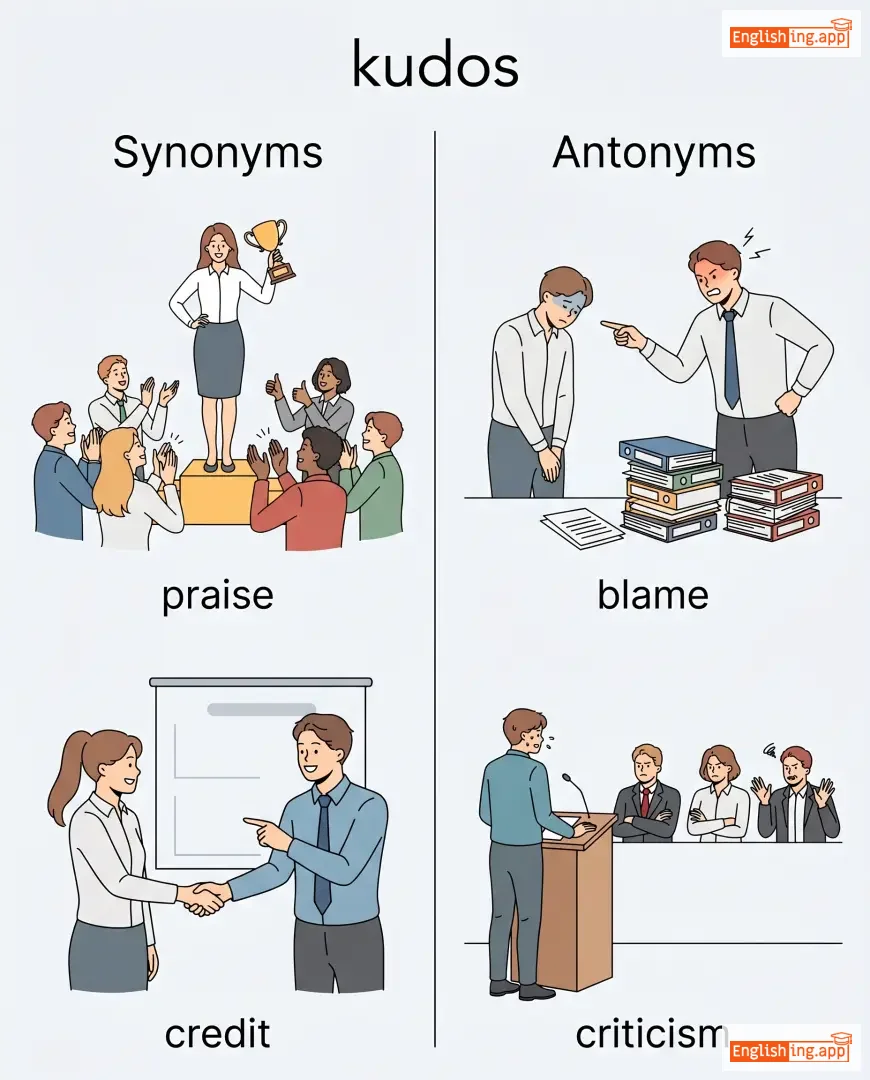
- •••••• | - •••••• | - •••••• |
praise, credit, recognition, acclaim, honor
••••••
|
blame, criticism, disapproval
••••••
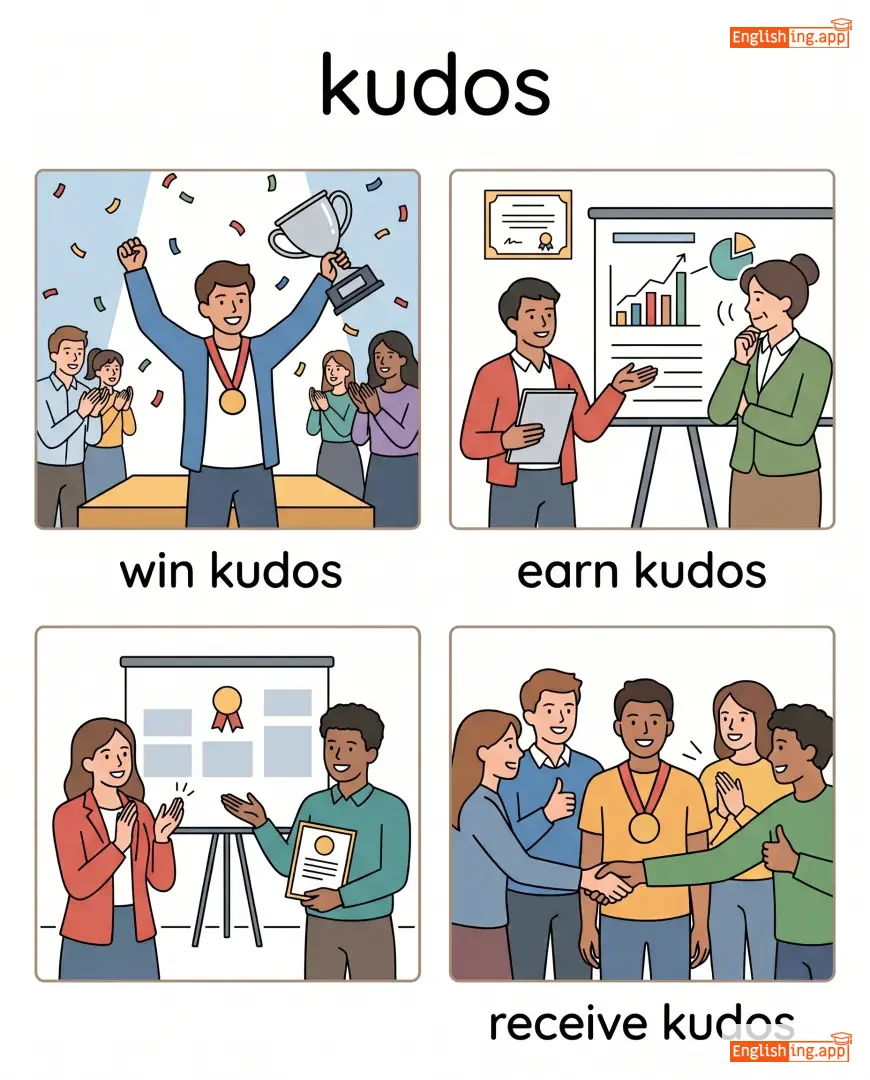
|
win kudos, earn kudos, receive kudos, kudos from peers
••••••
|
Kudos とは成果に対して受ける賛辞のことです。
••••••
|
|
#448
⚖️
|
/ˈleɪ.baɪl/ or /ˈlæb.aɪl/
adjective
(レイビル)
••••••
|
|
不安定な
fuanteina
••••••
|
- •••••• | - •••••• | - •••••• | - •••••• |
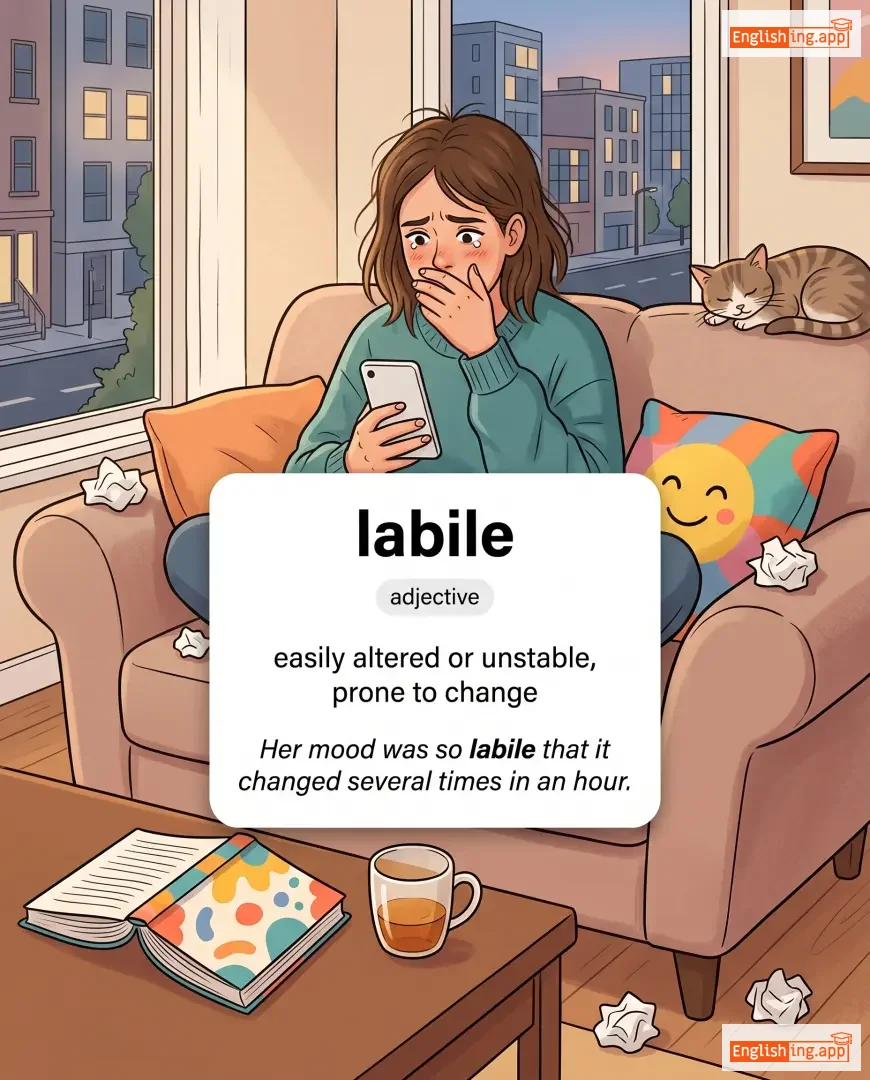
easily altered or unstable; prone to change
••••••
|
Her mood was so labile that it changed several times in an hour. |
彼女の気分は非常に不安定で、1時間で何度も変わりました。
Kanojo no kibun wa hijō ni fuantei de, 1-jikan de nando mo kawarimashita.
••••••
|
- •••••• | - •••••• | - •••••• |
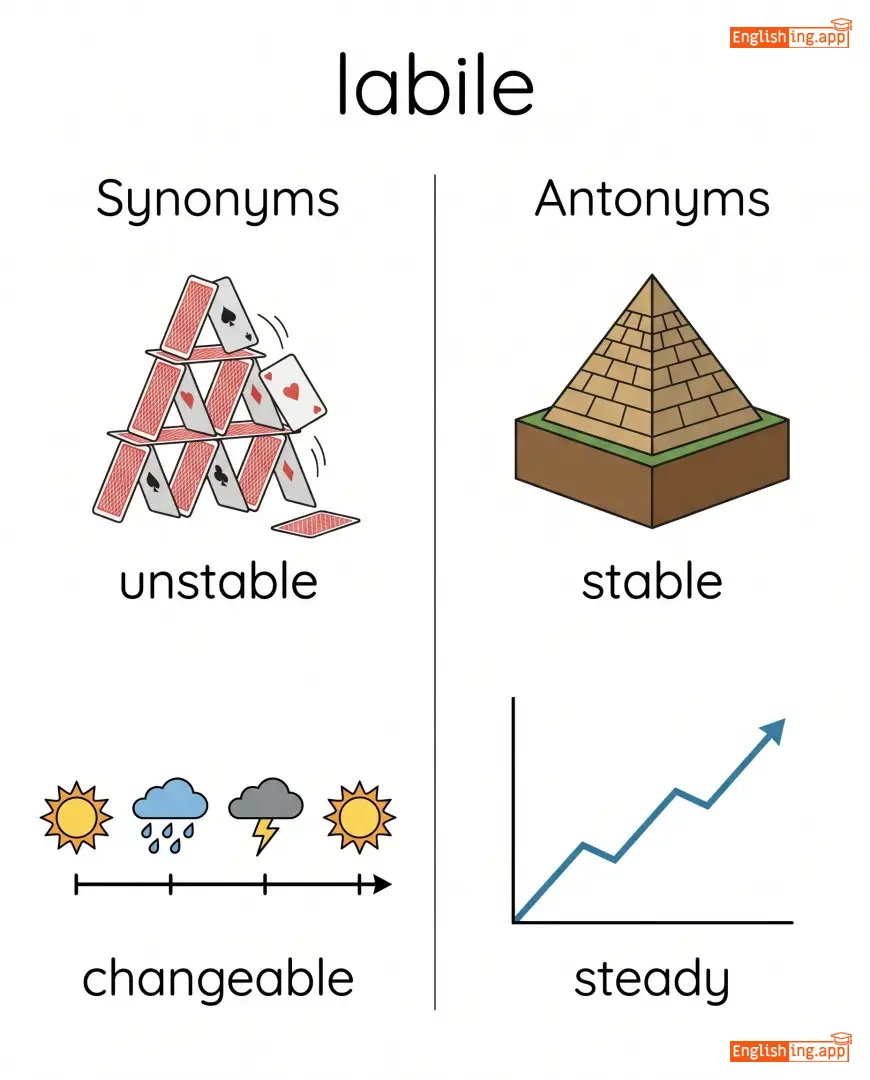
unstable, changeable, volatile, fluctuating
••••••
|
stable, steady
••••••
|
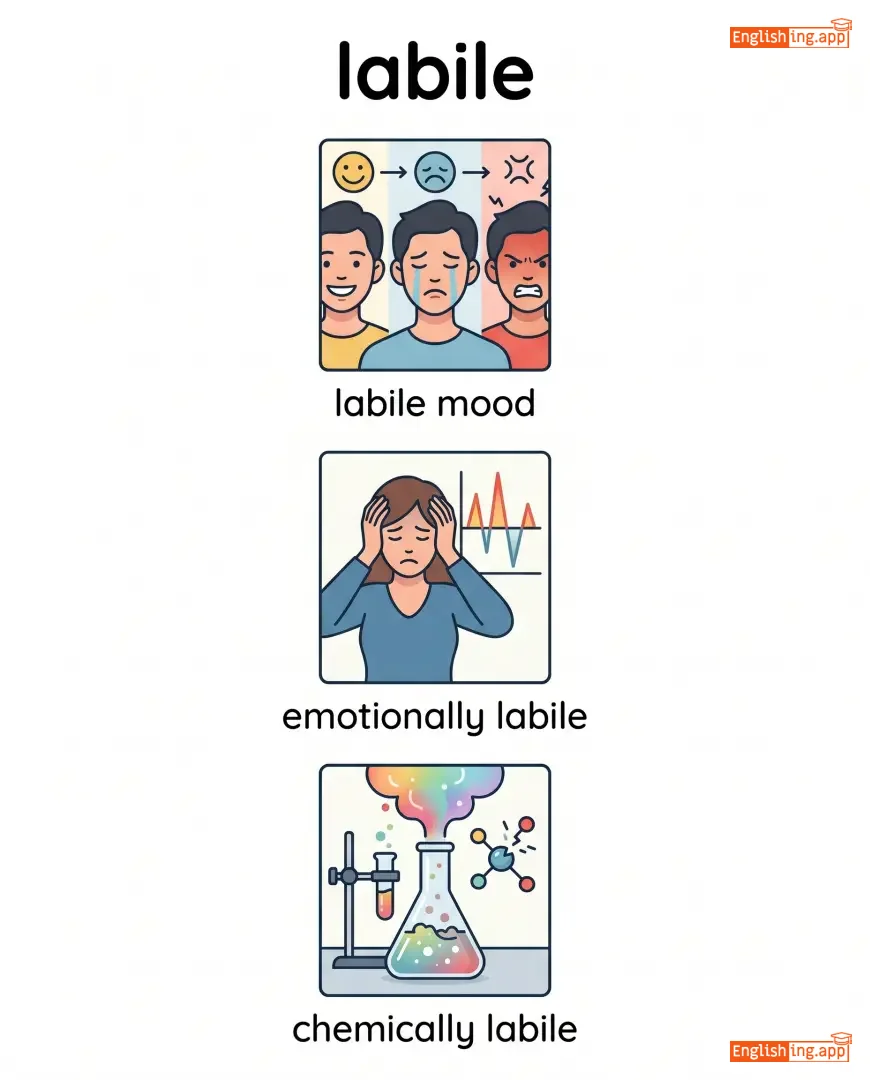
labile mood, emotionally labile, chemically labile
••••••
|
Labileは 'liable to change' を意味します — まるで不安定な実験結果のように。
••••••
|
|
#449
🤐
|
/ləˈkɒnɪk/
adjective
(ラコニック)
••••••
|
|
簡潔な
kanketsu na
••••••
|
- •••••• | - •••••• | - •••••• | - •••••• |
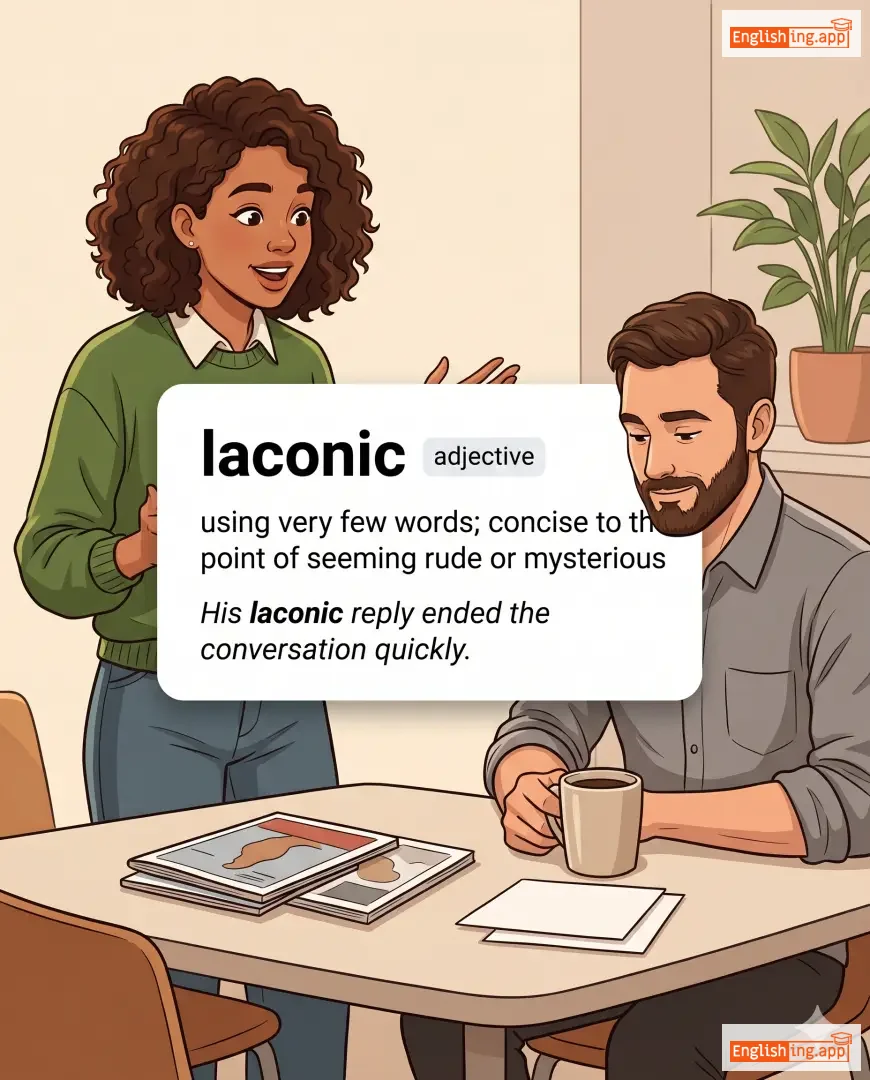
using very few words; concise to the point of seeming rude or mysterious
••••••
|
His laconic reply ended the conversation quickly. |
彼の簡潔な返答は会話を迅速に終わらせた。
Kare no kanketsu na hentō wa kaiwa o jinsoku ni owaraseta.
••••••
|
- •••••• | - •••••• | - •••••• |
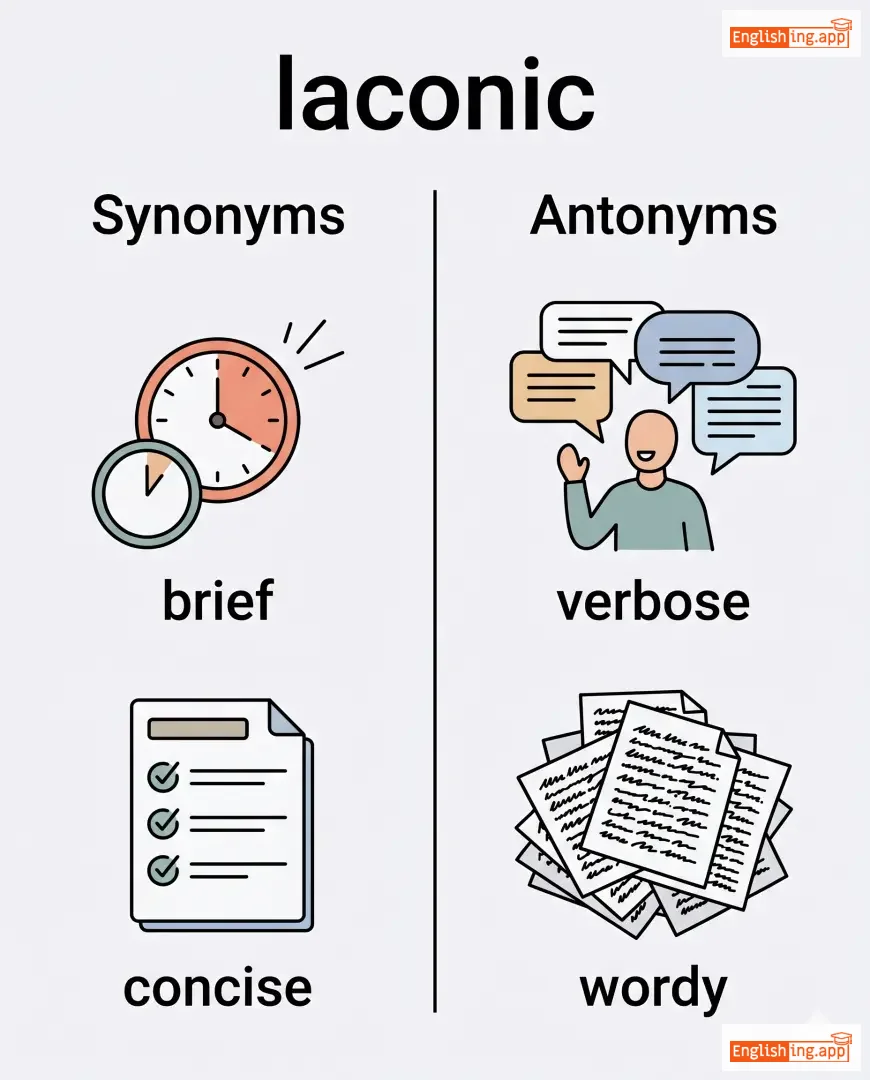
brief, concise, terse, succinct
••••••
|
verbose, wordy, talkative
••••••
|
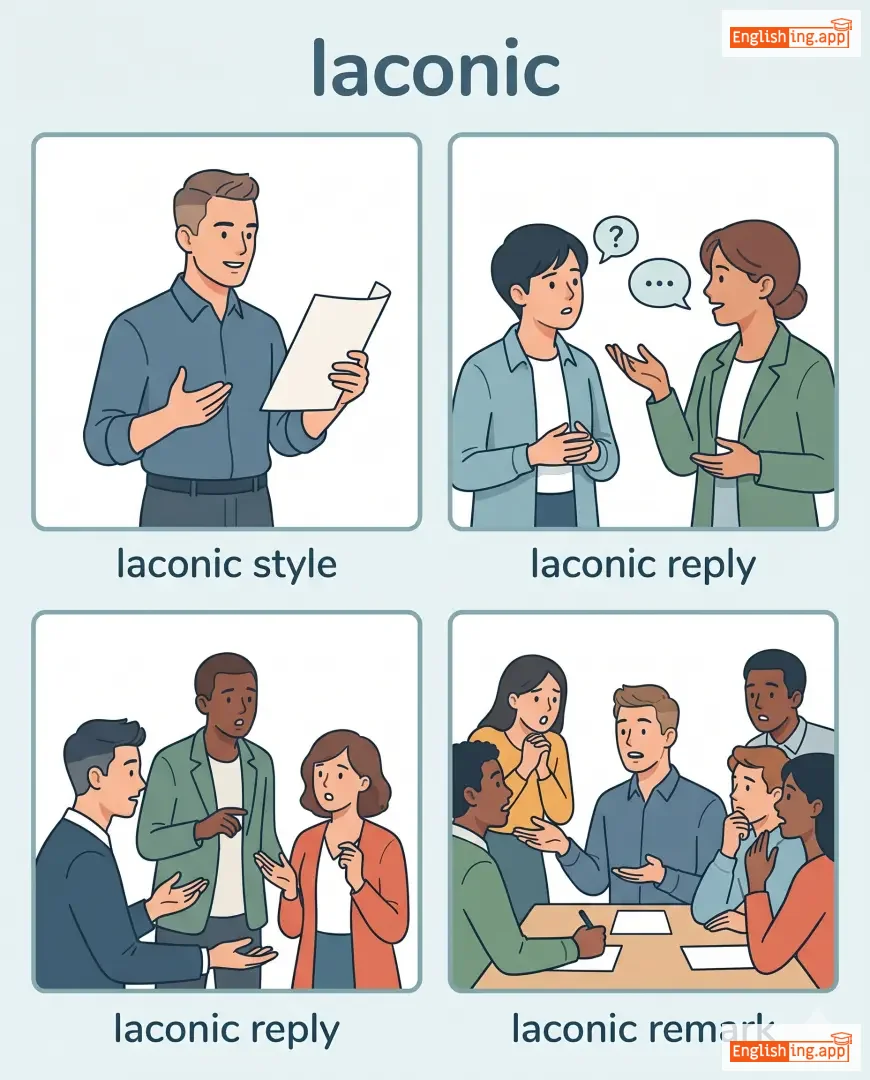
laconic style, laconic reply, laconic remark
••••••
|
簡潔な返答で、すべてを一言で伝える。
••••••
|
|
#450
💢
|
/læmˈbeɪst/
verb
(ランベイスト)
••••••
|
|
厳しく非難する
kibishiku hinansuru
••••••
|
lambasted
ランベイステッド
••••••
|
lambasted
ランベイステッド
••••••
|
lambastes
ランベイステス
••••••
|
lambasting
ランベイスティング
••••••
|
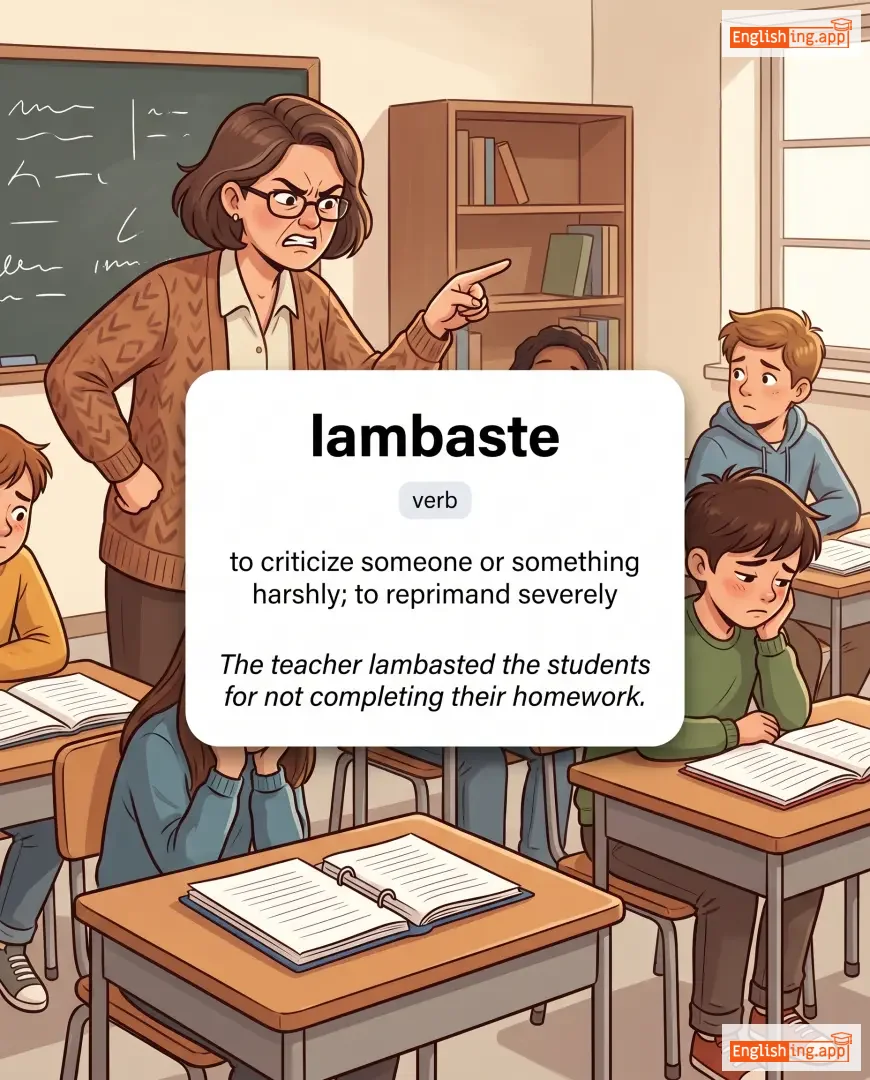
to criticize someone or something harshly; to reprimand severely
••••••
|
The teacher lambasted the students for not completing their homework.
教師は宿題をやらなかった学生を厳しく叱責しました。
••••••
|
教師は宿題をやらなかった学生を厳しく叱責しました。
Kyoushi wa shukudai o yaranakatta gakusei o kibishiku shikkeshi mashita.
••••••
|
- •••••• | - •••••• | - •••••• |
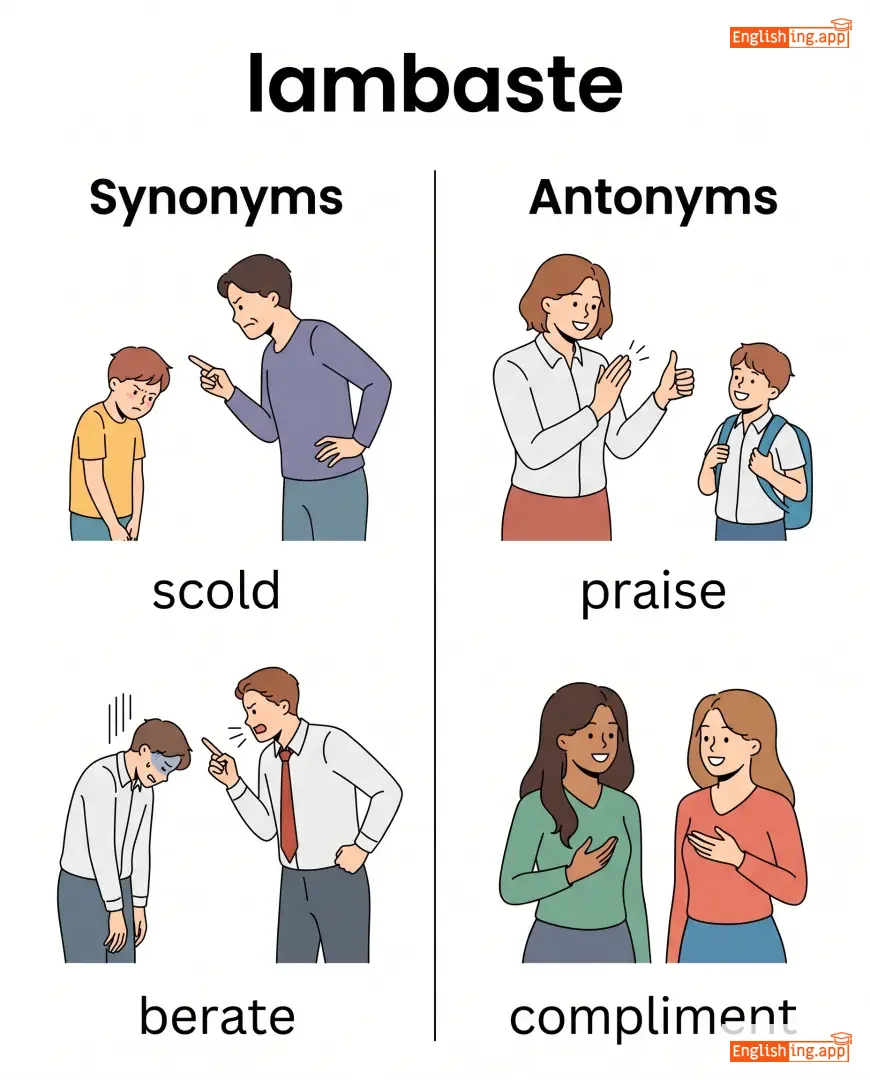
scold, berate, chastise, rebuke, criticize
••••••
|
praise, compliment, applaud
••••••
|
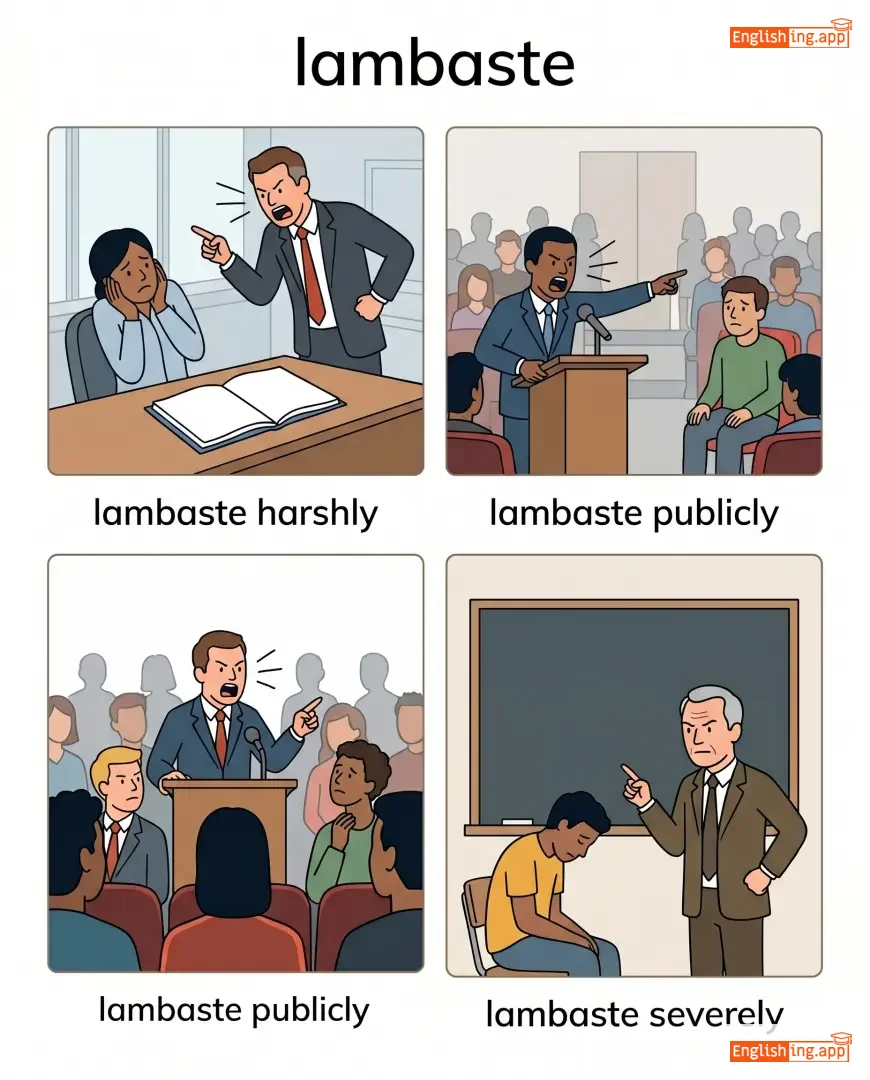
lambaste harshly, lambaste publicly, lambaste severely
••••••
|
Lambaste : ラム (ramu) とベスト (baste) - lambasteは厳しく非難するという意味
••••••
|
Vocabulary Quiz
Test your vocabulary by matching words with their translations or meanings.
Login to take the quiz
Comments (0)
Share your thoughts and join the discussion.
Join the discussion by logging in
Login to CommentNo comments yet
Be the first to share your thoughts!