The Village Guardian's Promise
アラムギールはvillageで最もtrustedな人物でした。洪水が川に来たとき、皆がsupportを求めて彼のもとに集まりました。しかし、今回はdangerが異なっていました - 川の近くの丘からのthreatの土砂崩れがありました。
Fearは皆の間に広がりました。しかし、アラムギールはfamilyをprotectするというpromiseを立てました。彼のfamilyだけでなく、彼は全てのvillageをsecureに保つ責任を負っていました。
夜、緊急会議が開かれました。皆がパニックになっていました - 彼らはどうやってsurviveするのか?アラムギールはcourageを見せて言いました。「私たちはstruggleしなければならない。みんなで一緒にいれば、このdangerからescapeできる。」
翌日から準備が始まりました。アラムギールは皆を組織しました。Riskがたくさんありましたが、他の選択肢はありませんでした。高齢者、子供、女性 - 皆をdefendedする計画が必要でした。
三日後、丘に亀裂が入りました。時が来ました。アラムギールはそのstrengthで皆を導きました。一人一人、village全体が安全な場所に移動しました。
その夜、丘は崩れました。しかし、全員がsecureでした。アラムギールのcourageとリーダーシップのおかげで、皆がsurvivedしました。
二ヶ月後、新しい場所に新しいvillageが建てられました。アラムギールは、彼らのstruggleは終わっていないことを知っていましたが、最も重要なことをachievedしました - 皆が一緒にいて、より良いfutureのためのhopeがありました。彼はpromiseを守り、このtrustが彼らの最大のstrengthであることを確信しました。
|
絵文字
|
単語 | Images | 翻訳 | 過去 | 過去分詞 | 三人称単数 | 動名詞 | 意味 | 例文 | 例文の翻訳 | 表現例 | 表現例の意味 | 表現例の翻訳 | 同義語 | 対義語 | コロケーション | ニーモニック |
|---|---|---|---|---|---|---|---|---|---|---|---|---|---|---|---|---|---|
|
🏆
••••••
|
/əˈtʃiːv/
verb
(アチーブ)
••••••
|
- •••••• |
達成する
tassei suru
••••••
|
achieved
アチーブド
••••••
|
achieved
アチーブド
••••••
|
achieves
アチーブス
••••••
|
achieving
アチービング
••••••
|
to successfully bring about or reach a desired goal or result
••••••
|
She worked hard to achieve her dream of becoming a doctor.
彼女は医者になるという夢を達成するために一生懸命働いた。
••••••
|
彼女は医者になるという夢を達成するために一生懸命働いた。
Kanojo wa isha ni naru to iu yume o tassei suru tame ni isshoukenmei hataraita.
••••••
|
achieve success
成功を収める
••••••
|
to become successful
••••••
|
成功を収める
seikou o osameru
••••••
|
accomplish, attain, realize, fulfill, complete
••••••
|
fail, lose, abandon
••••••
|
achieve goal, achieve success, achieve results, achieve excellence
••••••
|
Achieveは達成するという意味です — 成功を収めるためには、目標を達成しなければなりません。
••••••
|
|
🦁
••••••
|
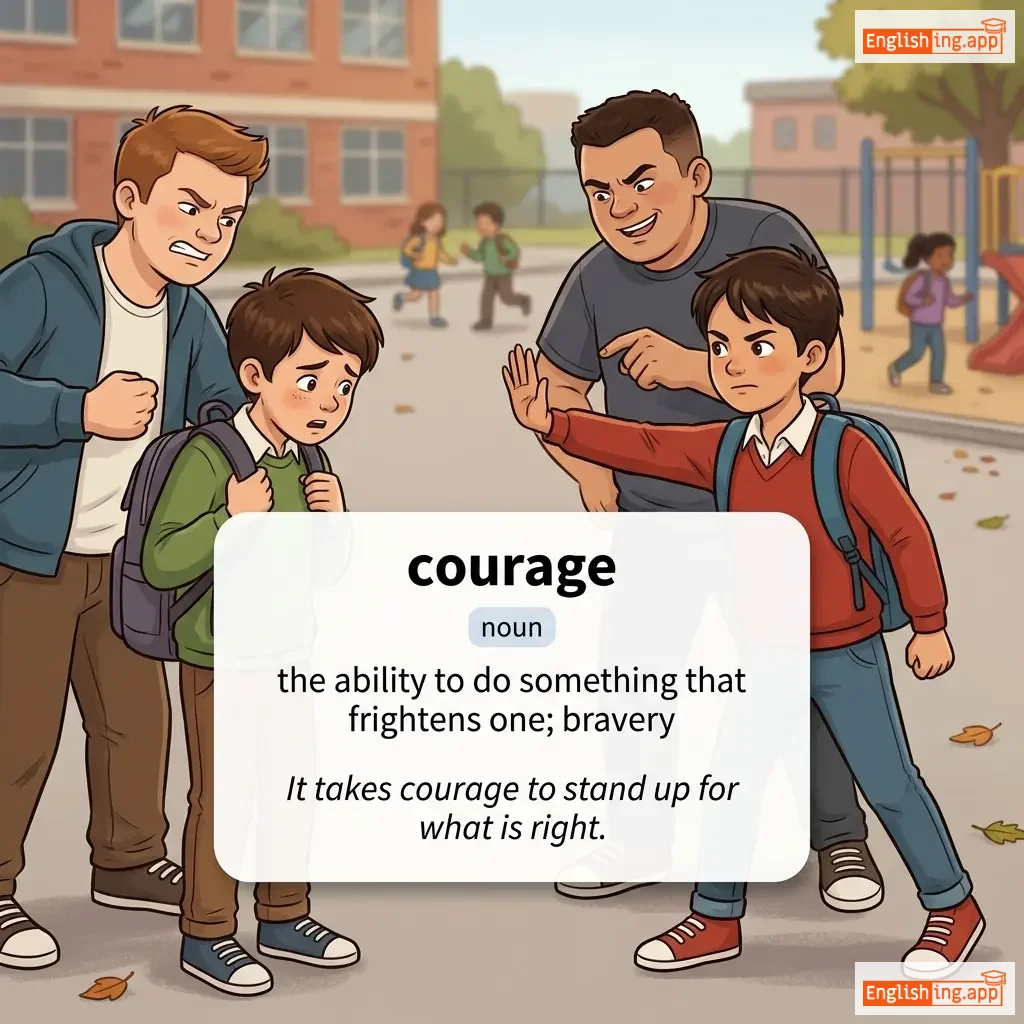
/ˈkʌrɪdʒ/
noun
(korej)
••••••
|

|
勇気
yūki
••••••
|
- •••••• | - •••••• | - •••••• | - •••••• |
the ability to do something that frightens one; bravery
••••••
|
It takes courage to stand up for what is right. |
正しいことを守るには勇気が必要です。
Tadashī koto o mamoru ni wa yūki ga hitsuyōdesu.
••••••
|
pluck up courage |
to force yourself to be brave enough to do something
••••••
|
勇気を出す
yūki o dasu
••••••
|
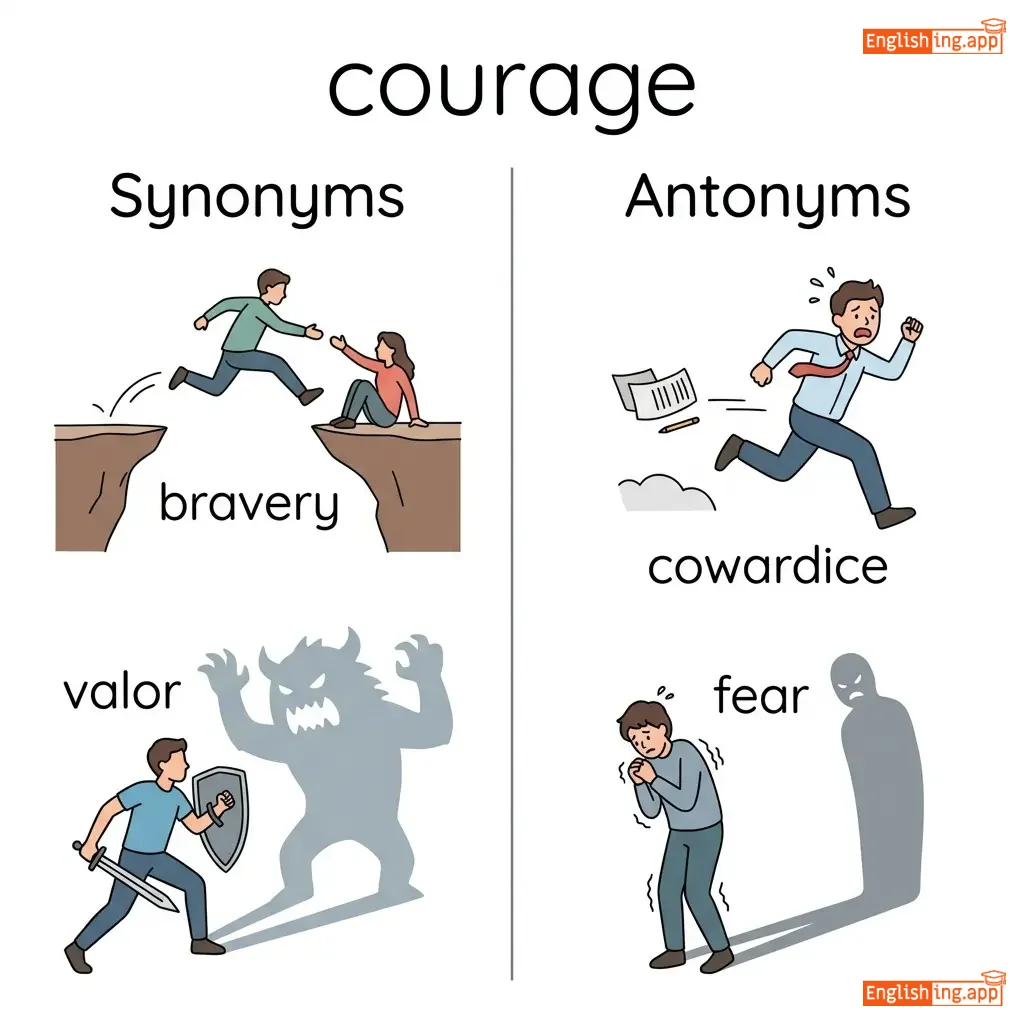
bravery, valor, boldness, fearlessness, spirit
••••••
|
cowardice, fear
••••••
|
show courage, great courage, moral courage
••••••
|
Courage 🦁 は勇気を意味します - ライオンのような勇気があれば、すべてのことができます
••••••
|
|
⚠️
••••••
|
/ˈdeɪn.dʒər/
noun
(デンジャー)
••••••
|
- •••••• |
危険
kiken
••••••
|
- •••••• | - •••••• | - •••••• | - •••••• |
The possibility of harm, injury, or loss.
••••••
|
The hikers were in great danger during the storm. |
登山者は嵐の中で大きな危険にさらされていました。
Tozan-sha wa arashi no naka de ookina kiken ni sarasarete imashita.
••••••
|
in danger |
at risk of harm or injury
••••••
|
危険にさらされて
Kiken ni sarasarete
••••••
|
risk, threat, peril, hazard, jeopardy
••••••
|
safety, security, protection
••••••
|
serious danger, put in danger, danger zone, face danger
••••••
|
Danger 英語で '危険' - ⚠️ 危険なときには警戒しましょう!
••••••
|
|
⚔️
••••••
|
/dɪˈfɛnd/
verb
(ディフェンド)
••••••
|
- •••••• |
守る
mamoru
••••••
|
defended
ディフェンドした
••••••
|
defended
ディフェンドされた
••••••
|
defends
ディフェンドする
••••••
|
defending
ディフェンドしている
••••••
|
To protect someone or something from harm or attack.
••••••
|
The lawyer worked hard to defend her client.
弁護士は彼女のクライアントを守るために一生懸命働きました。
••••••
|
弁護士は彼女のクライアントを守るために一生懸命働きました。
Bengoshi wa kanojo no kuraianto wo mamoru tame ni isshoukenmei hatarakimashita.
••••••
|
defend one's honor
名誉を守る
••••••
|
To protect one’s reputation from criticism or insult.
••••••
|
名誉を守る
meiyo wo mamoru
••••••
|
protect, guard, shield, support, justify
••••••
|
attack, abandon, betray
••••••
|
defend a case, defend the goal, defend human rights
••••••
|
守るというのは、弁護士がクライアントを守ることです。
••••••
|
|
🏃♂️
••••••
|
/ɪˈskeɪp/
verb
(eskeipu)
••••••
|
- •••••• |
逃げる
nigeru
••••••
|
escaped
eskeipudo
••••••
|
escaped
eskeipudo
••••••
|
escapes
eskeipusu
••••••
|
escaping
eskeipingu
••••••
|
To break free from confinement or control; to get away.
••••••
|
The prisoner tried to escape from jail.
囚人は刑務所から逃げようとした。
••••••
|
囚人は刑務所から逃げようとした。
Shuujin wa keimusho kara nigeyou to shita.
••••••
|
escape reality
現実から逃れる
••••••
|
To avoid or forget real-life problems by focusing on something else.
••••••
|
現実から逃れる
genjitsu kara nogareru
••••••
|
flee, break out, evade, get away, run away
••••••
|
stay, capture, confinement
••••••
|
escape route, escape plan, escape from, narrow escape
••••••
|
逃げるは逃げる – Nige + ru = Nogeru!
••••••
|
|
👨👩👧👦
••••••
|
/ˈfæməli/
noun
(famirī)
••••••
|
- •••••• |
家族
kazoku
••••••
|
- •••••• | - •••••• | - •••••• | - •••••• |
A group consisting of parents and their children, or all the descendants of a common ancestor.
••••••
|
She spends most of her weekends with her family. |
彼女は週末のほとんどを家族と過ごします。
Kanojo wa shūmatsu no hotondo o kazoku to sugoshimasu.
••••••
|
family ties |
The strong connections and relationships between family members.
••••••
|
家族の絆
kazoku no kizuna
••••••
|
household, relatives, kin, clan, tribe
••••••
|
strangers, outsiders
••••••
|
close family, nuclear family, family life, family ties
••••••
|
Family = 家族 - Familiar faces はいつでも家族の中にいます。
••••••
|
|
😨
••••••
|
/fɪr/
noun, verb
(フィアー)
••••••
|
|
恐怖
kyōfu
••••••
|
feared
フィアード
••••••
|
feared
フィアード
••••••
|
fears
フィアーズ
••••••
|
fearing
フィアリング
••••••
|
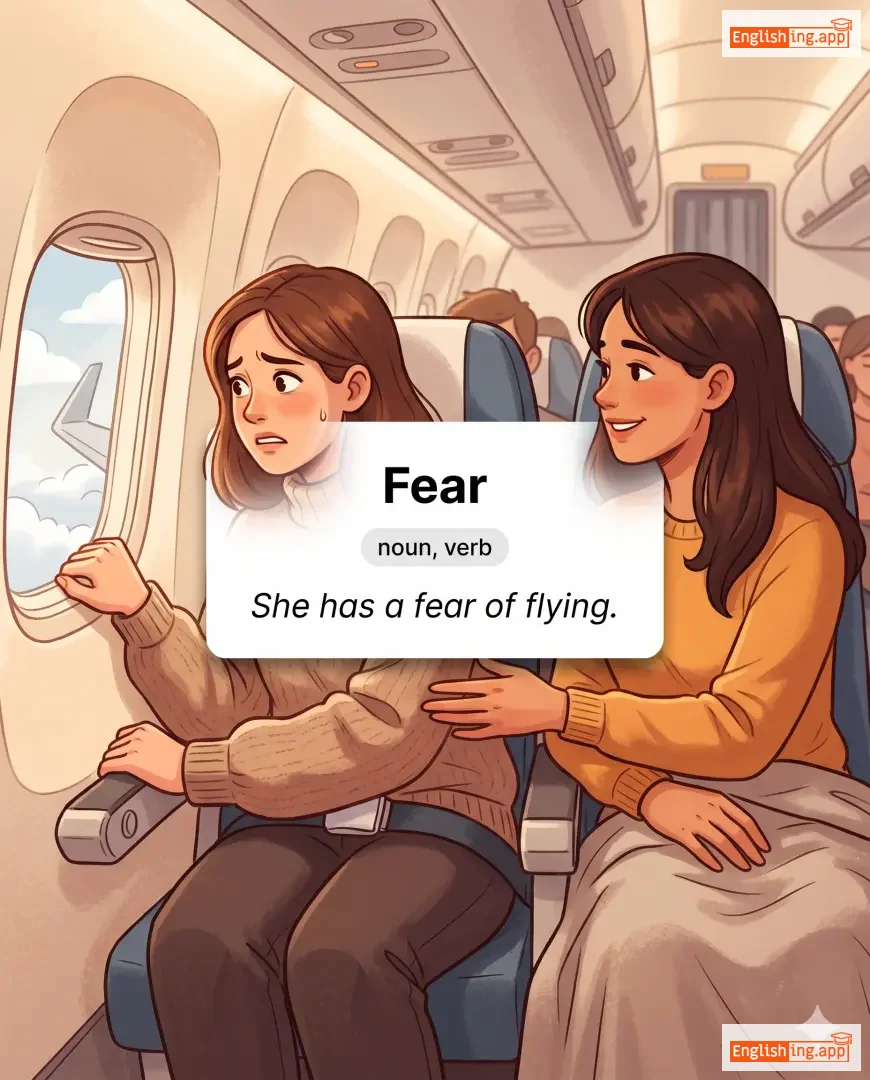
An unpleasant emotion caused by the belief that someone or something is dangerous.
••••••
|
She has a fear of flying.
彼女は飛行機恐怖症です。
••••••
|
彼女は飛行機恐怖症です。
kanojo wa hikōki kyōfushō desu.
••••••
|
face your fears
自分の恐怖と向き合う
••••••
|
Confront something that scares you.
••••••
|
自分の恐怖と向き合う
jibun no kyōfu to mukiau
••••••
|
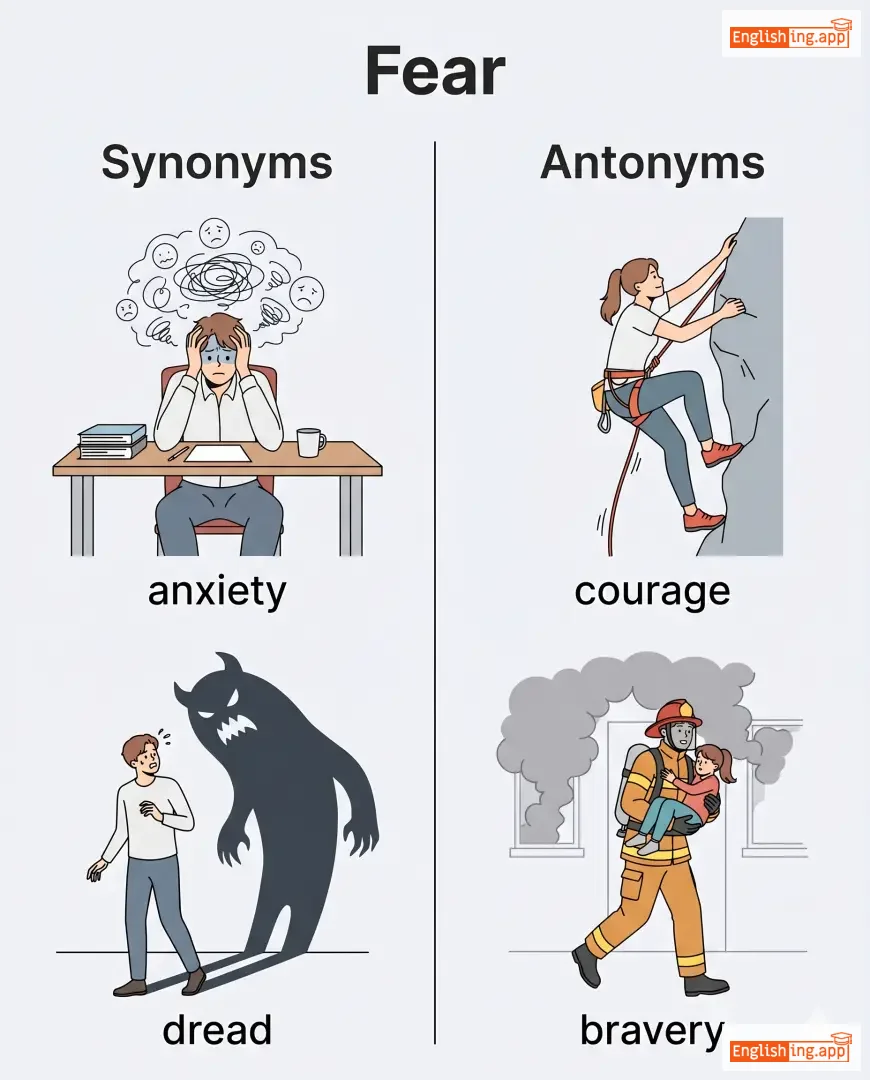
anxiety, dread, terror, worry, concern
••••••
|
courage, bravery, confidence
••••••
|
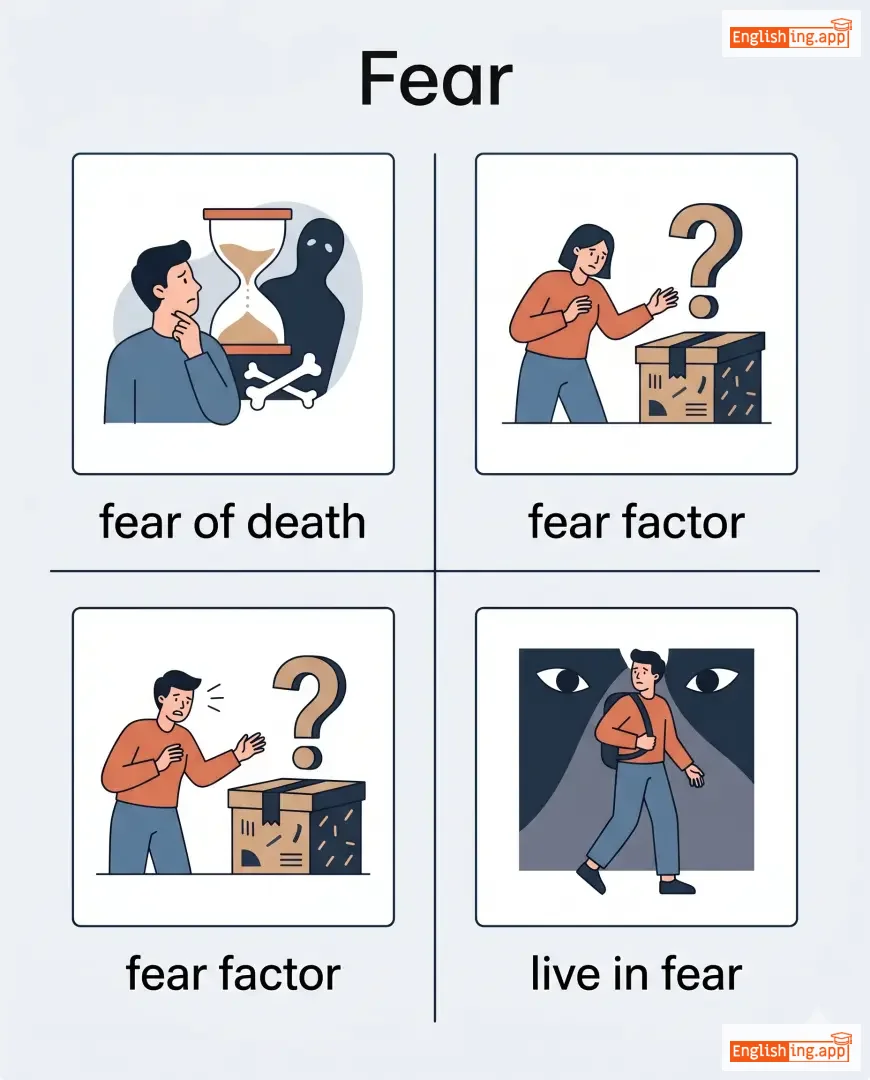
fear of death, fear factor, live in fear, fear something
••••••
|
Fearは恐怖 — 恐れを知らぬ者は恐れる。
••••••
|
|
🔮
••••••
|
/ˈfjuːtʃər/
noun
(フューチャー)
••••••
|
|
未来
mirai
••••••
|
- •••••• | - •••••• | - •••••• | - •••••• |
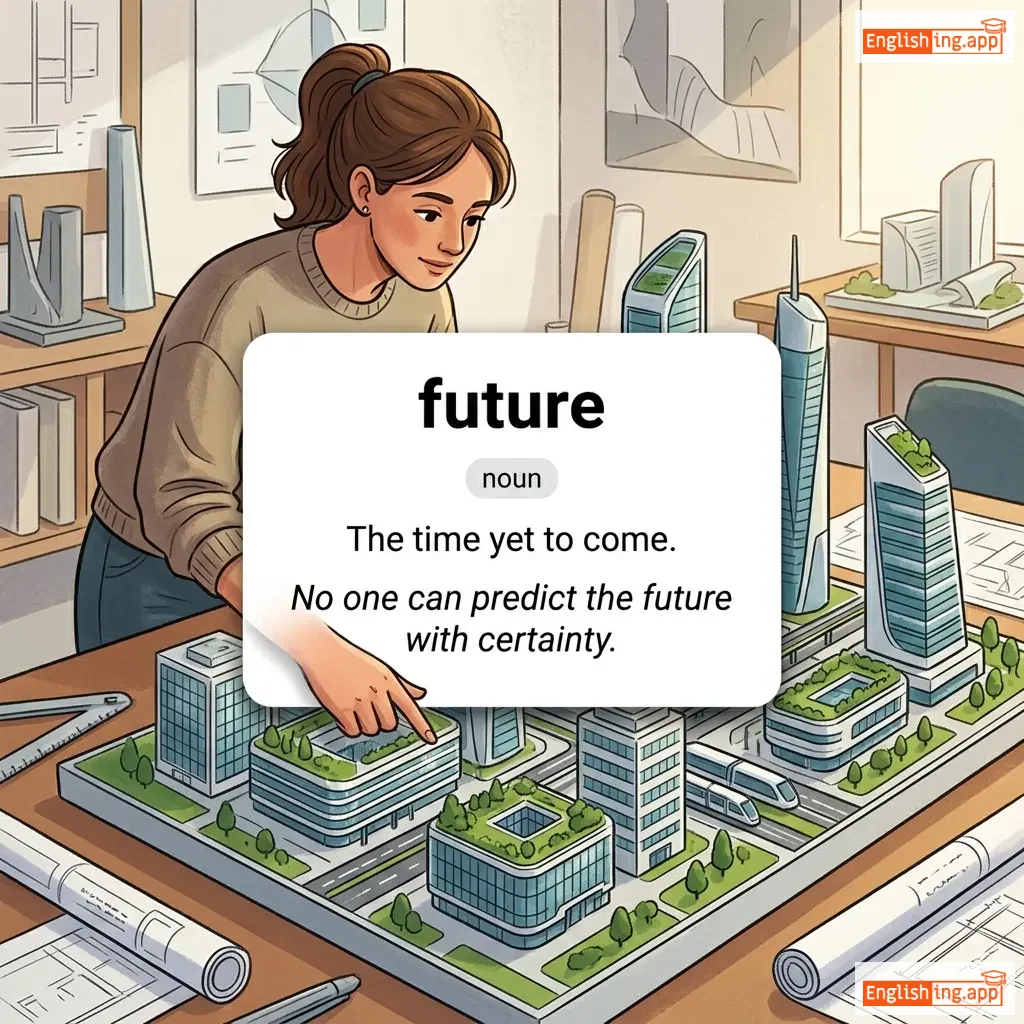
The time yet to come.
••••••
|
No one can predict the future with certainty. |
誰も未来を確実に予測することはできません。
Dare mo mirai o kakujitsu ni yosoku suru koto wa dekimasen.
••••••
|
bright future |
a positive or successful time ahead
••••••
|
明るい未来
akarui mirai
••••••
|
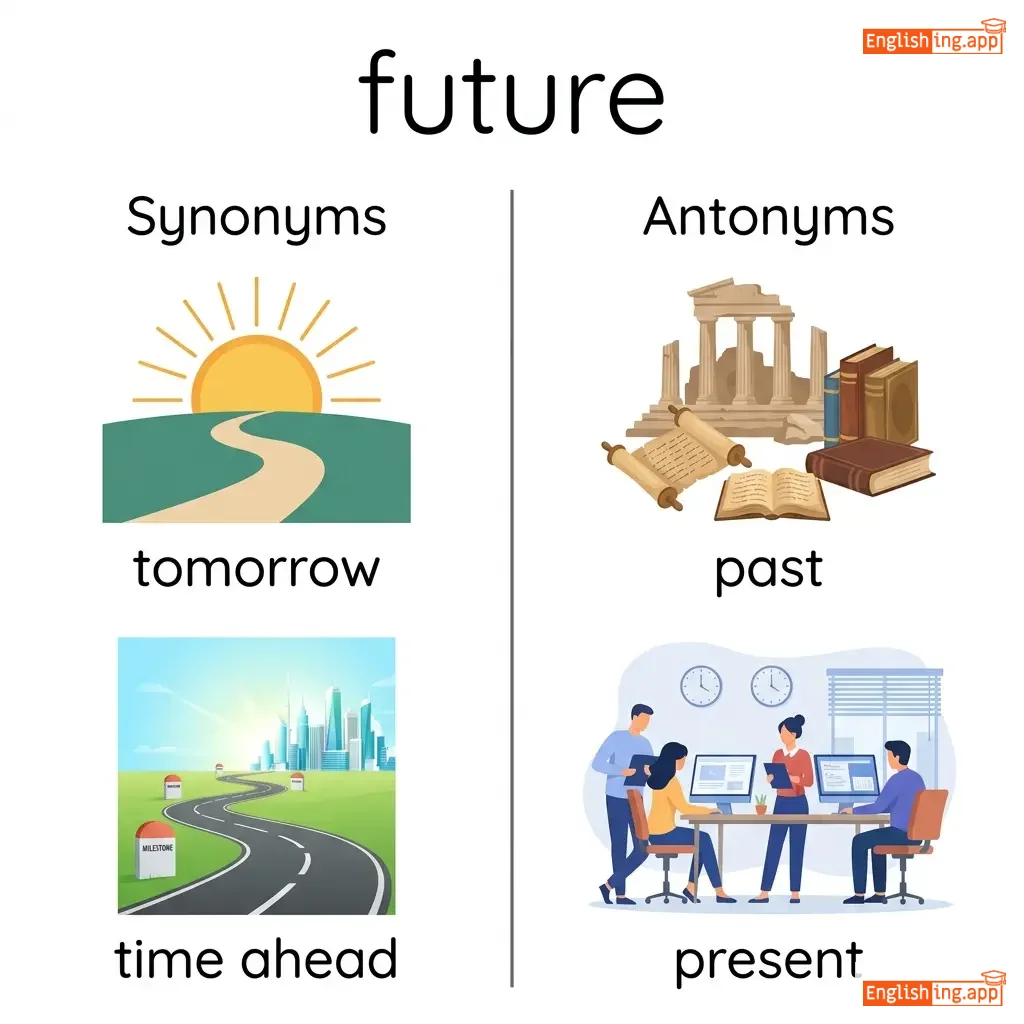
tomorrow, time ahead, destiny, prospect
••••••
|
past, present
••••••
|
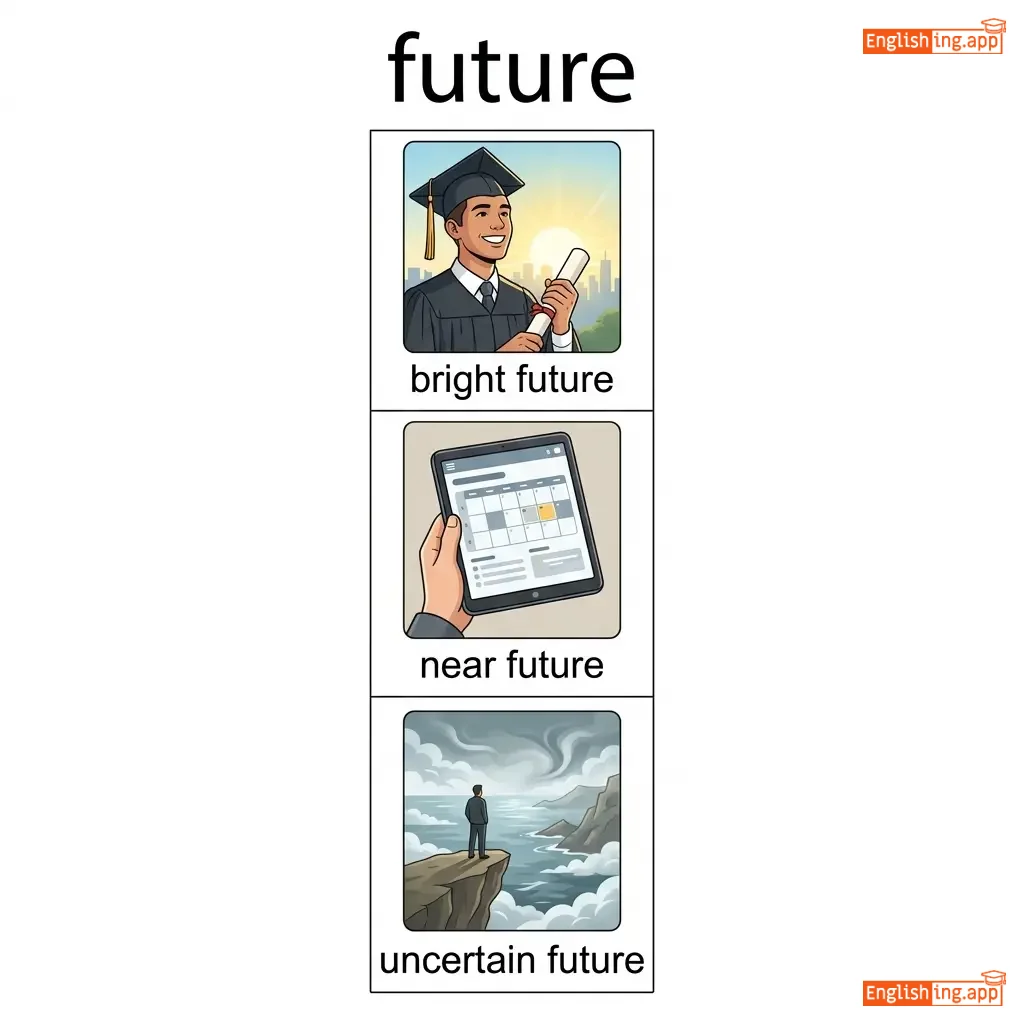
bright future, near future, uncertain future, future plans
••••••
|
Futureは日本語で未来です。明るい未来は明るい未来です。
••••••
|
|
🌟
••••••
|
/hoʊp/
verb
••••••
|
- •••••• | - •••••• |
hoped
••••••
|
hoped
••••••
|
hopes
••••••
|
hoping
••••••
|
To want something to happen or be true and think it is possible.
••••••
|
I hope everything goes well with your exam. |
- •••••• |
hope against hope |
To continue to hope even when the situation seems hopeless.
••••••
|
- •••••• |
wish, desire, expect, trust, optimism
••••••
|
despair, doubt
••••••
|
hope for, hope that, lose hope, give hope
••••••
|
No •••••• |
|
🤝
••••••
|
/ˈprɒmɪs/
verb
(purōmisu)
••••••
|
- •••••• |
約束する
yakusoku suru
••••••
|
promised
purōmisudo
••••••
|
promised
purōmisudo
••••••
|
promises
purōmisuzu
••••••
|
promising
purōmisingu
••••••
|
to assure someone that one will definitely do something; to give one's word
••••••
|
I promise to help you with your homework.
私はあなたの宿題を手伝うと約束します。
••••••
|
私はあなたの宿題を手伝うと約束します。
Watashi wa anata no shukudai o tetsudau to yakusoku shimasu.
••••••
|
- •••••• | - •••••• | - •••••• |
pledge, vow, swear, guarantee
••••••
|
break, betray, deny
••••••
|
promise to help, make a promise, keep promises, break promises
••••••
|
約束 (yakusoku) するのは友達に宿題を手伝うと約束すること、まるで他の人に助けを約束することのようです。
••••••
|
|
🛡️
••••••
|
/prəˈtekt/
verb
(プロテクト)
••••••
|
|
保護する
hogo suru
••••••
|
protected
プロテクテッド
••••••
|
protected
プロテクテッド
••••••
|
protects
プロテクツ
••••••
|
protecting
プロテクティング
••••••
|
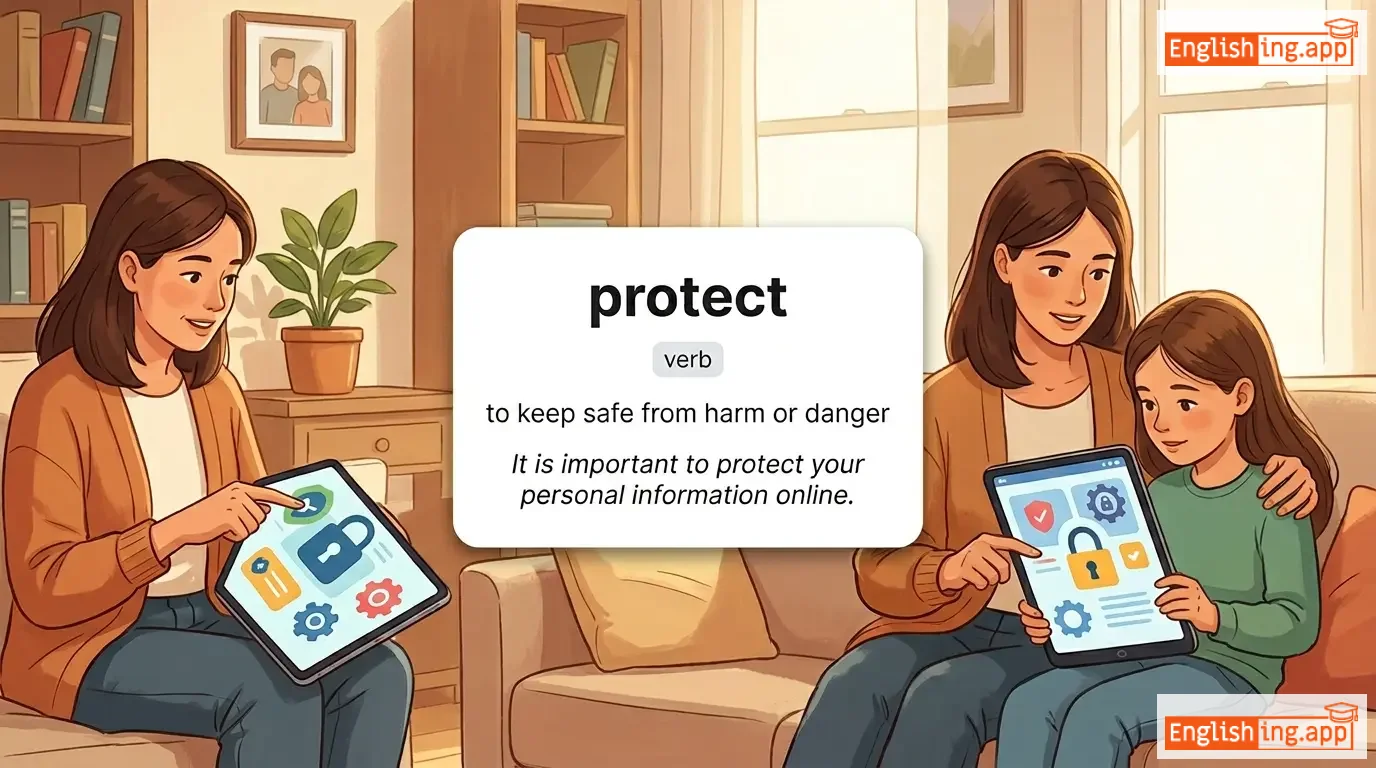
to keep safe from harm or danger; to defend
••••••
|
The helmet protects your head from injury.
ヘルメットはあなたの頭を怪我から守ります。
••••••
|
ヘルメットはあなたの頭を怪我から守ります。
Herumetto wa anata no atama o kega kara mamorimasu.
••••••
|
- •••••• | - •••••• | - •••••• |
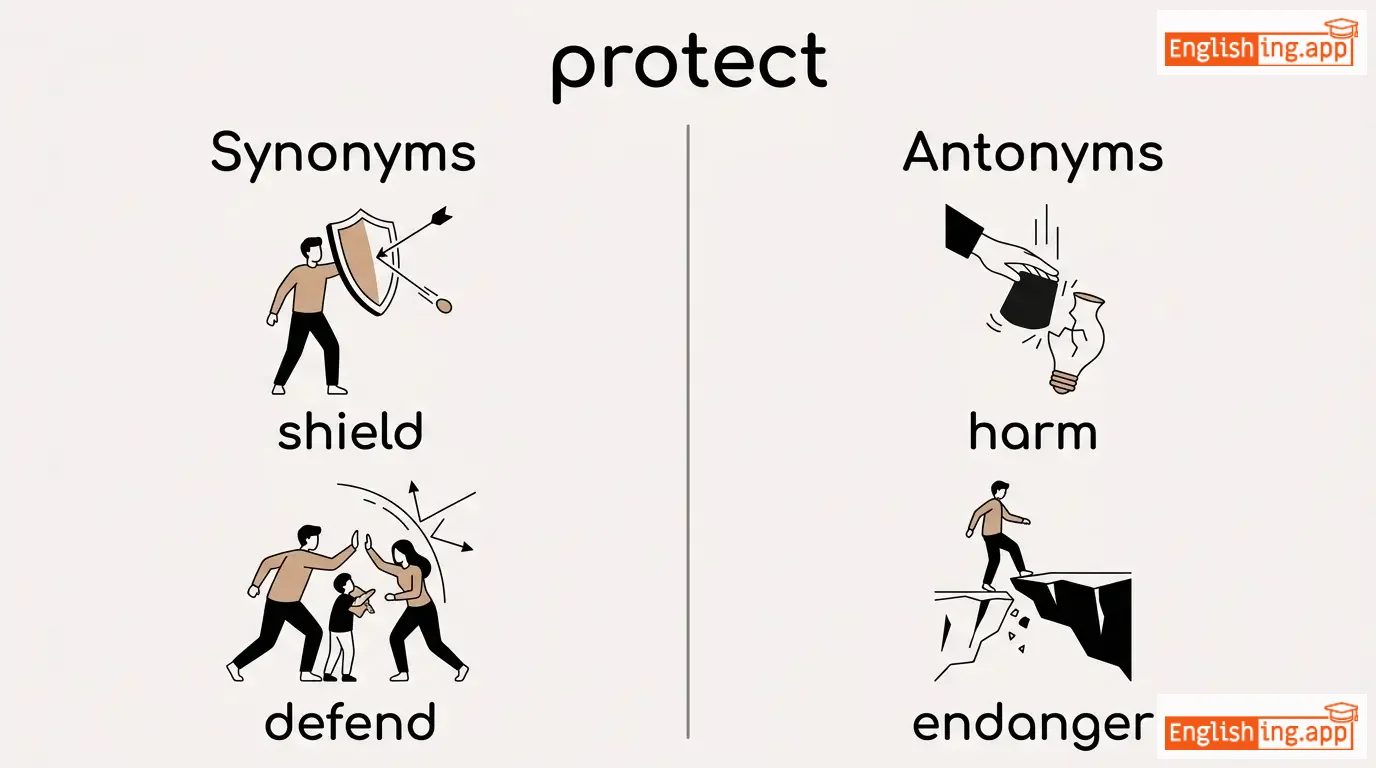
defend, guard, shield, safeguard
••••••
|
attack, harm, endanger, expose
••••••
|
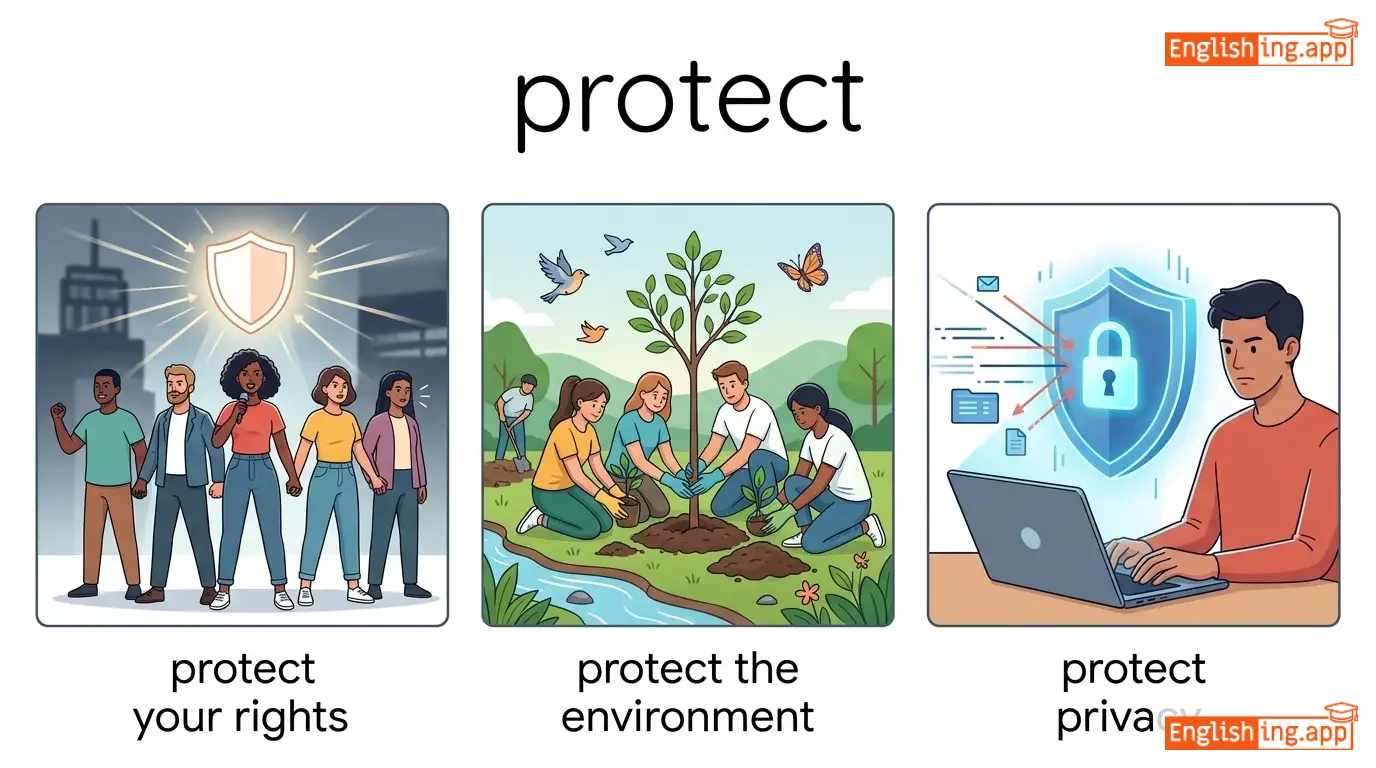
protect from harm, protect the environment, protect rights, protect carefully, protect completely
••••••
|
Protection is like '保護する' in Japanese
••••••
|
|
⚠️
••••••
|
/rɪsk/
verb
(risk)
••••••
|
|
リスクを取る
risuku o toru
••••••
|
risked
risked
••••••
|
risked
risked
••••••
|
risks
risks
••••••
|
risking
risking
••••••
|
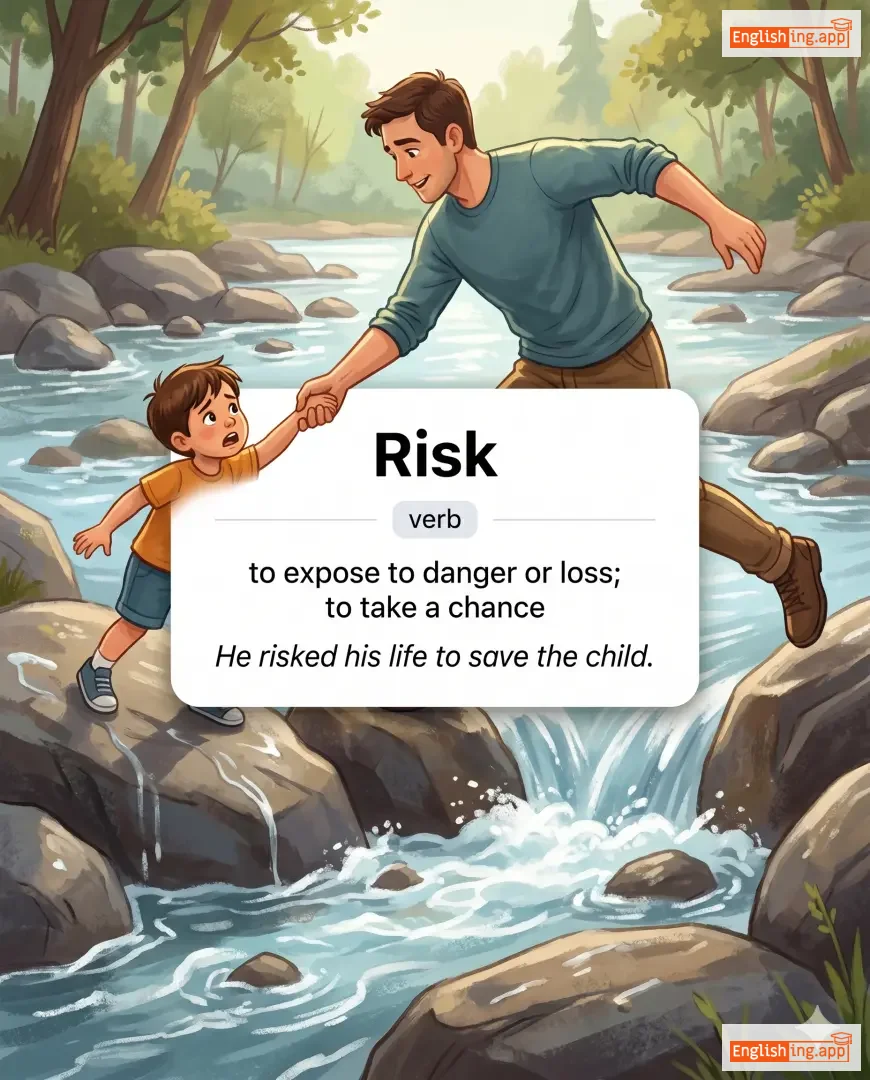
to expose to danger or loss; to take a chance
••••••
|
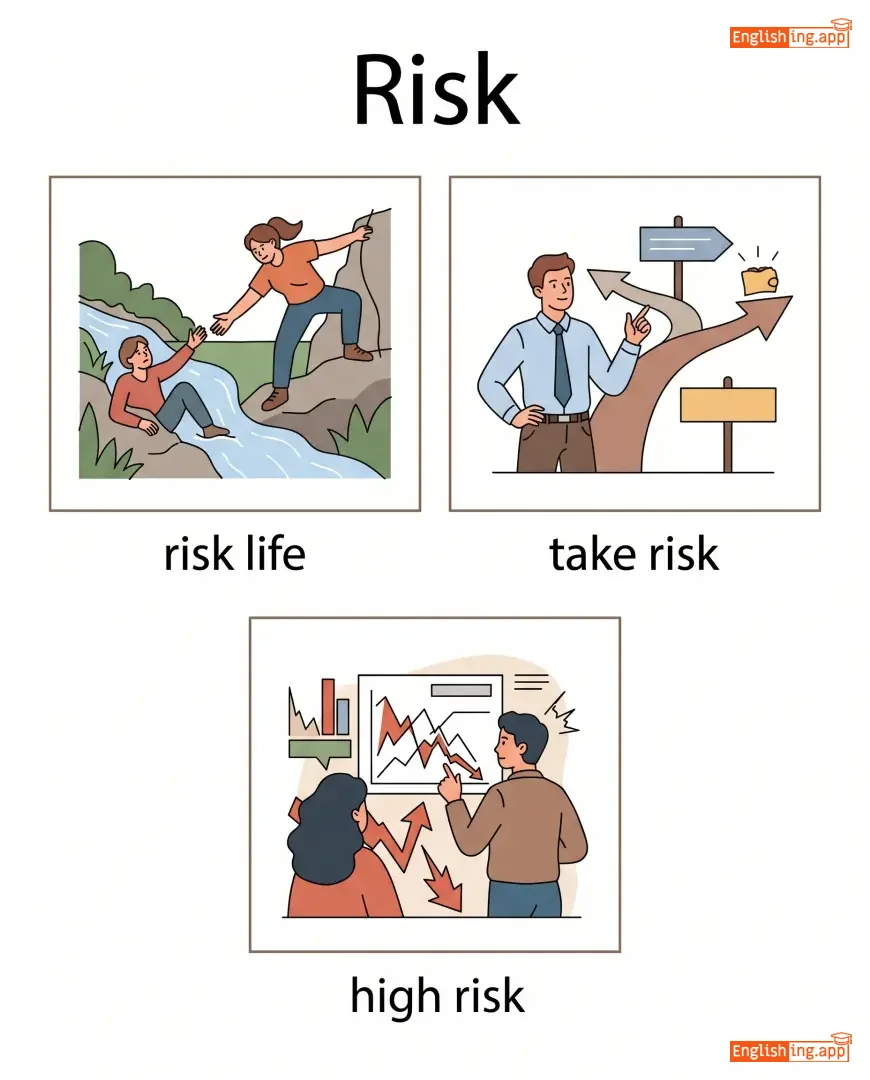
He risked his life to save the child.
彼は子供を救うために命を懸けた。
••••••
|
彼は子供を救うために命を懸けた。
Kare wa kodomo o sukuu tame ni inochi o kaketa.
••••••
|
- •••••• | - •••••• | - •••••• |
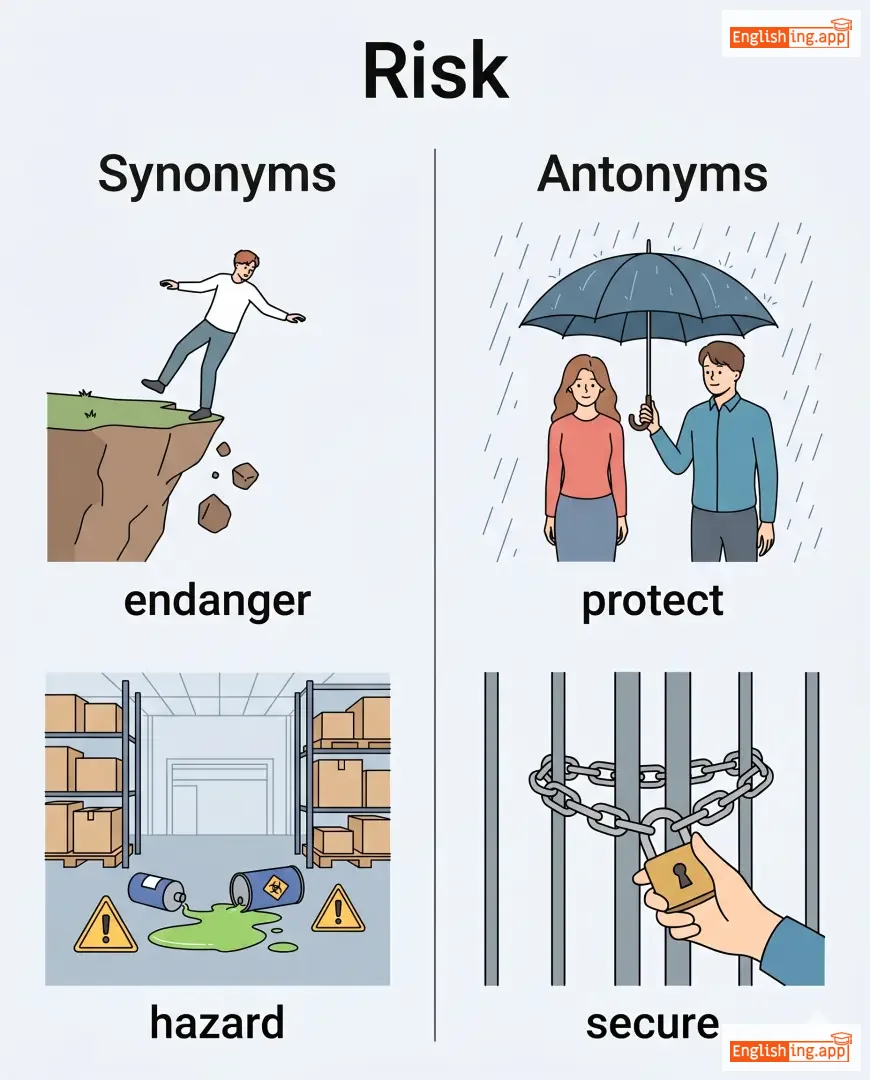
endanger, hazard, jeopardize, venture
••••••
|
protect, secure, safeguard, preserve
••••••
|
risk life, take risk, high risk, risk everything
••••••
|
リスクを取ることは、未来を切り開くための鍵となる。
••••••
|
|
🔒
••••••
|
/sɪˈkjʊər/
verb/adjective
(セキュア)
••••••
|
- •••••• |
安全にする
anzen ni suru
••••••
|
secured
セキュアド
••••••
|
secured
セキュアド
••••••
|
secures
セキュアズ
••••••
|
securing
セキュアリング
••••••
|
to make safe or protect; to fix something firmly in place
••••••
|
Please secure the door before you leave.
ドアを確実に閉めてください。
••••••
|
ドアを確実に閉めてください。
Doa o kakujitsu ni shimete kudasai.
••••••
|
- •••••• | - •••••• | - •••••• |
safeguard, protect, lock, fasten
••••••
|
expose, endanger
••••••
|
secure the area, secure the future, secure a position
••••••
|
安全にして、盗まれないように。
••••••
|
|
💪
••••••
|
/strɛŋkθ/
noun
(sutorenсуu)
••••••
|
- •••••• |
力
chikara
••••••
|
- •••••• | - •••••• | - •••••• | - •••••• |
the quality or state of being physically strong; the capacity to withstand force or pressure
••••••
|
Her strength helped her overcome the difficulties.
彼女の力は彼女が困難を克服するのを助けた。
••••••
|
彼女の力は彼女が困難を克服するのを助けた。
Kanojo no chikara wa kanojo ga konnan o kokufuku suru no o tasuketa.
••••••
|
in strength
力に
••••••
|
in large numbers; collectively powerful
••••••
|
力に
chikara ni
••••••
|
power, might, force, resilience, endurance
••••••
|
weakness, fragility
••••••
|
inner strength, physical strength, strength of character, show strength, gain strength
••••••
|
Strength = 力、すべての挑戦を乗り越える力!
••••••
|
|
💪
••••••
|
/ˈstrʌɡl/
verb
(sutoruguru)
••••••
|
|
闘い
tatakai
••••••
|
struggled
sutorugurudo
••••••
|
struggled
sutorugurudo
••••••
|
struggles
sutorugurusu
••••••
|
struggling
sutoruguringu
••••••
|
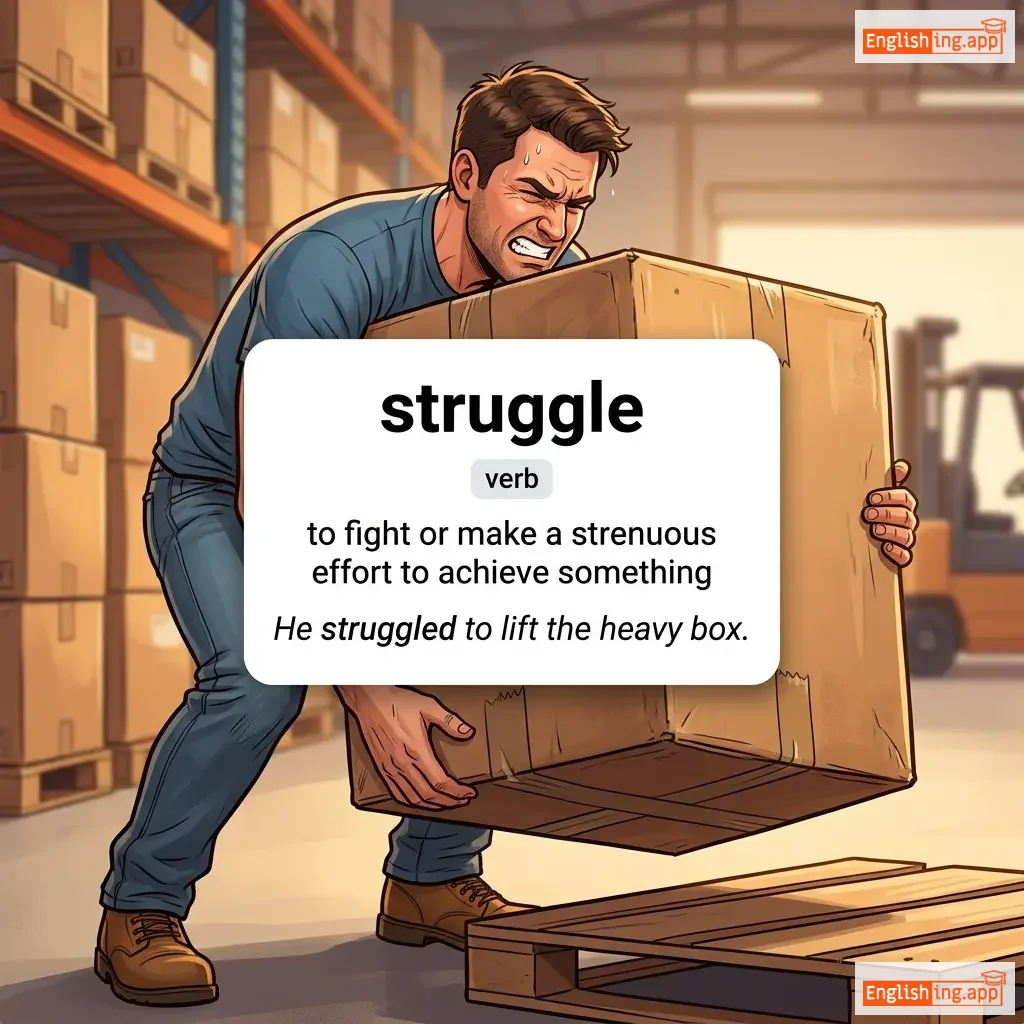
to fight or make a strenuous effort to achieve something
••••••
|
He struggled to lift the heavy box.
彼は重い箱を持ち上げるために苦闘していました。
••••••
|
彼は重い箱を持ち上げるために苦闘していました。
Kare wa omoi hako o mochiageru tame ni kutou shite imashita.
••••••
|
a struggle for survival
生存のための闘い
••••••
|
a difficult situation in which one is fighting to stay alive
••••••
|
生存のための闘い
seizon no tame no tatakai
••••••
|
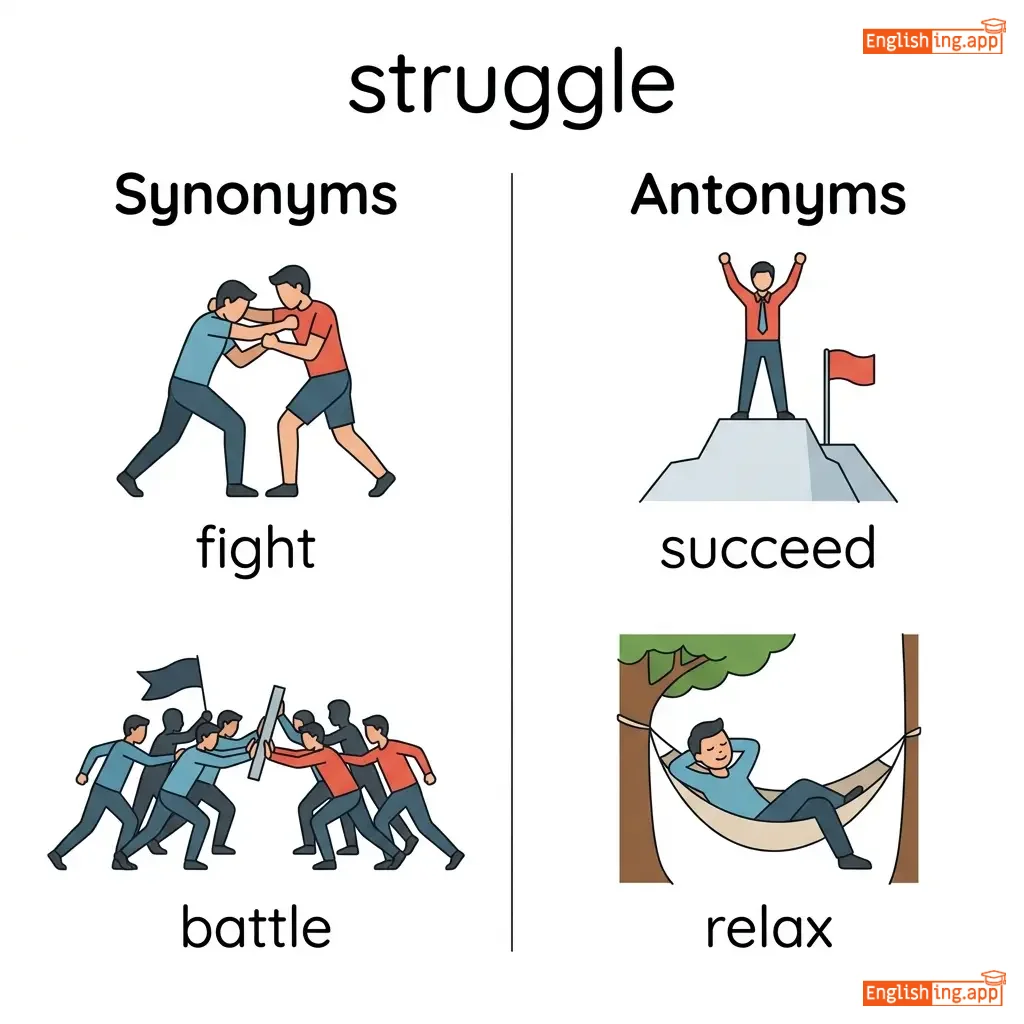
fight, battle, strive, exert
••••••
|
succeed, relax
••••••
|
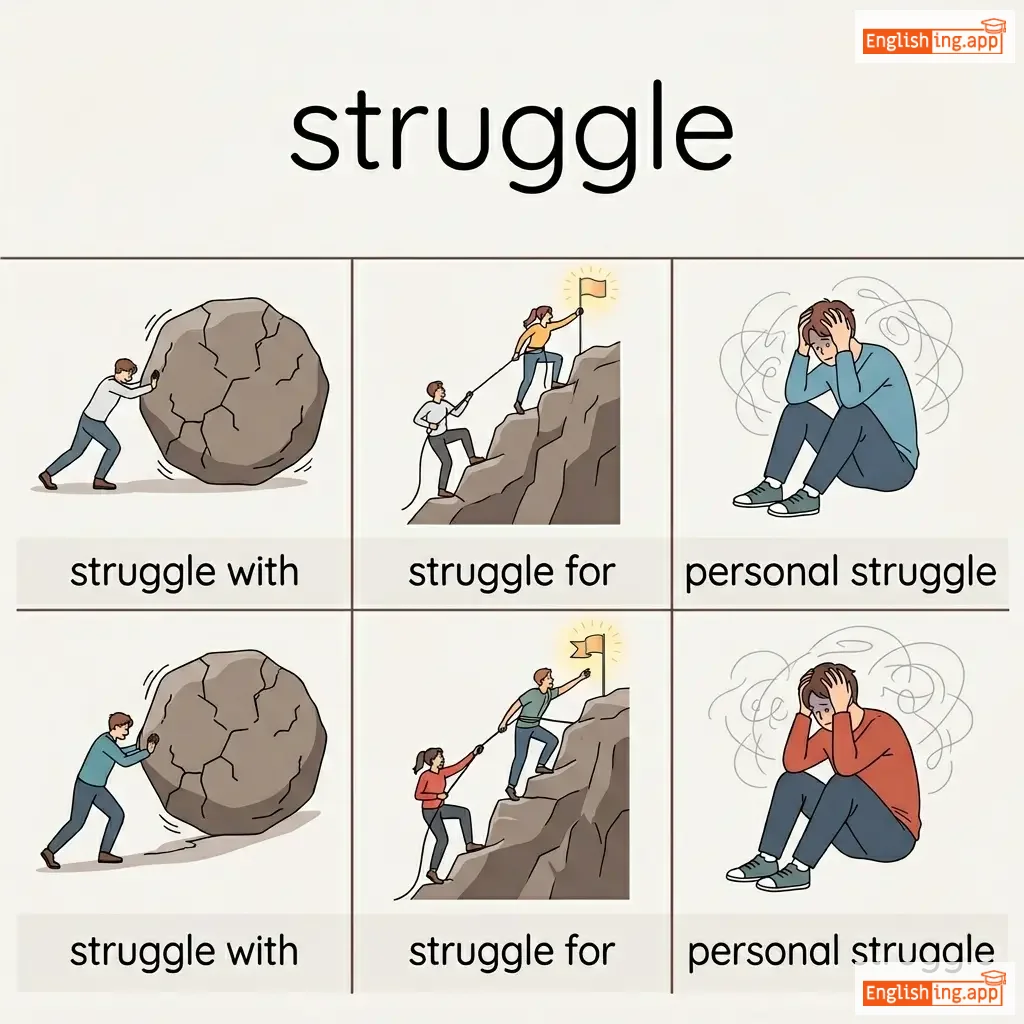
struggle with, struggle for, personal struggle
••••••
|
Struggling for success, like lifting a heavy weight
••••••
|
|
🤝
••••••
|
/səˈpɔːrt/
verb
(サポート)
••••••
|
|
サポートする
sapōto suru
••••••
|
supported
サポートされた
••••••
|
supported
サポートされた
••••••
|
supports
サポートする
••••••
|
supporting
サポートしている
••••••
|
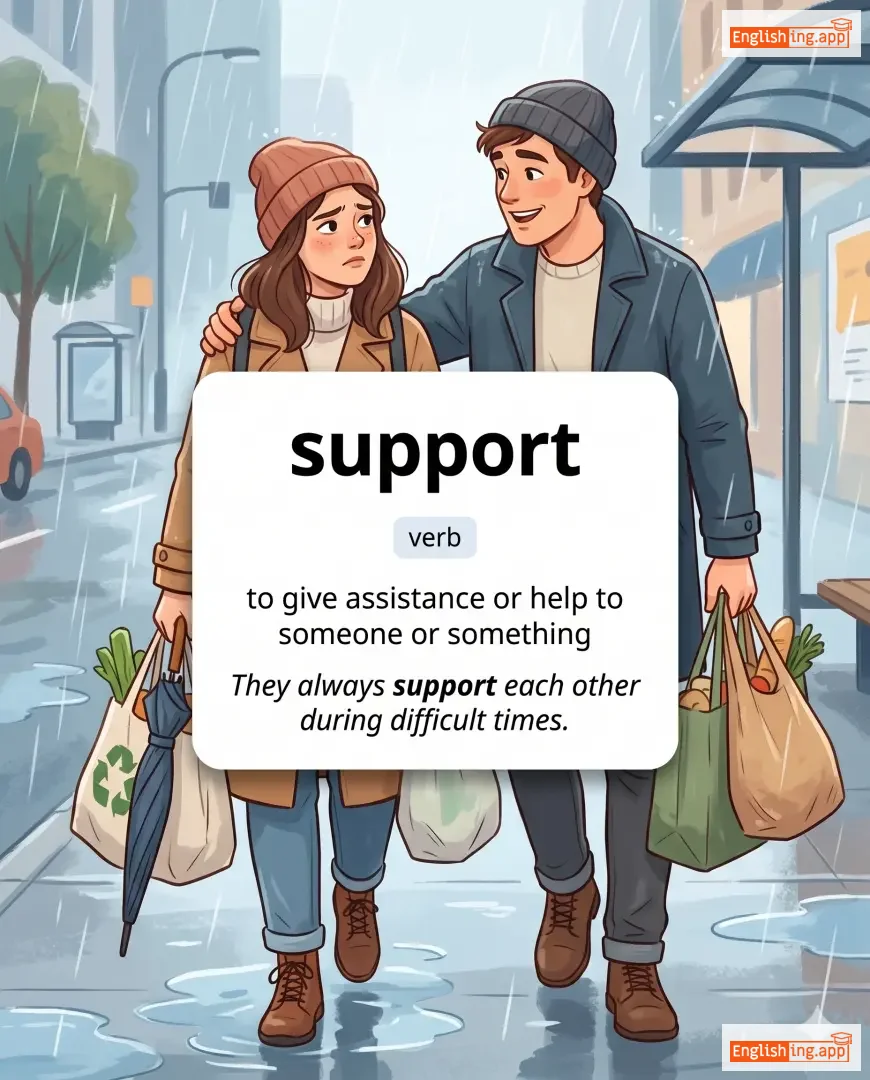
to help or assist someone; to hold up or bear the weight of something
••••••
|
The family will support their son through his studies.
家族は息子を学業でサポートします。
••••••
|
家族は息子を学業でサポートします。
Kazoku wa musuko o gakugyō de sapōto shimasu.
••••••
|
- •••••• | - •••••• | - •••••• |
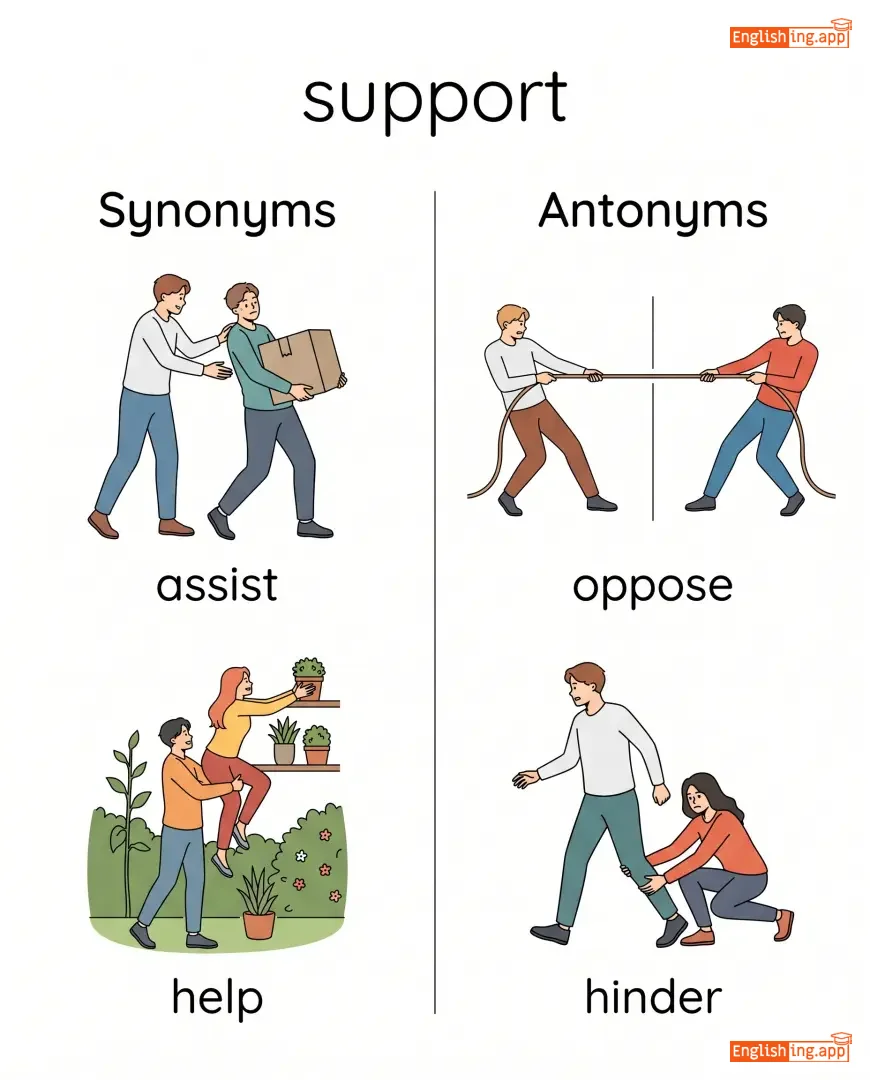
help, assist, aid, back
••••••
|
oppose, hinder, obstruct, abandon
••••••
|
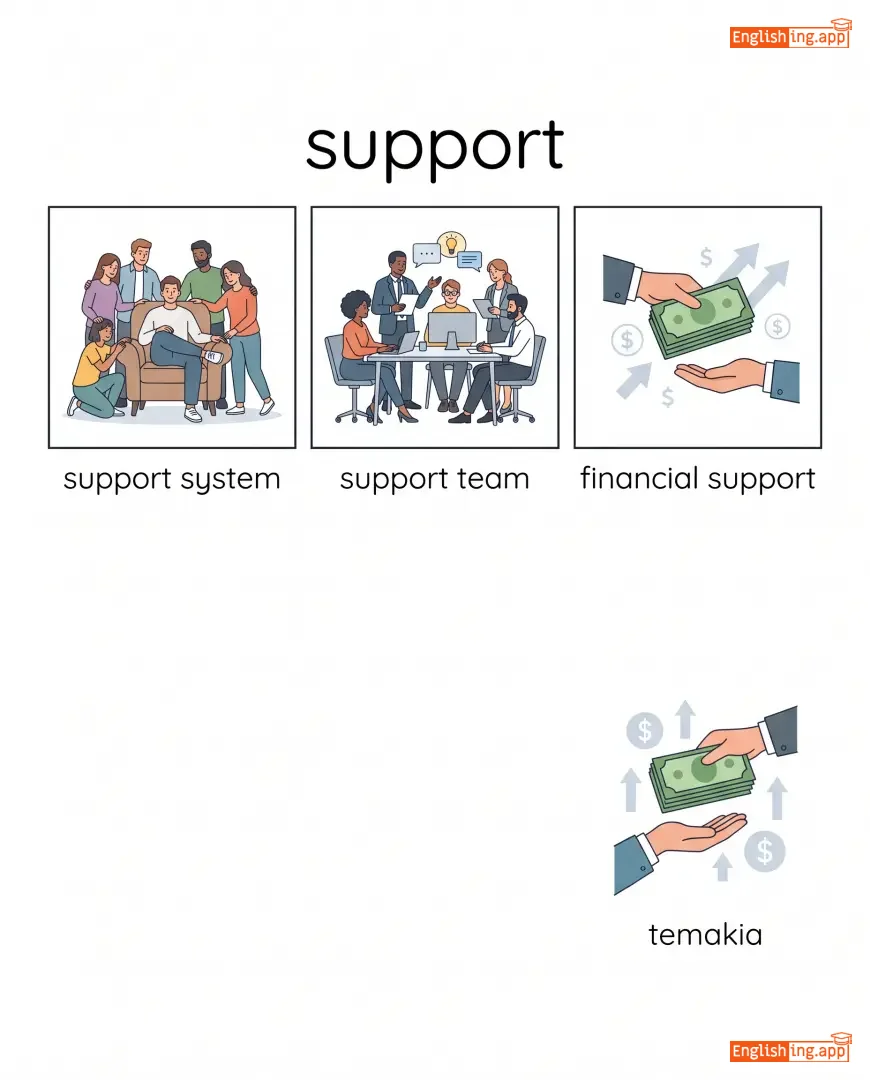
support fully, support decision, support family, financial support
••••••
|
サポートとは助けることで、重荷を支えること
••••••
|
|
🌱
••••••
|
/sərˈvaɪv/
verb
(サバイヴ)
••••••
|
- •••••• |
生き残る
ikinokoru
••••••
|
survived
サバイヴド
••••••
|
survived
サバイヴド
••••••
|
survives
サバイヴズ
••••••
|
surviving
サバイヴィング
••••••
|
To continue to live or exist after a difficult event or situation.
••••••
|
He managed to survive the storm.
彼は嵐を生き延びた。
••••••
|
彼は嵐を生き延びた。
Kare wa arashi o ikinobita.
••••••
|
survival of the fittest
適者生存
••••••
|
The idea that only the strongest individuals succeed or endure.
••••••
|
適者生存
Tekisha seizon
••••••
|
endure, persist, outlive, remain, withstand
••••••
|
perish, die, succumb
••••••
|
survive an accident, survive a crisis, survive on, survive against odds
••••••
|
生き残るは嵐を乗り越えること = 生き残る
••••••
|
|
⚠️
••••••
|
/θrɛt/
noun
(スレット)
••••••
|
- •••••• |
脅威, 危険
kyōi, kiken
••••••
|
- •••••• | - •••••• | - •••••• | - •••••• |
A statement or action indicating intent to cause harm or danger.
••••••
|
The letter contained a threat against the company.
手紙には会社に対する脅威が含まれていた。
••••••
|
手紙には会社に対する脅威が含まれていた。
Tegami ni wa kaisha ni taisuru kyōi ga fukumarete ita.
••••••
|
make a threat
脅威をかける
••••••
|
To express an intention to harm or cause problems.
••••••
|
脅威をかける
kyōi o kakeru
••••••
|
danger, menace, intimidation, warning, risk
••••••
|
safety, protection, assurance
••••••
|
serious threat, direct threat, pose a threat
••••••
|
脅威 = Kyōi—電話の脅威
••••••
|
|
🤝
••••••
|
/trʌst/
verb
••••••
|
|
- •••••• |
trusted
••••••
|
trusted
••••••
|
trusts
••••••
|
trusting
••••••
|
to believe in the reliability, truth, ability, or strength of someone or something
••••••
|
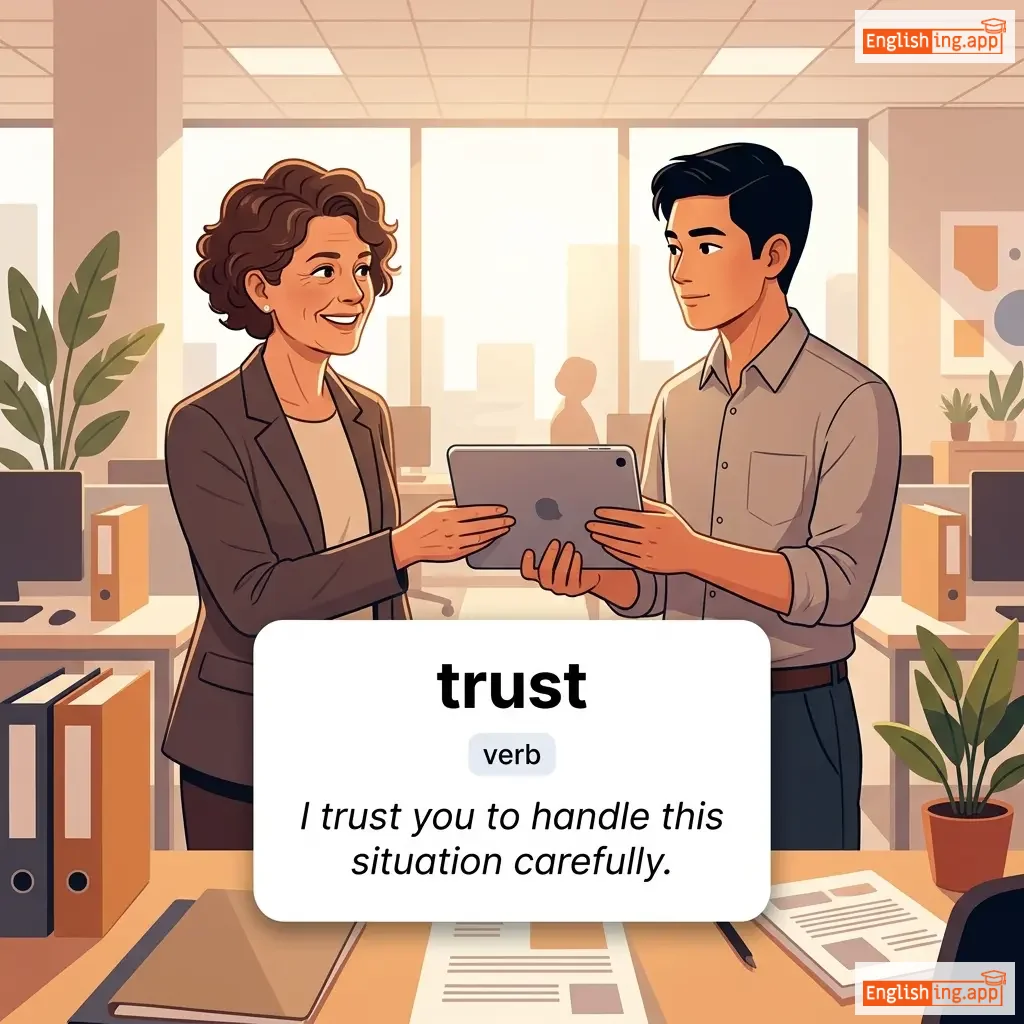
I trust you to handle this situation carefully. |
- •••••• |
trust your instincts |
to rely on your natural intuition or feeling about something
••••••
|
- •••••• |
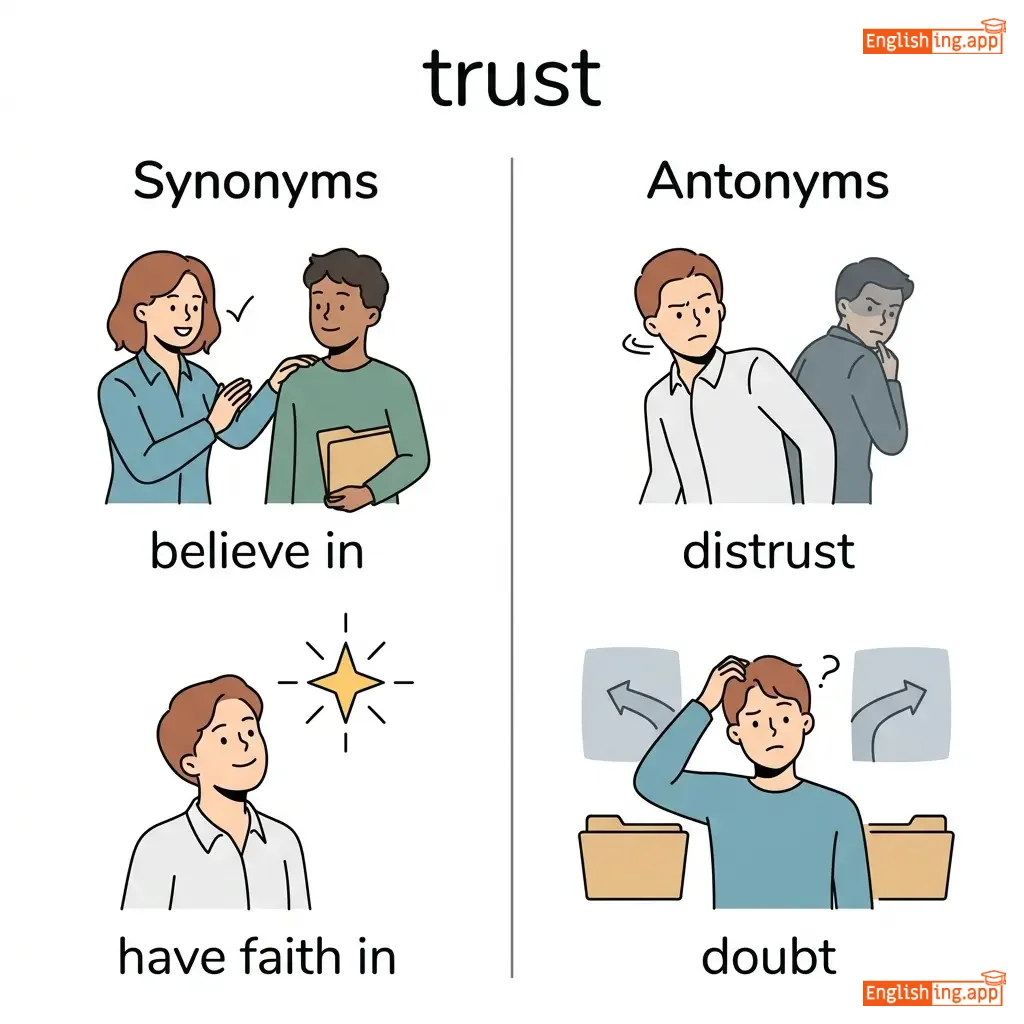
believe in, have faith in, rely on, confide in
••••••
|
distrust, doubt, mistrust
••••••
|
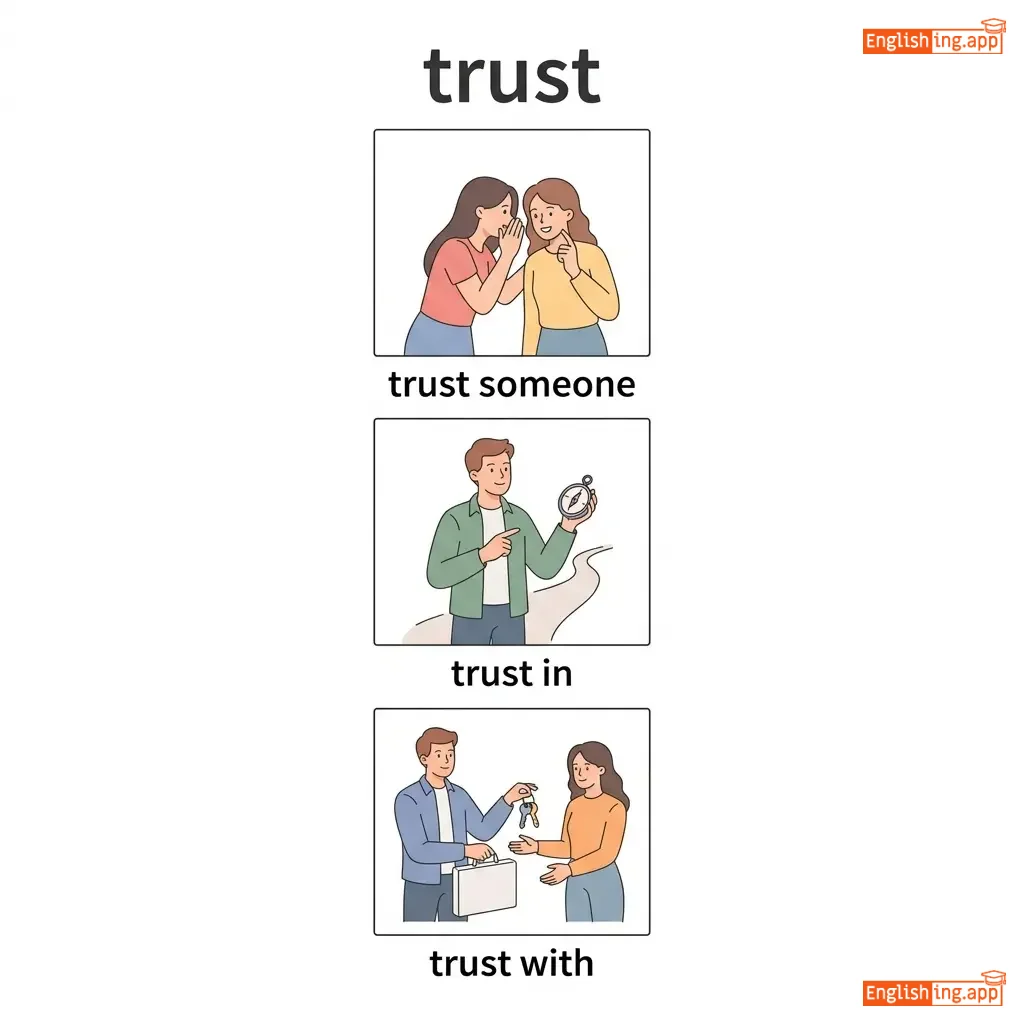
trust someone, trust in, trust with, earn trust
••••••
|
No •••••• |
|
🏘️
••••••
|
/ˈvɪlɪdʒ/
noun
(ヴィレッジ)
••••••
|
- •••••• |
村
mura
••••••
|
- •••••• | - •••••• | - •••••• | - •••••• |
a small community or group of houses in a rural area
••••••
|
They live in a small village surrounded by mountains. |
彼らは山に囲まれた小さな村に住んでいます。
Karera wa yama ni kakomareta chiisana mura ni sundeimasu.
••••••
|
village green |
a grassy area in a village, often used for recreation
••••••
|
村の広場
mura no hiroba
••••••
|
hamlet, town, settlement, community
••••••
|
city, metropolis
••••••
|
village life, village community, small village, remote village
••••••
|
村は静かで自然に満ちた場所です (Mura wa shizuka de shizen ni michita basho desu)
••••••
|

