|
絵文字
|
単語 | Images | 翻訳 | 過去 | 過去分詞 | 三人称単数 | 動名詞 | 意味 | 例文 | 例文の翻訳 | 表現例 | 表現例の意味 | 表現例の翻訳 | 同義語 | 対義語 | コロケーション | ニーモニック |
|---|---|---|---|---|---|---|---|---|---|---|---|---|---|---|---|---|---|
|
🏖️
••••••
|
/rɪˈzɔːrt/
noun, verb
(リゾート)
••••••
|
- •••••• |
リゾート / 最後の手段
rizōto / saigo no shudan
••••••
|
resorted
リゾーテッド
••••••
|
resorted
リゾーテッド
••••••
|
resorts
リゾーツ
••••••
|
resorting
リゾーティング
••••••
|
A place for rest or recreation; to turn to something for help or solution.
••••••
|
They stayed at a beach resort during their vacation.
彼らは休暇中にビーチリゾートに滞在しました。
••••••
|
彼らは休暇中にビーチリゾートに滞在しました。
Karera wa kyūka-chū ni bīchi rizōto ni taizai shimashita.
••••••
|
last resort
最後の手段
••••••
|
The final option when all others have failed.
••••••
|
最後の手段
Saigo no shudan
••••••
|
retreat, holiday spot, refuge, option, resource
••••••
|
home, avoidance, refusal
••••••
|
luxury resort, beach resort, ski resort, resort to violence
••••••
|
Resort は re-sort のように聞こえる — すべてが失敗したら、再度整理して解決策を見つける。
••••••
|
|
💎
••••••
|
/rɪˈsɔːrs/
noun
(リソース)
••••••
|
- •••••• |
資源
shigen
••••••
|
- •••••• | - •••••• | - •••••• | - •••••• |
A supply of materials, money, or assets that can be used when needed.
••••••
|
Water is a vital natural resource. |
水は重要な自然資源です。
Mizu wa jūyō na shizen shigen desu.
••••••
|
resourceful person |
A person who can find quick and clever ways to overcome difficulties.
••••••
|
器用な人
kiyō na hito
••••••
|
asset, supply, stock, means, wealth
••••••
|
liability, lack, need
••••••
|
natural resource, human resource, resource management
••••••
|
Resourceは 're-source' のように、新しいリソース(資源)を見つけること。
••••••
|
|
🙏
••••••
|
/rɪˈspɛkt/
noun/verb
(リスペクト)
••••••
|

|
尊敬
sonkei
••••••
|
respected
リスペクトされた
••••••
|
respected
リスペクトされた
••••••
|
respects
リスペクトス
••••••
|
respecting
リスペクトング
••••••
|
to treat someone with admiration or regard; high regard for someone or something
••••••
|
We should respect each other's opinions, even if we disagree.
私たちは意見が違ってもお互いの意見を尊重すべきです。
••••••
|
私たちは意見が違ってもお互いの意見を尊重すべきです。
Watashitachi wa iken ga chigatte mo otagai no iken o sonkei subeki desu.
••••••
|
- •••••• | - •••••• | - •••••• |
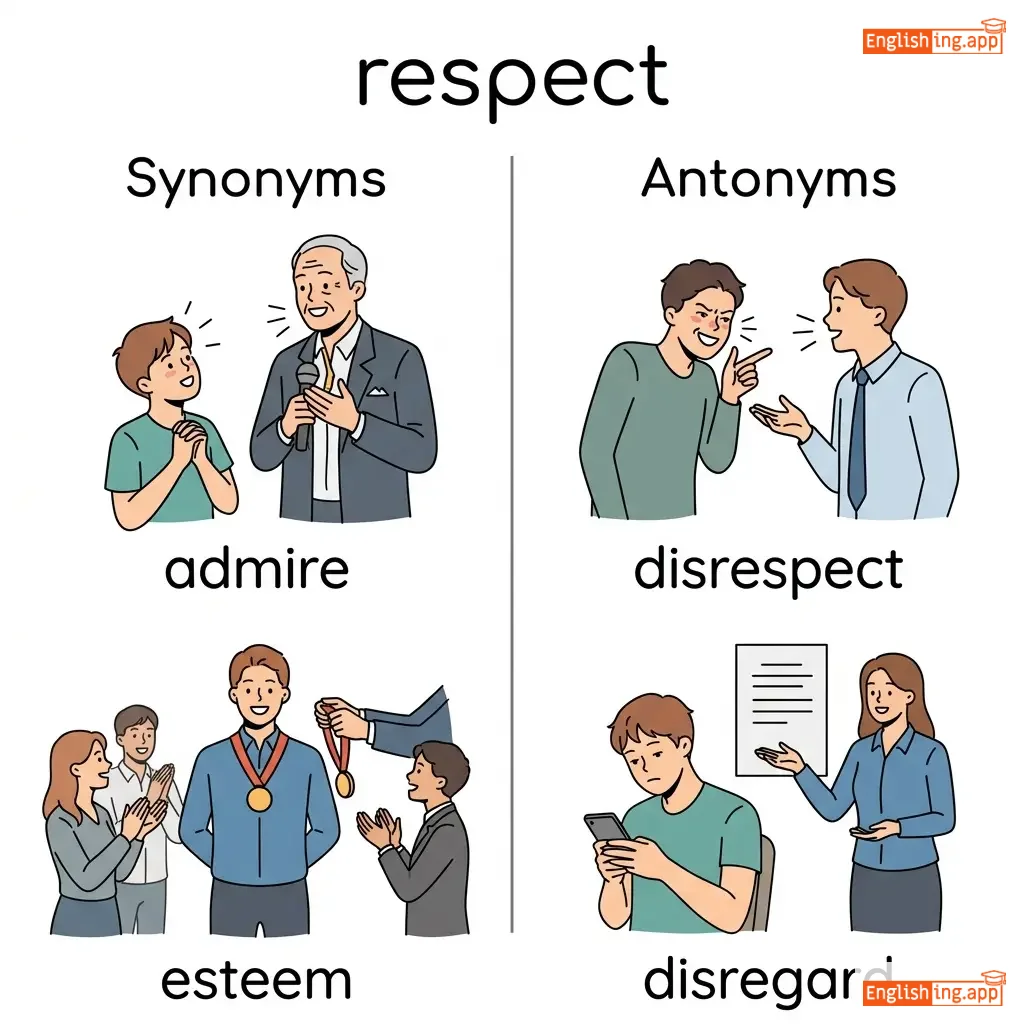
admire, esteem, honor, regard
••••••
|
disrespect, disregard, dishonor
••••••
|
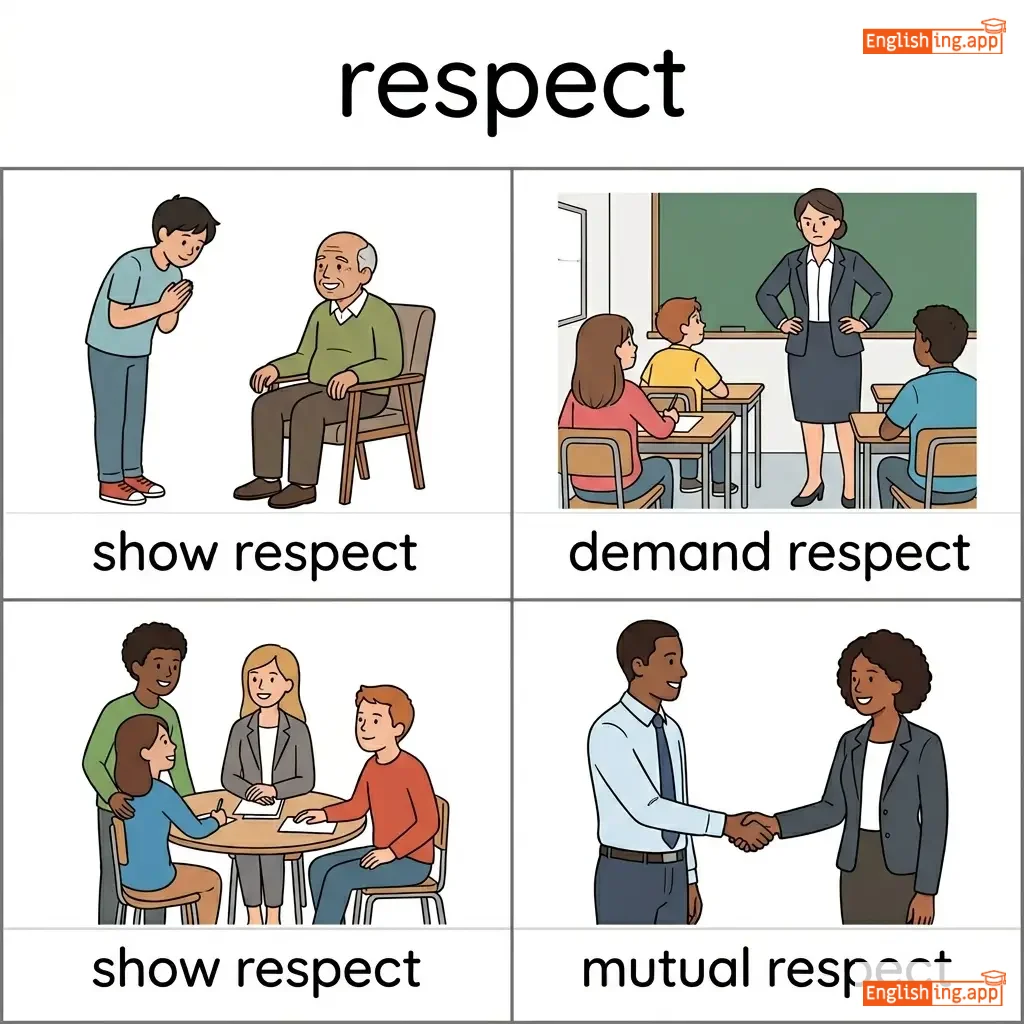
show respect, demand respect, mutual respect
••••••
|
Respect in Japanese is '尊敬' - 'Son' as in 'Sonkei' for respect!
••••••
|
|
🎩
••••••
|
/rɪˈspek.tə.bəl/
adjective
(リスペクタブル)
••••••
|
- •••••• |
尊敬すべき
sonkei subeki
••••••
|
- •••••• | - •••••• | - •••••• | - •••••• |
worthy of respect; having good reputation; decent
••••••
|
He comes from a respectable family in the community. |
彼は地域社会の尊敬すべき家族から来ました。
Kare wa chiiki shakai no sonkei subeki kazoku kara kimashita.
••••••
|
- •••••• | - •••••• | - •••••• |
honorable, reputable, decent, worthy, esteemed
••••••
|
disreputable, shameful, disgraceful, dishonor
••••••
|
respectable family, respectable person, respectable society, respectable profession
••••••
|
In Japanese, '尊敬すべき' (sonkei subeki) means someone deserving of respect.
••••••
|
|
👥
••••••
|
/rɪˈspek.tɪv/
adjective
(リスペクティブ)
••••••
|
- •••••• |
それぞれの; 各自の
sorezore no; kakuji no
••••••
|
- •••••• | - •••••• | - •••••• | - •••••• |
belonging to each individual; particular to each
••••••
|
The students returned to their respective classrooms after lunch. |
学生たちは昼食後、それぞれの教室に戻った。
Gakusei-tachi wa chūshoku go, sorezore no kyōshitsu ni modotta.
••••••
|
- •••••• | - •••••• | - •••••• |
individual, particular, separate, own
••••••
|
collective, shared, common, joint
••••••
|
respective roles, respective positions, respective duties, respective homes
••••••
|
各自の教室を思い浮かべ、'それぞれの'を覚えよう。
••••••
|
|
📋
••••••
|
/rɪˈspektɪvli/
adverb
(リスペクティブリー)
••••••
|
- •••••• |
それぞれ; 指定された順序で; 別々に、そしてすでに言及された順序で
sorezore
••••••
|
- •••••• | - •••••• | - •••••• | - •••••• |
in the order given; separately and in the order already mentioned
••••••
|
John and Mary are 25 and 30 years old respectively.
ジョンとメアリーはそれぞれ25歳と30歳です。
••••••
|
ジョンとメアリーはそれぞれ25歳と30歳です。
Jon to Mearī wa sorezore 25-sai to 30-sai desu.
••••••
|
- •••••• | - •••••• | - •••••• |
separately, individually, correspondingly
••••••
|
collectively, together, jointly
••••••
|
respectively speaking, respectively mentioned, respectively assigned
••••••
|
Respectively in Japanese sounds like 'sorezore', representing separate but in sequence.
••••••
|
|
💬
••••••
|
/rɪˈspɒnd/
verb
(レスポンド)
••••••
|
|
応答する
ōtō suru
••••••
|
responded
レスポンデッド
••••••
|
responded
レスポンデッド
••••••
|
responds
レスポンズ
••••••
|
responding
レスポンディング
••••••
|
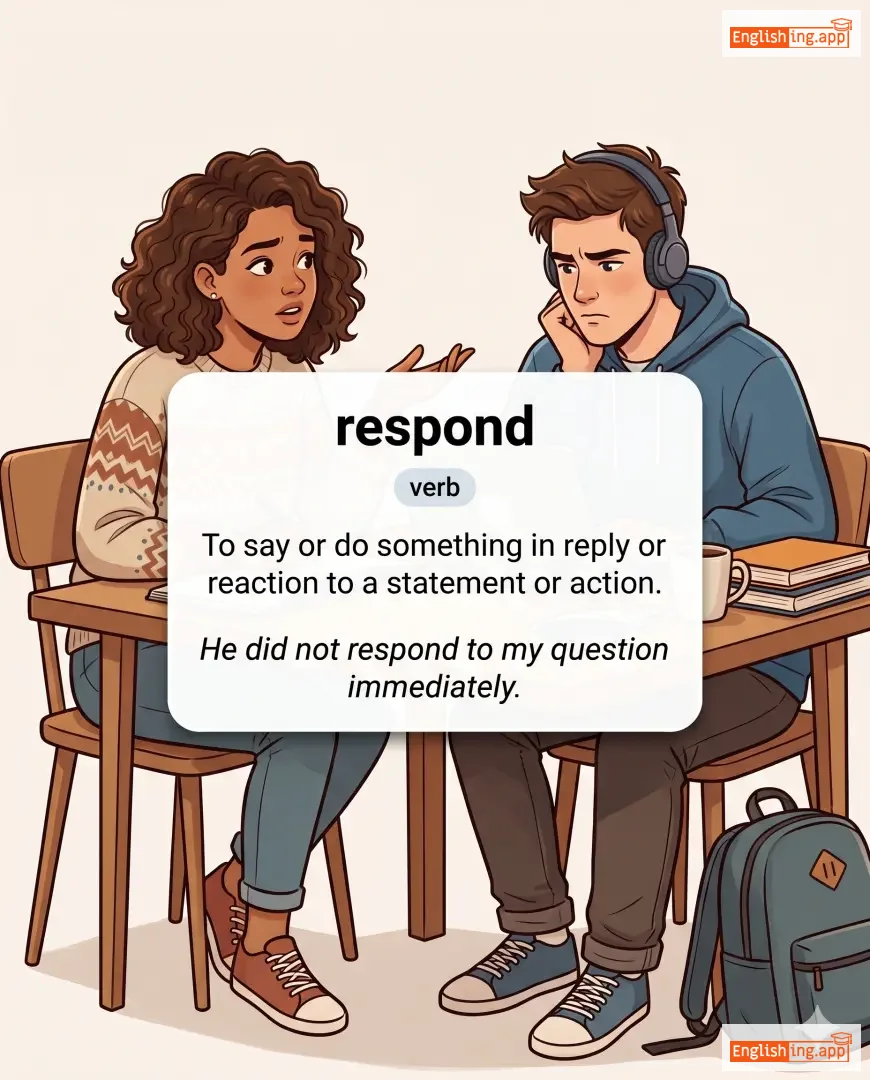
To say or do something in reply or reaction to a statement or action.
••••••
|
He did not respond to my question immediately.
彼は私の質問にすぐに返答しませんでした。
••••••
|
彼は私の質問にすぐに返答しませんでした。
Kare wa watashi no shitsumon ni sugu ni hentō shimasen deshita.
••••••
|
respond to treatment
治療に反応する
••••••
|
To show improvement after receiving medical treatment.
••••••
|
治療に反応する
Chiryō ni hannō suru
••••••
|
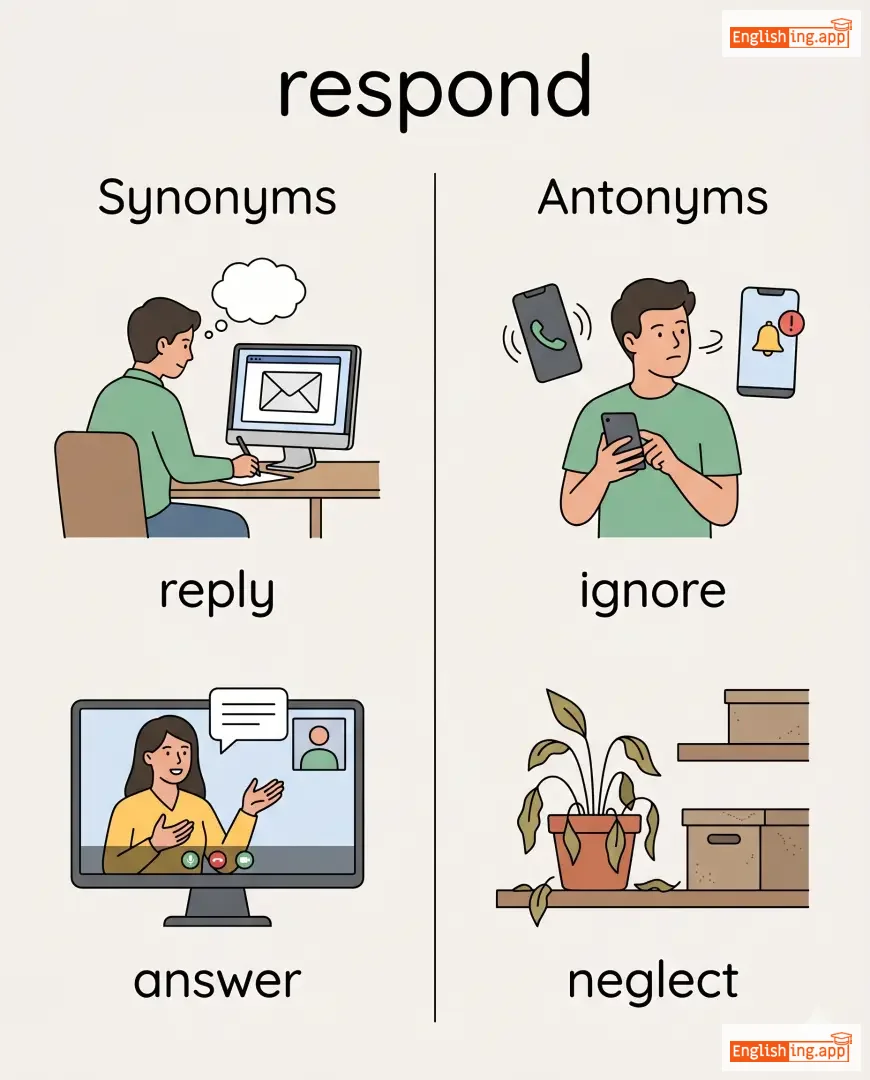
reply, answer, react, acknowledge, retort
••••••
|
ignore, neglect, disregard
••••••
|
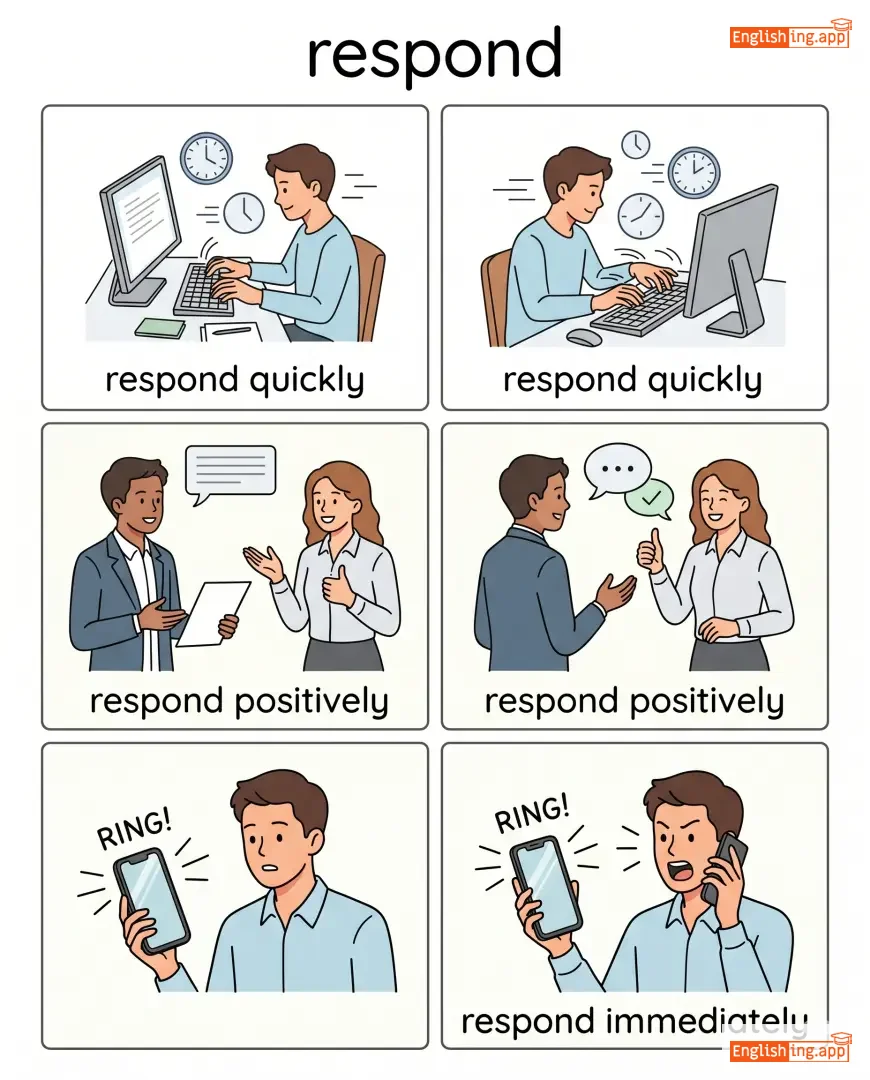
respond quickly, respond positively, respond immediately, respond appropriately
••••••
|
応答する、つまり質問に答えるための応答。
••••••
|
|
🗣️
••••••
|
/rɪˈspɒndənt/
noun
(レスポンデント)
••••••
|
- •••••• |
回答者
kaitōsha
••••••
|
- •••••• | - •••••• | - •••••• | - •••••• |
A person who replies to something, especially in a survey or legal case
••••••
|
The survey had over 1,000 respondents. |
調査には1000人以上の回答者がいました。
Chōsa ni wa 1000-nin ijō no kaitōsha ga imashita.
••••••
|
- •••••• | - •••••• | - •••••• |
participant, answerer, replier, defendant
••••••
|
petitioner, complainant
••••••
|
survey respondent, legal respondent, questionnaire respondent
••••••
|
Respondent は答える人 🗣️ - 調査で答える人は回答者です。
••••••
|
|
💬
••••••
|
/rɪˈspɒns/
noun
(レスポンス)
••••••
|
- •••••• |
反応; 応答
hannou; outou
••••••
|
- •••••• | - •••••• | - •••••• | - •••••• |
a reaction to something; an answer or reply; the way in which something reacts to external stimulus
••••••
|
The government's response to the crisis was swift and decisive. |
政府の危機への反応は迅速で決定的でした。
Seifu no kiki e no hannou wa jinsoku de ketteiteki deshita.
••••••
|
- •••••• | - •••••• | - •••••• |
reply, answer, reaction, feedback
••••••
|
question, inquiry, silence, ignorance
••••••
|
quick response, positive response, emergency response, in response to
••••••
|
Japanese response is quick, sharp like 'henji'.
••••••
|
|
🛡️
••••••
|
/rɪˌspɒn.sɪˈbɪl.ɪ.ti/
noun
(レスポンシビリティ)
••••••
|
|
責任
sekinin
••••••
|
- •••••• | - •••••• | - •••••• | - •••••• |
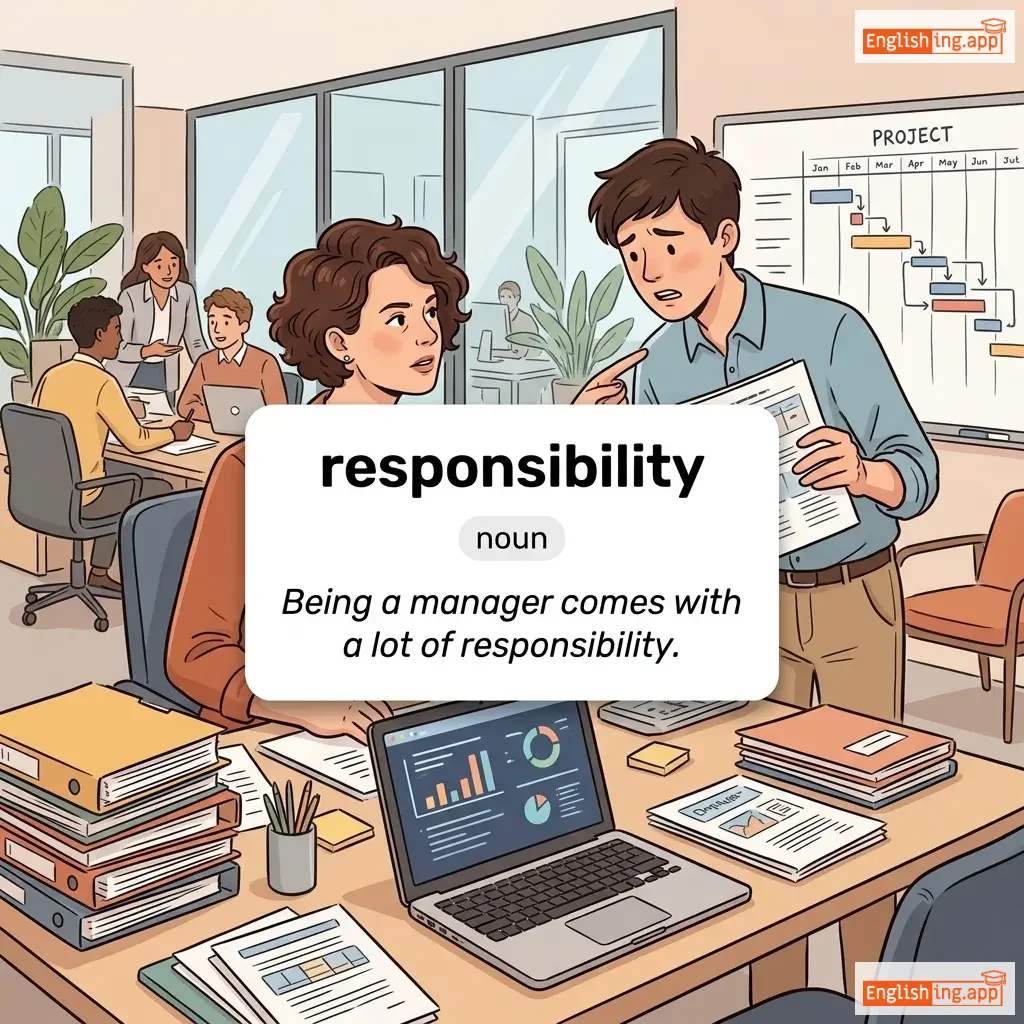
the state or fact of having a duty to deal with something or of having control over someone
••••••
|
Taking responsibility for your actions shows maturity.
自分の行動に責任を持つことは成熟を示す。
••••••
|
自分の行動に責任を持つことは成熟を示す。
Jibun no koudou ni sekinin o motsu koto wa seijuku o shimesu
••••••
|
- •••••• | - •••••• | - •••••• |
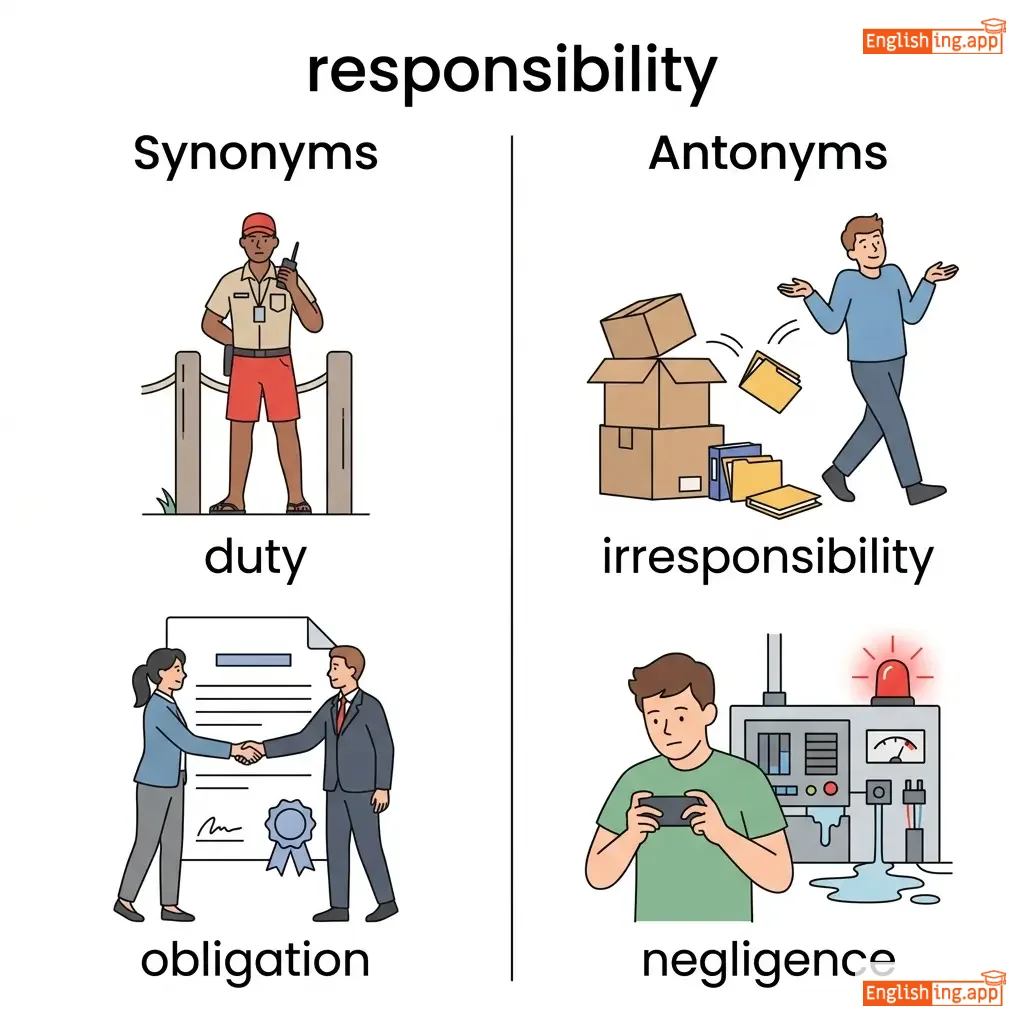
duty, obligation, accountability, liability
••••••
|
irresponsibility, carelessness, negligence
••••••
|
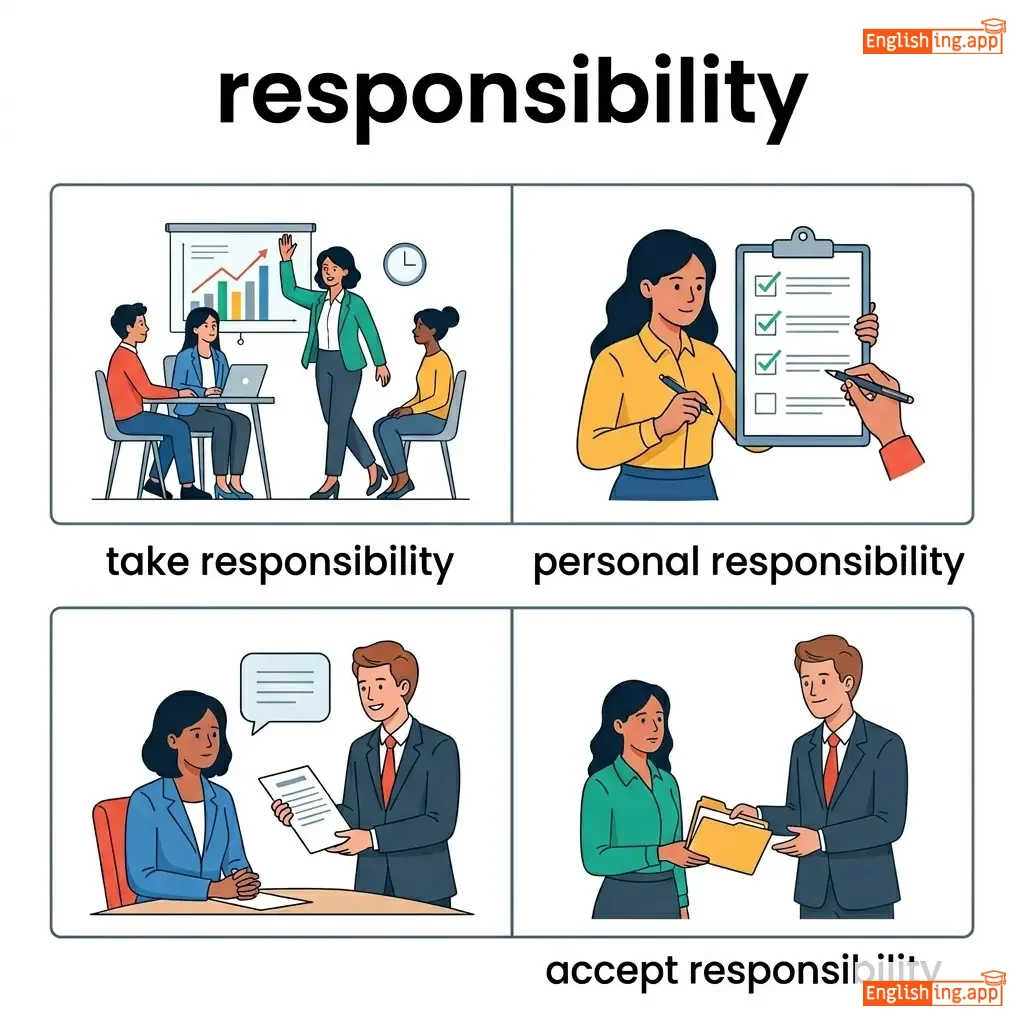
take responsibility, personal responsibility, full responsibility, social responsibility
••••••
|
セキニン = set key in your life, open the door of duty
••••••
|
|
⚖️
••••••
|
/rɪˈspɒn.sə.bəl/
adjective
(レスポンシブル)
••••••
|
- •••••• |
責任がある; 任務を持っている; 信頼できる
sekinin ga aru; ninmu o motte iru; shinrai dekiru
••••••
|
- •••••• | - •••••• | - •••••• | - •••••• |
accountable; having duties; reliable and trustworthy
••••••
|
Parents are responsible for their children's education and well-being. |
親は子供たちの教育と福祉に責任があります。
Oya wa kodomotachi no kyouiku to fukushi ni sekinin ga arimasu.
••••••
|
- •••••• | - •••••• | - •••••• |
accountable, liable, answerable, trustworthy, reliable
••••••
|
irresponsible, unreliable, unaccountable, careless
••••••
|
responsible person, responsible behavior, responsible for, hold responsible
••••••
|
日本語で責任は、子供の教育を担う親のように信頼されることです。
••••••
|
|
🛌
••••••
|
/rɛst/
noun, verb
••••••
|
- •••••• | - •••••• |
rested
••••••
|
rested
••••••
|
rests
••••••
|
resting
••••••
|
to cease work or movement in order to relax or recover strength
••••••
|
He needs to rest after the long journey. |
- •••••• |
rest on one's laurels |
to stop trying or improving after achieving success
••••••
|
- •••••• |
repose, relax, take a break, snooze
••••••
|
work, toil, exert
••••••
|
get rest, take a rest, have a rest, rest up
••••••
|
No •••••• |
|
🍴
••••••
|
/ˈrɛst(ə)rɒnt/
noun
(レストラン)
••••••
|
- •••••• |
レストラン
resutoran
••••••
|
- •••••• | - •••••• | - •••••• | - •••••• |
a place where meals are prepared and served to customers
••••••
|
We went to the restaurant for dinner.
私たちは夕食のためにレストランに行きました。
••••••
|
私たちは夕食のためにレストランに行きました。
Watashitachi wa yūshoku no tame ni resutoran ni ikimashita.
••••••
|
- •••••• | - •••••• | - •••••• |
eatery, diner, bistro, café
••••••
|
home, kitchen, cafeteria
••••••
|
fine-dining restaurant, fast food restaurant, local restaurant, vegetarian restaurant
••••••
|
レストランで食べる (Resutoran de taberu) - Go to the restaurant to eat
••••••
|
|
🛠️
••••••
|
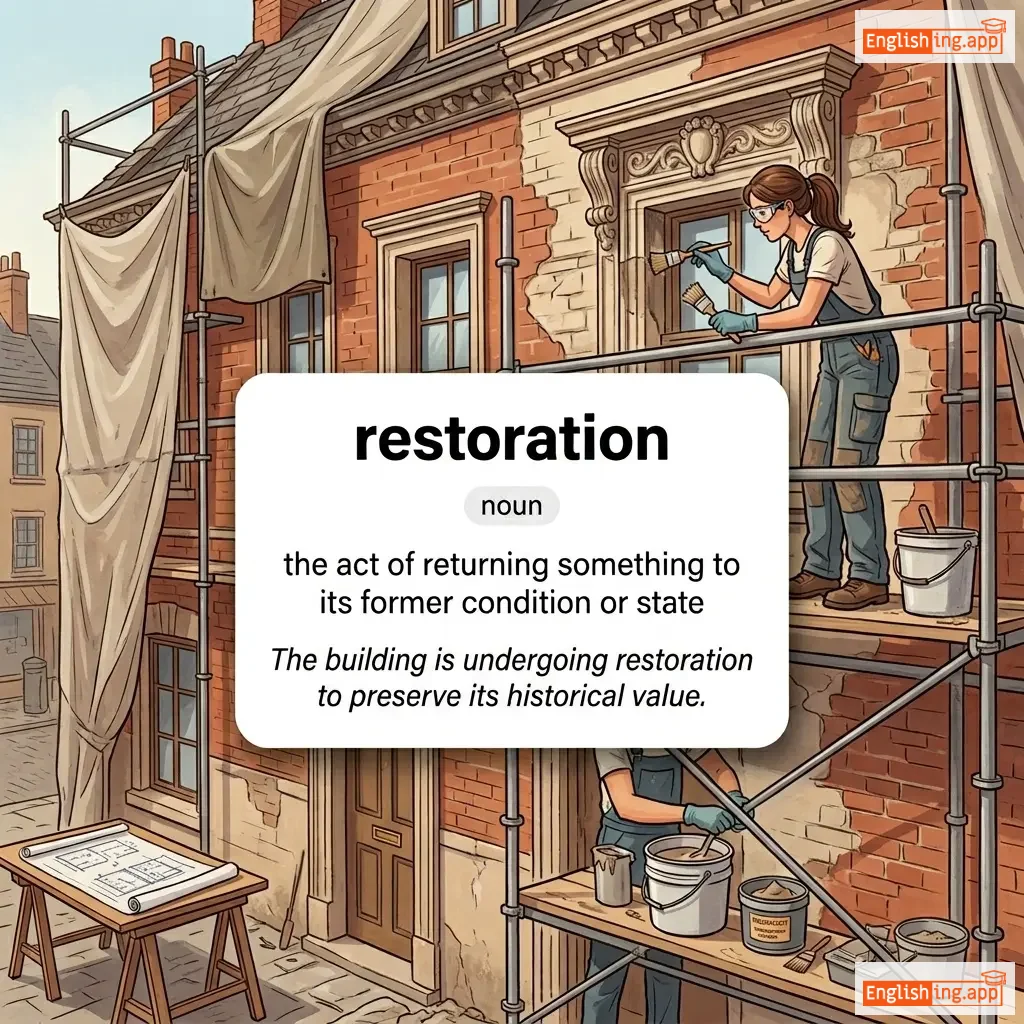
/ˌrɛstəˈreɪʃən/
noun
(レストレーション)
••••••
|
|
修復
shūfuku
••••••
|
- •••••• | - •••••• | - •••••• | - •••••• |
the act of returning something to its former condition or state
••••••
|
The building is undergoing restoration to preserve its historical value. |
その建物は歴史的価値を保護するために修復されています。
Sono tatemono wa rekishiteki kachi o hogo suru tame ni shūfuku sareteimasu.
••••••
|
- •••••• | - •••••• | - •••••• |
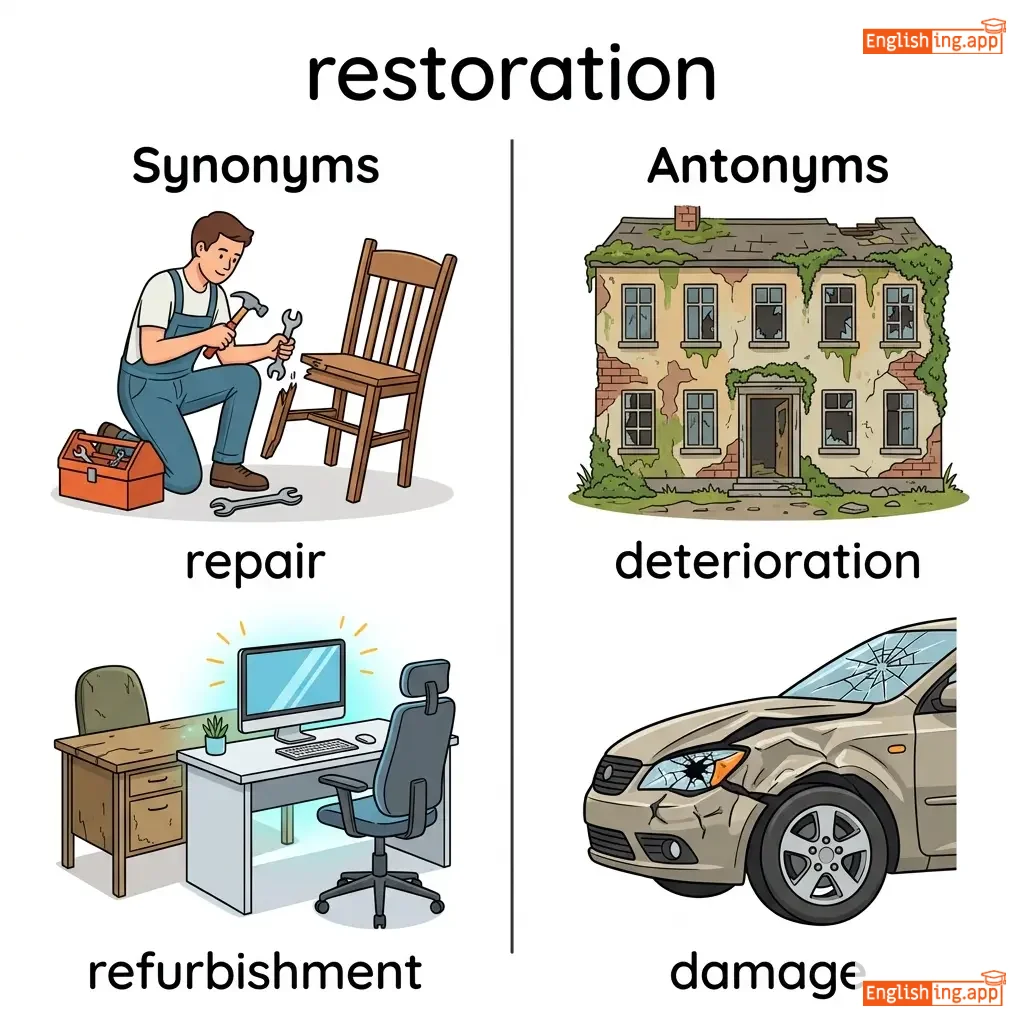
repair, refurbishment, renewal, revival
••••••
|
deterioration, damage, destruction
••••••
|
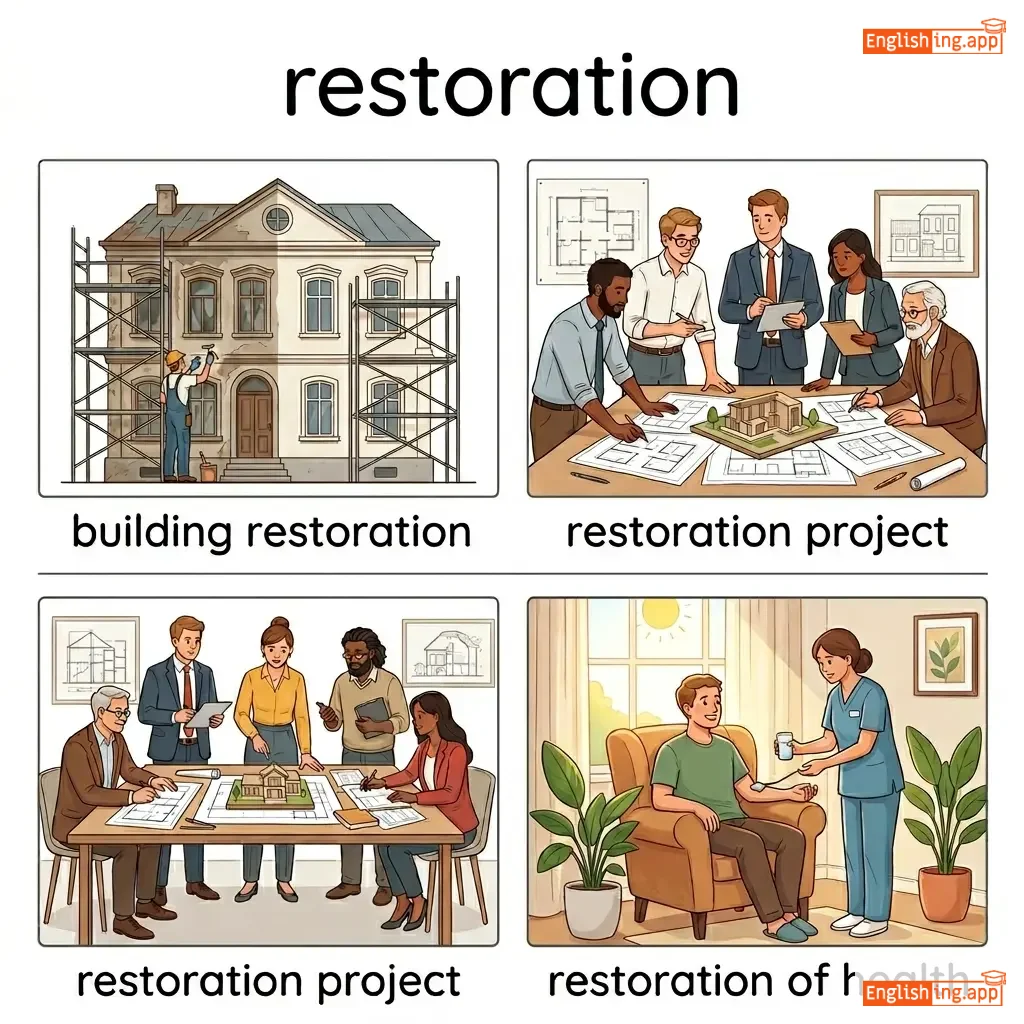
building restoration, restoration project, restoration of health
••••••
|
修復 is like restoration – to restore something is to bring it back to its original state.
••••••
|
|
🔧
••••••
|
/rɪˈstɔː/
verb
(rɪˈstɔːr)
••••••
|
|
修復する
shūfuku suru
••••••
|
restored
rɪˈstɔːrd
••••••
|
restored
rɪˈstɔːrd
••••••
|
restores
rɪˈstɔːrz
••••••
|
restoring
rɪˈstɔːrɪŋ
••••••
|
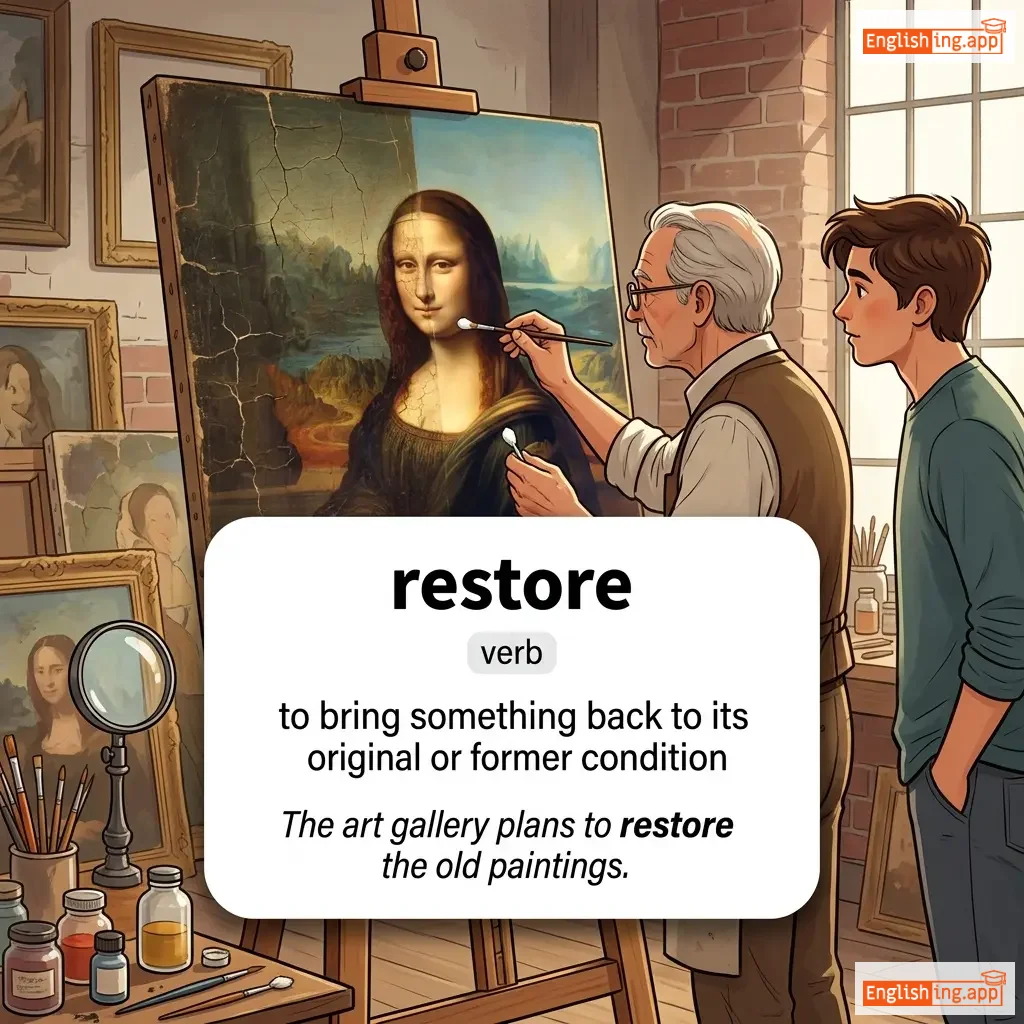
to bring something back to its original or former condition
••••••
|
The art gallery plans to restore the old paintings.
アートギャラリーは古い絵画を修復する予定です。
••••••
|
アートギャラリーは古い絵画を修復する予定です。
Āto gyararī wa furui kaiga o shūfuku suru yotei desu.
••••••
|
- •••••• | - •••••• | - •••••• |
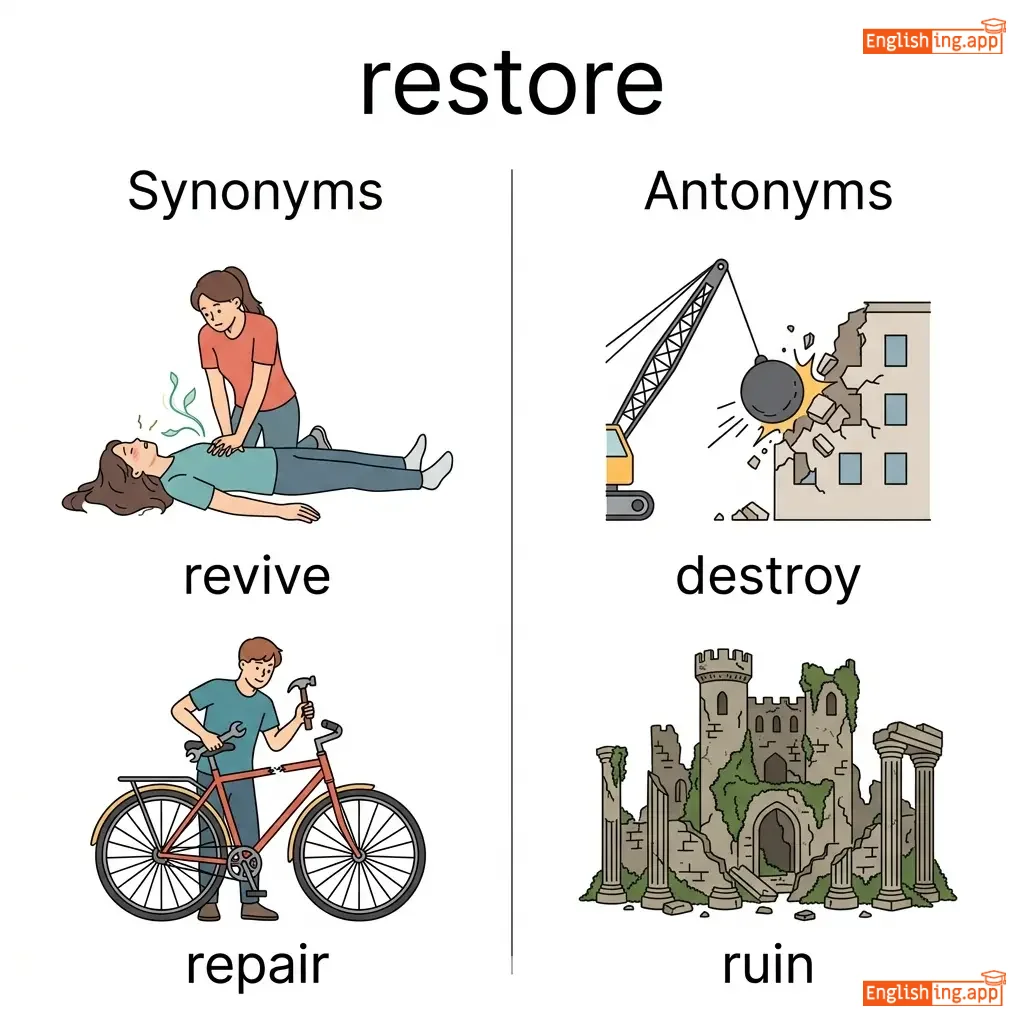
revive, repair, renovate, regenerate
••••••
|
destroy, ruin, damage
••••••
|
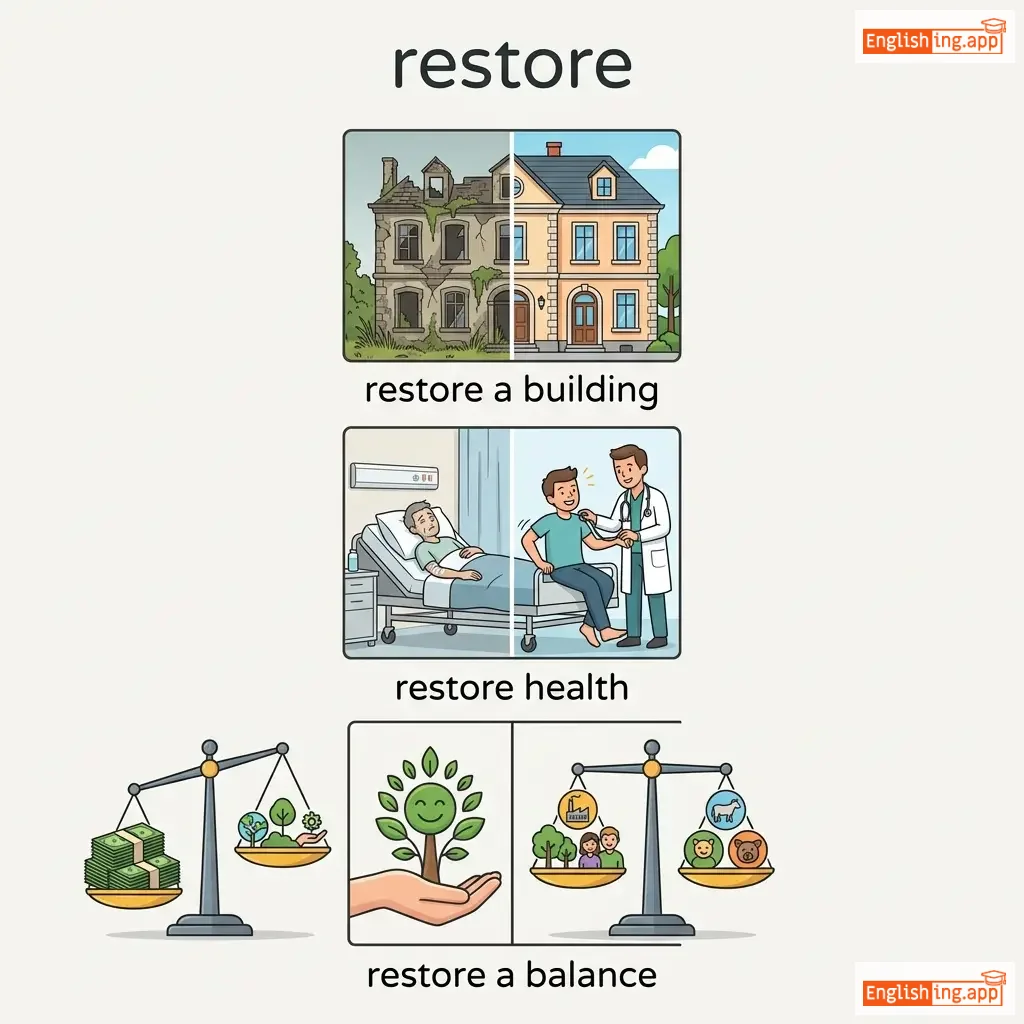
restore a building, restore health, restore a balance, restore the system
••••••
|
修復する (restore) ことで、古いものが新しく蘇る!
••••••
|
|
🛑
••••••
|
/rɪˈstreɪnt/
noun
(レストレイント)
••••••
|
- •••••• |
抑制
yokusei
••••••
|
- •••••• | - •••••• | - •••••• | - •••••• |
the act of holding back or controlling; self-control
••••••
|
He showed great restraint in not responding to the insult.
彼は侮辱に反応せず、大きな抑制を示した。
••••••
|
彼は侮辱に反応せず、大きな抑制を示した。
Kare wa bōjoku ni han'nō sezu, ōkina yokusei o shimeshita.
••••••
|
with restraint
抑制を持って
••••••
|
acting with moderation or self-control
••••••
|
抑制を持って
Yokusei o motte
••••••
|
control, moderation, discipline, limitation
••••••
|
freedom, excess, indulgence
••••••
|
show restraint, exercise restraint, with restraint
••••••
|
Restraintは電車のブレーキのようなもので、自己制御を意味します。
••••••
|
|
🚫
••••••
|
/rɪˈstrɪkt/
verb
(リストリクト)
••••••
|
- •••••• |
制限する
seigensuru
••••••
|
restricted
リストリクテッド
••••••
|
restricted
リストリクテッド
••••••
|
restricts
リストリクツ
••••••
|
restricting
リストリクティング
••••••
|
To limit the size, amount, or range of something.
••••••
|
The government decided to restrict the use of plastic bags.
政府はプラスチック袋の使用を制限することを決定しました。
••••••
|
政府はプラスチック袋の使用を制限することを決定しました。
Seifu wa purasuchikku bukuro no shiyou wo seigen suru koto wo kettei shimashita.
••••••
|
restrict access
アクセス制限
••••••
|
To limit or control who can enter or use something.
••••••
|
アクセス制限
Akusesu seigen
••••••
|
limit, confine, curb, constrain, control
••••••
|
allow, permit, enable
••••••
|
restrict access, restrict movement, restrict freedom, restrict use
••••••
|
Restrictの意味は'制限する' - 制限を加えること
••••••
|
|
🚫
••••••
|
/rɪˈstrɪk.ʃən/
noun
(リストリクション)
••••••
|
- •••••• |
制限; 限界; コントロール
segen; genkai; kontorooru
••••••
|
- •••••• | - •••••• | - •••••• | - •••••• |
a limiting condition or measure; the limitation or control of someone or something
••••••
|
There are strict restrictions on smoking in public places. |
公共の場所での喫煙には厳格な制限があります。
Koukyou no basho de no kitsuen ni wa genkaku na segen ga arimasu.
••••••
|
- •••••• | - •••••• | - •••••• |
limitation, constraint, ban, prohibition
••••••
|
freedom, permission, allowance, liberty
••••••
|
impose restrictions, travel restrictions, age restrictions, strict restrictions
••••••
|
制限を超えれば、自由が待っている。
••••••
|
|
🏆
••••••
|
/rɪˈzʌlt/
noun
(リザルト)
••••••
|
- •••••• |
結果
kekka
••••••
|
- •••••• | - •••••• | - •••••• | - •••••• |
a consequence, effect, or outcome of something
••••••
|
The result of the test was excellent. |
テストの結果は素晴らしかった。
Tesuto no kekka wa subarashikatta.
••••••
|
- •••••• | - •••••• | - •••••• |
outcome, consequence, effect, result
••••••
|
cause, origin
••••••
|
result in, result from, final result
••••••
|
結果 (kekka) は努力から生まれる - Result comes from effort
••••••
|
|
📄
••••••
|
/rɪˈzjuːm/ (verb), /ˈrɛzjʊmeɪ/ (noun)
verb, noun
(リズーム)
••••••
|
|
再開する / 履歴書
saikai suru / rirekisho
••••••
|
resumed
リズームド
••••••
|
resumed
リズームド
••••••
|
resumes
リズームス
••••••
|
resuming
リズーミング
••••••
|
to begin again after a pause; or a summary of one’s qualifications and work experience
••••••
|
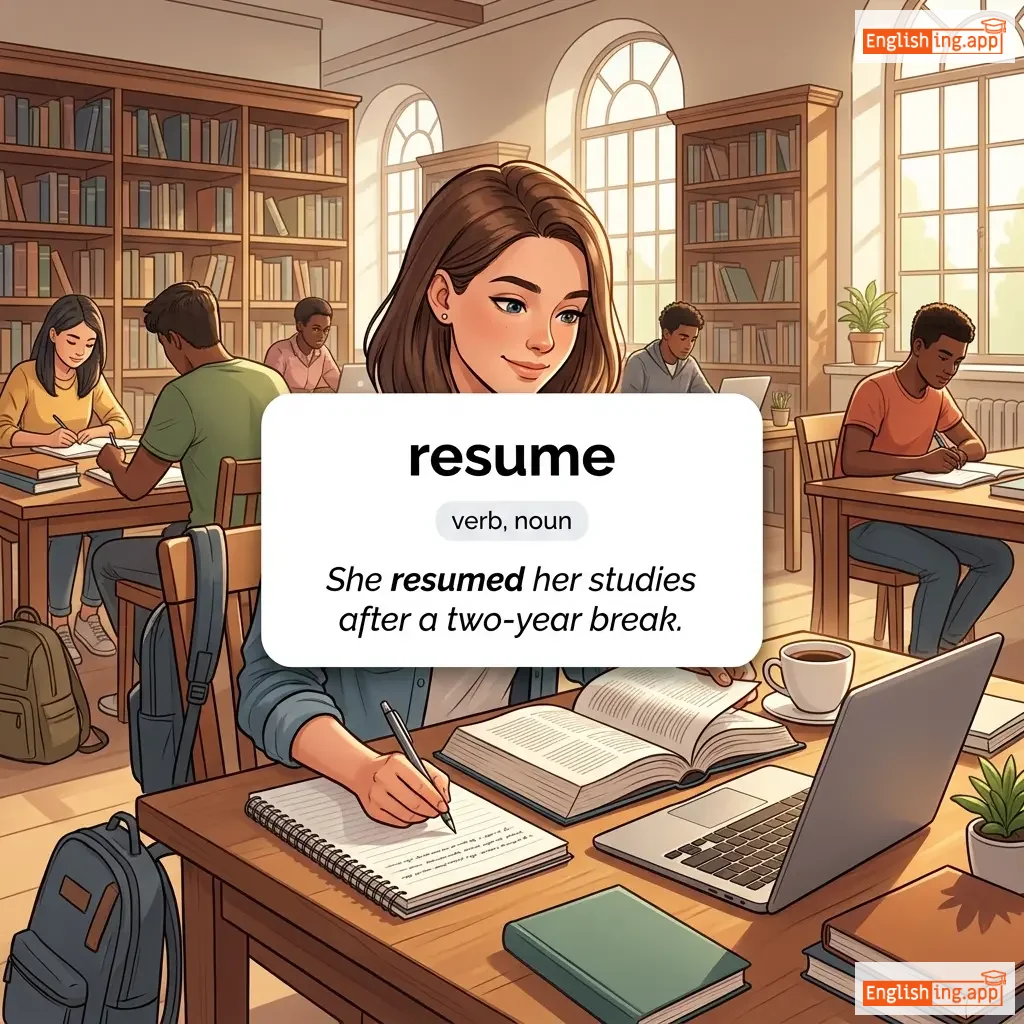
She resumed her studies after a two-year break.
彼女は2年の休止後に勉強を再開しました。
••••••
|
彼女は2年の休止後に勉強を再開しました。
Kanojo wa 2-nen no kyūshi-go ni benkyō o saikai shimashita.
••••••
|
resume work
仕事を再開する
••••••
|
to start working again after a pause
••••••
|
仕事を再開する
shigoto o saikai suru
••••••
|
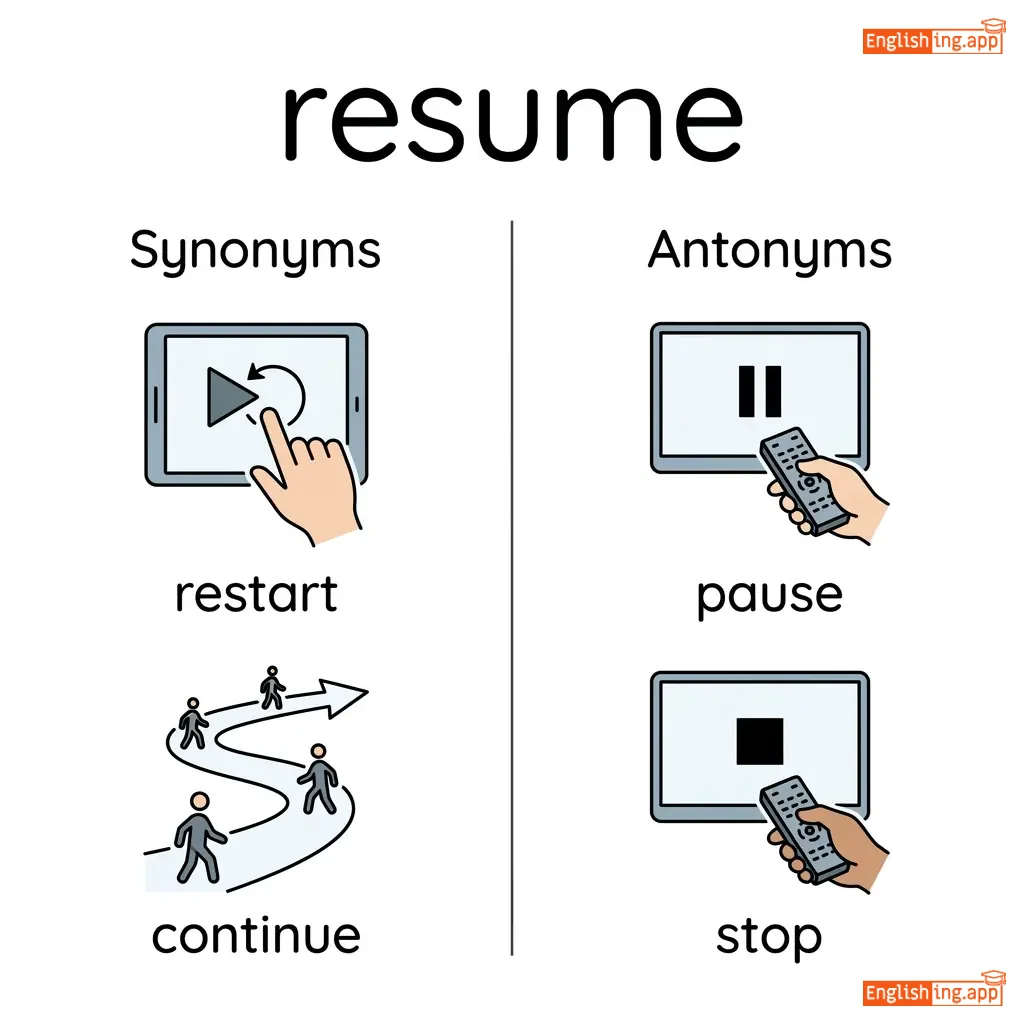
restart, continue, proceed, recommence
••••••
|
pause, stop, suspend
••••••
|
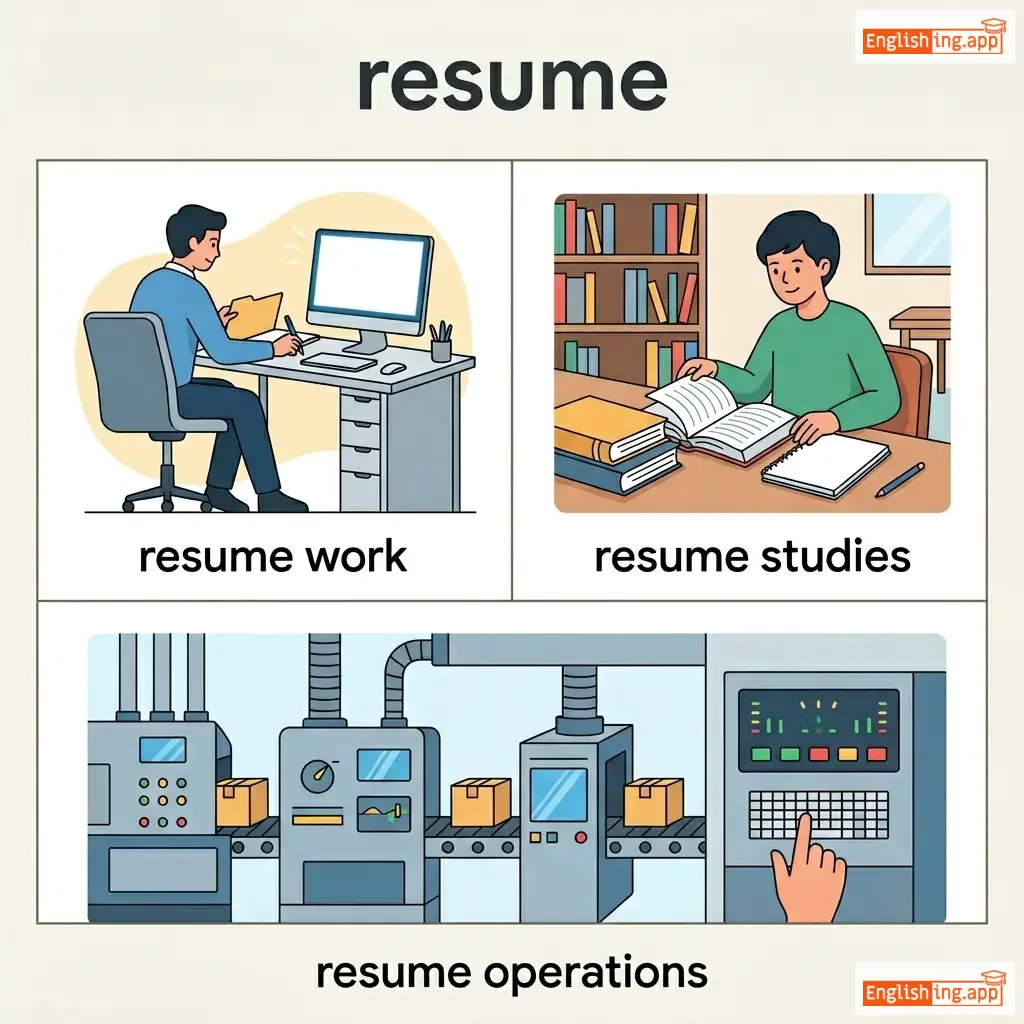
resume work, resume studies, resume operations, submit resume
••••••
|
Resume は休止後に再び始めること。仕事を再開する
••••••
|
|
🛍️
••••••
|
/ˈriːteɪl/
noun, verb
(リテール)
••••••
|
- •••••• |
小売
kouri
••••••
|
retailed
リテールド
••••••
|
retailed
リテールド
••••••
|
retails
リテールズ
••••••
|
retailing
リテーリング
••••••
|
the sale of goods to the public in small quantities for use or consumption rather than for resale
••••••
|
The company specializes in the retail of clothing and accessories.
この会社は衣類とアクセサリーのリテールを専門としています。
••••••
|
この会社は衣類とアクセサリーの小売を専門としています。
Kono kaisha wa irui to akusesarii no kouri wo senmon to shiteimasu.
••••••
|
retail therapy
リテールセラピー
••••••
|
shopping as a way to improve mood
••••••
|
リテールセラピー
ritēru serapī
••••••
|
sell, trade, merchandise, market
••••••
|
wholesale, purchase
••••••
|
retail store, retail price, retail business, retail sales
••••••
|
Retail – 小さな取引、大きな成果
••••••
|
|
📌
••••••
|
/rɪˈteɪn/
verb
(リテイン)
••••••
|
- •••••• |
保持する
hoji suru
••••••
|
retained
リテインド
••••••
|
retained
リテインド
••••••
|
retains
リテインズ
••••••
|
retaining
リテイニング
••••••
|
to keep possession of something
••••••
|
The company decided to retain its experienced employees.
会社は経験豊富な従業員を保持することに決めました。
••••••
|
会社は経験豊富な従業員を保持することに決めました。
Kaisha wa keiken hōfu na jūgyōin o hoji suru koto ni kimemashita.
••••••
|
retain control
コントロールを保持する
••••••
|
to continue having authority or influence
••••••
|
コントロールを保持する
kontorōru o hoji suru
••••••
|
keep, hold, preserve, maintain, reserve
••••••
|
lose, release, discard
••••••
|
retain control, retain talent, retain information, retain customers
••••••
|
保持するはretainに似ているので、保持するは何かを保持するという意味です。
••••••
|
|
💼
••••••
|
/rɪˈtaɪə/
verb
(リタイア)
••••••
|
- •••••• |
引退する
intai suru
••••••
|
retired
リタイアド
••••••
|
retired
リタイアド
••••••
|
retires
リタイアーズ
••••••
|
retiring
リタイアリング
••••••
|
to stop working after reaching a certain age or having completed a career
••••••
|
She decided to retire after working for 40 years.
シー ディサイデッド トゥ リタイア アフター ワーキング フォー 40 イアーズ
••••••
|
彼女は40年間働いた後、引退することに決めました。
Kanojo wa 40 nenkan hataraita ato, intai suru koto ni kimemashita.
••••••
|
- •••••• | - •••••• | - •••••• |
quit, stop working, resign, leave
••••••
|
work, continue
••••••
|
retire from, retire early, retire peacefully
••••••
|
Retire 引退する、疲れたら休みましょう (retire when tired, take a rest)
••••••
|
|
👴
••••••
|
/rɪˈtaɪərd/
adjective
(リタイアド)
••••••
|
- •••••• |
引退した
intai shita
••••••
|
- •••••• | - •••••• | - •••••• | - •••••• |
no longer working at one's job, typically because of having reached a certain age
••••••
|
My grandfather is a retired teacher who now enjoys gardening.
私の祖父は退職した教師で、今は園芸を楽しんでいます。
••••••
|
私の祖父は引退した教師で、今は園芸を楽しんでいます。
Watashi no sofu wa intai shita kyōshi de, ima wa engei o tanoshindeimasu.
••••••
|
retired life
リタイア生活
••••••
|
the period of life after one stops working permanently
••••••
|
引退生活
intai seikatsu
••••••
|
pensioned, inactive, elderly, ex-employed, withdrawn
••••••
|
working, employed, active
••••••
|
retired teacher, retired army officer, retired life, retired couple
••••••
|
引退したら、休息と楽しみの時間が始まります。
••••••
|
|
👴
••••••
|
/rɪˈtaɪə.mənt/
noun
(リタイアメント)
••••••
|
- •••••• |
退職
taishoku
••••••
|
- •••••• | - •••••• | - •••••• | - •••••• |
the action or fact of leaving one's job and ceasing to work; the period of life after leaving work
••••••
|
He is planning his retirement after 40 years of service. |
彼は40年間の勤務の後、退職を計画しています。
Kare wa 40 nenkan no kinmu no ato, taishoku o keikaku shiteimasu.
••••••
|
- •••••• | - •••••• | - •••••• |
pension, superannuation, withdrawal, resignation
••••••
|
employment, work, career, service
••••••
|
early retirement, retirement age, retirement plan, forced retirement
••••••
|
退職後、楽しい休暇が待っている
••••••
|
|
🏕️
••••••
|
/rɪˈtriːt/
verb
(リトリート)
••••••
|
- •••••• |
撤退する
tettai suru
••••••
|
retreated
リトリーテッド
••••••
|
retreated
リトリーテッド
••••••
|
retreats
リトリーツ
••••••
|
retreating
リトリーティング
••••••
|
to move back or withdraw from a position or situation
••••••
|
The soldiers had to retreat after losing the battle.
兵士たちは戦いに負けた後、撤退しなければならなかった。
••••••
|
兵士たちは戦いに負けた後、撤退しなければならなかった。
Heishitachi wa tatakai ni maketa ato, tettai shinakereba naranakatta.
••••••
|
beat a retreat
撤退する
••••••
|
to withdraw or run away from a situation quickly
••••••
|
撤退する
tettai suru
••••••
|
withdraw, back off, pull back, recoil, recede
••••••
|
advance, attack, proceed
••••••
|
military retreat, forced retreat, strategic retreat, retreat center
••••••
|
Retreat → 撤退 → 後ろに下がる
••••••
|
|
📦
••••••
|
/rɪˈtriːv/
verb
(リトリーブ)
••••••
|
- •••••• |
取り戻す
torimodosu
••••••
|
retrieved
リトリーブド
••••••
|
retrieved
リトリーブド
••••••
|
retrieves
リトリーブス
••••••
|
retrieving
リトリーブイング
••••••
|
to get something back that was lost or taken; to recover
••••••
|
She managed to retrieve her lost phone from the taxi.
彼女はタクシーから失われた電話を取り戻すことができました。
••••••
|
彼女はタクシーから失われた電話を取り戻すことができました。
Kanojo wa takushi kara ushinawareta denwa wo torimodosu koto ga dekimashita.
••••••
|
retrieve the situation
状況を取り戻す
••••••
|
to improve a bad situation or make it better
••••••
|
状況を取り戻す
jokyo wo torimodosu
••••••
|
recover, regain, fetch, reclaim, rescue
••••••
|
lose, abandon, misplace
••••••
|
retrieve data, retrieve information, retrieve files, retrieve memory
••••••
|
Retrieve は日本語で失われたものを取り戻すことです。タクシーから電話を取り戻すように
••••••
|
|
🔄
••••••
|
/rɪˈtɜːrn/
verb
(リターン)
••••••
|
|
帰る
kaeru
••••••
|
returned
リターンド
••••••
|
returned
リターンド
••••••
|
returns
リターンズ
••••••
|
returning
リターニング
••••••
|
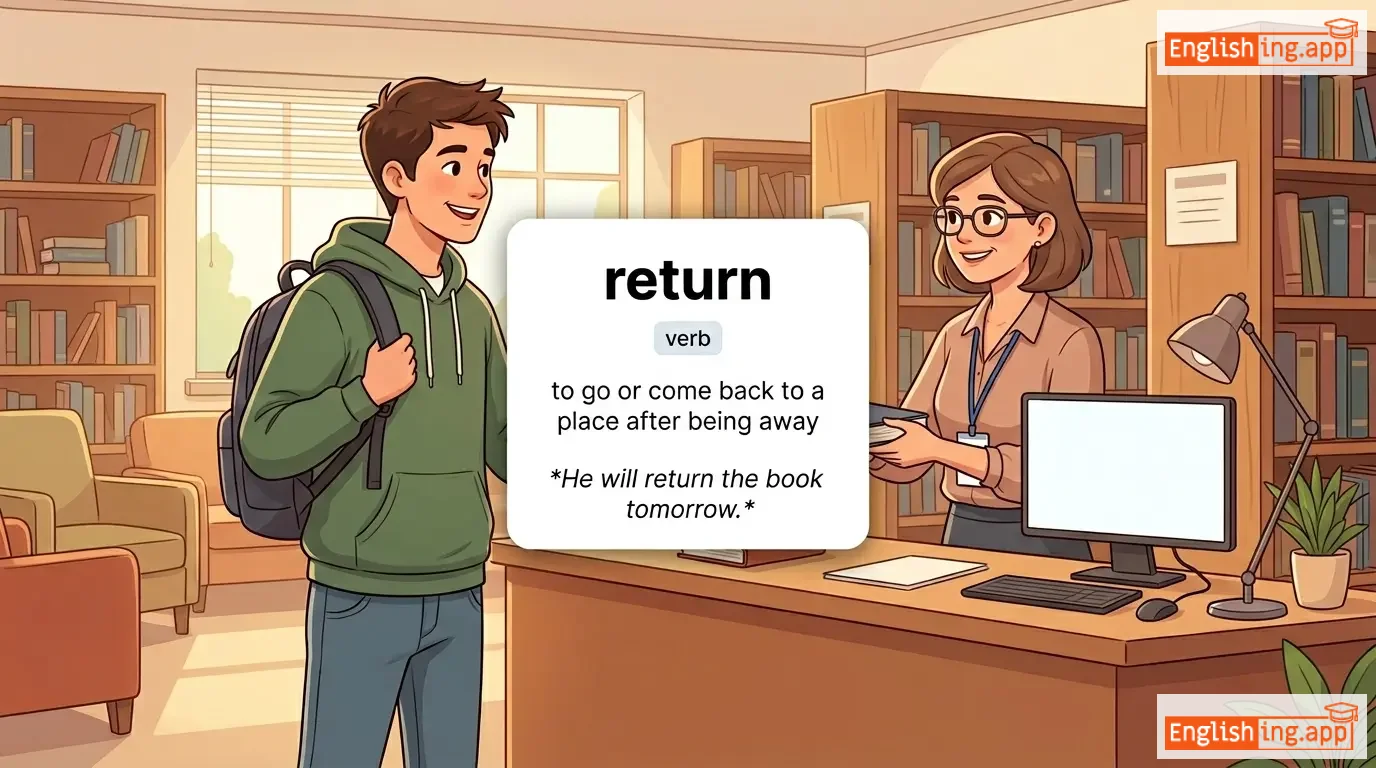
to come or go back to a place; to give back
••••••
|
I will return home tomorrow.
私は明日家に帰ります。
••••••
|
私は明日家に帰ります。
Watashi wa ashita ie ni kaerimasu
••••••
|
- •••••• | - •••••• | - •••••• |
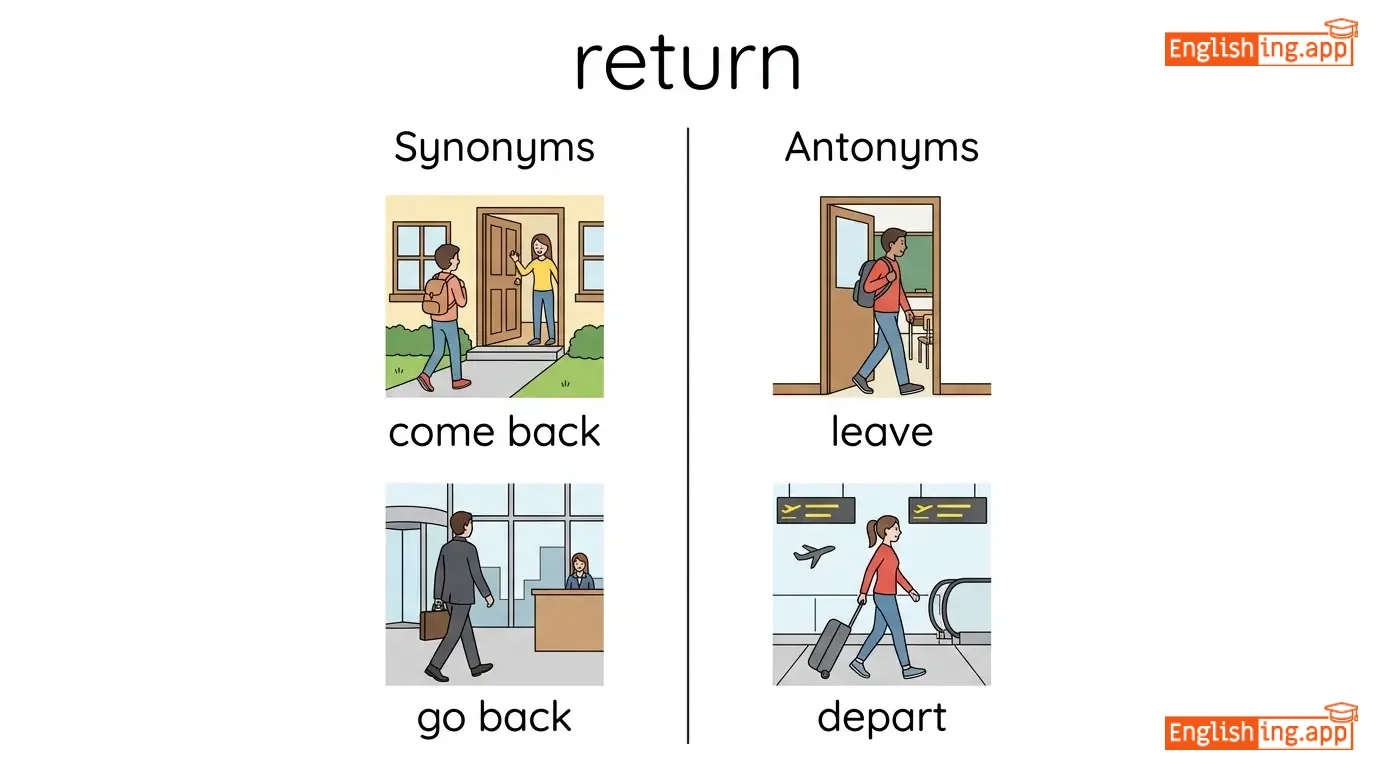
come back, go back, give back, restore
••••••
|
leave, depart, take, keep
••••••
|
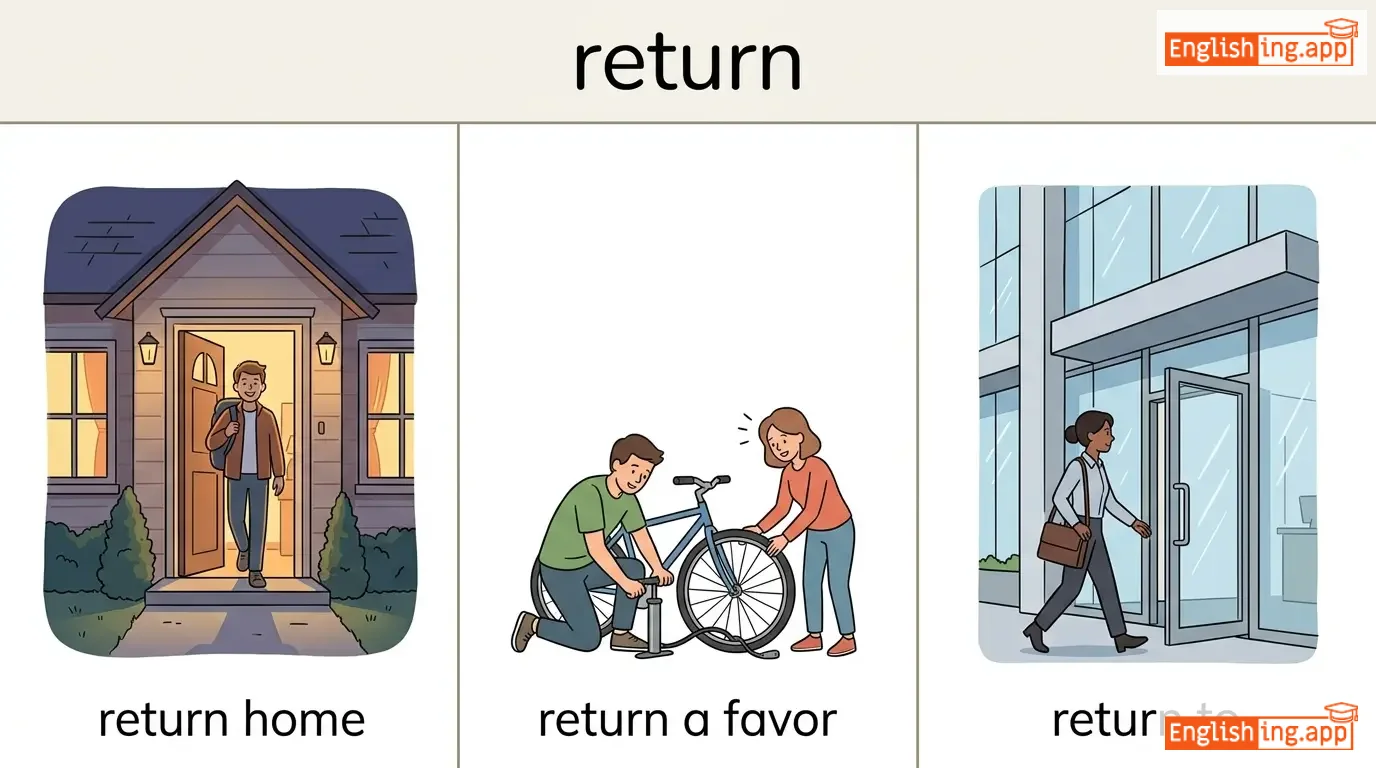
return home, return to work, return journey, return address, return call
••••••
|
No •••••• |
|
🔍
••••••
|
/rɪˈviːl/
verb
(リヴェール)
••••••
|

|
明かす
akasu
••••••
|
revealed
リヴェールド
••••••
|
revealed
リヴェールド
••••••
|
reveals
リヴェールズ
••••••
|
revealing
リヴェーリング
••••••
|
to make something known that was previously hidden or secret
••••••
|
The magician refused to reveal his secrets.
魔法使いは彼の秘密を明かすことを拒否した。
••••••
|
魔法使いは彼の秘密を明かすことを拒否した。
Mahōtsukai wa kare no himitsu wo akasu koto wo kyohi shita.
••••••
|
reveal the truth
真実を明かす
••••••
|
to disclose or make the truth known
••••••
|
真実を明かす
shinjitsu wo akasu
••••••
|
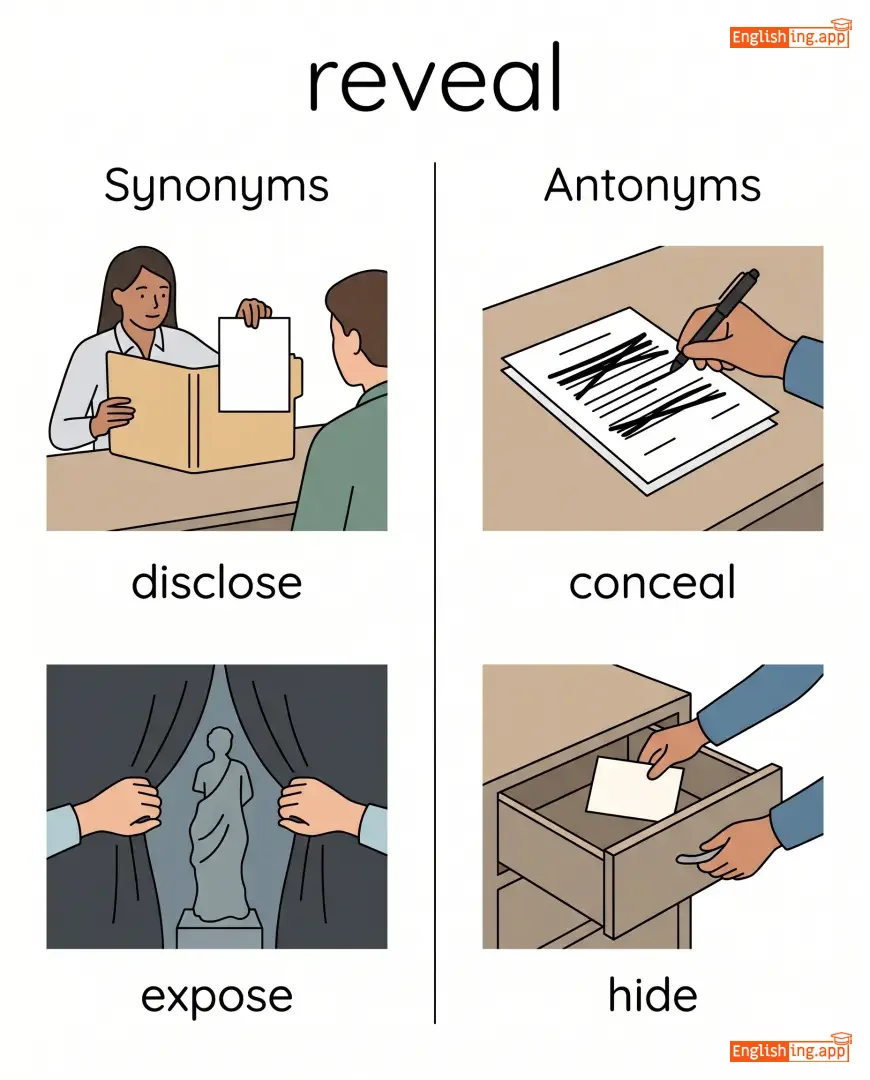
disclose, expose, uncover, unveil, show
••••••
|
conceal, hide, cover
••••••
|
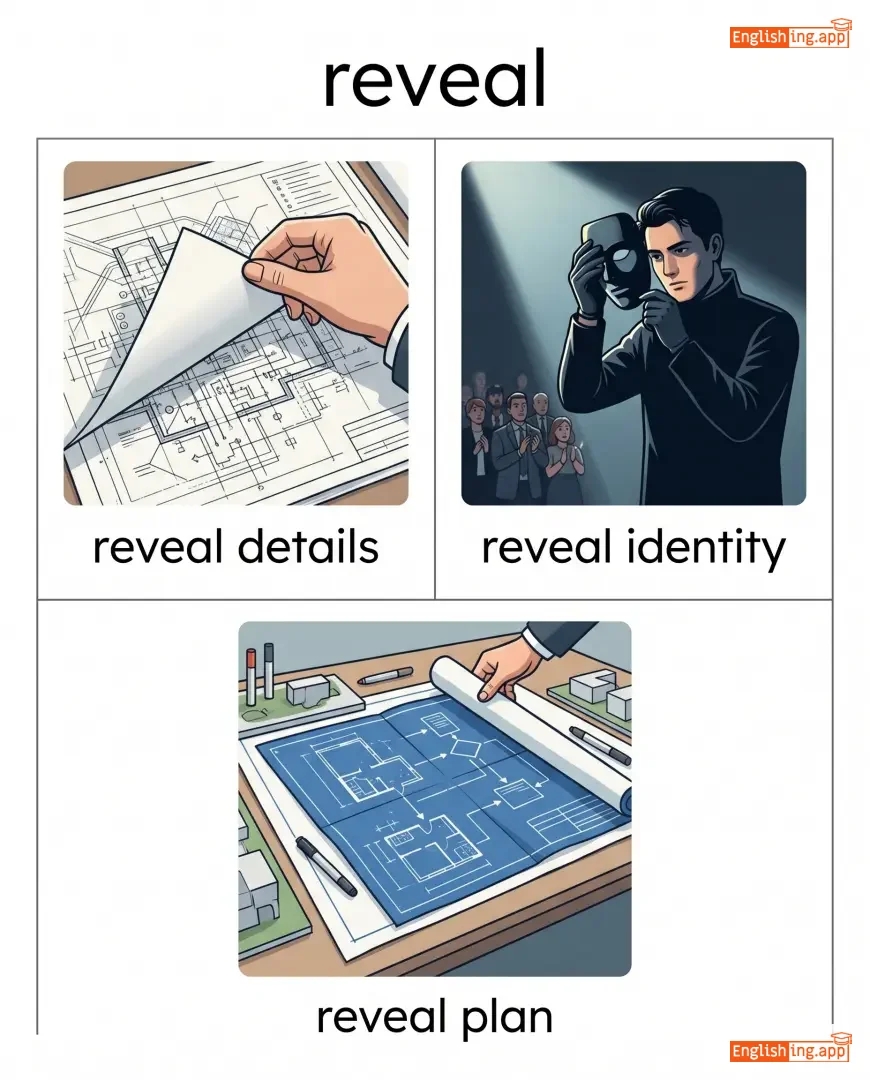
reveal details, reveal identity, reveal plan, reveal evidence
••••••
|
リヴェールは隠れていたものを明かすことだ!
••••••
|
|
💡
••••••
|
/ˌrɛvəˈleɪʃən/
noun
(レヴェレーション)
••••••
|
- •••••• |
啓示
keiji
••••••
|
- •••••• | - •••••• | - •••••• | - •••••• |
A surprising and previously unknown fact, especially one made known in a dramatic way.
••••••
|
The book was full of shocking revelations about the politician.
その本はその政治家に関する衝撃的な啓示で満ちていました。
••••••
|
その本はその政治家に関する衝撃的な啓示で満ちていました。
Sono hon wa sono seijika ni kansuru shōgeki-tekina keiji de michiteimashita.
••••••
|
divine revelation
神の啓示
••••••
|
A message or truth revealed by God.
••••••
|
神の啓示
Kami no keiji
••••••
|
disclosure, discovery, unveiling, exposure, insight
••••••
|
concealment, secrecy
••••••
|
shocking revelation, divine revelation, sudden revelation, revelation of truth
••••••
|
啓示 = 新しい事実が劇的に明らかになる瞬間。
••••••
|
|
⚔️
••••••
|
/rɪˈvɛndʒ/
noun, verb
(リベンジ)
••••••
|
- •••••• |
復讐
fukushū
••••••
|
revenged
••••••
|
revenged
••••••
|
revenges
••••••
|
revenging
••••••
|
The action of inflicting harm on someone as punishment for a wrong suffered.
••••••
|
She sought revenge for the betrayal of her trust. |
彼女は信頼を裏切られたことで復讐を求めた。
Kanojo wa shinrai o uragirareta koto de fukushū o motometa.
••••••
|
revenge is sweet |
It feels satisfying to get back at someone who wronged you.
••••••
|
復讐は甘い
Fukushū wa amai
••••••
|
retaliation, vengeance, retribution, payback, reprisal
••••••
|
forgiveness, pardon, mercy
••••••
|
seek revenge, take revenge, exact revenge, sweet revenge
••••••
|
Revengeは‘re-復讐’のように聞こえる – 復讐は戻って報復することを意味します。
••••••
|
|
💰
••••••
|
/ˈrɛvənjuː/
noun
(レヴェニュー)
••••••
|

|
収益
shuueki
••••••
|
- •••••• | - •••••• | - •••••• | - •••••• |
income generated from business activities, especially sales
••••••
|
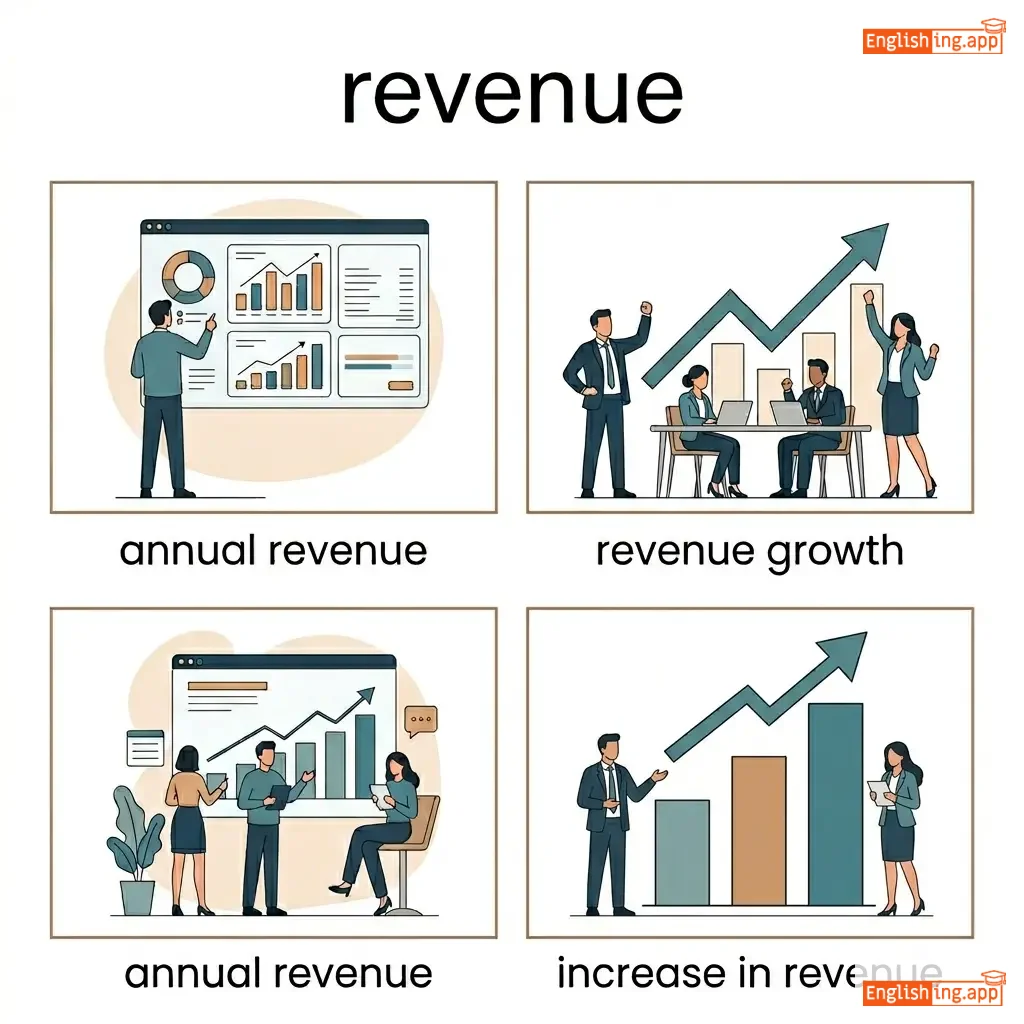
The company's revenue increased by 20% last year. |
会社の収益は昨年20%増加しました。
Kaisha no shuueki wa sakunen 20% zouka shimashita.
••••••
|
- •••••• | - •••••• | - •••••• |
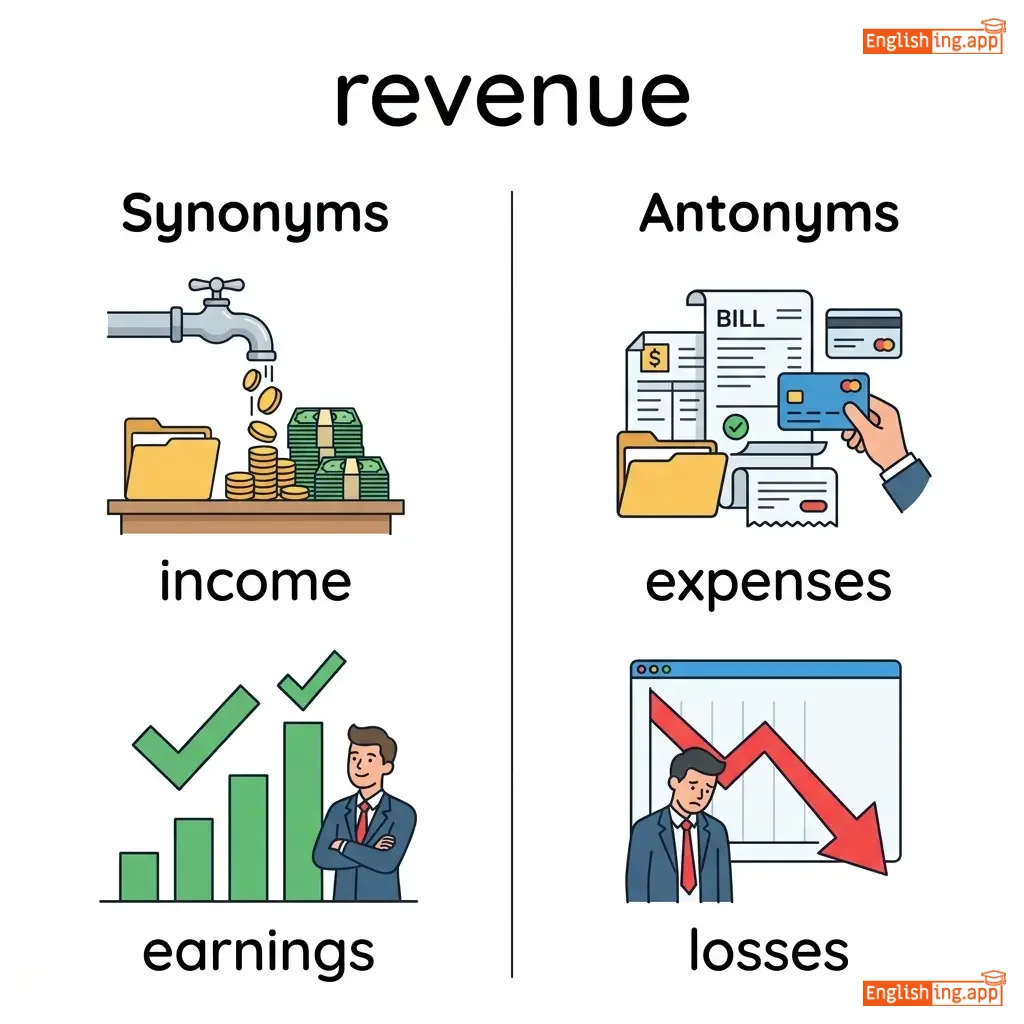
income, earnings, profits, proceeds
••••••
|
expenses, losses
••••••
|
annual revenue, revenue growth, increase in revenue
••••••
|
Revenue 収益 - Businesses generate revenue
••••••
|
|
🔁
••••••
|
/rɪˈvɜːs/
verb
(リヴァース)
••••••
|
- •••••• |
反転する
hanten suru
••••••
|
reversed
リヴァースド
••••••
|
reversed
リヴァースド
••••••
|
reverses
リヴァースズ
••••••
|
reversing
リヴァースィング
••••••
|
to change something to the opposite direction, position, or result
••••••
|
She quickly reversed the car out of the driveway.
彼女はすぐに車をドライブウェイからバックさせました。
••••••
|
彼女はすぐに車をドライブウェイからバックさせました。
Kanojo wa sugu ni kuruma o doraibuwei kara bakku sasemashita.
••••••
|
reverse course
進行方向を変更する
••••••
|
to change plans or direction completely
••••••
|
進行方向を変更する
shinkō hōkō o henkō suru
••••••
|
invert, overturn, flip, undo, back
••••••
|
continue, maintain, keep
••••••
|
reverse decision, reverse gear, reverse order, reverse effect
••••••
|
Re + verse = 逆転! だからreverseは反転することを意味します。
••••••
|
|
📝
••••••
|
/rɪˈvjuː/
verb
(リビュー)
••••••
|
- •••••• |
レビュー
rebyū
••••••
|
reviewed
リビュード
••••••
|
reviewed
リビュード
••••••
|
reviews
リビューズ
••••••
|
reviewing
リビューイング
••••••
|
to examine or assess something again; to write a critical evaluation
••••••
|
I need to review my notes before the exam.
試験前にノートをレビューする必要があります。
••••••
|
試験前にノートをレビューする必要があります。
Shiken mae ni nōto o rebyū suru hitsuyō ga arimasu.
••••••
|
- •••••• | - •••••• | - •••••• |
examine, assess, evaluate, analyze
••••••
|
ignore, overlook, neglect
••••••
|
review carefully, review thoroughly, review regularly, review documents, review performance
••••••
|
'Review' in Japanese sounds like 'レビュー', so it means to ‘check again’.
••••••
|
|
✏️
••••••
|
/rɪˈvaɪz/
verb
(リヴァイズ)
••••••
|
- •••••• |
修正する
shūsei suru
••••••
|
revised
リヴァイズド
••••••
|
revised
リヴァイズド
••••••
|
revises
リヴァイズズ
••••••
|
revising
リヴァイジング
••••••
|
To change, improve, or update something, especially a written work.
••••••
|
She had to revise her essay before submission.
彼女は提出前にエッセイをリヴァイズする必要があった。
••••••
|
彼女は提出前にエッセイをリヴァイズする必要があった。
Kanojo wa teishutsu mae ni essei o rivaizu suru hitsuyō ga atta.
••••••
|
revise for an exam
試験のためにリヴァイズする
••••••
|
to study and prepare for an exam
••••••
|
試験のためにリヴァイズする
Shiken no tame ni rivaizu suru
••••••
|
edit, modify, update, amend, correct
••••••
|
keep, preserve
••••••
|
revise draft, revise essay, revise thoroughly, revise notes
••••••
|
リヴァイズするのはテストの準備、リヴァイズして準備を整えましょう。
••••••
|
|
📝
••••••
|
/rɪˈvɪʒ.ən/
noun
(リビジョン)
••••••
|
- •••••• |
リビジョン; 修正版
ribijon; shūsei ban
••••••
|
- •••••• | - •••••• | - •••••• | - •••••• |
the action of revising; a revised edition or form of something; review of subject matter
••••••
|
The students spent hours doing revision for their final exams.
学生たちは最終試験のために数時間リビジョンを行った。
••••••
|
学生たちは最終試験のために数時間リビジョンを行った。
Gakusei-tachi wa saishū shiken no tame ni suū jikan ribijon o okonatta.
••••••
|
- •••••• | - •••••• | - •••••• |
review, amendment, modification, alteration
••••••
|
original, first draft, initial version
••••••
|
revision notes, exam revision, thorough revision, last-minute revision
••••••
|
リビジョン: 試験前にすべてを復習する感じ!
••••••
|
|
🌱
••••••
|
/rɪˈvaɪ.vəl/
noun
(リバイバル)
••••••
|
- •••••• |
復活
fukkatsu
••••••
|
- •••••• | - •••••• | - •••••• | - •••••• |
an improvement in the condition or strength of something; renewed interest in or attention to something
••••••
|
There has been a revival of interest in traditional crafts.
ゼア ハズ ビーン ア リバイバル オブ インタレスト イン トラディショナル クラフツ。
••••••
|
伝統的な工芸への関心が復活しました。
Dentō-teki na kōgei e no kanshin ga fukkatsu shimashita.
••••••
|
- •••••• | - •••••• | - •••••• |
renewal, resurgence, renaissance, rebirth
••••••
|
decline, deterioration, downfall, demise
••••••
|
economic revival, cultural revival, revival meeting, revival of fortunes
••••••
|
復活 = 何かを再び生き返らせる
••••••
|
|
🌱
••••••
|
/rɪˈvaɪv/
verb
(リヴァイヴ)
••••••
|
- •••••• |
蘇生する
sosei suru
••••••
|
revived
リヴァイヴド
••••••
|
revived
リヴァイヴド
••••••
|
revives
リヴァイヴス
••••••
|
reviving
リヴァイヴィング
••••••
|
To bring back to life, consciousness, or activity.
••••••
|
The paramedics managed to revive the unconscious man.
パラメディックは意識不明の男性を蘇生させることに成功した。
••••••
|
救急隊員は意識不明の男性を蘇生させることに成功した。
Kyūkyū taiin wa ishiki fumei no dansei o sosei saseru koto ni seikō shita.
••••••
|
revive the economy
経済を蘇生させる
••••••
|
to restore economic growth and activity
••••••
|
経済を蘇生させる
Keizai o sosei saseru
••••••
|
resuscitate, restore, rejuvenate, awaken, revitalize
••••••
|
kill, suppress, extinguish
••••••
|
revive interest, revive culture, revive spirit, revive tradition
••••••
|
蘇生するは植物に水をあげるように、命を戻すことです。
••••••
|
|
⚔️
••••••
|
/rɪˈvoʊlt/
verb
(リボルト)
••••••
|
|
反乱
hanran
••••••
|
revolted
リボルテッド
••••••
|
revolted
リボルテッド
••••••
|
revolts
リボルツ
••••••
|
revolting
リボルティング
••••••
|
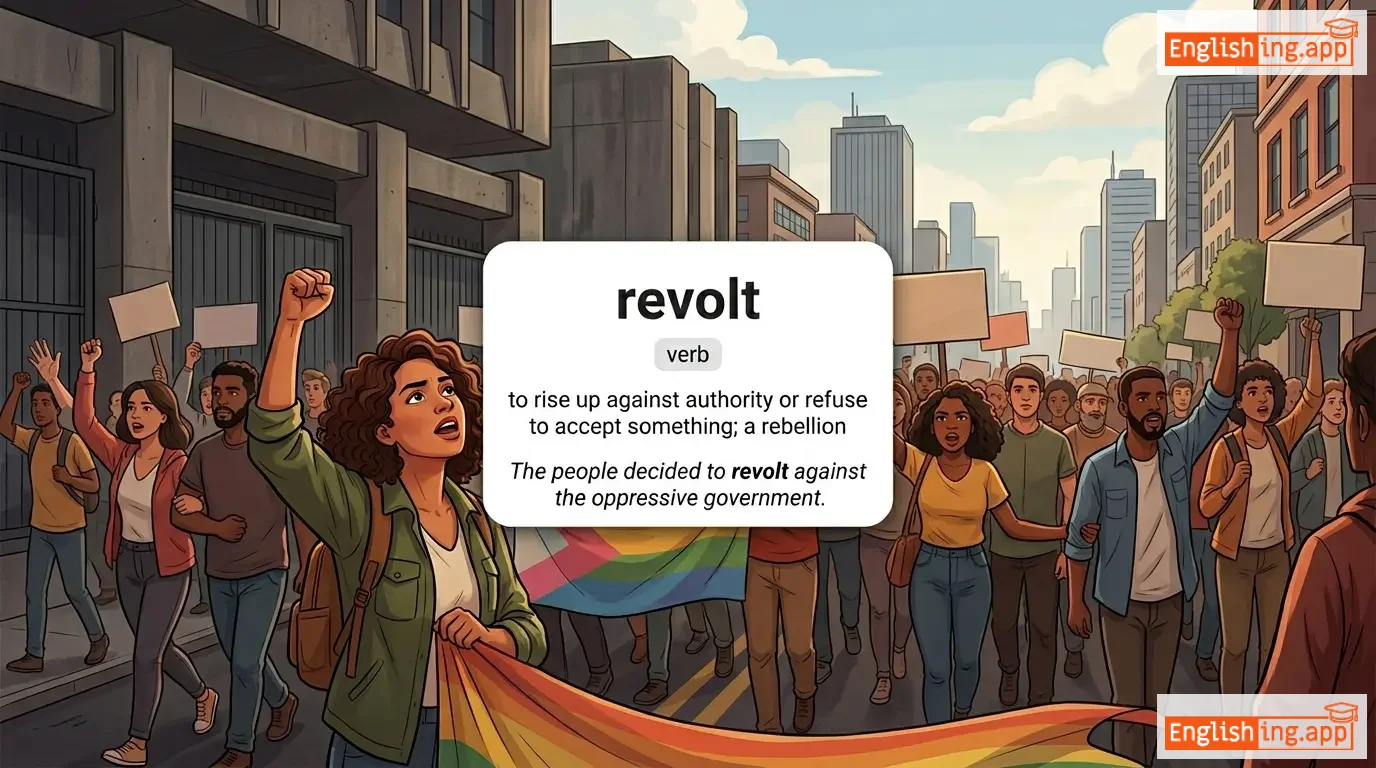
to rise up against authority or refuse to accept something; a rebellion
••••••
|
The people decided to revolt against the oppressive government.
人々は圧制政府に対して反乱を決意した。
••••••
|
人々は圧制政府に対して反乱を決意した。
Hitobito wa assē seifu ni taishite hanran o ketsui shita.
••••••
|
rise in revolt
反乱に立ち上がる
••••••
|
to rebel or resist against authority
••••••
|
反乱に立ち上がる
Hanran ni tachiagaru
••••••
|
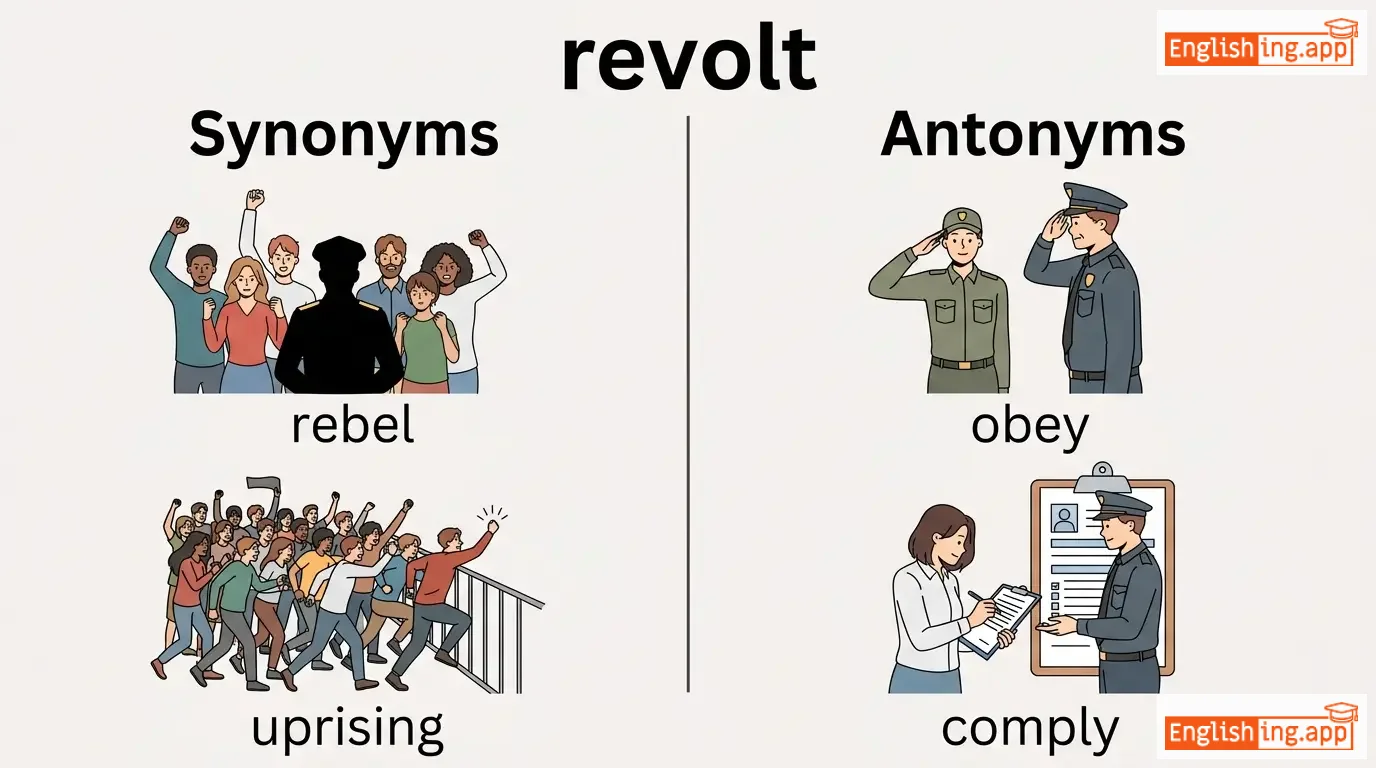
rebel, uprising, insurrection, mutiny, resist
••••••
|
obey, comply, submit
••••••
|
armed revolt, popular revolt, revolt against, suppress revolt
••••••
|
Re-volt 電気 ⚡ - 稲妻のように人々は立ち上がる
••••••
|
|
🔄
••••••
|
/ˌrevəˈluːʃən/
noun
(レボリューション)
••••••
|
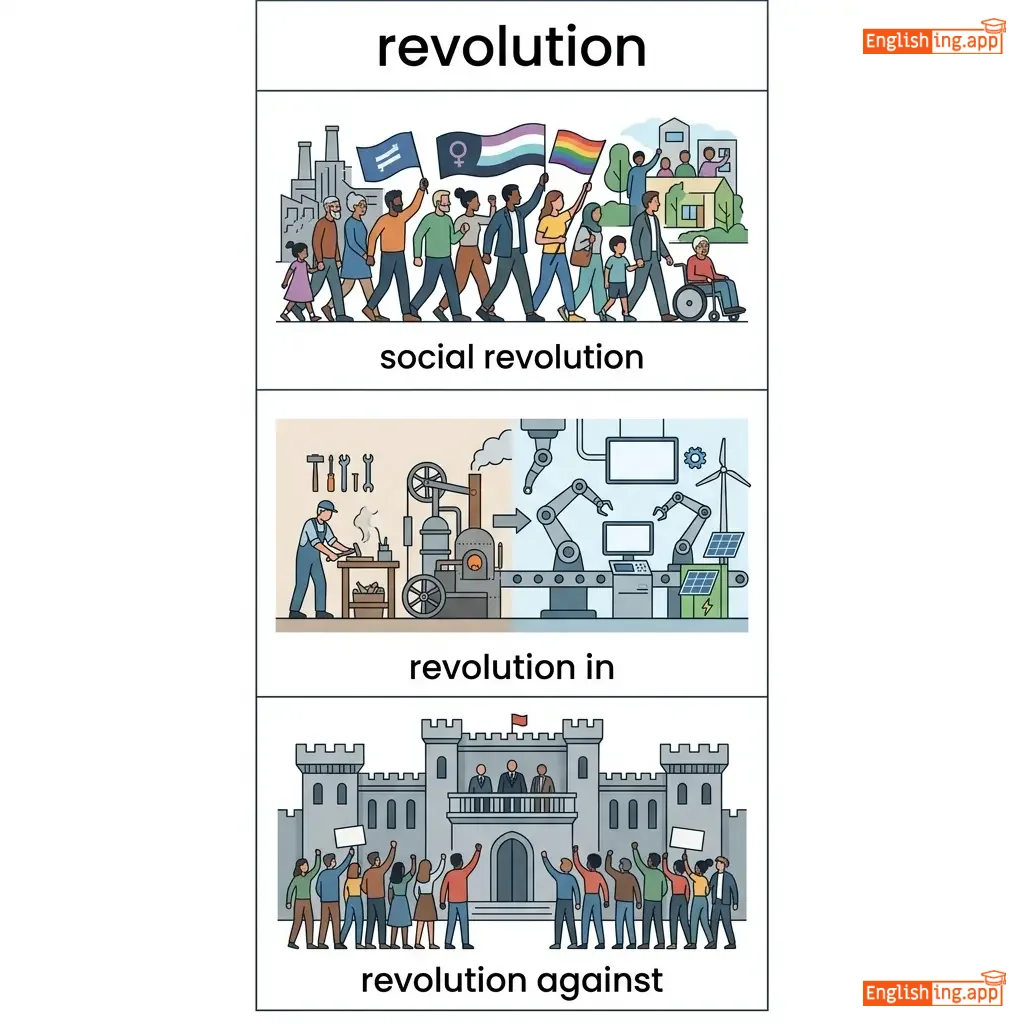
|
革命; 変革; 転覆
kakumei; henka; tenpuku
••••••
|
- •••••• | - •••••• | - •••••• | - •••••• |
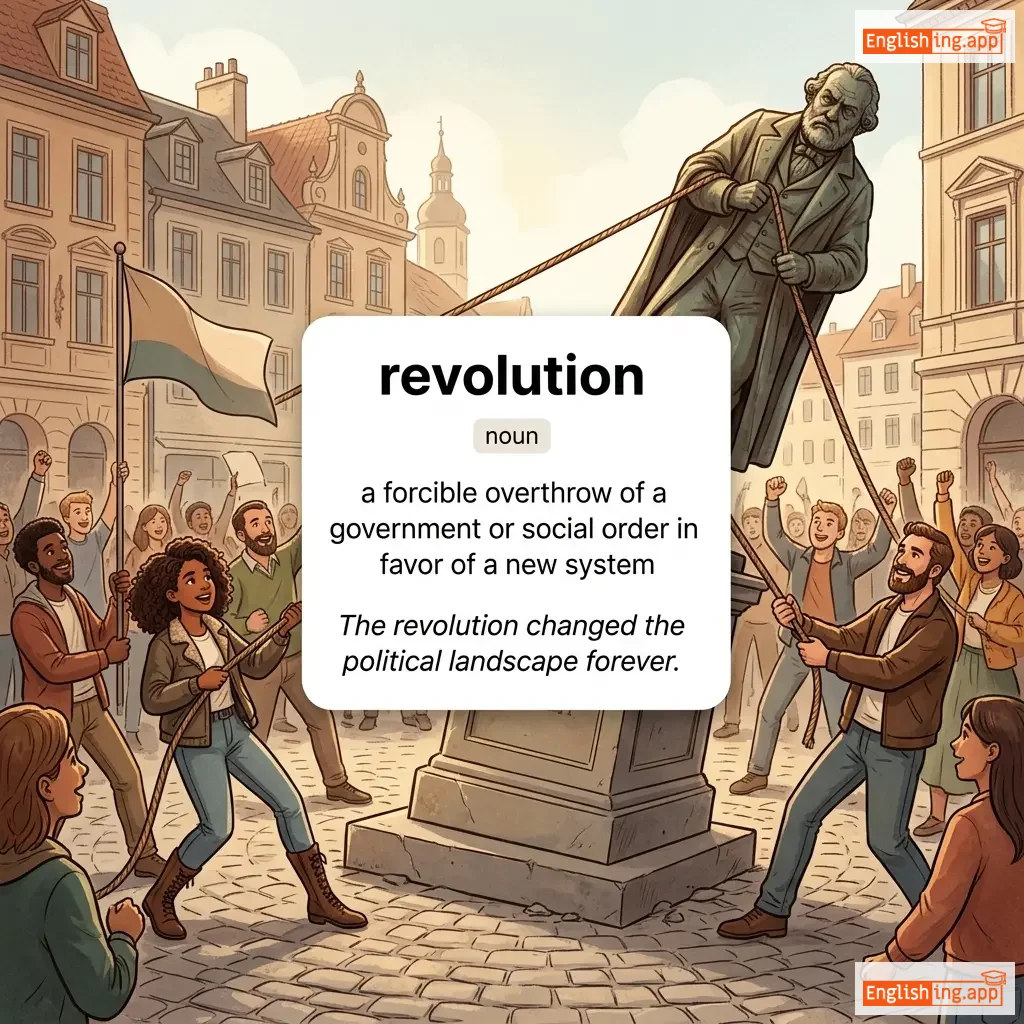
a dramatic and wide-reaching change in conditions, attitudes, or operation; a forcible overthrow of a government or social order
••••••
|
The industrial revolution changed the way people lived and worked.
産業革命は人々の生活と仕事の仕方を変えました。
••••••
|
産業革命は人々の生活と仕事の仕方を変えました。
sangyou kakumei wa hitobito no seikatsu to shigoto no shikata o kaemashita.
••••••
|
- •••••• | - •••••• | - •••••• |
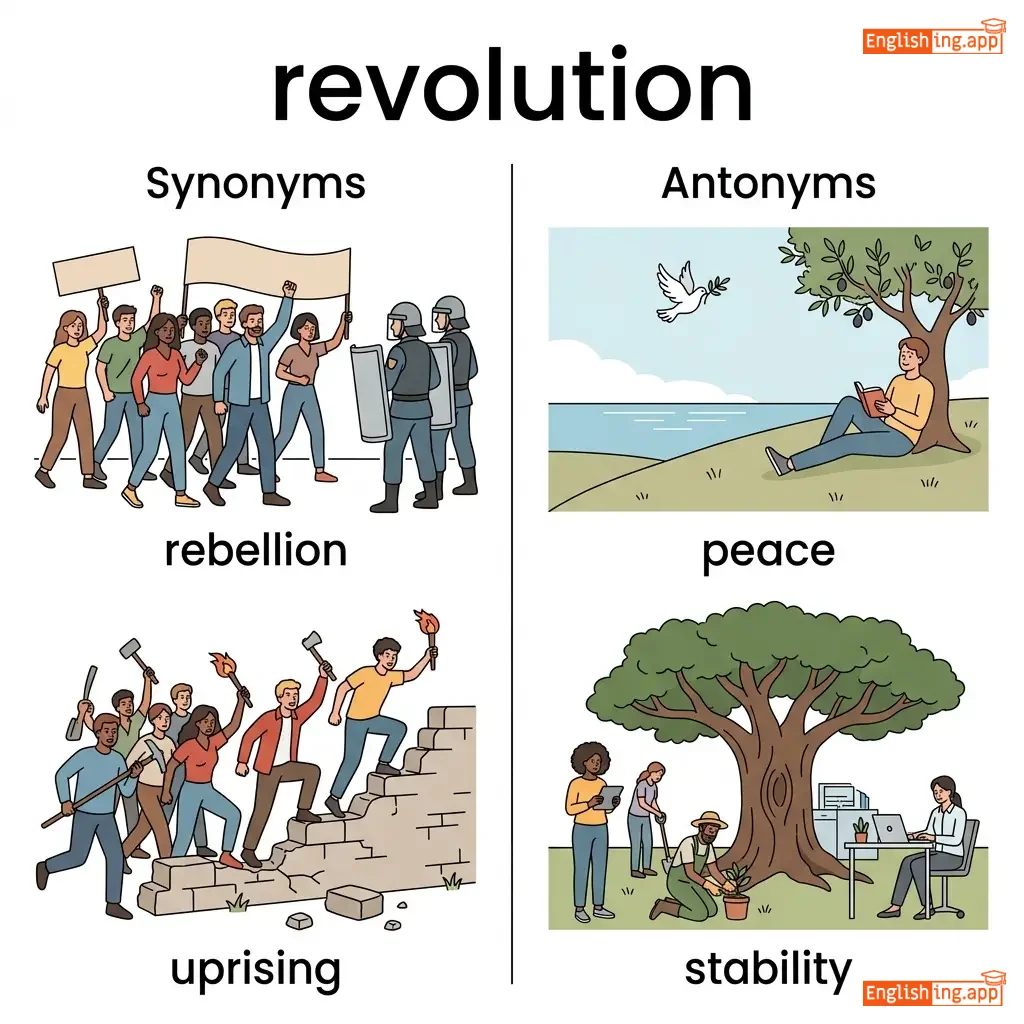
upheaval, transformation, rebellion, revolt
••••••
|
stability, conservation, tradition
••••••
|
industrial revolution, political revolution, scientific revolution
••••••
|
革命はすべてを変える、まるで社会秩序の転覆のように。
••••••
|
|
✊
••••••
|
/ˌrev.əˈluː.ʃən.ər.i/
adjective
(レボリューショナリー)
••••••
|
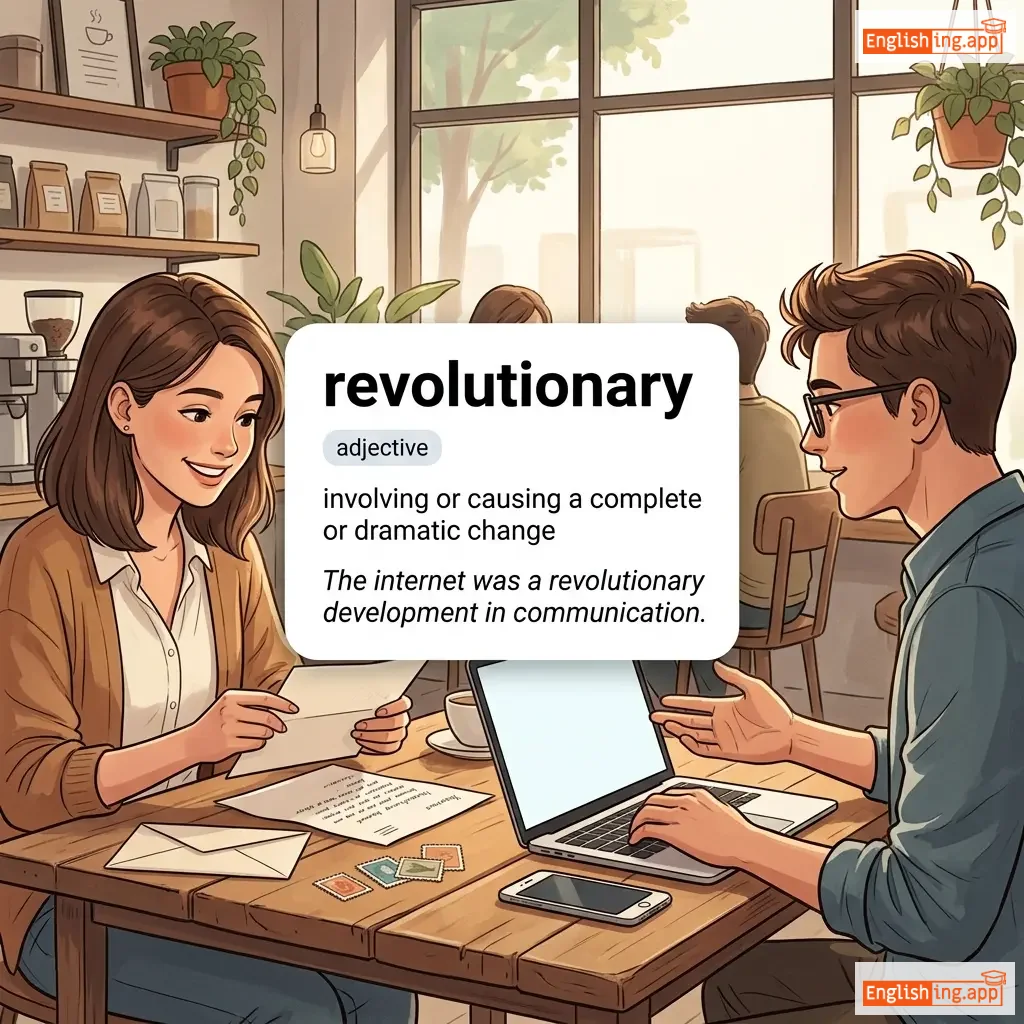
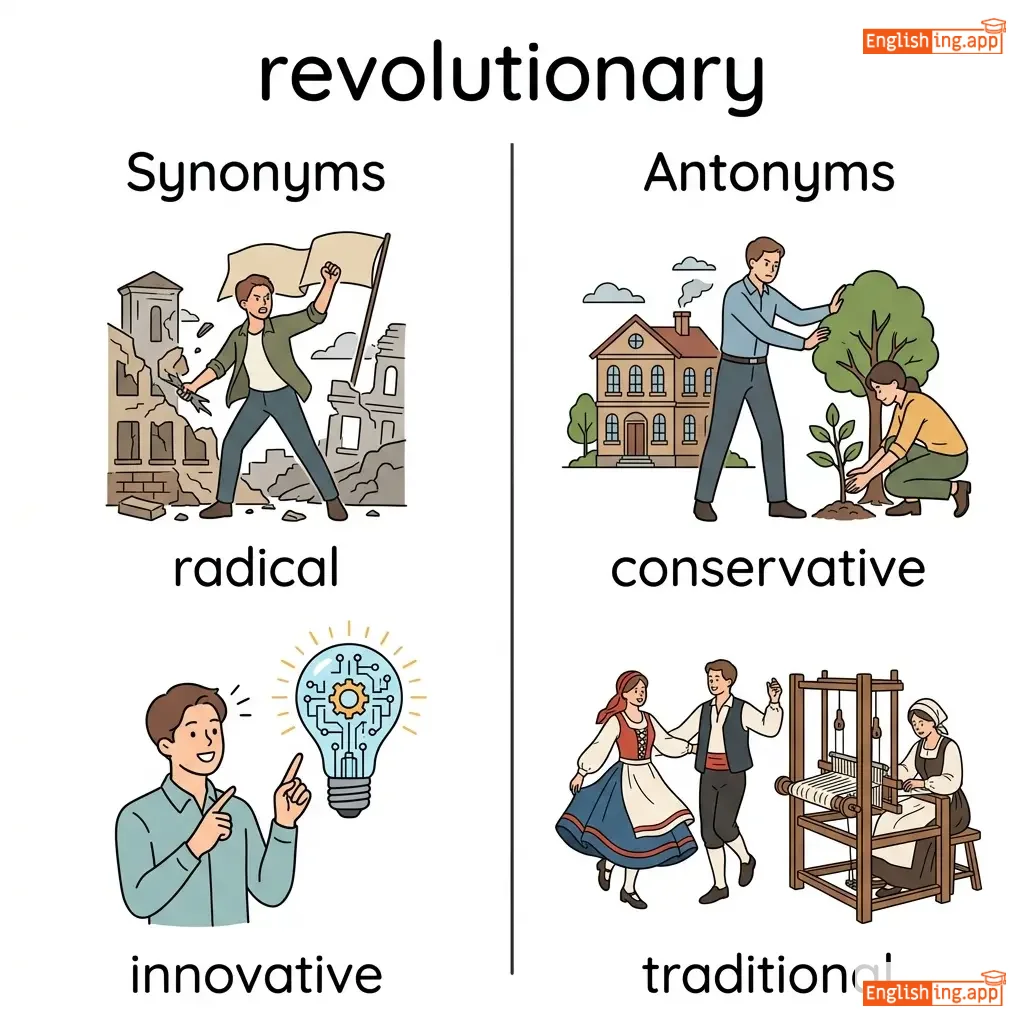
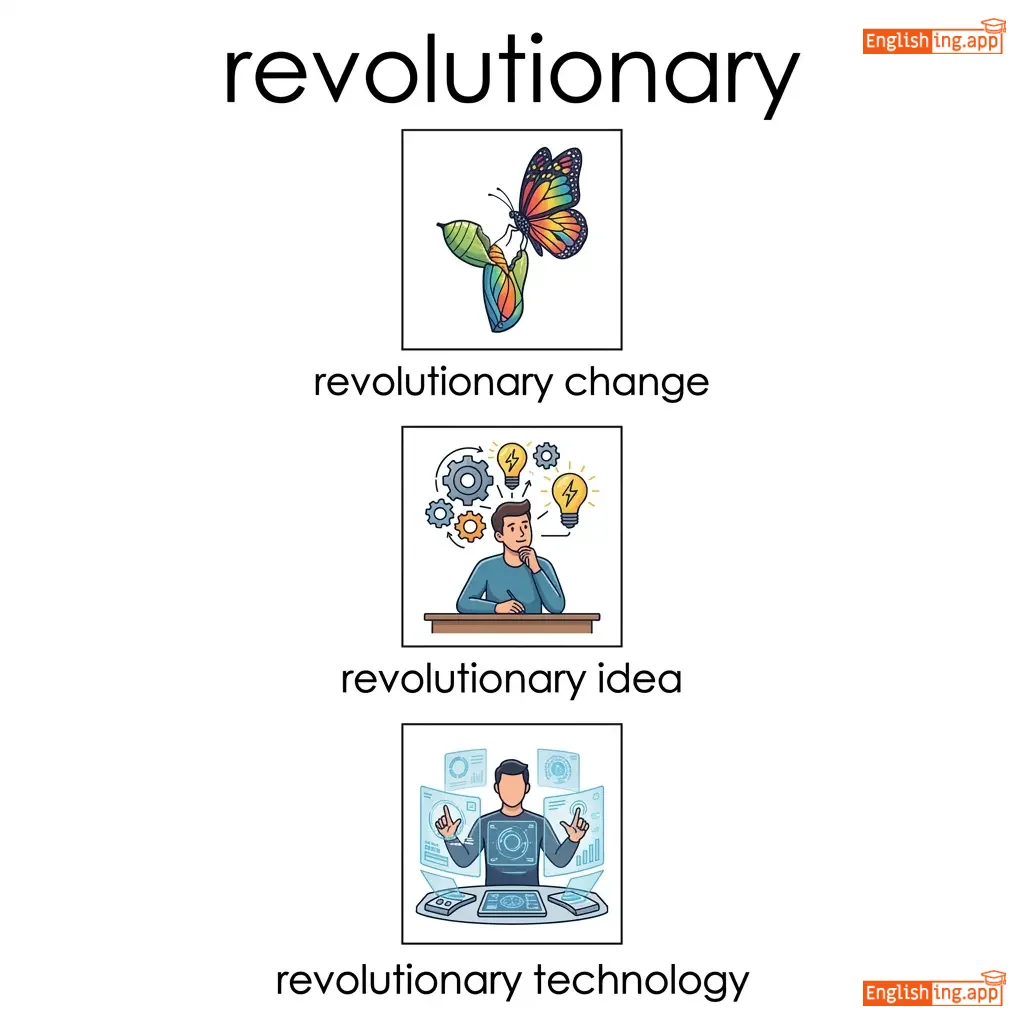
|
革命的な
kakumeiteki na
••••••
|
- •••••• | - •••••• | - •••••• | - •••••• |
involving or causing a complete or dramatic change; relating to a political revolution
••••••
|
The smartphone was a revolutionary invention that changed communication. |
スマートフォンは通信を変えた革命的な発明でした。
Suma-tofon wa tsūshin o kaeta kakumeiteki na hatsumei deshita
••••••
|
- •••••• | - •••••• | - •••••• |
radical, groundbreaking, innovative, transformative
••••••
|
conservative, traditional, conventional, reactionary
••••••
|
revolutionary idea, revolutionary change, revolutionary technology
••••••
|
革命的な意味はすべてを変えることです
••••••
|
|
🏆
••••••
|
/rɪˈwɔːd/
noun
(リワード)
••••••
|
- •••••• |
報酬
hōshū
••••••
|
- •••••• | - •••••• | - •••••• | - •••••• |
something given in recognition of service, effort, or achievement
••••••
|
He received a reward for returning the lost wallet. |
彼は失くした財布を返したことで報酬を受け取りました。
Kare wa nakushita saifu o kaeshita koto de hōshū o uketorimashita.
••••••
|
as a reward |
in return for doing something good or helpful
••••••
|
報酬として
hōshū toshite
••••••
|
prize, compensation, bonus, benefit, gift
••••••
|
penalty, punishment, loss
••••••
|
cash reward, big reward, reward system, reward program
••••••
|
Reward = Re + ward → 良い行いをすると報酬(報酬)がもらえる!
••••••
|
|
🗣️
••••••
|
/ˈrɛtərɪk/
noun
(レトリック)
••••••
|
|
修辞学
shūjigaku
••••••
|
- •••••• | - •••••• | - •••••• | - •••••• |
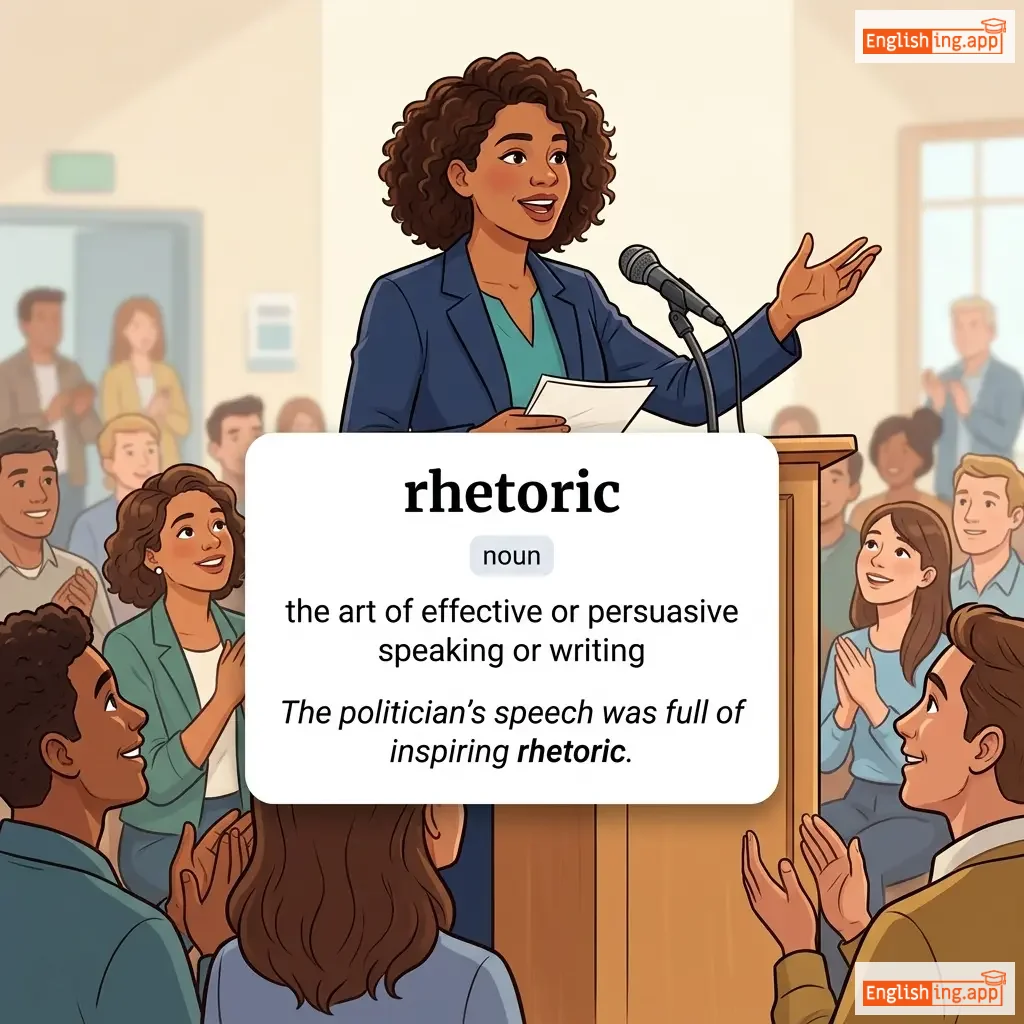
the art of effective or persuasive speaking or writing
••••••
|
The politician’s speech was full of inspiring rhetoric.
その政治家のスピーチは、インスピレーションを与えるレトリックで満ちていました。
••••••
|
その政治家のスピーチは、インスピレーションを与える修辞学で満ちていました。
Sono seijika no supīchi wa, insupirēshon o ataeru shūjigaku de michite imashita.
••••••
|
empty rhetoric
空虚なレトリック
••••••
|
persuasive but meaningless or insincere speech
••••••
|
空虚な修辞学
kūkyona shūjigaku
••••••
|
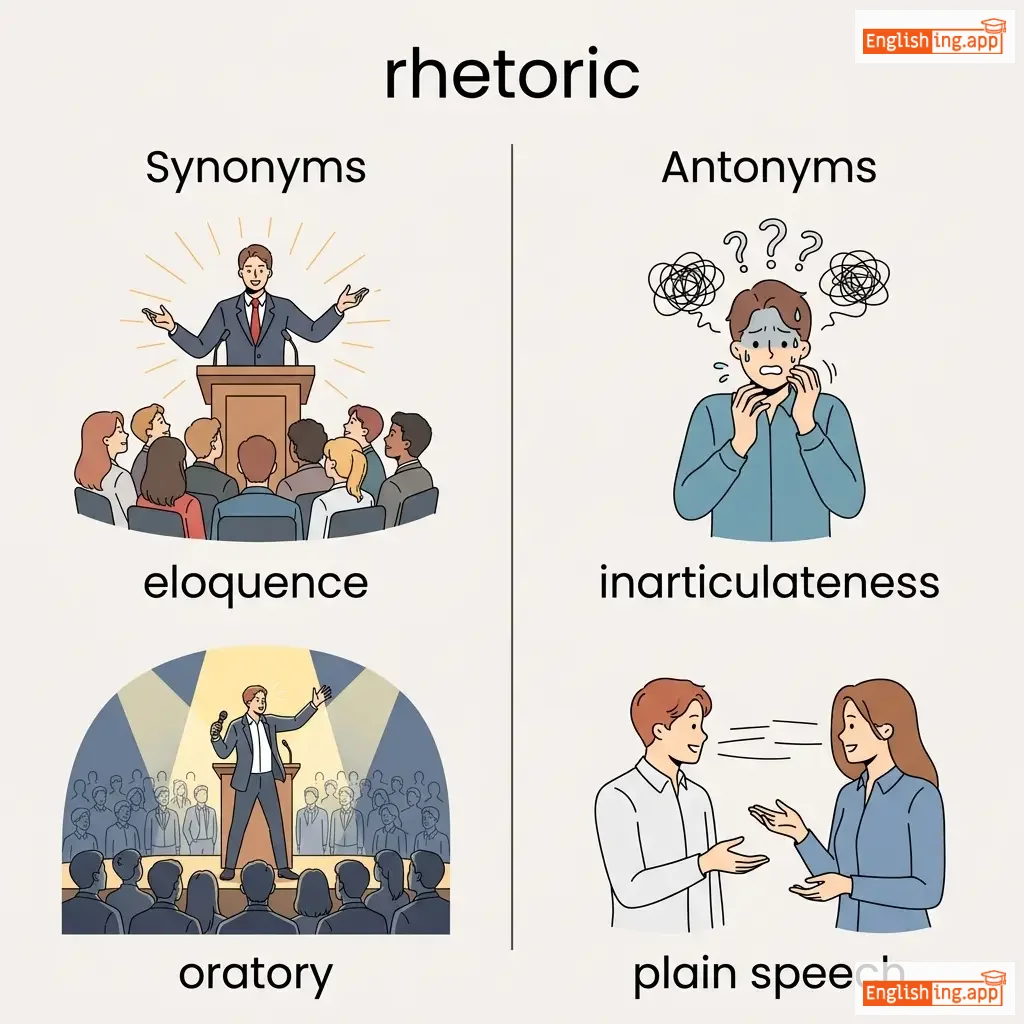
eloquence, oratory, discourse, persuasion
••••••
|
inarticulateness, plain speech
••••••
|
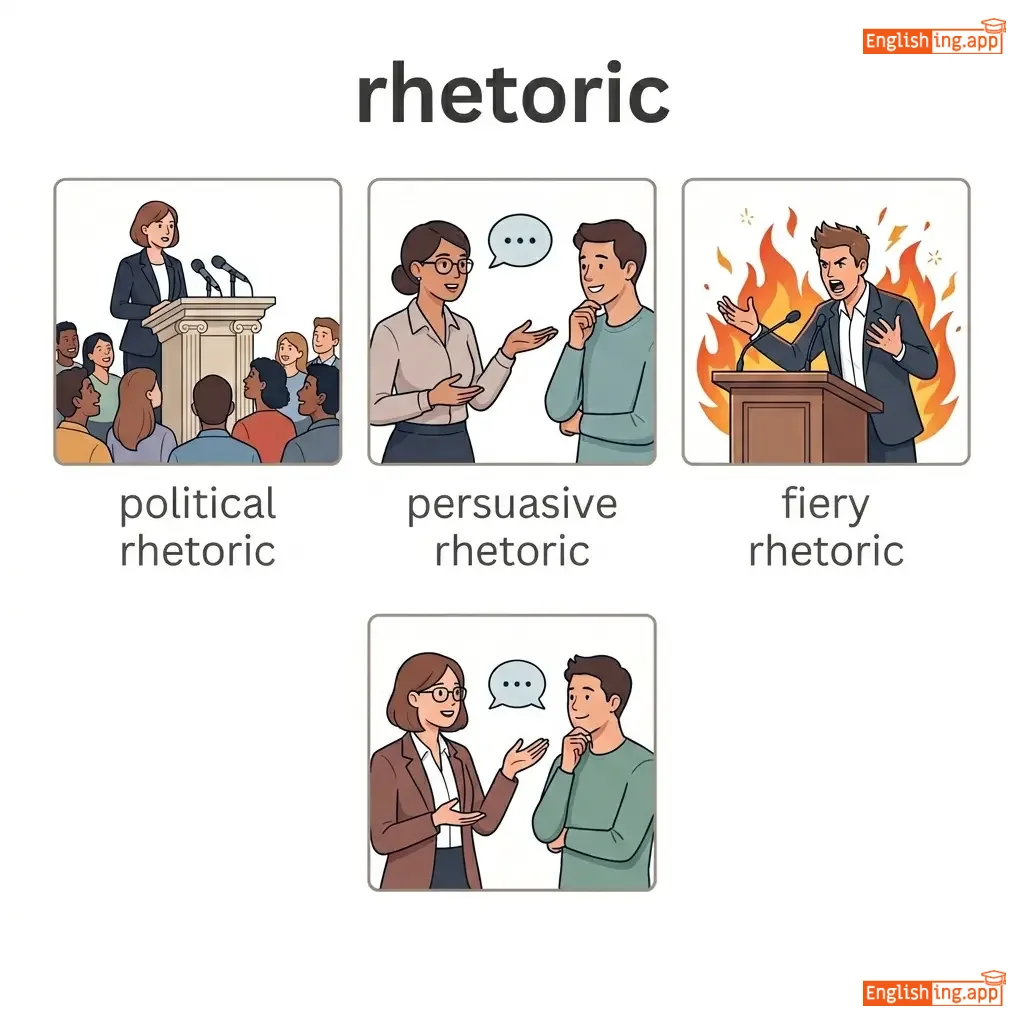
political rhetoric, persuasive rhetoric, fiery rhetoric, rhetorical device
••••••
|
Rhetoric → Ret + Trick 🗣️ 話す際にトリックを使って影響を与える
••••••
|
|
🎵
••••••
|
/ˈrɪðəm/
noun
(リズム)
••••••
|
- •••••• |
リズム
rizumu
••••••
|
- •••••• | - •••••• | - •••••• | - •••••• |
a strong, regular, repeated pattern of movement or sound
••••••
|
The rhythm of the music made everyone want to dance. |
音楽のリズムはみんなを踊りたくさせた。
Ongaku no rizumu wa minna wo odoritaku saseta.
••••••
|
- •••••• | - •••••• | - •••••• |
beat, tempo, cadence, pattern
••••••
|
disorder, chaos
••••••
|
rhythm of life, rhythm section, musical rhythm, perfect rhythm
••••••
|
In Japanese, 'リズム' (rizumu) is the same as rhythm in English, just like a constant beat.
••••••
|
|
🍚
••••••
|
/raɪs/
noun
(ライス)
••••••
|
- •••••• |
ご飯
gohan
••••••
|
- •••••• | - •••••• | - •••••• | - •••••• |
a cereal grain that is the staple food of many countries
••••••
|
Rice is an important part of the daily diet in many countries.
ライスは多くの国々の日常的な食事において重要な部分を占めています。
••••••
|
ライスは多くの国々の日常的な食事において重要な部分を占めています。
Raisu wa ooku no kuniguni no nichijou-teki na shokuji ni oite juuyou na bubun o shimemasu.
••••••
|
- •••••• | - •••••• | - •••••• |
grain, paddy, rice grain
••••••
|
vegetables, fruits
••••••
|
boiled rice, fried rice, rice dish, rice field
••••••
|
Rice is essential for 'rising' nutrition daily.
••••••
|
|
💰
••••••
|
/rɪtʃ/
adjective
(リッチ)
••••••
|
- •••••• |
裕福な; お金持ちの; 貴重な
yūfukuna; okanemochi no; kichōna
••••••
|
- •••••• | - •••••• | - •••••• | - •••••• |
having a lot of money or valuable possessions; abundant in nutrients or flavor
••••••
|
The rich businessman donated money to the charity. |
裕福な実業家がチャリティーに寄付をしました。
yūfukuna jitsugyōka ga charitī ni kifu o shimashita.
••••••
|
- •••••• | - •••••• | - •••••• |
wealthy, affluent, prosperous, well-off
••••••
|
poor, impoverished, needy, broke
••••••
|
rich person, rich flavor, rich history, rich culture
••••••
|
裕福な人々は他人を助けるためにお金を寄付します。
••••••
|

