|
表情符号
|
单词 | Images | 翻译 | 过去时 | 过去分词 | 第三人称单数 | 动名词 | 含义 | 例句 | 例句翻译 | 示例表达 | 示例表达含义 | 示例表达翻译 | 同义词 | 反义词 | 搭配词 | 助记符 |
|---|---|---|---|---|---|---|---|---|---|---|---|---|---|---|---|---|---|
|
🏖️
••••••
|
/rɪˈzɔːrt/
noun, verb
(瑞索特)
••••••
|
- •••••• |
度假村 / 最后的选择
dùjiàcūn / zuìhòu de xuǎnzé
••••••
|
resorted
瑞索特德
••••••
|
resorted
瑞索特德
••••••
|
resorts
瑞索特斯
••••••
|
resorting
瑞索特英
••••••
|
A place for rest or recreation; to turn to something for help or solution.
••••••
|
They stayed at a beach resort during their vacation.
他们在度假期间住在海滩度假村。
••••••
|
他们在度假期间住在海滩度假村。
Tāmen zài dùjià qījiān zhù zài hǎitān dùjiàcūn.
••••••
|
last resort
最后的选择
••••••
|
The final option when all others have failed.
••••••
|
最后的选择
zuìhòu de xuǎnzé
••••••
|
retreat, holiday spot, refuge, option, resource
••••••
|
home, avoidance, refusal
••••••
|
luxury resort, beach resort, ski resort, resort to violence
••••••
|
Resort 就是重新排序 — 当一切都失败时,重新排序或者寻求解决方案。
••••••
|
|
💎
••••••
|
/rɪˈsɔːrs/
noun
(rɪˈsɔːrs)
••••••
|
- •••••• |
资源
ziyuan
••••••
|
- •••••• | - •••••• | - •••••• | - •••••• |
A supply of materials, money, or assets that can be used when needed.
••••••
|
Water is a vital natural resource. |
水是宝贵的自然资源。
Shuǐ shì bǎoguì de zìrán zīyuán.
••••••
|
resourceful person |
A person who can find quick and clever ways to overcome difficulties.
••••••
|
足智多谋的人
zú zhì duō móu de rén
••••••
|
asset, supply, stock, means, wealth
••••••
|
liability, lack, need
••••••
|
natural resource, human resource, resource management
••••••
|
Resource 就是 re-source — 从新的源头(资源)获取内容。
••••••
|
|
🙏
••••••
|
/rɪˈspɛkt/
noun/verb
(rísīpèikè)
••••••
|

|
尊重
zūnzhòng
••••••
|
respected
rèisīpèikèd
••••••
|
respected
rèisīpèikèd
••••••
|
respects
rèisīpèikè s
••••••
|
respecting
rèisīpèikè
••••••
|
to treat someone with admiration or regard; high regard for someone or something
••••••
|
We should respect each other's opinions, even if we disagree.
我们应该尊重彼此的意见,即使我们不同意。
••••••
|
我们应该尊重彼此的意见,即使我们不同意。
Wǒmen yīnggāi zūnzhòng bǐcǐ de yìjiàn, jíshǐ wǒmen bùtóngyì.
••••••
|
- •••••• | - •••••• | - •••••• |
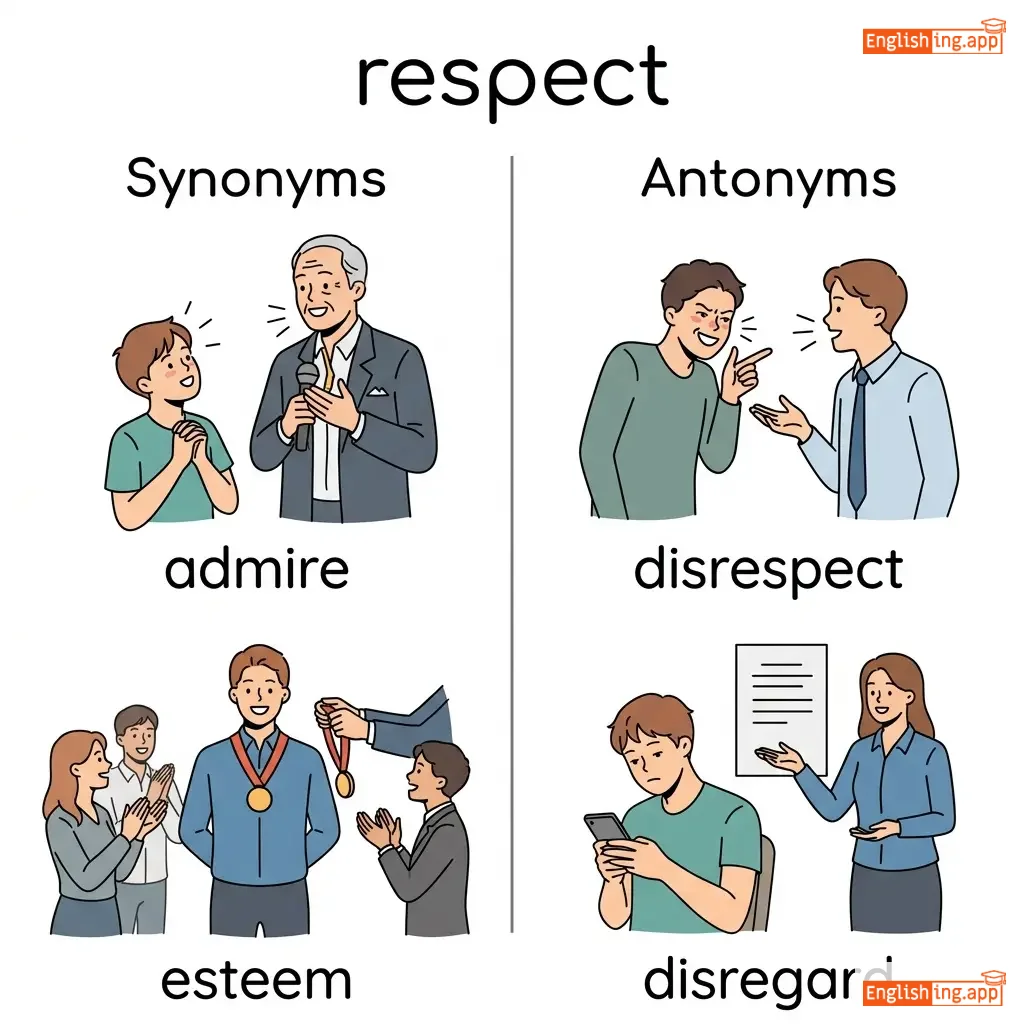
admire, esteem, honor, regard
••••••
|
disrespect, disregard, dishonor
••••••
|
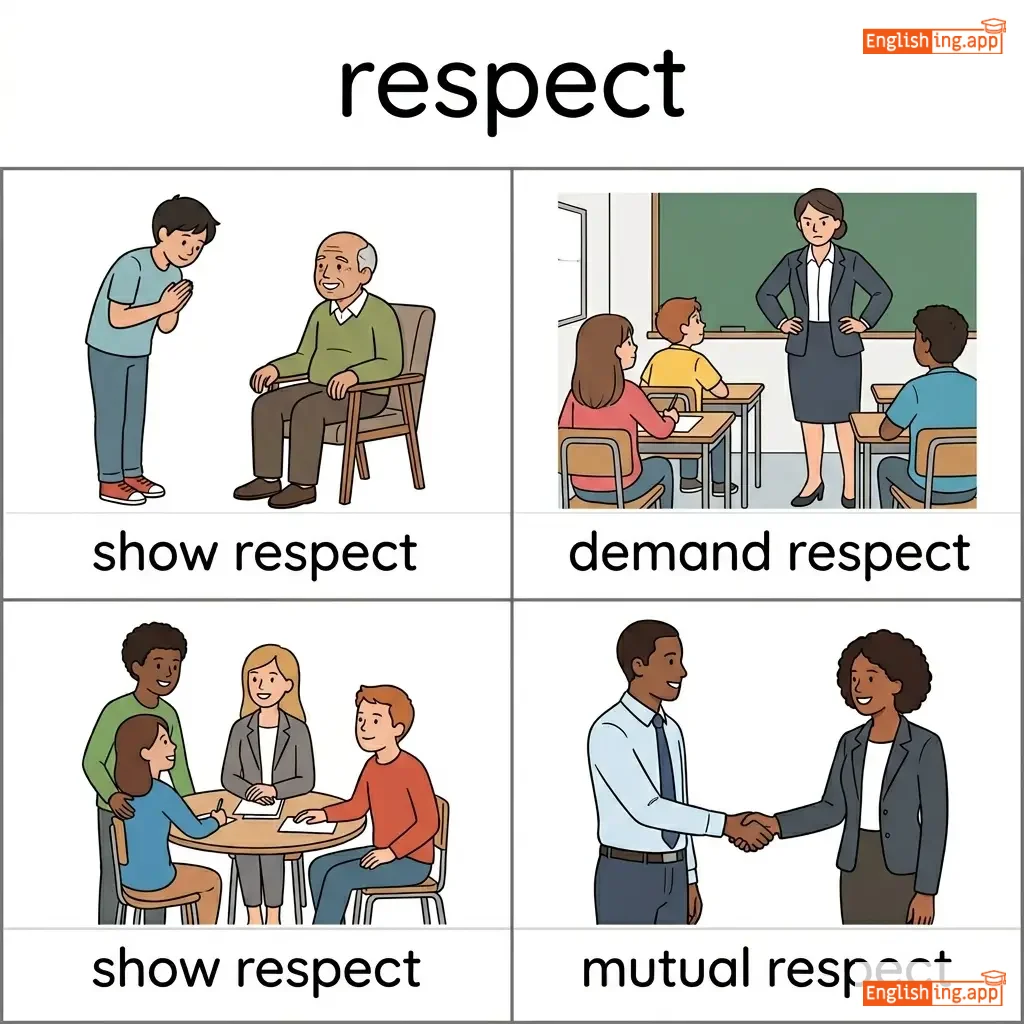
show respect, demand respect, mutual respect
••••••
|
Respect in Chinese is '尊重' - 'Zūn' for high regard and 'zhòng' for respect!
••••••
|
|
🎩
••••••
|
/rɪˈspek.tə.bəl/
adjective
(rè-sī-pé-tek-bǎo)
••••••
|
- •••••• |
体面
tǐmiàn
••••••
|
- •••••• | - •••••• | - •••••• | - •••••• |
worthy of respect; having good reputation; decent
••••••
|
He comes from a respectable family in the community. |
他来自社区一个体面的家庭。
Tā láizì shèqū yīgè tǐmiàn de jiātíng.
••••••
|
- •••••• | - •••••• | - •••••• |
honorable, reputable, decent, worthy, esteemed
••••••
|
disreputable, shameful, disgraceful, dishonor
••••••
|
respectable family, respectable person, respectable society, respectable profession
••••••
|
In Chinese, '体面' (tǐmiàn) is used to describe someone with dignity and respect.
••••••
|
|
👥
••••••
|
/rɪˈspek.tɪv/
adjective
(rīsīpèktìf)
••••••
|
- •••••• |
各自的; 相关的
gèzì de; xiāngguān de
••••••
|
- •••••• | - •••••• | - •••••• | - •••••• |
belonging to each individual; particular to each
••••••
|
The students returned to their respective classrooms after lunch. |
学生们在午餐后回到了各自的教室。
Xuéshēng men zài wǔcān hòu huídào le gèzì de jiàoshì.
••••••
|
- •••••• | - •••••• | - •••••• |
individual, particular, separate, own
••••••
|
collective, shared, common, joint
••••••
|
respective roles, respective positions, respective duties, respective homes
••••••
|
将'各自的'与每个人特有的联系在一起,帮助记忆。
••••••
|
|
📋
••••••
|
/rɪˈspektɪvli/
adverb
(rèspèktívli)
••••••
|
- •••••• |
分别;按照给定的顺序;分开且按已经提到的顺序
fēnbié
••••••
|
- •••••• | - •••••• | - •••••• | - •••••• |
in the order given; separately and in the order already mentioned
••••••
|
John and Mary are 25 and 30 years old respectively.
约翰和玛丽分别是25岁和30岁。
••••••
|
约翰和玛丽分别是25岁和30岁。
Yuēhàn hé mǎlì fēnbié shì 25 suì hé 30 suì.
••••••
|
- •••••• | - •••••• | - •••••• |
separately, individually, correspondingly
••••••
|
collectively, together, jointly
••••••
|
respectively speaking, respectively mentioned, respectively assigned
••••••
|
Respectively in Chinese sounds like 'fēnbié', think of them being mentioned in order.
••••••
|
|
💬
••••••
|
/rɪˈspɒnd/
verb
(回应)
••••••
|
|
回应
hui ying
••••••
|
responded
回应了
••••••
|
responded
回应了
••••••
|
responds
回应
••••••
|
responding
回应中
••••••
|
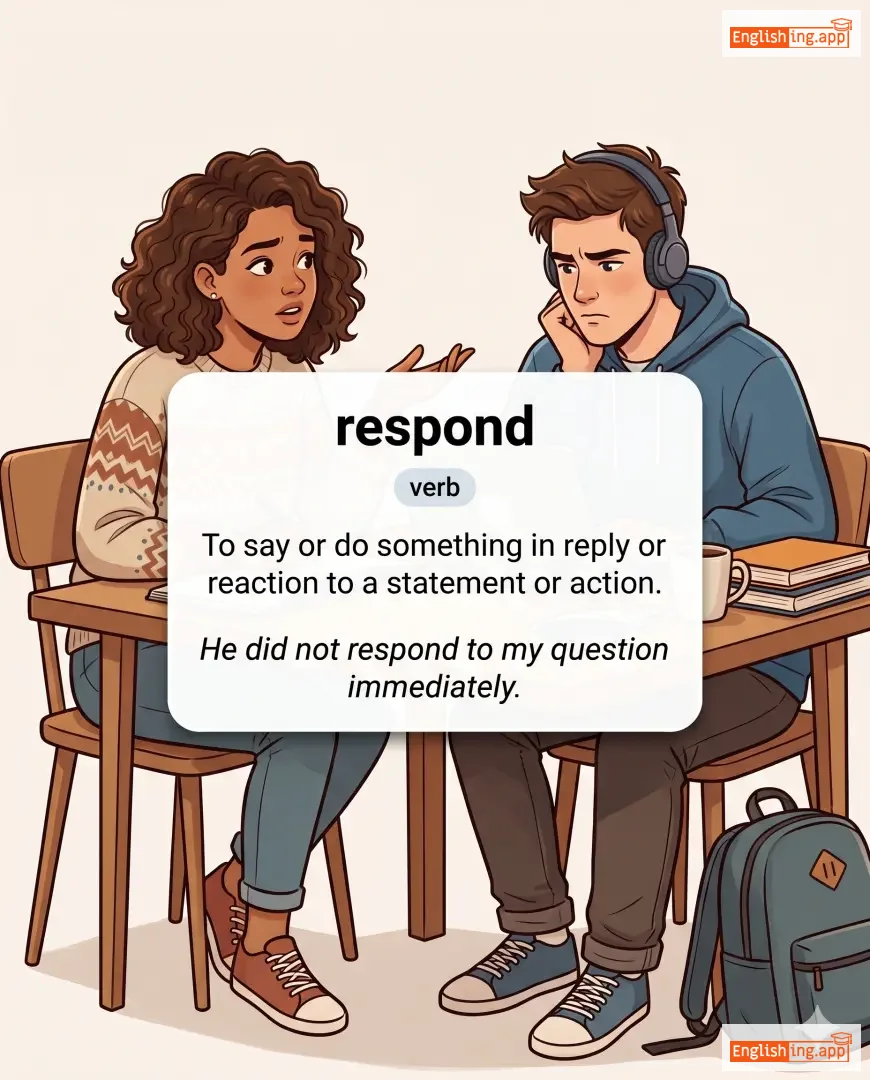
To say or do something in reply or reaction to a statement or action.
••••••
|
He did not respond to my question immediately.
他没有立即回应我的问题。
••••••
|
他没有立即回应我的问题。
Ta meiyou liji hui ying wode wenti.
••••••
|
respond to treatment
回应治疗
••••••
|
To show improvement after receiving medical treatment.
••••••
|
回应治疗
Hui ying zhi liao
••••••
|
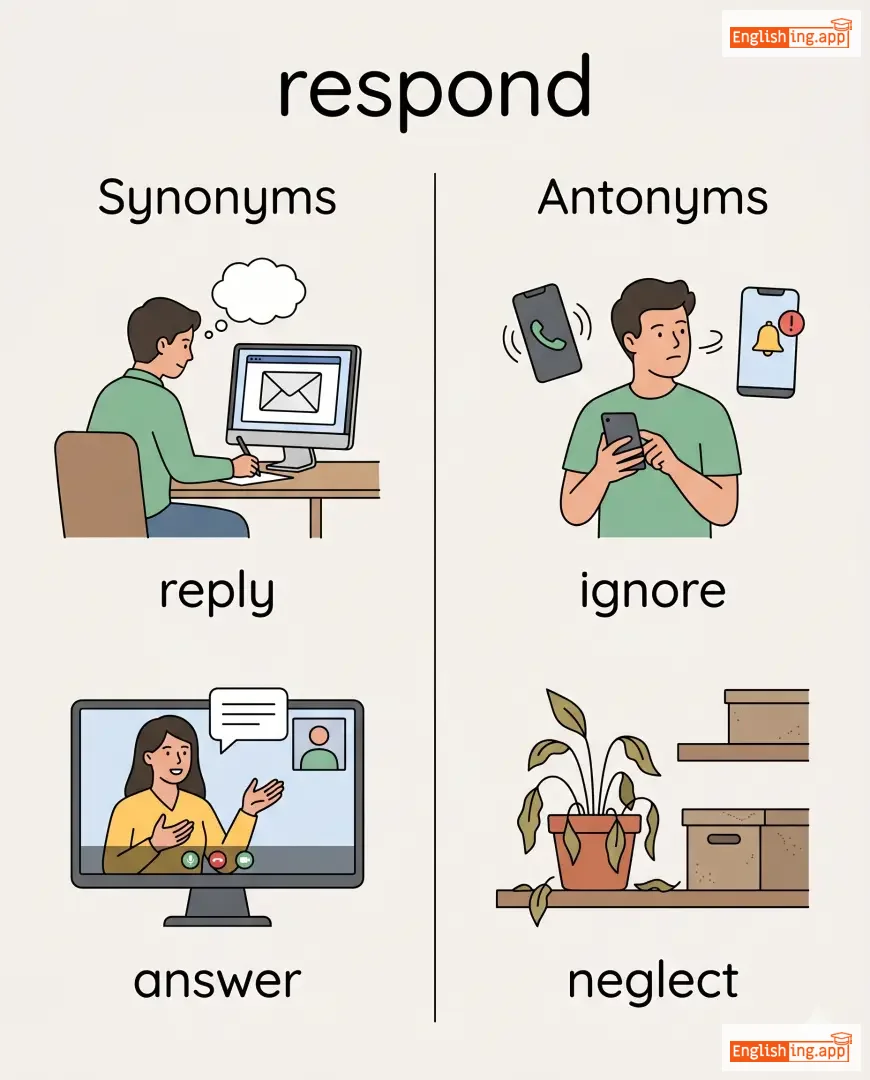
reply, answer, react, acknowledge, retort
••••••
|
ignore, neglect, disregard
••••••
|
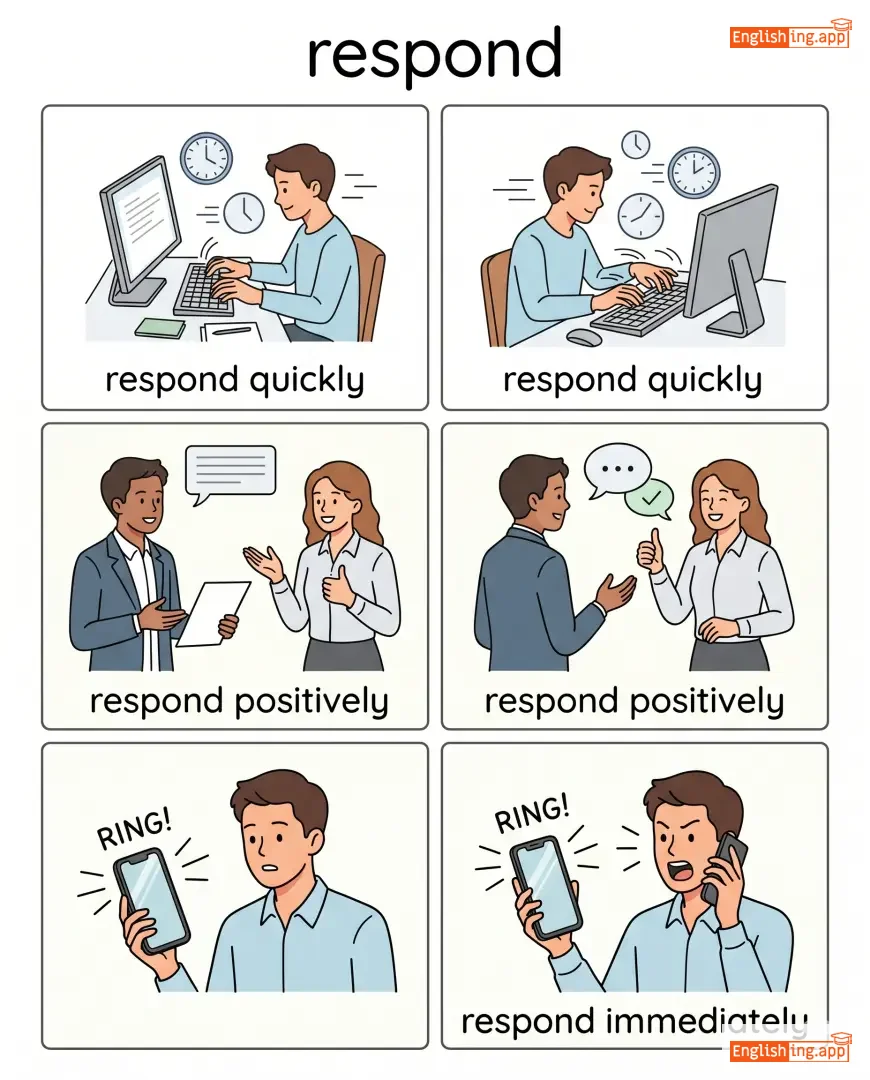
respond quickly, respond positively, respond immediately, respond appropriately
••••••
|
回应就像回忆一样,回应人们的问题。
••••••
|
|
🗣️
••••••
|
/rɪˈspɒndənt/
noun
(响应者)
••••••
|
- •••••• |
响应者
xiǎngyìng zhě
••••••
|
- •••••• | - •••••• | - •••••• | - •••••• |
A person who replies to something, especially in a survey or legal case
••••••
|
The survey had over 1,000 respondents. |
调查有超过1000名响应者。
Diàochá yǒu chāoguò 1000 míng xiǎngyìng zhě.
••••••
|
- •••••• | - •••••• | - •••••• |
participant, answerer, replier, defendant
••••••
|
petitioner, complainant
••••••
|
survey respondent, legal respondent, questionnaire respondent
••••••
|
Respondent 意思是回应者 🗣️ - 在调查中,响应者是回应问题的人。
••••••
|
|
💬
••••••
|
/rɪˈspɒns/
noun
(rè-sī-puǎnsī)
••••••
|
- •••••• |
回应; 反应
hui ying; fan ying
••••••
|
- •••••• | - •••••• | - •••••• | - •••••• |
a reaction to something; an answer or reply; the way in which something reacts to external stimulus
••••••
|
The government's response to the crisis was swift and decisive. |
政府对危机的回应迅速而果断。
Zhengfu dui weiji de huiying xunsu er guodan.
••••••
|
- •••••• | - •••••• | - •••••• |
reply, answer, reaction, feedback
••••••
|
question, inquiry, silence, ignorance
••••••
|
quick response, positive response, emergency response, in response to
••••••
|
In Chinese, the response is quick like a Chinese 'hui ying'.
••••••
|
|
🛡️
••••••
|
/rɪˌspɒn.sɪˈbɪl.ɪ.ti/
noun
(里斯邦西比尔伊蒂)
••••••
|
|
责任
ze ren
••••••
|
- •••••• | - •••••• | - •••••• | - •••••• |
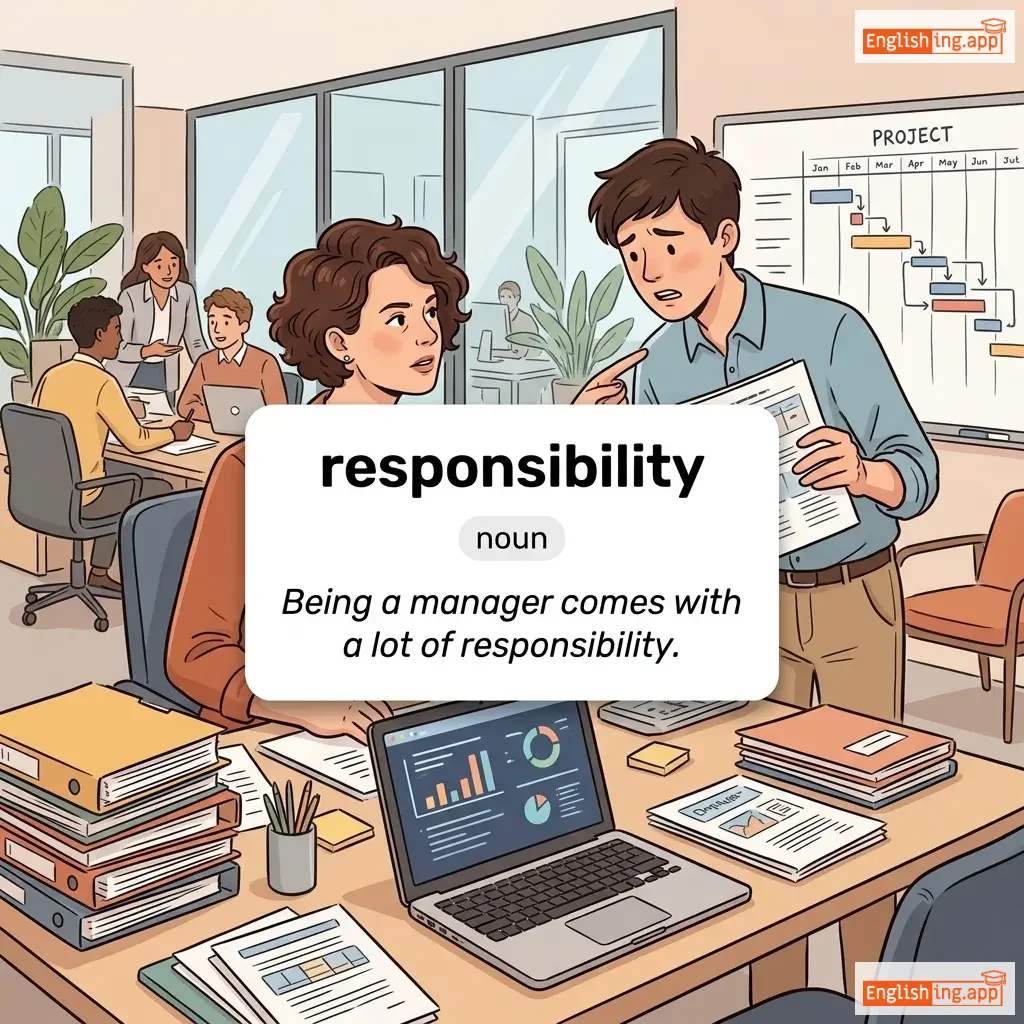
the state or fact of having a duty to deal with something or of having control over someone
••••••
|
Taking responsibility for your actions shows maturity.
为自己的行为负责,展现出成熟。
••••••
|
为自己的行为负责,展现出成熟。
wei zi ji de xing wei fu ze ren zhan xian chu cheng shu
••••••
|
- •••••• | - •••••• | - •••••• |
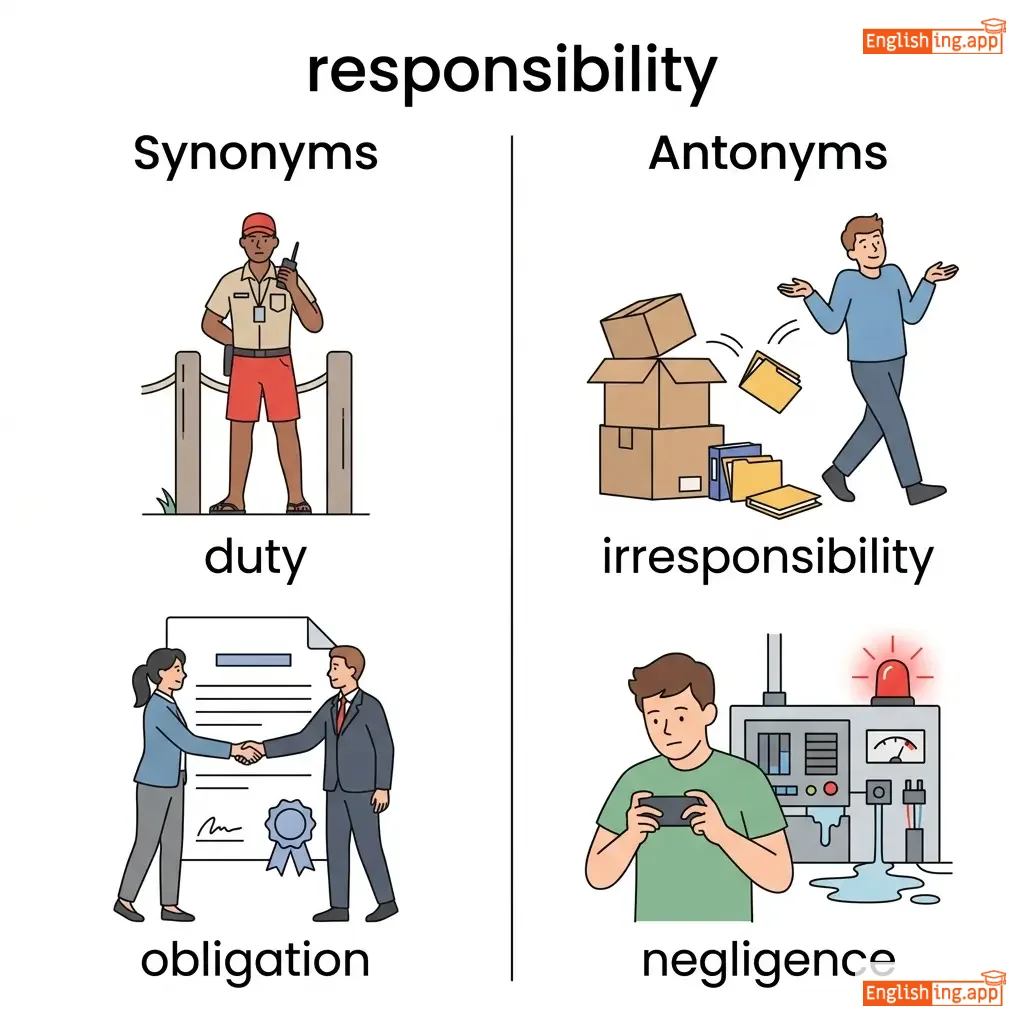
duty, obligation, accountability, liability
••••••
|
irresponsibility, carelessness, negligence
••••••
|
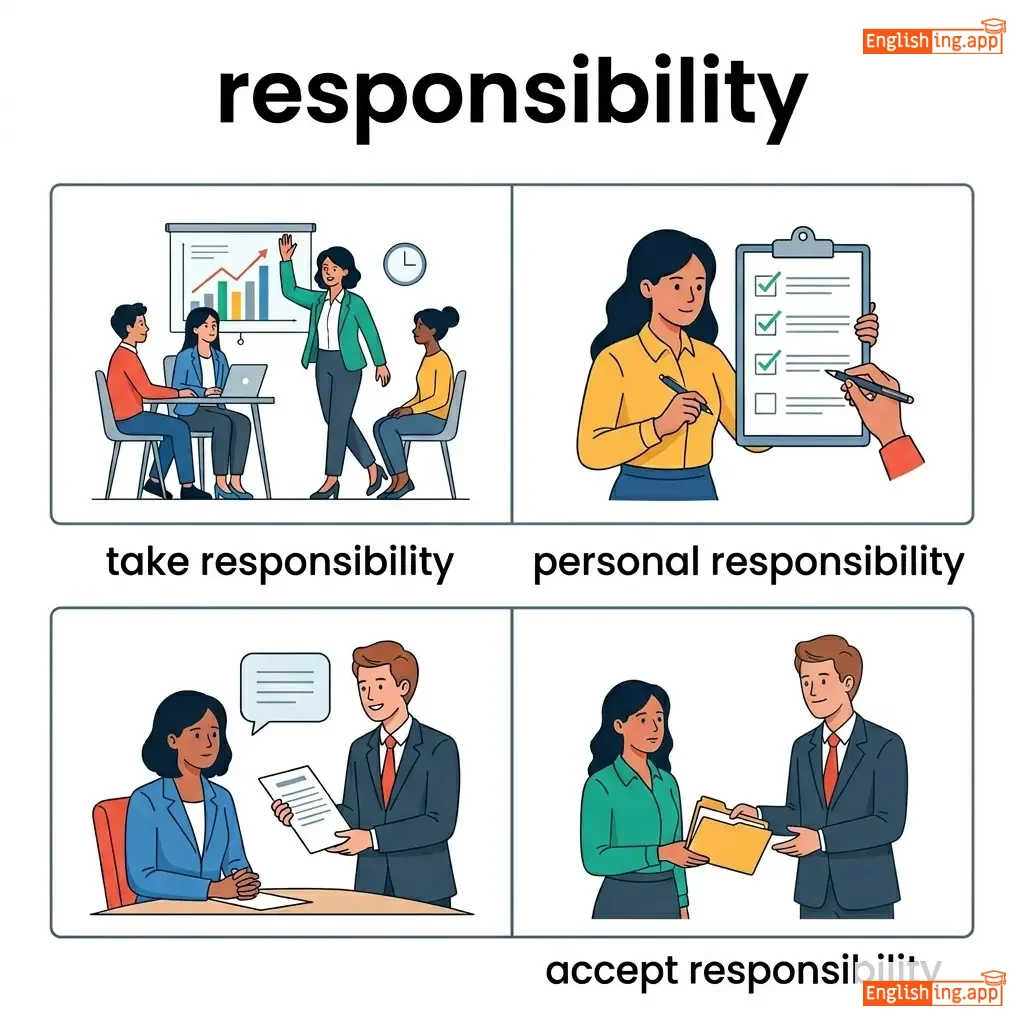
take responsibility, personal responsibility, full responsibility, social responsibility
••••••
|
Be Responsible = 成为 责任人; 想象你手里拿着一个 锁 键, 锁着 '责任' 的 门, 门后是 成熟 (mature) 的你。
••••••
|
|
⚖️
••••••
|
/rɪˈspɒn.sə.bəl/
adjective
(责任的)
••••••
|
- •••••• |
负责任的;有义务的;可靠且值得信赖的
fù zérèn de; yǒu yìwù de; kěkào qiě zhídé xìnlài de
••••••
|
- •••••• | - •••••• | - •••••• | - •••••• |
accountable; having duties; reliable and trustworthy
••••••
|
Parents are responsible for their children's education and well-being. |
父母对孩子的教育和福利负责。
Fùmǔ duì háizi de jiàoyù hé fúlì fùzé.
••••••
|
- •••••• | - •••••• | - •••••• |
accountable, liable, answerable, trustworthy, reliable
••••••
|
irresponsible, unreliable, unaccountable, careless
••••••
|
responsible person, responsible behavior, responsible for, hold responsible
••••••
|
在中文中,负责任的人就像父母对孩子的照顾一样,值得信赖。
••••••
|
|
🛌
••••••
|
/rɛst/
noun, verb
••••••
|
- •••••• | - •••••• |
rested
••••••
|
rested
••••••
|
rests
••••••
|
resting
••••••
|
to cease work or movement in order to relax or recover strength
••••••
|
He needs to rest after the long journey. |
- •••••• |
rest on one's laurels |
to stop trying or improving after achieving success
••••••
|
- •••••• |
repose, relax, take a break, snooze
••••••
|
work, toil, exert
••••••
|
get rest, take a rest, have a rest, rest up
••••••
|
No •••••• |
|
🍴
••••••
|
/ˈrɛst(ə)rɒnt/
noun
(餐馆)
••••••
|
- •••••• |
餐馆
canguan
••••••
|
- •••••• | - •••••• | - •••••• | - •••••• |
a place where meals are prepared and served to customers
••••••
|
We went to the restaurant for dinner.
我们去餐馆吃晚餐。
••••••
|
我们去餐馆吃晚餐。
Wǒmen qù cānguǎn chī wǎncān.
••••••
|
- •••••• | - •••••• | - •••••• |
eatery, diner, bistro, café
••••••
|
home, kitchen, cafeteria
••••••
|
fine-dining restaurant, fast food restaurant, local restaurant, vegetarian restaurant
••••••
|
餐馆是吃饭的地方 (Cānguǎn shì chīfàn de dìfāng) - Go to the restaurant
••••••
|
|
🛠️
••••••
|
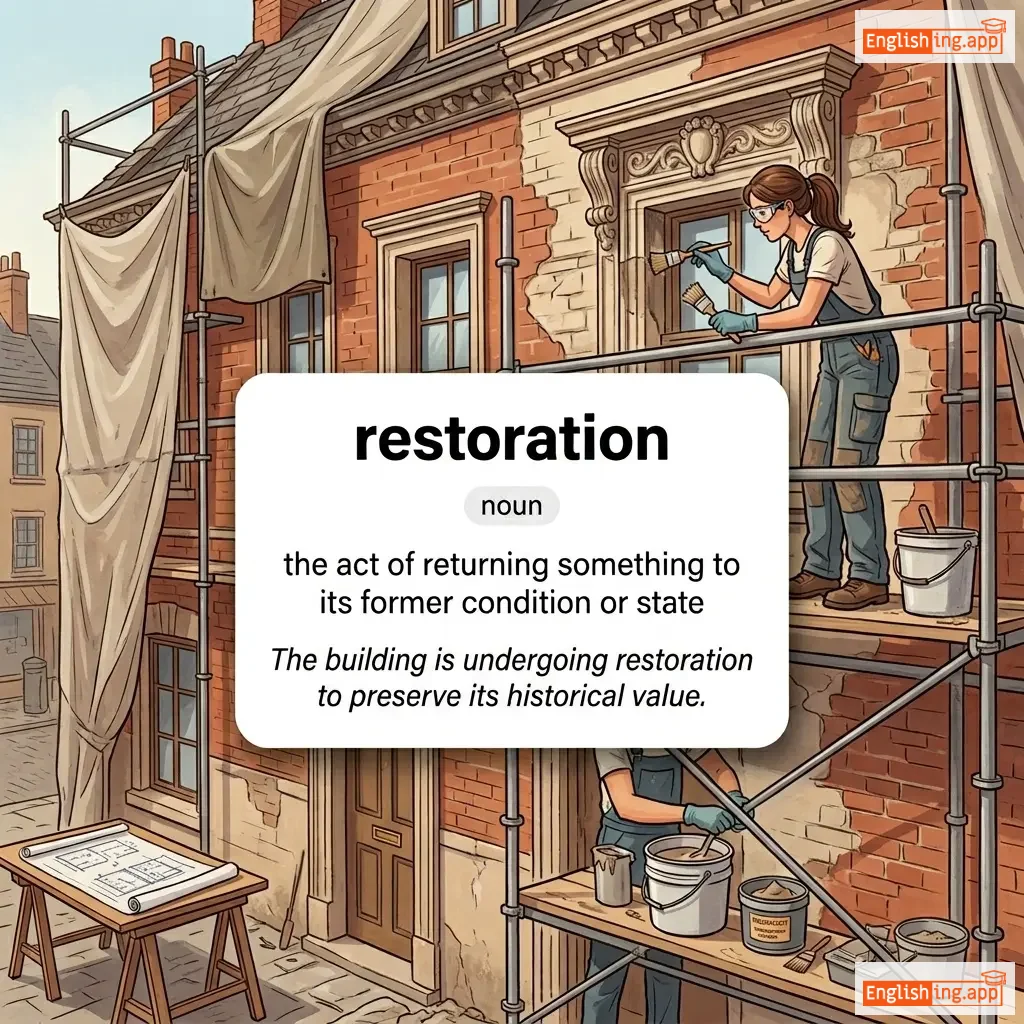
/ˌrɛstəˈreɪʃən/
noun
(修复)
••••••
|
|
修复
xiūfù
••••••
|
- •••••• | - •••••• | - •••••• | - •••••• |
the act of returning something to its former condition or state
••••••
|
The building is undergoing restoration to preserve its historical value. |
这座建筑正在进行修复,以保护其历史价值。
Zhè zuò jiànzhú zhèngzài jìnxíng xiūfù, yǐ bǎohù qí lìshǐ jiàzhí.
••••••
|
- •••••• | - •••••• | - •••••• |
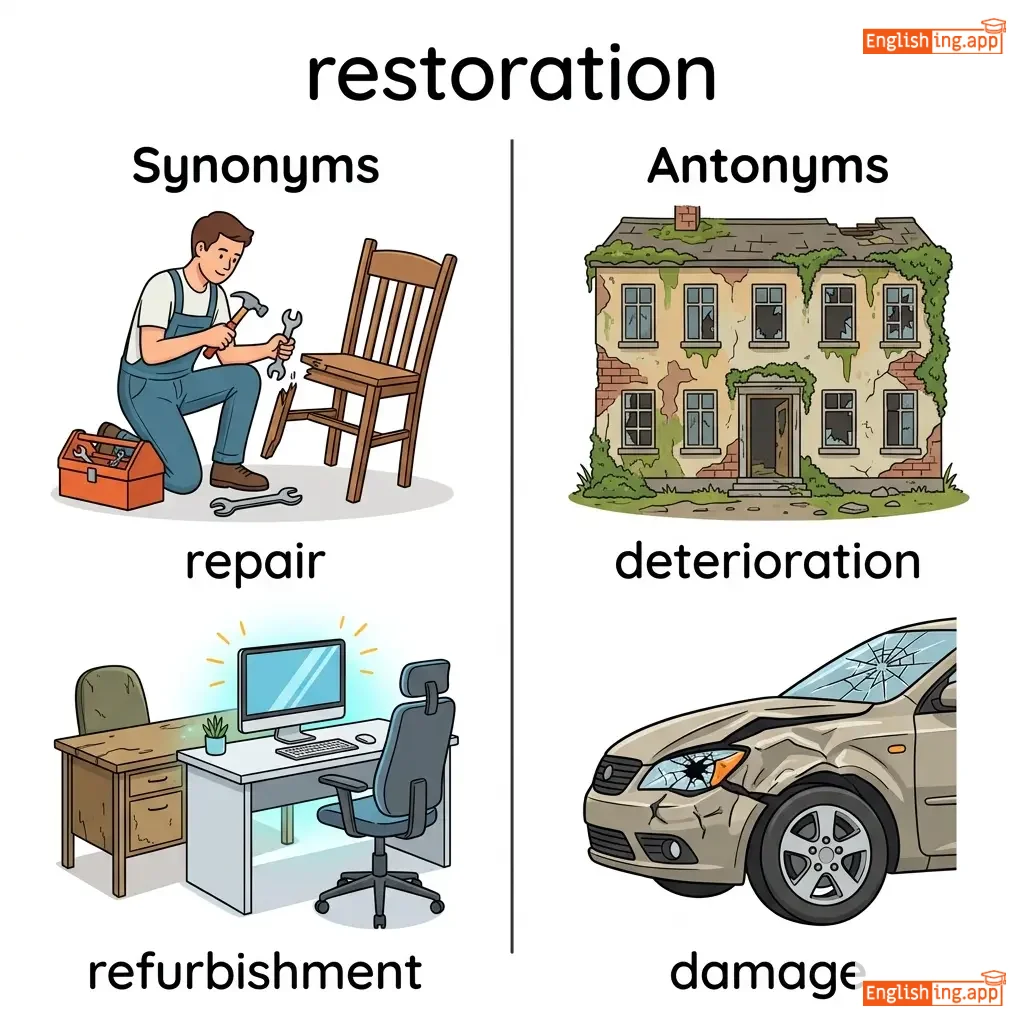
repair, refurbishment, renewal, revival
••••••
|
deterioration, damage, destruction
••••••
|
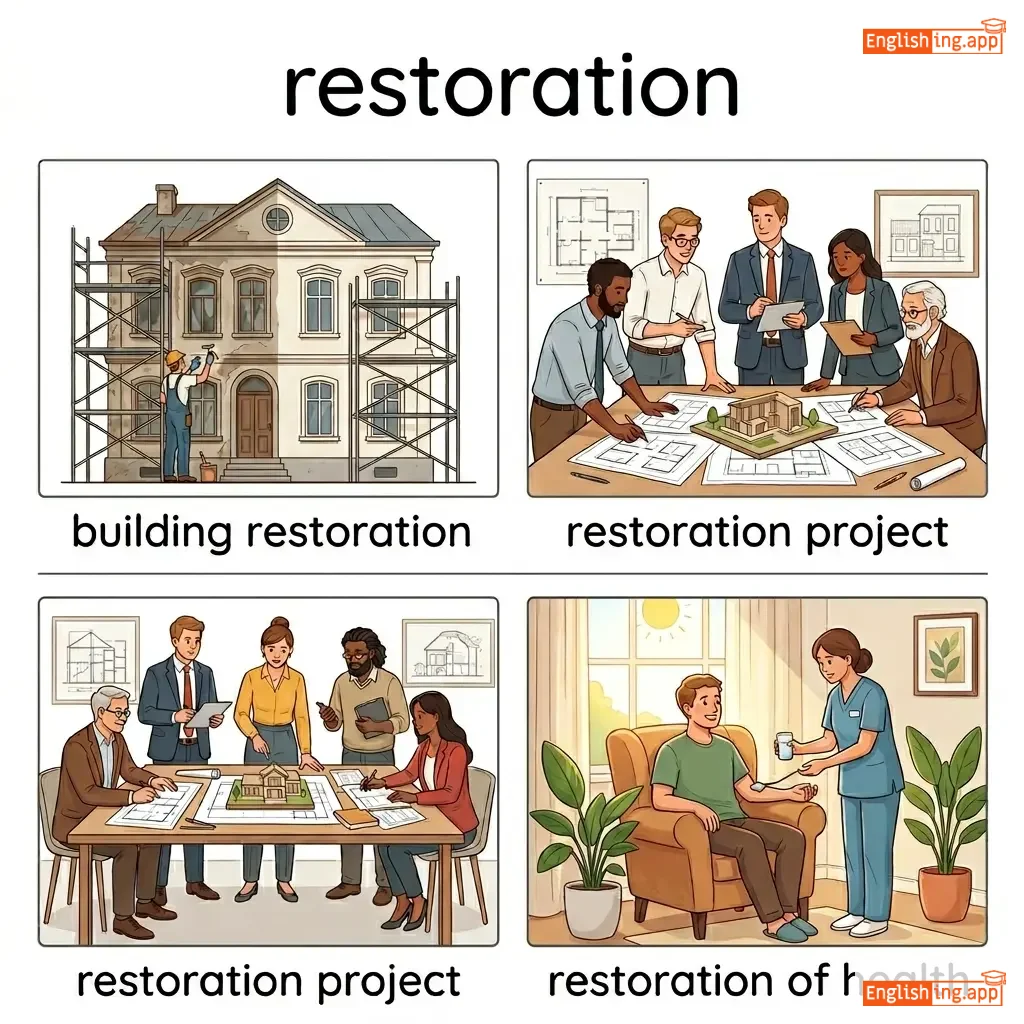
building restoration, restoration project, restoration of health
••••••
|
修复 sounds like restoration – it's the act of returning something to its original form.
••••••
|
|
🔧
••••••
|
/rɪˈstɔː/
verb
(rɪˈstɔːr)
••••••
|
|
恢复
huīfù
••••••
|
restored
rɪˈstɔːrd
••••••
|
restored
rɪˈstɔːrd
••••••
|
restores
rɪˈstɔːrz
••••••
|
restoring
rɪˈstɔːrɪŋ
••••••
|
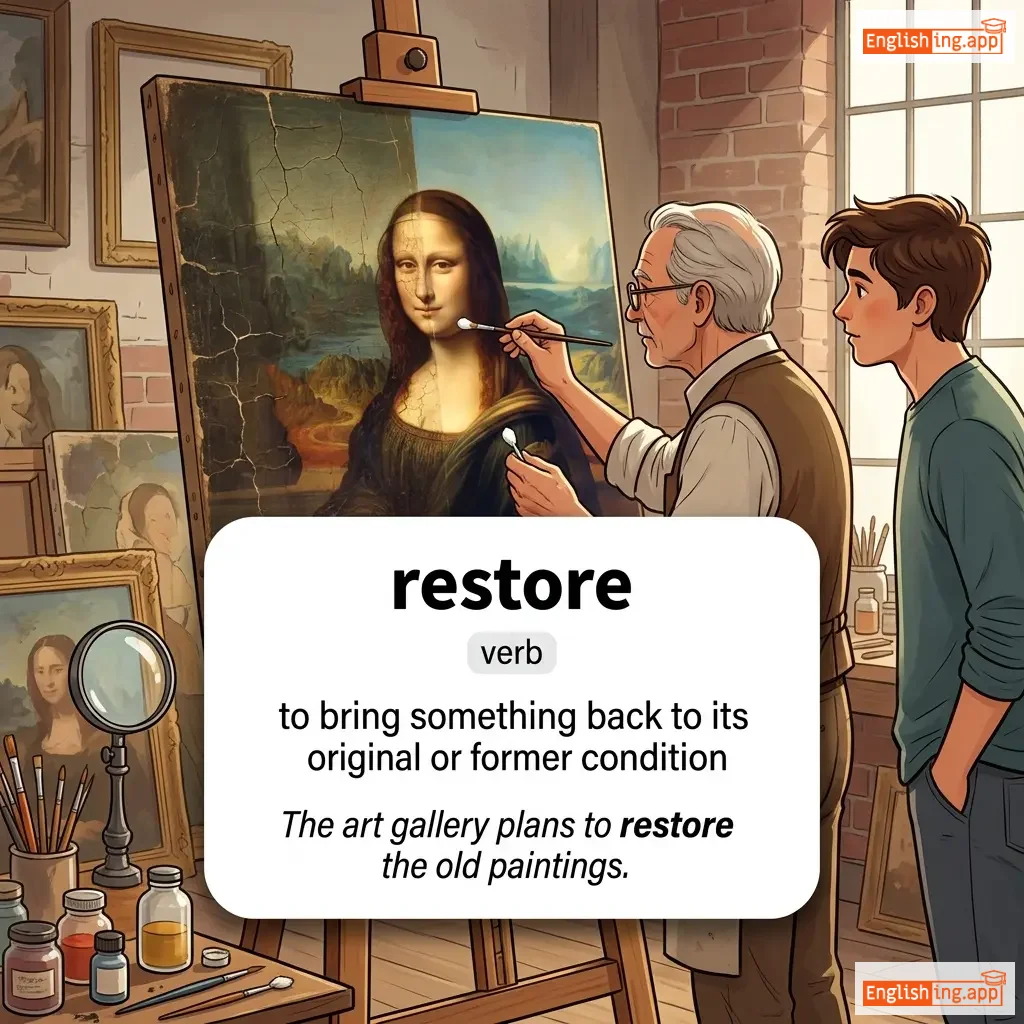
to bring something back to its original or former condition
••••••
|
The art gallery plans to restore the old paintings.
艺术画廊计划恢复旧画作。
••••••
|
艺术画廊计划恢复旧画作。
Yìshù huàláng jìhuà huīfù jiù huàzuò.
••••••
|
- •••••• | - •••••• | - •••••• |
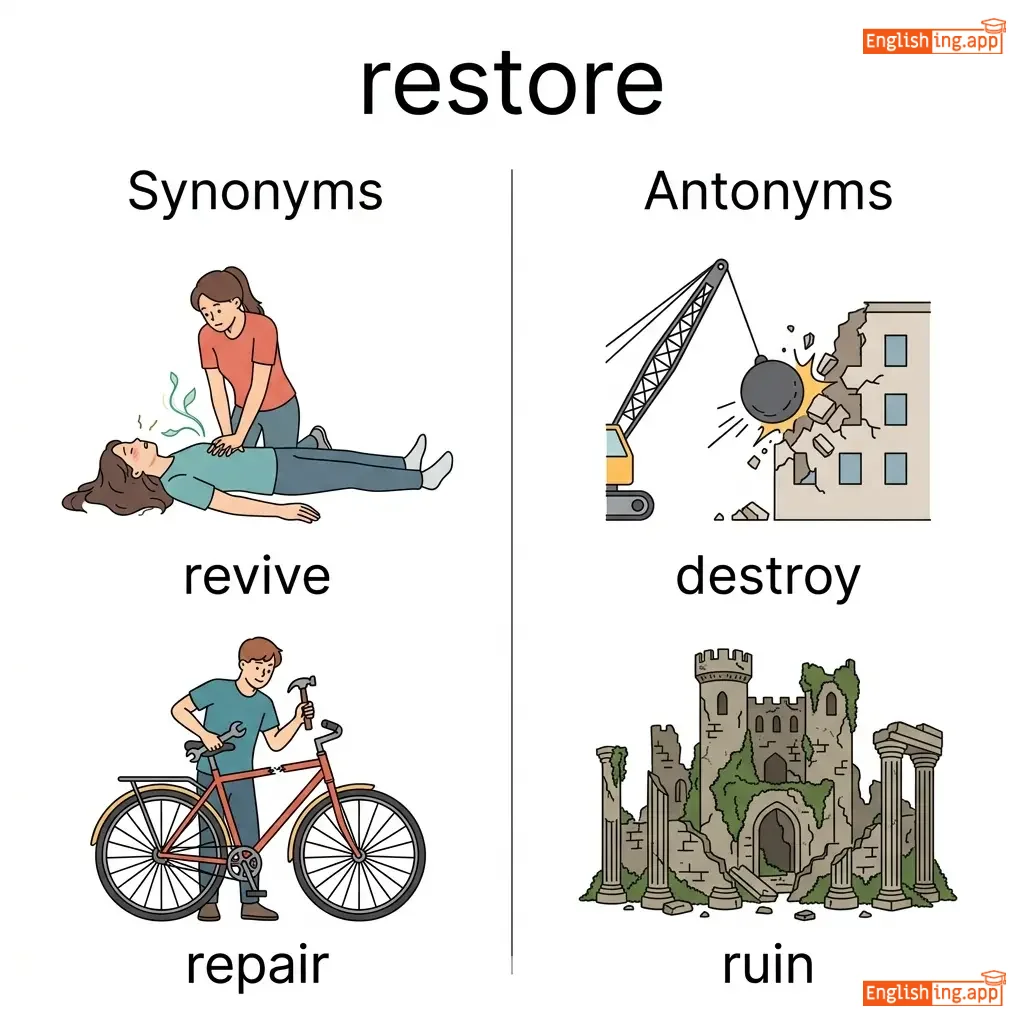
revive, repair, renovate, regenerate
••••••
|
destroy, ruin, damage
••••••
|
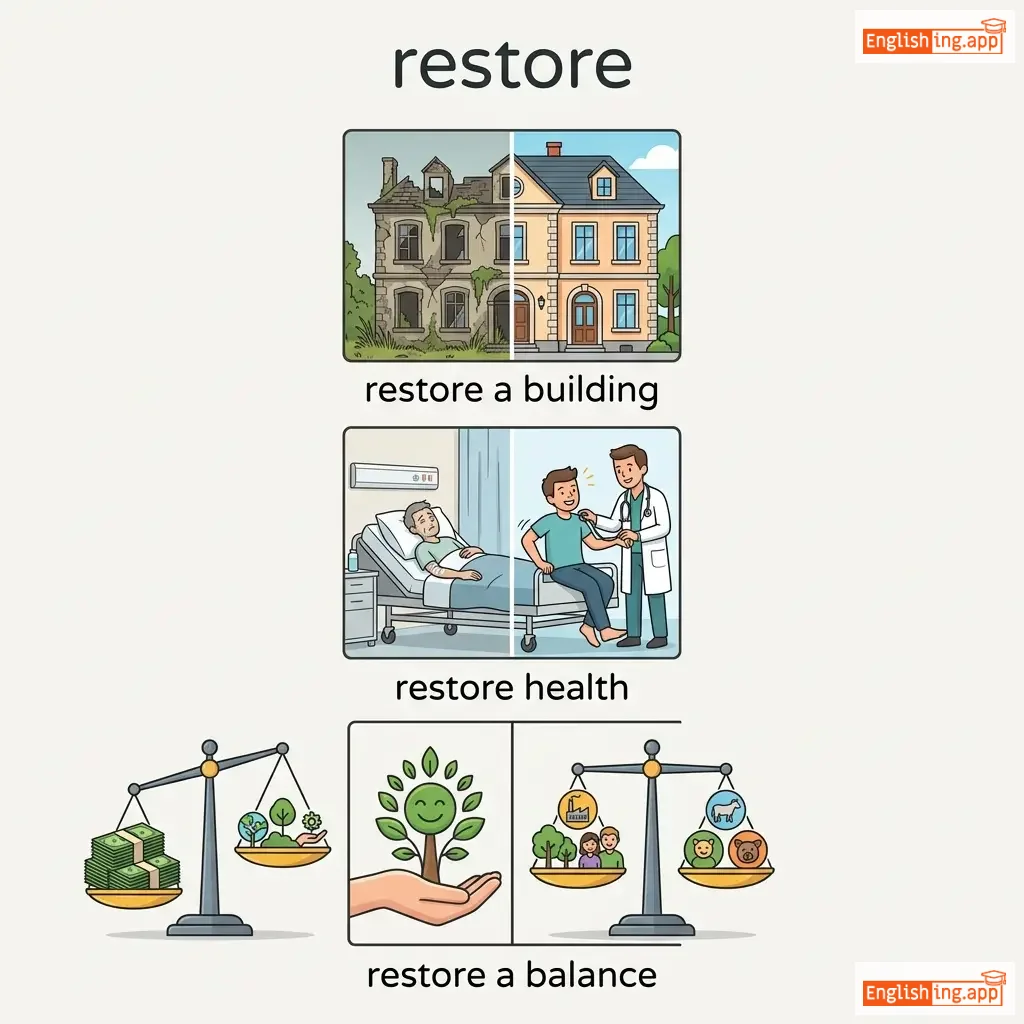
restore a building, restore health, restore a balance, restore the system
••••••
|
恢复 (restore) 帮助让旧物焕然一新!
••••••
|
|
🛑
••••••
|
/rɪˈstreɪnt/
noun
(雷斯特雷因特)
••••••
|
- •••••• |
克制
ke zhi
••••••
|
- •••••• | - •••••• | - •••••• | - •••••• |
the act of holding back or controlling; self-control
••••••
|
He showed great restraint in not responding to the insult.
他在没有回应侮辱时表现出了极大的克制。
••••••
|
他在没有回应侮辱时表现出了极大的克制。
Tā zài méiyǒu huíyīng wǔrǔ shí biǎoxiàn chūle jí dà de kèzhì.
••••••
|
with restraint
克制地
••••••
|
acting with moderation or self-control
••••••
|
克制地
Kèzhì de
••••••
|
control, moderation, discipline, limitation
••••••
|
freedom, excess, indulgence
••••••
|
show restraint, exercise restraint, with restraint
••••••
|
Restraint 就像火车的刹车,意味着控制自己。
••••••
|
|
🚫
••••••
|
/rɪˈstrɪkt/
verb
(限制)
••••••
|
- •••••• |
限制
xianzhi
••••••
|
restricted
限制
••••••
|
restricted
限制
••••••
|
restricts
限制
••••••
|
restricting
限制
••••••
|
To limit the size, amount, or range of something.
••••••
|
The government decided to restrict the use of plastic bags.
政府决定限制塑料袋的使用。
••••••
|
政府决定限制塑料袋的使用。
Zhengfu jueding xianzhi suliada de shiyong.
••••••
|
restrict access
限制访问
••••••
|
To limit or control who can enter or use something.
••••••
|
限制访问
Xianzhi fangwen
••••••
|
limit, confine, curb, constrain, control
••••••
|
allow, permit, enable
••••••
|
restrict access, restrict movement, restrict freedom, restrict use
••••••
|
Restrict意为 '限制' - 给某物设限.
••••••
|
|
🚫
••••••
|
/rɪˈstrɪk.ʃən/
noun
(限制)
••••••
|
- •••••• |
限制; 限定; 控制
xianzhi; xian ding; kongzhi
••••••
|
- •••••• | - •••••• | - •••••• | - •••••• |
a limiting condition or measure; the limitation or control of someone or something
••••••
|
There are strict restrictions on smoking in public places. |
在公共场所吸烟有严格的限制。
Zai gonggong changsuo xiyan you yange de xianzhi.
••••••
|
- •••••• | - •••••• | - •••••• |
limitation, constraint, ban, prohibition
••••••
|
freedom, permission, allowance, liberty
••••••
|
impose restrictions, travel restrictions, age restrictions, strict restrictions
••••••
|
限制就像墙壁,阻挡了你的自由。
••••••
|
|
🏆
••••••
|
/rɪˈzʌlt/
noun
(rízélt)
••••••
|
- •••••• |
结果
jieguo
••••••
|
- •••••• | - •••••• | - •••••• | - •••••• |
a consequence, effect, or outcome of something
••••••
|
The result of the test was excellent. |
测试的结果是优秀的。
Ceshi de jieguo shi youxiu de.
••••••
|
- •••••• | - •••••• | - •••••• |
outcome, consequence, effect, result
••••••
|
cause, origin
••••••
|
result in, result from, final result
••••••
|
结果 (jieguo) 来自努力 - Result comes from effort
••••••
|
|
📄
••••••
|
/rɪˈzjuːm/ (verb), /ˈrɛzjʊmeɪ/ (noun)
verb, noun
(rɪˈzuːm)
••••••
|

|
恢复 / 简历
huīfù / jiǎnlì
••••••
|
resumed
rɪˈzuːmd
••••••
|
resumed
rɪˈzuːmd
••••••
|
resumes
rɪˈzuːmz
••••••
|
resuming
rɪˈzuːmɪŋ
••••••
|
to begin again after a pause; or a summary of one’s qualifications and work experience
••••••
|
She resumed her studies after a two-year break.
她在两年的休息后重新开始了她的学业。
••••••
|
她在两年的休息后重新开始了她的学业。
Tā zài liǎng nián de xiūxí hòu chóngxīn kāishǐle tā de xuéyè.
••••••
|
resume work
恢复工作
••••••
|
to start working again after a pause
••••••
|
恢复工作
huīfù gōngzuò
••••••
|
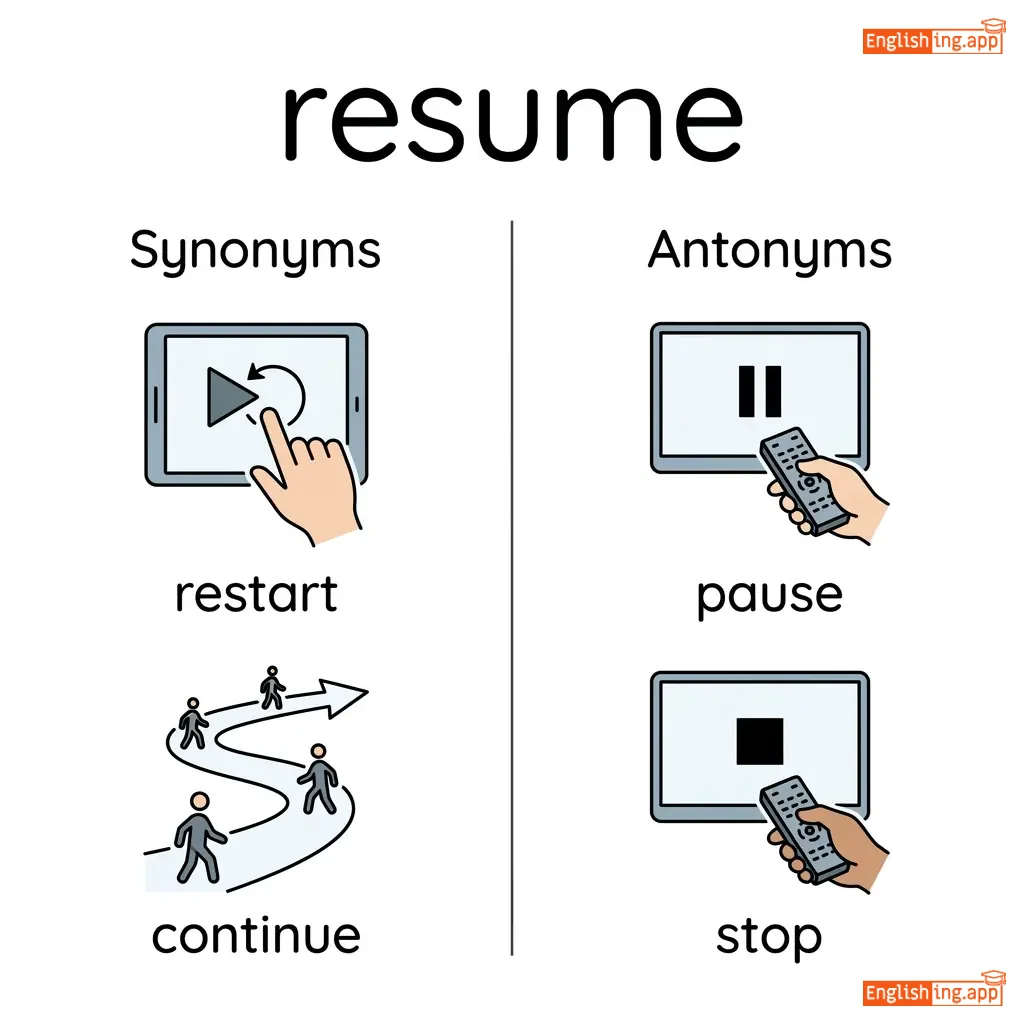
restart, continue, proceed, recommence
••••••
|
pause, stop, suspend
••••••
|
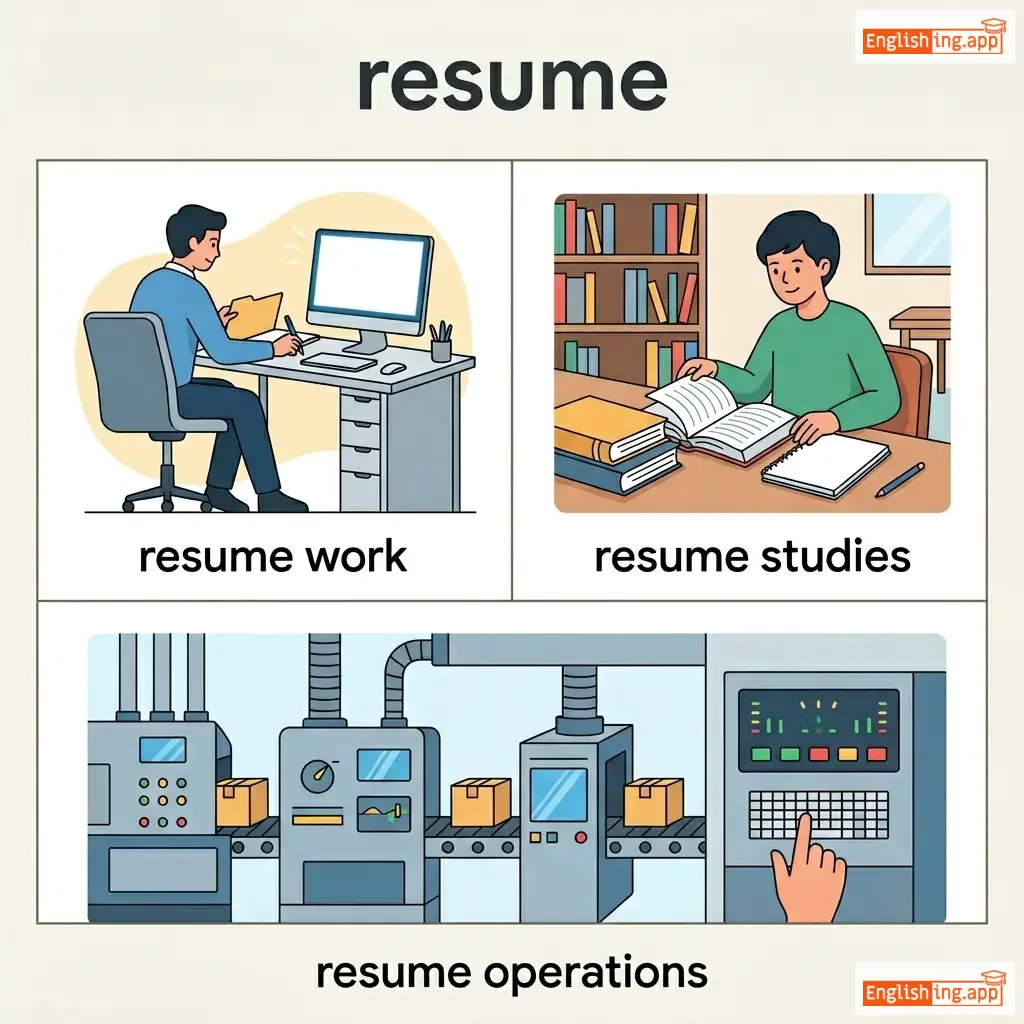
resume work, resume studies, resume operations, submit resume
••••••
|
Resume 是继续进行工作的意思,像是暂停后继续
••••••
|
|
🛍️
••••••
|
/ˈriːteɪl/
noun, verb
(零售)
••••••
|
- •••••• |
零售
ling shou
••••••
|
retailed
零售
••••••
|
retailed
零售
••••••
|
retails
零售
••••••
|
retailing
零售
••••••
|
the sale of goods to the public in small quantities for use or consumption rather than for resale
••••••
|
The company specializes in the retail of clothing and accessories.
公司专注于服装和配件的零售业务。
••••••
|
公司专注于服装和配件的零售业务。
Gongsi zhuanzhu yu fuzhuang he peijian de lingshou ye wu.
••••••
|
retail therapy
零售疗法
••••••
|
shopping as a way to improve mood
••••••
|
零售疗法
ling shou liaofa
••••••
|
sell, trade, merchandise, market
••••••
|
wholesale, purchase
••••••
|
retail store, retail price, retail business, retail sales
••••••
|
Retail – 小而美,享受购物
••••••
|
|
📌
••••••
|
/rɪˈteɪn/
verb
(rɪˈteɪn)
••••••
|
- •••••• |
保持
bǎo chí
••••••
|
retained
rɪˈteɪnd
••••••
|
retained
rɪˈteɪnd
••••••
|
retains
rɪˈteɪnz
••••••
|
retaining
rɪˈteɪnɪŋ
••••••
|
to keep possession of something
••••••
|
The company decided to retain its experienced employees.
公司决定保留其经验丰富的员工。
••••••
|
公司决定保留其经验丰富的员工。
Gōngsī juédìng bǎoliú qí jīngyàn fēngfù de yuángōng.
••••••
|
retain control
保持控制
••••••
|
to continue having authority or influence
••••••
|
保持控制
bǎo chí kòngzhì
••••••
|
keep, hold, preserve, maintain, reserve
••••••
|
lose, release, discard
••••••
|
retain control, retain talent, retain information, retain customers
••••••
|
保持听起来像retain,保持意味着保持某物。
••••••
|
|
💼
••••••
|
/rɪˈtaɪə/
verb
(rɪˈtaɪə)
••••••
|
- •••••• |
退休
tuìxiū
••••••
|
retired
rɪˈtaɪəd
••••••
|
retired
rɪˈtaɪəd
••••••
|
retires
rɪˈtaɪəz
••••••
|
retiring
rɪˈtaɪɪŋ
••••••
|
to stop working after reaching a certain age or having completed a career
••••••
|
She decided to retire after working for 40 years.
ʃi dɪˈsaɪdəd tə rɪˈtaɪər æftər wɜrkɪŋ fɔr 40 jɪərz
••••••
|
她决定在工作了40年后退休。
Tā juédìng zài gōngzuòle 40 nián hòu tuìxiū.
••••••
|
- •••••• | - •••••• | - •••••• |
quit, stop working, resign, leave
••••••
|
work, continue
••••••
|
retire from, retire early, retire peacefully
••••••
|
Retire 退休,当你累了就休息 (retire when you're tired, rest)
••••••
|
|
👴
••••••
|
/rɪˈtaɪərd/
adjective
(瑞泰德)
••••••
|
- •••••• |
退休
tuìxiū
••••••
|
- •••••• | - •••••• | - •••••• | - •••••• |
no longer working at one's job, typically because of having reached a certain age
••••••
|
My grandfather is a retired teacher who now enjoys gardening.
我的祖父是一位退休教师,现在享受园艺。
••••••
|
我的祖父是一位退休教师,现在享受园艺。
Wǒ de zǔfù shì yī wèi tuìxiū jiàoshī, xiànzài xiǎngshòu yuányì.
••••••
|
retired life
退休生活
••••••
|
the period of life after one stops working permanently
••••••
|
退休生活
tuìxiū shēnghuó
••••••
|
pensioned, inactive, elderly, ex-employed, withdrawn
••••••
|
working, employed, active
••••••
|
retired teacher, retired army officer, retired life, retired couple
••••••
|
退休是享受人生的时光,放松休息的开始!
••••••
|
|
👴
••••••
|
/rɪˈtaɪə.mənt/
noun
(rɪˈtaɪə.mənt)
••••••
|
- •••••• |
退休
tuìxiū
••••••
|
- •••••• | - •••••• | - •••••• | - •••••• |
the action or fact of leaving one's job and ceasing to work; the period of life after leaving work
••••••
|
He is planning his retirement after 40 years of service. |
他在工作40年后计划退休。
Tā zài gōngzuò 40 nián hòu jìhuà tuìxiū.
••••••
|
- •••••• | - •••••• | - •••••• |
pension, superannuation, withdrawal, resignation
••••••
|
employment, work, career, service
••••••
|
early retirement, retirement age, retirement plan, forced retirement
••••••
|
退休意味着放松享受晚年
••••••
|
|
🏕️
••••••
|
/rɪˈtriːt/
verb
(rɪˈtrit)
••••••
|
- •••••• |
撤退
chè tuì
••••••
|
retreated
rɪˈtrited
••••••
|
retreated
rɪˈtrited
••••••
|
retreats
rɪˈtrits
••••••
|
retreating
rɪˈtrɪtɪŋ
••••••
|
to move back or withdraw from a position or situation
••••••
|
The soldiers had to retreat after losing the battle.
士兵们在失去战斗后不得不撤退。
••••••
|
士兵们在失去战斗后不得不撤退。
Shì bīng men zài shī qù zhàn dòu hòu bù dé bù chè tuì.
••••••
|
beat a retreat
进行撤退
••••••
|
to withdraw or run away from a situation quickly
••••••
|
进行撤退
jìnxíng chè tuì
••••••
|
withdraw, back off, pull back, recoil, recede
••••••
|
advance, attack, proceed
••••••
|
military retreat, forced retreat, strategic retreat, retreat center
••••••
|
Retreat → 撤退 → 向后退
••••••
|
|
📦
••••••
|
/rɪˈtriːv/
verb
(rɪˈtriv)
••••••
|
- •••••• |
找回
zhao hui
••••••
|
retrieved
rɪˈtrivd
••••••
|
retrieved
rɪˈtrivd
••••••
|
retrieves
rɪˈtrivs
••••••
|
retrieving
rɪˈtrɪvɪŋ
••••••
|
to get something back that was lost or taken; to recover
••••••
|
She managed to retrieve her lost phone from the taxi.
她成功地从出租车中找回了她丢失的手机。
••••••
|
她成功地从出租车中找回了她丢失的手机。
Ta chenggong de cong chuzuche zhong zhaohui le ta diushi de shouji.
••••••
|
retrieve the situation
挽回局势
••••••
|
to improve a bad situation or make it better
••••••
|
挽回局势
wanhui jushi
••••••
|
recover, regain, fetch, reclaim, rescue
••••••
|
lose, abandon, misplace
••••••
|
retrieve data, retrieve information, retrieve files, retrieve memory
••••••
|
Retrieve 在中文中是找回失去的东西,就像把手机从出租车中找回
••••••
|
|
🔄
••••••
|
/rɪˈtɜːrn/
verb
(rɪˈtɜːrn)
••••••
|
|
返回
fǎn huí
••••••
|
returned
rɪˈtɜːrnd
••••••
|
returned
rɪˈtɜːrnd
••••••
|
returns
rɪˈtɜːrnz
••••••
|
returning
rɪˈtɜːnɪŋ
••••••
|
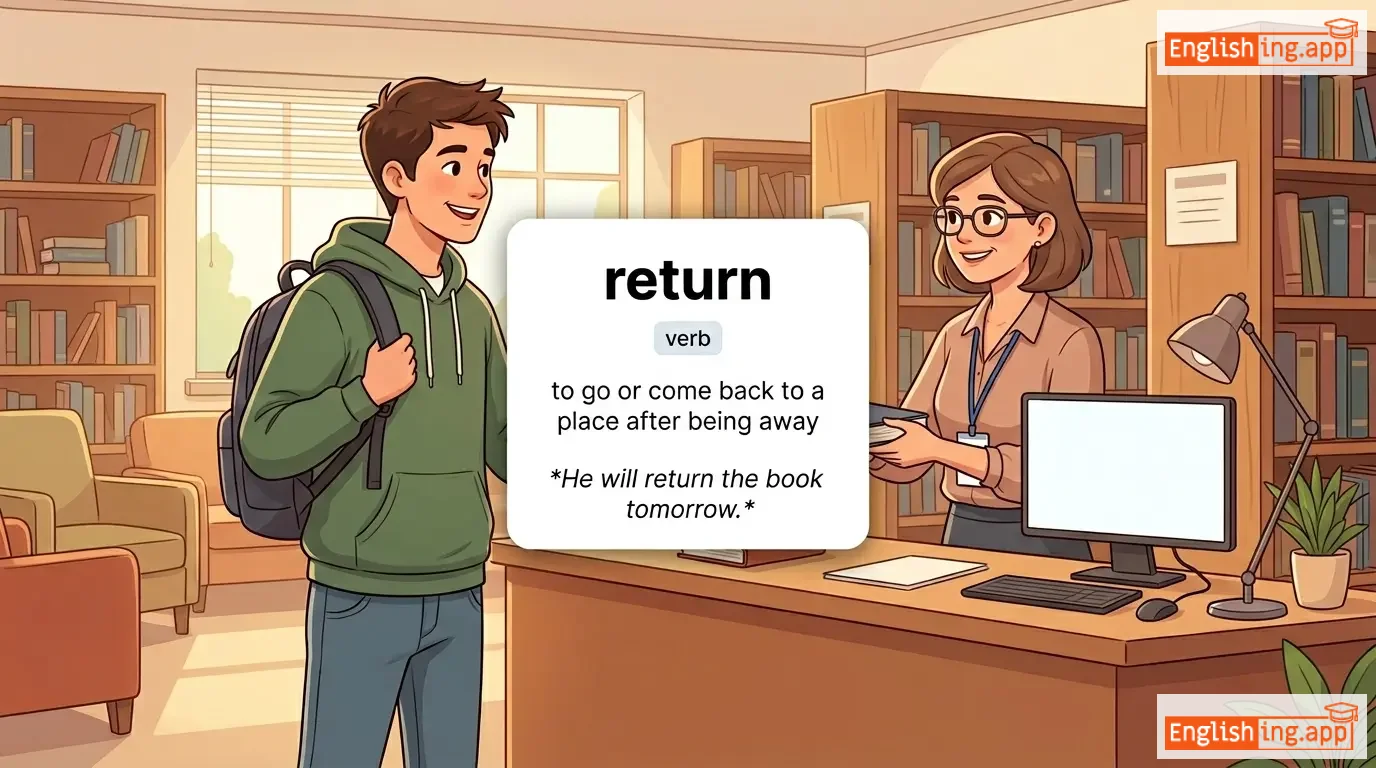
to come or go back to a place; to give back
••••••
|
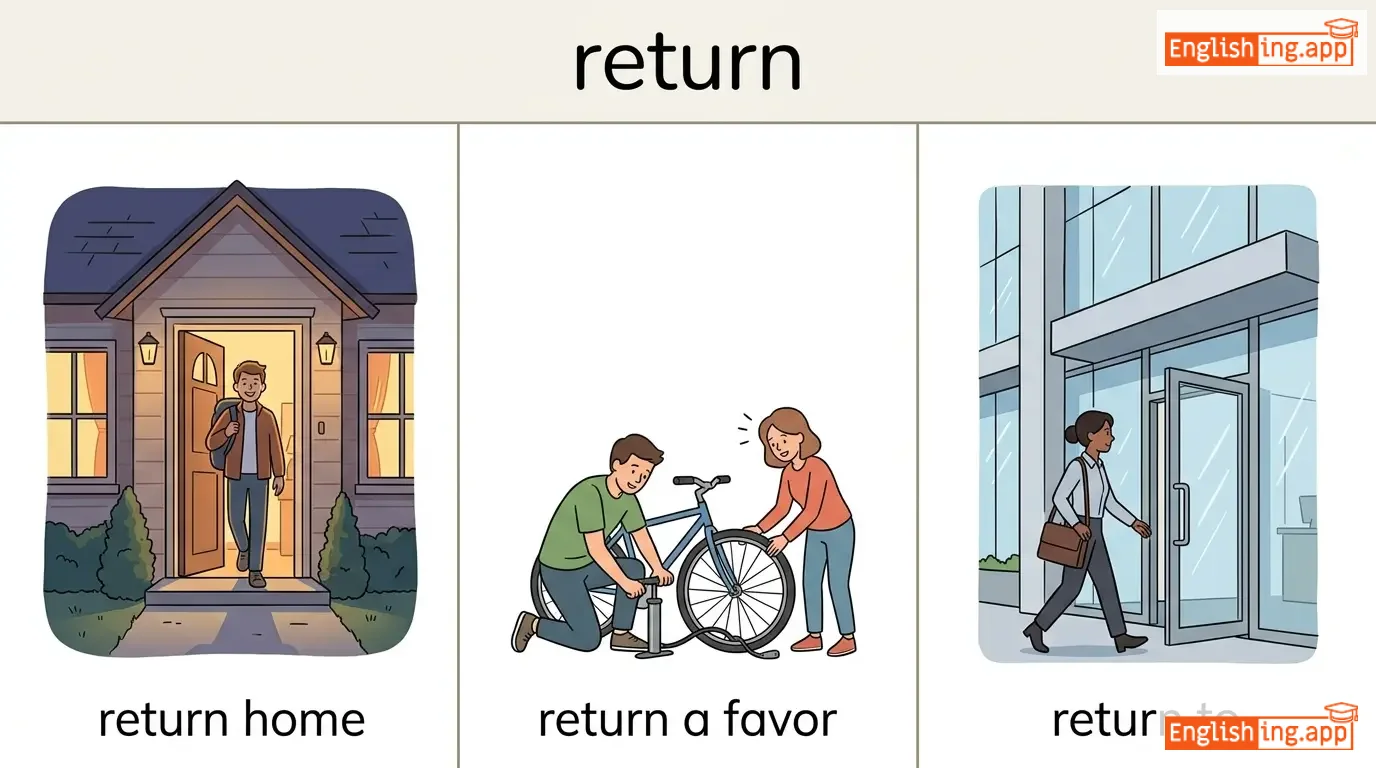
I will return home tomorrow.
我明天会回家。
••••••
|
我明天会回家。
Wǒ míngtiān huì huí jiā
••••••
|
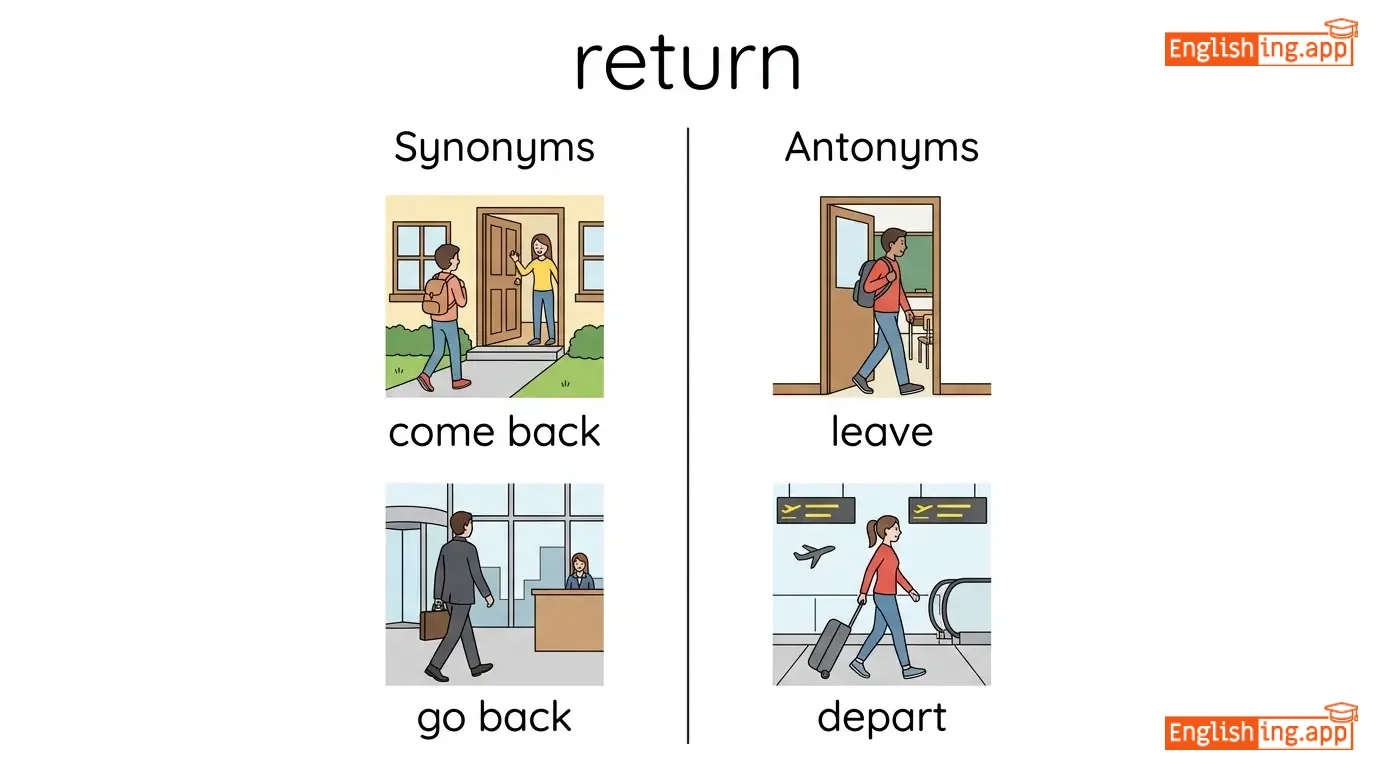
- •••••• | - •••••• | - •••••• |
come back, go back, give back, restore
••••••
|
leave, depart, take, keep
••••••
|
return home, return to work, return journey, return address, return call
••••••
|
No •••••• |
|
🔍
••••••
|
/rɪˈviːl/
verb
(rɪˈvɪl)
••••••
|


|
揭示
jie shi
••••••
|
revealed
rɪˈvɪld
••••••
|
revealed
rɪˈvɪld
••••••
|
reveals
rɪˈvɪlz
••••••
|
revealing
rɪˈvɪlɪŋ
••••••
|
to make something known that was previously hidden or secret
••••••
|
The magician refused to reveal his secrets.
魔术师拒绝透露他的秘密。
••••••
|
魔术师拒绝透露他的秘密。
Móshùshī jùjué tòulù tā de mìmì.
••••••
|
reveal the truth
揭示真相
••••••
|
to disclose or make the truth known
••••••
|
揭示真相
jiēshì zhēnxiàng
••••••
|
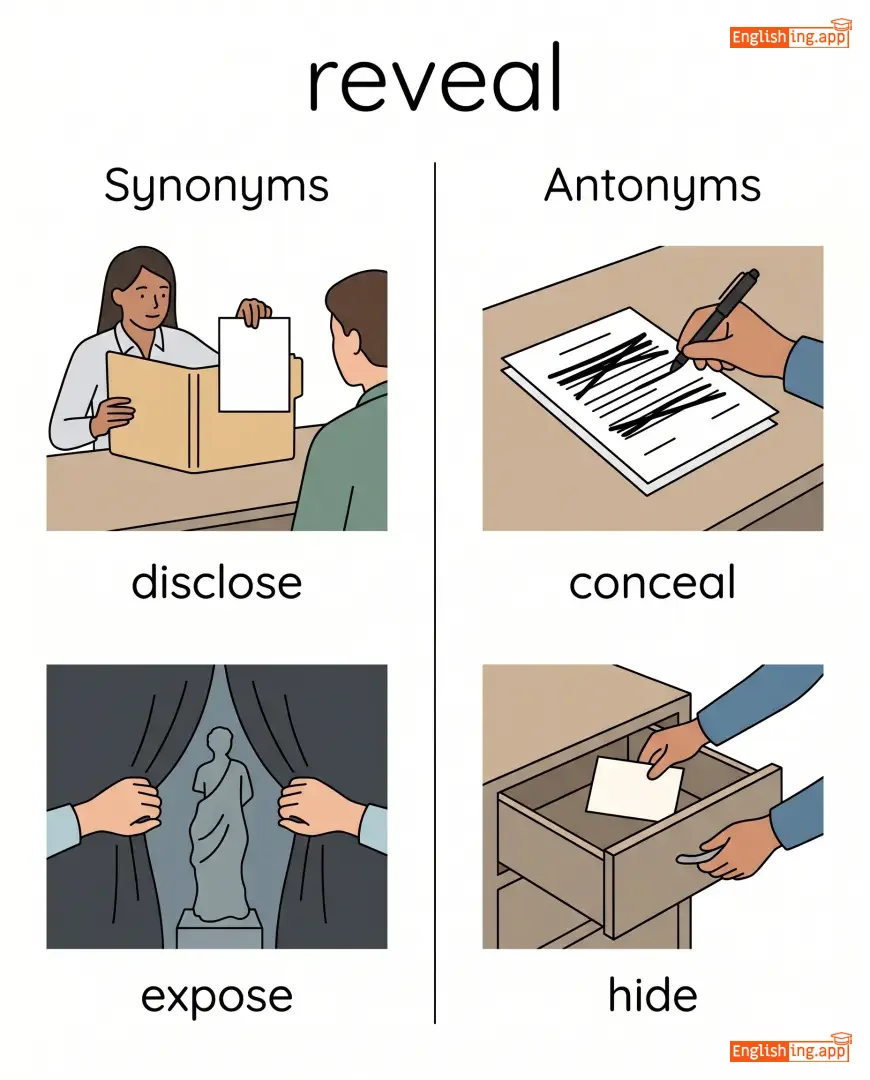
disclose, expose, uncover, unveil, show
••••••
|
conceal, hide, cover
••••••
|
reveal details, reveal identity, reveal plan, reveal evidence
••••••
|
Reveal 就是揭示隐藏的事物!
••••••
|
|
💡
••••••
|
/ˌrɛvəˈleɪʃən/
noun
(rèwēilèishēn)
••••••
|
- •••••• |
启示
qishi
••••••
|
- •••••• | - •••••• | - •••••• | - •••••• |
A surprising and previously unknown fact, especially one made known in a dramatic way.
••••••
|
The book was full of shocking revelations about the politician.
Zhè běn shū chōngmǎnle zhèngzhì jiāng zhě de jīngtì shìyì.
••••••
|
这本书充满了对政治家的震惊启示。
Zhè běn shū chōngmǎnle duì zhèngzhìjiā de zhèngjīng qǐshì.
••••••
|
divine revelation
shèngzhēn rèwēilèishēn
••••••
|
A message or truth revealed by God.
••••••
|
神圣启示
shèngzhēn qǐshì
••••••
|
disclosure, discovery, unveiling, exposure, insight
••••••
|
concealment, secrecy
••••••
|
shocking revelation, divine revelation, sudden revelation, revelation of truth
••••••
|
启示 = 一种震撼人心的新发现,揭示事物真相。
••••••
|
|
⚔️
••••••
|
/rɪˈvɛndʒ/
noun, verb
(rìwénjī)
••••••
|
- •••••• |
复仇
fùchóu
••••••
|
revenged
••••••
|
revenged
••••••
|
revenges
••••••
|
revenging
••••••
|
The action of inflicting harm on someone as punishment for a wrong suffered.
••••••
|
She sought revenge for the betrayal of her trust. |
她为了自己信任的背叛而寻求复仇。
Tā wèile zìjǐ xìnrèn de bèipàn ér xúnqiú fùchóu.
••••••
|
revenge is sweet |
It feels satisfying to get back at someone who wronged you.
••••••
|
复仇是甜美的
Fùchóu shì tiánměi de
••••••
|
retaliation, vengeance, retribution, payback, reprisal
••••••
|
forgiveness, pardon, mercy
••••••
|
seek revenge, take revenge, exact revenge, sweet revenge
••••••
|
Revenge听起来像‘re-复仇’–复仇意味着回击。
••••••
|
|
💰
••••••
|
/ˈrɛvənjuː/
noun
(rèwénɪu)
••••••
|


|
收入
shouru
••••••
|
- •••••• | - •••••• | - •••••• | - •••••• |
income generated from business activities, especially sales
••••••
|
The company's revenue increased by 20% last year. |
公司的收入去年增长了20%。
Gongsi de shouru qunian zengzhang le 20%.
••••••
|
- •••••• | - •••••• | - •••••• |
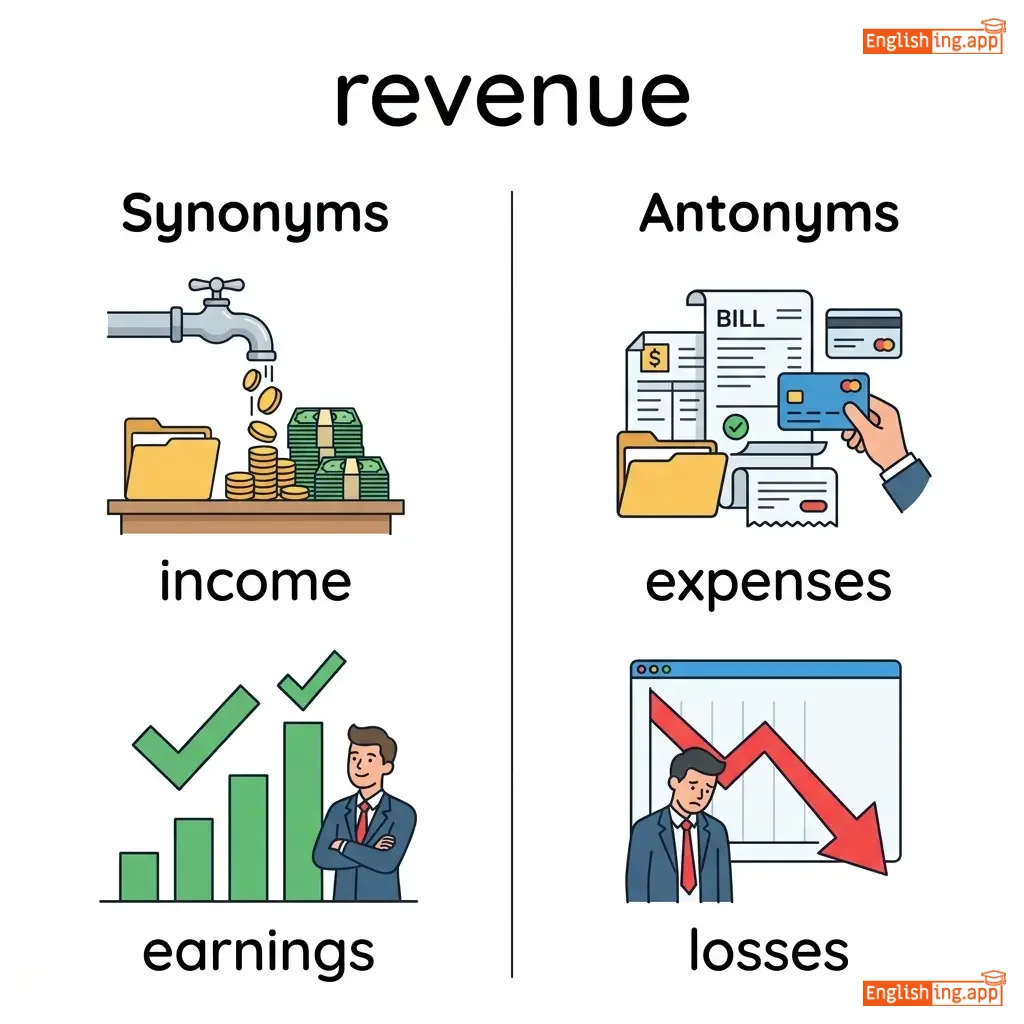
income, earnings, profits, proceeds
••••••
|
expenses, losses
••••••
|
annual revenue, revenue growth, increase in revenue
••••••
|
Revenue 收入 - Businesses generate revenue
••••••
|
|
🔁
••••••
|
/rɪˈvɜːs/
verb
(rɪˈvɜːrs)
••••••
|
- •••••• |
反转
fǎn zhuǎn
••••••
|
reversed
rɪˈvɜːrsd
••••••
|
reversed
rɪˈvɜːrsd
••••••
|
reverses
rɪˈvɜːrses
••••••
|
reversing
rɪˈvɜːrsɪŋ
••••••
|
to change something to the opposite direction, position, or result
••••••
|
She quickly reversed the car out of the driveway.
她迅速把车从车道上倒了出来。
••••••
|
她迅速把车从车道上倒了出来。
Tā xùnsù bǎ chē cóng chē dào shàng dào le chū lái.
••••••
|
reverse course
改变方向
••••••
|
to change plans or direction completely
••••••
|
改变方向
gǎi biàn fāng xiàng
••••••
|
invert, overturn, flip, undo, back
••••••
|
continue, maintain, keep
••••••
|
reverse decision, reverse gear, reverse order, reverse effect
••••••
|
Re + verse = 反转! 所以reverse的意思是反转。
••••••
|
|
📝
••••••
|
/rɪˈvjuː/
verb
(rívú)
••••••
|
- •••••• |
复习
fuxi
••••••
|
reviewed
rìviúd
••••••
|
reviewed
rìviúd
••••••
|
reviews
rìviús
••••••
|
reviewing
rìvīng
••••••
|
to examine or assess something again; to write a critical evaluation
••••••
|
I need to review my notes before the exam.
我需要在考试前复习我的笔记。
••••••
|
我需要在考试前复习我的笔记。
Wǒ xūyào zài kǎoshì qián fùxí wǒ de bǐjì.
••••••
|
- •••••• | - •••••• | - •••••• |
examine, assess, evaluate, analyze
••••••
|
ignore, overlook, neglect
••••••
|
review carefully, review thoroughly, review regularly, review documents, review performance
••••••
|
'Review' sounds like '复习', which is 'to review' in Chinese.
••••••
|
|
✏️
••••••
|
/rɪˈvaɪz/
verb
(revaiz)
••••••
|
- •••••• |
修改
xiugai
••••••
|
revised
revaist
••••••
|
revised
revaist
••••••
|
revises
revaizes
••••••
|
revising
revaizing
••••••
|
To change, improve, or update something, especially a written work.
••••••
|
She had to revise her essay before submission.
她必须在提交之前修改她的论文。
••••••
|
她必须在提交之前修改她的论文。
Ta bixu zai tijiao zhiqian xiugai ta de lunwen.
••••••
|
revise for an exam
为考试修改
••••••
|
to study and prepare for an exam
••••••
|
为考试修改
Wei kaoshi xiugai
••••••
|
edit, modify, update, amend, correct
••••••
|
keep, preserve
••••••
|
revise draft, revise essay, revise thoroughly, revise notes
••••••
|
修改就像为考试做准备,修改一下就是变得更好。
••••••
|
|
📝
••••••
|
/rɪˈvɪʒ.ən/
noun
(修订)
••••••
|
- •••••• |
修订; 修订版
xiuding; xiudingban
••••••
|
- •••••• | - •••••• | - •••••• | - •••••• |
the action of revising; a revised edition or form of something; review of subject matter
••••••
|
The students spent hours doing revision for their final exams.
学生们花了几个小时做最后考试的复习。
••••••
|
学生们花了几个小时做最后考试的复习。
Xueshengmen hua le jige xiaoshi zuo zuihou kaoshi de fuxi.
••••••
|
- •••••• | - •••••• | - •••••• |
review, amendment, modification, alteration
••••••
|
original, first draft, initial version
••••••
|
revision notes, exam revision, thorough revision, last-minute revision
••••••
|
修订: 就像复习考试前的资料一样!
••••••
|
|
🌱
••••••
|
/rɪˈvaɪ.vəl/
noun
(revival)
••••••
|
- •••••• |
复兴
fùxīng
••••••
|
- •••••• | - •••••• | - •••••• | - •••••• |
an improvement in the condition or strength of something; renewed interest in or attention to something
••••••
|
There has been a revival of interest in traditional crafts.
ðɛr hæz bīn ə rɪˈvaɪvəl ʌv ˈɪntrɛst ɪn trædɪˈʃənl kræfts.
••••••
|
传统手工艺的兴趣得到了复兴。
Chuántǒng shǒugōng yì de xìngqù dédàole fùxīng.
••••••
|
- •••••• | - •••••• | - •••••• |
renewal, resurgence, renaissance, rebirth
••••••
|
decline, deterioration, downfall, demise
••••••
|
economic revival, cultural revival, revival meeting, revival of fortunes
••••••
|
复兴 = 使事物重新焕发活力
••••••
|
|
🌱
••••••
|
/rɪˈvaɪv/
verb
(rɪˈvaɪv)
••••••
|
- •••••• |
复苏
fùsū
••••••
|
revived
rɪˈvaɪvd
••••••
|
revived
rɪˈvaɪvd
••••••
|
revives
rɪˈvaɪvz
••••••
|
reviving
rɪˈvaɪvɪŋ
••••••
|
To bring back to life, consciousness, or activity.
••••••
|
The paramedics managed to revive the unconscious man.
ðə pærəˈmɛdɪks ˈmænɪdʒd tə riˈvaɪv ðə ʌnˈkɒnʃəs mæn.
••••••
|
急救员成功让昏迷的男子复苏。
Jíjiùyuán chénggōng ràng hūnmí de nánzǐ fùsū.
••••••
|
revive the economy
riˈvaɪv ðə ɪˈkɒnəmi
••••••
|
to restore economic growth and activity
••••••
|
复苏经济
fùsū jīngjì
••••••
|
resuscitate, restore, rejuvenate, awaken, revitalize
••••••
|
kill, suppress, extinguish
••••••
|
revive interest, revive culture, revive spirit, revive tradition
••••••
|
复苏就像浇水让植物复活一样。
••••••
|
|
⚔️
••••••
|
/rɪˈvoʊlt/
verb
(反叛)
••••••
|
|
反叛
fǎnpàn
••••••
|
revolted
反叛
••••••
|
revolted
反叛
••••••
|
revolts
反叛
••••••
|
revolting
反叛
••••••
|
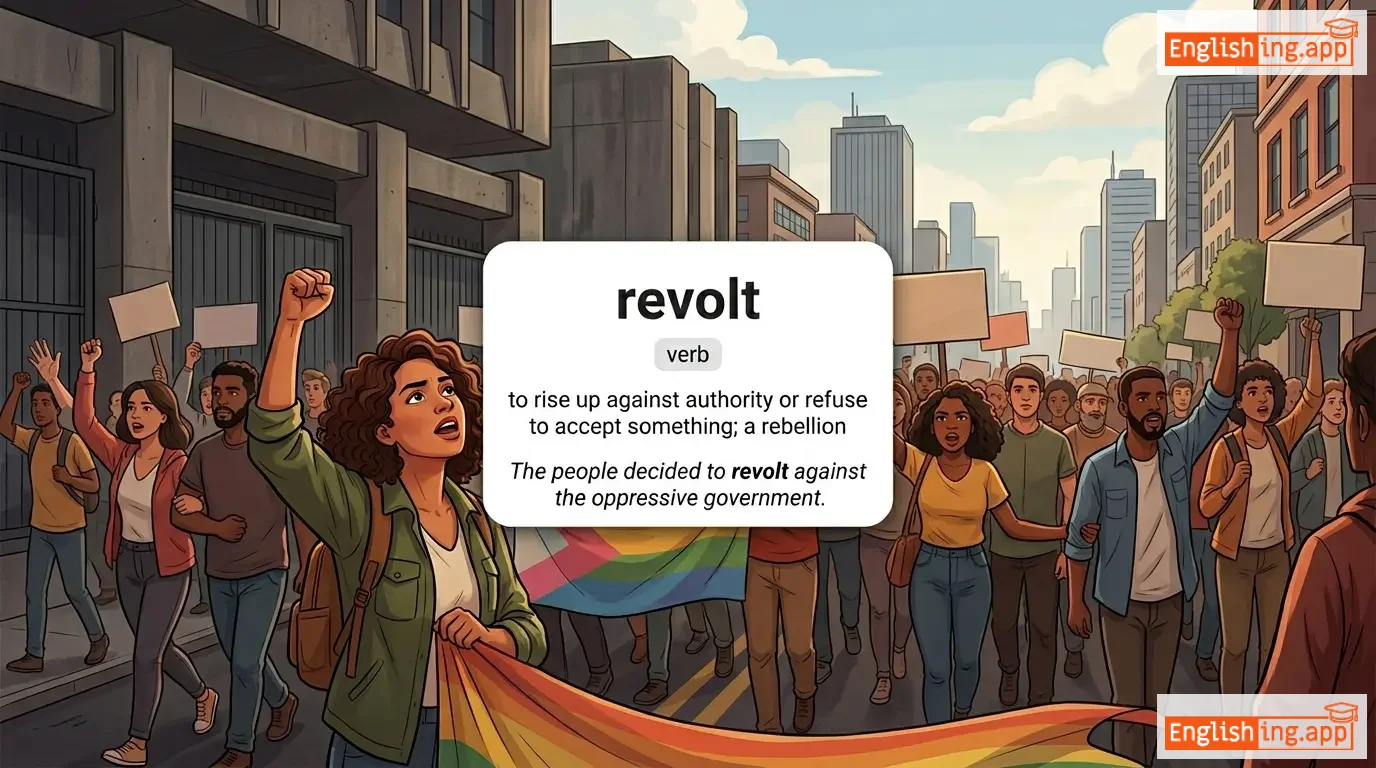
to rise up against authority or refuse to accept something; a rebellion
••••••
|
The people decided to revolt against the oppressive government.
人民决定反抗压迫政府。
••••••
|
人民决定反抗压迫政府。
Rénmín juédìng fǎnkàng yāpò zhèngfǔ.
••••••
|
rise in revolt
起义反抗
••••••
|
to rebel or resist against authority
••••••
|
反抗起义
fǎnkàng qǐyì
••••••
|
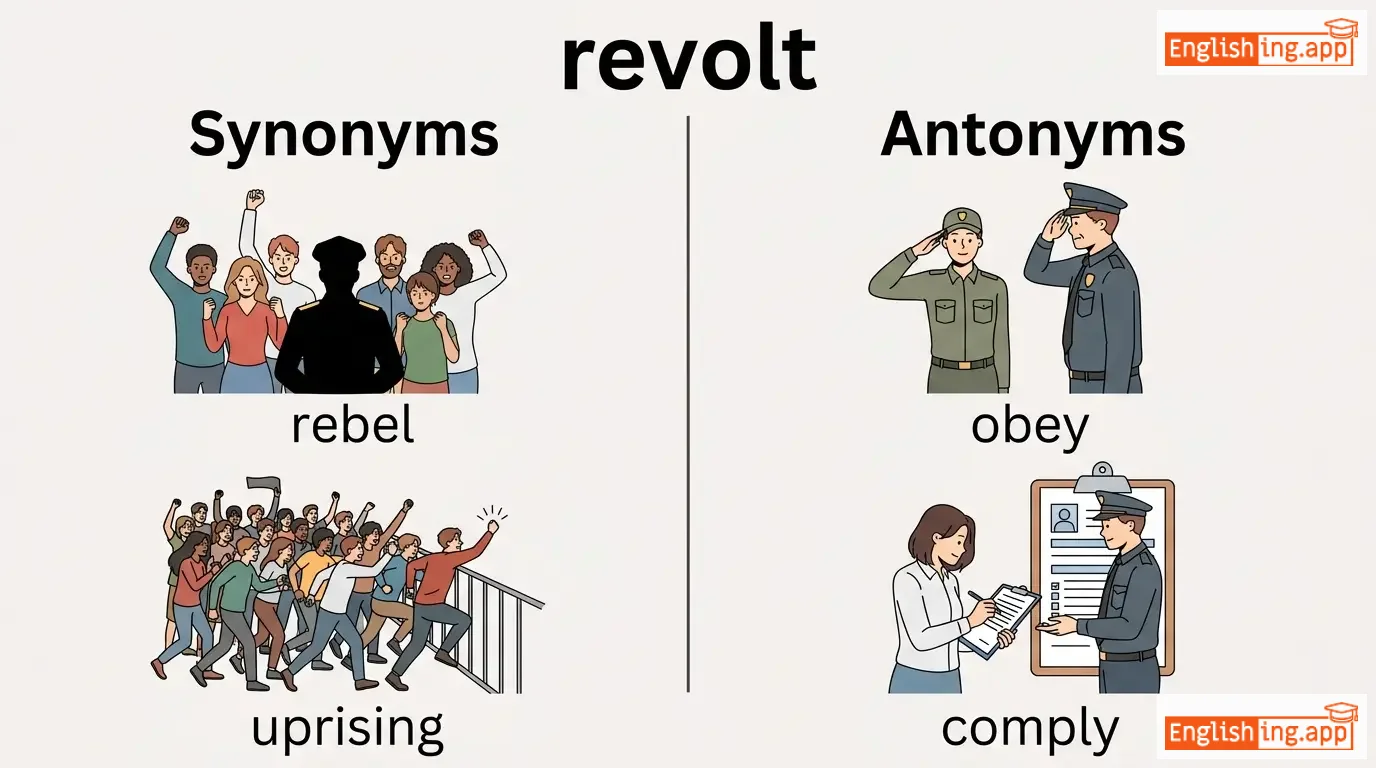
rebel, uprising, insurrection, mutiny, resist
••••••
|
obey, comply, submit
••••••
|
armed revolt, popular revolt, revolt against, suppress revolt
••••••
|
Re-volt是电的意思 ⚡ - 像闪电一样,人民反抗
••••••
|
|
🔄
••••••
|
/ˌrevəˈluːʃən/
noun
(革命)
••••••
|
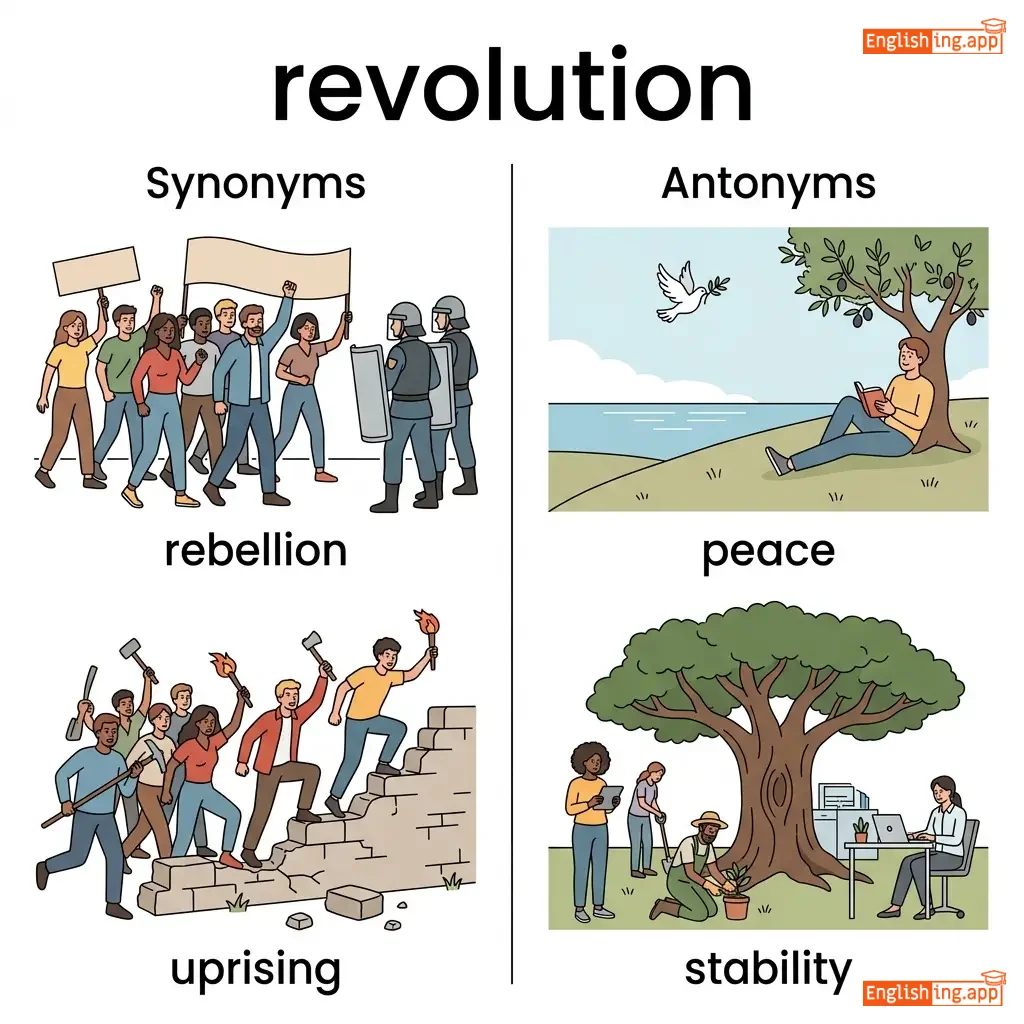
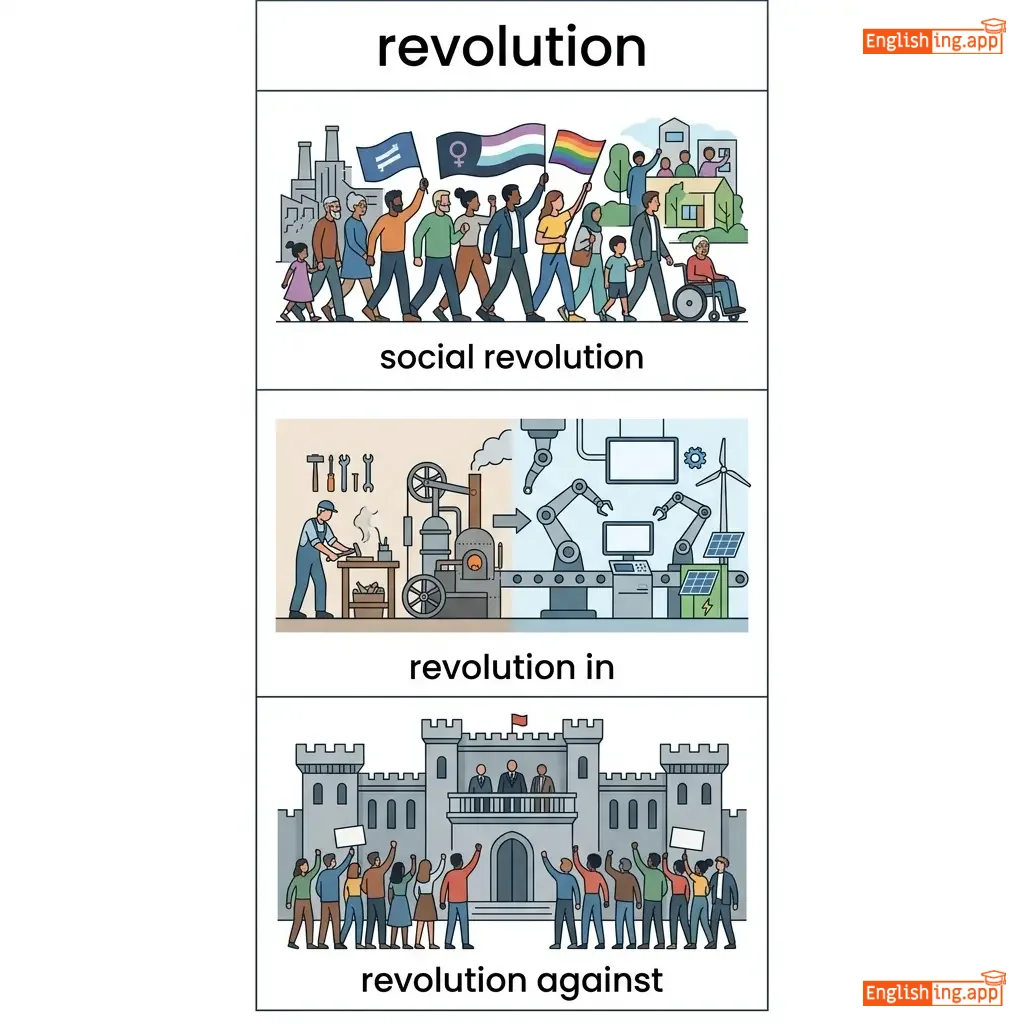
|
革命; 转变; 推翻
geming; zhuanbian; tui fan
••••••
|
- •••••• | - •••••• | - •••••• | - •••••• |
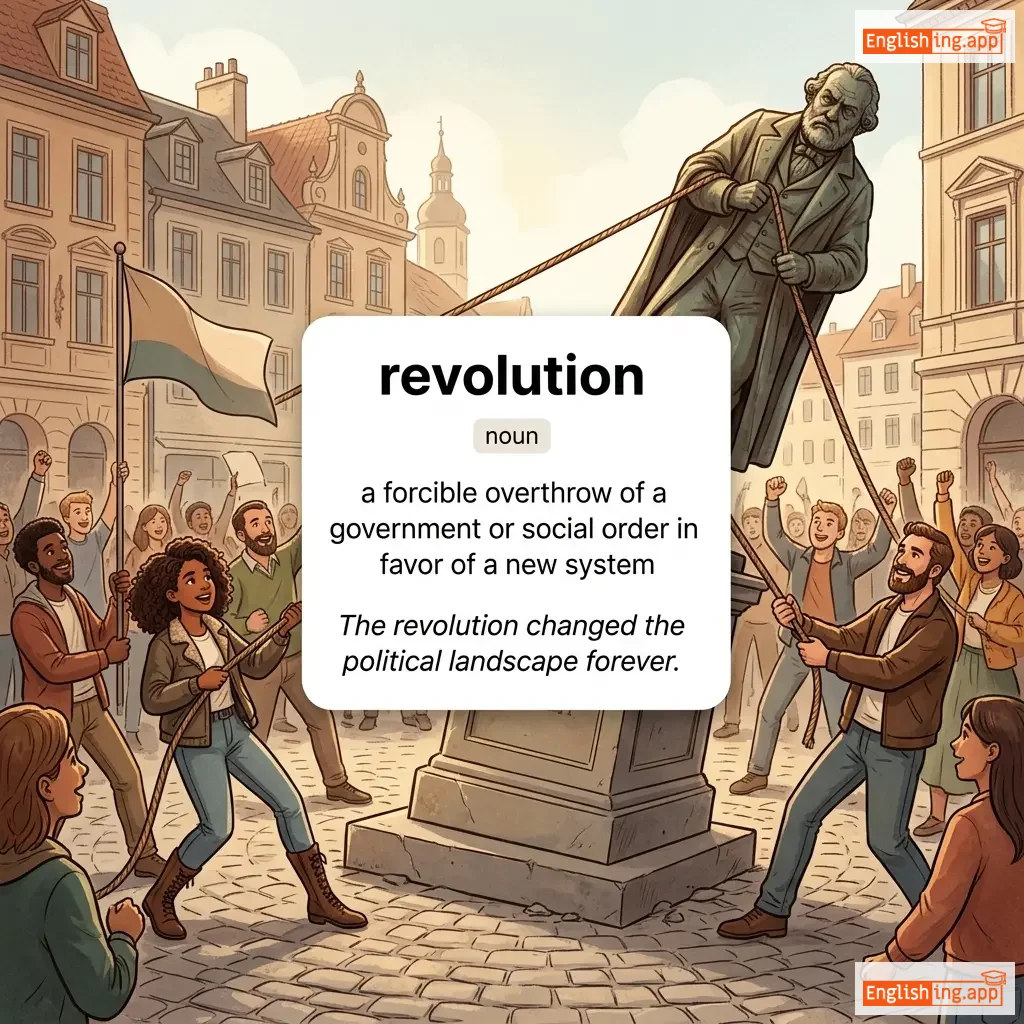
a dramatic and wide-reaching change in conditions, attitudes, or operation; a forcible overthrow of a government or social order
••••••
|
The industrial revolution changed the way people lived and worked.
工业革命改变了人们的生活和工作方式。
••••••
|
工业革命改变了人们的生活和工作方式。
gongye geming gaibian le renmen de shenghuo he gongzuo fangshi.
••••••
|
- •••••• | - •••••• | - •••••• |
upheaval, transformation, rebellion, revolt
••••••
|
stability, conservation, tradition
••••••
|
industrial revolution, political revolution, scientific revolution
••••••
|
革命带来剧变,像是社会的颠覆。
••••••
|
|
✊
••••••
|
/ˌrev.əˈluː.ʃən.ər.i/
adjective
(革命性的)
••••••
|

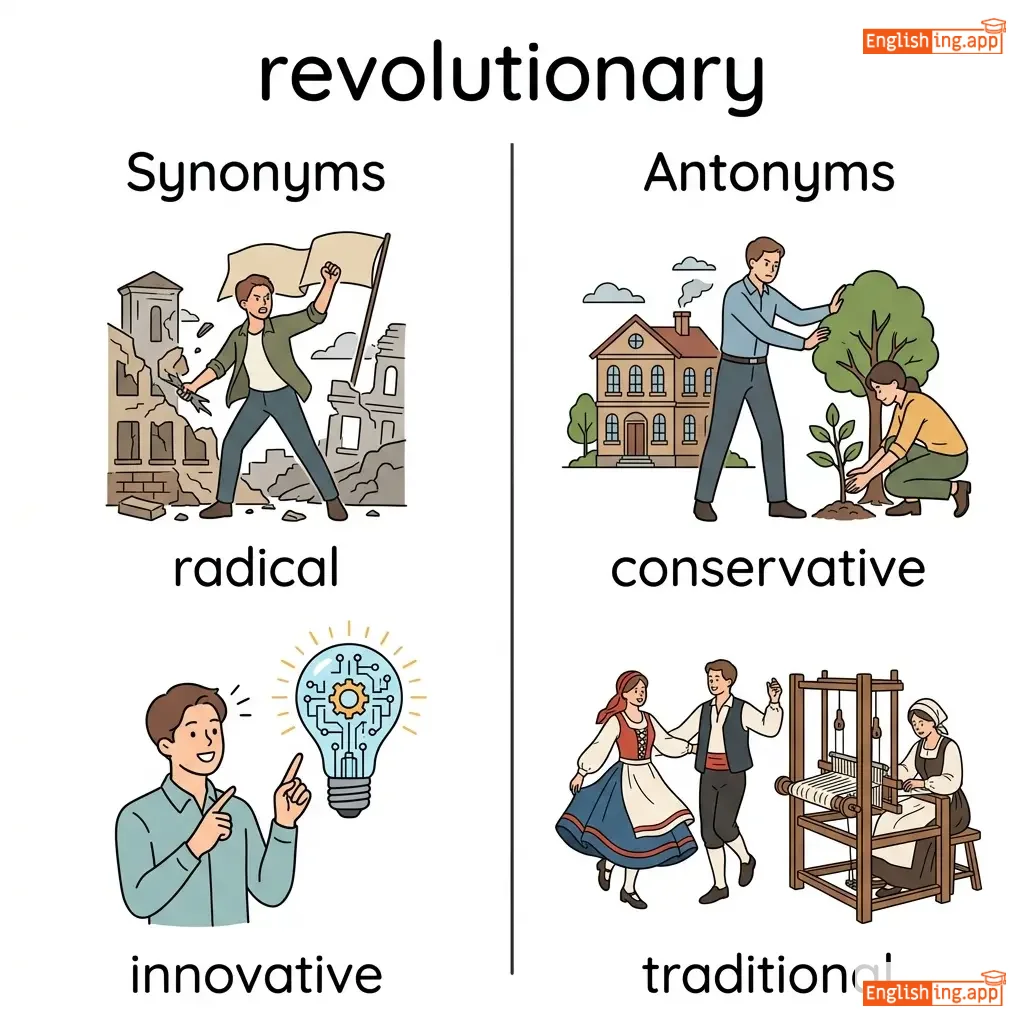
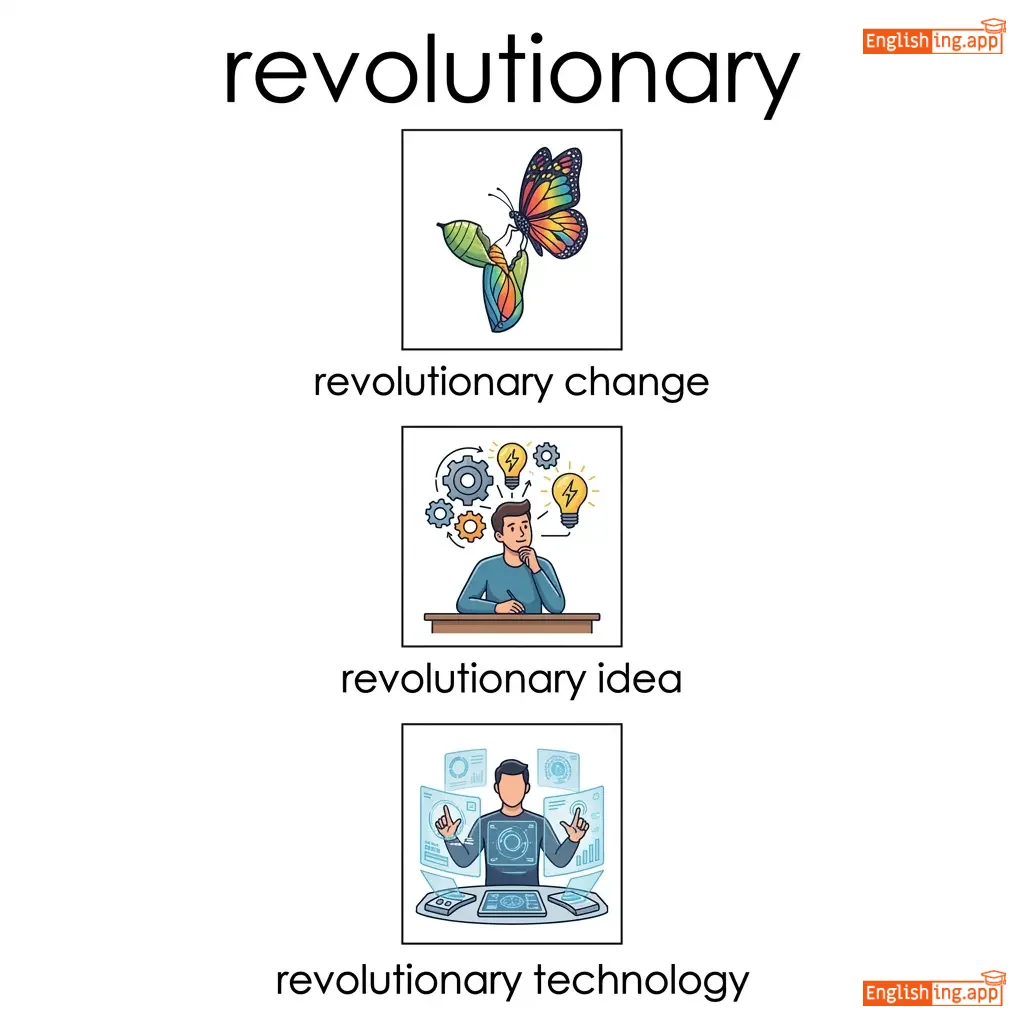
|
革命性的
gémìngxìng de
••••••
|
- •••••• | - •••••• | - •••••• | - •••••• |
involving or causing a complete or dramatic change; relating to a political revolution
••••••
|
The smartphone was a revolutionary invention that changed communication. |
智能手机是一次革命性的发明,改变了通信方式。
Zhìnéng shǒujī shì yīcì gémìngxìng de fāmíng, gǎibiànle tōngxìn fāngshì
••••••
|
- •••••• | - •••••• | - •••••• |
radical, groundbreaking, innovative, transformative
••••••
|
conservative, traditional, conventional, reactionary
••••••
|
revolutionary idea, revolutionary change, revolutionary technology
••••••
|
革命性的意味着完全改变
••••••
|
|
🏆
••••••
|
/rɪˈwɔːd/
noun
(rɪˈwɔːrd)
••••••
|
- •••••• |
奖励
jiangli
••••••
|
- •••••• | - •••••• | - •••••• | - •••••• |
something given in recognition of service, effort, or achievement
••••••
|
He received a reward for returning the lost wallet. |
他因归还丢失的钱包而获得奖励。
Tā yīn guīhuán diūshī de qiánbāo ér huòdé jiǎnglì.
••••••
|
as a reward |
in return for doing something good or helpful
••••••
|
作为奖励
zuòwéi jiǎnglì
••••••
|
prize, compensation, bonus, benefit, gift
••••••
|
penalty, punishment, loss
••••••
|
cash reward, big reward, reward system, reward program
••••••
|
Reward = Re + ward → 做好事会有奖励 (奖励).
••••••
|
|
🗣️
••••••
|
/ˈrɛtərɪk/
noun
(雷托里克)
••••••
|
|
修辞
xiuci
••••••
|
- •••••• | - •••••• | - •••••• | - •••••• |
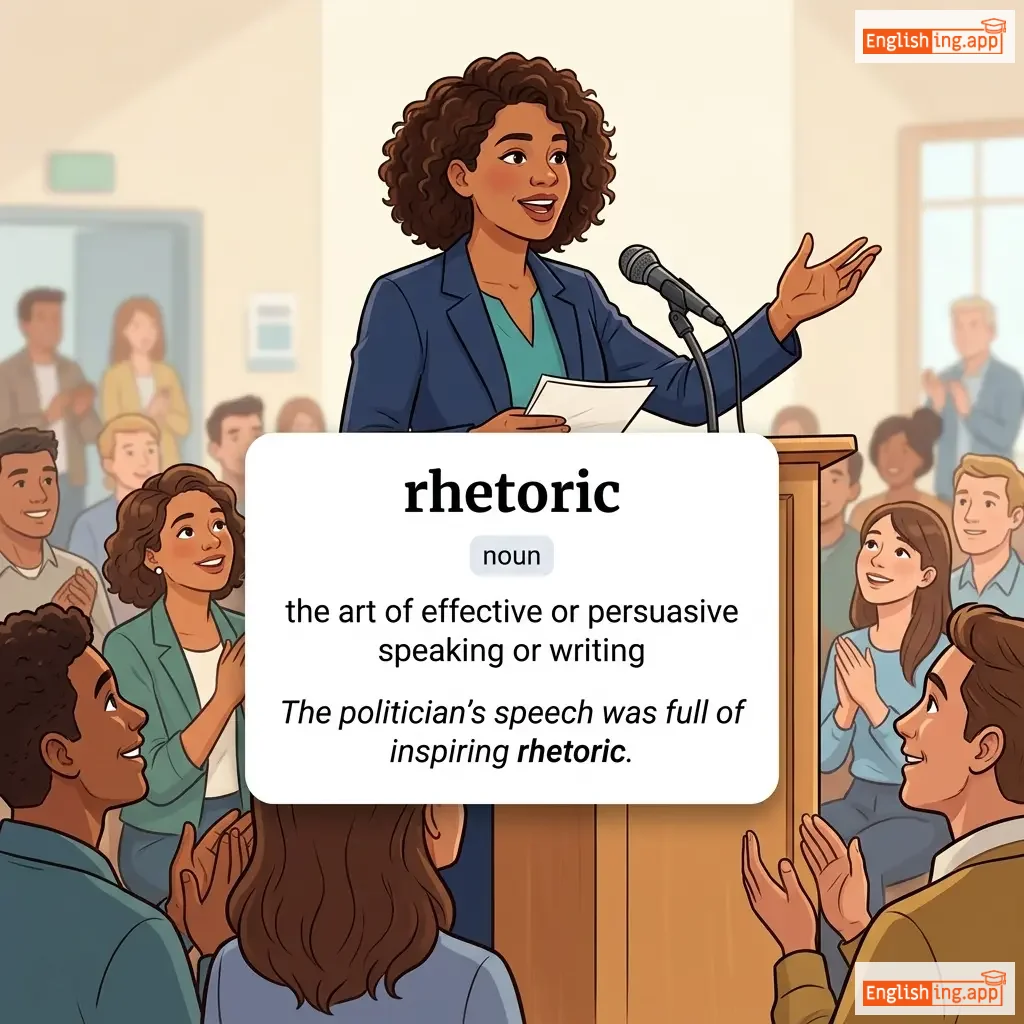
the art of effective or persuasive speaking or writing
••••••
|
The politician’s speech was full of inspiring rhetoric.
那位政治家的演讲充满了鼓舞人心的修辞。
••••••
|
那位政治家的演讲充满了鼓舞人心的修辞。
Na wei zhengzhijia de yanjiang chongman le gumu renxin de xiuci.
••••••
|
empty rhetoric
空洞的修辞
••••••
|
persuasive but meaningless or insincere speech
••••••
|
空洞的修辞
kongdong de xiuci
••••••
|
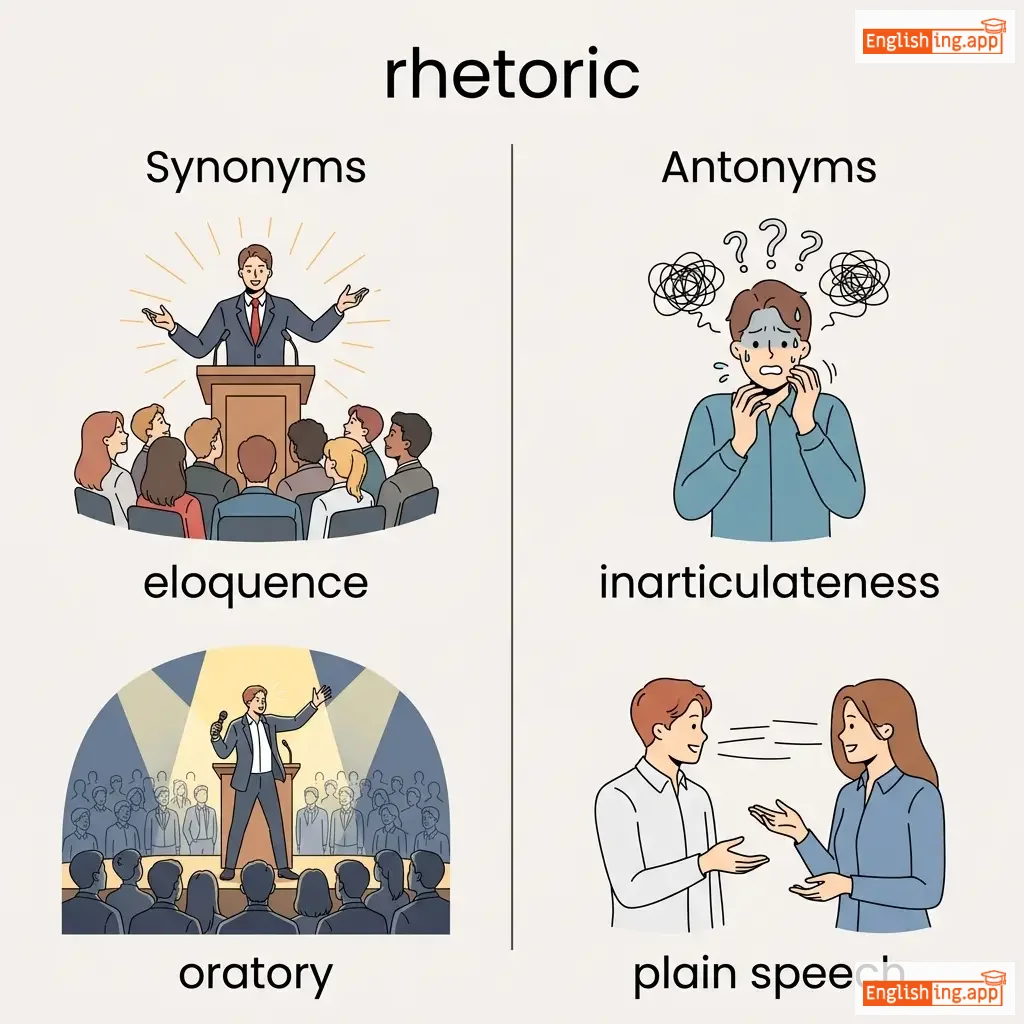
eloquence, oratory, discourse, persuasion
••••••
|
inarticulateness, plain speech
••••••
|
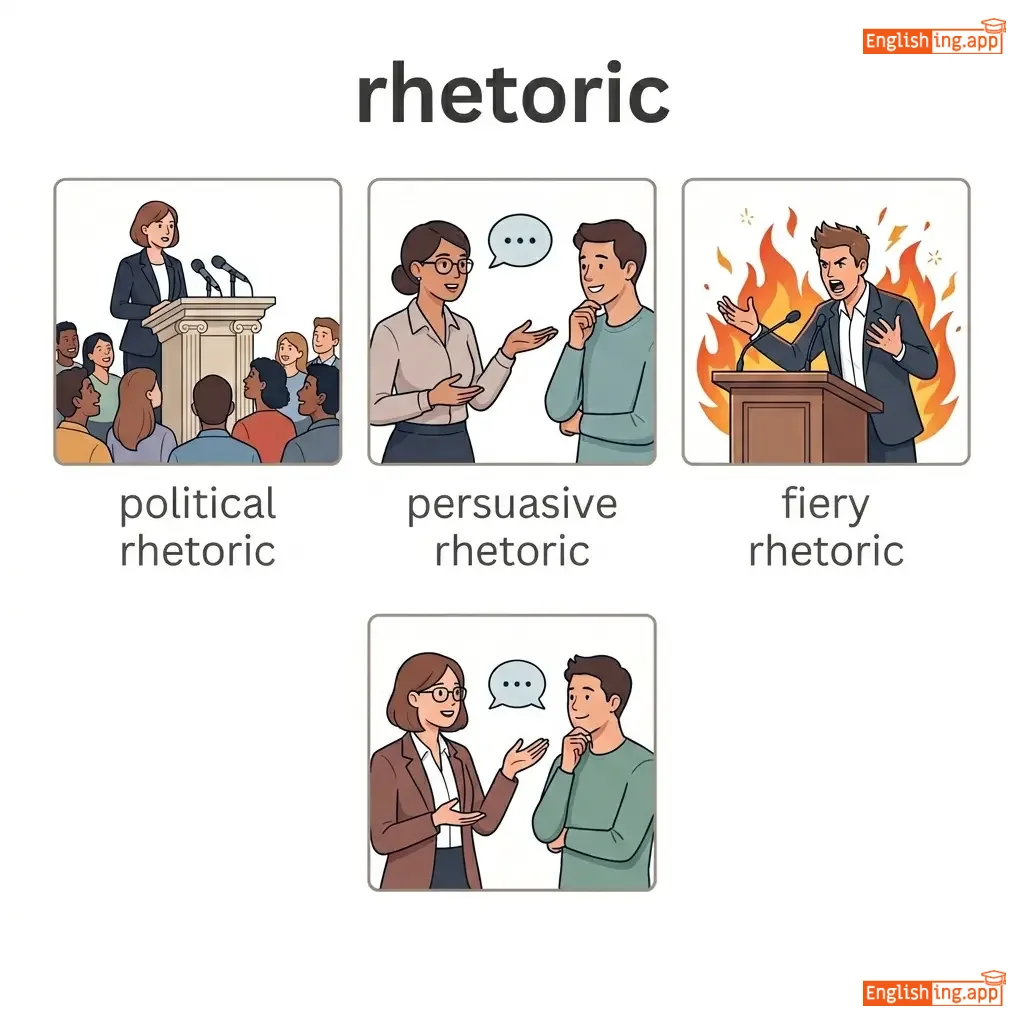
political rhetoric, persuasive rhetoric, fiery rhetoric, rhetorical device
••••••
|
Rhetoric → Ret + Trick 🗣️ 用修辞中的技巧来影响听众
••••••
|
|
🎵
••••••
|
/ˈrɪðəm/
noun
(瑞瑟姆)
••••••
|
- •••••• |
节奏
jiezou
••••••
|
- •••••• | - •••••• | - •••••• | - •••••• |
a strong, regular, repeated pattern of movement or sound
••••••
|
The rhythm of the music made everyone want to dance. |
音乐的节奏让每个人都想跳舞。
Yinyue de jiezou rang mei ge ren dou xiang tiaowu.
••••••
|
- •••••• | - •••••• | - •••••• |
beat, tempo, cadence, pattern
••••••
|
disorder, chaos
••••••
|
rhythm of life, rhythm section, musical rhythm, perfect rhythm
••••••
|
Rhythm sounds like 'jiezou' in Chinese, which means beat!
••••••
|
|
🍚
••••••
|
/raɪs/
noun
(大米)
••••••
|
- •••••• |
大米
dami
••••••
|
- •••••• | - •••••• | - •••••• | - •••••• |
a cereal grain that is the staple food of many countries
••••••
|
Rice is an important part of the daily diet in many countries.
米饭是许多国家日常饮食的重要组成部分。
••••••
|
米饭是许多国家日常饮食的重要组成部分。
Mifan shi xuduo guojia rìcháng yǐnshí de zhòngyào zǔchéng bùfen.
••••••
|
- •••••• | - •••••• | - •••••• |
grain, paddy, rice grain
••••••
|
vegetables, fruits
••••••
|
boiled rice, fried rice, rice dish, rice field
••••••
|
Rice is essential for 'rising' nutrition daily.
••••••
|
|
💰
••••••
|
/rɪtʃ/
adjective
(rich)
••••••
|
- •••••• |
富有的; 有钱的; 宝贵的
fùyǒu de; yǒu qián de; bǎoguì de
••••••
|
- •••••• | - •••••• | - •••••• | - •••••• |
having a lot of money or valuable possessions; abundant in nutrients or flavor
••••••
|
The rich businessman donated money to the charity. |
富有的商人向慈善捐款。
fùyǒu de shāngrén xiàng císhàn juānkuǎn.
••••••
|
- •••••• | - •••••• | - •••••• |
wealthy, affluent, prosperous, well-off
••••••
|
poor, impoverished, needy, broke
••••••
|
rich person, rich flavor, rich history, rich culture
••••••
|
富有的商人总是慷慨捐款,帮助他人。
••••••
|

