|
絵文字
|
単語 | Images | 翻訳 | 過去 | 過去分詞 | 三人称単数 | 動名詞 | 意味 | 例文 | 例文の翻訳 | 表現例 | 表現例の意味 | 表現例の翻訳 | 同義語 | 対義語 | コロケーション | ニーモニック |
|---|---|---|---|---|---|---|---|---|---|---|---|---|---|---|---|---|---|
|
🌤️
••••••
|
/maɪld/
adjective
(maɪld)
••••••
|
- •••••• |
穏やか
odayaka
••••••
|
- •••••• | - •••••• | - •••••• | - •••••• |
not severe or strong; gentle in nature
••••••
|
The patient had only mild symptoms.
患者には軽い症状だけがありました。
••••••
|
患者には軽い症状だけがありました。
Kanja ni wa karui shōjō dake ga arimashita.
••••••
|
mild mannered
mild mannered
••••••
|
gentle and not aggressive
••••••
|
穏やかな性格
odayakana seikaku
••••••
|
gentle, soft, calm, slight, moderate
••••••
|
harsh, severe, strong
••••••
|
mild symptoms, mild climate, mild taste, mild mannered
••••••
|
Mild は穏やかで、軽い味の飲み物のようです。
••••••
|
|
📏
••••••
|
/maɪl/
noun
(マイル)
••••••
|
- •••••• |
マイル
mairu
••••••
|
- •••••• | - •••••• | - •••••• | - •••••• |
a unit of distance equal to 1,609.34 meters; a long distance figuratively
••••••
|
She walked a mile to reach the bus stop.
シー ウォークド ア マイル トゥ リーチ ザ バス ストップ。
••••••
|
彼女はバス停に着くために1マイル歩いた。
kanojo wa basutei ni tsuku tame ni ichi mairu aruita
••••••
|
go the extra mile
ゴー・ザ・エクストラ・マイル
••••••
|
to make more effort than is expected
••••••
|
期待以上に努力する
kitai ijou ni doryoku suru
••••••
|
distance, length, stretch, way, span
••••••
|
closeness, nearness
••••••
|
mile away, long mile, walk a mile, run a mile, extra mile
••••••
|
マイル = mile, 遠い距離
••••••
|
|
⚔️
••••••
|
/ˈmɪl.ɪ.tənt/
noun
(ミリタント)
••••••
|
- •••••• |
過激派
kagekiha
••••••
|
- •••••• | - •••••• | - •••••• | - •••••• |
A person who uses aggressive or violent methods to promote a political or social cause
••••••
|
The militant group demanded immediate political reforms. |
過激派グループは即時の政治改革を要求した。
Kagekipa gurūpu wa sokujino seiji kaikaku o yōkyū shita.
••••••
|
- •••••• | - •••••• | - •••••• |
activist, extremist, radical, fighter, rebel
••••••
|
pacifist, moderate, peaceful person
••••••
|
militant group, militant action, militant organization, militant leader
••••••
|
Japanese word '過激' (extreme) + '派' (faction) = 'extreme faction' (militant)
••••••
|
|
🎖️
••••••
|
/ˈmɪlɪˌtɛri/
noun/adjective
(ミリタリー)
••••••
|
|
軍隊
guntai
••••••
|
- •••••• | - •••••• | - •••••• | - •••••• |
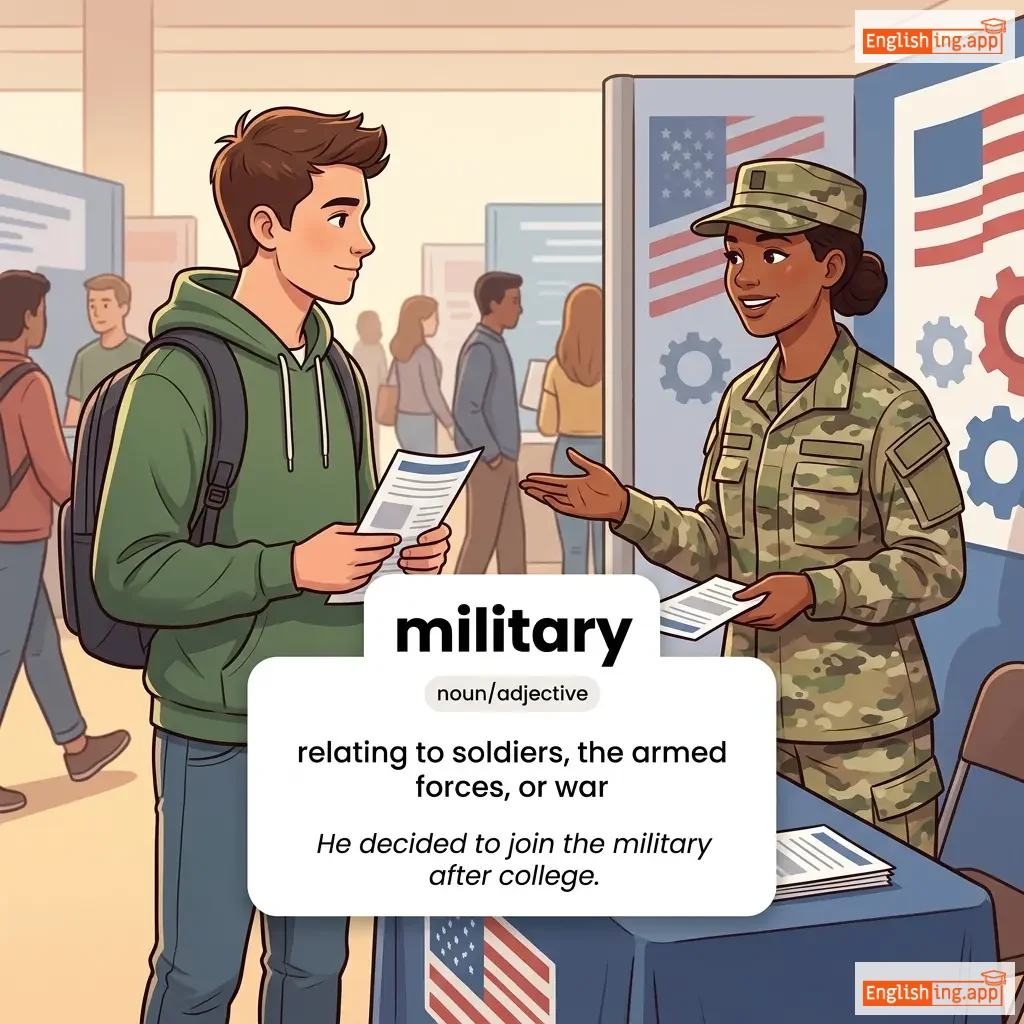
relating to soldiers, the armed forces, or war
••••••
|
He decided to join the military after college. |
彼は大学を卒業後、軍隊に参加することに決めた。
Kare wa daigaku o sotsugyou go, guntai ni sanka suru koto ni kimeta.
••••••
|
military precision |
doing something in a very exact and disciplined way
••••••
|
軍事的精密さ
gunjiteki seimitsusa
••••••
|
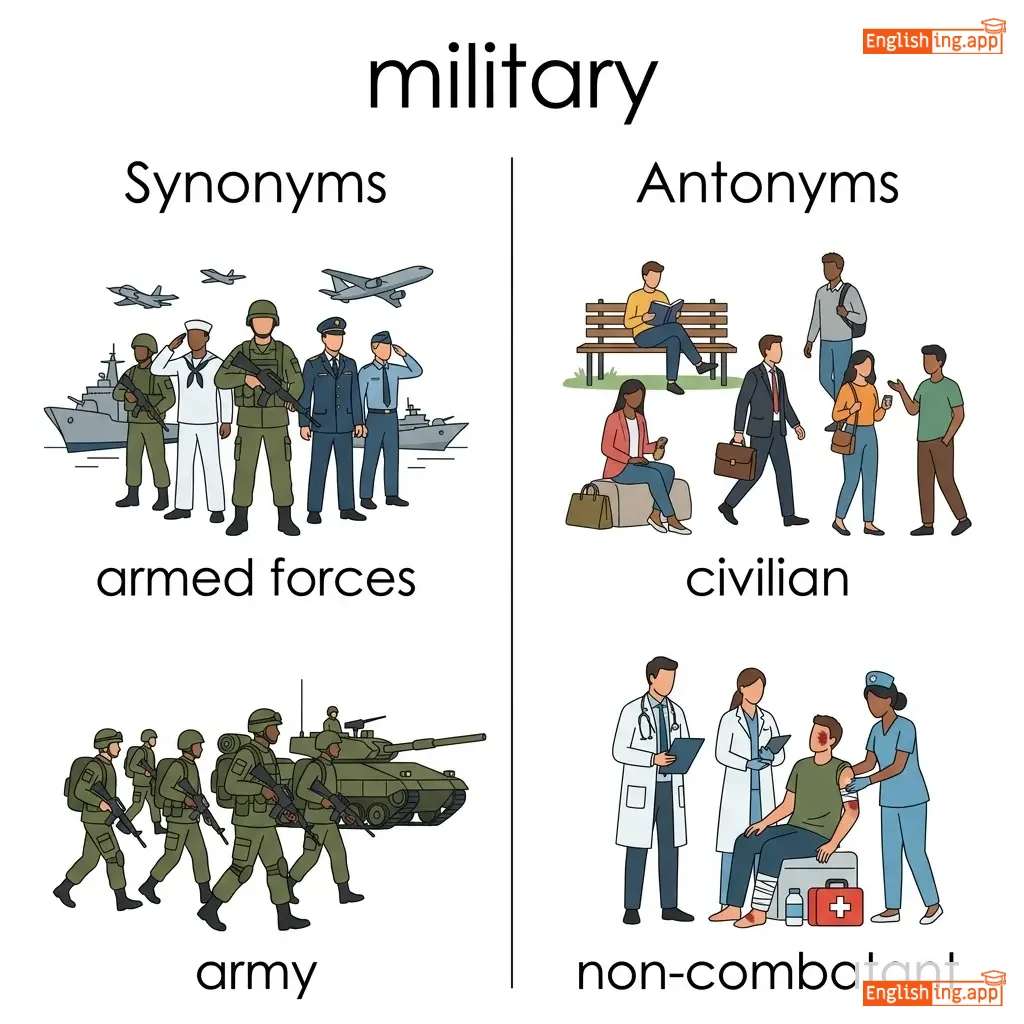
armed forces, army, defense, troops
••••••
|
civilian, non-combatant
••••••
|
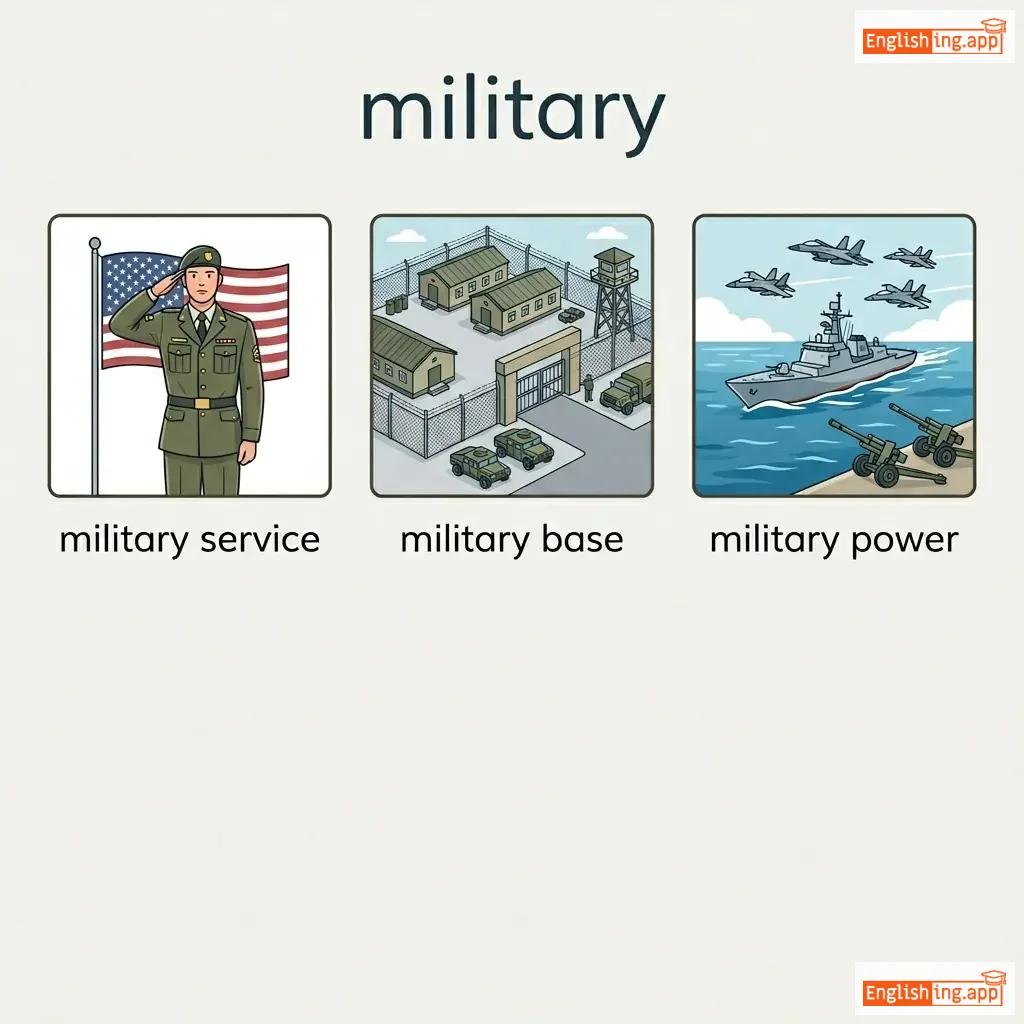
military service, military base, military power, military training
••••••
|
Military = 軍隊 🎖️ - 軍隊に参加
••••••
|
|
🪖
••••••
|
/mɪˈlɪʃə/
noun
(ミリシア)
••••••
|
- •••••• |
民兵
minpei
••••••
|
- •••••• | - •••••• | - •••••• | - •••••• |
a group of ordinary people who are trained to act as soldiers in emergencies
••••••
|
The village formed a militia to defend against attacks. |
村は攻撃から守るために民兵を結成した。
Mura wa kougeki kara mamoru tame ni minpei wo kessei shita.
••••••
|
- •••••• | - •••••• | - •••••• |
armed group, volunteer force, paramilitary, local army
••••••
|
regular army, civilians
••••••
|
local militia, armed militia, form a militia
••••••
|
ミリシアは緊急時に戦うために集まった民兵
••••••
|
|
🥛
••••••
|
/mɪlk/
noun, verb
(ハピネス)
••••••
|
- •••••• |
幸せ
shiawase
••••••
|
milked
••••••
|
milked
••••••
|
milks
••••••
|
milking
••••••
|
noun: a white liquid produced by female mammals for feeding their young; verb: to draw milk from an animal
••••••
|
She milked the cow early in the morning. |
彼女は朝早くに牛を搾った。
Kanojo wa asa hayaku ni ushi o shibotta.
••••••
|
milk it |
to exploit a situation for as much advantage as possible
••••••
|
最大限に活用する
saidaigen ni katsuyou suru
••••••
|
dairy, extract, exploit, drain, squeeze
••••••
|
feed, nurture
••••••
|
glass of milk, milk the cow, milk products
••••••
|
幸せ = 幸せな牛乳
••••••
|
|
🏭
••••••
|
/mɪl/
noun
(ミル)
••••••
|
- •••••• |
製粉所
seifunsho
••••••
|
- •••••• | - •••••• | - •••••• | - •••••• |
a building equipped with machinery for grinding grain or manufacturing goods
••••••
|
The old flour mill has been converted into a museum.
古い小麦粉工場は博物館に改装されました。
••••••
|
古い小麦粉工場は博物館に改装されました。
Furui komugiko kōjō wa hakubutsukan ni kaisō saremashita.
••••••
|
grind to a halt
停止するまで挽く
••••••
|
to slowly stop functioning or progressing
••••••
|
徐々に停止する
jojō ni teishi suru
••••••
|
factory, plant, workshop, foundry
••••••
|
field, farm
••••••
|
flour mill, textile mill, paper mill, steel mill
••••••
|
Mill は製粉所 — 製粉所では小麦が粉砕されます。
••••••
|
|
💰
••••••
|
/ˈmɪljən/
noun
(ミリオン)
••••••
|
- •••••• |
百万
hyakuman
••••••
|
- •••••• | - •••••• | - •••••• | - •••••• |
the number equivalent to one thousand thousand (1,000,000)
••••••
|
The movie earned over a million dollars in its first week. |
その映画は最初の週に100万ドル以上を稼ぎました。
Sono eiga wa saisho no shū ni hyakuman doru ijō o kasegimashita.
••••••
|
one in a million |
something or someone very rare and special
••••••
|
百万の一
hyakuman no ichi
••••••
|
thousand thousand, 10^6, large number
••••••
|
zero, none
••••••
|
million dollars, million people, one in a million, several million
••••••
|
百万 - とても大きな数、百万の一のように珍しい!
••••••
|
|
🧠
••••••
|
/maɪnd/
noun/verb
(maindo)
••••••
|
- •••••• |
心 / 世話する
kokoro / sewa suru
••••••
|
minded
maindid
••••••
|
minded
maindid
••••••
|
minds
maindzu
••••••
|
minding
maindingu
••••••
|
the part of a person that enables them to think, feel, and reason; to pay attention or take care
••••••
|
Please mind the gap between the train and the platform.
列車とプラットフォームの間の隙間に注意してください。
••••••
|
列車とプラットフォームの間の隙間に注意してください。
Ressha to purattofōmu no aida no suki ma ni chūi shite kudasai.
••••••
|
make up one's mind
決定を下す
••••••
|
to decide something
••••••
|
決定を下す
kettei o kudasu
••••••
|
brain, intellect, thought, heed, notice
••••••
|
ignore, neglect
••••••
|
mind the gap, change your mind, peace of mind, keep in mind
••••••
|
Mind(心)は心、心がないと世話もできません。
••••••
|
|
⛏️
••••••
|
/maɪn/
noun, pronoun, verb
(main)
••••••
|
- •••••• |
鉱山 / 私の
kōzan / watashi no
••••••
|
mined
maindo
••••••
|
mined
maindo
••••••
|
mines
mainzu
••••••
|
mining
mainingu
••••••
|
a place where minerals are dug from the ground; or something belonging to me
••••••
|
The workers went deep into the mine to extract coal.
労働者たちは炭鉱に深く入って炭を採掘しました。
••••••
|
労働者たちは炭鉱に深く入って炭を採掘しました。
Rōdō-sha-tachi wa tankō ni fukaku haitte sumi o saikutsu shimashita.
••••••
|
gold mine
金鉱
••••••
|
a source of abundant wealth or information
••••••
|
金鉱
kinkō
••••••
|
pit, quarry, excavation, my own
••••••
|
surface, yours
••••••
|
coal mine, gold mine, mine shaft, mine worker
••••••
|
Mineは私の意味で、また鉱山もmineです — これは私の鉱山です!
••••••
|
|
⛏️
••••••
|
/ˈmaɪnə(r)/
noun
(マイナー)
••••••
|
- •••••• |
鉱夫
kōfu
••••••
|
- •••••• | - •••••• | - •••••• | - •••••• |
a person who works in a mine, extracting minerals or other resources
••••••
|
The miner worked in the coal mine for many years. |
鉱夫は長年、石炭鉱で働いていました。
Kōfu wa naganen, sekitan kō de hataraite imashita.
••••••
|
- •••••• | - •••••• | - •••••• |
excavator, digger, prospector
••••••
|
- •••••• |
coal miner, gold miner, miner's lamp
••••••
|
KŌFU sounds like MINER – they work in a KŌzan (mine).
••••••
|
|
⛏️
••••••
|
/ˈmɪnərəl/
noun
(ミネラル)
••••••
|
- •••••• |
鉱物
kōbutsu
••••••
|
- •••••• | - •••••• | - •••••• | - •••••• |
a naturally occurring substance that is solid and inorganic, often used in industry or nutrition
••••••
|
Calcium is an important mineral for strong bones. |
カルシウムは強い骨のための重要な鉱物です。
Karushiumu wa tsuyoi hone no tame no jūyōna kōbutsu desu.
••••••
|
mineral water |
natural water that contains dissolved minerals
••••••
|
ミネラルウォーター
mineraru wōtā
••••••
|
ore, crystal, element, nutrient
••••••
|
organic matter
••••••
|
mineral water, mineral resource, mineral deposit, trace mineral
••••••
|
鉱物は'鉱'から来ている — 地球から採掘されたもの!
••••••
|
|
⚖️
••••••
|
/ˈmɪnɪməl/
adjective
(ミニマル)
••••••
|
- •••••• |
最小限
saishōgen
••••••
|
- •••••• | - •••••• | - •••••• | - •••••• |
the smallest or least amount possible
••••••
|
The damage to the car was minimal after the accident. |
事故後、車の損傷は最小限でした。
Jiko-go, kuruma no sonshō wa saishōgen deshita.
••••••
|
minimal effort |
doing something with the least possible effort
••••••
|
最小限の努力
saishōgen no doryoku
••••••
|
least, smallest, slight, negligible, tiny
••••••
|
maximum, major, large
••••••
|
minimal effort, minimal cost, minimal damage, minimal risk
••••••
|
Minimalは最小の努力を意味します。
••••••
|
|
➖
••••••
|
/ˈmɪnɪmaɪz/
verb
(ミニマイズ)
••••••
|
|
最小化する
saishōka suru
••••••
|
minimized
ミニマイズド
••••••
|
minimized
ミニマイズド
••••••
|
minimizes
ミニマイズズ
••••••
|
minimizing
ミニマイジング
••••••
|
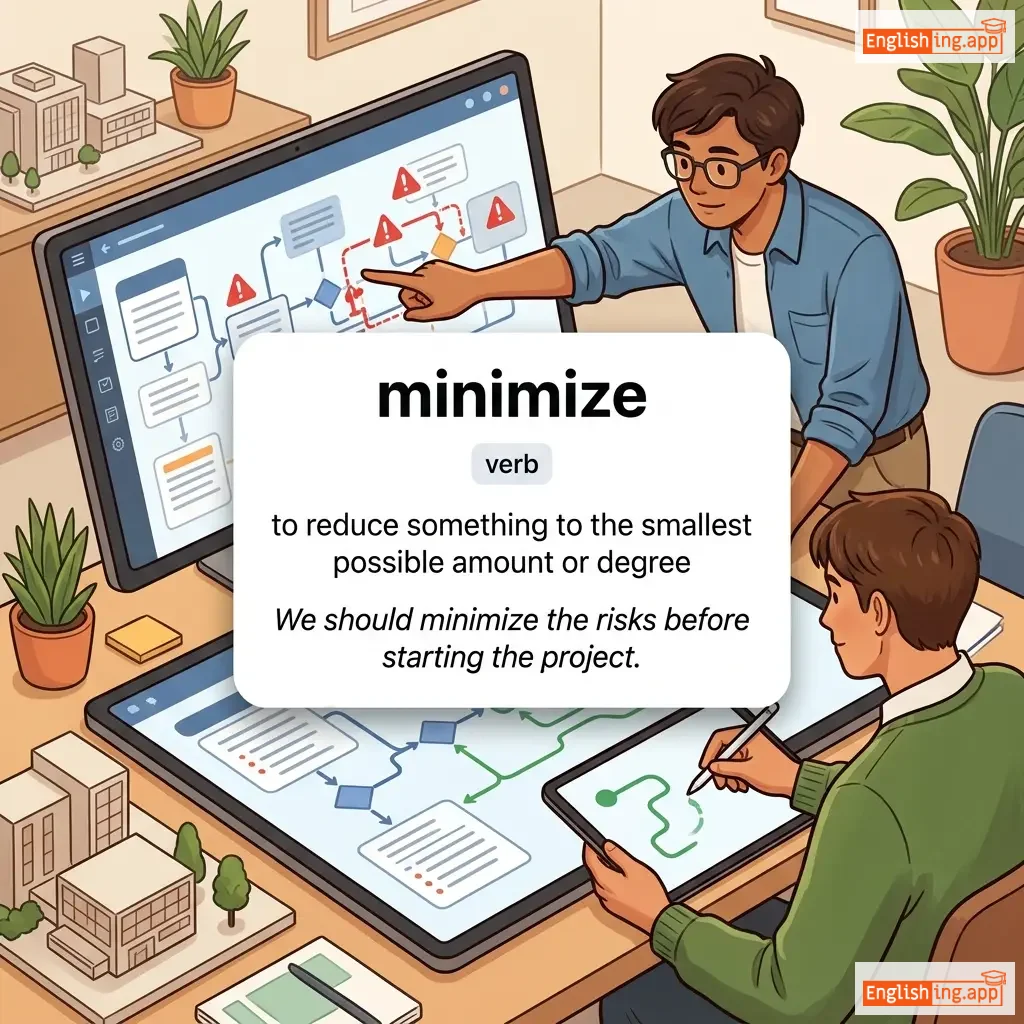
to reduce something to the smallest possible amount or degree
••••••
|
We should minimize the risks before starting the project.
プロジェクトを始める前にリスクを最小化するべきです。
••••••
|
プロジェクトを始める前にリスクを最小化するべきです。
Purojekuto o hajimeru mae ni risuku o saishōka suru beki desu.
••••••
|
minimize the damage
ダメージを最小化する
••••••
|
to reduce the harmful effects as much as possible
••••••
|
ダメージを最小化する
Damēji o saishōka suru
••••••
|
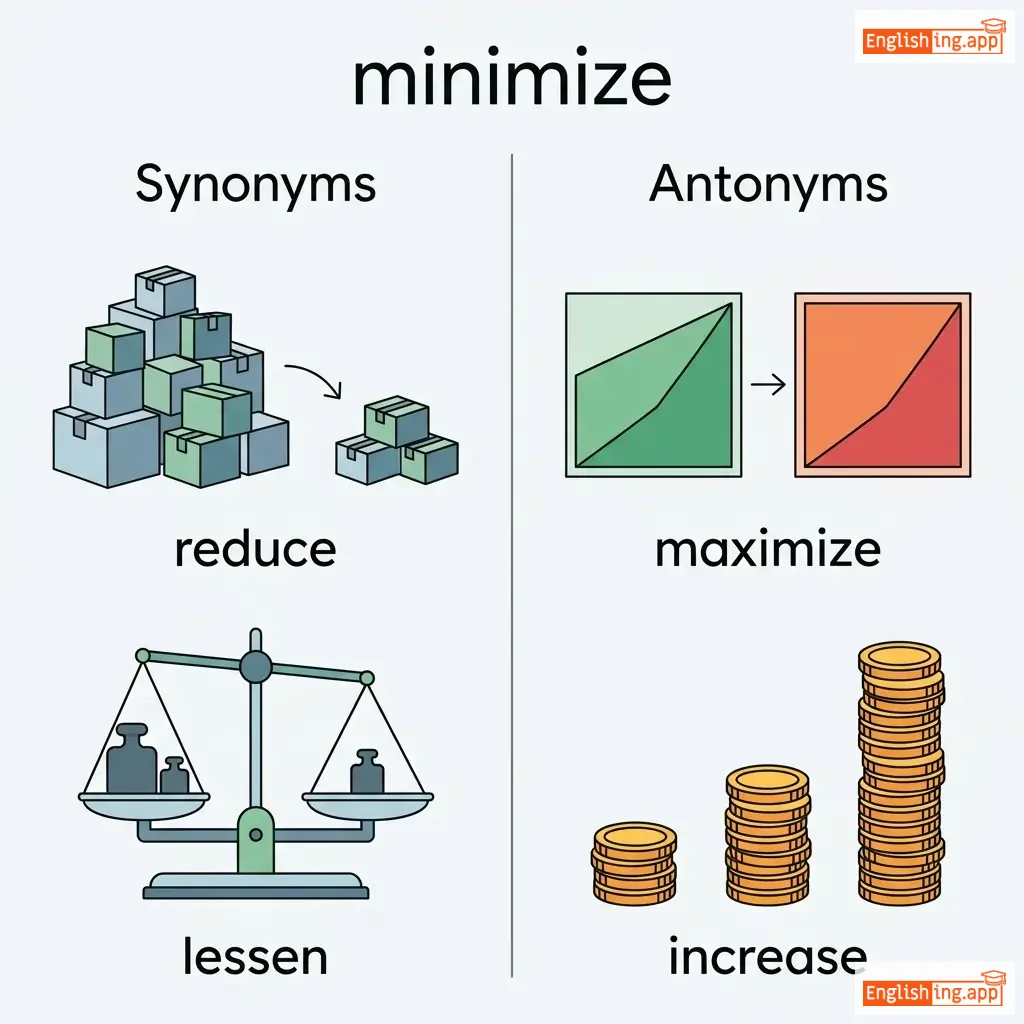
reduce, lessen, decrease, diminish, cut down
••••••
|
maximize, increase, enlarge
••••••
|
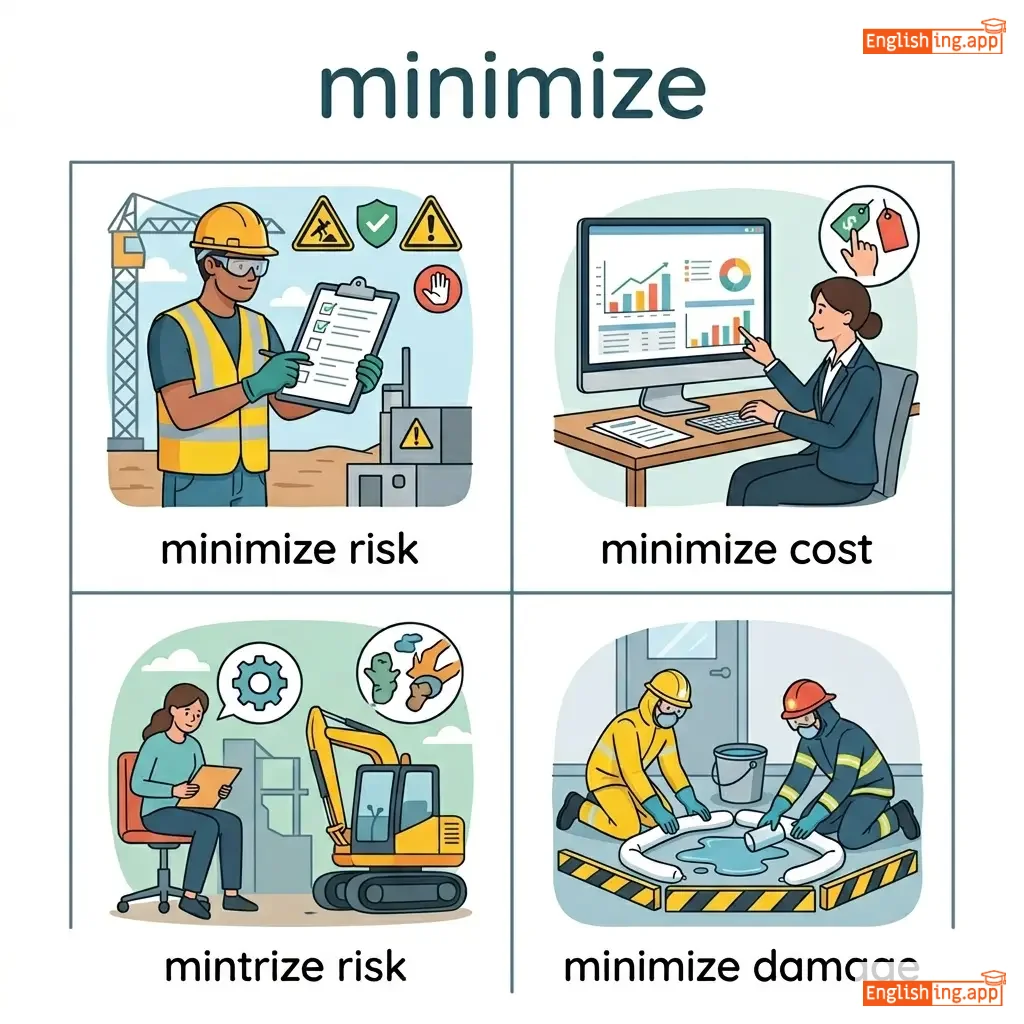
minimize risk, minimize cost, minimize damage, minimize error
••••••
|
Minimizeはmini + size → サイズを小さくすること、または減らすこと。
••••••
|
|
🔽
••••••
|
/ˈmɪnɪməm/
noun
(ミニマム)
••••••
|
|
最小限
saishōgen
••••••
|
- •••••• | - •••••• | - •••••• | - •••••• |
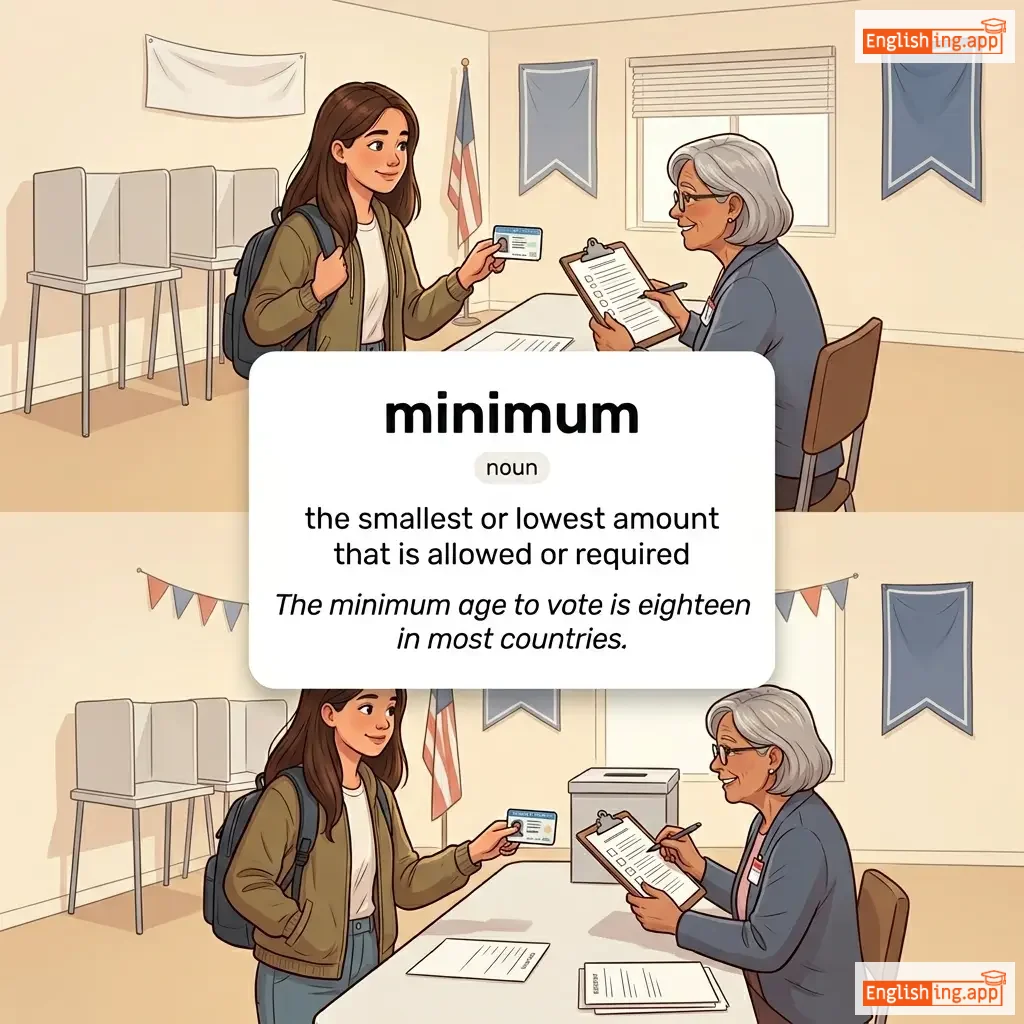
the smallest or lowest amount that is allowed or required
••••••
|
The minimum age to vote is eighteen in most countries. |
投票のための最小年齢は、ほとんどの国で18歳です。
Tōhyō no tame no saishō nenrei wa, hotondo no kuni de 18-sai desu.
••••••
|
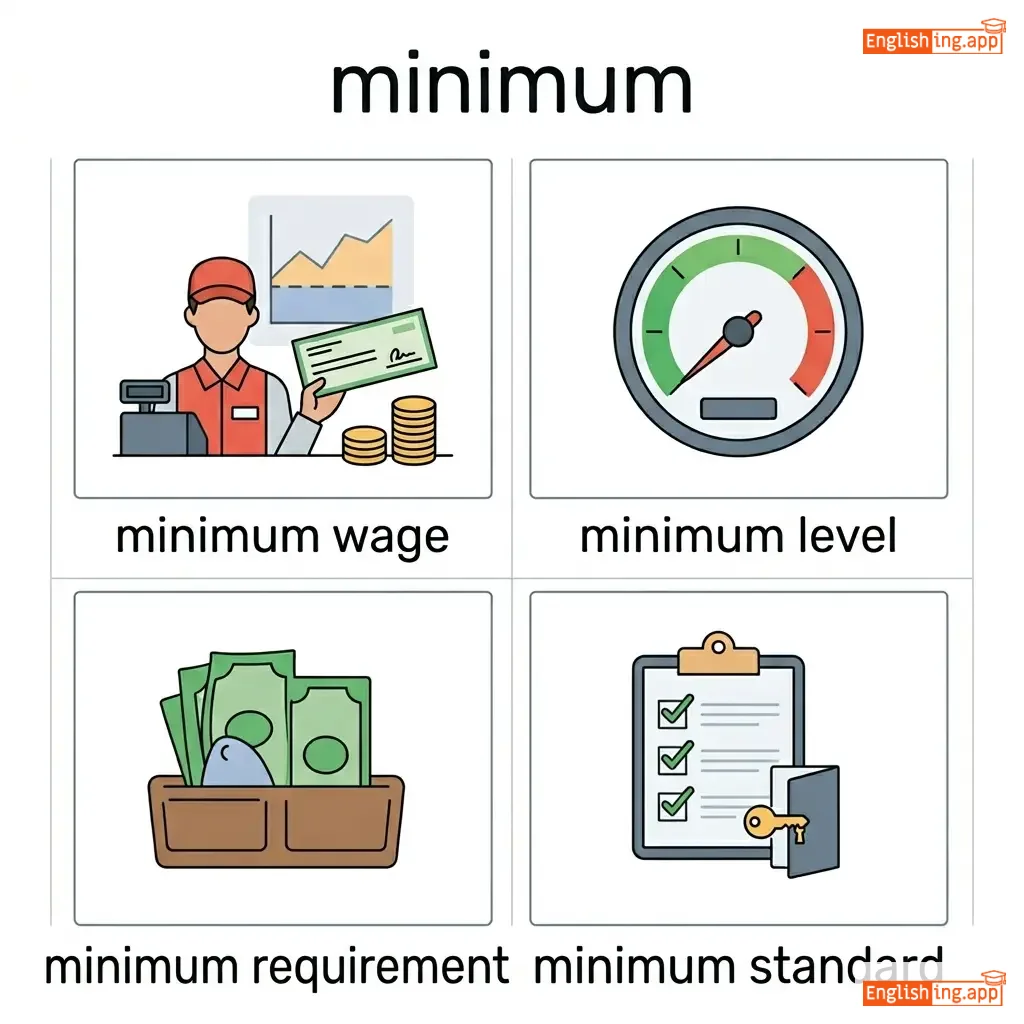
minimum wage |
the lowest amount of pay that employers can legally give workers
••••••
|
最低賃金
saitei chingin
••••••
|
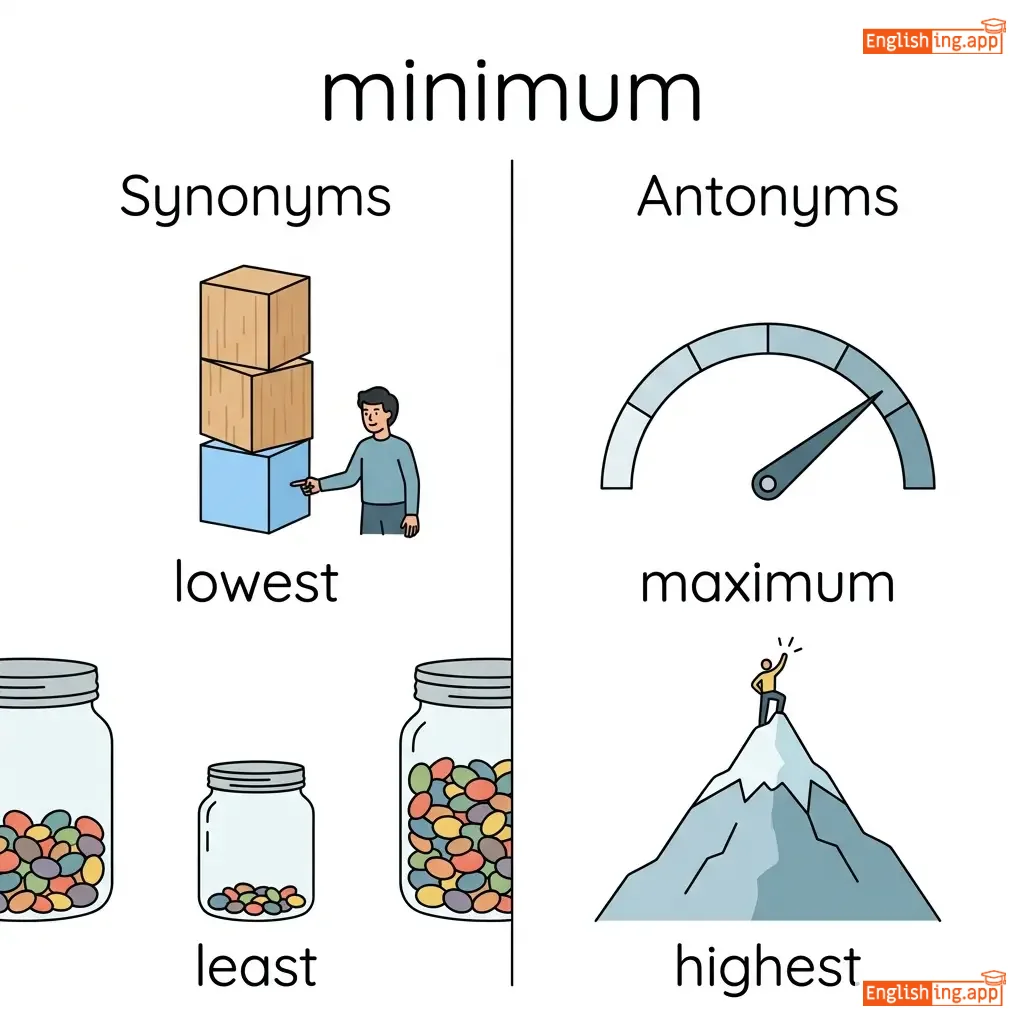
lowest, least, smallest, base
••••••
|
maximum, highest
••••••
|
minimum wage, minimum level, minimum requirement, minimum value
••••••
|
Minimum — 最も小さい量
••••••
|
|
⛏️
••••••
|
/ˈmaɪnɪŋ/
noun
(マイニング)
••••••
|
- •••••• |
採掘
saikutsu
••••••
|
- •••••• | - •••••• | - •••••• | - •••••• |
the process of extracting valuable minerals or other resources from the earth
••••••
|
Mining in this area has increased in recent years.
この地域での採掘は近年増加しています。
••••••
|
この地域での採掘は近年増加しています。
Kono chiiki de no saikutsu wa kin-nen zōka shiteimasu.
••••••
|
- •••••• | - •••••• | - •••••• |
excavation, extraction, digging
••••••
|
- •••••• |
mining industry, mining company, gold mining
••••••
|
MININGは地球から資源を掘り出すプロセスです。
••••••
|
|
👔
••••••
|
/ˈmɪnɪstər/
noun
(ミニスター)
••••••
|
- •••••• |
大臣
daijin
••••••
|
- •••••• | - •••••• | - •••••• | - •••••• |
a head of a government department; a person who leads a church
••••••
|
The finance minister announced new tax policies. |
財務大臣は新しい税制政策を発表しました。
Zaimu daijin wa atarashī zei-sei seisaku o happyō shimashita.
••••••
|
prime minister |
the head of a government
••••••
|
首相
shushō
••••••
|
official, clergyman, preacher, secretary
••••••
|
layman, citizen
••••••
|
prime minister, foreign minister, finance minister, minister of health
••••••
|
Ministerは大臣—大臣はリーダー
••••••
|
|
🏛️
••••••
|
/ˈmɪn.ɪ.stri/
noun
(ミニストリー)
••••••
|
- •••••• |
省
shō
••••••
|
- •••••• | - •••••• | - •••••• | - •••••• |
A government department headed by a minister or the work of a religious minister.
••••••
|
He works at the Ministry of Education. |
彼は教育省で働いています。
Kare wa kyōiku-shō de hataraiteimasu.
••••••
|
Ministry of Truth |
a fictional propaganda department from Orwell's 1984
••••••
|
真実省
Shinjitsu-shō
••••••
|
department, office, bureau, agency
••••••
|
private sector, individual enterprise
••••••
|
ministry of education, foreign ministry, ministry official
••••••
|
省 = 大臣が率いる部門、例えば教育省。
••••••
|
|
🔹
••••••
|
/ˈmaɪ.nər/
adjective/noun
(マイナー)
••••••
|
- •••••• |
小さい / 未成年
chiisai / misenen
••••••
|
- •••••• | - •••••• | - •••••• | - •••••• |
less important, serious, or significant; a person under the legal age
••••••
|
Luckily, the accident caused only minor injuries. |
幸運にも、事故は軽いけがだけを引き起こしました。
kouun ni mo, jiko wa karui kega dake o hikiokoshimashita.
••••••
|
minor detail |
an unimportant or insignificant detail
••••••
|
小さな詳細
chiisana shousai
••••••
|
small, slight, insignificant, subordinate
••••••
|
major, important, significant
••••••
|
minor issue, minor injury, minor role, minor detail
••••••
|
Minor は小さいという意味 - Major はその反対。Minor は小さいか重要でないという意味。
••••••
|
|
👥
••••••
|
/maɪˈnɔːr.ɪ.ti/
noun
(マイノリティ)
••••••
|
- •••••• |
少数派
shousuhai
••••••
|
- •••••• | - •••••• | - •••••• | - •••••• |
A smaller number or part, especially a group differing from the majority.
••••••
|
The law aims to protect the rights of ethnic minorities.
この法律は、民族的少数派の権利を保護することを目的としています。
••••••
|
この法律は、民族的少数派の権利を保護することを目的としています。
Kono houritsu wa, minzokuteki shousuhai no kenri o hogo suru koto o mokuteki to shiteimasu.
••••••
|
minority report
マイノリティ報告
••••••
|
an official statement representing a smaller group's opinion
••••••
|
マイノリティ報告
Mainoriti houkoku
••••••
|
few, subsection, group, faction
••••••
|
majority, mass
••••••
|
ethnic minority, religious minority, minority rights
••••••
|
Minorityは少ない意味なので、少数派も小さな集団を指します。
••••••
|
|
⏱️
••••••
|
/maɪˈnjuːt/ (adj), /ˈmɪnɪt/ (noun)
noun, adjective
(ミニット)
••••••
|
- •••••• |
分 / 微小
fun / bishou
••••••
|
- •••••• | - •••••• | - •••••• | - •••••• |
a period of sixty seconds; extremely small or detailed
••••••
|
He examined the painting with minute attention to detail.
彼は細かい注意を払って絵を調べました。
••••••
|
彼は細かい注意を払って絵を調べました。
Kare wa komakai chuui o haratte e o shirabemashita.
••••••
|
in a minute
1分以内
••••••
|
very soon
••••••
|
1分以内
1 fun inai
••••••
|
tiny, detailed, precise, moment, instant
••••••
|
large, vague, indefinite
••••••
|
last minute, every minute, minute detail, minute hand
••••••
|
分(fun)は時間単位で、微小(bishou)はとても小さいこと!
••••••
|
|
✨
••••••
|
/ˈmɪrəkəl/
noun
(ミラクル)
••••••
|
- •••••• |
奇跡
kiseki
••••••
|
- •••••• | - •••••• | - •••••• | - •••••• |
an extraordinary event that cannot be explained by natural laws
••••••
|
Surviving the accident was nothing short of a miracle.
事故から生き残るのはまさに奇跡でした。
••••••
|
事故から生き残るのはまさに奇跡でした。
Jiko kara ikinokoru no wa masani kiseki deshita.
••••••
|
miracle cure
奇跡の治療法
••••••
|
a treatment that seems to work magically
••••••
|
奇跡の治療法
kiseki no chiryōhō
••••••
|
wonder, marvel, phenomenon, blessing
••••••
|
disaster, misfortune
••••••
|
miracle cure, miracle worker, minor miracle, perform a miracle
••••••
|
奇跡は『ミラクル』から来て、奇跡のような出来事が起きることを示しています。
••••••
|
|
🪞
••••••
|
/ˈmɪrər/
noun
••••••
|
- •••••• | - •••••• | - •••••• | - •••••• |
mirrors
••••••
|
mirroring
••••••
|
A reflective surface, typically made of glass, that shows an image.
••••••
|
She looked at herself in the mirror before leaving. |
- •••••• |
hold a mirror up to |
to reflect or reveal the true nature of something
••••••
|
- •••••• |
looking glass, reflection, glass, speculum
••••••
|
reality, original
••••••
|
look in the mirror, rear-view mirror, bathroom mirror, mirror image
••••••
|
No •••••• |
|
😞
••••••
|
/ˈmɪzərəbəl/
adjective
(ミゼラブル)
••••••
|
- •••••• |
惨めな
mijimena
••••••
|
- •••••• | - •••••• | - •••••• | - •••••• |
Extremely unhappy or uncomfortable.
••••••
|
He felt miserable after losing his job. |
仕事を失った後、彼は惨めに感じていた。
Shigoto o ushinatta ato, kare wa mijime ni kanjite ita.
••••••
|
make someone miserable |
to cause someone to feel very unhappy
••••••
|
誰かを惨めにさせる
Dareka o mijime ni saseru
••••••
|
unhappy, sad, depressed, gloomy, downcast
••••••
|
happy, cheerful, joyful
••••••
|
feel miserable, look miserable, miserable weather, utterly miserable
••••••
|
Miser + able = 苦しみに耐えることができる; 忘れないでください、miserable は惨めな意味です。
••••••
|
|
😭
••••••
|
/ˈmɪzəri/
noun
(ミゼリー)
••••••
|
- •••••• |
苦しみ
kurushimi
••••••
|
- •••••• | - •••••• | - •••••• | - •••••• |
A state of great suffering, unhappiness, or discomfort.
••••••
|
The refugees lived in constant misery. |
難民たちは絶え間ない苦しみの中で暮らしていました。
Nanmin-tachi wa taemanai kurushimi no naka de kurashite imashita.
••••••
|
make life a misery |
to cause someone to live in continuous unhappiness or suffering
••••••
|
人生を苦しみにする
Jinsei o kurushimi ni suru
••••••
|
suffering, distress, hardship, agony, sadness
••••••
|
happiness, joy, comfort
••••••
|
live in misery, endless misery, cause misery, human misery
••••••
|
Miseria = 苦しみ、辛い時に思い出して!
••••••
|
|
😢
••••••
|
/mɪs/
verb, noun
(ミス)
••••••
|
- •••••• |
失う / 恋しい
ushinau / koishii
••••••
|
missed
ミスド
••••••
|
missed
ミスド
••••••
|
misses
ミセス
••••••
|
missing
ミッシング
••••••
|
to fail to hit, reach, or meet; to feel the absence of someone or something
••••••
|
I really miss my family when I travel abroad.
海外旅行の際、家族を本当に恋しく感じます。
••••••
|
海外旅行の際、家族を本当に恋しく感じます。
Kaigai ryokou no sai, kazoku wo hontou ni koishiku kanjimasu.
••••••
|
miss the boat
チャンスを逃す
••••••
|
to miss an opportunity
••••••
|
チャンスを逃す
chansu o nogasu
••••••
|
long for, yearn, fail, omit
••••••
|
catch, attend, achieve
••••••
|
miss a chance, miss the bus, miss someone, miss an opportunity
••••••
|
失うことで何かを逃す、それはチャンスを逃すようなもの
••••••
|
|
🚀
••••••
|
/ˈmɪsaɪl/ or /ˈmɪsəl/
noun
(ミサイル)
••••••
|
- •••••• |
ミサイル
misairu
••••••
|
- •••••• | - •••••• | - •••••• | - •••••• |
a weapon that is self-propelled and directed toward a target
••••••
|
The army launched a missile towards the enemy base. |
軍は敵基地に向かってミサイルを発射しました。
Gun wa teki kichi ni mukatte misairu o hassha shimashita.
••••••
|
ballistic missile |
a missile with a predetermined trajectory
••••••
|
弾道ミサイル
dandō misairu
••••••
|
projectile, rocket, torpedo, weapon
••••••
|
shield, defense
••••••
|
launch a missile, guided missile, nuclear missile, ballistic missile
••••••
|
Missileは'ミス'から来ているけど、ミサイルは絶対に目標を外さない
••••••
|
|
❓
••••••
|
/ˈmɪsɪŋ/
adjective
(mísing)
••••••
|
|
行方不明
yūkōfumei
••••••
|
- •••••• | - •••••• | - •••••• | - •••••• |
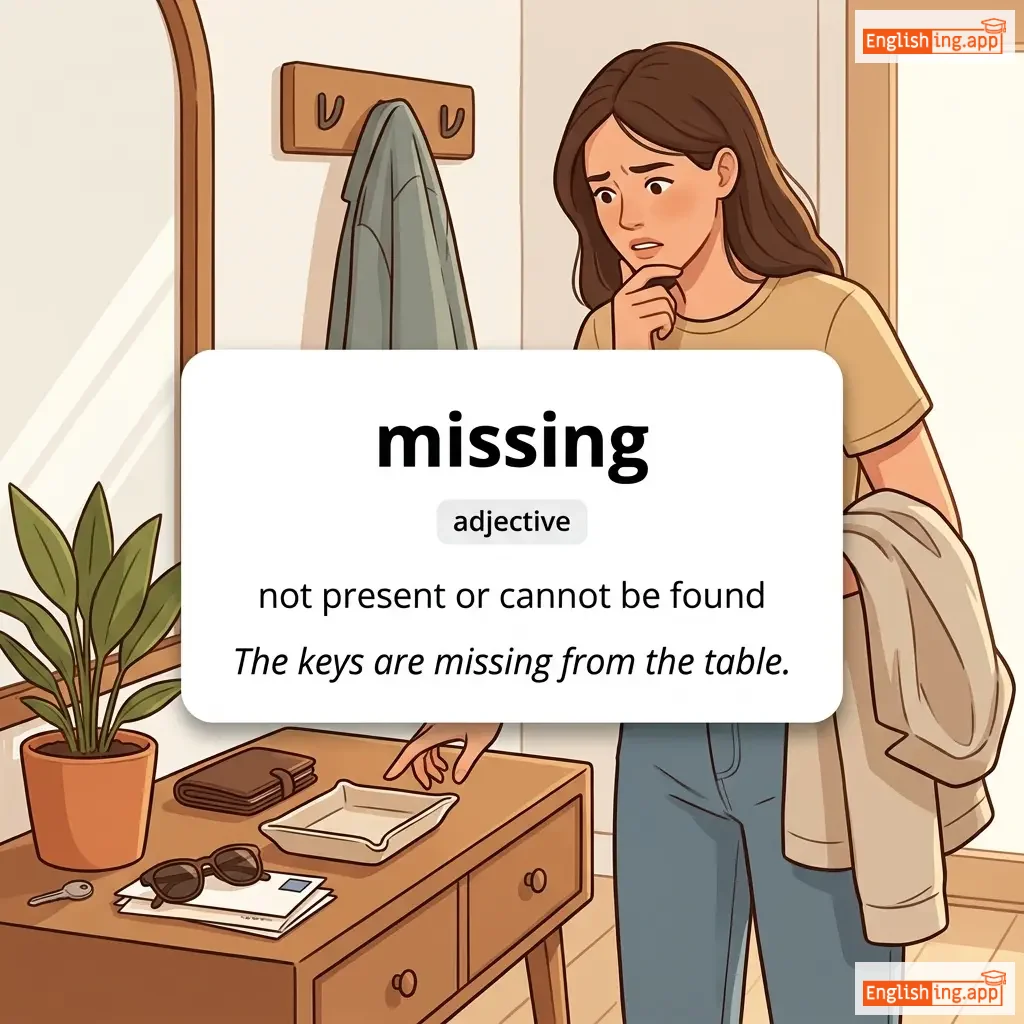
not present or cannot be found
••••••
|
The keys are missing from the table.
de keys are missing from de table.
••••••
|
テーブルから鍵が行方不明です。
Tēburu kara kagi ga yūkōfumei desu.
••••••
|
missing in action
missing in aksion
••••••
|
not present or unaccounted for
••••••
|
行方不明の状態
yūkōfumei no jōtai
••••••
|
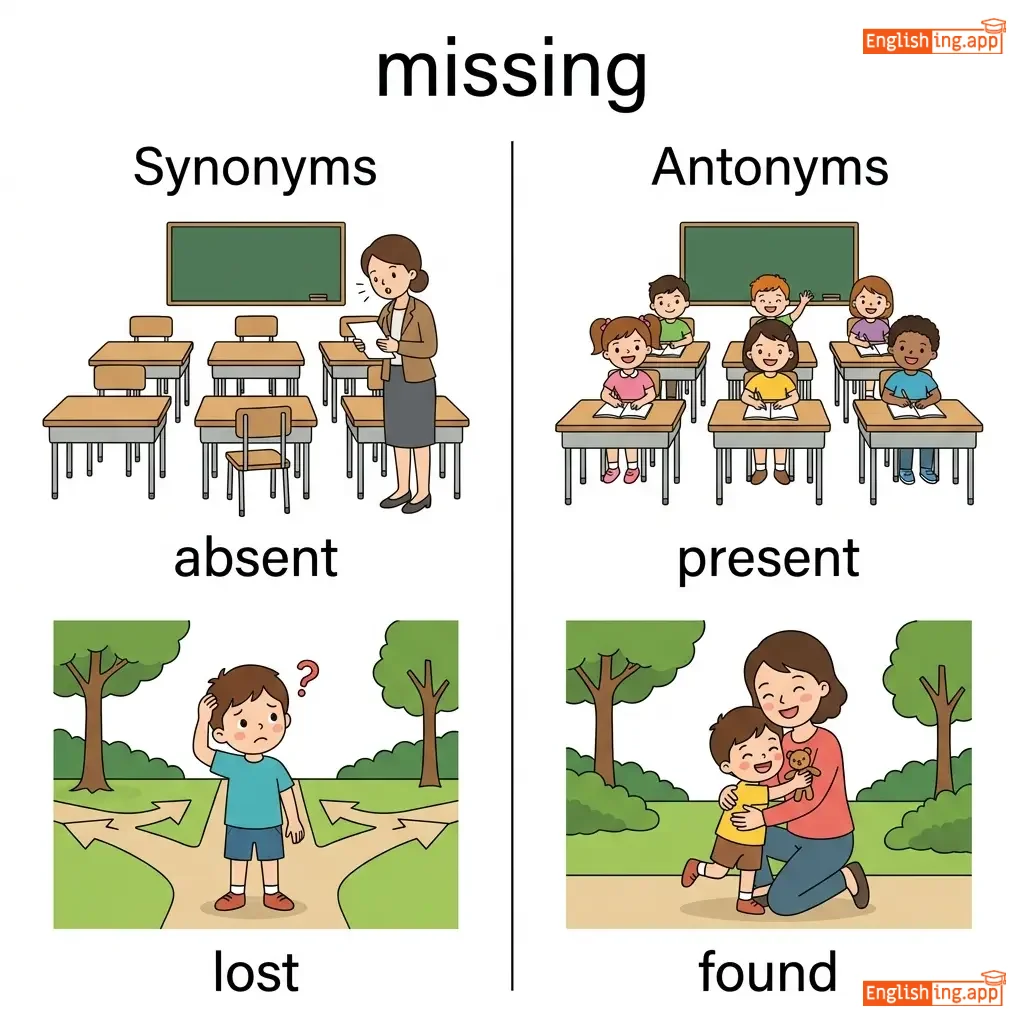
absent, lost, gone, vanished, misplaced
••••••
|
present, found
••••••
|
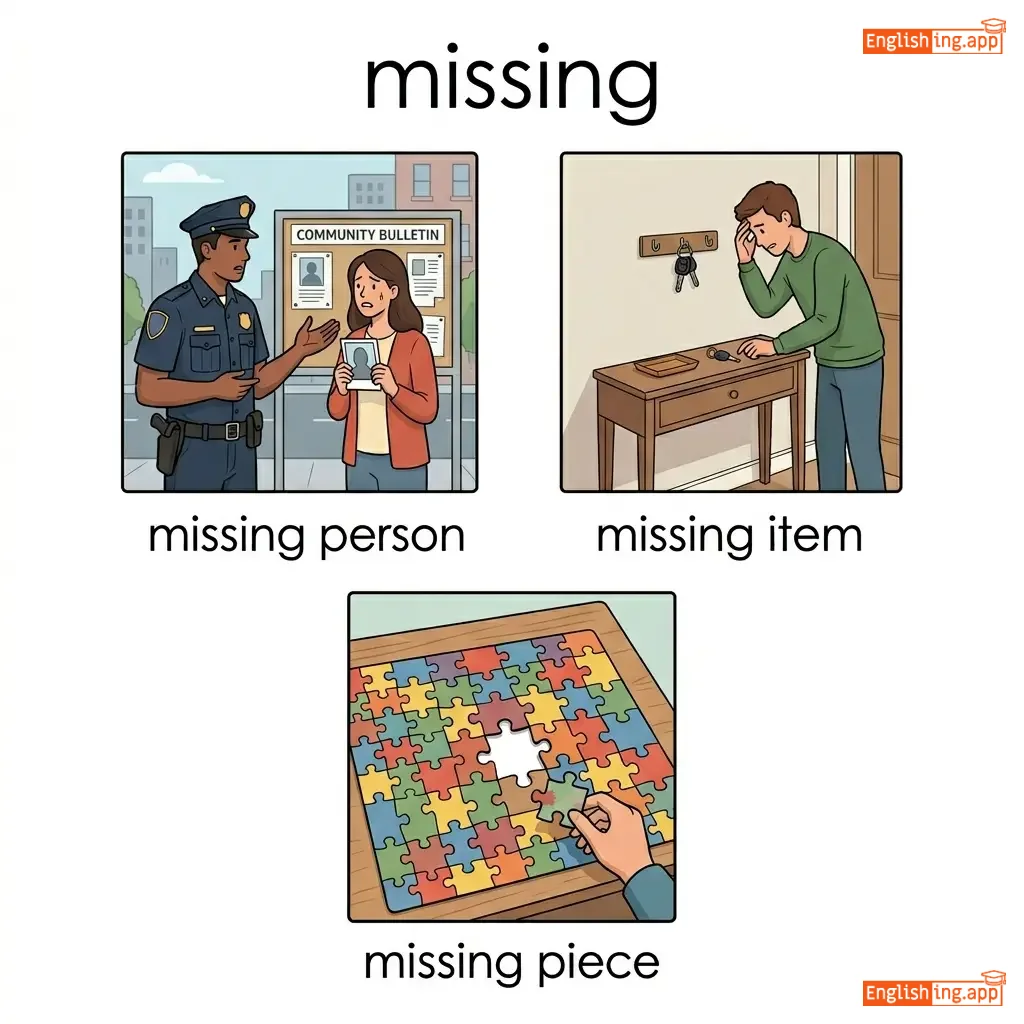
missing person, missing item, missing piece, missing child
••••••
|
Missing = 行方不明 – 何かが見つからない。
••••••
|
|
🚀
••••••
|
/ˈmɪʃən/
noun
(ミッション)
••••••
|
- •••••• |
ミッション / 任務
misshon / ninmu
••••••
|
- •••••• | - •••••• | - •••••• | - •••••• |
an important assignment or task, often with a specific purpose
••••••
|
The astronauts were on a mission to explore Mars.
宇宙飛行士たちは火星を探査するためのミッションに出発しました。
••••••
|
宇宙飛行士たちは火星を探査するためのミッションに出発しました。
Uchuu hikoushi tachi wa kasei wo tansa suru tame no misshon ni shuppatsu shimashita.
••••••
|
mission accomplished
ミッション完了
••••••
|
a phrase used when a task has been successfully completed
••••••
|
ミッション完了
misshon kanryou
••••••
|
task, assignment, duty, operation, purpose
••••••
|
idleness, inaction
••••••
|
space mission, secret mission, diplomatic mission, mission statement
••••••
|
ミッションは任務です—Mars でのミッションは責任の象徴です。
••••••
|
|
❌
••••••
|
/mɪˈsteɪk/
noun
(ミステイク)
••••••
|
- •••••• |
間違い
machigai
••••••
|
- •••••• | - •••••• | - •••••• | - •••••• |
An action or decision that is wrong or misguided.
••••••
|
She realized her mistake after submitting the wrong file. |
彼女は間違ったファイルを提出した後、自分の間違いに気づきました。
Kanojo wa machigatta fairu o teishutsu shita ato, jibun no machigai ni kizukimashita.
••••••
|
make a mistake |
to do something incorrectly
••••••
|
間違いを犯す
machigai o okasu
••••••
|
error, blunder, slip, misjudgment, fault
••••••
|
accuracy, correctness, truth
••••••
|
common mistake, big mistake, silly mistake, honest mistake
••••••
|
間違いは間違ったことを意味する日本語です。
••••••
|
|
❌
••••••
|
/mɪˈsteɪkən/
adjective
(ミステイケン)
••••••
|
- •••••• |
間違った
machigatta
••••••
|
- •••••• | - •••••• | - •••••• | - •••••• |
wrong or incorrect because of an error in judgment or understanding
••••••
|
I was mistaken about the meeting time.
アイ ワズ ミステイケン アバウト ザ ミーティング タイム。
••••••
|
私は会議の時間を間違えていました。
watashi wa kaigi no jikan o machigaete imashita
••••••
|
mistaken identity
ミステイケン アイデンティティ
••••••
|
confusing one person for another
••••••
|
人違い
hitogae
••••••
|
wrong, incorrect, erroneous, misguided, false
••••••
|
correct, accurate, right
••••••
|
mistaken belief, mistaken idea, be mistaken, mistaken assumption
••••••
|
ミス(miss)+take → 間違った = mistaken
••••••
|
|
🥣
••••••
|
/mɪks/
verb
(mikkusu)
••••••
|
- •••••• |
混ぜる
mazeru
••••••
|
mixed
mikkusudo
••••••
|
mixed
mikkusudo
••••••
|
mixes
mikkusesu
••••••
|
mixing
mikkusingu
••••••
|
To combine different substances or elements together.
••••••
|
She likes to mix different colors to create new shades.
彼女は新しい色合いを作るために、さまざまな色を混ぜるのが好きです。
••••••
|
彼女は新しい色合いを作るために、さまざまな色を混ぜるのが好きです。
Kanojo wa atarashī iroai o tsukuru tame ni, samazama na iro o mazeru no ga suki desu.
••••••
|
mix up
混ぜる
••••••
|
to confuse or mistake one thing for another
••••••
|
混乱させる
konran saseru
••••••
|
blend, combine, merge, stir, mingle
••••••
|
separate, divide, isolate
••••••
|
mix ingredients, mix drinks, mix together, mix well
••••••
|
Mix = 混ぜる、スムージーを作る時に使う。
••••••
|
|
🌀
••••••
|
/mɪkst/
adjective
(ミックスド)
••••••
|
- •••••• |
混合された
kongou sareta
••••••
|
- •••••• | - •••••• | - •••••• | - •••••• |
consisting of different elements or having varied opinions or feelings
••••••
|
The audience had mixed reactions to the film. |
観客は映画に対して混合した反応を示しました。
Kankyaku wa eiga ni taishite kongō shita hannō o shimeshimashita.
••••••
|
mixed feelings |
having both positive and negative emotions about something
••••••
|
混合した感情
kongō shita kanjō
••••••
|
blended, combined, diverse, varied, assorted
••••••
|
uniform, pure, similar
••••••
|
mixed reaction, mixed group, mixed culture, mixed opinion
••••••
|
混合 = mixされた感情!
••••••
|
|
🔀
••••••
|
/ˈmɪks.tʃər/
noun
(mikkusyaa)
••••••
|
- •••••• |
混合物
kongō-mono
••••••
|
- •••••• | - •••••• | - •••••• | - •••••• |
a combination of different substances or elements
••••••
|
The cake batter is a mixture of flour, eggs, and milk.
ケーキの生地は小麦粉、卵、牛乳の混合物です。
••••••
|
ケーキの生地は小麦粉、卵、牛乳の混合物です。
Kēki no kiji wa komugiko, tamago, gyūnyū no kongō-mono desu.
••••••
|
- •••••• | - •••••• | - •••••• |
blend, combination, compound, fusion
••••••
|
separation, isolation, purity
••••••
|
mixture of, chemical mixture, complex mixture
••••••
|
混合物 - いろいろな材料を混ぜておいしいケーキを作ろう!
••••••
|
|
👥
••••••
|
/mɒb/
noun
(モブ)
••••••
|
- •••••• |
暴徒; 暴力的に行動するグループ
bōtō; bōryoku-teki ni kōdō suru gurūpu
••••••
|
- •••••• | - •••••• | - •••••• | - •••••• |
a large crowd of people; a group that acts in a violent way
••••••
|
An angry mob gathered outside the building.
An angry mob gathered outside the building.
••••••
|
怒った暴徒が建物の外に集まった。
Okotta bōtō ga tatemono no soto ni atsumatta.
••••••
|
- •••••• | - •••••• | - •••••• |
crowd, gang, horde, rabble
••••••
|
individual, order, peace
••••••
|
angry mob, mob rule, mob violence
••••••
|
Mobの暴力的な力がグループを暴徒に変える
••••••
|
|
🚶
••••••
|
/moʊˈbɪləti/
noun
(モビリティ)
••••••
|
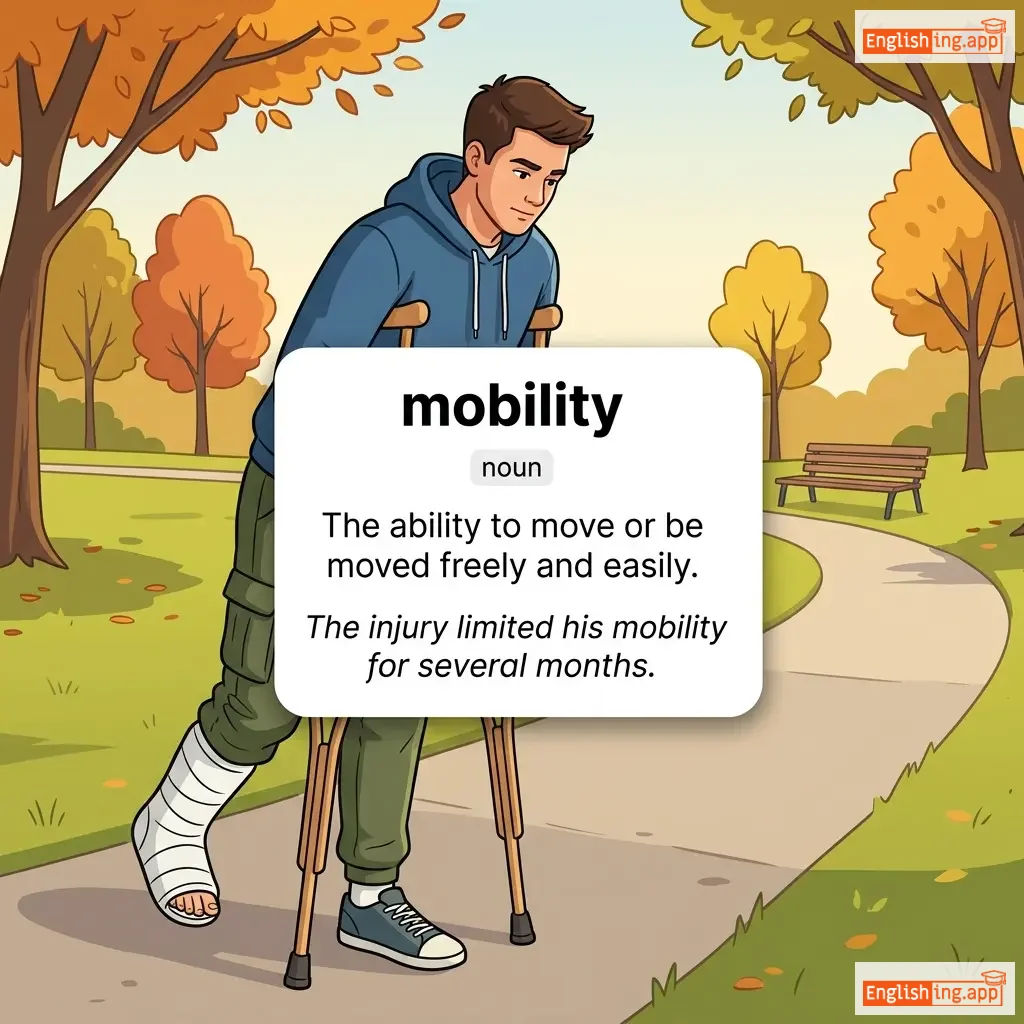
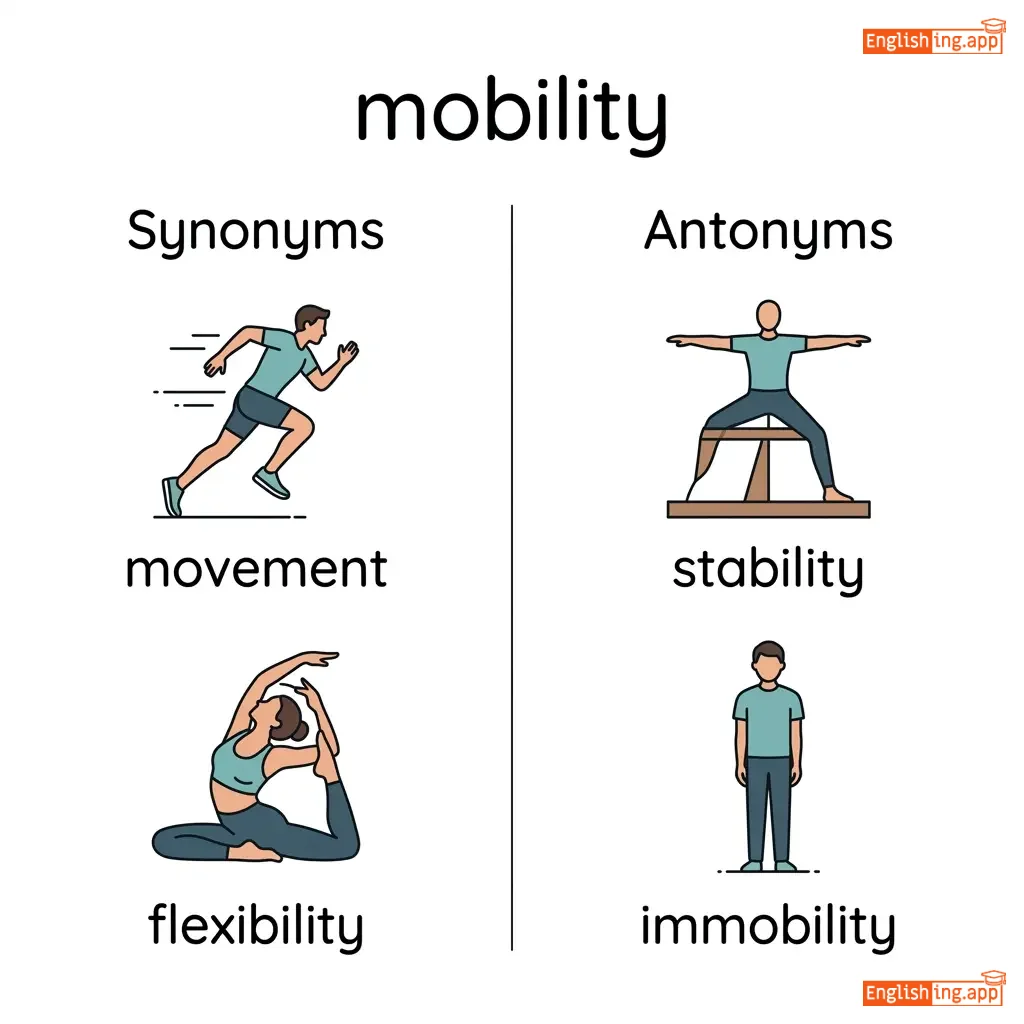
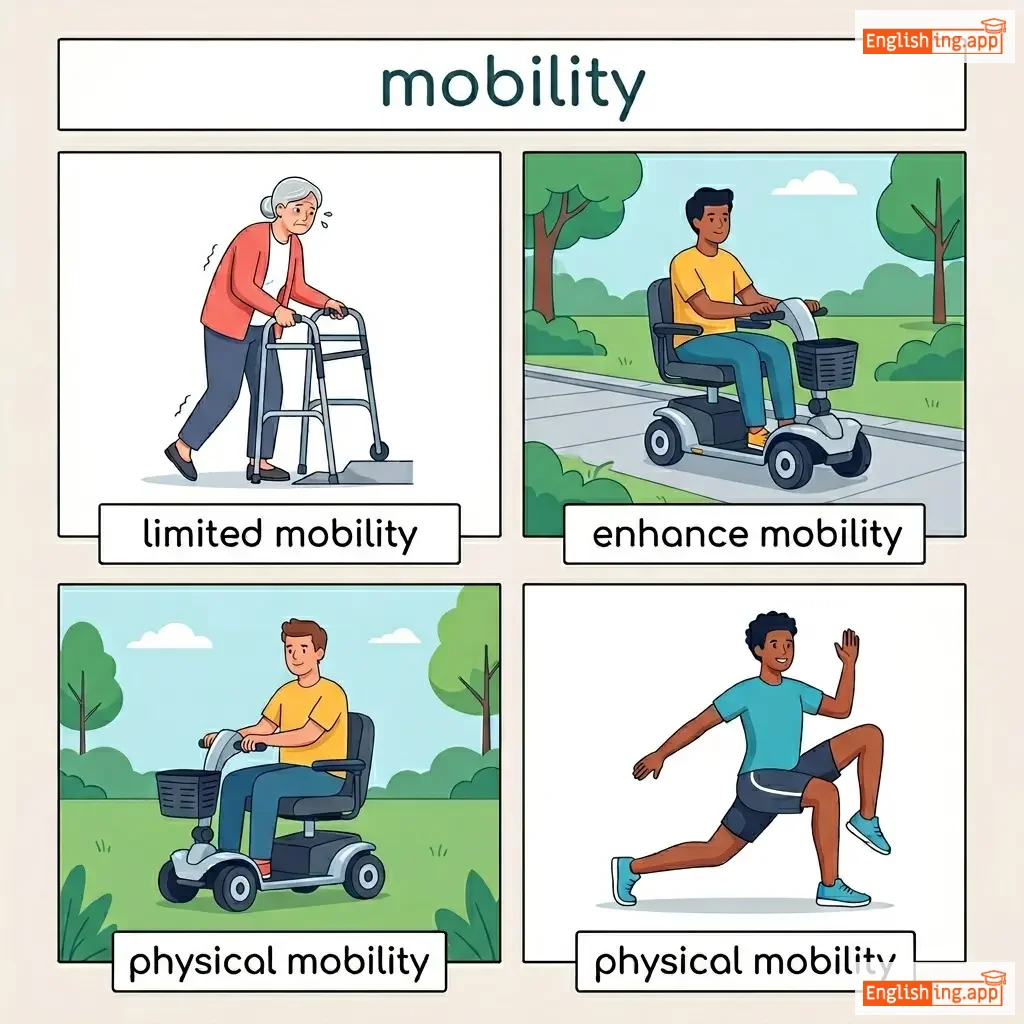
|
移動性
idousei
••••••
|
- •••••• | - •••••• | - •••••• | - •••••• |
The ability to move or be moved freely and easily.
••••••
|
The injury limited his mobility for several months. |
けがにより、彼の移動性は数ヶ月間制限された。
Kega ni yori, kare no idousei wa suukagetsukan seigen sareta.
••••••
|
social mobility |
The ability to change one's social or economic status.
••••••
|
社会的移動性
shakaiteki idousei
••••••
|
movement, flexibility, agility, locomotion, portability
••••••
|
stability, immobility, stiffness
••••••
|
limited mobility, enhance mobility, physical mobility, social mobility
••••••
|
Mobilityは自由に動く能力です。
••••••
|
|
⚡
••••••
|
/ˈməʊbɪlaɪz/
verb
(モビライズ)
••••••
|
- •••••• |
動員する
douin suru
••••••
|
mobilized
モビライズド
••••••
|
mobilized
モビライズド
••••••
|
mobilizes
モビライズズ
••••••
|
mobilizing
モビライズイング
••••••
|
to organize or prepare people or resources for action
••••••
|
The leader worked hard to mobilize the community for the protest.
リーダーは抗議のためにコミュニティを動員するために一生懸命働きました。
••••••
|
リーダーは抗議のためにコミュニティを動員するために一生懸命働きました。
Rīdā wa kōgi no tame ni komyuniti o dōin suru tame ni isshōkenmei hatarakimashita.
••••••
|
- •••••• | - •••••• | - •••••• |
organize, rally, summon, assemble
••••••
|
disband, scatter, ignore
••••••
|
mobilize resources, mobilize support, mobilize for action
••••••
|
モビライズすることは、すべてを行動に組織することです。
••••••
|
|
📱
••••••
|
/moʊd/
noun
(モード)
••••••
|
- •••••• |
モード
mōdo
••••••
|
- •••••• | - •••••• | - •••••• | - •••••• |
A particular way or style in which something is done, experienced, or expressed.
••••••
|
The phone has a silent mode for meetings. |
電話には会議用のサイレントモードがあります。
Denwa ni wa kaigi-yō no sairento mōdo ga arimasu.
••••••
|
in mode |
To be in a particular state or style of action.
••••••
|
- •••••• |
manner, style, method, form, fashion
••••••
|
disorder, chaos
••••••
|
silent mode, airplane mode, survival mode, operating mode
••••••
|
飛行機モードにすると電話が使えなくなるので、モードは状態を意味します。
••••••
|
|
🏛️
••••••
|
/ˈmɒdəl/
noun
(モデル)
••••••
|
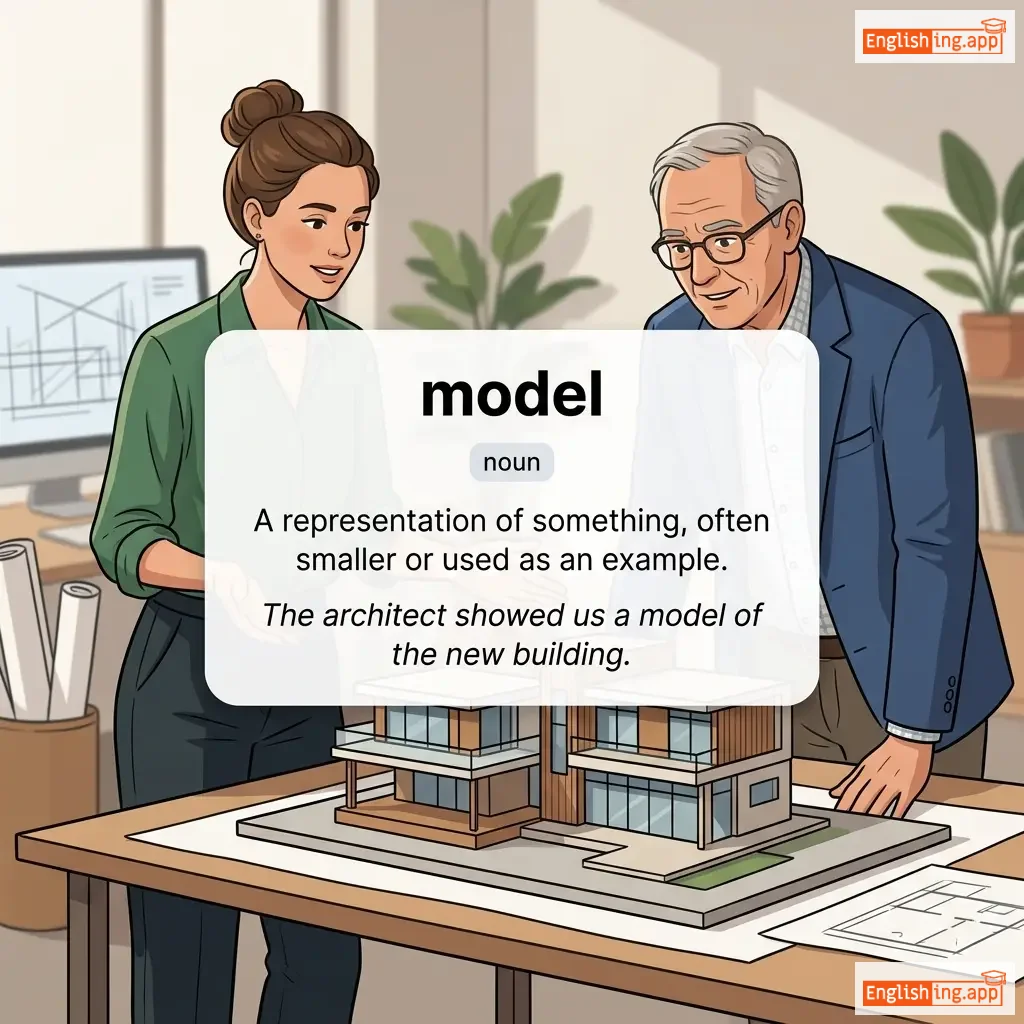
|
モデル
moderu
••••••
|
- •••••• | - •••••• | - •••••• | - •••••• |
A representation of something, often smaller or used as an example.
••••••
|
The architect showed us a model of the new building.
建築家は私たちに新しい建物のモデルを見せてくれました。
••••••
|
建築家は私たちに新しい建物のモデルを見せてくれました。
Kenchikuka wa watashitachi ni atarashii tatemono no moderu wo misete kuremashita.
••••••
|
role model
ロールモデル
••••••
|
a person looked up to as an example
••••••
|
ロールモデル
ro-ru moderu
••••••
|
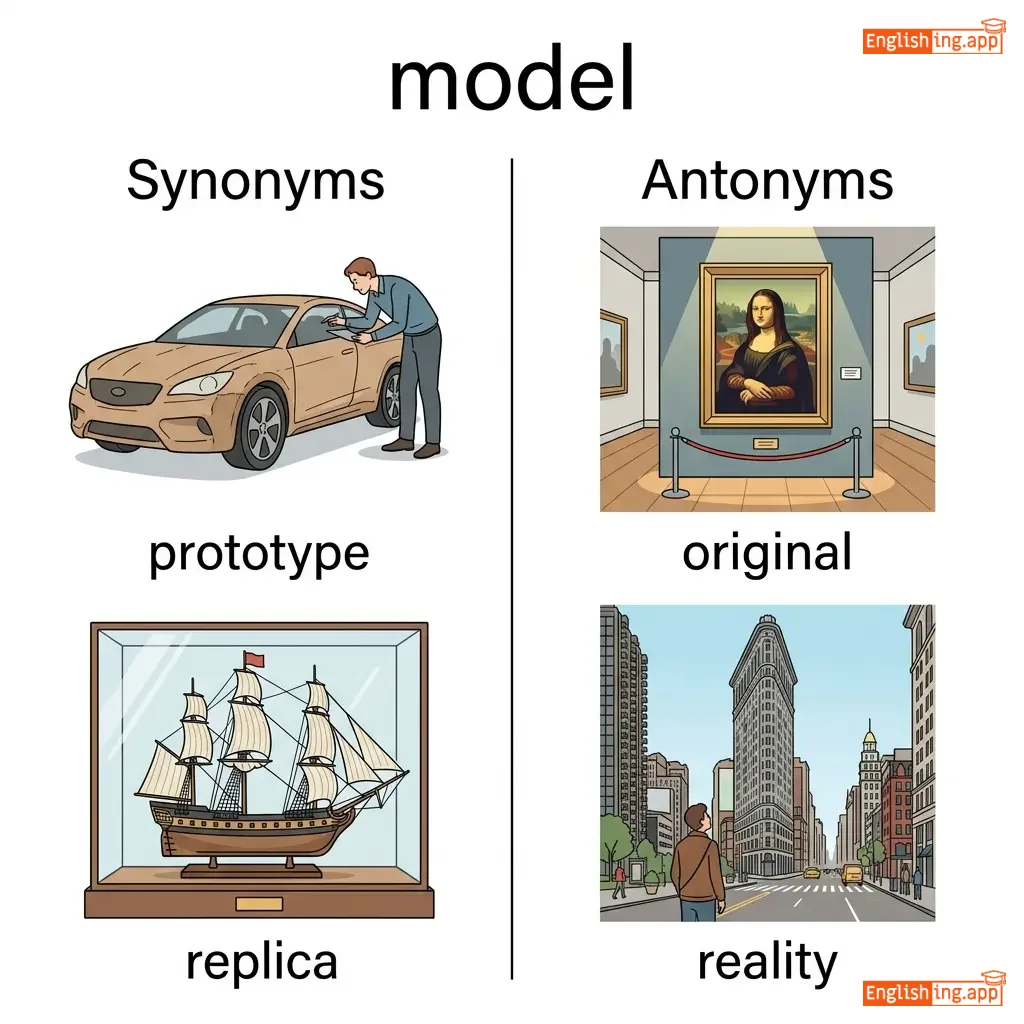
prototype, replica, example, pattern, figure
••••••
|
original, reality
••••••
|
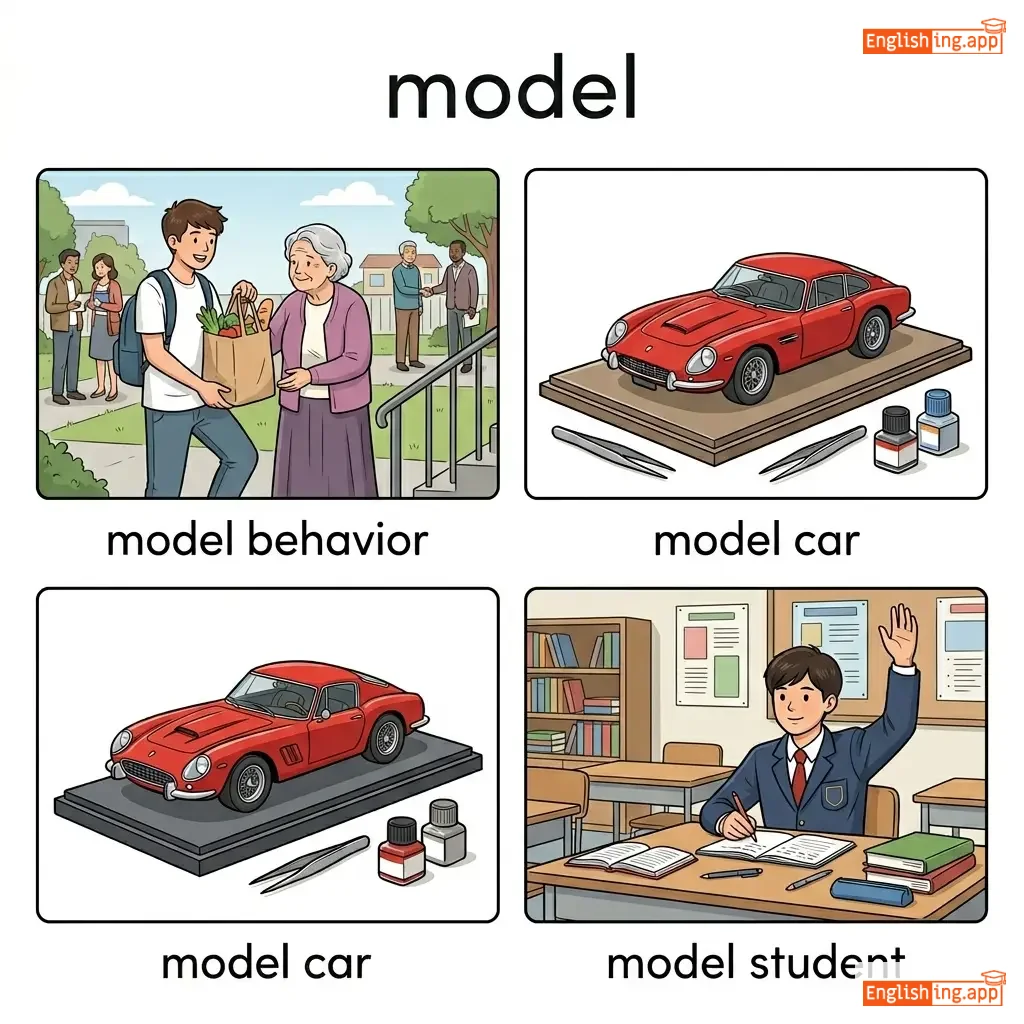
model behavior, model car, model student, model agency
••••••
|
モデルは、何かの縮小版または手本として理解することができます。
••••••
|
|
⚖️
••••••
|
/ˈmɒdəreɪt/ (verb), /ˈmɒdərət/ (adj)
verb, adjective
(モデレート)
••••••
|
|
適度な, 控える
tekido na, hikaeru
••••••
|
moderated
モデレーテッド
••••••
|
moderated
モデレーテッド
••••••
|
moderates
モデレーツ
••••••
|
moderating
モデレーティング
••••••
|
To make something less extreme (verb); average in amount, intensity, quality, or degree (adjective).
••••••
|
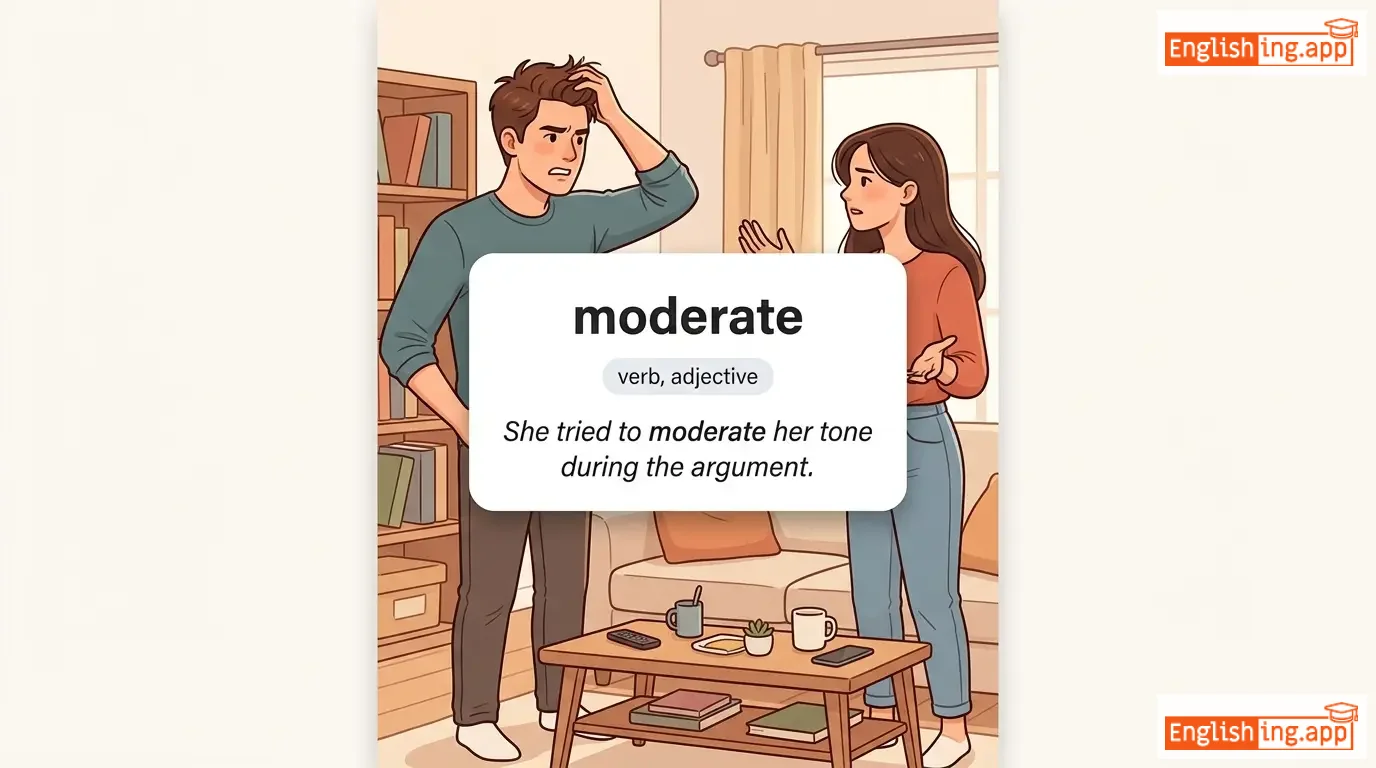
She tried to moderate her tone during the argument.
彼女は議論中に口調を和らげようとした。
••••••
|
彼女は議論中に口調を和らげようとした。
Kanojo wa giron-chū ni kuchō o yawarageyō to shita.
••••••
|
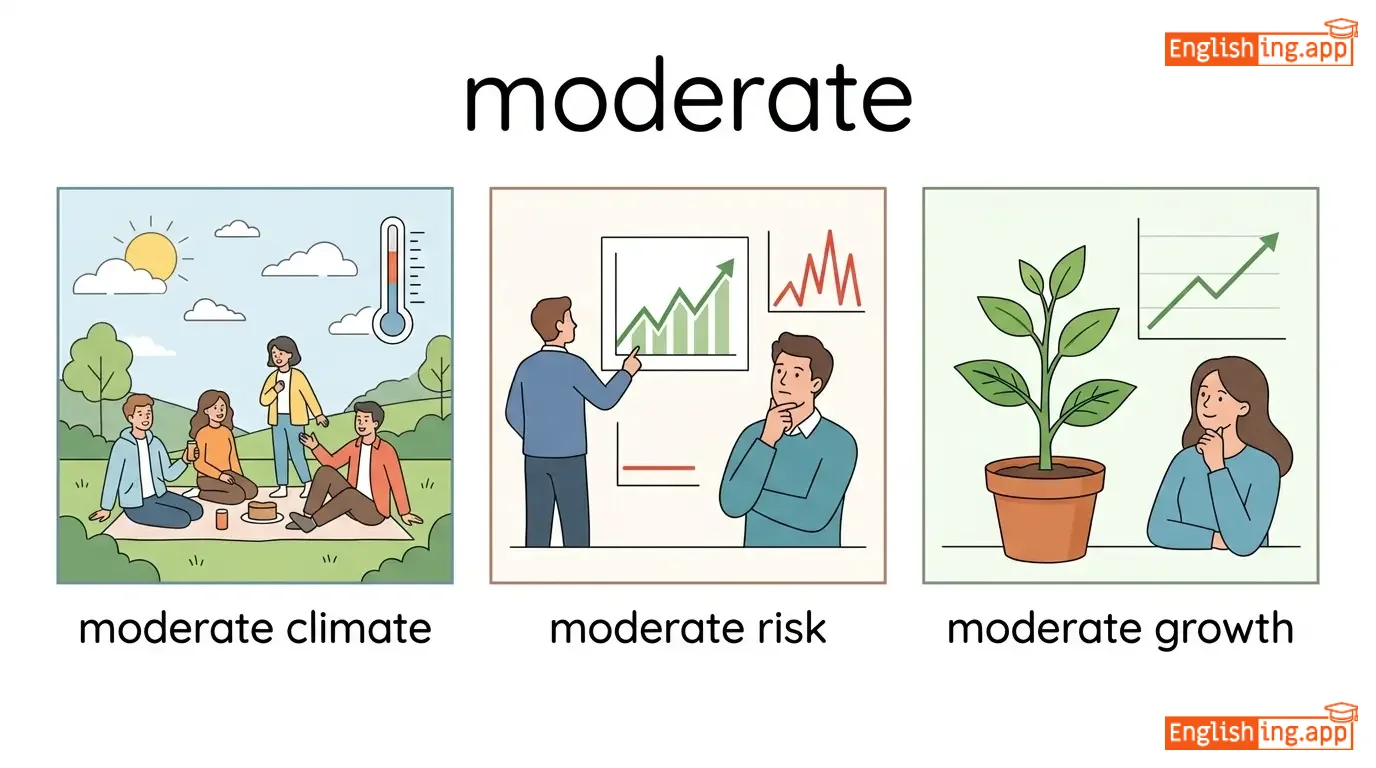
moderate growth
適度な成長
••••••
|
Steady or average increase.
••••••
|
適度な成長
tekido na seichō
••••••
|
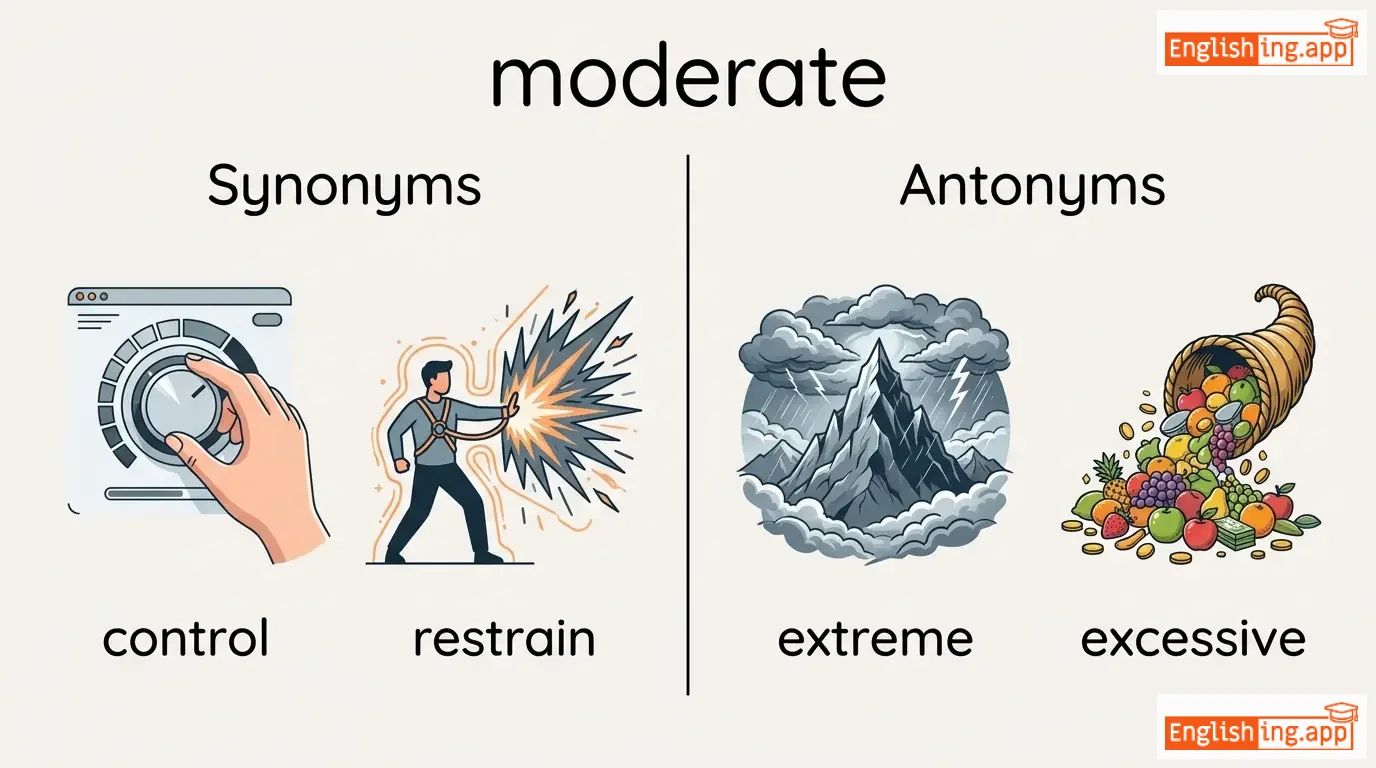
control, restrain, average, mild, temper
••••••
|
extreme, excessive
••••••
|
moderate climate, moderate risk, moderate growth, moderate opinion
••••••
|
Moderateは、極端なことを避け、バランスをとることを意味します。
••••••
|
|
🗣️
••••••
|
/ˈmɒdəreɪtər/
noun
(モデレーター)
••••••
|
- •••••• |
モデレーター
moderētā
••••••
|
- •••••• | - •••••• | - •••••• | - •••••• |
A person who leads or oversees discussions, debates, or forums to maintain order.
••••••
|
The moderator asked each panelist to share their views.
モデレーターは各パネリストに自分の意見を共有するように頼みました。
••••••
|
モデレーターは各パネリストに自分の意見を共有するように頼みました。
Moderētā wa kaku panerisuto ni jibun no iken o kyōyū suru yō ni tanomimashita.
••••••
|
- •••••• | - •••••• | - •••••• |
facilitator, chairperson, mediator, referee
••••••
|
participant, disruptor
••••••
|
panel moderator, forum moderator, appoint a moderator, debate moderator
••••••
|
モデレーター – 討論の進行役。
••••••
|
|
🏙️
••••••
|
/ˈmɒdən/
adjective
(モダン)
••••••
|
- •••••• |
現代的
gendai-teki
••••••
|
- •••••• | - •••••• | - •••••• | - •••••• |
relating to the present or recent times, not ancient or old-fashioned
••••••
|
They live in a modern apartment with new facilities. |
彼らは新しい設備のある現代的なアパートに住んでいます。
Karera wa atarashī setsubi no aru gendai-teki na apāto ni sundeimasu.
••••••
|
modern times |
the present period of history
••••••
|
現代
gendai
••••••
|
contemporary, current, up-to-date, new, trendy
••••••
|
ancient, old-fashioned
••••••
|
modern technology, modern art, modern world, modern lifestyle
••••••
|
現代的は 'modern' と同じ、新しいものを指します。
••••••
|
|
🙂
••••••
|
/ˈmɒdɪst/
adjective
••••••
|
- •••••• | - •••••• | - •••••• | - •••••• | - •••••• | - •••••• |
Having or showing a humble estimate of one’s importance; simple and not extravagant.
••••••
|
She lives in a modest house in the countryside. |
- •••••• |
modest beginnings |
a simple or humble start in life or career
••••••
|
- •••••• |
humble, unassuming, simple, moderate, decent
••••••
|
arrogant, boastful, extravagant
••••••
|
modest house, modest income, modest attitude, remain modest
••••••
|
No •••••• |

