|
表情符号
|
单词 | Images | 翻译 | 过去时 | 过去分词 | 第三人称单数 | 动名词 | 含义 | 例句 | 例句翻译 | 示例表达 | 示例表达含义 | 示例表达翻译 | 同义词 | 反义词 | 搭配词 | 助记符 |
|---|---|---|---|---|---|---|---|---|---|---|---|---|---|---|---|---|---|
|
🌤️
••••••
|
/maɪld/
adjective
(maɪld)
••••••
|
- •••••• |
温和
wēnhé
••••••
|
- •••••• | - •••••• | - •••••• | - •••••• |
not severe or strong; gentle in nature
••••••
|
The patient had only mild symptoms.
病人只有轻微的症状。
••••••
|
病人只有轻微的症状。
Bìngrén zhǐyǒu qīngwēi de zhèngzhuàng.
••••••
|
mild mannered
mild mannered
••••••
|
gentle and not aggressive
••••••
|
温和的性格
wēnhé de xìnggé
••••••
|
gentle, soft, calm, slight, moderate
••••••
|
harsh, severe, strong
••••••
|
mild symptoms, mild climate, mild taste, mild mannered
••••••
|
Mild 意味着温和,就像一道温和的菜肴。
••••••
|
|
📏
••••••
|
/maɪl/
noun
(迈尔)
••••••
|
- •••••• |
英里
yingli
••••••
|
- •••••• | - •••••• | - •••••• | - •••••• |
a unit of distance equal to 1,609.34 meters; a long distance figuratively
••••••
|
She walked a mile to reach the bus stop.
她 走了 一 迈尔 到 公交站。
••••••
|
她走了一英里到达公交站。
Ta zoule yi yingli daoda gongjiaozhan
••••••
|
go the extra mile
go the extra mile
••••••
|
to make more effort than is expected
••••••
|
付出额外努力
fuchu ewai nuli
••••••
|
distance, length, stretch, way, span
••••••
|
closeness, nearness
••••••
|
mile away, long mile, walk a mile, run a mile, extra mile
••••••
|
英里 yingli ≈ mile
••••••
|
|
⚔️
••••••
|
/ˈmɪl.ɪ.tənt/
noun
(激进分子)
••••••
|
- •••••• |
激进分子
jijin fenzi
••••••
|
- •••••• | - •••••• | - •••••• | - •••••• |
A person who uses aggressive or violent methods to promote a political or social cause
••••••
|
The militant group demanded immediate political reforms. |
激进分子组织要求立即进行政治改革。
Jijin fenzi zuzhi yaoqiu lijiji xingxing zhengzhi gaige.
••••••
|
- •••••• | - •••••• | - •••••• |
activist, extremist, radical, fighter, rebel
••••••
|
pacifist, moderate, peaceful person
••••••
|
militant group, militant action, militant organization, militant leader
••••••
|
Mandarin word '激进' (extreme) + '分子' (person) = 'extremist person' (militant)
••••••
|
|
🎖️
••••••
|
/ˈmɪlɪˌtɛri/
noun/adjective
(军事)
••••••
|

|
军事
junshi
••••••
|
- •••••• | - •••••• | - •••••• | - •••••• |
relating to soldiers, the armed forces, or war
••••••
|
He decided to join the military after college. |
他决定大学毕业后加入军队。
Ta jueding daxue biye hou jiaru jundui.
••••••
|
military precision |
doing something in a very exact and disciplined way
••••••
|
军事精确
junshi jingque
••••••
|
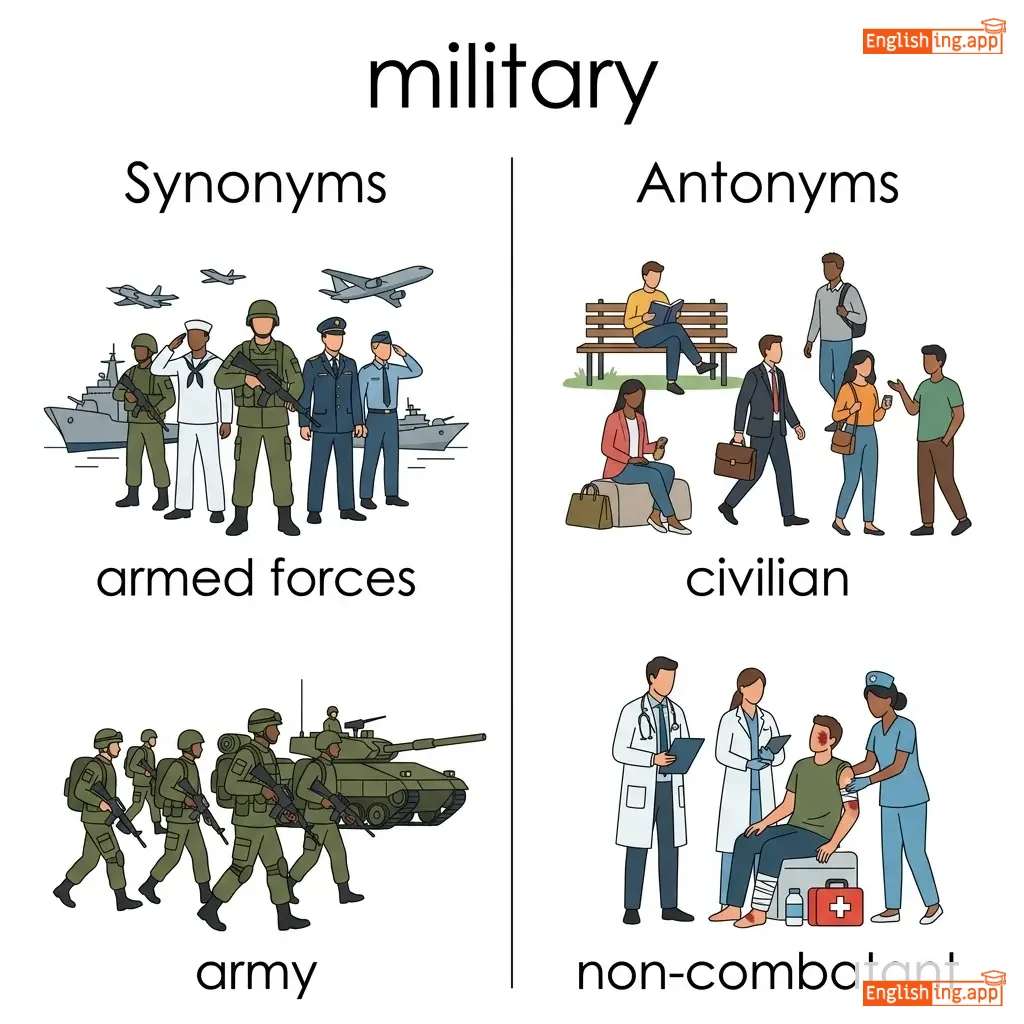
armed forces, army, defense, troops
••••••
|
civilian, non-combatant
••••••
|
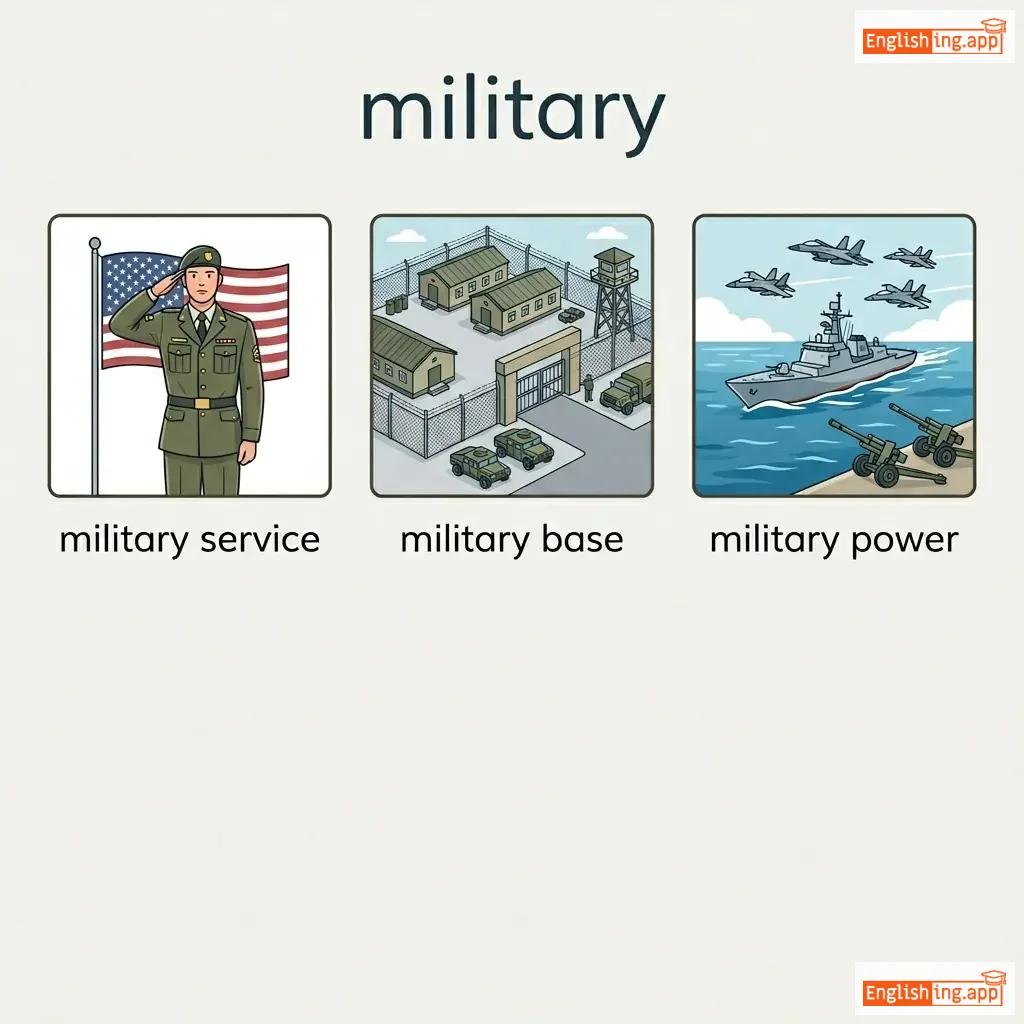
military service, military base, military power, military training
••••••
|
Military = 军队 🎖️ - 加入军队
••••••
|
|
🪖
••••••
|
/mɪˈlɪʃə/
noun
(民兵)
••••••
|
- •••••• |
民兵
minbing
••••••
|
- •••••• | - •••••• | - •••••• | - •••••• |
a group of ordinary people who are trained to act as soldiers in emergencies
••••••
|
The village formed a militia to defend against attacks. |
村庄组成了一支民兵,以防范攻击。
Cun zhuang zu cheng le yi zhi minbing, yi fangfan gongji.
••••••
|
- •••••• | - •••••• | - •••••• |
armed group, volunteer force, paramilitary, local army
••••••
|
regular army, civilians
••••••
|
local militia, armed militia, form a militia
••••••
|
民兵就像士兵一样保护村庄
••••••
|
|
🥛
••••••
|
/mɪlk/
noun, verb
(happiness)
••••••
|
- •••••• |
幸福
xìngfú
••••••
|
milked
••••••
|
milked
••••••
|
milks
••••••
|
milking
••••••
|
noun: a white liquid produced by female mammals for feeding their young; verb: to draw milk from an animal
••••••
|
She milked the cow early in the morning. |
她早上很早就挤了牛奶。
Tā zǎoshang hěn zǎo jiù jǐle niúnǎi.
••••••
|
milk it |
to exploit a situation for as much advantage as possible
••••••
|
榨取利益
zhàqǔ lìyì
••••••
|
dairy, extract, exploit, drain, squeeze
••••••
|
feed, nurture
••••••
|
glass of milk, milk the cow, milk products
••••••
|
幸福 = 有幸福的牛奶
••••••
|
|
🏭
••••••
|
/mɪl/
noun
(míl)
••••••
|
- •••••• |
磨坊
mófāng
••••••
|
- •••••• | - •••••• | - •••••• | - •••••• |
a building equipped with machinery for grinding grain or manufacturing goods
••••••
|
The old flour mill has been converted into a museum.
那座老面粉厂已被改建为博物馆。
••••••
|
那座老面粉厂已被改建为博物馆。
Nà zuò lǎo miànfěn chǎng yǐ bèi gǎi jiàn wéi bówùguǎn.
••••••
|
grind to a halt
磨到停止
••••••
|
to slowly stop functioning or progressing
••••••
|
逐渐停止
zhújiàn tíngzhǐ
••••••
|
factory, plant, workshop, foundry
••••••
|
field, farm
••••••
|
flour mill, textile mill, paper mill, steel mill
••••••
|
Mill是磨坊 — 在磨坊里面粉被磨碎。
••••••
|
|
💰
••••••
|
/ˈmɪljən/
noun
(百万)
••••••
|
- •••••• |
百万
bǎi wàn
••••••
|
- •••••• | - •••••• | - •••••• | - •••••• |
the number equivalent to one thousand thousand (1,000,000)
••••••
|
The movie earned over a million dollars in its first week. |
电影在第一周赚了超过一百万美元。
Diànyǐng zài dì yī zhōu zhuànle chāoguò yī bǎi wàn měiyuán.
••••••
|
one in a million |
something or someone very rare and special
••••••
|
百万分之一
bǎi wàn fēn zhī yī
••••••
|
thousand thousand, 10^6, large number
••••••
|
zero, none
••••••
|
million dollars, million people, one in a million, several million
••••••
|
百万 - 一个非常大的数字,就像百万分之一!
••••••
|
|
🧠
••••••
|
/maɪnd/
noun/verb
(maind)
••••••
|
- •••••• |
心智 / 注意
xīn zhì / zhù yì
••••••
|
minded
maindid
••••••
|
minded
maindid
••••••
|
minds
mainds
••••••
|
minding
mainding
••••••
|
the part of a person that enables them to think, feel, and reason; to pay attention or take care
••••••
|
Please mind the gap between the train and the platform.
请注意火车与站台之间的间隙。
••••••
|
请注意火车与站台之间的间隙。
Qǐng zhùyì huǒchē yǔ zhàntái zhījiān de jiànxì.
••••••
|
make up one's mind
做决定
••••••
|
to decide something
••••••
|
做决定
zuò juédìng
••••••
|
brain, intellect, thought, heed, notice
••••••
|
ignore, neglect
••••••
|
mind the gap, change your mind, peace of mind, keep in mind
••••••
|
Mind 在中文是心智,没有心智就无法照顾周围。
••••••
|
|
⛏️
••••••
|
/maɪn/
noun, pronoun, verb
(main)
••••••
|
- •••••• |
矿井 / 我的
kuàngjǐng / wǒ de
••••••
|
mined
maind
••••••
|
mined
maind
••••••
|
mines
mainz
••••••
|
mining
maining
••••••
|
a place where minerals are dug from the ground; or something belonging to me
••••••
|
The workers went deep into the mine to extract coal.
工人们深入矿井开采煤炭。
••••••
|
工人们深入矿井开采煤炭。
Gōngrénmen shēn rù kuàngjǐng kāicǎi méitàn.
••••••
|
gold mine
金矿
••••••
|
a source of abundant wealth or information
••••••
|
金矿
jīn kuàng
••••••
|
pit, quarry, excavation, my own
••••••
|
surface, yours
••••••
|
coal mine, gold mine, mine shaft, mine worker
••••••
|
Mine 意味着我的,也就是矿井 - 这是我的矿井!
••••••
|
|
⛏️
••••••
|
/ˈmaɪnə(r)/
noun
(麦纳)
••••••
|
- •••••• |
矿工
kuànggōng
••••••
|
- •••••• | - •••••• | - •••••• | - •••••• |
a person who works in a mine, extracting minerals or other resources
••••••
|
The miner worked in the coal mine for many years. |
矿工在煤矿工作了很多年。
Kuànggōng zài méikuàng gōngzuò le hěn duō nián.
••••••
|
- •••••• | - •••••• | - •••••• |
excavator, digger, prospector
••••••
|
- •••••• |
coal miner, gold miner, miner's lamp
••••••
|
KUANGGONG sounds like MINER – they work in the KUANG (mine).
••••••
|
|
⛏️
••••••
|
/ˈmɪnərəl/
noun
(矿物)
••••••
|
- •••••• |
矿物
kuàngwù
••••••
|
- •••••• | - •••••• | - •••••• | - •••••• |
a naturally occurring substance that is solid and inorganic, often used in industry or nutrition
••••••
|
Calcium is an important mineral for strong bones. |
钙是一种对强壮骨骼很重要的矿物。
gài shì yī zhǒng duì qiángzhuàng gǔgé hěn zhòngyào de kuàngwù.
••••••
|
mineral water |
natural water that contains dissolved minerals
••••••
|
矿泉水
kuàngquán shuǐ
••••••
|
ore, crystal, element, nutrient
••••••
|
organic matter
••••••
|
mineral water, mineral resource, mineral deposit, trace mineral
••••••
|
矿物像'矿'一样,是从地里提取的东西。
••••••
|
|
⚖️
••••••
|
/ˈmɪnɪməl/
adjective
(最小的)
••••••
|
- •••••• |
最小的
zuìxiǎo de
••••••
|
- •••••• | - •••••• | - •••••• | - •••••• |
the smallest or least amount possible
••••••
|
The damage to the car was minimal after the accident. |
事故后,汽车的损坏是最小的。
shìgù hòu, qìchē de sǔnhuài shì zuìxiǎo de.
••••••
|
minimal effort |
doing something with the least possible effort
••••••
|
最小努力
zuìxiǎo nǔlì
••••••
|
least, smallest, slight, negligible, tiny
••••••
|
maximum, major, large
••••••
|
minimal effort, minimal cost, minimal damage, minimal risk
••••••
|
Minimal 意味着最小努力。
••••••
|
|
➖
••••••
|
/ˈmɪnɪmaɪz/
verb
(米尼迈兹)
••••••
|
|
最小化
zuìxiǎohuà
••••••
|
minimized
最小化
••••••
|
minimized
最小化
••••••
|
minimizes
最小化
••••••
|
minimizing
最小化中
••••••
|
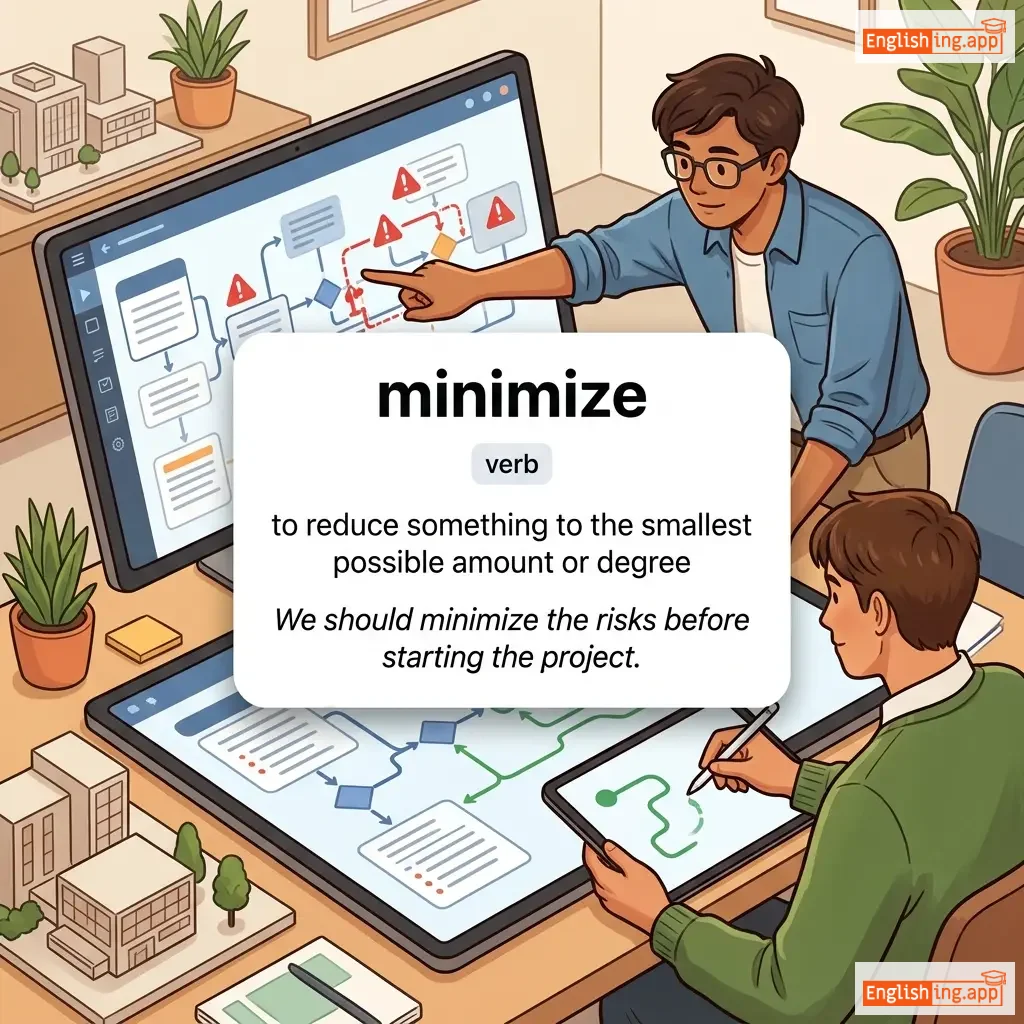
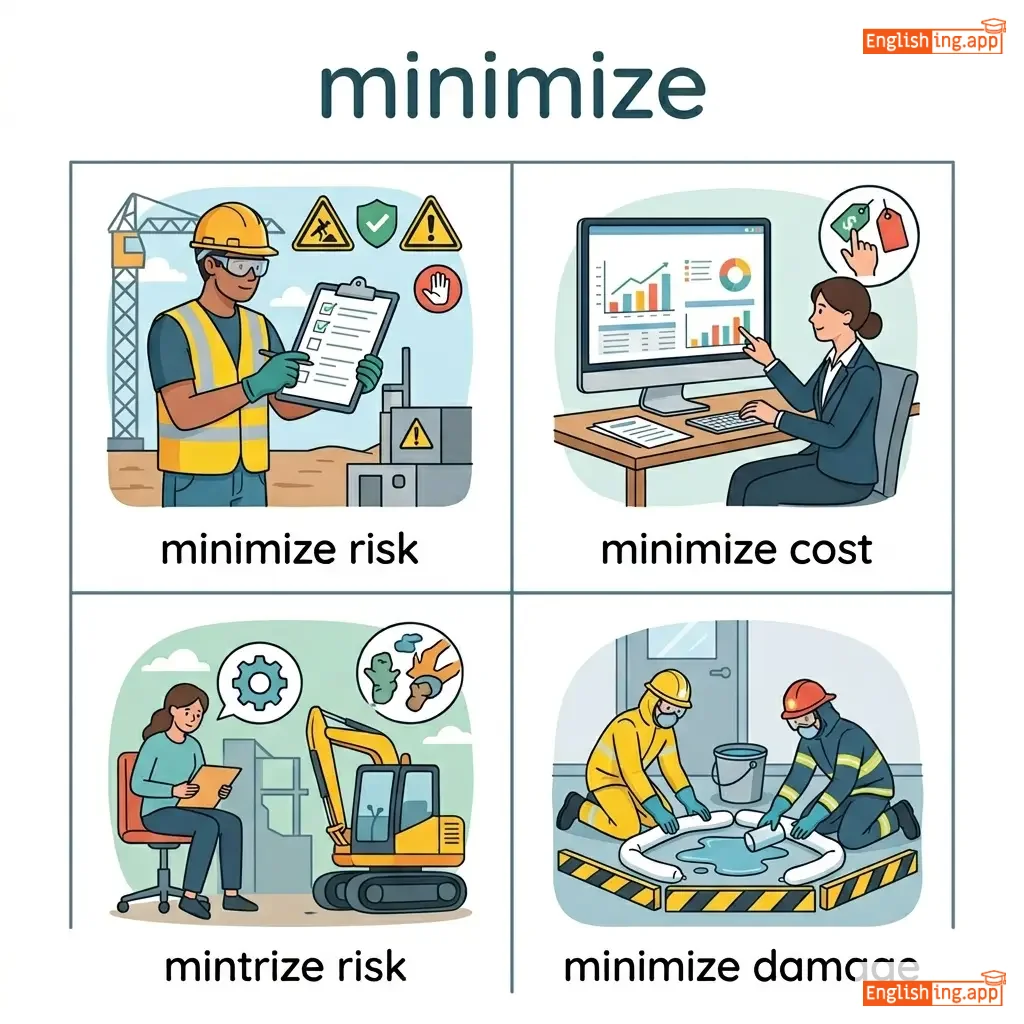
to reduce something to the smallest possible amount or degree
••••••
|
We should minimize the risks before starting the project.
在开始项目之前,我们应该最小化风险。
••••••
|
在开始项目之前,我们应该最小化风险。
Zài kāishǐ xiàngmù zhīqián, wǒmen yīnggāi zuìxiǎohuà fēngxiǎn.
••••••
|
minimize the damage
最小化损害
••••••
|
to reduce the harmful effects as much as possible
••••••
|
最小化损害
zuìxiǎohuà sǔnhài
••••••
|
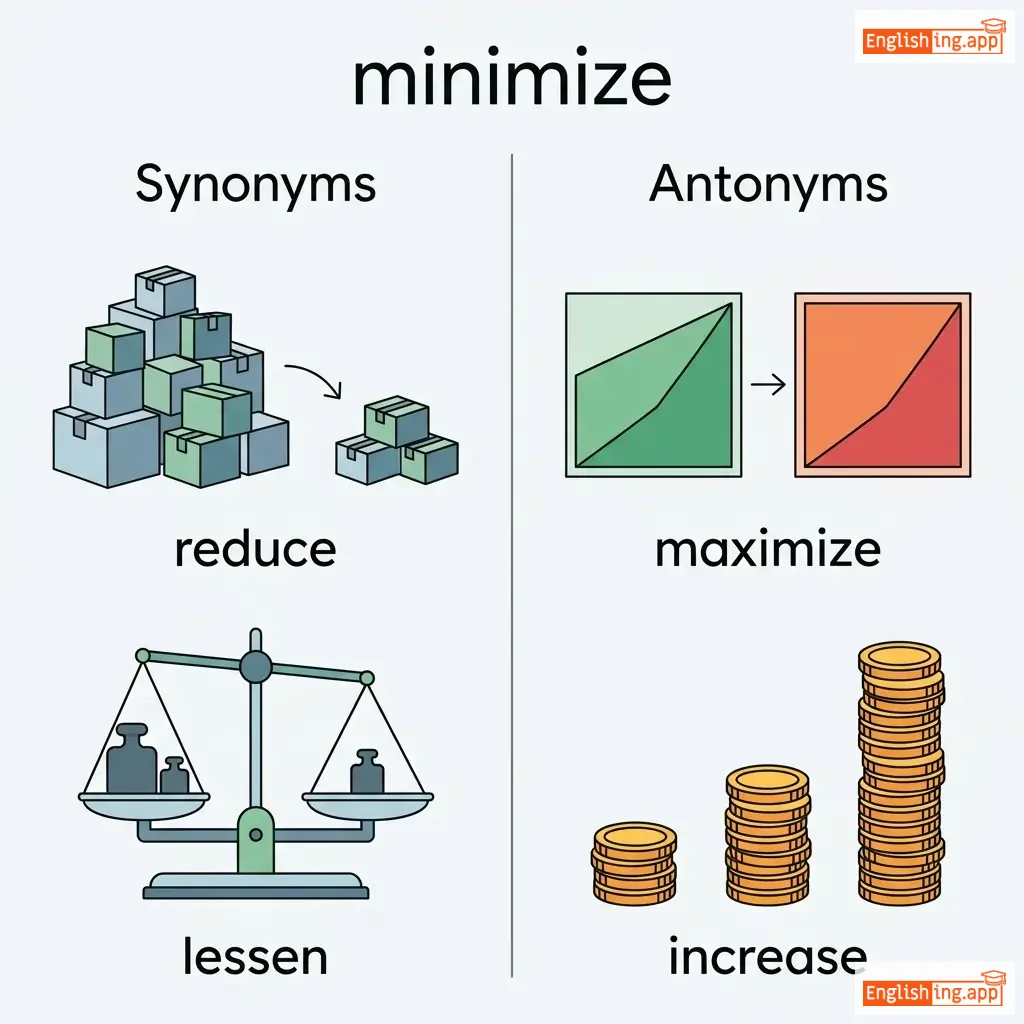
reduce, lessen, decrease, diminish, cut down
••••••
|
maximize, increase, enlarge
••••••
|
minimize risk, minimize cost, minimize damage, minimize error
••••••
|
最小化就像是把东西缩小,像缩小图片一样。
••••••
|
|
🔽
••••••
|
/ˈmɪnɪməm/
noun
(最小值)
••••••
|
|
最小值
zuì xiǎo zhí
••••••
|
- •••••• | - •••••• | - •••••• | - •••••• |
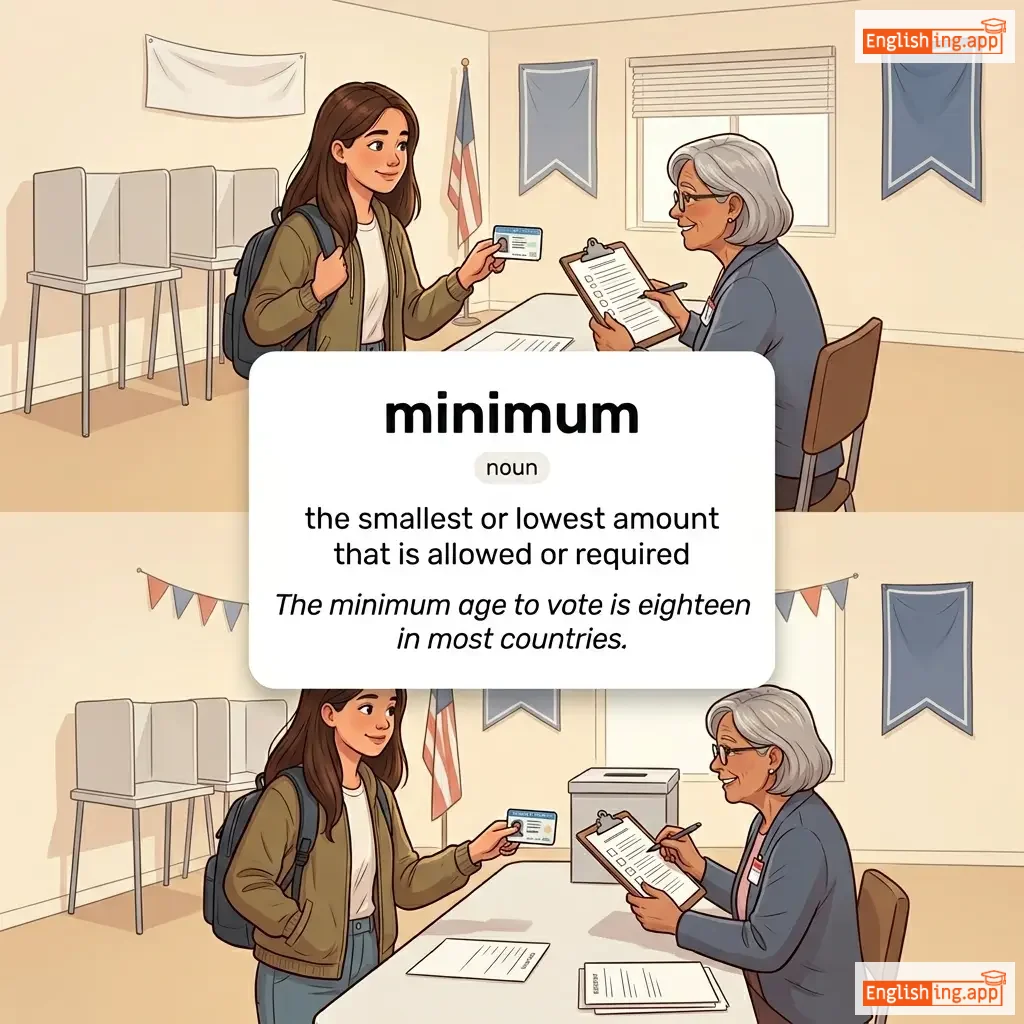
the smallest or lowest amount that is allowed or required
••••••
|
The minimum age to vote is eighteen in most countries. |
在大多数国家,投票的最低年龄是十八岁。
Zài dàduōshù guójiā, tóupiào de zuìdī niánlíng shì shíbā suì.
••••••
|
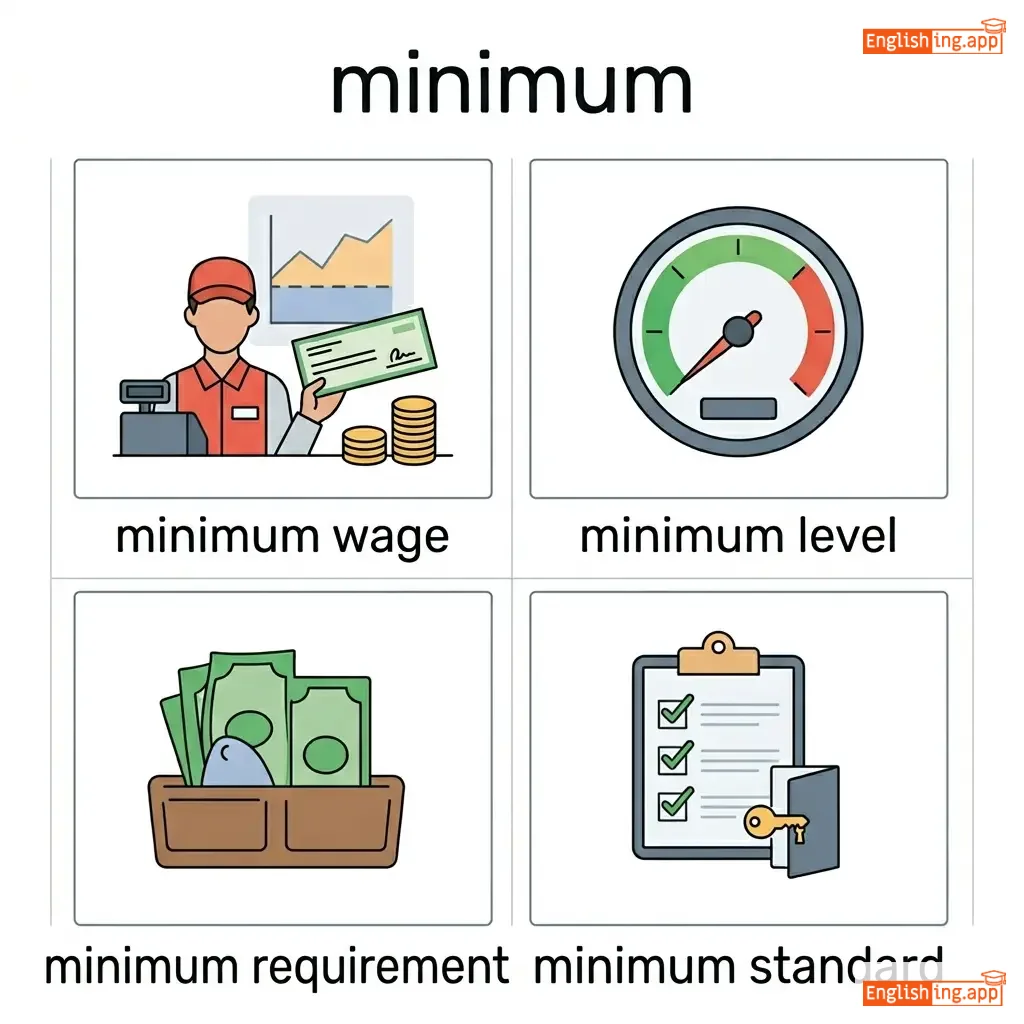
minimum wage |
the lowest amount of pay that employers can legally give workers
••••••
|
最低工资
zuìdī gōngzī
••••••
|
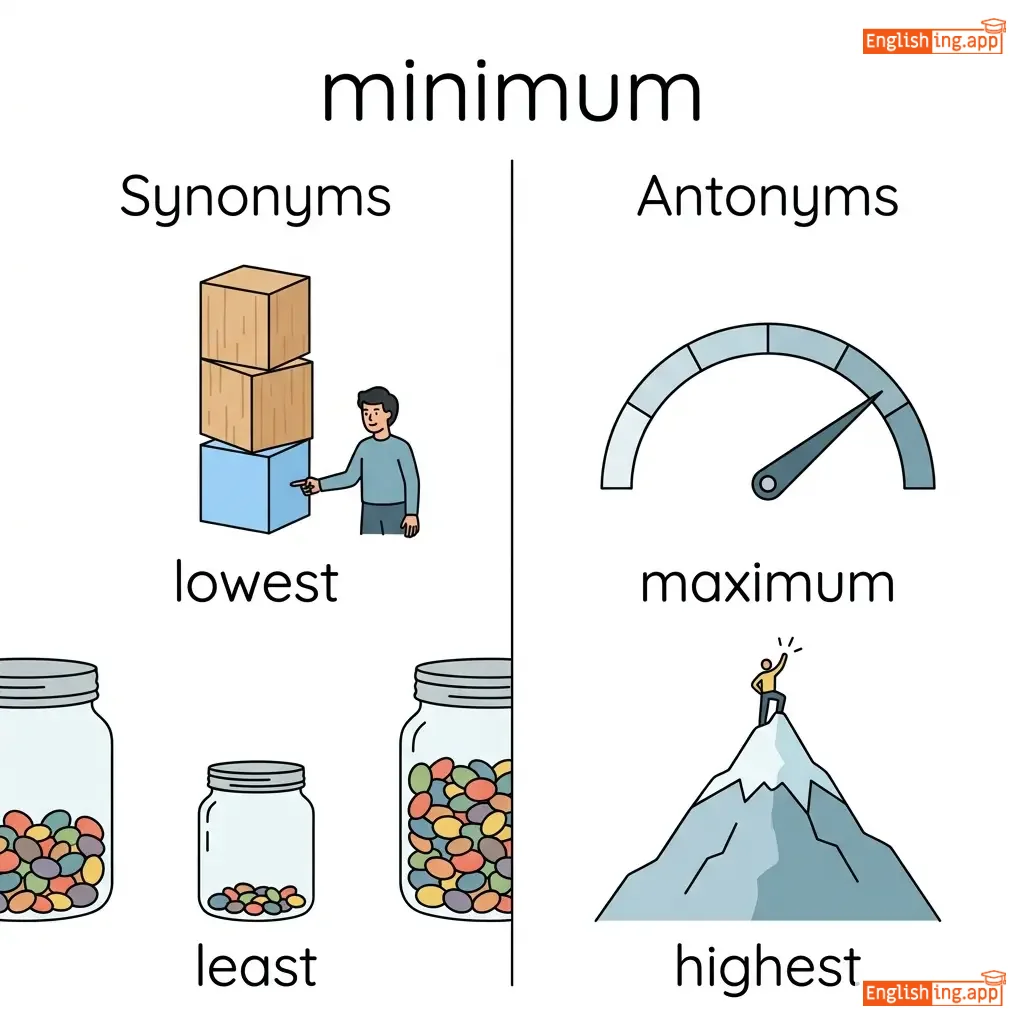
lowest, least, smallest, base
••••••
|
maximum, highest
••••••
|
minimum wage, minimum level, minimum requirement, minimum value
••••••
|
Minimum — 最小的数量
••••••
|
|
⛏️
••••••
|
/ˈmaɪnɪŋ/
noun
(迈宁)
••••••
|
- •••••• |
采矿
cǎikuàng
••••••
|
- •••••• | - •••••• | - •••••• | - •••••• |
the process of extracting valuable minerals or other resources from the earth
••••••
|
Mining in this area has increased in recent years.
该地区的采矿业近年来有所增加。
••••••
|
该地区的采矿业近年来有所增加。
Gāi dìqū de cǎikuàngyè jìnnián lái yǒu suǒ zēngjiā.
••••••
|
- •••••• | - •••••• | - •••••• |
excavation, extraction, digging
••••••
|
- •••••• |
mining industry, mining company, gold mining
••••••
|
MINING 是从地球中挖掘资源的过程。
••••••
|
|
👔
••••••
|
/ˈmɪnɪstər/
noun
(mí-nì-sī-tè)
••••••
|
- •••••• |
部长
bù zhǎng
••••••
|
- •••••• | - •••••• | - •••••• | - •••••• |
a head of a government department; a person who leads a church
••••••
|
The finance minister announced new tax policies. |
财政部长宣布了新的税收政策。
Cái zhèng bù zhǎng xuānbùle xīn de shuì shōu zhèng cè.
••••••
|
prime minister |
the head of a government
••••••
|
总理
zǒng lǐ
••••••
|
official, clergyman, preacher, secretary
••••••
|
layman, citizen
••••••
|
prime minister, foreign minister, finance minister, minister of health
••••••
|
Minister是部长—部长是领导
••••••
|
|
🏛️
••••••
|
/ˈmɪn.ɪ.stri/
noun
(mínísītrī)
••••••
|
- •••••• |
部委
bù wěi
••••••
|
- •••••• | - •••••• | - •••••• | - •••••• |
A government department headed by a minister or the work of a religious minister.
••••••
|
He works at the Ministry of Education. |
他在教育部工作。
Tā zài jiàoyù bù gōngzuò.
••••••
|
Ministry of Truth |
a fictional propaganda department from Orwell's 1984
••••••
|
真理部
Zhēnlǐ bù
••••••
|
department, office, bureau, agency
••••••
|
private sector, individual enterprise
••••••
|
ministry of education, foreign ministry, ministry official
••••••
|
部委 = 由部长领导的部门,像教育部。
••••••
|
|
🔹
••••••
|
/ˈmaɪ.nər/
adjective/noun
(mái nà)
••••••
|
- •••••• |
微小 / 未成年
wei xiao / wei chengnian
••••••
|
- •••••• | - •••••• | - •••••• | - •••••• |
less important, serious, or significant; a person under the legal age
••••••
|
Luckily, the accident caused only minor injuries. |
幸运的是,事故只造成了轻微伤害。
xìng yùn de shì, shì gù zhǐ zào chéng le qīng wēi shāng hài.
••••••
|
minor detail |
an unimportant or insignificant detail
••••••
|
微小的细节
wei xiao de xi jie
••••••
|
small, slight, insignificant, subordinate
••••••
|
major, important, significant
••••••
|
minor issue, minor injury, minor role, minor detail
••••••
|
Minor 代表小 - Major 代表大。Minor 是微小或不重要。
••••••
|
|
👥
••••••
|
/maɪˈnɔːr.ɪ.ti/
noun
(mái nuò lǐ tì)
••••••
|
- •••••• |
少数
shaoshu
••••••
|
- •••••• | - •••••• | - •••••• | - •••••• |
A smaller number or part, especially a group differing from the majority.
••••••
|
The law aims to protect the rights of ethnic minorities.
法律旨在保护少数民族的权利。
••••••
|
法律旨在保护少数民族的权利。
Fa lü zhi zai bao hu shao shu min zu de quan li.
••••••
|
minority report
少数报告
••••••
|
an official statement representing a smaller group's opinion
••••••
|
少数报告
Shaoshu baogao
••••••
|
few, subsection, group, faction
••••••
|
majority, mass
••••••
|
ethnic minority, religious minority, minority rights
••••••
|
Minority means less, so 少数 means small or few.
••••••
|
|
⏱️
••••••
|
/maɪˈnjuːt/ (adj), /ˈmɪnɪt/ (noun)
noun, adjective
(分钟)
••••••
|
- •••••• |
分钟 / 微小
fēnzhōng / wēi xiǎo
••••••
|
- •••••• | - •••••• | - •••••• | - •••••• |
a period of sixty seconds; extremely small or detailed
••••••
|
He examined the painting with minute attention to detail.
他以极小的注意力检查了这幅画。
••••••
|
他以极小的注意力检查了这幅画。
Tā yǐ jí xiǎo de zhùyìlì jiǎnchále zhè fú huà.
••••••
|
in a minute
一分钟内
••••••
|
very soon
••••••
|
一分钟内
yī fēn zhōng nèi
••••••
|
tiny, detailed, precise, moment, instant
••••••
|
large, vague, indefinite
••••••
|
last minute, every minute, minute detail, minute hand
••••••
|
分钟是时间单位,微小是很小的!
••••••
|
|
✨
••••••
|
/ˈmɪrəkəl/
noun
(米瑞克尔)
••••••
|
- •••••• |
奇迹
qiji
••••••
|
- •••••• | - •••••• | - •••••• | - •••••• |
an extraordinary event that cannot be explained by natural laws
••••••
|
Surviving the accident was nothing short of a miracle.
事故生还简直是个奇迹。
••••••
|
事故生还简直是个奇迹。
shigu shenghuan jianzhi shi ge qiji.
••••••
|
miracle cure
奇迹疗法
••••••
|
a treatment that seems to work magically
••••••
|
奇迹疗法
qiji liaofa
••••••
|
wonder, marvel, phenomenon, blessing
••••••
|
disaster, misfortune
••••••
|
miracle cure, miracle worker, minor miracle, perform a miracle
••••••
|
奇迹就像是不可思议的存在,意外的事情发生了。
••••••
|
|
🪞
••••••
|
/ˈmɪrər/
noun
••••••
|
- •••••• | - •••••• | - •••••• | - •••••• |
mirrors
••••••
|
mirroring
••••••
|
A reflective surface, typically made of glass, that shows an image.
••••••
|
She looked at herself in the mirror before leaving. |
- •••••• |
hold a mirror up to |
to reflect or reveal the true nature of something
••••••
|
- •••••• |
looking glass, reflection, glass, speculum
••••••
|
reality, original
••••••
|
look in the mirror, rear-view mirror, bathroom mirror, mirror image
••••••
|
No •••••• |
|
😞
••••••
|
/ˈmɪzərəbəl/
adjective
(mìsīlābù)
••••••
|
- •••••• |
痛苦的
tòngkǔ de
••••••
|
- •••••• | - •••••• | - •••••• | - •••••• |
Extremely unhappy or uncomfortable.
••••••
|
He felt miserable after losing his job. |
失去工作后,他感到痛苦不堪。
Shīqù gōngzuò hòu, tā gǎndào tòngkǔ bùkān.
••••••
|
make someone miserable |
to cause someone to feel very unhappy
••••••
|
使某人痛苦
shǐ mǒu rén tòngkǔ
••••••
|
unhappy, sad, depressed, gloomy, downcast
••••••
|
happy, cheerful, joyful
••••••
|
feel miserable, look miserable, miserable weather, utterly miserable
••••••
|
Miser + able = 能忍受痛苦;记住 miserable 的意思是痛苦的。
••••••
|
|
😭
••••••
|
/ˈmɪzəri/
noun
(米泽里)
••••••
|
- •••••• |
痛苦
tòngkǔ
••••••
|
- •••••• | - •••••• | - •••••• | - •••••• |
A state of great suffering, unhappiness, or discomfort.
••••••
|
The refugees lived in constant misery. |
难民们一直生活在持续的痛苦中。
Nànmínmen yīzhí shēnghuó zài chíxù de tòngkǔ zhōng.
••••••
|
make life a misery |
to cause someone to live in continuous unhappiness or suffering
••••••
|
让生活充满痛苦
Ràng shēnghuó chōngmǎn tòngkǔ
••••••
|
suffering, distress, hardship, agony, sadness
••••••
|
happiness, joy, comfort
••••••
|
live in misery, endless misery, cause misery, human misery
••••••
|
Miseria = 痛苦, 痛苦就是无尽的折磨。
••••••
|
|
😢
••••••
|
/mɪs/
verb, noun
(米斯)
••••••
|
- •••••• |
错过 / 想念
cuo guo / xiang nian
••••••
|
missed
米斯德
••••••
|
missed
米斯德
••••••
|
misses
米塞斯
••••••
|
missing
米星
••••••
|
to fail to hit, reach, or meet; to feel the absence of someone or something
••••••
|
I really miss my family when I travel abroad.
当我出国旅行时,我真的很想念我的家人。
••••••
|
当我出国旅行时,我真的很想念我的家人。
Dang wo chuguo lüxing shi, wo zhen de hen xiangnian wo de jiaren.
••••••
|
miss the boat
错失良机
••••••
|
to miss an opportunity
••••••
|
错过机会
cuo guo ji hui
••••••
|
long for, yearn, fail, omit
••••••
|
catch, attend, achieve
••••••
|
miss a chance, miss the bus, miss someone, miss an opportunity
••••••
|
想念就像错过了什么,就像错过了良机
••••••
|
|
🚀
••••••
|
/ˈmɪsaɪl/ or /ˈmɪsəl/
noun
(米萨伊尔)
••••••
|
- •••••• |
导弹
daodan
••••••
|
- •••••• | - •••••• | - •••••• | - •••••• |
a weapon that is self-propelled and directed toward a target
••••••
|
The army launched a missile towards the enemy base. |
军队向敌军基地发射了一枚导弹。
jūnduì xiàng díjūn jīdì fāshèle yī méi dǎodàn.
••••••
|
ballistic missile |
a missile with a predetermined trajectory
••••••
|
弹道导弹
dàndào dǎodàn
••••••
|
projectile, rocket, torpedo, weapon
••••••
|
shield, defense
••••••
|
launch a missile, guided missile, nuclear missile, ballistic missile
••••••
|
Missile 就像是 'miss',但是导弹一定击中目标
••••••
|
|
❓
••••••
|
/ˈmɪsɪŋ/
adjective
(missing)
••••••
|
|
丢失
diūshī
••••••
|
- •••••• | - •••••• | - •••••• | - •••••• |
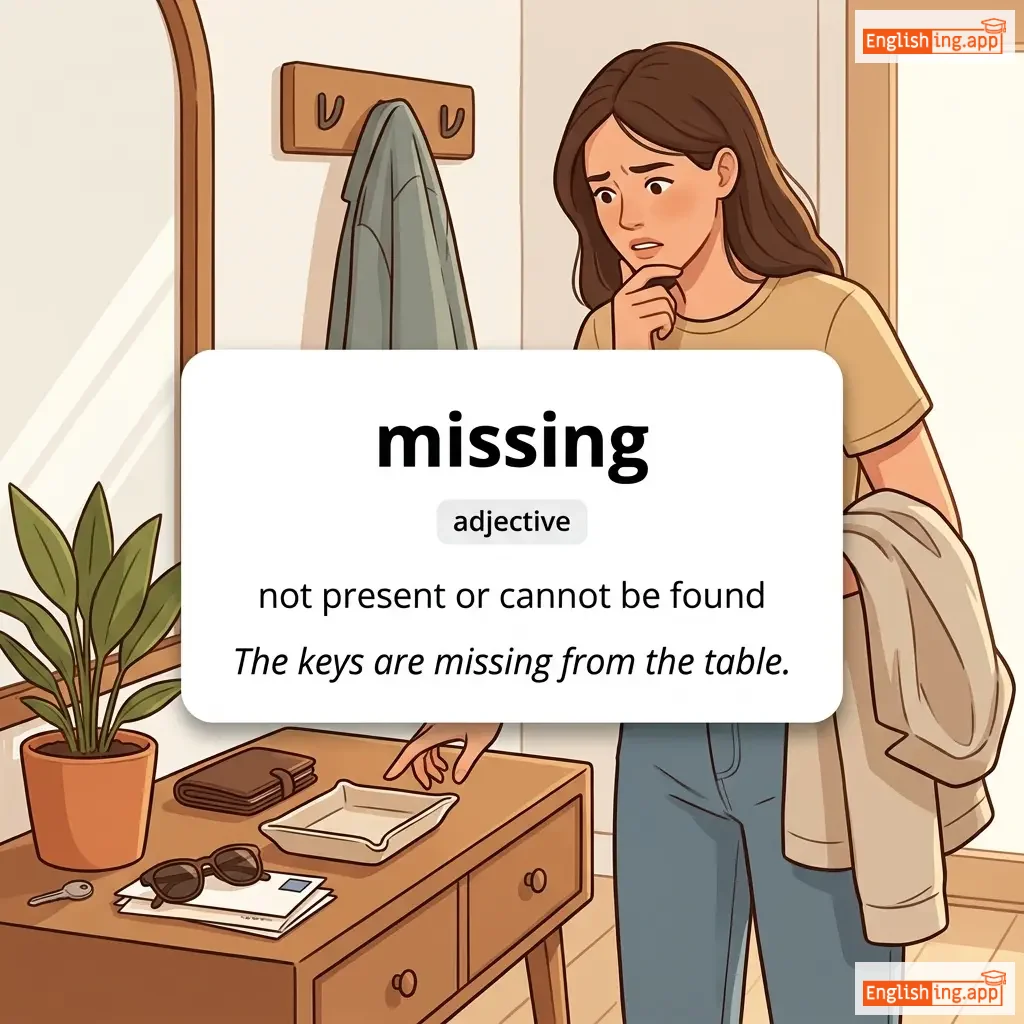
not present or cannot be found
••••••
|
The keys are missing from the table.
de keys ar missing from de teibl.
••••••
|
钥匙不见了,放在桌子上。
Yuèshi bùjiàn le, fàng zài zhuōzi shàng.
••••••
|
missing in action
missing in aksion
••••••
|
not present or unaccounted for
••••••
|
失踪
shīzōng
••••••
|
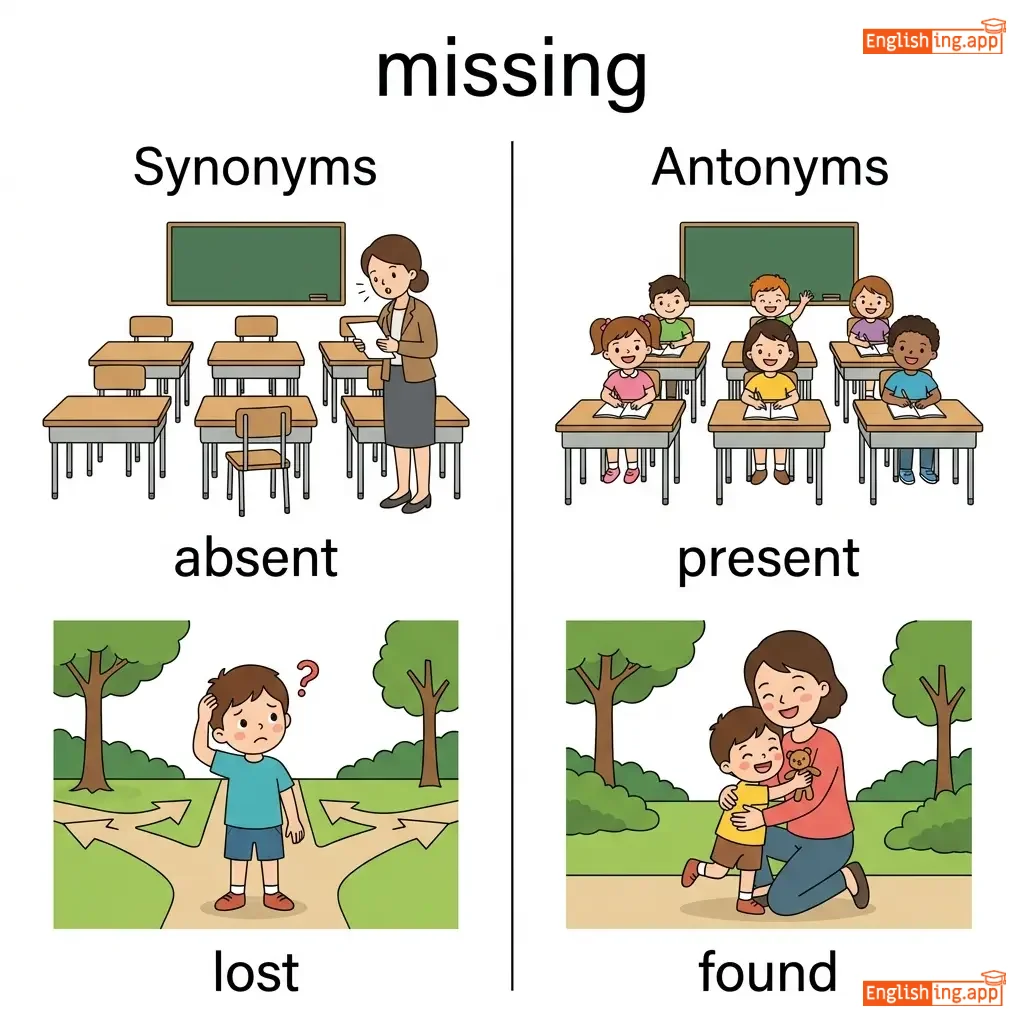
absent, lost, gone, vanished, misplaced
••••••
|
present, found
••••••
|
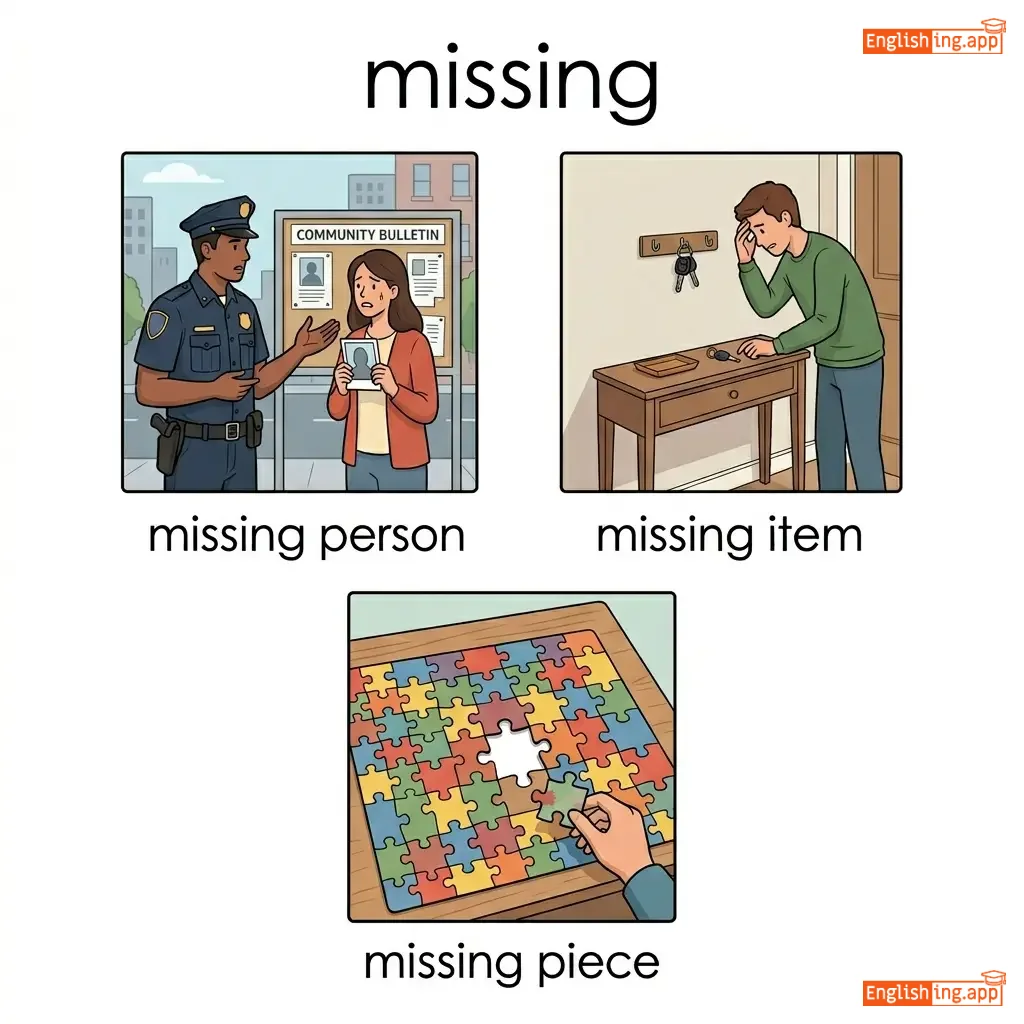
missing person, missing item, missing piece, missing child
••••••
|
Missing = 丢失 – 某物已消失不见。
••••••
|
|
🚀
••••••
|
/ˈmɪʃən/
noun
(mìshēn)
••••••
|
- •••••• |
任务 / 使命
renwu / shiming
••••••
|
- •••••• | - •••••• | - •••••• | - •••••• |
an important assignment or task, often with a specific purpose
••••••
|
The astronauts were on a mission to explore Mars.
宇航员们正在执行任务,探索火星。
••••••
|
宇航员们正在执行任务,探索火星。
Yuhangyuan men zhengzai zhixing renwu, tansuo huoxing.
••••••
|
mission accomplished
任务完成
••••••
|
a phrase used when a task has been successfully completed
••••••
|
任务完成
renwu wancheng
••••••
|
task, assignment, duty, operation, purpose
••••••
|
idleness, inaction
••••••
|
space mission, secret mission, diplomatic mission, mission statement
••••••
|
任务就是使命—Mars 任务,使命意味着责任。
••••••
|
|
❌
••••••
|
/mɪˈsteɪk/
noun
(错误)
••••••
|
- •••••• |
错误
cuo wu
••••••
|
- •••••• | - •••••• | - •••••• | - •••••• |
An action or decision that is wrong or misguided.
••••••
|
She realized her mistake after submitting the wrong file. |
她在提交错误文件后意识到自己的错误。
Ta zai tijiao cuo wu wenjian hou yishi dao ziji de cuo wu.
••••••
|
make a mistake |
to do something incorrectly
••••••
|
犯错
fan cuo
••••••
|
error, blunder, slip, misjudgment, fault
••••••
|
accuracy, correctness, truth
••••••
|
common mistake, big mistake, silly mistake, honest mistake
••••••
|
错误在中文中意味着做错的事情。
••••••
|
|
❌
••••••
|
/mɪˈsteɪkən/
adjective
(米斯泰肯)
••••••
|
- •••••• |
错误的
cuowu de
••••••
|
- •••••• | - •••••• | - •••••• | - •••••• |
wrong or incorrect because of an error in judgment or understanding
••••••
|
I was mistaken about the meeting time.
艾 瓦兹 米斯泰肯 阿包特 德 米廷 泰姆。
••••••
|
我对会议时间判断错了。
wo dui huiyi shijian panduan cuo le
••••••
|
mistaken identity
米斯泰肯 艾登提提
••••••
|
confusing one person for another
••••••
|
身份错误
shenfen cuowu
••••••
|
wrong, incorrect, erroneous, misguided, false
••••••
|
correct, accurate, right
••••••
|
mistaken belief, mistaken idea, be mistaken, mistaken assumption
••••••
|
mistaken 听起来像 mistake → 错误的
••••••
|
|
🥣
••••••
|
/mɪks/
verb
(mìkèsī)
••••••
|
- •••••• |
混合
hùnhé
••••••
|
mixed
mìkèsīde
••••••
|
mixed
mìkèsīde
••••••
|
mixes
mìkèsī
••••••
|
mixing
mìkèsīng
••••••
|
To combine different substances or elements together.
••••••
|
She likes to mix different colors to create new shades.
她喜欢混合不同的颜色来创造新的色调。
••••••
|
她喜欢混合不同的颜色来创造新的色调。
Tā xǐhuān hùnhé bùtóng de yánsè lái chuàngzào xīn de sètiáo.
••••••
|
mix up
混合
••••••
|
to confuse or mistake one thing for another
••••••
|
混淆
hùnxiáo
••••••
|
blend, combine, merge, stir, mingle
••••••
|
separate, divide, isolate
••••••
|
mix ingredients, mix drinks, mix together, mix well
••••••
|
Mix = 混合, 就像将彩色糖果混合在一起。
••••••
|
|
🌀
••••••
|
/mɪkst/
adjective
(混合)
••••••
|
- •••••• |
混合的
hunhe de
••••••
|
- •••••• | - •••••• | - •••••• | - •••••• |
consisting of different elements or having varied opinions or feelings
••••••
|
The audience had mixed reactions to the film. |
观众对电影的反应混合。
Guanzhong dui dianying de fanying hunhe.
••••••
|
mixed feelings |
having both positive and negative emotions about something
••••••
|
混合的情感
hunhe de qinggan
••••••
|
blended, combined, diverse, varied, assorted
••••••
|
uniform, pure, similar
••••••
|
mixed reaction, mixed group, mixed culture, mixed opinion
••••••
|
混合的感情 = mix emotions!
••••••
|
|
🔀
••••••
|
/ˈmɪks.tʃər/
noun
(mìkèshī)
••••••
|
- •••••• |
混合物
hunhewu
••••••
|
- •••••• | - •••••• | - •••••• | - •••••• |
a combination of different substances or elements
••••••
|
The cake batter is a mixture of flour, eggs, and milk.
蛋糕面糊是面粉、鸡蛋和牛奶的混合物。
••••••
|
蛋糕面糊是面粉、鸡蛋和牛奶的混合物。
Dangao mianhu shi mianfen, jidan he niunai de hunhewu.
••••••
|
- •••••• | - •••••• | - •••••• |
blend, combination, compound, fusion
••••••
|
separation, isolation, purity
••••••
|
mixture of, chemical mixture, complex mixture
••••••
|
混合物 - 将所有食材混合在一起,制作美味的蛋糕!
••••••
|
|
👥
••••••
|
/mɒb/
noun
(mó)
••••••
|
- •••••• |
暴民; 一个采取暴力行动的群体
bàomín; yī gè cǎiqǔ bàolì xíngdòng de qúntǐ
••••••
|
- •••••• | - •••••• | - •••••• | - •••••• |
a large crowd of people; a group that acts in a violent way
••••••
|
An angry mob gathered outside the building.
An angry mob gathered outside the building.
••••••
|
一群愤怒的暴民聚集在大楼外。
Yī qún fènnù de bàomín jùjí zài dàlóu wài.
••••••
|
- •••••• | - •••••• | - •••••• |
crowd, gang, horde, rabble
••••••
|
individual, order, peace
••••••
|
angry mob, mob rule, mob violence
••••••
|
Mob带来暴力和混乱,像暴民一样行动
••••••
|
|
🚶
••••••
|
/moʊˈbɪləti/
noun
(莫比利提)
••••••
|

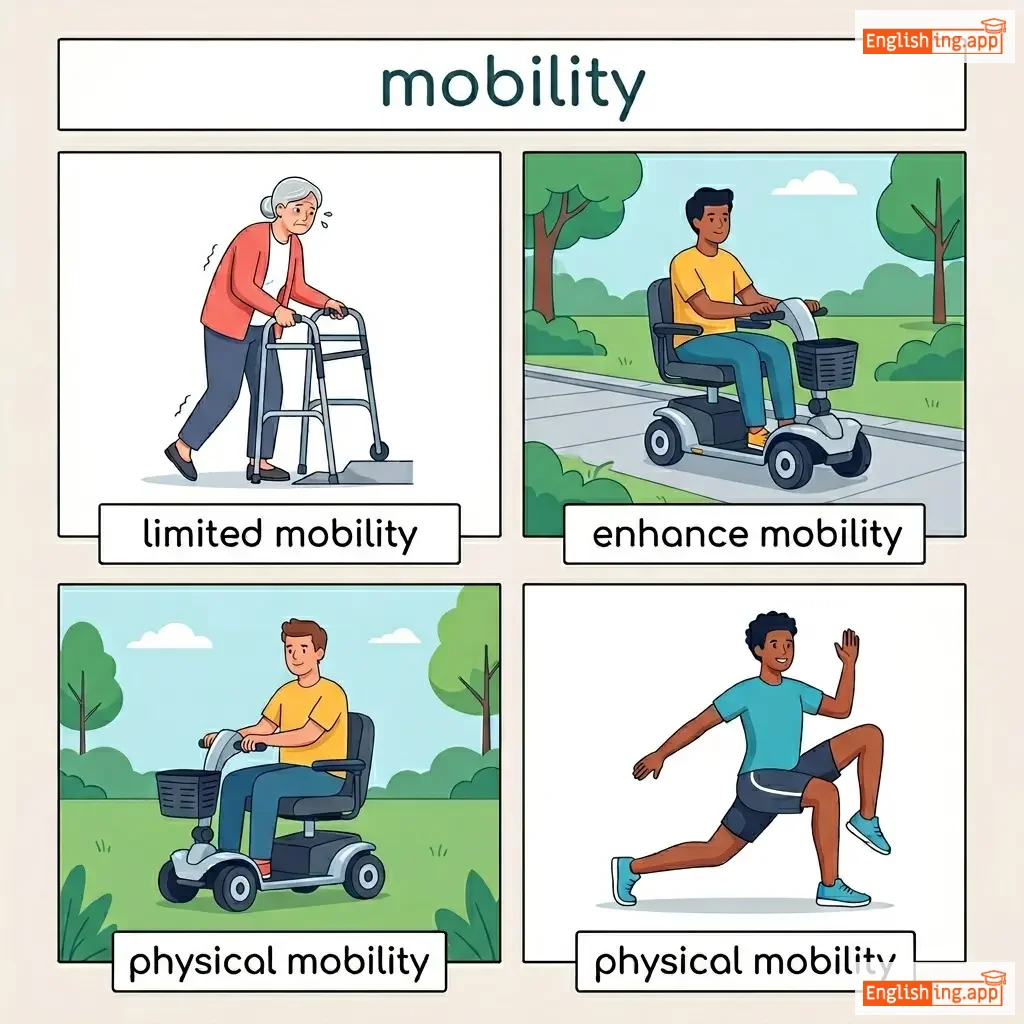
|
流动性
liudongxing
••••••
|
- •••••• | - •••••• | - •••••• | - •••••• |
The ability to move or be moved freely and easily.
••••••
|
The injury limited his mobility for several months. |
受伤限制了他的流动性几个月。
Shoushang xianzhi le tade liudongxing jige yue.
••••••
|
social mobility |
The ability to change one's social or economic status.
••••••
|
社会流动性
shehui liudongxing
••••••
|
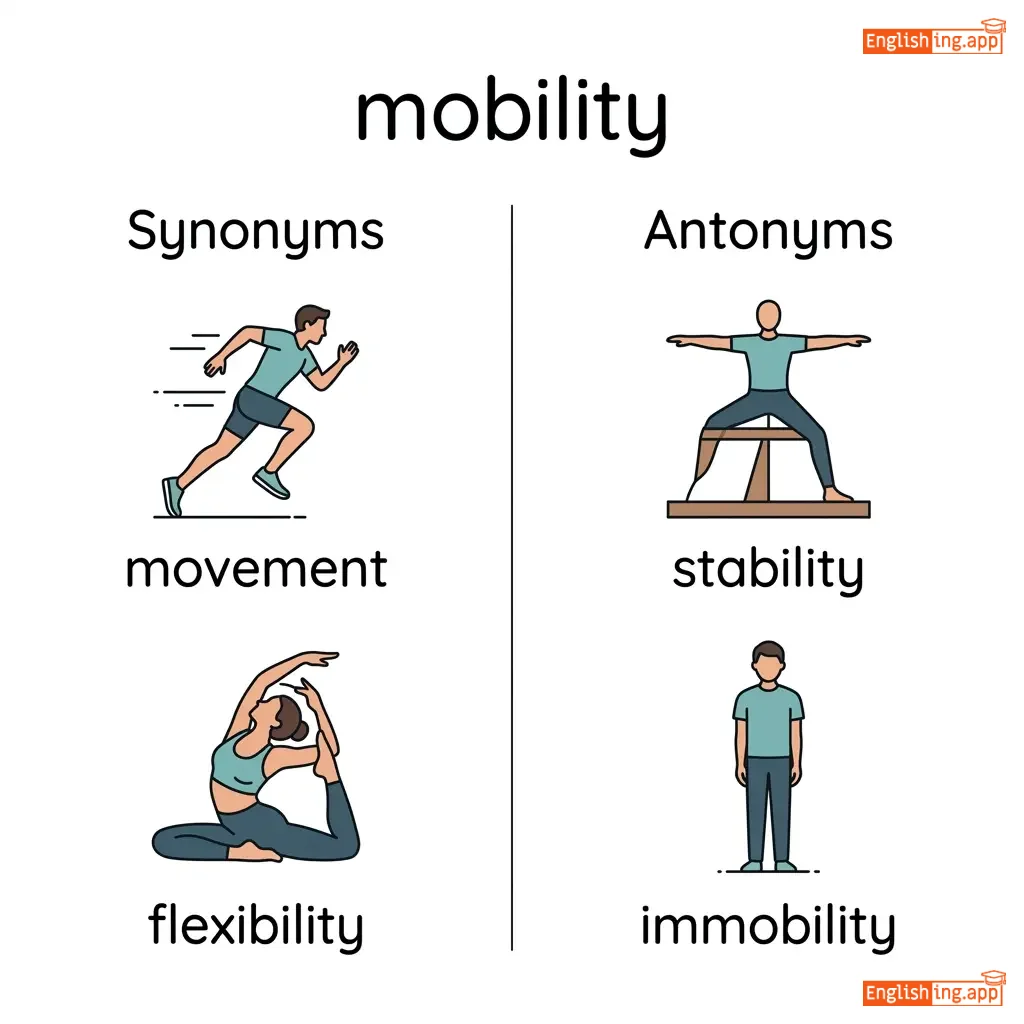
movement, flexibility, agility, locomotion, portability
••••••
|
stability, immobility, stiffness
••••••
|
limited mobility, enhance mobility, physical mobility, social mobility
••••••
|
Mobility是指可以自由地移动。
••••••
|
|
⚡
••••••
|
/ˈməʊbɪlaɪz/
verb
(动员)
••••••
|
- •••••• |
动员
dongyuan
••••••
|
mobilized
动员了
••••••
|
mobilized
动员了
••••••
|
mobilizes
动员
••••••
|
mobilizing
动员中
••••••
|
to organize or prepare people or resources for action
••••••
|
The leader worked hard to mobilize the community for the protest.
领导者努力动员社区参与抗议。
••••••
|
领导者努力动员社区参与抗议。
Lingdaozhe nuli dongyuan shequ canyu kangyi.
••••••
|
- •••••• | - •••••• | - •••••• |
organize, rally, summon, assemble
••••••
|
disband, scatter, ignore
••••••
|
mobilize resources, mobilize support, mobilize for action
••••••
|
动员就是组织所有事情进行行动。
••••••
|
|
📱
••••••
|
/moʊd/
noun
(模式)
••••••
|
- •••••• |
模式
moshi
••••••
|
- •••••• | - •••••• | - •••••• | - •••••• |
A particular way or style in which something is done, experienced, or expressed.
••••••
|
The phone has a silent mode for meetings. |
手机有一个用于会议的静音模式。
Shǒujī yǒu yīgè yòng yú huìyì de jìngyīn móshì.
••••••
|
in mode |
To be in a particular state or style of action.
••••••
|
- •••••• |
manner, style, method, form, fashion
••••••
|
disorder, chaos
••••••
|
silent mode, airplane mode, survival mode, operating mode
••••••
|
飞行模式下不能使用手机,所以模式意味着状态。
••••••
|
|
🏛️
••••••
|
/ˈmɒdəl/
noun
(模型)
••••••
|

|
模型
moxing
••••••
|
- •••••• | - •••••• | - •••••• | - •••••• |
A representation of something, often smaller or used as an example.
••••••
|
The architect showed us a model of the new building.
建筑师向我们展示了新建筑的模型。
••••••
|
建筑师向我们展示了新建筑的模型。
Jianzhushi xiang women zhanshi le xin jianzhu de moxing.
••••••
|
role model
榜样
••••••
|
a person looked up to as an example
••••••
|
榜样
bangyang
••••••
|
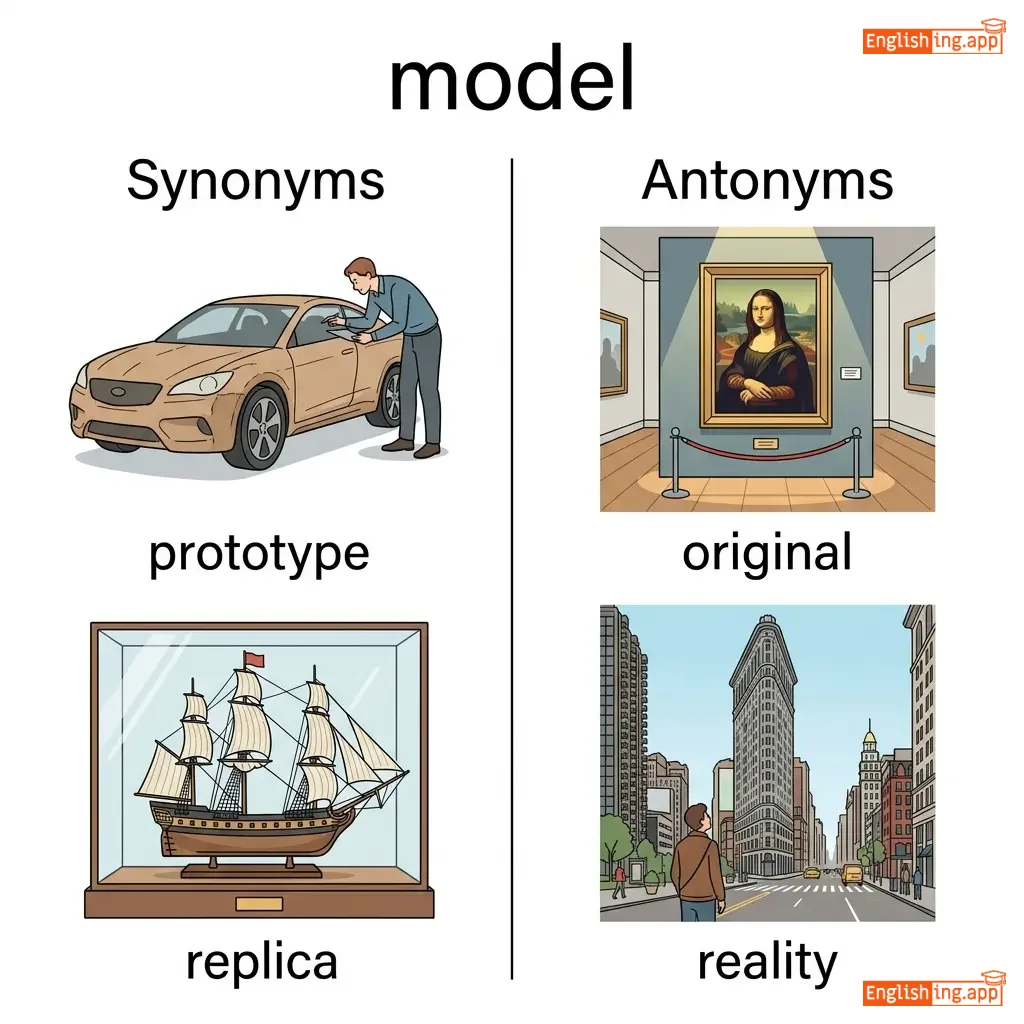
prototype, replica, example, pattern, figure
••••••
|
original, reality
••••••
|
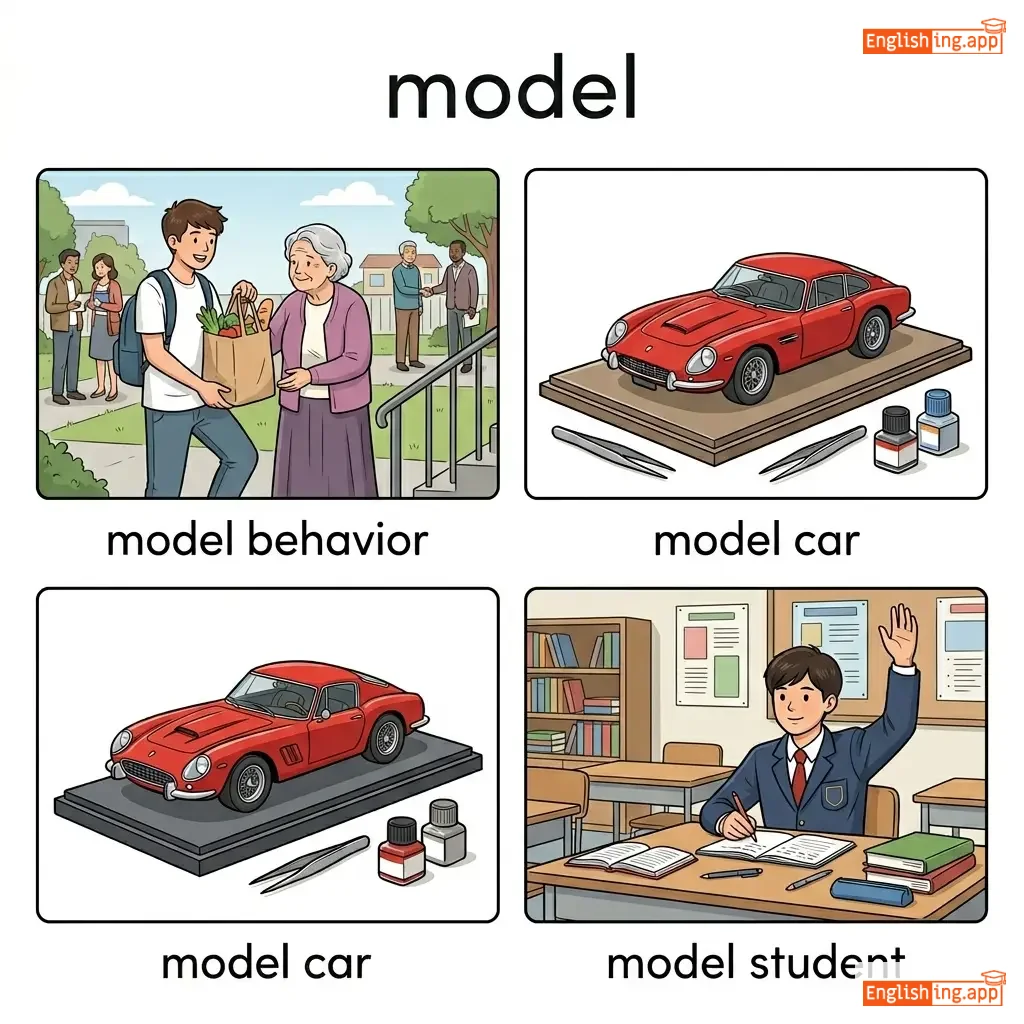
model behavior, model car, model student, model agency
••••••
|
模型代表着一个小型的、可以作为学习的例子。
••••••
|
|
⚖️
••••••
|
/ˈmɒdəreɪt/ (verb), /ˈmɒdərət/ (adj)
verb, adjective
(莫德雷特)
••••••
|

|
适度的, 控制
shidù de, kòngzhì
••••••
|
moderated
莫德雷特
••••••
|
moderated
莫德雷特
••••••
|
moderates
莫德雷特斯
••••••
|
moderating
莫德雷廷
••••••
|
To make something less extreme (verb); average in amount, intensity, quality, or degree (adjective).
••••••
|
She tried to moderate her tone during the argument.
她在争论中试图控制她的语气。
••••••
|
她在争论中试图控制她的语气。
Tā zài zhēnglùn zhōng shìtú kòngzhì tā de yǔqì.
••••••
|
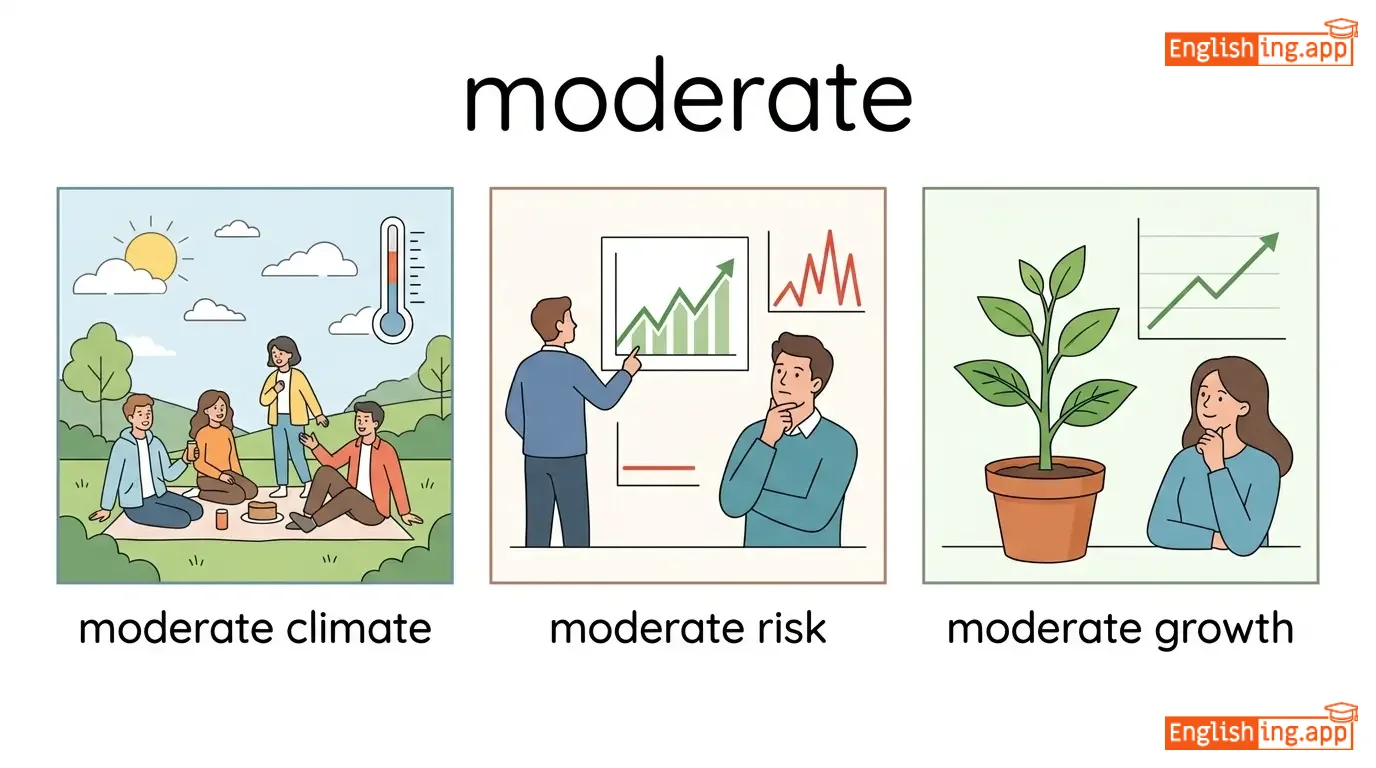
moderate growth
适度增长
••••••
|
Steady or average increase.
••••••
|
适度增长
shidù zēngzhǎng
••••••
|
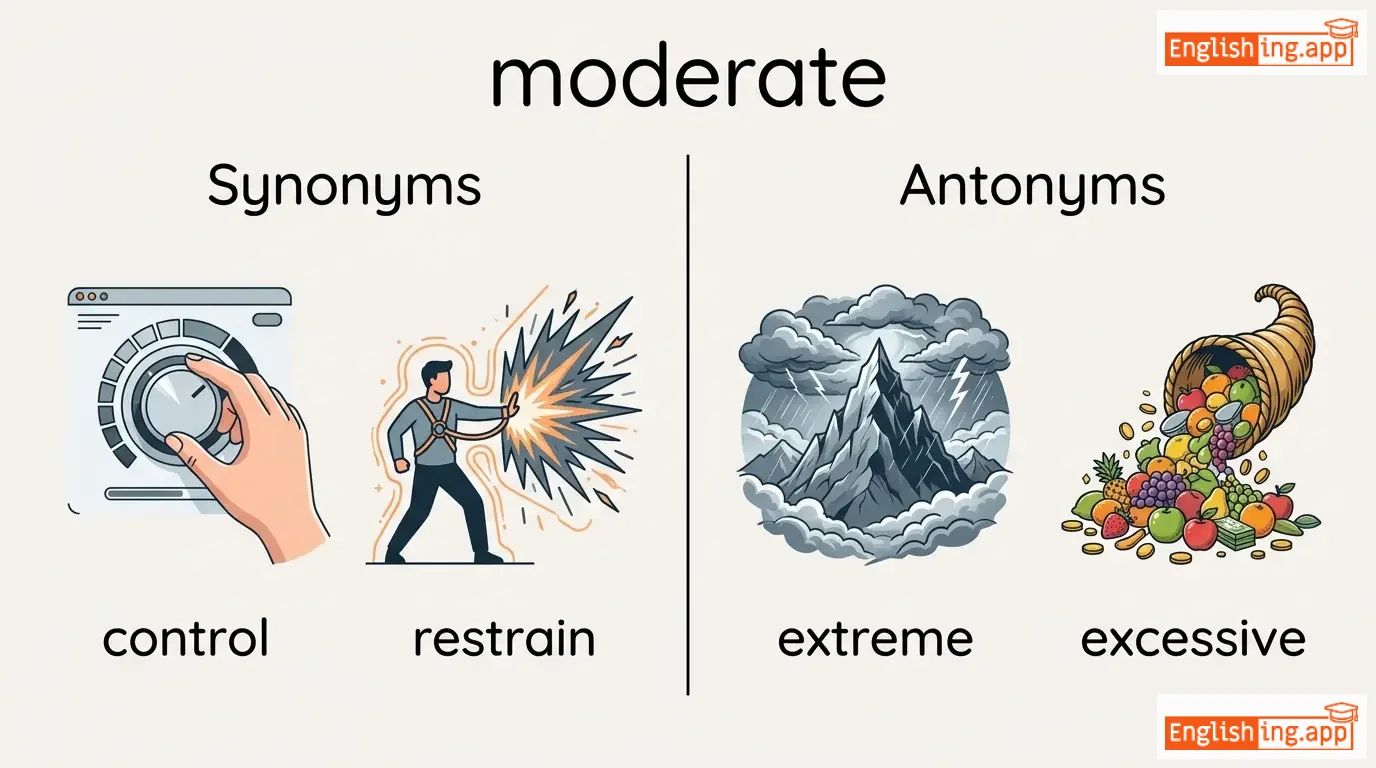
control, restrain, average, mild, temper
••••••
|
extreme, excessive
••••••
|
moderate climate, moderate risk, moderate growth, moderate opinion
••••••
|
Moderate意指使事情不那么极端,找到平衡。
••••••
|
|
🗣️
••••••
|
/ˈmɒdəreɪtər/
noun
(莫德雷托)
••••••
|
- •••••• |
主持人
zhǔchí rén
••••••
|
- •••••• | - •••••• | - •••••• | - •••••• |
A person who leads or oversees discussions, debates, or forums to maintain order.
••••••
|
The moderator asked each panelist to share their views.
主持人让每位小组成员分享他们的观点。
••••••
|
主持人让每位小组成员分享他们的观点。
Zhǔchí rén ràng měi wèi xiǎozǔ chéngyuán fēnxiǎng tāmen de guāndiǎn.
••••••
|
- •••••• | - •••••• | - •••••• |
facilitator, chairperson, mediator, referee
••••••
|
participant, disruptor
••••••
|
panel moderator, forum moderator, appoint a moderator, debate moderator
••••••
|
主持人就像是主持节目的人,负责讨论的顺畅进行。
••••••
|
|
🏙️
••••••
|
/ˈmɒdən/
adjective
(摩登)
••••••
|
- •••••• |
现代的
xiàndài de
••••••
|
- •••••• | - •••••• | - •••••• | - •••••• |
relating to the present or recent times, not ancient or old-fashioned
••••••
|
They live in a modern apartment with new facilities. |
他们住在一个现代化的公寓里,设施新颖。
Tāmen zhù zài yīgè xiàndàihuà de gōngyù lǐ, shèshī xīnyǐng.
••••••
|
modern times |
the present period of history
••••••
|
现代社会
xiàndài shèhuì
••••••
|
contemporary, current, up-to-date, new, trendy
••••••
|
ancient, old-fashioned
••••••
|
modern technology, modern art, modern world, modern lifestyle
••••••
|
现代的就像 'modern' 一样,总是新的和前沿的。
••••••
|
|
🙂
••••••
|
/ˈmɒdɪst/
adjective
••••••
|
- •••••• | - •••••• | - •••••• | - •••••• | - •••••• | - •••••• |
Having or showing a humble estimate of one’s importance; simple and not extravagant.
••••••
|
She lives in a modest house in the countryside. |
- •••••• |
modest beginnings |
a simple or humble start in life or career
••••••
|
- •••••• |
humble, unassuming, simple, moderate, decent
••••••
|
arrogant, boastful, extravagant
••••••
|
modest house, modest income, modest attitude, remain modest
••••••
|
No •••••• |

