|
絵文字
|
単語 | Images | 翻訳 | 過去 | 過去分詞 | 三人称単数 | 動名詞 | 意味 | 例文 | 例文の翻訳 | 表現例 | 表現例の意味 | 表現例の翻訳 | 同義語 | 対義語 | コロケーション | ニーモニック |
|---|---|---|---|---|---|---|---|---|---|---|---|---|---|---|---|---|---|
|
🖼️
••••••
|
/ˌɛksɪˈbɪʃən/
noun
(ekusibishon)
••••••
|
- •••••• |
展示会
zenshikai
••••••
|
- •••••• | - •••••• | - •••••• | - •••••• |
a public display of works of art, products, or other items of interest
••••••
|
The art exhibition attracted thousands of visitors. |
アート展示会は何千人もの来場者を魅了しました。
Aato zenshikai wa nan-sen nin mo no raijō-sha o miryō shimashita.
••••••
|
put on an exhibition |
to organize or display something for public viewing
••••••
|
展示会を開催する
zenshikai o kaisai suru
••••••
|
display, show, presentation, exposition, fair
••••••
|
concealment, hiding
••••••
|
art exhibition, trade exhibition, science exhibition, put on an exhibition
••••••
|
Exhibitionは展示会を意味し、EXtraのものを皆で見られる場所です。
••••••
|
|
🏝️
••••••
|
/ˈek.saɪl/
noun
(エクザイル)
••••••
|
- •••••• |
亡命
bōmei
••••••
|
- •••••• | - •••••• | - •••••• | - •••••• |
the state of being barred from one's native country; enforced removal from one's homeland
••••••
|
The political leader was forced into exile after the military coup.
軍事クーデターの後、政治的リーダーは亡命を強制された。
••••••
|
軍事クーデターの後、政治的リーダーは亡命を強制された。
Gunji kūdetā no ato, seijiteki rīdā wa bōmei o kyōsei sareta.
••••••
|
- •••••• | - •••••• | - •••••• |
banishment, deportation, expulsion, ostracism
••••••
|
return, homecoming, welcome, inclusion
••••••
|
forced exile, political exile, exile from homeland
••••••
|
Visualize a political leader being forced into exile after a coup.
••••••
|
|
🌍
••••••
|
/ɪɡˈzɪst/
verb
(ik-sist)
••••••
|
- •••••• |
存在する
sonzai suru
••••••
|
existed
ik-sisted
••••••
|
existed
ik-sisted
••••••
|
exists
ik-sists
••••••
|
existing
ik-sisting
••••••
|
to have actual being; to be real or present
••••••
|
Dinosaurs no longer exist on Earth.
恐竜は地球上にはもう存在しません。
••••••
|
恐竜は地球上にはもう存在しません。
Kyouryuu wa chikyuu jou ni wa mou sonzai shimasen.
••••••
|
exist in name only
名義上のみ存在する
••••••
|
to have no real power or function despite existing formally
••••••
|
名義上のみ存在する
meigi jou nomi sonzai suru
••••••
|
live, survive, endure, be
••••••
|
perish, disappear, vanish
••••••
|
still exist, continue to exist, exist only, exist in reality
••••••
|
存在するとは実際に存在することであり、試験のように常に私たちの生活の中に存在しています。
••••••
|
|
🌍
••••••
|
/ɪɡˈzɪstəns/
noun
(エクスィステンス)
••••••
|
- •••••• |
存在
sonzai
••••••
|
- •••••• | - •••••• | - •••••• | - •••••• |
The state of being alive or having real presence.
••••••
|
The existence of life on other planets is still uncertain.
他の惑星での生命の存在はまだ不確かです。
••••••
|
他の惑星での生命の存在はまだ不確かです。
Hoka no wakusei de no seimei no sonzai wa mada fukakusa desu.
••••••
|
come into existence
存在することに来る
••••••
|
to begin to exist or start being present
••••••
|
存在することに来る
sonzai suru koto ni kuru
••••••
|
being, presence, reality, life, survival
••••••
|
nonexistence, nothingness, extinction
••••••
|
human existence, existence of life, struggle for existence, existence proof
••••••
|
存在は他の星での '生命' を意味します。
••••••
|
|
📜
••••••
|
/ɪɡˈzɪstɪŋ/
adjective
(イグジスティング)
••••••
|
|
既存の
kizon no
••••••
|
- •••••• | - •••••• | - •••••• | - •••••• |
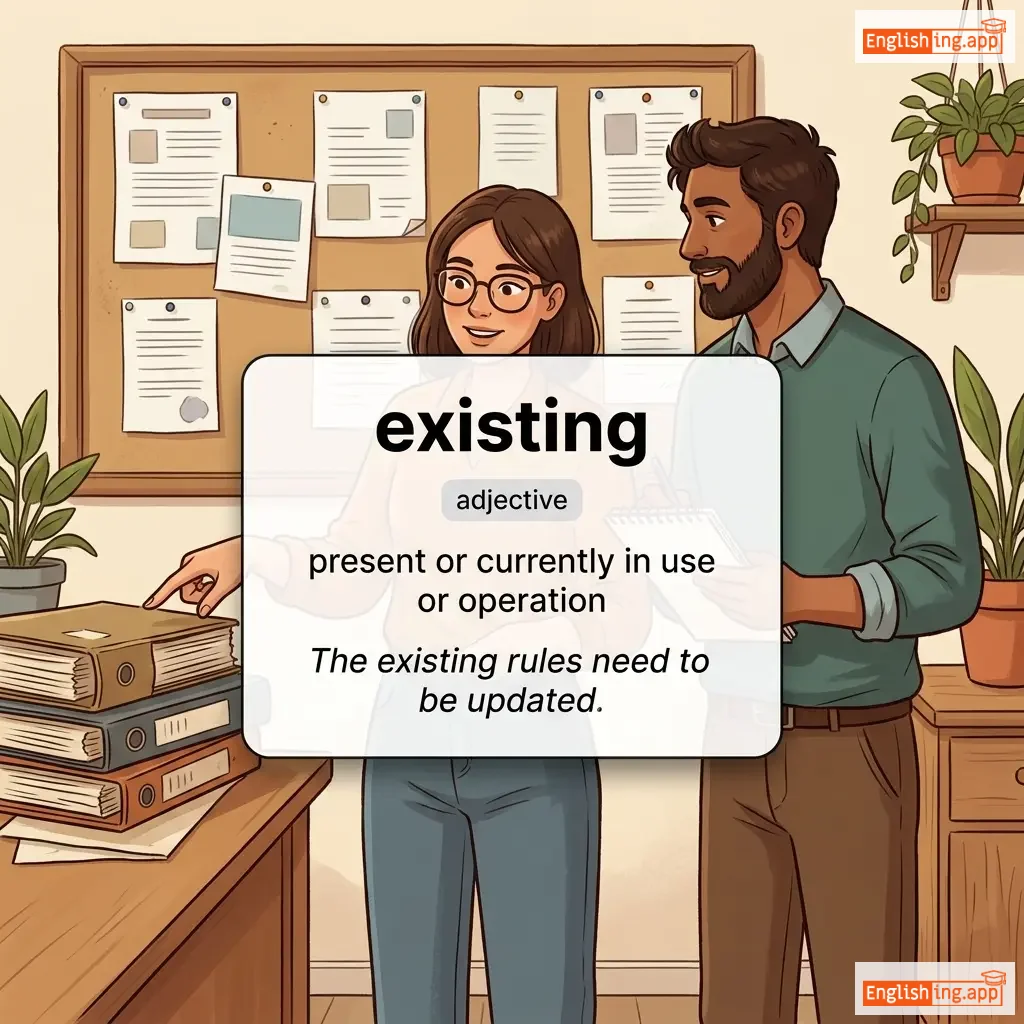
present or currently in use or operation
••••••
|
The existing rules need to be updated. |
既存のルールは更新する必要があります。
Kizon no rūru wa kōshin suru hitsuyō ga arimasu.
••••••
|
- •••••• | - •••••• | - •••••• |
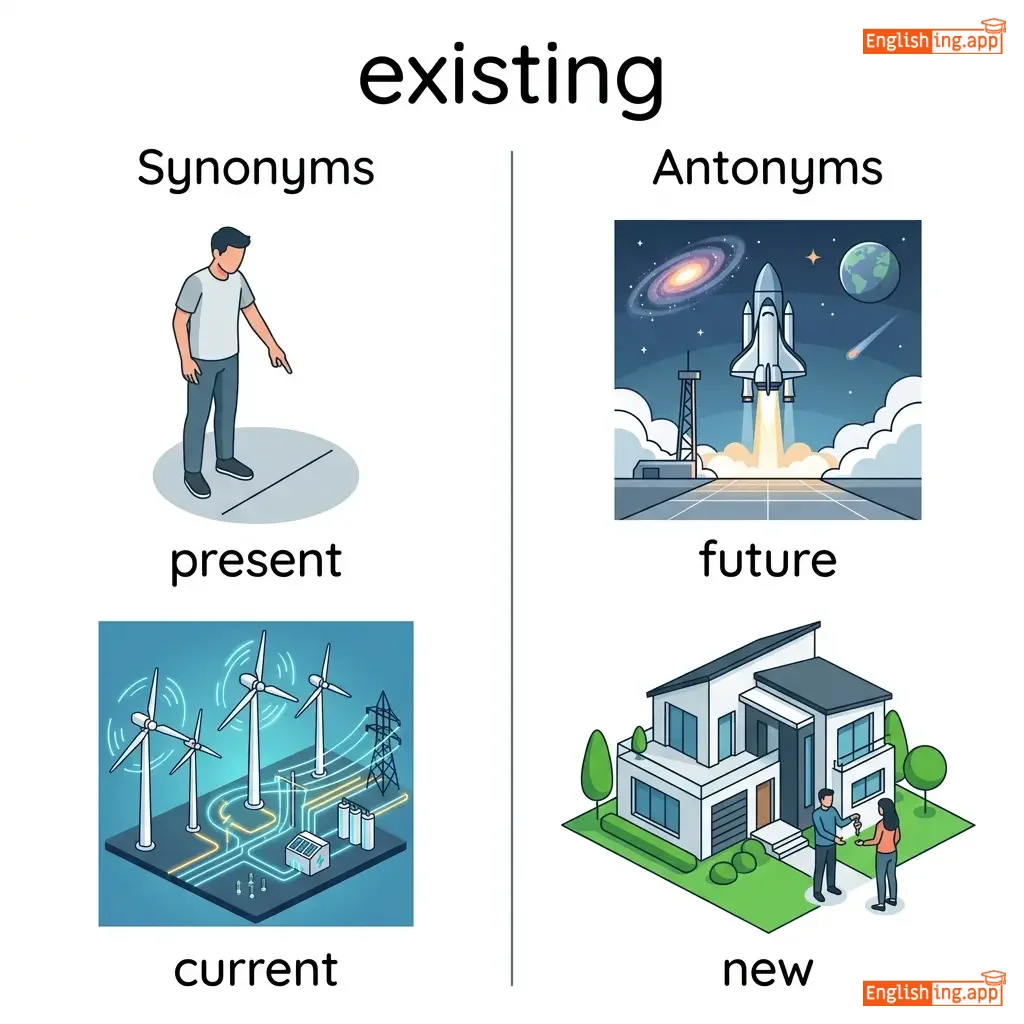
present, current, available, ongoing
••••••
|
future, new, upcoming
••••••
|
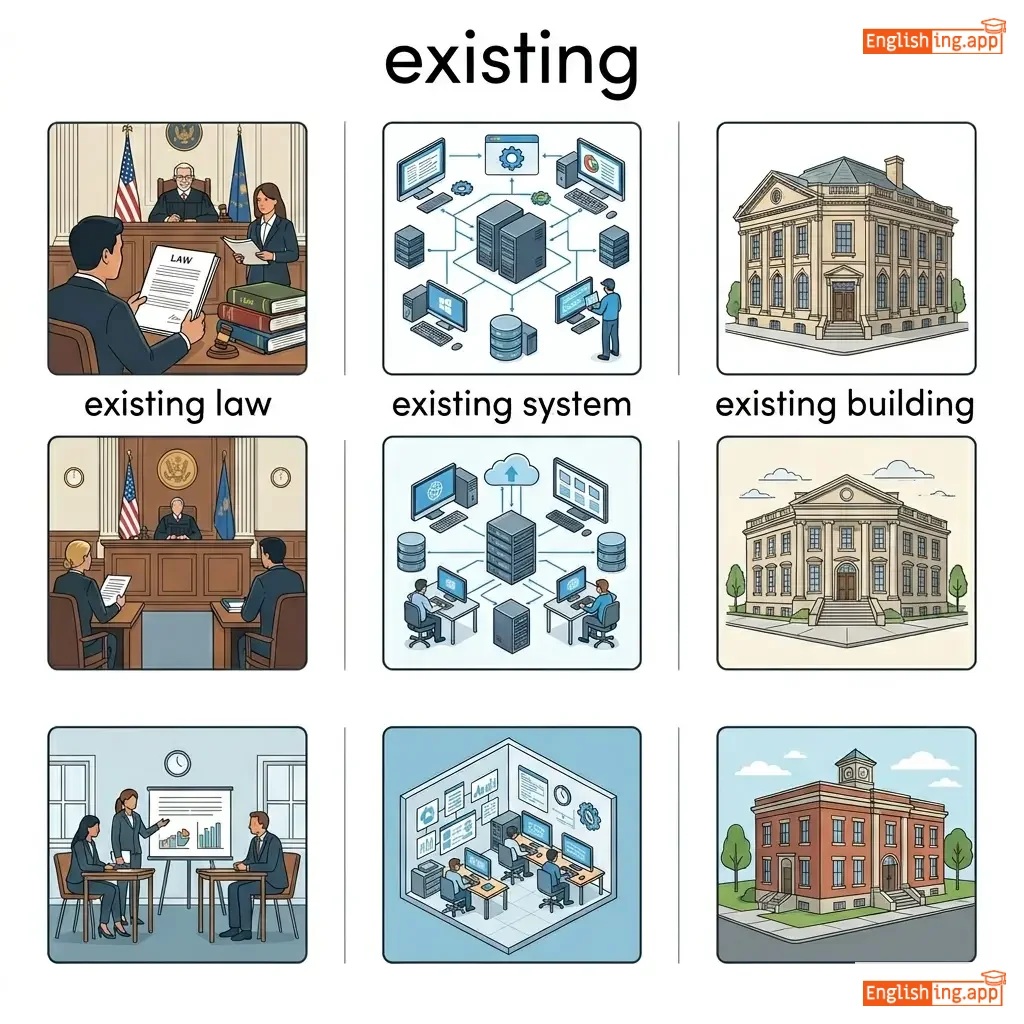
existing law, existing system, existing building, existing structure
••••••
|
Existingは既存の意味、例えば既存の試験ルール。
••••••
|
|
🚪
••••••
|
/ˈɛɡzɪt/
noun/verb
(エグジット)
••••••
|
- •••••• |
出口
deguchi
••••••
|
exited
エグジットした
••••••
|
exited
エグジットした
••••••
|
exits
エグジットする
••••••
|
exiting
エグジットしている
••••••
|
A way out of a place; the act of leaving.
••••••
|
He quickly found the nearest exit during the fire drill.
彼は火災訓練中に最寄りの出口をすぐに見つけた。
••••••
|
彼は火災訓練中に最寄りの出口をすぐに見つけた。
Kare wa kasai kunren-chū ni moyori no deguchi o sugu ni mitsuketa.
••••••
|
make an exit
出口を出る
••••••
|
to leave a place, often noticeably
••••••
|
出る
deru
••••••
|
departure, way out, escape, egress, leaving
••••••
|
entrance, arrival, entry
••••••
|
emergency exit, exit door, exit route, exit point
••••••
|
Exit 🚪 は出るという意味 — Exit は '出口' です。
••••••
|
|
🌺
••••••
|
/ɪɡˈzɑːtɪk/
adjective
(エキゾチック)
••••••
|
- •••••• |
異国的で魅力的
ikokuteki de miryokuteki
••••••
|
- •••••• | - •••••• | - •••••• | - •••••• |
Unusual and attractive because it is from a foreign place or culture.
••••••
|
The garden was filled with exotic plants from tropical countries. |
庭は熱帯の国々からのエキゾチックな植物で満たされていました。
Niwa wa nettai no kuniguni kara no ekizochikku na shokubutsu de mitasarete imashita.
••••••
|
exotic beauty |
Unusual and striking attractiveness
••••••
|
エキゾチックな美しさ
ekizochikku na utsukushisa
••••••
|
foreign, unusual, rare, tropical, extraordinary
••••••
|
ordinary, common, familiar
••••••
|
exotic plants, exotic animals, exotic beauty, exotic location
••••••
|
Exotic = Exciting + Foreign, 他の国からの魅力的なもの。
••••••
|
|
📈
••••••
|
/ɪkˈspænd/
verb
(エクスパンド)
••••••
|
- •••••• |
拡大する
kakudai suru
••••••
|
expanded
エクスパンドゥード
••••••
|
expanded
エクスパンドゥード
••••••
|
expands
エクスパンズ
••••••
|
expanding
エクスパンドイング
••••••
|
To increase in size, number, or importance.
••••••
|
The company plans to expand its operations into new markets.
その会社は新しい市場に事業を拡大する予定です。
••••••
|
その会社は新しい市場に事業を拡大する予定です。
Sono kaisha wa atarashii shijou ni jigyou o kakudai suru yotei desu.
••••••
|
expand horizons
視野を広げる
••••••
|
To broaden one's experiences or knowledge
••••••
|
視野を広げる
shiya o hirogeru
••••••
|
enlarge, grow, extend, broaden, increase
••••••
|
shrink, contract, reduce
••••••
|
expand business, expand market, expand knowledge, expand rapidly
••••••
|
拡大するは広げる、会社が市場に拡大するように、視野を広げると考えよう。
••••••
|
|
📈
••••••
|
ɪkˈspændɪd
verb
(イクスパンドッド)
••••••
|
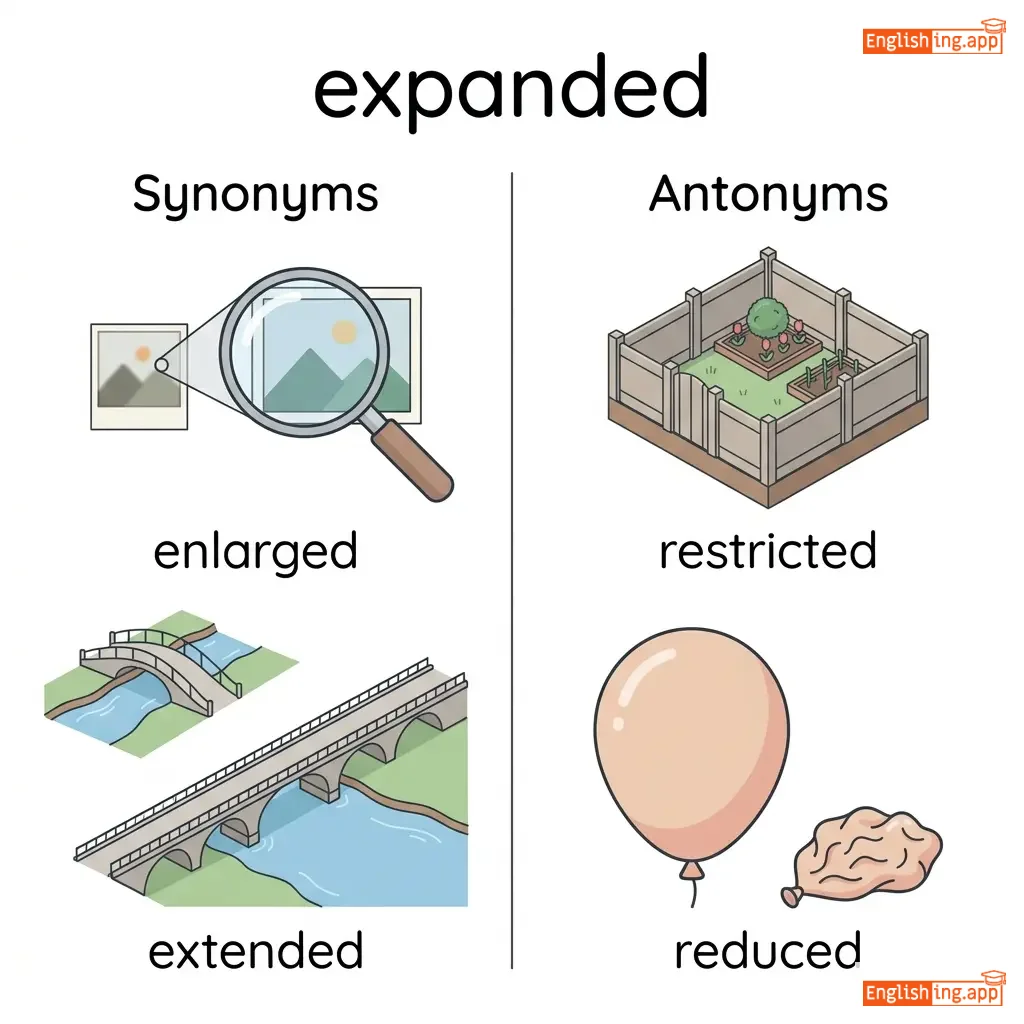
|
拡大された
kakudai sareta
••••••
|
- •••••• | - •••••• | - •••••• | - •••••• |
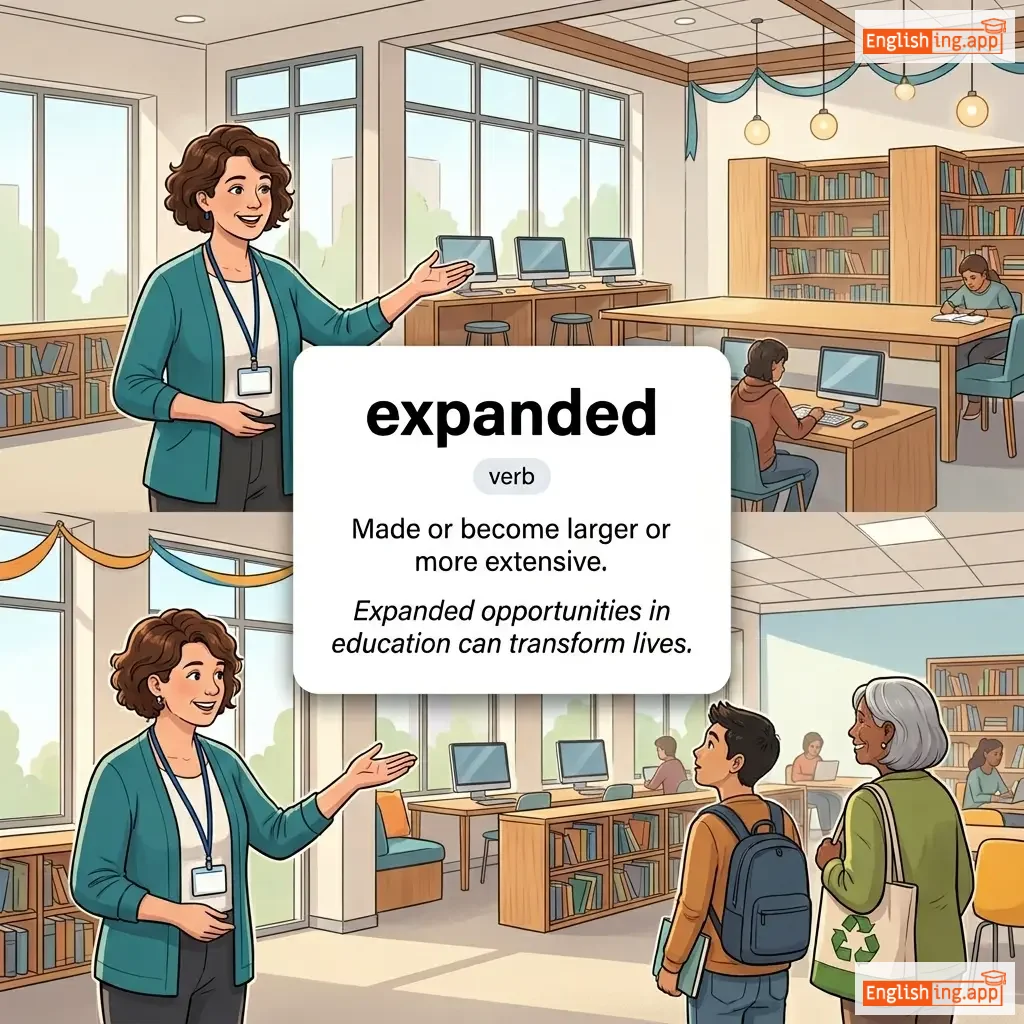
Made or become larger or more extensive.
••••••
|
Expanded opportunities in education can transform lives. |
教育における拡大された機会は、人生を変えることができます。
Kyoiku ni okeru kakudai sareta kikai wa, jinsei o kaeru koto ga dekimasu.
••••••
|
- •••••• | - •••••• | - •••••• |
enlarged, extended, increased, broadened, widened, amplified
••••••
|
restricted, reduced, contracted, narrowed, limited, compressed
••••••
|
- •••••• |
拡大された機会で未来を変える
••••••
|
|
📈
••••••
|
/ɪkˈspænʃən/
noun
(エクスパンション)
••••••
|
|
拡張
kakuchou
••••••
|
- •••••• | - •••••• | - •••••• | - •••••• |
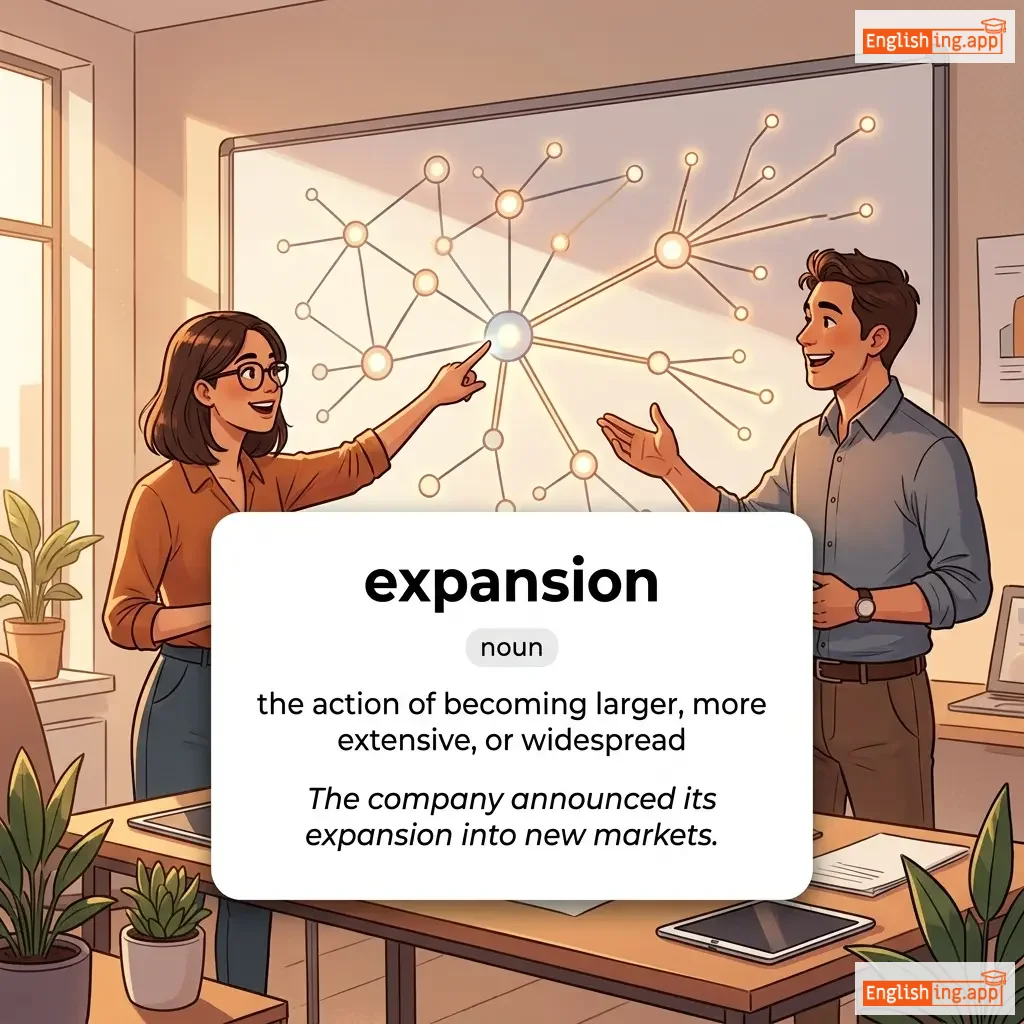
the action of becoming larger, more extensive, or widespread
••••••
|
The company announced its expansion into new markets. |
会社は新しい市場への拡張を発表しました。
Kaisha wa atarashī shijō e no kakuchō o happyō shimashita.
••••••
|
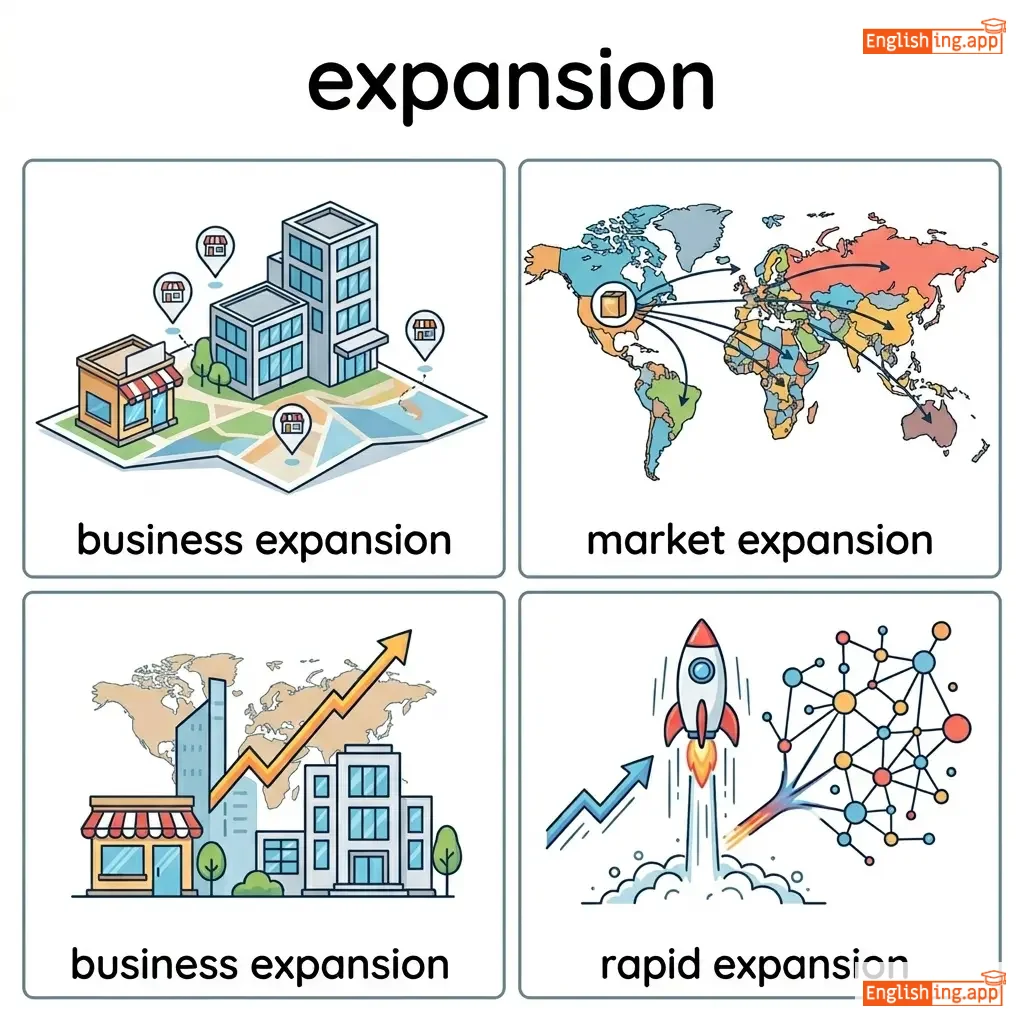
rapid expansion |
a very fast growth or increase
••••••
|
迅速な拡張
jinsoku na kakuchou
••••••
|
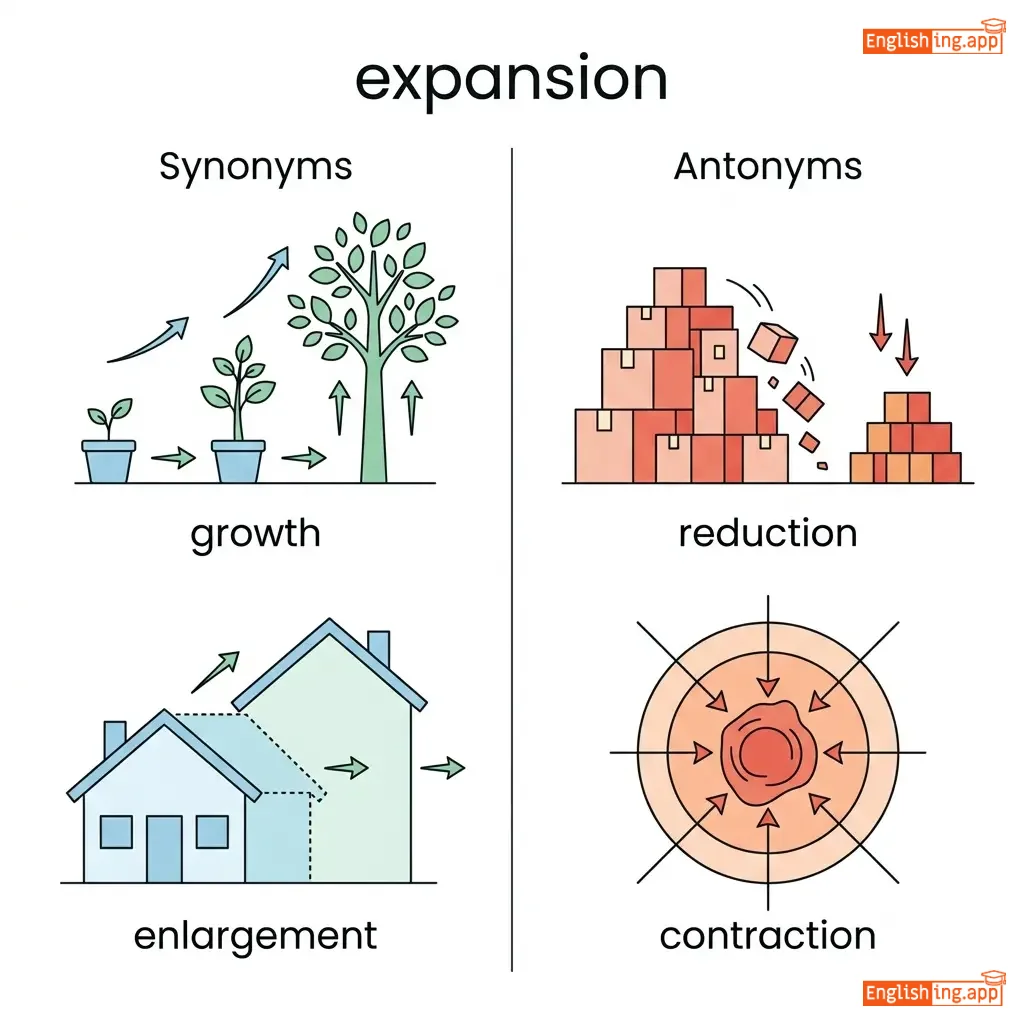
growth, enlargement, increase, extension, development
••••••
|
reduction, contraction, decline
••••••
|
business expansion, market expansion, rapid expansion, territorial expansion
••••••
|
Expansionとは、エクストラのスペースを開けてより大きくすることです。
••••••
|
|
🤔
••••••
|
/ɪkˈspɛkt/
verb
(エクスペクト)
••••••
|
|
期待する
kitai suru
••••••
|
expected
エクスペクテッド
••••••
|
expected
エクスペクテッド
••••••
|
expects
エクスペクツ
••••••
|
expecting
エクスペクティング
••••••
|
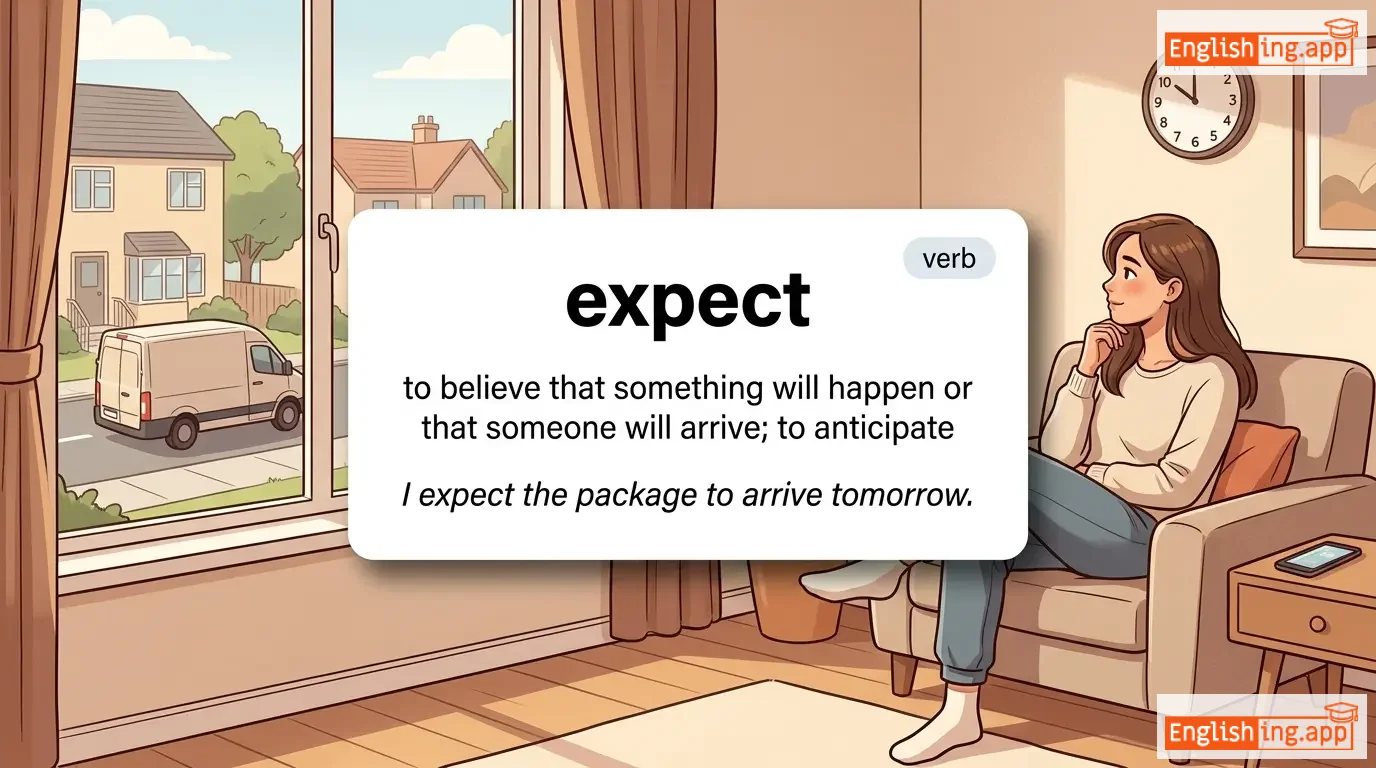
to believe that something will happen or that someone will arrive; to anticipate
••••••
|
I expect the package to arrive tomorrow.
私はパッケージが明日到着することを期待しています。
••••••
|
私はパッケージが明日到着することを期待しています。
Watashi wa pakēji ga ashita tōchaku suru koto o kitai shiteimasu.
••••••
|
expect the unexpected
予期しないことを期待する
••••••
|
be prepared for surprises or unforeseen events
••••••
|
予期しないことを期待する
Yoki shinai koto o kitai suru
••••••
|
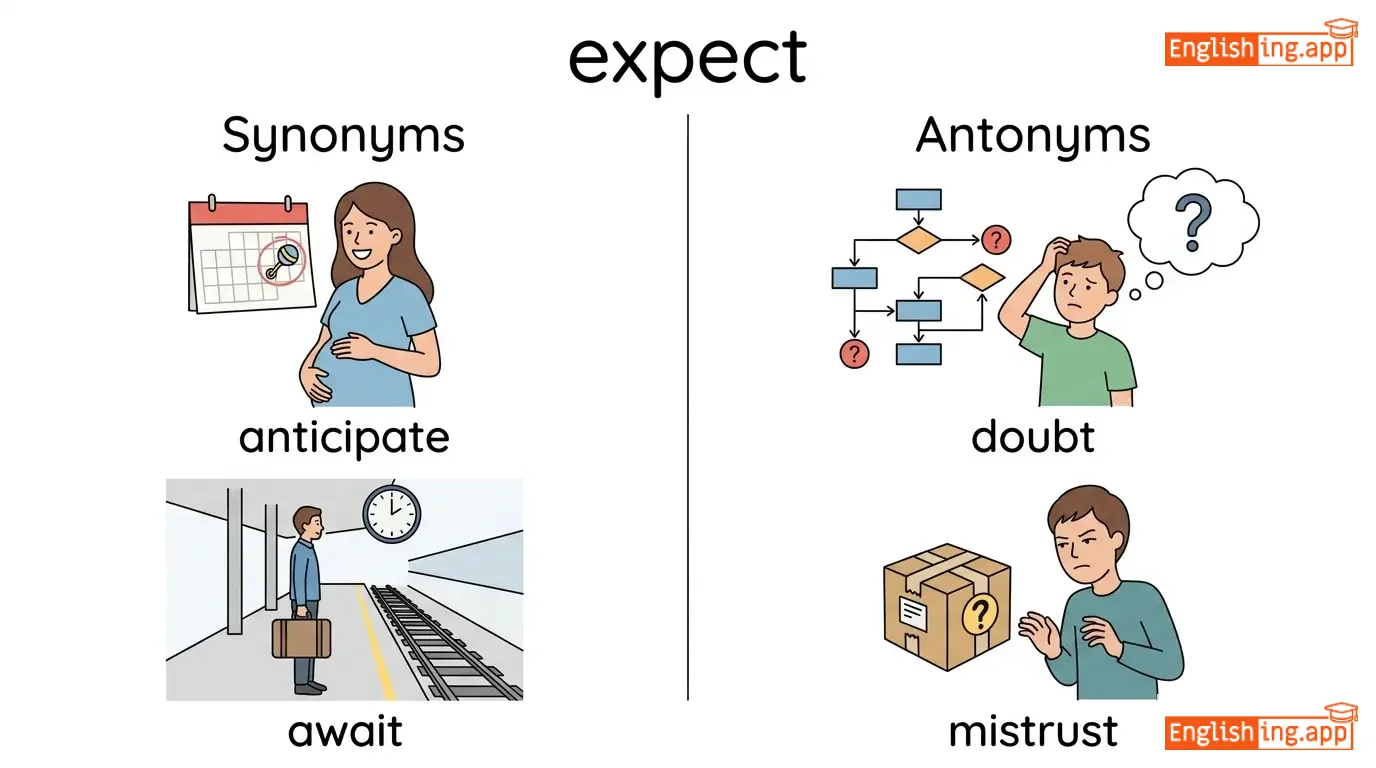
anticipate, await, foresee, predict, assume
••••••
|
doubt, mistrust, question
••••••
|
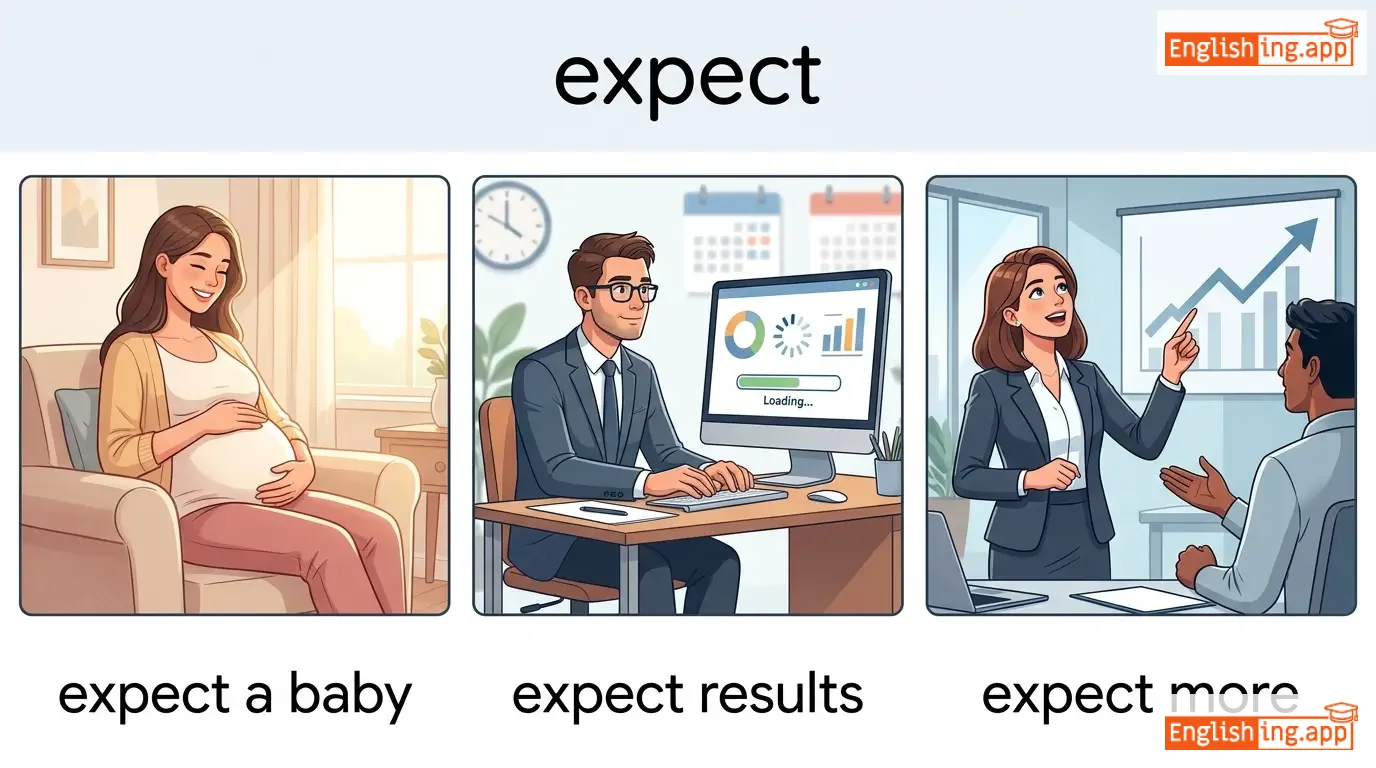
expect a baby, expect results, expect more, expect the worst
••••••
|
Expect 期待する - 試験結果を期待するように、何かを期待する。
••••••
|
|
🎯
••••••
|
/ˌɛkspɛkˈteɪʃən/
noun
(エクスペクテーション)
••••••
|
- •••••• |
期待
kitai
••••••
|
- •••••• | - •••••• | - •••••• | - •••••• |
a strong belief that something will happen or be the case
••••••
|
The students had high expectations for their exam results. |
学生たちは試験結果に高い期待を持っていました。
Gakusei-tachi wa shiken kekka ni takai kitai o motte imashita.
••••••
|
beyond expectations |
better or greater than what was anticipated
••••••
|
期待以上
kitai ijō
••••••
|
anticipation, hope, belief, outlook, assumption
••••••
|
doubt, disbelief, hopelessness
••••••
|
high expectation, meet expectation, raise expectation, beyond expectation
••••••
|
期待は期待していることを意味します、例えば試験結果に対する高い期待のように。
••••••
|
|
📊
••••••
|
/ɪkˈspɛktɪd/
adjective
(ikusupekutedd)
••••••
|
|
予想される
yosou sareru
••••••
|
- •••••• | - •••••• | - •••••• | - •••••• |
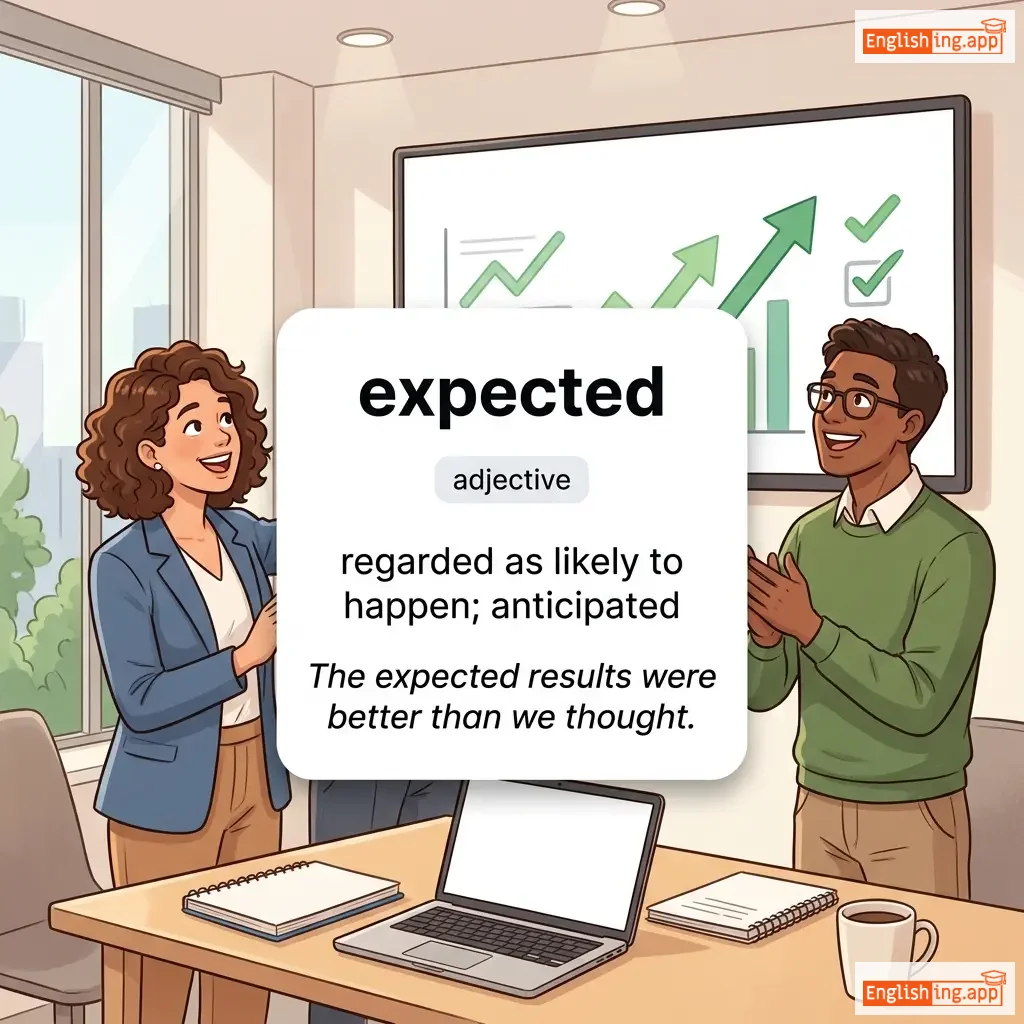
regarded as likely to happen; anticipated
••••••
|
The expected results were better than we thought. |
予想される結果は私たちが考えていたよりも良かった。
Yosou sareru kekka wa watashitachi ga kangaete ita yori mo yokatta.
••••••
|
as expected |
in the way that was predicted or anticipated
••••••
|
予想通り
yosou doori
••••••
|
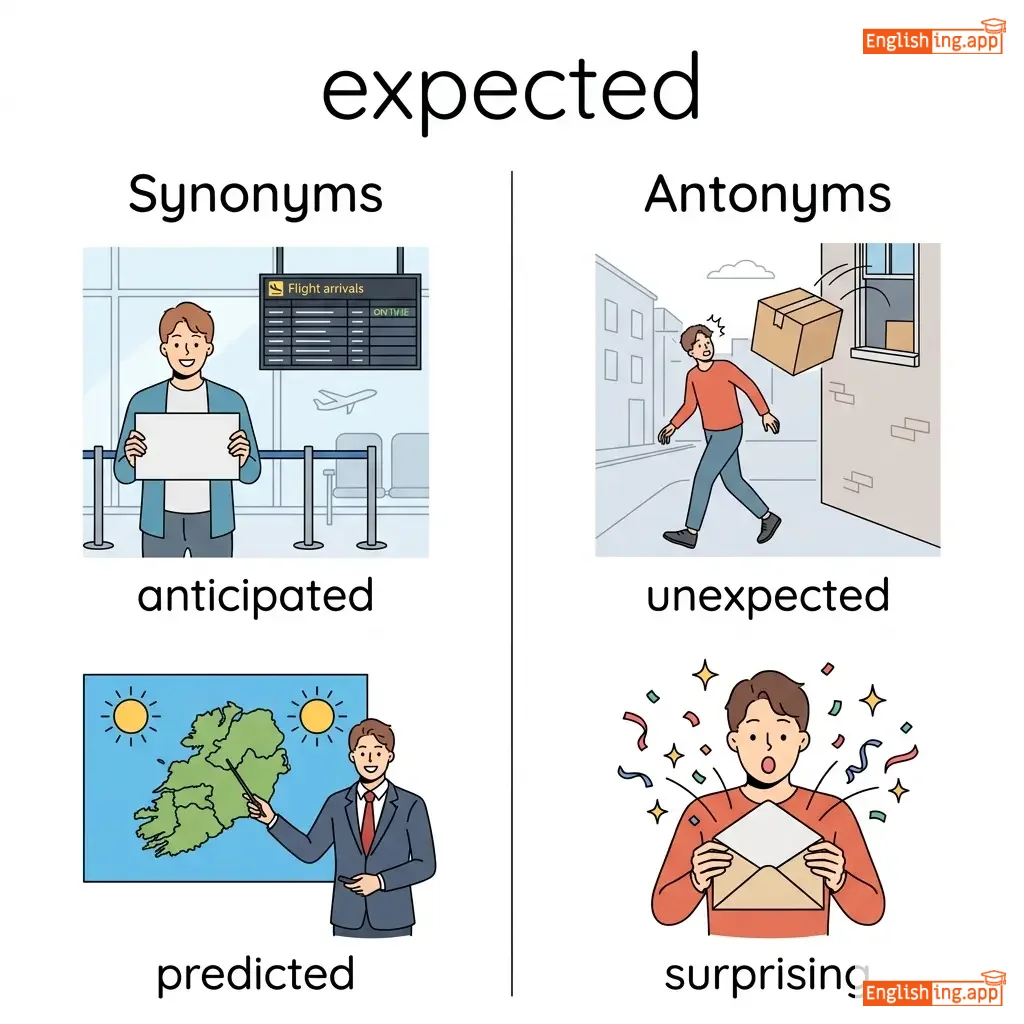
anticipated, predicted, awaited, foreseeable
••••••
|
unexpected, surprising, unforeseen
••••••
|
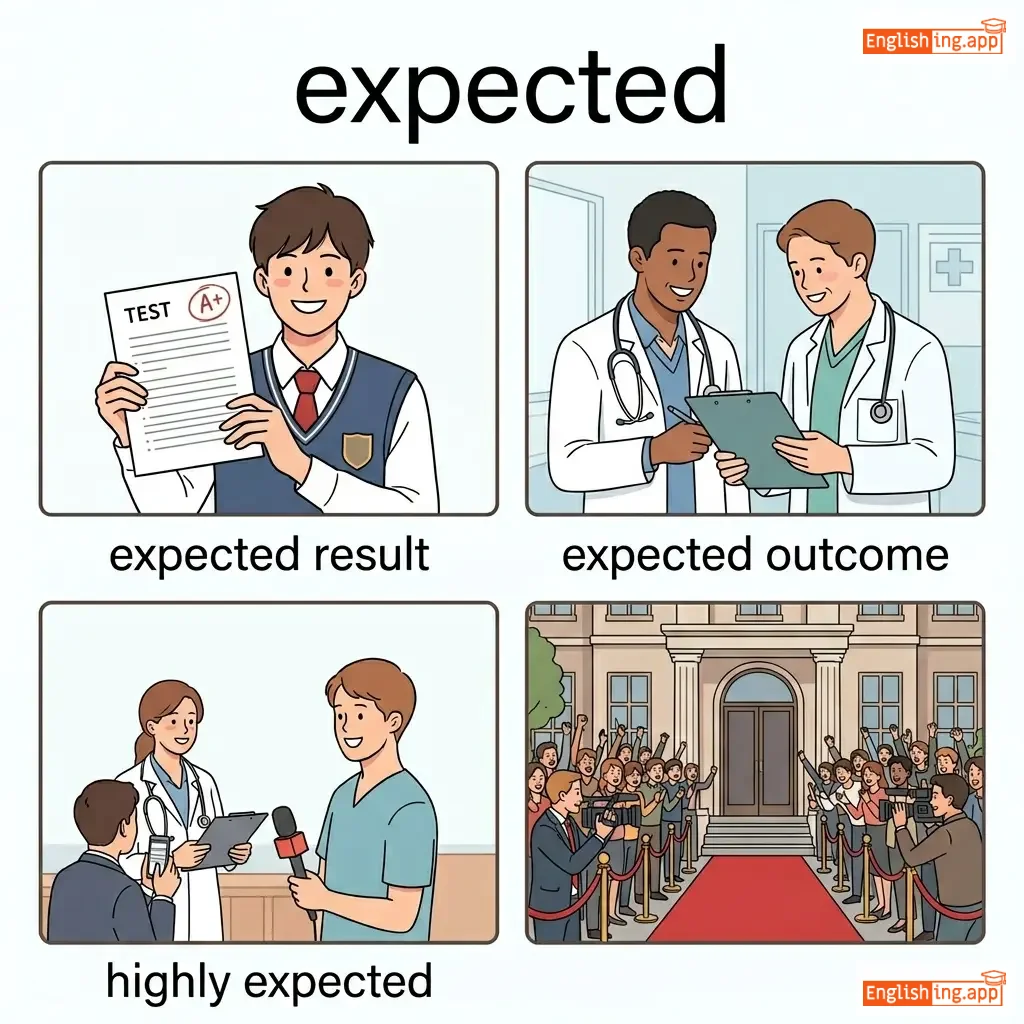
expected result, expected outcome, highly expected, expected arrival
••••••
|
予想されるとは、思っていた通りのこと!
••••••
|
|
💸
••••••
|
/ɪkˈspɛnd/
verb
(エクスペンド)
••••••
|
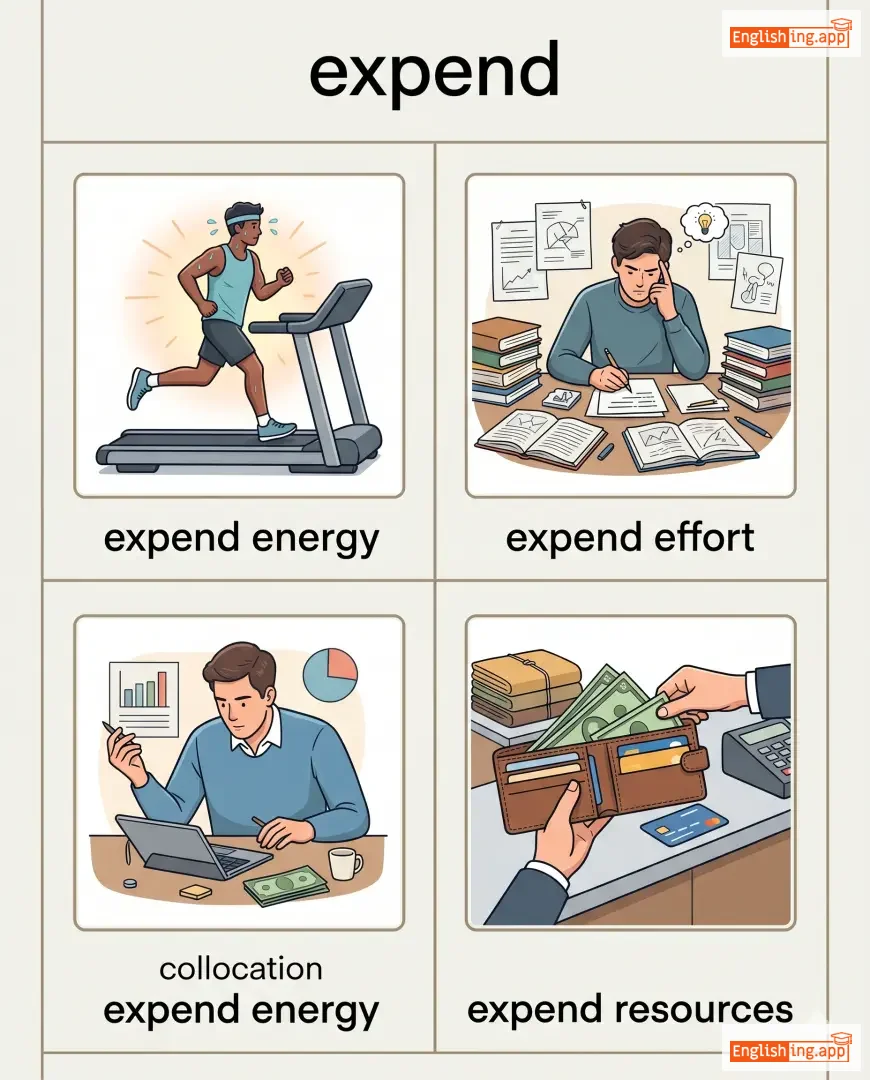
|
使う
tsukau
••••••
|
expended
エクスペンデッド
••••••
|
expended
エクスペンデッド
••••••
|
expends
エクスペンズ
••••••
|
expending
エクスペンディング
••••••
|
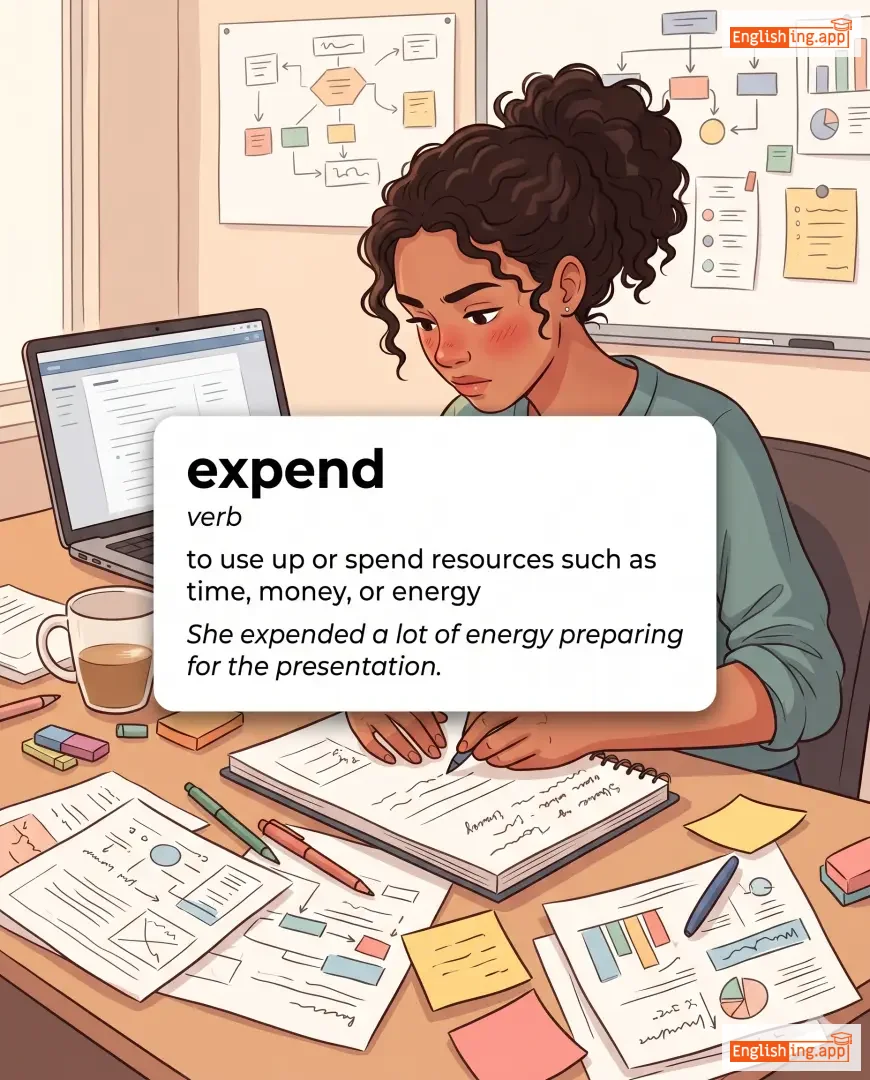
to use up or spend resources such as time, money, or energy
••••••
|
She expended a lot of energy preparing for the presentation.
彼女はプレゼンテーションの準備に多くのエネルギーを使いました。
••••••
|
彼女はプレゼンテーションの準備に多くのエネルギーを使いました。
Kanojo wa purezenteishon no junbi ni ooku no enerugi- wo tsukaimashita.
••••••
|
expend effort
努力を使う
••••••
|
to put in effort or try hard to achieve something
••••••
|
努力を使う
doryoku wo tsukau
••••••
|
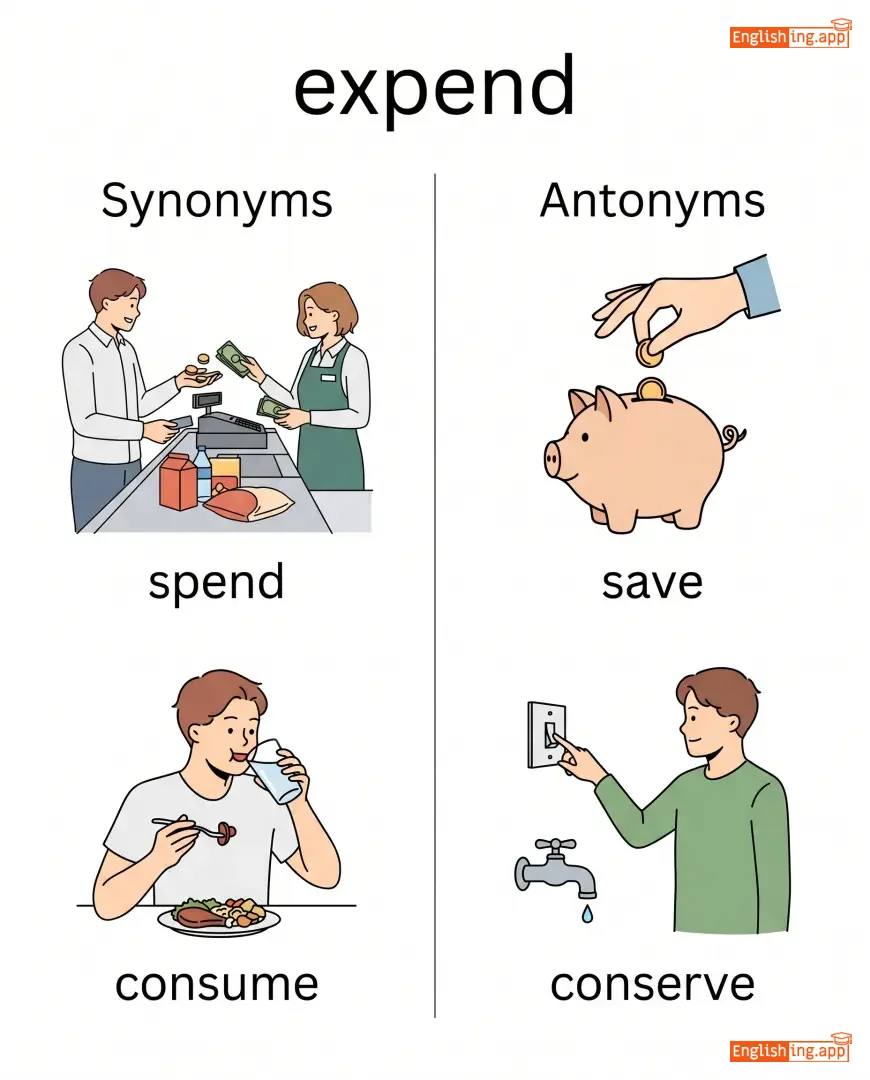
spend, consume, utilize, invest, use
••••••
|
save, conserve, preserve
••••••
|
expend energy, expend effort, expend resources, expend money
••••••
|
Expend は expand のように、使えば使うほど広がる。
••••••
|
|
📊
••••••
|
/ɪkˈspɛndɪtʃər/
noun
(ek-su-pen-di-cha)
••••••
|
|
支出
shishutsu
••••••
|
- •••••• | - •••••• | - •••••• | - •••••• |
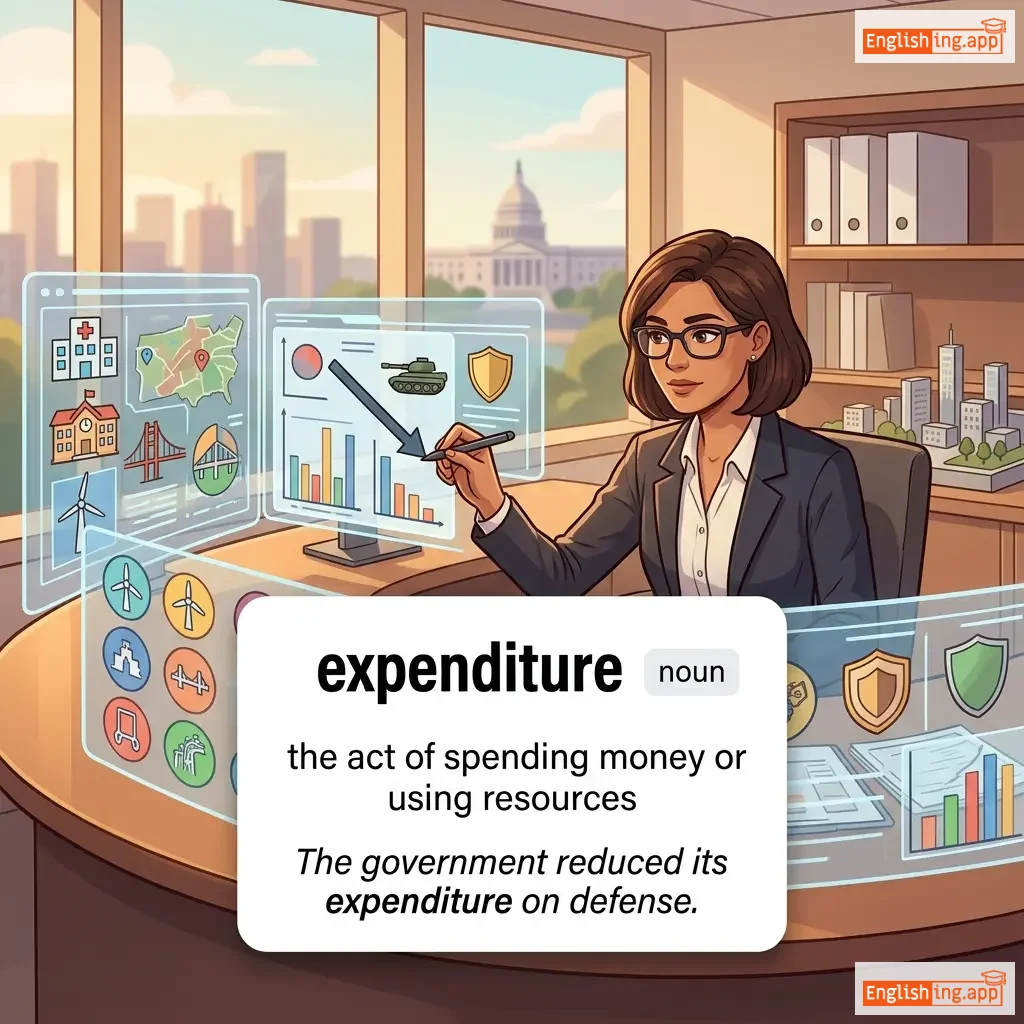
the act of spending money or using resources
••••••
|
The government reduced its expenditure on defense. |
政府は防衛費を削減しました。
Seifu wa bōei-hi o sakugen shimashita.
••••••
|
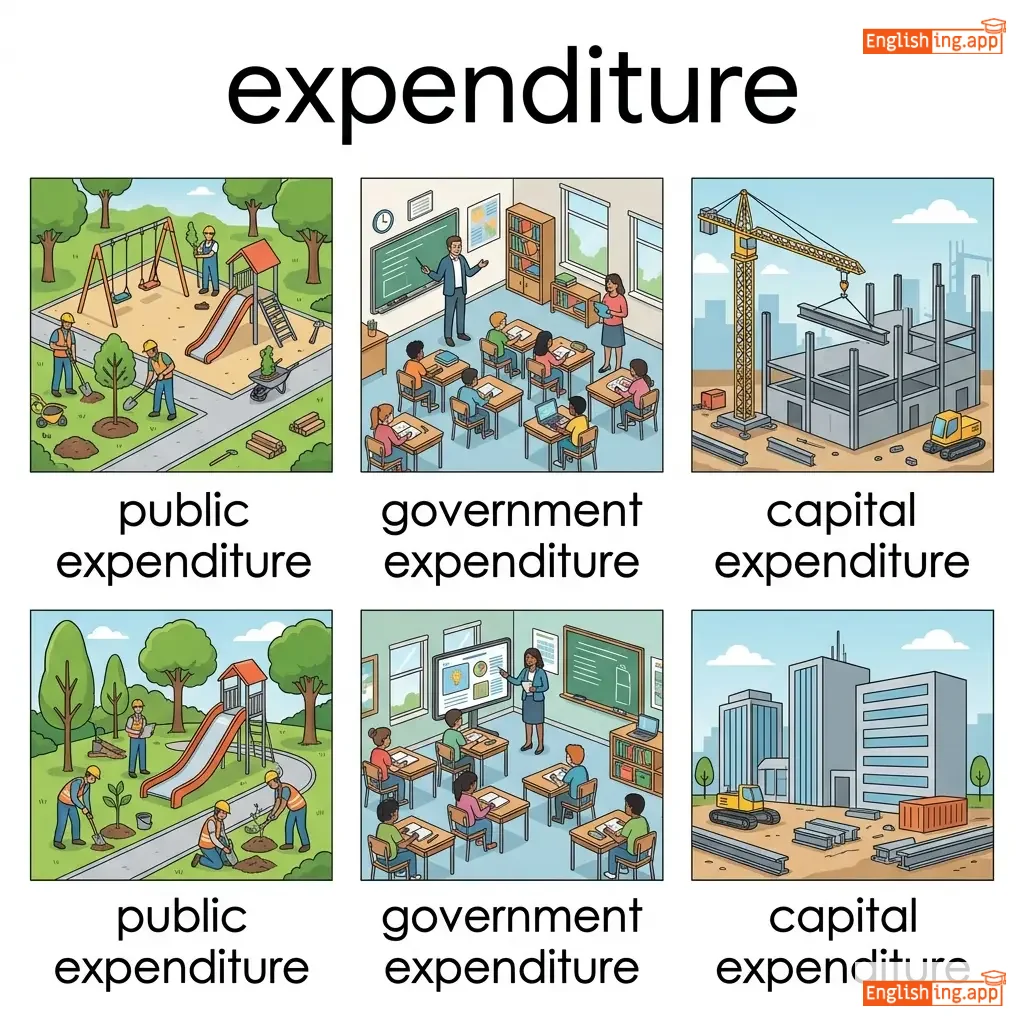
public expenditure |
money spent by the government for public services
••••••
|
公共支出
kōkyō shishutsu
••••••
|
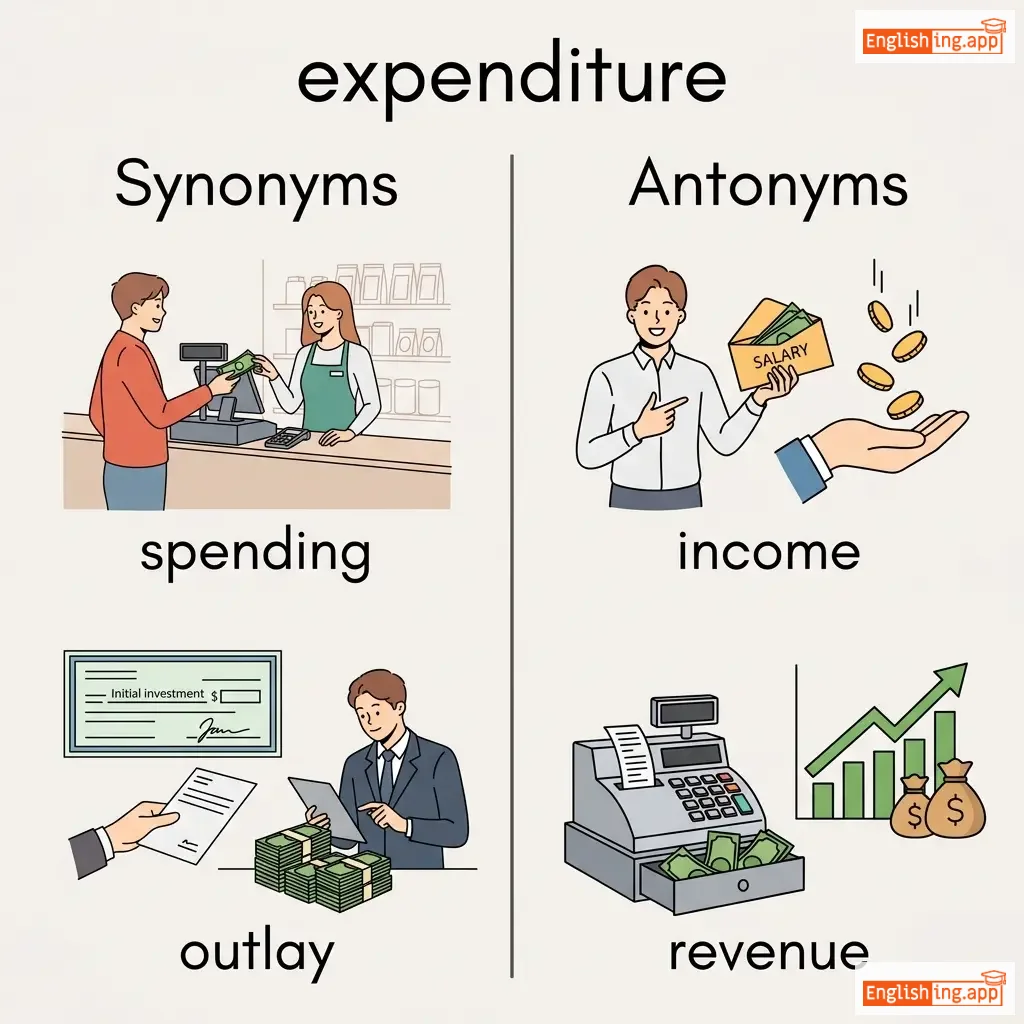
spending, outlay, cost, expense, disbursement
••••••
|
income, revenue, savings
••••••
|
public expenditure, government expenditure, capital expenditure, annual expenditure
••••••
|
Expenditure は extra 支出 = 支出、試験ではいつも追加の支出があります。
••••••
|
|
💰
••••••
|
/ɪkˈspɛns/
noun
(ekusupensu)
••••••
|
- •••••• |
費用
hiyou
••••••
|
- •••••• | - •••••• | - •••••• | - •••••• |
the cost of something; money spent
••••••
|
Traveling abroad can be a major expense. |
海外旅行は大きな費用となる可能性があります。
Kaigai ryokou wa ookina hiyou to naru kanousei ga arimasu.
••••••
|
at the expense of |
with loss or damage to something else
••••••
|
〜の代償で
〜no daishou de
••••••
|
cost, charge, price, spending, outlay
••••••
|
profit, savings, income
••••••
|
travel expense, medical expense, personal expense, at the expense of
••••••
|
費用は、何かをする際にかかるお金、費用項目として計上されます。
••••••
|
|
💰
••••••
|
/ɪkˈspɛnsɪv/
adjective
••••••
|
- •••••• | - •••••• | - •••••• | - •••••• | - •••••• | - •••••• |
costing a lot of money
••••••
|
That car is too expensive for me to buy. |
- •••••• |
at an expensive price |
with great cost or sacrifice
••••••
|
- •••••• |
costly, pricey, valuable, extravagant
••••••
|
cheap, inexpensive, affordable
••••••
|
expensive car, expensive gift, expensive clothes, too expensive
••••••
|
No •••••• |
|
🎓
••••••
|
/ɪkˈspɪəriəns/
noun/verb
(ハピネス)
••••••
|
- •••••• |
幸せ
shiawase
••••••
|
experienced
••••••
|
experienced
••••••
|
experiences
••••••
|
experiencing
••••••
|
knowledge or skill gained through involvement in or exposure to something over time
••••••
|
She gained valuable experience while working abroad.
彼女は賞を受け取ったとき、幸せを隠すことができませんでした。
••••••
|
彼女は賞を受け取ったとき、幸せを隠すことができませんでした。
Kanojo wa shō o uketotta toki, shiawase o kakusu koto ga dekimasen deshita.
••••••
|
learning from experience
幸せを追い求める
••••••
|
gaining knowledge by going through events or situations
••••••
|
幸せを追い求める
Shiawase o oimotomeru
••••••
|
knowledge, skill, practice, exposure, familiarity
••••••
|
ignorance, inexperience
••••••
|
gain experience, valuable experience, life experience, work experience
••••••
|
幸せ = shiawase, いつも笑顔でいると幸せだよ。
••••••
|
|
🧪
••••••
|
/ɪkˈsperɪmənt/
noun/verb
(ekusuperimento)
••••••
|
- •••••• |
実験
jikken
••••••
|
experimented
ekusuperimento-do
••••••
|
experimented
ekusuperimento-do
••••••
|
experiments
ekusuperimento-su
••••••
|
experimenting
ekusuperimento-shita
••••••
|
a test or trial carried out to discover something or prove an idea
••••••
|
The scientist conducted an experiment on plant growth.
科学者は植物の成長に関する実験を行いました。
••••••
|
科学者は植物の成長に関する実験を行いました。
Kagakusha wa shokubutsu no seichō ni kansuru jikken o okonaimashita.
••••••
|
experiment with
実験する
••••••
|
to try something new to see what happens
••••••
|
実験する
jikken suru
••••••
|
test, trial, research, investigation, study
••••••
|
proof, certainty
••••••
|
conduct experiment, scientific experiment, lab experiment, experiment results
••••••
|
実験は科学の試験 (jikken)
••••••
|
|
👨🏫
••••••
|
/ˈekspɜːt/
noun/adjective
(エキスパート)
••••••
|
- •••••• |
専門家
senmongaku
••••••
|
- •••••• | - •••••• | - •••••• | - •••••• |
a person who has a lot of knowledge or skill in a particular area
••••••
|
He is an expert in computer programming.
彼はコンピュータプログラミングのエキスパートです。
••••••
|
彼はコンピュータプログラミングの専門家です。
Kare wa konpyūta puroguramingu no senmongaku desu.
••••••
|
expert opinion
専門家の意見
••••••
|
a professional or highly knowledgeable view
••••••
|
専門家の意見
senmongaku noiken
••••••
|
specialist, professional, authority, master, guru
••••••
|
novice, amateur, beginner
••••••
|
expert advice, subject expert, expert opinion, expert knowledge
••••••
|
Expert = Extra Part knowledge, だから専門家
••••••
|
|
⏳
••••••
|
/ɪkˈspaɪər/
verb
(エクスパイア)
••••••
|
- •••••• |
期限切れ
kigen-gire
••••••
|
expired
エクスパイアード
••••••
|
expired
エクスパイアード
••••••
|
expires
エクスパイアーズ
••••••
|
expiring
エクスパイアリング
••••••
|
to come to an end, especially a period of validity or life
••••••
|
My passport will expire next month.
私のパスポートは来月期限切れになります。
••••••
|
私のパスポートは来月期限切れになります。
Watashi no pasupōto wa raigetsu kigen-gire ni narimasu.
••••••
|
expire soon
すぐに期限切れになる
••••••
|
to end or become invalid in the near future
••••••
|
すぐに期限切れになる
sugu ni kigen-gire ni naru
••••••
|
end, terminate, lapse, cease, conclude
••••••
|
continue, persist, last
••••••
|
passport expire, contract expire, lease expire, expire date
••••••
|
Expire は期限切れの意味、パスポートが期限切れになるようなことです。
••••••
|
|
📖
••••••
|
/ɪkˈspleɪn/
verb
(エクスプレイン)
••••••
|
|
説明する
setsumei suru
••••••
|
explained
エクスプレインド
••••••
|
explained
エクスプレインド
••••••
|
explains
エクスプレインズ
••••••
|
explaining
エクスプレイニング
••••••
|
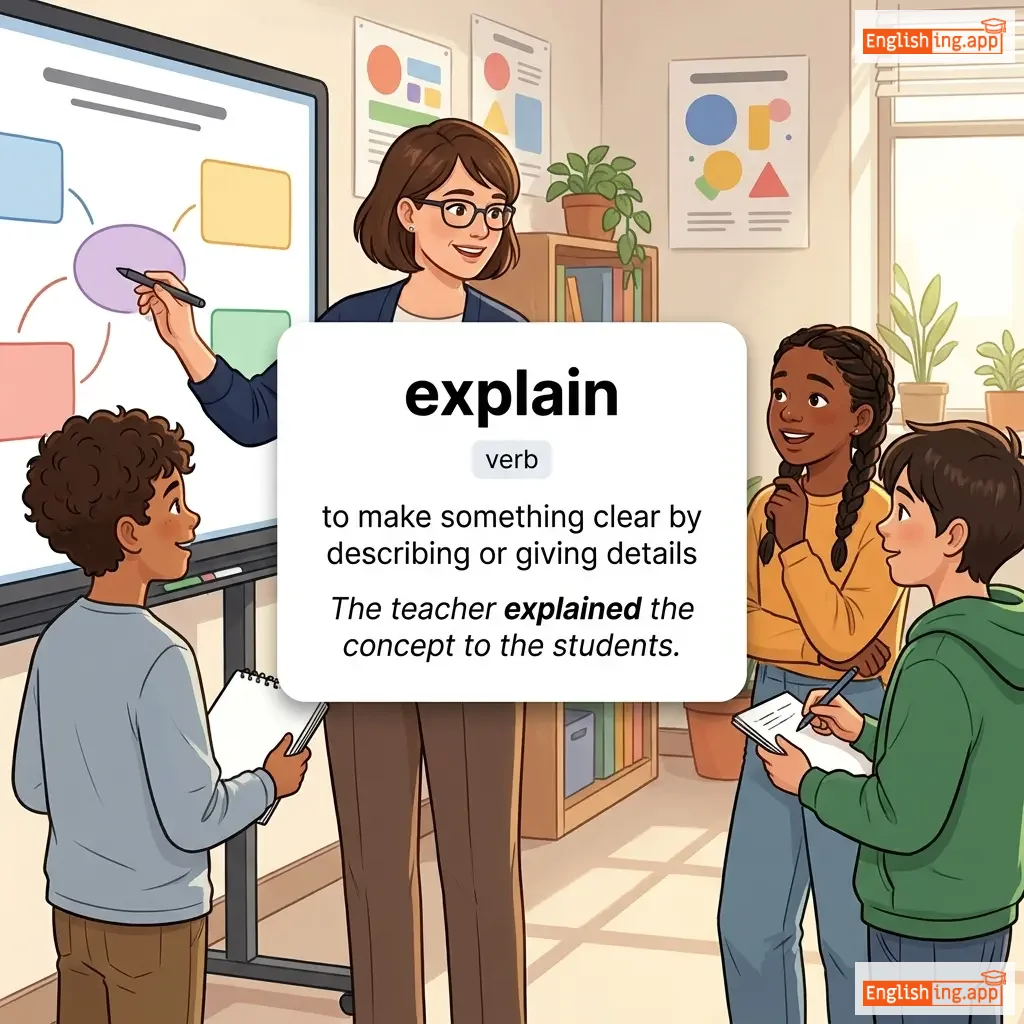
to make something clear by describing or giving details
••••••
|
The teacher explained the concept to the students.
先生は学生にコンセプトを説明しました。
••••••
|
先生は学生にコンセプトを説明しました。
Sensei wa gakusei ni konseputo o setsumei shimashita.
••••••
|
explain away
エクスプレイン・アウェイ
••••••
|
to try to justify or minimize something
••••••
|
言い訳をする
iiwake o suru
••••••
|
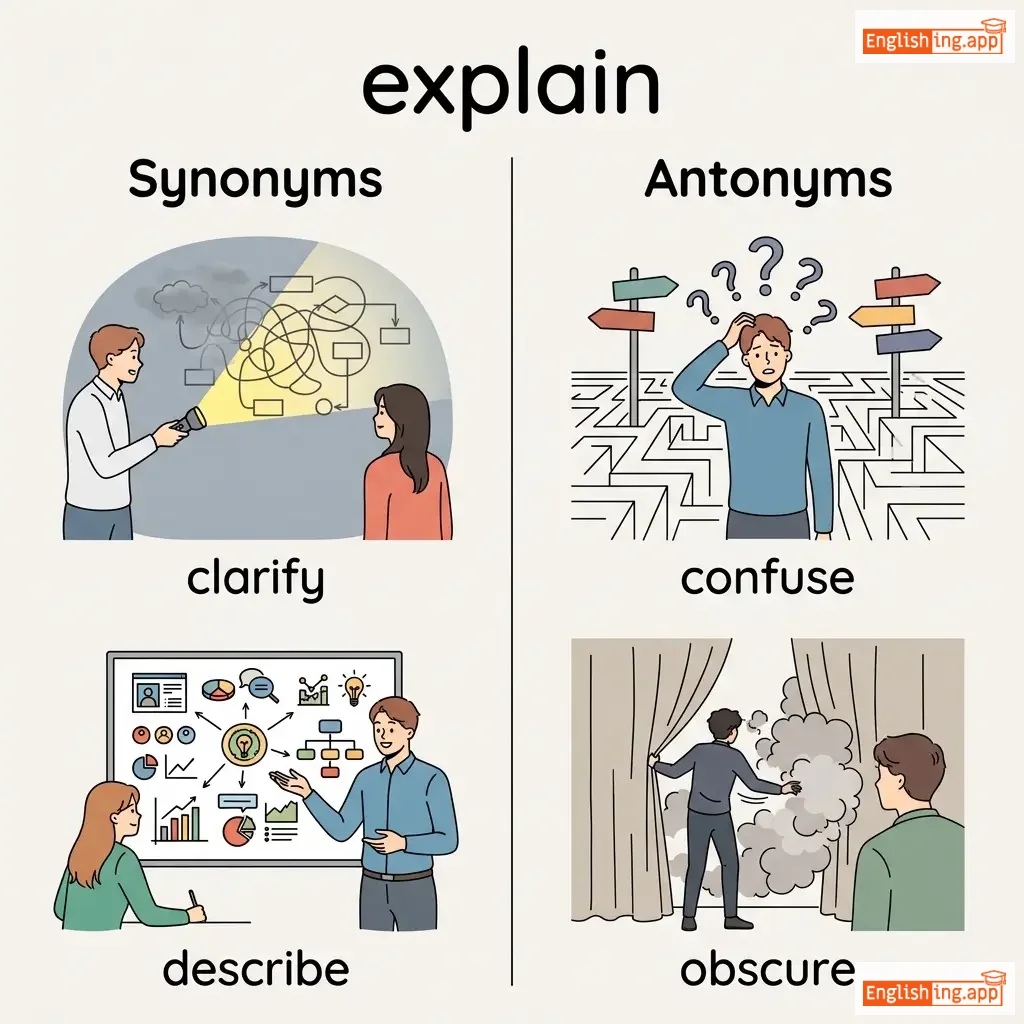
clarify, describe, illustrate, elaborate
••••••
|
confuse, obscure, mystify
••••••
|
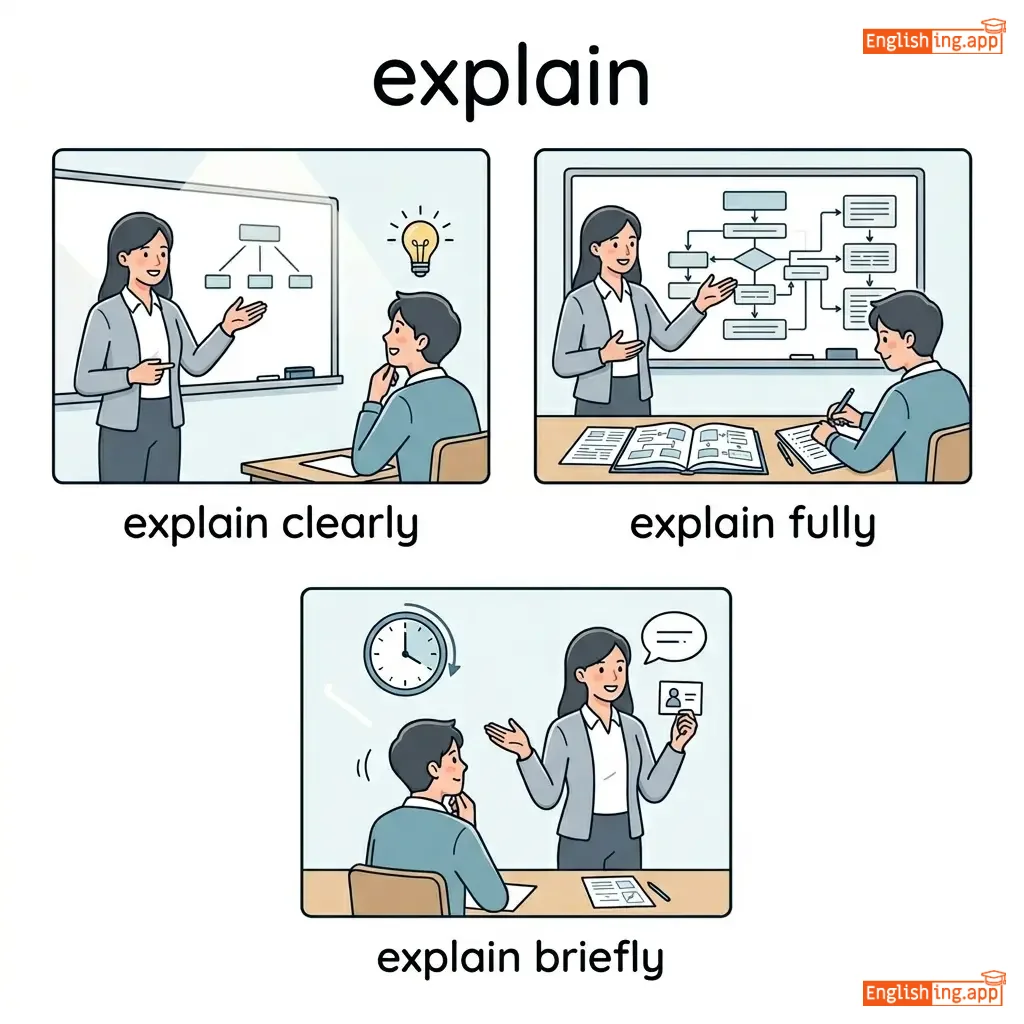
explain clearly, explain fully, explain briefly, explain concept
••••••
|
Explain = エクスプレイン = 空で説明!
••••••
|
|
📖
••••••
|
/ˌekspləˈneɪʃən/
noun
(エクスプレイネーション)
••••••
|
- •••••• |
説明
setsumei
••••••
|
- •••••• | - •••••• | - •••••• | - •••••• |
a statement or account that makes something clear
••••••
|
The teacher gave a clear explanation of the theory. |
先生は理論を明確に説明しました。
Sensei wa riron o meikaku ni setsumei shimashita.
••••••
|
beyond explanation |
too strange or difficult to explain
••••••
|
説明を超えて
setsumei o koete
••••••
|
clarification, interpretation, description, account, justification
••••••
|
confusion, mystery
••••••
|
give explanation, detailed explanation, proper explanation, clear explanation
••••••
|
Explanationは'Explain' + 'ation' = 説明
••••••
|
|
📢
••••••
|
/ɪkˈsplɪsɪt/
adjective
(ikˈspli.sit)
••••••
|
|
明確な
meikaku na
••••••
|
- •••••• | - •••••• | - •••••• | - •••••• |
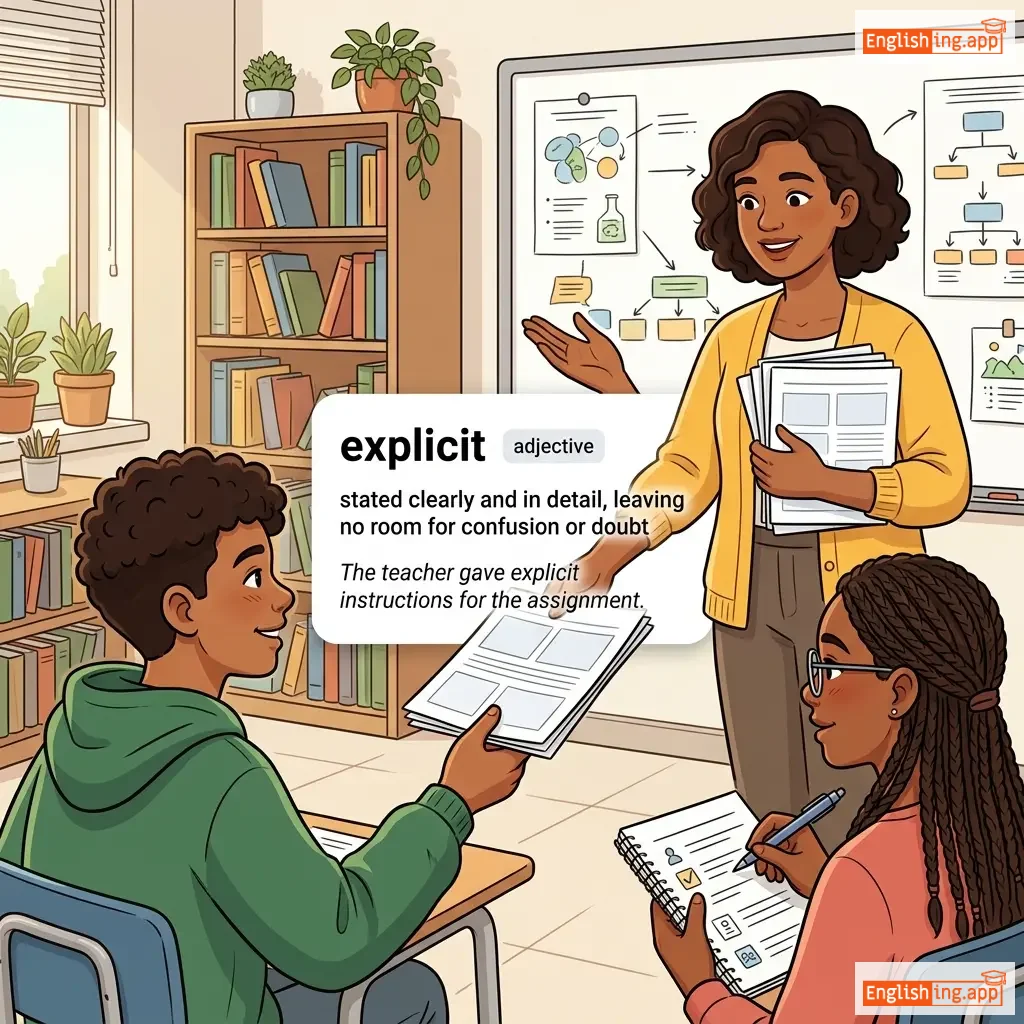
stated clearly and in detail, leaving no room for confusion or doubt
••••••
|
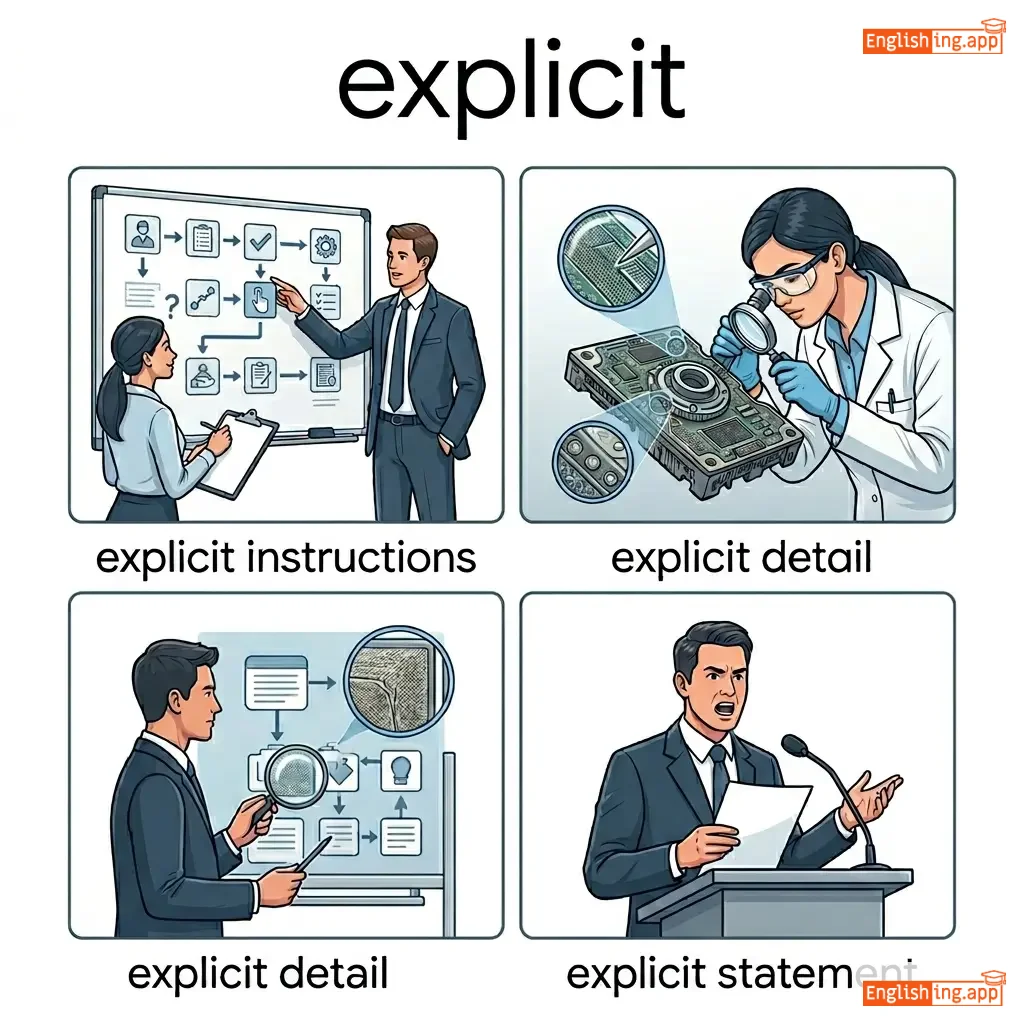
The teacher gave explicit instructions for the assignment. |
先生は課題のために明確な指示を出しました。
Sensei wa kadai no tame ni meikaku na shiji wo dashimashita.
••••••
|
make explicit |
to state something clearly and directly
••••••
|
明確にする
meikaku ni suru
••••••
|
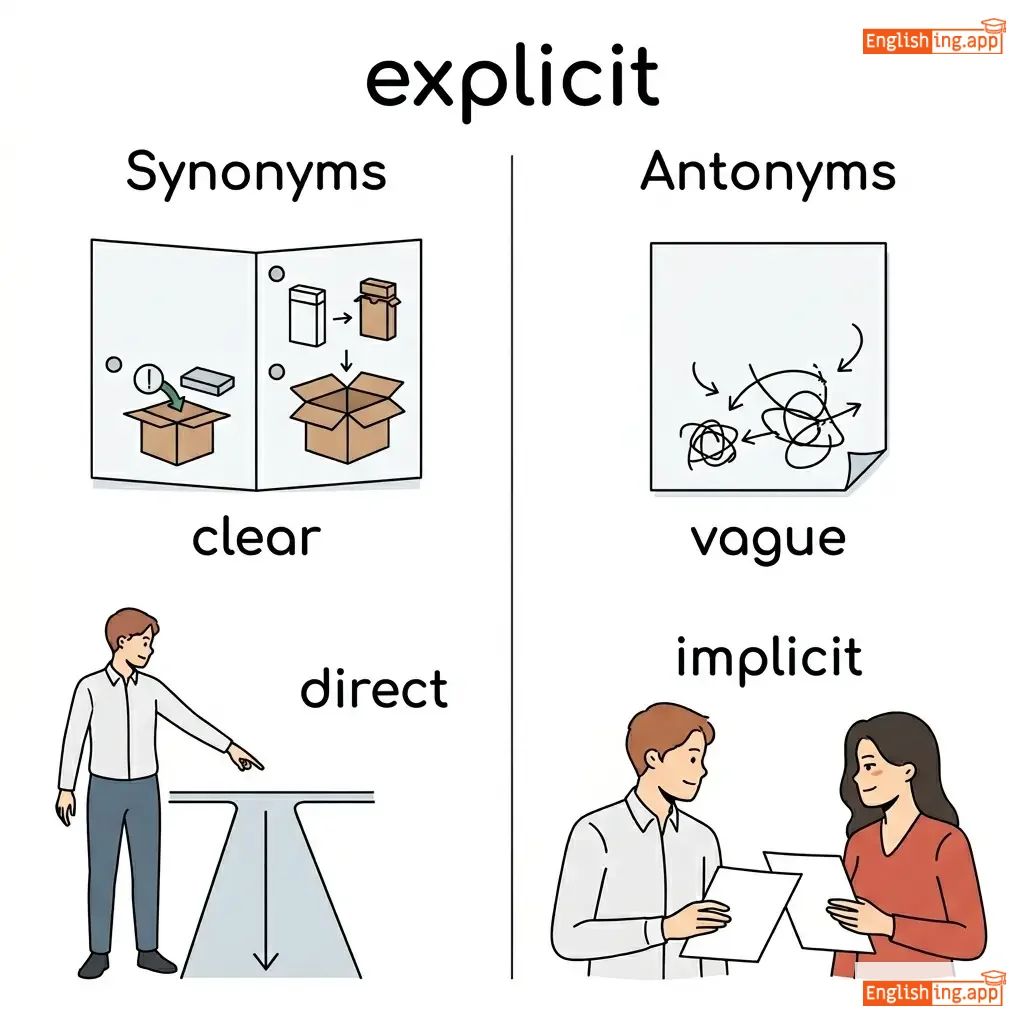
clear, direct, precise, unambiguous, definite
••••••
|
vague, implicit, ambiguous
••••••
|
explicit instructions, explicit detail, explicit statement, make explicit
••••••
|
explicit はっきりとした意味 — 先生が明確な (はっきりした) 指示を出しました
••••••
|
|
🔍
••••••
|
/ɪkˈsplɪsɪtli/
adverb
(イクスプリスィトリー)
••••••
|
- •••••• |
明確に
meikaku ni
••••••
|
- •••••• | - •••••• | - •••••• | - •••••• |
in a clear and detailed manner, leaving no room for confusion or doubt
••••••
|
The instructions were explicitly written to avoid any confusion. |
指示は明確に書かれており、混乱を避けるためです。
Shiji wa meikaku ni kakarete ori, konran o sakeru tame desu.
••••••
|
- •••••• | - •••••• | - •••••• |
clearly, directly, plainly, unmistakably
••••••
|
implicitly, vaguely
••••••
|
explicitly stated, explicitly mentioned, explicitly clear, explicitly forbidden
••••••
|
Explicitly は‘明確に’と言う意味です、曖昧さはありません
••••••
|
|
💥
••••••
|
/ɪkˈsploʊd/
verb
(エクスプロード)
••••••
|
- •••••• |
爆発する
bakuhatsu suru
••••••
|
exploded
エクスプローデッド
••••••
|
exploded
エクスプローデッド
••••••
|
explodes
エクスプローズ
••••••
|
exploding
エクスプローディング
••••••
|
to burst or shatter violently and noisily as a result of rapid combustion or pressure
••••••
|
The bomb exploded in the middle of the street.
爆弾は通りの真ん中で爆発しました。
••••••
|
爆弾は通りの真ん中で爆発しました。
Bakudan wa toori no mannaka de bakuhatsu shimashita.
••••••
|
explode with laughter
笑いで爆発する
••••••
|
to suddenly start laughing very loudly
••••••
|
笑いで爆発する
warai de bakuhatsu suru
••••••
|
burst, blow up, detonate, erupt, shatter
••••••
|
implode, collapse, defuse
••••••
|
explode suddenly, explode violently, explode with laughter, explode a bomb
••••••
|
Explode という意味は爆発する — 難しい質問を見て頭が爆発する
••••••
|
|
⚒️
••••••
|
/ɪkˈsplɔɪt/
verb, noun
••••••
|
- •••••• | - •••••• |
exploited
••••••
|
exploited
••••••
|
exploits
••••••
|
exploiting
••••••
|
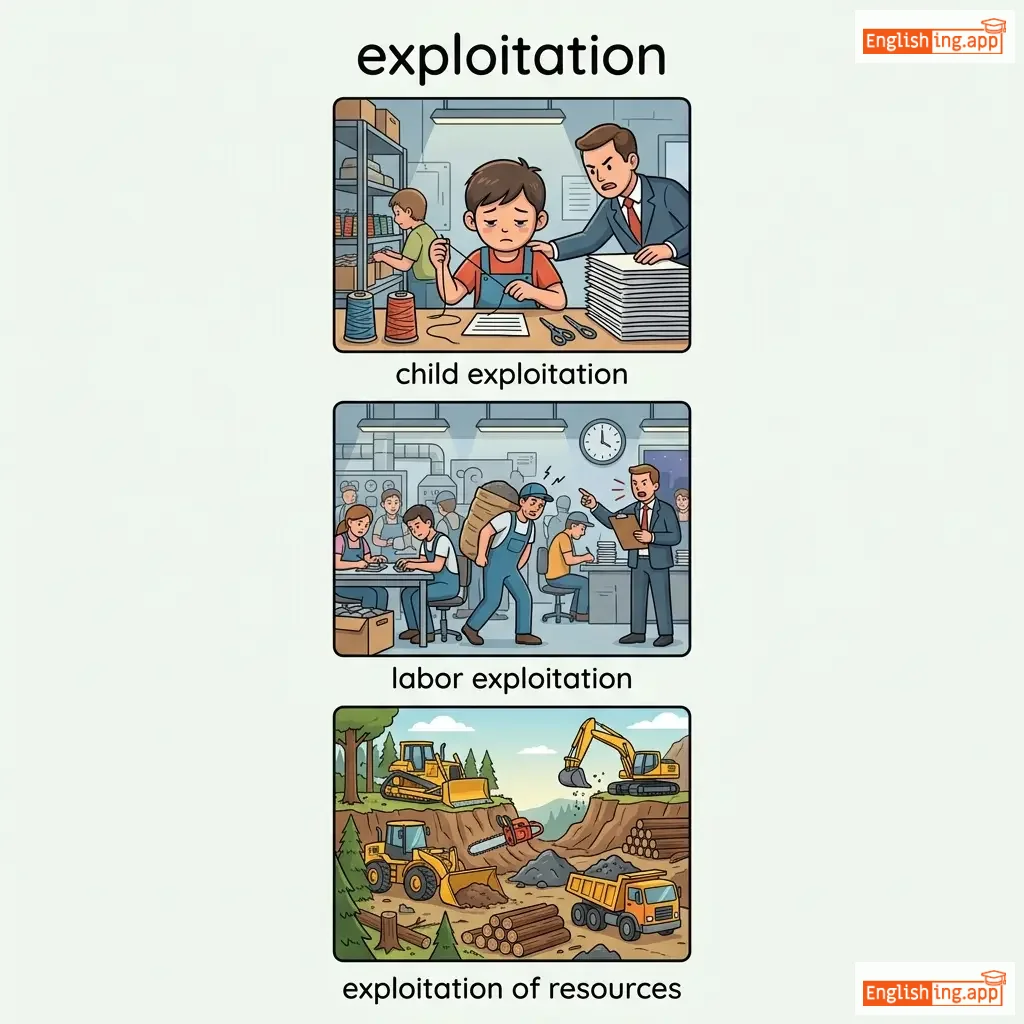
to make full use of and derive benefit from (a resource); to use someone unfairly for one’s own advantage
••••••
|
The company was accused of exploiting child labor. |
- •••••• |
exploit opportunities |
to make the best use of chances or favorable situations
••••••
|
- •••••• |
utilize, take advantage, abuse, capitalize, manipulate
••••••
|
neglect, ignore, support
••••••
|
exploit resources, exploit workers, exploit opportunities, exploit system
••••••
|
No •••••• |
|
⛏️
••••••
|
/ˌek.splɔɪˈteɪ.ʃən/
noun
(エクスプロイテーション)
••••••
|
|
搾取; 悪用
sakushu, akuyou
••••••
|
- •••••• | - •••••• | - •••••• | - •••••• |
the action of treating someone unfairly in order to benefit from their work; misuse
••••••
|
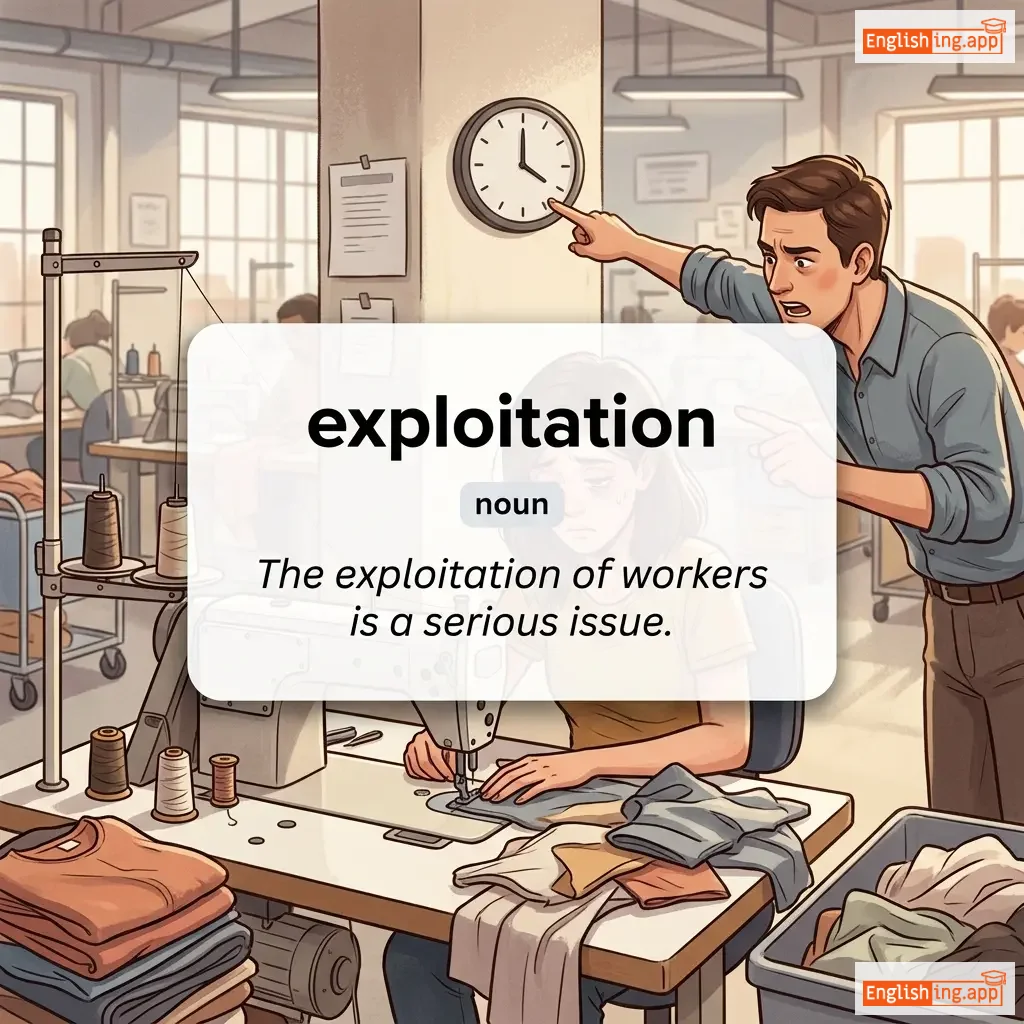
The company was accused of worker exploitation due to poor working conditions. |
その会社は劣悪な労働条件で労働者の搾取で告発されました。
Sono kaisha wa retsuaku na roudou jouken de roudousha no sakushu de kokuhatsu saremashita.
••••••
|
- •••••• | - •••••• | - •••••• |
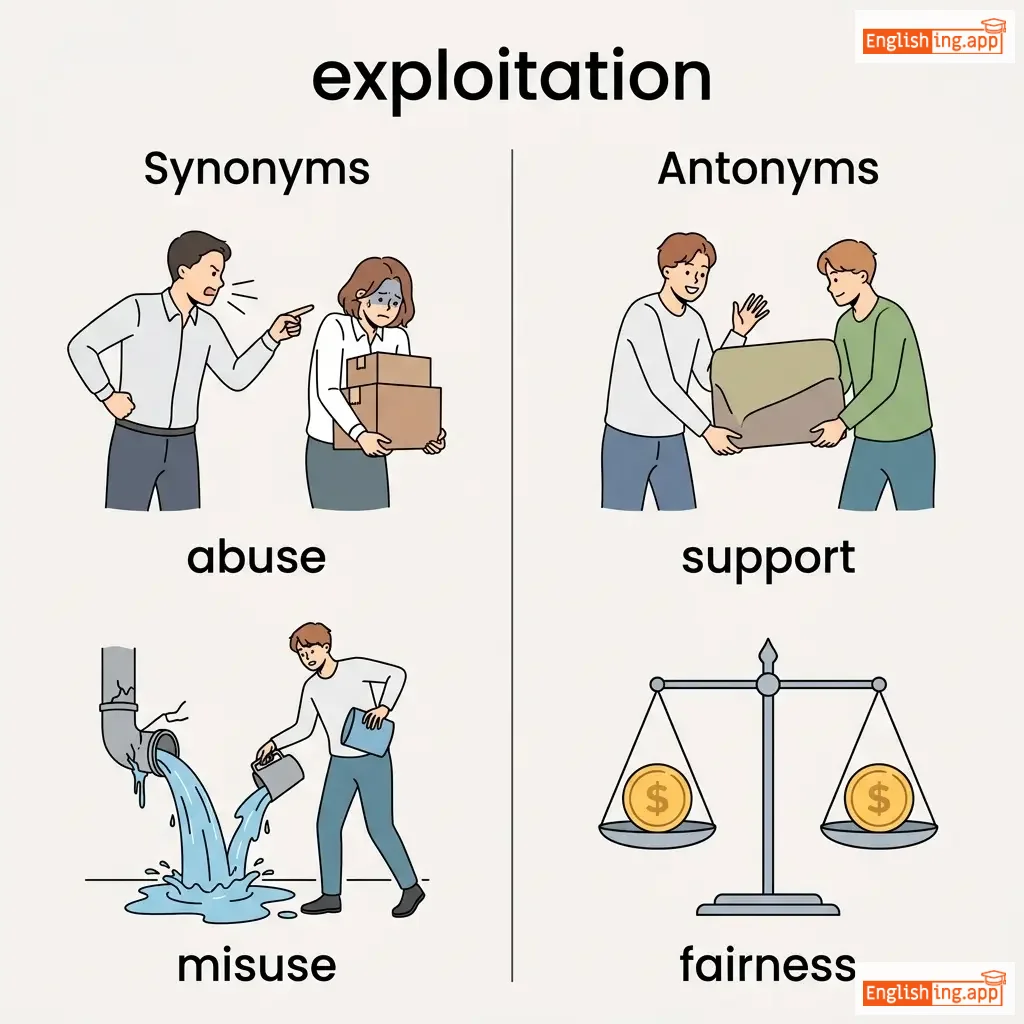
abuse, misuse, oppression, manipulation
••••••
|
protection, fairness, justice, respect
••••••
|
worker exploitation, resource exploitation, prevent exploitation
••••••
|
Exploitation is like 'akuyou', using someone’s labor unfairly.
••••••
|
|
🧭
••••••
|
/ɪkˈsplɔːr/
verb
(エクスプロア)
••••••
|
- •••••• |
探検する
tanken suru
••••••
|
explored
エクスプロアド
••••••
|
explored
エクスプロアド
••••••
|
explores
エクスプロアズ
••••••
|
exploring
エクスプローリング
••••••
|
to travel through or study something in order to learn more about it
••••••
|
They decided to explore the forest together.
彼らは一緒に森を探検することに決めました。
••••••
|
彼らは一緒に森を探検することに決めました。
Karera wa issho ni mori wo tanken suru koto ni kimemashita.
••••••
|
explore possibilities
可能性を探る
••••••
|
to consider different options or opportunities
••••••
|
可能性を探る
kanousei wo saguru
••••••
|
discover, investigate, examine, search, probe
••••••
|
ignore, neglect
••••••
|
explore new ideas, explore opportunities, explore the world, explore nature
••••••
|
探検するのは、ドーラの冒険のようなものです
••••••
|
|
💥
••••••
|
/ɪkˈsploʊʒən/
noun
(エクスプロージョン)
••••••
|
- •••••• |
爆発
bakuhatsu
••••••
|
- •••••• | - •••••• | - •••••• | - •••••• |
a violent burst or release of energy, often causing damage and noise
••••••
|
The explosion shook the entire neighborhood. |
爆発は近隣一帯を揺さぶった。
Bakuhatsu wa kinrin ittai wo yusabutta.
••••••
|
go off like an explosion |
to suddenly happen with great force or intensity
••••••
|
爆発のように爆発する
Bakuhatsu no you ni bakuhatsu suru
••••••
|
blast, detonation, eruption, burst, outbreak
••••••
|
implosion, silence, calm
••••••
|
massive explosion, gas explosion, explosion of anger, sudden explosion
••••••
|
Explosion = 大きな爆発! 爆発の力を思い出して覚えよう!
••••••
|
|
🧨
••••••
|
/ɪkˈsploʊsɪv/
adjective
(エクスプローシブ)
••••••
|
- •••••• |
爆発的
bakuhatsuteki
••••••
|
- •••••• | - •••••• | - •••••• | - •••••• |
able to cause an explosion; likely to burst out suddenly
••••••
|
The situation became explosive after the argument. |
議論の後、状況は爆発的になった。
Giron no ato, jōkyō wa bakuhatsuteki ni natta.
••••••
|
explosive growth |
very rapid and intense growth
••••••
|
爆発的な成長
bakuhatsuteki na seichō
••••••
|
volatile, dangerous, combustible, eruptive
••••••
|
stable, calm, safe
••••••
|
explosive device, explosive growth, explosive force, explosive situation
••••••
|
爆発的は爆発する可能性がある – 緊張した状況が爆発するかもしれない。
••••••
|
|
🚢
••••••
|
/ˈekspɔːt/
verb
(エクスポート)
••••••
|
|
輸出する
yushutsu suru
••••••
|
exported
エクスポーテッド
••••••
|
exported
エクスポーテッド
••••••
|
exports
エクスポーツ
••••••
|
exporting
エクスポーティング
••••••
|
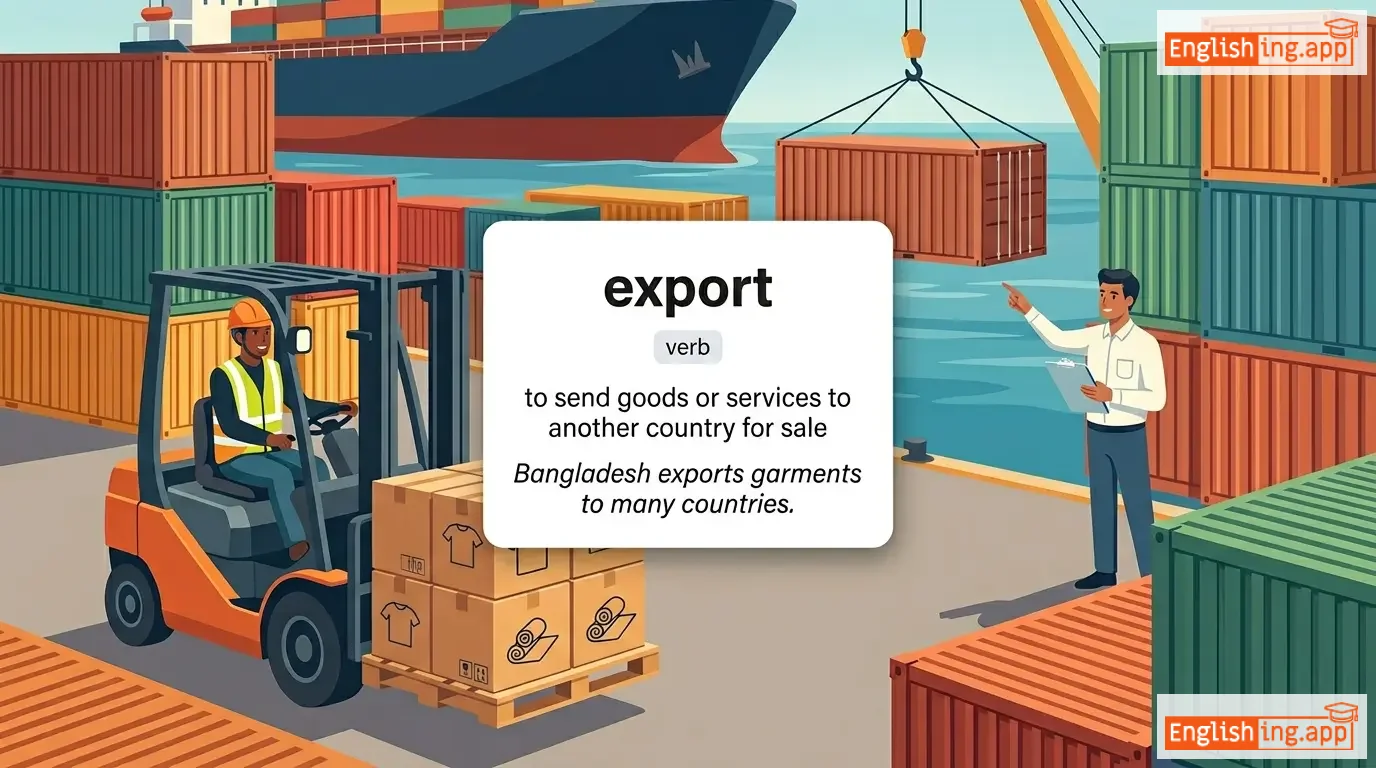
to send goods or services to another country for sale
••••••
|
Bangladesh exports garments to many countries.
バングラデシュは多くの国に衣料品を輸出しています。
••••••
|
バングラデシュは多くの国に衣料品を輸出しています。
Banguradesh wa ōku no kuni ni iryōhin o yushutsu shiteimasu.
••••••
|
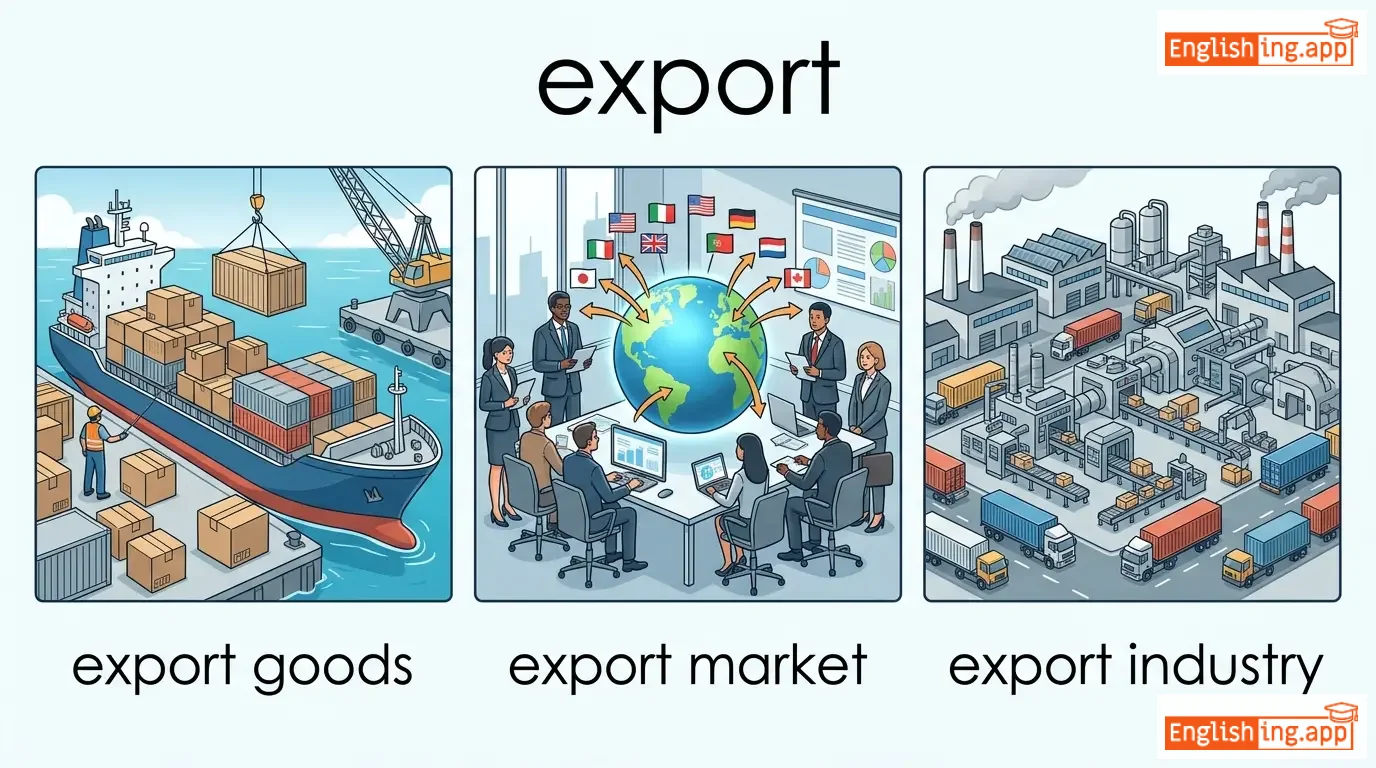
export market
輸出市場
••••••
|
a market in another country for goods produced locally
••••••
|
輸出市場
yushutsu shijō
••••••
|
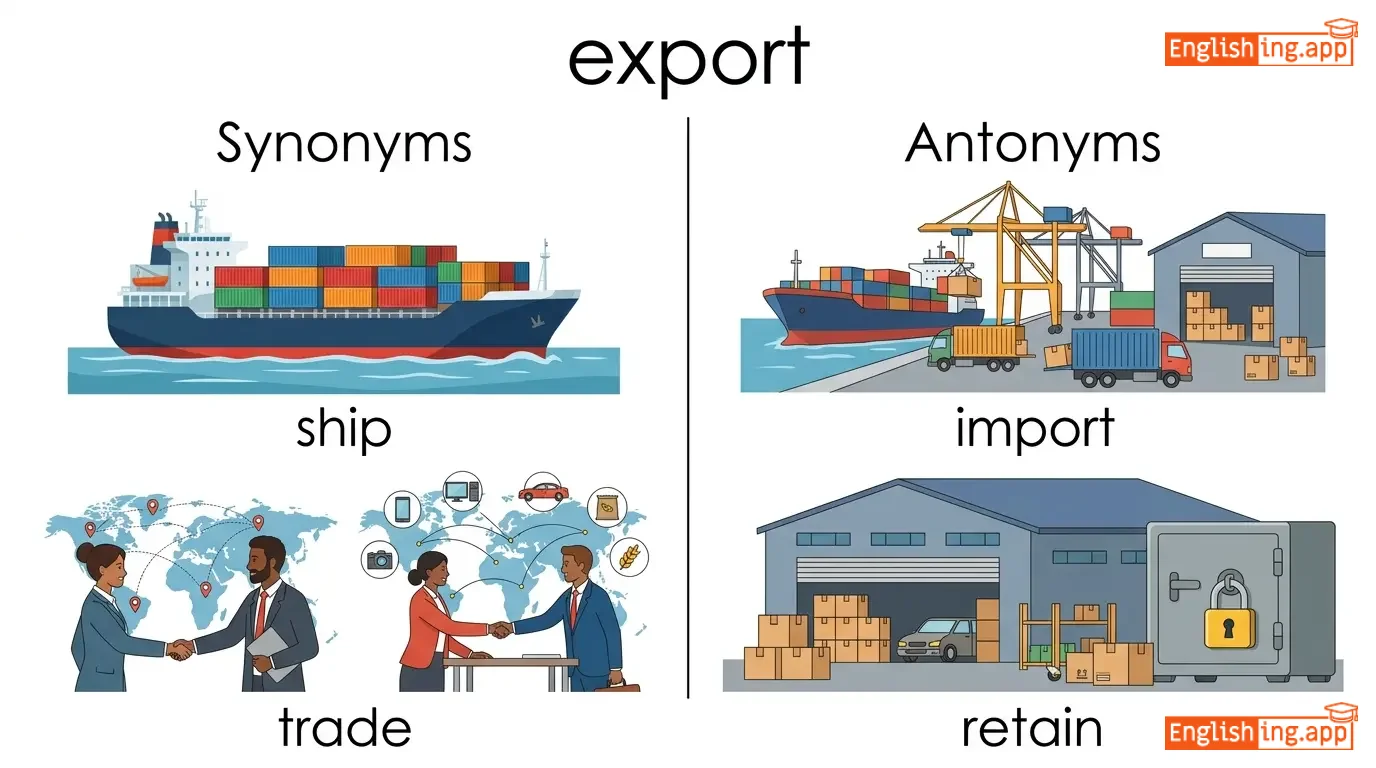
ship, trade, deliver, transport, send
••••••
|
import, retain, keep
••••••
|
export goods, export market, export industry, export earnings
••••••
|
輸出は商品を他の国に送ること、まるで船が商品を運ぶように。
••••••
|
|
🔎
••••••
|
/ɪkˈspoʊz/
verb
(エクスポーズ)
••••••
|


|
暴露する
bōroku suru
••••••
|
exposed
エクスポーズド
••••••
|
exposed
エクスポーズド
••••••
|
exposes
エクスポーズズ
••••••
|
exposing
エクスポーズイング
••••••
|
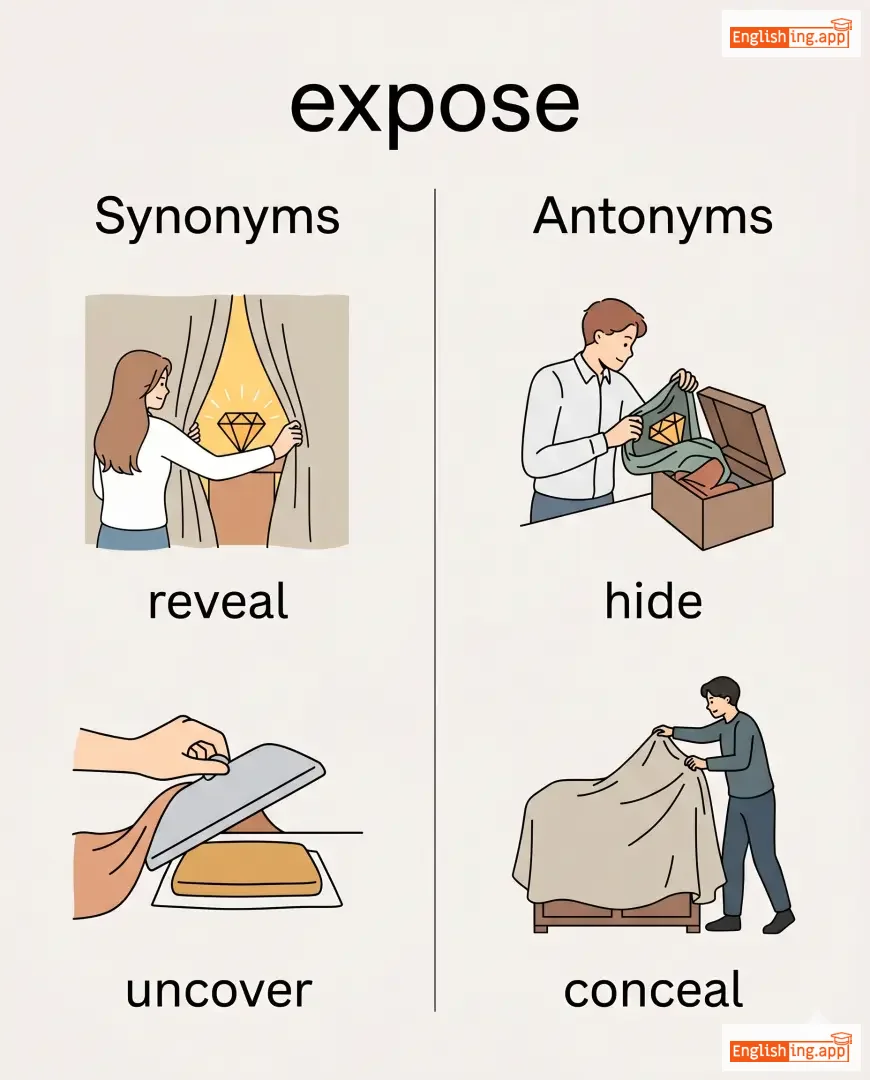
to reveal or uncover something hidden
••••••
|
The journalist tried to expose the corruption scandal.
ジャーナリストは腐敗スキャンダルを暴露しようとした。
••••••
|
ジャーナリストは腐敗スキャンダルを暴露しようとした。
Jānarisuto wa fuhai sukyandaru o bakuro shiyō to shita.
••••••
|
expose the truth
真実を暴露する
••••••
|
to reveal the real facts
••••••
|
真実を暴露する
shinjitsu o bakuro suru
••••••
|
reveal, uncover, disclose, unveil
••••••
|
hide, conceal, cover
••••••
|
expose corruption, expose truth, expose secrets, expose fraud
••••••
|
暴露するは箱を開けるようなものです。中身が隠れている!
••••••
|
|
☀️
••••••
|
/ɪkˈspəʊʒər/
noun
(エクスポージャー)
••••••
|
- •••••• |
曝露
bakuro
••••••
|
- •••••• | - •••••• | - •••••• | - •••••• |
the state of being exposed to contact with something, especially harmful
••••••
|
Prolonged exposure to the sun can damage your skin. |
長時間太陽に曝されると、肌にダメージを与えることがあります。
Choujikan taiyou ni hakusare ru to, hada ni dameeji wo ataeru koto ga arimasu.
••••••
|
exposure therapy |
a treatment that helps people face and reduce fear
••••••
|
曝露療法
bakuro ryouhou
••••••
|
contact, vulnerability, openness, disclosure
••••••
|
protection, concealment
••••••
|
exposure to risk, exposure therapy, media exposure, sun exposure
••••••
|
Sun exposure = 日光暴露、日本語で曝露
••••••
|
|
💬
••••••
|
/ɪkˈsprɛs/
verb
(エクスプレス)
••••••
|
- •••••• |
表現する
hyougensuru
••••••
|
expressed
エクスプレスド
••••••
|
expressed
エクスプレスド
••••••
|
expresses
エクスプレッセズ
••••••
|
expressing
エクスプレッシング
••••••
|
to convey a thought, feeling, or idea in words, actions, or other forms
••••••
|
She expressed her gratitude with a warm smile.
彼女は温かい笑顔で感謝の気持ちを表現しました。
••••••
|
彼女は温かい笑顔で感謝の気持ちを表現しました。
Kanojo wa atatakai egao de kansha no kimochi wo hyougen shimashita.
••••••
|
express yourself
自分を表現する
••••••
|
to communicate one's thoughts and feelings openly
••••••
|
自分を表現する
Jibun wo hyougen suru
••••••
|
convey, communicate, articulate, state, voice
••••••
|
suppress, conceal, hide
••••••
|
express feelings, express gratitude, express concern, express clearly
••••••
|
表現するのは、あなたの心の声を伝えることです。
••••••
|
|
🙂
••••••
|
/ɪkˈsprɛʃən/
noun
(エクスプレッション)
••••••
|
- •••••• |
表現
hyougen
••••••
|
- •••••• | - •••••• | - •••••• | - •••••• |
the act of putting thoughts or feelings into words, actions, or facial gestures
••••••
|
His facial expression showed surprise.
彼の顔の表情は驚きを示していた。
••••••
|
彼の顔の表情は驚きを示していた。
Kare no kao no hyoujou wa odoroki o shimeshite ita.
••••••
|
facial expression
顔の表情
••••••
|
the look on someone's face that conveys emotion
••••••
|
顔の表情
kao no hyougen
••••••
|
statement, utterance, manifestation, phrase, gesture
••••••
|
silence, suppression
••••••
|
facial expression, expression of love, free expression, expression of opinion
••••••
|
表現 = 顔の表情で感情がわかる。
••••••
|
|
➡️
••••••
|
/ɪkˈstɛnd/
verb
(エクステンド)
••••••
|
|
拡張する
kakuchou suru
••••••
|
extended
エクステンデッド
••••••
|
extended
エクステンデッド
••••••
|
extends
エクステンズ
••••••
|
extending
エクステンディング
••••••
|
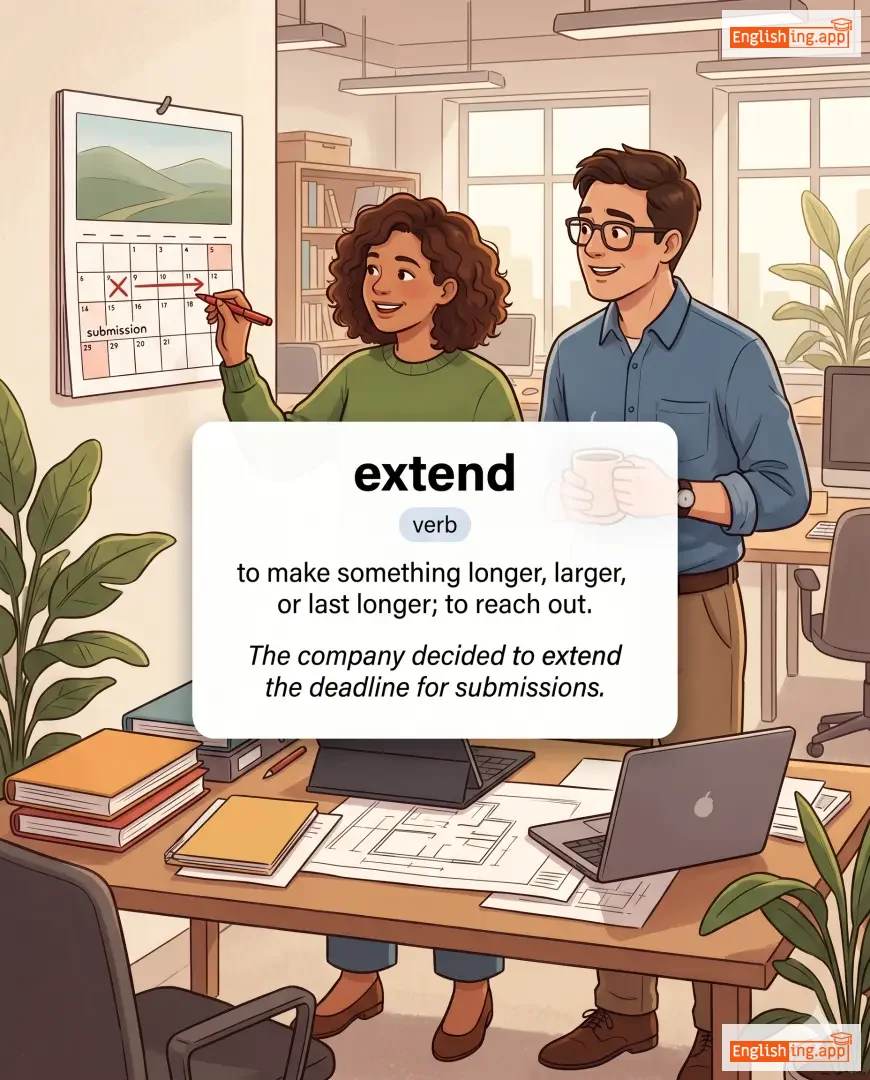
to make something longer, larger, or last longer; to reach out.
••••••
|
The company decided to extend the deadline for submissions.
その会社は提出期限を延長することを決定しました。
••••••
|
その会社は提出期限を延長することを決定しました。
Sono kaisha wa teishutsu kigen o enchou suru koto o kettei shimashita.
••••••
|
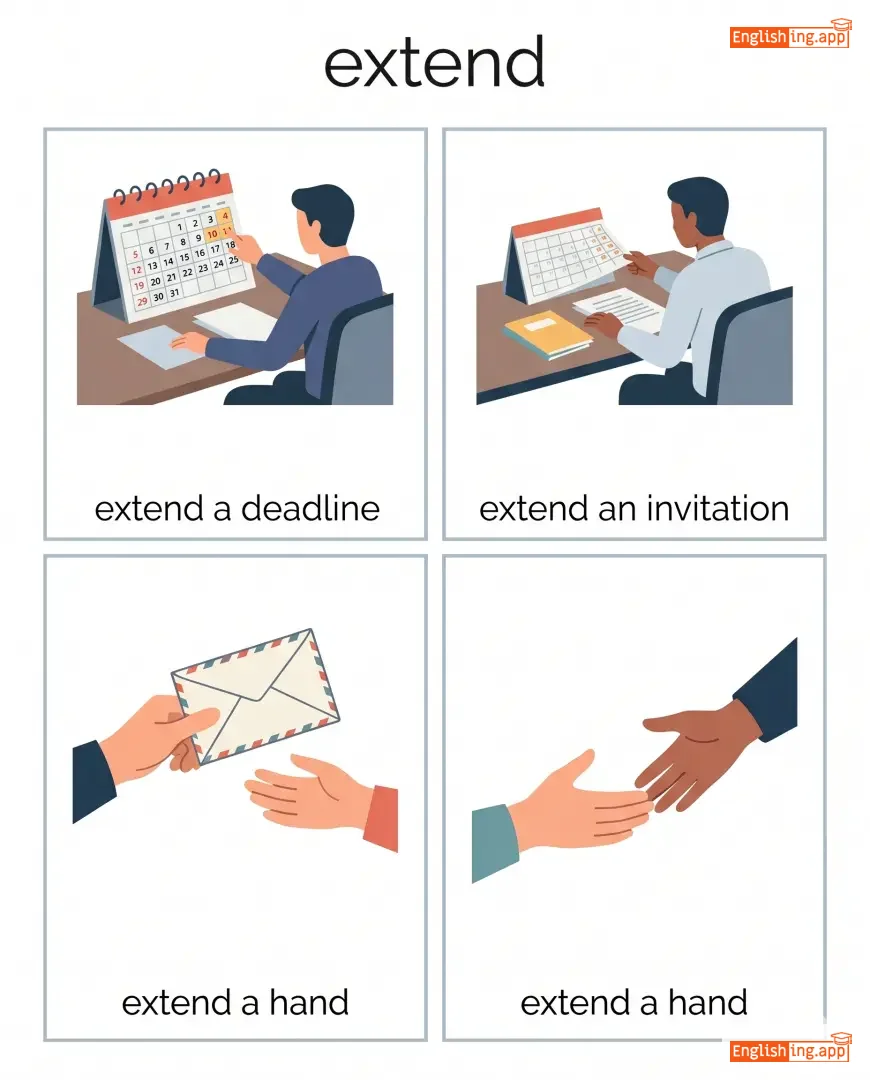
extend an olive branch
オリーブの枝を差し出す
••••••
|
to offer peace or reconciliation
••••••
|
オリーブの枝を差し出す
Orību no eda o sashidasu
••••••
|
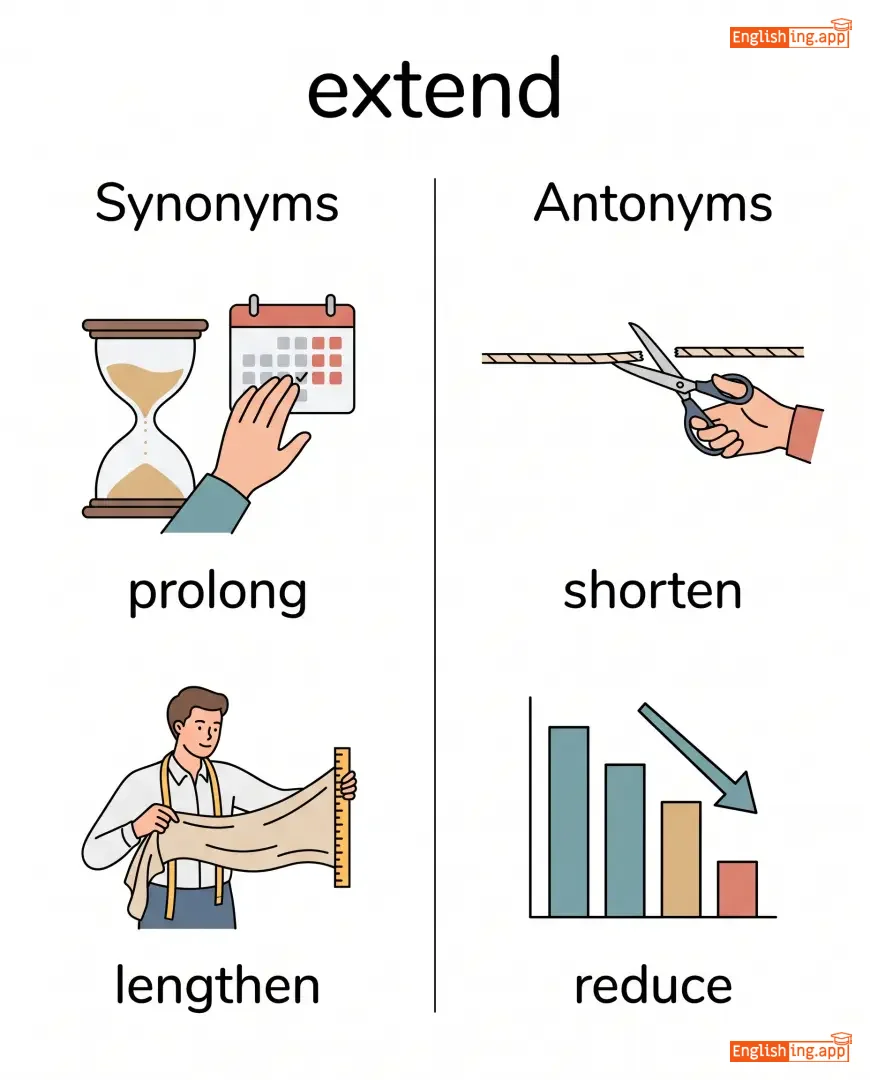
prolong, lengthen, expand, stretch, continue
••••••
|
shorten, reduce, limit
••••••
|
extend a deadline, extend an invitation, extend a hand, extend support
••••••
|
拡張するは物を長くすること、たとえば手を伸ばして遠くのものを取ることのようです。
••••••
|
|
📏
••••••
|
/ɪkˈstɛnʃən/
noun
(エクステンション)
••••••
|
- •••••• |
拡張
kakuchou
••••••
|
- •••••• | - •••••• | - •••••• | - •••••• |
a part that is added to something to make it longer or bigger; an increase in time.
••••••
|
She asked for an extension on her assignment deadline. |
彼女は課題の締め切り延長をお願いしました。
Kanojo wa kadai no shimekiri enchou wo onegaishimashita.
••••••
|
hair extension |
artificial hair used to make natural hair longer or fuller
••••••
|
ヘアエクステンション
hea ekusutenshon
••••••
|
expansion, prolongation, addition, continuation
••••••
|
reduction, contraction
••••••
|
extension cord, deadline extension, extension request, hair extension
••••••
|
エクステンションは、時間や長さを追加することです。
••••••
|
|
📏
••••••
|
/ɪkˈsten.sɪv/
adjective
(イクステンシブ)
••••••
|
- •••••• |
広範囲の; 大規模な; 広い
kōhan'i no; daikibona; hiroi
••••••
|
- •••••• | - •••••• | - •••••• | - •••••• |
covering or affecting a large area; comprehensive; wide-ranging
••••••
|
The company conducted extensive research before launching the new product. |
企業は新しい製品を発売する前に広範囲の研究を行いました。
Kigyō wa atarashī seihin o hatsubai suru mae ni kōhan'i no kenkyū o okonaimashita.
••••••
|
- •••••• | - •••••• | - •••••• |
comprehensive, vast, wide-ranging, broad
••••••
|
limited, narrow, restricted, small
••••••
|
extensive research, extensive damage, extensive experience
••••••
|
Japanese '広範囲の' mirrors 'extensive'—both cover large areas.
••••••
|
|
🌍
••••••
|
/ɪkˈstɛnsɪvli/
adverb
(イクステンシブリー)
••••••
|
- •••••• |
広範囲に
kouhani ni
••••••
|
- •••••• | - •••••• | - •••••• | - •••••• |
in a thorough or wide-ranging manner
••••••
|
She traveled extensively across Europe for her research. |
彼女は研究のためにヨーロッパを広範囲に旅行しました。
Kanojo wa kenkyuu no tame ni Yooroppa wo kouhani ni ryokou shimashita.
••••••
|
- •••••• | - •••••• | - •••••• |
comprehensively, widely, thoroughly, broadly
••••••
|
narrowly, slightly
••••••
|
extensively researched, extensively traveled, extensively studied
••••••
|
Extensivelyは‘広範囲に’を意味し、ヨーロッパ中を旅行すること
••••••
|
|
📏
••••••
|
/ɪkˈstɛnt/
noun
(エクステント)
••••••
|
- •••••• |
範囲
han'i
••••••
|
- •••••• | - •••••• | - •••••• | - •••••• |
the area, degree, or scope of something
••••••
|
The extent of the damage was greater than expected.
損害の範囲は予想以上でした。
••••••
|
損害の範囲は予想以上でした。
Songai no han'i wa yosō ijō deshita.
••••••
|
to some extent
ある程度
••••••
|
partially or in a limited way
••••••
|
ある程度
aru teido
••••••
|
range, scope, degree, magnitude, scale
••••••
|
limitlessness, insignificance
••••••
|
extent of damage, full extent, great extent, large extent
••••••
|
エクステントで範囲を測る!
••••••
|
|
🌐
••••••
|
/ɪkˈstɜrnəl/
adjective
(エクスターナル)
••••••
|
- •••••• |
外部の
gaibu no
••••••
|
- •••••• | - •••••• | - •••••• | - •••••• |
situated on or relating to the outside of something; coming from outside
••••••
|
The external factors affected the company's growth. |
外部要因が会社の成長に影響を与えました。
Gaibu yōin ga kaisha no seichō ni eikyō o ataemashita.
••••••
|
external affairs |
matters concerning foreign relations
••••••
|
外交問題
gaikō mondai
••••••
|
outer, outside, foreign, exterior
••••••
|
internal, inner
••••••
|
external factors, external affairs, external pressure
••••••
|
External は外部を意味します、例えば外部ハードドライブのように。
••••••
|
|
🌐
••••••
|
/ɪkˈstɜrnəli/
adverb
(エクスターナリー)
••••••
|
- •••••• |
外見上
gaikenjo
••••••
|
- •••••• | - •••••• | - •••••• | - •••••• |
in a way that relates to the outer surface or outside appearance
••••••
|
The building appeared externally modern, but inside it was quite old-fashioned.
建物は外見上は現代的に見えたが、中はかなり古風だった。
••••••
|
建物は外見上は現代的に見えたが、中はかなり古風だった。
Tatemono wa gaikenjo wa gendai-teki ni mieta ga, naka wa kanari kofu datta.
••••••
|
- •••••• | - •••••• | - •••••• |
outwardly, superficially, apparently, on the surface
••••••
|
internally, inherently
••••••
|
externally visible, externally applied, externally influenced
••••••
|
外見上 (gaikenjo) = look outside, remember 'external'
••••••
|
|
➕
••••••
|
/ˈɛkstrə/
adjective
(エクストラ)
••••••
|
- •••••• |
追加の
tsuika no
••••••
|
- •••••• | - •••••• | - •••••• | - •••••• |
More than what is usual, expected, or necessary
••••••
|
She brought some extra food for the picnic. |
彼女はピクニックのために追加の食べ物を持ってきました。
Kanojo wa pikunikku no tame ni tsuika no tabemono o motte kimashita.
••••••
|
go the extra mile |
to make a special effort to achieve something
••••••
|
余分な努力をする
yobun'na doryoku o suru
••••••
|
additional, surplus, excess, supplementary, spare
••••••
|
lacking, insufficient, scarce
••••••
|
extra effort, extra cost, extra time, extra charge
••••••
|
Extra = 追加の = もっと
••••••
|
|
🪥
••••••
|
/ɪkˈstrækt/
verb
(エクストラクト)
••••••
|
- •••••• |
抽出する
chūshutsu suru
••••••
|
extracted
エクストラクトされた
••••••
|
extracted
エクストラクトされた
••••••
|
extracts
エクストラクトする
••••••
|
extracting
エクストラクトしている
••••••
|
to remove or take out something, often with effort
••••••
|
The dentist had to extract the damaged tooth.
歯医者は損傷した歯を抜かなければならなかった。
••••••
|
歯医者は損傷した歯を抜かなければならなかった。
Haisha wa sonshō shita ha o nukenakereba naranakatta.
••••••
|
extract the essence
本質を抽出する
••••••
|
to capture the most important part of something
••••••
|
本質を抽出する
Honshitsu o chūshutsu suru
••••••
|
remove, withdraw, derive, obtain, draw out
••••••
|
insert, embed, implant
••••••
|
extract information, extract juice, extract oil, extract data
••••••
|
抽出は歯や大事な部分を取り出すことと同じです!
••••••
|
|
🌟
••••••
|
/ɪkˈstrɔːr.dəˌnɛr.i/
adjective
(エクストラオーディナリー)
••••••
|
- •••••• |
非凡
hihan
••••••
|
- •••••• | - •••••• | - •••••• | - •••••• |
Very unusual, remarkable, or exceptional.
••••••
|
She showed extraordinary courage during the crisis. |
彼女は危機の間に非凡な勇気を示しました。
Kanojo wa kiki no aida ni hihan na yūki o shimeshimashita.
••••••
|
extraordinary measures |
Unusual or extreme actions taken in a situation
••••••
|
非凡な措置
Hihan na sochi
••••••
|
remarkable, exceptional, amazing, outstanding, phenomenal
••••••
|
ordinary, normal, usual
••••••
|
extraordinary achievement, extraordinary courage, extraordinary circumstances, extraordinary measures
••••••
|
Extra + ordinary = 普通ではない何か特別なもの
••••••
|
|
⚠️
••••••
|
/ɪkˈstriːm/
adjective
(ik-sutoreemu)
••••••
|
|
極端
kyokutan
••••••
|
- •••••• | - •••••• | - •••••• | - •••••• |
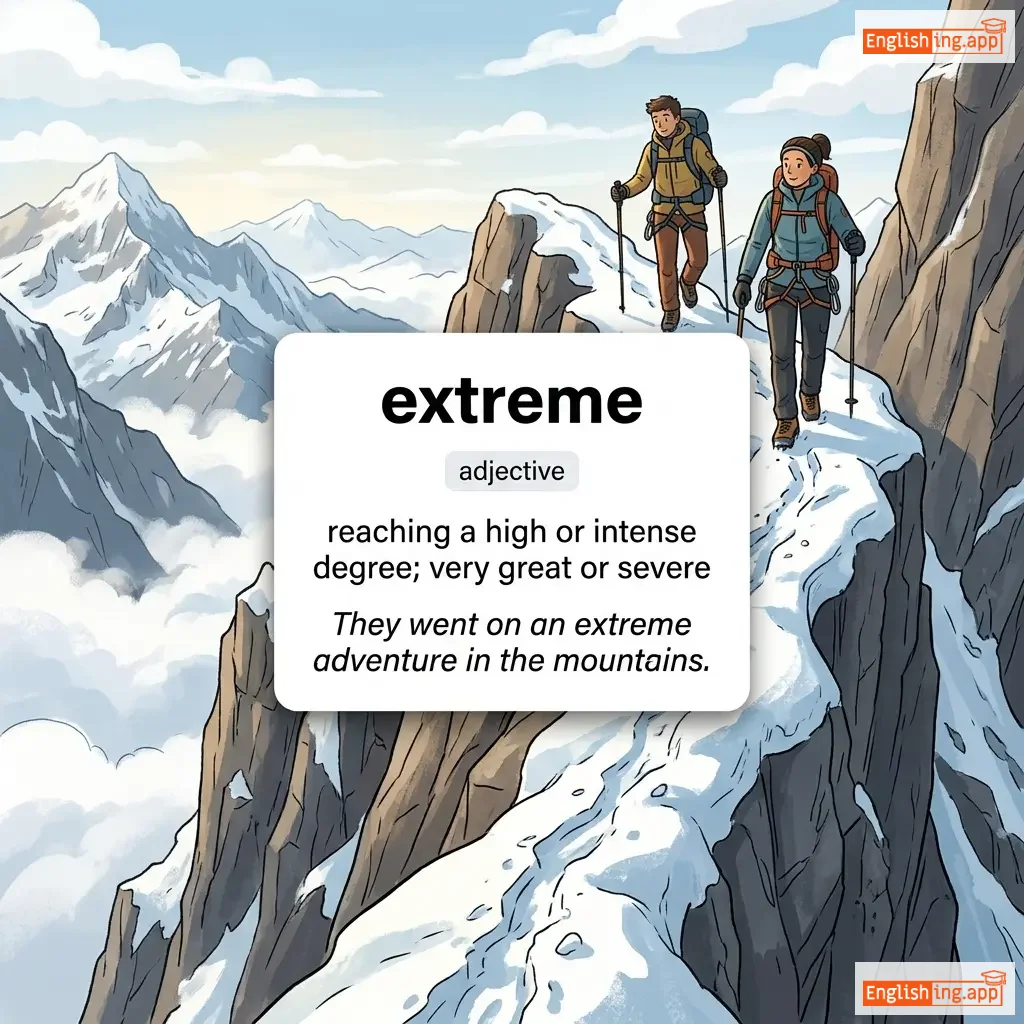
reaching a high or intense degree; very great or severe
••••••
|
They went on an extreme adventure in the mountains. |
彼らは山で極端な冒険をしました。
Karera wa yama de kyokutan na bōken o shimashita.
••••••
|
go to extremes |
to do something in an excessive or exaggerated way
••••••
|
極端に走る
kyokutan ni hashiru
••••••
|
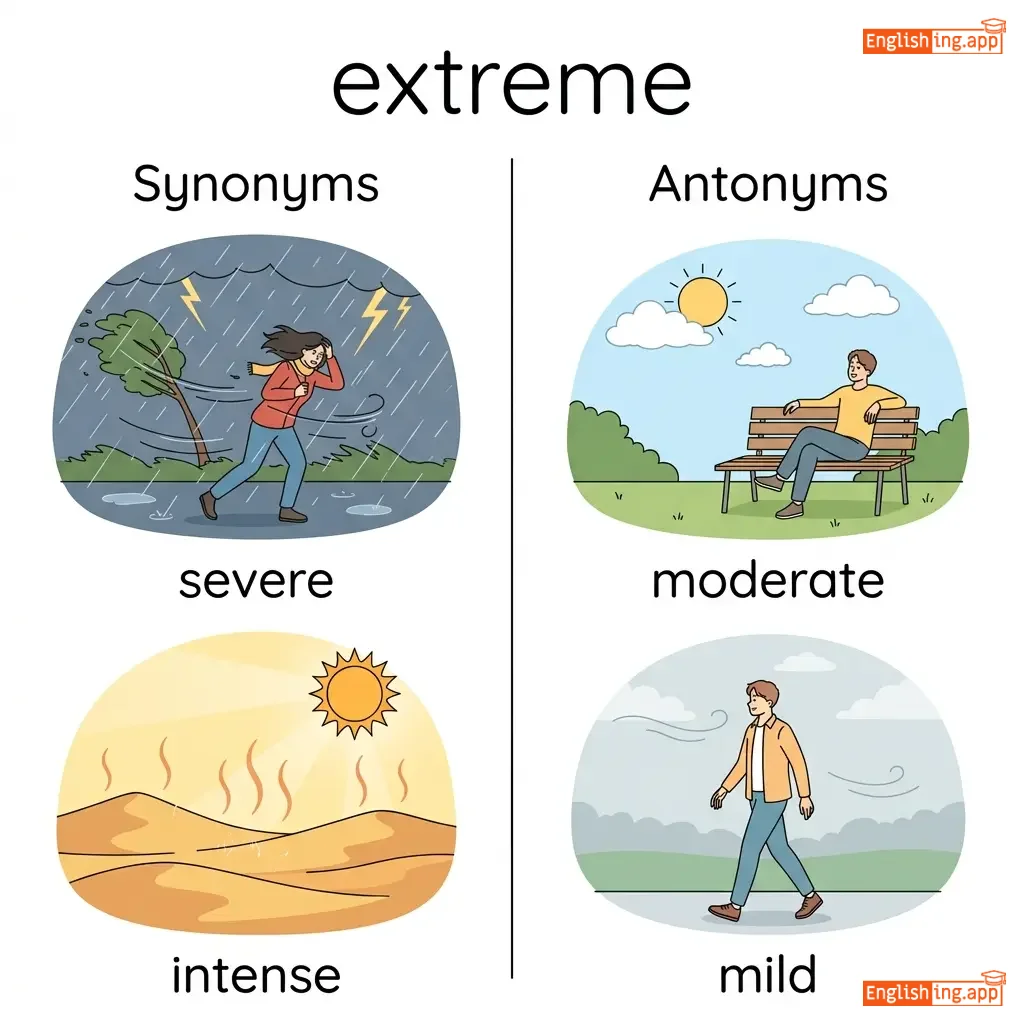
severe, intense, excessive, radical, ultimate
••••••
|
moderate, mild, ordinary
••••••
|
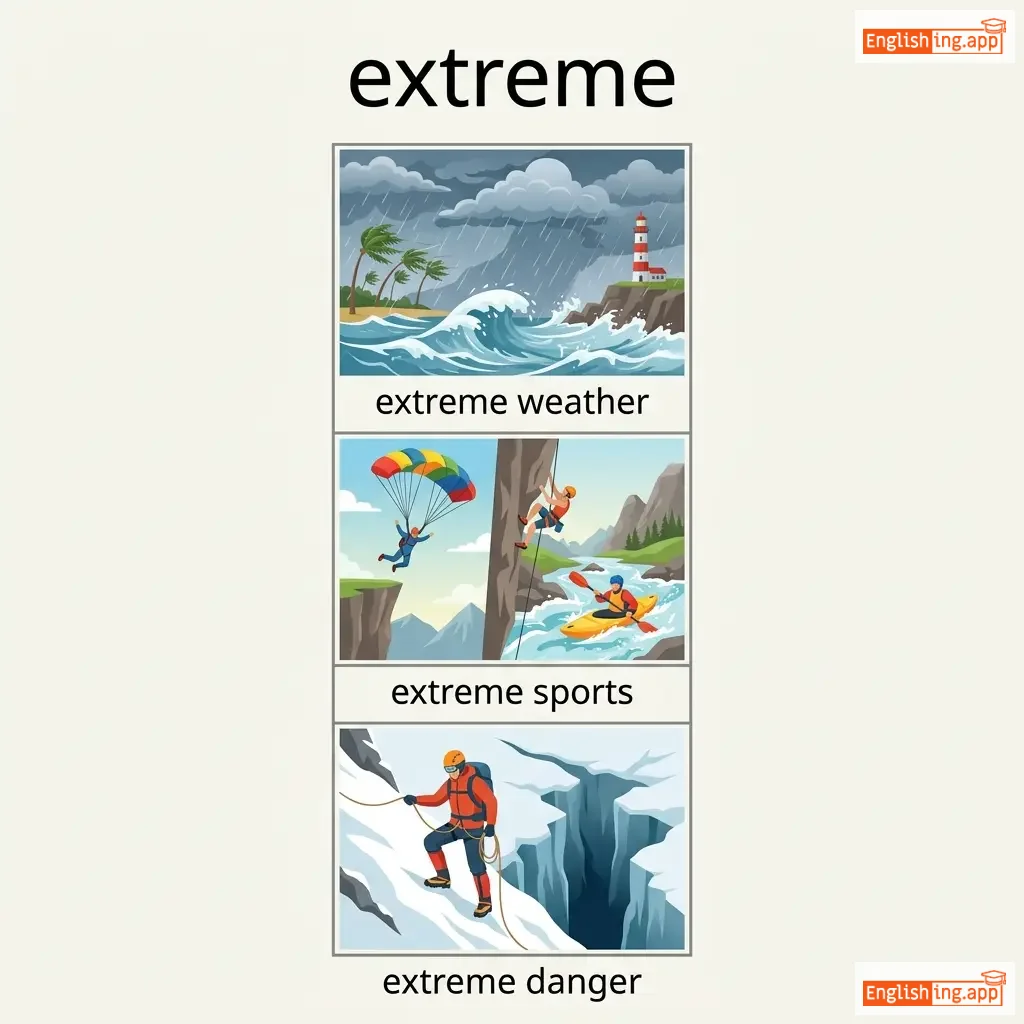
extreme weather, extreme sports, extreme danger, extreme measures
••••••
|
Extremeは極端を意味します、極端な状況のように。
••••••
|
|
🔥
••••••
|
/ɪkˈstriːm.li/
adverb
(ikusutoriimuri)
••••••
|
- •••••• |
非常に
hijou ni
••••••
|
- •••••• | - •••••• | - •••••• | - •••••• |
to a very high degree; exceptionally
••••••
|
The weather today is extremely hot and humid. |
今日の天気は非常に暑くて湿度が高いです。
Kyou no tenki wa hijou ni atsukute shitsudo ga takai desu.
••••••
|
- •••••• | - •••••• | - •••••• |
very, exceptionally, tremendously
••••••
|
slightly, moderately, barely
••••••
|
extremely important, extremely difficult, extremely happy
••••••
|
非常に (hijou ni) を英語の extremely と結びつけて覚えましょう。
••••••
|
|
⚡
••••••
|
/ɪkˈstriː.mɪst/
noun
(エクストリミスト)
••••••
|
- •••••• |
過激派
kagekiha
••••••
|
- •••••• | - •••••• | - •••••• | - •••••• |
a person who holds extreme political or religious views
••••••
|
The government is taking measures to prevent extremist activities. |
政府は過激派の活動を防ぐための措置を講じています。
seifu wa kagekiha no katsudō o fuseru tame no sochi o kōjiteimasu.
••••••
|
- •••••• | - •••••• | - •••••• |
radical, fanatic, militant, fundamentalist
••••••
|
moderate, centrist, liberal, tolerant
••••••
|
political extremist, religious extremist, extremist group
••••••
|
過激派は常に極端な行動を選びます。
••••••
|
|
👁️
••••••
|
/aɪ/
noun
(アイ)
••••••
|
- •••••• |
目
me
••••••
|
- •••••• | - •••••• | - •••••• | - •••••• |
the organ in the head through which people and animals see
••••••
|
She closed her eyes and went to sleep. |
彼女は目を閉じて、寝ました。
Kanojo wa me o tojite, nemashita.
••••••
|
keep an eye on |
to watch carefully or look after
••••••
|
目を光らせる
me o hikaraseru
••••••
|
vision, sight, gaze, view, look
••••••
|
blindness, neglect
••••••
|
eye contact, eye color, keep an eye, eye for detail
••••••
|
Eyeは'目'を意味し、'Keep an eye'は'目を光らせる'という意味です。
••••••
|

