|
表情符号
|
单词 | Images | 翻译 | 过去时 | 过去分词 | 第三人称单数 | 动名词 | 含义 | 例句 | 例句翻译 | 示例表达 | 示例表达含义 | 示例表达翻译 | 同义词 | 反义词 | 搭配词 | 助记符 |
|---|---|---|---|---|---|---|---|---|---|---|---|---|---|---|---|---|---|
|
🖼️
••••••
|
/ˌɛksɪˈbɪʃən/
noun
(èksībìshèn)
••••••
|
- •••••• |
展览
zhanlan
••••••
|
- •••••• | - •••••• | - •••••• | - •••••• |
a public display of works of art, products, or other items of interest
••••••
|
The art exhibition attracted thousands of visitors. |
艺术展览吸引了成千上万的参观者。
Yishu zhanlan xiqinle chengqian shangwan de canguanzhe.
••••••
|
put on an exhibition |
to organize or display something for public viewing
••••••
|
组织展览
zuzhi zhanlan
••••••
|
display, show, presentation, exposition, fair
••••••
|
concealment, hiding
••••••
|
art exhibition, trade exhibition, science exhibition, put on an exhibition
••••••
|
Exhibition 意味着展览,在哪里 EXTRA 物品可以被大家看到。
••••••
|
|
🏝️
••••••
|
/ˈek.saɪl/
noun
(èksài'ěr)
••••••
|
- •••••• |
流亡
liúwáng
••••••
|
- •••••• | - •••••• | - •••••• | - •••••• |
the state of being barred from one's native country; enforced removal from one's homeland
••••••
|
The political leader was forced into exile after the military coup.
政治领袖在军事政变后被迫流亡。
••••••
|
政治领袖在军事政变后被迫流亡。
Zhèngzhì lǐngxiù zài jūnshì zhèngbiàn hòu bèi pò liúwáng.
••••••
|
- •••••• | - •••••• | - •••••• |
banishment, deportation, expulsion, ostracism
••••••
|
return, homecoming, welcome, inclusion
••••••
|
forced exile, political exile, exile from homeland
••••••
|
Imagine a leader being forced into exile after a military coup.
••••••
|
|
🌍
••••••
|
/ɪɡˈzɪst/
verb
(ik-sist)
••••••
|
- •••••• |
存在
cúnzài
••••••
|
existed
ik-sisted
••••••
|
existed
ik-sisted
••••••
|
exists
ik-sists
••••••
|
existing
ik-sisting
••••••
|
to have actual being; to be real or present
••••••
|
Dinosaurs no longer exist on Earth.
恐龙不再存在于地球上。
••••••
|
恐龙不再存在于地球上。
Kǒnglóng bù zài cúnzài yú dìqiú shàng.
••••••
|
exist in name only
仅在名义上存在
••••••
|
to have no real power or function despite existing formally
••••••
|
仅在名义上存在
jǐn zài míngyì shàng cúnzài
••••••
|
live, survive, endure, be
••••••
|
perish, disappear, vanish
••••••
|
still exist, continue to exist, exist only, exist in reality
••••••
|
存在意味着具有实际存在,像考试一样,始终存在于我们的生活中。
••••••
|
|
🌍
••••••
|
/ɪɡˈzɪstəns/
noun
(存在)
••••••
|
- •••••• |
存在
cúnzài
••••••
|
- •••••• | - •••••• | - •••••• | - •••••• |
The state of being alive or having real presence.
••••••
|
The existence of life on other planets is still uncertain.
其他星球上生命的存在仍然不确定。
••••••
|
其他星球上生命的存在仍然不确定。
Qítā xīngqiú shàng shēngmìng de cúnzài réngrán bù quèdìng.
••••••
|
come into existence
进入存在
••••••
|
to begin to exist or start being present
••••••
|
进入存在
jìnrù cúnzài
••••••
|
being, presence, reality, life, survival
••••••
|
nonexistence, nothingness, extinction
••••••
|
human existence, existence of life, struggle for existence, existence proof
••••••
|
存在意味着在另一个星球上有'生命'。
••••••
|
|
📜
••••••
|
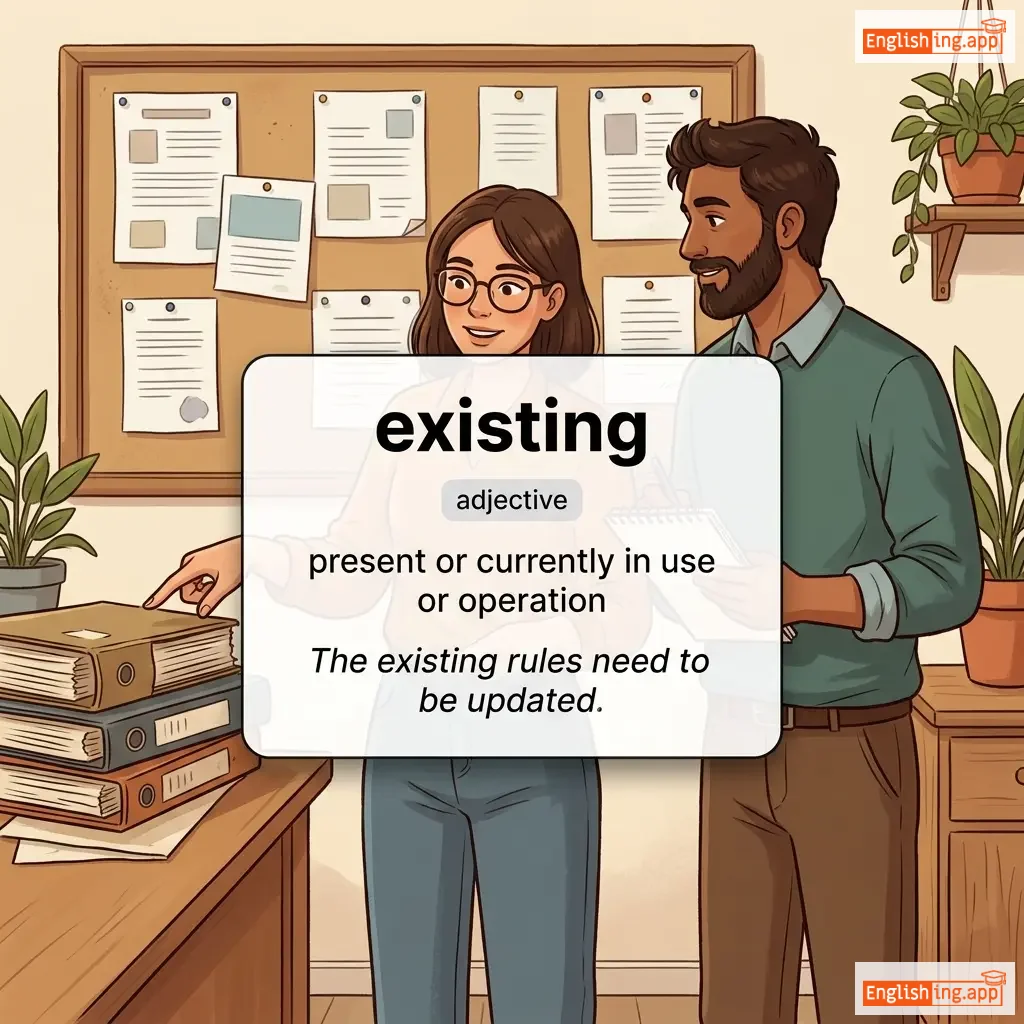
/ɪɡˈzɪstɪŋ/
adjective
(ɪɡˈzɪstɪŋ)
••••••
|
|
现有的
xiàn yǒu de
••••••
|
- •••••• | - •••••• | - •••••• | - •••••• |
present or currently in use or operation
••••••
|
The existing rules need to be updated. |
现有的规则需要更新。
Xiàn yǒu de guīzé xūyào gēngxīn.
••••••
|
- •••••• | - •••••• | - •••••• |
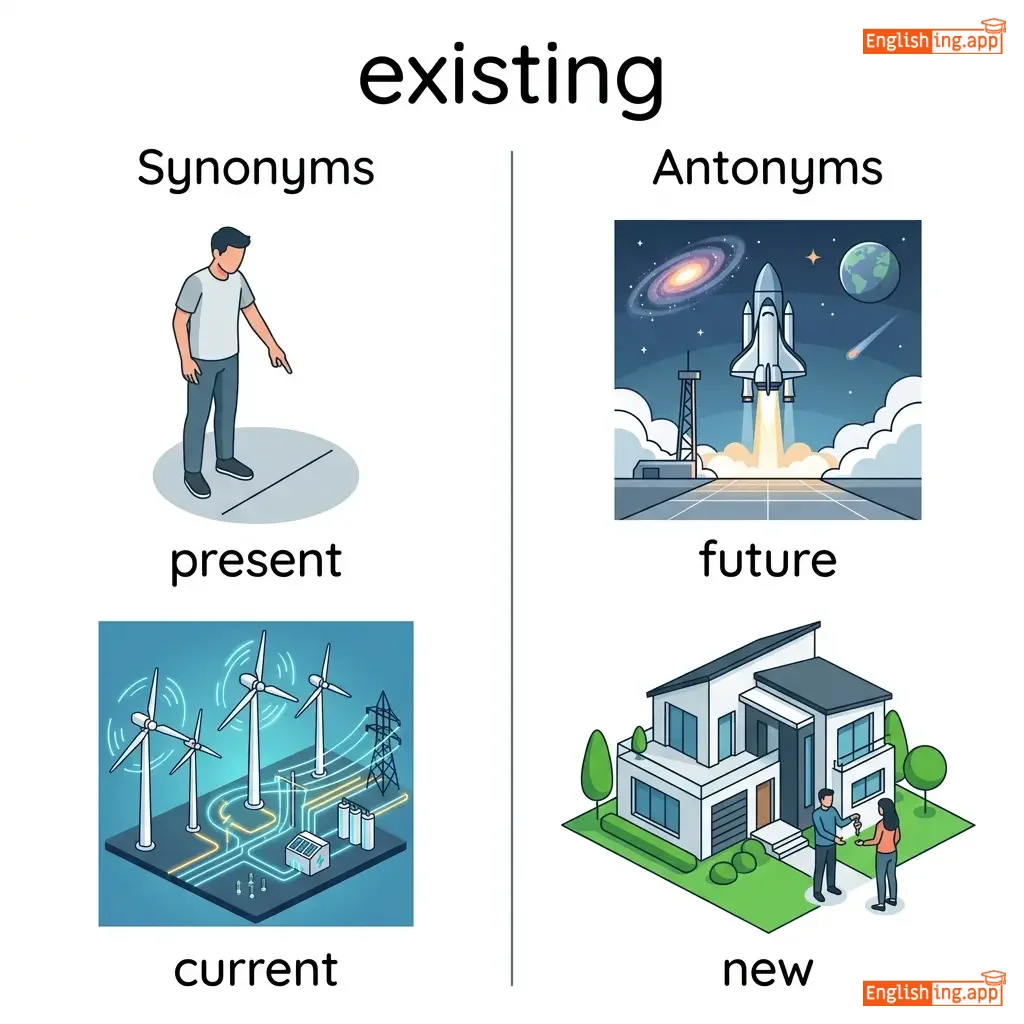
present, current, available, ongoing
••••••
|
future, new, upcoming
••••••
|
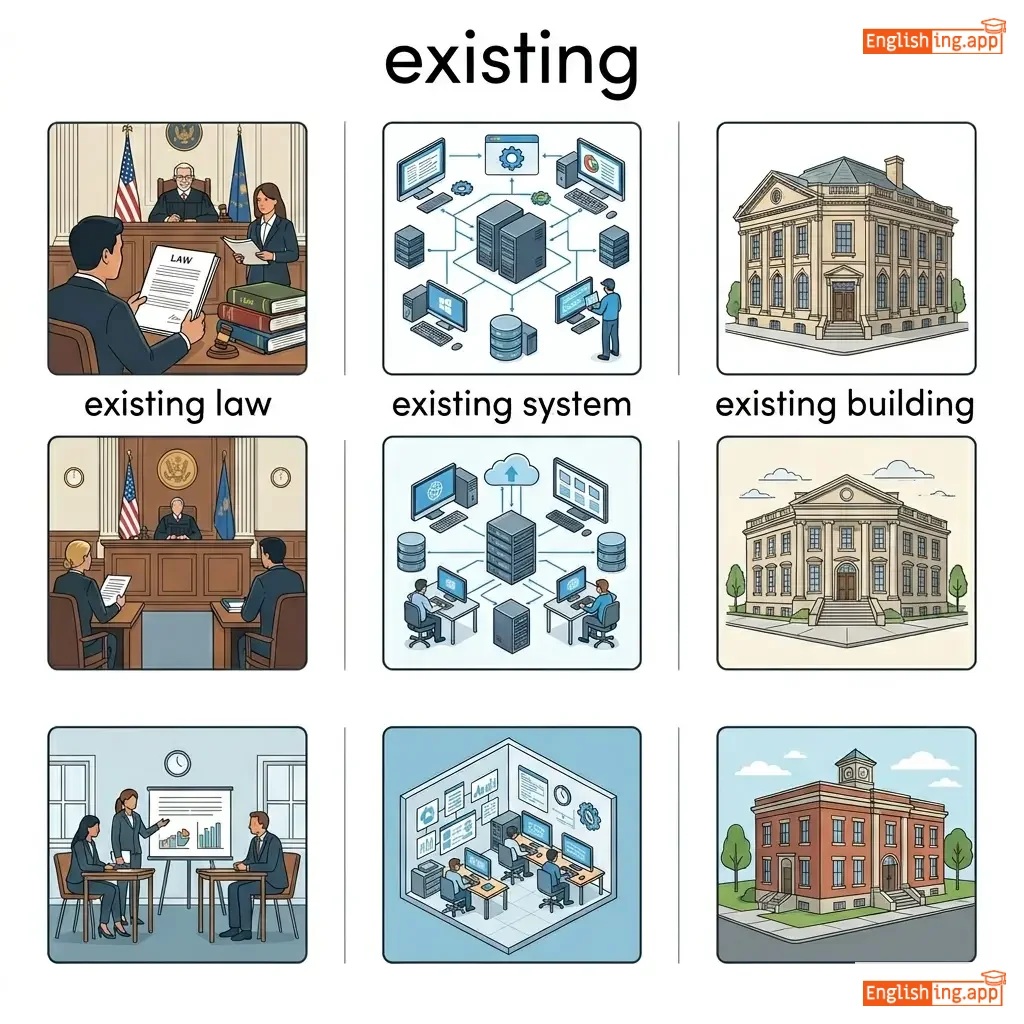
existing law, existing system, existing building, existing structure
••••••
|
Existing意味着现有的,例如现有的考试规则。
••••••
|
|
🚪
••••••
|
/ˈɛɡzɪt/
noun/verb
(出口)
••••••
|
- •••••• |
出口
chūkǒu
••••••
|
exited
出口过
••••••
|
exited
出口过
••••••
|
exits
出口
••••••
|
exiting
出口中
••••••
|
A way out of a place; the act of leaving.
••••••
|
He quickly found the nearest exit during the fire drill.
他在火灾演习中迅速找到了最近的出口。
••••••
|
他在火灾演习中迅速找到了最近的出口。
Tā zài huǒzāi yǎnshí zhōng xùn sù zhǎodào le zuì jìn de chūkǒu.
••••••
|
make an exit
做一个出口
••••••
|
to leave a place, often noticeably
••••••
|
离开
líkāi
••••••
|
departure, way out, escape, egress, leaving
••••••
|
entrance, arrival, entry
••••••
|
emergency exit, exit door, exit route, exit point
••••••
|
Exit 🚪 就是出去 — Exit 就是 '出口'。
••••••
|
|
🌺
••••••
|
/ɪɡˈzɑːtɪk/
adjective
(éksòtí kè)
••••••
|
- •••••• |
异国情调和迷人
yìguó qíngdiào hé mírén
••••••
|
- •••••• | - •••••• | - •••••• | - •••••• |
Unusual and attractive because it is from a foreign place or culture.
••••••
|
The garden was filled with exotic plants from tropical countries. |
花园里满是来自热带国家的异国情调植物。
Huāyuán lǐ mǎn shì láizì rèdài guójiā de yìguó qíngdiào zhíwù.
••••••
|
exotic beauty |
Unusual and striking attractiveness
••••••
|
异国之美
Yìguó zhī měi
••••••
|
foreign, unusual, rare, tropical, extraordinary
••••••
|
ordinary, common, familiar
••••••
|
exotic plants, exotic animals, exotic beauty, exotic location
••••••
|
Exotic = Exciting + Foreign, 来自他国的迷人事物。
••••••
|
|
📈
••••••
|
/ɪkˈspænd/
verb
(扩展)
••••••
|
- •••••• |
扩展
kuozhan
••••••
|
expanded
扩展了
••••••
|
expanded
扩展了
••••••
|
expands
扩展
••••••
|
expanding
扩展中
••••••
|
To increase in size, number, or importance.
••••••
|
The company plans to expand its operations into new markets.
公司计划将其业务扩展到新市场。
••••••
|
公司计划将其业务扩展到新市场。
Gongsi jihua jiang qi ye wu kuozhan dao xin shichang.
••••••
|
expand horizons
拓展视野
••••••
|
To broaden one's experiences or knowledge
••••••
|
拓展视野
tuozhan shiya
••••••
|
enlarge, grow, extend, broaden, increase
••••••
|
shrink, contract, reduce
••••••
|
expand business, expand market, expand knowledge, expand rapidly
••••••
|
扩展意味着增加,像公司扩大业务一样,拓展视野。
••••••
|
|
📈
••••••
|
ɪkˈspændɪd
verb
(ik-suan-ded)
••••••
|

|
扩展
kuòzhǎn
••••••
|
- •••••• | - •••••• | - •••••• | - •••••• |
Made or become larger or more extensive.
••••••
|
Expanded opportunities in education can transform lives. |
教育中的扩展机会可以改变生活。
Jiàoyù zhōng de kuòzhǎn jīhuì kěyǐ gǎibiàn shēnghuó.
••••••
|
- •••••• | - •••••• | - •••••• |
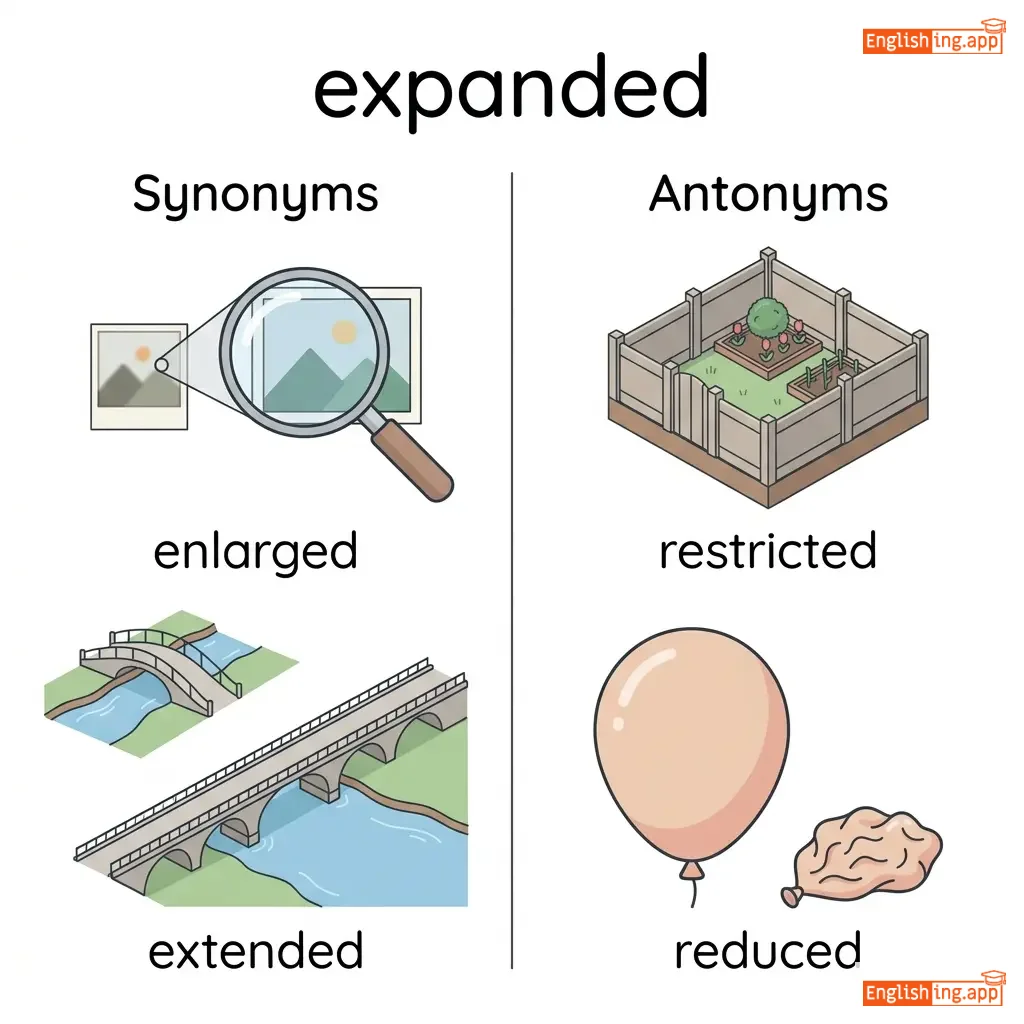
enlarged, extended, increased, broadened, widened, amplified
••••••
|
restricted, reduced, contracted, narrowed, limited, compressed
••••••
|
- •••••• |
扩展机会改进生活
••••••
|
|
📈
••••••
|
/ɪkˈspænʃən/
noun
(ɪkˈspænʃən)
••••••
|

|
扩展
kuòzhǎn
••••••
|
- •••••• | - •••••• | - •••••• | - •••••• |
the action of becoming larger, more extensive, or widespread
••••••
|
The company announced its expansion into new markets. |
公司宣布其扩展到新市场。
Gōngsī xuānbù qí kuòzhǎn dào xīn shìchǎng.
••••••
|
rapid expansion |
a very fast growth or increase
••••••
|
快速扩展
kuàisù kuòzhǎn
••••••
|
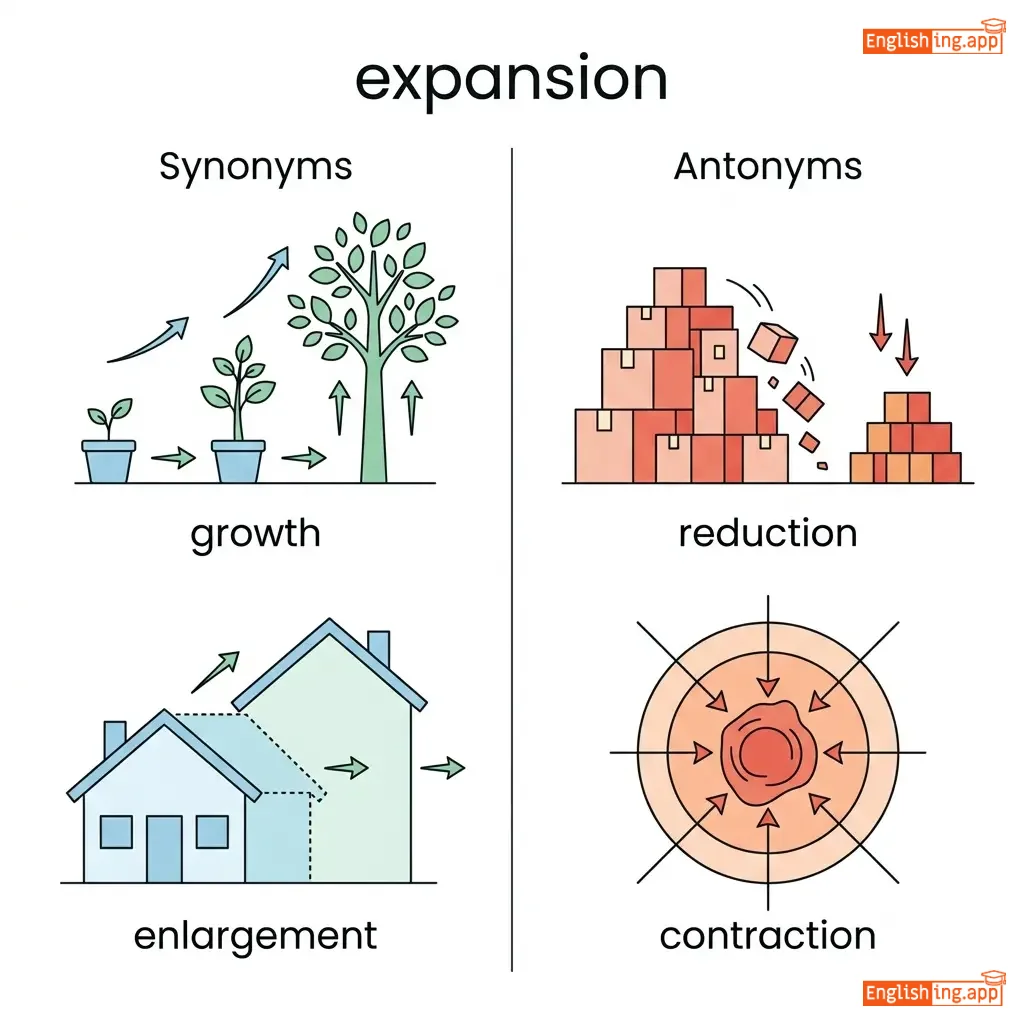
growth, enlargement, increase, extension, development
••••••
|
reduction, contraction, decline
••••••
|
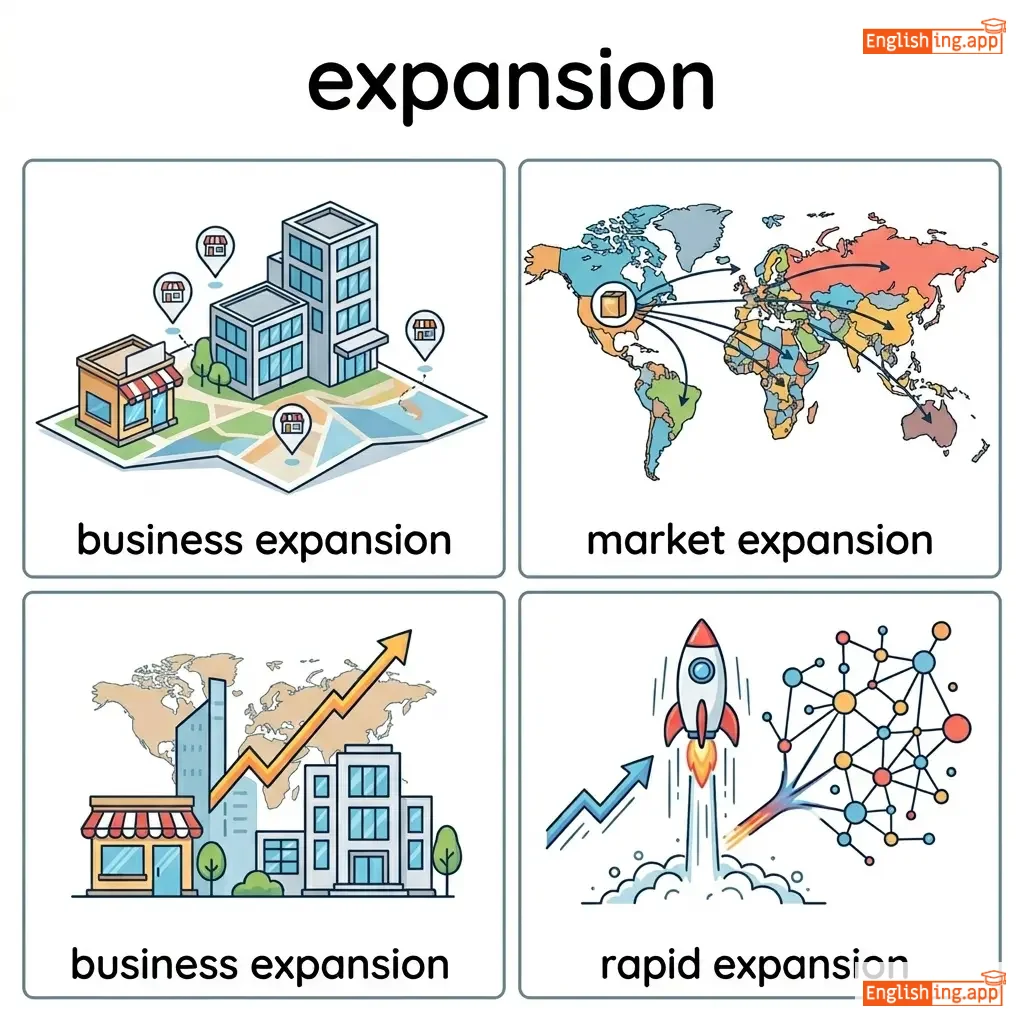
business expansion, market expansion, rapid expansion, territorial expansion
••••••
|
Expansion 就像扩展领域,创建更多空间。
••••••
|
|
🤔
••••••
|
/ɪkˈspɛkt/
verb
(预期)
••••••
|

|
期待
qīdài
••••••
|
expected
预期的
••••••
|
expected
预期的
••••••
|
expects
预期
••••••
|
expecting
期待
••••••
|
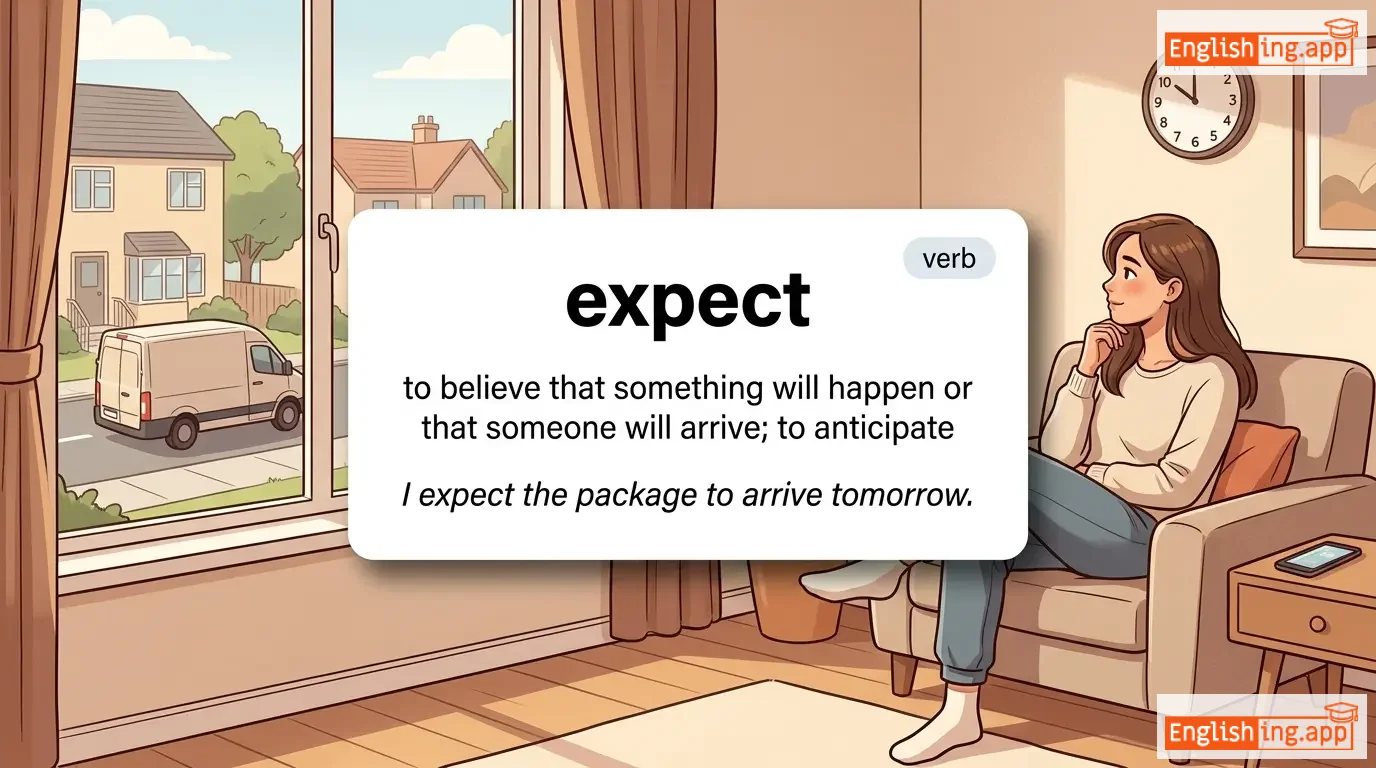
to believe that something will happen or that someone will arrive; to anticipate
••••••
|
I expect the package to arrive tomorrow.
我期待包裹明天到达。
••••••
|
我期待包裹明天到达。
Wǒ qīdài bāoguǒ míngtiān dàodá.
••••••
|
expect the unexpected
期待意外
••••••
|
be prepared for surprises or unforeseen events
••••••
|
期待意外
qīdài yìwài
••••••
|
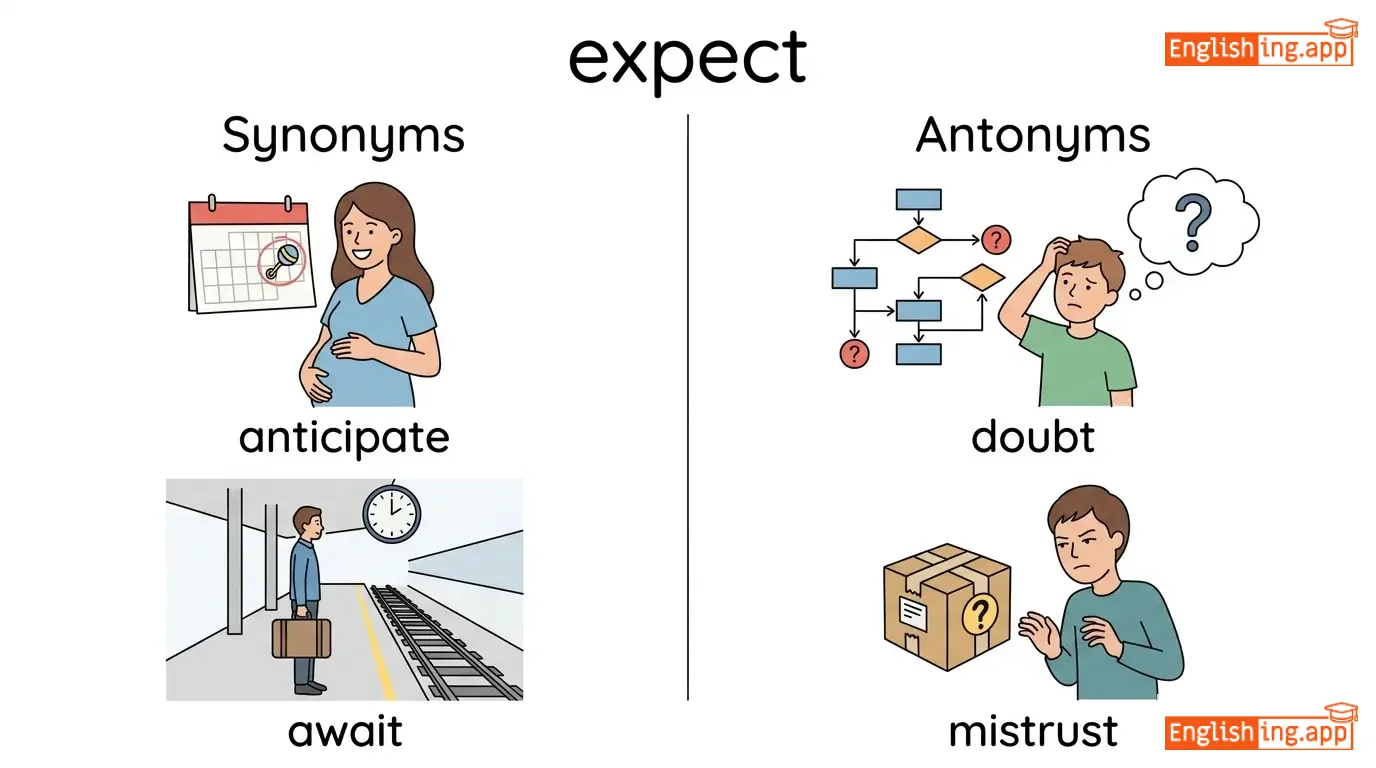
anticipate, await, foresee, predict, assume
••••••
|
doubt, mistrust, question
••••••
|
expect a baby, expect results, expect more, expect the worst
••••••
|
Expect 期待 - 就像考试前期待结果一样。
••••••
|
|
🎯
••••••
|
/ˌɛkspɛkˈteɪʃən/
noun
(期望)
••••••
|
- •••••• |
期望
qīwàng
••••••
|
- •••••• | - •••••• | - •••••• | - •••••• |
a strong belief that something will happen or be the case
••••••
|
The students had high expectations for their exam results. |
学生们对他们的考试结果有很高的期望。
Xuéshēngmen duì tāmen de kǎoshì jiéguǒ yǒu hěn gāo de qīwàng.
••••••
|
beyond expectations |
better or greater than what was anticipated
••••••
|
超出预期
chāochū yùqī
••••••
|
anticipation, hope, belief, outlook, assumption
••••••
|
doubt, disbelief, hopelessness
••••••
|
high expectation, meet expectation, raise expectation, beyond expectation
••••••
|
期望意味着我们期望的,就像对考试结果的高期望。
••••••
|
|
📊
••••••
|
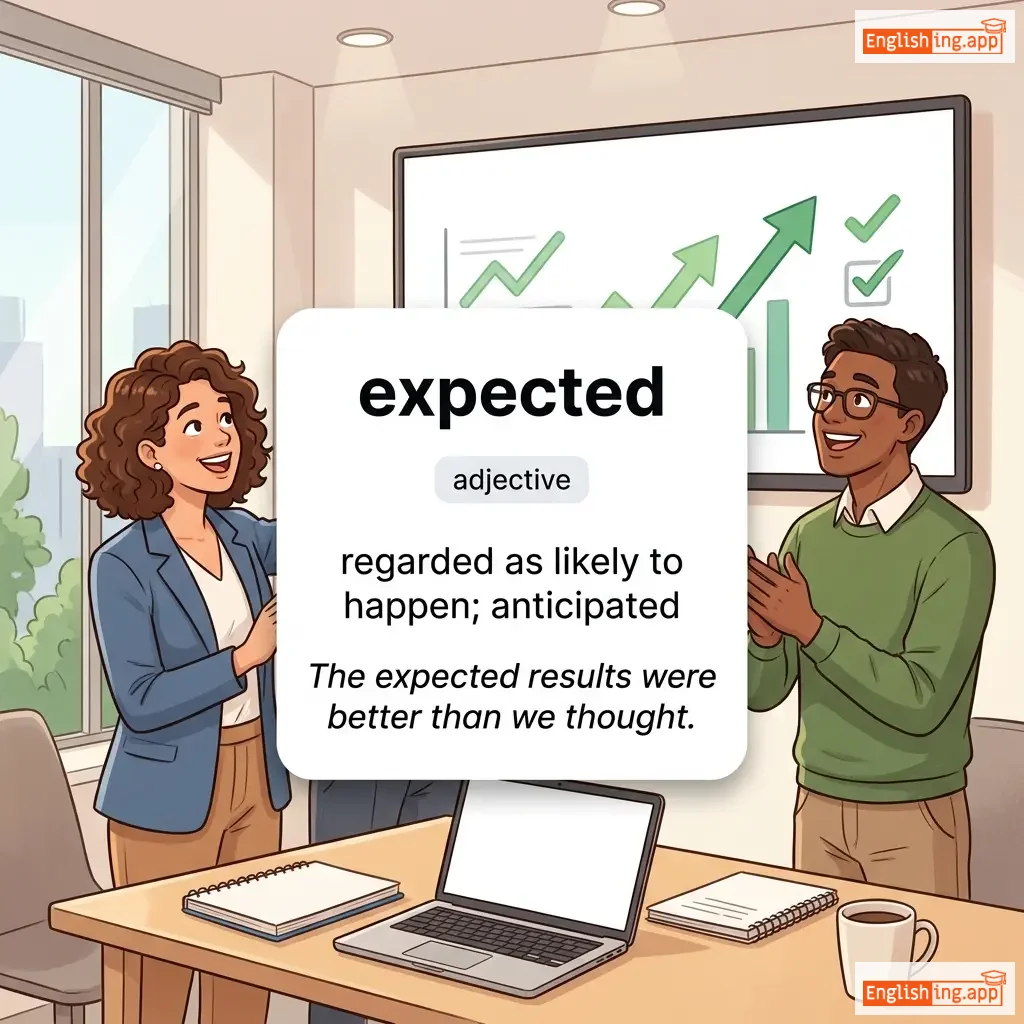
/ɪkˈspɛktɪd/
adjective
(īkèsīpèitèd)
••••••
|
|
预期的
yùqī de
••••••
|
- •••••• | - •••••• | - •••••• | - •••••• |
regarded as likely to happen; anticipated
••••••
|
The expected results were better than we thought. |
预期的结果比我们想象的更好。
Yùqī de jiéguǒ bǐ wǒmen xiǎngxiàng de gèng hǎo.
••••••
|
as expected |
in the way that was predicted or anticipated
••••••
|
如预期
rú yùqī
••••••
|
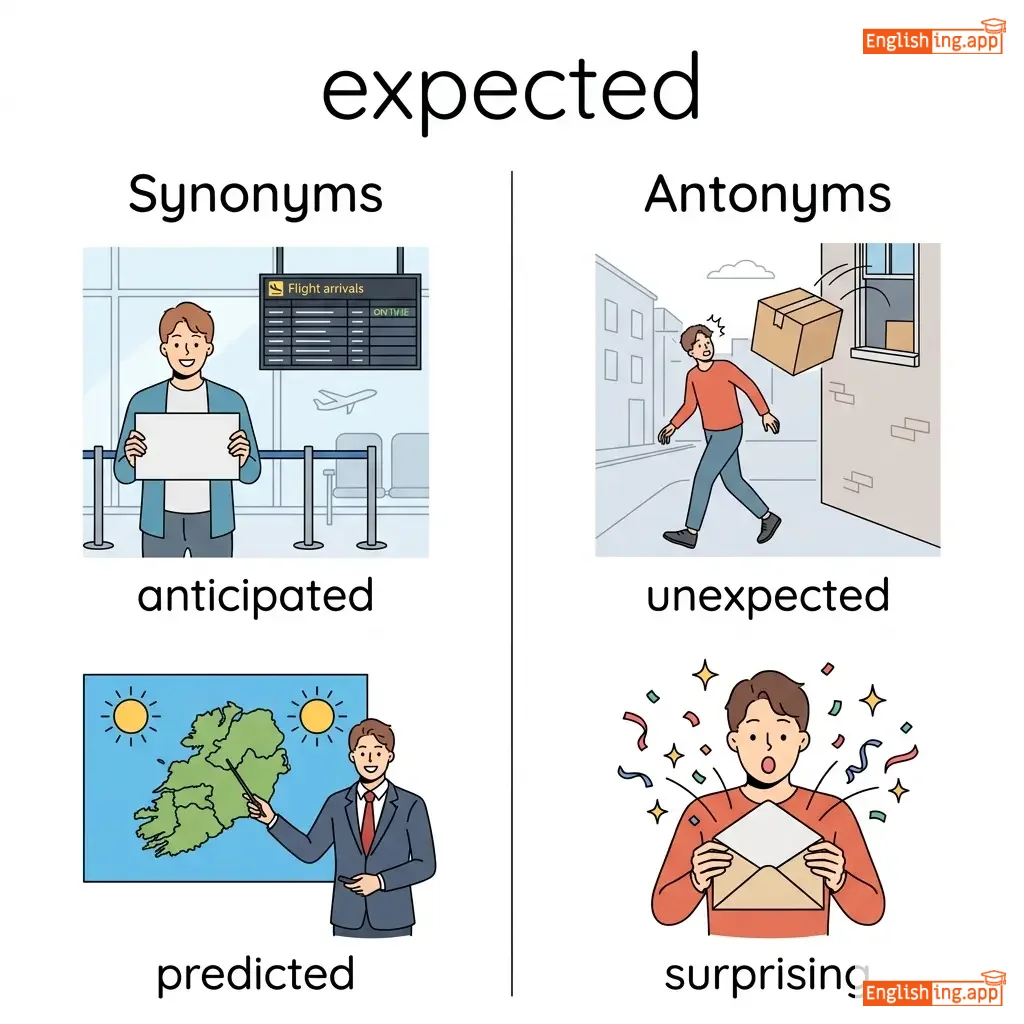
anticipated, predicted, awaited, foreseeable
••••••
|
unexpected, surprising, unforeseen
••••••
|
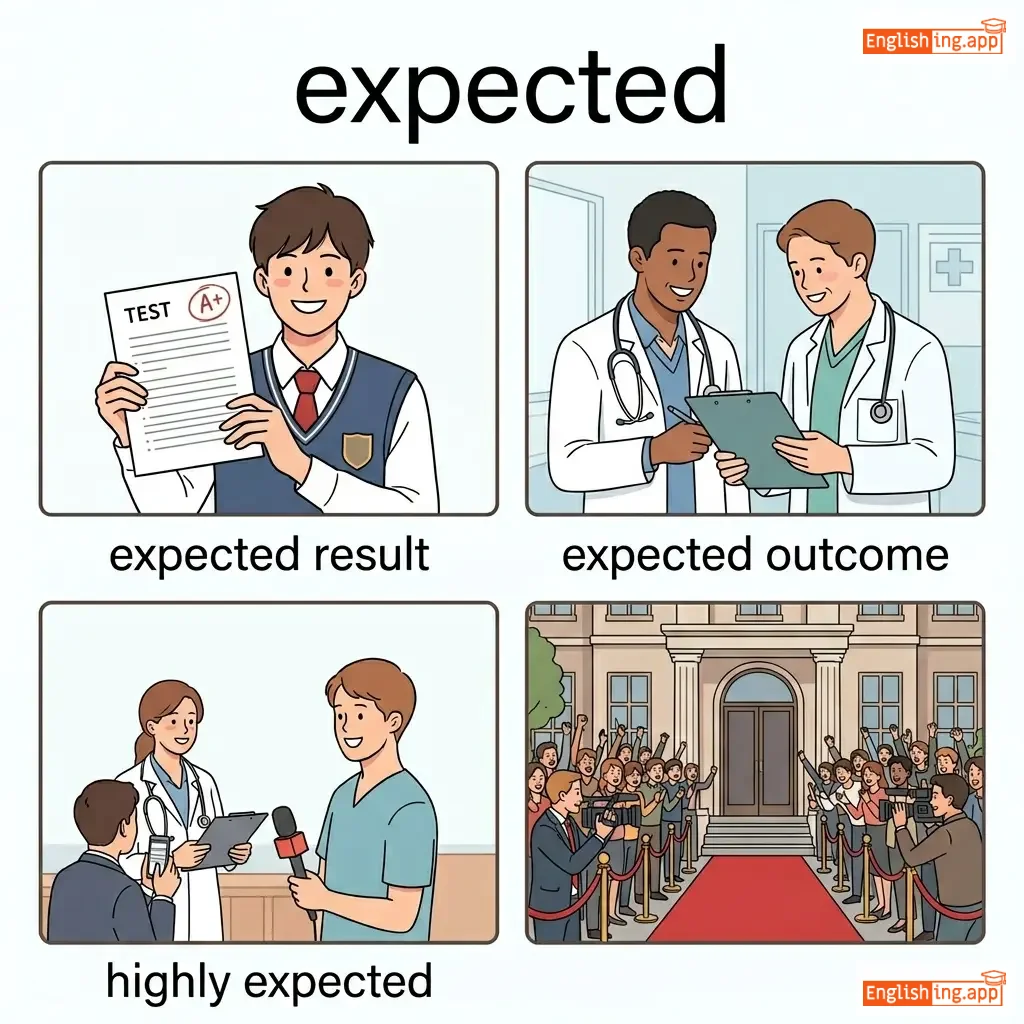
expected result, expected outcome, highly expected, expected arrival
••••••
|
预期就是你所预料到的结果!
••••••
|
|
💸
••••••
|
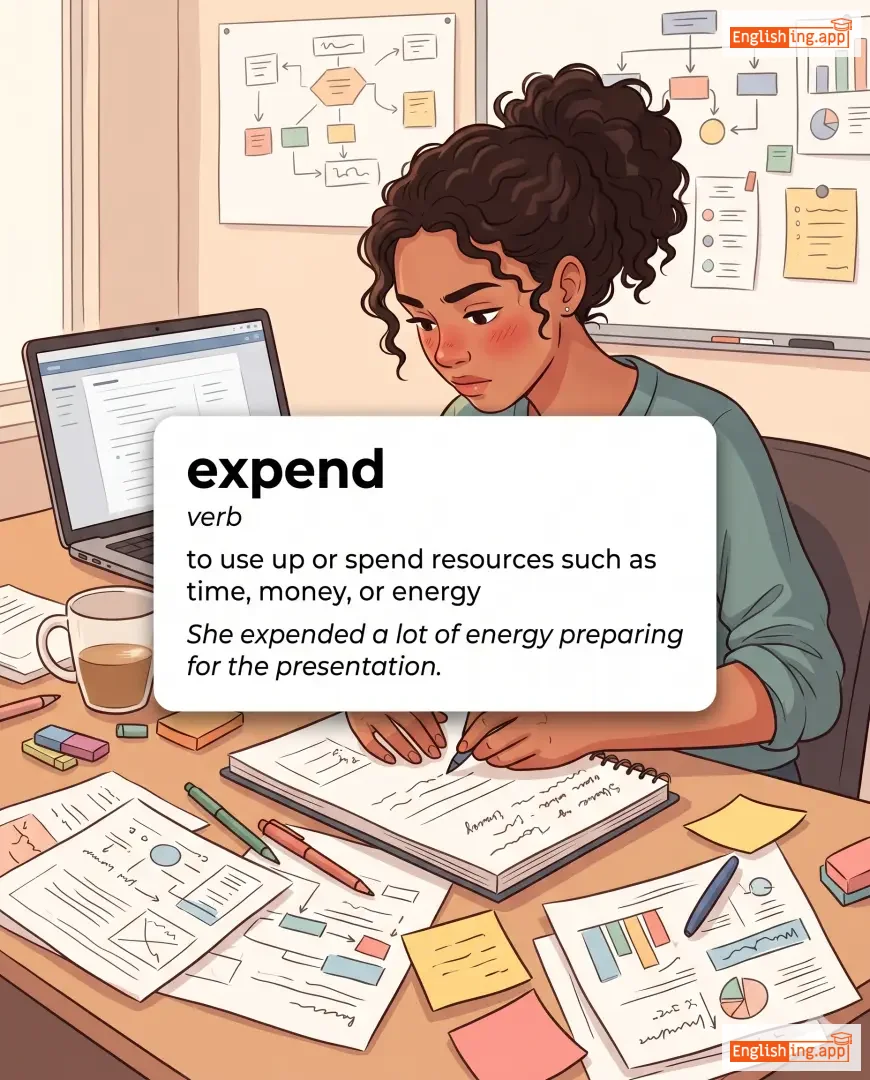
/ɪkˈspɛnd/
verb
(eks-pend)
••••••
|
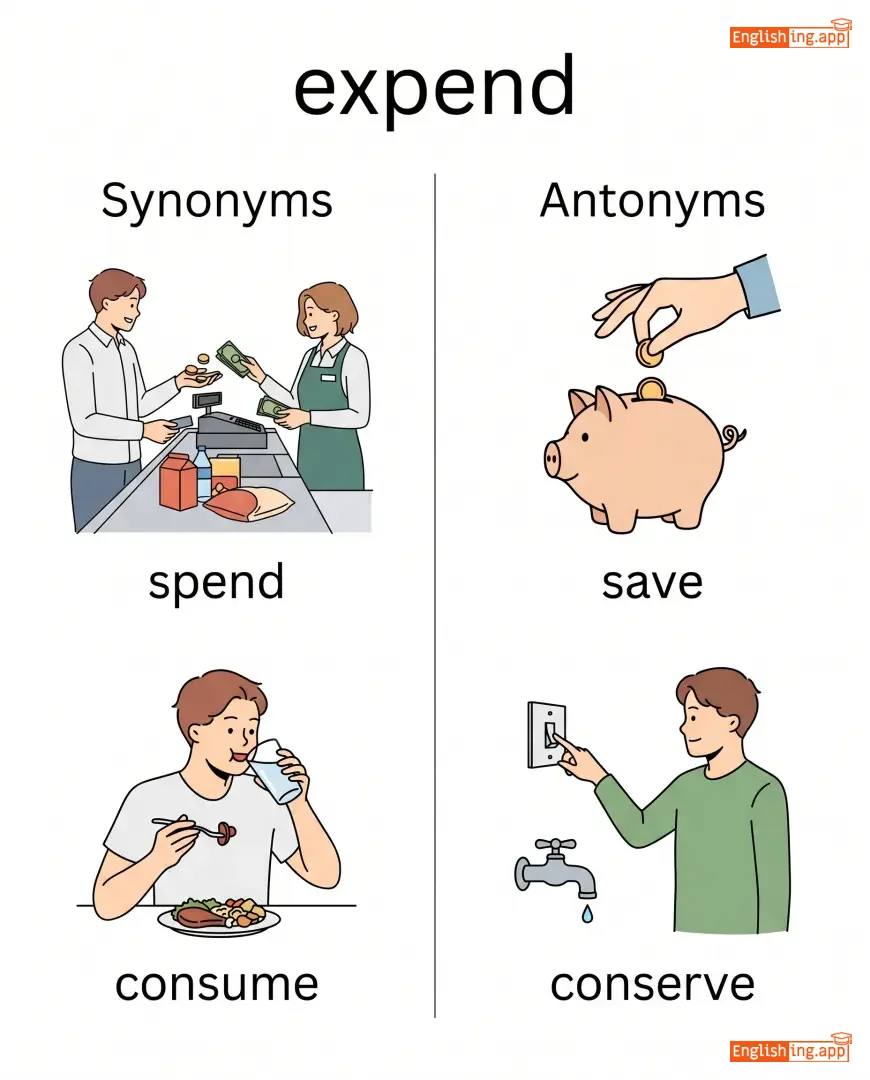
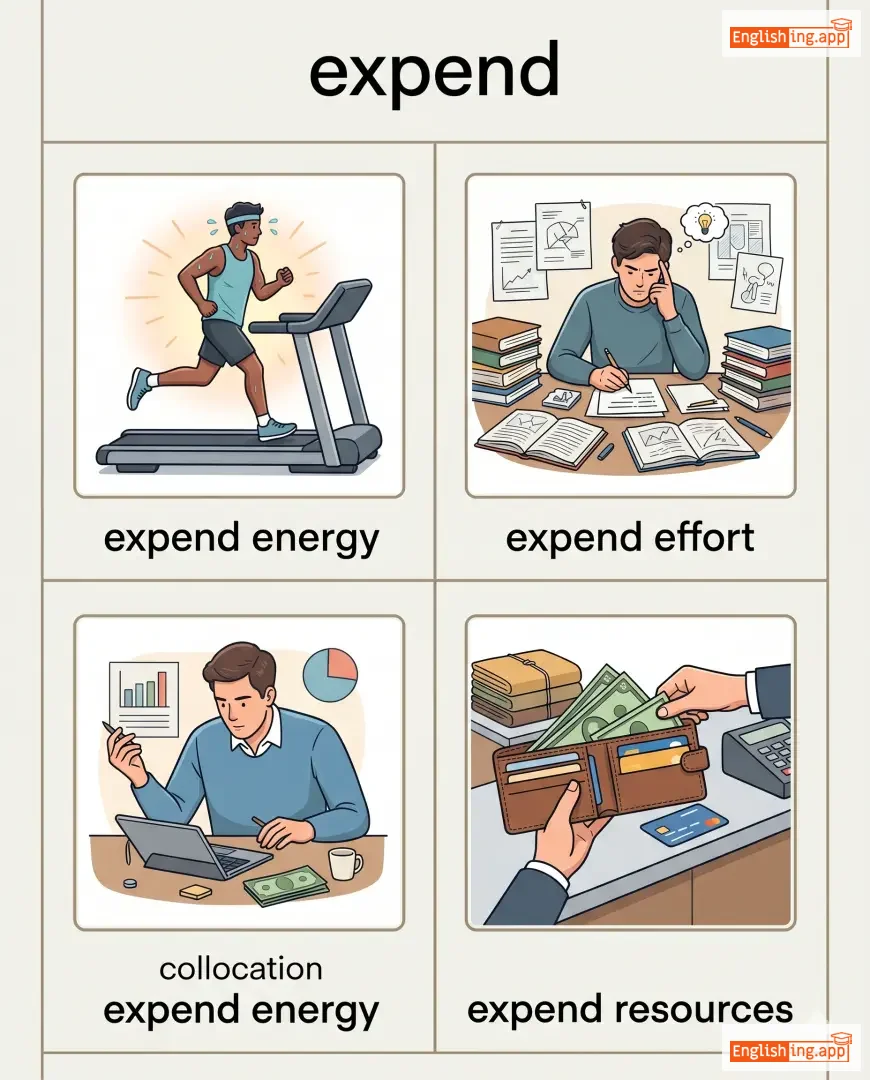
|
花费
huā fèi
••••••
|
expended
eks-pend-id
••••••
|
expended
eks-pend-id
••••••
|
expends
eks-pend
••••••
|
expending
eks-pend-ing
••••••
|
to use up or spend resources such as time, money, or energy
••••••
|
She expended a lot of energy preparing for the presentation.
她花费了很多精力准备演讲。
••••••
|
她花费了很多精力准备演讲。
Tā huā fèi le hěn duō jīng lì zhǔn bèi yǎn jiǎng.
••••••
|
expend effort
花费努力
••••••
|
to put in effort or try hard to achieve something
••••••
|
花费努力
huā fèi nǔ lì
••••••
|
spend, consume, utilize, invest, use
••••••
|
save, conserve, preserve
••••••
|
expend energy, expend effort, expend resources, expend money
••••••
|
Expend 就像 expand:你花费越多,扩展的越多。
••••••
|
|
📊
••••••
|
/ɪkˈspɛndɪtʃər/
noun
(èks-pén-dì-chá)
••••••
|

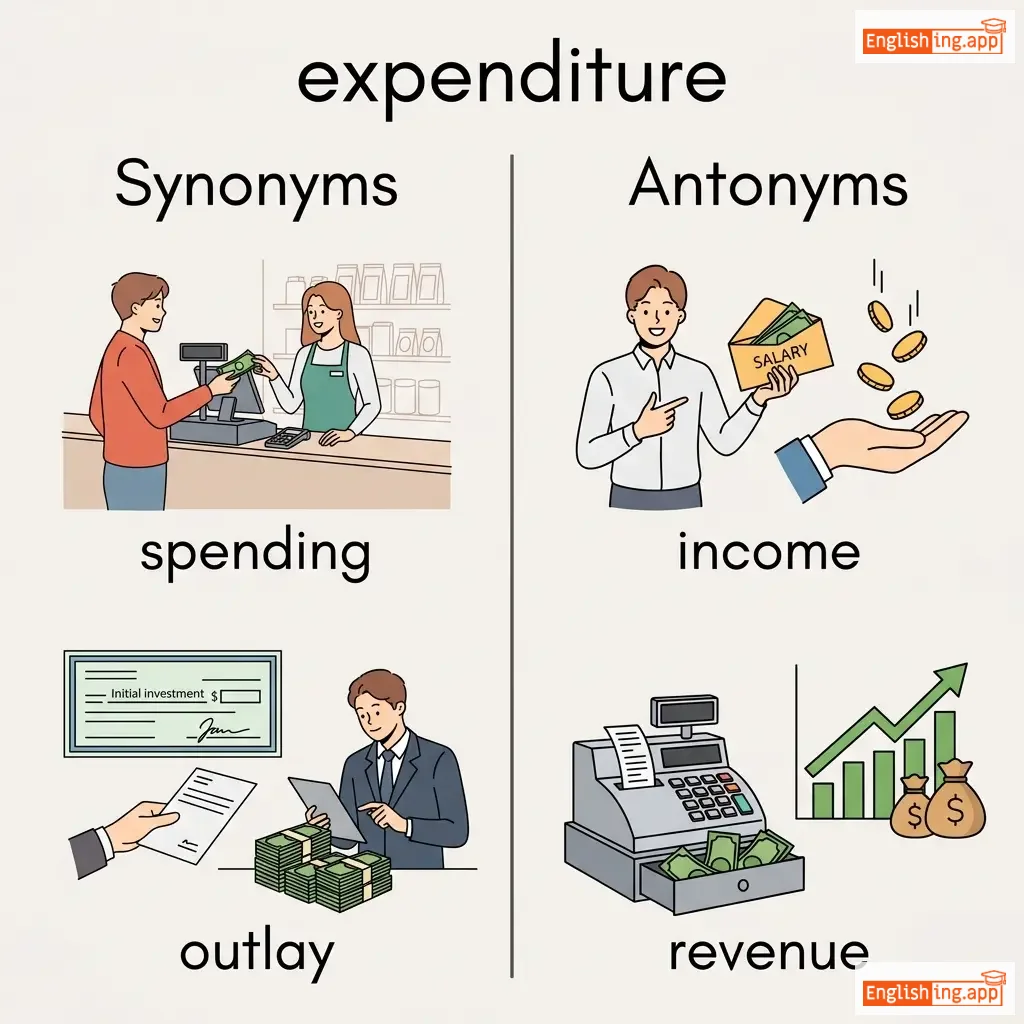
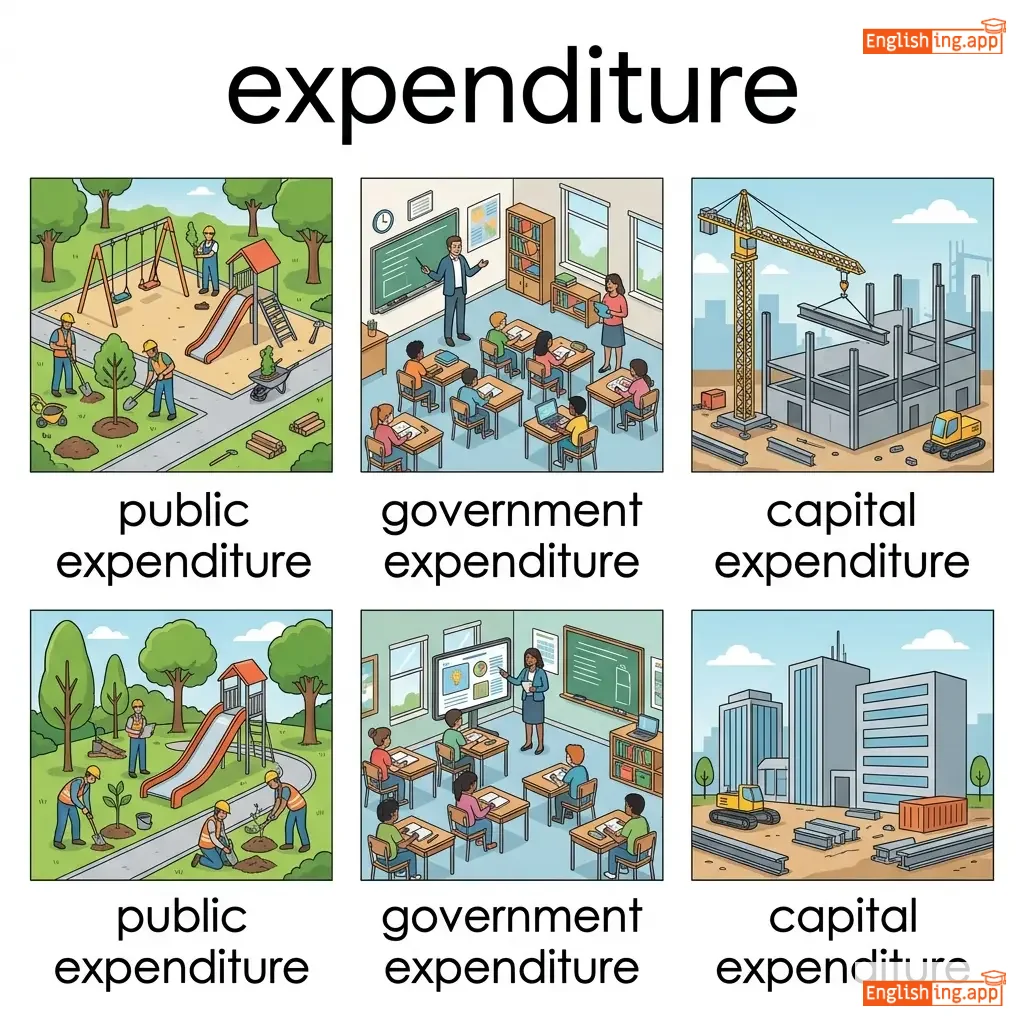
|
支出
zhī chū
••••••
|
- •••••• | - •••••• | - •••••• | - •••••• |
the act of spending money or using resources
••••••
|
The government reduced its expenditure on defense. |
政府减少了国防支出。
zhèngfǔ jiǎnshǎo le guófáng zhīchū.
••••••
|
public expenditure |
money spent by the government for public services
••••••
|
公共支出
gōnggòng zhīchū
••••••
|
spending, outlay, cost, expense, disbursement
••••••
|
income, revenue, savings
••••••
|
public expenditure, government expenditure, capital expenditure, annual expenditure
••••••
|
Expenditure 就是额外的支出 = 支出,记住考试时总有额外支出。
••••••
|
|
💰
••••••
|
/ɪkˈspɛns/
noun
(ekspens)
••••••
|
- •••••• |
开销
kaixiao
••••••
|
- •••••• | - •••••• | - •••••• | - •••••• |
the cost of something; money spent
••••••
|
Traveling abroad can be a major expense. |
出国旅行可能是一个大开销。
Chuguo luxing keneng shi yige da kaixiao.
••••••
|
at the expense of |
with loss or damage to something else
••••••
|
以...为代价
yi...wei daijia
••••••
|
cost, charge, price, spending, outlay
••••••
|
profit, savings, income
••••••
|
travel expense, medical expense, personal expense, at the expense of
••••••
|
开销是你在做事情时花费的金钱,像是开销表一样的支出。
••••••
|
|
💰
••••••
|
/ɪkˈspɛnsɪv/
adjective
••••••
|
- •••••• | - •••••• | - •••••• | - •••••• | - •••••• | - •••••• |
costing a lot of money
••••••
|
That car is too expensive for me to buy. |
- •••••• |
at an expensive price |
with great cost or sacrifice
••••••
|
- •••••• |
costly, pricey, valuable, extravagant
••••••
|
cheap, inexpensive, affordable
••••••
|
expensive car, expensive gift, expensive clothes, too expensive
••••••
|
No •••••• |
|
🎓
••••••
|
/ɪkˈspɪəriəns/
noun/verb
(海皮尼斯)
••••••
|
- •••••• |
幸福
xingfu
••••••
|
experienced
••••••
|
experienced
••••••
|
experiences
••••••
|
experiencing
••••••
|
knowledge or skill gained through involvement in or exposure to something over time
••••••
|
She gained valuable experience while working abroad.
她无法掩饰自己获得奖项时的幸福感。
••••••
|
她无法掩饰自己获得奖项时的幸福感。
Tā wúfǎ yǎnshì zìjǐ huòdé jiǎngxiàng shí de xìngfú gǎn.
••••••
|
learning from experience
追求幸福
••••••
|
gaining knowledge by going through events or situations
••••••
|
追求幸福
zhuīqiú xìngfú
••••••
|
knowledge, skill, practice, exposure, familiarity
••••••
|
ignorance, inexperience
••••••
|
gain experience, valuable experience, life experience, work experience
••••••
|
幸福 = xìngfú, 就是你笑了就感到快乐。
••••••
|
|
🧪
••••••
|
/ɪkˈsperɪmənt/
noun/verb
(kèxìng)
••••••
|
- •••••• |
实验
shíyàn
••••••
|
experimented
kèxìngdào
••••••
|
experimented
kèxìngdào
••••••
|
experiments
kèxìngs
••••••
|
experimenting
kèxìng
••••••
|
a test or trial carried out to discover something or prove an idea
••••••
|
The scientist conducted an experiment on plant growth.
Kēxuéjiā jìnxíngle yīgè guānyú zhíwù chéngzhǎng de kèxìng.
••••••
|
科学家进行了一个关于植物生长的实验。
Kēxuéjiā jìnxíngle yīgè guānyú zhíwù chéngzhǎng de shíyàn.
••••••
|
experiment with
kèxìng shì
••••••
|
to try something new to see what happens
••••••
|
与…实验
yǔ… shíyàn
••••••
|
test, trial, research, investigation, study
••••••
|
proof, certainty
••••••
|
conduct experiment, scientific experiment, lab experiment, experiment results
••••••
|
实验:做科学试验来学习 (shíyàn)
••••••
|
|
👨🏫
••••••
|
/ˈekspɜːt/
noun/adjective
(专家)
••••••
|
- •••••• |
专家
zhuānjiā
••••••
|
- •••••• | - •••••• | - •••••• | - •••••• |
a person who has a lot of knowledge or skill in a particular area
••••••
|
He is an expert in computer programming.
他是计算机编程方面的专家。
••••••
|
他是计算机编程方面的专家。
Tā shì jìsuànjī biānchéng fāngmiàn de zhuānjiā.
••••••
|
expert opinion
专家意见
••••••
|
a professional or highly knowledgeable view
••••••
|
专家意见
zhuānjiā yìjiàn
••••••
|
specialist, professional, authority, master, guru
••••••
|
novice, amateur, beginner
••••••
|
expert advice, subject expert, expert opinion, expert knowledge
••••••
|
Expert = Extra Part knowledge, 所以专家
••••••
|
|
⏳
••••••
|
/ɪkˈspaɪər/
verb
(ik-sī-pái-ěr)
••••••
|
- •••••• |
到期
dàoqī
••••••
|
expired
ik-sī-pái-érd
••••••
|
expired
ik-sī-pái-érd
••••••
|
expires
ik-sī-pái-érs
••••••
|
expiring
ik-sī-pái-ér-ing
••••••
|
to come to an end, especially a period of validity or life
••••••
|
My passport will expire next month.
我的护照将在下个月到期。
••••••
|
我的护照将在下个月到期。
Wǒ de hùzhào jiāng zài xià gè yuè dàoqī.
••••••
|
expire soon
即将到期
••••••
|
to end or become invalid in the near future
••••••
|
即将到期
jíjiāng dàoqī
••••••
|
end, terminate, lapse, cease, conclude
••••••
|
continue, persist, last
••••••
|
passport expire, contract expire, lease expire, expire date
••••••
|
Expire 就是到期的意思,像护照到期了。
••••••
|
|
📖
••••••
|
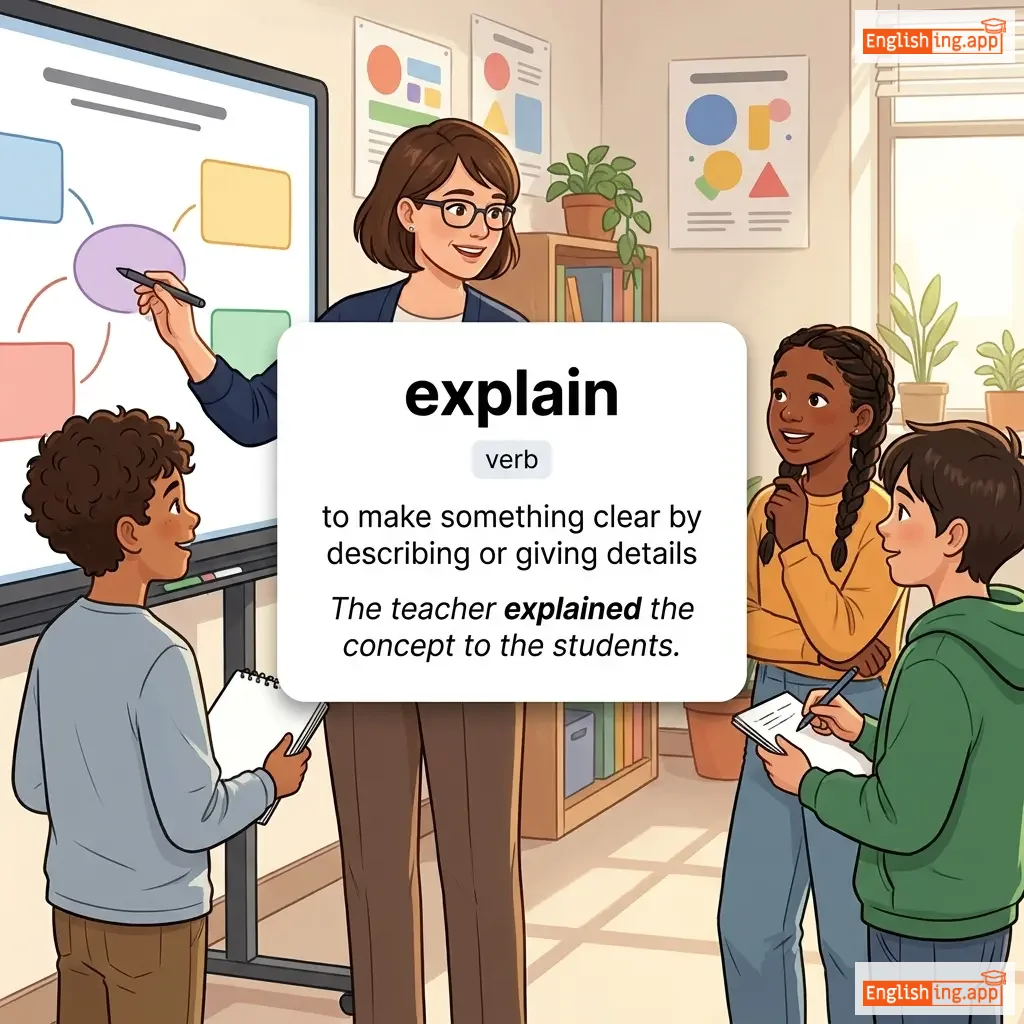
/ɪkˈspleɪn/
verb
(èksplèn)
••••••
|
|
解释
jiěshì
••••••
|
explained
èksplènd
••••••
|
explained
èksplènd
••••••
|
explains
èksplèns
••••••
|
explaining
èksplèinɡ
••••••
|
to make something clear by describing or giving details
••••••
|
The teacher explained the concept to the students.
老师向学生们解释了这个概念。
••••••
|
老师向学生们解释了这个概念。
Lǎoshī xiàng xuéshēngmen jiěshì le zhège gàiniàn.
••••••
|
explain away
解释掉
••••••
|
to try to justify or minimize something
••••••
|
为某事辩解
wèi mǒu shì biànjiě
••••••
|
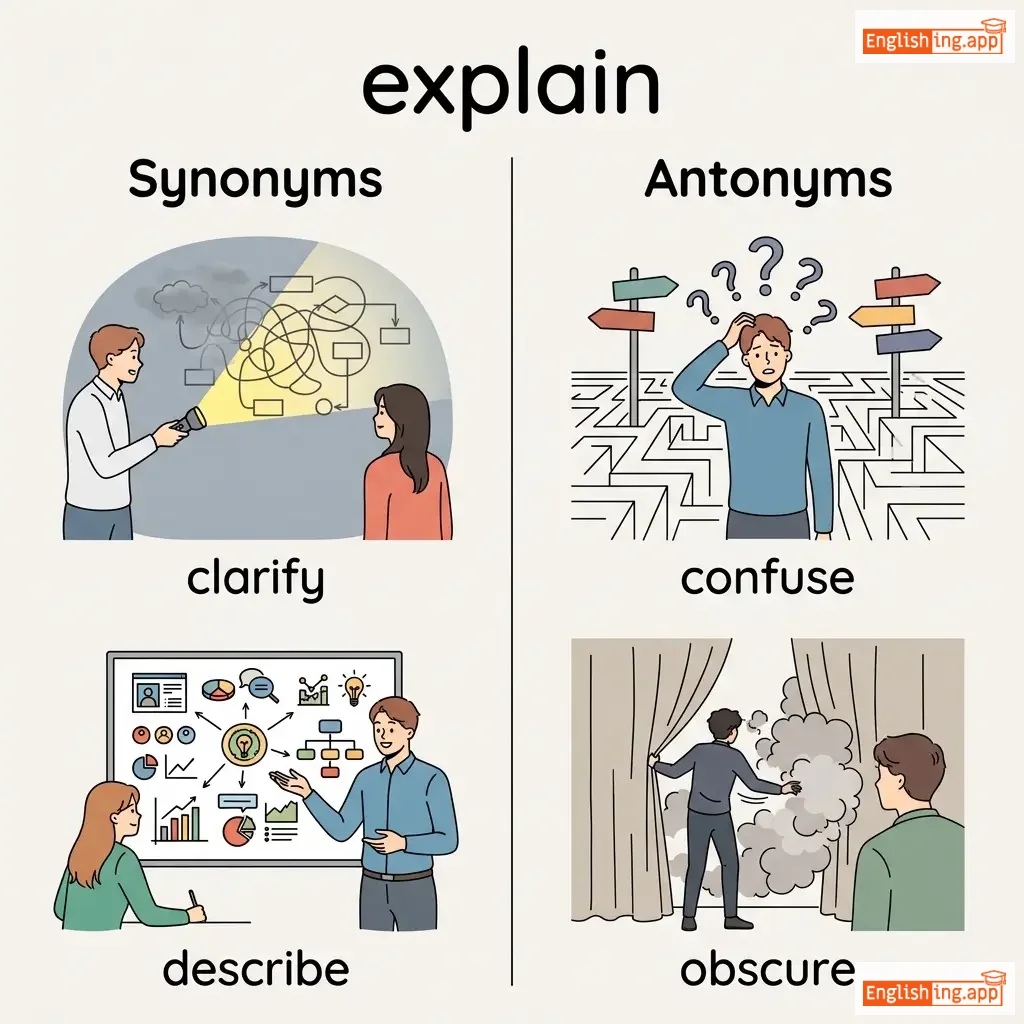
clarify, describe, illustrate, elaborate
••••••
|
confuse, obscure, mystify
••••••
|
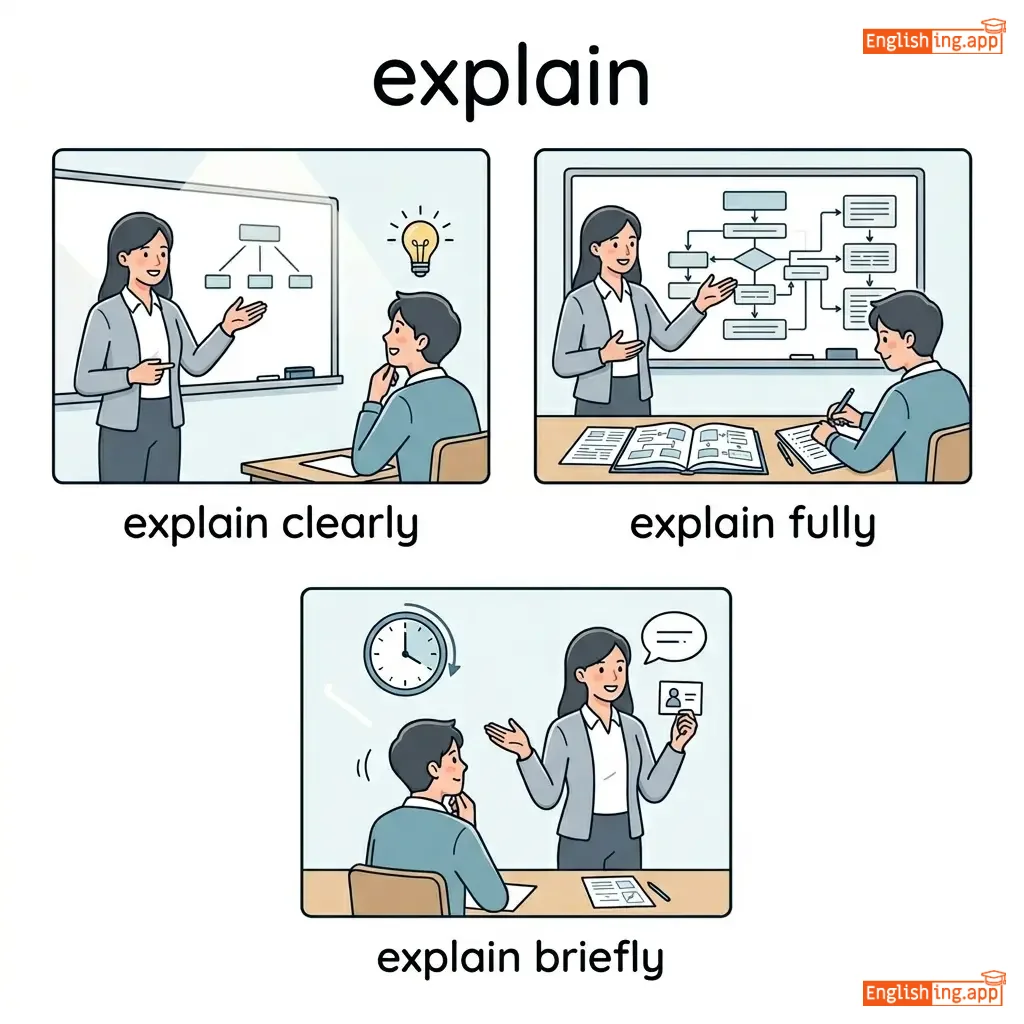
explain clearly, explain fully, explain briefly, explain concept
••••••
|
Explain = 解释= 飞机上解释!
••••••
|
|
📖
••••••
|
/ˌekspləˈneɪʃən/
noun
(ekspləˈneɪʃən)
••••••
|
- •••••• |
解释
jieshi
••••••
|
- •••••• | - •••••• | - •••••• | - •••••• |
a statement or account that makes something clear
••••••
|
The teacher gave a clear explanation of the theory. |
老师给出了理论的清晰解释。
Lǎoshī gěi chūle lǐlùn de qīngxī jiěshì.
••••••
|
beyond explanation |
too strange or difficult to explain
••••••
|
超出解释范围
chāo chū jiěshì fànwéi
••••••
|
clarification, interpretation, description, account, justification
••••••
|
confusion, mystery
••••••
|
give explanation, detailed explanation, proper explanation, clear explanation
••••••
|
Explanation意味着'Explain' + 'ation' = 解释
••••••
|
|
📢
••••••
|
/ɪkˈsplɪsɪt/
adjective
(ɪkˈsplɪsɪt)
••••••
|
|
明确的
mingque de
••••••
|
- •••••• | - •••••• | - •••••• | - •••••• |
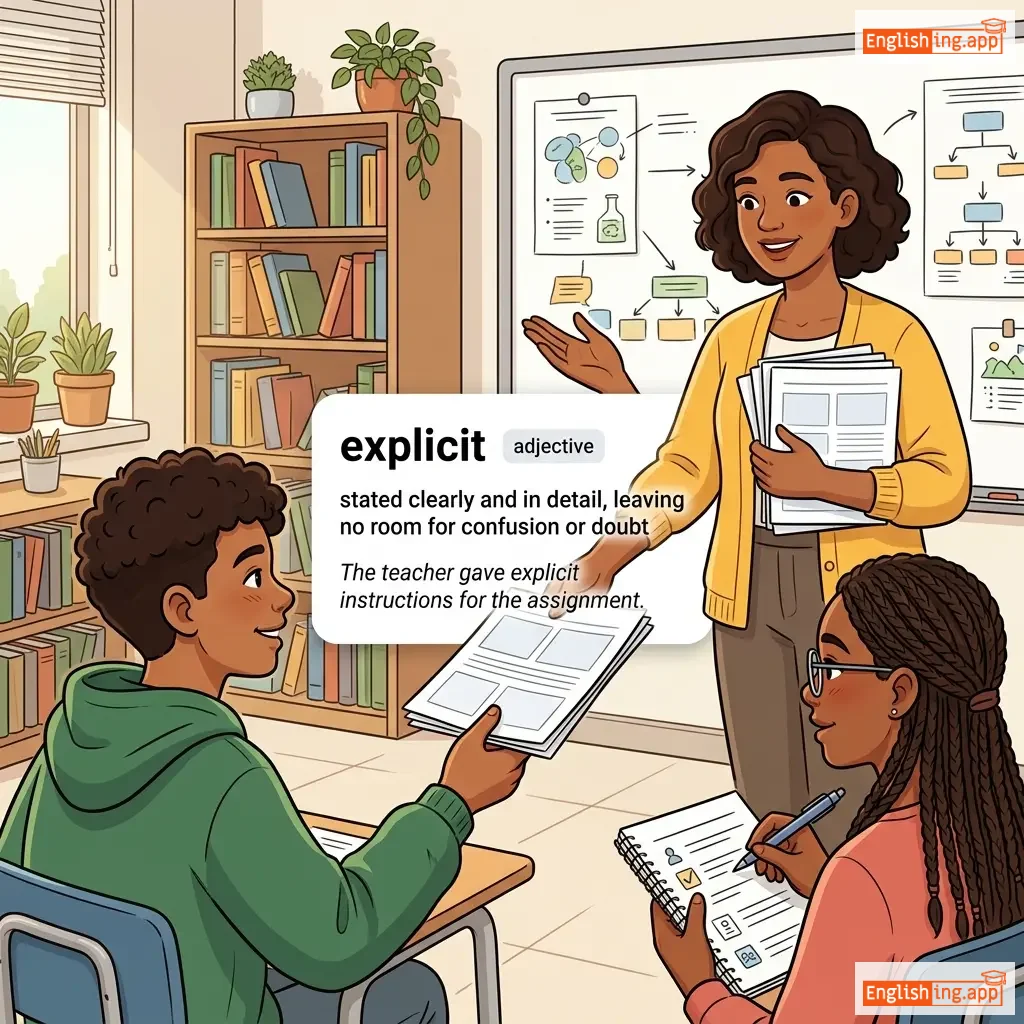
stated clearly and in detail, leaving no room for confusion or doubt
••••••
|
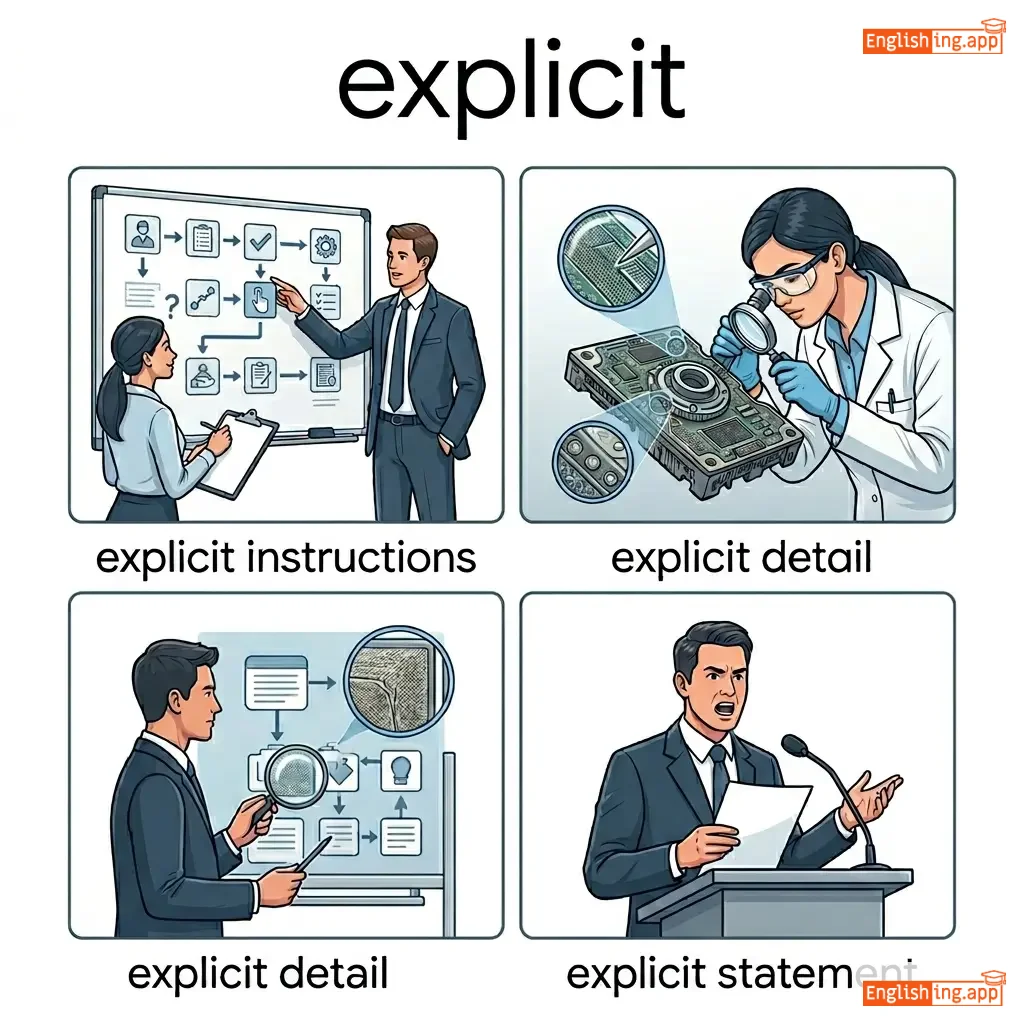
The teacher gave explicit instructions for the assignment. |
老师给出了明确的作业指示。
Lǎoshī gěi chūle míngquè de zuòyè zhǐshì.
••••••
|
make explicit |
to state something clearly and directly
••••••
|
明确表示
míngquè biǎoshì
••••••
|
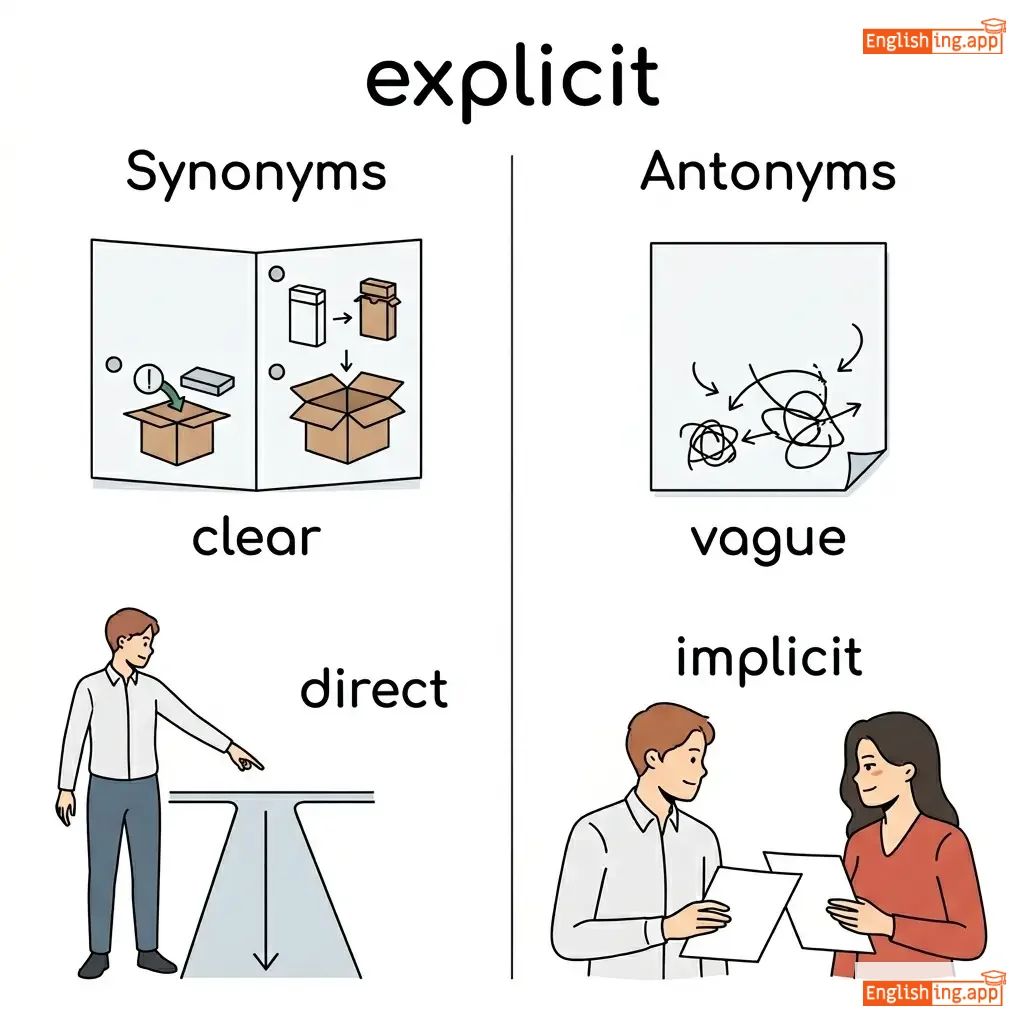
clear, direct, precise, unambiguous, definite
••••••
|
vague, implicit, ambiguous
••••••
|
explicit instructions, explicit detail, explicit statement, make explicit
••••••
|
explicit 意思是明确 — 老师给出明确的 (清楚的) 指示
••••••
|
|
🔍
••••••
|
/ɪkˈsplɪsɪtli/
adverb
(ik-splí-sit-lí)
••••••
|
- •••••• |
明确地
mingque de
••••••
|
- •••••• | - •••••• | - •••••• | - •••••• |
in a clear and detailed manner, leaving no room for confusion or doubt
••••••
|
The instructions were explicitly written to avoid any confusion. |
指示明确地写出来,以避免任何混淆。
Zhishi mingque de xie chulai, yi bimian renhe hunxiao.
••••••
|
- •••••• | - •••••• | - •••••• |
clearly, directly, plainly, unmistakably
••••••
|
implicitly, vaguely
••••••
|
explicitly stated, explicitly mentioned, explicitly clear, explicitly forbidden
••••••
|
Explicitly 意味着‘明确地’,没有任何模糊
••••••
|
|
💥
••••••
|
/ɪkˈsploʊd/
verb
(爆炸)
••••••
|
- •••••• |
爆炸
baozha
••••••
|
exploded
爆炸了
••••••
|
exploded
爆炸了
••••••
|
explodes
爆炸
••••••
|
exploding
爆炸ing
••••••
|
to burst or shatter violently and noisily as a result of rapid combustion or pressure
••••••
|
The bomb exploded in the middle of the street.
炸弹在街中央爆炸了。
••••••
|
炸弹在街中央爆炸了。
Zhadan zai jie zhongyang baozha le.
••••••
|
explode with laughter
爆炸大笑
••••••
|
to suddenly start laughing very loudly
••••••
|
笑得爆炸
xiao de baozha
••••••
|
burst, blow up, detonate, erupt, shatter
••••••
|
implode, collapse, defuse
••••••
|
explode suddenly, explode violently, explode with laughter, explode a bomb
••••••
|
Explode 意思是爆炸 — 看到难题时,大脑会爆炸
••••••
|
|
⚒️
••••••
|
/ɪkˈsplɔɪt/
verb, noun
••••••
|
- •••••• | - •••••• |
exploited
••••••
|
exploited
••••••
|
exploits
••••••
|
exploiting
••••••
|
to make full use of and derive benefit from (a resource); to use someone unfairly for one’s own advantage
••••••
|
The company was accused of exploiting child labor. |
- •••••• |
exploit opportunities |
to make the best use of chances or favorable situations
••••••
|
- •••••• |
utilize, take advantage, abuse, capitalize, manipulate
••••••
|
neglect, ignore, support
••••••
|
exploit resources, exploit workers, exploit opportunities, exploit system
••••••
|
No •••••• |
|
⛏️
••••••
|
/ˌek.splɔɪˈteɪ.ʃən/
noun
(ɛk.splɔɪˈteɪʃən)
••••••
|
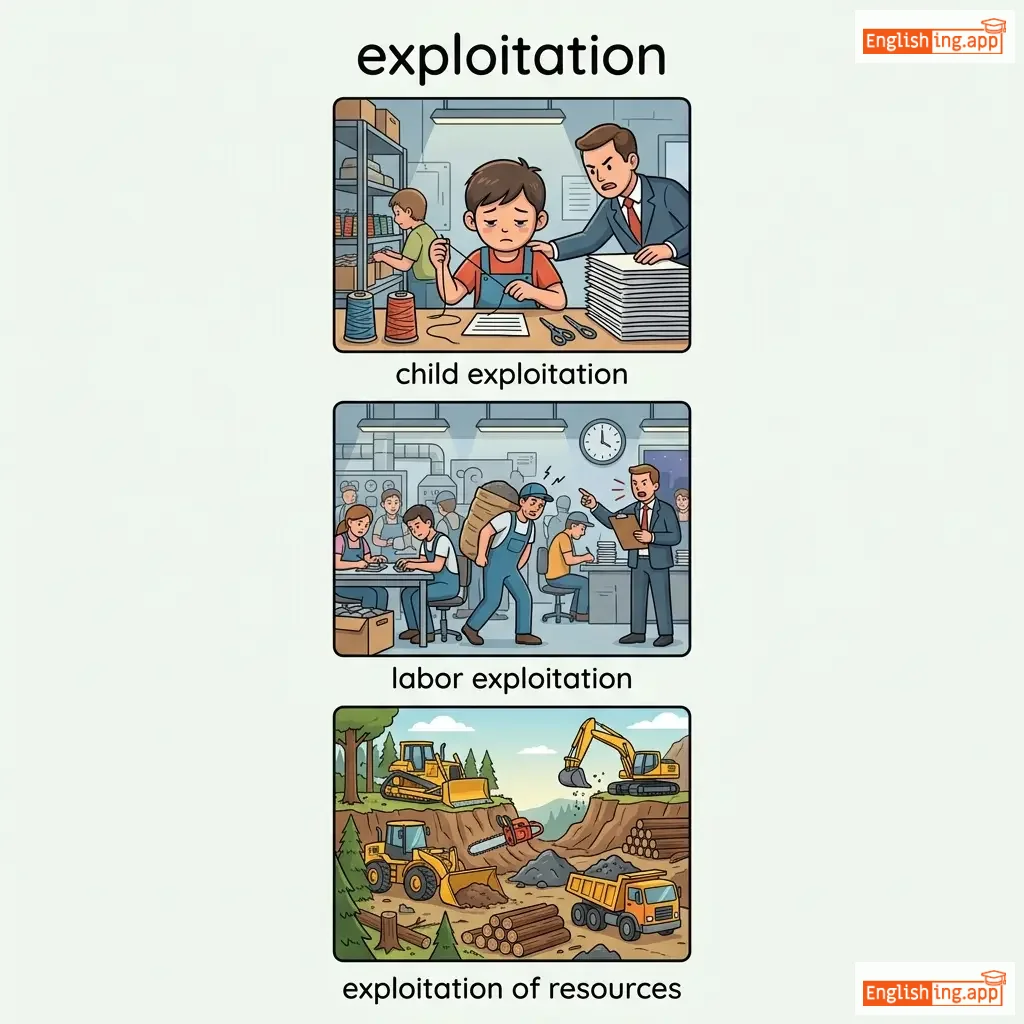
|
剥削; 滥用
bōxuē, lànyòng
••••••
|
- •••••• | - •••••• | - •••••• | - •••••• |
the action of treating someone unfairly in order to benefit from their work; misuse
••••••
|
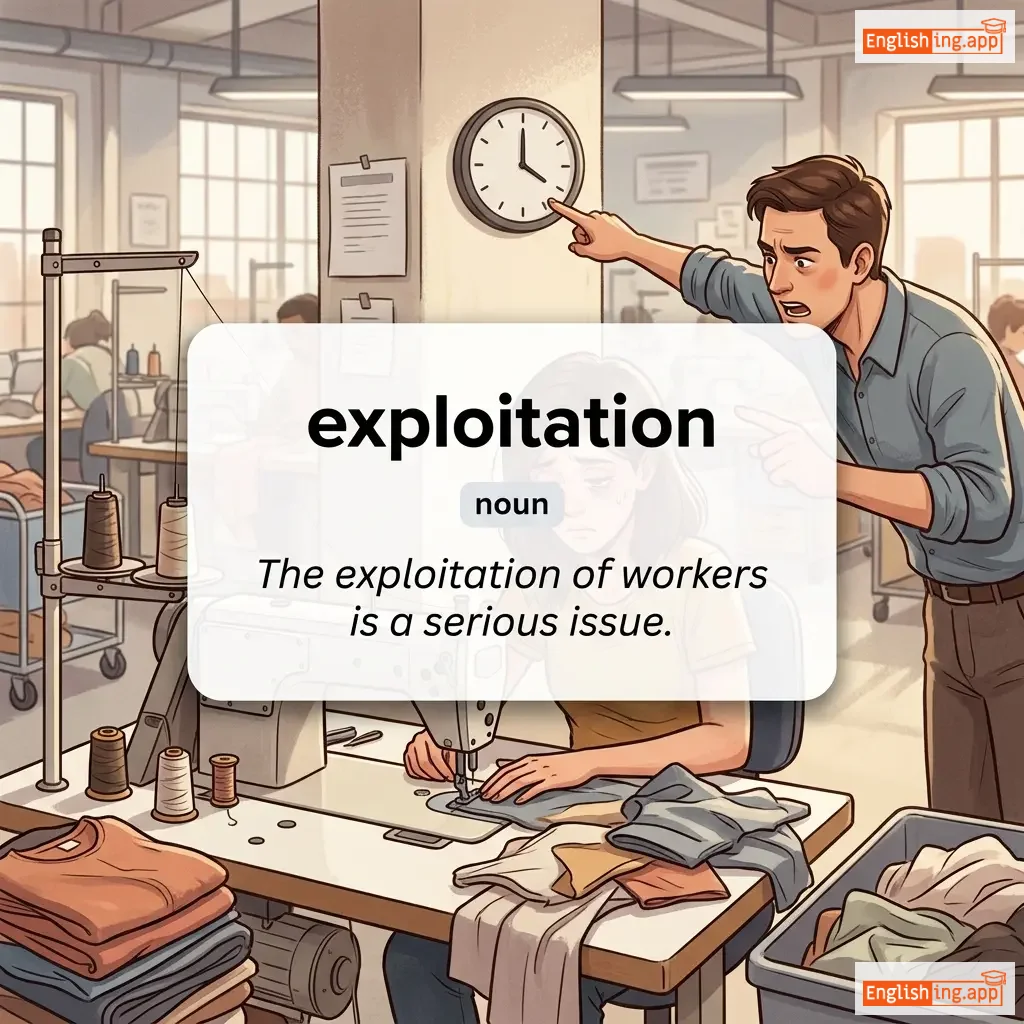
The company was accused of worker exploitation due to poor working conditions. |
公司因恶劣的工作条件被指控剥削工人。
Gōngsī yīn èliè de gōngzuò tiáojiàn bèi zhǐkòng bōxuē gōngrén.
••••••
|
- •••••• | - •••••• | - •••••• |
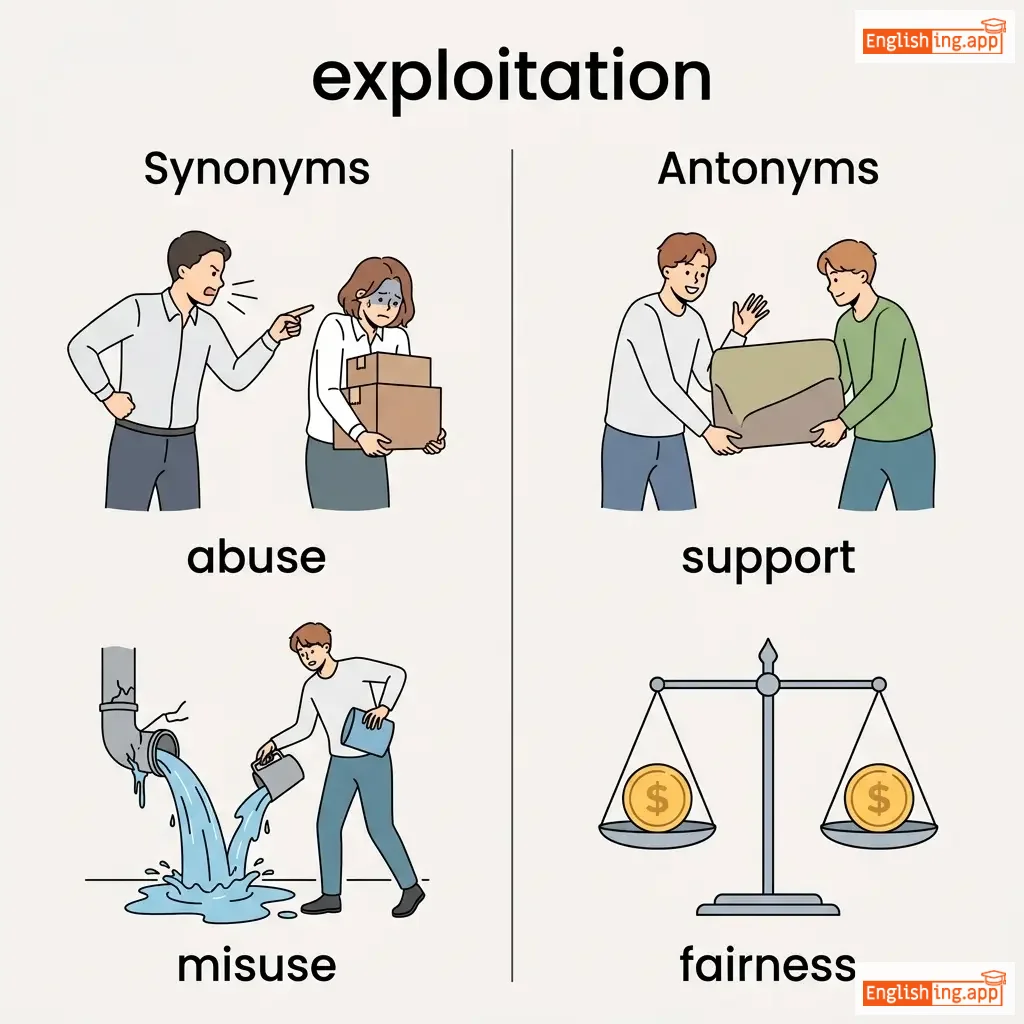
abuse, misuse, oppression, manipulation
••••••
|
protection, fairness, justice, respect
••••••
|
worker exploitation, resource exploitation, prevent exploitation
••••••
|
Exploitation is an unfair use of someone’s work, like 'lànyòng' (misuse).
••••••
|
|
🧭
••••••
|
/ɪkˈsplɔːr/
verb
(探索)
••••••
|
- •••••• |
探索
tàn suǒ
••••••
|
explored
探索过
••••••
|
explored
探索过
••••••
|
explores
探索
••••••
|
exploring
探索中
••••••
|
to travel through or study something in order to learn more about it
••••••
|
They decided to explore the forest together.
他们决定一起探索森林。
••••••
|
他们决定一起探索森林。
Tāmen juédìng yīqǐ tàn suǒ sēnlín.
••••••
|
explore possibilities
探索可能性
••••••
|
to consider different options or opportunities
••••••
|
探索可能性
tàn suǒ kě néng xìng
••••••
|
discover, investigate, examine, search, probe
••••••
|
ignore, neglect
••••••
|
explore new ideas, explore opportunities, explore the world, explore nature
••••••
|
探索就像 Dora 探险
••••••
|
|
💥
••••••
|
/ɪkˈsploʊʒən/
noun
(爆炸)
••••••
|
- •••••• |
爆炸
baozha
••••••
|
- •••••• | - •••••• | - •••••• | - •••••• |
a violent burst or release of energy, often causing damage and noise
••••••
|
The explosion shook the entire neighborhood. |
爆炸震动了整个社区。
Baozha zhendong le zheng ge shequ.
••••••
|
go off like an explosion |
to suddenly happen with great force or intensity
••••••
|
像爆炸一样爆发
Xiang baozha yi yang baofa
••••••
|
blast, detonation, eruption, burst, outbreak
••••••
|
implosion, silence, calm
••••••
|
massive explosion, gas explosion, explosion of anger, sudden explosion
••••••
|
Explosion = 巨大的爆炸! 想象爆炸的力量来记住它!
••••••
|
|
🧨
••••••
|
/ɪkˈsploʊsɪv/
adjective
(èksplósiv)
••••••
|
- •••••• |
爆炸性
bàozhàxìng
••••••
|
- •••••• | - •••••• | - •••••• | - •••••• |
able to cause an explosion; likely to burst out suddenly
••••••
|
The situation became explosive after the argument. |
争论后局势变得爆炸性。
zhēnglùn hòu júshì biàn dé bàozhàxìng.
••••••
|
explosive growth |
very rapid and intense growth
••••••
|
爆炸性增长
bàozhàxìng zēngzhǎng
••••••
|
volatile, dangerous, combustible, eruptive
••••••
|
stable, calm, safe
••••••
|
explosive device, explosive growth, explosive force, explosive situation
••••••
|
爆炸性意味着可能爆炸 – 热烈的情况可能会突然爆发。
••••••
|
|
🚢
••••••
|
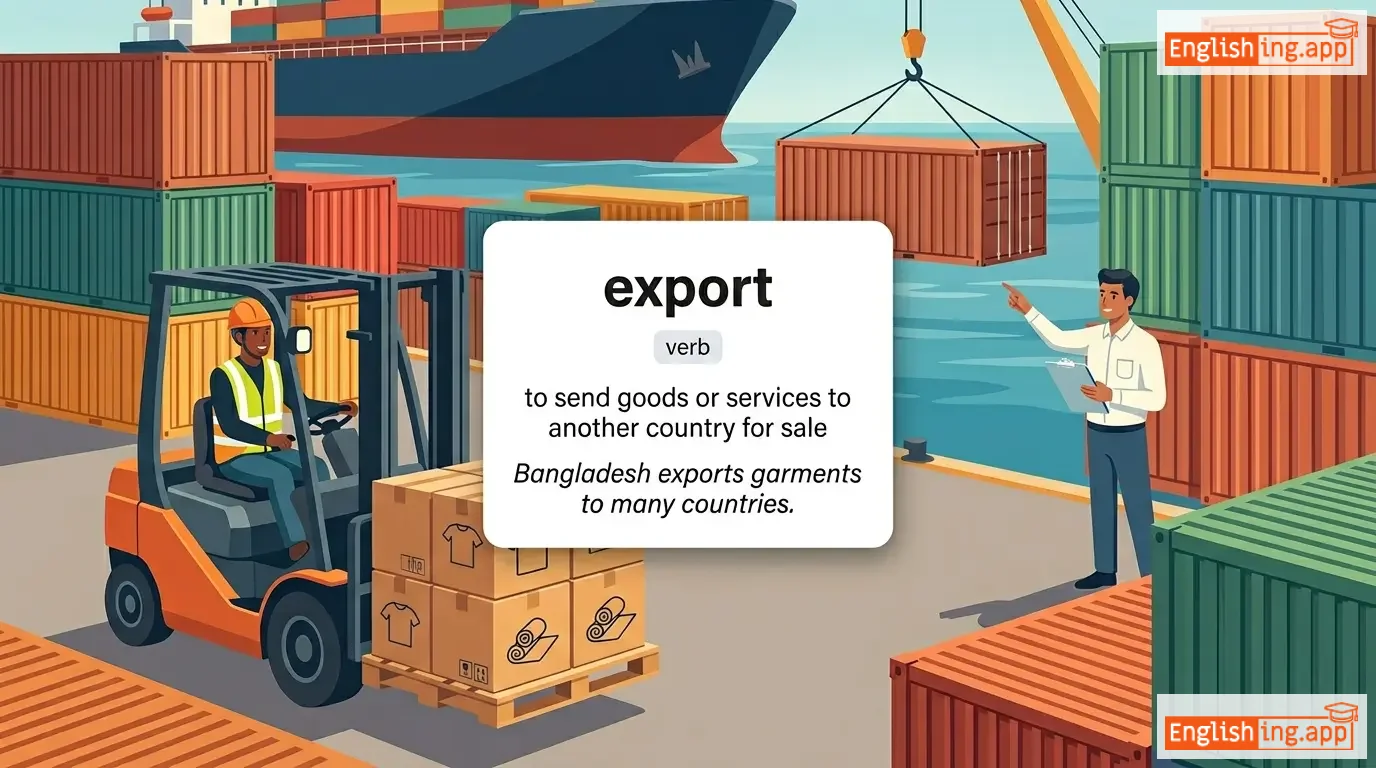
/ˈekspɔːt/
verb
(出口)
••••••
|
|
出口
chūkǒu
••••••
|
exported
出口
••••••
|
exported
出口
••••••
|
exports
出口
••••••
|
exporting
出口
••••••
|
to send goods or services to another country for sale
••••••
|
Bangladesh exports garments to many countries.
孟加拉国向许多国家出口纺织品。
••••••
|
孟加拉国向许多国家出口纺织品。
Mèngjiālā guó xiàng xǔduō guójiā chūkǒu fǎngzhīpǐn.
••••••
|
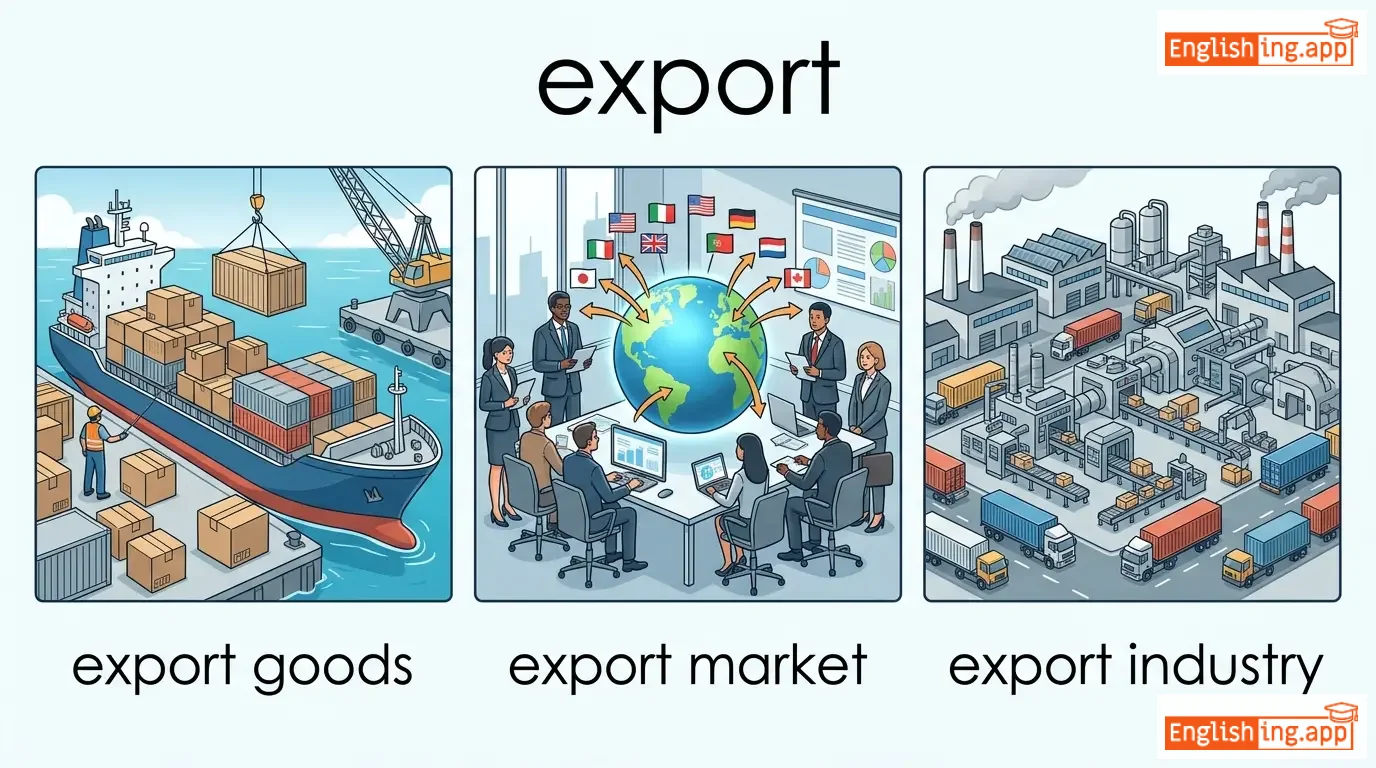
export market
出口市场
••••••
|
a market in another country for goods produced locally
••••••
|
出口市场
chūkǒu shìchǎng
••••••
|
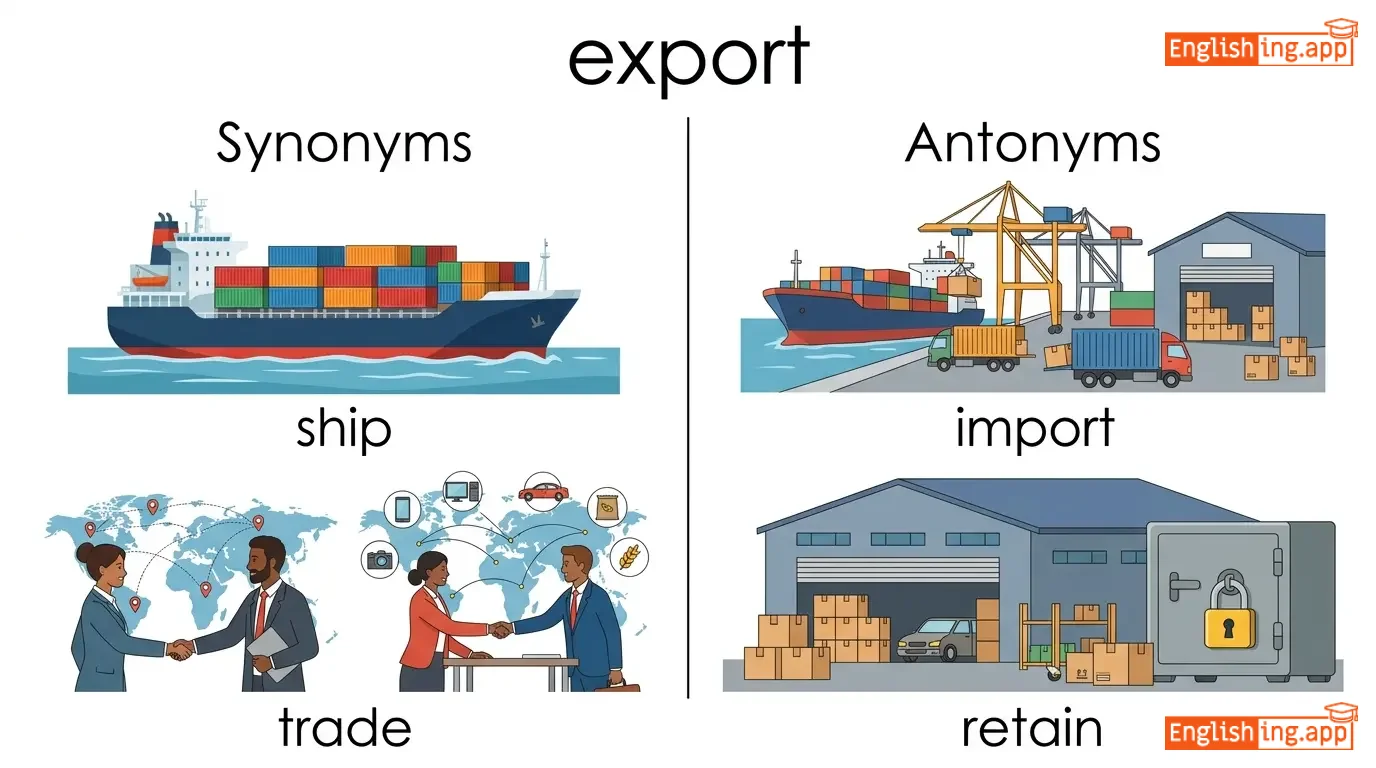
ship, trade, deliver, transport, send
••••••
|
import, retain, keep
••••••
|
export goods, export market, export industry, export earnings
••••••
|
出口就像一艘船将货物运送到其他国家。
••••••
|
|
🔎
••••••
|
/ɪkˈspoʊz/
verb
(èks-pòu-zī)
••••••
|



|
揭露
jiēlù
••••••
|
exposed
èks-pòu-zhī-dè
••••••
|
exposed
èks-pòu-zhī-dè
••••••
|
exposes
èks-pòu-zhī
••••••
|
exposing
èks-pòu-zhīng
••••••
|
to reveal or uncover something hidden
••••••
|
The journalist tried to expose the corruption scandal.
记者试图揭露腐败丑闻。
••••••
|
记者试图揭露腐败丑闻。
Jìzhě shìtú jiēlù fǔbài chǒuwén.
••••••
|
expose the truth
揭露真相
••••••
|
to reveal the real facts
••••••
|
揭露真相
jiēlù zhēnxiàng
••••••
|
reveal, uncover, disclose, unveil
••••••
|
hide, conceal, cover
••••••
|
expose corruption, expose truth, expose secrets, expose fraud
••••••
|
揭露就像打开'盒子',里面隐藏着东西。
••••••
|
|
☀️
••••••
|
/ɪkˈspəʊʒər/
noun
(eks-pozur)
••••••
|
- •••••• |
暴露
baolu
••••••
|
- •••••• | - •••••• | - •••••• | - •••••• |
the state of being exposed to contact with something, especially harmful
••••••
|
Prolonged exposure to the sun can damage your skin. |
长时间暴露在阳光下会损害皮肤。
Chang shijian baolu zai yangguang xia hui sunhai pifu.
••••••
|
exposure therapy |
a treatment that helps people face and reduce fear
••••••
|
暴露疗法
baolu liaofa
••••••
|
contact, vulnerability, openness, disclosure
••••••
|
protection, concealment
••••••
|
exposure to risk, exposure therapy, media exposure, sun exposure
••••••
|
暴露在阳光下 = 皮肤损伤, 中文: 暴露
••••••
|
|
💬
••••••
|
/ɪkˈsprɛs/
verb
(表达)
••••••
|
- •••••• |
表达
biaoda
••••••
|
expressed
表达过
••••••
|
expressed
表达过
••••••
|
expresses
表达
••••••
|
expressing
表达中
••••••
|
to convey a thought, feeling, or idea in words, actions, or other forms
••••••
|
She expressed her gratitude with a warm smile.
她通过温暖的微笑表达了她的感激之情。
••••••
|
她通过温暖的微笑表达了她的感激之情。
Ta tongguo wenruan de weixiao biaoda le ta de ganji zhiqing.
••••••
|
express yourself
表达自己
••••••
|
to communicate one's thoughts and feelings openly
••••••
|
表达自己
Biaoda ziji
••••••
|
convey, communicate, articulate, state, voice
••••••
|
suppress, conceal, hide
••••••
|
express feelings, express gratitude, express concern, express clearly
••••••
|
表达就是你内心的声音,像画笔一样呈现出来。
••••••
|
|
🙂
••••••
|
/ɪkˈsprɛʃən/
noun
(表情)
••••••
|
- •••••• |
表情
biaoqing
••••••
|
- •••••• | - •••••• | - •••••• | - •••••• |
the act of putting thoughts or feelings into words, actions, or facial gestures
••••••
|
His facial expression showed surprise.
他的面部表情显示了惊讶。
••••••
|
他的面部表情显示了惊讶。
Tā de miànbù biǎoqíng xiǎnshìle jīngyà.
••••••
|
facial expression
面部表情
••••••
|
the look on someone's face that conveys emotion
••••••
|
面部表情
miànbù biǎoqíng
••••••
|
statement, utterance, manifestation, phrase, gesture
••••••
|
silence, suppression
••••••
|
facial expression, expression of love, free expression, expression of opinion
••••••
|
表情 = 通过面部看到情绪
••••••
|
|
➡️
••••••
|
/ɪkˈstɛnd/
verb
(eks-tend)
••••••
|

|
延伸
yanshen
••••••
|
extended
eks-tend-ed
••••••
|
extended
eks-tend-ed
••••••
|
extends
eks-tends
••••••
|
extending
eks-tending
••••••
|
to make something longer, larger, or last longer; to reach out.
••••••
|
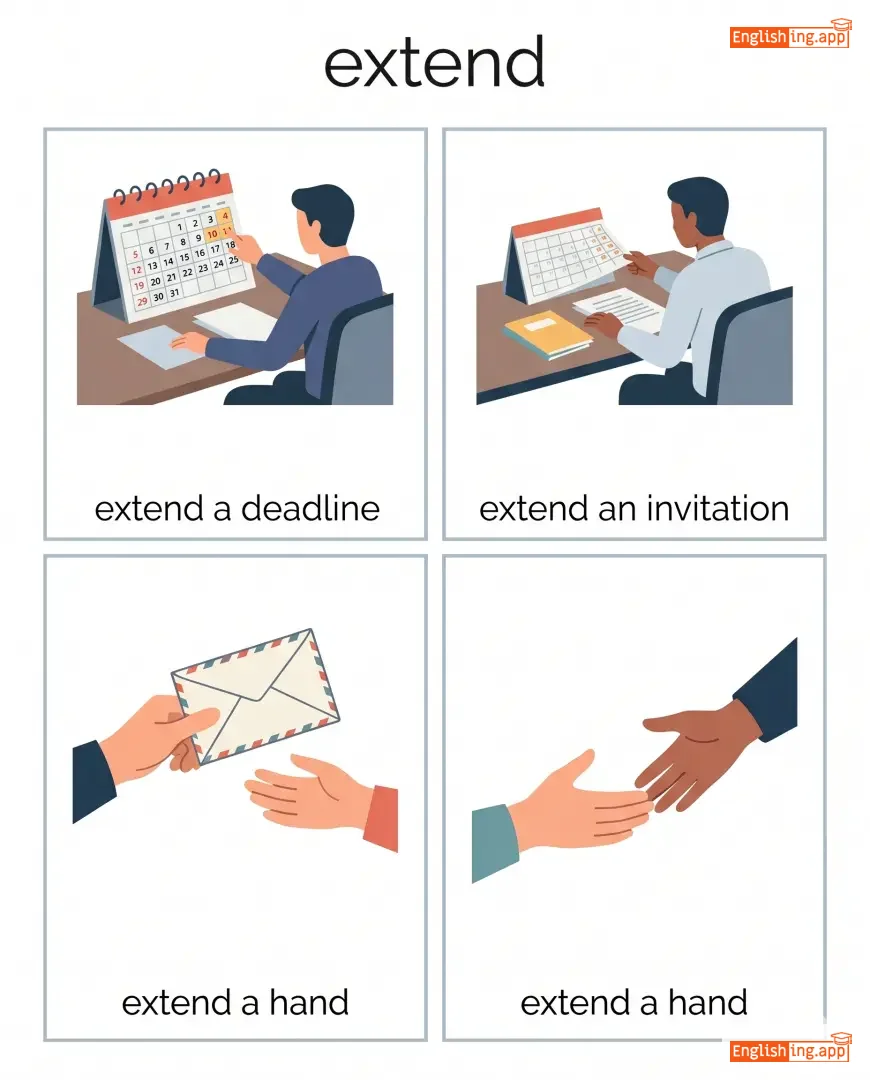
The company decided to extend the deadline for submissions.
公司决定延长提交的截止日期。
••••••
|
公司决定延长提交的截止日期。
Gōngsī juédìng yáncháng tíjiāo de jiézhǐ rìqī.
••••••
|
extend an olive branch
伸出橄榄枝
••••••
|
to offer peace or reconciliation
••••••
|
伸出橄榄枝
shēnchū gǎnlǎnzhī
••••••
|
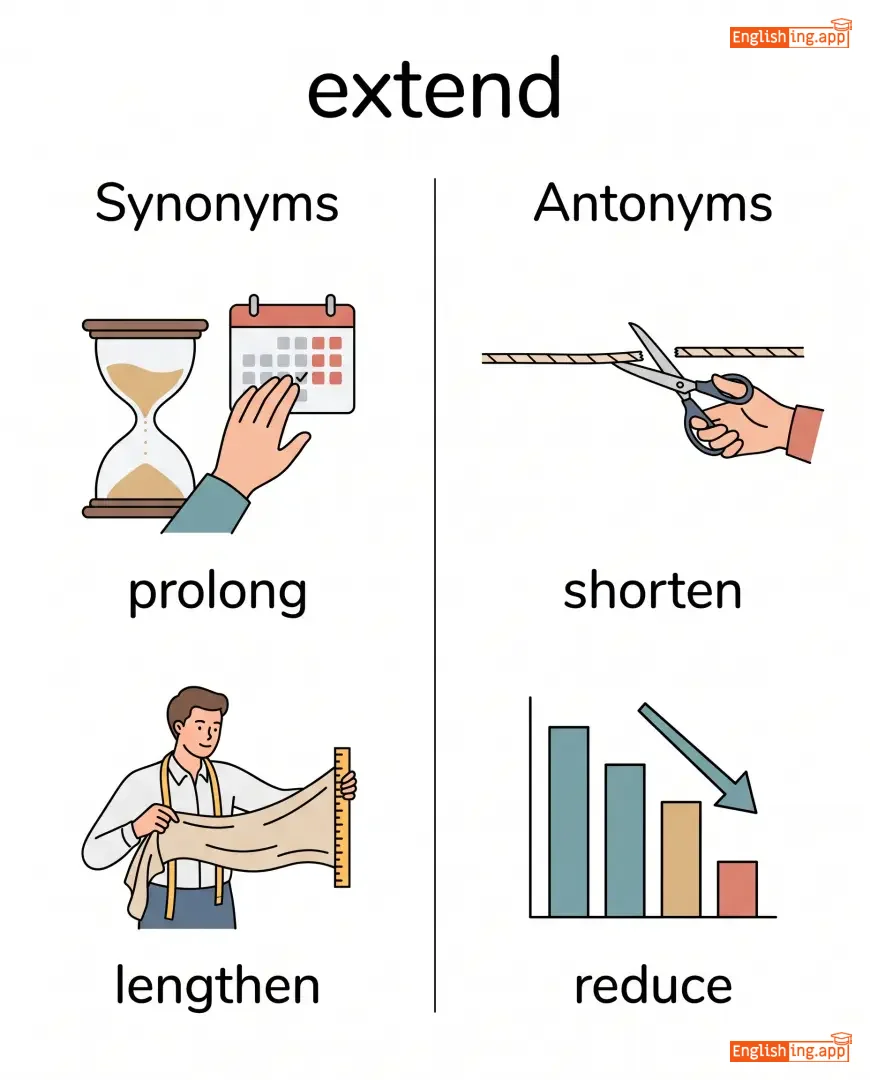
prolong, lengthen, expand, stretch, continue
••••••
|
shorten, reduce, limit
••••••
|
extend a deadline, extend an invitation, extend a hand, extend support
••••••
|
延伸意味着使事物更长,就像伸出手去够到远的东西。
••••••
|
|
📏
••••••
|
/ɪkˈstɛnʃən/
noun
(延伸)
••••••
|
- •••••• |
延伸
yanshen
••••••
|
- •••••• | - •••••• | - •••••• | - •••••• |
a part that is added to something to make it longer or bigger; an increase in time.
••••••
|
She asked for an extension on her assignment deadline. |
她要求延长她的作业截止日期。
Ta yaoqiu yanchang ta de zuoye jiezhi riqi.
••••••
|
hair extension |
artificial hair used to make natural hair longer or fuller
••••••
|
假发延伸
jiafa yanshen
••••••
|
expansion, prolongation, addition, continuation
••••••
|
reduction, contraction
••••••
|
extension cord, deadline extension, extension request, hair extension
••••••
|
延伸就像加时间或加长度
••••••
|
|
📏
••••••
|
/ɪkˈsten.sɪv/
adjective
(艾克斯坦西夫)
••••••
|
- •••••• |
广泛的; 大规模的; 广阔的
guǎngfàn de; dà guīmó de; guǎngkuò de
••••••
|
- •••••• | - •••••• | - •••••• | - •••••• |
covering or affecting a large area; comprehensive; wide-ranging
••••••
|
The company conducted extensive research before launching the new product. |
公司在推出新产品之前进行了广泛的研究。
Gōngsī zài tuīchū xīn chǎnpǐn zhīqián jìnxíngle guǎngfàn de yánjiū.
••••••
|
- •••••• | - •••••• | - •••••• |
comprehensive, vast, wide-ranging, broad
••••••
|
limited, narrow, restricted, small
••••••
|
extensive research, extensive damage, extensive experience
••••••
|
Chinese '广泛' translates to 'extensive'—both cover large areas.
••••••
|
|
🌍
••••••
|
/ɪkˈstɛnsɪvli/
adverb
(ɪk'stɛnsɪvli)
••••••
|
- •••••• |
广泛地
guangfan de
••••••
|
- •••••• | - •••••• | - •••••• | - •••••• |
in a thorough or wide-ranging manner
••••••
|
She traveled extensively across Europe for her research. |
她为她的研究广泛地旅行了欧洲。
Ta wei ta de yanjiu guangfan de lvxing le Ouzhou.
••••••
|
- •••••• | - •••••• | - •••••• |
comprehensively, widely, thoroughly, broadly
••••••
|
narrowly, slightly
••••••
|
extensively researched, extensively traveled, extensively studied
••••••
|
Extensively意味着‘广泛地’,在欧洲各地旅行
••••••
|
|
📏
••••••
|
/ɪkˈstɛnt/
noun
(èksītènt)
••••••
|
- •••••• |
程度
chengdu
••••••
|
- •••••• | - •••••• | - •••••• | - •••••• |
the area, degree, or scope of something
••••••
|
The extent of the damage was greater than expected.
损害的范围超出了预期。
••••••
|
损害的程度超出了预期。
Sunhai de chengdu chaole yùqī.
••••••
|
to some extent
在某种程度上
••••••
|
partially or in a limited way
••••••
|
在某种程度上
zai mou zhong chengdu shang
••••••
|
range, scope, degree, magnitude, scale
••••••
|
limitlessness, insignificance
••••••
|
extent of damage, full extent, great extent, large extent
••••••
|
在做一项任务时,定义范围是关键!
••••••
|
|
🌐
••••••
|
/ɪkˈstɜrnəl/
adjective
(èksuērnào)
••••••
|
- •••••• |
外部的
wàibù de
••••••
|
- •••••• | - •••••• | - •••••• | - •••••• |
situated on or relating to the outside of something; coming from outside
••••••
|
The external factors affected the company's growth. |
外部因素影响了公司的增长。
Wàibù yīnsù yǐngxiǎngle gōngsī de zēngzhǎng.
••••••
|
external affairs |
matters concerning foreign relations
••••••
|
外交事务
wàijiāo shìwù
••••••
|
outer, outside, foreign, exterior
••••••
|
internal, inner
••••••
|
external factors, external affairs, external pressure
••••••
|
External 意味着外部,就像外部硬盘。
••••••
|
|
🌐
••••••
|
/ɪkˈstɜrnəli/
adverb
(外部利)
••••••
|
- •••••• |
外部地
waibu de
••••••
|
- •••••• | - •••••• | - •••••• | - •••••• |
in a way that relates to the outer surface or outside appearance
••••••
|
The building appeared externally modern, but inside it was quite old-fashioned.
这栋建筑外部看起来很现代,但里面相当老式。
••••••
|
这栋建筑外部看起来很现代,但里面相当老式。
Zhe dong jianzhu waibu kan qilai hen xiandai, dan limian xiangdang laoshi.
••••••
|
- •••••• | - •••••• | - •••••• |
outwardly, superficially, apparently, on the surface
••••••
|
internally, inherently
••••••
|
externally visible, externally applied, externally influenced
••••••
|
外部地 (waibu de) = think 'outside', like external
••••••
|
|
➕
••••••
|
/ˈɛkstrə/
adjective
(额外)
••••••
|
- •••••• |
额外的
éwài de
••••••
|
- •••••• | - •••••• | - •••••• | - •••••• |
More than what is usual, expected, or necessary
••••••
|
She brought some extra food for the picnic. |
她为野餐带来了额外的食物。
Tā wèi yěcān dài lái le éwài de shíwù.
••••••
|
go the extra mile |
to make a special effort to achieve something
••••••
|
走得更远
zǒu dé gèng yuǎn
••••••
|
additional, surplus, excess, supplementary, spare
••••••
|
lacking, insufficient, scarce
••••••
|
extra effort, extra cost, extra time, extra charge
••••••
|
Extra = 额外 = 多
••••••
|
|
🪥
••••••
|
/ɪkˈstrækt/
verb
(提取)
••••••
|
- •••••• |
提取
tíqǔ
••••••
|
extracted
提取了
••••••
|
extracted
提取了
••••••
|
extracts
提取
••••••
|
extracting
提取
••••••
|
to remove or take out something, often with effort
••••••
|
The dentist had to extract the damaged tooth.
牙医不得不提取受损的牙齿。
••••••
|
牙医不得不提取受损的牙齿。
Yáyī bùdébù tíqǔ shòusǔn de yáchǐ.
••••••
|
extract the essence
提取精华
••••••
|
to capture the most important part of something
••••••
|
提取精华
tíqǔ jīnghuá
••••••
|
remove, withdraw, derive, obtain, draw out
••••••
|
insert, embed, implant
••••••
|
extract information, extract juice, extract oil, extract data
••••••
|
提取是像牙齿提取或提取精华一样的东西!
••••••
|
|
🌟
••••••
|
/ɪkˈstrɔːr.dəˌnɛr.i/
adjective
(特外普通)
••••••
|
- •••••• |
非凡
feifan
••••••
|
- •••••• | - •••••• | - •••••• | - •••••• |
Very unusual, remarkable, or exceptional.
••••••
|
She showed extraordinary courage during the crisis. |
她在危机中表现出非凡的勇气。
Ta zai weiji zhong biaoxian chu feifan de yongqi.
••••••
|
extraordinary measures |
Unusual or extreme actions taken in a situation
••••••
|
非凡的措施
Feifan de cuoshi
••••••
|
remarkable, exceptional, amazing, outstanding, phenomenal
••••••
|
ordinary, normal, usual
••••••
|
extraordinary achievement, extraordinary courage, extraordinary circumstances, extraordinary measures
••••••
|
Extra + ordinary = 非凡的与普通不同。
••••••
|
|
⚠️
••••••
|
/ɪkˈstriːm/
adjective
(ik-suh-trim)
••••••
|
|
极端
jíduān
••••••
|
- •••••• | - •••••• | - •••••• | - •••••• |
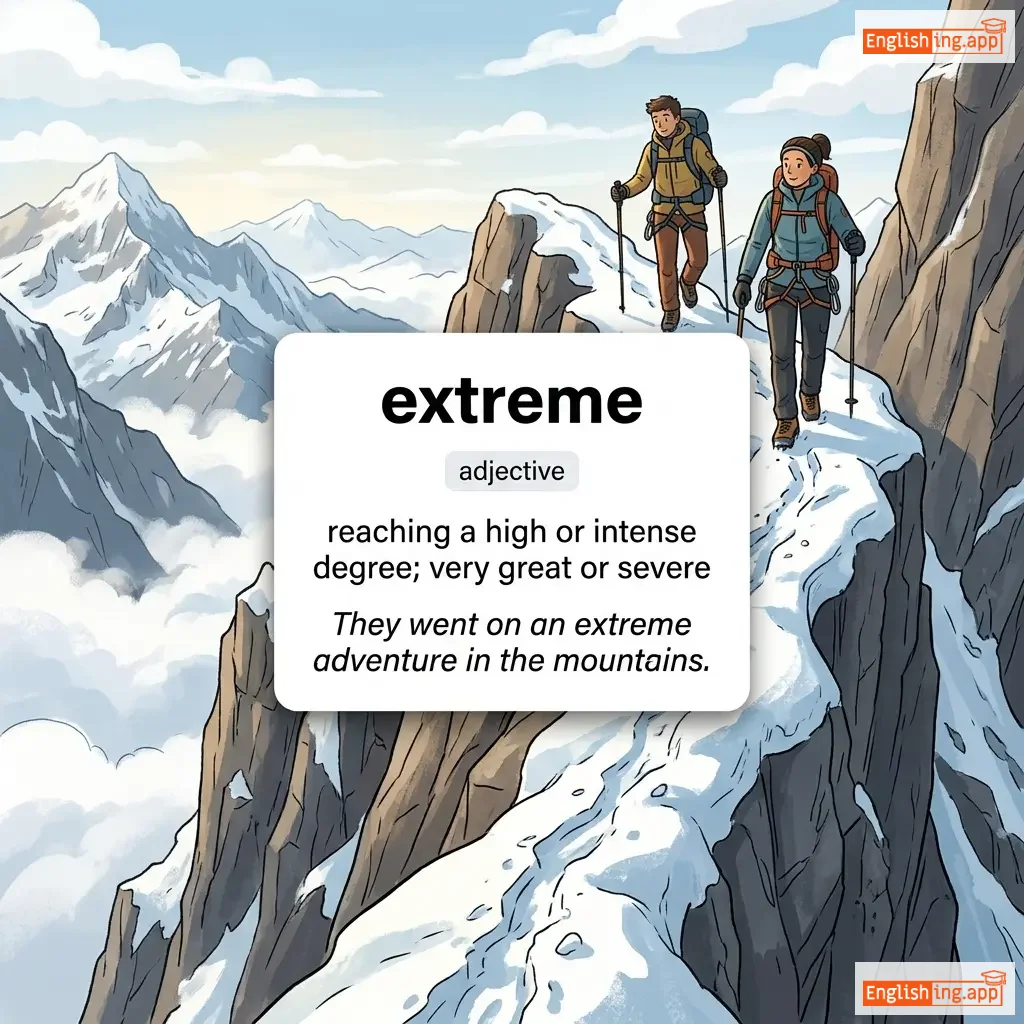
reaching a high or intense degree; very great or severe
••••••
|
They went on an extreme adventure in the mountains. |
他们去山区进行了一次极限冒险。
Tāmen qù shānqū jìnxíngle yīcì jíxiàn màoxiǎn.
••••••
|
go to extremes |
to do something in an excessive or exaggerated way
••••••
|
走极端
zǒu jíduān
••••••
|
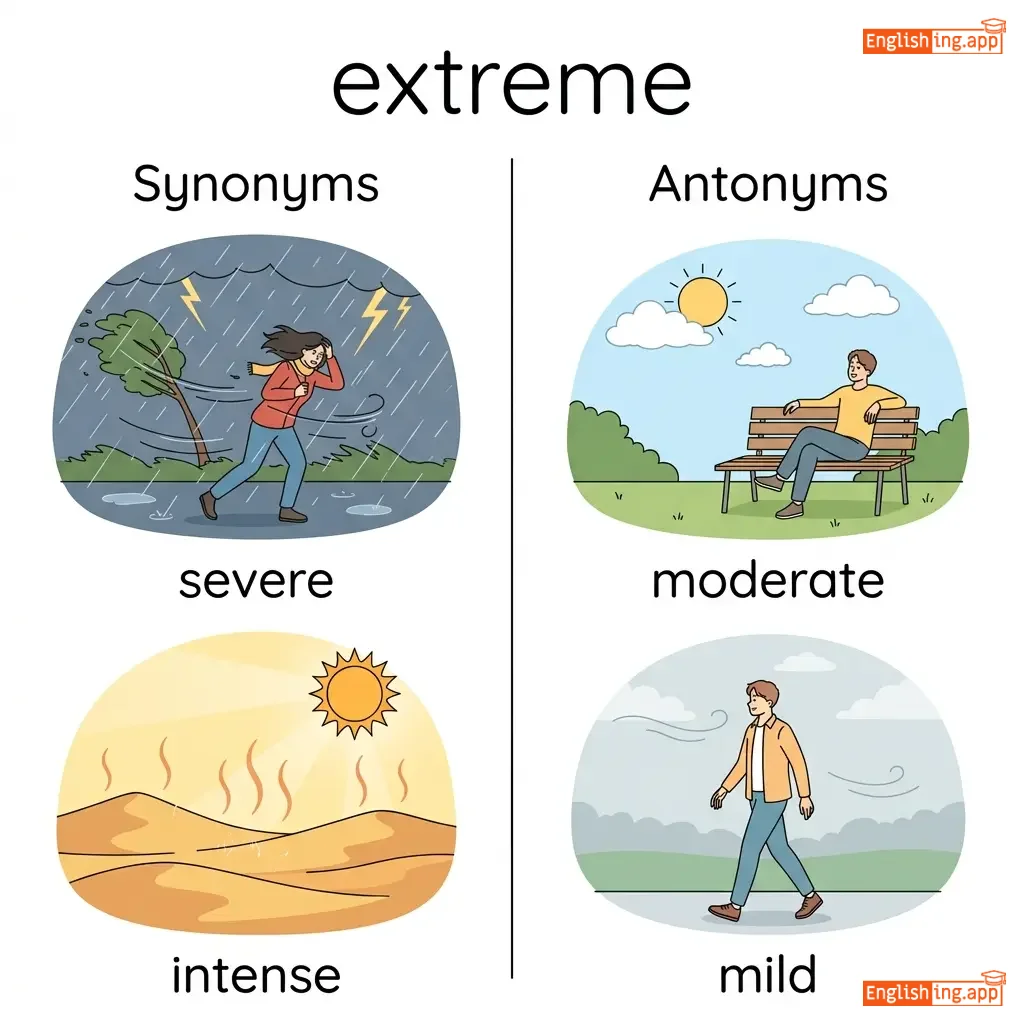
severe, intense, excessive, radical, ultimate
••••••
|
moderate, mild, ordinary
••••••
|
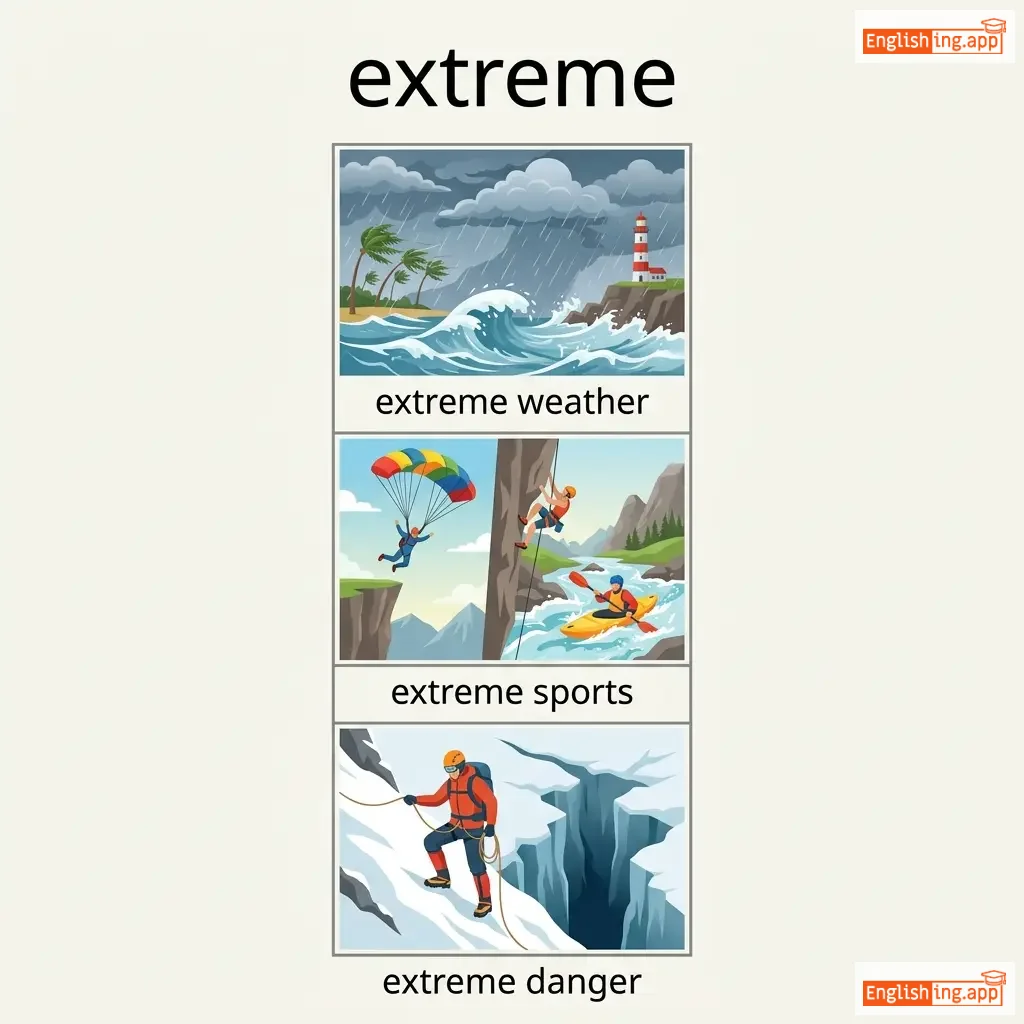
extreme weather, extreme sports, extreme danger, extreme measures
••••••
|
Extreme意思就是极端,像极端情况一样。
••••••
|
|
🔥
••••••
|
/ɪkˈstriːm.li/
adverb
(yīkèxīmuīlì)
••••••
|
- •••••• |
极其
jiqi
••••••
|
- •••••• | - •••••• | - •••••• | - •••••• |
to a very high degree; exceptionally
••••••
|
The weather today is extremely hot and humid. |
今天的天气极其炎热和潮湿。
Jīntiān de tiānqì jíqí yánrè hé cháoshī.
••••••
|
- •••••• | - •••••• | - •••••• |
very, exceptionally, tremendously
••••••
|
slightly, moderately, barely
••••••
|
extremely important, extremely difficult, extremely happy
••••••
|
记住极其 (jíqí) 对应英语的 extremely。
••••••
|
|
⚡
••••••
|
/ɪkˈstriː.mɪst/
noun
(ɪkˈstrɪːmɪst)
••••••
|
- •••••• |
极端分子
jíduān fènzǐ
••••••
|
- •••••• | - •••••• | - •••••• | - •••••• |
a person who holds extreme political or religious views
••••••
|
The government is taking measures to prevent extremist activities. |
政府正在采取措施防止极端分子活动。
zhèngfǔ zhèngzài cǎiqǔ cuòshī fángzhǐ jíduān fènzǐ huódòng.
••••••
|
- •••••• | - •••••• | - •••••• |
radical, fanatic, militant, fundamentalist
••••••
|
moderate, centrist, liberal, tolerant
••••••
|
political extremist, religious extremist, extremist group
••••••
|
极端分子常常推崇极端的思想。
••••••
|
|
👁️
••••••
|
/aɪ/
noun
(aī)
••••••
|
- •••••• |
眼睛
yanjing
••••••
|
- •••••• | - •••••• | - •••••• | - •••••• |
the organ in the head through which people and animals see
••••••
|
She closed her eyes and went to sleep. |
她闭上了眼睛,去睡觉了。
Ta bì shàngle yǎnjīng, qù shuìjiàole.
••••••
|
keep an eye on |
to watch carefully or look after
••••••
|
留意
liúyì
••••••
|
vision, sight, gaze, view, look
••••••
|
blindness, neglect
••••••
|
eye contact, eye color, keep an eye, eye for detail
••••••
|
Eye表示'眼睛',所以'Keep an eye'表示'留意'。
••••••
|

