Получите неограниченный доступ ко всем словам с подпиской Pro
Обновить до ProПолучите неограниченный доступ ко всем предложениям с подпиской Pro
Обновить до Pro|
Эмодзи
|
Слово | Images | Перевод | Прошедшее | Причастие прошедшего времени | Третье лицо единственного числа | Герундий | Значение | Пример предложения | Перевод примера предложения | Пример выражения | Значение примера выражения | Перевод примера выражения | Синонимы | Антонимы | Коллокации | Мнемоника |
|---|---|---|---|---|---|---|---|---|---|---|---|---|---|---|---|---|---|
|
🖼️
••••••
|
/ˌɛksɪˈbɪʃən/
noun
(eksibishion)
••••••
|
- •••••• |
выставка
vystavka
••••••
|
- •••••• | - •••••• | - •••••• | - •••••• |
a public display of works of art, products, or other items of interest
••••••
|
The art exhibition attracted thousands of visitors. |
Выставка искусства привлекла тысячи посетителей.
Vystavka iskusstva privlekla tysyachi posetiteley.
••••••
|
put on an exhibition |
to organize or display something for public viewing
••••••
|
организовать выставку
organizovat vystavku
••••••
|
display, show, presentation, exposition, fair
••••••
|
concealment, hiding
••••••
|
art exhibition, trade exhibition, science exhibition, put on an exhibition
••••••
|
Exhibition - это выставка, где EXtra вещи могут быть увидены всеми.
••••••
|
|
🏝️
••••••
|
/ˈek.saɪl/
noun
(eksail)
••••••
|
- •••••• |
изгнание
izgnanie
••••••
|
- •••••• | - •••••• | - •••••• | - •••••• |
the state of being barred from one's native country; enforced removal from one's homeland
••••••
|
The political leader was forced into exile after the military coup.
Политический лидер был вынужден покинуть страну после военного переворота.
••••••
|
Политический лидер был вынужден покинуть страну после военного переворота.
Politicheskiy lider byl vynuzhden pokinut' stranu posle voyennogo perevorota.
••••••
|
- •••••• | - •••••• | - •••••• |
banishment, deportation, expulsion, ostracism
••••••
|
return, homecoming, welcome, inclusion
••••••
|
forced exile, political exile, exile from homeland
••••••
|
Imagine a leader being forced into exile after a military coup.
••••••
|
|
🌍
••••••
|
/ɪɡˈzɪst/
verb
(ik-sist)
••••••
|
- •••••• |
существовать
sushchestvovat
••••••
|
existed
ik-sisted
••••••
|
existed
ik-sisted
••••••
|
exists
ik-sists
••••••
|
existing
ik-sisting
••••••
|
to have actual being; to be real or present
••••••
|
Dinosaurs no longer exist on Earth.
Динозавры больше не существуют на Земле.
••••••
|
Динозавры больше не существуют на Земле.
Dinozavry bol'she ne sushchestvuyut na Zemle.
••••••
|
exist in name only
существовать только на бумаге
••••••
|
to have no real power or function despite existing formally
••••••
|
существовать только на бумаге
sushchestvovat tol'ko na bumage
••••••
|
live, survive, endure, be
••••••
|
perish, disappear, vanish
••••••
|
still exist, continue to exist, exist only, exist in reality
••••••
|
Существовать значит быть реальным, как экзамен, который всегда существует в нашей жизни.
••••••
|
|
🌍
••••••
|
/ɪɡˈzɪstəns/
noun
(эксистенс)
••••••
|
- •••••• |
существование
sushchestvovanie
••••••
|
- •••••• | - •••••• | - •••••• | - •••••• |
The state of being alive or having real presence.
••••••
|
The existence of life on other planets is still uncertain.
Существование жизни на других планетах всё ещё неясно.
••••••
|
Существование жизни на других планетах всё ещё неясно.
Sushchestvovanie zhizni na drugikh planetakh vsyo yeshcho neyashchno.
••••••
|
come into existence
приходить в существование
••••••
|
to begin to exist or start being present
••••••
|
приходить в существование
prikhodit' v sushchestvovaniye
••••••
|
being, presence, reality, life, survival
••••••
|
nonexistence, nothingness, extinction
••••••
|
human existence, existence of life, struggle for existence, existence proof
••••••
|
Существование означает 'жизнь' на другой планете.
••••••
|
|
📜
••••••
|
/ɪɡˈzɪstɪŋ/
adjective
(игзистинг)
••••••
|
|
существующий
sushchestvuyushchiy
••••••
|
- •••••• | - •••••• | - •••••• | - •••••• |
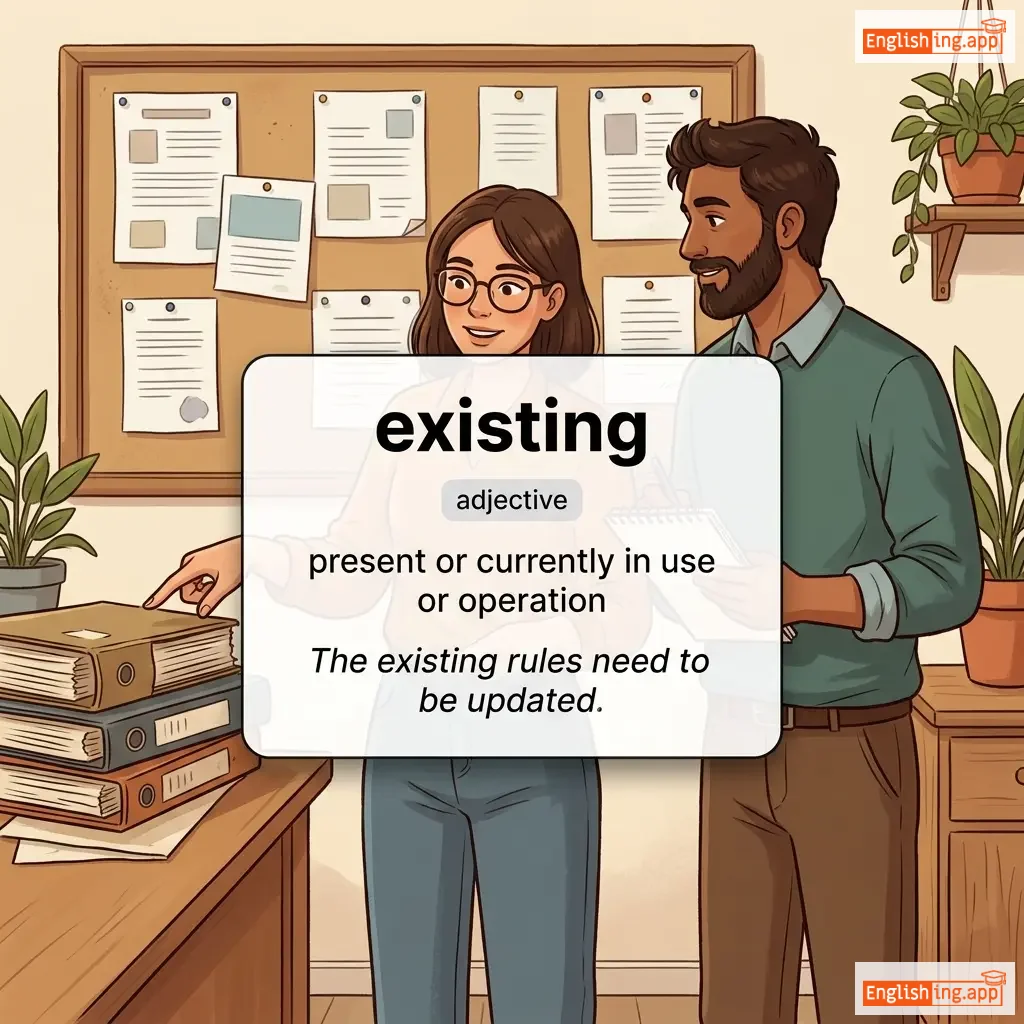
present or currently in use or operation
••••••
|
The existing rules need to be updated. |
Существующие правила должны быть обновлены.
Sushchestvuyushchie pravila dolzhny byt' obnavleny.
••••••
|
- •••••• | - •••••• | - •••••• |
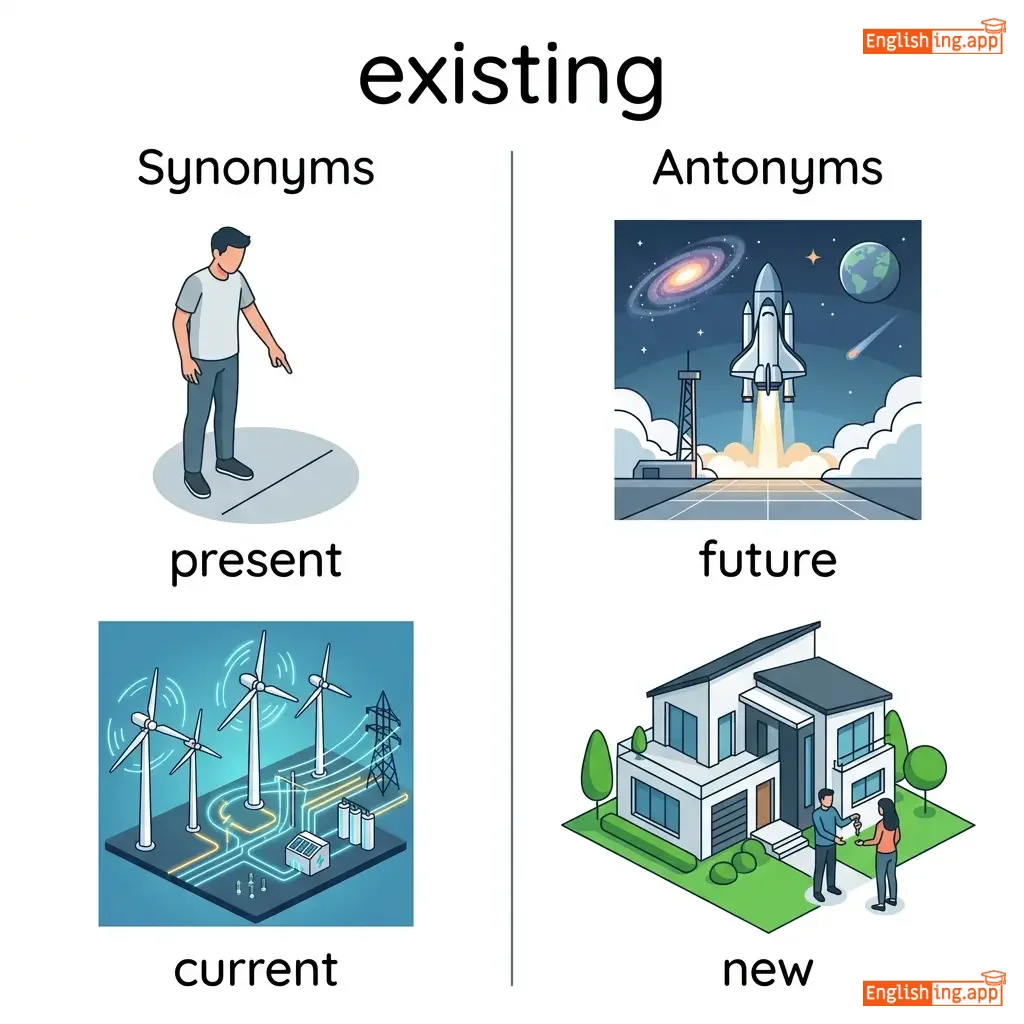
present, current, available, ongoing
••••••
|
future, new, upcoming
••••••
|
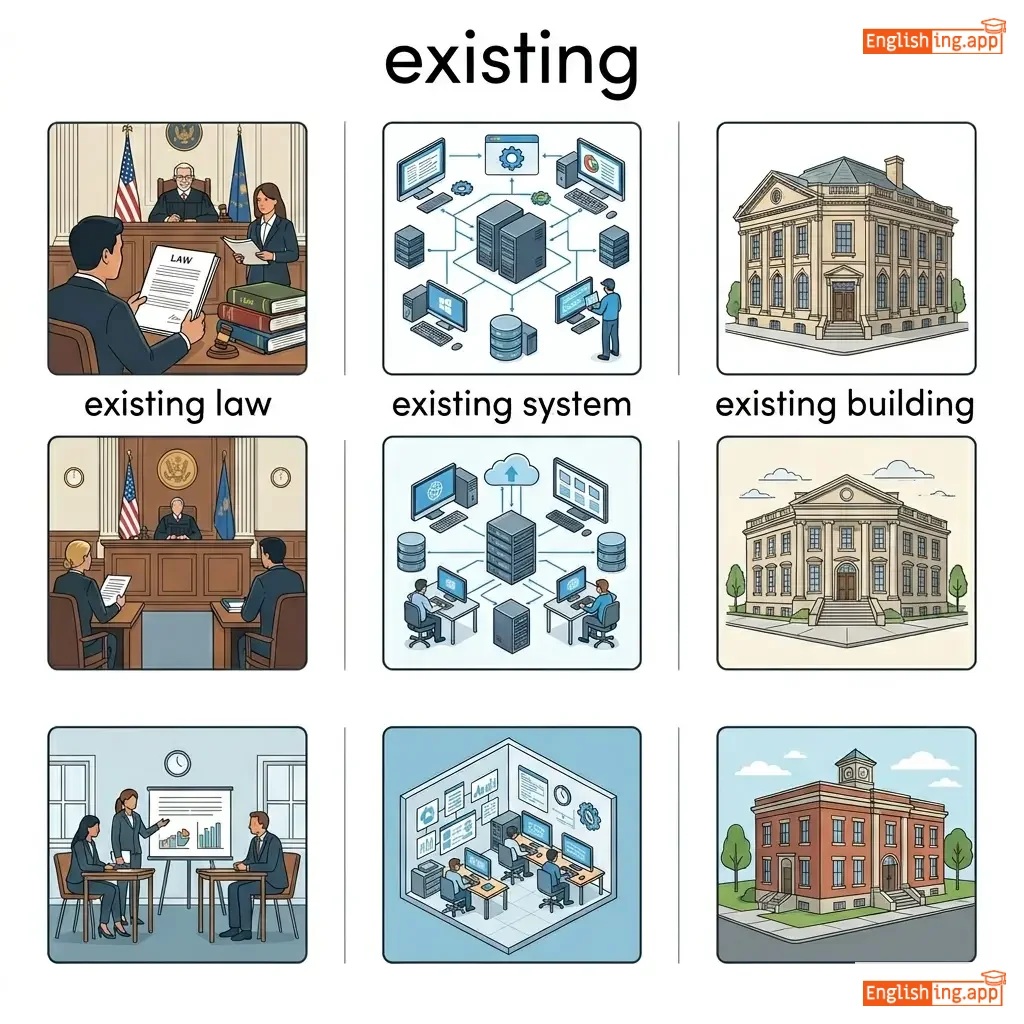
existing law, existing system, existing building, existing structure
••••••
|
Existing означает существующий, как существующие правила экзамена.
••••••
|
|
🚪
••••••
|
/ˈɛɡzɪt/
noun/verb
(экзит)
••••••
|
- •••••• |
выход
vykhod
••••••
|
exited
экзитед
••••••
|
exited
экзитед
••••••
|
exits
экзитс
••••••
|
exiting
экзитинг
••••••
|
A way out of a place; the act of leaving.
••••••
|
He quickly found the nearest exit during the fire drill.
Он быстро нашел ближайший выход во время тренировки по пожарной безопасности.
••••••
|
Он быстро нашел ближайший выход во время тренировки по пожарной безопасности.
On bystro nashel blizhayshiy vykhod vo vremya trenirovki po pozharnoy bezopasnosti.
••••••
|
make an exit
сделать выход
••••••
|
to leave a place, often noticeably
••••••
|
уйти
uyti
••••••
|
departure, way out, escape, egress, leaving
••••••
|
entrance, arrival, entry
••••••
|
emergency exit, exit door, exit route, exit point
••••••
|
Exit 🚪 означает выйти — Exit означает 'выход'.
••••••
|
|
🌺
••••••
|
/ɪɡˈzɑːtɪk/
adjective
(экзотик)
••••••
|
- •••••• |
экзотический и привлекательный
ekzoticheskiy i privlekatel'nyy
••••••
|
- •••••• | - •••••• | - •••••• | - •••••• |
Unusual and attractive because it is from a foreign place or culture.
••••••
|
The garden was filled with exotic plants from tropical countries. |
Сад был заполнен экзотическими растениями из тропических стран.
Sad byl zapolnen ekzoticheskimi rasteniyami iz tropicheskikh stran.
••••••
|
exotic beauty |
Unusual and striking attractiveness
••••••
|
экзотическая красота
ekzoticheskaya krasota
••••••
|
foreign, unusual, rare, tropical, extraordinary
••••••
|
ordinary, common, familiar
••••••
|
exotic plants, exotic animals, exotic beauty, exotic location
••••••
|
Экзотический = Захватывающий + Иностранный, что-то привлекающее из другого места.
••••••
|
|
📈
••••••
|
/ɪkˈspænd/
verb
(экспанд)
••••••
|
- •••••• |
расширять
rasshiryat
••••••
|
expanded
экспандировал
••••••
|
expanded
экспандировал
••••••
|
expands
экспандирует
••••••
|
expanding
экспандируя
••••••
|
To increase in size, number, or importance.
••••••
|
The company plans to expand its operations into new markets.
Компания планирует расширять свои операции на новые рынки.
••••••
|
Компания планирует расширять свои операции на новые рынки.
Kompaniya planiruet rasshiryat svoi operatsii na novye rynki.
••••••
|
expand horizons
расширить горизонты
••••••
|
To broaden one's experiences or knowledge
••••••
|
расширить горизонты
rasshiryat gorizonty
••••••
|
enlarge, grow, extend, broaden, increase
••••••
|
shrink, contract, reduce
••••••
|
expand business, expand market, expand knowledge, expand rapidly
••••••
|
Расширять - это как увеличивать свой опыт, как если бы компания расширяла свои горизонты.
••••••
|
|
📈
••••••
|
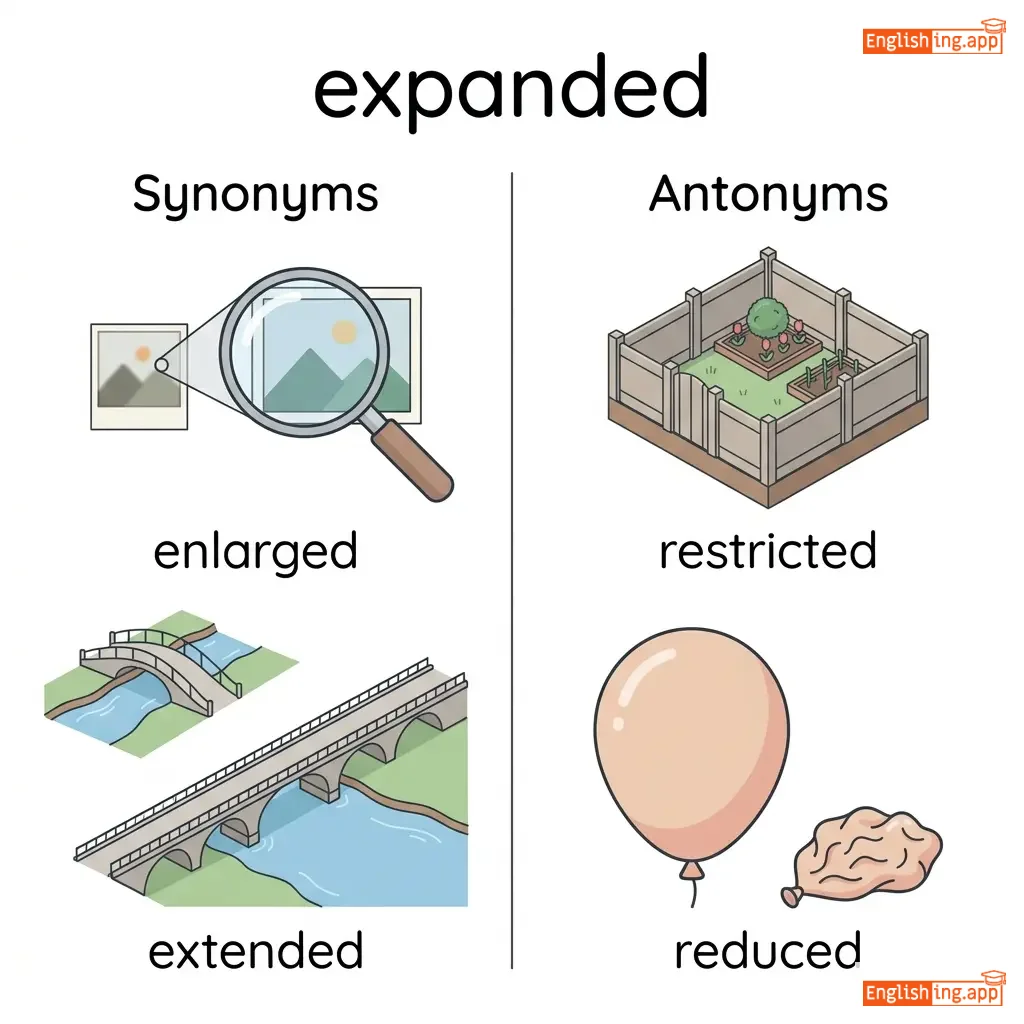
ɪkˈspændɪd
verb
(ikspandid)
••••••
|
|
расширенный
rasshirennyy
••••••
|
- •••••• | - •••••• | - •••••• | - •••••• |
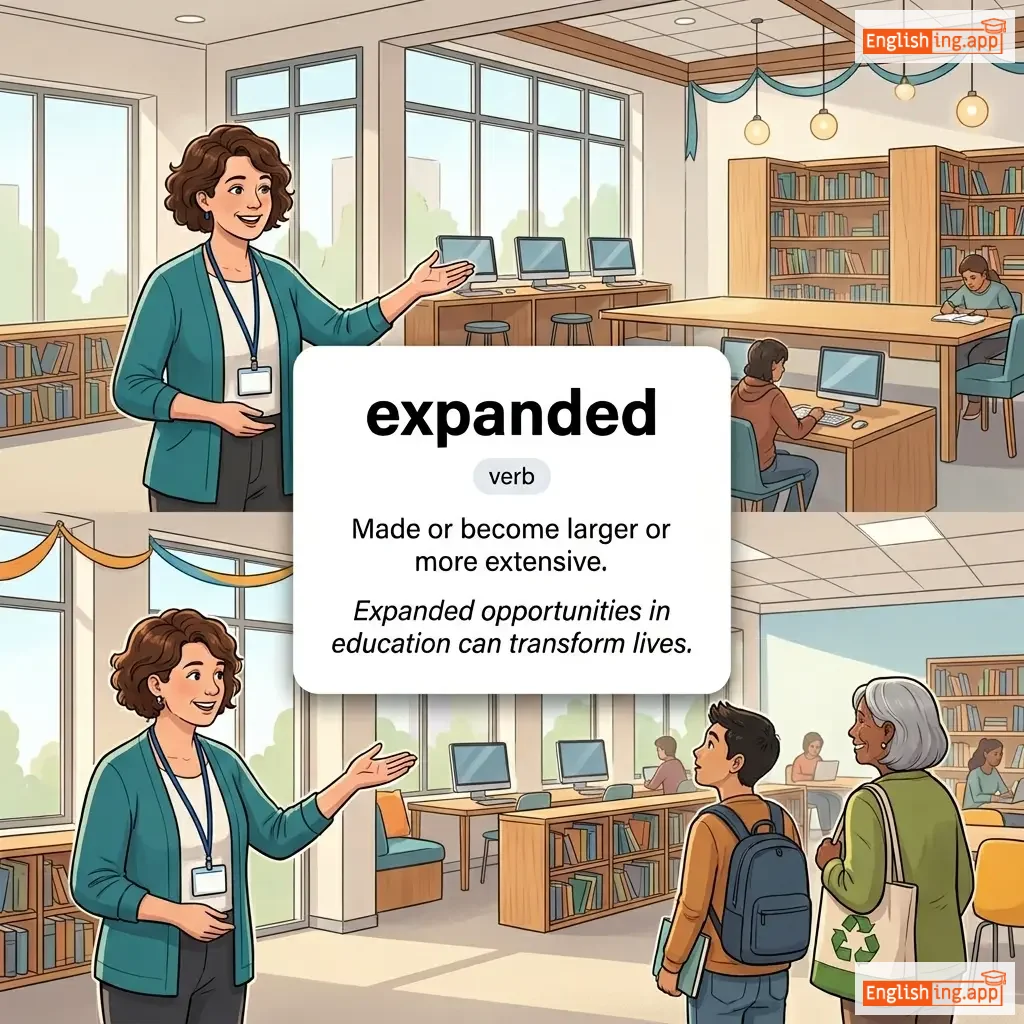
Made or become larger or more extensive.
••••••
|
Expanded opportunities in education can transform lives. |
Расширенные возможности в образовании могут изменить жизни.
Rasshirennye vozmozhnosti v obrazovanii mogut izmenit' zhizni.
••••••
|
- •••••• | - •••••• | - •••••• |
enlarged, extended, increased, broadened, widened, amplified
••••••
|
restricted, reduced, contracted, narrowed, limited, compressed
••••••
|
- •••••• |
Расширение возможностей приносит перемены
••••••
|
|
📈
••••••
|
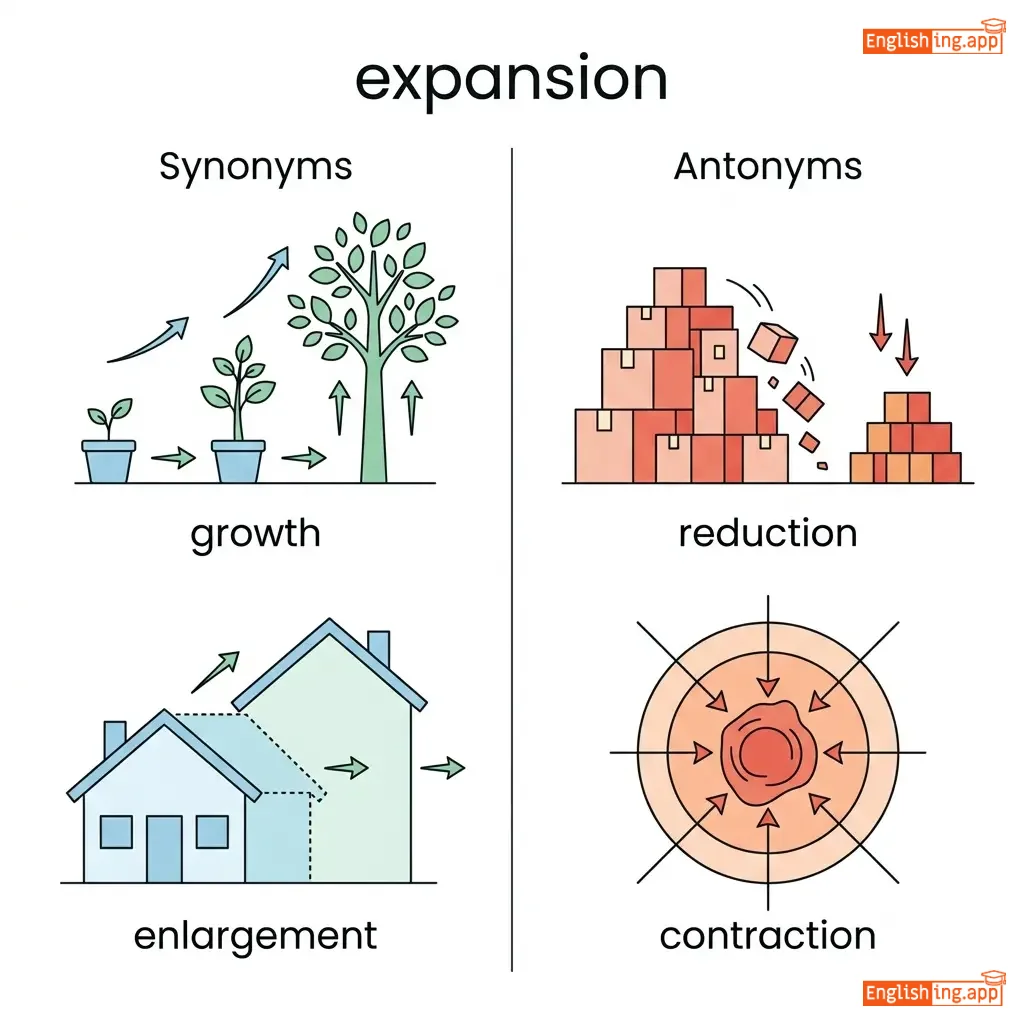
/ɪkˈspænʃən/
noun
(ɪkˈspænʃən)
••••••
|

|
расширение
rasshirenie
••••••
|
- •••••• | - •••••• | - •••••• | - •••••• |
the action of becoming larger, more extensive, or widespread
••••••
|
The company announced its expansion into new markets. |
Компания объявила о расширении на новые рынки.
Kompaniya ob'yavila o rasshirenii na novye rynki.
••••••
|
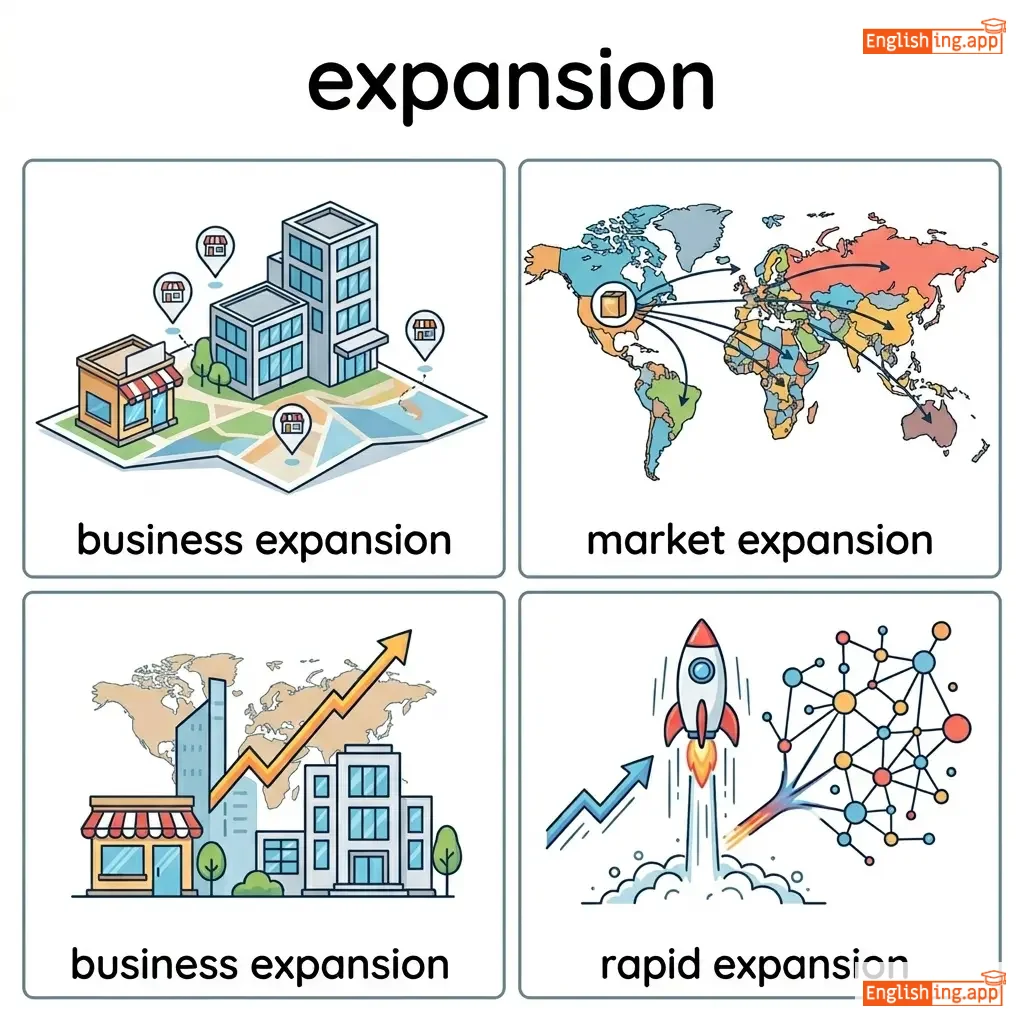
rapid expansion |
a very fast growth or increase
••••••
|
быстрое расширение
bystroye rasshireniye
••••••
|
growth, enlargement, increase, extension, development
••••••
|
reduction, contraction, decline
••••••
|
business expansion, market expansion, rapid expansion, territorial expansion
••••••
|
Расширение — это процесс открытия новых возможностей, то же самое, как открыть дополнительные двери.
••••••
|
|
🤔
••••••
|
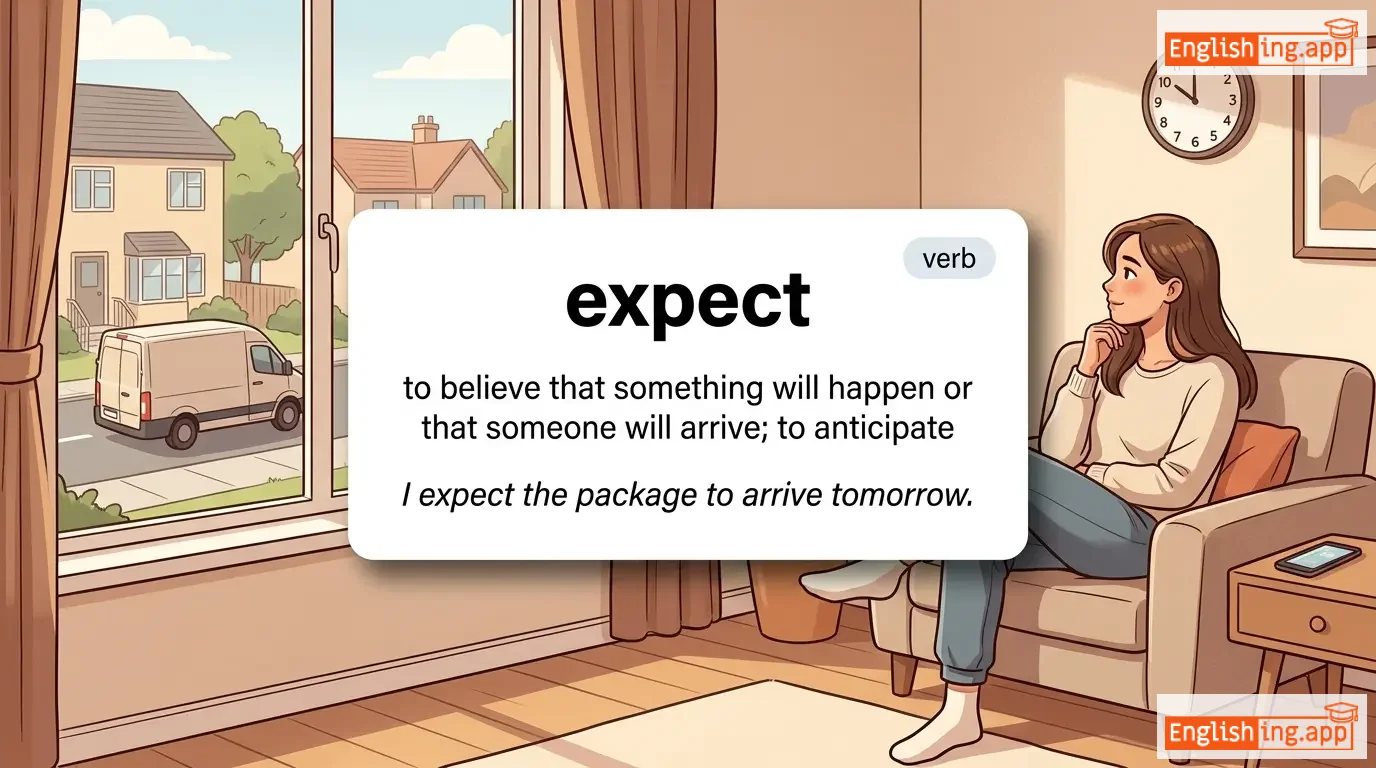
/ɪkˈspɛkt/
verb
(экспект)
••••••
|

|
ожидать
ozhidayt
••••••
|
expected
экспектед
••••••
|
expected
экспектед
••••••
|
expects
экспектс
••••••
|
expecting
экспектинг
••••••
|
to believe that something will happen or that someone will arrive; to anticipate
••••••
|
I expect the package to arrive tomorrow.
Я ожидаю, что пакет прибудет завтра.
••••••
|
Я ожидаю, что пакет прибудет завтра.
Ya ozhidayu, chto paket pribudet zavtra.
••••••
|
expect the unexpected
ожидать неожиданное
••••••
|
be prepared for surprises or unforeseen events
••••••
|
ожидать неожиданное
ozhidat' neozhidannoe
••••••
|
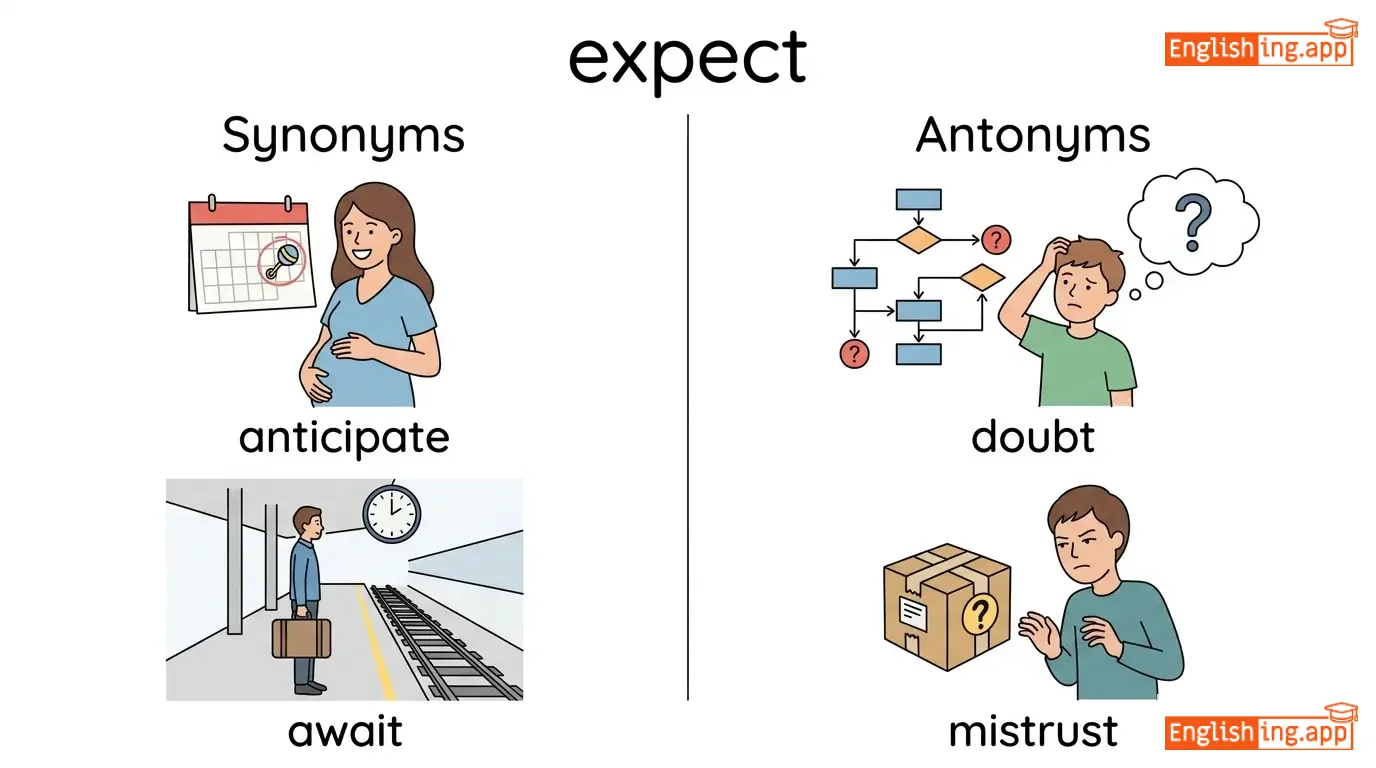
anticipate, await, foresee, predict, assume
••••••
|
doubt, mistrust, question
••••••
|
expect a baby, expect results, expect more, expect the worst
••••••
|
Expect - это ожидать, как ожидать результаты экзамена.
••••••
|
|
🎯
••••••
|
/ˌɛkspɛkˈteɪʃən/
noun
(экспектация)
••••••
|
- •••••• |
ожидание
ozhidanie
••••••
|
- •••••• | - •••••• | - •••••• | - •••••• |
a strong belief that something will happen or be the case
••••••
|
The students had high expectations for their exam results. |
Студенты имели высокие ожидания от своих результатов экзаменов.
Studenty imeli vysokiye ozhidaniya ot svoikh rezul'tatov ekzamenov.
••••••
|
beyond expectations |
better or greater than what was anticipated
••••••
|
за пределами ожиданий
za predelami ozhidaniy
••••••
|
anticipation, hope, belief, outlook, assumption
••••••
|
doubt, disbelief, hopelessness
••••••
|
high expectation, meet expectation, raise expectation, beyond expectation
••••••
|
Ожидание - это то, что мы ожидаем, как, например, высокие ожидания для результатов экзаменов.
••••••
|
|
📊
••••••
|
/ɪkˈspɛktɪd/
adjective
(ekspekted)
••••••
|
|
ожидаемый
ozhidayemyy
••••••
|
- •••••• | - •••••• | - •••••• | - •••••• |
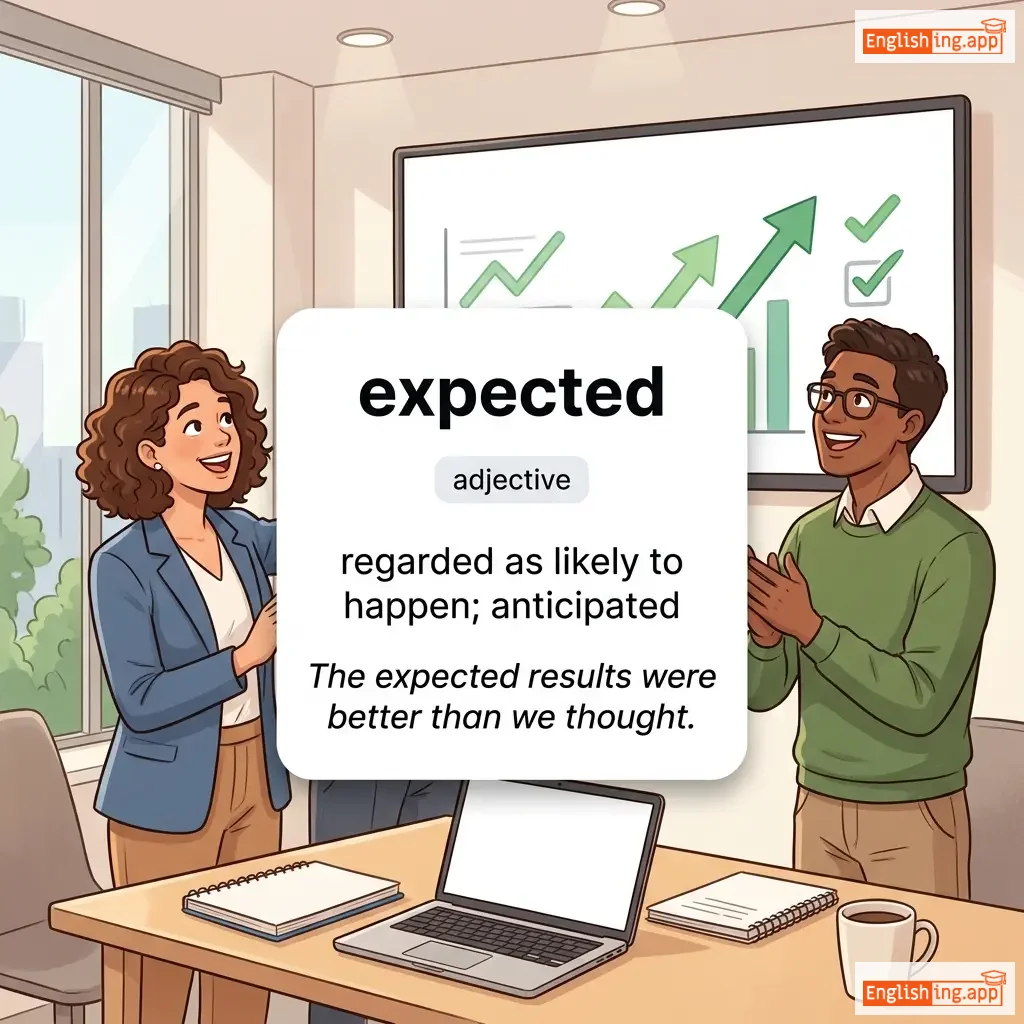
regarded as likely to happen; anticipated
••••••
|
The expected results were better than we thought. |
Ожидаемые результаты были лучше, чем мы думали.
Ozhidayemyye rezul'taty byli luchshe, chem my dumali.
••••••
|
as expected |
in the way that was predicted or anticipated
••••••
|
как ожидалось
kak ozhidalos
••••••
|
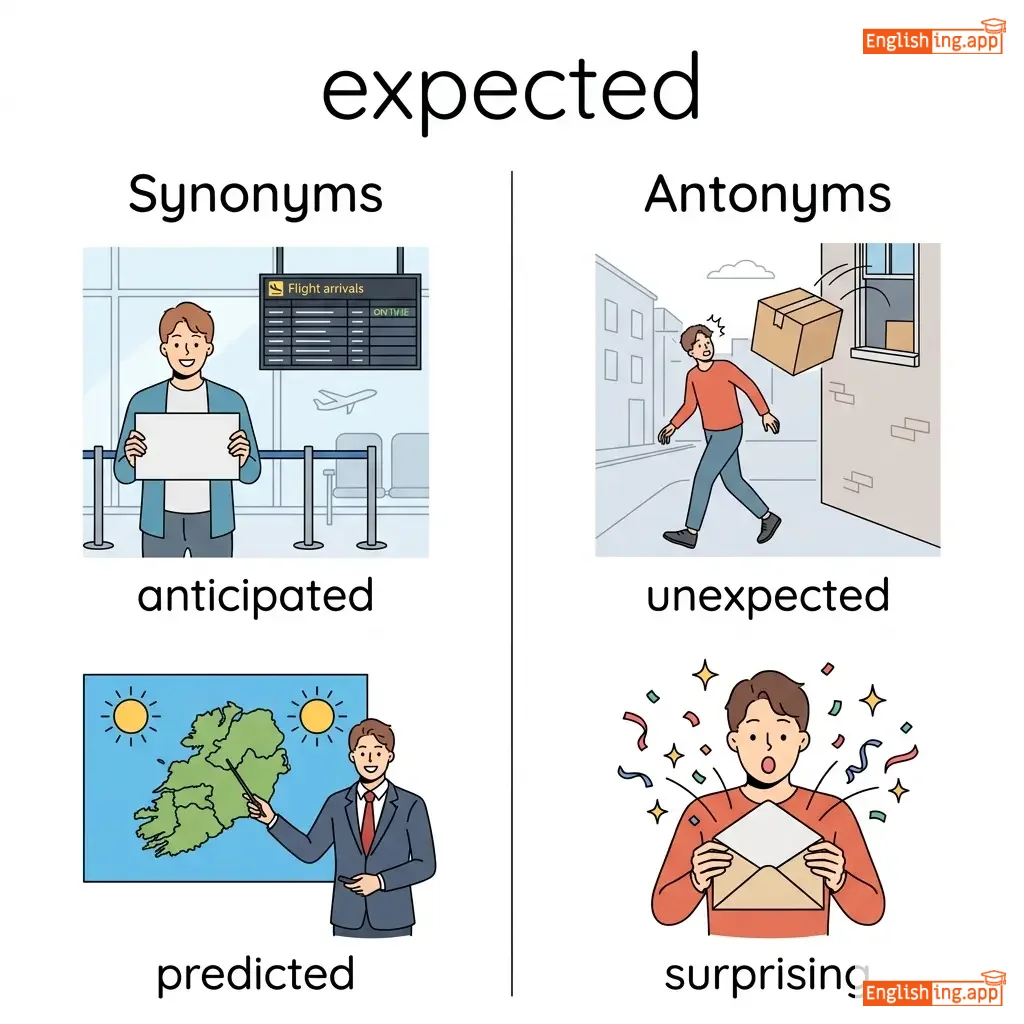
anticipated, predicted, awaited, foreseeable
••••••
|
unexpected, surprising, unforeseen
••••••
|
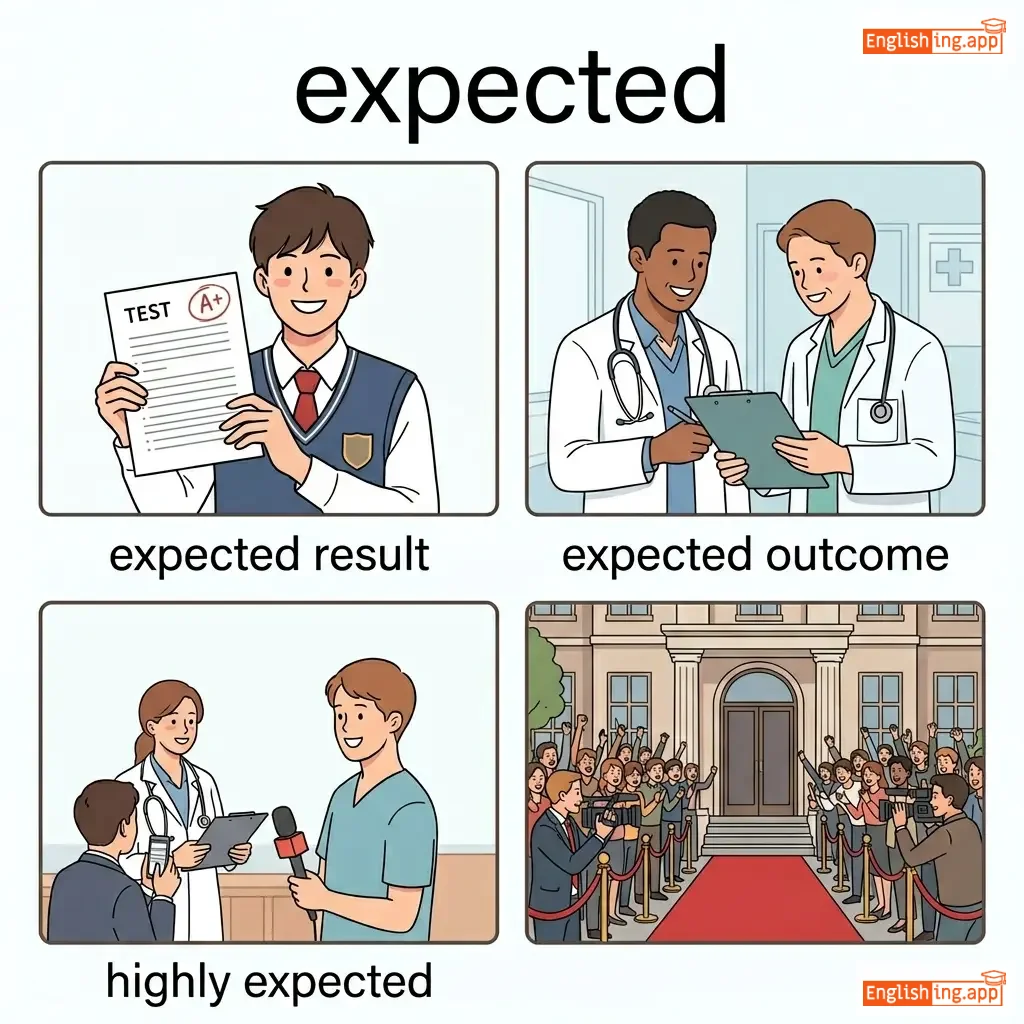
expected result, expected outcome, highly expected, expected arrival
••••••
|
Ожидаемое - это то, что мы предсказали!
••••••
|
|
💸
••••••
|
/ɪkˈspɛnd/
verb
(eks-pend)
••••••
|


|
тратить
tratit
••••••
|
expended
eks-pend-id
••••••
|
expended
eks-pend-id
••••••
|
expends
eks-pend
••••••
|
expending
eks-pend-ing
••••••
|
to use up or spend resources such as time, money, or energy
••••••
|
She expended a lot of energy preparing for the presentation.
Она потратила много энергии, готовясь к презентации.
••••••
|
Она потратила много энергии, готовясь к презентации.
Ona potratila mnogo energii, gotovias' k prezentatsii.
••••••
|
expend effort
тратить усилия
••••••
|
to put in effort or try hard to achieve something
••••••
|
тратить усилия
tratit' usiliya
••••••
|
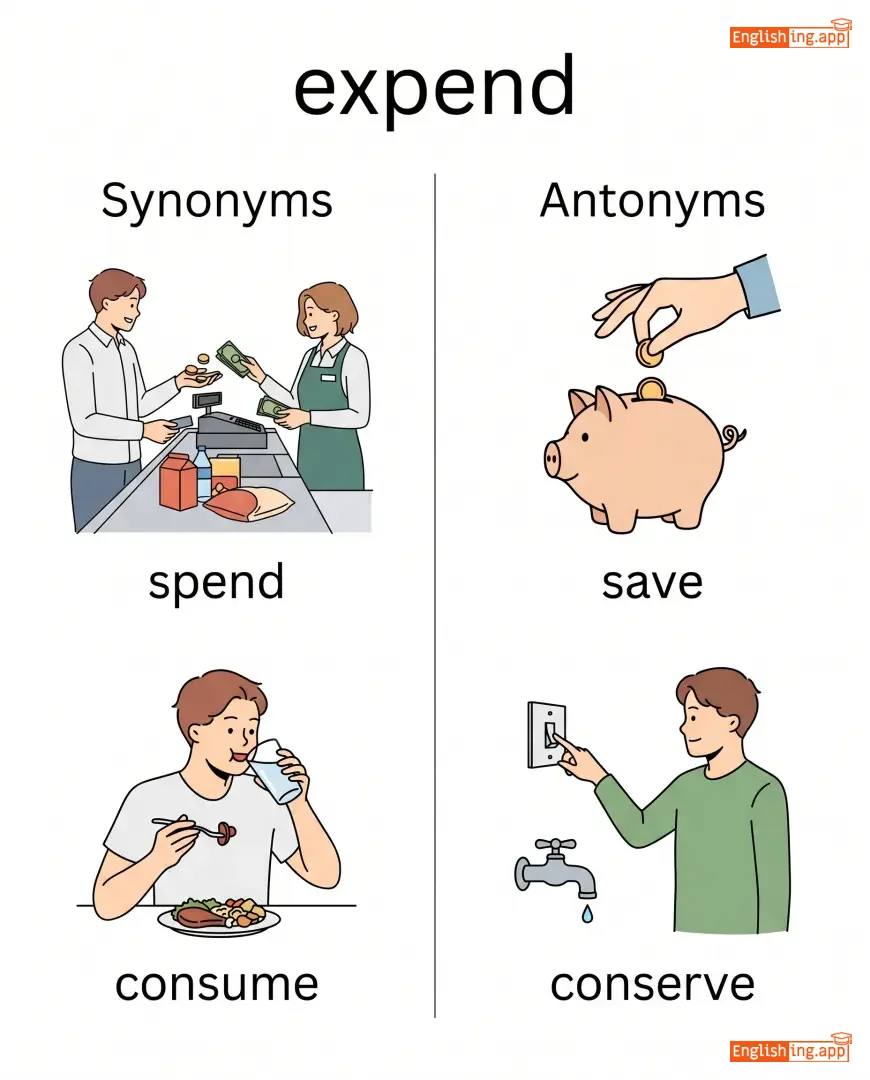
spend, consume, utilize, invest, use
••••••
|
save, conserve, preserve
••••••
|
expend energy, expend effort, expend resources, expend money
••••••
|
Expend как expand в русском: чем больше тратишь, тем больше расширяется.
••••••
|
|
📊
••••••
|
/ɪkˈspɛndɪtʃər/
noun
(eks-pen-di-char)
••••••
|
|
расходы
raskhody
••••••
|
- •••••• | - •••••• | - •••••• | - •••••• |
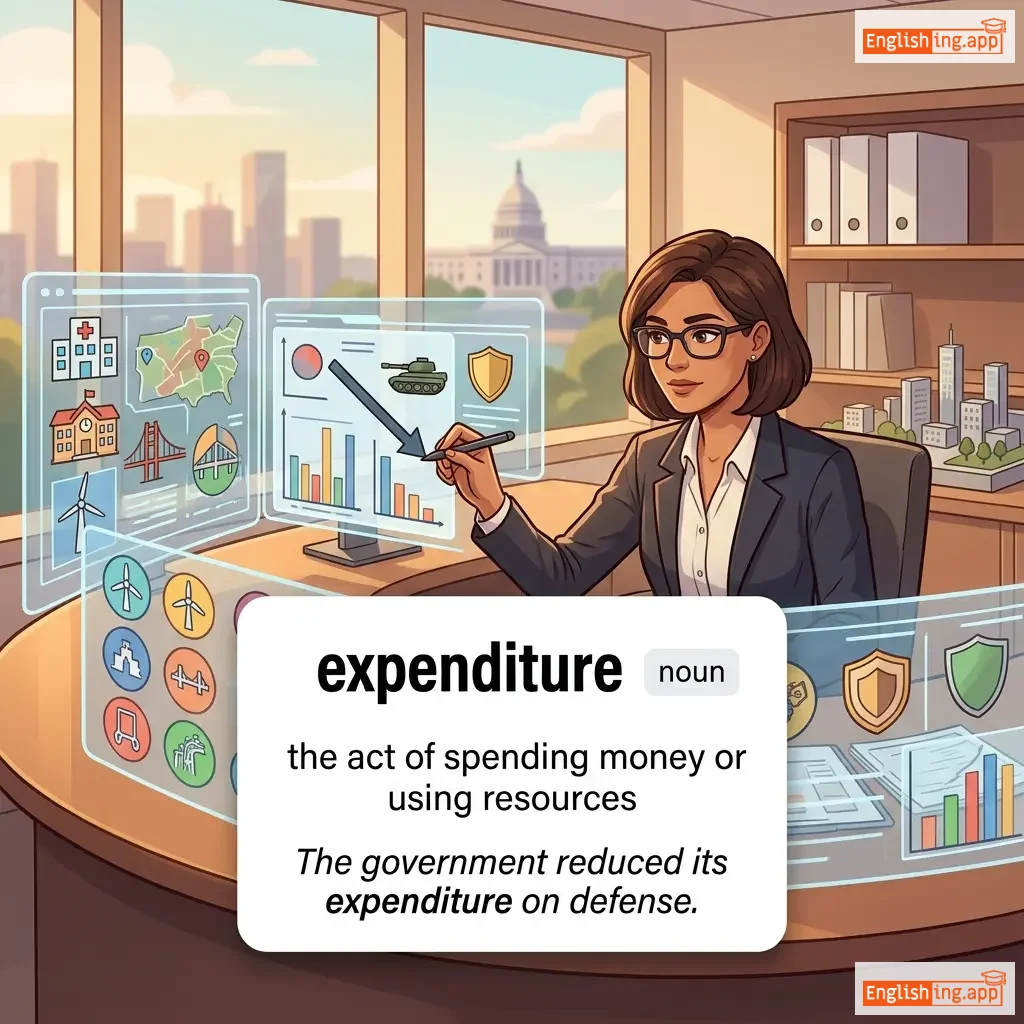
the act of spending money or using resources
••••••
|
The government reduced its expenditure on defense. |
Правительство сократило свои расходы на оборону.
Pravitel'stvo sokratilo svoi raskhody na oboronu.
••••••
|
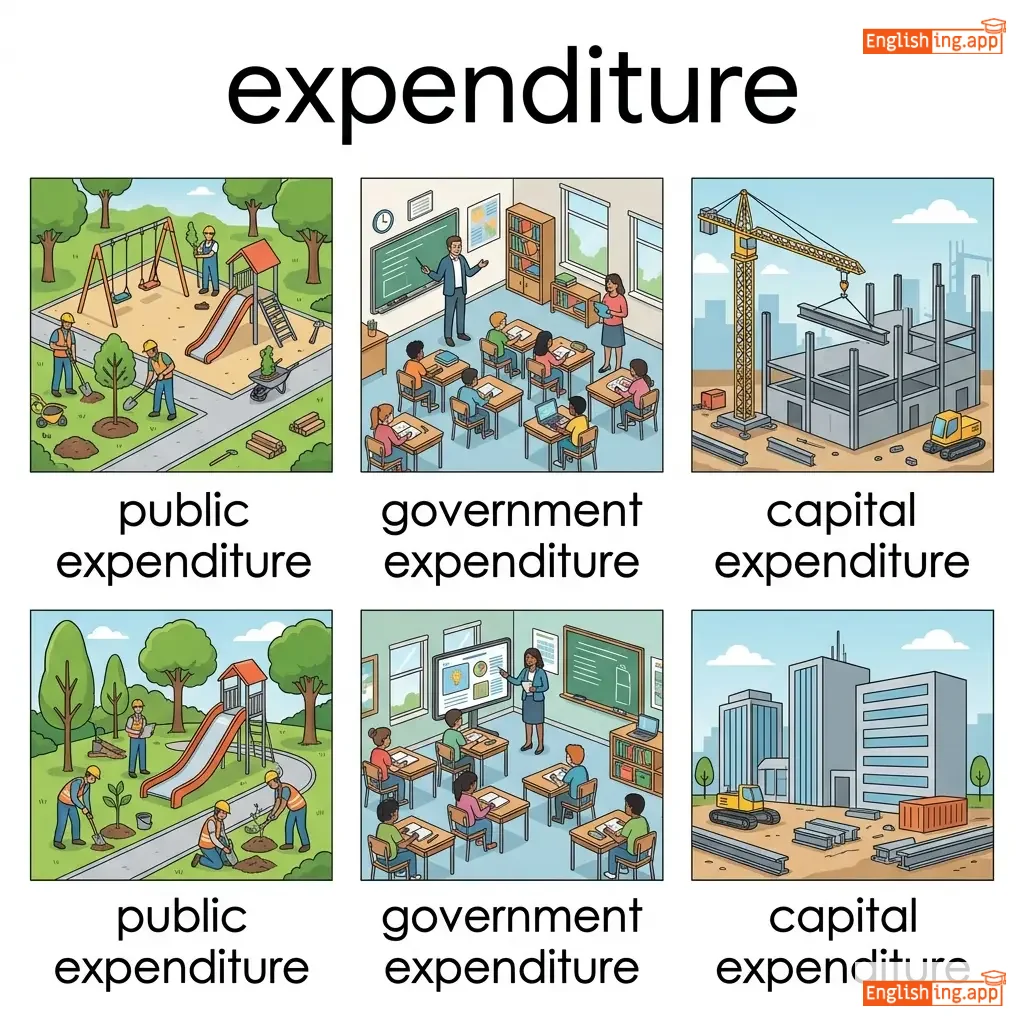
public expenditure |
money spent by the government for public services
••••••
|
государственные расходы
gosudarstvennye raskhody
••••••
|
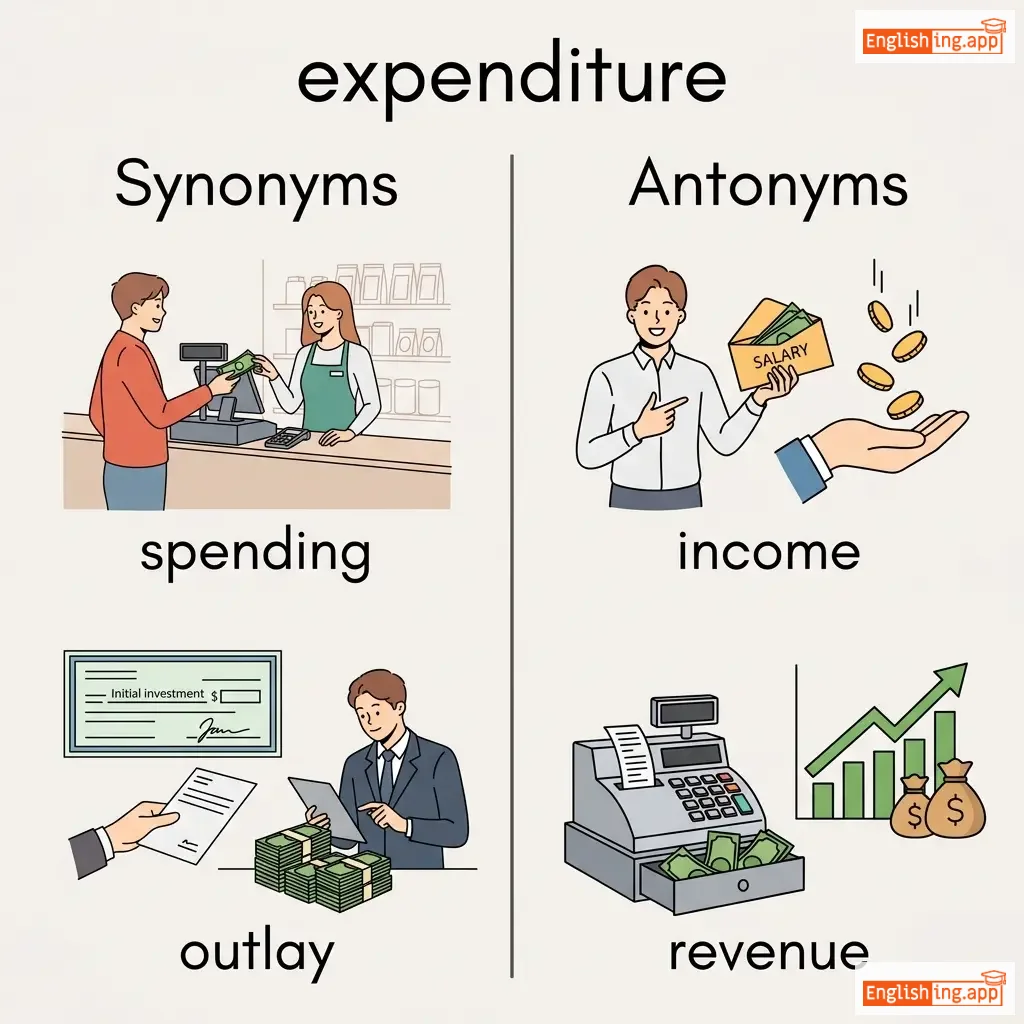
spending, outlay, cost, expense, disbursement
••••••
|
income, revenue, savings
••••••
|
public expenditure, government expenditure, capital expenditure, annual expenditure
••••••
|
Expenditure означает дополнительные расходы = расходы, помни, что на экзаменах всегда есть дополнительные расходы.
••••••
|
|
💰
••••••
|
/ɪkˈspɛns/
noun
(ekspens)
••••••
|
- •••••• |
расход
rakhod
••••••
|
- •••••• | - •••••• | - •••••• | - •••••• |
the cost of something; money spent
••••••
|
Traveling abroad can be a major expense. |
Путешествия за границу могут быть значительными расходами.
Puteshestviya za granitsu mogut byt' znachitelnymi raskhodami.
••••••
|
at the expense of |
with loss or damage to something else
••••••
|
за счет
za schet
••••••
|
cost, charge, price, spending, outlay
••••••
|
profit, savings, income
••••••
|
travel expense, medical expense, personal expense, at the expense of
••••••
|
Расход - это то, что ты тратишь, например, на поездку.
••••••
|
|
💰
••••••
|
/ɪkˈspɛnsɪv/
adjective
(экспенсив)
••••••
|
- •••••• |
дорогой
ekspensiv
••••••
|
- •••••• | - •••••• | - •••••• | - •••••• |
costing a lot of money
••••••
|
That car is too expensive for me to buy.
Эта машина слишком дорогая, чтобы я мог её купить.
••••••
|
Эта машина слишком дорогая, чтобы я мог её купить.
Eta mashina slishkom dorogaya chtoby ya mog eyo kupit
••••••
|
at an expensive price
по дорогой цене
••••••
|
with great cost or sacrifice
••••••
|
по дорогой цене
po dorogoy tsene
••••••
|
costly, pricey, valuable, extravagant
••••••
|
cheap, inexpensive, affordable
••••••
|
expensive car, expensive gift, expensive clothes, too expensive
••••••
|
Ekspen siv: вообрази Ex держит pennies за дорогую машину
••••••
|
|
🎓
••••••
|
/ɪkˈspɪəriəns/
noun/verb
(хэппинесс)
••••••
|
- •••••• |
счастье
schastye
••••••
|
experienced
••••••
|
experienced
••••••
|
experiences
••••••
|
experiencing
••••••
|
knowledge or skill gained through involvement in or exposure to something over time
••••••
|
She gained valuable experience while working abroad.
Она не могла скрыть своего счастья, когда получила награду.
••••••
|
Она не могла скрыть своего счастья, когда получила награду.
Ona ne mogla skryt' svoego schast'ya, kogda poluchila nagradu.
••••••
|
learning from experience
поиск счастья
••••••
|
gaining knowledge by going through events or situations
••••••
|
поиск счастья
poisk schast'ya
••••••
|
knowledge, skill, practice, exposure, familiarity
••••••
|
ignorance, inexperience
••••••
|
gain experience, valuable experience, life experience, work experience
••••••
|
Schast'ye = счастье, как когда ты счастлив и все на свете кажется хорошим.
••••••
|
|
🧪
••••••
|
/ɪkˈsperɪmənt/
noun/verb
(ekspeˈriment)
••••••
|
- •••••• |
эксперимент
eksperiment
••••••
|
experimented
ekspeˈrimentiroval
••••••
|
experimented
ekspeˈrimentiroval
••••••
|
experiments
ekspeˈrimentuet
••••••
|
experimenting
ekspeˈrimentirujushchij
••••••
|
a test or trial carried out to discover something or prove an idea
••••••
|
The scientist conducted an experiment on plant growth.
Učenyj provodil eksperiment po rostu rastenij.
••••••
|
Učenyy provodil eksperiment po rostu rastenij.
Uchenyy provodil eksperiment po rostu rastenij.
••••••
|
experiment with
eksperimentirovat' s
••••••
|
to try something new to see what happens
••••••
|
eksperimentirovat' s
eksperimentirovat' s
••••••
|
test, trial, research, investigation, study
••••••
|
proof, certainty
••••••
|
conduct experiment, scientific experiment, lab experiment, experiment results
••••••
|
Eksperiment - eto issledovaniye i testirovaniye (eksperiment)
••••••
|
|
👨🏫
••••••
|
/ˈekspɜːt/
noun/adjective
(эксперт)
••••••
|
- •••••• |
эксперт
ekspert
••••••
|
- •••••• | - •••••• | - •••••• | - •••••• |
a person who has a lot of knowledge or skill in a particular area
••••••
|
He is an expert in computer programming.
Он эксперт в программировании компьютеров.
••••••
|
Он эксперт в программировании компьютеров.
On ekspert v programmirovanii komp'yuterov.
••••••
|
expert opinion
мнение эксперта
••••••
|
a professional or highly knowledgeable view
••••••
|
мнение эксперта
mnenie eksperta
••••••
|
specialist, professional, authority, master, guru
••••••
|
novice, amateur, beginner
••••••
|
expert advice, subject expert, expert opinion, expert knowledge
••••••
|
Expert = Extra Part knowledge, значит эксперт
••••••
|
|
⏳
••••••
|
/ɪkˈspaɪər/
verb
(ikspáier)
••••••
|
- •••••• |
истечь
istech
••••••
|
expired
ikspáierd
••••••
|
expired
ikspáierd
••••••
|
expires
ikspáiers
••••••
|
expiring
ikspáiring
••••••
|
to come to an end, especially a period of validity or life
••••••
|
My passport will expire next month.
Мой паспорт истечет в следующем месяце.
••••••
|
Мой паспорт истечет в следующем месяце.
Moy pasport istechet v sleduyushchem mesyatse.
••••••
|
expire soon
скоро истечет
••••••
|
to end or become invalid in the near future
••••••
|
скоро истечет
skoro istechet
••••••
|
end, terminate, lapse, cease, conclude
••••••
|
continue, persist, last
••••••
|
passport expire, contract expire, lease expire, expire date
••••••
|
Expire - это когда что-то заканчивается, как паспорт, который скоро истечет.
••••••
|
|
📖
••••••
|
/ɪkˈspleɪn/
verb
(ikspleyn)
••••••
|
|
объяснять
ob'yasnyat'
••••••
|
explained
ikspleynd
••••••
|
explained
ikspleynd
••••••
|
explains
ikspleyns
••••••
|
explaining
ikspleyning
••••••
|
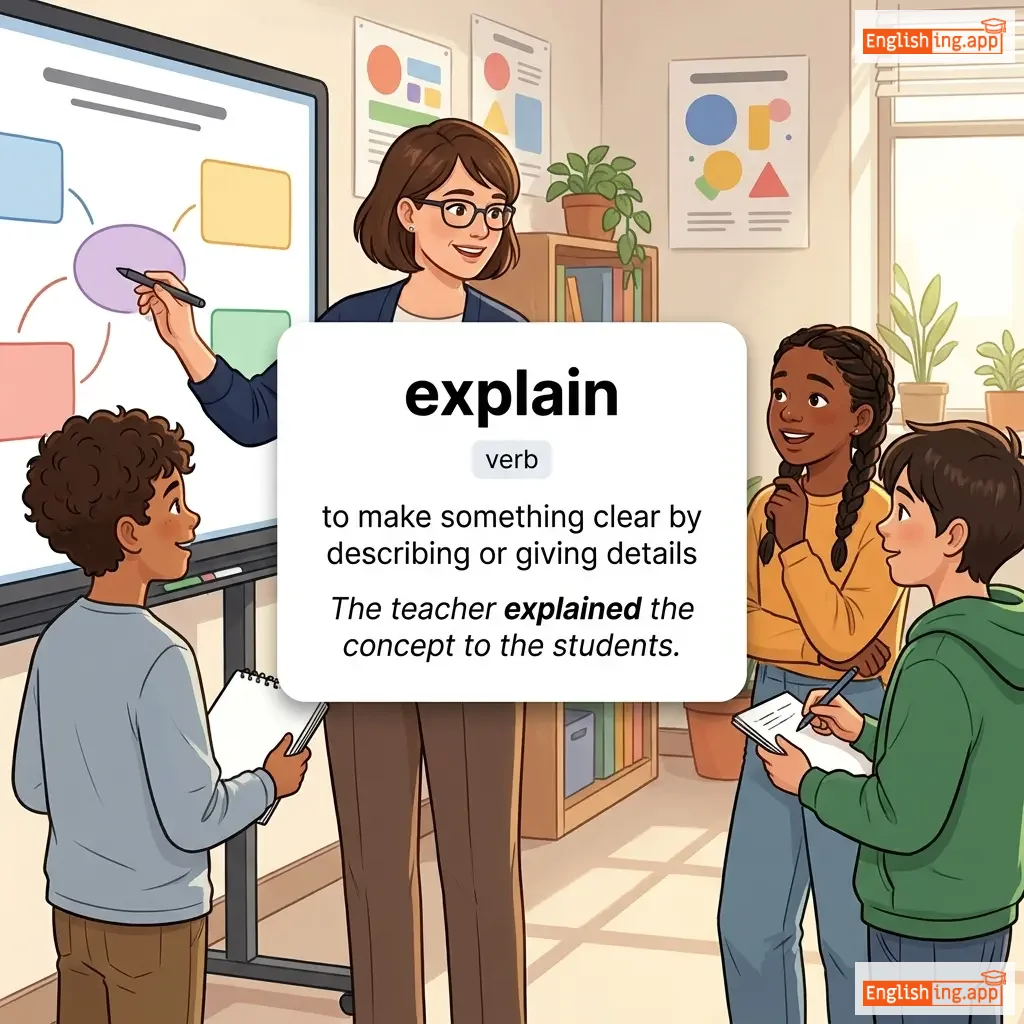
to make something clear by describing or giving details
••••••
|
The teacher explained the concept to the students.
Учитель объяснил концепцию студентам.
••••••
|
Учитель объяснил концепцию студентам.
Uchitel' ob'yasnil kontseptsiyu studentam.
••••••
|
explain away
объяснить убежать
••••••
|
to try to justify or minimize something
••••••
|
оправдать
opravdat'
••••••
|
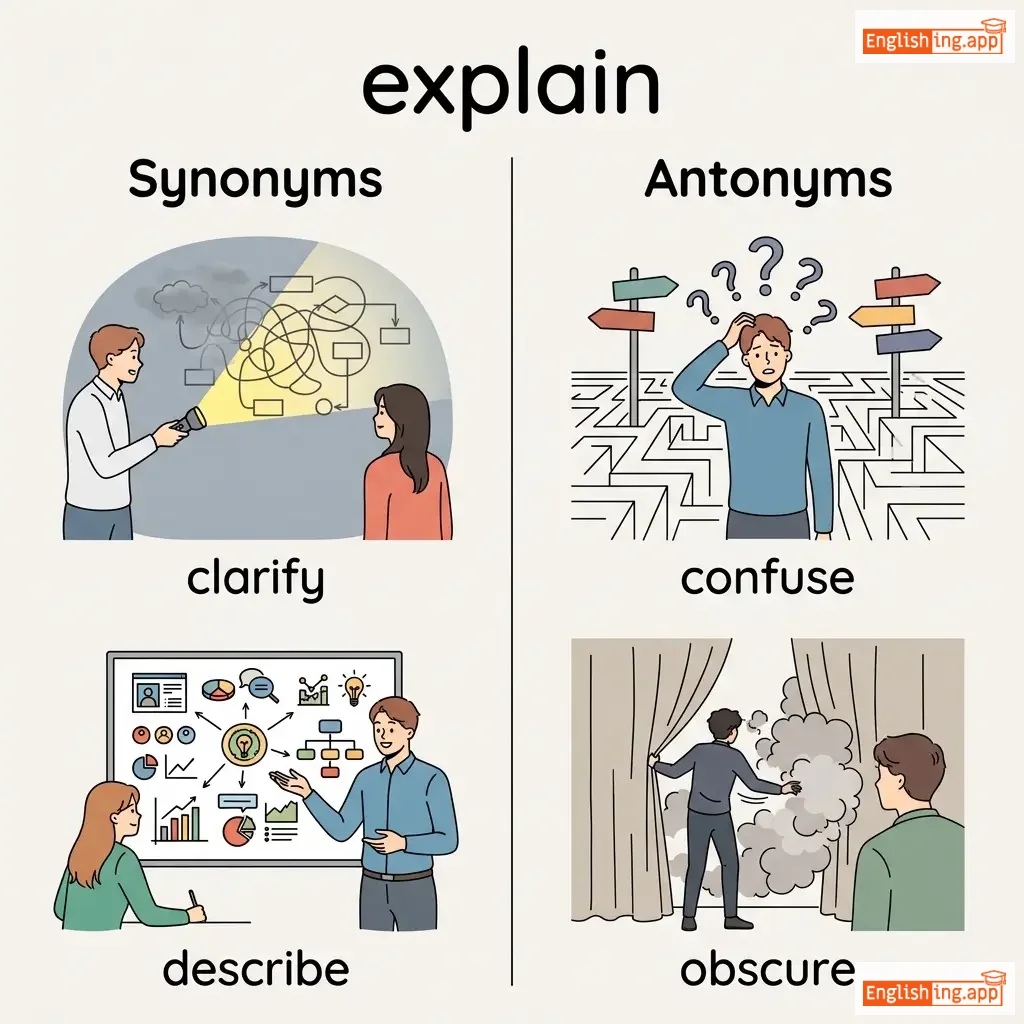
clarify, describe, illustrate, elaborate
••••••
|
confuse, obscure, mystify
••••••
|
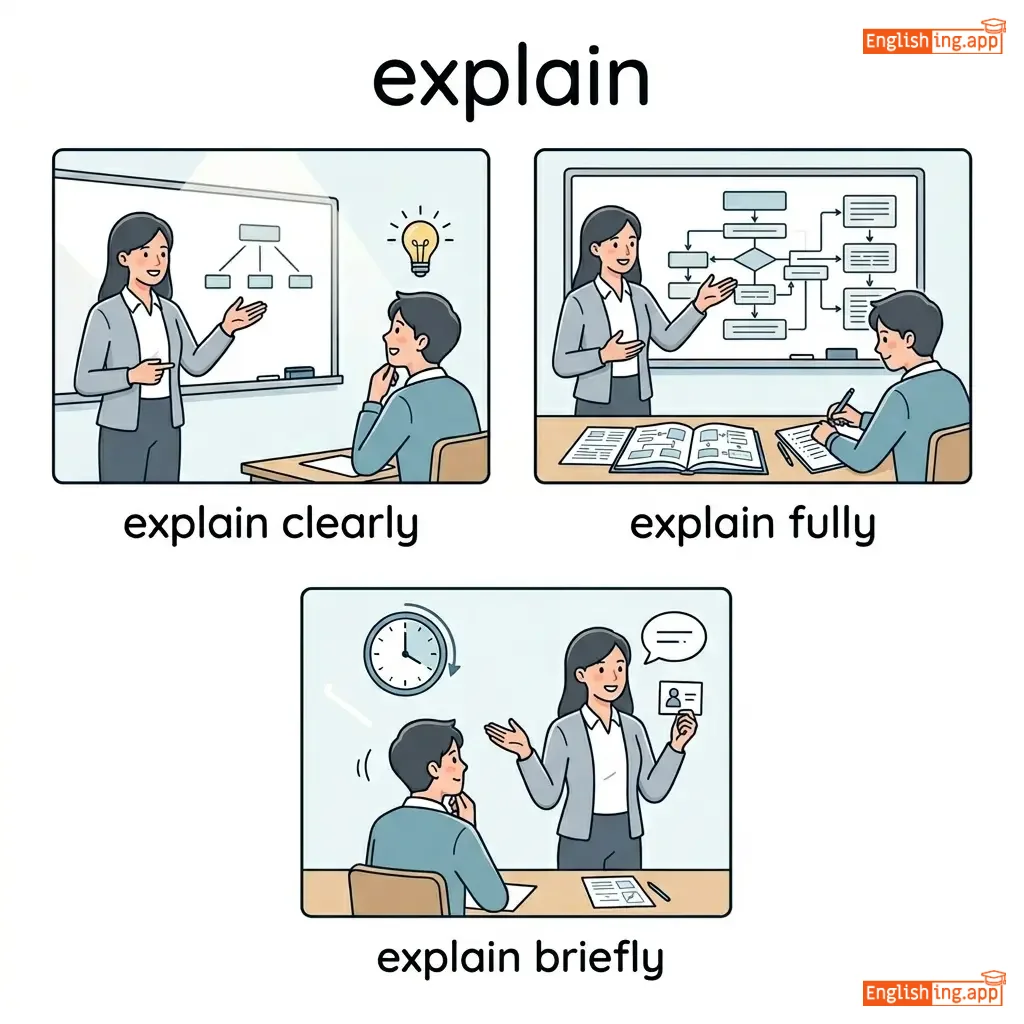
explain clearly, explain fully, explain briefly, explain concept
••••••
|
Explain = об = объяснять!
••••••
|
|
📖
••••••
|
/ˌekspləˈneɪʃən/
noun
(ekspləˈneɪʃən)
••••••
|
- •••••• |
объяснение
ob'yasneniye
••••••
|
- •••••• | - •••••• | - •••••• | - •••••• |
a statement or account that makes something clear
••••••
|
The teacher gave a clear explanation of the theory. |
Учитель дал четкое объяснение теории.
Uchitel' dal chetkoye ob'yasneniye teoryi.
••••••
|
beyond explanation |
too strange or difficult to explain
••••••
|
вне объяснения
vne ob'yasneniya
••••••
|
clarification, interpretation, description, account, justification
••••••
|
confusion, mystery
••••••
|
give explanation, detailed explanation, proper explanation, clear explanation
••••••
|
Explanation означает 'Explain' + 'ation' = объяснение
••••••
|
|
📢
••••••
|
/ɪkˈsplɪsɪt/
adjective
(iksˈplɪsɪt)
••••••
|
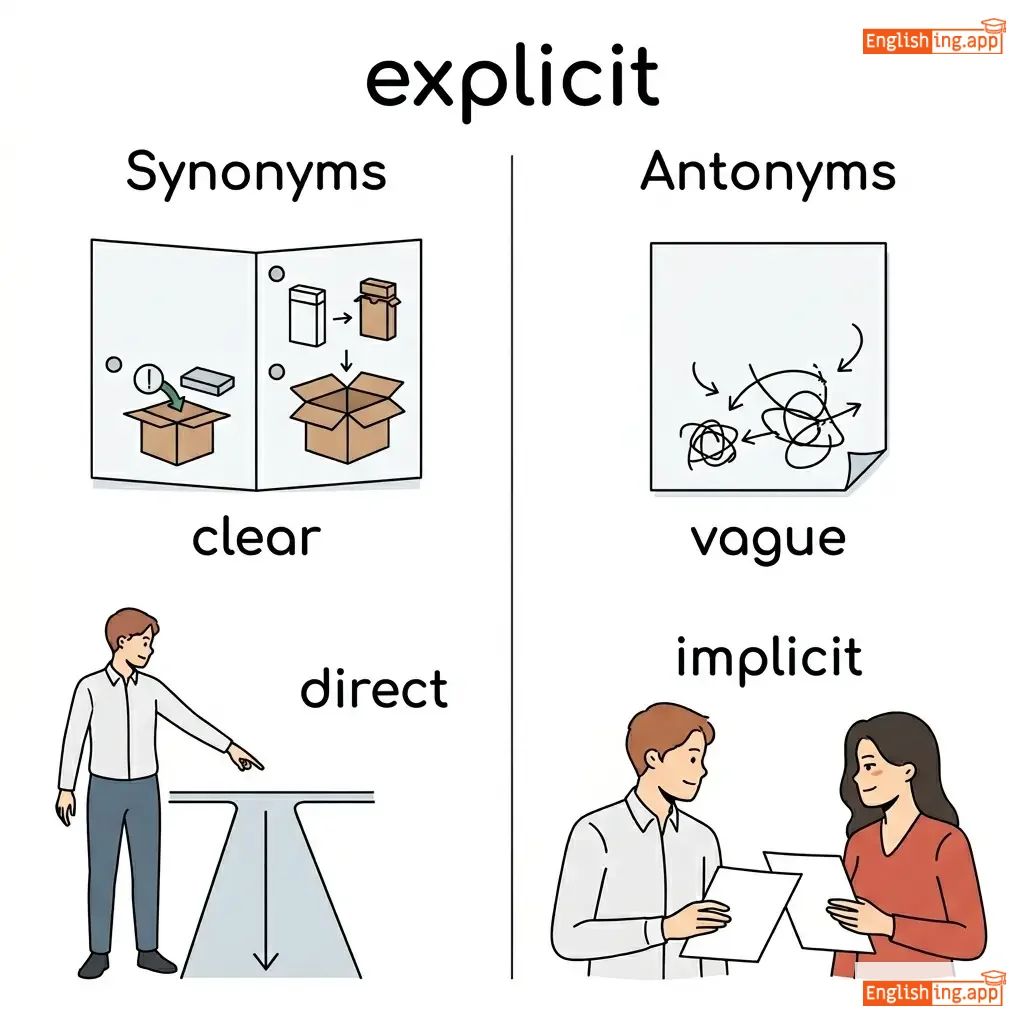
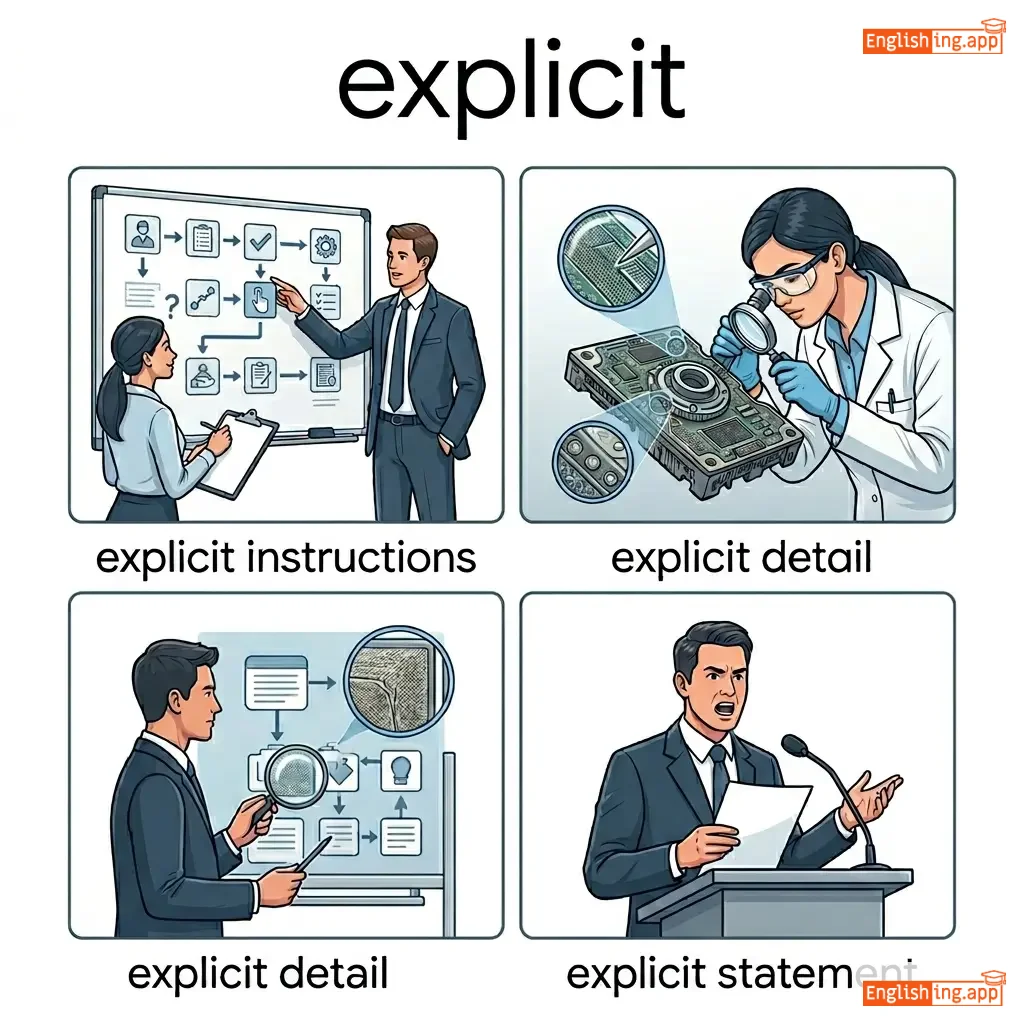
|
явный
yavny
••••••
|
- •••••• | - •••••• | - •••••• | - •••••• |
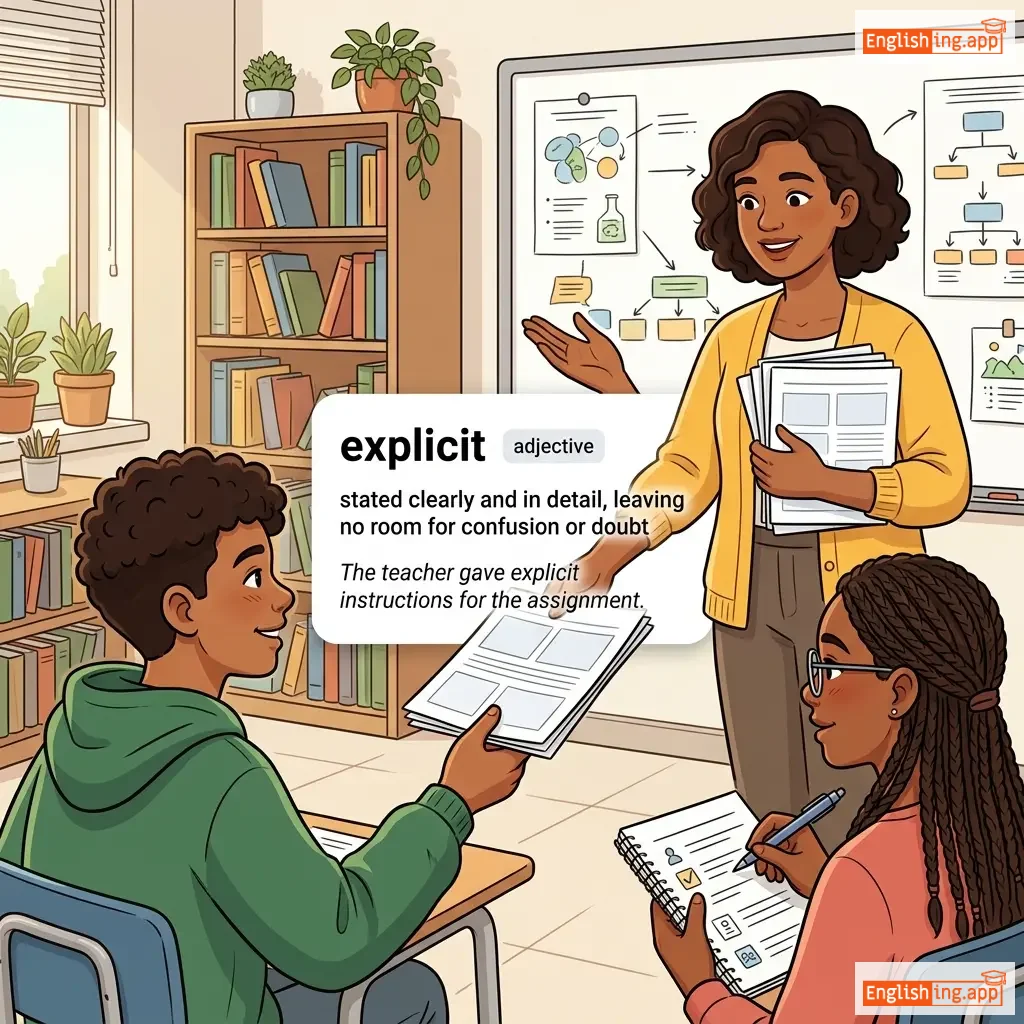
stated clearly and in detail, leaving no room for confusion or doubt
••••••
|
The teacher gave explicit instructions for the assignment. |
Учитель дал явные указания для задания.
Uchitel' dal yavnye ukazaniya dlya zadaniya.
••••••
|
make explicit |
to state something clearly and directly
••••••
|
сделать явным
sdelat' yavnym
••••••
|
clear, direct, precise, unambiguous, definite
••••••
|
vague, implicit, ambiguous
••••••
|
explicit instructions, explicit detail, explicit statement, make explicit
••••••
|
explicit значит явный — учитель дал явные (ясные) инструкции
••••••
|
|
🔍
••••••
|
/ɪkˈsplɪsɪtli/
adverb
(ik-spli-sit-li)
••••••
|
- •••••• |
явно
yavno
••••••
|
- •••••• | - •••••• | - •••••• | - •••••• |
in a clear and detailed manner, leaving no room for confusion or doubt
••••••
|
The instructions were explicitly written to avoid any confusion. |
Инструкции были написаны явно, чтобы избежать путаницы.
Instruktsii byli napisheny yavno, chtoby izbezhat' putanitsy.
••••••
|
- •••••• | - •••••• | - •••••• |
clearly, directly, plainly, unmistakably
••••••
|
implicitly, vaguely
••••••
|
explicitly stated, explicitly mentioned, explicitly clear, explicitly forbidden
••••••
|
Explicitly означает ‘явно’, без всяких сомнений
••••••
|
|
💥
••••••
|
/ɪkˈsploʊd/
verb
(взрываться)
••••••
|
- •••••• |
взрываться
vzryvatsya
••••••
|
exploded
взорвался
••••••
|
exploded
взорвался
••••••
|
explodes
взрывается
••••••
|
exploding
взрываясь
••••••
|
to burst or shatter violently and noisily as a result of rapid combustion or pressure
••••••
|
The bomb exploded in the middle of the street.
Бомба взорвалась посреди улицы.
••••••
|
Бомба взорвалась посреди улицы.
Bomba vzorvalas' posredi ulitsy.
••••••
|
explode with laughter
взорваться от смеха
••••••
|
to suddenly start laughing very loudly
••••••
|
взорваться от смеха
vzryvatsya ot smekha
••••••
|
burst, blow up, detonate, erupt, shatter
••••••
|
implode, collapse, defuse
••••••
|
explode suddenly, explode violently, explode with laughter, explode a bomb
••••••
|
Explode значит взрываться — при сложном вопросе голова взрывается от страха
••••••
|
|
⚒️
••••••
|
/ɪkˈsplɔɪt/
verb, noun
(eksploit)
••••••
|
- •••••• |
эксплуатировать / использовать
ekspluatirovat' / ispol'zovat'
••••••
|
exploited
eksploit-ed
••••••
|
exploited
eksploit-ed
••••••
|
exploits
eksploits
••••••
|
exploiting
eksploitiruyushchij
••••••
|
to make full use of and derive benefit from (a resource); to use someone unfairly for one’s own advantage
••••••
|
The company was accused of exploiting child labor.
Kompaniya byla obvinenna v ekspluatatsii detskogo truda.
••••••
|
Компания была обвинена в эксплуатации детского труда.
Kompaniya byla obvinenna v ekspluatatsii detskogo truda.
••••••
|
exploit opportunities
eksploitirovat' vozmozhnosti
••••••
|
to make the best use of chances or favorable situations
••••••
|
использовать возможности
ispol'zovat' vozmozhnosti
••••••
|
utilize, take advantage, abuse, capitalize, manipulate
••••••
|
neglect, ignore, support
••••••
|
exploit resources, exploit workers, exploit opportunities, exploit system
••••••
|
Exploit означает эксплуатировать — использовать кого-то или что-то несправедливо для собственной выгоды.
••••••
|
|
⛏️
••••••
|
/ˌek.splɔɪˈteɪ.ʃən/
noun
(эксплойтейшн)
••••••
|
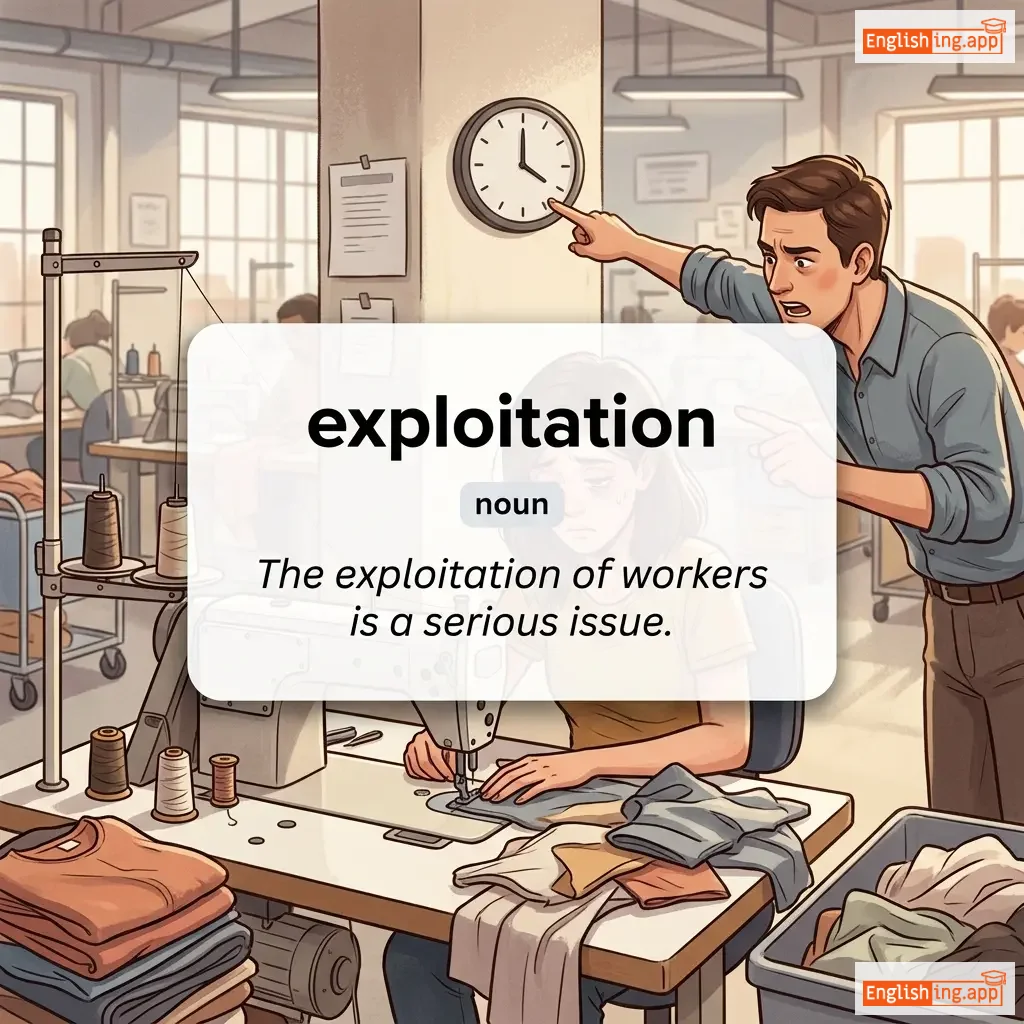
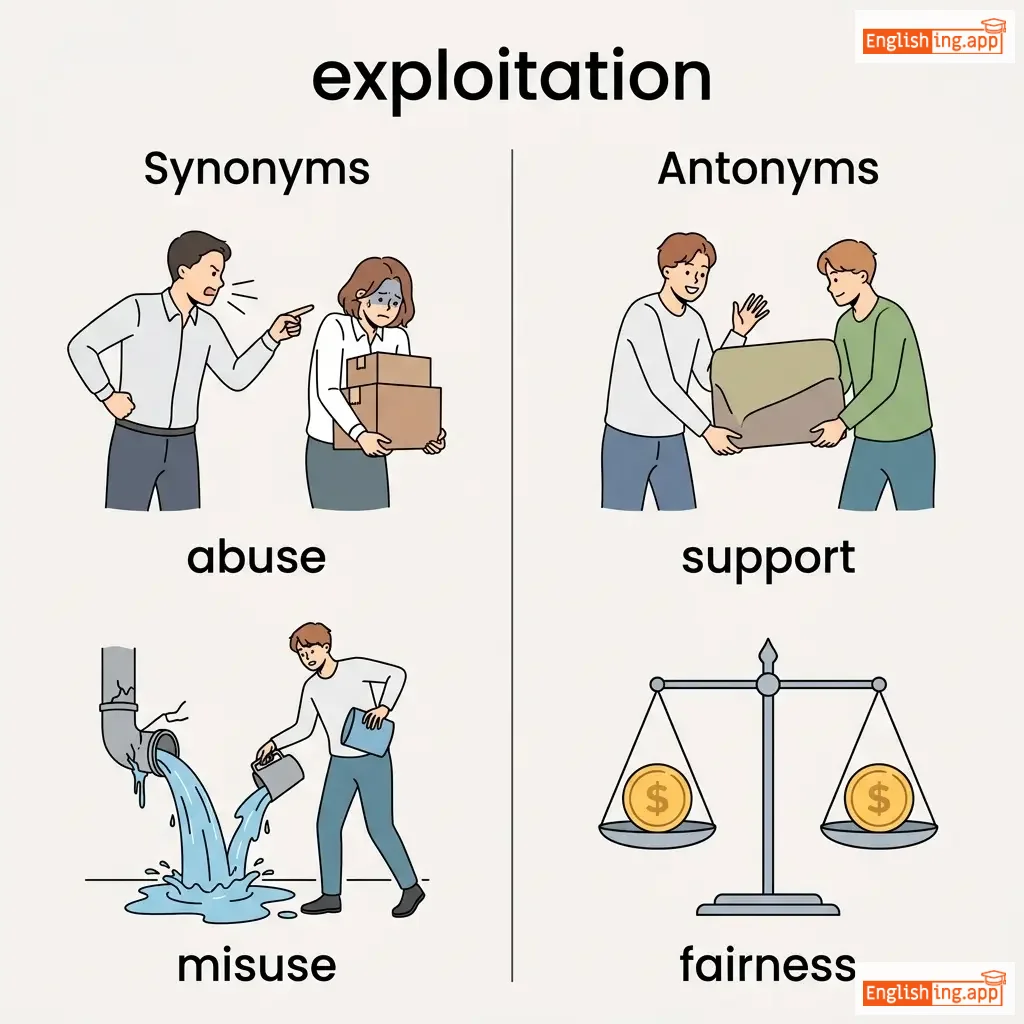
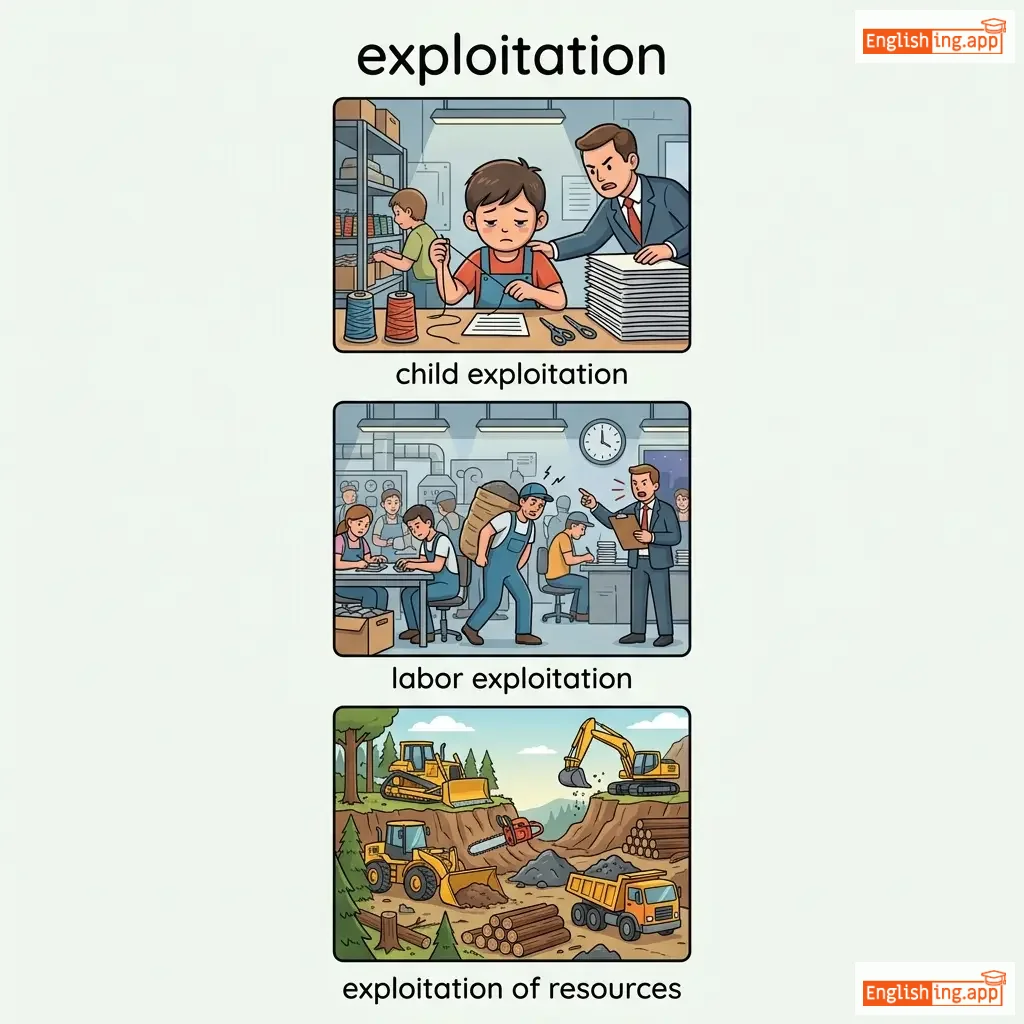
|
эксплуатация; злоупотребление
ekspluatatsiya, zlooprabilenie
••••••
|
- •••••• | - •••••• | - •••••• | - •••••• |
the action of treating someone unfairly in order to benefit from their work; misuse
••••••
|
The company was accused of worker exploitation due to poor working conditions. |
Компания была обвинена в эксплуатации работников из-за плохих условий труда.
Kompaniya byla obvinena v ekspluatatsii rabotnikov iz-za plokhikh usloviy truda.
••••••
|
- •••••• | - •••••• | - •••••• |
abuse, misuse, oppression, manipulation
••••••
|
protection, fairness, justice, respect
••••••
|
worker exploitation, resource exploitation, prevent exploitation
••••••
|
Exploitation is a bad form of using someone's work, like 'zlooprabilenie'.
••••••
|
|
🧭
••••••
|
/ɪkˈsplɔːr/
verb
(эксплорировать)
••••••
|
- •••••• |
исследовать
issledovat
••••••
|
explored
эксплорировал
••••••
|
explored
эксплорировал
••••••
|
explores
эксплорирует
••••••
|
exploring
эксплорируя
••••••
|
to travel through or study something in order to learn more about it
••••••
|
They decided to explore the forest together.
Они решили исследовать лес вместе.
••••••
|
Они решили исследовать лес вместе.
Oni reshili issledovat' les vmeste.
••••••
|
explore possibilities
исследовать возможности
••••••
|
to consider different options or opportunities
••••••
|
исследовать возможности
issledovat' vozmozhnosti
••••••
|
discover, investigate, examine, search, probe
••••••
|
ignore, neglect
••••••
|
explore new ideas, explore opportunities, explore the world, explore nature
••••••
|
Исследовать, как Дора-исследователь
••••••
|
|
💥
••••••
|
/ɪkˈsploʊʒən/
noun
(взрыв)
••••••
|
- •••••• |
взрыв
vzryv
••••••
|
- •••••• | - •••••• | - •••••• | - •••••• |
a violent burst or release of energy, often causing damage and noise
••••••
|
The explosion shook the entire neighborhood. |
Взрыв потряс весь район.
Vzryv potryas ves' rayon.
••••••
|
go off like an explosion |
to suddenly happen with great force or intensity
••••••
|
взрыв как взрыв
vzryv kak vzryv
••••••
|
blast, detonation, eruption, burst, outbreak
••••••
|
implosion, silence, calm
••••••
|
massive explosion, gas explosion, explosion of anger, sudden explosion
••••••
|
Explosion = сильный взрыв! Вспомни мощный взрыв для запоминания.
••••••
|
|
🧨
••••••
|
/ɪkˈsploʊsɪv/
adjective
(эксплозив)
••••••
|
- •••••• |
взрывчатый
vzrivchaty
••••••
|
- •••••• | - •••••• | - •••••• | - •••••• |
able to cause an explosion; likely to burst out suddenly
••••••
|
The situation became explosive after the argument. |
Ситуация стала взрывчатой после спора.
Situatsiya stala vzryvchatoy posle spora.
••••••
|
explosive growth |
very rapid and intense growth
••••••
|
взрывчатый рост
vzryvchatyy rost
••••••
|
volatile, dangerous, combustible, eruptive
••••••
|
stable, calm, safe
••••••
|
explosive device, explosive growth, explosive force, explosive situation
••••••
|
Взрывчатый означает то, что может взорваться — напряженная ситуация, которая может выйти из-под контроля.
••••••
|
|
🚢
••••••
|
/ˈekspɔːt/
verb
(экспорт)
••••••
|
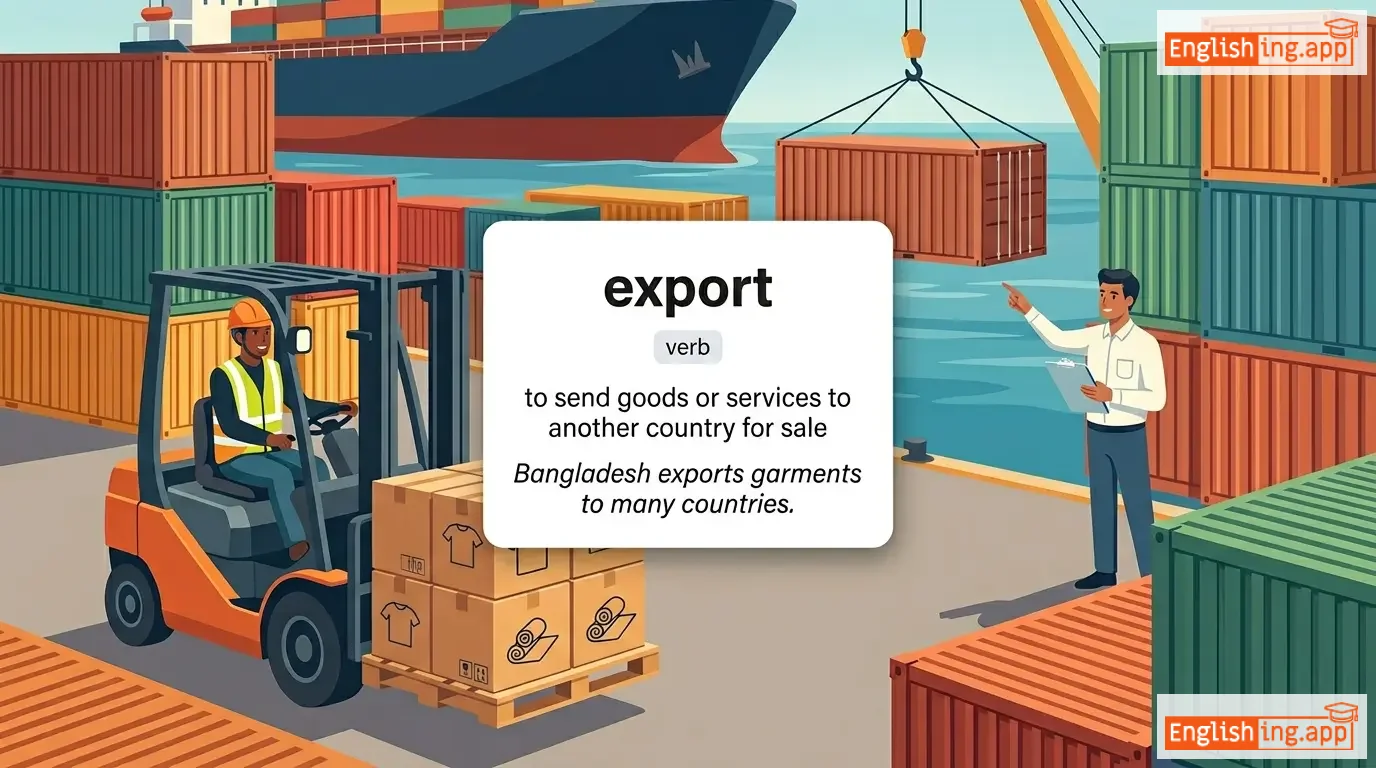
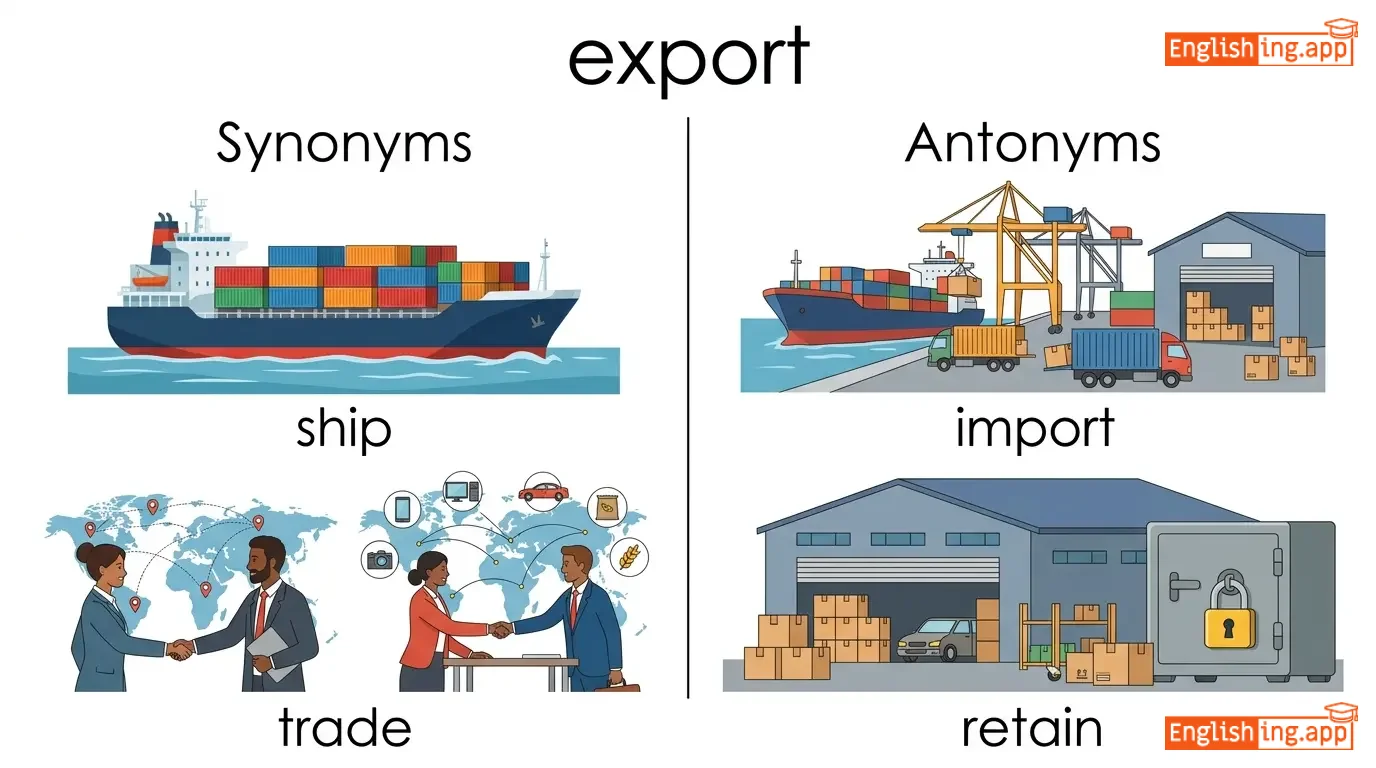
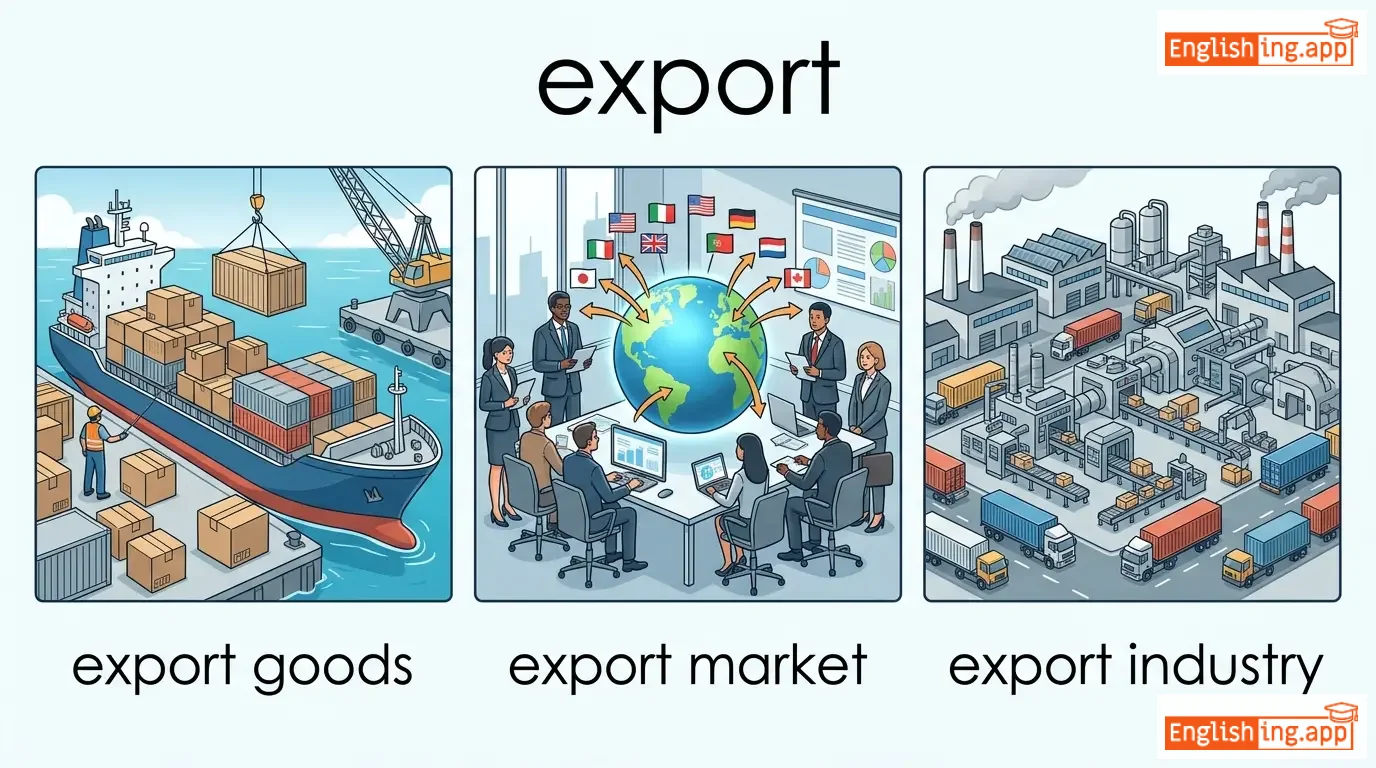
|
экспортировать
eksportirovat'
••••••
|
exported
экспортировал
••••••
|
exported
экспортировал
••••••
|
exports
экспортирует
••••••
|
exporting
экспортируя
••••••
|
to send goods or services to another country for sale
••••••
|
Bangladesh exports garments to many countries.
Бангладеш экспортирует текстиль в многие страны.
••••••
|
Бангладеш экспортирует текстиль в многие страны.
Bangladesh eksportiruet tekstil' v mnogie strany.
••••••
|
export market
экспортный рынок
••••••
|
a market in another country for goods produced locally
••••••
|
экспортный рынок
eksportnyy rynok
••••••
|
ship, trade, deliver, transport, send
••••••
|
import, retain, keep
••••••
|
export goods, export market, export industry, export earnings
••••••
|
Экспорт — это отправка товаров за границу, как корабль, перевозящий продукты.
••••••
|
|
🔎
••••••
|
/ɪkˈspoʊz/
verb
(eks-poz)
••••••
|


|
раскрывать
raskryvat
••••••
|
exposed
eks-poseyd
••••••
|
exposed
eks-poseyd
••••••
|
exposes
eks-pozit
••••••
|
exposing
eks-pozit
••••••
|
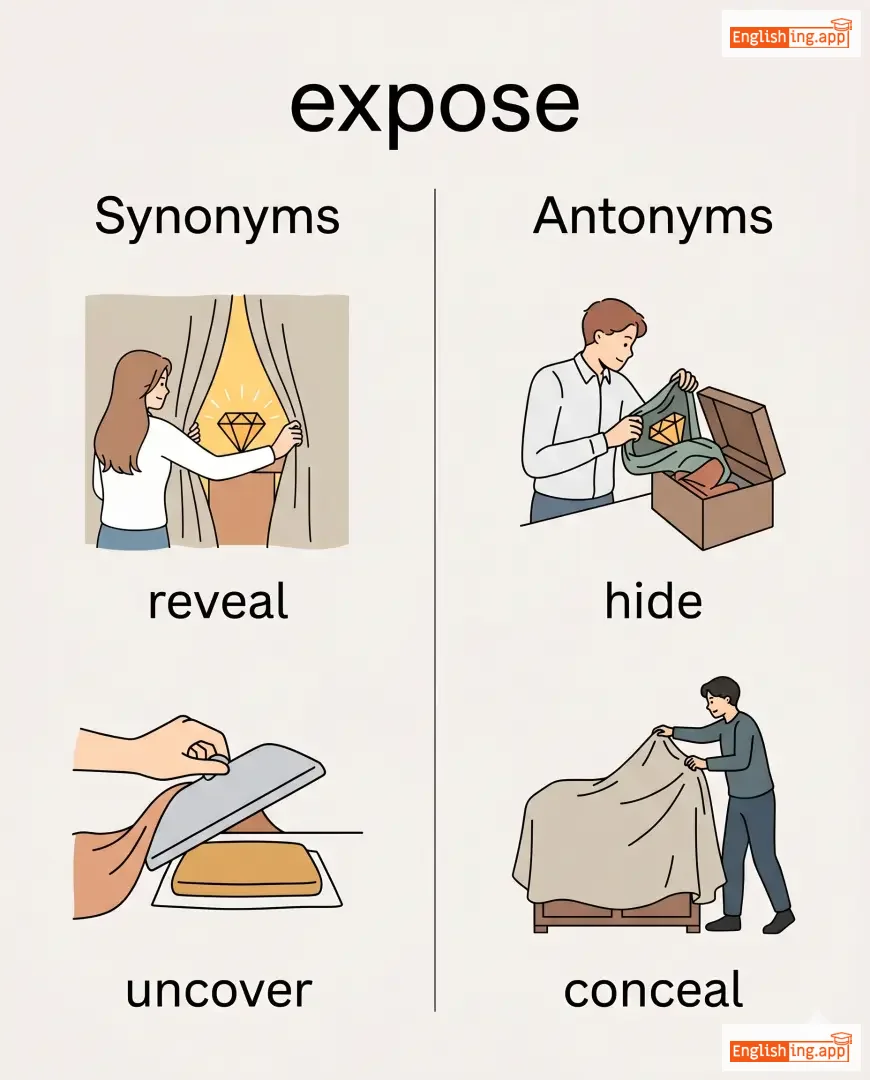
to reveal or uncover something hidden
••••••
|
The journalist tried to expose the corruption scandal.
Журналист попытался раскрыть коррупционный скандал.
••••••
|
Журналист попытался раскрыть коррупционный скандал.
Zhurnalist popytalsya raskryt' korrupcionnyj skandal.
••••••
|
expose the truth
раскрыть правду
••••••
|
to reveal the real facts
••••••
|
раскрыть правду
raskryt' pravdu
••••••
|
reveal, uncover, disclose, unveil
••••••
|
hide, conceal, cover
••••••
|
expose corruption, expose truth, expose secrets, expose fraud
••••••
|
Раскрыть – это как 'раскрывать коробку', внутри что-то скрытое.
••••••
|
|
☀️
••••••
|
/ɪkˈspəʊʒər/
noun
(eks-pozur)
••••••
|
- •••••• |
экспозиция
ekspozitsiya
••••••
|
- •••••• | - •••••• | - •••••• | - •••••• |
the state of being exposed to contact with something, especially harmful
••••••
|
Prolonged exposure to the sun can damage your skin. |
Длительное воздействие солнечного света может повредить вашу кожу.
Dlitel'noe vozdeystvie solnechnogo sveta mozhet povredit' vashu kozhu.
••••••
|
exposure therapy |
a treatment that helps people face and reduce fear
••••••
|
терапия воздействия
terapiya vozdeystviya
••••••
|
contact, vulnerability, openness, disclosure
••••••
|
protection, concealment
••••••
|
exposure to risk, exposure therapy, media exposure, sun exposure
••••••
|
Экспозиция на солнце = повреждения кожи, на русском: экспозиция
••••••
|
|
💬
••••••
|
/ɪkˈsprɛs/
verb
(экспресс)
••••••
|
- •••••• |
выражать
vyrazhat
••••••
|
expressed
выразил
••••••
|
expressed
выразил
••••••
|
expresses
выражает
••••••
|
expressing
выражая
••••••
|
to convey a thought, feeling, or idea in words, actions, or other forms
••••••
|
She expressed her gratitude with a warm smile.
Она выразила свою благодарность тёплой улыбкой.
••••••
|
Она выразила свою благодарность тёплой улыбкой.
Ona vyrazilas' svoi blagodarnost' tyoploi ulybkoi.
••••••
|
express yourself
вырази себя
••••••
|
to communicate one's thoughts and feelings openly
••••••
|
вырази себя
vyrazi sebya
••••••
|
convey, communicate, articulate, state, voice
••••••
|
suppress, conceal, hide
••••••
|
express feelings, express gratitude, express concern, express clearly
••••••
|
Выражай свои чувства, как художник — словами!
••••••
|
|
🙂
••••••
|
/ɪkˈsprɛʃən/
noun
(экспрешн)
••••••
|
- •••••• |
выражение
vyrazhenie
••••••
|
- •••••• | - •••••• | - •••••• | - •••••• |
the act of putting thoughts or feelings into words, actions, or facial gestures
••••••
|
His facial expression showed surprise.
Его выражение лица показало удивление.
••••••
|
Его выражение лица показало удивление.
Ego vyrazhenie litsa pokazalo udivlenie.
••••••
|
facial expression
выражение лица
••••••
|
the look on someone's face that conveys emotion
••••••
|
выражение лица
vyrazhenie litsa
••••••
|
statement, utterance, manifestation, phrase, gesture
••••••
|
silence, suppression
••••••
|
facial expression, expression of love, free expression, expression of opinion
••••••
|
выражение = эмоции на лице можно прочитать.
••••••
|
|
➡️
••••••
|
/ɪkˈstɛnd/
verb
(eks-tend)
••••••
|

|
продлить
prodlyit
••••••
|
extended
eks-tend-ed
••••••
|
extended
eks-tend-ed
••••••
|
extends
eks-tends
••••••
|
extending
eks-tending
••••••
|
to make something longer, larger, or last longer; to reach out.
••••••
|
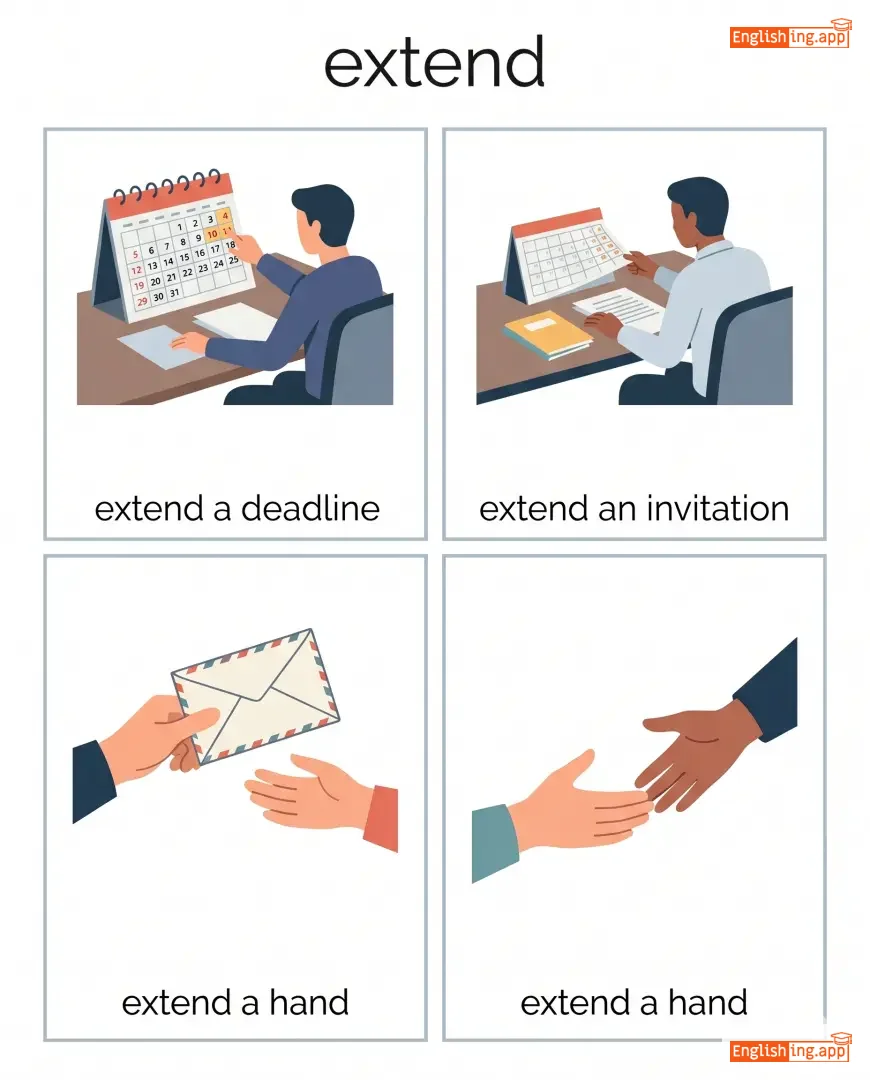
The company decided to extend the deadline for submissions.
Компания решила продлить срок подачи заявок.
••••••
|
Компания решила продлить срок подачи заявок.
Kompaniya reshilas' prodylt' srok podachi zayavok.
••••••
|
extend an olive branch
протянуть оливковую ветвь
••••••
|
to offer peace or reconciliation
••••••
|
протянуть оливковую ветвь
protyanut' olivkovuyu vetv'
••••••
|
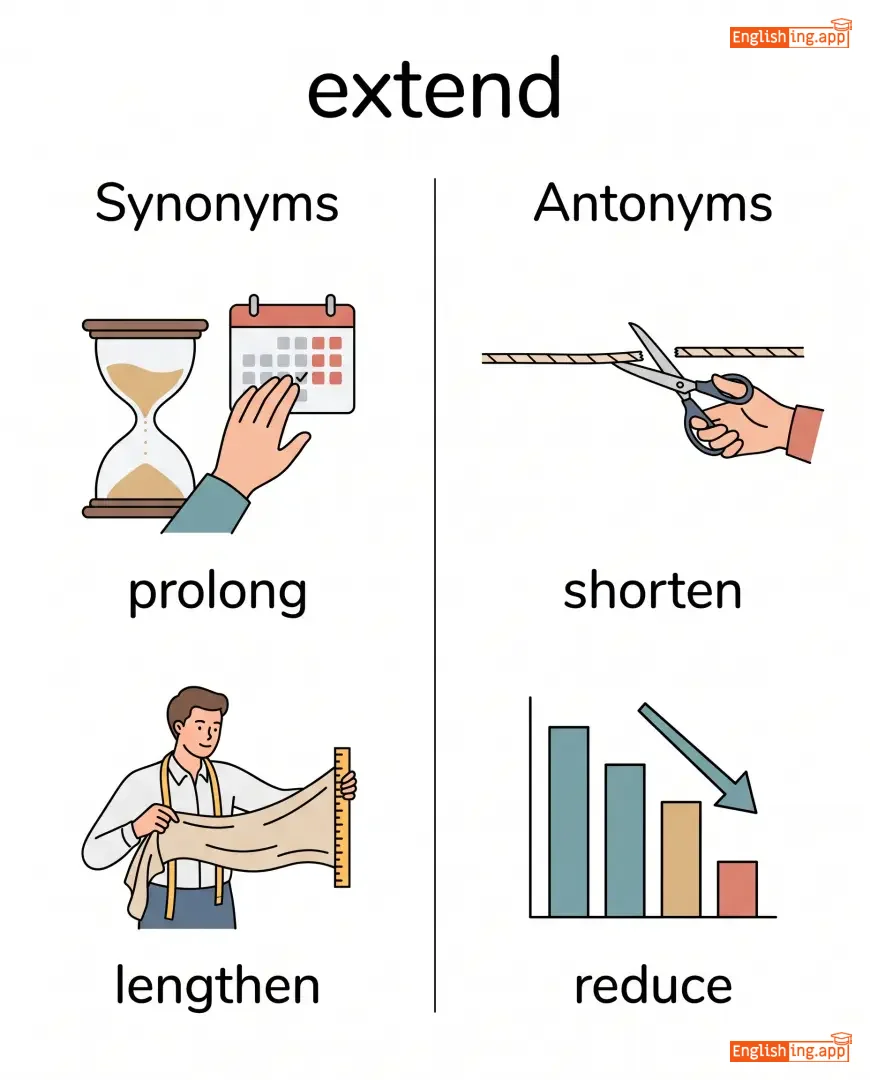
prolong, lengthen, expand, stretch, continue
••••••
|
shorten, reduce, limit
••••••
|
extend a deadline, extend an invitation, extend a hand, extend support
••••••
|
Продлить означает сделать что-то длиннее, например, протянуть руку, чтобы что-то достать.
••••••
|
|
📏
••••••
|
/ɪkˈstɛnʃən/
noun
(ehks-tyen-syon)
••••••
|
- •••••• |
удлинение
udlinenie
••••••
|
- •••••• | - •••••• | - •••••• | - •••••• |
a part that is added to something to make it longer or bigger; an increase in time.
••••••
|
She asked for an extension on her assignment deadline. |
Она попросила продление срока для своей работы.
Ona poprosila prodlenie sroka dlya svoey raboty.
••••••
|
hair extension |
artificial hair used to make natural hair longer or fuller
••••••
|
наращивание волос
narashchivanie volos
••••••
|
expansion, prolongation, addition, continuation
••••••
|
reduction, contraction
••••••
|
extension cord, deadline extension, extension request, hair extension
••••••
|
Удлинение - это добавление чего-то, чтобы сделать его длиннее или больше.
••••••
|
|
📏
••••••
|
/ɪkˈsten.sɪv/
adjective
(икстенсив)
••••••
|
- •••••• |
обширный; масштабный; широкий
obshirnyy; masshtabnyy; shirokiy
••••••
|
- •••••• | - •••••• | - •••••• | - •••••• |
covering or affecting a large area; comprehensive; wide-ranging
••••••
|
The company conducted extensive research before launching the new product. |
Компания провела обширные исследования перед запуском нового продукта.
Kompaniya provyela obshirnye issledovaniya pered zapuskom novogo produkta.
••••••
|
- •••••• | - •••••• | - •••••• |
comprehensive, vast, wide-ranging, broad
••••••
|
limited, narrow, restricted, small
••••••
|
extensive research, extensive damage, extensive experience
••••••
|
Russian 'обширный' is equivalent to 'extensive'—both cover large areas.
••••••
|
|
🌍
••••••
|
/ɪkˈstɛnsɪvli/
adverb
(икстенсивли)
••••••
|
- •••••• |
широко
shiroko
••••••
|
- •••••• | - •••••• | - •••••• | - •••••• |
in a thorough or wide-ranging manner
••••••
|
She traveled extensively across Europe for her research. |
Она путешествовала широко по Европе для своего исследования.
Ona puteshestvovala shiroko po Yevrope dlya svoego issledovaniya.
••••••
|
- •••••• | - •••••• | - •••••• |
comprehensively, widely, thoroughly, broadly
••••••
|
narrowly, slightly
••••••
|
extensively researched, extensively traveled, extensively studied
••••••
|
Extensively значит ‘широко’, путешествовать по всем уголкам Европы
••••••
|
|
📏
••••••
|
/ɪkˈstɛnt/
noun
(экстент)
••••••
|
- •••••• |
степень
stepen
••••••
|
- •••••• | - •••••• | - •••••• | - •••••• |
the area, degree, or scope of something
••••••
|
The extent of the damage was greater than expected.
Степень ущерба была больше, чем ожидалось.
••••••
|
Степень ущерба была больше, чем ожидалось.
Stepen' uscherba byla bol'she, chem ozhidalos'.
••••••
|
to some extent
до некоторой степени
••••••
|
partially or in a limited way
••••••
|
до некоторой степени
do nekotoroi stepeni
••••••
|
range, scope, degree, magnitude, scale
••••••
|
limitlessness, insignificance
••••••
|
extent of damage, full extent, great extent, large extent
••••••
|
Extremum — это конец шкалы!
••••••
|
|
🌐
••••••
|
/ɪkˈstɜrnəl/
adjective
(ehk-sternahl)
••••••
|
- •••••• |
внешний
vneshniy
••••••
|
- •••••• | - •••••• | - •••••• | - •••••• |
situated on or relating to the outside of something; coming from outside
••••••
|
The external factors affected the company's growth. |
Внешние факторы повлияли на рост компании.
Vneshniye faktory povliyali na rost kompanii.
••••••
|
external affairs |
matters concerning foreign relations
••••••
|
внешние дела
vneshniye dela
••••••
|
outer, outside, foreign, exterior
••••••
|
internal, inner
••••••
|
external factors, external affairs, external pressure
••••••
|
External означает внешний, как внешний жесткий диск.
••••••
|
|
🌐
••••••
|
/ɪkˈstɜrnəli/
adverb
(экстернели)
••••••
|
- •••••• |
внешне
vneshne
••••••
|
- •••••• | - •••••• | - •••••• | - •••••• |
in a way that relates to the outer surface or outside appearance
••••••
|
The building appeared externally modern, but inside it was quite old-fashioned.
Здание выглядело внешне современным, но внутри оно было довольно старомодным.
••••••
|
Здание выглядело внешне современным, но внутри оно было довольно старомодным.
Zdanie vyglyadelo vneshne sovremennym, no vnutri ono bylo dovolno staromodnym.
••••••
|
- •••••• | - •••••• | - •••••• |
outwardly, superficially, apparently, on the surface
••••••
|
internally, inherently
••••••
|
externally visible, externally applied, externally influenced
••••••
|
внешне = outside appearance, like 'external'
••••••
|
|
➕
••••••
|
/ˈɛkstrə/
adjective
(экстра)
••••••
|
- •••••• |
дополнительный
dopolnitel'nyy
••••••
|
- •••••• | - •••••• | - •••••• | - •••••• |
More than what is usual, expected, or necessary
••••••
|
She brought some extra food for the picnic. |
Она принесла дополнительную еду для пикника.
Ona prinesla dopolnitel'nuyu yedu dlya piknika.
••••••
|
go the extra mile |
to make a special effort to achieve something
••••••
|
сделать дополнительное усилие
sdelat' dopolnitel'noye usiliye
••••••
|
additional, surplus, excess, supplementary, spare
••••••
|
lacking, insufficient, scarce
••••••
|
extra effort, extra cost, extra time, extra charge
••••••
|
Extra = дополнительный = больше
••••••
|
|
🪥
••••••
|
/ɪkˈstrækt/
verb
(экстрагировать)
••••••
|
- •••••• |
извлекать
izvlekat'
••••••
|
extracted
экстрагировал
••••••
|
extracted
экстрагированный
••••••
|
extracts
экстрагирует
••••••
|
extracting
экстрагируя
••••••
|
to remove or take out something, often with effort
••••••
|
The dentist had to extract the damaged tooth.
Стоматологу пришлось извлечь поврежденный зуб.
••••••
|
Стоматологу пришлось извлечь поврежденный зуб.
Stomatologu prishlos' izvlech' povrezhdennyy zub.
••••••
|
extract the essence
извлечь суть
••••••
|
to capture the most important part of something
••••••
|
извлечь суть
izvlech' sut'
••••••
|
remove, withdraw, derive, obtain, draw out
••••••
|
insert, embed, implant
••••••
|
extract information, extract juice, extract oil, extract data
••••••
|
Извлечь - как зуб или важное что-то извлекать!
••••••
|
|
🌟
••••••
|
/ɪkˈstrɔːr.dəˌnɛr.i/
adjective
(экстраординарный)
••••••
|
- •••••• |
необыкновенный
neobyknovennyy
••••••
|
- •••••• | - •••••• | - •••••• | - •••••• |
Very unusual, remarkable, or exceptional.
••••••
|
She showed extraordinary courage during the crisis. |
Она проявила исключительное мужество в период кризиса.
Ona proyavila isklyuchitel'noye muzhestvo v period krizisa.
••••••
|
extraordinary measures |
Unusual or extreme actions taken in a situation
••••••
|
необыкновенные меры
neobyknovennyye mery
••••••
|
remarkable, exceptional, amazing, outstanding, phenomenal
••••••
|
ordinary, normal, usual
••••••
|
extraordinary achievement, extraordinary courage, extraordinary circumstances, extraordinary measures
••••••
|
Extra + ordinary = что-то необычное и редкое.
••••••
|
|
⚠️
••••••
|
/ɪkˈstriːm/
adjective
(ik-strim)
••••••
|
|
экстремальный
ekstremal'nyy
••••••
|
- •••••• | - •••••• | - •••••• | - •••••• |
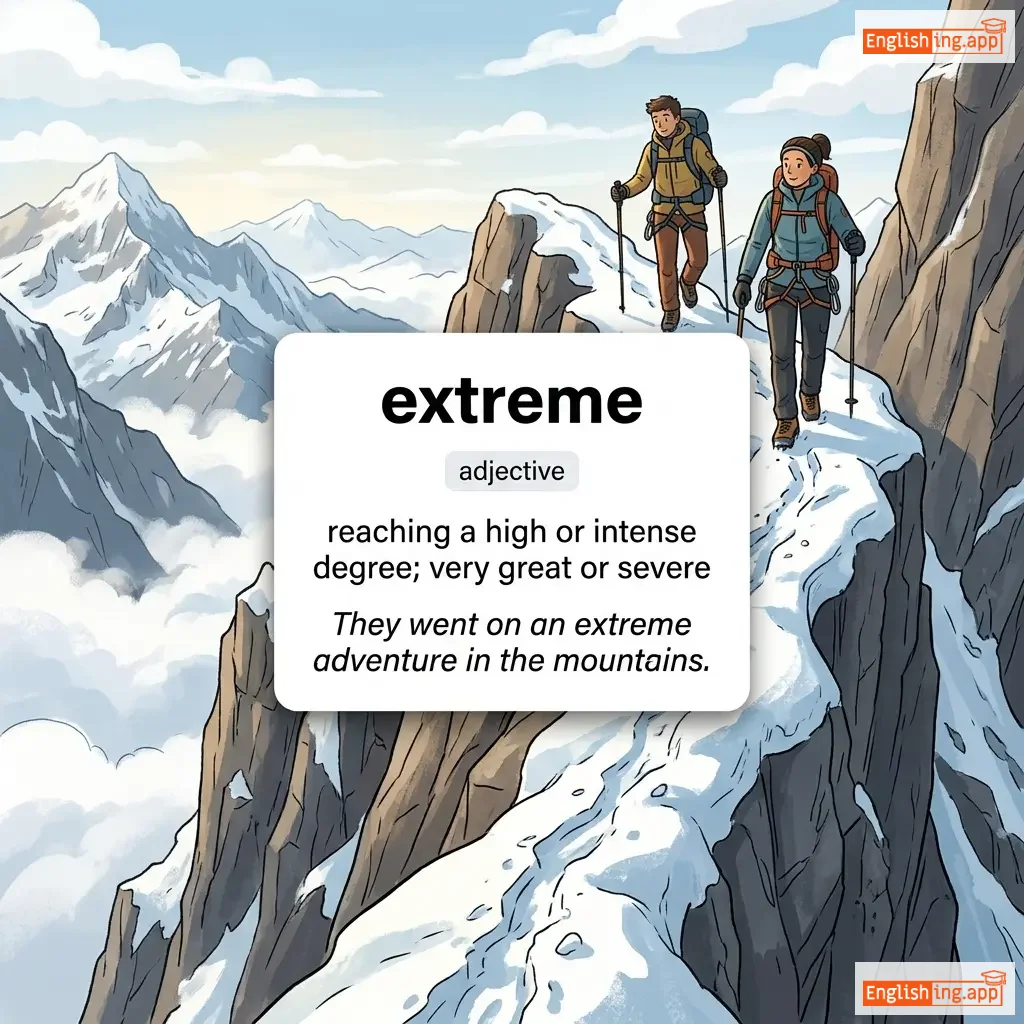
reaching a high or intense degree; very great or severe
••••••
|
They went on an extreme adventure in the mountains. |
Они отправились на экстремальное приключение в горы.
Oni otpravilis' na ekstremal'noye priklyucheniye v gory.
••••••
|
go to extremes |
to do something in an excessive or exaggerated way
••••••
|
идти на крайности
idti na kraynosti
••••••
|
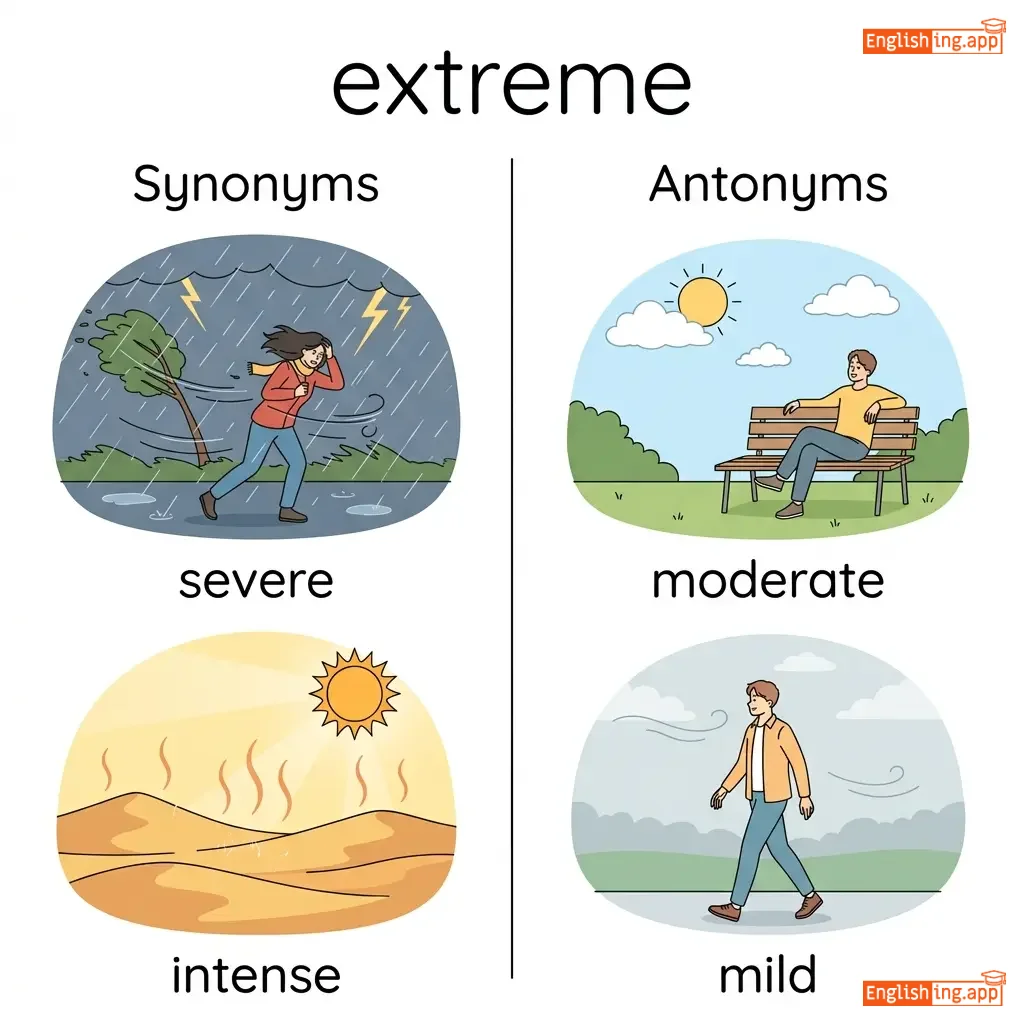
severe, intense, excessive, radical, ultimate
••••••
|
moderate, mild, ordinary
••••••
|
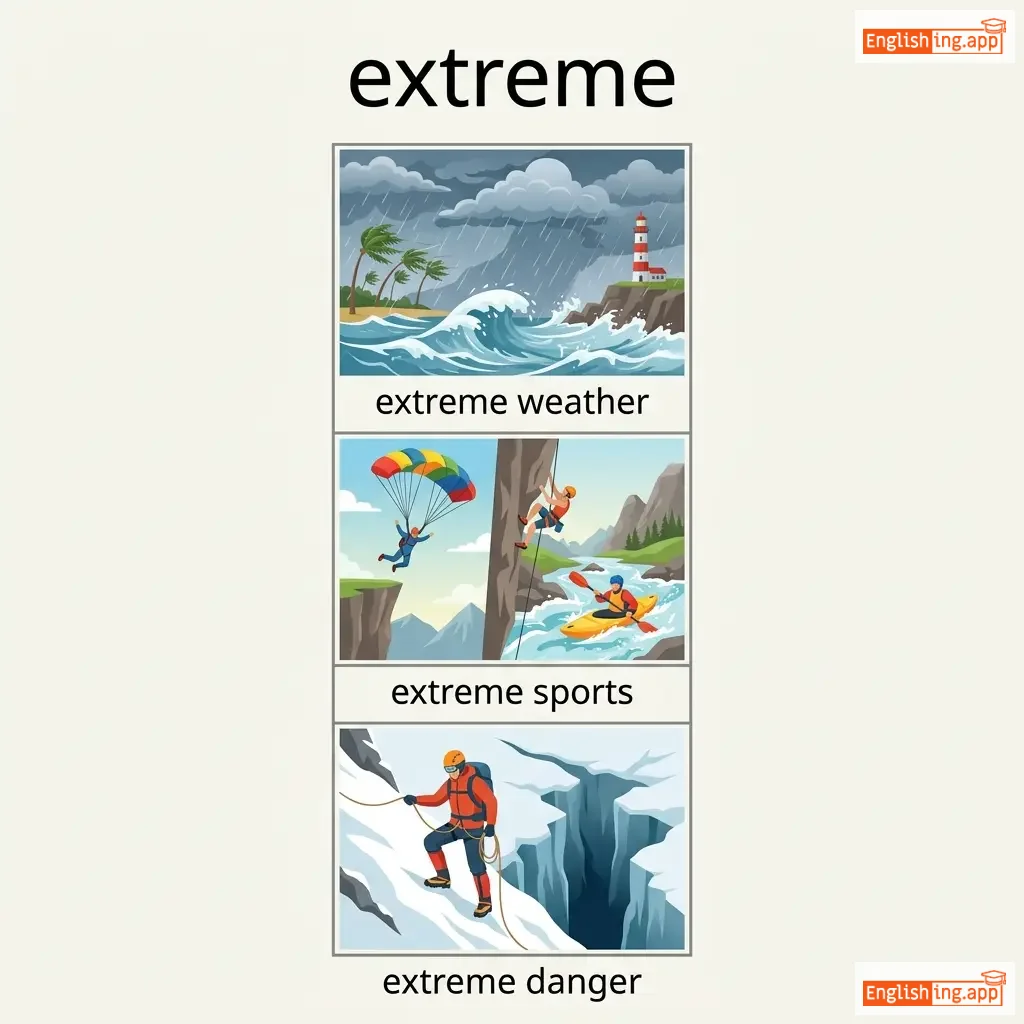
extreme weather, extreme sports, extreme danger, extreme measures
••••••
|
Extreme на русский — экстремальный, как в экстремальной ситуации.
••••••
|
|
🔥
••••••
|
/ɪkˈstriːm.li/
adverb
(ikstrimlɪ)
••••••
|
- •••••• |
крайне
krayne
••••••
|
- •••••• | - •••••• | - •••••• | - •••••• |
to a very high degree; exceptionally
••••••
|
The weather today is extremely hot and humid. |
Сегодня погода крайне жаркая и влажная.
Segodnya pogoda krayne zharkaya i vlajnaya.
••••••
|
- •••••• | - •••••• | - •••••• |
very, exceptionally, tremendously
••••••
|
slightly, moderately, barely
••••••
|
extremely important, extremely difficult, extremely happy
••••••
|
Крайне (krayne) можно запомнить как эквивалент extremely.
••••••
|
|
⚡
••••••
|
/ɪkˈstriː.mɪst/
noun
(ɪkˈstrʲimʲɪst)
••••••
|
- •••••• |
экстремист
ekstremist
••••••
|
- •••••• | - •••••• | - •••••• | - •••••• |
a person who holds extreme political or religious views
••••••
|
The government is taking measures to prevent extremist activities. |
Правительство предпринимает меры по предотвращению экстремистской деятельности.
Pravitel'stvo predprinimayet mery po predotvrashcheniyu ekstremistskoy deyatel'nosti.
••••••
|
- •••••• | - •••••• | - •••••• |
radical, fanatic, militant, fundamentalist
••••••
|
moderate, centrist, liberal, tolerant
••••••
|
political extremist, religious extremist, extremist group
••••••
|
Экстремист — человек, который всегда за крайности.
••••••
|
|
👁️
••••••
|
/aɪ/
noun
(ay)
••••••
|
- •••••• |
глаз
glaz
••••••
|
- •••••• | - •••••• | - •••••• | - •••••• |
the organ in the head through which people and animals see
••••••
|
She closed her eyes and went to sleep. |
Она закрыла глаза и пошла спать.
Ona zakryla glaza i poshla spat'.
••••••
|
keep an eye on |
to watch carefully or look after
••••••
|
держать глаз на
derzhat' glaz na
••••••
|
vision, sight, gaze, view, look
••••••
|
blindness, neglect
••••••
|
eye contact, eye color, keep an eye, eye for detail
••••••
|
Eye означает 'глаз', поэтому 'Keep an eye' значит 'держать глаз на'.
••••••
|

