|
絵文字
|
単語 | Images | 翻訳 | 過去 | 過去分詞 | 三人称単数 | 動名詞 | 意味 | 例文 | 例文の翻訳 | 表現例 | 表現例の意味 | 表現例の翻訳 | 同義語 | 対義語 | コロケーション | ニーモニック |
|---|---|---|---|---|---|---|---|---|---|---|---|---|---|---|---|---|---|
|
⚖️
••••••
|
/ˈdɪfərəns/
noun
(ディファレンス)
••••••
|
- •••••• |
違い
chigai
••••••
|
- •••••• | - •••••• | - •••••• | - •••••• |
A point or way in which things are not the same.
••••••
|
There is a big difference between theory and practice. |
理論と実践の間に大きな違いがあります。
Riron to jissen no aida ni ōkina chigai ga arimasu.
••••••
|
make a difference |
To have a significant impact or effect
••••••
|
違いを作る
chigai o tsukuru
••••••
|
distinction, variation, contrast, diversity, disparity
••••••
|
similarity, resemblance, sameness
••••••
|
big difference, subtle difference, cultural difference, make a difference
••••••
|
違いは物が異なるとき、覚えておいて '違うと違い'。
••••••
|
|
🔀
••••••
|
/ˈdɪf.ər.ənt/
adjective
(ディファレント)
••••••
|
- •••••• |
異なる
kotonaru
••••••
|
- •••••• | - •••••• | - •••••• | - •••••• |
Not the same as another; distinct or unlike.
••••••
|
Her opinion was completely different from mine. |
彼女の意見は私のものとは完全に異なっていました。
Kanojo no iken wa watashi no mono to wa kanzen ni kotonatte imashita.
••••••
|
world of difference |
A very big difference.
••••••
|
大きな違い
ōkina chigai
••••••
|
distinct, unlike, diverse, varied, alternative
••••••
|
similar, same, identical
••••••
|
different types, different ways, different people, completely different
••••••
|
異なるは違うことです — 'Ko'で分けるから、すべて異なる。
••••••
|
|
🧩
••••••
|
/ˌdɪfəˈrɛnʃieɪt/
verb
(ディファレンシエイト)
••••••
|
- •••••• |
区別する
kubetsu suru
••••••
|
differentiated
ディファレンシエイテッド
••••••
|
differentiated
ディファレンシエイテッド
••••••
|
differentiates
ディファレンシエイツ
••••••
|
differentiating
ディファレンシエイティング
••••••
|
To recognize or make a distinction between things.
••••••
|
It is important to differentiate between fact and opinion.
事実と意見を区別することは重要です。
••••••
|
事実と意見を区別することは重要です。
Jijitsu to iken wo kubetsu suru koto wa juuyou desu.
••••••
|
differentiate yourself
自分を差別化する
••••••
|
To make oneself stand out as unique or distinct.
••••••
|
自分を差別化する
Jibun wo sabetsuka suru
••••••
|
distinguish, discern, separate, identify, contrast
••••••
|
confuse, equate, mix
••••••
|
differentiate clearly, differentiate products, differentiate features
••••••
|
ディファレンシエイトは区別すること - 事実と意見の違いを覚えておいてください。
••••••
|
|
🎯
••••••
|
/ˌdɪfəˈrɛnʃɪˈeɪʃən/
noun
(ディファレンシエーション)
••••••
|

|
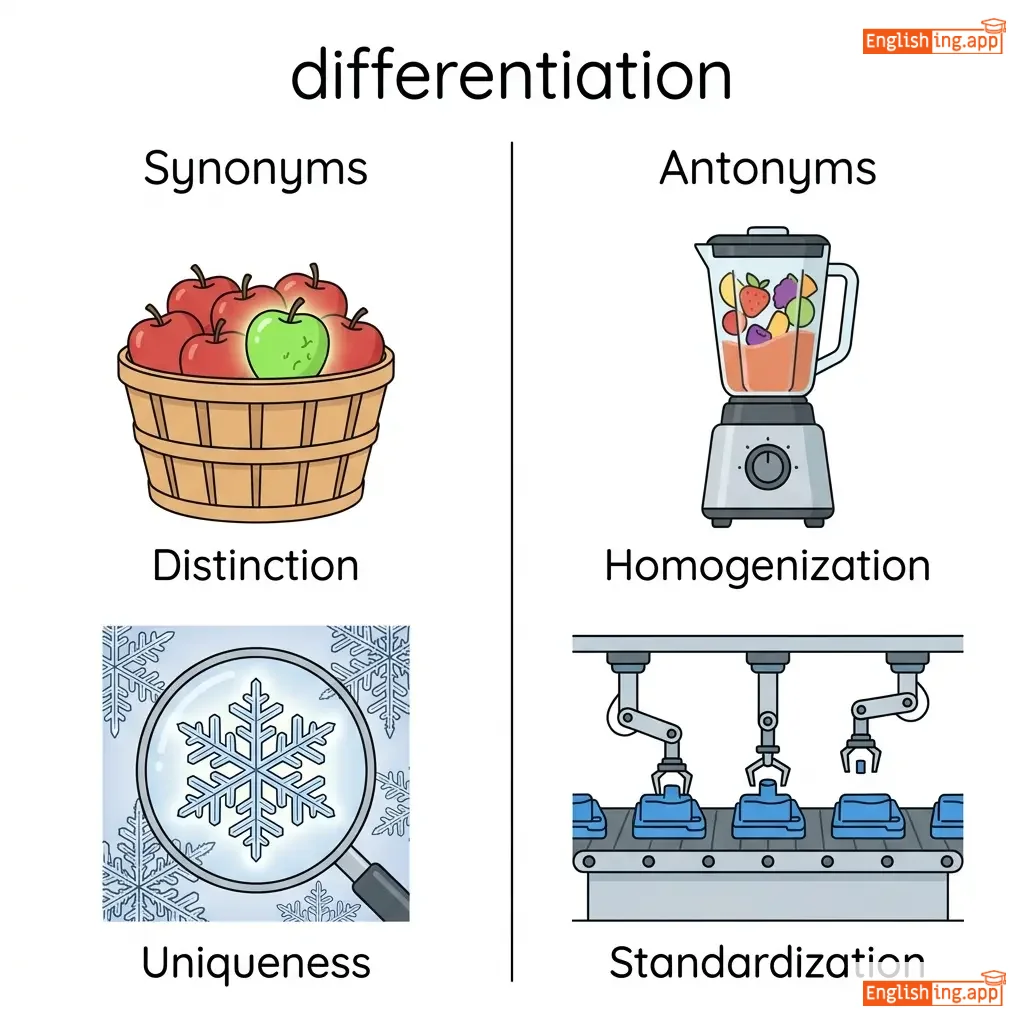
差別化, 分化
sabetsuka, bunka
••••••
|
- •••••• | - •••••• | - •••••• | - •••••• |
The action or process of differentiating or distinguishing between things.
••••••
|
Differentiation from competitors can create a unique market position.
競合他社との差別化により、ユニークな市場ポジションを作り出すことができます。
••••••
|
競合他社との差別化により、ユニークな市場ポジションを作り出すことができます。
Kyōgō tashano sabetsuka ni yori, yunikuna shijō pojishon o tsukuridasu koto ga dekimasu.
••••••
|
- •••••• | - •••••• | - •••••• |
distinction, contrast, separation
••••••
|
similarity, uniformity
••••••
|
- •••••• |
差別化で市場で目立つ
••••••
|
|
🔄
••••••
|
/ˈdɪfərəntli/
adverb
(ディファレントリー)
••••••
|
- •••••• |
異なった方法で
kotonatta houhou de
••••••
|
- •••••• | - •••••• | - •••••• | - •••••• |
in a way that is not the same as another or as expected
••••••
|
She approached the problem differently than her colleagues. |
彼女は同僚たちと違った方法で問題に取り組みました。
Kanojo wa douryou-tachi to chigatta houhou de mondai ni torikumi mashita.
••••••
|
- •••••• | - •••••• | - •••••• |
otherwise, uniquely, unusually, distinctly
••••••
|
similarly, alike
••••••
|
think differently, act differently, look differently, behave differently
••••••
|
異なった方法でというのは、何かを違う方法でやることを意味しており、それが英語でいう differently です。
••••••
|
|
😓
••••••
|
/ˈdɪf.ɪ.kəlt/
adjective
(ディフィカルト)
••••••
|
|
難しい
muzukashii
••••••
|
- •••••• | - •••••• | - •••••• | - •••••• |
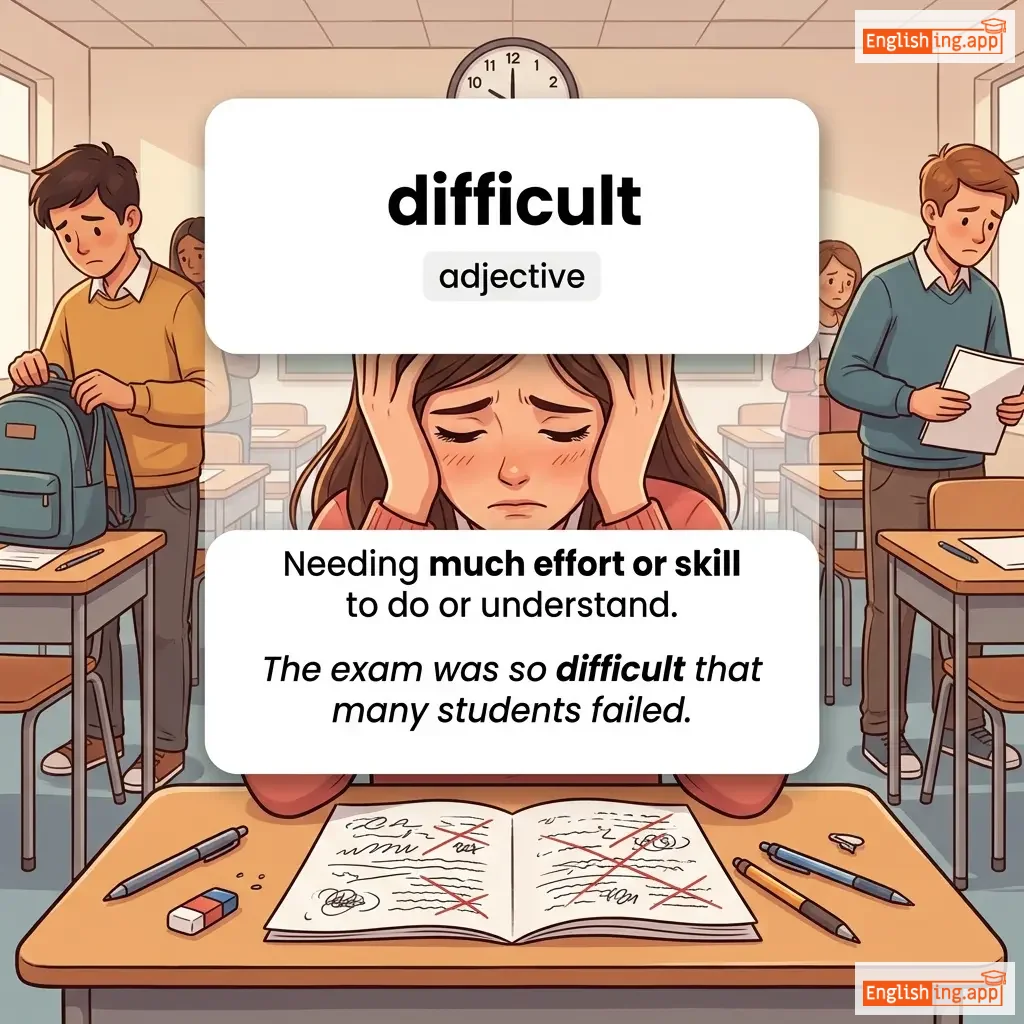
Needing much effort or skill to do or understand.
••••••
|
The exam was so difficult that many students failed. |
試験は非常に難しく、多くの学生が失敗しました。
Shiken wa hijō ni muzukashiku, ōku no gakusei ga shippai shimashita.
••••••
|
difficult situation |
A situation that is hard to handle.
••••••
|
難しい状況
muzukashii jōkyō
••••••
|
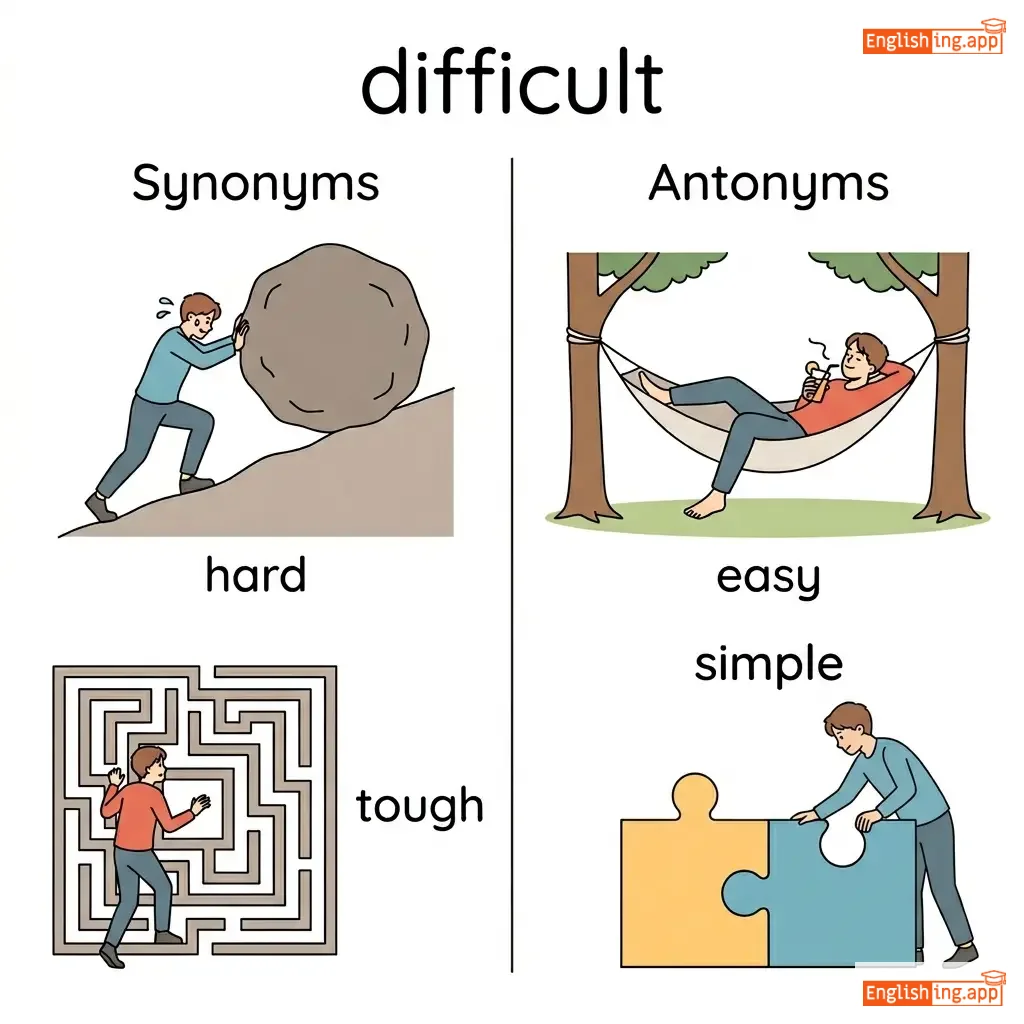
hard, tough, challenging, complicated, demanding
••••••
|
easy, simple, effortless
••••••
|
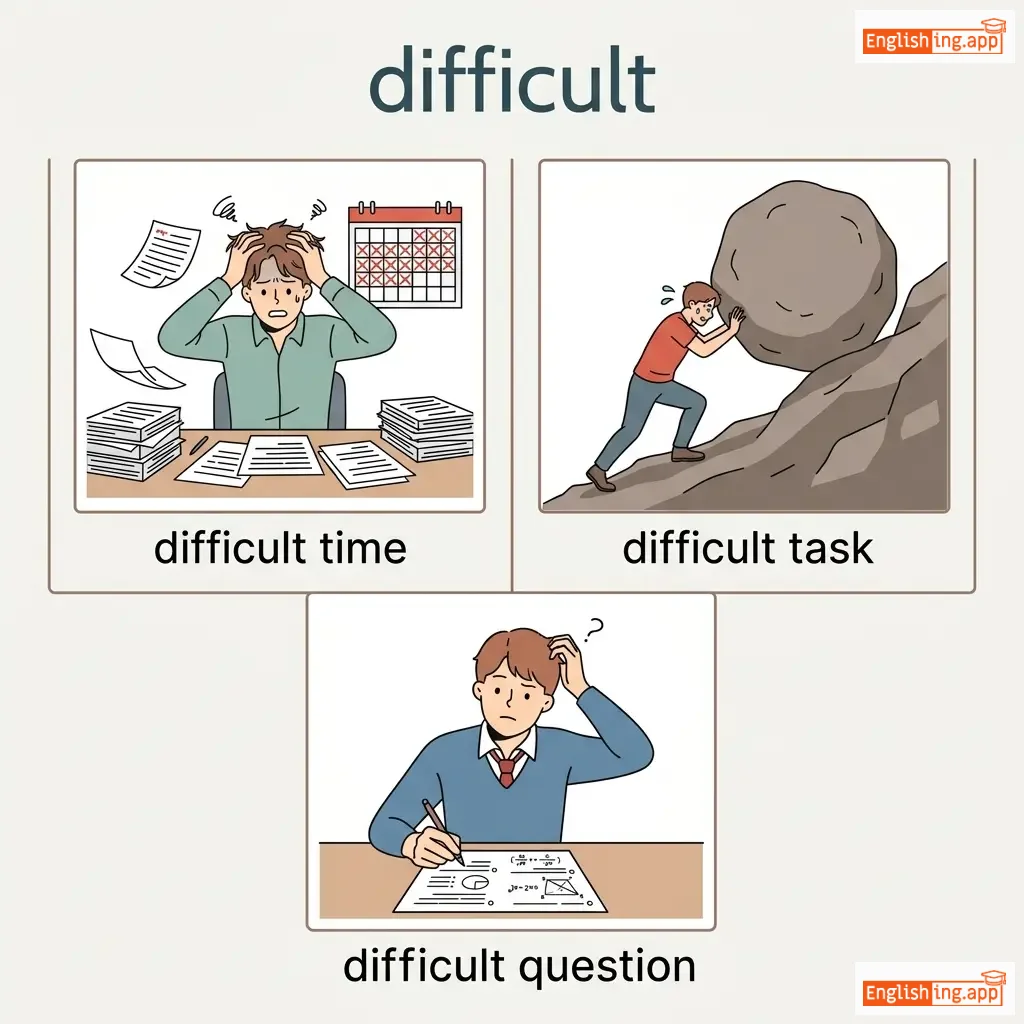
difficult time, difficult task, difficult question, difficult choice
••••••
|
Difficult は難しいという意味です。'Di' は難しさ、'full' は満ちていることを表し、仕事に努力が必要です。
••••••
|
|
⚠️
••••••
|
/ˈdɪfɪkəlti/
noun
••••••
|
- •••••• | - •••••• | - •••••• | - •••••• | - •••••• | - •••••• |
the state or condition of being hard to do, deal with, or understand
••••••
|
He faced great difficulty in learning a new language. |
- •••••• |
in difficulty |
to be in trouble or facing problems
••••••
|
- •••••• |
challenge, hardship, obstacle, struggle, trouble
••••••
|
ease, simplicity, comfort
••••••
|
face difficulty, great difficulty, difficulty in, experience difficulty
••••••
|
No •••••• |
|
⛏️
••••••
|
/dɪɡ/
verb
(ディグ)
••••••
|
- •••••• |
掘る
horu
••••••
|
dug
ダグ
••••••
|
dug
ダグ
••••••
|
digs
ディグス
••••••
|
digging
ディギング
••••••
|
to break up and move earth with a tool or machine, or with hands, paws, etc.
••••••
|
They decided to dig a hole for the new tree.
彼らは新しい木のために穴を掘ることを決めました。
••••••
|
彼らは新しい木のために穴を掘ることを決めました。
Karera wa atarashī ki no tame ni ana o horu koto o kimemashita.
••••••
|
dig deep
深く掘る
••••••
|
to make a great effort or use inner strength
••••••
|
深く掘る
fukaku horu
••••••
|
excavate, burrow, scoop, shovel
••••••
|
fill, cover
••••••
|
dig a hole, dig up, dig deep, dig into
••••••
|
DIGは掘ることを意味します - 土の中で宝物を探すように。
••••••
|
|
💻
••••••
|
/ˈdɪdʒɪtl/
adjective
(デジタル)
••••••
|

|
デジタル
dejitaru
••••••
|
- •••••• | - •••••• | - •••••• | - •••••• |
relating to technology that uses signals or data in the form of numbers (0s and 1s)
••••••
|
She prefers digital books over printed ones. |
彼女は印刷された本よりデジタル本を好みます。
Kanojo wa insatsu sareta hon yori dejitaru hon o konomimasu.
••••••
|
go digital |
to switch from traditional methods to digital technology
••••••
|
デジタルに移行する
dejitaru ni ikō suru
••••••
|
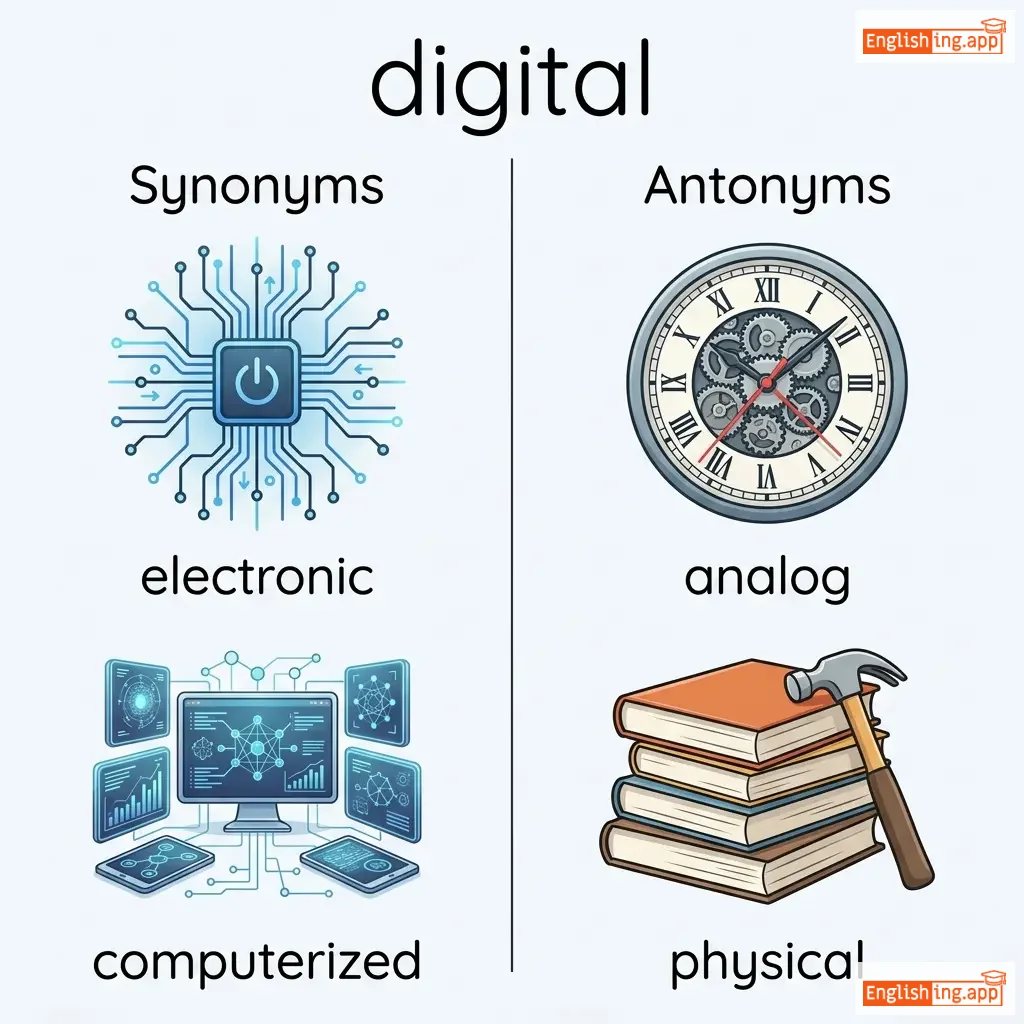
electronic, computerized, online, virtual
••••••
|
analog, physical
••••••
|
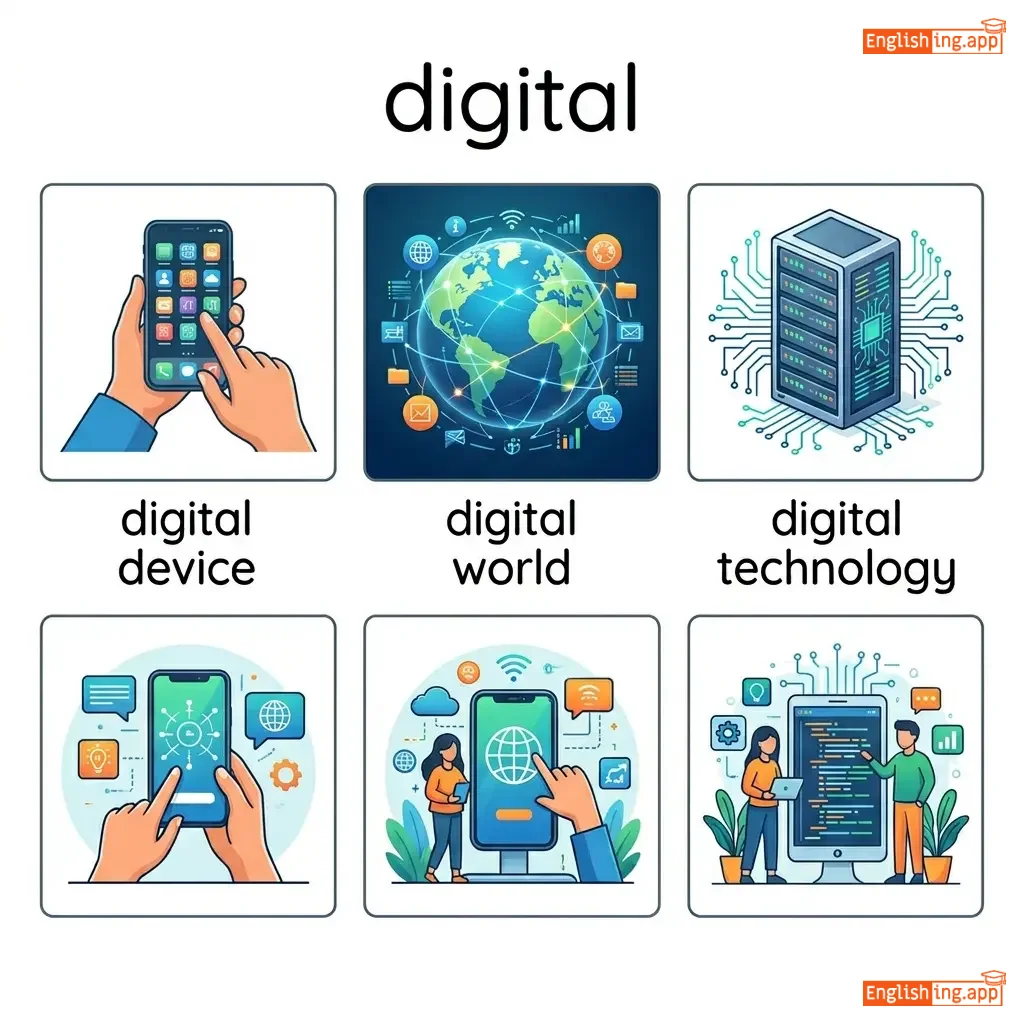
digital device, digital world, digital technology, digital marketing
••••••
|
デジタルはオンラインとコンピュータの未来です。
••••••
|
|
🕊️
••••••
|
/ˈdɪɡnəti/
noun
(ディグニティ)
••••••
|
- •••••• |
尊厳
songen
••••••
|
- •••••• | - •••••• | - •••••• | - •••••• |
the state or quality of being worthy of respect or honor
••••••
|
He faced the difficult situation with calm and dignity. |
彼は冷静さと尊厳を持って困難な状況に立ち向かいました。
Kare wa reisei sa to songen wo motte konnan na joukyou ni tachimukaimashita.
••••••
|
maintain one's dignity |
to behave respectfully and with self-control even in difficult situations
••••••
|
尊厳を保つ
songen wo tamotsu
••••••
|
honor, self-respect, grace, pride, nobility
••••••
|
disgrace, humiliation, shame
••••••
|
human dignity, personal dignity, loss of dignity, with dignity
••••••
|
'尊厳' は名誉を意味します — '尊'の中に'厳'を見つけて!
••••••
|
|
🤔
••••••
|
/daɪˈlɛmə/
noun
(ディレマ)
••••••
|
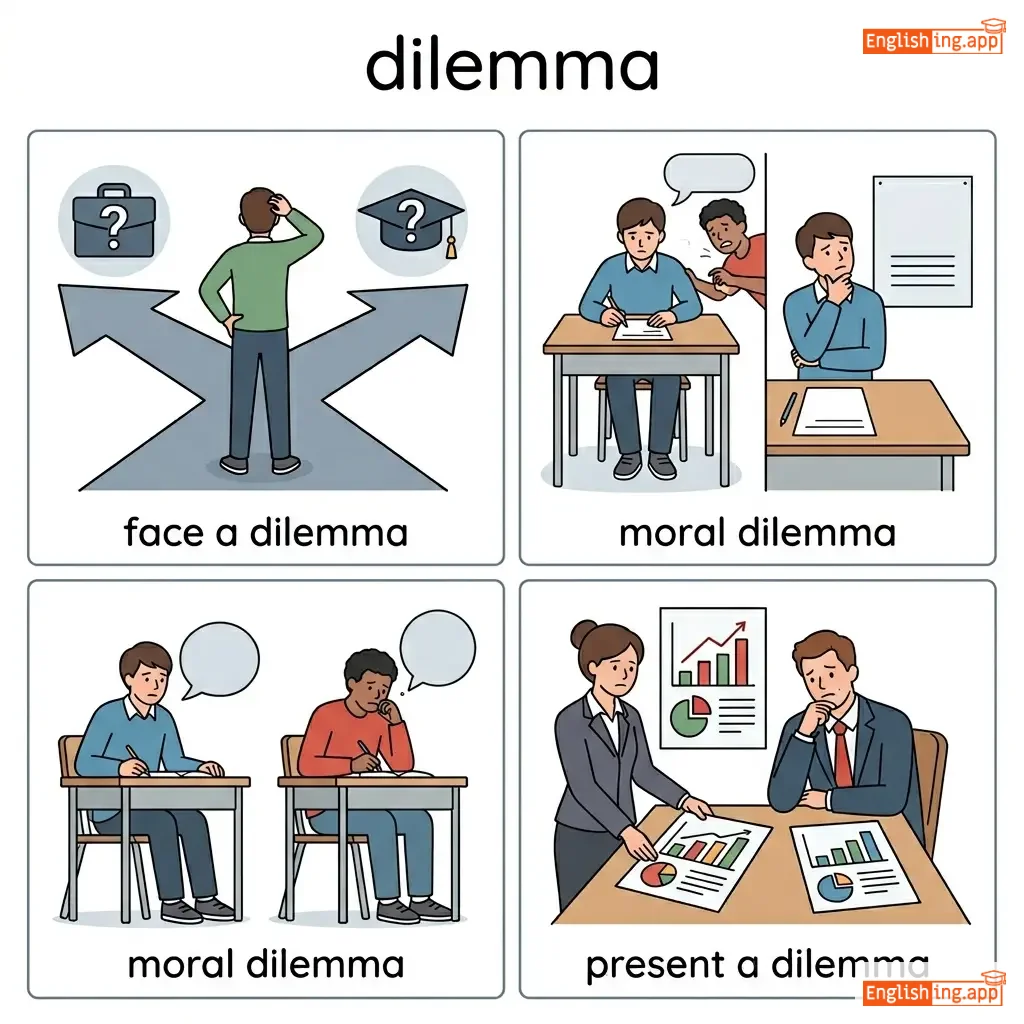
|
ジレンマ
jirenma
••••••
|
- •••••• | - •••••• | - •••••• | - •••••• |
A situation in which a difficult choice has to be made between two or more alternatives.
••••••
|
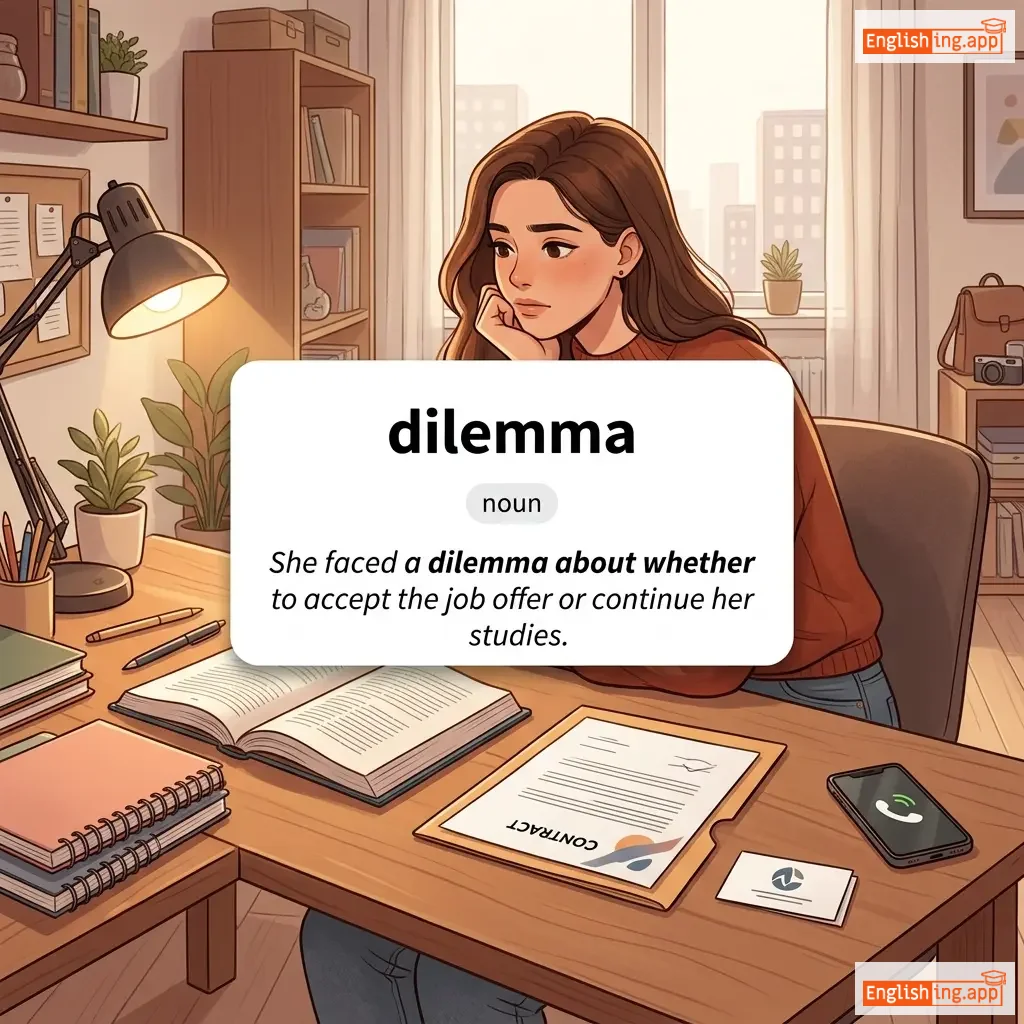
She faced a dilemma about whether to accept the job offer or continue her studies. |
彼女は仕事のオファーを受け入れるか、学業を続けるかというジレンマに直面していました。
Kanojo wa shigoto no ofā o ukeireru ka, gakugyō o tsuzukeru ka to iu jirenma ni chokumen shiteimashita.
••••••
|
moral dilemma |
A difficult choice involving a conflict of moral principles.
••••••
|
道徳的ジレンマ
dōtoku-teki jirenma
••••••
|
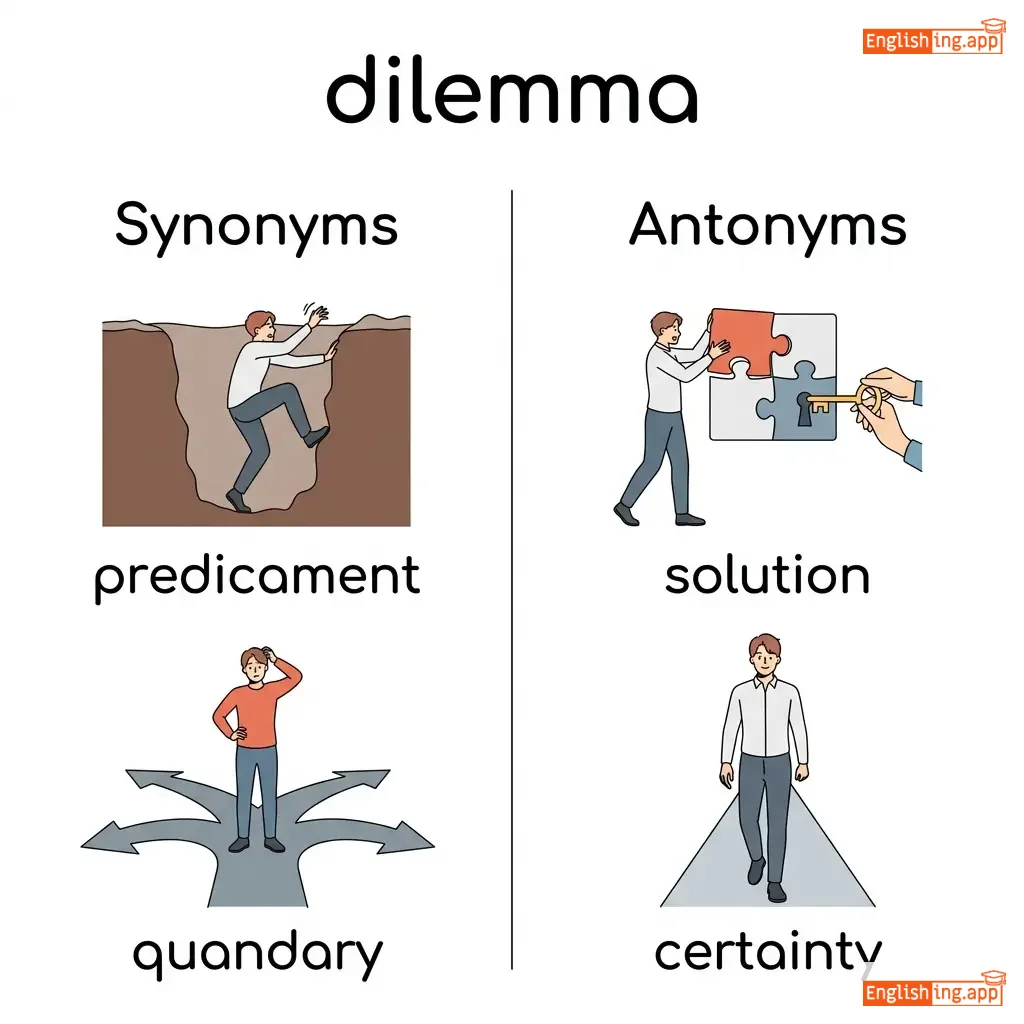
predicament, quandary, problem, difficulty
••••••
|
solution, certainty, clarity
••••••
|
face a dilemma, moral dilemma, present a dilemma
••••••
|
Dilemma は di (二) + lemma (選択) = 二つの難しい選択肢。
••••••
|
|
📐
••••••
|
/dɪˈmɛnʃən/
noun
(daimenshon)
••••••
|
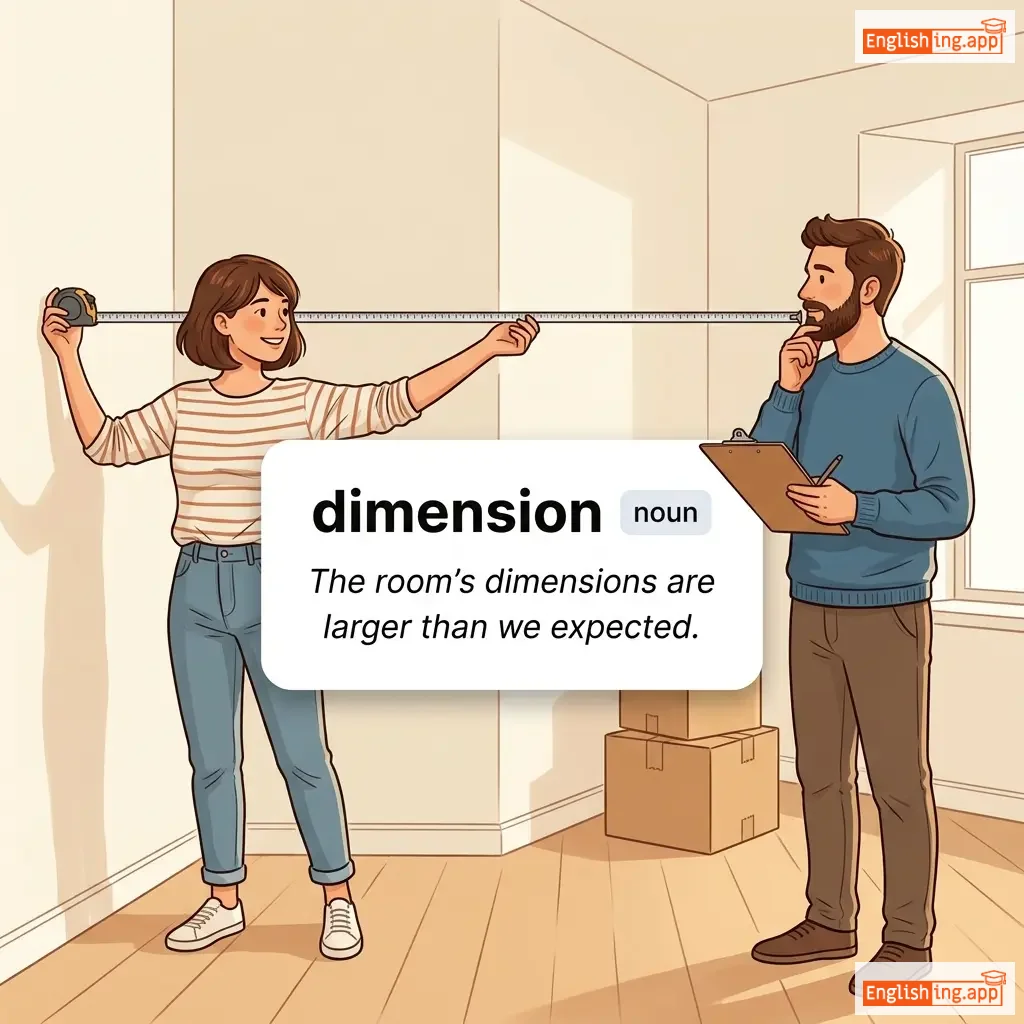
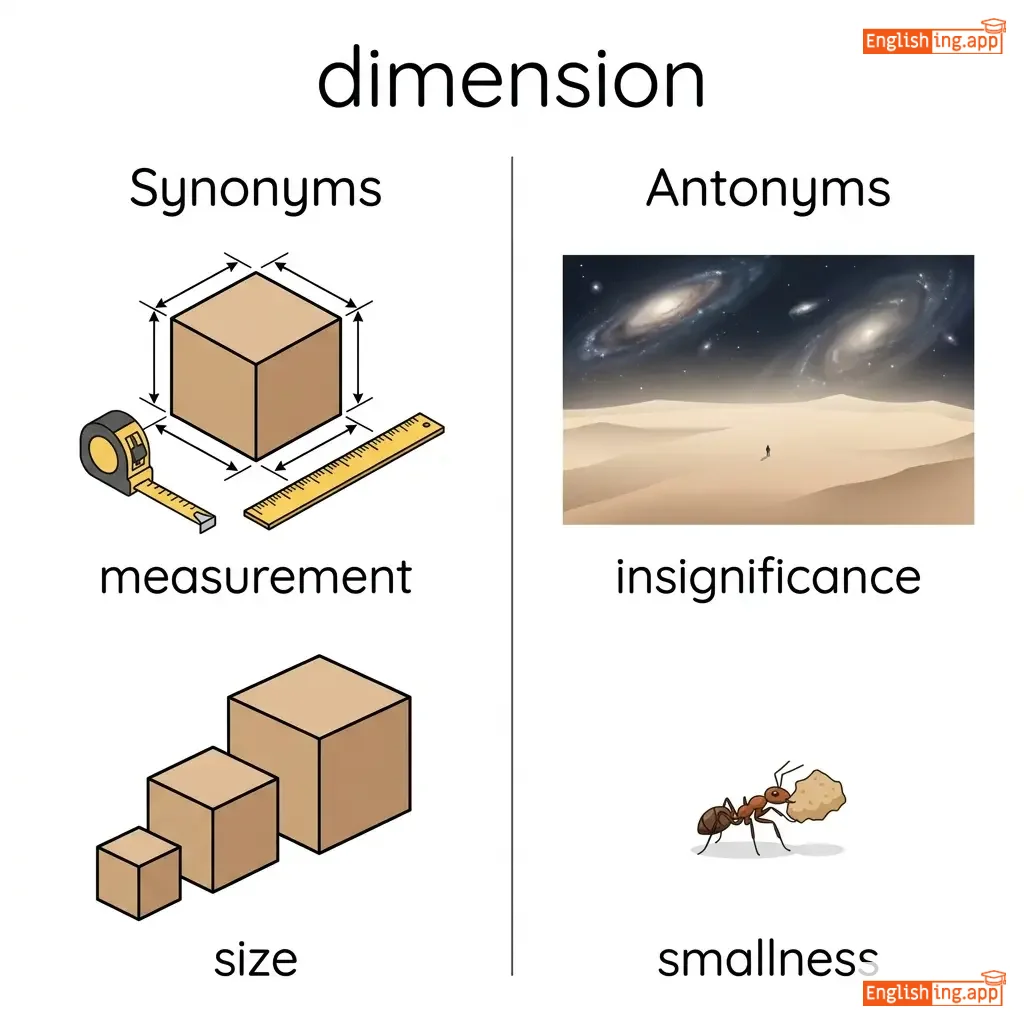
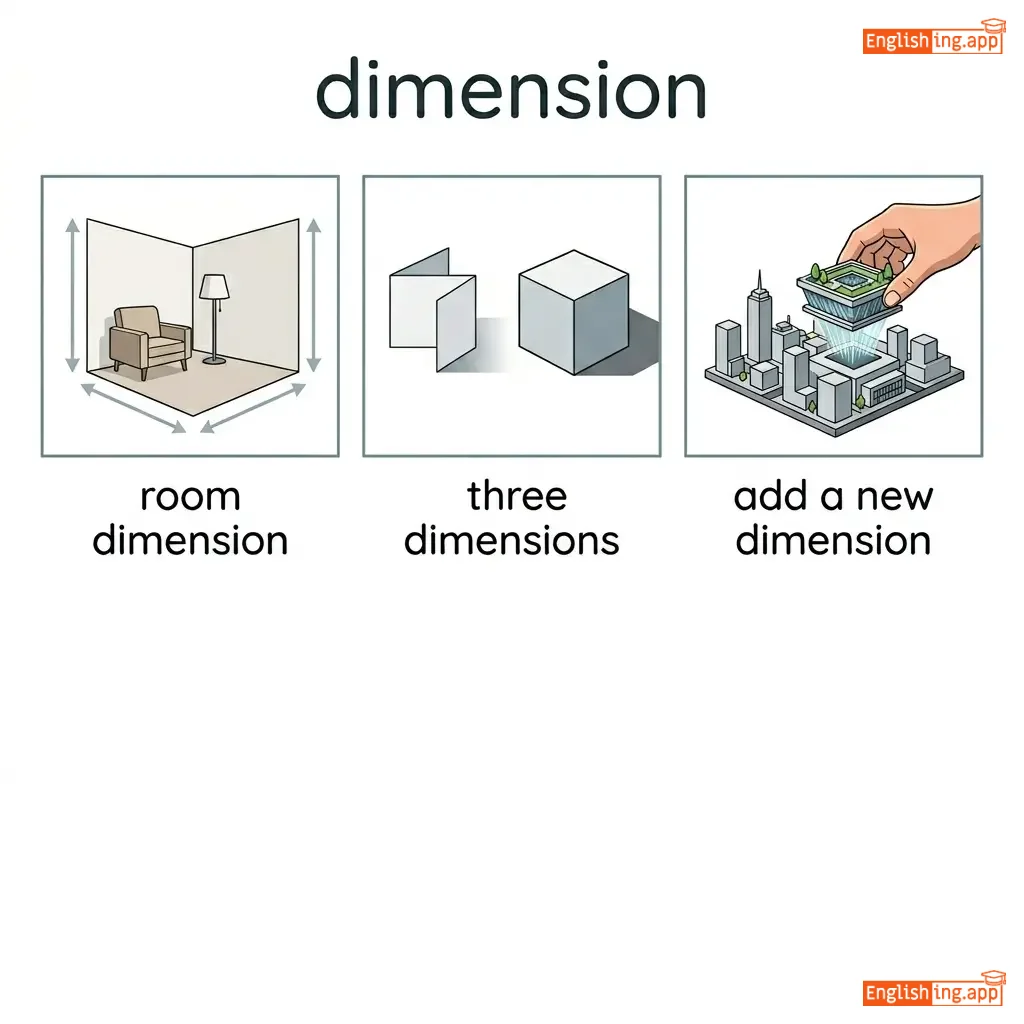
|
次元
jigen
••••••
|
- •••••• | - •••••• | - •••••• | - •••••• |
A measurable extent of a particular kind, such as length, breadth, depth, or height.
••••••
|
The room’s dimensions are larger than we expected. |
部屋の次元は私たちが予想していたよりも大きい。
Heya no jigen wa watashitachi ga yosō shite ita yori mo ōkī.
••••••
|
new dimension |
An additional aspect or perspective of a situation.
••••••
|
新たな次元
Aratana jigen
••••••
|
measurement, size, proportion, extent, aspect
••••••
|
insignificance, smallness
••••••
|
room dimension, three dimensions, add a new dimension
••••••
|
次元 = 次 (next) の次元へ進む感じ!
••••••
|
|
⬇️
••••••
|
/dɪˈmɪnɪʃ/
verb
••••••
|
- •••••• | - •••••• |
diminished
••••••
|
diminished
••••••
|
diminishes
••••••
|
diminishing
••••••
|
to make or become less; to reduce in size, importance, or value
••••••
|
Over time, his influence in the company began to diminish. |
- •••••• |
diminish returns |
a situation where the benefit gained is less compared to the effort or investment put in
••••••
|
- •••••• |
reduce, decrease, lessen, weaken, dwindle
••••••
|
increase, enlarge, expand
••••••
|
diminish value, diminish importance, diminish role, diminish returns
••••••
|
No •••••• |
|
🍽️
••••••
|
/daɪn/
verb
(ダイン)
••••••
|
- •••••• |
食事する
shokuji suru
••••••
|
dined
ダインド
••••••
|
dined
ダインド
••••••
|
dines
ダインズ
••••••
|
dining
ダイニング
••••••
|
to eat a meal, especially the main meal of the day
••••••
|
We usually dine at seven o'clock in the evening.
私たちは通常、夕方七時にダインします。
••••••
|
私たちは通常、夕方七時に食事します。
Watashitachi wa tsujo, yugata shichi-ji ni shokuji shimasu.
••••••
|
dine out
外食する
••••••
|
to eat at a restaurant instead of at home
••••••
|
外食する
gaishoku suru
••••••
|
eat, sup, feast, have a meal, partake
••••••
|
fast, skip a meal
••••••
|
dine with friends, dine at a restaurant, dine together
••••••
|
ダイン = ダイニングテーブルで食事することを思い浮かべて覚える。
••••••
|
|
🍽️
••••••
|
/ˈdɪnər/
noun
(ディナー)
••••••
|
- •••••• |
夕食
yūshoku
••••••
|
- •••••• | - •••••• | - •••••• | - •••••• |
the main meal of the day, usually eaten in the evening
••••••
|
We had a lovely dinner at a new restaurant last night. |
昨晩、新しいレストランで素敵なディナーを楽しみました。
Sakuban, atarashī resutoran de suteki na dīnā o tanoshimimashita.
••••••
|
have someone for dinner |
to invite someone to eat dinner with you at your home
••••••
|
誰かをディナーに招待する
dareka o dīnā ni shoutai suru
••••••
|
supper, feast, banquet, meal
••••••
|
breakfast, lunch
••••••
|
dinner table, dinner party, dinner plate, dinner invitation
••••••
|
ディナーは夜の主食 — 夜になるとみんなが言う 'ディナーを食べる?'
••••••
|
|
🥣
••••••
|
/dɪp/
verb
(ディップ)
••••••
|
- •••••• |
浸す
shimesu
••••••
|
dipped
ディップド
••••••
|
dipped
ディップド
••••••
|
dips
ディップス
••••••
|
dipping
ディッピング
••••••
|
to put something quickly into a liquid and take it out again
••••••
|
She dipped her bread into the soup.
彼女はパンをスープに浸しました。
••••••
|
彼女はパンをスープに浸しました。
Kanojo wa pan o sūpu ni shimeshima-shita.
••••••
|
dip your toes in
新しいことを慎重に試す
••••••
|
to try something new carefully or slowly
••••••
|
新しいことを慎重に試す
atarashī koto o shinchō ni tamesu
••••••
|
immerse, submerge, sink, plunge, dunk
••••••
|
lift, raise, dry
••••••
|
dip in water, dip sauce, dip stick, dip temperature
••••••
|
スープにパンを浸す – これがDIP!
••••••
|
|
🤵♂️
••••••
|
/ˈdɪpləmæt/
noun
(ディプロマット)
••••••
|
- •••••• |
外交官
gaikoukan
••••••
|
- •••••• | - •••••• | - •••••• | - •••••• |
An official representing a country abroad; a person skilled in dealing with people tactfully.
••••••
|
The diplomat negotiated a peace agreement. |
外交官は平和協定の交渉を行いました。
Gaikoukan wa heiwa kyoutei no koushou wo okonaimashita.
••••••
|
- •••••• | - •••••• | - •••••• |
envoy, ambassador, representative, emissary, negotiator
••••••
|
commoner, layman
••••••
|
senior diplomat, career diplomat, foreign diplomat
••••••
|
Diploma + ト → 外国での役職 = diplomat (外交官)
••••••
|
|
🕊️
••••••
|
/ˌdɪpləˈmætɪk/
adjective
(ディプロマティック)
••••••
|
- •••••• |
外交的な
gaikoutekina
••••••
|
- •••••• | - •••••• | - •••••• | - •••••• |
Concerning diplomacy; having or showing skill in dealing with people in a sensitive and effective way.
••••••
|
She gave a diplomatic response to avoid offending anyone. |
彼女は誰かを傷つけないように外交的な返答をしました。
kanojo wa dareka wo kizutsukenai you ni gaikoutekina hento wo shimashita.
••••••
|
diplomatic immunity |
A privilege that exempts diplomats from certain laws in the host country.
••••••
|
外交特権
gaikou tokken
••••••
|
tactful, courteous, strategic, conciliatory, discreet
••••••
|
tactless, blunt, rude
••••••
|
diplomatic relations, diplomatic mission, diplomatic language
••••••
|
Diplomatic reply = polite 返事 (外交的な返答)
••••••
|
|
➡️
••••••
|
/dəˈrɛkt/ or /daɪˈrɛkt/
verb
(ダイレクト)
••••••
|
- •••••• |
指示する
shiji suru
••••••
|
directed
ダイレクテッド
••••••
|
directed
ダイレクテッド
••••••
|
directs
ダイレクツ
••••••
|
directing
ダイレクティング
••••••
|
to manage or control the course of something; to give instructions
••••••
|
She directed the team to complete the project on time.
彼女はチームにプロジェクトを時間通りに終わらせるよう指示しました。
••••••
|
彼女はチームにプロジェクトを時間通りに終わらせるよう指示しました。
Kanojo wa chīmu ni purojekuto o jikan dōri ni owaraseru yō shiji shimashita.
••••••
|
direct traffic
交通整理をする
••••••
|
to manage and guide the movement of vehicles
••••••
|
交通整理をする
kōtsū seiri o suru
••••••
|
guide, lead, manage, command, instruct
••••••
|
mislead, confuse
••••••
|
direct attention, direct action, direct contact, direct result
••••••
|
Direct は、指示を明確に — 交通整理をすることは精密に!
••••••
|
|
🧭
••••••
|
/dəˈrɛkʃən/ or /daɪˈrɛkʃən/
noun
(ディレクション)
••••••
|
- •••••• |
方向, 指示
houkou, shiji
••••••
|
- •••••• | - •••••• | - •••••• | - •••••• |
the course or path on which someone or something is moving; instructions on what to do
••••••
|
He asked for directions to the train station. |
彼は駅への行き方を尋ねました。
Kare wa eki e no ikikata o tazunemashita.
••••••
|
change direction |
to alter the course or plan
••••••
|
方向を変える
houkou o kaeru
••••••
|
instruction, guidance, route, path, orientation
••••••
|
confusion, aimlessness
••••••
|
clear direction, right direction, new direction, opposite direction
••••••
|
方向はコンパスのように、常に正しい方向を指し示します。
••••••
|
|
📢
••••••
|
/dəˈrɛktli/ or /daɪˈrɛktli/
adverb
(ダイレクトリー)
••••••
|
- •••••• |
直接的に
chokusetsuteki ni
••••••
|
- •••••• | - •••••• | - •••••• | - •••••• |
in a straight line or manner; without anything in between
••••••
|
She spoke directly to the manager about her concerns. |
彼女は自分の懸念について、マネージャーに直接話しました。
Kanojo wa jibun no shinen ni tsuite, manējā ni chokusetsu hanashimashita.
••••••
|
directly involved |
personally connected or participating
••••••
|
直接関与
chokusetsu kan'yo
••••••
|
immediately, personally, straightforwardly, openly
••••••
|
indirectly, vaguely
••••••
|
directly responsible, directly affected, speak directly, directly proportional
••••••
|
Directly =そのまま、直接 — ダイレクトに進むこと。
••••••
|
|
🎬
••••••
|
/dəˈrɛktər/ or /daɪˈrɛktər/
noun
(ダイレクター)
••••••
|
- •••••• |
監督
kantoku
••••••
|
- •••••• | - •••••• | - •••••• | - •••••• |
a person who manages or oversees a company, department, or film
••••••
|
The director gave final approval for the new movie script. |
監督は新しい映画の脚本に最終承認を与えました。
Kantoku wa atarashī eiga no kyakuhon ni saishū shōnin o ataemashita.
••••••
|
board of directors |
a group of people elected to manage a company
••••••
|
取締役会
torishimariyaku kai
••••••
|
manager, leader, chief, head, supervisor
••••••
|
employee, subordinate
••••••
|
film director, company director, executive director, board of directors
••••••
|
監督は映画や会社の管理を行う人物。
••••••
|
|
📚
••••••
|
/dɪˈrɛktəri/
noun
(ディレクトリ)
••••••
|
- •••••• |
ディレクトリ
direkutori
••••••
|
- •••••• | - •••••• | - •••••• | - •••••• |
a book or online resource listing people, businesses, or services with relevant details
••••••
|
I need to find a plumber in the phone directory. |
電話帳で配管工を探さなければなりません。
Denwa-chō de haikangō o sagasanakereba narimasen.
••••••
|
- •••••• | - •••••• | - •••••• |
list, catalog, index, register
••••••
|
none
••••••
|
address directory, phone directory, online directory
••••••
|
ディレクトリ (directory) を使って必要な情報を見つけよう!
••••••
|
|
🪨
••••••
|
/dɜːrt/
noun
(ダート)
••••••
|
- •••••• |
土、汚れ
tsuchi, yogore
••••••
|
- •••••• | - •••••• | - •••••• | - •••••• |
Loose soil or unclean matter; anything that makes a surface unclean.
••••••
|
Her shoes were covered in dirt after walking through the field. |
畑を歩いた後、彼女の靴は泥だらけだった。
Hatake o aruita ato, kanojo no kutsu wa dora darake datta.
••••••
|
treat someone like dirt |
to treat someone badly or with no respect
••••••
|
誰かをゴミのように扱う
Dareka o gomi no yō ni atsukau
••••••
|
soil, earth, dust, grime, filth
••••••
|
cleanliness, purity
••••••
|
dirt road, covered in dirt, sweep the dirt, dirt cheap
••••••
|
Dirt = 土、例えばスポーツのフィールドで土が汚いと、試合がうまくいかない。
••••••
|
|
♿
••••••
|
/ˌdɪs.əˈbɪl.ə.ti/
noun
(ディサビリティ)
••••••
|
- •••••• |
障害
shougai
••••••
|
- •••••• | - •••••• | - •••••• | - •••••• |
a physical or mental condition that limits a person's movements, senses, or activities
••••••
|
Despite his physical disability, he became a successful athlete in wheelchair racing.
身体的な障害にもかかわらず、彼は車椅子レースで成功したアスリートになりました。
••••••
|
身体的な障害にもかかわらず、彼は車椅子レースで成功したアスリートになりました。
Shintai-teki na shougai ni mo kakawarazu, kare wa kuruma isu rēsu de seikou shita asurīto ni narimashita.
••••••
|
- •••••• | - •••••• | - •••••• |
impairment, handicap, limitation, incapacity
••••••
|
ability, capability, strength, enablement
••••••
|
learning disability, physical disability, disability rights
••••••
|
障害は挑戦の始まり
••••••
|
|
⛔
••••••
|
/dɪsˈeɪbl/
verb
(ディセイブル)
••••••
|
- •••••• |
無効にする
mukou ni suru
••••••
|
disabled
ディセイブルド
••••••
|
disabled
ディセイブルド
••••••
|
disables
ディセイブルス
••••••
|
disabling
ディセイブリング
••••••
|
to make something unable to function or operate
••••••
|
The technician disabled the alarm system temporarily.
技術者はアラームシステムを一時的に無効にしました。
••••••
|
技術者はアラームシステムを一時的に無効にしました。
Gijutsusha wa araamu shisutemu o ichijiteki ni mukou ni shimashita
••••••
|
- •••••• | - •••••• | - •••••• |
deactivate, impair, hinder, incapacitate
••••••
|
enable, activate, empower
••••••
|
disable a feature, disable a device, disable access
••••••
|
無効にする = disable, '無' = no, '効' = effect.
••••••
|
|
♿
••••••
|
/dɪsˈeɪbld/
adjective
(ディセイブルド)
••••••
|
- •••••• |
障害者
shougaisya
••••••
|
- •••••• | - •••••• | - •••••• | - •••••• |
having a physical or mental condition that limits movements, senses, or activities
••••••
|
The park has special facilities for disabled people. |
公園には障害者用の特別な施設があります。
Kouen ni wa shougaisya-you no tokubetsuna shisetsu ga arimasu.
••••••
|
- •••••• | - •••••• | - •••••• |
handicapped, impaired, incapacitated, challenged
••••••
|
able-bodied, healthy, fit
••••••
|
disabled person, disabled access, physically disabled, disabled community
••••••
|
Dis + able = not able → 体が不自由な人は‘障害者’です。
••••••
|
|
⬇️
••••••
|
/ˌdɪs.ədˈvæn.tɪdʒ/
noun
(ディスアドバンテージ)
••••••
|
|
不利
furi
••••••
|
- •••••• | - •••••• | - •••••• | - •••••• |
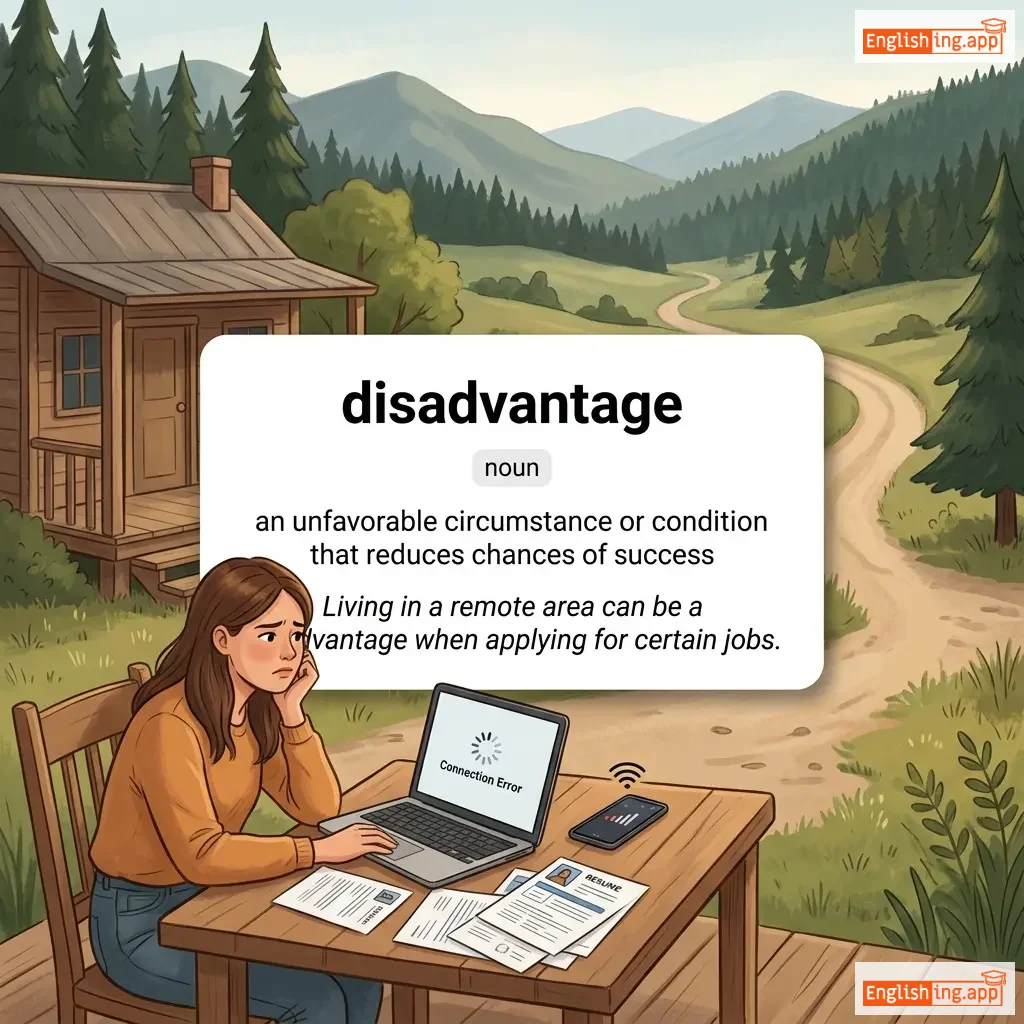
an unfavorable circumstance or condition that reduces chances of success
••••••
|
Living in a remote area can be a disadvantage when applying for certain jobs.
遠隔地に住んでいると、特定の職に応募する際に不利になることがあります。
••••••
|
遠隔地に住んでいると、特定の職に応募する際に不利になることがあります。
Enkaku chi ni sunde iru to, tokutei no shoku ni ōbo suru sai ni furi ni naru koto ga arimasu.
••••••
|
- •••••• | - •••••• | - •••••• |
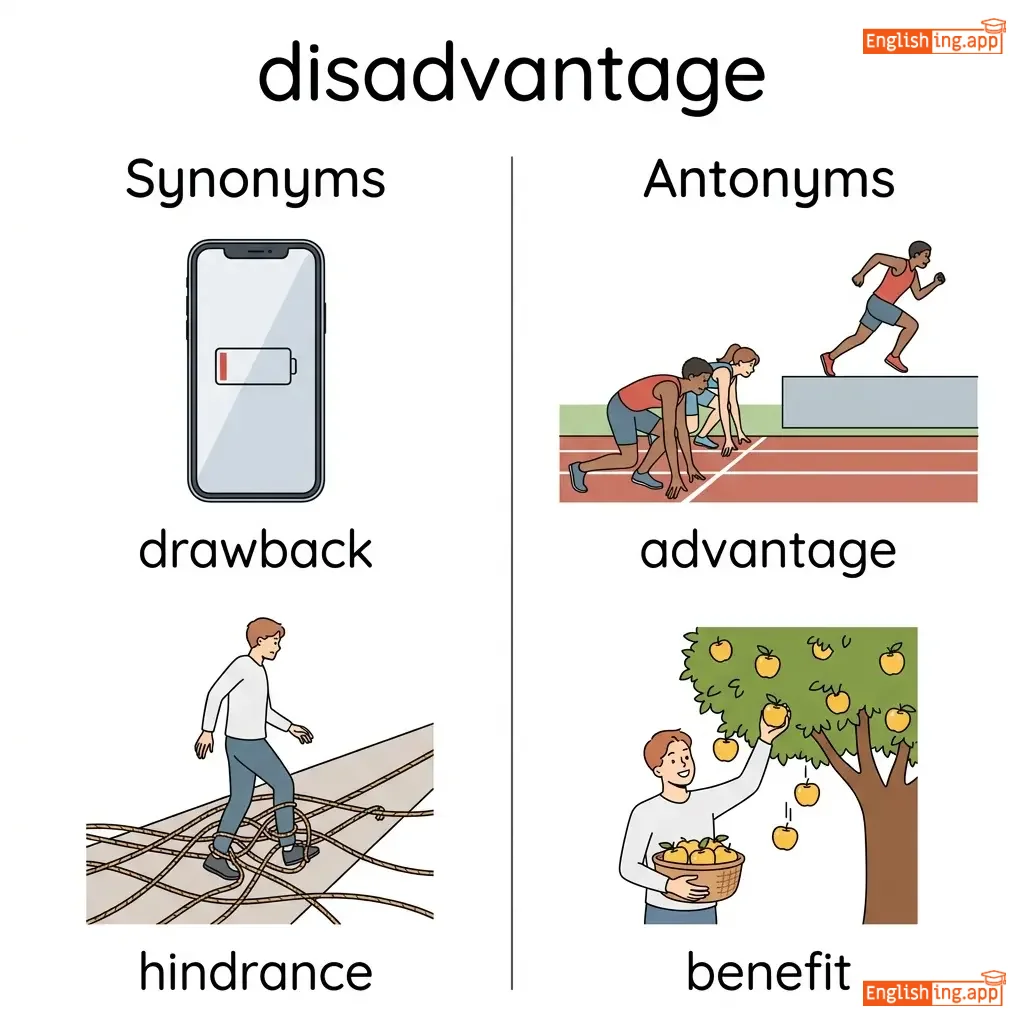
drawback, hindrance, obstacle, handicap
••••••
|
advantage, benefit, asset, strength
••••••
|
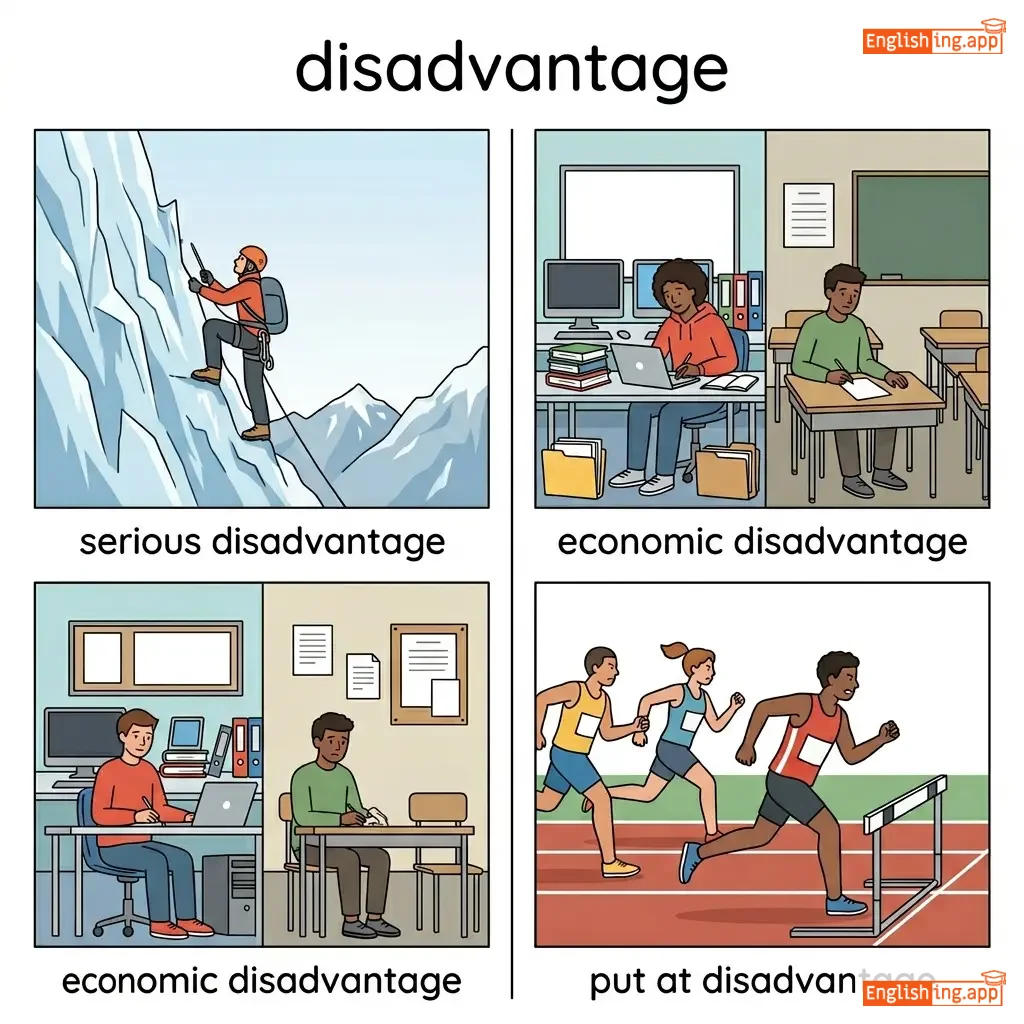
serious disadvantage, economic disadvantage, put at disadvantage
••••••
|
Furi means disadvantage, just like being at a disadvantage in life.
••••••
|
|
🙅
••••••
|
/ˌdɪsəˈɡriː/
verb
••••••
|
|
- •••••• |
disagreed
••••••
|
disagreed
••••••
|
disagrees
••••••
|
disagreeing
••••••
|
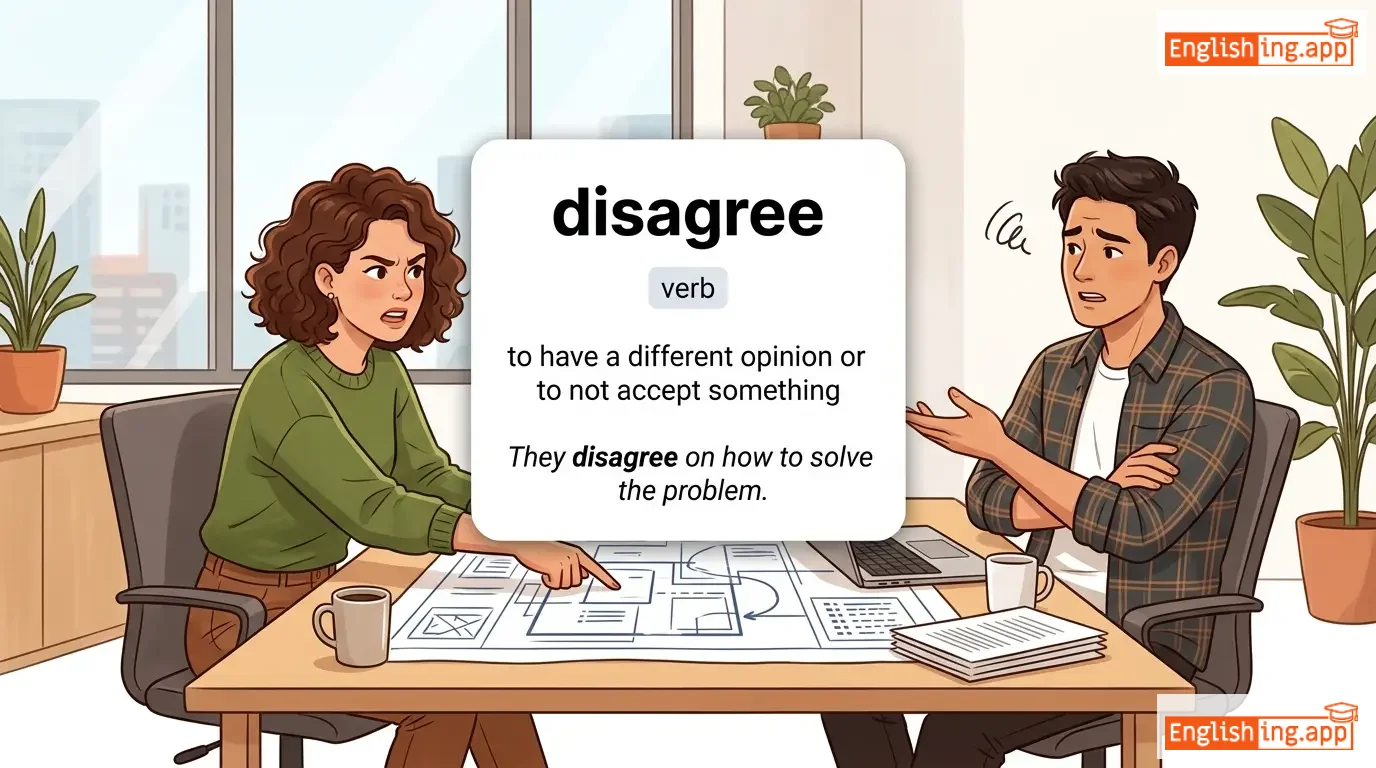
to have a different opinion or to not accept something
••••••
|
They disagree on how to solve the problem. |
- •••••• |
agree to disagree |
accept that two people will not reach the same opinion
••••••
|
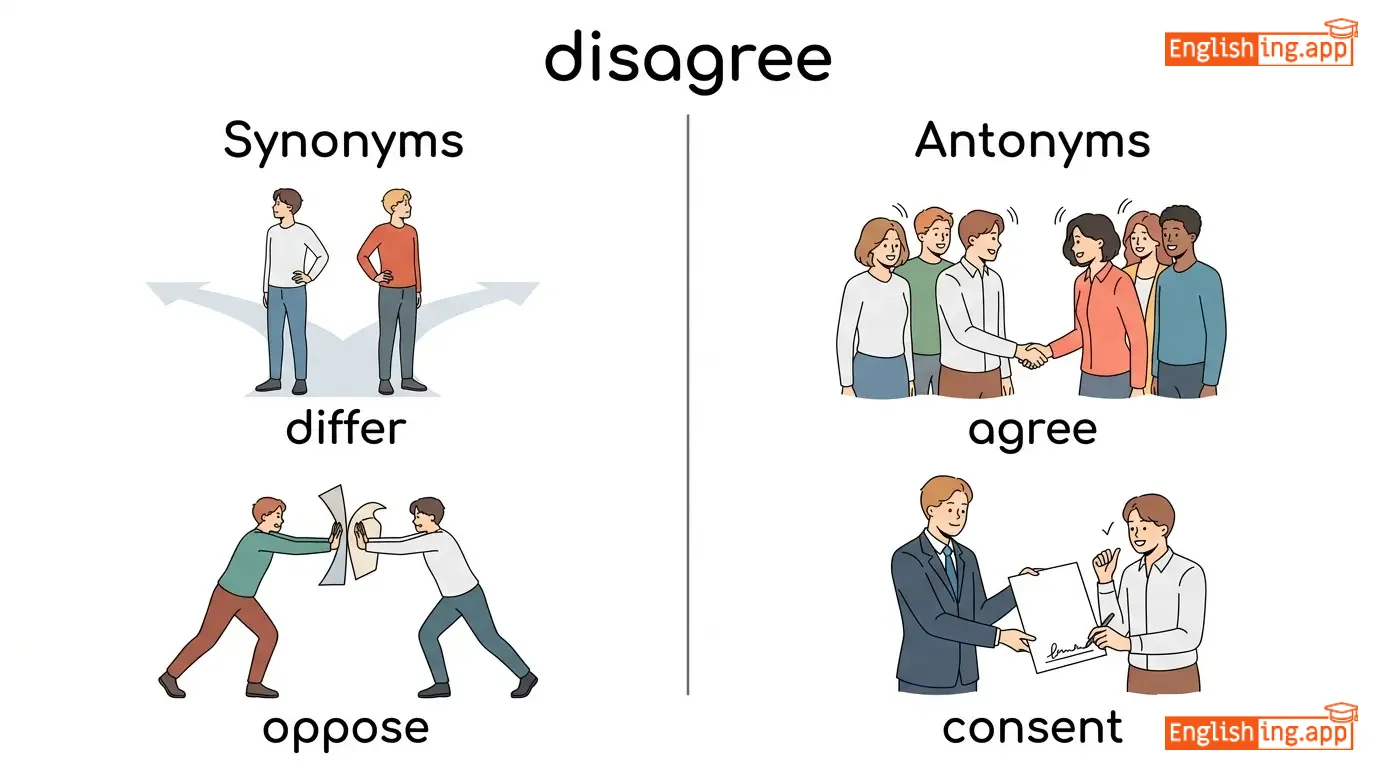
- •••••• |
differ, oppose, contradict, dispute, object
••••••
|
agree, consent, approve
••••••
|
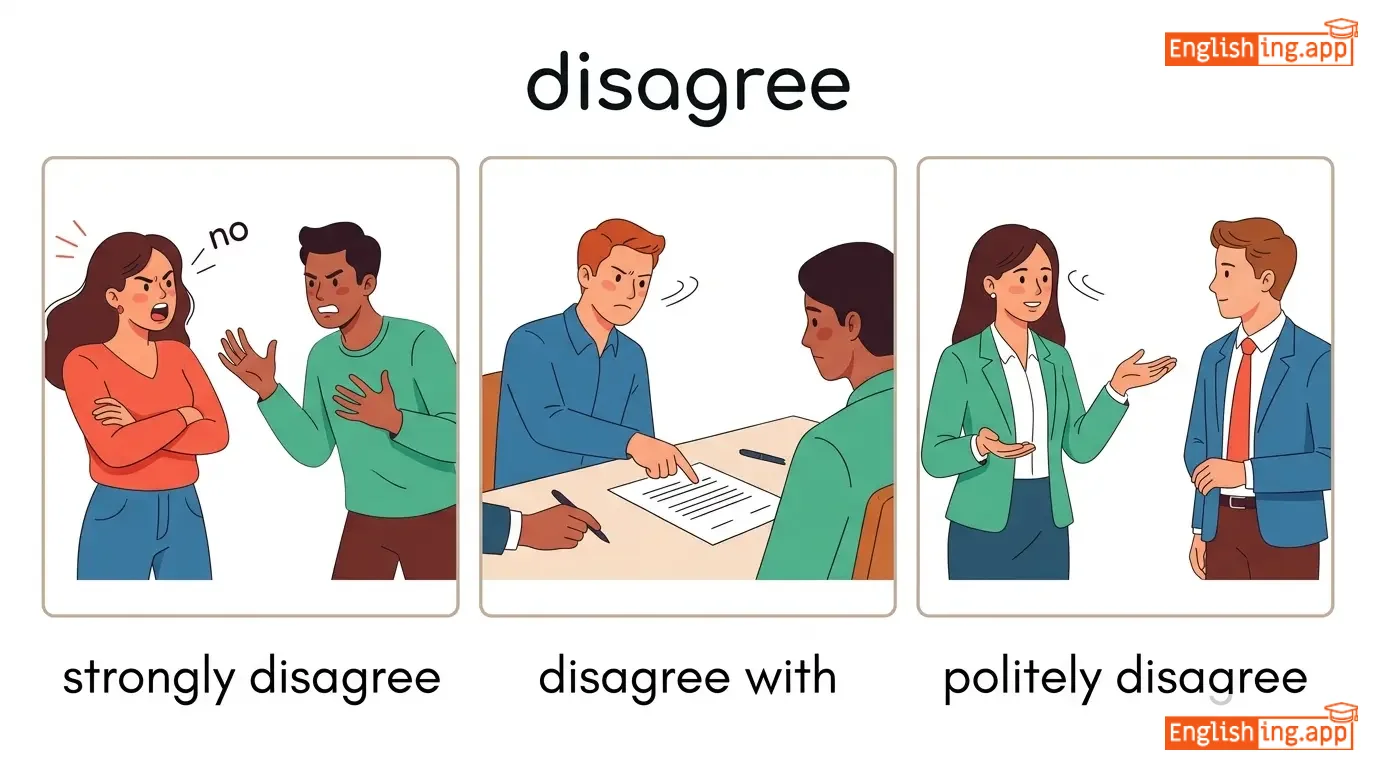
strongly disagree, disagree with, politely disagree
••••••
|
No •••••• |
|
💬
••••••
|
/ˌdɪsəˈɡriːmənt/
noun
(ディスアグリーメント)
••••••
|
- •••••• |
不一致
fuitchi
••••••
|
- •••••• | - •••••• | - •••••• | - •••••• |
a failure to agree or a difference in opinion
••••••
|
Their disagreement on the issue caused a delay in the project. |
その問題に対する彼らの不一致はプロジェクトの遅延を引き起こしました。
Sono mondai ni taisuru karera no fuitchi wa purojekuto no chien o hikiokoshimashita.
••••••
|
- •••••• | - •••••• | - •••••• |
dispute, argument, conflict, difference
••••••
|
agreement, harmony, accord
••••••
|
disagreement over, public disagreement, reach a disagreement
••••••
|
不一致(fuitchi)=‘不’不満、‘一致’合意。違う意見が生まれたこと。
••••••
|
|
🪄
••••••
|
/ˌdɪsəˈpɪər/
verb
(ディスアピア)
••••••
|
|
消える
kieru
••••••
|
disappeared
消えた
••••••
|
disappeared
消えた
••••••
|
disappears
消える
••••••
|
disappearing
消えている
••••••
|
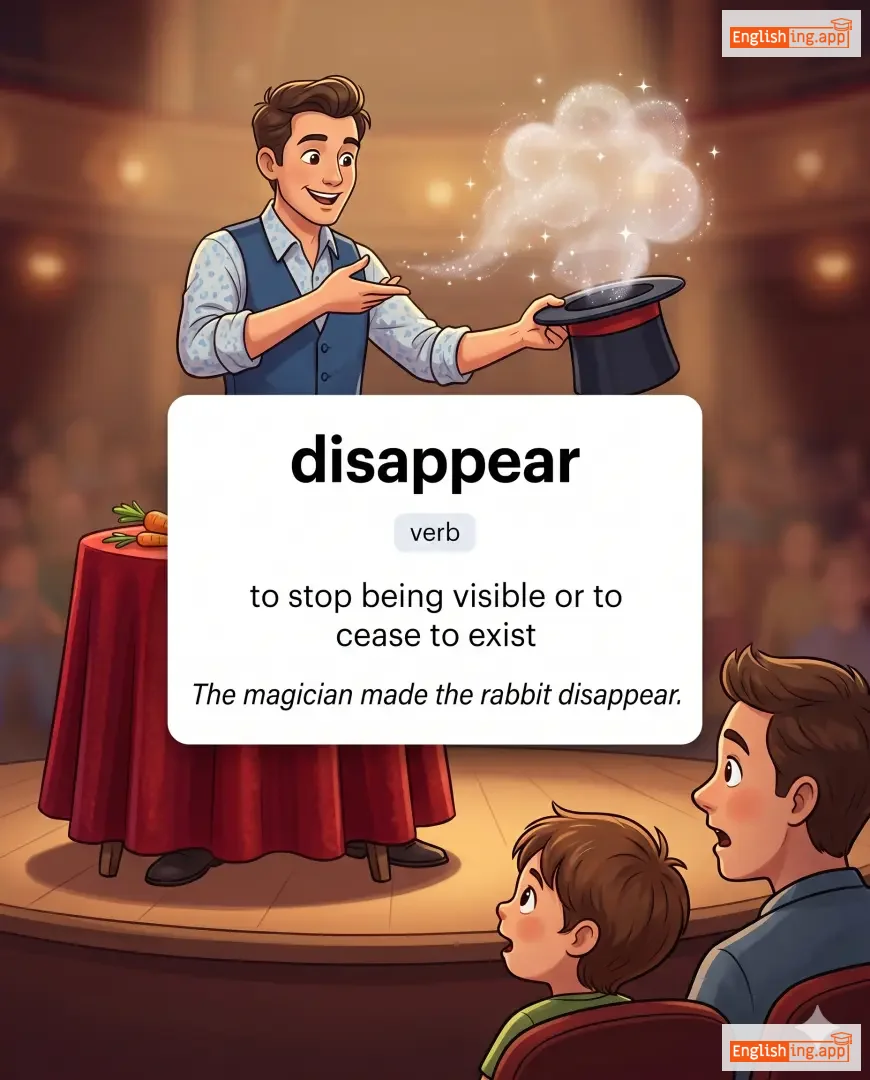
to stop being visible or to cease to exist
••••••
|
The magician made the rabbit disappear.
マジシャンはウサギを消しました。
••••••
|
マジシャンはウサギを消しました。
Majishan wa usagi o keshimashita.
••••••
|
disappear into thin air
空気中に消える
••••••
|
to vanish suddenly and completely
••••••
|
空気中に消える
kūchū ni kieru
••••••
|
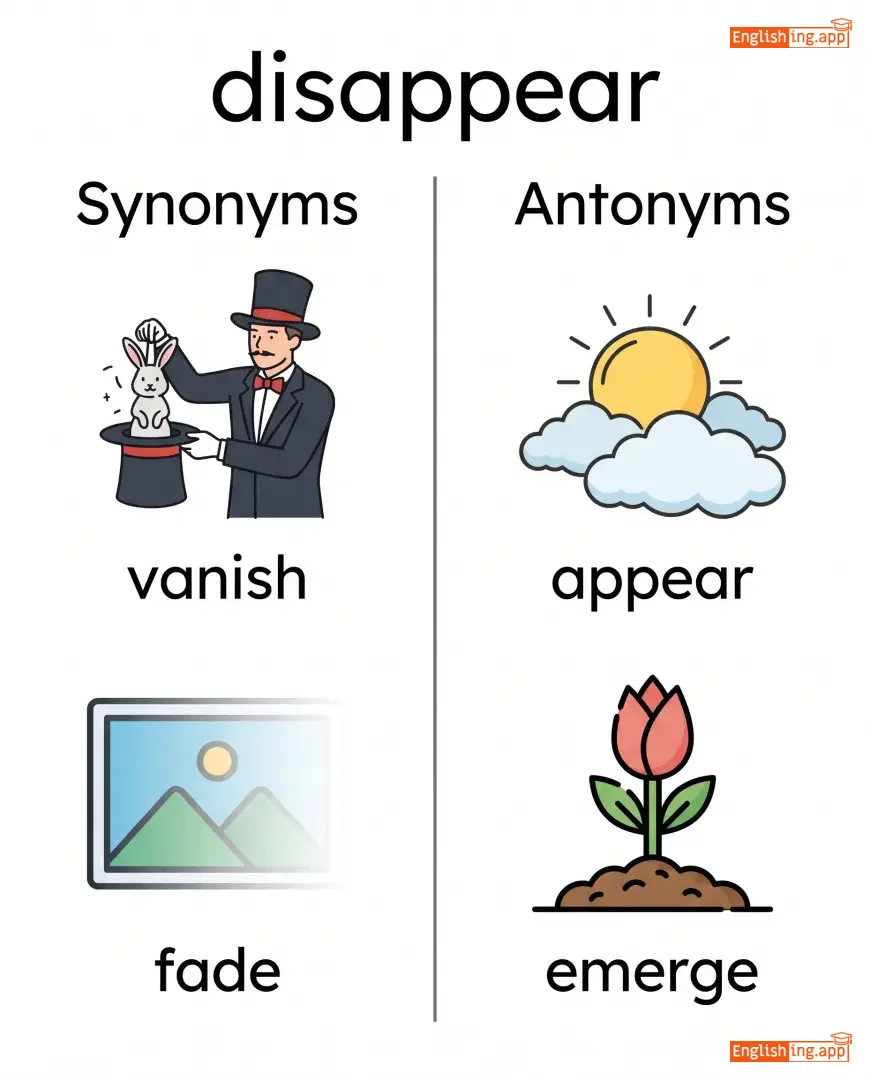
vanish, fade, evaporate, dissolve, recede
••••••
|
appear, emerge, show
••••••
|
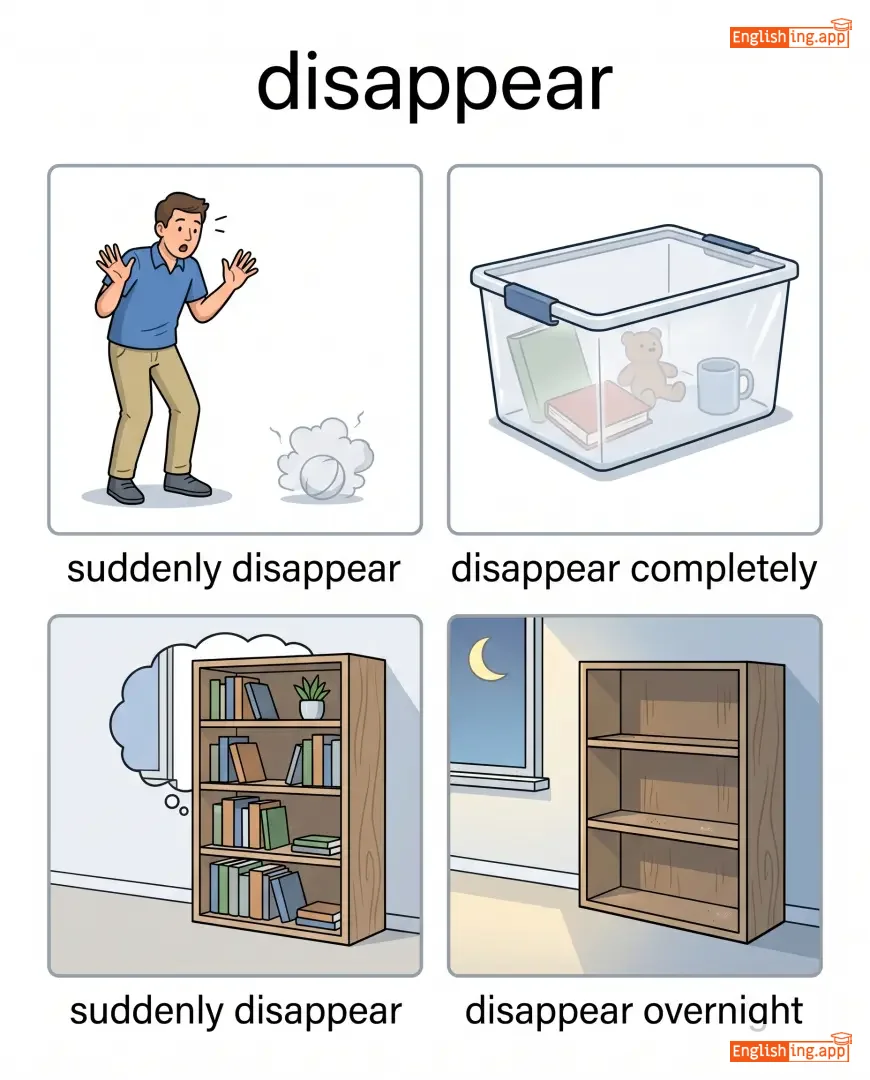
suddenly disappear, disappear completely, disappear overnight
••••••
|
Disappear は'消える'—前にいない、だから消える。
••••••
|
|
😞
••••••
|
/ˌdɪsəˈpɔɪnt/
verb
(ディサポイント)
••••••
|
|
失望する
shitsubou suru
••••••
|
disappointed
ディサポイントッド
••••••
|
disappointed
ディサポイントッド
••••••
|
disappoints
ディサポイントス
••••••
|
disappointing
ディサポイントイング
••••••
|
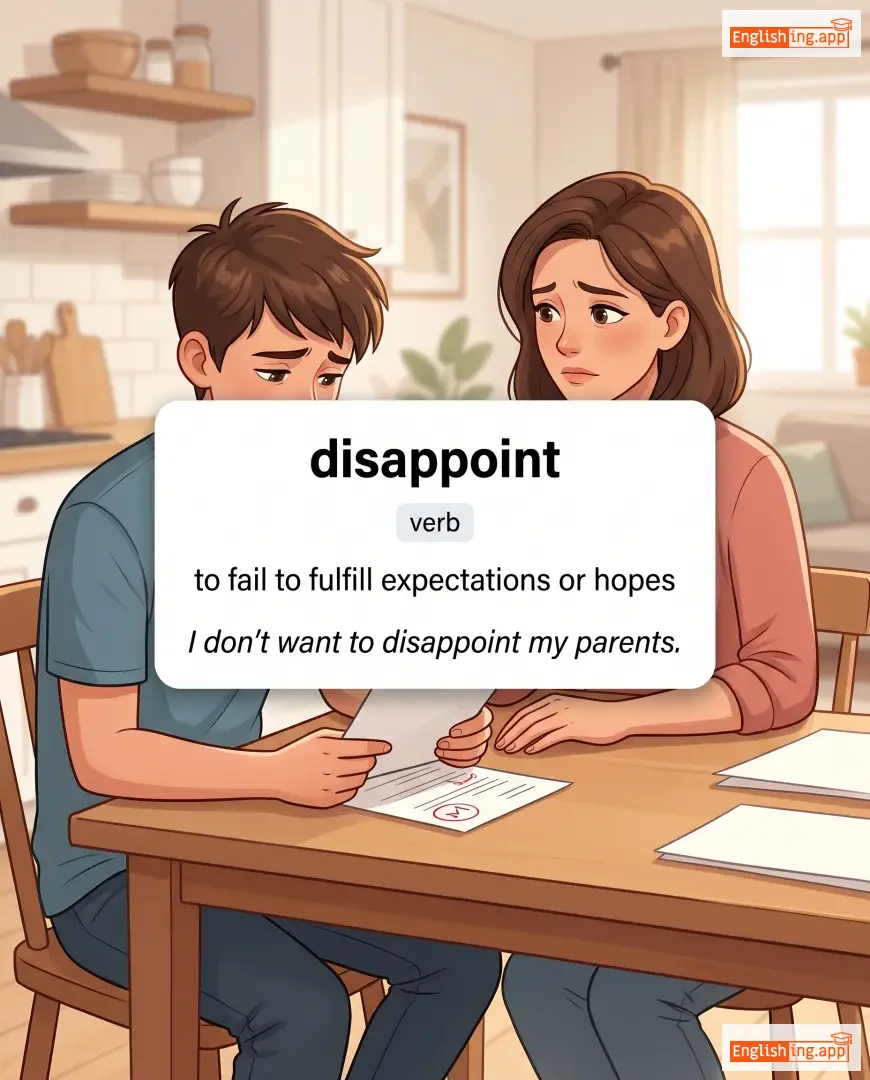
to fail to fulfill expectations or hopes
••••••
|
I don’t want to disappoint my parents.
私は両親を失望させたくない。
••••••
|
私は両親を失望させたくない。
Watashi wa ryoushin wo shitsubou sasetakunai.
••••••
|
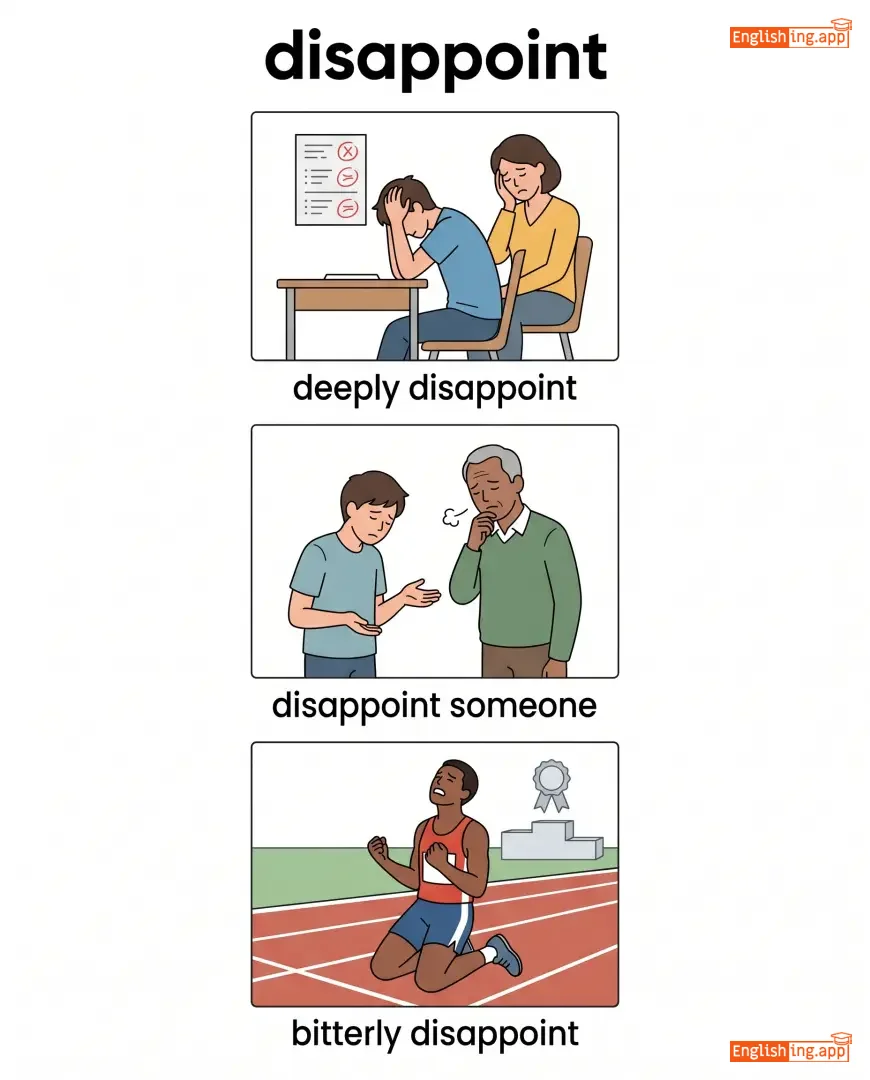
bitterly disappointed
ひどく失望した
••••••
|
very unhappy due to unmet expectations
••••••
|
ひどく失望した
hidoku shitsubou shita
••••••
|
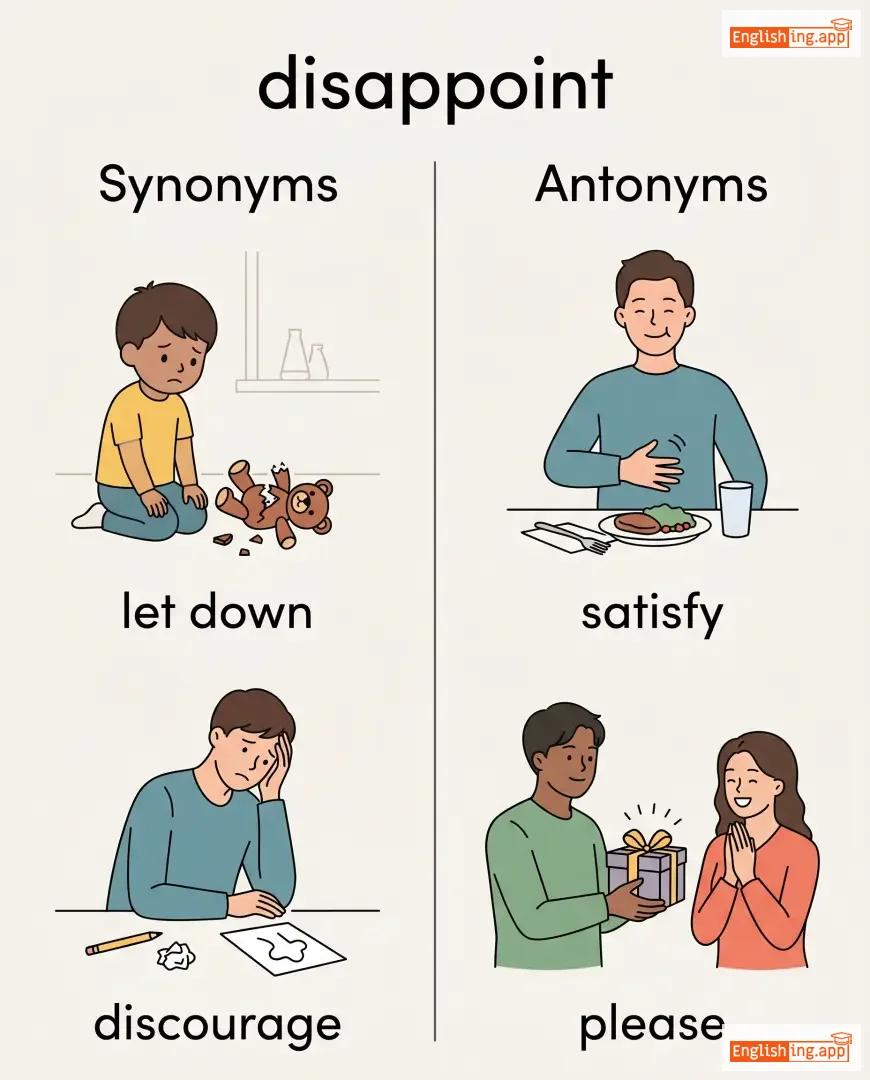
let down, discourage, upset, fail, frustrate
••••••
|
satisfy, please, fulfill
••••••
|
deeply disappoint, disappoint someone, bitterly disappoint
••••••
|
失望するは期待を裏切ること—期待が裏切られると失望する。
••••••
|
|
😞
••••••
|
/ˌdɪsəˈpɔɪntɪd/
adjective
(disappoɪntid)
••••••
|
- •••••• |
失望した
shitsubou shita
••••••
|
- •••••• | - •••••• | - •••••• | - •••••• |
sad or displeased because something has not happened as expected
••••••
|
She was disappointed with her exam results. |
彼女は試験結果に失望していた。
Kanojo wa shiken kekka ni shitsubou shite ita.
••••••
|
disappointed in someone |
feeling let down by a person's actions or behavior
••••••
|
誰かに失望する
dareka ni shitsubou suru
••••••
|
dissatisfied, upset, frustrated, let down, displeased
••••••
|
satisfied, pleased, content
••••••
|
feel disappointed, deeply disappointed, disappointed result, disappointed face
••••••
|
Dis + appointはあなたが期待していた人が失望させたから、‘失望した’です!
••••••
|
|
😞
••••••
|
/ˌdɪsəˈpɔɪntmənt/
noun
(ディサポイントメント)
••••••
|
- •••••• |
失望
shitsubou
••••••
|
- •••••• | - •••••• | - •••••• | - •••••• |
the feeling of sadness or displeasure caused by the non-fulfillment of one's hopes or expectations
••••••
|
Her face showed deep disappointment after hearing the results.
結果を聞いた後、彼女の顔には深い失望が表れていた。
••••••
|
結果を聞いた後、彼女の顔には深い失望が表れていた。
Kekka wo kiita ato, kanojo no kao ni wa fukai shitsubou ga arawarete ita.
••••••
|
to one's disappointment
誰かの失望に
••••••
|
to express that something happened in a way that caused disappointment
••••••
|
誰かの失望に
Dareka no shitsubou ni
••••••
|
frustration, letdown, sadness, regret, dismay
••••••
|
satisfaction, joy, delight
••••••
|
great disappointment, bitter disappointment, express disappointment, feel disappointment
••••••
|
Dis + appointment = 失望, 期待が外れるときの感情
••••••
|
|
👎
••••••
|
/ˌdɪsəˈpruːvəl/
noun
(ディスアプルーバル)
••••••
|
- •••••• |
不賛成
fusansei
••••••
|
- •••••• | - •••••• | - •••••• | - •••••• |
The expression of an unfavorable opinion or judgment
••••••
|
Her parents showed clear disapproval of her decision to drop out of college.
彼女の両親は、大学を中退するという彼女の決定に明確なディスアプルーバルを示した。
••••••
|
彼女の両親は、大学を中退するという彼女の決定に明確な不賛成を示した。
Kanojo no ryoushin wa, daigaku o chutai suru to iu kanojo no kettei ni meikaku na fusansei o shimeshita.
••••••
|
meet with disapproval
ディスアプルーバルに直面する
••••••
|
to receive criticism or unfavorable judgment
••••••
|
不賛成に直面する
fusansei ni chokumen suru
••••••
|
rejection, objection, condemnation, censure
••••••
|
approval, acceptance, endorsement
••••••
|
express disapproval, show disapproval, strong disapproval
••••••
|
Disapproval = 不賛成, '不' = no, remember!
••••••
|
|
👎
••••••
|
/ˌdɪsəˈpruːv/
verb
(ディスアプルーヴ)
••••••
|
- •••••• |
反対する
hantai suru
••••••
|
disapproved
ディスアプルーヴド
••••••
|
disapproved
ディスアプルーヴド
••••••
|
disapproves
ディスアプルーヴス
••••••
|
disapproving
ディスアプルーヴィング
••••••
|
to have a negative opinion about something; to consider something wrong or bad
••••••
|
Many parents disapprove of smoking.
多くの親は喫煙を反対しています。
••••••
|
多くの親は喫煙を反対しています。
Ōku no oya wa kitsuen o hantai shiteimasu.
••••••
|
strongly disapprove
強く反対する
••••••
|
to express strong disagreement or dislike
••••••
|
強く反対する
tsuyoku hantai suru
••••••
|
condemn, criticize, oppose, reject, object
••••••
|
approve, praise, accept
••••••
|
disapprove of behavior, disapprove strongly, openly disapprove
••••••
|
Disapproveは‘反対する’を意味し、日本語では反対するです。
••••••
|
|
🌪️
••••••
|
/dɪˈzæstər/
noun
(ディザスター)
••••••
|
- •••••• |
災害
saigai
••••••
|
- •••••• | - •••••• | - •••••• | - •••••• |
A sudden event that causes great damage or loss of life.
••••••
|
The earthquake was a major disaster. |
地震は大きな災害でした。
Jishin wa ōkina saigai deshita.
••••••
|
a recipe for disaster |
Something that is very likely to result in a bad outcome.
••••••
|
災害のレシピ
saigai no reshipi
••••••
|
catastrophe, calamity, tragedy, mishap
••••••
|
success, blessing
••••••
|
natural disaster, disaster relief, disaster management, prevent disaster
••••••
|
Disaster は 'dis'(悪い) + 'aster'(星)で、星が悪いと災害になる。
••••••
|
|
💥
••••••
|
/dɪˈzæs.trəs/
adjective
(ディザストラス)
••••••
|
- •••••• |
壊滅的な
kaimetsuteki na
••••••
|
- •••••• | - •••••• | - •••••• | - •••••• |
extremely bad or unsuccessful; causing great damage
••••••
|
The hurricane had disastrous effects on the city. |
ハリケーンは街に壊滅的な影響を与えました。
Harikēn wa machi ni kaimetsuteki na eikyō o ataemashita.
••••••
|
- •••••• | - •••••• | - •••••• |
catastrophic, devastating, calamitous, ruinous
••••••
|
beneficial, fortunate, successful, favorable
••••••
|
disastrous consequences, disastrous effects, disastrous results
••••••
|
‘壊滅’ = ‘壊滅的な’
••••••
|
|
🗑️
••••••
|
/dɪsˈkɑːrd/
verb
(ディスカード)
••••••
|
- •••••• |
捨てる
suteru
••••••
|
discarded
ディスカードッド
••••••
|
discarded
ディスカードッド
••••••
|
discards
ディスカードス
••••••
|
discarding
ディスカードイング
••••••
|
to throw away something that is no longer needed
••••••
|
She decided to discard the old clothes.
彼女は古い服を捨てることに決めました。
••••••
|
彼女は古い服を捨てることに決めました。
Kanojo wa furui fuku wo suteru koto ni kimemashita.
••••••
|
discard old habits
古い習慣を捨てる
••••••
|
to stop following old behaviors or practices
••••••
|
古い習慣を捨てる
furui shuukan wo suteru
••••••
|
abandon, throw away, remove, get rid of
••••••
|
keep, retain, preserve
••••••
|
discard clothes, discard waste, discard items, discard habits
••••••
|
Discardはカードを捨てる意味です 🗑️
••••••
|
|
💨
••••••
|
/dɪsˈtʃɑːrdʒ/
verb
(ディスチャージ)
••••••
|
|
解放する
kaihō suru
••••••
|
discharged
ディスチャージド
••••••
|
discharged
ディスチャージド
••••••
|
discharges
ディスチャージズ
••••••
|
discharging
ディスチャージング
••••••
|
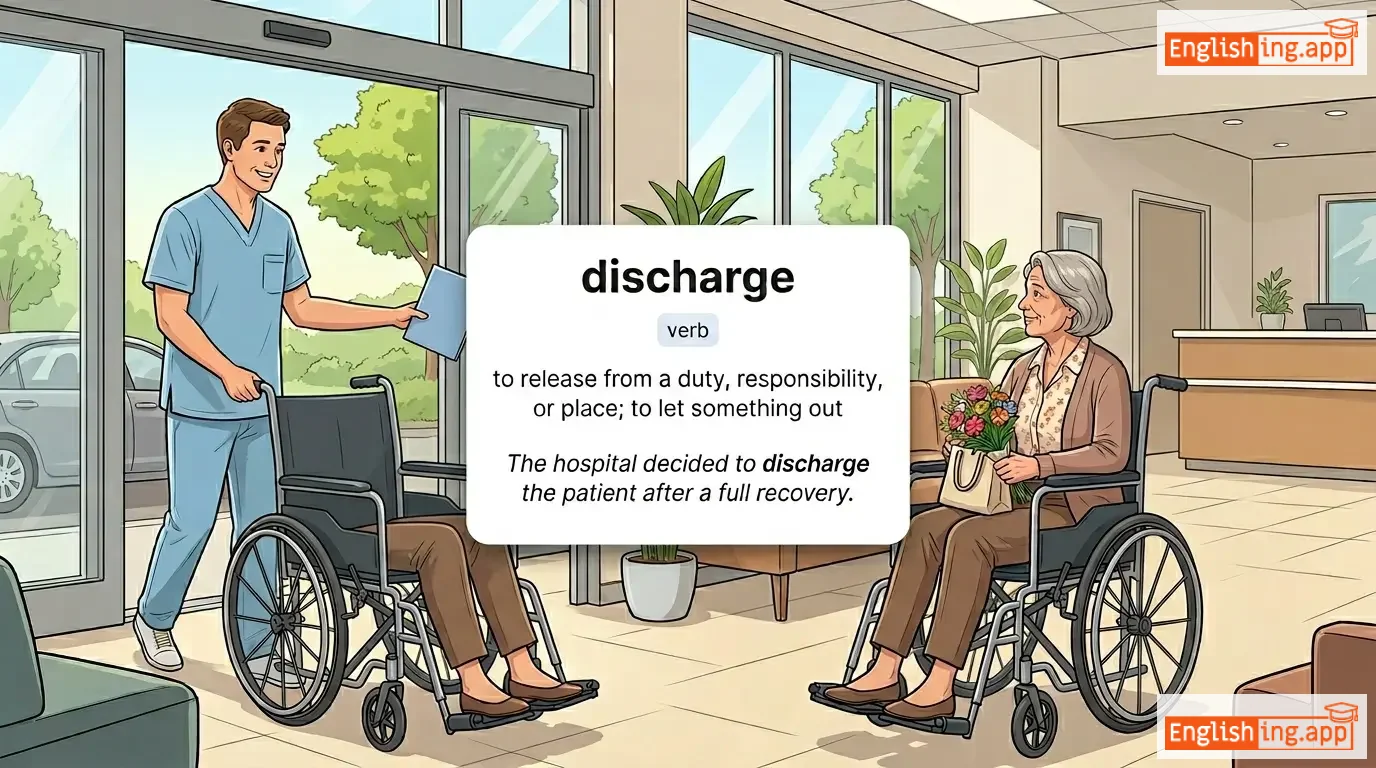
to release from a duty, responsibility, or place; to let something out
••••••
|
The hospital decided to discharge the patient after a full recovery.
病院は完全回復後に患者を退院させることを決定した。
••••••
|
病院は完全回復後に患者を退院させることを決定した。
Byōin wa kanzen kaifuku go ni kanja o taiin saseru koto o kettei shita.
••••••
|
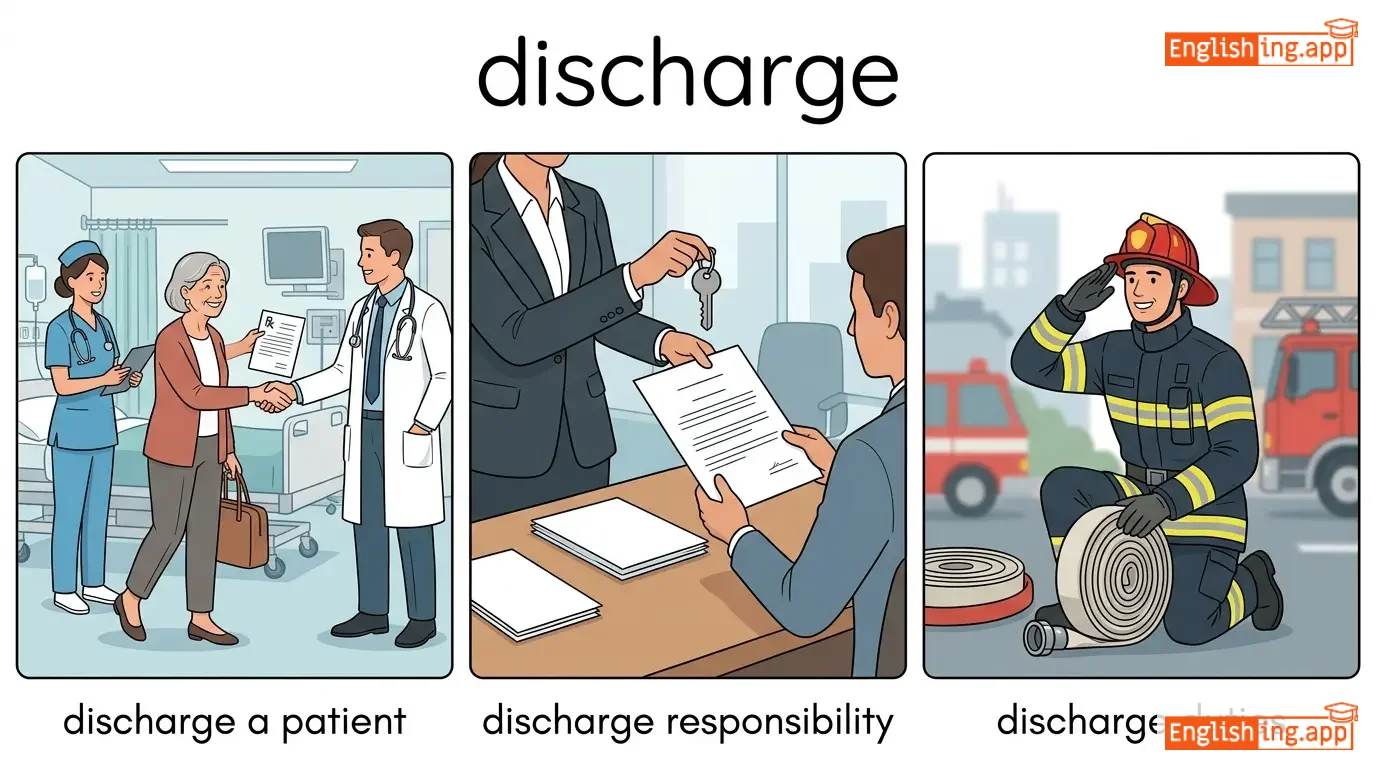
discharge one's duty
義務を果たす
••••••
|
to fulfill one's responsibility
••••••
|
義務を果たす
gimu o hatasu
••••••
|
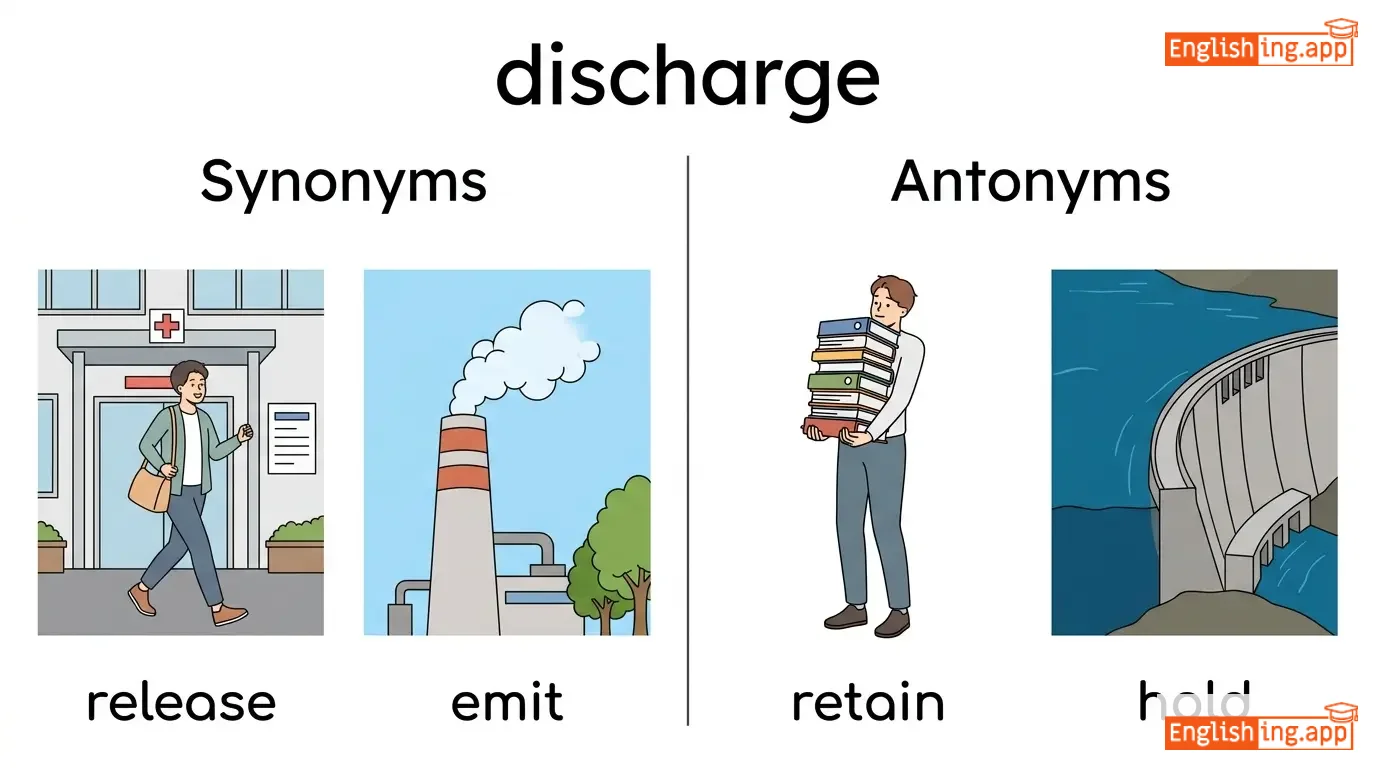
release, emit, expel, dismiss, free
••••••
|
retain, hold, keep
••••••
|
discharge a patient, discharge responsibility, discharge duties, discharge cargo
••••••
|
Discharge = 解放する、義務から解放される感じ。
••••••
|
|
📏
••••••
|
/ˈdɪsəplɪn/
noun
(ディスプリン)
••••••
|

|
規律
kiritsu
••••••
|
- •••••• | - •••••• | - •••••• | - •••••• |
the practice of training people to obey rules or self-control
••••••
|
Good discipline is essential for success in school. |
良い規律は学校での成功に不可欠です。
Yoi kiritsu wa gakkou de no seikou ni fukaketsu desu.
••••••
|
self-discipline |
the ability to control one's own behavior and actions
••••••
|
自己規律
jiko kiritsu
••••••
|
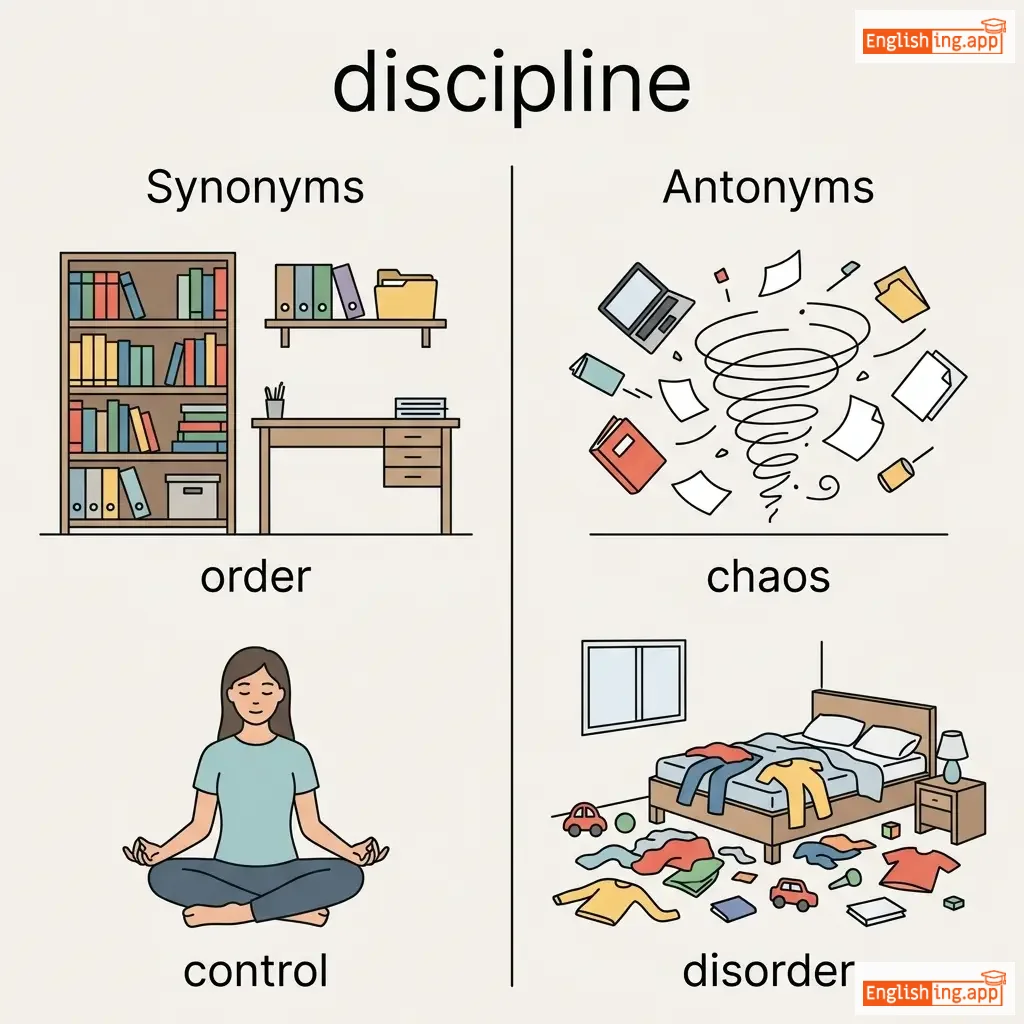
order, control, training, restraint, regulation
••••••
|
chaos, disorder, indiscipline
••••••
|
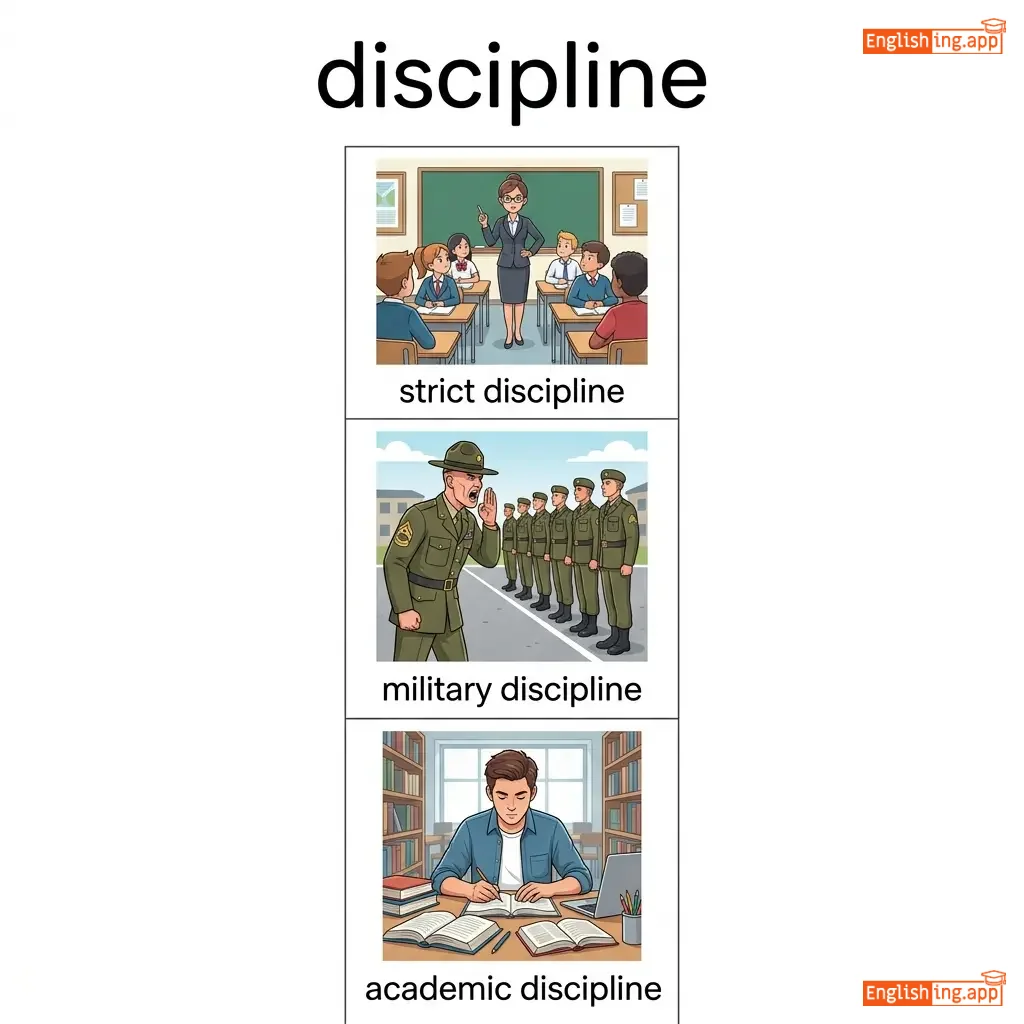
strict discipline, military discipline, academic discipline, maintain discipline
••••••
|
Disciplineは規律、学校で権威によって教えられる。
••••••
|
|
📢
••••••
|
/dɪsˈkloʊz/
verb
••••••
|

|
- •••••• |
disclosed
••••••
|
disclosed
••••••
|
discloses
••••••
|
disclosing
••••••
|
to make something known; to reveal information that was previously secret or hidden
••••••
|
The company refused to disclose details of the agreement. |
- •••••• |
full disclosure |
being completely open and honest about all relevant information
••••••
|
- •••••• |
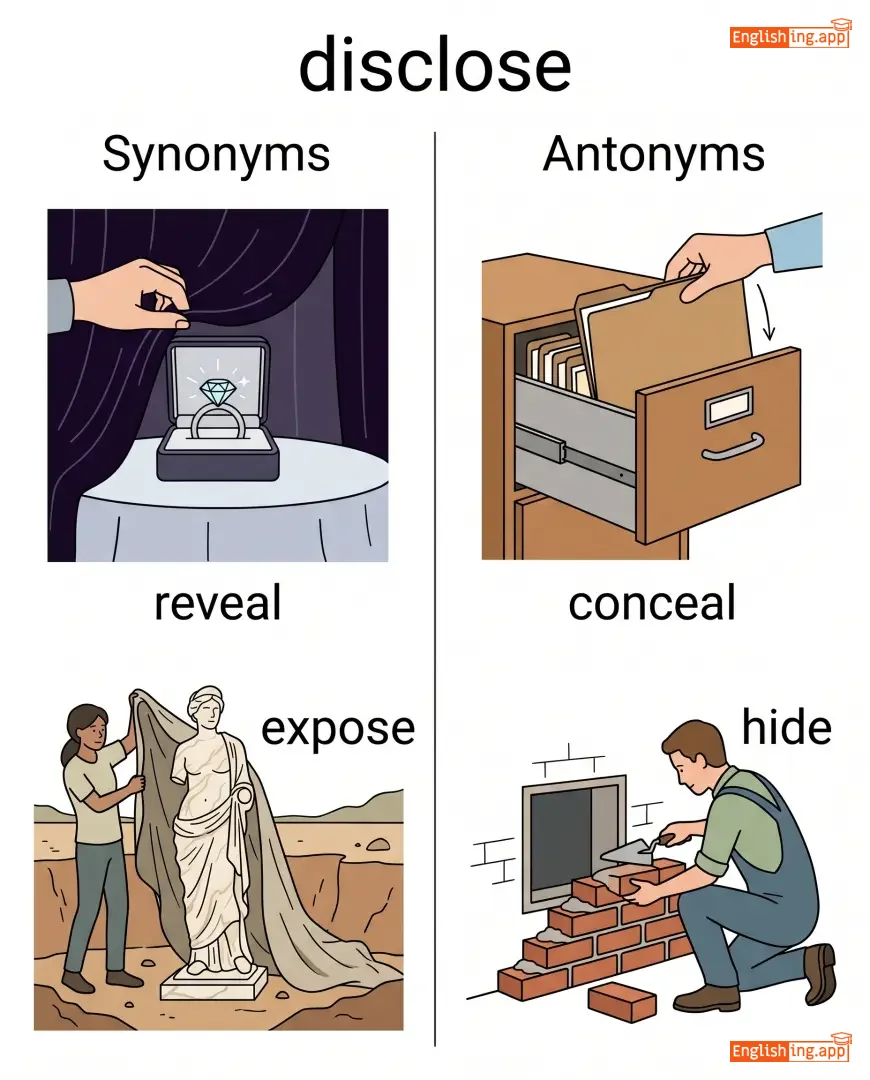
reveal, expose, uncover, divulge, announce
••••••
|
conceal, hide, suppress
••••••
|
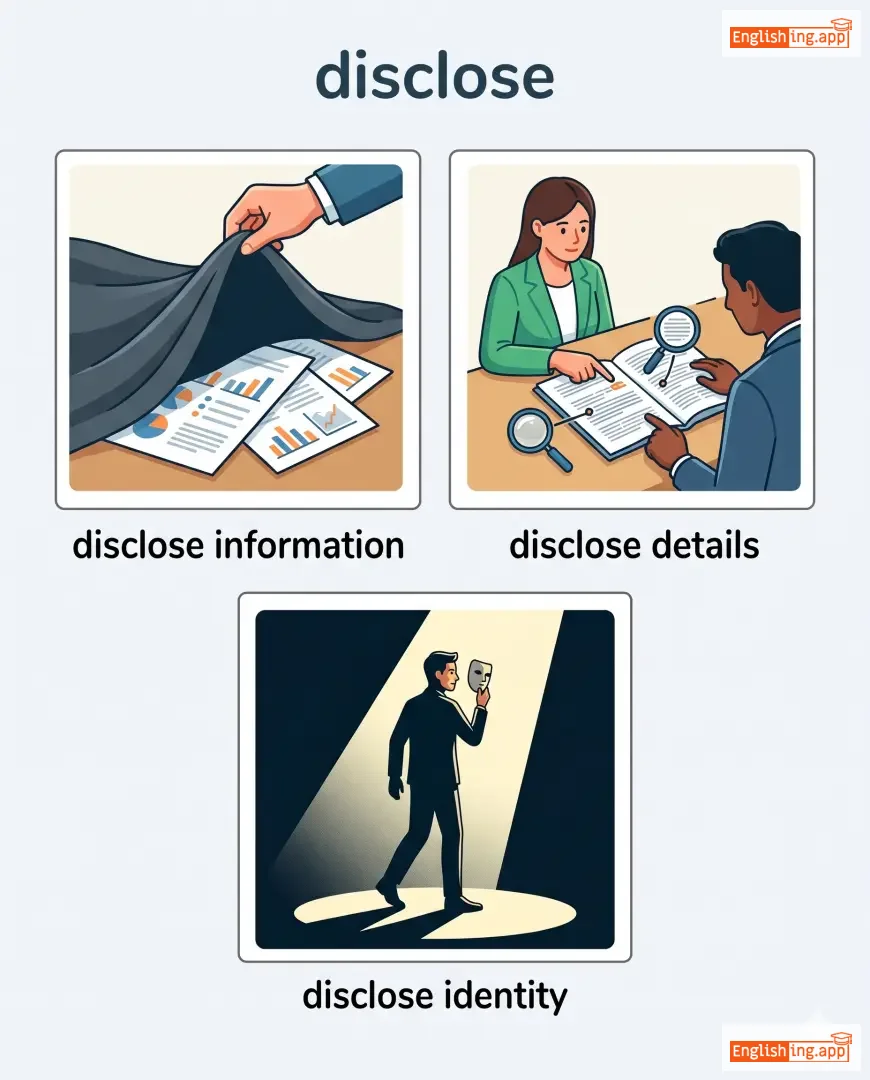
disclose information, disclose details, disclose identity, disclose agreement
••••••
|
No •••••• |
|
📢
••••••
|
/dɪsˈkloʊʒər/
noun
(ディスクロージャー)
••••••
|
- •••••• |
開示
kaiji
••••••
|
- •••••• | - •••••• | - •••••• | - •••••• |
the action of making something known or public
••••••
|
The disclosure of the company's financial status was delayed. |
会社の財務状況の開示は遅れました。
Kaisha no zaimu jōkyō no kaiji wa okuremashita.
••••••
|
- •••••• | - •••••• | - •••••• |
revelation, announcement, exposure, divulgence
••••••
|
concealment, secrecy
••••••
|
disclosure statement, public disclosure, full disclosure
••••••
|
ディスクロージャー (disclosure) は何かを公にすることを意味します。
••••••
|
|
💸
••••••
|
/ˈdɪskaʊnt/
noun, verb
(ディスカウント)
••••••
|
- •••••• |
割引
waribiki
••••••
|
discounted
ディスカウントされた
••••••
|
discounted
ディスカウントされた
••••••
|
discounts
ディスカウントする
••••••
|
discounting
ディスカウントする
••••••
|
A reduction in the usual price of something; to reduce the price of something.
••••••
|
The store offered a 20% discount on all electronics.
その店はすべての電子製品に20%のディスカウントを提供しました。
••••••
|
その店はすべての電子製品に20%の割引を提供しました。
Sono mise wa subete no denshi seihin ni 20% no waribiki o teikyō shimashita.
••••••
|
discount rate
ディスカウント率
••••••
|
The interest rate charged to commercial banks by a central bank.
••••••
|
割引率
waribiki-ritsu
••••••
|
reduction, markdown, rebate, deduction, concession
••••••
|
surcharge, premium, markup
••••••
|
offer discount, receive discount, discount price, trade discount
••••••
|
割引は価格が下がること、財布にも優しい!
••••••
|
|
🙁
••••••
|
/dɪsˈkʌrɪdʒ/
verb
••••••
|
- •••••• | - •••••• |
discouraged
••••••
|
discouraged
••••••
|
discourages
••••••
|
discouraging
••••••
|
to make someone less confident or enthusiastic about doing something
••••••
|
Failure should not discourage you from trying again. |
- •••••• |
discourage someone from doing something |
to make someone not want to do something
••••••
|
- •••••• |
deter, dishearten, demotivate, depress, prevent
••••••
|
encourage, inspire, motivate
••••••
|
strongly discourage, discourage behavior, discourage effort, discourage action
••••••
|
No •••••• |
|
💬
••••••
|
/ˈdɪskɔːrs/
noun, verb
(ディスコース)
••••••
|
- •••••• |
談話, 講義
danwa, kougi
••••••
|
discoursed
ディスコースド
••••••
|
discoursed
ディスコースド
••••••
|
discourses
ディスコースズ
••••••
|
discoursing
ディスコーシング
••••••
|
Written or spoken communication or debate.
••••••
|
The professor gave a discourse on ancient philosophy.
教授は古代哲学についての講義を行った。
••••••
|
教授は古代哲学についての講義を行った。
Kyouju wa kodai tetsugaku ni tsuite no kougi o okonatta.
••••••
|
political discourse
政治的談話
••••••
|
The ways of discussing or debating political matters.
••••••
|
政治的談話
seijiteki danwa
••••••
|
dialogue, discussion, conversation, debate, talk
••••••
|
silence, quiet, muteness
••••••
|
academic discourse, public discourse, discourse analysis, discourse on
••••••
|
Discourseとは、議論や講義 (kougi) のことです。
••••••
|
|
🔎
••••••
|
/dɪˈskʌvər/
verb
(ディスカバー)
••••••
|
|
発見する
hakken suru
••••••
|
discovered
ディスカバード
••••••
|
discovered
ディスカバード
••••••
|
discovers
ディスカバーズ
••••••
|
discovering
ディスカビング
••••••
|
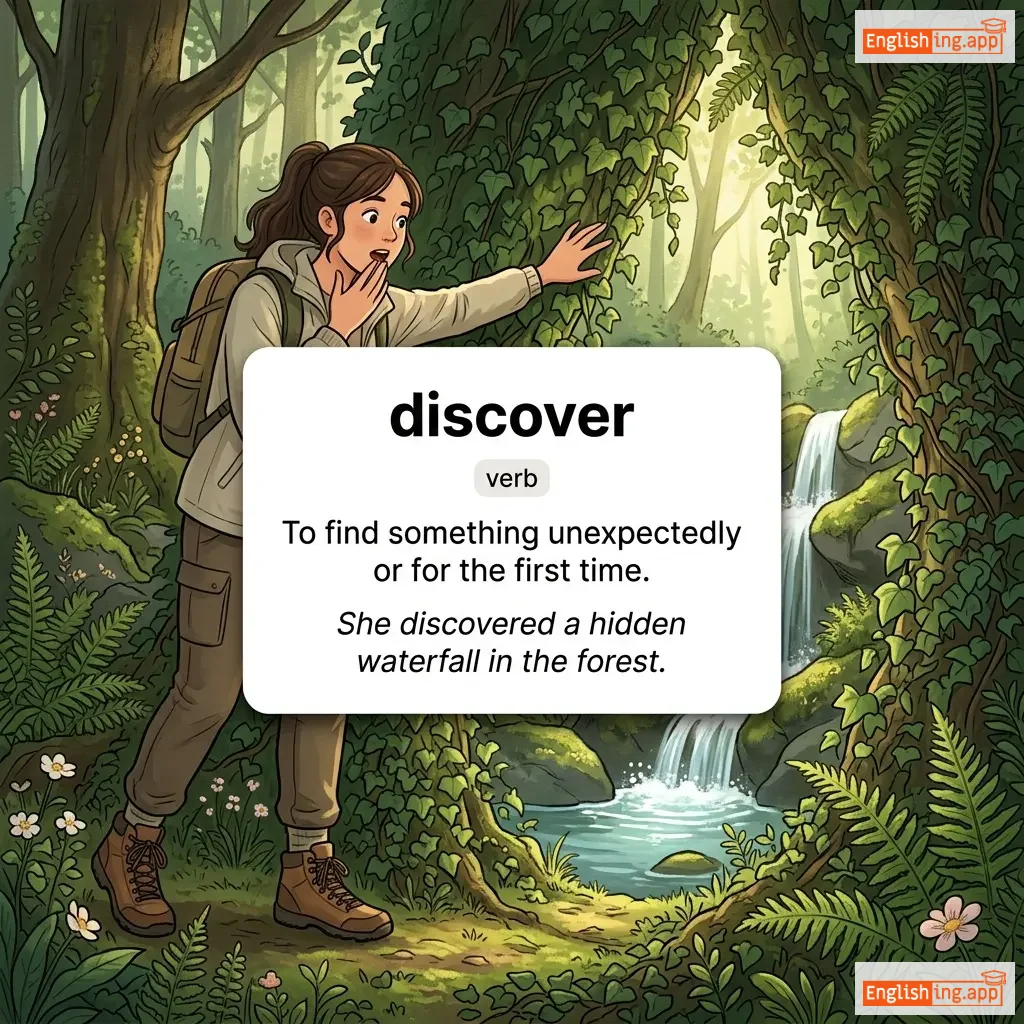
To find something unexpectedly or for the first time.
••••••
|
She discovered a hidden waterfall in the forest.
彼女は森の中で隠された滝を発見しました。
••••••
|
彼女は森の中で隠された滝を発見しました。
Kanojo wa mori no naka de kakusareta taki wo hakken shimashita.
••••••
|
discover oneself
自分自身を発見する
••••••
|
To find out about one’s true nature or capabilities.
••••••
|
自分自身を発見する
Jibun jishin wo hakken suru
••••••
|
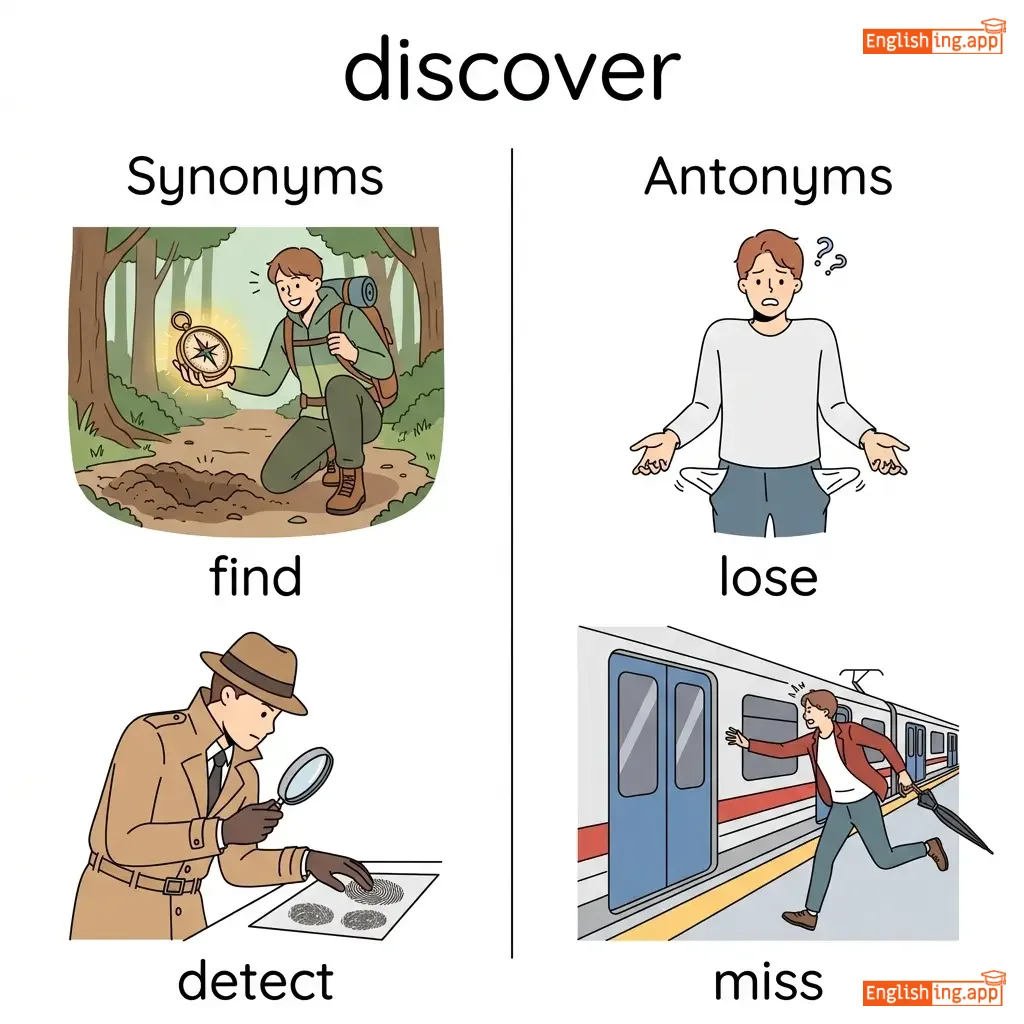
find, detect, uncover, reveal, unearth
••••••
|
lose, miss, conceal
••••••
|
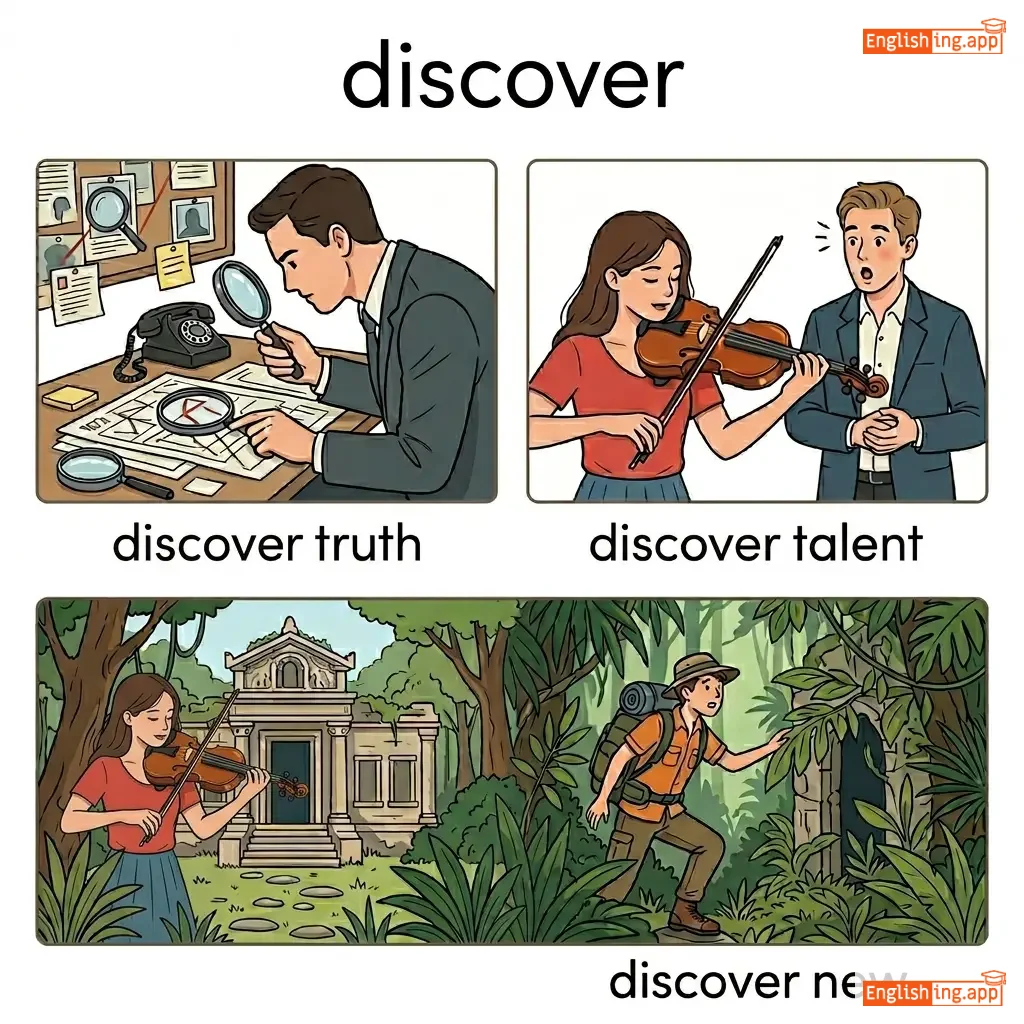
discover truth, discover talent, discover new, discover hidden
••••••
|
発見する = 森の中で滝を見つけるようなものです。
••••••
|
|
🔎
••••••
|
/dɪˈskʌvəri/
noun
(ディスカバリー)
••••••
|
- •••••• |
発見
hakken
••••••
|
- •••••• | - •••••• | - •••••• | - •••••• |
The act of finding or learning something for the first time.
••••••
|
The discovery of penicillin changed medical history. |
ペニシリンの発見は医学の歴史を変えた。
Penishirin no hakken wa igaku no rekishi o kaeta.
••••••
|
make a discovery |
to find or learn something new
••••••
|
発見をする
Hakken o suru
••••••
|
finding, invention, detection, revelation
••••••
|
loss, concealment
••••••
|
scientific discovery, new discovery, make a discovery, important discovery
••••••
|
Discovery = 発見 = 新しいものを発見することが発見だ。
••••••
|
|
🚫
••••••
|
/dɪˈskrɪmɪˌneɪt/
verb
••••••
|
- •••••• | - •••••• |
discriminated
••••••
|
discriminated
••••••
|
discriminates
••••••
|
discriminating
••••••
|
To treat someone unfairly based on race, gender, or other differences; or to recognize a distinction.
••••••
|
The law prohibits employers from discriminating against women. |
- •••••• |
discriminate against |
To treat a person or group unfairly due to bias
••••••
|
- •••••• |
differentiate, distinguish, segregate, bias, prejudice
••••••
|
equalize, accept, include
••••••
|
discriminate against, discriminate on the basis of, racial discrimination, gender discrimination
••••••
|
No •••••• |
|
⚖️
••••••
|
/dɪˌskrɪmɪˈneɪʃən/
noun
(ディスクリミネーション)
••••••
|
- •••••• |
差別
sabetsu
••••••
|
- •••••• | - •••••• | - •••••• | - •••••• |
Unfair treatment of people based on race, gender, age, or other differences.
••••••
|
The law prohibits discrimination in the workplace. |
法律は職場での差別を禁じています。
Hōritsu wa shokuba de no sabetsu o kinjiteimasu.
••••••
|
racial discrimination |
unfair treatment based on race
••••••
|
人種差別
jinshu sabetsu
••••••
|
prejudice, bias, unfairness, inequality
••••••
|
equality, fairness, justice
••••••
|
racial discrimination, gender discrimination, fight discrimination, workplace discrimination
••••••
|
差別 = dis + 犯罪、だから差別は犯罪です。
••••••
|

