Получите неограниченный доступ ко всем словам с подпиской Pro
Обновить до ProПолучите неограниченный доступ ко всем предложениям с подпиской Pro
Обновить до Pro|
Эмодзи
|
Слово | Images | Перевод | Прошедшее | Причастие прошедшего времени | Третье лицо единственного числа | Герундий | Значение | Пример предложения | Перевод примера предложения | Пример выражения | Значение примера выражения | Перевод примера выражения | Синонимы | Антонимы | Коллокации | Мнемоника |
|---|---|---|---|---|---|---|---|---|---|---|---|---|---|---|---|---|---|
|
⚖️
••••••
|
/ˈdɪfərəns/
noun
(диференс)
••••••
|
- •••••• |
разница
raznitsa
••••••
|
- •••••• | - •••••• | - •••••• | - •••••• |
A point or way in which things are not the same.
••••••
|
There is a big difference between theory and practice. |
Есть большая разница между теорией и практикой.
Yest' bol'shaya raznitsa mezhdu teoriey i praktiekoy.
••••••
|
make a difference |
To have a significant impact or effect
••••••
|
внести разницу
vznesti raznitsu
••••••
|
distinction, variation, contrast, diversity, disparity
••••••
|
similarity, resemblance, sameness
••••••
|
big difference, subtle difference, cultural difference, make a difference
••••••
|
Разница — это когда что-то не одинаково, помни 'разное и разница'.
••••••
|
|
🔀
••••••
|
/ˈdɪf.ər.ənt/
adjective
(дифферент)
••••••
|
- •••••• |
различный
razlichny
••••••
|
- •••••• | - •••••• | - •••••• | - •••••• |
Not the same as another; distinct or unlike.
••••••
|
Her opinion was completely different from mine. |
Её мнение было совершенно другим, чем моё.
Yeyo mneniye bylo sovershenno drugim, chem moyo.
••••••
|
world of difference |
A very big difference.
••••••
|
большое различие
bol'shoye razlichiye
••••••
|
distinct, unlike, diverse, varied, alternative
••••••
|
similar, same, identical
••••••
|
different types, different ways, different people, completely different
••••••
|
Различный — это значит другой. 'Ra' как разное.
••••••
|
|
🧩
••••••
|
/ˌdɪfəˈrɛnʃieɪt/
verb
(дифференцировать)
••••••
|
- •••••• |
дифференцировать
differentsirovat'
••••••
|
differentiated
дифференцировал
••••••
|
differentiated
дифференцировал
••••••
|
differentiates
дифференцирует
••••••
|
differentiating
дифференцируя
••••••
|
To recognize or make a distinction between things.
••••••
|
It is important to differentiate between fact and opinion.
Важно дифференцировать факты и мнения.
••••••
|
Важно дифференцировать факты и мнения.
Vazhno differentsirovat' fakty i mneniya.
••••••
|
differentiate yourself
дифференцировать себя
••••••
|
To make oneself stand out as unique or distinct.
••••••
|
дифференцировать себя
differentsirovat' sebya
••••••
|
distinguish, discern, separate, identify, contrast
••••••
|
confuse, equate, mix
••••••
|
differentiate clearly, differentiate products, differentiate features
••••••
|
Дифференцировать означает разделить - помни о различии между фактами и мнениями.
••••••
|
|
🎯
••••••
|
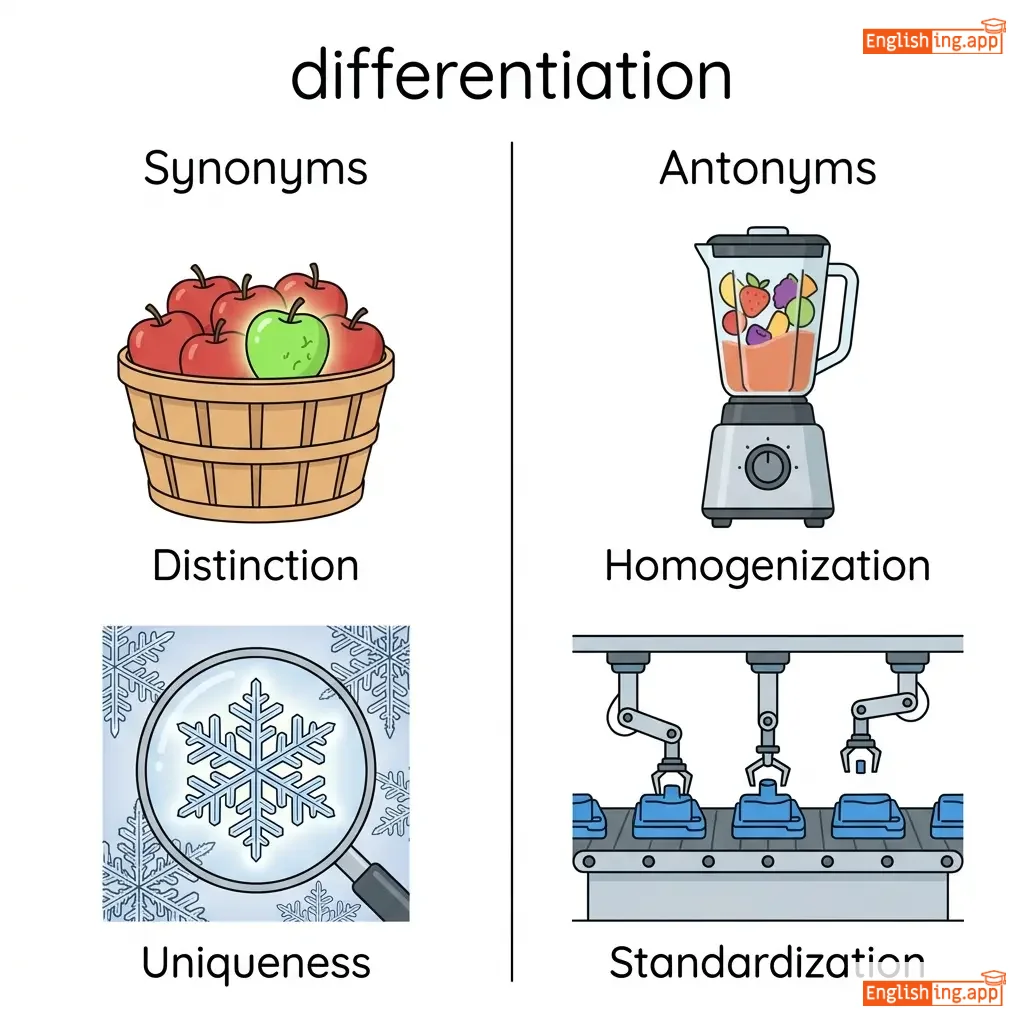
/ˌdɪfəˈrɛnʃɪˈeɪʃən/
noun
(дифференциация)
••••••
|

|
дифференциация, различие
differentsiatsiya, razlichiye
••••••
|
- •••••• | - •••••• | - •••••• | - •••••• |
The action or process of differentiating or distinguishing between things.
••••••
|
Differentiation from competitors can create a unique market position.
Дифференциация от конкурентов может создать уникальную рыночную позицию.
••••••
|
Дифференциация от конкурентов может создать уникальную рыночную позицию.
Differentsiatsiya ot konkurentov mozhet sozdavat' unikal'nuyu rynochную pozitsiyu.
••••••
|
- •••••• | - •••••• | - •••••• |
distinction, contrast, separation
••••••
|
similarity, uniformity
••••••
|
- •••••• |
Дифференциация помогает выделиться.
••••••
|
|
🔄
••••••
|
/ˈdɪfərəntli/
adverb
(дифференли)
••••••
|
- •••••• |
по-другому
po-drugomu
••••••
|
- •••••• | - •••••• | - •••••• | - •••••• |
in a way that is not the same as another or as expected
••••••
|
She approached the problem differently than her colleagues. |
Она подошла к решению проблемы по-другому, чем её коллеги.
Ona podoshla k resheniyu problemy po-drugomu, chem yejo kollegi.
••••••
|
- •••••• | - •••••• | - •••••• |
otherwise, uniquely, unusually, distinctly
••••••
|
similarly, alike
••••••
|
think differently, act differently, look differently, behave differently
••••••
|
По-другому на русском значит делать что-то иначе, как differently на английском.
••••••
|
|
😓
••••••
|
/ˈdɪf.ɪ.kəlt/
adjective
(дификалт)
••••••
|
|
сложный
slozhny
••••••
|
- •••••• | - •••••• | - •••••• | - •••••• |
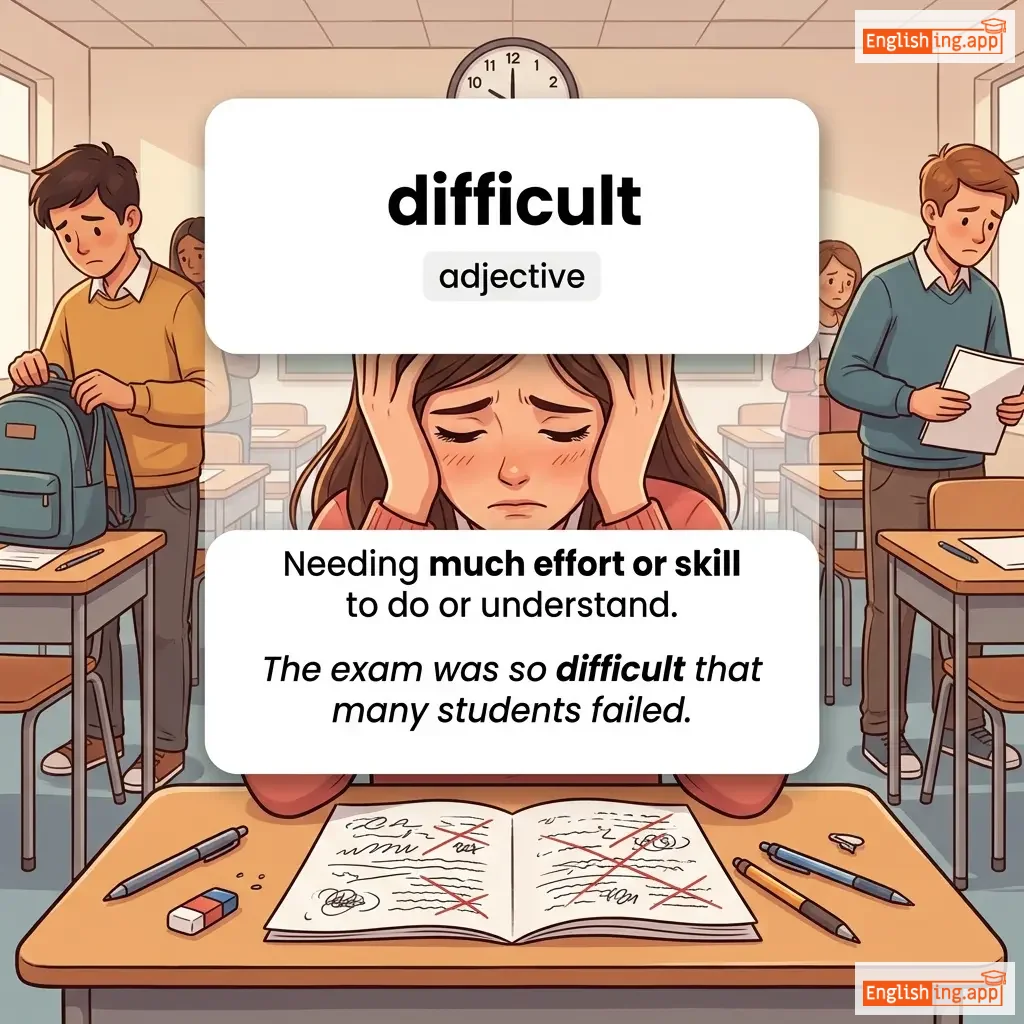
Needing much effort or skill to do or understand.
••••••
|
The exam was so difficult that many students failed. |
Экзамен был настолько сложным, что многие студенты не сдали.
Ekzamen byl nastol'ko slozhnym, chto mnogie studenty ne sdali.
••••••
|
difficult situation |
A situation that is hard to handle.
••••••
|
сложная ситуация
slozhnaya situatsiya
••••••
|
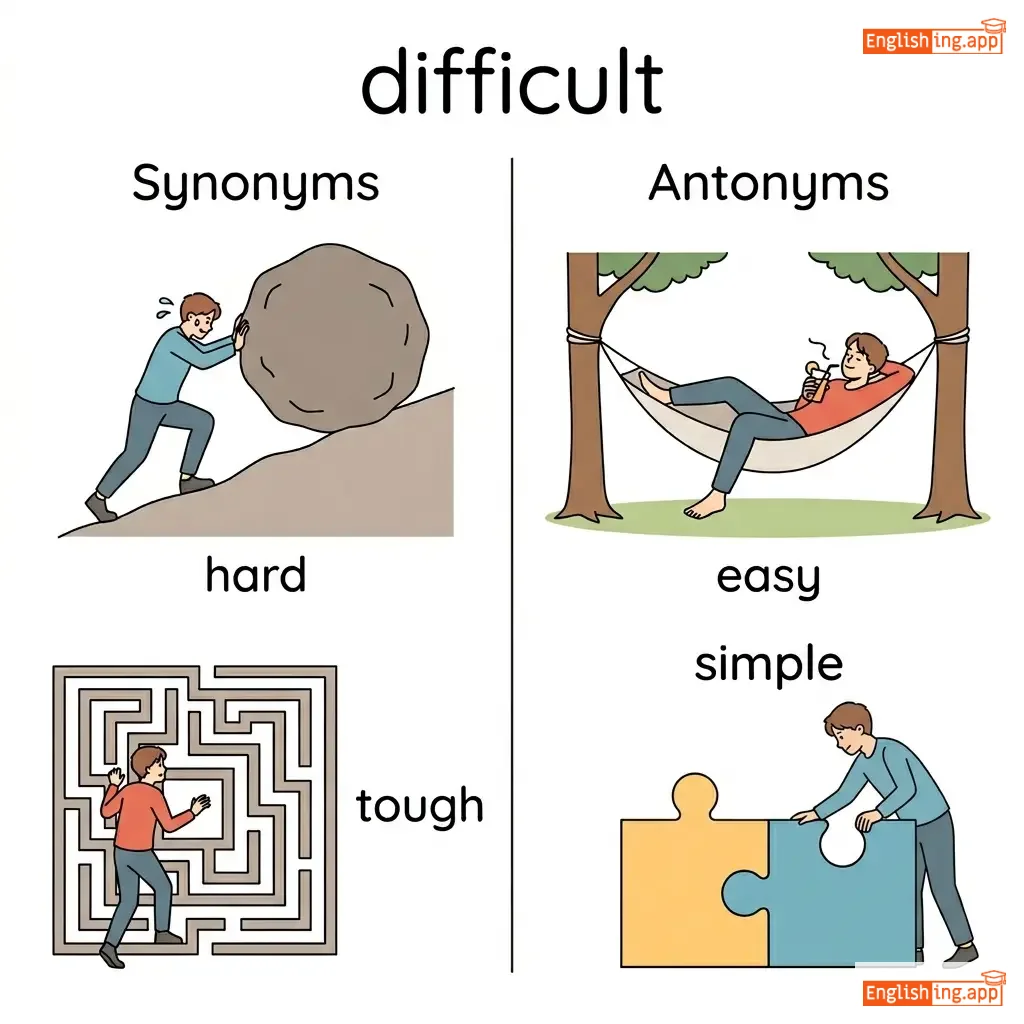
hard, tough, challenging, complicated, demanding
••••••
|
easy, simple, effortless
••••••
|
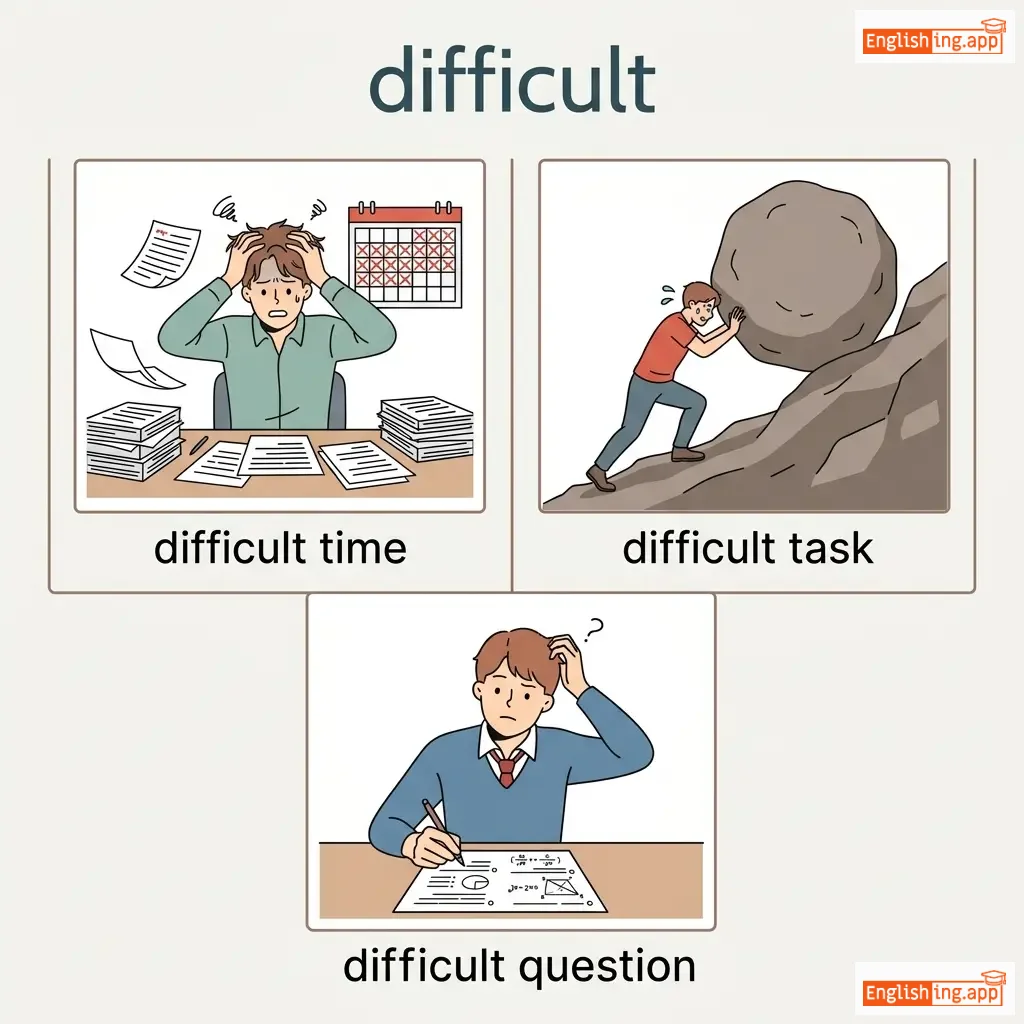
difficult time, difficult task, difficult question, difficult choice
••••••
|
Difficult означает сложный — представьте, что 'Di' означает сложный, а 'full' — полный; для выполнения нужно много усилий.
••••••
|
|
⚠️
••••••
|
/ˈdɪfɪkəlti/
noun
••••••
|
- •••••• | - •••••• | - •••••• | - •••••• | - •••••• | - •••••• |
the state or condition of being hard to do, deal with, or understand
••••••
|
He faced great difficulty in learning a new language. |
- •••••• |
in difficulty |
to be in trouble or facing problems
••••••
|
- •••••• |
challenge, hardship, obstacle, struggle, trouble
••••••
|
ease, simplicity, comfort
••••••
|
face difficulty, great difficulty, difficulty in, experience difficulty
••••••
|
No •••••• |
|
⛏️
••••••
|
/dɪɡ/
verb
(диг)
••••••
|
- •••••• |
копать
kopat
••••••
|
dug
даг
••••••
|
dug
даг
••••••
|
digs
дигс
••••••
|
digging
диггинг
••••••
|
to break up and move earth with a tool or machine, or with hands, paws, etc.
••••••
|
They decided to dig a hole for the new tree.
Они решили выкопать яму для нового дерева.
••••••
|
Они решили выкопать яму для нового дерева.
Oni reshilí vykopat' yamu dlya novogo dereva.
••••••
|
dig deep
копать глубоко
••••••
|
to make a great effort or use inner strength
••••••
|
копать глубоко
kopat' gluboko
••••••
|
excavate, burrow, scoop, shovel
••••••
|
fill, cover
••••••
|
dig a hole, dig up, dig deep, dig into
••••••
|
DIG означает копать - как искать сокровище в земле.
••••••
|
|
💻
••••••
|
/ˈdɪdʒɪtl/
adjective
(dizhitl)
••••••
|

|
цифровой
tsifrovoj
••••••
|
- •••••• | - •••••• | - •••••• | - •••••• |
relating to technology that uses signals or data in the form of numbers (0s and 1s)
••••••
|
She prefers digital books over printed ones. |
Она предпочитает цифровые книги бумажным.
Ona predpochitayet tsifrovye knigi bumazhnyim.
••••••
|
go digital |
to switch from traditional methods to digital technology
••••••
|
перейти на цифровое
pereyti na tsifrovoe
••••••
|
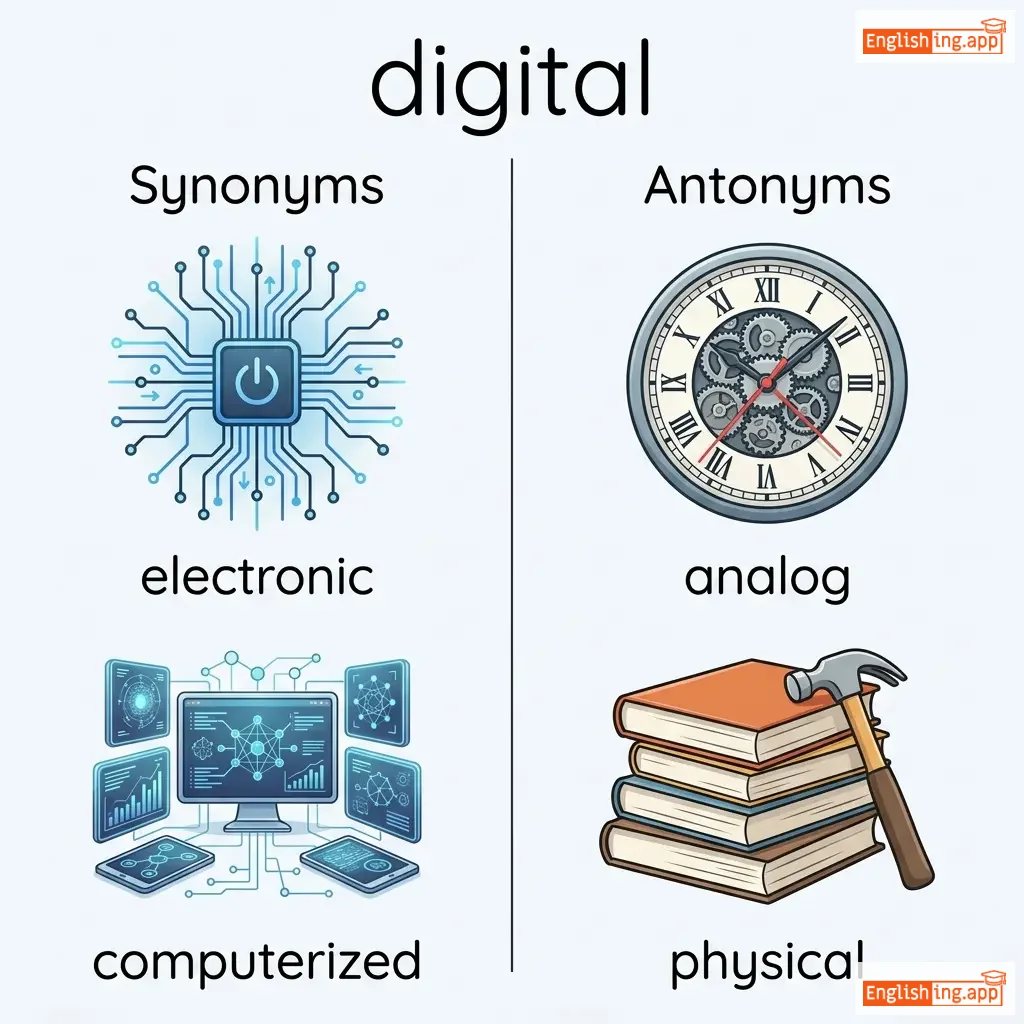
electronic, computerized, online, virtual
••••••
|
analog, physical
••••••
|
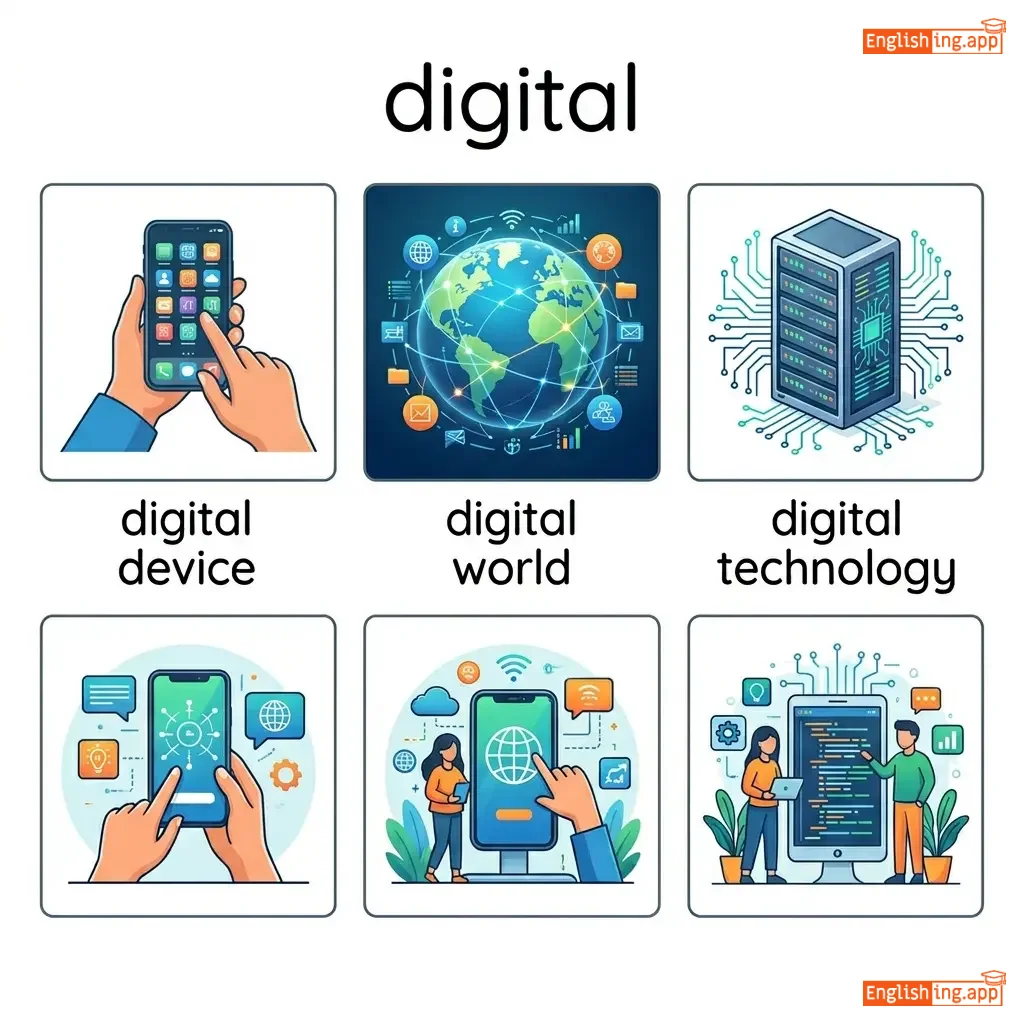
digital device, digital world, digital technology, digital marketing
••••••
|
Цифровой мир - это онлайн-технологии и инновации.
••••••
|
|
🕊️
••••••
|
/ˈdɪɡnəti/
noun
(дɪɡнɪтɪ)
••••••
|
- •••••• |
достоинство
dostoinstvo
••••••
|
- •••••• | - •••••• | - •••••• | - •••••• |
the state or quality of being worthy of respect or honor
••••••
|
He faced the difficult situation with calm and dignity. |
Он столкнулся с трудной ситуацией с спокойствием и достоинством.
On stolknulsya s trudnoy situatsiey s spokoystviem i dostoinstvom.
••••••
|
maintain one's dignity |
to behave respectfully and with self-control even in difficult situations
••••••
|
сохранить свое достоинство
sokhranit' svoe dostoinstvo
••••••
|
honor, self-respect, grace, pride, nobility
••••••
|
disgrace, humiliation, shame
••••••
|
human dignity, personal dignity, loss of dignity, with dignity
••••••
|
'достоинство' значит честь — подумай о 'достигнутом' для твоего 'достоинства'.
••••••
|
|
🤔
••••••
|
/daɪˈlɛmə/
noun
(дилемма)
••••••
|
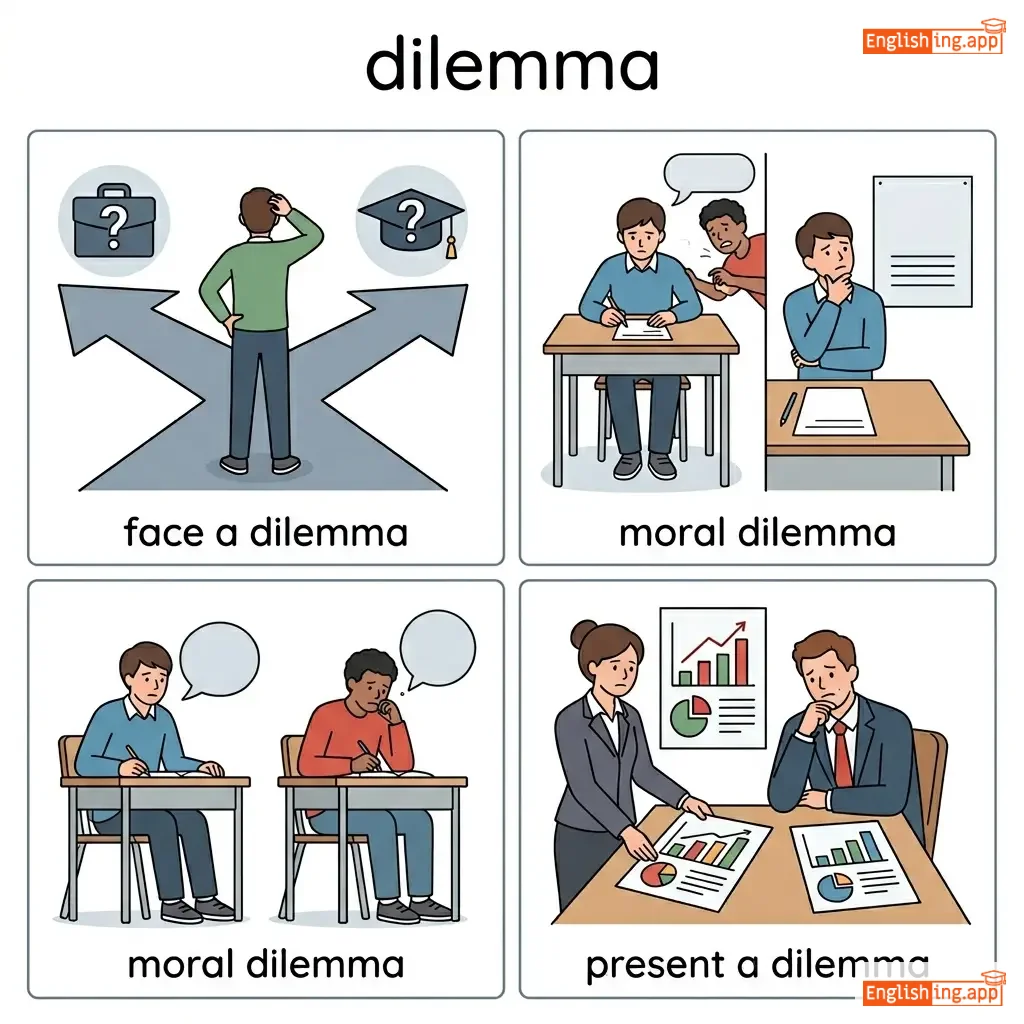
|
дилемма
dilemma
••••••
|
- •••••• | - •••••• | - •••••• | - •••••• |
A situation in which a difficult choice has to be made between two or more alternatives.
••••••
|
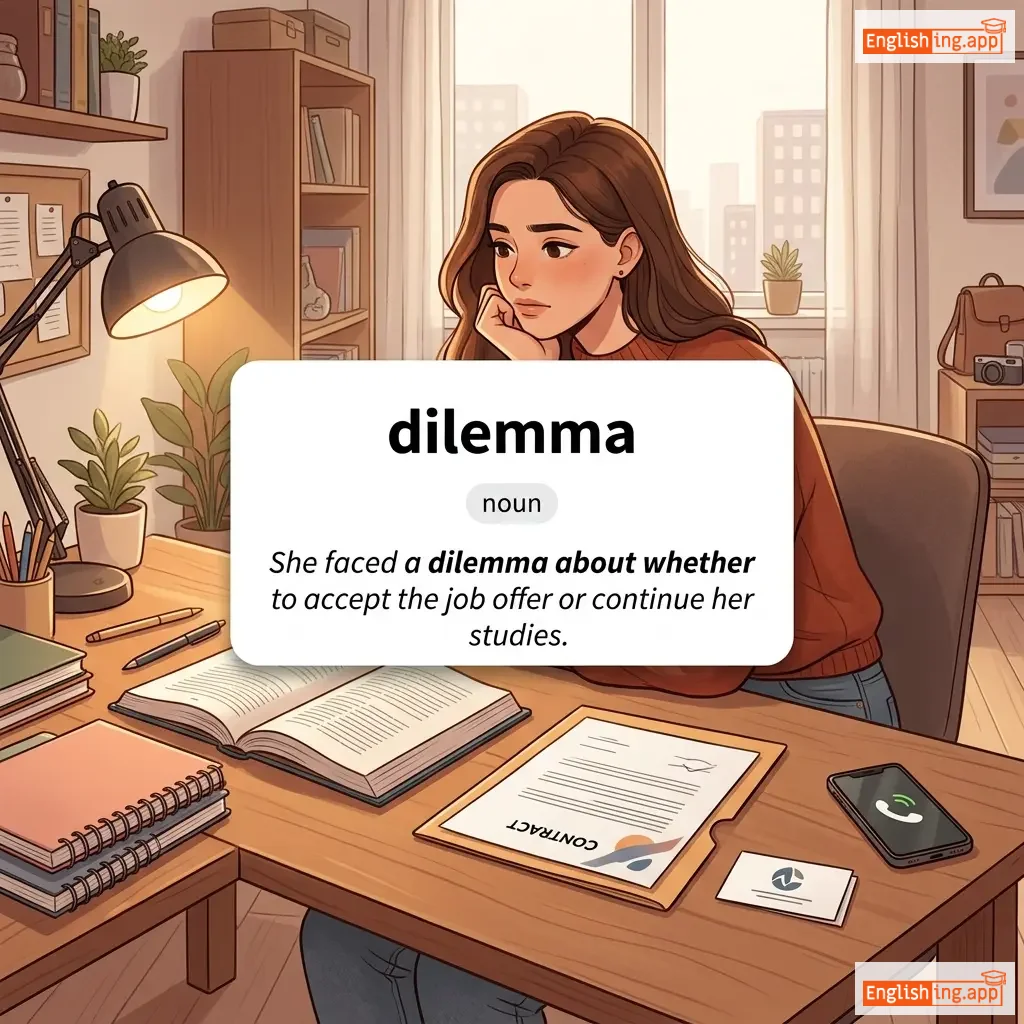
She faced a dilemma about whether to accept the job offer or continue her studies. |
Она столкнулась с дилеммой, стоит ли принять предложение о работе или продолжить учебу.
Ona stolknulas' s dilemmoy, stoit li prinimat' predlozhenie o rabote ili prodolzhit' uchebu.
••••••
|
moral dilemma |
A difficult choice involving a conflict of moral principles.
••••••
|
моральная дилемма
moral'naya dilemma
••••••
|
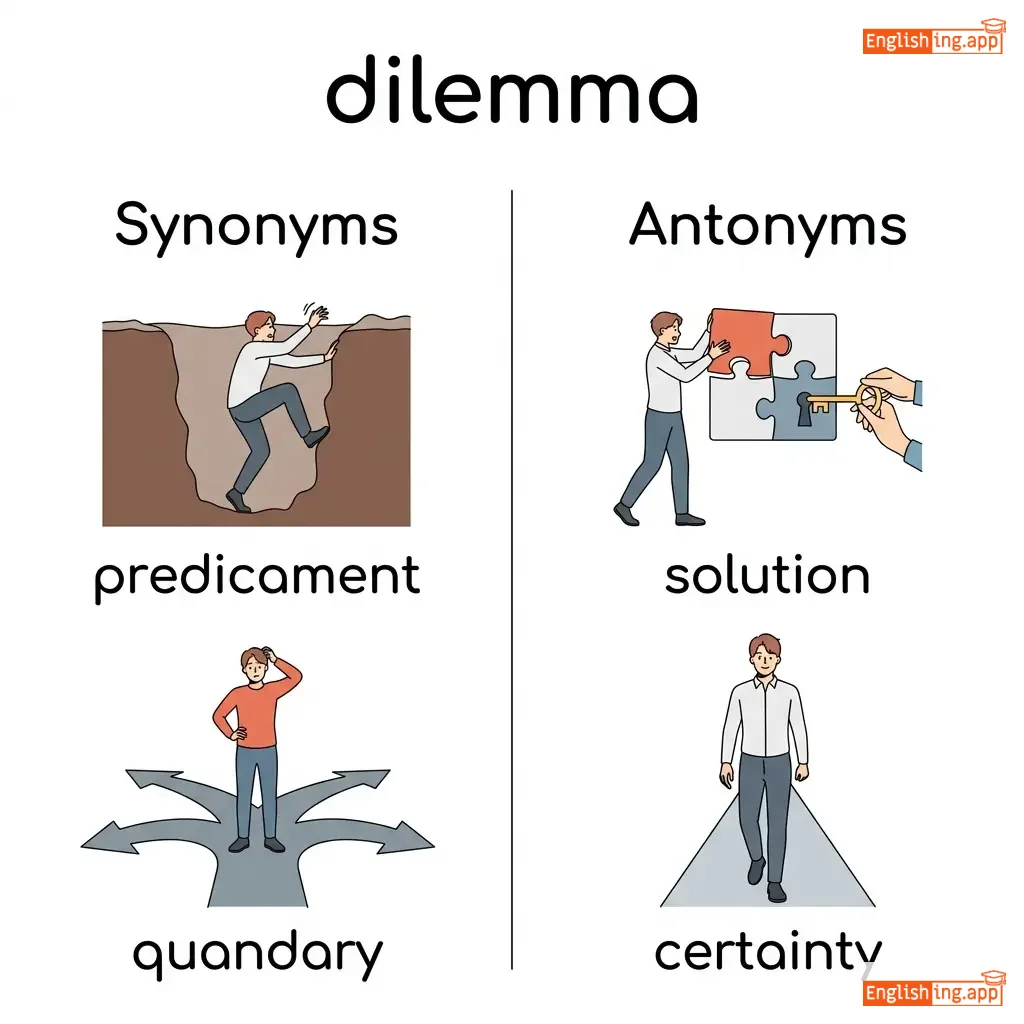
predicament, quandary, problem, difficulty
••••••
|
solution, certainty, clarity
••••••
|
face a dilemma, moral dilemma, present a dilemma
••••••
|
Dilemma означает di (два) + lemma (выбор) = два трудных выбора.
••••••
|
|
📐
••••••
|
/dɪˈmɛnʃən/
noun
(daimensiya)
••••••
|
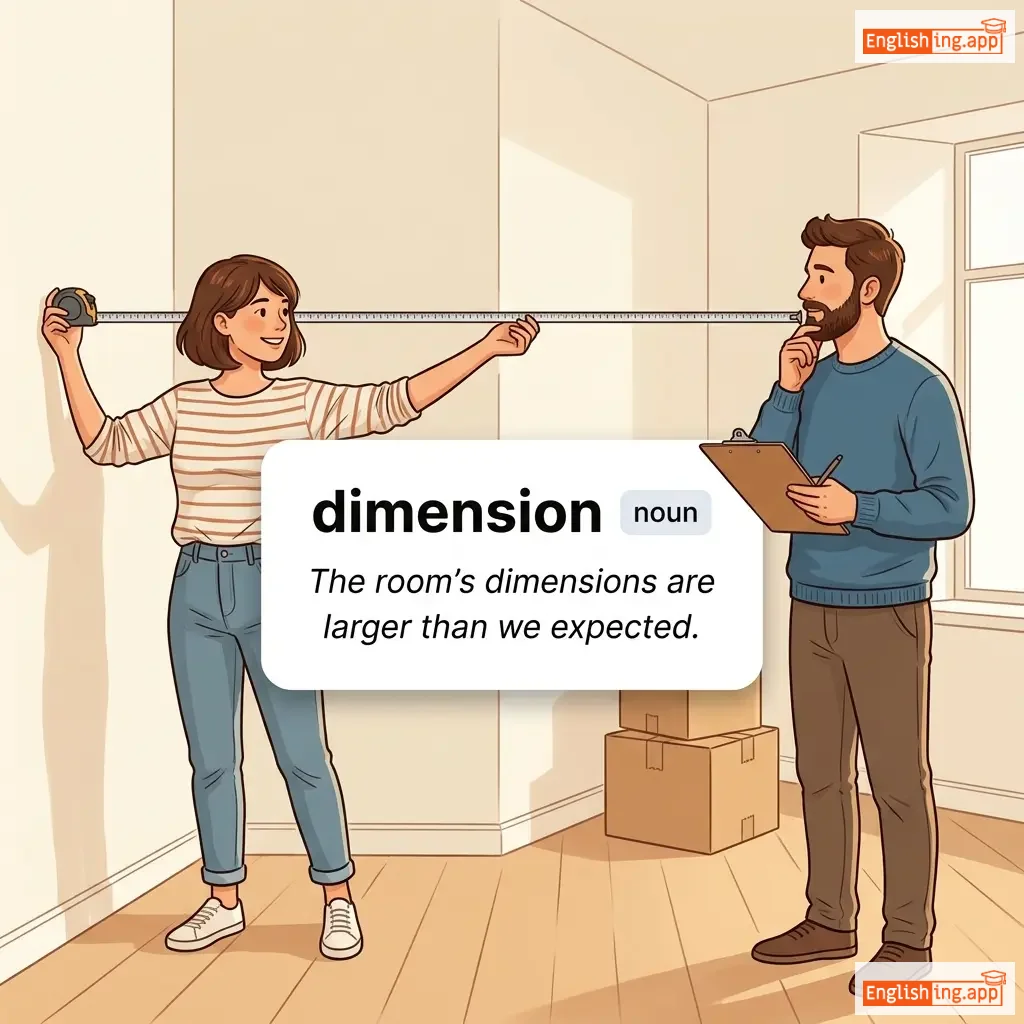
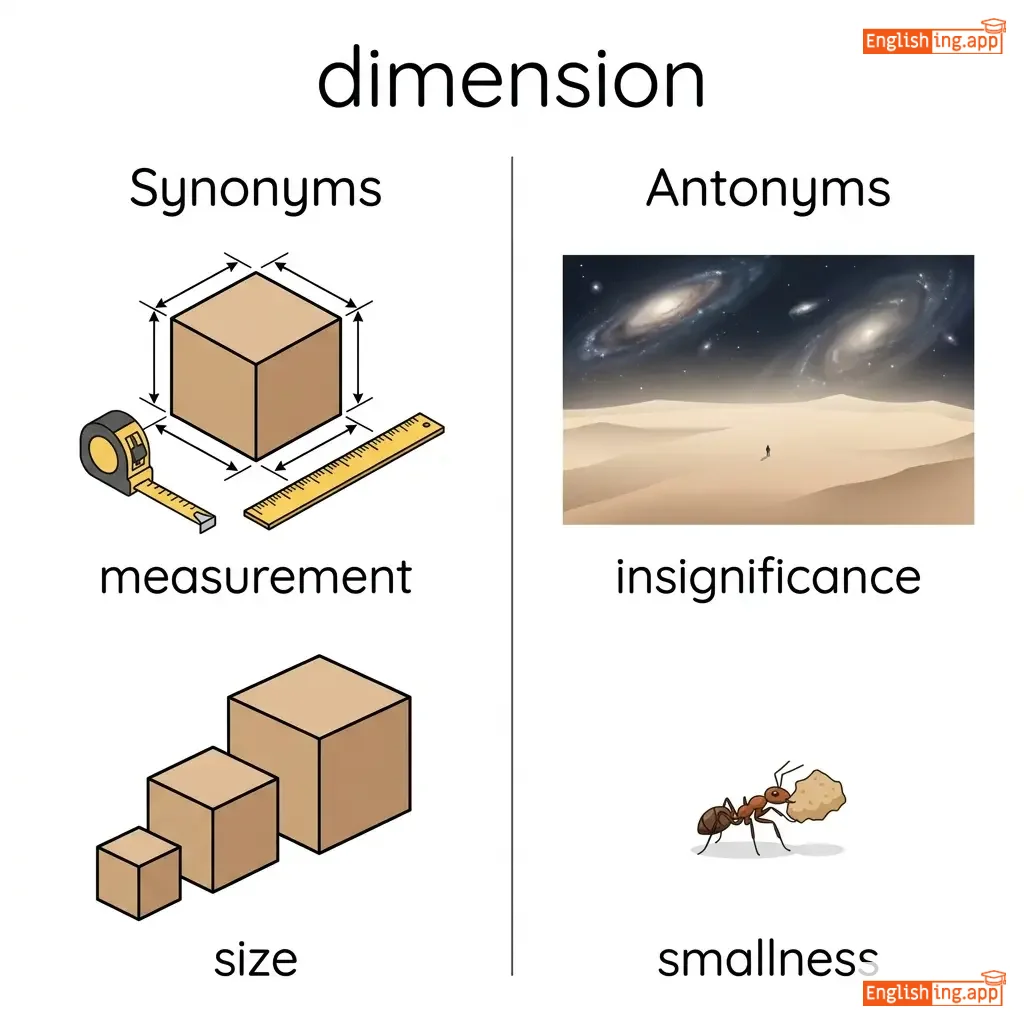
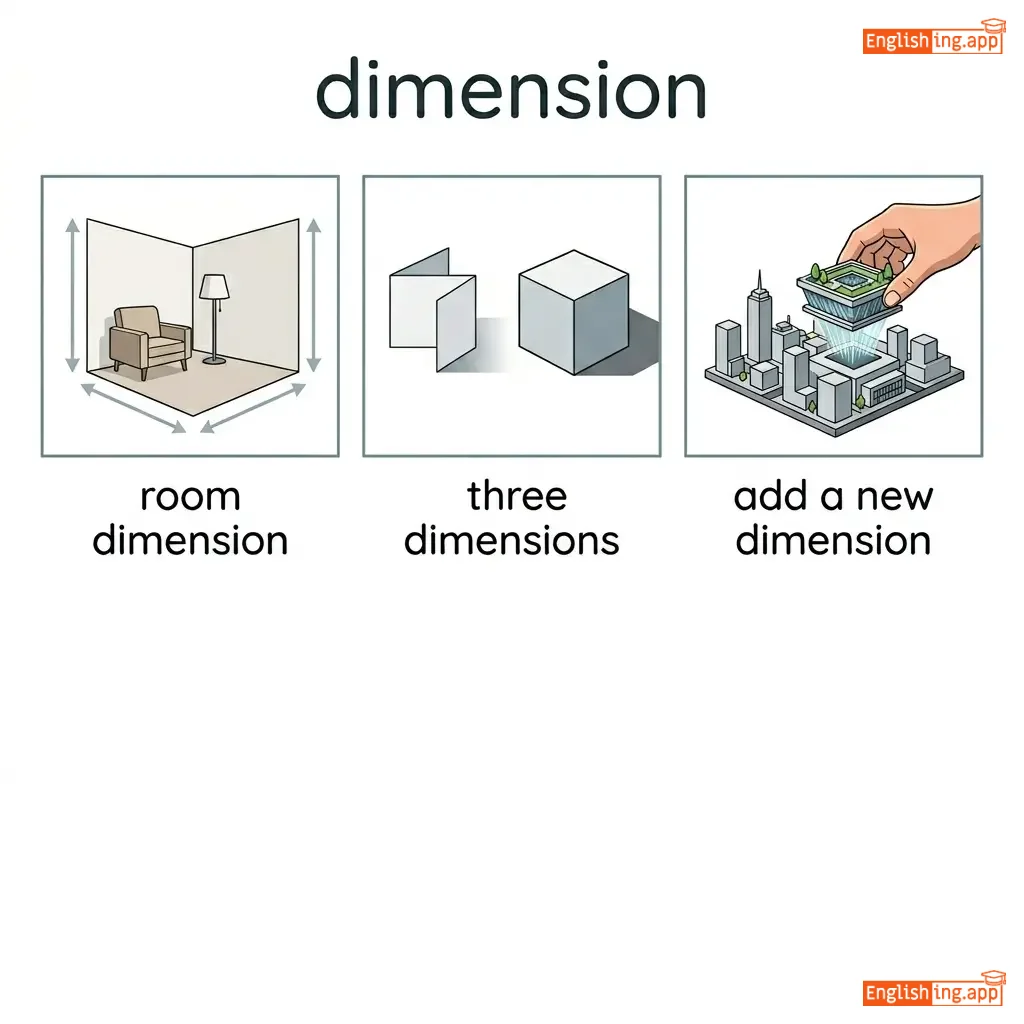
|
измерение
izmereniye
••••••
|
- •••••• | - •••••• | - •••••• | - •••••• |
A measurable extent of a particular kind, such as length, breadth, depth, or height.
••••••
|
The room’s dimensions are larger than we expected. |
Размеры комнаты больше, чем мы ожидали.
Razmery komnaty bol'she, chem my ozhidali.
••••••
|
new dimension |
An additional aspect or perspective of a situation.
••••••
|
новое измерение
novoye izmereniye
••••••
|
measurement, size, proportion, extent, aspect
••••••
|
insignificance, smallness
••••••
|
room dimension, three dimensions, add a new dimension
••••••
|
Измерение = измерять, как измерять что-то большее.
••••••
|
|
⬇️
••••••
|
/dɪˈmɪnɪʃ/
verb
••••••
|
- •••••• | - •••••• |
diminished
••••••
|
diminished
••••••
|
diminishes
••••••
|
diminishing
••••••
|
to make or become less; to reduce in size, importance, or value
••••••
|
Over time, his influence in the company began to diminish. |
- •••••• |
diminish returns |
a situation where the benefit gained is less compared to the effort or investment put in
••••••
|
- •••••• |
reduce, decrease, lessen, weaken, dwindle
••••••
|
increase, enlarge, expand
••••••
|
diminish value, diminish importance, diminish role, diminish returns
••••••
|
No •••••• |
|
🍽️
••••••
|
/daɪn/
verb
(дайн)
••••••
|
- •••••• |
ужинать
uzhinat
••••••
|
dined
дайнд
••••••
|
dined
дайнд
••••••
|
dines
дайнс
••••••
|
dining
дайнинг
••••••
|
to eat a meal, especially the main meal of the day
••••••
|
We usually dine at seven o'clock in the evening.
Мы обычно ужинаем в семь часов вечера.
••••••
|
Мы обычно ужинаем в семь часов вечера.
My obychno uzhinaem v sem chasov vechera.
••••••
|
dine out
dine out
••••••
|
to eat at a restaurant instead of at home
••••••
|
ужинать вне дома
uzhinat vne doma
••••••
|
eat, sup, feast, have a meal, partake
••••••
|
fast, skip a meal
••••••
|
dine with friends, dine at a restaurant, dine together
••••••
|
Ассоциируйте dine с ужином за столом.
••••••
|
|
🍽️
••••••
|
/ˈdɪnər/
noun
(динер)
••••••
|
- •••••• |
ужин
uzhin
••••••
|
- •••••• | - •••••• | - •••••• | - •••••• |
the main meal of the day, usually eaten in the evening
••••••
|
We had a lovely dinner at a new restaurant last night. |
Мы поужинали в новом ресторане прошлой ночью.
My poyuzhinayli v novom restorane proshloy noch'yu.
••••••
|
have someone for dinner |
to invite someone to eat dinner with you at your home
••••••
|
пригласить кого-то на ужин
priglasit' kogo-to na uzhin
••••••
|
supper, feast, banquet, meal
••••••
|
breakfast, lunch
••••••
|
dinner table, dinner party, dinner plate, dinner invitation
••••••
|
Ужин — это вечерняя еда, и когда вечер наступает, все спрашивают: 'Ужинать будем?'
••••••
|
|
🥣
••••••
|
/dɪp/
verb
(дип)
••••••
|
- •••••• |
погружать
pogruzhat
••••••
|
dipped
диппед
••••••
|
dipped
диппед
••••••
|
dips
дипс
••••••
|
dipping
диппинг
••••••
|
to put something quickly into a liquid and take it out again
••••••
|
She dipped her bread into the soup.
Она макнула хлеб в суп.
••••••
|
Она макнула хлеб в суп.
Ona maknula khleb v sup.
••••••
|
dip your toes in
попробовать что-то новенькое
••••••
|
to try something new carefully or slowly
••••••
|
попробовать что-то новенькое
poprobovat' chto-to noven'koye
••••••
|
immerse, submerge, sink, plunge, dunk
••••••
|
lift, raise, dry
••••••
|
dip in water, dip sauce, dip stick, dip temperature
••••••
|
Макать хлеб в суп — вот что значит DIP!
••••••
|
|
🤵♂️
••••••
|
/ˈdɪpləmæt/
noun
(дипломат)
••••••
|
- •••••• |
дипломат
diplomat
••••••
|
- •••••• | - •••••• | - •••••• | - •••••• |
An official representing a country abroad; a person skilled in dealing with people tactfully.
••••••
|
The diplomat negotiated a peace agreement. |
Дипломат вел переговоры о мирном соглашении.
Diplomat vel peregovory o mirnom soglashenii.
••••••
|
- •••••• | - •••••• | - •••••• |
envoy, ambassador, representative, emissary, negotiator
••••••
|
commoner, layman
••••••
|
senior diplomat, career diplomat, foreign diplomat
••••••
|
Diplom + Ат → Diplomatische Arbeit = Diplomat
••••••
|
|
🕊️
••••••
|
/ˌdɪpləˈmætɪk/
adjective
(дипломатический)
••••••
|
- •••••• |
дипломатический
diplomaticheskiy
••••••
|
- •••••• | - •••••• | - •••••• | - •••••• |
Concerning diplomacy; having or showing skill in dealing with people in a sensitive and effective way.
••••••
|
She gave a diplomatic response to avoid offending anyone. |
Она дала дипломатический ответ, чтобы избежать оскорбления кого-либо.
ona dala diplomaticheskij otvet, chtoby izbezhat' oskorbleniya kogo-libo.
••••••
|
diplomatic immunity |
A privilege that exempts diplomats from certain laws in the host country.
••••••
|
дипломатический иммунитет
diplomaticheskiy immunitet
••••••
|
tactful, courteous, strategic, conciliatory, discreet
••••••
|
tactless, blunt, rude
••••••
|
diplomatic relations, diplomatic mission, diplomatic language
••••••
|
Diplomatic response = вежливый ответ (дипломатический ответ)
••••••
|
|
➡️
••••••
|
/dəˈrɛkt/ or /daɪˈrɛkt/
verb
(дайˈрɛкт)
••••••
|
- •••••• |
направлять
napravlyat
••••••
|
directed
дайˈрɛкtед
••••••
|
directed
дайˈрɛкtед
••••••
|
directs
дайˈрɛкts
••••••
|
directing
дайˈрɛктɪнг
••••••
|
to manage or control the course of something; to give instructions
••••••
|
She directed the team to complete the project on time.
Она направила команду завершить проект вовремя.
••••••
|
Она направила команду завершить проект вовремя.
Ona napravila komandu zavershit' proyekt vovremya.
••••••
|
direct traffic
управлять движением
••••••
|
to manage and guide the movement of vehicles
••••••
|
управлять движением
upravlyat' dvizhением
••••••
|
guide, lead, manage, command, instruct
••••••
|
mislead, confuse
••••••
|
direct attention, direct action, direct contact, direct result
••••••
|
Direct означает четкие указания — управлять движением всегда точно.
••••••
|
|
🧭
••••••
|
/dəˈrɛkʃən/ or /daɪˈrɛkʃən/
noun
(дирекшн)
••••••
|
- •••••• |
направление, инструкции
napravlenie, instruktsii
••••••
|
- •••••• | - •••••• | - •••••• | - •••••• |
the course or path on which someone or something is moving; instructions on what to do
••••••
|
He asked for directions to the train station. |
Он попросил указания к железнодорожной станции.
On poprosil ukazaniya k zheleznodorozhnoj stantsii.
••••••
|
change direction |
to alter the course or plan
••••••
|
изменить направление
izmenit' napravlenie
••••••
|
instruction, guidance, route, path, orientation
••••••
|
confusion, aimlessness
••••••
|
clear direction, right direction, new direction, opposite direction
••••••
|
Направление - это как компас, который всегда указывает верный путь.
••••••
|
|
📢
••••••
|
/dəˈrɛktli/ or /daɪˈrɛktli/
adverb
(директли)
••••••
|
- •••••• |
напрямую
napryamuyu
••••••
|
- •••••• | - •••••• | - •••••• | - •••••• |
in a straight line or manner; without anything in between
••••••
|
She spoke directly to the manager about her concerns. |
Она поговорила напрямую с менеджером о своих проблемах.
Ona pogovorila napryamuyu s menedzherom o svoikh problemakh.
••••••
|
directly involved |
personally connected or participating
••••••
|
напрямую вовлечен
napryamuyu vovlechen
••••••
|
immediately, personally, straightforwardly, openly
••••••
|
indirectly, vaguely
••••••
|
directly responsible, directly affected, speak directly, directly proportional
••••••
|
Directly означает без промежуточных шагов — напрямик, как по прямой линии.
••••••
|
|
🎬
••••••
|
/dəˈrɛktər/ or /daɪˈrɛktər/
noun
(дайˈрɛктыр)
••••••
|
- •••••• |
директор
direktor
••••••
|
- •••••• | - •••••• | - •••••• | - •••••• |
a person who manages or oversees a company, department, or film
••••••
|
The director gave final approval for the new movie script. |
Директор дал окончательное одобрение для нового сценария фильма.
Direktor dal okonchatelnoye odobreniye dlya novogo stsenariya fil'ma.
••••••
|
board of directors |
a group of people elected to manage a company
••••••
|
совет директоров
sovet direktorov
••••••
|
manager, leader, chief, head, supervisor
••••••
|
employee, subordinate
••••••
|
film director, company director, executive director, board of directors
••••••
|
Директор — это тот, кто управляет компанией или фильмом.
••••••
|
|
📚
••••••
|
/dɪˈrɛktəri/
noun
(директорий)
••••••
|
- •••••• |
каталог
katalog
••••••
|
- •••••• | - •••••• | - •••••• | - •••••• |
a book or online resource listing people, businesses, or services with relevant details
••••••
|
I need to find a plumber in the phone directory. |
Мне нужно найти сантехника в телефонном каталоге.
Mne nuzhno nayti santekhnika v telephonnom kataloge.
••••••
|
- •••••• | - •••••• | - •••••• |
list, catalog, index, register
••••••
|
none
••••••
|
address directory, phone directory, online directory
••••••
|
Используйте каталог (directory), чтобы найти нужную информацию!
••••••
|
|
🪨
••••••
|
/dɜːrt/
noun
(дёрт)
••••••
|
- •••••• |
земля, грязь
zemlya, gryaz
••••••
|
- •••••• | - •••••• | - •••••• | - •••••• |
Loose soil or unclean matter; anything that makes a surface unclean.
••••••
|
Her shoes were covered in dirt after walking through the field. |
Её обувь была покрыта грязью после того, как она прошла по полю.
Yeyo obuv' byla pokryta gryazyu posle togo, kak ona proshla po polyu.
••••••
|
treat someone like dirt |
to treat someone badly or with no respect
••••••
|
относиться к кому-то как к грязи
otnosit'sya k komu-to kak k gryazi
••••••
|
soil, earth, dust, grime, filth
••••••
|
cleanliness, purity
••••••
|
dirt road, covered in dirt, sweep the dirt, dirt cheap
••••••
|
Dirt = земля, как на поле, если земля грязная, то игра не получится.
••••••
|
|
♿
••••••
|
/ˌdɪs.əˈbɪl.ə.ti/
noun
(дисабилити)
••••••
|
- •••••• |
инвалидность
invalidnost
••••••
|
- •••••• | - •••••• | - •••••• | - •••••• |
a physical or mental condition that limits a person's movements, senses, or activities
••••••
|
Despite his physical disability, he became a successful athlete in wheelchair racing.
Несмотря на физическую инвалидность, он стал успешным атлетом в гонках на инвалидных колясках.
••••••
|
Несмотря на физическую инвалидность, он стал успешным атлетом в гонках на инвалидных колясках.
Nesmotrya na fizicheskuyu invalidnost', on stal uspeshnym atletohm v gon'kakh na invalidnykh kolyaskakh.
••••••
|
- •••••• | - •••••• | - •••••• |
impairment, handicap, limitation, incapacity
••••••
|
ability, capability, strength, enablement
••••••
|
learning disability, physical disability, disability rights
••••••
|
Инвалидность не остановит вас от мечты
••••••
|
|
⛔
••••••
|
/dɪsˈeɪbl/
verb
(дизейбл)
••••••
|
- •••••• |
отключить
otklyuchit
••••••
|
disabled
дизейблд
••••••
|
disabled
дизейблд
••••••
|
disables
дизейблс
••••••
|
disabling
дизейблинг
••••••
|
to make something unable to function or operate
••••••
|
The technician disabled the alarm system temporarily.
Техник временно отключил сигнализацию.
••••••
|
Техник временно отключил сигнализацию.
Tekhnik vremennno otklyuchil signalizatsiyu
••••••
|
- •••••• | - •••••• | - •••••• |
deactivate, impair, hinder, incapacitate
••••••
|
enable, activate, empower
••••••
|
disable a feature, disable a device, disable access
••••••
|
Отключить = disable, 'от' = away, 'ключить' = to turn on/off.
••••••
|
|
♿
••••••
|
/dɪsˈeɪbld/
adjective
(дисейблд)
••••••
|
- •••••• |
инвалид
invalid
••••••
|
- •••••• | - •••••• | - •••••• | - •••••• |
having a physical or mental condition that limits movements, senses, or activities
••••••
|
The park has special facilities for disabled people. |
В парке есть специальные удобства для инвалидов.
V parke est' spetsial'nye udobstva dlya invalidov.
••••••
|
- •••••• | - •••••• | - •••••• |
handicapped, impaired, incapacitated, challenged
••••••
|
able-bodied, healthy, fit
••••••
|
disabled person, disabled access, physically disabled, disabled community
••••••
|
Dis + able = не способен → те, кто физически не способен, называются ‘инвалидами’.
••••••
|
|
⬇️
••••••
|
/ˌdɪs.ədˈvæn.tɪdʒ/
noun
(disadvantage)
••••••
|
|
недостаток
nedostatok
••••••
|
- •••••• | - •••••• | - •••••• | - •••••• |
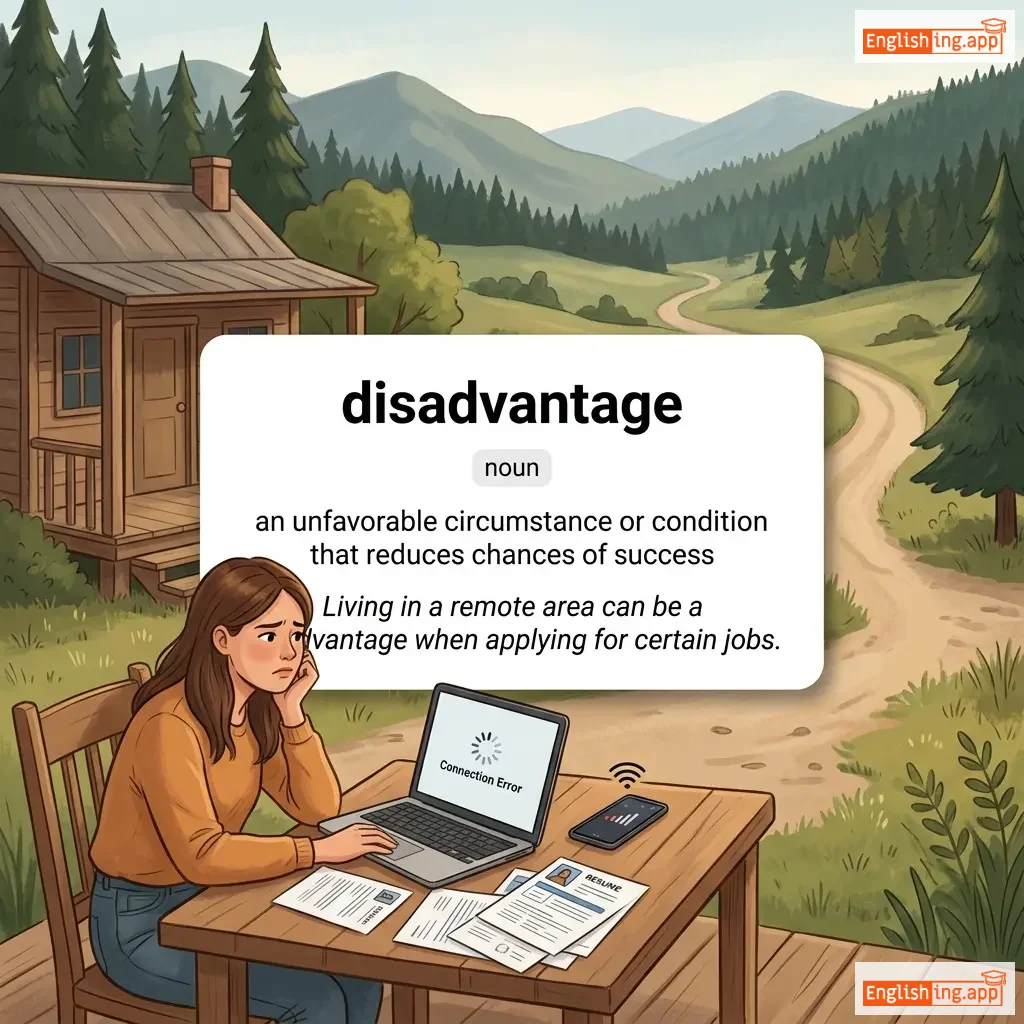
an unfavorable circumstance or condition that reduces chances of success
••••••
|
Living in a remote area can be a disadvantage when applying for certain jobs.
Жизнь в отдаленной местности может быть недостатком при подаче заявки на определенные вакансии.
••••••
|
Жизнь в отдаленной местности может быть недостатком при подаче заявки на определенные вакансии.
Zhizn v otdalennoy mestnosti mozhet byt' nedostatkom pri podache zayavki na opredelennye vakansii.
••••••
|
- •••••• | - •••••• | - •••••• |
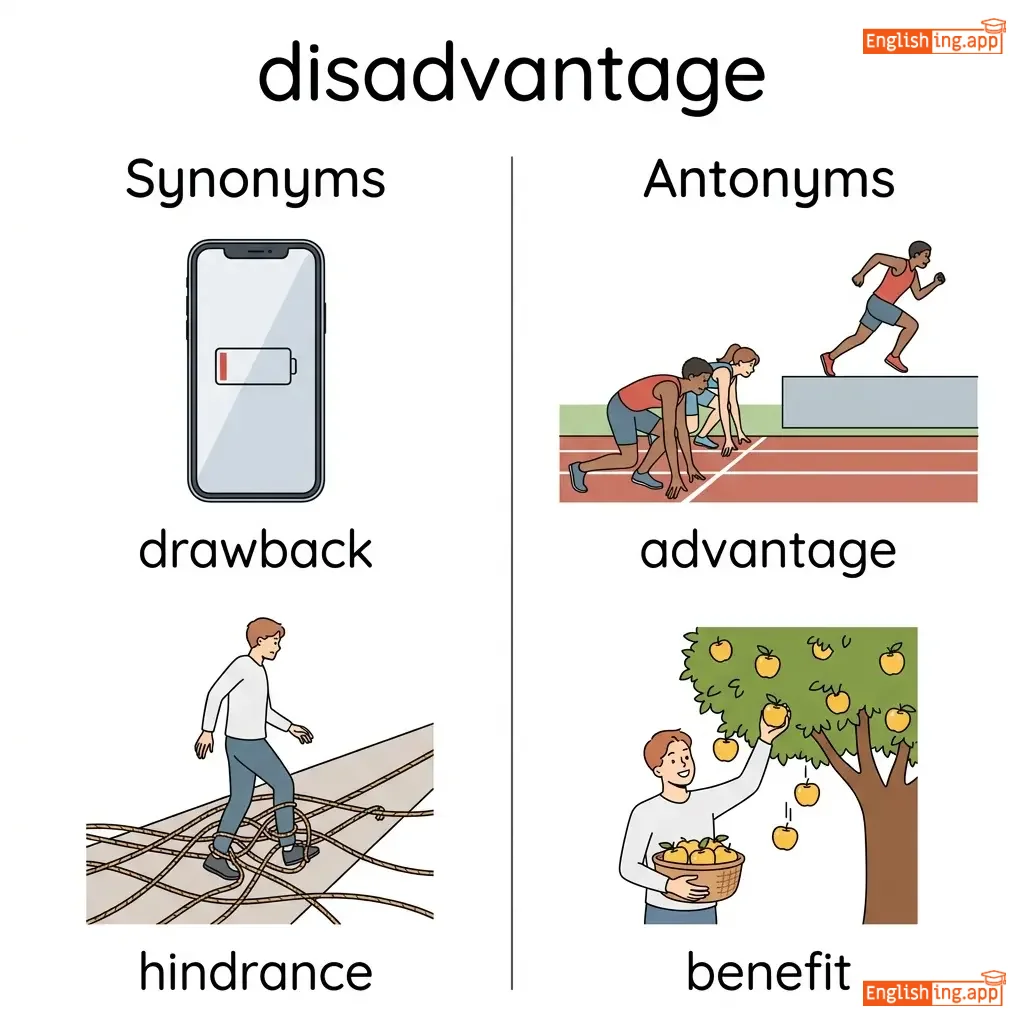
drawback, hindrance, obstacle, handicap
••••••
|
advantage, benefit, asset, strength
••••••
|
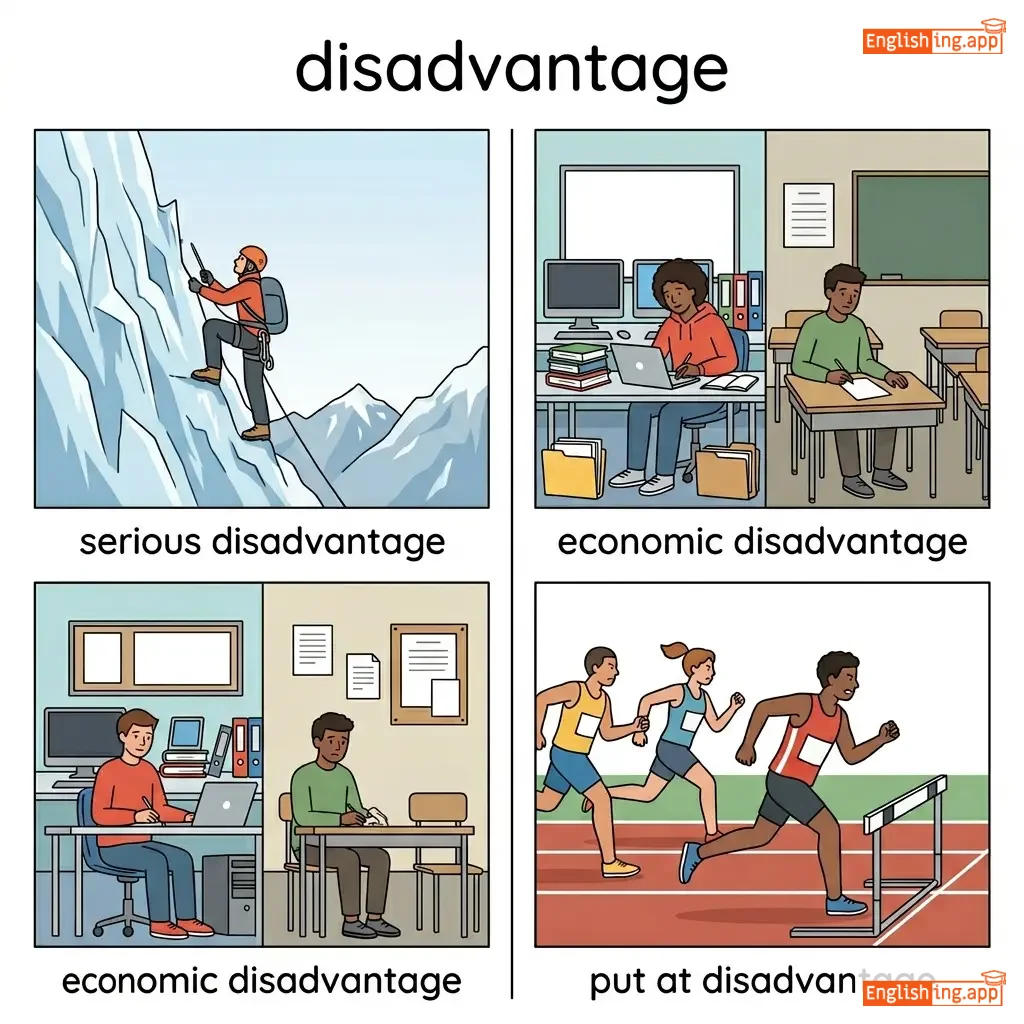
serious disadvantage, economic disadvantage, put at disadvantage
••••••
|
Nedostatok means disadvantage, think of it like the absence of advantage.
••••••
|
|
🙅
••••••
|
/ˌdɪsəˈɡriː/
verb
••••••
|
|
- •••••• |
disagreed
••••••
|
disagreed
••••••
|
disagrees
••••••
|
disagreeing
••••••
|
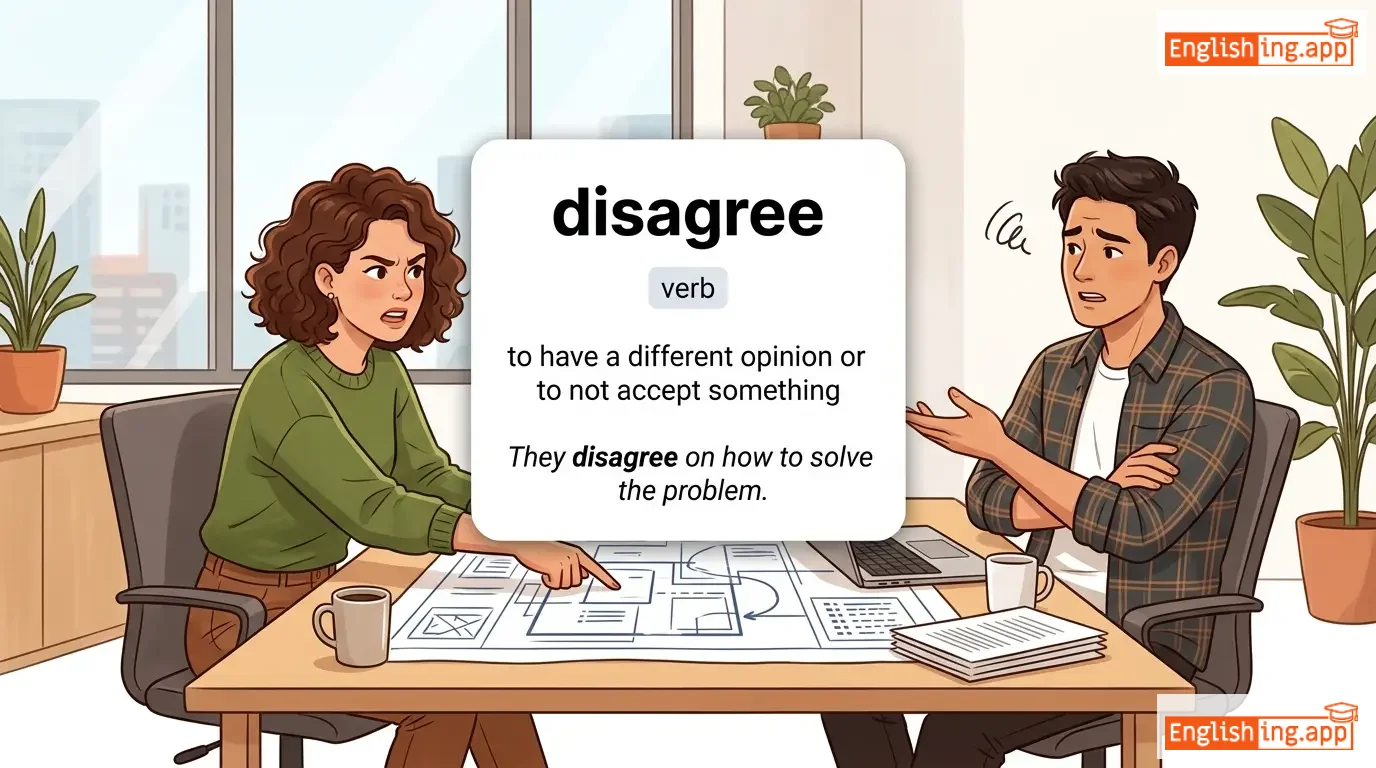
to have a different opinion or to not accept something
••••••
|
They disagree on how to solve the problem. |
- •••••• |
agree to disagree |
accept that two people will not reach the same opinion
••••••
|
- •••••• |
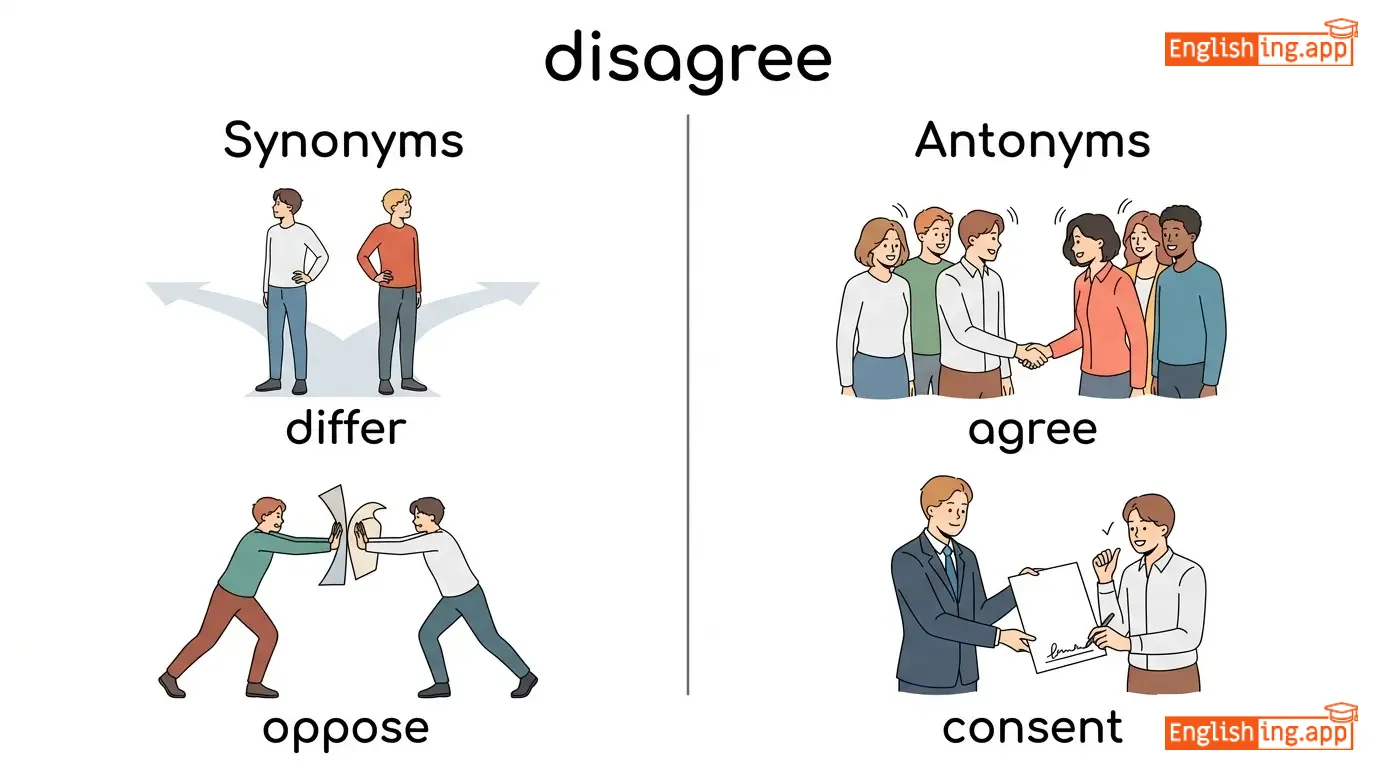
differ, oppose, contradict, dispute, object
••••••
|
agree, consent, approve
••••••
|
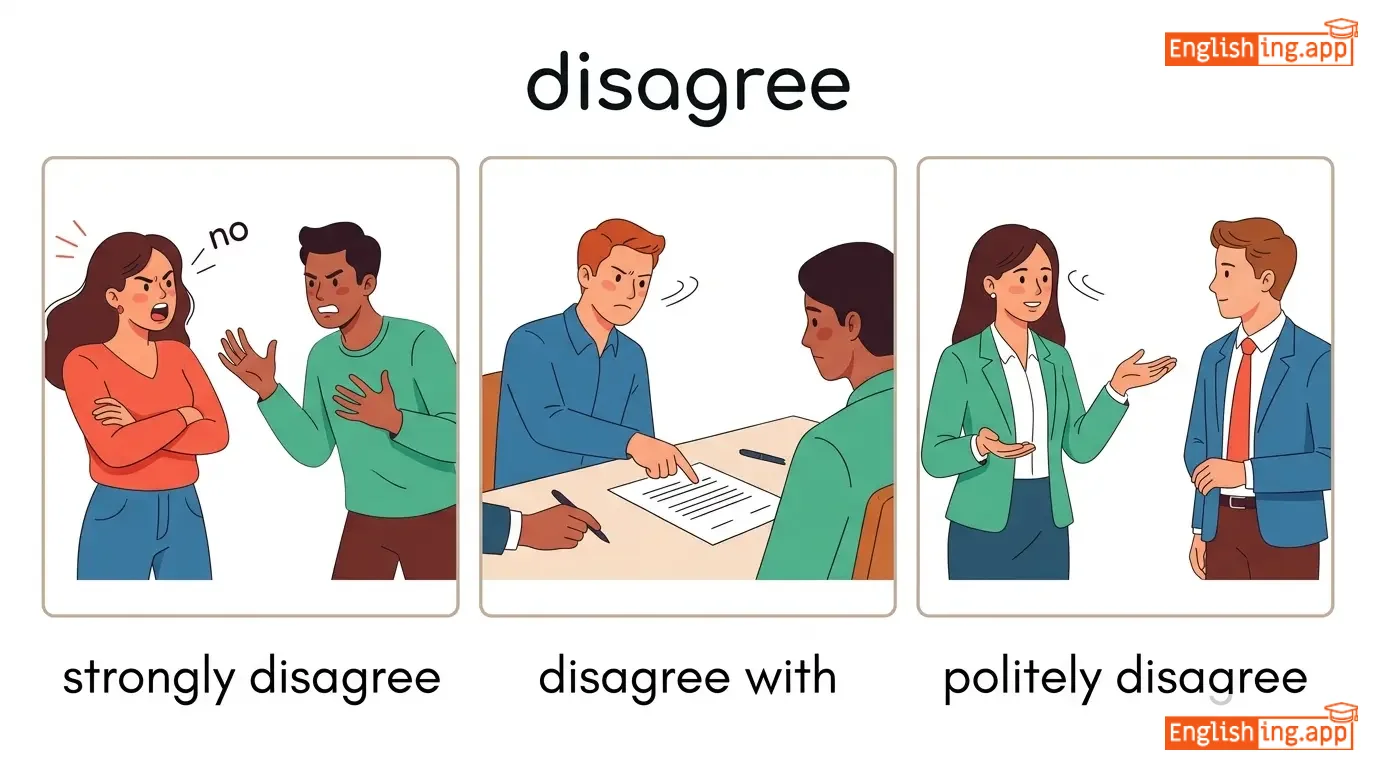
strongly disagree, disagree with, politely disagree
••••••
|
No •••••• |
|
💬
••••••
|
/ˌdɪsəˈɡriːmənt/
noun
(дисагри́мент)
••••••
|
- •••••• |
разногласие
raznoglasiye
••••••
|
- •••••• | - •••••• | - •••••• | - •••••• |
a failure to agree or a difference in opinion
••••••
|
Their disagreement on the issue caused a delay in the project. |
Их разногласия по этому вопросу вызвали задержку в проекте.
Ikh raznoglasiya po etomu voprosu vyzvali zaderzhku v proyekte.
••••••
|
- •••••• | - •••••• | - •••••• |
dispute, argument, conflict, difference
••••••
|
agreement, harmony, accord
••••••
|
disagreement over, public disagreement, reach a disagreement
••••••
|
Разногласие = раз- ‘против’, ‘гласие’ – согласие, противоположности.
••••••
|
|
🪄
••••••
|
/ˌdɪsəˈpɪər/
verb
(дисапир)
••••••
|
|
исчезать
ischezat
••••••
|
disappeared
исчез
••••••
|
disappeared
исчезнувший
••••••
|
disappears
исчезает
••••••
|
disappearing
исчезая
••••••
|
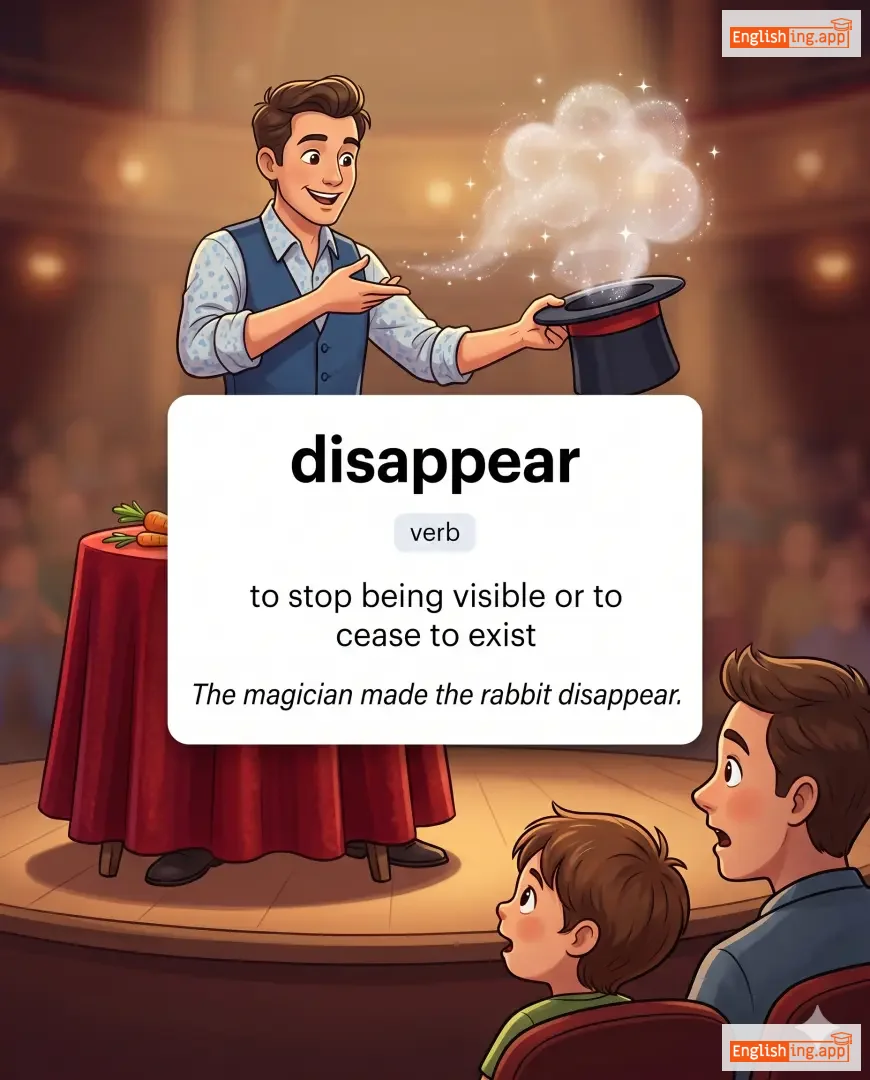
to stop being visible or to cease to exist
••••••
|
The magician made the rabbit disappear.
Маг заставил кролика исчезнуть.
••••••
|
Маг заставил кролика исчезнуть.
Mag zastaavil krolika ischeznut'.
••••••
|
disappear into thin air
исчезнуть в воздухе
••••••
|
to vanish suddenly and completely
••••••
|
исчезнуть в воздухе
ischeznut' v vozdukhe
••••••
|
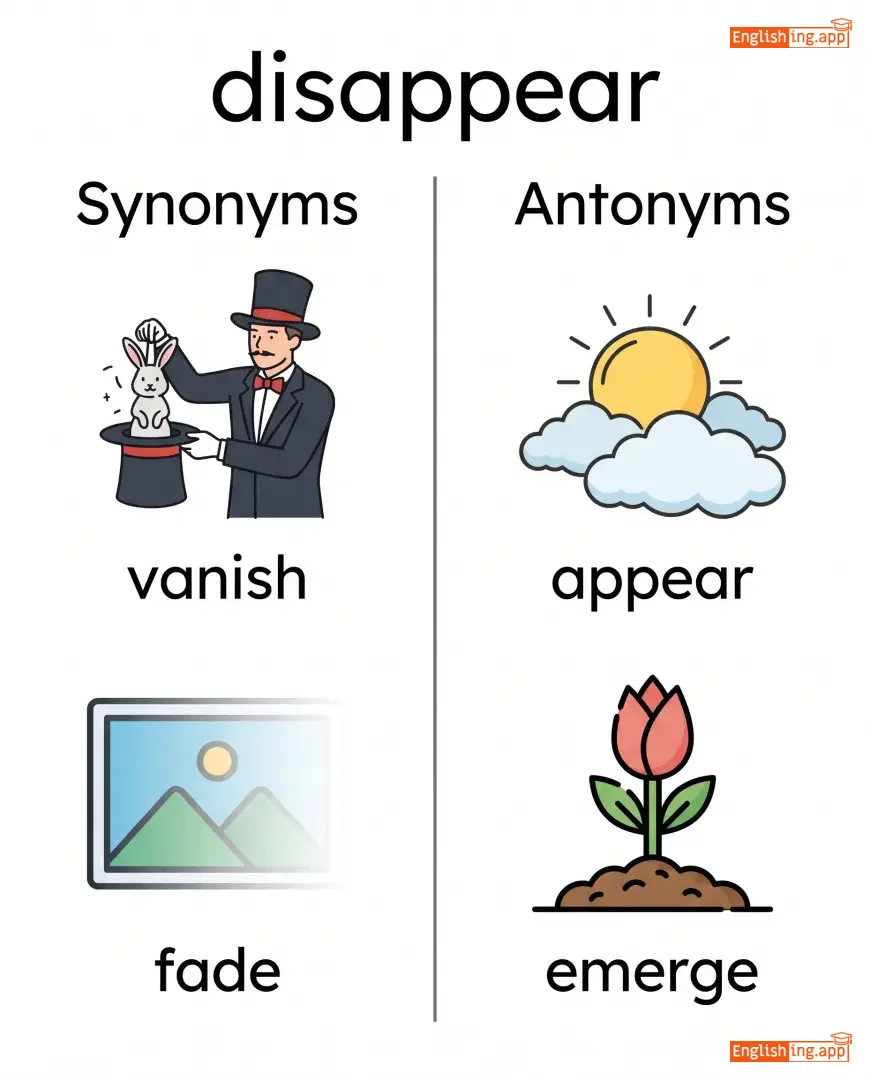
vanish, fade, evaporate, dissolve, recede
••••••
|
appear, emerge, show
••••••
|
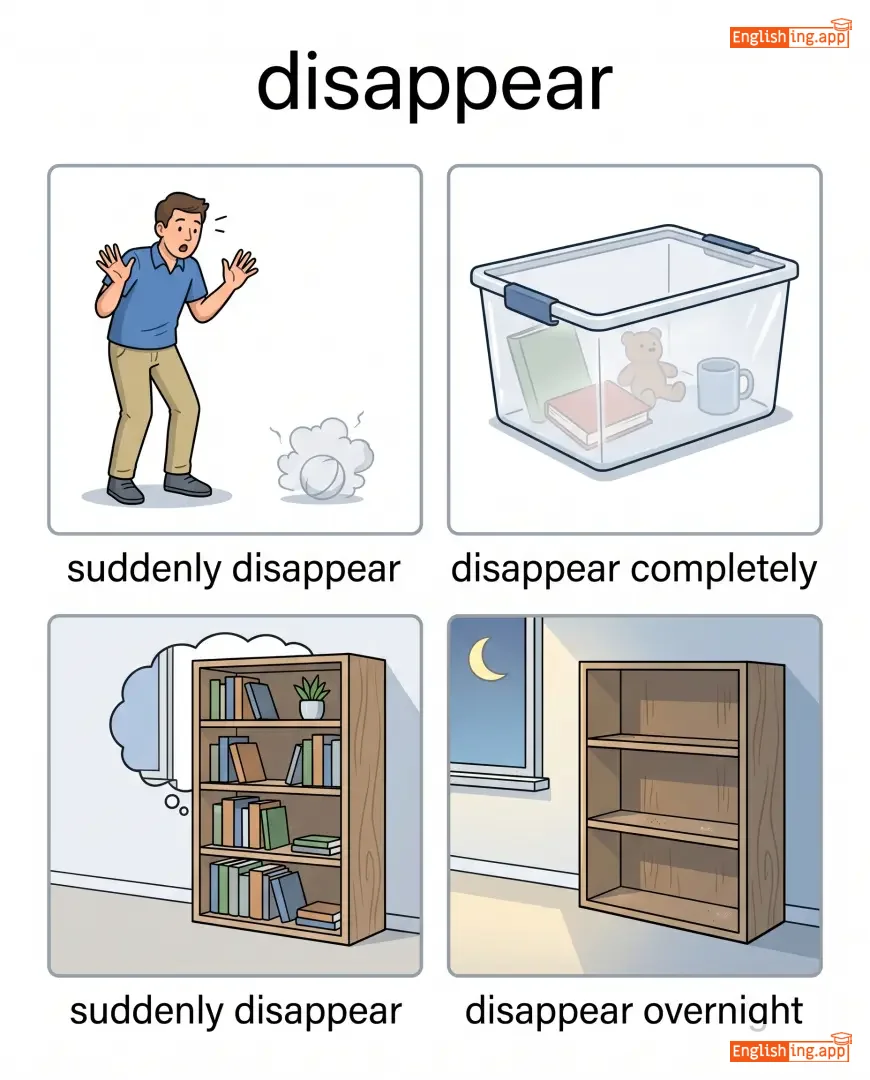
suddenly disappear, disappear completely, disappear overnight
••••••
|
Disappear как 'дисапир'— не быть здесь, поэтому исчезать.
••••••
|
|
😞
••••••
|
/ˌdɪsəˈpɔɪnt/
verb
(дисапо́инт)
••••••
|
|
разочаровывать
razocharovyvat'
••••••
|
disappointed
дисапо́интед
••••••
|
disappointed
дисапо́интед
••••••
|
disappoints
дисапо́интс
••••••
|
disappointing
дисапо́интинг
••••••
|
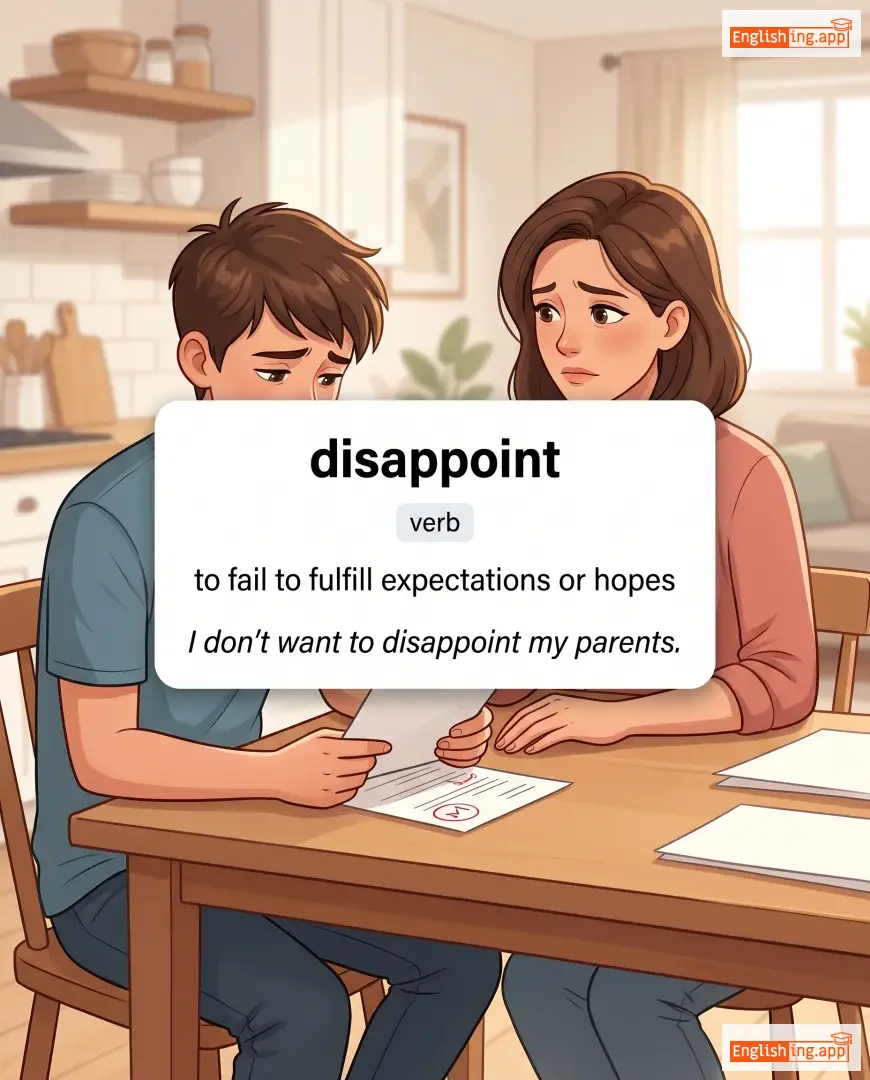
to fail to fulfill expectations or hopes
••••••
|
I don’t want to disappoint my parents.
Я не хочу разочаровать своих родителей.
••••••
|
Я не хочу разочаровать своих родителей.
Ya ne khochu razocharovat' svoikh roditeley.
••••••
|
bitterly disappointed
горько разочарован
••••••
|
very unhappy due to unmet expectations
••••••
|
горько разочарован
gorko razocharovan
••••••
|
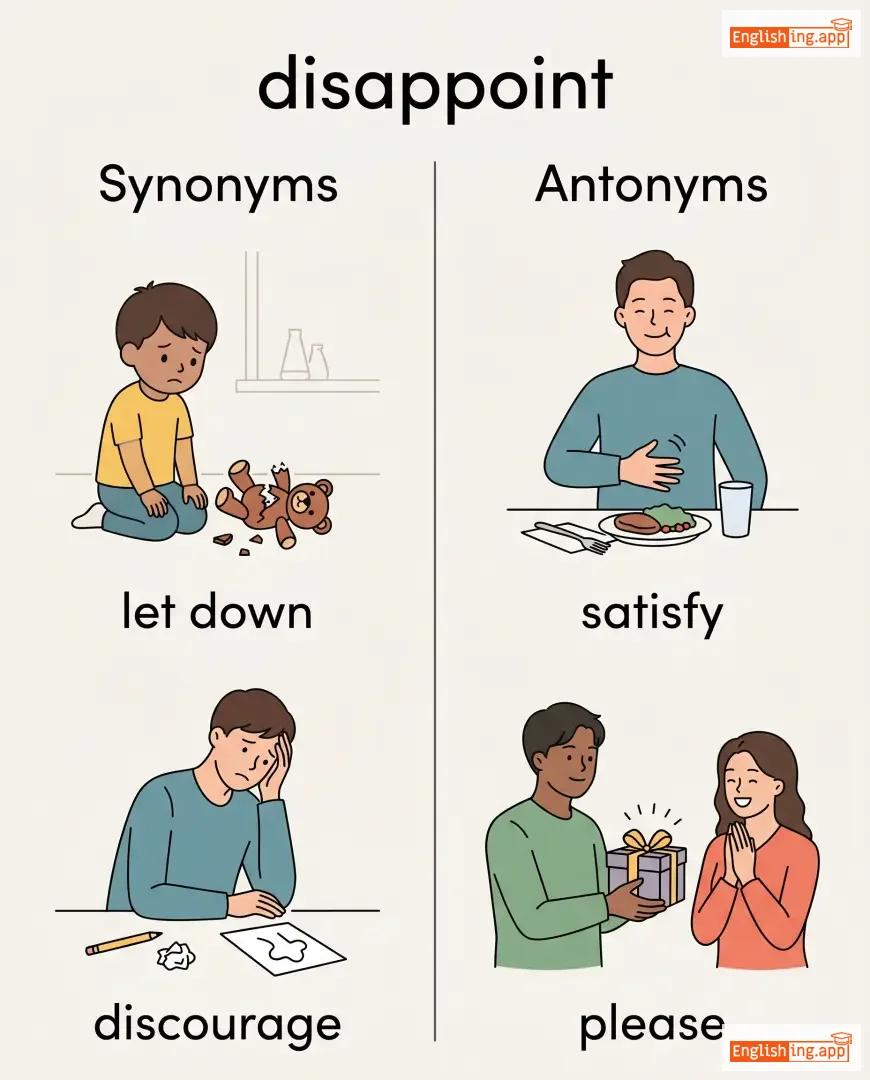
let down, discourage, upset, fail, frustrate
••••••
|
satisfy, please, fulfill
••••••
|
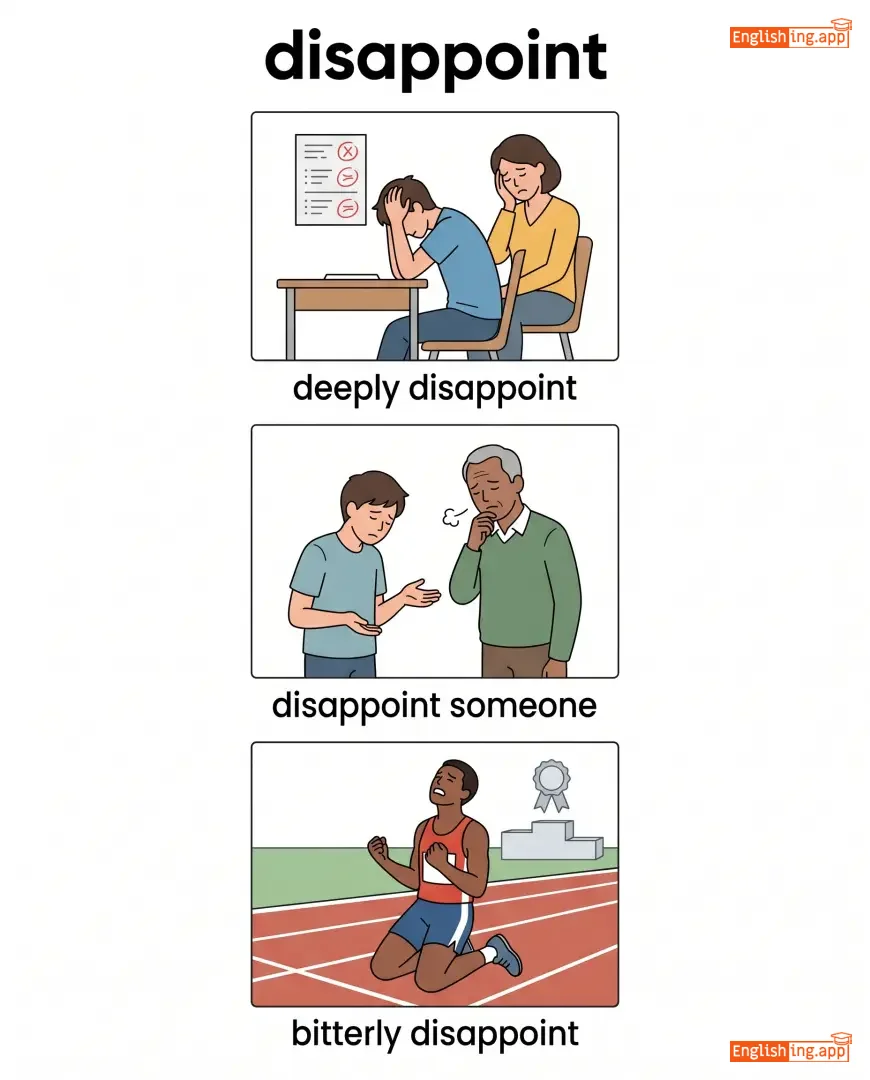
deeply disappoint, disappoint someone, bitterly disappoint
••••••
|
Разочаровать — это как 'не выполнить ожидания' — не оправдать их приводит к разочарованию.
••••••
|
|
😞
••••••
|
/ˌdɪsəˈpɔɪntɪd/
adjective
(disapointid)
••••••
|
- •••••• |
разочарованный
razochiarovanny
••••••
|
- •••••• | - •••••• | - •••••• | - •••••• |
sad or displeased because something has not happened as expected
••••••
|
She was disappointed with her exam results. |
Она была разочарована результатами экзамена.
Ona byla razocharovana rezul'tatami ekzamen
••••••
|
disappointed in someone |
feeling let down by a person's actions or behavior
••••••
|
разочарованный в ком-то
razochiarovanny v kom-to
••••••
|
dissatisfied, upset, frustrated, let down, displeased
••••••
|
satisfied, pleased, content
••••••
|
feel disappointed, deeply disappointed, disappointed result, disappointed face
••••••
|
Dis + appoint означает, что кто-то, кого ты ожидал, тебя разочаровал, поэтому ‘разочарованный’.
••••••
|
|
😞
••••••
|
/ˌdɪsəˈpɔɪntmənt/
noun
(дисапойнтмент)
••••••
|
- •••••• |
разочарование
razochaarovaniye
••••••
|
- •••••• | - •••••• | - •••••• | - •••••• |
the feeling of sadness or displeasure caused by the non-fulfillment of one's hopes or expectations
••••••
|
Her face showed deep disappointment after hearing the results.
Ее лицо выражало глубокое разочарование после того, как она услышала результаты.
••••••
|
Ее лицо выражало глубокое разочарование после того, как она услышала результаты.
Eyo litso vyrazhalo glubokoye razocharovaniye posle togo, kak ona uslyshala rezul'taty.
••••••
|
to one's disappointment
к чьему-то разочарованию
••••••
|
to express that something happened in a way that caused disappointment
••••••
|
к чьему-то разочарованию
k ch'yemuto razocharovaniyu
••••••
|
frustration, letdown, sadness, regret, dismay
••••••
|
satisfaction, joy, delight
••••••
|
great disappointment, bitter disappointment, express disappointment, feel disappointment
••••••
|
Dis + appointment = разочарование, потому что не сработало.
••••••
|
|
👎
••••••
|
/ˌdɪsəˈpruːvəl/
noun
(дисапрувал)
••••••
|
- •••••• |
неодобрение
neodobrenie
••••••
|
- •••••• | - •••••• | - •••••• | - •••••• |
The expression of an unfavorable opinion or judgment
••••••
|
Her parents showed clear disapproval of her decision to drop out of college.
Ее родители показали явное дисапрувал её решению бросить колледж.
••••••
|
Ее родители показали явное неодобрение её решению бросить колледж.
Ee roditeli pokazali yavnoe neodobrenie ee resheniyu brosit kolledzh.
••••••
|
meet with disapproval
сталкиваться с дисапрувал
••••••
|
to receive criticism or unfavorable judgment
••••••
|
сталкиваться с неодобрением
stalkivatsya s neodobreniem
••••••
|
rejection, objection, condemnation, censure
••••••
|
approval, acceptance, endorsement
••••••
|
express disapproval, show disapproval, strong disapproval
••••••
|
Disapproval = neodobrenie, 'не' = no, 'odobrenie' = approval.
••••••
|
|
👎
••••••
|
/ˌdɪsəˈpruːv/
verb
(disapruv)
••••••
|
- •••••• |
не одобрять
ne odobryat'
••••••
|
disapproved
disapruft
••••••
|
disapproved
disapruft
••••••
|
disapproves
disapruvs
••••••
|
disapproving
disapruvaniye
••••••
|
to have a negative opinion about something; to consider something wrong or bad
••••••
|
Many parents disapprove of smoking.
Mnogiye roditeli ne odobrivayut kureniye.
••••••
|
Многие родители не одобряют курение.
Mnogiye roditeli ne odobrivayut kureniye.
••••••
|
strongly disapprove
sil'no ne odobrivat'
••••••
|
to express strong disagreement or dislike
••••••
|
сильно не одобрять
sil'no ne odobrivat'
••••••
|
condemn, criticize, oppose, reject, object
••••••
|
approve, praise, accept
••••••
|
disapprove of behavior, disapprove strongly, openly disapprove
••••••
|
Disapprove значит не одобрять, по-русски не одобрять.
••••••
|
|
🌪️
••••••
|
/dɪˈzæstər/
noun
(ди́застер)
••••••
|
- •••••• |
катастрофа
katastrofa
••••••
|
- •••••• | - •••••• | - •••••• | - •••••• |
A sudden event that causes great damage or loss of life.
••••••
|
The earthquake was a major disaster. |
Землетрясение было большой катастрофой.
Zemletryasenie bylo bol'shoy katastrofoy.
••••••
|
a recipe for disaster |
Something that is very likely to result in a bad outcome.
••••••
|
рецепт катастрофы
retsept katastrofy
••••••
|
catastrophe, calamity, tragedy, mishap
••••••
|
success, blessing
••••••
|
natural disaster, disaster relief, disaster management, prevent disaster
••••••
|
Disaster - dis (плохо) + aster (звезда), звезда в плохом положении - катастрофа.
••••••
|
|
💥
••••••
|
/dɪˈzæs.trəs/
adjective
(дизастрэс)
••••••
|
- •••••• |
катастрофический
katastroficheskiy
••••••
|
- •••••• | - •••••• | - •••••• | - •••••• |
extremely bad or unsuccessful; causing great damage
••••••
|
The hurricane had disastrous effects on the city. |
Ураган оказал катастрофическое воздействие на город.
Uragan okazal katastroficheskoe vozdeystvie na gorod.
••••••
|
- •••••• | - •••••• | - •••••• |
catastrophic, devastating, calamitous, ruinous
••••••
|
beneficial, fortunate, successful, favorable
••••••
|
disastrous consequences, disastrous effects, disastrous results
••••••
|
‘Катастрофа’ = ‘катастрофический’
••••••
|
|
🗑️
••••••
|
/dɪsˈkɑːrd/
verb
(diskard)
••••••
|
- •••••• |
выбросить
vybrosit
••••••
|
discarded
discarded
••••••
|
discarded
discarded
••••••
|
discards
discards
••••••
|
discarding
discarding
••••••
|
to throw away something that is no longer needed
••••••
|
She decided to discard the old clothes.
она решила избавиться от старой одежды.
••••••
|
Она решила избавиться от старой одежды.
Ona reshilа izbavit’sya ot staroy odezhdy.
••••••
|
discard old habits
избавиться от старых привычек
••••••
|
to stop following old behaviors or practices
••••••
|
избавиться от старых привычек
izbavit’sya ot starykh privychek
••••••
|
abandon, throw away, remove, get rid of
••••••
|
keep, retain, preserve
••••••
|
discard clothes, discard waste, discard items, discard habits
••••••
|
Vybrоsit означает выбросить, как выбросить карты 🗑️
••••••
|
|
💨
••••••
|
/dɪsˈtʃɑːrdʒ/
verb
(дисчардж)
••••••
|
|
освободить
osvobodit
••••••
|
discharged
дисчарджд
••••••
|
discharged
дисчарджд
••••••
|
discharges
дисчарджес
••••••
|
discharging
дисчарджинг
••••••
|
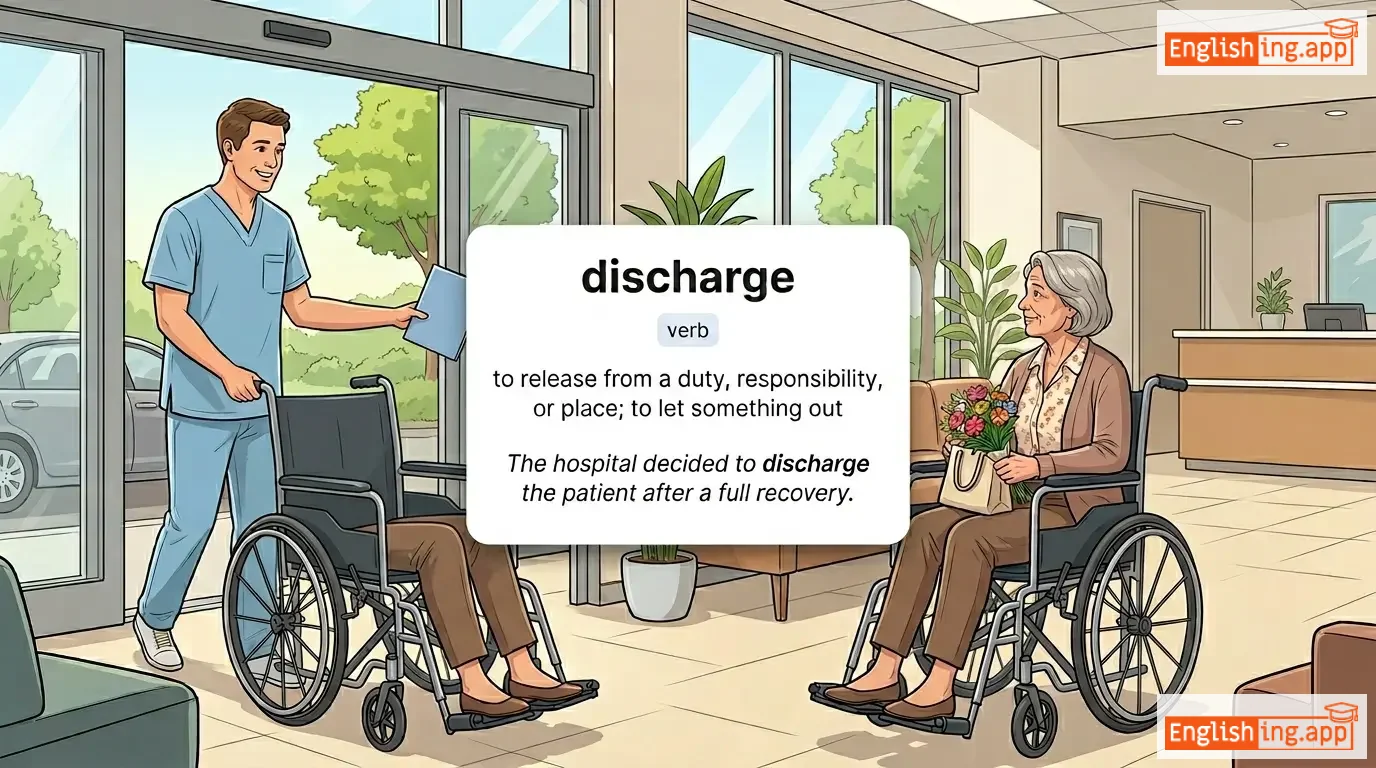
to release from a duty, responsibility, or place; to let something out
••••••
|
The hospital decided to discharge the patient after a full recovery.
Больница решила выписать пациента после полного выздоровления.
••••••
|
Больница решила выписать пациента после полного выздоровления.
Bol'nitsa reshila vypisat' patsiyenta posle polnogo vyzdorovleniya.
••••••
|
discharge one's duty
выполнить свой долг
••••••
|
to fulfill one's responsibility
••••••
|
выполнить свой долг
vyplnit' svoy dolg
••••••
|
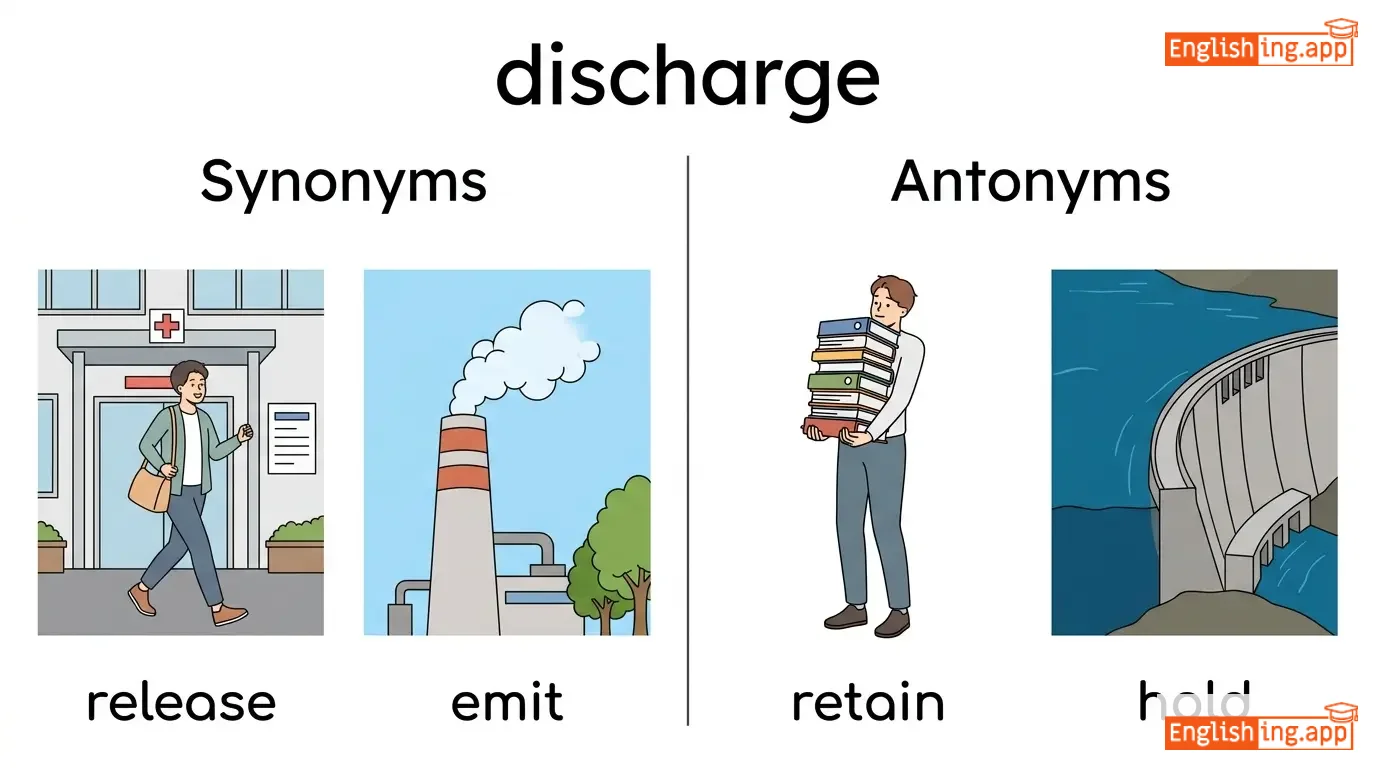
release, emit, expel, dismiss, free
••••••
|
retain, hold, keep
••••••
|
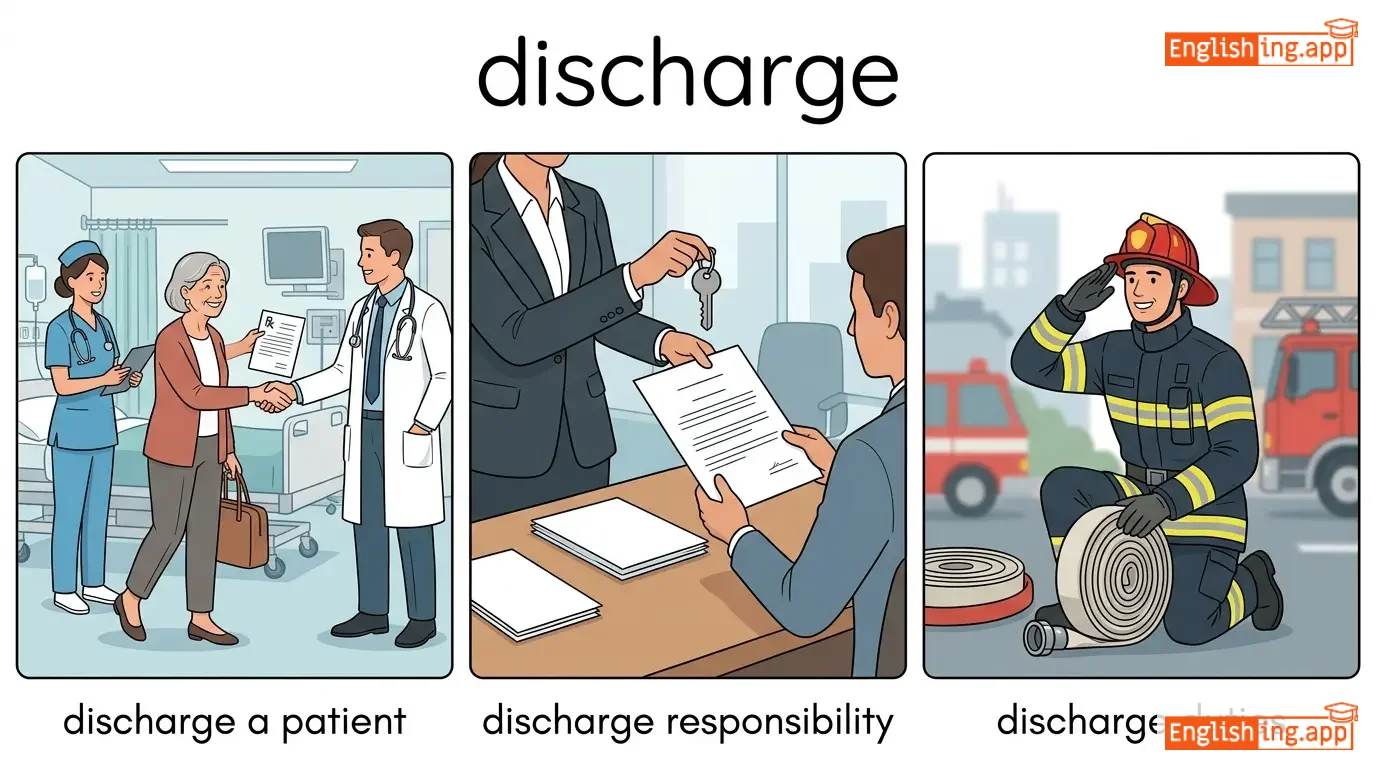
discharge a patient, discharge responsibility, discharge duties, discharge cargo
••••••
|
Discharge = освободить, как в освобождении от обязанностей.
••••••
|
|
📏
••••••
|
/ˈdɪsəplɪn/
noun
(дисциплин)
••••••
|

|
дисциплина
distsiplina
••••••
|
- •••••• | - •••••• | - •••••• | - •••••• |
the practice of training people to obey rules or self-control
••••••
|
Good discipline is essential for success in school. |
Хорошая дисциплина необходима для успеха в школе.
Khoroshaya distsiplina neobkhodima dlya uspekha v shkole.
••••••
|
self-discipline |
the ability to control one's own behavior and actions
••••••
|
самодисциплина
samodistsiplina
••••••
|
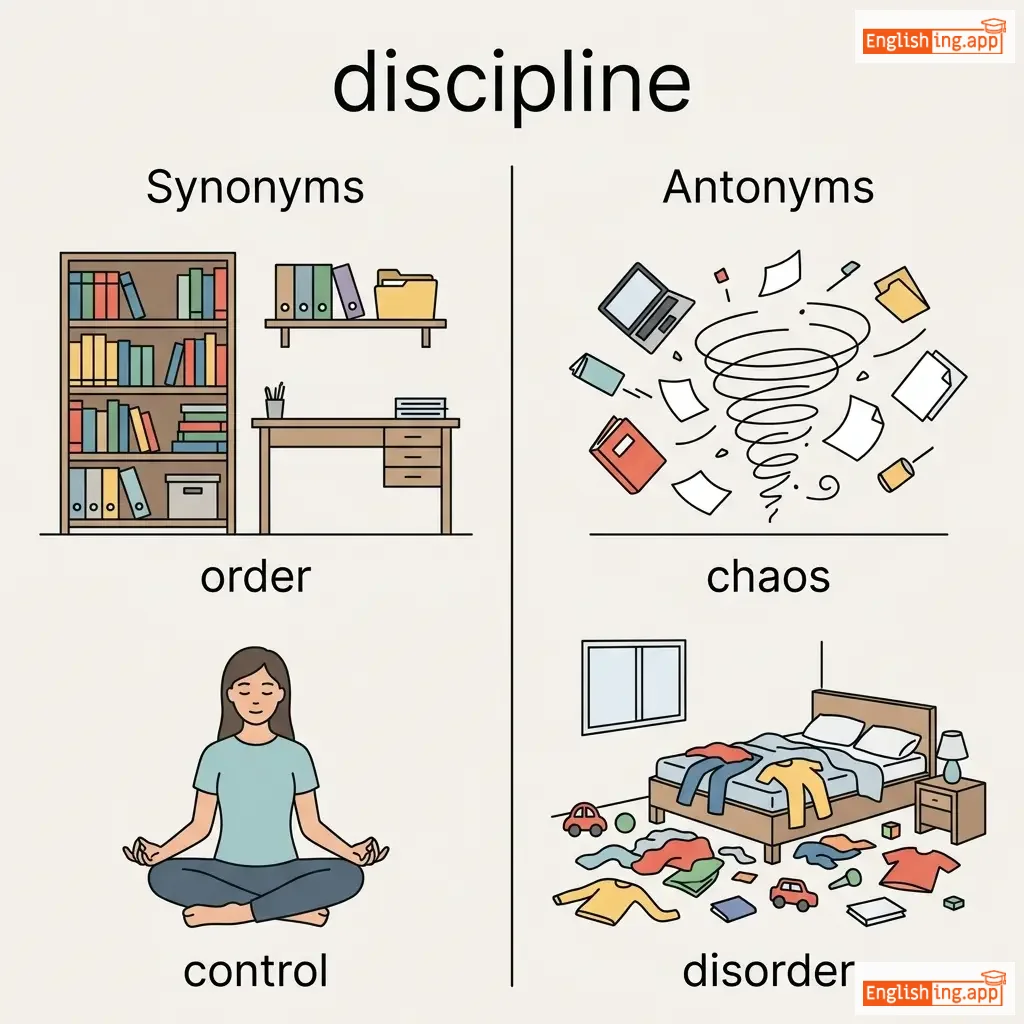
order, control, training, restraint, regulation
••••••
|
chaos, disorder, indiscipline
••••••
|
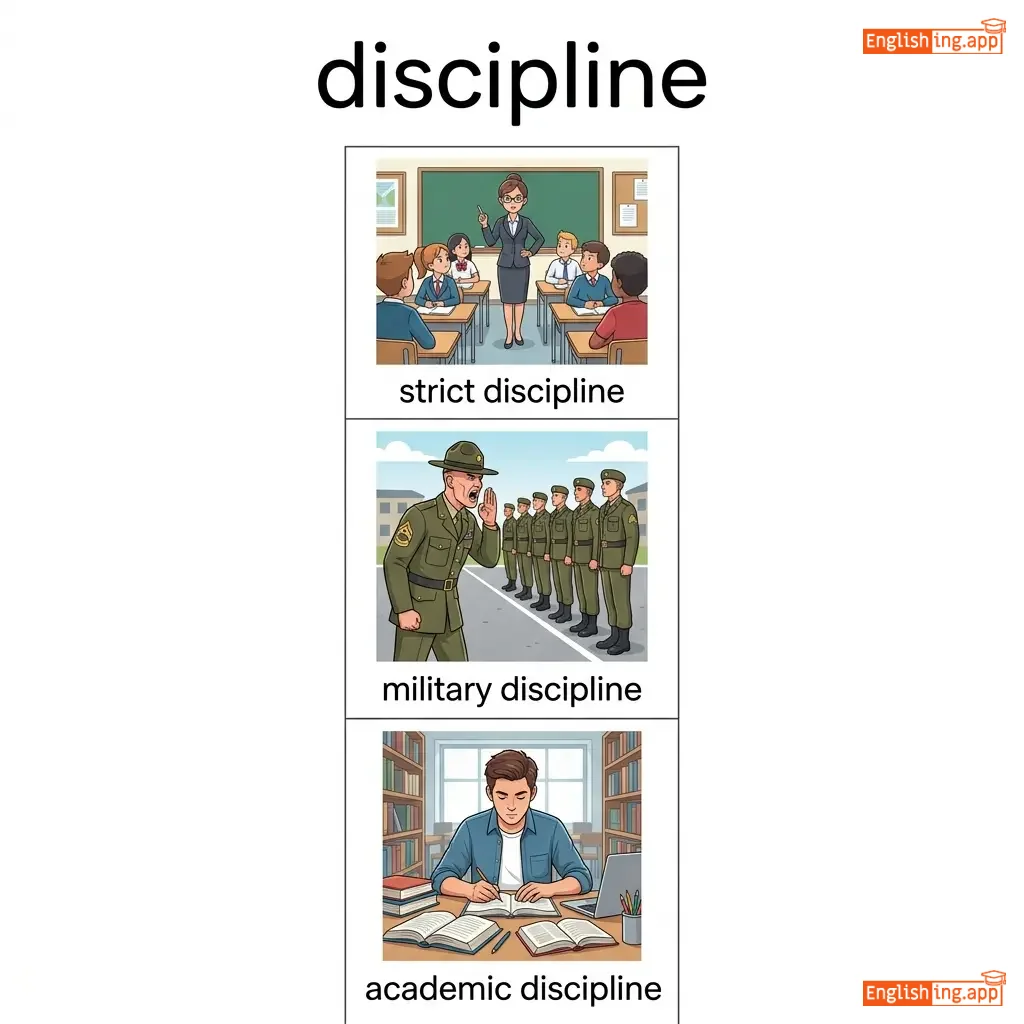
strict discipline, military discipline, academic discipline, maintain discipline
••••••
|
Discipline означает дисциплина, учат с помощью авторитета в школе.
••••••
|
|
📢
••••••
|
/dɪsˈkloʊz/
verb
••••••
|

|
- •••••• |
disclosed
••••••
|
disclosed
••••••
|
discloses
••••••
|
disclosing
••••••
|
to make something known; to reveal information that was previously secret or hidden
••••••
|
The company refused to disclose details of the agreement. |
- •••••• |
full disclosure |
being completely open and honest about all relevant information
••••••
|
- •••••• |
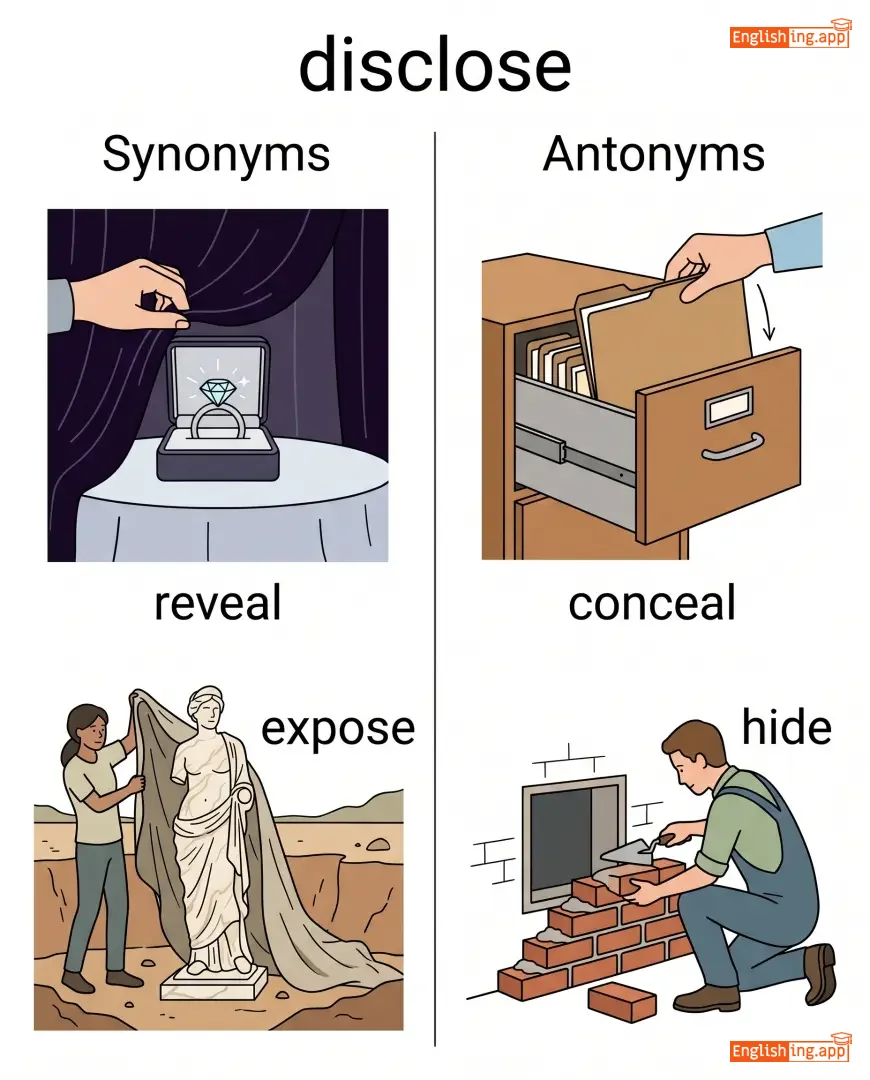
reveal, expose, uncover, divulge, announce
••••••
|
conceal, hide, suppress
••••••
|
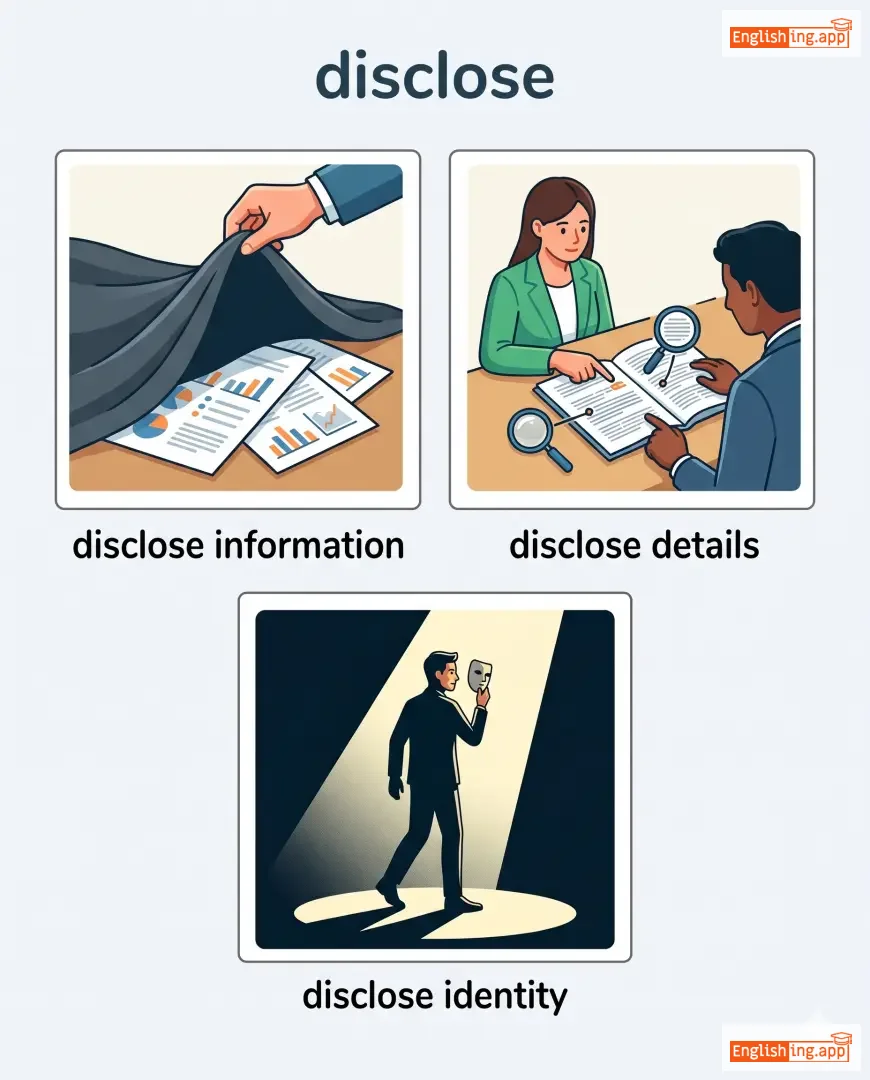
disclose information, disclose details, disclose identity, disclose agreement
••••••
|
No •••••• |
|
📢
••••••
|
/dɪsˈkloʊʒər/
noun
(дисклозер)
••••••
|
- •••••• |
раскрытие
raskrytiye
••••••
|
- •••••• | - •••••• | - •••••• | - •••••• |
the action of making something known or public
••••••
|
The disclosure of the company's financial status was delayed. |
Раскрытие финансового положения компании было задержано.
Raskrytiye finansovogo polozheniya kompanii bylo zaderzhano.
••••••
|
- •••••• | - •••••• | - •••••• |
revelation, announcement, exposure, divulgence
••••••
|
concealment, secrecy
••••••
|
disclosure statement, public disclosure, full disclosure
••••••
|
Раскрытие (disclosure) означает сделать что-то известным.
••••••
|
|
💸
••••••
|
/ˈdɪskaʊnt/
noun, verb
(дɪсˈкаʊнт)
••••••
|
- •••••• |
скидка
skidka
••••••
|
discounted
дɪсˈкаʊнтед
••••••
|
discounted
дɪсˈкаʊнтед
••••••
|
discounts
дɪсˈкаʊнтс
••••••
|
discounting
дɪсˈкаʊнтɪн
••••••
|
A reduction in the usual price of something; to reduce the price of something.
••••••
|
The store offered a 20% discount on all electronics.
Магазин предложил скидку 20 % на всю электронику.
••••••
|
Магазин предложил скидку 20 % на всю электронику.
Magazin predlozhil skidku 20 % na vsyu elektronuiku.
••••••
|
discount rate
скидочная ставка
••••••
|
The interest rate charged to commercial banks by a central bank.
••••••
|
скидочная ставка
skidochnaya stavka
••••••
|
reduction, markdown, rebate, deduction, concession
••••••
|
surcharge, premium, markup
••••••
|
offer discount, receive discount, discount price, trade discount
••••••
|
Скидка - это когда цена на товар становится ниже. Скидки помогают сэкономить!
••••••
|
|
🙁
••••••
|
/dɪsˈkʌrɪdʒ/
verb
••••••
|
- •••••• | - •••••• |
discouraged
••••••
|
discouraged
••••••
|
discourages
••••••
|
discouraging
••••••
|
to make someone less confident or enthusiastic about doing something
••••••
|
Failure should not discourage you from trying again. |
- •••••• |
discourage someone from doing something |
to make someone not want to do something
••••••
|
- •••••• |
deter, dishearten, demotivate, depress, prevent
••••••
|
encourage, inspire, motivate
••••••
|
strongly discourage, discourage behavior, discourage effort, discourage action
••••••
|
No •••••• |
|
💬
••••••
|
/ˈdɪskɔːrs/
noun, verb
(дискос)
••••••
|
- •••••• |
дискурс, лекция
diskurs, lekciya
••••••
|
discoursed
дискосед
••••••
|
discoursed
дискосед
••••••
|
discourses
дискосируется
••••••
|
discoursing
дискосирование
••••••
|
Written or spoken communication or debate.
••••••
|
The professor gave a discourse on ancient philosophy.
Профессор прочитал лекцию по древней философии.
••••••
|
Профессор прочитал лекцию по древней философии.
Professor prochital lekciyu po drevney filosofii.
••••••
|
political discourse
политический дискурс
••••••
|
The ways of discussing or debating political matters.
••••••
|
политический дискурс
politicheskiy diskurs
••••••
|
dialogue, discussion, conversation, debate, talk
••••••
|
silence, quiet, muteness
••••••
|
academic discourse, public discourse, discourse analysis, discourse on
••••••
|
Дискурс – это лекция или обсуждение (lekciya, obsuzhdenie) на тему.
••••••
|
|
🔎
••••••
|
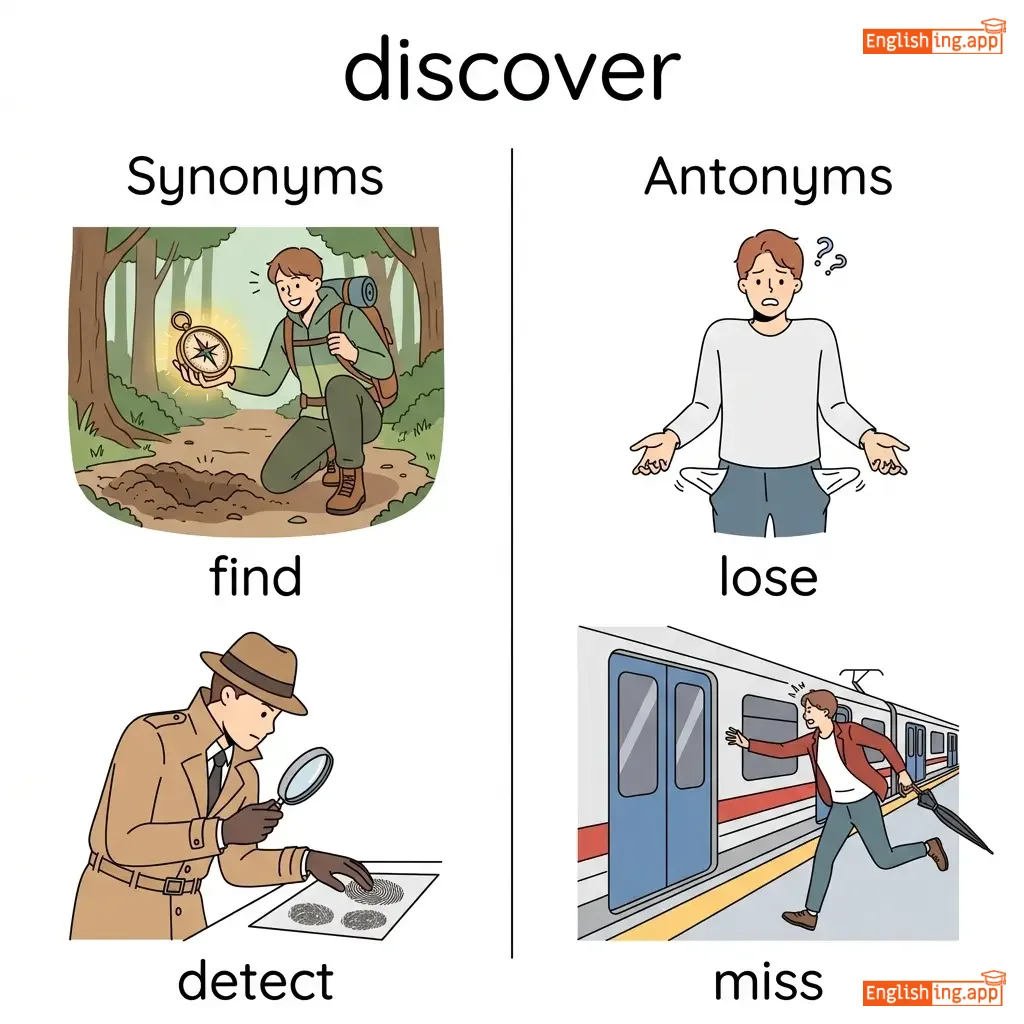
/dɪˈskʌvər/
verb
(diskaver)
••••••
|

|
открывать
otkryvat
••••••
|
discovered
diskavered
••••••
|
discovered
diskavered
••••••
|
discovers
diskavers
••••••
|
discovering
diskaverin
••••••
|
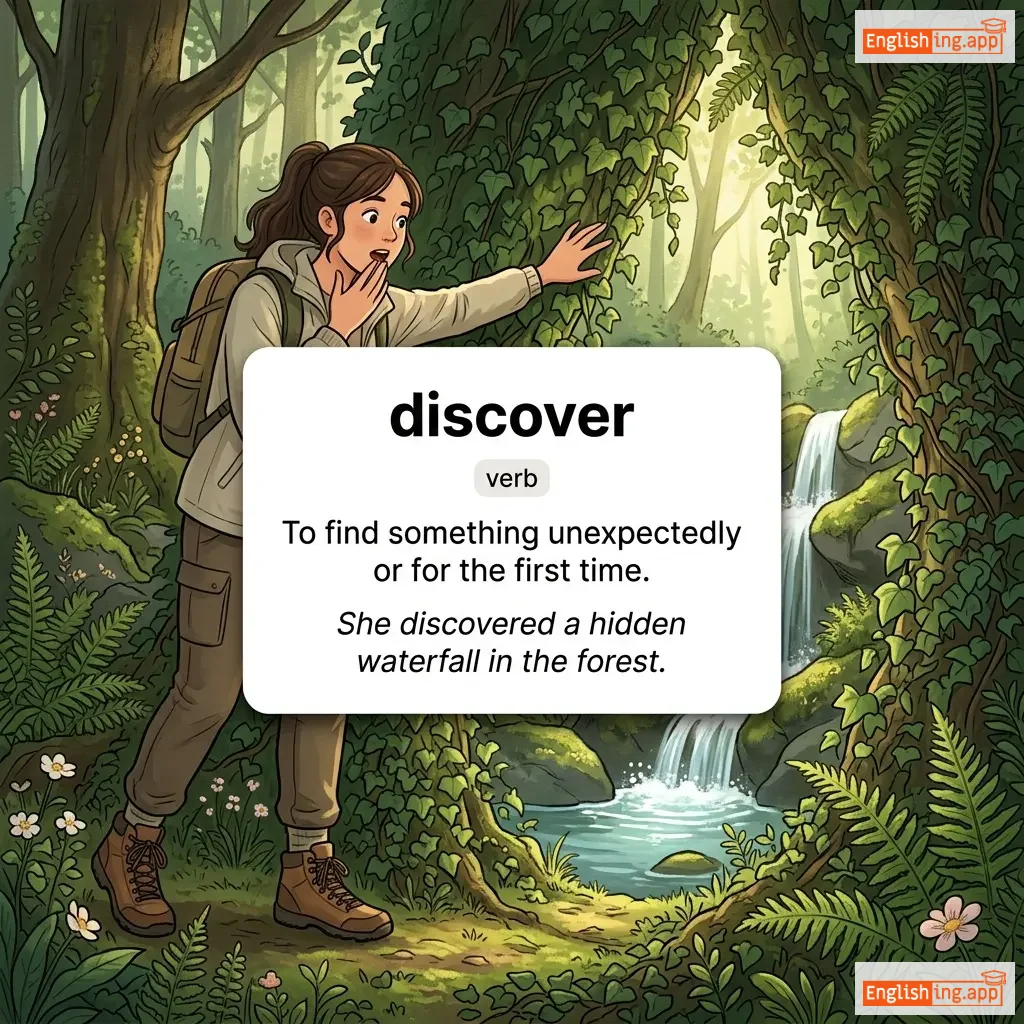
To find something unexpectedly or for the first time.
••••••
|
She discovered a hidden waterfall in the forest.
Она обнаружила скрытый водопад в лесу.
••••••
|
Она обнаружила скрытый водопад в лесу.
Ona obnaruzhila skrytyy vodopad v lesu.
••••••
|
discover oneself
открывать себя
••••••
|
To find out about one’s true nature or capabilities.
••••••
|
открывать себя
otkryvat sebya
••••••
|
find, detect, uncover, reveal, unearth
••••••
|
lose, miss, conceal
••••••
|
discover truth, discover talent, discover new, discover hidden
••••••
|
Открывать, как находить скрытые водопады в лесу.
••••••
|
|
🔎
••••••
|
/dɪˈskʌvəri/
noun
(disˈkʌvəri)
••••••
|
- •••••• |
открытие
otkry-ti-ye
••••••
|
- •••••• | - •••••• | - •••••• | - •••••• |
The act of finding or learning something for the first time.
••••••
|
The discovery of penicillin changed medical history. |
Открытие пенициллина изменило медицинскую историю.
Otkry-ti-ye pe-ni-tsi-lin-na iz-me-ni-lo me-di-tsins-ku-yu is-to-ri-yu.
••••••
|
make a discovery |
to find or learn something new
••••••
|
сделать открытие
sdye-lat' otkry-ti-ye
••••••
|
finding, invention, detection, revelation
••••••
|
loss, concealment
••••••
|
scientific discovery, new discovery, make a discovery, important discovery
••••••
|
Discovery = открытие = Когда ты что-то находишь, это открытие.
••••••
|
|
🚫
••••••
|
/dɪˈskrɪmɪˌneɪt/
verb
(дискриминировать)
••••••
|
- •••••• |
дискриминировать
diskriminnirovat
••••••
|
discriminated
дискриминировал
••••••
|
discriminated
дискриминировал
••••••
|
discriminates
дискриминирует
••••••
|
discriminating
дискриминируя
••••••
|
To treat someone unfairly based on race, gender, or other differences; or to recognize a distinction.
••••••
|
The law prohibits employers from discriminating against women.
Закон запрещает работодателям дискриминировать против женщин.
••••••
|
Закон запрещает работодателям дискриминировать против женщин.
Zakon zapreshchayet rabotodatelyam diskriminirivat' protiv zhenshchin.
••••••
|
discriminate against
дискриминировать против
••••••
|
To treat a person or group unfairly due to bias
••••••
|
дискриминировать против
diskriminnirovat protiv
••••••
|
differentiate, distinguish, segregate, bias, prejudice
••••••
|
equalize, accept, include
••••••
|
discriminate against, discriminate on the basis of, racial discrimination, gender discrimination
••••••
|
Дискриминировать — Dis+Crime+nate — преступление быть несправедливым по отношению к кому-то.
••••••
|
|
⚖️
••••••
|
/dɪˌskrɪmɪˈneɪʃən/
noun
(дискриминация)
••••••
|
- •••••• |
дискриминация
diskriminatsiya
••••••
|
- •••••• | - •••••• | - •••••• | - •••••• |
Unfair treatment of people based on race, gender, age, or other differences.
••••••
|
The law prohibits discrimination in the workplace. |
Закон запрещает дискриминацию на рабочем месте.
Zakon zapreshchayet diskriminatsiyu na rabochem meste.
••••••
|
racial discrimination |
unfair treatment based on race
••••••
|
расовая дискриминация
rasovaya diskriminatsiya
••••••
|
prejudice, bias, unfairness, inequality
••••••
|
equality, fairness, justice
••••••
|
racial discrimination, gender discrimination, fight discrimination, workplace discrimination
••••••
|
Дискриминация = dis + преступление, поэтому дискриминировать - преступление.
••••••
|

