|
絵文字
|
単語 | Images | 翻訳 | 過去 | 過去分詞 | 三人称単数 | 動名詞 | 意味 | 例文 | 例文の翻訳 | 表現例 | 表現例の意味 | 表現例の翻訳 | 同義語 | 対義語 | コロケーション | ニーモニック |
|---|---|---|---|---|---|---|---|---|---|---|---|---|---|---|---|---|---|
|
📈
••••••
|
/ˈkɒmpɪtəns/
noun
(コンピテンス)
••••••
|
- •••••• |
能力
nōryoku
••••••
|
- •••••• | - •••••• | - •••••• | - •••••• |
the ability to do something successfully or efficiently
••••••
|
Her competence as a manager impressed the board. |
マネージャーとしての彼女の能力は、取締役会に感銘を与えました。
Manējā toshite no kanojo no nōryoku wa, torishimariyakukai ni kanmei o ataemashita.
••••••
|
professional competence |
the required ability and skill in a profession
••••••
|
職業能力
shokugyō nōryoku
••••••
|
ability, capability, skill, proficiency, expertise
••••••
|
incompetence, inability, ineptness
••••••
|
competence level, demonstrate competence, competence in
••••••
|
能力とは、能力のある人になることです – 能力があれば、上手にできる人です。
••••••
|
|
✅
••••••
|
/ˈkɒmpɪtənt/
adjective
(kom-pi-tent)
••••••
|
- •••••• |
有能
yūnō
••••••
|
- •••••• | - •••••• | - •••••• | - •••••• |
having the necessary ability, knowledge, or skill to do something successfully
••••••
|
He is a competent driver who rarely makes mistakes.
彼はミスをほとんど犯さない有能なドライバーです。
••••••
|
彼はミスをほとんど犯さない有能なドライバーです。
Kare wa misu o hotondo okasanai yūnōna doraibā desu.
••••••
|
competent authority
有能な権限
••••••
|
a person or body with the legal power to decide or enforce something
••••••
|
有能な権限
yūnōna kenri
••••••
|
capable, skilled, qualified, proficient
••••••
|
incompetent, unskilled
••••••
|
competent staff, competent professional, competent enough
••••••
|
有能は有能なドライバーのように、能力が高く、間違いが少ないことを意味します。
••••••
|
|
🤼
••••••
|
/ˌkɒmpəˈtɪʃən/
noun
(コンペティション)
••••••
|


|
競争
kyousou
••••••
|
- •••••• | - •••••• | - •••••• | - •••••• |
a situation in which people or organizations try to be more successful than others
••••••
|
The competition in the tech industry is very intense. |
テクノロジー業界の競争は非常に激しいです。
tekunorojii gyoukai no kyousou wa hijou ni hageshii desu.
••••••
|
cut-throat competition |
extremely fierce and ruthless competition
••••••
|
容赦ない競争
yousha nai kyousou
••••••
|
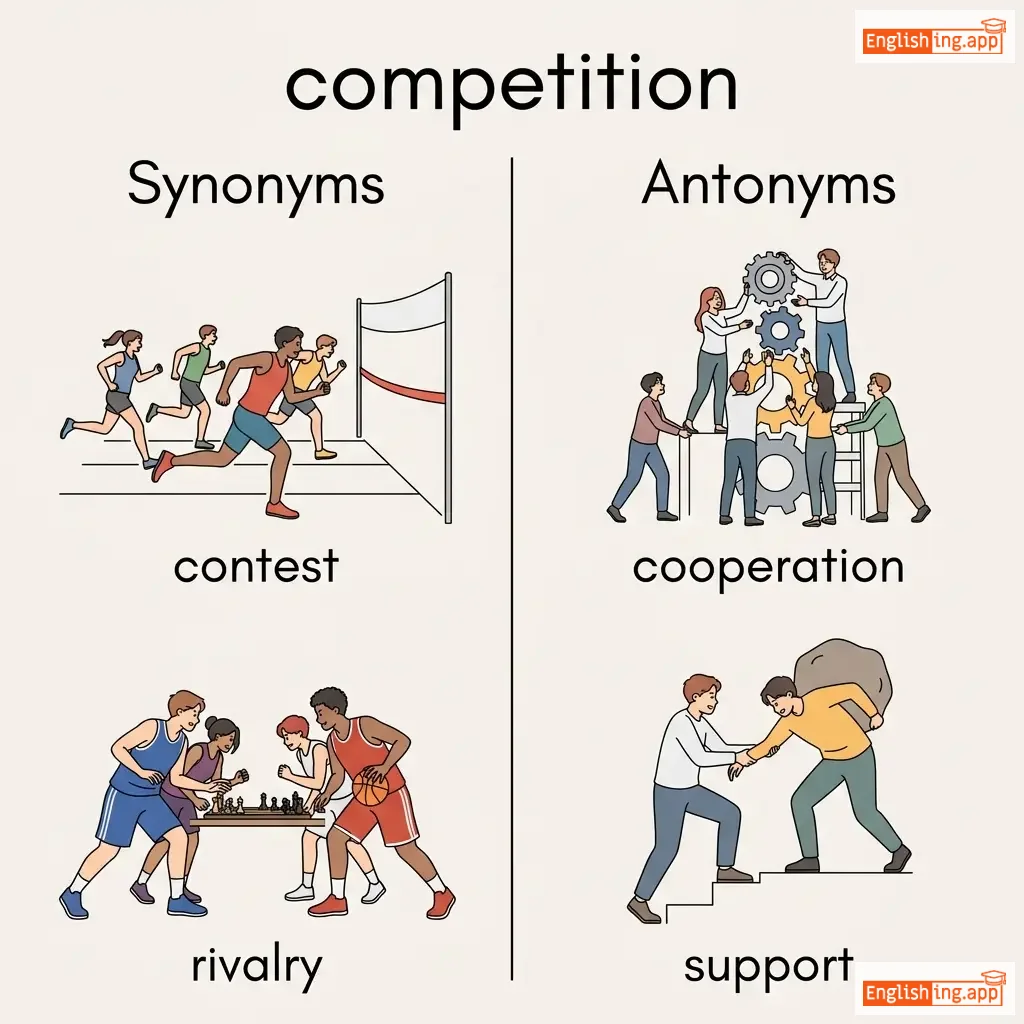
contest, rivalry, challenge, race, opposition
••••••
|
cooperation, support, alliance
••••••
|
intense competition, healthy competition, business competition, market competition
••••••
|
COMPETITION = 競争 - 大学ではいつも競争があります
••••••
|
|
🏆
••••••
|
/kəmˈpetətɪv/
adjective
(kəmˈpɛtɪtɪv)
••••••
|
- •••••• |
競争的
kyousouteki
••••••
|
- •••••• | - •••••• | - •••••• | - •••••• |
relating to or characterized by competition; having a strong desire to win or be more successful
••••••
|
She has a competitive spirit that drives her to excel. |
彼女は競争心にあふれ、それが彼女を卓越に向かわせる。
Kanojo wa kyousoushin ni afure, sore ga kanojo wo taketsu ni mukawaseru.
••••••
|
competitive edge |
an advantage that makes someone more successful
••••••
|
競争優位
kyousou yuu-i
••••••
|
ambitious, rivalrous, aggressive, contesting
••••••
|
uncompetitive, passive
••••••
|
competitive market, competitive advantage, highly competitive
••••••
|
Competitiveは競争のモードにいることを意味します – 常に勝ちたいと思う、トロフィーのように。
••••••
|
|
⚔️
••••••
|
/kəmˈpɛtɪtər/
noun
(コンペティター)
••••••
|
- •••••• |
競争相手
kyousou aite
••••••
|
- •••••• | - •••••• | - •••••• | - •••••• |
a person, team, or company that competes with others
••••••
|
The company lowered its prices to beat its main competitor. |
その会社は主要な競争相手を打ち負かすために価格を引き下げました。
Sono kaisha wa shuyou na kyousou aite wo uchimakasu tame ni kakaku wo hikisagemashita.
••••••
|
know your competition |
to understand your rivals in order to succeed
••••••
|
競争相手を知っておけ
Kyousou aite wo shitteoke
••••••
|
rival, challenger, opponent, contender, adversary
••••••
|
ally, partner, supporter
••••••
|
main competitor, direct competitor, strong competitor, market competitor
••••••
|
競争相手はあなたと競争する相手、サッカーでの対戦チームのようです。
••••••
|
|
📝
••••••
|
/kəmˈpaɪl/
verb
(コンパイル)
••••••
|
- •••••• |
コンパイルする
konpairu suru
••••••
|
compiled
コンパイルド
••••••
|
compiled
コンパイルド
••••••
|
compiles
コンパイルズ
••••••
|
compiling
コンパイリング
••••••
|
to collect information or material and put it together in a list, report, or book
••••••
|
She compiled the research data into a detailed report.
彼女は調査データを詳細なレポートにコンパイルしました。
••••••
|
彼女は調査データを詳細なレポートにコンパイルしました。
Kanojo wa chōsa dēta o shōsai na repōto ni konpairu shimashita.
••••••
|
compile a list
リストをコンパイルする
••••••
|
to gather and arrange items in a list format
••••••
|
リストをコンパイルする
risuto o konpairu suru
••••••
|
collect, assemble, gather, organize, arrange
••••••
|
scatter, disperse
••••••
|
compile data, compile report, compile information, compile list
••••••
|
Compileは情報を集めて整理すること — まるでコンピュータのコンパイラがデータを一つにまとめるように。
••••••
|
|
😒
••••••
|
/kəmˈpleɪn/
verb
(コンプレイン)
••••••
|
- •••••• |
不平を言う
fuhei o iu
••••••
|
complained
コンプレインド
••••••
|
complained
コンプレインド
••••••
|
complains
コンプレインズ
••••••
|
complaining
コンプレイニング
••••••
|
to express dissatisfaction or annoyance about something
••••••
|
He often complains about the noise in the neighborhood.
彼は近所の騒音についてよく不平を言います。
••••••
|
彼は近所の騒音についてよく不平を言います。
Kare wa kinjo no sōon ni tsuite yoku fuhei o iimasu.
••••••
|
complain bitterly
ひどく不平を言う
••••••
|
to express strong dissatisfaction
••••••
|
ひどく不平を言う
hidoku fuhei o iu
••••••
|
grumble, protest, whine, criticize, object
••••••
|
praise, applaud, compliment
••••••
|
complain about, complain to, constantly complain, complain bitterly
••••••
|
不平を言うと、みんなが‘もう不平を言わないで!’と言う。
••••••
|
|
📄
••••••
|
/kəmˈpleɪnt/
noun
(コンプレイント)
••••••
|
- •••••• |
苦情
kuchou
••••••
|
- •••••• | - •••••• | - •••••• | - •••••• |
a statement that something is wrong or not satisfactory
••••••
|
The manager received a complaint from a customer about poor service.
マネージャーは、顧客からのサービスが悪いという苦情を受け取りました。
••••••
|
マネージャーは、顧客からのサービスが悪いという苦情を受け取りました。
Manejā wa, kokyaku kara no sābisu ga warui to iu kuchō o uketorimashita.
••••••
|
file a complaint
苦情を申し立てる
••••••
|
to officially report dissatisfaction
••••••
|
苦情を申し立てる
Kuchō o mōshitateiru
••••••
|
objection, grievance, criticism, protest, allegation
••••••
|
praise, compliment
••••••
|
make a complaint, file a complaint, customer complaint, formal complaint
••••••
|
COMPLAINT - 苦情は正式に申し立てるものです。
••••••
|
|
➕
••••••
|
/ˈkɒmplɪmənt/
noun/verb
(コンプリメント)
••••••
|

|
補完
hokan
••••••
|
complemented
コンプリメントした
••••••
|
complemented
コンプリメントした
••••••
|
complements
コンプリメントする
••••••
|
complementing
コンプリメントしている
••••••
|
something that completes or goes well with something; to add something that enhances or improves
••••••
|
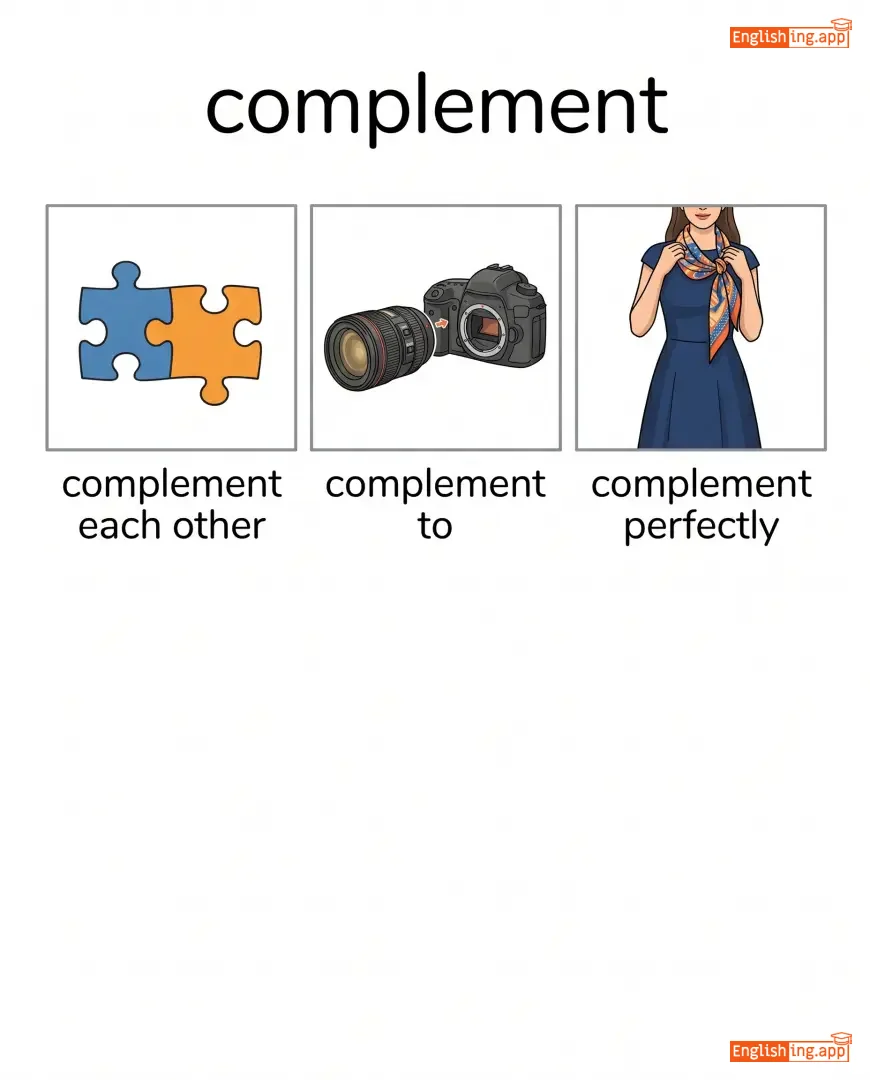
The scarf complements her outfit perfectly.
スカーフは彼女の服装を完璧に補完します。
••••••
|
スカーフは彼女の服装を完璧に補完します。
Sukafu wa kanojo no fukusou o kanpeki ni hokan shimasu.
••••••
|
perfect complement
完璧な補完
••••••
|
something that completes another thing in the best possible way
••••••
|
完璧な補完
kanpeki na hokan
••••••
|
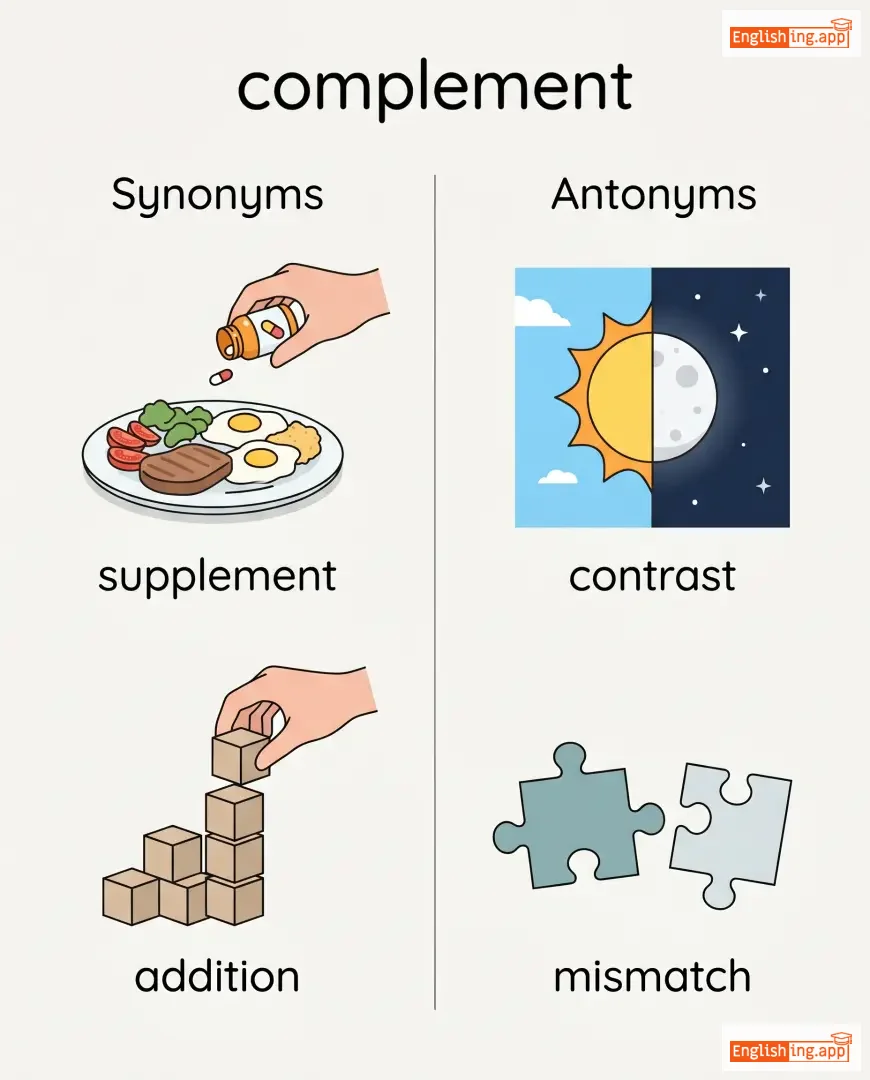
supplement, addition, counterpart, companion, match
••••••
|
contrast, mismatch
••••••
|
complement each other, complement to, complement perfectly, complement system
••••••
|
補完 = 完成 + 追加、他のものをさらに良くするもの
••••••
|
|
✅
••••••
|
/kəmˈpliːt/
verb
(コンプリート)
••••••
|
- •••••• |
完了する
kanryou suru
••••••
|
completed
コンプリーテッド
••••••
|
completed
コンプリーテッド
••••••
|
completes
コンプリーツ
••••••
|
completing
コンプリーティング
••••••
|
to finish making or doing something; to bring something to an end
••••••
|
She managed to complete the project on time.
彼女はプロジェクトを時間通りに完了させました。
••••••
|
彼女はプロジェクトを時間通りに完了させました。
Kanojo wa purojekuto wo jikan doori ni kanryou sasemashita.
••••••
|
complete the circle
サークルを完了する
••••••
|
to bring something to its conclusion or to make something whole
••••••
|
サークルを完了する
saakuru wo kanryou suru
••••••
|
finish, accomplish, achieve, conclude, finalize
••••••
|
incomplete, unfinished, halt
••••••
|
complete a task, complete a form, complete the project, complete successfully
••••••
|
完了するは、何かを終わらせる、サークルを完了するのように。
••••••
|
|
🔄
••••••
|
/kəmˈpliːtli/
adverb
(カムプリートリー)
••••••
|
- •••••• |
完全に
kanzen ni
••••••
|
- •••••• | - •••••• | - •••••• | - •••••• |
totally; in every way possible
••••••
|
The room was completely silent. |
部屋は完全に静かでした。
Heya wa kanzen ni shizuka deshita.
••••••
|
- •••••• | - •••••• | - •••••• |
totally, entirely, fully, utterly
••••••
|
partially, incompletely
••••••
|
completely different, completely silent, completely destroyed, completely wrong
••••••
|
Completelyは完全にという意味で、完全に静かであることです。
••••••
|
|
✅
••••••
|
/kəmˈpliːʃən/
noun
(コンプリション)
••••••
|
- •••••• |
完了
kanryo
••••••
|
- •••••• | - •••••• | - •••••• | - •••••• |
the action or process of finishing something
••••••
|
The completion of the project will take another few weeks. |
プロジェクトの完了にはさらに数週間かかります。
Purojekuto no kanryo ni wa sara ni sūshūkan kakarimasu.
••••••
|
- •••••• | - •••••• | - •••••• |
finalization, conclusion, fulfillment, accomplishment
••••••
|
beginning, initiation
••••••
|
project completion, timely completion, successful completion
••••••
|
Completion = 完了, 何かを完了させる
••••••
|
|
🧩
••••••
|
/ˈkɒm.pleks/
adjective, noun
(コンプレックス)
••••••
|
|
複雑な
fukuzatsuna
••••••
|
- •••••• | - •••••• | - •••••• | - •••••• |
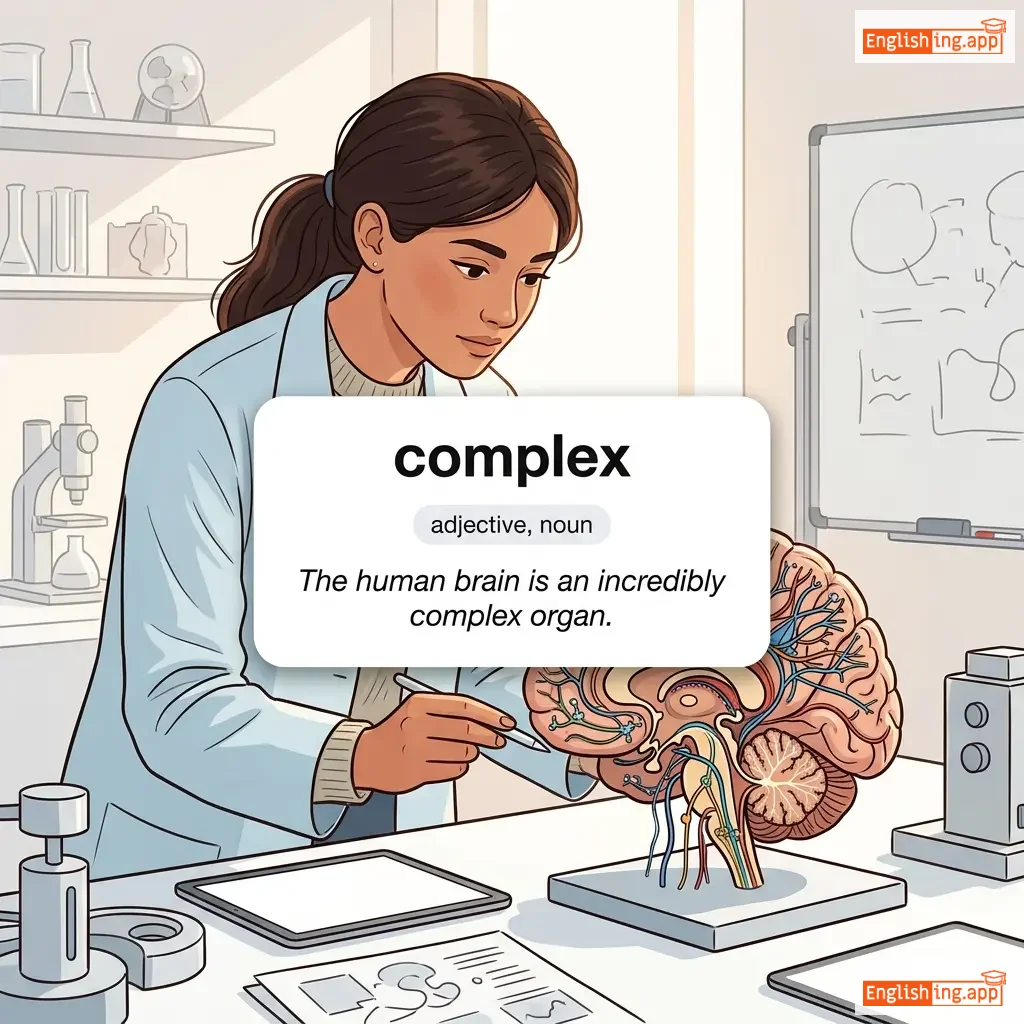
Consisting of many different and connected parts; not easy to understand or analyze.
••••••
|
The human brain is an incredibly complex organ. |
人間の脳は非常に複雑な器官です。
Ningen no nō wa hijō ni fukuzatsuna kikan desu.
••••••
|
Oedipus complex |
A psychoanalytic theory referring to a child's feelings of desire for the opposite-sex parent.
••••••
|
エディプスコンプレックス
Edipusu konpurekkusu
••••••
|
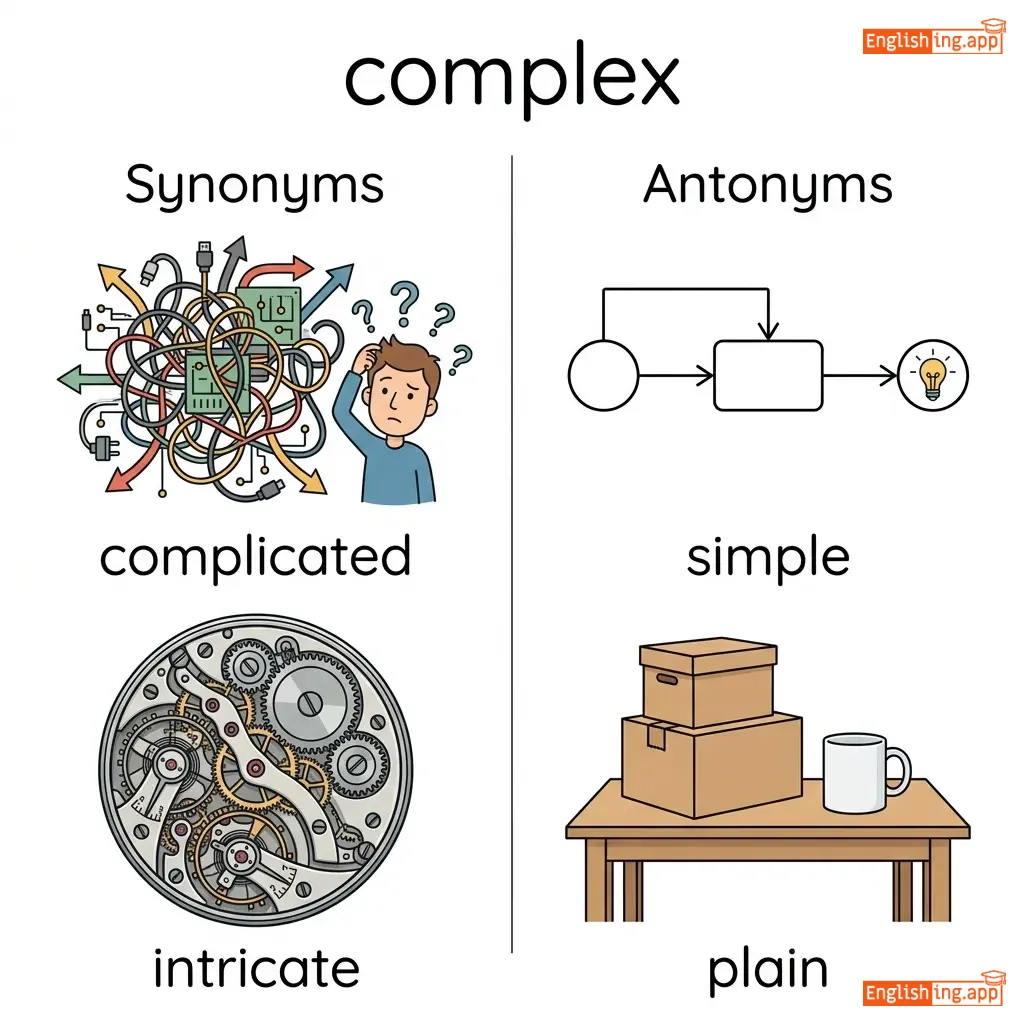
complicated, intricate, elaborate, sophisticated, multifaceted
••••••
|
simple, plain, straightforward
••••••
|
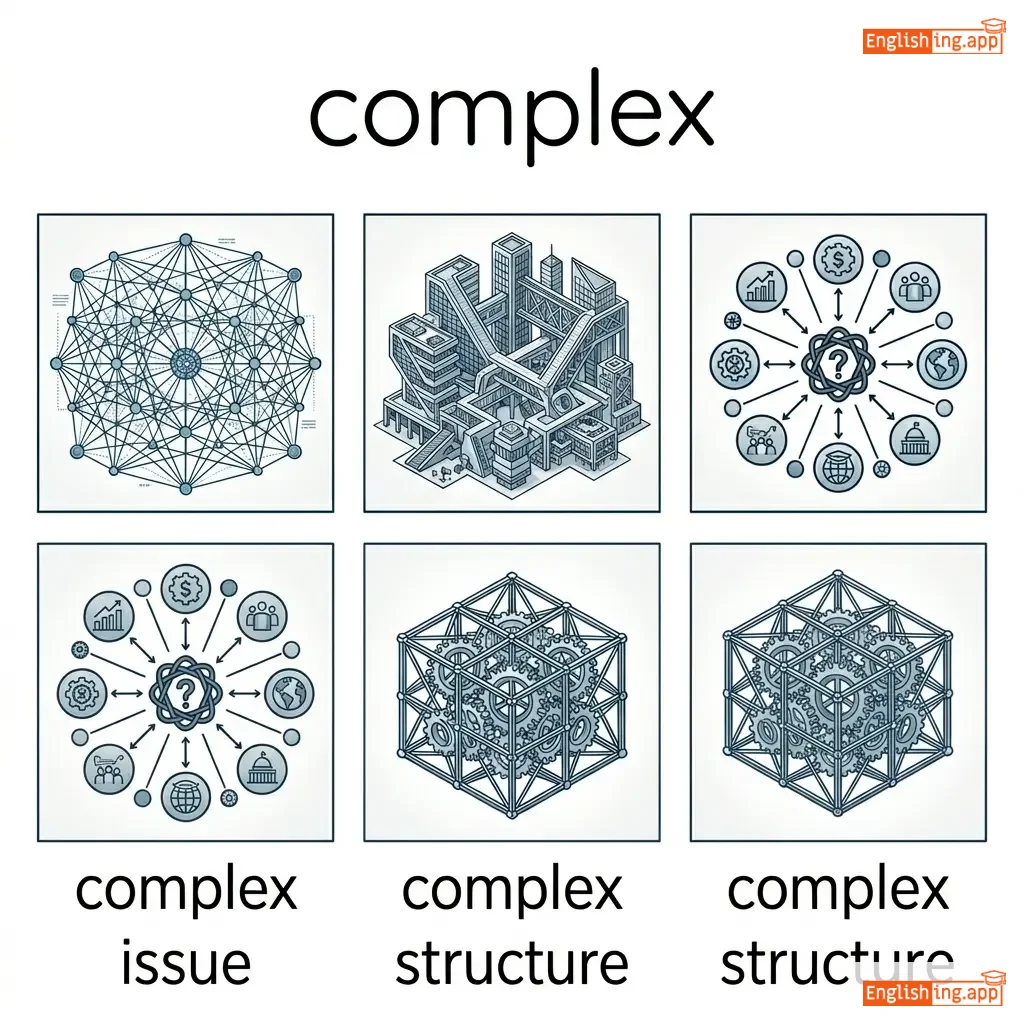
complex system, complex structure, complex issue, highly complex, complex problem
••••••
|
複雑なものはパズル 🧩 のようで、多くのピースが一つの完全な画像を作ります。
••••••
|
|
🧩
••••••
|
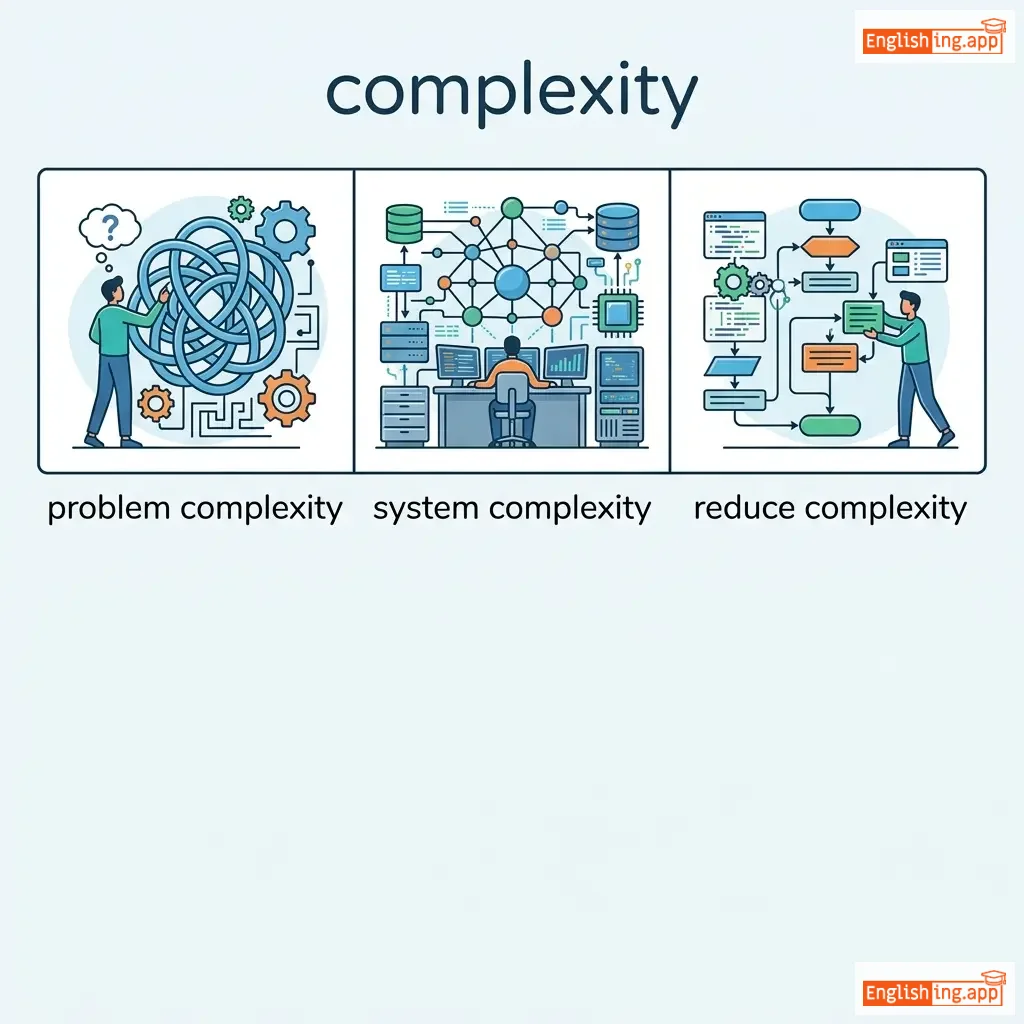
/kəmˈplɛksɪti/
noun
(コンプレキシティ)
••••••
|
|
複雑さ
fukuzatsusa
••••••
|
- •••••• | - •••••• | - •••••• | - •••••• |
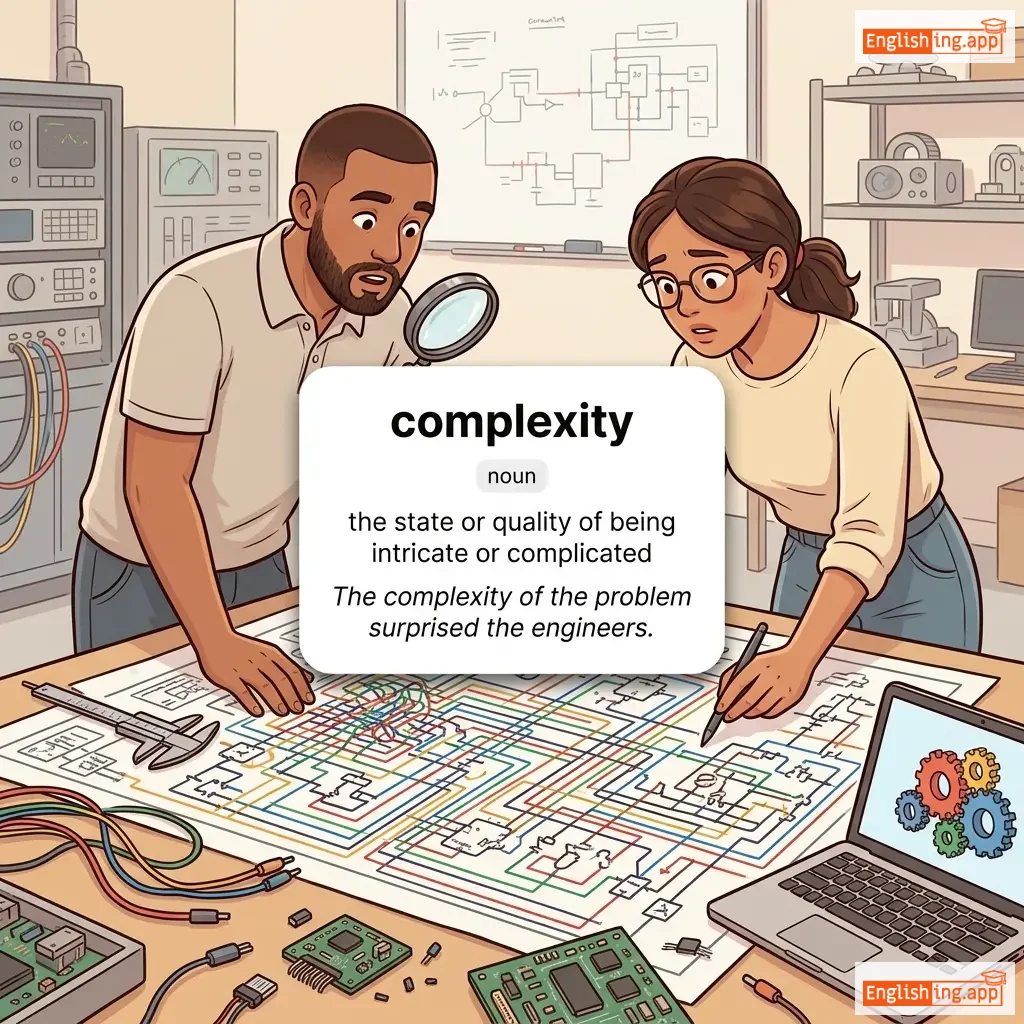
the state or quality of being intricate or complicated
••••••
|
The complexity of the problem surprised the engineers. |
問題の複雑さはエンジニアたちを驚かせました。
Mondai no fukuzatsusa wa enjinia-tachi o odorokasemashita.
••••••
|
reduce complexity |
to make something simpler or easier to understand
••••••
|
複雑さを減らす
fukuzatsusa o herasu
••••••
|
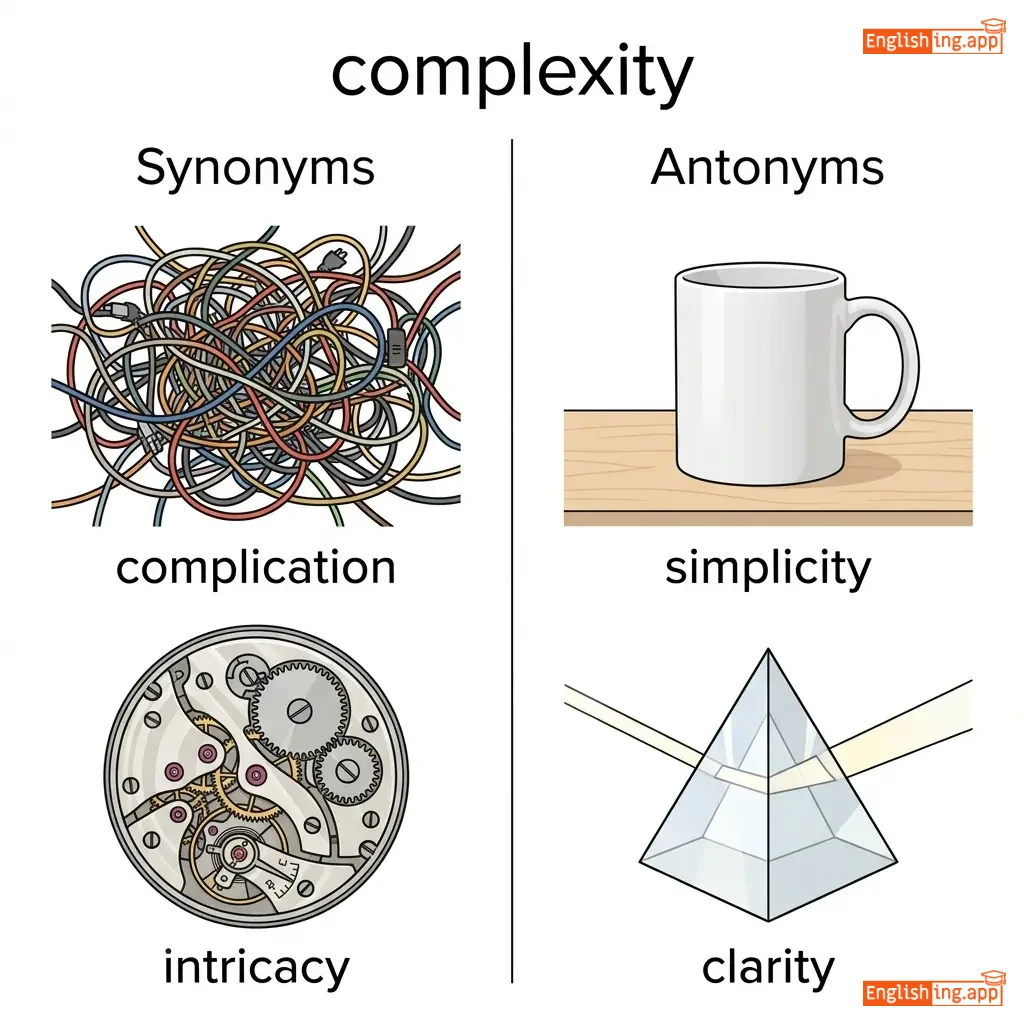
complication, intricacy, difficulty, sophistication, depth
••••••
|
simplicity, clarity, ease
••••••
|
problem complexity, system complexity, reduce complexity, increasing complexity
••••••
|
複雑さは難しさを意味し、複雑なことを簡単にするのが目的です。
••••••
|
|
✅
••••••
|
/kəmˈplaɪəns/
noun
(コンプライアンス)
••••••
|
|
コンプライアンス
konpuraiansu
••••••
|
- •••••• | - •••••• | - •••••• | - •••••• |
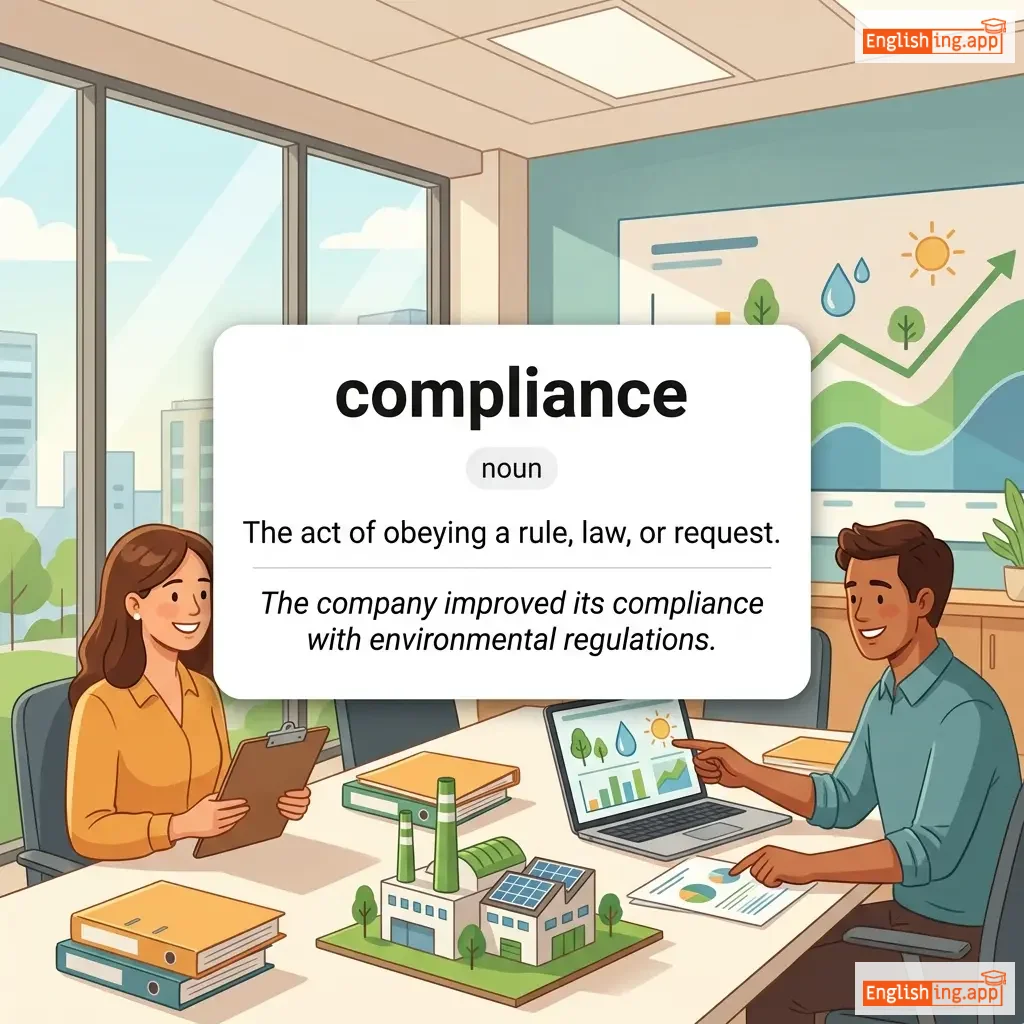
The act of obeying a rule, law, or request.
••••••
|
The company improved its compliance with environmental regulations. |
企業は環境規制へのコンプライアンスを改善しました。
Kigyou wa kankyō kisei e no konpuraiansu o kaizen shimashita.
••••••
|
in compliance with |
Acting according to rules, laws, or standards.
••••••
|
規則に従う
kisoku ni shitagau
••••••
|
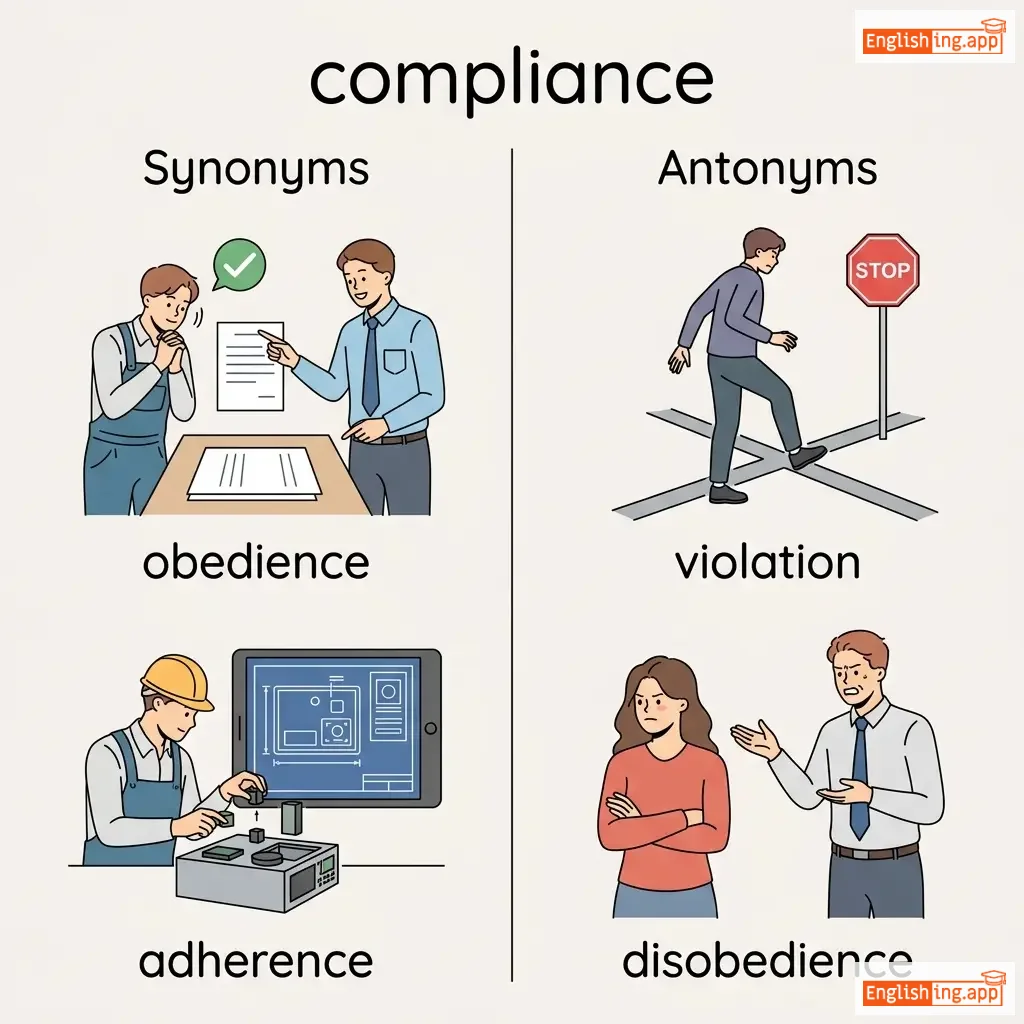
obedience, adherence, conformity, observance
••••••
|
violation, disobedience, defiance
••••••
|
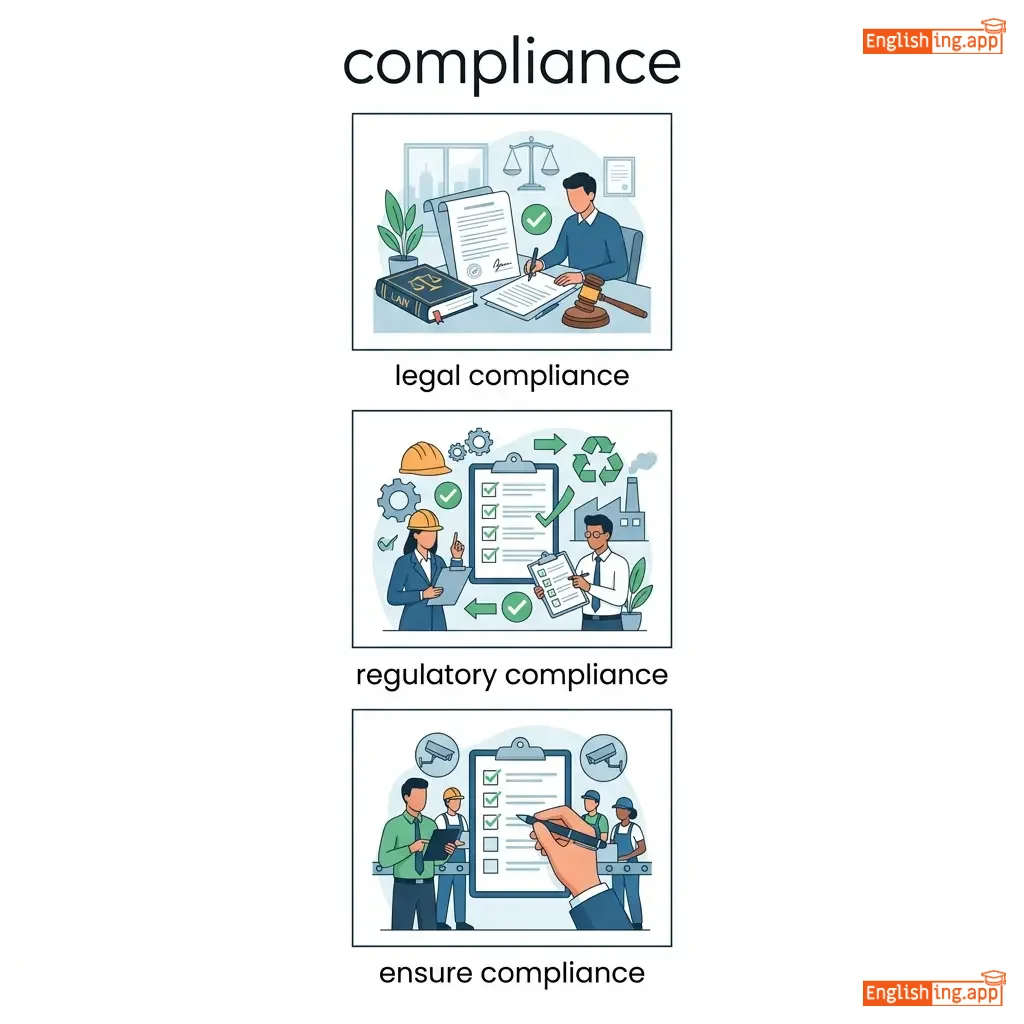
legal compliance, regulatory compliance, ensure compliance, compliance check
••••••
|
コンプライアンスはルールに従うこと ✅
••••••
|
|
🔀
••••••
|
/ˈkɒm.plɪ.keɪt/
verb
(コンプリケイト)
••••••
|
- •••••• |
複雑にする
fukuzatsu ni suru
••••••
|
complicated
コンプリケイテッド
••••••
|
complicated
コンプリケイテッド
••••••
|
complicates
コンプリケイツ
••••••
|
complicating
コンプリケイティング
••••••
|
To make something more difficult or confusing.
••••••
|
The new rules will only complicate the process.
新しいルールはプロセスをさらに複雑にするだけです。
••••••
|
新しいルールはプロセスをさらに複雑にするだけです。
Atarashī rūru wa purosesu o sara ni fukuzatsu ni suru dake desu.
••••••
|
- •••••• | - •••••• | - •••••• |
confuse, entangle, muddle, perplex
••••••
|
simplify, clarify, ease
••••••
|
complicate matters, complicate life, further complicate, unnecessarily complicate
••••••
|
Complicate は、物事をもっと複雑にすること、まるでパズルのように。
••••••
|
|
🌀
••••••
|
/ˈkɒmplɪˌkeɪtɪd/
adjective
(コンプリケイテッド)
••••••
|
- •••••• |
複雑
fukuzatsu
••••••
|
- •••••• | - •••••• | - •••••• | - •••••• |
consisting of many interconnected parts; difficult to understand
••••••
|
The instructions for the machine are too complicated to follow. |
機械の指示は従うにはあまりにも複雑です。
Kikai no shiji wa shitagau ni wa amari ni mo fukuzatsu desu.
••••••
|
make things complicated |
to make something unnecessarily difficult
••••••
|
物事を複雑にする
monogoto o fukuzatsu ni suru
••••••
|
complex, difficult, intricate, involved, confusing
••••••
|
simple, easy, clear
••••••
|
complicated process, complicated situation, complicated issue, complicated relationship
••••••
|
複雑 = 難しい、数学の問題のように複雑です。
••••••
|
|
⚠️
••••••
|
/ˌkɒmplɪˈkeɪʃən/
noun
(kompuri-ke-shon)
••••••
|
- •••••• |
合併症
gōheishō
••••••
|
- •••••• | - •••••• | - •••••• | - •••••• |
A problem or difficulty that makes a situation harder to deal with.
••••••
|
His illness led to serious complications after surgery. |
彼の病気は手術後に深刻な合併症を引き起こしました。
Kare no byōki wa shujutsugo ni shinkoku na gōheishō o hikiokoshimashita.
••••••
|
- •••••• | - •••••• | - •••••• |
difficulty, obstacle, setback, issue, hindrance
••••••
|
solution, advantage, benefit
••••••
|
medical complication, unexpected complication, serious complication, complication arises
••••••
|
合併症 = 物事を複雑にする問題。
••••••
|
|
✅
••••••
|
/kəmˈplaɪ/
verb
(コンプライ)
••••••
|
- •••••• |
従う
shitagau
••••••
|
complied
コンプライド
••••••
|
complied
コンプライド
••••••
|
complies
コンプライズ
••••••
|
complying
コンプライイング
••••••
|
to act in accordance with a rule, request, or law
••••••
|
All companies must comply with safety regulations.
すべての企業は安全規則を遵守しなければなりません。
••••••
|
すべての企業は安全規則を遵守しなければなりません。
Subete no kigyō wa anzen kisoku o junshu shinakereba narimasen.
••••••
|
comply with orders
命令に従う
••••••
|
to follow instructions or commands
••••••
|
命令に従う
Meirei ni shitagau
••••••
|
obey, follow, conform, observe, respect
••••••
|
disobey, resist, ignore
••••••
|
comply with law, comply with order, comply with standard, comply fully
••••••
|
従うは、指示に従うことです。
••••••
|
|
⚙️
••••••
|
/kəmˈpoʊnənt/
noun
(コンポーネント)
••••••
|
- •••••• |
コンポーネント
komponento
••••••
|
- •••••• | - •••••• | - •••••• | - •••••• |
a part or element of a larger whole, especially a machine or system
••••••
|
The engine is the most important component of the car. |
エンジンは車の最も重要なコンポーネントです。
Enjin wa kuruma no mottomo jūyōna komponento desu.
••••••
|
- •••••• | - •••••• | - •••••• |
part, element, piece, unit, section
••••••
|
whole, entirety, totality
••••••
|
key component, essential component, electronic component, major component
••••••
|
コンポーネントはシステムや機械の一部として必要なパーツです。
••••••
|
|
✍️
••••••
|
/kəmˈpəʊz/
verb
(コンポーズ)
••••••
|

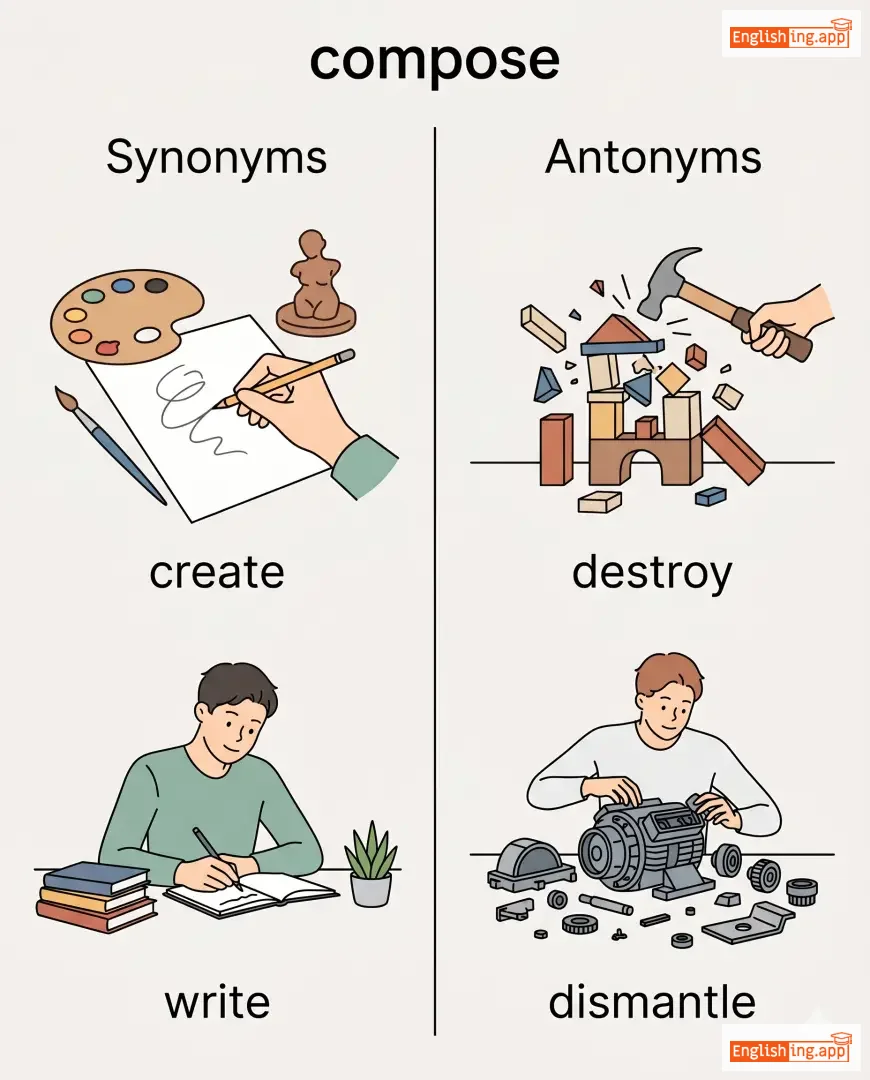
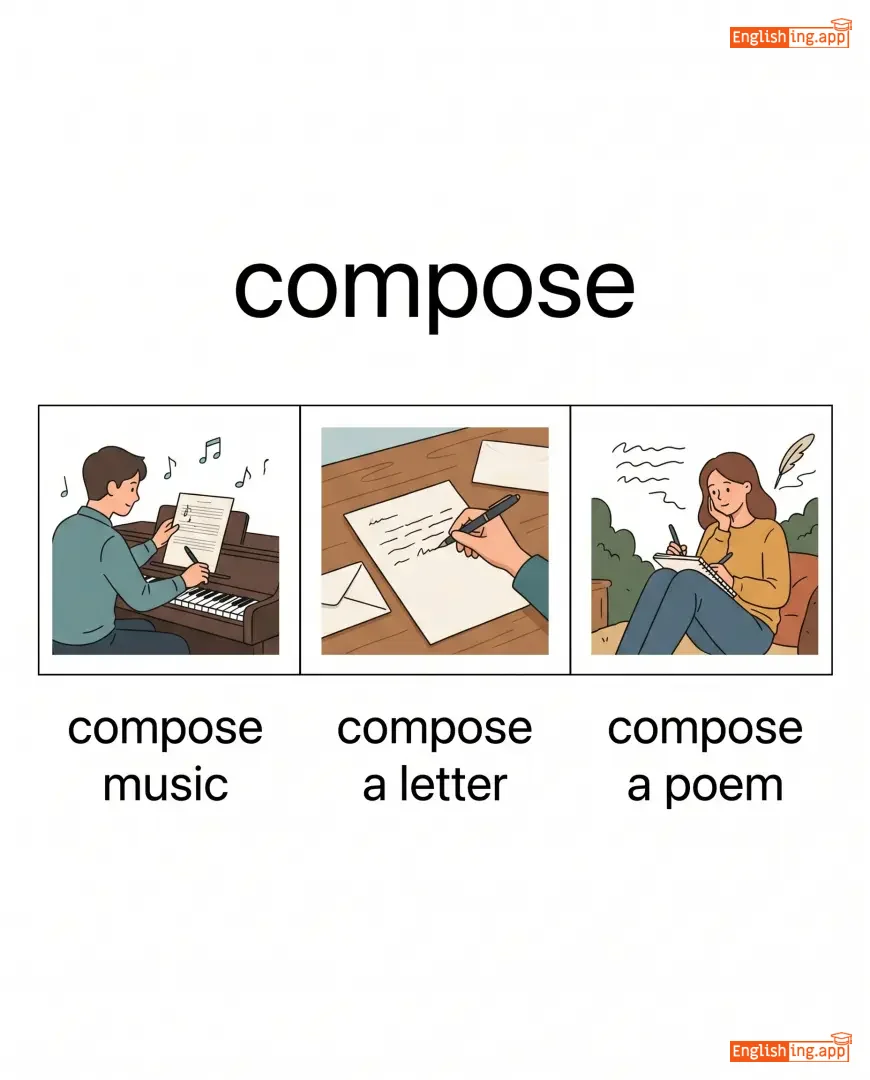
|
作曲する
sakkyoku suru
••••••
|
composed
コンポーズド
••••••
|
composed
コンポーズド
••••••
|
composes
コンポーズズ
••••••
|
composing
コンポージング
••••••
|
to create or write something, especially music, poetry, or a letter
••••••
|
She likes to compose songs in her free time.
彼女は自由時間に曲を作るのが好きです。
••••••
|
彼女は自由時間に曲を作るのが好きです。
Kanojo wa jiyū jikan ni kyoku o tsukuru no ga suki desu.
••••••
|
compose oneself
自分を落ち着かせる
••••••
|
to calm down and control your emotions
••••••
|
冷静になる
reisei ni naru
••••••
|
create, write, craft, construct, devise
••••••
|
destroy, dismantle, ruin
••••••
|
compose music, compose a letter, compose a poem, compose oneself
••••••
|
作曲することは、コンピューターでテキストを書くようなものです。
••••••
|
|
🎶
••••••
|
/kəmˈpəʊzə(r)/
noun
(作曲家)
••••••
|
- •••••• |
作曲家
sakkyokuka
••••••
|
- •••••• | - •••••• | - •••••• | - •••••• |
a person who writes music, especially classical music
••••••
|
The composer is working on a new symphony.
作曲家は新しい交響曲に取り組んでいます。
••••••
|
作曲家は新しい交響曲に取り組んでいます。
Sakkyokuka wa atarashii koukyoukyoku ni torikundeimasu.
••••••
|
- •••••• | - •••••• | - •••••• |
musician, songwriter, arranger, conductor
••••••
|
listener, audience
••••••
|
music composer, famous composer, classical composer
••••••
|
作曲家 = 音楽を作る人
••••••
|
|
🎶
••••••
|
/ˌkɒmpəˈzɪʃən/
noun
(コンポジション)
••••••
|
- •••••• |
作曲
sakkyoku
••••••
|
- •••••• | - •••••• | - •••••• | - •••••• |
the act of creating a piece of writing, music, or art; the way parts are arranged
••••••
|
Her composition won first prize in the contest. |
彼女の作曲はコンテストで第一位を獲得しました。
Kanojo no sakkyoku wa kontesuto de dai ichi-i o kakutoku shimashita.
••••••
|
- •••••• | - •••••• | - •••••• |
essay, creation, arrangement, piece, structure
••••••
|
disorder, disorganization
••••••
|
musical composition, written composition, composition skills, composition contest
••••••
|
作曲は創造することを意味します。試験のために作曲を書いて覚えてください。
••••••
|
|
⚗️
••••••
|
/ˈkɑːmpaʊnd/
noun
(コンパウンド)
••••••
|
- •••••• |
化合物 / 閉鎖されたエリア
kagōbutsu / heisa sareta eria
••••••
|
- •••••• | - •••••• | - •••••• | - •••••• |
a thing that is composed of two or more separate elements; an enclosed area with buildings
••••••
|
The scientist studied the chemical compound in the lab.
科学者はラボで化学化合物を研究しました。
••••••
|
科学者はラボで化学化合物を研究しました。
Kagakusha wa rabo de kagaku kagōbutsu o kenkyū shimashita.
••••••
|
compound interest
複利
••••••
|
interest calculated on both the initial principal and the accumulated interest
••••••
|
複利
fukuri
••••••
|
mixture, combination, blend, complex
••••••
|
element, simple
••••••
|
chemical compound, compound interest, compound sentence
••••••
|
化合物は組み合わせ、複利は増えていく
••••••
|
|
🧠
••••••
|
/ˌkɒmprɪˈhɛnd/
verb
(kompurihendo)
••••••
|
- •••••• |
理解する
rikai suru
••••••
|
comprehended
kompurihendoddo
••••••
|
comprehended
kompurihendoddo
••••••
|
comprehends
kompurihendosu
••••••
|
comprehending
kompurihendingu
••••••
|
to understand or grasp the meaning of something
••••••
|
It is difficult to comprehend the scale of the disaster.
災害の規模を理解することは難しい。
••••••
|
災害の規模を理解することは難しい。
Saigai no kibo o rikai suru koto wa muzukashī.
••••••
|
beyond comprehension
理解を超えて
••••••
|
something too difficult to understand
••••••
|
理解を超えて
rikai o koete
••••••
|
understand, grasp, perceive, fathom, apprehend
••••••
|
misunderstand, confuse
••••••
|
comprehend fully, difficult to comprehend, unable to comprehend
••••••
|
Comprehendは理解すること、例えばあなたが難しい数学の問題を理解するために頭を使うとき。
••••••
|
|
📚
••••••
|
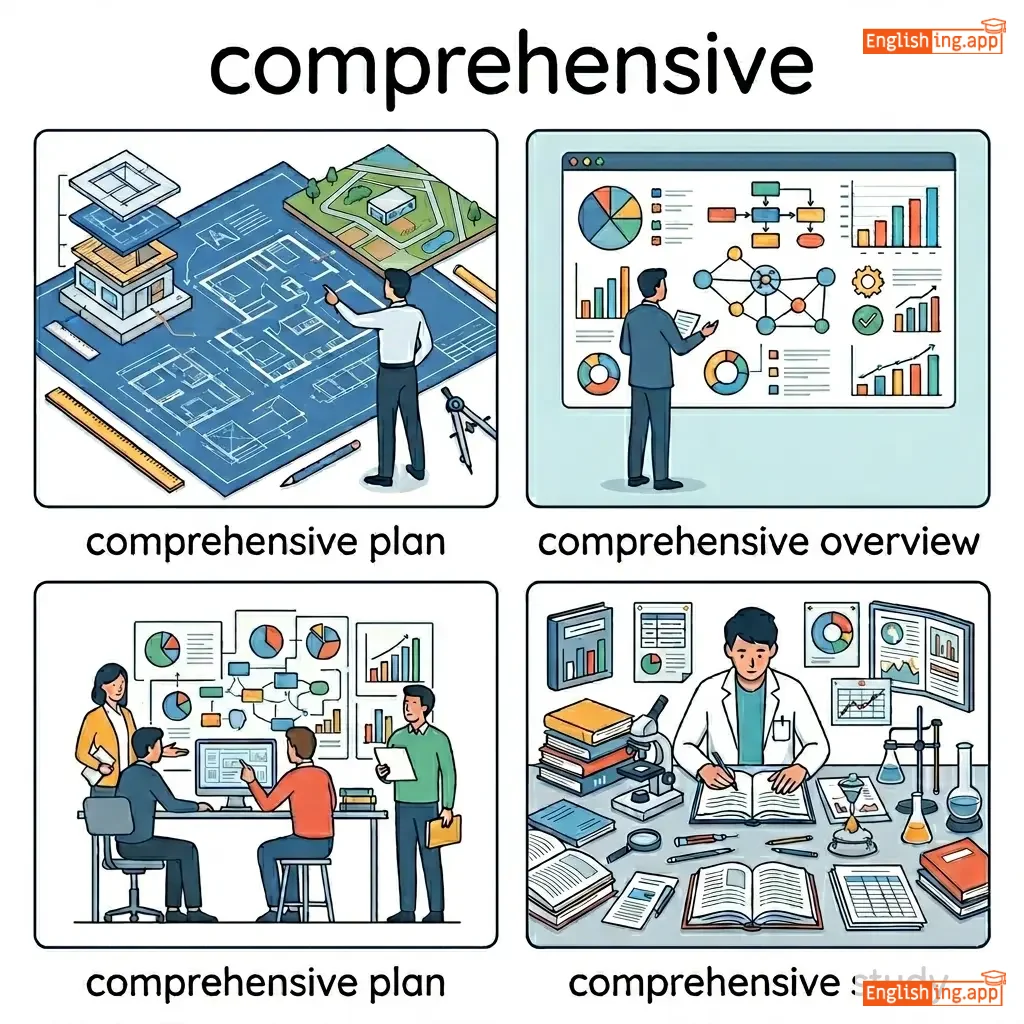
/ˌkɒm.prɪˈhen.sɪv/
adjective
(コンプリヘンシブ)
••••••
|
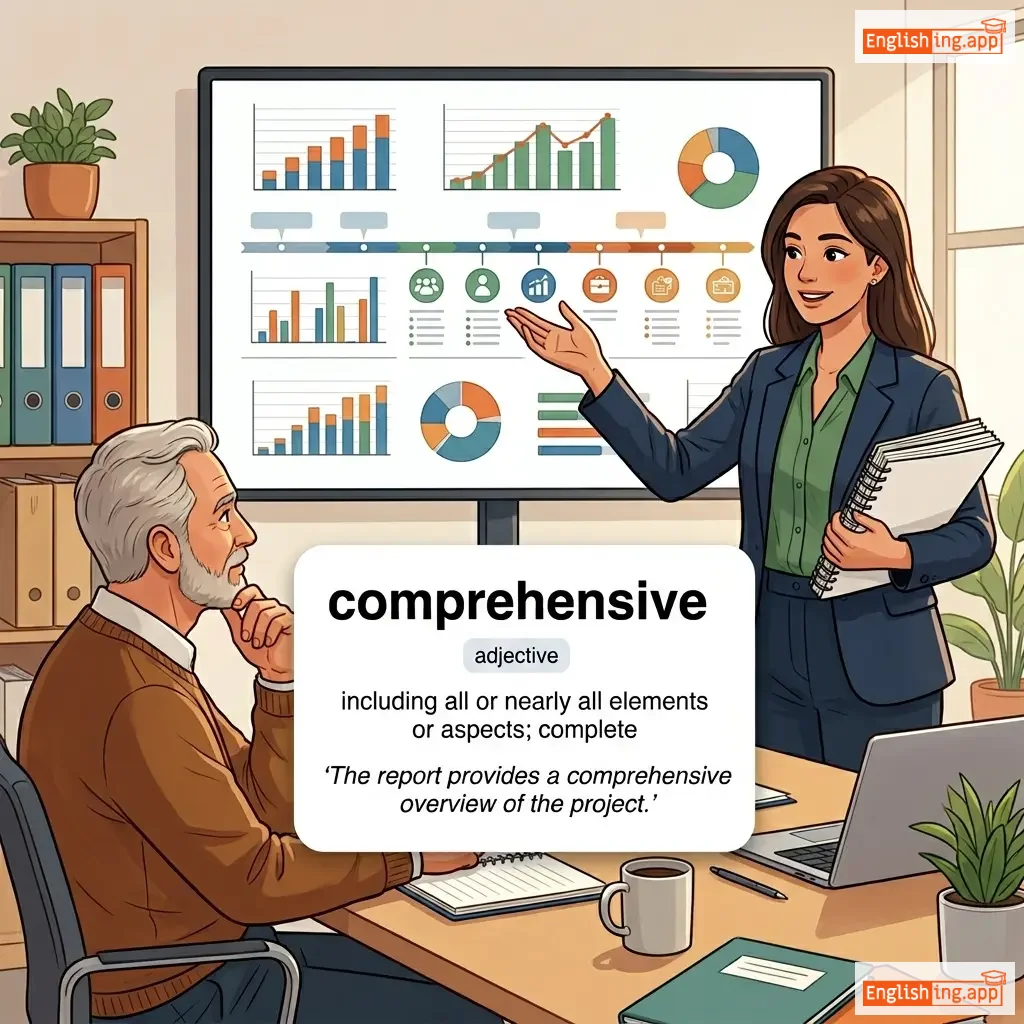
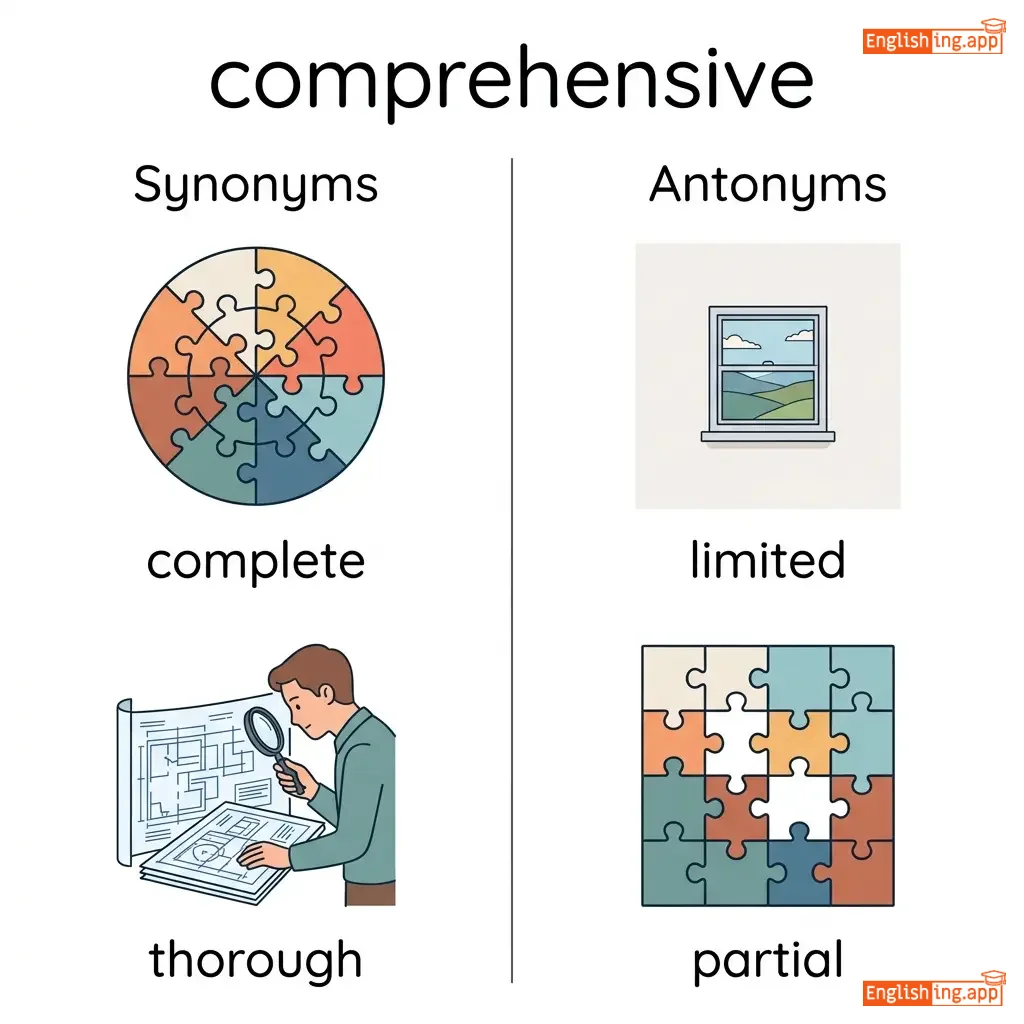
|
包括的な; 完全な; 総合的な
hōkatsuteki na; kanzen na; sōgōteki na
••••••
|
- •••••• | - •••••• | - •••••• | - •••••• |
complete and including everything that is necessary; covering a wide range of topics
••••••
|
The report provides a comprehensive analysis of the market trends. |
報告書は市場動向の包括的な分析を提供します。
hōkokusho wa shijō dōkō no hōkatsuteki na bunseki o teikyō shimasu.
••••••
|
- •••••• | - •••••• | - •••••• |
complete, thorough, extensive, all-inclusive
••••••
|
partial, incomplete, limited, narrow
••••••
|
comprehensive study, comprehensive report, comprehensive coverage
••••••
|
完全に理解するには、すべてをカバーすることが大切です。
••••••
|
|
🧩
••••••
|
/kəmˈpraɪz/
verb
(kompraizu)
••••••
|
- •••••• |
構成する
kōsei suru
••••••
|
comprised
kompraizudo
••••••
|
comprised
kompraizudo
••••••
|
comprises
kompraizesu
••••••
|
comprising
kompraizingu
••••••
|
To consist of or be made up of something.
••••••
|
The committee comprises five members.
委員会は五人のメンバーで構成されています。
••••••
|
委員会は五人のメンバーで構成されています。
Iinkai wa gonin no menbā de kōsei sarete imasu.
••••••
|
- •••••• | - •••••• | - •••••• |
consist of, include, contain, encompass
••••••
|
exclude, lack
••••••
|
comprise of, committee comprises, group comprises, comprises elements
••••••
|
委員会の構成のように、comprise は何かで作られている
••••••
|
|
⚖️
••••••
|
/ˈkɒmprəmaɪz/
noun, verb
(コンプロマイズ)
••••••
|

|
妥協
dakyō
••••••
|
compromised
コンプロマイズド
••••••
|
compromised
コンプロマイズド
••••••
|
compromises
コンプロマイズズ
••••••
|
compromising
コンプロマイジング
••••••
|
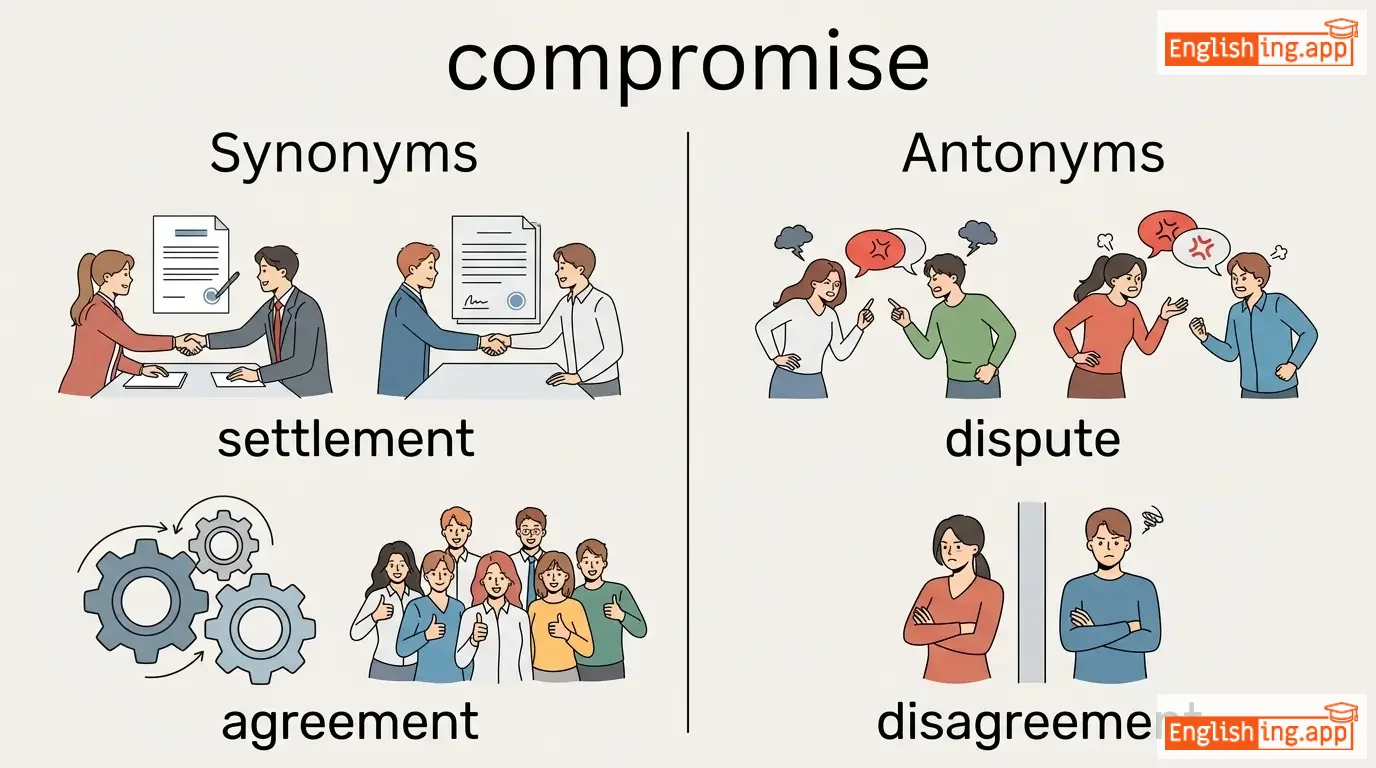
A settlement of differences in which each side makes concessions; or to weaken or put at risk.
••••••
|
They reached a compromise after long negotiations.
彼らは長い交渉の後で妥協に達しました。
••••••
|
彼らは長い交渉の後で妥協に達しました。
Karera wa nagai kōshō no ato de dakyō ni tasshimashita.
••••••
|
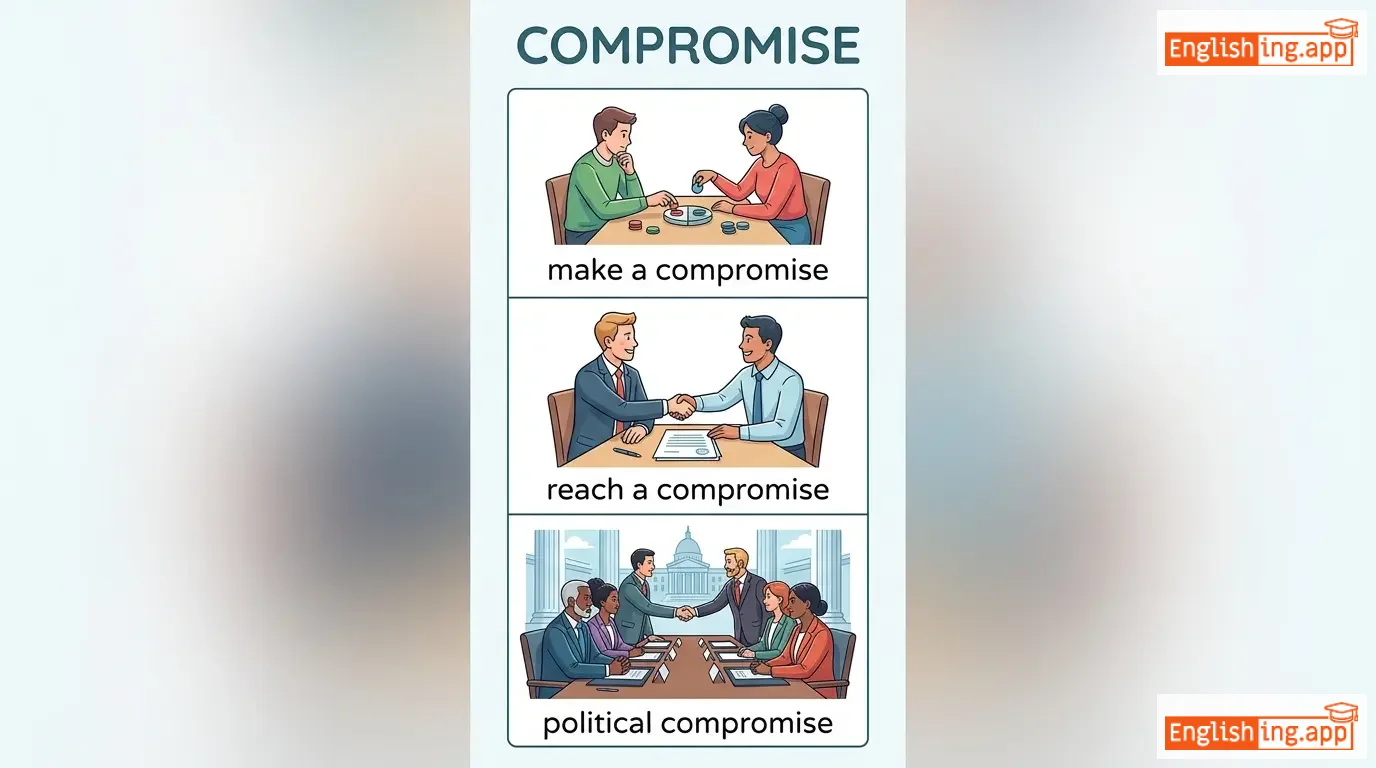
reach a compromise
妥協する
••••••
|
To come to an agreement by mutual concession.
••••••
|
妥協する
dakyō suru
••••••
|
settlement, agreement, deal, concession
••••••
|
dispute, disagreement
••••••
|
make a compromise, reach a compromise, political compromise, compromise solution
••••••
|
妥協 — みんなが譲ることで成立する
••••••
|
|
📘
••••••
|
/kəmˈpʌlsəri/
adjective
(コンパルソリー)
••••••
|
- •••••• |
義務的
gimuteki
••••••
|
- •••••• | - •••••• | - •••••• | - •••••• |
Required by law or a rule; obligatory.
••••••
|
Wearing seat belts is compulsory in most countries. |
ほとんどの国でシートベルトを着用することは義務的です。
Hotondo no kuni de shīto beruto o chakuyō suru koto wa gimuteki desu.
••••••
|
- •••••• | - •••••• | - •••••• |
mandatory, required, obligatory, necessary
••••••
|
optional, voluntary, discretionary
••••••
|
compulsory education, compulsory subject, compulsory service
••••••
|
Compulsory = 義務的, 学校で義務的な科目のように。
••••••
|
|
💻
••••••
|
/kəmˈpjuːt/
verb
(コンピュータ)
••••••
|
- •••••• |
計算する
keisan suru
••••••
|
computed
コンピュータード
••••••
|
computed
コンピュータード
••••••
|
computes
コンピューターズ
••••••
|
computing
コンピューティング
••••••
|
To calculate or determine by using a computer or mathematical methods.
••••••
|
The software can compute the total cost in seconds.
そのソフトウェアは数秒で総コストを計算できます。
••••••
|
そのソフトウェアは数秒で総コストを計算できます。
Sono sofuto wea wa suubyou de sou kosuto wo keisan dekimasu.
••••••
|
compute the odds
確率を計算する
••••••
|
to calculate the probability of an outcome
••••••
|
確率を計算する
kakuritsu wo keisan suru
••••••
|
calculate, reckon, estimate, process, figure out
••••••
|
guess, ignore
••••••
|
compute result, compute data, compute power, compute value
••••••
|
コンピュータで計算する、つまり compute!
••••••
|
|
💻
••••••
|
/kəmˈpjuːtə(r)/
noun
(コンピュータ)
••••••
|
- •••••• |
コンピュータ
konpyu-ta
••••••
|
- •••••• | - •••••• | - •••••• | - •••••• |
an electronic device for storing and processing data
••••••
|
I bought a new computer for my office work.
私はオフィスワークのために新しいコンピュータを購入しました。
••••••
|
私はオフィスワークのために新しいコンピュータを購入しました。
Watashi wa ofisu waaku no tame ni atarashii konpyu-ta o kounyuu shimashita.
••••••
|
- •••••• | - •••••• | - •••••• |
PC, laptop, desktop, machine, device
••••••
|
manual work, paper-based system
••••••
|
personal computer, computer program, computer science, computer system
••••••
|
コンピュータは計算と作業を助けるツールです。
••••••
|
|
🤫
••••••
|
/kənˈsiːl/
verb
(コンシール)
••••••
|
- •••••• |
隠す
kakusu
••••••
|
concealed
コンシールド
••••••
|
concealed
コンシールド
••••••
|
conceals
コンシールズ
••••••
|
concealing
コンシーリング
••••••
|
to hide something or keep it secret
••••••
|
He tried to conceal his disappointment behind a smile.
ヒー トライド トゥ コンシール ヒズ ディサポインメント ビハインド ア スマイル。
••••••
|
彼は微笑みの背後に自分の失望を隠そうとした。
Kare wa bishoumi no haigo ni jibun no shitsubou o kakusou to shita.
••••••
|
conceal the truth
コンシール ザ トゥルース
••••••
|
to hide or withhold the truth from others
••••••
|
真実を隠す
shinjitsu o kakusu
••••••
|
hide, cover, disguise, mask, secrete
••••••
|
reveal, expose, uncover
••••••
|
conceal identity, conceal weapon, conceal fact, conceal smile
••••••
|
隠すのは秘密を箱に入れるようなもの
••••••
|
|
🙇
••••••
|
/kənˈsiːd/
verb
••••••
|
- •••••• | - •••••• |
conceded
••••••
|
conceded
••••••
|
concedes
••••••
|
conceding
••••••
|
to admit something is true or valid, often reluctantly
••••••
|
She finally conceded that she was wrong. |
- •••••• |
concede defeat |
to admit that you have lost
••••••
|
- •••••• |
admit, acknowledge, grant, allow, yield
••••••
|
deny, refuse, reject
••••••
|
concede defeat, concede point, concede ground, concede goal
••••••
|
No •••••• |
|
💡
••••••
|
/kənˈsiːv/
verb
(コンシーブ)
••••••
|
- •••••• |
思いつく, 妊娠する
omoitsuku, ninshin suru
••••••
|
conceived
コンシーヴド
••••••
|
conceived
コンシーヴド
••••••
|
conceives
コンシーヴス
••••••
|
conceiving
コンシーヴィング
••••••
|
to form or imagine an idea in the mind; to become pregnant
••••••
|
It is hard to conceive how such an idea could succeed.
そのようなアイデアが成功する方法を考えるのは難しい。
••••••
|
そのようなアイデアが成功する方法を考えるのは難しい。
Sono you na aidea ga seikou suru houhou wo kangaeru no wa muzukashii.
••••••
|
conceive a plan
計画を思いつく
••••••
|
to think of or develop a plan
••••••
|
計画を思いつく
keikaku wo omoitsuku
••••••
|
imagine, envision, devise, formulate, originate
••••••
|
misunderstand, overlook, neglect
••••••
|
conceive an idea, conceive a plan, conceive child, conceive possibility
••••••
|
conceive というのは、新しい計画を思いつくことです。
••••••
|
|
🎯
••••••
|
/ˈkɒnsəntreɪt/
verb
(コンセントレイト)
••••••
|
- •••••• |
集中する
shūchū suru
••••••
|
concentrated
コンセントレイテッド
••••••
|
concentrated
コンセントレイテッド
••••••
|
concentrates
コンセントレイツ
••••••
|
concentrating
コンセントレイティング
••••••
|
to focus all one's attention or mental effort on a particular object or activity
••••••
|
She tried to concentrate on her studies despite the noise.
騒音にもかかわらず、彼女は勉強に集中しようとした。
••••••
|
騒音にもかかわらず、彼女は勉強に集中しようとした。
sōon ni mo kakawarazu, kanojo wa benkyō ni shūchū shiyō to shita.
••••••
|
concentrate on
集中する
••••••
|
to give your full attention to something
••••••
|
集中する
shūchū suru
••••••
|
focus, direct, center, apply, dedicate
••••••
|
distract, neglect
••••••
|
concentrate on work, concentrate efforts, concentrate deeply, concentrate hard
••••••
|
成功するには集中することが大切です。🎯
••••••
|
|
🎯
••••••
|
/ˌkɒnsnˈtreɪʃən/
noun
(コンセントレーション)
••••••
|

|
集中力
shūchū-ryoku
••••••
|
- •••••• | - •••••• | - •••••• | - •••••• |
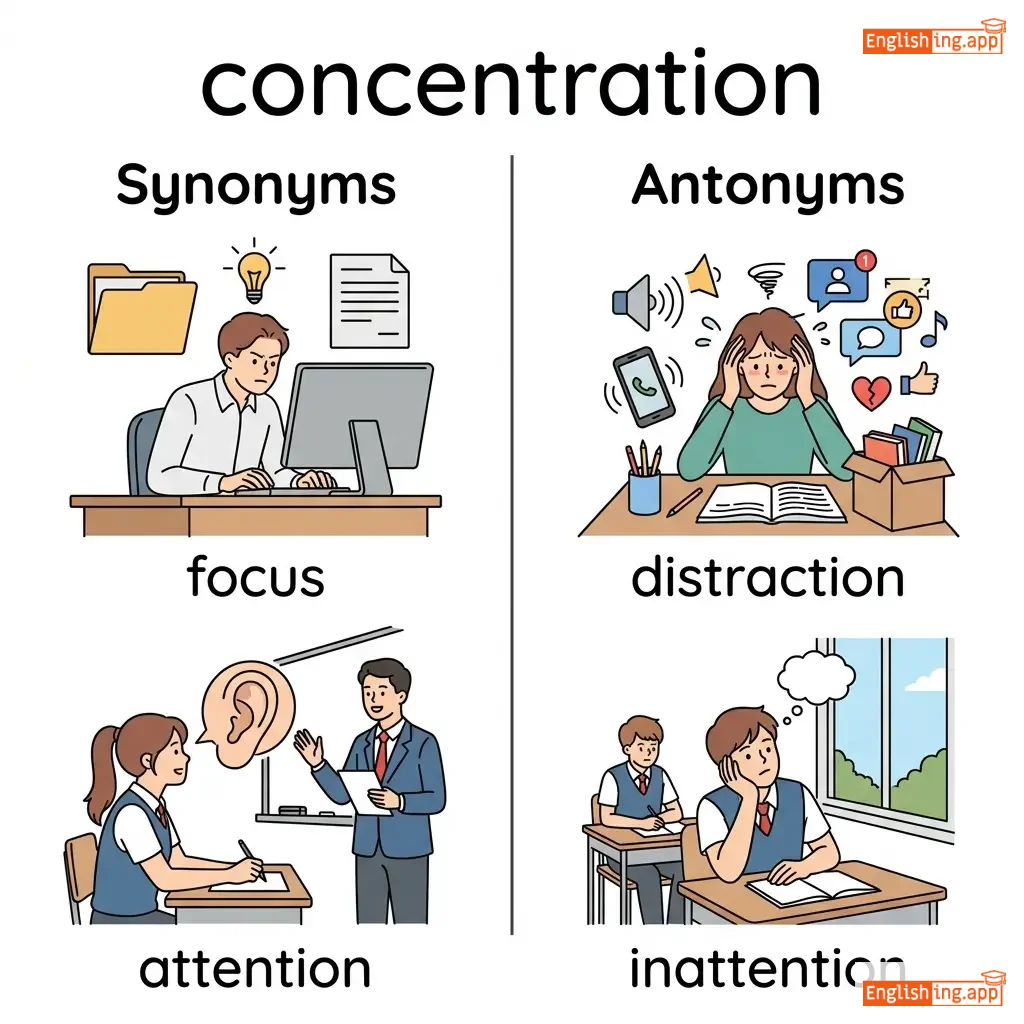
the act of focusing one's attention or mental effort on something
••••••
|
Good concentration is essential for success in exams.
試験に成功するためには、良い集中力が不可欠です。
••••••
|
試験に成功するためには、良い集中力が不可欠です。
Shiken ni seikou suru tame ni wa, yoi shūchū-ryoku ga fukaketsu desu.
••••••
|
lose concentration
集中力を失う
••••••
|
to be distracted and unable to focus
••••••
|
集中力を失う
shūchū-ryoku o ushinau
••••••
|
focus, attention, absorption, mindfulness
••••••
|
distraction, inattention
••••••
|
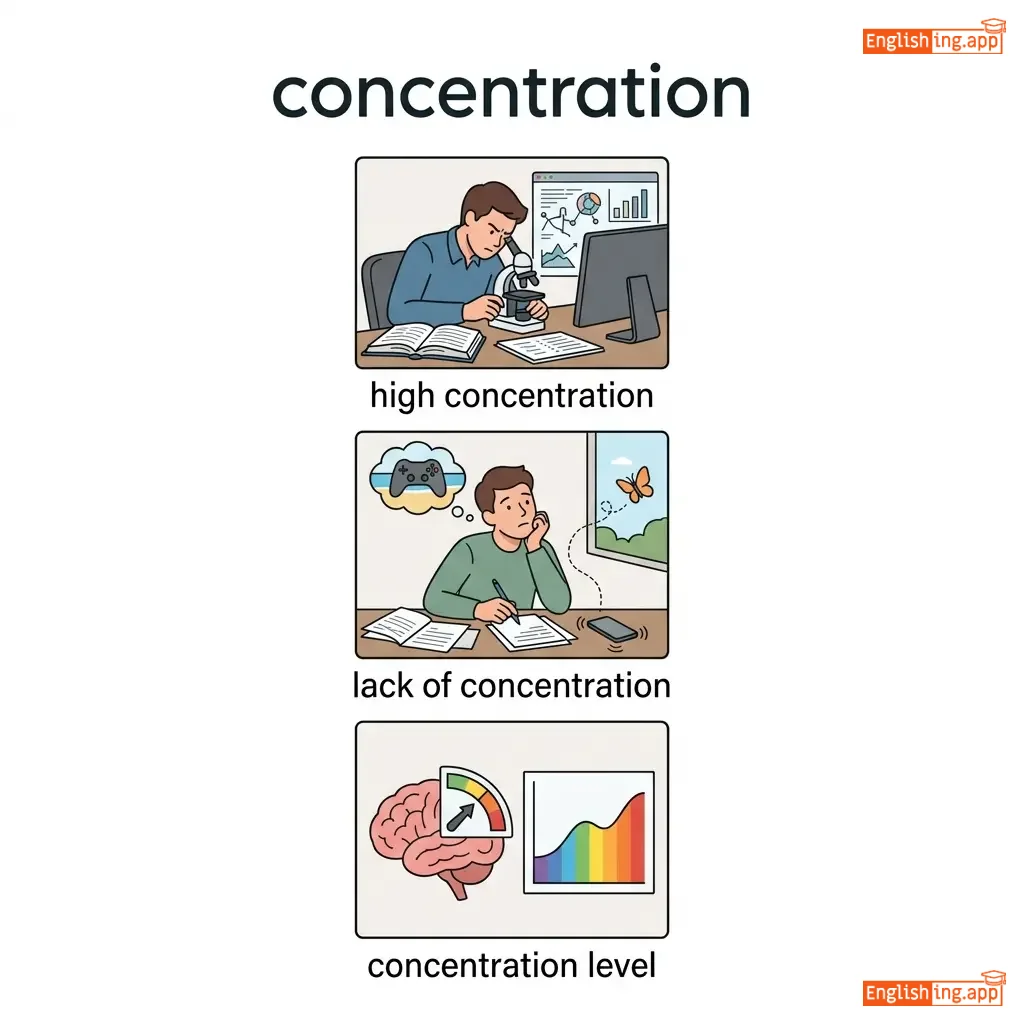
high concentration, lack of concentration, concentration level, concentration power
••••••
|
集中力は試験で目標に向かって集中すること。
••••••
|
|
💡
••••••
|
/ˈkɑn.sept/
noun
(コンセプト)
••••••
|
|
概念; 一般的な概念
gainenn, ippanteki na gainenn
••••••
|
- •••••• | - •••••• | - •••••• | - •••••• |
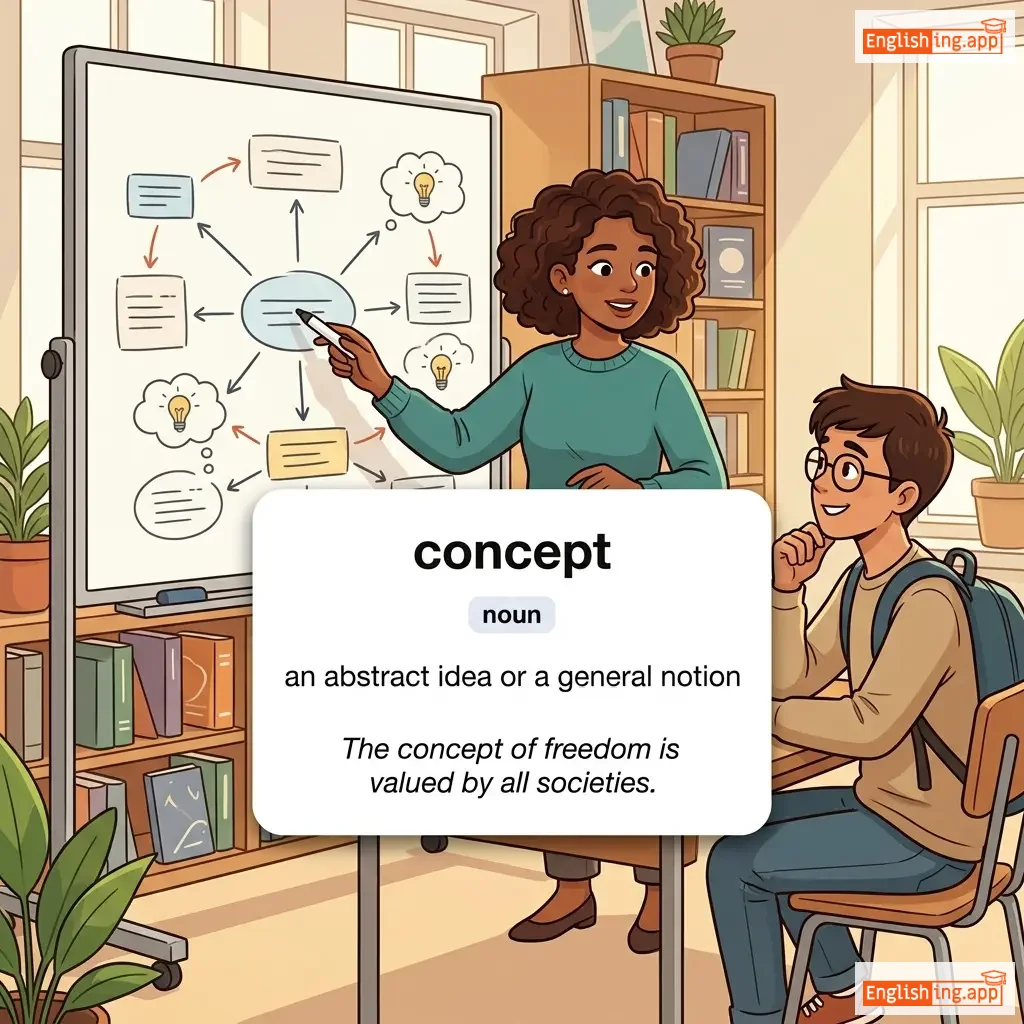
an abstract idea; a general notion or understanding of something; a plan or intention
••••••
|
The concept of democracy is based on the idea that people should govern themselves. |
民主主義の概念は、人々が自分自身を統治すべきだという考えに基づいています。
minshushugi no gainen wa, hitobito ga jibun jishin o tōchi subeki da to iu kangae ni motozuiteimasu.
••••••
|
- •••••• | - •••••• | - •••••• |
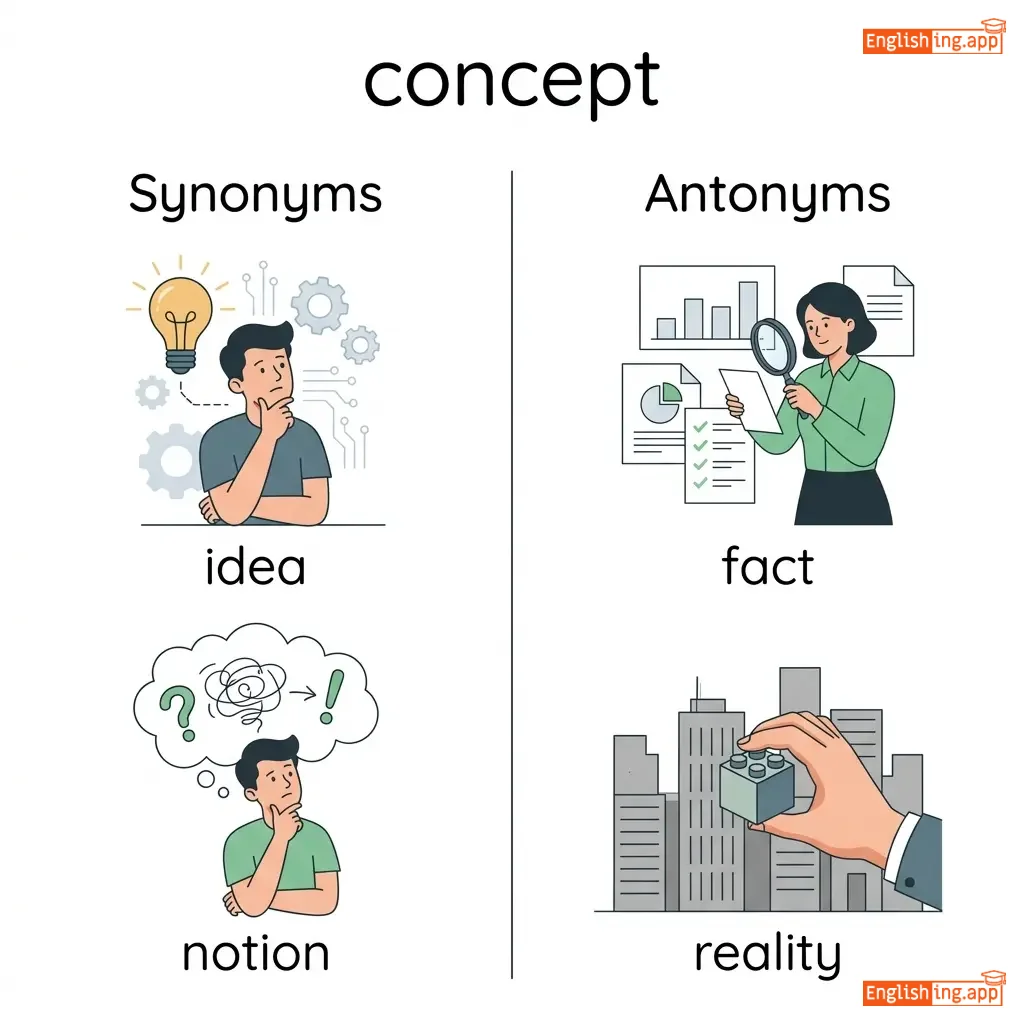
idea, notion, thought, principle
••••••
|
reality, fact, concrete example
••••••
|
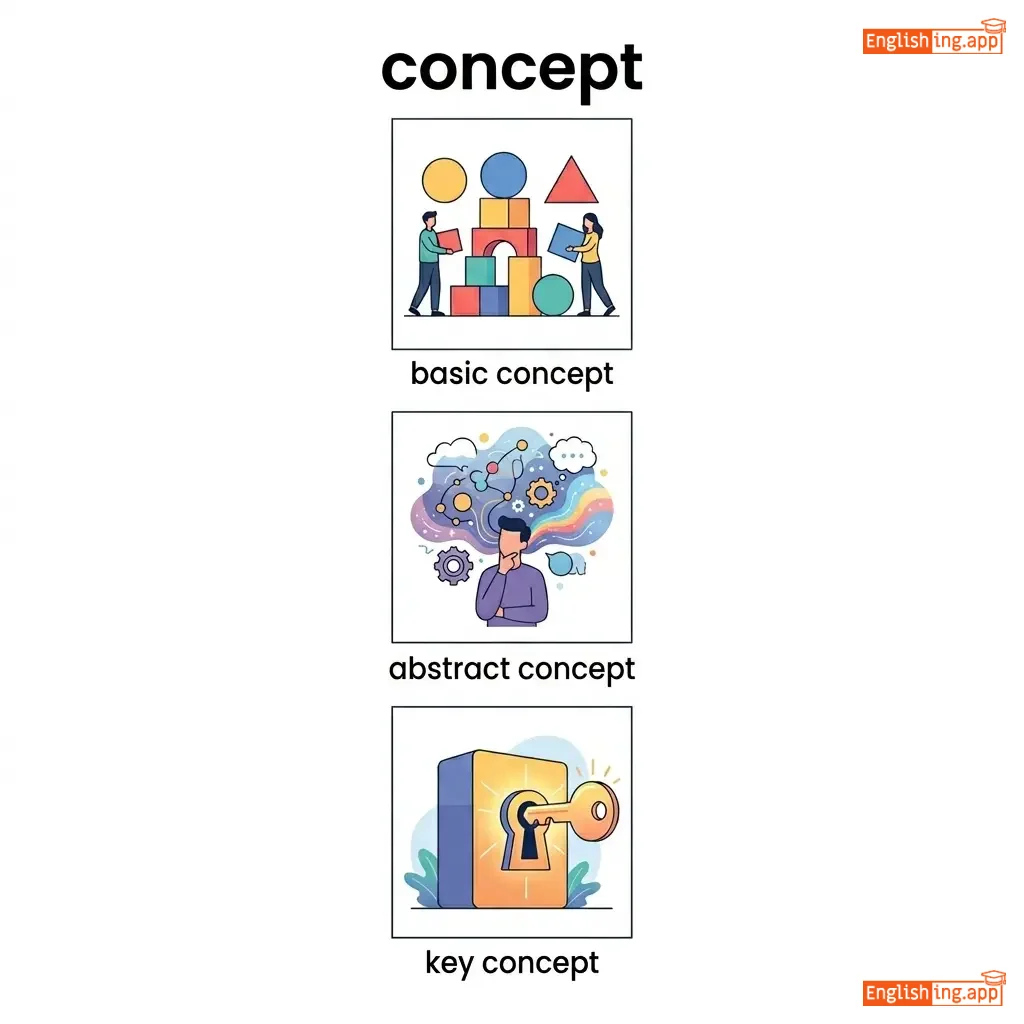
basic concept, new concept, concept development
••••••
|
日本語 – 概念として民主主義
••••••
|
|
🧠
••••••
|
/kənˈsɛpʃən/
noun
(コンセプション)
••••••
|
- •••••• |
概念, 妊娠
gainen, ninshin
••••••
|
- •••••• | - •••••• | - •••••• | - •••••• |
the forming or understanding of an idea; the act of conceiving a child
••••••
|
Her conception of the project was very different from ours. |
彼女のプロジェクトの概念は私たちのものとは大きく異なっていました。
kanojo no purojekuto no gainen wa watashitachi no mono to wa ōkiku kotonatte imashita.
••••••
|
from conception to completion |
from the beginning of an idea to its final result
••••••
|
概念から完成まで
gainen kara kansei made
••••••
|
idea, notion, understanding, perception
••••••
|
misunderstanding, misconception
••••••
|
original conception, artistic conception, false conception
••••••
|
Conceptionはアイデアを意味し、赤ちゃんのConceptionは新しい命の始まり 🧠
••••••
|
|
😟
••••••
|
/kənˈsɜːrn/
noun/verb
••••••
|
- •••••• | - •••••• |
concerned
••••••
|
concerned
••••••
|
concerns
••••••
|
concerning
••••••
|
to relate to or affect; a matter of worry or interest
••••••
|
Environmental issues concern all of us. |
- •••••• |
of concern |
something that causes worry or interest
••••••
|
- •••••• |
worry, anxiety, interest, care, matter
••••••
|
indifference, unconcern
••••••
|
main concern, express concern, raise concern, serious concern
••••••
|
No •••••• |
|
😟
••••••
|
/kənˈsɜːnd/
adjective
(カンセーンド)
••••••
|
- •••••• |
心配な
shinpai na
••••••
|
- •••••• | - •••••• | - •••••• | - •••••• |
worried or anxious about something; involved or interested in something
••••••
|
She was concerned about her mother's health. |
彼女は母親の健康について心配していた。
Kanojo wa hahaoya no kenkō ni tsuite shinpai shite ita.
••••••
|
concerned with |
interested in or related to
••••••
|
心配する
shinpai suru
••••••
|
worried, anxious, troubled, uneasy
••••••
|
unconcerned, indifferent
••••••
|
concerned about, deeply concerned, concerned parents, concerned citizens
••••••
|
心配なは不安を感じること、母親の健康を心配するように。
••••••
|
|
🎵
••••••
|
/ˈkɒnsət/
noun
(コンサート)
••••••
|
- •••••• |
コンサート
konsaato
••••••
|
- •••••• | - •••••• | - •••••• | - •••••• |
A musical performance given by one or more singers or musicians.
••••••
|
We went to a concert last night and enjoyed the live music. |
私たちは昨晩コンサートに行き、ライブ音楽を楽しみました。
Watashitachi wa sakuban konsaato ni iki, raibu ongaku o tanoshimimashita.
••••••
|
in concert |
working together in agreement or harmony
••••••
|
合同で
gōdō de
••••••
|
show, performance, recital, gig, event
••••••
|
silence, solitude
••••••
|
live concert, rock concert, attend a concert, concert hall
••••••
|
コンサートはみんなで音楽を楽しむイベントです。
••••••
|
|
🤲
••••••
|
/kənˈsɛʃən/
noun
(kənˈsɛʃən)
••••••
|
- •••••• |
譲歩
jouho
••••••
|
- •••••• | - •••••• | - •••••• | - •••••• |
something that is granted, especially in response to demands; a compromise
••••••
|
The company made several concessions during the negotiations. |
会社は交渉中にいくつかの譲歩をしました。
Kaisha wa koushou chuu ni ikutsuka no jouho o shimashita.
••••••
|
make concessions |
to give up certain demands in order to reach an agreement
••••••
|
譲歩する
jouho suru
••••••
|
compromise, allowance, adjustment, grant, yield
••••••
|
refusal, denial, resistance
••••••
|
make a concession, grant a concession, trade concession, minor concession
••••••
|
譲歩は交渉で妥協を意味します
••••••
|
|
🔚
••••••
|
/kənˈkluːd/
verb
(kònkùrūdo)
••••••
|
|
結論を出す、決定を下す
ketsuron wo dasu, kettei wo kudasu
••••••
|
concluded
kònkùrūdodeta
••••••
|
concluded
kònkùrūdodeta
••••••
|
concludes
kònkùrūdosuru
••••••
|
concluding
kònkùrūdo suru
••••••
|
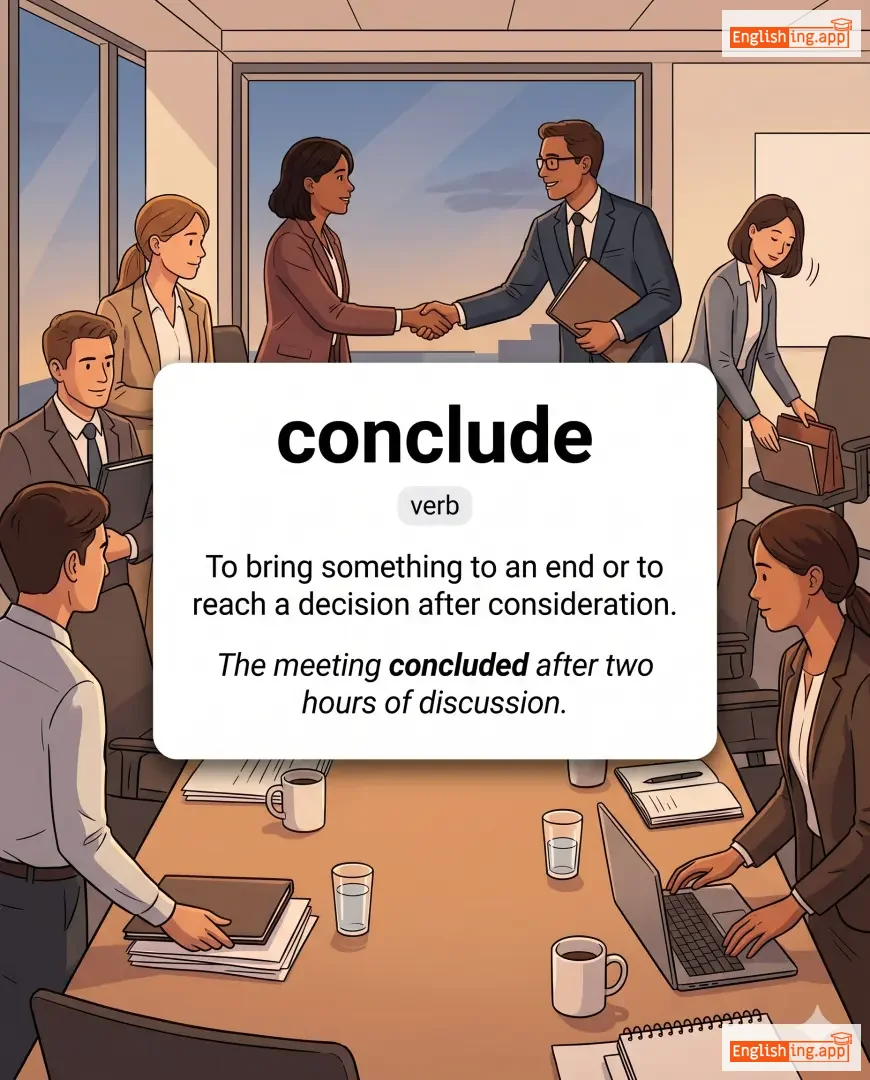
To bring something to an end or to reach a decision after consideration.
••••••
|
The meeting concluded after two hours of discussion.
会議は2時間の議論の後、終了しました。
••••••
|
会議は2時間の議論の後、終了しました。
Kaigi wa 2 jikan no giron no ato, shūryō shimashita.
••••••
|
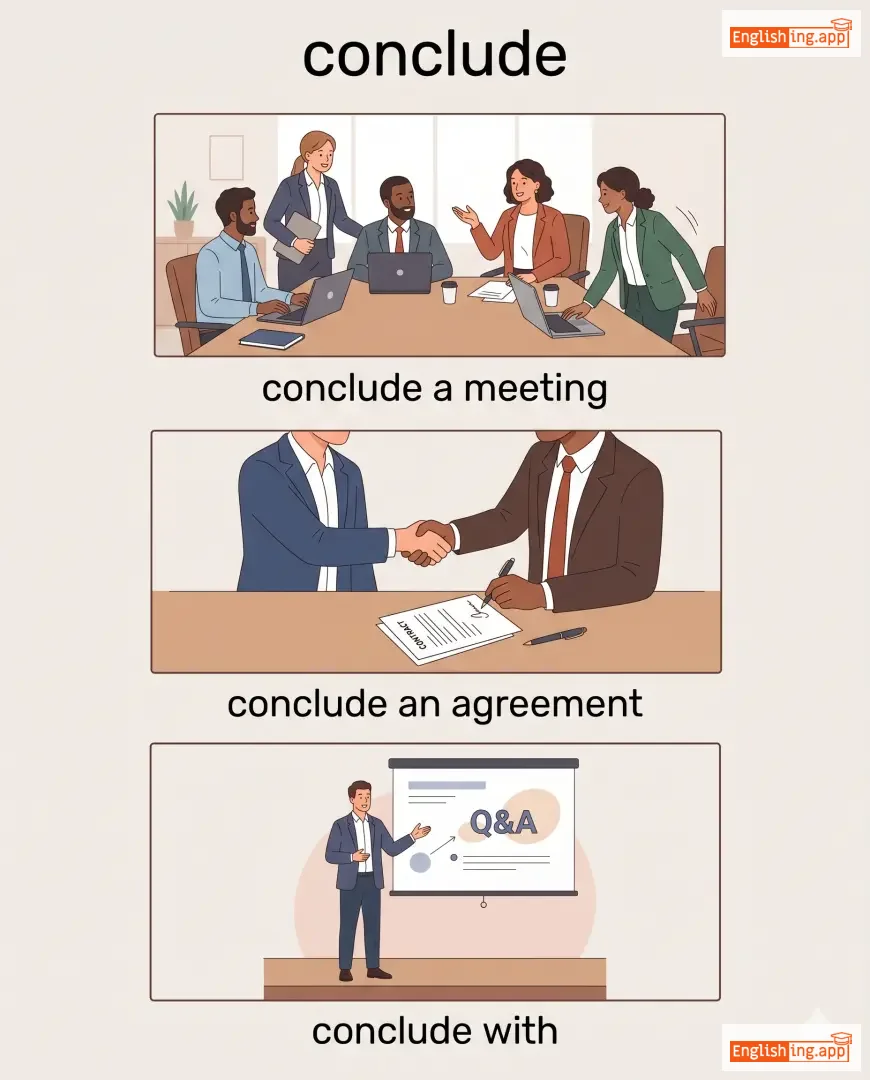
to conclude with
〜で締めくくる
••••••
|
to end something by doing or saying a final thing
••••••
|
〜で締めくくる
〜de shimekukuru
••••••
|
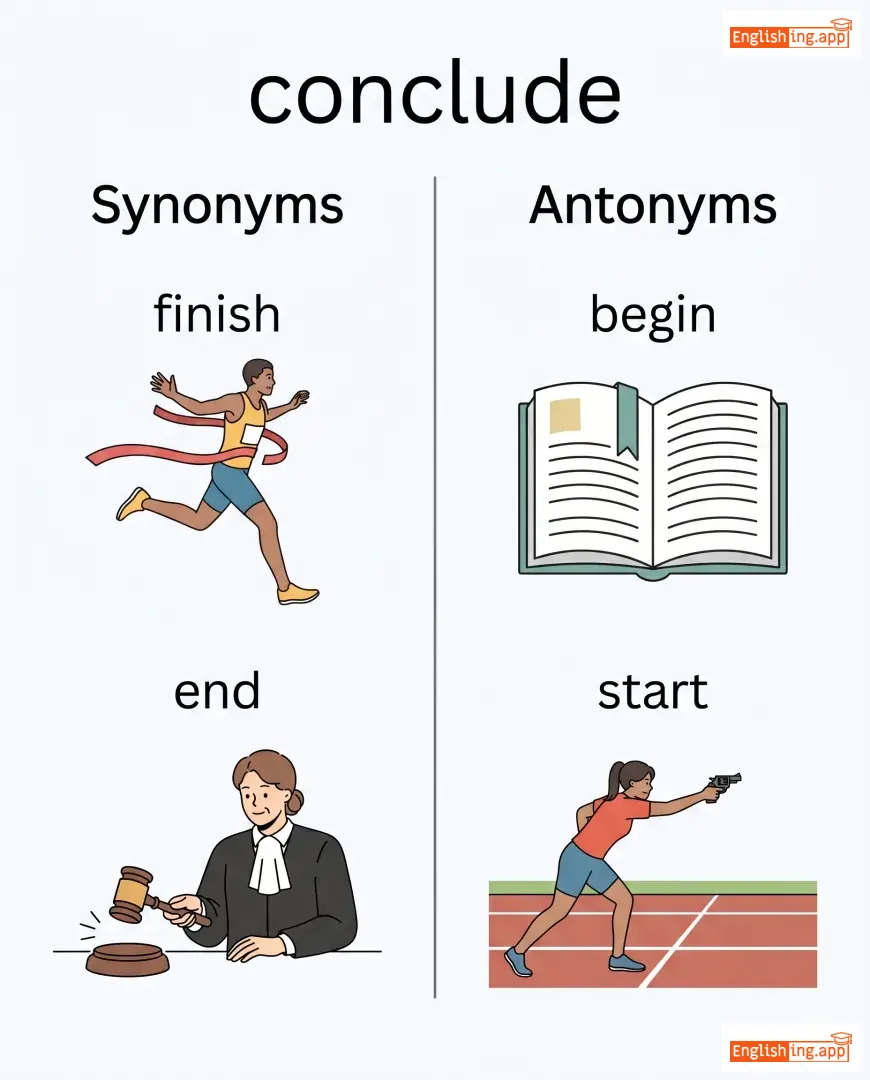
finish, end, determine, decide, finalize
••••••
|
begin, start, continue
••••••
|
conclude a meeting, conclude an agreement, conclude with, conclude that
••••••
|
Concludeはconclusionのように最後に終わらせるという意味です
••••••
|
|
📘
••••••
|
/kənˈkluːʒən/
noun
(コンクルージョン)
••••••
|
- •••••• |
結論
ketsuron
••••••
|
- •••••• | - •••••• | - •••••• | - •••••• |
The end or finish of an event, process, or text; a judgment reached after consideration.
••••••
|
The research paper ends with a strong conclusion. |
研究論文は強力な結論で終わる。
Kenkyū ronbun wa kyōryoku na ketsuron de owaru.
••••••
|
jump to conclusions |
to make a decision without having all the facts
••••••
|
早急に結論を出す
sōkyū ni ketsuron o dasu
••••••
|
end, result, outcome, judgment, decision
••••••
|
beginning, start, opening
••••••
|
draw a conclusion, reach a conclusion, in conclusion, strong conclusion
••••••
|
Conclusion は結論 – 思考の終わりに得られる結果です。
••••••
|
|
🏗️
••••••
|
/ˈkɒŋkriːt/
adjective
(コンプリート)
••••••
|
- •••••• |
具体的な
gutaiteki na
••••••
|
- •••••• | - •••••• | - •••••• | - •••••• |
based on facts, not on ideas or guesses; specific and real
••••••
|
She gave a concrete example to support her argument. |
彼女は自分の議論を支持するために具体的な例を挙げました。
Kanojo wa jibun no giron o shiji suru tame ni gutaiteki na rei o agemashita.
••••••
|
set in concrete |
to be fixed and unchangeable
••••••
|
固定された
kotei sareta
••••••
|
tangible, solid, real, specific
••••••
|
abstract, vague, unreal
••••••
|
concrete example, concrete evidence, concrete plan, concrete structure
••••••
|
Concreteは具体的、まるでコンクリートのようにしっかりとしたものです。
••••••
|
|
❌
••••••
|
/kənˈdɛm/
verb
(kondemu)
••••••
|

|
非難する
hinan suru
••••••
|
condemned
kondemuddo
••••••
|
condemned
kondemuddo
••••••
|
condemns
kondemusu
••••••
|
condemning
kondemingu
••••••
|
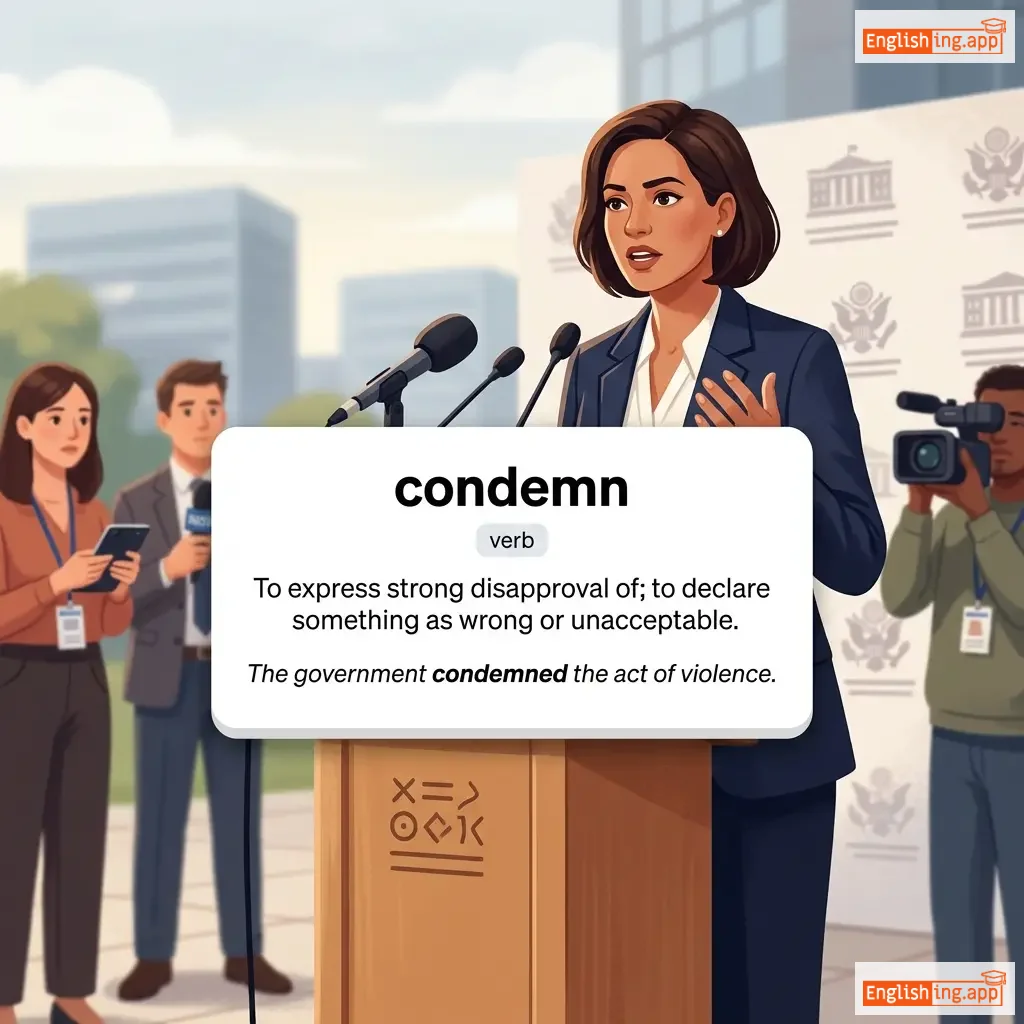
To express strong disapproval of; to declare something as wrong or unacceptable.
••••••
|
The government condemned the act of violence.
政府は暴力行為を非難しました。
••••••
|
政府は暴力行為を非難しました。
seifu wa bōryoku kōi o hinan shimashita.
••••••
|
condemn to death
死刑を宣告する
••••••
|
to sentence someone to death as punishment
••••••
|
死刑を宣告する
shikei o senkoku suru
••••••
|
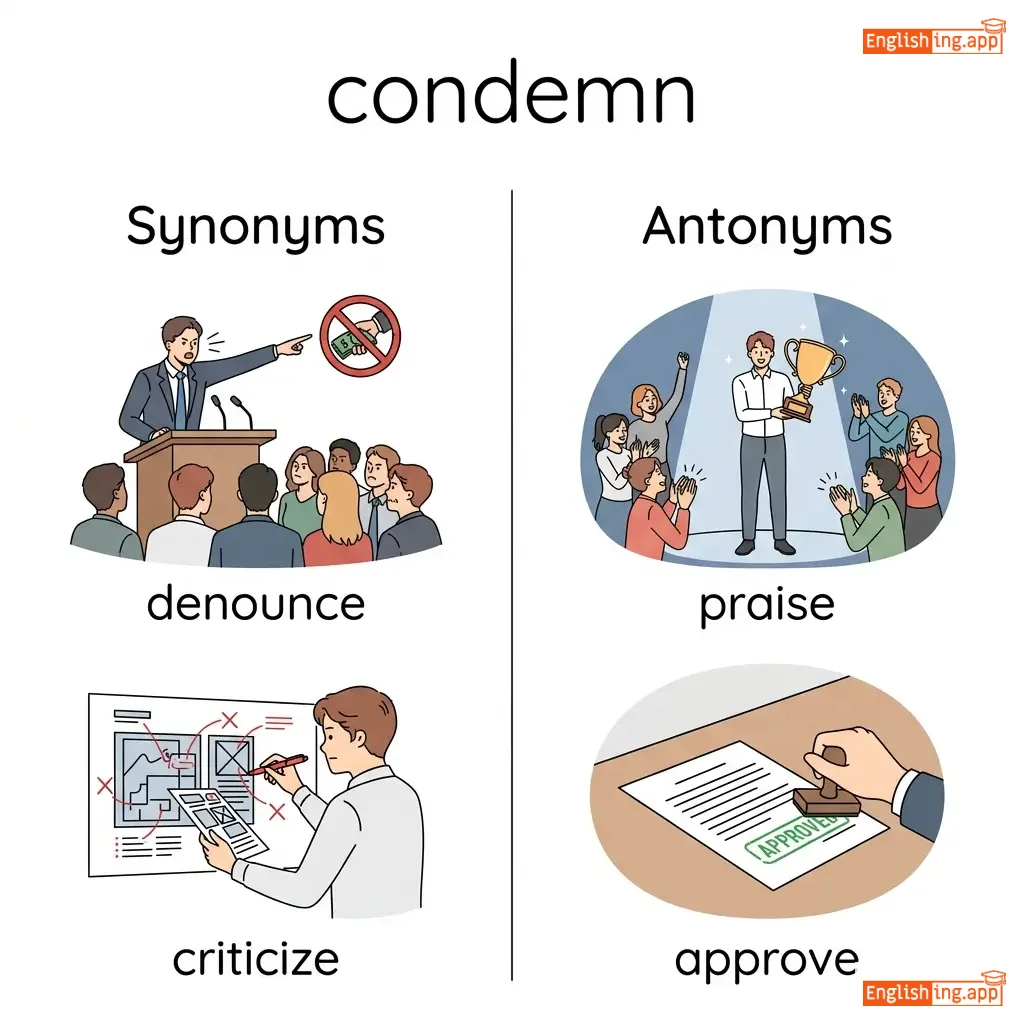
denounce, criticize, censure, blame
••••••
|
praise, approve, support
••••••
|
condemn strongly, condemn violence, condemn publicly, condemn actions
••••••
|
Condemnは'非難する'と似ているので、何か悪いことをした人に使います。
••••••
|
|
⚙️
••••••
|
/kənˈdɪʃən/
noun
(コンディション)
••••••
|

|
状態, 条件
joutai, jouken
••••••
|
- •••••• | - •••••• | - •••••• | - •••••• |
The state of something with regard to its appearance, quality, or working order; a requirement that must be met.
••••••
|
The car is in excellent condition. |
車は素晴らしい状態です。
Kuruma wa subarashii joutai desu.
••••••
|
on condition that |
only if something else happens or is done
••••••
|
条件付きで
jouken tsuki de
••••••
|
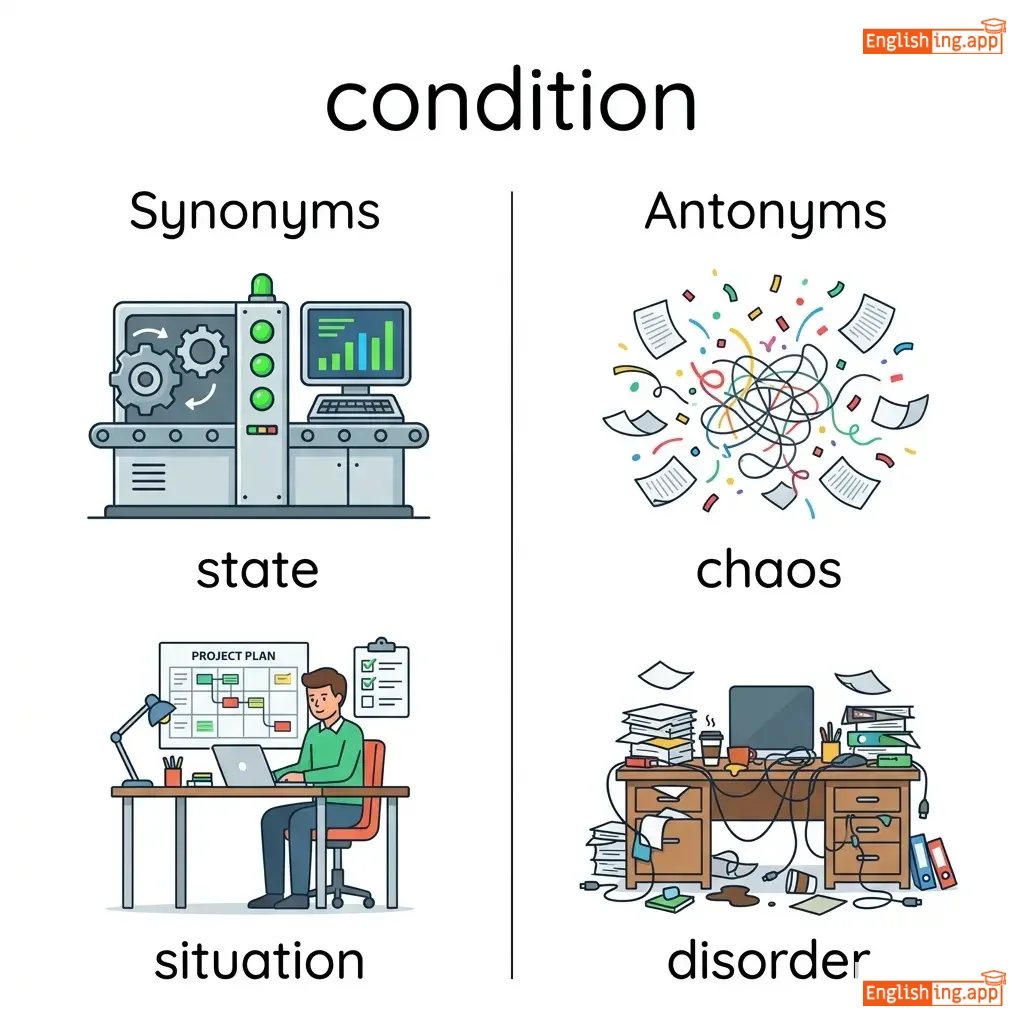
state, situation, requirement, circumstance, health
••••••
|
chaos, disorder
••••••
|
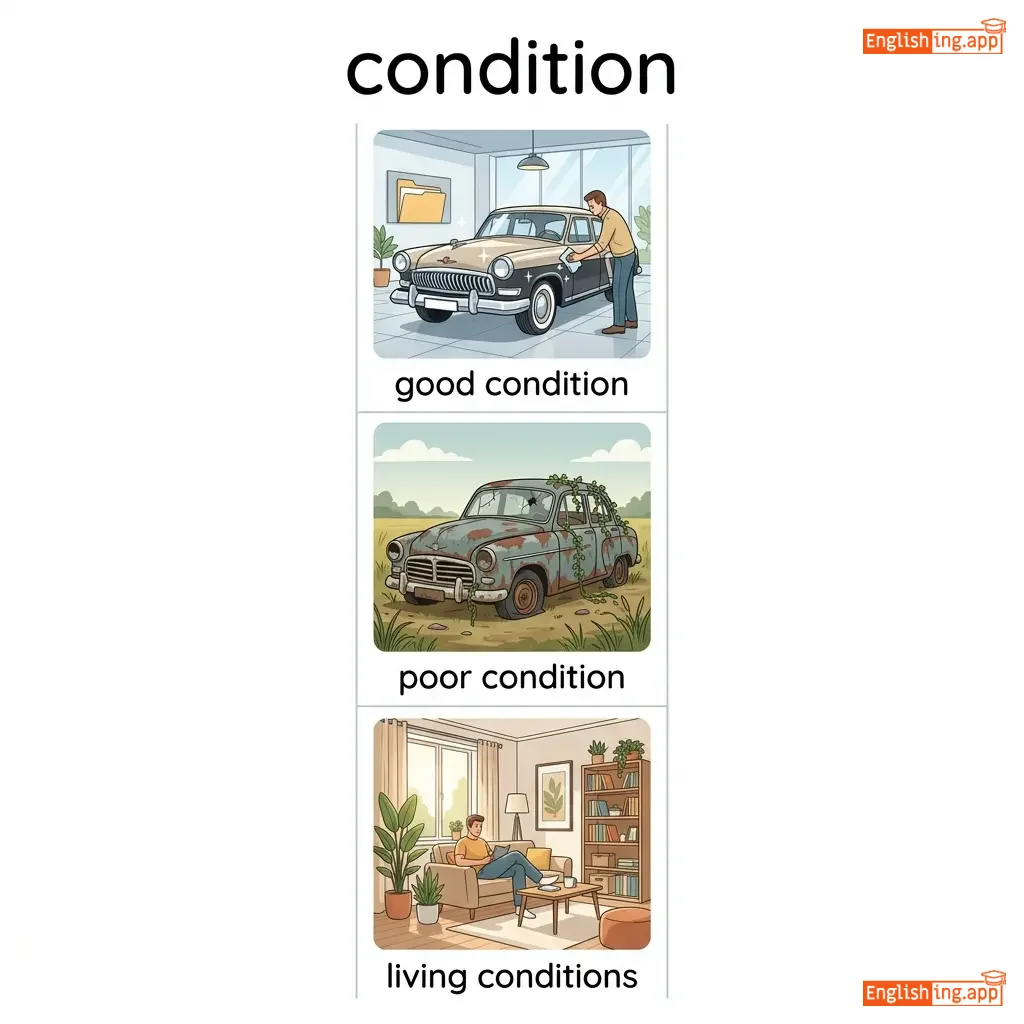
good condition, poor condition, living conditions, under condition
••••••
|
Condition は条件 - 試験に合格する条件のように。
••••••
|
|
🧑🏫
••••••
|
/ˈkɒndʌkt/ (noun), /kənˈdʌkt/ (verb)
noun, verb
••••••
|
- •••••• | - •••••• |
conducted
••••••
|
conducted
••••••
|
conducts
••••••
|
conducting
••••••
|
to organize or carry out; or a person's behavior
••••••
|
The teacher conducted the exam fairly. |
- •••••• |
conduct oneself |
to behave in a particular manner
••••••
|
- •••••• |
manage, carry out, perform, behavior, demeanor
••••••
|
mismanage, neglect, misconduct
••••••
|
conduct research, conduct business, professional conduct
••••••
|
No •••••• |
|
💬
••••••
|
/kənˈfɜːr/
verb
••••••
|
- •••••• | - •••••• |
conferred
••••••
|
conferred
••••••
|
confers
••••••
|
conferring
••••••
|
to discuss something important or to grant or bestow something
••••••
|
The committee will confer to decide on the new policy. |
- •••••• |
confer a degree |
to officially give someone a degree
••••••
|
- •••••• |
consult, discuss, grant, bestow, award
••••••
|
withhold, deny
••••••
|
confer with, confer about, confer a degree, confer title
••••••
|
No •••••• |
|
👥
••••••
|
/ˈkɒnfərəns/
noun
(コンファレンス)
••••••
|


|
会議
kaigi
••••••
|
- •••••• | - •••••• | - •••••• | - •••••• |
A formal meeting for discussion, especially about a particular subject.
••••••
|
She is attending an international business conference. |
彼女は国際ビジネス会議に出席しています。
Kanojo wa kokusai bijinesu kaigi ni shusseki shiteimasu.
••••••
|
press conference |
a meeting where journalists are given information by a public figure
••••••
|
記者会見
kishakaiken
••••••
|
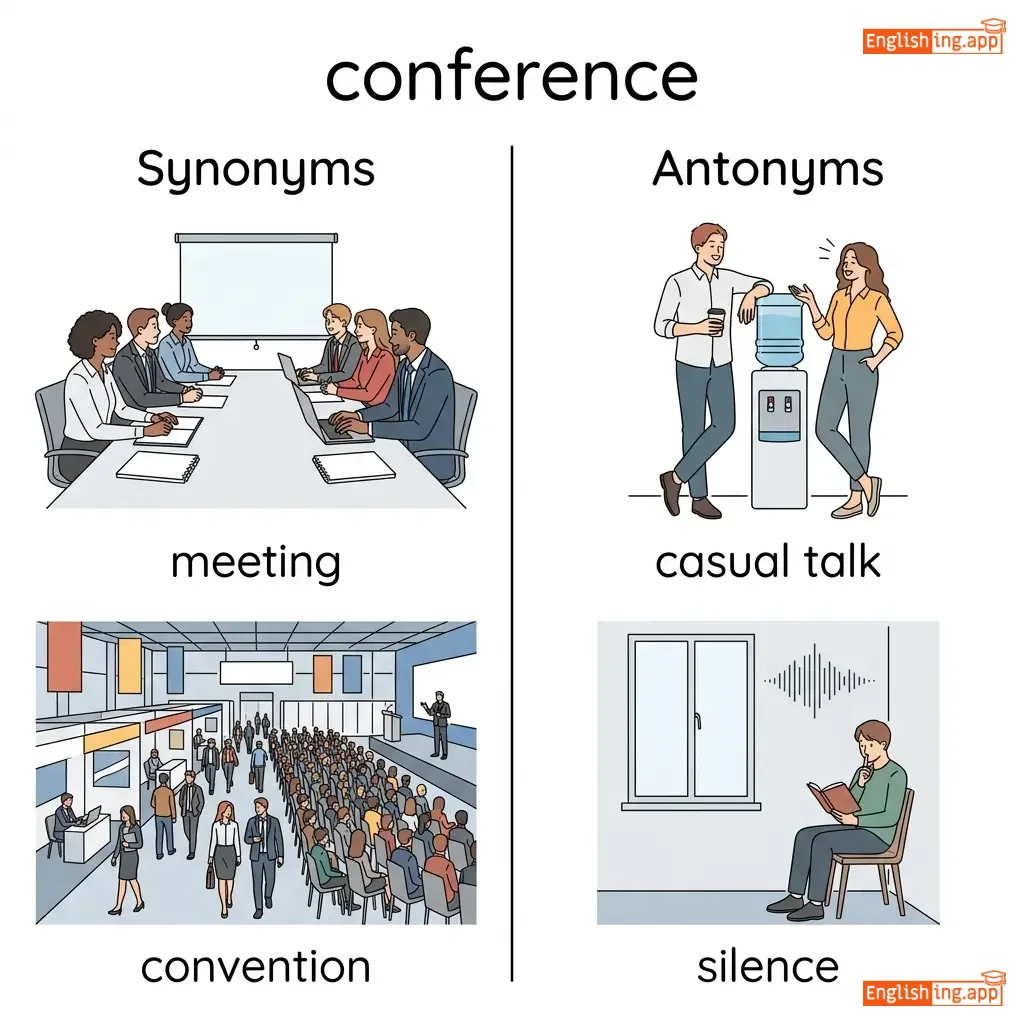
meeting, convention, seminar, summit, symposium
••••••
|
casual talk, silence
••••••
|
business conference, international conference, annual conference, conference hall
••••••
|
会議は、みんなが集まって重要なことを話し合う場所です。
••••••
|

