Получите неограниченный доступ ко всем словам с подпиской Pro
Обновить до ProПолучите неограниченный доступ ко всем предложениям с подпиской Pro
Обновить до Pro|
Эмодзи
|
Слово | Images | Перевод | Прошедшее | Причастие прошедшего времени | Третье лицо единственного числа | Герундий | Значение | Пример предложения | Перевод примера предложения | Пример выражения | Значение примера выражения | Перевод примера выражения | Синонимы | Антонимы | Коллокации | Мнемоника |
|---|---|---|---|---|---|---|---|---|---|---|---|---|---|---|---|---|---|
|
📈
••••••
|
/ˈkɒmpɪtəns/
noun
(kəmˈpʲetʲɪns)
••••••
|
- •••••• |
компетенция
kompetentsiya
••••••
|
- •••••• | - •••••• | - •••••• | - •••••• |
the ability to do something successfully or efficiently
••••••
|
Her competence as a manager impressed the board. |
Ее компетенция как менеджера впечатлила совет.
Eyo kompetentsiya kak menedzhera vpechatlila sovet.
••••••
|
professional competence |
the required ability and skill in a profession
••••••
|
профессиональная компетенция
professional'naya kompetentsiya
••••••
|
ability, capability, skill, proficiency, expertise
••••••
|
incompetence, inability, ineptness
••••••
|
competence level, demonstrate competence, competence in
••••••
|
Компетенция означает быть компетентным – быть компетентным, значит быть умелым.
••••••
|
|
✅
••••••
|
/ˈkɒmpɪtənt/
adjective
(kom-pi-tent)
••••••
|
- •••••• |
компетентный
kompetentny
••••••
|
- •••••• | - •••••• | - •••••• | - •••••• |
having the necessary ability, knowledge, or skill to do something successfully
••••••
|
He is a competent driver who rarely makes mistakes.
Он компетентный водитель, который редко совершает ошибки.
••••••
|
Он компетентный водитель, который редко совершает ошибки.
On kompetentny vodiitel', kotoryi redko sovershaet oshibki.
••••••
|
competent authority
компетентный орган
••••••
|
a person or body with the legal power to decide or enforce something
••••••
|
компетентный орган
kompetentny organ
••••••
|
capable, skilled, qualified, proficient
••••••
|
incompetent, unskilled
••••••
|
competent staff, competent professional, competent enough
••••••
|
Компетентный — как опытный водитель, он знает, как справиться с задачей.
••••••
|
|
🤼
••••••
|
/ˌkɒmpəˈtɪʃən/
noun
(kom-pi-ti-shun)
••••••
|


|
конкуренция
konkurentsiya
••••••
|
- •••••• | - •••••• | - •••••• | - •••••• |
a situation in which people or organizations try to be more successful than others
••••••
|
The competition in the tech industry is very intense. |
Конкуренция в технологической отрасли очень жесткая.
Konkurentsiya v tekhnologicheskoy otrasli ochen' zhestkaya.
••••••
|
cut-throat competition |
extremely fierce and ruthless competition
••••••
|
безжалостная конкуренция
bezzhalostnaya konkurentsiya
••••••
|
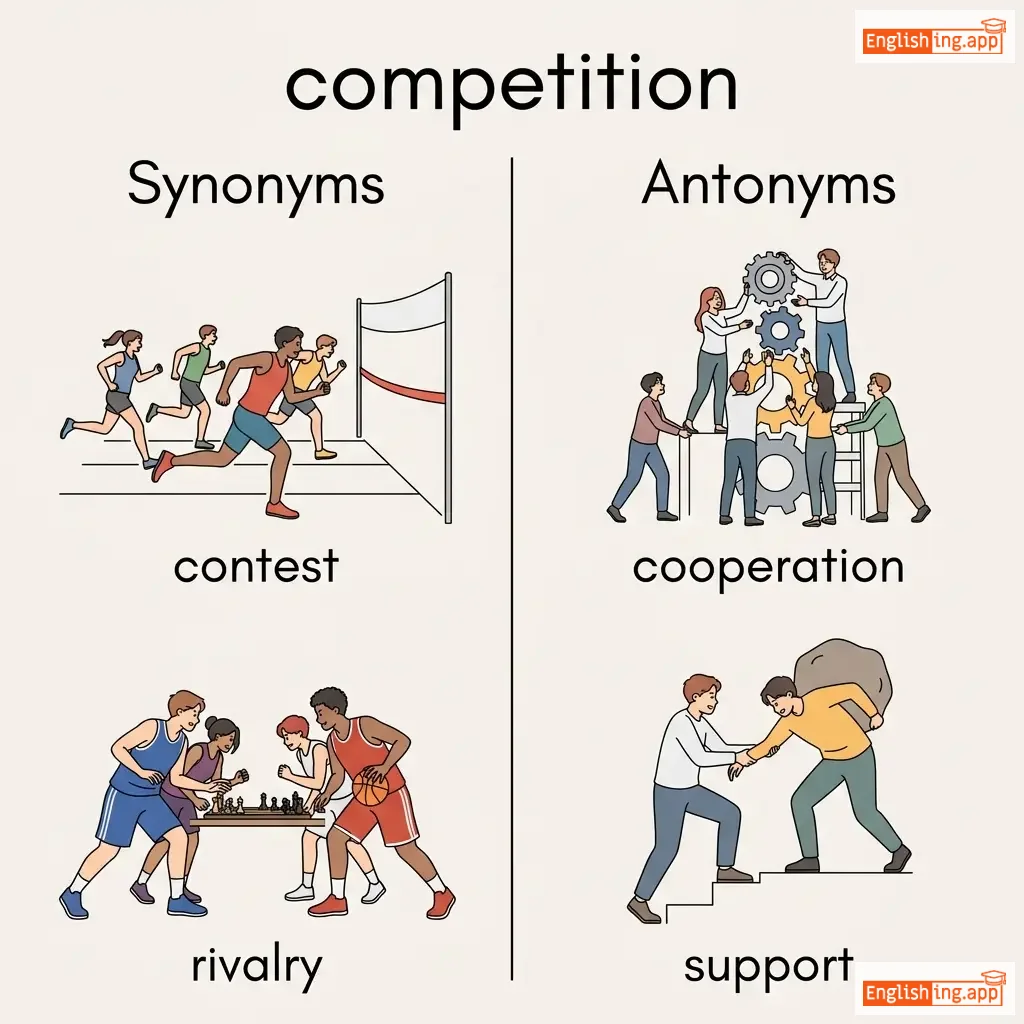
contest, rivalry, challenge, race, opposition
••••••
|
cooperation, support, alliance
••••••
|
intense competition, healthy competition, business competition, market competition
••••••
|
КОНКУРЕНЦИЯ = konkurentsiya - всегда есть конкуренция в университете
••••••
|
|
🏆
••••••
|
/kəmˈpetətɪv/
adjective
(kəmˈpɛtɪtɪv)
••••••
|
- •••••• |
конкурентоспособный
konkurentosposobnyj
••••••
|
- •••••• | - •••••• | - •••••• | - •••••• |
relating to or characterized by competition; having a strong desire to win or be more successful
••••••
|
She has a competitive spirit that drives her to excel. |
У нее конкурентоспособный дух, который заставляет ее стремиться к совершенству.
U nee konkurentosposobnyj dukh, kotoryj zastavlyaet yejo stremit'sya k sovershenstvu.
••••••
|
competitive edge |
an advantage that makes someone more successful
••••••
|
конкурентное преимущество
konkurentnoe preimushchestvo
••••••
|
ambitious, rivalrous, aggressive, contesting
••••••
|
uncompetitive, passive
••••••
|
competitive market, competitive advantage, highly competitive
••••••
|
Competitive означает быть в режиме конкуренции – всегда стремиться выиграть, как трофей.
••••••
|
|
⚔️
••••••
|
/kəmˈpɛtɪtər/
noun
(kəmˈpɛtɪtər)
••••••
|
- •••••• |
конкурент
konkurent
••••••
|
- •••••• | - •••••• | - •••••• | - •••••• |
a person, team, or company that competes with others
••••••
|
The company lowered its prices to beat its main competitor. |
Компания снизила цены, чтобы обыграть своего главного конкурента.
Kompaniya snizila tseny, chtoby obygrat' svoego glavnogo konkurenta.
••••••
|
know your competition |
to understand your rivals in order to succeed
••••••
|
знай своих конкурентов
znay svoikh konkurentov
••••••
|
rival, challenger, opponent, contender, adversary
••••••
|
ally, partner, supporter
••••••
|
main competitor, direct competitor, strong competitor, market competitor
••••••
|
Конкурент — это тот, кто соперничает с тобой, как в бою двух спортсменов.
••••••
|
|
📝
••••••
|
/kəmˈpaɪl/
verb
(kompajl)
••••••
|
- •••••• |
собирать
sobirat
••••••
|
compiled
kompajld
••••••
|
compiled
kompajld
••••••
|
compiles
kompajls
••••••
|
compiling
kompajling
••••••
|
to collect information or material and put it together in a list, report, or book
••••••
|
She compiled the research data into a detailed report.
Она собрала исследовательские данные в подробный отчет.
••••••
|
Она собрала исследовательские данные в подробный отчет.
Ona sobrala issledovatelskiye dannye v podrobnoy otchet.
••••••
|
compile a list
составить список
••••••
|
to gather and arrange items in a list format
••••••
|
составить список
sostavit' spisok
••••••
|
collect, assemble, gather, organize, arrange
••••••
|
scatter, disperse
••••••
|
compile data, compile report, compile information, compile list
••••••
|
Compile означает собирать — как компилятор, который собирает данные на компьютере.
••••••
|
|
😒
••••••
|
/kəmˈpleɪn/
verb
(kompleyn)
••••••
|
- •••••• |
жаловаться
zhalovatsya
••••••
|
complained
kompleind
••••••
|
complained
kompleind
••••••
|
complains
kompleins
••••••
|
complaining
kompleining
••••••
|
to express dissatisfaction or annoyance about something
••••••
|
He often complains about the noise in the neighborhood.
Он часто жалуется на шум в соседстве.
••••••
|
Он часто жалуется на шум в соседстве.
On chasto zhaluetsya na shum v sosedstve.
••••••
|
complain bitterly
жаловаться горько
••••••
|
to express strong dissatisfaction
••••••
|
жаловаться горько
zhalovatsya gorko
••••••
|
grumble, protest, whine, criticize, object
••••••
|
praise, applaud, compliment
••••••
|
complain about, complain to, constantly complain, complain bitterly
••••••
|
Когда ты жалуешься, говорят 'не жалуйся!'
••••••
|
|
📄
••••••
|
/kəmˈpleɪnt/
noun
(kompleint)
••••••
|
- •••••• |
жалоба
zhaloba
••••••
|
- •••••• | - •••••• | - •••••• | - •••••• |
a statement that something is wrong or not satisfactory
••••••
|
The manager received a complaint from a customer about poor service.
Менеджер получил жалобу от клиента по поводу плохого обслуживания.
••••••
|
Менеджер получил жалобу от клиента по поводу плохого обслуживания.
Menedzher poluchil zhalobu ot klienta po povodu plokhogo obsluzhivaniya.
••••••
|
file a complaint
подать жалобу
••••••
|
to officially report dissatisfaction
••••••
|
подать жалобу
podat' zhalobu
••••••
|
objection, grievance, criticism, protest, allegation
••••••
|
praise, compliment
••••••
|
make a complaint, file a complaint, customer complaint, formal complaint
••••••
|
COMPLAINT - это ЗЖАЛОБА, которая подается.
••••••
|
|
➕
••••••
|
/ˈkɒmplɪmənt/
noun/verb
(комплимент)
••••••
|

|
комплимент
kompliment
••••••
|
complemented
комплиментировал
••••••
|
complemented
комплиментирован
••••••
|
complements
комплиментирует
••••••
|
complementing
комплиментируя
••••••
|
something that completes or goes well with something; to add something that enhances or improves
••••••
|
The scarf complements her outfit perfectly.
шарф идеально дополняет ее наряд.
••••••
|
шарф идеально дополняет ее наряд.
sharf ideal'no dopolnyaet yeye naryad.
••••••
|
perfect complement
совершенный комплимент
••••••
|
something that completes another thing in the best possible way
••••••
|
совершенный комплимент
sovershenniy kompliment
••••••
|
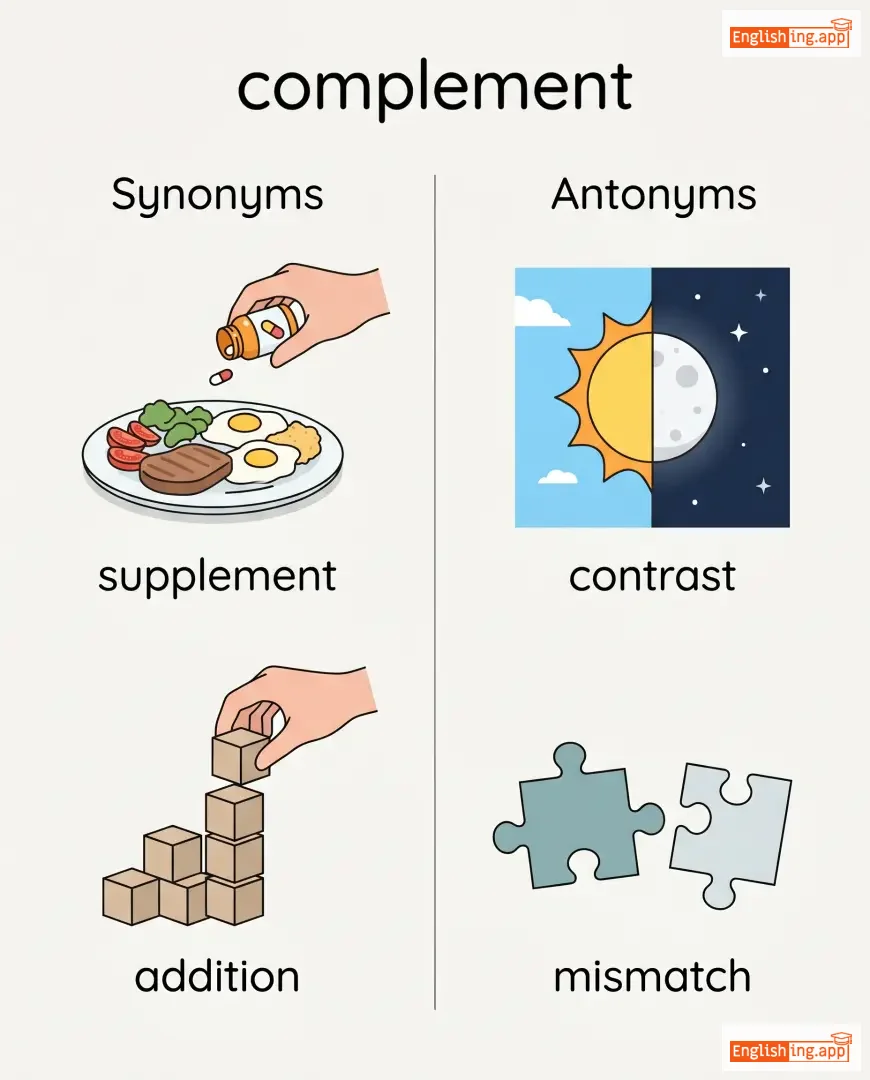
supplement, addition, counterpart, companion, match
••••••
|
contrast, mismatch
••••••
|
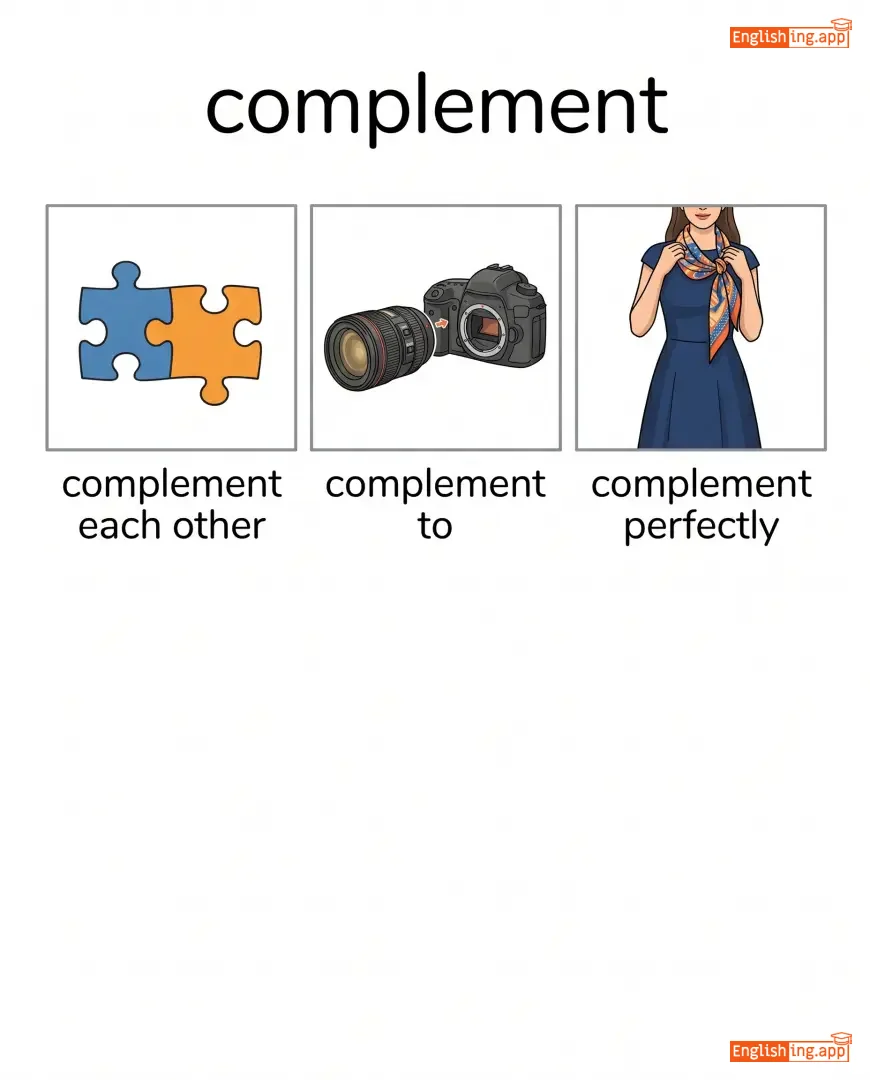
complement each other, complement to, complement perfectly, complement system
••••••
|
комплимент = Komplett + Добавить, что-то, что улучшает
••••••
|
|
✅
••••••
|
/kəmˈpliːt/
verb
(komplit)
••••••
|
- •••••• |
завершить
zavershit
••••••
|
completed
komplited
••••••
|
completed
komplited
••••••
|
completes
komplits
••••••
|
completing
kompleting
••••••
|
to finish making or doing something; to bring something to an end
••••••
|
She managed to complete the project on time.
Она успела завершить проект вовремя.
••••••
|
Она успела завершить проект вовремя.
Ona uspela zavershit proyekt vovremya.
••••••
|
complete the circle
завершить круг
••••••
|
to bring something to its conclusion or to make something whole
••••••
|
завершить круг
zavershit krug
••••••
|
finish, accomplish, achieve, conclude, finalize
••••••
|
incomplete, unfinished, halt
••••••
|
complete a task, complete a form, complete the project, complete successfully
••••••
|
Завершить означает закончить, как завершить круг.
••••••
|
|
🔄
••••••
|
/kəmˈpliːtli/
adverb
(kəmˈpliːtli)
••••••
|
- •••••• |
полностью
polnost'yu
••••••
|
- •••••• | - •••••• | - •••••• | - •••••• |
totally; in every way possible
••••••
|
The room was completely silent. |
Комната была полностью тихой.
Komnata byla polnost'yu tikhoi.
••••••
|
- •••••• | - •••••• | - •••••• |
totally, entirely, fully, utterly
••••••
|
partially, incompletely
••••••
|
completely different, completely silent, completely destroyed, completely wrong
••••••
|
Completely означает полностью, как полностью тихо.
••••••
|
|
✅
••••••
|
/kəmˈpliːʃən/
noun
(kom-plee-shen)
••••••
|
- •••••• |
завершение
zavershenie
••••••
|
- •••••• | - •••••• | - •••••• | - •••••• |
the action or process of finishing something
••••••
|
The completion of the project will take another few weeks. |
Завершение проекта займет еще несколько недель.
Zavershenie proyekta zaymet eshche neskol'ko nedel'.
••••••
|
- •••••• | - •••••• | - •••••• |
finalization, conclusion, fulfillment, accomplishment
••••••
|
beginning, initiation
••••••
|
project completion, timely completion, successful completion
••••••
|
Completion = завершение, означает завершить что-то
••••••
|
|
🧩
••••••
|
/ˈkɒm.pleks/
adjective, noun
(кɔмплɛкс)
••••••
|
|
сложный
slozhnyy
••••••
|
- •••••• | - •••••• | - •••••• | - •••••• |
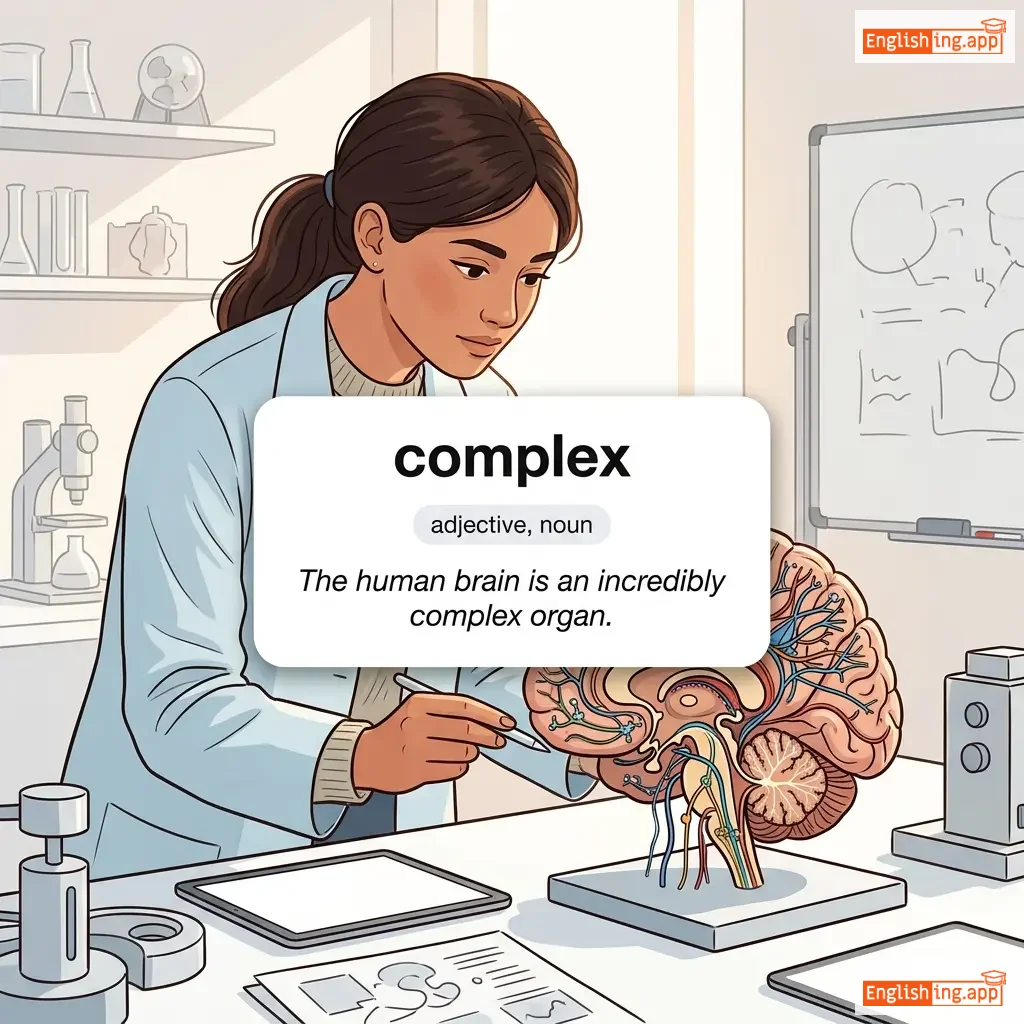
Consisting of many different and connected parts; not easy to understand or analyze.
••••••
|
The human brain is an incredibly complex organ. |
Человеческий мозг — невероятно сложный орган.
Chelovecheskiy mozg — neveroyatno slozhnyy organ.
••••••
|
Oedipus complex |
A psychoanalytic theory referring to a child's feelings of desire for the opposite-sex parent.
••••••
|
Эдипов комплекс
Edipov kompleks
••••••
|
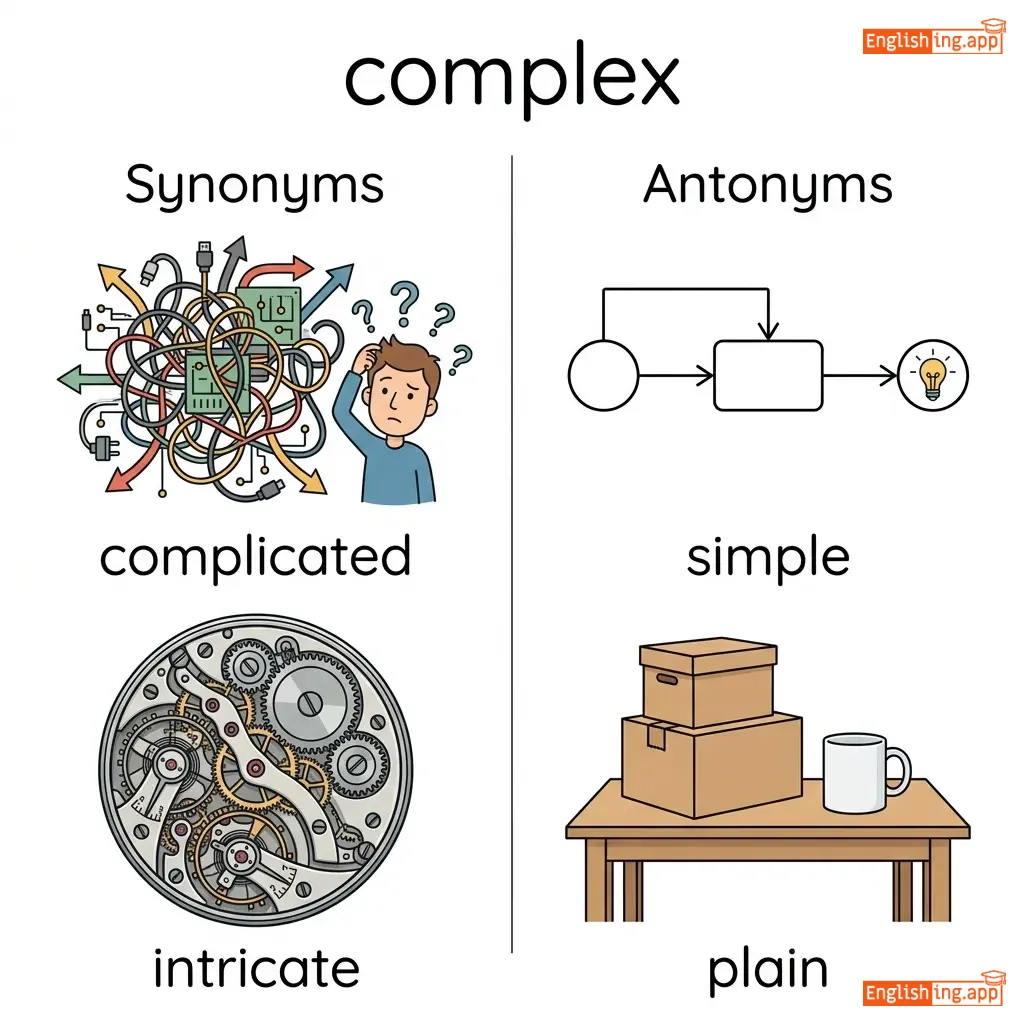
complicated, intricate, elaborate, sophisticated, multifaceted
••••••
|
simple, plain, straightforward
••••••
|
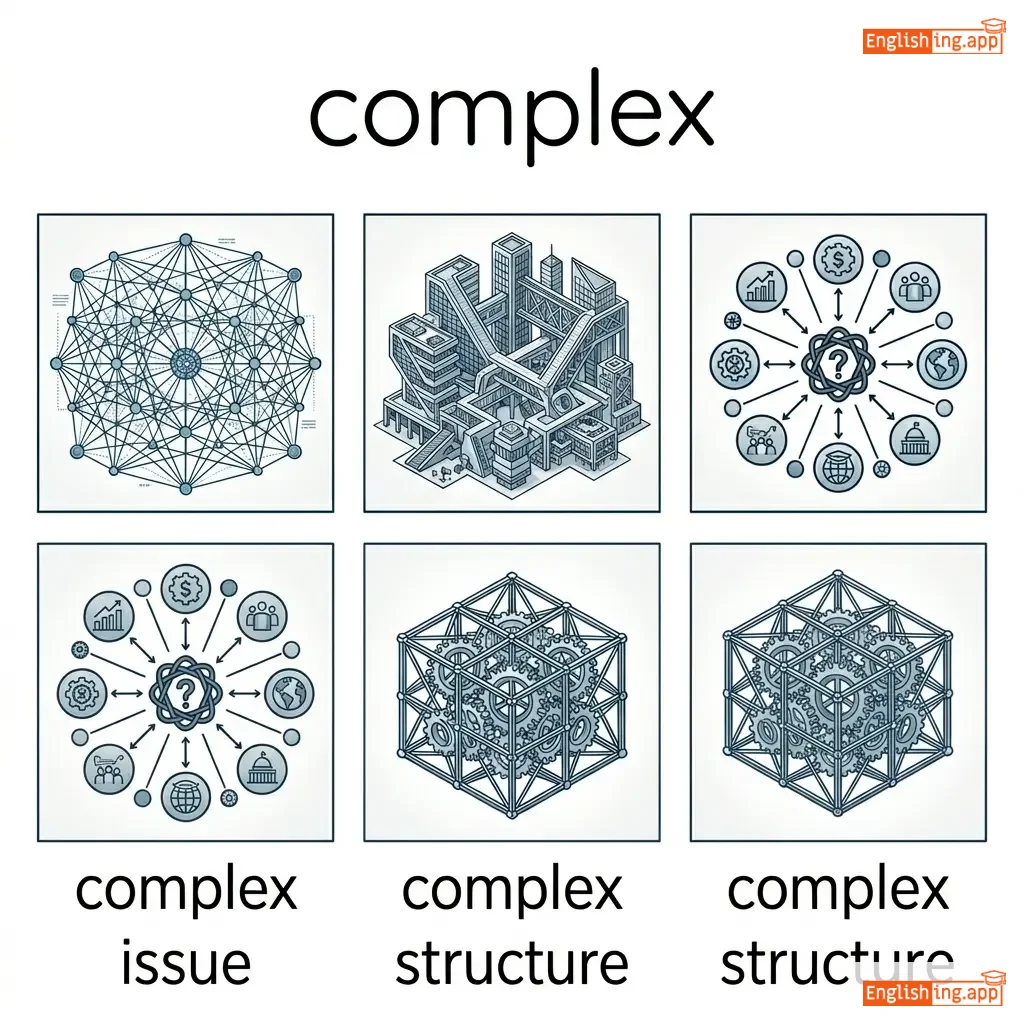
complex system, complex structure, complex issue, highly complex, complex problem
••••••
|
Сложный как пазл 🧩, множество частей создают целую картину.
••••••
|
|
🧩
••••••
|
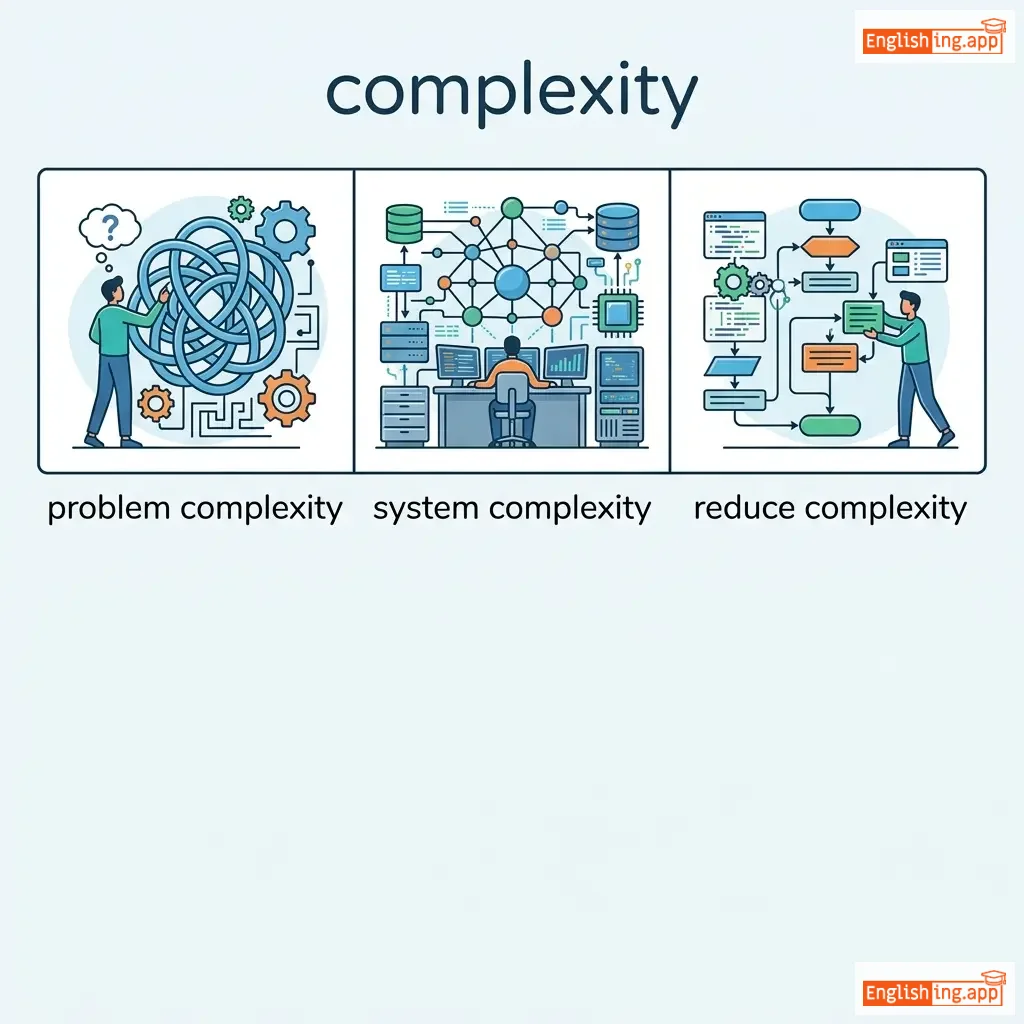
/kəmˈplɛksɪti/
noun
(kəmˈplɛksɪti)
••••••
|
|
сложность
slozhnost
••••••
|
- •••••• | - •••••• | - •••••• | - •••••• |
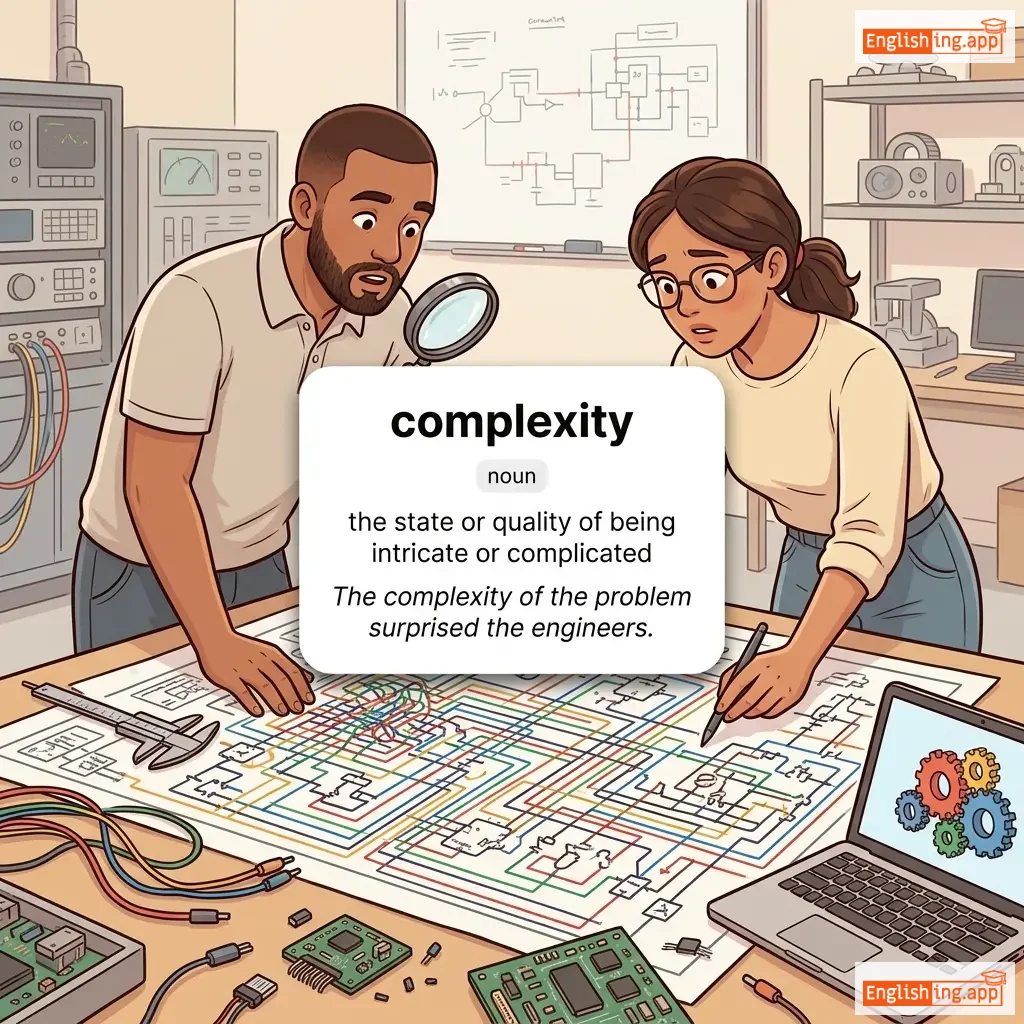
the state or quality of being intricate or complicated
••••••
|
The complexity of the problem surprised the engineers. |
Сложность проблемы удивила инженеров.
Slozhnost' problemy udivila inzhenerov.
••••••
|
reduce complexity |
to make something simpler or easier to understand
••••••
|
снизить сложность
snizit' slozhnost
••••••
|
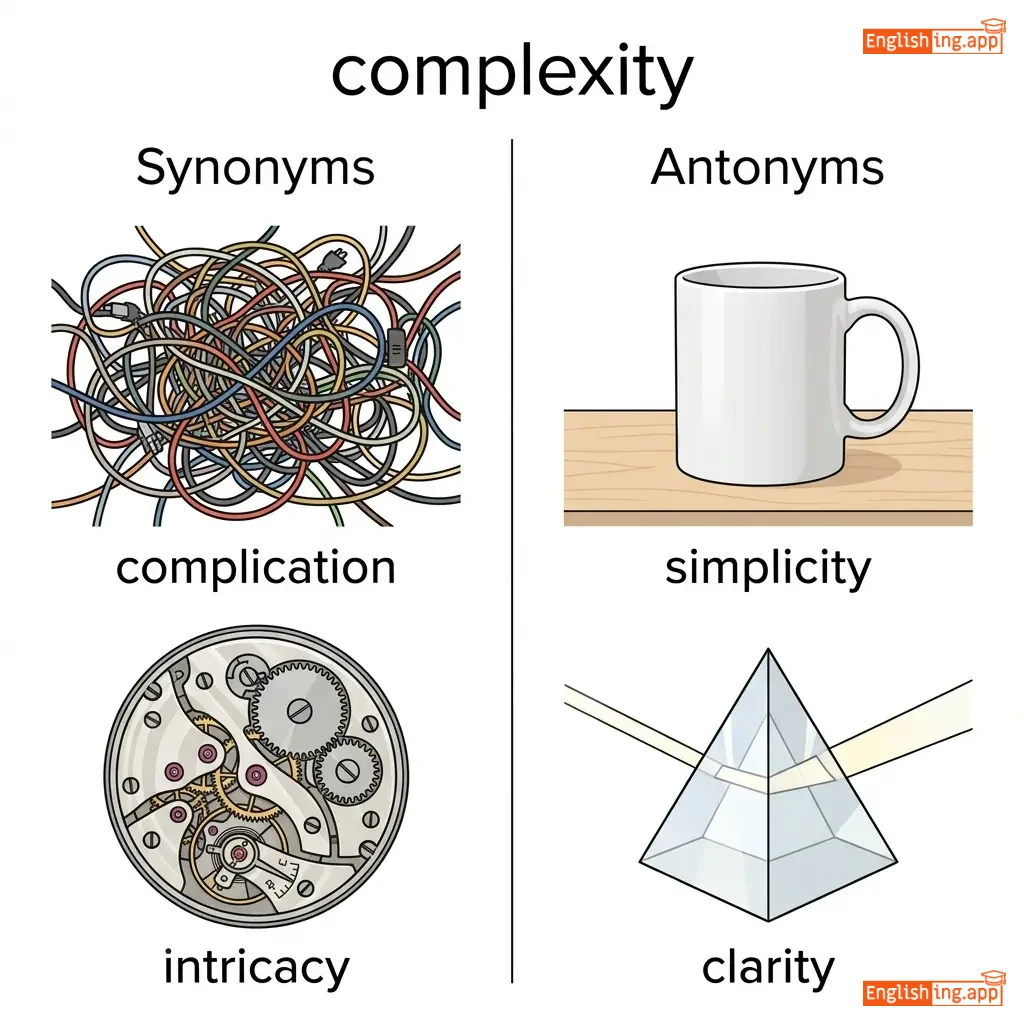
complication, intricacy, difficulty, sophistication, depth
••••••
|
simplicity, clarity, ease
••••••
|
problem complexity, system complexity, reduce complexity, increasing complexity
••••••
|
Сложность — это что-то трудное, так что сложность это трудность.
••••••
|
|
✅
••••••
|
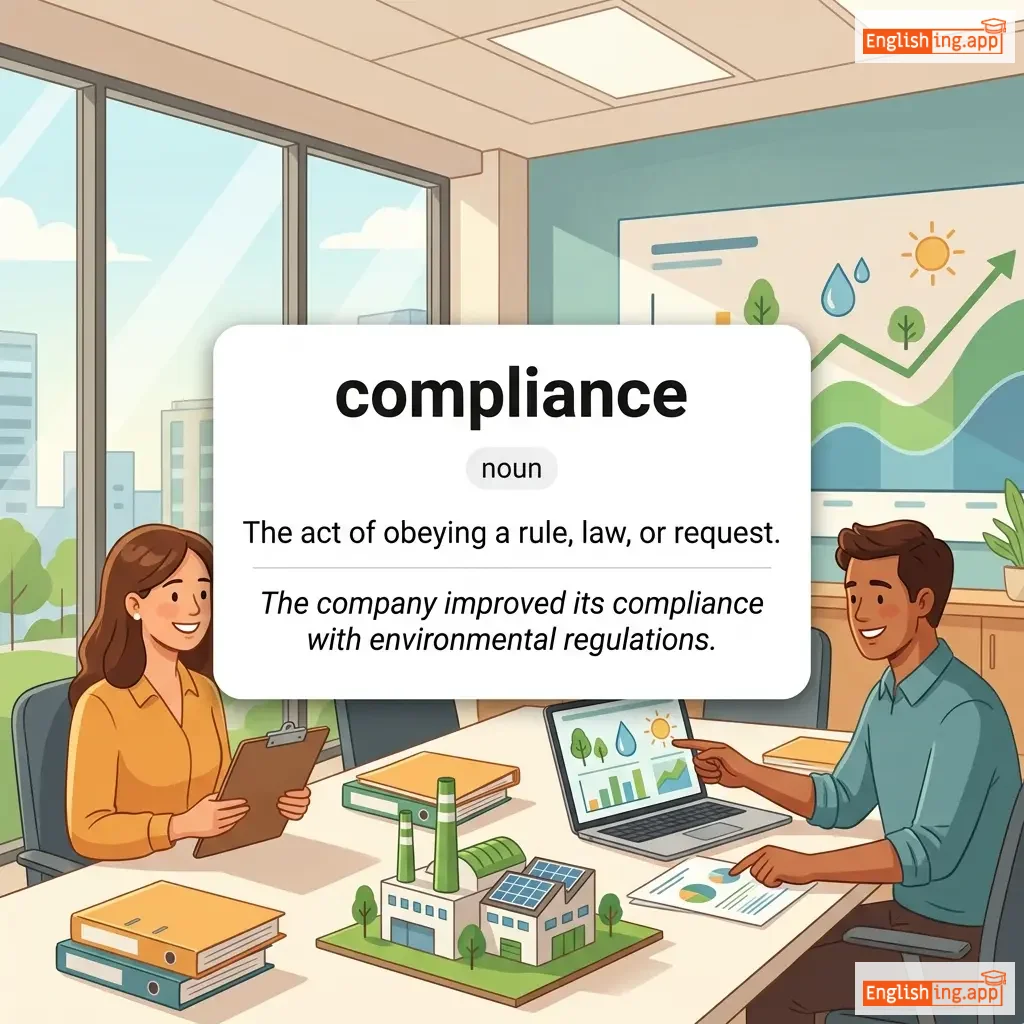
/kəmˈplaɪəns/
noun
(комплаенс)
••••••
|

|
соблюдение
soblyudeniye
••••••
|
- •••••• | - •••••• | - •••••• | - •••••• |
The act of obeying a rule, law, or request.
••••••
|
The company improved its compliance with environmental regulations. |
Компания улучшила соблюдение экологических нормативов.
Kompaniya uluchshila soblyudeniye ekologicheskikh normativov.
••••••
|
in compliance with |
Acting according to rules, laws, or standards.
••••••
|
в соответствии с
v sootvetstvii s
••••••
|
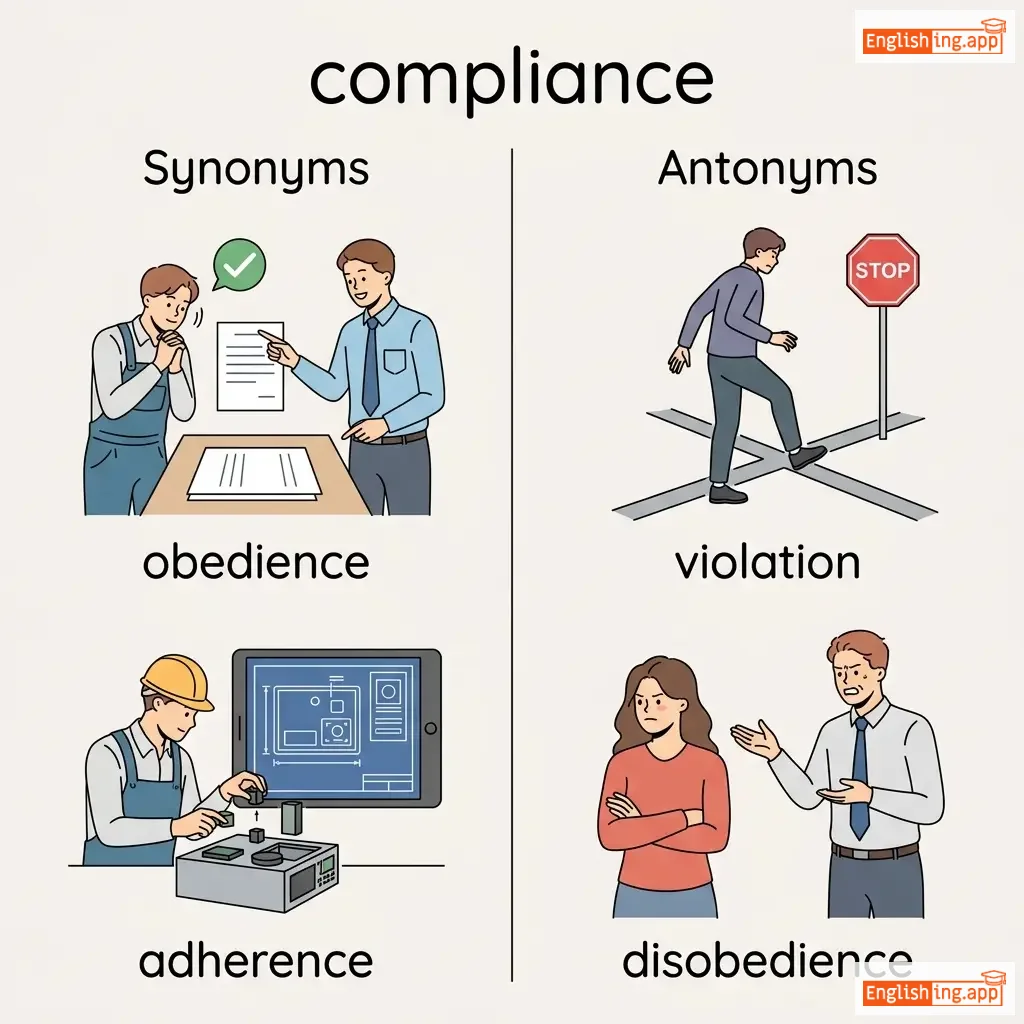
obedience, adherence, conformity, observance
••••••
|
violation, disobedience, defiance
••••••
|
legal compliance, regulatory compliance, ensure compliance, compliance check
••••••
|
Соблюдение - это следование законам и правилам ✅
••••••
|
|
🔀
••••••
|
/ˈkɒm.plɪ.keɪt/
verb
(kom-pli-keit)
••••••
|
- •••••• |
усложнять
uslozhnyat
••••••
|
complicated
kom-pli-kei-ted
••••••
|
complicated
kom-pli-kei-ted
••••••
|
complicates
kom-pli-keits
••••••
|
complicating
kom-pli-keiting
••••••
|
To make something more difficult or confusing.
••••••
|
The new rules will only complicate the process.
Новые правила только усложнят процесс.
••••••
|
Новые правила только усложнят процесс.
Novye pravila tol'ko uslozhnyat protsess.
••••••
|
- •••••• | - •••••• | - •••••• |
confuse, entangle, muddle, perplex
••••••
|
simplify, clarify, ease
••••••
|
complicate matters, complicate life, further complicate, unnecessarily complicate
••••••
|
Complicate означает сделать вещи более сложными, как запутанная головоломка.
••••••
|
|
🌀
••••••
|
/ˈkɒmplɪˌkeɪtɪd/
adjective
(komplikeɪtɪd)
••••••
|
- •••••• |
сложный
slozhnyy
••••••
|
- •••••• | - •••••• | - •••••• | - •••••• |
consisting of many interconnected parts; difficult to understand
••••••
|
The instructions for the machine are too complicated to follow. |
Инструкции к машине слишком сложные, чтобы их выполнить.
Instruktsii k mashine slishkom slozhnye, chtoby ikh vypolnit'.
••••••
|
make things complicated |
to make something unnecessarily difficult
••••••
|
усложнять вещи
uslozhnyat' veshchi
••••••
|
complex, difficult, intricate, involved, confusing
••••••
|
simple, easy, clear
••••••
|
complicated process, complicated situation, complicated issue, complicated relationship
••••••
|
Сложный = трудный, как сложные математические задачи.
••••••
|
|
⚠️
••••••
|
/ˌkɒmplɪˈkeɪʃən/
noun
(kom-plee-kei-shun)
••••••
|
- •••••• |
осложнение
oslozhnenie
••••••
|
- •••••• | - •••••• | - •••••• | - •••••• |
A problem or difficulty that makes a situation harder to deal with.
••••••
|
His illness led to serious complications after surgery. |
Его болезнь привела к серьезным осложнениям после операции.
Yego bolezn' privela k seryoznym oslozhneniyam posle operatsii.
••••••
|
- •••••• | - •••••• | - •••••• |
difficulty, obstacle, setback, issue, hindrance
••••••
|
solution, advantage, benefit
••••••
|
medical complication, unexpected complication, serious complication, complication arises
••••••
|
Осложнение = ситуация, которая становится сложнее из-за проблем.
••••••
|
|
✅
••••••
|
/kəmˈplaɪ/
verb
(kəmˈplaɪ)
••••••
|
- •••••• |
соблюдать
soblyudat'
••••••
|
complied
kəmˈplaɪd
••••••
|
complied
kəmˈplaɪd
••••••
|
complies
kəmˈplaɪz
••••••
|
complying
kəmˈplaɪɪŋ
••••••
|
to act in accordance with a rule, request, or law
••••••
|
All companies must comply with safety regulations.
Все компании должны соблюдать правила безопасности.
••••••
|
Все компании должны соблюдать правила безопасности.
Vse kompanii dolzhny soblyudat' pravila bezopasnosti.
••••••
|
comply with orders
следовать приказам
••••••
|
to follow instructions or commands
••••••
|
следовать приказам
sledovat' prikazam
••••••
|
obey, follow, conform, observe, respect
••••••
|
disobey, resist, ignore
••••••
|
comply with law, comply with order, comply with standard, comply fully
••••••
|
Соблюдать означает следовать правилам.
••••••
|
|
⚙️
••••••
|
/kəmˈpoʊnənt/
noun
(komponent)
••••••
|
- •••••• |
компонент
komponent
••••••
|
- •••••• | - •••••• | - •••••• | - •••••• |
a part or element of a larger whole, especially a machine or system
••••••
|
The engine is the most important component of the car. |
Двигатель является самой важной частью автомобиля.
Dvigatel' yavyayetsya samoy vazhnoy chast'yu avtomobilya.
••••••
|
- •••••• | - •••••• | - •••••• |
part, element, piece, unit, section
••••••
|
whole, entirety, totality
••••••
|
key component, essential component, electronic component, major component
••••••
|
Компонент - это часть системы, как часть компьютера.
••••••
|
|
✍️
••••••
|
/kəmˈpəʊz/
verb
(kompoz)
••••••
|
|
сочинять
sochinyat
••••••
|
composed
kompoziroval
••••••
|
composed
kompoziroval
••••••
|
composes
komponiruet
••••••
|
composing
komponiruyushchij
••••••
|
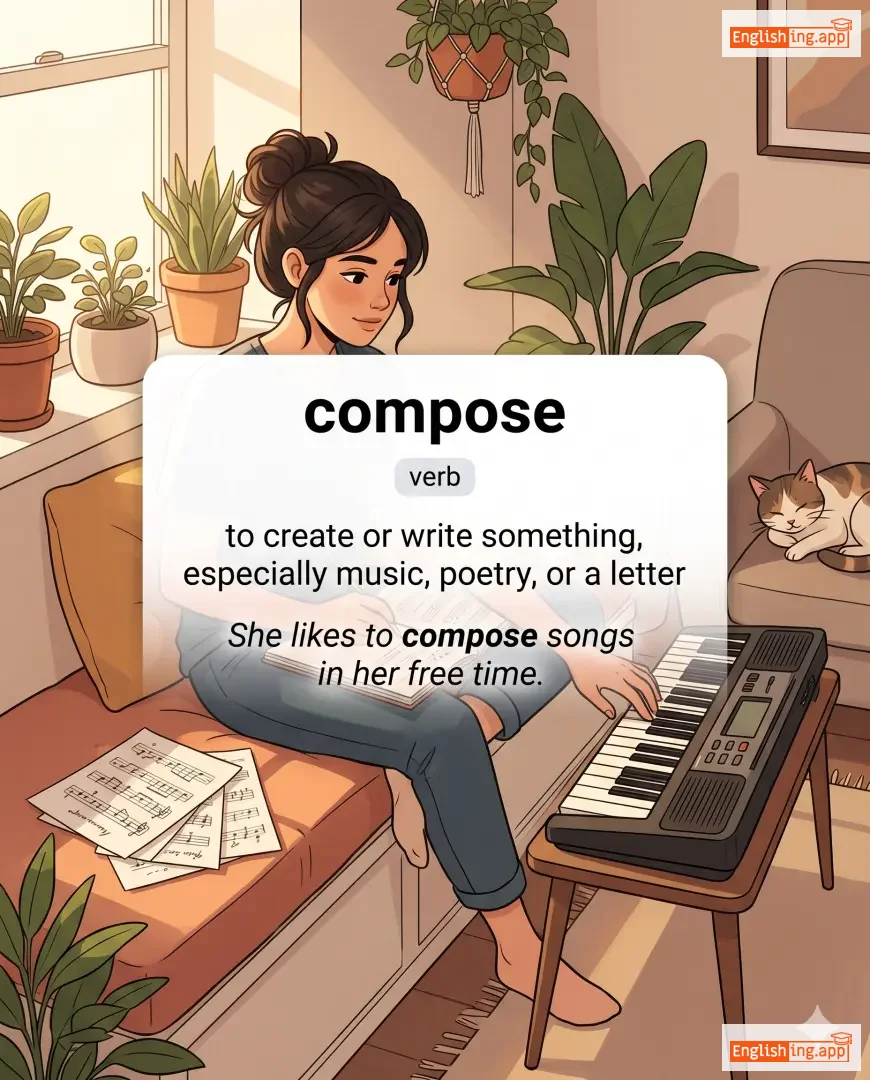
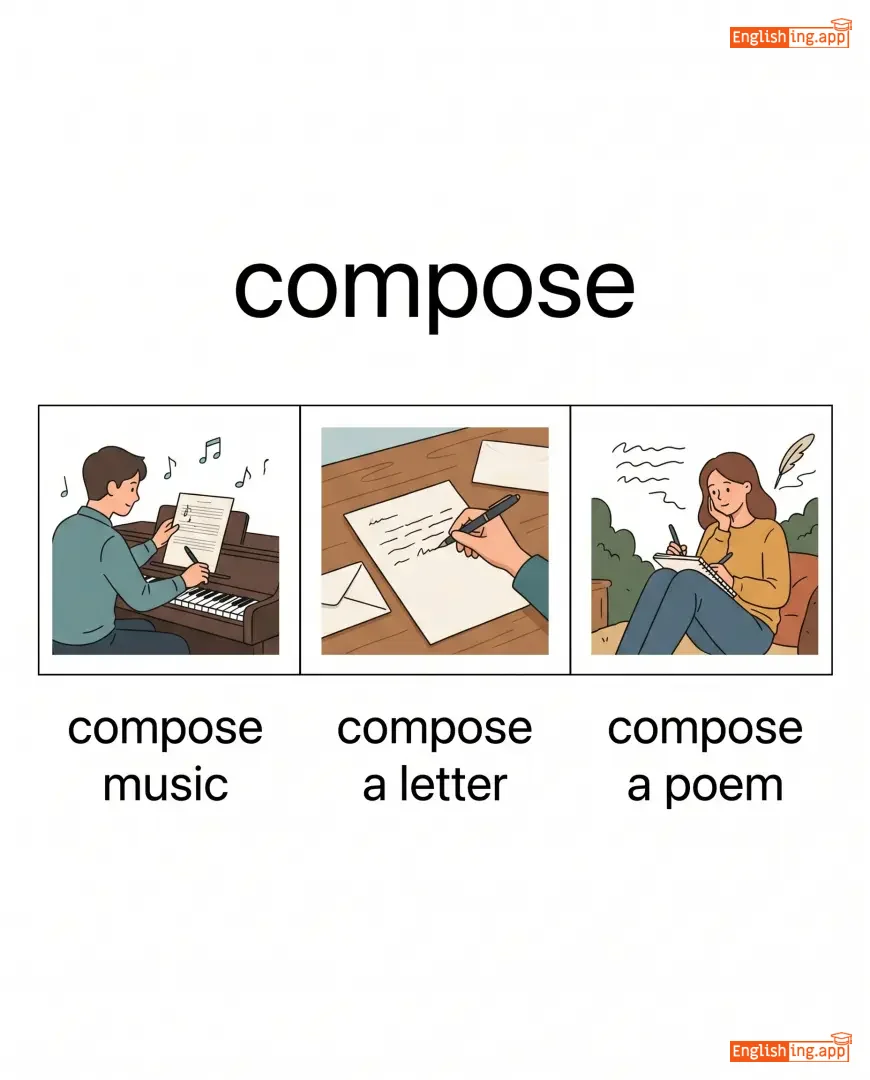
to create or write something, especially music, poetry, or a letter
••••••
|
She likes to compose songs in her free time.
Она любит сочинять песни в свое свободное время.
••••••
|
Она любит сочинять песни в свое свободное время.
Ona lyubit sochinyat' pesni v svoye svobodnoe vremya.
••••••
|
compose oneself
успокоиться
••••••
|
to calm down and control your emotions
••••••
|
успокоиться
uspokoit'sya
••••••
|
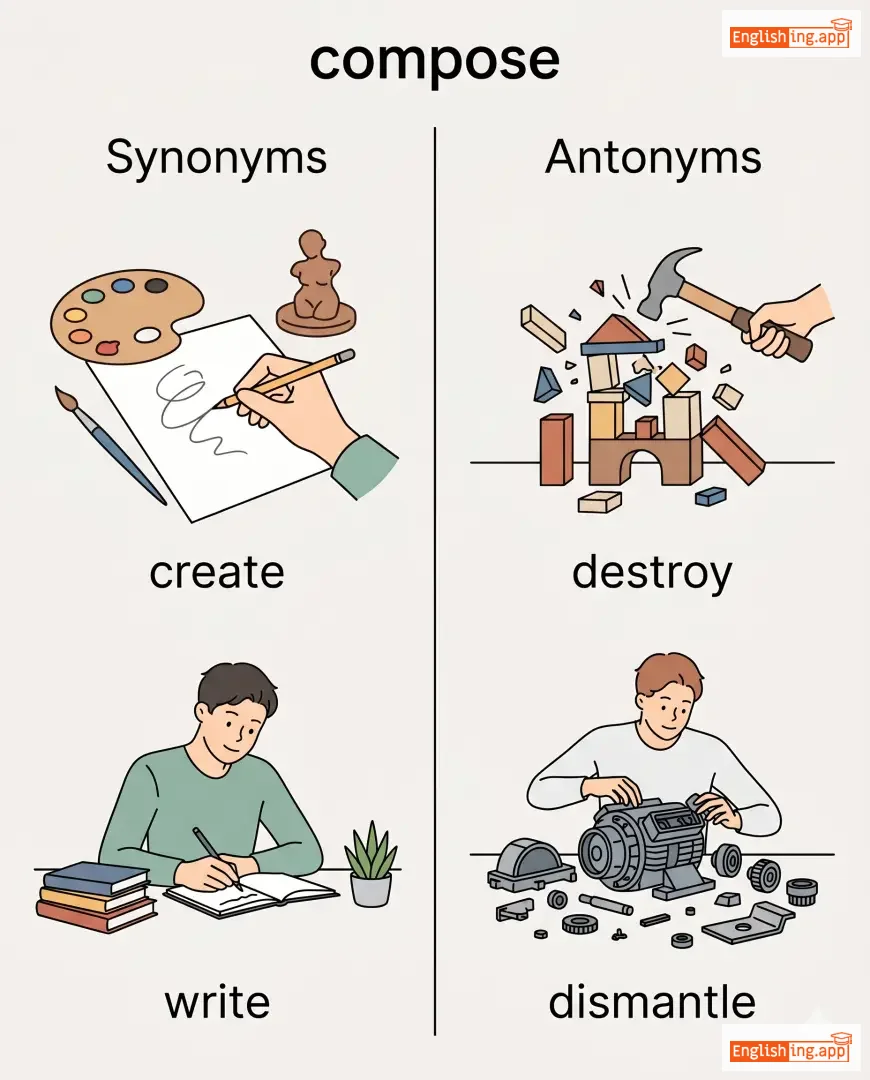
create, write, craft, construct, devise
••••••
|
destroy, dismantle, ruin
••••••
|
compose music, compose a letter, compose a poem, compose oneself
••••••
|
Сочинять музыку или стихи, так как мы сочиняем тексты на компьютере.
••••••
|
|
🎶
••••••
|
/kəmˈpəʊzə(r)/
noun
(kəmˈpəʊzə(r))
••••••
|
- •••••• |
композитор
kompozitor
••••••
|
- •••••• | - •••••• | - •••••• | - •••••• |
a person who writes music, especially classical music
••••••
|
The composer is working on a new symphony.
Композитор работает над новой симфонией.
••••••
|
Композитор работает над новой симфонией.
Kompozitor rabotaet nad novoy simfoniey.
••••••
|
- •••••• | - •••••• | - •••••• |
musician, songwriter, arranger, conductor
••••••
|
listener, audience
••••••
|
music composer, famous composer, classical composer
••••••
|
Композитор = тот, кто сочиняет музыку
••••••
|
|
🎶
••••••
|
/ˌkɒmpəˈzɪʃən/
noun
(kəmˈpəzɪʃən)
••••••
|
- •••••• |
композиция
kompozitsiya
••••••
|
- •••••• | - •••••• | - •••••• | - •••••• |
the act of creating a piece of writing, music, or art; the way parts are arranged
••••••
|
Her composition won first prize in the contest. |
Ее композиция выиграла первый приз на конкурсе.
Eyo kompozitsiya viyigrala pervyy priz na konkurse.
••••••
|
- •••••• | - •••••• | - •••••• |
essay, creation, arrangement, piece, structure
••••••
|
disorder, disorganization
••••••
|
musical composition, written composition, composition skills, composition contest
••••••
|
Композиция - это создание чего-то, как написание композиции на экзамене.
••••••
|
|
⚗️
••••••
|
/ˈkɑːmpaʊnd/
noun
(kompaund)
••••••
|
- •••••• |
соединение / огороженная территория
soedinenie / ogorozhennaya teritoriya
••••••
|
- •••••• | - •••••• | - •••••• | - •••••• |
a thing that is composed of two or more separate elements; an enclosed area with buildings
••••••
|
The scientist studied the chemical compound in the lab.
Учёный изучал химическое соединение в лаборатории.
••••••
|
Учёный изучал химическое соединение в лаборатории.
Uchyonnyy izuchal khimicheskoe soedinenie v laboratorii.
••••••
|
compound interest
сложный процент
••••••
|
interest calculated on both the initial principal and the accumulated interest
••••••
|
сложный процент
slozhnyy protsent
••••••
|
mixture, combination, blend, complex
••••••
|
element, simple
••••••
|
chemical compound, compound interest, compound sentence
••••••
|
Сложный процент работает как соединение, которое растет со временем
••••••
|
|
🧠
••••••
|
/ˌkɒmprɪˈhɛnd/
verb
(kompriénd)
••••••
|
- •••••• |
понимать
ponimat
••••••
|
comprehended
kompriénded
••••••
|
comprehended
kompriénded
••••••
|
comprehends
kompriénds
••••••
|
comprehending
kompriénding
••••••
|
to understand or grasp the meaning of something
••••••
|
It is difficult to comprehend the scale of the disaster.
Трудно понять масштаб катастрофы.
••••••
|
Трудно понять масштаб катастрофы.
Trudno ponyat' masshtab katastrofy.
••••••
|
beyond comprehension
за пределами понимания
••••••
|
something too difficult to understand
••••••
|
за пределами понимания
za predelami ponimaniya
••••••
|
understand, grasp, perceive, fathom, apprehend
••••••
|
misunderstand, confuse
••••••
|
comprehend fully, difficult to comprehend, unable to comprehend
••••••
|
Comprehend означает понимать, как когда ты пытаешься понять, что происходит в фильме.
••••••
|
|
📚
••••••
|
/ˌkɒm.prɪˈhen.sɪv/
adjective
(kom-pri-hen-siv)
••••••
|
|
полный; всесторонний; комплексный
polnyy; vsetsoronniy; kompleksnyy
••••••
|
- •••••• | - •••••• | - •••••• | - •••••• |
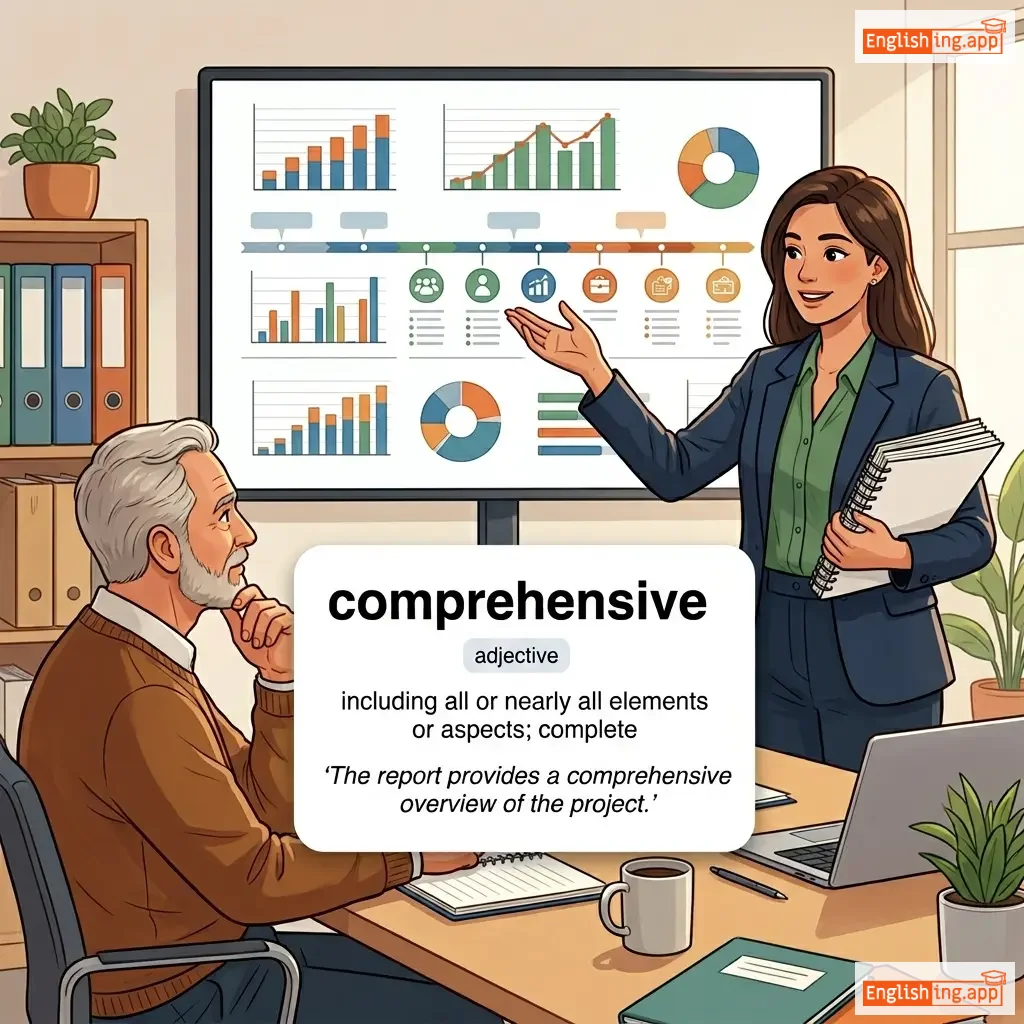
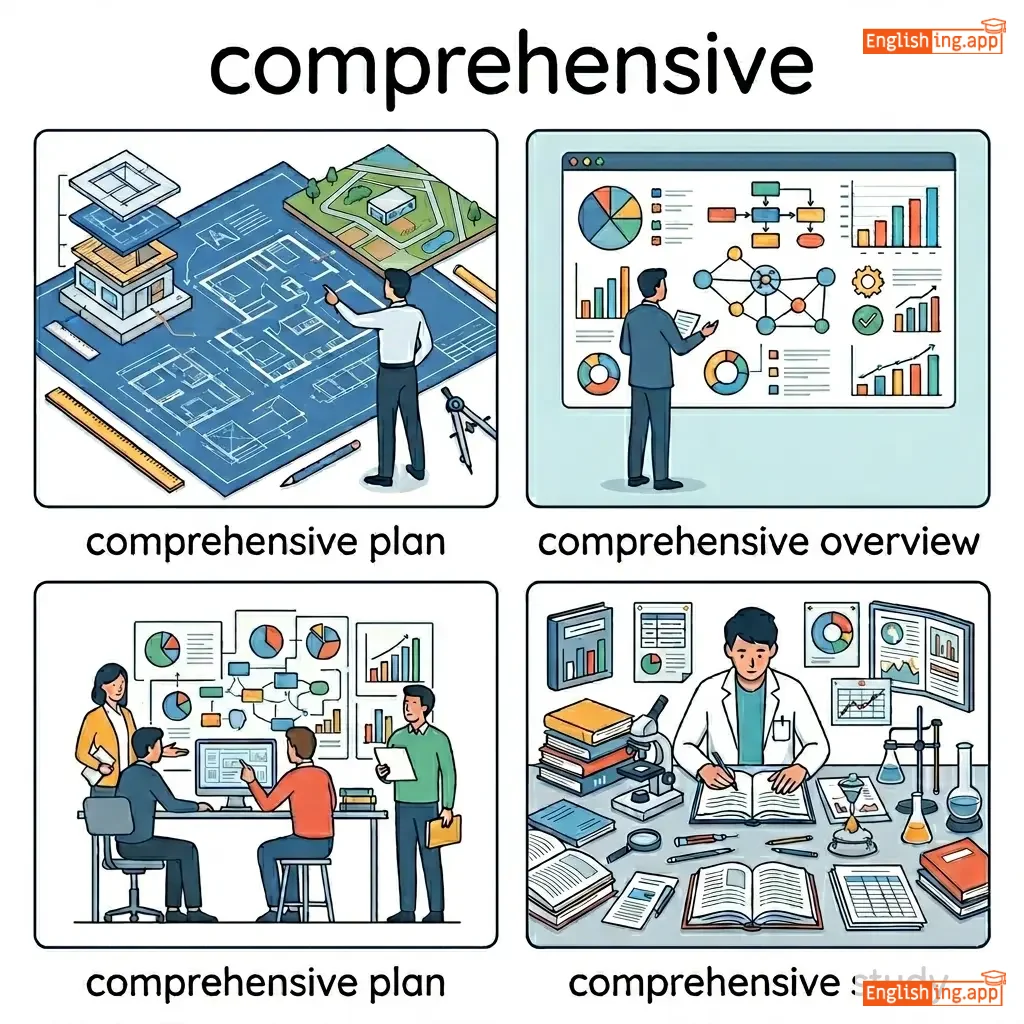
complete and including everything that is necessary; covering a wide range of topics
••••••
|
The report provides a comprehensive analysis of the market trends. |
Отчет представляет собой всесторонний анализ рыночных тенденций.
Otchet predstavljayet soboy vsetsoronnyy analiz rynokh tendentsiy.
••••••
|
- •••••• | - •••••• | - •••••• |
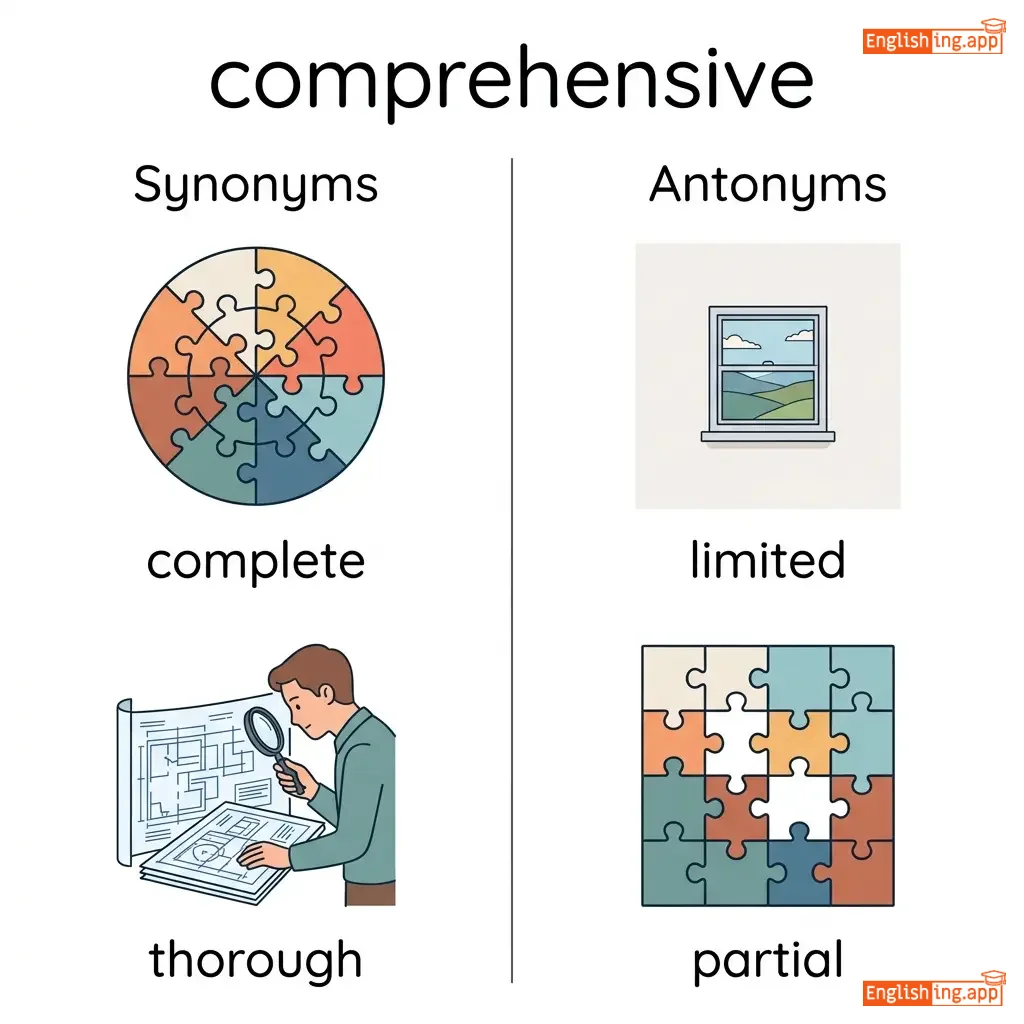
complete, thorough, extensive, all-inclusive
••••••
|
partial, incomplete, limited, narrow
••••••
|
comprehensive study, comprehensive report, comprehensive coverage
••••••
|
Когда ты понимаешь все, ты видишь картину целиком.
••••••
|
|
🧩
••••••
|
/kəmˈpraɪz/
verb
(kompraiz)
••••••
|
- •••••• |
состоять
sostoyat
••••••
|
comprised
kompraist
••••••
|
comprised
kompraist
••••••
|
comprises
kompraiz
••••••
|
comprising
kompraizing
••••••
|
To consist of or be made up of something.
••••••
|
The committee comprises five members.
Комитет состоит из пяти членов.
••••••
|
Комитет состоит из пяти членов.
Komitet sostoyit iz pyati chlenov.
••••••
|
- •••••• | - •••••• | - •••••• |
consist of, include, contain, encompass
••••••
|
exclude, lack
••••••
|
comprise of, committee comprises, group comprises, comprises elements
••••••
|
Как комитет, состоящий из участников, состоит из чего-то
••••••
|
|
⚖️
••••••
|
/ˈkɒmprəmaɪz/
noun, verb
(kompromis)
••••••
|

|
компромисс
kompromiss
••••••
|
compromised
kompromitirovannyj
••••••
|
compromised
kompromitirovannyj
••••••
|
compromises
kompromituet
••••••
|
compromising
komprometiruyushchij
••••••
|
A settlement of differences in which each side makes concessions; or to weaken or put at risk.
••••••
|
They reached a compromise after long negotiations.
Oни достигли компромисса после долгих переговоров.
••••••
|
Oни достигли компромисса после долгих переговоров.
Oni dostigli kompromissa posle dolgikh peregovorov.
••••••
|
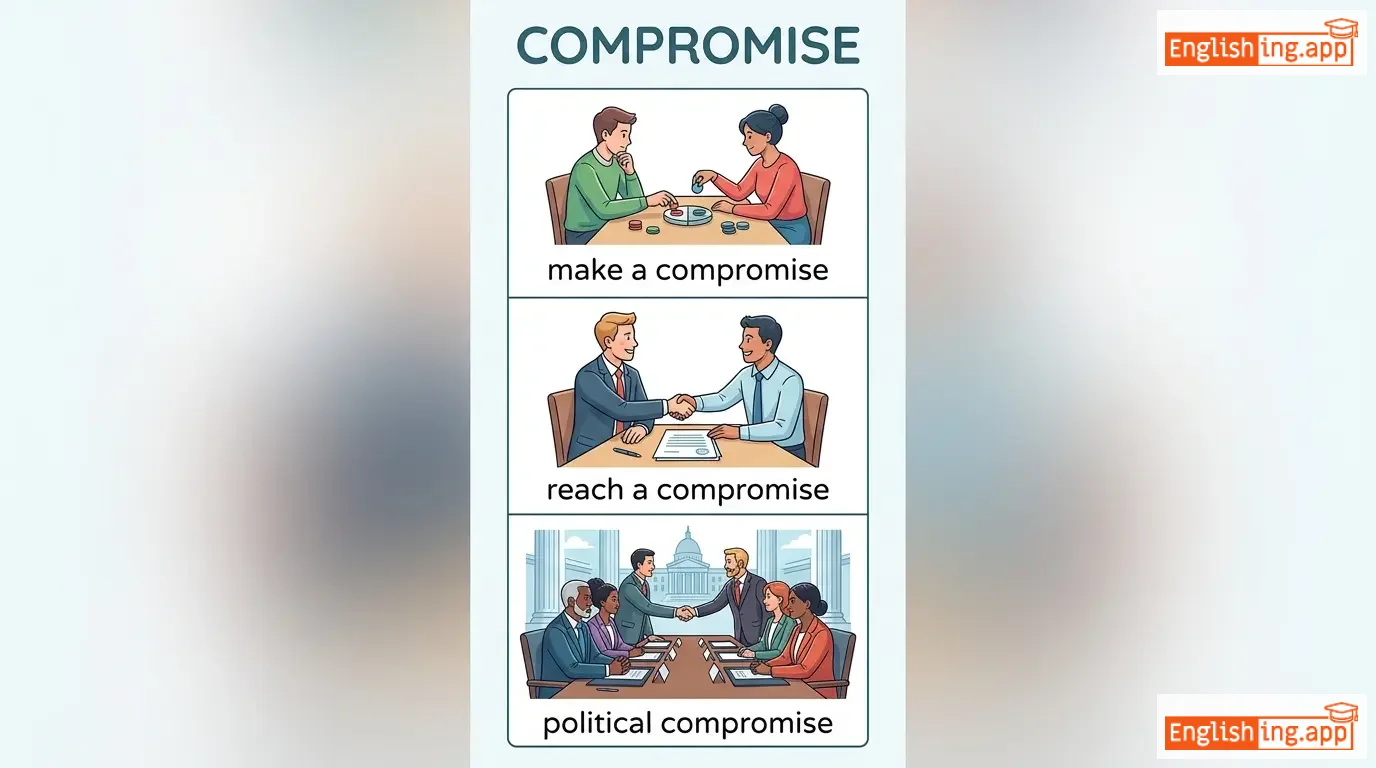
reach a compromise
dostigat' kompromissa
••••••
|
To come to an agreement by mutual concession.
••••••
|
достигать компромисса
dostigat' kompromissa
••••••
|
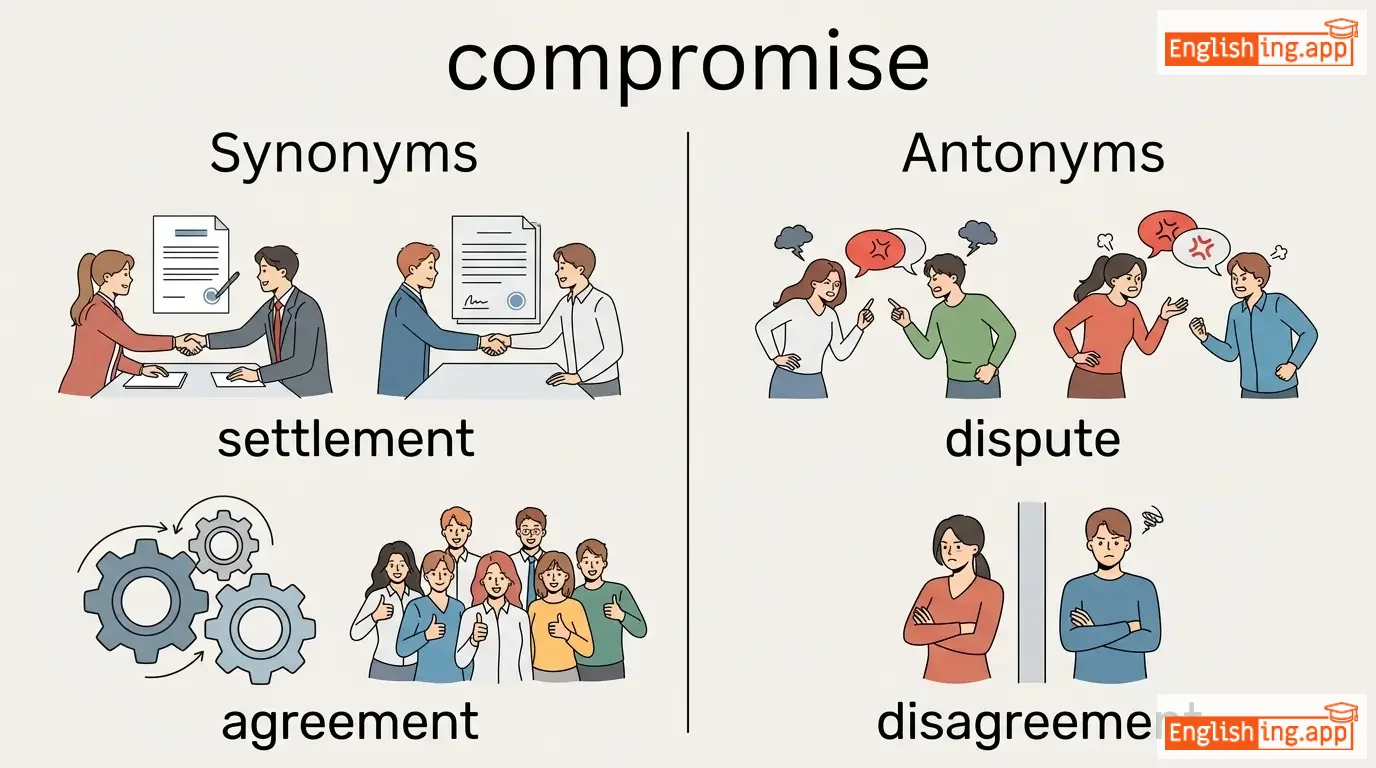
settlement, agreement, deal, concession
••••••
|
dispute, disagreement
••••••
|
make a compromise, reach a compromise, political compromise, compromise solution
••••••
|
Компромисс — соглашение, найденное после уступок
••••••
|
|
📘
••••••
|
/kəmˈpʌlsəri/
adjective
(kompulsory)
••••••
|
- •••••• |
обязательный
obyazatel'nyy
••••••
|
- •••••• | - •••••• | - •••••• | - •••••• |
Required by law or a rule; obligatory.
••••••
|
Wearing seat belts is compulsory in most countries. |
Ношение ремней безопасности обязательно в большинстве стран.
Noshenie remney bezopasnosti obyazatel'no v bol'shinstve stran.
••••••
|
- •••••• | - •••••• | - •••••• |
mandatory, required, obligatory, necessary
••••••
|
optional, voluntary, discretionary
••••••
|
compulsory education, compulsory subject, compulsory service
••••••
|
Compulsory = обязательный, как обязательный предмет в школе.
••••••
|
|
💻
••••••
|
/kəmˈpjuːt/
verb
(kəmˈpjut)
••••••
|
- •••••• |
вычислить
vychislit
••••••
|
computed
kəmˈpjutɪd
••••••
|
computed
kəmˈpjutɪd
••••••
|
computes
kəmˈpjuːts
••••••
|
computing
kəmˈpjuːtɪŋ
••••••
|
To calculate or determine by using a computer or mathematical methods.
••••••
|
The software can compute the total cost in seconds.
Программное обеспечение может вычислить общую стоимость за секунды.
••••••
|
Программное обеспечение может вычислить общую стоимость за секунды.
Programmnoe obespechenie mozhet vychislit' obshchuyu stoimost' za sekundy.
••••••
|
compute the odds
вычислить вероятность
••••••
|
to calculate the probability of an outcome
••••••
|
вычислить вероятность
vychislit' veroyatnost'
••••••
|
calculate, reckon, estimate, process, figure out
••••••
|
guess, ignore
••••••
|
compute result, compute data, compute power, compute value
••••••
|
Компьютер может вычислить что-то быстро, просто compute!
••••••
|
|
💻
••••••
|
/kəmˈpjuːtə(r)/
noun
(kom-pyu-ter)
••••••
|
- •••••• |
компьютер
komp'yuter
••••••
|
- •••••• | - •••••• | - •••••• | - •••••• |
an electronic device for storing and processing data
••••••
|
I bought a new computer for my office work.
Я купил новый компьютер для работы в офисе.
••••••
|
Я купил новый компьютер для работы в офисе.
Ya kupil novyy komp'yuter dlya raboty v ofise.
••••••
|
- •••••• | - •••••• | - •••••• |
PC, laptop, desktop, machine, device
••••••
|
manual work, paper-based system
••••••
|
personal computer, computer program, computer science, computer system
••••••
|
Компьютер используется для работы, и название говорит само за себя.
••••••
|
|
🤫
••••••
|
/kənˈsiːl/
verb
(кэнˈсил)
••••••
|
- •••••• |
скрывать
skryvat
••••••
|
concealed
кэнˈсилд
••••••
|
concealed
кэнˈсилд
••••••
|
conceals
кэнˈсилз
••••••
|
concealing
кэнˈсилинг
••••••
|
to hide something or keep it secret
••••••
|
He tried to conceal his disappointment behind a smile.
Хи трайд ту кэнˈсил хиз дисапо́интмент бихайнд а смайл.
••••••
|
Он попытался скрыть свое разочарование за улыбкой.
On popytalsya skryt' svoe razocharovanie za ulybkoy.
••••••
|
conceal the truth
кэнˈсил зэ труθ
••••••
|
to hide or withhold the truth from others
••••••
|
скрывать правду
skryvat' pravdu
••••••
|
hide, cover, disguise, mask, secrete
••••••
|
reveal, expose, uncover
••••••
|
conceal identity, conceal weapon, conceal fact, conceal smile
••••••
|
скрывать - как прятать что-то под покрывалом
••••••
|
|
🙇
••••••
|
/kənˈsiːd/
verb
(кэнˈсиːд)
••••••
|
- •••••• |
признавать
priznavat
••••••
|
conceded
кэнˈсиːдэд
••••••
|
conceded
кэнˈсиːдэд
••••••
|
concedes
кэнˈсиːдз
••••••
|
conceding
кэнˈсиːдɪнг
••••••
|
to admit something is true or valid, often reluctantly
••••••
|
She finally conceded that she was wrong.
Она наконец признала, что ошибалась.
••••••
|
Она наконец признала, что ошибалась.
Ona nakonec prizdala, chto oshibalas'.
••••••
|
concede defeat
признать поражение
••••••
|
to admit that you have lost
••••••
|
признать поражение
priznat' porazhenie
••••••
|
admit, acknowledge, grant, allow, yield
••••••
|
deny, refuse, reject
••••••
|
concede defeat, concede point, concede ground, concede goal
••••••
|
Concede означает признать поражение – она признала, что ошибалась.
••••••
|
|
💡
••••••
|
/kənˈsiːv/
verb
(kon-siv)
••••••
|
- •••••• |
задумать, забеременеть
zaduemat', zaberemenet'
••••••
|
conceived
kon-sivd
••••••
|
conceived
kon-sivd
••••••
|
conceives
kon-sivs
••••••
|
conceiving
kon-sivin
••••••
|
to form or imagine an idea in the mind; to become pregnant
••••••
|
It is hard to conceive how such an idea could succeed.
Трудно представить, как такая идея может быть успешной.
••••••
|
Трудно представить, как такая идея может быть успешной.
Trudno predstavit', kak takaya ideya mozhet byt' uspeshnoy.
••••••
|
conceive a plan
задумать план
••••••
|
to think of or develop a plan
••••••
|
задумать план
zaduemat' plan
••••••
|
imagine, envision, devise, formulate, originate
••••••
|
misunderstand, overlook, neglect
••••••
|
conceive an idea, conceive a plan, conceive child, conceive possibility
••••••
|
conceive значит задумать идею или план.
••••••
|
|
🎯
••••••
|
/ˈkɒnsəntreɪt/
verb
(konsəntreɪt)
••••••
|
- •••••• |
сосредоточиться
sosredotochitsya
••••••
|
concentrated
konsəntreɪtɪd
••••••
|
concentrated
konsəntreɪtɪd
••••••
|
concentrates
konsəntreɪts
••••••
|
concentrating
konsəntreɪtɪŋ
••••••
|
to focus all one's attention or mental effort on a particular object or activity
••••••
|
She tried to concentrate on her studies despite the noise.
Она пыталась сосредоточиться на учёбе, несмотря на шум.
••••••
|
Она пыталась сосредоточиться на учёбе, несмотря на шум.
Ona pytalas' sosredotochitsya na uchebe, nesmotrya na shum.
••••••
|
concentrate on
сосредоточиться на
••••••
|
to give your full attention to something
••••••
|
сосредоточиться на
sosredotochitsya na
••••••
|
focus, direct, center, apply, dedicate
••••••
|
distract, neglect
••••••
|
concentrate on work, concentrate efforts, concentrate deeply, concentrate hard
••••••
|
Чтобы быть успешным, нужно сосредоточиться. 🎯
••••••
|
|
🎯
••••••
|
/ˌkɒnsnˈtreɪʃən/
noun
(kənˈsɛntrəʃən)
••••••
|
|
концентрация
kontsentratsiya
••••••
|
- •••••• | - •••••• | - •••••• | - •••••• |
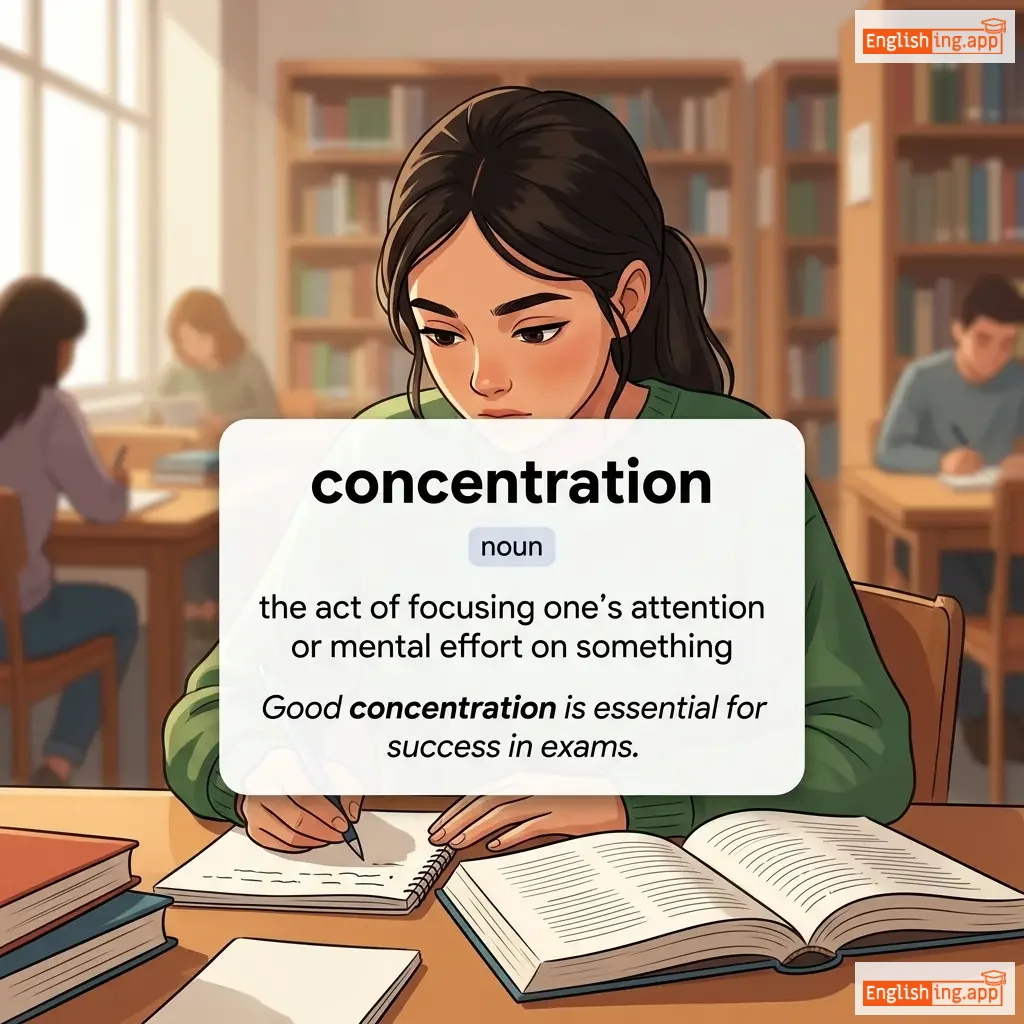
the act of focusing one's attention or mental effort on something
••••••
|
Good concentration is essential for success in exams.
Хорошая концентрация важна для успеха на экзаменах.
••••••
|
Хорошая концентрация важна для успеха на экзаменах.
Khoroshaya kontsentratsiya vazhna dlya uspekha na ekzamenakh.
••••••
|
lose concentration
потерять концентрацию
••••••
|
to be distracted and unable to focus
••••••
|
потерять концентрацию
poteryat' kontsentratsiyu
••••••
|
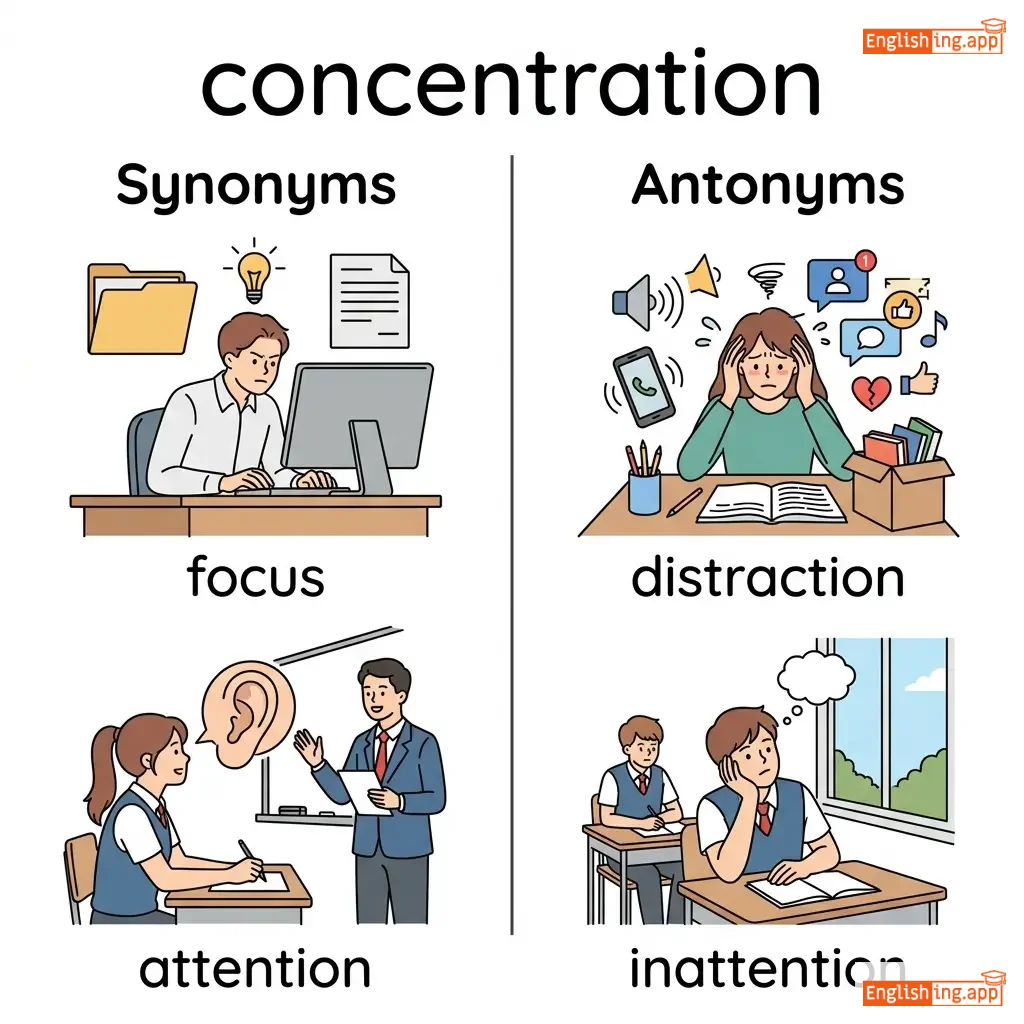
focus, attention, absorption, mindfulness
••••••
|
distraction, inattention
••••••
|
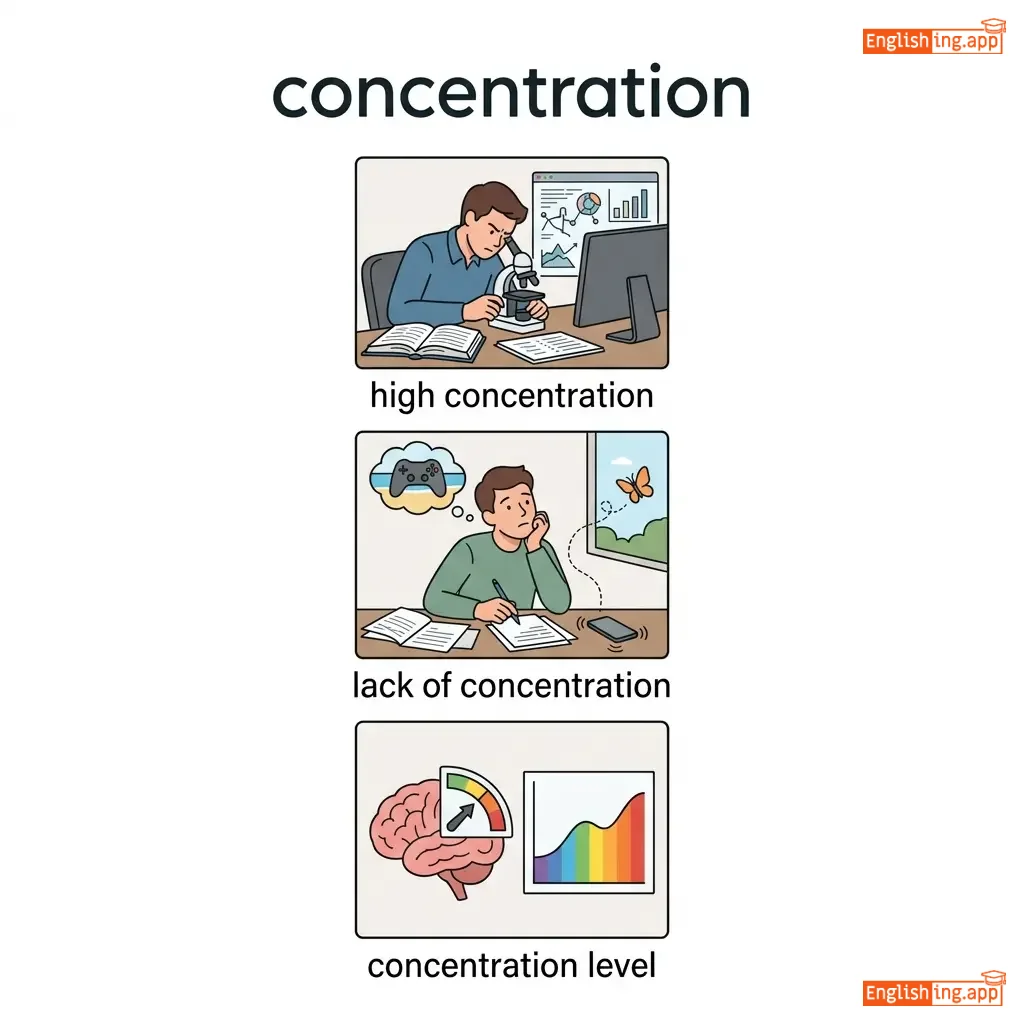
high concentration, lack of concentration, concentration level, concentration power
••••••
|
Концентрация: как фокус в экзамене - точно в цель!
••••••
|
|
💡
••••••
|
/ˈkɑn.sept/
noun
(kənˈsɛpt)
••••••
|
|
концепция; общее представление
kontseptsiya, obshchee predstavleniye
••••••
|
- •••••• | - •••••• | - •••••• | - •••••• |
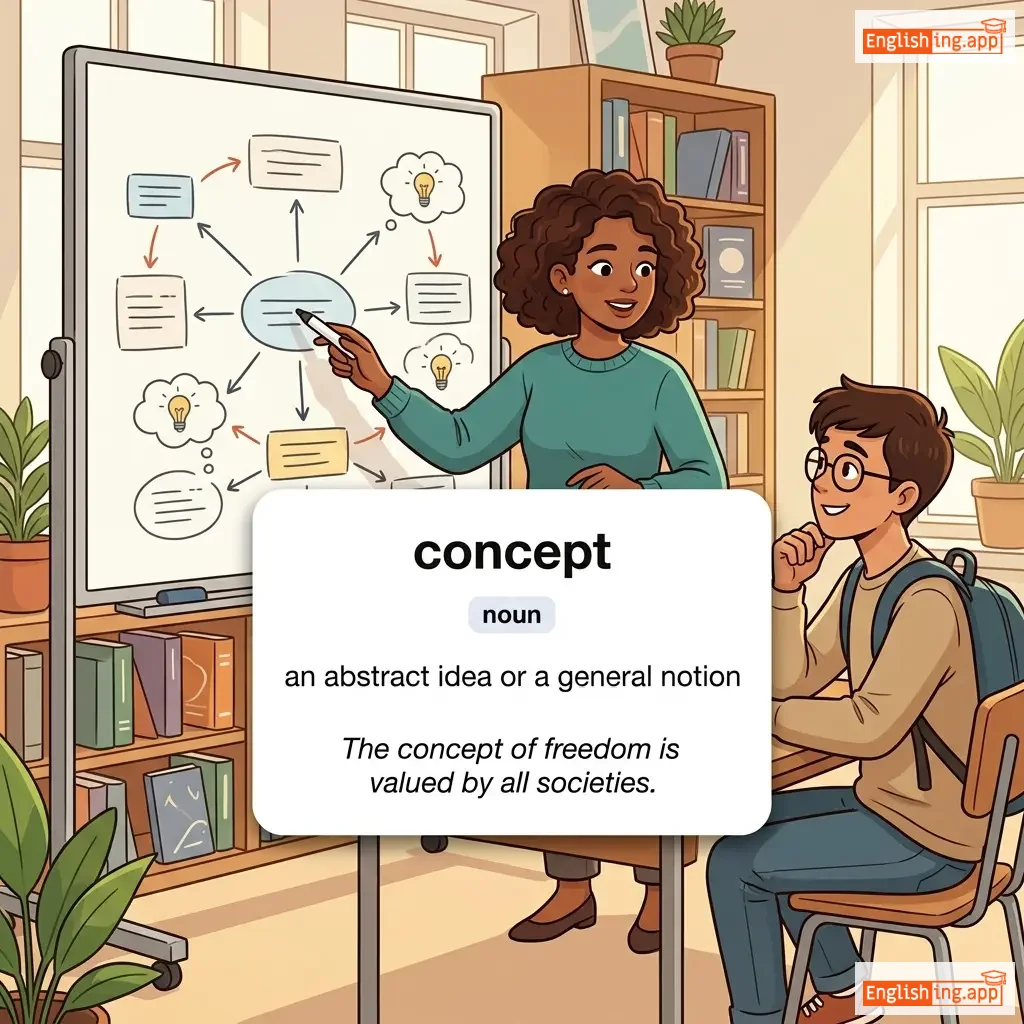
an abstract idea; a general notion or understanding of something; a plan or intention
••••••
|
The concept of democracy is based on the idea that people should govern themselves. |
Концепция демократии основывается на идее, что люди должны управлять собой.
Kontseptsiya demokratii osnovyvaetsya na ideye, chto lyudi dolzhny upravlyat' soboy.
••••••
|
- •••••• | - •••••• | - •••••• |
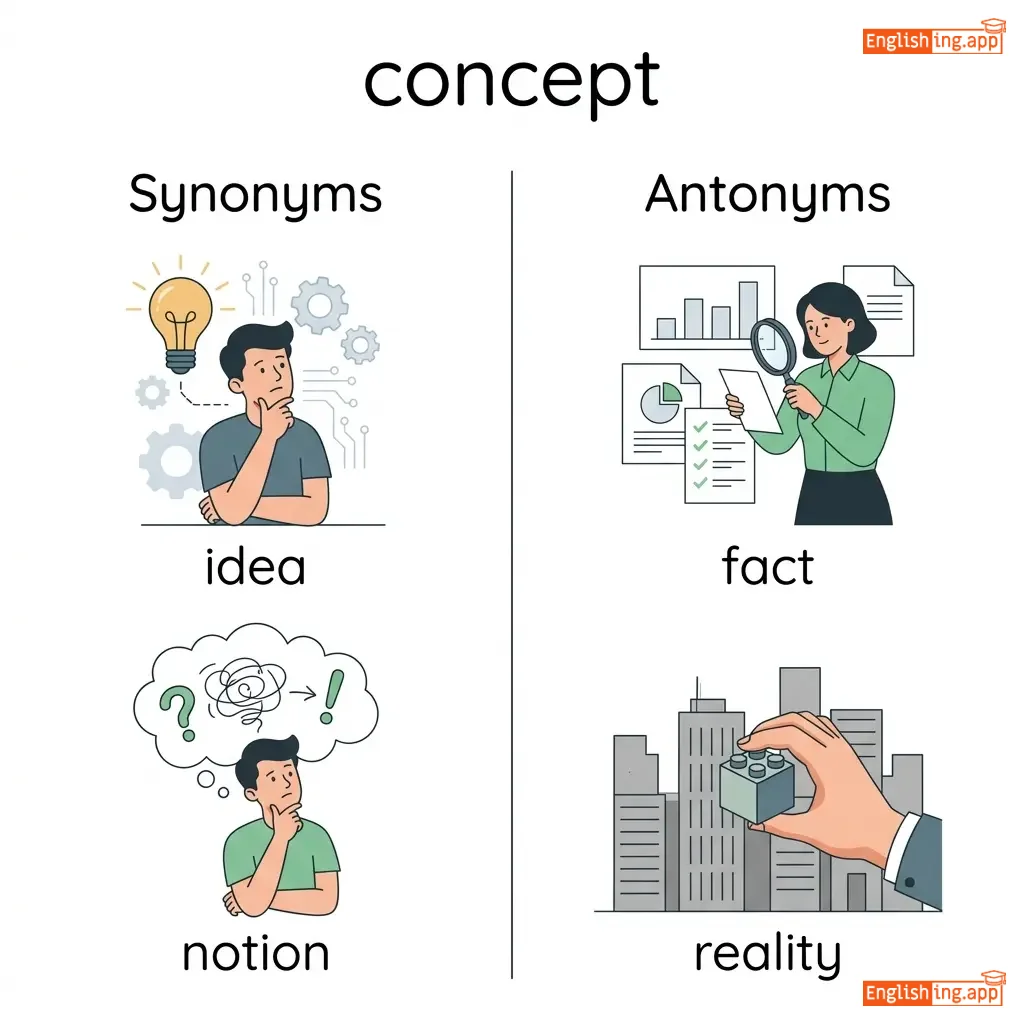
idea, notion, thought, principle
••••••
|
reality, fact, concrete example
••••••
|
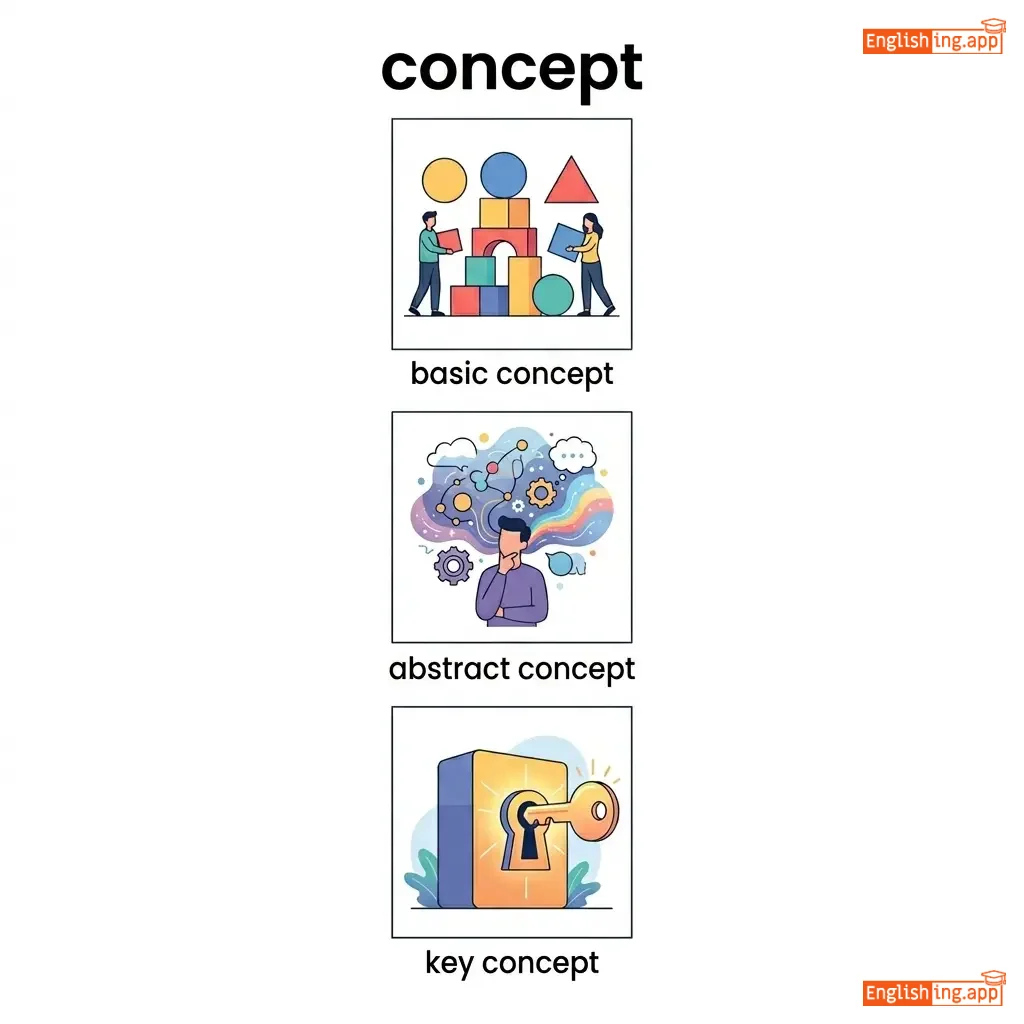
basic concept, new concept, concept development
••••••
|
Русский – концепция демократии как идея самоуправления
••••••
|
|
🧠
••••••
|
/kənˈsɛpʃən/
noun
(kənˈsɛpʃən)
••••••
|
- •••••• |
концепция, зачатие
kontseptsiya, zachatye
••••••
|
- •••••• | - •••••• | - •••••• | - •••••• |
the forming or understanding of an idea; the act of conceiving a child
••••••
|
Her conception of the project was very different from ours. |
Её концепция проекта сильно отличалась от нашей.
Eyo kontseptsiya proyekta sil'no otlichalas' ot nashej.
••••••
|
from conception to completion |
from the beginning of an idea to its final result
••••••
|
от концепции до завершения
ot kontseptcii do zaversheniya
••••••
|
idea, notion, understanding, perception
••••••
|
misunderstanding, misconception
••••••
|
original conception, artistic conception, false conception
••••••
|
Conception означает идею, а для ребёнка это начало новой жизни 🧠
••••••
|
|
😟
••••••
|
/kənˈsɜːrn/
noun/verb
(kənˈsɜːrn)
••••••
|
- •••••• |
беспокойство, предмет беспокойства
bespokoystvo, predmet bespokoystva
••••••
|
concerned
kənˈsɜːrnd
••••••
|
concerned
kənˈsɜːrnd
••••••
|
concerns
kənˈsɜːrns
••••••
|
concerning
kənˈsɜːrɪŋ
••••••
|
to relate to or affect; a matter of worry or interest
••••••
|
Environmental issues concern all of us.
Экологические проблемы волнуют нас всех.
••••••
|
Экологические проблемы волнуют нас всех.
Ekologicheskie problemy volnuyut nas vsekh.
••••••
|
of concern
по поводу беспокойства
••••••
|
something that causes worry or interest
••••••
|
по поводу беспокойства
po povodu bespokoystva
••••••
|
worry, anxiety, interest, care, matter
••••••
|
indifference, unconcern
••••••
|
main concern, express concern, raise concern, serious concern
••••••
|
Concern означает беспокойство, как когда ты переживаешь за экологию 🌍
••••••
|
|
😟
••••••
|
/kənˈsɜːnd/
adjective
(кэнсёрнд)
••••••
|
- •••••• |
обеспокоенный
obespokoennyi
••••••
|
- •••••• | - •••••• | - •••••• | - •••••• |
worried or anxious about something; involved or interested in something
••••••
|
She was concerned about her mother's health. |
Она была обеспокоена здоровьем своей матери.
Ona byla obespokoena zdorov'em svoei materi.
••••••
|
concerned with |
interested in or related to
••••••
|
озабоченный чем-то
ozabochennyi chem-to
••••••
|
worried, anxious, troubled, uneasy
••••••
|
unconcerned, indifferent
••••••
|
concerned about, deeply concerned, concerned parents, concerned citizens
••••••
|
Обеспокоенный значит тревожиться, как когда переживаешь за здоровье своей матери.
••••••
|
|
🎵
••••••
|
/ˈkɒnsət/
noun
(кОнсерт)
••••••
|
- •••••• |
концерт
kontsert
••••••
|
- •••••• | - •••••• | - •••••• | - •••••• |
A musical performance given by one or more singers or musicians.
••••••
|
We went to a concert last night and enjoyed the live music. |
Мы пошли на концерт вчера вечером и наслаждались живой музыкой.
My poshli na kontsert vchera vecherom i naslazhdalis' zhivoy muzykoy.
••••••
|
in concert |
working together in agreement or harmony
••••••
|
в концерте
v kontserte
••••••
|
show, performance, recital, gig, event
••••••
|
silence, solitude
••••••
|
live concert, rock concert, attend a concert, concert hall
••••••
|
Концерт - это событие, где люди наслаждаются музыкой вместе.
••••••
|
|
🤲
••••••
|
/kənˈsɛʃən/
noun
(kənˈsɛʃən)
••••••
|
- •••••• |
уступка
ustupka
••••••
|
- •••••• | - •••••• | - •••••• | - •••••• |
something that is granted, especially in response to demands; a compromise
••••••
|
The company made several concessions during the negotiations. |
Компания сделала несколько уступок в ходе переговоров.
Kompaniya sdelala neskol'ko ustupok v khode peregovorov.
••••••
|
make concessions |
to give up certain demands in order to reach an agreement
••••••
|
делать уступки
delat' ustupki
••••••
|
compromise, allowance, adjustment, grant, yield
••••••
|
refusal, denial, resistance
••••••
|
make a concession, grant a concession, trade concession, minor concession
••••••
|
Уступка - это компромисс в переговорах
••••••
|
|
🔚
••••••
|
/kənˈkluːd/
verb
(konkljudirat')
••••••
|

|
заключить, прийти к решению
zaklyuchit', priyti k resheniyu
••••••
|
concluded
konkljudiroval
••••••
|
concluded
konkljudiroval
••••••
|
concludes
konkljudiruet
••••••
|
concluding
konkljudiruyushchij
••••••
|
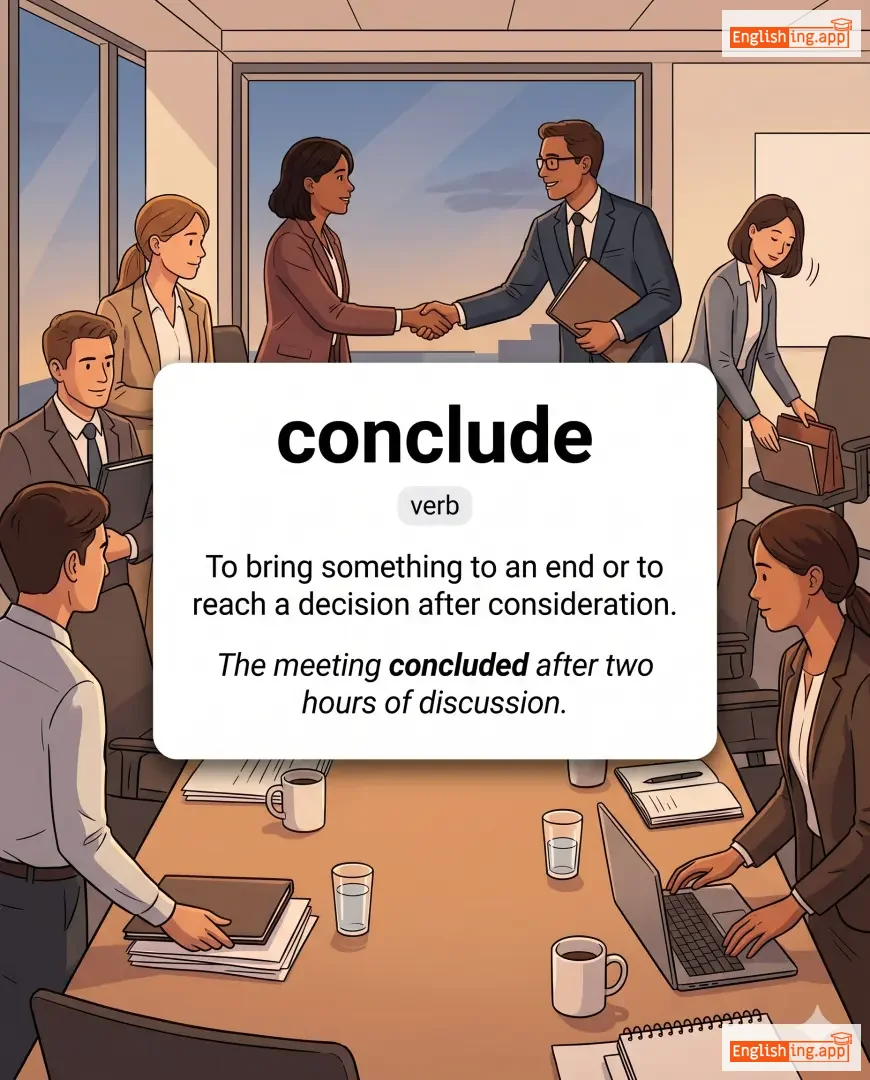
To bring something to an end or to reach a decision after consideration.
••••••
|
The meeting concluded after two hours of discussion.
Совещание завершилось через два часа обсуждения.
••••••
|
Совещание завершилось через два часа обсуждения.
Soveshchanie zavershilos' cherez dva chasa obsuzhdeniya.
••••••
|
to conclude with
заключить чем-то
••••••
|
to end something by doing or saying a final thing
••••••
|
заключить чем-то
zaklyuchit' chem-to
••••••
|
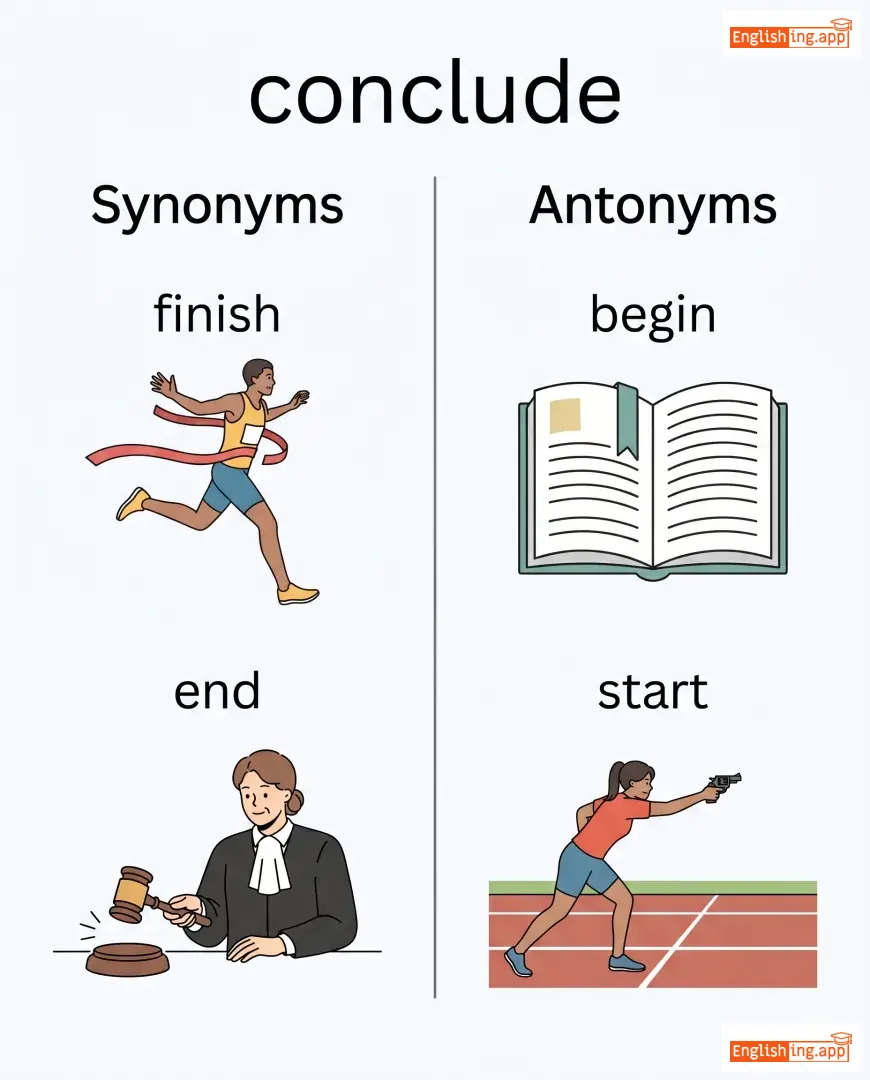
finish, end, determine, decide, finalize
••••••
|
begin, start, continue
••••••
|
conclude a meeting, conclude an agreement, conclude with, conclude that
••••••
|
Konkludirovat' oznachaet zakonchit' chto-to, kak final'nyj rezul'tat.
••••••
|
|
📘
••••••
|
/kənˈkluːʒən/
noun
(kənˈkluːʒən)
••••••
|
- •••••• |
заключение
zaklyucheniye
••••••
|
- •••••• | - •••••• | - •••••• | - •••••• |
The end or finish of an event, process, or text; a judgment reached after consideration.
••••••
|
The research paper ends with a strong conclusion. |
Исследовательская работа заканчивается сильным заключением.
Issledovatelskaya rabota zakanchivayetsya sil'nym zaklyucheniem.
••••••
|
jump to conclusions |
to make a decision without having all the facts
••••••
|
спешить с выводами
speshit' s vyvodami
••••••
|
end, result, outcome, judgment, decision
••••••
|
beginning, start, opening
••••••
|
draw a conclusion, reach a conclusion, in conclusion, strong conclusion
••••••
|
Заключение – это результат размышлений.
••••••
|
|
🏗️
••••••
|
/ˈkɒŋkriːt/
adjective
(кОнкрит)
••••••
|
- •••••• |
конкретный
konkretnyj
••••••
|
- •••••• | - •••••• | - •••••• | - •••••• |
based on facts, not on ideas or guesses; specific and real
••••••
|
She gave a concrete example to support her argument. |
Она привела конкретный пример, чтобы поддержать свой аргумент.
Ona privela konkretnyj primer, chtoby podderzhat' svoj argument.
••••••
|
set in concrete |
to be fixed and unchangeable
••••••
|
запечатанный в бетоне
zapechatannyj v betone
••••••
|
tangible, solid, real, specific
••••••
|
abstract, vague, unreal
••••••
|
concrete example, concrete evidence, concrete plan, concrete structure
••••••
|
Concrete - как бетон, крепкий и реальный.
••••••
|
|
❌
••••••
|
/kənˈdɛm/
verb
(kondem)
••••••
|
|
осуждать
osuzhdat
••••••
|
condemned
kondemd
••••••
|
condemned
kondemd
••••••
|
condemns
kondemz
••••••
|
condemning
kondem-ing
••••••
|
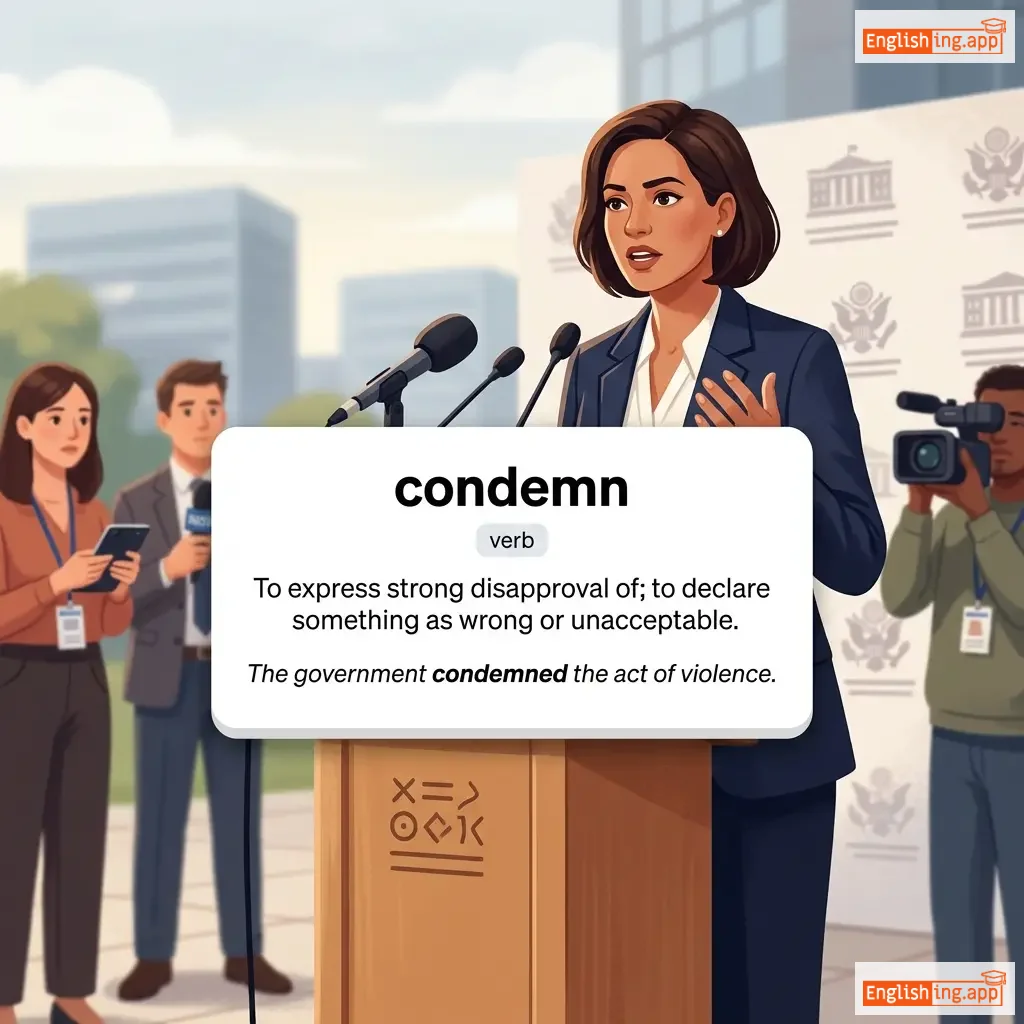
To express strong disapproval of; to declare something as wrong or unacceptable.
••••••
|
The government condemned the act of violence.
Правительство осудило акт насилия.
••••••
|
Правительство осудило акт насилия.
Pravitel'stvo osudilo akt nasiliya.
••••••
|
condemn to death
приговорить к смерти
••••••
|
to sentence someone to death as punishment
••••••
|
приговорить к смерти
prigovorit' k smerti
••••••
|
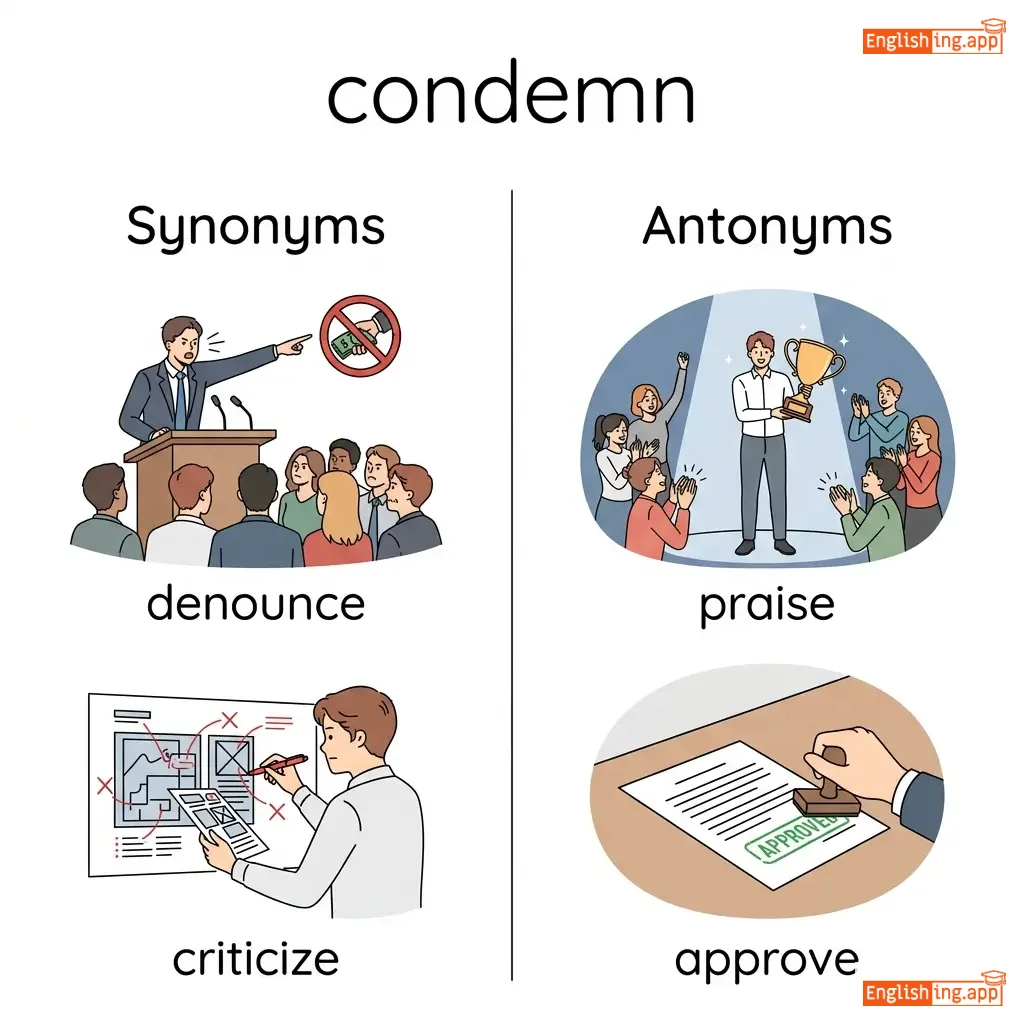
denounce, criticize, censure, blame
••••••
|
praise, approve, support
••••••
|
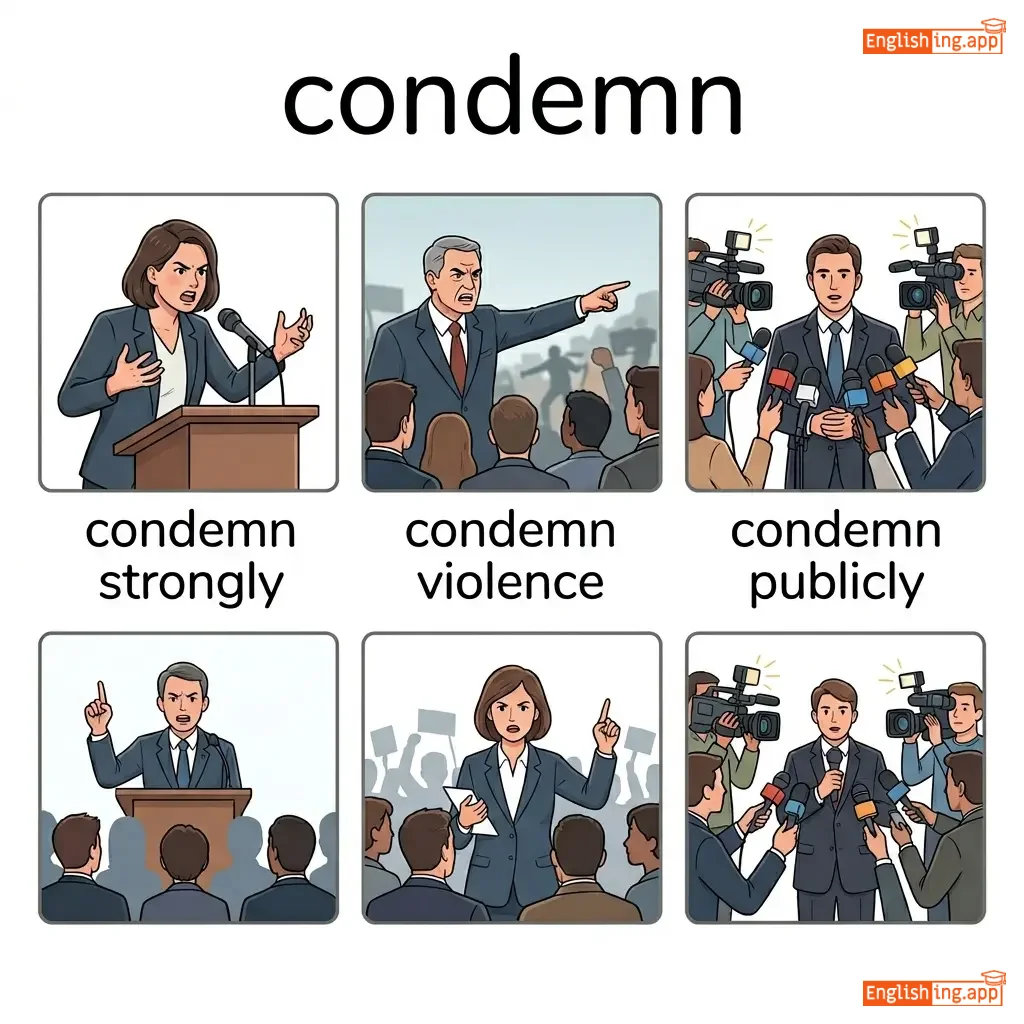
condemn strongly, condemn violence, condemn publicly, condemn actions
••••••
|
Condemn значит 'осуждать', как в случае с обвинением в преступлении.
••••••
|
|
⚙️
••••••
|
/kənˈdɪʃən/
noun
(кондитион)
••••••
|

|
состояние, условие
sostoyanie, uslovie
••••••
|
- •••••• | - •••••• | - •••••• | - •••••• |
The state of something with regard to its appearance, quality, or working order; a requirement that must be met.
••••••
|
The car is in excellent condition. |
Машина в отличном состоянии.
Mashina v otlichnom sostoyanii.
••••••
|
on condition that |
only if something else happens or is done
••••••
|
при условии, что
pri uslovie, chto
••••••
|
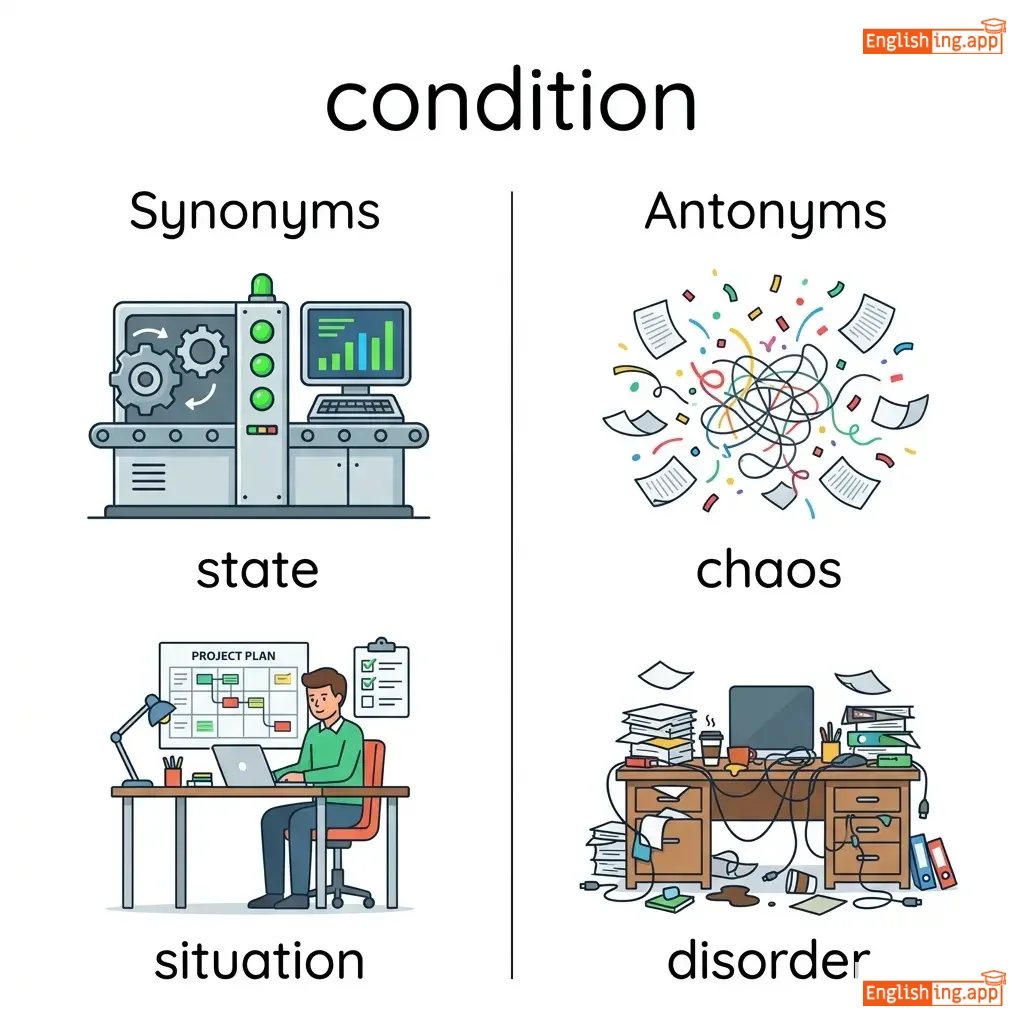
state, situation, requirement, circumstance, health
••••••
|
chaos, disorder
••••••
|
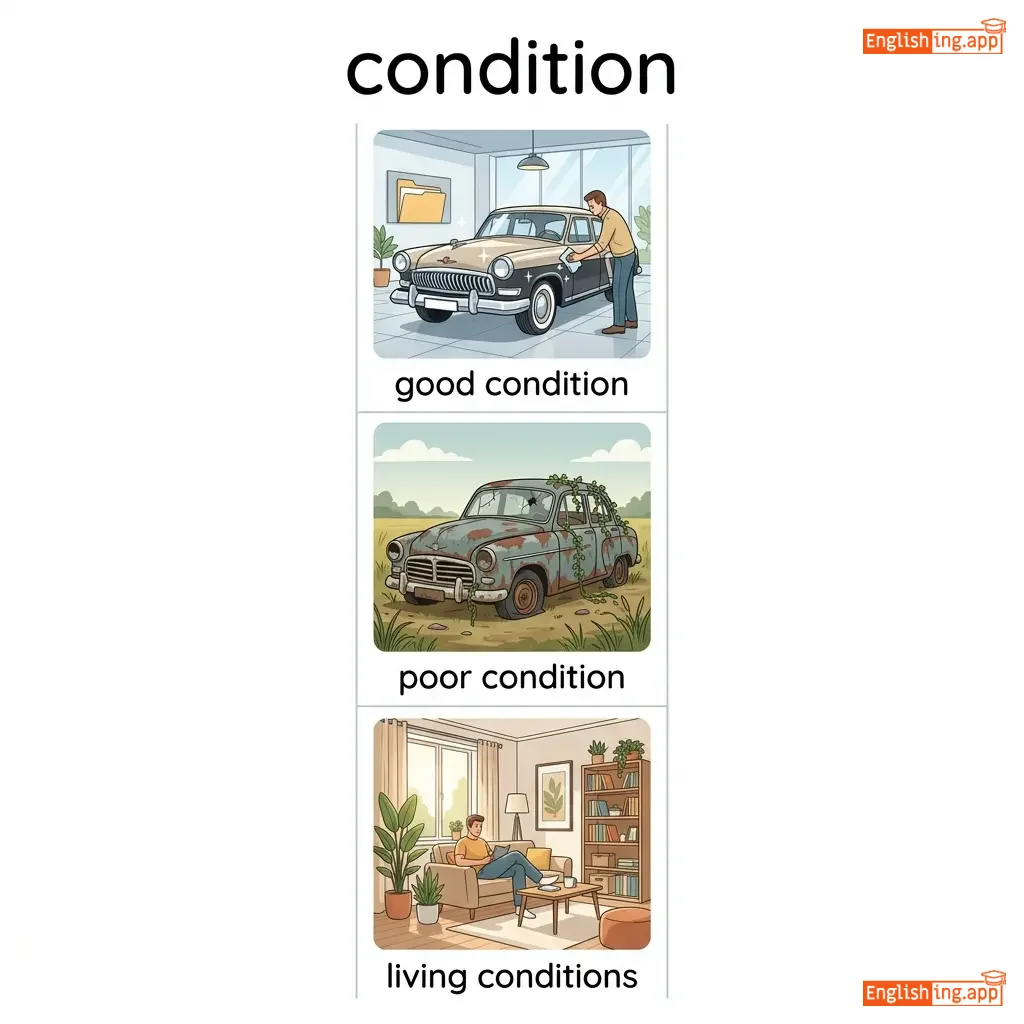
good condition, poor condition, living conditions, under condition
••••••
|
Condition означает условие, как условия для сдачи экзамена.
••••••
|
|
🧑🏫
••••••
|
/ˈkɒndʌkt/ (noun), /kənˈdʌkt/ (verb)
noun, verb
••••••
|
- •••••• | - •••••• |
conducted
••••••
|
conducted
••••••
|
conducts
••••••
|
conducting
••••••
|
to organize or carry out; or a person's behavior
••••••
|
The teacher conducted the exam fairly. |
- •••••• |
conduct oneself |
to behave in a particular manner
••••••
|
- •••••• |
manage, carry out, perform, behavior, demeanor
••••••
|
mismanage, neglect, misconduct
••••••
|
conduct research, conduct business, professional conduct
••••••
|
No •••••• |
|
💬
••••••
|
/kənˈfɜːr/
verb
••••••
|
- •••••• | - •••••• |
conferred
••••••
|
conferred
••••••
|
confers
••••••
|
conferring
••••••
|
to discuss something important or to grant or bestow something
••••••
|
The committee will confer to decide on the new policy. |
- •••••• |
confer a degree |
to officially give someone a degree
••••••
|
- •••••• |
consult, discuss, grant, bestow, award
••••••
|
withhold, deny
••••••
|
confer with, confer about, confer a degree, confer title
••••••
|
No •••••• |
|
👥
••••••
|
/ˈkɒnfərəns/
noun
(kon-fe-rens)
••••••
|


|
конференция
konferentsiya
••••••
|
- •••••• | - •••••• | - •••••• | - •••••• |
A formal meeting for discussion, especially about a particular subject.
••••••
|
She is attending an international business conference. |
Она посещает международную бизнес-конференцию.
Ona poseschaet mezhdunarodnuyu biznes-konferentsiyu.
••••••
|
press conference |
a meeting where journalists are given information by a public figure
••••••
|
пресс-конференция
press-konferentsiya
••••••
|
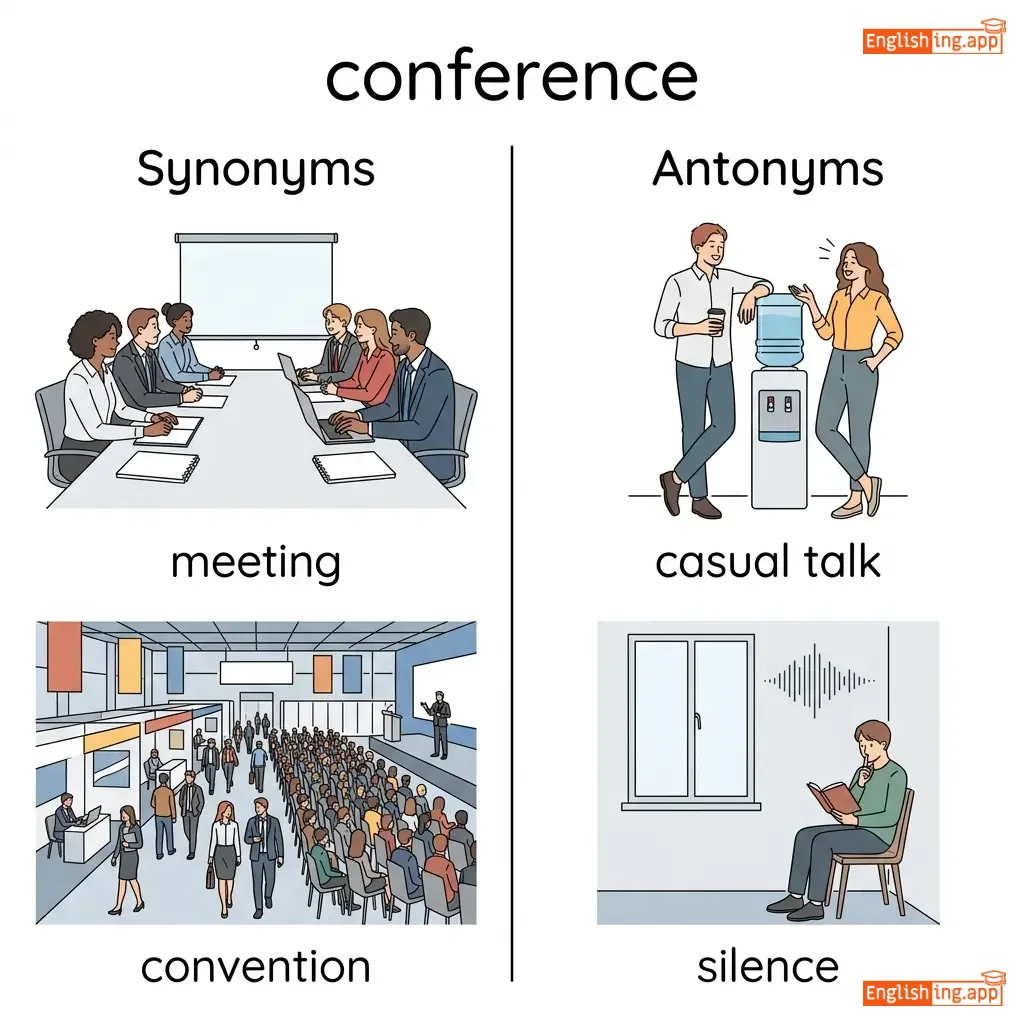
meeting, convention, seminar, summit, symposium
••••••
|
casual talk, silence
••••••
|
business conference, international conference, annual conference, conference hall
••••••
|
Конференция – это место, где обсуждают важные вопросы, как на пресс-конференции.
••••••
|

