|
絵文字
|
単語 | Images | 翻訳 | 過去 | 過去分詞 | 三人称単数 | 動名詞 | 意味 | 例文 | 例文の翻訳 | 表現例 | 表現例の意味 | 表現例の翻訳 | 同義語 | 対義語 | コロケーション | ニーモニック |
|---|---|---|---|---|---|---|---|---|---|---|---|---|---|---|---|---|---|
|
🛏️
••••••
|
/bɛd/
noun
••••••
|
- •••••• | - •••••• | - •••••• | - •••••• | - •••••• | - •••••• |
a piece of furniture for sleeping or resting on
••••••
|
She lay down on the bed and fell asleep quickly. |
- •••••• |
make your bed |
to arrange or tidy your bed after getting up
••••••
|
- •••••• |
couch, mattress, cot, bunk
••••••
|
floor, ground
••••••
|
go to bed, make the bed, bed sheet, hospital bed
••••••
|
No •••••• |
|
🛏️
••••••
|
/ˈbɛdruːm/
noun
(ベッドルーム)
••••••
|
- •••••• |
寝室
shinshitsu
••••••
|
- •••••• | - •••••• | - •••••• | - •••••• |
A room used for sleeping in.
••••••
|
The children were playing in the bedroom.
子供たちはベッドルームで遊んでいました。
••••••
|
子供たちは寝室で遊んでいました。
Kodomotachi wa shinshitsu de asonde imashita.
••••••
|
bedroom eyes
ベッドルームアイズ
••••••
|
A seductive or alluring look.
••••••
|
魅惑的な目
miwaku-teki na me
••••••
|
sleeping room, chamber, boudoir, dormitory
••••••
|
living room, kitchen
••••••
|
master bedroom, small bedroom, bedroom furniture, bedroom window
••••••
|
寝室はベッドがある場所、'bed'と同じ意味です。
••••••
|
|
🥩
••••••
|
/biːf/
noun
(ビーフ)
••••••
|
- •••••• |
牛肉
gyūniku
••••••
|
- •••••• | - •••••• | - •••••• | - •••••• |
the flesh of a cow, bull, or ox, used as food; also a complaint or dispute
••••••
|
He ordered a plate of grilled beef for dinner. |
彼は夕食にグリルした牛肉のプレートを注文しました。
Kare wa yūshoku ni guriru shita gyūniku no purēto o chūmon shimashita.
••••••
|
have a beef with someone |
to have a complaint or dispute with someone
••••••
|
誰かと争いを持つ
dareka to arasoi o motsu
••••••
|
meat, steak, flesh, complaint, dispute
••••••
|
poultry, peace, harmony
••••••
|
beef steak, roast beef, beef burger, beef curry
••••••
|
Beef は牛肉 🍖 を意味します — '雄牛のように怒る' を覚えて理解しましょう!
••••••
|
|
🍺
••••••
|
/bɪər/
noun
(ビール)
••••••
|
- •••••• |
ビール
biiru
••••••
|
- •••••• | - •••••• | - •••••• | - •••••• |
An alcoholic drink made from yeast-fermented malt flavored with hops.
••••••
|
He ordered a glass of cold beer at the bar.
彼はバーで冷たいビールを注文した。
••••••
|
彼はバーで冷たいビールを注文した。
Kare wa bā de tsumetai biiru o chūmon shita.
••••••
|
beer belly
ビール腹
••••••
|
A large stomach caused by drinking too much beer.
••••••
|
ビール腹
biiru bara
••••••
|
ale, lager, brew, pint
••••••
|
water, juice
••••••
|
cold beer, draft beer, bottle of beer, beer mug
••••••
|
ビール、冷たくて美味しい飲み物。乾杯!
••••••
|
|
🎩
••••••
|
/bɪˈfɪt/
verb
(ビフィット)
••••••
|
- •••••• |
ふさわしい
fusawashii
••••••
|
befitted
ビフィテッド
••••••
|
befitted
ビフィテッド
••••••
|
befits
ビフィッツ
••••••
|
befitting
ビフィッティング
••••••
|
to be suitable for; to be appropriate to
••••••
|
Formal attire befits the seriousness of the occasion.
フォーマル アタイア ビフィッツ ザ シリアスネス オブ ザ オケージョン。
••••••
|
フォーマルな服装はその場の厳粛さにふさわしい。
fomaru na fukuso wa sono ba no genshukusa ni fusawashii
••••••
|
befitting one’s status
ビフィッティング ワンズ ステータス
••••••
|
appropriate to a person’s rank or position
••••••
|
身分にふさわしい
mibun ni fusawashii
••••••
|
suit, become, match, be appropriate for, accord with
••••••
|
misfit, clash, be inappropriate for
••••••
|
befit the occasion, befit one’s status, befit the role, befit the position
••••••
|
Befit=fit、日本語の『ふさわしい』と覚える。
••••••
|
|
🤡
••••••
|
/bɪˈfuːl/
verb
(ビフール)
••••••
|
- •••••• |
だます
damasu
••••••
|
befooled
ビフールド
••••••
|
befooled
ビフールド
••••••
|
befools
ビフールズ
••••••
|
befooling
ビフーリング
••••••
|
to deceive or trick someone into believing something false; to make someone appear foolish
••••••
|
The scammer tried to befool innocent people with fake promises.
ザ スキャマー トライド トゥ ビフール イノセント ピープル ウィズ フェイク プロミシズ
••••••
|
詐欺師は偽の約束で無実の人々をだまそうとした。
sagishi wa nise no yakusoku de mujitsu no hitobito o damasou to shita
••••••
|
- •••••• | - •••••• | - •••••• |
deceive, trick, dupe, fool, mislead
••••••
|
enlighten, inform, clarify
••••••
|
befool someone easily, befool the public, try to befool, completely befool
••••••
|
befool = fool にする、つまりだます
••••••
|
|
⏰
••••••
|
/bɪˈfɔːr/
preposition/adverb/conjunction
(ビフォー)
••••••
|
- •••••• |
前に
mae ni
••••••
|
- •••••• | - •••••• | - •••••• | - •••••• |
At an earlier time; in front of in order or place.
••••••
|
She arrived before the meeting started. |
彼女は会議が始まる前に到着した。
Kanojo wa kaigi ga hajimaru mae ni tōchaku shita.
••••••
|
before long |
in a short time
••••••
|
すぐに
sugu ni
••••••
|
earlier, ahead, prior, in front
••••••
|
after, behind
••••••
|
before dawn, before time, before long, before the meeting
••••••
|
BEFOREは前に — いつも前もって準備しておこう。
••••••
|
|
🧪
••••••
|
/bɪˈfaʊl/
verb
(ビファウル)
••••••
|
- •••••• |
汚染する
osen suru
••••••
|
befouled
ビファウルド
••••••
|
befouled
ビファウルド
••••••
|
befouls
ビファウルズ
••••••
|
befouling
ビファウリング
••••••
|
to make dirty or polluted; to disgrace or corrupt
••••••
|
The factory waste befouled the river.
ザ ファクトリー ウェイスト ビファウルド ザ リバー。
••••••
|
工場の廃棄物が川を汚染した。
kojo no haikibutsu ga kawa o osen shita
••••••
|
- •••••• | - •••••• | - •••••• |
pollute, defile, contaminate, sully, taint
••••••
|
clean, purify, cleanse
••••••
|
befoul the environment, befoul a river, befoul the air, befoul one’s reputation
••••••
|
Befoul=‘foul’な状態にする→汚染する。
••••••
|
|
🙏
••••••
|
/bɛɡ/
verb
(ベグ)
••••••
|
|
乞う / 頼む
kou / tanomu
••••••
|
begged
ベグド
••••••
|
begged
ベグド
••••••
|
begs
ベグス
••••••
|
begging
ベギング
••••••
|
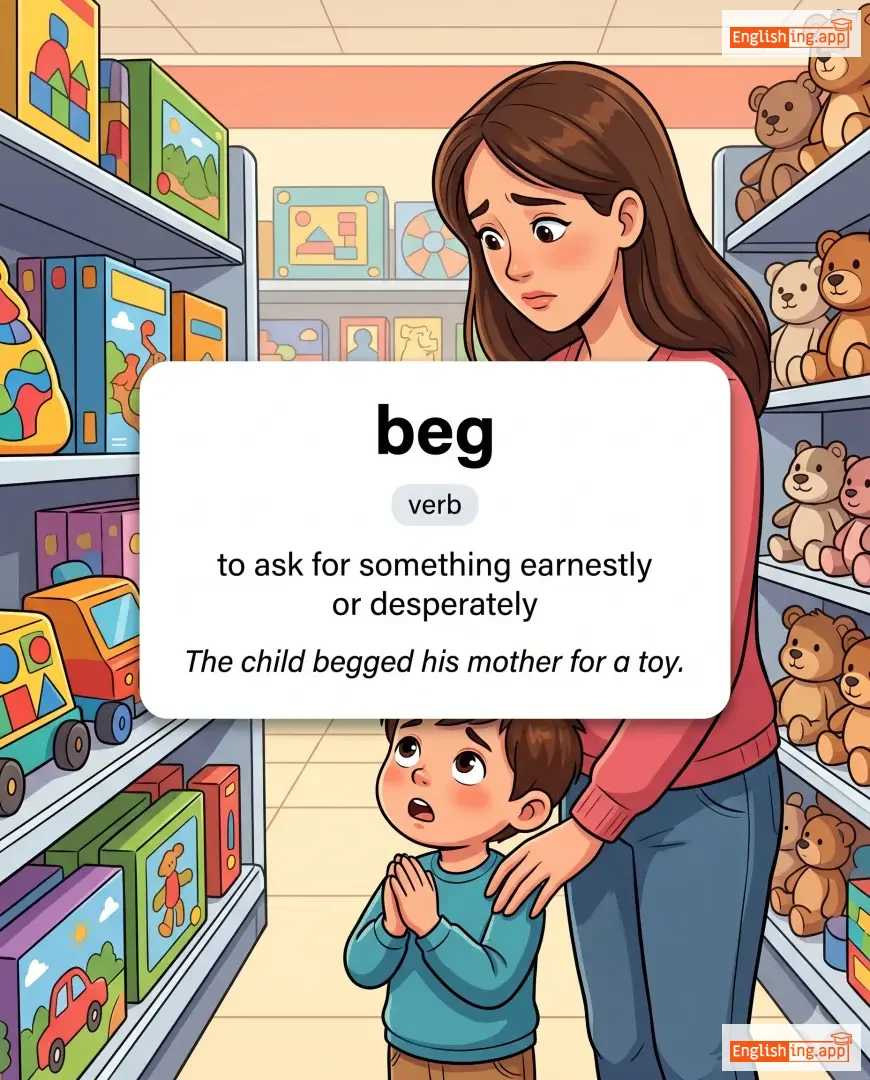
to ask for something earnestly or desperately
••••••
|
The child begged his mother for a toy.
その子供はおもちゃを求めて母親に頼んだ。
••••••
|
その子供はおもちゃを頼んだ。
Sono kodomo wa omocha o tanonda.
••••••
|
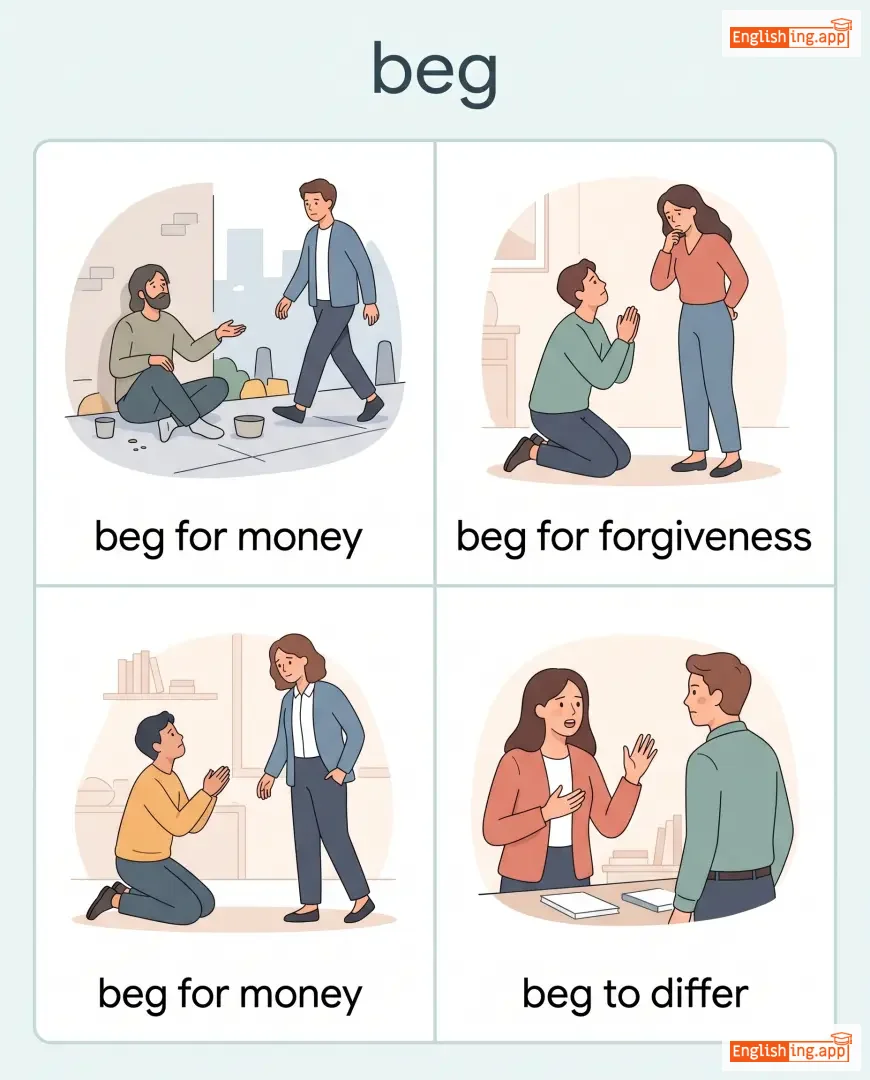
beg to differ
beg to differ
••••••
|
to politely disagree
••••••
|
丁寧に異議を唱える
teinei ni igi o tonaeru
••••••
|
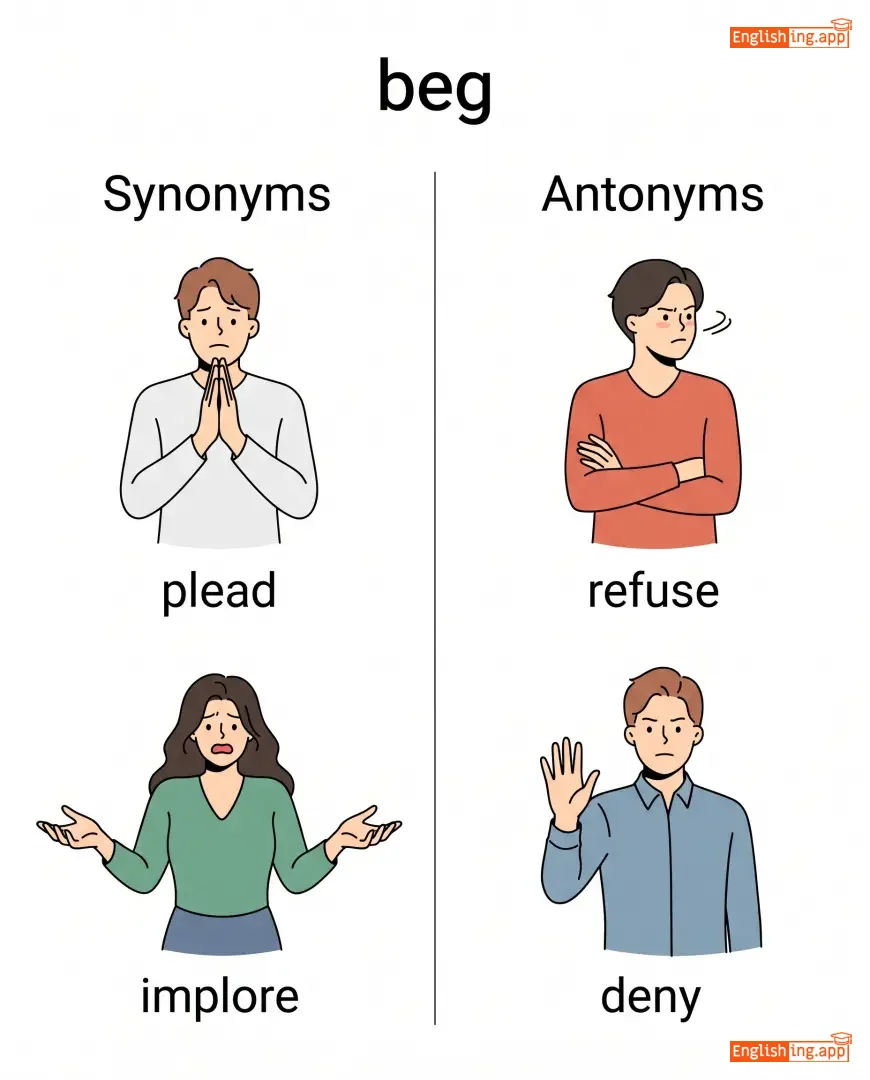
plead, implore, request, entreat, supplicate
••••••
|
refuse, deny, reject
••••••
|
beg for money, beg for forgiveness, beg to differ, beg for mercy
••••••
|
Beg は頼むという意味です – 何かを頼むときに使います。
••••••
|
|
🌱
••••••
|
/bɪˈɡɛt/
verb
(ビゲット)
••••••
|
- •••••• |
生む / 引き起こす
umu / hikiokosu
••••••
|
begot
ビゴット
••••••
|
begotten
ビゴッテン
••••••
|
begets
ビゲッツ
••••••
|
begetting
ビゲッティング
••••••
|
to bring about or give rise to; to father or produce
••••••
|
Violence begets more violence.
暴力はさらなる暴力を生む。
••••••
|
暴力はさらなる暴力を生む。
Bōryoku wa saranaru bōryoku o umu.
••••••
|
- •••••• | - •••••• | - •••••• |
cause, create, generate, produce, engender
••••••
|
prevent, stop, hinder
••••••
|
beget violence, beget problems, beget change
••••••
|
Begetは生むという意味です、まるで父親が子供を生むように。
••••••
|
|
🚀
••••••
|
/bɪˈɡɪn/
verb
(ビギン)
••••••
|
|
始める
hajimeru
••••••
|
began
ビゲン
••••••
|
begun
ビガン
••••••
|
begins
ビギンズ
••••••
|
beginning
ビギニング
••••••
|
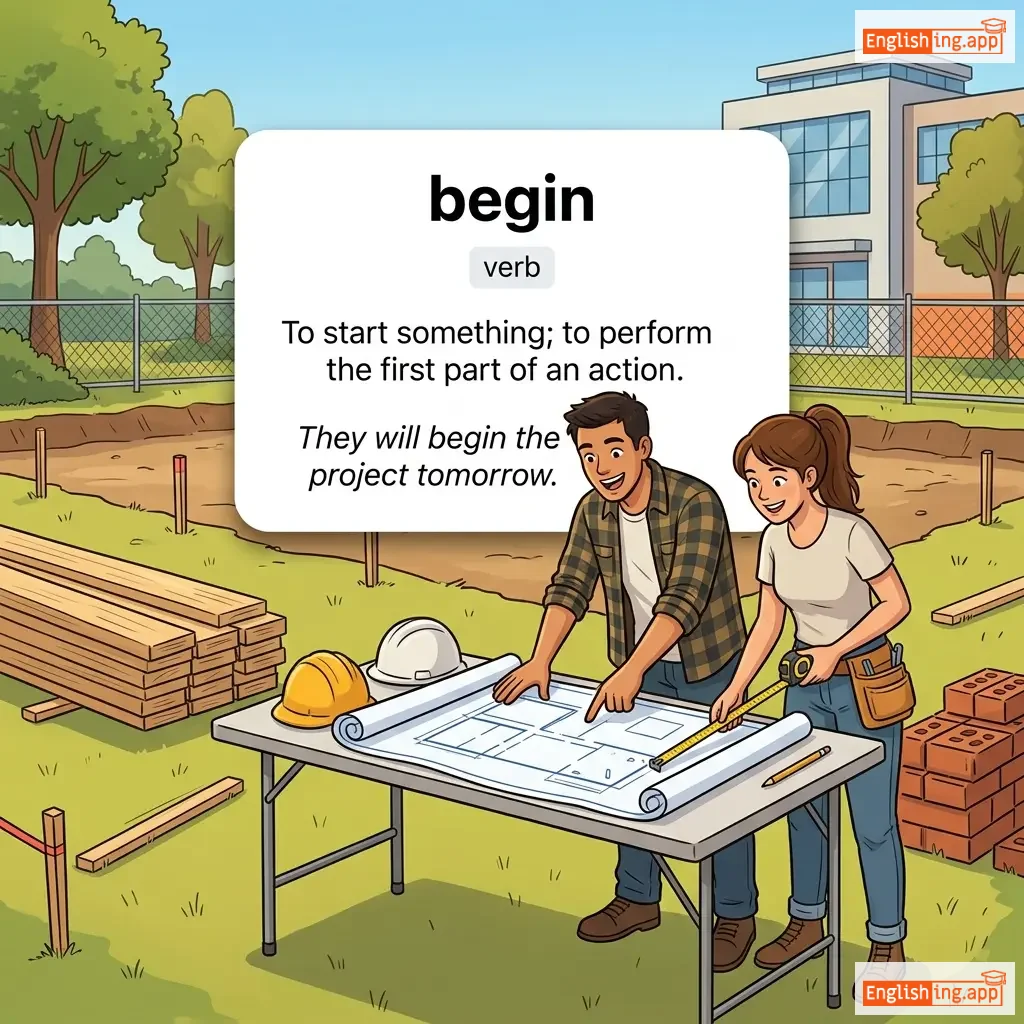
To start something; to perform the first part of an action.
••••••
|
They will begin the project tomorrow.
彼らは明日プロジェクトを開始する予定です。
••••••
|
彼らは明日プロジェクトを開始する予定です。
Karera wa ashita purojekuto o kaishi suru yotei desu.
••••••
|
to begin with
まず最初に
••••••
|
as the first consideration
••••••
|
まず最初に
Mazu saisho ni
••••••
|
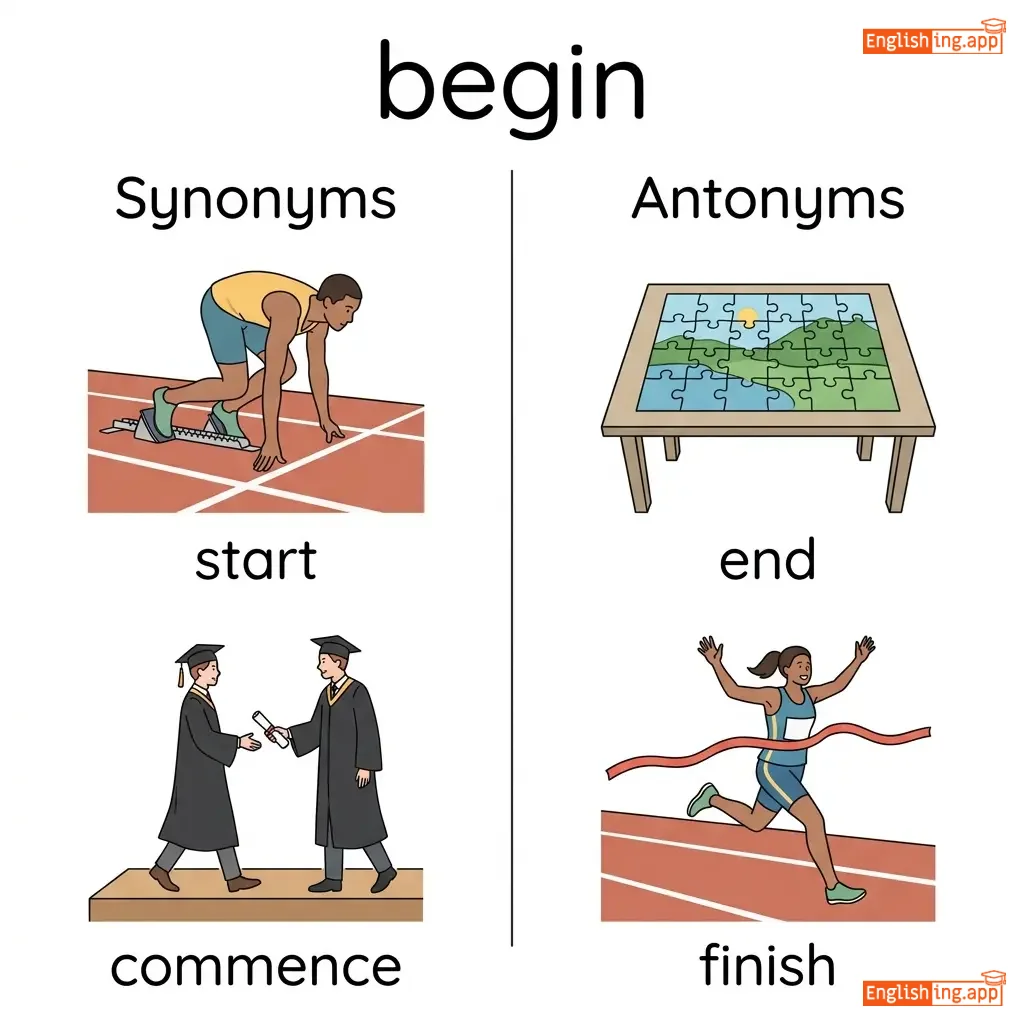
start, commence, initiate, launch
••••••
|
end, finish, conclude
••••••
|
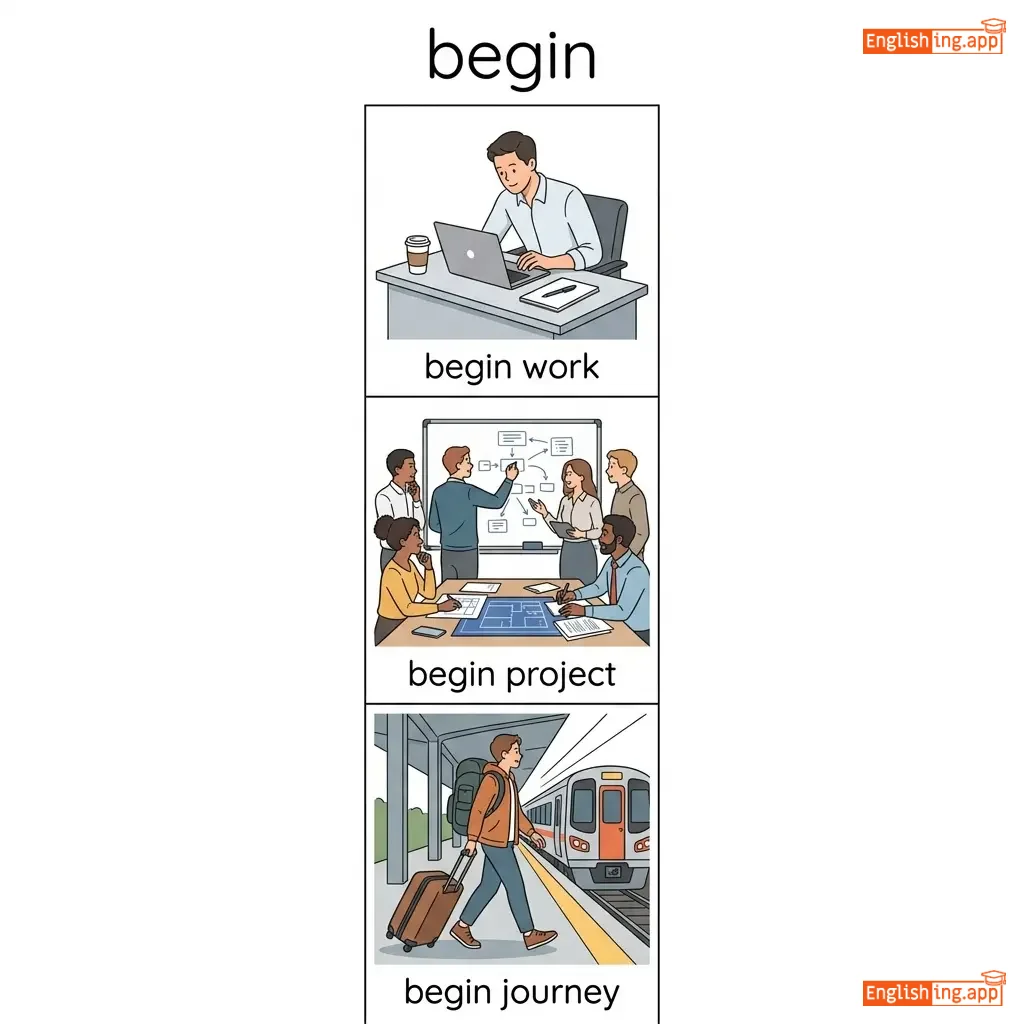
begin work, begin project, begin journey, begin process
••••••
|
始める=開始。‘始める’は、行動を始めるという意味です!
••••••
|
|
🌅
••••••
|
/bɪˈɡɪnɪŋ/
noun
(ビギニング)
••••••
|
- •••••• |
始まり
hajimari
••••••
|
- •••••• | - •••••• | - •••••• | - •••••• |
The start or first part of something.
••••••
|
The beginning of the story was very interesting. |
物語の始まりはとても興味深かった。
Monogatari no hajimari wa totemo kyōmibukatta.
••••••
|
new beginning |
a fresh start
••••••
|
新しい始まり
atarashī hajimari
••••••
|
start, commencement, onset, opening
••••••
|
end, conclusion
••••••
|
at the beginning, beginning of story, new beginning
••••••
|
BEGINNING は始まりを意味する — 朝日 🌅 は新しい始まり。
••••••
|
|
🤝
••••••
|
/bɪˈhɑːf/
noun
(ビハフ)
••••••
|
- •••••• |
を代表して
wo daihyō shite
••••••
|
- •••••• | - •••••• | - •••••• | - •••••• |
as a representative of someone; in the interest of someone
••••••
|
She accepted the award on behalf of her team. |
彼女はチームを代表して賞を受け取りました。
Kanojo wa chīmu o daihyō shite shō o uketorimashita.
••••••
|
on someone's behalf |
as a representative of someone else
••••••
|
誰かを代表して
dareka o daihyō shite
••••••
|
interest, support, representation, favor
••••••
|
against, opposition
••••••
|
on behalf of, in behalf of, behalf letter, behalf request
••••••
|
'Be half' 覚えておいて — あなたは他の誰かの半分で、その人のために働いている!
••••••
|
|
🙂
••••••
|
/bɪˈheɪv/
verb
(ビヘイヴ)
••••••
|
|
振る舞う
furumau
••••••
|
behaved
ビヘイヴド
••••••
|
behaved
ビヘイヴド
••••••
|
behaves
ビヘイヴス
••••••
|
behaving
ビヘイヴィング
••••••
|
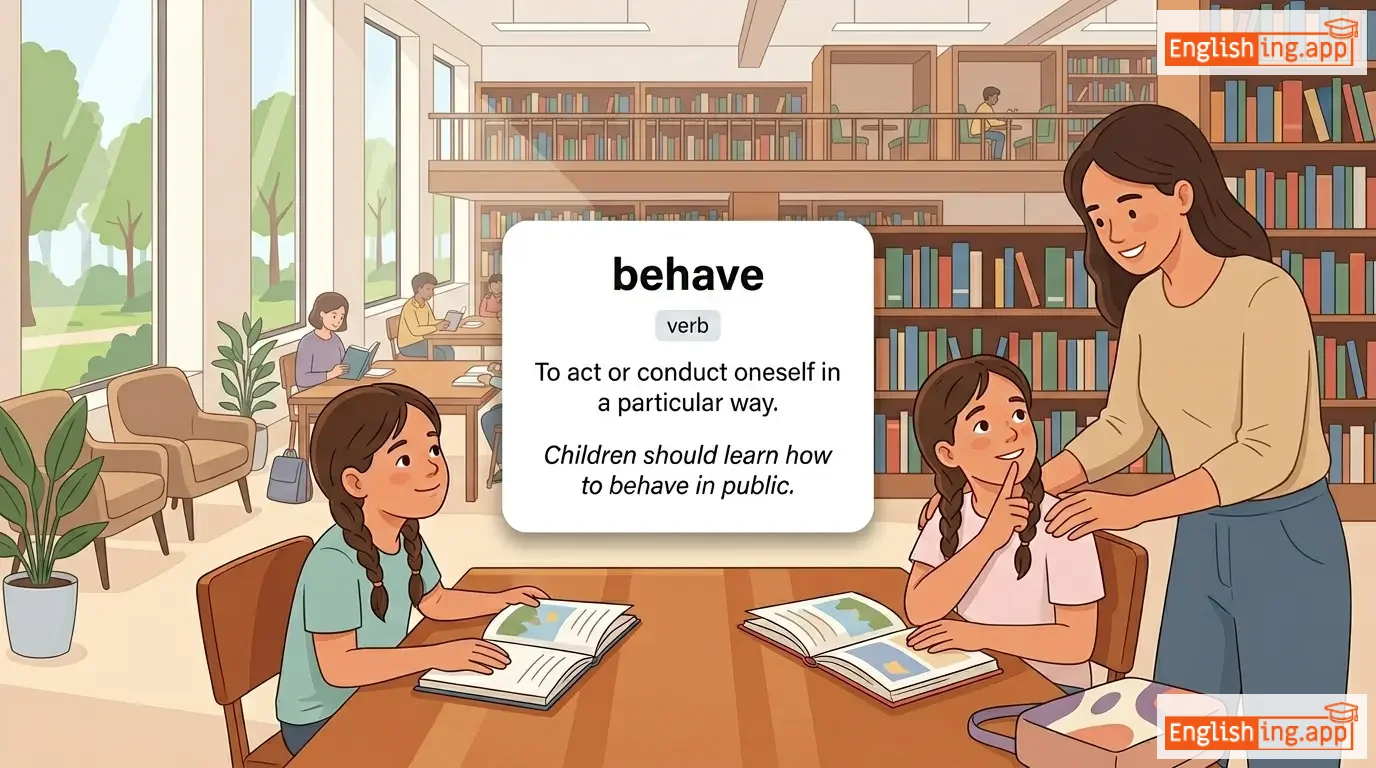
To act or conduct oneself in a particular way.
••••••
|
Children should learn how to behave in public.
子供たちは公共の場でどう振る舞うかを学ぶべきです。
••••••
|
子供たちは公共の場でどう振る舞うかを学ぶべきです。
kodomotachi wa kōkyō no ba de dō furumau ka o manabu beki desu.
••••••
|
behave yourself
自分を振る舞う
••••••
|
act properly; control your actions
••••••
|
正しく振る舞う
tadashiku furumau
••••••
|
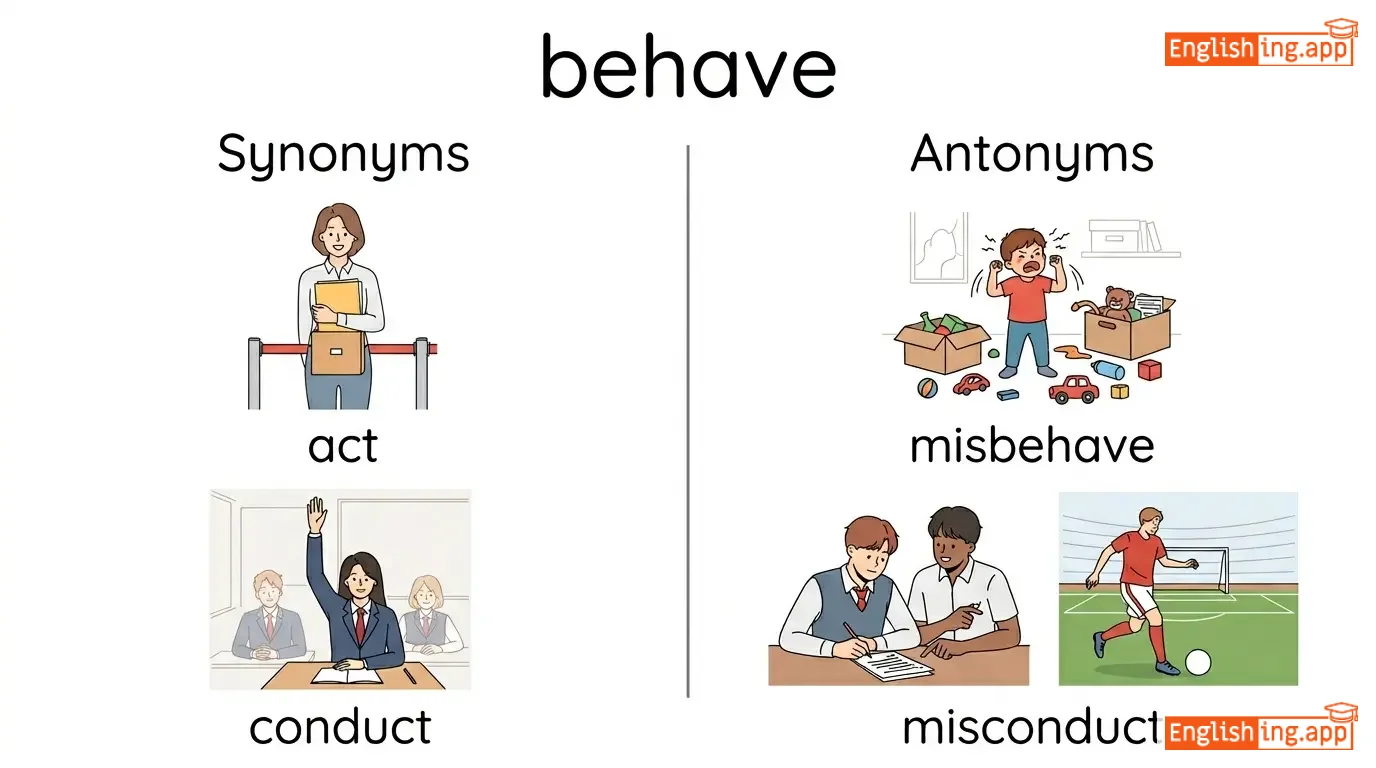
act, conduct, perform, operate
••••••
|
misbehave, misconduct
••••••
|
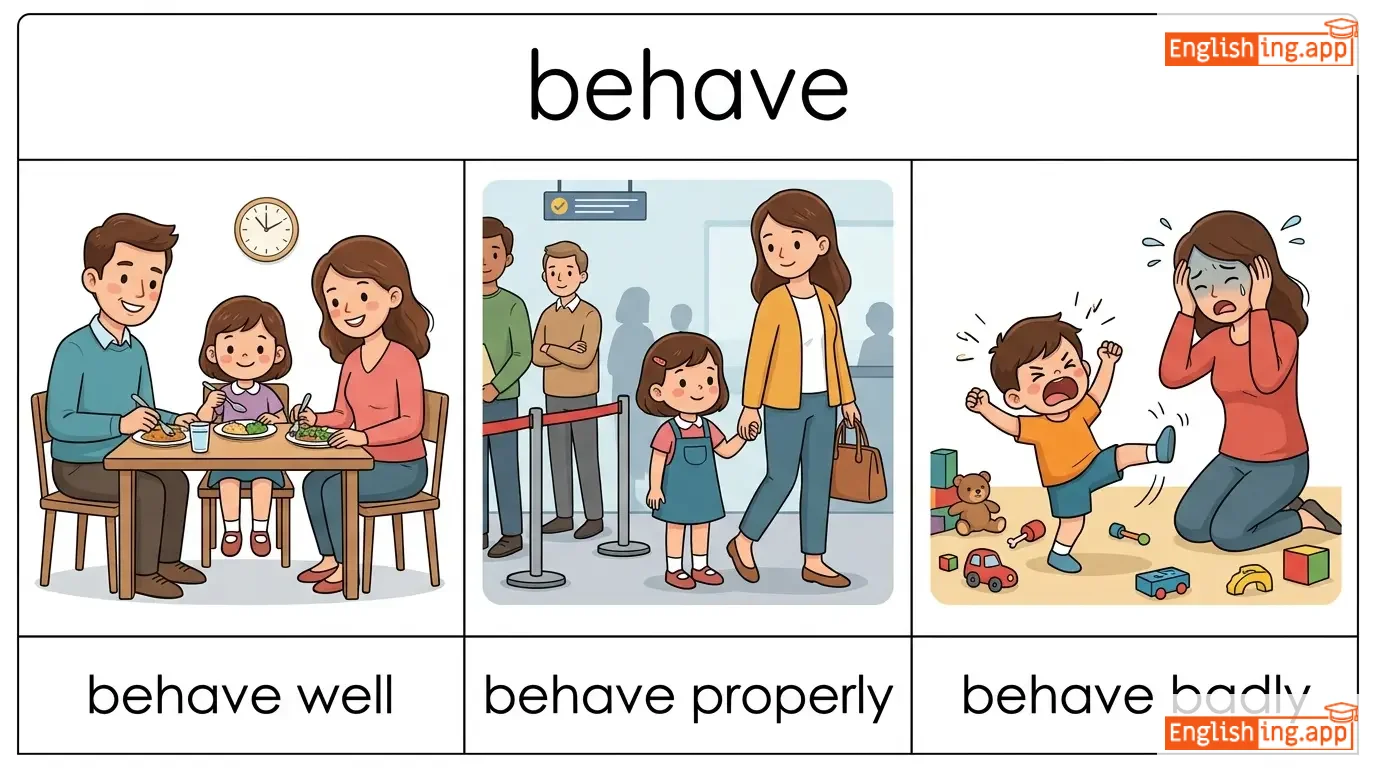
behave well, behave properly, behave badly
••••••
|
BEHAVE は正しく振る舞うという意味です — もし振る舞わなければ misbehave になります。
••••••
|
|
🧑🏫
••••••
|
/bɪˈheɪvjər/
noun
(ビヘイヴィア)
••••••
|
- •••••• |
行動
koudou
••••••
|
- •••••• | - •••••• | - •••••• | - •••••• |
The way in which one acts or conducts oneself, especially toward others.
••••••
|
The teacher praised her good behavior in class. |
先生はクラスで彼女の良い行動を称賛しました。
Sensei wa kurasu de kanojo no yoi koudou o shousan shimashita.
••••••
|
on best behavior |
Behaving in the most polite or well-mannered way possible.
••••••
|
模範的な行動
Mohantekina koudou
••••••
|
conduct, manners, actions, demeanor, attitude
••••••
|
misconduct, rudeness
••••••
|
good behavior, bad behavior, social behavior, criminal behavior
••••••
|
行動 = 行うこと、どう行動するかが重要。
••••••
|
|
⚔️
••••••
|
/bɪˈhɛd/
verb
(ビヘッド)
••••••
|
- •••••• |
斬首する
zanshu suru
••••••
|
beheaded
ビヘッディド
••••••
|
beheaded
ビヘッディド
••••••
|
beheads
ビヘッズ
••••••
|
beheading
ビヘッディング
••••••
|
to cut off a person's or animal's head; to remove the leader or most important part
••••••
|
The historical account describes how the traitor was beheaded as punishment.
ザ ヒストリカル アカウント ディスクライブズ ハウ ザ トレイター ワズ ビヘッディド アズ パニッシュメント。
••••••
|
歴史的記録は、罰として裏切り者が斬首された様子を描写している。
Rekishiteki kiroku wa, batsu to shite uragirimono ga zanshu sareta yousu o byousha shite iru
••••••
|
- •••••• | - •••••• | - •••••• |
decapitate, execute, kill, slay, put to death
••••••
|
crown, spare, enthrone
••••••
|
behead a king, behead prisoners, ritual beheading, publicly behead
••••••
|
behead = 斬首する、head を 斬る
••••••
|
|
⬅️
••••••
|
/bɪˈhaɪnd/
preposition/adverb
(biháind)
••••••
|
- •••••• |
後ろ
ushiro
••••••
|
- •••••• | - •••••• | - •••••• | - •••••• |
At or to the back of something; in a position further back.
••••••
|
The cat is hiding behind the curtain.
The cat is hiding behind the curtain.
••••••
|
猫はカーテンの後ろに隠れています。
Neko wa kaaten no ushiro ni kakurete imasu.
••••••
|
leave behind
leave behind
••••••
|
To forget or not take something with you.
••••••
|
後ろに残す
ushiro ni nokosu
••••••
|
at the back, beyond, after
••••••
|
ahead, in front
••••••
|
fall behind, behind schedule, left behind, stay behind
••••••
|
Behindは後ろ - B後ろ HIND。
••••••
|
|
👀
••••••
|
/bɪˈhoʊld/
verb
(ビホールド)
••••••
|
- •••••• |
見る;目にする
miru; me ni suru
••••••
|
beheld
ビヘルド
••••••
|
beheld
ビヘルド
••••••
|
beholds
ビホールズ
••••••
|
beholding
ビホールディング
••••••
|
to see or observe something, especially something remarkable or impressive
••••••
|
She stood quietly to behold the sunrise over the hills.
シー ストゥッド クワイエットリー トゥ ビホールド ザ サンライズ オーバー ザ ヒルズ。
••••••
|
彼女は丘の上の日の出を見るために静かに立っていた。
kanojo wa oka no ue no hinode o miru tame ni shizuka ni tatte ita
••••••
|
lo and behold
ロー アンド ビホールド
••••••
|
used to express surprise at something unexpected
••••••
|
ロー・アンド・ビホールド
ro ando bihorudo
••••••
|
see, observe, witness, gaze at, look upon
••••••
|
ignore, overlook
••••••
|
behold the truth, behold the beauty, behold the sight, behold with awe
••••••
|
behold = ‘美(び)ホールド’、美しいものを見る
••••••
|
|
🌍
••••••
|
/ˈbiːɪŋ/
noun/verb
(bīingu)
••••••
|
- •••••• |
存在
sonzai
••••••
|
- •••••• | - •••••• |
is/are being
iizu/arubīng
••••••
|
being
bīingu
••••••
|
Existence; the state of living; a living creature.
••••••
|
Kindness is part of being human.
親切は人間であることの一部です。
••••••
|
親切は人間であることの一部です。
Shinsetsu wa ningen de aru koto no ichibu desu.
••••••
|
human being
人間であること
••••••
|
A person; an individual of the species Homo sapiens.
••••••
|
人間であること
ningen de aru koto
••••••
|
existence, creature, life, entity
••••••
|
nonexistence, nothingness
••••••
|
human being, state of being, well-being, living being
••••••
|
Beingは存在するという意味です - 私はBEしているから、私はここにいます。
••••••
|
|
🗣️
••••••
|
/bɪˈleɪbə/
verb
(ビレイバー)
••••••
|
- •••••• |
くどく説明する
kudoku setsumei suru
••••••
|
belaboured
ビレイバード
••••••
|
belaboured
ビレイバード
••••••
|
belabours
ビレイバーズ
••••••
|
belabouring
ビレイバリング
••••••
|
to explain something repeatedly or with excessive detail; to criticize or attack verbally at length
••••••
|
The teacher did not belabour the point once the students understood it.
ザ ティーチャー ディド ノット ビレイバー ザ ポイント ワンス ザ スチューデンツ アンダーストゥッド イット。
••••••
|
学生が理解した後、教師はその点をくどく説明しなかった。
gakusei ga rikai shita ato kyoushi wa sono ten o kudoku setsumei shinakatta
••••••
|
belabour the point
ポイントをビレイバーする
••••••
|
to explain or emphasize something too much
••••••
|
その点をくどく説明する
sono ten o kudoku setsumei suru
••••••
|
overemphasize, dwell on, hammer, overexplain, reiterate
••••••
|
understate, gloss over, skim
••••••
|
belabour the point, belabour an issue, belabour an argument
••••••
|
くどい説明 = belabour
••••••
|
|
😮💨
••••••
|
/beltʃ/
verb; noun
(ベルチ)
••••••
|
- •••••• |
げっぷをする
geppu o suru
••••••
|
belched
ベルチド
••••••
|
belched
ベルチド
••••••
|
belches
ベルチズ
••••••
|
belching
ベルチング
••••••
|
to expel air noisily from the stomach through the mouth; to emit or pour out suddenly and forcefully
••••••
|
After drinking the soda, he belched loudly.
アフター ドリンキング ザ ソーダ、ヒー ベルチド ラウドリー。
••••••
|
ソーダを飲んだ後、彼は大きなげっぷをした。
sooda o nonda ato kare wa ookina geppu o shita
••••••
|
- •••••• | - •••••• | - •••••• |
burp, eruct, emit, expel, discharge
••••••
|
swallow, ingest, retain
••••••
|
belch loudly, belch gas, belch smoke, belch fumes
••••••
|
Belch = げっぷ—ベルっと音が出る感じ。
••••••
|
|
⚔️
••••••
|
/bɪˈliːɡər/
verb
(ビリガー)
••••••
|
- •••••• |
包囲する, 困らせる
hōi suru, komarasero
••••••
|
beleaguered
ビリガード
••••••
|
beleaguered
ビリガード
••••••
|
beleaguers
ビリガーズ
••••••
|
beleaguering
ビリガリング
••••••
|
to cause difficulties, troubles, or harassment; to surround with military forces
••••••
|
The company was beleaguered by constant complaints from its customers.
その会社は顧客からの絶え間ない苦情で包囲されていた。
••••••
|
その会社は顧客からの絶え間ない苦情で包囲されていた。
Sono kaisha wa kokyaku kara no taemanai kujō de hōi sarete ita.
••••••
|
beleaguered city
包囲された都市
••••••
|
a city surrounded and under attack or pressure
••••••
|
包囲された都市
hōi sareta toshi
••••••
|
harass, besiege, pester, trouble, surround
••••••
|
support, assist, aid
••••••
|
beleaguered by problems, beleaguered company, beleaguered leader
••••••
|
Beleaguer = Be+League+Er → 軍隊で都市を囲む、包囲戦
••••••
|
|
🙏
••••••
|
/bɪˈliːf/
noun
(ビリーフ)
••••••
|
- •••••• |
信念
shinnen
••••••
|
- •••••• | - •••••• | - •••••• | - •••••• |
an acceptance that something exists or is true, especially without proof
••••••
|
Her belief in kindness inspired many people. |
彼女の親切さへの信念は多くの人々にインスピレーションを与えました。
kanojo no shinsetsu sa e no shinnen wa ooku no hitobito ni insupireeshon wo ataemashita.
••••••
|
beyond belief |
something that is very surprising or hard to imagine
••••••
|
信念を超えて
shinnen wo koete
••••••
|
faith, trust, conviction, opinion, view
••••••
|
doubt, disbelief, skepticism
••••••
|
strong belief, personal belief, religious belief, belief system
••••••
|
信念は‘信じる’という意味—Believe + Faith = 信念 (信念の組み合わせ)
••••••
|
|
🙏
••••••
|
/bɪˈliːv/
verb
(ビリーブ)
••••••
|
|
信じる
shinjiru
••••••
|
believed
ビリーブド
••••••
|
believed
ビリーブド
••••••
|
believes
ビリーブズ
••••••
|
believing
ビリーヴィング
••••••
|
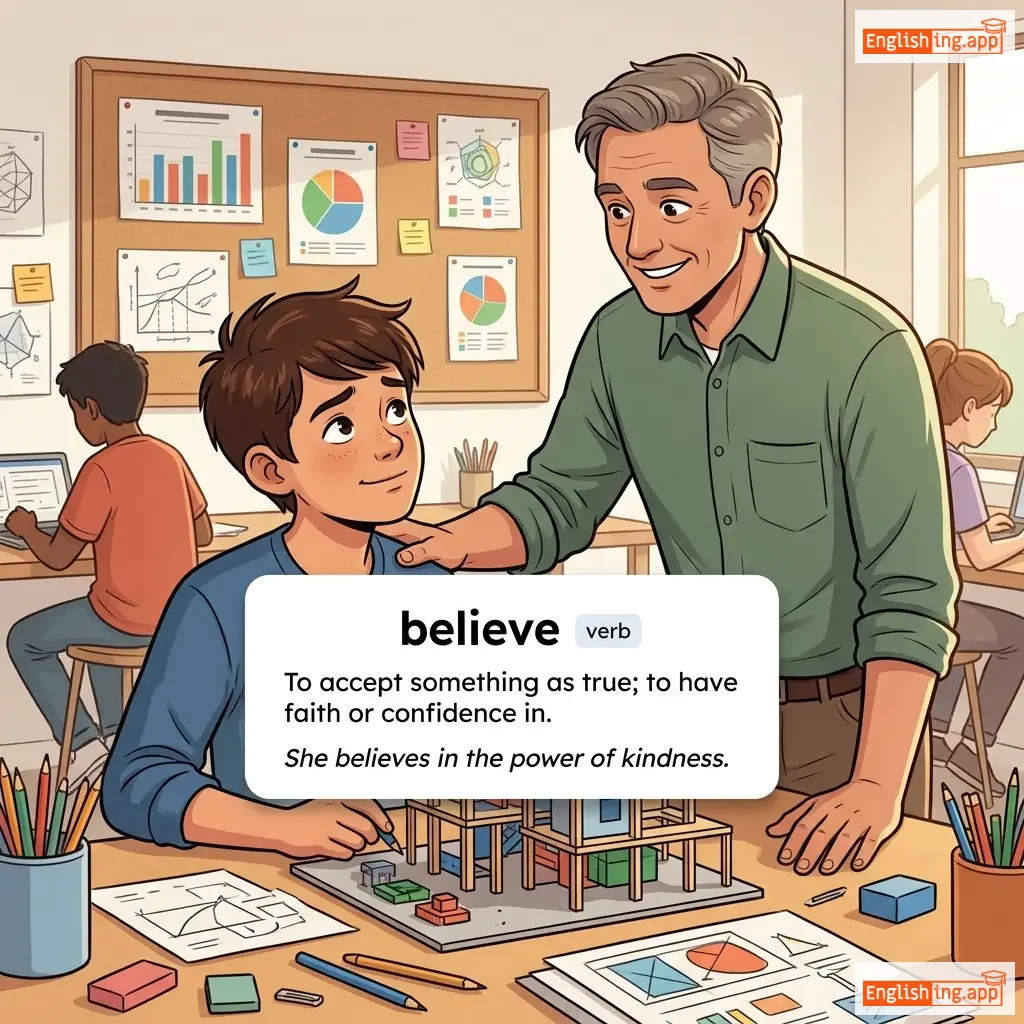
To accept something as true; to have faith or confidence in.
••••••
|
She believes in the power of kindness.
彼女は親切の力を信じています。
••••••
|
彼女は親切の力を信じています。
Kanojo wa shinsetsu no chikara o shinjiteimasu.
••••••
|
believe in
信じる
••••••
|
To have confidence or trust in someone or something.
••••••
|
信じる
shinjiru
••••••
|
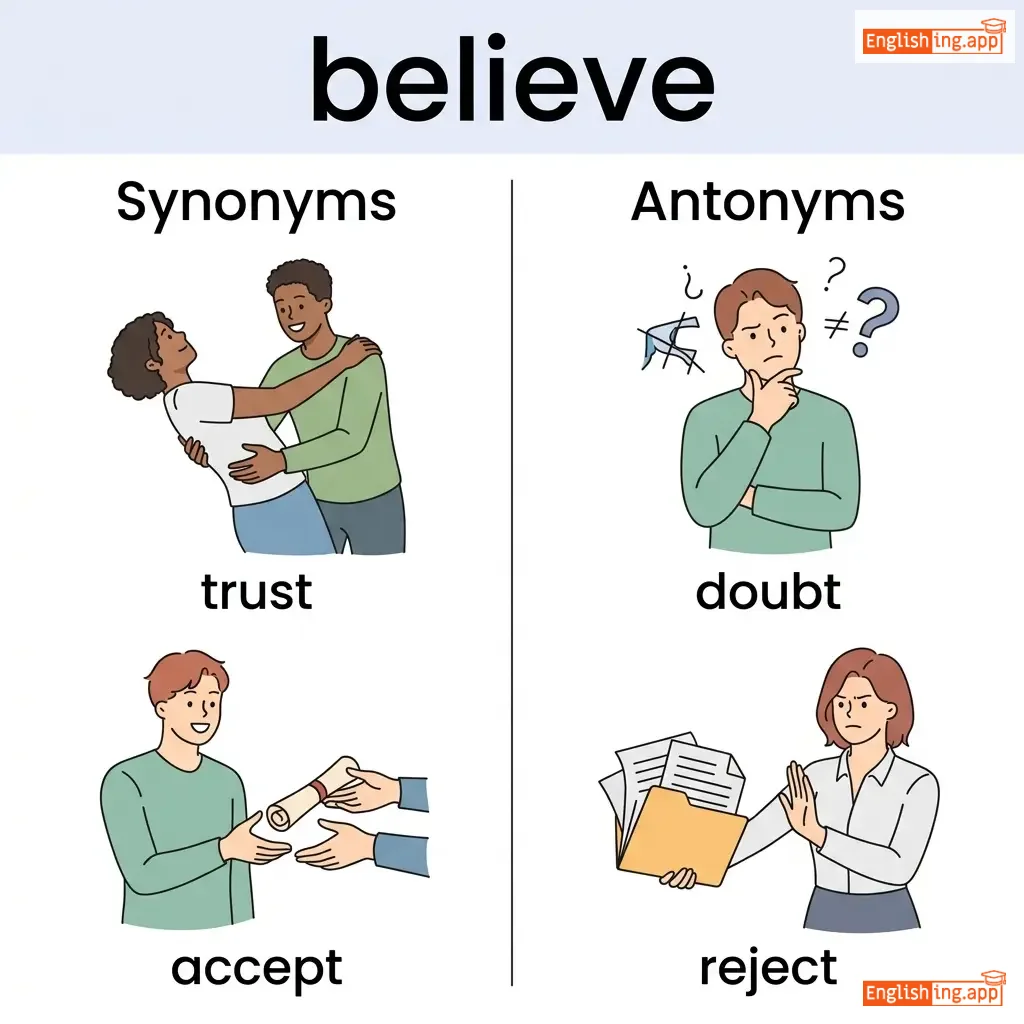
trust, accept, credit, rely on, be convinced
••••••
|
doubt, reject, distrust
••••••
|
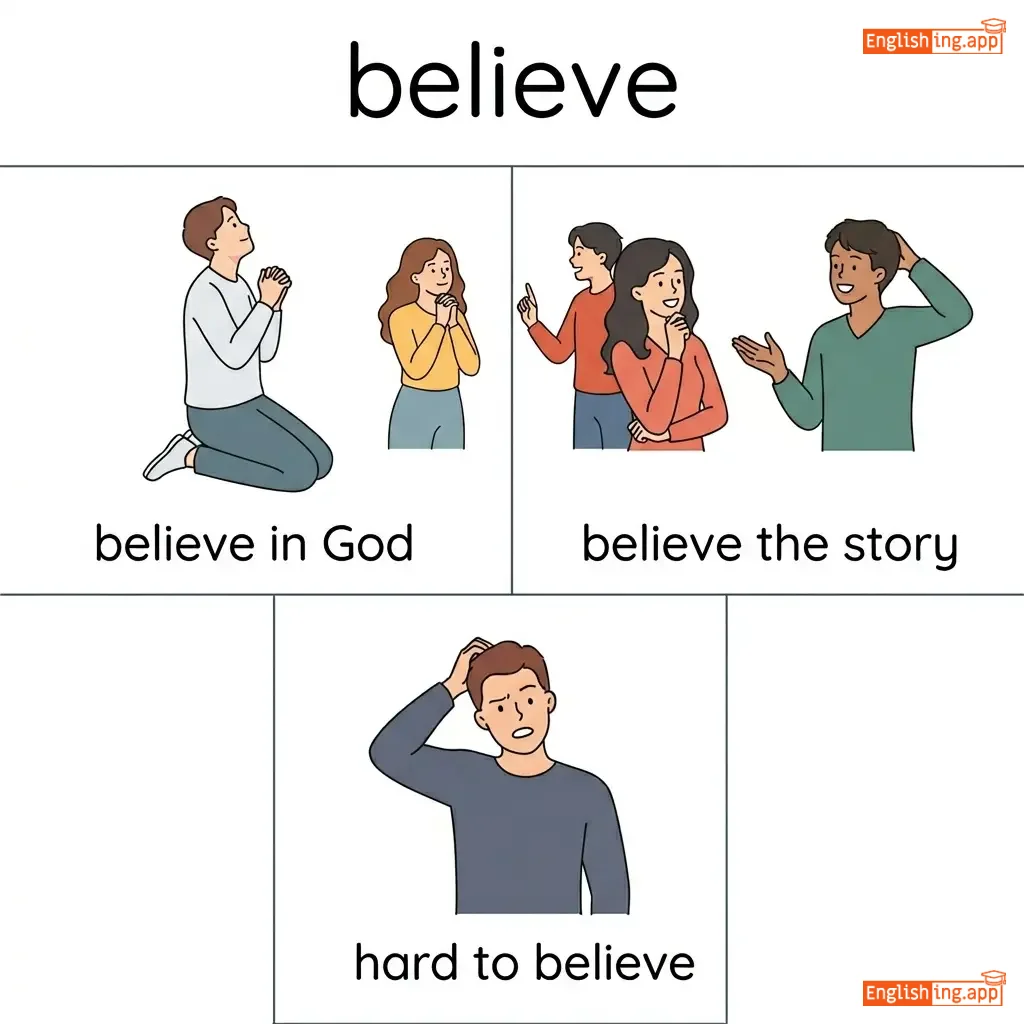
believe in God, believe the story, hard to believe, believe strongly
••••••
|
信じる = 信 + ジル—信じることで、可能性が広がる!
••••••
|
|
🙏
••••••
|
/bɪˈliːvər/
noun
(ビリーバー)
••••••
|
- •••••• |
信者
shinja
••••••
|
- •••••• | - •••••• | - •••••• | - •••••• |
a person who believes in something, especially a religious faith, idea, or principle
••••••
|
She is a strong believer in hard work and honesty.
シー イズ ア ストロング ビリーバー イン ハード ワーク アンド オネスティ。
••••••
|
彼女は努力と正直さを強く信じている。
kanojo wa doryoku to shojikisa o tsuyoku shinjite iru
••••••
|
true believer
トゥルー・ビリーバー
••••••
|
someone who has strong and sincere faith in a belief or cause
••••••
|
真の信者
shin no shinja
••••••
|
follower, adherent, devotee, supporter, faithful
••••••
|
skeptic, doubter, unbeliever
••••••
|
firm believer, true believer, religious believer, believer in science
••••••
|
Believe → 信じる → 信者 shinja
••••••
|
|
⬇️
••••••
|
/bɪˈlɪtl/
verb
(ビリトル)
••••••
|
- •••••• |
軽視する
keishi suru
••••••
|
belittled
ビリトルド
••••••
|
belittled
ビリトルド
••••••
|
belittles
ビリトルス
••••••
|
belittling
ビリトリング
••••••
|
To make someone or something seem less important or less valuable.
••••••
|
He often belittled his coworkers to feel superior.
彼はしばしば自分を優位に感じるために同僚を軽視していた。
••••••
|
彼はしばしば自分を優位に感じるために同僚を軽視していた。
Kare wa shibashiba jibun o yūi ni kanjiru tame ni dōryō o keishi shiteita.
••••••
|
- •••••• | - •••••• | - •••••• |
demean, disparage, minimize, undervalue, downgrade
••••••
|
praise, compliment, honor
••••••
|
belittle efforts, belittle achievements, belittles others, belittling remarks
••••••
|
Belittle は軽視する—誰かを小さく扱う。
••••••
|
|
🔔
••••••
|
/bɛl/
noun
••••••
|
- •••••• | - •••••• | - •••••• | - •••••• | - •••••• | - •••••• |
a hollow object, usually made of metal, that makes a ringing sound when struck
••••••
|
The school bell rang loudly at noon. |
- •••••• |
saved by the bell |
to be rescued from difficulty at the last moment
••••••
|
- •••••• |
chime, gong, buzzer, alarm
••••••
|
silence, quiet
••••••
|
ring the bell, church bell, door bell, alarm bell
••••••
|
No •••••• |
|
🤰
••••••
|
/ˈbɛli/
noun
(ベリー)
••••••
|
- •••••• |
お腹
onaka
••••••
|
- •••••• | - •••••• | - •••••• | - •••••• |
The front part of the human body below the chest; stomach or abdomen.
••••••
|
He rubbed his belly after the big meal. |
彼は大きな食事の後、お腹を擦った。
Kare wa ōkina shokuji no ato, onaka o sutta.
••••••
|
belly laugh |
A loud, hearty laugh.
••••••
|
大笑い
ōwarai
••••••
|
stomach, abdomen, tummy, gut
••••••
|
back, spine
••••••
|
big belly, belly fat, belly button
••••••
|
Belly はお腹を意味します。食べ過ぎるとお腹 (belly) が膨らみます。
••••••
|
|
🏠
••••••
|
/bɪˈlɒŋ/
verb
(ビロング)
••••••
|
- •••••• |
所属する
shozoku suru
••••••
|
belonged
ビロンド
••••••
|
belonged
ビロンド
••••••
|
belongs
ビロングス
••••••
|
belonging
ビロングイング
••••••
|
to be in the right place or to be a member of a group
••••••
|
She felt she truly belonged to the team.
彼女はチームに本当に所属していると感じていました。
••••••
|
彼女はチームに本当に所属していると感じていました。
Kanojo wa chīmu ni hontōni shozoku shite iru to kanjite imashita.
••••••
|
belong to
所属する
••••••
|
to be the property of someone or something
••••••
|
所属する
shozoku suru
••••••
|
fit, associate, connect, relate
••••••
|
exclude, detach, separate
••••••
|
belong to, feel belong, belong somewhere
••••••
|
Belongは‘所属する’意味で、何かの一部であることを示します。
••••••
|
|
❤️
••••••
|
/bɪˈlʌvɪd/
adjective
(ビローヴェド)
••••••
|
- •••••• |
愛されている
aisareteiru
••••••
|
- •••••• | - •••••• | - •••••• | - •••••• |
dearly loved, highly regarded
••••••
|
She was the beloved queen of the kingdom.
彼女は王国の愛されている女王でした。
••••••
|
彼女は王国の愛されている女王でした。
Kanojo wa ōkoku no aisareteiru joō deshita.
••••••
|
- •••••• | - •••••• | - •••••• |
cherished, adored, loved, esteemed
••••••
|
hated, despised, unloved
••••••
|
beloved friend, beloved leader, beloved person
••••••
|
愛されている (aisareteiru) とは、belovedのように、深く愛されている人を指します。
••••••
|
|
⬇️
••••••
|
/bɪˈloʊ/
preposition
(biro)
••••••
|
- •••••• |
下
shita
••••••
|
- •••••• | - •••••• | - •••••• | - •••••• |
At a lower level or position than something else.
••••••
|
The basement is below the ground floor. |
地下室は一階の下にあります。
Chikashitsu wa ikkai no shita ni arimasu.
••••••
|
below the belt |
Unfair or cruel remark or action.
••••••
|
ベルトの下
Beruto no shita
••••••
|
under, beneath, underneath, lower
••••••
|
above, over, higher
••••••
|
below average, below the surface, below zero
••••••
|
Belowは下を意味します。何かがあなたの下にあると思い描いてください。
••••••
|
|
👖
••••••
|
/bɛlt/
noun
••••••
|
- •••••• | - •••••• | - •••••• | - •••••• | - •••••• | - •••••• |
a strip of material worn around the waist to support clothes or as decoration
••••••
|
He tightened his belt before leaving for work. |
- •••••• |
tighten one's belt |
to live with less money than before
••••••
|
- •••••• |
strap, band, sash, girdle
••••••
|
loosen, release
••••••
|
wear a belt, leather belt, tighten belt, conveyor belt
••••••
|
No •••••• |
|
😢
••••••
|
/bɪˈmoʊn/
verb
(ビモン)
••••••
|
- •••••• |
嘆く
nageku
••••••
|
bemoaned
ビモンド
••••••
|
bemoaned
ビモンド
••••••
|
bemoans
ビモンズ
••••••
|
bemoaning
ビモーニング
••••••
|
To express discontent or sorrow over something.
••••••
|
Critics bemoaned the lack of diversity in the film.
批評家たちは映画の多様性の欠如を嘆いた。
••••••
|
批評家たちは映画の多様性の欠如を嘆いた。
Hihyōka-tachi wa eiga no tayō-sei no ketsujo o nageita.
••••••
|
- •••••• | - •••••• | - •••••• |
lament, complain, regret, grieve, mourn
••••••
|
praise, celebrate, rejoice
••••••
|
bemoan the loss, bemoan fate, bemoan lack
••••••
|
Bemoan という言葉は ‘ビモン’ - 嘆く
••••••
|
|
🤔
••••••
|
/bɪˈmjuːz/
verb
(bimyūsu)
••••••
|
- •••••• |
困惑させる
konwaku saseru
••••••
|
bemused
bimyūsuddo
••••••
|
bemused
bimyūsuddo
••••••
|
bemuses
bimyūsusu
••••••
|
bemusing
bimyūzingu
••••••
|
To confuse or puzzle someone.
••••••
|
The complex instructions bemused the new employees.
複雑な指示が新しい従業員を困惑させました。
••••••
|
複雑な指示が新しい従業員を困惑させました。
Fukuzatsu na shiji ga atarashī jūgyōin o konwaku sasemashita.
••••••
|
- •••••• | - •••••• | - •••••• |
confuse, bewilder, puzzle, perplex, baffle
••••••
|
clarify, explain, enlighten
••••••
|
bemuse the audience, bemuse expression, bemuse with details
••••••
|
Bemuse = 'B' for 'Baffling' = 誰かを困惑させる
••••••
|
|
🪑
••••••
|
/bɛntʃ/
noun
(ベンチ)
••••••
|
- •••••• |
ベンチ
benchi
••••••
|
- •••••• | - •••••• | - •••••• | - •••••• |
a long seat for several people, typically made of wood or stone
••••••
|
They sat on the park bench watching the sunset.
彼らは公園のベンチに座って夕日を見ていました。
••••••
|
彼らは公園のベンチに座って夕日を見ていました。
Karera wa kouen no benchi ni suwatte yuuhi wo miteimashita.
••••••
|
warm the bench
ベンチを温める
••••••
|
to not participate in a game, usually as a substitute player
••••••
|
ベンチを温める
benchi wo atatameru
••••••
|
seat, pew, stool, chair
••••••
|
floor, ground
••••••
|
park bench, wooden bench, sit on a bench, court bench
••••••
|
ベンチは座る場所なので、'ベンチを温める'はゲームに参加しないことを意味します。
••••••
|
|
📏
••••••
|
/ˈbɛntʃmɑːrk/
noun
(ベンチマーク)
••••••
|
|
基準
kijun
••••••
|
- •••••• | - •••••• | - •••••• | - •••••• |
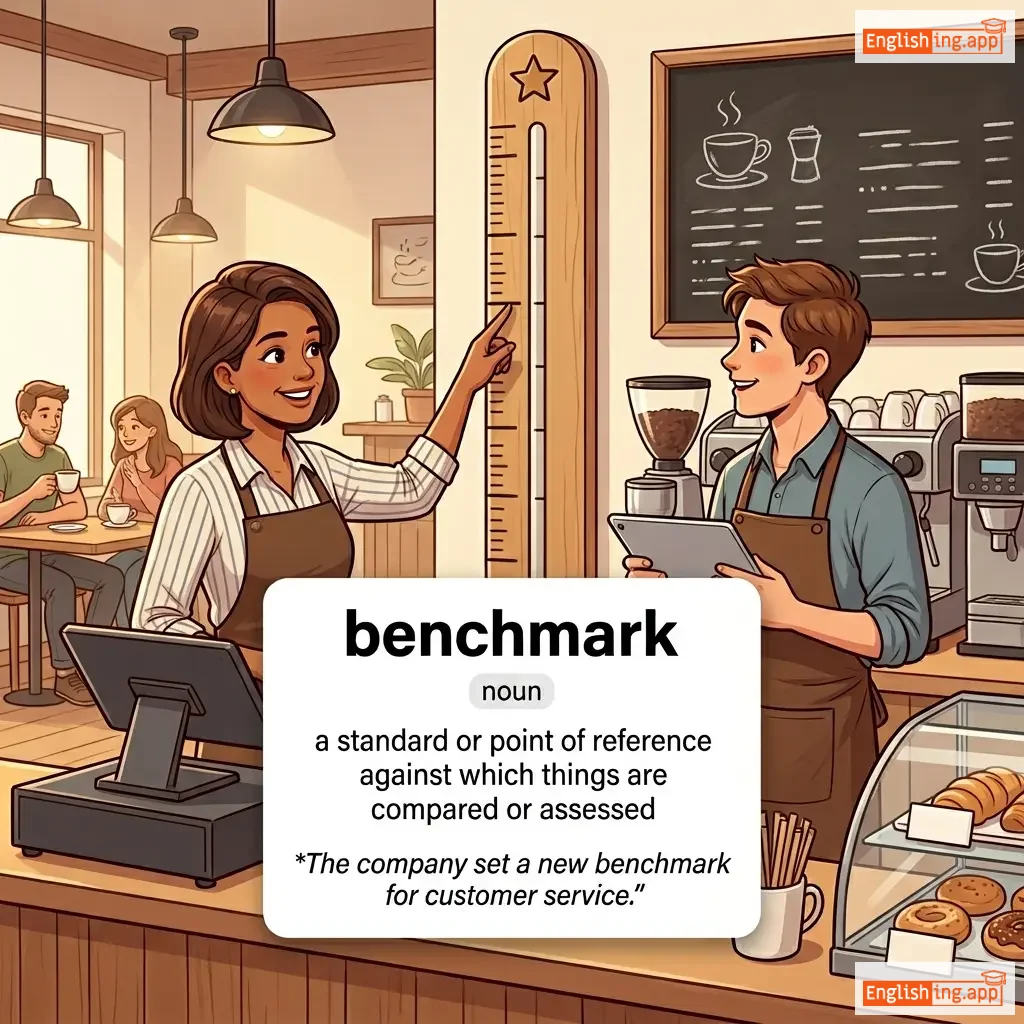
a standard or point of reference against which things are compared or assessed
••••••
|
The company set a new benchmark for customer service. |
その会社は顧客サービスの新しい基準を設定しました。
Sono kaisha wa kokyaku saabisu no atarashī kijun o settei shimashita.
••••••
|
- •••••• | - •••••• | - •••••• |
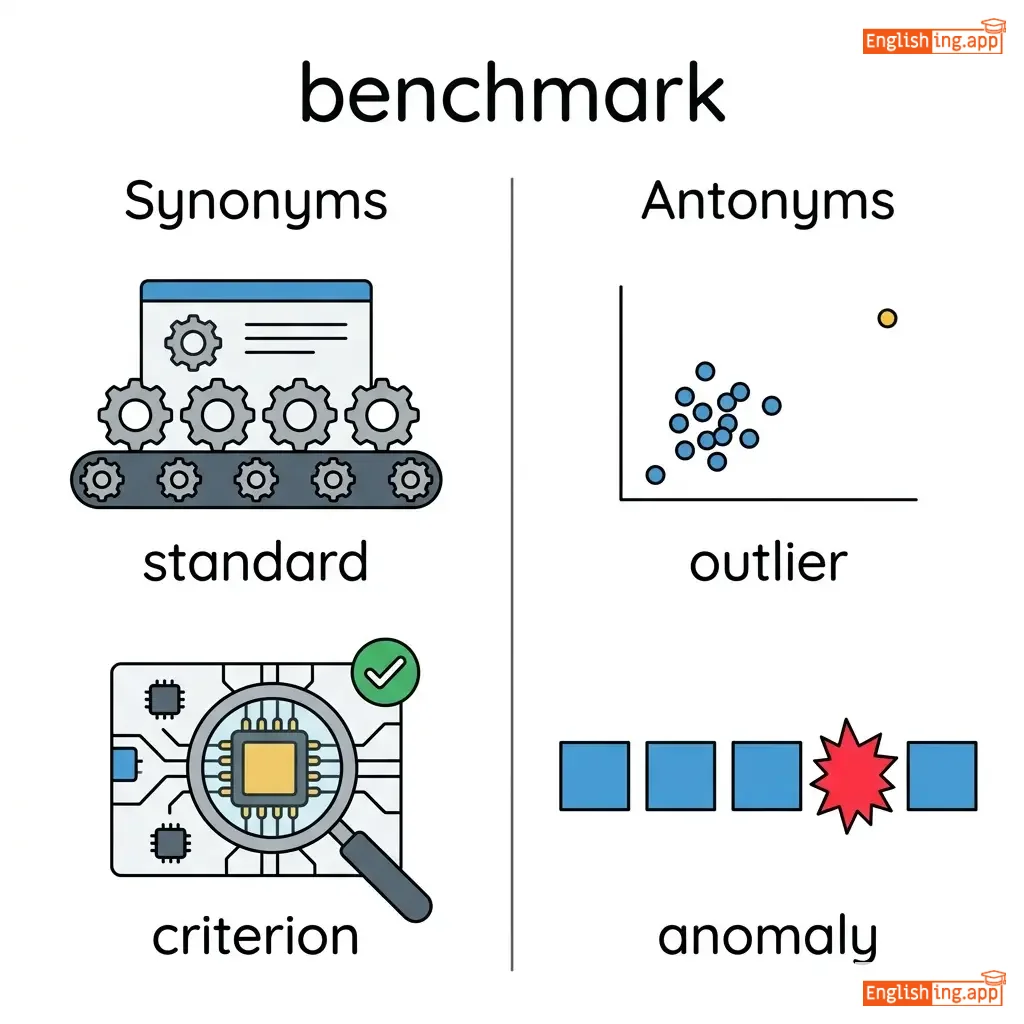
standard, criterion, gauge, yardstick
••••••
|
outlier, anomaly, exception
••••••
|
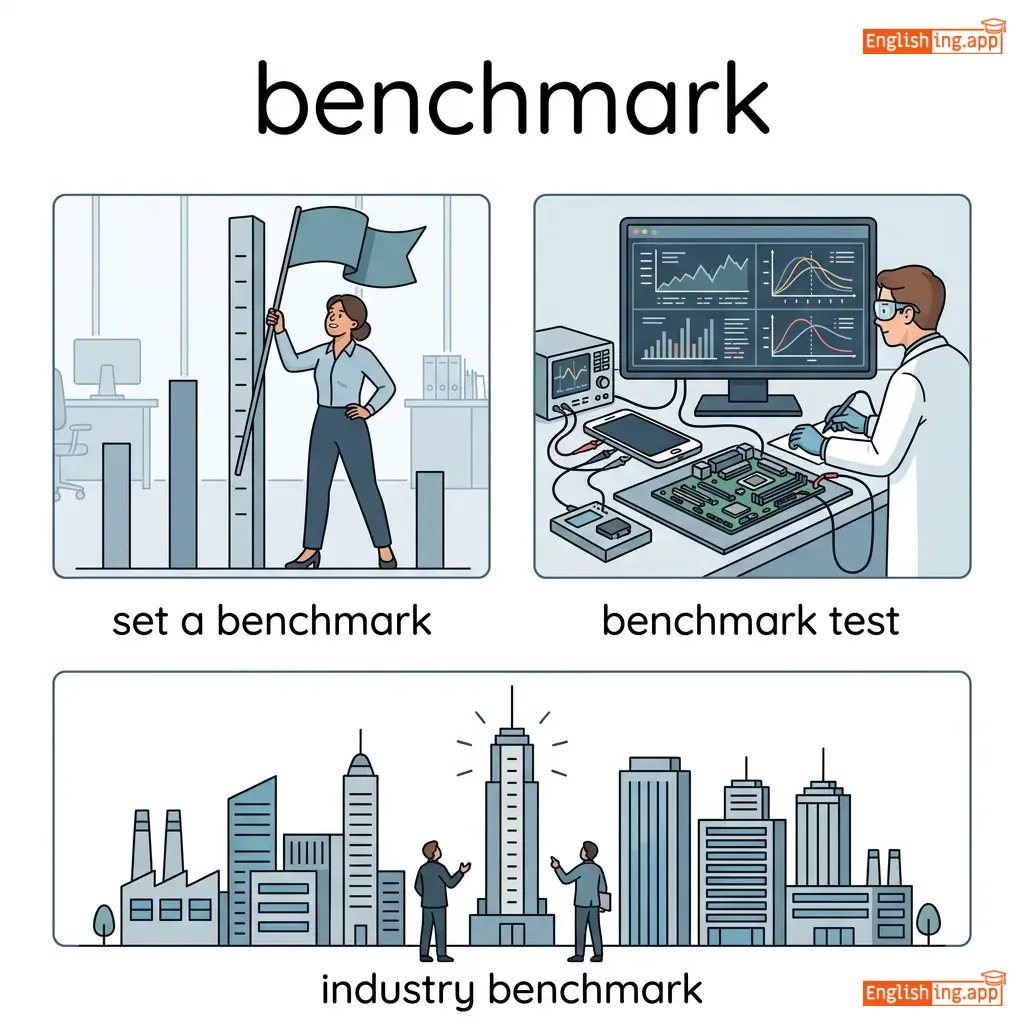
set a benchmark, benchmark test, industry benchmark, high benchmark
••••••
|
ベンチマークを基準に変える - Benchmark is a yardstick for comparison
••••••
|
|
↩️
••••••
|
/bɛnd/
verb
(ベンド)
••••••
|
- •••••• |
曲げる / かがむ
mageru / kagamu
••••••
|
bent
ベント
••••••
|
bent
ベント
••••••
|
bends
ベンズ
••••••
|
bending
ベンディング
••••••
|
to curve something or cause it to change shape; to move the body or part of it downward or forward
••••••
|
She had to bend down to pick up the coin.
彼女はコインを拾うためにかがむ必要がありました。
••••••
|
彼女はコインを拾うためにかがむ必要がありました。
Kanojo wa koin o hirou tame ni kagamu hitsuyou ga arimashita.
••••••
|
bend over backwards
必死で努力する
••••••
|
to try very hard to please someone or make something happen
••••••
|
全力を尽くす
zenryoku o tsukusu
••••••
|
curve, flex, bow, arch, stoop
••••••
|
straighten, unbend, stiffen
••••••
|
bend down, bend forward, bend the rules, bend over
••••••
|
曲げる(bend)ことは体が'曲がる'こと!
••••••
|
|
⬇️
••••••
|
/bɪˈniːθ/
adverb
(ビニス)
••••••
|
- •••••• |
下; 下方
shita, gehou
••••••
|
- •••••• | - •••••• | - •••••• | - •••••• |
under; below; underneath
••••••
|
The treasure lies beneath the old tree.
The treasure lies ビニス the old tree.
••••••
|
宝物は古い木の下にあります。
Takaramono wa furui ki no shita ni arimasu.
••••••
|
- •••••• | - •••••• | - •••••• |
under, below, underneath, down
••••••
|
above, over, on top, beyond
••••••
|
beneath the surface, beneath contempt, beneath notice
••••••
|
Visualize a treasure buried beneath a tree, with '下' meaning beneath in Japanese.
••••••
|
|
🌱
••••••
|
/ˌbɛnɪˈfɪʃəl/
adjective
(ベネフィシャル)
••••••
|
|
有益な
yuueki na
••••••
|
- •••••• | - •••••• | - •••••• | - •••••• |
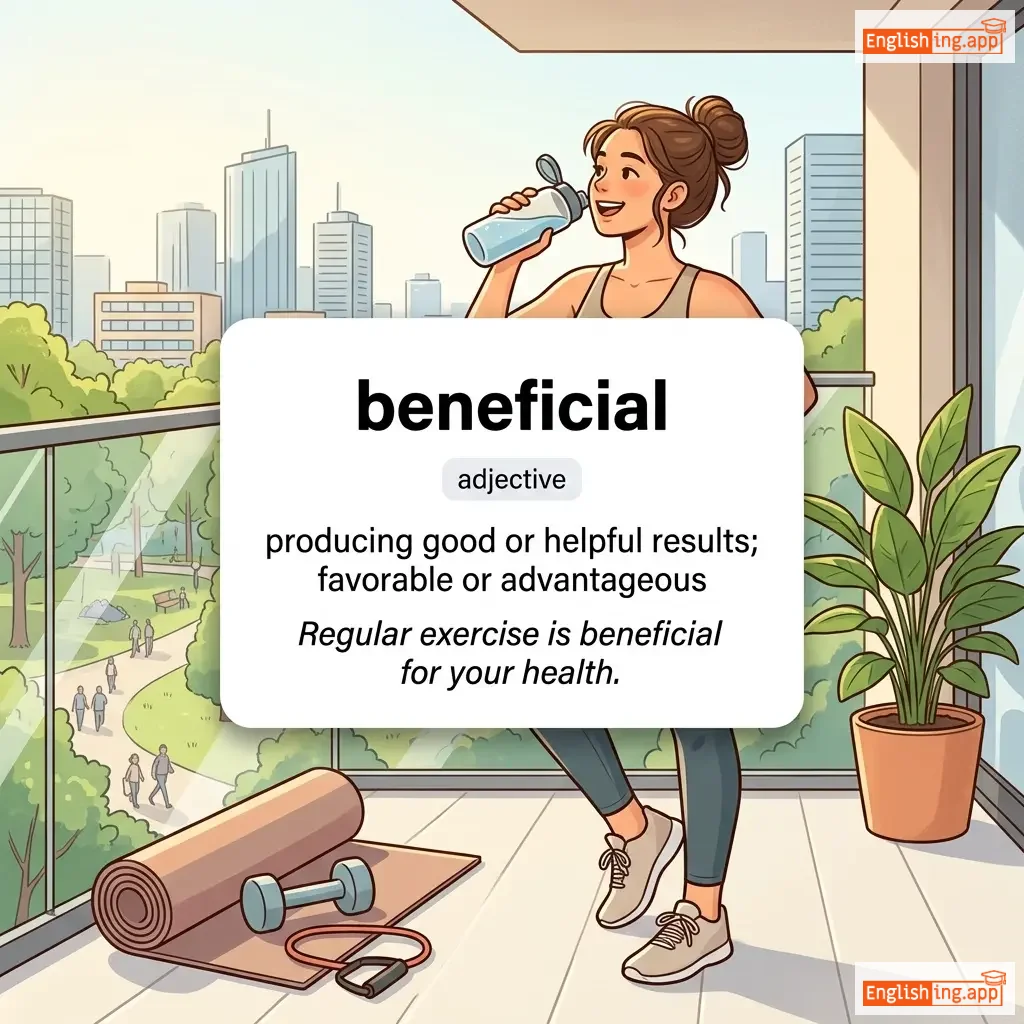
producing good or helpful results; favorable or advantageous
••••••
|
Regular exercise is beneficial for your health. |
定期的な運動はあなたの健康に有益です。
Teikiteki na undou wa anata no kenko ni yūeki desu.
••••••
|
- •••••• | - •••••• | - •••••• |
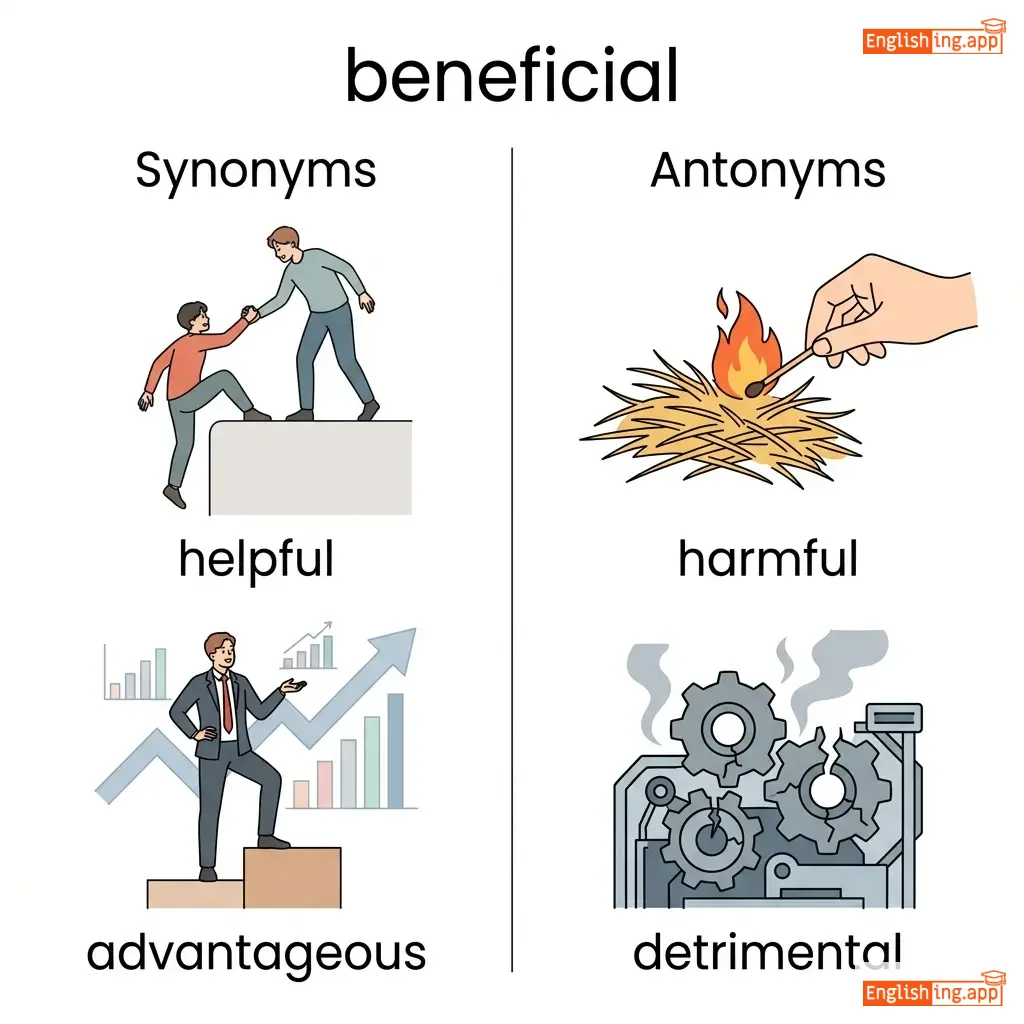
helpful, advantageous, favorable, useful, valuable
••••••
|
harmful, detrimental, disadvantageous
••••••
|
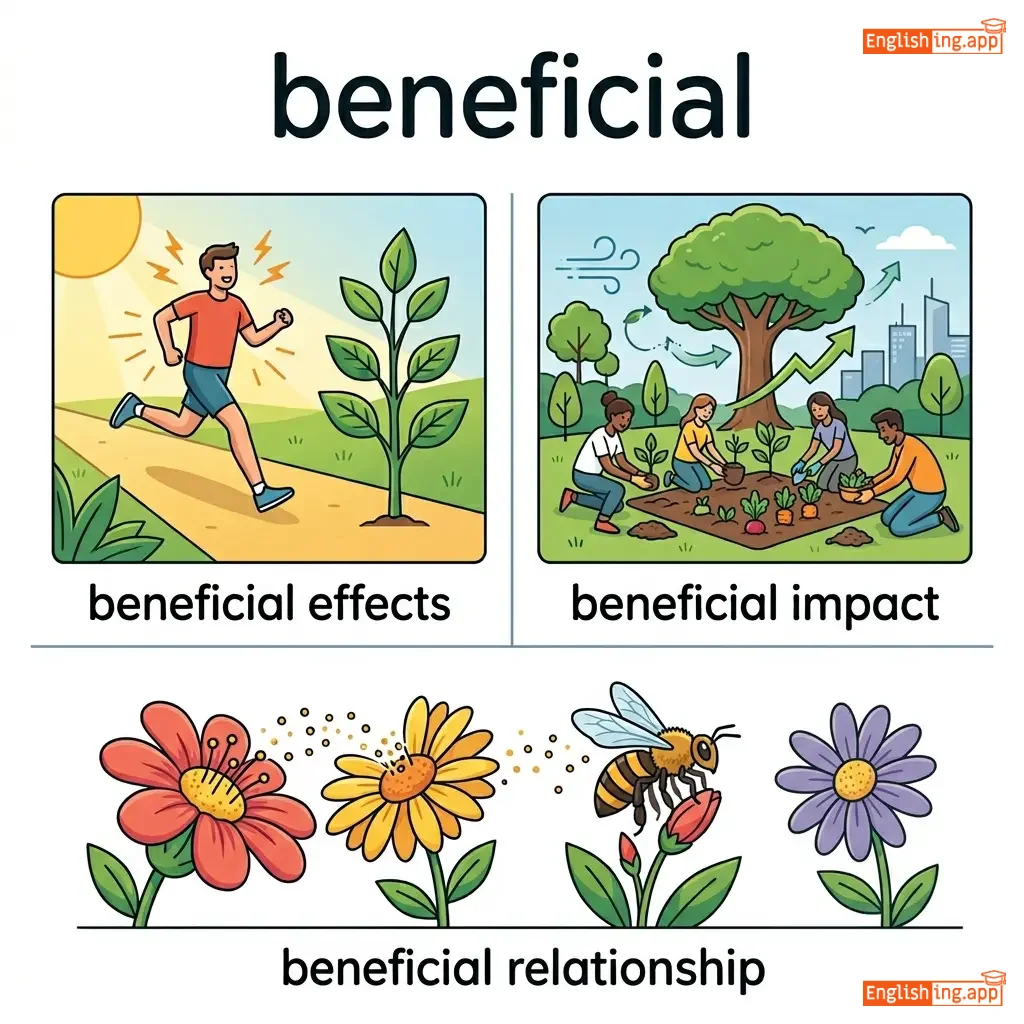
beneficial effects, beneficial impact, beneficial relationship, mutually beneficial
••••••
|
有益なは利益をもたらす、定期的な運動が健康に利益をもたらす
••••••
|
|
🎁
••••••
|
/ˌbɛnɪˈfɪʃəri/
noun
(ベネフィシャリー)
••••••
|
- •••••• |
受益者
shūekisha
••••••
|
- •••••• | - •••••• | - •••••• | - •••••• |
a person who receives something, especially money or property, from a will or insurance policy
••••••
|
She is the sole beneficiary of her father’s estate. |
彼女は父親の遺産の唯一の受益者です。
Kanojo wa chichioya no isan no yuiitsu no shūekisha desu.
••••••
|
- •••••• | - •••••• | - •••••• |
recipient, heir, inheritor, grantee
••••••
|
donor, benefactor
••••••
|
sole beneficiary, named beneficiary, policy beneficiary, estate beneficiary
••••••
|
Beneficiary は利益を受ける人、保険の受益者のようなものです。
••••••
|
|
🎉
••••••
|
/ˈbɛnɪfɪt/
noun/verb
(ベネフィット)
••••••
|
- •••••• |
利益 / 便益
rieki / ben'eki
••••••
|
benefited
ベネフィットエッド
••••••
|
benefited
ベネフィットエッド
••••••
|
benefits
ベネフィットス
••••••
|
benefiting
ベネフィッティング
••••••
|
an advantage, profit, or good effect; to receive help or an advantage
••••••
|
Employees benefit from the company’s health insurance program.
従業員は会社の健康保険プログラムから利益を得ます。
••••••
|
従業員は会社の健康保険プログラムから利益を得ます。
jūgyōin wa kaisha no kenko hoken puroguramu kara rieki o emasu.
••••••
|
for the benefit of
誰かの利益のために
••••••
|
for the advantage or good of someone
••••••
|
誰かの利益のために
dareka no rieki no tame ni
••••••
|
advantage, profit, gain, perk, blessing
••••••
|
loss, harm, drawback
••••••
|
health benefit, social benefit, benefit from, mutual benefit
••••••
|
Benefit は日本語で利益や便益を意味します。健康保険の利益のように。
••••••
|
|
🥶
••••••
|
/bɪˈnʌm/
verb
(ビナム)
••••••
|
- •••••• |
麻痺させる
mahi saseru
••••••
|
benumbed
ビナムド
••••••
|
benumbed
ビナムド
••••••
|
benumbs
ビナムズ
••••••
|
benumbing
ビナミング
••••••
|
to make physically numb or without sensation; to make mentally dull or insensitive
••••••
|
The freezing wind seemed to benumb his fingers within minutes.
ザ フリージング ウィンド シームド トゥ ビナム ヒズ フィンガーズ ウィズイン ミニッツ
••••••
|
凍える風が数分で彼の指を麻痺させた。
Kogoeru kaze ga sufun de kare no yubi o mahi saseta
••••••
|
benumb the senses
ビナム ザ センシズ
••••••
|
to dull or deaden physical or emotional perception
••••••
|
感覚を麻痺させる
kankaku o mahi saseru
••••••
|
numb, deaden, dull, anesthetize, stupefy
••••••
|
sensitize, stimulate, awaken
••••••
|
benumb the senses, benumbed by cold, benumbed feeling, emotionally benumbed
••••••
|
麻痺(mahi)=numb → benumb
••••••
|
|
🖤
••••••
|
/bɪˈriːv/
verb
(ベリーブ)
••••••
|
- •••••• |
大切な人を失う
taisetsu na hito o ushinau
••••••
|
bereaved
ベリーブド
••••••
|
bereaved
ベリーブド
••••••
|
bereaves
ベリーブス
••••••
|
bereaving
ベリービング
••••••
|
to deprive someone of a loved one through death
••••••
|
She was bereaved of her husband last year.
彼女は昨年、夫を亡くしました。
••••••
|
彼女は昨年、夫を亡くしました。
Kanojo wa sakunen, otto o nakushimashita.
••••••
|
bereaved family
喪失した家族
••••••
|
a family that has lost a loved one
••••••
|
愛する人を失った家族
aisuru hito o ushinatta kazoku
••••••
|
deprive, lose, rob, dispossess
••••••
|
bless, endow, provide
••••••
|
bereaved family, bereaved person, bereaved of, comfort the bereaved
••••••
|
Be + reave (奪う) = 死が大切な人を奪う → bereave
••••••
|
|
🛏️
••••••
|
/bɜːrθ/
noun
(バース)
••••••
|
- •••••• |
寝台 / 停泊場所
shindai / teibaku basho
••••••
|
- •••••• | - •••••• | - •••••• | - •••••• |
A place to sleep on a ship or train; a ship's allocated place at a dock.
••••••
|
They reserved a lower berth on the overnight train. |
彼らは夜行列車で下段の寝台を予約しました。
Karera wa yakō ressha de gedan no shindai o yoyaku shimashita.
••••••
|
give a wide berth |
To avoid someone or something; to keep away.
••••••
|
広い余裕を与える
hiro na yoyū o ataeru
••••••
|
bunk, cabin, bed, dock, station
••••••
|
departure, absence
••••••
|
lower berth, upper berth, ship's berth, wide berth
••••••
|
Berthは 'bed' のようなもので、電車での'berth'は眠るためのベッドです。
••••••
|
|
🙏
••••••
|
/bɪˈsiːtʃ/
verb
(ビスイッチ)
••••••
|
- •••••• |
懇願する
konkan suru
••••••
|
beseeched
ビスイッチド
••••••
|
beseeched
ビスイッチド
••••••
|
beseeches
ビスイッチェス
••••••
|
beseeching
ビスイッチング
••••••
|
To ask someone urgently and fervently to do something; to beg.
••••••
|
He beseeched the judge for mercy.
彼は裁判官に慈悲を請いました。
••••••
|
彼は裁判官に慈悲を請いました。
Kare wa saiban kan ni jihi wo inorimashita.
••••••
|
- •••••• | - •••••• | - •••••• |
implore, beg, plead, entreat, supplicate
••••••
|
demand, command, insist
••••••
|
beseech someone, beseech the lord, beseech for mercy, humbly beseech
••••••
|
Beseech = Be + Speech (懇願して頼む).
••••••
|
|
🤝
••••••
|
/bɪˈsaɪd/
preposition
(besaido)
••••••
|
- •••••• |
隣に
tonari ni
••••••
|
- •••••• | - •••••• | - •••••• | - •••••• |
next to or at the side of someone or something
••••••
|
She sat beside her best friend during the ceremony. |
彼女は式の間、最良の友達の隣に座っていました。
Kanojo wa shiki no aida, sairyō no tomodachi no tonari ni suwatte imashita.
••••••
|
- •••••• | - •••••• | - •••••• |
next to, alongside, by, near
••••••
|
away from, apart from
••••••
|
sit beside, stand beside, beside the door, beside me
••••••
|
Besideは隣に - Best friend隣。
••••••
|
|
➕
••••••
|
/bɪˈsaɪdz/
adverb
(ビサイドス)
••••••
|
- •••••• |
その上
sono ue
••••••
|
- •••••• | - •••••• | - •••••• | - •••••• |
in addition to; moreover; furthermore
••••••
|
Besides being smart, he is also kind. |
賢いだけでなく、その上優しい。
Kashikoi dake denaku, sono ue yasashii.
••••••
|
- •••••• | - •••••• | - •••••• |
moreover, furthermore, additionally, also
••••••
|
only, merely, exclusively
••••••
|
besides that, besides which, besides being
••••••
|
何かを加える時、'その上'を使おう。
••••••
|
|
🏆
••••••
|
/bɛst/
adjective
(ベスト)
••••••
|
- •••••• |
最高
saikou
••••••
|
- •••••• | - •••••• | - •••••• | - •••••• |
Of the highest quality, excellence, or standing.
••••••
|
She is the best student in the class. |
彼女はクラスで最高の生徒です。
Kanojo wa kurasu de saikou no seito desu.
••••••
|
make the best of |
To do as well as possible in a difficult situation.
••••••
|
最善を尽くす
saizen o tsukusu
••••••
|
finest, greatest, top, leading, supreme
••••••
|
worst, poorest, inferior
••••••
|
best friend, best time, best practice
••••••
|
Bestは最高!最高の成果を出すために、最善を尽くそう!
••••••
|

