Получите неограниченный доступ ко всем словам с подпиской Pro
Обновить до ProПолучите неограниченный доступ ко всем предложениям с подпиской Pro
Обновить до Pro|
Эмодзи
|
Слово | Images | Перевод | Прошедшее | Причастие прошедшего времени | Третье лицо единственного числа | Герундий | Значение | Пример предложения | Перевод примера предложения | Пример выражения | Значение примера выражения | Перевод примера выражения | Синонимы | Антонимы | Коллокации | Мнемоника |
|---|---|---|---|---|---|---|---|---|---|---|---|---|---|---|---|---|---|
|
🛏️
••••••
|
/bɛd/
noun
(бэд)
••••••
|
- •••••• |
кровать
bed
••••••
|
- •••••• | - •••••• | - •••••• | - •••••• |
a piece of furniture for sleeping or resting on
••••••
|
She lay down on the bed and fell asleep quickly.
Она легла на кровать и быстро заснула.
••••••
|
Она легла на кровать и быстро заснула.
Ona legla na krovat i bystro zasnula.
••••••
|
make your bed
мейк ёр бед
••••••
|
to arrange or tidy your bed after getting up
••••••
|
застелать постель
zastelat postel
••••••
|
couch, mattress, cot, bunk
••••••
|
floor, ground
••••••
|
go to bed, make the bed, bed sheet, hospital bed
••••••
|
БЭД на кровать: bed means кровать. запомни как звучит и пишется
••••••
|
|
🛏️
••••••
|
/ˈbɛdruːm/
noun
(бэдруːм)
••••••
|
- •••••• |
спальня
spal'nya
••••••
|
- •••••• | - •••••• | - •••••• | - •••••• |
A room used for sleeping in.
••••••
|
The children were playing in the bedroom.
ðə tʃɪldrən wɜr pleɪɪŋ ɪn ðə бэдруːм.
••••••
|
Дети играли в спальне.
Deti igrali v spal'ne.
••••••
|
bedroom eyes
бэдруːм айз
••••••
|
A seductive or alluring look.
••••••
|
соблазнительные глаза
soblaznitel'nye glaza
••••••
|
sleeping room, chamber, boudoir, dormitory
••••••
|
living room, kitchen
••••••
|
master bedroom, small bedroom, bedroom furniture, bedroom window
••••••
|
Спальня - место для сна, где есть кровать.
••••••
|
|
🥩
••••••
|
/biːf/
noun
(биф)
••••••
|
- •••••• |
говядина
govyadina
••••••
|
- •••••• | - •••••• | - •••••• | - •••••• |
the flesh of a cow, bull, or ox, used as food; also a complaint or dispute
••••••
|
He ordered a plate of grilled beef for dinner. |
Он заказал тарелку жареной говядины на ужин.
On zakazal tarelku zharenoy govyadiny na uzhin.
••••••
|
have a beef with someone |
to have a complaint or dispute with someone
••••••
|
иметь проблему с кем-то
imet' problemu s kem-to
••••••
|
meat, steak, flesh, complaint, dispute
••••••
|
poultry, peace, harmony
••••••
|
beef steak, roast beef, beef burger, beef curry
••••••
|
Beef означает говядина 🍖 — 'Злой как бык' запомни это и поймешь!
••••••
|
|
🍺
••••••
|
/bɪər/
noun
(бир)
••••••
|
- •••••• |
пиво
pivo
••••••
|
- •••••• | - •••••• | - •••••• | - •••••• |
An alcoholic drink made from yeast-fermented malt flavored with hops.
••••••
|
He ordered a glass of cold beer at the bar.
Он заказал стакан холодного пива в баре.
••••••
|
Он заказал стакан холодного пива в баре.
On zakazal stakan kholodnogo piva v bare.
••••••
|
beer belly
пивной живот
••••••
|
A large stomach caused by drinking too much beer.
••••••
|
пивной живот
pivnoy zhivot
••••••
|
ale, lager, brew, pint
••••••
|
water, juice
••••••
|
cold beer, draft beer, bottle of beer, beer mug
••••••
|
Пиво — напиток, который заполняет живот и вечер.
••••••
|
|
🎩
••••••
|
/bɪˈfɪt/
verb
(бифит)
••••••
|
- •••••• |
подходить
podkhodit
••••••
|
befitted
бифитед
••••••
|
befitted
бифитед
••••••
|
befits
бифитс
••••••
|
befitting
бифитинг
••••••
|
to be suitable for; to be appropriate to
••••••
|
Formal attire befits the seriousness of the occasion.
Формал этайр бифитс зе сериаснес ов зе окейжн.
••••••
|
Формальная одежда подходит к серьёзности события.
Formalnaya odezhda podkhodit k seryoznosti sobytiya
••••••
|
befitting one’s status
бифитинг уанз стэтус
••••••
|
appropriate to a person’s rank or position
••••••
|
соответствовать статусу
sootvetstvovat statusu
••••••
|
suit, become, match, be appropriate for, accord with
••••••
|
misfit, clash, be inappropriate for
••••••
|
befit the occasion, befit one’s status, befit the role, befit the position
••••••
|
Befit — значит fit, то есть хорошо подходить.
••••••
|
|
🤡
••••••
|
/bɪˈfuːl/
verb
(бифул)
••••••
|
- •••••• |
обманывать
obmanyvat
••••••
|
befooled
бифулд
••••••
|
befooled
бифулд
••••••
|
befools
бифулз
••••••
|
befooling
бифулинг
••••••
|
to deceive or trick someone into believing something false; to make someone appear foolish
••••••
|
The scammer tried to befool innocent people with fake promises.
Зэ скаммер трайд ту бифул иносент пипл уиз фейк промисес
••••••
|
Мошенник пытался обмануть невинных людей ложными обещаниями.
Moshennik pytalsya obmanut nevinnikh lyudei lozhnymi obeshchaniyami
••••••
|
- •••••• | - •••••• | - •••••• |
deceive, trick, dupe, fool, mislead
••••••
|
enlighten, inform, clarify
••••••
|
befool someone easily, befool the public, try to befool, completely befool
••••••
|
befool — делать кого-то fool, то есть обманывать
••••••
|
|
⏰
••••••
|
/bɪˈfɔːr/
preposition/adverb/conjunction
(bifor)
••••••
|
- •••••• |
до
do
••••••
|
- •••••• | - •••••• | - •••••• | - •••••• |
At an earlier time; in front of in order or place.
••••••
|
She arrived before the meeting started. |
Она пришла до начала встречи.
Ona prishla do nachala vstrechi.
••••••
|
before long |
in a short time
••••••
|
скоро
skoro
••••••
|
earlier, ahead, prior, in front
••••••
|
after, behind
••••••
|
before dawn, before time, before long, before the meeting
••••••
|
BEFORE значит до — Будь готов до того, как что-то случится.
••••••
|
|
🧪
••••••
|
/bɪˈfaʊl/
verb
(бифаул)
••••••
|
- •••••• |
загрязнять
zagryaznyat
••••••
|
befouled
бифаулд
••••••
|
befouled
бифаулд
••••••
|
befouls
бифаулс
••••••
|
befouling
бифаулинг
••••••
|
to make dirty or polluted; to disgrace or corrupt
••••••
|
The factory waste befouled the river.
Зе фэктори вэйст бифаулд зе ривер.
••••••
|
Фабричные отходы загрязнили реку.
fabrichnye othody zagryaznili reku
••••••
|
- •••••• | - •••••• | - •••••• |
pollute, defile, contaminate, sully, taint
••••••
|
clean, purify, cleanse
••••••
|
befoul the environment, befoul a river, befoul the air, befoul one’s reputation
••••••
|
Befoul = сделать ‘foul’ — по-русски сильно загрязнить.
••••••
|
|
🙏
••••••
|
/bɛɡ/
verb
(бег)
••••••
|
|
умолять / просить
umolyat / prosit
••••••
|
begged
бегд
••••••
|
begged
бегд
••••••
|
begs
бегс
••••••
|
begging
беггинг
••••••
|
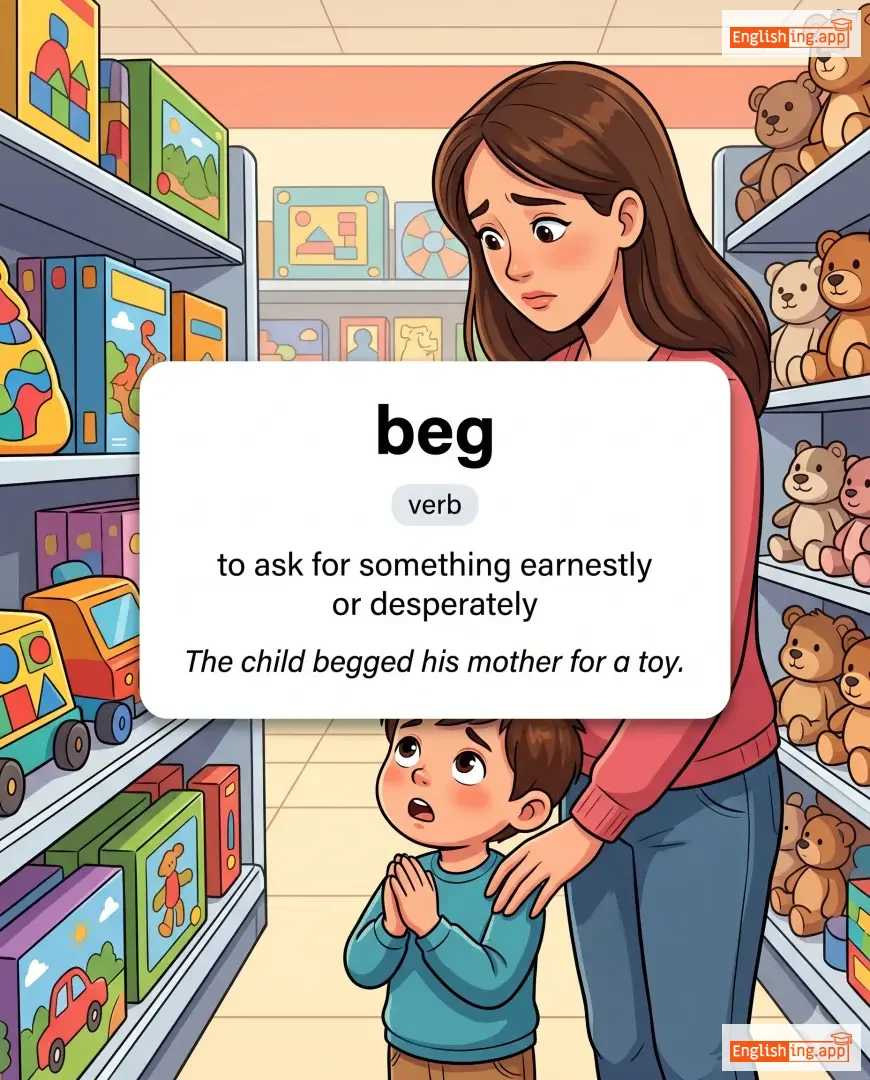
to ask for something earnestly or desperately
••••••
|
The child begged his mother for a toy.
ребёнок бегал к своей матери за игрушкой.
••••••
|
Ребёнок просил у матери игрушку.
Rebyonok prosil u materi igrooshku.
••••••
|
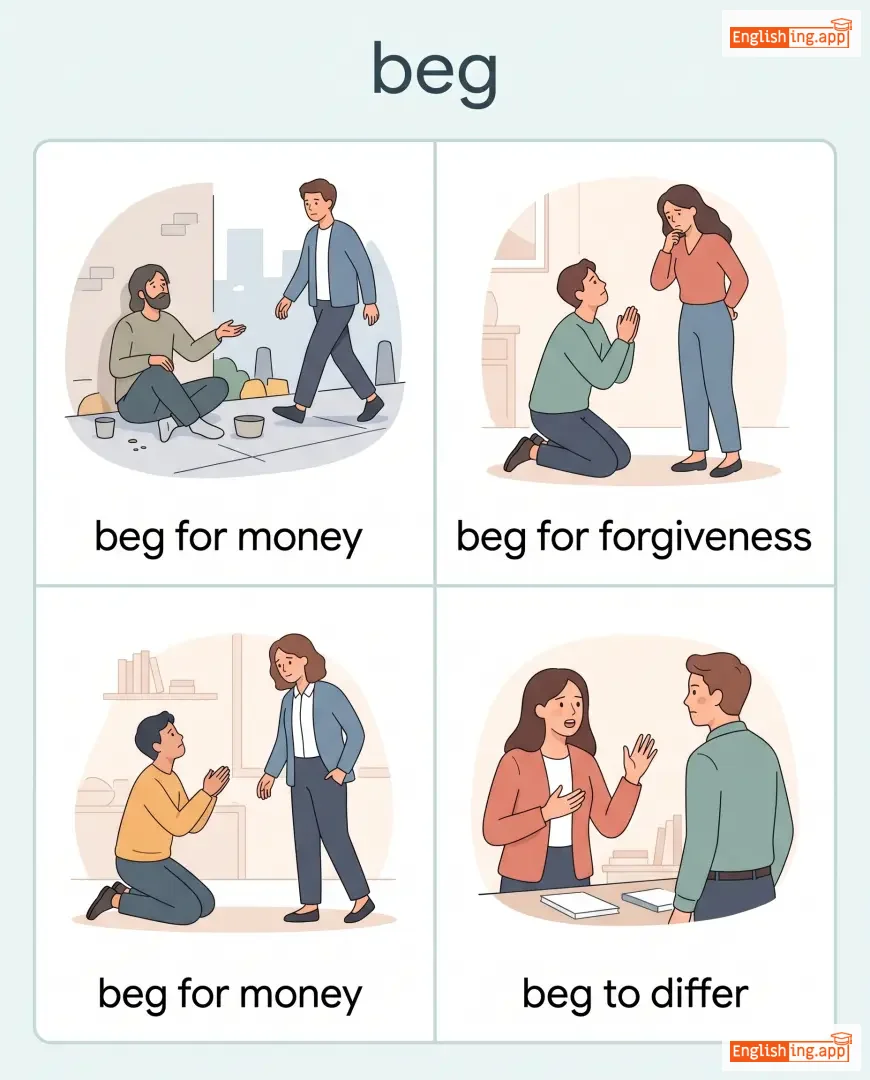
beg to differ
beg to differ
••••••
|
to politely disagree
••••••
|
вежливо не согласиться
vezhlivo ne soglasitsya
••••••
|
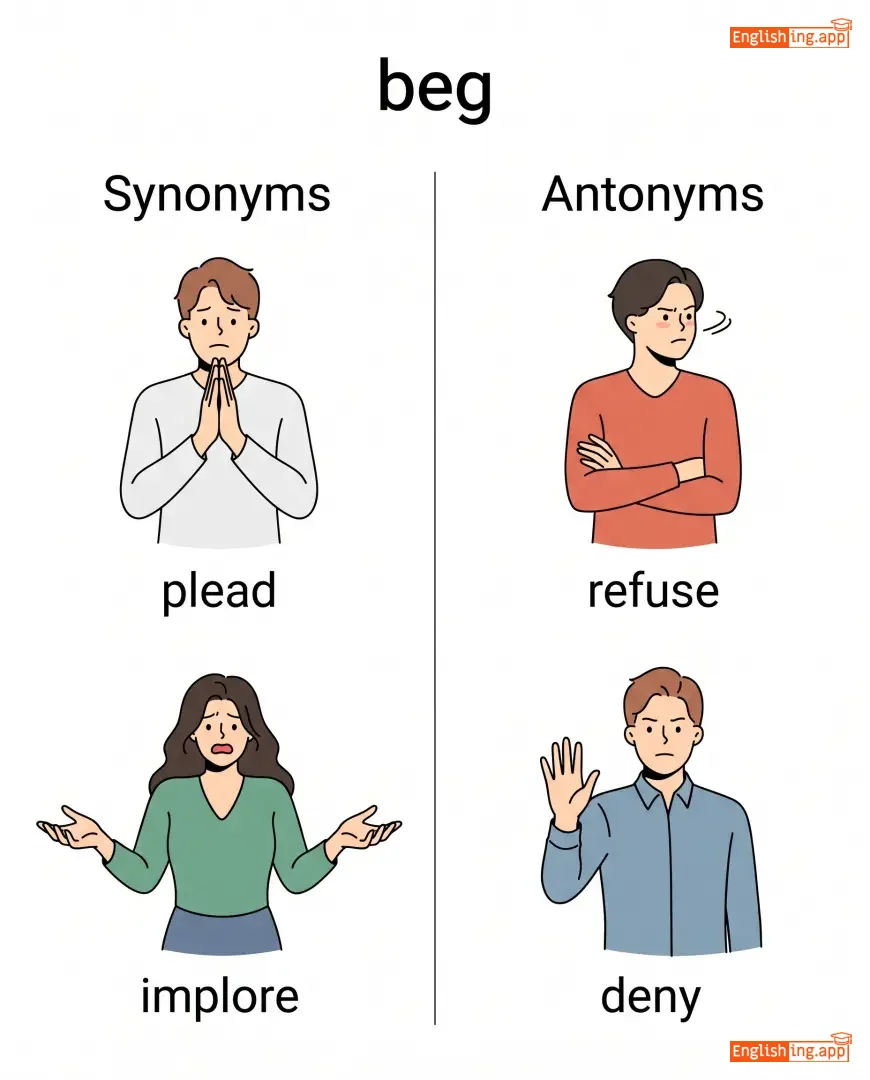
plead, implore, request, entreat, supplicate
••••••
|
refuse, deny, reject
••••••
|
beg for money, beg for forgiveness, beg to differ, beg for mercy
••••••
|
Beg означает просить – представьте, что вы просите у кого-то игрушку.
••••••
|
|
🌱
••••••
|
/bɪˈɡɛt/
verb
(бигет)
••••••
|
- •••••• |
порождать / создавать
porozhdat' / sozdavat'
••••••
|
begot
бигот
••••••
|
begotten
биготтен
••••••
|
begets
бигетс
••••••
|
begetting
бигеттинг
••••••
|
to bring about or give rise to; to father or produce
••••••
|
Violence begets more violence.
Насилие порождает больше насилия.
••••••
|
Насилие порождает больше насилия.
Nasiliye porozhdaet bol'she nasiliya.
••••••
|
- •••••• | - •••••• | - •••••• |
cause, create, generate, produce, engender
••••••
|
prevent, stop, hinder
••••••
|
beget violence, beget problems, beget change
••••••
|
Beget означает порождать, как когда родители порождают детей.
••••••
|
|
🚀
••••••
|
/bɪˈɡɪn/
verb
(бигин)
••••••
|

|
начать
nachat
••••••
|
began
бигэн
••••••
|
begun
биган
••••••
|
begins
бигинс
••••••
|
beginning
бигининг
••••••
|
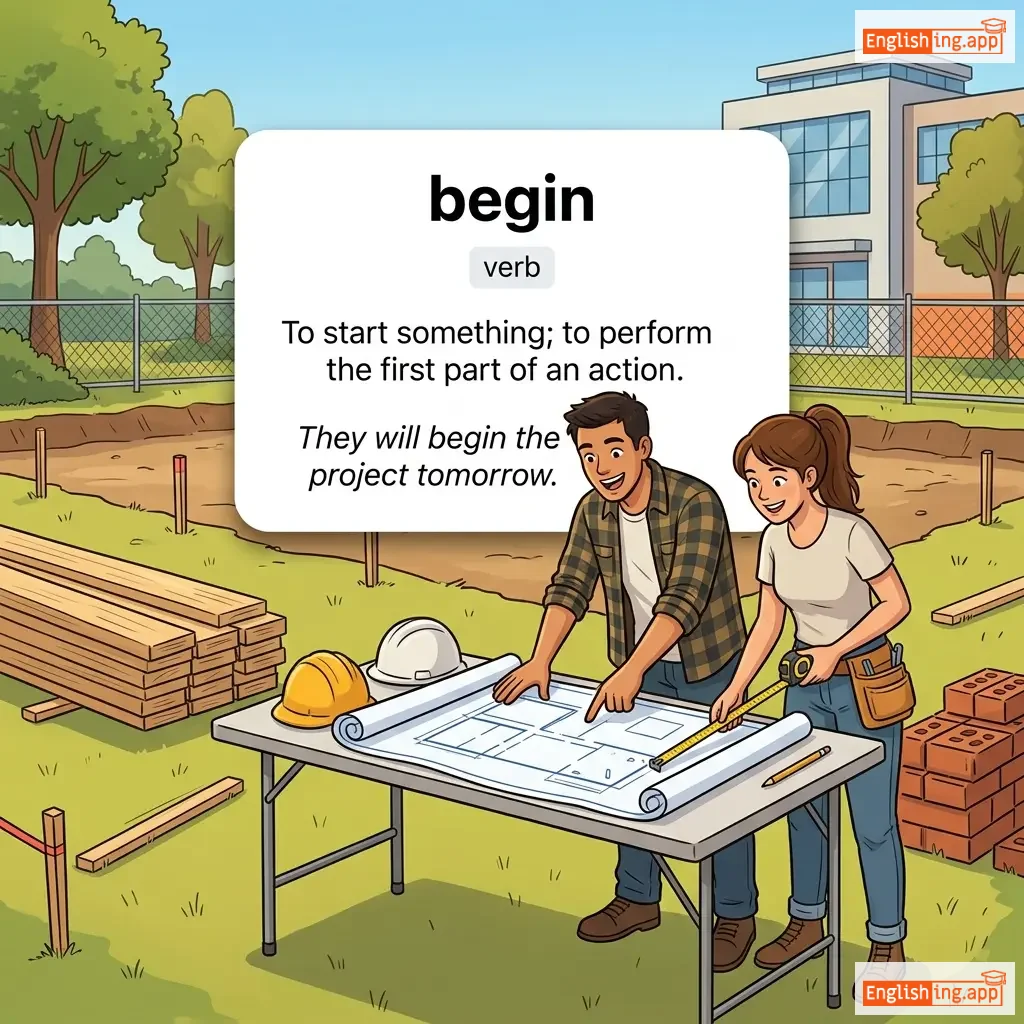
To start something; to perform the first part of an action.
••••••
|
They will begin the project tomorrow.
Они начнут проект завтра.
••••••
|
Они начнут проект завтра.
Oni nachnut proyekt zavtra.
••••••
|
to begin with
для начала
••••••
|
as the first consideration
••••••
|
для начала
dlya nachala
••••••
|
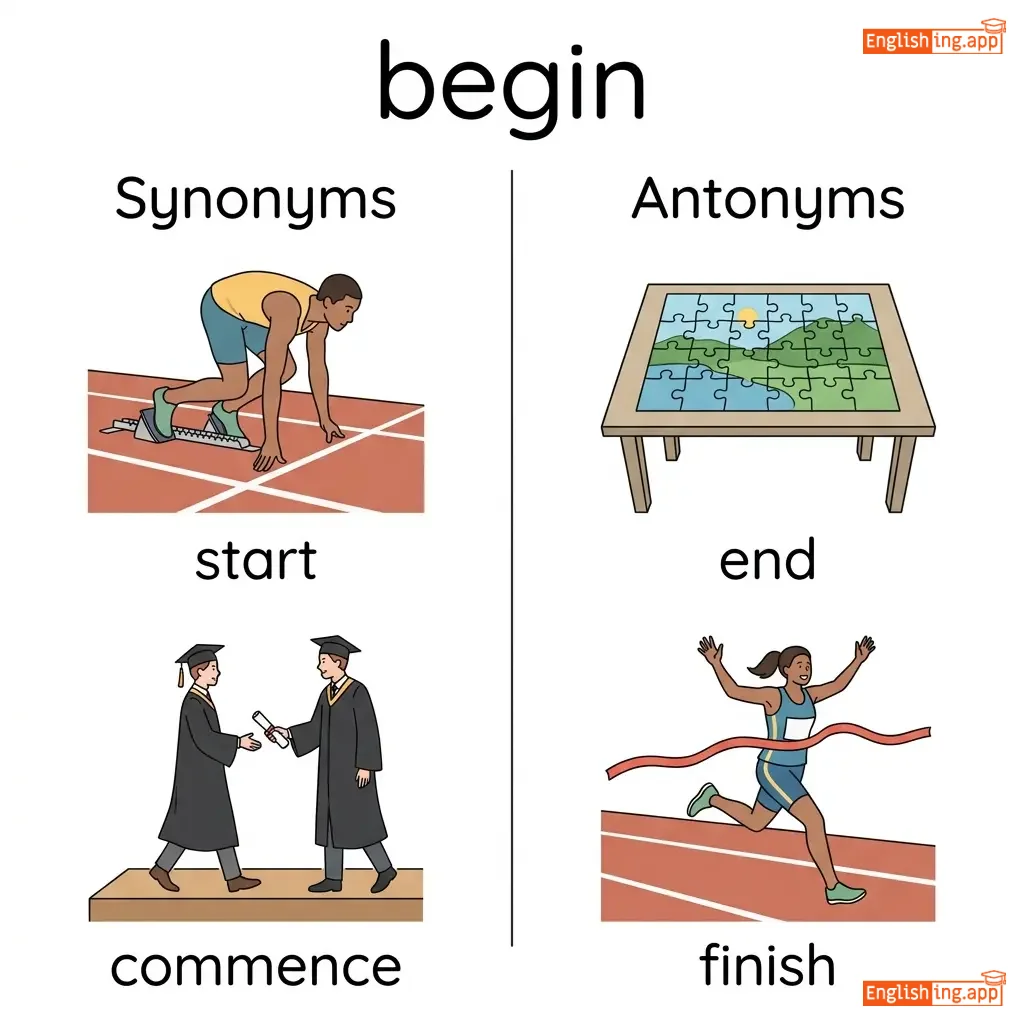
start, commence, initiate, launch
••••••
|
end, finish, conclude
••••••
|
begin work, begin project, begin journey, begin process
••••••
|
НАЧАТЬ = начать. Просто начни!
••••••
|
|
🌅
••••••
|
/bɪˈɡɪnɪŋ/
noun
(бигиннинг)
••••••
|
- •••••• |
начало
nachalo
••••••
|
- •••••• | - •••••• | - •••••• | - •••••• |
The start or first part of something.
••••••
|
The beginning of the story was very interesting. |
Начало истории было очень интересным.
Nachalo istorii bylo ochen' interesnym.
••••••
|
new beginning |
a fresh start
••••••
|
новое начало
novoe nachalo
••••••
|
start, commencement, onset, opening
••••••
|
end, conclusion
••••••
|
at the beginning, beginning of story, new beginning
••••••
|
BEGINNING означает начало — восход солнца 🌅 это новое начало.
••••••
|
|
🤝
••••••
|
/bɪˈhɑːf/
noun
(bihaf)
••••••
|
- •••••• |
от имени
ot imeni
••••••
|
- •••••• | - •••••• | - •••••• | - •••••• |
as a representative of someone; in the interest of someone
••••••
|
She accepted the award on behalf of her team. |
Она приняла награду от имени своей команды.
Ona prinyala nagradu ot imeni svoey komandy.
••••••
|
on someone's behalf |
as a representative of someone else
••••••
|
от имени кого-то
ot imeni kogo-to
••••••
|
interest, support, representation, favor
••••••
|
against, opposition
••••••
|
on behalf of, in behalf of, behalf letter, behalf request
••••••
|
'Be half' помни — ты как половина кого-то, действующий от его имени.
••••••
|
|
🙂
••••••
|
/bɪˈheɪv/
verb
(bihéiv)
••••••
|
|
вести себя
vesti sebya
••••••
|
behaved
bihéivd
••••••
|
behaved
bihéivd
••••••
|
behaves
bihéivs
••••••
|
behaving
bihéiving
••••••
|
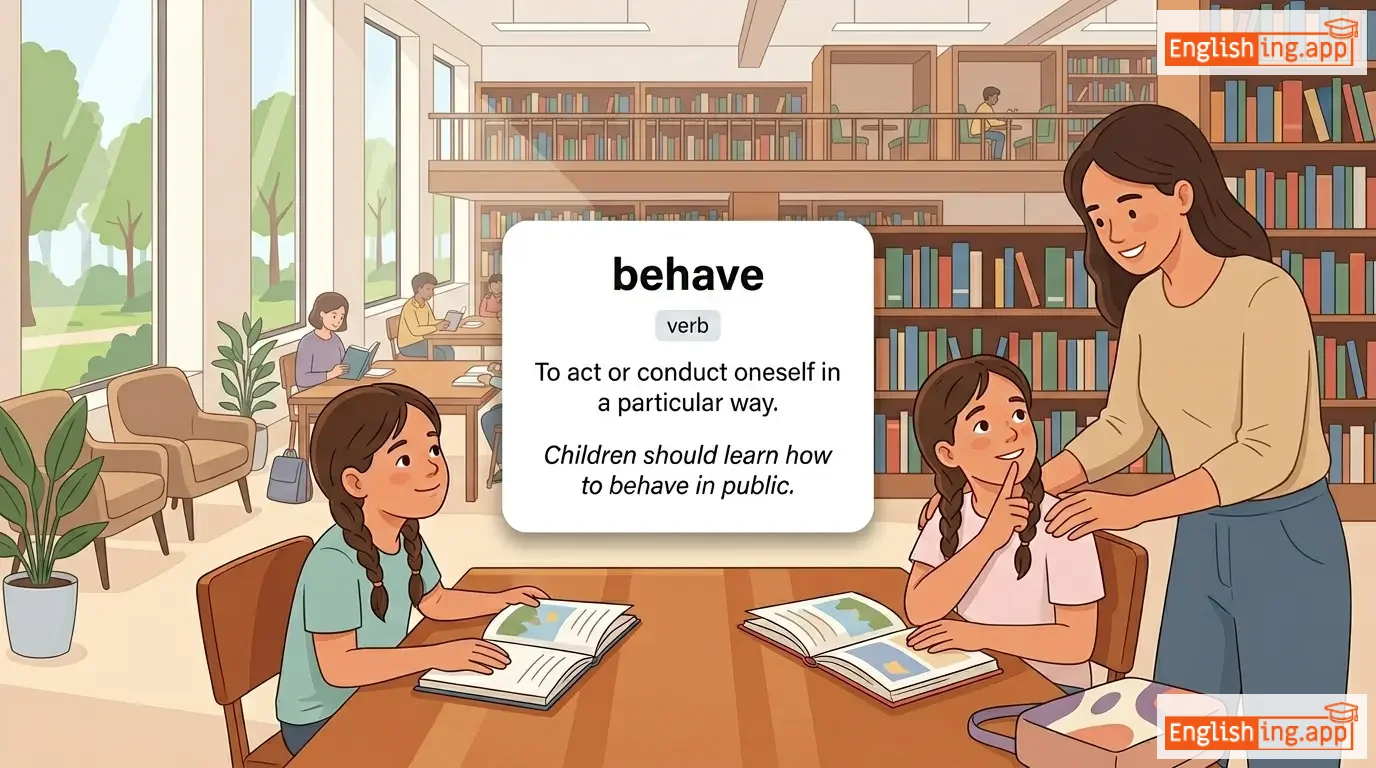
To act or conduct oneself in a particular way.
••••••
|
Children should learn how to behave in public.
Дети должны учиться вести себя на публике.
••••••
|
Дети должны учиться вести себя на публике.
Deti dolzhny uchitsya vesti sebya na publike.
••••••
|
behave yourself
веди себя
••••••
|
act properly; control your actions
••••••
|
Веди себя хорошо
Vedi sebya khorosho
••••••
|
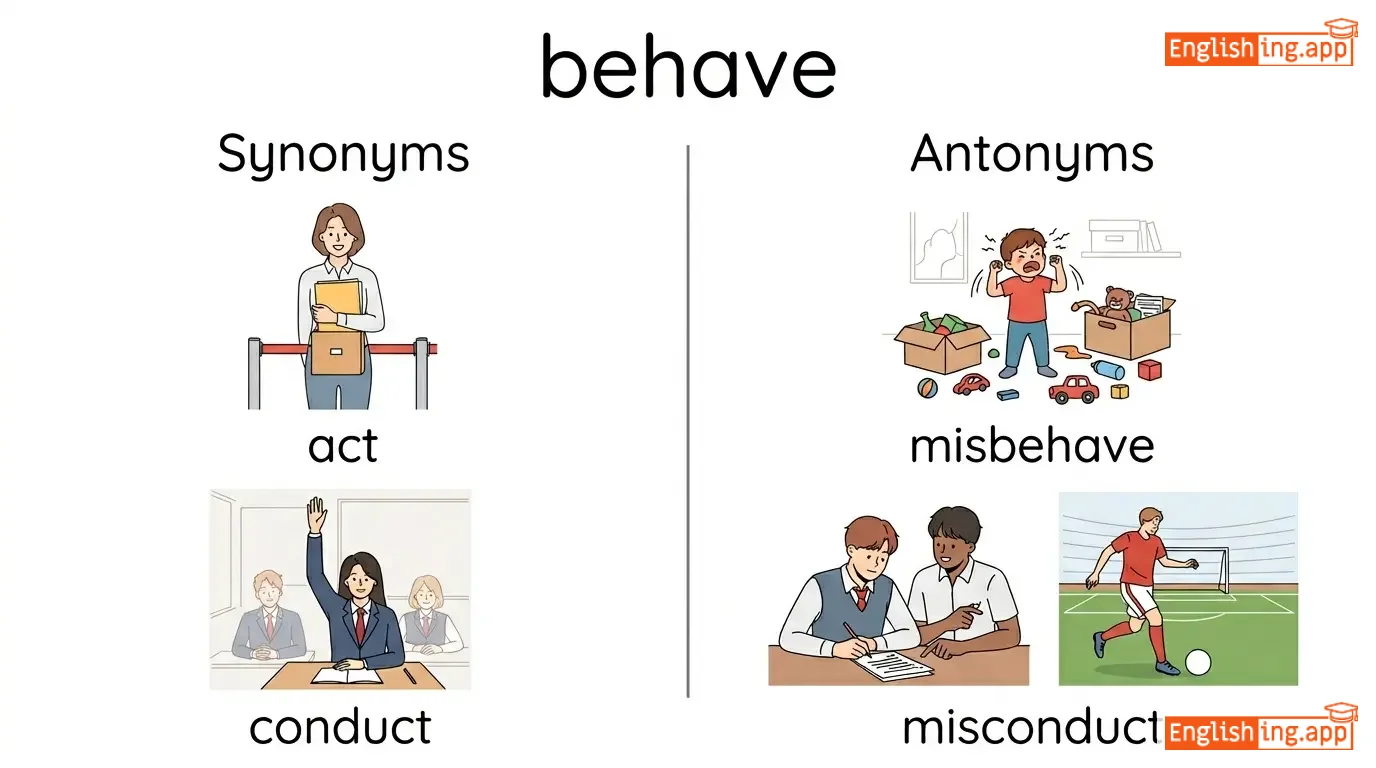
act, conduct, perform, operate
••••••
|
misbehave, misconduct
••••••
|
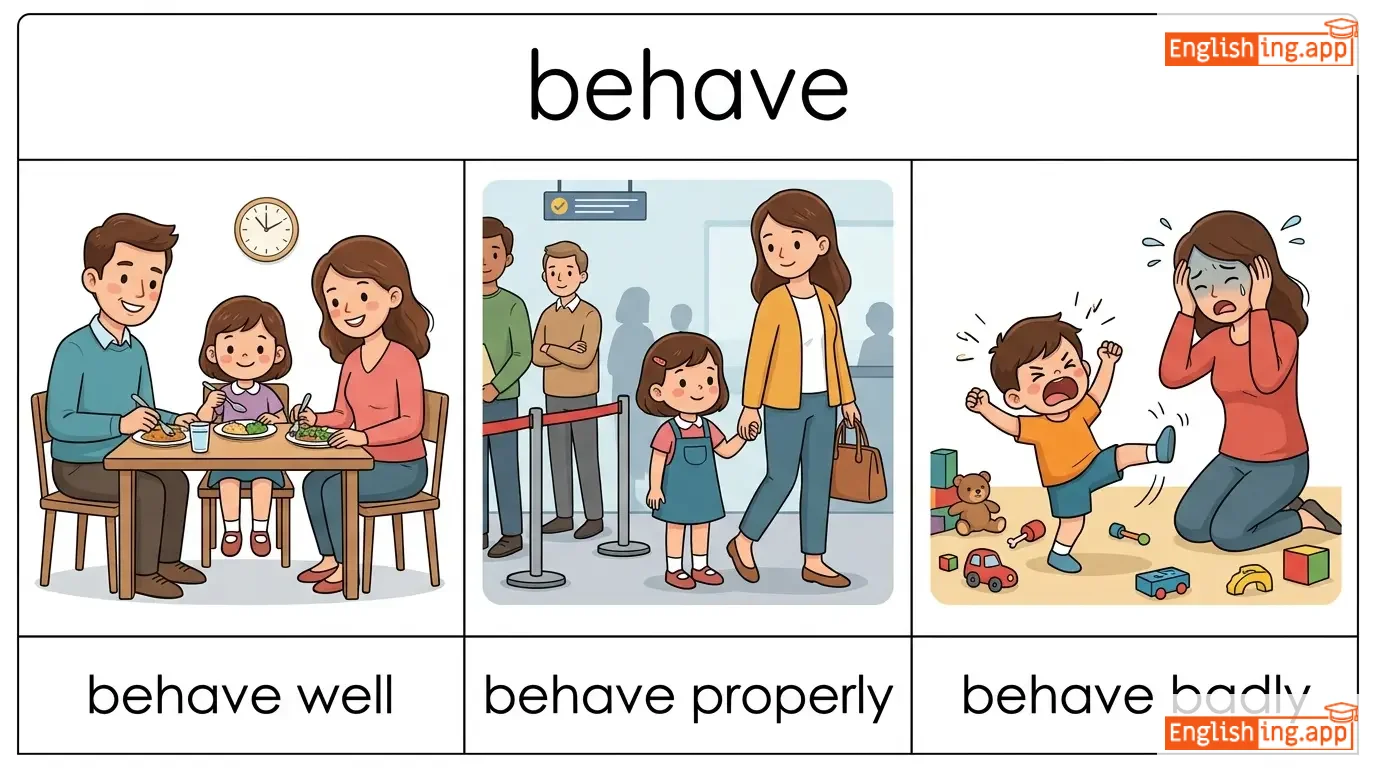
behave well, behave properly, behave badly
••••••
|
BEHAVE означает вести себя правильно — если не так, то будет misbehave.
••••••
|
|
🧑🏫
••••••
|
/bɪˈheɪvjər/
noun
(biˈhevior)
••••••
|
- •••••• |
поведение
povedenie
••••••
|
- •••••• | - •••••• | - •••••• | - •••••• |
The way in which one acts or conducts oneself, especially toward others.
••••••
|
The teacher praised her good behavior in class. |
Учитель похвалил ее хорошее поведение в классе.
Uchitel' pokhvalil yejo khoroshee povedenie v klasse.
••••••
|
on best behavior |
Behaving in the most polite or well-mannered way possible.
••••••
|
примерное поведение
primernoe povedenie
••••••
|
conduct, manners, actions, demeanor, attitude
••••••
|
misconduct, rudeness
••••••
|
good behavior, bad behavior, social behavior, criminal behavior
••••••
|
Поведение = как ты ведешь себя в обществе.
••••••
|
|
⚔️
••••••
|
/bɪˈhɛd/
verb
(бихед)
••••••
|
- •••••• |
обезглавить
obezglavit
••••••
|
beheaded
бихедед
••••••
|
beheaded
бихедед
••••••
|
beheads
бихедз
••••••
|
beheading
бихединг
••••••
|
to cut off a person's or animal's head; to remove the leader or most important part
••••••
|
The historical account describes how the traitor was beheaded as punishment.
Зе историкал аккаунт дискрайбс хау зе трейтор уоз бихедед эз панишмент.
••••••
|
Исторический источник описывает, как предателя обезглавили в качестве наказания.
Istoricheskii istochnik opisyvaet, kak predatelya obezglavili v kachestve nakazaniya
••••••
|
- •••••• | - •••••• | - •••••• |
decapitate, execute, kill, slay, put to death
••••••
|
crown, spare, enthrone
••••••
|
behead a king, behead prisoners, ritual beheading, publicly behead
••••••
|
без + голова → обезглавить, यानी behead
••••••
|
|
⬅️
••••••
|
/bɪˈhaɪnd/
preposition/adverb
(biháind)
••••••
|
- •••••• |
за
za
••••••
|
- •••••• | - •••••• | - •••••• | - •••••• |
At or to the back of something; in a position further back.
••••••
|
The cat is hiding behind the curtain.
The cat is hiding behind the curtain.
••••••
|
Кошка прячется за занавеской.
Koshka prachitsya za zanaveskoy.
••••••
|
leave behind
leave behind
••••••
|
To forget or not take something with you.
••••••
|
оставить позади
ostavit' pozadi
••••••
|
at the back, beyond, after
••••••
|
ahead, in front
••••••
|
fall behind, behind schedule, left behind, stay behind
••••••
|
Behind означает за - B за HIND.
••••••
|
|
👀
••••••
|
/bɪˈhoʊld/
verb
(бихоулд)
••••••
|
- •••••• |
созерцать; лицезреть
sozertsat; litsezret
••••••
|
beheld
бихелд
••••••
|
beheld
бихелд
••••••
|
beholds
бихоулдз
••••••
|
beholding
бихоулдинг
••••••
|
to see or observe something, especially something remarkable or impressive
••••••
|
She stood quietly to behold the sunrise over the hills.
Ши стад куайетли ту бихоулд зэ санрайз оувэ зэ хилз.
••••••
|
Она тихо стояла, чтобы созерцать восход солнца над холмами.
Ona tiho stoyala chtoby sozertsat voshod solntsa nad holmami
••••••
|
lo and behold
ло энд бихоулд
••••••
|
used to express surprise at something unexpected
••••••
|
ло энд бихоулд
lo end bihould
••••••
|
see, observe, witness, gaze at, look upon
••••••
|
ignore, overlook
••••••
|
behold the truth, behold the beauty, behold the sight, behold with awe
••••••
|
behold — будто ‘бери и смотри’
••••••
|
|
🌍
••••••
|
/ˈbiːɪŋ/
noun/verb
(biing)
••••••
|
- •••••• |
suществovanie
sushchestvovaniye
••••••
|
- •••••• | - •••••• |
is/are being
yavlyaetsya/oni nakhodyatsya v sostoyanii byt'
••••••
|
being
biing
••••••
|
Existence; the state of living; a living creature.
••••••
|
Kindness is part of being human.
Dobrota - eto chast' byt' chelovekom.
••••••
|
Dobrota - eto chast' byt' chelovekom.
Dobrota - eto chast' byt' chelovekom.
••••••
|
human being
chelovek byt'
••••••
|
A person; an individual of the species Homo sapiens.
••••••
|
chelovek byt'
chelovek byt'
••••••
|
existence, creature, life, entity
••••••
|
nonexistence, nothingness
••••••
|
human being, state of being, well-being, living being
••••••
|
Being znachit sushchestvovat' - ya BE nakhodyus' v sostoyanii bytiya.
••••••
|
|
🗣️
••••••
|
/bɪˈleɪbə/
verb
(билейбор)
••••••
|
- •••••• |
излишне подчеркивать
izlishne podcherkivat
••••••
|
belaboured
билейборд
••••••
|
belaboured
билейборд
••••••
|
belabours
билейборс
••••••
|
belabouring
билейборинг
••••••
|
to explain something repeatedly or with excessive detail; to criticize or attack verbally at length
••••••
|
The teacher did not belabour the point once the students understood it.
Зе тичер дид нот билейбор зе поинт ванз зе студэнтс андэрстуд ит.
••••••
|
Учитель не стал излишне подчеркивать этот момент, когда ученики его поняли.
Uchitel ne stal izlishne podcherkivat etot moment kogda ucheniki ego ponyali
••••••
|
belabour the point
билейбор зе поинт
••••••
|
to explain or emphasize something too much
••••••
|
излишне подчеркивать мысль
izlishne podcherkivat mysl
••••••
|
overemphasize, dwell on, hammer, overexplain, reiterate
••••••
|
understate, gloss over, skim
••••••
|
belabour the point, belabour an issue, belabour an argument
••••••
|
излишне = be-labour, ज्यादा मेहनत
••••••
|
|
😮💨
••••••
|
/beltʃ/
verb; noun
(белч)
••••••
|
- •••••• |
рыгать
rygat
••••••
|
belched
белчд
••••••
|
belched
белчд
••••••
|
belches
белчес
••••••
|
belching
белчинг
••••••
|
to expel air noisily from the stomach through the mouth; to emit or pour out suddenly and forcefully
••••••
|
After drinking the soda, he belched loudly.
Афтер дринкинг зе сода, хи белчд лоудли.
••••••
|
После того как он выпил газировку, он громко рыгнул.
posle togo kak on vypil gazirovku on gromko rygnul
••••••
|
- •••••• | - •••••• | - •••••• |
burp, eruct, emit, expel, discharge
••••••
|
swallow, ingest, retain
••••••
|
belch loudly, belch gas, belch smoke, belch fumes
••••••
|
Belch = рыгать—звук из желудка.
••••••
|
|
⚔️
••••••
|
/bɪˈliːɡər/
verb
(biligar)
••••••
|
- •••••• |
осаждать, беспокоить
osazhdat, bespokoit
••••••
|
beleaguered
biligard
••••••
|
beleaguered
biligard
••••••
|
beleaguers
biligers
••••••
|
beleaguering
biligering
••••••
|
to cause difficulties, troubles, or harassment; to surround with military forces
••••••
|
The company was beleaguered by constant complaints from its customers.
Компания была осаждена постоянными жалобами от своих клиентов.
••••••
|
Компания была осаждена постоянными жалобами от своих клиентов.
Kompaniya byla osazhdena postoyannymi zhalobami ot svoikh klientov.
••••••
|
beleaguered city
осажденный город
••••••
|
a city surrounded and under attack or pressure
••••••
|
осажденный город
osazhdennyi gorod
••••••
|
harass, besiege, pester, trouble, surround
••••••
|
support, assist, aid
••••••
|
beleaguered by problems, beleaguered company, beleaguered leader
••••••
|
Beleaguer = Be+League+Er → город, который осажден армией
••••••
|
|
🙏
••••••
|
/bɪˈliːf/
noun
(bih-lif)
••••••
|
- •••••• |
вера
vera
••••••
|
- •••••• | - •••••• | - •••••• | - •••••• |
an acceptance that something exists or is true, especially without proof
••••••
|
Her belief in kindness inspired many people. |
Ее вера в доброту вдохновила многих людей.
Eyo vera v dobrotu vdokhnovila mnogikh lyudey.
••••••
|
beyond belief |
something that is very surprising or hard to imagine
••••••
|
за пределами веры
za predelami very
••••••
|
faith, trust, conviction, opinion, view
••••••
|
doubt, disbelief, skepticism
••••••
|
strong belief, personal belief, religious belief, belief system
••••••
|
Вера означает ‘вера’—Believe + Faith = Вера (вера в комплекте)
••••••
|
|
🙏
••••••
|
/bɪˈliːv/
verb
(бɪˈлиːв)
••••••
|


|
верить
verit'
••••••
|
believed
бɪˈлиːвд
••••••
|
believed
бɪˈлиːвд
••••••
|
believes
бɪˈлиːвз
••••••
|
believing
бɪˈлиːвинг
••••••
|
To accept something as true; to have faith or confidence in.
••••••
|
She believes in the power of kindness.
Она верит в силу доброты.
••••••
|
Она верит в силу доброты.
Ona verit v silu dobrot'y.
••••••
|
believe in
верить в
••••••
|
To have confidence or trust in someone or something.
••••••
|
верить в
verit' v
••••••
|
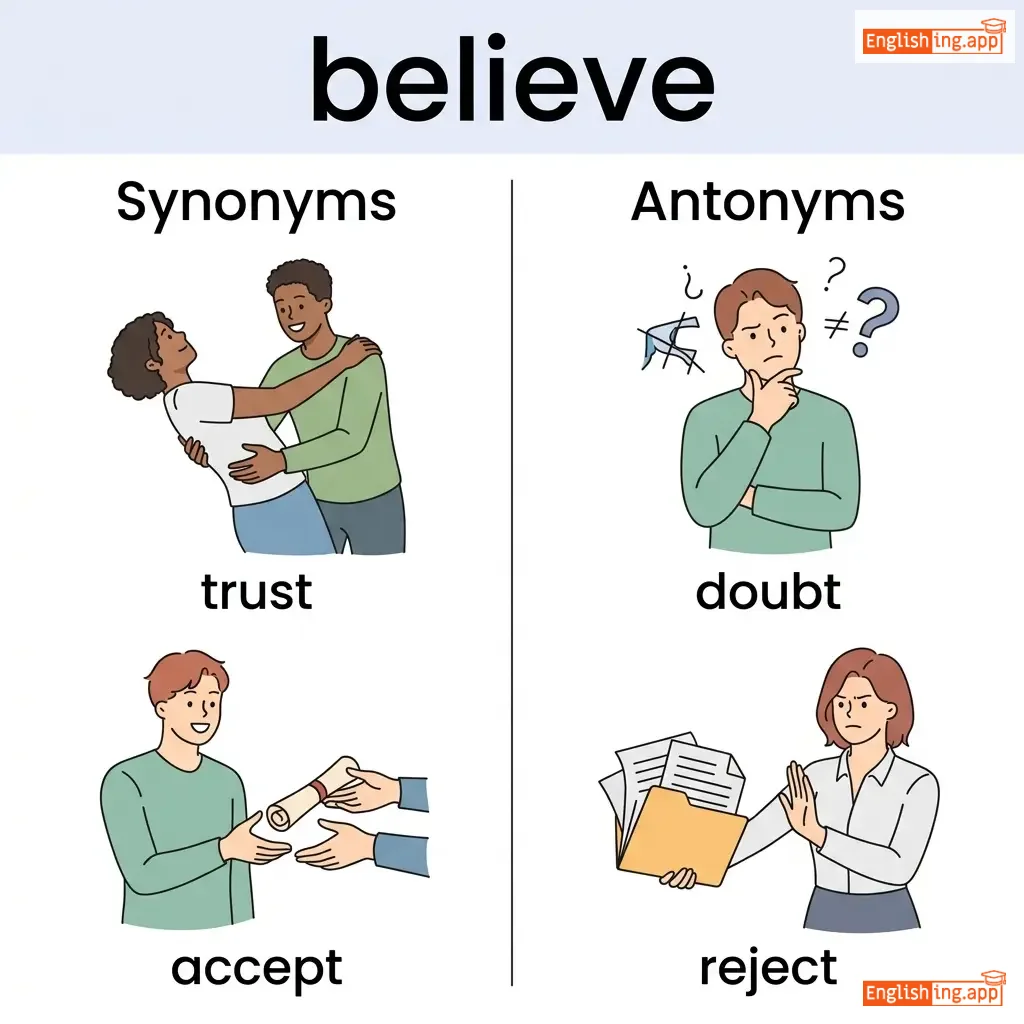
trust, accept, credit, rely on, be convinced
••••••
|
doubt, reject, distrust
••••••
|
believe in God, believe the story, hard to believe, believe strongly
••••••
|
Верить = верь—если веришь, все возможно!
••••••
|
|
🙏
••••••
|
/bɪˈliːvər/
noun
(биливер)
••••••
|
- •••••• |
верующий
veruyushchiy
••••••
|
- •••••• | - •••••• | - •••••• | - •••••• |
a person who believes in something, especially a religious faith, idea, or principle
••••••
|
She is a strong believer in hard work and honesty.
Ши из э стронг биливер ин хард ворк энд онэсти.
••••••
|
Она твёрдо верит в труд и честность.
ona tverdo verit v trud i chestnost
••••••
|
true believer
тру биливер
••••••
|
someone who has strong and sincere faith in a belief or cause
••••••
|
истинный верующий
istinnyy veruyushchiy
••••••
|
follower, adherent, devotee, supporter, faithful
••••••
|
skeptic, doubter, unbeliever
••••••
|
firm believer, true believer, religious believer, believer in science
••••••
|
Верить → верующий → believer
••••••
|
|
⬇️
••••••
|
/bɪˈlɪtl/
verb
(билитл)
••••••
|
- •••••• |
принижать
prinizhat
••••••
|
belittled
билитлд
••••••
|
belittled
билитлд
••••••
|
belittles
билитлс
••••••
|
belittling
билитлинг
••••••
|
To make someone or something seem less important or less valuable.
••••••
|
He often belittled his coworkers to feel superior.
Он часто унижал своих коллег, чтобы почувствовать себя выше.
••••••
|
Он часто унижал своих коллег, чтобы почувствовать себя выше.
On chasto unizhal svoikh kolleg, chtoby pochuvstvovat' sebya vyshe.
••••••
|
- •••••• | - •••••• | - •••••• |
demean, disparage, minimize, undervalue, downgrade
••••••
|
praise, compliment, honor
••••••
|
belittle efforts, belittle achievements, belittles others, belittling remarks
••••••
|
Belittle означает унижать—сделать кого-то меньше.
••••••
|
|
🔔
••••••
|
/bɛl/
noun
(Белл)
••••••
|
- •••••• |
колокол
bel
••••••
|
- •••••• | - •••••• | - •••••• | - •••••• |
a hollow object, usually made of metal, that makes a ringing sound when struck
••••••
|
The school bell rang loudly at noon.
Зе скуул Белл ранг лаудли эт нуун.
••••••
|
Звонок в школе прозвенел громко в полдень.
Zvonok v shkole prozvenel gromko v polden
••••••
|
saved by the bell
сейвд бай зе Белл
••••••
|
to be rescued from difficulty at the last moment
••••••
|
спасён звонком
seyvd bai ze Bell
••••••
|
chime, gong, buzzer, alarm
••••••
|
silence, quiet
••••••
|
ring the bell, church bell, door bell, alarm bell
••••••
|
bell -> Белл; imagine a bright kolokol ringing at noon to remember полдень.
••••••
|
|
🤰
••••••
|
/ˈbɛli/
noun
(бели)
••••••
|
- •••••• |
живот
zhivot
••••••
|
- •••••• | - •••••• | - •••••• | - •••••• |
The front part of the human body below the chest; stomach or abdomen.
••••••
|
He rubbed his belly after the big meal. |
Он погладил свой живот после большого обеда.
On pogladil svoy zhivot posle bol'shogo obeda.
••••••
|
belly laugh |
A loud, hearty laugh.
••••••
|
громкий смех
gromkiy smekh
••••••
|
stomach, abdomen, tummy, gut
••••••
|
back, spine
••••••
|
big belly, belly fat, belly button
••••••
|
Belly означает живот – когда ты много ешь, твой живот (belly) становится больше.
••••••
|
|
🏠
••••••
|
/bɪˈlɒŋ/
verb
(bɪˈlɒŋ)
••••••
|
- •••••• |
принадлежать
prinadlezhat
••••••
|
belonged
bɪˈlɒnd
••••••
|
belonged
bɪˈlɒnd
••••••
|
belongs
bɪˈlɒŋz
••••••
|
belonging
bɪˈlɒŋɪŋ
••••••
|
to be in the right place or to be a member of a group
••••••
|
She felt she truly belonged to the team.
Она чувствовала, что она действительно принадлежала команде.
••••••
|
Она чувствовала, что она действительно принадлежала команде.
Ona chuvstvovala, chto ona deystvitel'no prinadlezhala komande.
••••••
|
belong to
принадлежать
••••••
|
to be the property of someone or something
••••••
|
принадлежать
prinadlezhat
••••••
|
fit, associate, connect, relate
••••••
|
exclude, detach, separate
••••••
|
belong to, feel belong, belong somewhere
••••••
|
Belong означает ‘принадлежать’, что-то или кто-то является вашей собственностью.
••••••
|
|
❤️
••••••
|
/bɪˈlʌvɪd/
adjective
(биловед)
••••••
|
- •••••• |
любимый
lyubimyy
••••••
|
- •••••• | - •••••• | - •••••• | - •••••• |
dearly loved, highly regarded
••••••
|
She was the beloved queen of the kingdom.
Она была любимой королевой королевства.
••••••
|
Она была любимой королевой королевства.
Ona byla lyubimoy korolevoy korolevstva.
••••••
|
- •••••• | - •••••• | - •••••• |
cherished, adored, loved, esteemed
••••••
|
hated, despised, unloved
••••••
|
beloved friend, beloved leader, beloved person
••••••
|
Любимый (lyubimyy) - это как beloved, кто-то, кого любят всем сердцем.
••••••
|
|
⬇️
••••••
|
/bɪˈloʊ/
preposition
(bilo)
••••••
|
- •••••• |
ниже
nizhe
••••••
|
- •••••• | - •••••• | - •••••• | - •••••• |
At a lower level or position than something else.
••••••
|
The basement is below the ground floor. |
Подвал находится ниже первого этажа.
Podval nakhoditsya nizhe pervogo etazha.
••••••
|
below the belt |
Unfair or cruel remark or action.
••••••
|
ниже пояса
nizhe poyasa
••••••
|
under, beneath, underneath, lower
••••••
|
above, over, higher
••••••
|
below average, below the surface, below zero
••••••
|
Below означает ниже, как если бы что-то было под вами.
••••••
|
|
👖
••••••
|
/bɛlt/
noun
(бэлт)
••••••
|
- •••••• |
пояс
poyas
••••••
|
- •••••• | - •••••• | - •••••• | - •••••• |
a strip of material worn around the waist to support clothes or as decoration
••••••
|
He tightened his belt before leaving for work.
Он затянул пояс перед тем, как уйти на работу.
••••••
|
Он затянул пояс перед тем, как уйти на работу.
On zatyanul poyas pered tem kak uyti na rabotu
••••••
|
tighten one's belt |
to live with less money than before
••••••
|
жить экономнее
zhit ekonomnee
••••••
|
strap, band, sash, girdle
••••••
|
loosen, release
••••••
|
wear a belt, leather belt, tighten belt, conveyor belt
••••••
|
Belt = пояс: вообрази belt вокруг талии с надписью пояс, чтобы запомнить что belt это пояс
••••••
|
|
😢
••••••
|
/bɪˈmoʊn/
verb
(бимон)
••••••
|
- •••••• |
сожалеть
sozhalet
••••••
|
bemoaned
бимонд
••••••
|
bemoaned
бимонд
••••••
|
bemoans
бимонс
••••••
|
bemoaning
бимо́нинг
••••••
|
To express discontent or sorrow over something.
••••••
|
Critics bemoaned the lack of diversity in the film.
Критики сожалели о недостатке разнообразия в фильме.
••••••
|
Критики сожалели о недостатке разнообразия в фильме.
Kritiki sozhaleli o nedostatke raznoobraziya v filme.
••••••
|
- •••••• | - •••••• | - •••••• |
lament, complain, regret, grieve, mourn
••••••
|
praise, celebrate, rejoice
••••••
|
bemoan the loss, bemoan fate, bemoan lack
••••••
|
Bemoan - это как 'би моан' – сожалеть.
••••••
|
|
🤔
••••••
|
/bɪˈmjuːz/
verb
(bimjuz)
••••••
|
- •••••• |
озадачить
ozadachit
••••••
|
bemused
bimjuzd
••••••
|
bemused
bimjuzd
••••••
|
bemuses
bimjuzes
••••••
|
bemusing
bimjuzing
••••••
|
To confuse or puzzle someone.
••••••
|
The complex instructions bemused the new employees.
Сложные инструкции озадачили новых сотрудников.
••••••
|
Сложные инструкции озадачили новых сотрудников.
Slozhnye instruktsii ozadachili novykh sotrudnikov.
••••••
|
- •••••• | - •••••• | - •••••• |
confuse, bewilder, puzzle, perplex, baffle
••••••
|
clarify, explain, enlighten
••••••
|
bemuse the audience, bemuse expression, bemuse with details
••••••
|
Bemuse = 'B' for 'Baffle' = озадачить кого-то
••••••
|
|
🪑
••••••
|
/bɛntʃ/
noun
(бэнч)
••••••
|
- •••••• |
скамейка
skameyka
••••••
|
- •••••• | - •••••• | - •••••• | - •••••• |
a long seat for several people, typically made of wood or stone
••••••
|
They sat on the park bench watching the sunset.
Они сели на скамейку в парке, наблюдая за закатом.
••••••
|
Они сели на скамейку в парке, наблюдая за закатом.
Oni seli na skameyku v parke, nablyudaya za zakatom.
••••••
|
warm the bench
согревать скамейку
••••••
|
to not participate in a game, usually as a substitute player
••••••
|
согревать скамейку
sogrevat' skameyku
••••••
|
seat, pew, stool, chair
••••••
|
floor, ground
••••••
|
park bench, wooden bench, sit on a bench, court bench
••••••
|
Скамейка — это место для отдыха, а 'согревать скамейку' значит не играть.
••••••
|
|
📏
••••••
|
/ˈbɛntʃmɑːrk/
noun
(бенчмарк)
••••••
|


|
эталон
etalon
••••••
|
- •••••• | - •••••• | - •••••• | - •••••• |
a standard or point of reference against which things are compared or assessed
••••••
|
The company set a new benchmark for customer service. |
Компания установила новый эталон для обслуживания клиентов.
Kompaniya ustanovila novyy etalon dlya obsluzhivaniya klientov.
••••••
|
- •••••• | - •••••• | - •••••• |
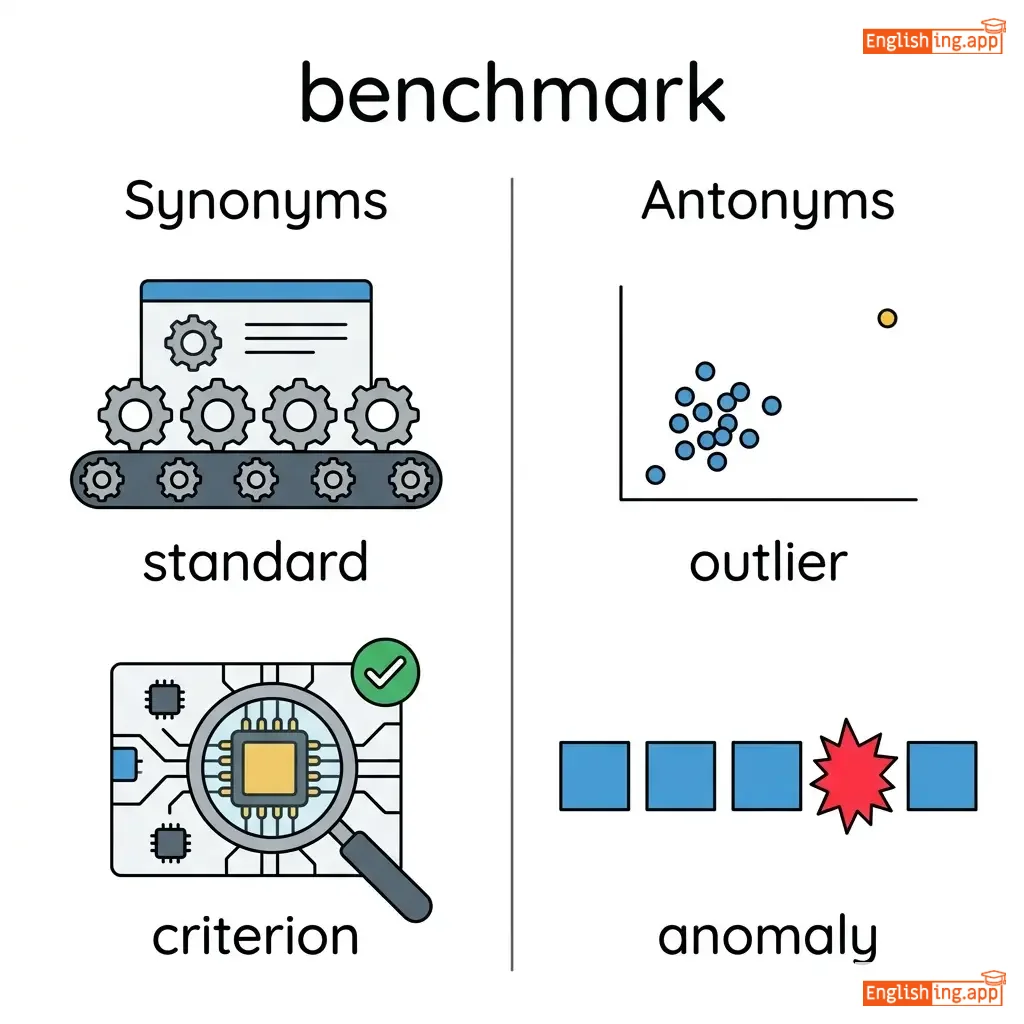
standard, criterion, gauge, yardstick
••••••
|
outlier, anomaly, exception
••••••
|
set a benchmark, benchmark test, industry benchmark, high benchmark
••••••
|
бенчмарк превращается в эталон - Benchmark is a yardstick for comparison
••••••
|
|
↩️
••••••
|
/bɛnd/
verb
(бенд)
••••••
|
- •••••• |
сгибать / наклоняться
sgibat' / naklonyat'sya
••••••
|
bent
бент
••••••
|
bent
бент
••••••
|
bends
бендс
••••••
|
bending
бендинг
••••••
|
to curve something or cause it to change shape; to move the body or part of it downward or forward
••••••
|
She had to bend down to pick up the coin.
Ей пришлось наклониться, чтобы поднять монету.
••••••
|
Ей пришлось наклониться, чтобы поднять монету.
Ey prishlos' naklonit'sya, chtoby podnyat' monetu.
••••••
|
bend over backwards
гибнуться назад
••••••
|
to try very hard to please someone or make something happen
••••••
|
стараться изо всех сил
starat'sya izo vsekh sil
••••••
|
curve, flex, bow, arch, stoop
••••••
|
straighten, unbend, stiffen
••••••
|
bend down, bend forward, bend the rules, bend over
••••••
|
Сгибать или наклоняться — помни, что 'bend' будет сгибать.
••••••
|
|
⬇️
••••••
|
/bɪˈniːθ/
adverb
(бинис)
••••••
|
- •••••• |
под; ниже
pod, nizhe
••••••
|
- •••••• | - •••••• | - •••••• | - •••••• |
under; below; underneath
••••••
|
The treasure lies beneath the old tree.
Сокровище находится бинис старым деревом.
••••••
|
Сокровище лежит под старым деревом.
Sokrovishche lezhit pod starym derevom.
••••••
|
- •••••• | - •••••• | - •••••• |
under, below, underneath, down
••••••
|
above, over, on top, beyond
••••••
|
beneath the surface, beneath contempt, beneath notice
••••••
|
Imagine finding treasure beneath a tree. 'Под' means under in Russian.
••••••
|
|
🌱
••••••
|
/ˌbɛnɪˈfɪʃəl/
adjective
(бенефишал)
••••••
|

|
полезный
polezny
••••••
|
- •••••• | - •••••• | - •••••• | - •••••• |
producing good or helpful results; favorable or advantageous
••••••
|
Regular exercise is beneficial for your health. |
Регулярные физические упражнения полезны для вашего здоровья.
Regulyarnye fizicheskie uprazhneniya polezny dlya vashego zdorov'ya.
••••••
|
- •••••• | - •••••• | - •••••• |
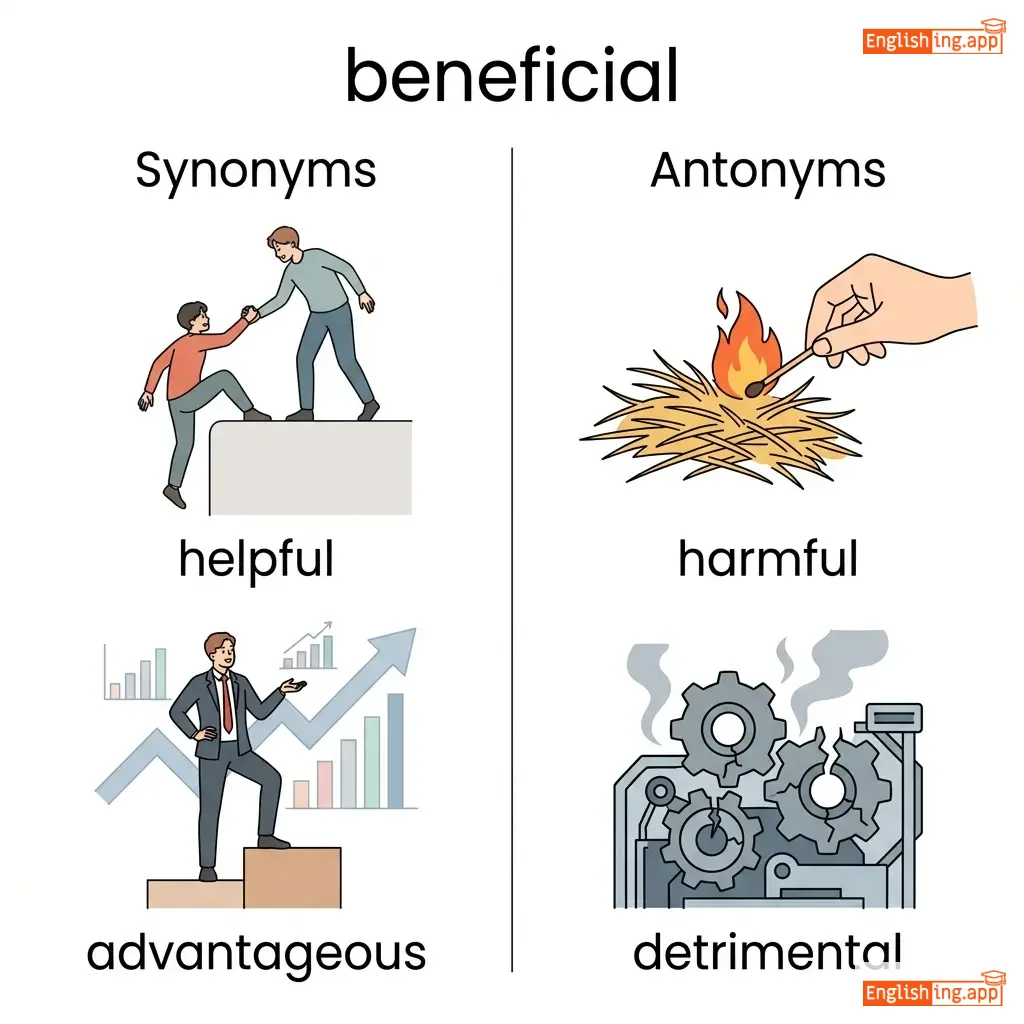
helpful, advantageous, favorable, useful, valuable
••••••
|
harmful, detrimental, disadvantageous
••••••
|
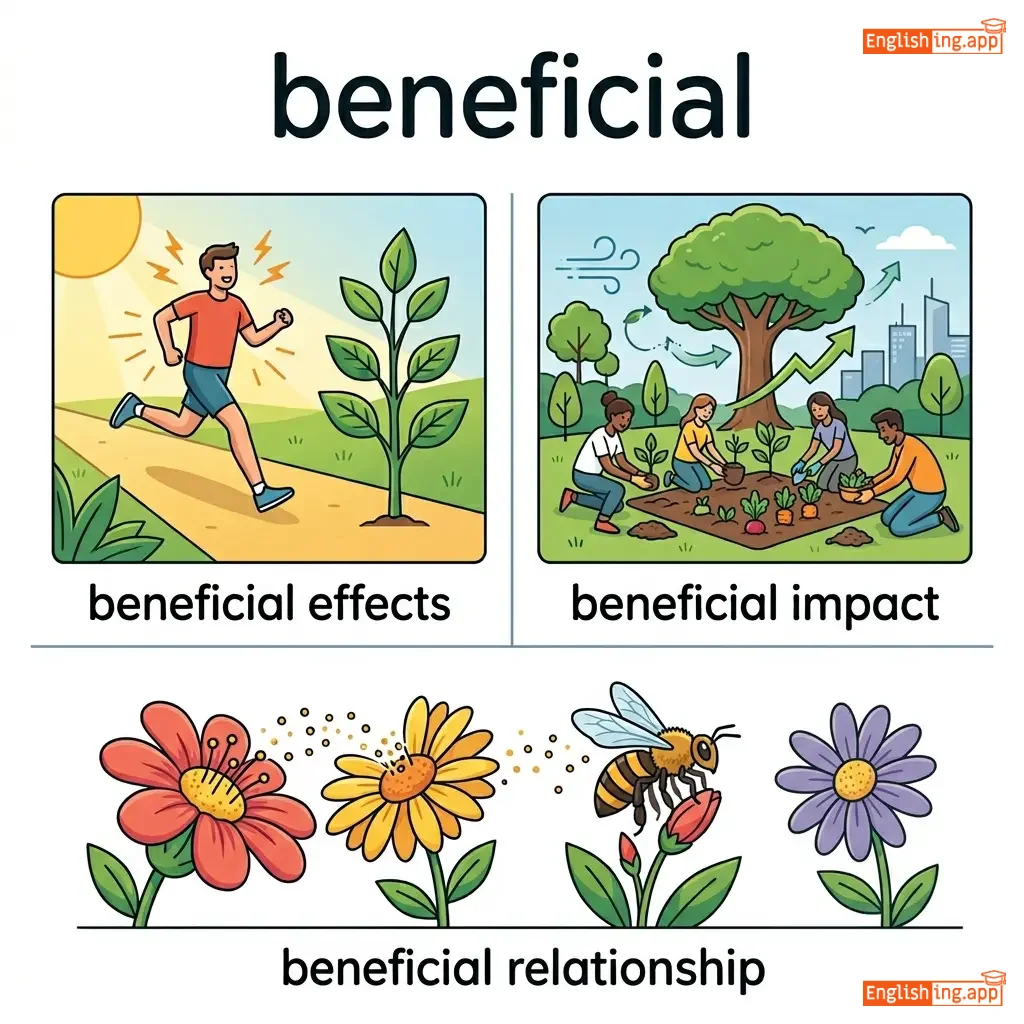
beneficial effects, beneficial impact, beneficial relationship, mutually beneficial
••••••
|
Полезный — то, что приносит пользу, как регулярные упражнения для здоровья.
••••••
|
|
🎁
••••••
|
/ˌbɛnɪˈfɪʃəri/
noun
(бенефициарий)
••••••
|
- •••••• |
бенефициар
benefitsiar
••••••
|
- •••••• | - •••••• | - •••••• | - •••••• |
a person who receives something, especially money or property, from a will or insurance policy
••••••
|
She is the sole beneficiary of her father’s estate. |
Она является единственным бенефициаром имущества своего отца.
Ona yavljayetsya yedinym benefitiarom imushchestva svoego otca.
••••••
|
- •••••• | - •••••• | - •••••• |
recipient, heir, inheritor, grantee
••••••
|
donor, benefactor
••••••
|
sole beneficiary, named beneficiary, policy beneficiary, estate beneficiary
••••••
|
Beneficiary — это тот, кто получает выгоду, как бенефициар по страховке.
••••••
|
|
🎉
••••••
|
/ˈbɛnɪfɪt/
noun/verb
(бенефит)
••••••
|
- •••••• |
выгода / польза
vygoda / pol'za
••••••
|
benefited
бенефитед
••••••
|
benefited
бенефитед
••••••
|
benefits
бенефитс
••••••
|
benefiting
бенефитинг
••••••
|
an advantage, profit, or good effect; to receive help or an advantage
••••••
|
Employees benefit from the company’s health insurance program.
Сотрудники получают выгоду от программы медицинского страхования компании.
••••••
|
Сотрудники получают выгоду от программы медицинского страхования компании.
Sotrudniki poluchayut vygodu ot programmy meditsinskogo strakhovaniya kompanii.
••••••
|
for the benefit of
в интересах
••••••
|
for the advantage or good of someone
••••••
|
в интересах кого-то
v interesakh kogo-to
••••••
|
advantage, profit, gain, perk, blessing
••••••
|
loss, harm, drawback
••••••
|
health benefit, social benefit, benefit from, mutual benefit
••••••
|
Benefit на русском — выгода или польза, как от программы медицинского страхования.
••••••
|
|
🥶
••••••
|
/bɪˈnʌm/
verb
(бинам)
••••••
|
- •••••• |
онеметь
onemet
••••••
|
benumbed
бинамд
••••••
|
benumbed
бинамд
••••••
|
benumbs
бинамз
••••••
|
benumbing
бинаминг
••••••
|
to make physically numb or without sensation; to make mentally dull or insensitive
••••••
|
The freezing wind seemed to benumb his fingers within minutes.
Зэ фризинг уинд симд ту бинам хиз фингерс видин минитс
••••••
|
Ледяной ветер за считанные минуты онемел его пальцы.
Ledyanoy veter za schitannye minuty onemel ego paltsy
••••••
|
benumb the senses
бинам зэ сенсиз
••••••
|
to dull or deaden physical or emotional perception
••••••
|
онеметь чувства
onemet chuvstva
••••••
|
numb, deaden, dull, anesthetize, stupefy
••••••
|
sensitize, stimulate, awaken
••••••
|
benumb the senses, benumbed by cold, benumbed feeling, emotionally benumbed
••••••
|
Онемел от холода — benumb
••••••
|
|
🖤
••••••
|
/bɪˈriːv/
verb
(берив)
••••••
|
- •••••• |
потерять близкого человека
poteryat' blizkogo cheloveka
••••••
|
bereaved
беривд
••••••
|
bereaved
беривд
••••••
|
bereaves
беривс
••••••
|
bereaving
беривинг
••••••
|
to deprive someone of a loved one through death
••••••
|
She was bereaved of her husband last year.
она была беривд от своего мужа в прошлом году.
••••••
|
Она потеряла своего мужа в прошлом году.
Ona poteryala svoego muzha v proshlom godu.
••••••
|
bereaved family
беривд семья
••••••
|
a family that has lost a loved one
••••••
|
семья в трауре
sem'ya v traure
••••••
|
deprive, lose, rob, dispossess
••••••
|
bless, endow, provide
••••••
|
bereaved family, bereaved person, bereaved of, comfort the bereaved
••••••
|
Be + reave (грабить) = смерть грабит близкого → bereave
••••••
|
|
🛏️
••••••
|
/bɜːrθ/
noun
(бэрт)
••••••
|
- •••••• |
спальное место / место швартовки
spal'noe mesto / mesto shvartovki
••••••
|
- •••••• | - •••••• | - •••••• | - •••••• |
A place to sleep on a ship or train; a ship's allocated place at a dock.
••••••
|
They reserved a lower berth on the overnight train. |
Они забронировали нижнюю койку на ночном поезде.
Oni zabronirovali nizhnyuyu koyku na nochnom poyezde.
••••••
|
give a wide berth |
To avoid someone or something; to keep away.
••••••
|
дать широкий ход
dat' shirokiy khod
••••••
|
bunk, cabin, bed, dock, station
••••••
|
departure, absence
••••••
|
lower berth, upper berth, ship's berth, wide berth
••••••
|
Berth звучит как 'bed', в поезде 'berth' - это кровать для сна.
••••••
|
|
🙏
••••••
|
/bɪˈsiːtʃ/
verb
(бисич)
••••••
|
- •••••• |
умолять
umolyat
••••••
|
beseeched
бисичд
••••••
|
beseeched
бисичд
••••••
|
beseeches
бисичес
••••••
|
beseeching
бисичинг
••••••
|
To ask someone urgently and fervently to do something; to beg.
••••••
|
He beseeched the judge for mercy.
он бисичд судью о милосердии.
••••••
|
Он умолял судью о милосердии.
On umolyal sud'yu o miloserdii.
••••••
|
- •••••• | - •••••• | - •••••• |
implore, beg, plead, entreat, supplicate
••••••
|
demand, command, insist
••••••
|
beseech someone, beseech the lord, beseech for mercy, humbly beseech
••••••
|
Beseech = Be + Speech (Просить что-то настоятельно).
••••••
|
|
🤝
••••••
|
/bɪˈsaɪd/
preposition
(bisaid)
••••••
|
- •••••• |
рядом с
ryadom s
••••••
|
- •••••• | - •••••• | - •••••• | - •••••• |
next to or at the side of someone or something
••••••
|
She sat beside her best friend during the ceremony. |
Она сидела рядом со своей лучшей подругой во время церемонии.
Ona sidelа ryadom so svoey luchshey podrugoy vo vremya tseremonii.
••••••
|
- •••••• | - •••••• | - •••••• |
next to, alongside, by, near
••••••
|
away from, apart from
••••••
|
sit beside, stand beside, beside the door, beside me
••••••
|
Beside значит рядом - Best friend рядом.
••••••
|
|
➕
••••••
|
/bɪˈsaɪdz/
adverb
(бисаидз)
••••••
|
- •••••• |
кроме того
krome togo
••••••
|
- •••••• | - •••••• | - •••••• | - •••••• |
in addition to; moreover; furthermore
••••••
|
Besides being smart, he is also kind. |
Кроме того, он добрый, помимо того, что умный.
Krome togo, on dobyi, pomimo togo, chto umnyi
••••••
|
- •••••• | - •••••• | - •••••• |
moreover, furthermore, additionally, also
••••••
|
only, merely, exclusively
••••••
|
besides that, besides which, besides being
••••••
|
Если это на другом месте, то это тоже в список.
••••••
|
|
🏆
••••••
|
/bɛst/
adjective
(бест)
••••••
|
- •••••• |
лучший
luchshiy
••••••
|
- •••••• | - •••••• | - •••••• | - •••••• |
Of the highest quality, excellence, or standing.
••••••
|
She is the best student in the class. |
Она лучшая студентка в классе.
Ona luchshaya studentka v klasse.
••••••
|
make the best of |
To do as well as possible in a difficult situation.
••••••
|
сделать всё возможное
sdelat' vsyo vozmozhnoe
••••••
|
finest, greatest, top, leading, supreme
••••••
|
worst, poorest, inferior
••••••
|
best friend, best time, best practice
••••••
|
Best в русском – лучший, как лучший в классе!
••••••
|

